
A BIM (Building Information Modeling) system is designed to establish, integrate, and reuse building information and professional knowledge throughout the entire lifecycle of a building. It combines IT technology, computer-aided design methods, and expertise in the architecture, engineering, construction, and facilities management (AEC/FM) fields to create and integrate building information models from a design perspective. What are the three main characteristics of BIM systems? Let’s explore them together!
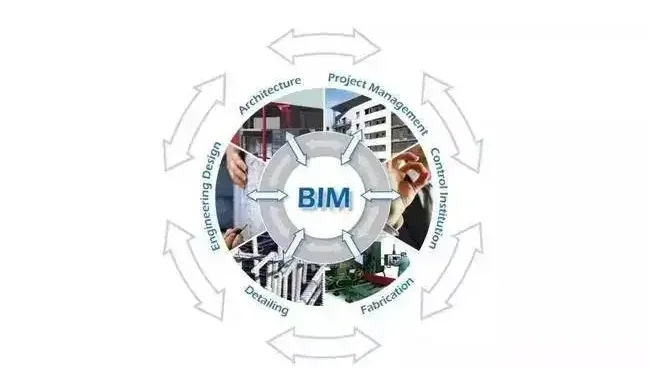
The key distinction between BIM systems and traditional computer-aided design (CAD) systems lies in the handling of information. Traditional CAD systems mainly focus on drawing geometric shapes, where meaningful details—such as door and window models or beam and column dimensions—cannot be directly extracted from the drawings. These details require manual interpretation to convert geometric shapes into useful information. In contrast, BIM systems allow direct access to the required information through the information model itself.
A BIM system has the following core characteristics:
1. Input and Output of Building Information Models: BIM systems can import building information models for processing and analysis, as well as export the processed models for further use.
2. Effective Information Sharing: Construction projects involve multiple professional disciplines at various stages, each generating relevant data. BIM systems enable seamless synchronization and sharing of this information. For example, if an architect modifies the position of a beam using a BIM system, the structural engineer’s BIM software can immediately reflect this change in their model.
3. Object-Centered Information Processing: BIM focuses on individual building components, each with a unique identity and associated parametric information. For instance, a beam object includes details like its position, geometry, and quantity. The scope of BIM systems is extensive, covering building planning and design, structural analysis and simulation, electromechanical systems, construction scheduling, and facility management.
These are the three main features of BIM systems we have outlined. We hope this overview helps you better understand the capabilities and advantages of BIM technology!
















Must log in before commenting!
Sign Up