
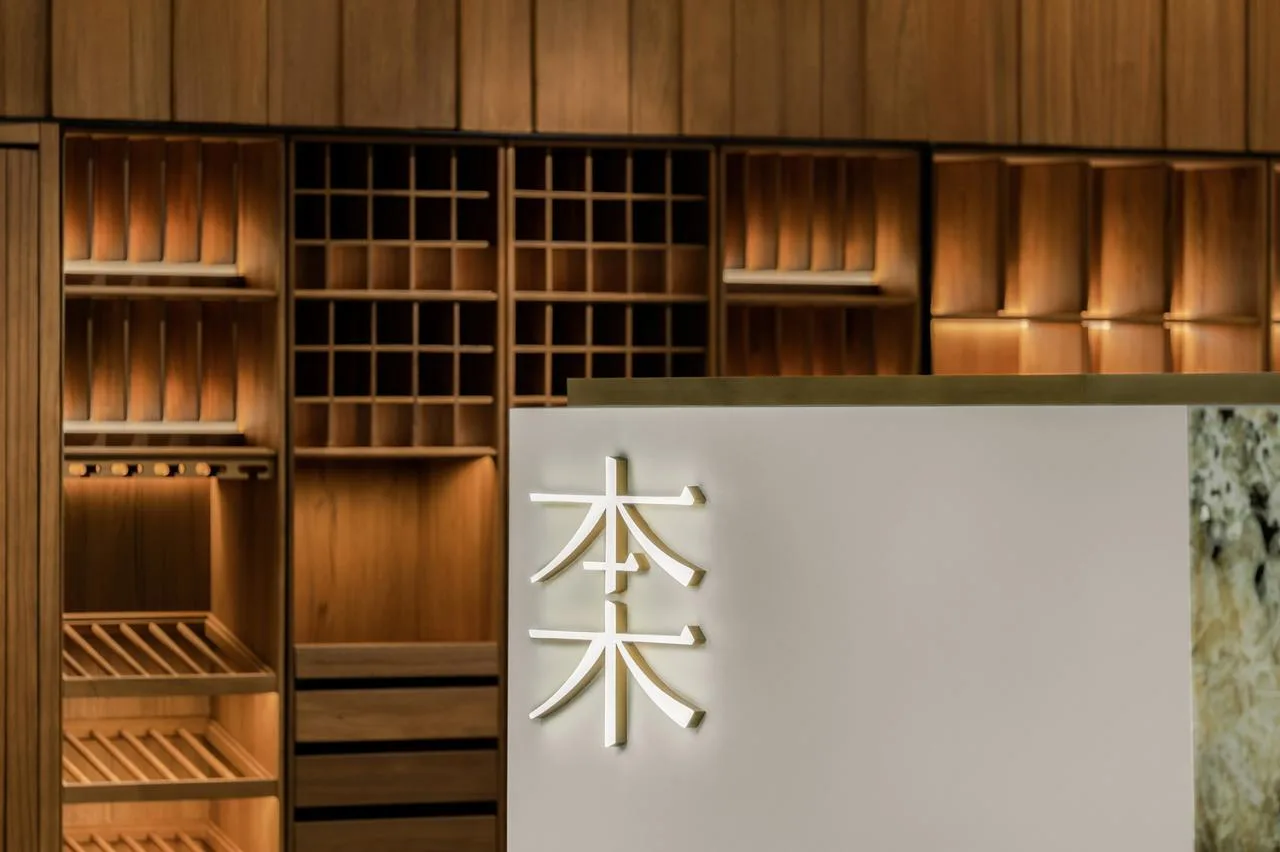
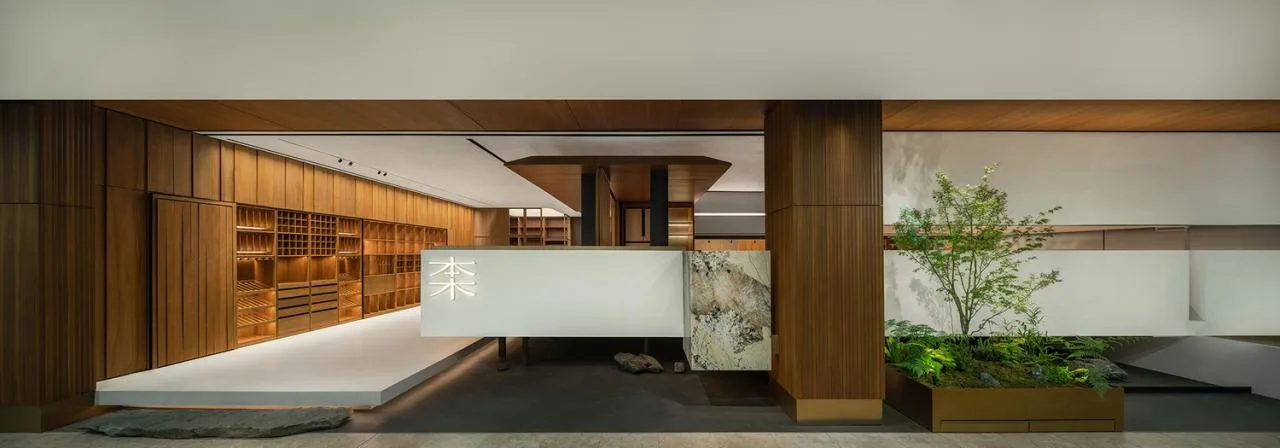
The Benmu Brand Exhibition Hall, situated on the fifth floor of the South Gate Fushenmei Home Building Materials Museum, is one of the latest carefully planned and designed projects by Liu Ruiyan and Tang Jiajun, the design directors at Chengdu Hummingbird Design.
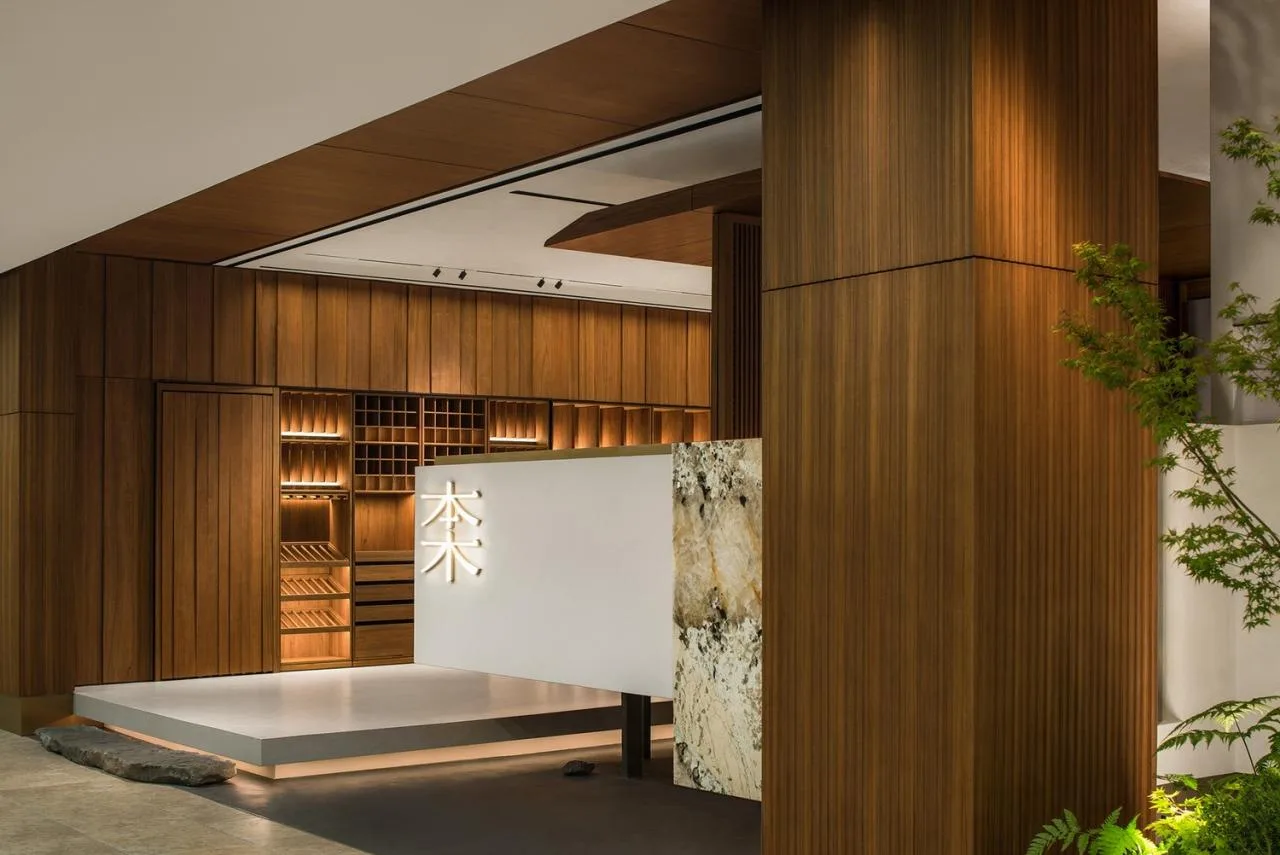
This exhibition hall is a fresh creation by designers who deeply studied the composition and developmental concept behind Benmu products. Together with the Benmu brand, they employed a restrained yet expressive design language, achieving a harmonious balance between functionality, aesthetic appeal, and the communicative role of contemporary commercial spaces.
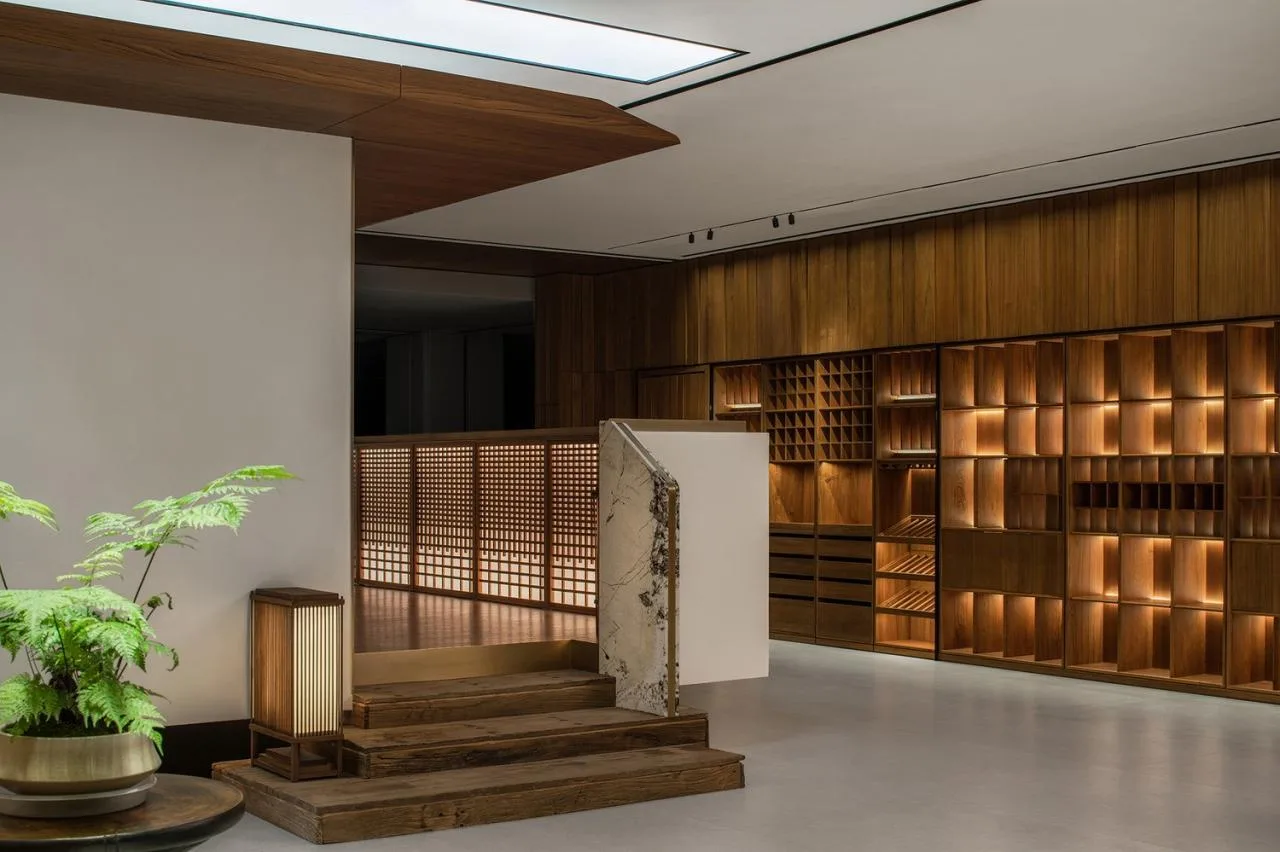
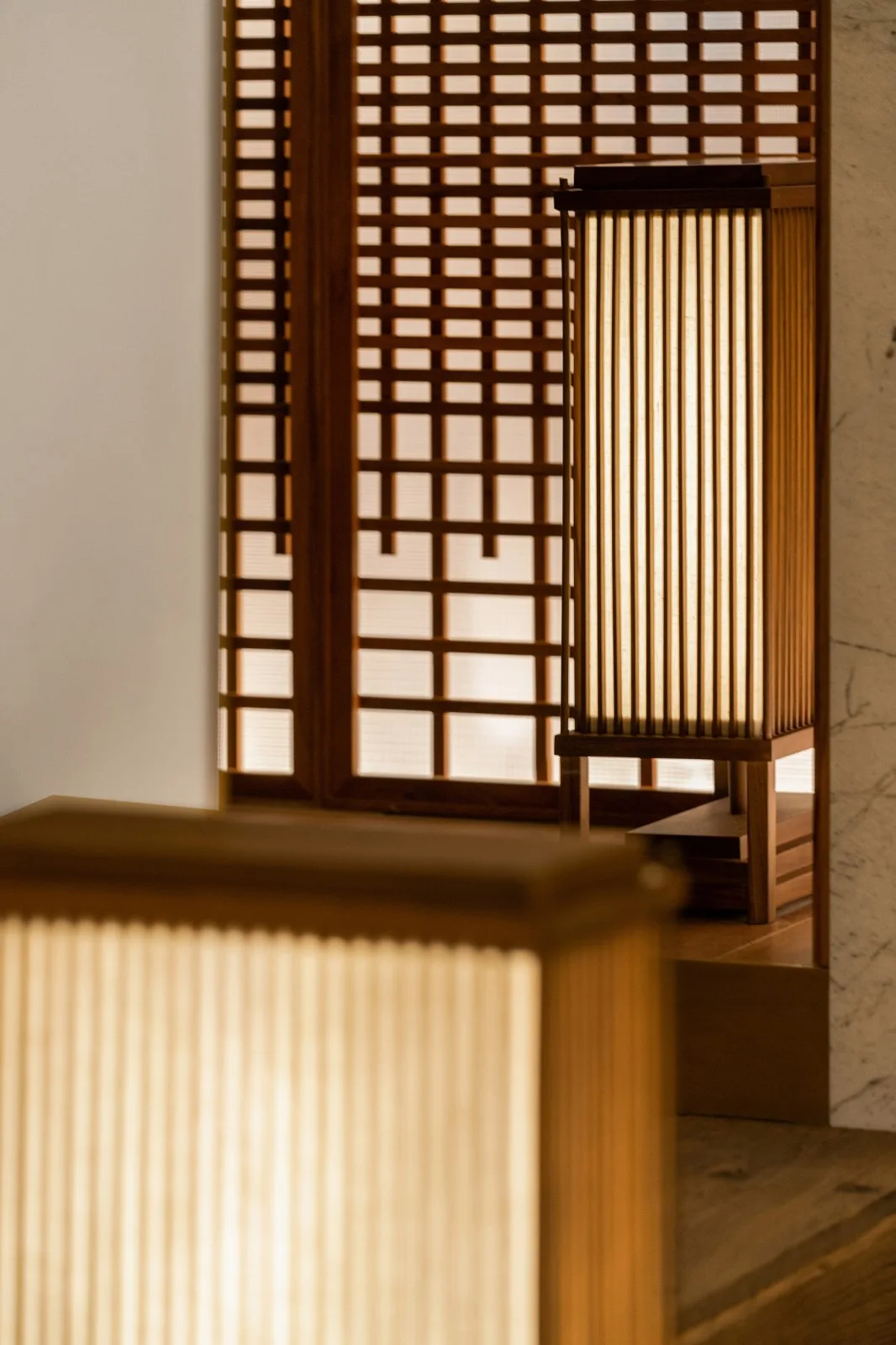
The space extends horizontally across just over 200 square meters, blending contemporary, traditional, and Eastern elements with intricate structures. This creates an environment of freedom, relaxation, and warmth, enriched with a humanistic atmosphere.
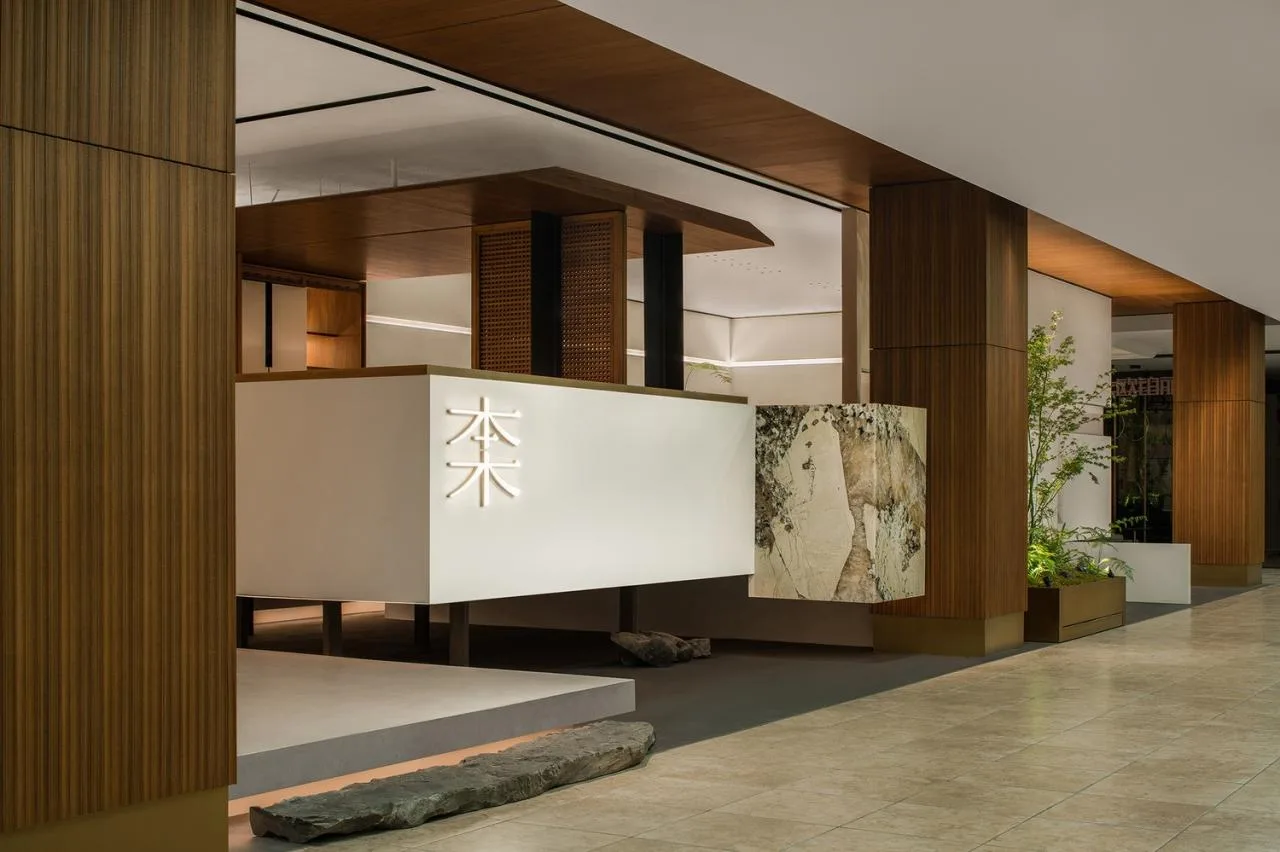
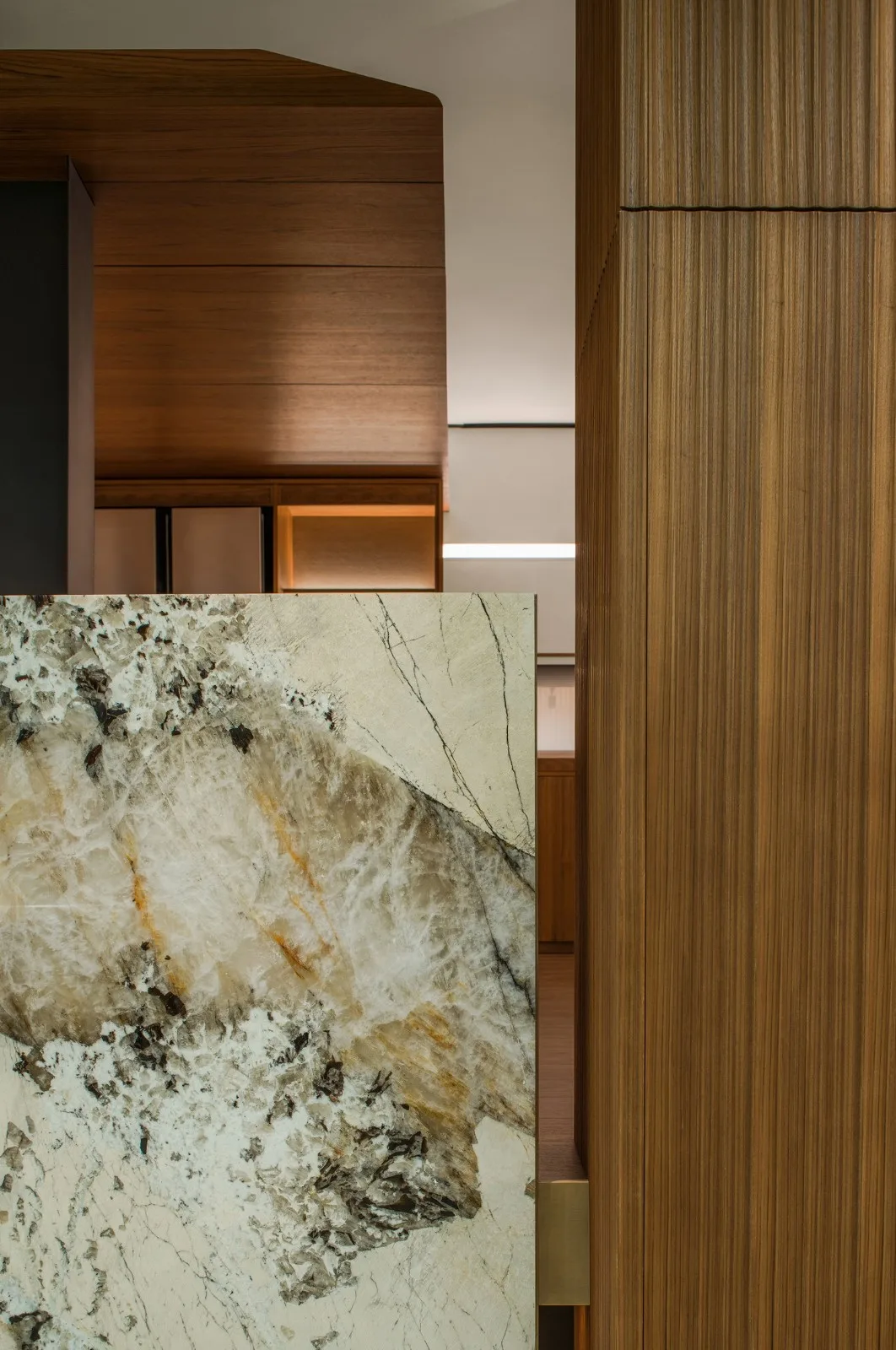
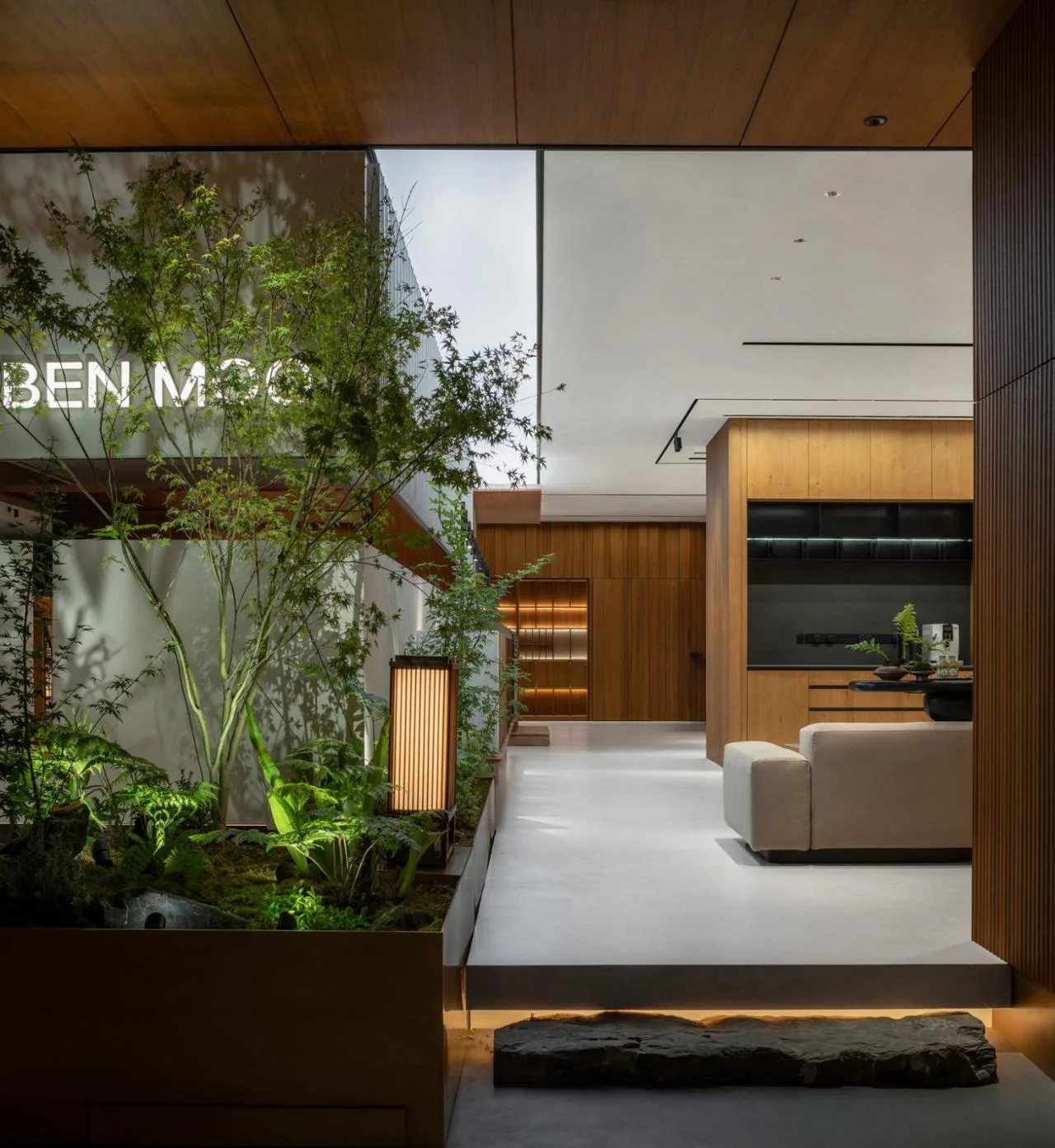
At the entrance, the designer combines natural stone steps, milky white artificial stone, a white elevated logo wall, and patterned stone to create a floating passageway that invites visitors in.
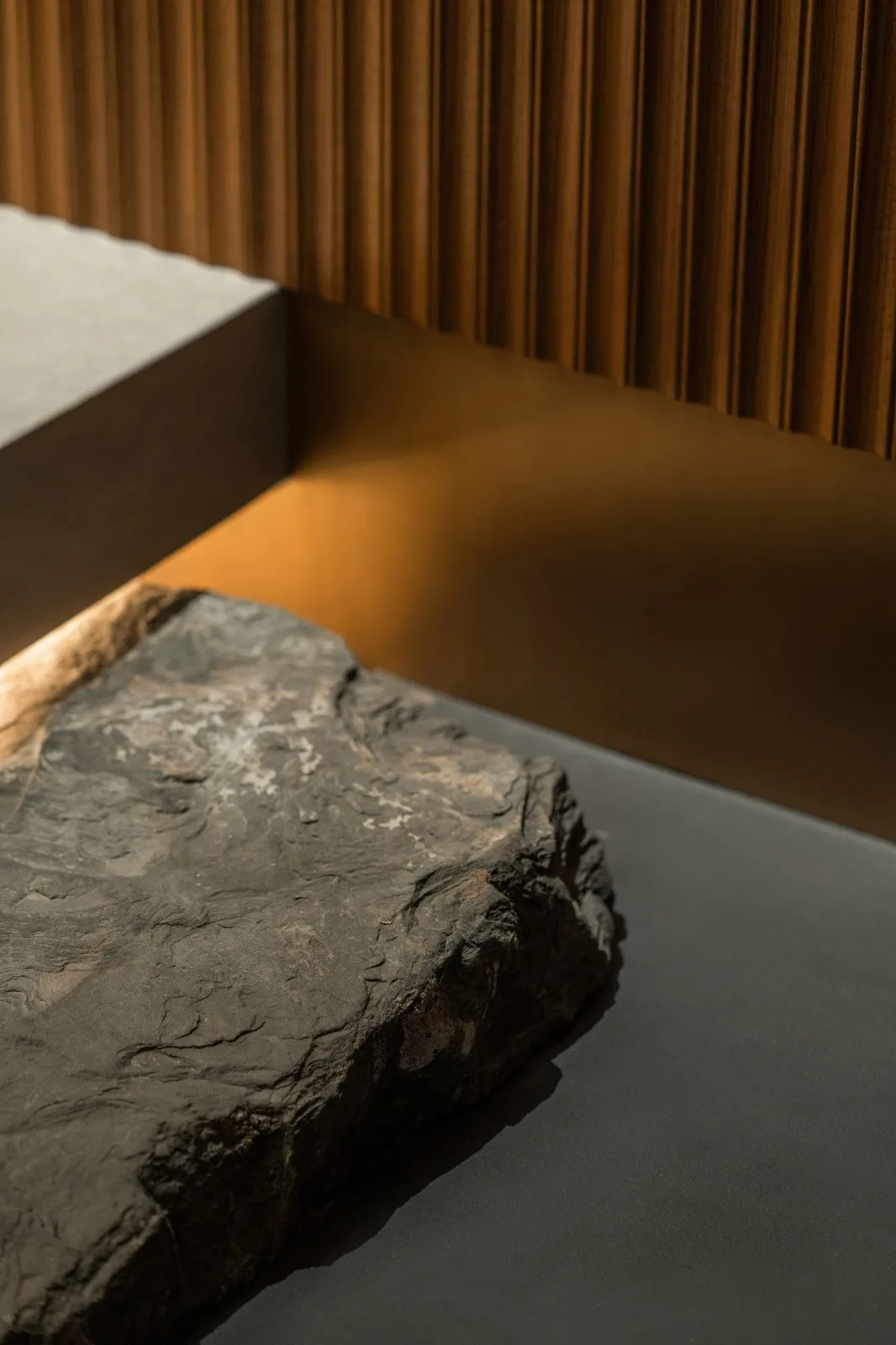
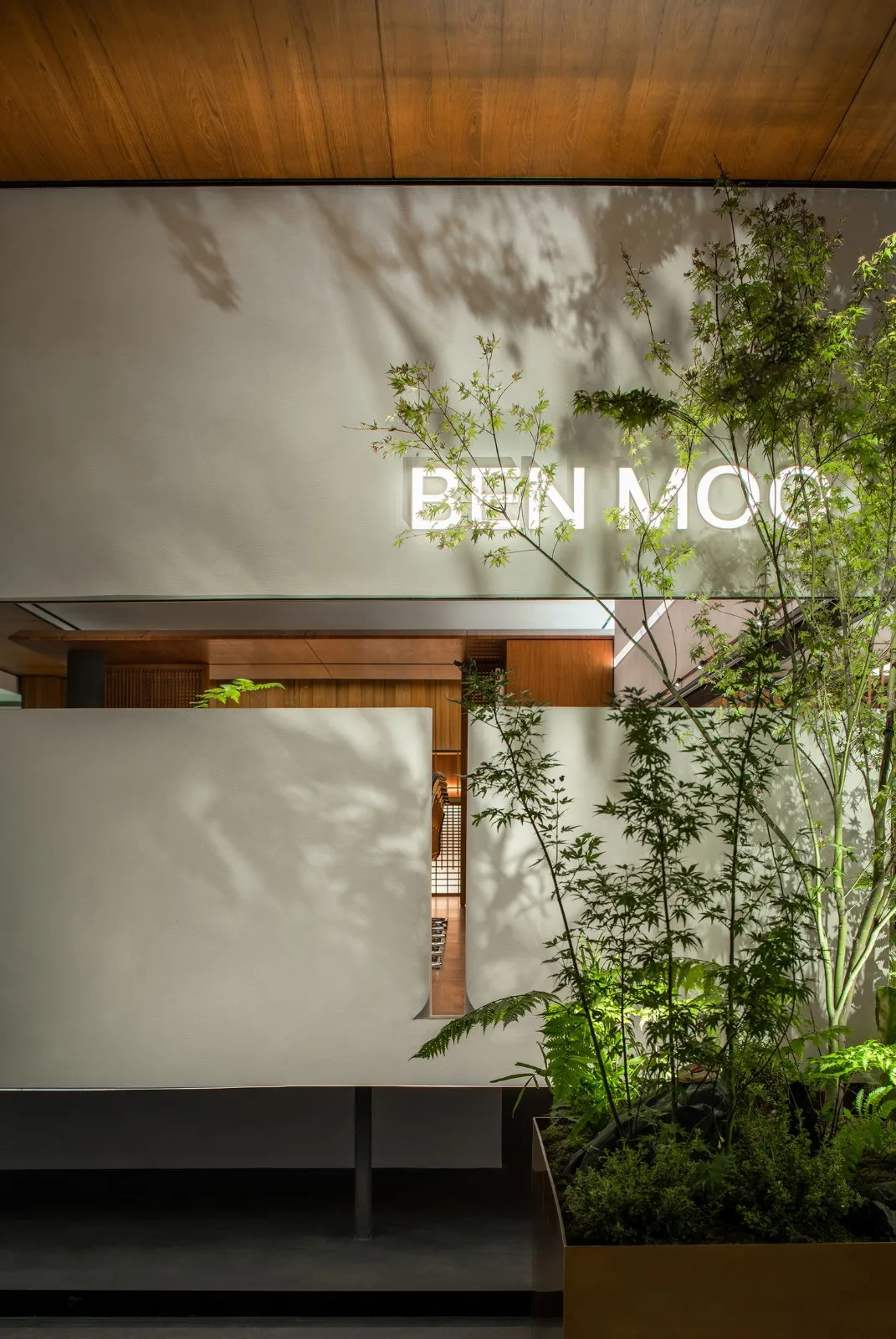
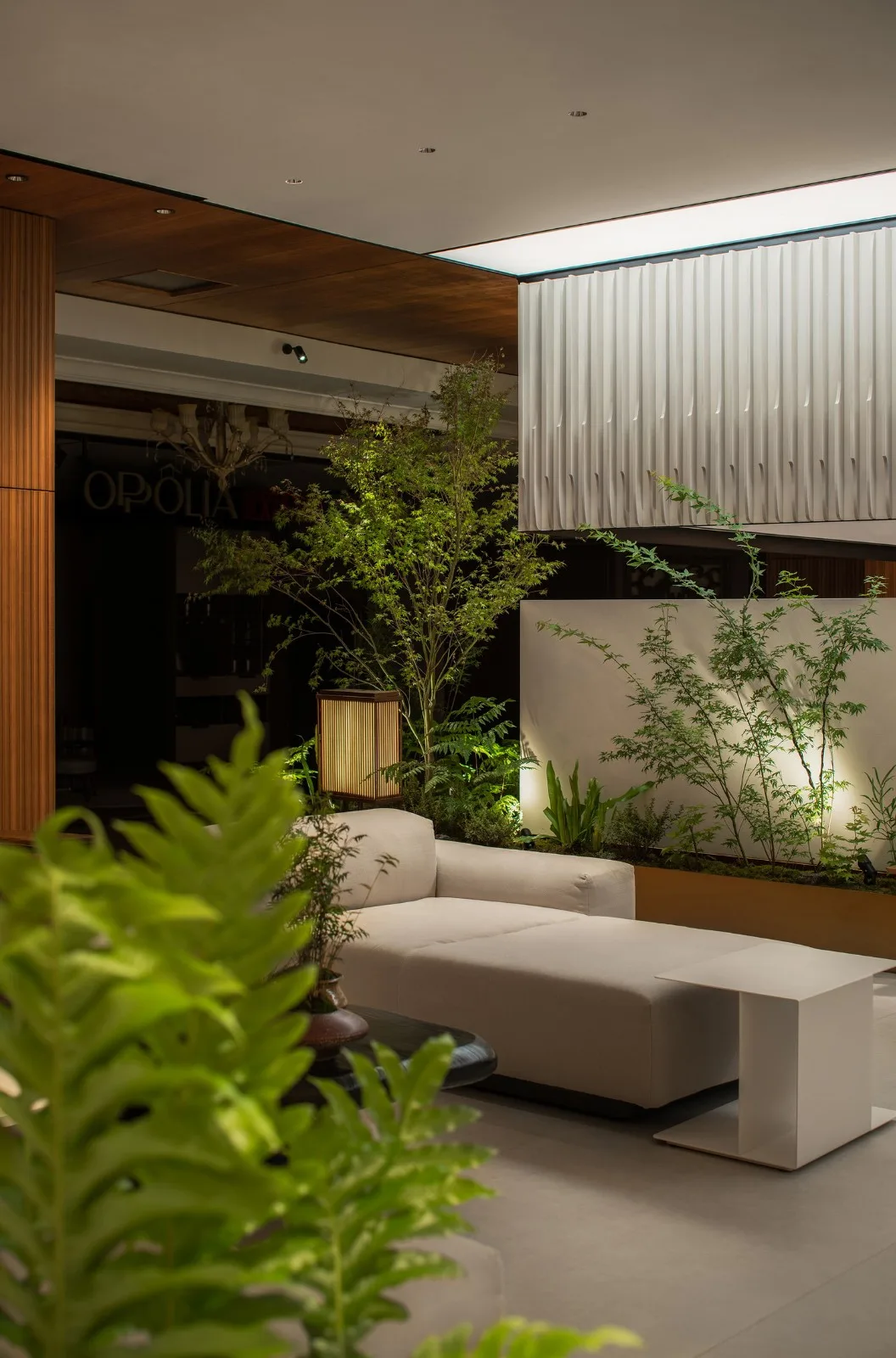
Viewed from afar, the entire space resembles a baby nestled in its mother’s womb, adorned with natural stones and delicately defined by plants, evoking a serene, peaceful, and warm atmosphere.
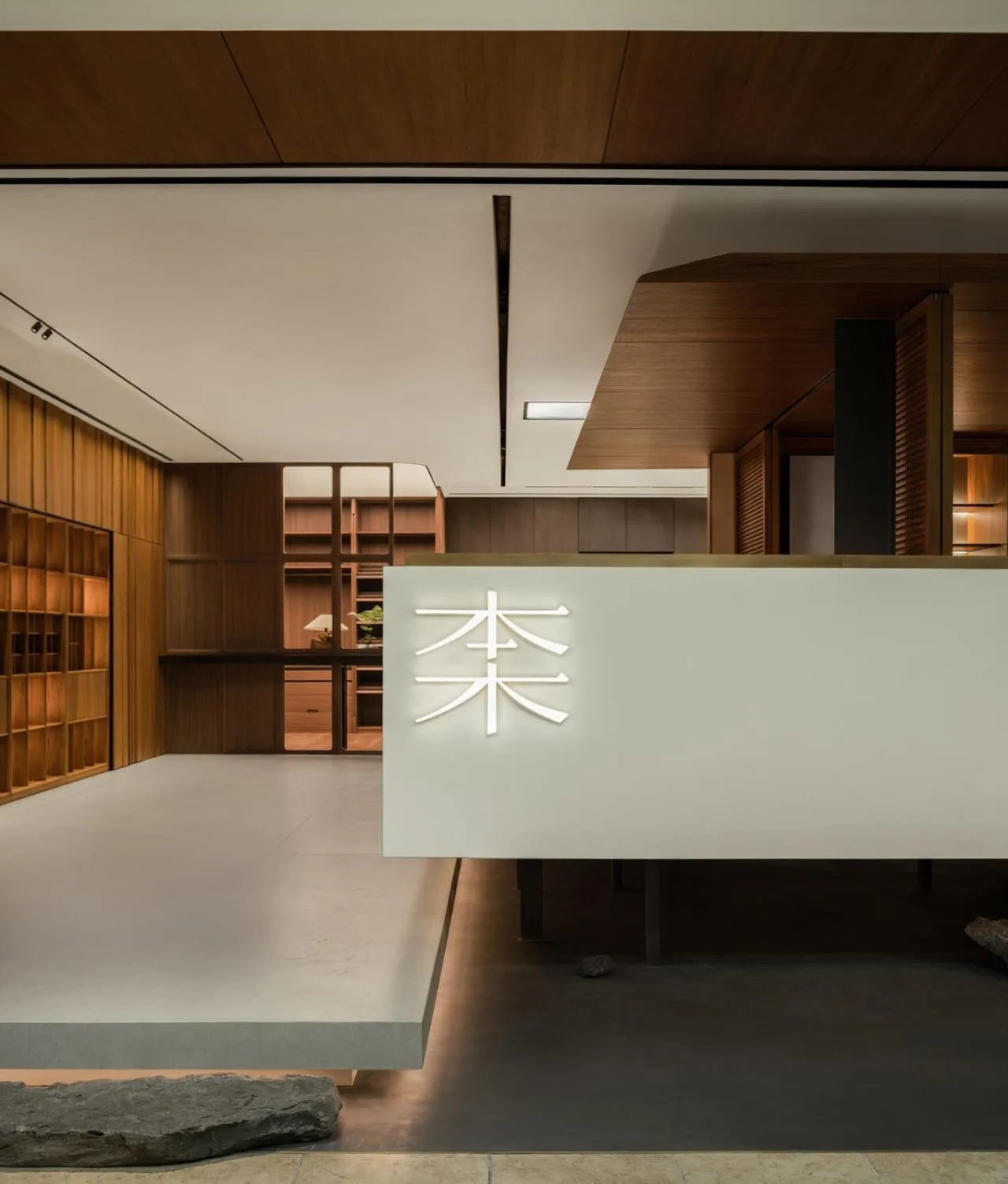
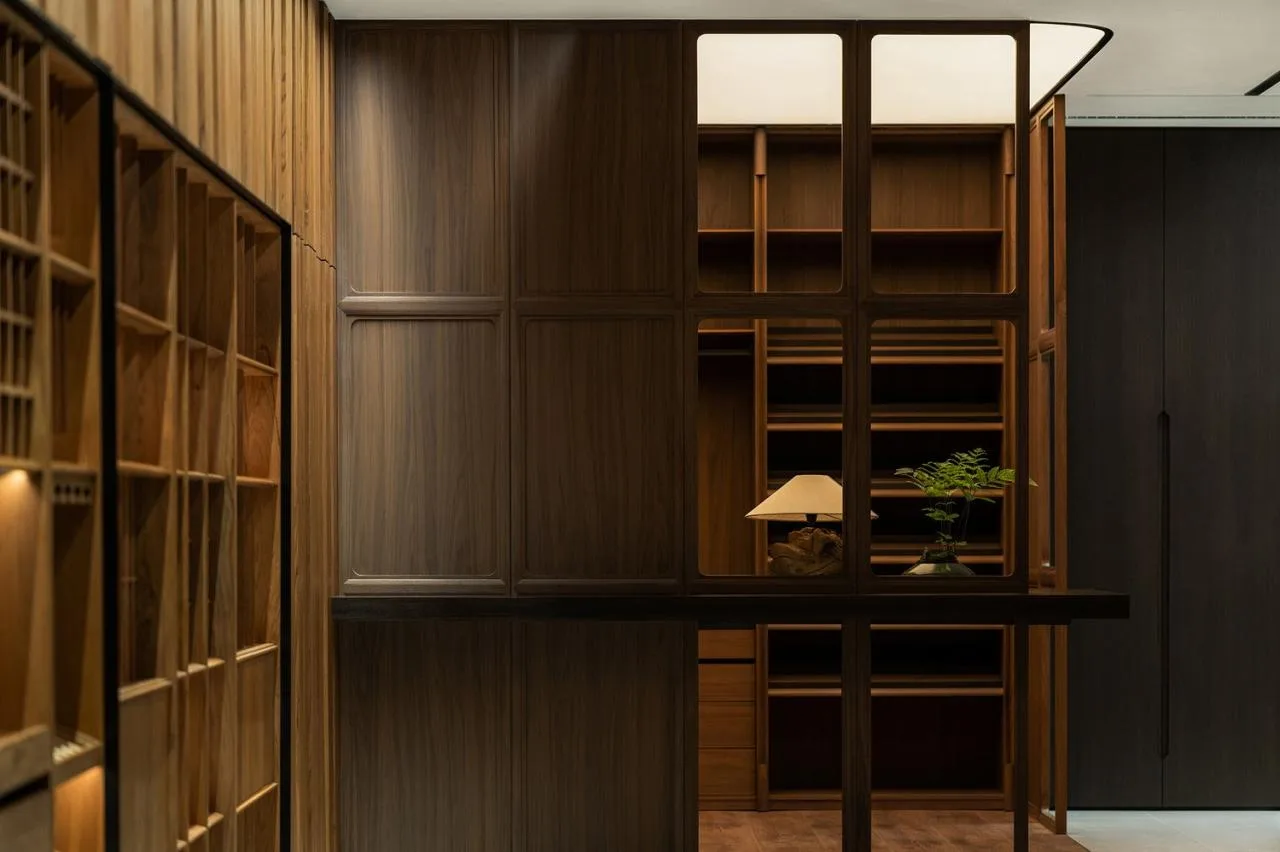
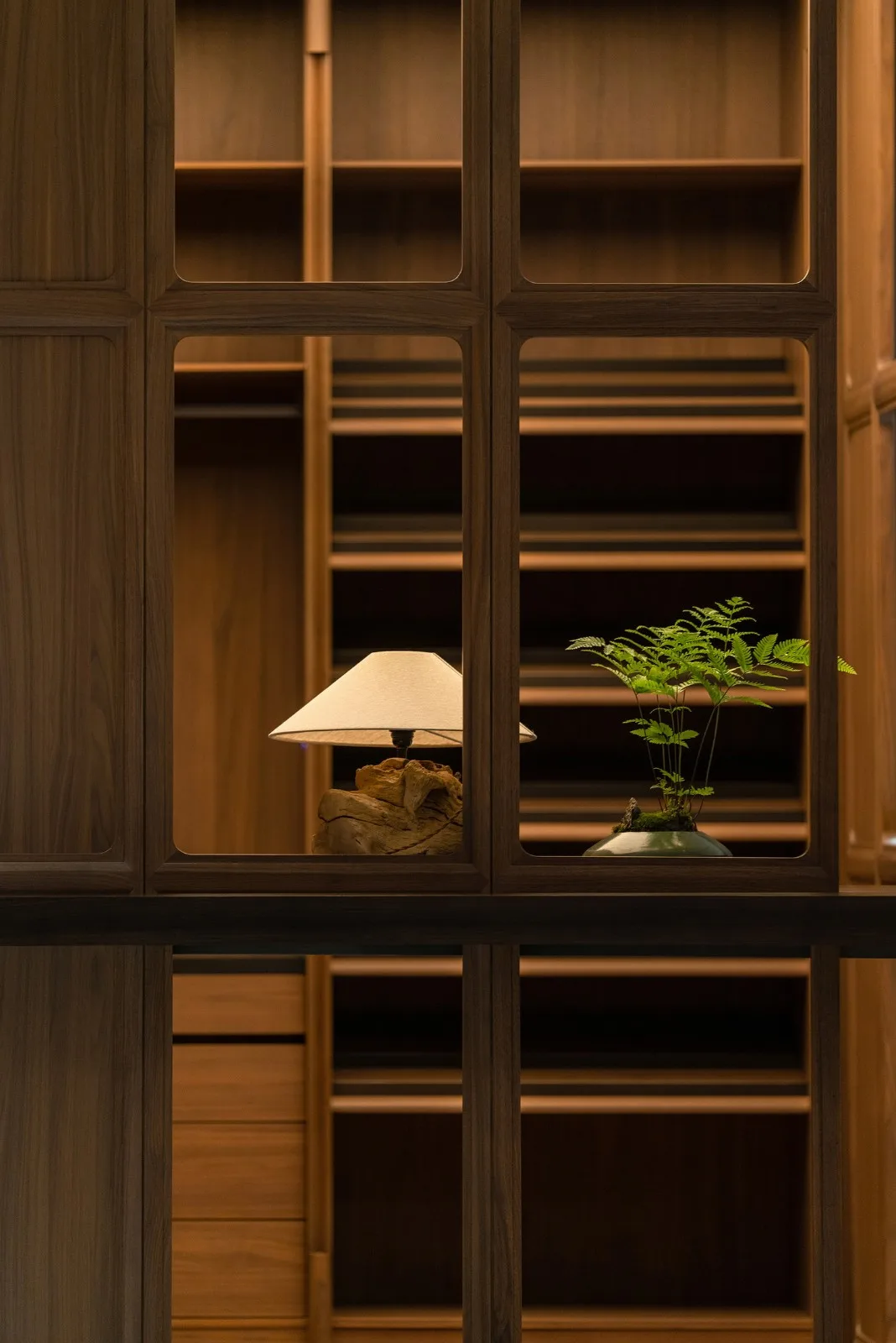
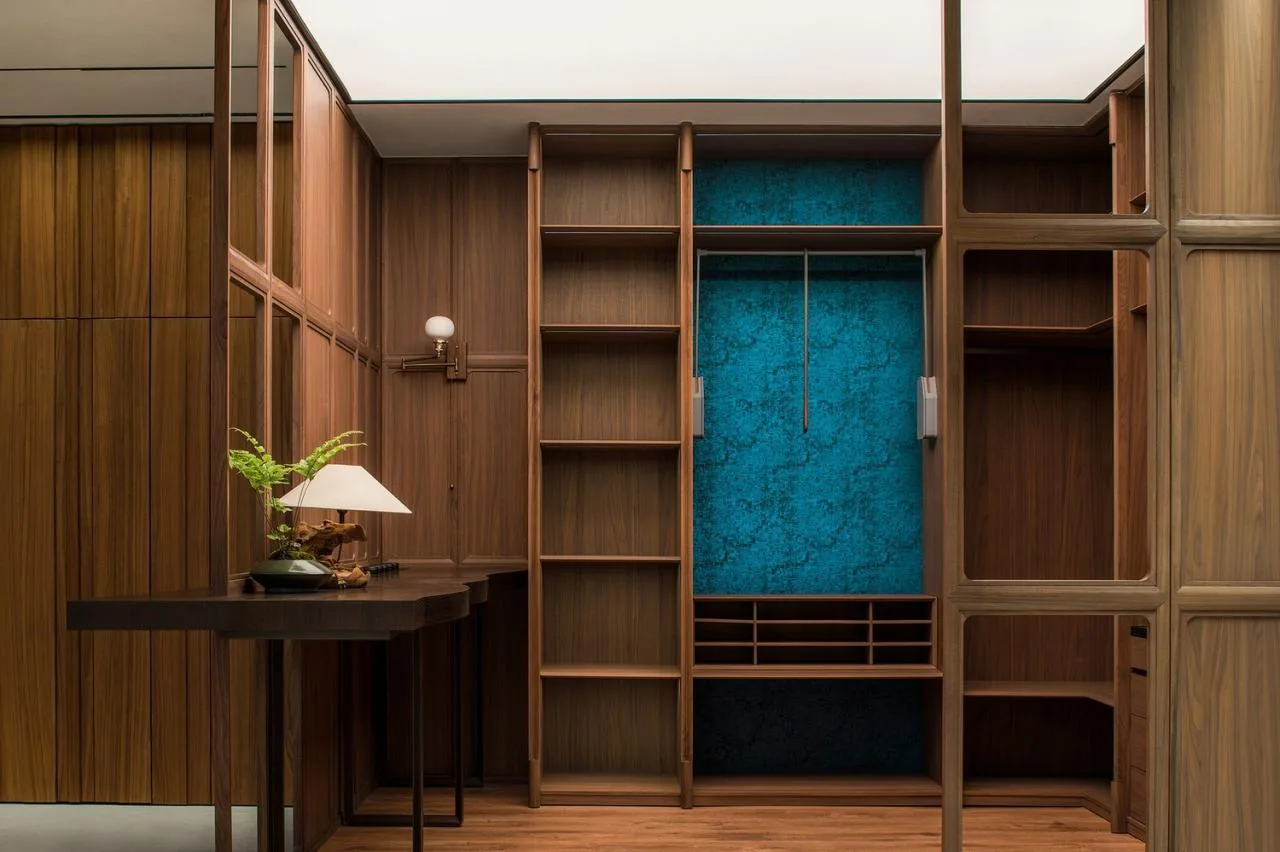
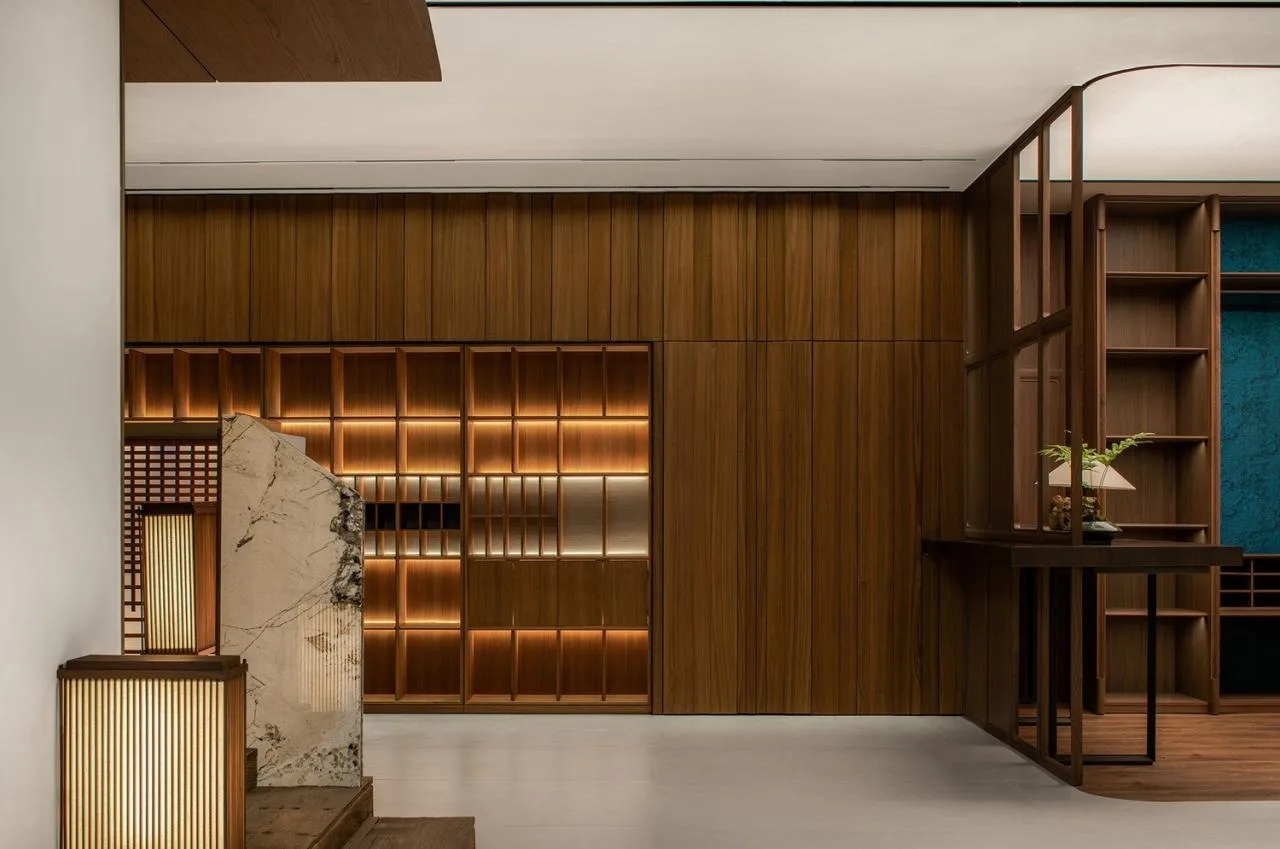
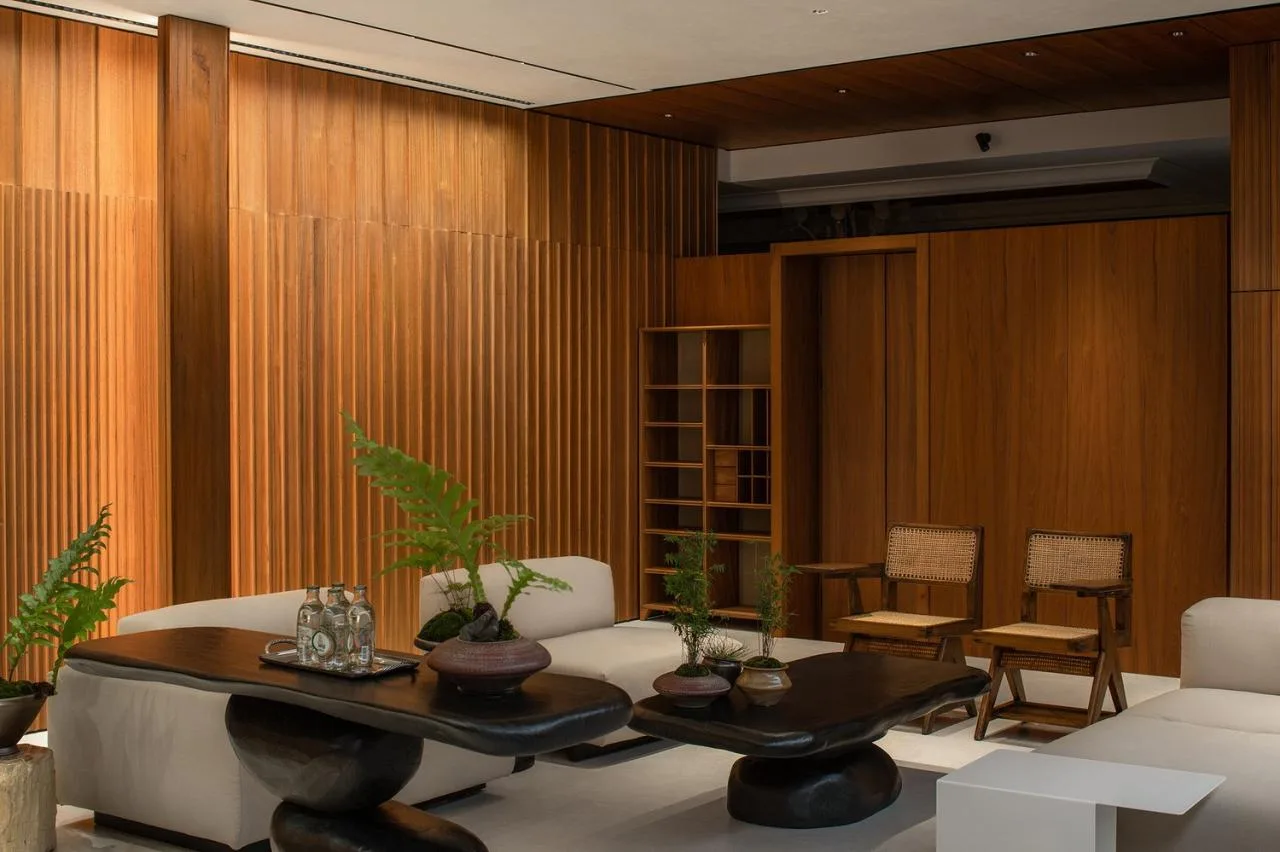
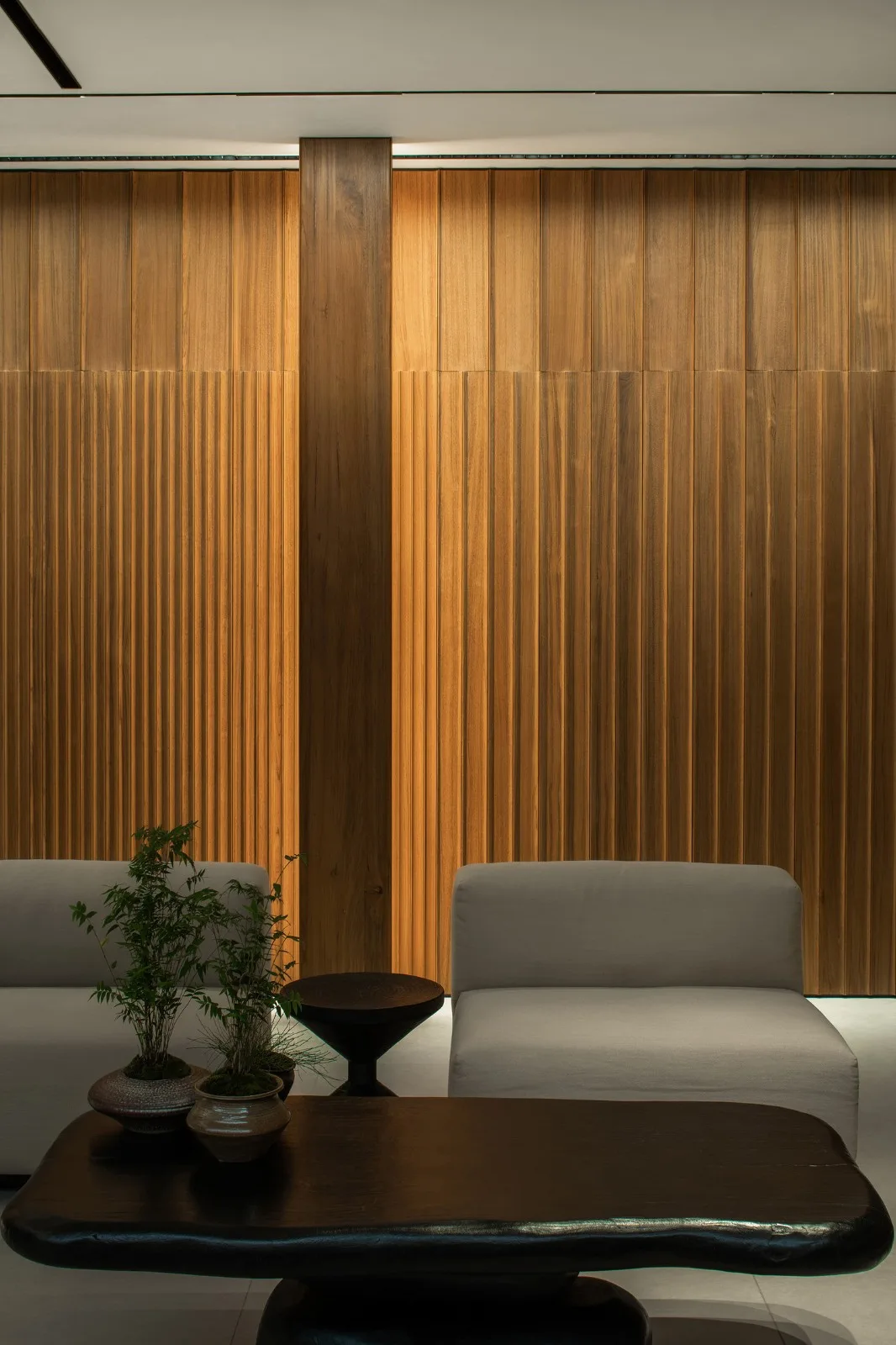
Upon entering the main area, structured wooden panels showcase rich formal details such as mortise and tenon joints, supports, and dividers. These elements enrich the spatial texture and silently convey the essence of home furnishings, highlighting both the spatial planning expertise of “native wood” and the craftsmanship of the brand.
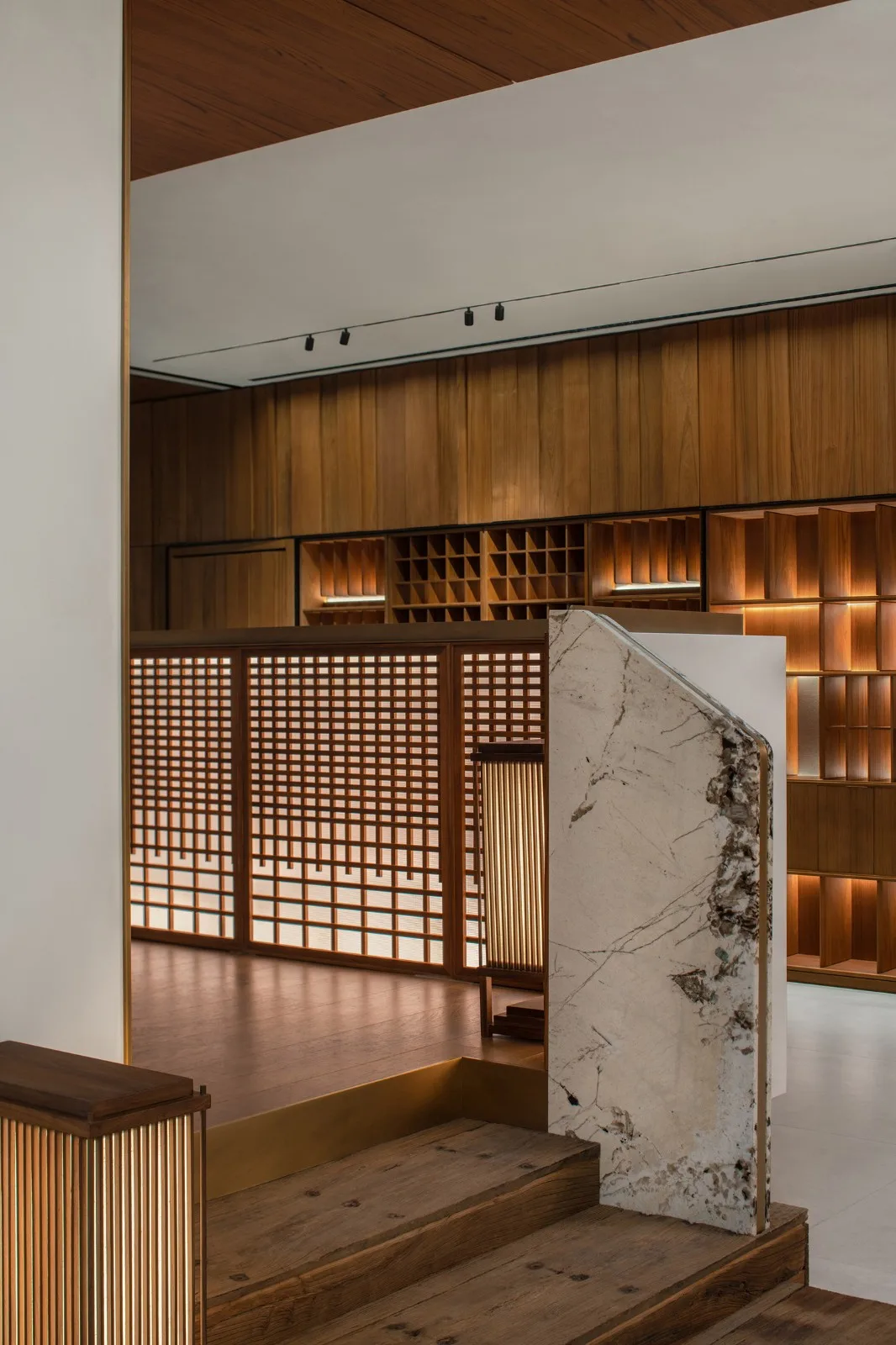
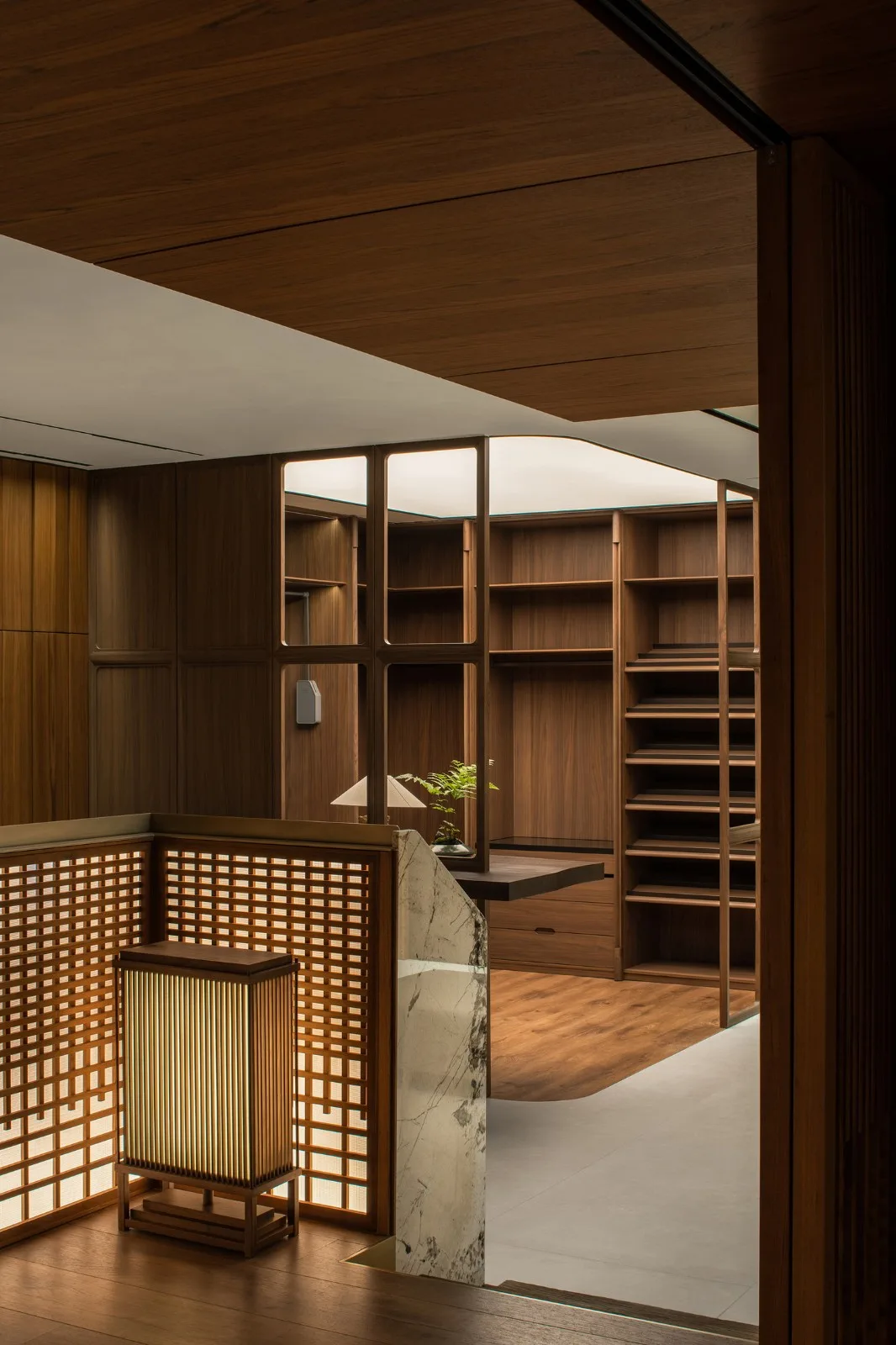
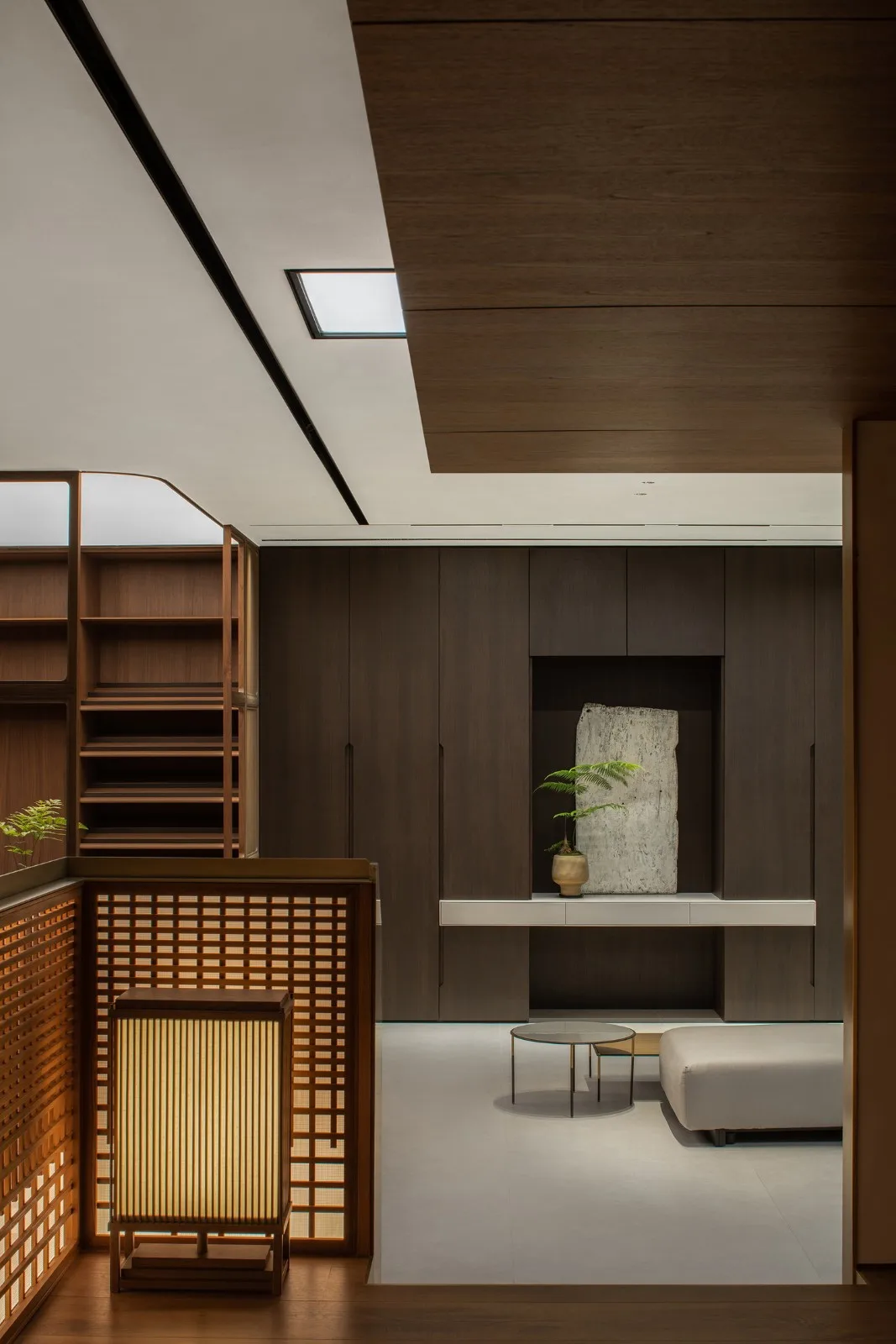
The designer achieves a cohesive overall effect by dividing and interweaving the textures and spaces of wood, reflecting a refined understanding. This symbolizes a blend of order, elegance, and modernity in life, filled with spirituality.
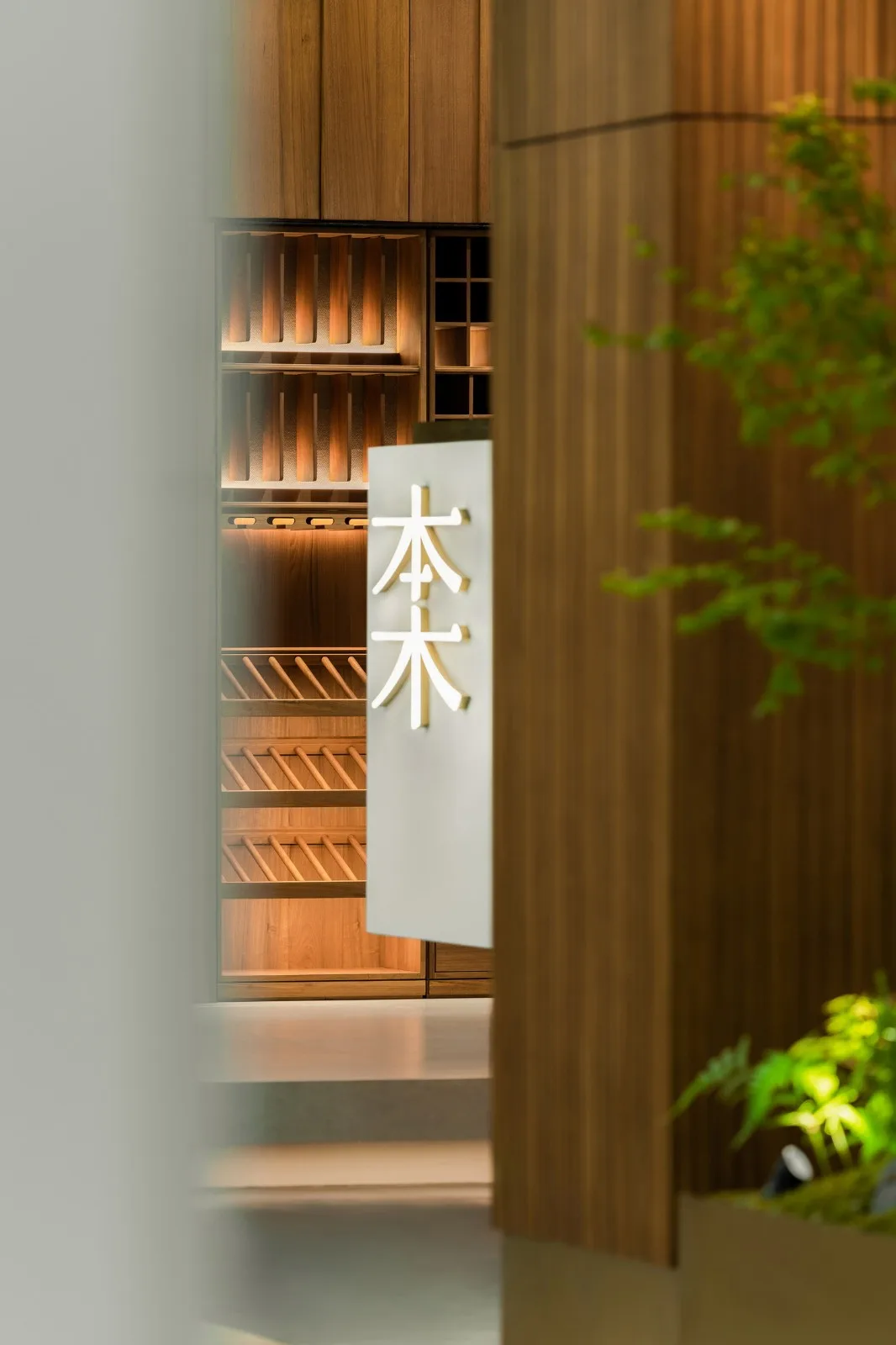
For the Benmu brand’s display space, the designer based the concept on psychological factors in mass communication, focusing on the theme of “communication”. This approach creates a logical link between three key areas: knowledge cognition, communication, and problem-solving.
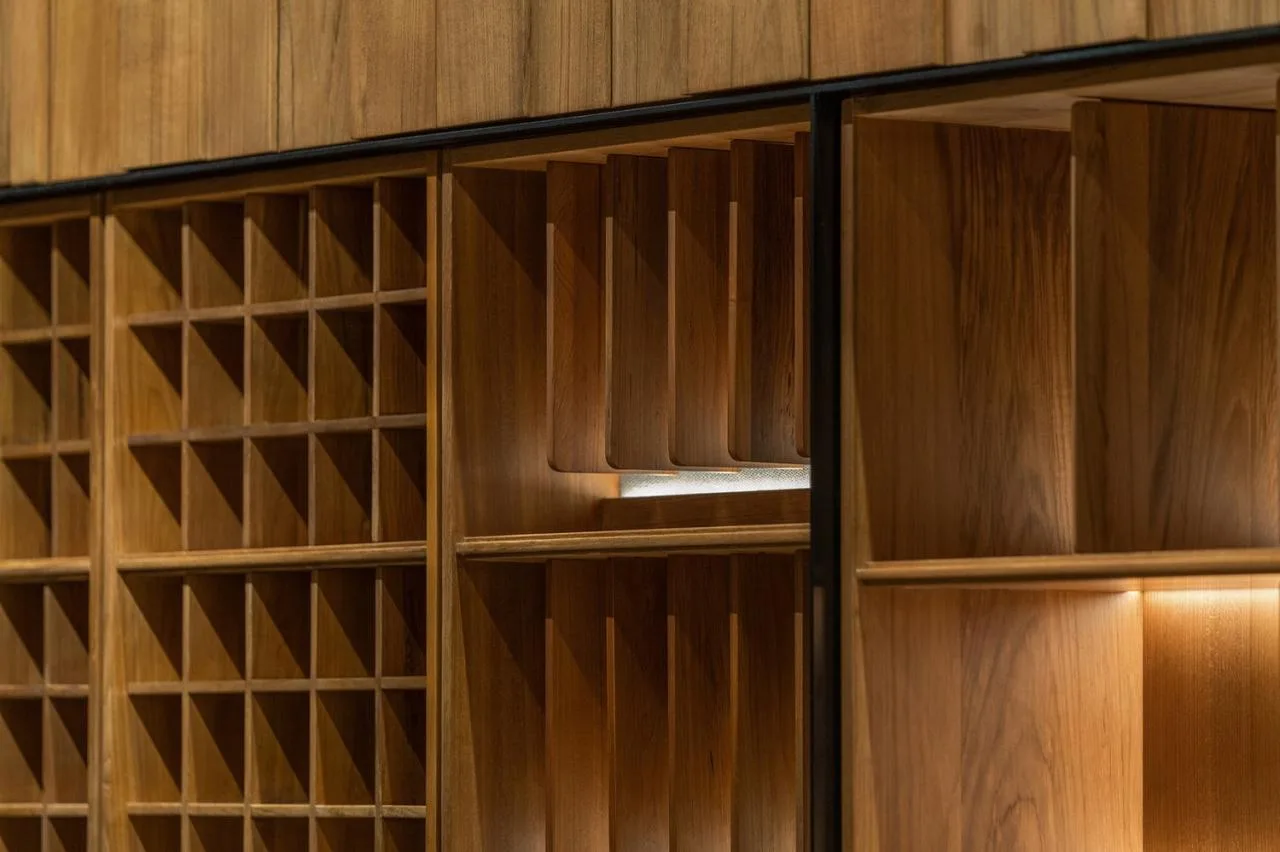
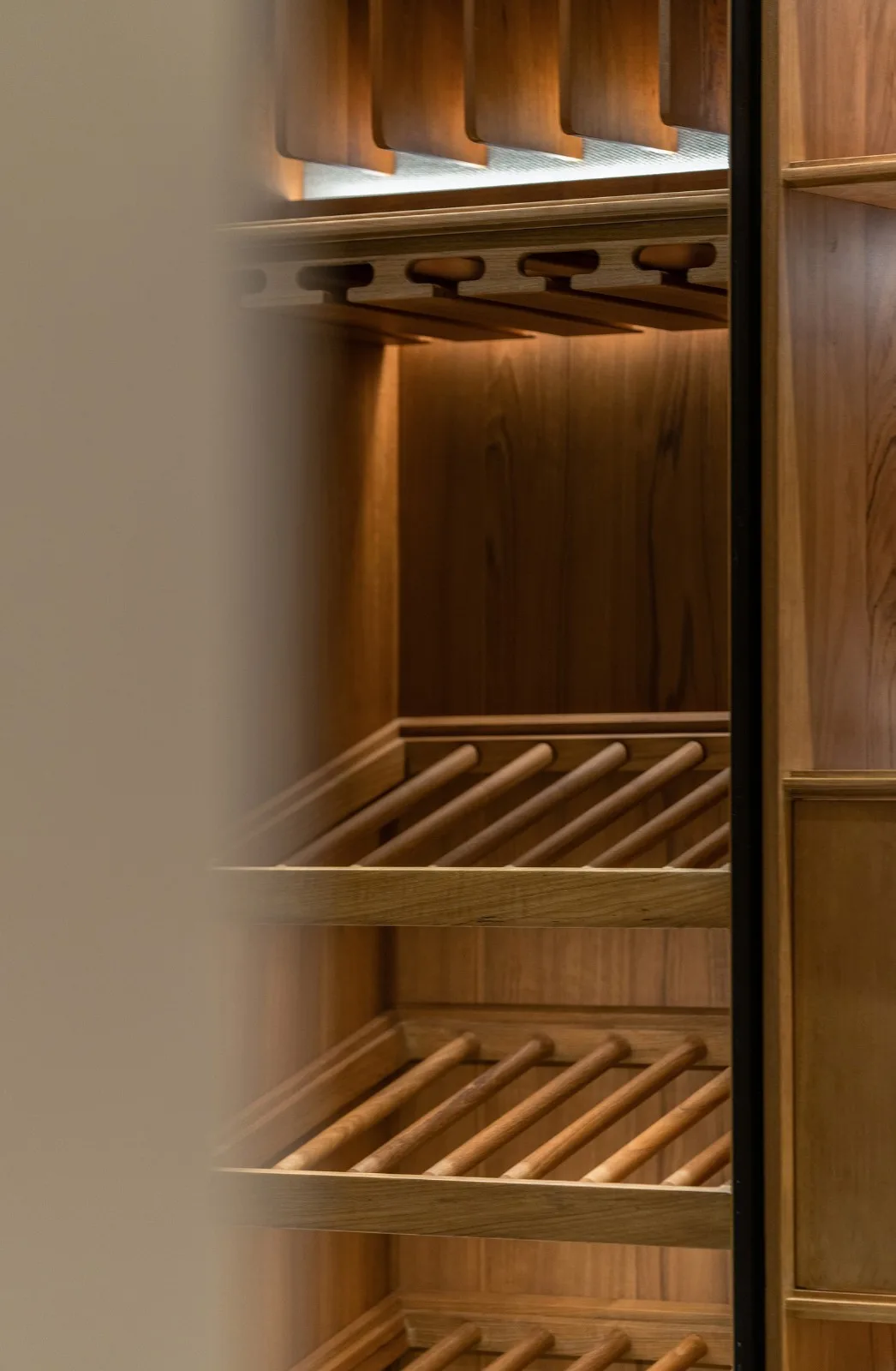
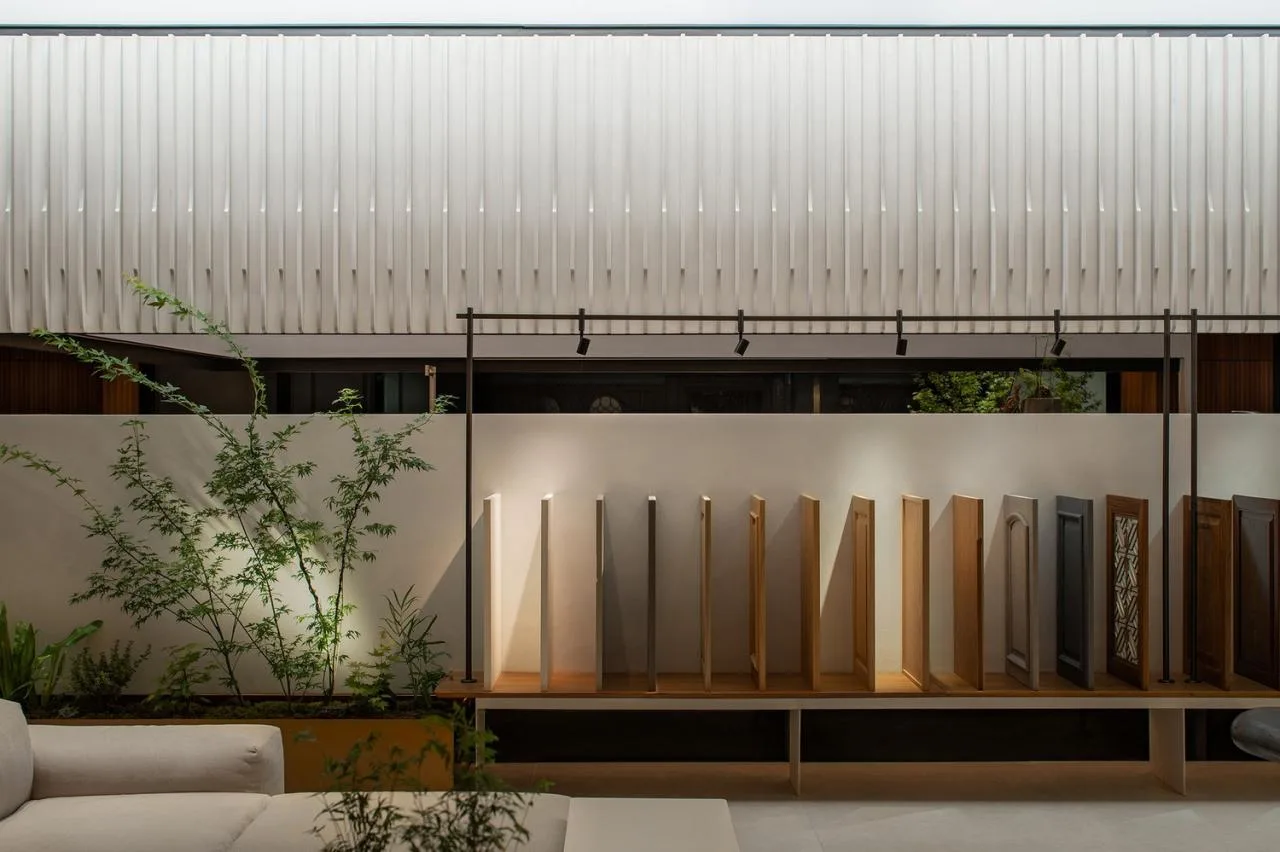
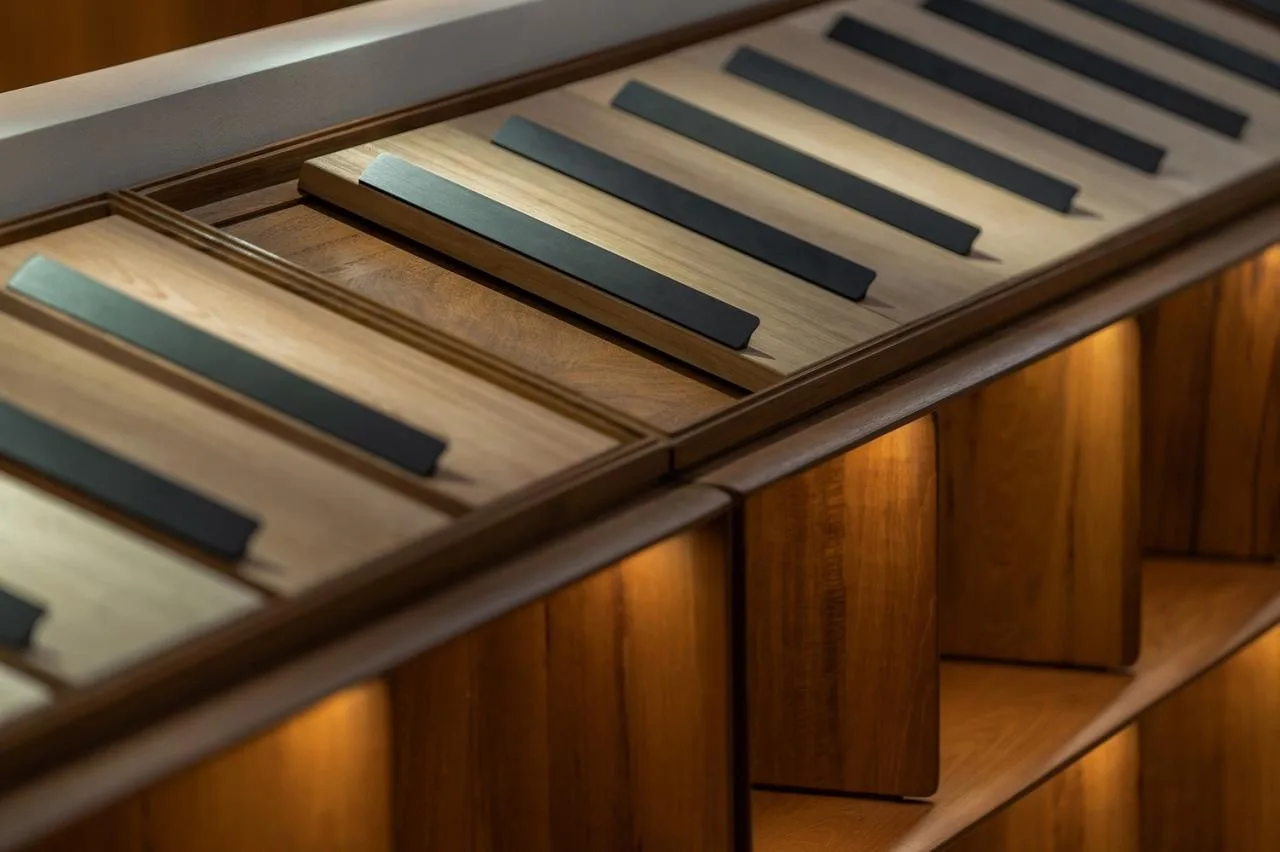
At the entrance, the cabinet display offers an initial impression of the tone and craftsmanship of Benmu products. Through an appropriate “brain repair” process, designers and clients can conceptually assess whether these wooden products meet their ideals, laying the groundwork for further decisions. Here, customers engage closely with the products through both “touch” and “vision.” Satisfying these sensory experiences allows customers to communicate and engage deeply with the staff at Honki, marking the true beginning of business dialogue.
Every product evolves from “materiality” to “humanity,” with humans ultimately giving the product its soul. In spatial design, imbuing products with a natural human warmth embodies the true meaning of communication and interaction.
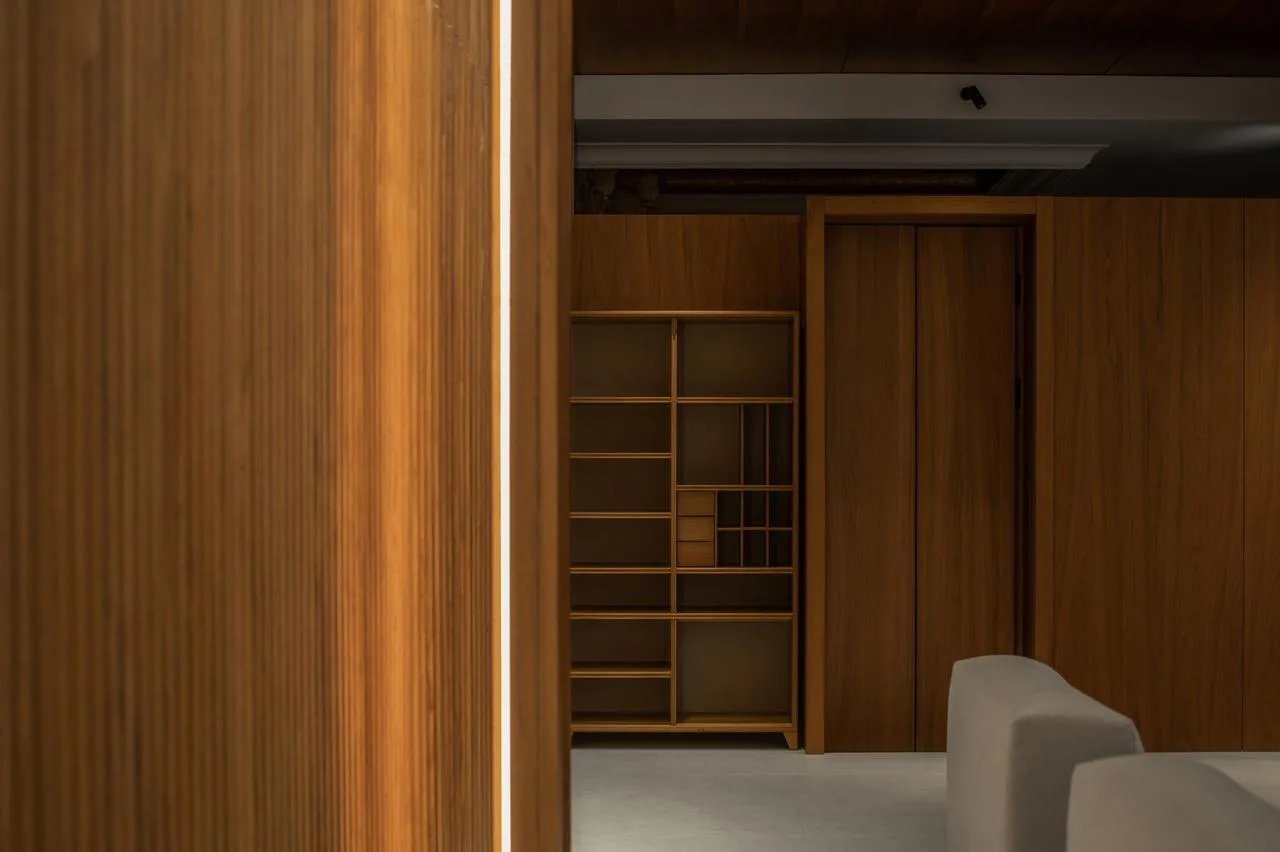
The area designed for interaction with visitors posed challenges; without careful planning, it could disrupt the spatial rhythm. After thorough consideration, spatial allocation, and close collaboration with the brand, the designer introduced a transparent cabinet structure as a transitional element at the end of the product display area. This allowed partitions to be flexible and interwoven, enhanced by varied lighting levels to foster natural and comfortable communication.
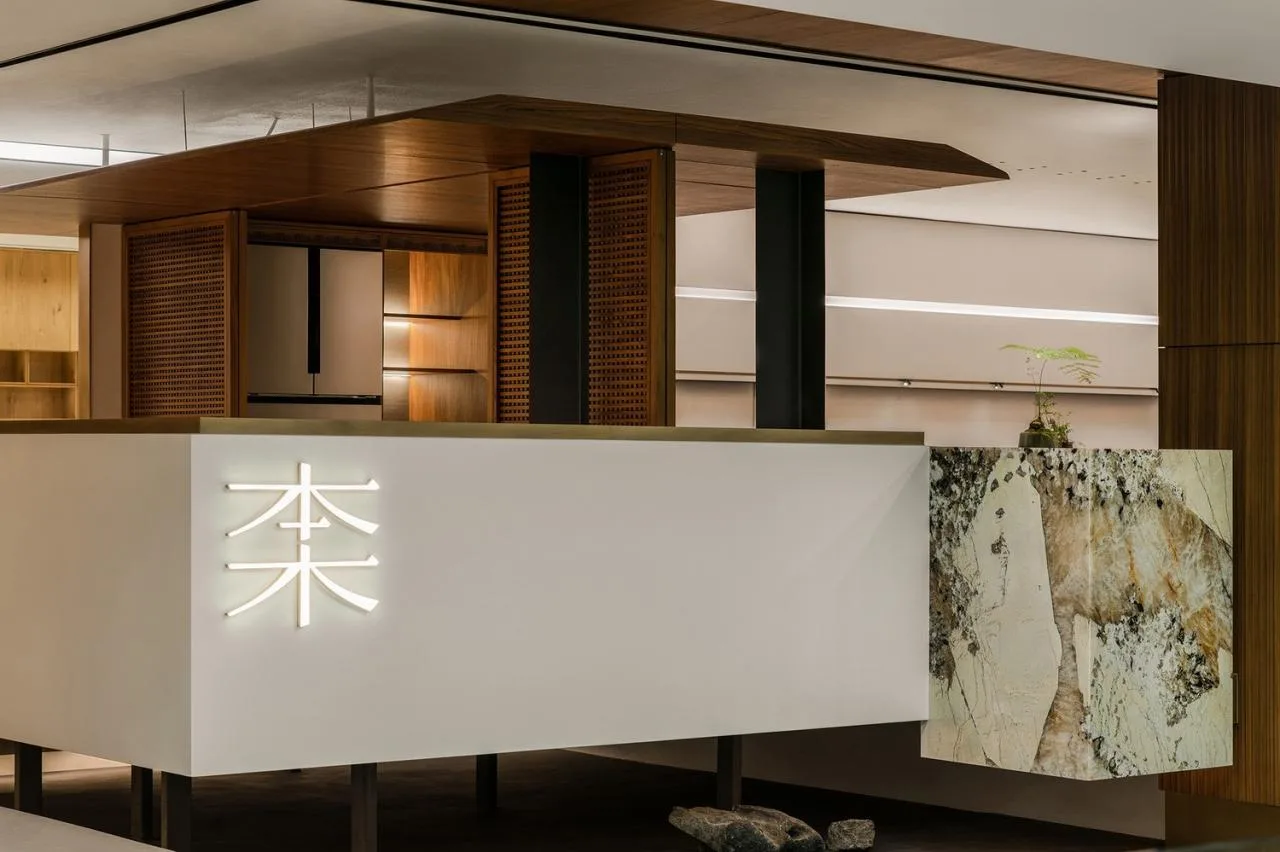
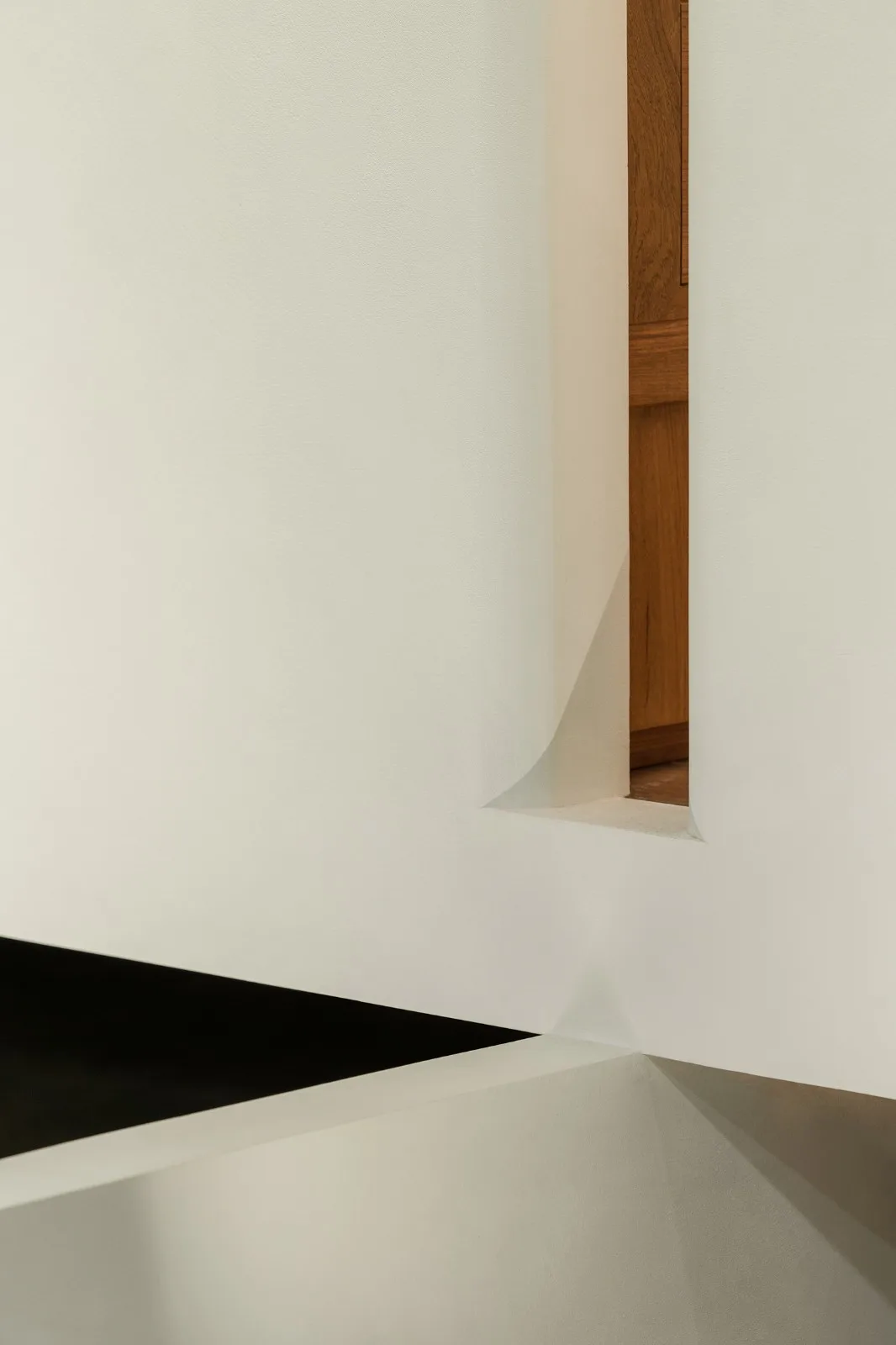
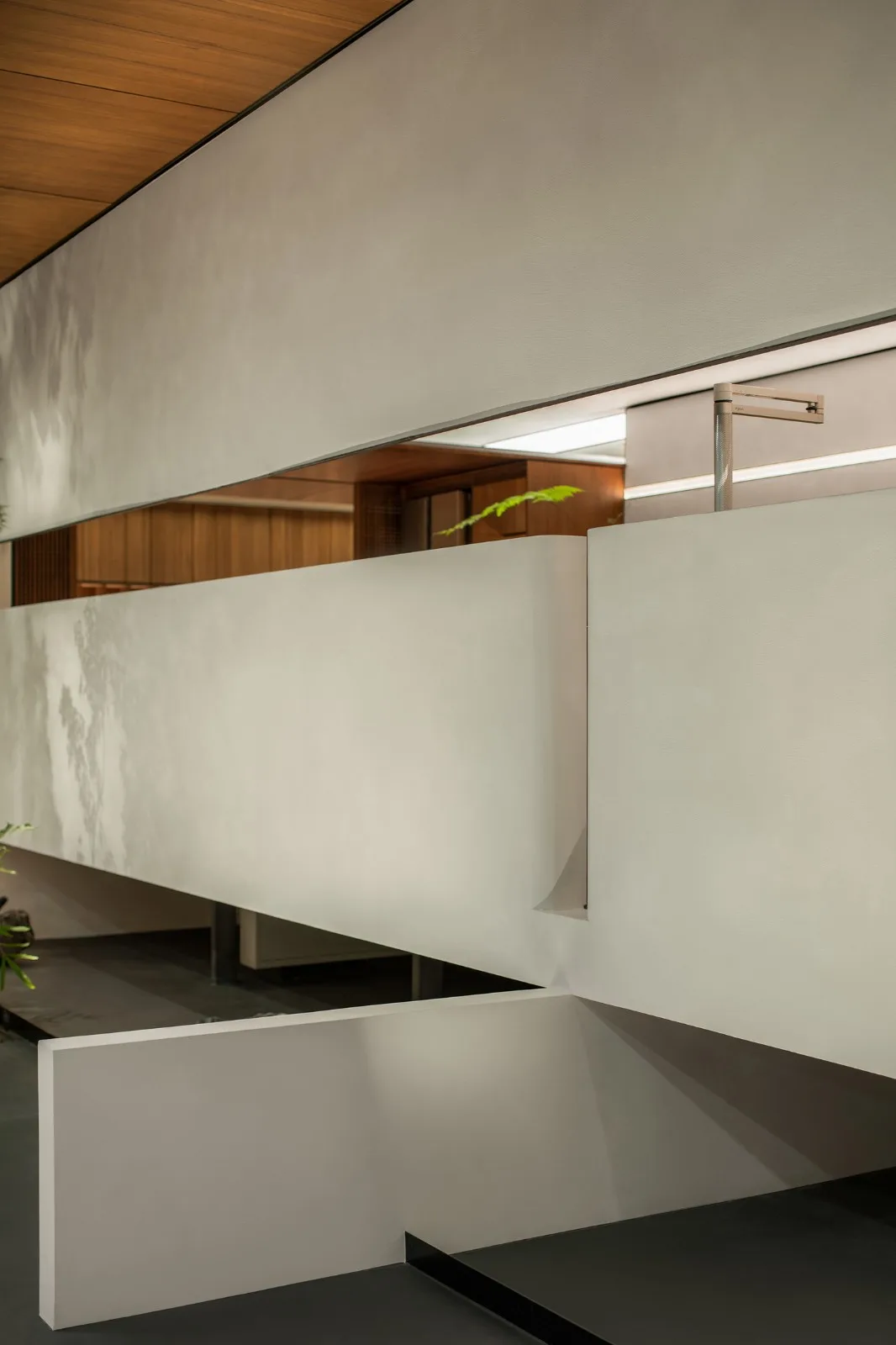
One of the most striking design features is the spatial division where different zones intersect overhead rather than at floor level. Here, the lighting shifts dramatically, featuring dynamic, clean lines and exquisite craftsmanship.
To facilitate plan discussions within the exhibition space, the designer integrated a white box structure that is horizontally connected and visible from both inside and outside. Its elevated base adds delicacy and a sense of lightness.
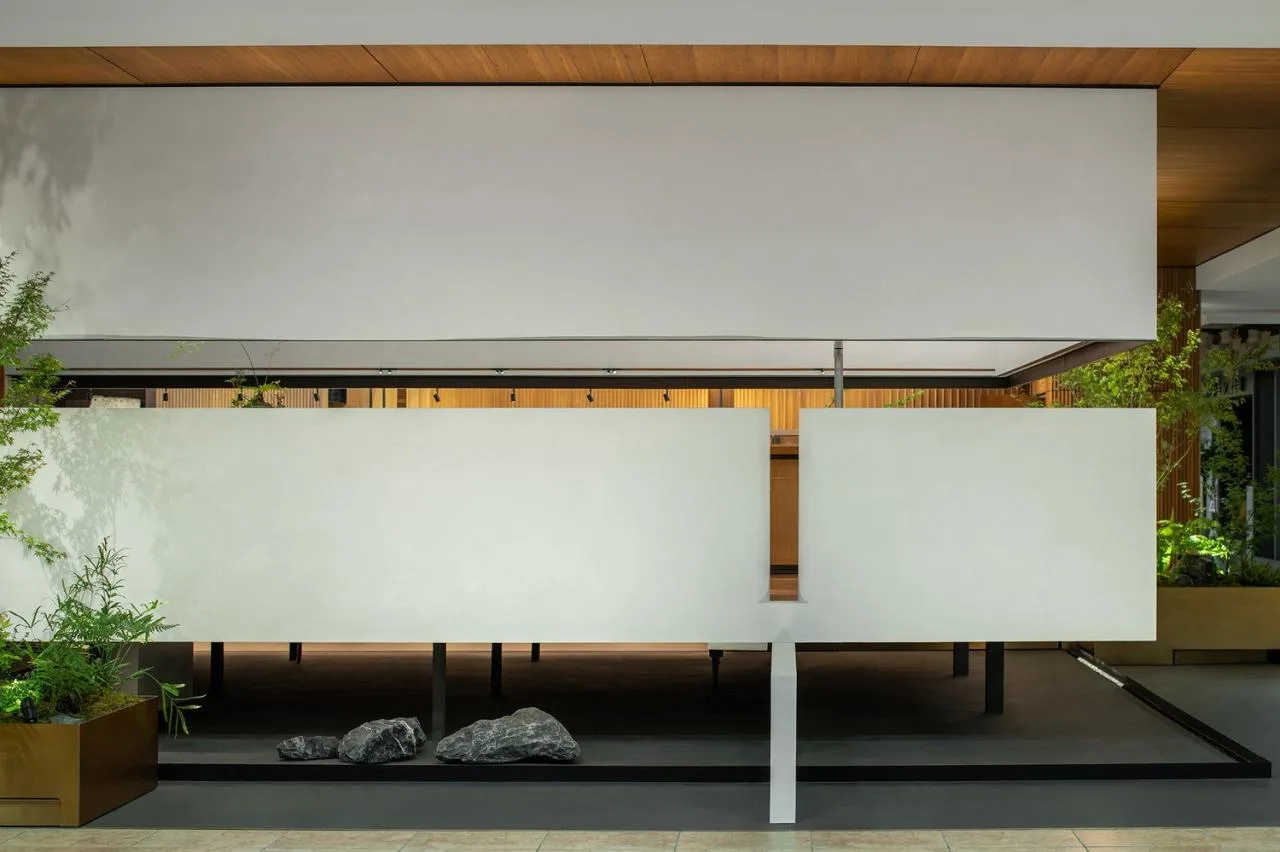
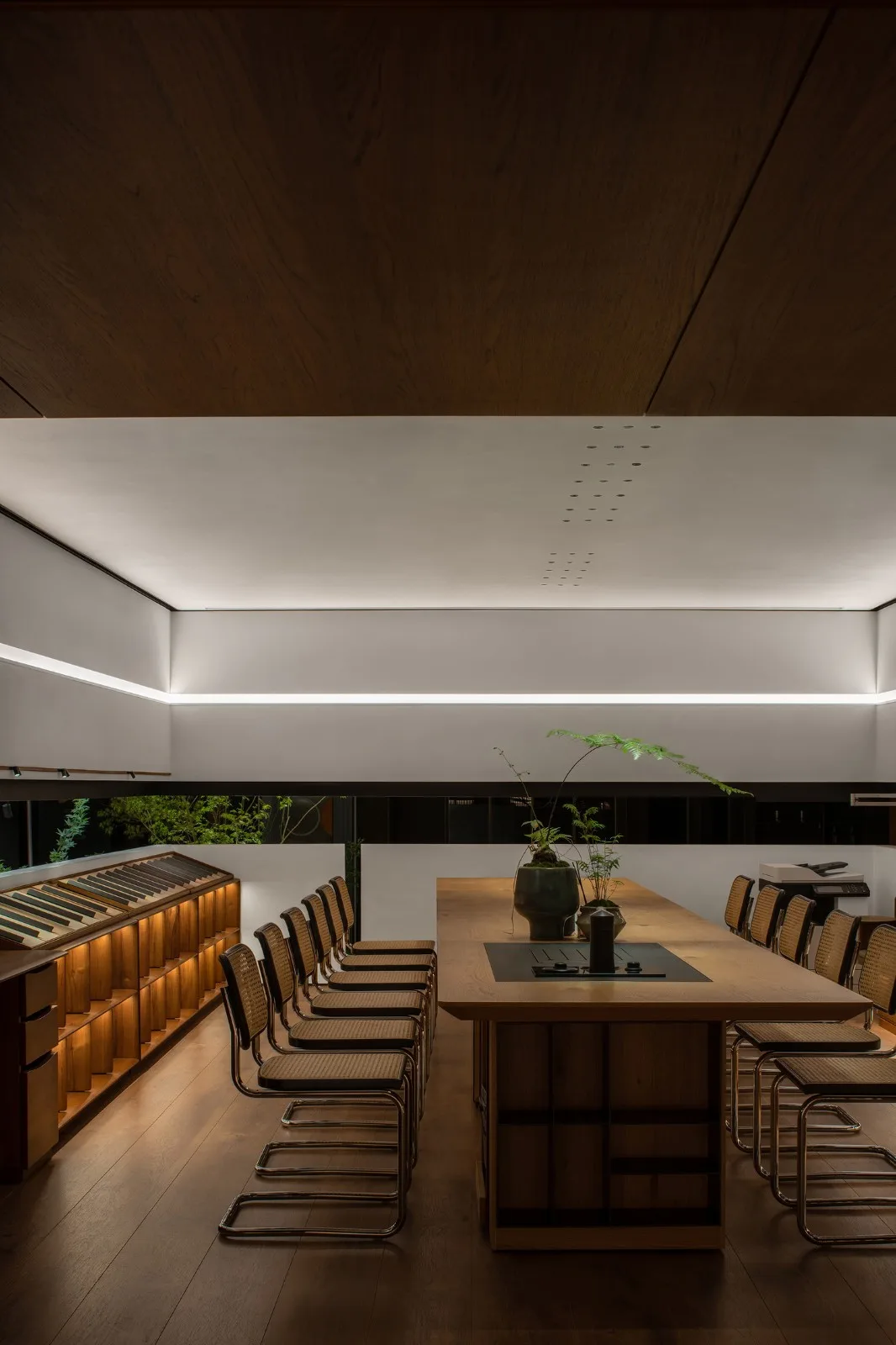
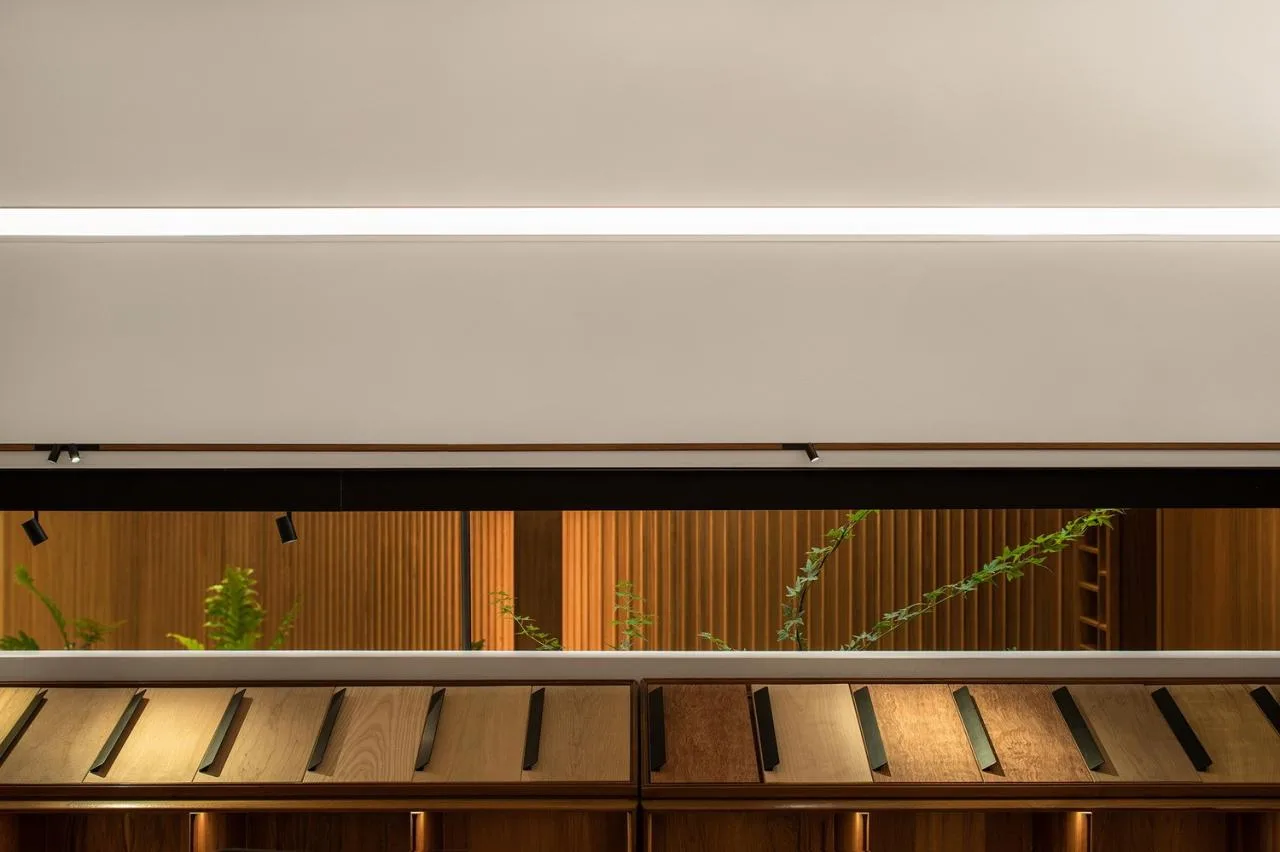
The designer thoughtfully incorporated indoor landscaping elements, decorating the edges of the elevated platform with rugged stones and using plant branches to define spatial boundaries. This creates a lively yet tranquil ambiance. The height of the long window spanning the upper section of the box was carefully designed to balance visual privacy and openness. This design naturally divides and shares the reception and discussion zones, fostering a communicative environment.
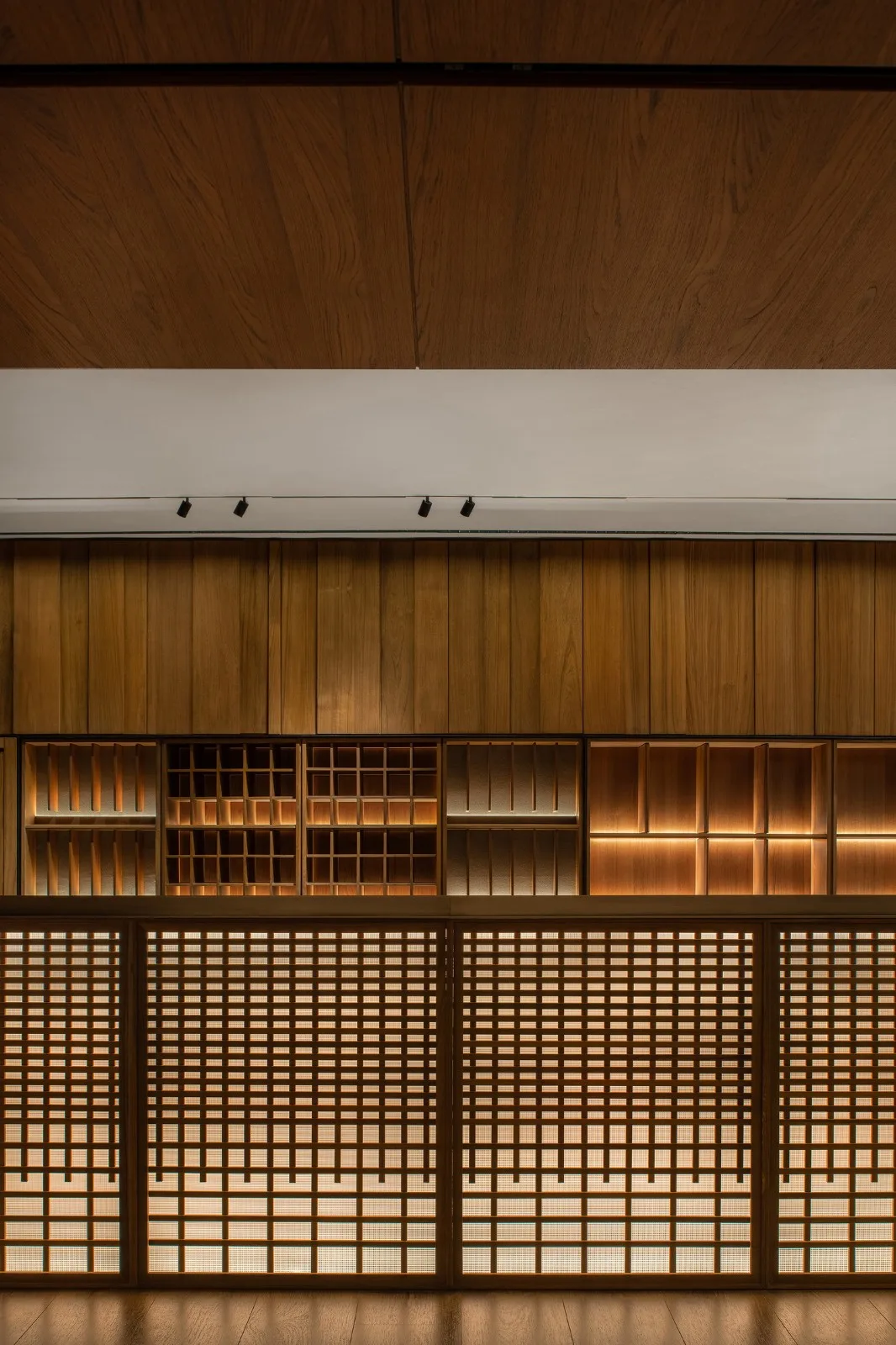
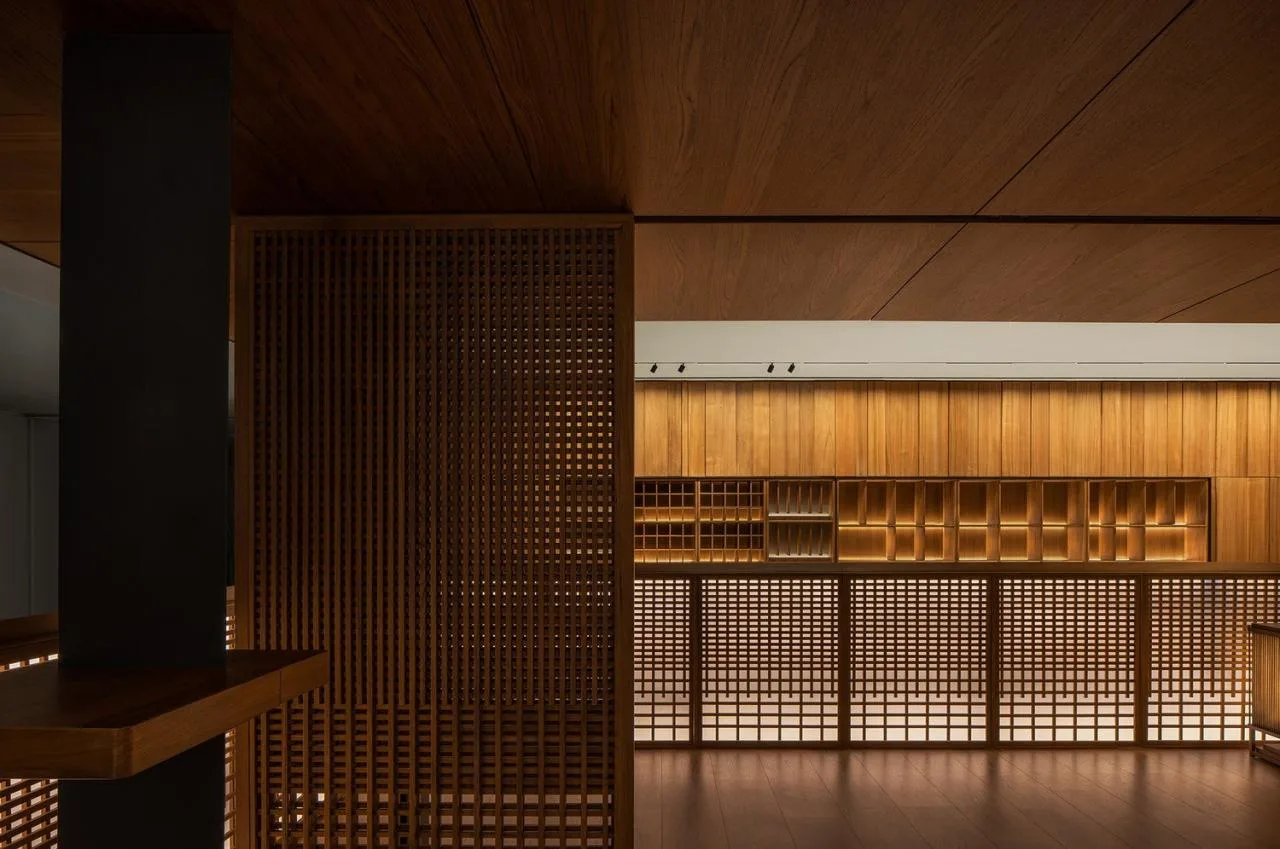
The designers’ visual treatment of the space is exquisite. They used wood lattices to create intricate wooden grilles and rhythmic divisions, controlling the ambiguity and depth of sightlines. This allows views to penetrate and focus within the space, subtly highlighting Benmu’s dedication to its products. As spatial designers, Hummingbird Design prioritizes atmosphere, reflecting integrity and simplicity throughout the transformation.
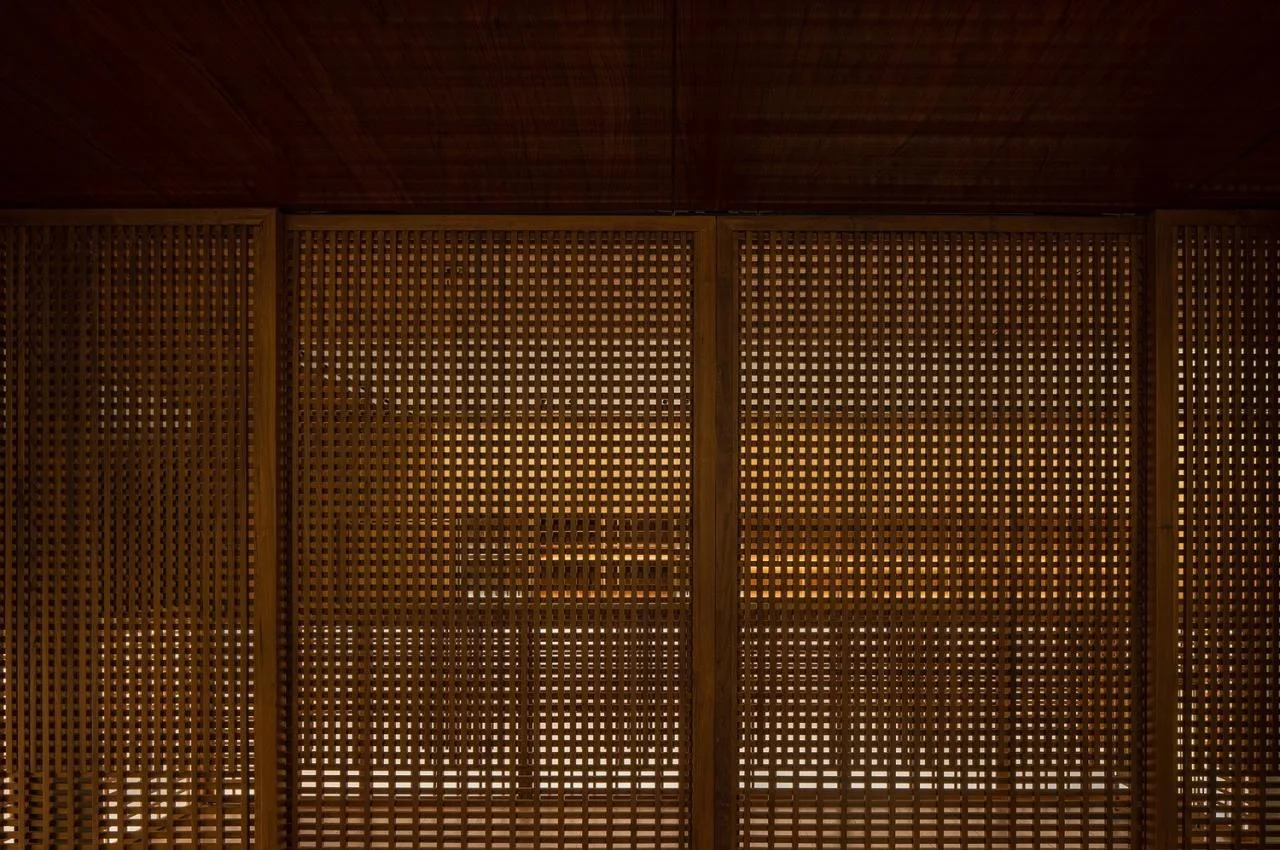
All of this echoes Colin Rowe’s discussion in Transparency: “parallel perspective, compressing depth of field, shrinking space, clarifying light source, pouring objects, controlling color, oblique lines and linear grids, and the tendency to develop towards the periphery… This layered spatial structure—the mechanism by which space is organized, shaped, and expressed clearly—is the essence of phenomenal transparency.” Here, everything is as precise as clockwork.
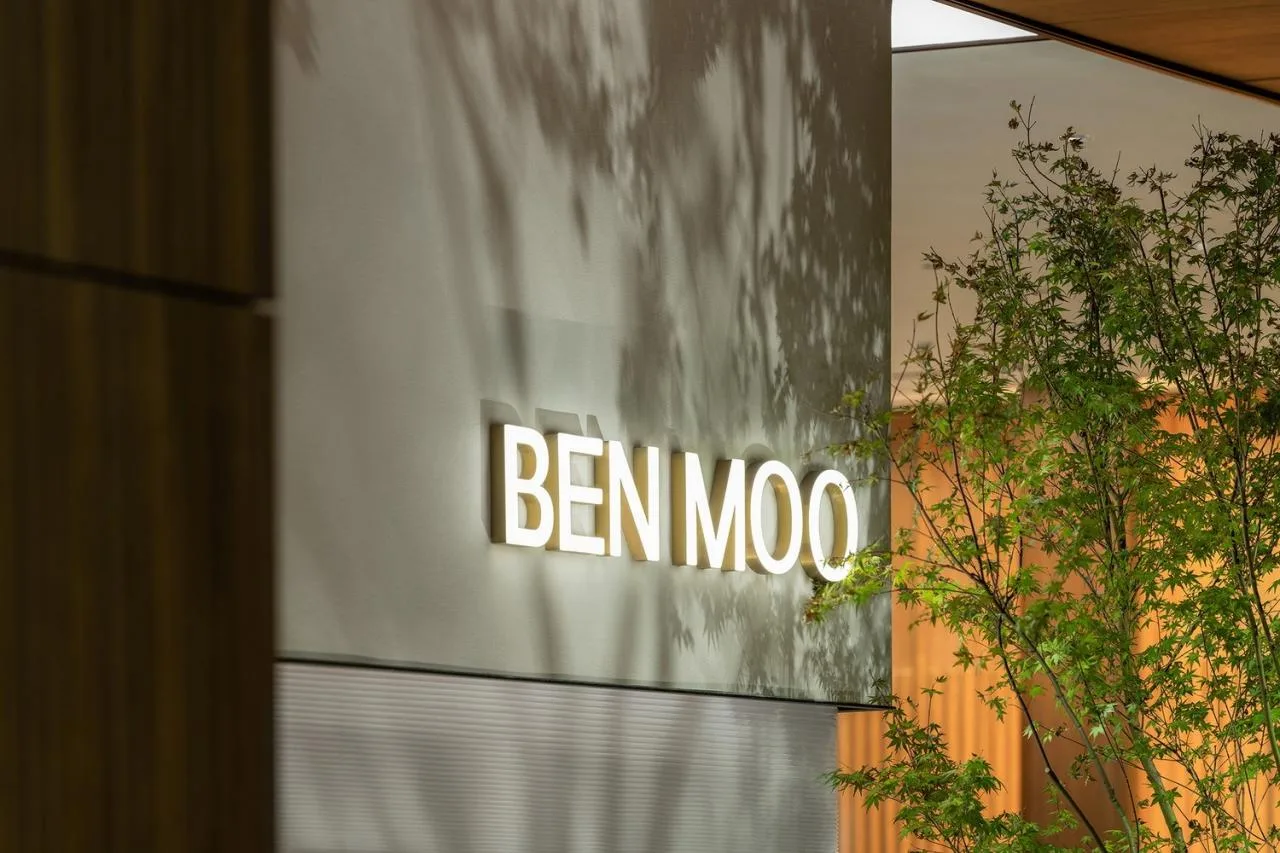
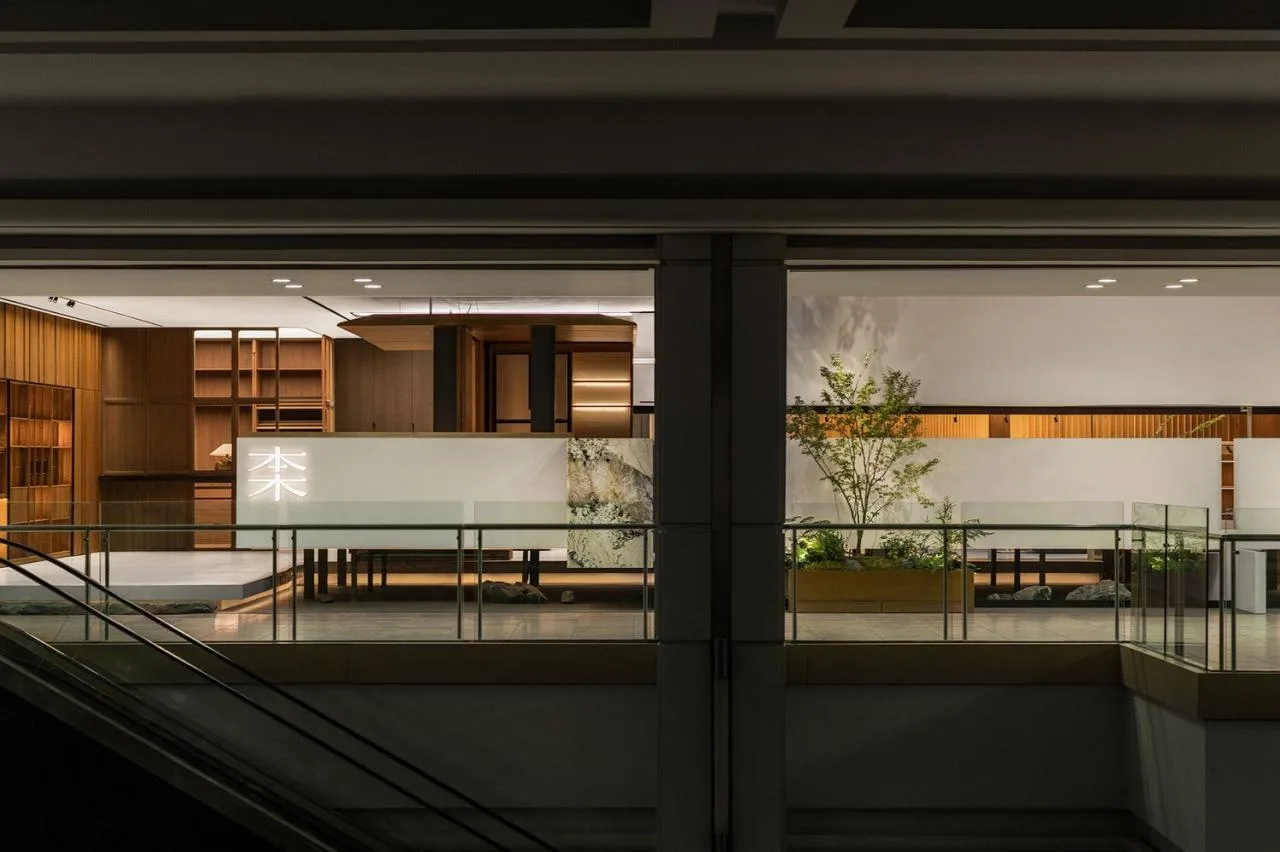
The Benmu brand exhibition hall flows like a piece of music in a “minor key.” It contains no conflicts or contradictions but is rich and nuanced. Here, fashionable leaps, elegant refinement, contemporary precision, and classical connotations blend seamlessly, offering visitors a space to savor. The experience is smooth and fluid, much like a joyful stream moving forward.
Project Information
Project Name: Benmu Brand Exhibition Hall
Location: 5th Floor, Fushengmei Home Furnishings Store 2, No. 99 Duhui Road, Chengdu City
Design Area: 229 square meters
Design Date: June 2021
Completion Date: April 2022
Whole House Customization: Benmoo (www.benmoo.com)
Design Team: Hummingbird Design
Lead Designers: Liu Ruiyan / Tang Jiajun
Special Thanks: Photographer Hechuan















Must log in before commenting!
Sign Up