
BIM has become a widely recognized term in the architecture industry, with its applications continually expanding. To help you better understand BIM and prepare effectively for BIM exams, we have compiled a reference guide on essential BIM software.
BIM Basic Software
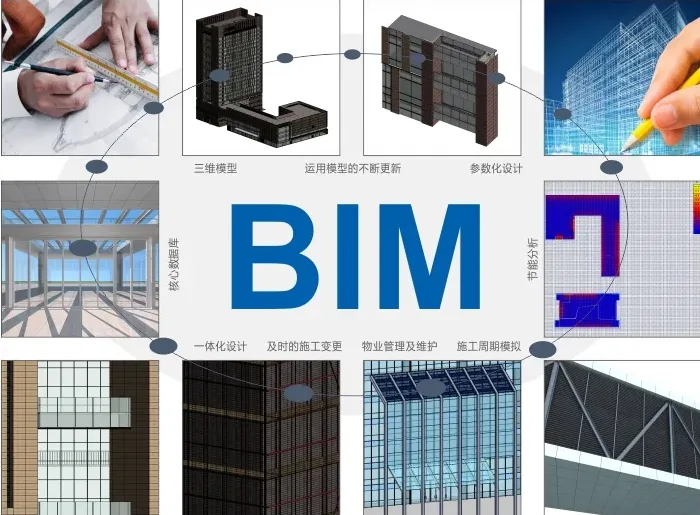
BIM basic software primarily serves as a building modeling tool focused on 3D design. The models created with this software form the foundation for all subsequent BIM applications.
In traditional 2D design, building plans, elevations, and sections are often developed separately, which can lead to inconsistencies. Moreover, these designs usually consist of CAD lines that cannot be further processed by computers.
3D design software addresses these issues by creating a single, unified model. The plans, elevations, and sections are all different views of this 3D model, ensuring consistency across all drawings. Additionally, the 3D components can be utilized by other BIM applications through standardized 3D data exchange formats.
Currently, the leading BIM modeling software providers are Autodesk, Bentley, Graphisoft, and Dassault. Their key software includes:
- Autodesk: Revit architecture, structural, and MEP (mechanical, electrical, plumbing) series have gained strong market presence in civil construction, benefiting from Autodesk’s established AutoCAD platform.
- Bentley: Bentley’s architecture, structural, and equipment suites excel in factory design (petroleum, chemical, power, pharmaceutical industries) and infrastructure projects (roads, bridges, municipal works, water conservancy).
- Graphisoft: After Nemetschek acquired Graphisoft in 2007, products like ArchiCAD, AIIPLAN, and Vectorworks merged under one company. ArchiCAD is well-known globally and was one of the earliest influential BIM modeling tools. However, in China, its focus on architecture alone limits its adoption in multidisciplinary design firms.
- Dassault: CATIA is a high-end mechanical design and manufacturing software widely used in aerospace, automotive, and aviation industries. In construction, CATIA offers superior modeling, visualization, and information management for complex or large-scale projects. Its main limitation is a lack of integration with typical construction industry workflows and personnel.
When choosing BIM core modeling software for a project or organization, consider these guidelines:
- For civil buildings, Autodesk Revit is recommended.
- Bentley is the preferred choice for factory design and infrastructure projects.
- For specialized architectural firms, selecting ArchiCAD, Revit, or Bentley is acceptable.
- For unconventional projects with large budgets, Digital Project or CATIA can be considered.
This overview of BIM basic software aims to provide helpful insights for your BIM journey.
Source: Author: BIM Website Source: BIM Website
















Must log in before commenting!
Sign Up