
What is Building Information Modeling (BIM) and what are its basic principles? Autodesk Revit Architecture is a specialized BIM software designed for architectural design. It focuses on the idea of components and features a parametric design engine that automatically manages drawing updates and references. This approach aligns with traditional architectural thinking and accurately represents real-world buildings.
Parametric components, also known as groups, form the foundation of all building elements designed within BIM. These components are created based on design concepts and forms, offering an open graphical system that enables users to fine-tune and clearly communicate design ideas in detail.

1. Principles and Development of BIM
BIM is a technology centered on digitization and parameterization. It traces back to Autodesk’s 3D, object-oriented CAD system tailored for architecture, engineering, and construction (AEC). The concept was first introduced by Professor C.M. Eastman of the Georgia Institute of Technology in the late 1970s, originally named the Building Product Model.
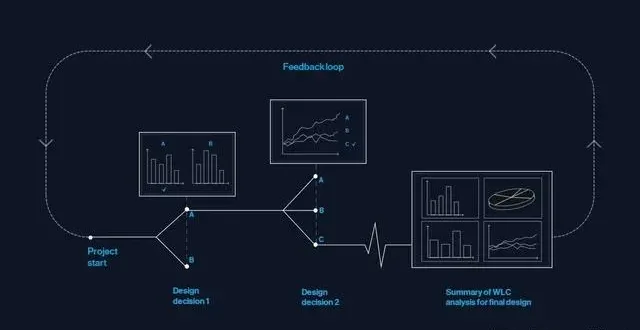
Thanks to its Parametric Change Engine, BIM ensures high-quality, reliable, and coordinated consistency throughout a project. It offers continuous and immediate control over design, detailed material lists, and cost-related information. BIM’s systematic approach analyzes multiple dimensions such as spatial relationships, functions, construction methods, materials, operations, and interactions of building components.
By applying object-oriented technology, BIM assigns these analyzed attributes to each graphical component. This object-oriented, parametric nature helps reduce errors and omissions in quantity calculations.
2. BIM’s Object-Oriented Concept
The object-oriented approach uses object patterns to represent real-world systems. In construction, buildings are made up of individual physical components such as columns, beams, slabs, walls, doors, windows, stairs, and more. Each component carries properties like length, width, height, geometric and coordinate orientation, as well as engineering characteristics.
This object-oriented thinking works well to represent real-life elements. Building a BIM model involves constructing the structural framework with components like columns, beams, slabs, and walls, shaping the building’s appearance and internal functional spaces. Decorative materials are then layered on top, creating the aesthetic and functional spaces we recognize as living rooms, bedrooms, bathrooms, kitchens, and so forth.
3. BIM Component Relationships and Attributes
The physical relationships and interactions between components in a 3D model are crucial information generated by the system. Structural components are closely linked; for example, columns connect with beams, beams relate to columns and slabs, slabs connect with columns and beams, and walls contain openings that relate to columns, beams, and slabs.
Understanding these interactions is essential during calculations. Relationships between components can be internal or external.
Internal relationships determine mutual support and dependency between components and define the surfaces that form the building’s spatial boundaries. External relationships can be managed through software parameter settings.
Defining both internal and external relationships of physical components establishes the recognition of the building model’s spatial system and enriches it with multiple attribute values.
That concludes this introduction to the fundamentals of BIM. I hope this overview has been helpful to you!
Source: Author: China BIM Training Network Source: China BIM Training Network
















Must log in before commenting!
Sign Up