
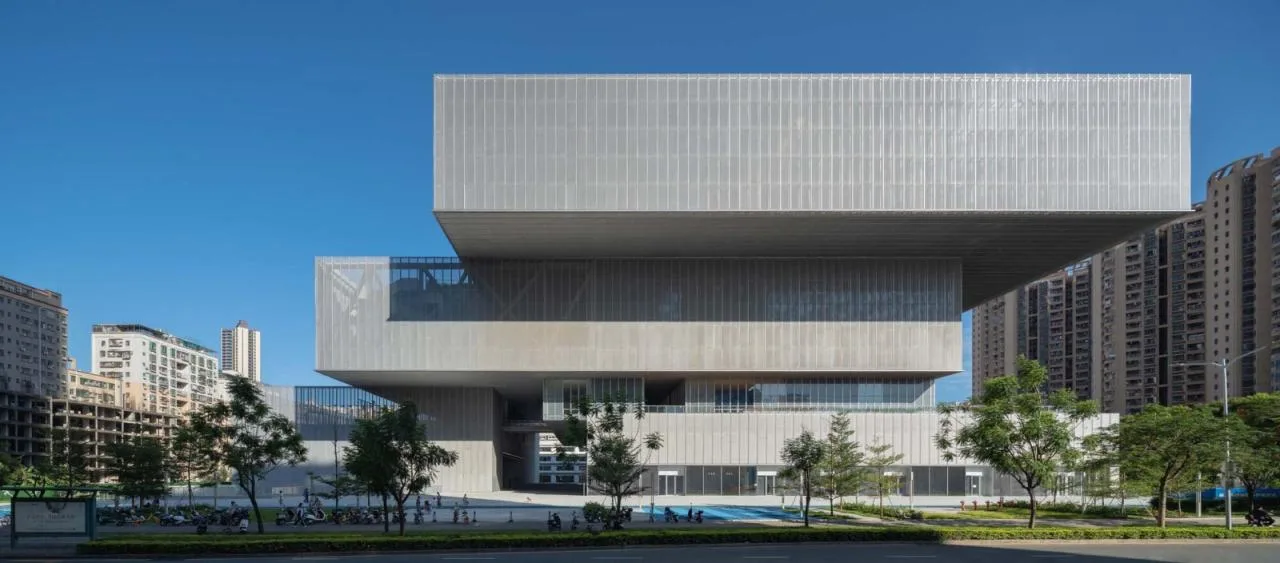
After five years of dedicated design and construction, the Jian Shang Sports Complex is now complete and fully operational.
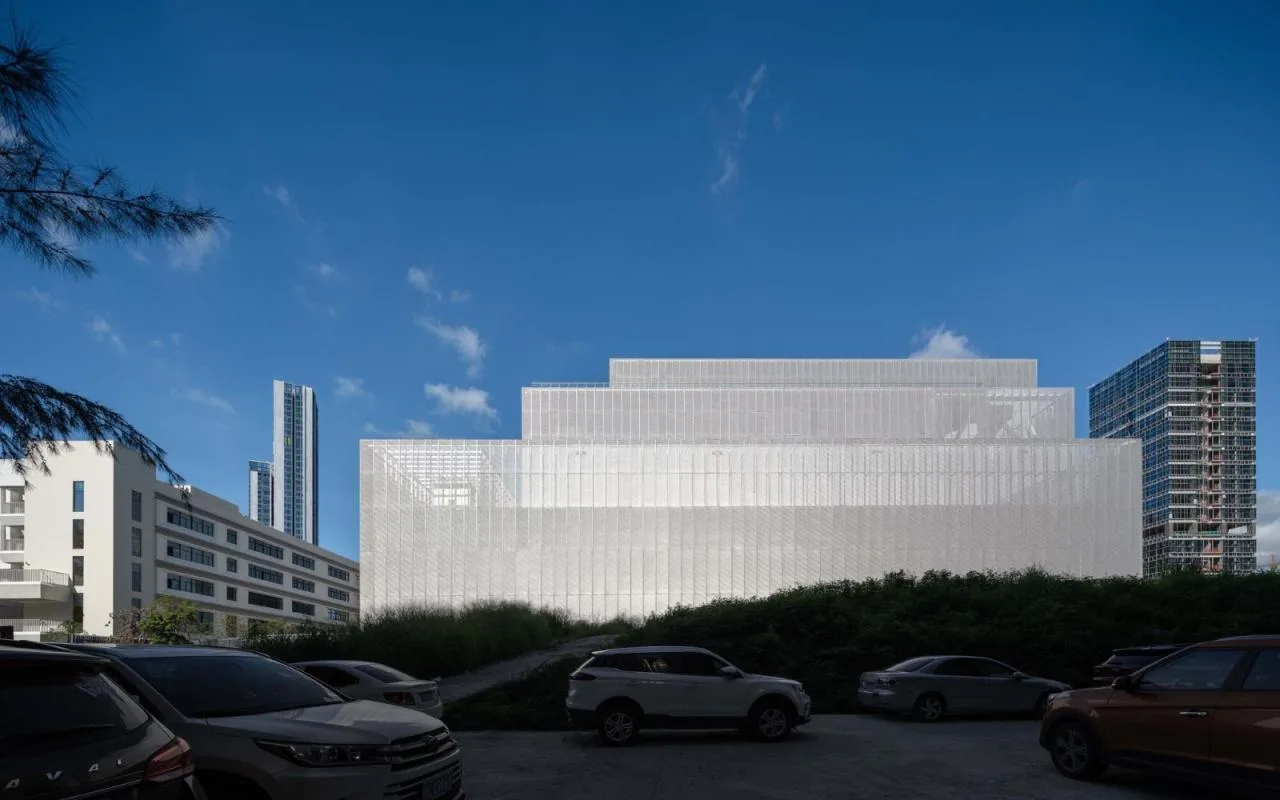
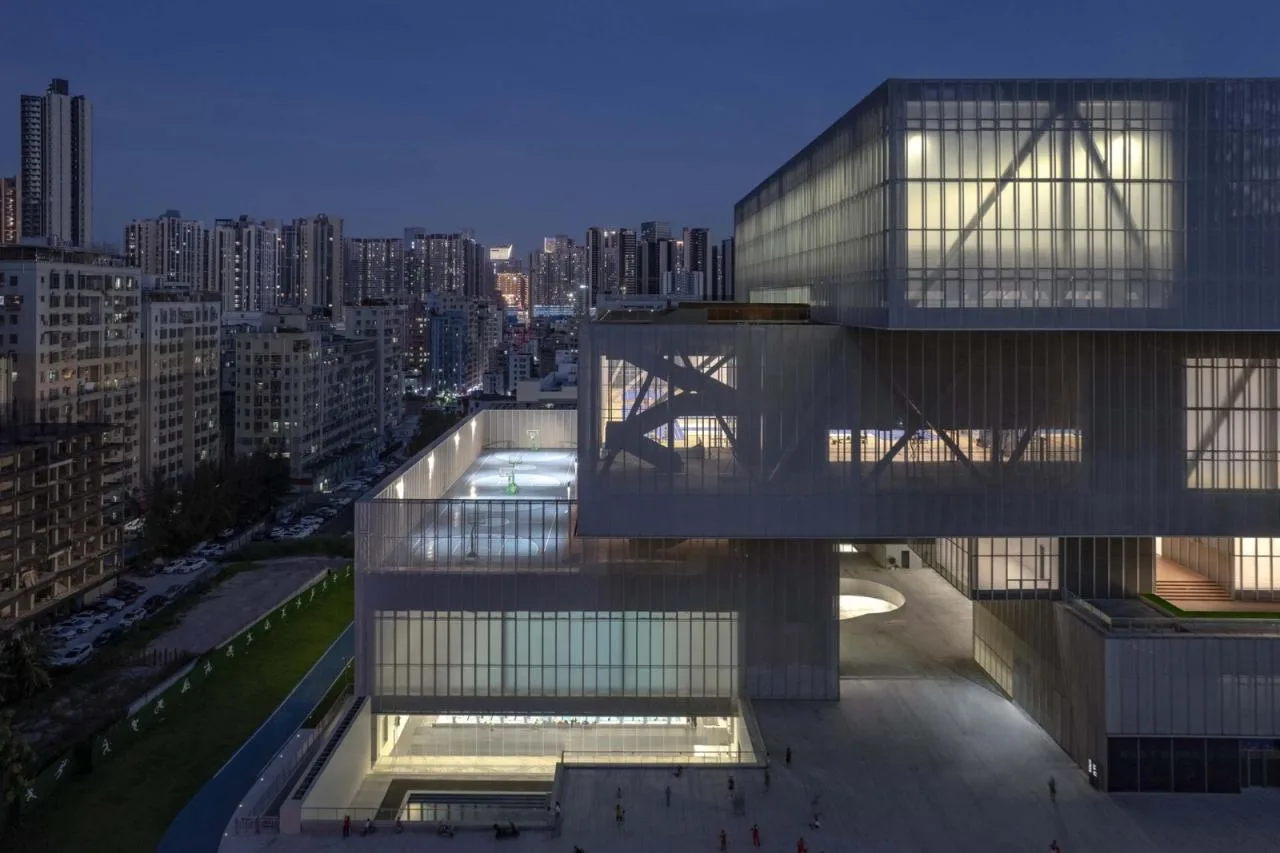
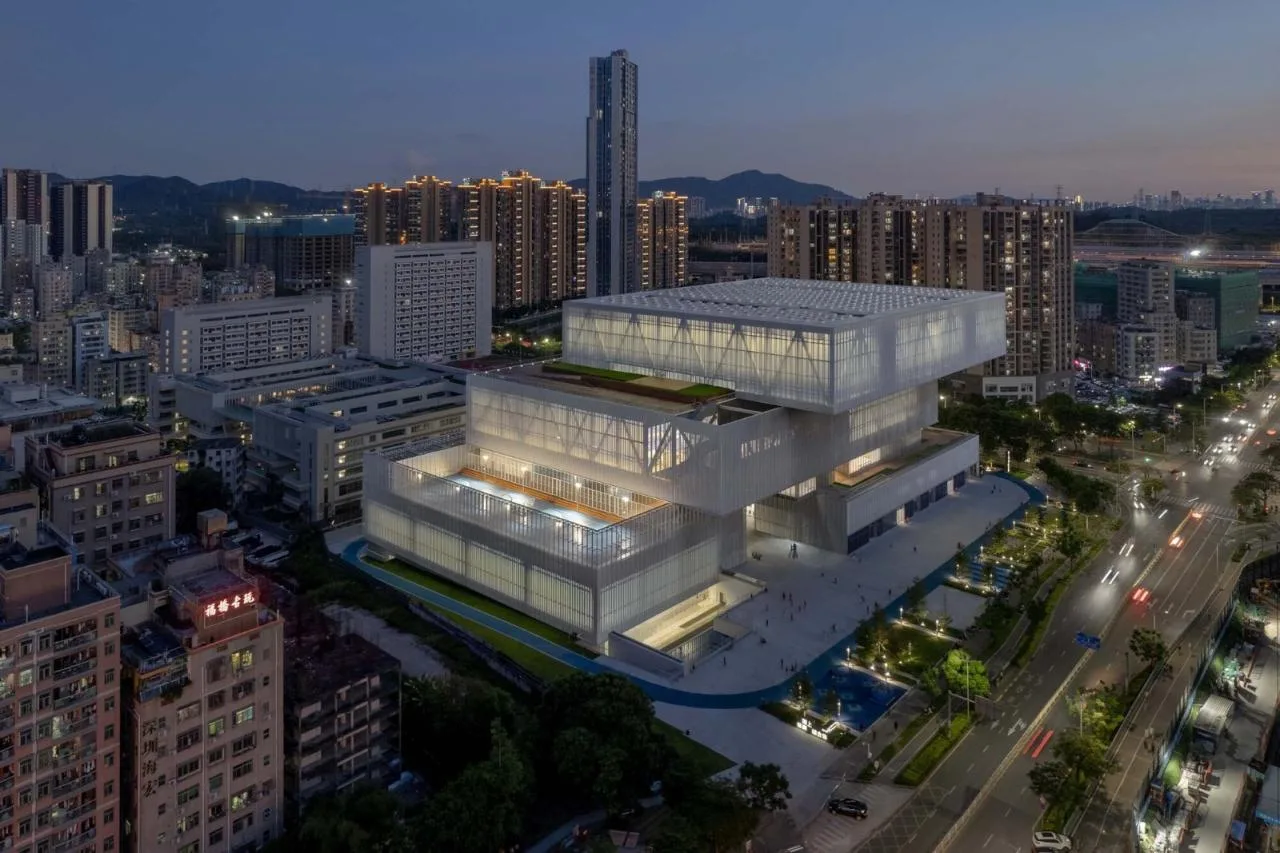
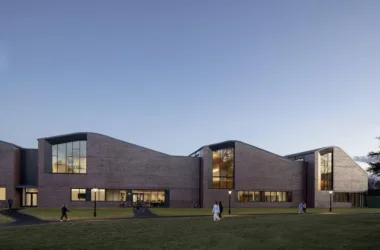
The Jian Shang Sports Complex stands as China’s first vertical sports arena, once acclaimed by the People’s Daily as the “ladder of giants.” This metaphor aptly captures the building’s form strategy, which is a direct response to the site constraints and functional demands.
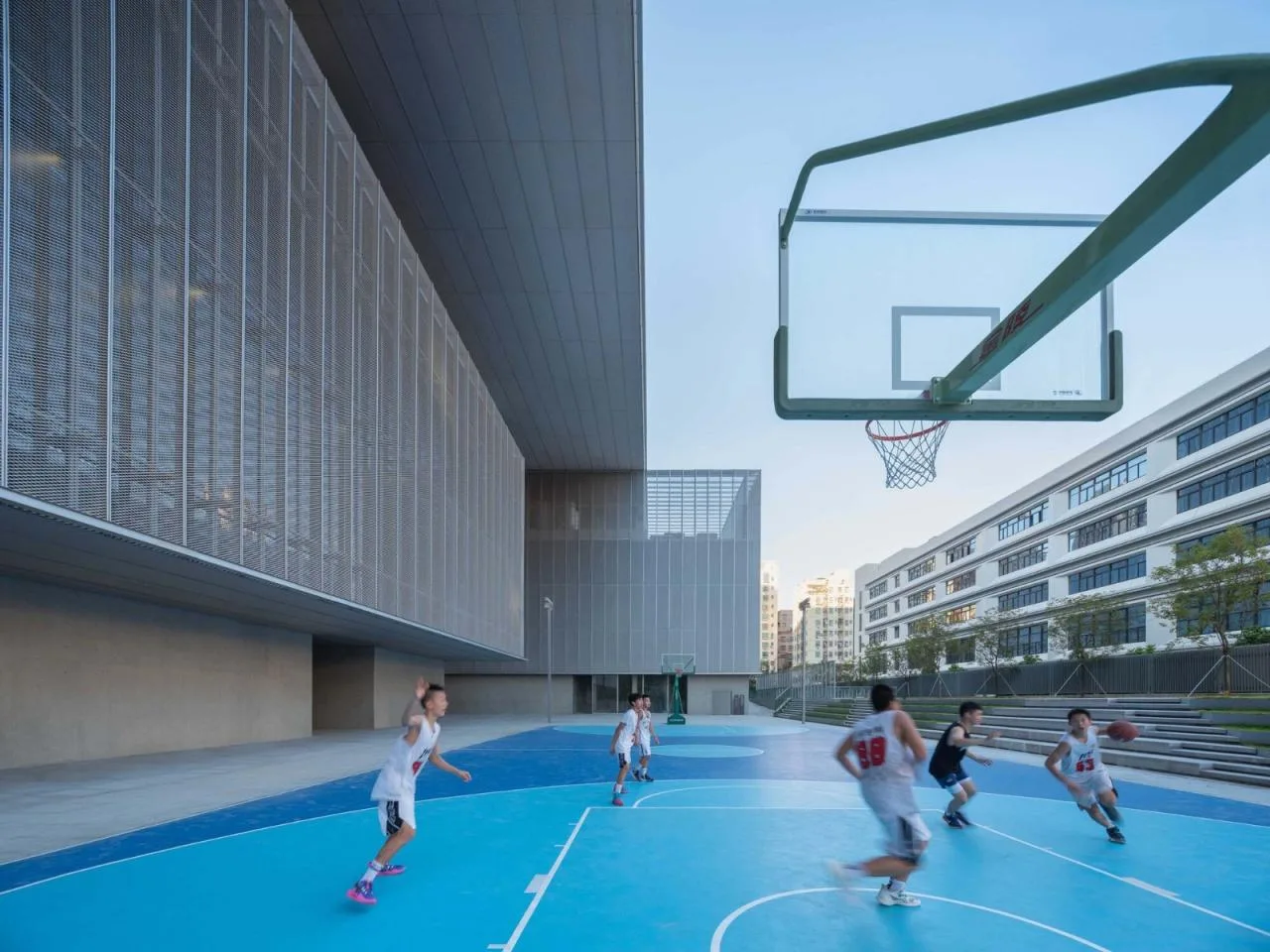
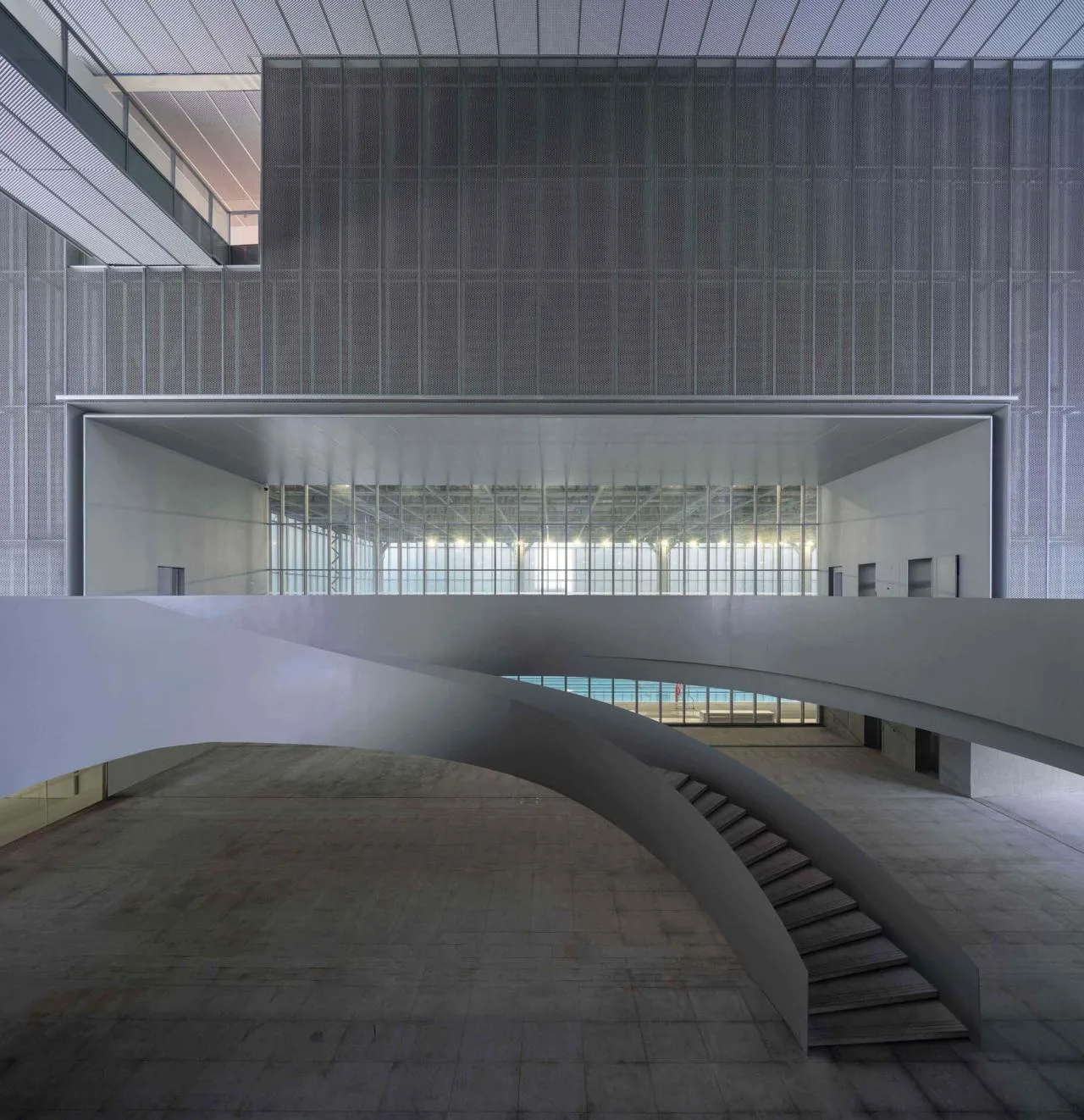
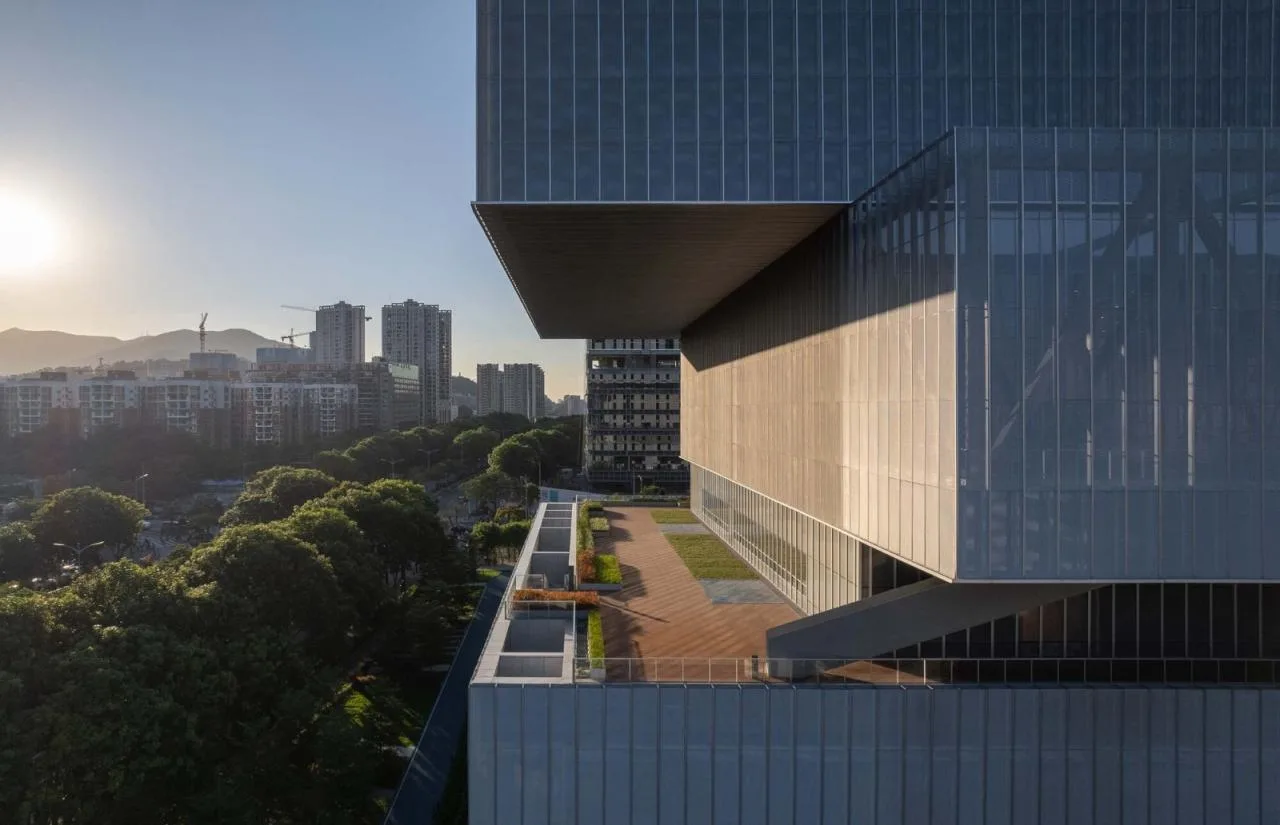
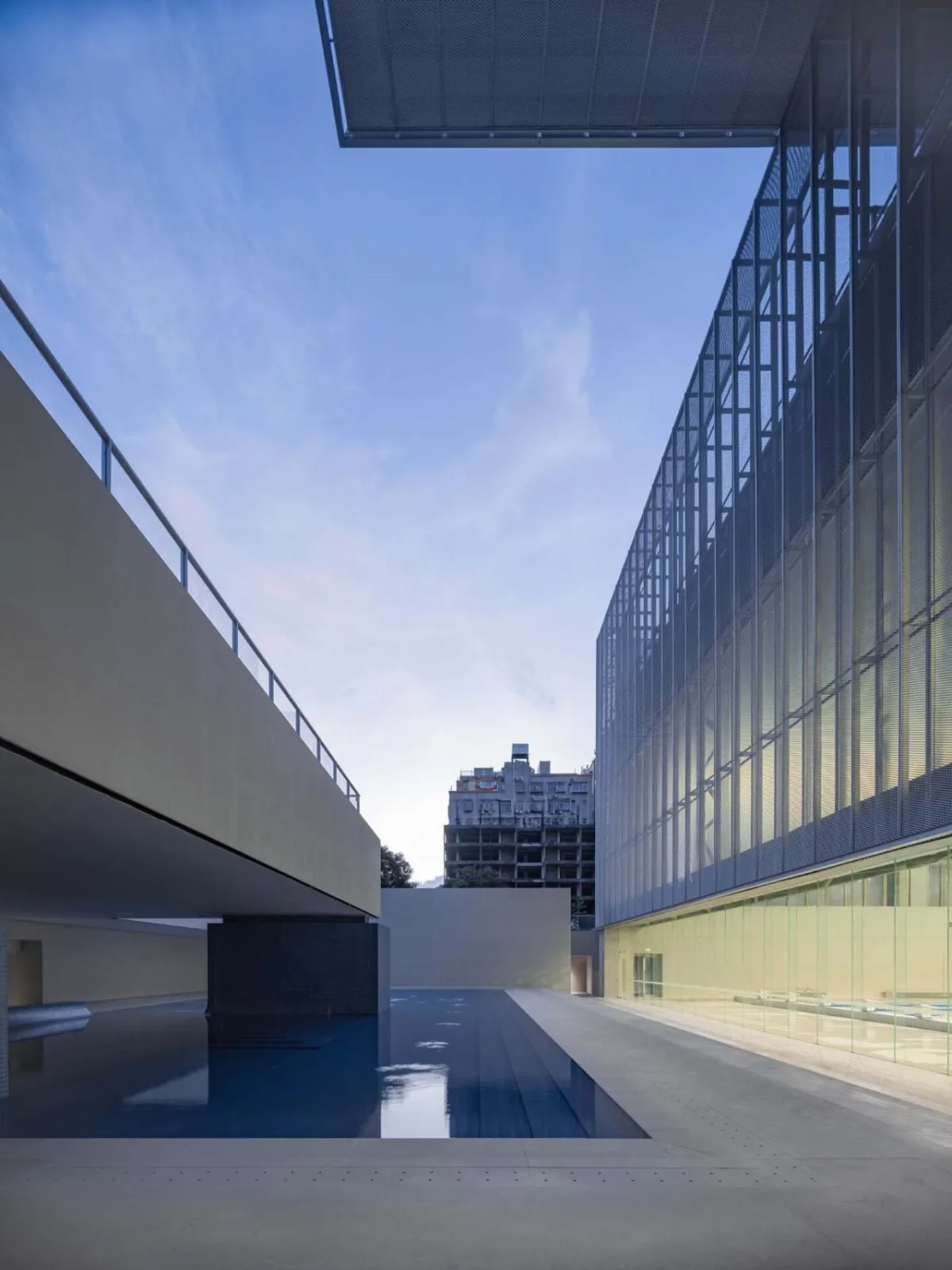
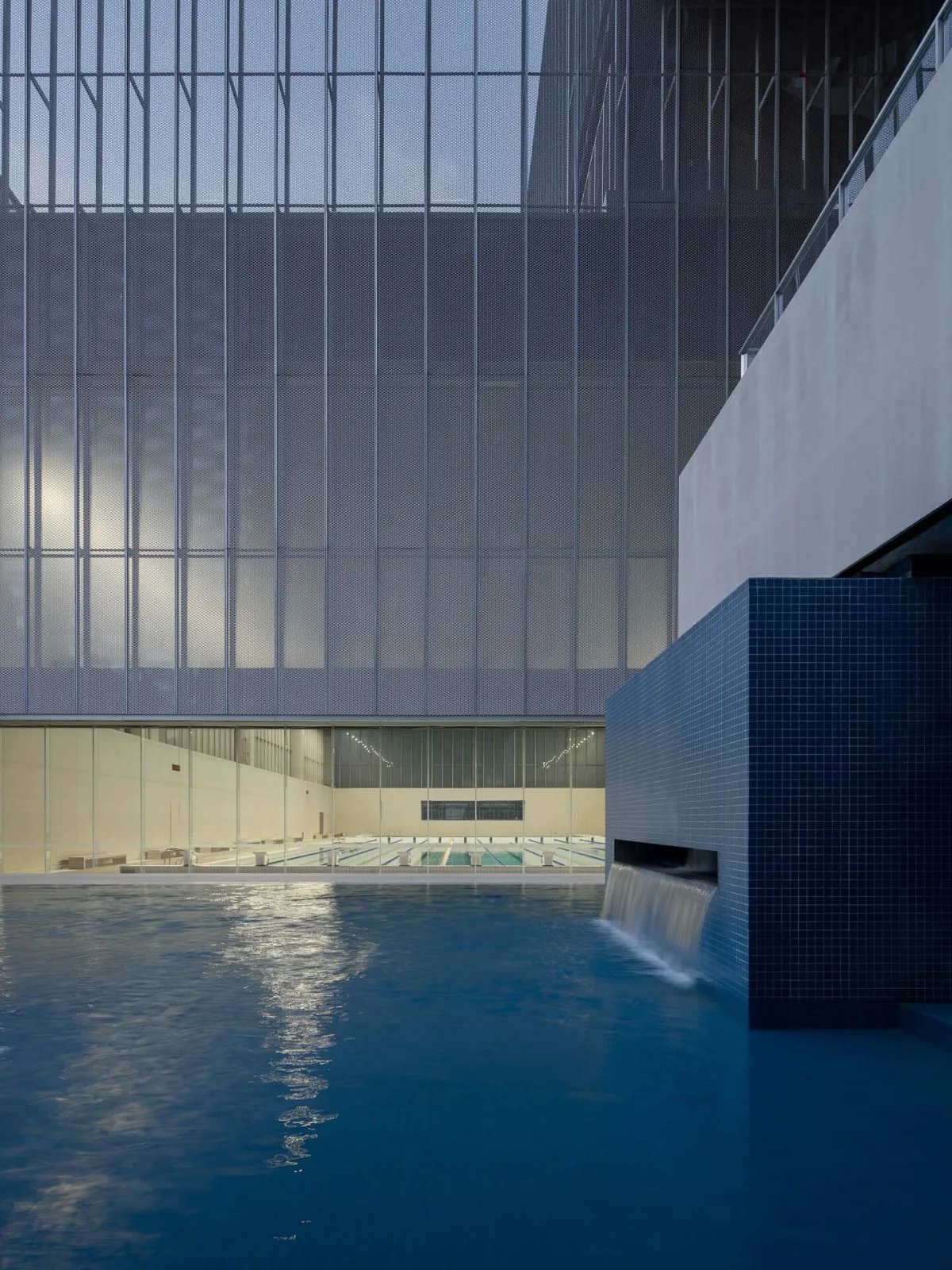
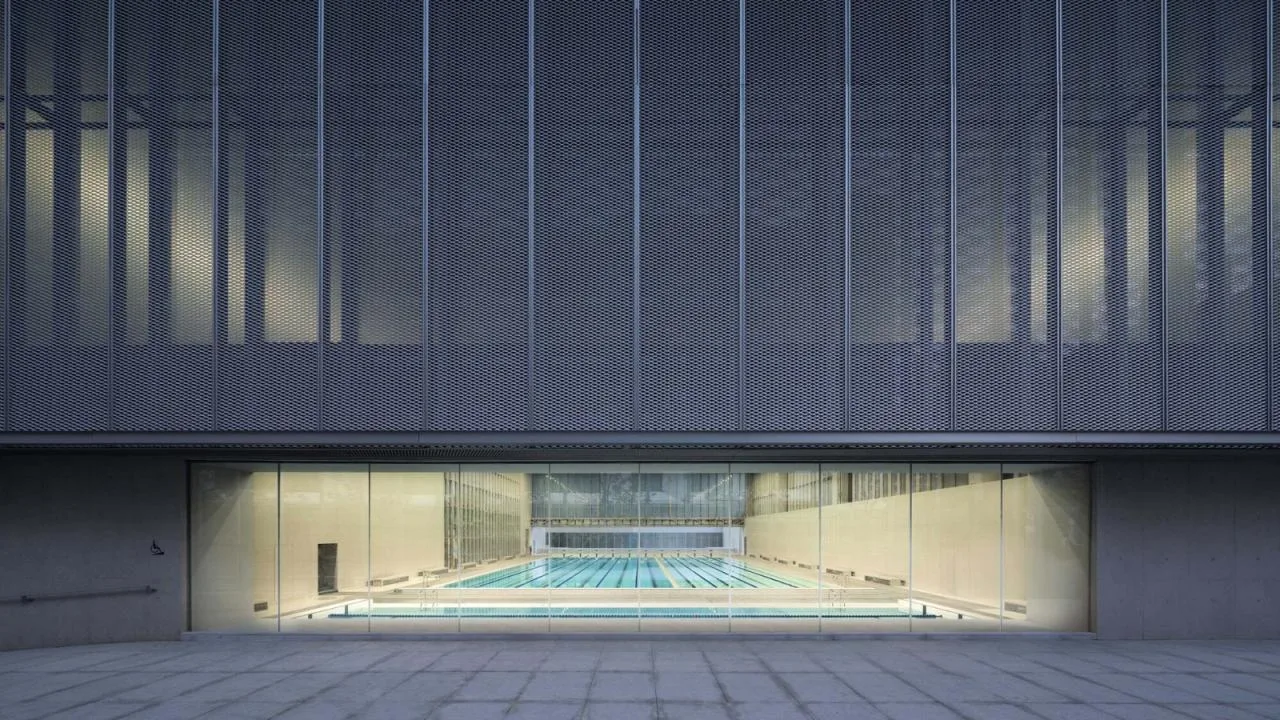
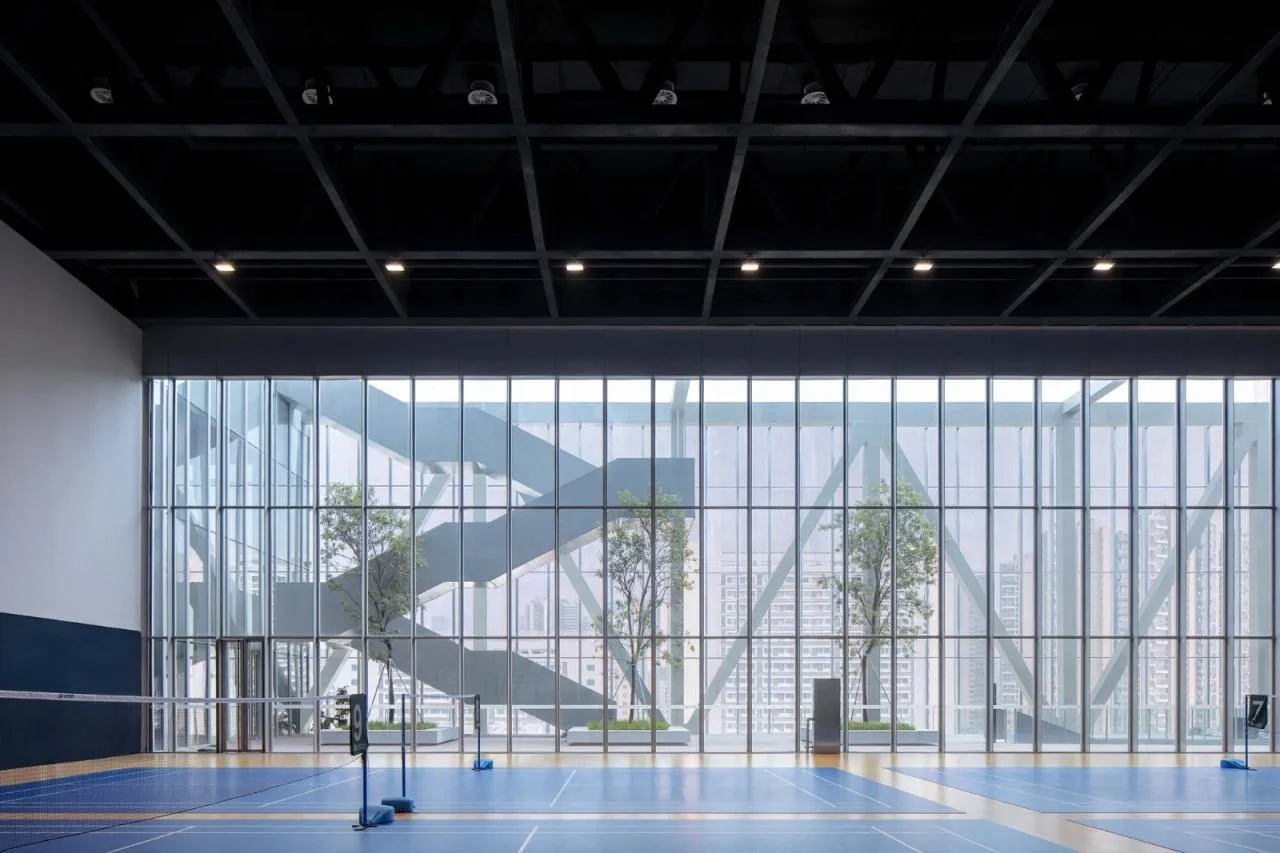
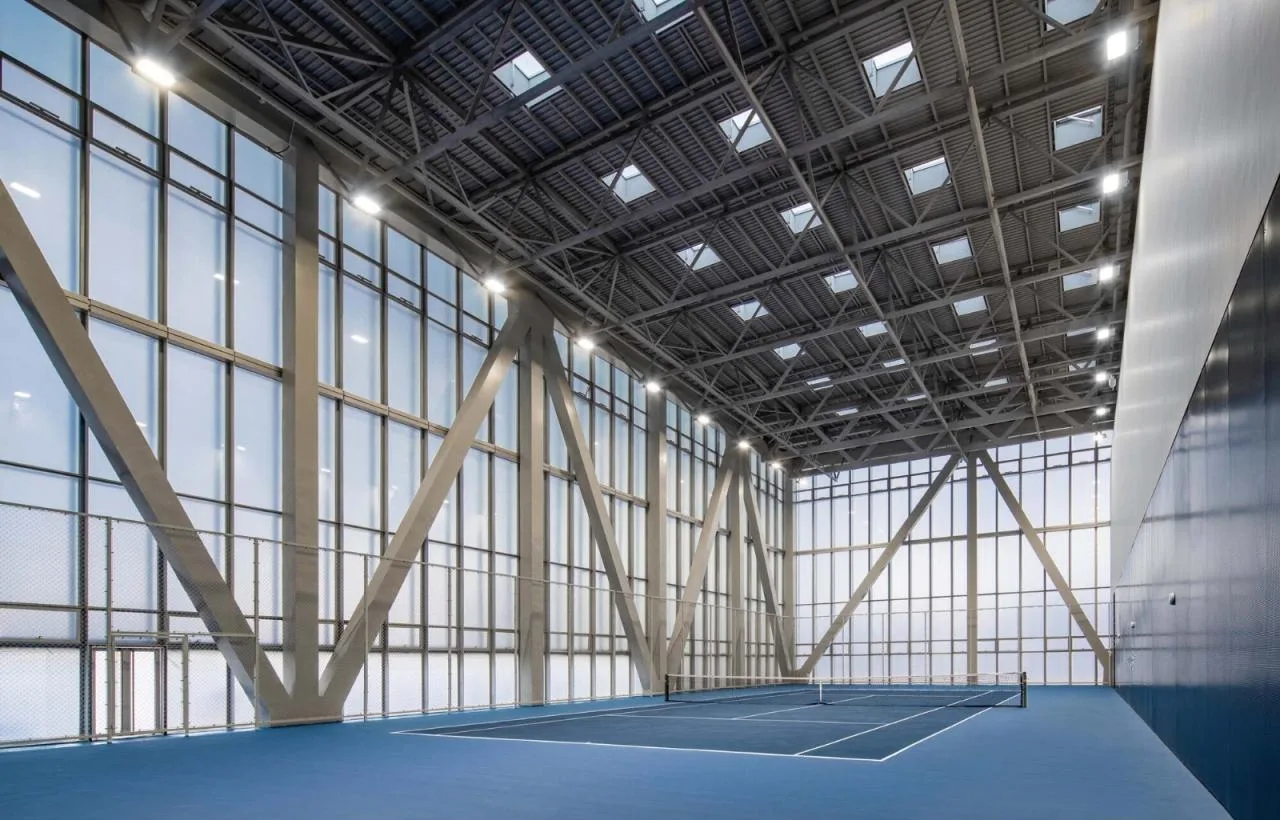
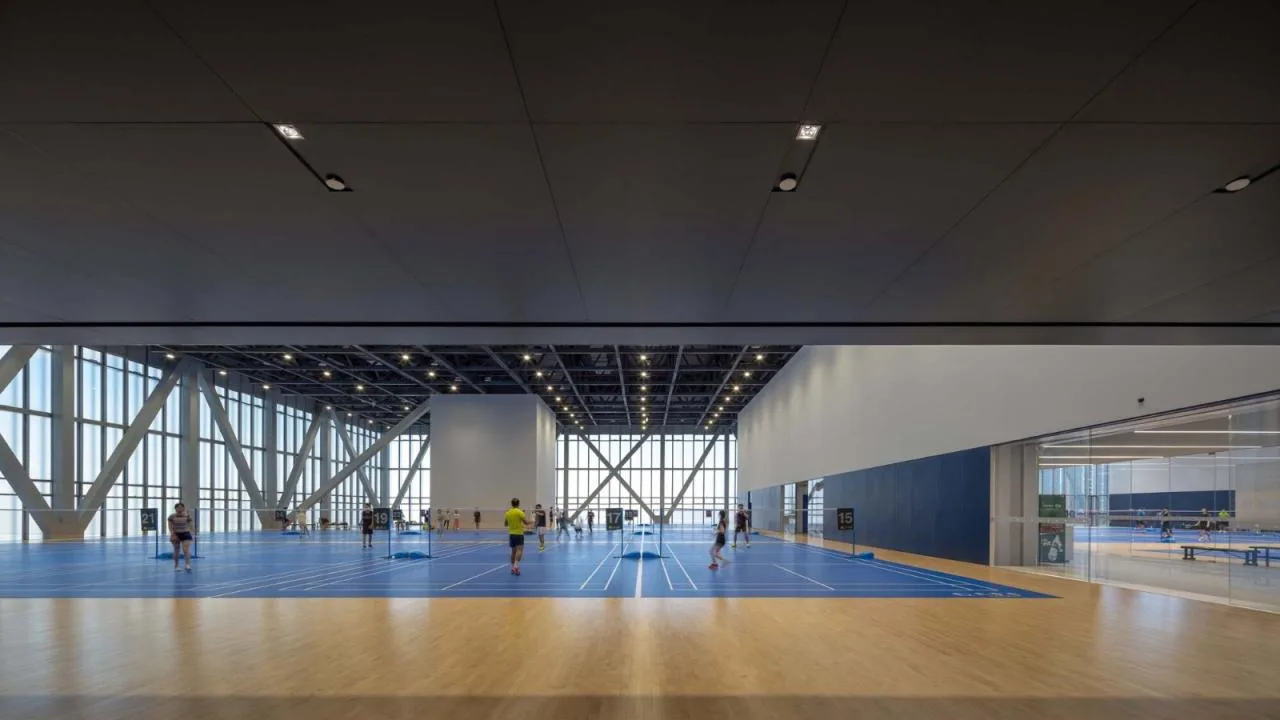
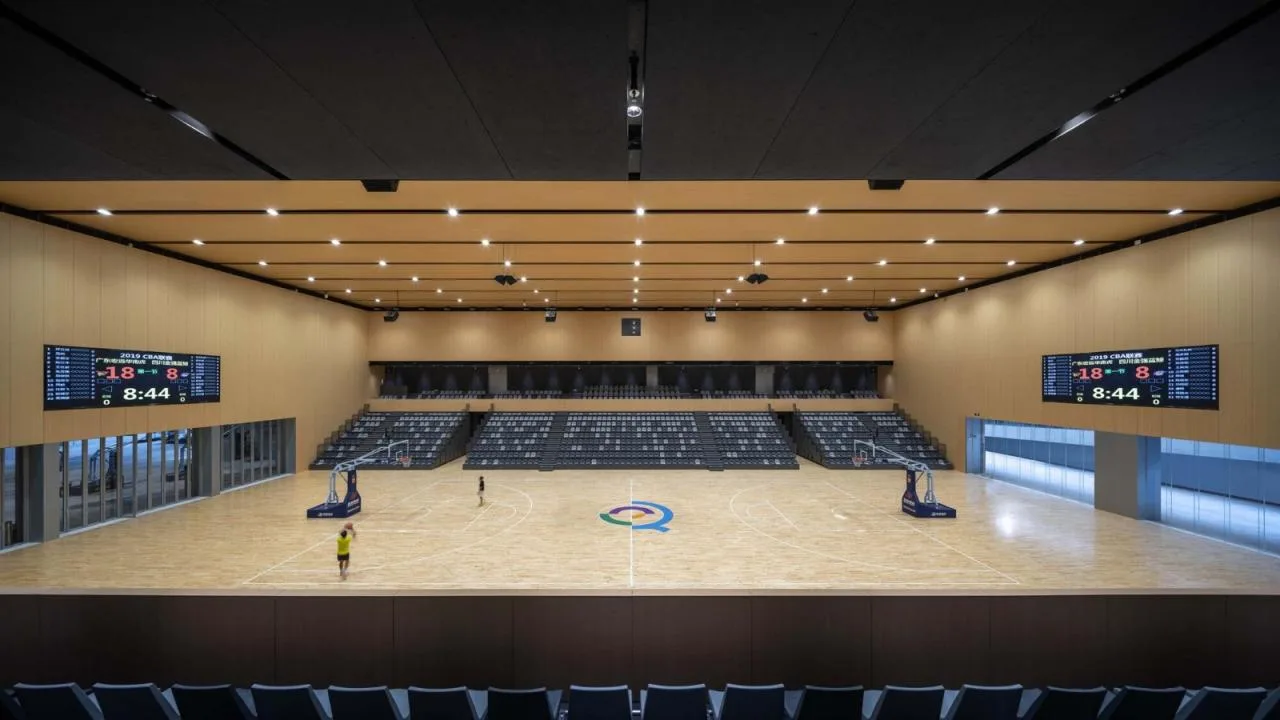
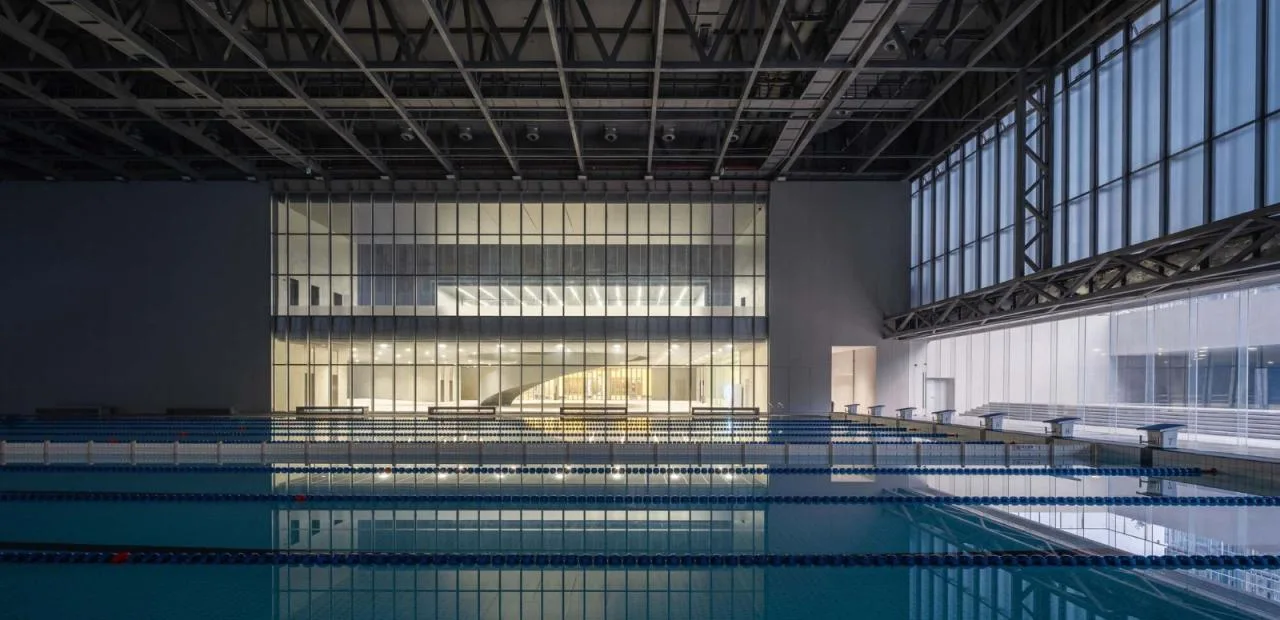
Due to limited space, sports facilities are arranged vertically in a stacked layout. The building’s volume is staggered and layered, retreating towards the south side adjacent to the school and creating a shaded outdoor plaza to the north. By leveraging the site’s terrain elevation, the largest multipurpose hall and swimming pool are embedded underground, spanning from the basement to the second floor. The badminton and tennis halls, being large and concentrated, occupy the top four and five floors respectively. Between these large venues, three intermediate floors accommodate smaller facilities such as taekwondo, fencing, table tennis, dance, and fitness areas.
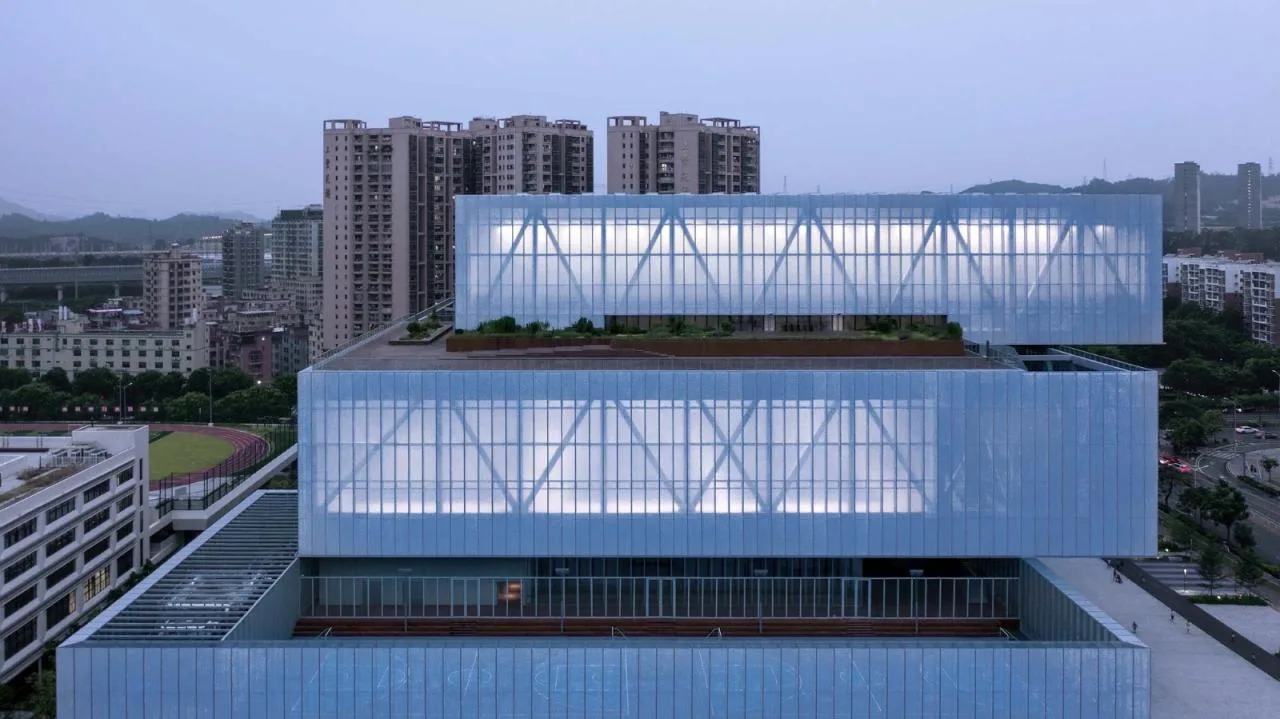
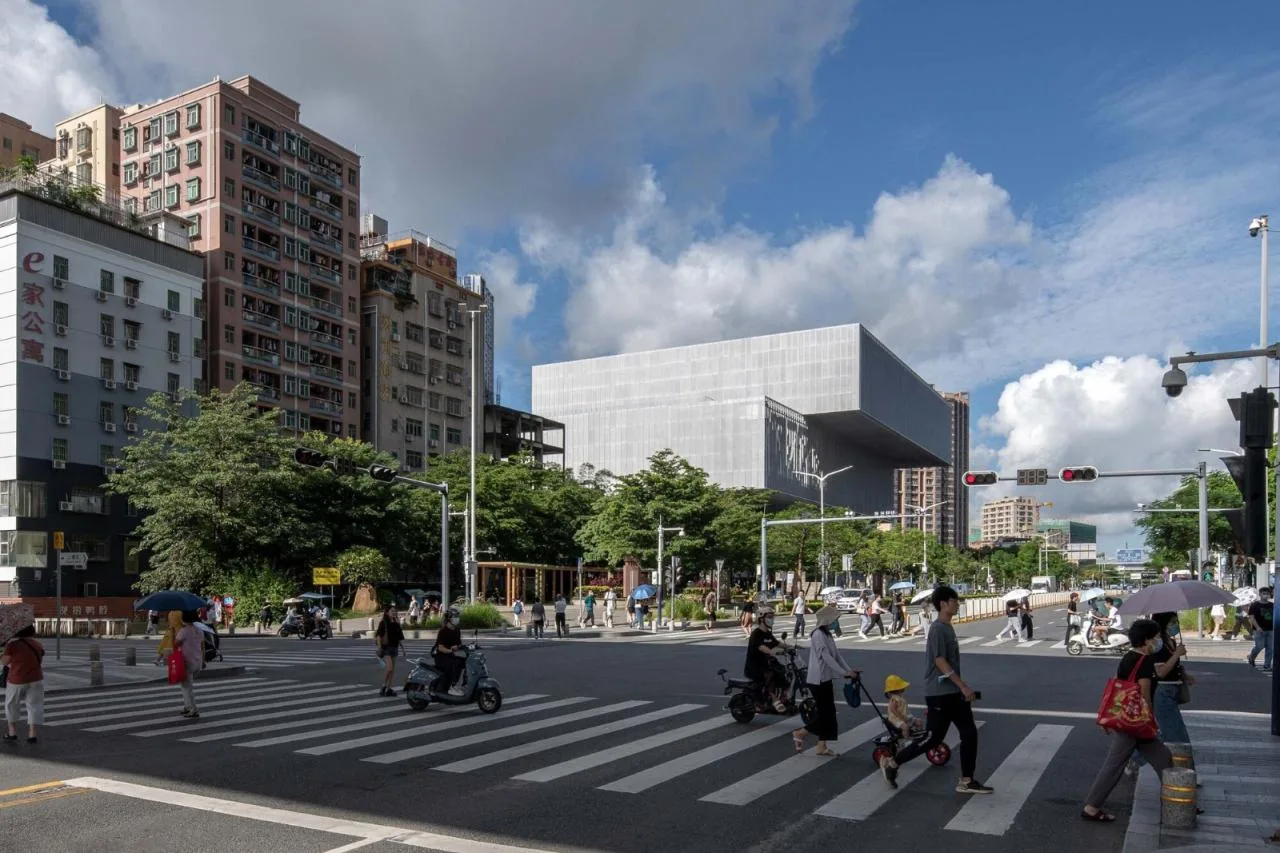
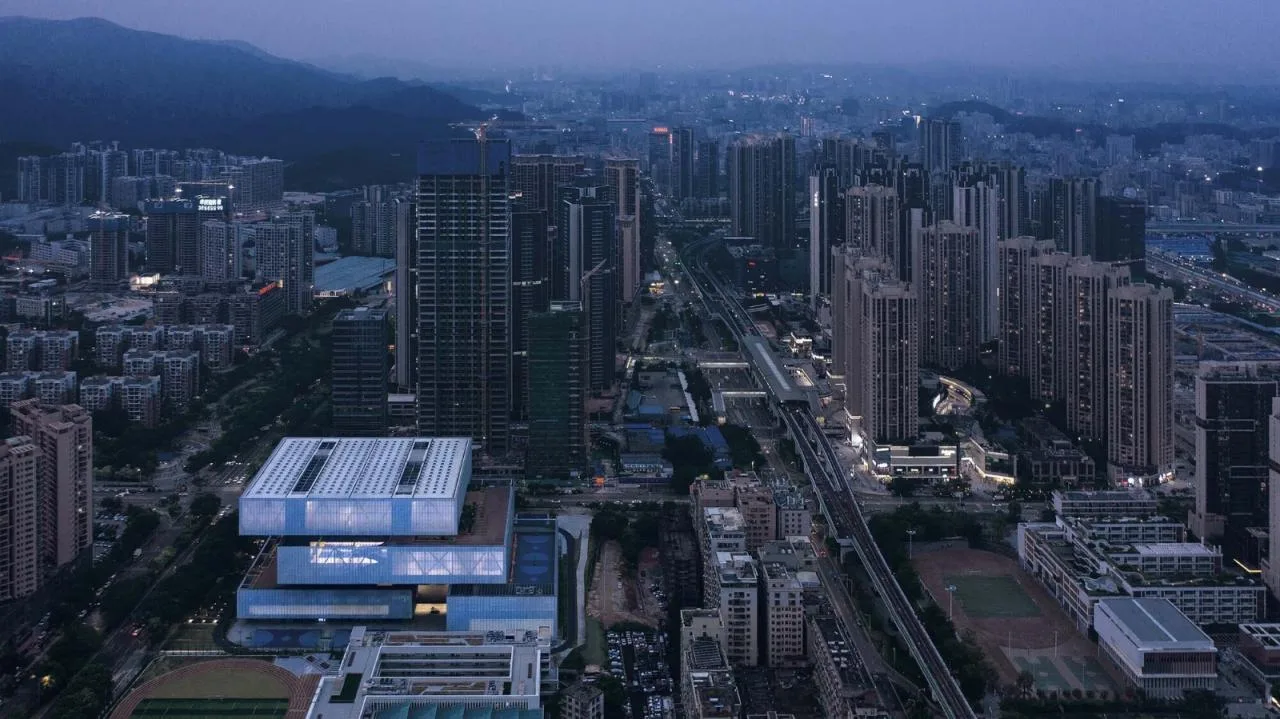
From a broader perspective, the design carefully integrates the sports complex into the urban fabric without compromising its unique identity. The staggered volumes reduce the building’s perceived mass, allowing it to blend harmoniously with its surroundings. Meanwhile, its minimalist form creates a distinctive visual signature that stands out from the busy cityscape.
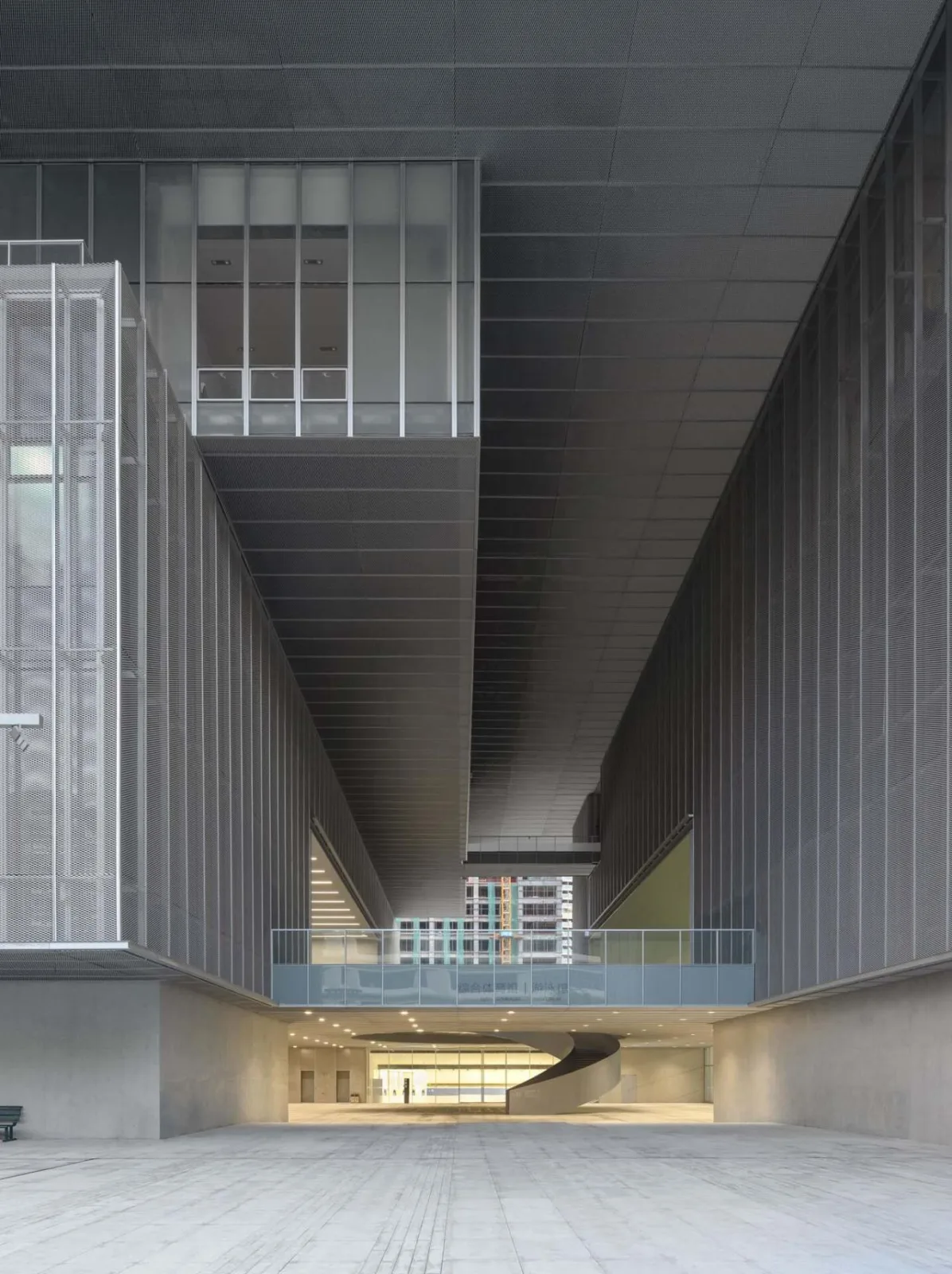
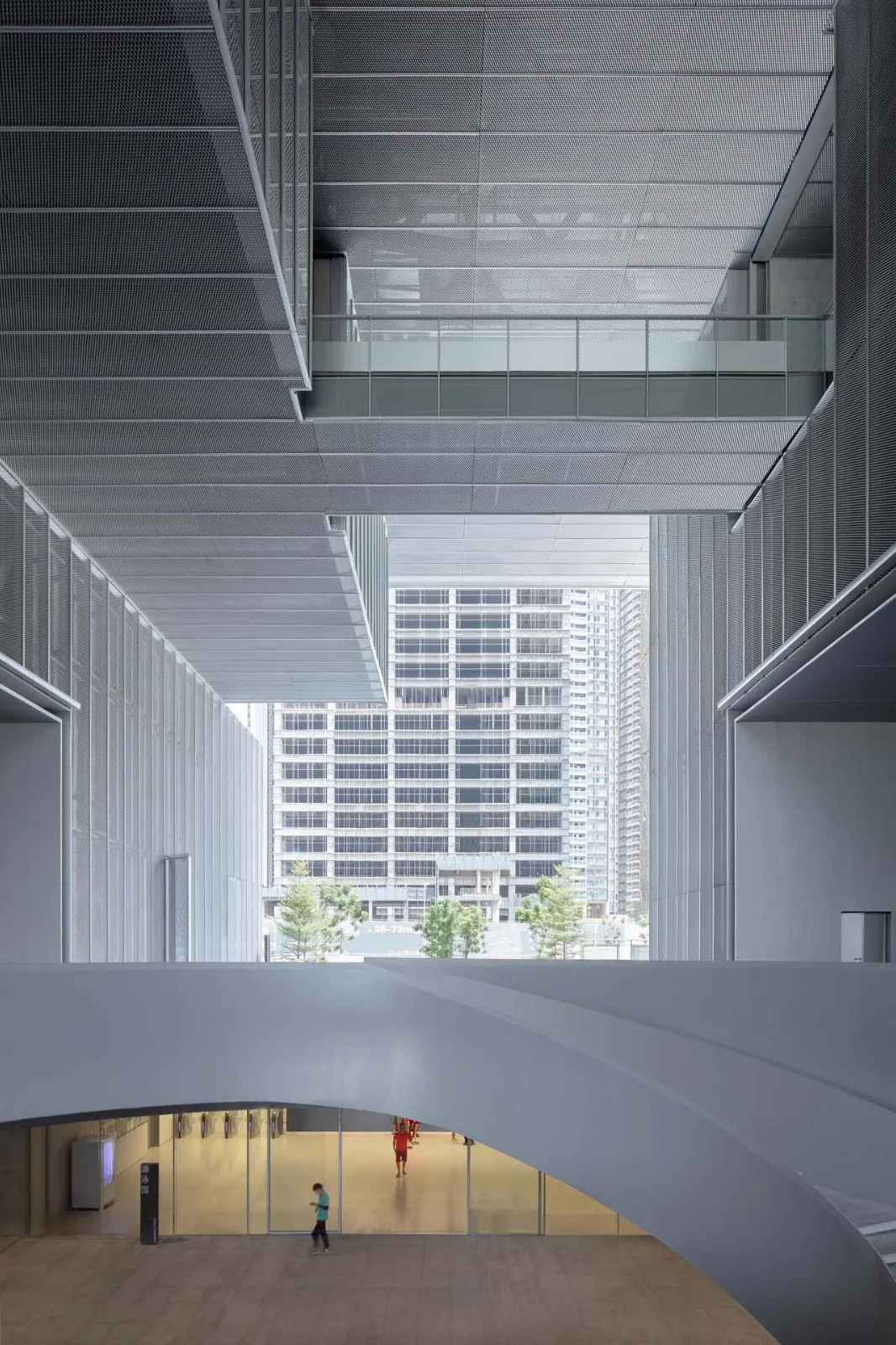
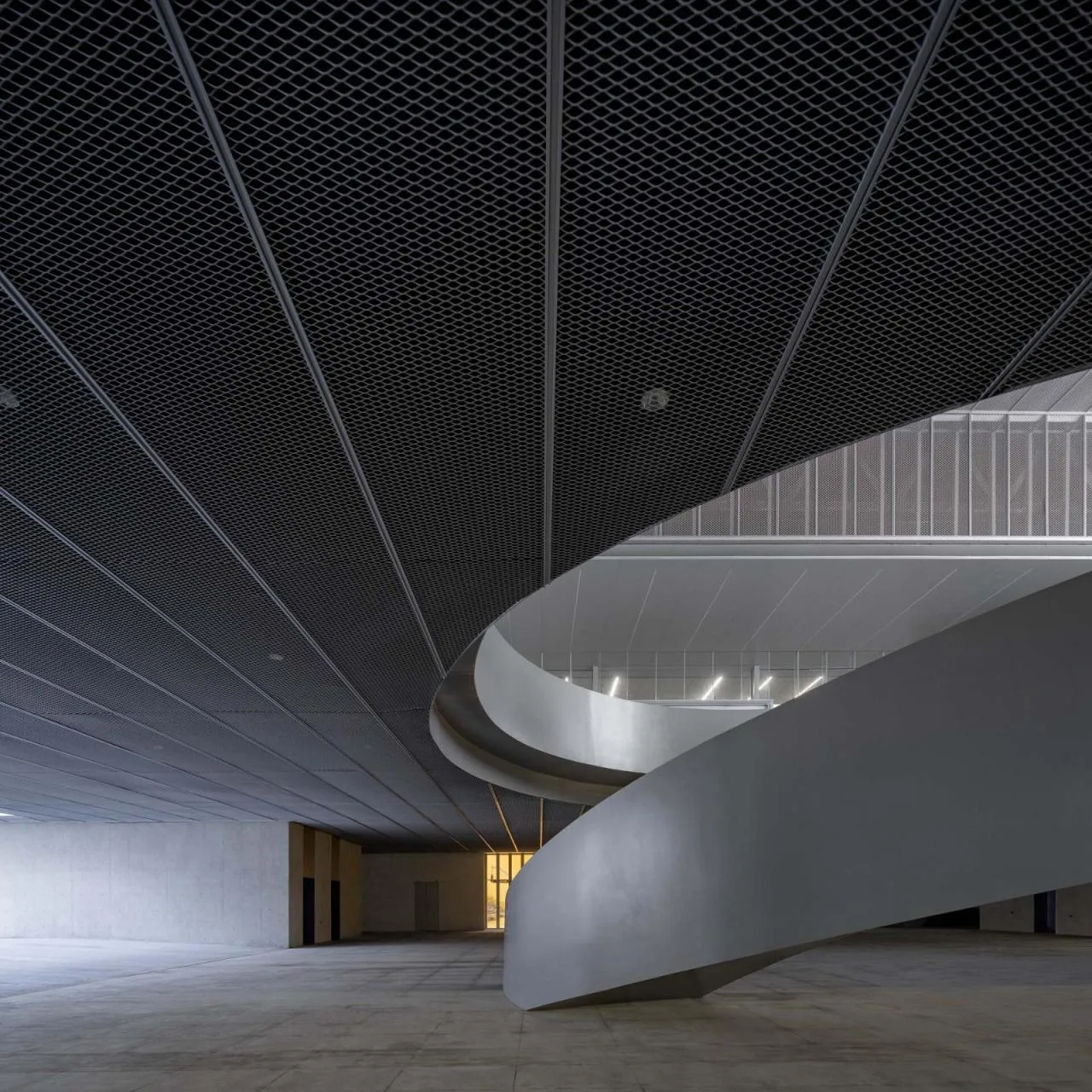
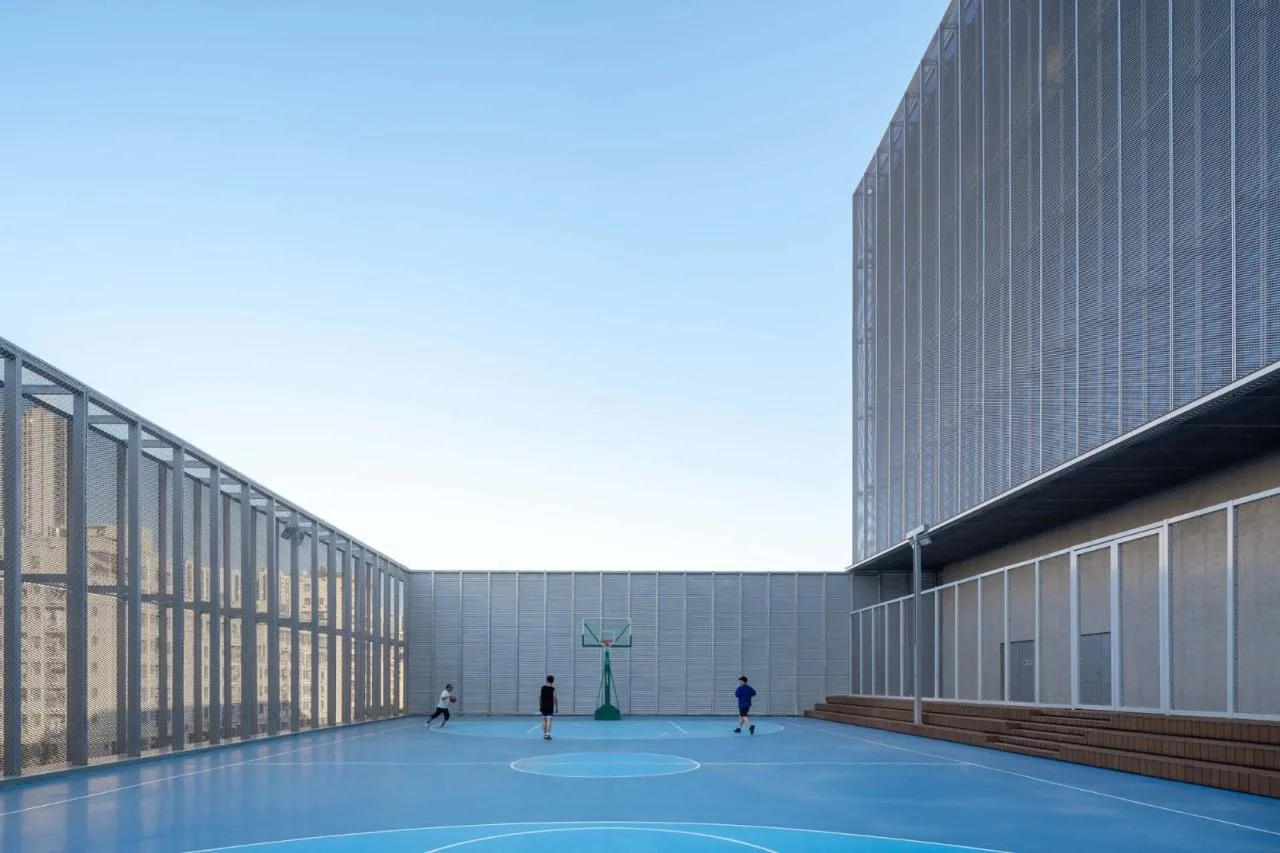
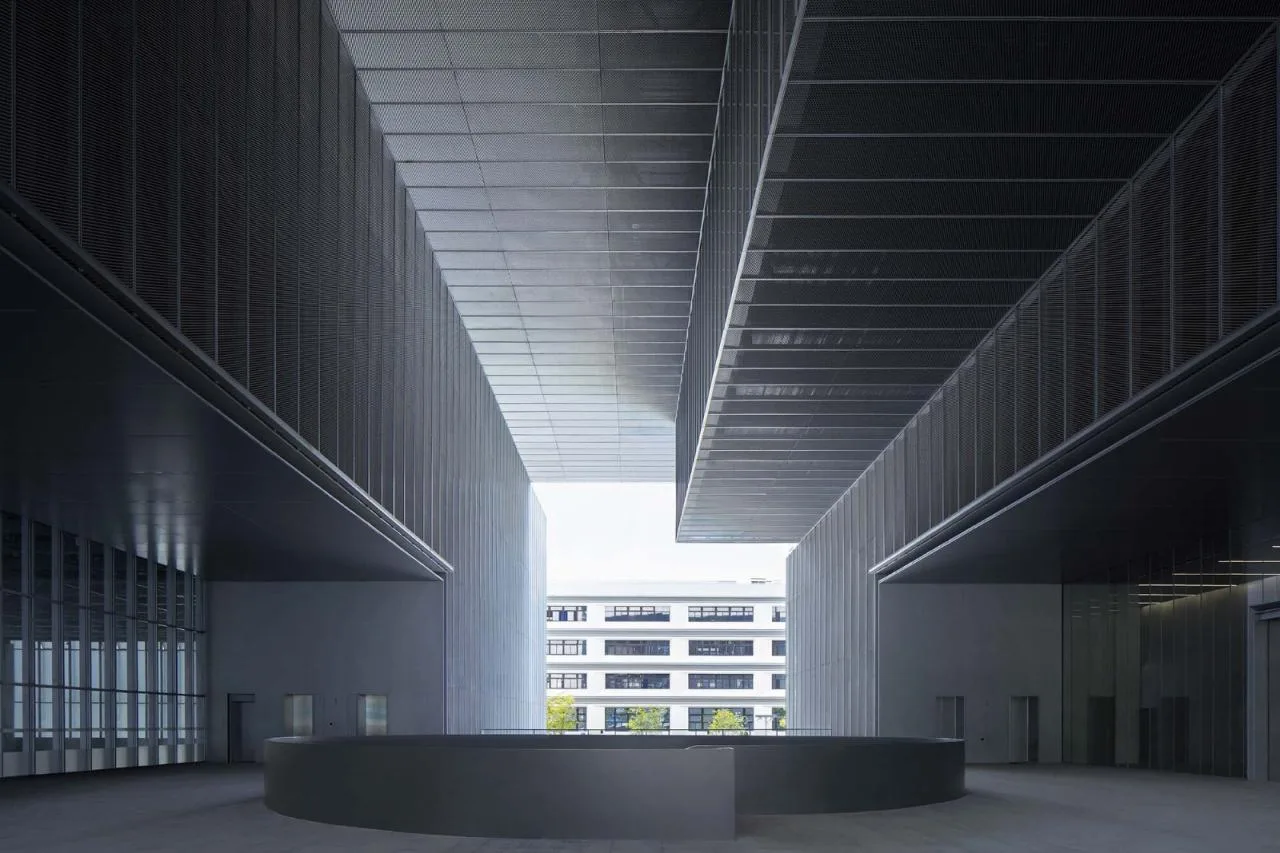
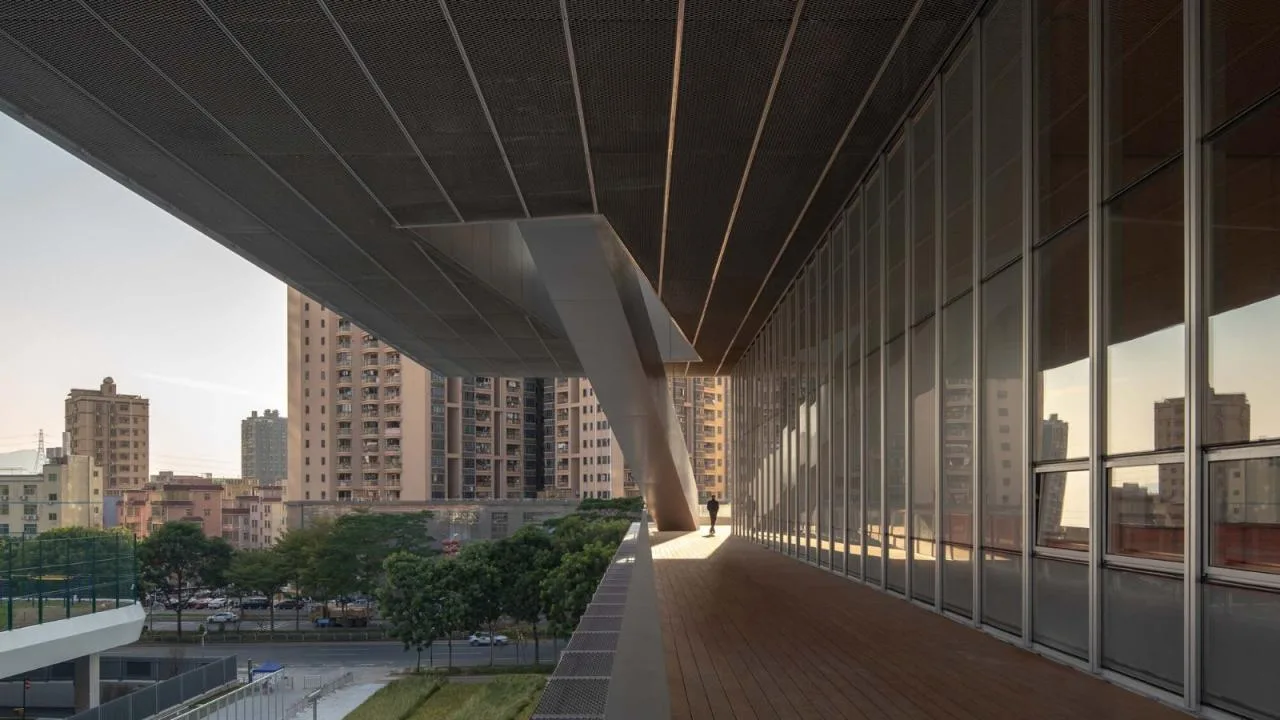
On closer inspection, the building reveals a porous architectural quality. At ground level, an open foyer stretches north to south, inviting the public to enter and exit freely. Each upper floor features terraces, gardens, and elevated recreational spaces. Staircases connect these levels to the ground plaza, encouraging community use of these open spaces even after hours.
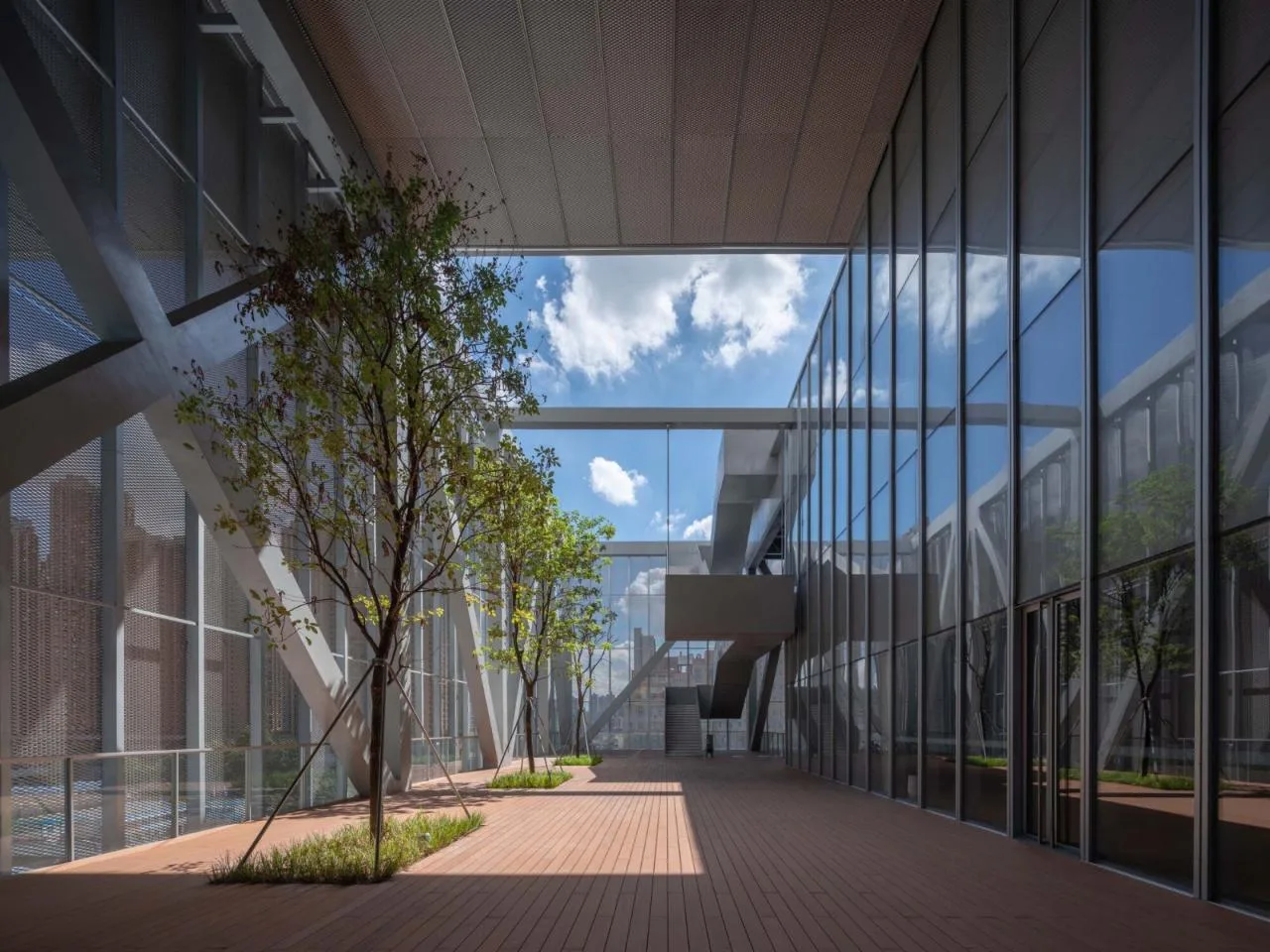
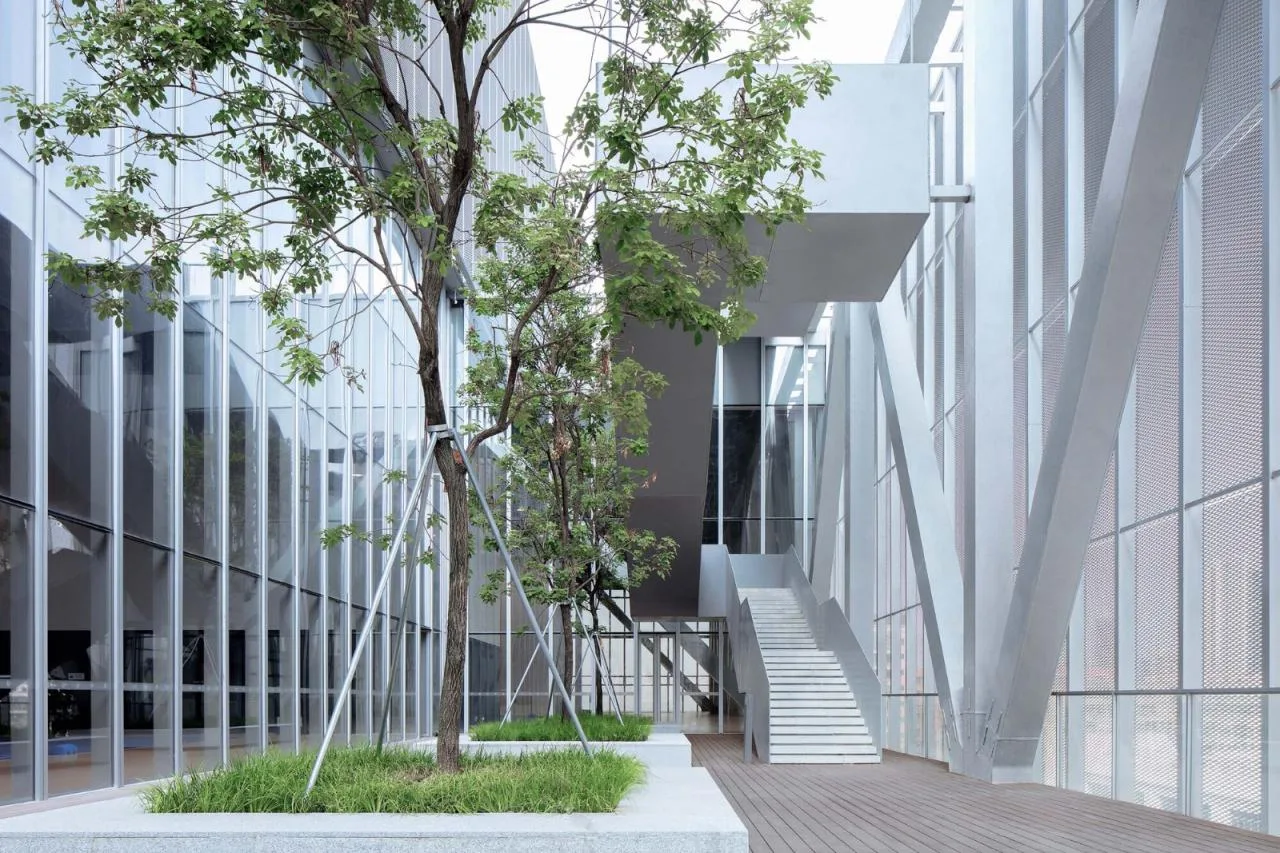
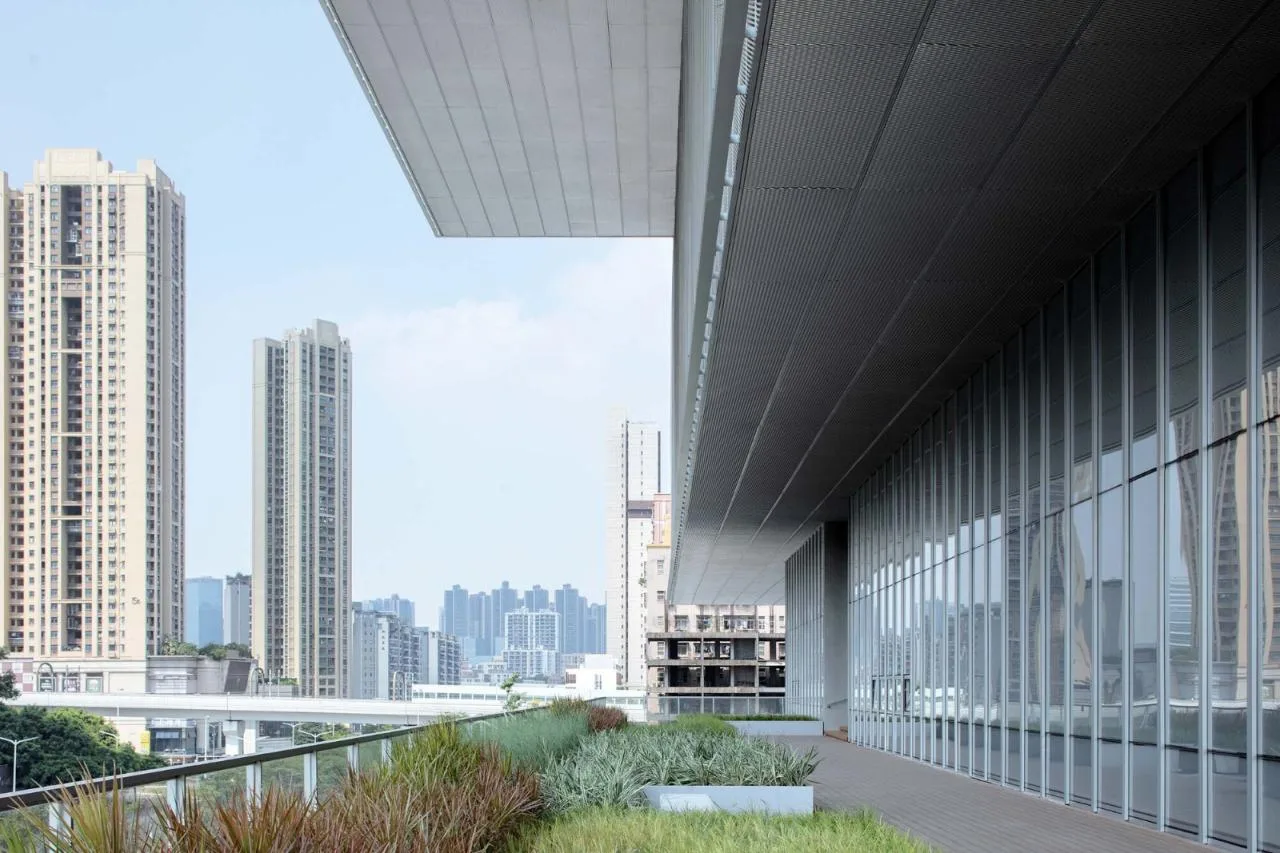
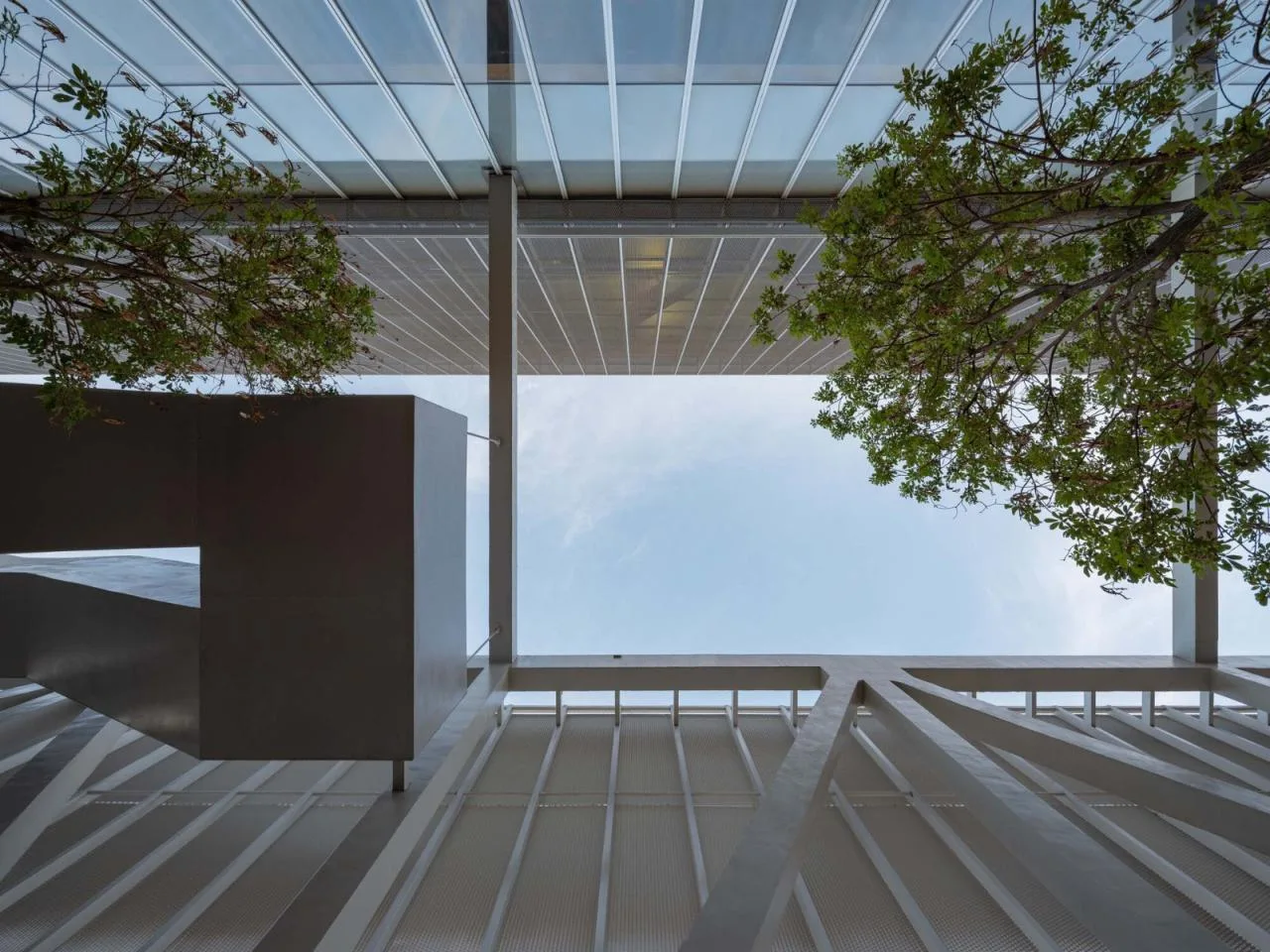
Designed for Shenzhen’s hot and humid climate, the covered open spaces provide shade and comfortable walking areas. These wall-free zones serve important functions like lobbies and elevator lobbies, blurring the boundaries between air-conditioned interiors and outdoor areas, fostering a free and open environment. The aim is to create a “transparent” building—not in the literal sense of visual transparency, but by expressing the logical transparency of its construction.
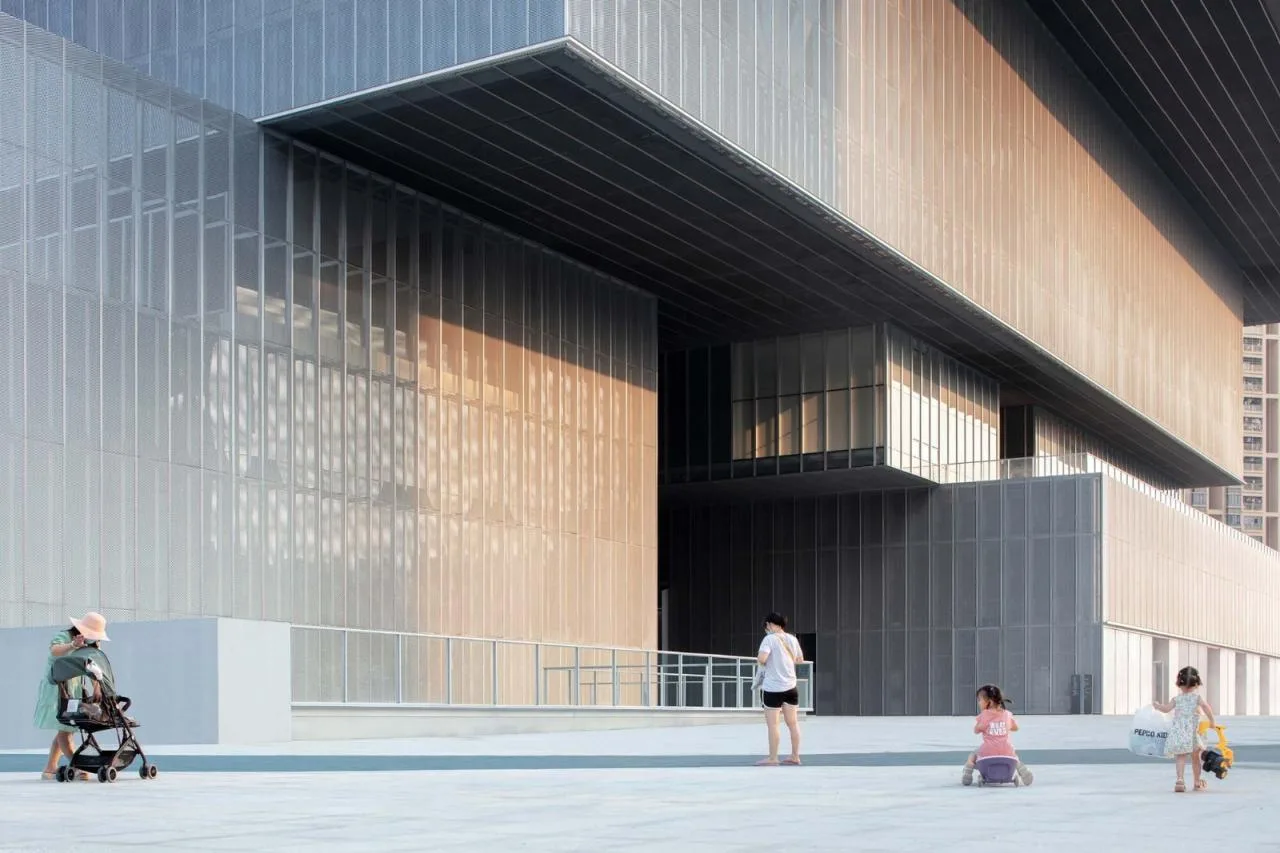
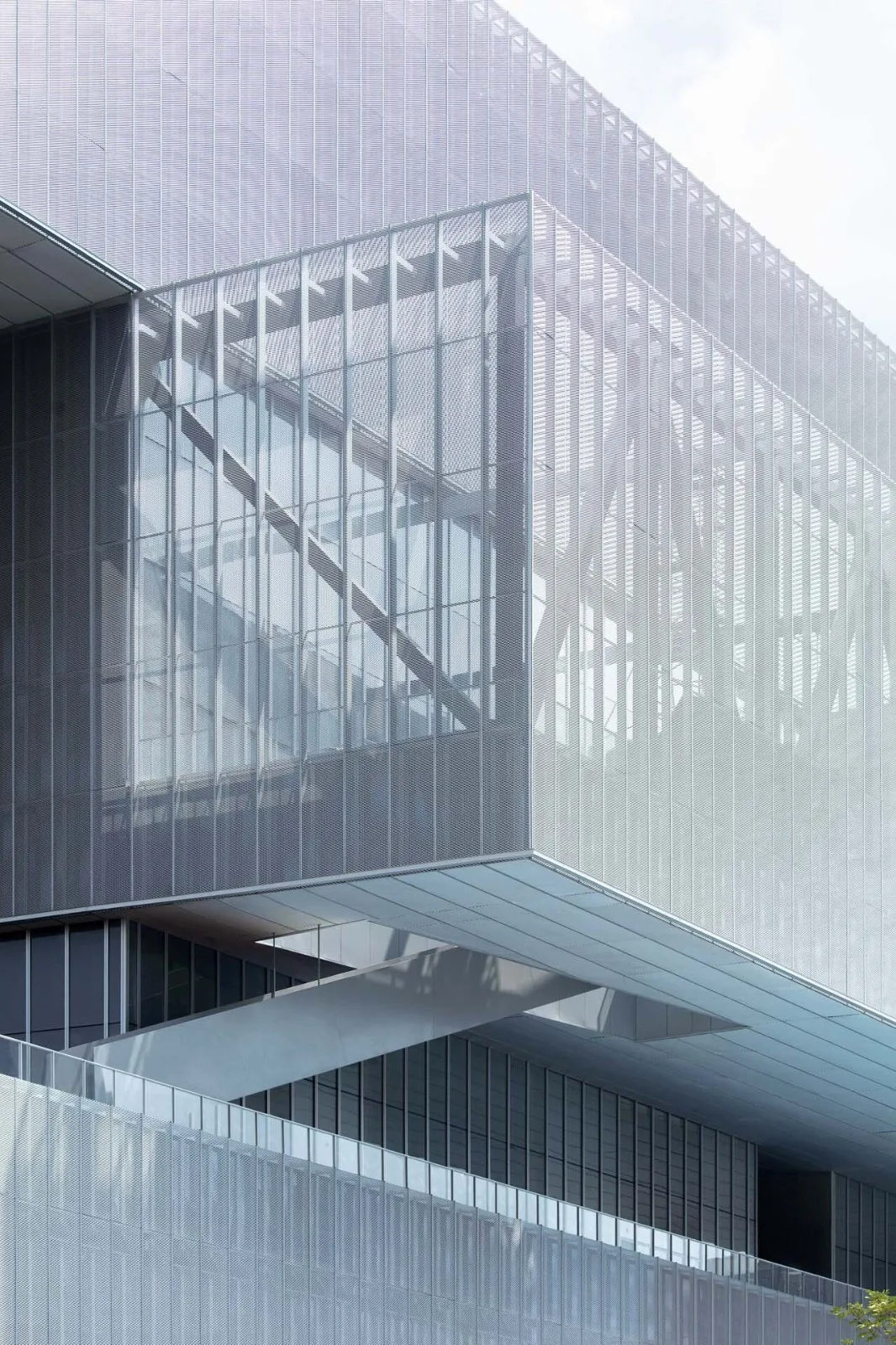
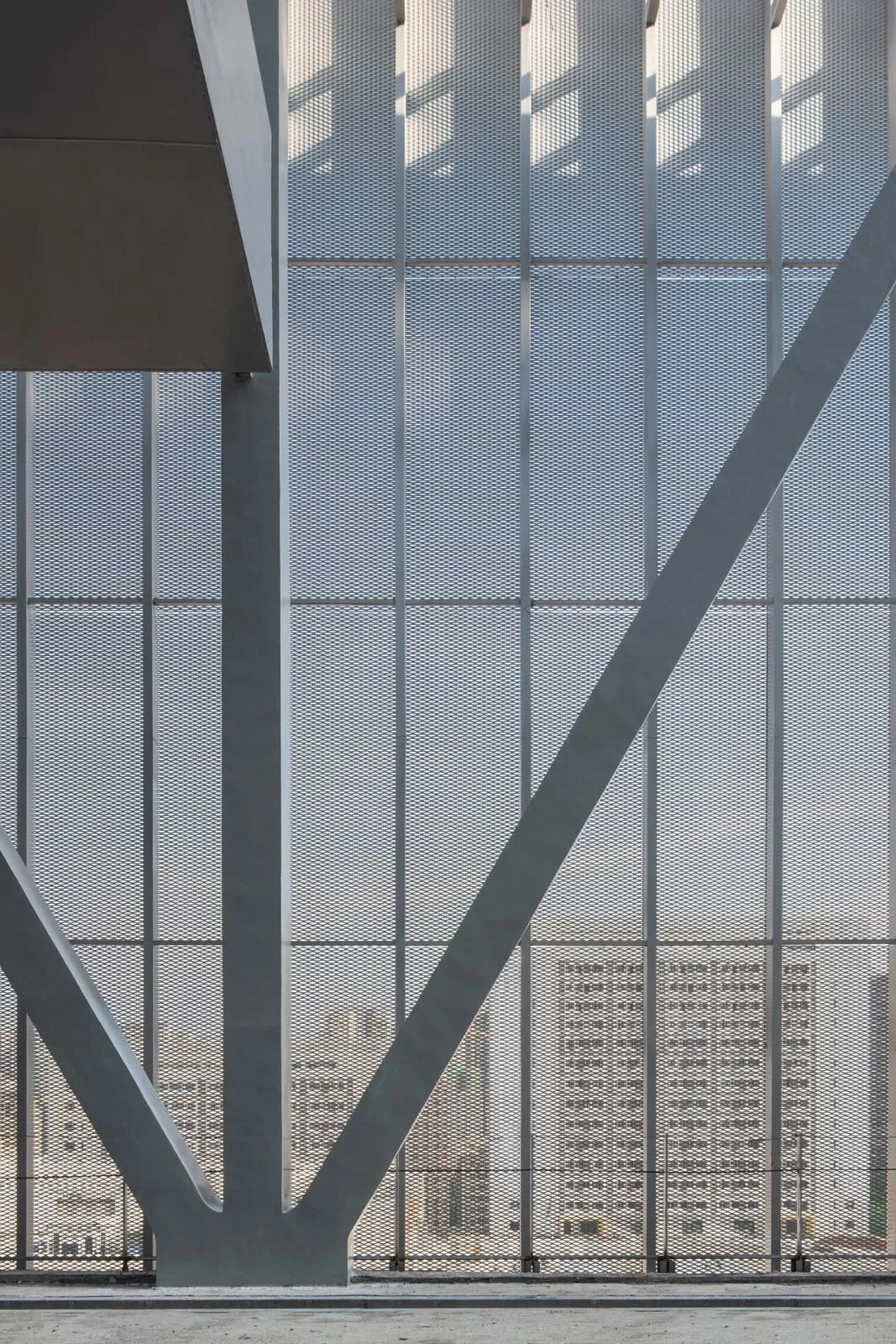
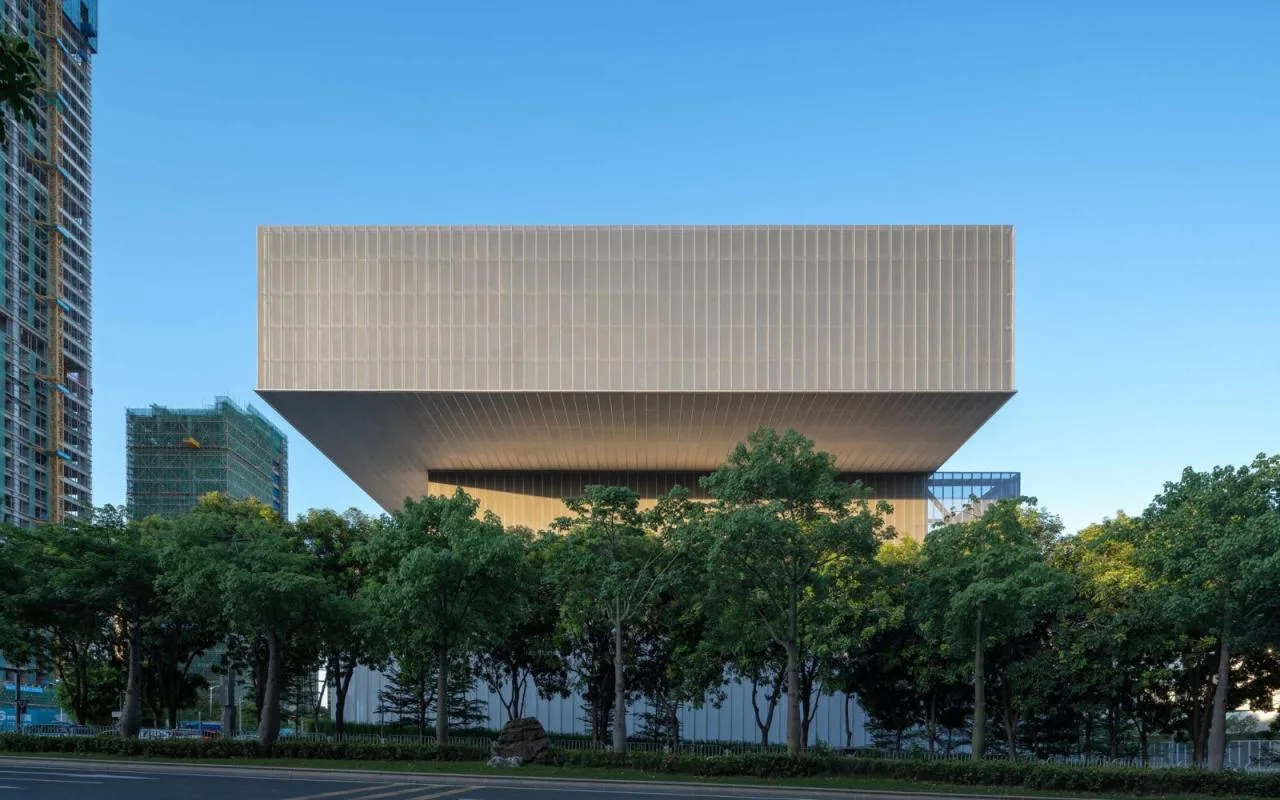
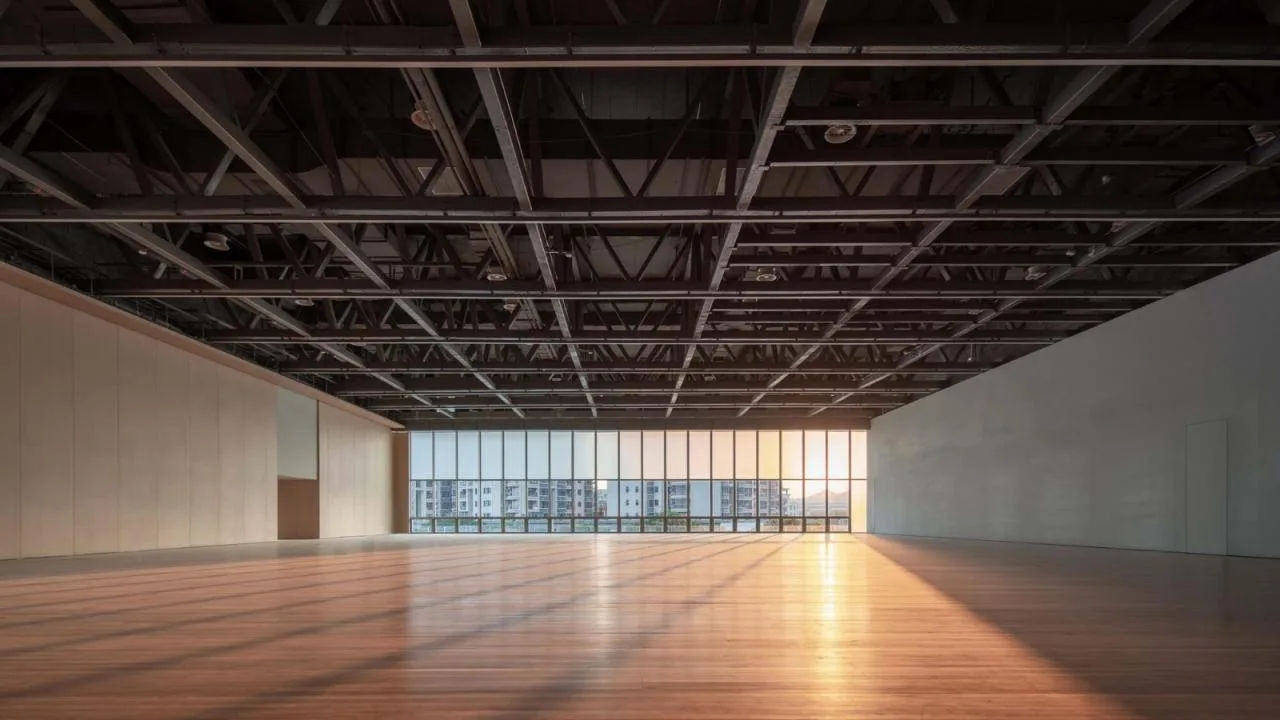
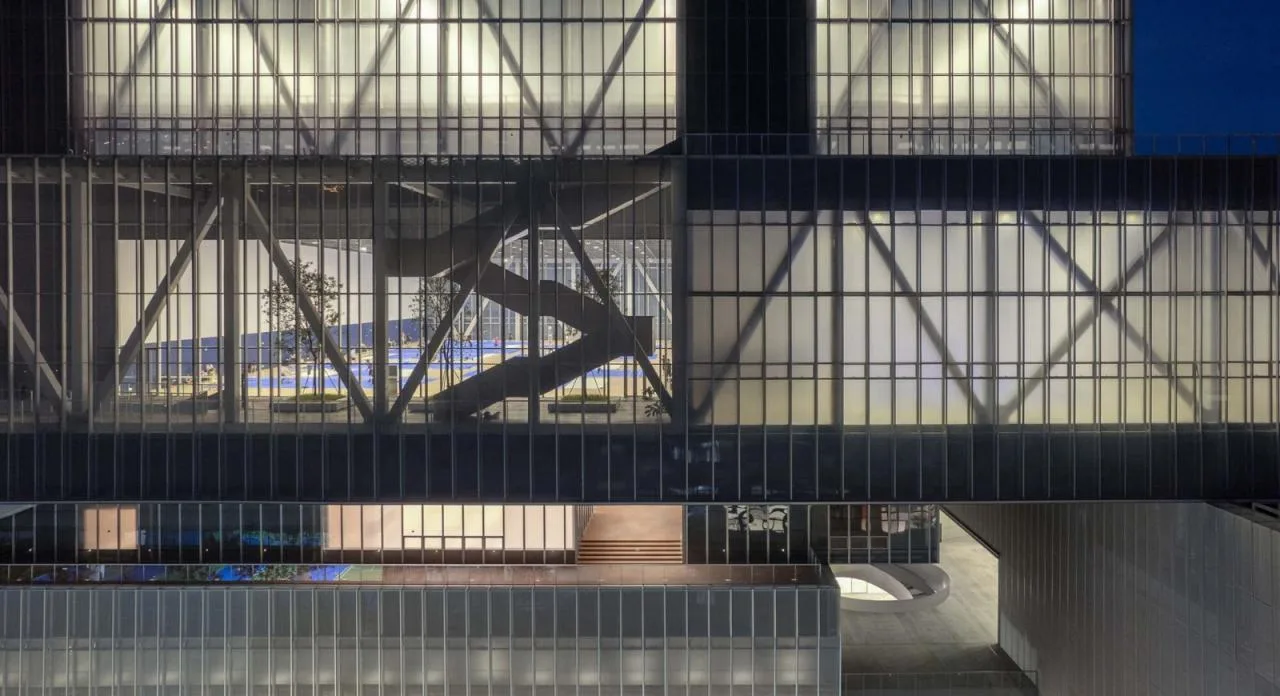
The structure accurately expresses the architectural space. The boxes that deviate in form can be interpreted as vertically displaced structural elements. The main framework is supported by six reinforced concrete cylinders, with each floor reinforced by interlayer steel trusses and waist trusses that allow for ultra-large spans and long cantilevers. The structural modules are governed by the spacing of steel components, a system that also informs the building’s scale, curtain walls, landscape, and interior spaces.
While the structure uses over 9,000 tons of steel—resulting in considerable weight—the design creates a feeling of lightness and floating, mitigating the sense of heaviness through its architectural form.
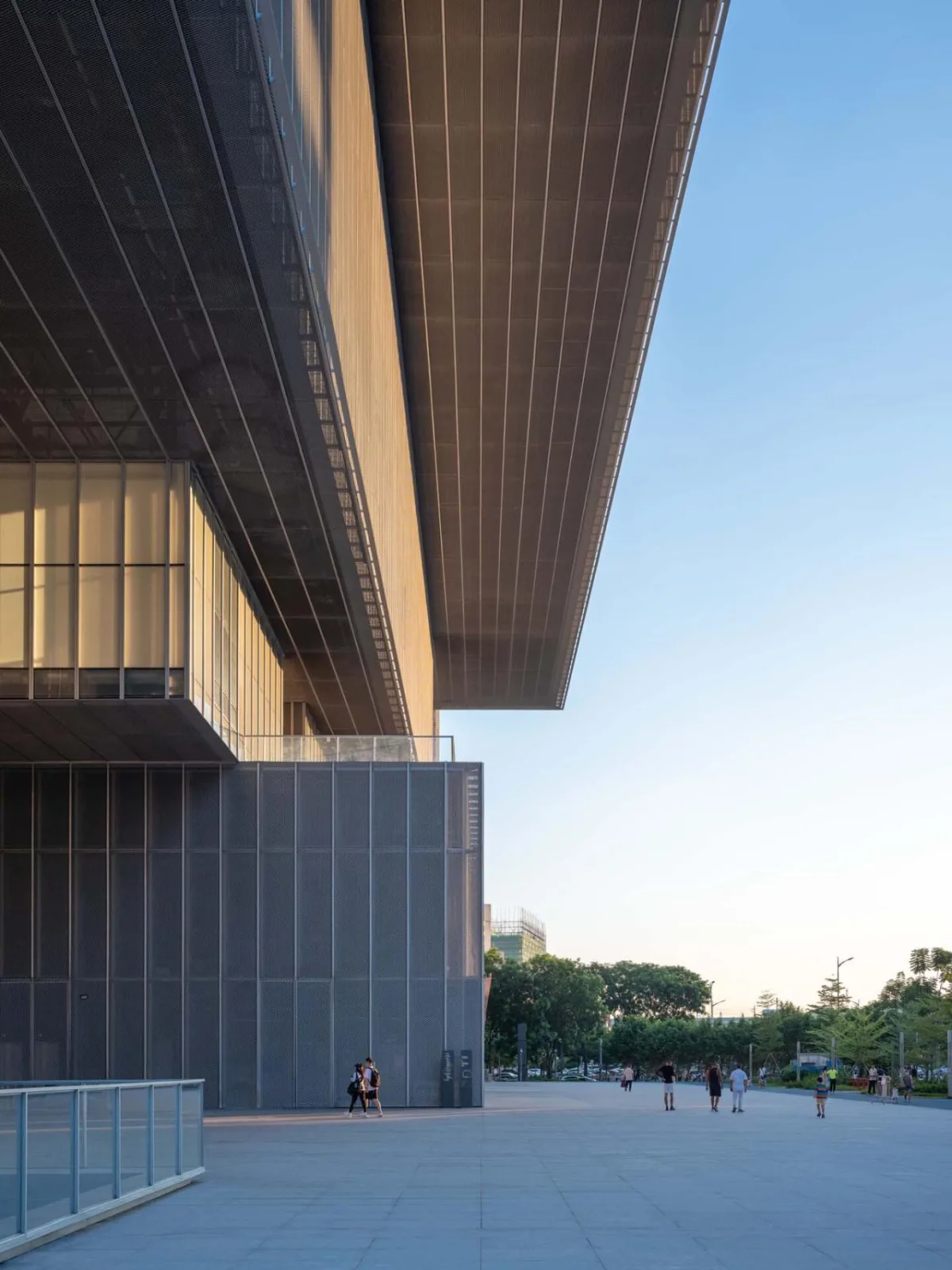
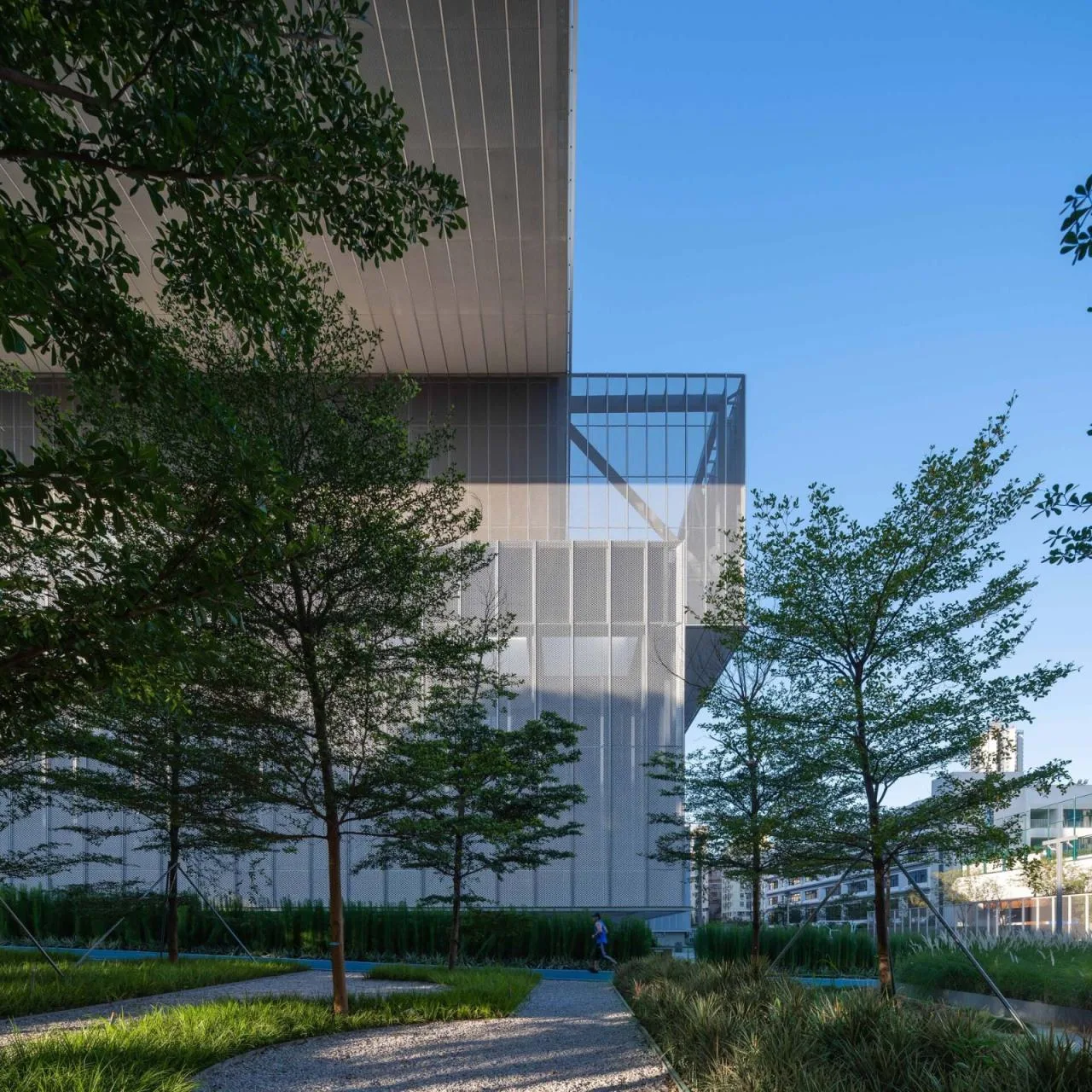
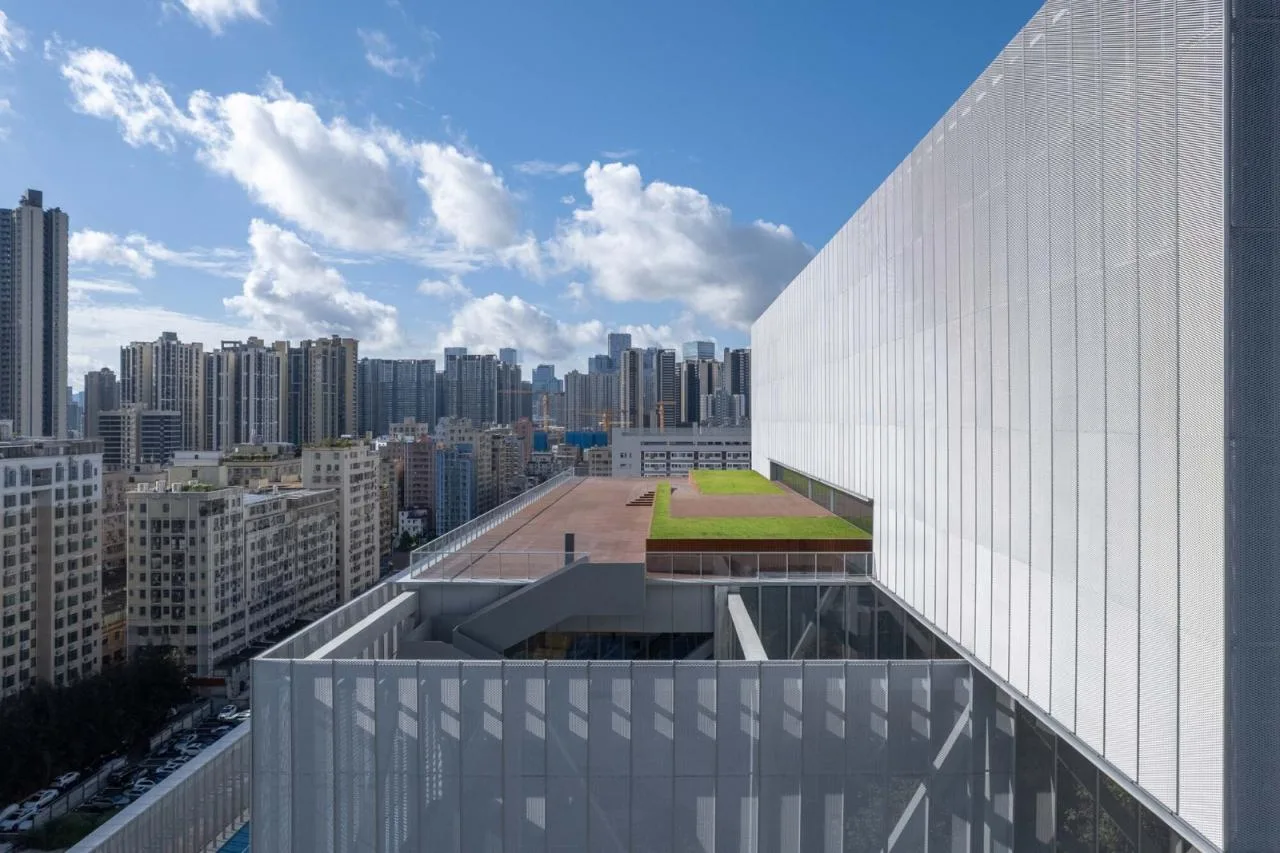
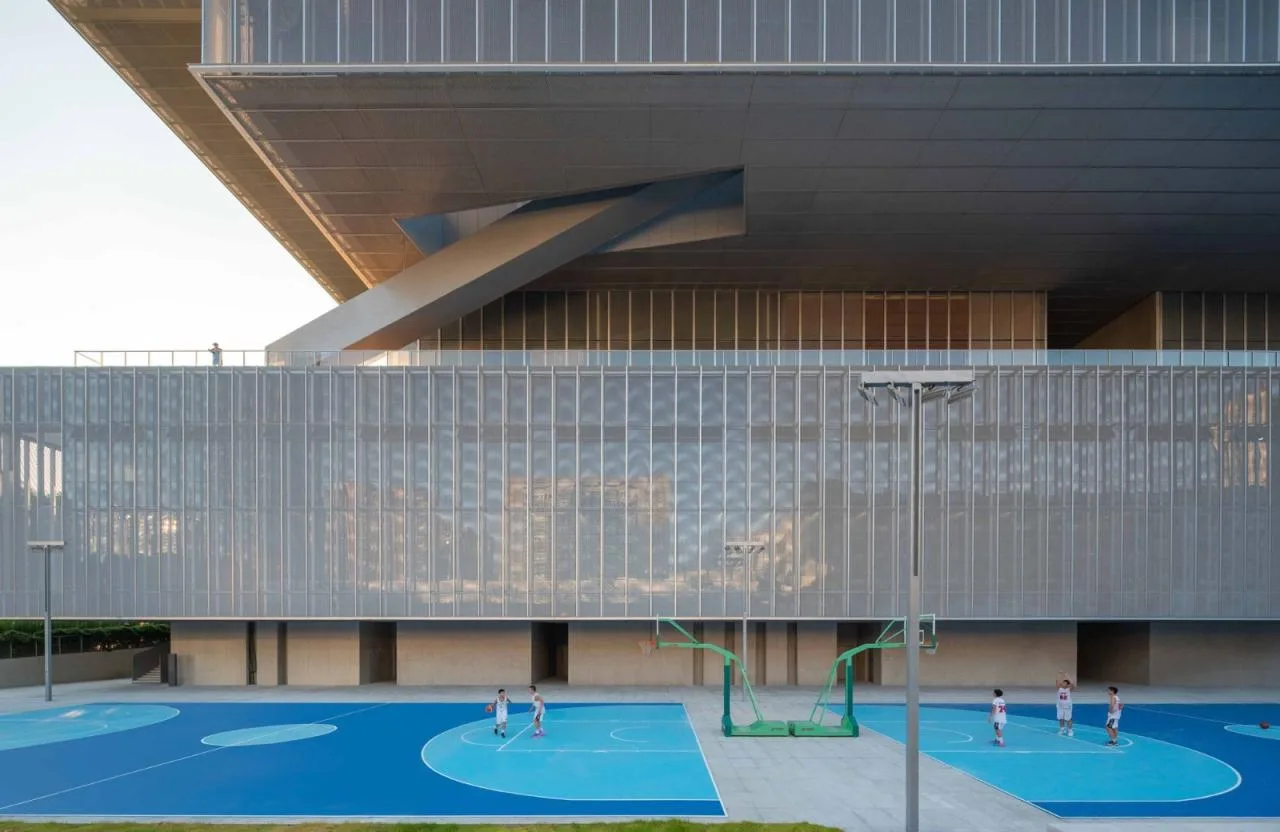
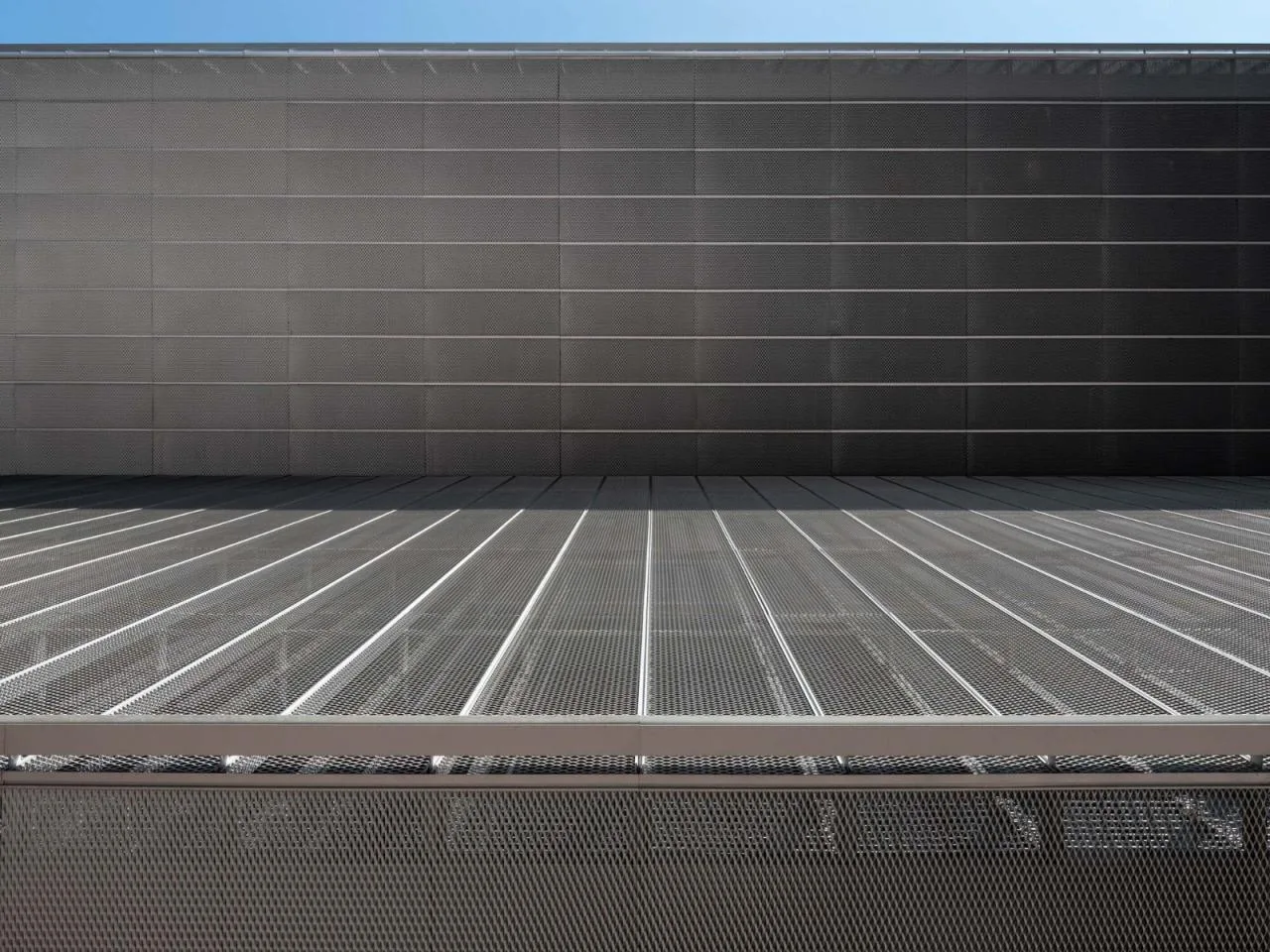
The building’s façade and structure are clearly connected through geometric forms, structural joints, and material choices. It features a double-skin façade consisting of an outer aluminum mesh and an inner layer of low-E ultra-white glazed glass.
The aluminum mesh extends from the walls to the outdoor ceilings, creating a simple yet complete volumetric form. Its semi-transparent and directional qualities cause subtle shifts in brightness, shadow, and transparency depending on the viewer’s angle, time of day, and weather. These changes soften the building’s mass and reduce the oppressive effect of its size. The double-skin façade allows ample natural light indoors while minimizing glare.
According to the architect, this design promotes energy efficiency by maximizing natural lighting and ventilation, thereby reducing energy consumption for lighting and air conditioning, and lowering operational costs.
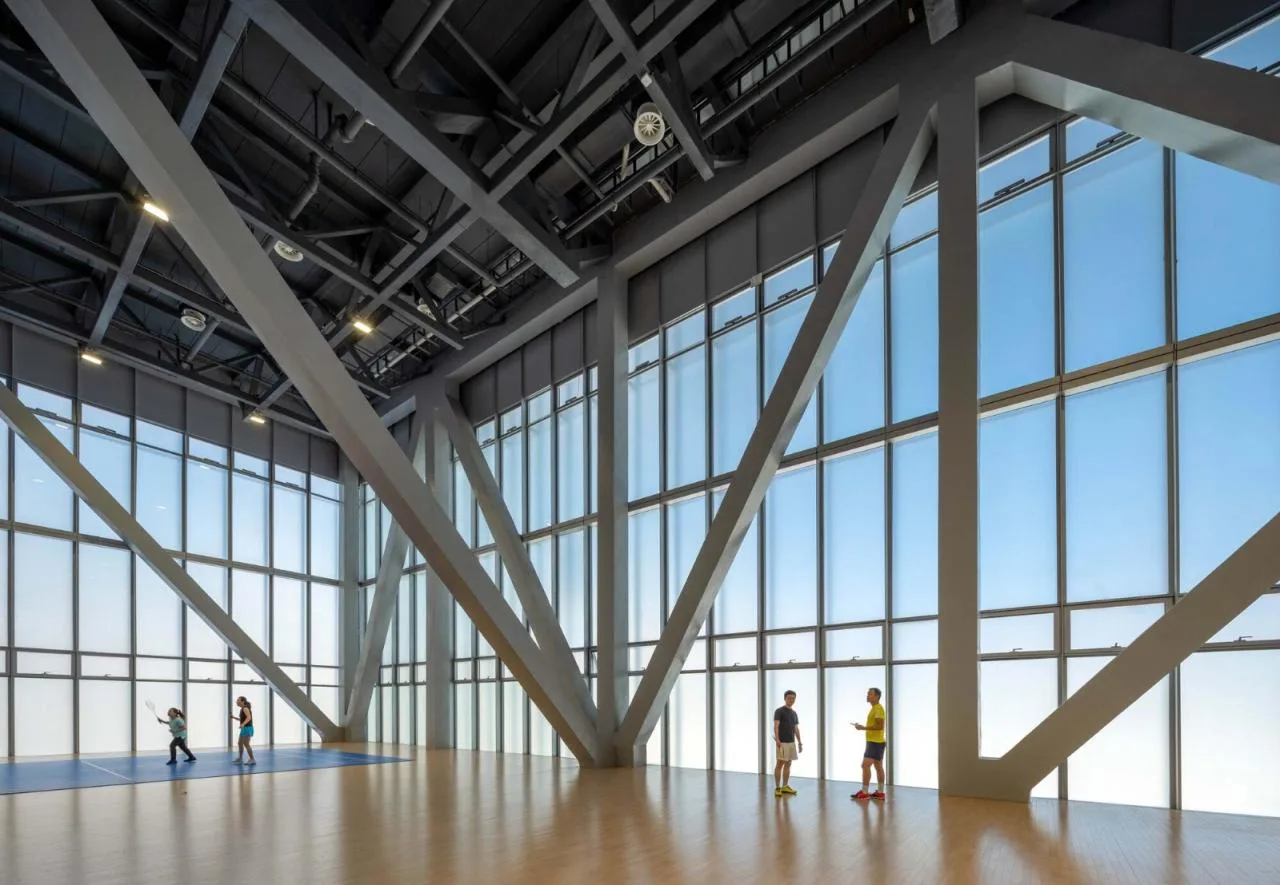
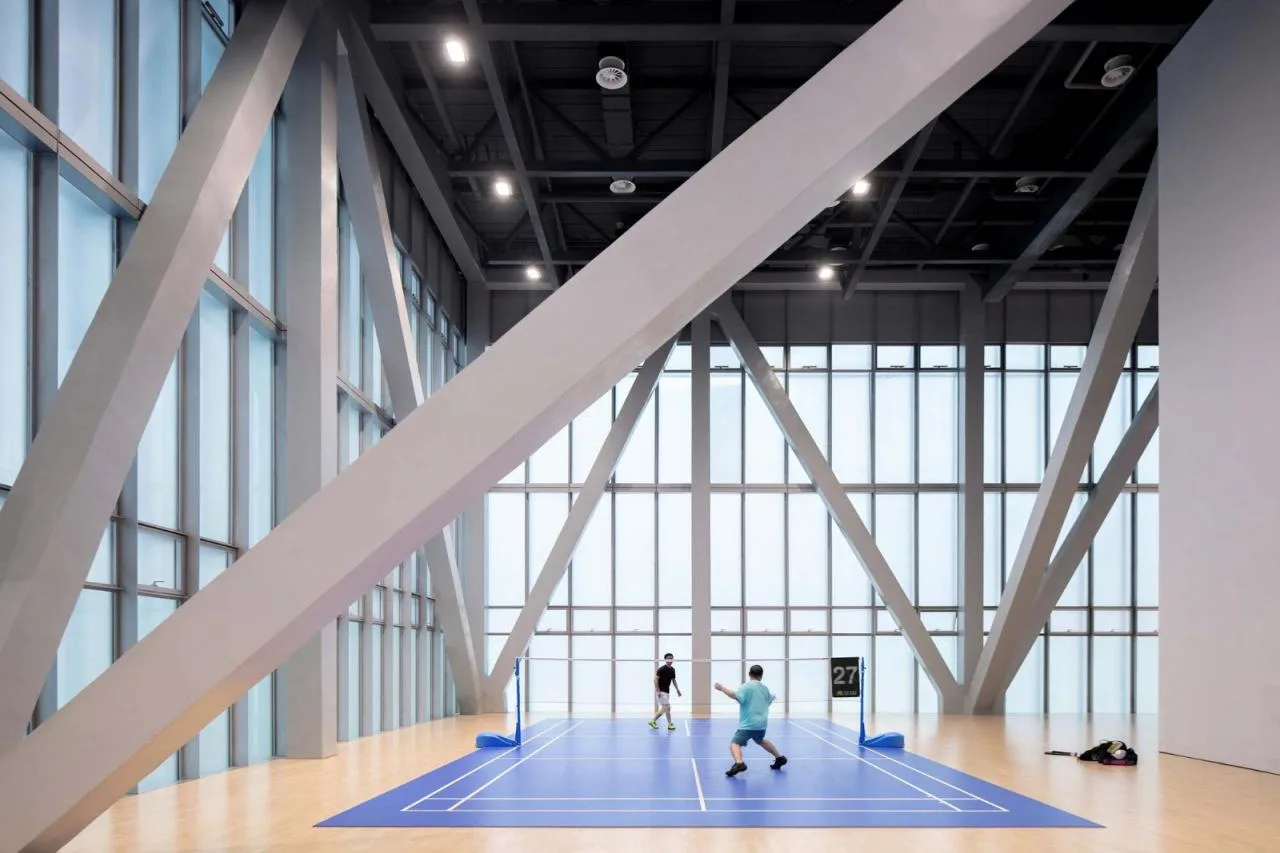
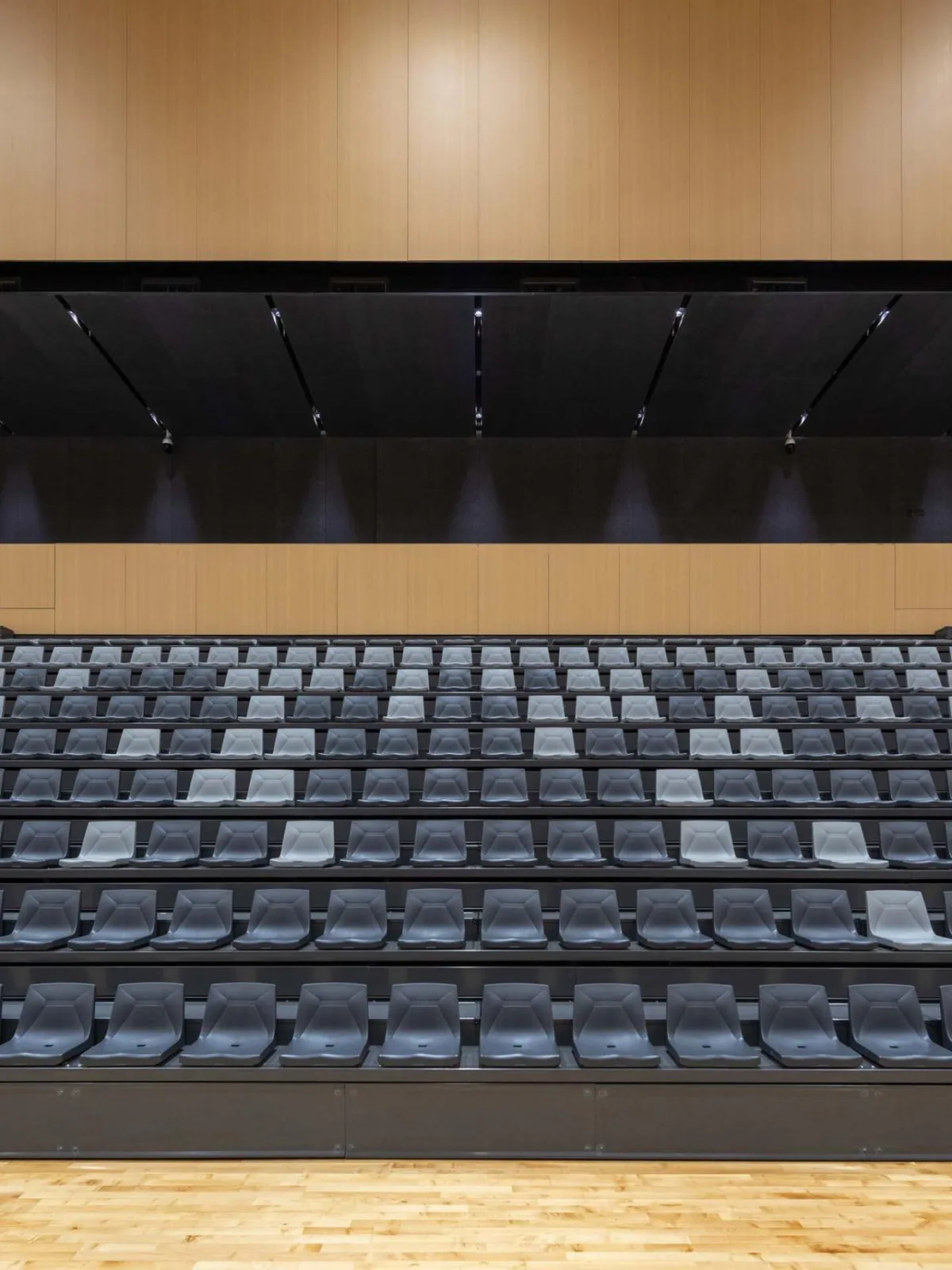
Most indoor venues embrace a simple industrial aesthetic. This approach not only responds to budget constraints but also reflects a deliberate choice to “return to simplicity” by eliminating unnecessary decoration. The aim is to focus on creating functional spaces for sports with efficiency and clarity.
The Jian Shang Sports Complex is the most challenging, expansive, and rigorously managed project undertaken by CCDI Environment Studio to date. Comparing it to literary work, designing this complex is like writing an extensive novel. Over five years and six months, the team oversaw thousands of technical drawings, conducted hundreds of on-site inspections for progress and quality, and participated in numerous technical and management coordination meetings.
Beyond architecture, the studio also contributed to interior design, landscape, curtain wall, signage, lighting, and many other related specialties, supervising, reviewing, and coordinating nearly 40 specialized disciplines.
As the Jian Shang Sports Complex proudly rises, showcasing the hard work of countless individuals and awaiting the test of time, we hope it reveals a childlike spirit of creativity and beauty. We also aspire for citizens to experience the building’s open and inclusive cultural message while enjoying sports, which would be a profound reward and inspiration for us all.
Project Drawings
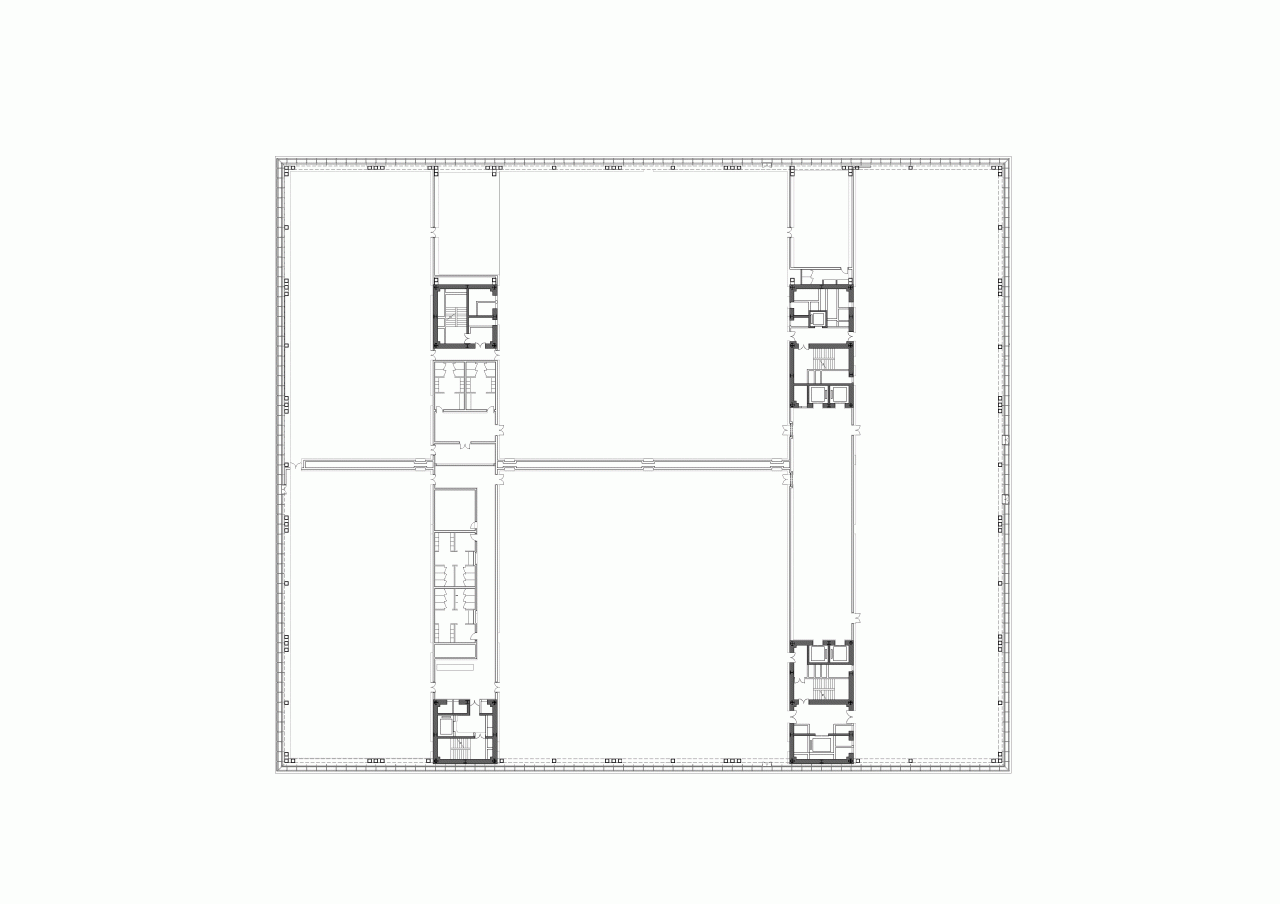
△ Plan View
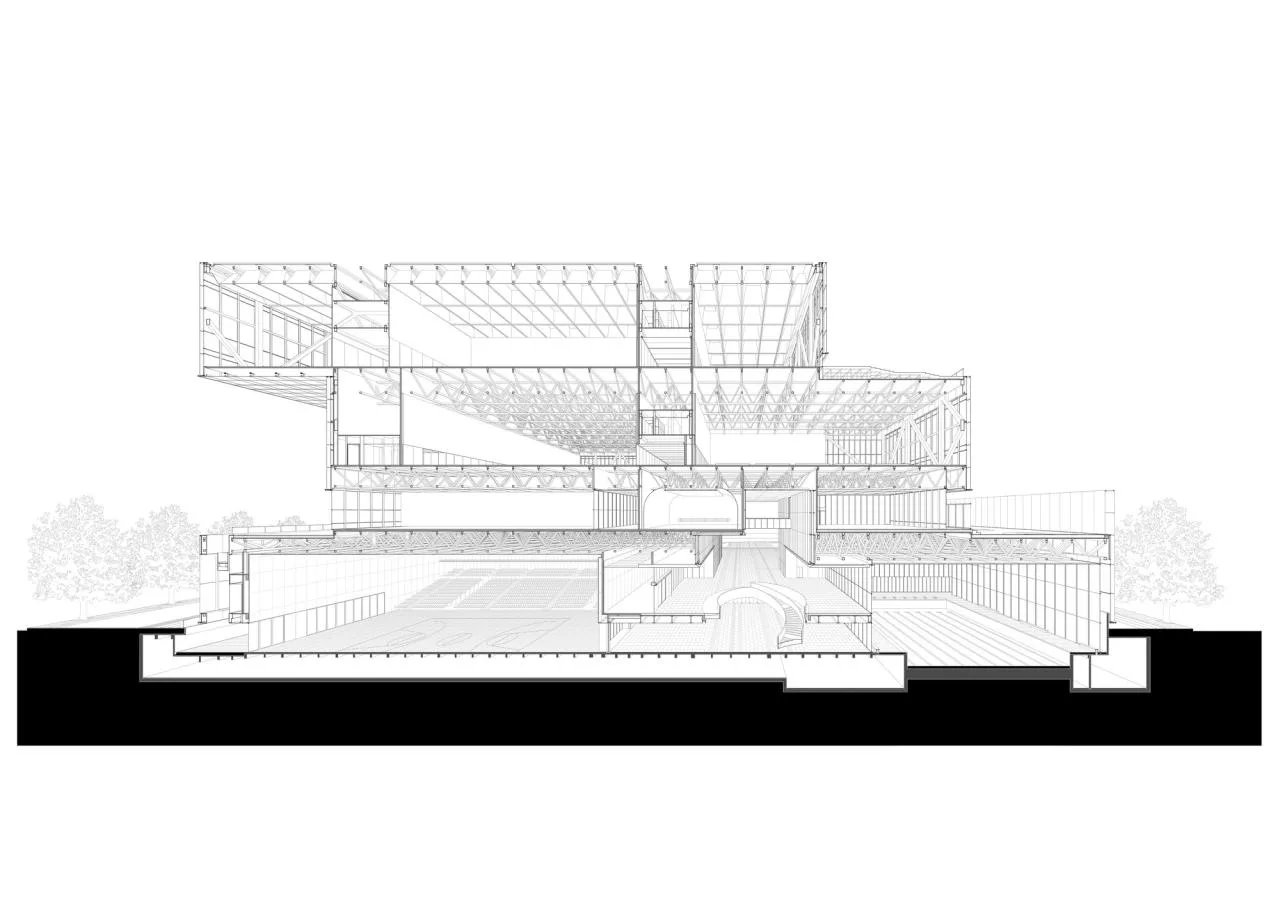
△ Section Diagram
Project Information
Architect: Sidi International
Area: 65,000 square meters
Year: 2022
Photographers: Zhang Chao, Summer Solstice
Lead Architect: Hu Zheng
Project Manager: Yu Qing
Design Team: Cao Jianwei (project architect), Xia Yunlong (on-site architect), Yang Yingjin (on-site architect), Yang Jieqing, Zeng Guanghui, Zhu Ning, Jia Chonghe, Wei Yufeng, Zhu Dalong, Chen Xingrong, Tao Tingting, Zheng Wenhao, Di Xin (on-site architect), Chen Bei, Qiu Shen, Lin Guofeng, Yan Yunpeng, Zhu Hong, Zhang Huijun, Peng Junxi, Long Shenghao
Owner: Longhua District People’s Government, Shenzhen
User: Longhua District Bureau of Culture, Radio, Television, Tourism and Sports, Shenzhen
Construction Party: Longhua District Construction and Engineering Bureau, Shenzhen
Construction Agent: China Resources (Shenzhen) Co., Ltd
Curtain Wall Design: China Construction Shenzhen Decoration Co., Ltd., CCDI Environmental Studio, CCDI Four Dimensional Studio
Interior Design: Shenzhen Shuimu Space Architectural Design Co., Ltd
Landscape Design: Shenzhen McDuffy Landscape Design Co., Ltd
Logo Design: Shanghai Wanhong Advertising Exhibition Co., Ltd
Lighting Design: Golden Lighting Technology Co., Ltd
Construction Contractor: China Construction Third Engineering Bureau Second Construction Engineering Co., Ltd
Location: Shenzhen















Must log in before commenting!
Sign Up