
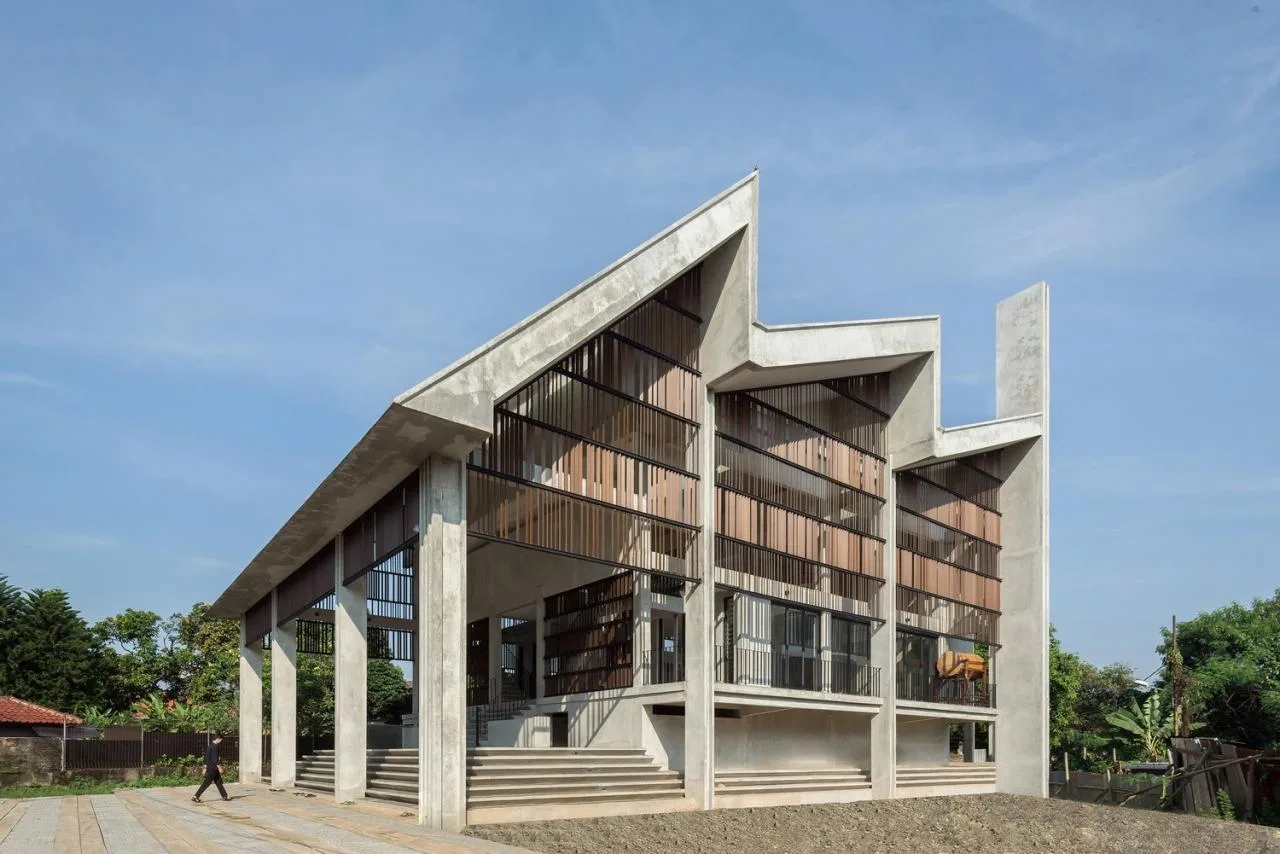
This three-story mosque, designed with passive architecture principles, is situated in a densely populated residential area right in front of a commuter station. The ground floor functions as a school and serves as a corridor for the surrounding community. As Frank Gehry said, “Architecture should reflect its time and place, but crave eternity.”
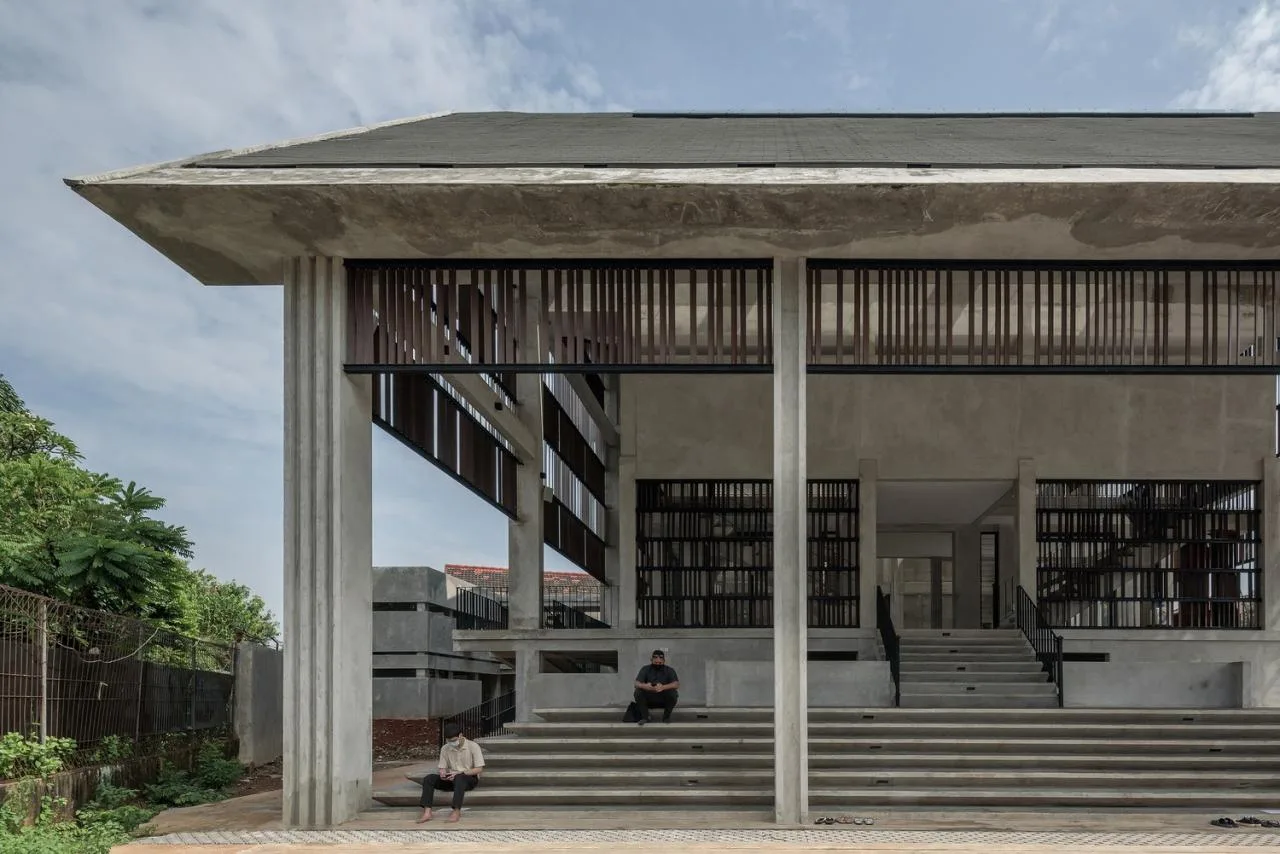
Early mosques, built according to Islamic tradition in Middle Eastern climates, often featured open spaces around the main structure without explicit symbolic meanings. Over time, since the Islamic Golden Age, mosque designs have evolved to incorporate stronger symbolic elements, more open surrounding areas like porches, distinct geometric forms, materials, and elaborate styles. In the design of Jami Al Hurriyah Mosque, we sought to create an eternal mosque by thoughtfully responding to the site’s climate, culture, local habits, and passive design strategies.
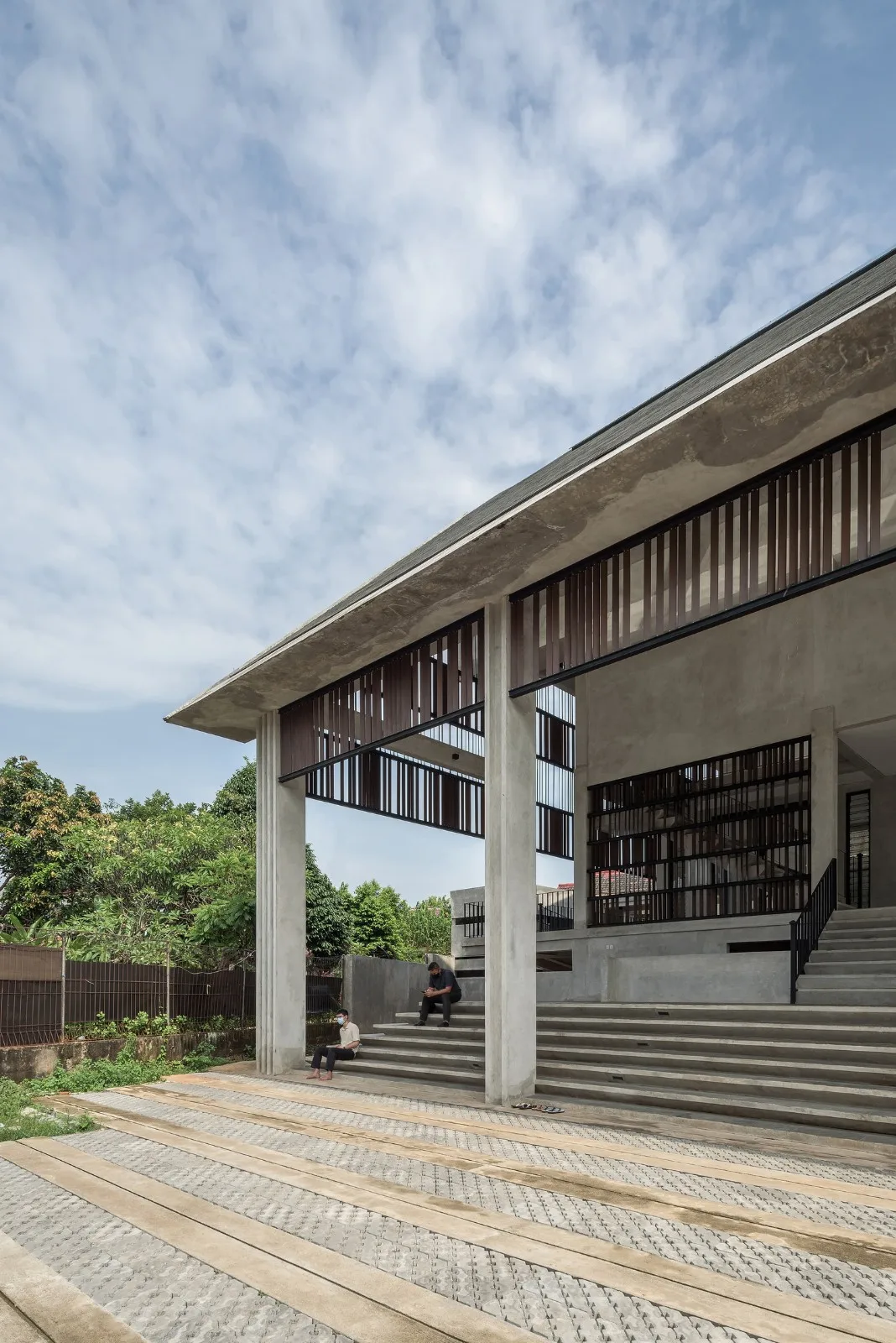
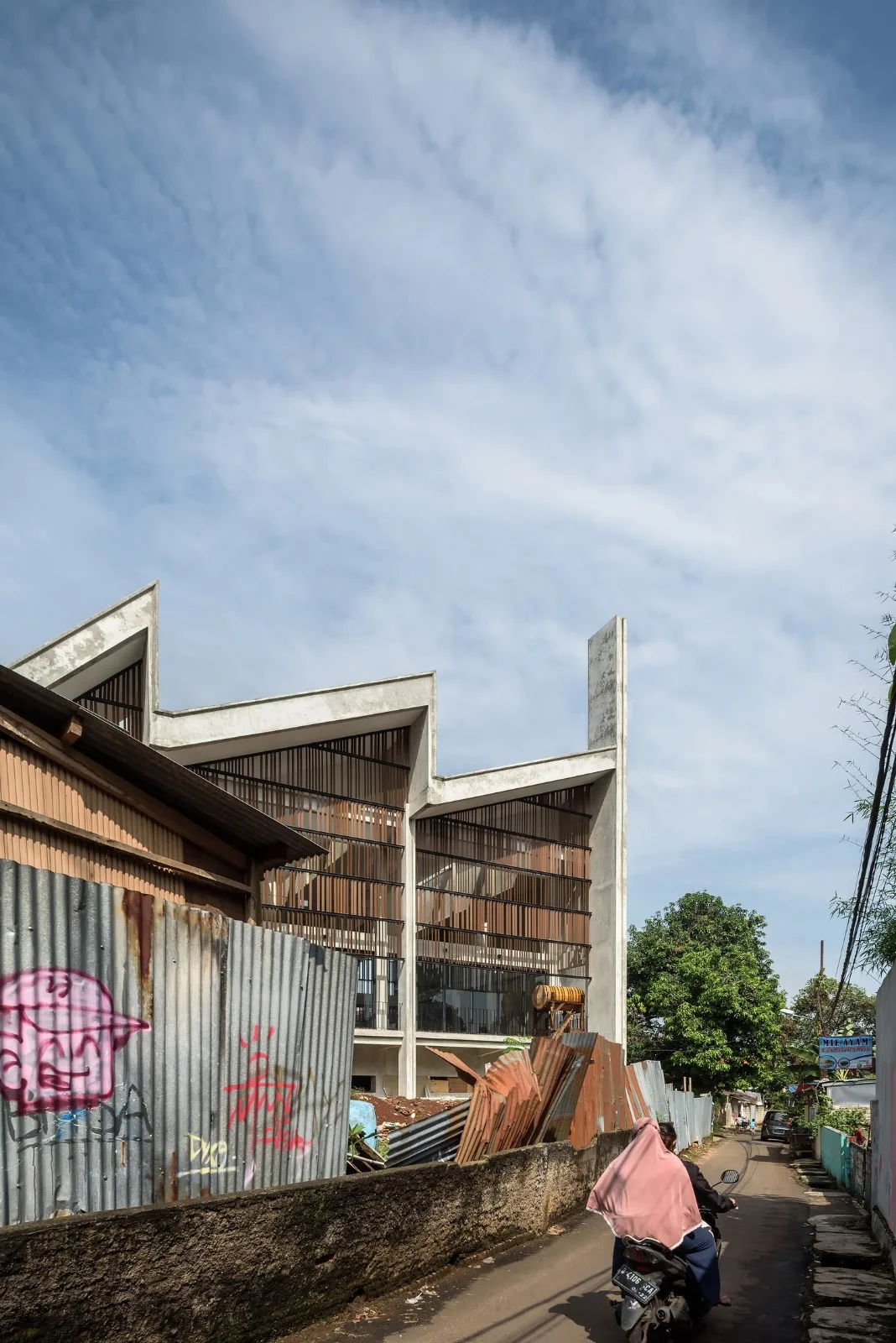
The introduction of Islam to Indonesia in the 13th century AD saw many mosques retain their original forms, resembling Hindu-Buddhist temples or even East Asian pagodas. Some mosques adapted local building styles and decorations to fit cultural contexts. Later, architectural influences from the Middle East—such as onion-shaped domes and ornamental details introduced during Dutch colonial rule—became prevalent. Mosque architecture, fundamentally, has no strict formal rules but focuses on facilitating worship and social interaction. We believe mosque architecture can evolve uniquely within different contexts, reflecting the identity of its community and serving as a vital cultural space.
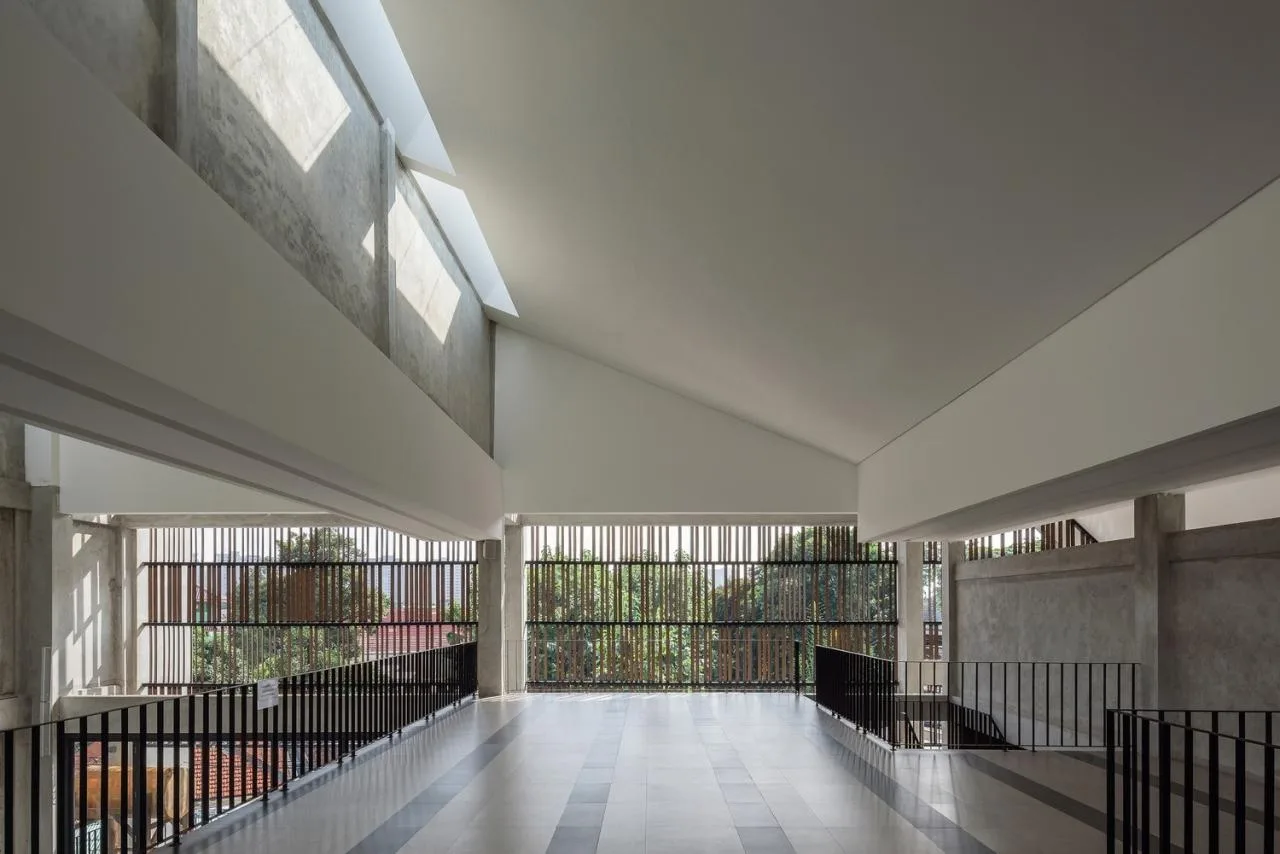
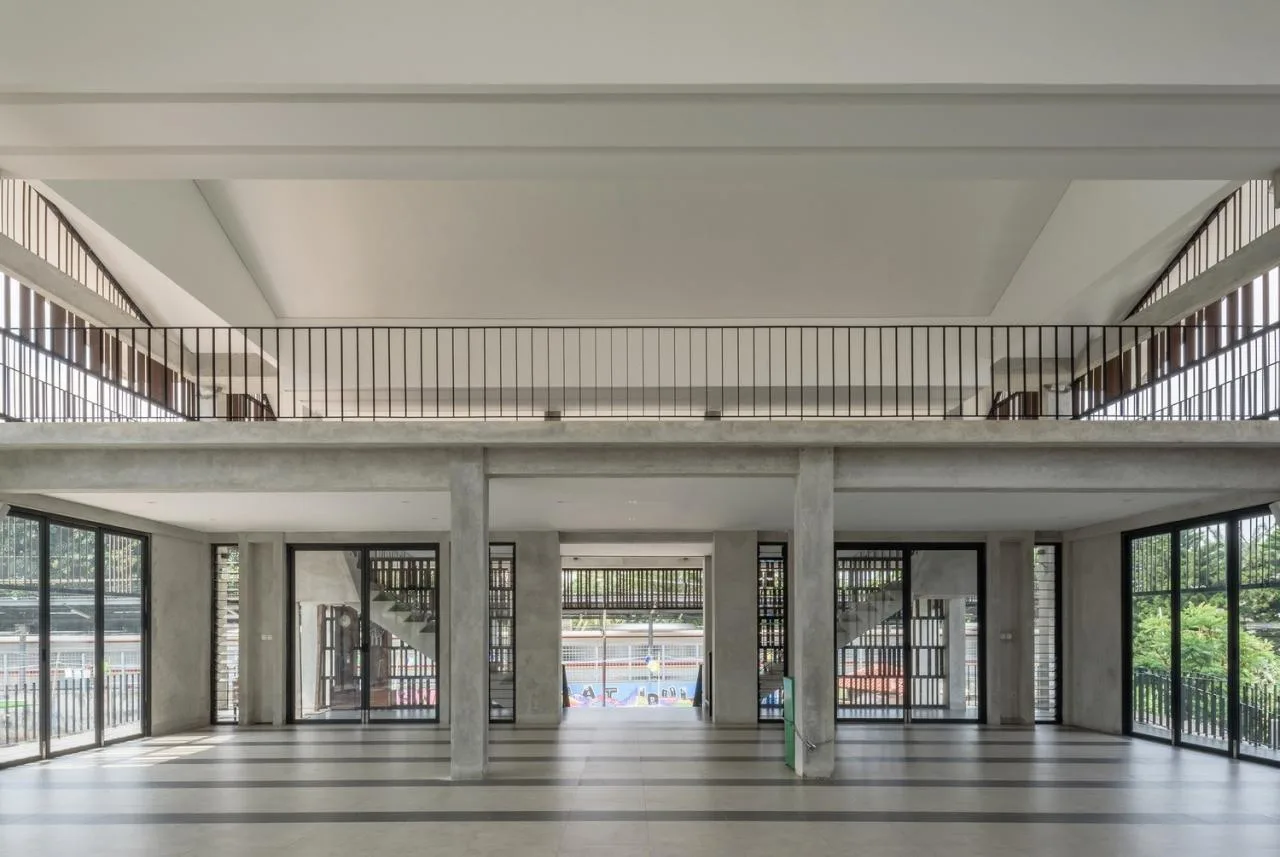
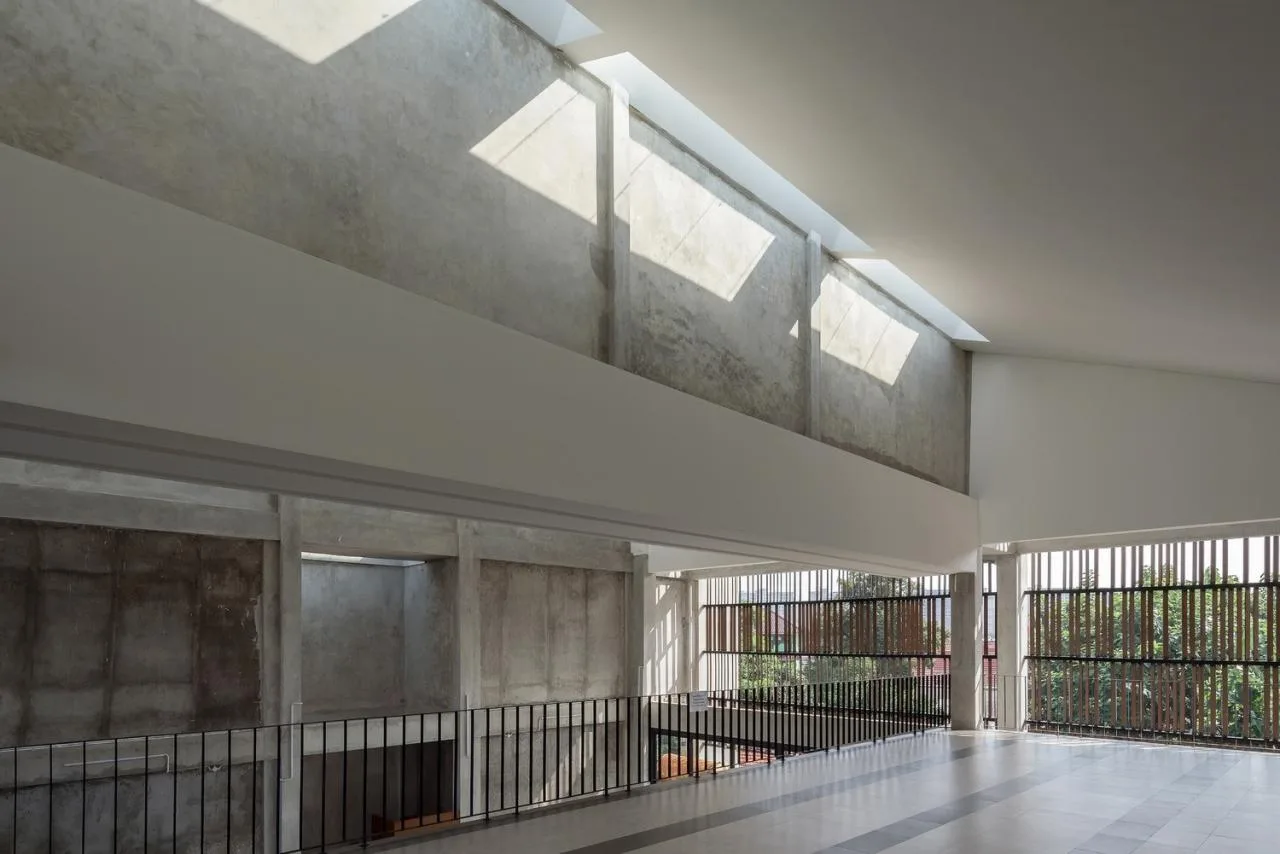
The architectural approach at Masjid Jami Al Hurriyah (Mosque of Light) engages in a dialogue with natural sunlight, the local climate, and the high-density social interactions surrounding the site. Our goal is to “translate” these environmental and social elements into the mosque’s design, creating a timeless building rich in environmental responsiveness—a fresh perspective on mosque architecture.
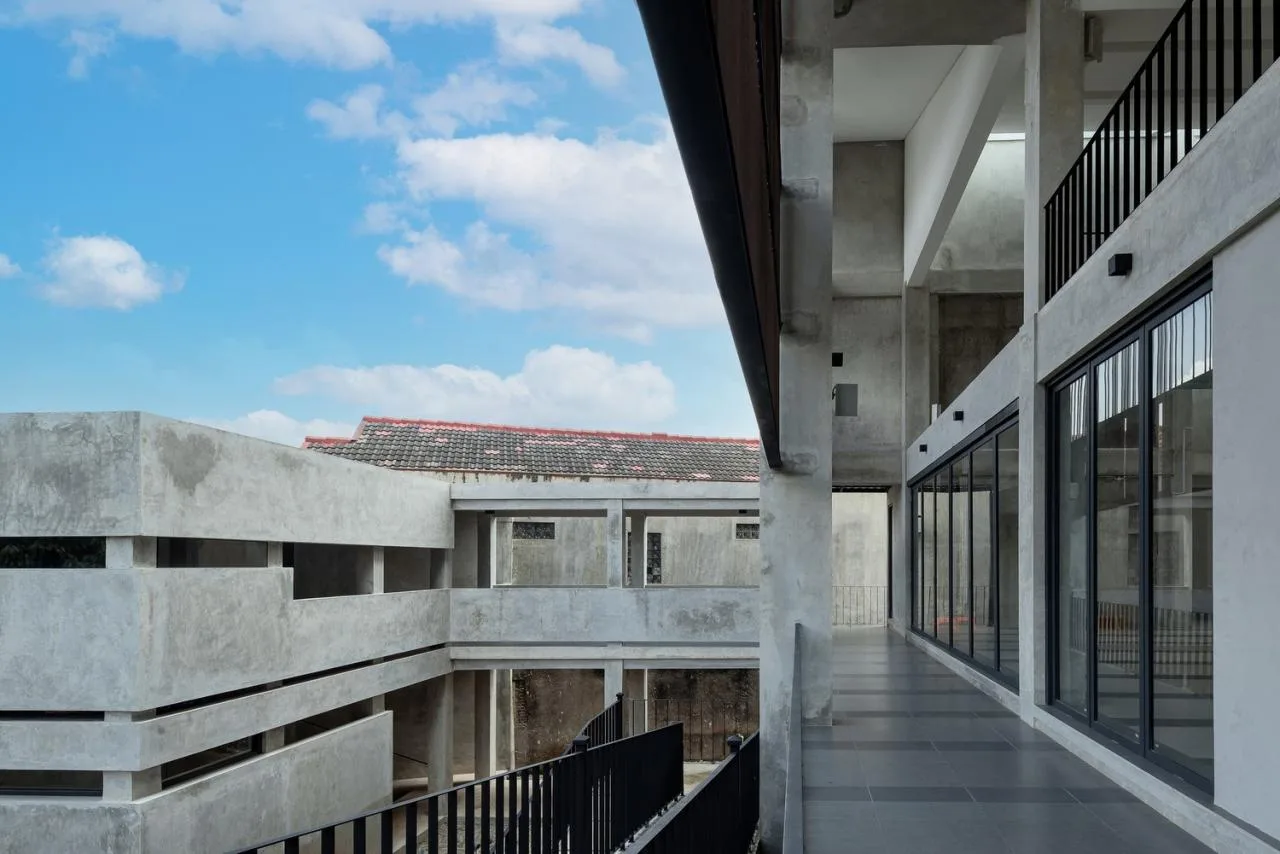
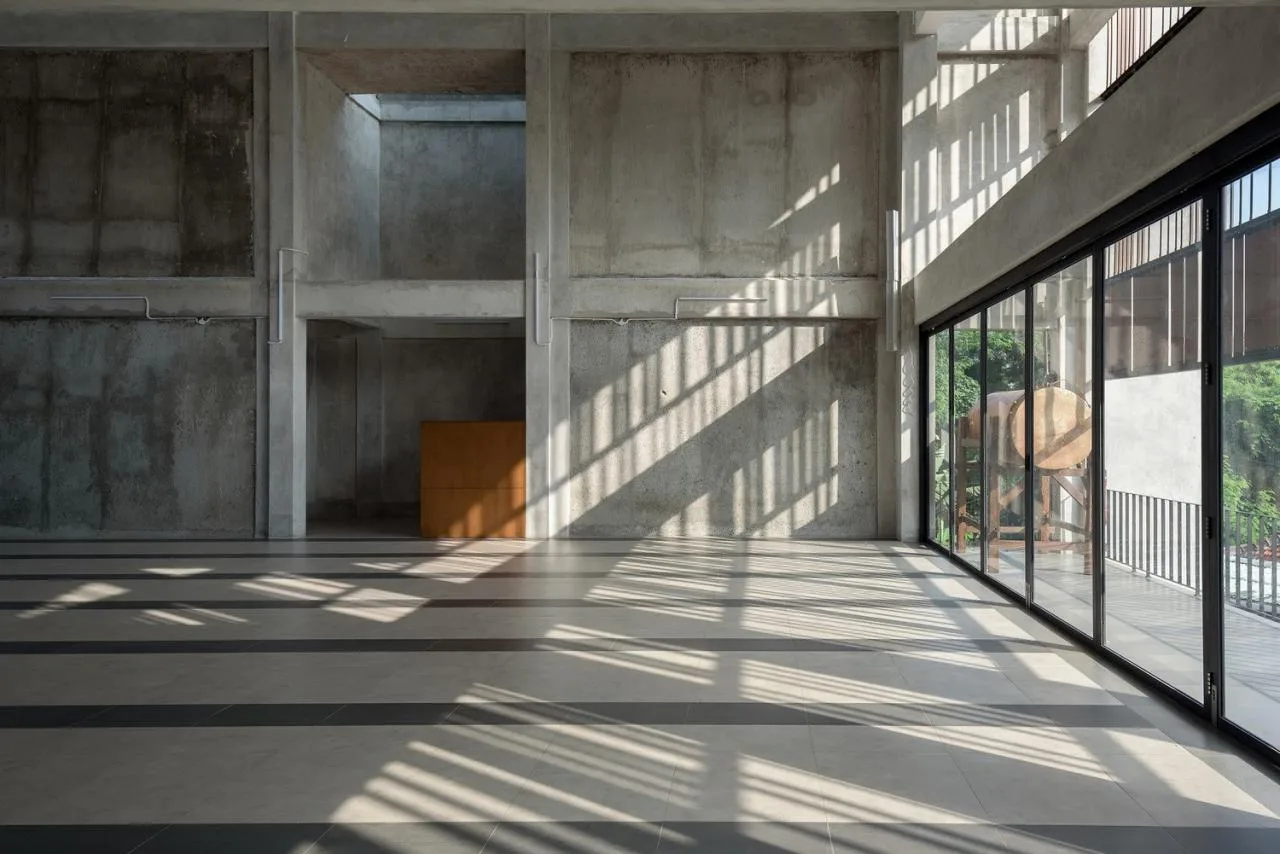
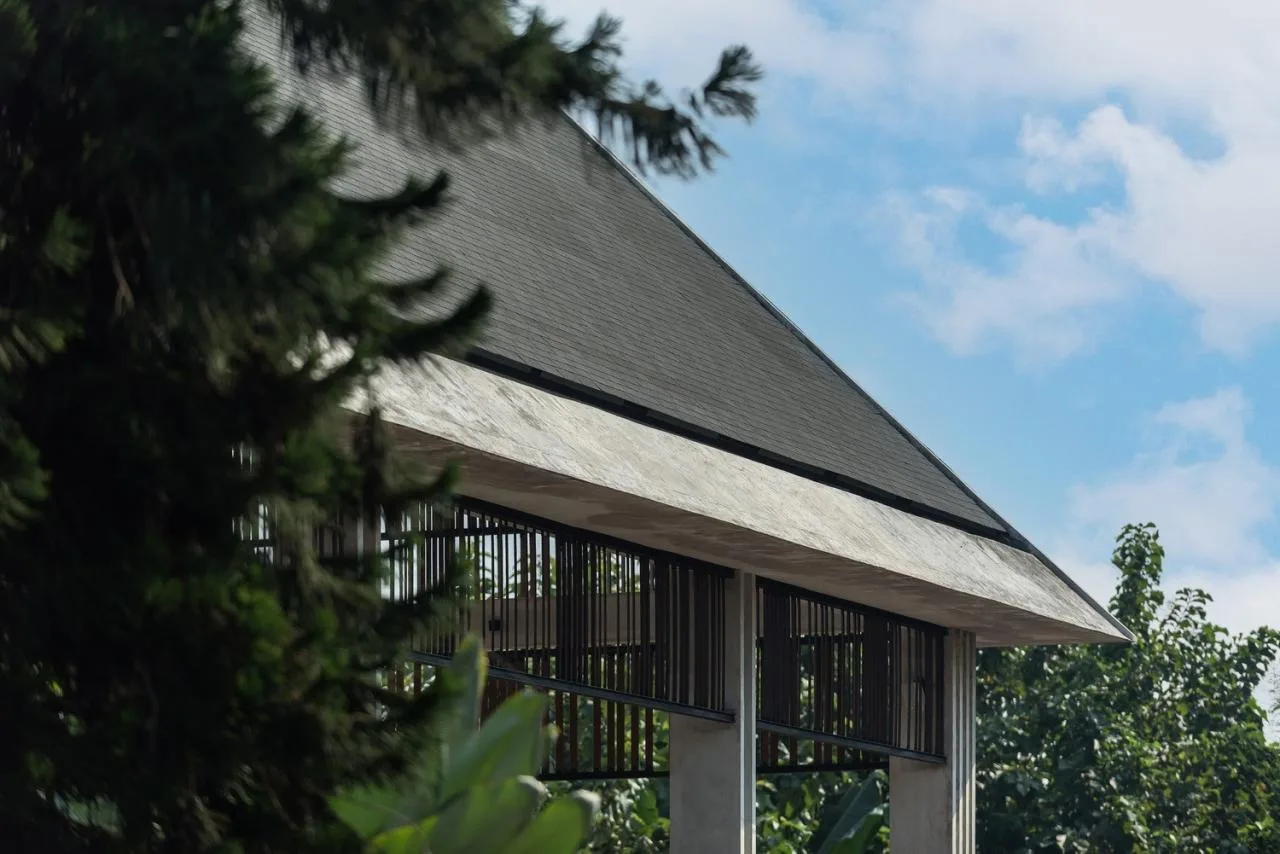
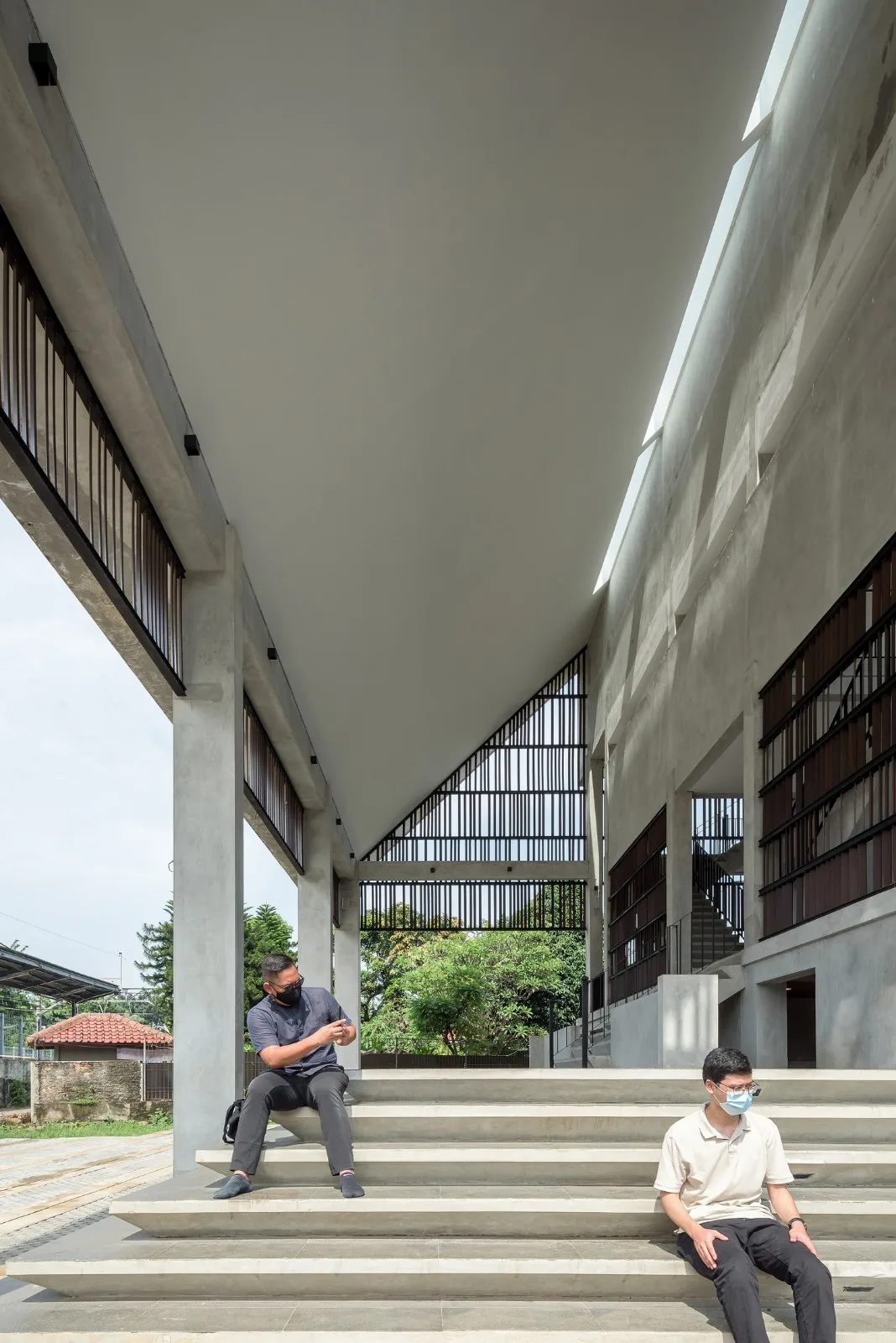
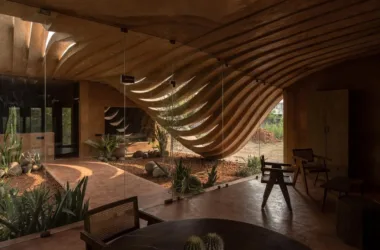
The mosque’s design features three sloping roofs arranged in sequence, dividing the building into three distinct sections: a welcoming porch, a terraced prayer area, and the main prayer hall. These sloped roofs provide shade, protect from rain, and enhance insulation. Each roof includes a “skylight” at its apex, creating a connection between worshippers and the passage of time, as natural light shifts during different prayer hours.
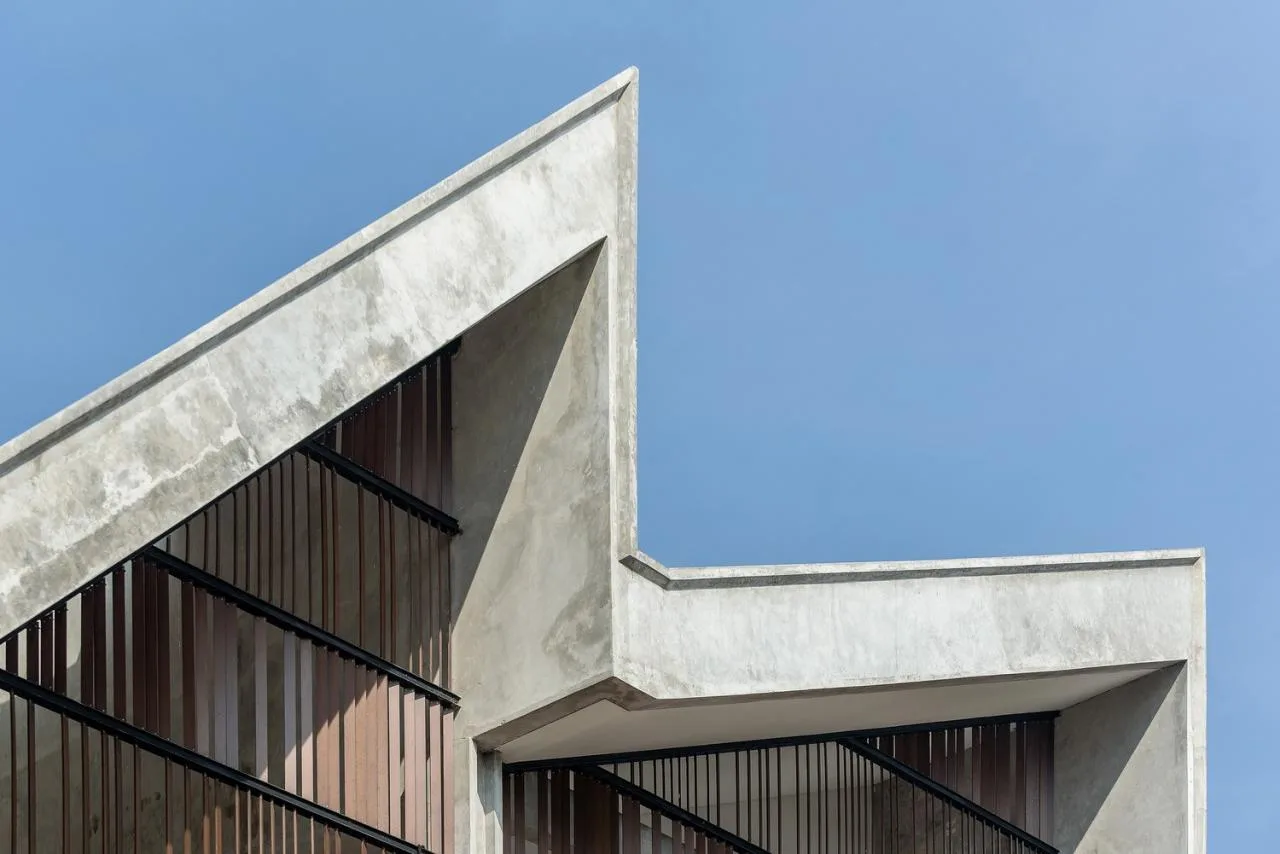
The roof and spire shapes symbolize “Allah.” When viewed from the side facing the train station, the three roof sections and tower visually form the Arabic word “Allah.”
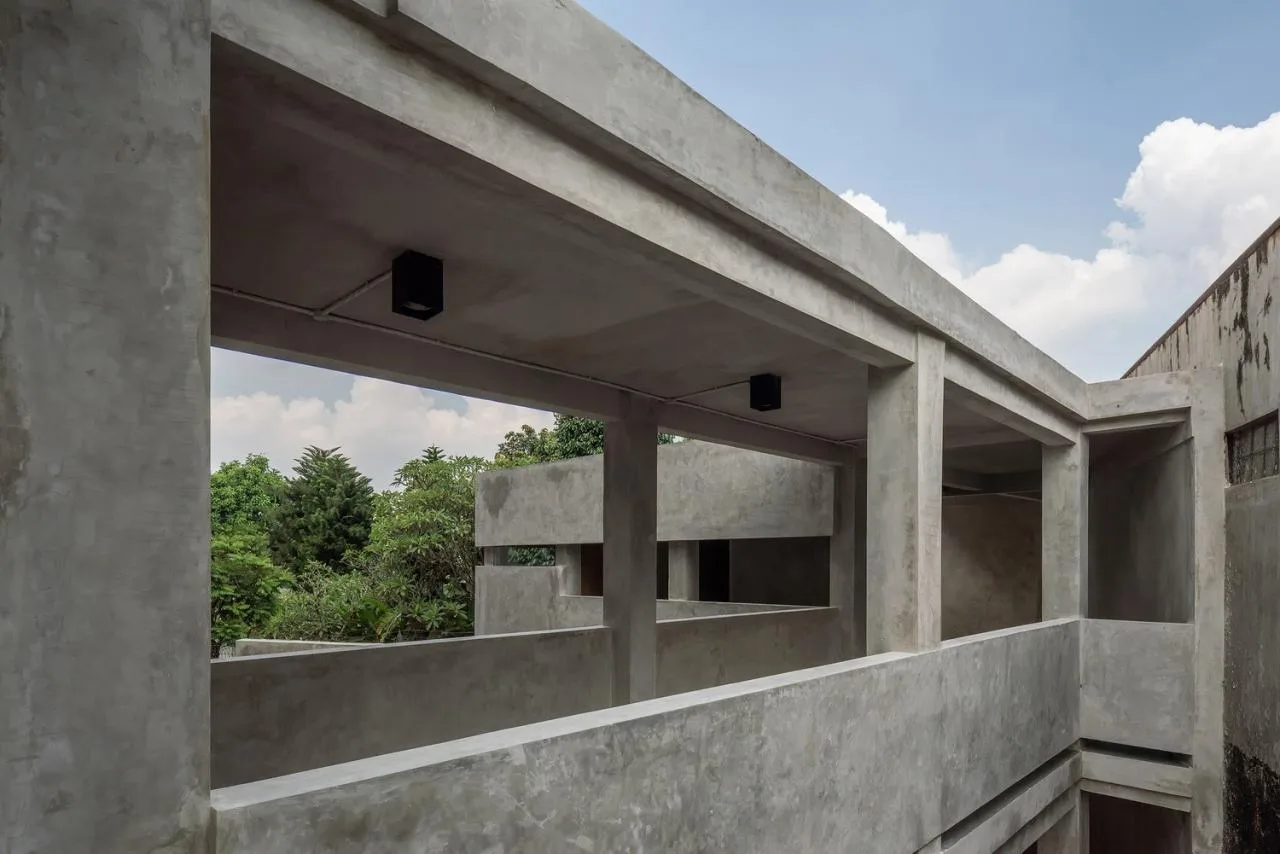
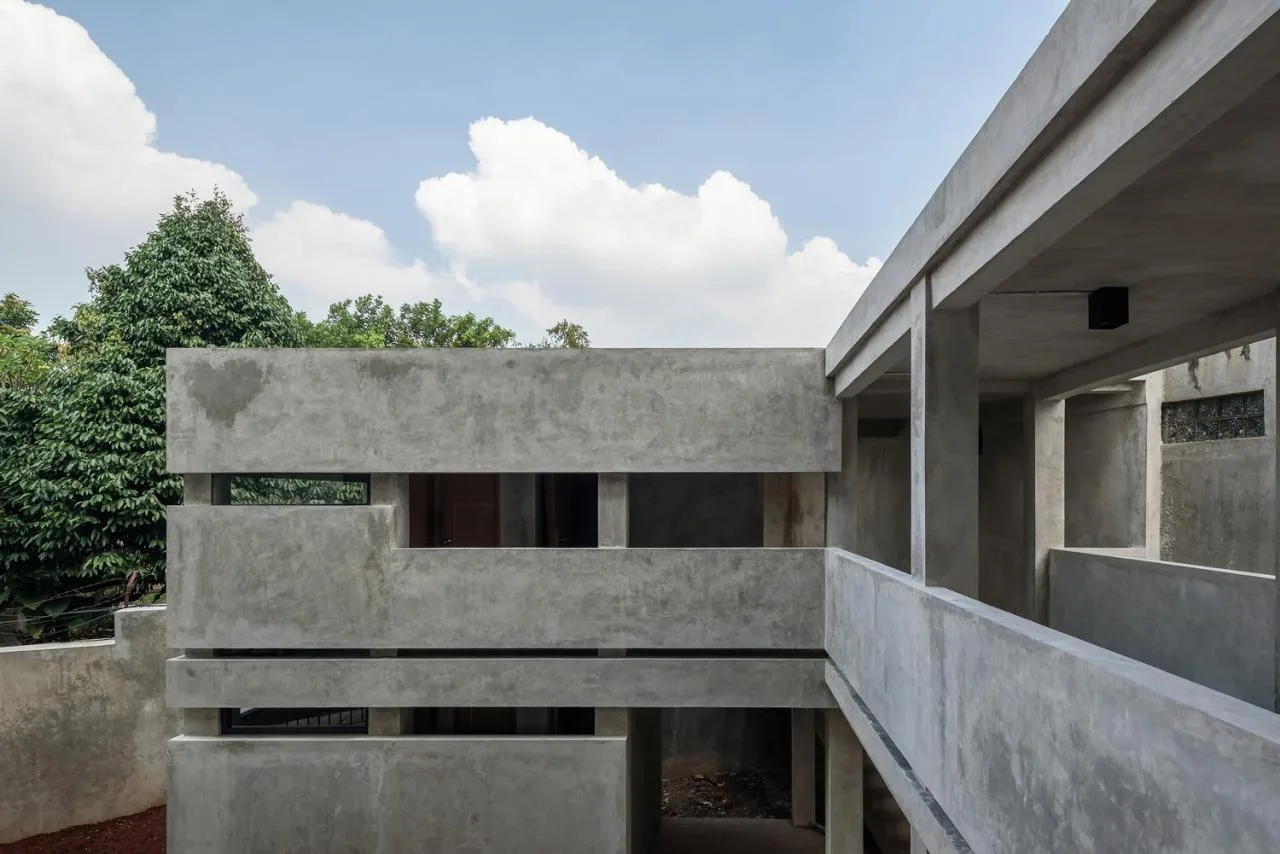
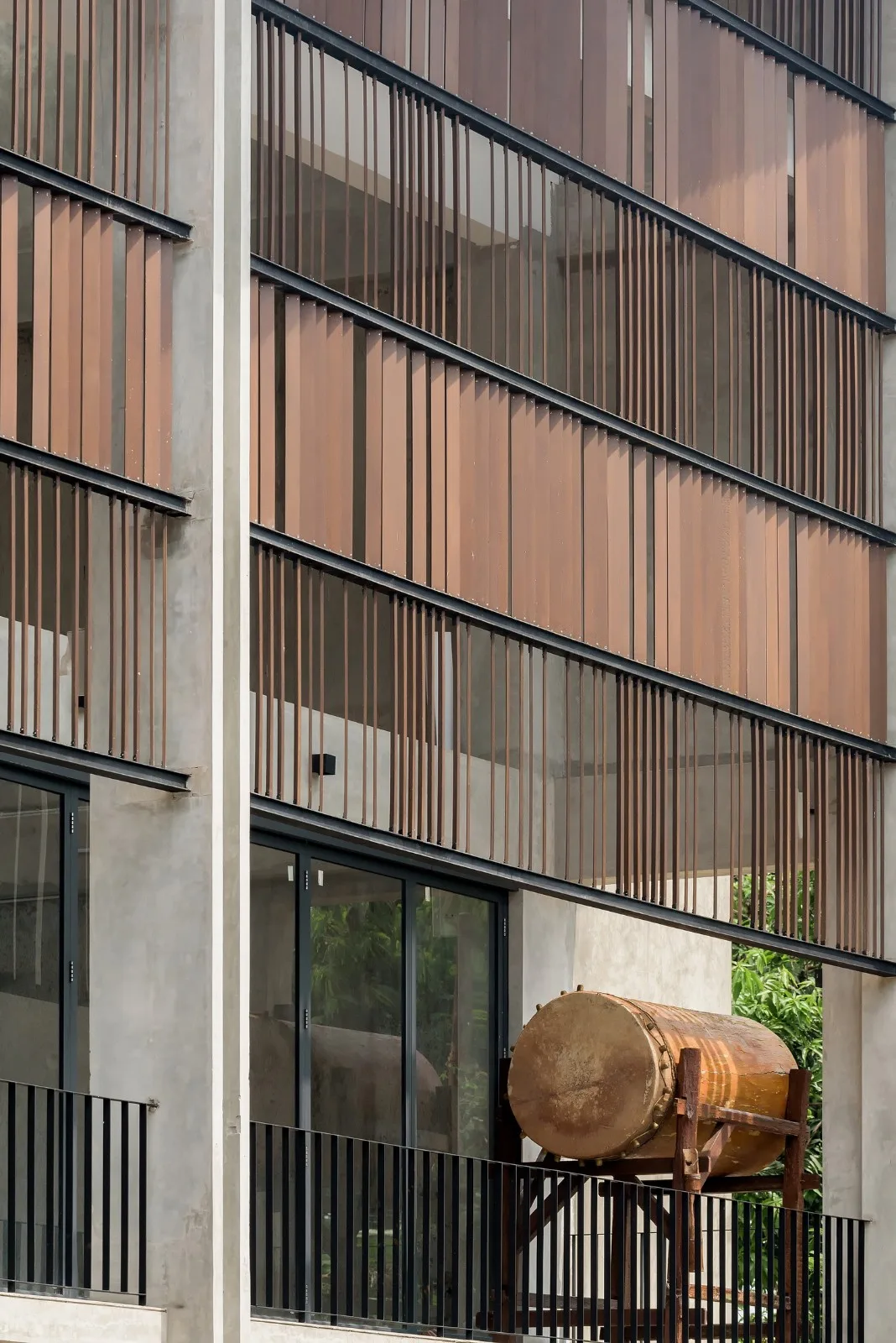
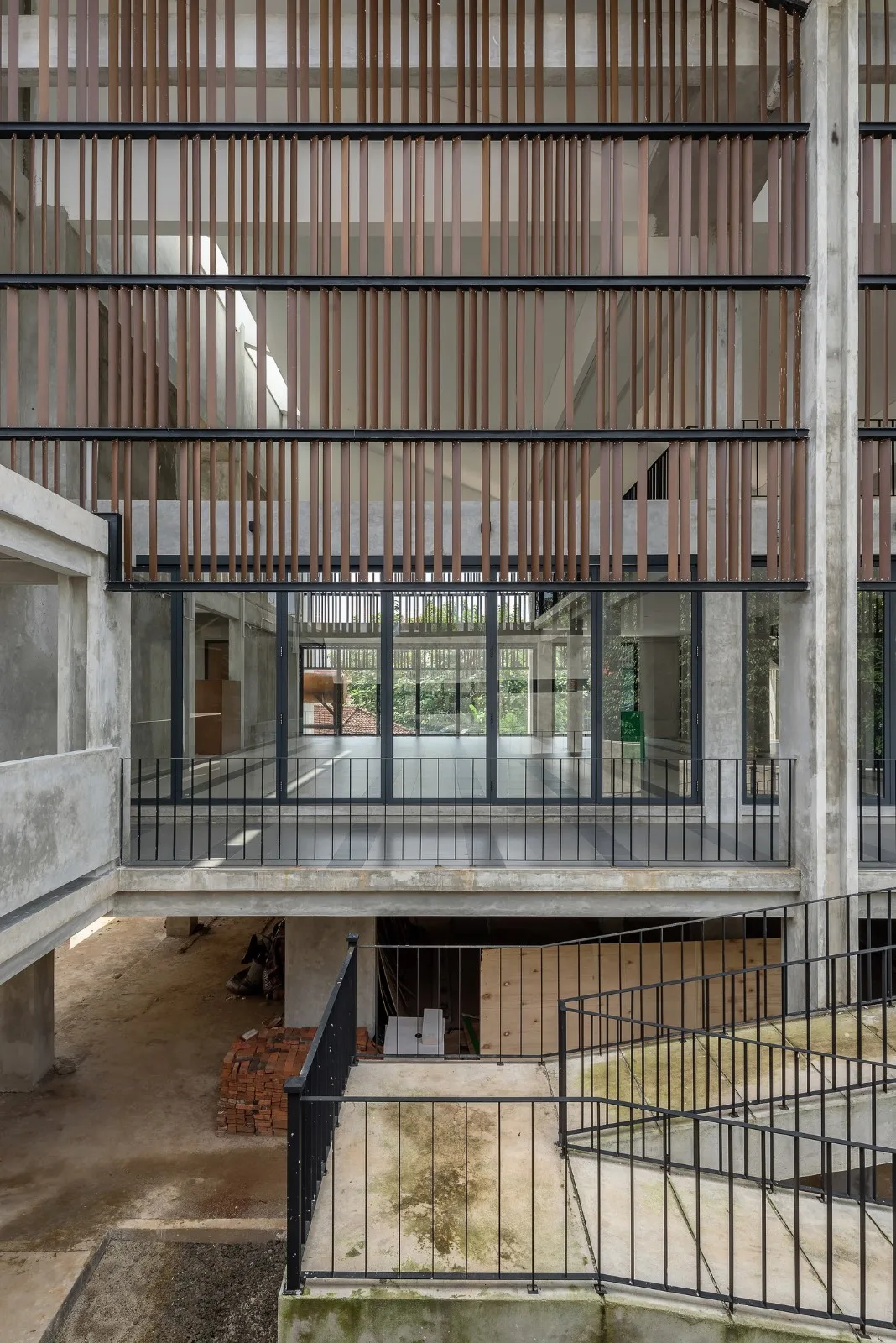
Thermal Comfort: The mosque is designed without artificial air conditioning, relying instead on maximum cross-ventilation. Wooden lattice grids serve as curtains, controlling heat penetration and maintaining a comfortable indoor temperature.
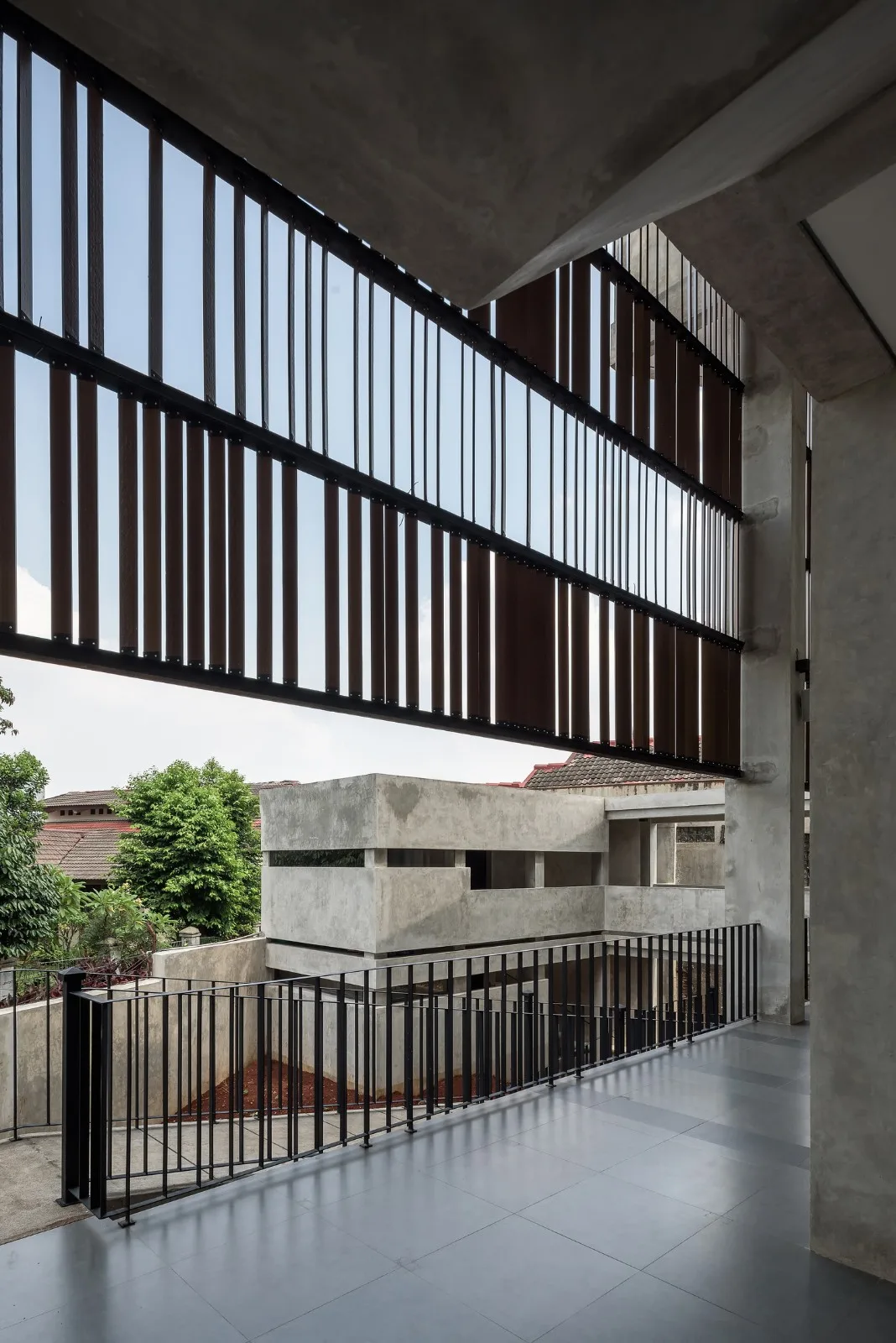
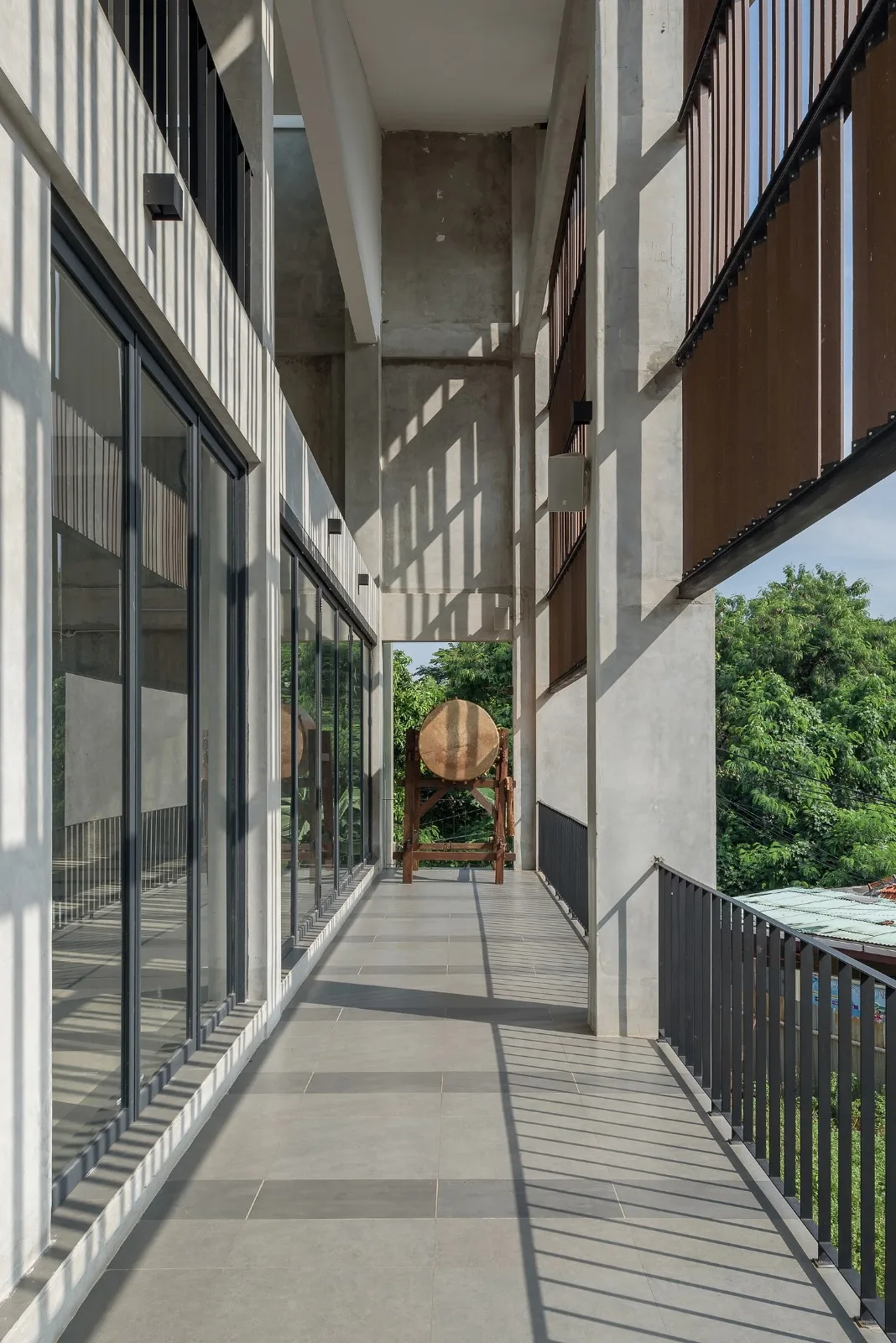
Stairs, terraces, and courtyards within the mosque serve not only religious functions but also act as vital public spaces fostering community interaction. The open courtyard and staircase entrance invite the local community to participate in activities, offering informal seating and gathering areas without enclosing walls.
Project Drawings
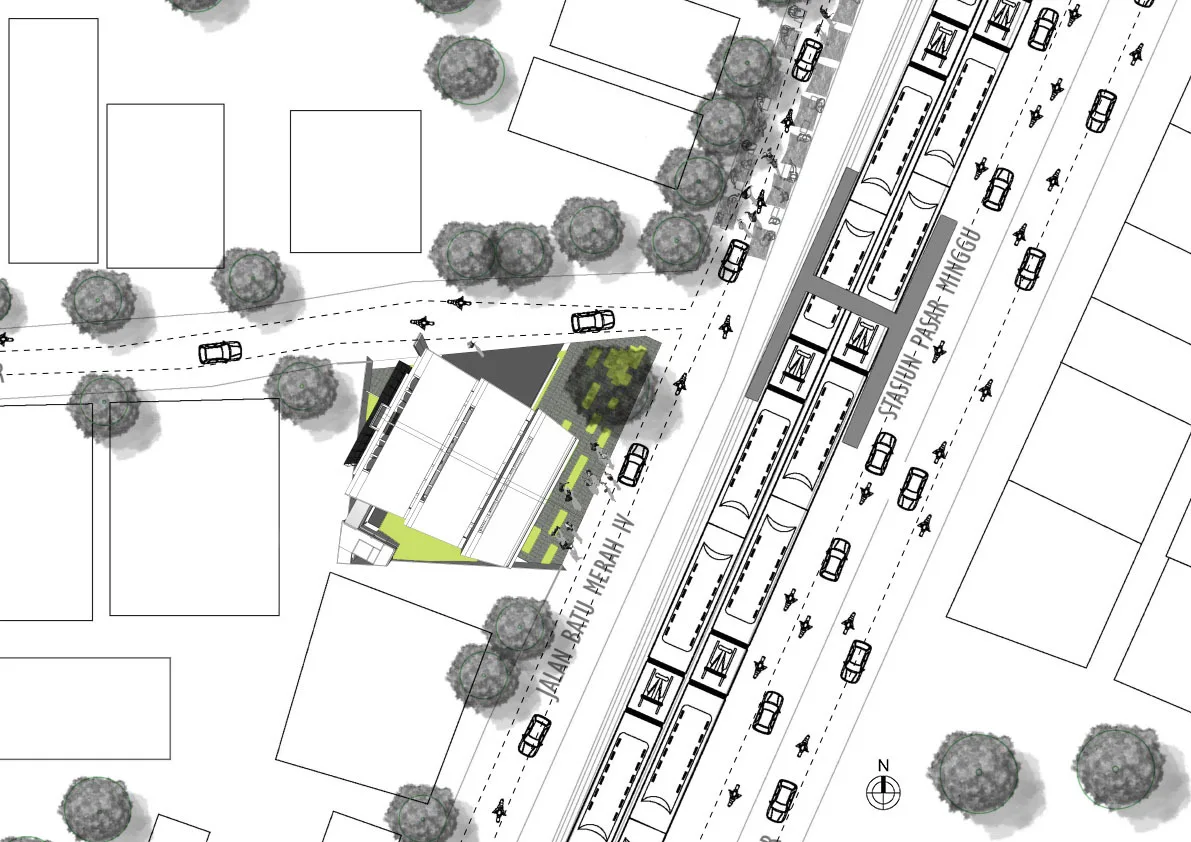
△ General layout plan
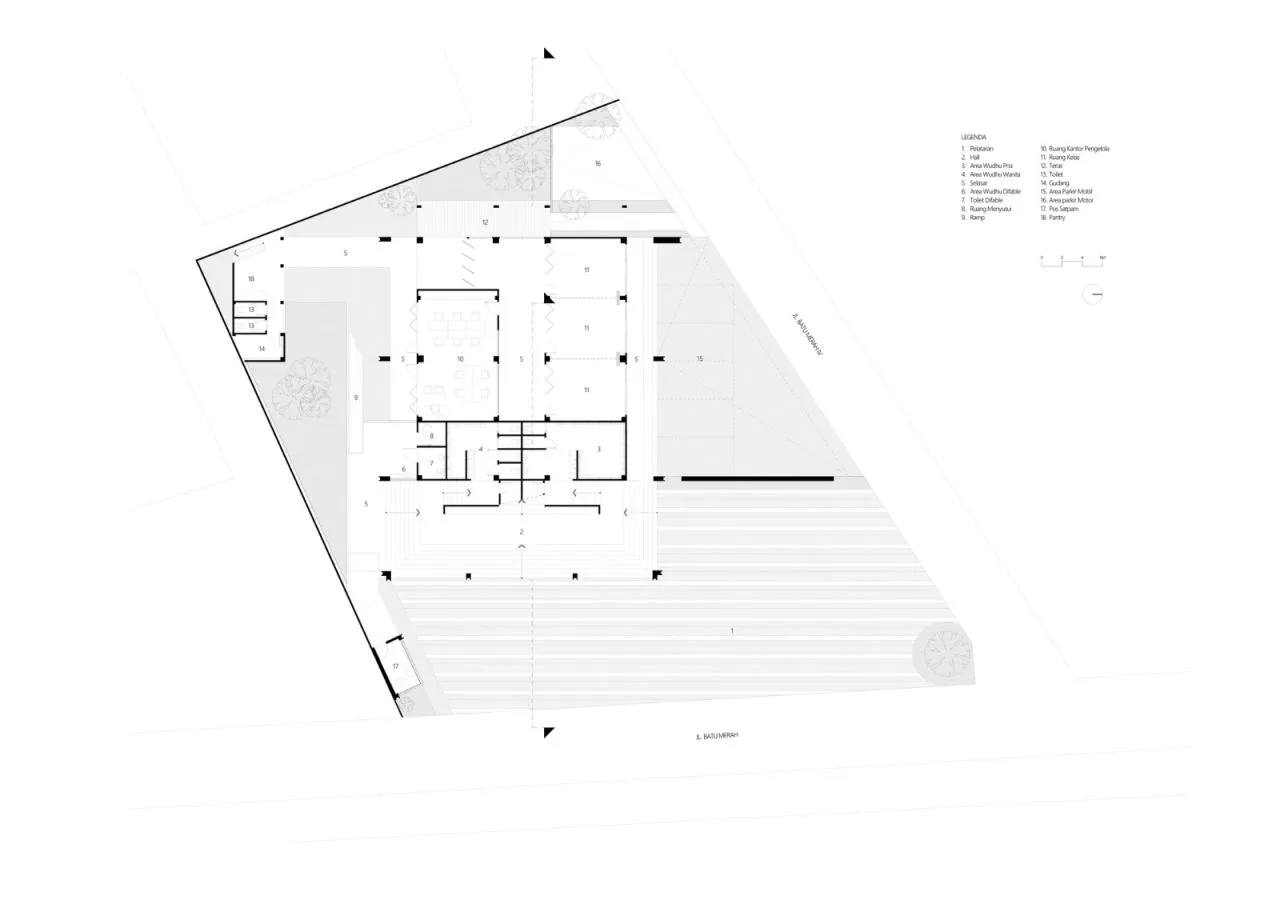
△ First floor plan
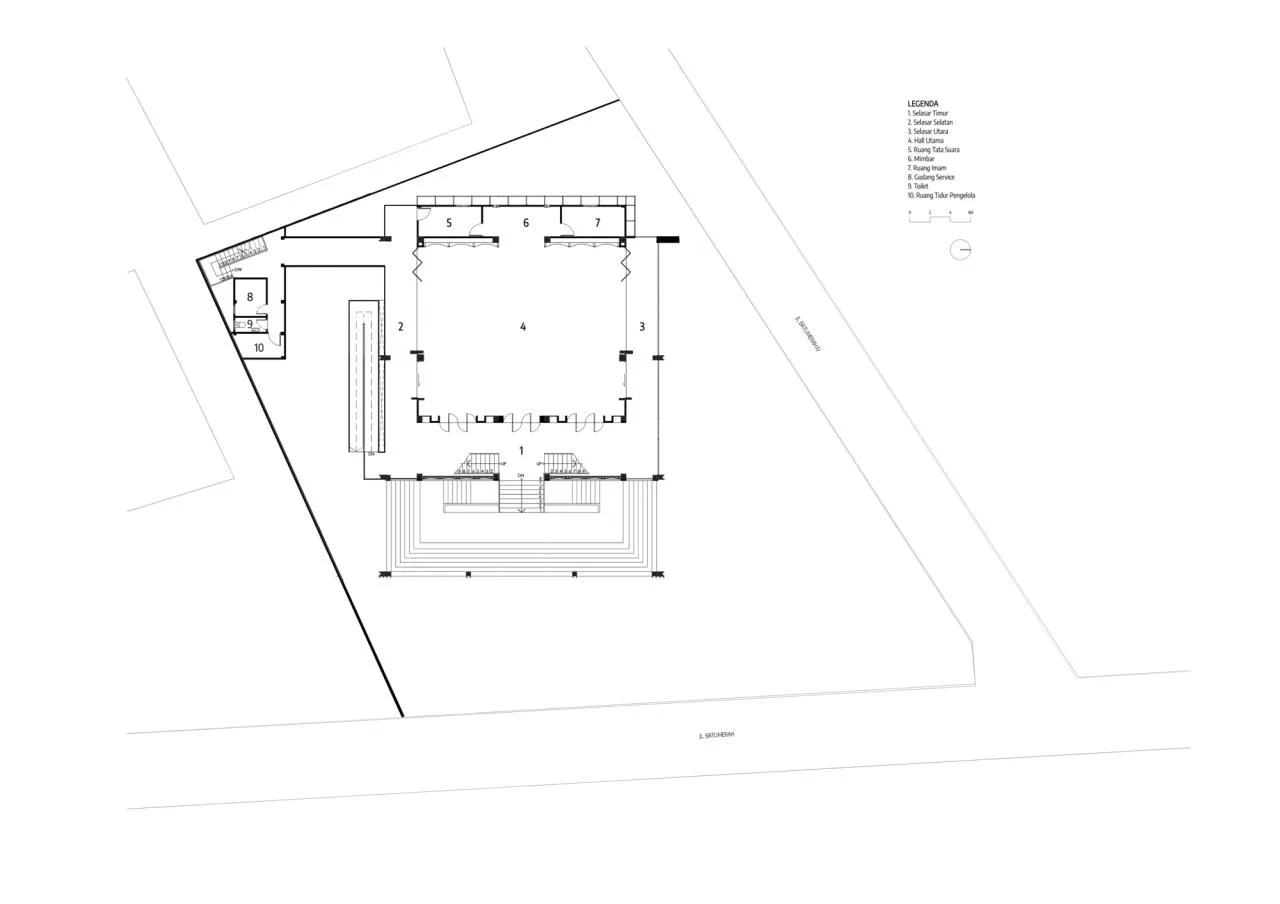
△ Second floor plan
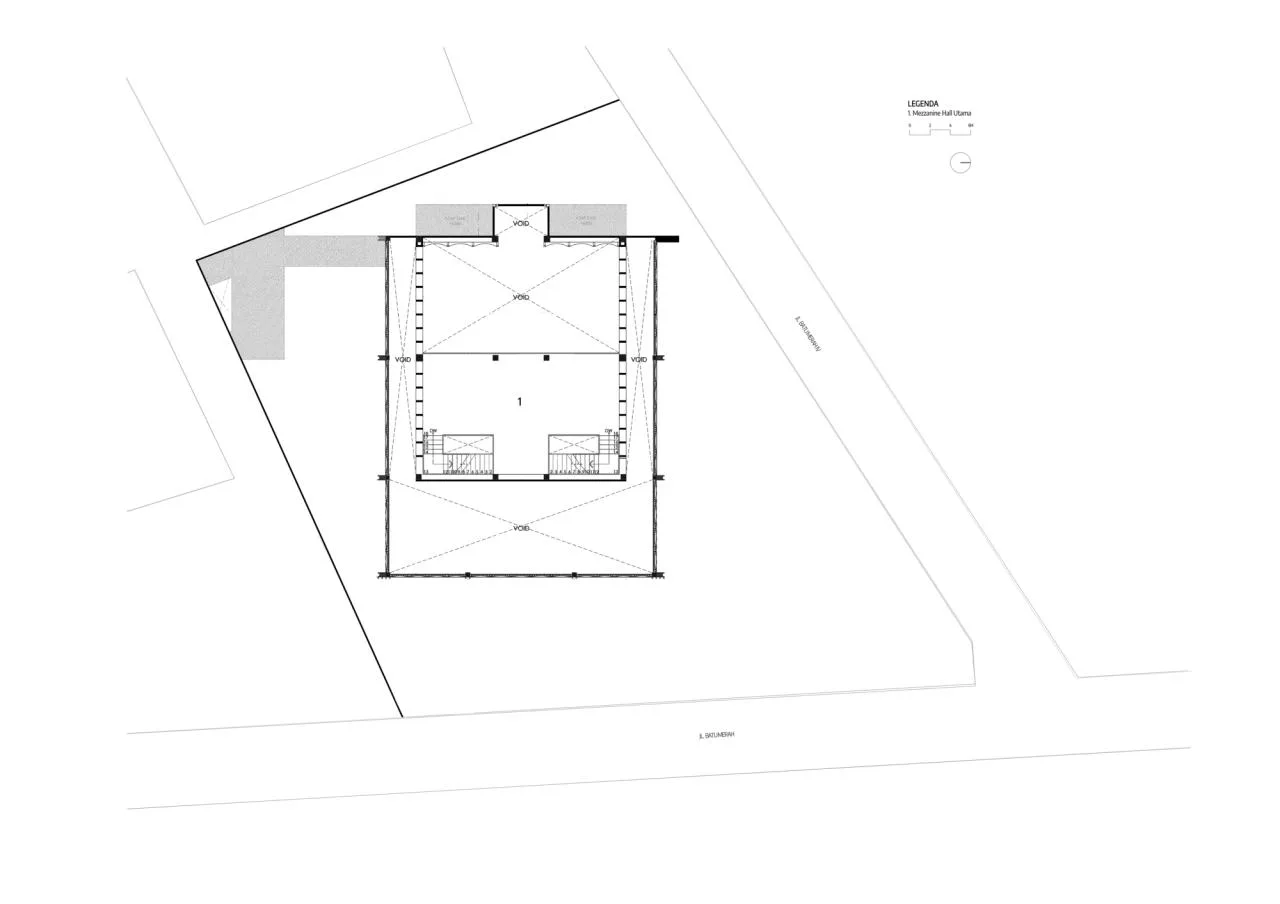
△ Third floor plan
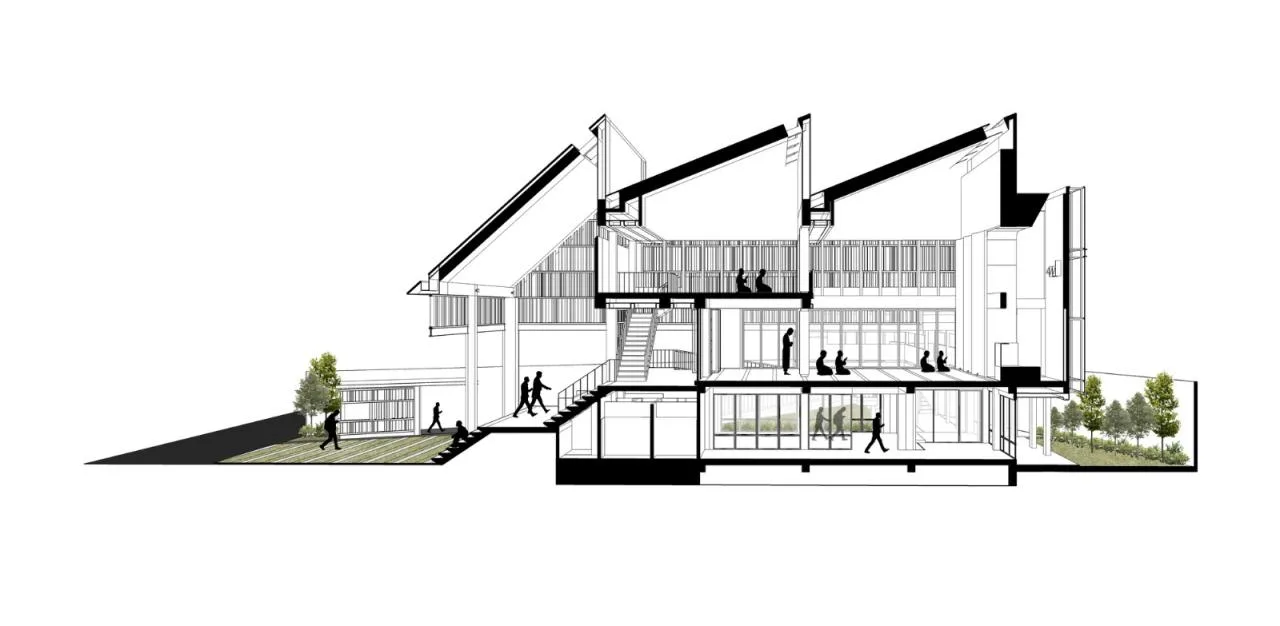
△ Sectional perspective
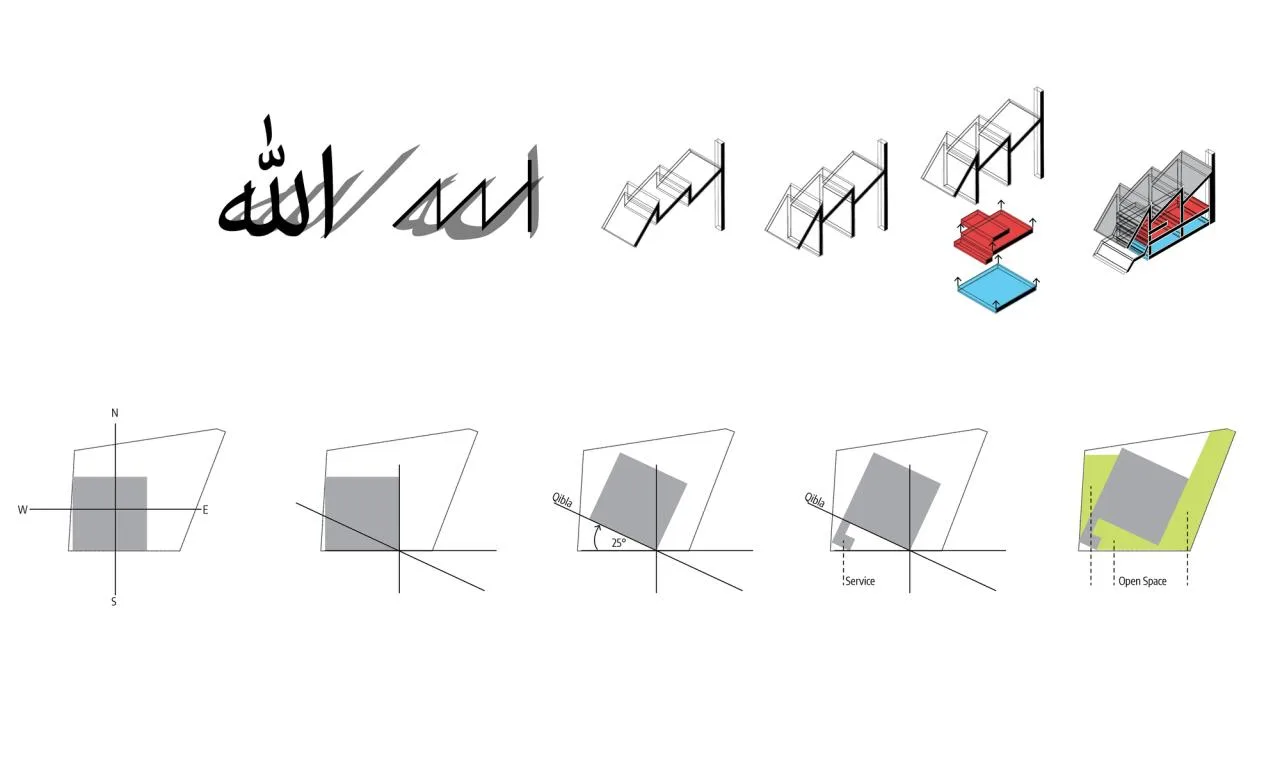
△ Analysis chart
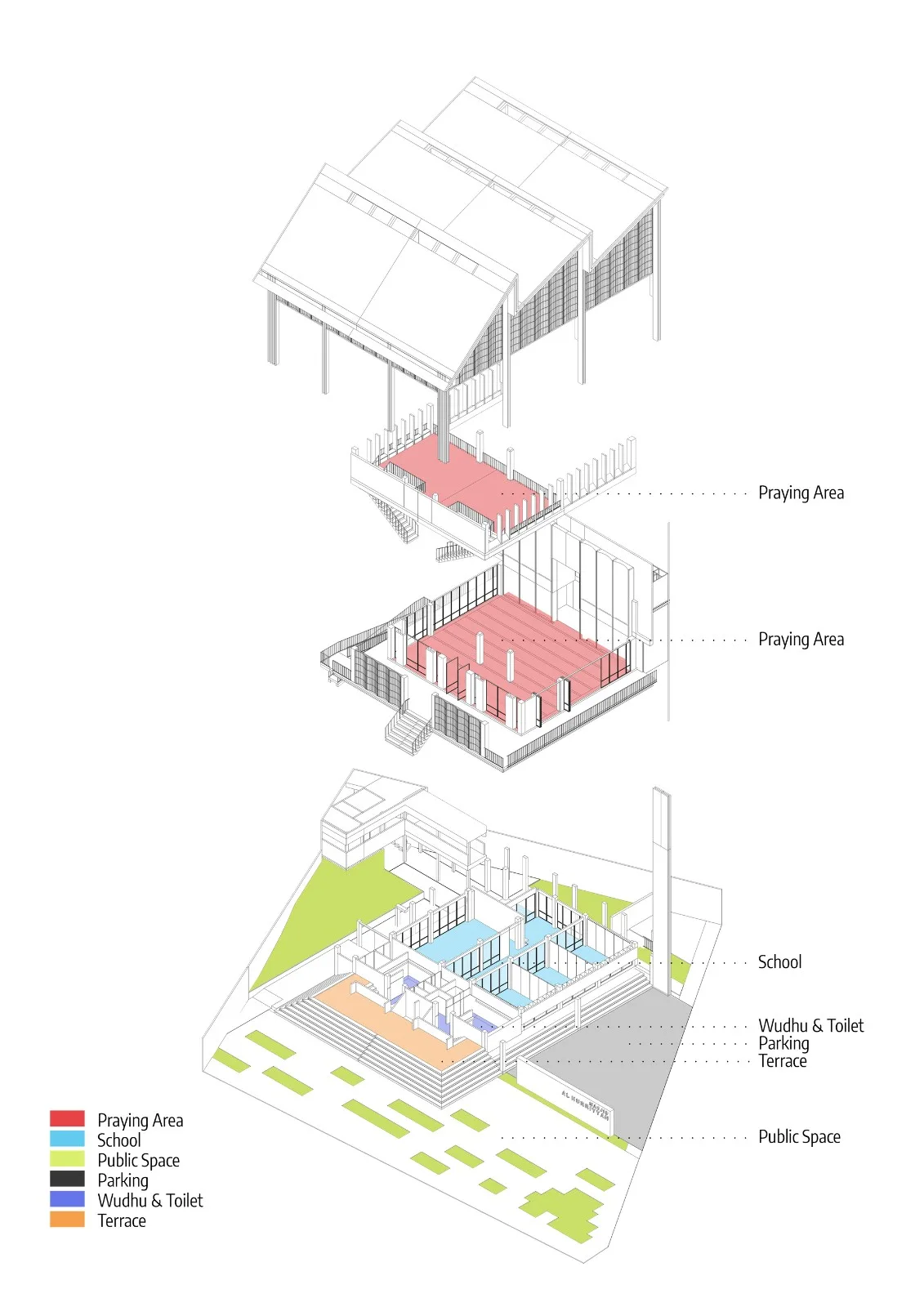
△ Exploded axonometric diagram
Project Information
Architect: AGo Architects
Area: 745 m²
Project Year: 2020
Photographer: Kafin Noe’man
Manufacturer: Conwood
Lead Architects: Abimantra Pradhana, Osrithalita Gabriela
Project Architects: Muhammad Luthfan Rizal, Danindra Adrian Wicaksono
Architectural Design: AGo Architects
Contractor: Pt. Prodeecon Mitratama
Location: South Jakarta, Indonesia












Must log in before commenting!
Sign Up