
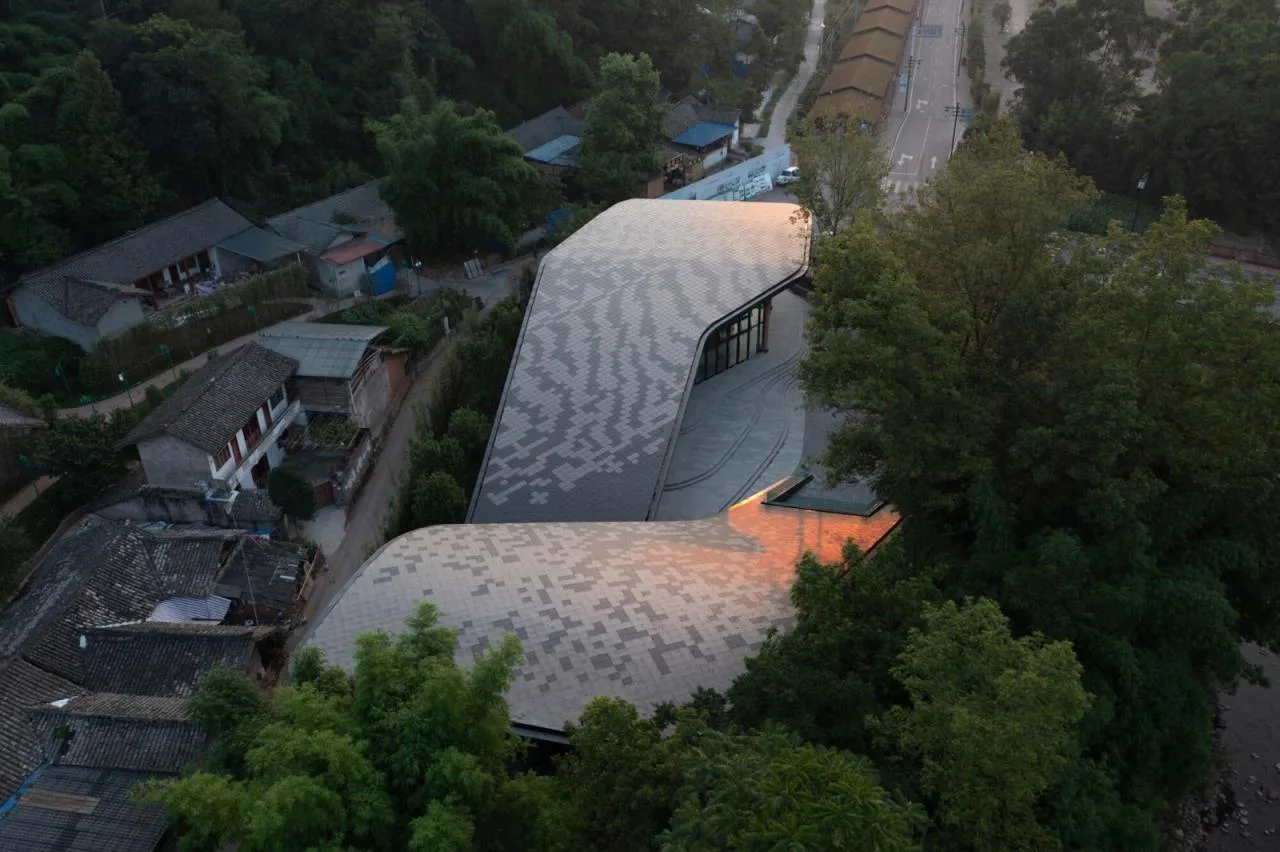
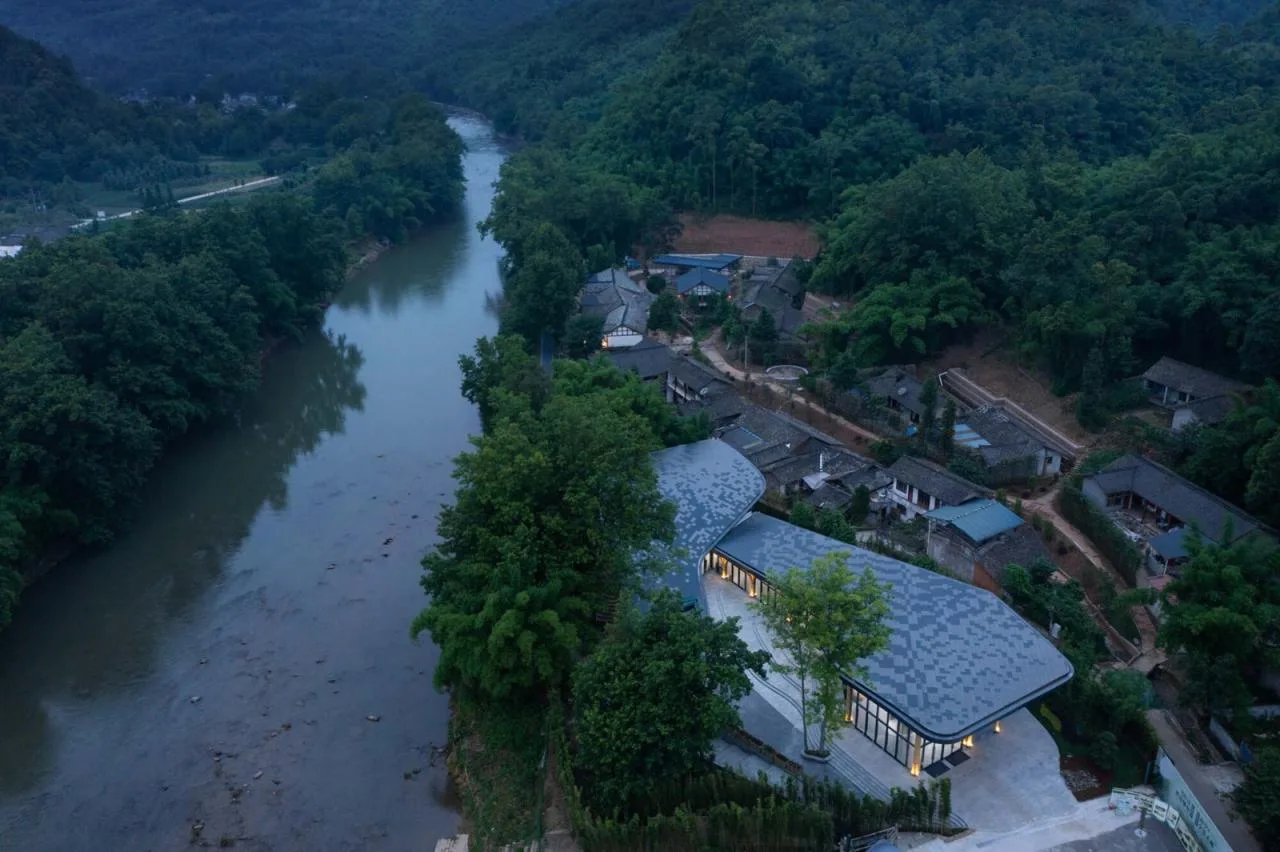
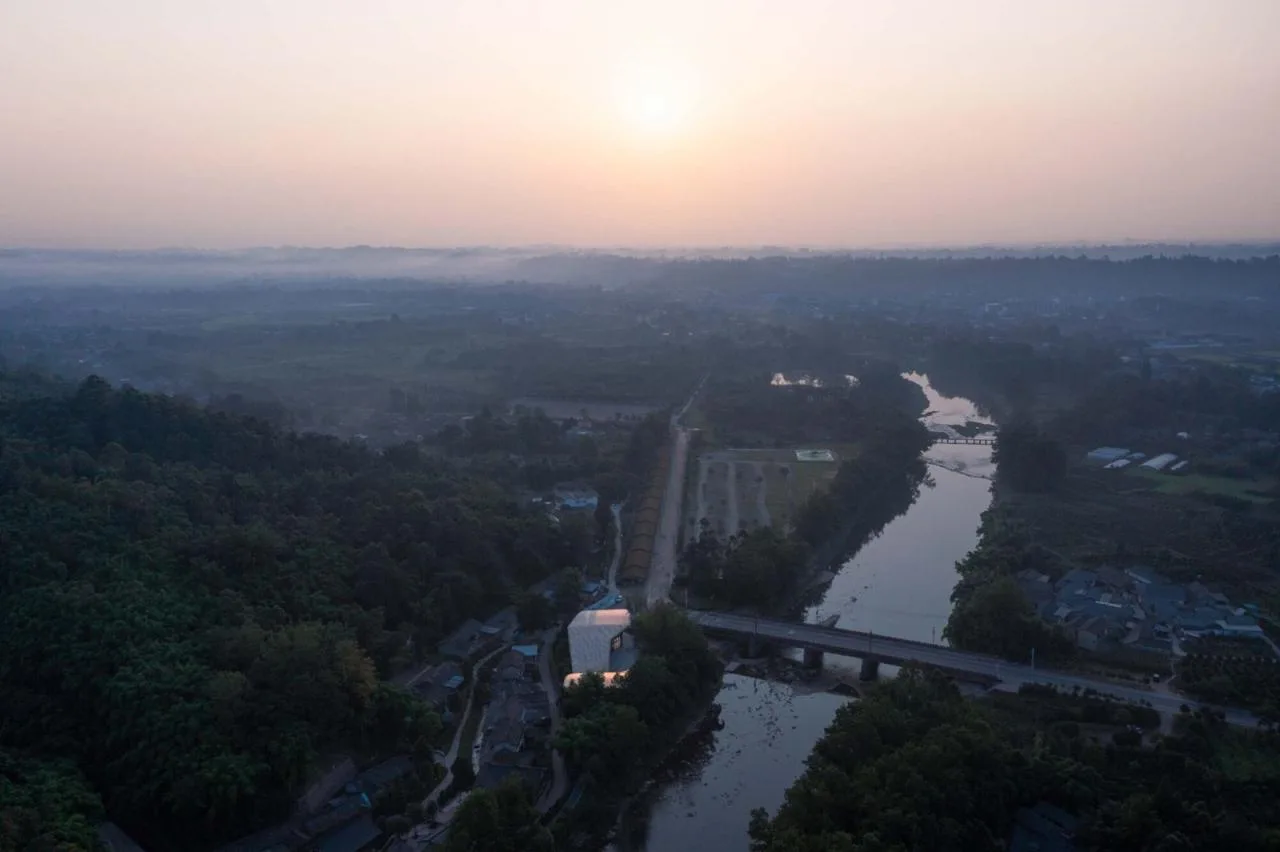
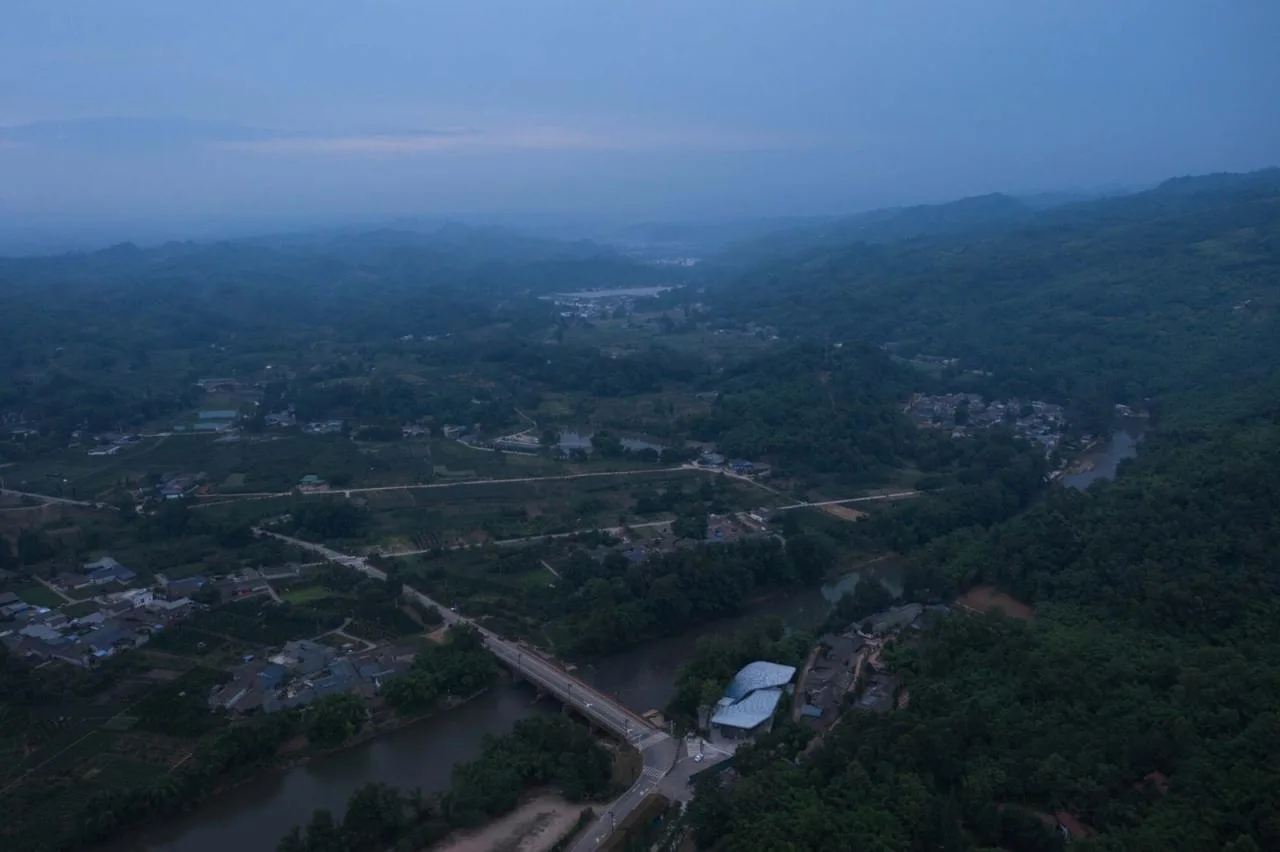
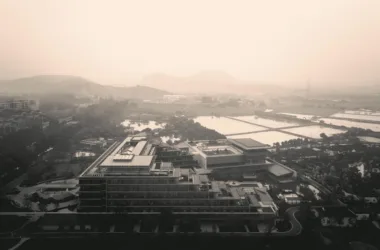
The Qionglai Bamboo Museum is situated at the entrance of a traditional village along the Baimo River, adjacent to the expansive western Sichuan bamboo forest that covers hundreds of thousands of acres. For millennia, the Linpan settlement has embodied an organic blend of forests, fields, homes, and waterways. This spatial arrangement represents the quintessential form of traditional agricultural communities in western Sichuan, showcasing a harmonious relationship between people and the land. It’s no surprise that the renowned Song Dynasty literary figure Su Shi once remarked, “It is better to live without bamboo than to eat without meat.”
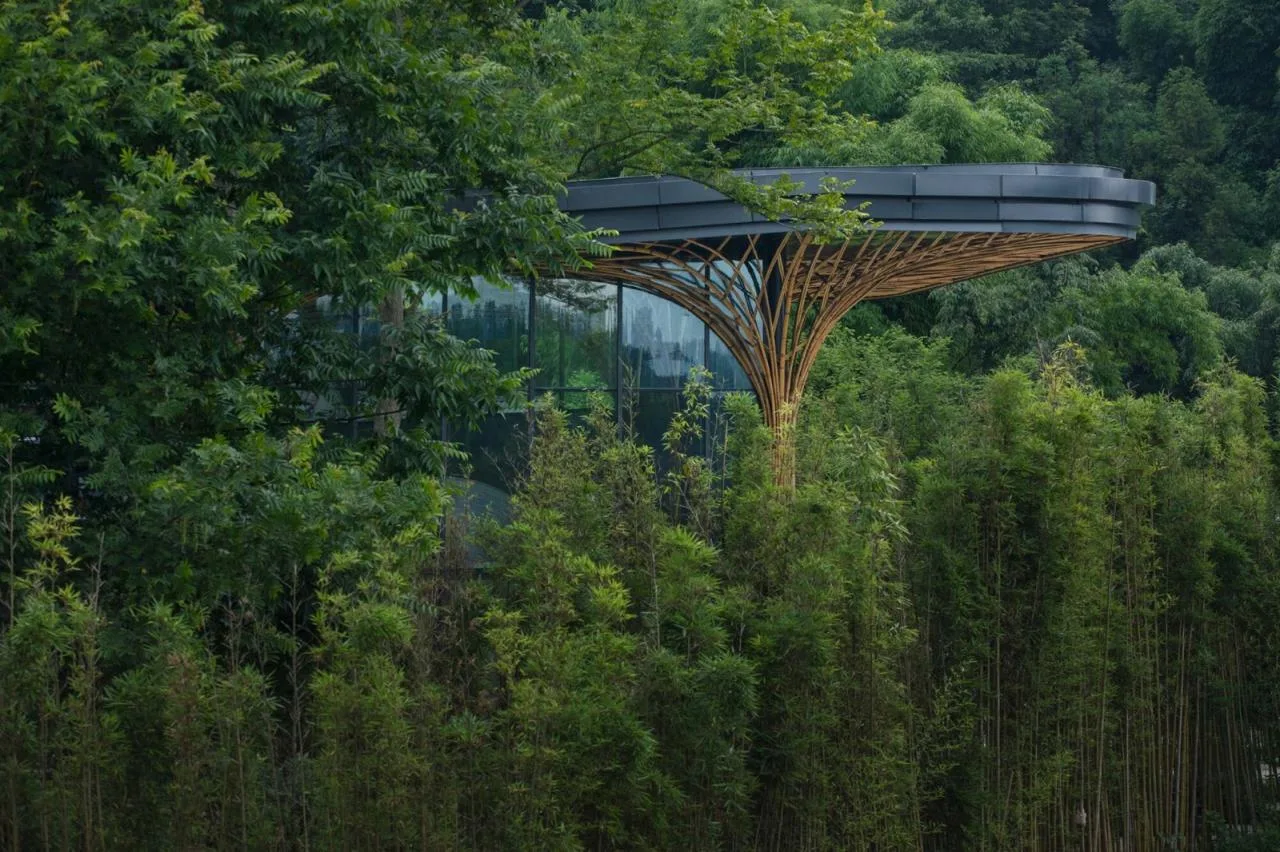
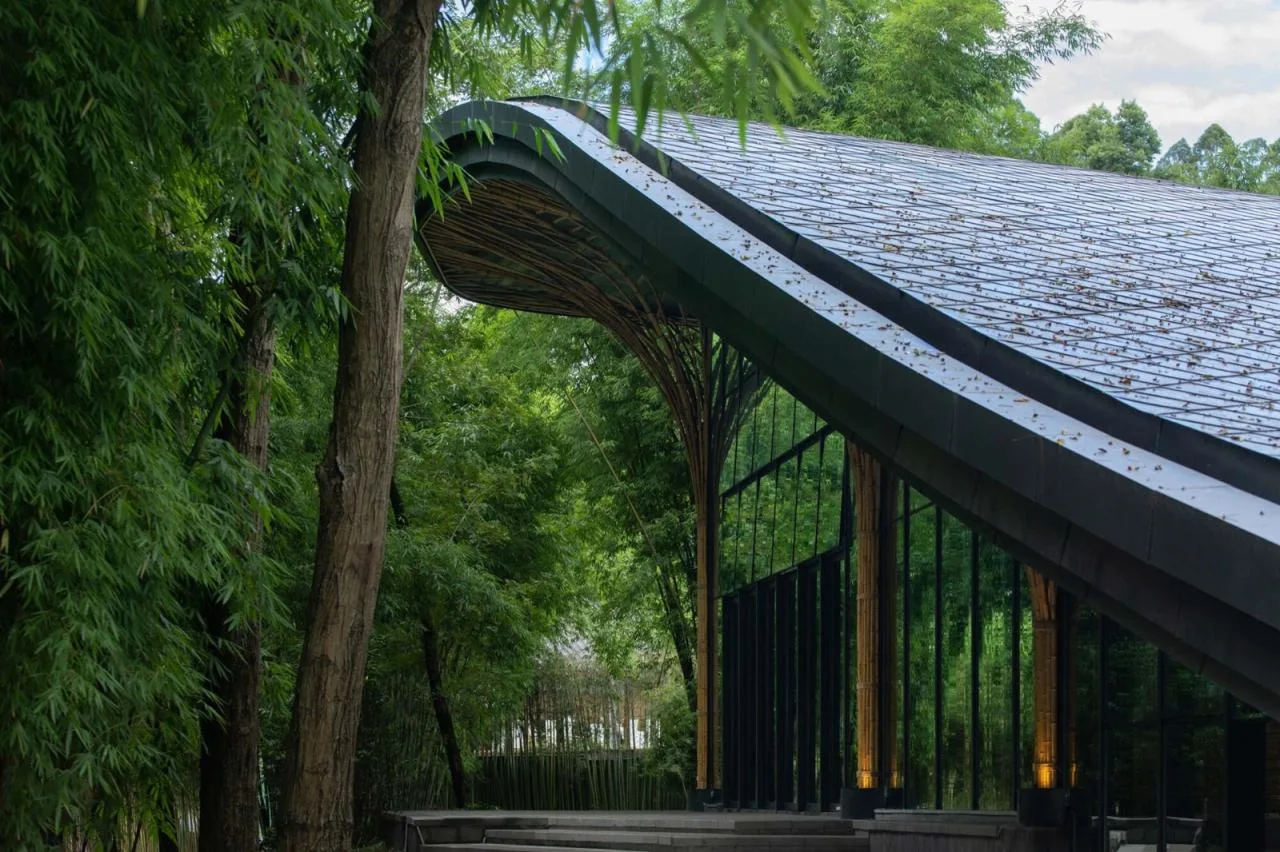
In traditional culture, bamboo symbolizes Eastern elegance, embodying qualities such as integrity, resilience, humility, and loyalty. When appreciating the allure of bamboo forests, one often envisions deep, winding pathways leading to hidden retreats. The design seeks to reinterpret the elegant undulations of bamboo groves that follow the natural mountain contours, resembling the waves of the sea. This approach captures the dynamic layers of the bamboo landscape within a broader spatial context, extending beyond merely the materials and structure of bamboo itself.
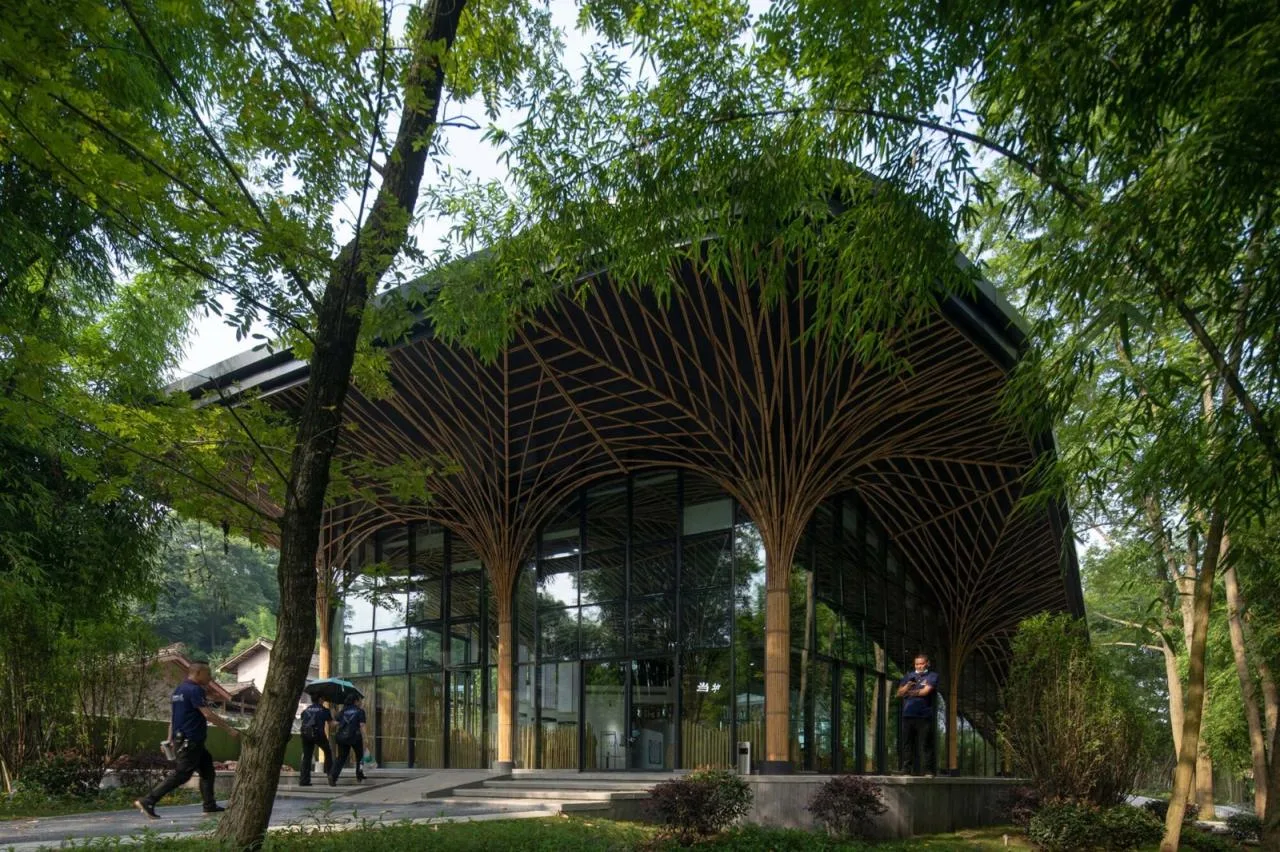
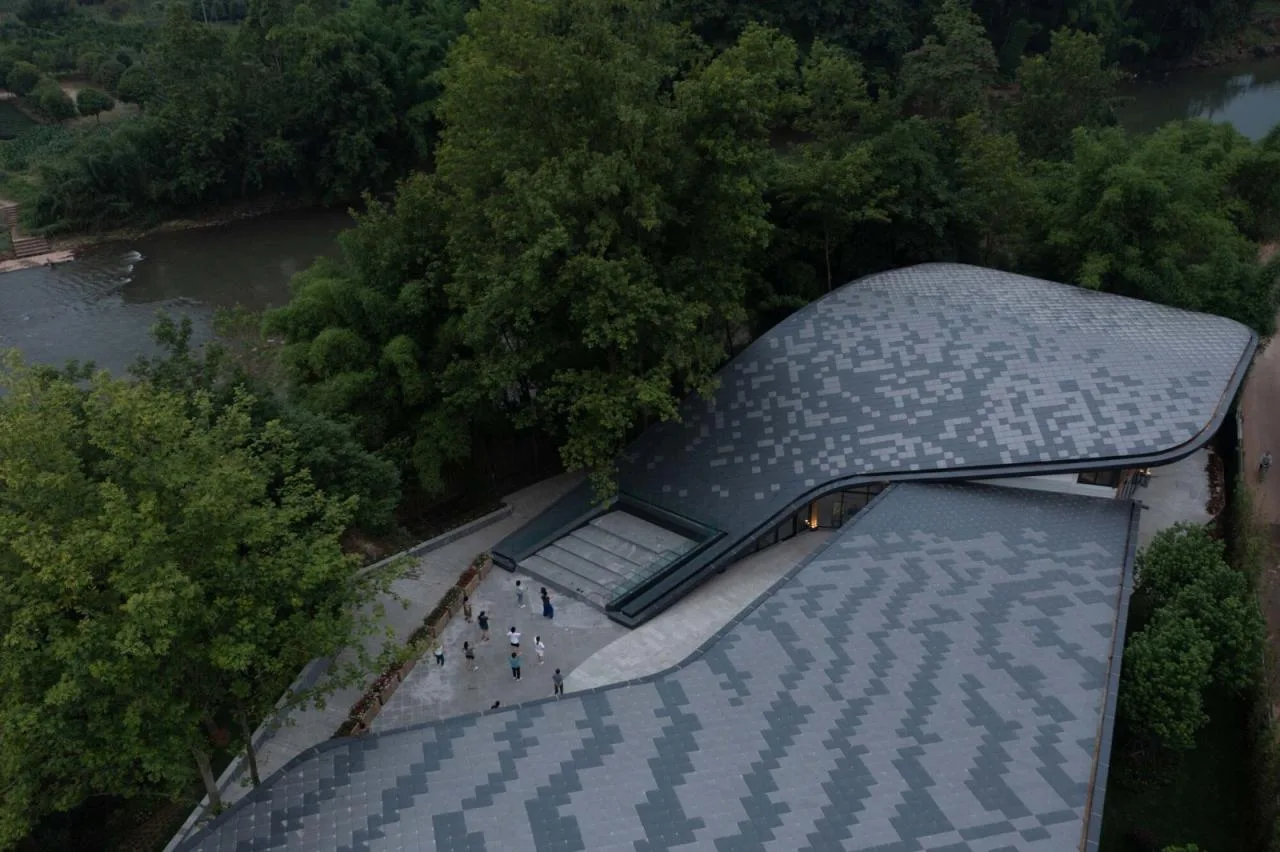
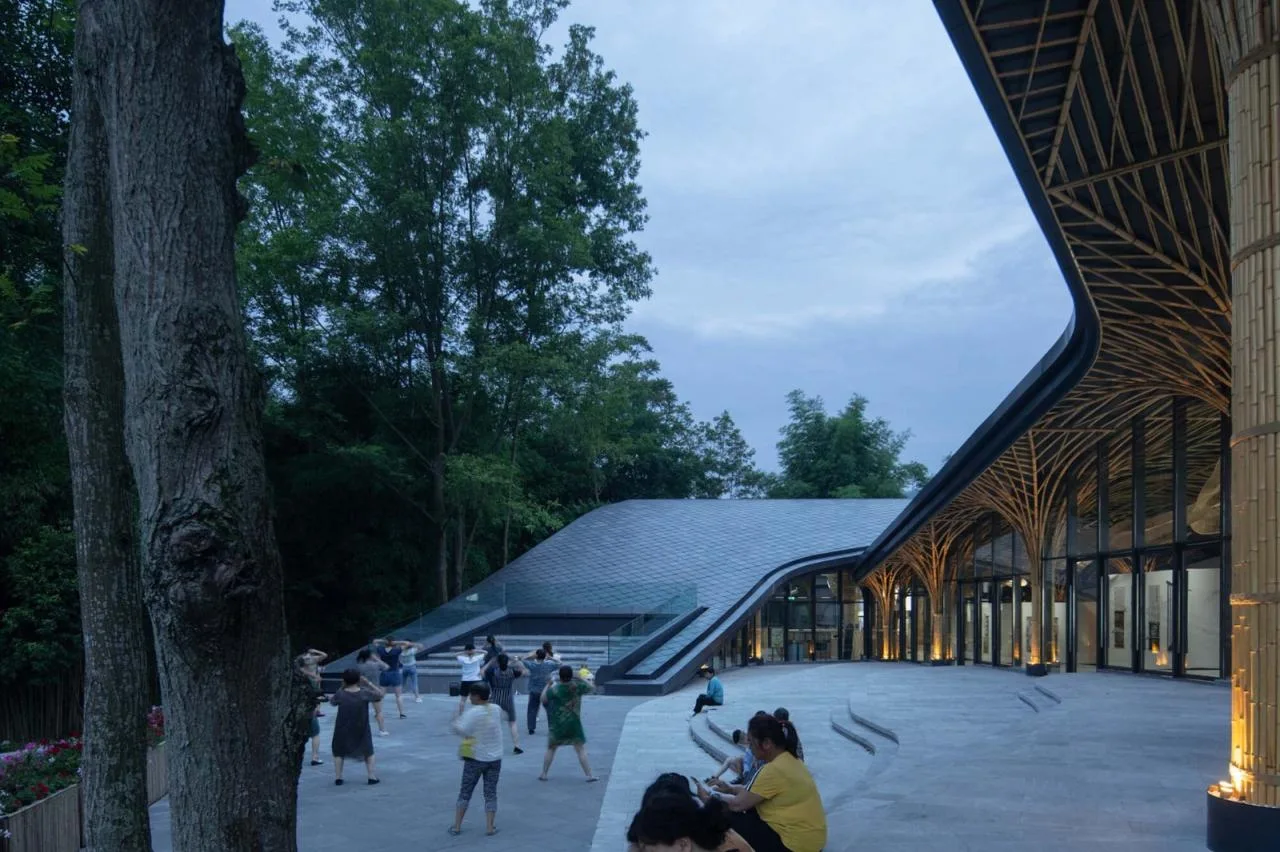
The Triple Identity Bamboo Museum serves three key roles. First, it functions as the visitor center for the bamboo forest scenic area, offering guests an introduction to the stunning natural beauty and exhibitions. Second, it hosts workshops dedicated to intangible cultural heritage, highlighting the local craftsmanship of bamboo material use passed down through generations. Lastly, it acts as a community hub and activity center for the villagers, facilitating diverse events ranging from casual socializing and square dancing to larger public gatherings.
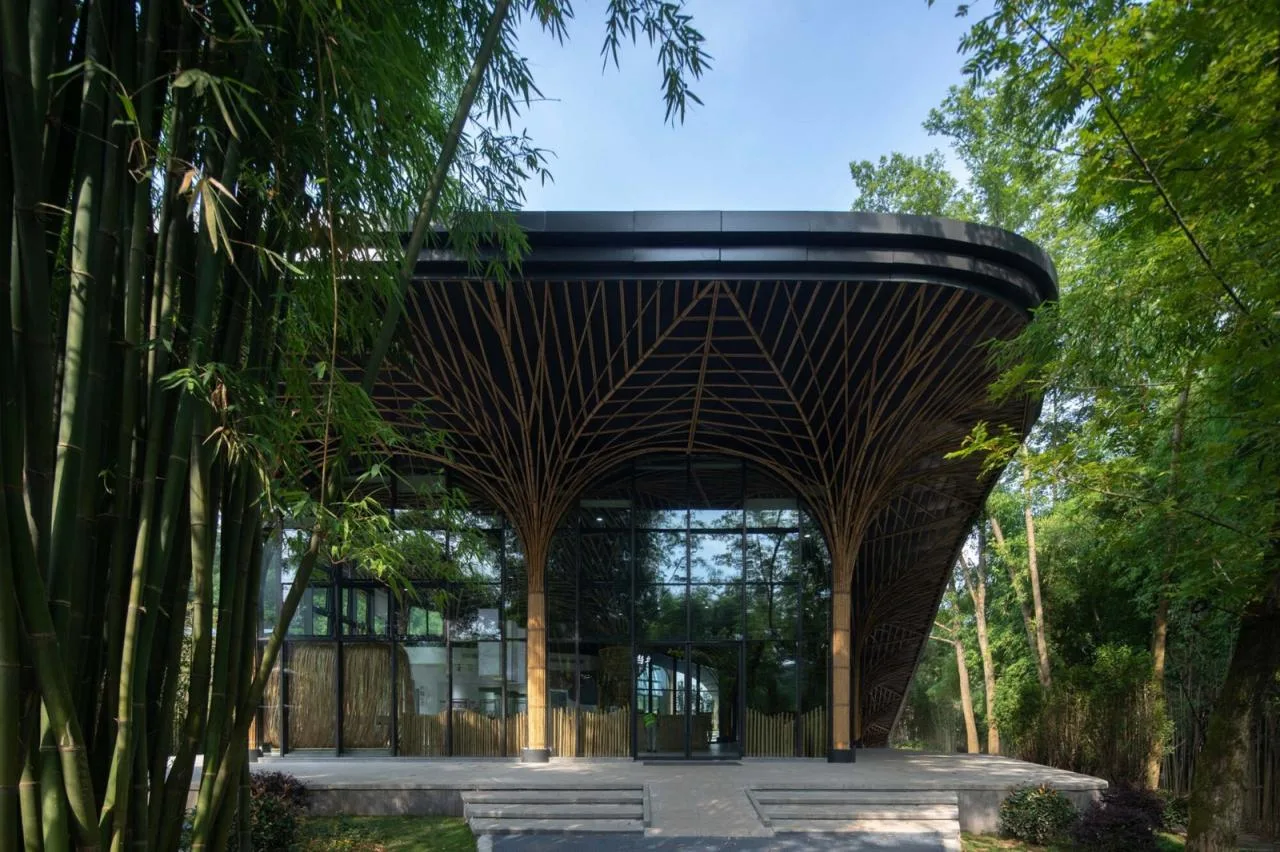
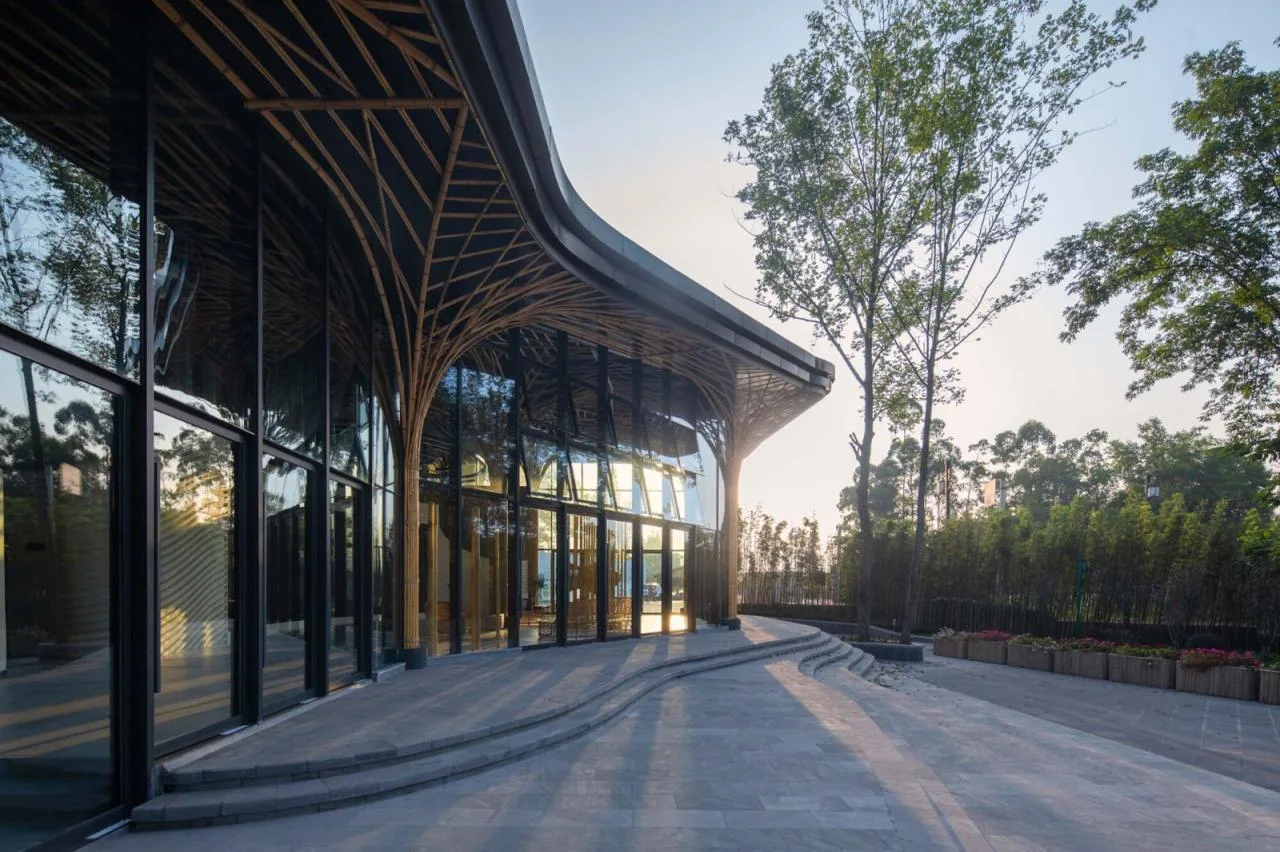
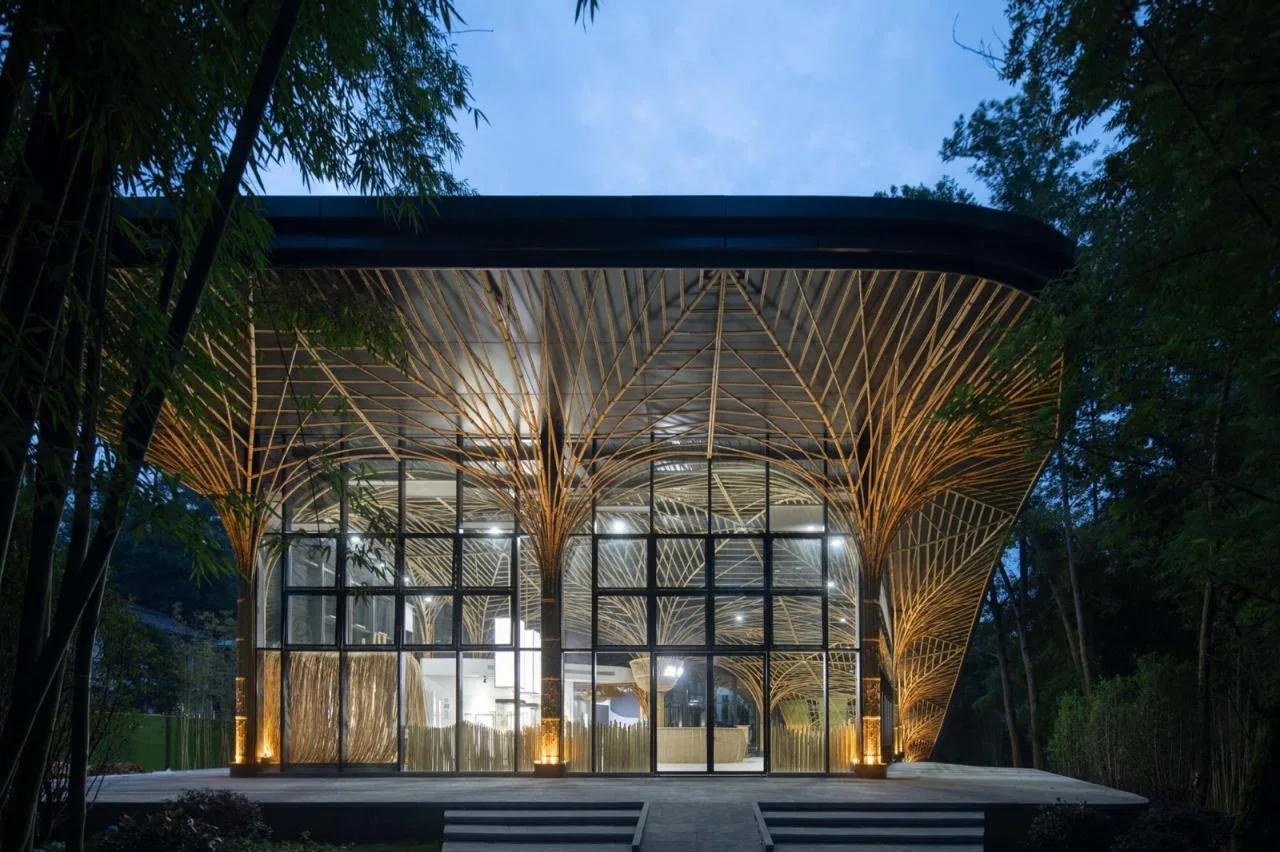
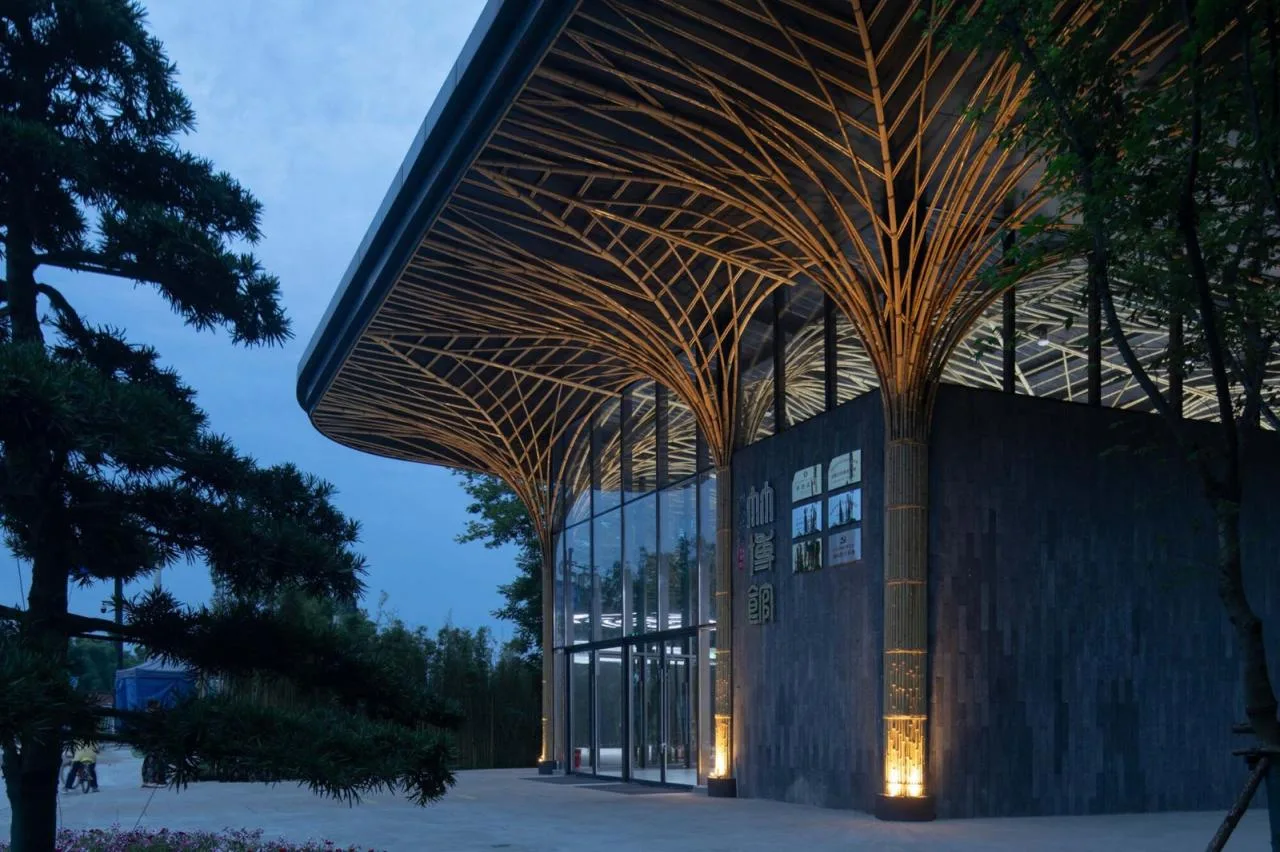
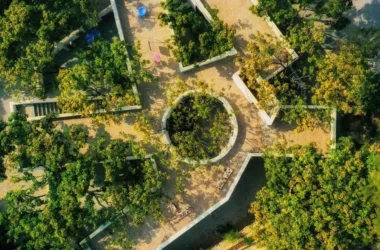
The building’s form follows the rolling bamboo forest and the meandering riverbank. Its roof lifts from the ground, creating soaring spaces at both ends that welcome and bid farewell to visitors. Two interlocking roofs enclose a central courtyard, which can easily be transformed into an outdoor exhibition space. Even before any exhibitions take place, the area has already been embraced by locals as a venue for square dancing.
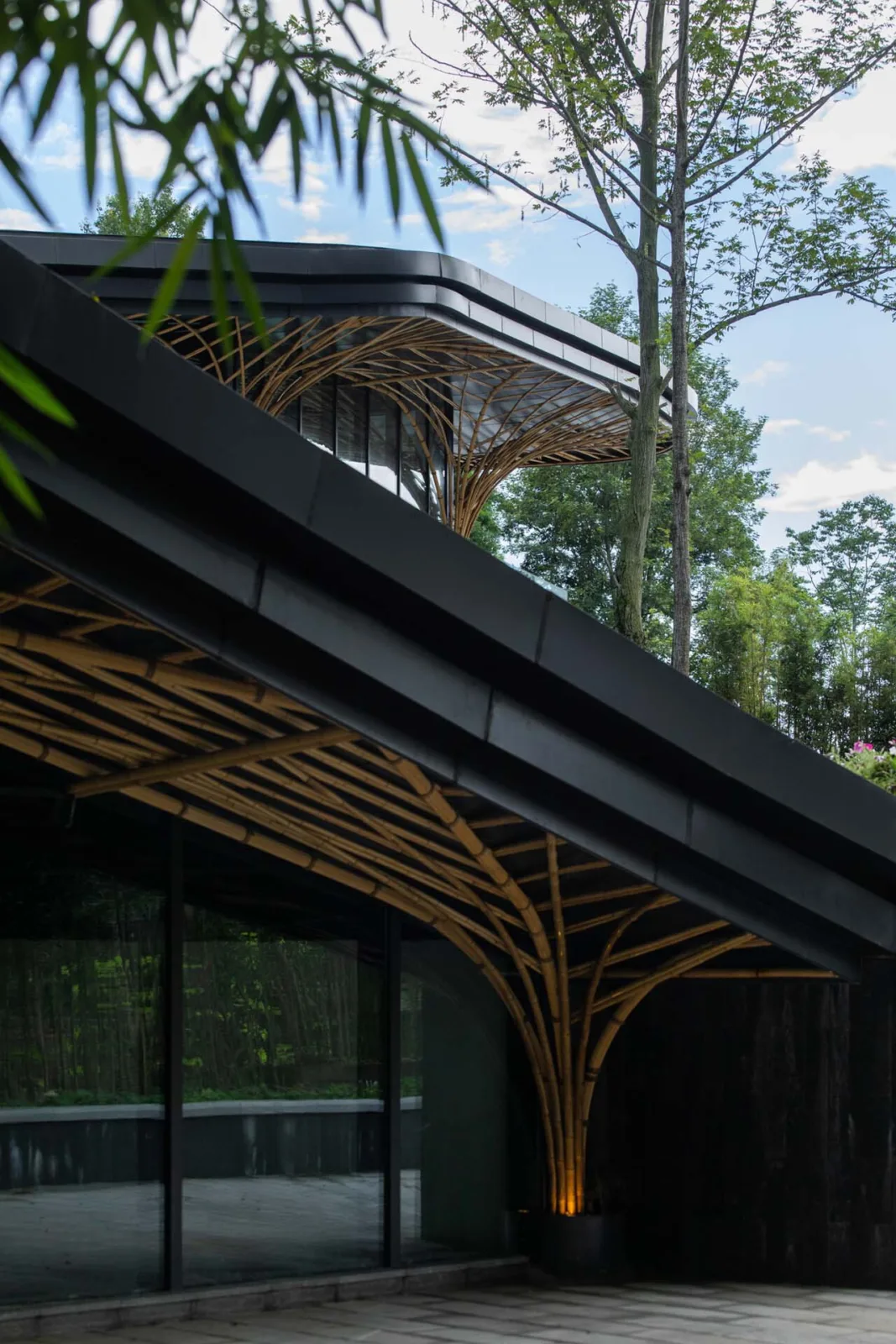
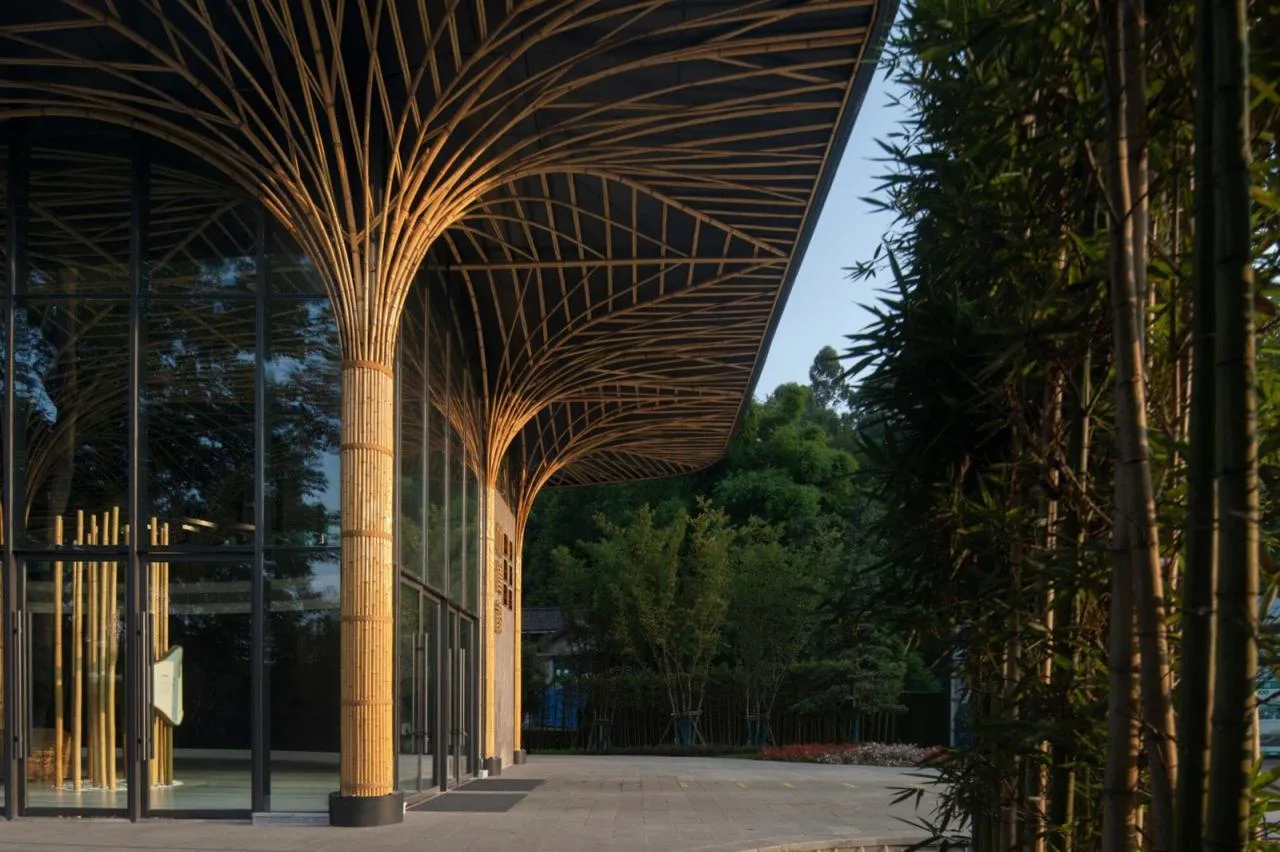
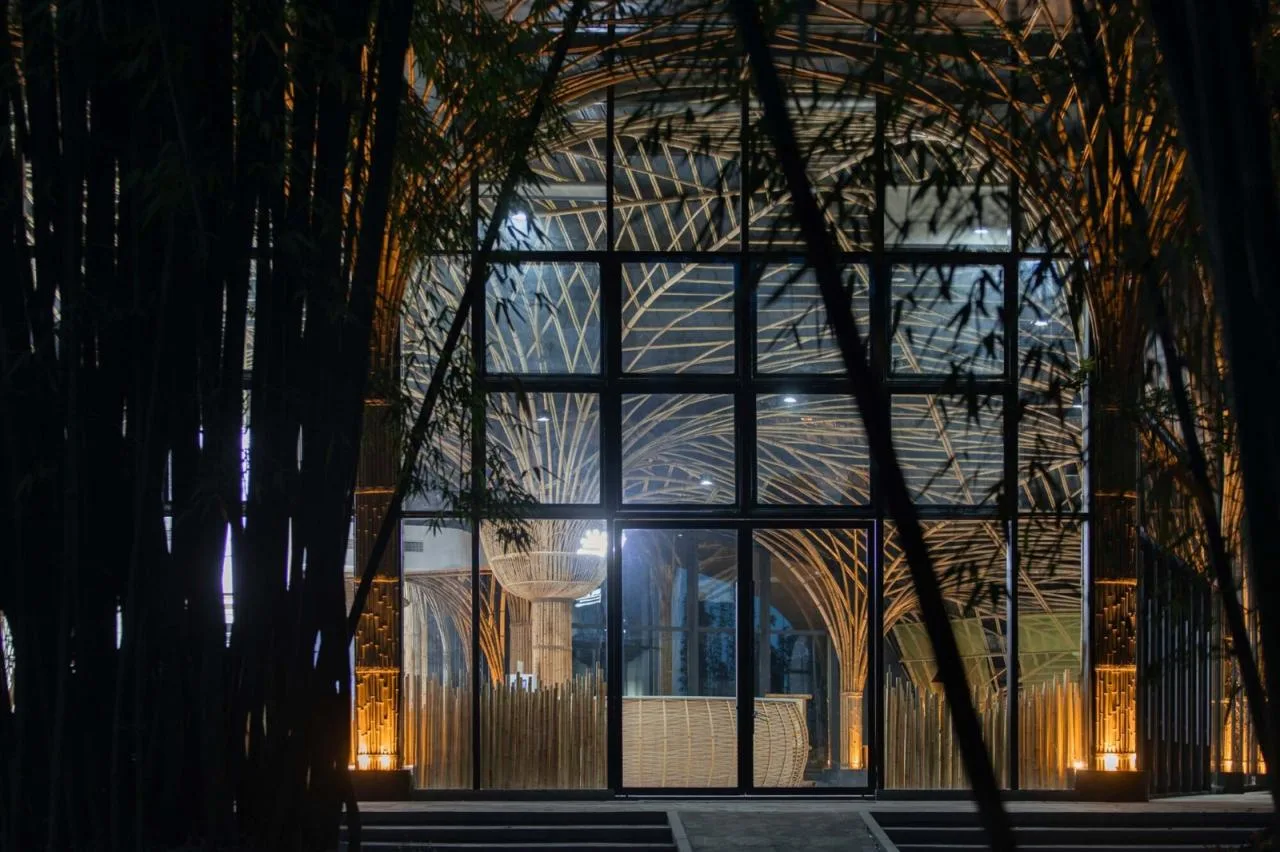
All indoor materials and components are sourced from nearby communities. Bamboo bundles rise from the ground to form the structural elements, while scattered floral motifs support the roof. Large overhanging eaves extend outward, creating a dialogue with traditional homes and the surrounding bamboo forest. Due to the local bamboo’s limited size, it cannot serve as the main structural material. Instead, the design of the indoor secondary structures is inspired by the natural textures of the backyard bamboo forest. Combined with reflective glass facades, this creates a mottled play of light and shadow evoking “green bamboo entering a secluded path.”
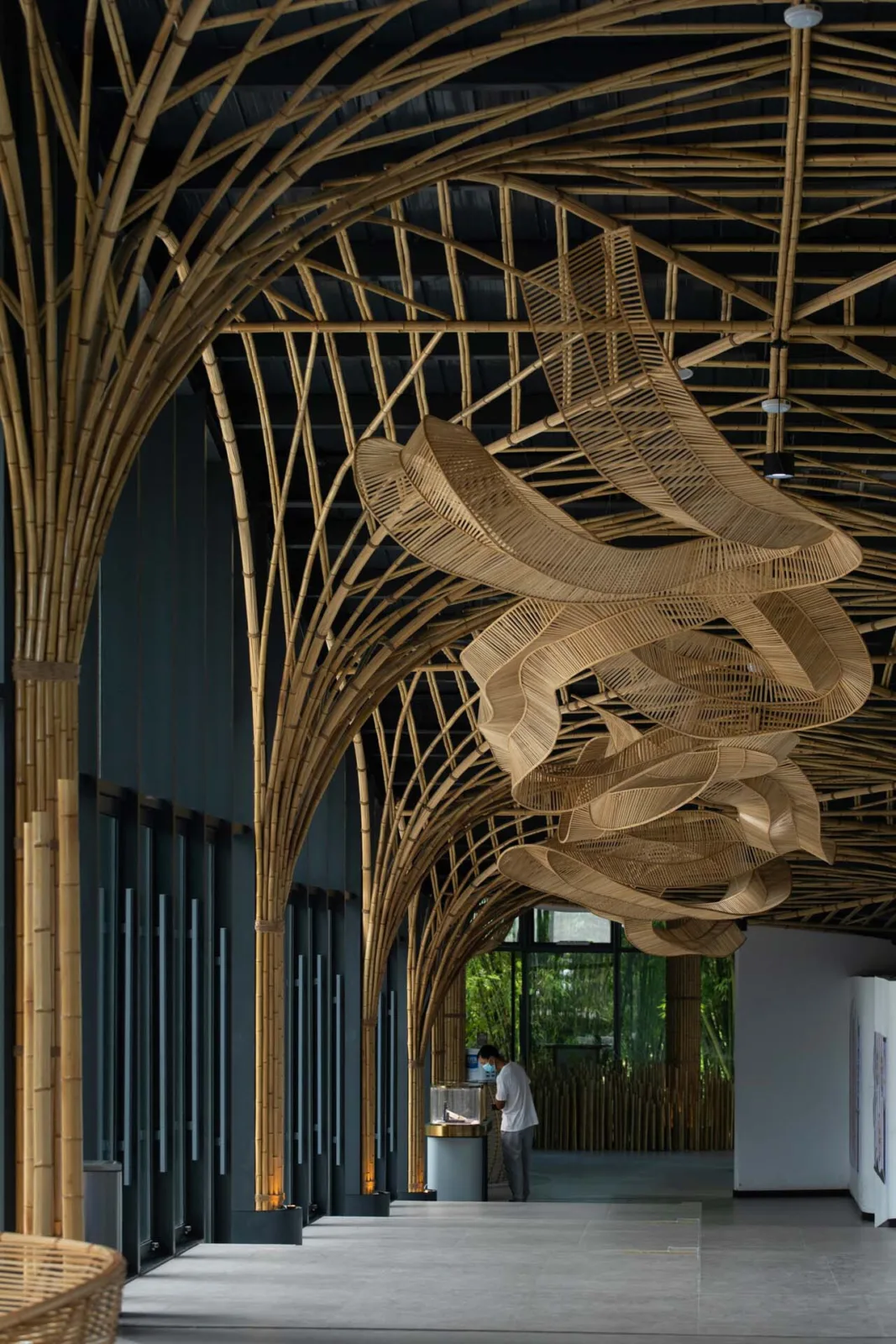
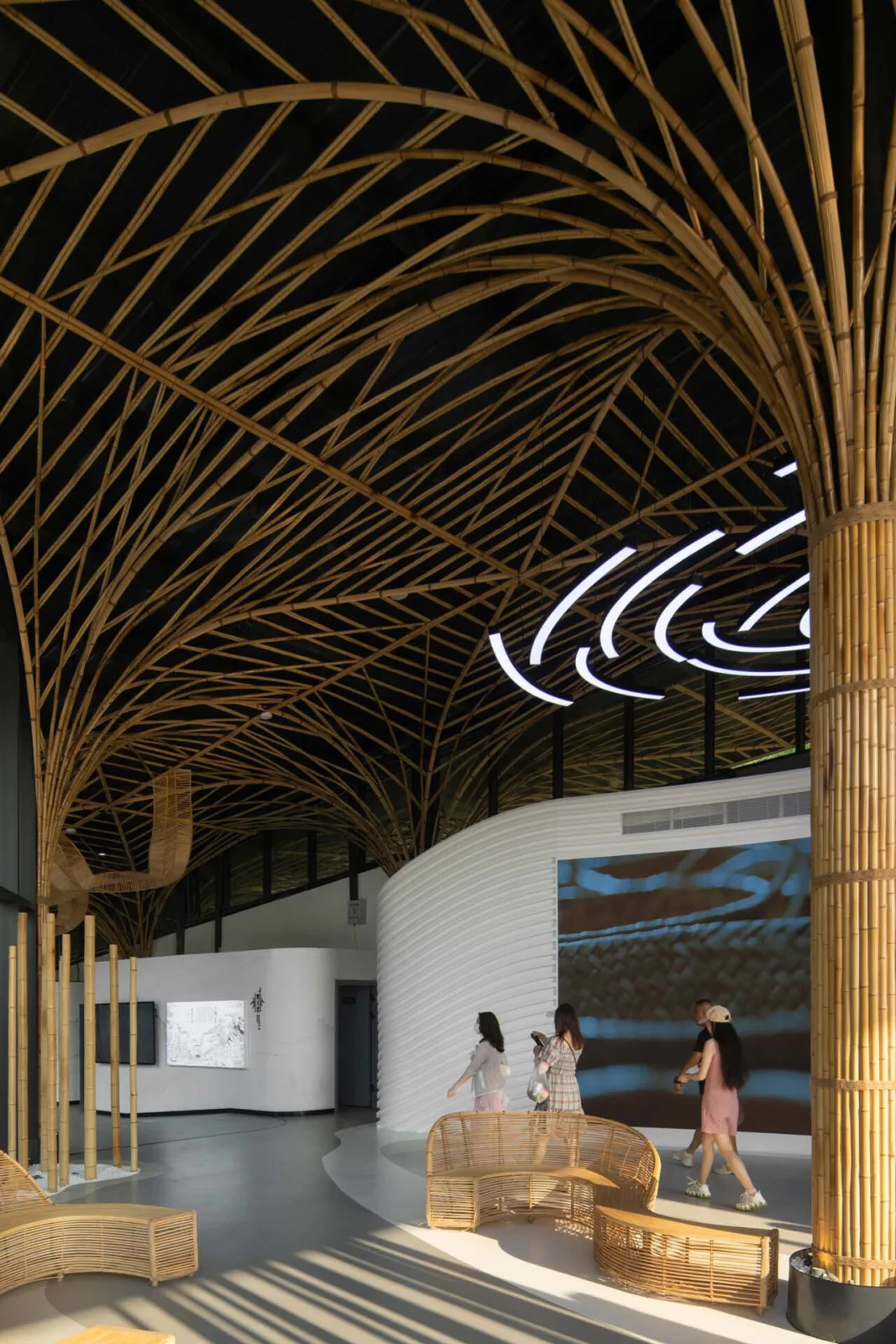
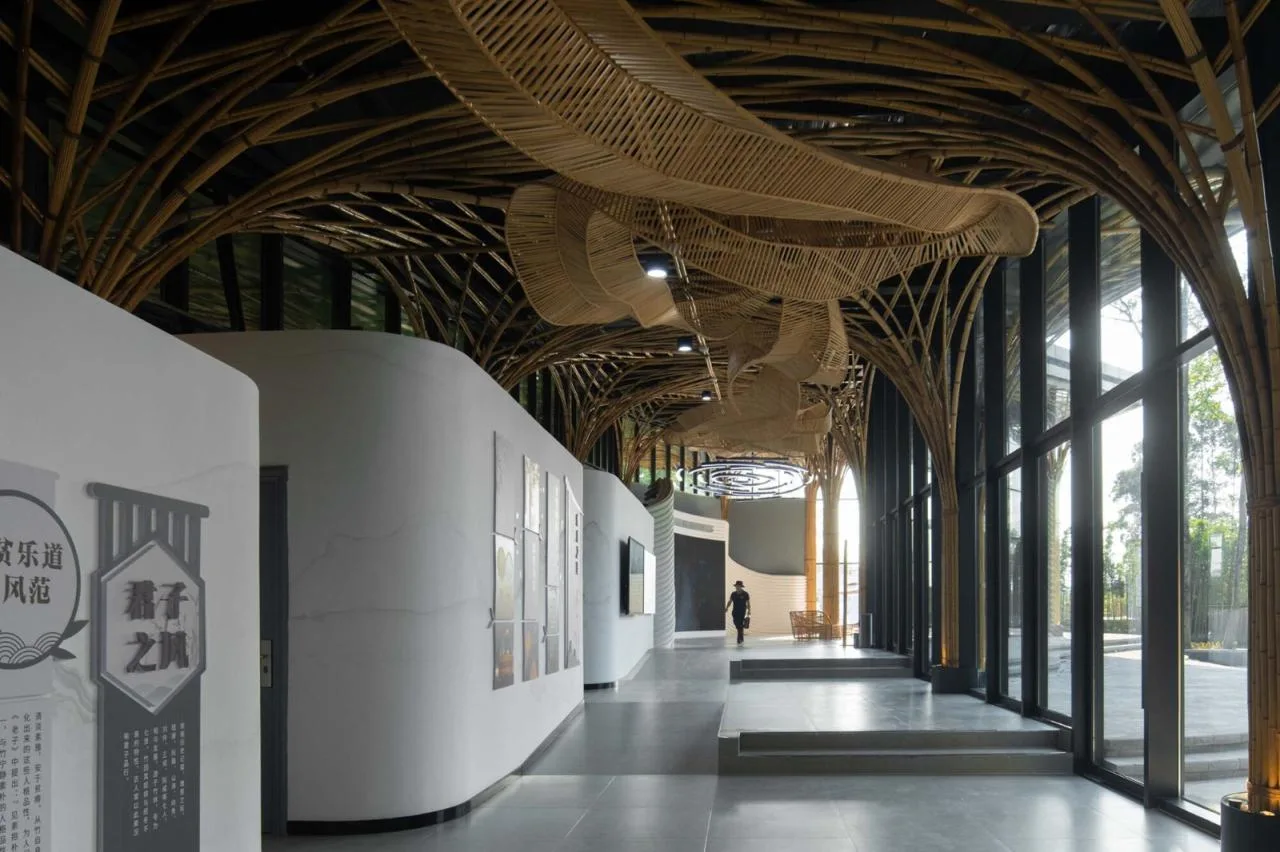
Our vision is for the Bamboo Museum to be more than just a showcase of natural and architectural beauty. It is intended to preserve collective memory and cultural heritage. Most importantly, the museum welcomes visitors from around the world while fostering strong ties with local residents, bringing people together through courtyards and spacious, shaded roofs.
Project Drawings
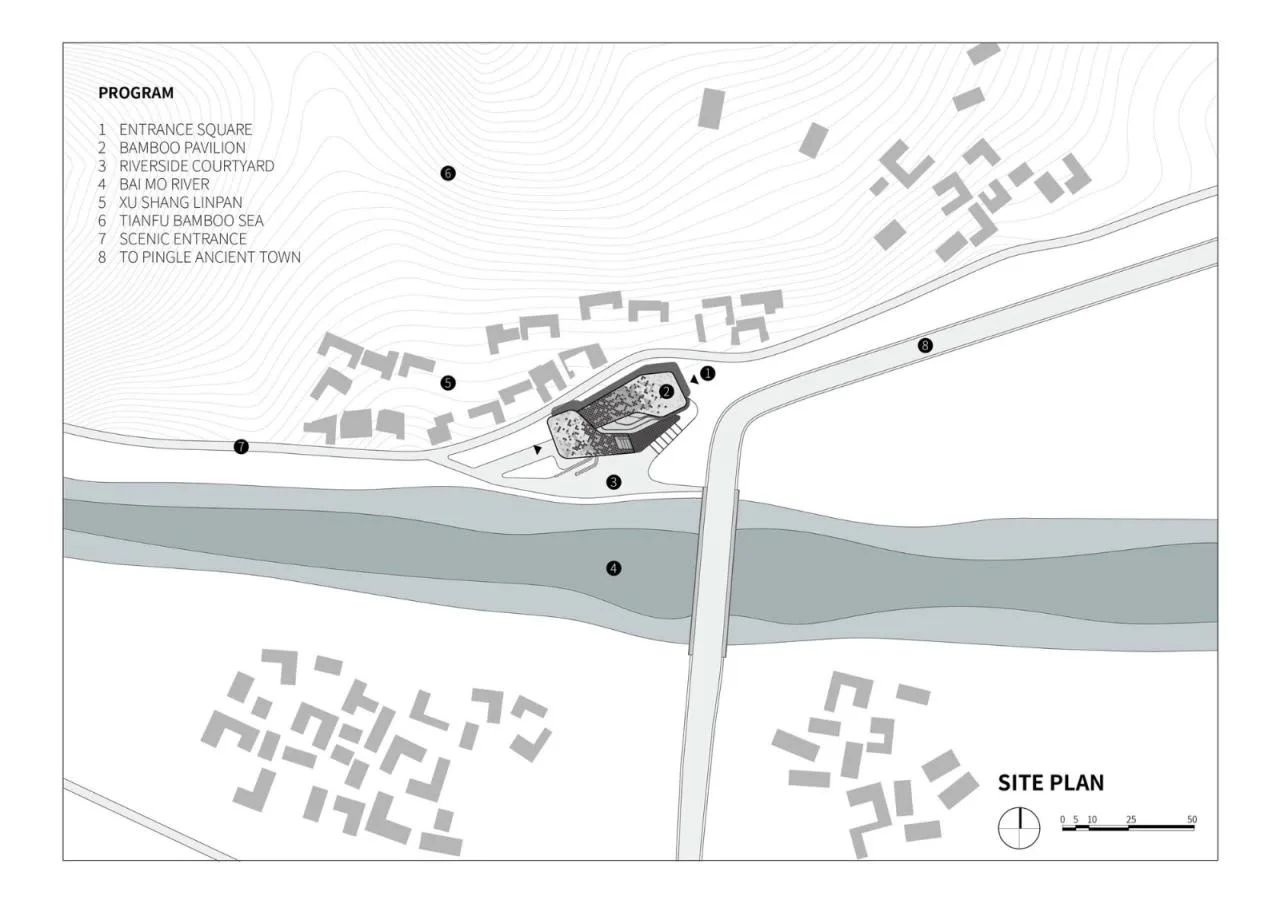
△ Base schematic diagram
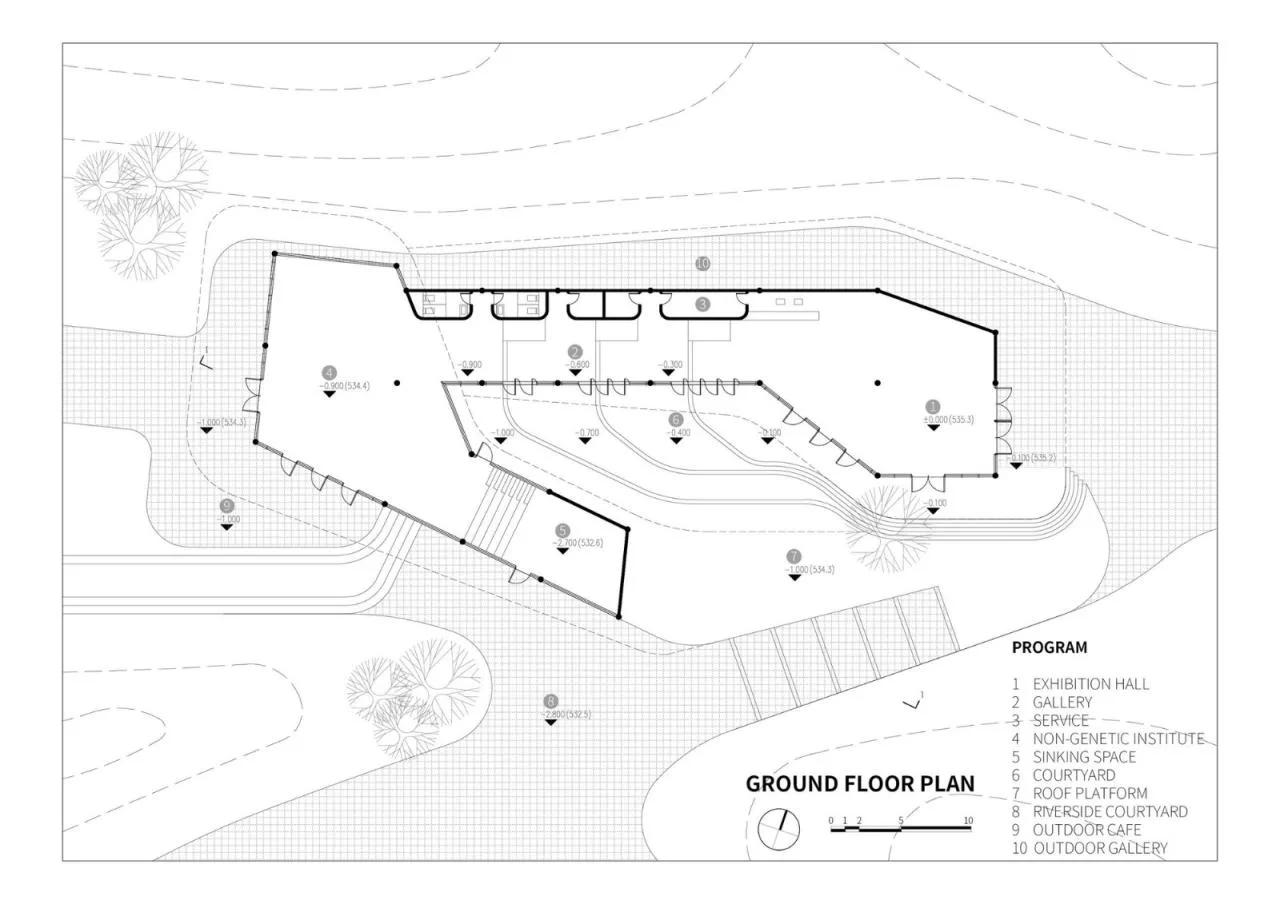
△ First floor plan
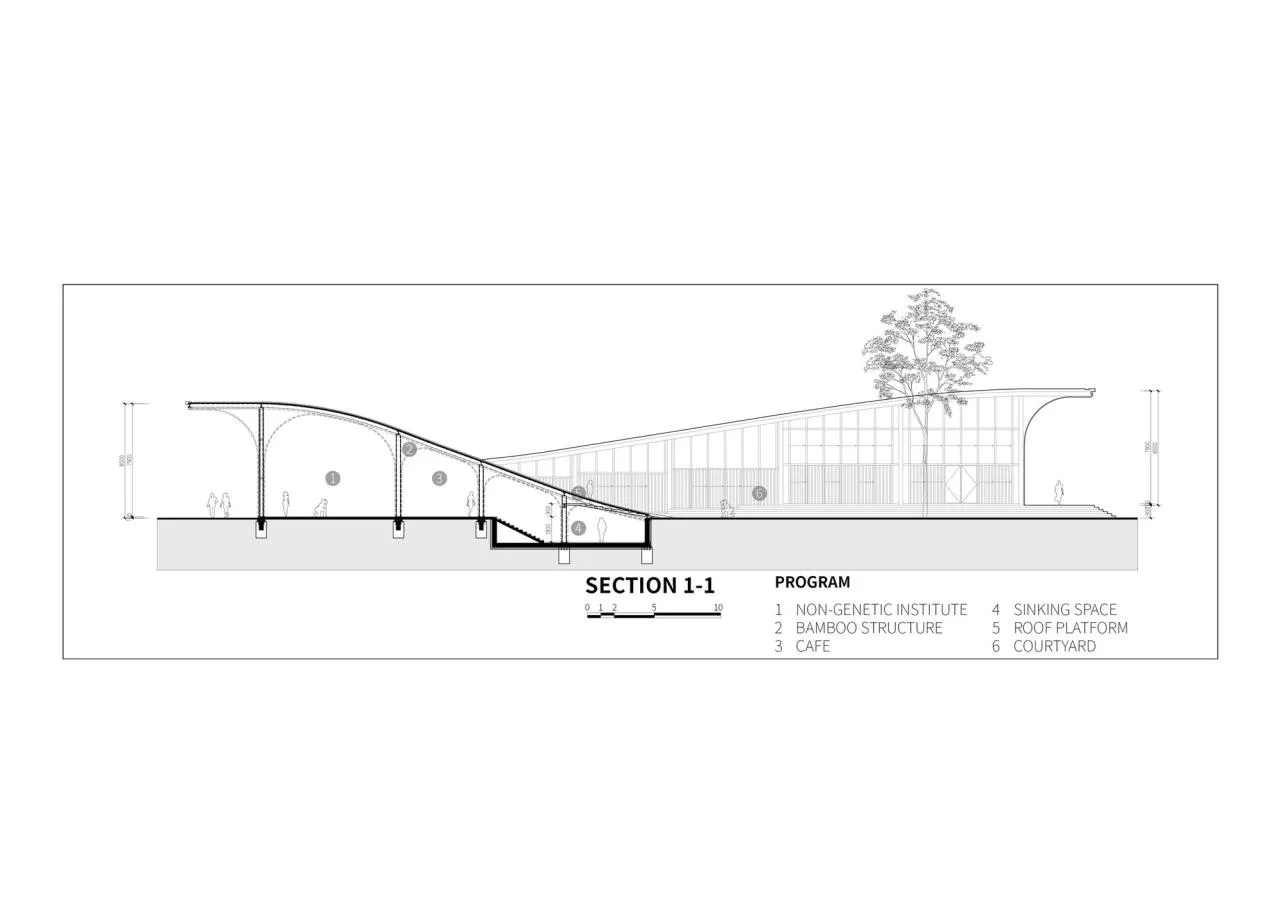
△ Section diagram
Project Information
Architect: UNO Architects
Area: 638 square meters
Project Year: 2022
Photographer: Existence of Architecture
Project Architects: Dong Tao, Wang Chenxi
Project Manager: Lin Rong
Design Team: Yang Qingqing, Ning Kexuan, Wang Jianguo, Li Hanlin (intern), Lei Yunchen, He Rongpeng, Zhao Yue, Yuan Hui
Construction Drawing Design: Chengdu Sinayulian Architectural Design Co., Ltd., led by Wang Kan, Chen Jingjing, Chen Chaosong, and Qu Pengze (structural)
Client: Chengdu Culture and Tourism Group
Wooden Structure: Sichuan Daoming Bamboo Art Industry Development Co., Ltd
Location: Qionglai City












Must log in before commenting!
Sign Up