
“Mountains are merely occasional geological events; they neither intend to harm nor please people. The emotional qualities we attribute to mountains are purely the product of human imagination.” — Robert Macfarlane, Heart to the Mountains
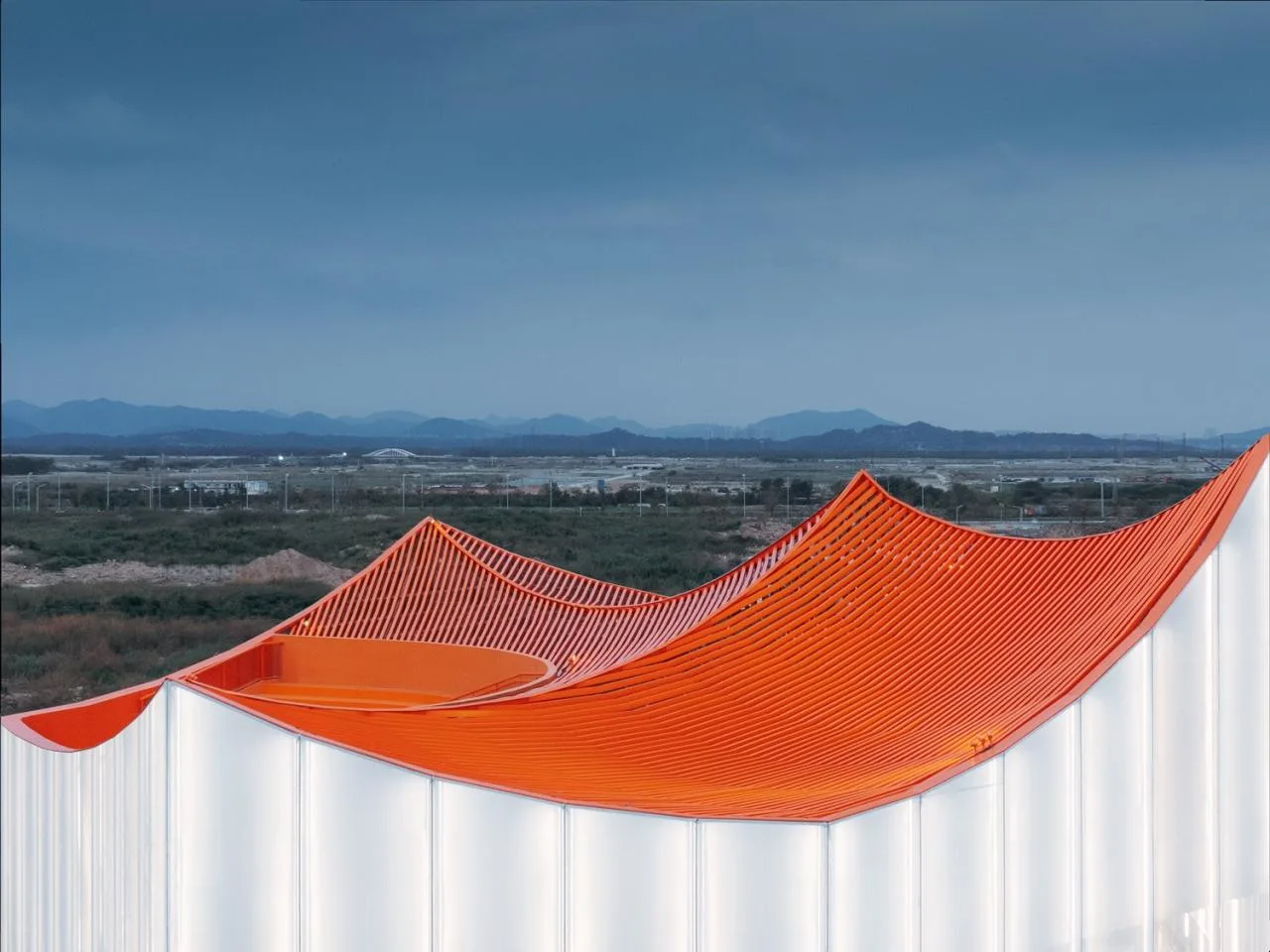
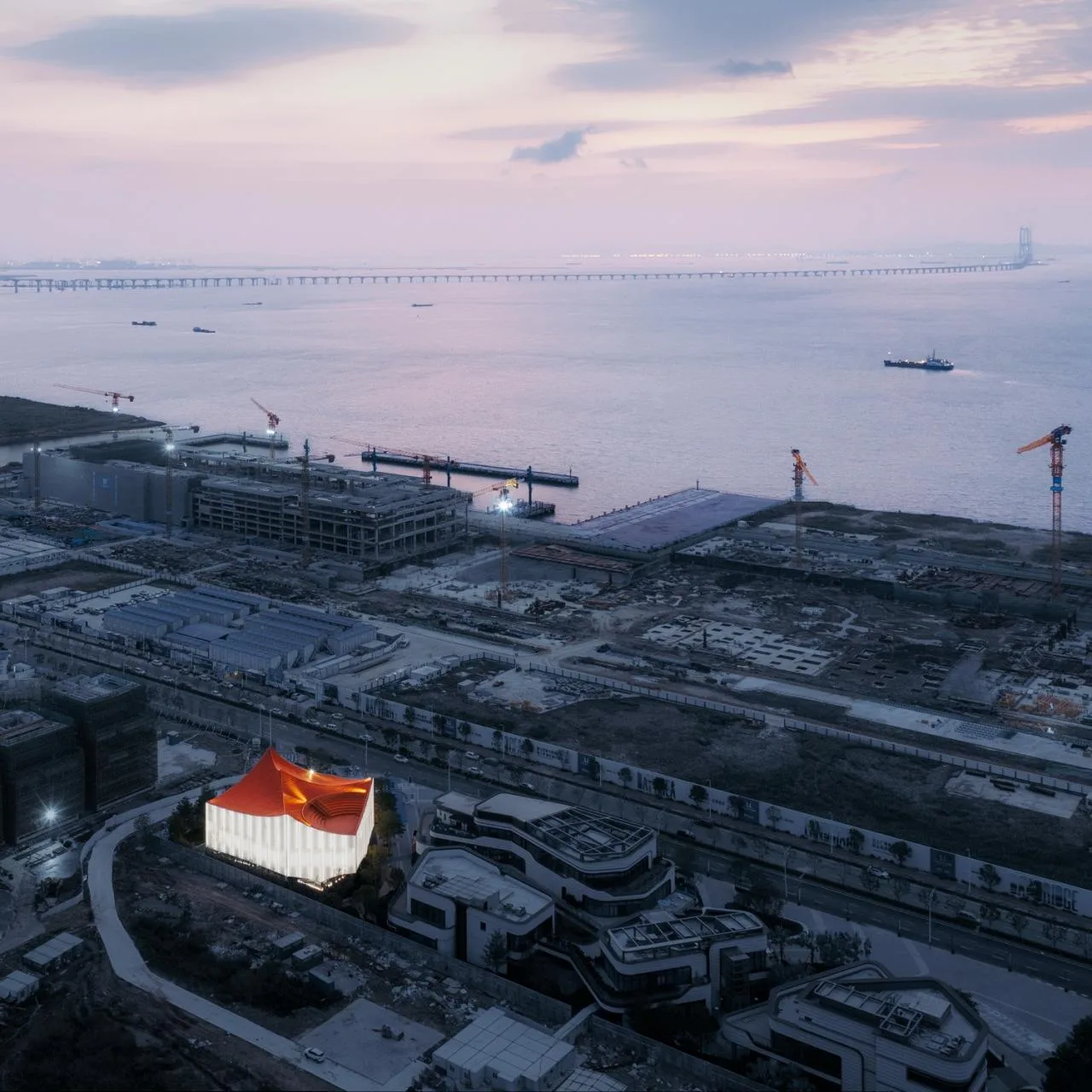
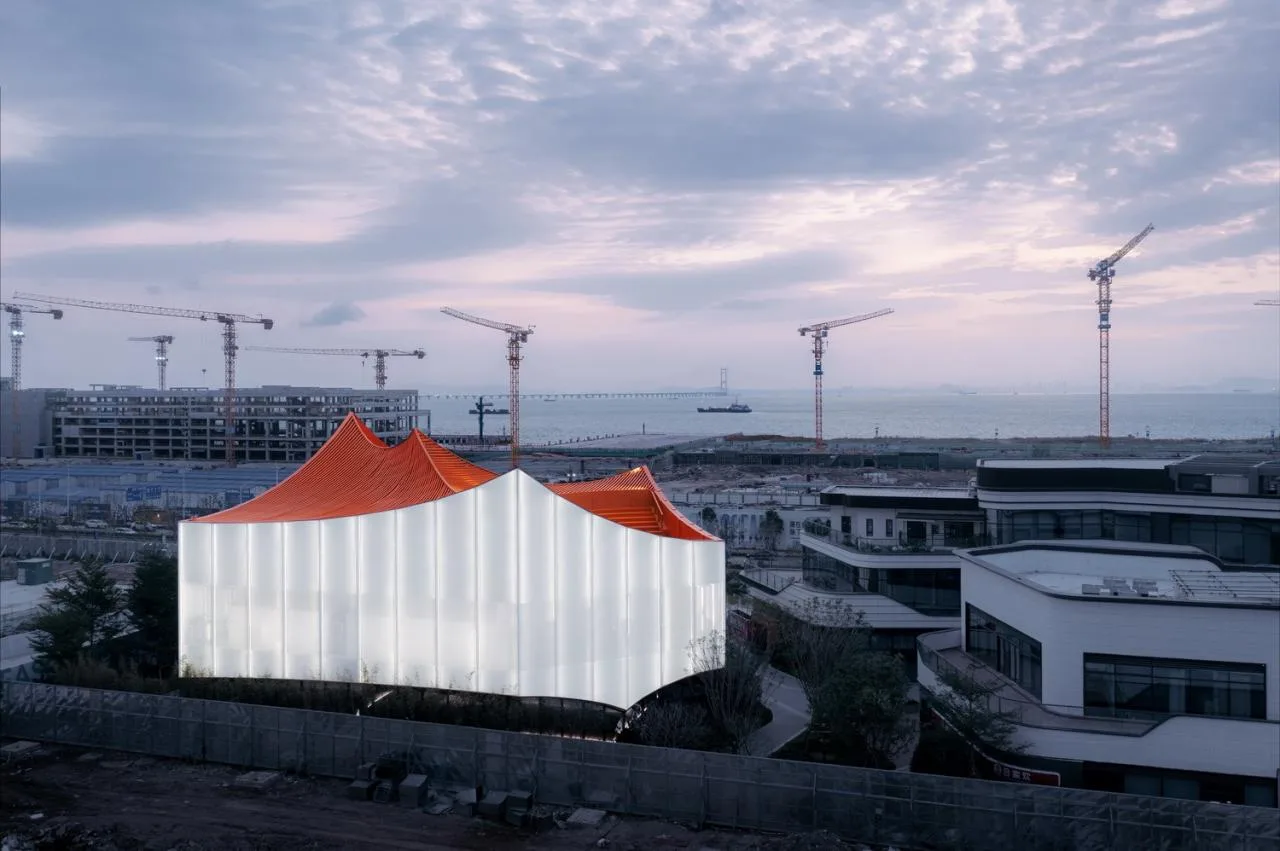
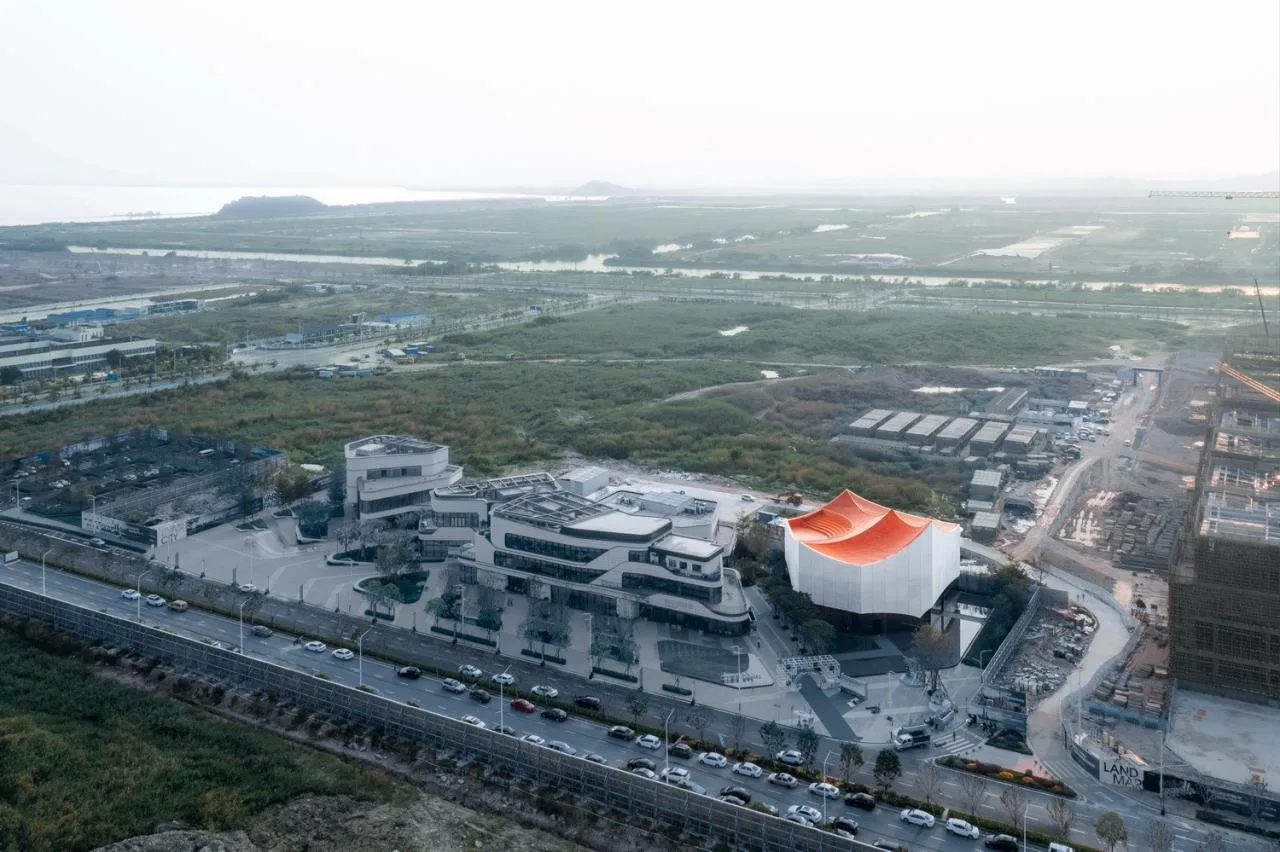
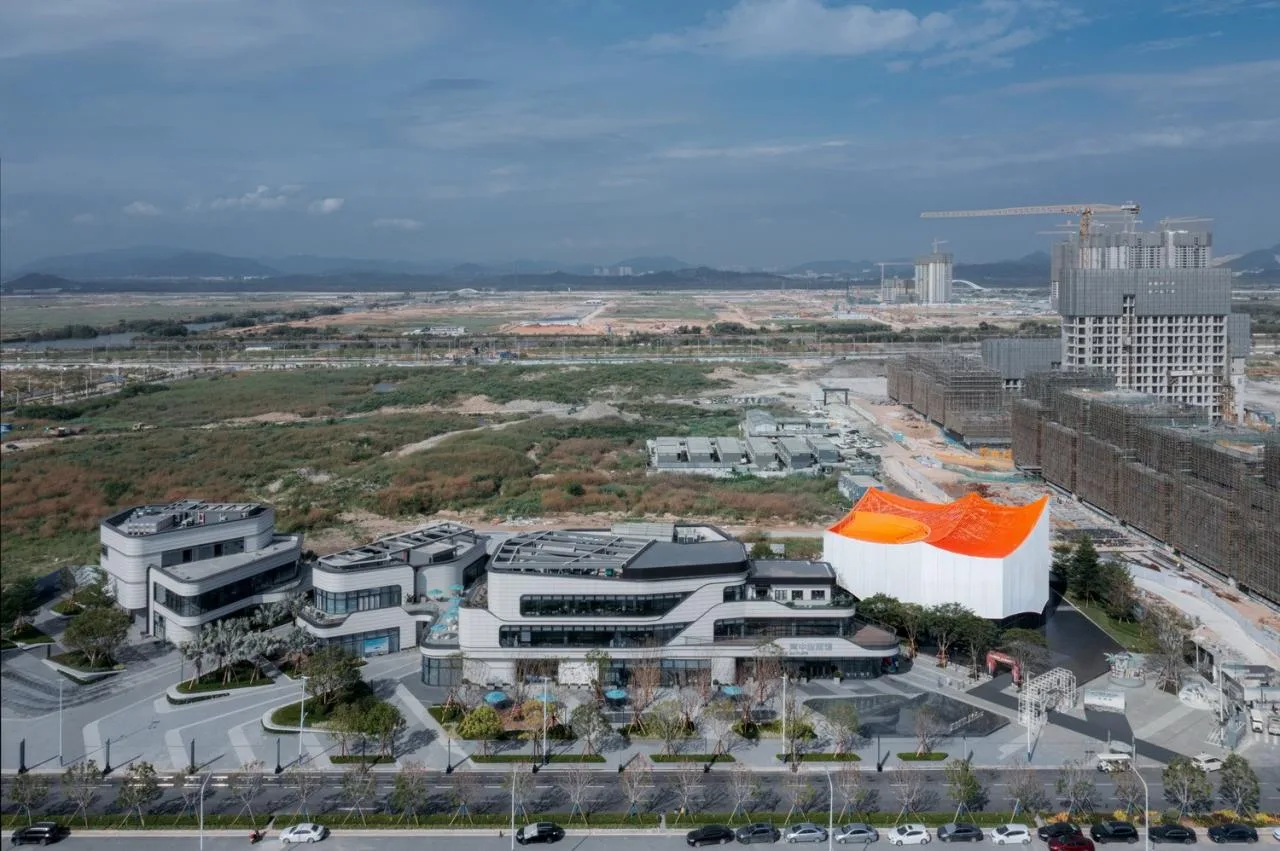
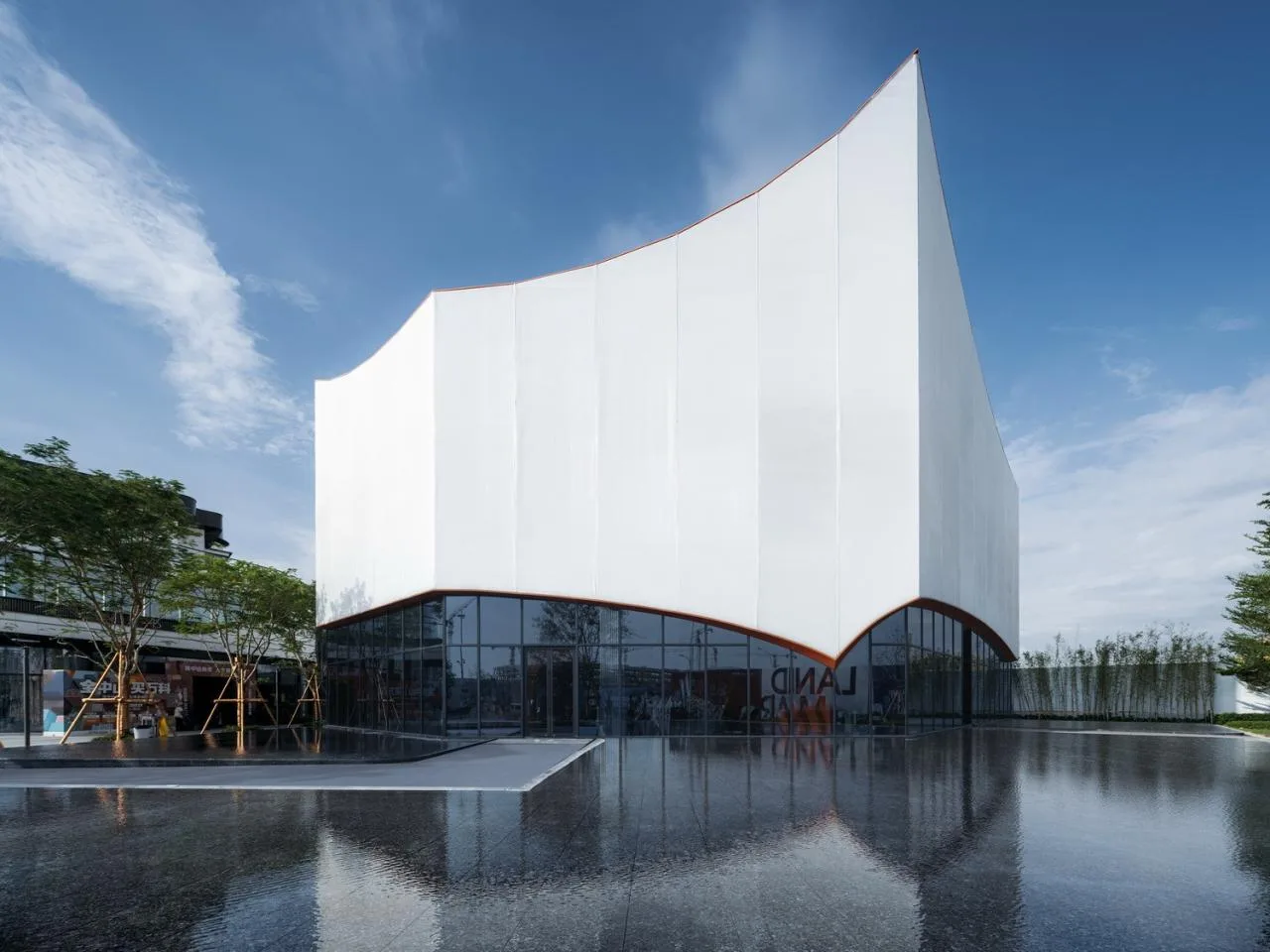
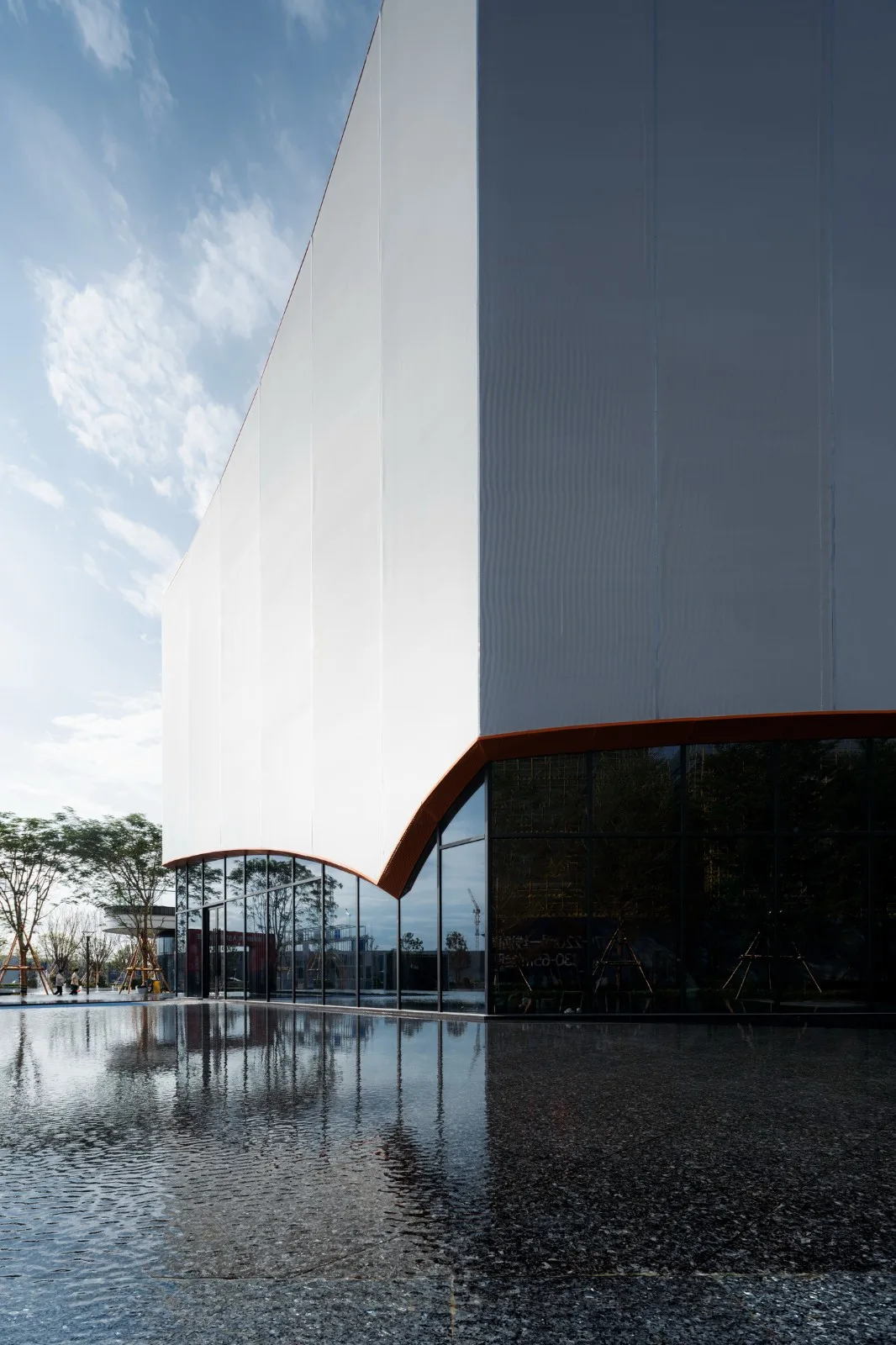
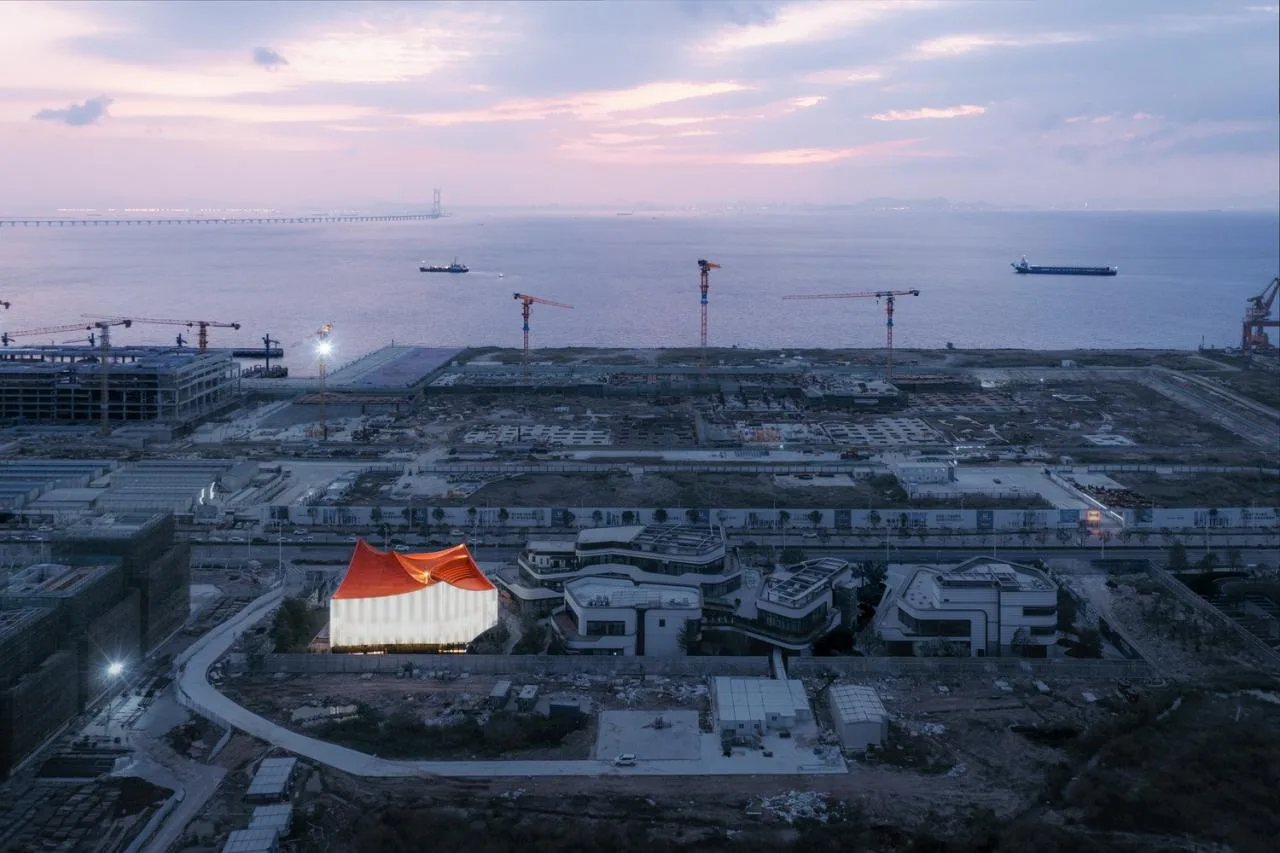
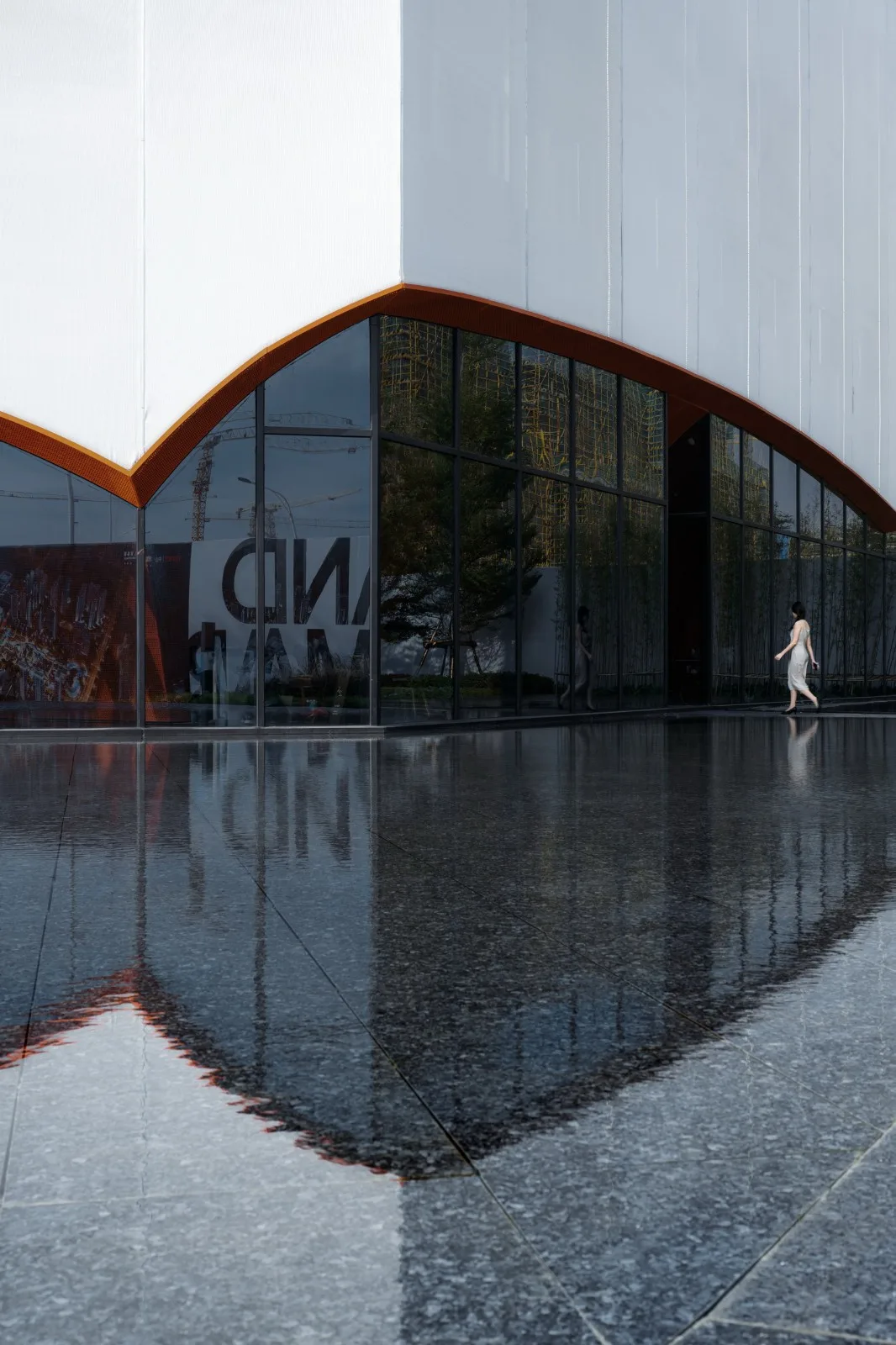
Wutopia Lab designed the semi-transparent Greater Bay Area Central Exhibition Hall, famously known as the “Flying Red Mountain,” for Vanke Shenye’s forthcoming gateway project — Wanzhong New City. Completed and opened in July 2022, this landmark sits on the west bank of the Pearl River Delta, at the western entrance of the Shenzhen China Channel, along the coastline of Bay New Town. On clear days, visitors can enjoy a direct view of the impressive Shenzhen Qianhai skyline across the sea from the rooftop. This ambitious exhibition hall represents a new iconic presence floating by the seaside in this emerging city.
The Persistence of Real Estate Developers
In an increasingly competitive market, the exhibition center serving as a sales hub remains a steadfast element for some real estate developers passionate about architecture. Over recent decades, the booming real estate market in China has led to a homogenization of residential properties — from floor plans to façades. Sales centers, designed to enhance customer experience, have gained importance beyond mere transactional spaces. Initially focused on sales, these centers evolved into lifestyle showcases and early community hubs, later transforming into multifunctional spaces serving residents.
For some time, sales center designs became increasingly similar. However, with the rise of social media as a dominant visual platform, developers recognized these centers as vital visual media to drive project influence and sales. This shift demands exhibition centers with innovative and distinctive designs.
A BDO Concept
The advanced demonstration area where the city exhibition hall stands has completely erased the original site’s identity due to extensive infrastructure development. The mature and smooth design of this area, stripped of its limited architectural variations, mirrors many new cities across China — a so-called Generic City.
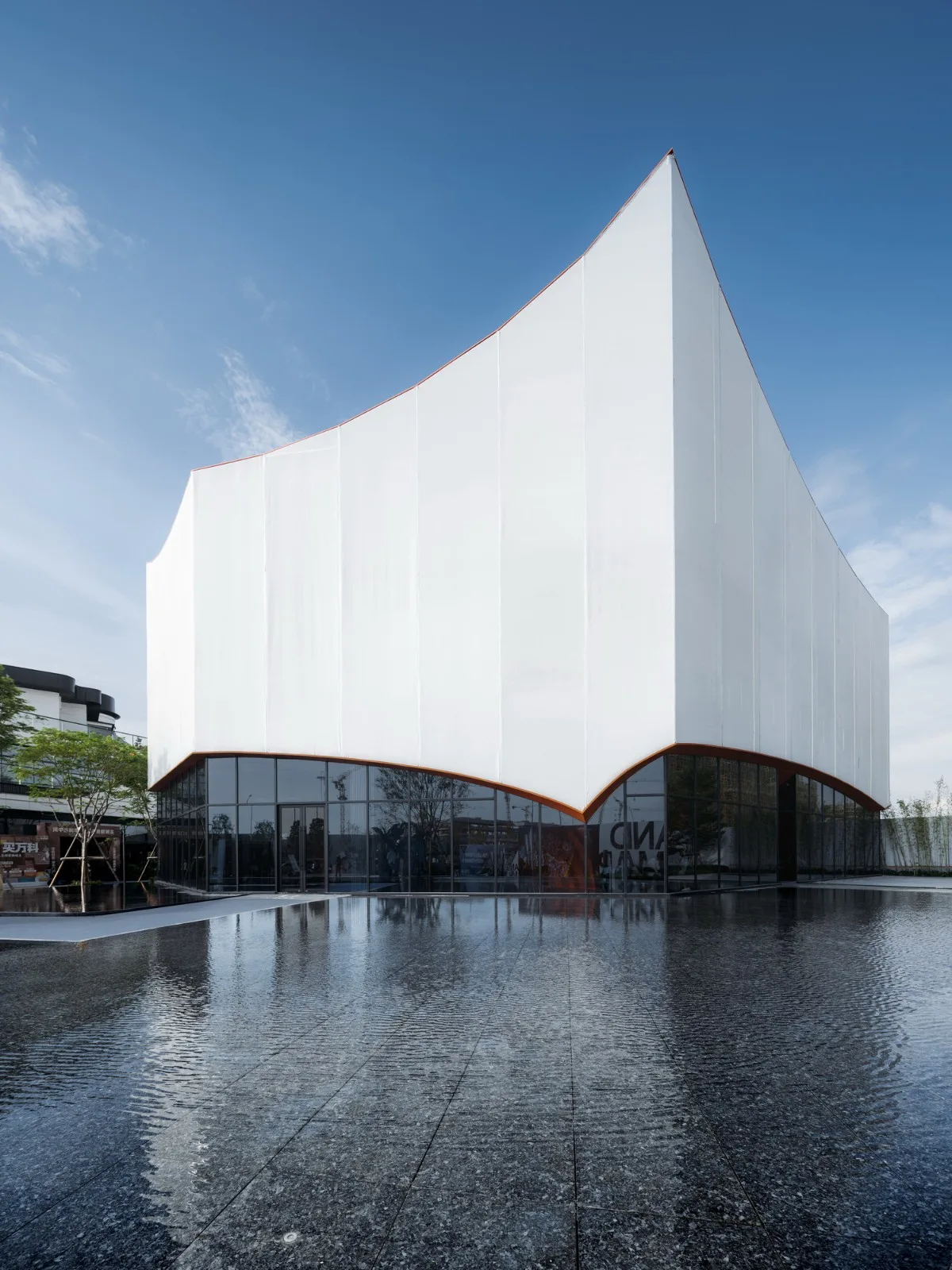
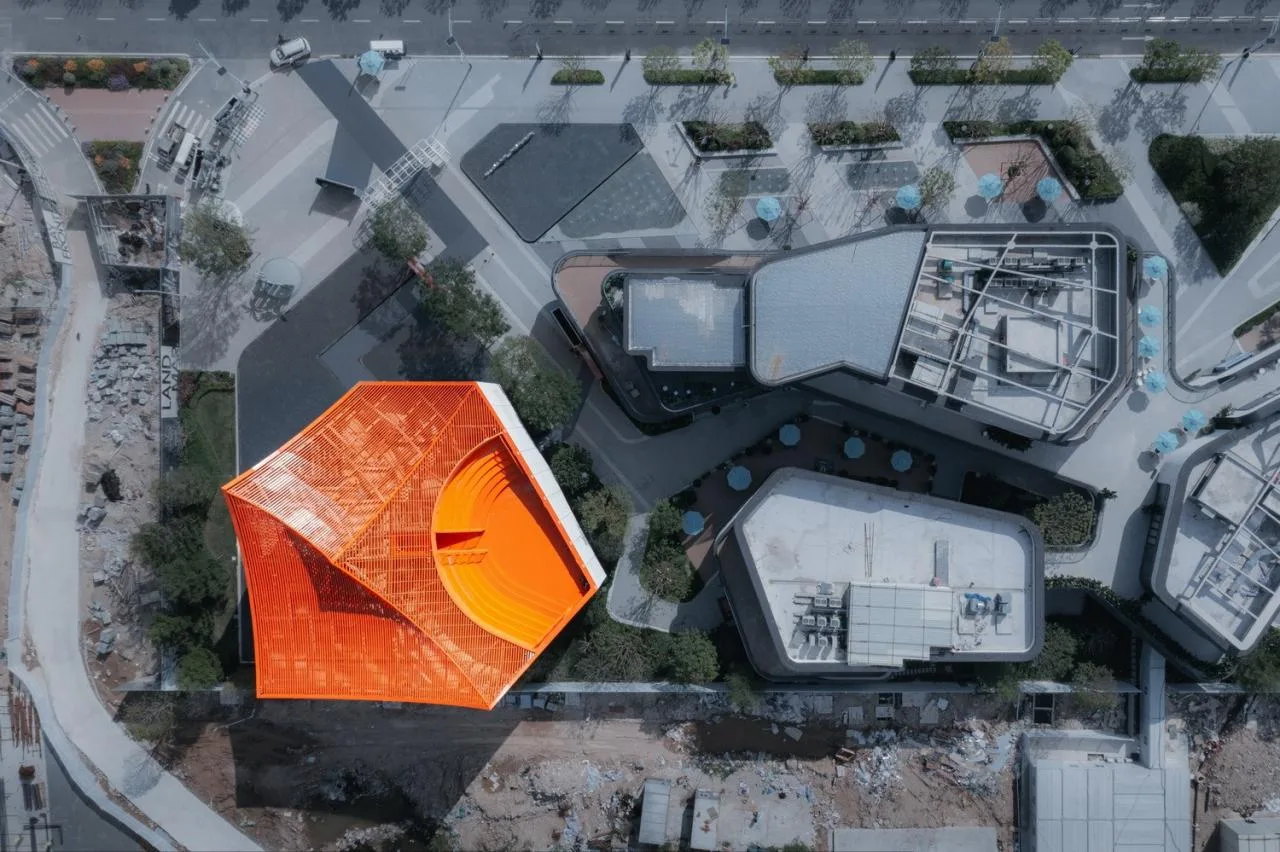
Faced with this homogeneity, I conceived a radical idea: to create a black BDO — a Big Dumb Object — that reflects its surroundings. It symbolizes an unknown, immense, and mysterious power. Rejecting complexity and elaborate craftsmanship, the design embraces a concise, pure, and vivid form. Its immense silence and starkness command attention from all directions, both on-site and across social media. This BDO marks the starting point for visiting the new city and embodies the ambitious goal of resisting Generic City’s monotony.
BDO as Identity
I chose the BDO concept to inspire an adventurous spirit among visitors. Most new cities function as extensions of central urban areas, often becoming mere appendages. Vanke’s vision for this project is to develop a new city with central urban functions.
Words alone cannot capture this vision’s courage. An impactful concept is necessary to express bravery — something ordinary people often lack. The BDO symbolizes this courage.
Rejected on Local Grounds
The initial proposal was rejected by local authorities for lacking cultural characteristics. I refused to simply drape the modern functional volume with a superficial traditional architectural façade or patch together traditional materials such as rammed earth bricks and wood under the guise of locality.
I also avoided exhaustively incorporating specific local symbols — artifacts, plants, animals — into replica buildings that mimic local features. Instead, I made a rare decision for the studio and devised a new plan rooted in symbolism, returning to the mountain as a familiar motif. This allowed for a subtle, expressive, and widely acceptable transformation of the BDO’s appearance.
Borrowing the Mountain: BDO with a Whisper
Why choose mountains? Because “all the emotional attributes that mountains possess are endowed by human imagination.” More importantly, the mountain is a core symbol in traditional Chinese culture, easily abstracted into contemporary architectural forms. Given the project’s location in Zhongshan, mountains also serve as a logical symbol of locality.
The original BDO’s stark black silence could be unsettling. My key strategy for revising the BDO was to soften its presence by enveloping it in a floating, semi-transparent white veil, lending it a calming whisper.
Key Principles for Creating the BDO
BDO must be large.
Principle 01: Clear and simple form. The exhibition hall’s design is based on a diamond-shaped footprint. From this, a geometric cylindrical body emerges, refined through a few simple cuts mimicking mountain contour lines to form a clean, pure, and vivid image.
Principle 02: Large volume. The building reaches 21 meters in height — the standard limit for low-rise buildings — spanning two and a half stories.
Principle 03: Large span. The hall is a massive structure featuring a core tube that integrates auxiliary functions such as evacuation stairs, elevators, pipe wells, and bathrooms. This core supports a column-free open space measuring 16m by 30m, allowing public areas to extend seamlessly outdoors and adapt flexibly to exhibition needs yet to be fully defined.
My Local Approach
While researching the history of ancient Chinese architecture, I developed reflective, non-formalist insights. I consciously transform these ideas into small conceptual elements applied to my architectural creations, generating new forms.
Xiao Xin 01: Semi-transparency. Historical records and ancient paintings suggest that ancient Chinese people used materials like silk, paper, mica, and glass for window openings, sometimes covering windows with green gauze to prevent mosquitoes while allowing ventilation. Curtains made from cloth, bamboo, and pearls provided sun shading, creating a vague and ambiguous visual interface.
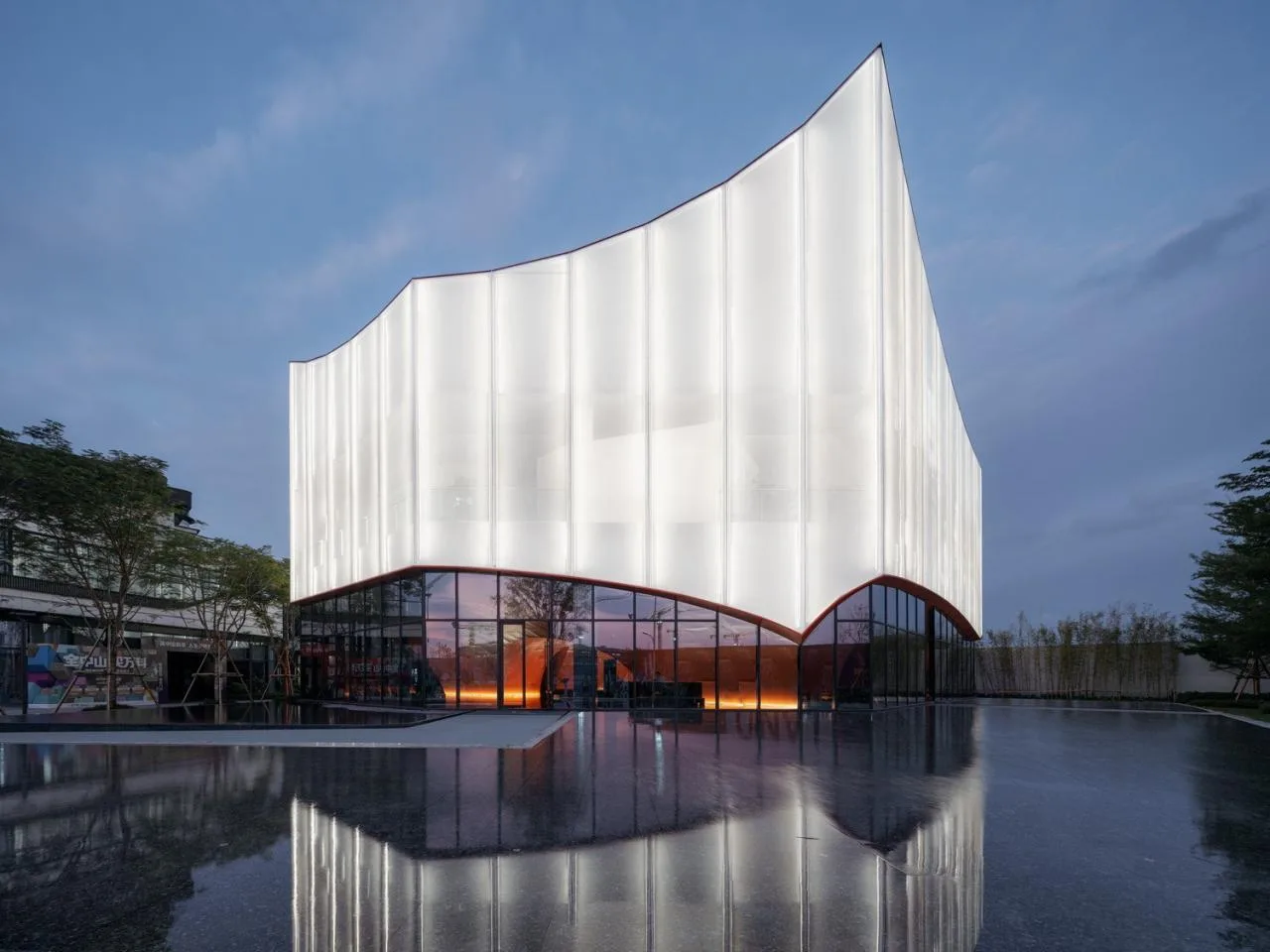
In this project, I used PTFE membranes with varying porosities (28% and 50%) to achieve a semi-transparent effect that softens the BDO’s imposing presence and introduces a sense of warmth and approachability.
Xiao Xin 02: Separating climate boundaries from visual boundaries. Traditional Chinese buildings often have façades that change with the seasons and usage, where visible boundaries don’t necessarily align with climatic boundaries. This dynamic inspired me to separate these boundaries architecturally.
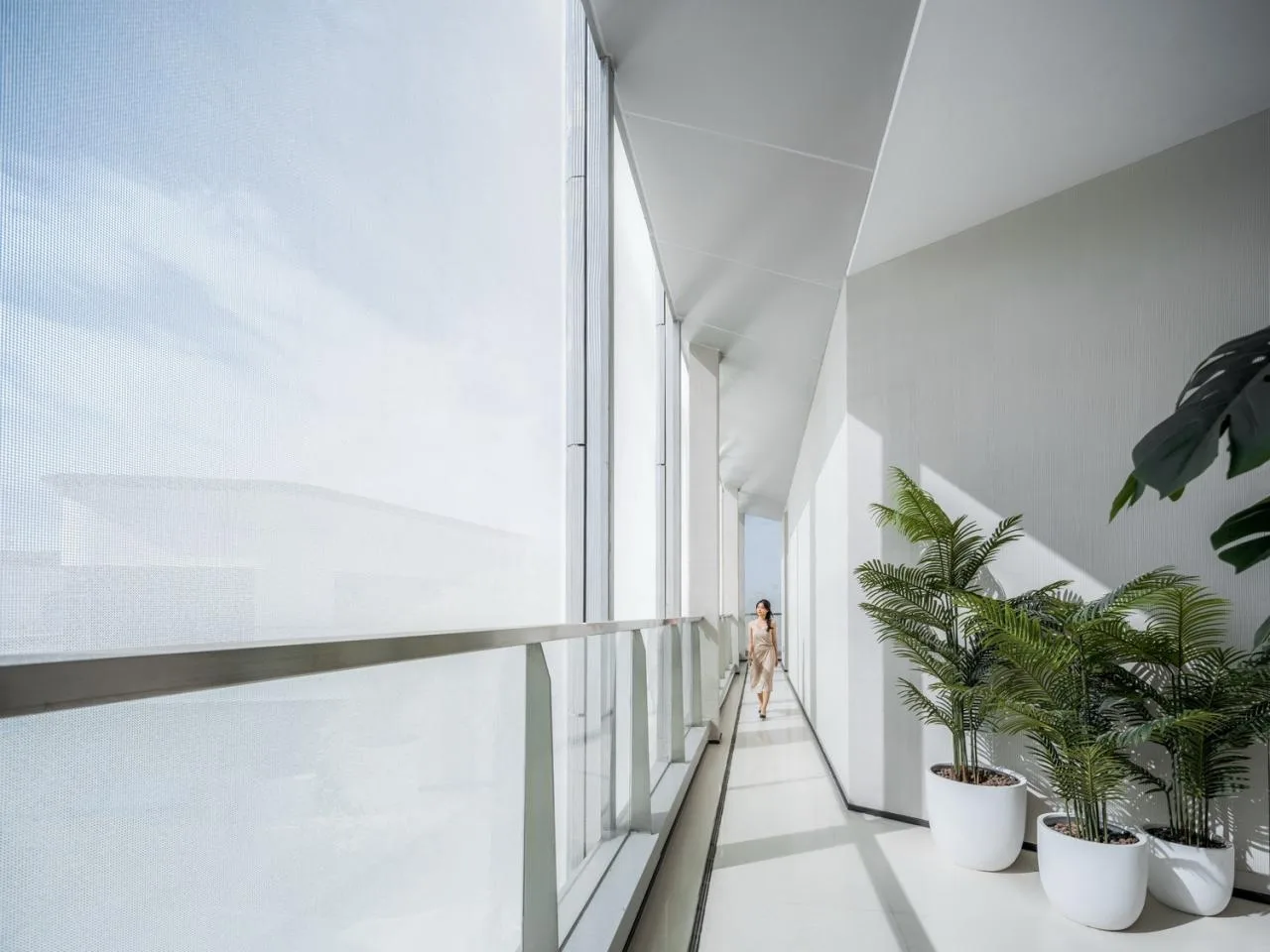
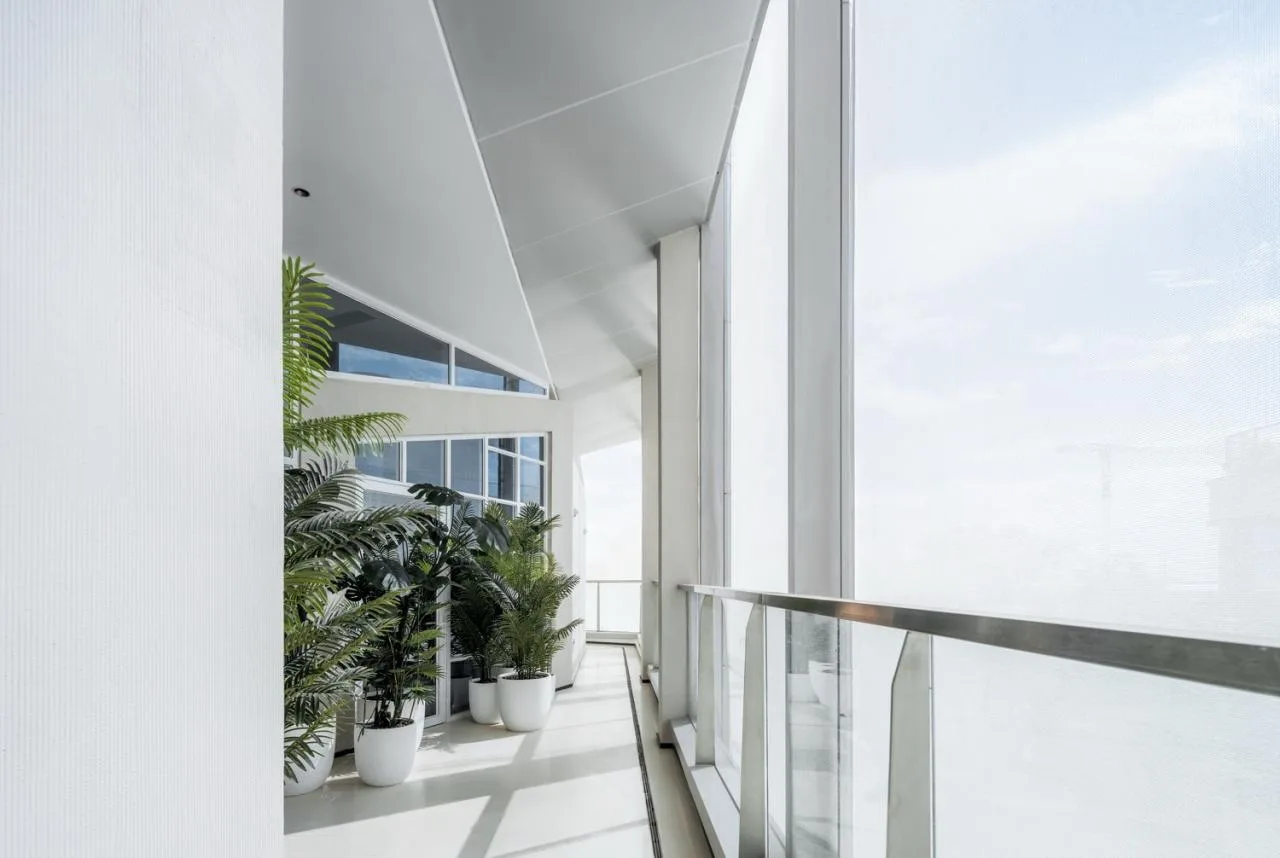
PTFE mesh membranes were chosen over ETFE for their porosity, meeting fire safety ventilation requirements and creating an ambiguous climate chamber between the building’s physical edge and the membrane. This semi-outdoor space, bathed in soft light and lush greenery, offers a gentle breeze — a contemporary interpretation of Lingnan’s local climate south of the Tropic of Cancer.
Small Thought 03: A House Within a House. Traditional buildings often lack sufficient insulation, necessitating indoor subdivisions with furniture and fabrics to create smaller, insulated spaces — essentially a house within a house.
Accordingly, the second-floor space behind the PTFE membrane was designed as an aerial village. The conference room, reception area, and exhibition hall are independent sloped-roof cabins arranged naturally around an atrium overlooking the ground floor. Each cabin has its own climate boundary, surrounded by semi-outdoor green gardens, creating a unique paradise of peach blossoms.
Small Thought 04: Floating. When observing traditional Chinese roofs, many focus on form, color, materials, and decoration. However, I see the supporting pillars not as holding the roof up, but as holding down the heavy, soaring roof — like the Chong Si Fei, which embodies soaring ambition.
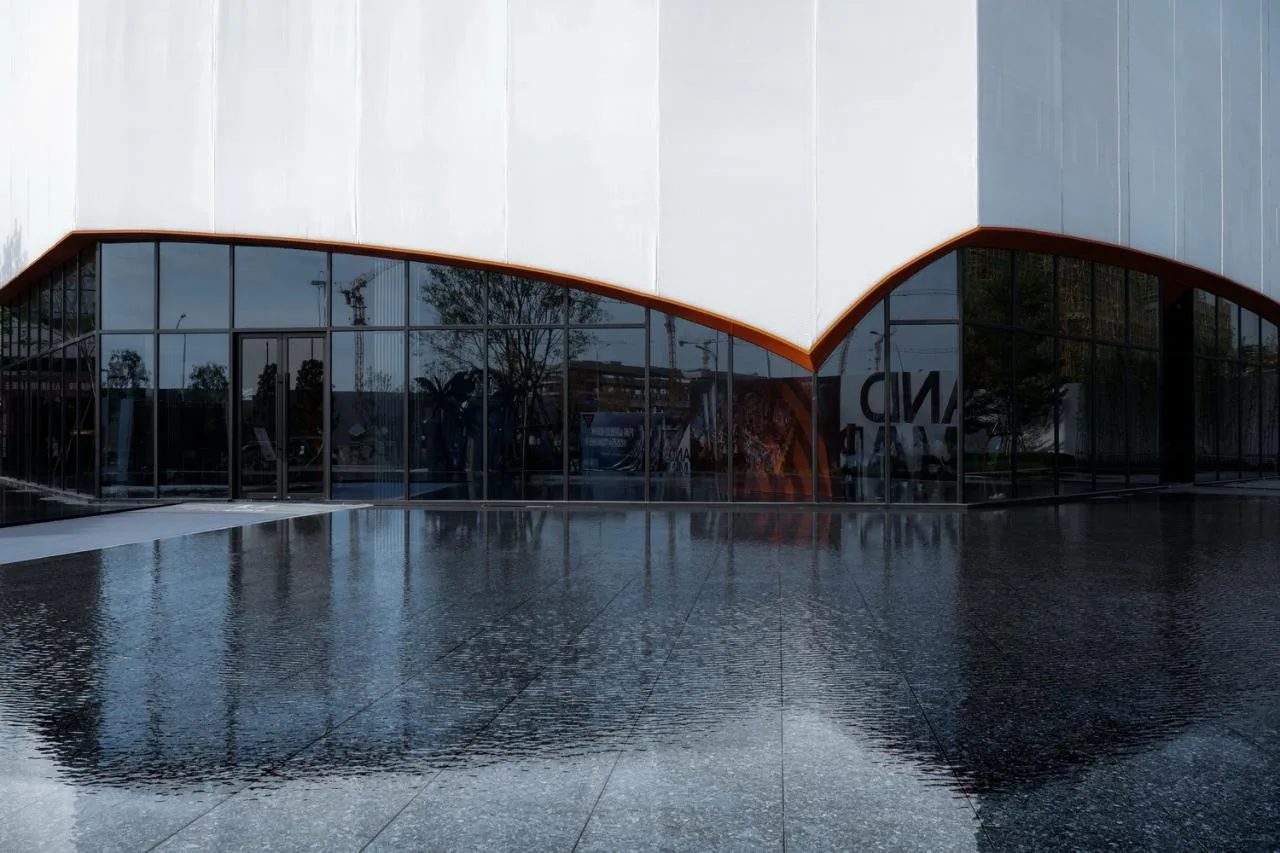
In this BDO, I did not pursue sci-fi suspension but a sense of floating that implies flight. I minimized ground contact on the lower floors through structural overhangs and open public spaces. The building’s entire two-plus story volume is wrapped in a continuous PTFE membrane roughly 3 meters wide, running uninterrupted from roof to ground with hidden vertical frames, achieving maximum integrity in a smooth white volume.
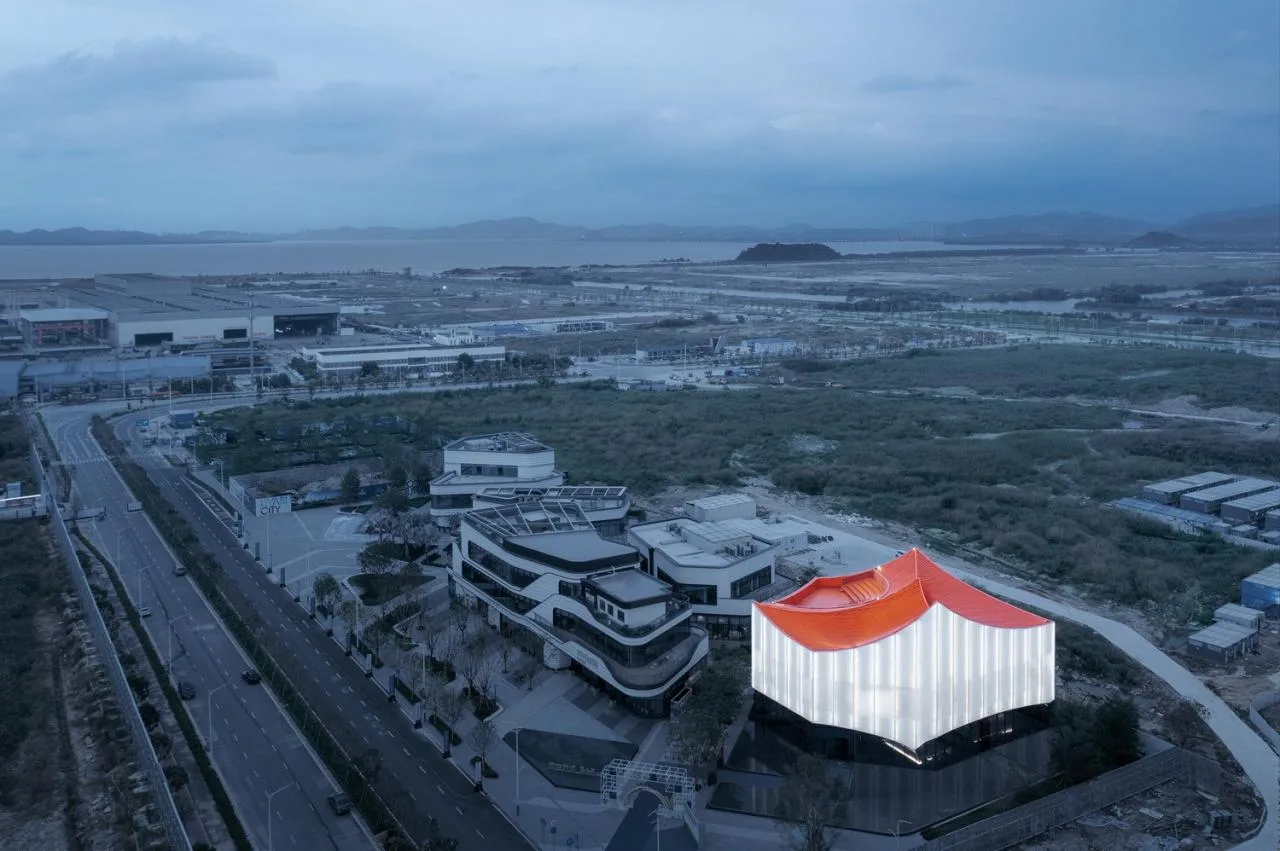
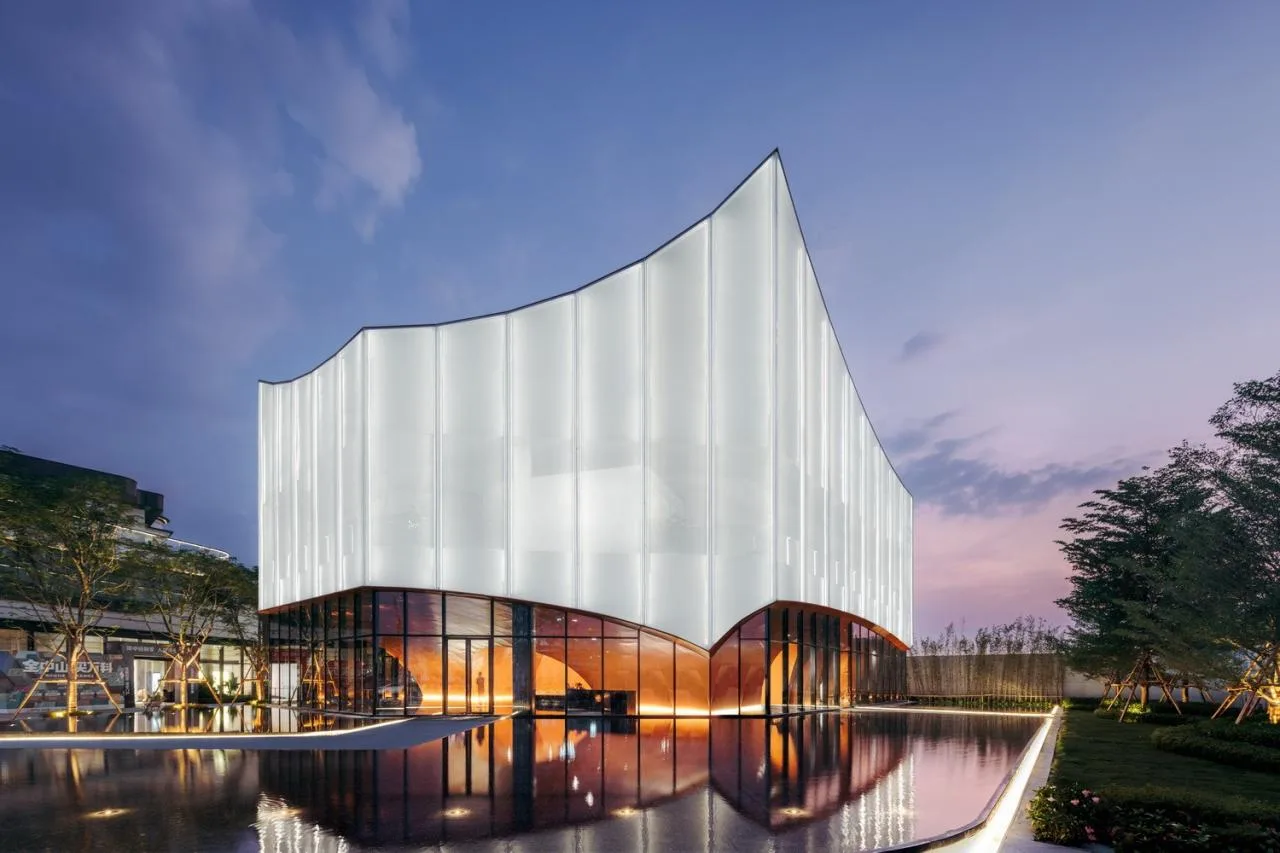
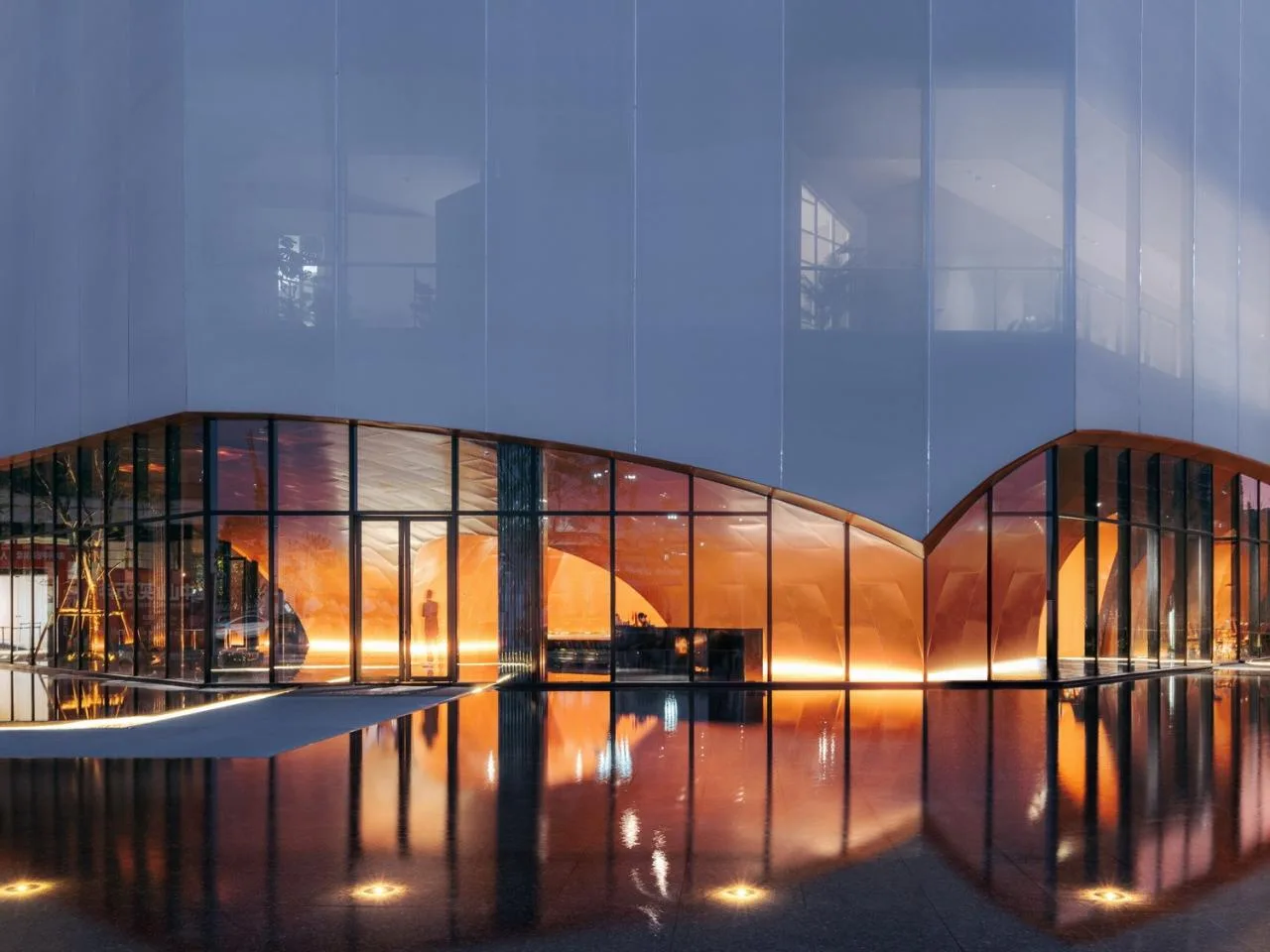
Xiao Xin 05: Aoshan. The semi-transparent PTFE membrane evokes the ancient lantern mountain “Aoshan,” traditionally made of fabric and paper. By day, sunlight casts shadows inside the semi-transparent surface; by night, lighting creates shadows on its exterior. This dynamic animates the BDO, making it appear to float and express emotion rather than remain silent.
Red Mountain
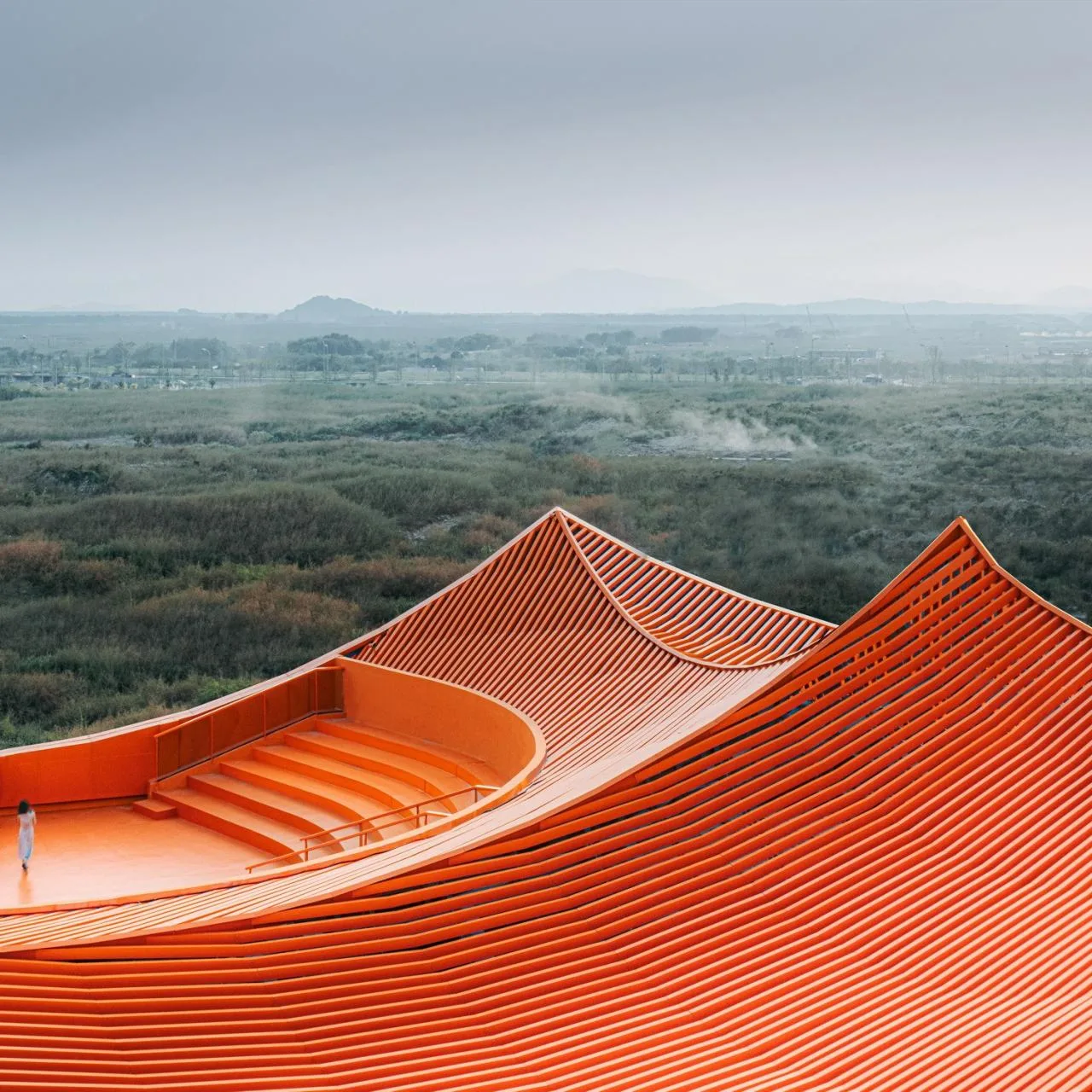
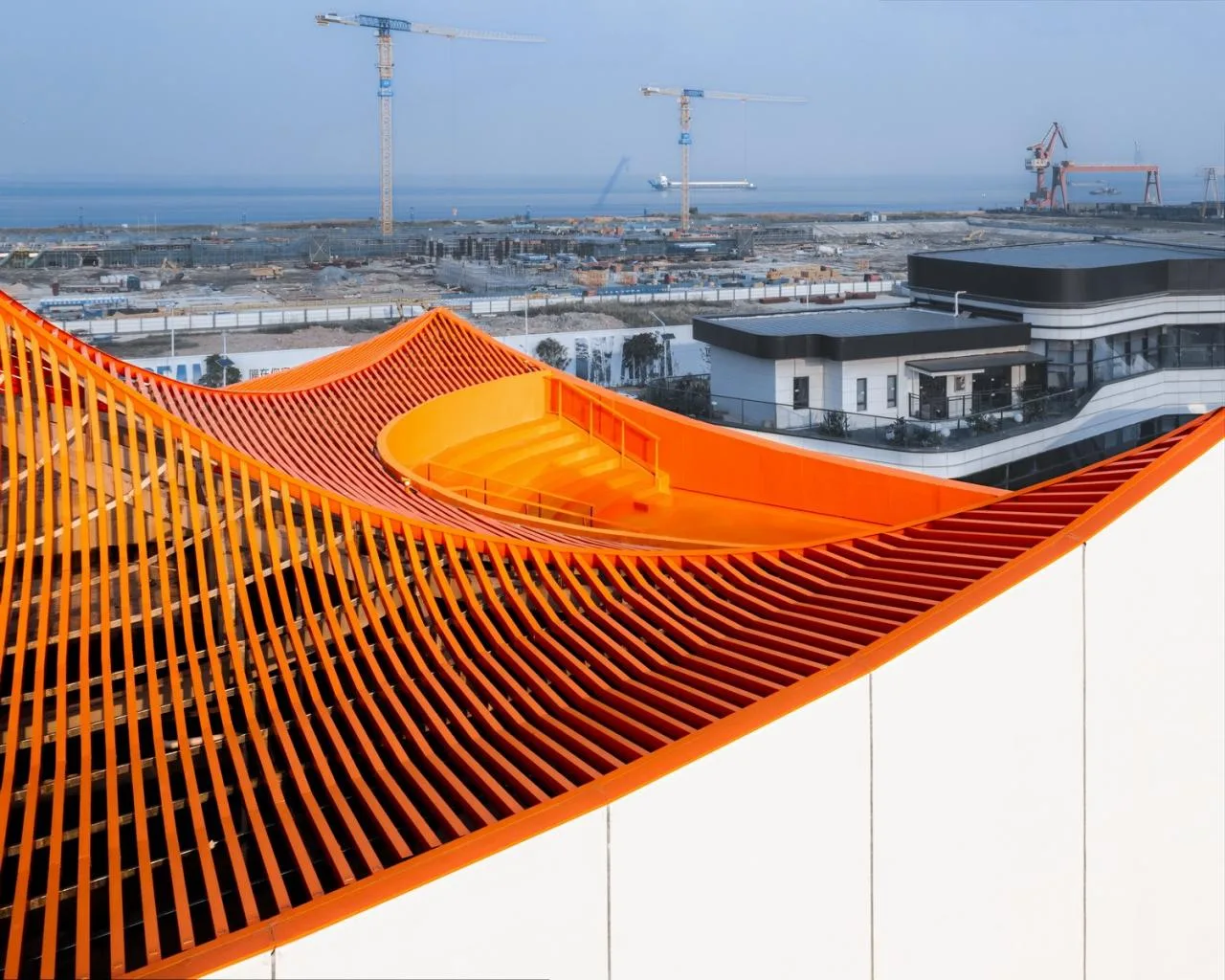
I hesitated over the second draft’s plan for the white floating mountain peak. White is a safe choice for architects, but lacks courage. Then I recalled Khan Tengger Peak deep in the snow-capped Tianshan Mountains. Due to its marble composition, it glows red under sunset light, earning the nickname “Hongshan” — considered one of the world’s most beautiful peaks.
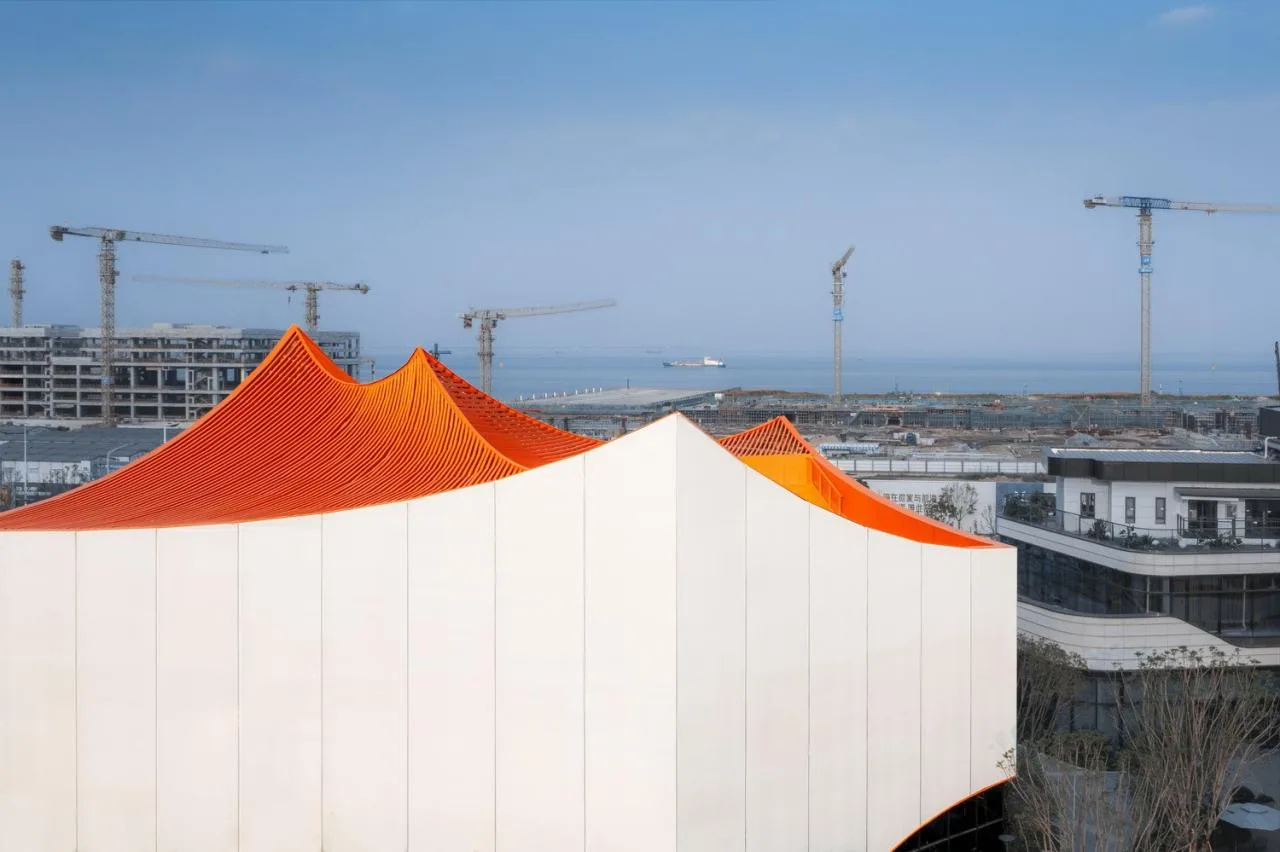
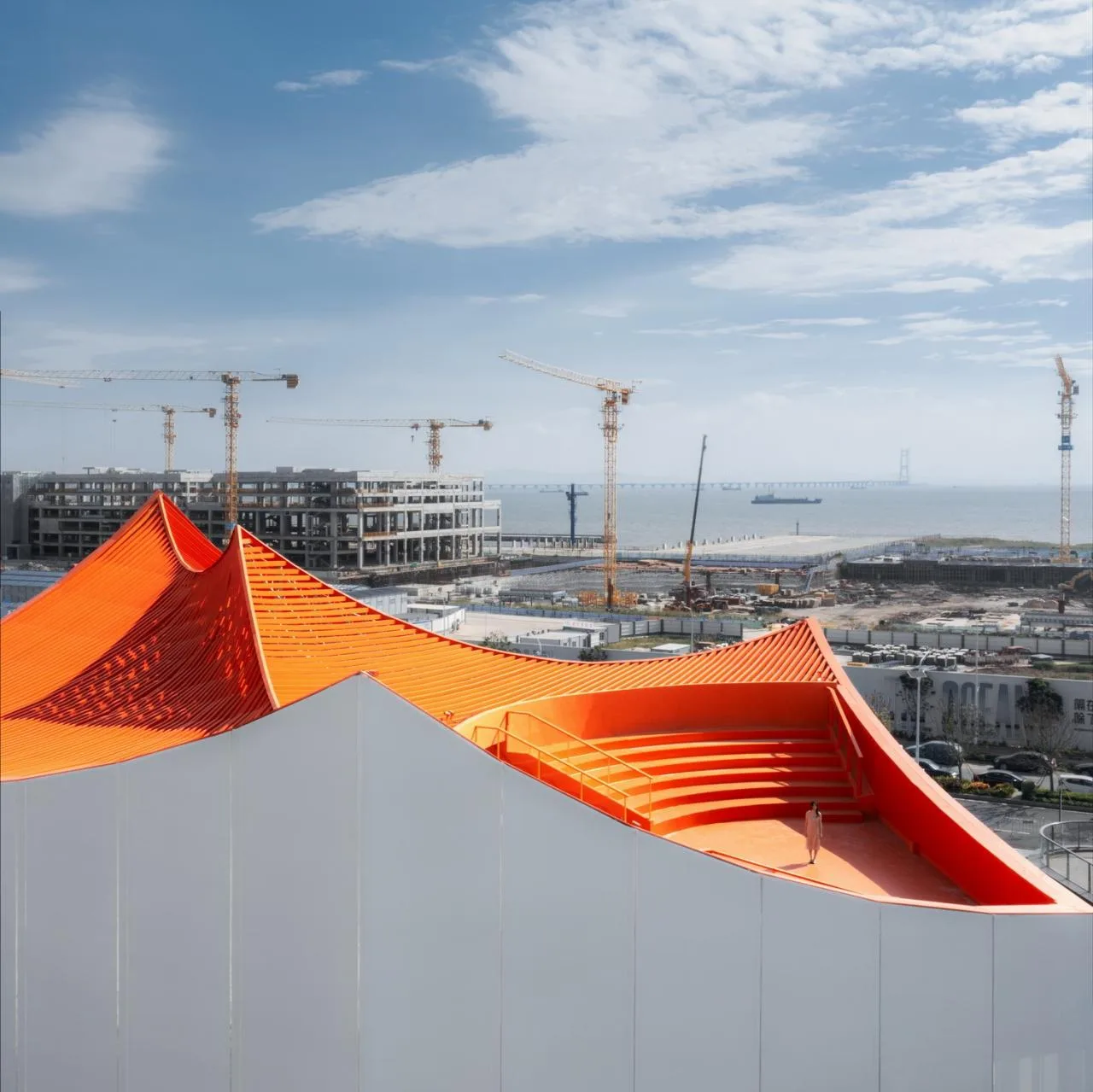
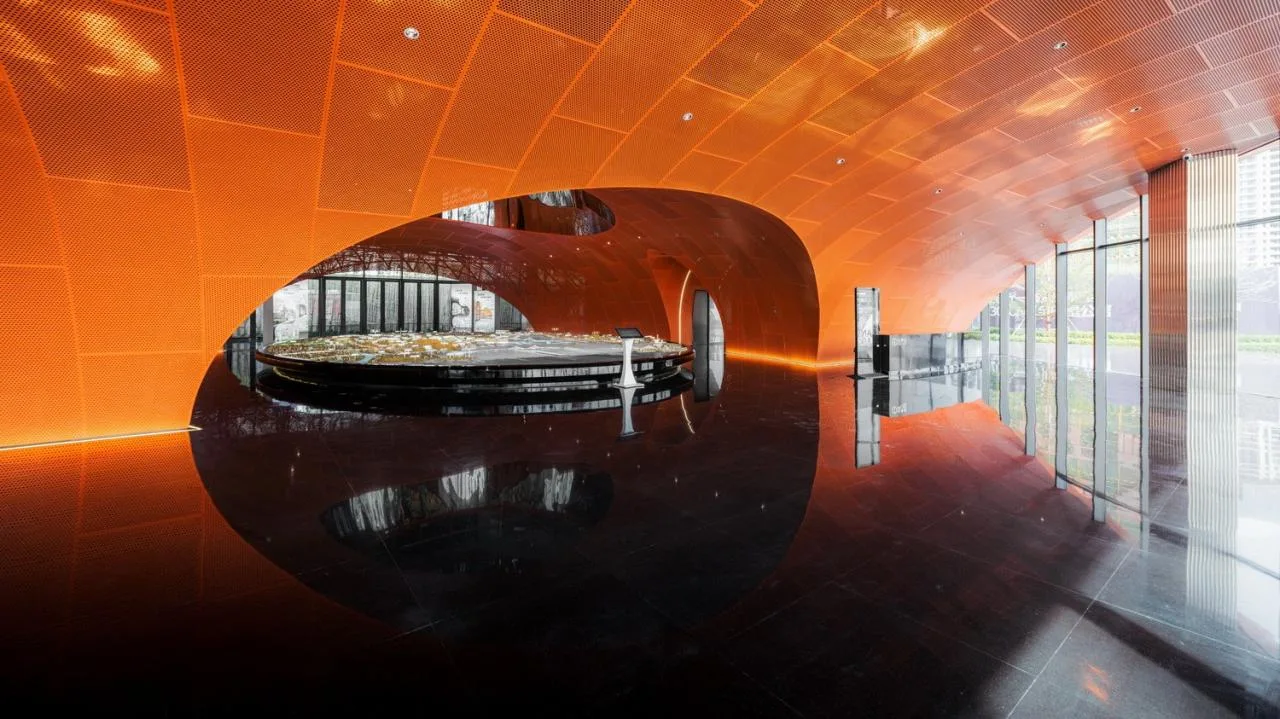
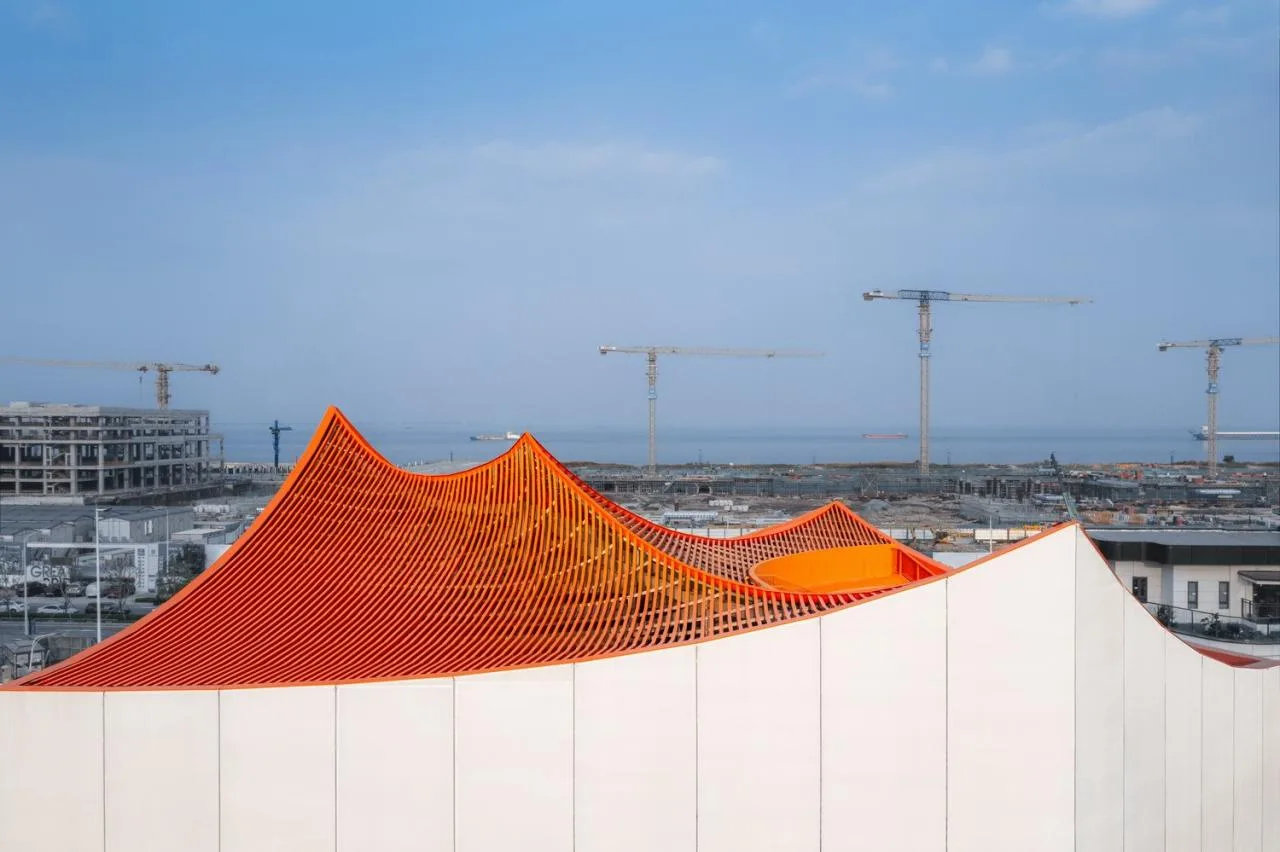
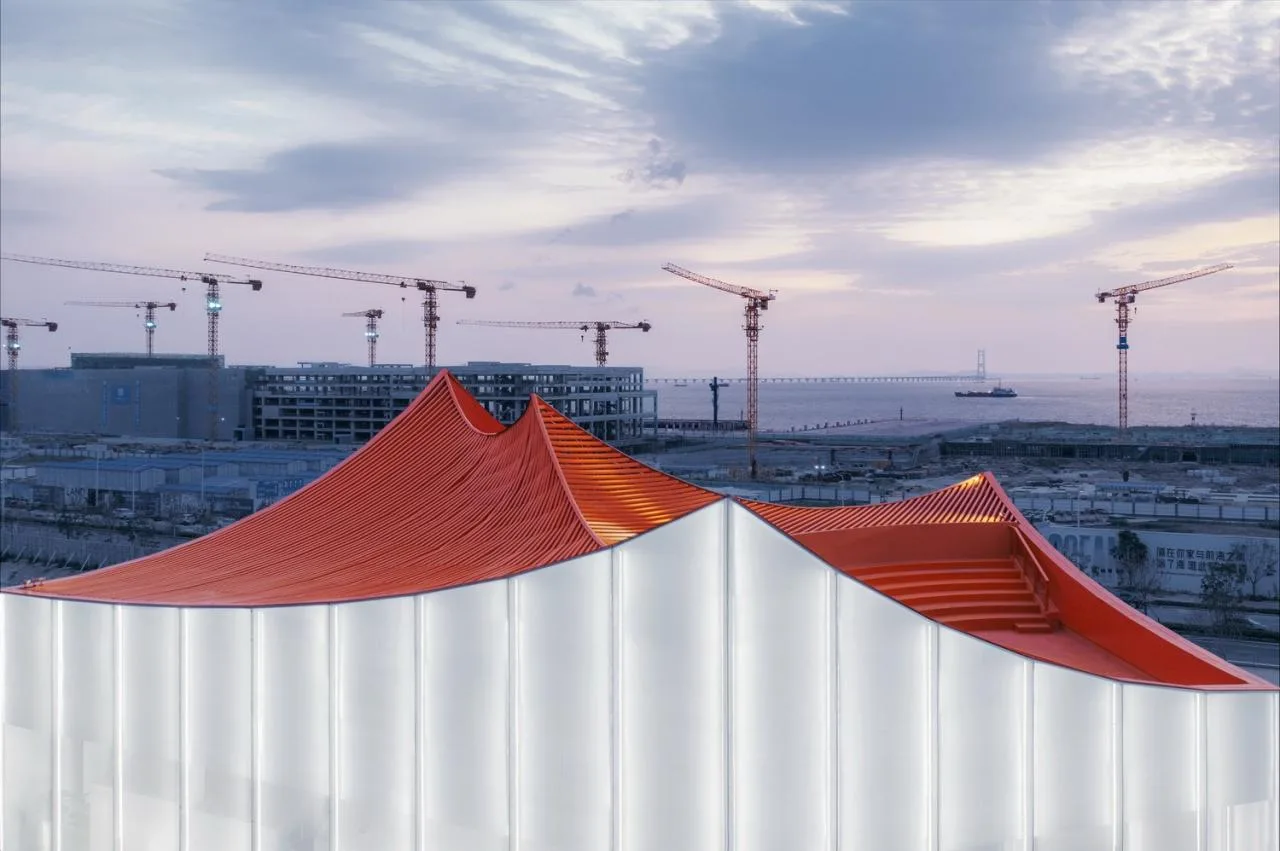
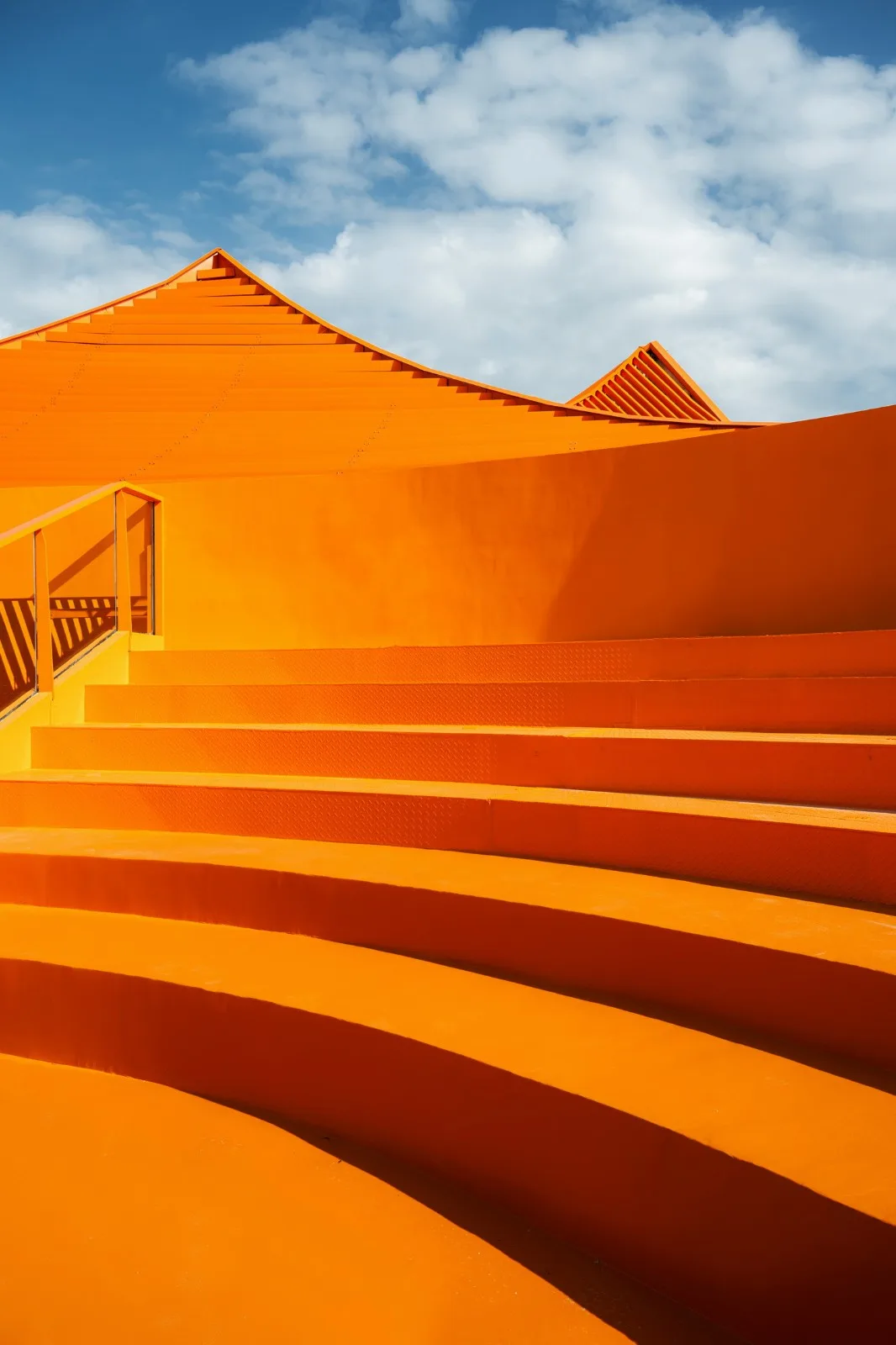
I decided to paint the roof a striking orange-red color and extend the same hue to the first floor, excluding the ground. The dark brown floor blends seamlessly with the outdoor paving, making the red mountain appear to lift off the ground. Covered with translucent white PTFE film, the mountain shines brilliantly at sunset, resembling snow.
From the street, the white form undulates in layers, occasionally revealing flashes of orange-red between peaks, evoking longing. Thus, the “Flying Red Mountain” on the west bank of the Pearl River is destined to become a focal point.
A Hidden but Beautiful Space
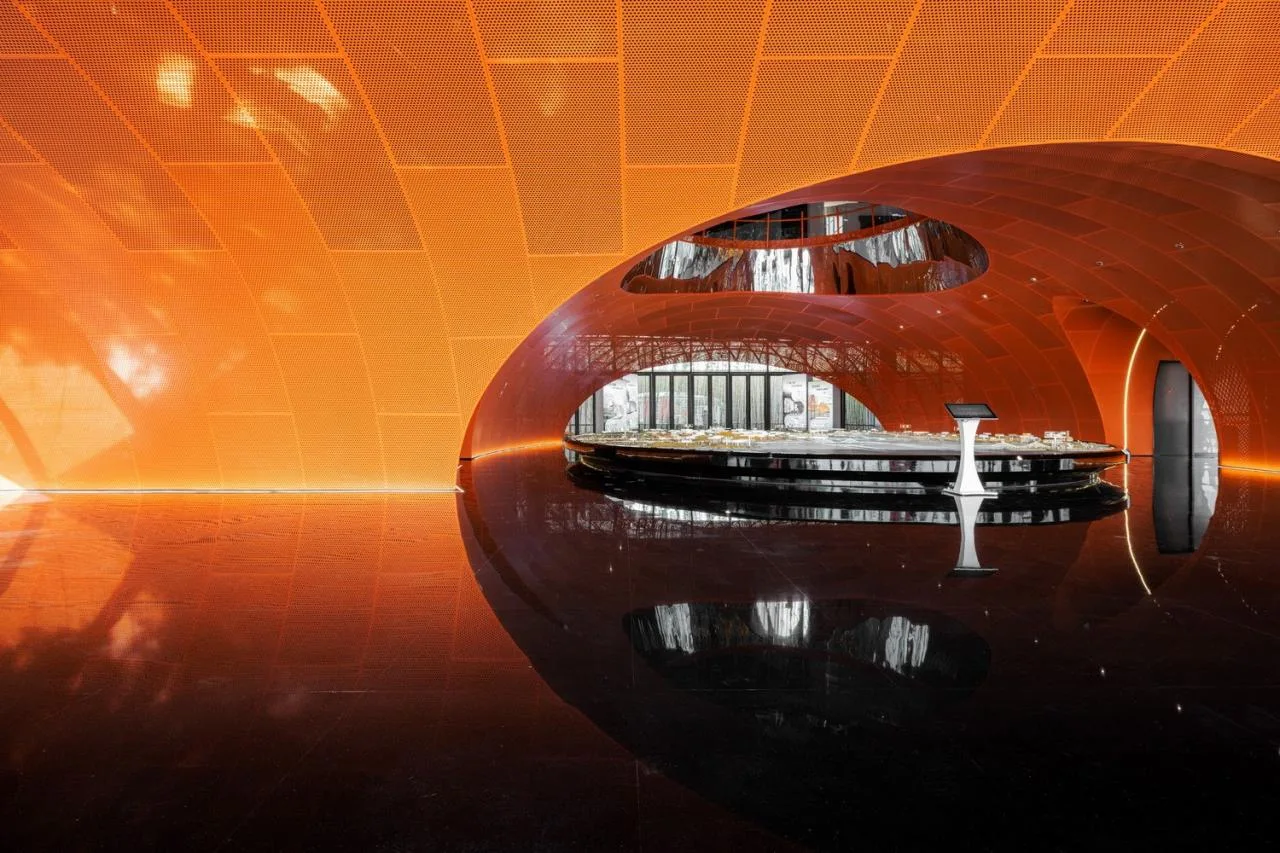
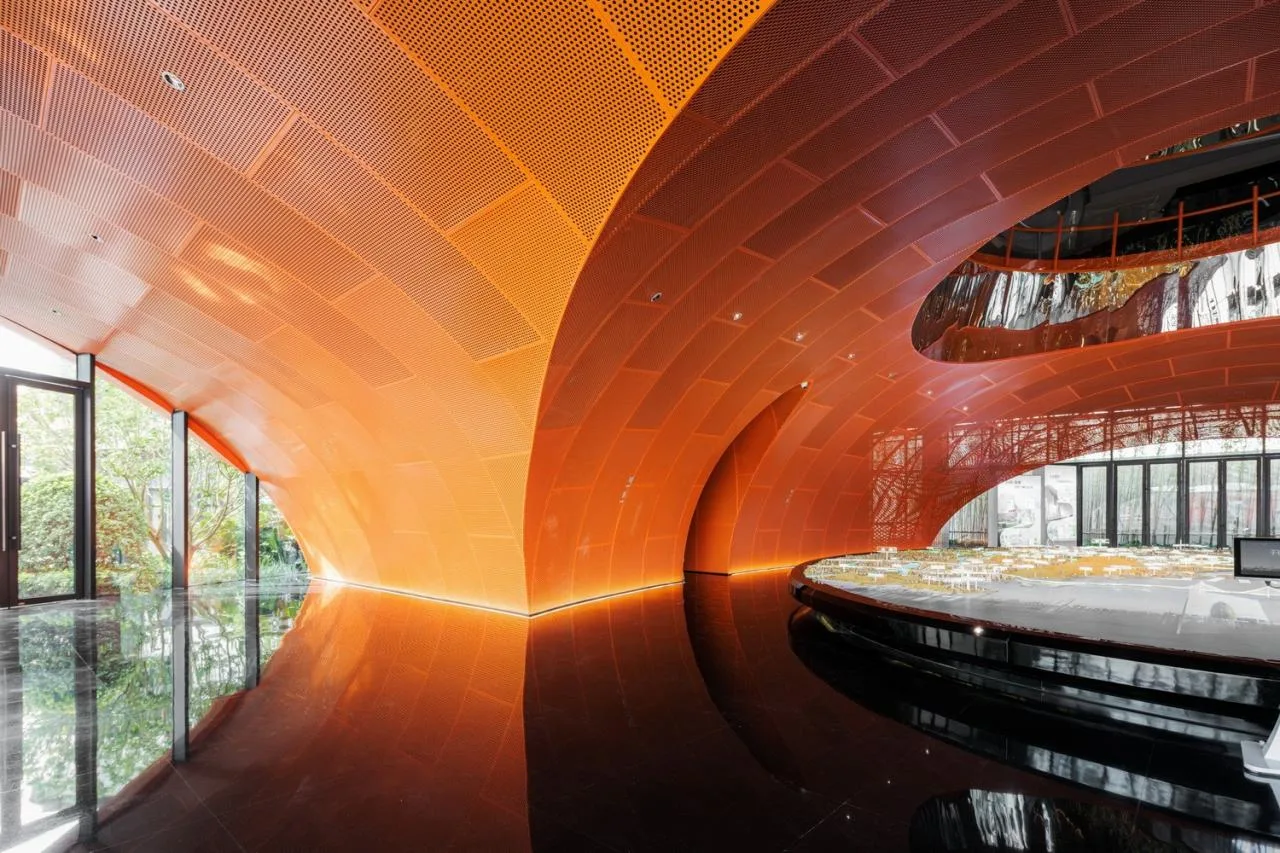
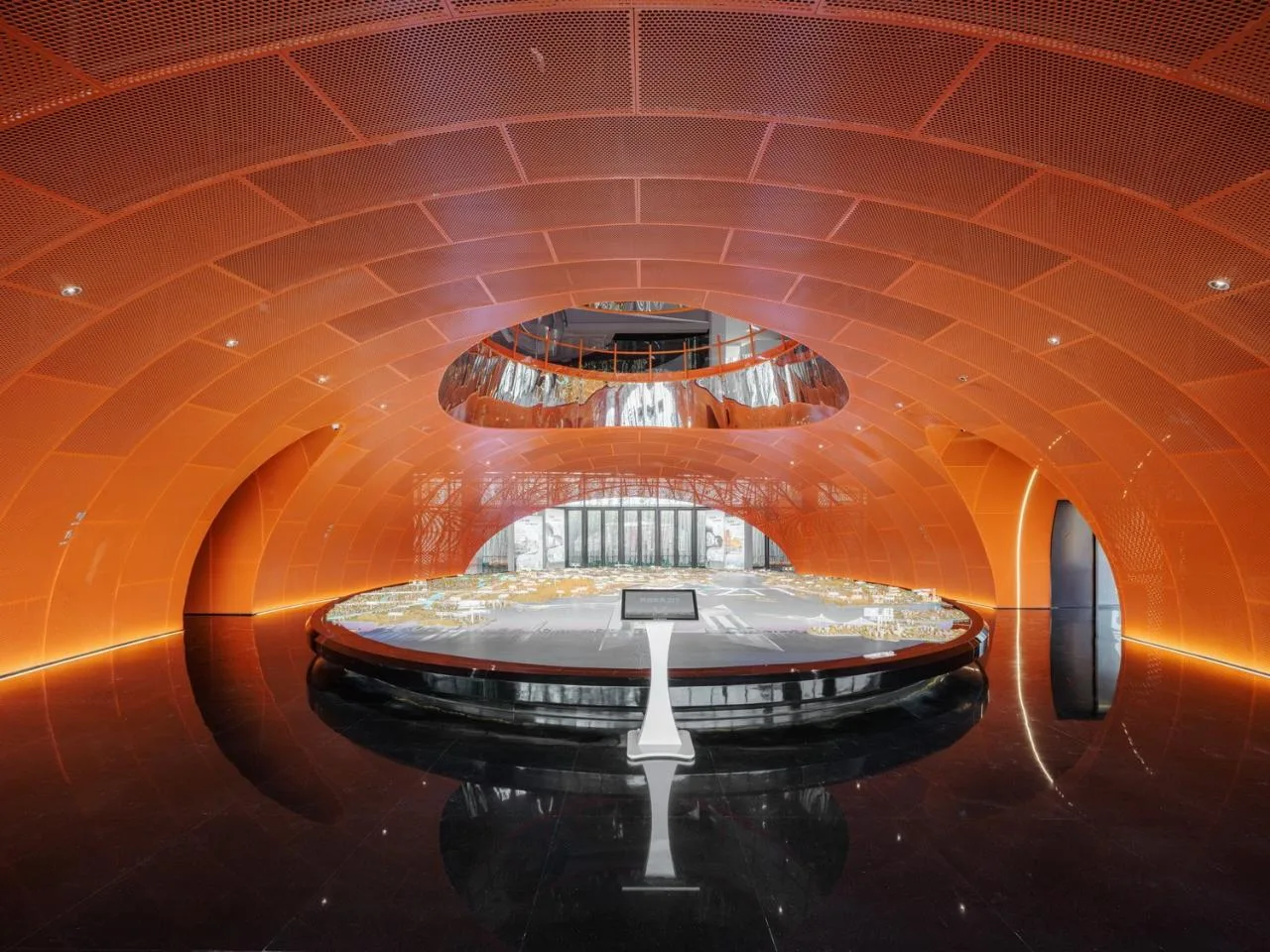
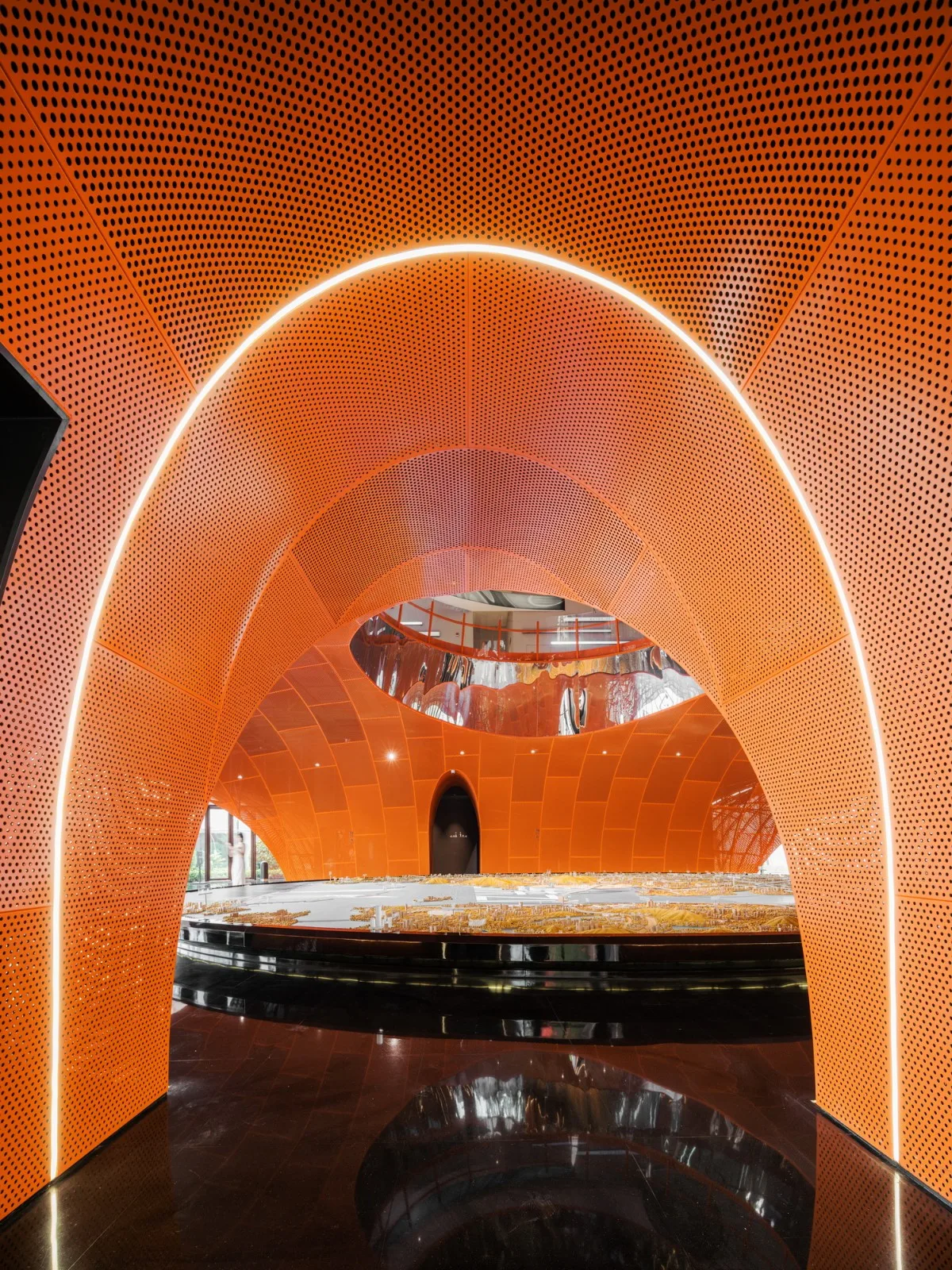
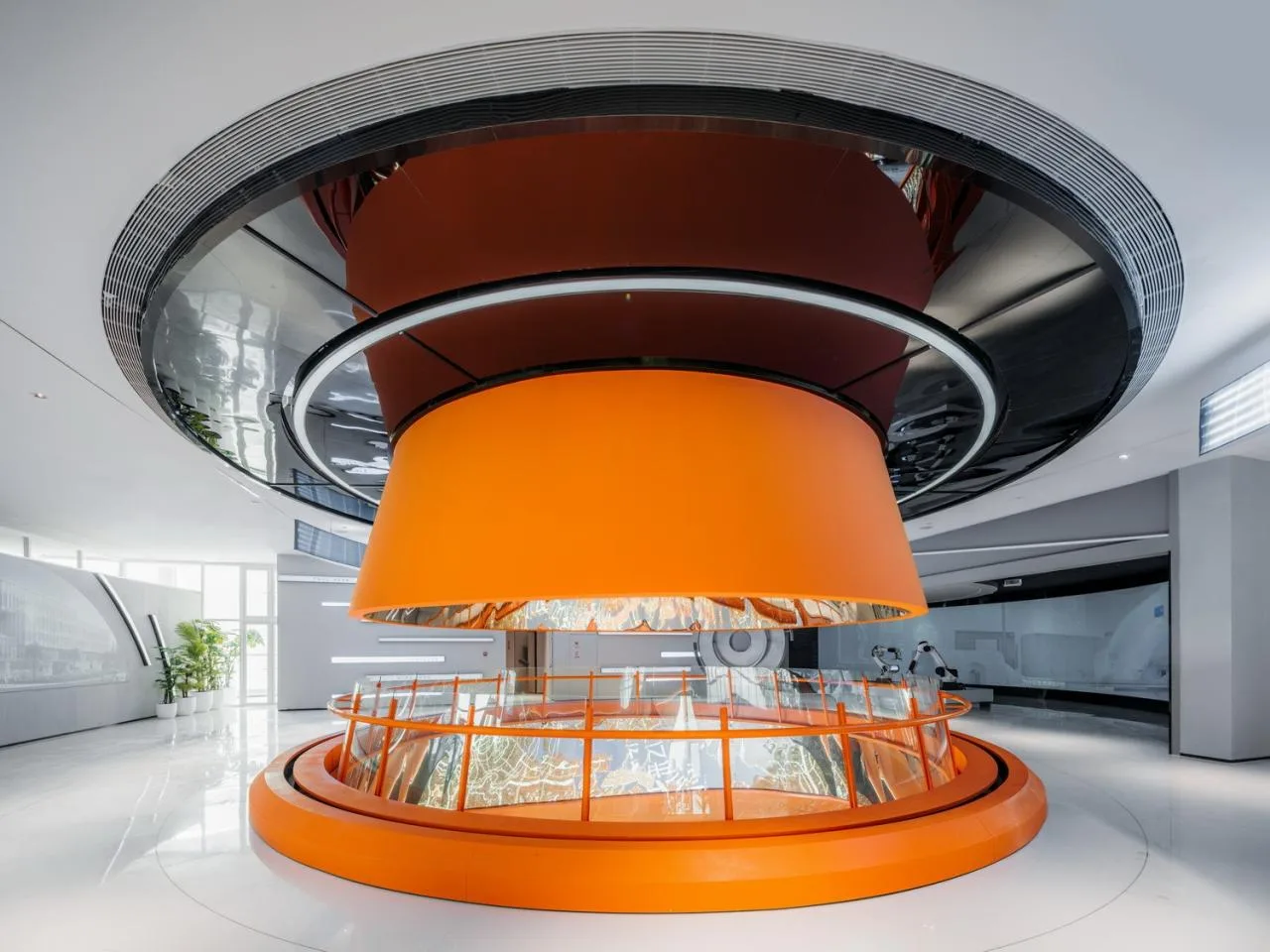
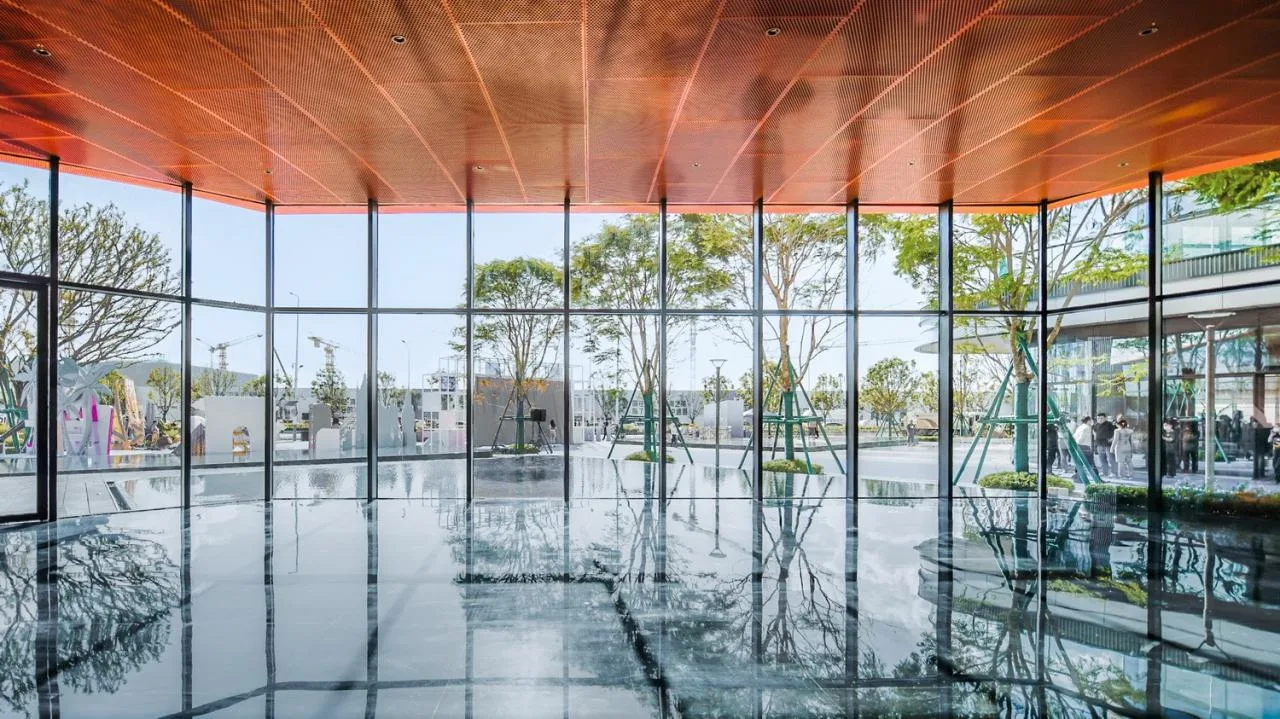
The first floor demands openness and transparency. It resembles a continuously hollowed mountain with an indoor continuous arch. The orange-red perforated aluminum panels curve from the façade into the interior, wrapping the core tube and providing the space with a sense of extraversion. This envelops the area in a unified whole, separated from the exterior by a thin all-glass curtain wall acting as the climate barrier.
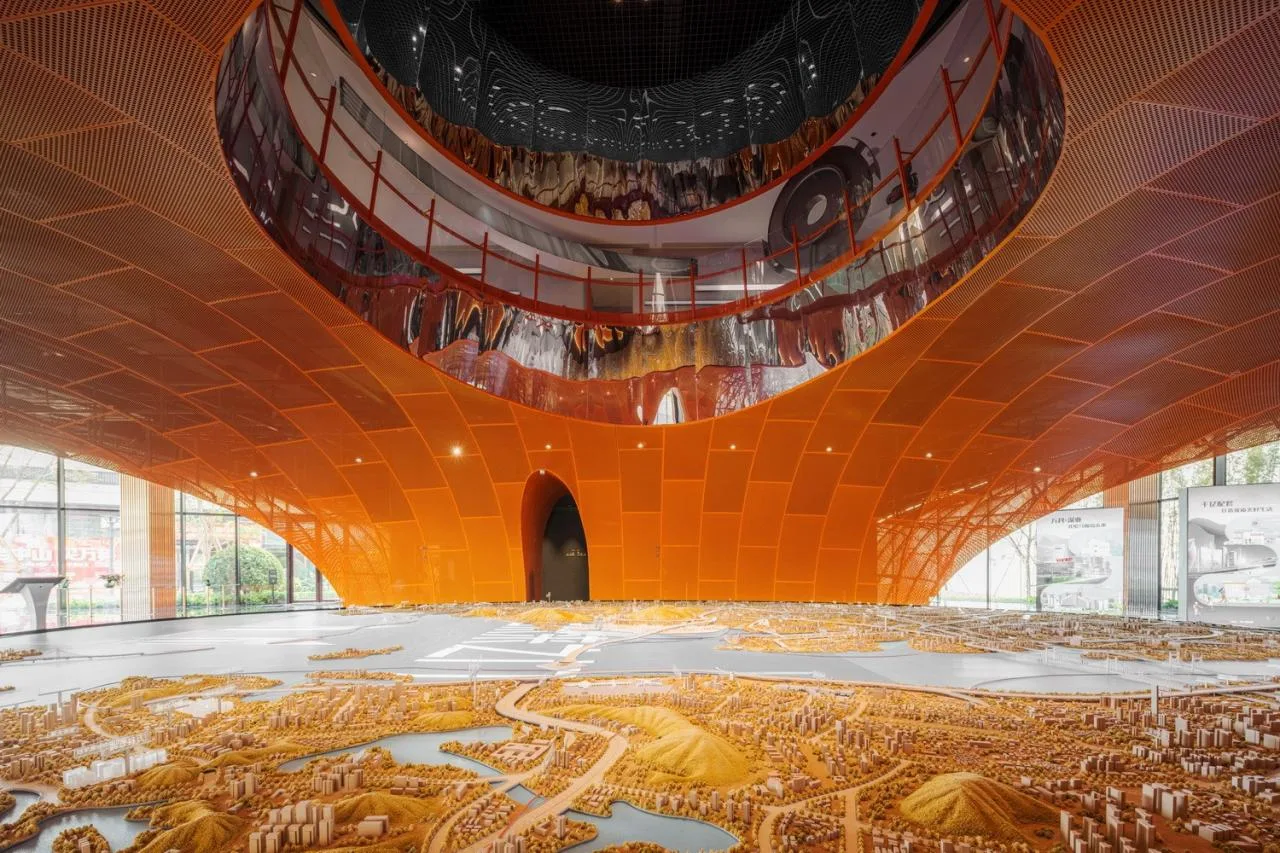
The perforated panels vary in aperture size to accommodate HVAC and smoke exhaust requirements, creating a clean, continuous wall and ceiling surface. Centrally located on the first floor, the orange paneling wraps a ceremonial core space housing the exhibition hall’s centerpiece: a nearly 15-meter-long sand table model of the Greater Bay Area.
Light cascades from the second-floor roof through a mirrored stainless steel-wrapped courtyard, illuminating the sand table with a subtle, almost sacred glow, enhancing the commercial narrative’s solemnity.
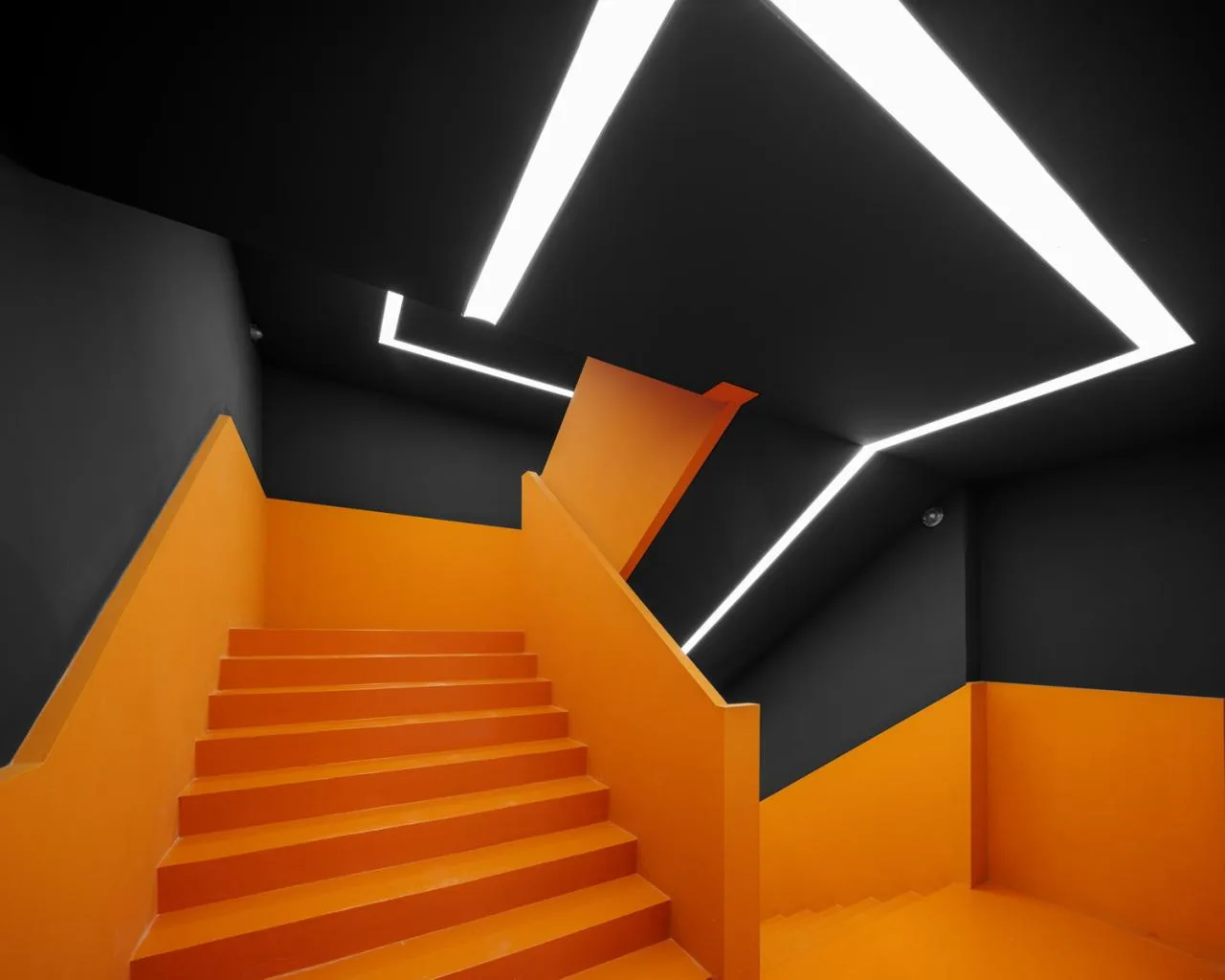
The orange cave-like space extends to the first-floor elevator lobby and stairwell. Upon reaching the second floor, visitors encounter a contrasting white, ethereal village housing conference, reception, and exhibition spaces. The dramatic intensity of the lower level gives way to calm, focused expression.
At the Mountaintop
“O, mind, mind has mountains.”
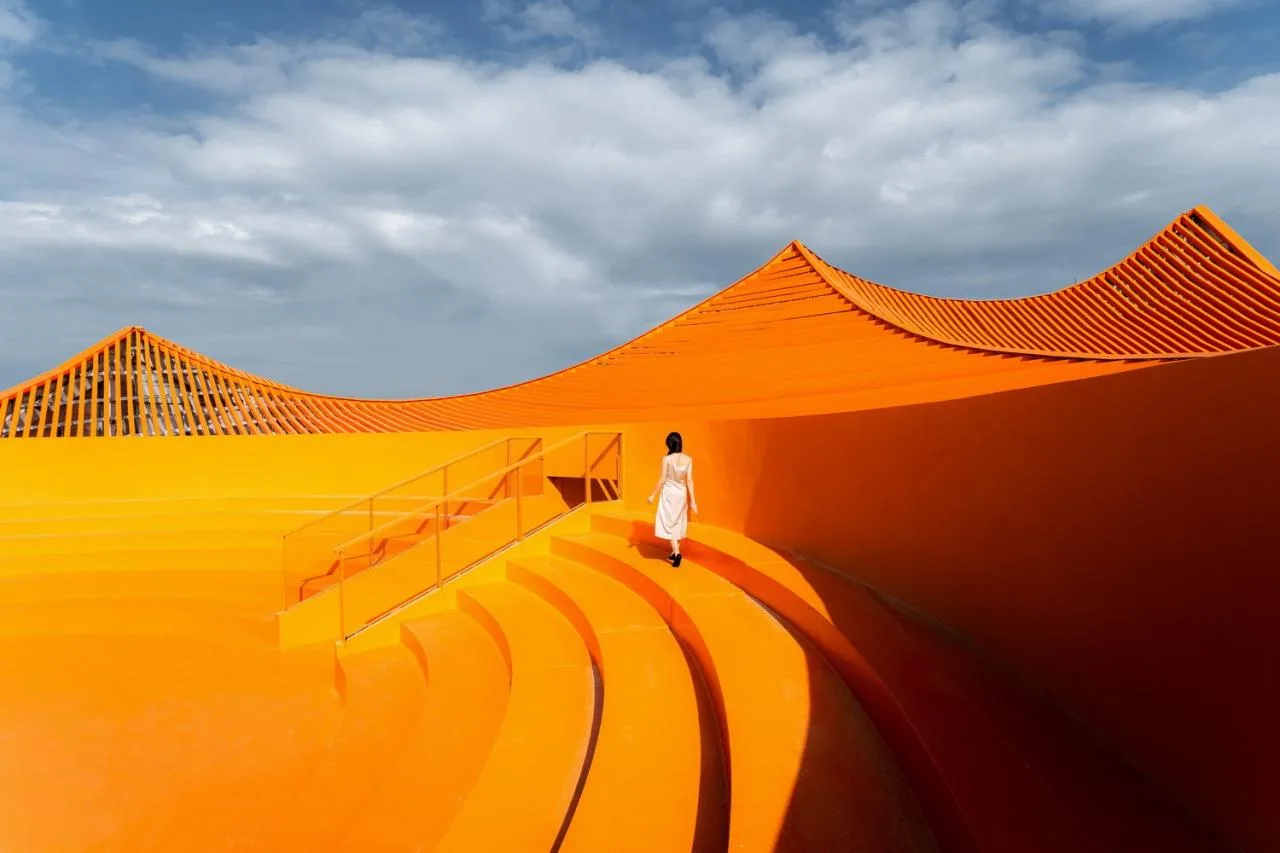
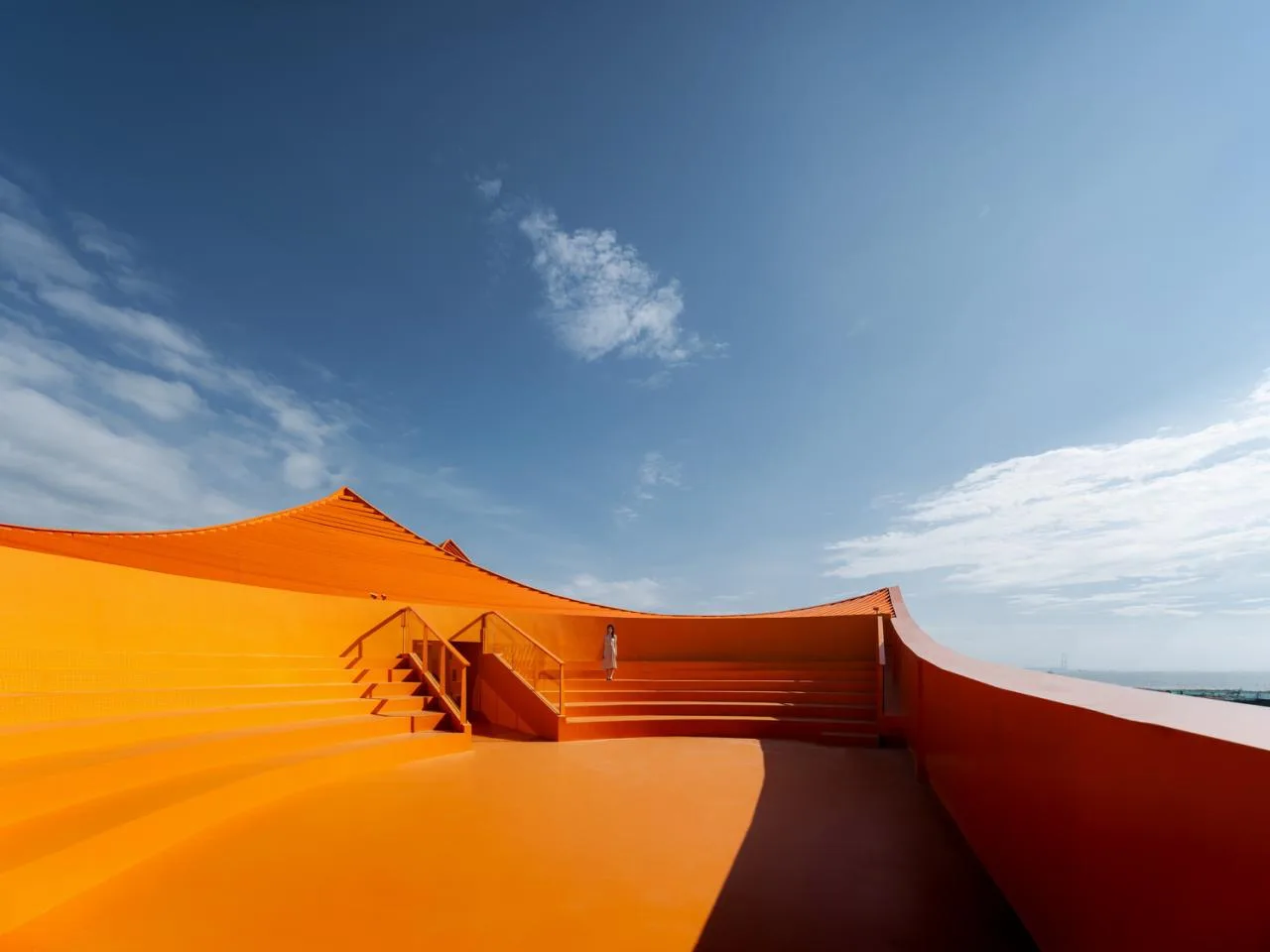
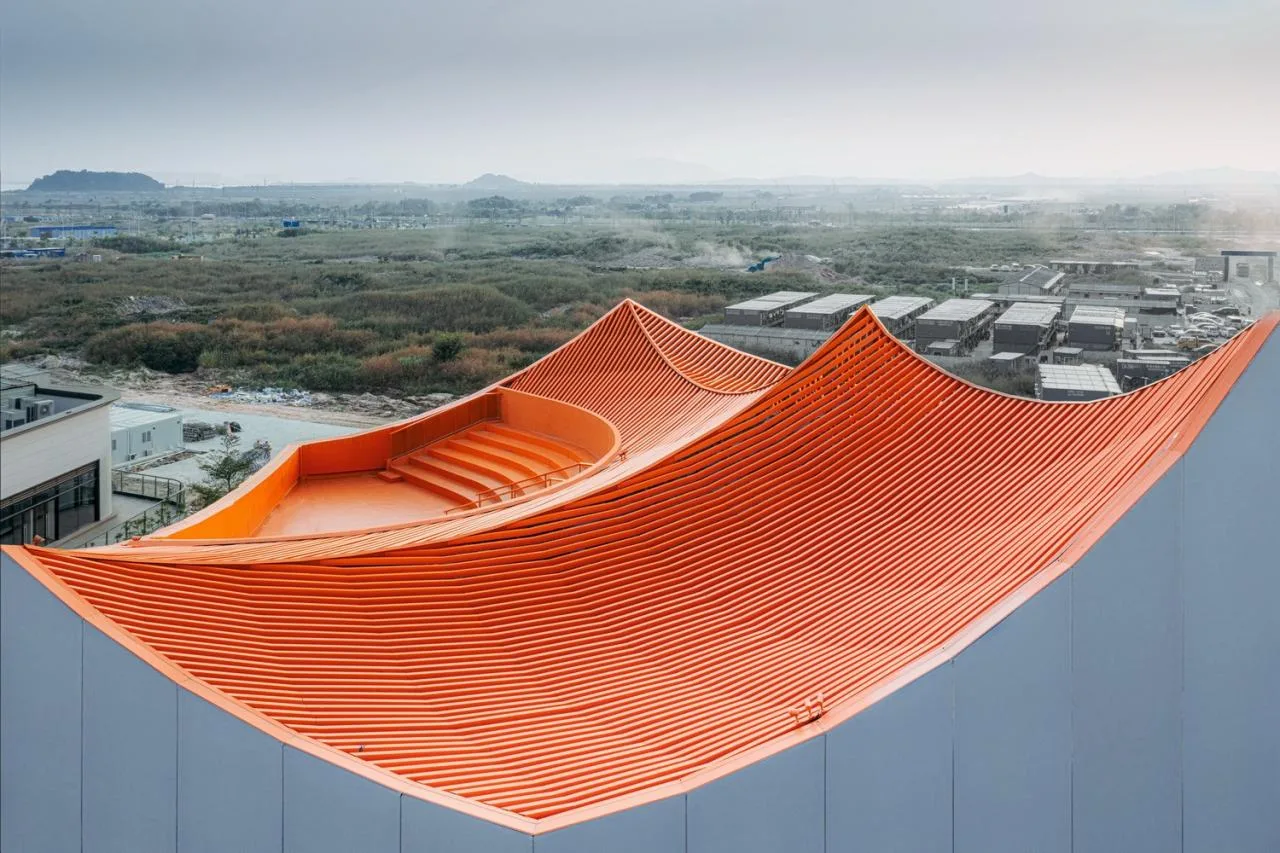
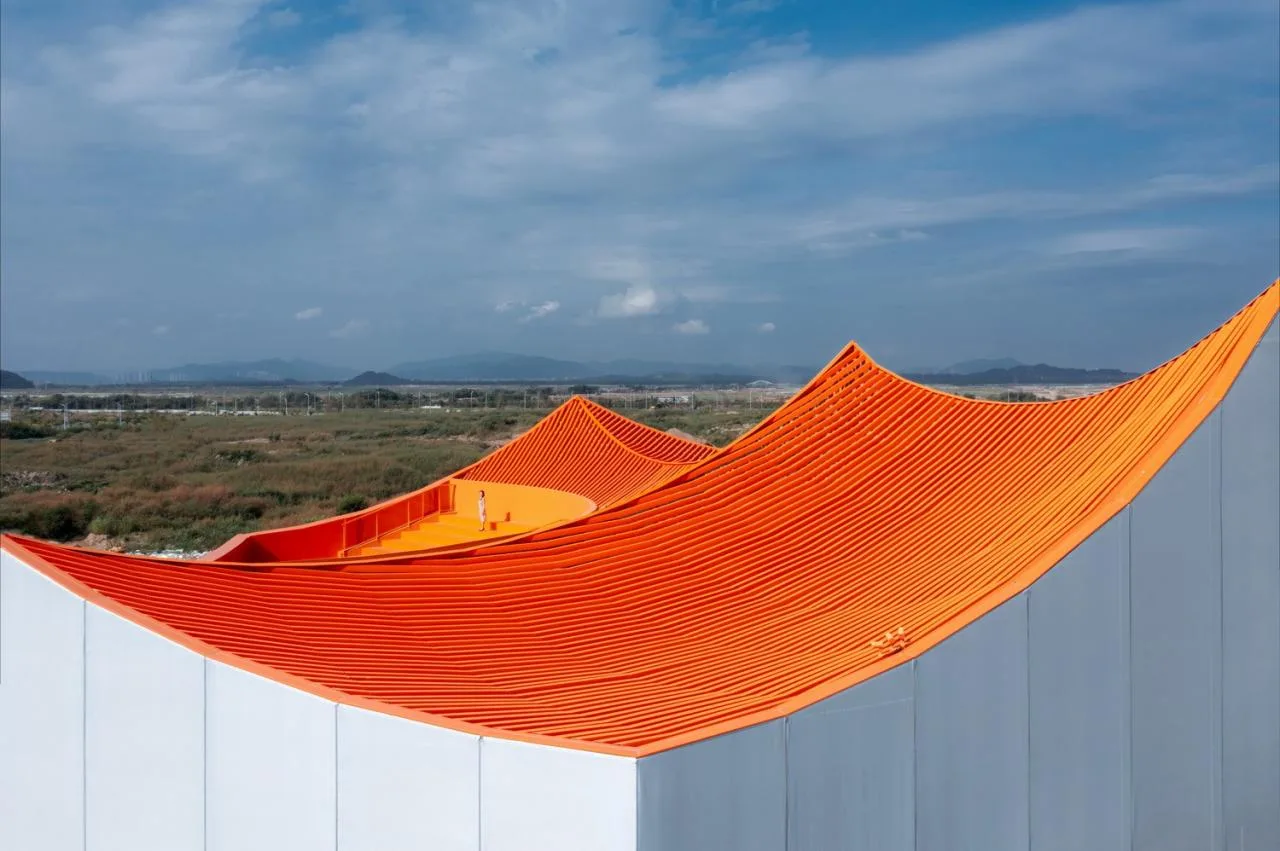
The rooftop’s outdoor air conditioning units and smoke exhaust room are concealed behind orange-red aluminum grilles shaped in the mountain’s undulating form. Achieving this detail marks a milestone for any architect, yet for me, it’s just the beginning.
I insisted on carving out a mountaintop open-air theater on the limited rooftop space — a human theater intended to capture fleeting moments through patient observation. I imagine standing atop this red mountain, seeing my reflection bathed in red light. From here, I behold green mountains and clear seas, with desire beneath my feet, and the rapid growth of surrounding concrete, steel, and glass forests.
Those immersed in the Generic City’s daily grind may feel a quiet resistance. Only courage and imagination can withstand the relentless passage of time.
Though life is challenging, I stand breathless, barefoot atop this anti-Generic City Red Mountain — at once real and surreal.
When I was young, I struggled to climb Mount Taishan, trembling through the night, only to witness the sunrise slowly emerge, a moment forever etched in memory. Fear, cowardice, humility, and decay can be transformed into grandeur and nobility. That moment guides me toward my true nature.
“Those who climb to the top of the mountain are half in love with themselves, and half in love with self-destruction.” — Robert Macfarlane, Heart to the Mountains
Project Drawings
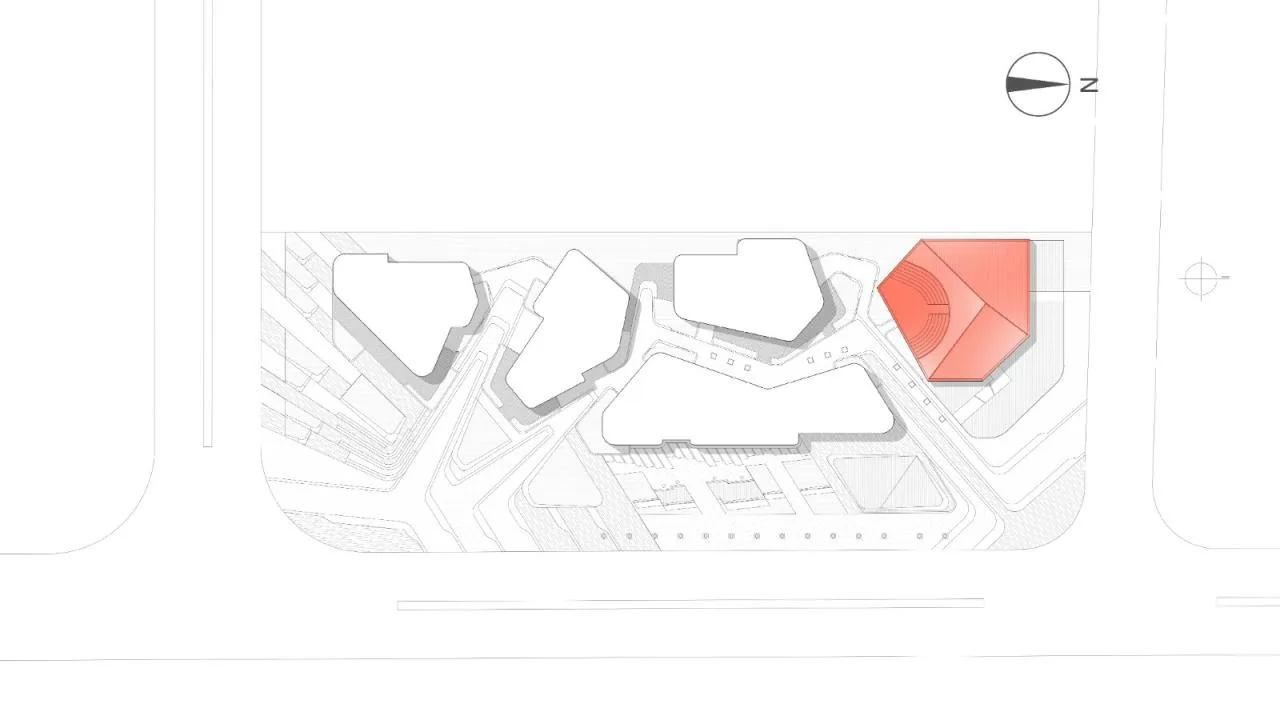
△ General Layout Plan
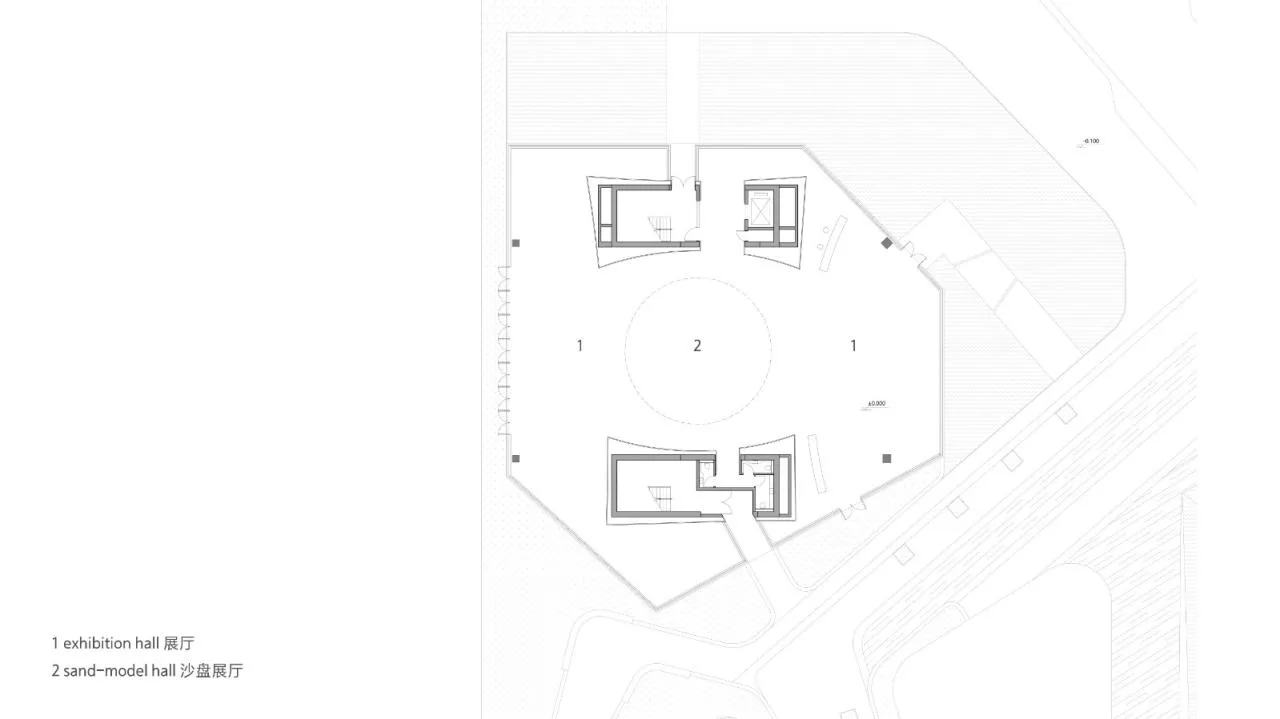
△ First Floor Plan
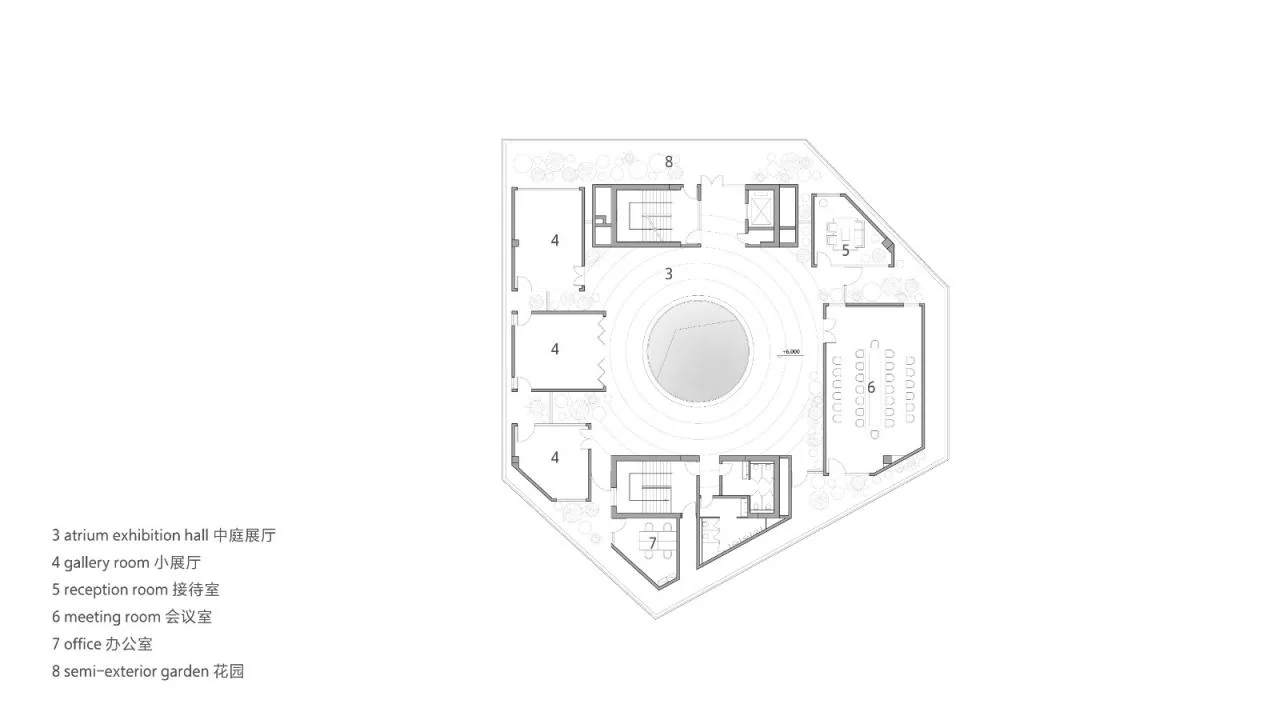
△ Second Floor Plan
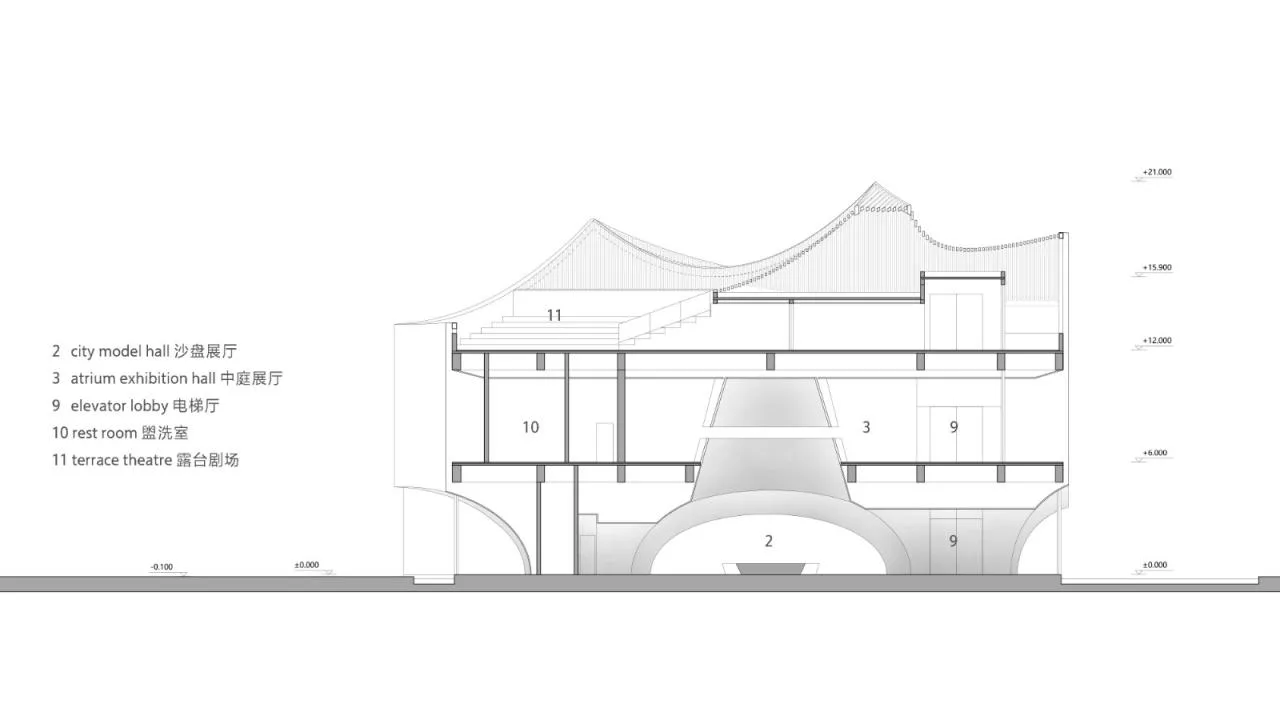
△ Section Diagram
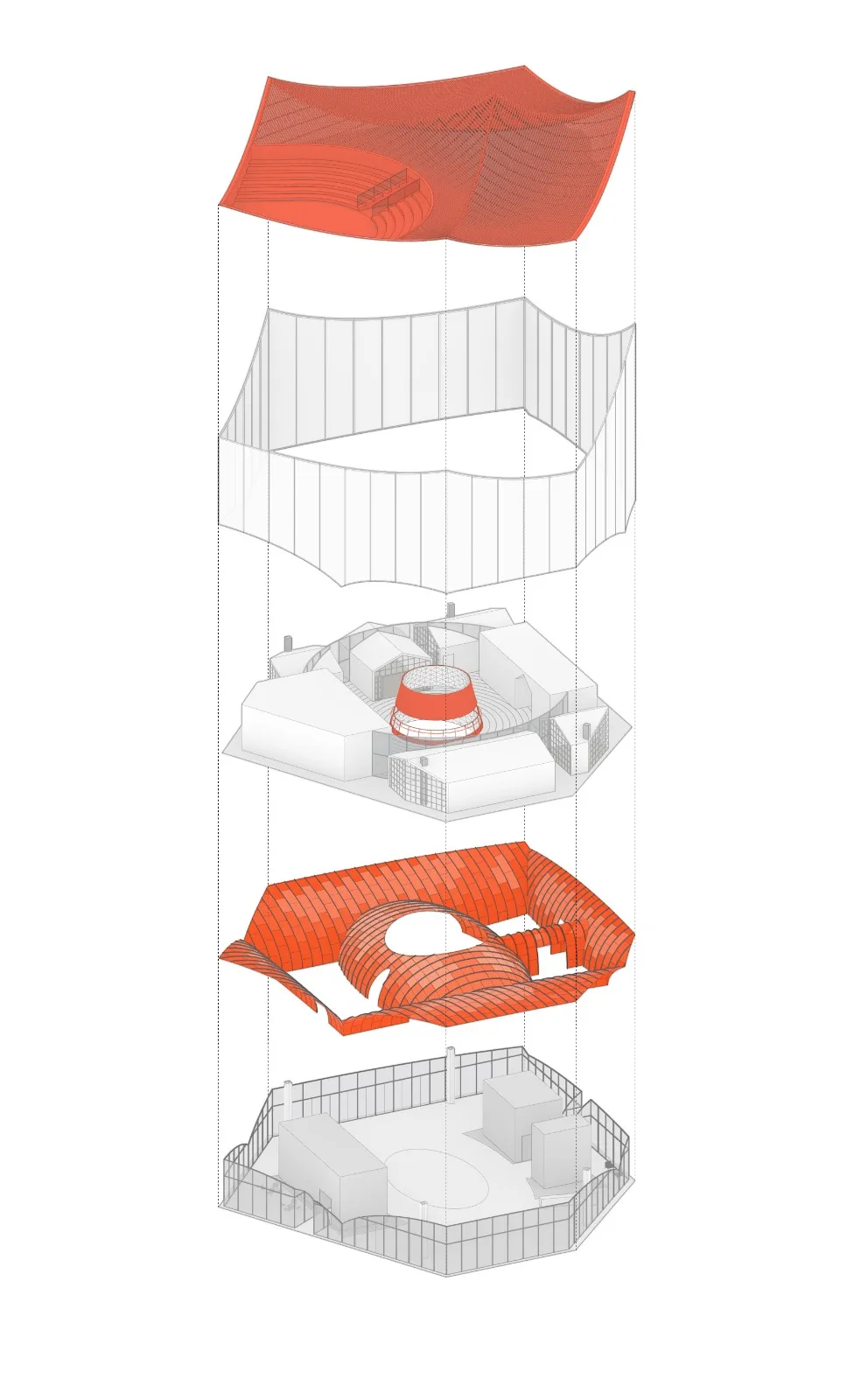
△ Exploded Diagram
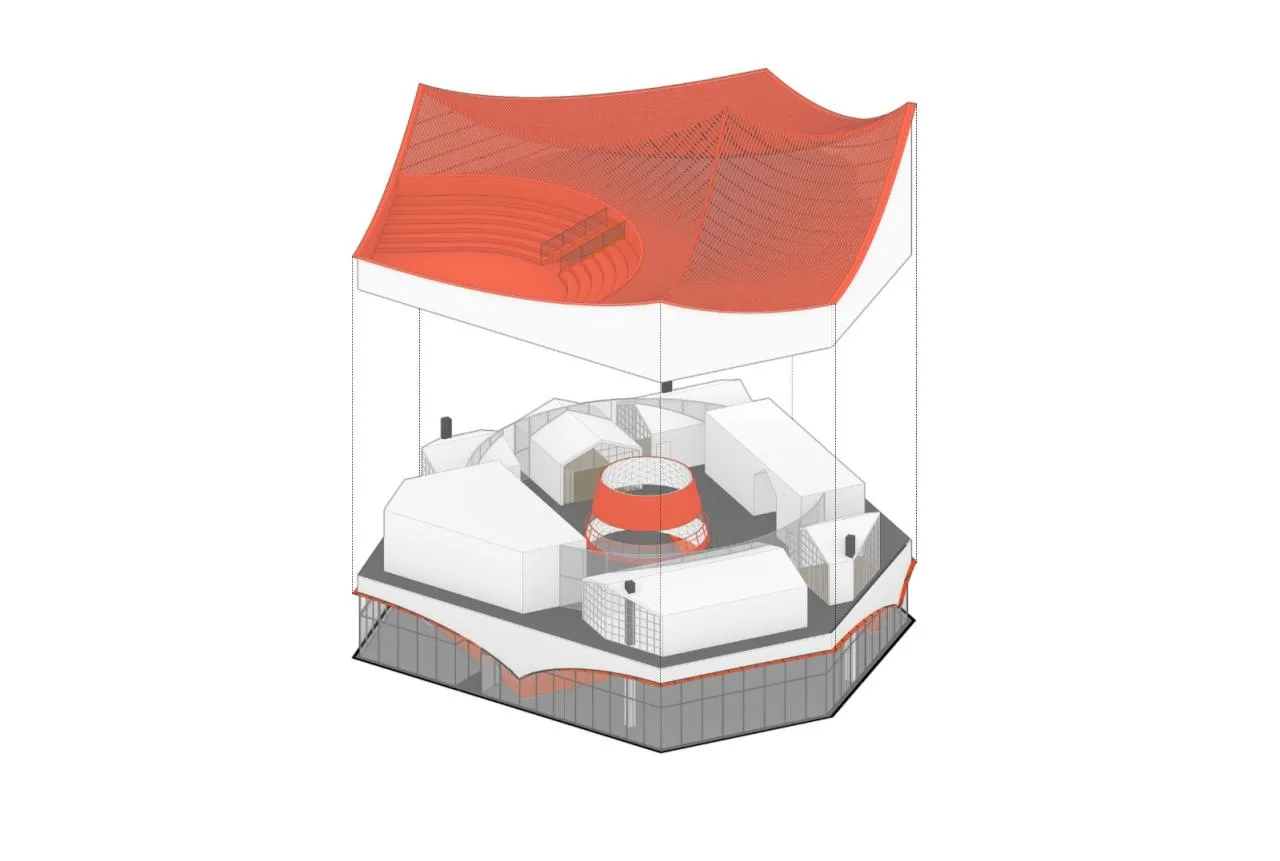
△ Analysis Chart
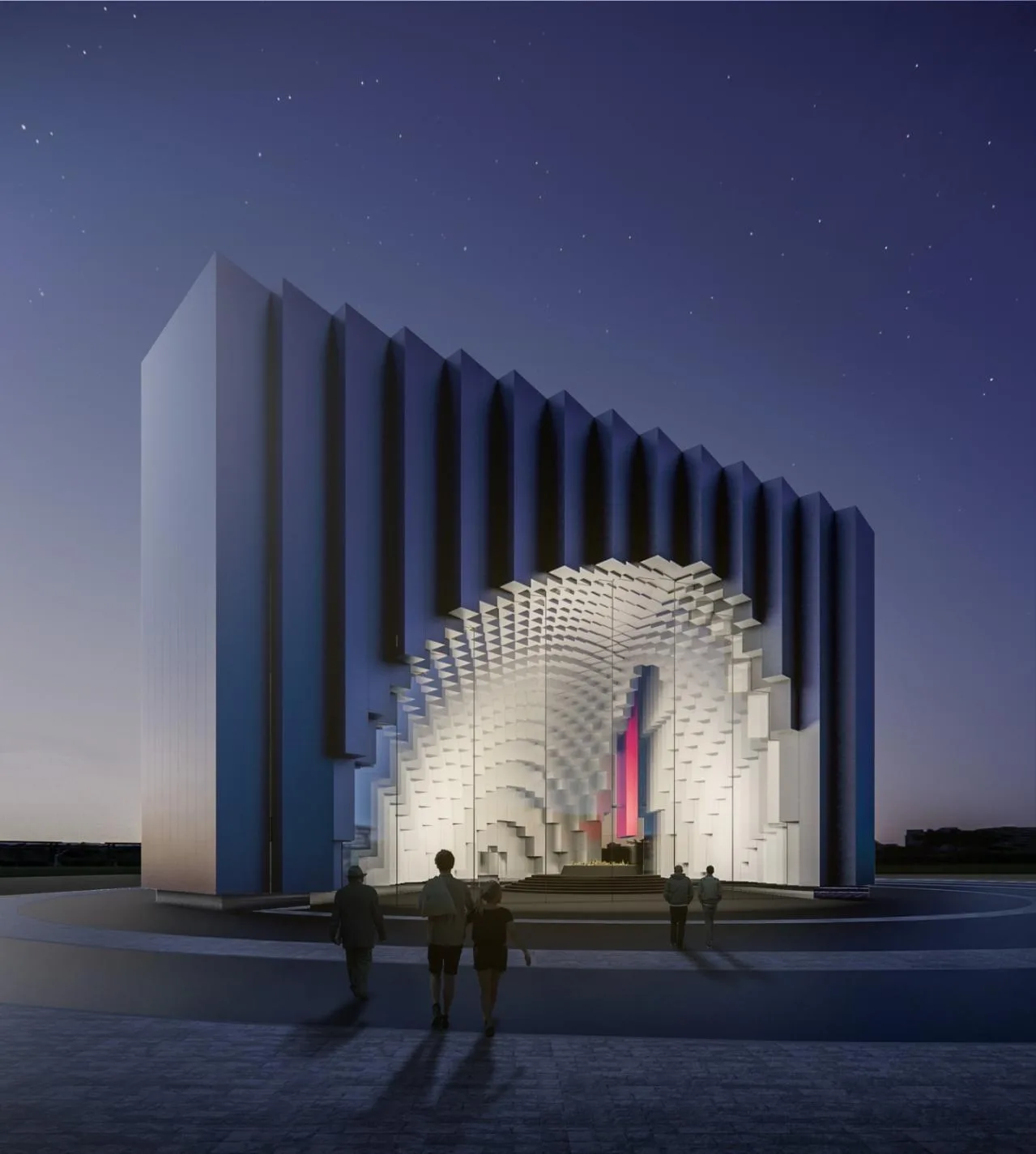
△ BDO First Round Conceptual Plan
Project Information
Project Name: Hovering Kan Too – Greater Bay Area Central Exhibition Hall
Project Location: Ma’andao, Cuiheng New District, Zhongshan City
Principal: Zhongshan Shenye Wansheng Investment Co., Ltd
Construction Area: 1,800 square meters
Materials: Steel, aluminum panels, concrete, PTFE film, perforated aluminum panels, terrazzo, and more
Design Period: November 2021 – May 2022
Construction Period: March 2022 – July 2022
Design Firms: Wutopia Lab, ArchUnits
Lead Architect: Yu Ting
Project Manager: Dai Xinyang
Project Architect: Zhang Shuojiong
Design Team: Guo Peijian, Shi Jieyu, Ni Chenhao
Architectural Construction Drawing Design: Huayang International
Design Team: Zhang Wei, Zhao Weiguo, Liu Jin (water supply & drainage), Li Na (HVAC), Liang Wenfeng (electrical)
Curtain Wall Deepening Design: Earth Curtain Wall
Design Team: Wang Gravity, Li Jinlong, Wang Shuai
Interior Construction Drawing Design: G.ART Design
Design Team: Li Wei, Yuan Junlong, Xue Chao, Gao Dongwei, Tan Jiabin, Zhang Hongru, Wang Rui, Zhang Gongbo, He Qing, Wang Shouheng, Zhou Fengfu
Soft Decoration Design: G.ART Collection Ai Design
Design Team: Liang Qian, Zheng Yawen, Huake, Chen Yiwen, Cheng Rangrang
Lighting Consultants: Zhang Chenlu, Wei Shiyu, Liu Xueyi
Architects of Party A: Ma Pingcheng, Yao Chong, Lin Haitao
Photography: CreatAR Images














Must log in before commenting!
Sign Up