
© Existence of Architecture – Architectural Photography
What truly defines the countryside, and what is its potential?
When modern architecture enters traditional rural settings, bold forms spark connections and contrasts, while simple volumes preserve the unchanged essence of the landscape.
Project Background
This project is situated in Ciyun Town, Jiangjin District, Chongqing—a typical hilly rural region in southwest China, approximately 15 minutes by car from Jiangxiaobai Distillery. It serves as a raw material cultivation base for the distillery and acts as a vital link integrating primary, secondary, and tertiary industries within the liquor group.
Project Concept
The Country Club that Unleashes Nature
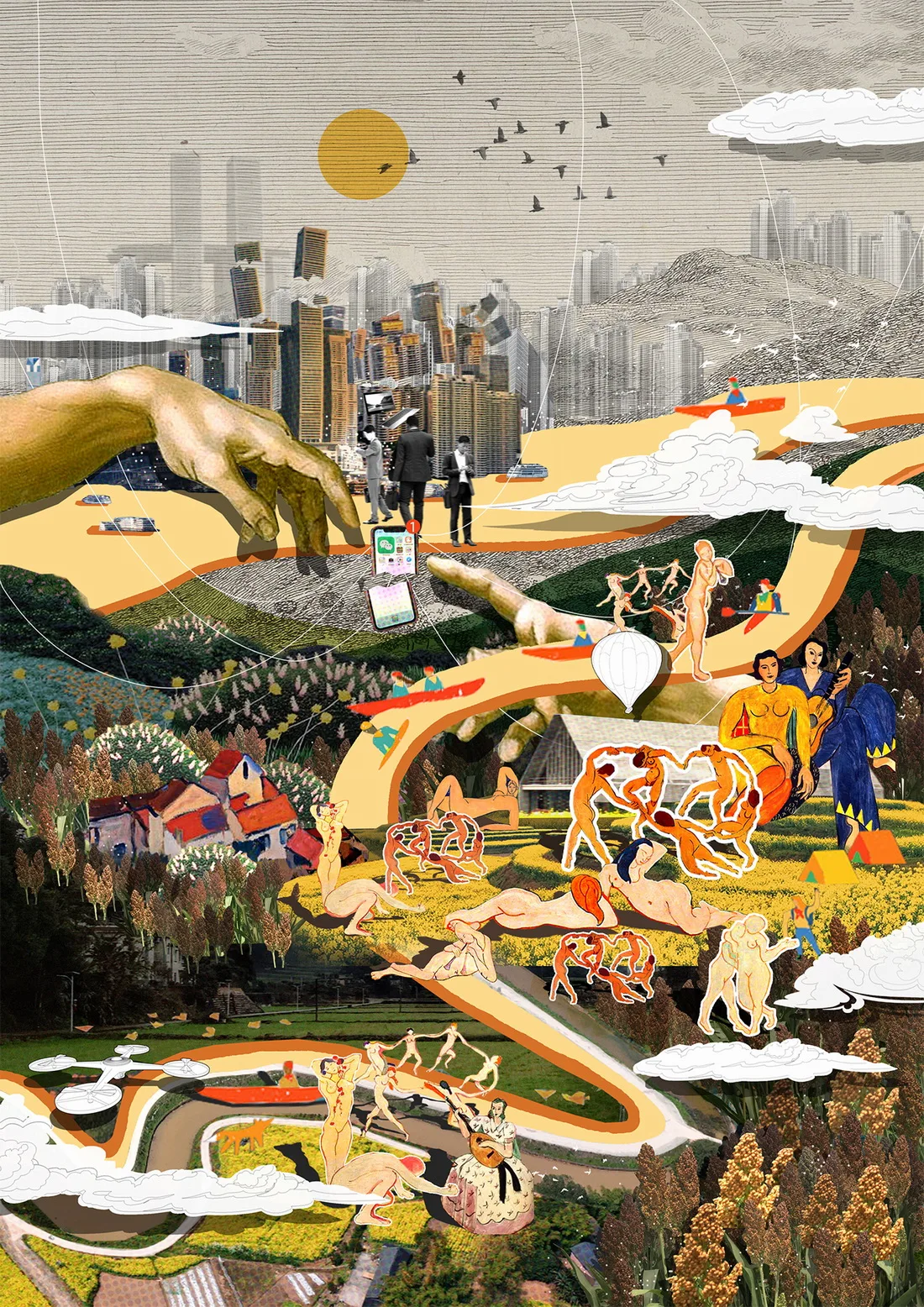
Given Jiang Xiaobai’s brand identity, its audience mainly includes urban trendsetters whose interests increasingly lean toward rural experiences. Employing modern design techniques, the project aims to breathe new life into an old environment, crafting a contemporary rural experience distinct from both urban life and traditional rural tourism. It explores fresh possibilities for contemporary rural development.
The goal is to encourage visitors not only to change their external surroundings but also to transform their inner mindset—reconnecting physically and emotionally with nature, unleashing their natural selves, and embracing happiness.
© Wu Yue / No architectural design firm identified
Overall Layout
Jumping Island Village
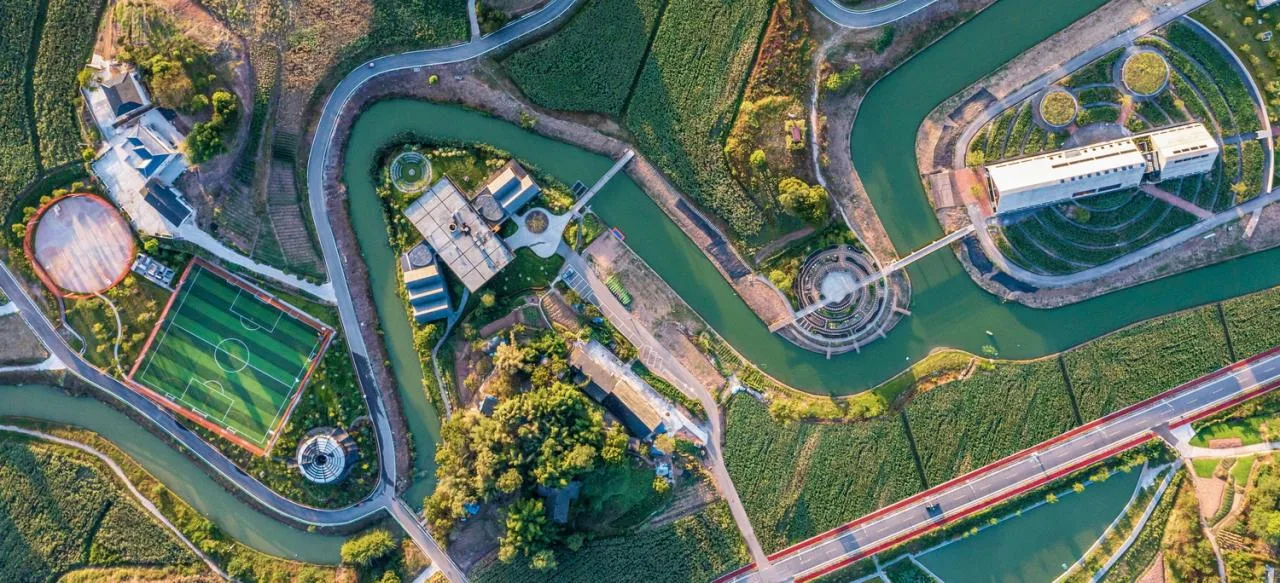
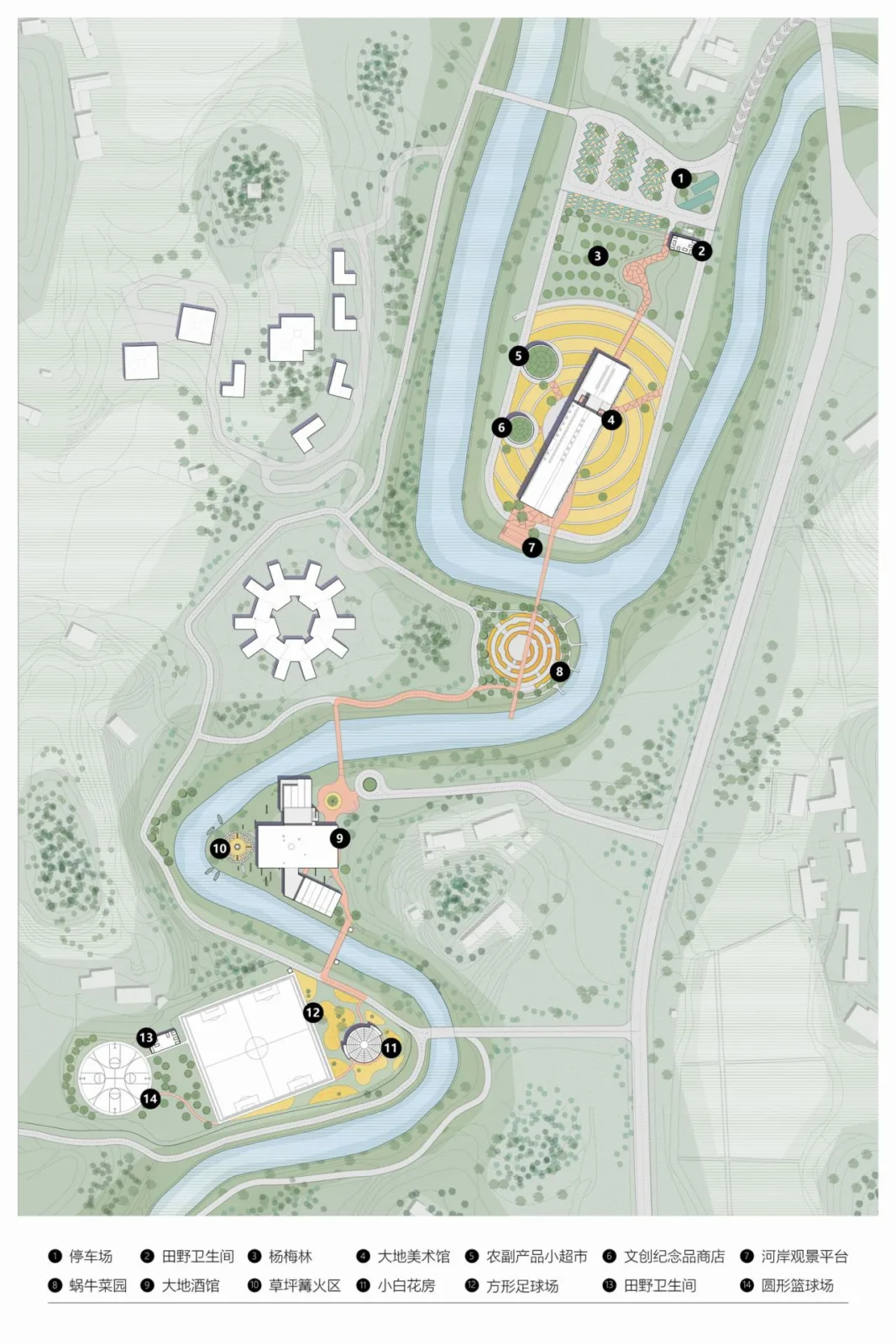
A small stream flows into a main river within the site, surrounded by relatively flat terrain. Several winding peninsulas extend along the water system. The design distributes buildings and functional areas across these peninsulas, adopting a “jumping island” approach to create an engaging experience flow. This strategy enriches the visitor’s journey through varying scenes while preserving the independence and purity of each functional zone.
© Jiang Xiaobai
Master Plan © No architectural design firm identified
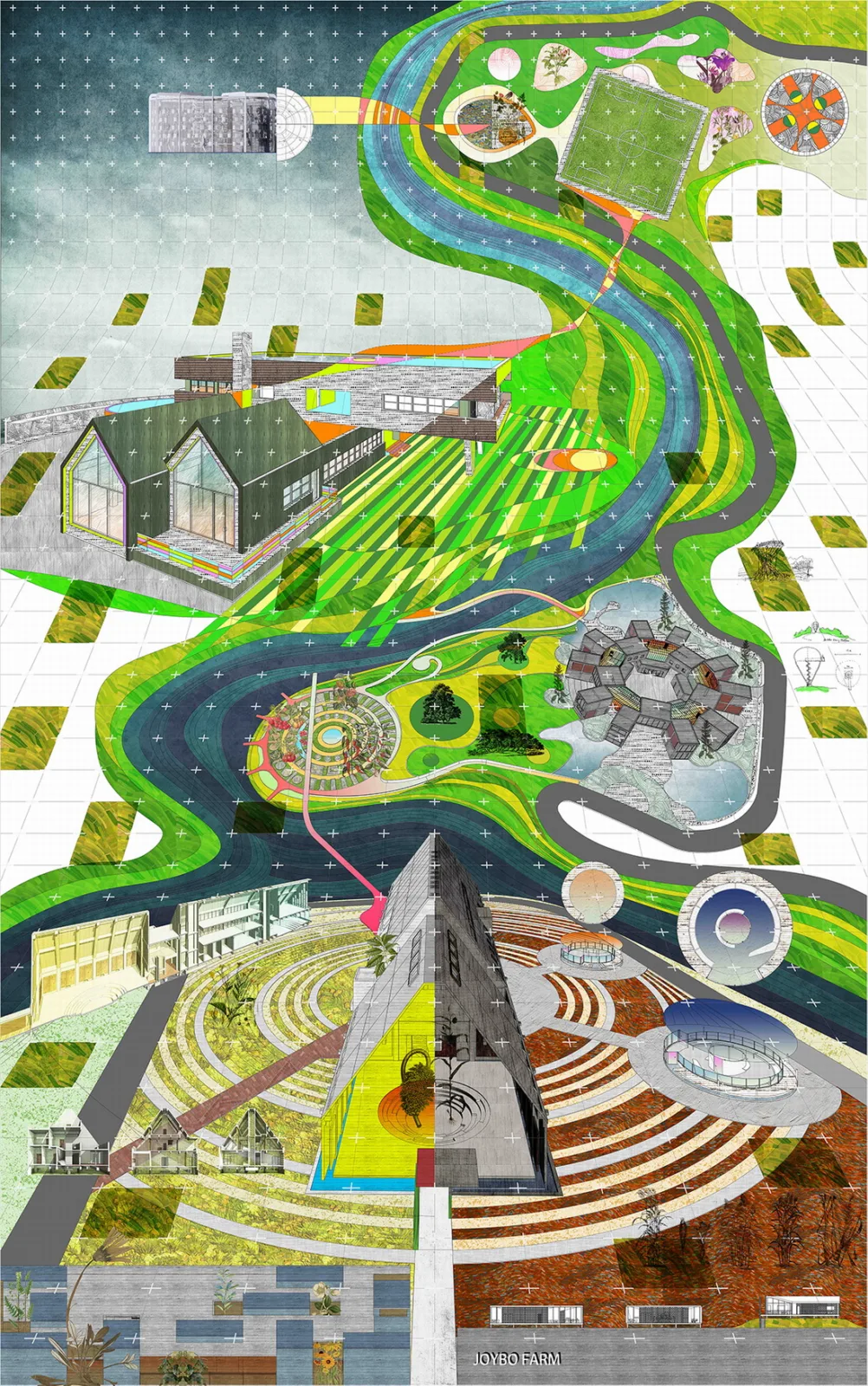
© No architectural design firm identified
Spatial Prototype Based on Site Relationships
Rather than defining what “countryside” should look like, the design focuses on spatial forms best suited to the peninsulas’ site relationships. Using pure geometric spatial language, the architecture echoes the natural surroundings, creating comfortable contrasts, conflicts, and dynamic variations.
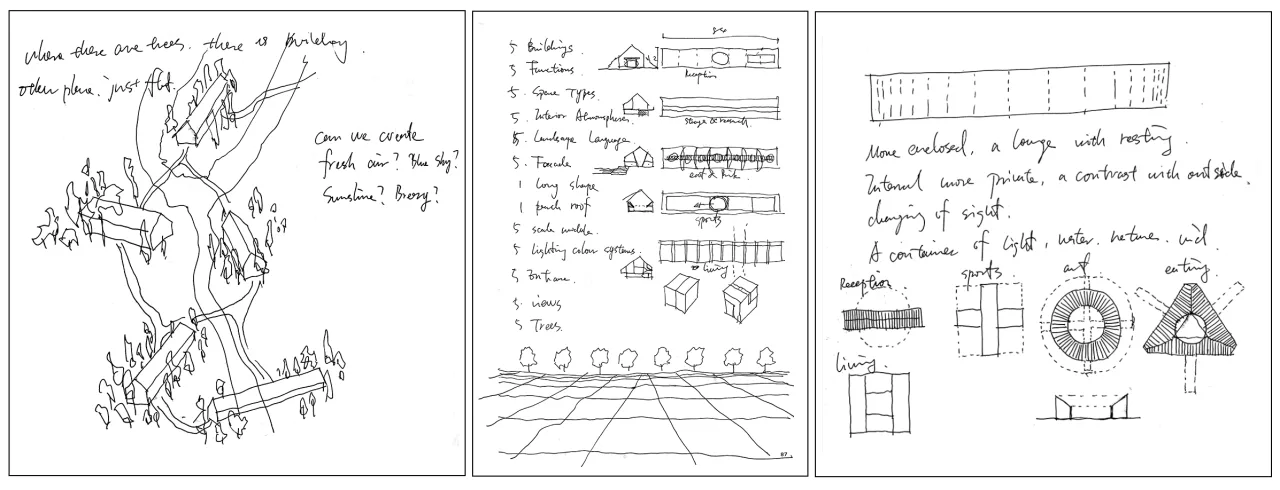
Spatial Form Sketch © No architectural design firm identified
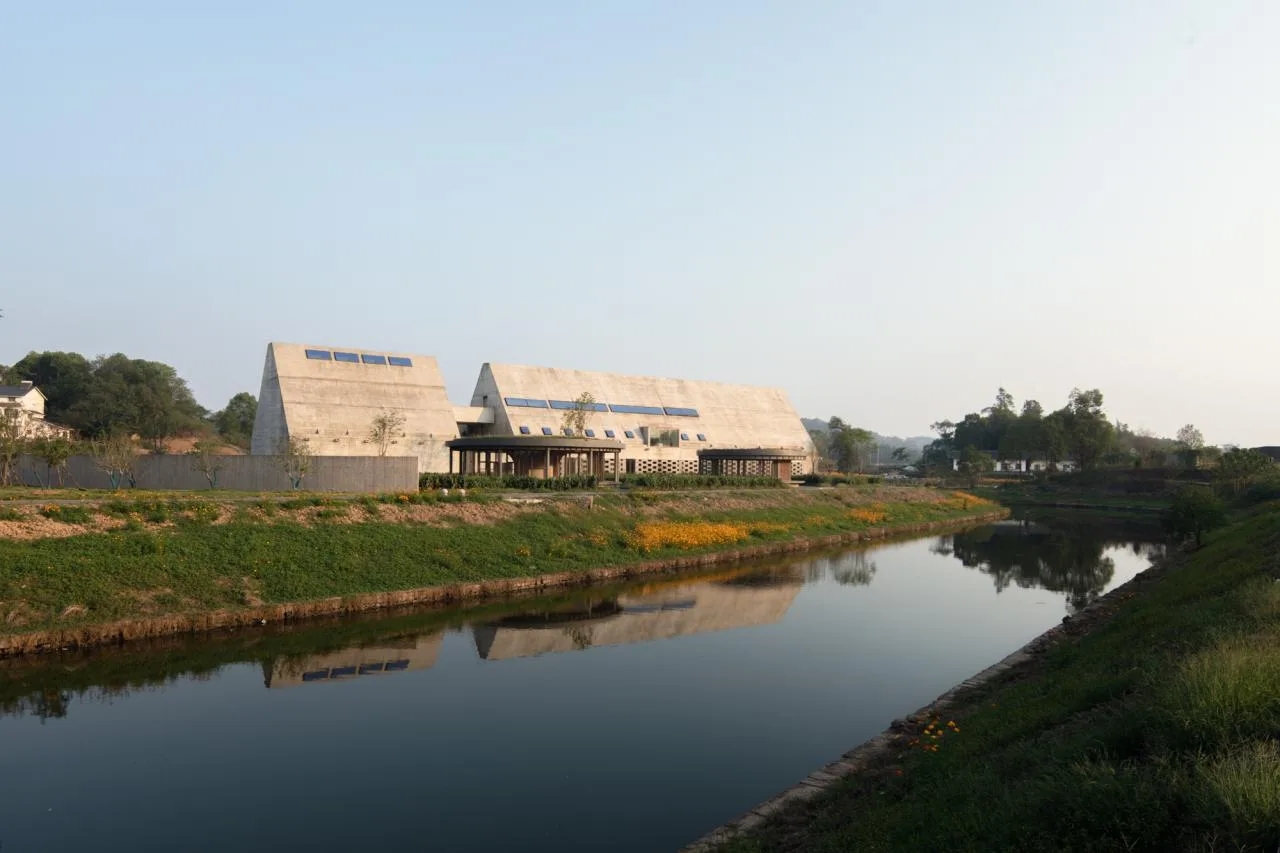
© Existence of Architecture – Architectural Photography
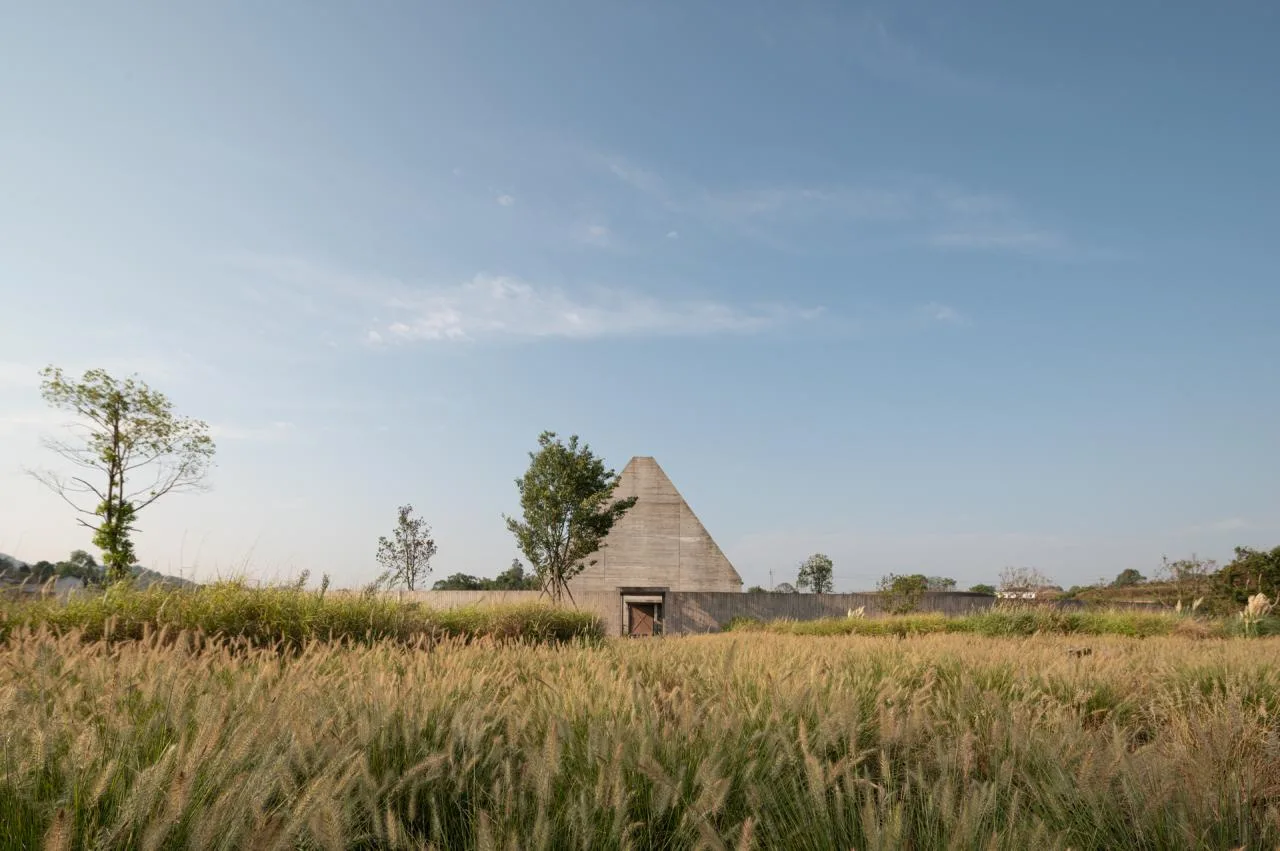
© Yan Yu Architectural Space Photography
Detailed Design Elements
Entrance Parking Lot
© Yan Yu Architectural Space Photography
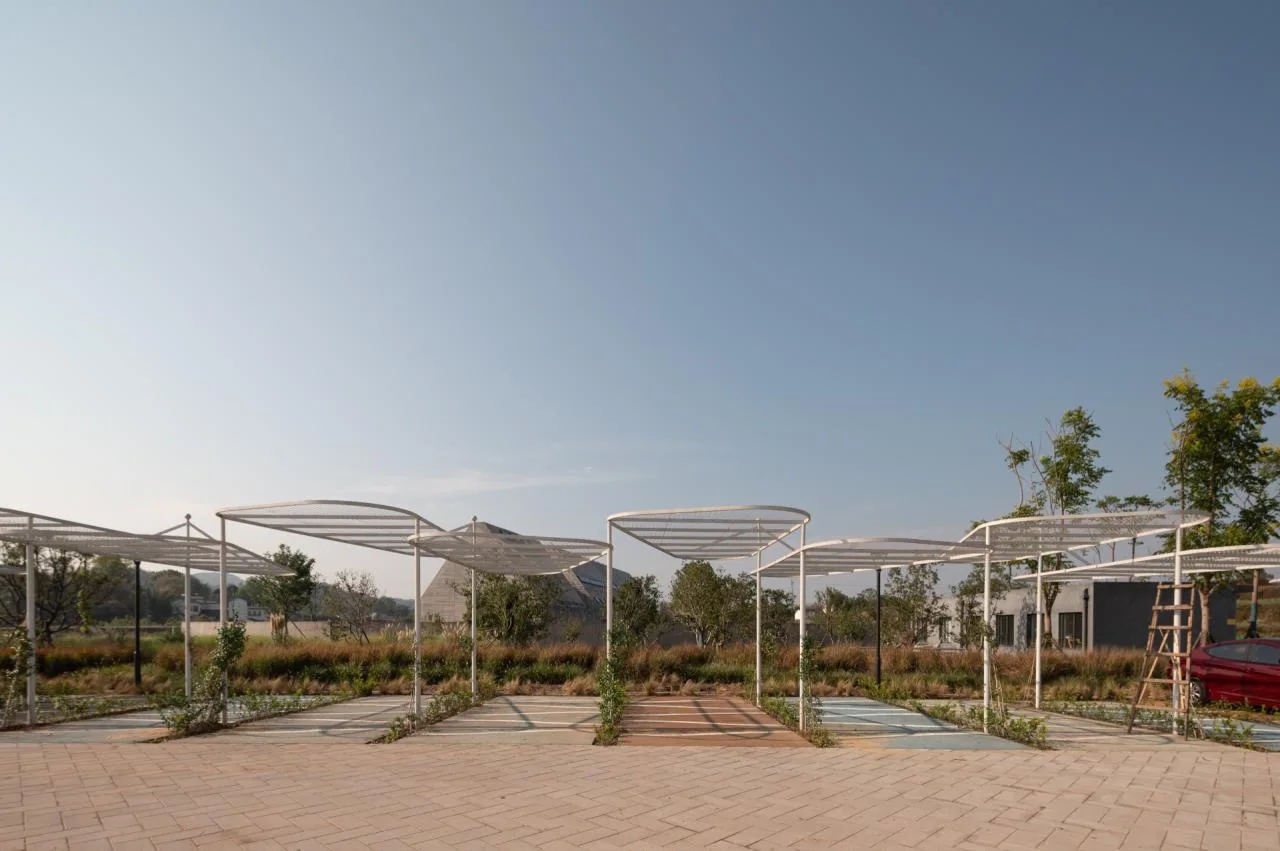
The irregular colored concrete creates a natural, relaxed atmosphere in the parking area. Scattered small trees and white trellises adorned with windmill jasmine enrich the vertical space, infusing a floral scent upon arrival and providing shade during summer.
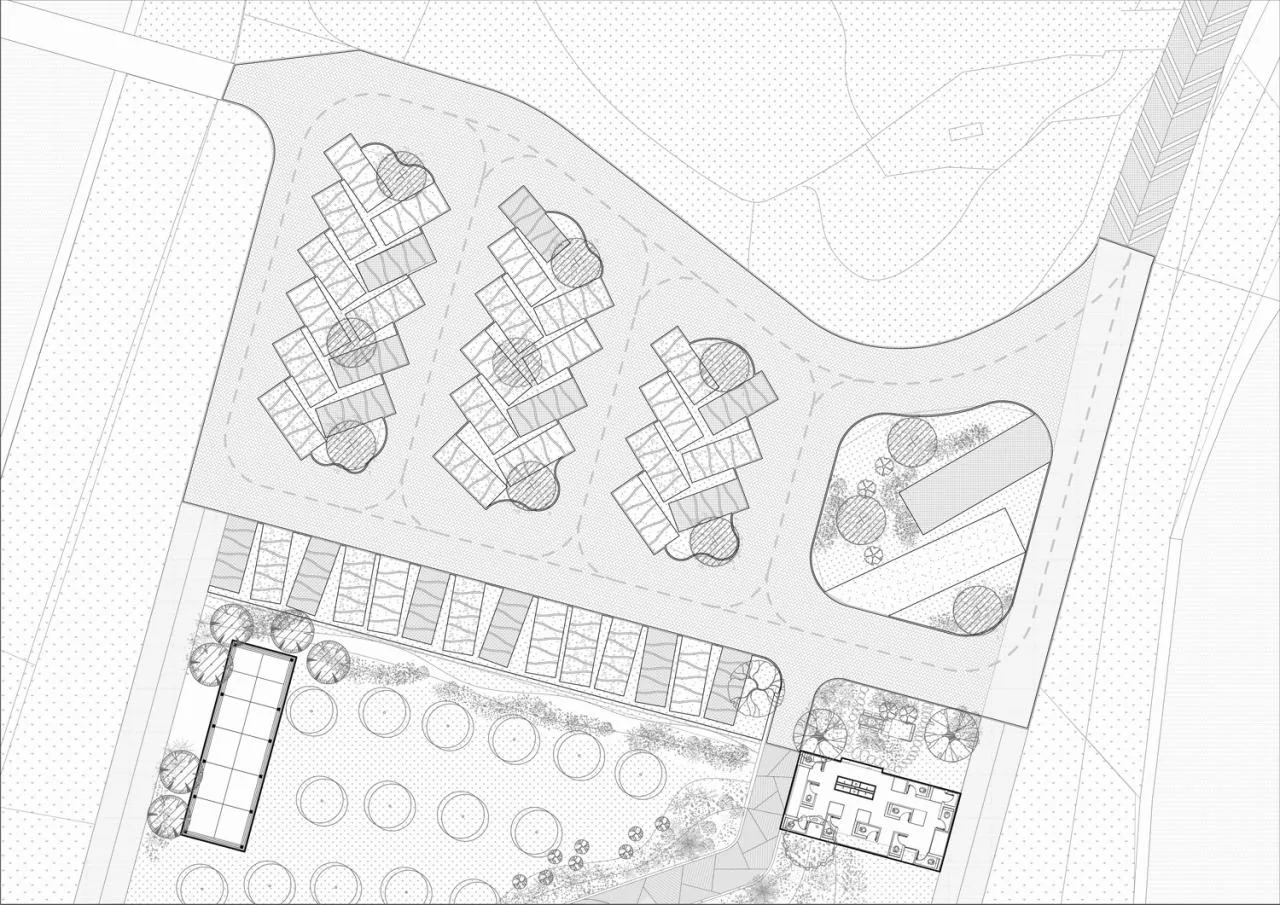
Entrance Parking Lot | Floor Plan © No architectural design firm identified
Entrance Restroom
© Yan Yu Architectural Space Photography
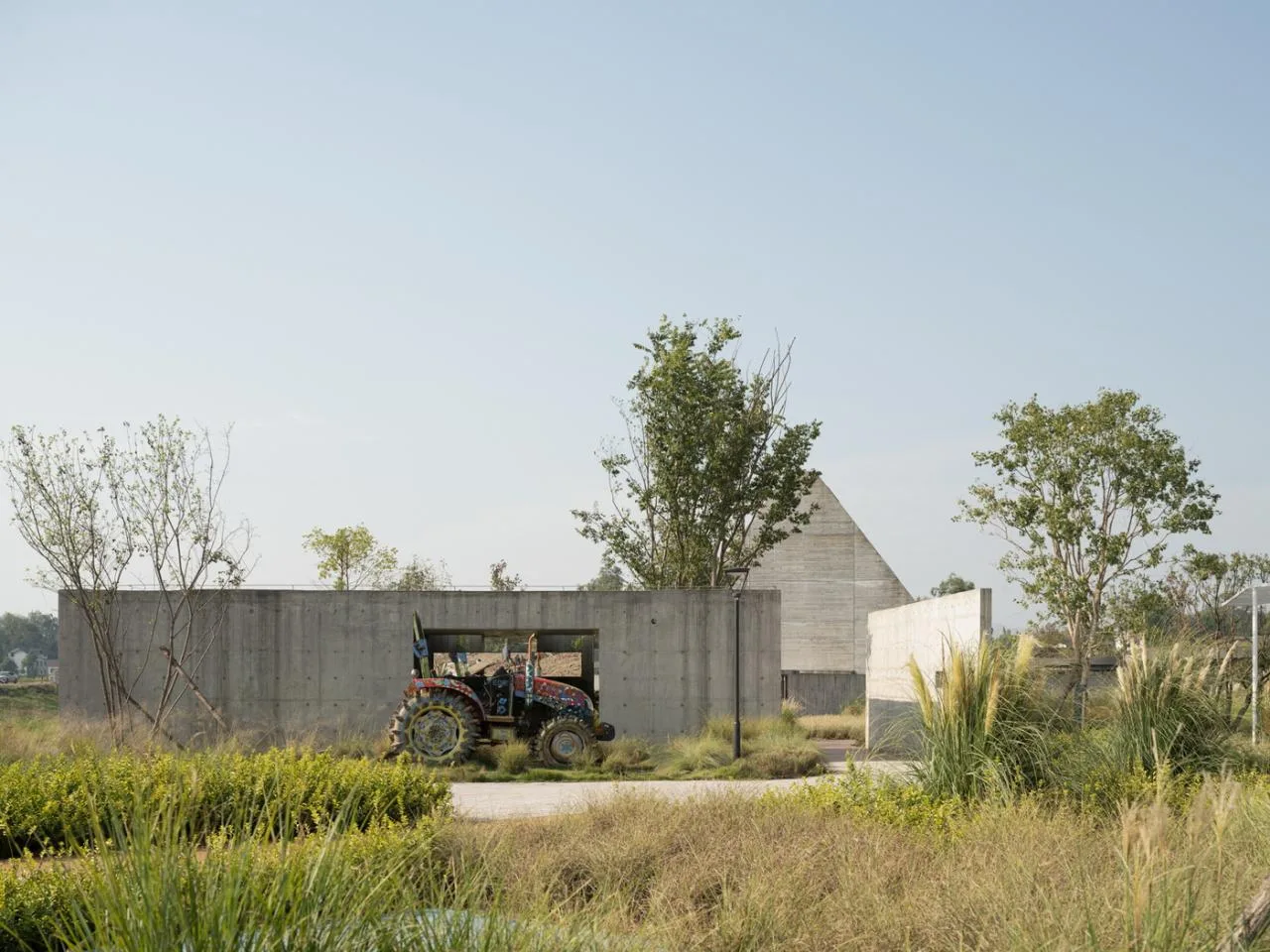
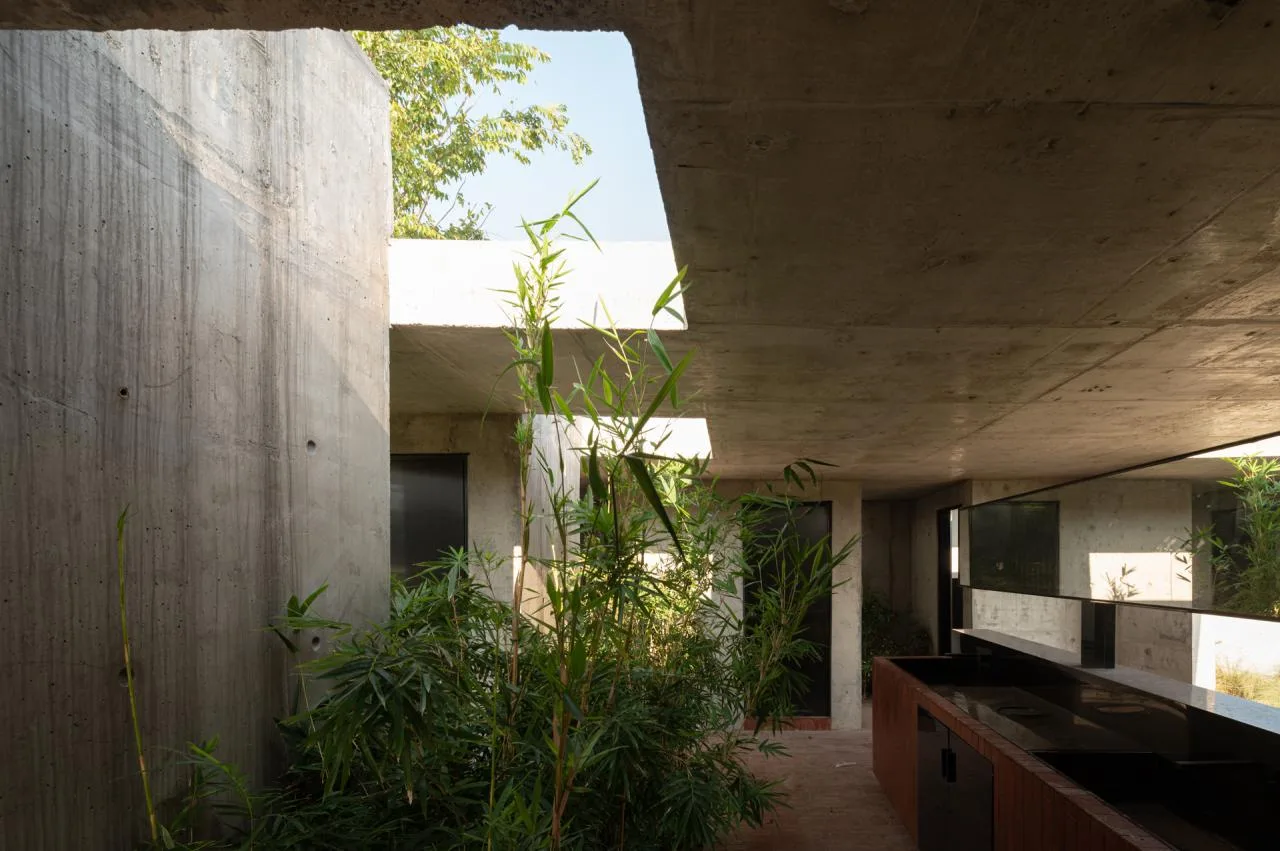
The entrance restroom is a simple rectangular volume located at the corner of the parking lot, near the entrance. It forms a guiding passageway with an adjacent concrete wall. A discarded tractor, decorated with collective graffiti by young Chongqing architects, greets visitors with a charming blend of art and rural life.
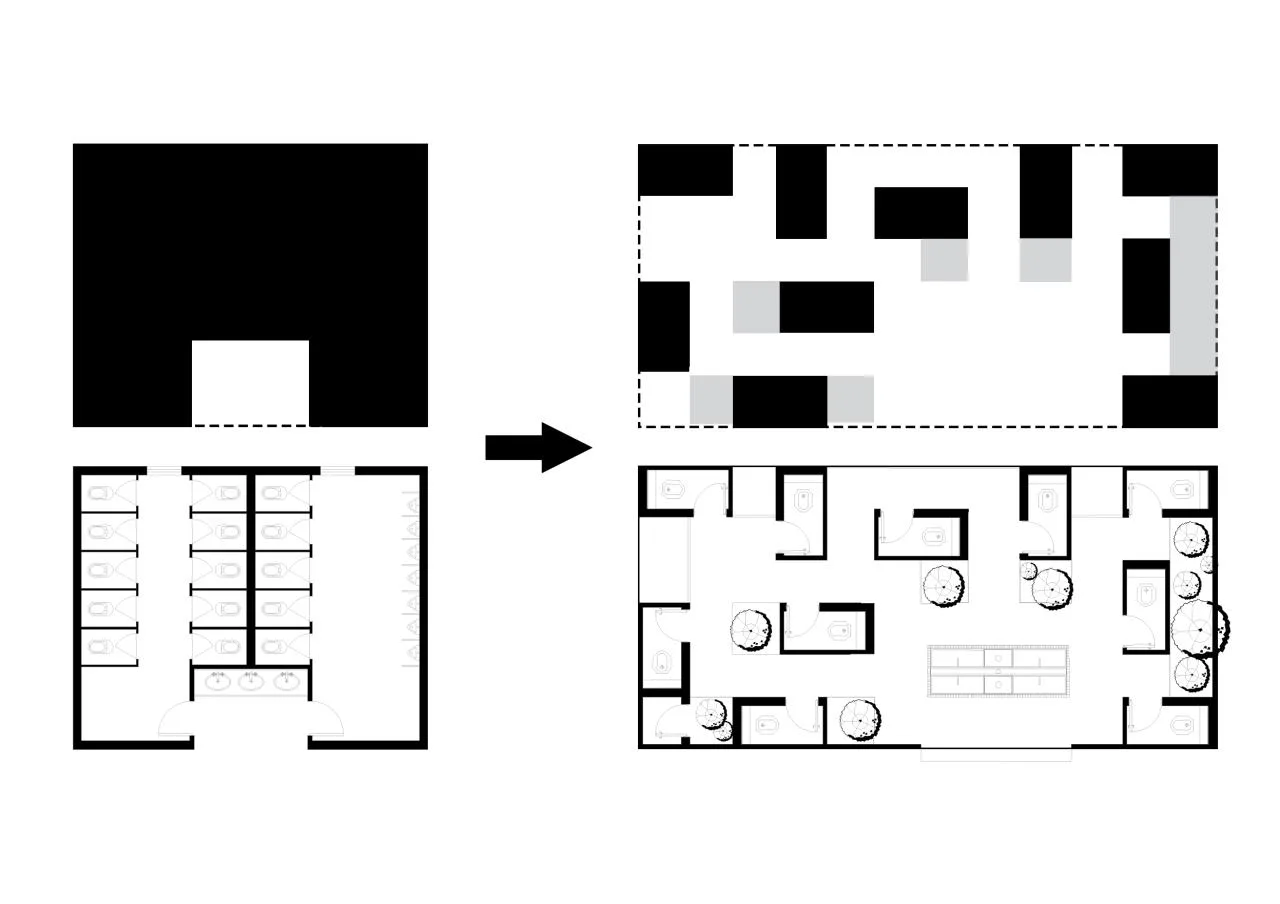
Entrance Restroom | Spatial Form Analysis © No architectural design firm identified
© Yan Yu Architectural Space Photography
Breaking from traditional bathroom layouts, the design creates a semi-outdoor cluster of individual units, each an independent small room. Skylights in public areas bring in sunlight and rainwater, nurturing internal plants. Those in private rooms lack glass, offering a unique, immersive natural experience.
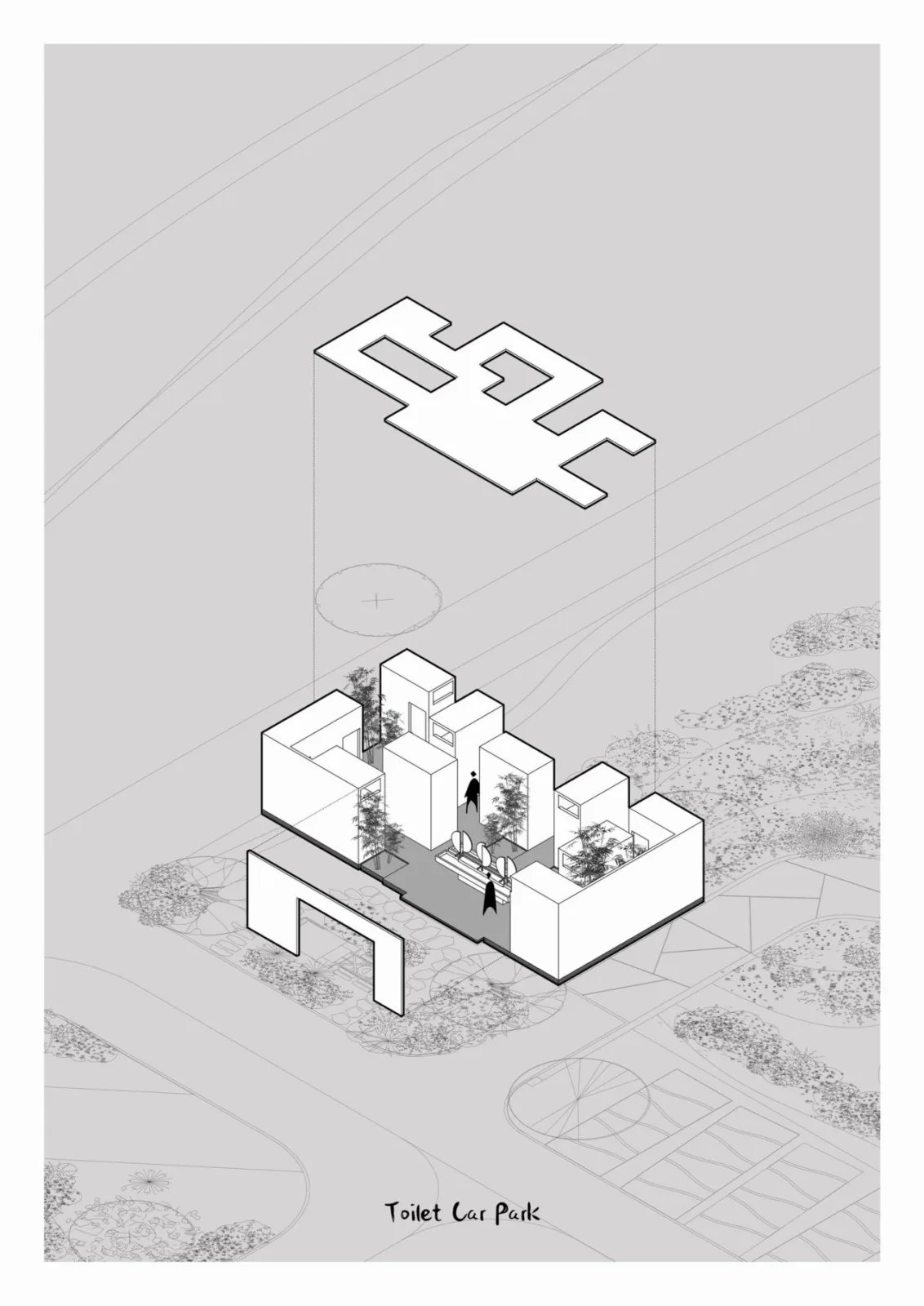
Entrance Restroom | Axial View © No architectural design firm identified
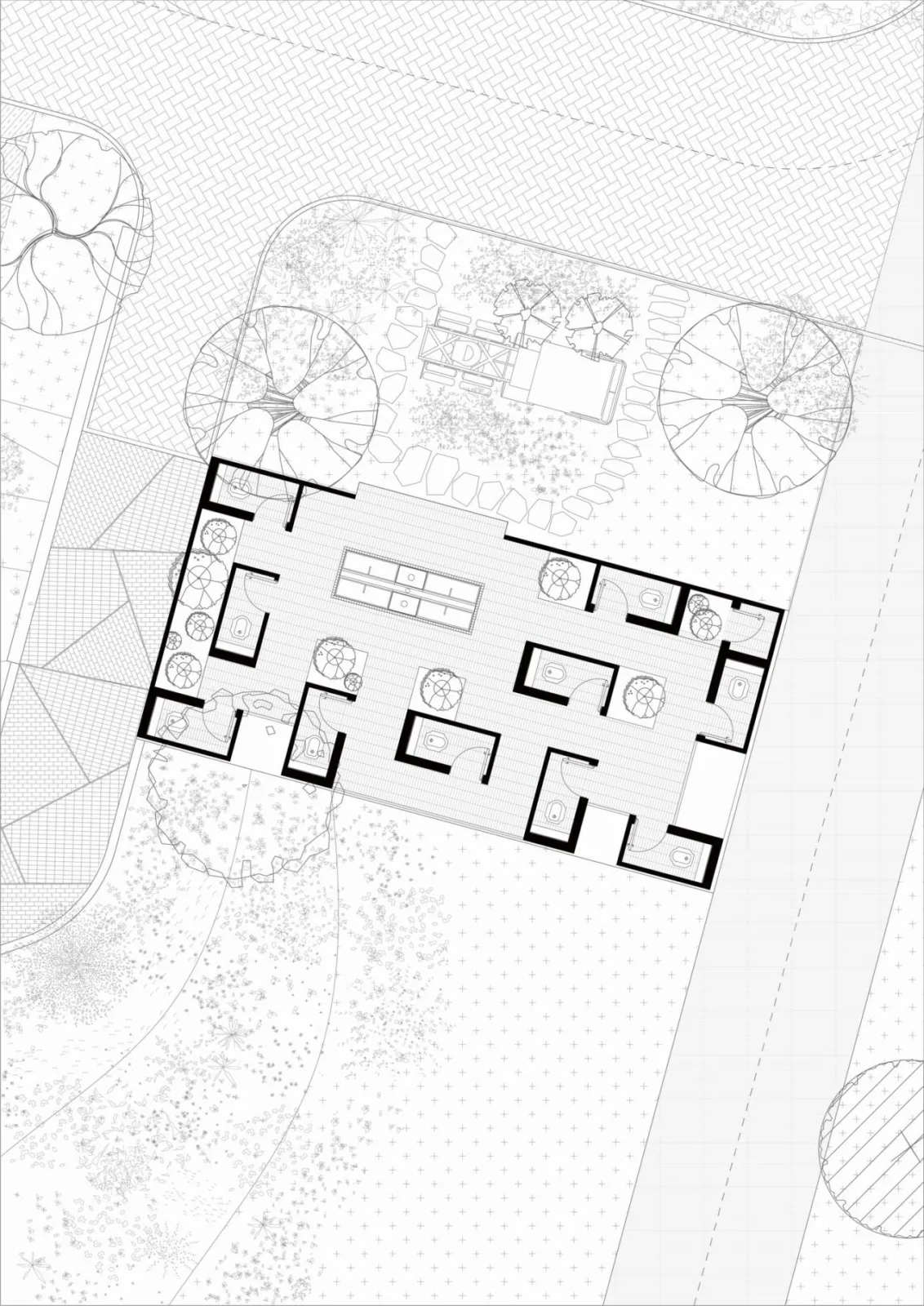
Entrance Restroom | Floor Plan © No architectural design firm identified
Earth Art Museum
© Existence of Architecture – Architectural Photography
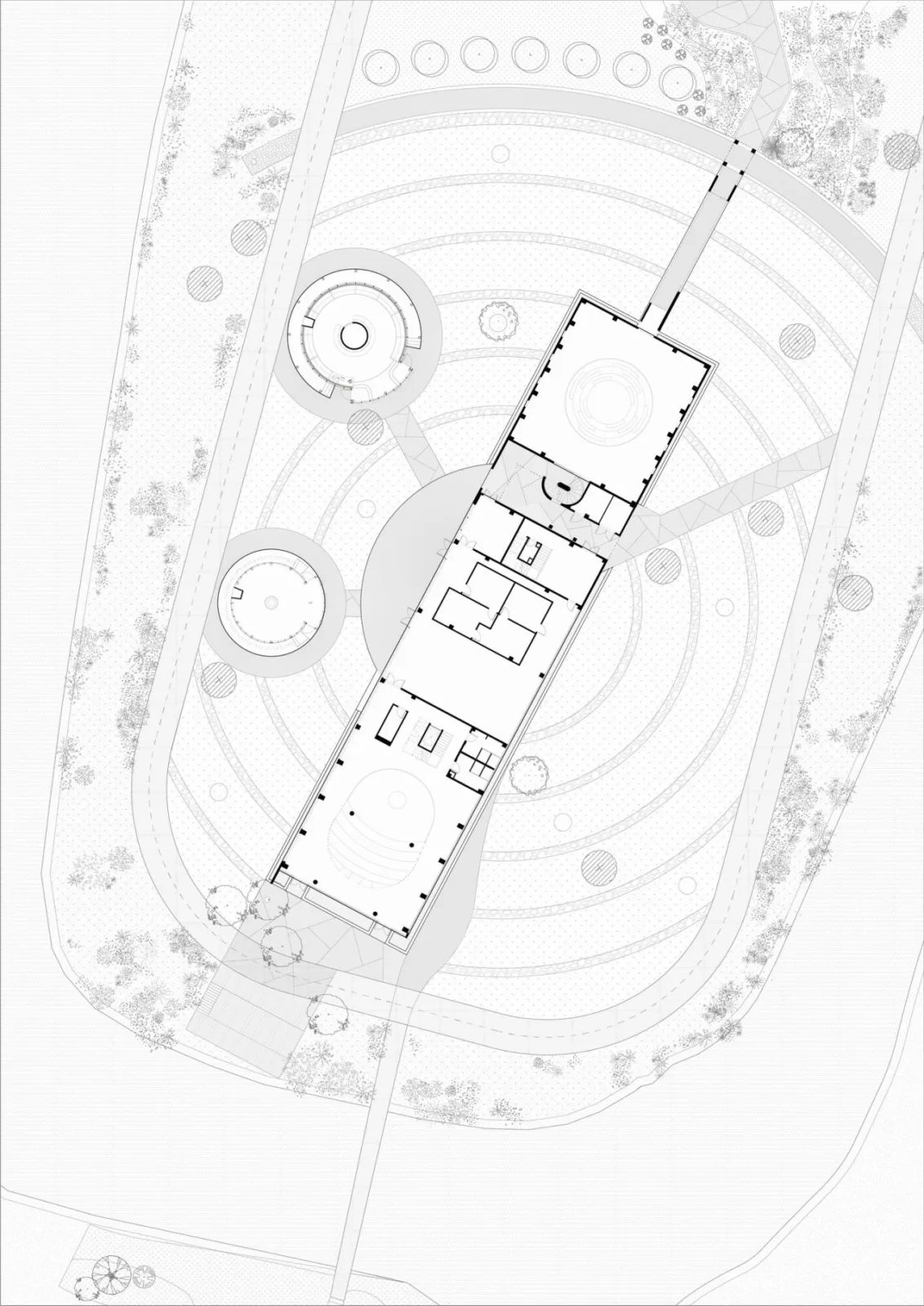
Earth Art Museum | Floor Plan © No architectural design firm identified
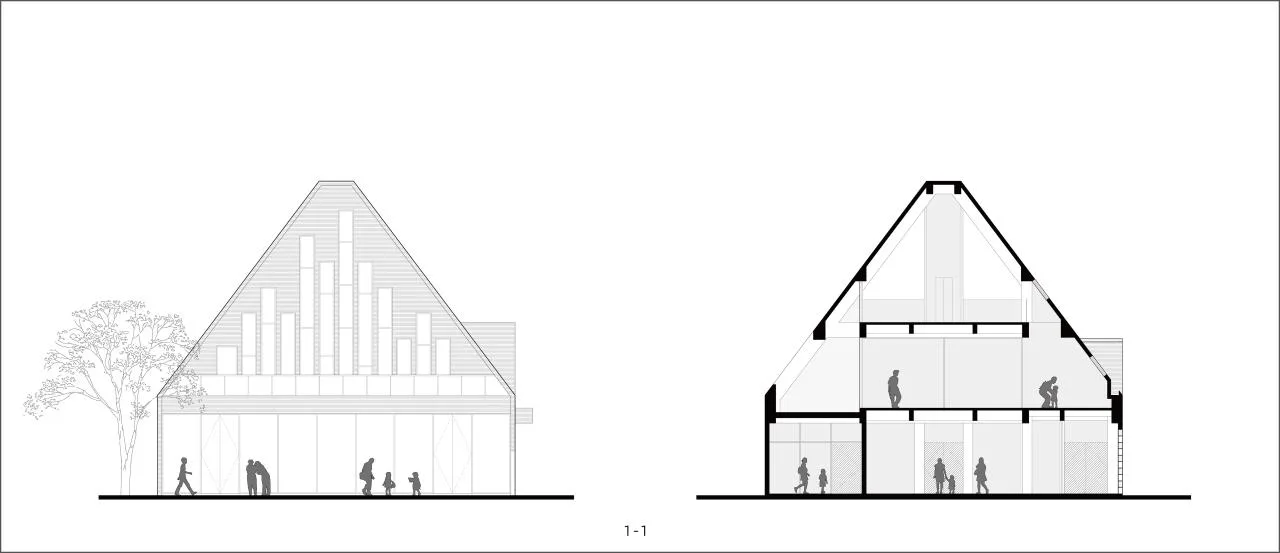
Section 1-1
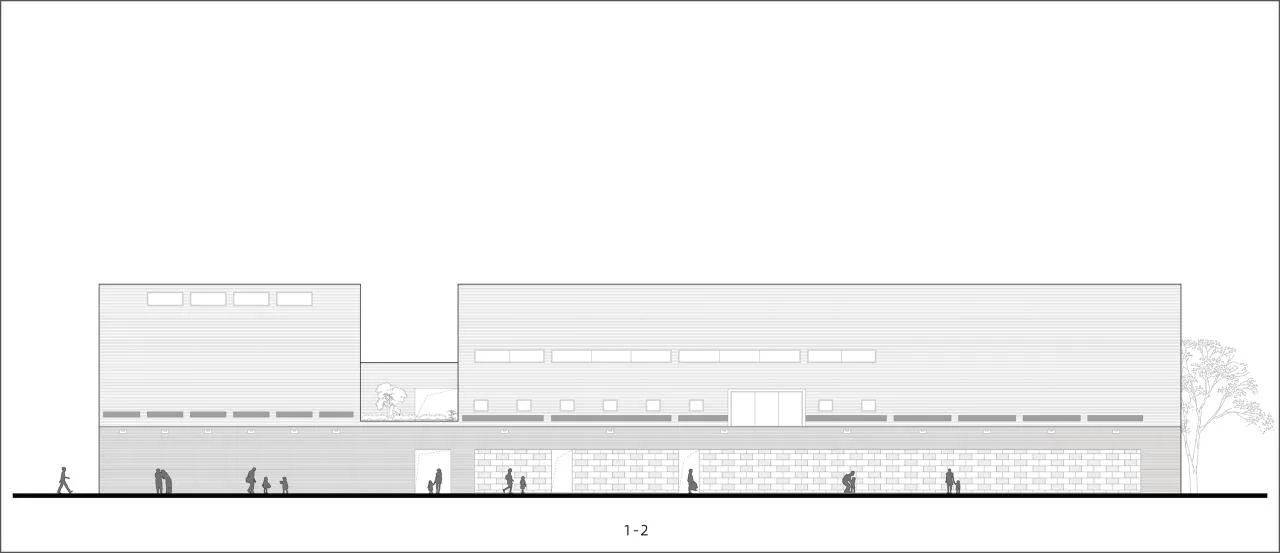
Section 1-2
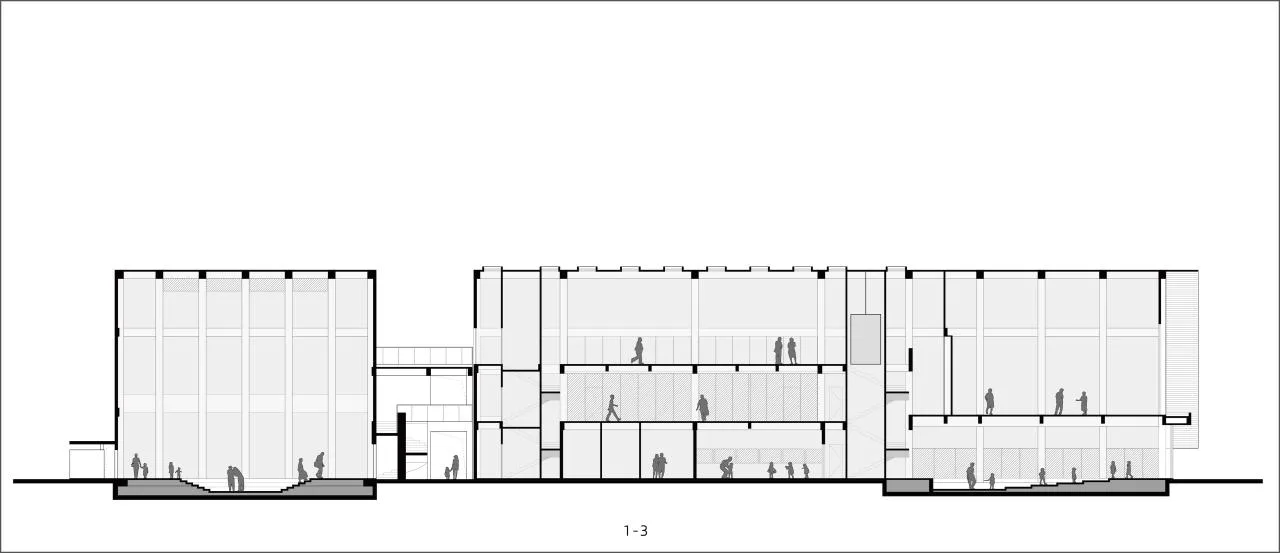
Section 1-3
Dadi Art Museum | North Elevation and Short Section (1-1), West Elevation (1-2), Long Section (1-3) © No architectural design firm identified
Cement Granary in Sorghum Fields
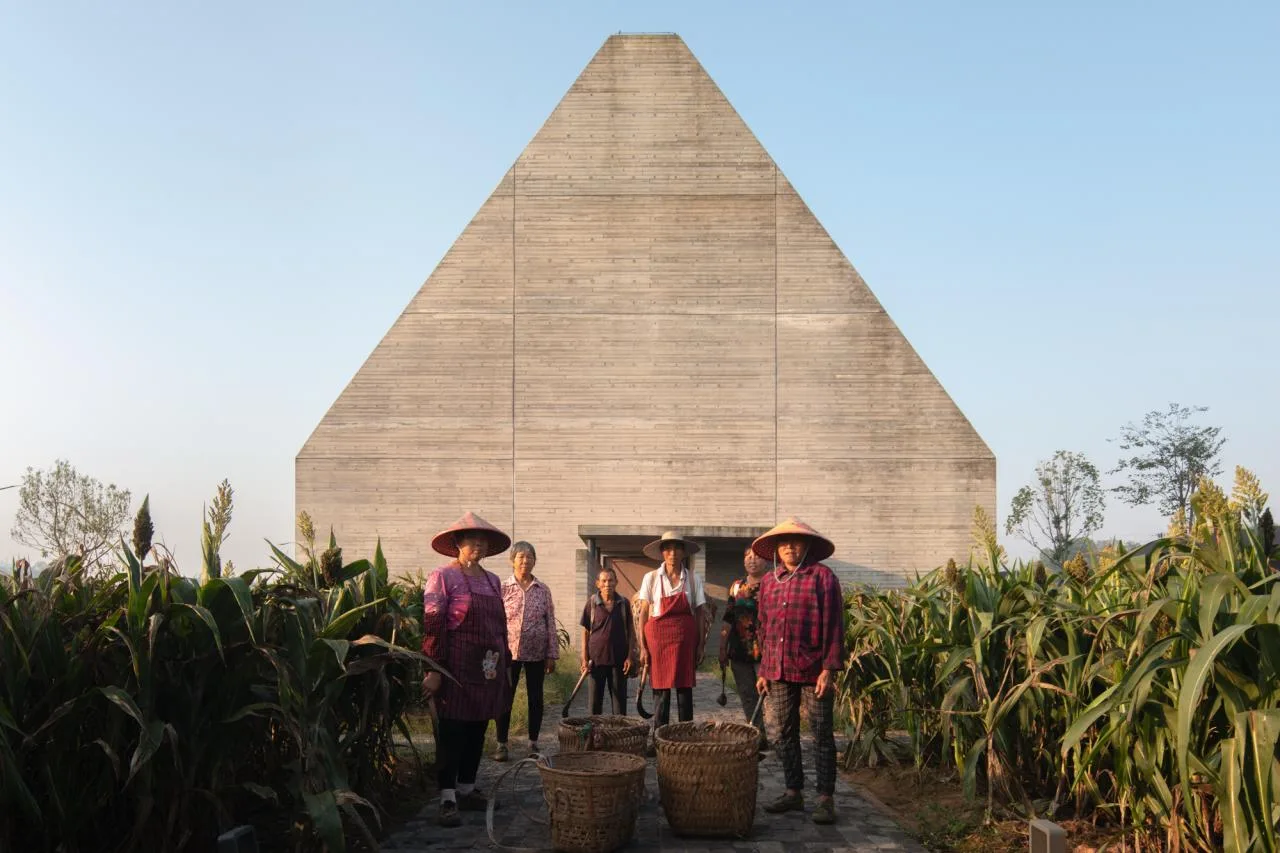
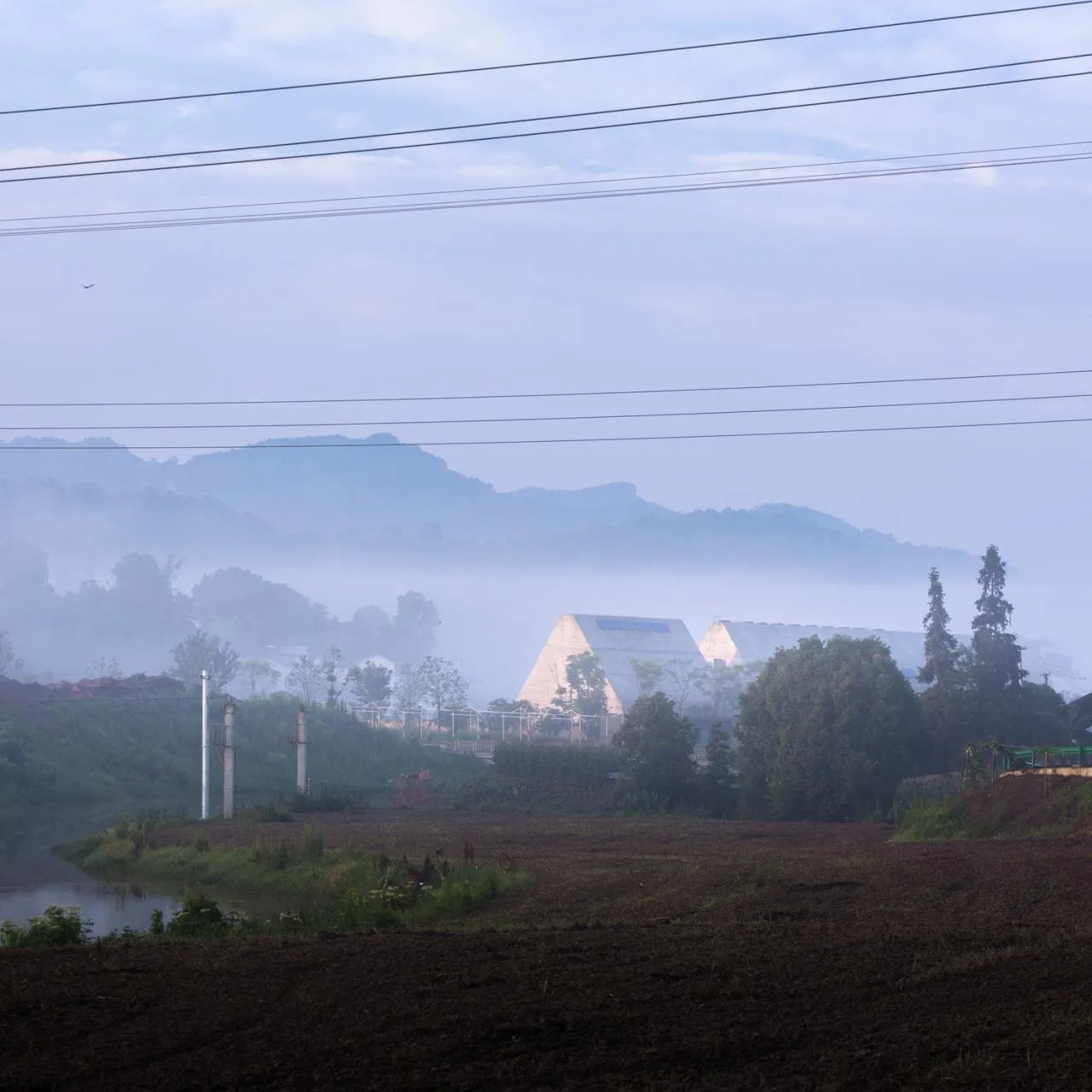
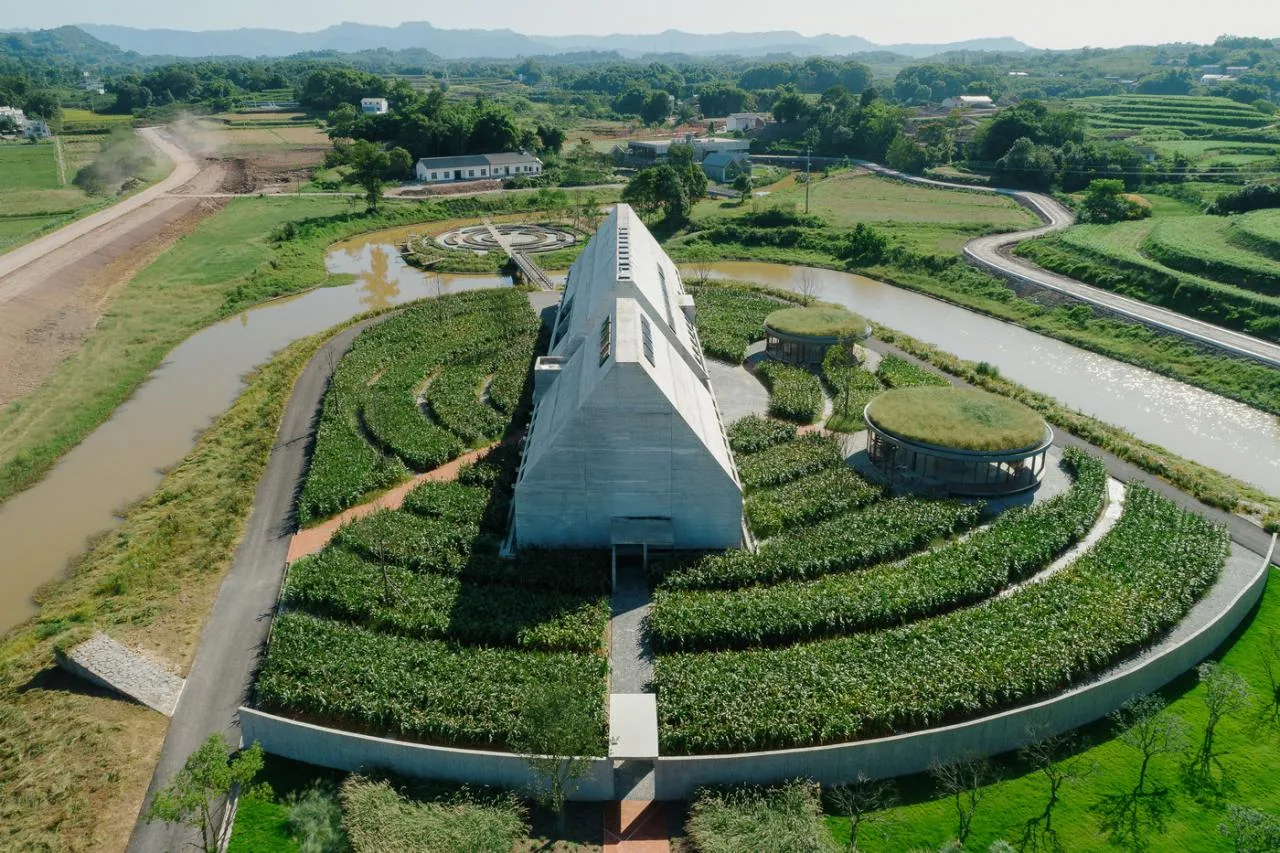
This plain concrete building with a sloping roof sits on level ground among sorghum fields, embodying simplicity through modern techniques. Its slightly increased scale and subtle form inheritance emphasize the internal character of the countryside, rather than replicating external traditional forms.
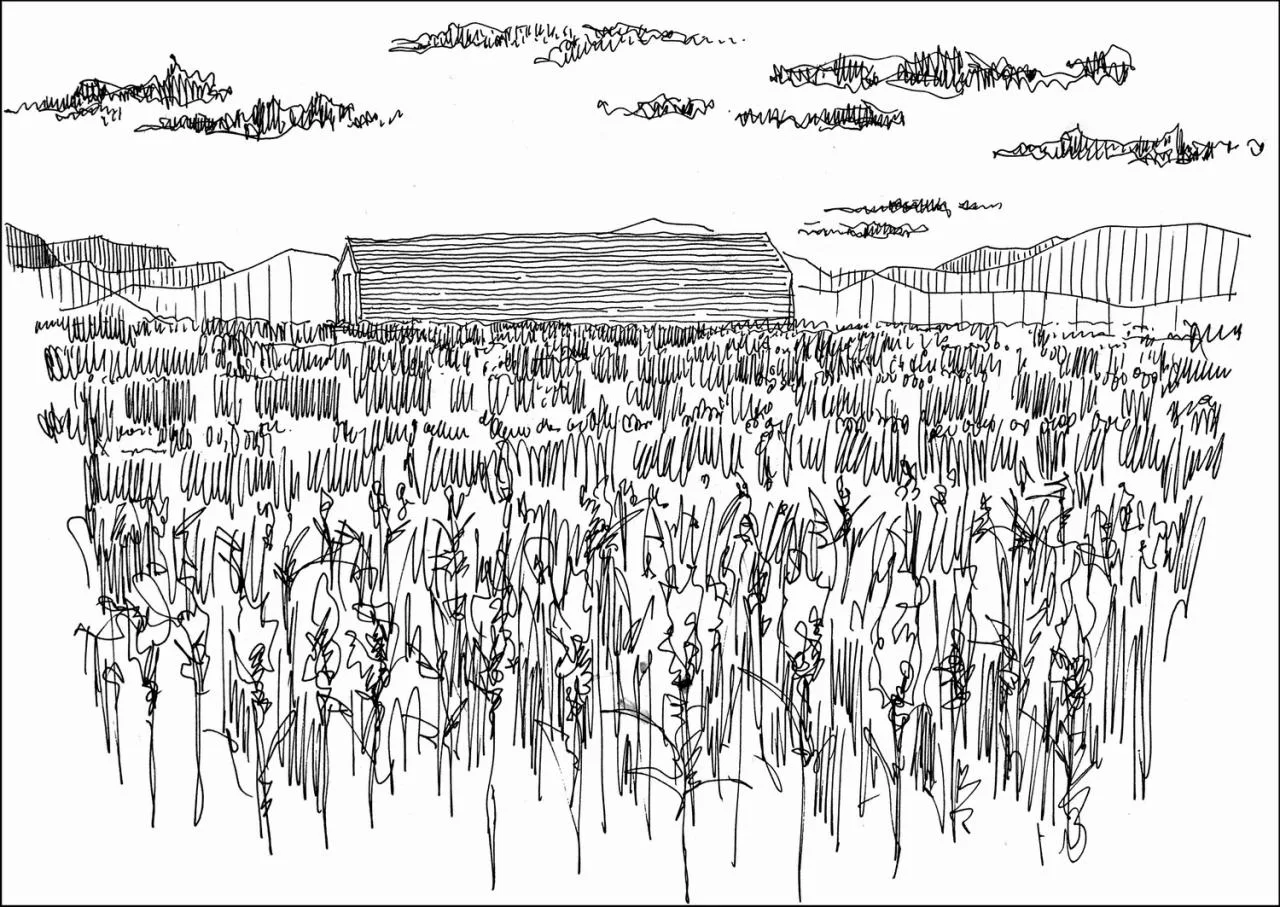
Plan Sketch © No architectural design firm identified
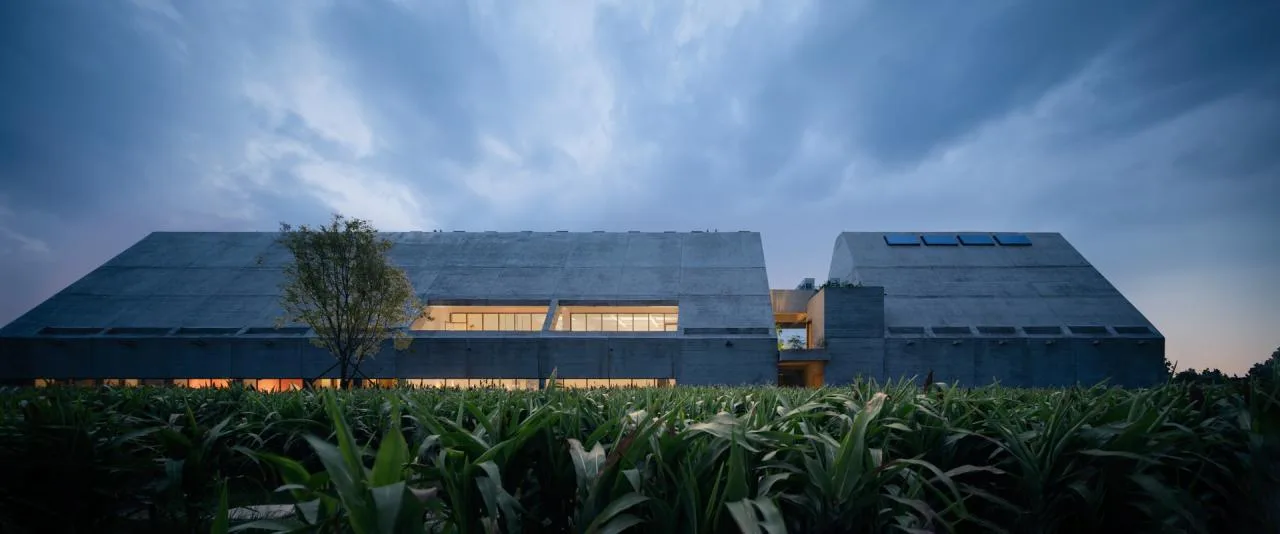
© Yan Yu Architectural Space Photography
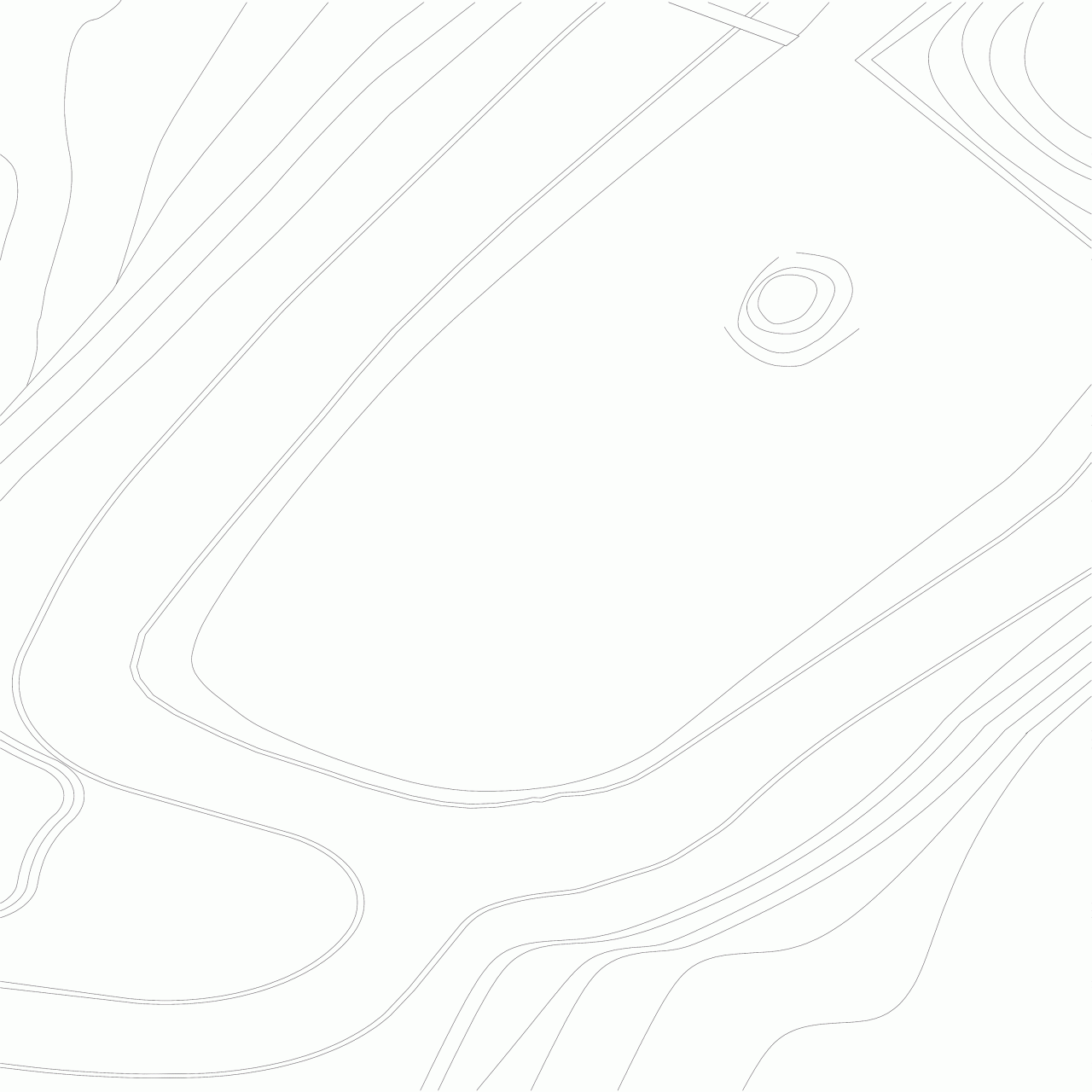
Architectural Volume Evolution © No architectural design firm identified
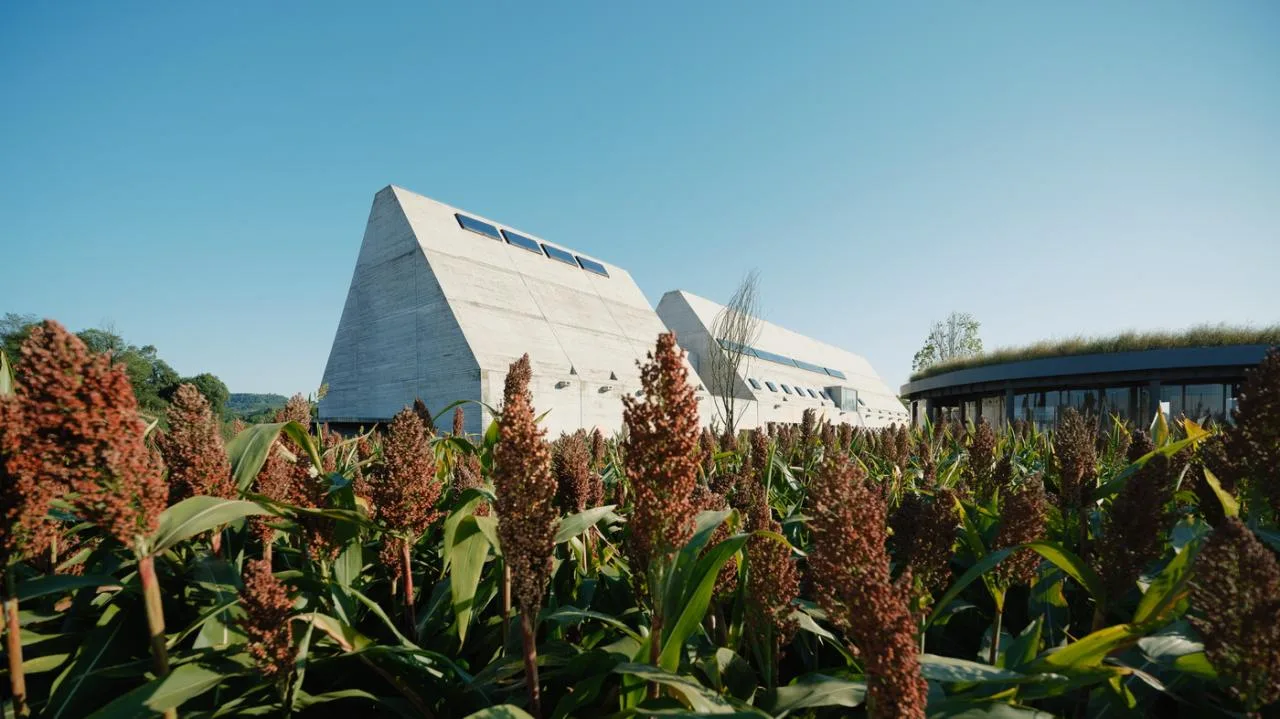
© Yan Yu Architectural Space Photography
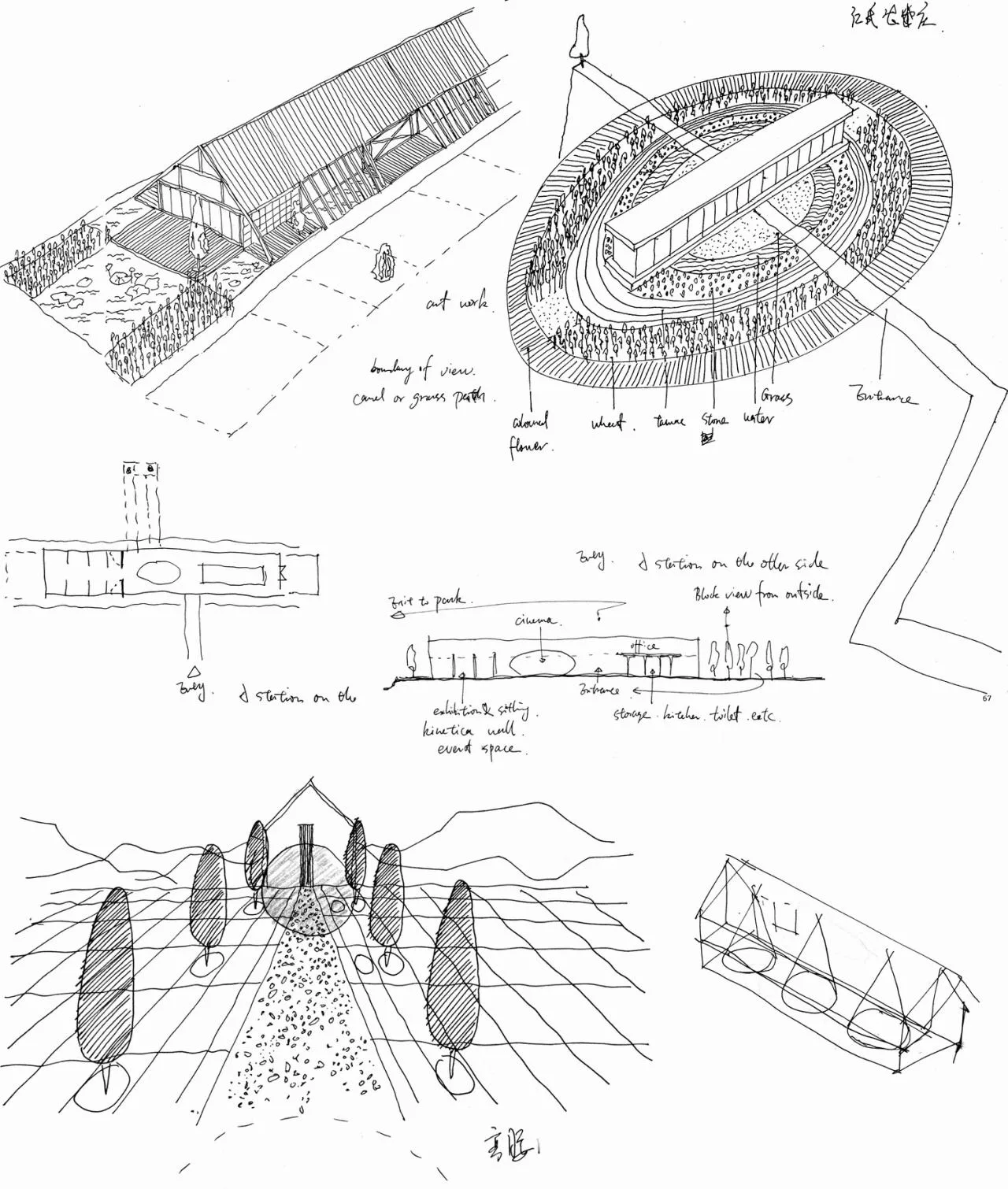
Conceptual Design Sketch | Architectural Form Thinking © No architectural design firm identified
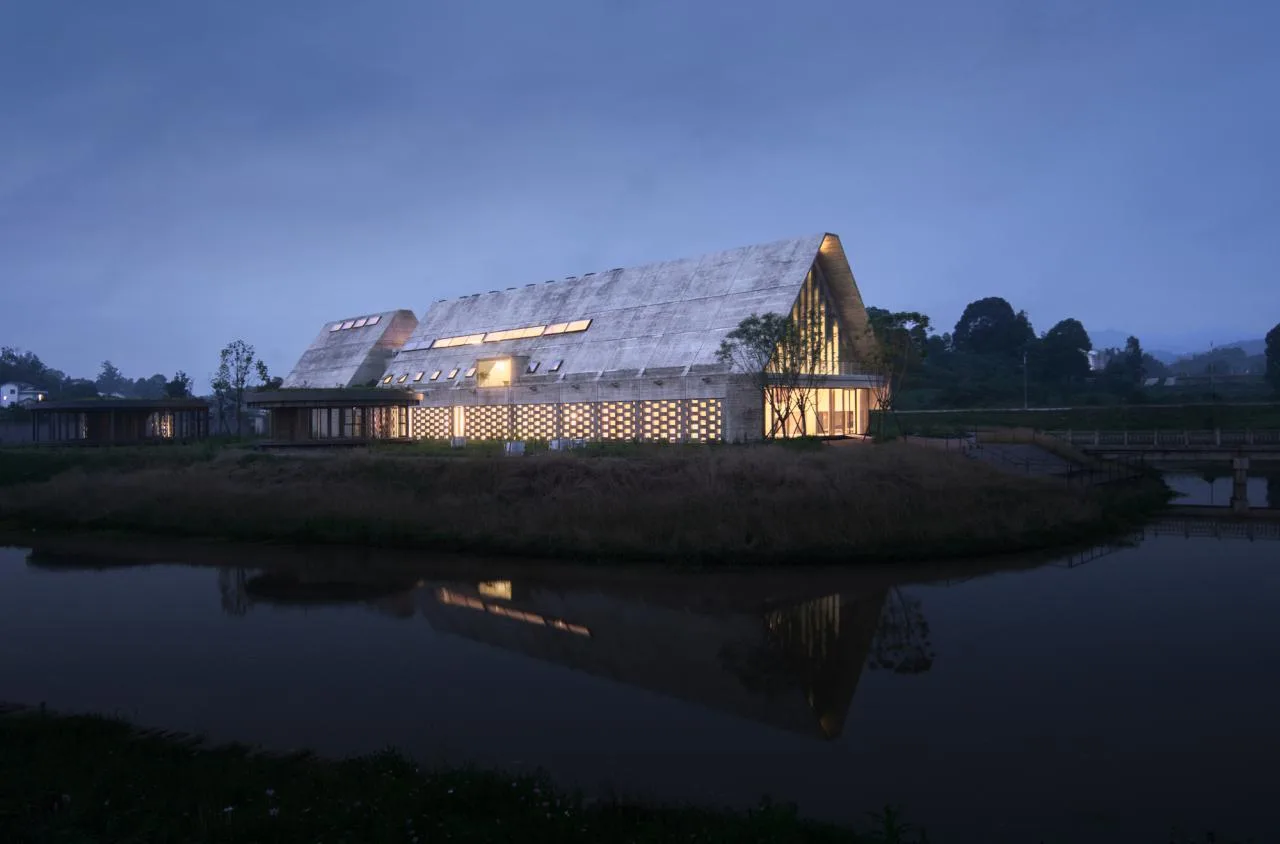
© Existence of Architecture – Architectural Photography
Sorghum Concentric Circle
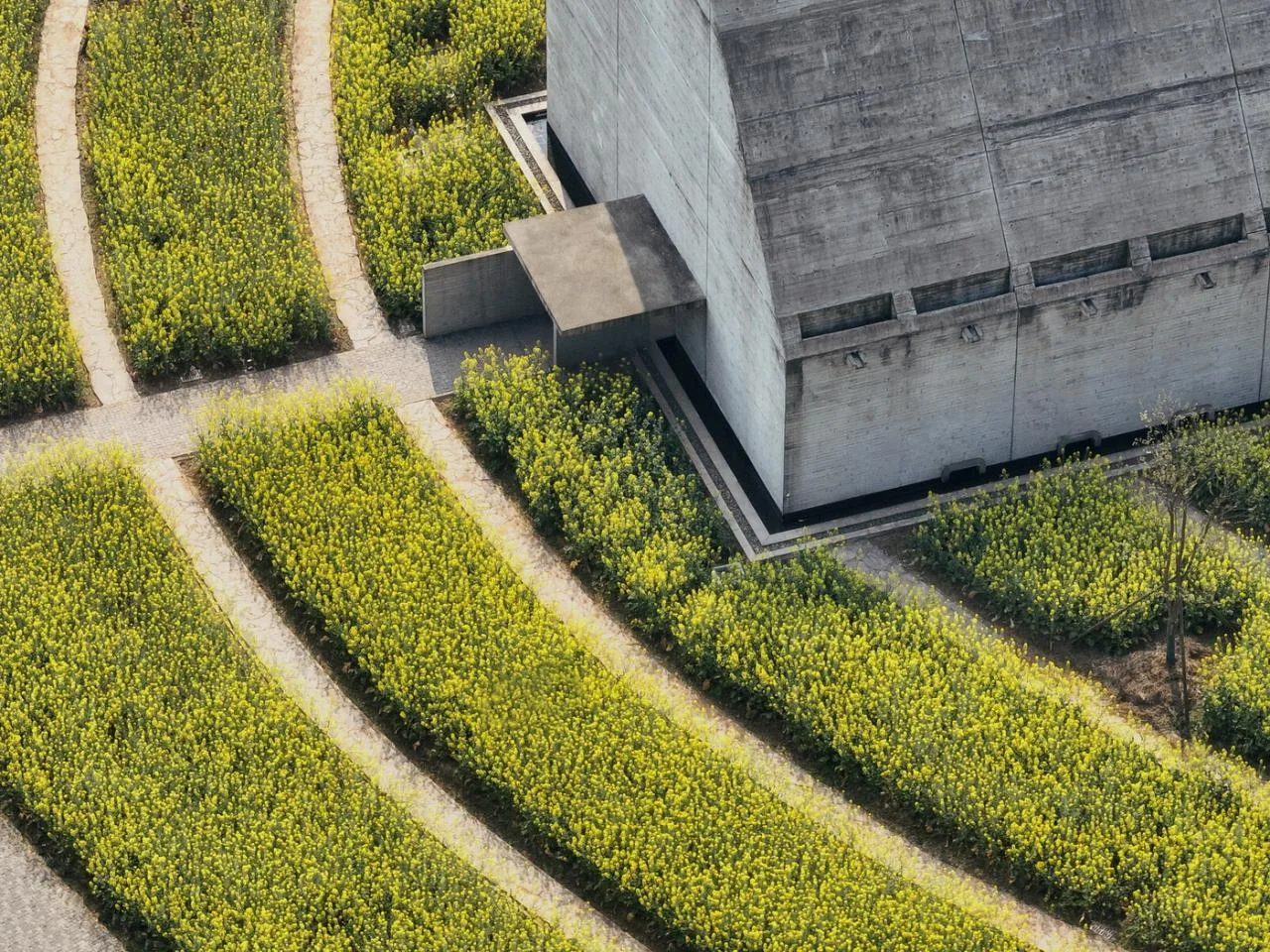
© Yan Yu Architectural Space Photography
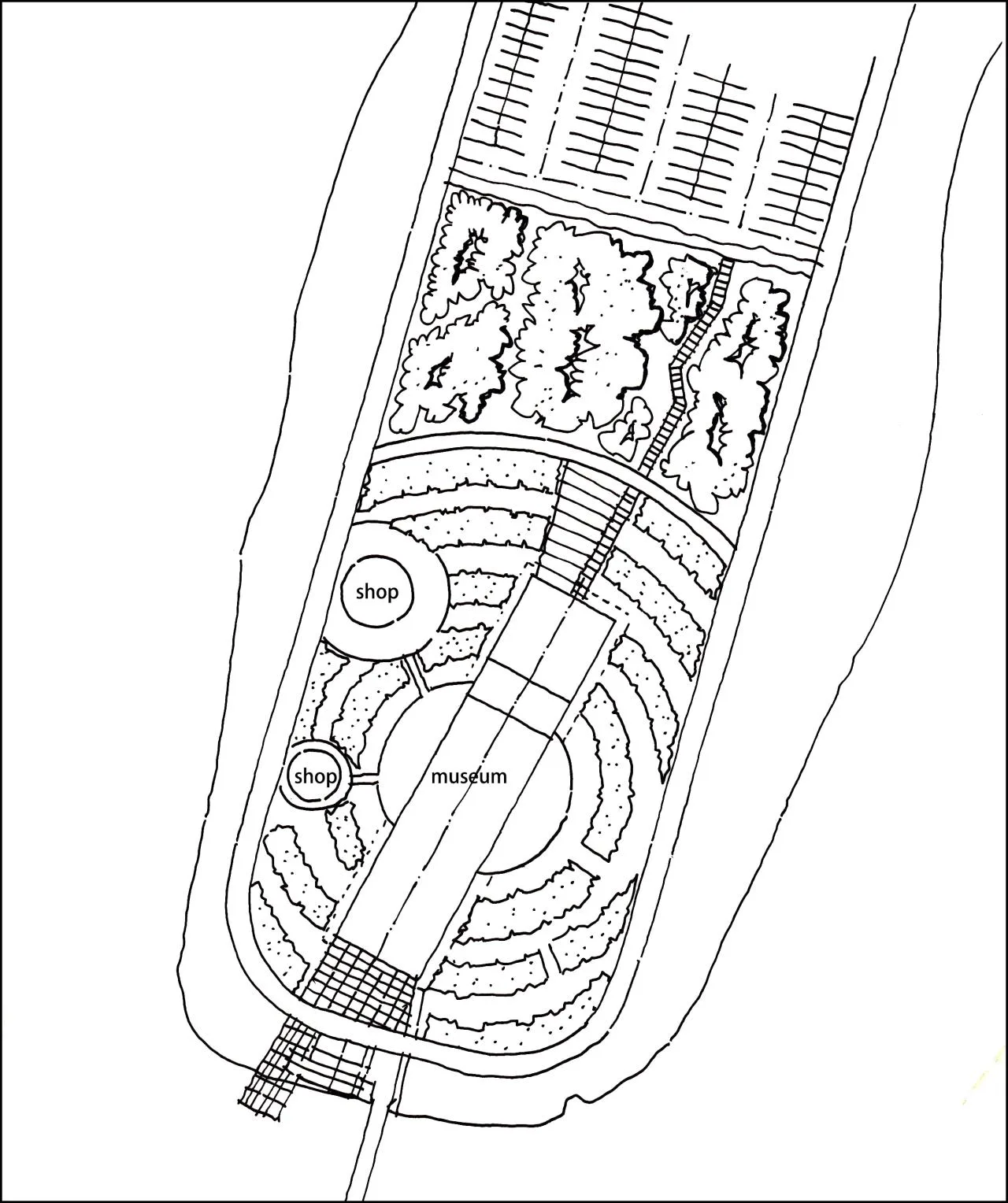
Plan Sketch © No architectural design firm identified
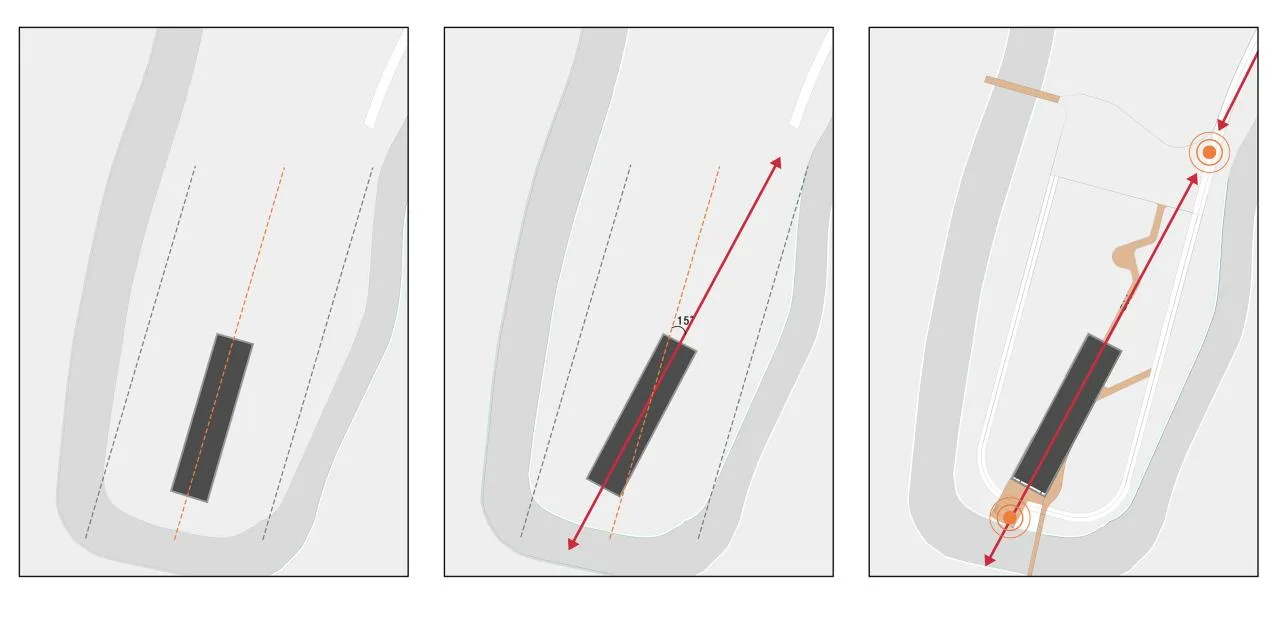
Relationship Evolution Process © No architectural design firm identified
© Yan Yu Architectural Space Photography
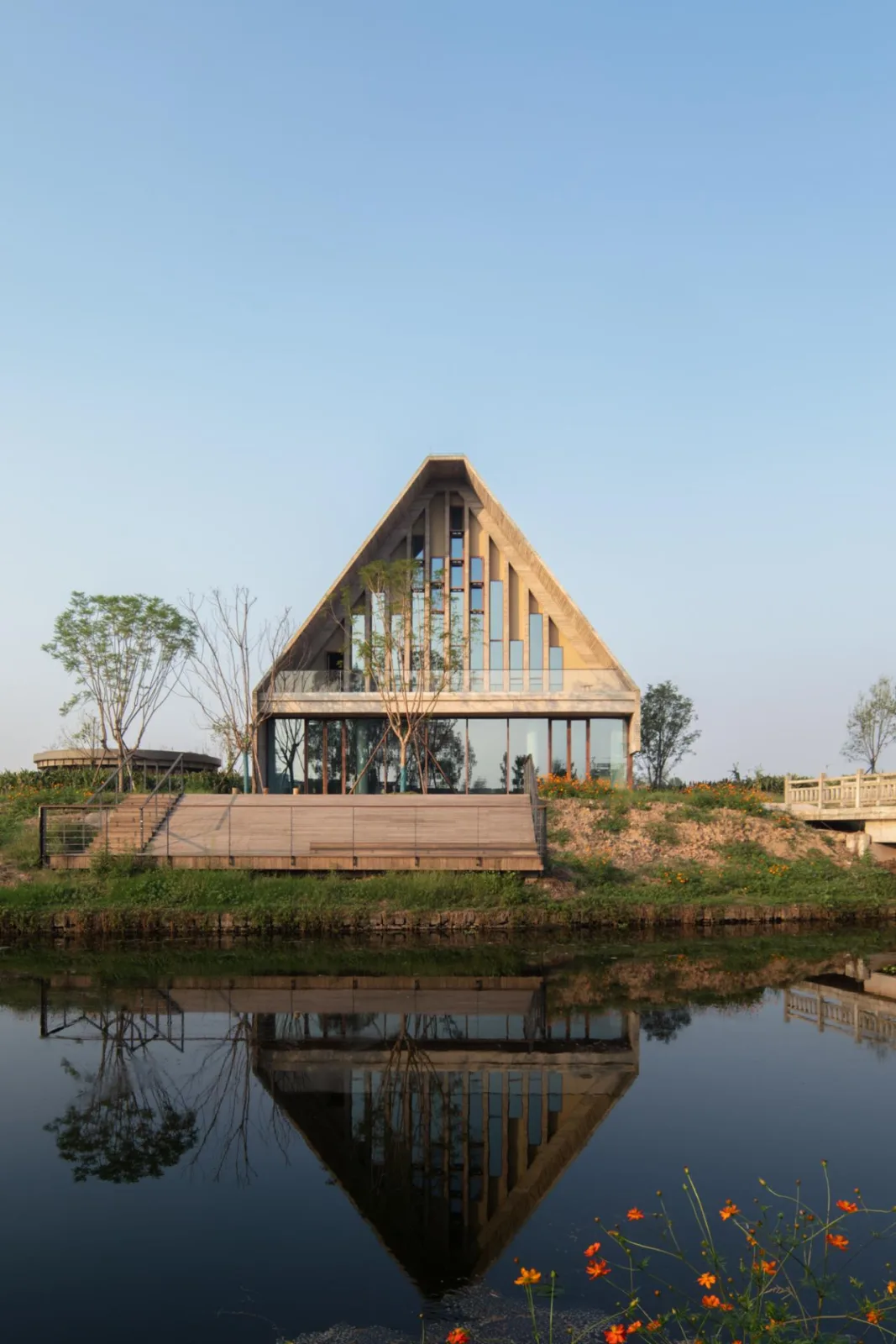
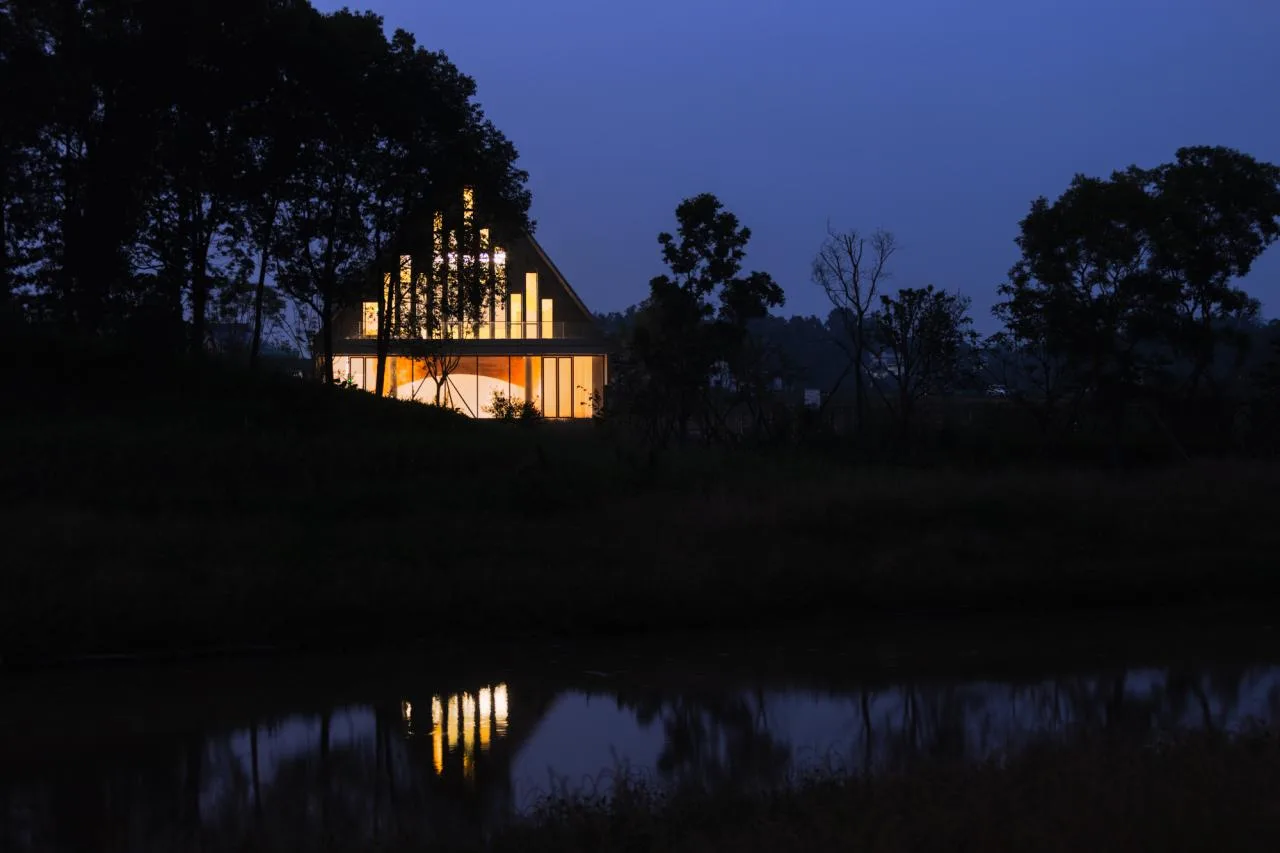
The linear spatial form aligns with the elongated peninsula’s environmental characteristics, accommodating both farm researchers and visitors. Rotated 15 degrees clockwise along the peninsula’s axis, the building optimizes display while preventing the pedestrian bridge from facing the water ditch. A waterside platform serves as a spatial node, adding rhythm and variation.
© Existence of Architecture – Architectural Photography
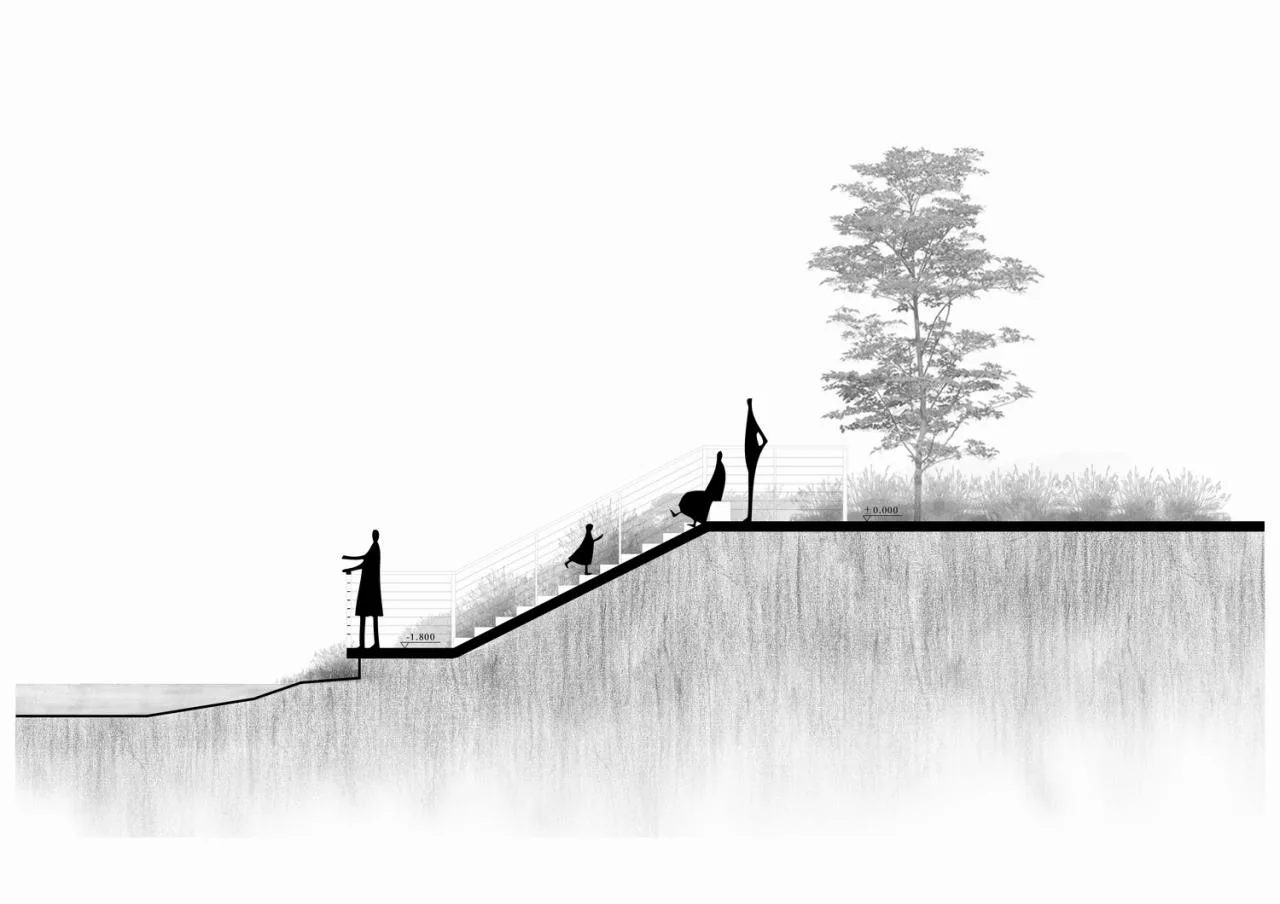
Cross-Section Diagram of Waterside Platform © No architectural design firm identified
Respect for Agriculture
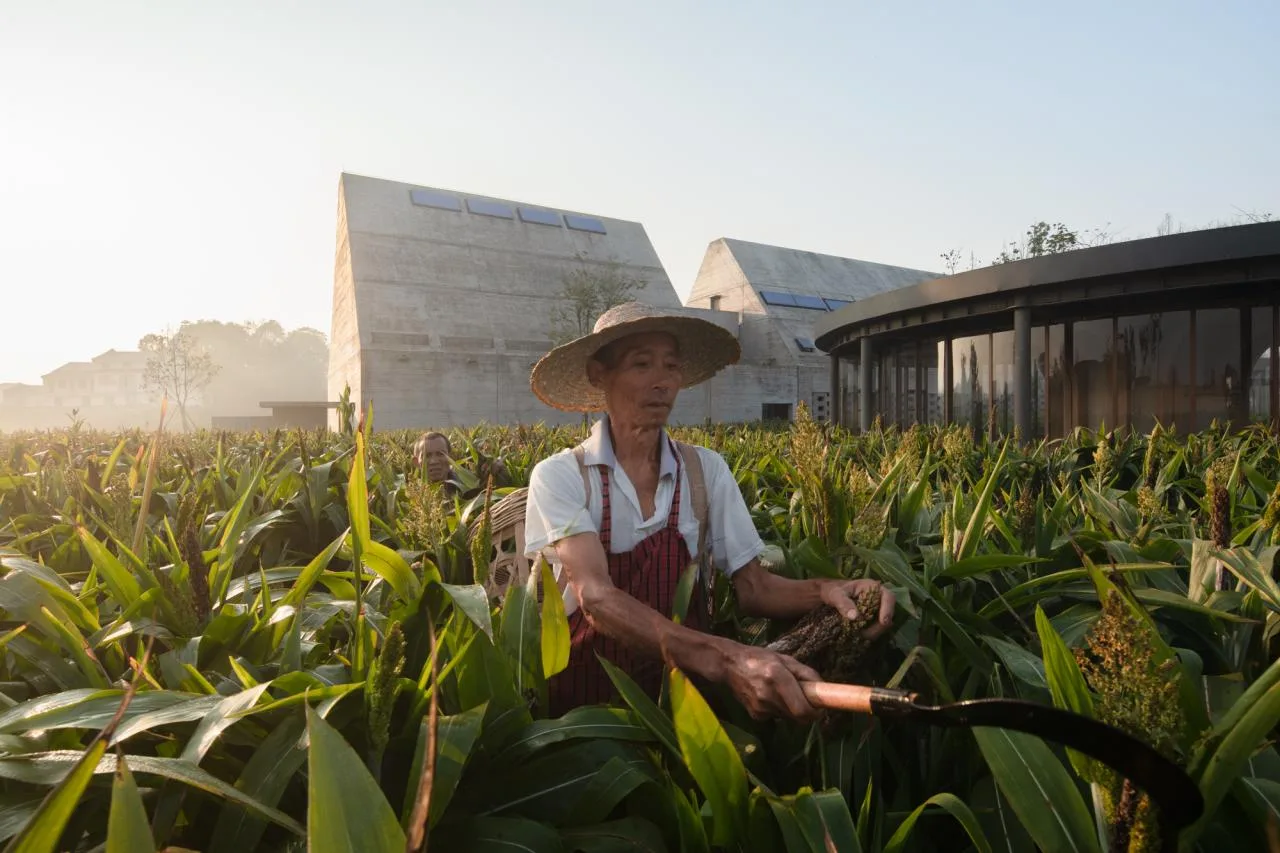
© Existence of Architecture – Architectural Photography
Passing through a curved concrete wall, a two-meter-high space defines a transformative spatial moment, evoking solemnity and reverence with a unique spiritual axis and triangular facade.
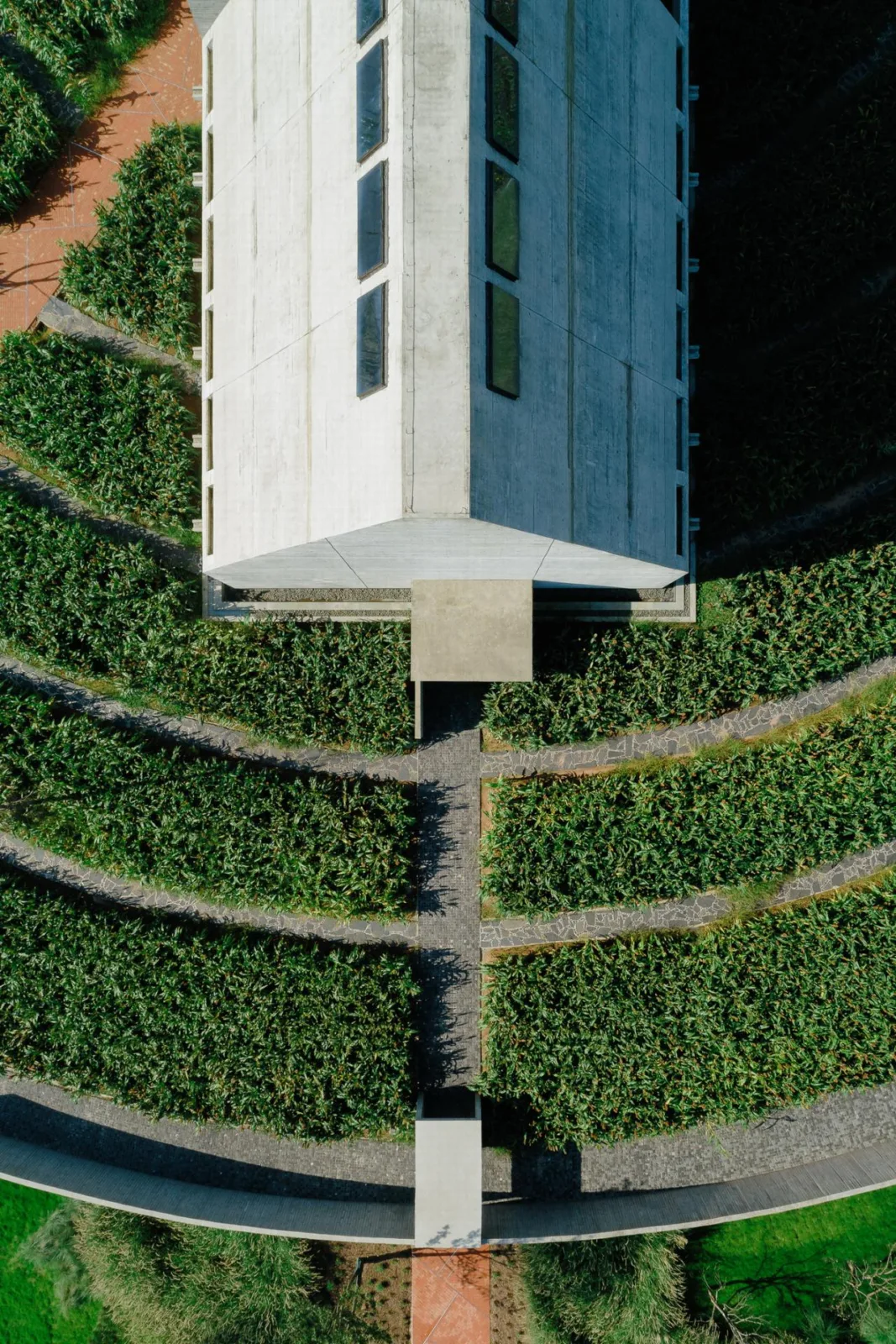
© Yan Yu Architectural Space Photography
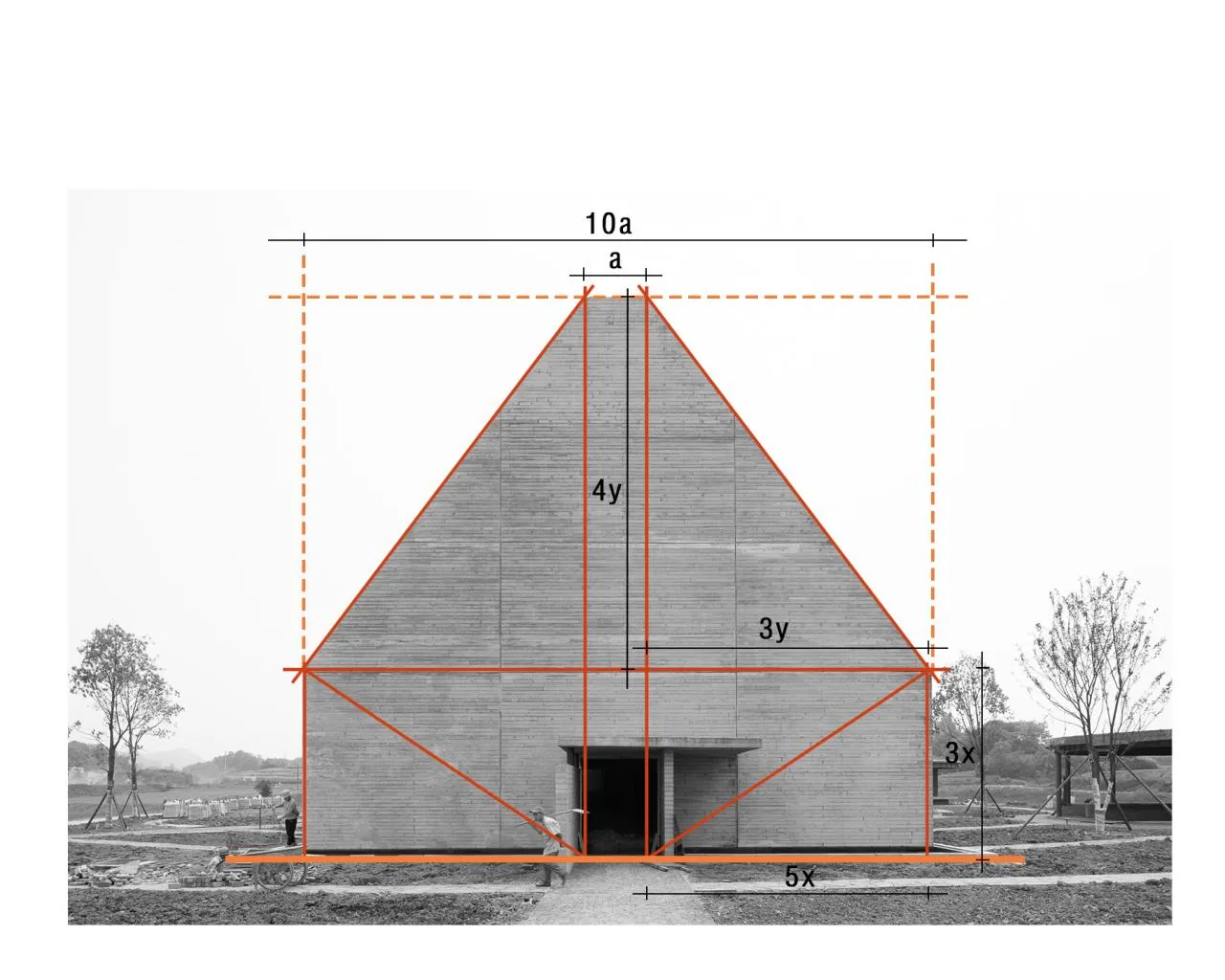
Facade Proportion © No architectural design firm identified
Entering the art museum reveals a soaring space with solemn diagonal lines converging skyward, inviting sunlight. The space then descends into a circular sunken area that immerses into the earth, inspiring a deep respect for agriculture through its upper and lower spatial interplay.
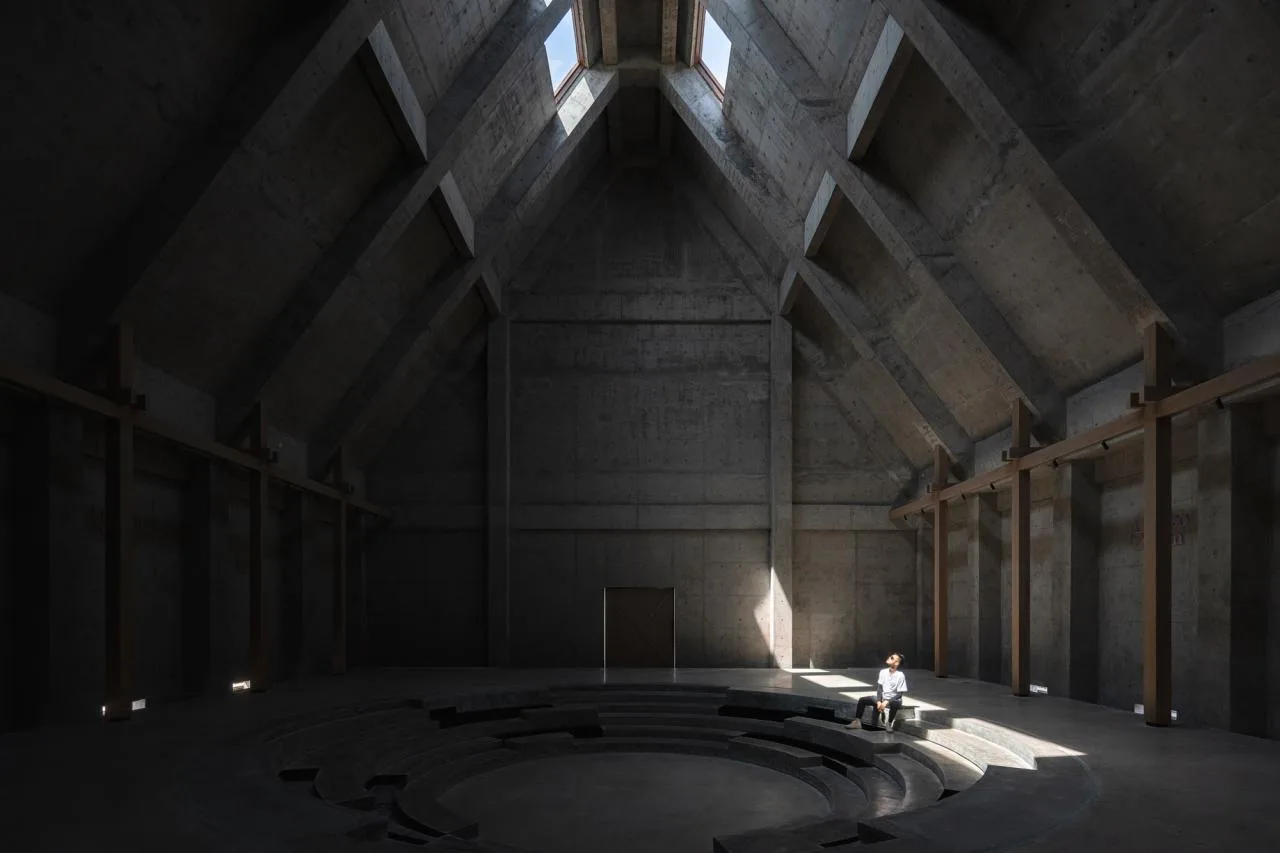
© Existence of Architecture – Architectural Photography
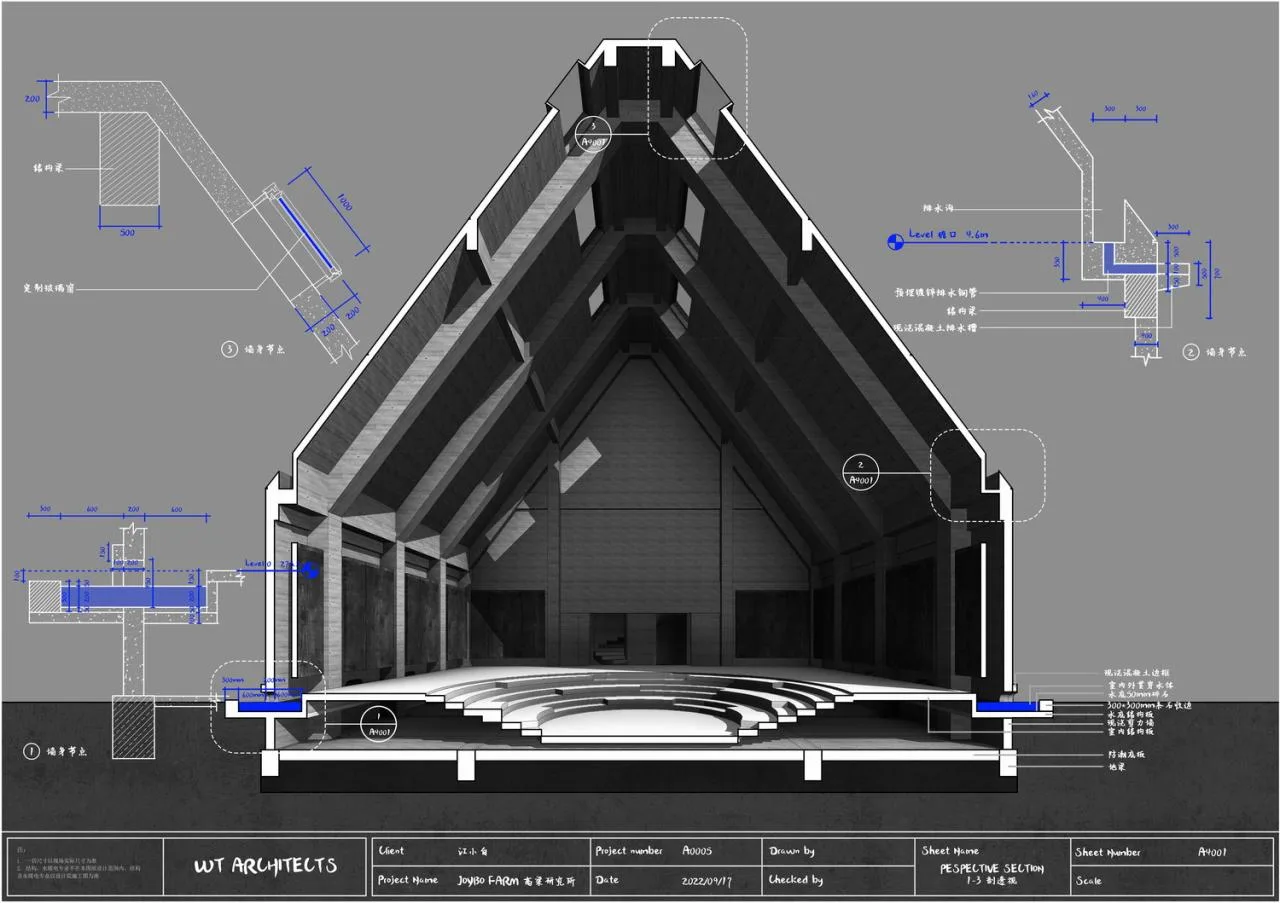
Sectional Perspective View of Water Scenery © No architectural design firm identified
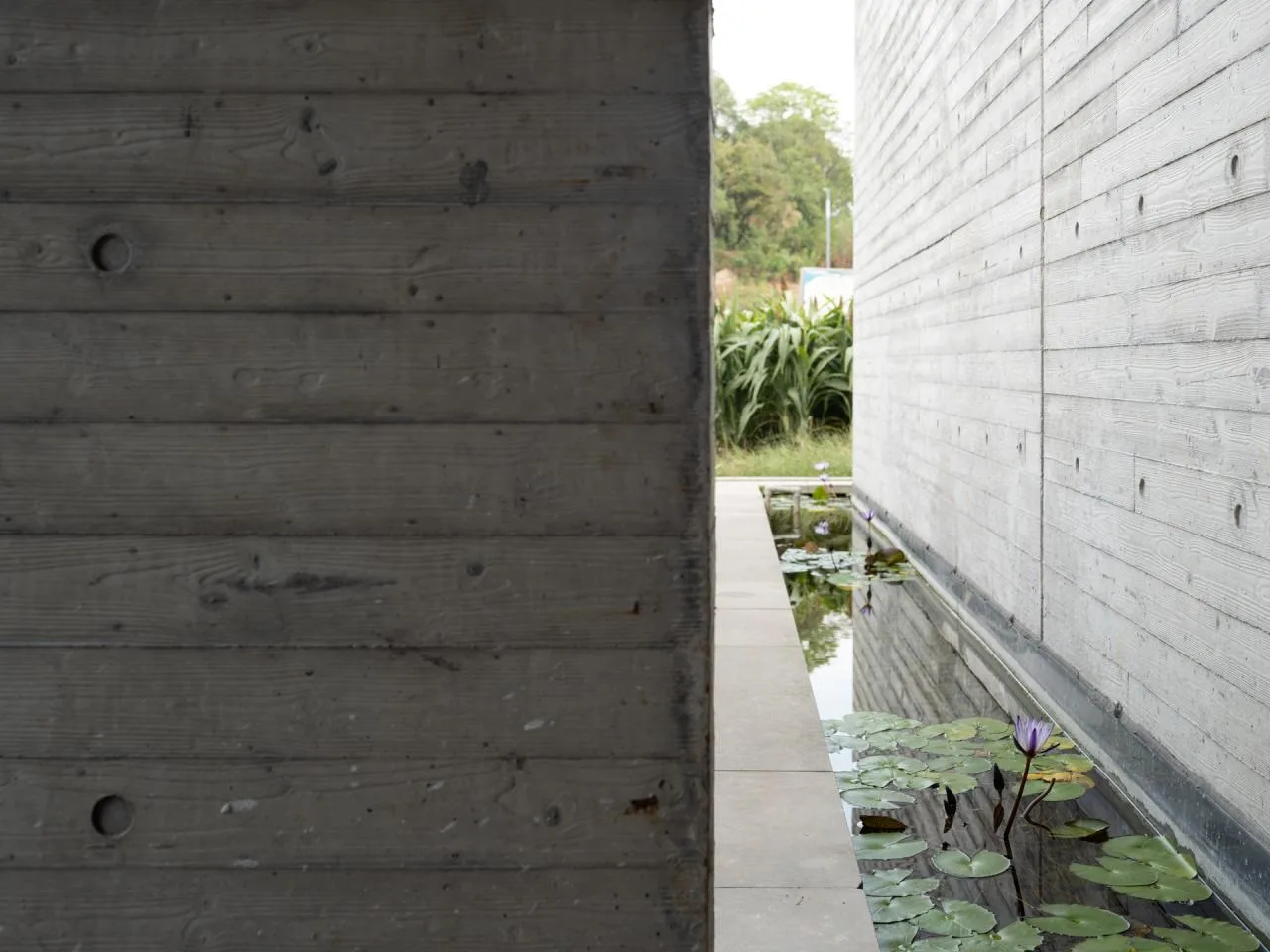
Water Scenery | © Yan Yu Architectural Space Photography
Space Organization and Place Creation
The design creates rich indoor and outdoor variations within a continuous linear space using elements such as stone curtain walls, balconies, skylights, terraces, and concrete curtain walls. This approach allows visitors to engage with the rural environment in diverse ways, even inside the building.
The building’s east-west orientation features a long facade with shorter sunlight exposure on the east side, hosting exhibition spaces on the first floor, balconies on the second, and conference rooms on the third. The west side, receiving longer sunlight, includes a corridor on the first floor enhanced by a stone curtain wall to enrich light and shadow, small windows on the second floor, and a corridor on the third. The southern second floor has a concrete curtain wall, with blue Jacaranda planted on the southwest exterior to block summer sunlight and help regulate indoor temperature, while winter sunlight enters to create dynamic light and shadow effects.
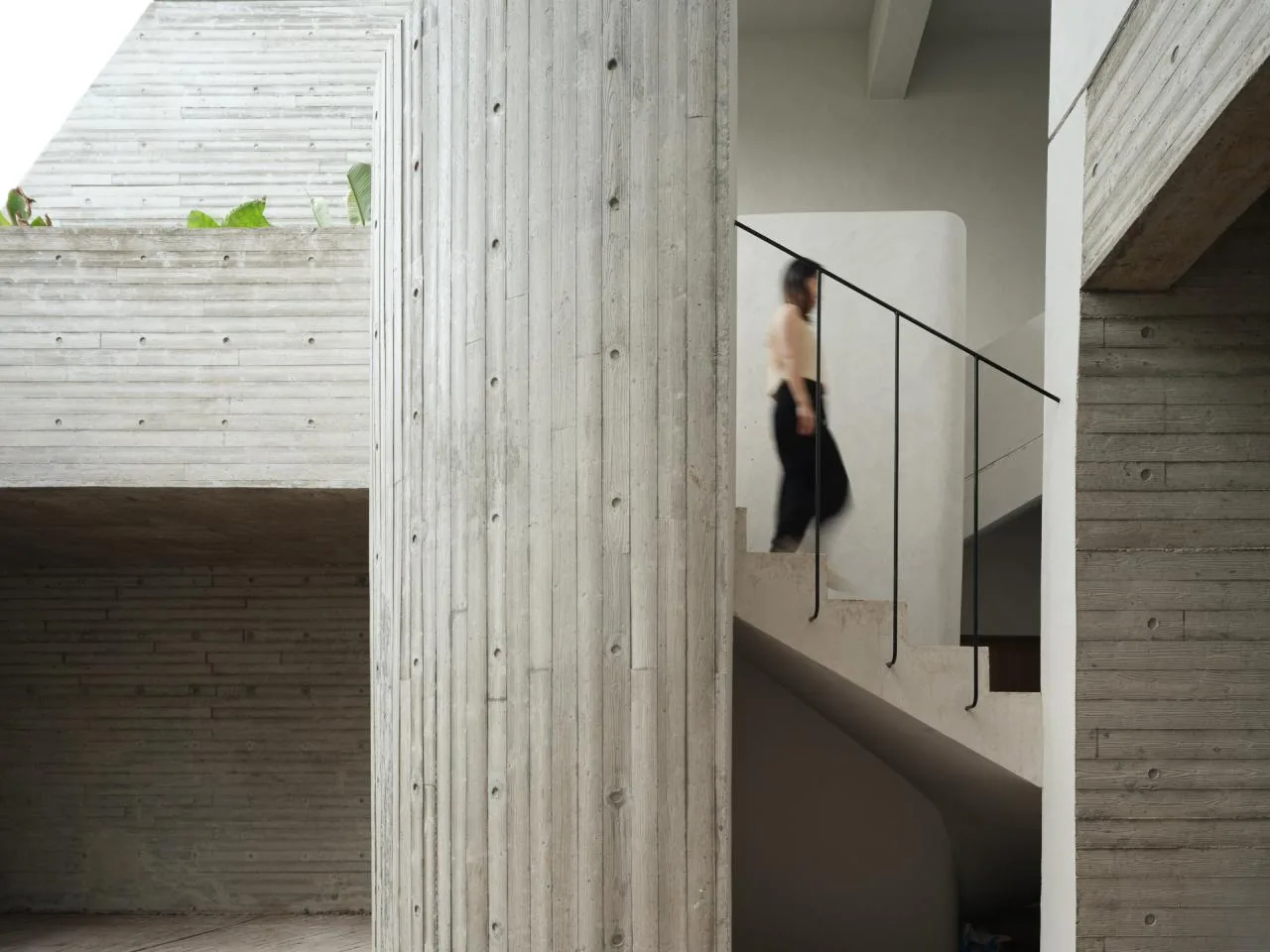
© Yan Yu Architectural Space Photography
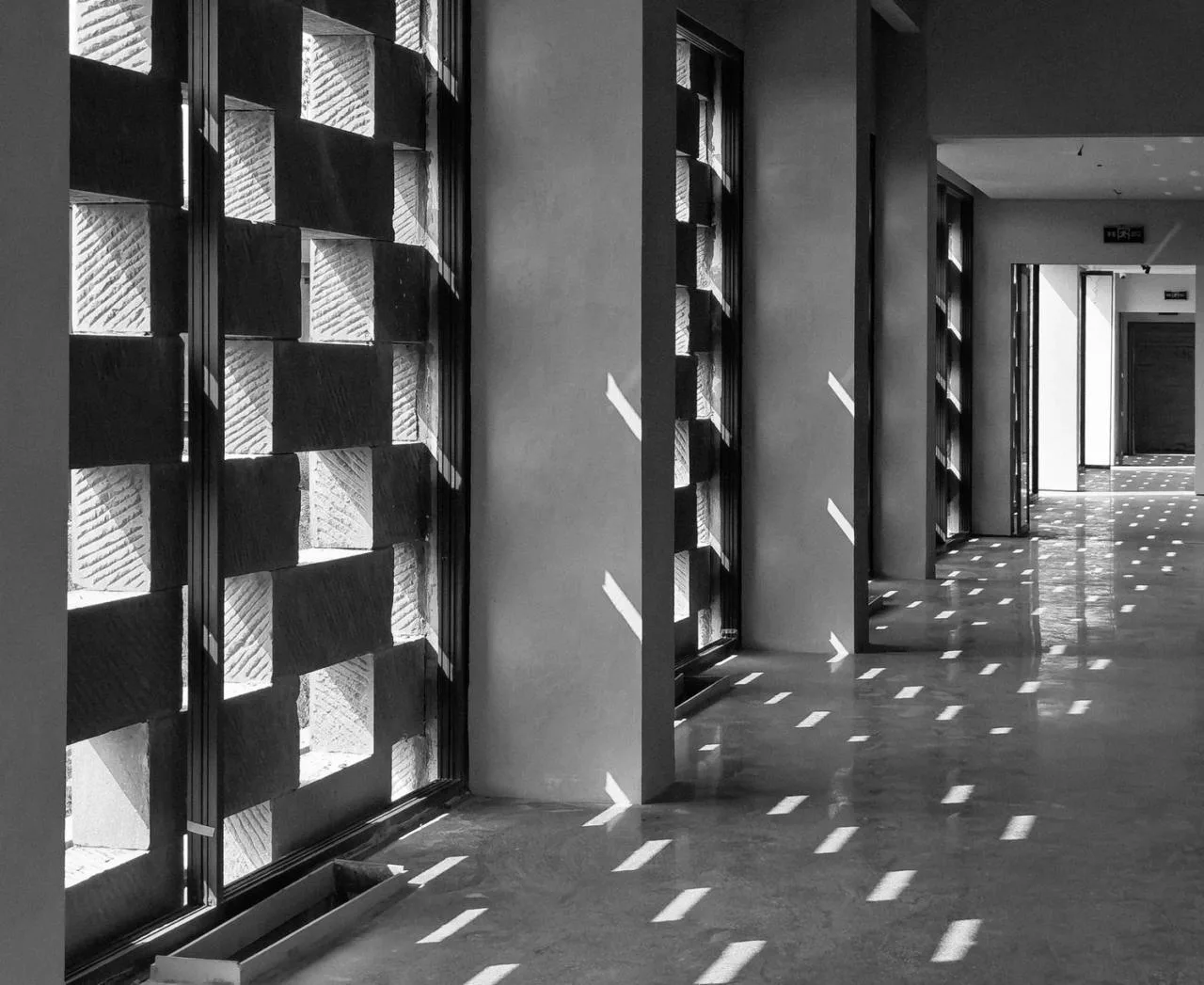
© Architect – He Biao
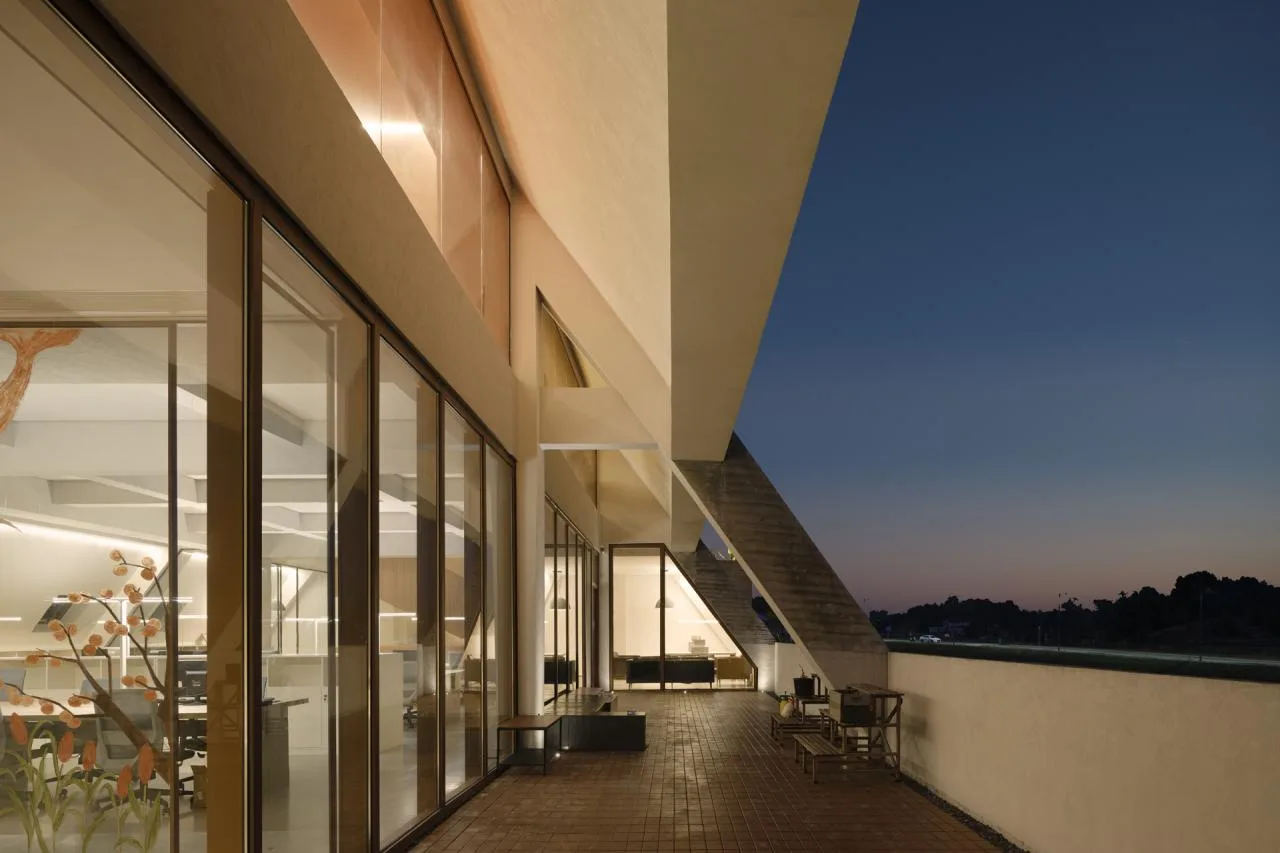
© Yan Yu Architectural Space Photography
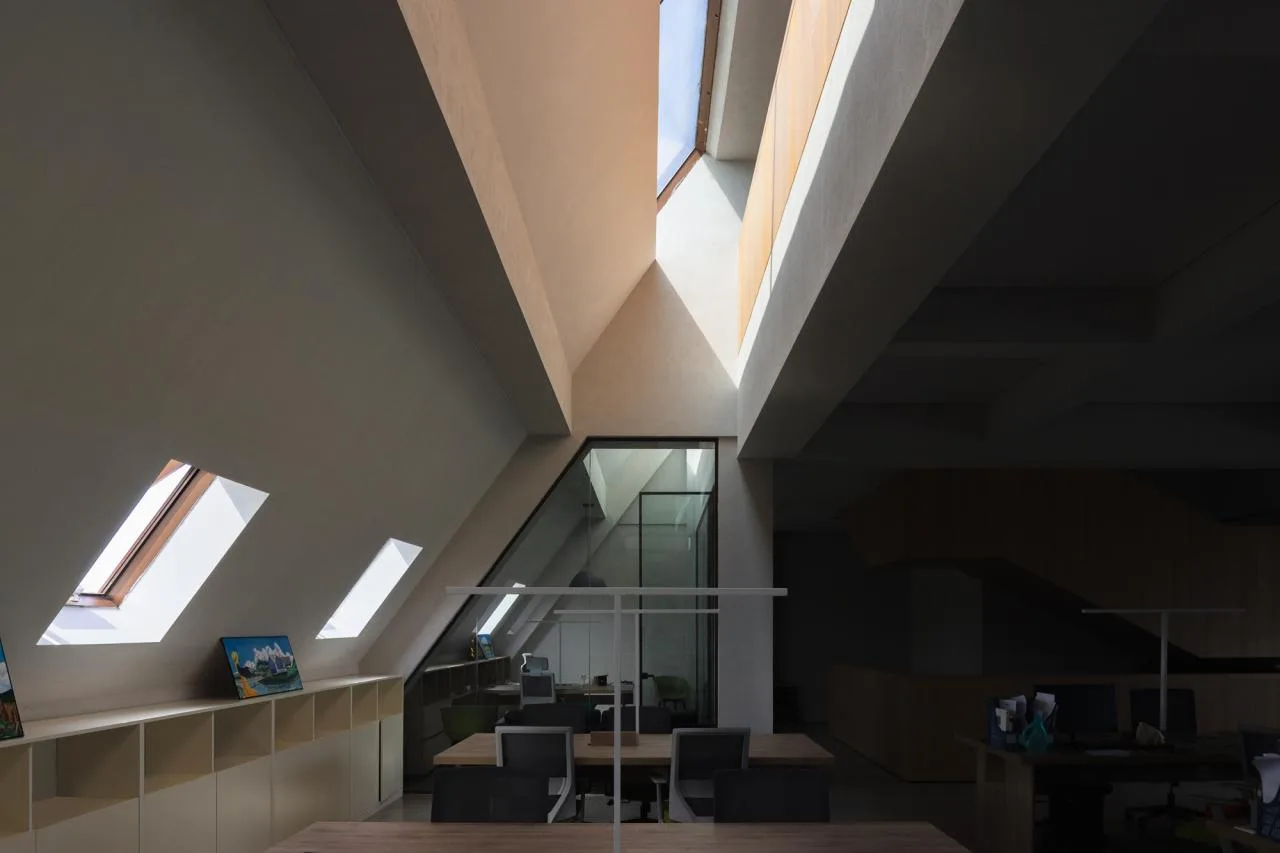
© Existence of Architecture – Architectural Photography
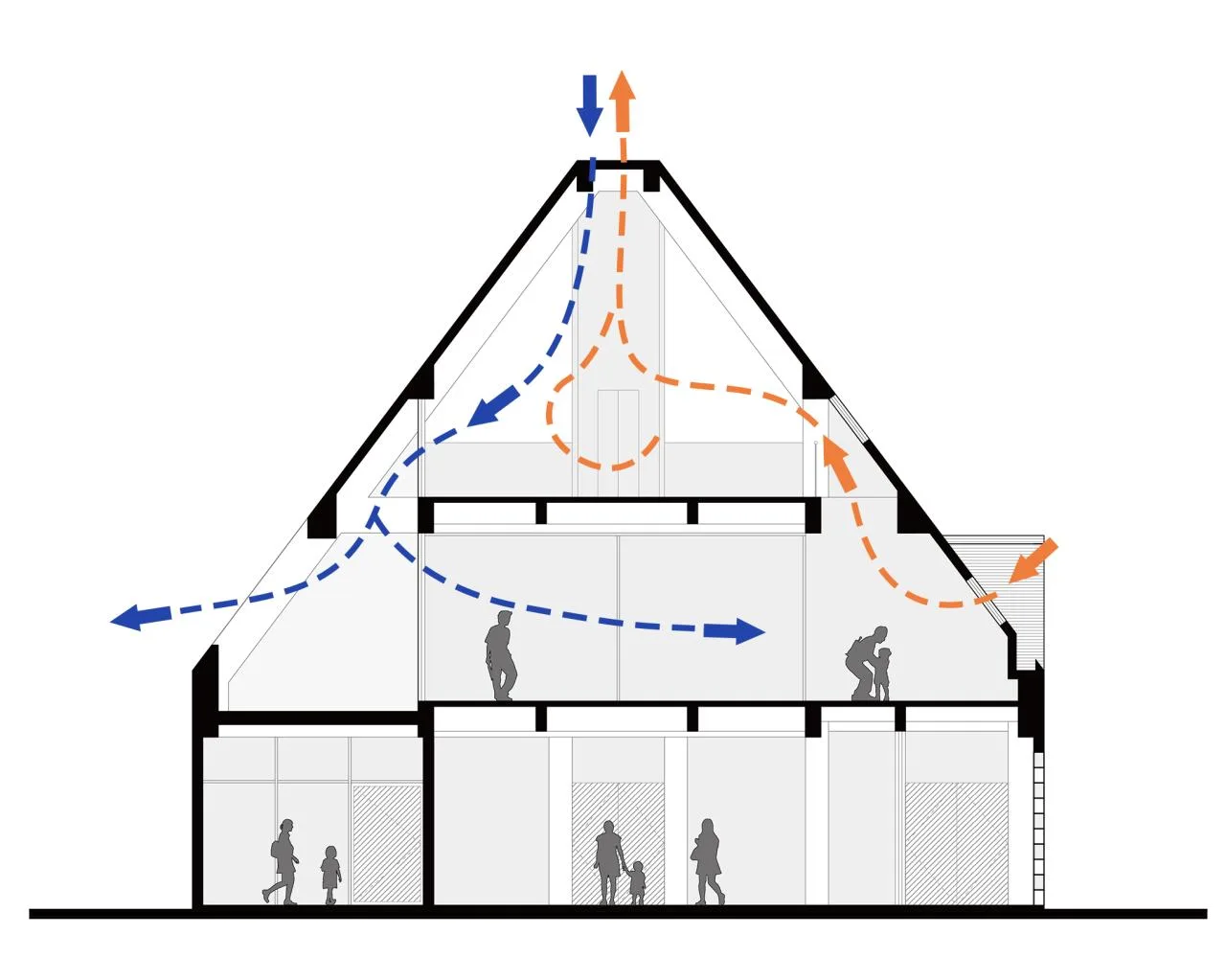
Ventilation Analysis Diagram of Dadi Art Museum © No architectural design firm identified
Materials and Construction of the Earth Art Museum
The wood-grain textured plain concrete combines natural textures with solemn modernity. Its monolithic casting and permanence present significant construction challenges, but it perfectly suits the Earth Art Museum’s goal of blending rustic atmosphere with modern techniques. After extensive sampling, the final finish achieves an ideal modern rustic effect.
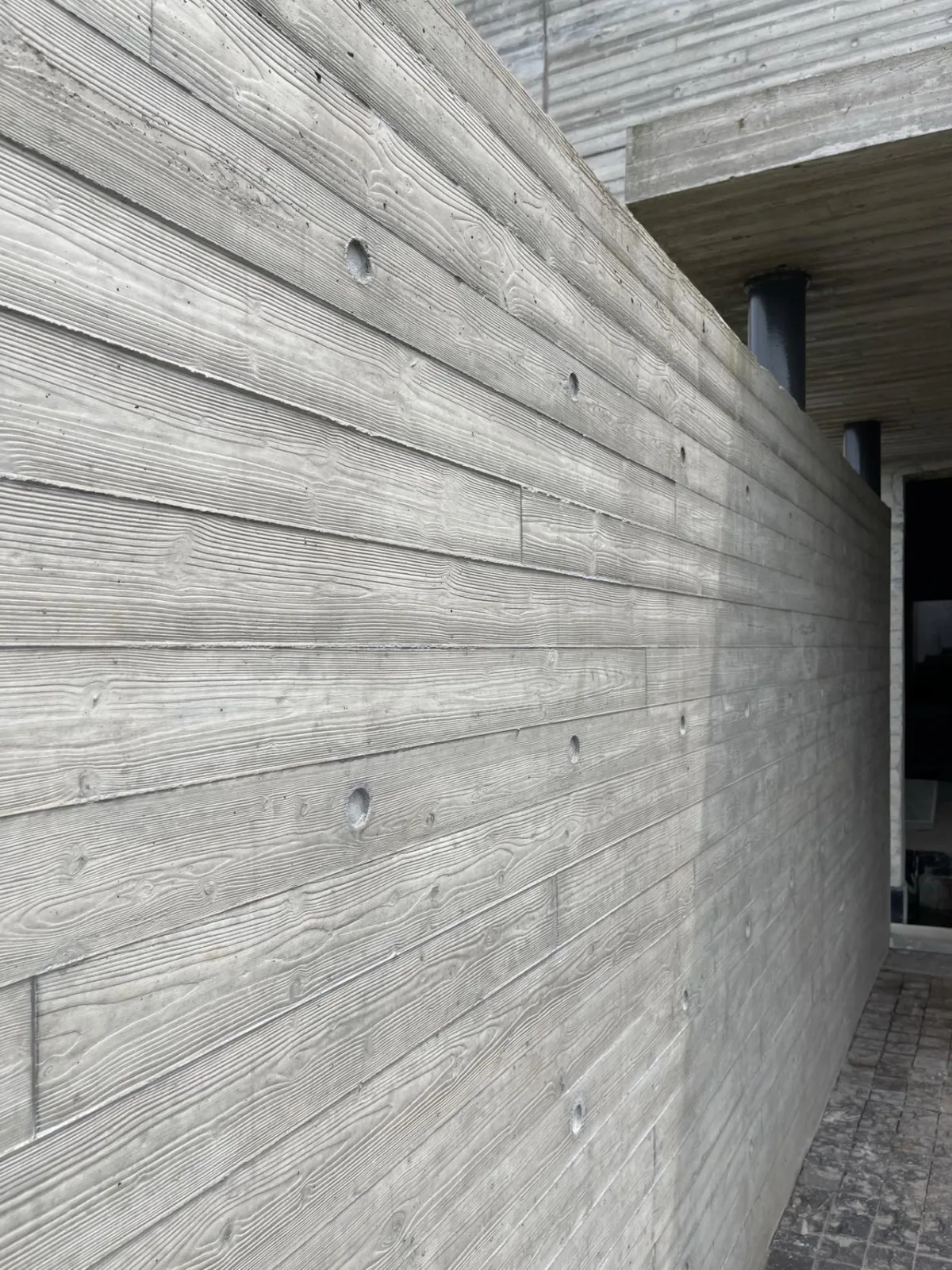
© No architectural design firm identified
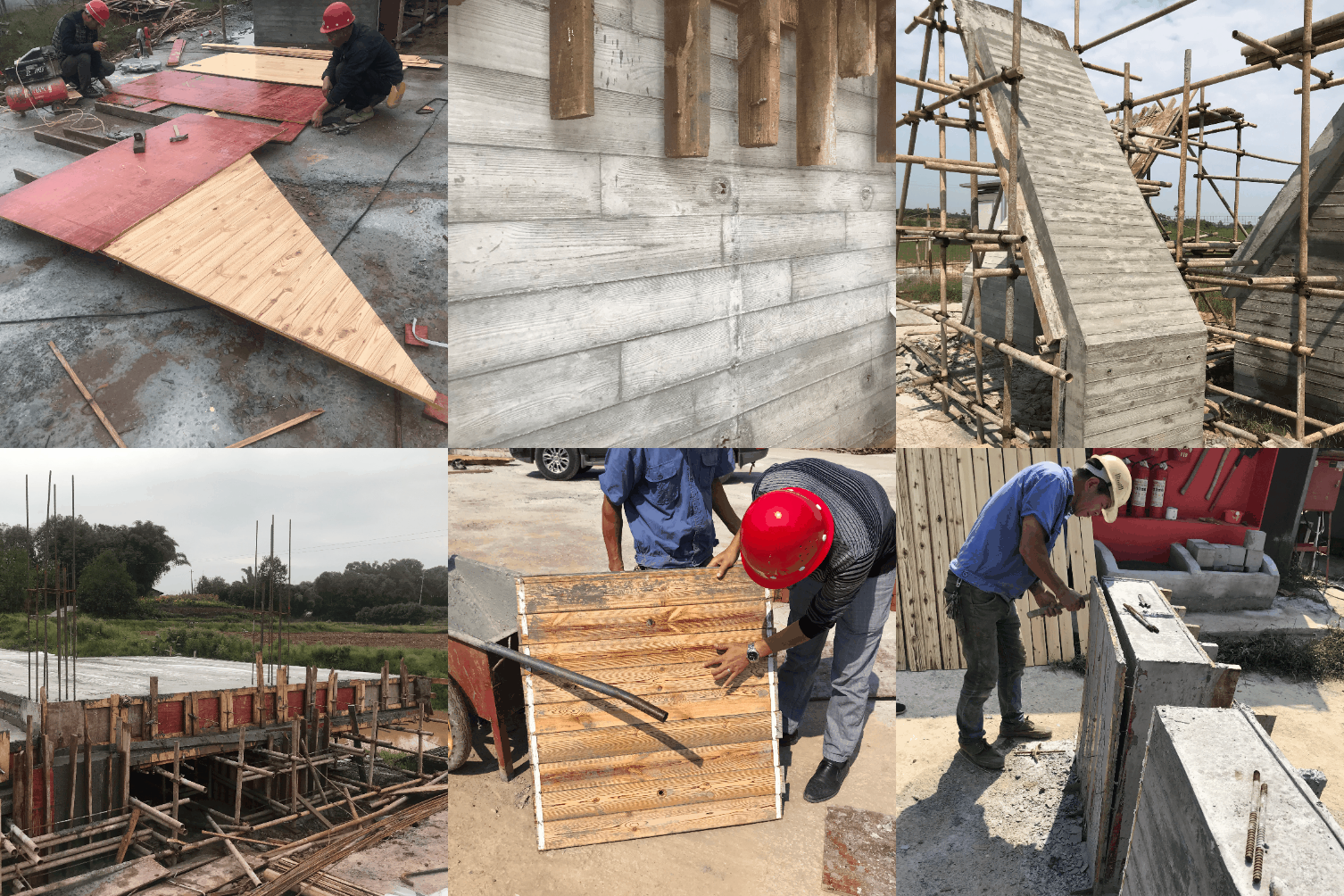
Wood-Grain Concrete Sampling Process © No architectural design firm identified
Concrete Dragon Water Outlet
The on-site prefabricated concrete dragon water outlet provides a natural solution to drainage. Rainwater flows naturally from the sloped roof to gutters and then into surrounding water channels via the dragon outlet, deliberately exposing the relationship between rainwater and building, allowing it to present itself organically.
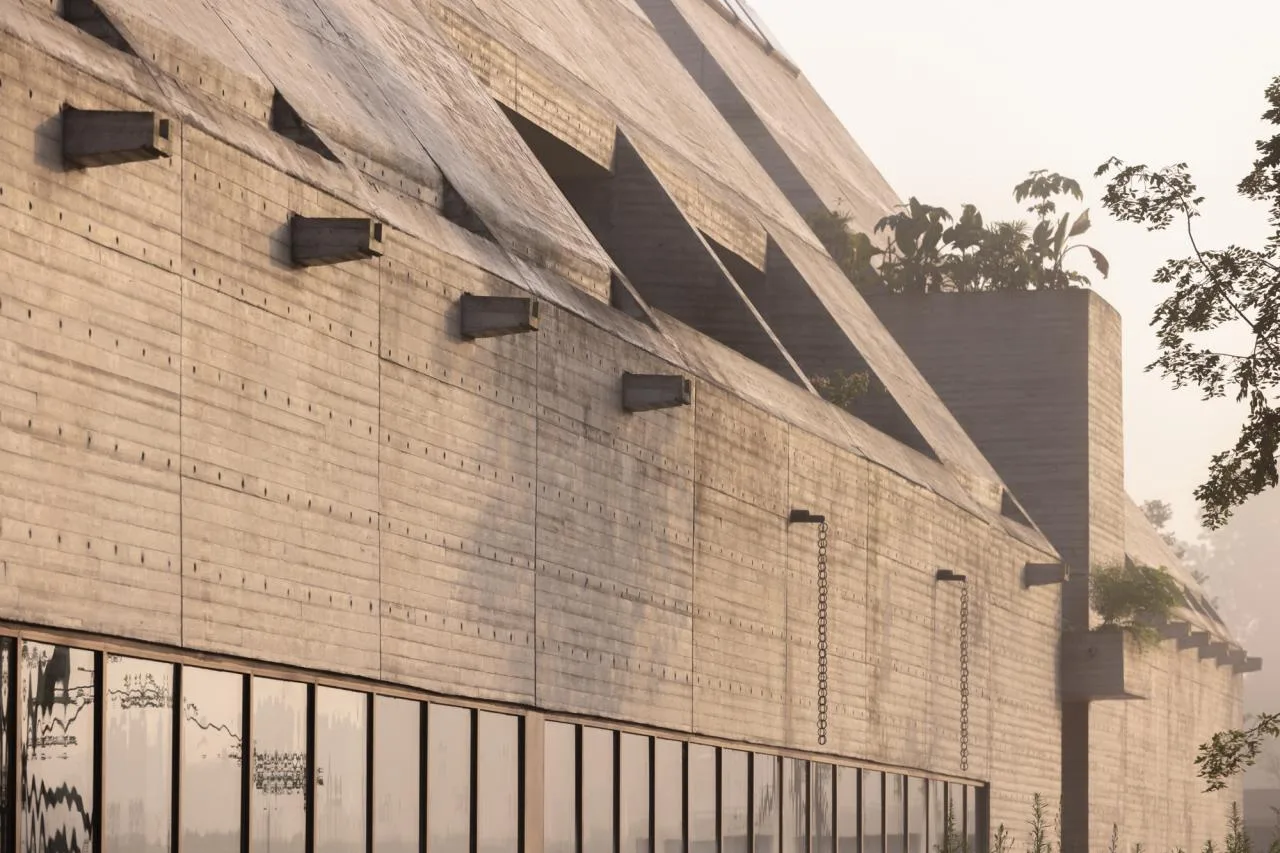
© Existence of Architecture – Architectural Photography
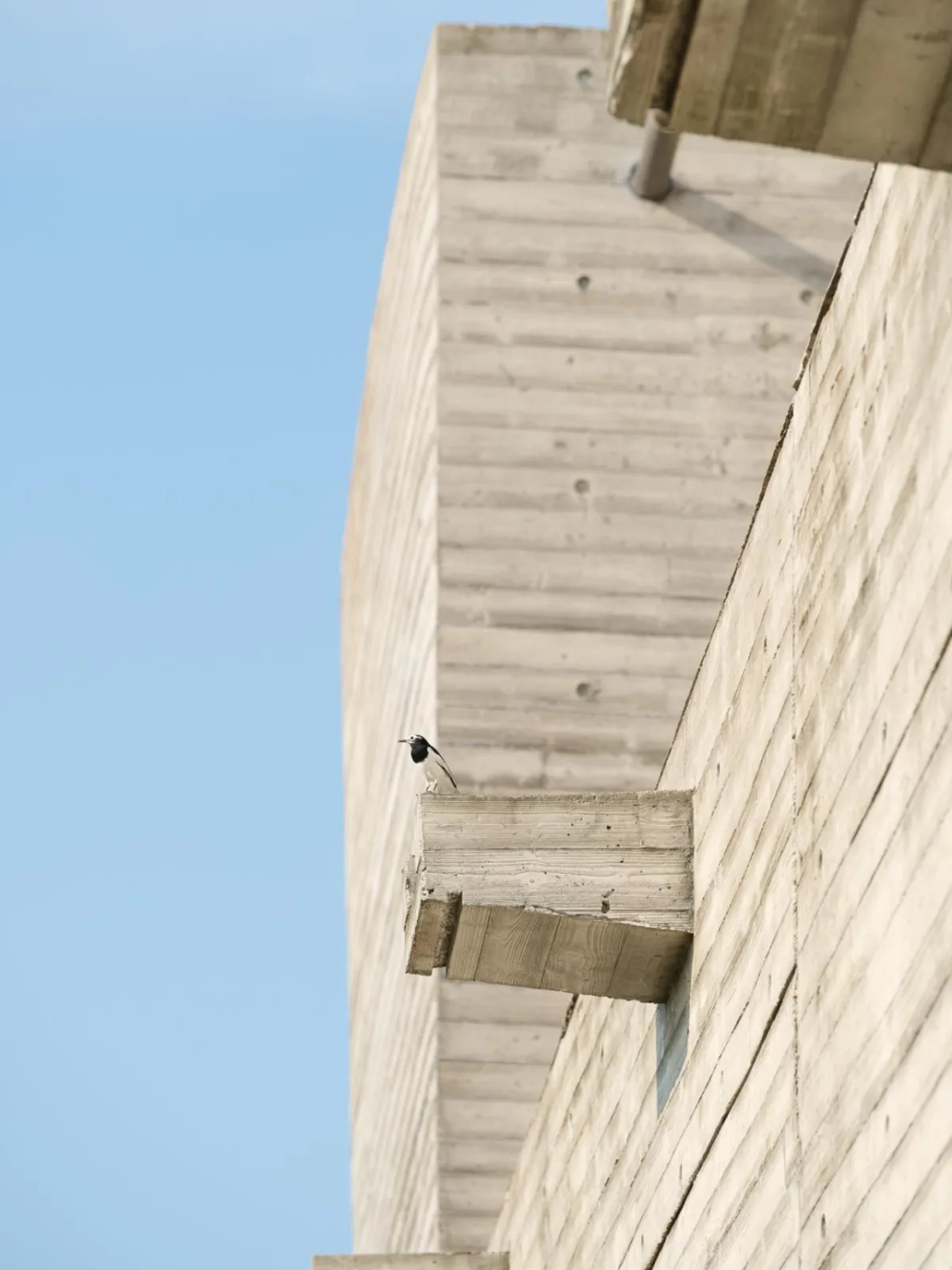
© Yan Yu Architectural Space Photography
BIM Forward Design
BIM technology has been integrated throughout the entire process—from concept to on-site management—ensuring efficient workflow for frequent early-stage design iterations and significantly reducing interdisciplinary conflicts and construction errors during later stages.
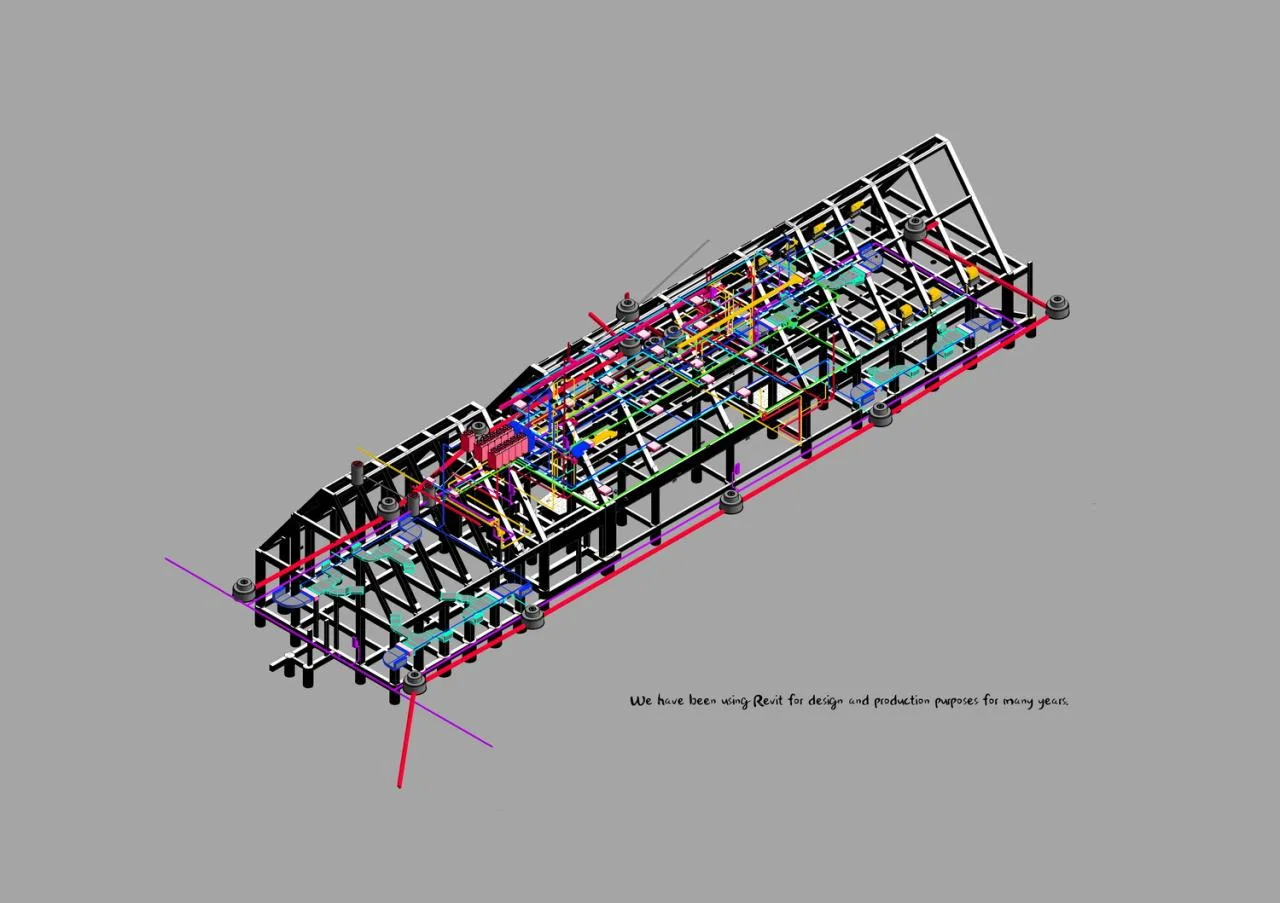
BIM Application © No architectural design firm identified
Field Store
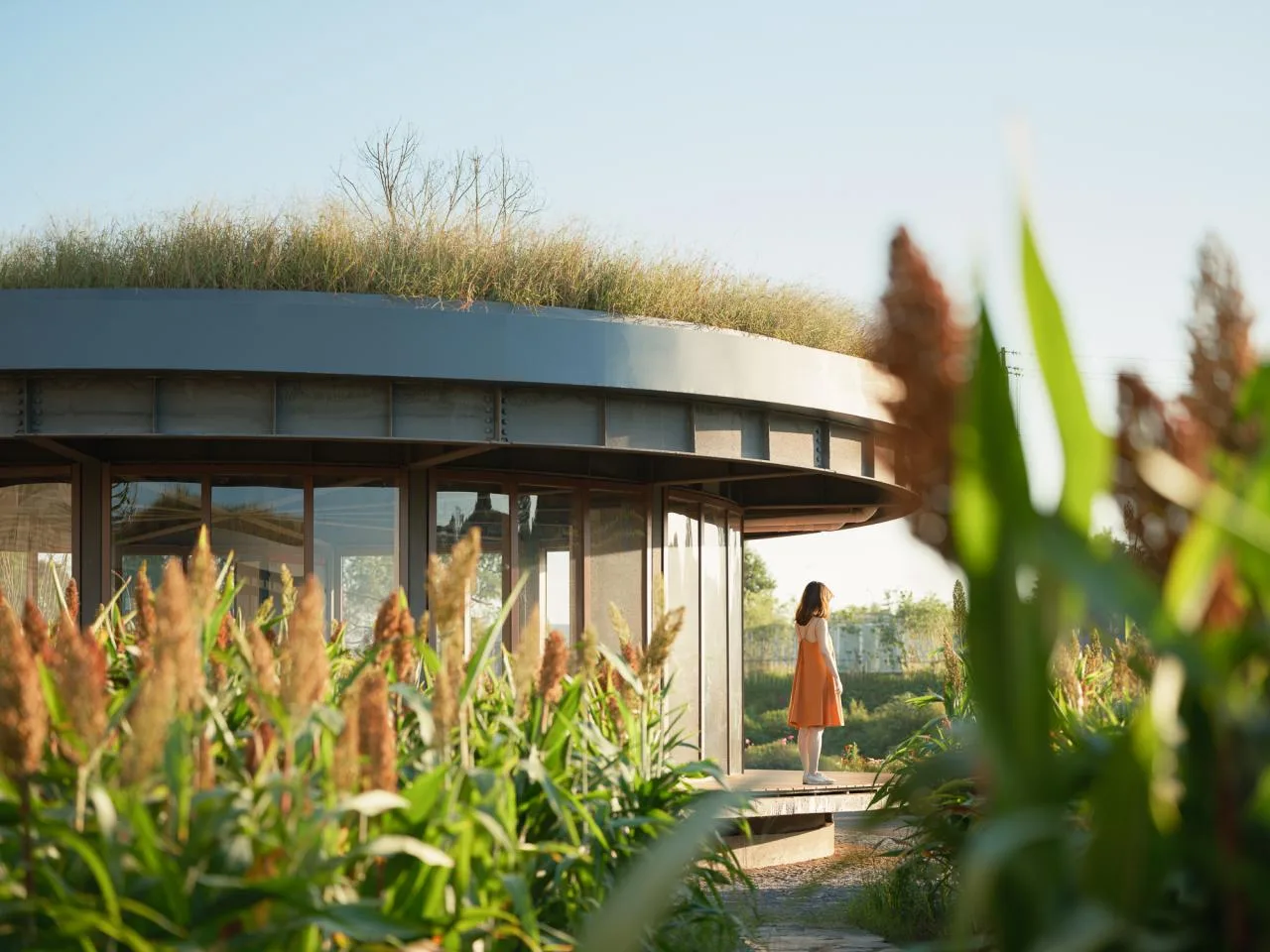
© Yan Yu Architectural Space Photography
The small supermarket selling agricultural and sideline products and the cultural and creative shop function as independent commercial entities, separated from the main art museum building. Located within two circular flat spaces in the sorghum field, they distinctly differentiate their functions from the main building. This spatial separation encourages visitors to frequently move between indoor and outdoor environments, enhancing their connection with nature.
One shop features an interior elevated 60 cm for a relaxed atmosphere, while the other is both raised and lowered to create a sunken, immersive environment.
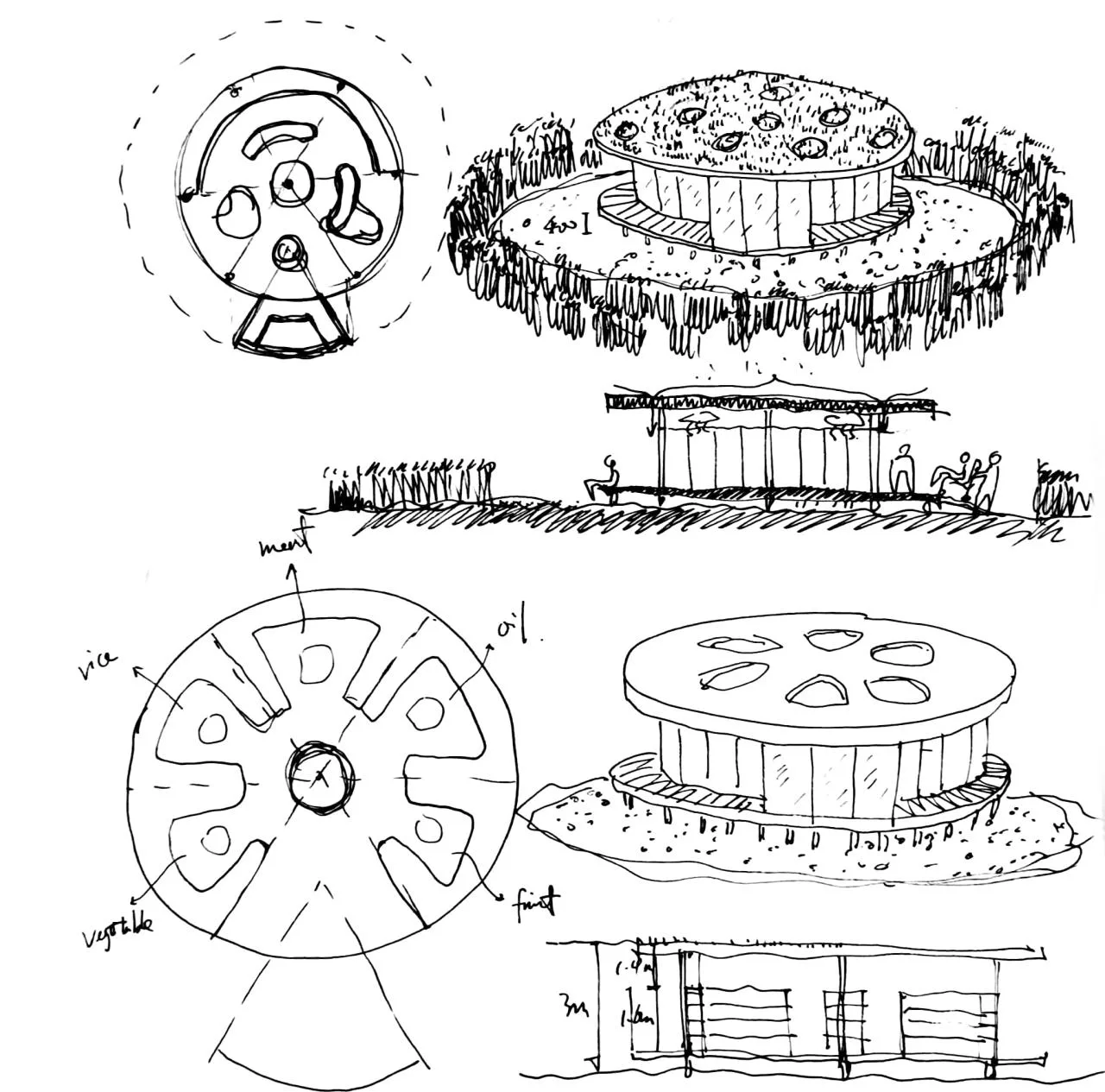
Field Store Sketch © No architectural design firm identified
The wooden platform walkway encircling the building allows visitors to walk and sit amidst the fields. Raised 60 cm above ground, the platform offers a comfortable rural experience with seating that lets legs dangle freely.
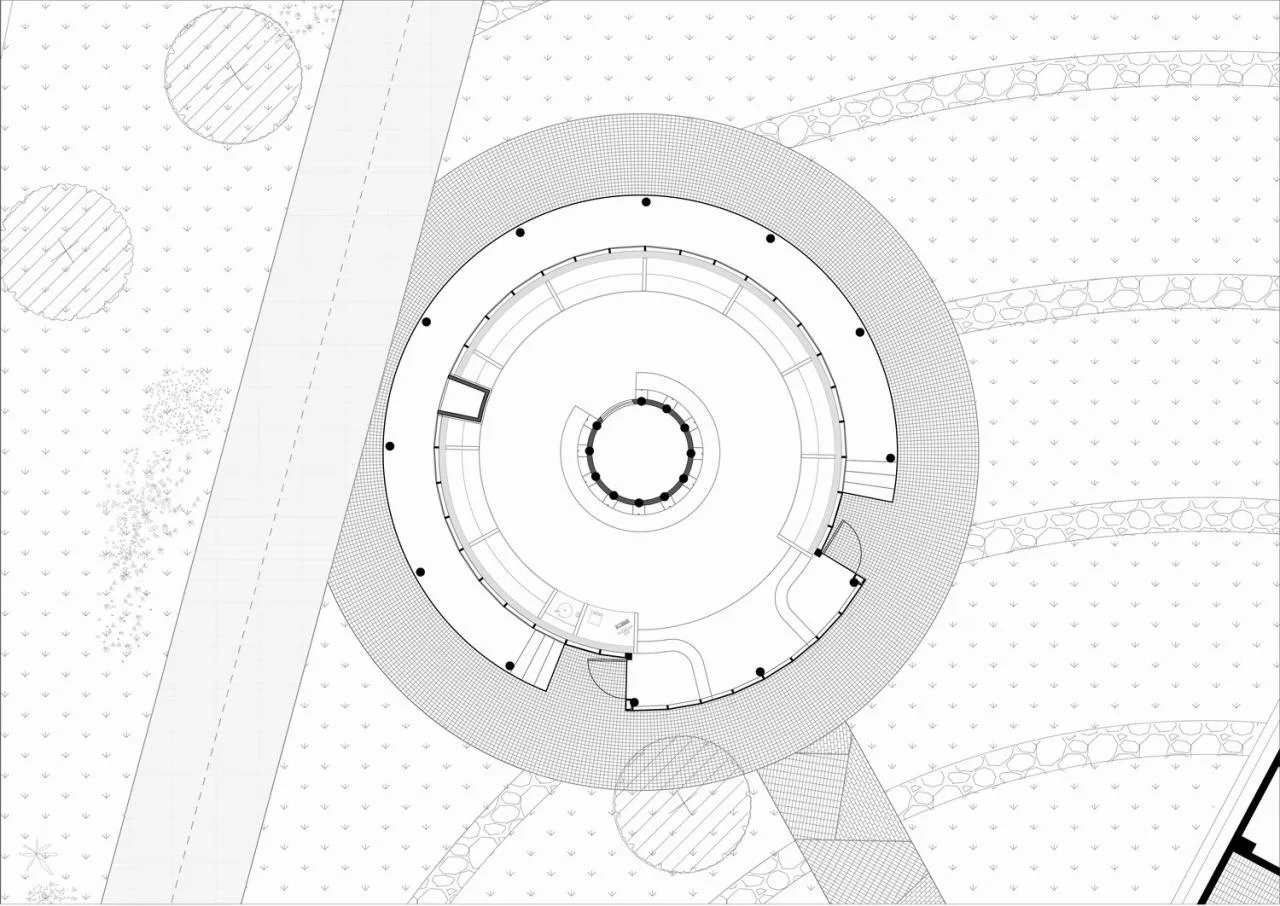
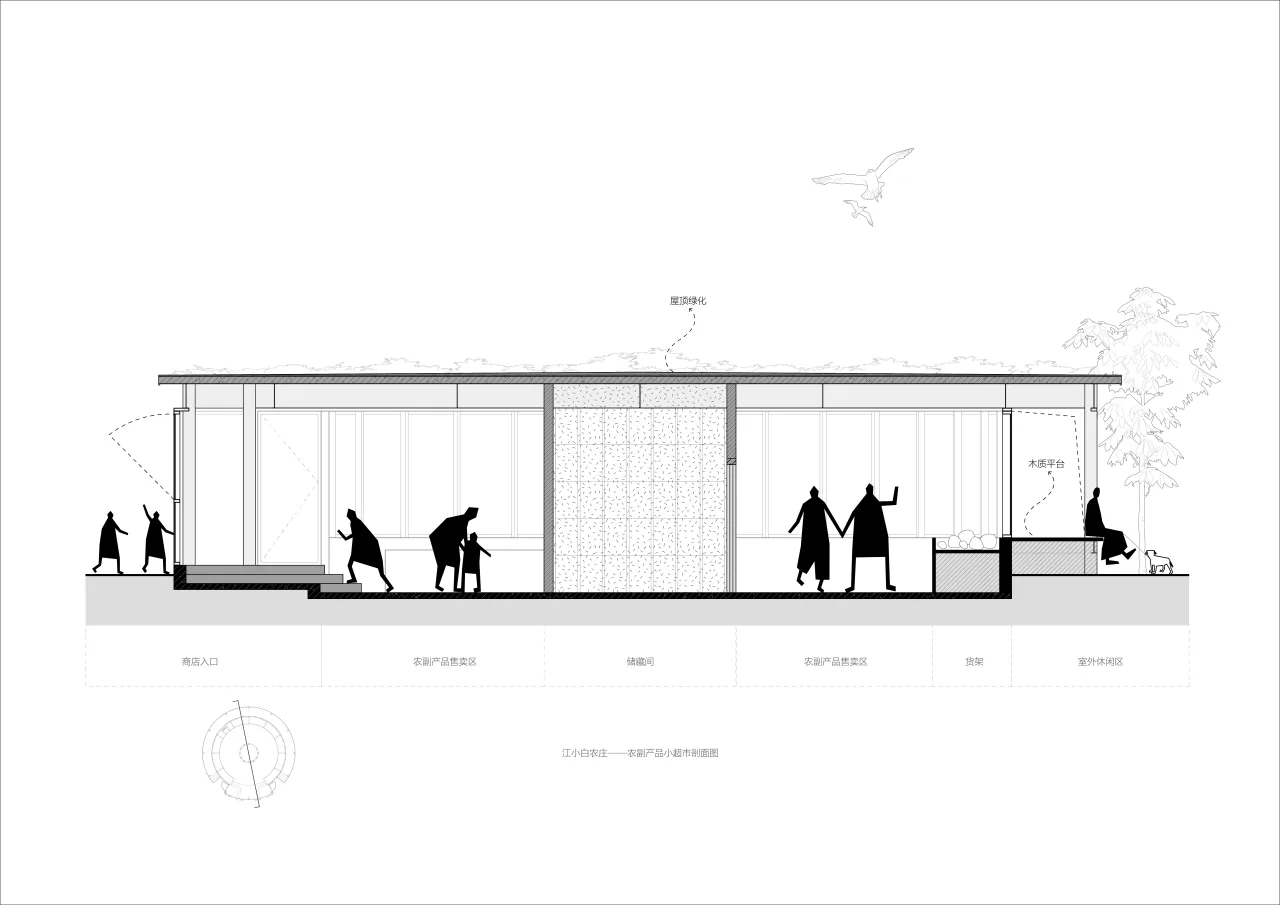
Plans and Sections of Agricultural Product Supermarket © No architectural design firm identified
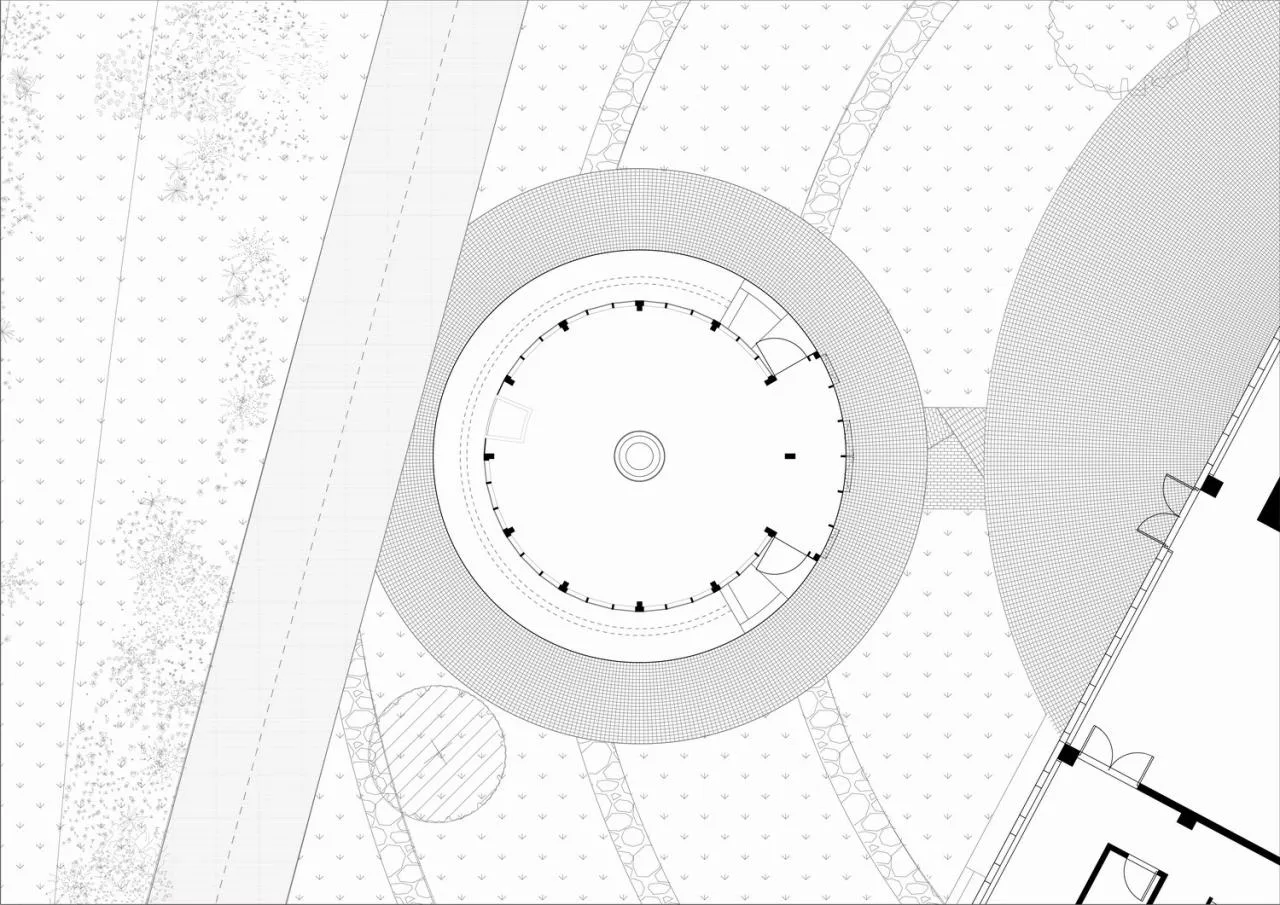
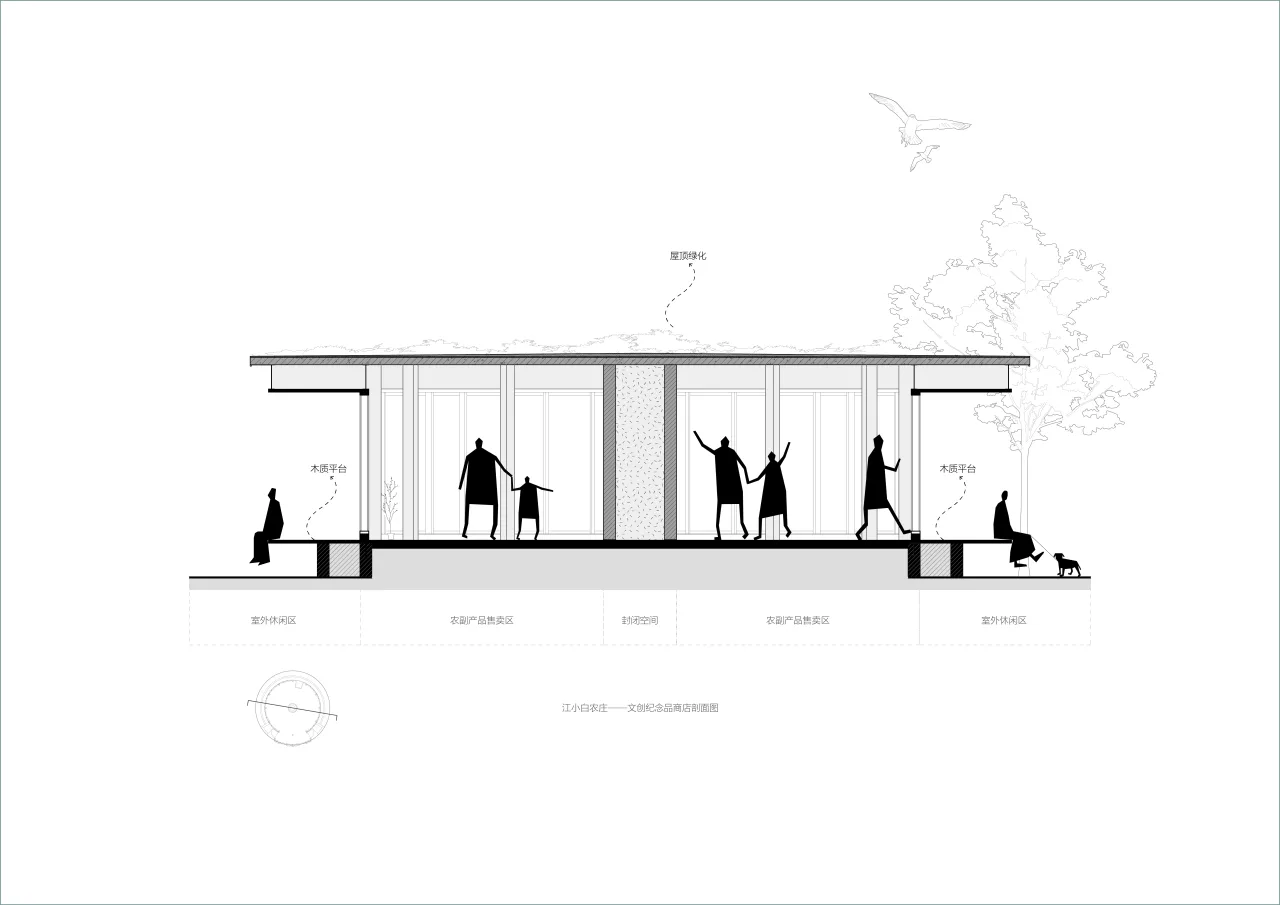
Plans and Sections of Cultural and Creative Product Store © No architectural design firm identified
Snail Garden
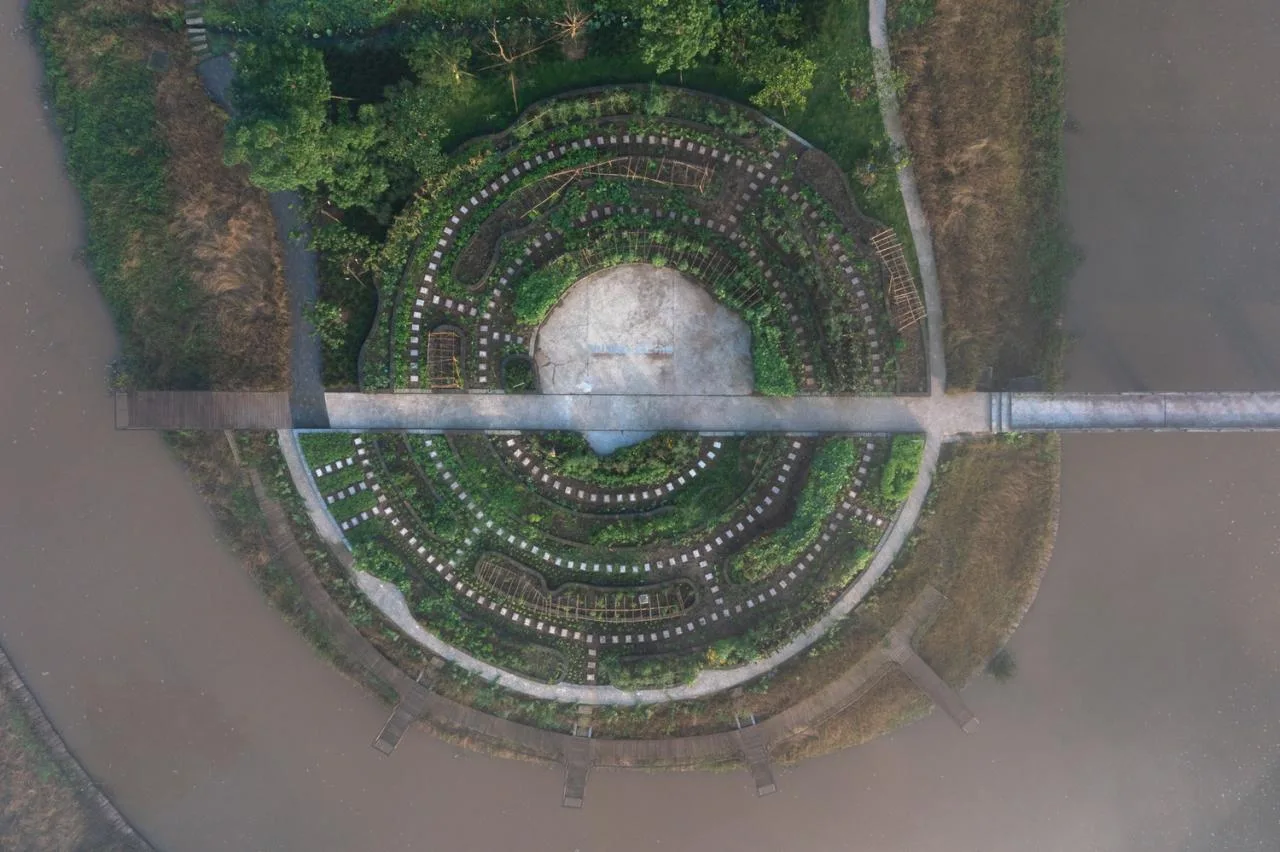
© Existence of Architecture – Architectural Photography
Located at the tip of the peninsula adjacent to the art museum, the Snail Garden is a dedicated space for vegetables, flowers, and fruits. Fixed brick flower beds cultivate vegetables, surrounded by various flower and fruit trees that display seasonal natural beauty. The garden layout spirals outward like a snail shell, creating a slow, contemplative walking experience.
Five waterside platforms resembling snail tentacles extend through the nearby riverside grass, providing resting spots. The spatial design encourages visitors to slow down and appreciate nature’s beauty patiently.
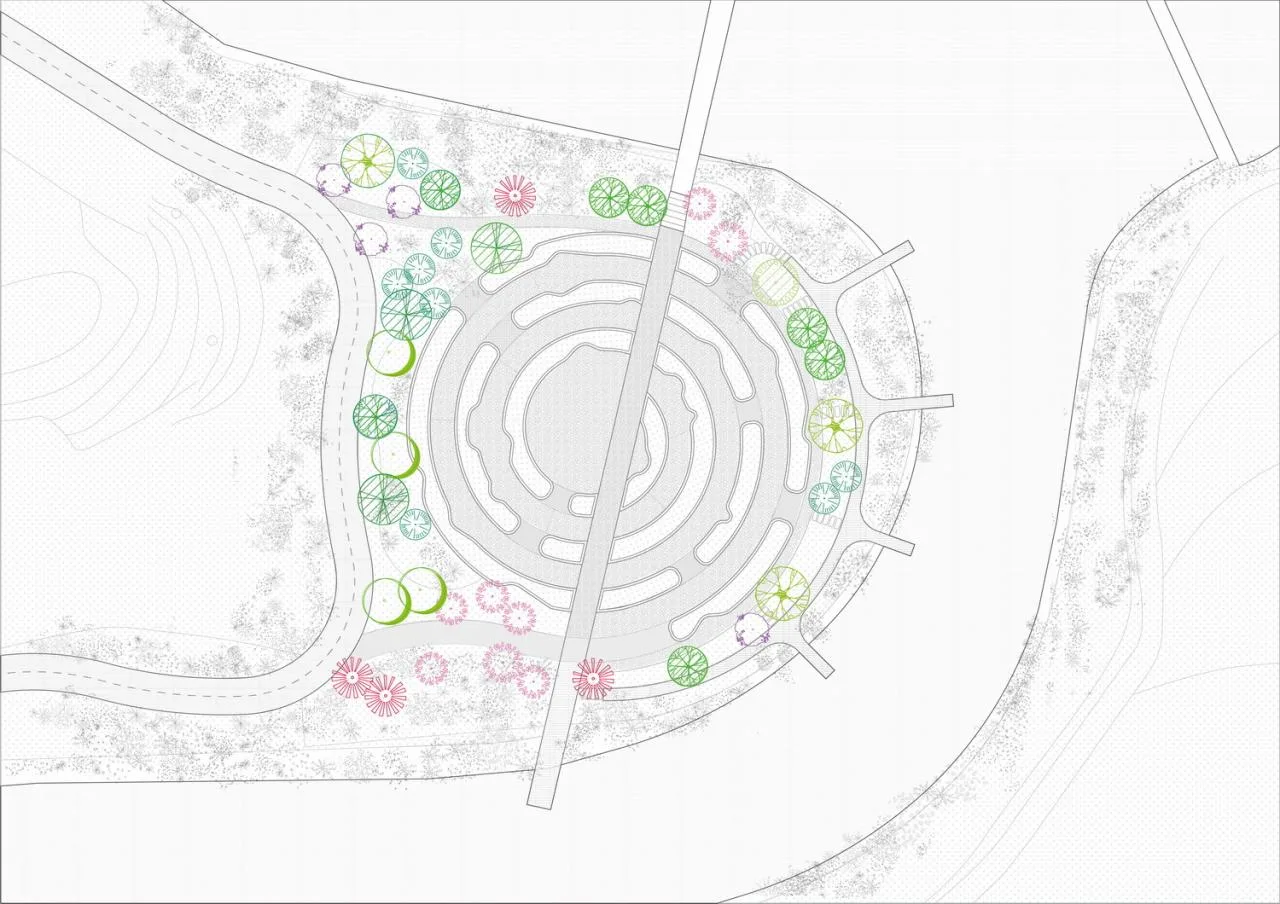
Snail Garden Plan © No architectural design firm identified
The vegetable garden floor is paved with phosphorescent stones. At night, the starry sky reflects the Milky Way, while fireflies dance along the riverbank, creating an enchanting rural atmosphere—an ideal spot for quiet vegetable picking and enjoying drinks.
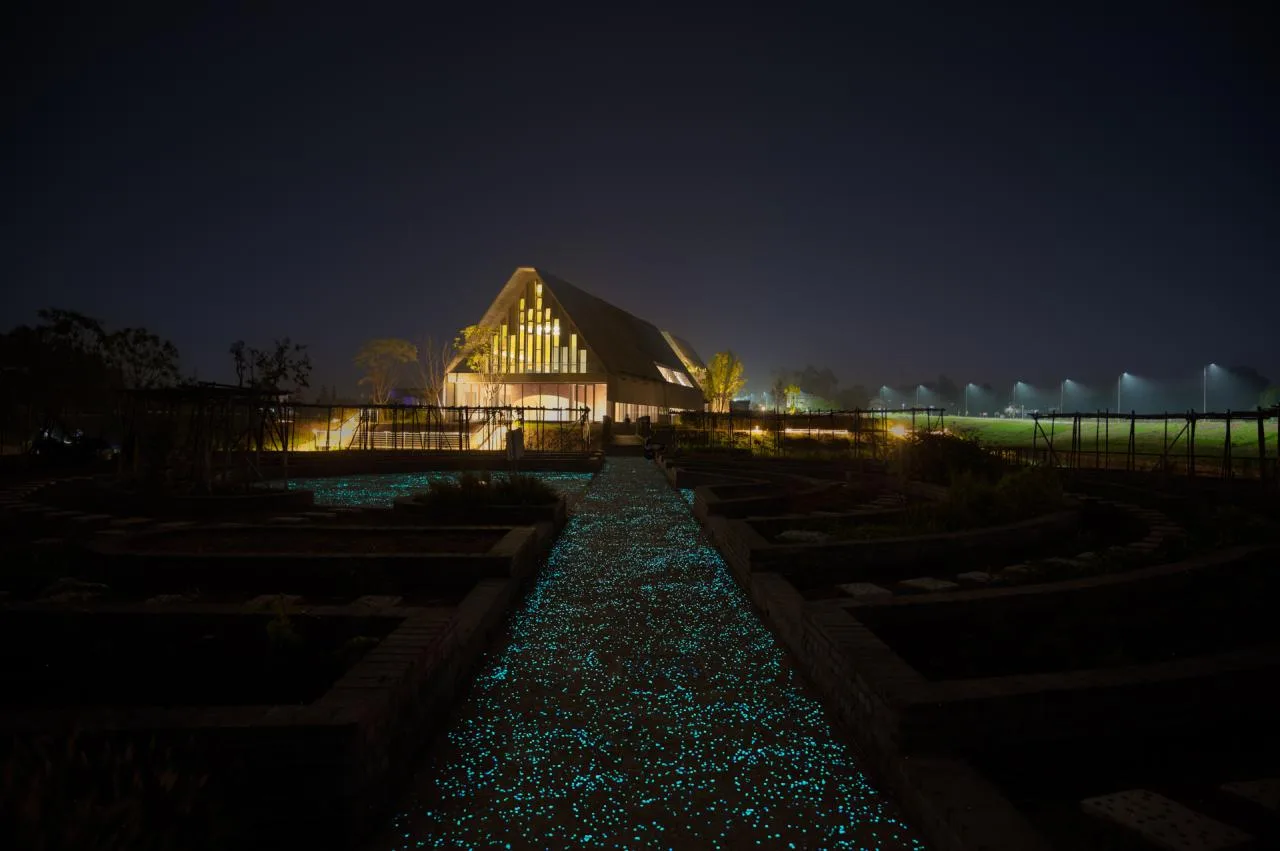
© Yan Yu Architectural Space Photography
Earth Tavern
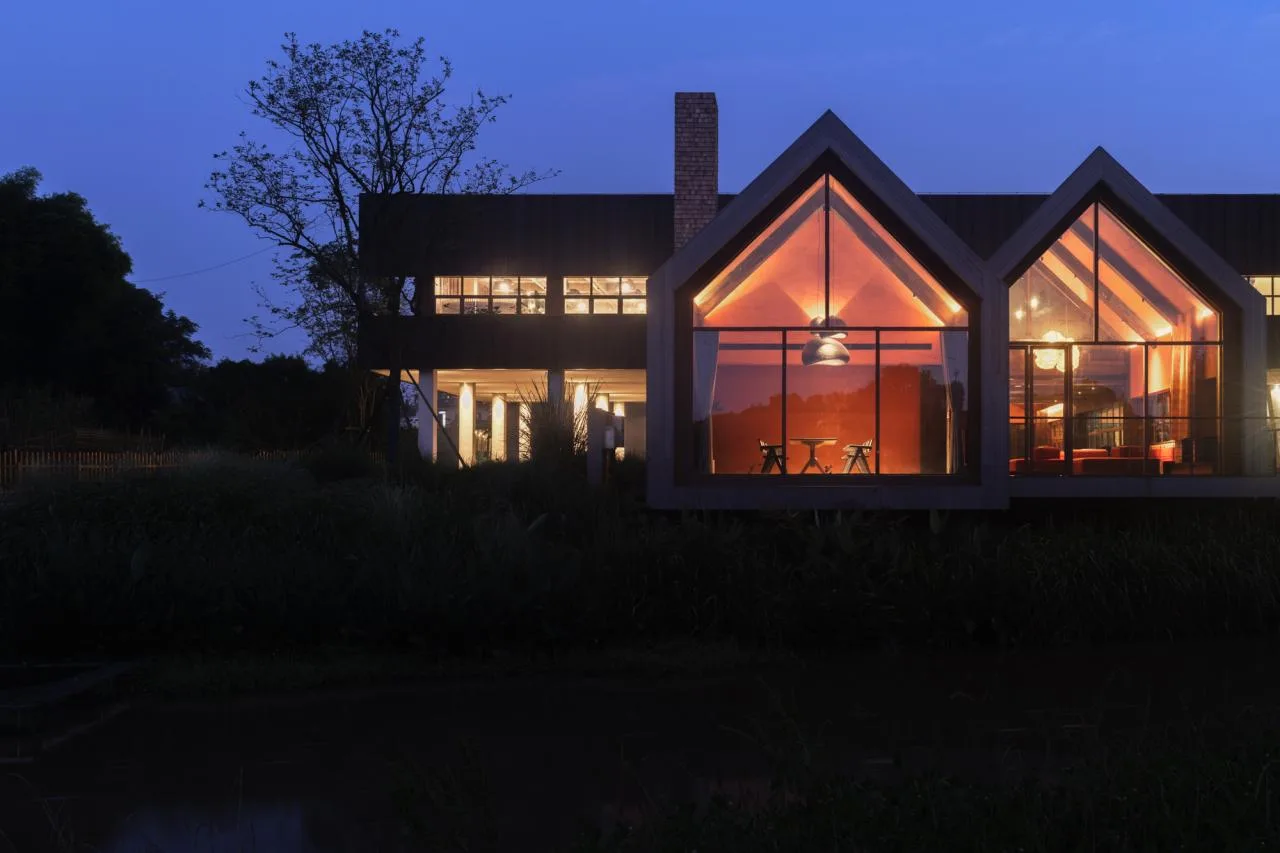
© Existence of Architecture – Architectural Photography
Four-Way Wooden House
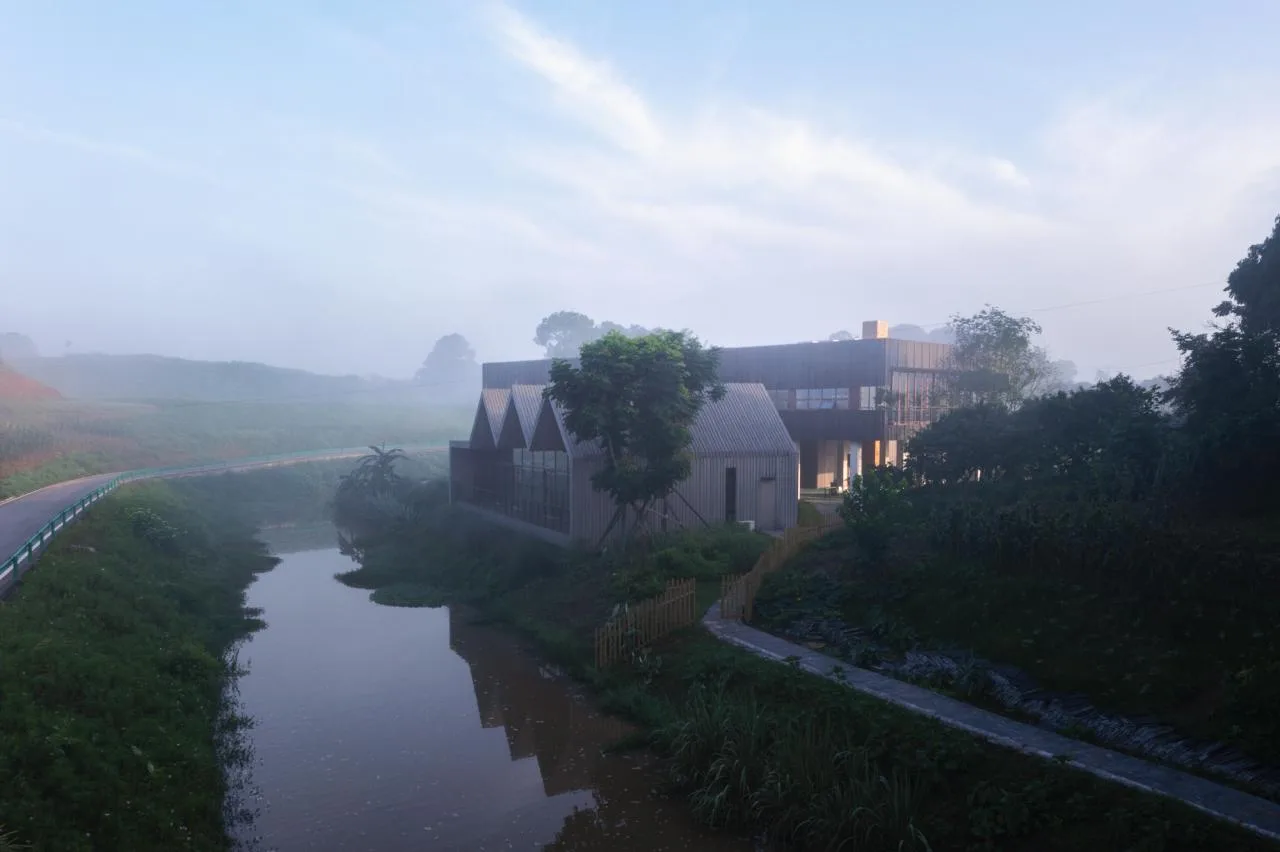
Earth Tavern, located on the third peninsula behind the Snail Garden, serves as a bridge between past and future and is the main gathering space. The east side faces the entrance, with a bamboo-covered hill and farmhouses nearby. The west side is surrounded by water on three sides, offering views of hills and farmland. The south side is open and sunlit, while the north side connects visually to the art museum and vegetable garden.
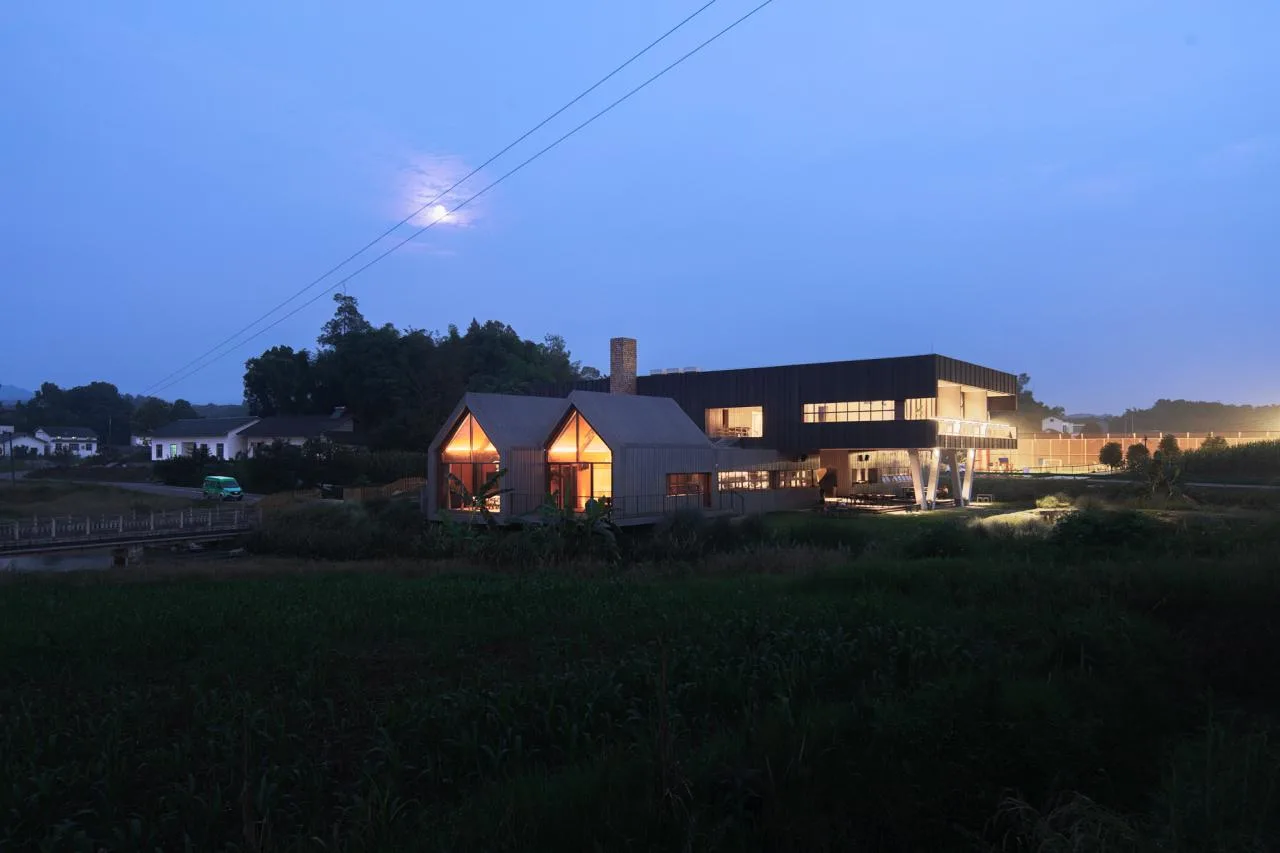
© Existence of Architecture – Architectural Photography
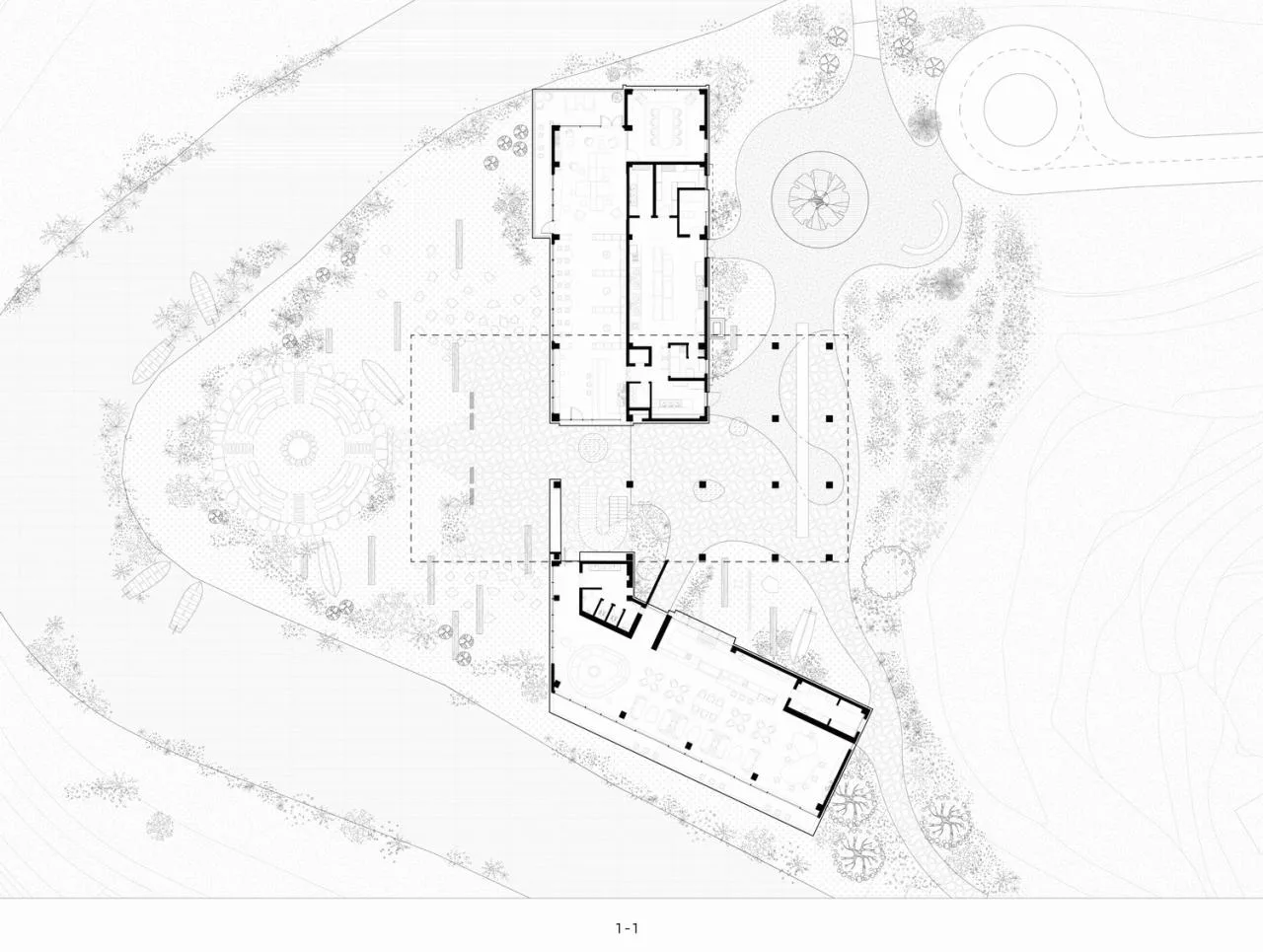
Plan 1-1
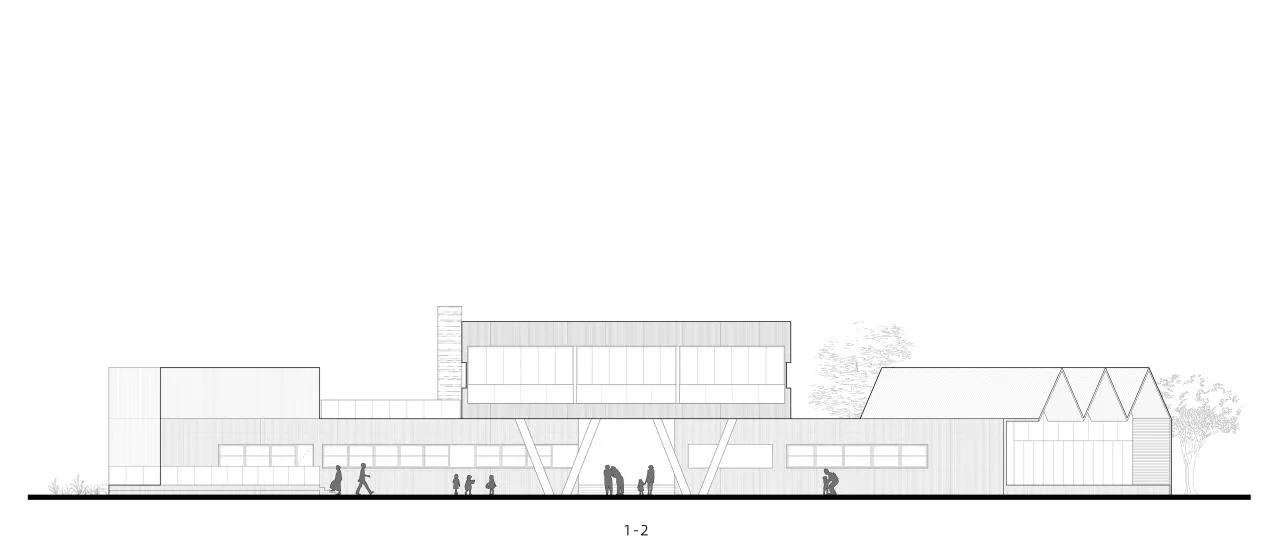
Elevation 1-2
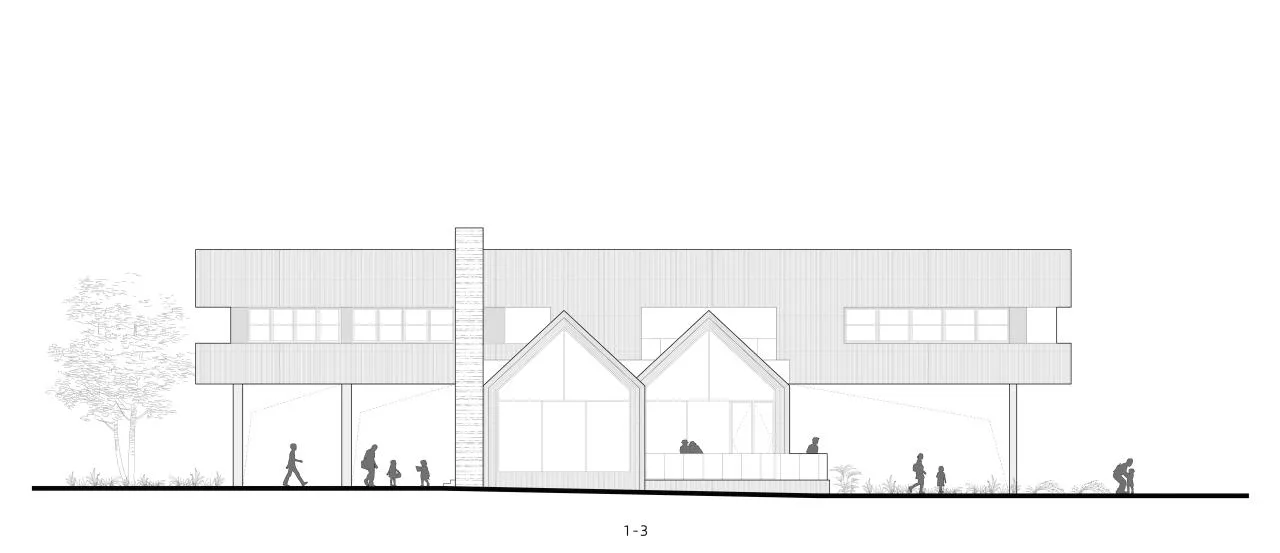
Section 1-3
Dadi Tavern | Plan, Elevations and Section © No architectural design firm identified
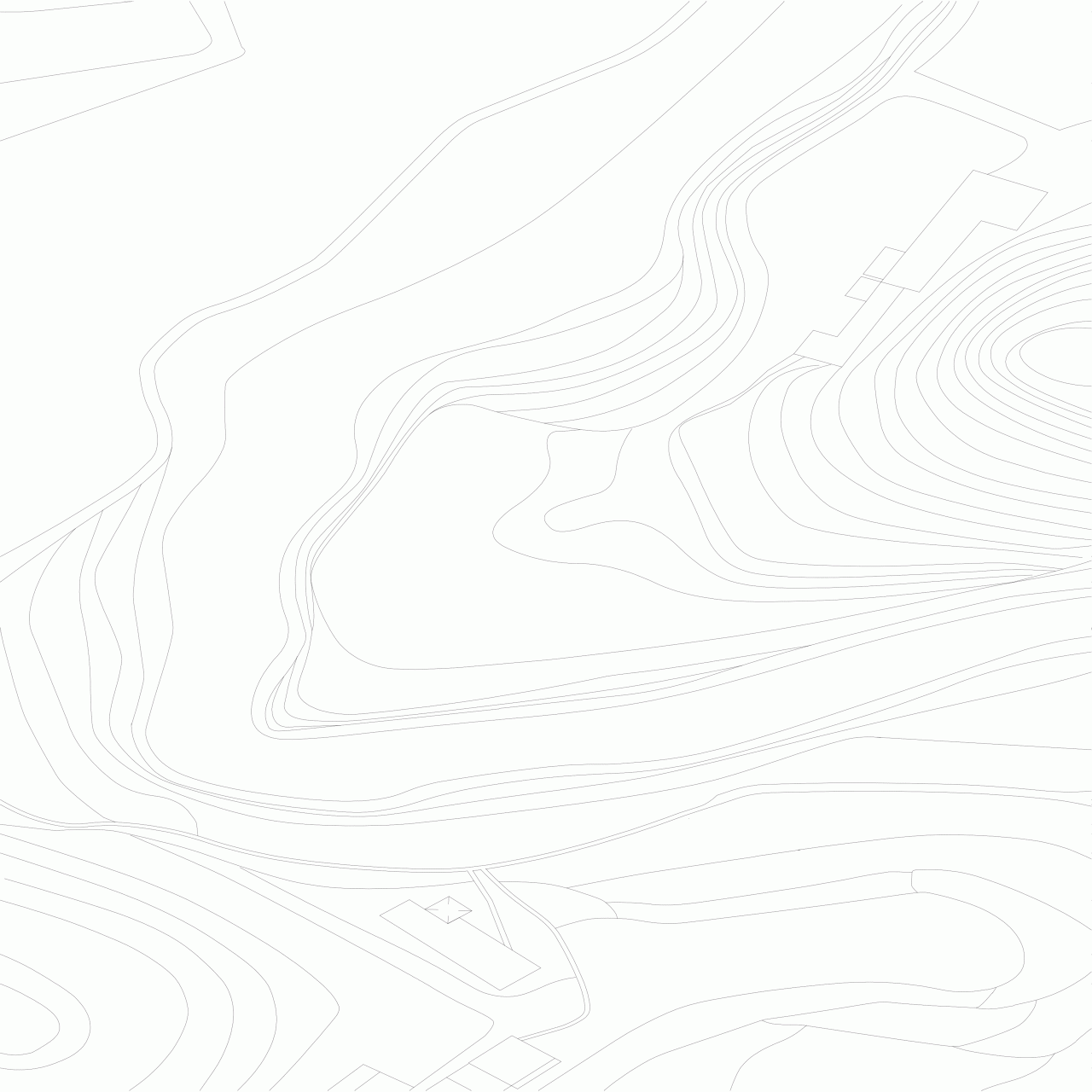
Volume Generation GIF © No architectural design firm identified
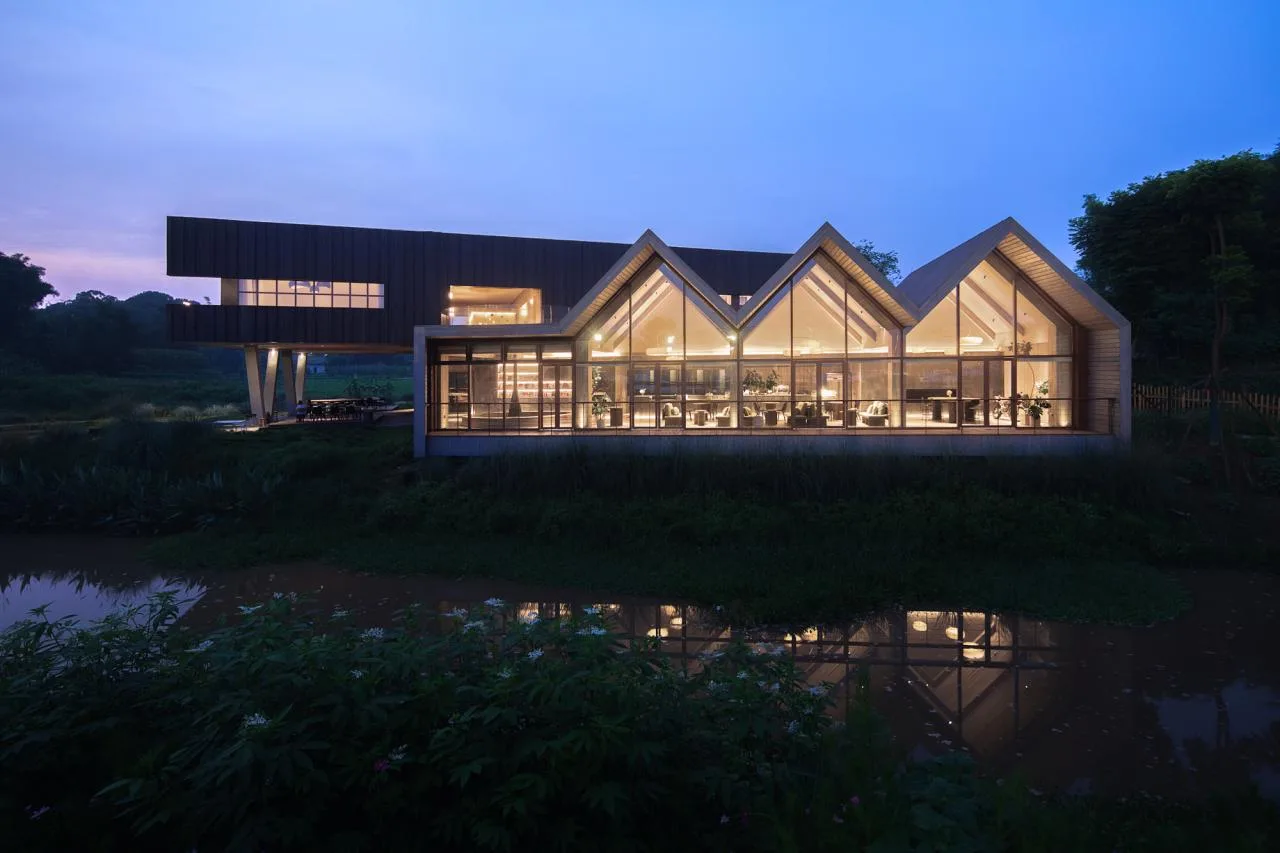
The building volumes directly respond to their surrounding environments and views in four directions. The cross-shaped spatial division vertically splits the structure. The bottom floor is elevated east-west, forming a transparent gray space, while the first floor’s southern volume extends along the riverbank to maximize sunlight. The horizontal and vertical spatial organization reflects the site’s dynamic relationship with the river, breaking the sense of enclosure and offering diverse interactions with water.
© Existence of Architecture – Architectural Photography
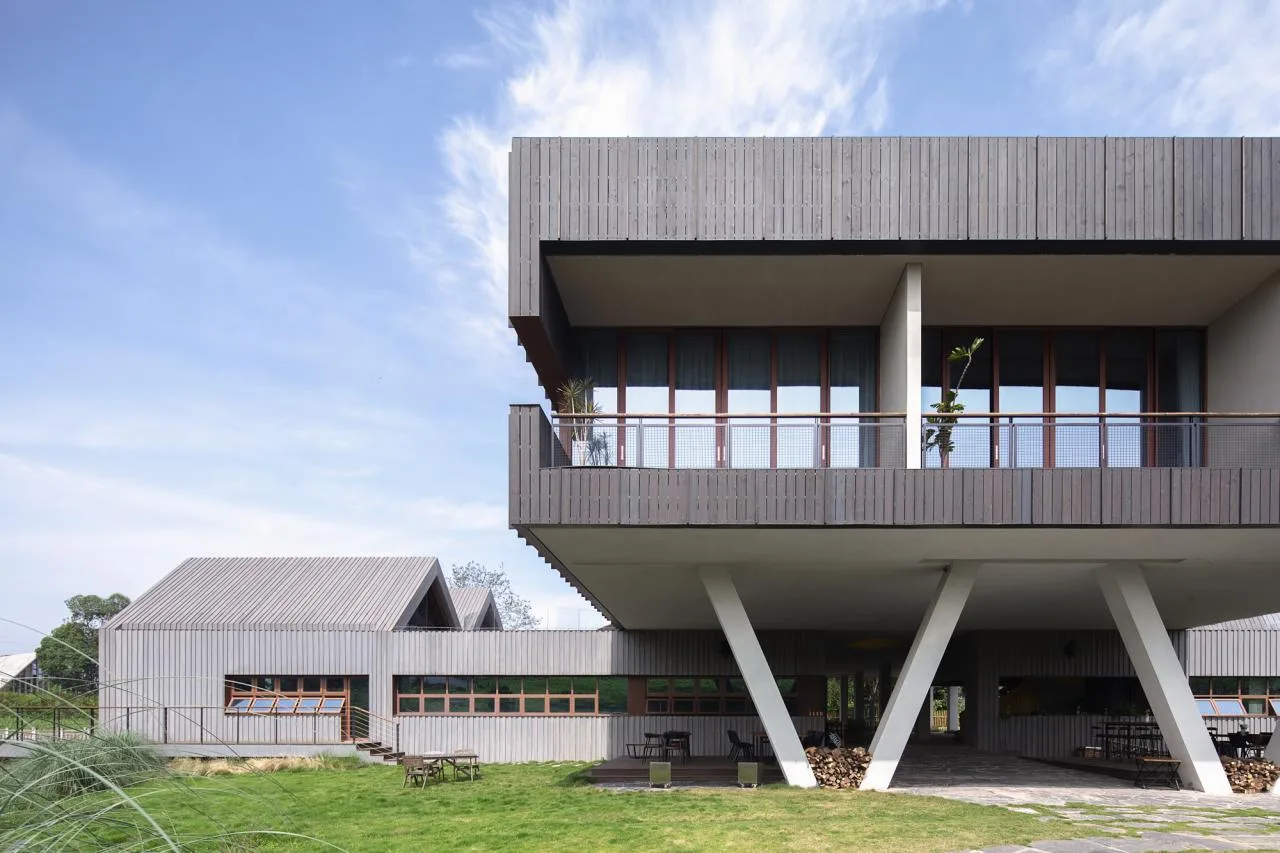
The well-lit southern first-floor area hosts a coffee and afternoon tea lounge, while the less sunlit northern space serves as kitchen and bar. The second floor’s east dining hall supports operations, with the west dining room benefiting from afternoon light and views. Functional zones remain independent yet organically connected through elevated floors and staircases, enriching the spatial experience with vertical and directional variation.
© Existence of Architecture – Architectural Photography
The Village Entrance Tree
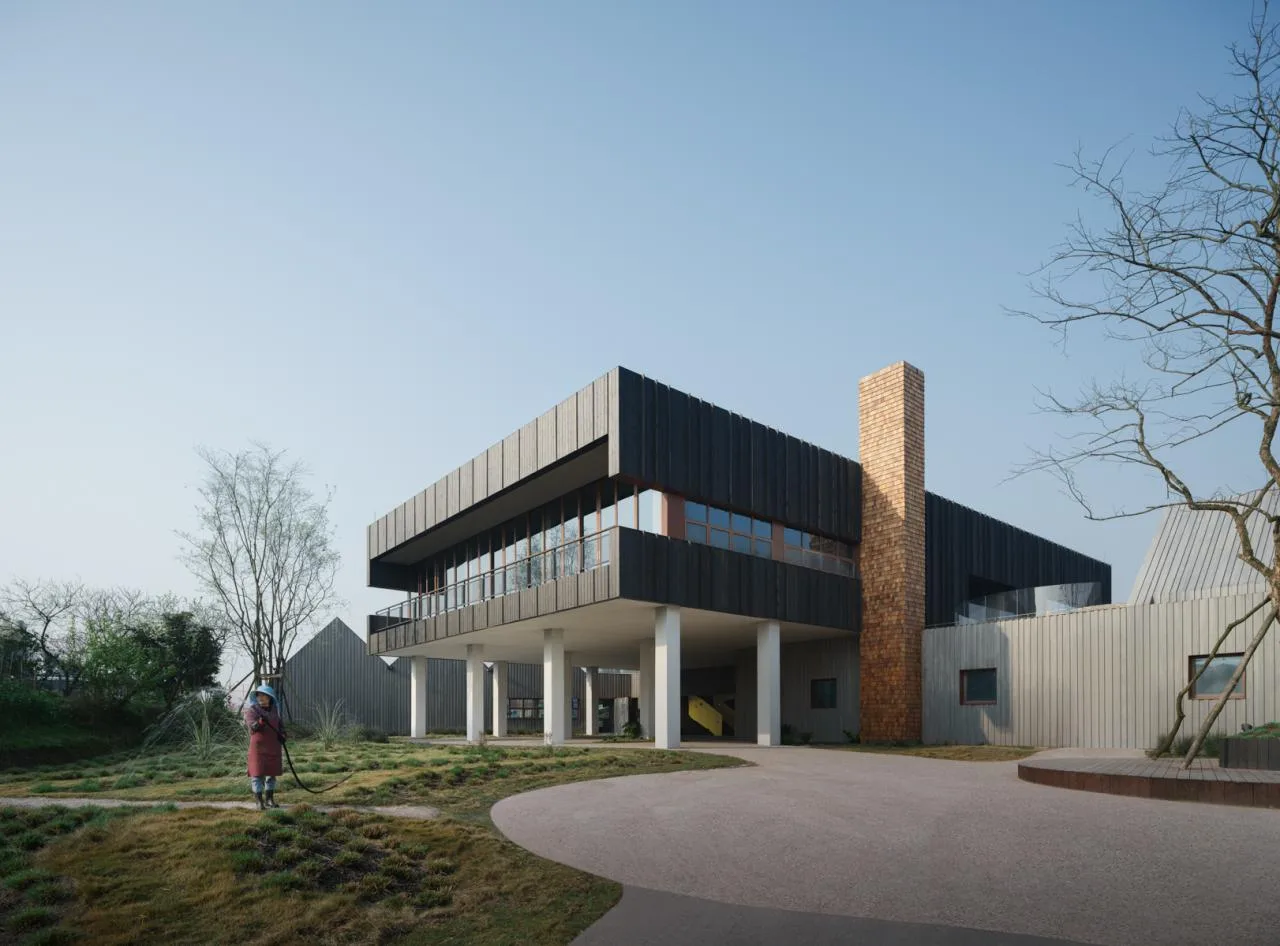
To the northeast of Dadi Tavern, a vehicle entrance and pedestrian bridge connect the art museum and Snail Garden. A towering persimmon tree warmly welcomes visitors, while the wooden platform beneath offers versatile space for resting, greeting, and socializing beneath the “village entrance” tree.
© Yan Yu Architectural Space Photography
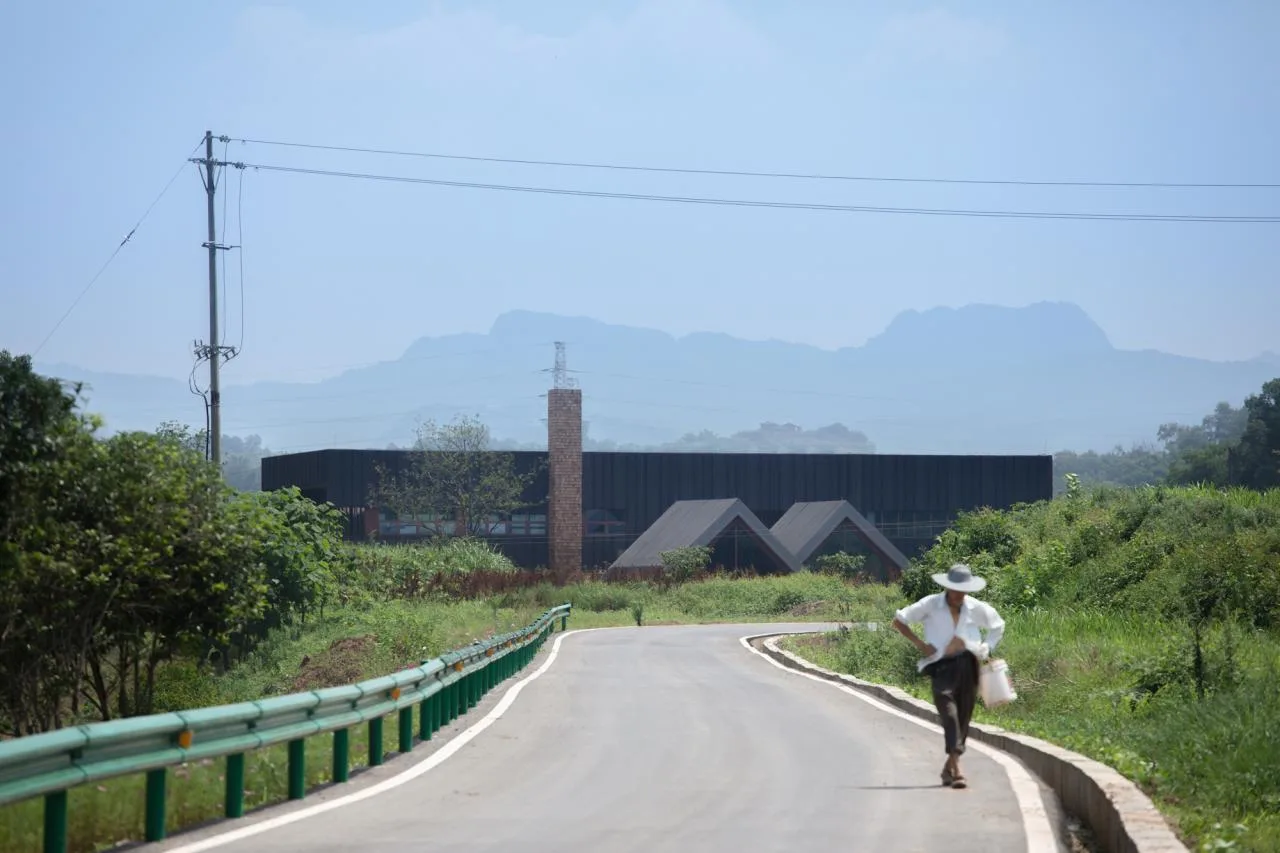
© Existence of Architecture – Architectural Photography
Sunken Garden and Elevated Corridor
The building forms an elevated corridor stretching east to west, connecting the entrance, café, bar, staircase, and a sunken courtyard at the peninsula’s tip. Two V-shaped columns near the sunken courtyard define intimate dining areas for two tables. Combined with the elevated floor, they provide excellent ventilation and shading, creating a comfortable dining atmosphere.
The sunken courtyard, surrounded by water on three sides, invites activities such as summer barbecues, dancing, and bonfires, and winter gatherings with grilled lamb and wine—reviving the countryside’s natural and relaxed spirit.
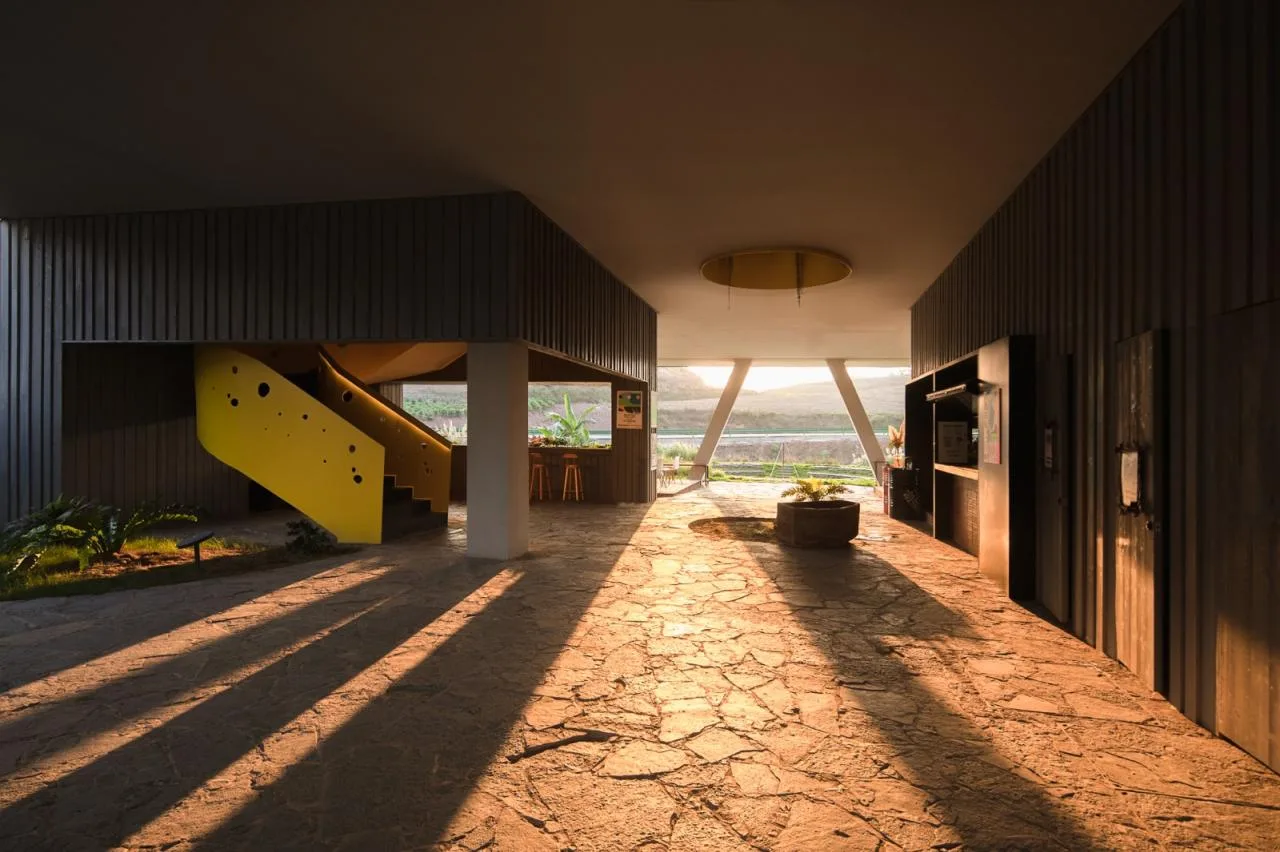
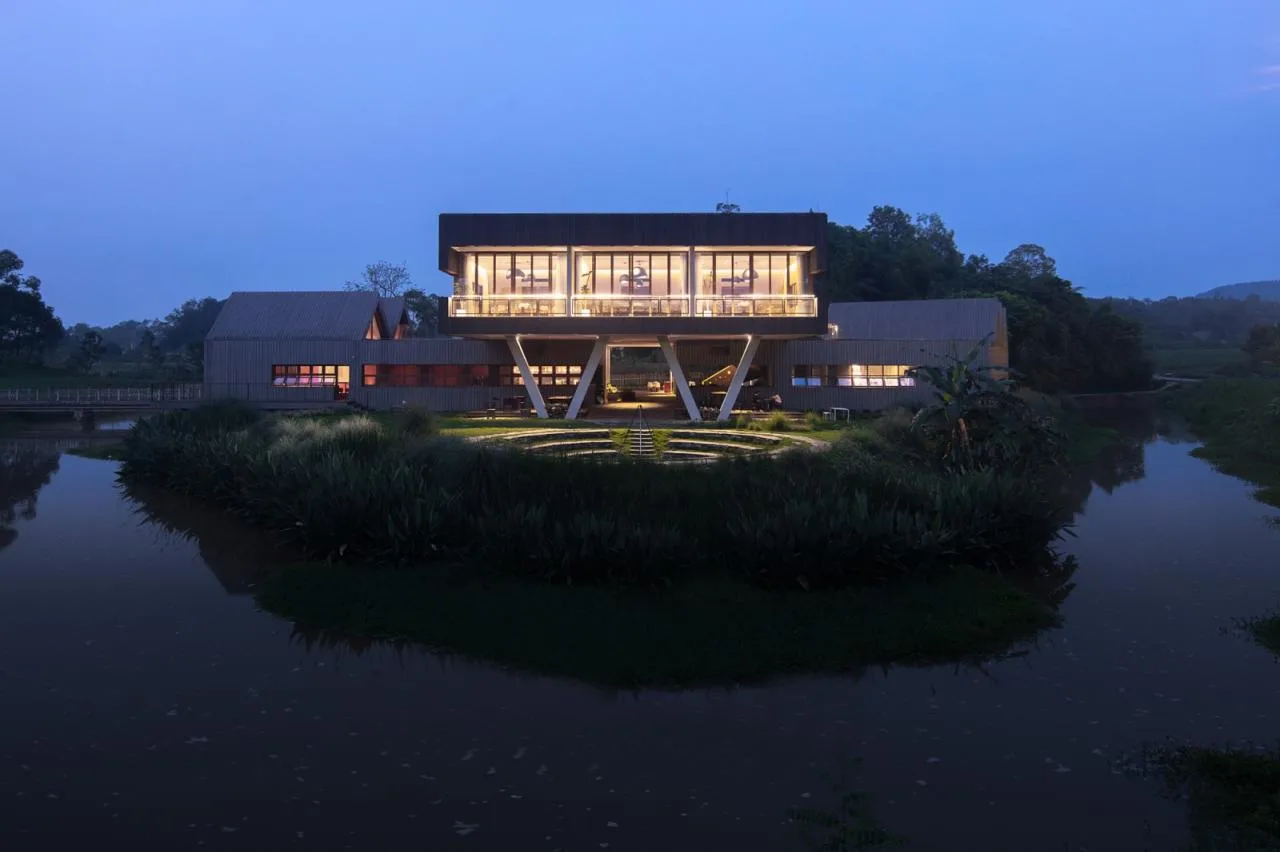
© Existence of Architecture – Architectural Photography
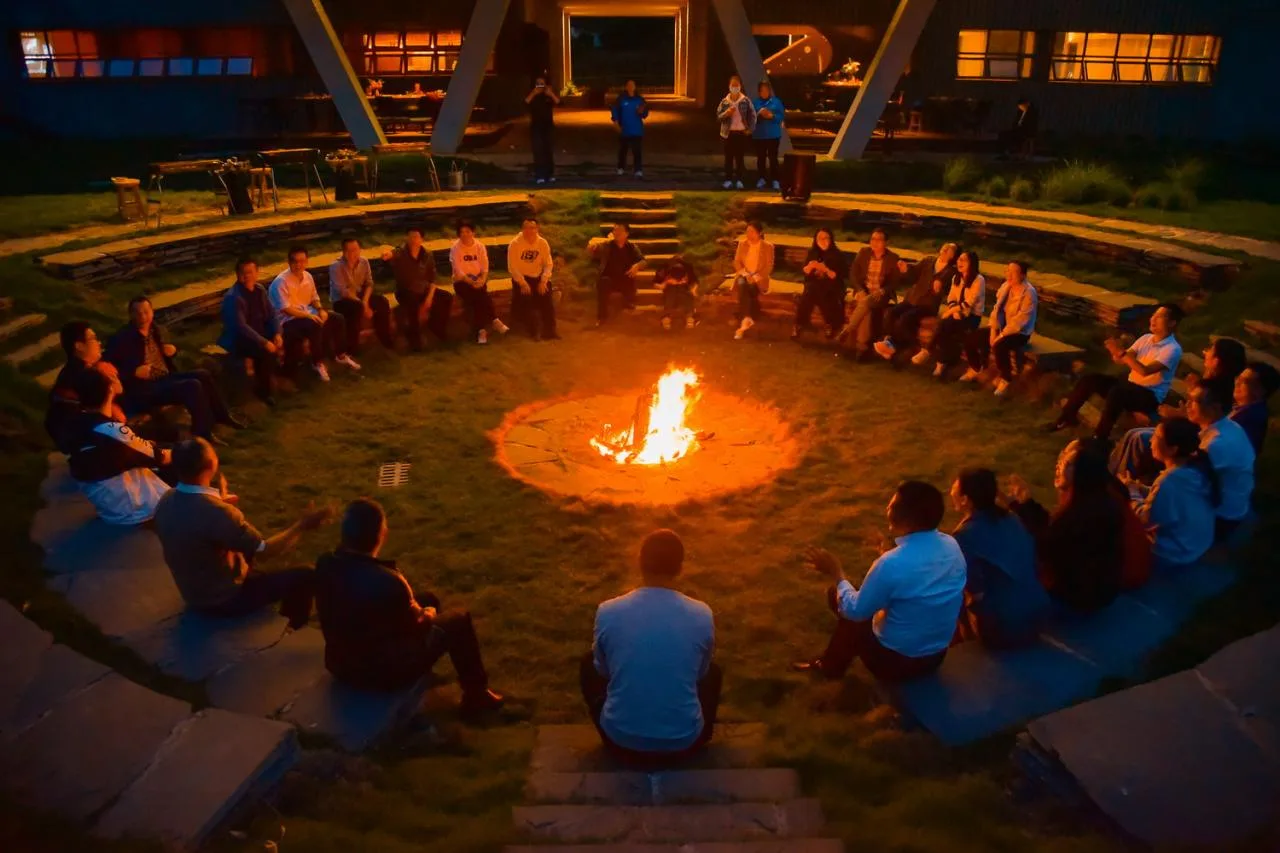
© Jiang Xiaobai
Cross Center
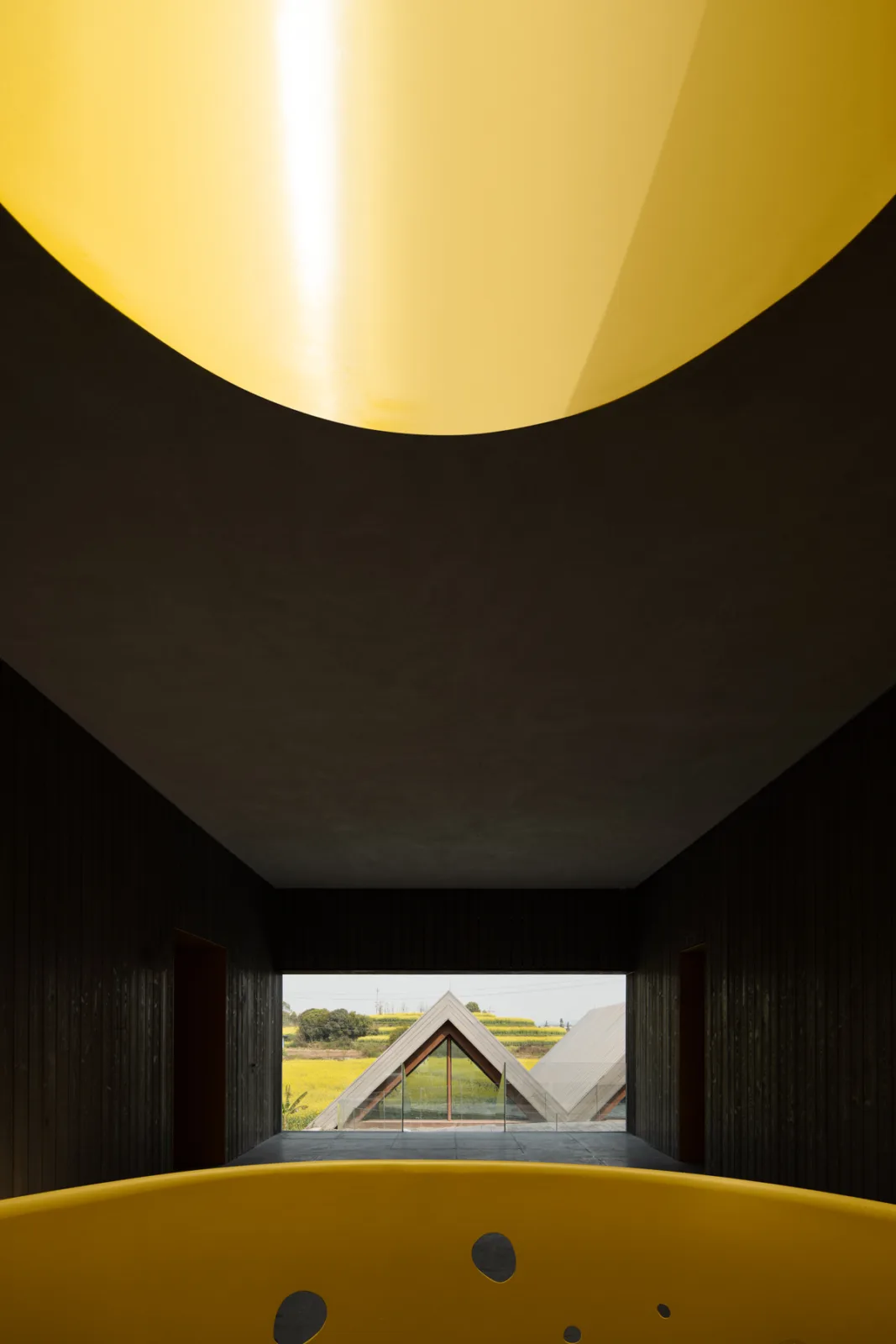
The overlapping section of the two volumes on the plan forms a circulation space connecting upper and lower levels. A corridor extends north-south above the lower building, with a central circular courtyard that introduces the blue sky, sunlight, and rainwater.
© Existence of Architecture – Architectural Photography
© Yan Yu Architectural Space Photography
Materials and Construction of the Earth Tavern
While the Earth Art Museum uses wood-grain concrete to evoke rustic solemnity, the Earth Tavern shifts its theme closer to agriculture with a “wooden tavern post in the countryside” tone.
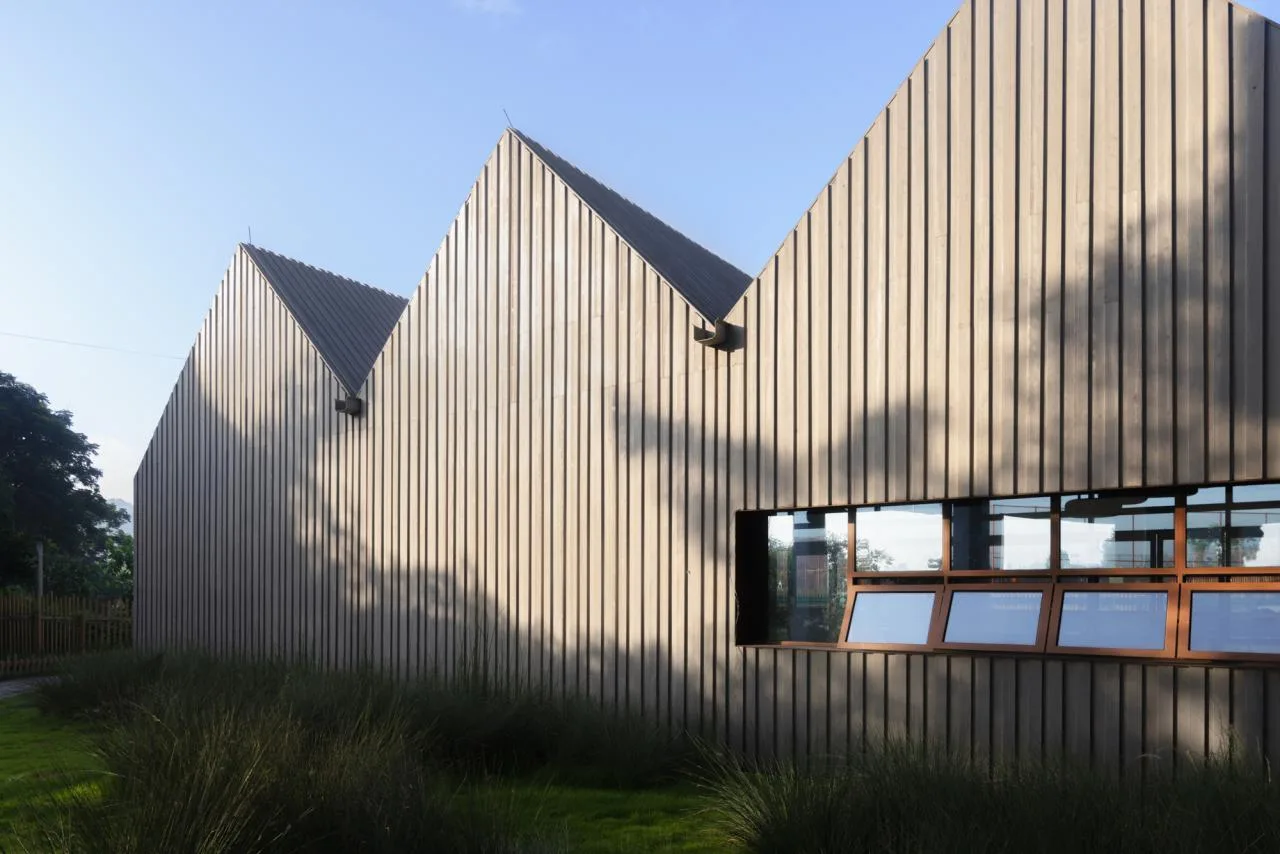
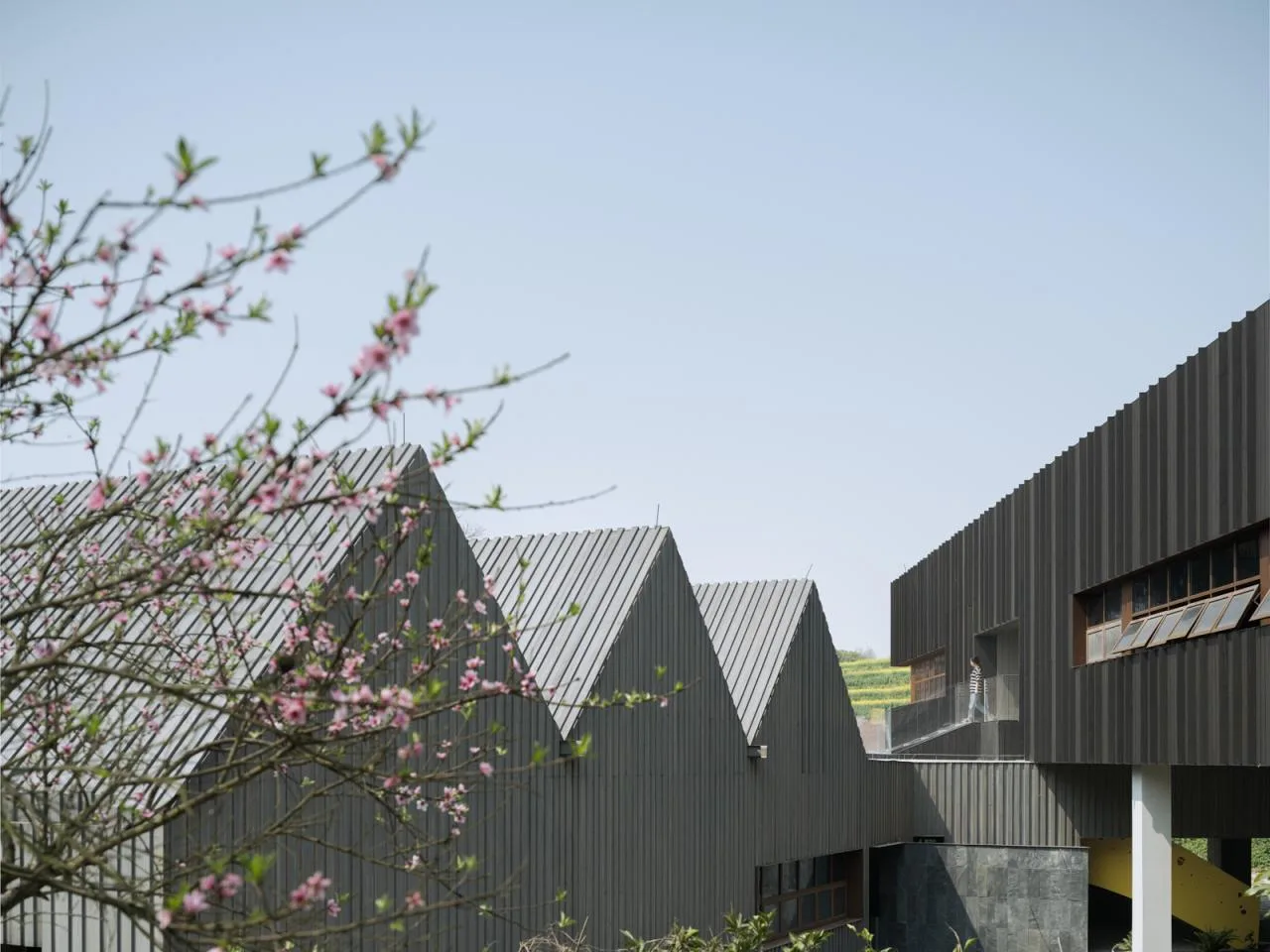
The design applies color separation between upper and lower material layers: the first-floor wooden house features light gray pine, creating a lightweight, unified volume; the elevated second floor uses dark gray wood, forming a floating black silhouette in the rural landscape. The wooden veneer curtain wall employs rhythmic concave-convex panels and vertical ribs to enhance texture while reducing visual bulk through detailed scaling.
© Existence of Architecture – Architectural Photography
© Yan Yu Architectural Space Photography
The sunken courtyard features stacked slate seating with wild grass growing among it, creating a highly ecological and natural environment.
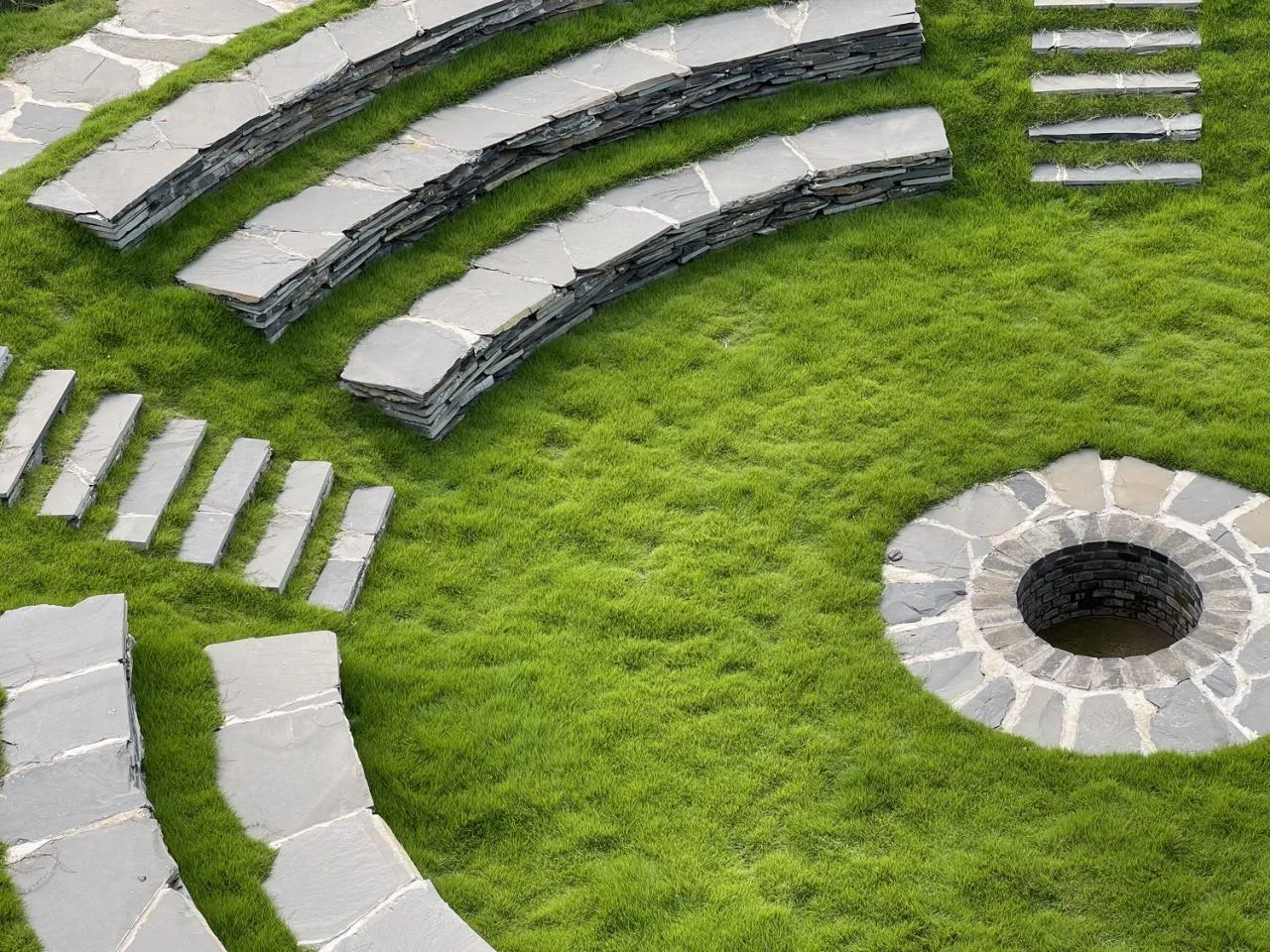
© No architectural design firm identified
Xiaobai Flower House
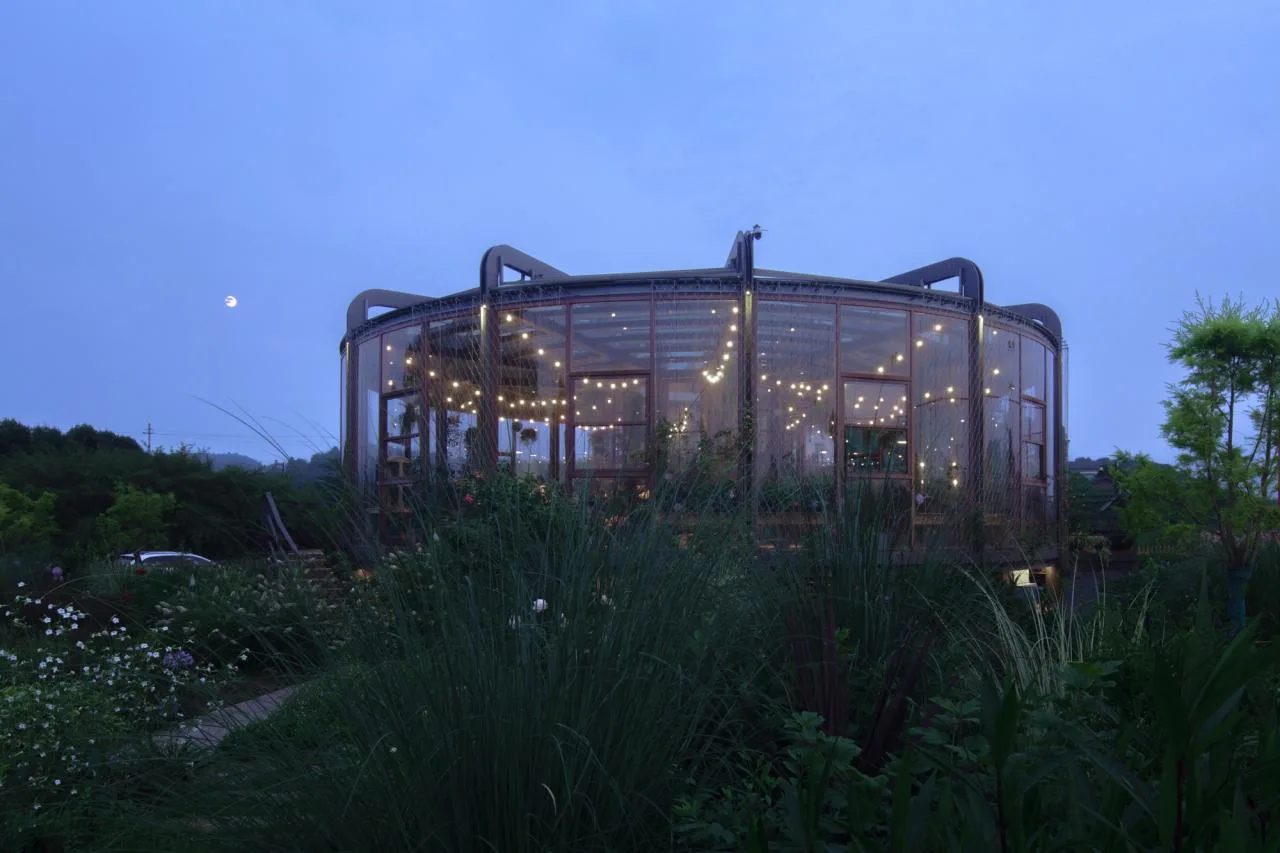
© Existence of Architecture – Architectural Photography
The fourth peninsula, south of the Earth Tavern, adopts a simple circular spatial prototype, situating a curved glass greenhouse amid a flower field. Plants inside and outside echo each other, while the ultra-white curved glass reflects sky and vegetation, offering rich layers and visual variation.
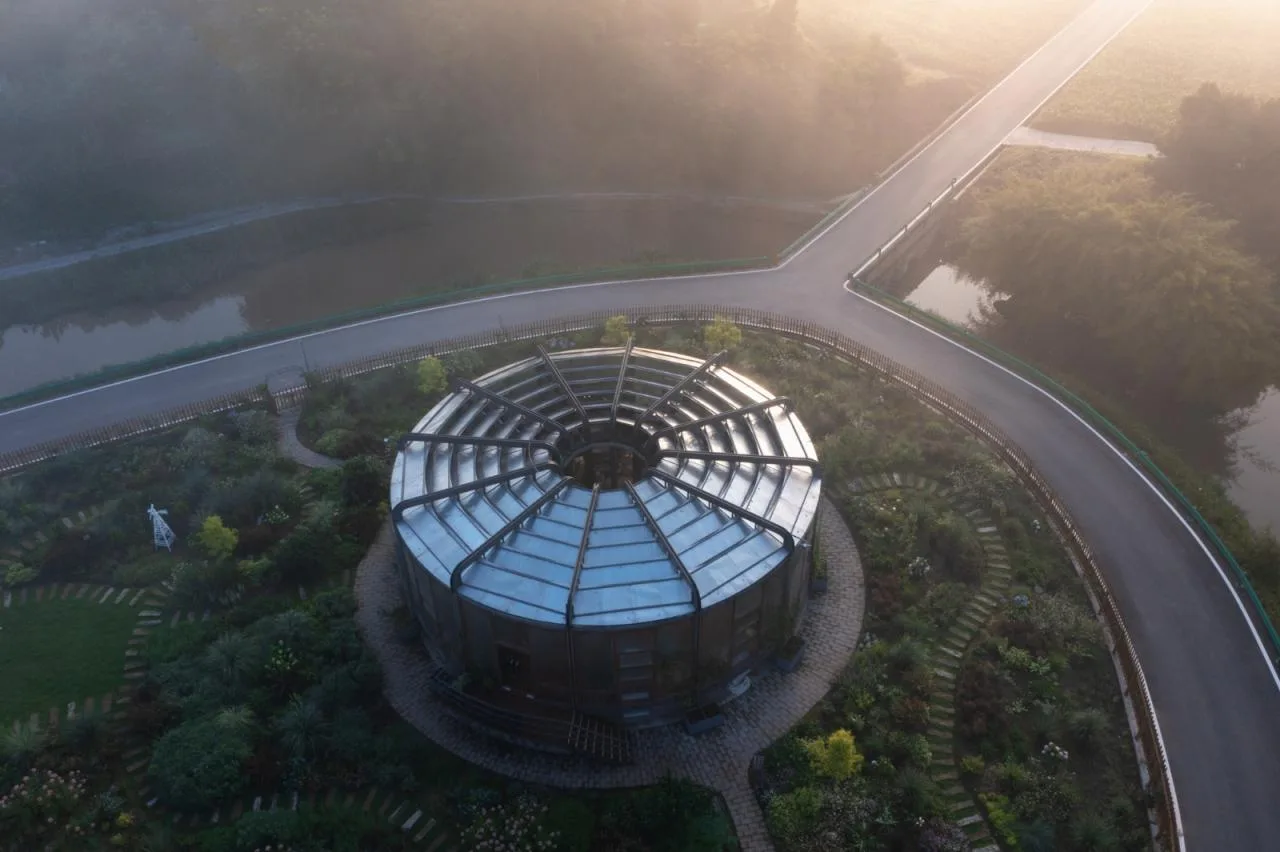
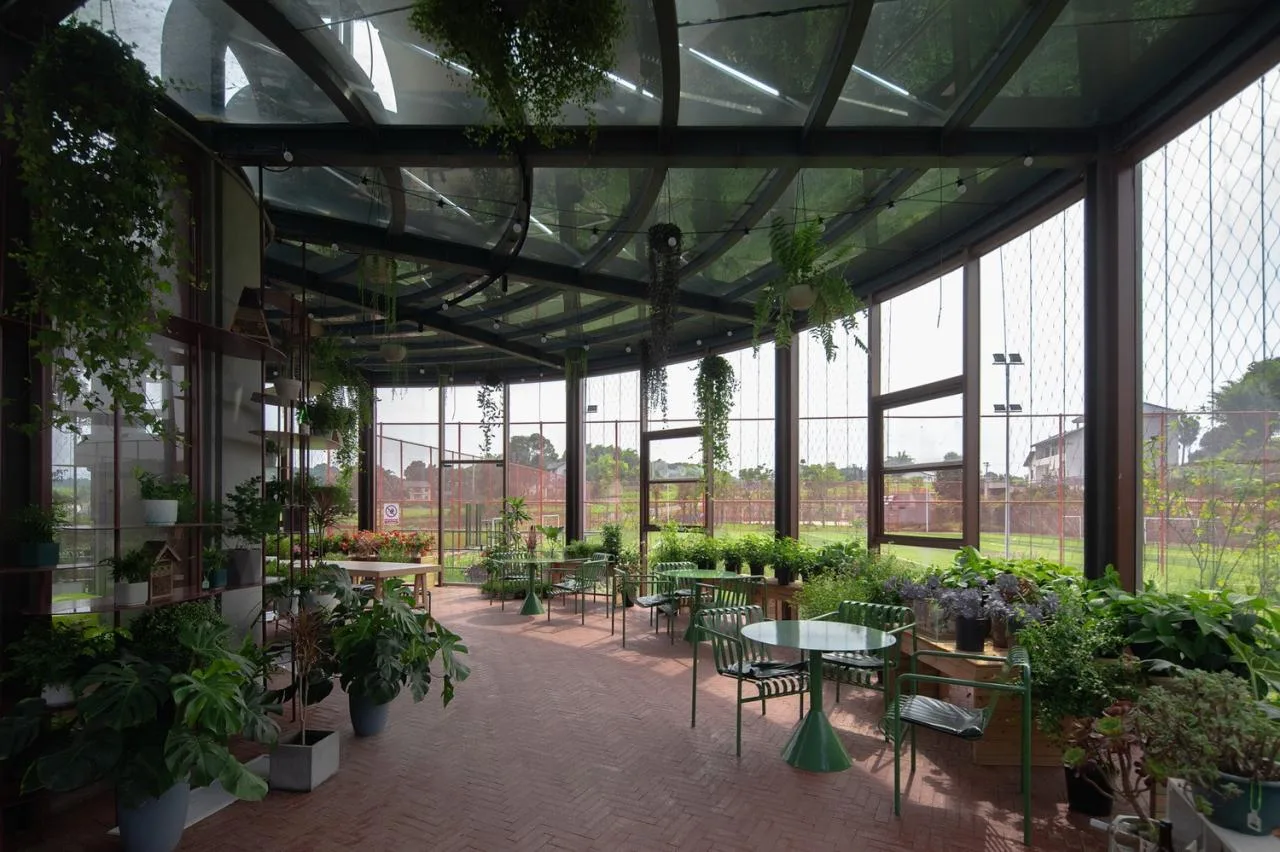
© Existence of Architecture – Architectural Photography
The building is raised one meter for a complete curved glass facade uninterrupted by air conditioning units placed beneath, preserving plant views and creating a visual focal point on the peninsula. A metal plate on the roof provides shade, complemented by internal courtyard ventilation to handle Chongqing’s hot summers.
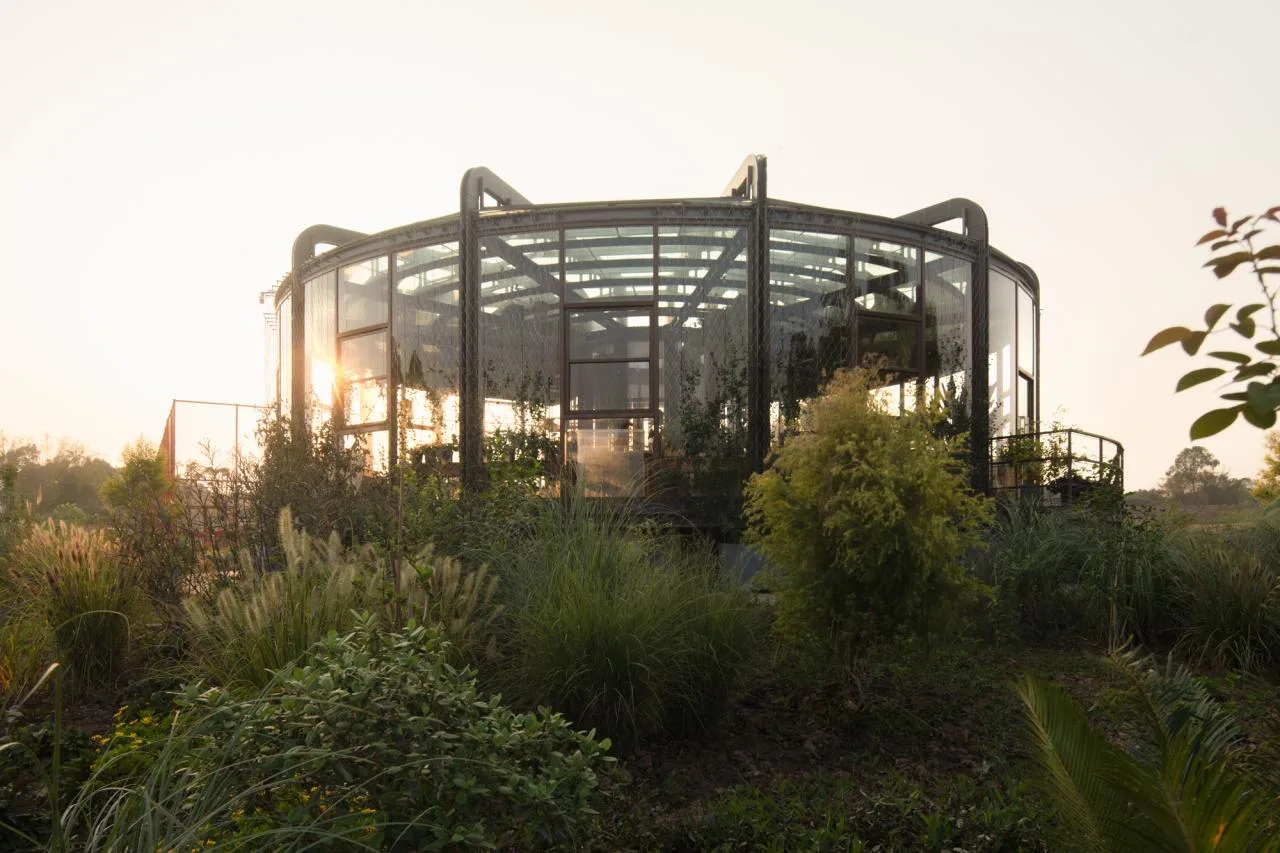
© Existence of Architecture – Architectural Photography
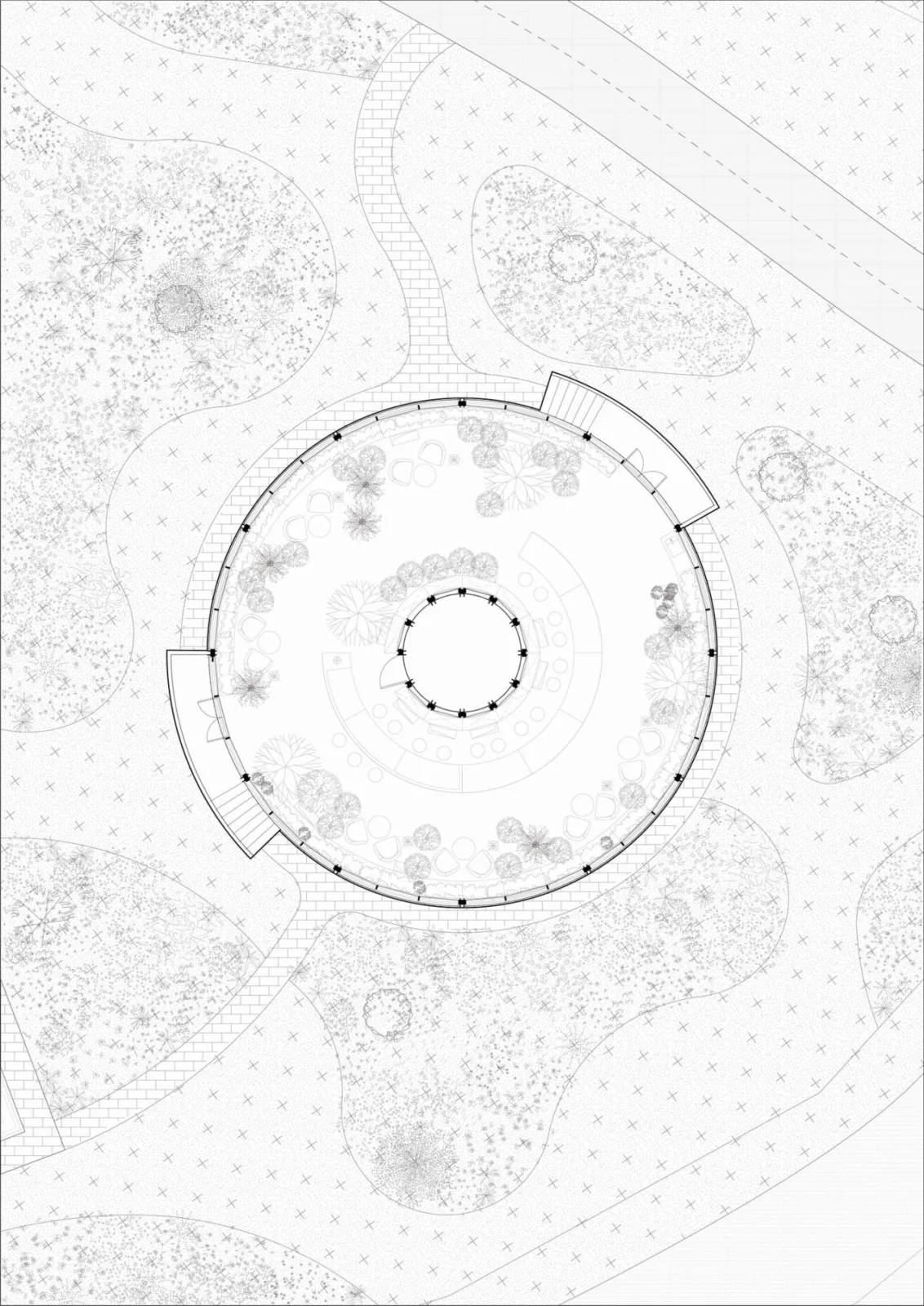
Xiaobai Flower House Plan © No architectural design firm identified
Rural Stadium
The sports fields utilize unconventional spatial forms to create diverse sports experiences. The square football field encourages lateral movement and supports four goals for varied games. The circular basketball court accommodates hoops at varying heights for both adults and children and allows gameplay involving four baskets.
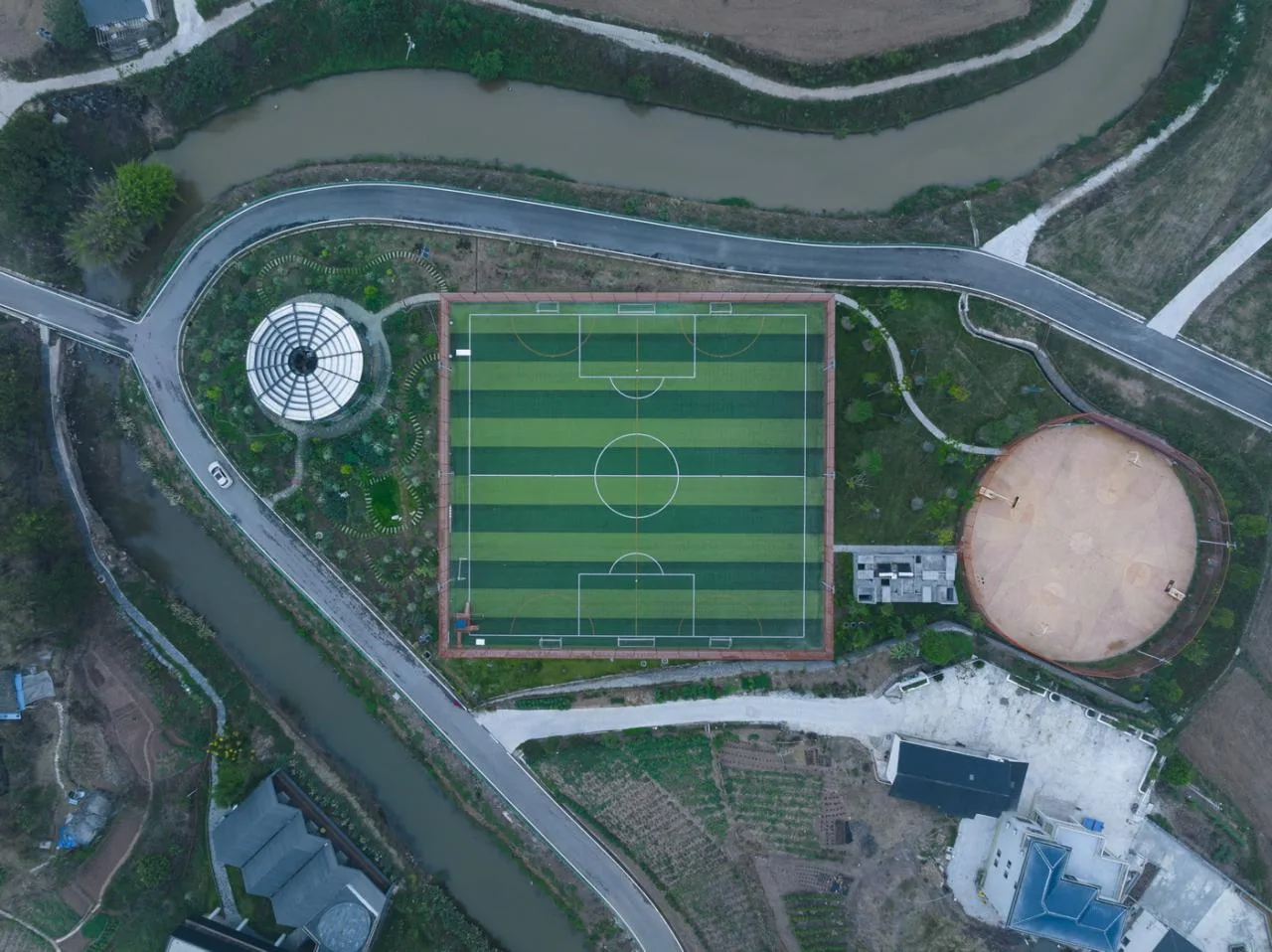
© Yan Yu Architectural Space Photography
Stadium Restroom
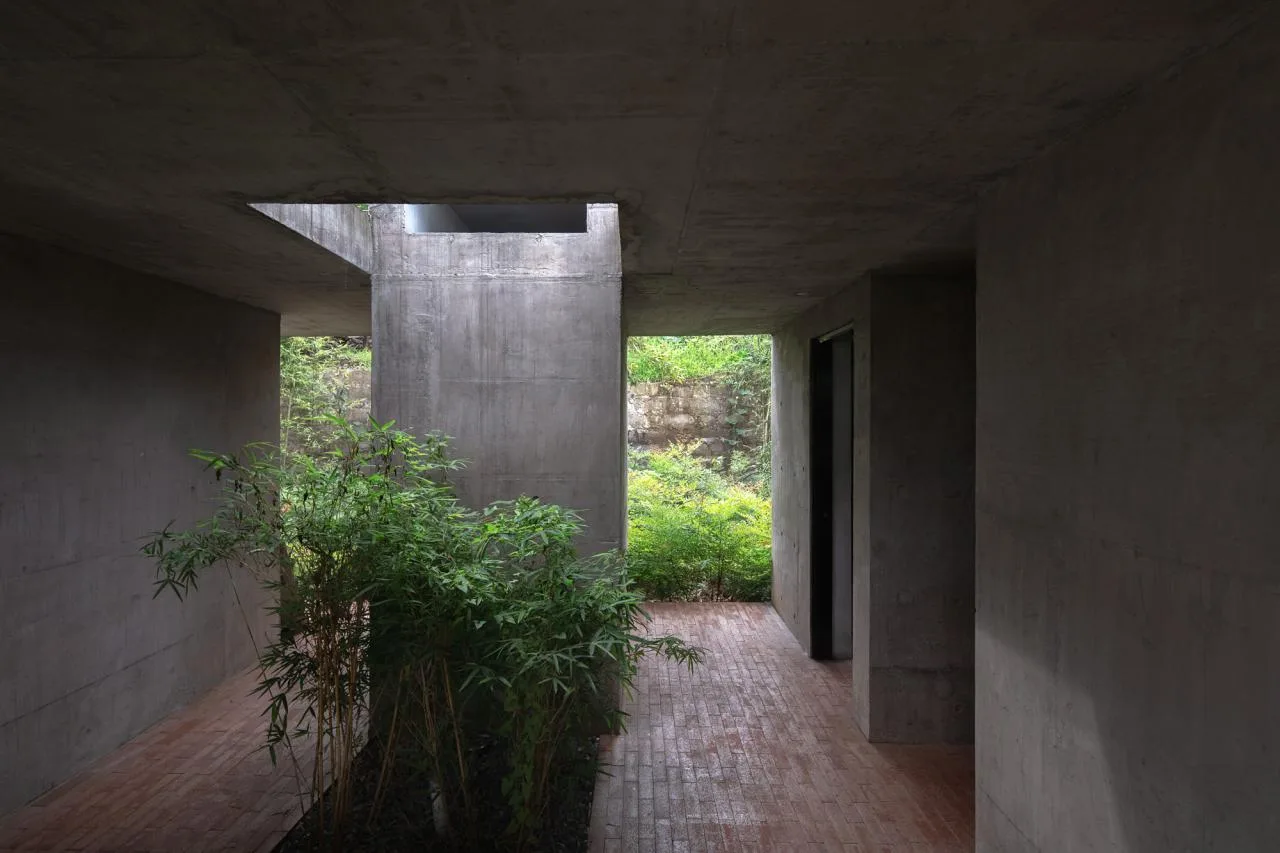
© Existence of Architecture – Architectural Photography
Adjacent to the flower house, the stadium restroom includes a small outdoor shower compartment, allowing visitors to refresh and continue embracing nature after intense exercise.
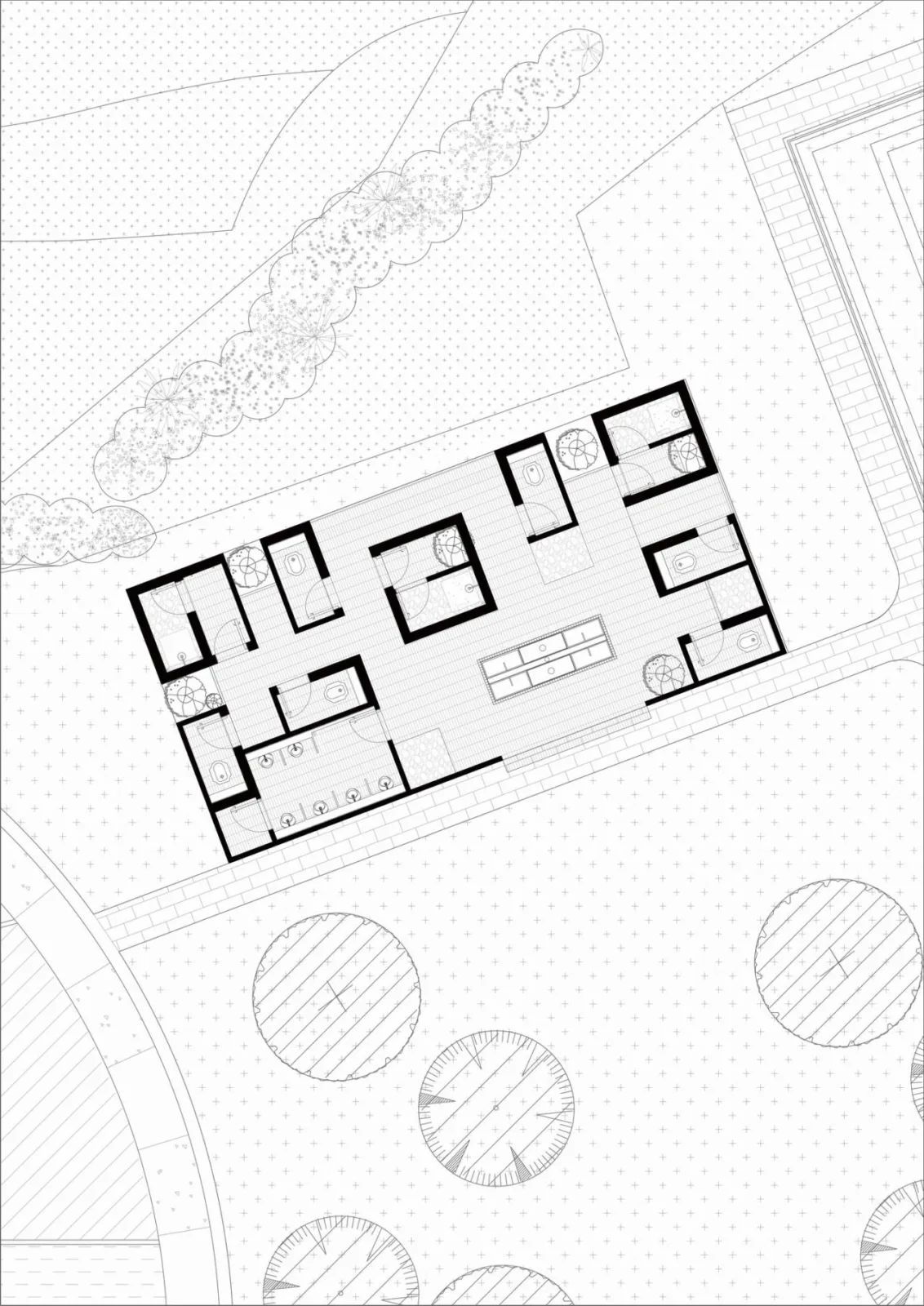
Stadium Restroom Floor Plan © No architectural design firm identified
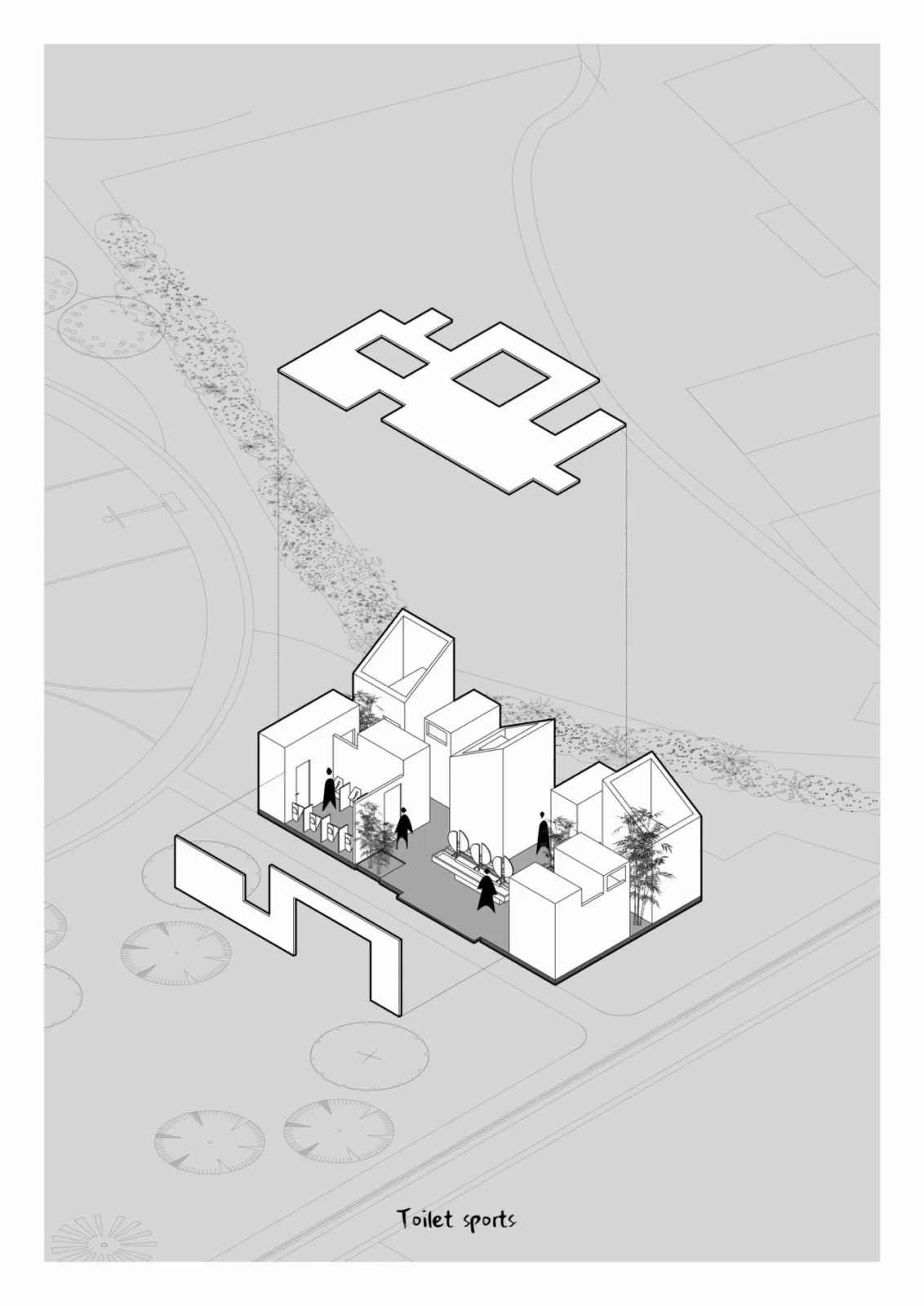
Axis Side View of Stadium Restroom © No architectural design firm identified
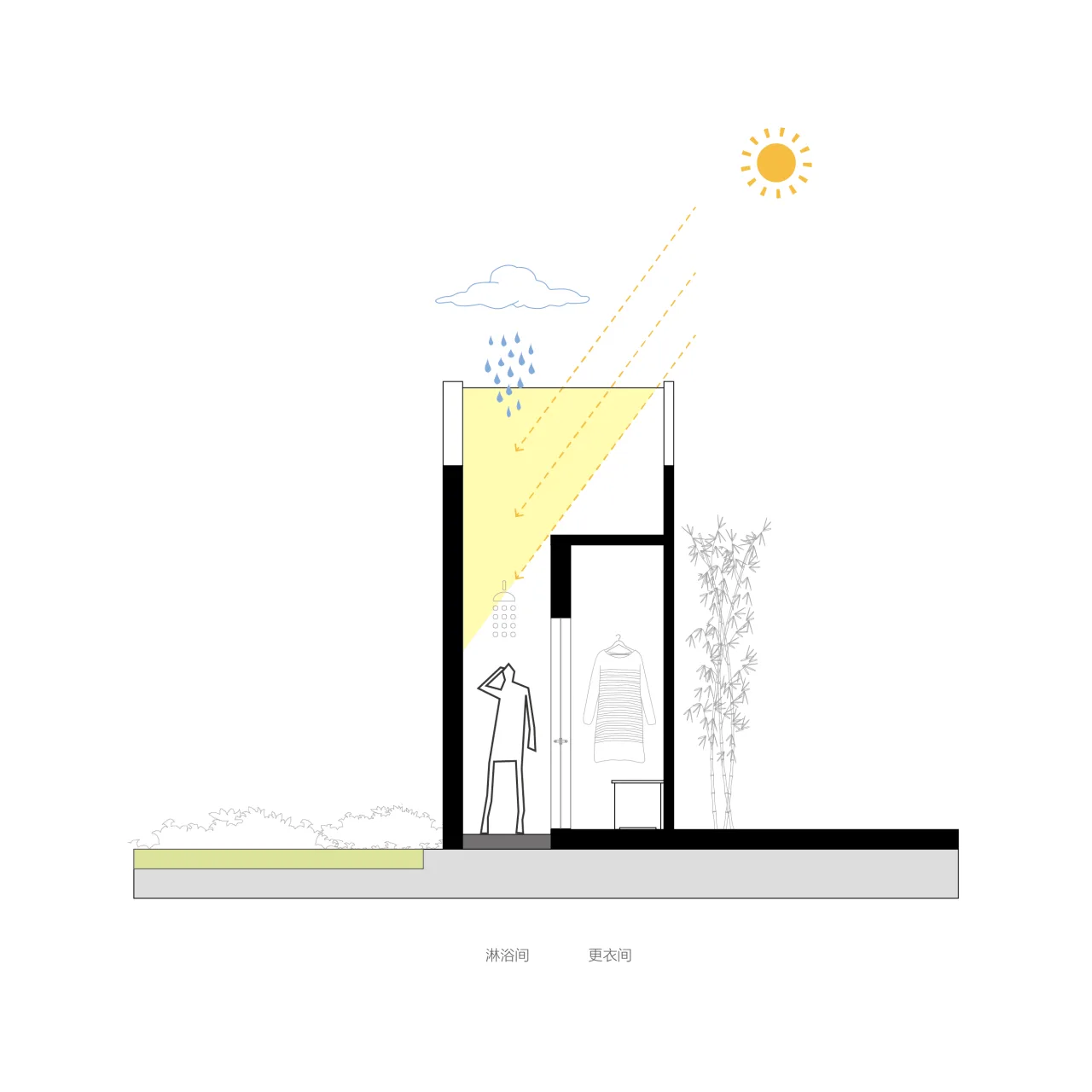
Cross-Section Analysis of Stadium Bathroom © No architectural design firm identified
Plant Map
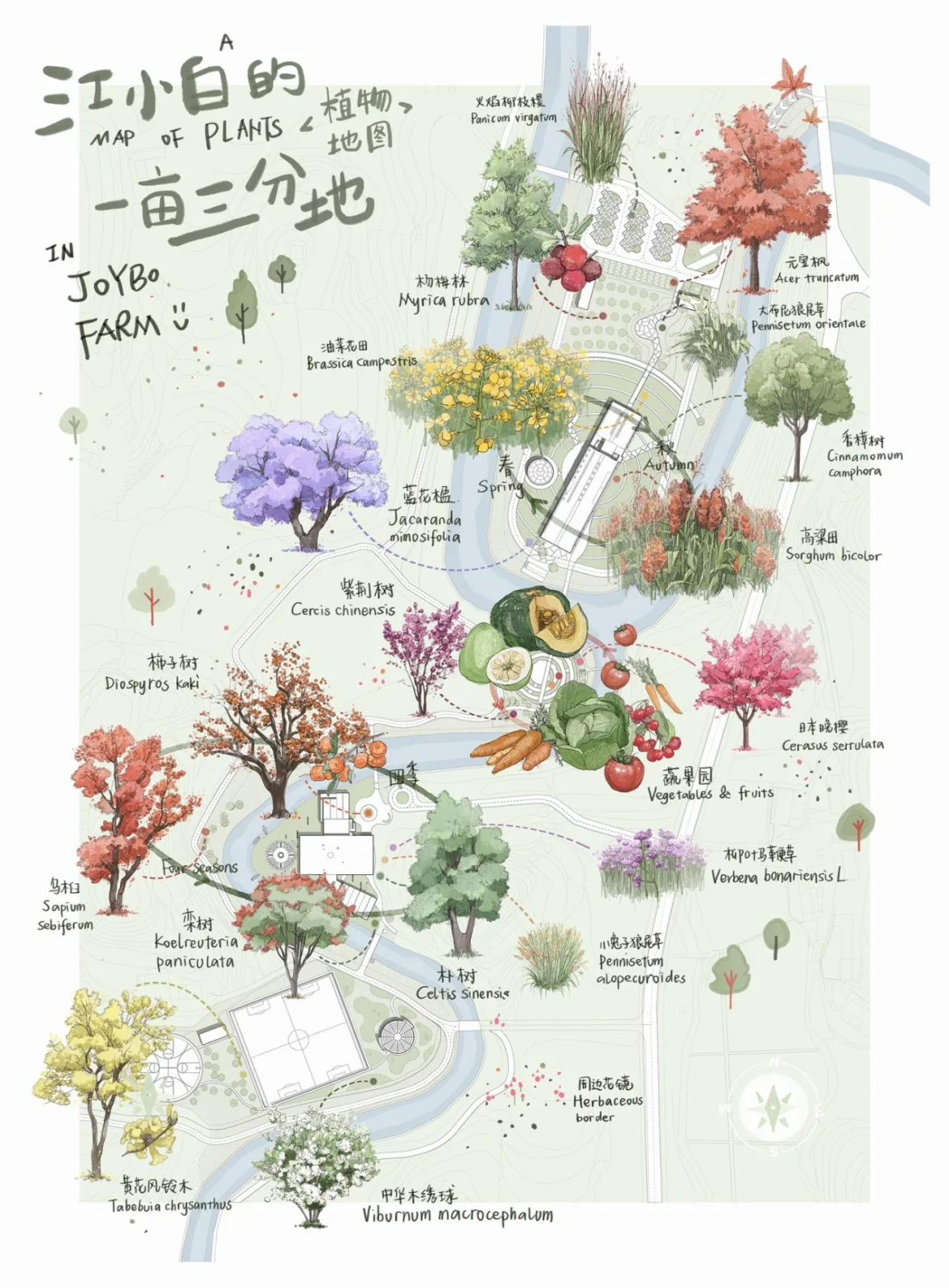
© Wu Yue / No architectural design firm identified
Project Information
- Project Name: Jiang Xiaobai’s One Acre Three Fen Land
- Location: Baisha Town, Jiangjin District, Chongqing
- Owner: Chongqing Jiangxiaobai Farm Co., Ltd
- Design: No architectural design firm identified
- Scope: Planning consultation, overall planning, architectural design, landscape design
- Site Area: 1000 mu
- Building Area: 5000 sqm
- Lead Architects: Li Weitao, Li Bo
- Design Team: Ding Mingxin, Yi Siqi, Zhang Ding, Deng Lin, Yang Liangling, Lv Pin, Zhang Zhirui, Chen Hongyu, Chen Yuxian, Xie Yuqing, Shu Hongqiao, Wang Yulian
- Project Planning: Tao Shiquan, Tang Pengfei, Jiang Nan, Zhou Junfeng, Wen Ying
- Planning Consultants: Fang Yu, Chen Yuanyuan
- Architectural & Landscape Construction Drawings: Chongqing Duxing Architectural Design Co., Ltd
- Construction Drawing Managers: Yong Rong, Ding Langjie
- Architectural & Landscape Lighting Design: Yuan Youwu
- Landscape Design Consultant: Li Wanting
- Plant Design: Ding Mingxin, Jiang Yao, Chen Chaoye, Liu Xiu
- BIM Professional Consultants: He Zhenyu, Zhang Tianqin
- Interior Design: Shenzhen Liyuwei Cultural and Creative Co., Ltd
- Lead Interior Designer: Liu Furong
- Project Management: Chongqing Jiangxiaobai Farm Co., Ltd
- On-Site Manager: Sun Kaijiang
- Project Construction: Chongqing Boda Construction Group Co., Ltd
- Project Manager: Li Chengcai
- Wood Veneer Supplier: Shanghai Zhencang Decoration Co., Ltd
- Technical Consultant for Clear Water Concrete: Yicheng Engineering Jin Chen
- Project Supervisor: Chongqing Xingda Construction Supervision Co., Ltd
- Photography: Existence of Architecture – Architectural Photography, Yan Yu Architectural Space Photography, No architectural design firm identified, Architect He Biao
- Poster: No architectural design firm identified, Wu Yue















Must log in before commenting!
Sign Up