
Project Background
Since its inception in 2013 and the completion of its civil engineering phase, nearly a decade has passed for the Ningxia Art Museum project. The museum fills a long-standing void for the Ningxia Provincial Art Museum by offering high-quality spaces for exhibitions and research, supporting the future growth and dissemination of art in Ningxia.
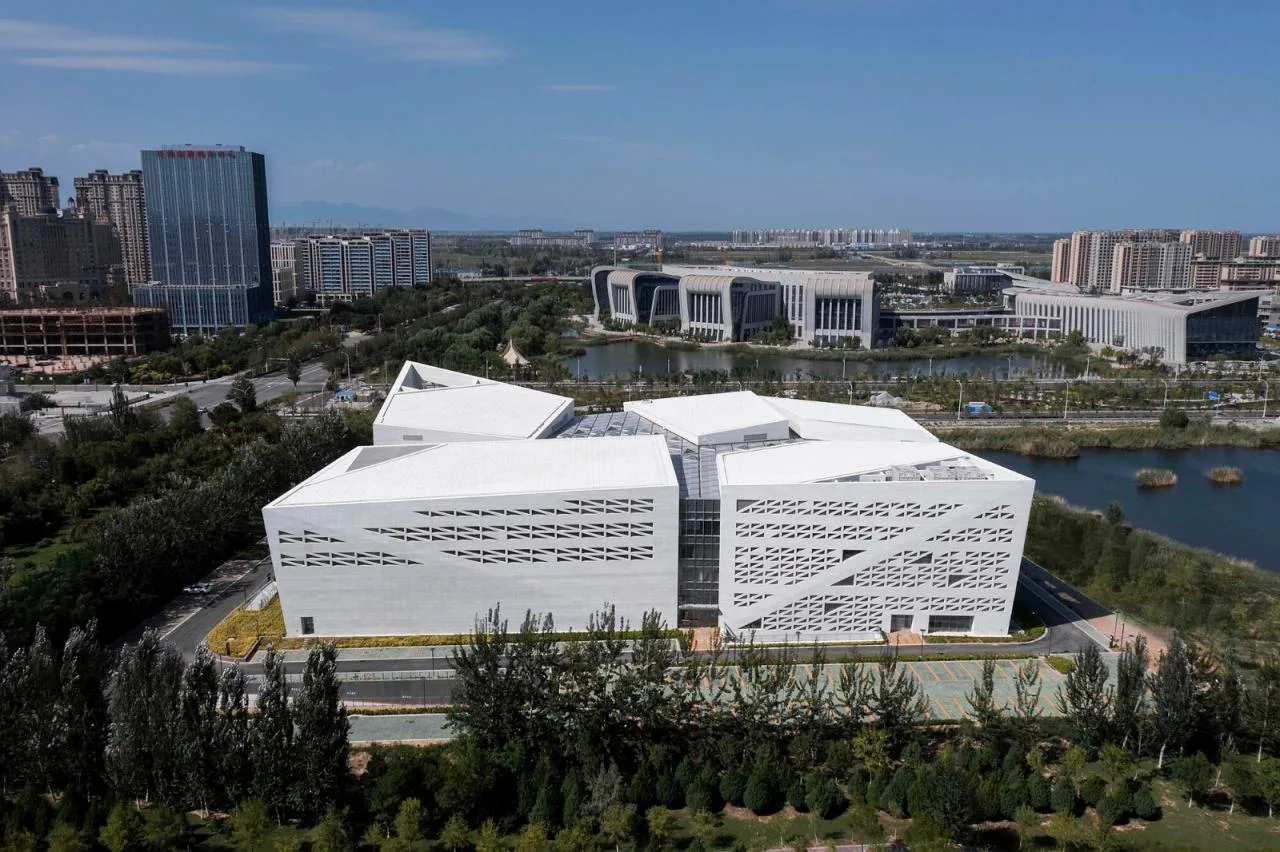
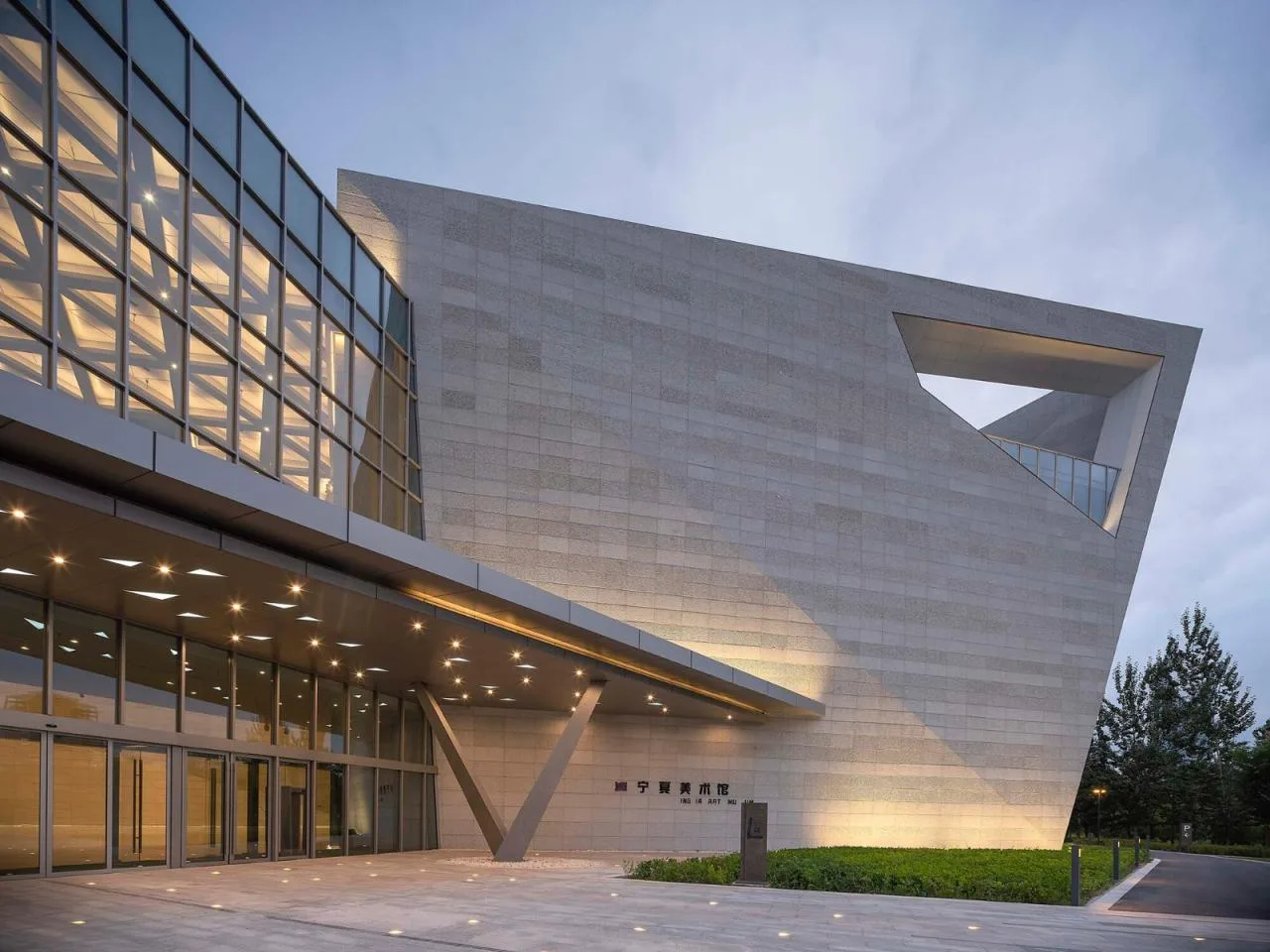
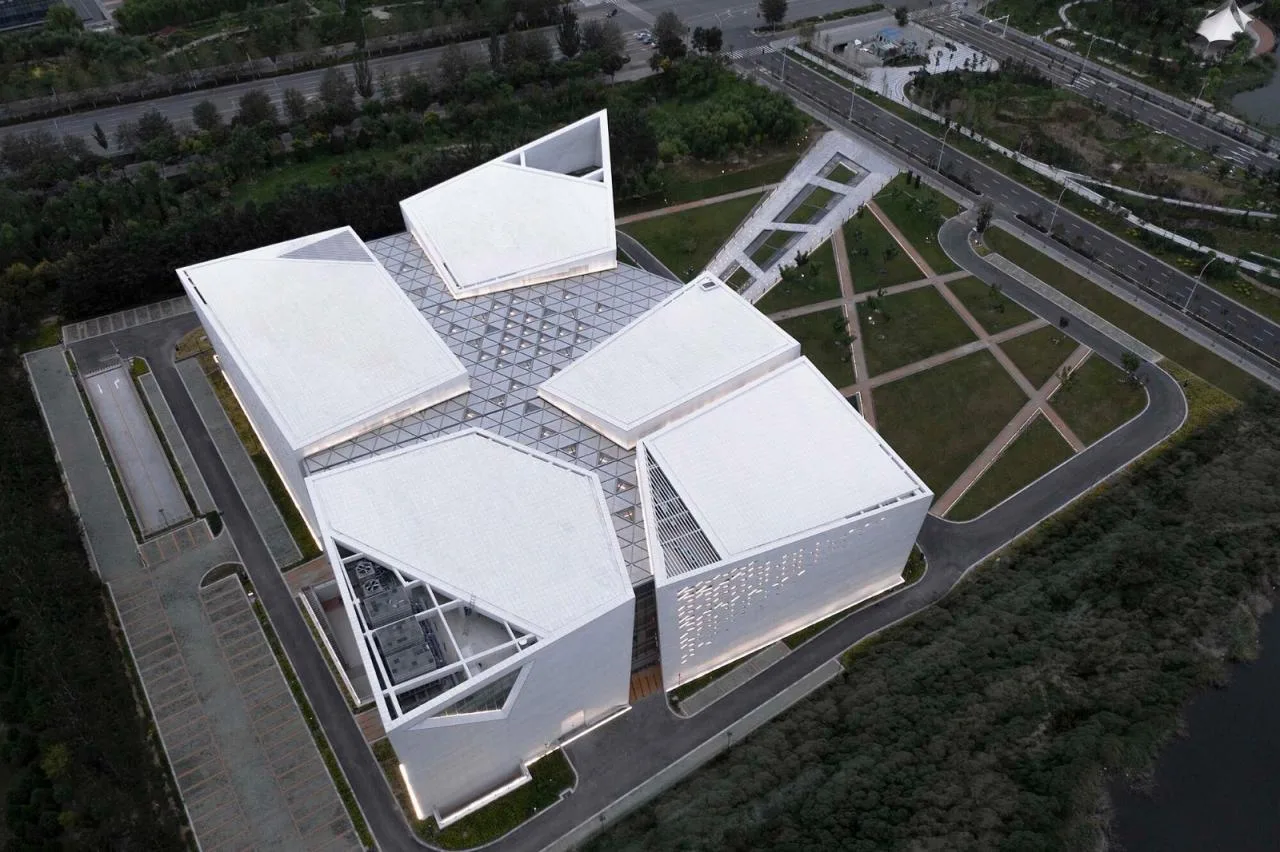
Located in Jinfeng District, Yinchuan City, the museum marks the eastern terminus of the east-west public activity axis in the Northern New City. The site boasts a spacious surrounding area, with the massive Yinchuan Civic Center situated directly across the street to the north. The design of the Ningxia Art Museum responds thoughtfully to its environment and local Ningxia culture, drawing inspiration from the form of giant stones.
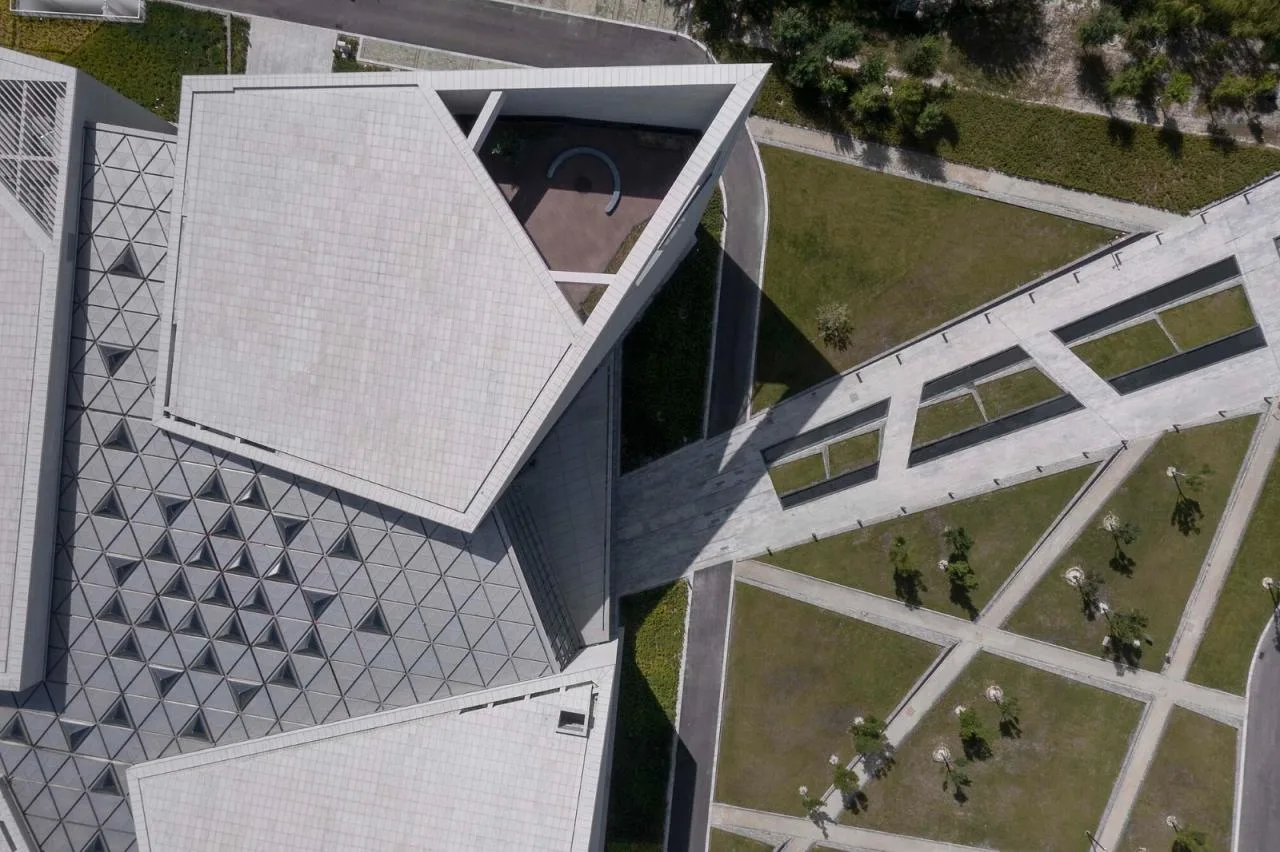
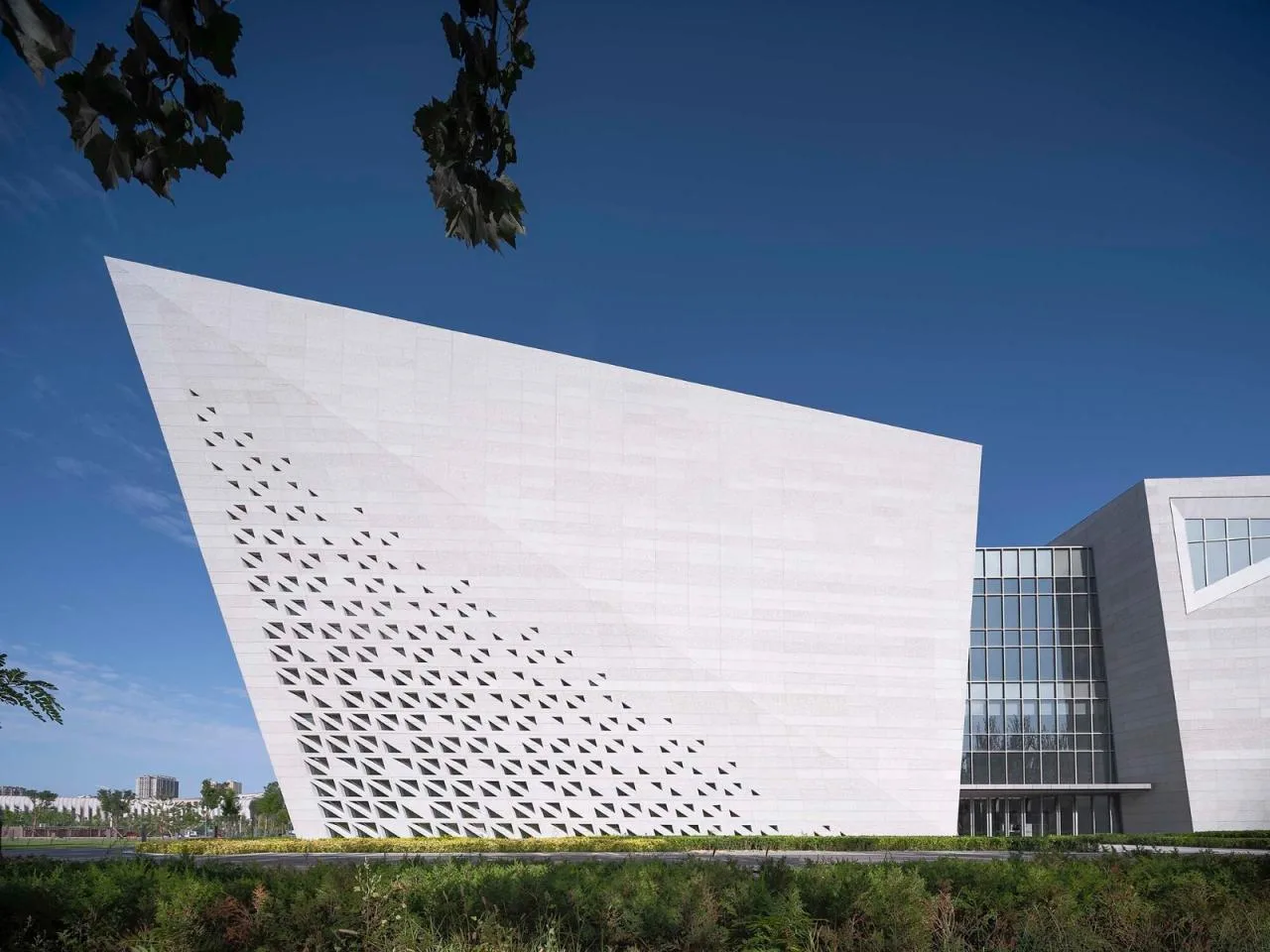
The architectural concept draws from the ancient rock paintings carved by the ancestors on the walls of Helan Mountain. These paintings have, over thousands of years, become a vital part of Ningxia’s cultural and artistic heritage. Helan Mountain itself symbolizes and carries this rich cultural identity.
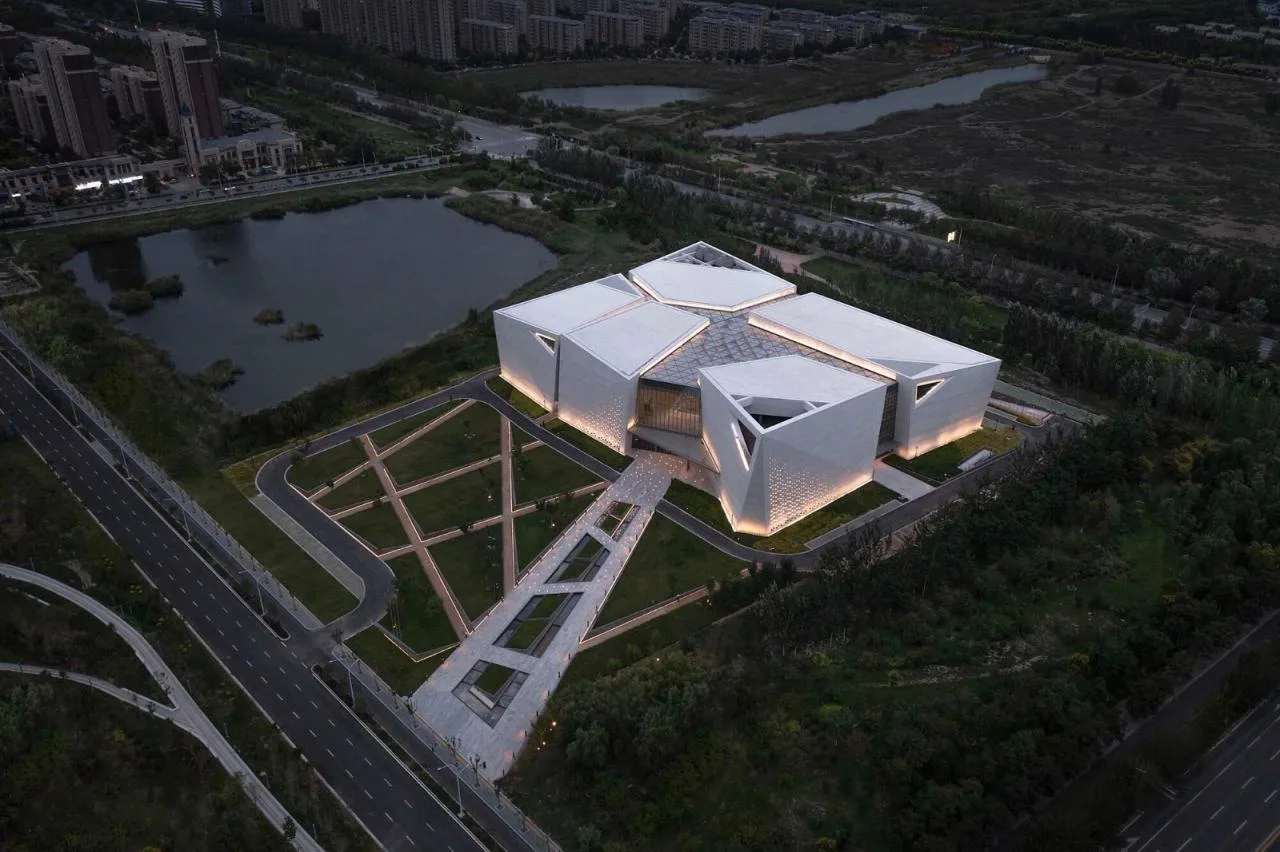
The design aims to embody the spirit and cultural legacy of Ningxia by capturing the robust and raw forms of Helan Mountain stones. The building is composed of five volumes shaped like massive stones, creating a dynamic architectural form. This approach transforms the museum into a monumental public sculpture, establishing a new spiritual landmark within the expansive urban landscape.
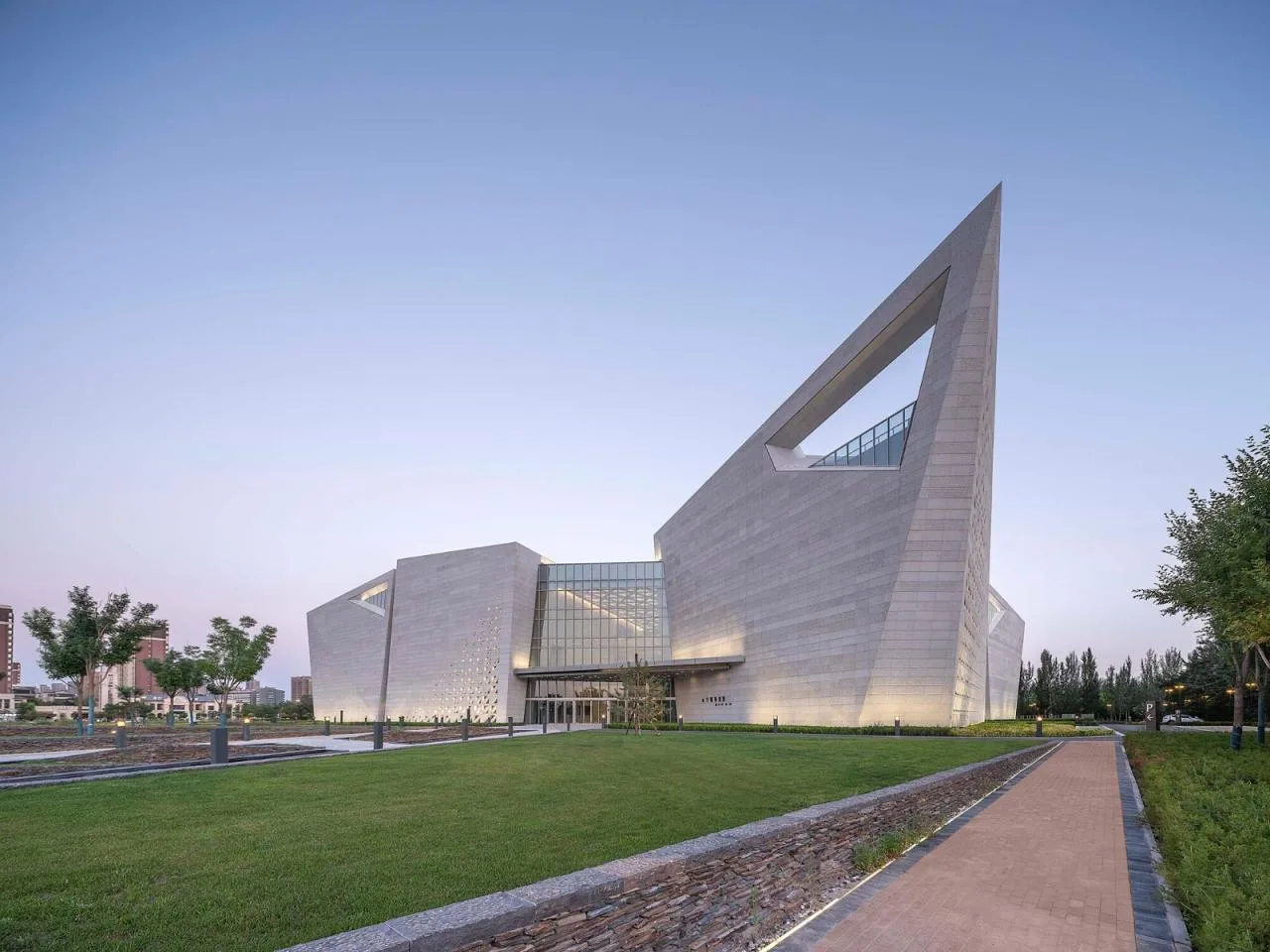
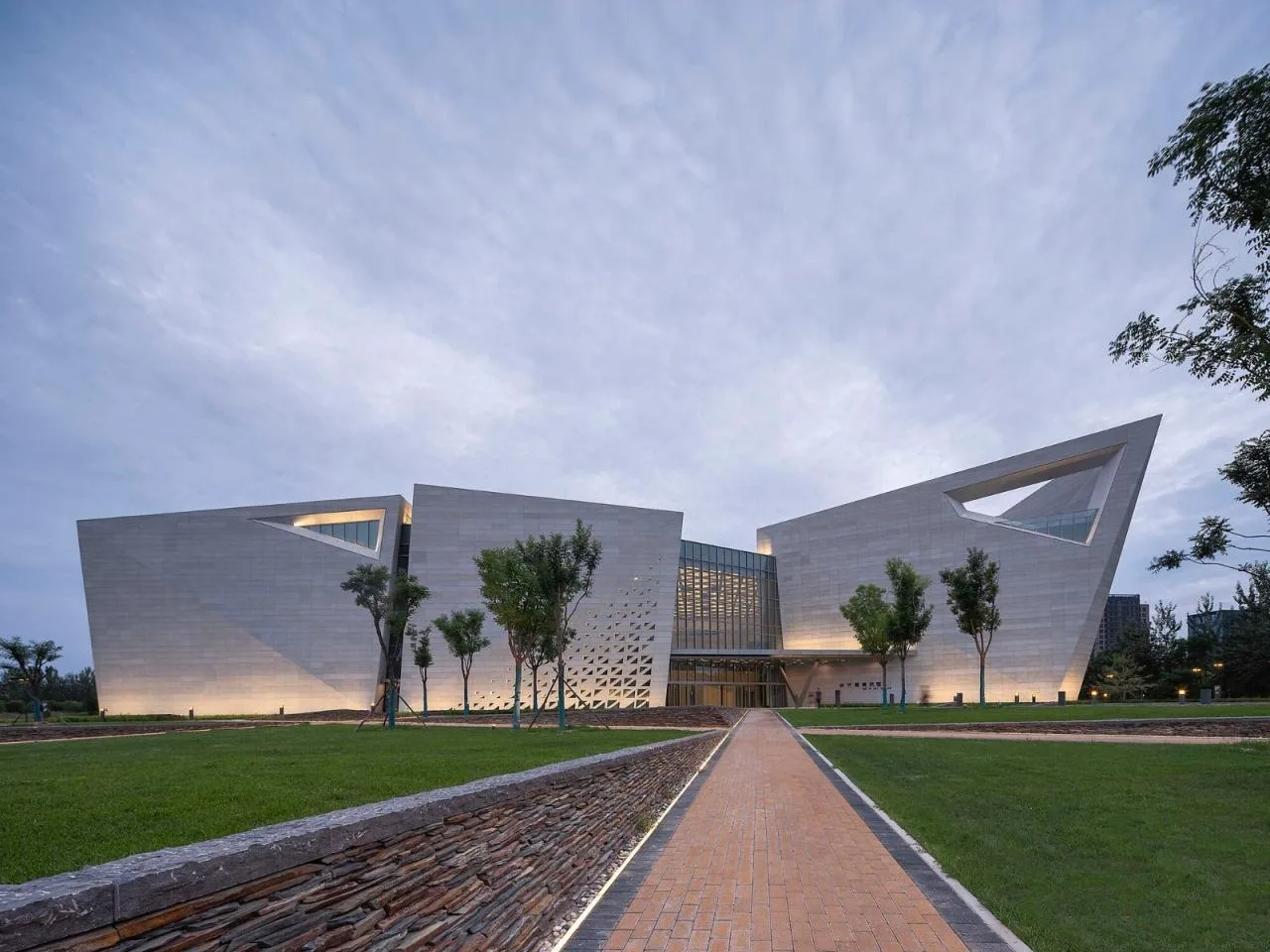
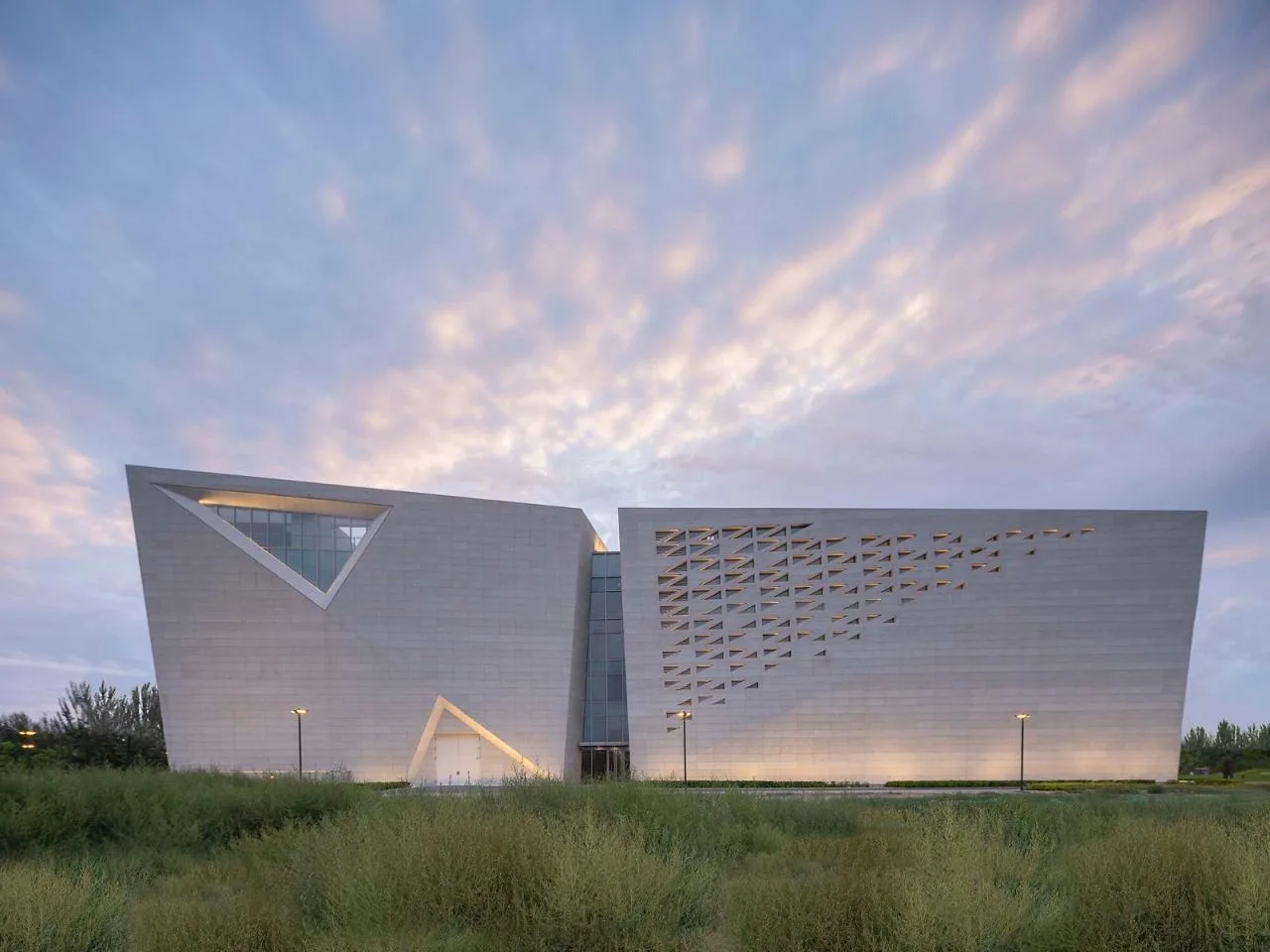
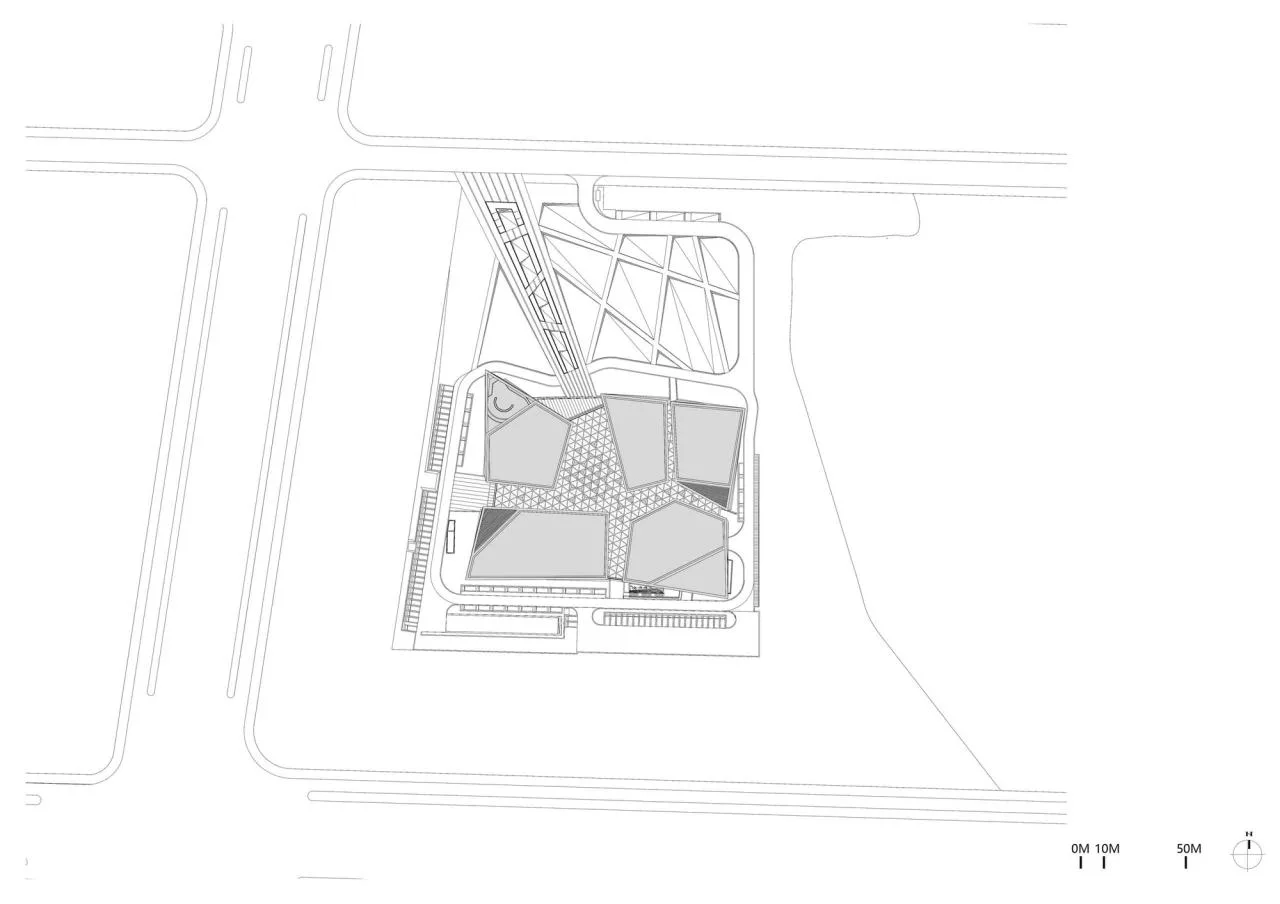
The building is situated on the southern edge of the site and connects to the northern road via an outdoor exhibition area. The entrance plaza, located at the northwest corner, channels pedestrian flow from the northern public axis and guides visitors toward the museum entrance through carefully designed landscaping.
Starting from the shape of a massive rock, the building is segmented into multiple volumes. A courtyard is positioned at the entrance to correspond with the northwest pedestrian flow, while the roof and glass curtain walls unite these volumes, evoking the image of Helan Mountain stones rising freely in the vast desert.
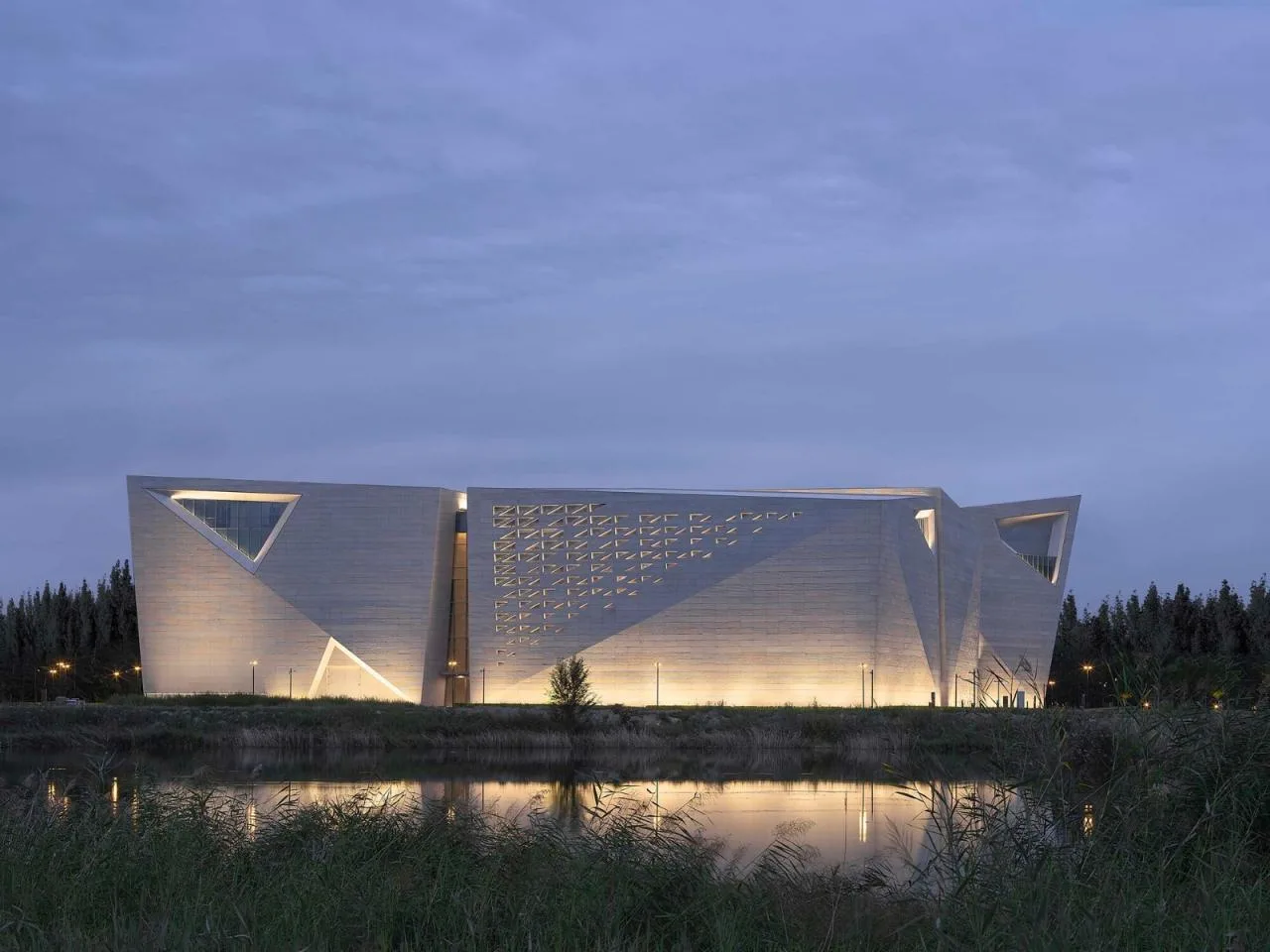
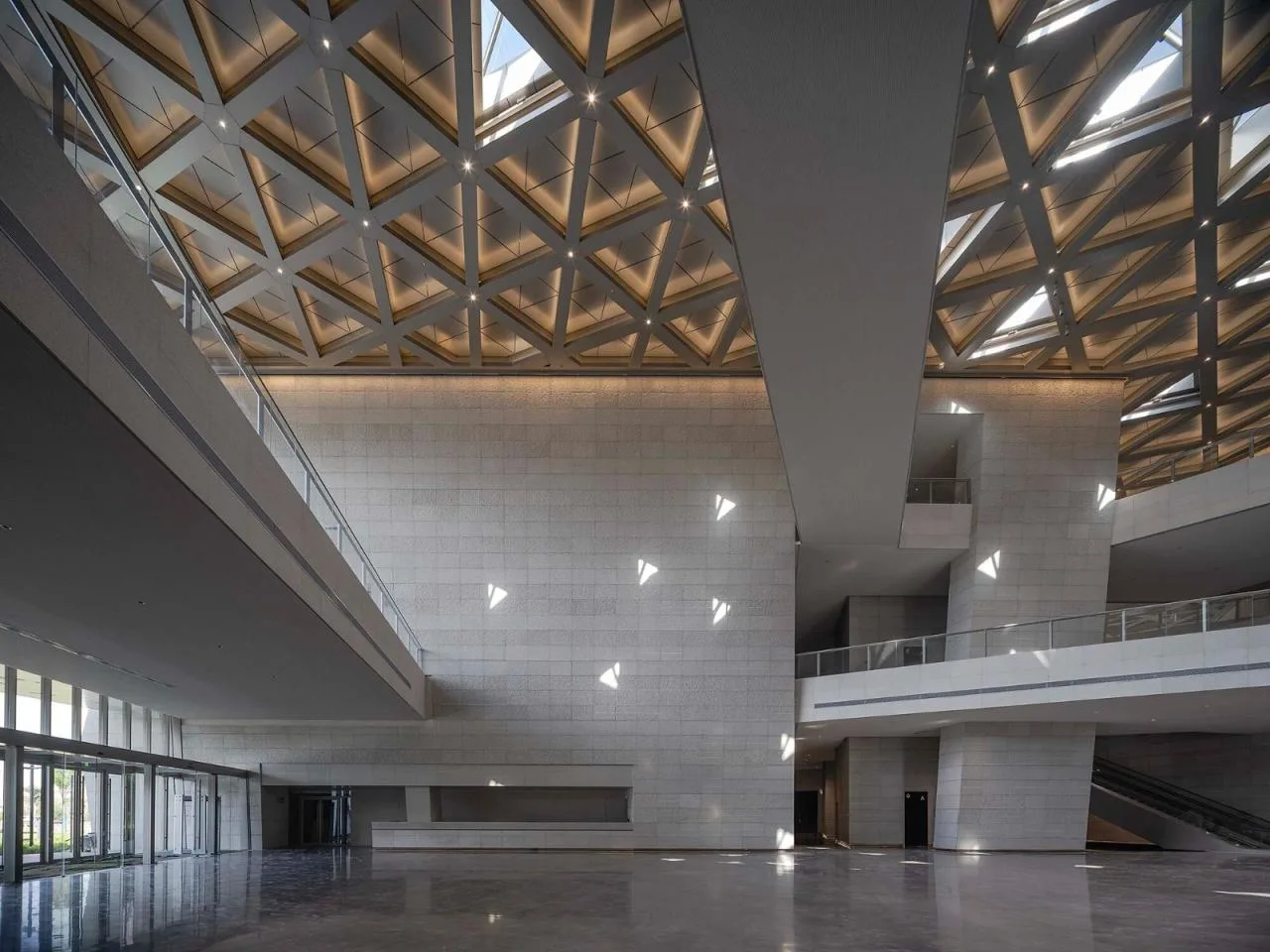
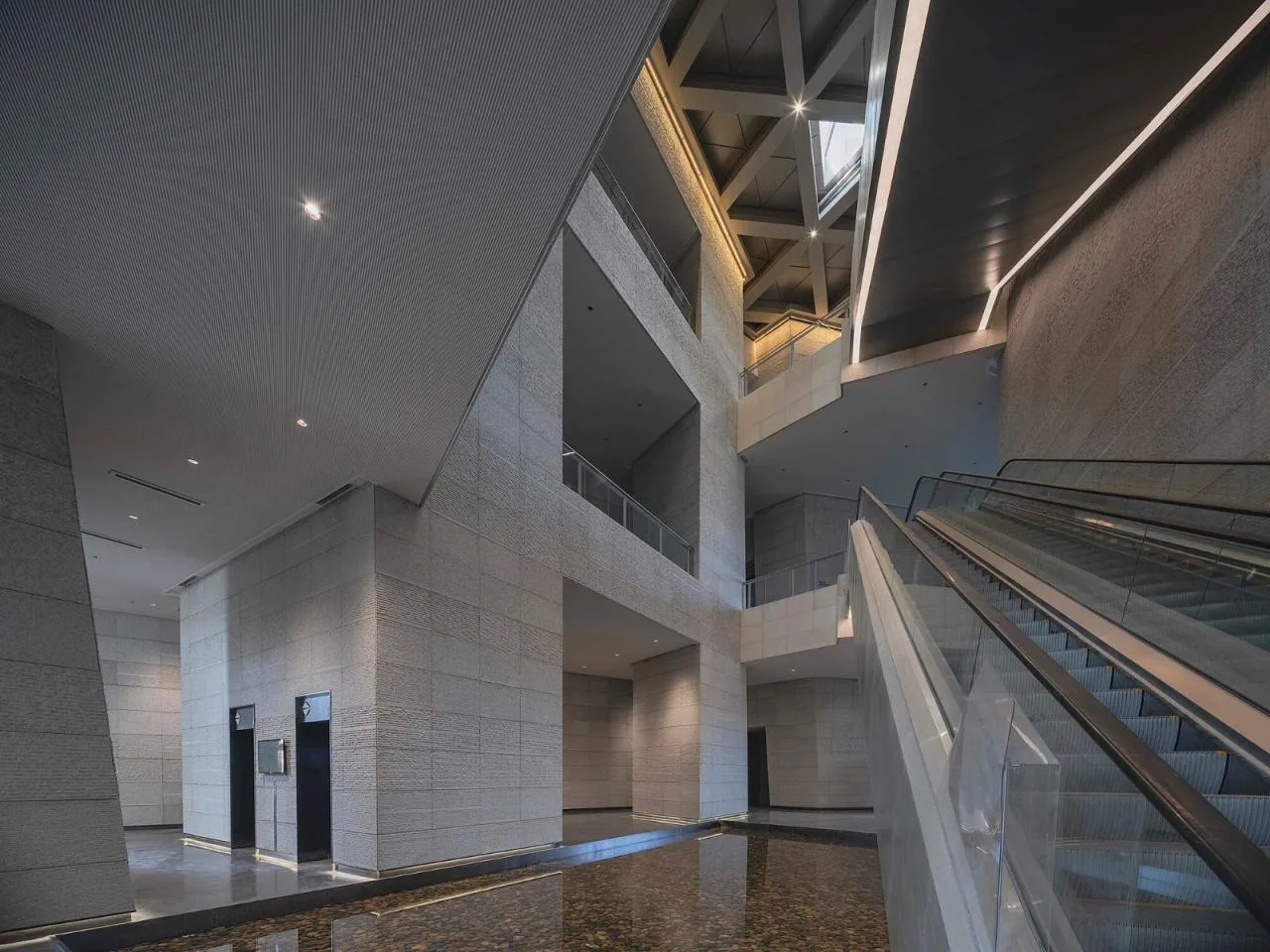
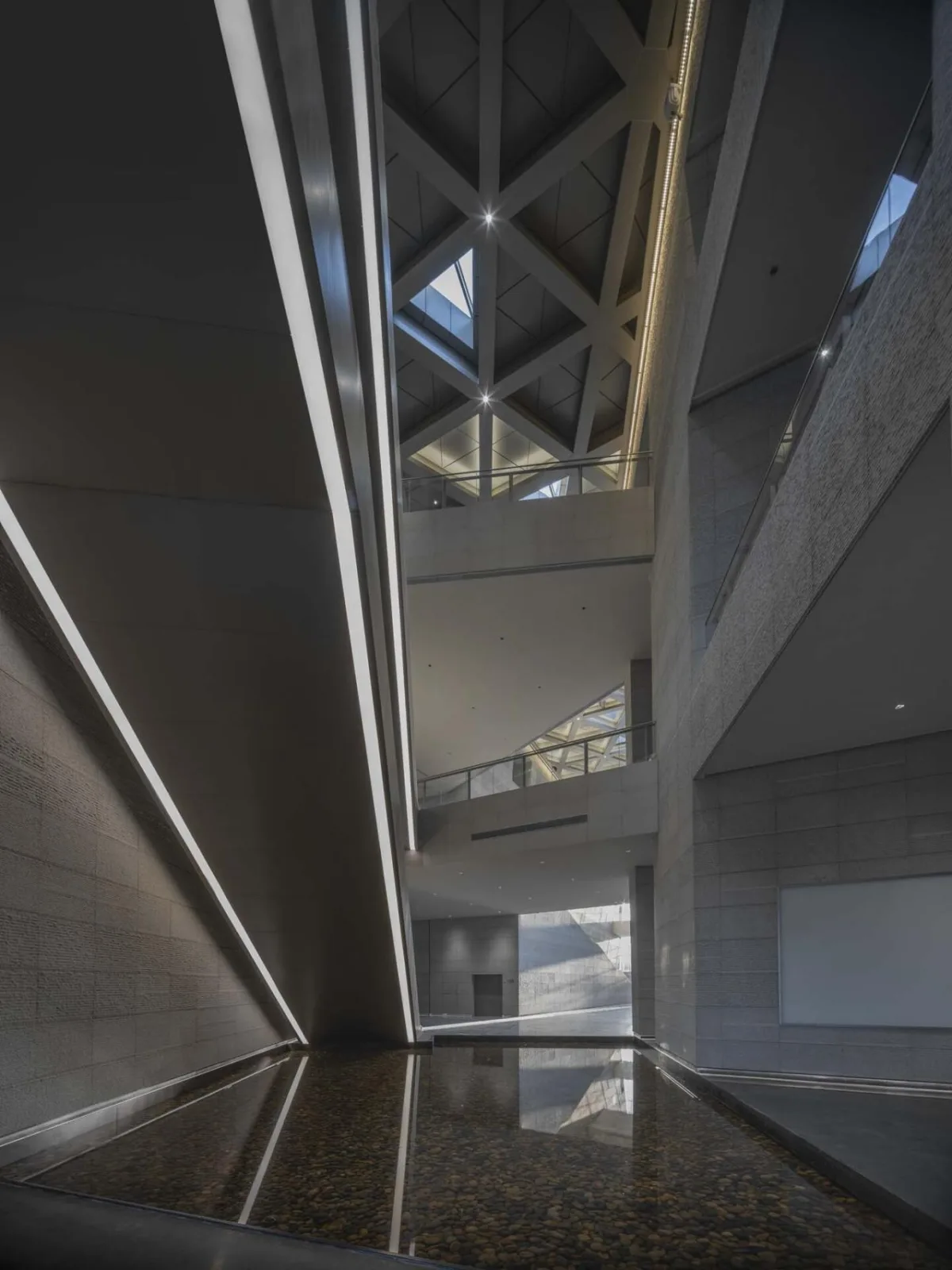
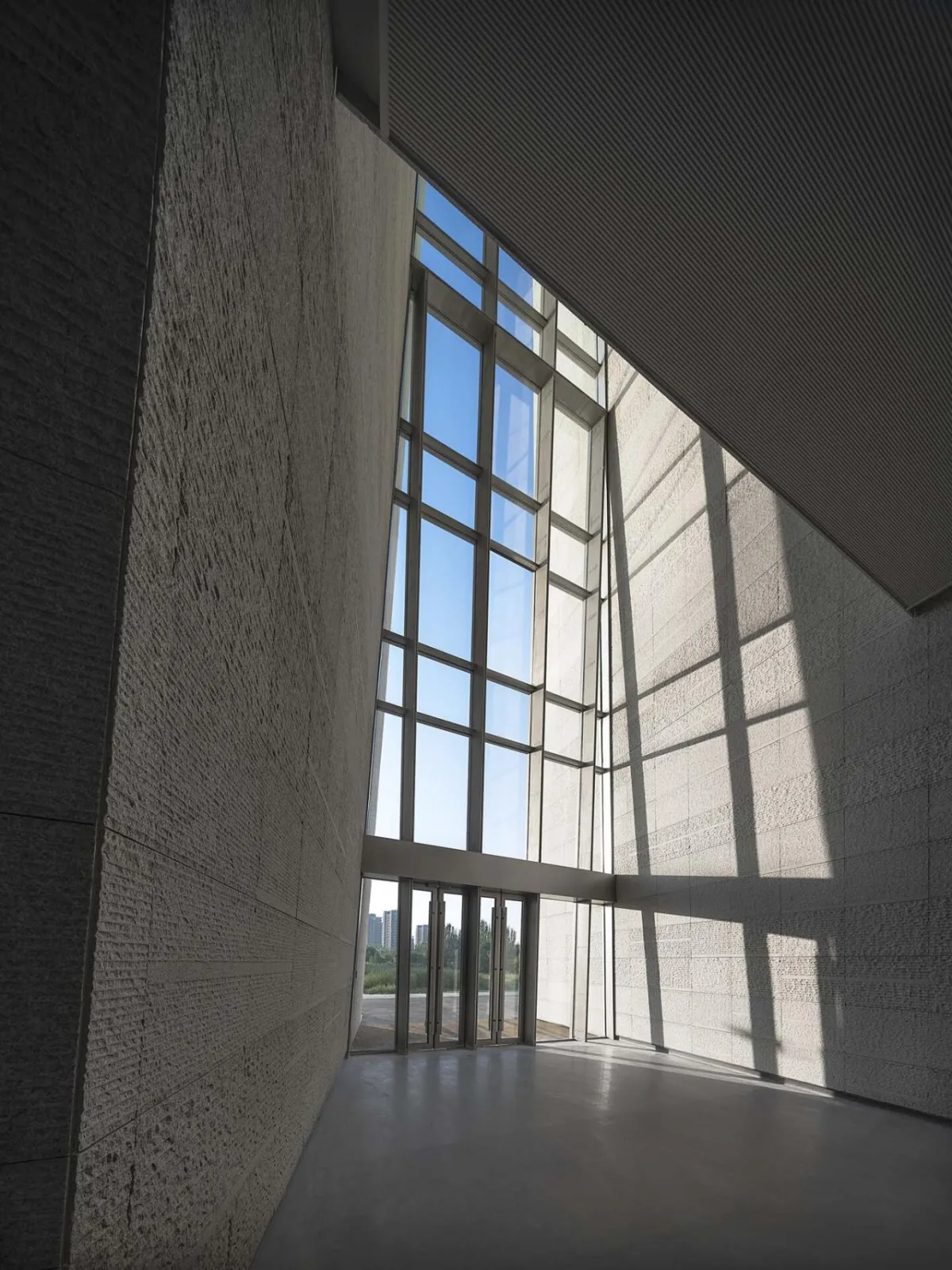
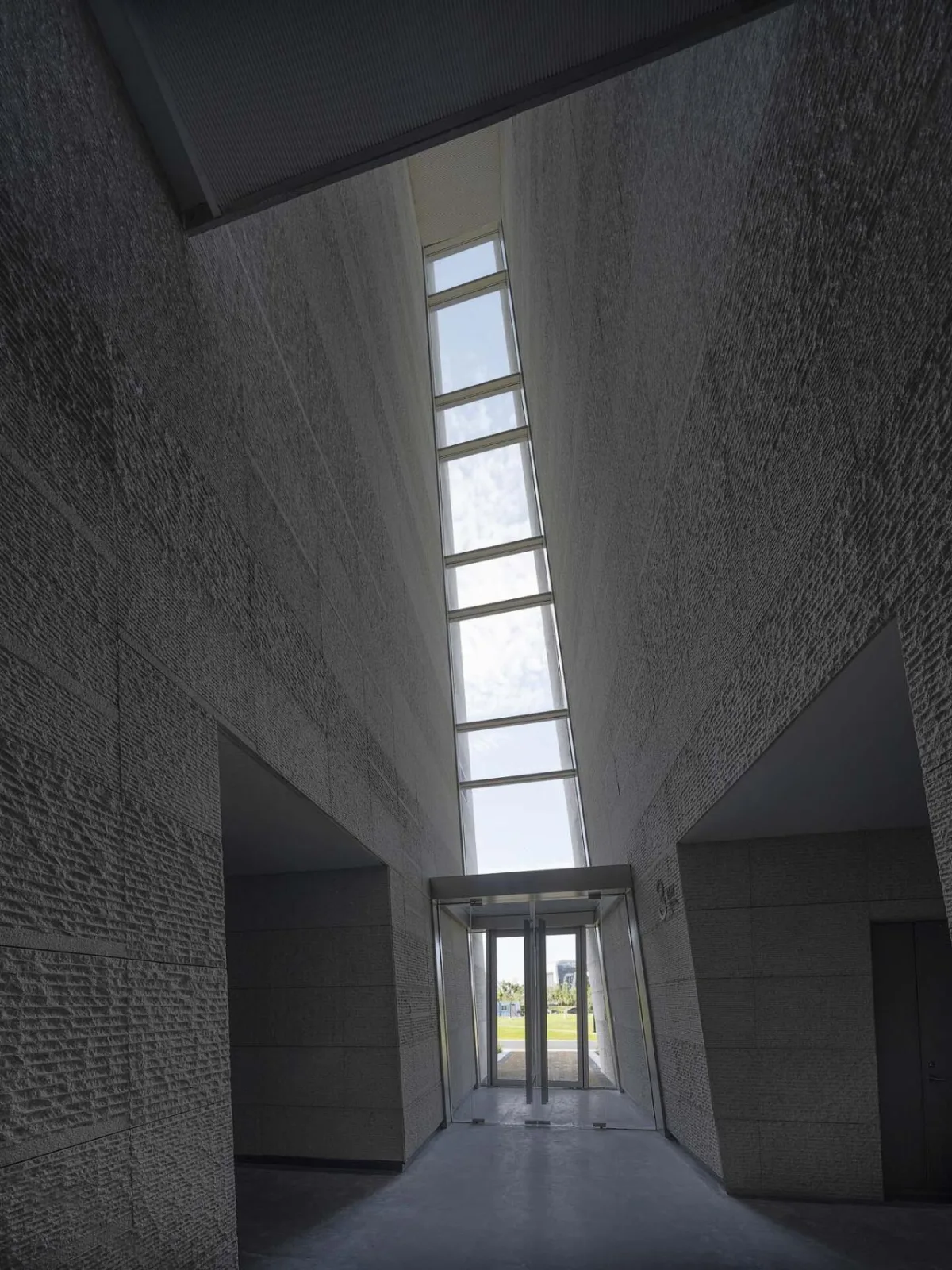
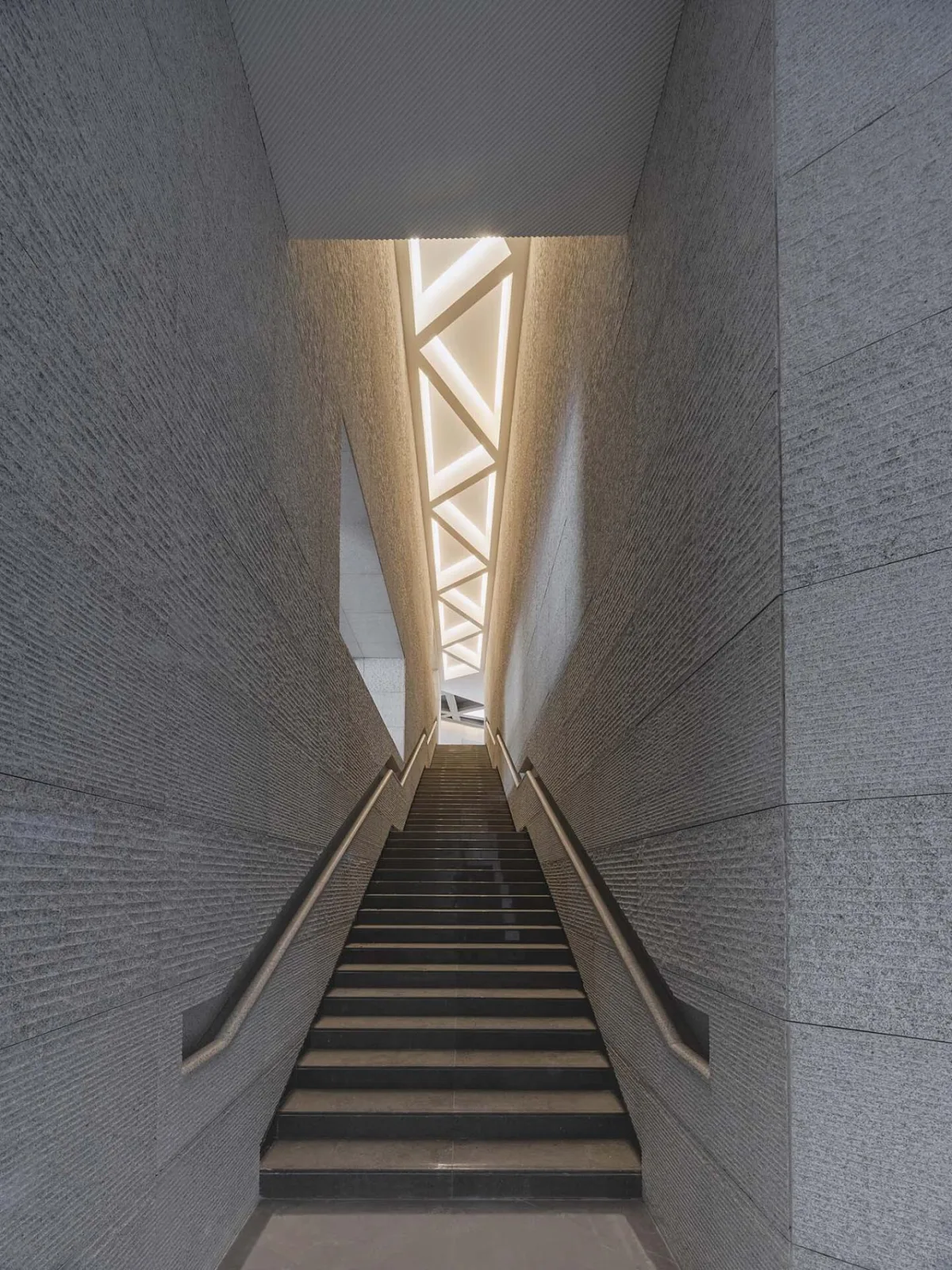
The design seamlessly integrates the building’s exterior and interior. The volumes representing rocks not only define the outside silhouette but also extend into the interior, creating canyon-like spaces between the mountain and stone forms. These narrow, winding, and towering exhibition corridors foster a dynamic relationship between mountain and valley.
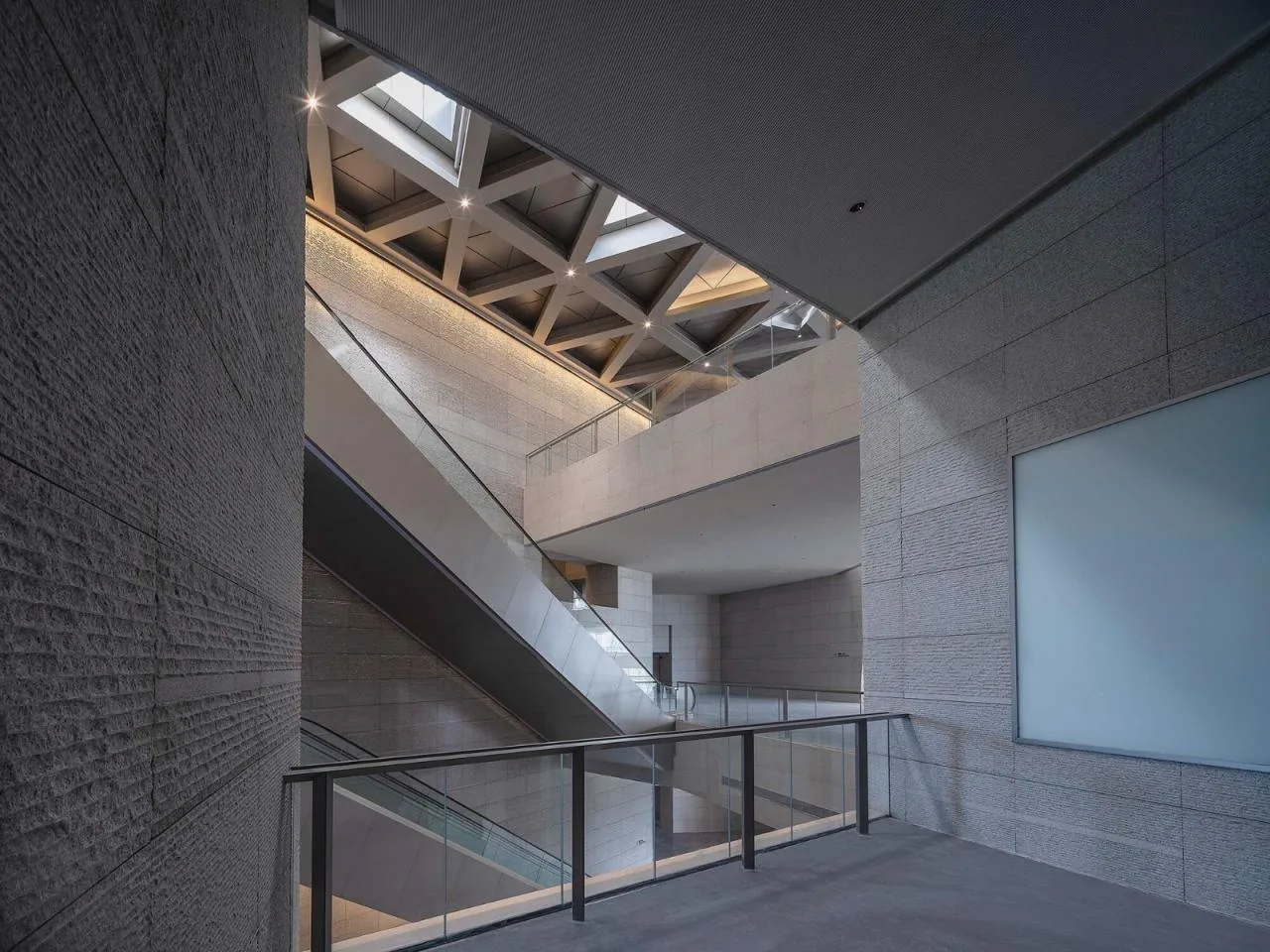
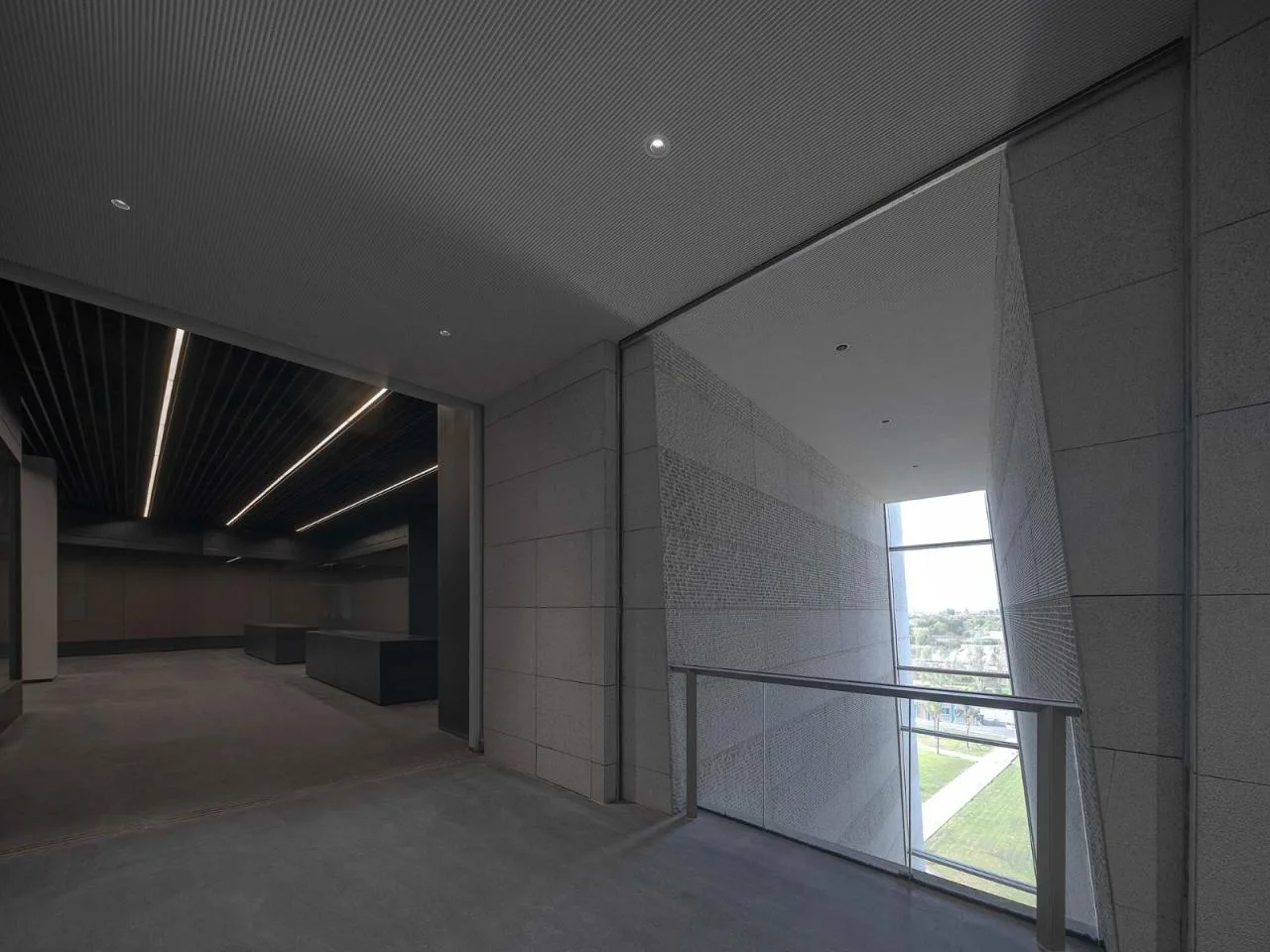
The multi-level platforms interwoven throughout the canyons offer a rich spatial experience and encourage a circular flow for visitors. Each exhibition hall exit includes a designated rest area, providing comfortable spaces for visitors to pause and reflect.
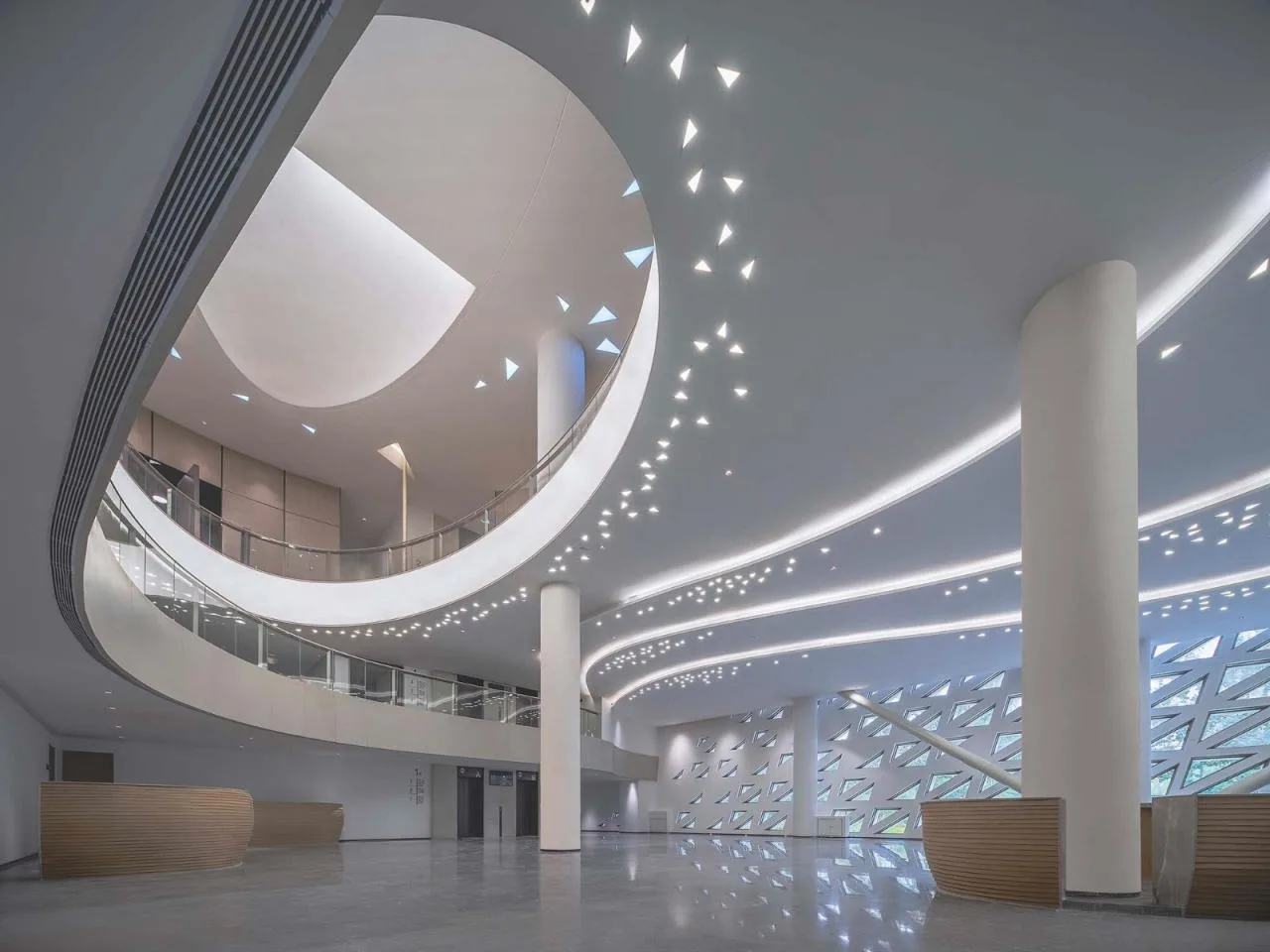
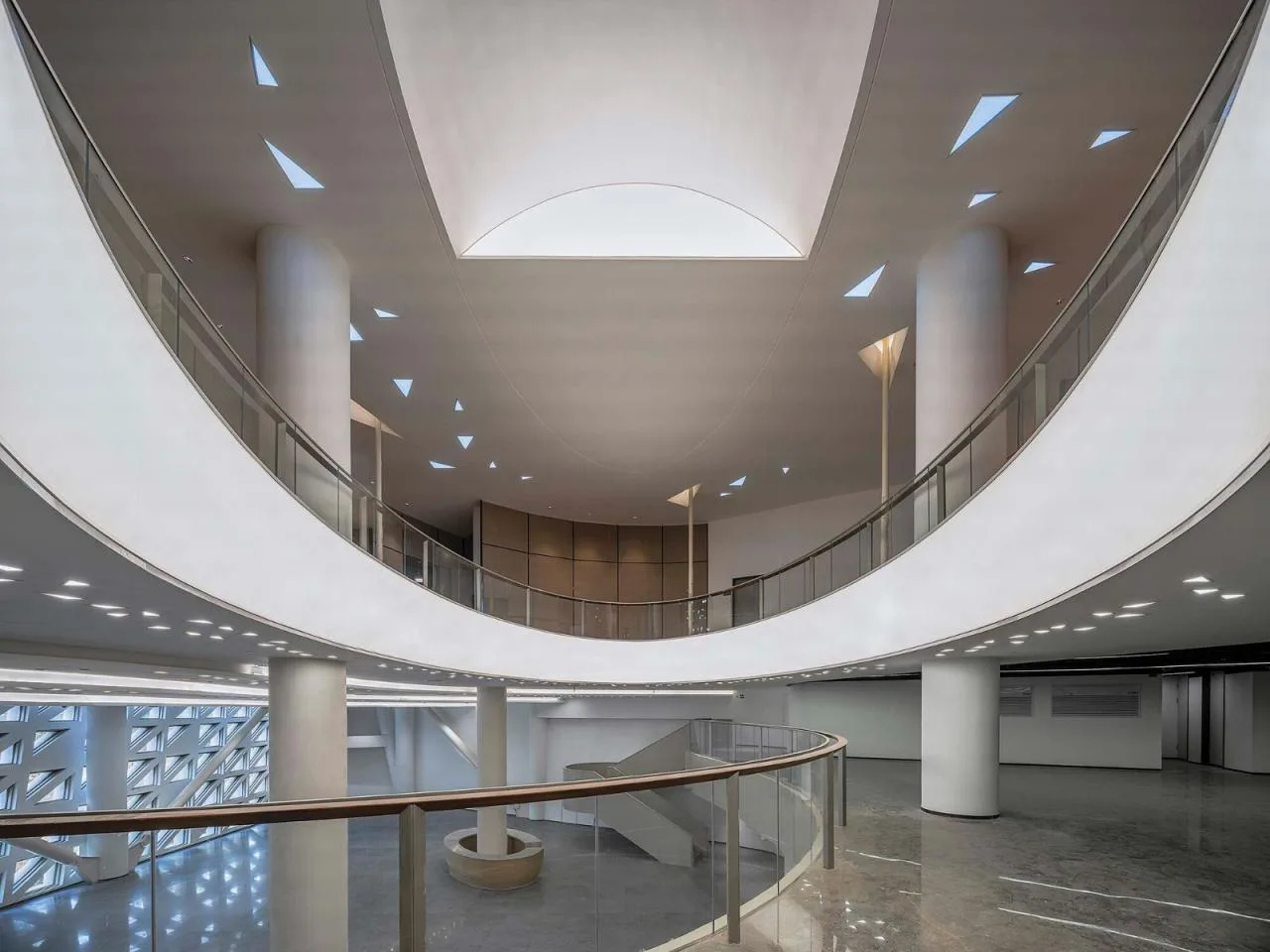
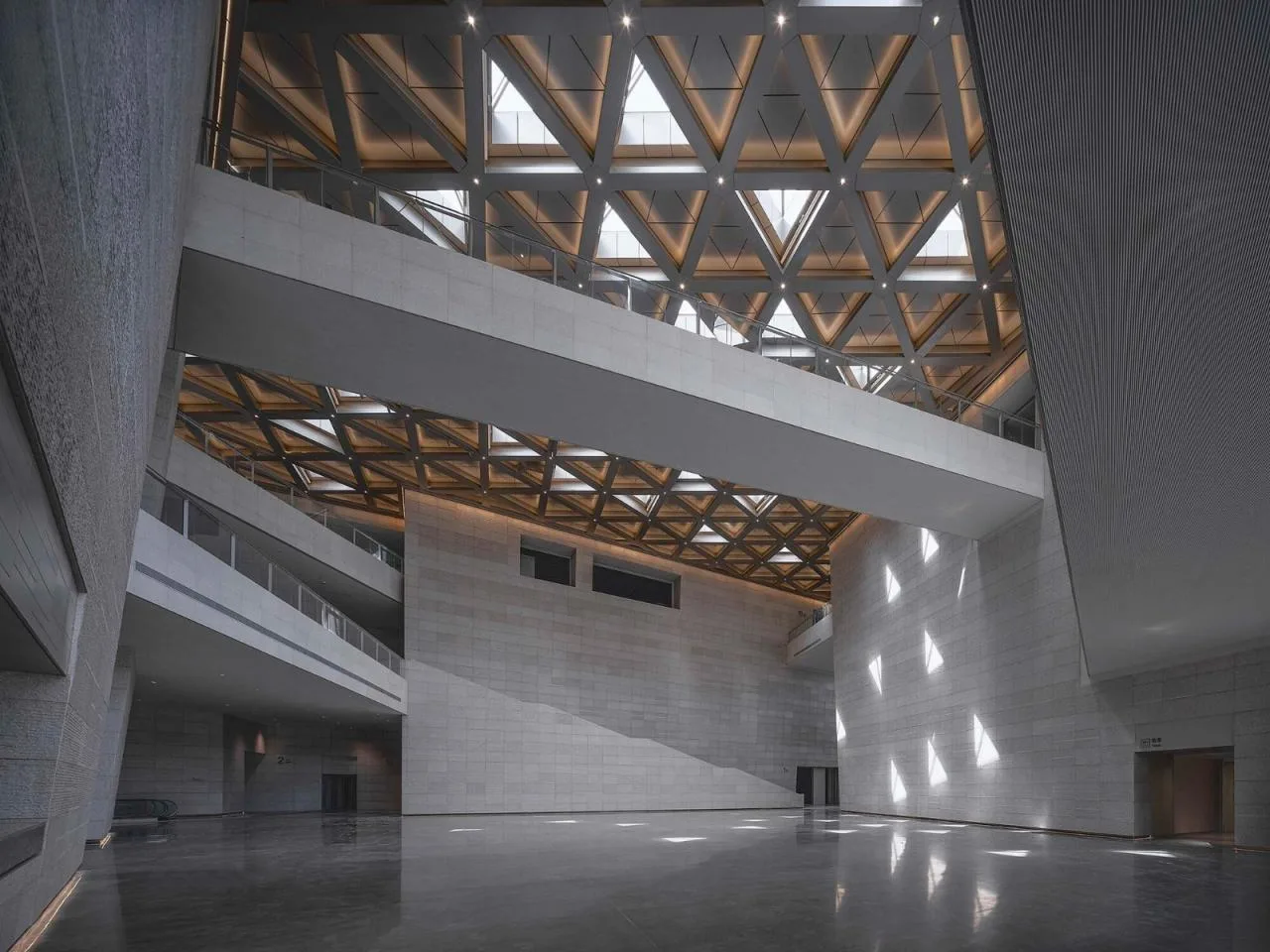
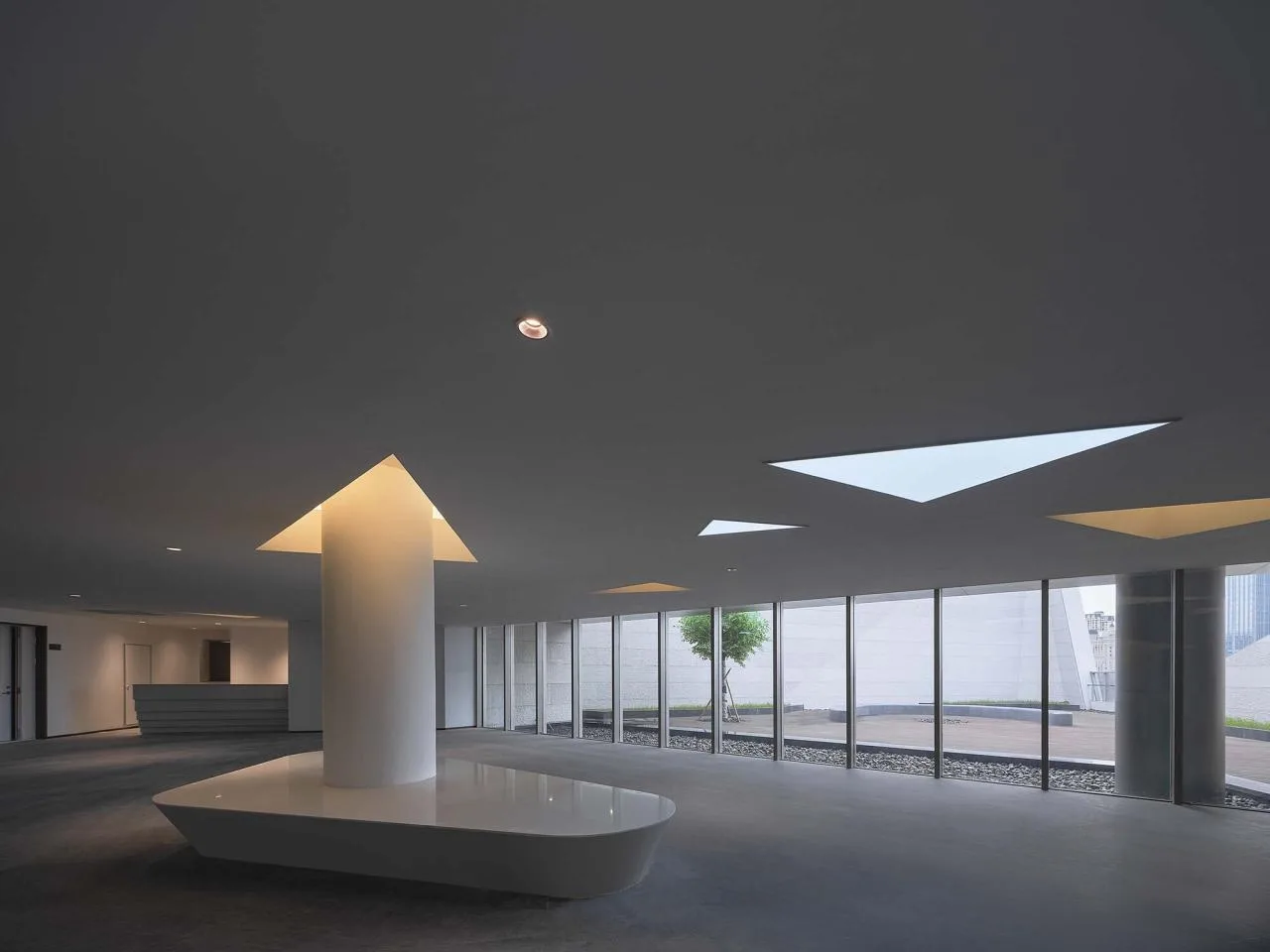
The canyon expands at the entrance to form a grand atrium, suitable for hosting significant events like opening ceremonies. The public service and training areas contrast the rugged rock forms with flowing curves and a pure white, crescent-shaped ceiling, crafting an open and romantic spatial atmosphere.
The artist salon integrates outdoor courtyards, fostering a comfortable environment for communication and dialogue with the urban surroundings and Helan Mountain.
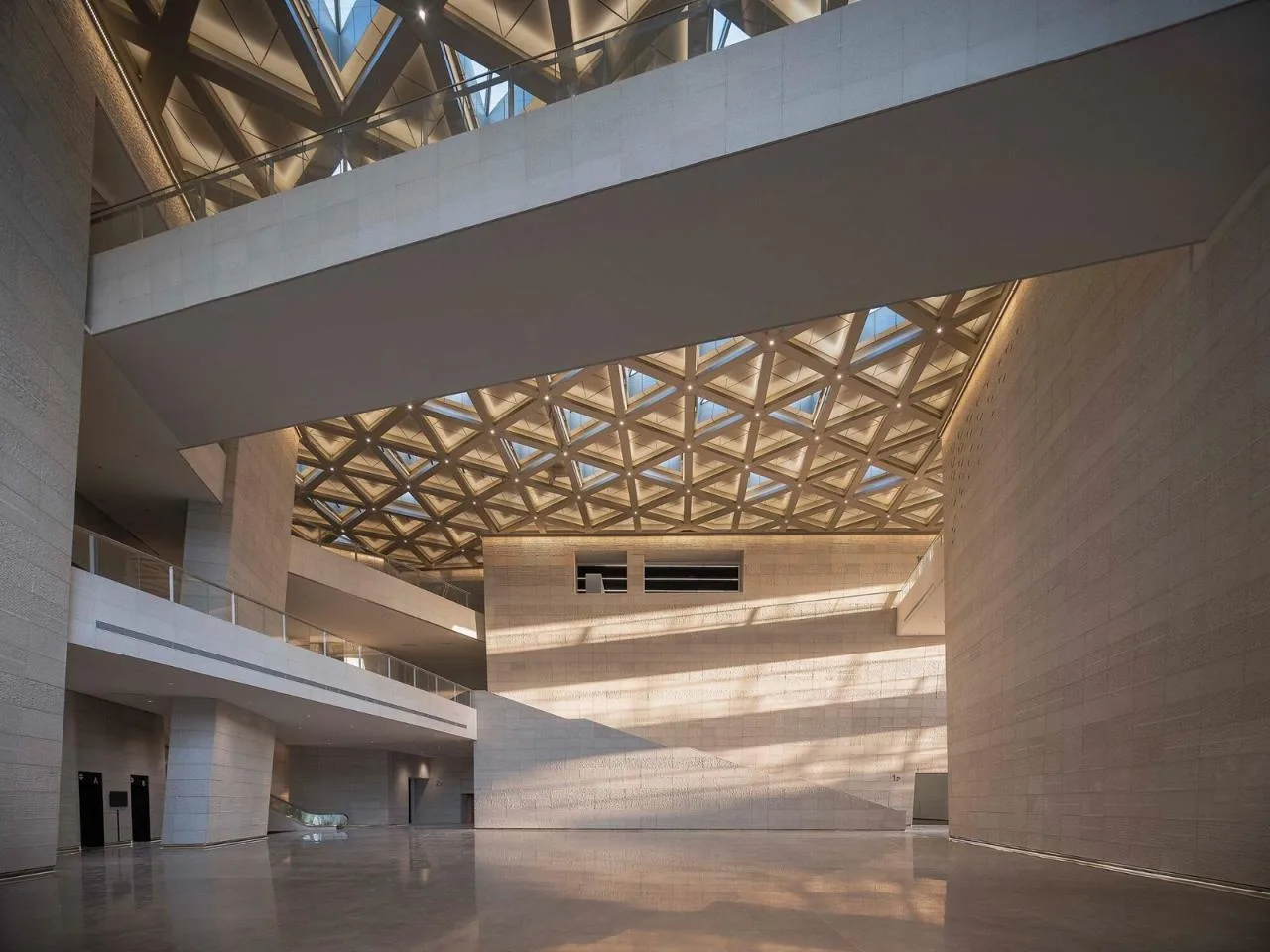
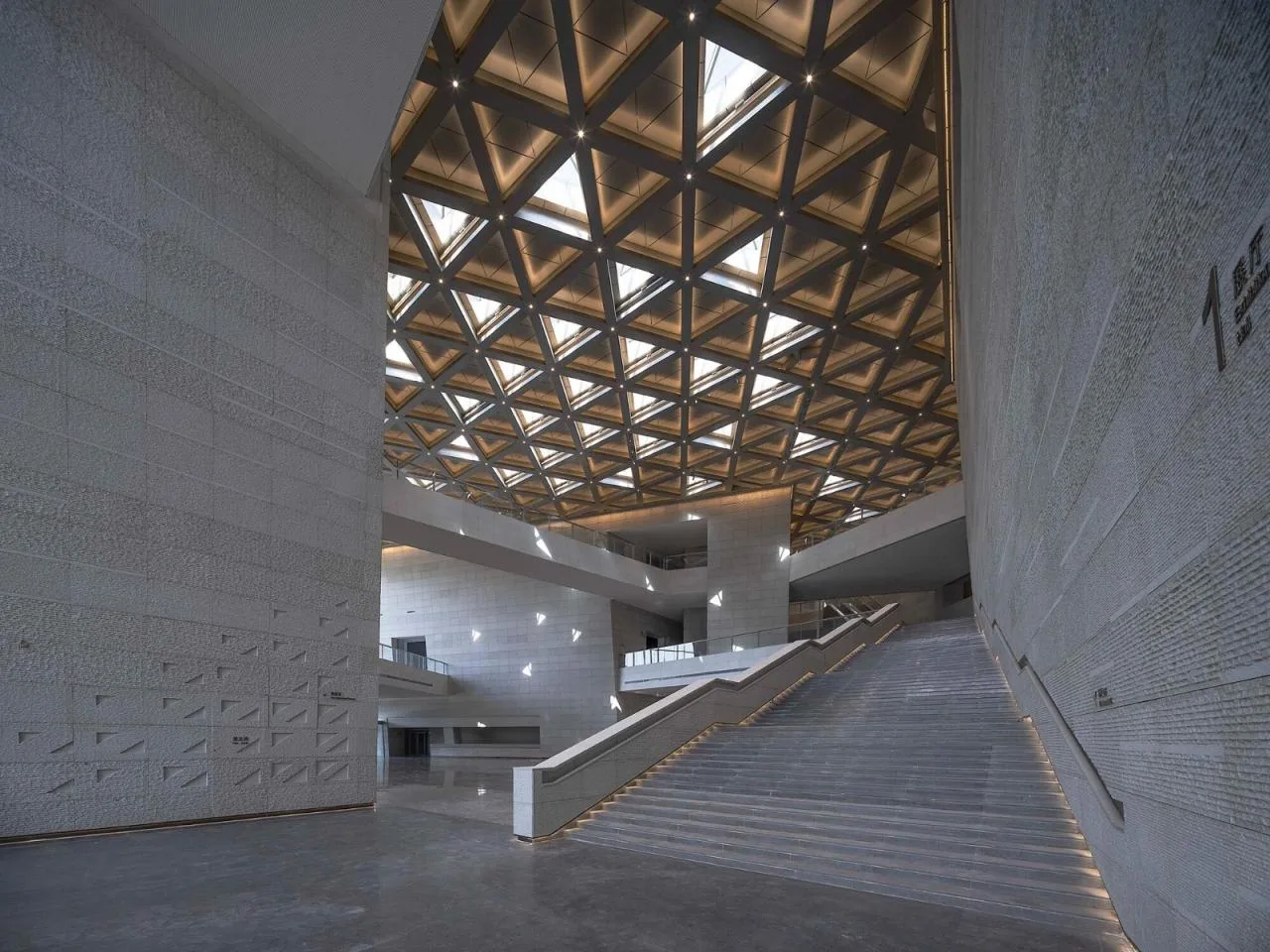
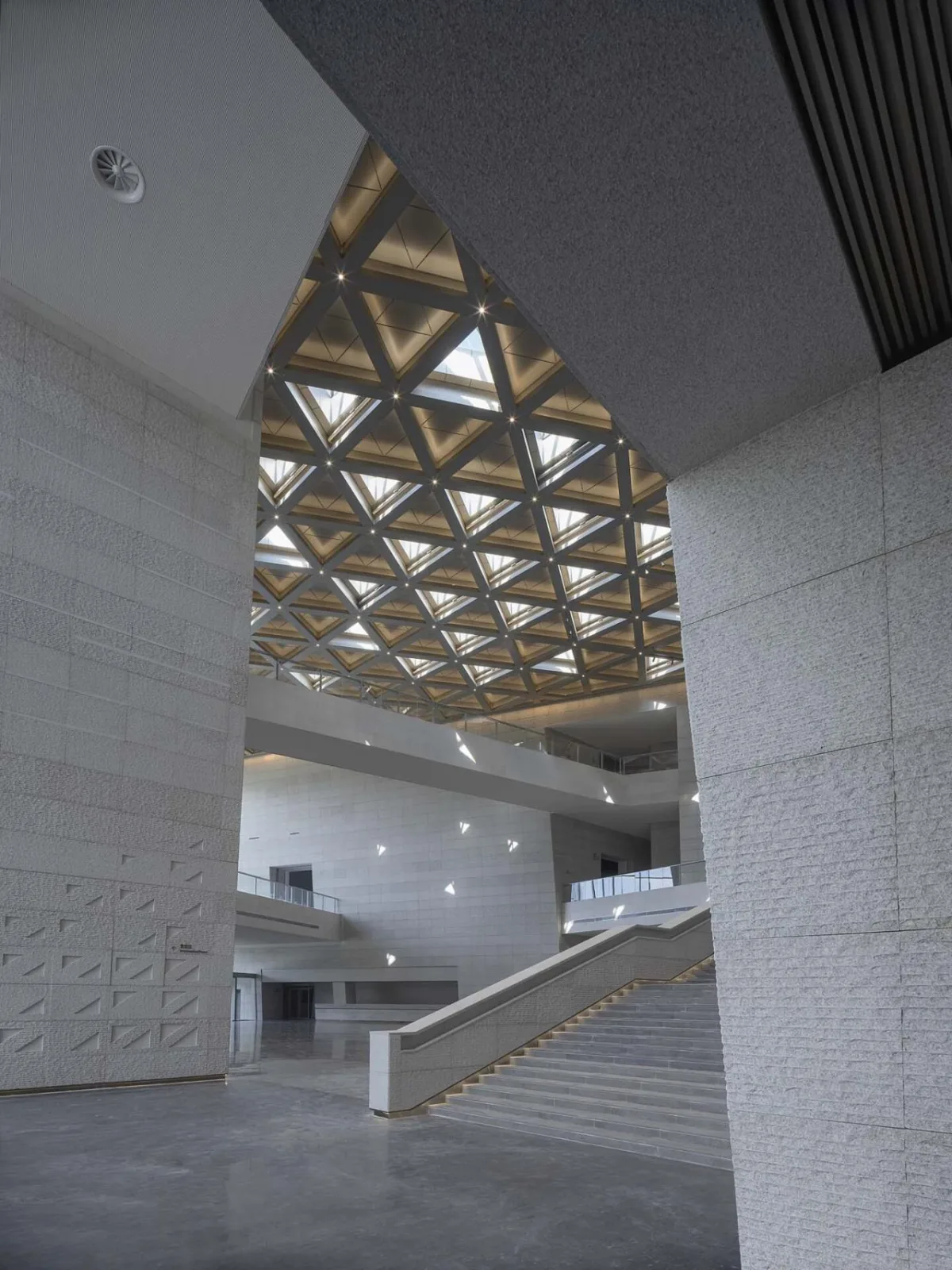
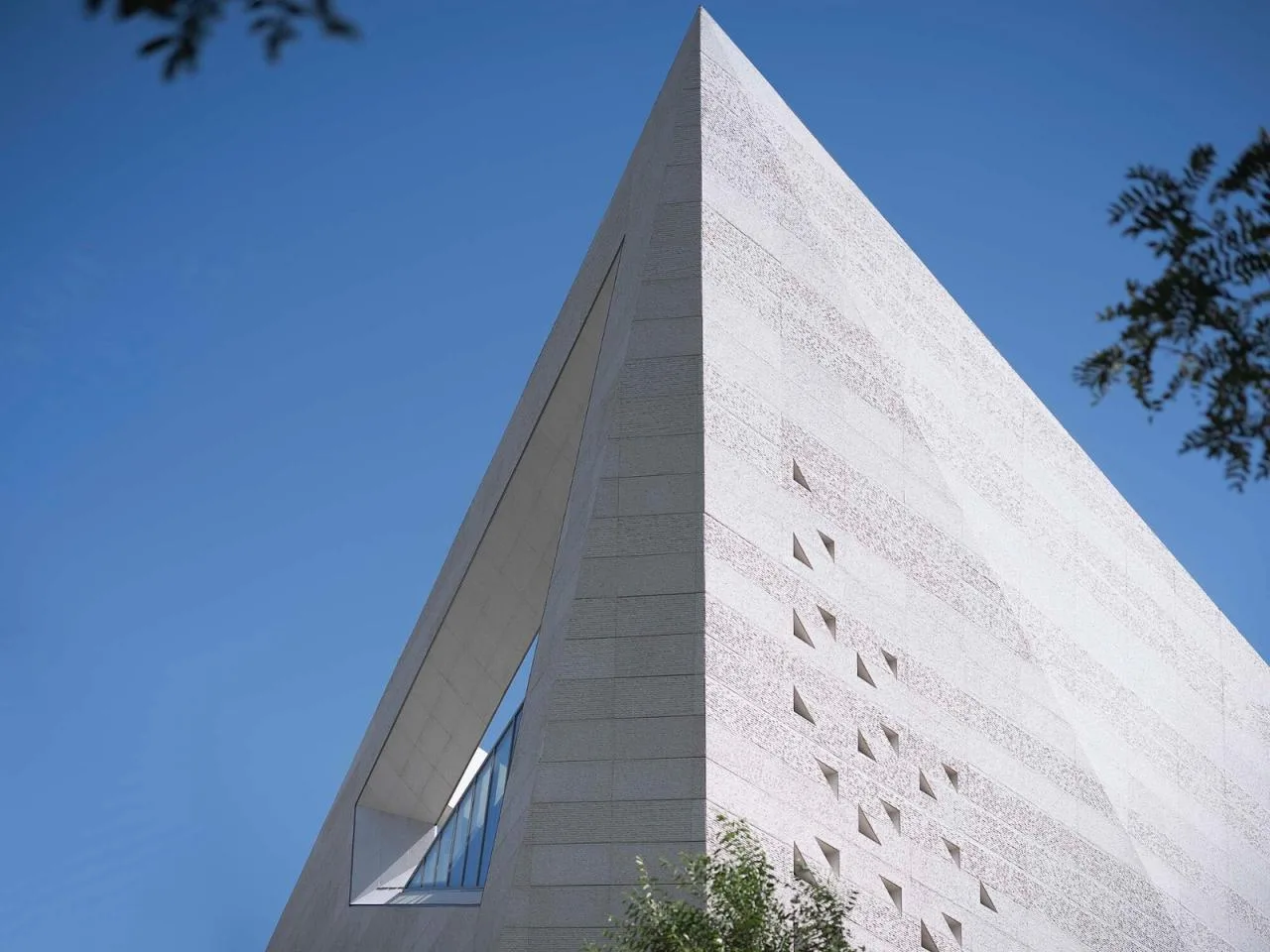
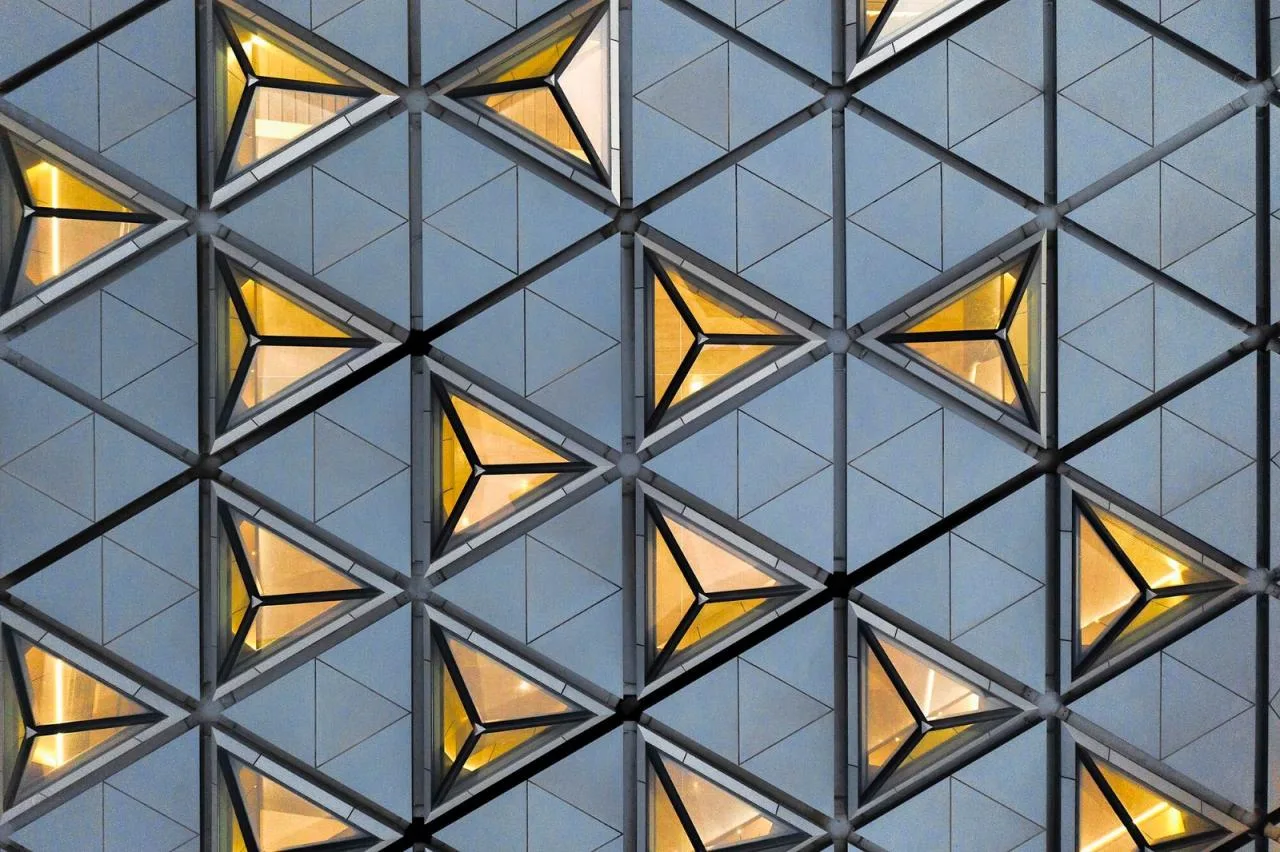
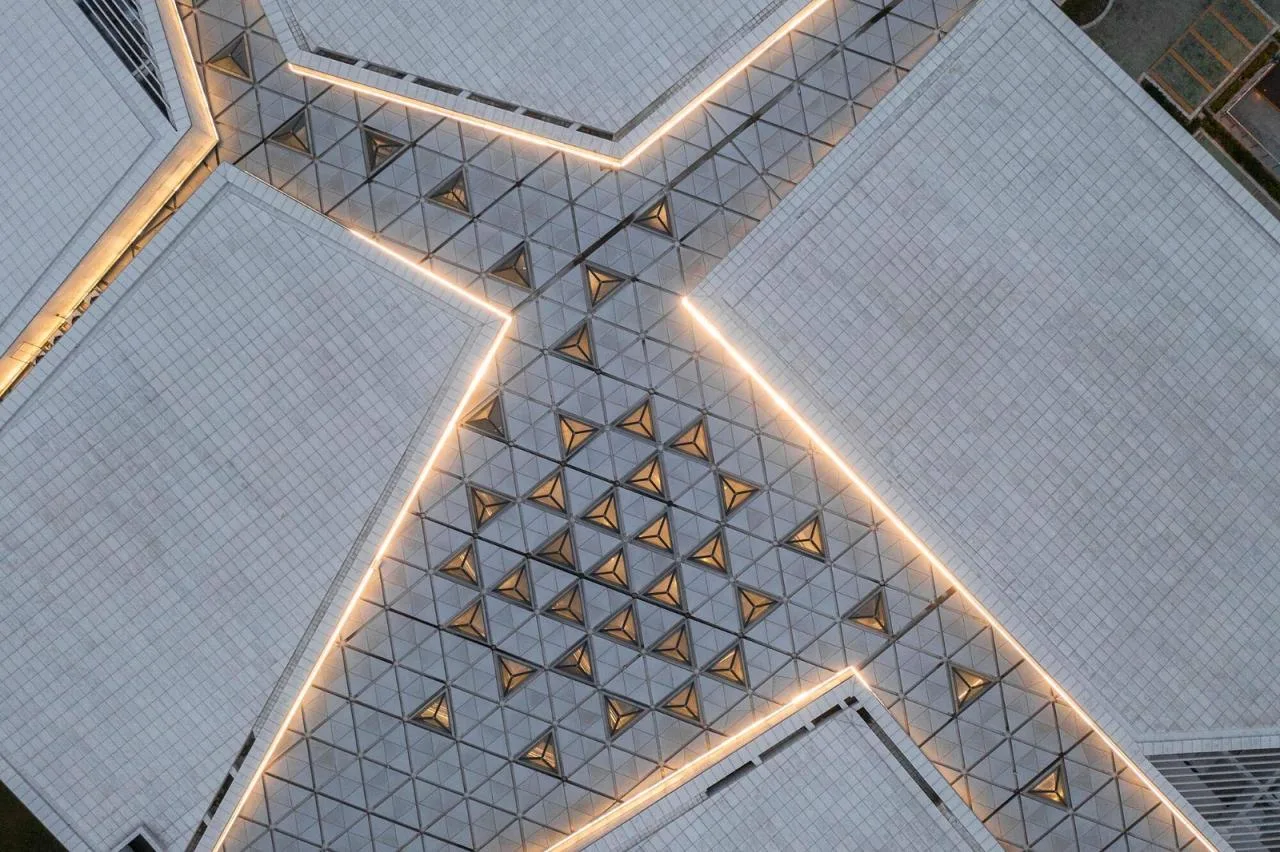
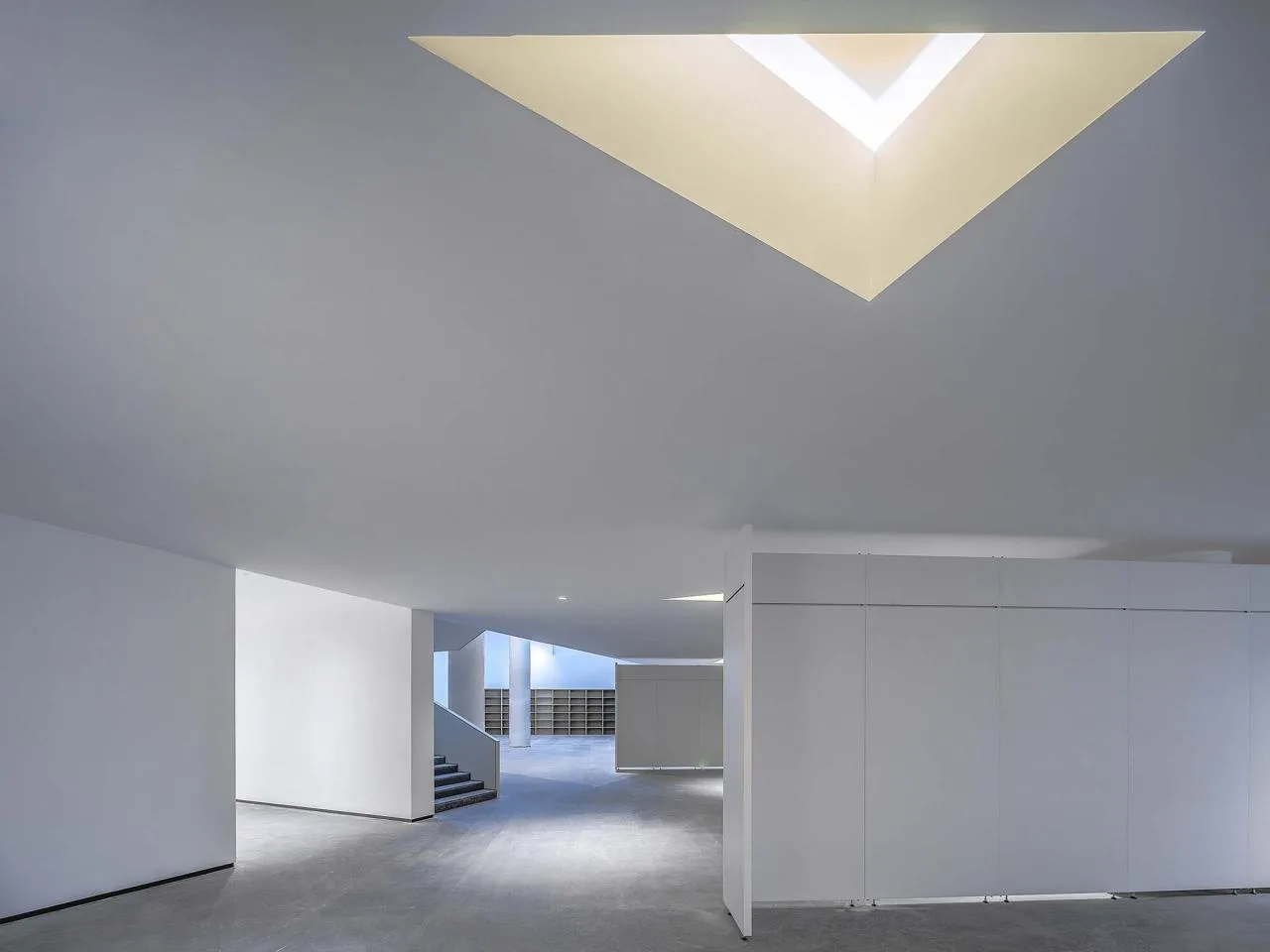
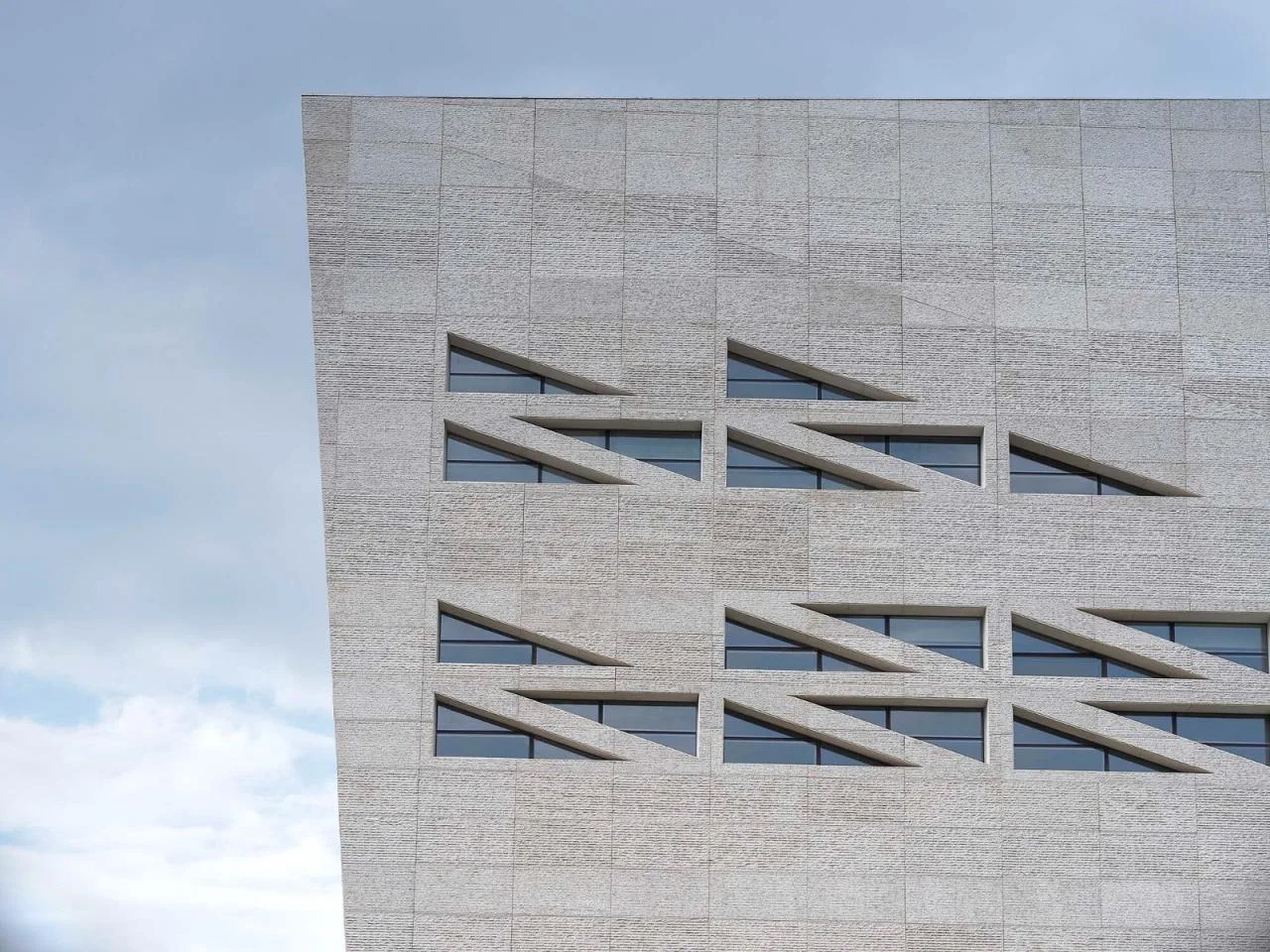
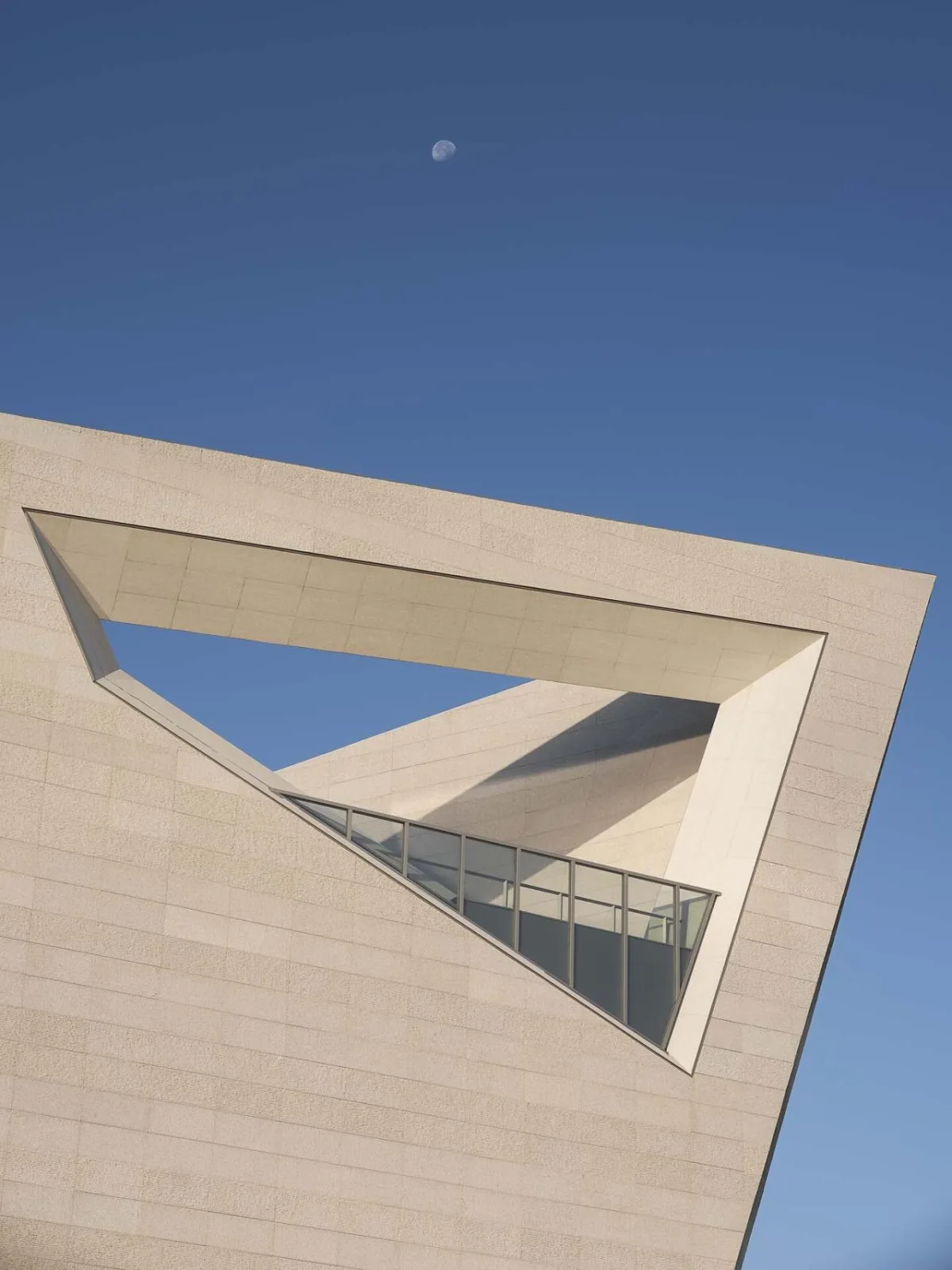
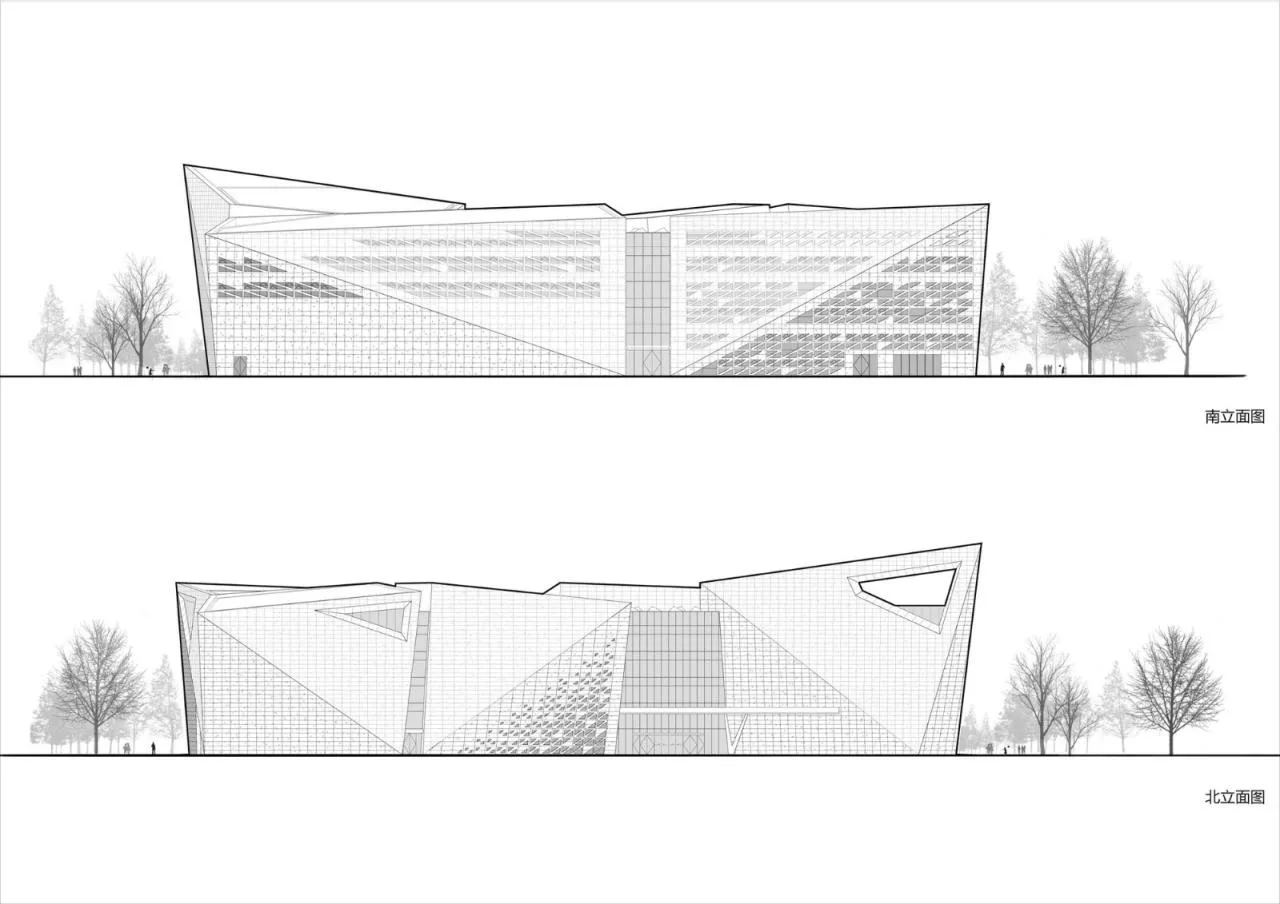
The architectural details emphasize simplicity while carefully attending to design elements. Triangles serve as the central motif throughout the building. Multiple triangular folds shape the volumes, enhancing the mountain and stone-like feel.
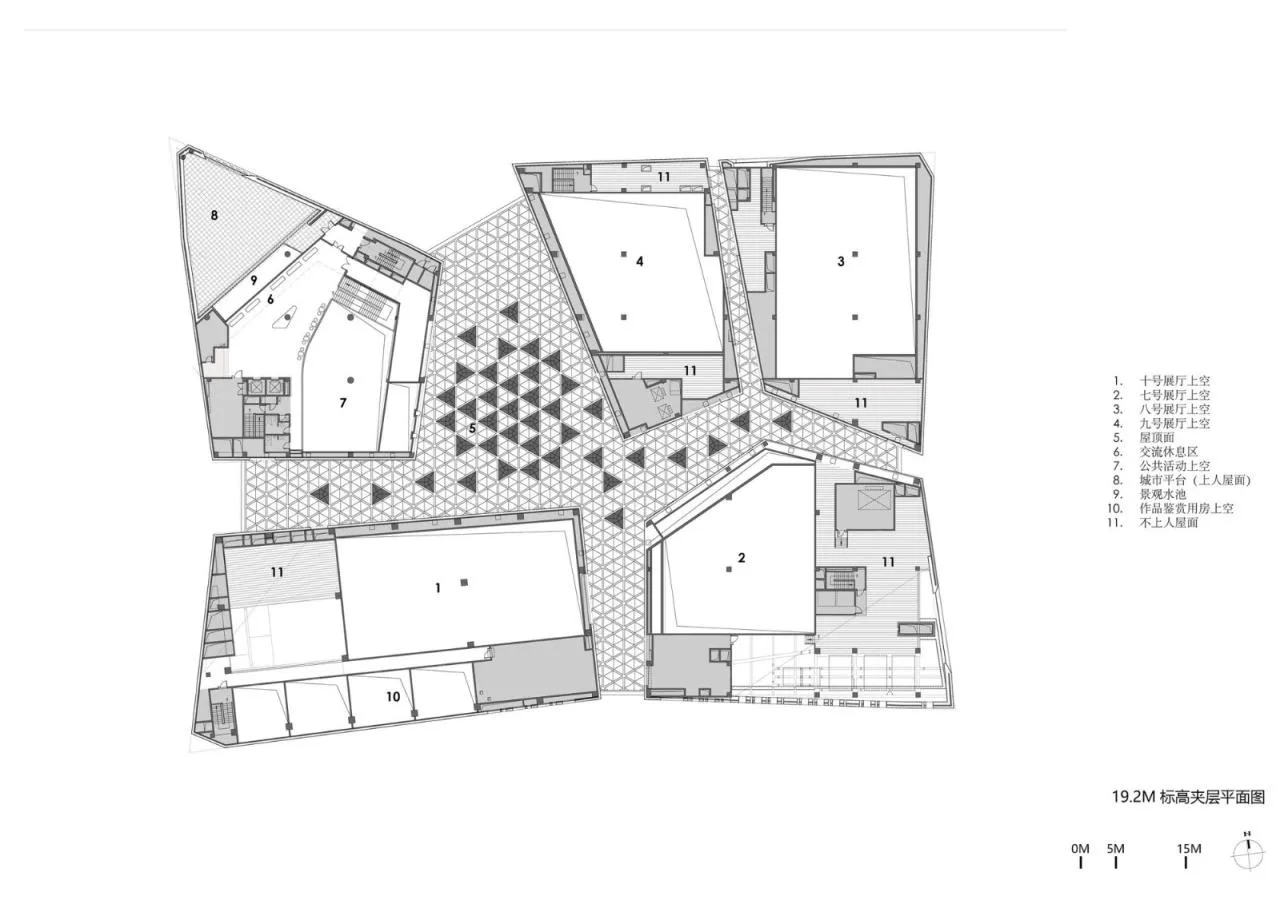
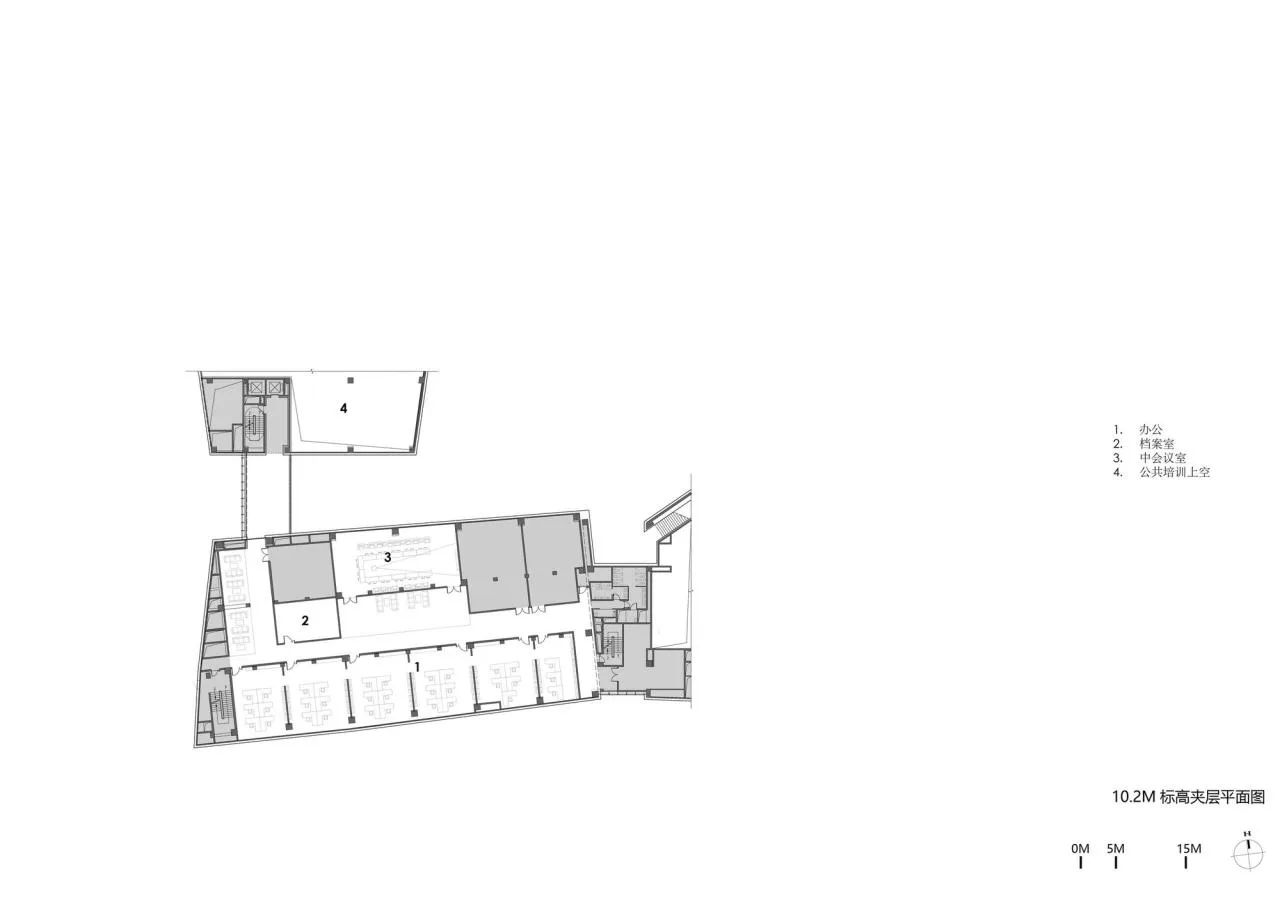
In the public service area, the volumes conform to wall shapes and internal functions, forming gradual triangular windows. A large triangular window on the south side provides ample natural light for offices and studios. The triangular skylight on the roof features a rhythmic geometric pattern and also illuminates the atrium below.
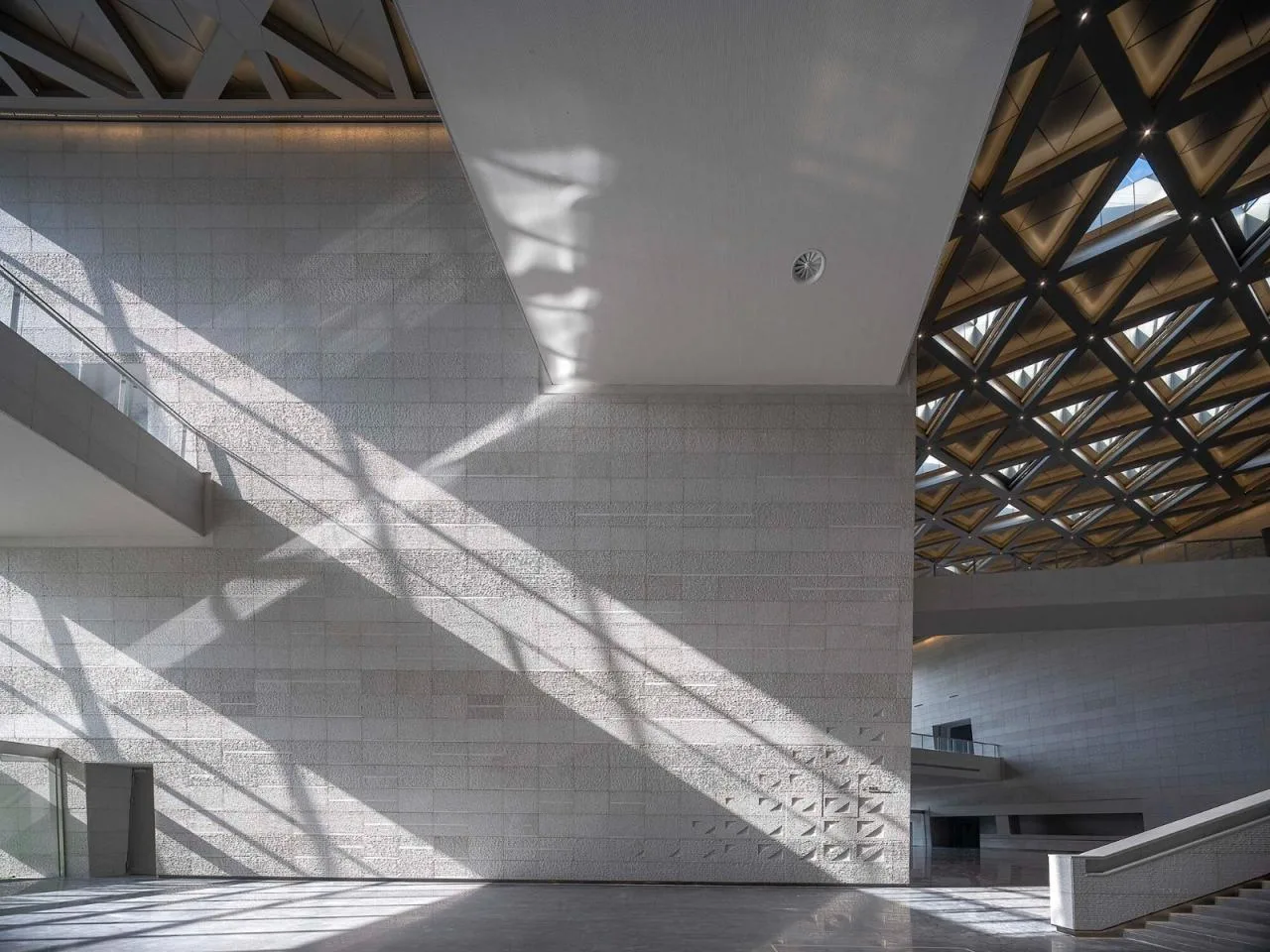
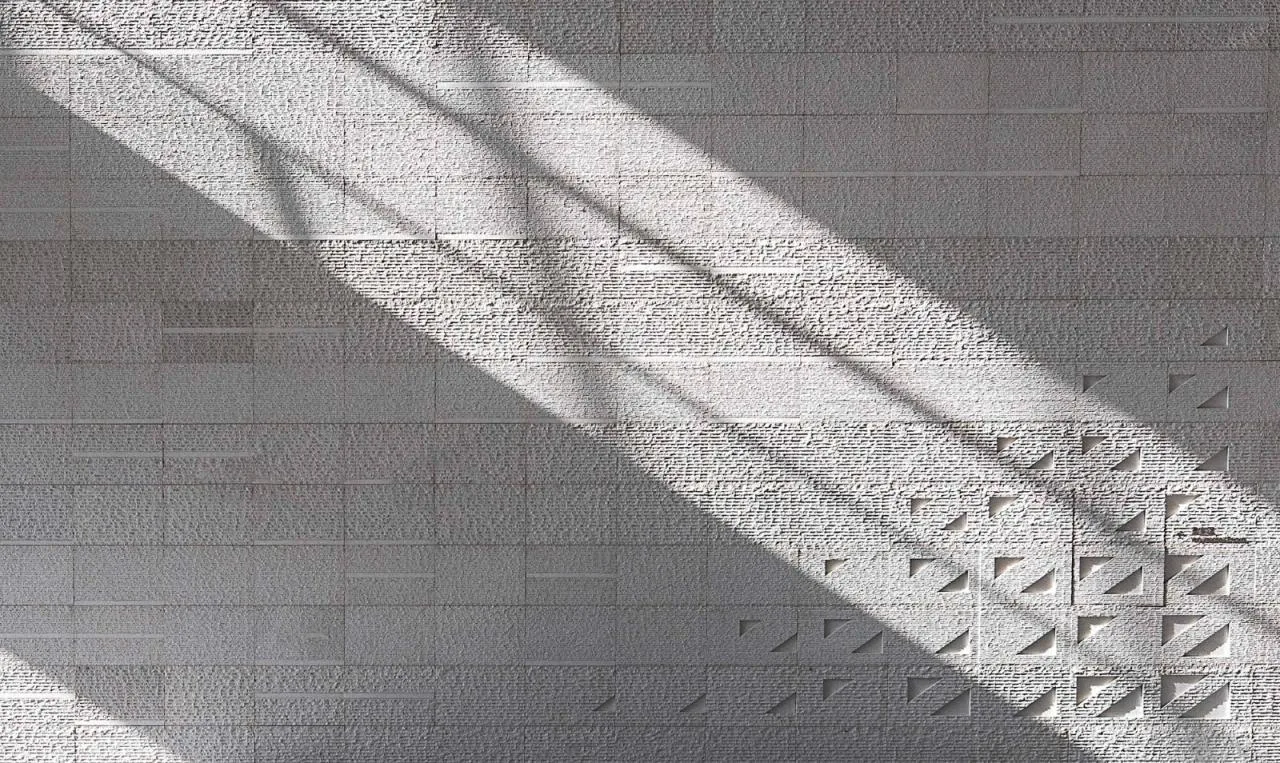
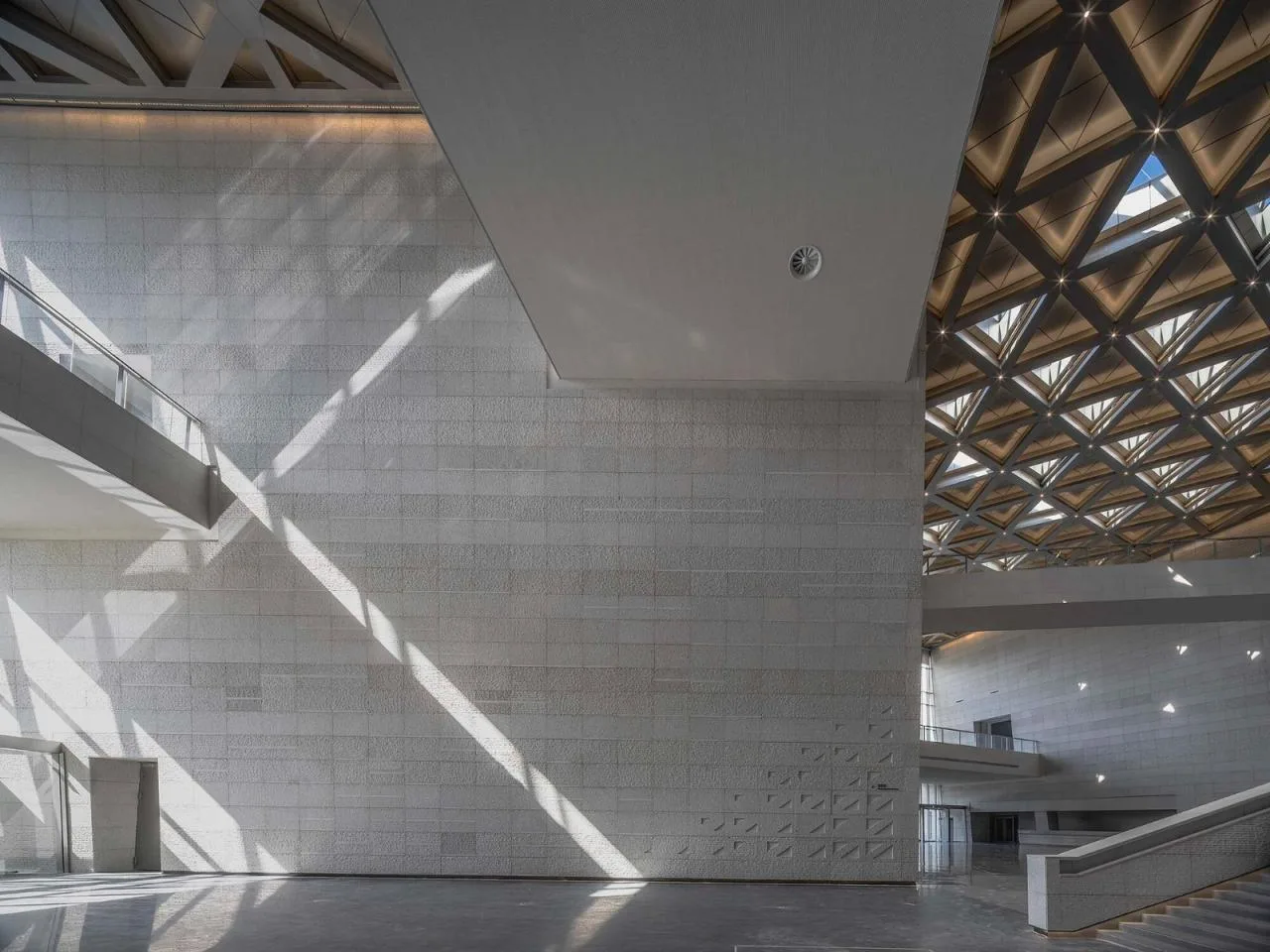
The facade’s rough texture, created by hand-chiseled strip-shaped grooves on the stone, contrasts with the smooth surfaces of the large glass curtain walls, accentuating the ruggedness of the mountain stone form. Inside, the stone surfaces are embedded with scattered narrow, polished stones, adding texture and a more intimate scale to the walls.
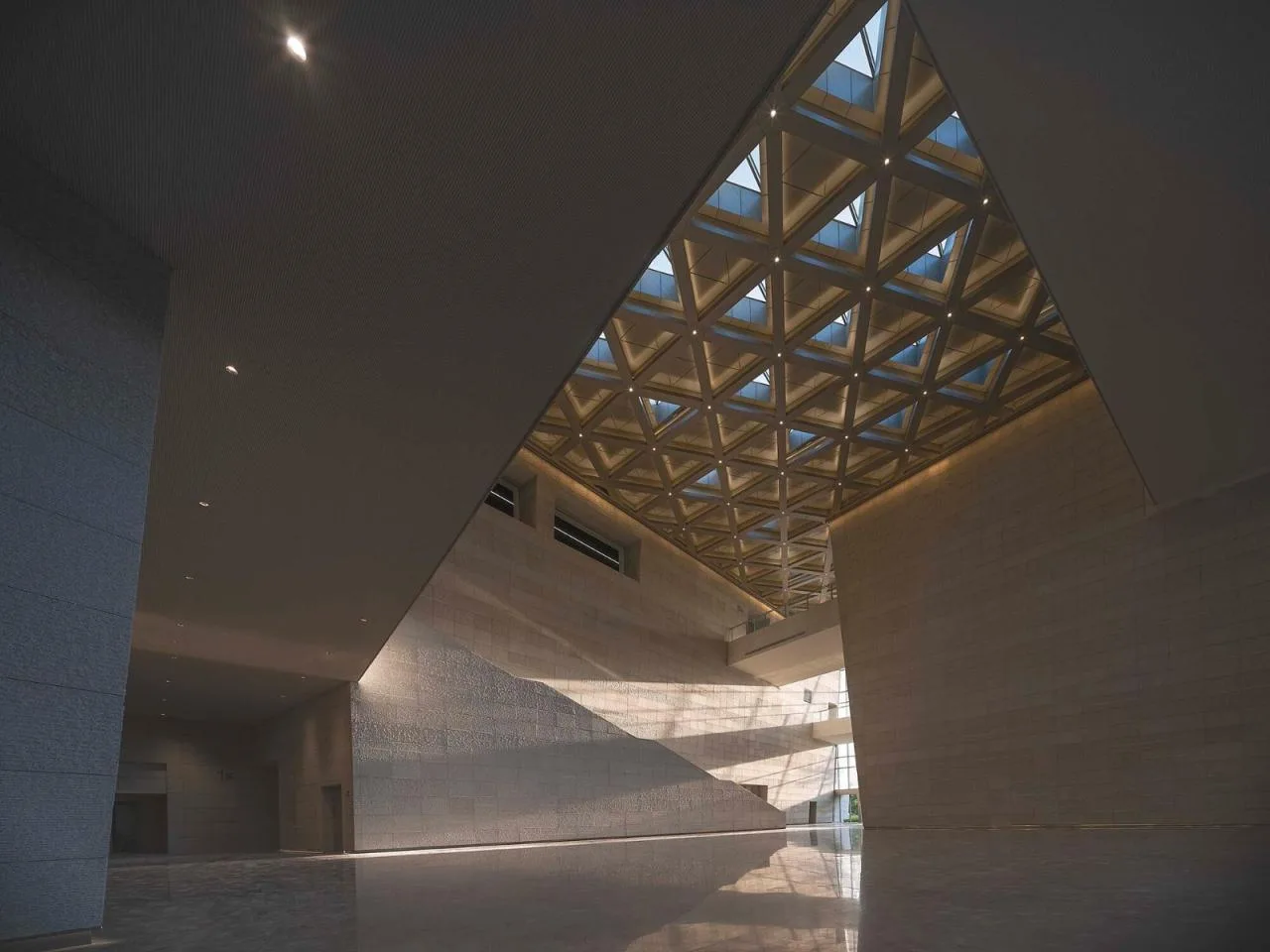
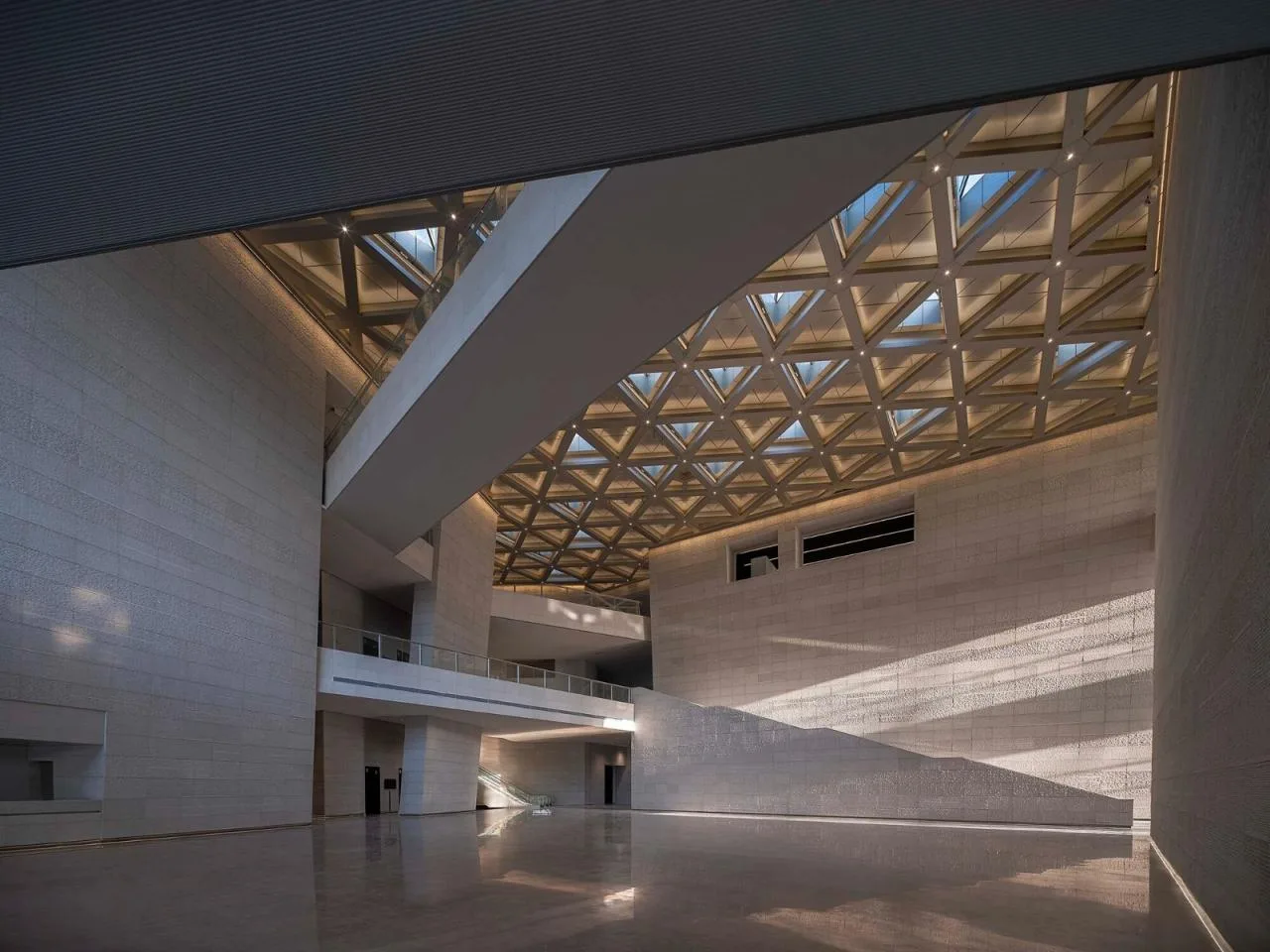
Natural light plays a crucial role in enhancing the museum’s public spaces. Sunlight filters through the canyon gaps, shifting with the seasons and time of day, vividly outlining the valley shapes. The skylight creates dynamic patterns of light and shadow, reminiscent of sunlight streaming through clouds in a mountainous valley, adding an engaging element to the interior.
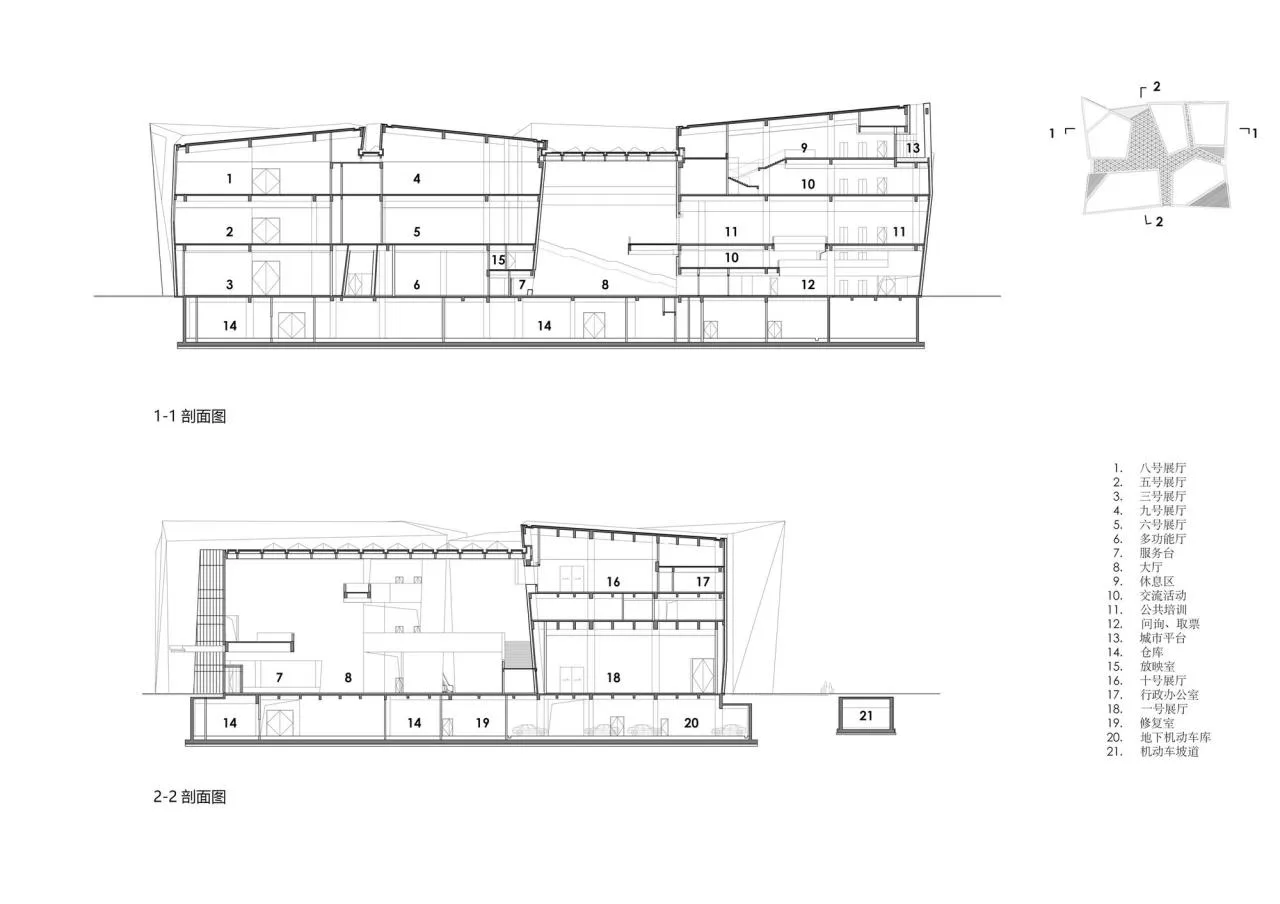
An outstanding art museum requires both expansive and versatile exhibition spaces, alongside comprehensive support facilities. Beneath the varied and undulating exterior forms, the Ningxia Art Museum offers ten well-shaped exhibition spaces designed to accommodate diverse exhibition needs.
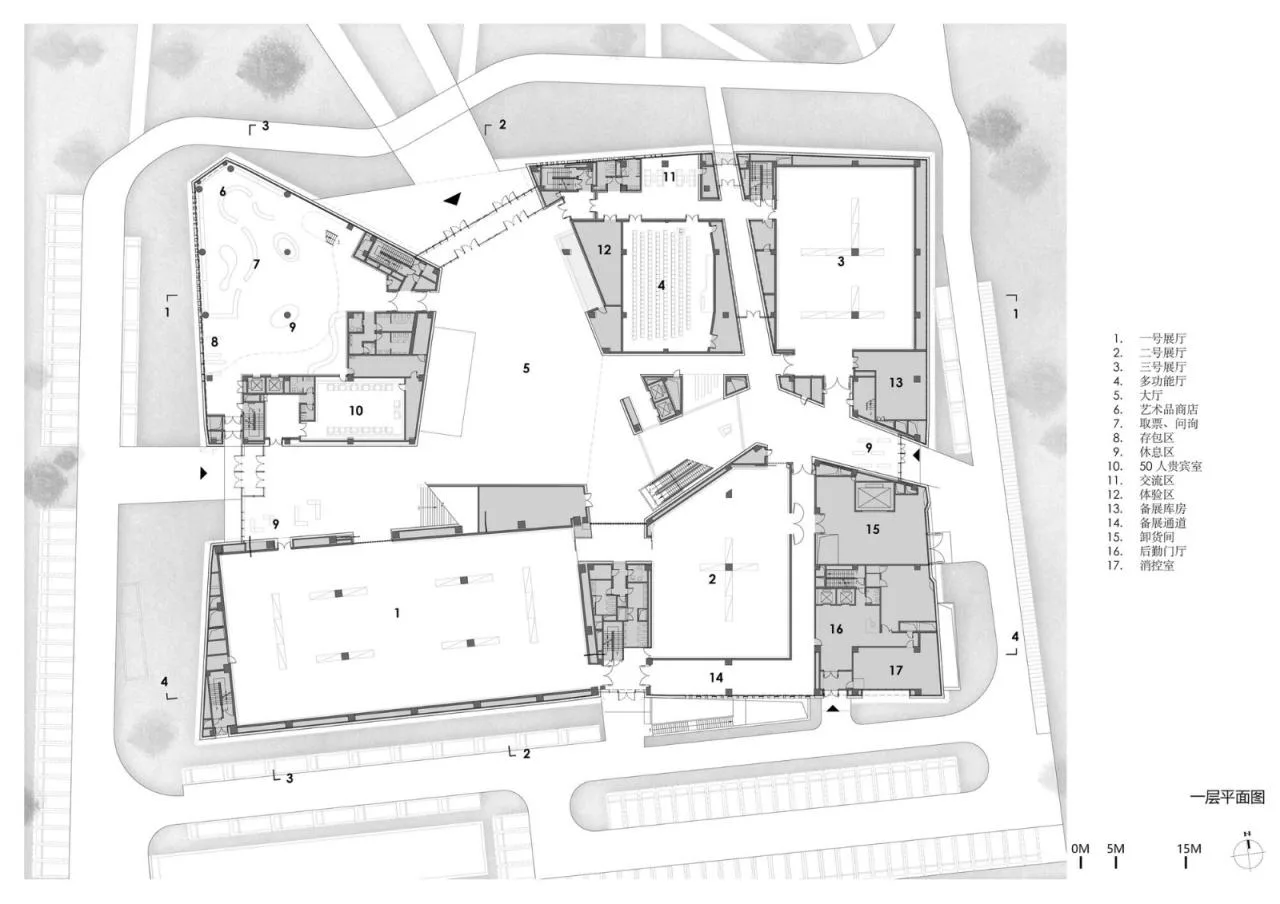
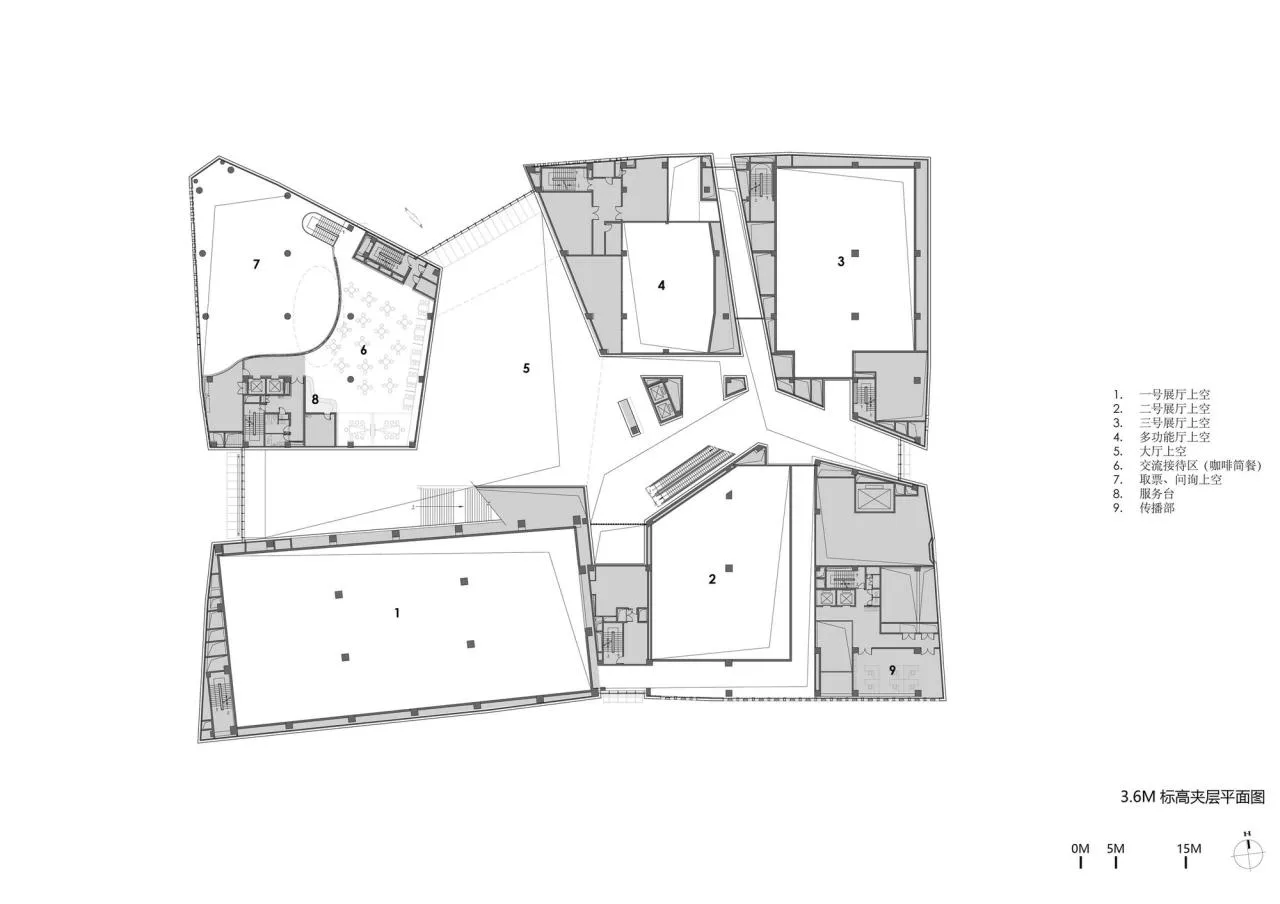
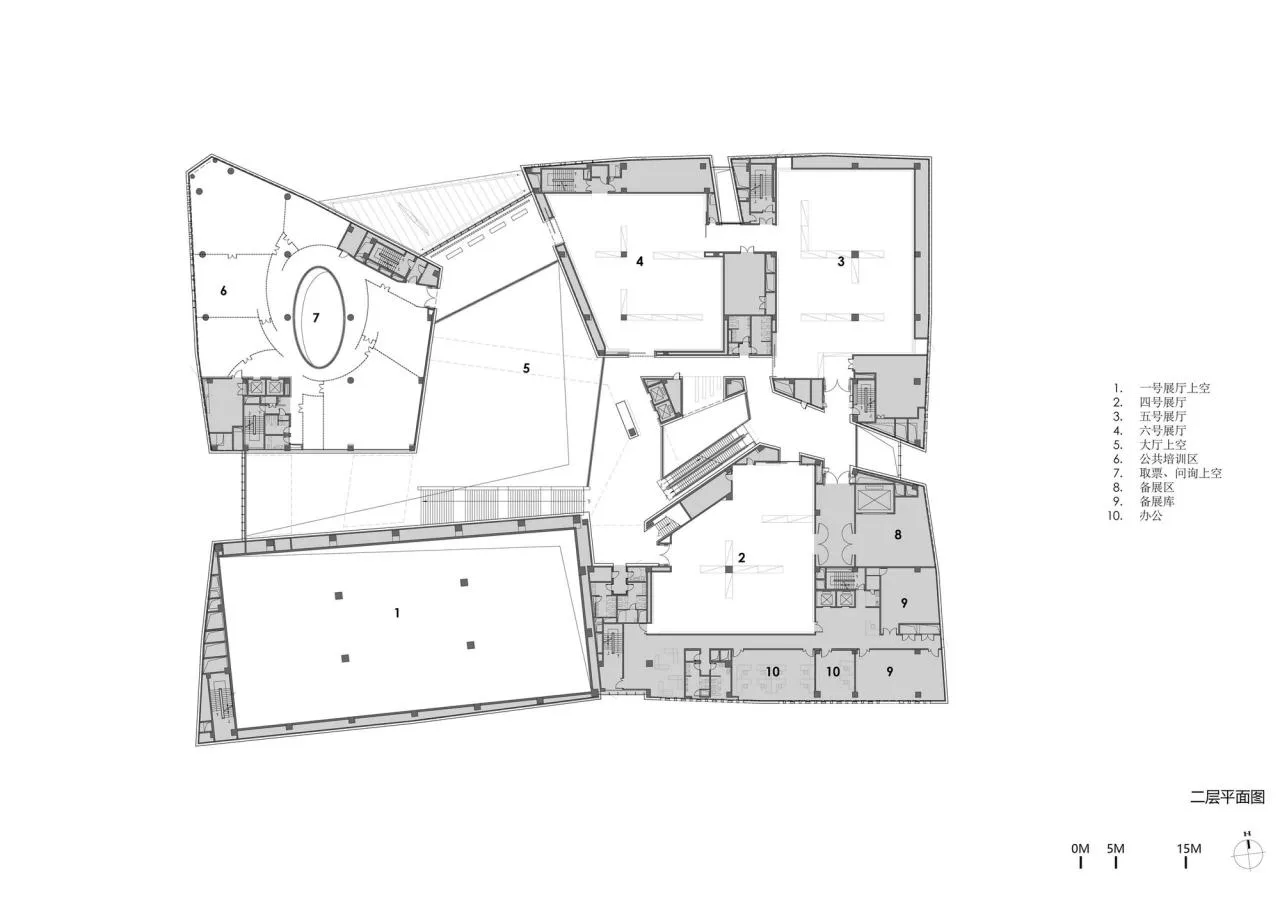
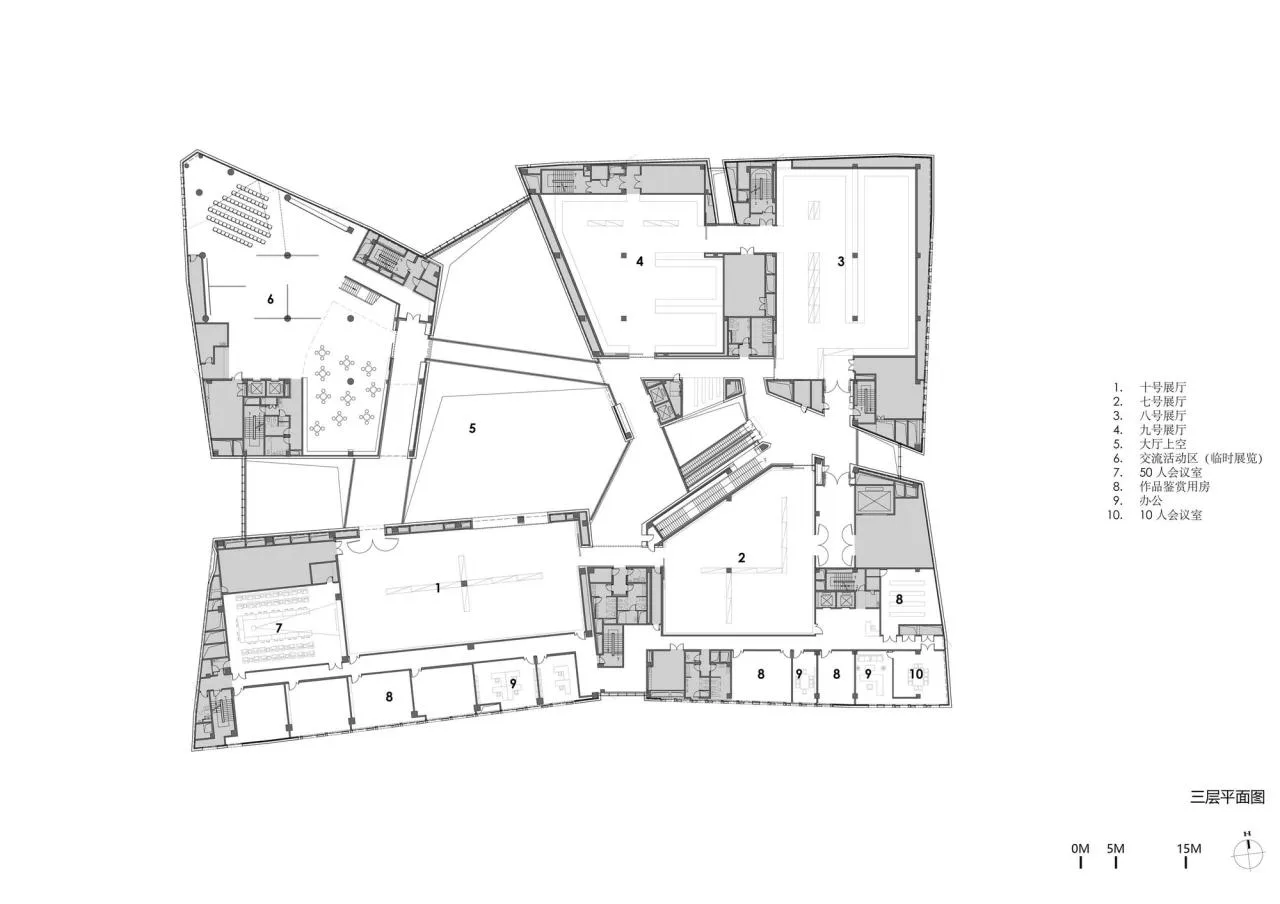
The exhibition halls span the first through third floors. The first floor houses three halls, including a 1,200-square-meter hall with an 8-meter net height, ideal for large-scale artworks and inspiring new creative expressions. The second floor includes three halls, and the third floor features four halls, all arranged around a central public platform.
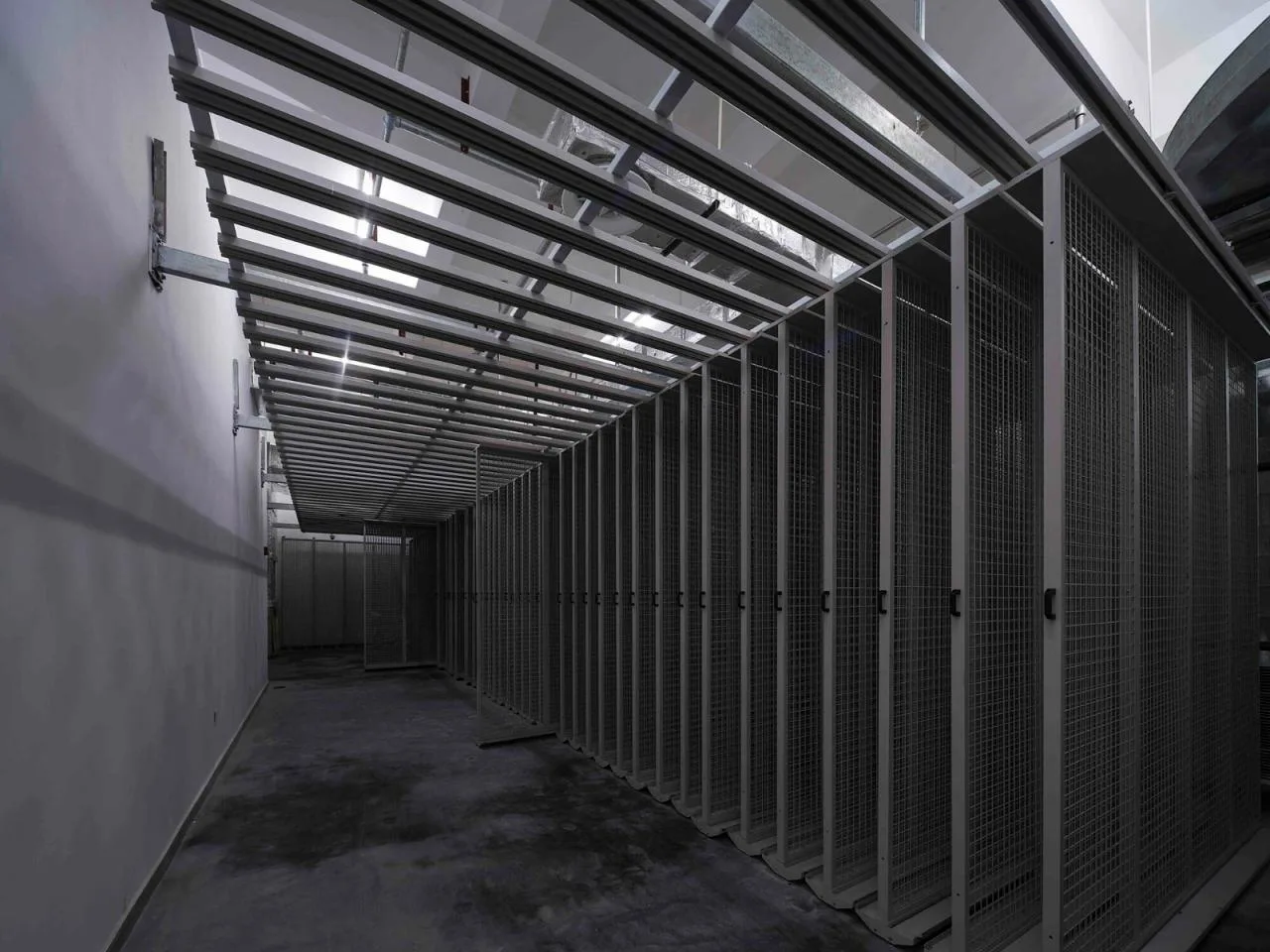
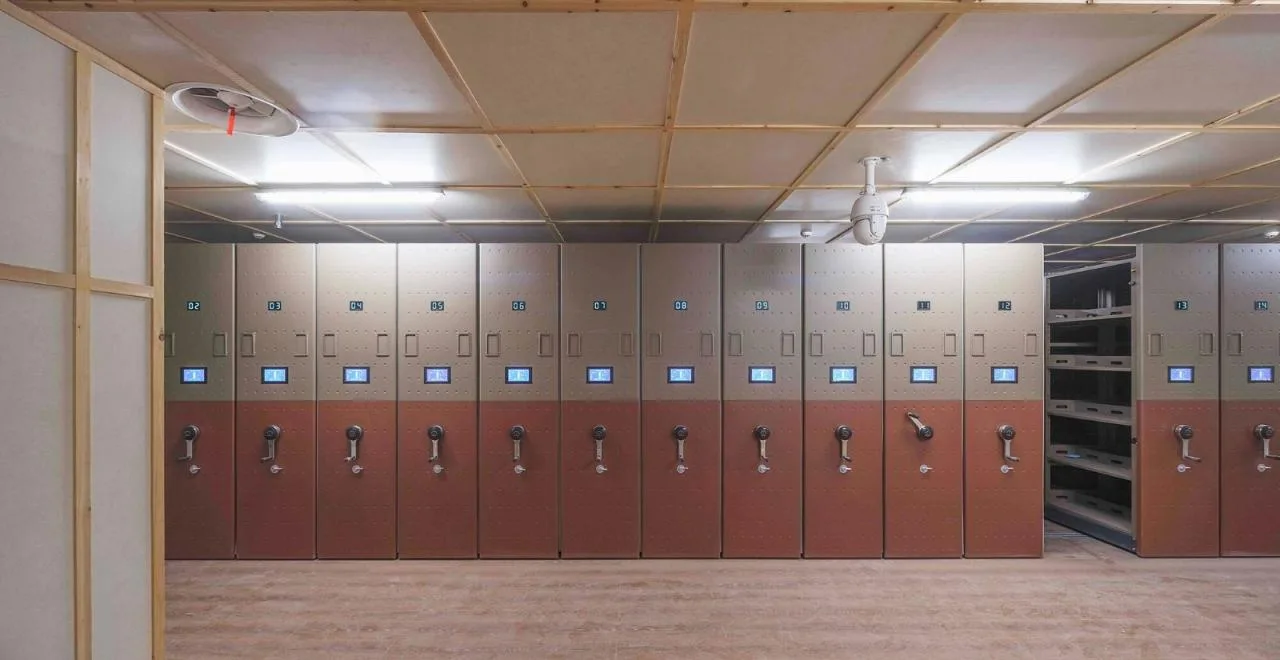
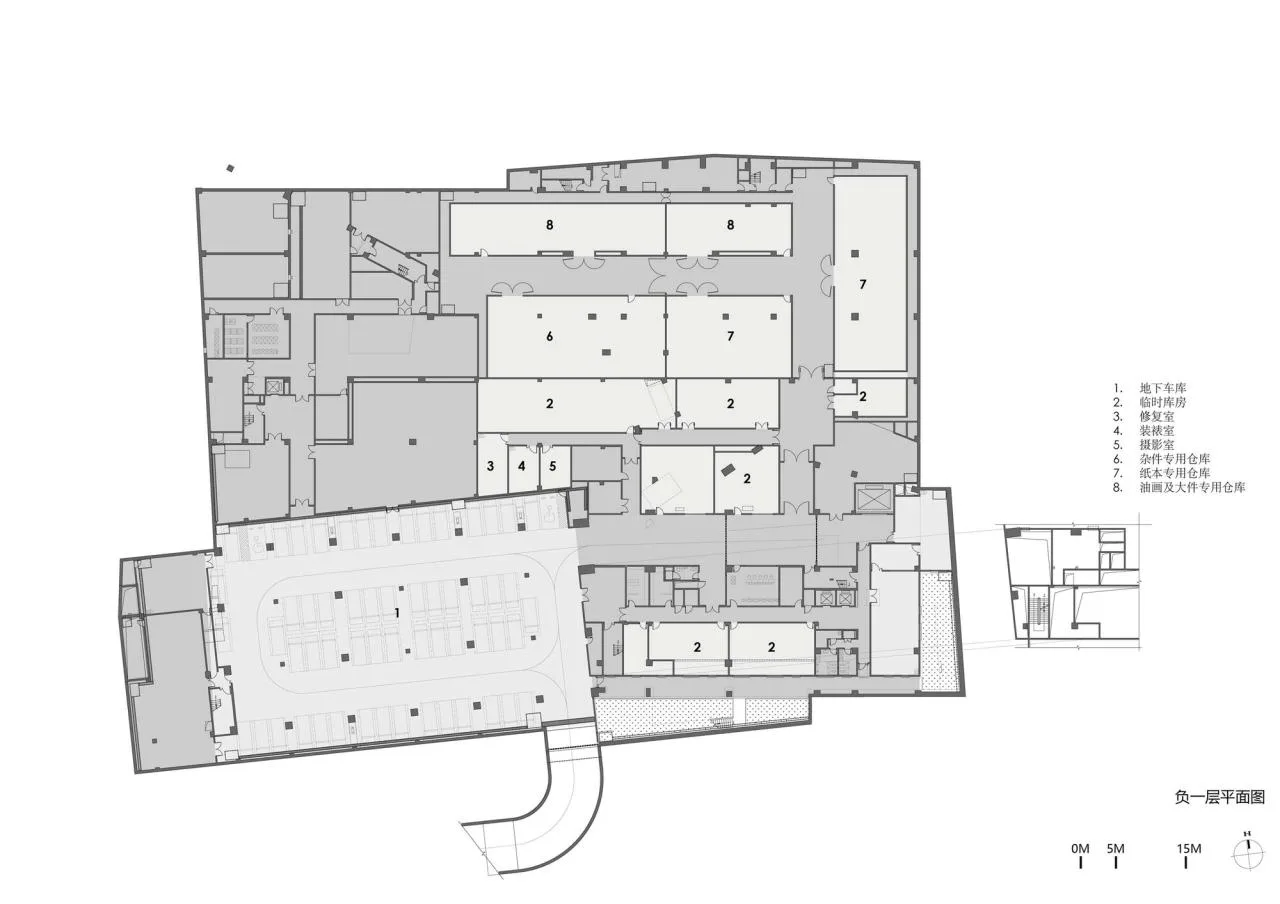
Each exhibition space can operate independently or be combined, offering flexibility and minimizing interference between simultaneous exhibitions. The underground collection and library area include specialized storage rooms for paper books, oil paintings, and miscellaneous items, equipped with advanced systems to ensure proper preservation.
The museum also features a vertical stack of auxiliary spaces in the northwest corner, including a service hall, coffee shop, public training rooms, an art salon, and an urban viewing platform. This arrangement supports the museum’s operations and can function independently if parts of the museum close.
Additionally, a 200-seat multifunctional hall is located on the north side of the first floor, facilitating academic conferences and events.
Project Drawings
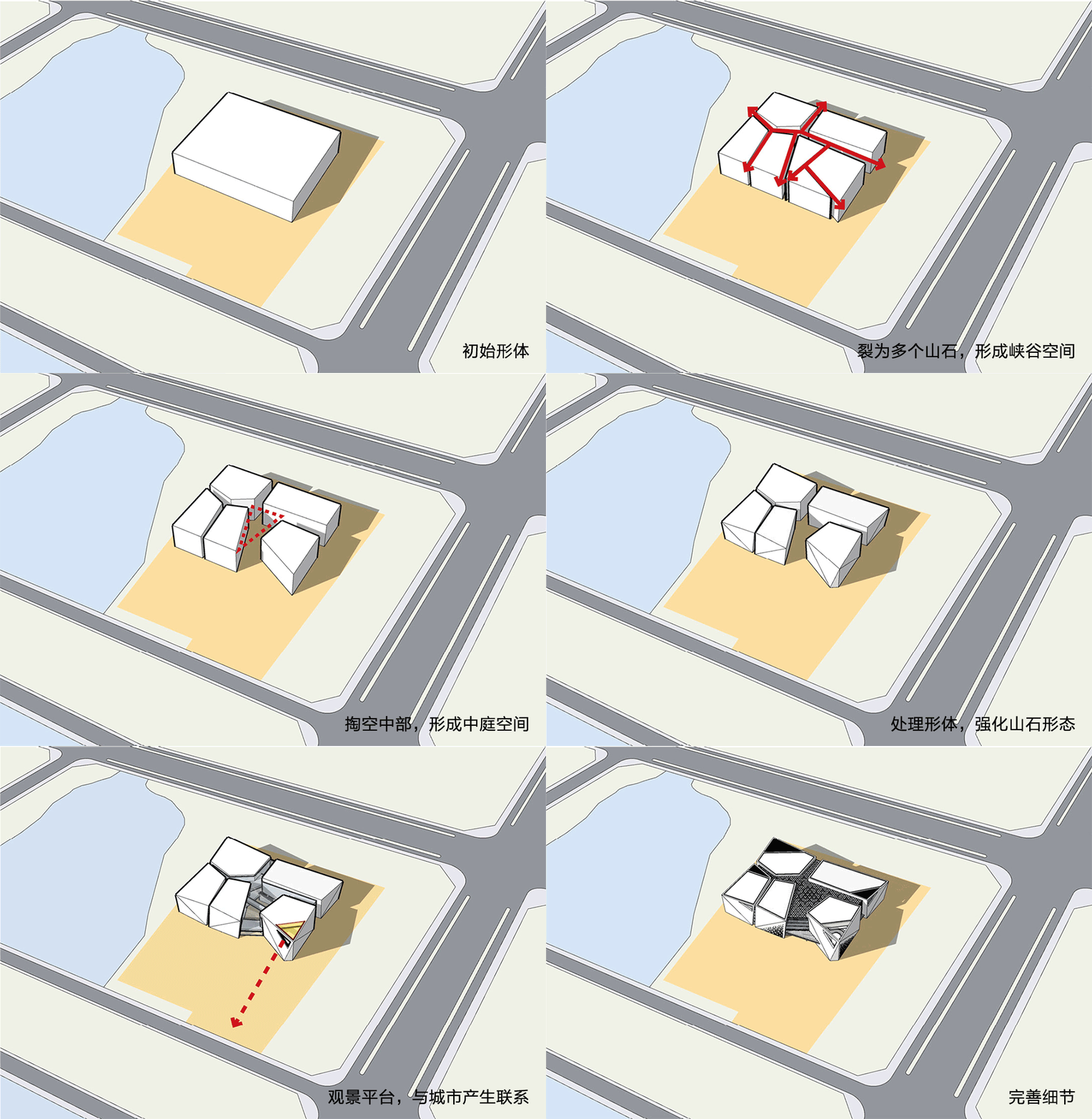
△ Building Generation Diagram
Project Information
Architect: Architectural Landscape Design
Area: 29,992 m²
Project Year: 2022
Photographer: Fundamental Hall Architectural Photography
Lead Architect: Zhou Xuhong
Design Team: Zhou Xuhong, Qiu Jie, Fan Jingjing
Construction Drawing Design: Fan Jingjing, Yu Xingxing, Qiu Jie, Zhan Yishan, Xiao Junlong, Xu Chaohua
Structural Design: Sun Huilang, Ni Xinghui, Luo Tao, Pang Jinlong, Zhu Hongxiang, Ma Huimin, He Xin, Tang Wei
Landscape Design: Zhang Jiasheng, Wang Nan, Chen Tao
Equipment Design: Wang Zili, Pan Jun, Wang Ruibing, Shen Danqun, Yu Fuqi, Ji Diange
Curtain Wall Design: ChinaCUC, Chen Hao, Liu Jianzhong, Ji Wangjing, Meng Shaofeng
Interior Design: Tongkun Design Beijing, Zhou Xuhong, Liang Sijia, Lu Xinyi, Chang Hongliang, Yang Qian
Flood Lighting: Anlan Lighting Design (Shanghai) Co., LTD, Liu Bei, Dai Hong
Principal: Ningxia Department of Culture, Ningxia Transportation Investment Group Co., Ltd
Location: Yinchuan















Must log in before commenting!
Sign Up