
The headquarters of Suzhou Guofang Electronics Co., Ltd. is situated in the Xiangcheng Economic Development Zone of Suzhou City. Serving as both an office and research & development center for manufacturing enterprises, this building embodies the unique identity and culture of the company. Architecturally, it features a composition of cubes and cylinders across nine floors—eight above ground and one below—with a total construction area of approximately 19,200 m² and an overall height of around 40 meters. It stands as a landmark within the Suzhou Guofang Electronic Industry Park.
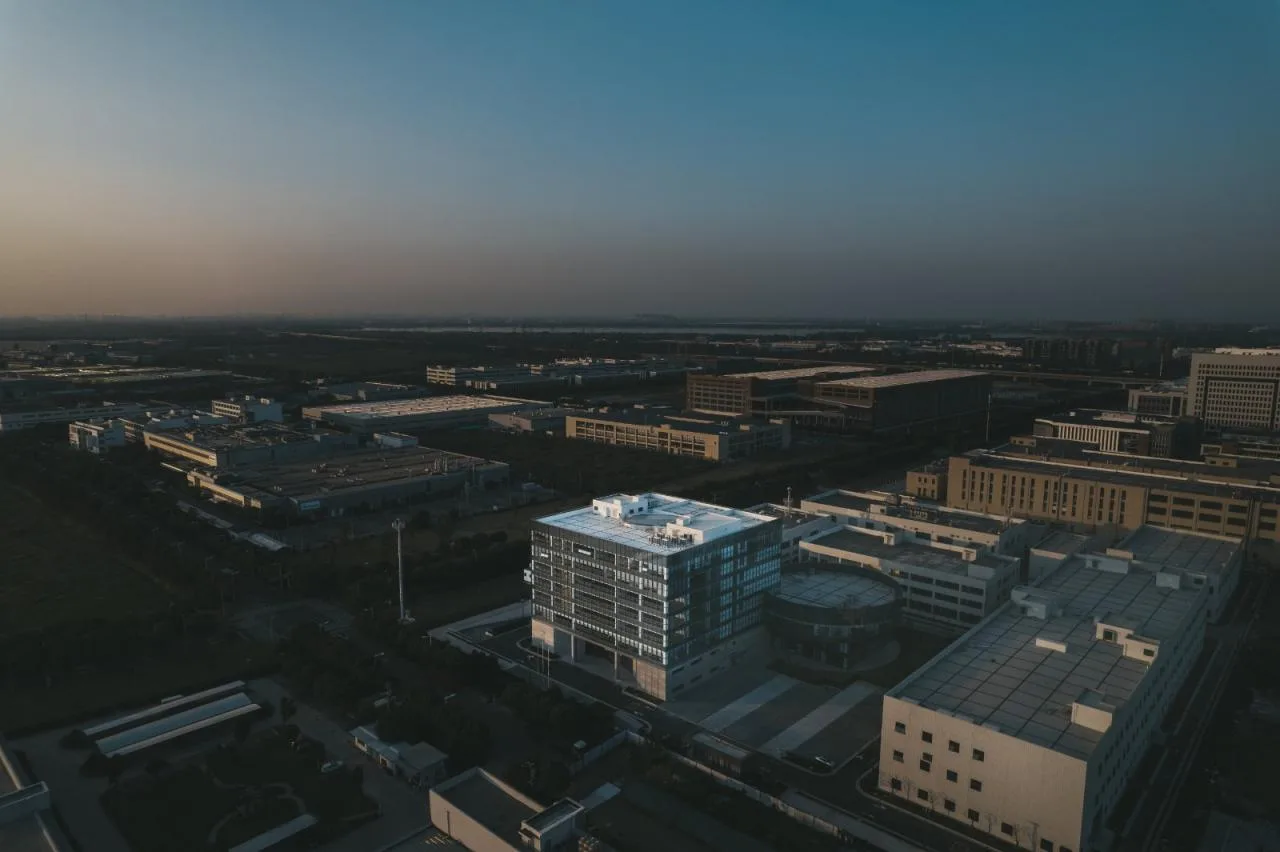
△ Aerial view of the factory area © Xu Yingda
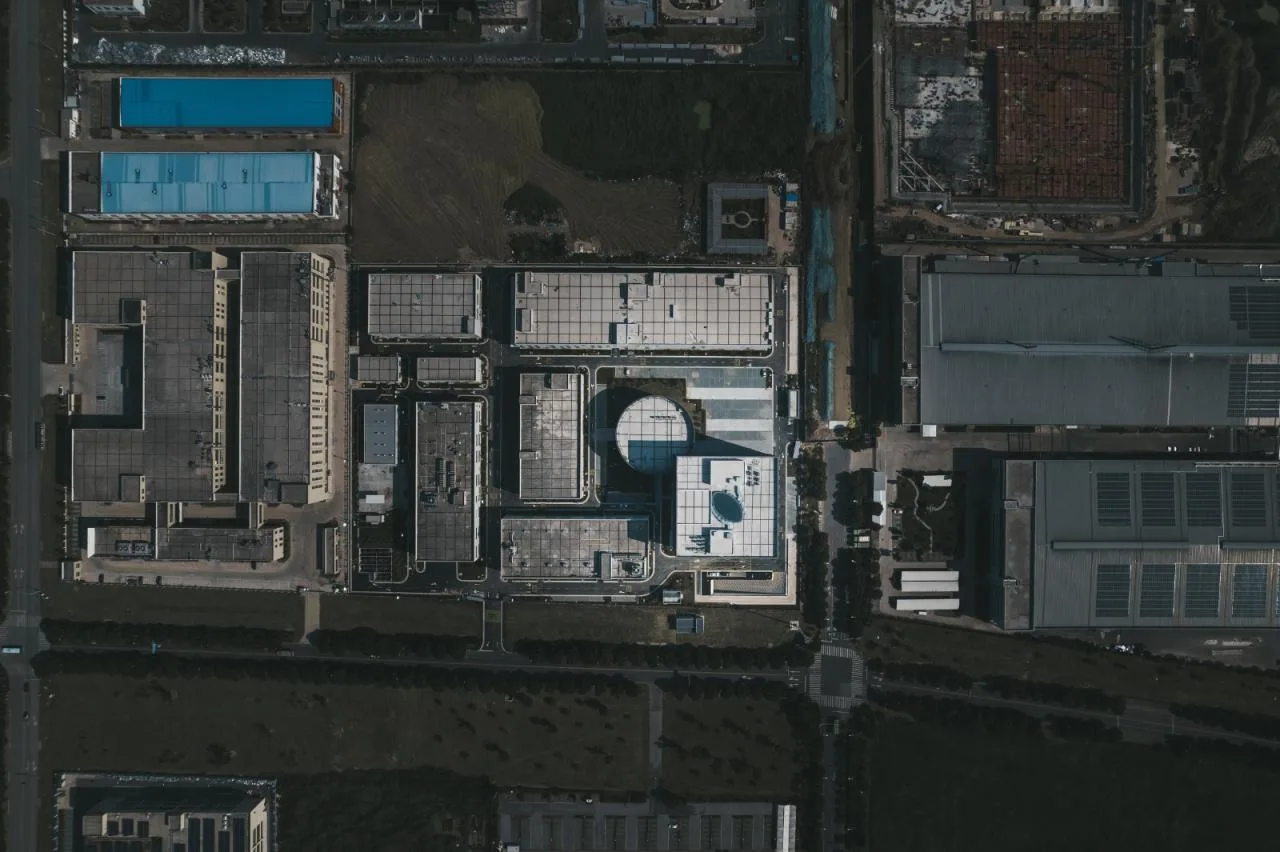
△ Factory area aerial photograph © Xu Yingda
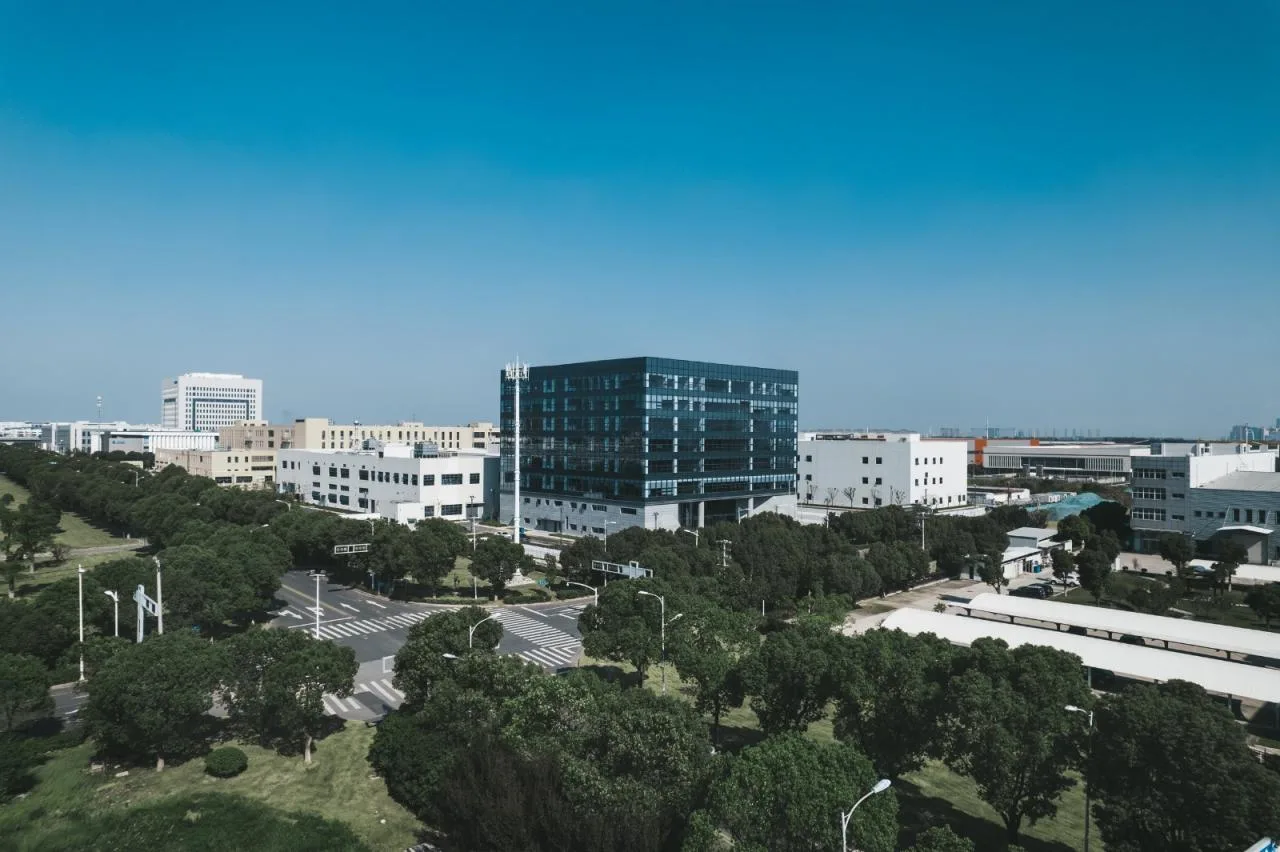
Location of the industrial park © Xu Yingda
The Guofang Automotive Electronics Project focuses on the development, production, and sales of automotive components. This initiative plays a crucial role in accelerating the clustering of the automotive component industry within the region while fostering an advanced equipment manufacturing industry cluster. The key design challenge was to reflect the collaborative and integrated nature of the region and the impact brought by the enterprise’s entry. With this context in mind, the designers centered their expression on the building’s exterior facade, spatial composition, geometric elements, deep symbolism, and urban relationships.
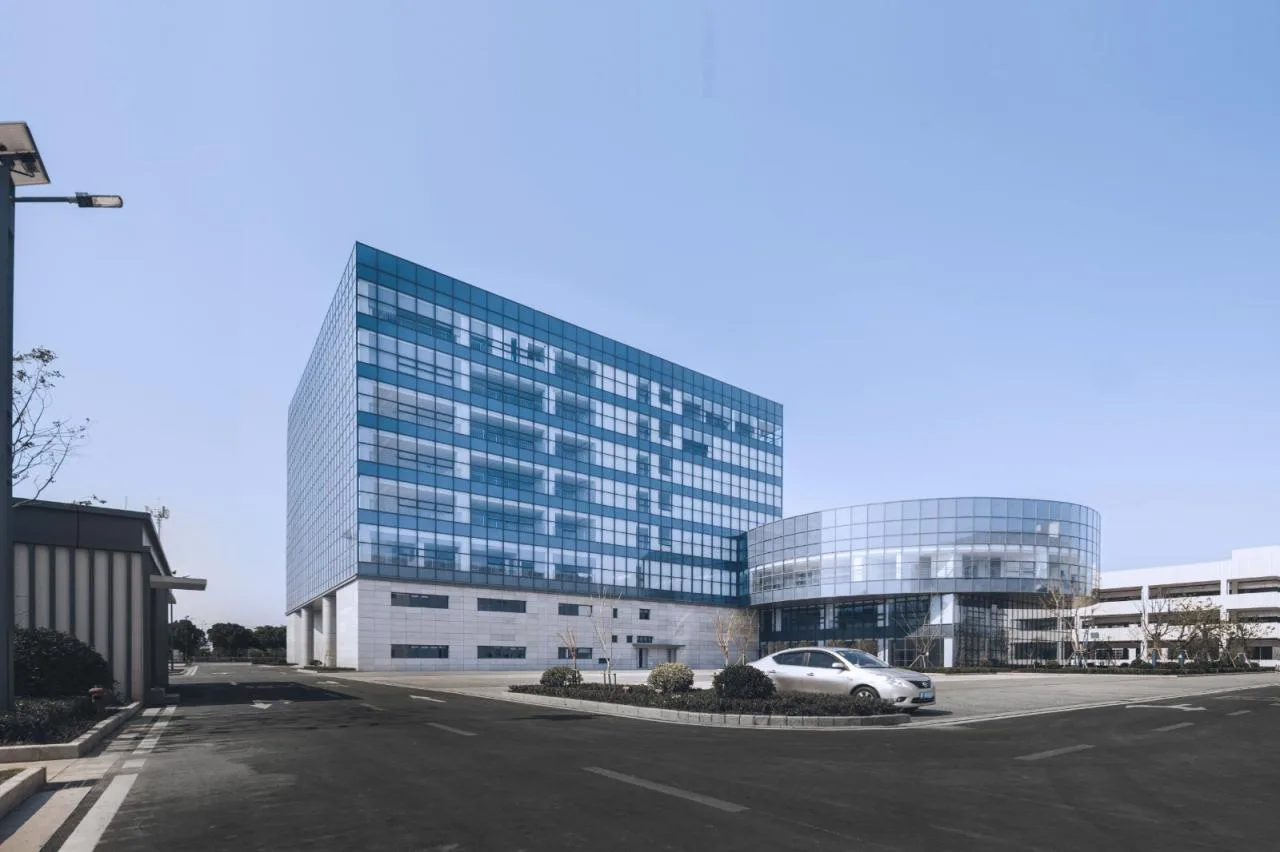
Panoramic view of the headquarters building © Xu Yingda
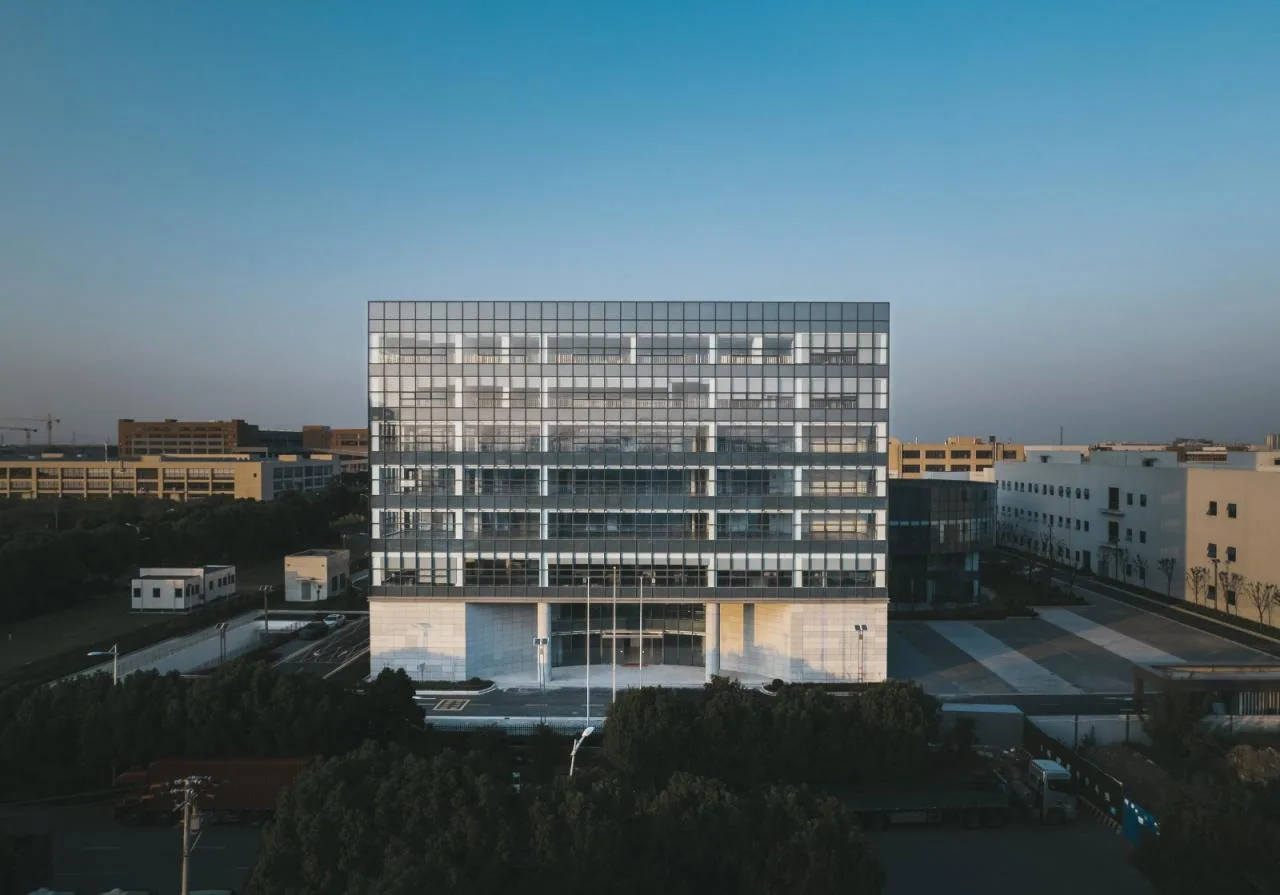
△ South facade © Xu Yingda
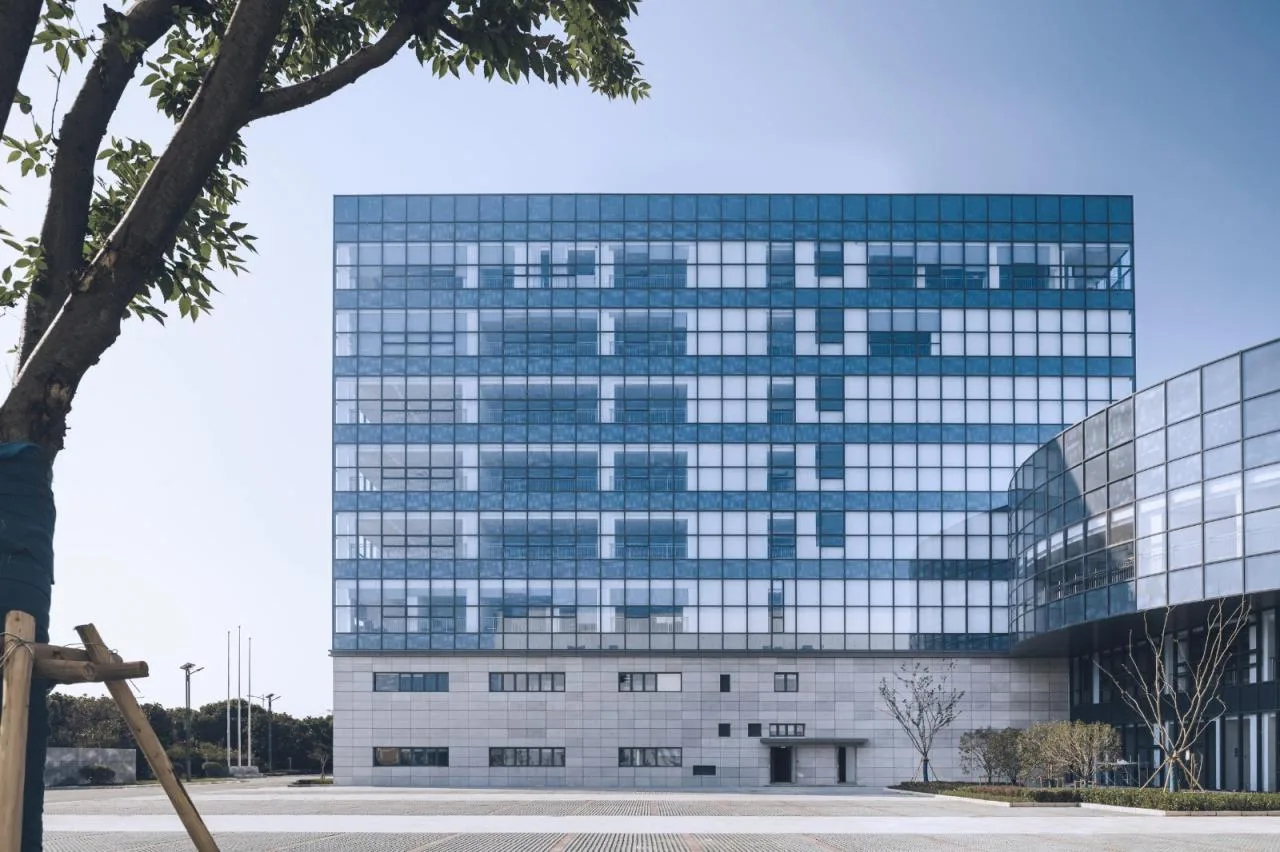
△ Architectural appearance © Xu Yingda
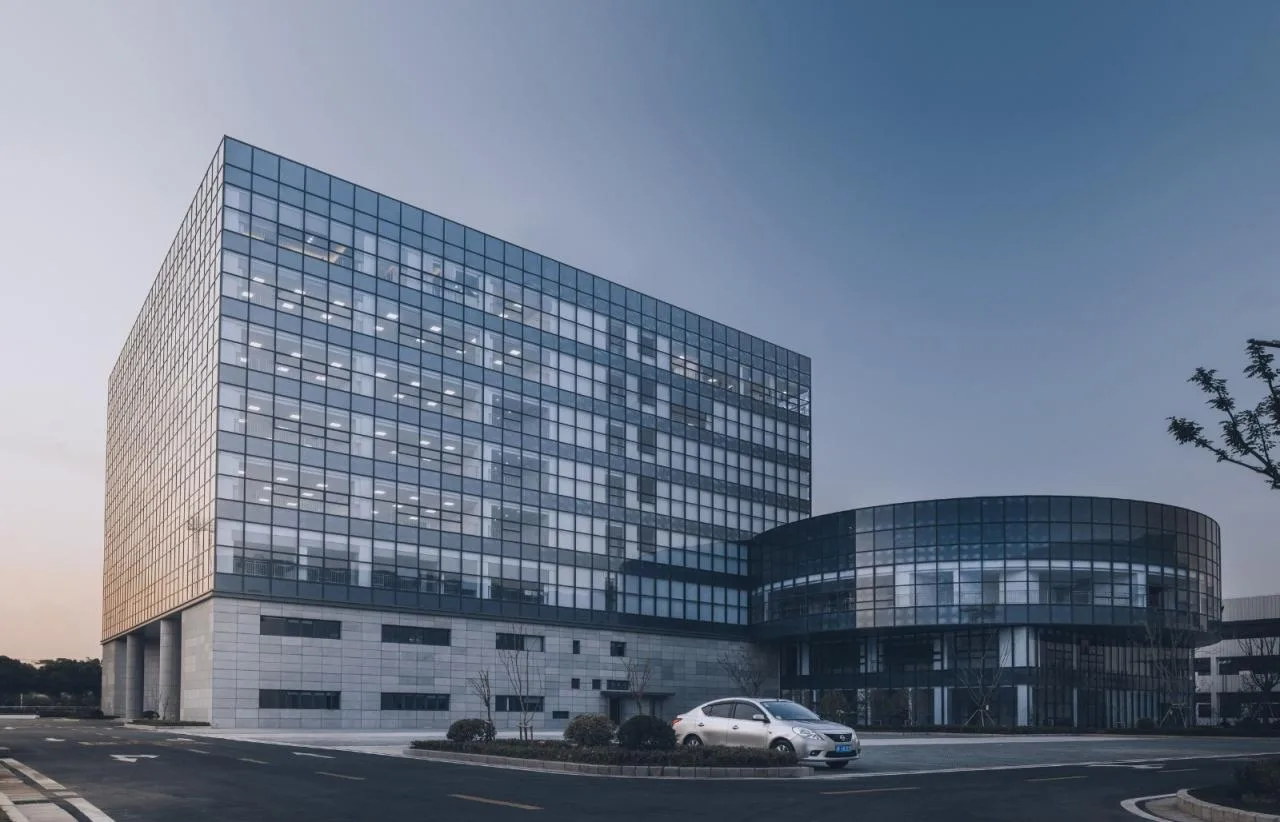
△ Close-up of buildings © Xu Yingda
The surrounding buildings are predominantly low-rise factories with monochrome exteriors, lacking a modern industrial atmosphere. To emphasize Guofang Electronics’ high-tech corporate image, the R&D office building incorporates glass curtain walls and geometric elements that create a distinctive regional style with depth and visual impact. The spatial layout of the R&D office is cleverly designed to avoid congestion, fostering an aesthetic contrast and dialogue with the adjacent buildings, while harmonizing with the factory structures. The designers aimed to create a cohesive, visually appealing urban space that is both unique and harmonious.
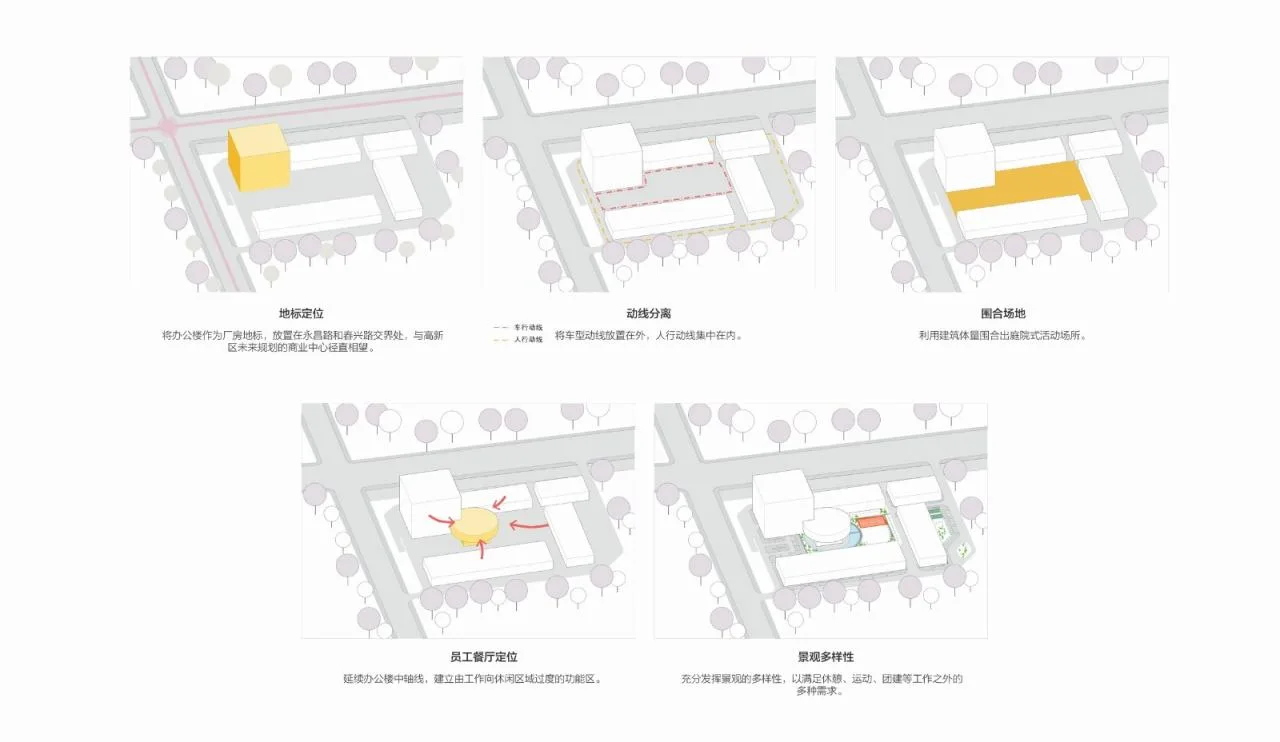
△ Conceptual deduction © Pingjie Design
To express corporate culture and emphasize individual identity, both the external visual language and internal ambiance are vital. Simple geometric shapes combined with profound cultural elements form the foundation for a concise and expressive design. Consequently, the “square” and “circle” emerged as the core design motifs. The sharp edges of the square symbolize proactivity and determination, while the circle embodies harmony, communication, accessibility, and coordination. The goal is not merely to express emotion simply, but to elevate it by integrating corporate culture, management philosophy, and headquarters functionality into the design, imbuing these geometric elements with meaningful significance.
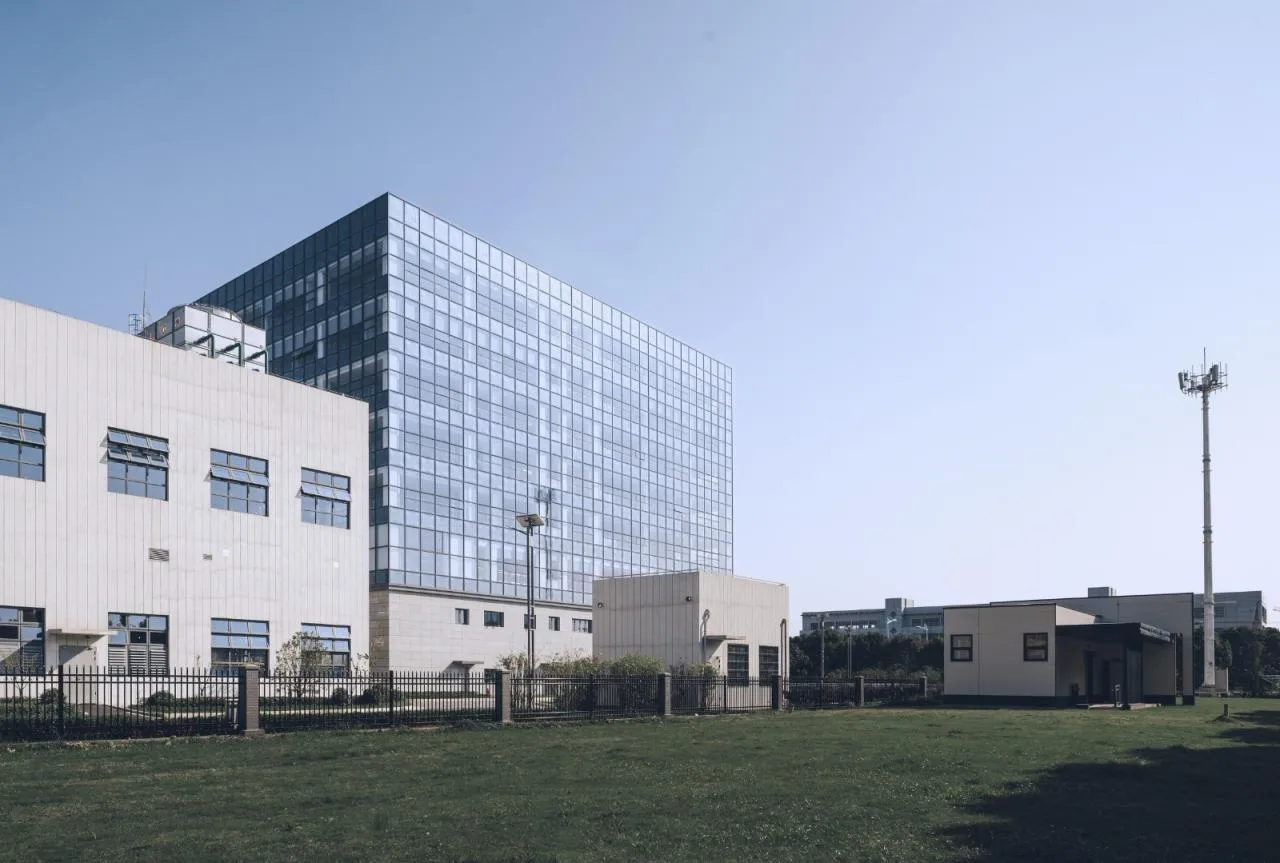
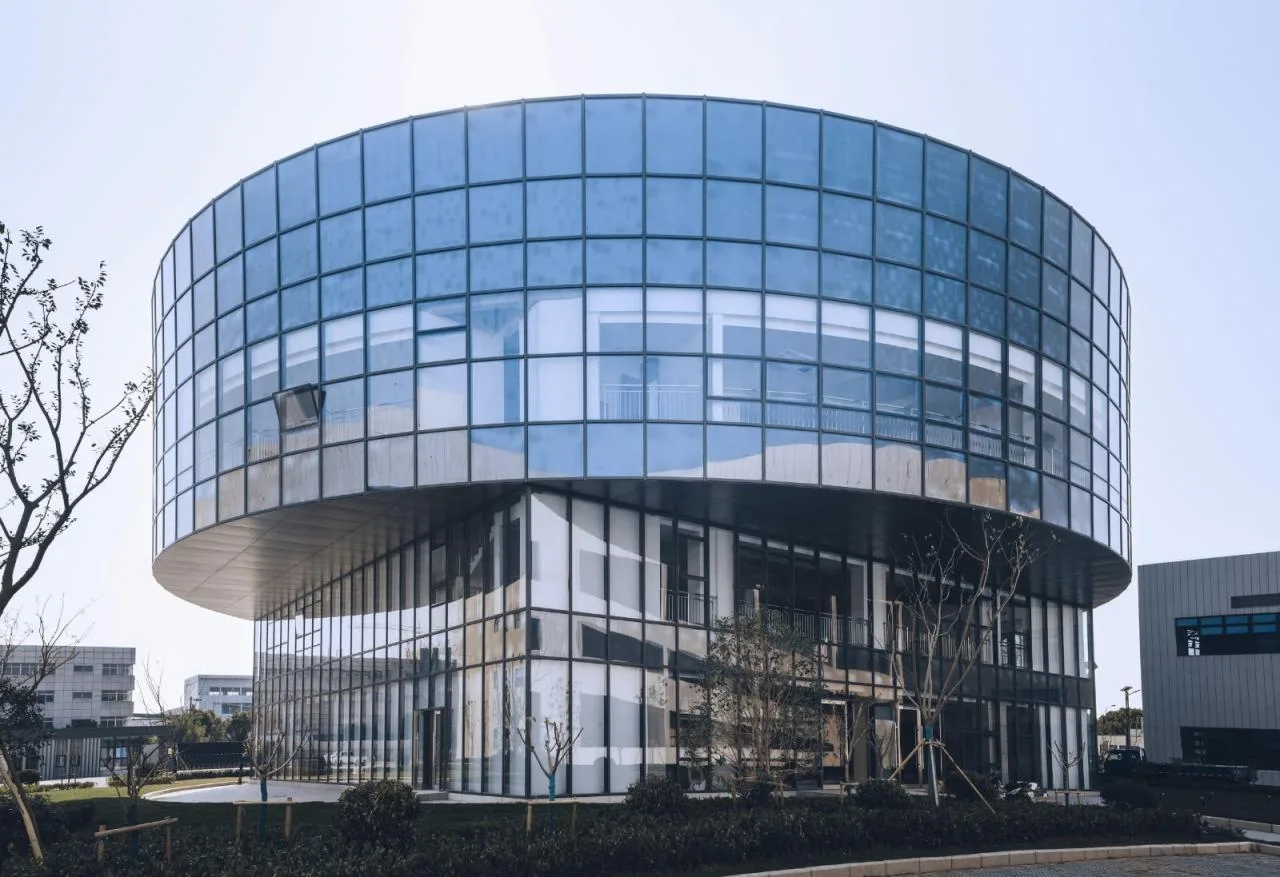
△ Square and Circle © Xu Yingda
To blend the contrasting characteristics of the square and circle while achieving the artistic concept of “shallow and deep, each with its own value,” the size, layout, and interconnection of these shapes were meticulously arranged. This thoughtful combination of geometric elements conveys the wisdom of traditional Chinese philosophy in enterprise management in an accessible and elegant manner. Through precise construction and spatial planning, the design highlights spatial integration, functional differentiation, and sustainability. The approach expresses the headquarters’ core attributes of research and development, coordination, leadership, balance, culture, and ecology. Beyond exploring the building’s own symbolism, the design emphasizes harmonizing yin and yang within the regional context.
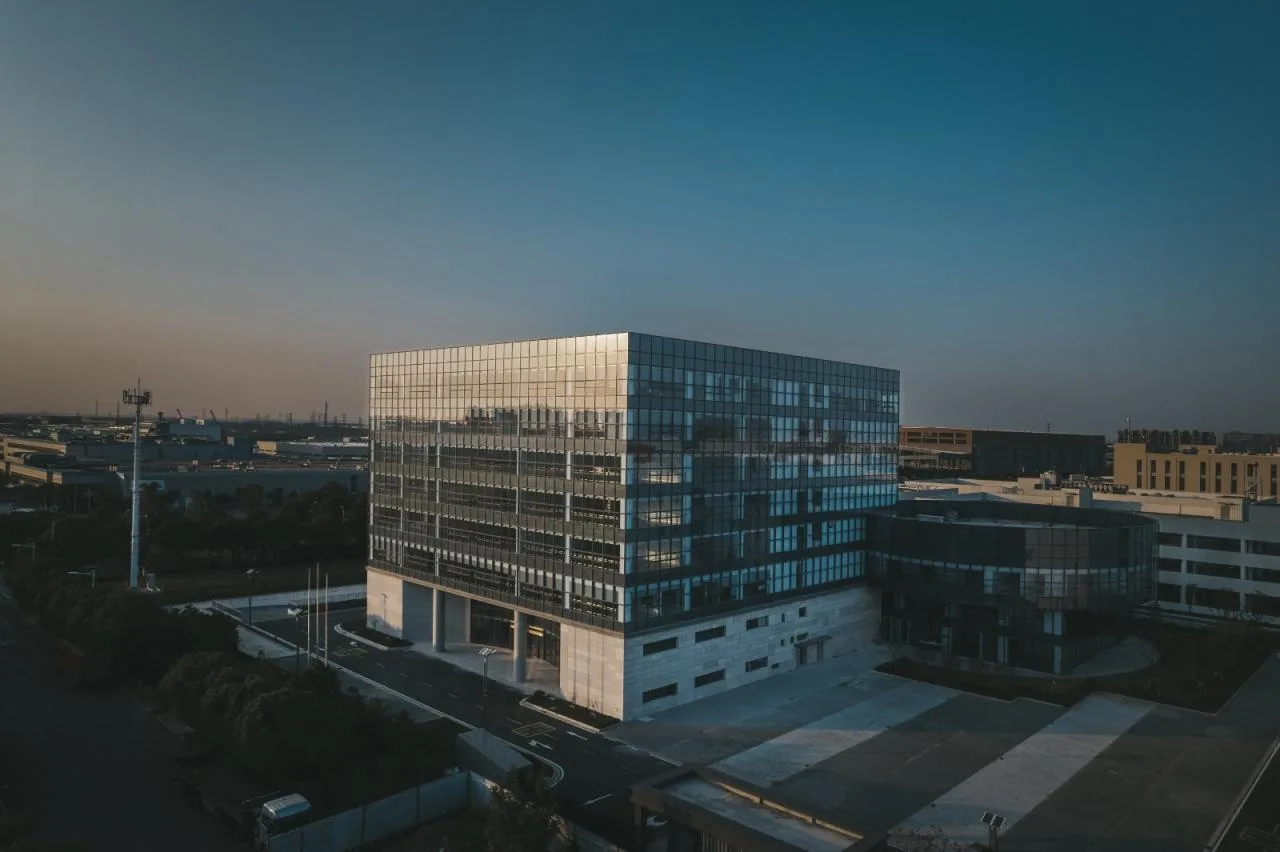
△ “Harmony Between Square and Circle” © Xu Yingda
The design breaks new ground in the relationship between the factory zone and the urban interface, creating a building volume and facade distinct from the surrounding factory structures.
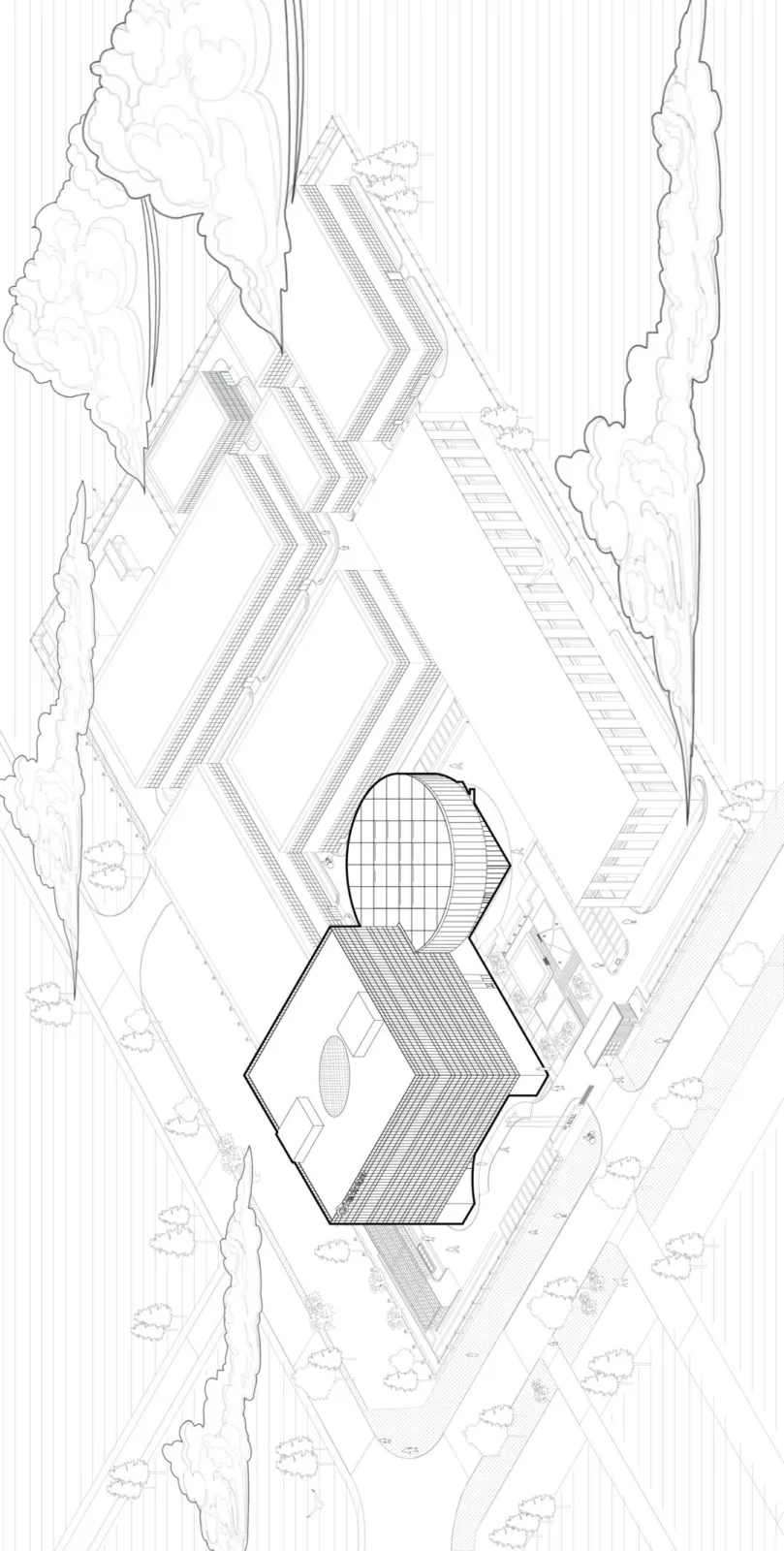
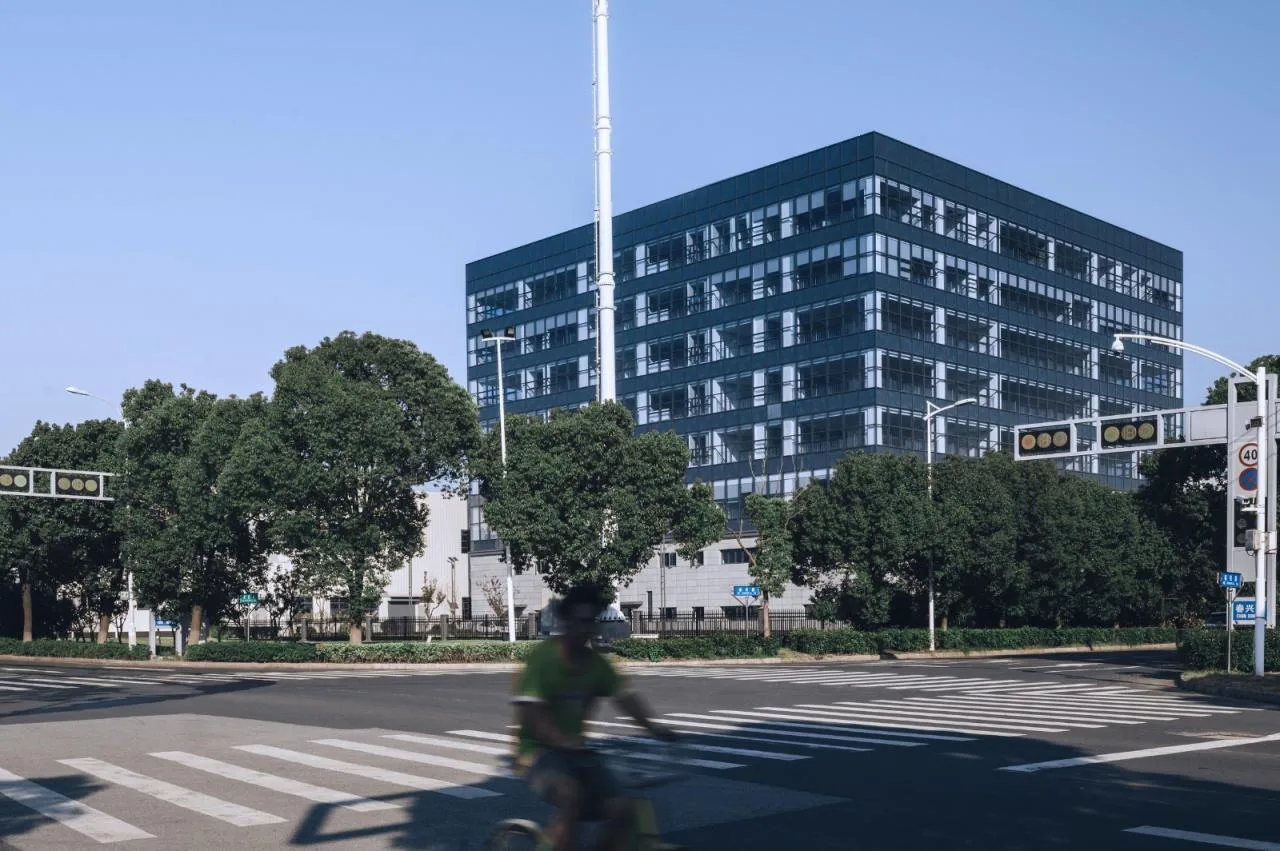
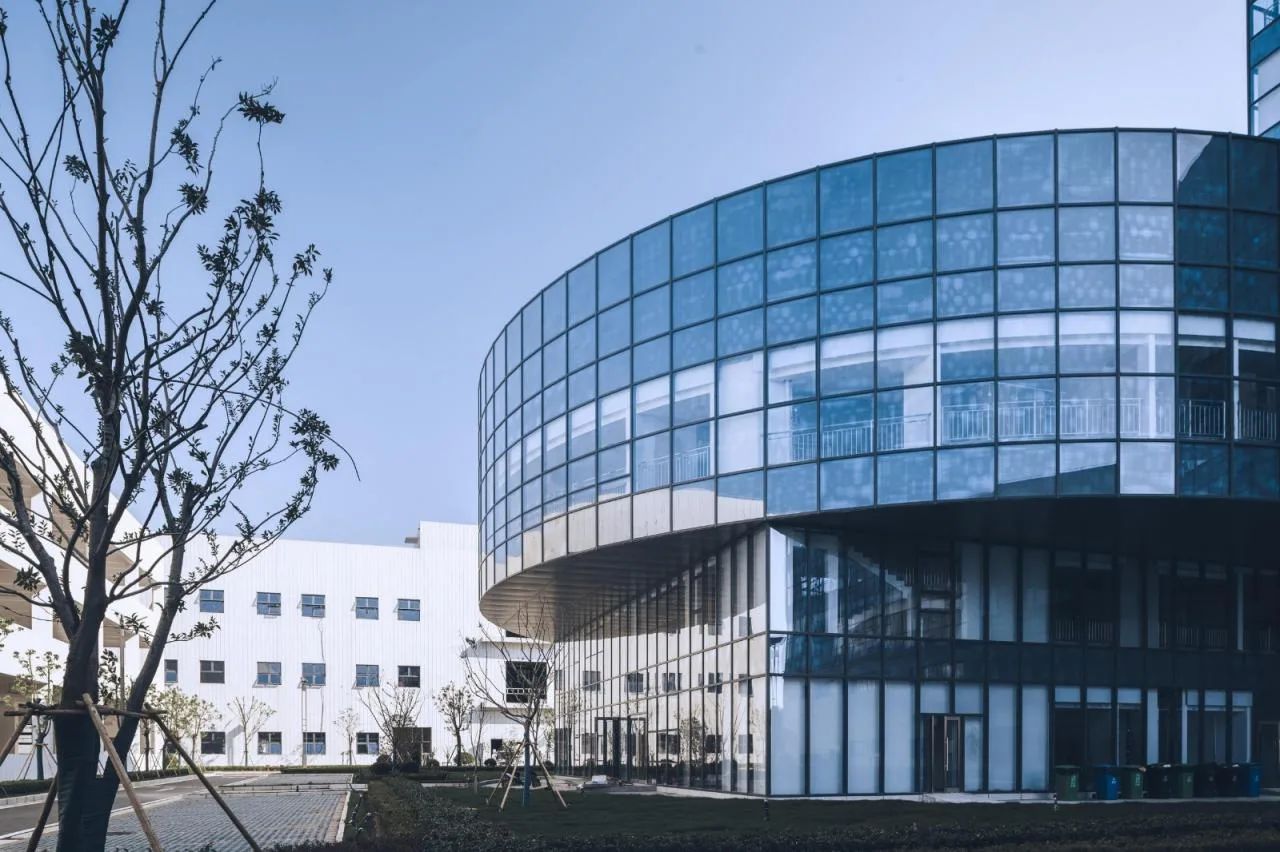
△ Perspectives inside and outside the factory area © Xu Yingda
From a geometric standpoint, squares represent rigor, solidity, and clarity, while circles offer softness, transition, and natural flow. The square form is positioned at the plot’s corner to strengthen the urban interface, whereas the circular form serves as a leisure zone, embracing the natural inward flow of the site. Functionally, the square volume accommodates office and R&D personnel and showcases corporate culture, distinct from factory workshops. The circular volume supports cultural and recreational activities within the factory complex.
The overall design goal is to create an office building characterized by efficiency, happiness, and satisfaction.
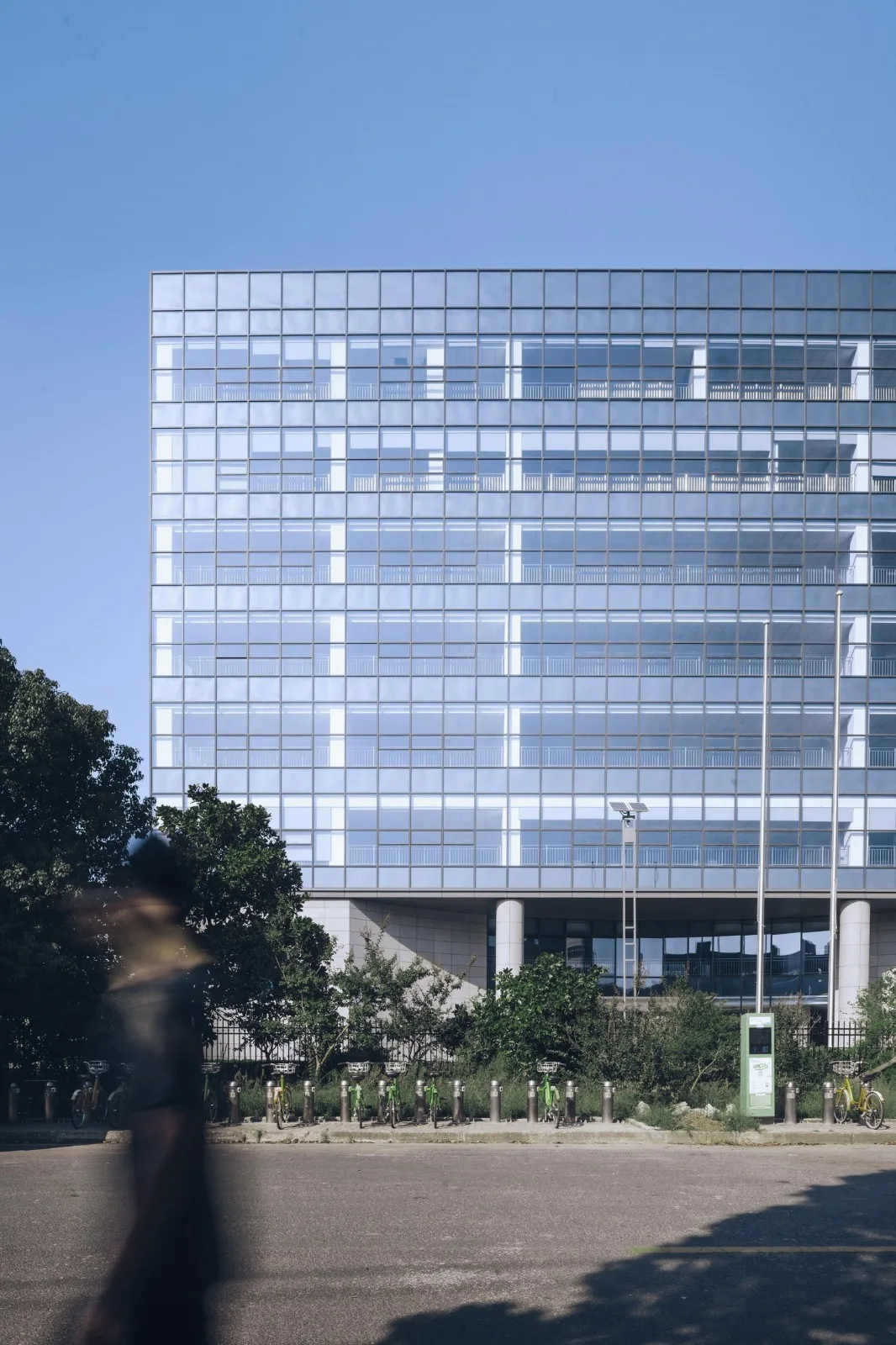
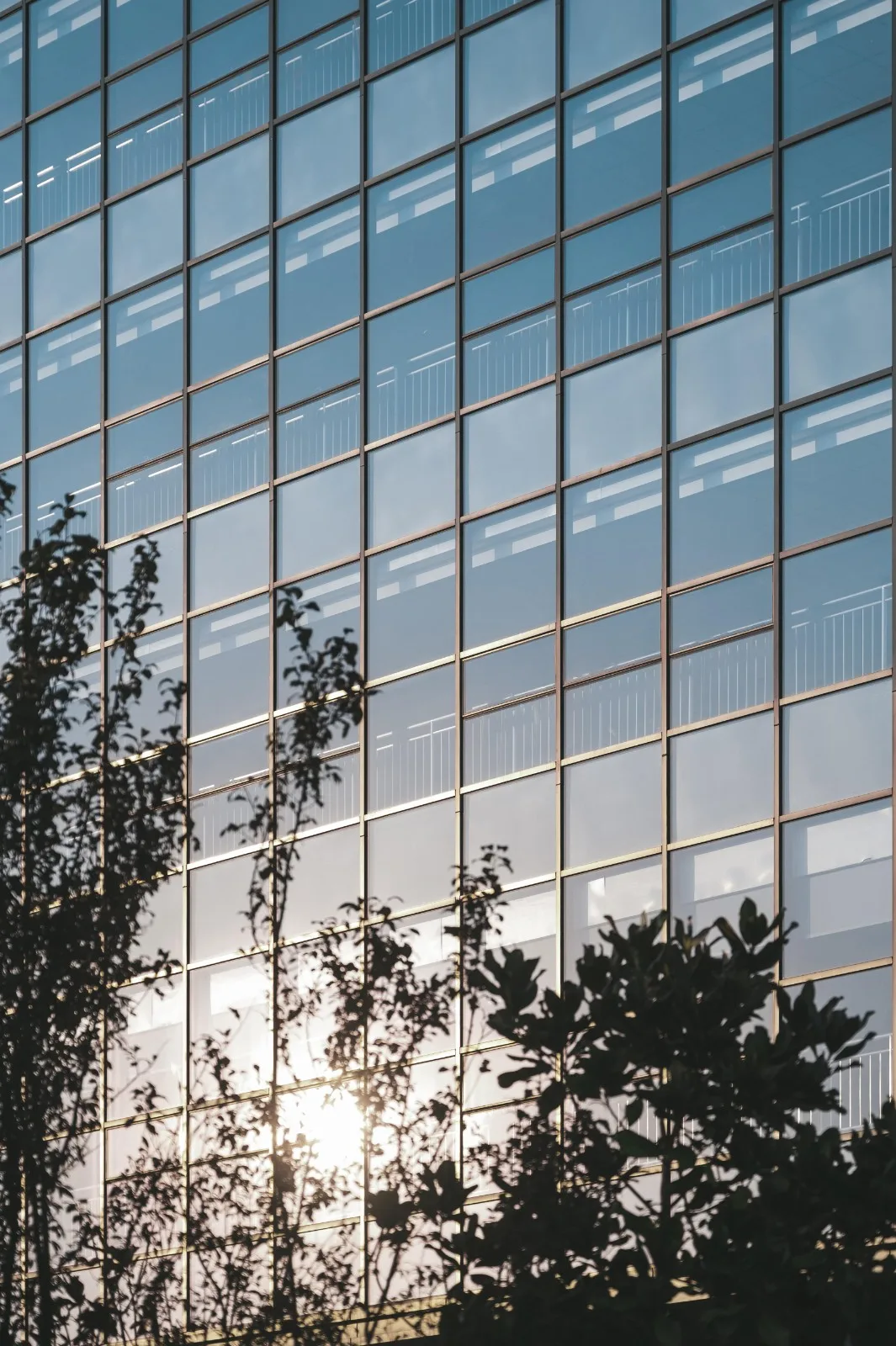
△ Facade and glass curtain wall © Xu Yingda
The building’s exterior prominently features extensive glass curtain walls. Distinct facade materials differentiate public zones from the R&D areas, while the auxiliary building is fully glazed, enhancing openness and blending natural qualities into the structure. This design not only reflects the harmony of square and circle but also lends the building a light, modern, and iconic presence. It represents a new typology of office building—simple, efficient, and memorable.
The interplay between the abundant glass curtain walls and the neighboring buildings accentuates the headquarters’ prominence within the complex.
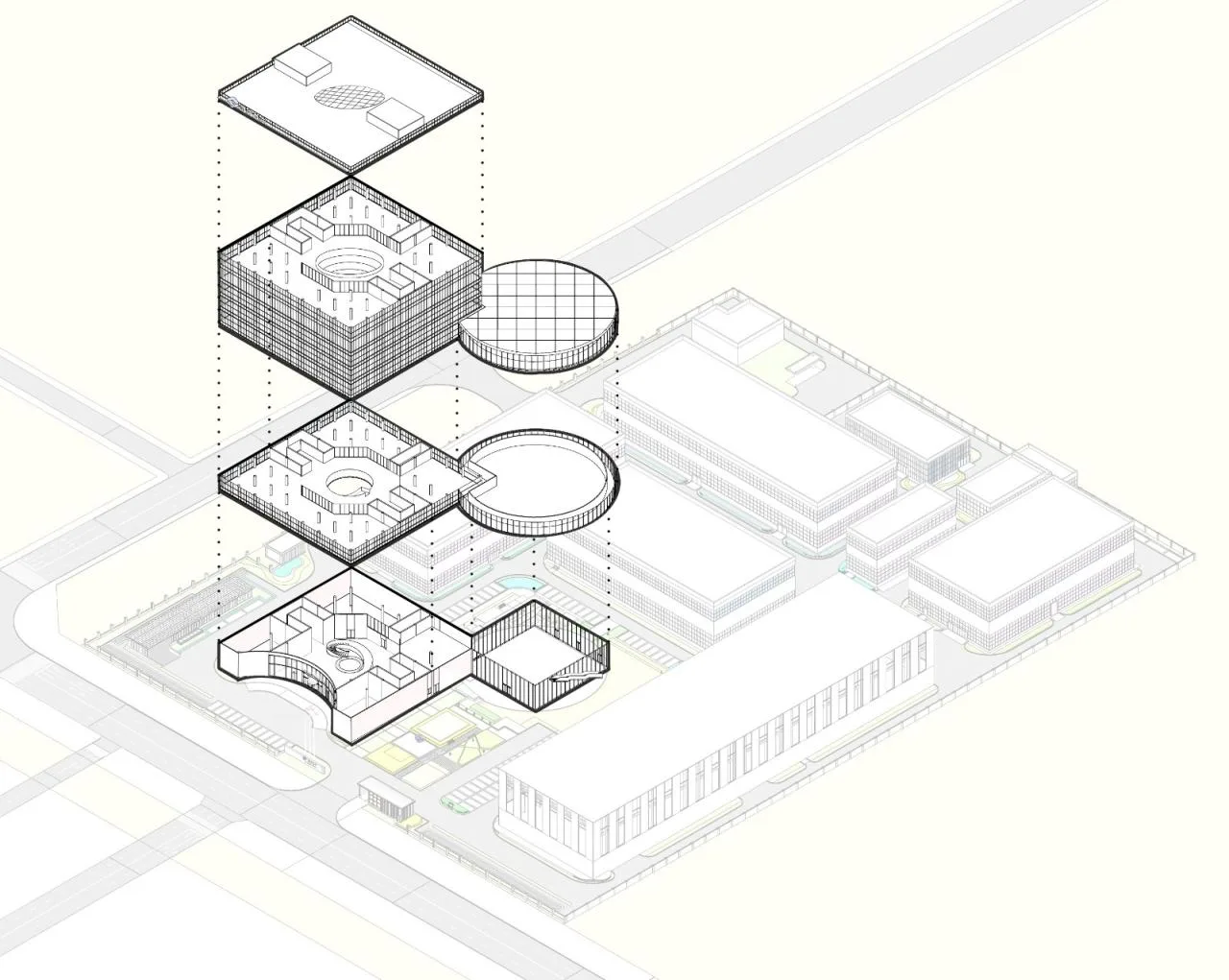
△ Exploded diagram © Pingjie Design
Inside, the architect has carved a circular atrium from the cube’s core, expanding progressively from small to large. This design enhances natural lighting, creates an engaging atrium, and fosters a high-quality office environment. Within a flexible framework, multiple social spaces encourage informal meetings, collaboration, and innovation.
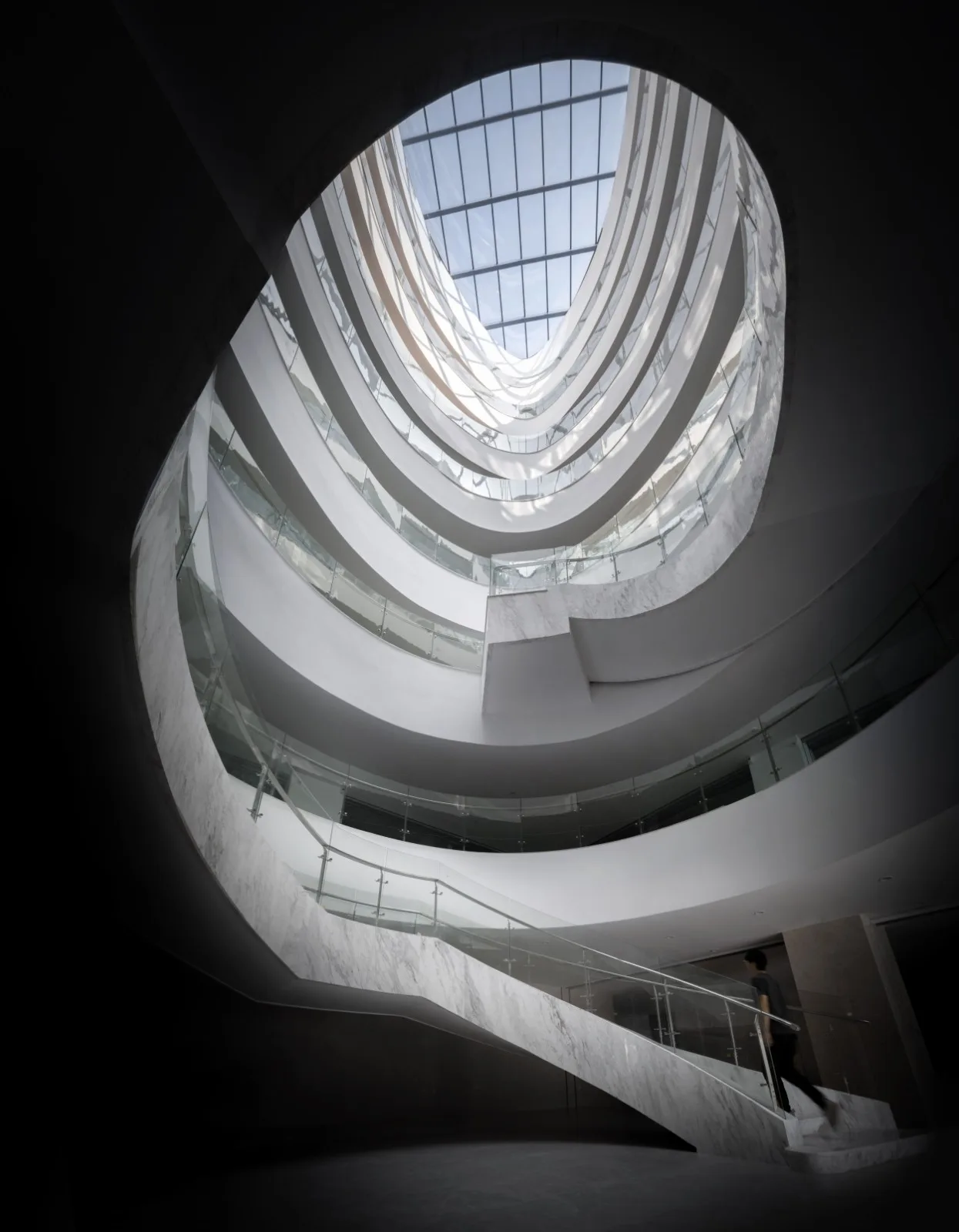
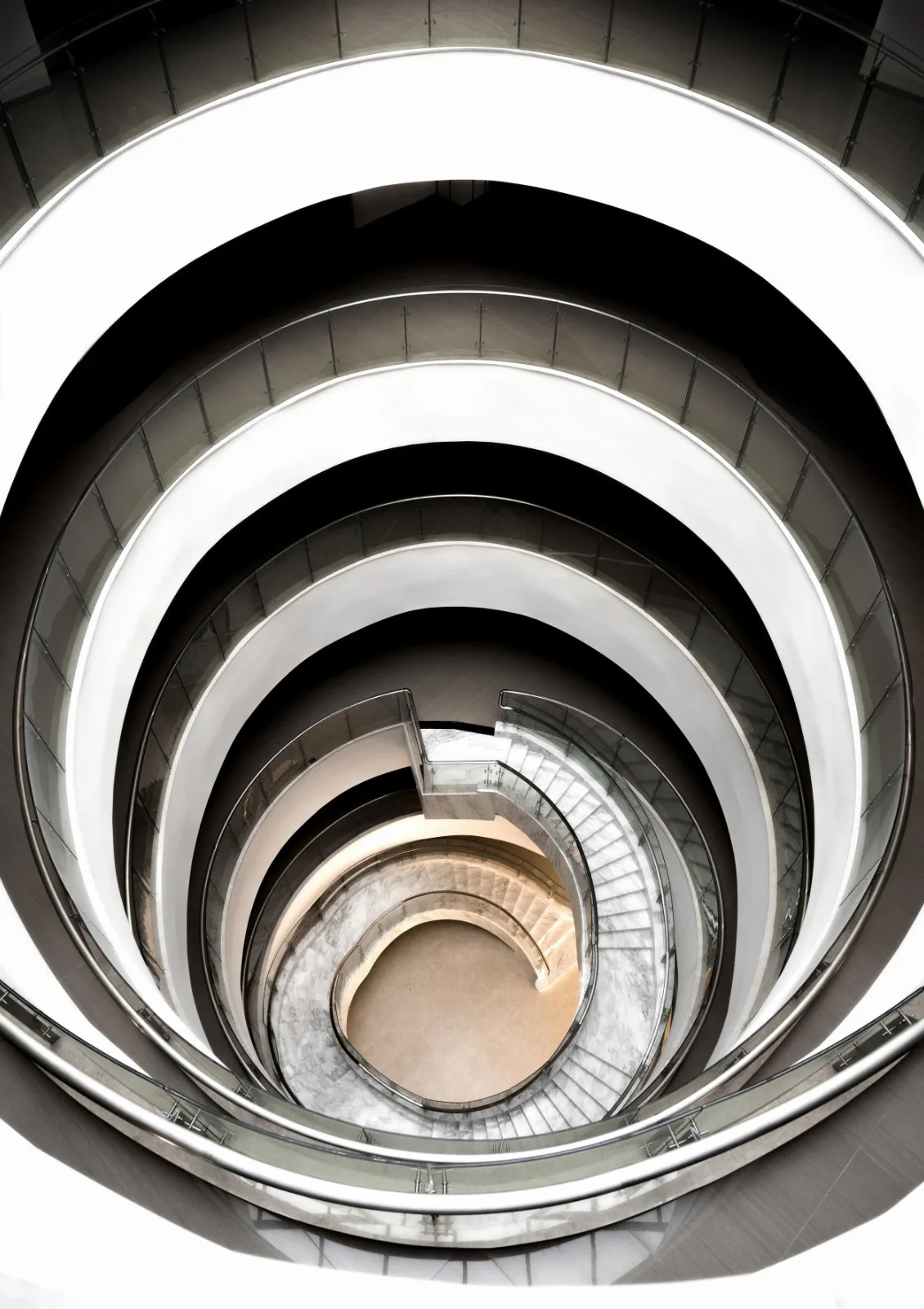
△ Courtyard © Xu Yingda
Departing from traditional square and upright courtyard designs, the building’s courtyard consists of multiple irregular circular rings that spiral and alternate. The atrium brings natural light into these circular layers on each floor, creating a comfortable, natural atmosphere. This inviting space encourages gathering, communication, and interaction. By breaking down floor separations, the atrium promotes fluidity and interaction throughout the building.
The designer’s bold use of geometric elements in the atrium makes it both fashionable and organic, embodying the union of square and circle. The contrast between the atrium’s circular form and the building’s square exterior reinforces the harmony concept. Viewed from above, the courtyard powerfully expresses the balance of yin and yang—the round sky and the square earth.
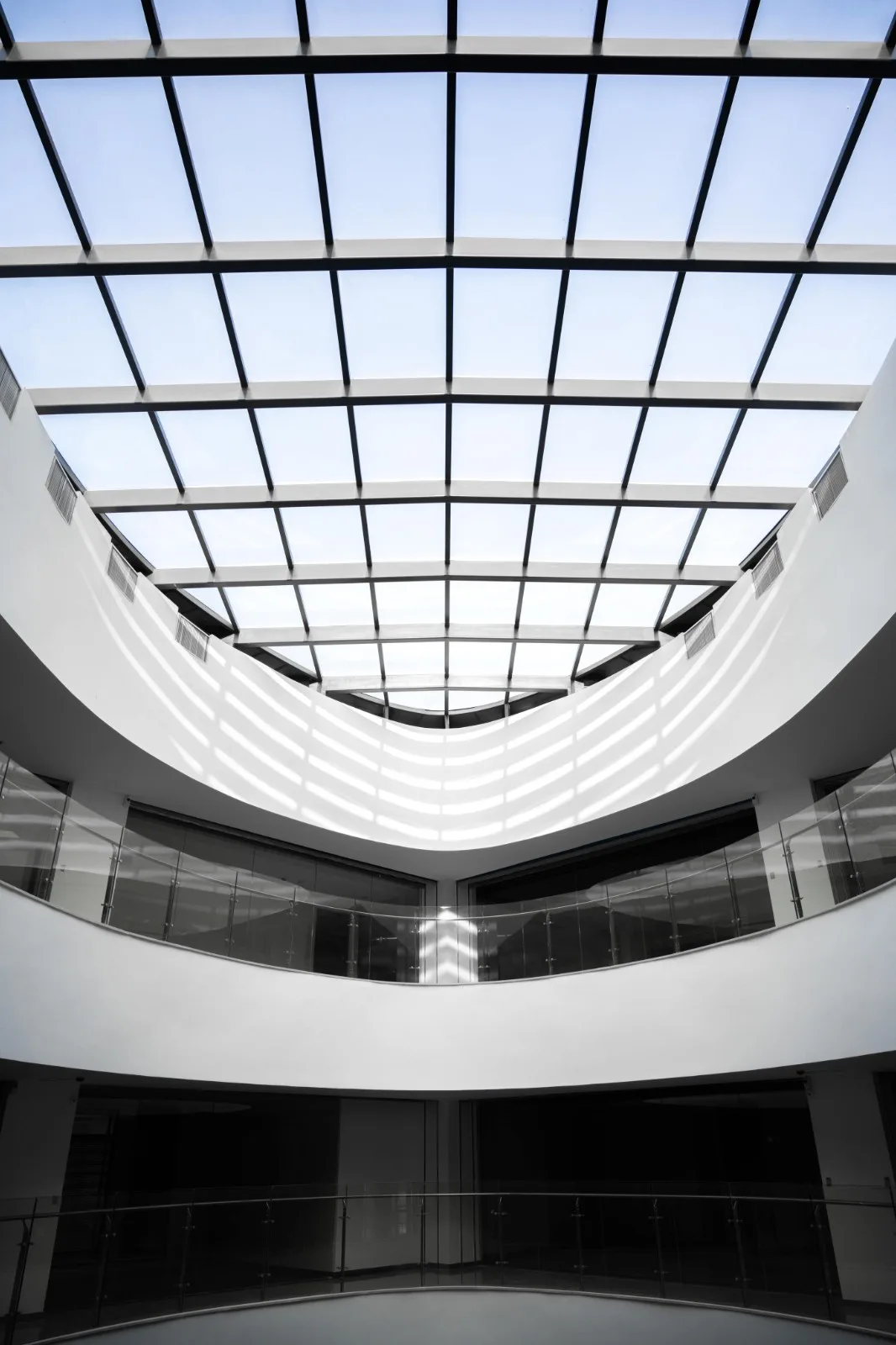
△ Light illuminating the atrium from above © Xu Yingda
The “harmony between square and circle” concept extends beyond aesthetics into sustainable design. The geometric forms contribute to thermal insulation and ventilation during summer, energy savings in winter, and layered natural light penetration throughout the building.
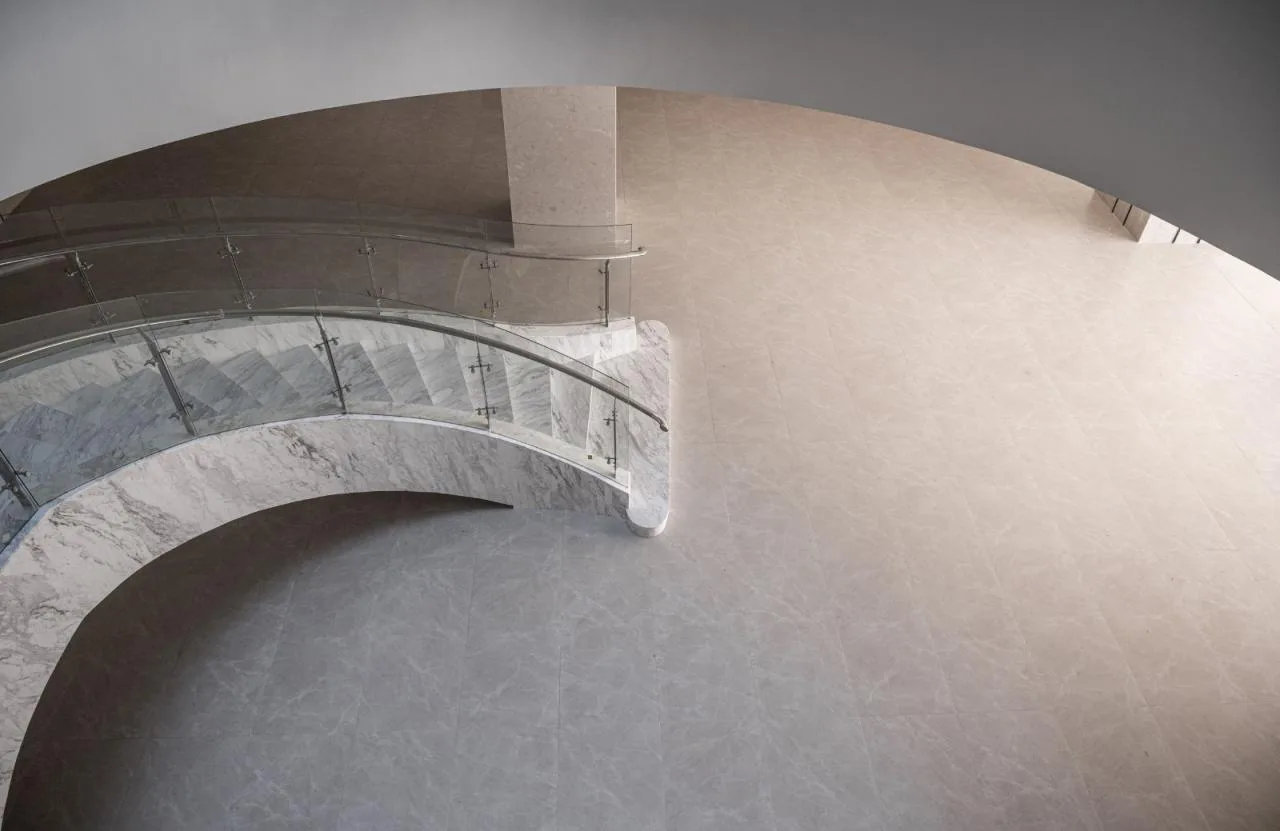
△ Lobby © Xu Yingda
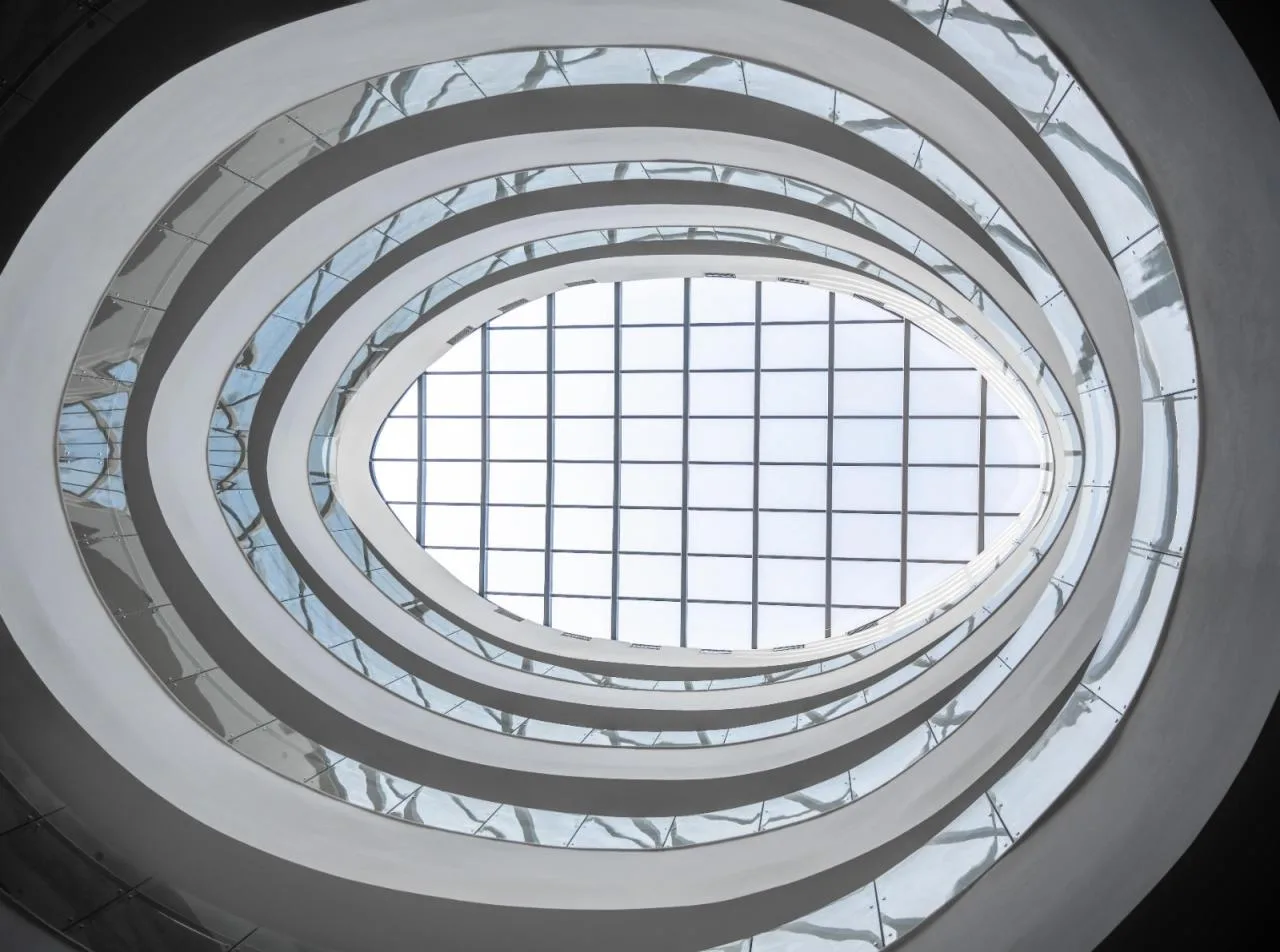
View looking up from the atrium © Xu Yingda
The overall design expresses the corporate culture through architectural language, achieves harmony between the building and its urban context, reflects a high-tech modern style, promotes interaction between internal and external spaces, and prioritizes sustainable design. This project is poised to become a landmark within the Suzhou Guofang Electronics Industrial Park, embodying leadership and driving high-quality, sustainable development throughout the area.
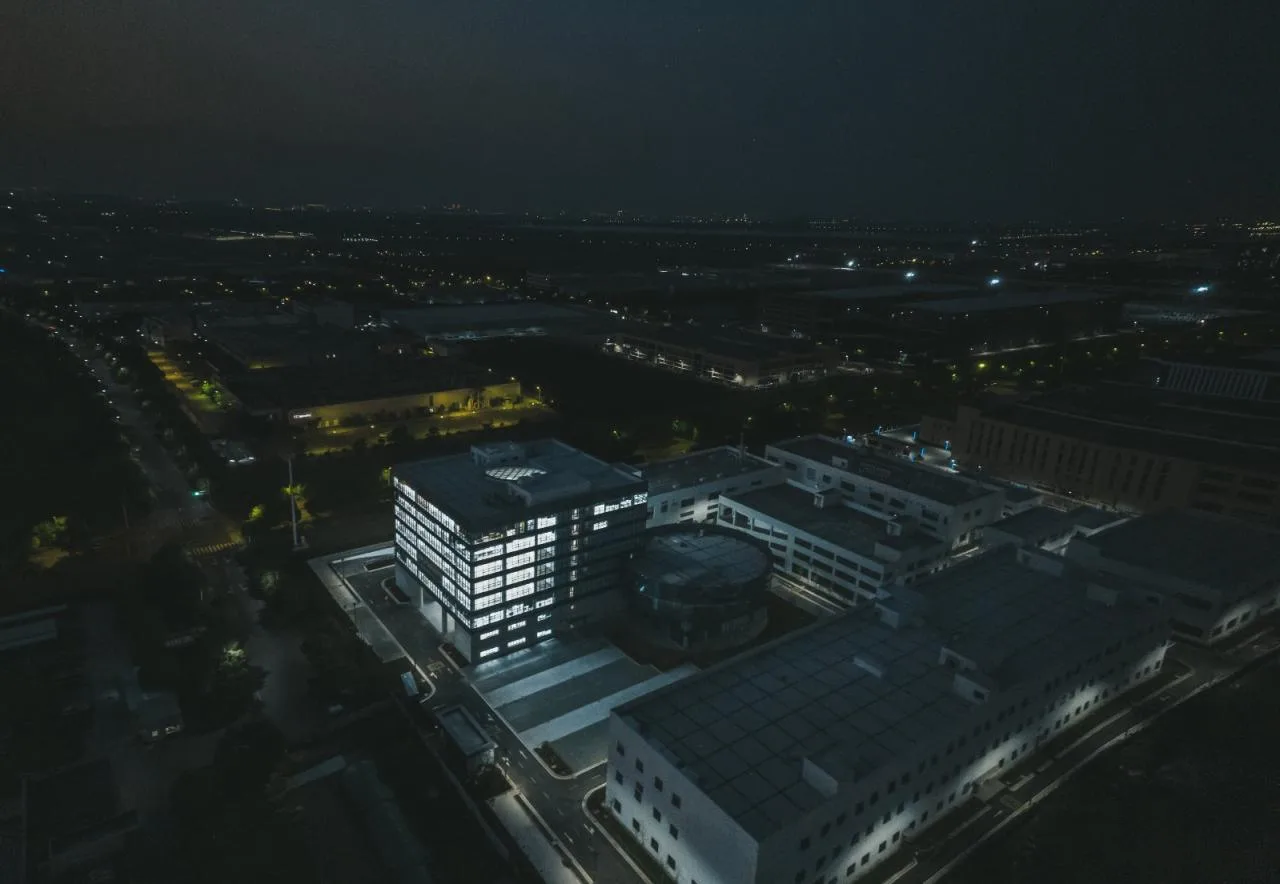
△ Night view © Xu Yingda
This project represents the largest-scale endeavor undertaken by the studio in its four years since inception. Although our role was limited to conceptual design, it marks a significant expansion beyond previous smaller projects involving urban renewal, rural cultural tourism, and retail commercial spaces. Reflecting on the entire process, despite some imperfections—such as facade curtain wall control, floor plan layout, and mechanical & electrical integration due to time, cost, and coordination constraints—the project partially realized the initial conceptual vision. It also provided invaluable experience in urban-scale design, collaboration with EPC and design institutes, and managing large-scale landscape interfaces. As a developing studio, we are grateful for this opportunity to deepen our skills in scheduling, preliminary design, construction documentation, and construction coordination. We sincerely thank the client and general contractor for their trust and cooperation.
Project Drawings
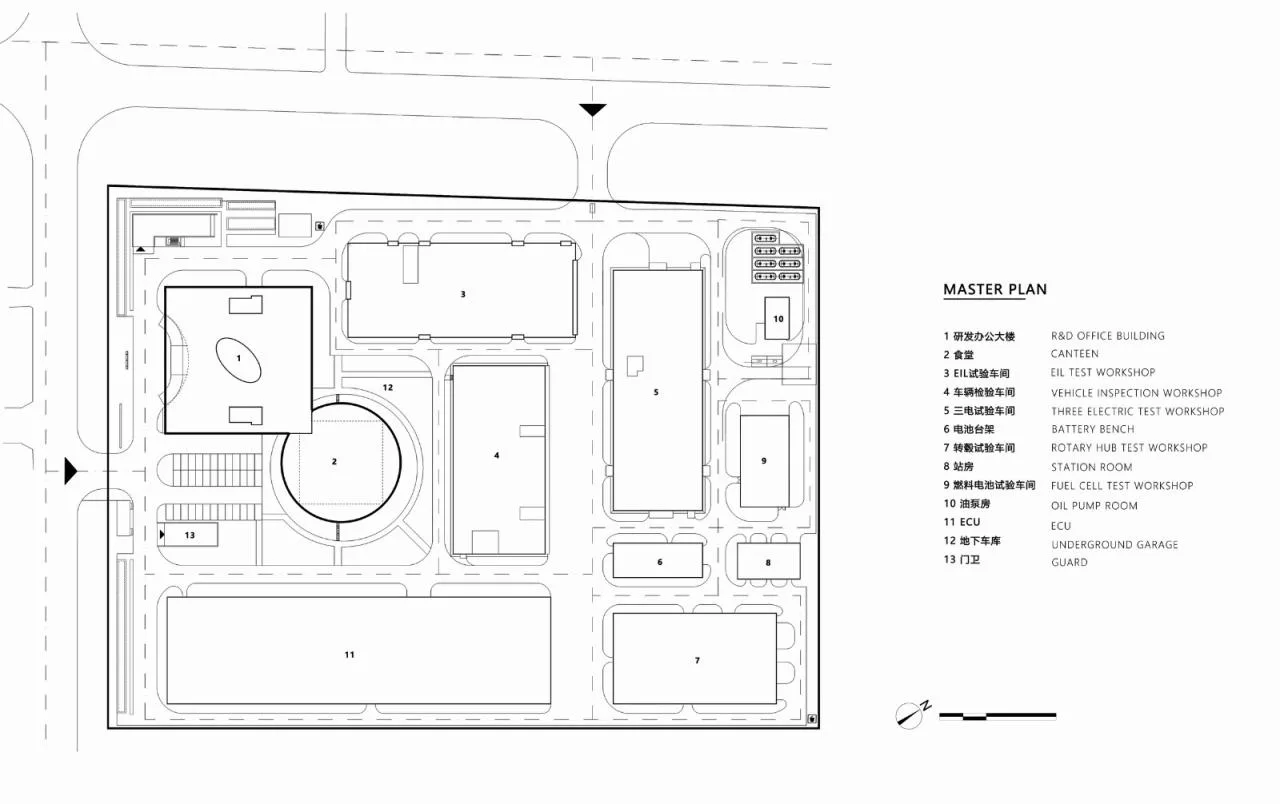
△ General layout plan
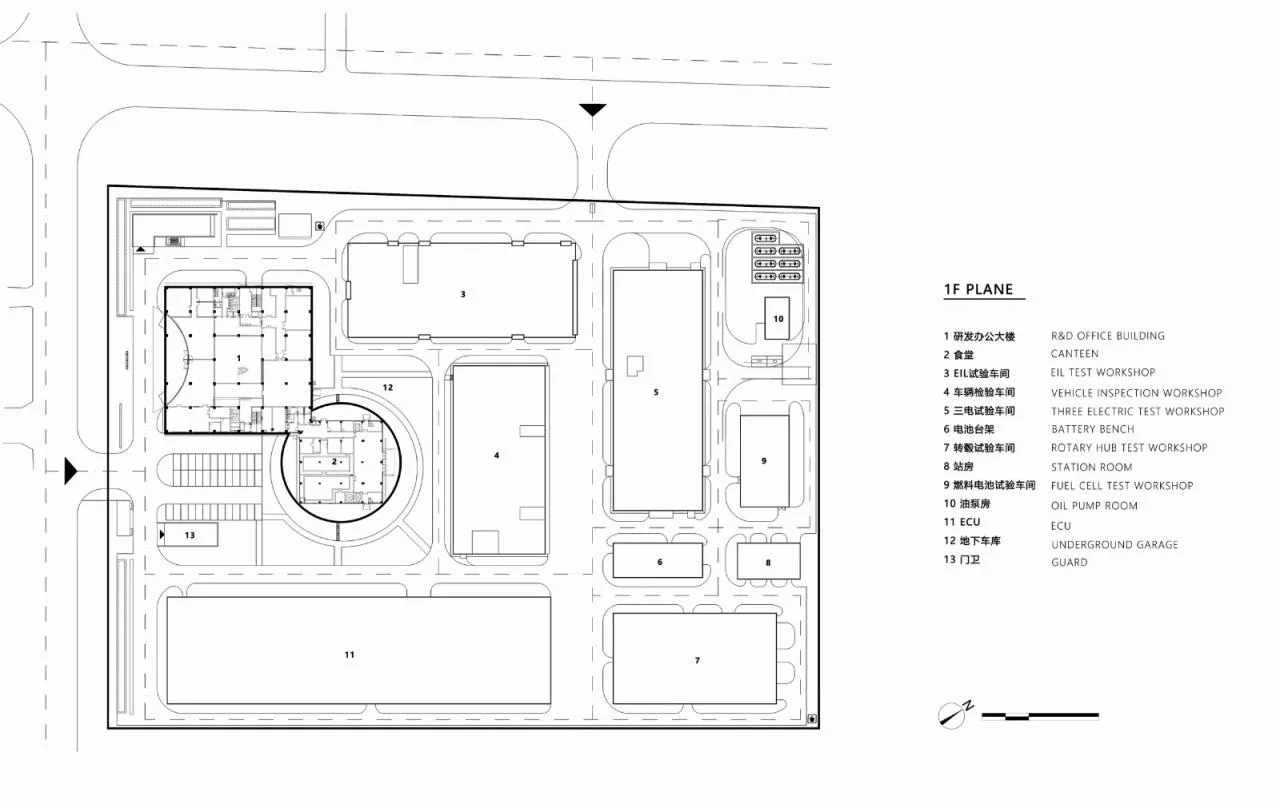
△ First floor plan
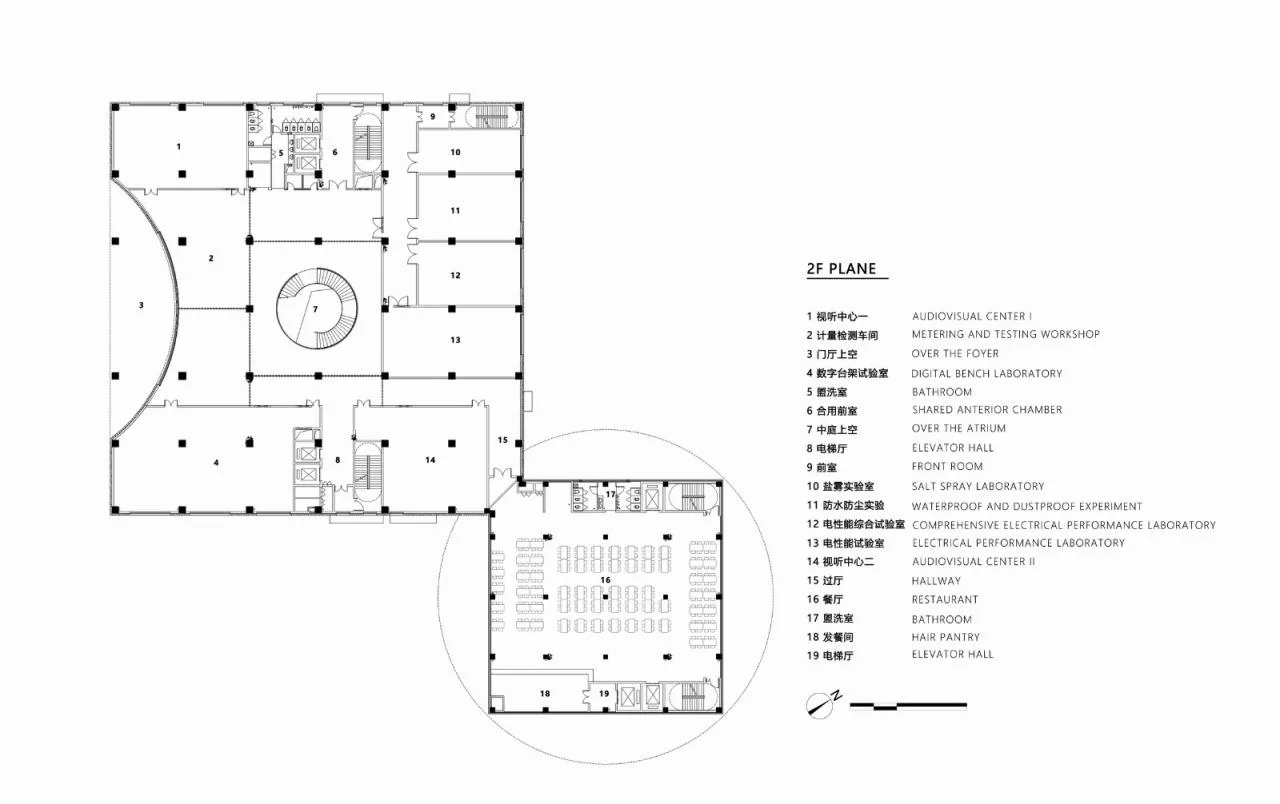
△ Second floor plan
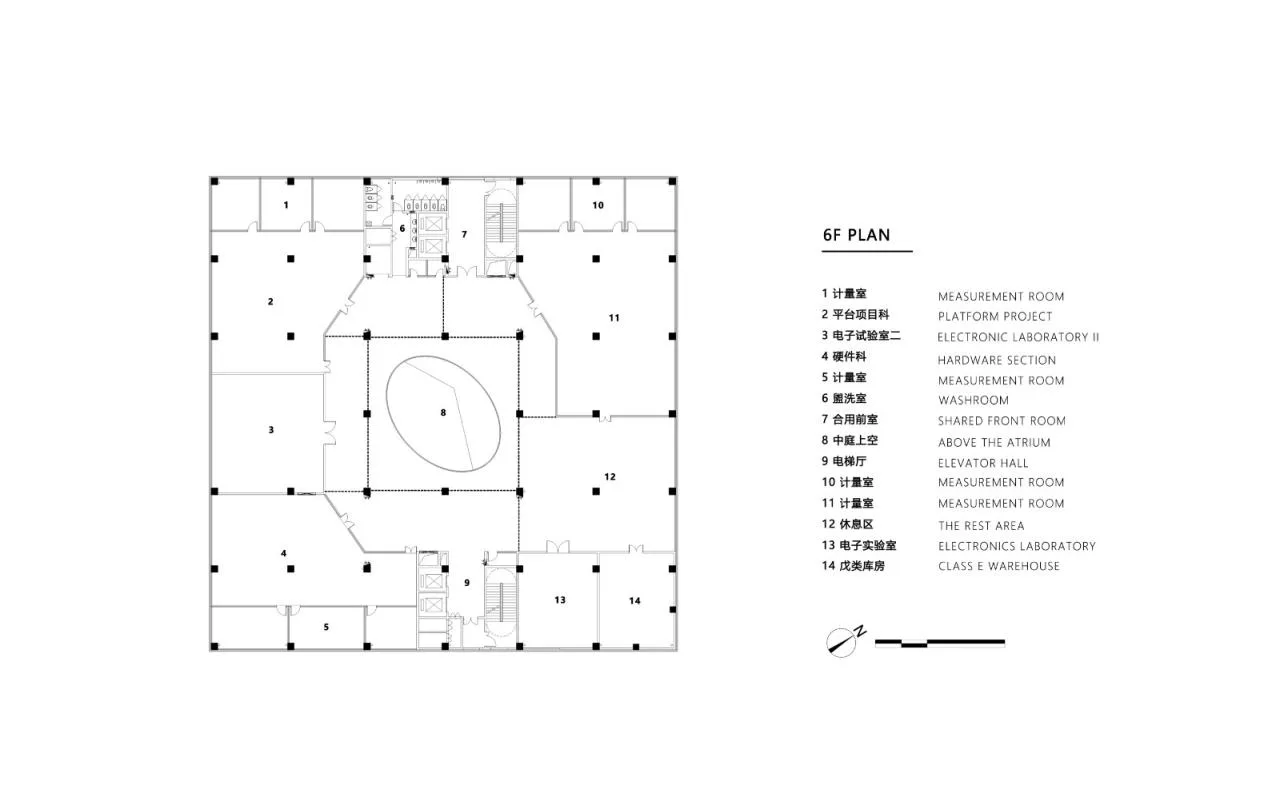
△ Sixth floor plan
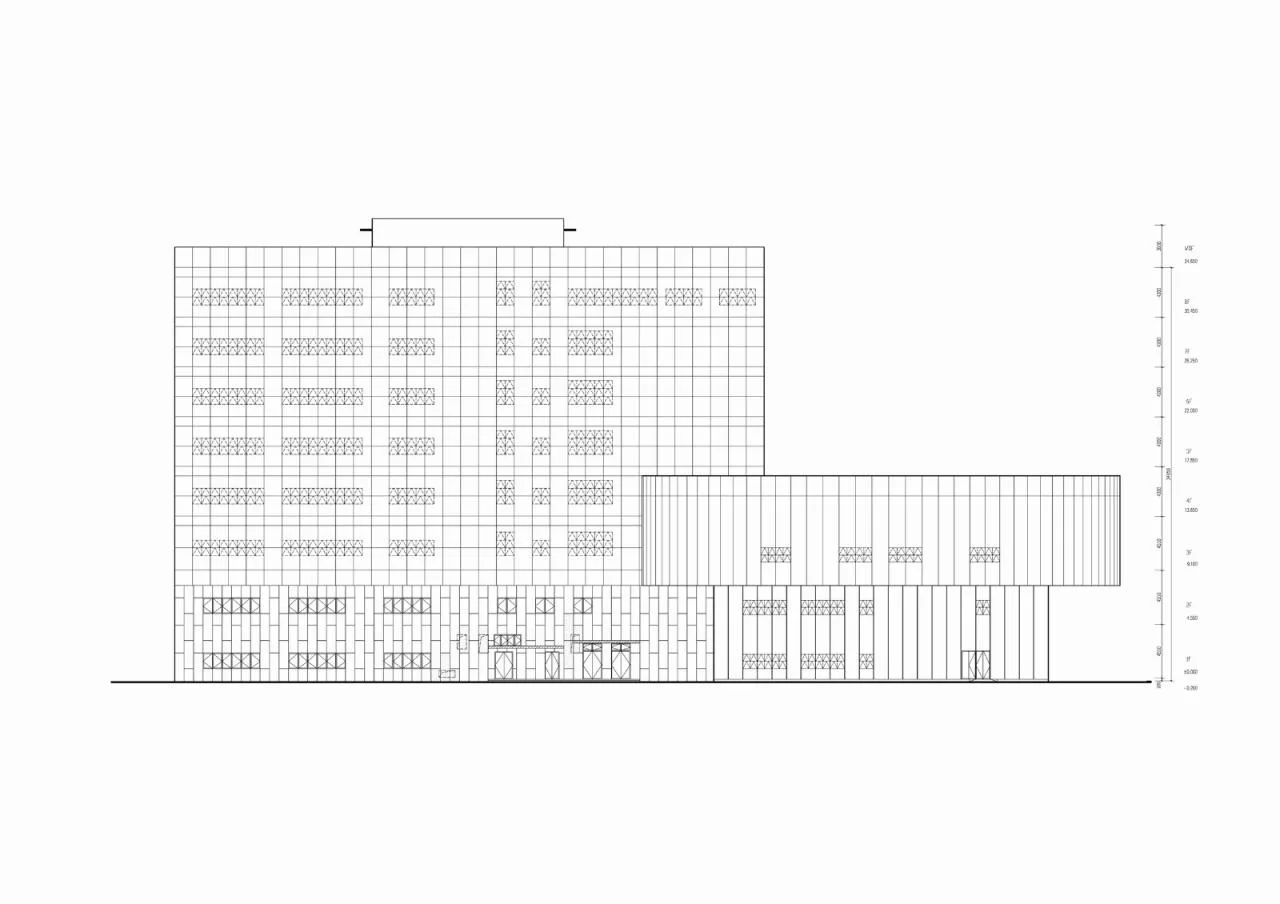
△ Elevation drawing
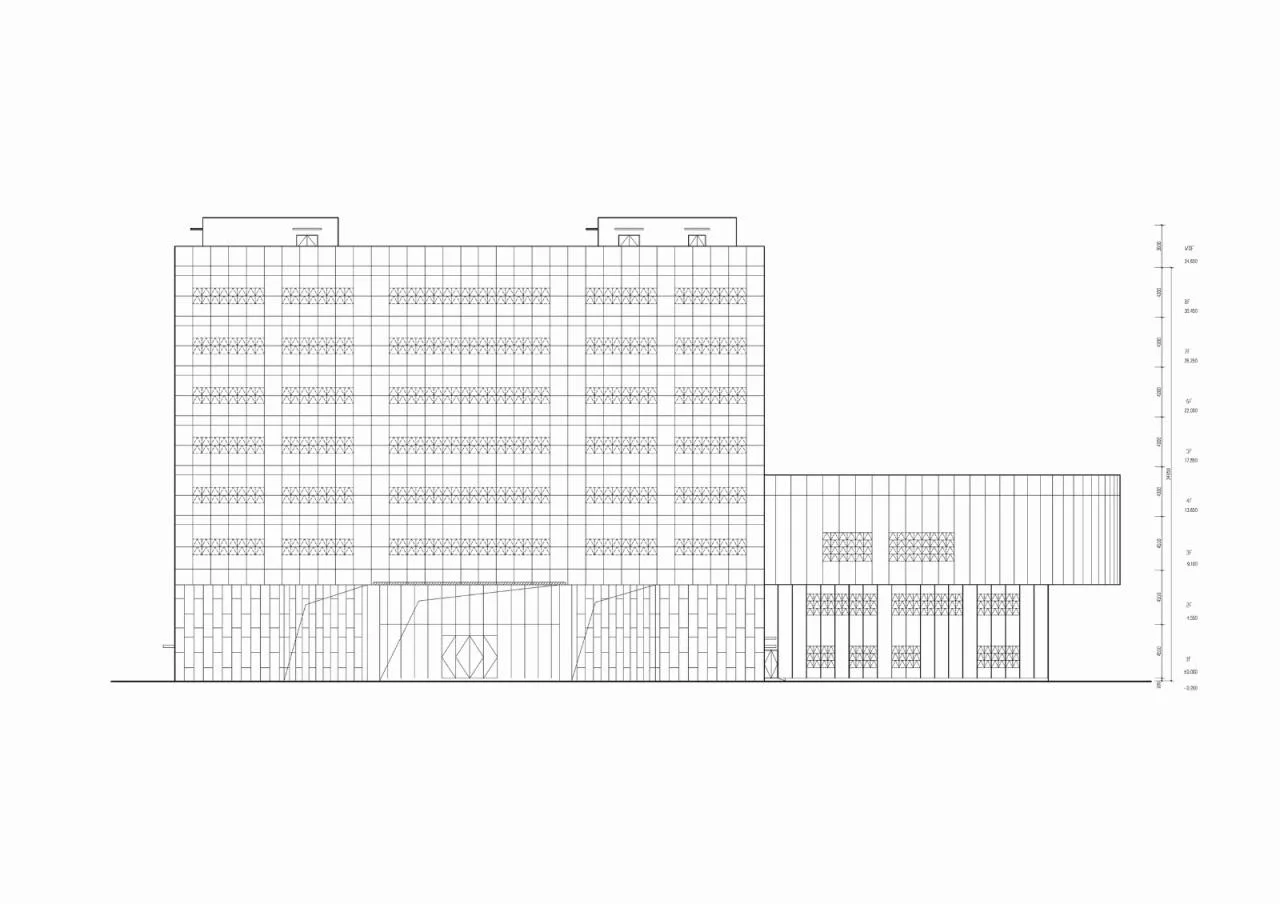
△ Elevation drawing
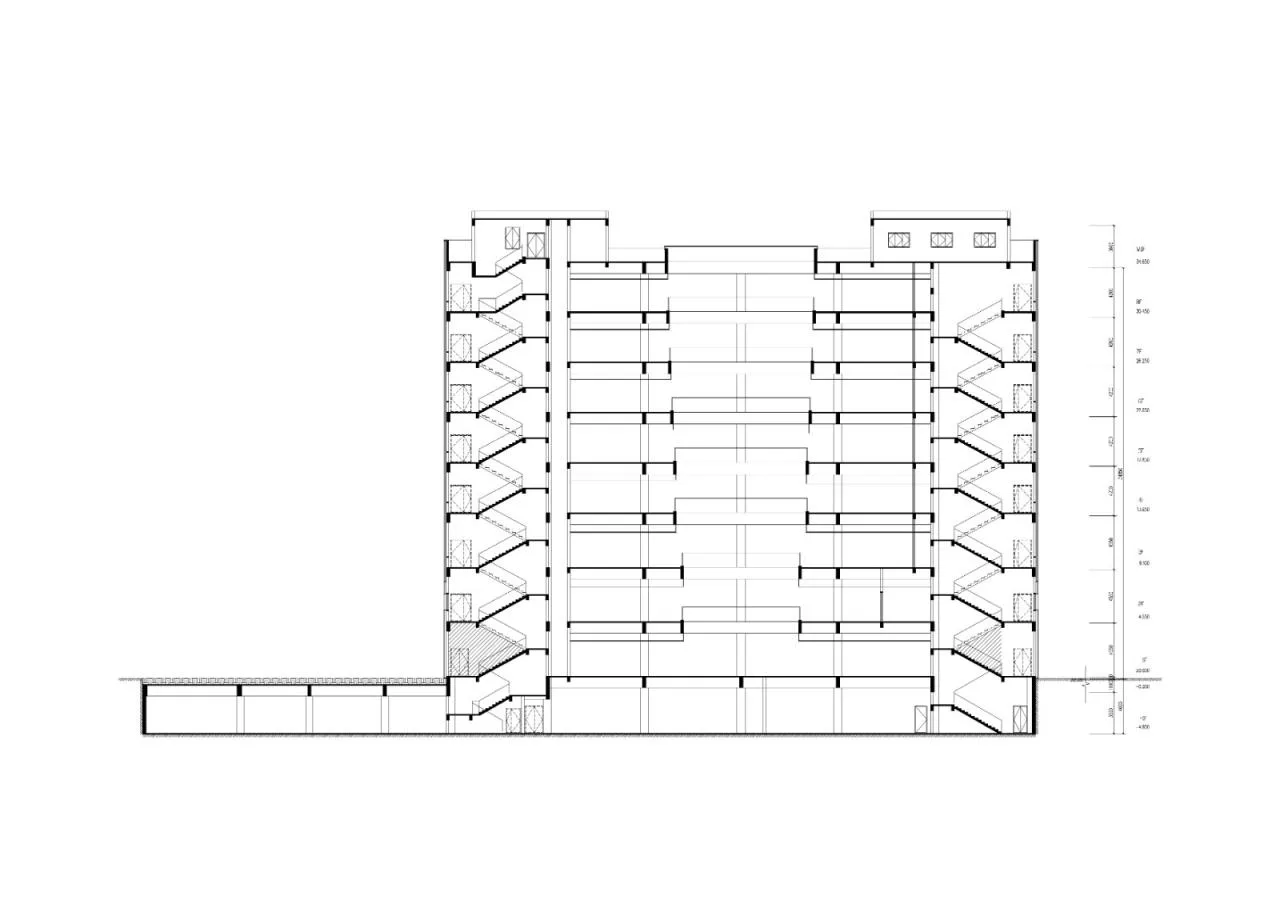
△ Main building section diagram
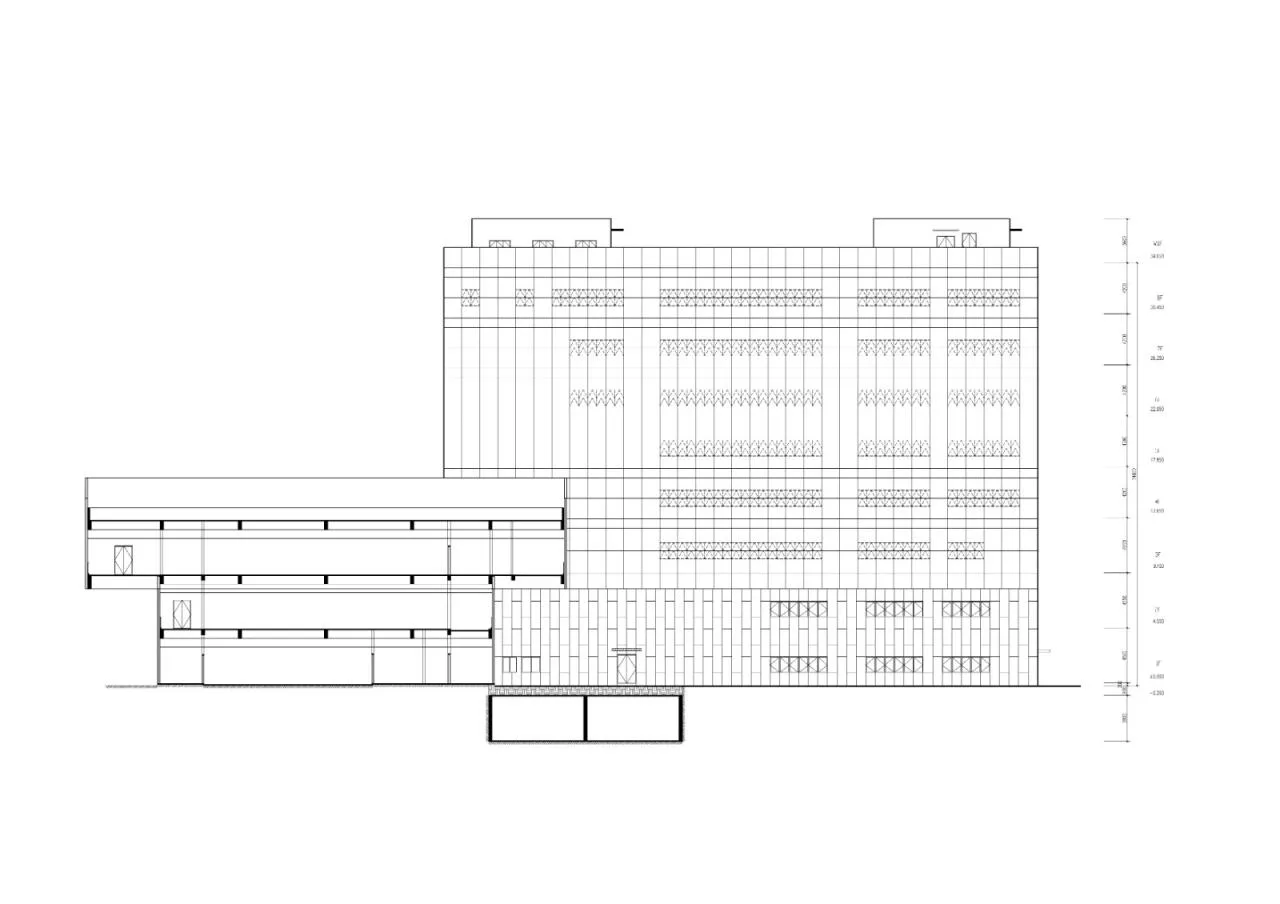
△ Sectional drawing of the attached building
Project Information
Project Name: Guofang Electronic R&D Center
Project Type: Office
Designer: Pingjie Design, School of Architecture, Soochow University
Project Design: 2018
Year of Completion: 2022
Design Team: Xiao Xiangdong, Jing Wanqian, Cao Kaiyuan, Zhang Wanhui, Wang Haidong, Chen Lei, Yang Nan, Li Wenjing, Kong Xiangpeng, Qu Shuhao, Ding Min, Jiang Ying, Deng Wuxinzi, Jin Rongye
Project Address: Chunxing Road, Caohu Street, Xiangcheng District, Suzhou City
Building Area: 19,200 square meters
Photography Copyright: Xu Yingda
Partners: Wuxi Urban Architecture Design Co., Ltd., Jiangsu Nantong Second Construction Group Co., Ltd.
Client: Suzhou Guofang Automotive Electronics Co., Ltd.















Must log in before commenting!
Sign Up