
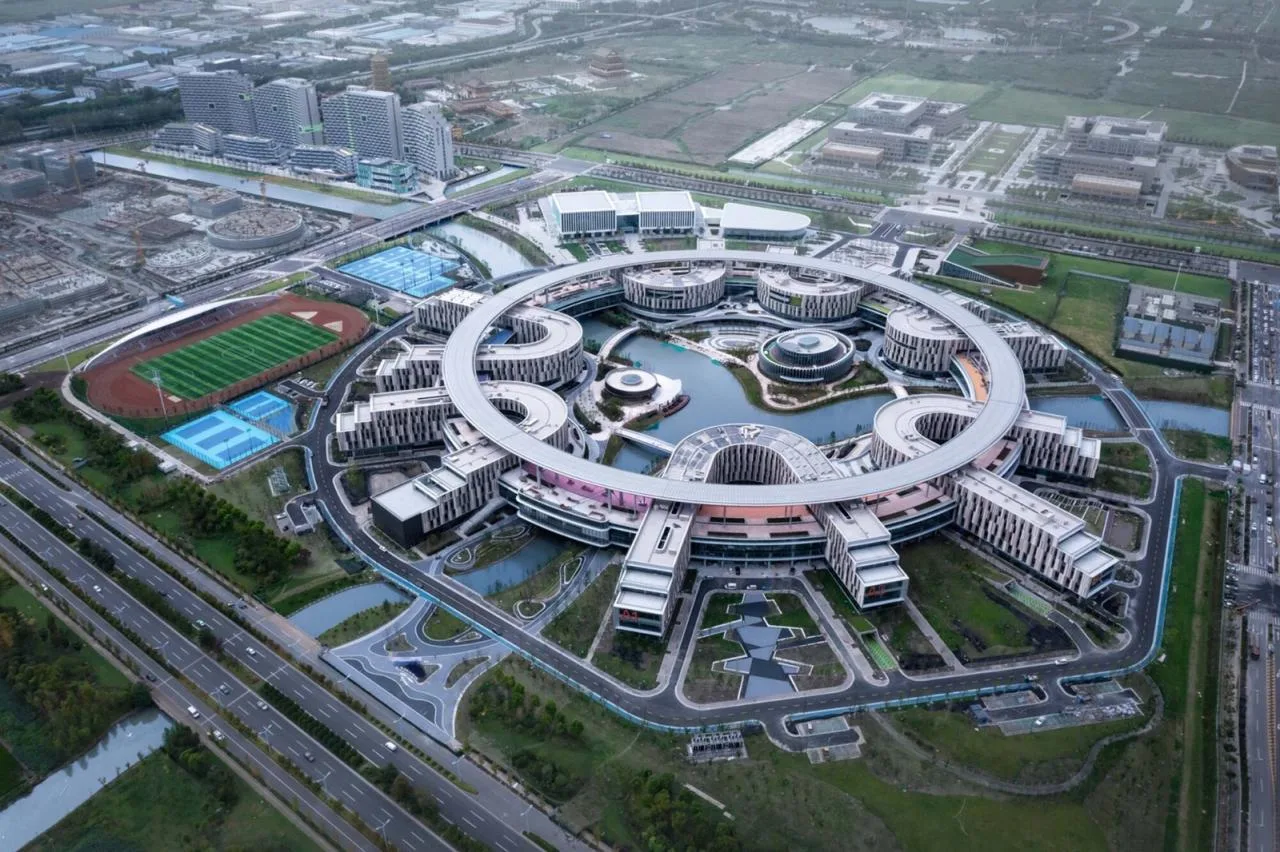
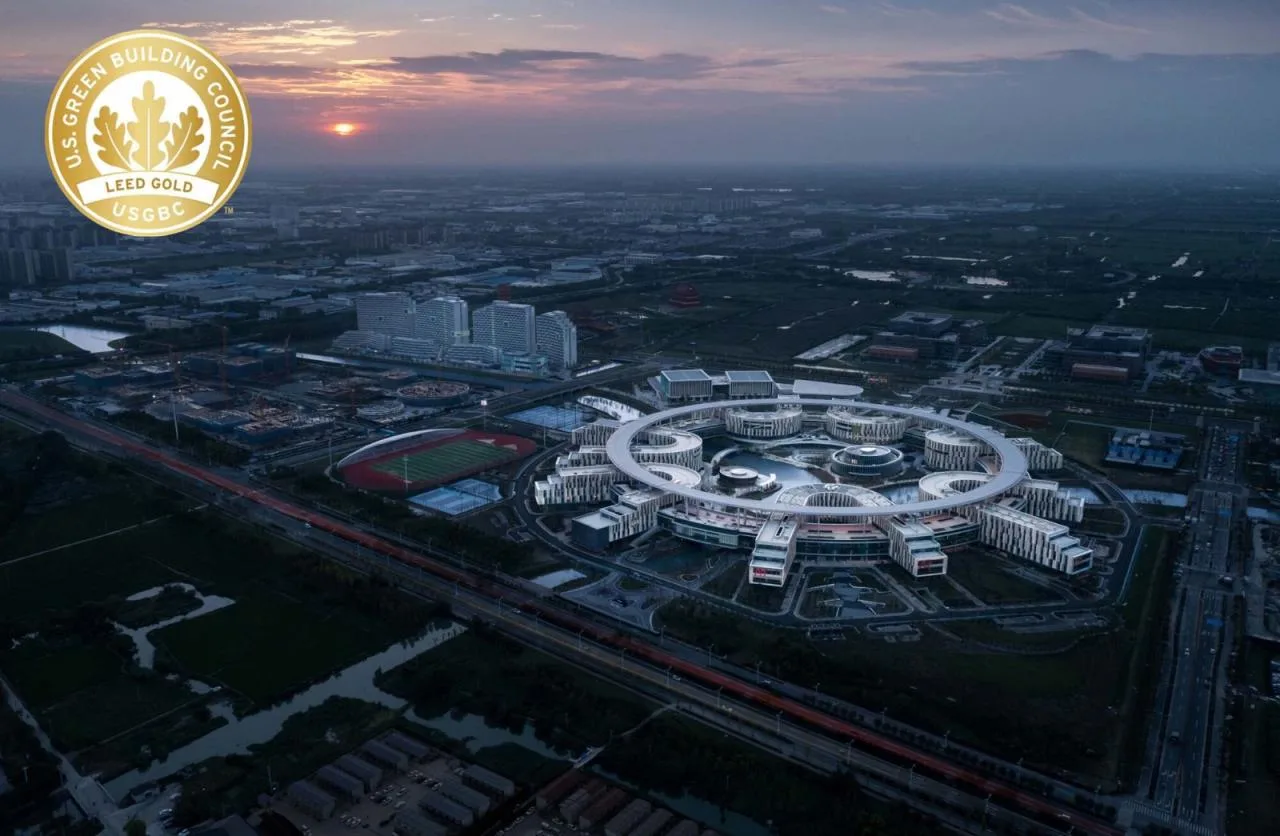
Located in the Taicang High-Tech Development Zone of Suzhou, Jiangsu, the Taicang Campus of Xi’an Jiaotong Liverpool University represents a comprehensive vision for the “university of the future.” Awarded to HPP Architects in 2018, the firm was responsible for the architecture, landscape, interior design, and overall project management. On the morning of September 5th, the campus officially opened its doors, welcoming its first cohort of students and marking a milestone for this innovative educational environment.
The campus is designed around the core concept of “integration and symbiosis,” skillfully blending open and enclosed spaces. This architectural approach encourages the creativity and initiative of both faculty and students, fostering a vibrant, diverse, and open learning community.
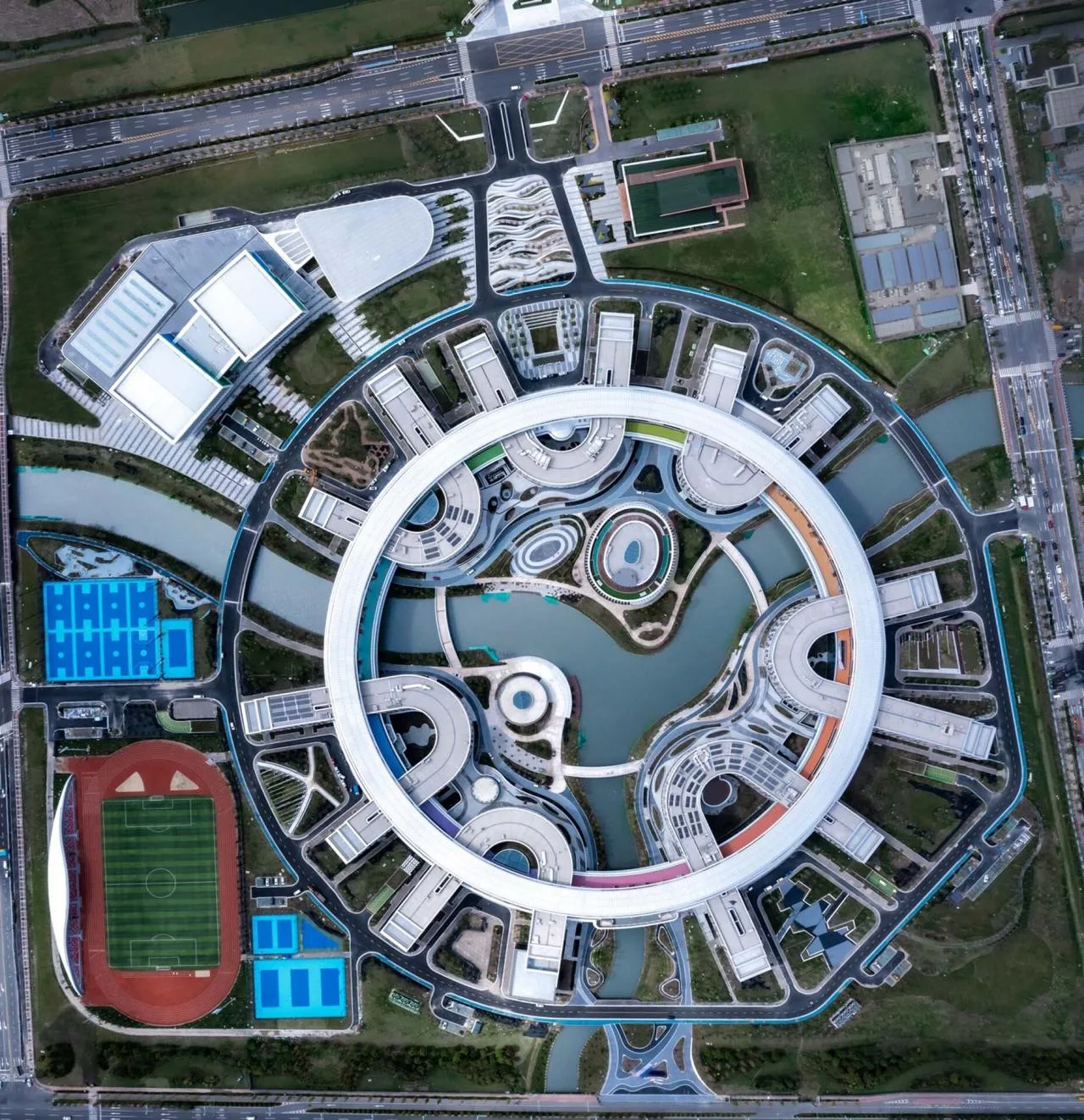
French philosopher Gilles Deleuze envisioned education evolving from traditional encyclopedic teaching methods toward more interdisciplinary and integrated models, mirroring societal development. In this future-focused approach, the teacher-student dynamic shifts fundamentally toward greater interactivity, learner autonomy, and mutual growth in the teaching-learning process.
Traditional educational architecture primarily caters to educators, focusing on spatial layouts and facilities that support teaching activities. In contrast, the Taicang Campus prioritizes the “educated” — students — by incorporating leisure and social spaces essential for personal growth and development. HPP’s design embraces these principles, crafting approachable architectural volumes combined with thoughtful campus landscaping to support a staggered, integrated spatial experience.
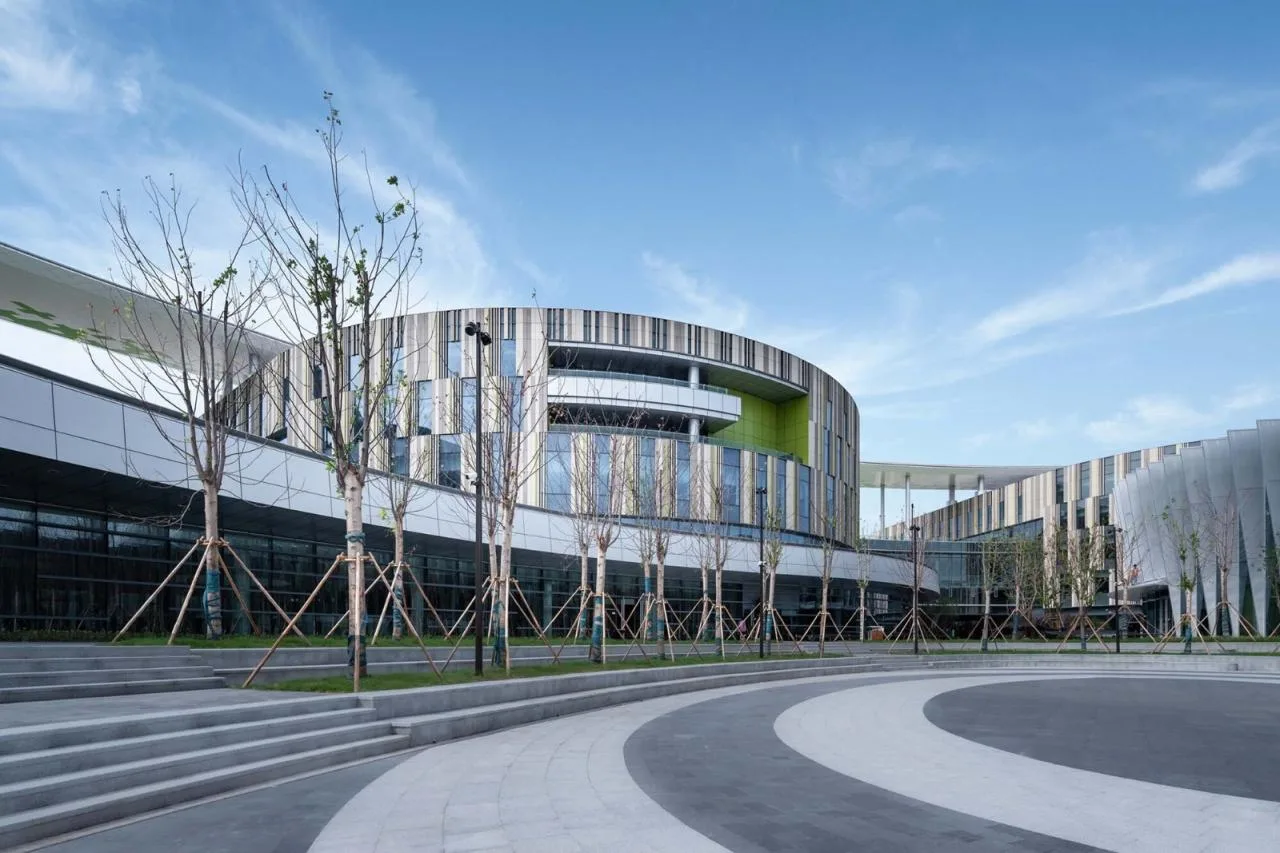

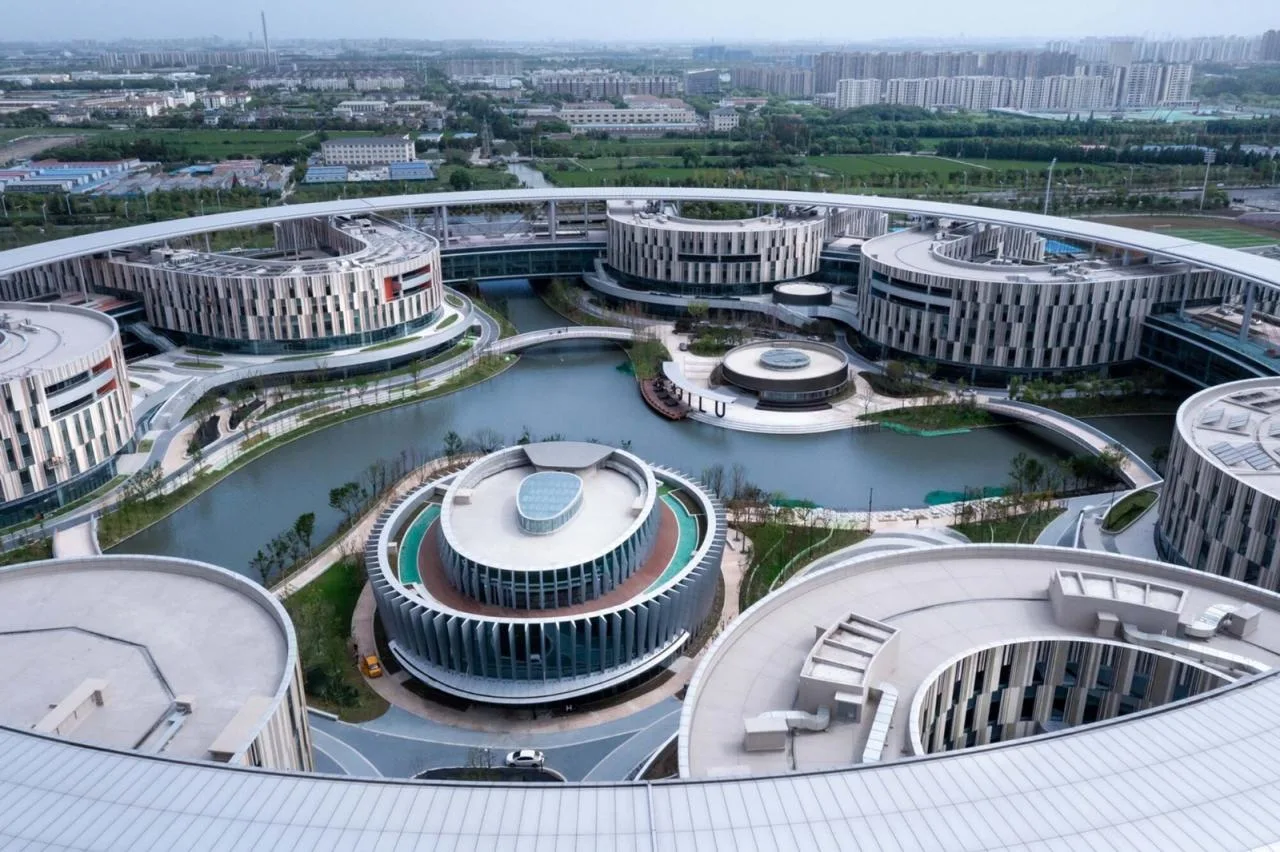
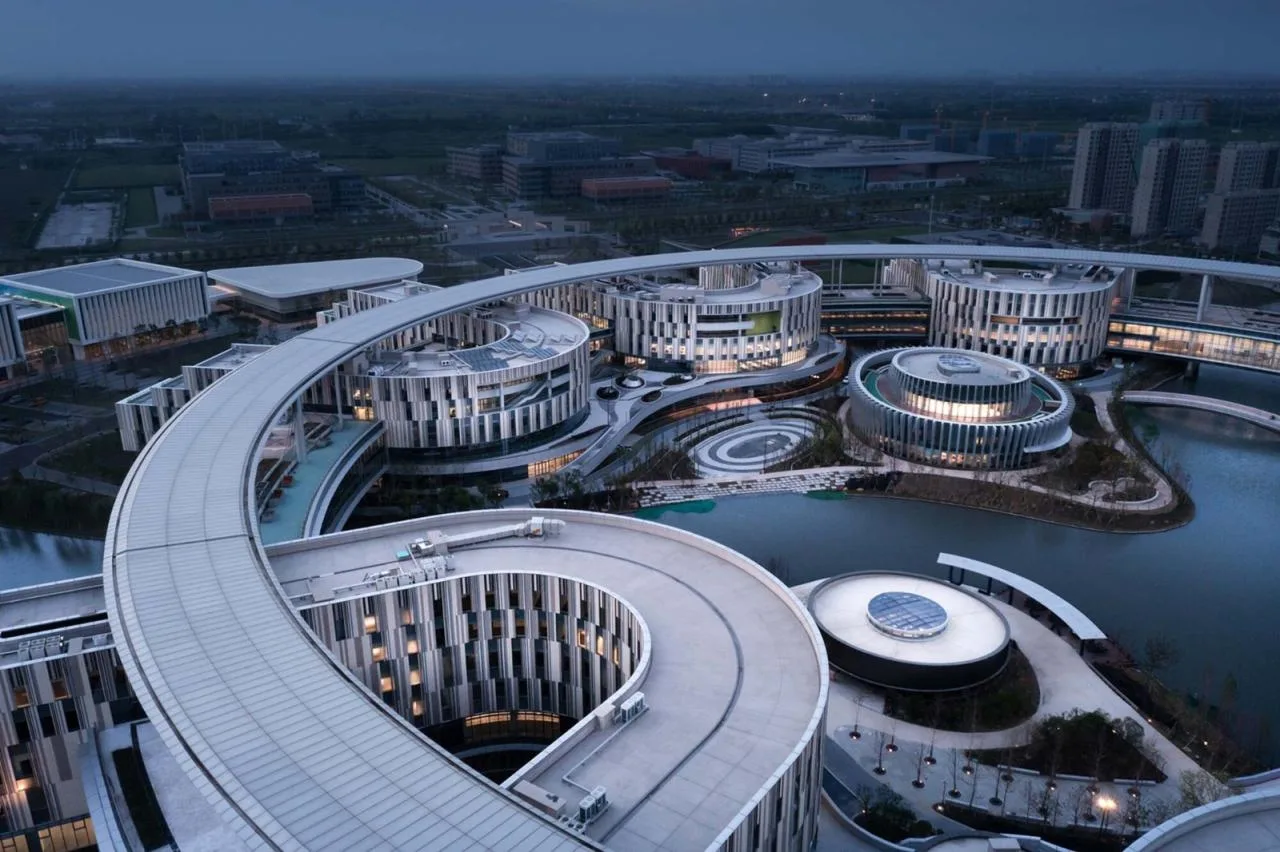
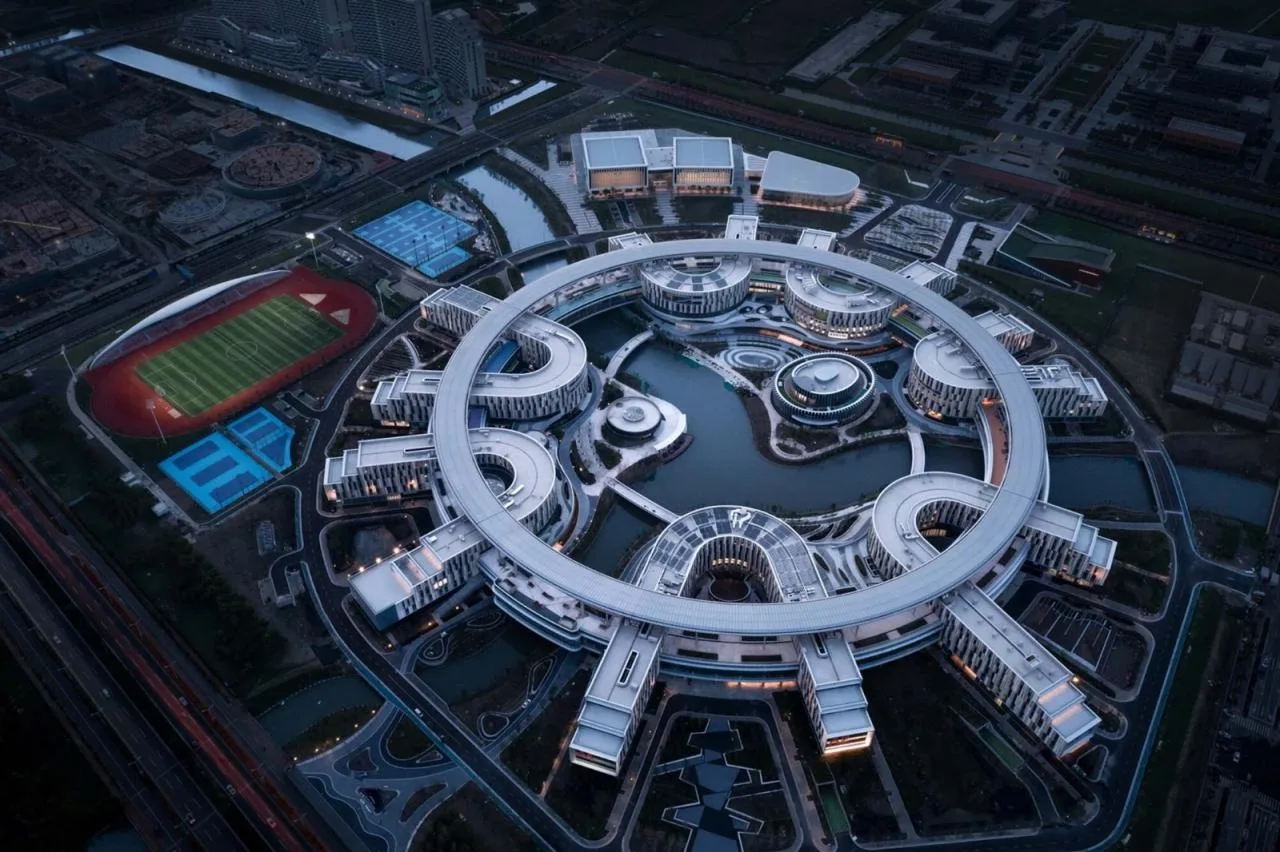
The future of Xi’an Jiaotong Liverpool University is characterized by openness, integration, and innovation — encapsulated in the concept of the “Learning Supermarket,” an experimental educational platform at the heart of the campus design. HPP developed an expansive circular structure for this “Learning Supermarket,” offering a continuous loop that connects various functional spaces while maintaining spatial continuity.
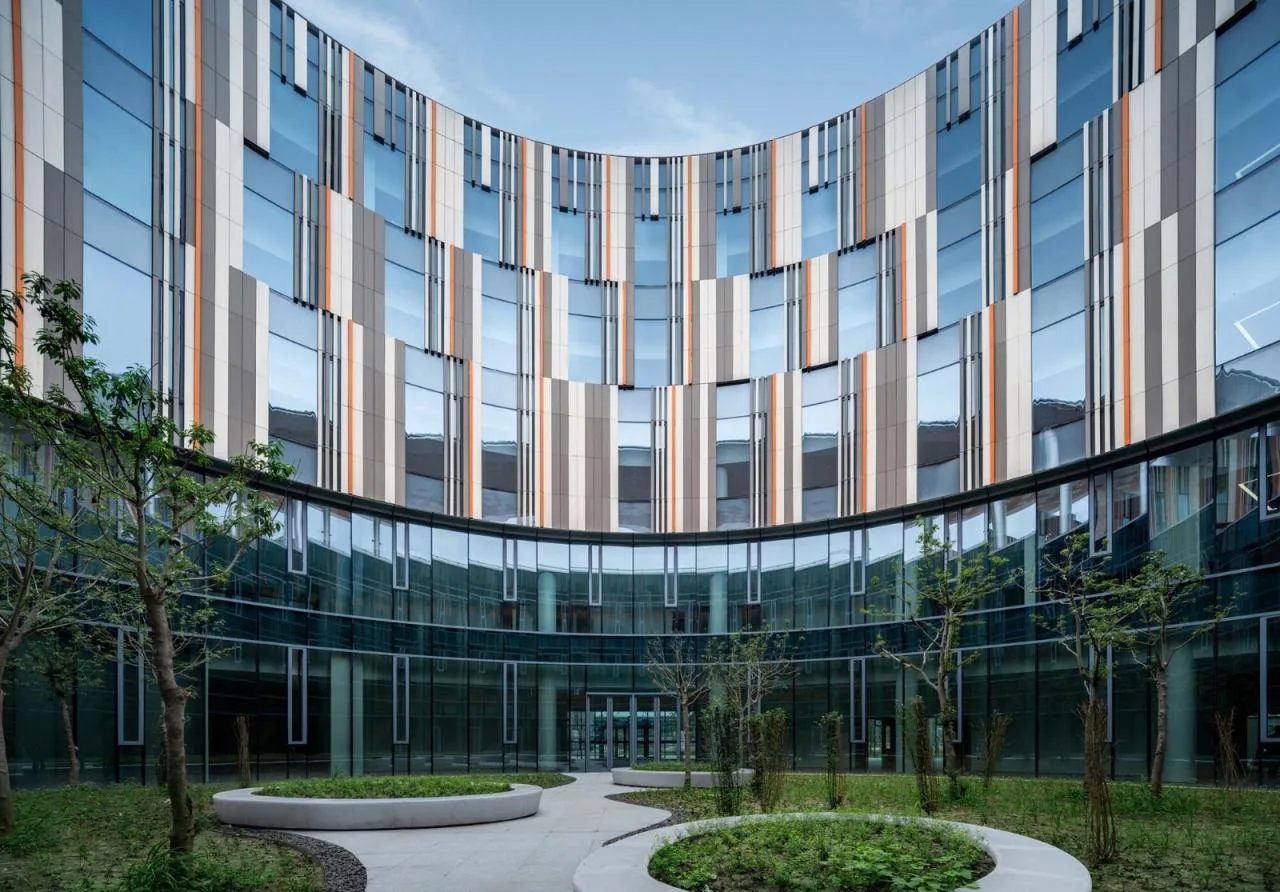
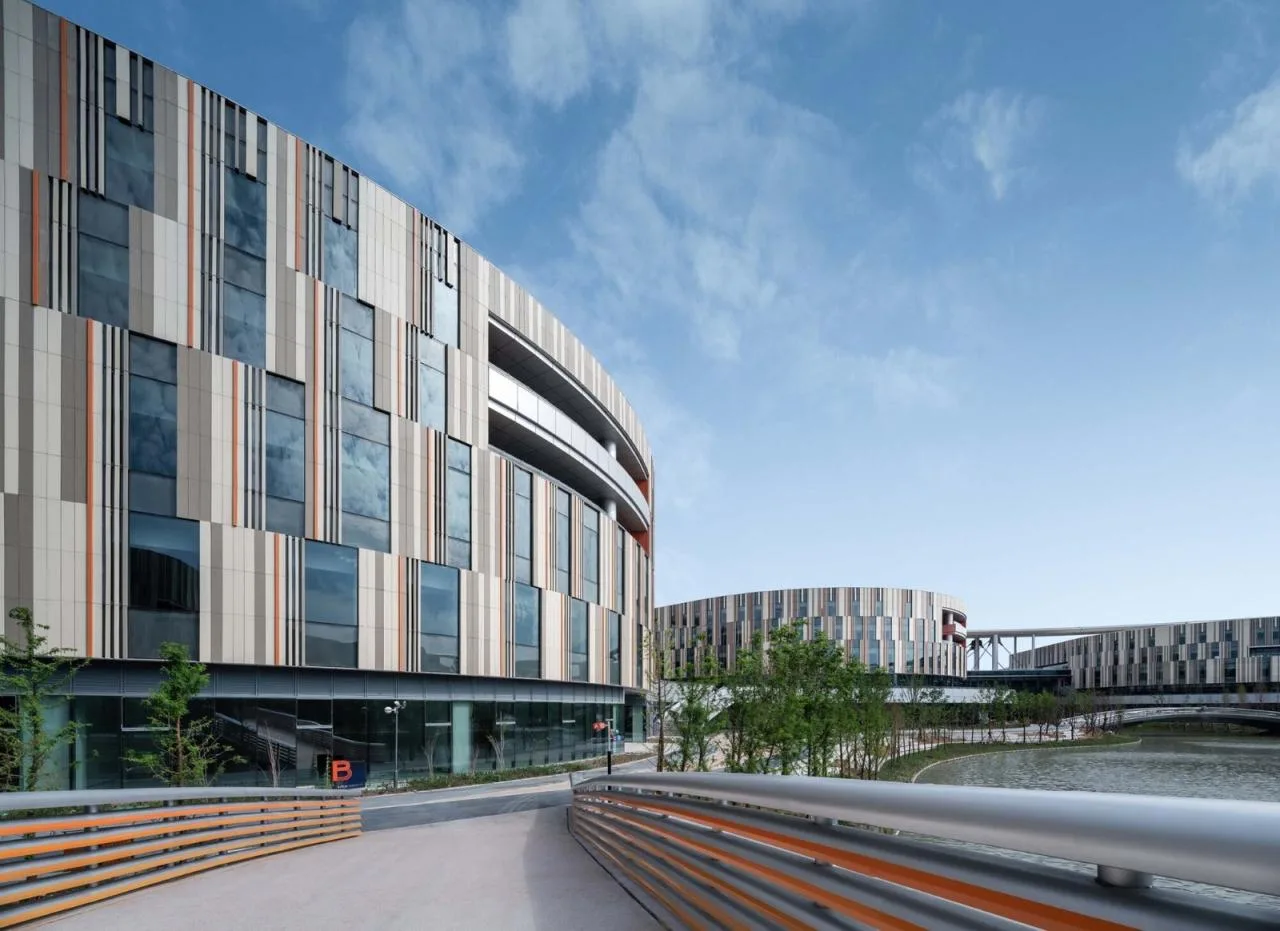
This large circular ring defines the relationship between internal and external spaces: the outer area faces the city, while the inner area forms a serene, garden-like campus environment reminiscent of a peach blossom garden, creating a striking contrast between inside and outside.
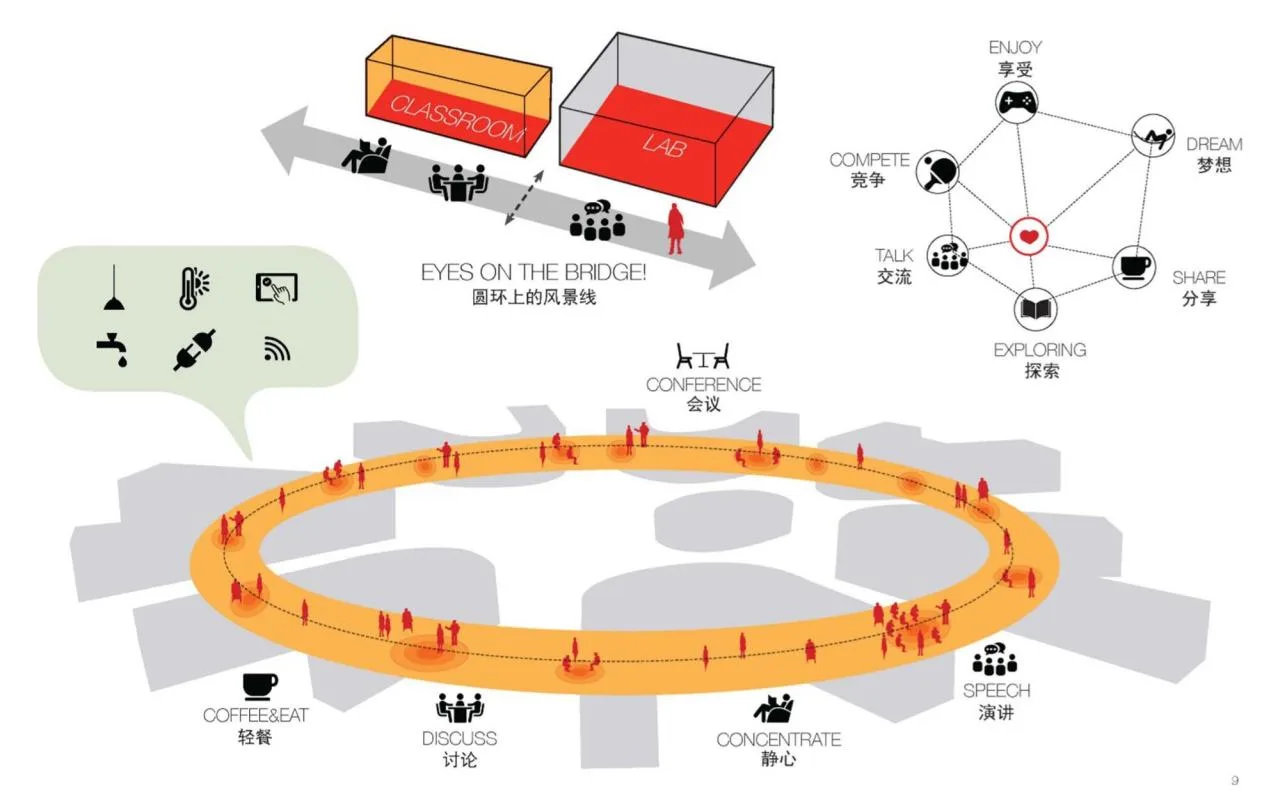
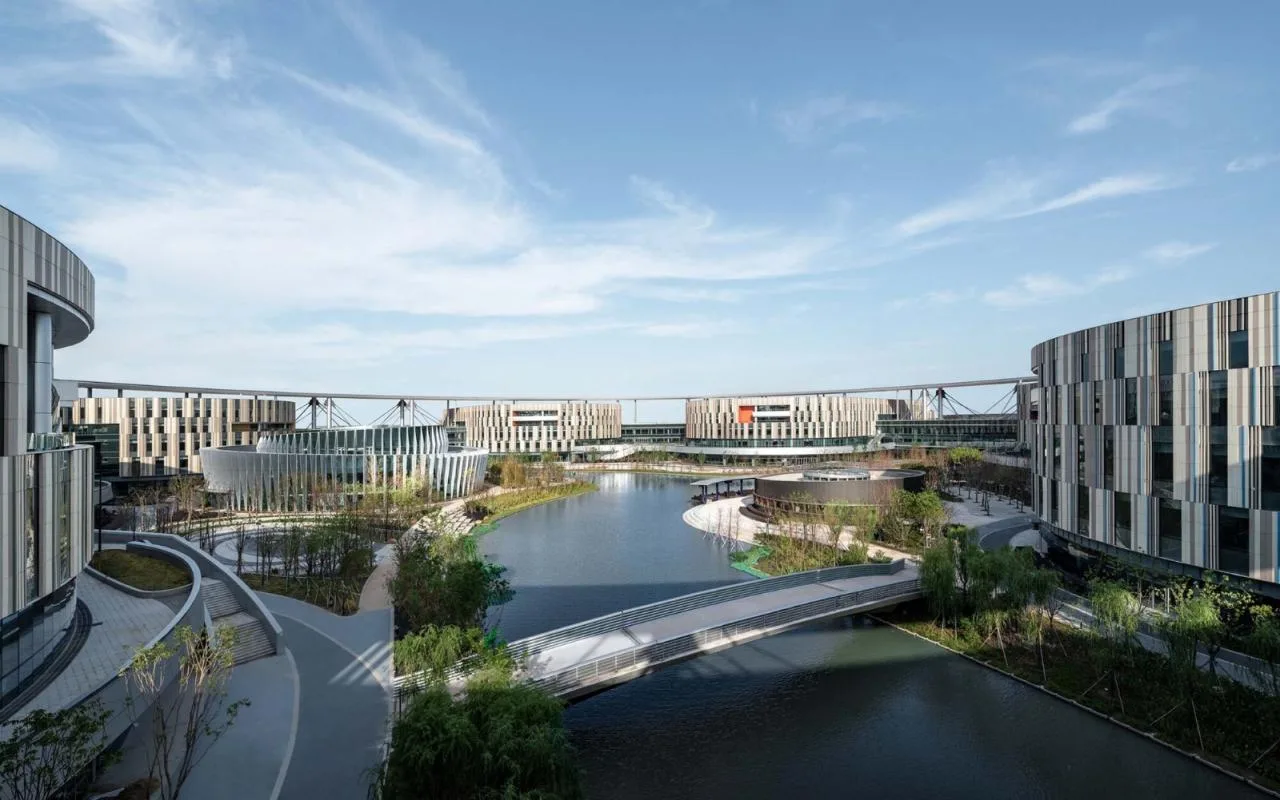
The Big Circle, the main component of the Learning Supermarket, is a 360-degree, uninterrupted shared teaching facility. It houses basic teaching amenities, learning areas, administrative offices, auxiliary spaces, public cultural venues, and an online education and resource platform.
Surrounding this hub are seven industry colleges, five integrated education and innovation platforms, and public facilities such as sports halls, restaurants, and student activity centers, all evenly and thoughtfully distributed to form the university’s comprehensive framework.
Within this 360-degree Learning Supermarket, learning occurs everywhere — from functional classrooms and discussion rooms to flexible, comfortable spaces fostering communication among teachers, students, and industry partners. The learning environment extends beyond indoors to outdoor areas like the second-floor landscape terrace, integrating freely accessible spaces to encourage interaction.
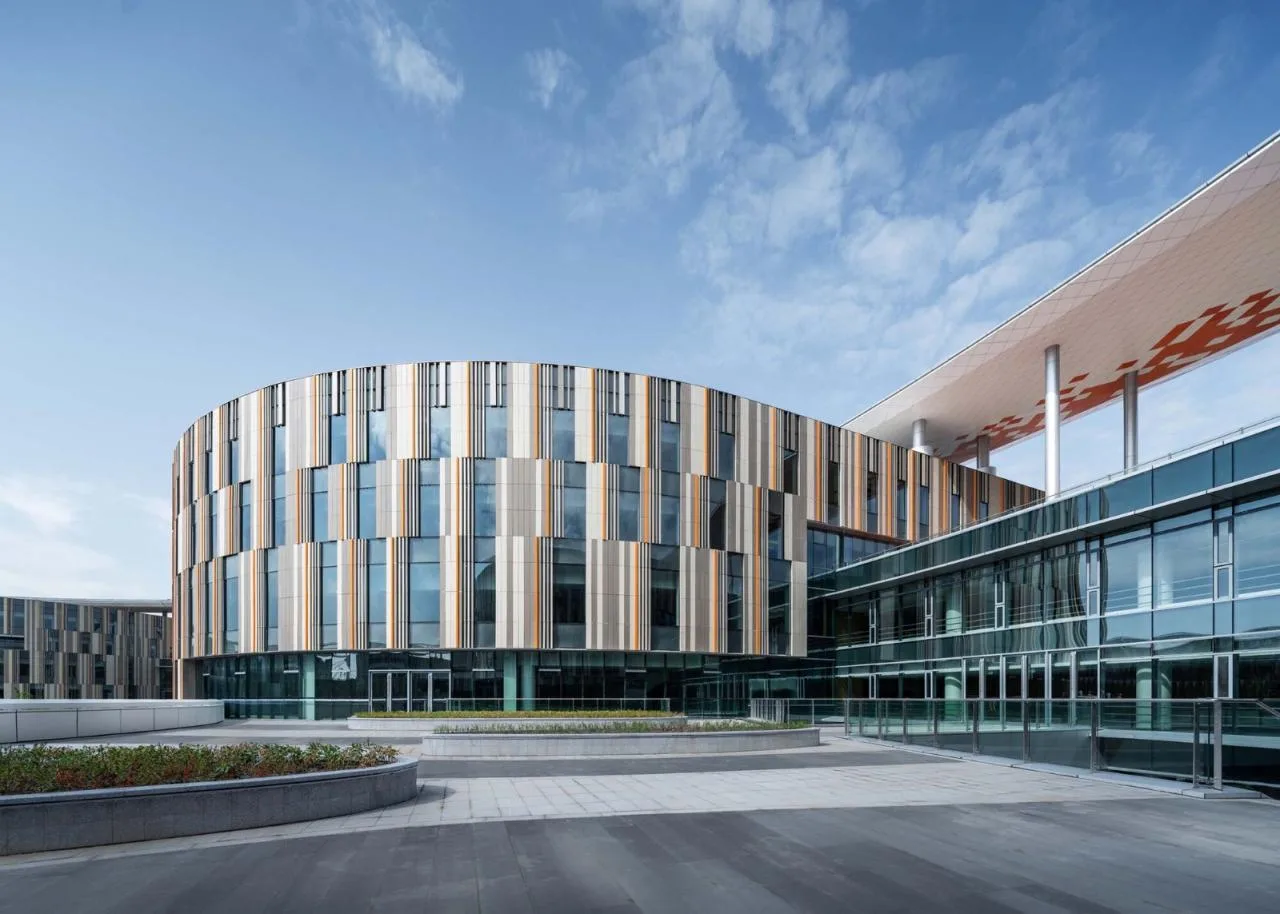
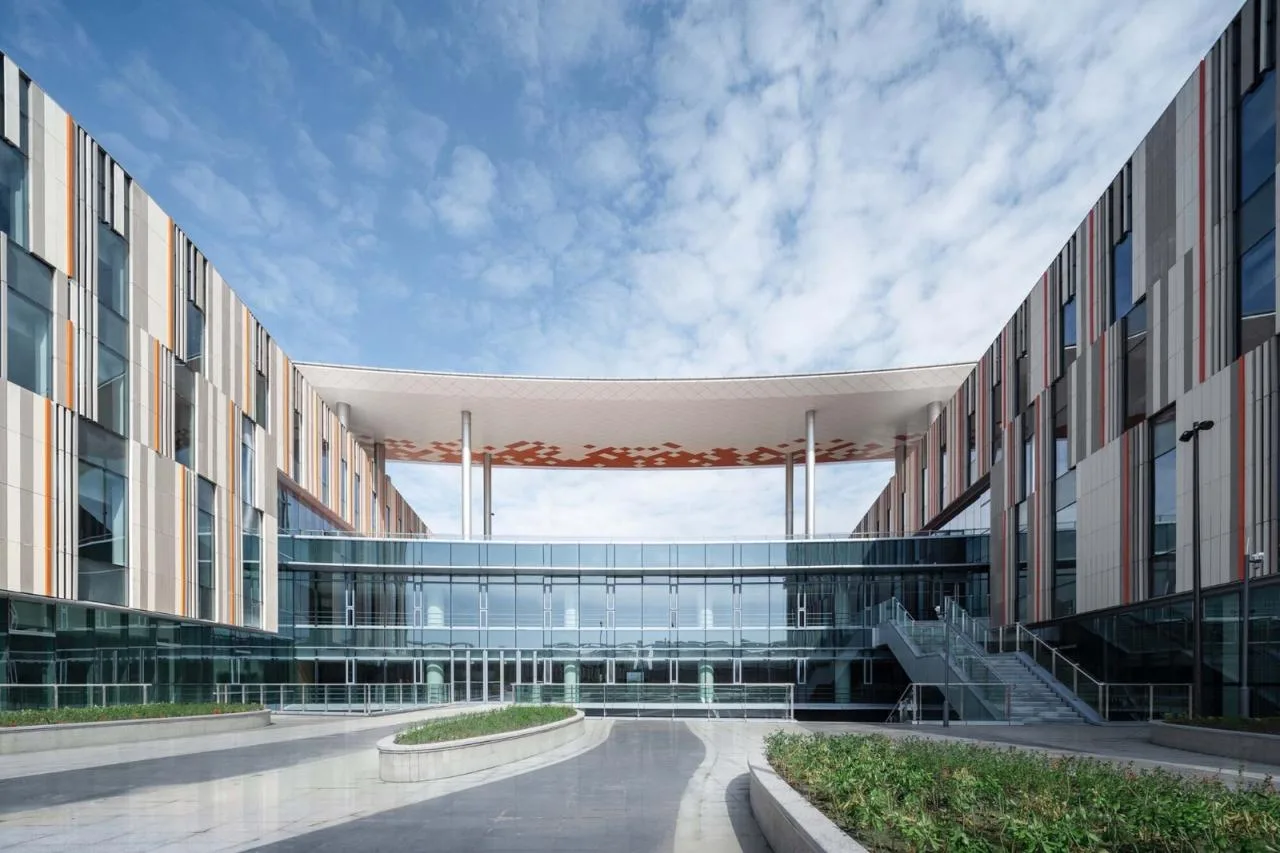
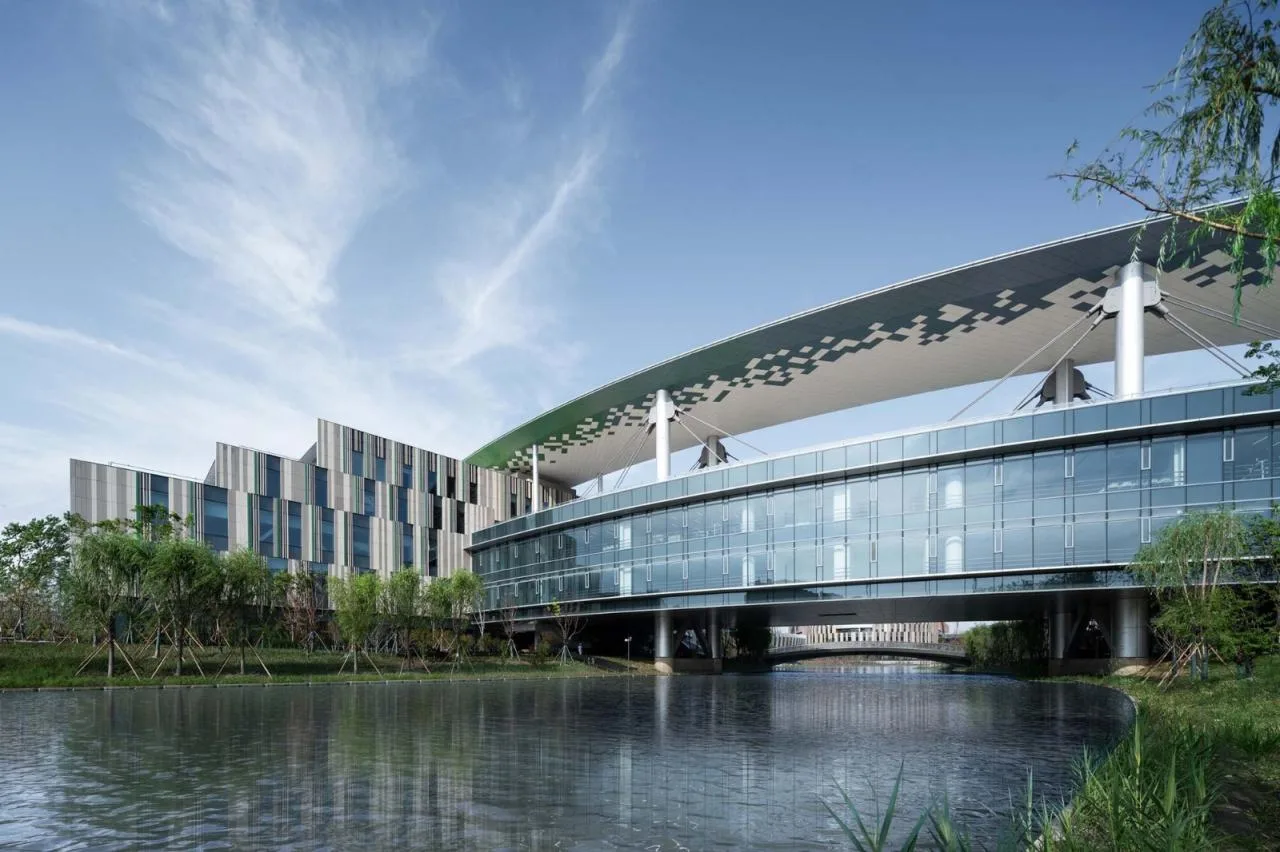
The Learning Supermarket’s colleges are arranged uniformly along the circular ring, each featuring a horseshoe-shaped building volume that promotes shared educational facilities across disciplines. This design minimizes barriers for students exploring different fields, while the architectural style and natural enclosure create activity atriums within each college.
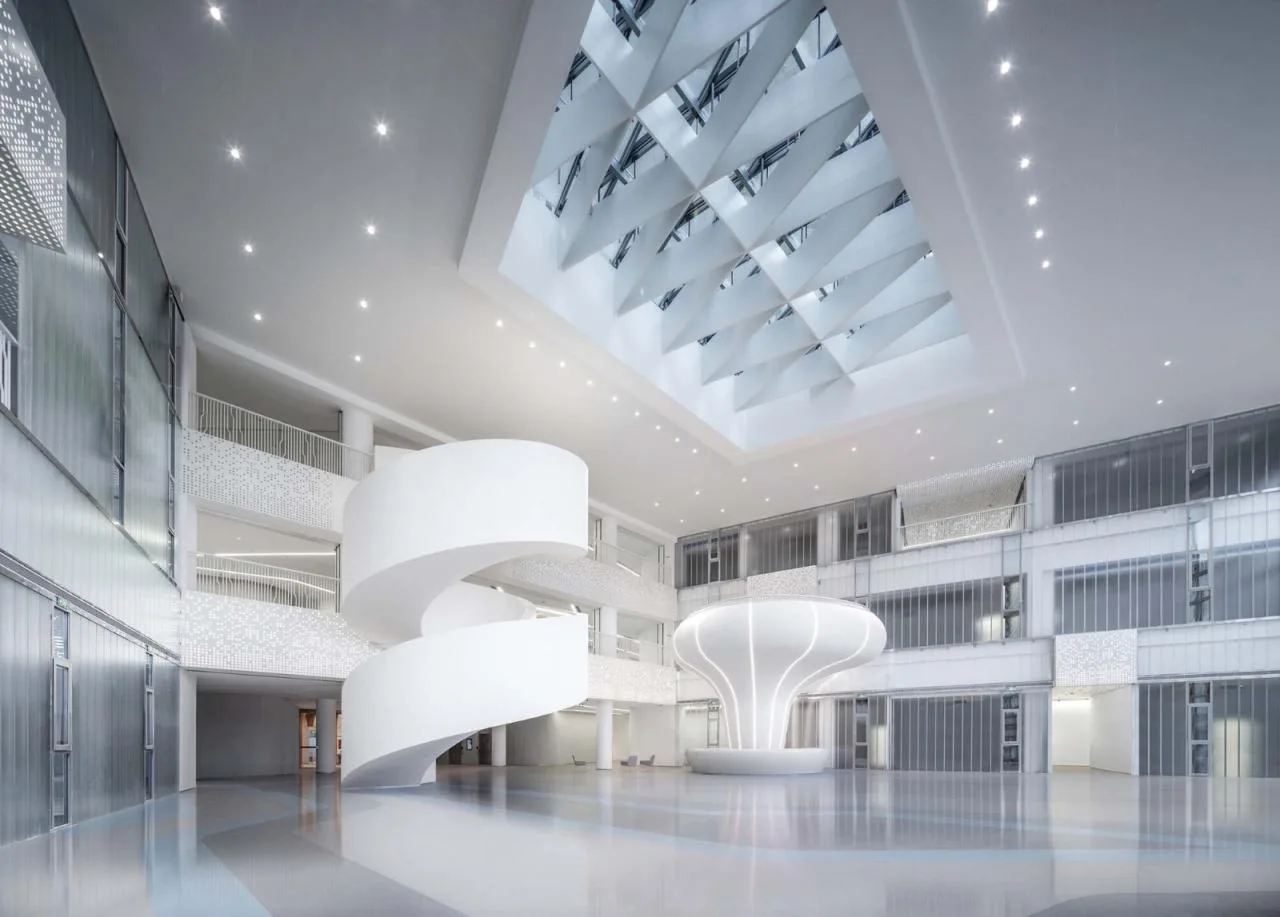
Students walking along the circular passage can observe and engage with other disciplines through these atrium spaces, fostering a holistic educational atmosphere. Each college connects to the central Learning Supermarket but also has its own independent ground-floor entrances, many accessible directly from external streets due to the open campus tradition in Xipu. This welcoming design invites everyone to participate in the campus community.
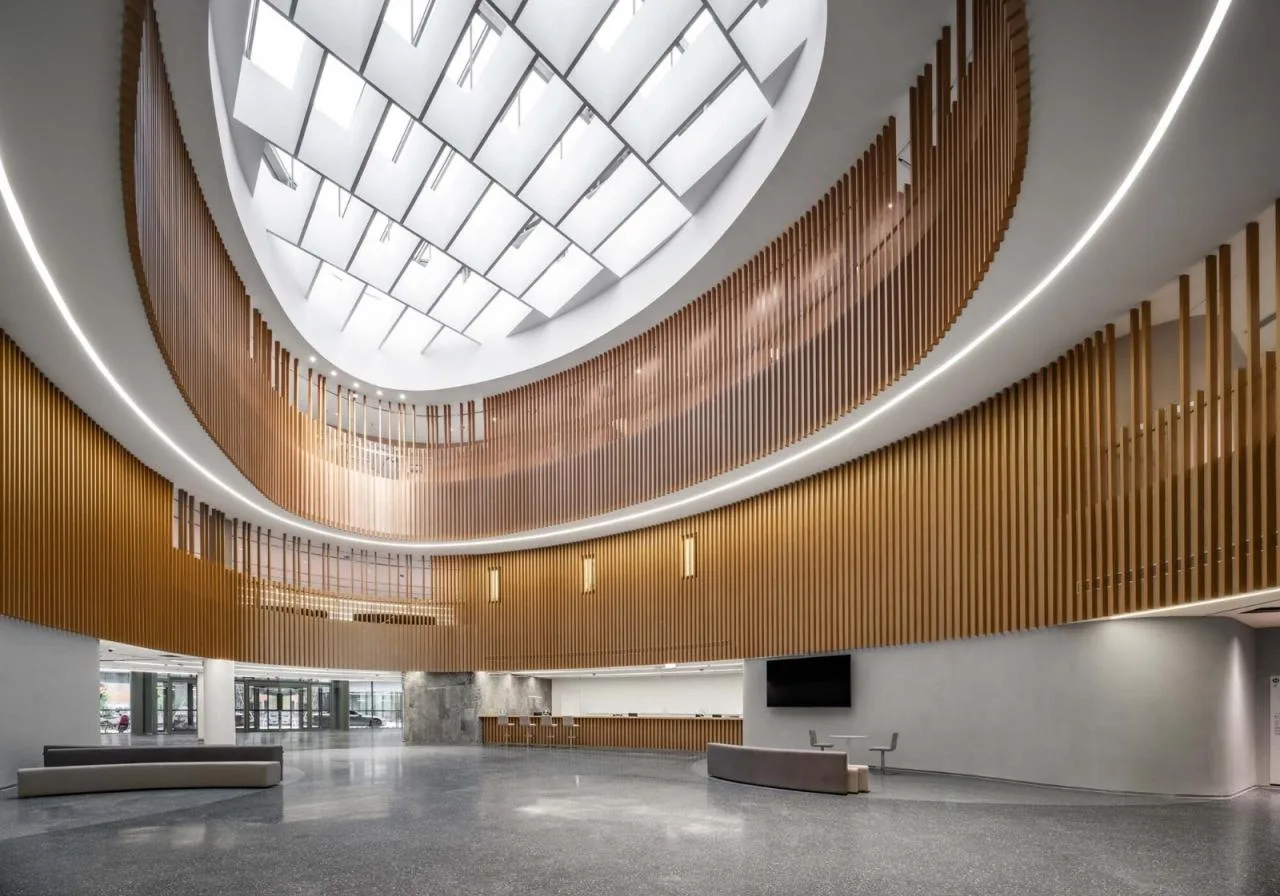
Functionally, each college includes four main areas: departmental offices, research and development groups with innovation workshops, auxiliary spaces, and a department library.
The departmental offices occupy the top floor, providing privacy and independence. Auxiliary spaces, such as conference rooms, printing rooms, and open discussion areas, are located on the third floor and can be shared with the Learning Supermarket. The department library, the most public and open function, is situated near the second-floor landscape terrace, offering a natural, inspiring environment for learning and collaboration.
Research and development groups, along with innovation workshops, are located on the first and second floors, facilitating easy transport of equipment and materials. This thoughtful mix of spaces cultivates a dynamic campus atmosphere that nurtures creativity and exploration among students and faculty. The seamless integration of open and enclosed spaces further enhances fluidity and inclusiveness, encouraging the free exchange and growth of ideas.
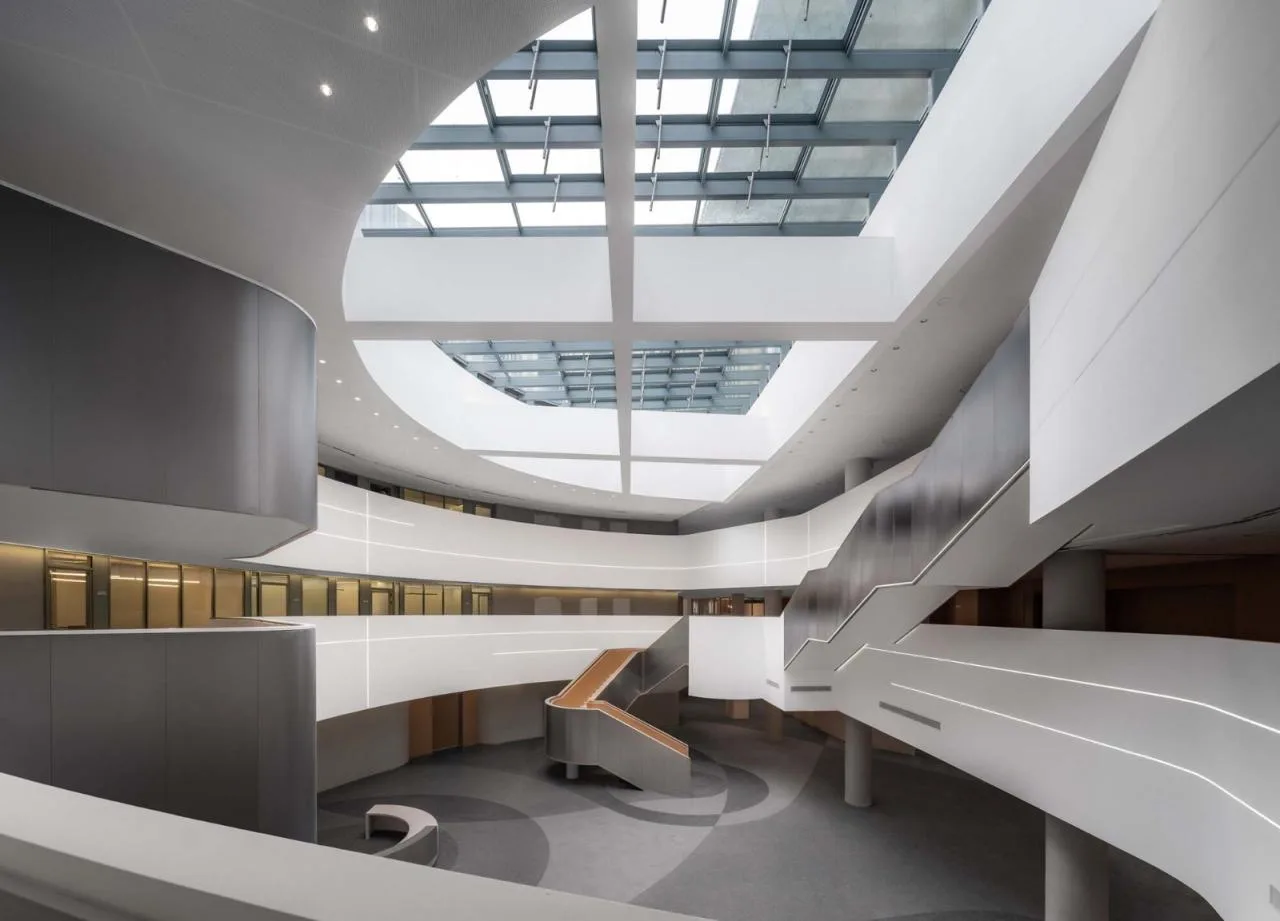
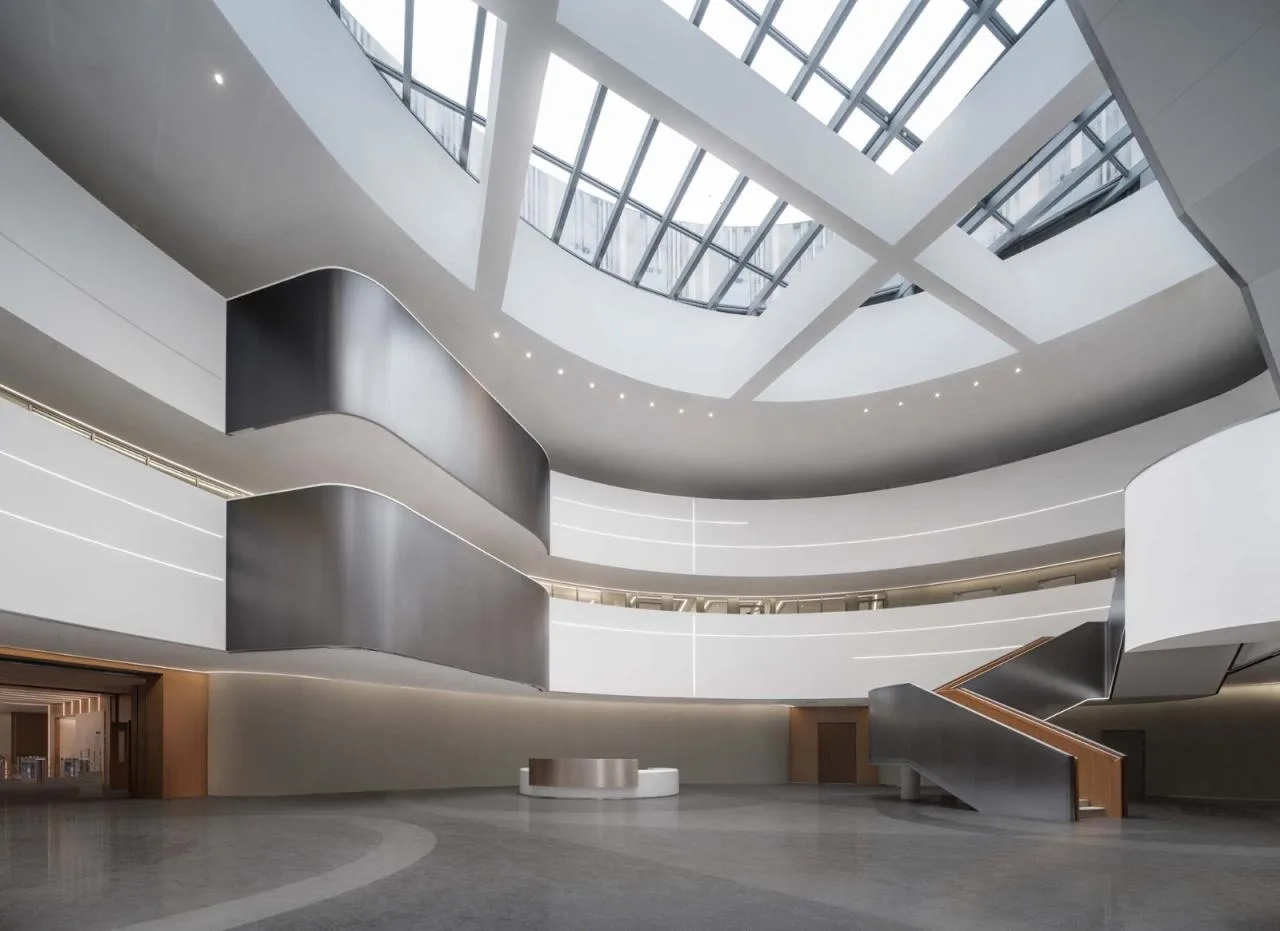
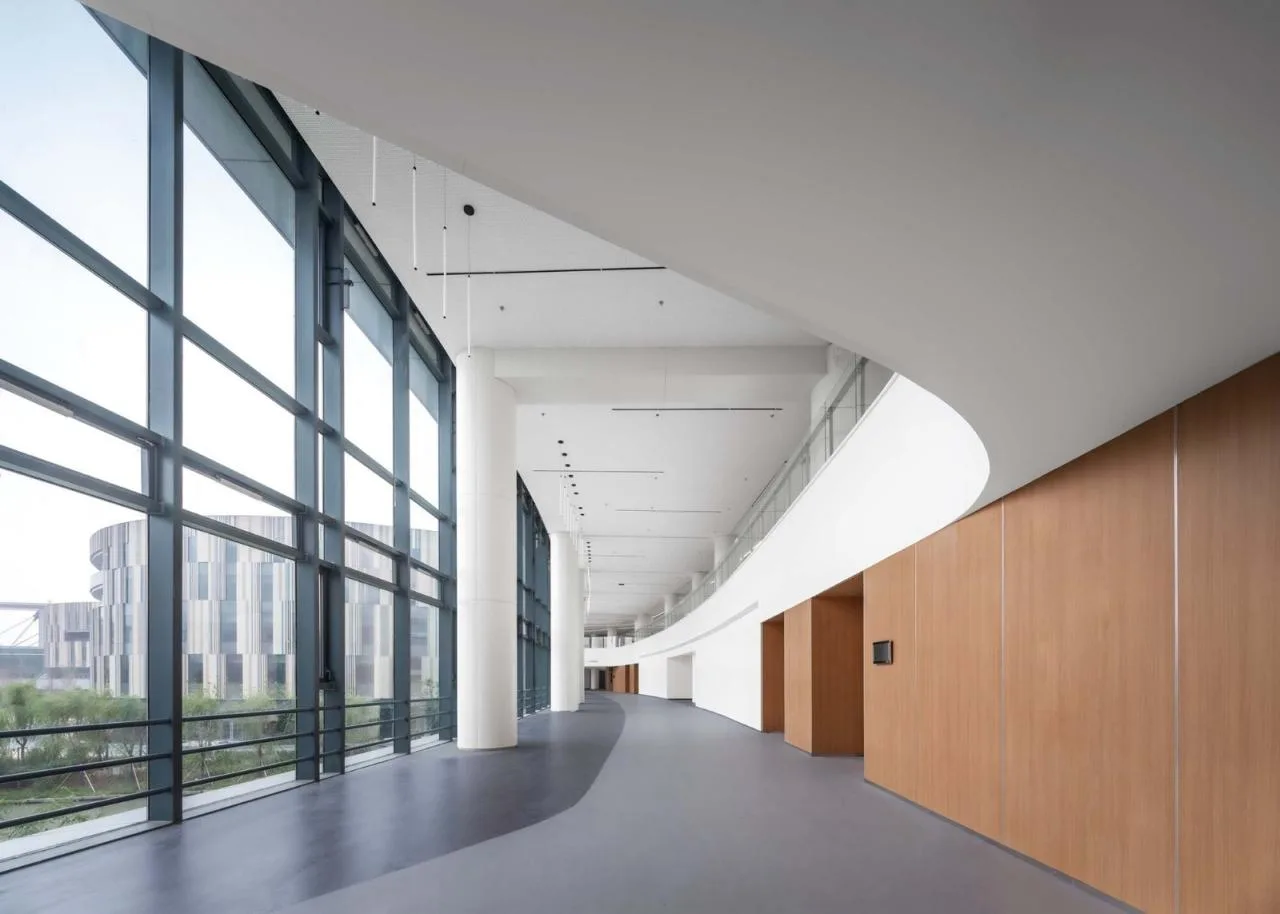
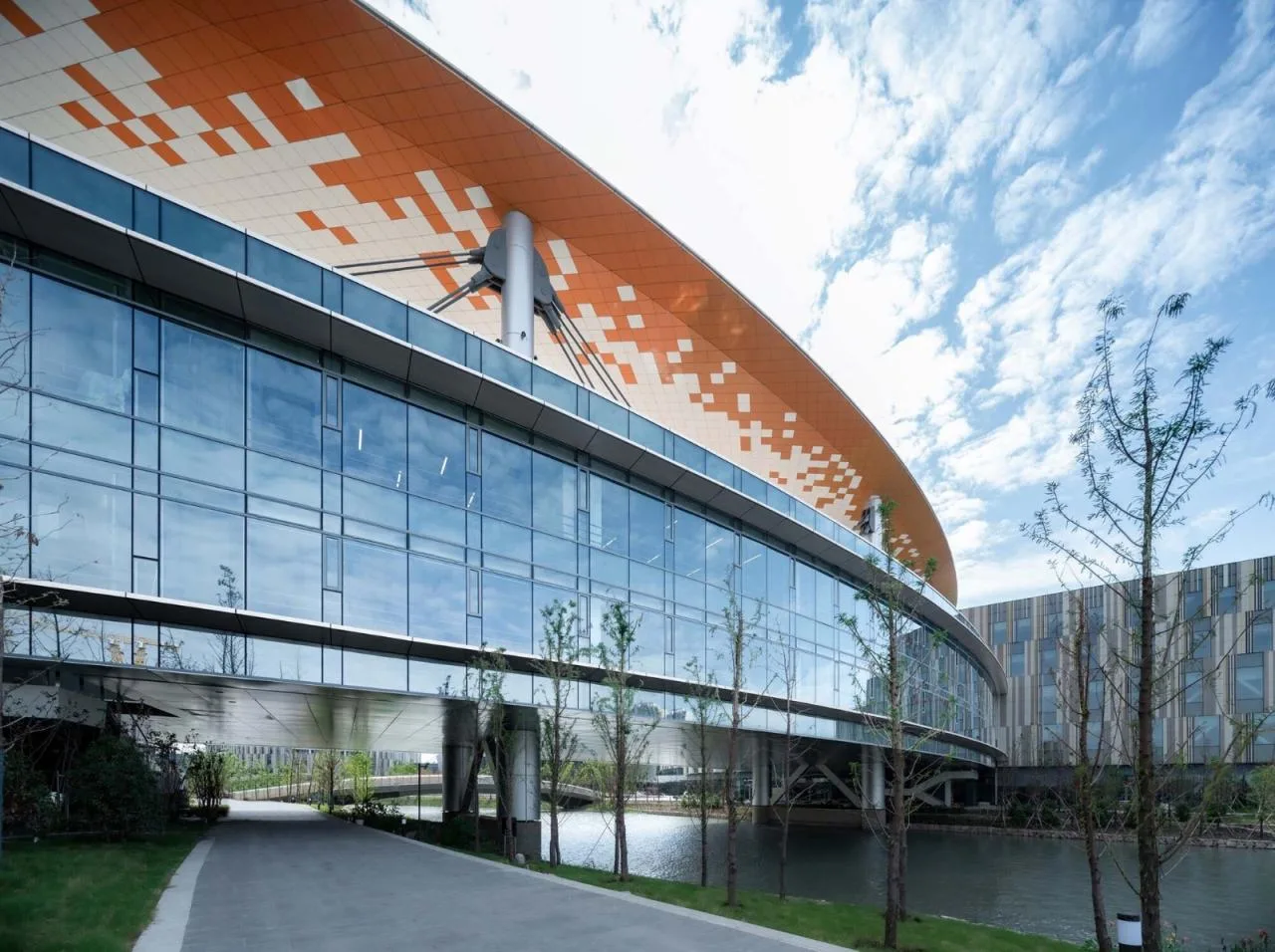
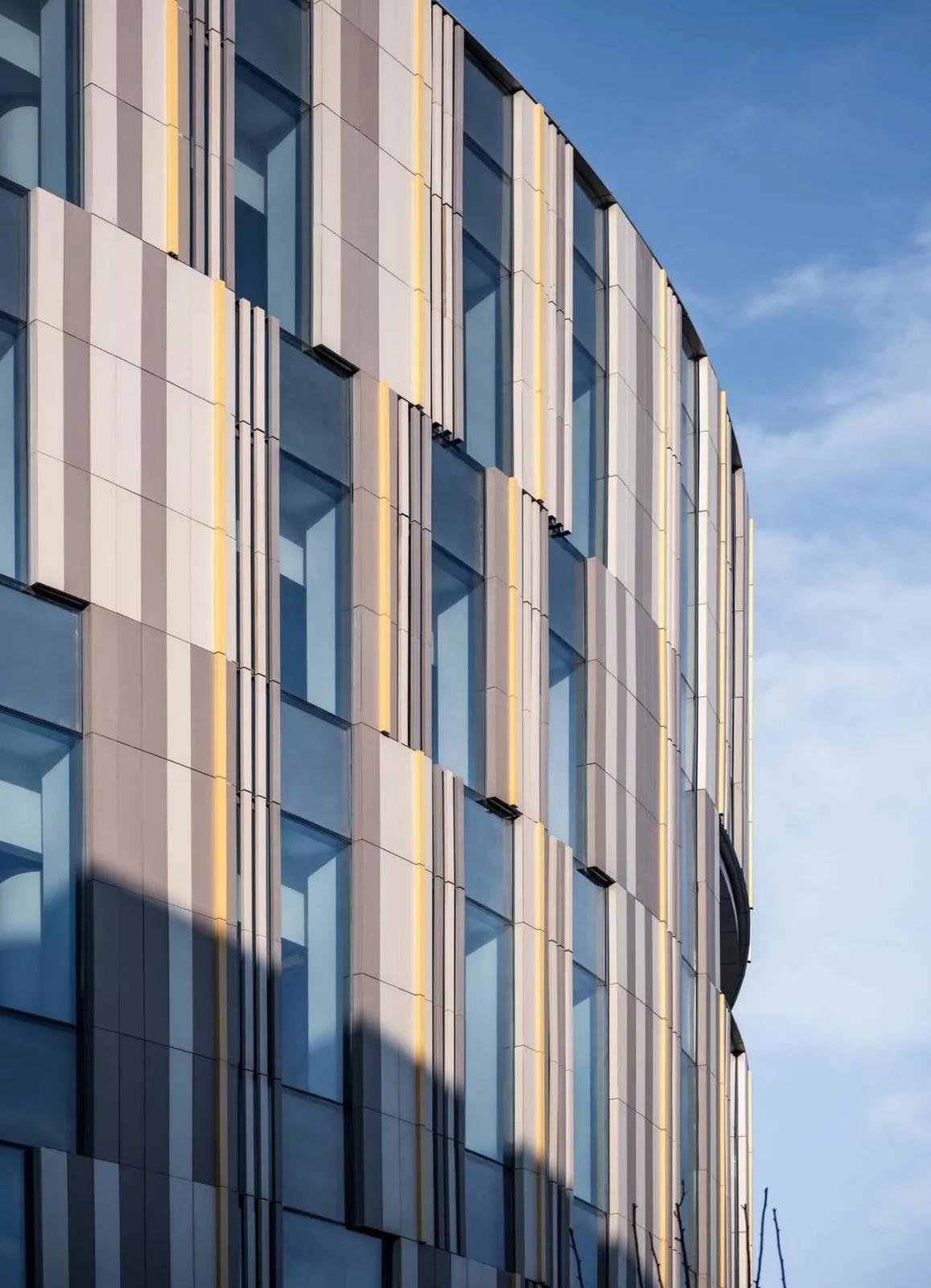
The campus facade presents a dynamic new image, featuring a color-coded guidance system that defines directional coordinates along the circular structure. The staggered U-shaped volumes on the outer ring break the continuous facade into orderly segments, adorned with metal panels in vibrant colors such as coral, orange-yellow, pine green, navy blue, and soft purple, each representing different colleges.
These colors complement built-in skylight atriums and the circular roof, enriching spatial hierarchy and positively engaging with the cityscape. Each college also showcases an independent display area along the street, proudly presenting its unique architectural identity.
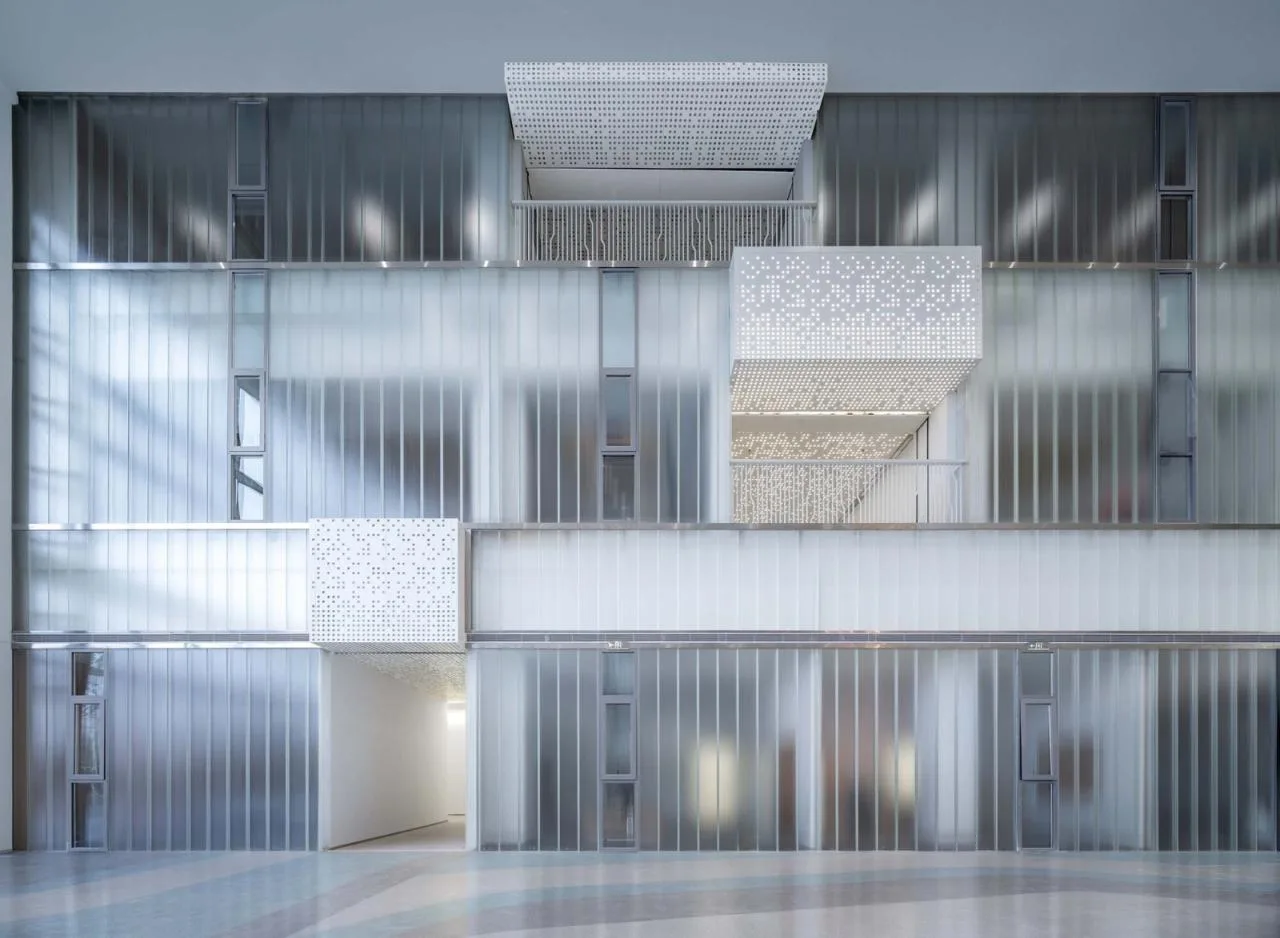
Material choices combine advanced technology, integrating grey carved concrete panels with digitally printed glass. This blend ensures ample natural lighting while creating a rich, colorful facade that evokes a sense of fluidity and vibrancy, reflecting the lively academic and social atmosphere within the campus.
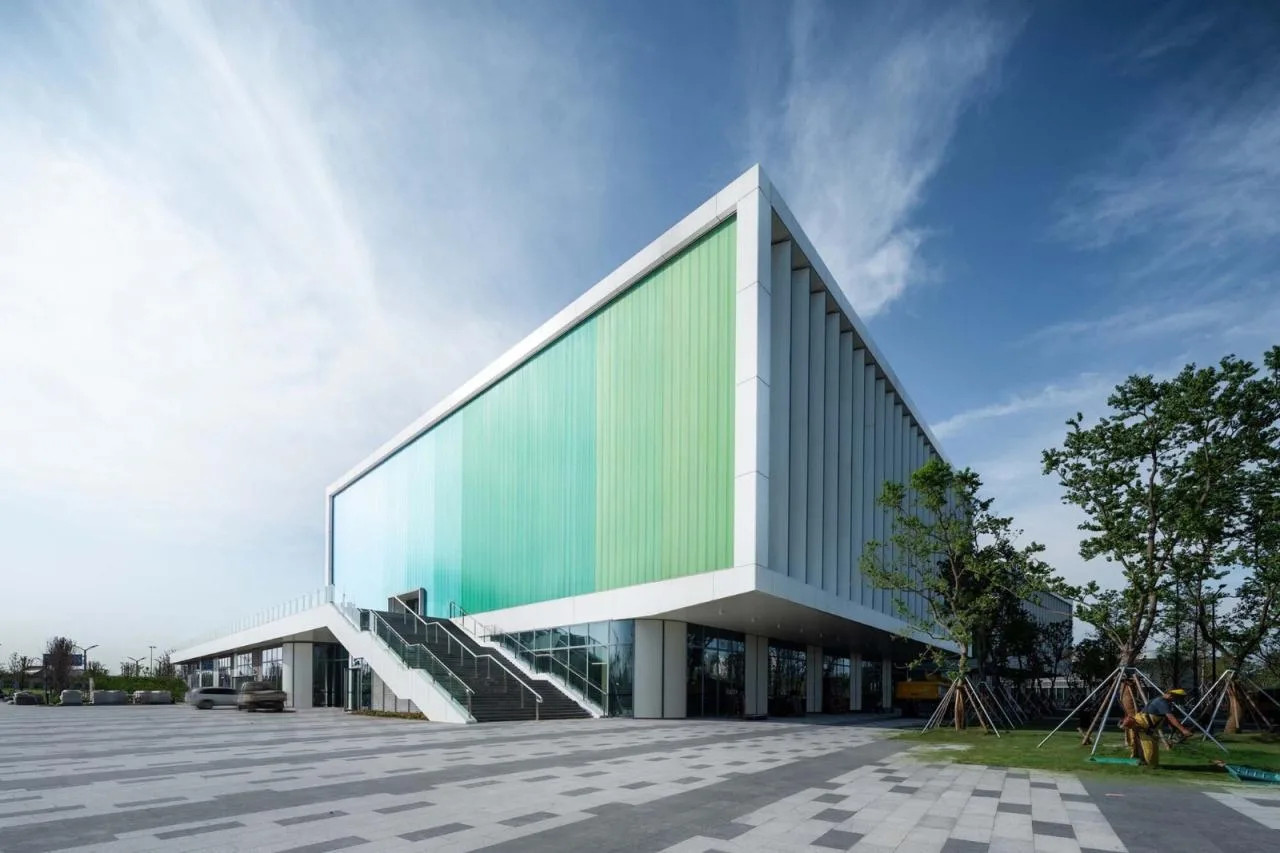
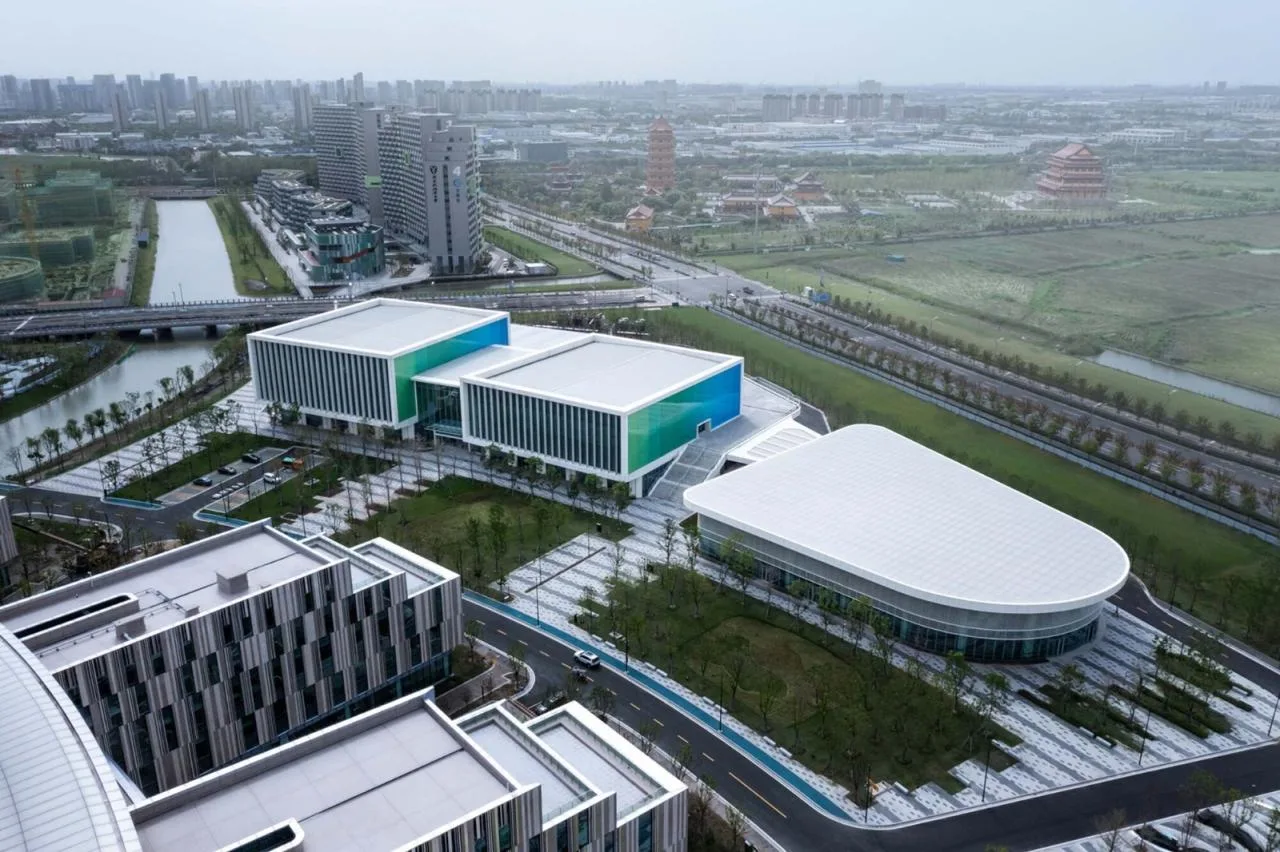
The new Life Sports Hall serves as an extension of the teaching area and a link to the dormitory zone. Positioned on a landscaped slope at the first floor, it echoes the architectural language of the teaching buildings and forms the main entrance platform at the second floor level.
The gymnasium’s second floor includes a lobby, changing rooms, teaching spaces, and a fitness center, while floors three through five house large sports venues such as basketball and badminton courts. These facilities cater to a wide range of student athletic and recreational needs.
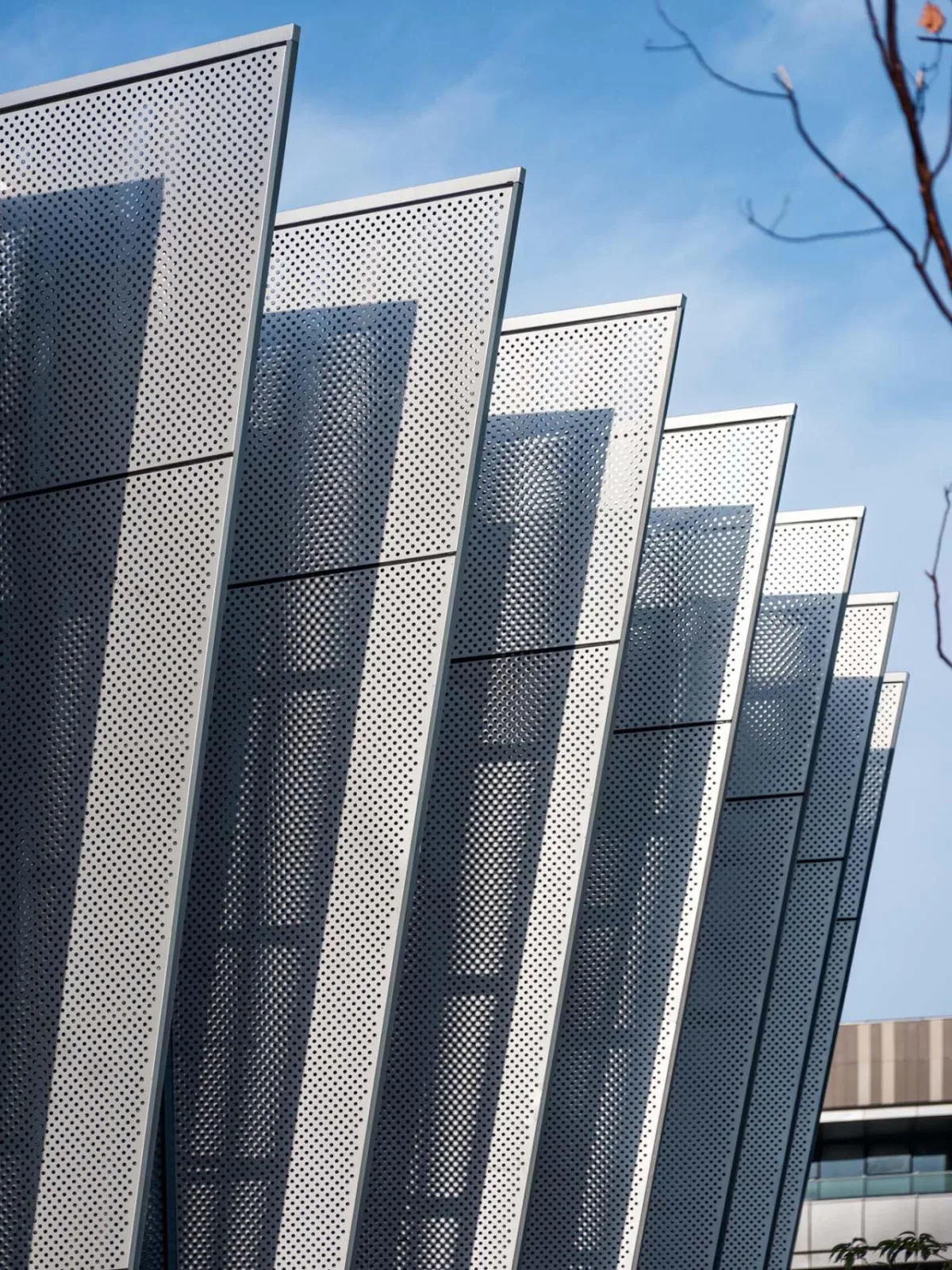
The façade continues the teaching area’s design language, featuring a color-guided scheme with bright blue-green gradient tones and a prominent three-story vertical grille, embodying student vitality and a modern campus image.
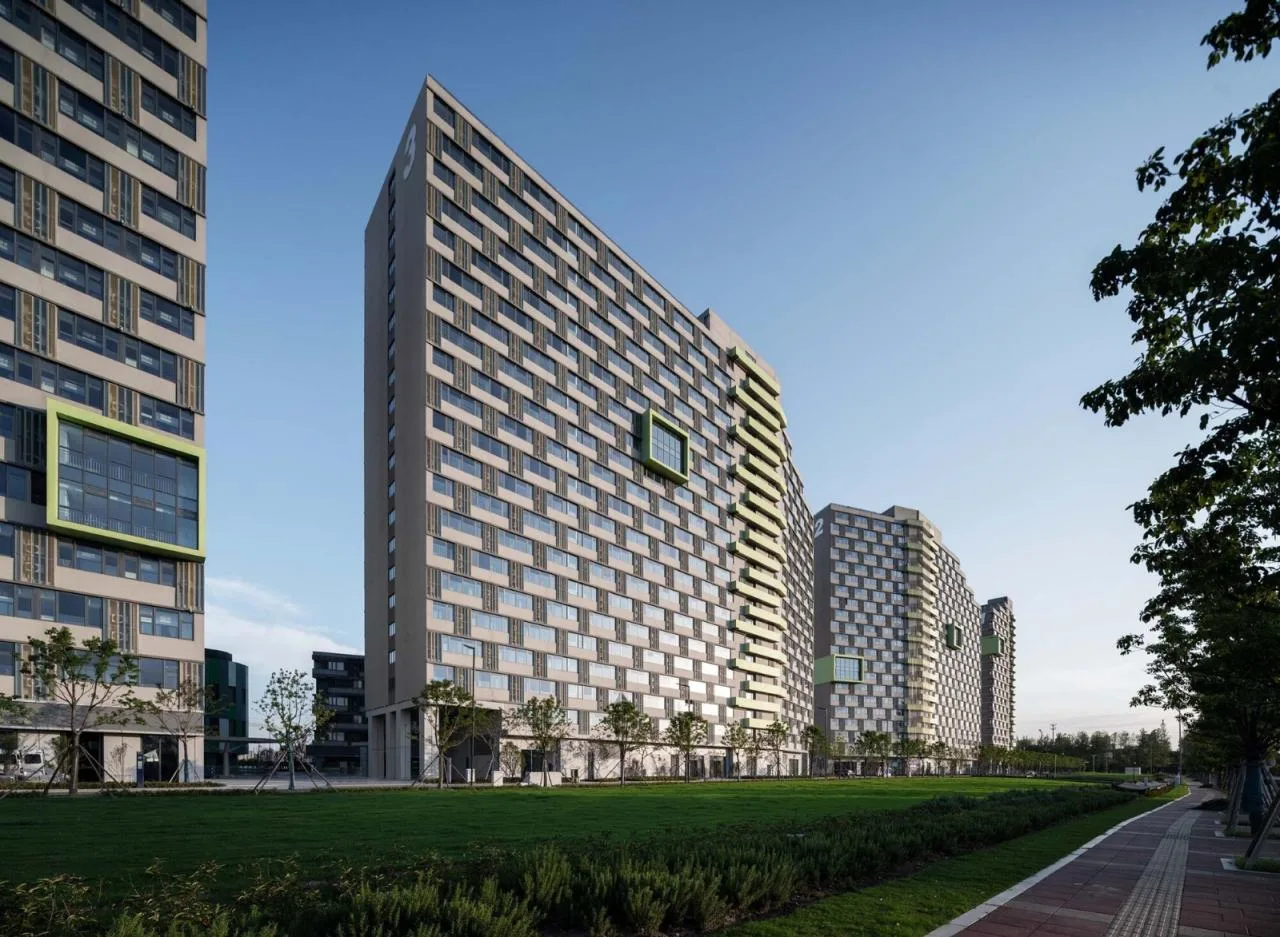
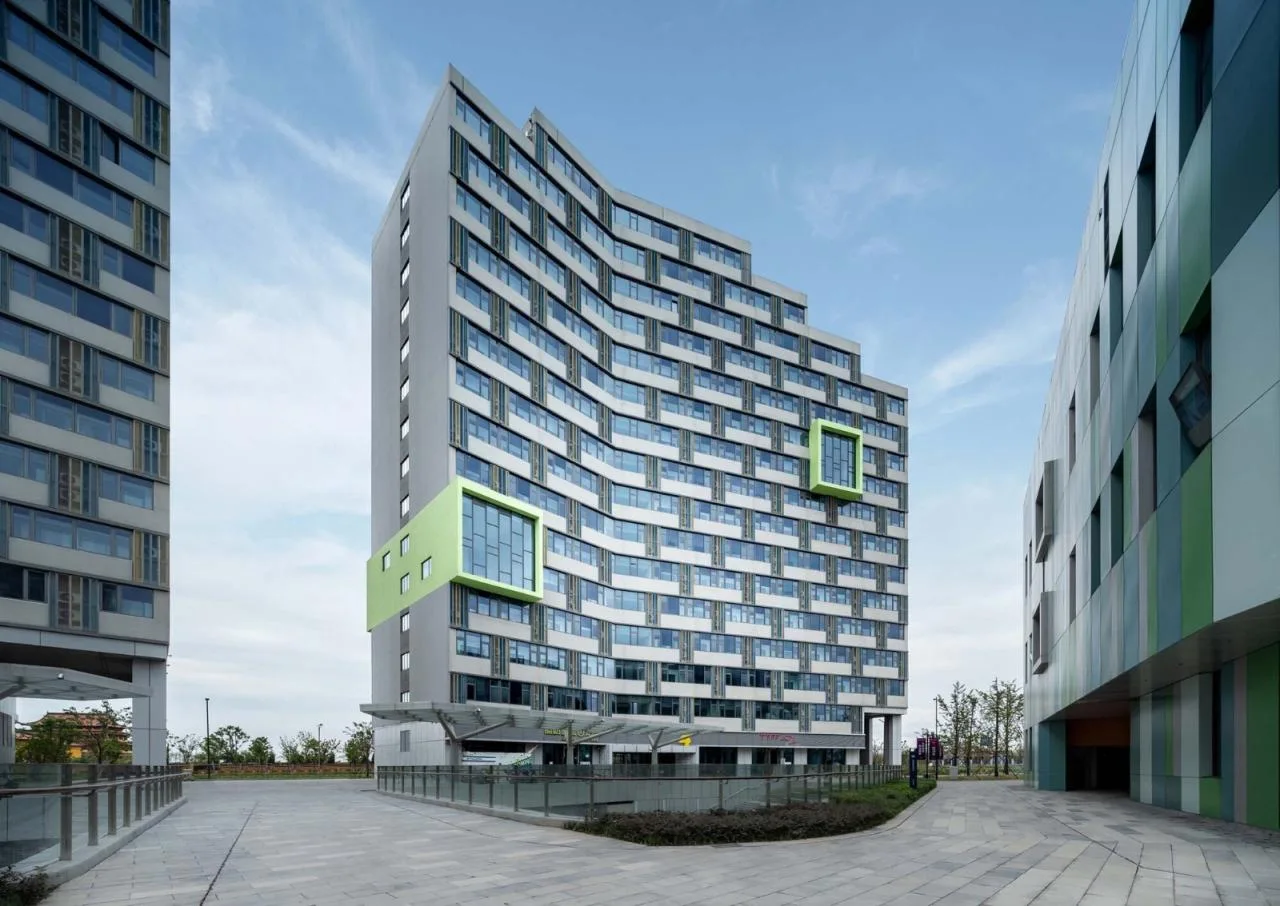
The dormitory area, situated in the northwest corner of the teaching zone, offers high-quality living spaces alongside abundant commercial amenities. The first and second floors host student dining halls, branded restaurants, and diverse retail outlets, creating a lively, multi-level living environment.
Additionally, the design maximizes surrounding landscape features, with varied building heights on the north and south sides to ensure dormitory rooms enjoy scenic river views.
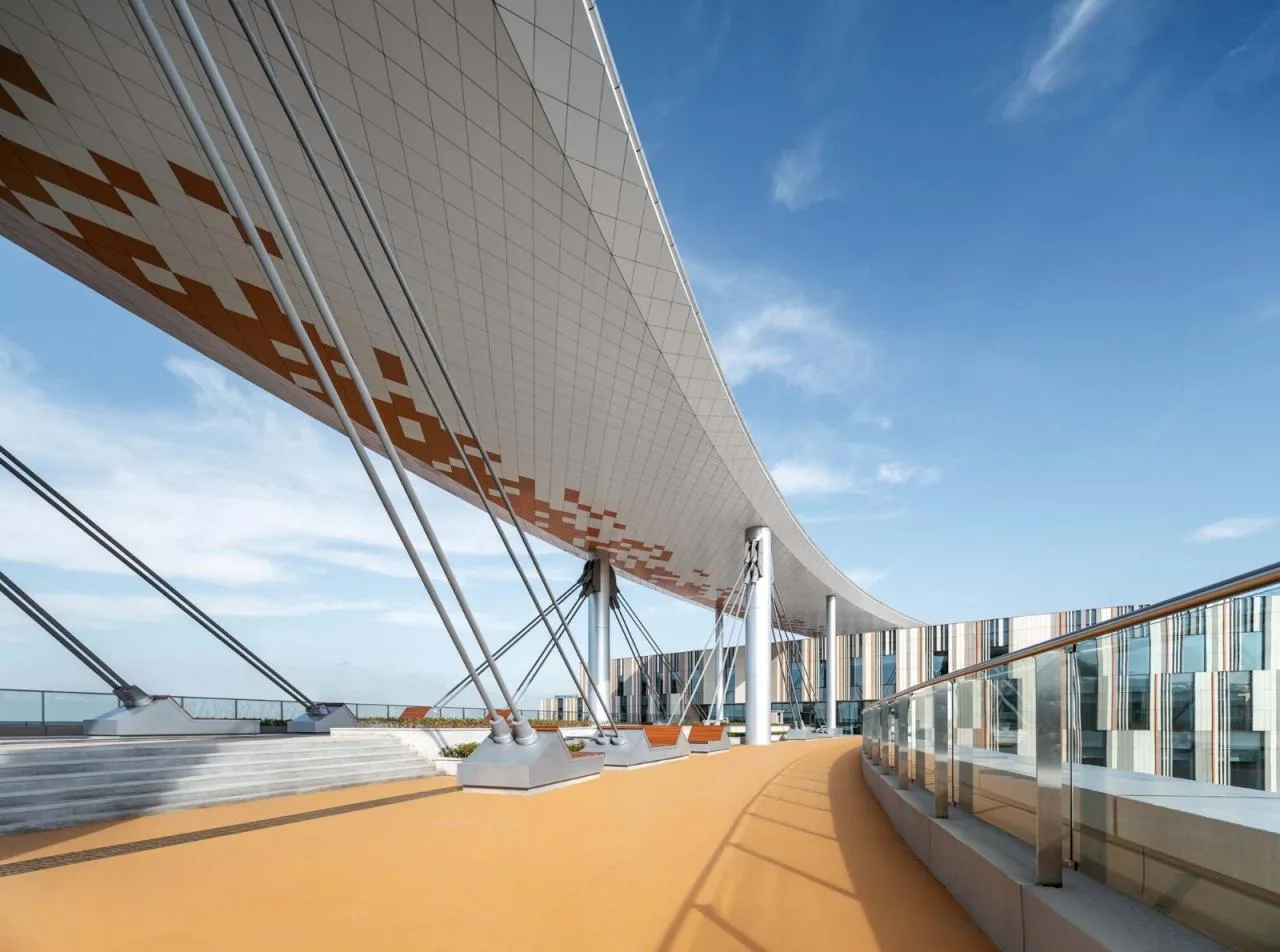
The landscape design of the Taicang Campus embraces a green, shared environment aligned with the educational concept of “integration.” Utilizing the Y-shaped water system meandering through the campus, it creates continuous leisure spaces that encourage communication and interaction, highlighting the cultural essence of Jiangnan Water Town.
At the heart of the campus, enclosed by the circular ring, lies the Peach Blossom Garden—the landscape core. The design blends water and greenery to embody green culture, using flowing, winding lines to represent spatial transitions intertwined with openness. Ecological, natural design techniques emphasize the beauty of water, wood, and light, crafting a versatile space suited for both activity and tranquility.
Throughout the project, the designers focused on fostering interaction among people and integrating diverse disciplines, grounded in the site’s natural conditions, historical context, and educational philosophy. The resulting dynamic and rich campus environment sets an important architectural precedent for future university development.
Moreover, HPP incorporated circular economy and sustainable development principles, enabling the Xi’an Jiaotong Liverpool Taicang Campus to achieve LEED Gold certification for green building performance.
Project Drawings
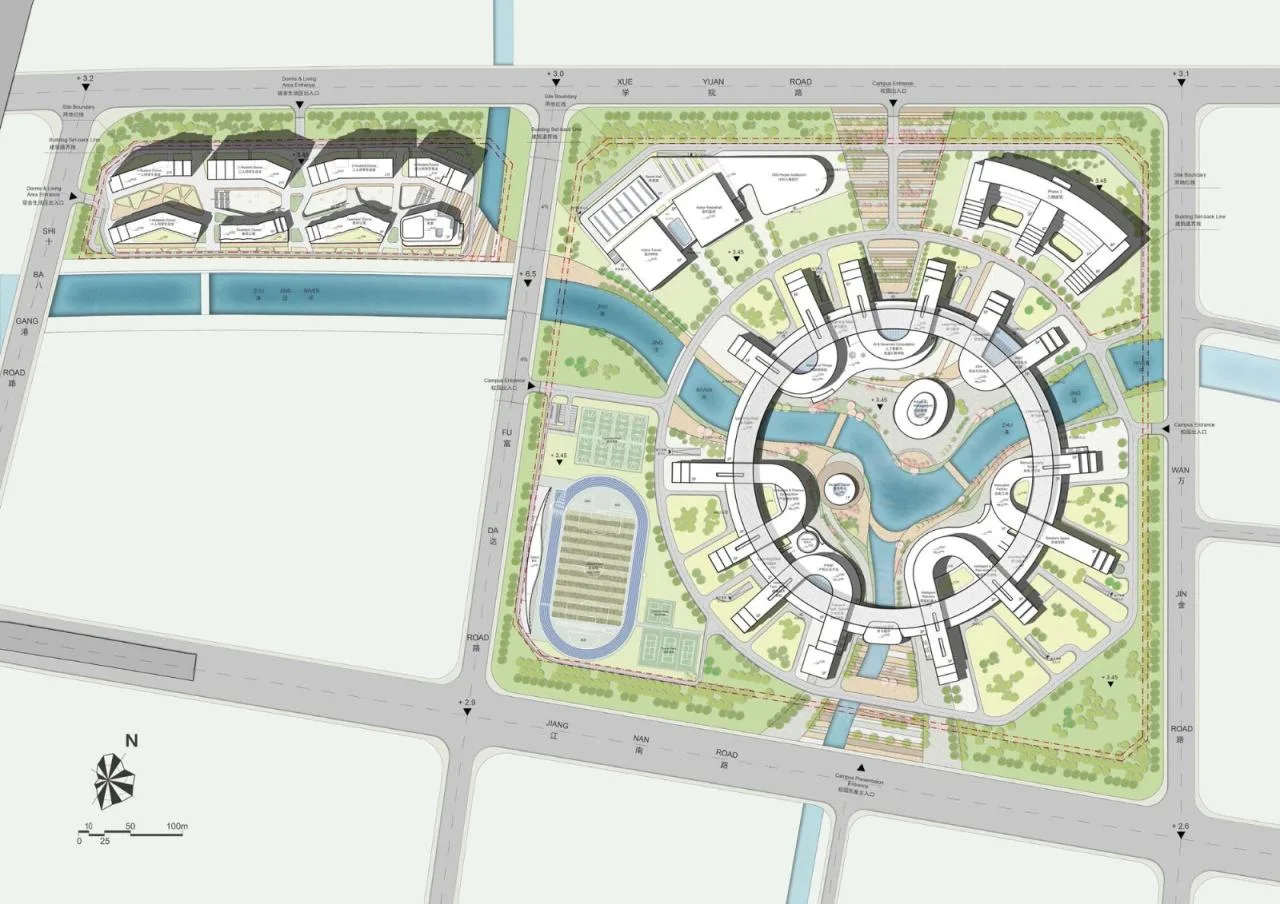
△ General layout plan
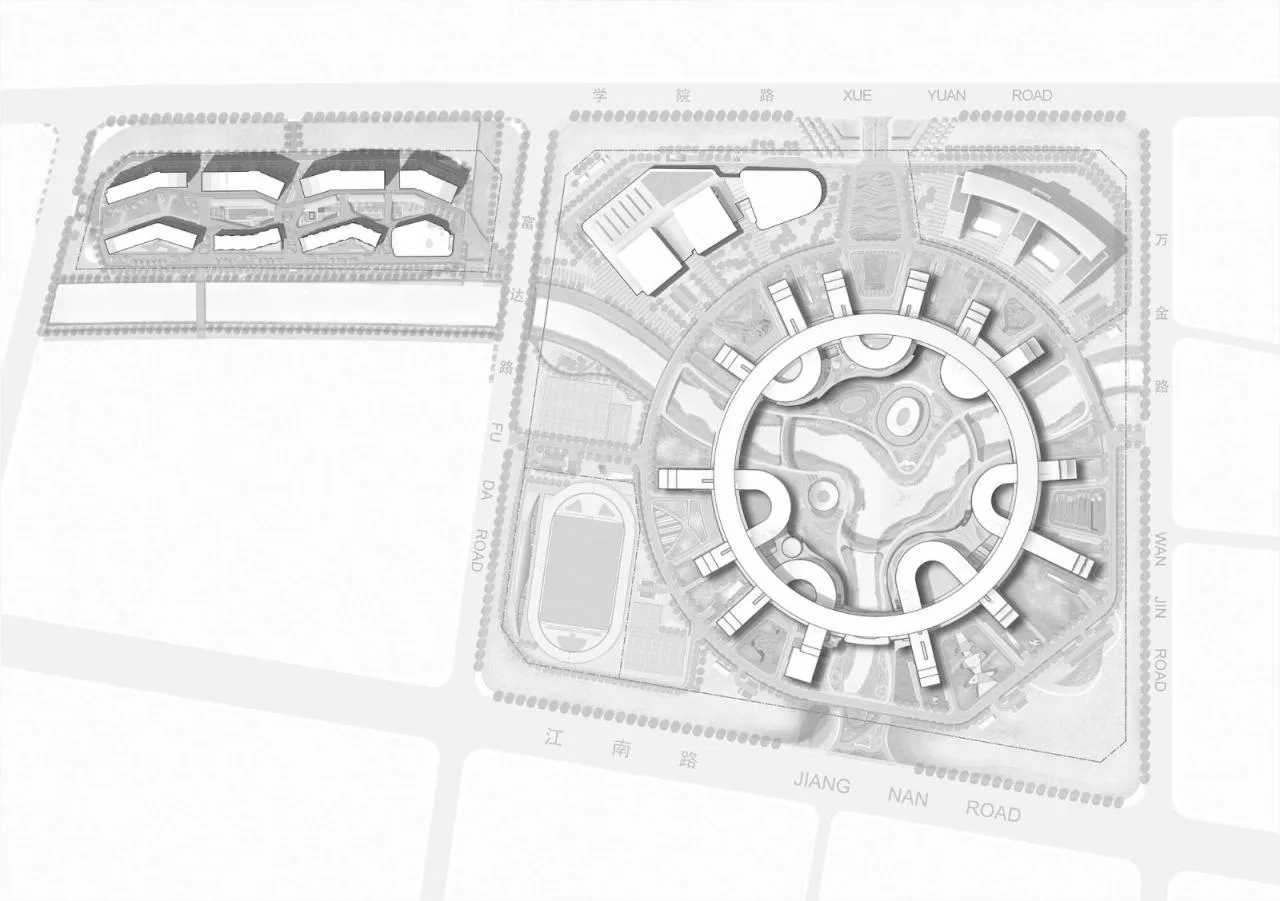
△ General layout plan
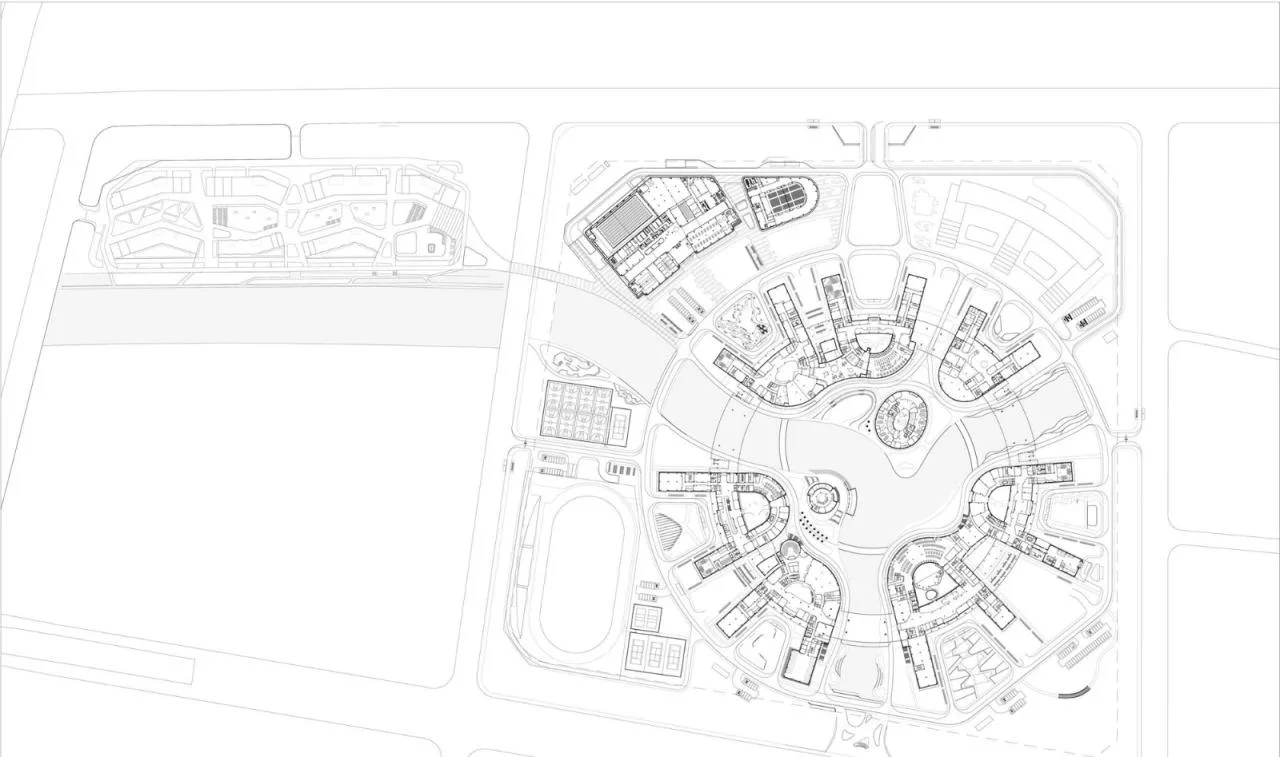
△ First floor plan
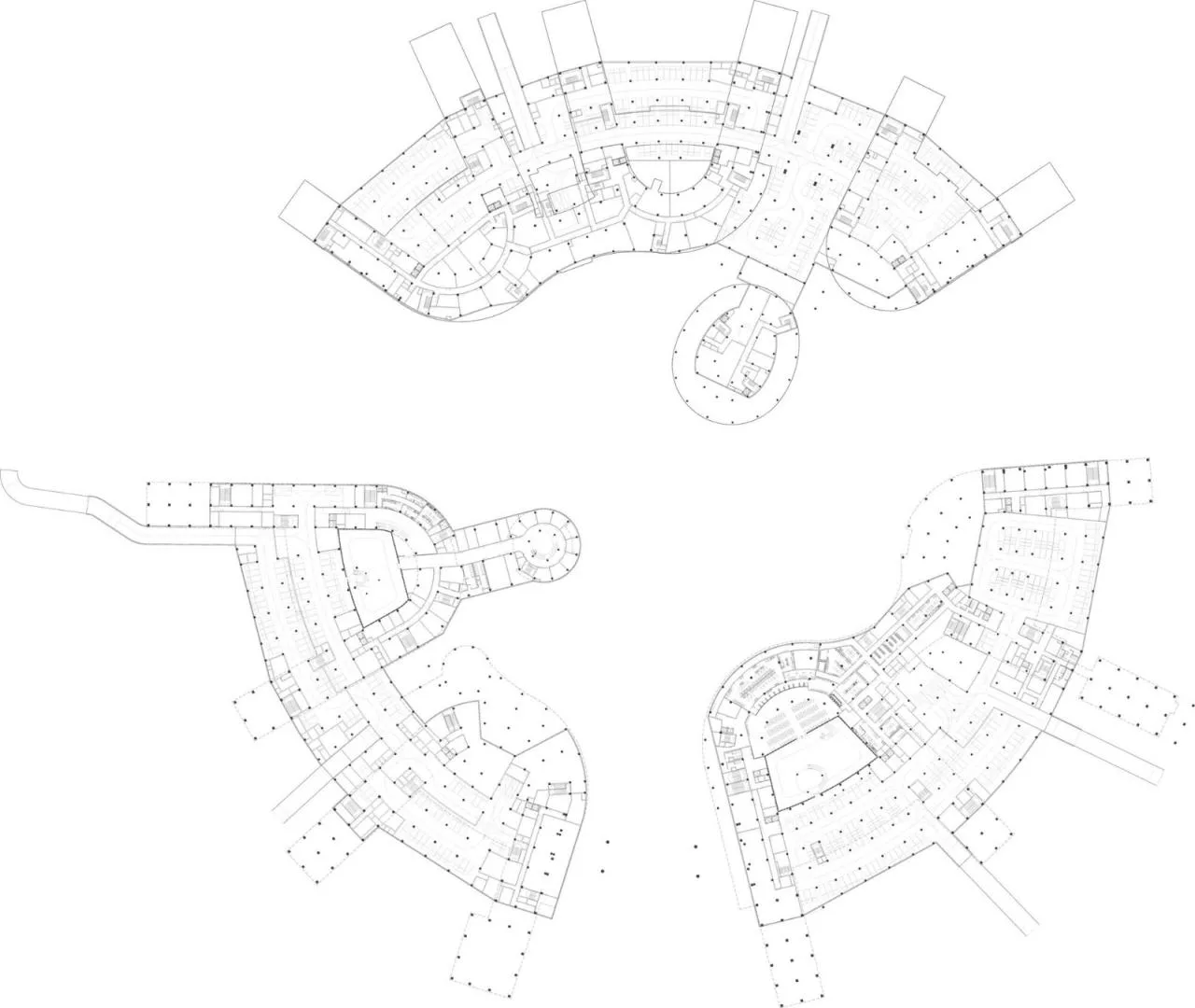
△ Second floor plan
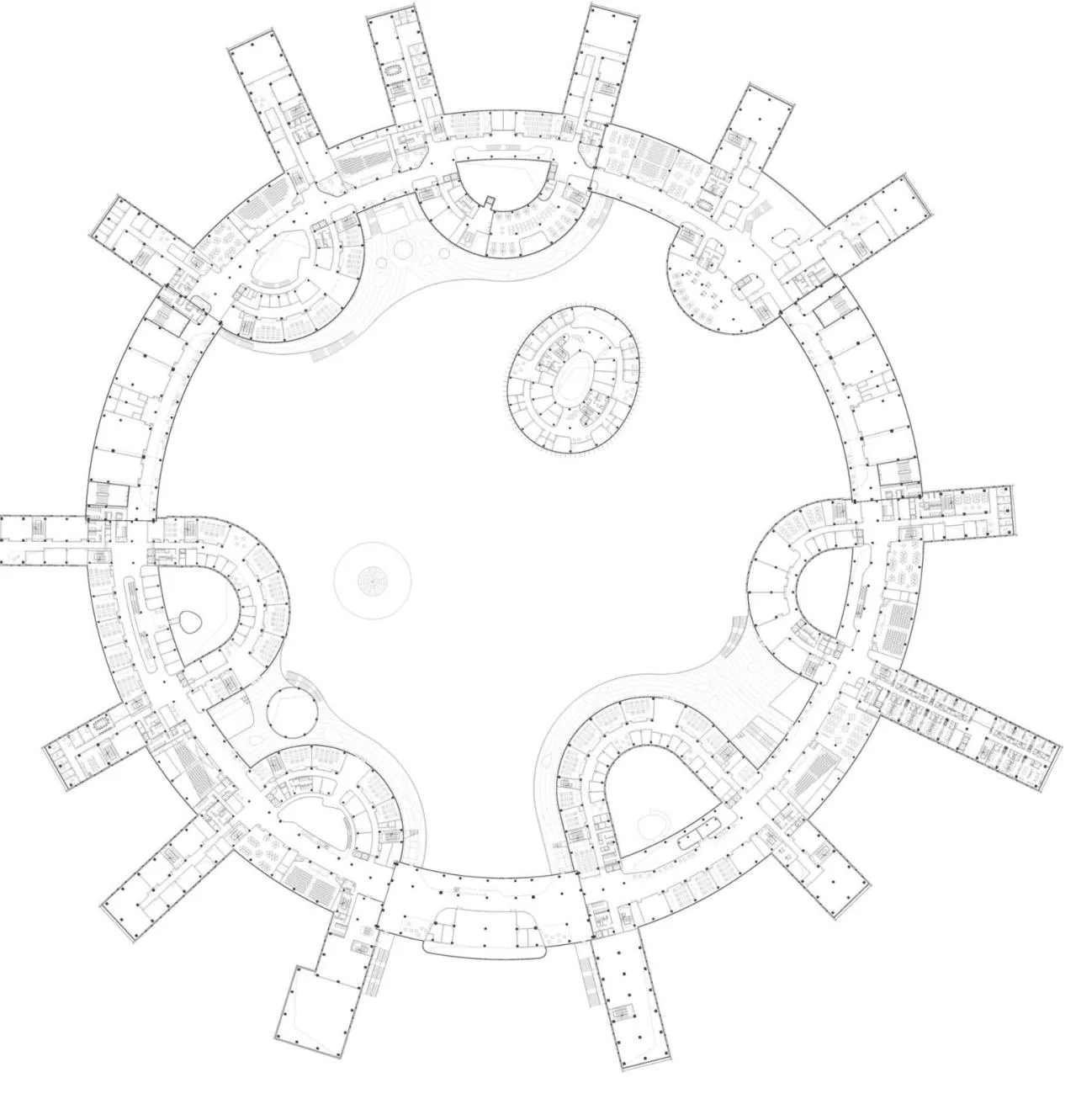
△ Third floor plan
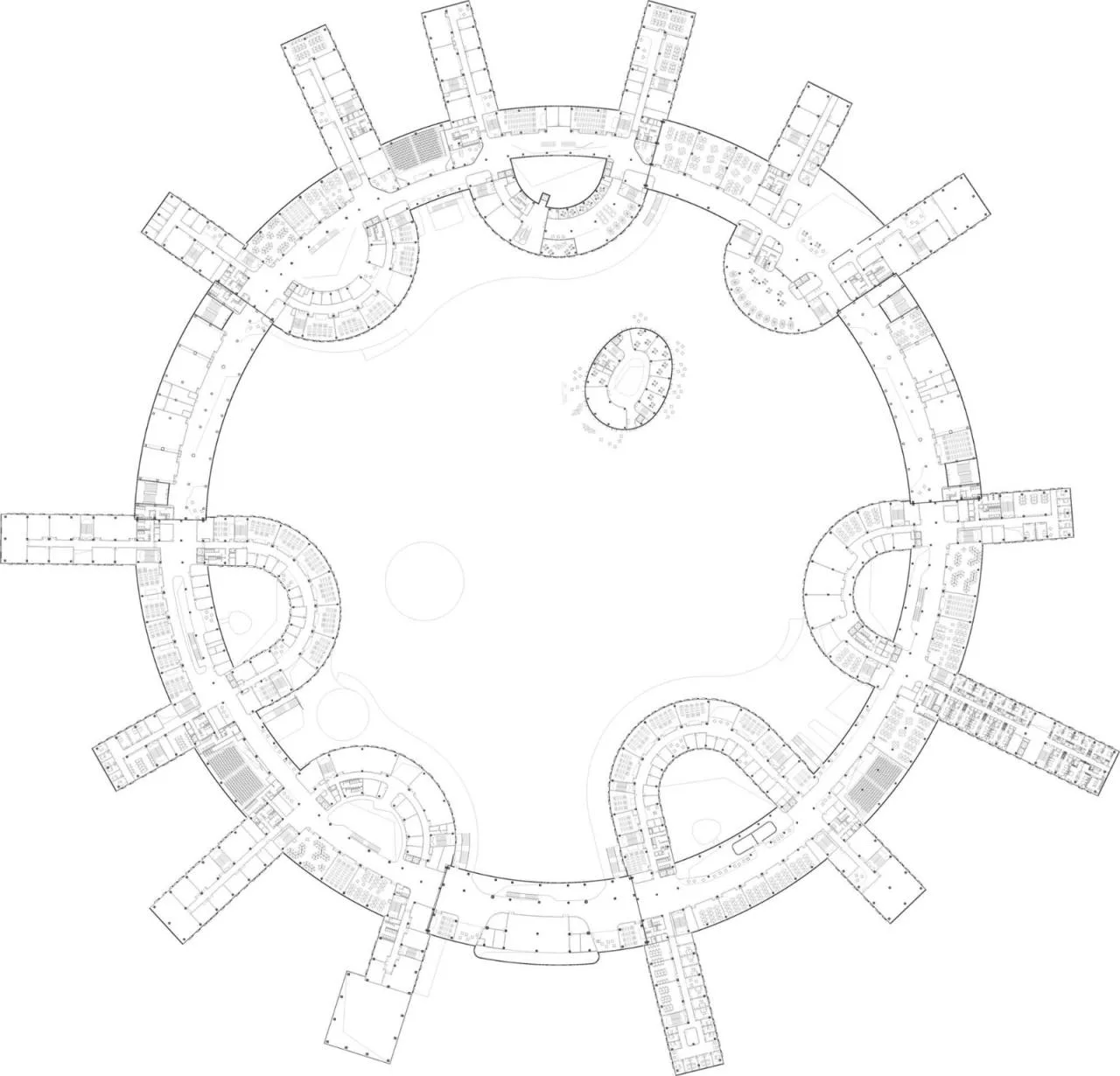
△ Fourth floor plan
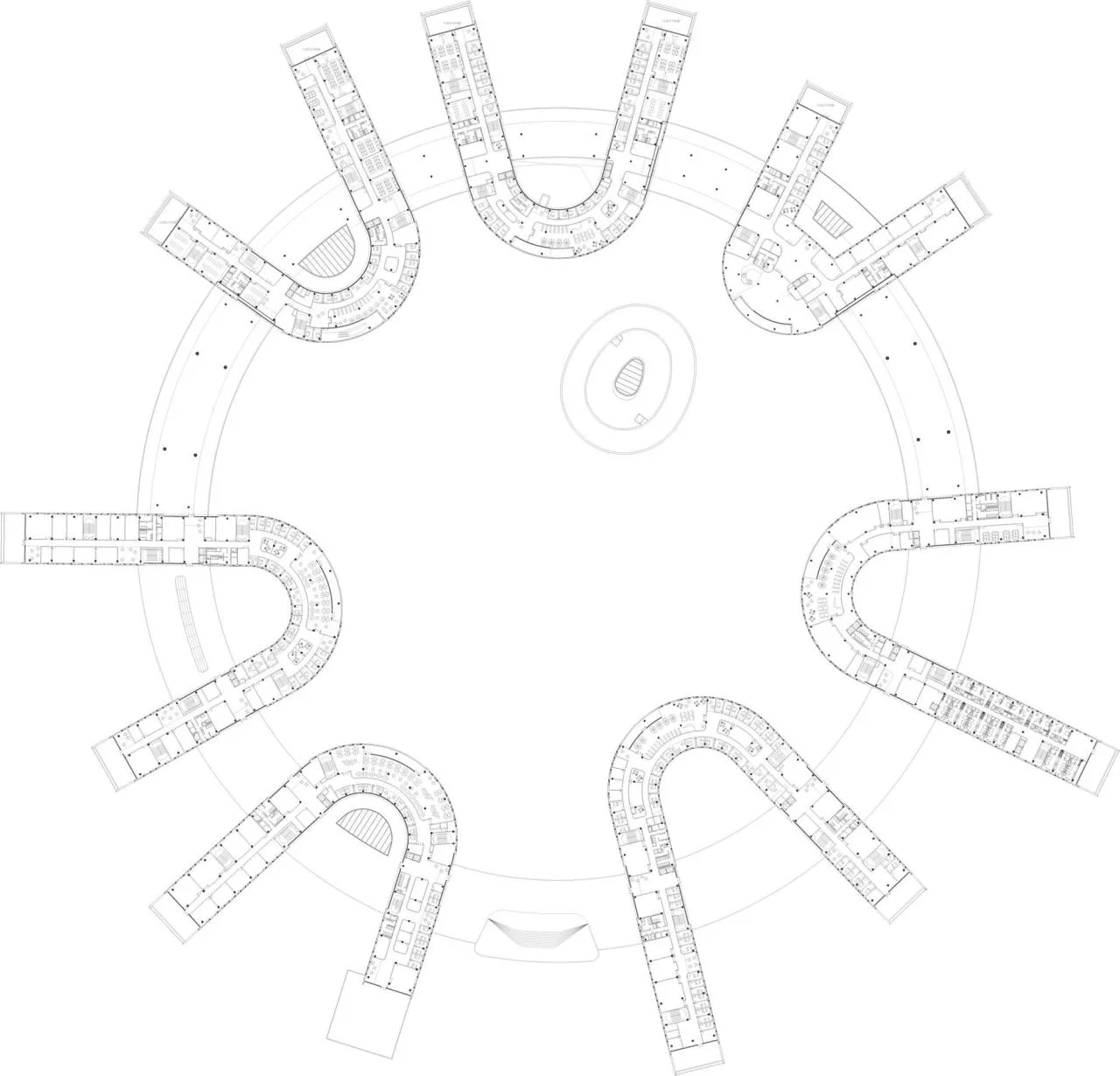
△ Fifth floor plan
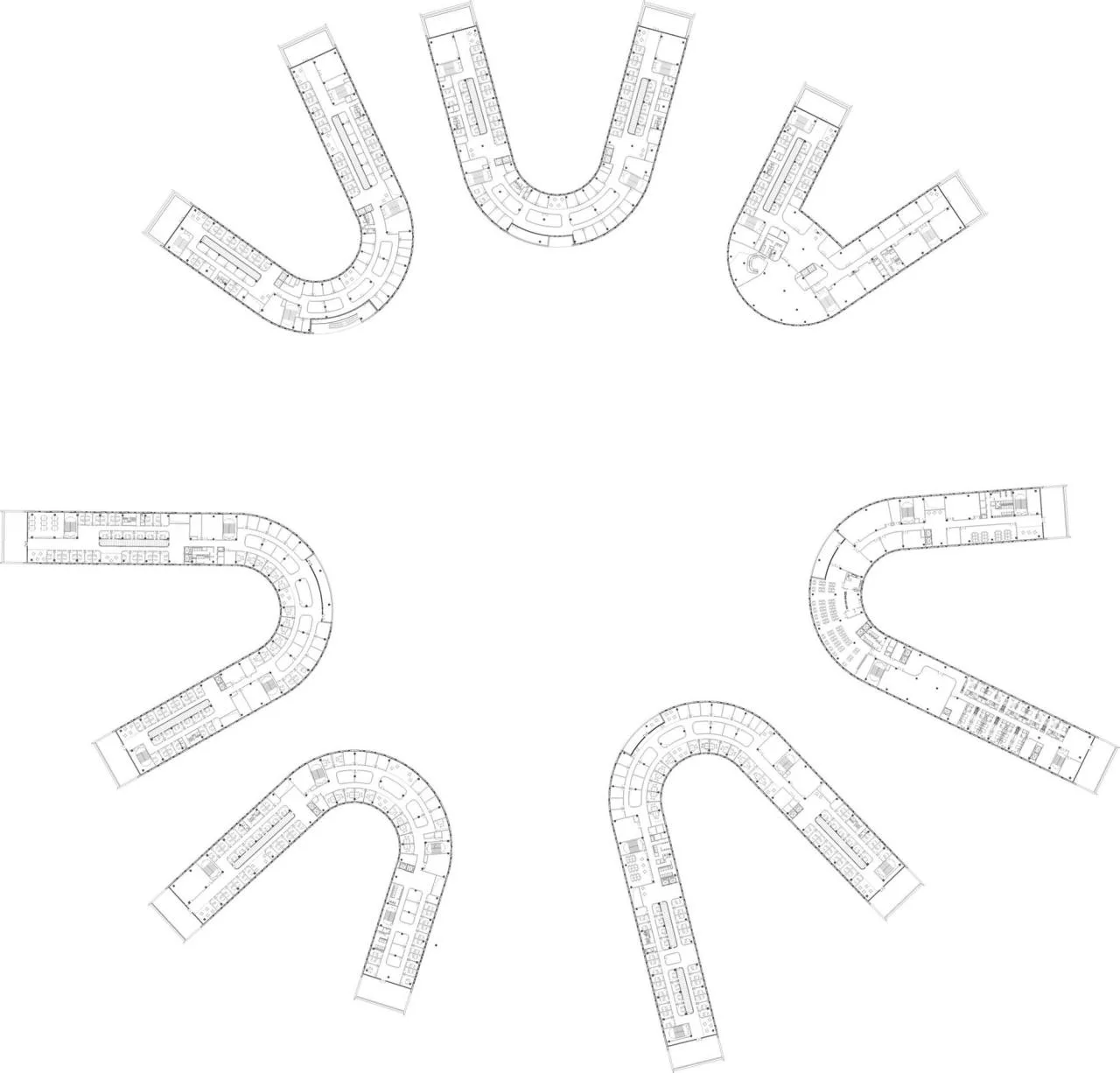
△ Sixth floor plan
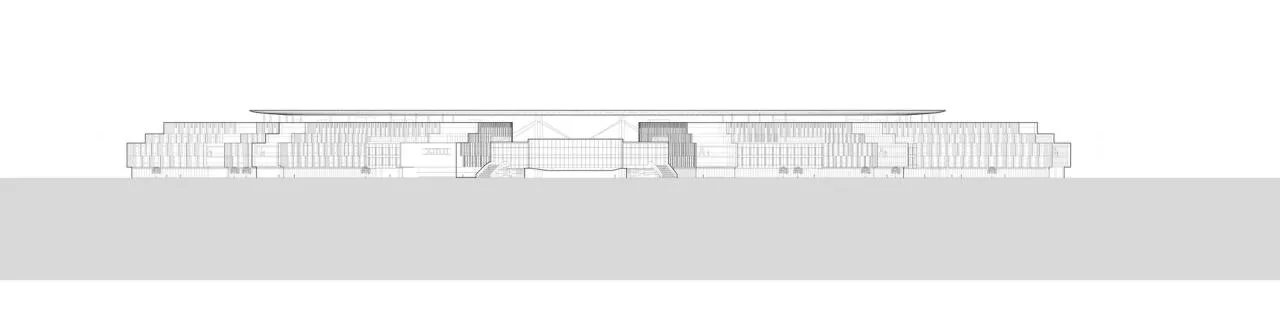
△ Elevation drawing
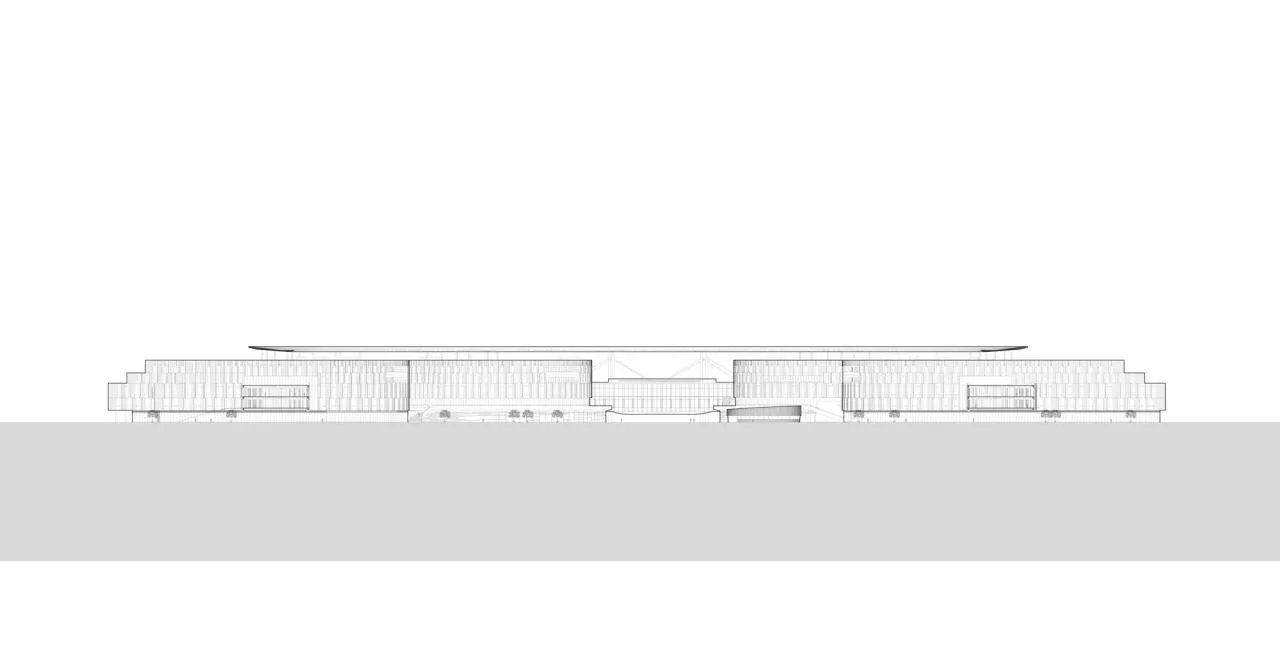
△ Elevation drawing
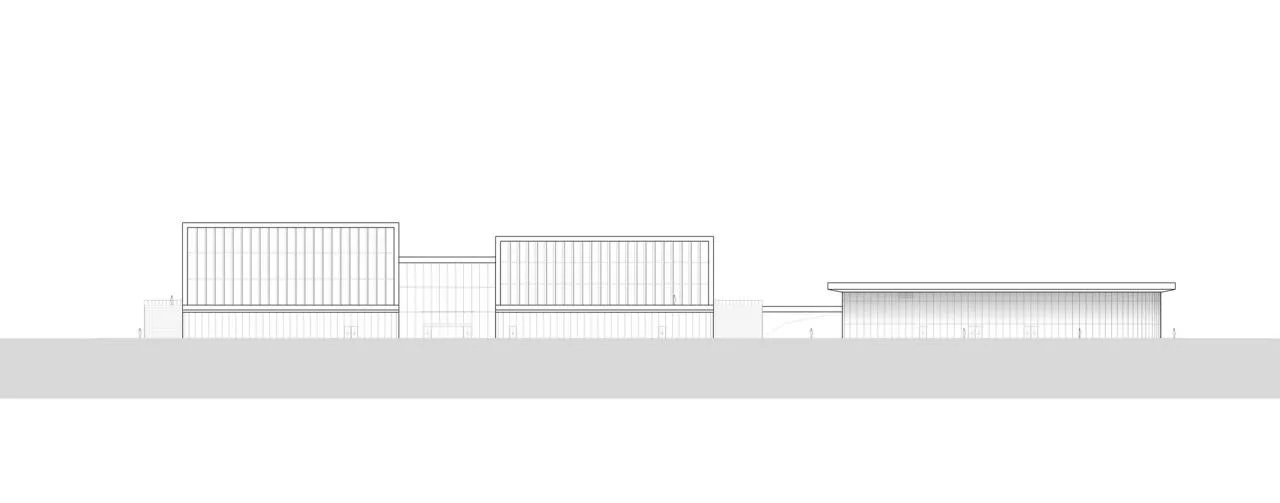
△ Elevation drawing
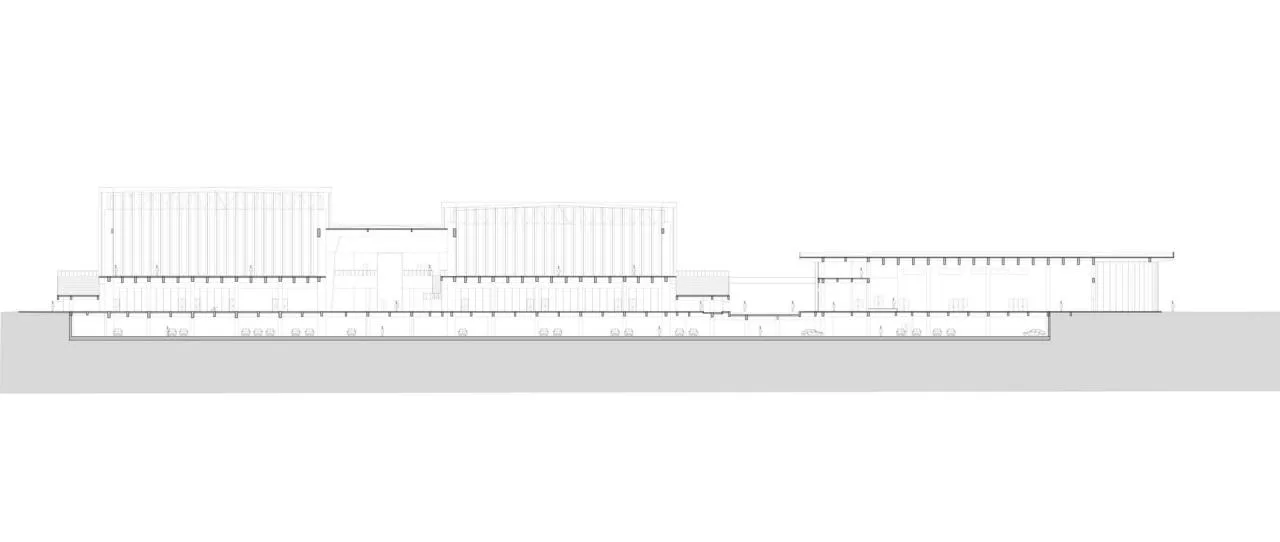
△ Section diagram
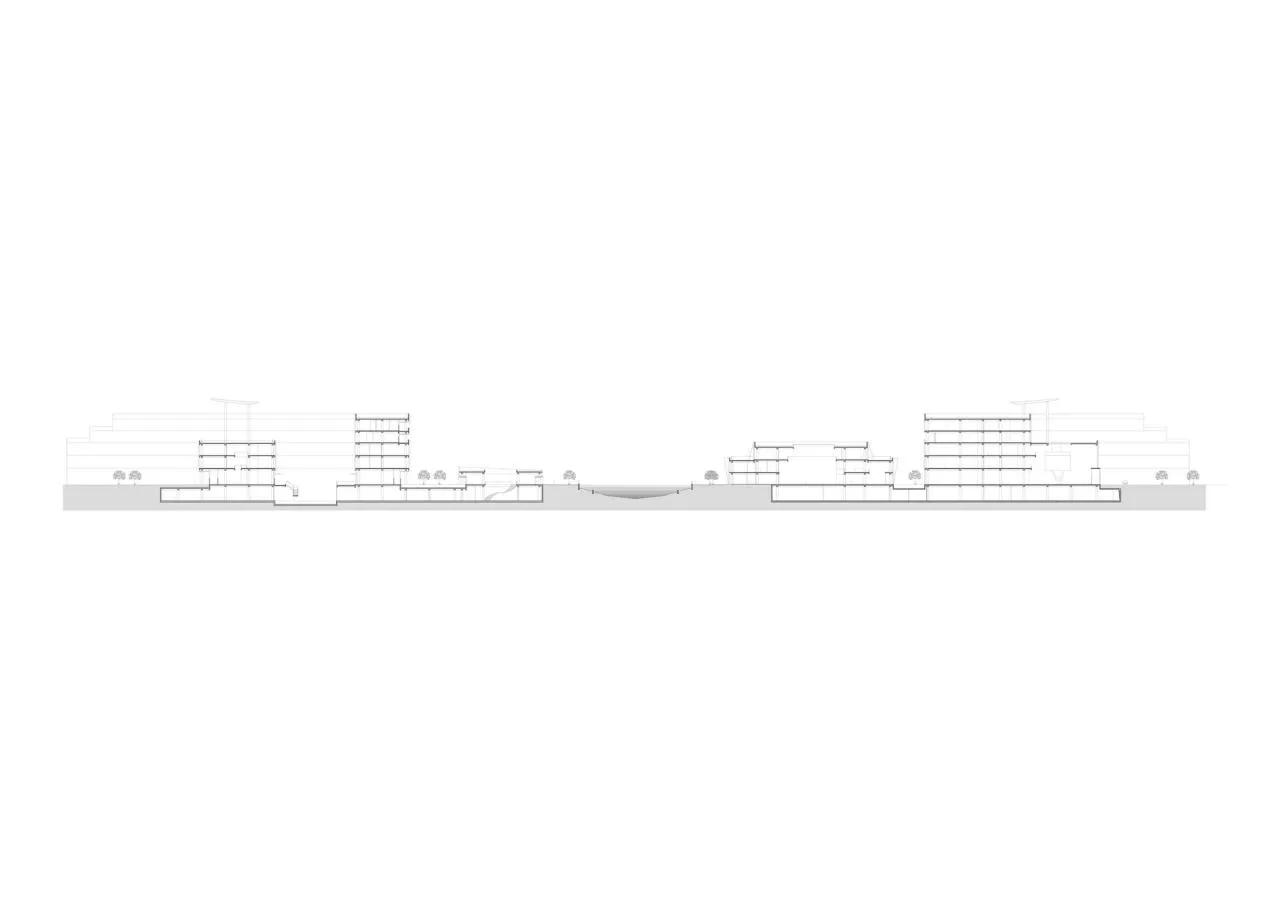
△ Section diagram

△ Analysis chart
Project Information
Architect: HPP Architects
Area: 426,555 m²
Project Year: 2022
Photographer: AST Studio
Manufacturers: Shanghai Pincheng Holdings Group Co., Ltd., Changzhou Changqing Technology Co., Ltd., New Jiali (Jiangsu) Ceramics Co., Ltd./Jiangsu Futaoke Ceramics Co., Ltd.
Partners: Jens Kump, Yu Wei
Project Leaders: Ren Qi, Wang Xiaoye, Zuo Jing, Kang Yi
Design Team: Xue Yan, Ma Yue, Wang Weining, Maria Kohl, Wang Weishu, Cui Hao, Julian Granados
Interior Design: Xu Heng, Song Zhitao, Ji Xiaodan, Wang Lu, Ji Cheng, Wang Xiaolei, Cao Qianqian, Liu Cheng, Mount Huangshan, Xie Chunli
Landscape Design: Xu Yaping, Yang Yahao, Li Shuo, Ni Jingjing, Tang Caiping, Fu Yuqing, Xing Mengyao, Gao Jingxian, Chen Jia
Owner: Taicang Culture and Education Investment Group Co., Ltd.
Local Design Unit: Tongji University Architectural Design and Research Institute (Group) Co., Ltd.
Curtain Wall Consultant: Step into Exterior Wall Architectural Design Consulting
Lighting Consultant: Shanghai Bi Pin Lighting Design Center
Location: Suzhou















Must log in before commenting!
Sign Up