
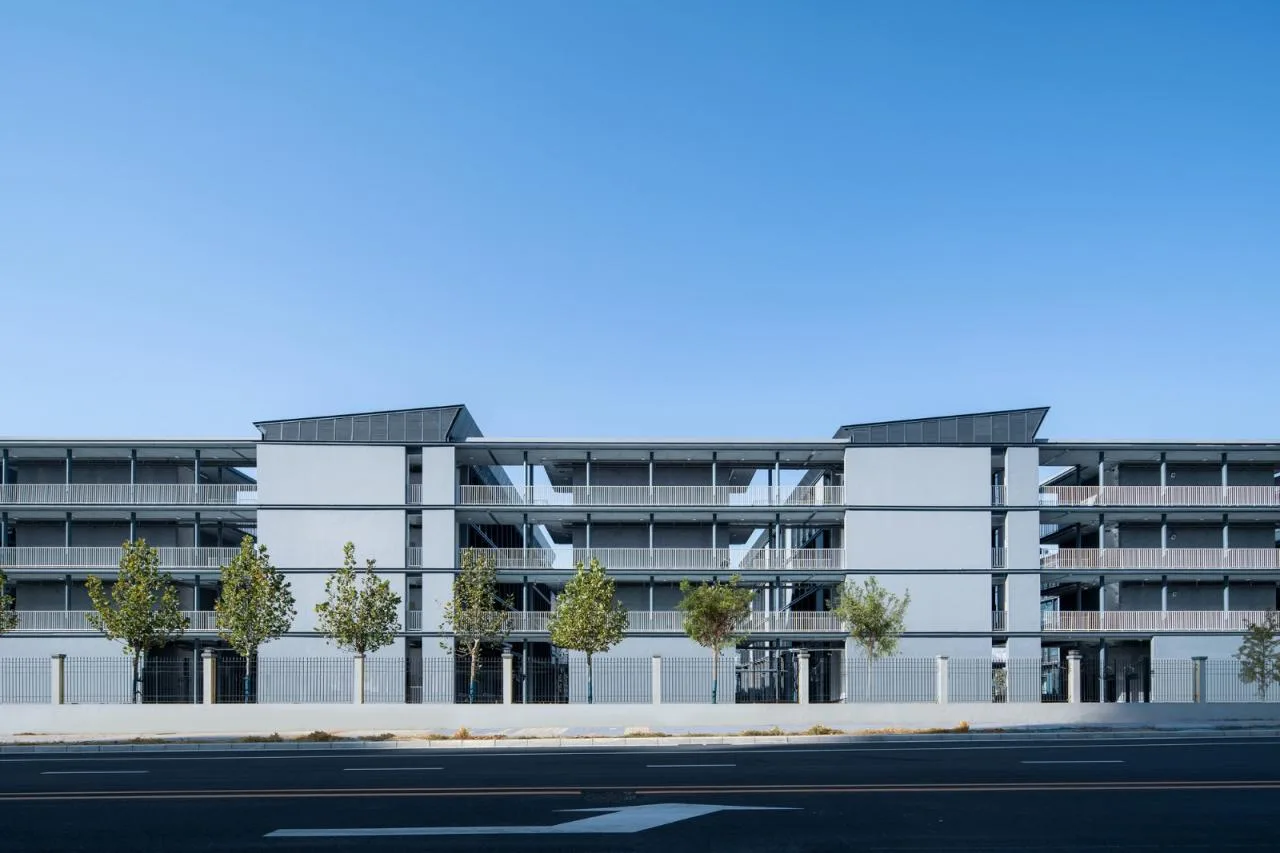
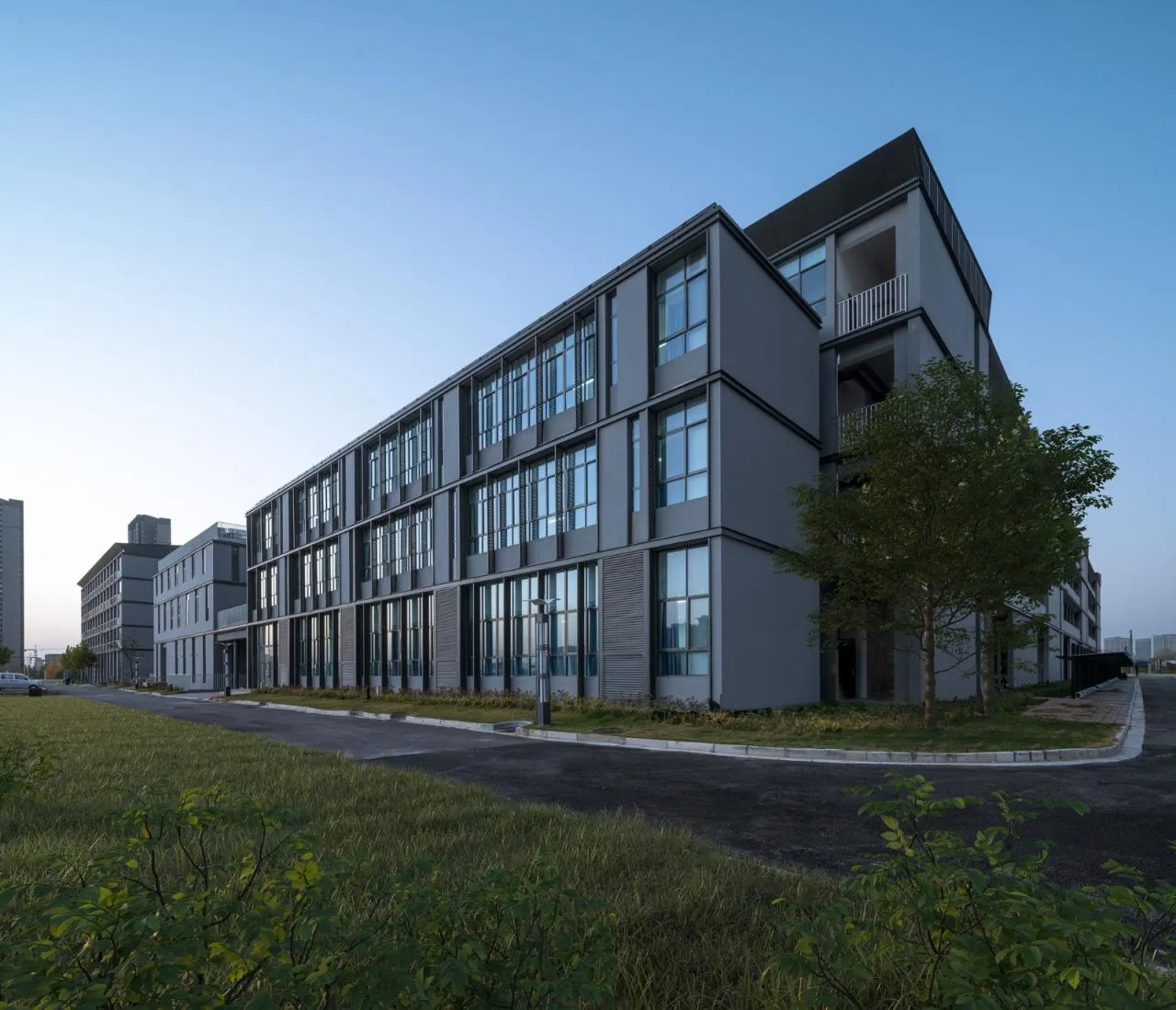
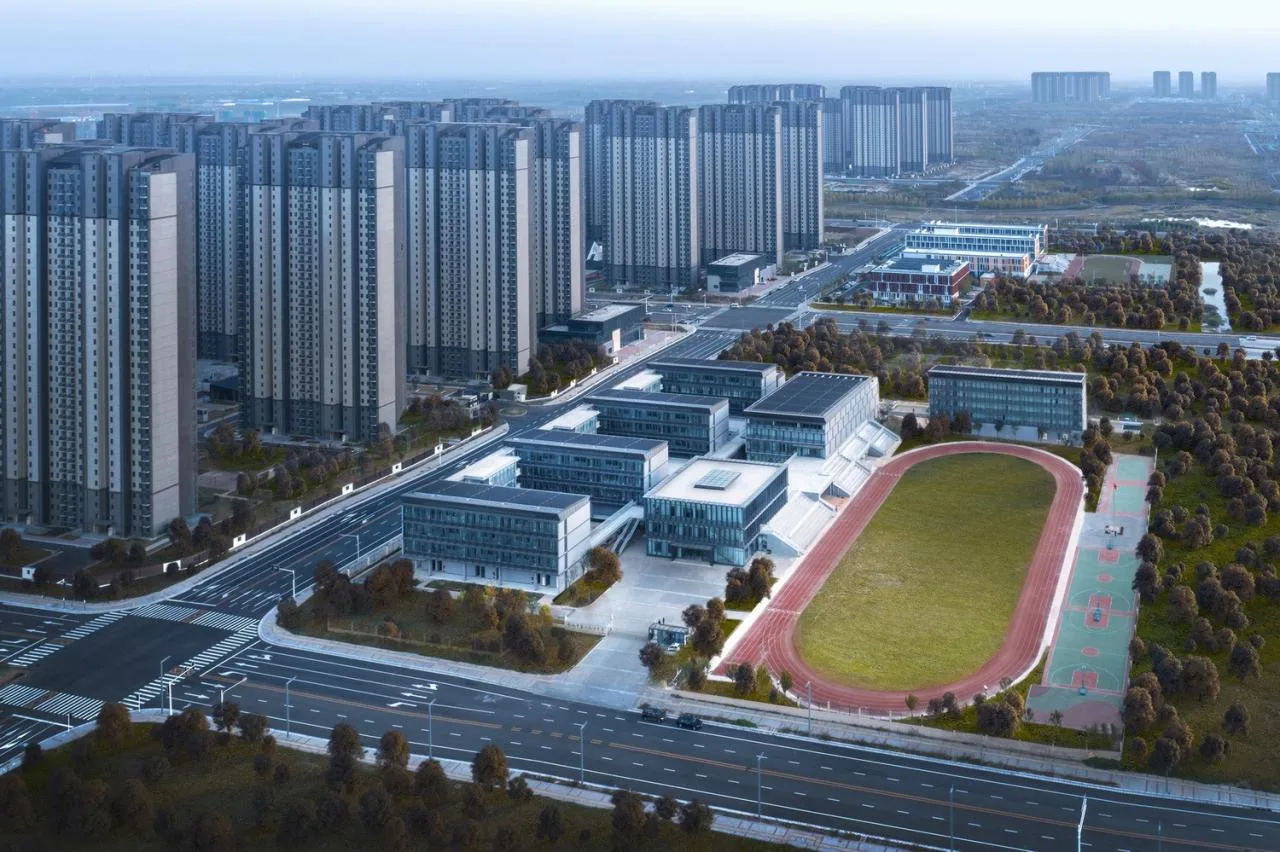
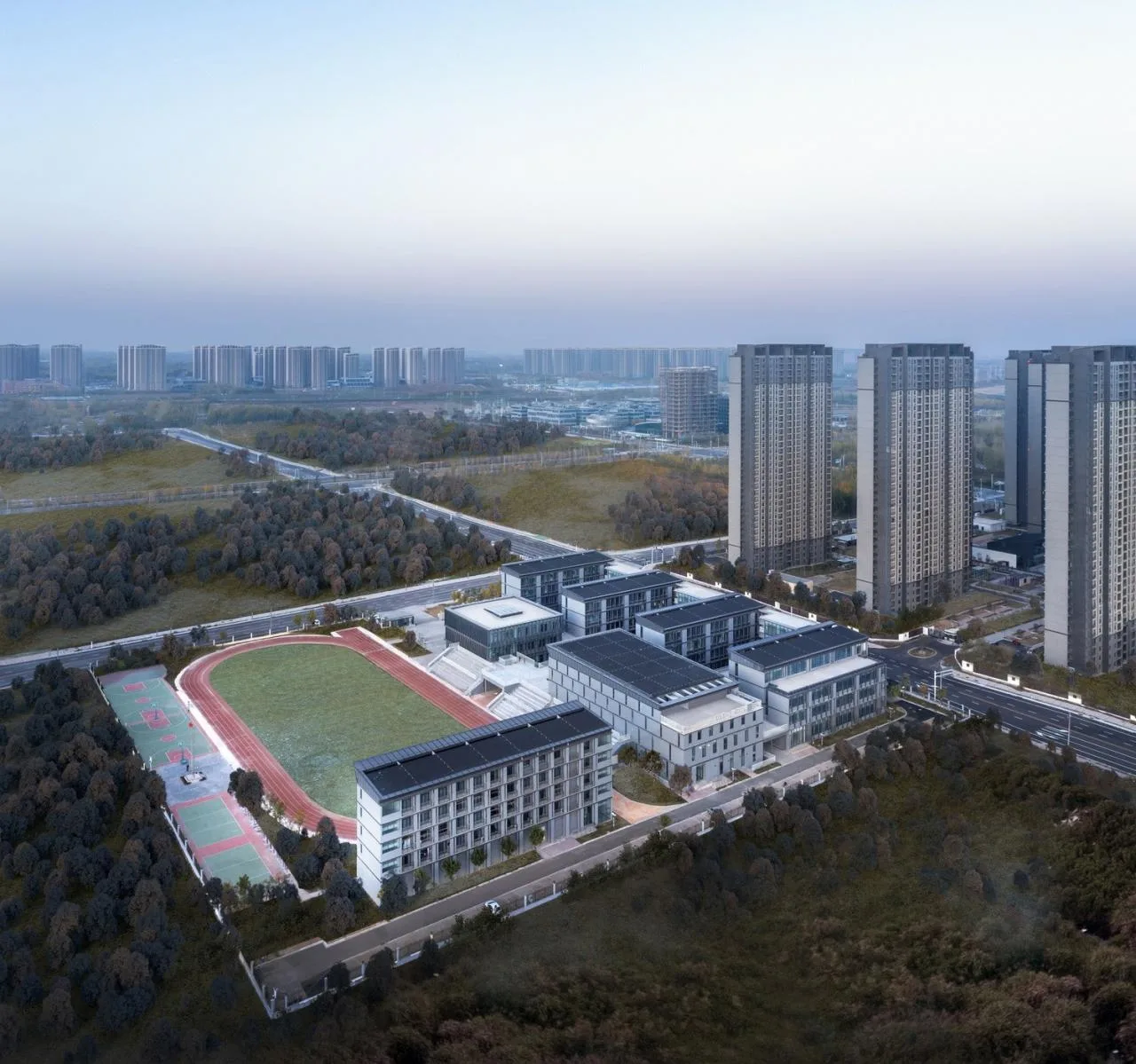
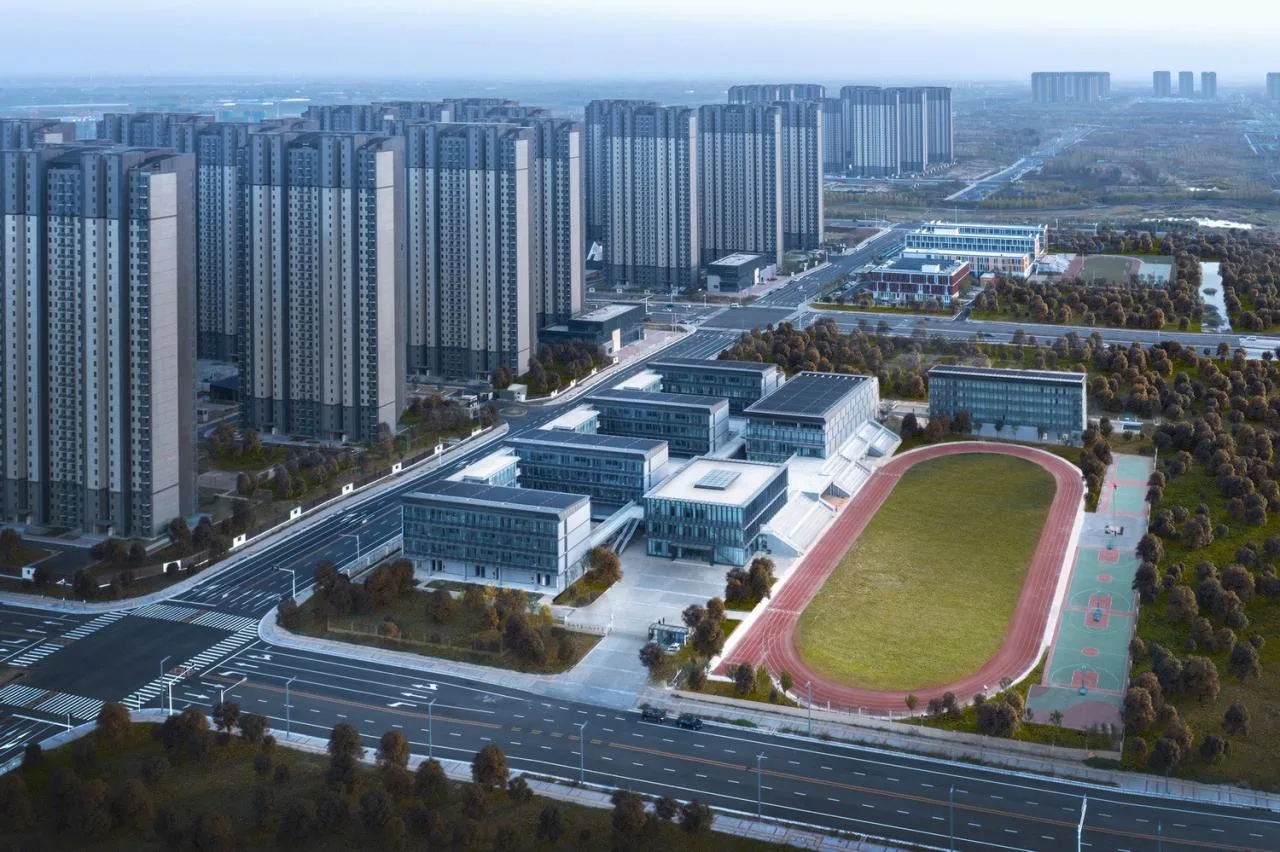
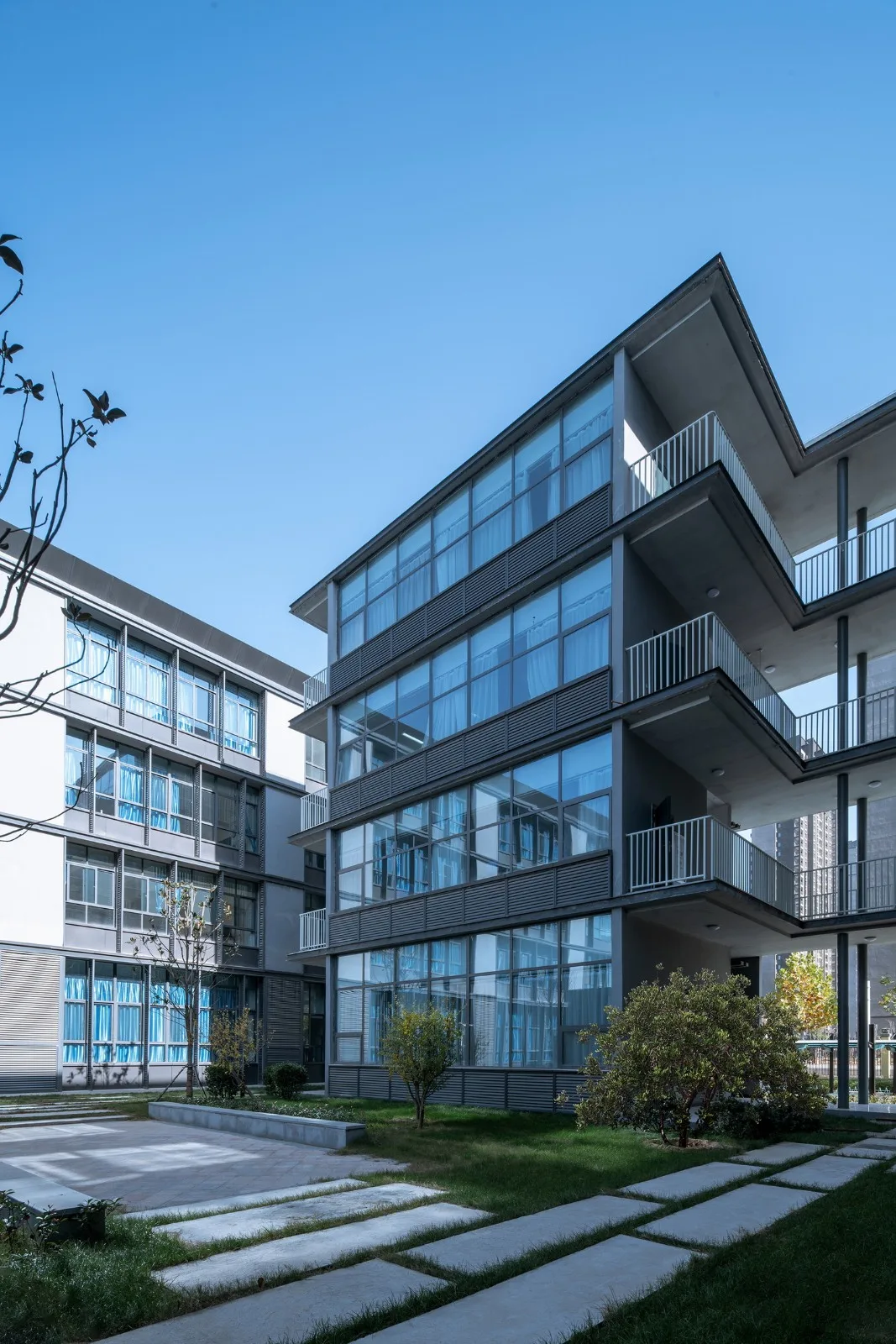
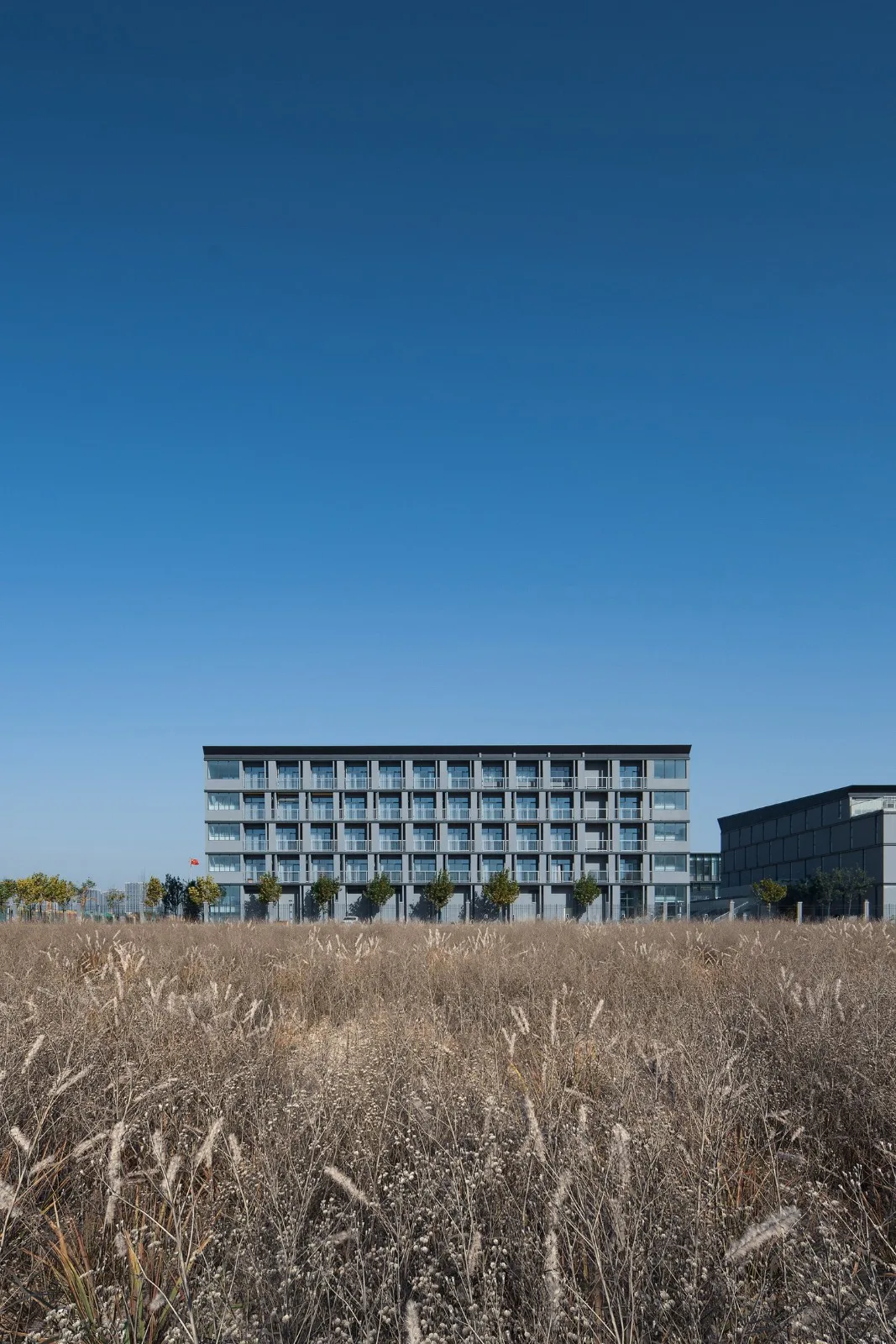
Zhengzhou No. 130 Middle School emphasizes “open space” as its foundation, creating a compact campus through the design of “clustered courtyards” and “two-story activity platforms.” The school aims to express traditional culture in a contemporary way while maintaining a cohesive architectural style. Detailed design plays a crucial role in shaping spatial experience, showcasing the beauty of architectural elements with exceptional quality.
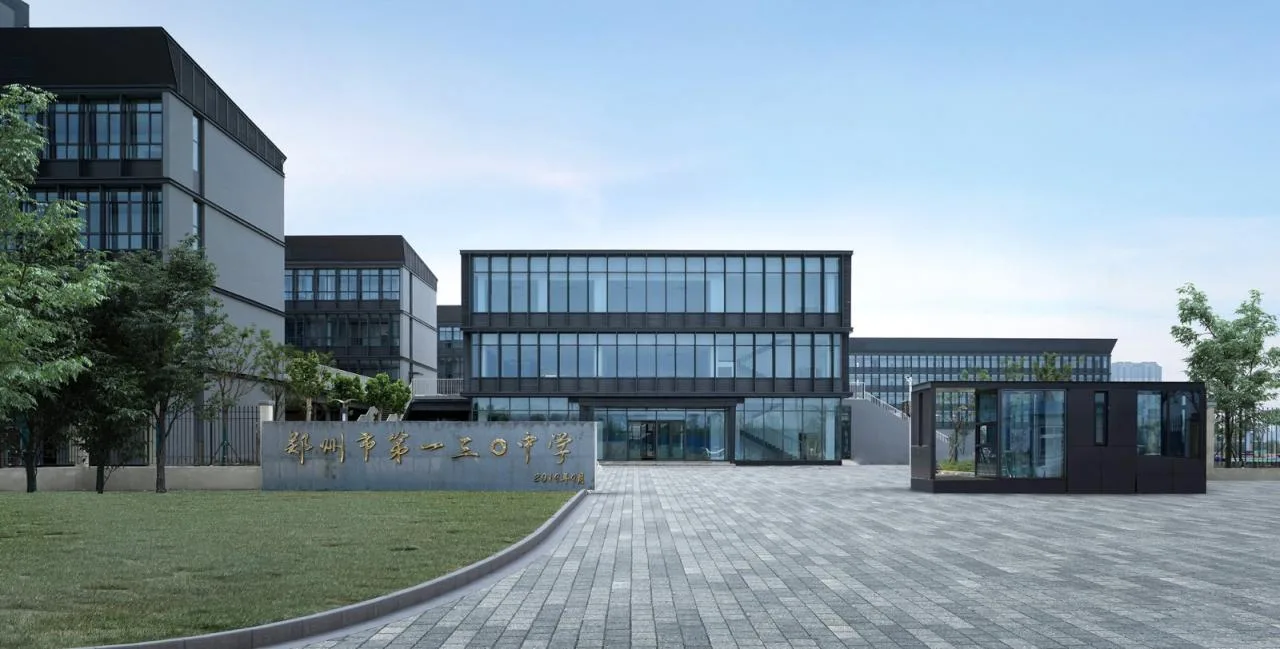
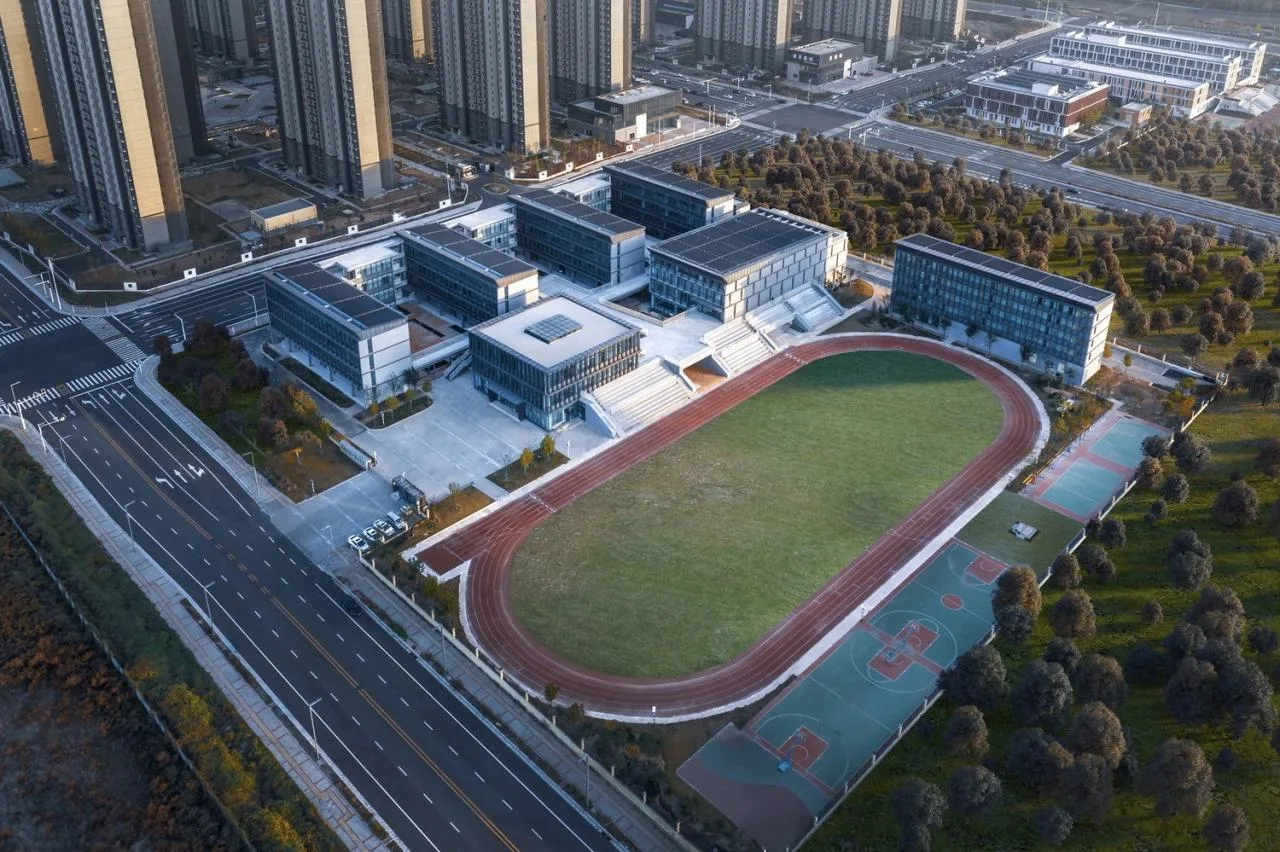
Zhengzhou No. 130 Middle School is a junior high school comprising 30 classes. It is situated in the northern section of the Hedong Eighth Resettlement Area within the Zhengzhou Airport Economic Comprehensive Experimental Zone. This resettlement area is a modern industrial and service hub, planned to provide housing and supporting facilities for the local community. The site is bordered by urban secondary roads to the east and north, a planned landscape river to the west, and commercial land to the south.
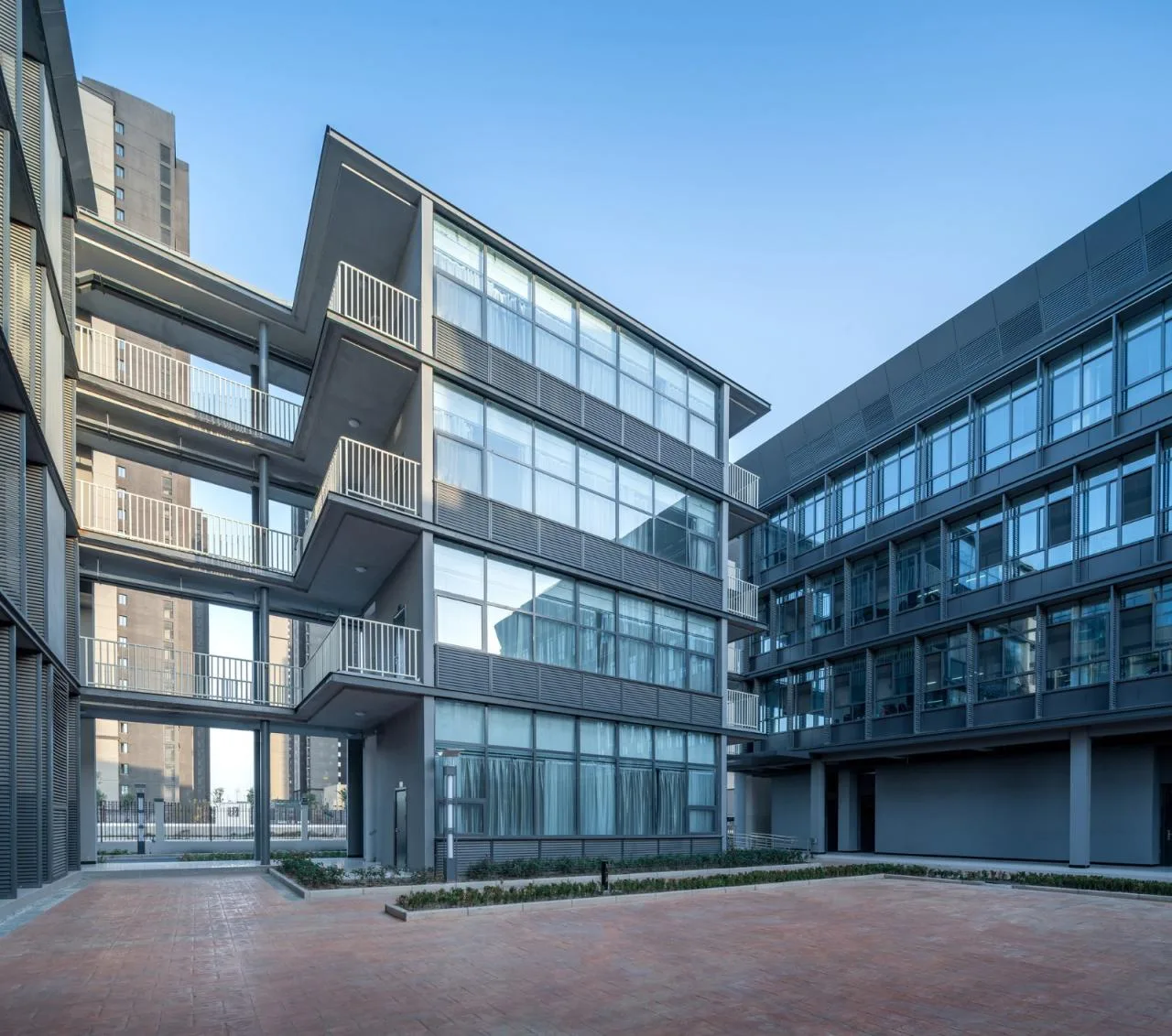
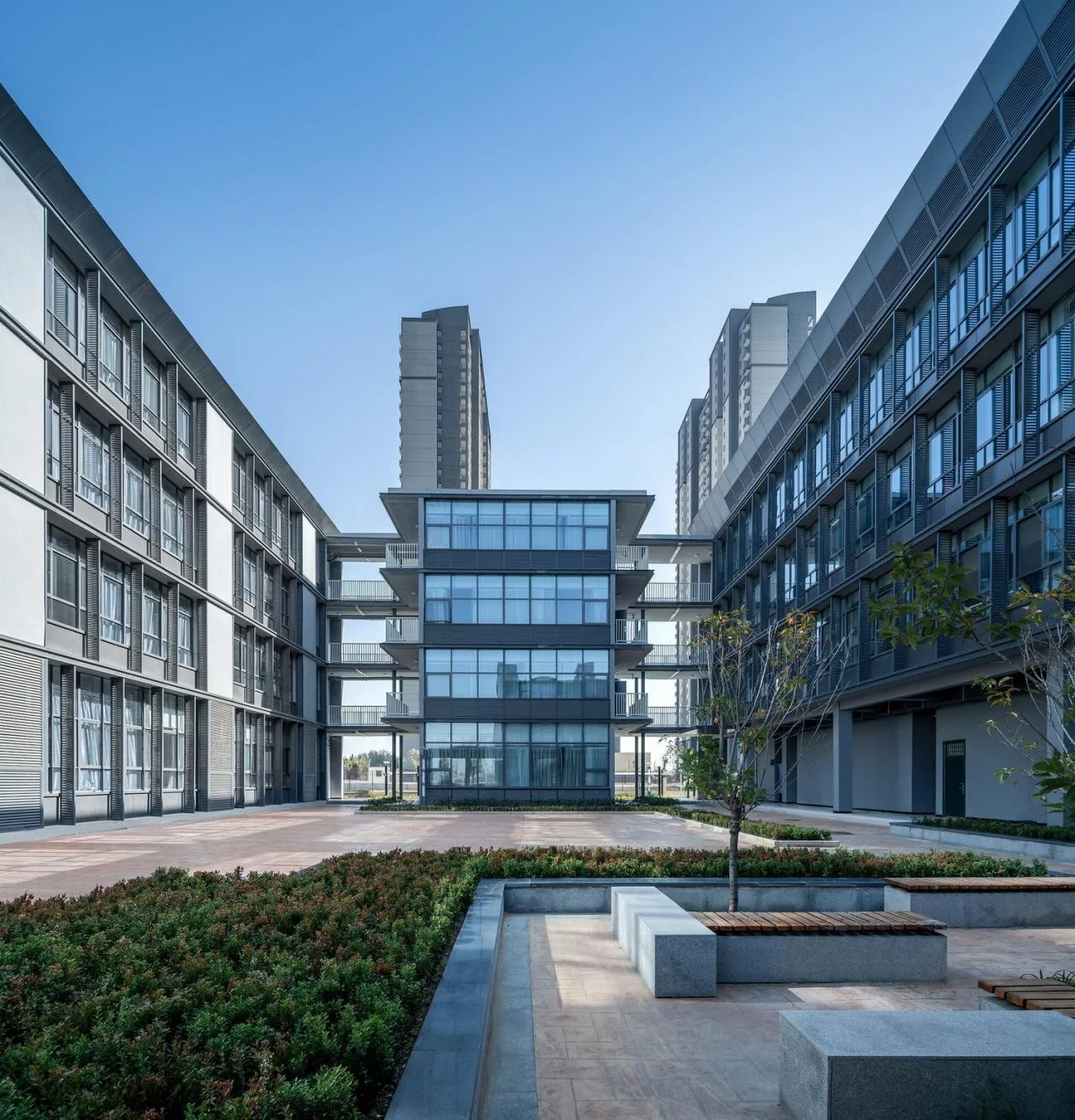
The design focuses on three key aspects:
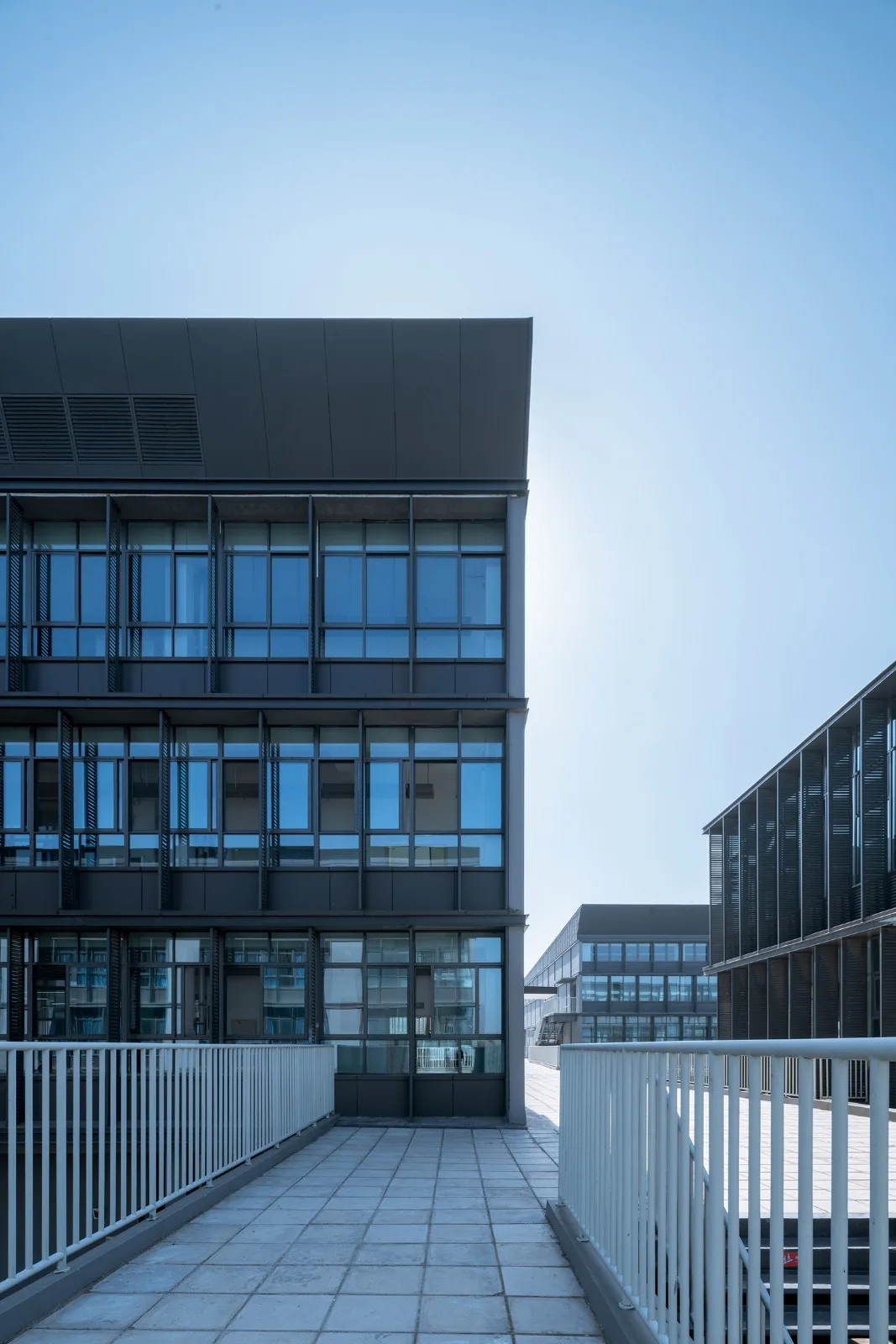
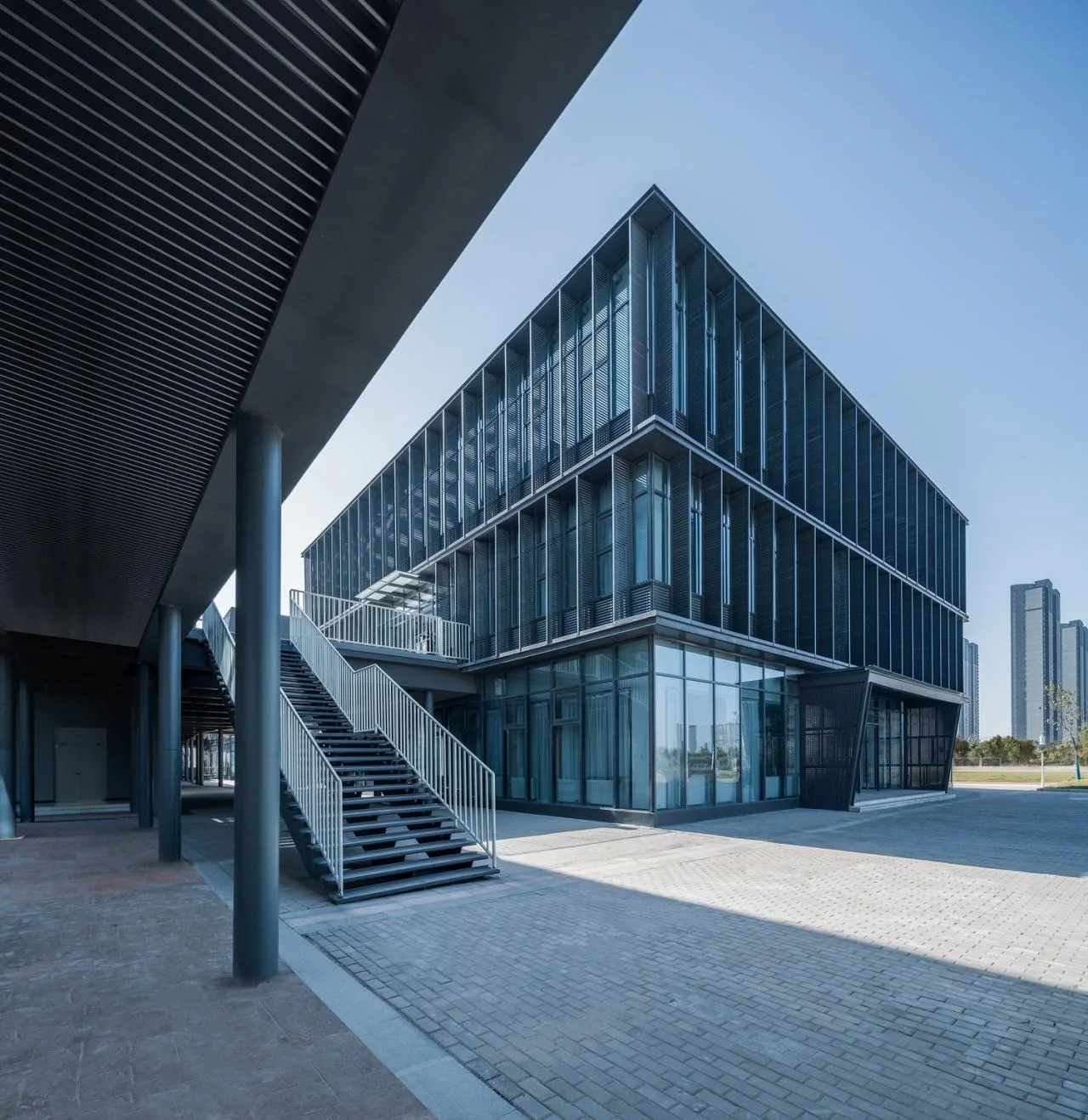
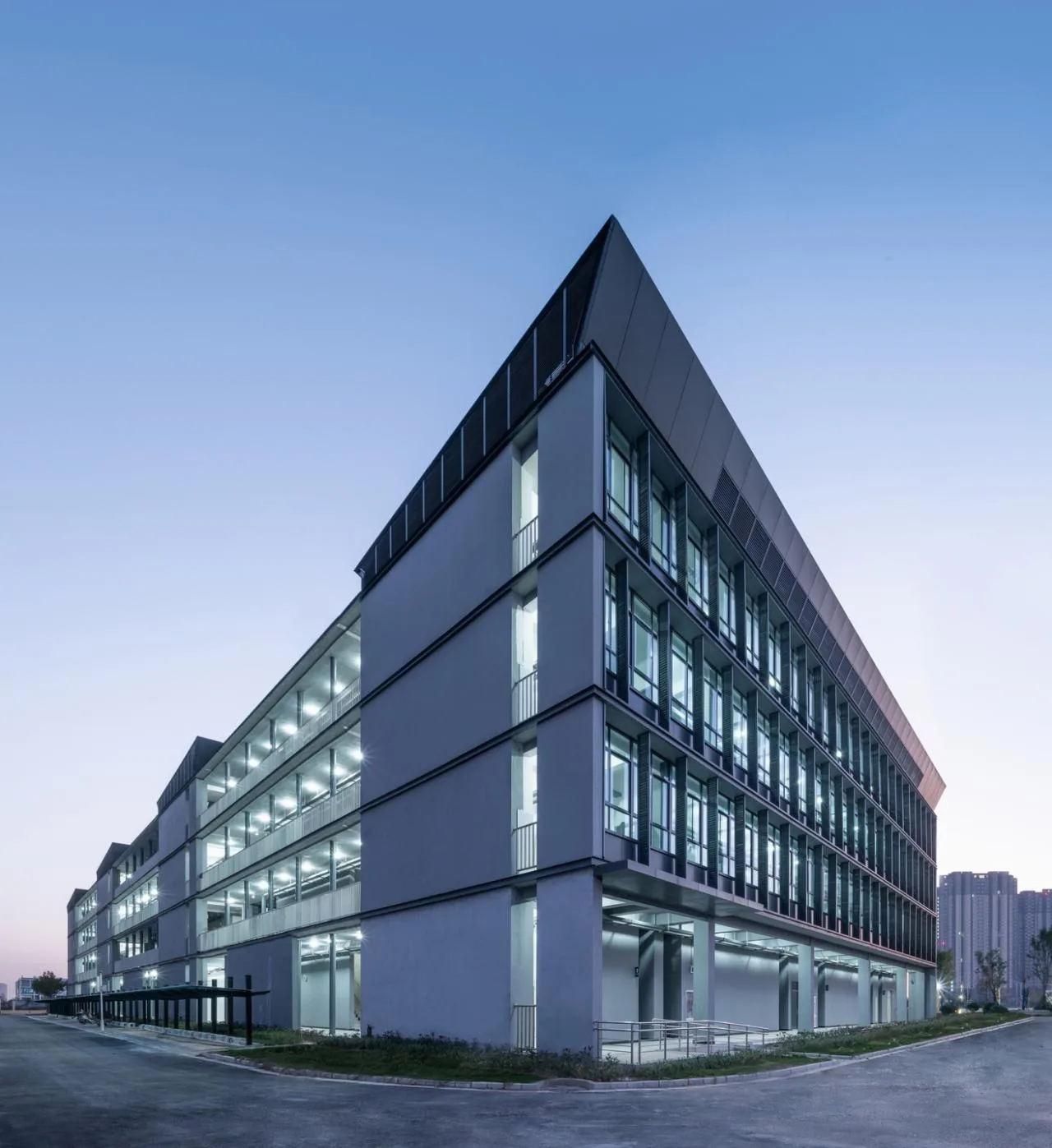
- The building’s exterior features a “Bauhaus gray” paint finish, accented with grille louvers. To maintain strict cost control, these louvers are repurposed from air conditioning unit covers, adding a refined rhythmic texture and detail quality.
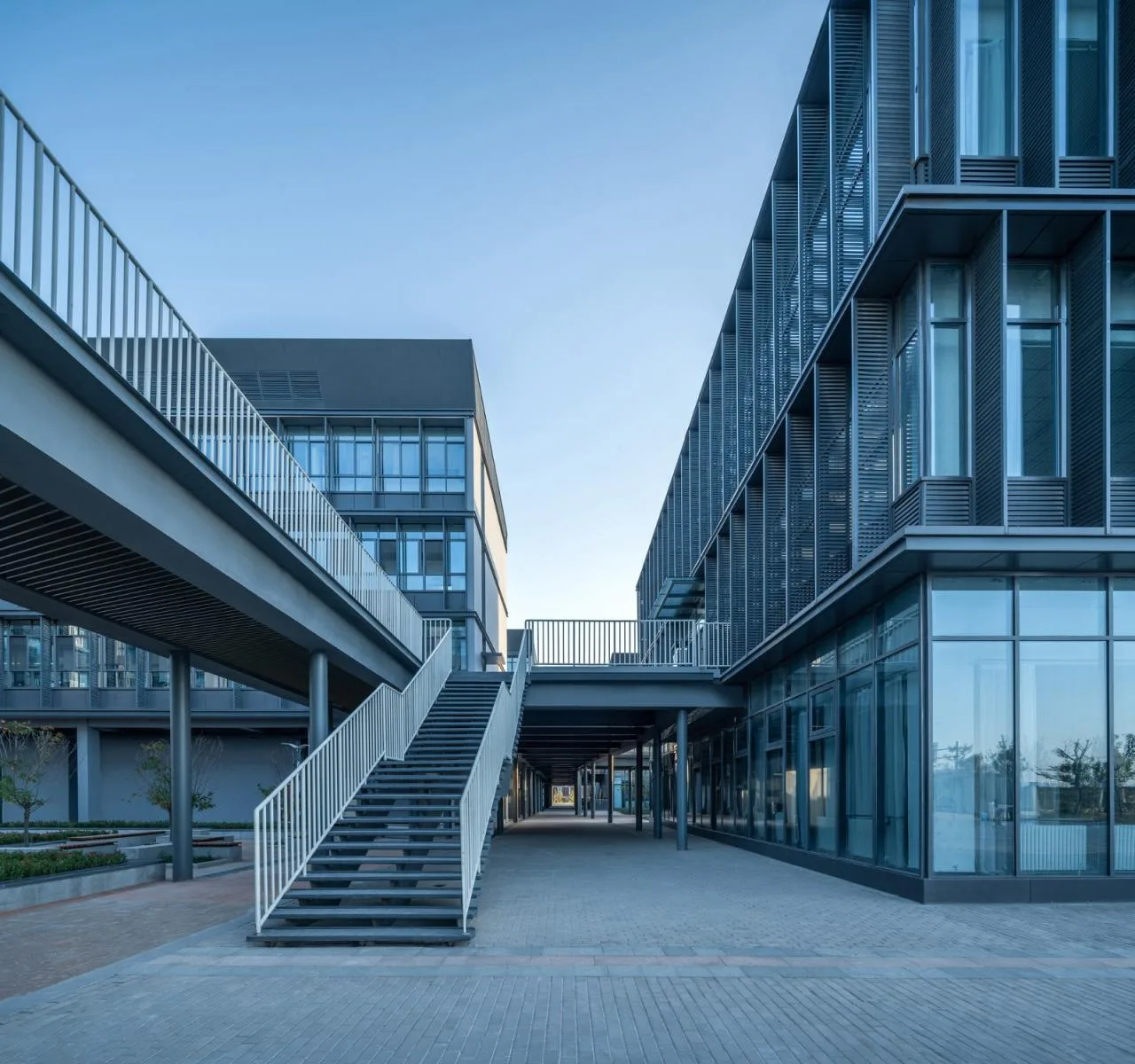
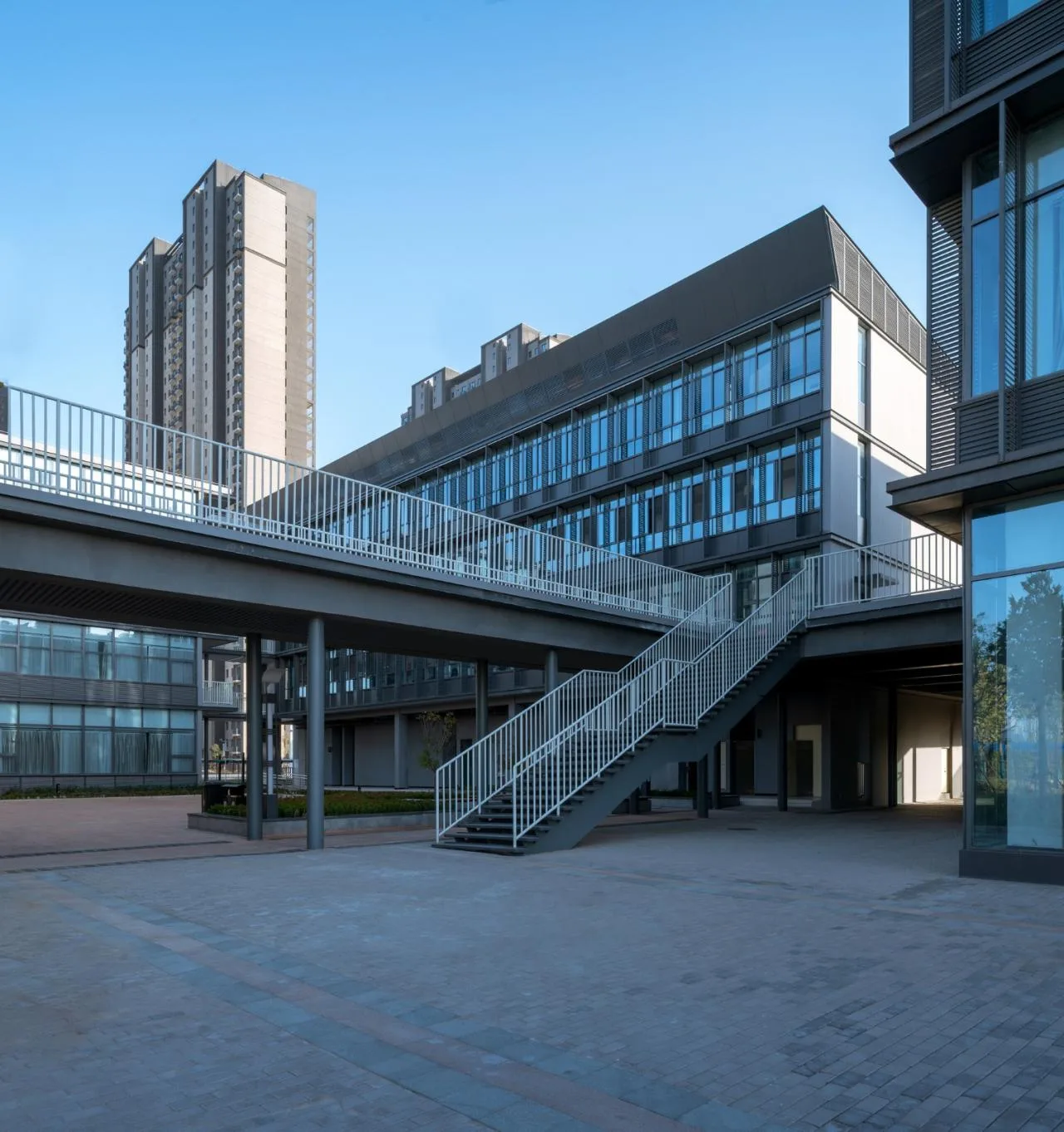
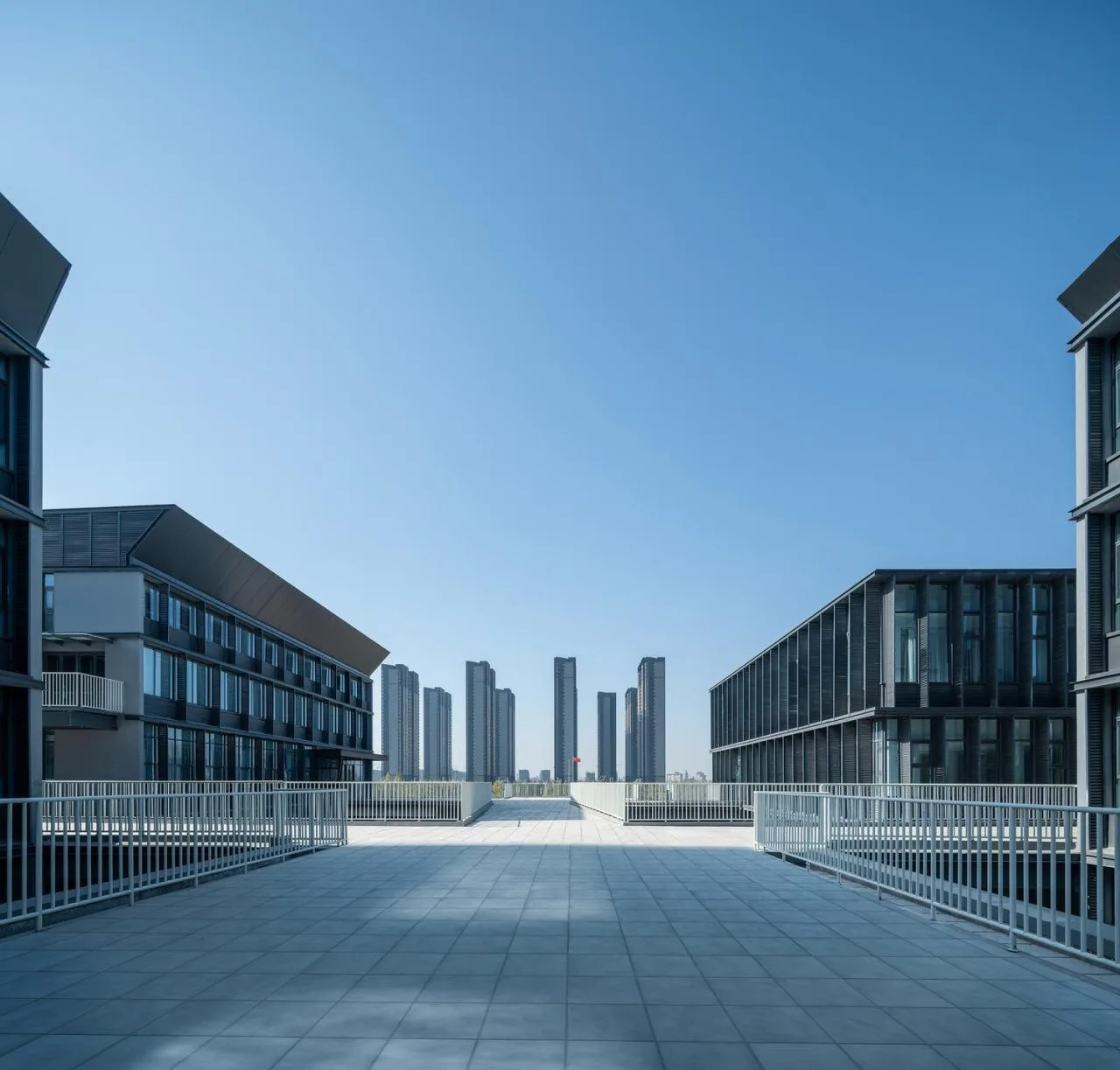
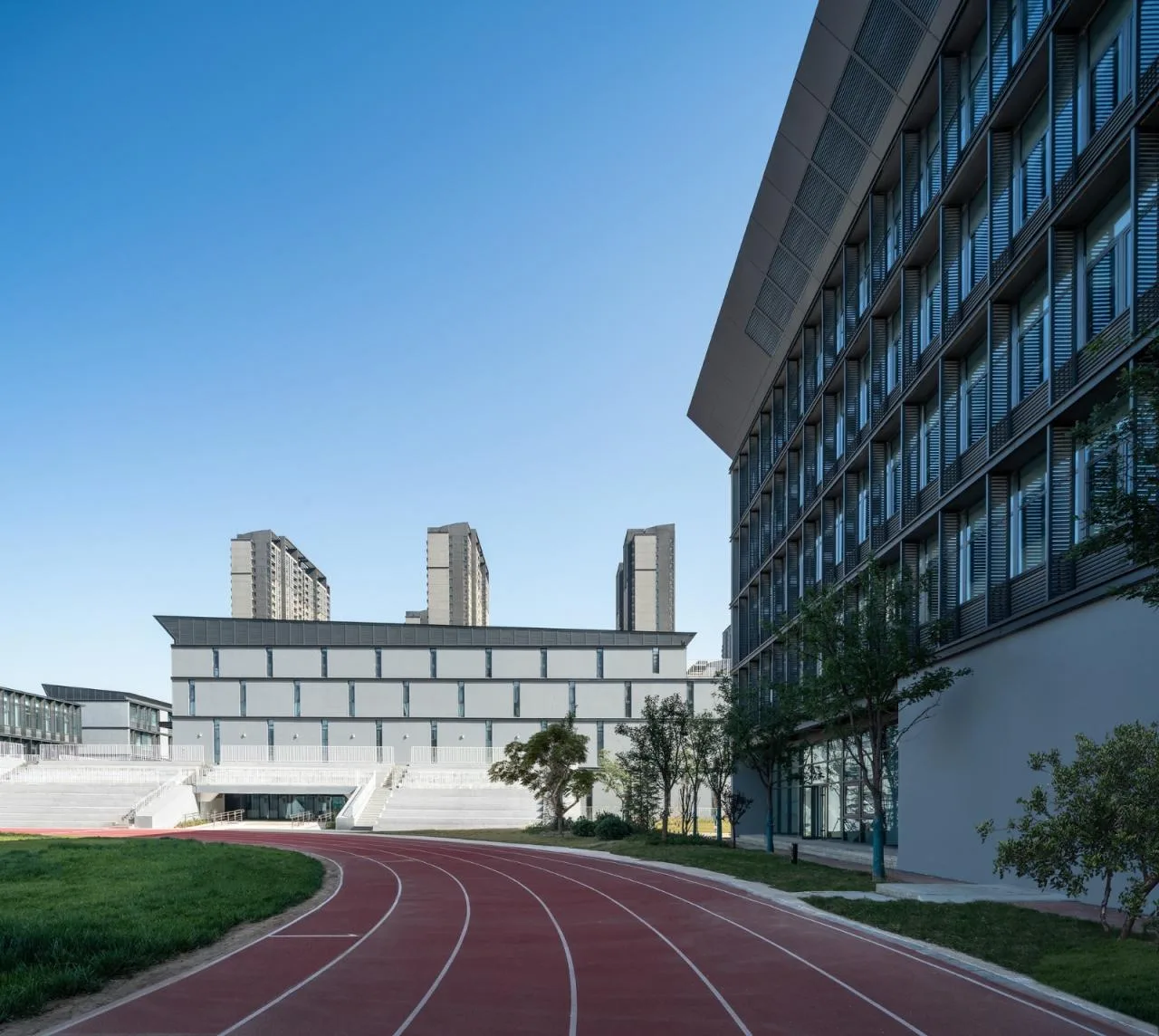
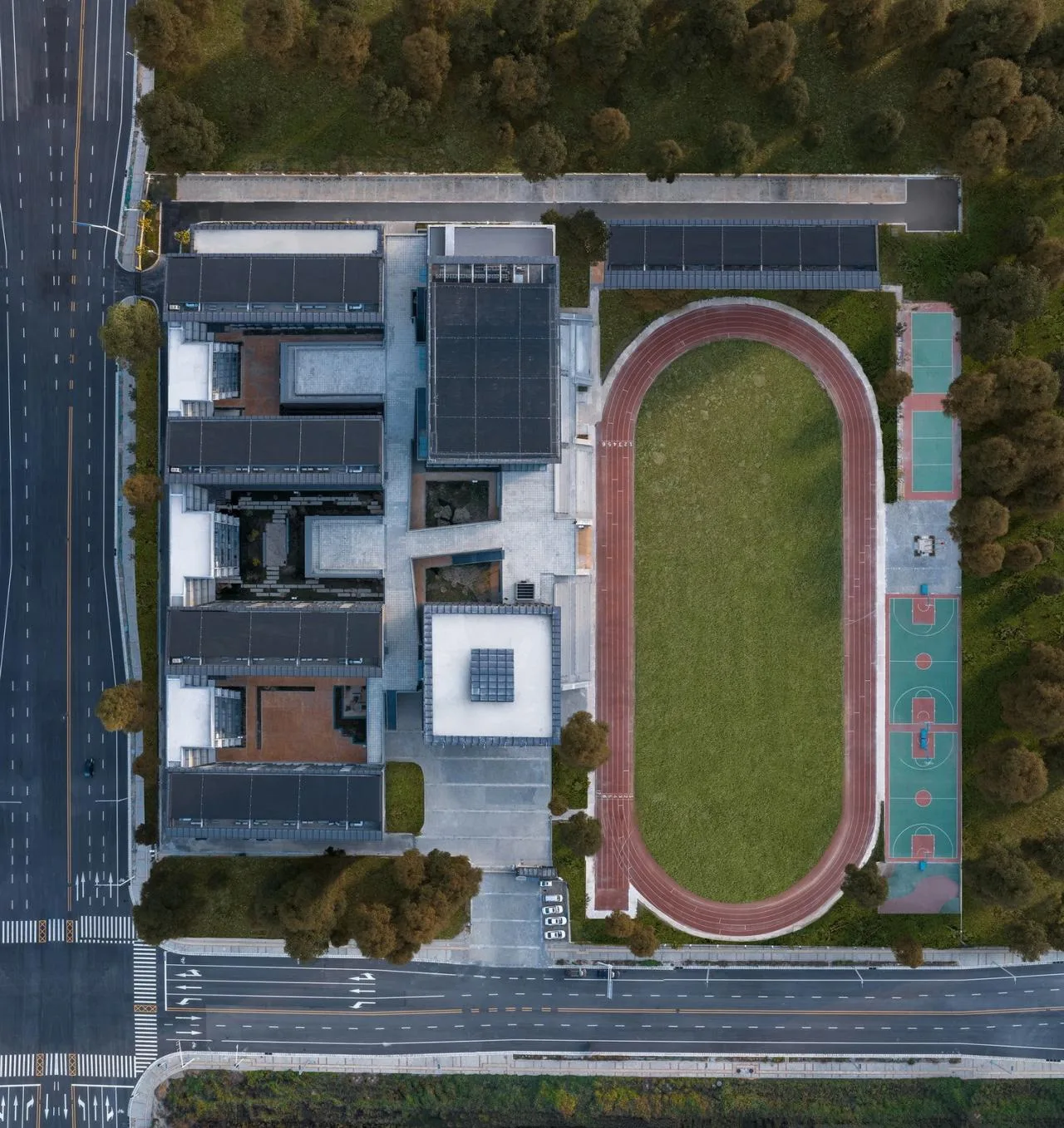
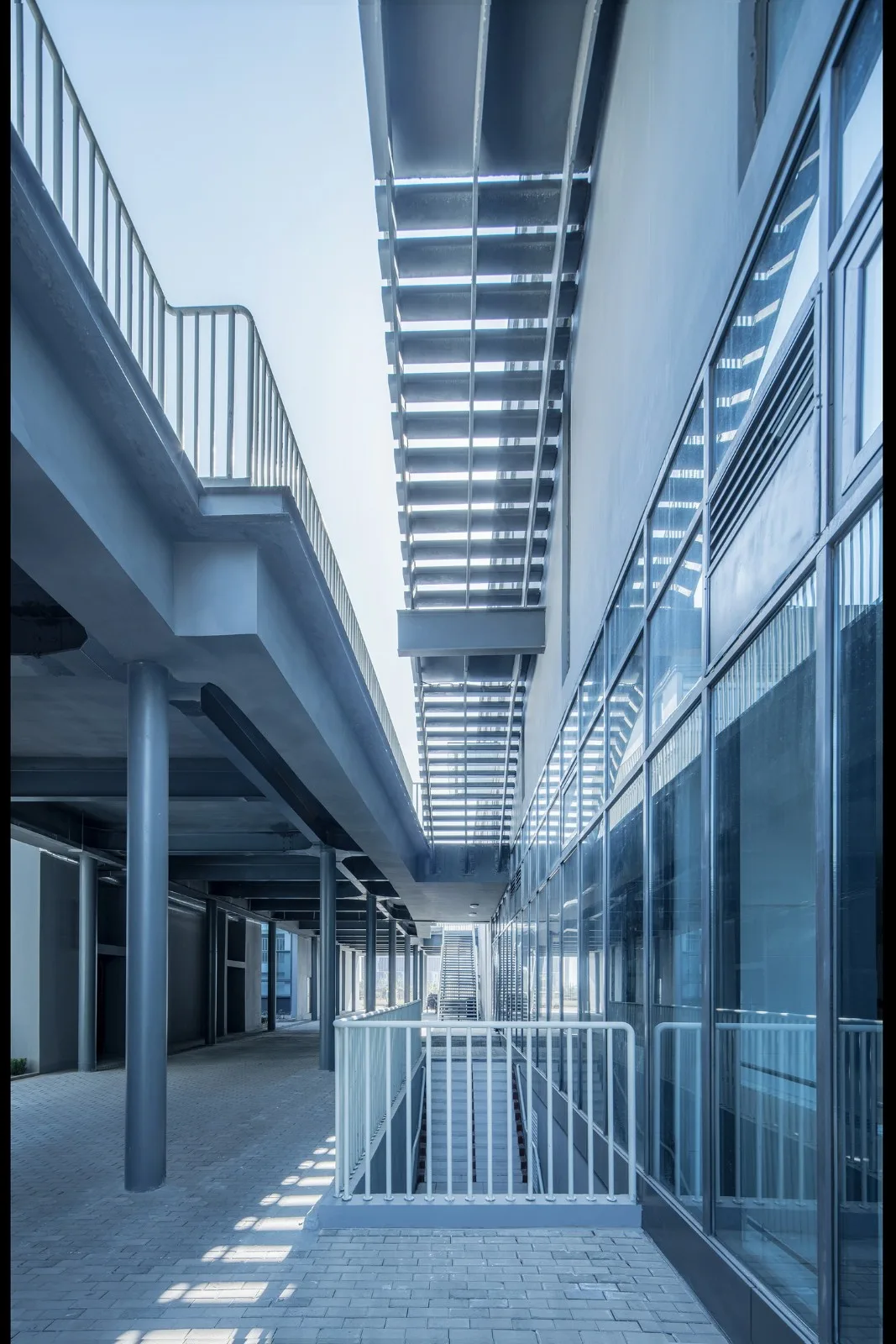
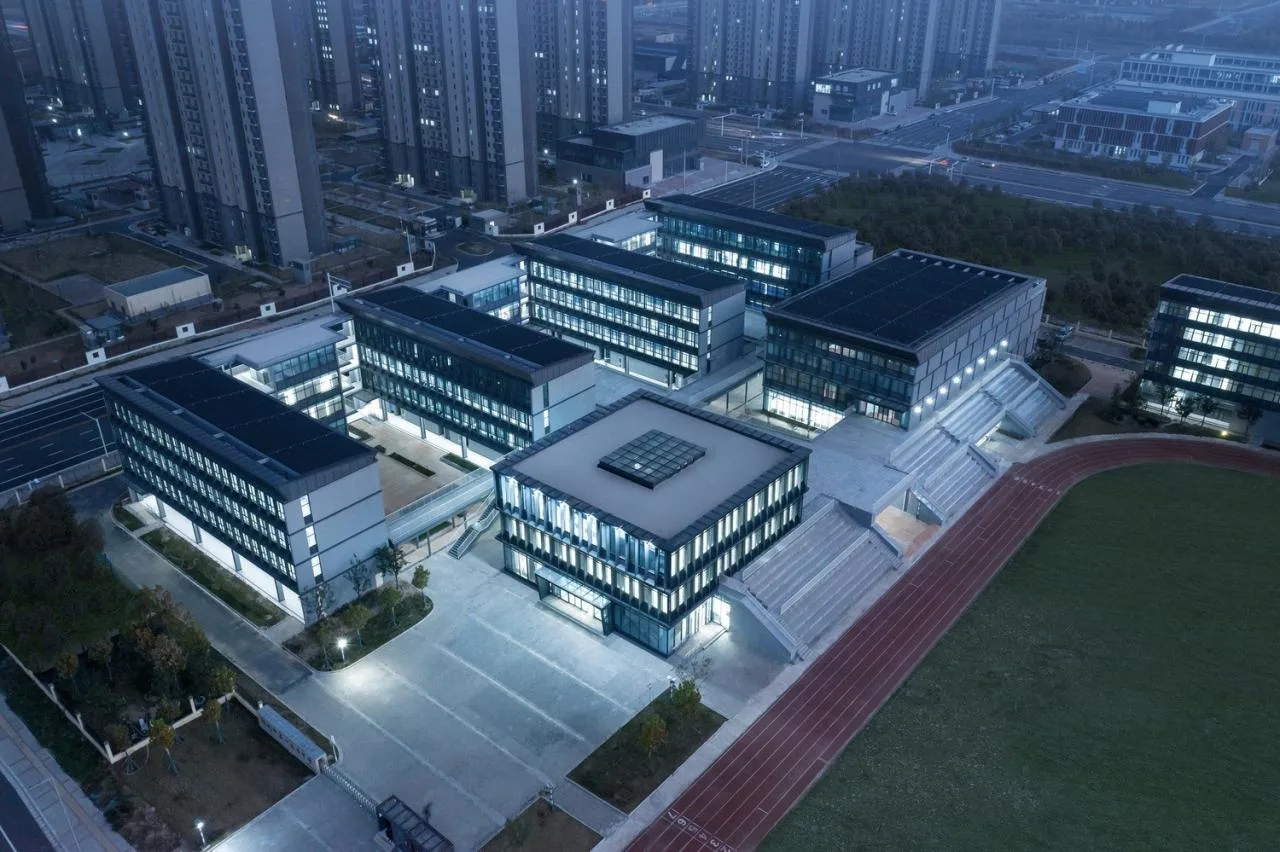
- Compared to traditional schools, the functions are more concentrated, and the spatial experience is more communal. The design incorporates many transitional “grey spaces” within the buildings that encourage interaction. Implicit classrooms and expanded shared areas foster collaboration. The second-floor outdoor activity platform connects the teaching building, gymnasium, and cafeteria, forming a dedicated activity center for students. The interlocking volumes and elevated corridors provide functional teaching spaces while creating vibrant indoor and outdoor areas, promoting innovation in the school’s educational model.
- Between the four teaching buildings, the traditional “Xuetangyuan” courtyard layout of Zhengzhou is reinterpreted, cultivating a fresh, elegant scholarly atmosphere.
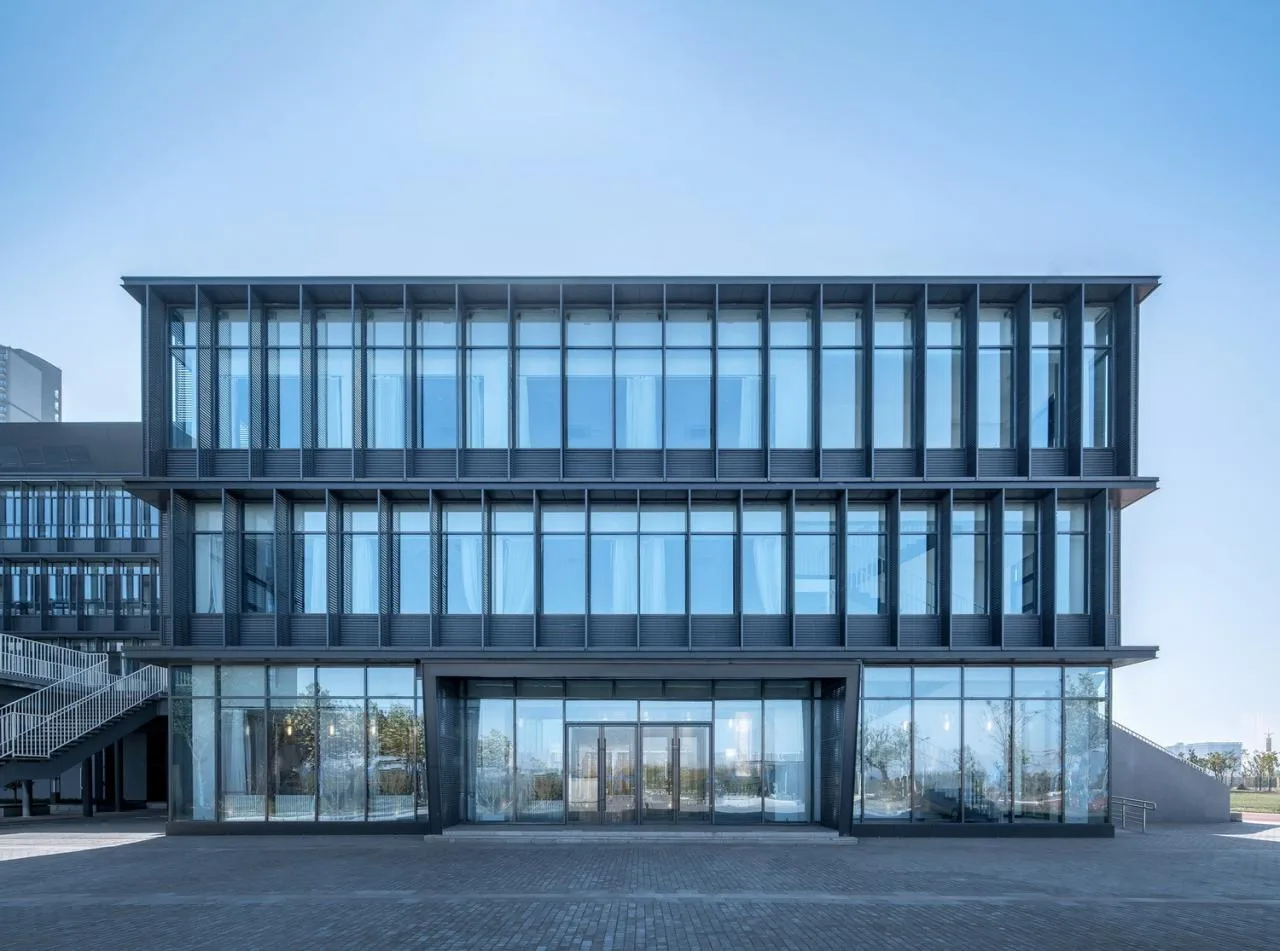
Shared classrooms activate what would otherwise be passive inner courtyard spaces. Combined with outdoor small theaters, transparent broadcasting stations, and outdoor planting areas, these multifunctional group courtyards offer diverse activity possibilities, achieving a synergy effect greater than the sum of its parts.
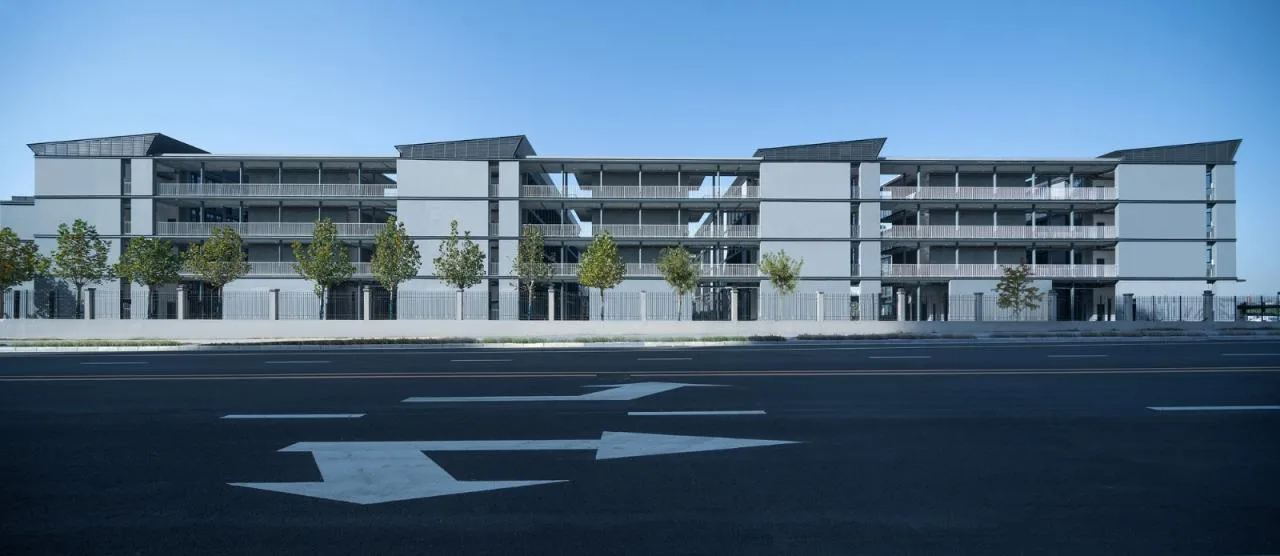
3. The roof features a single-sloped design that complements the overall architectural style. Following the “form follows function” principle, the space beneath the sloping roof is cleverly used to house outdoor air conditioning units, representing a subtle yet practical innovation within a traditional roof form.
Project Information
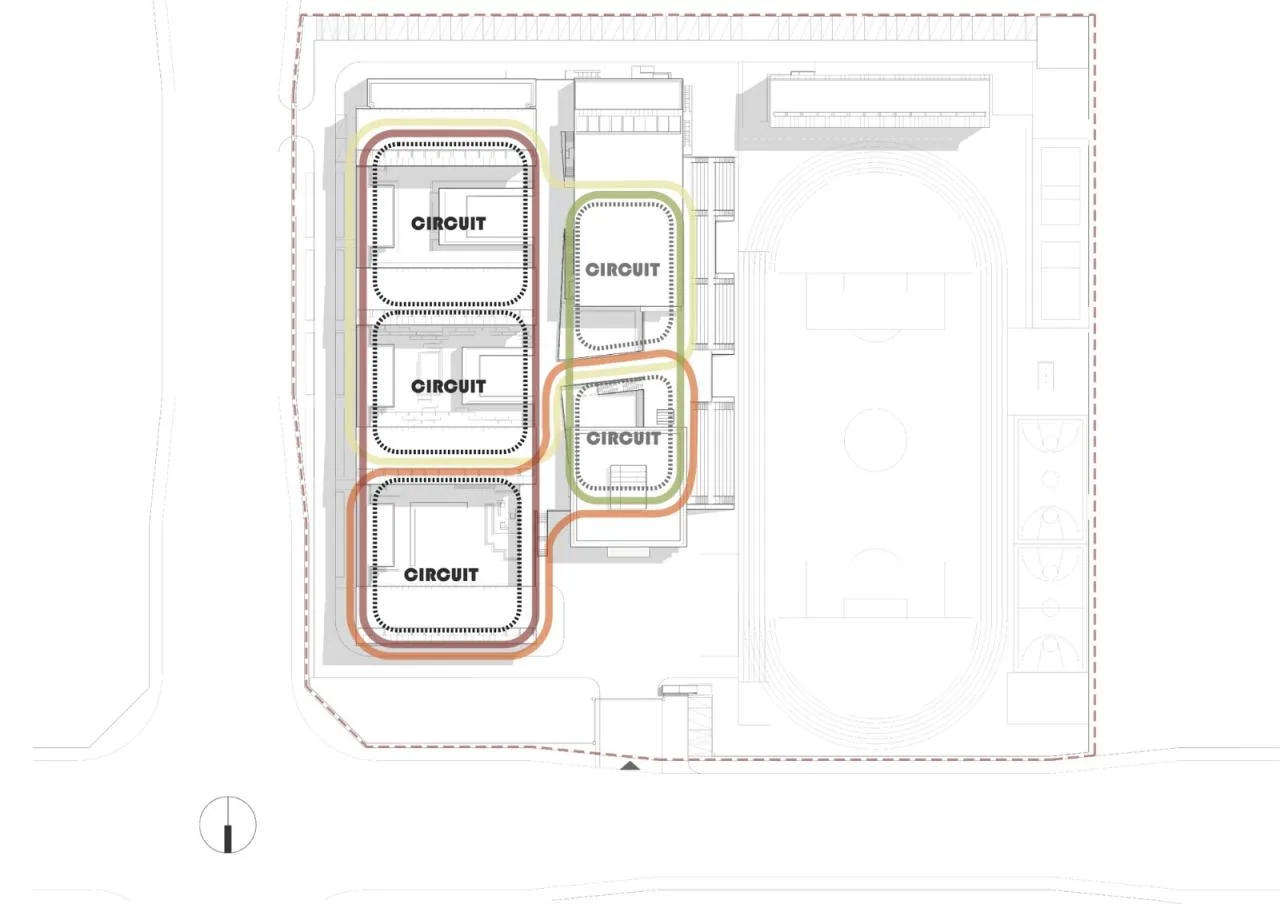
△ Functional zoning diagram
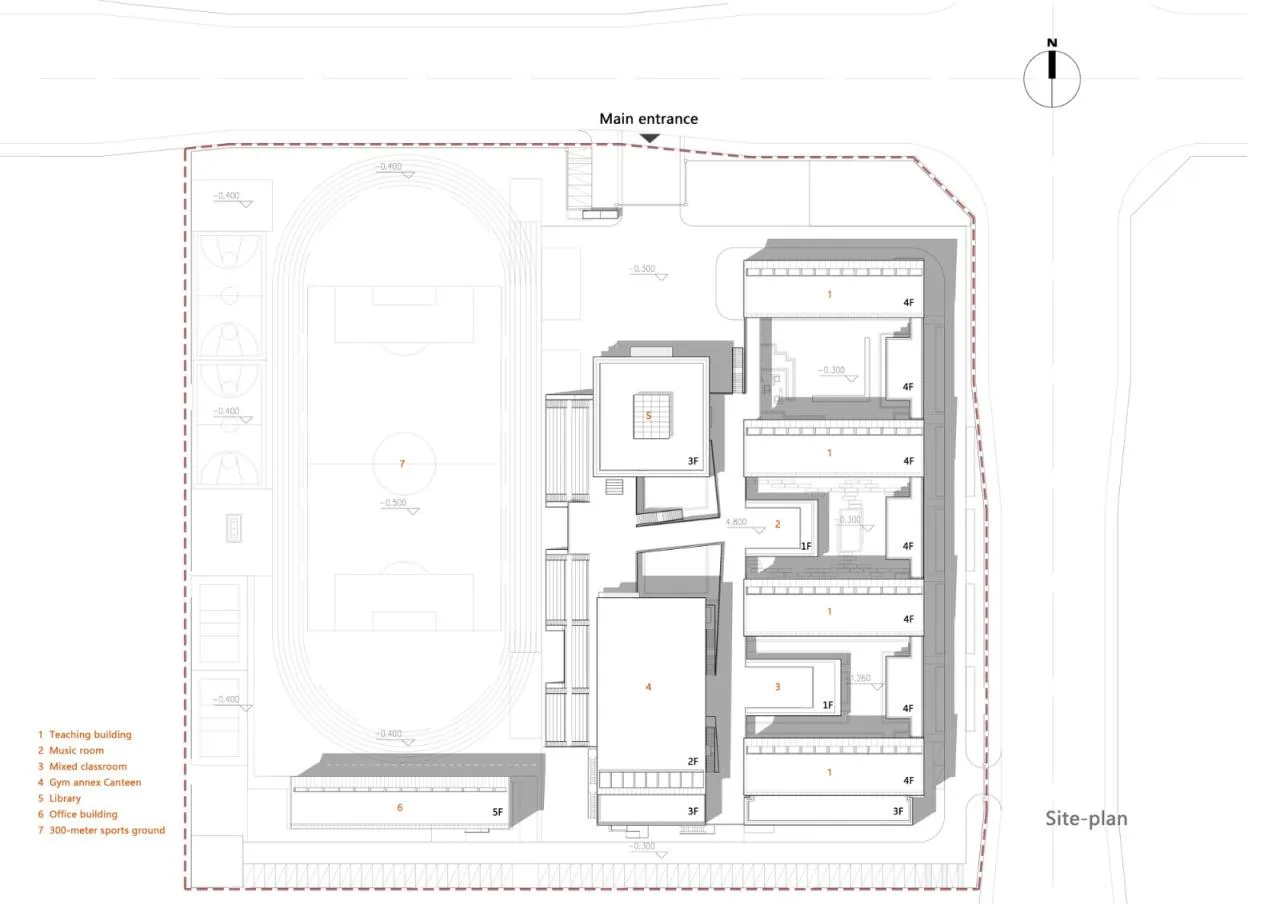
△ General layout plan
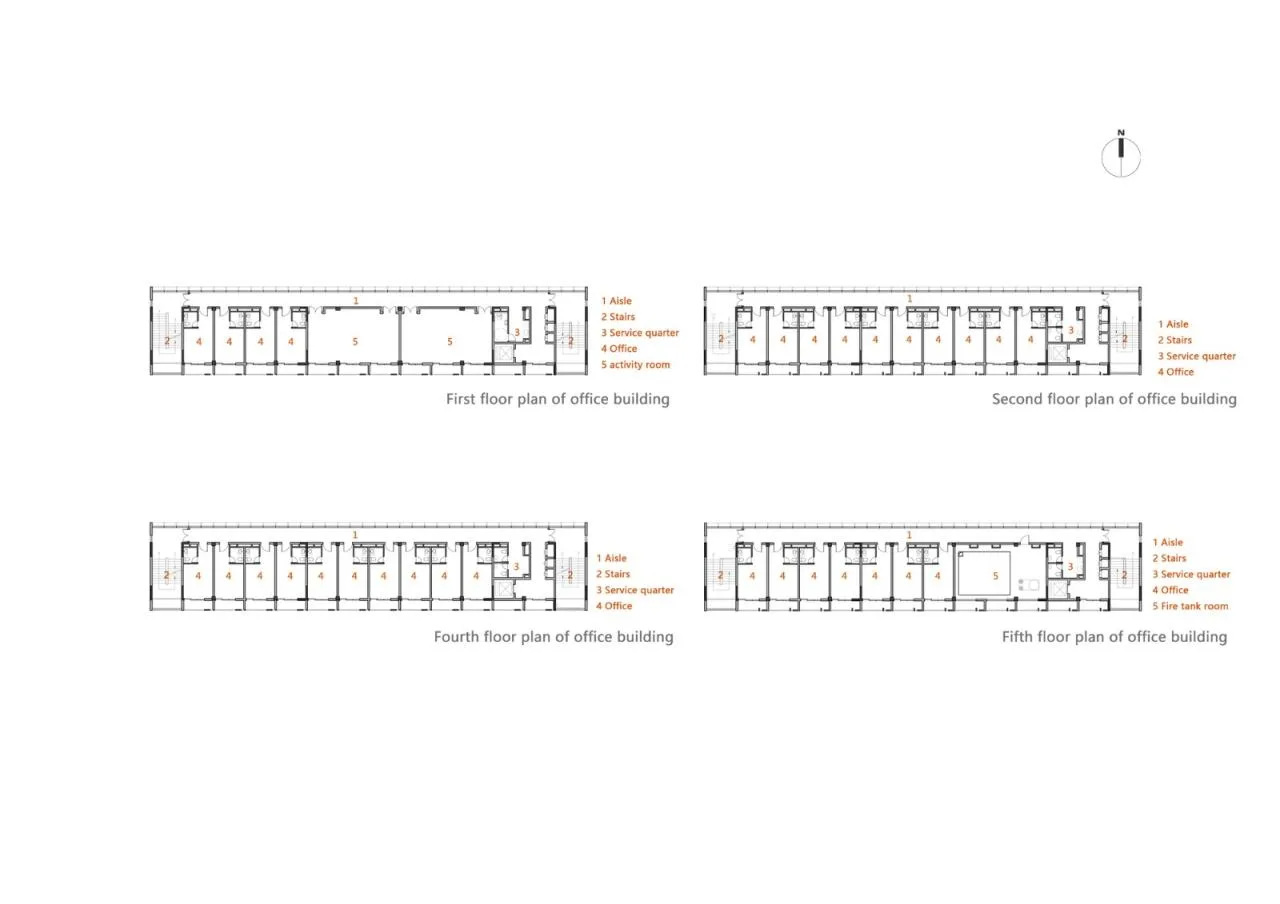
△ Office floor plan
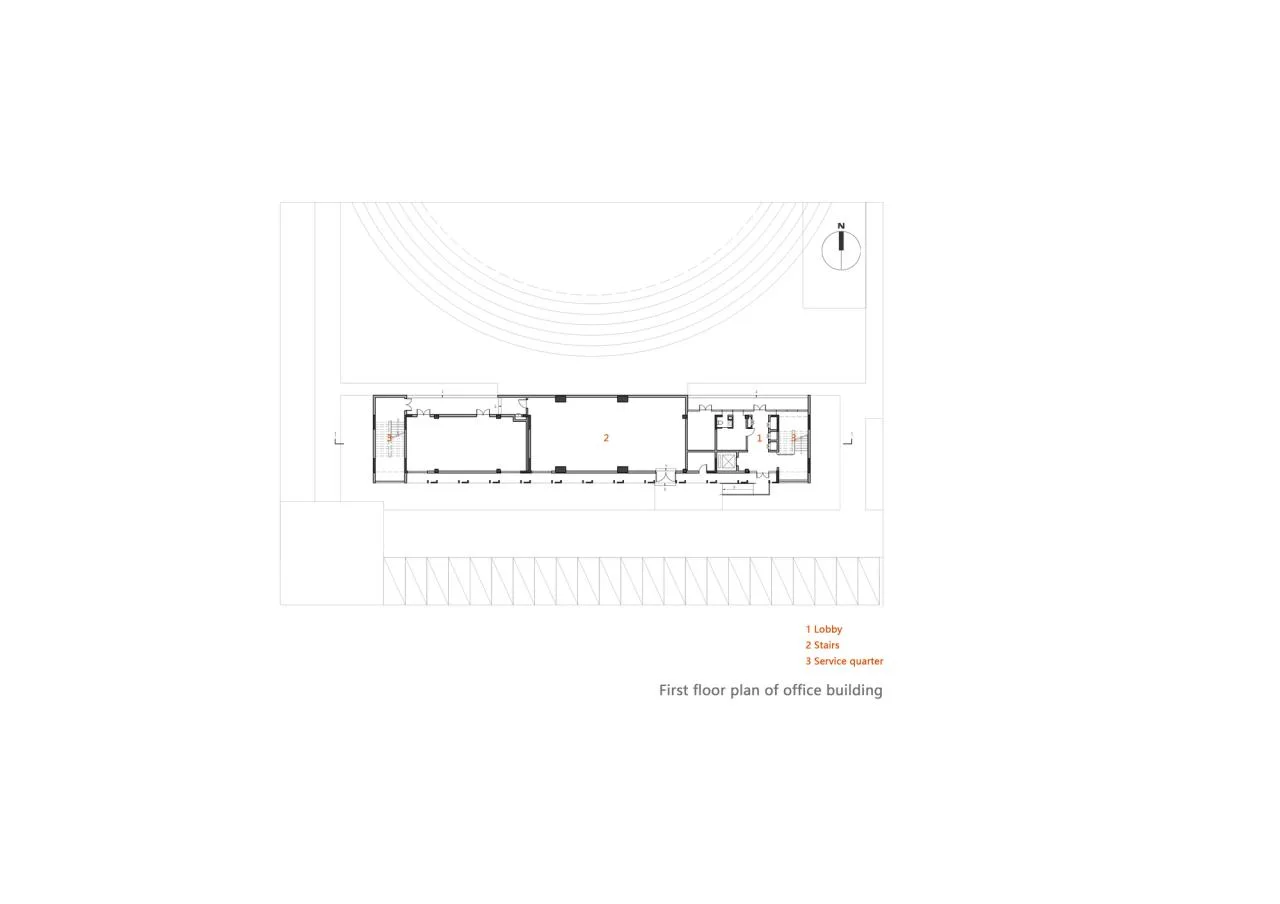
△ Office floor plan
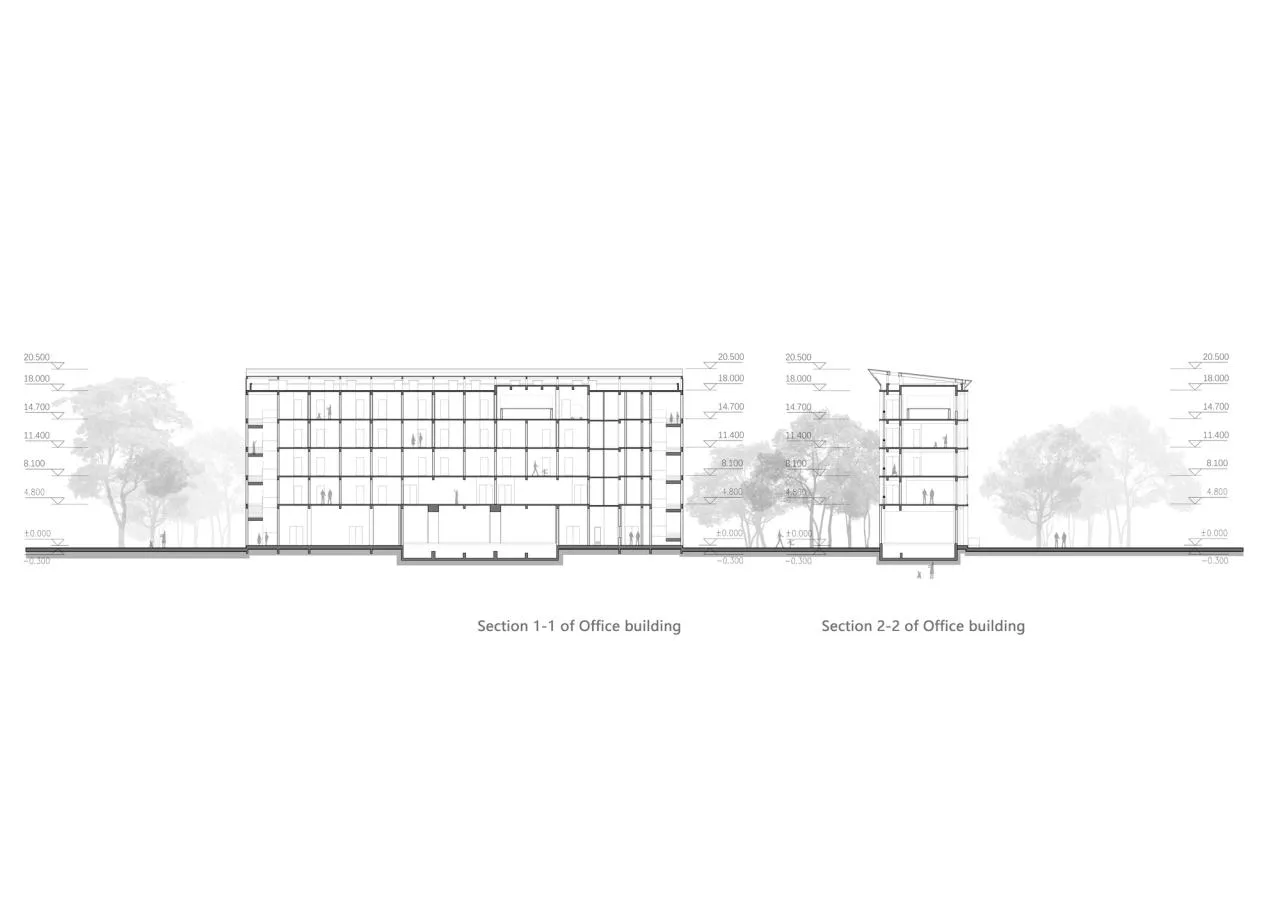
△ Office sectional view
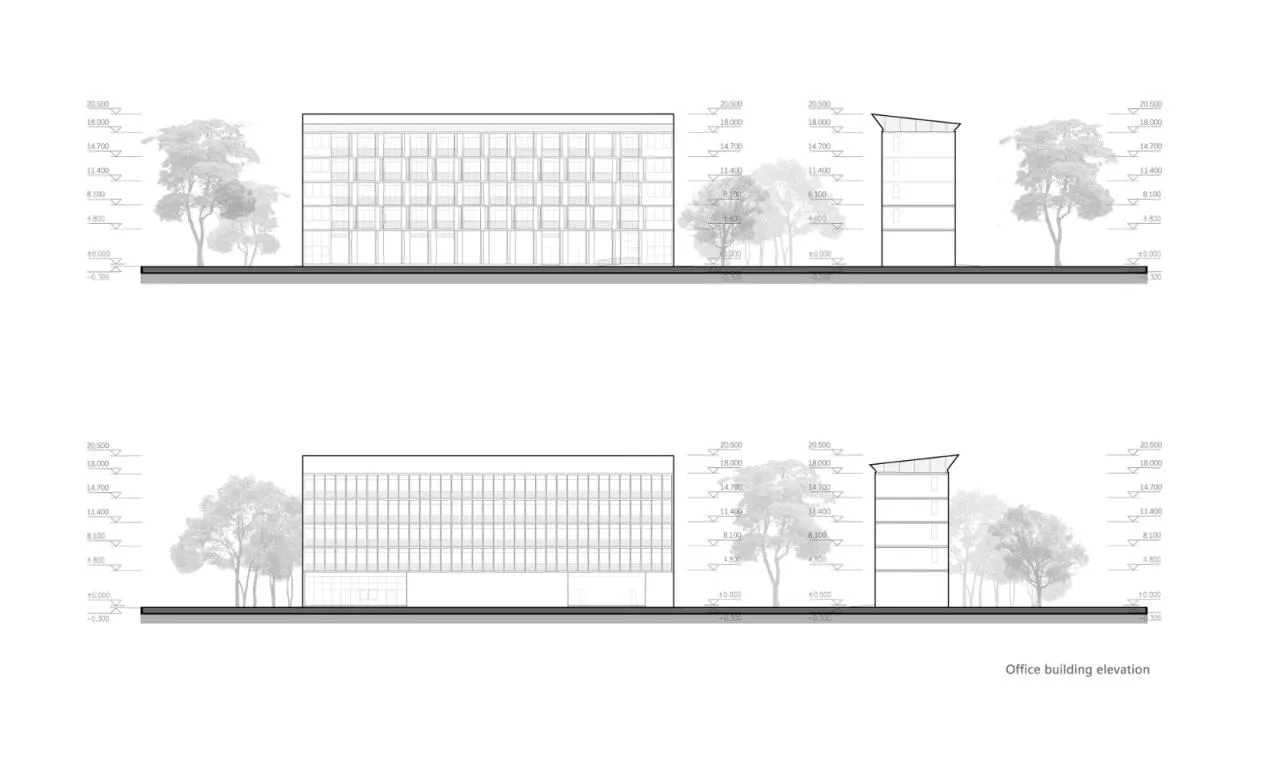
△ Office elevation view
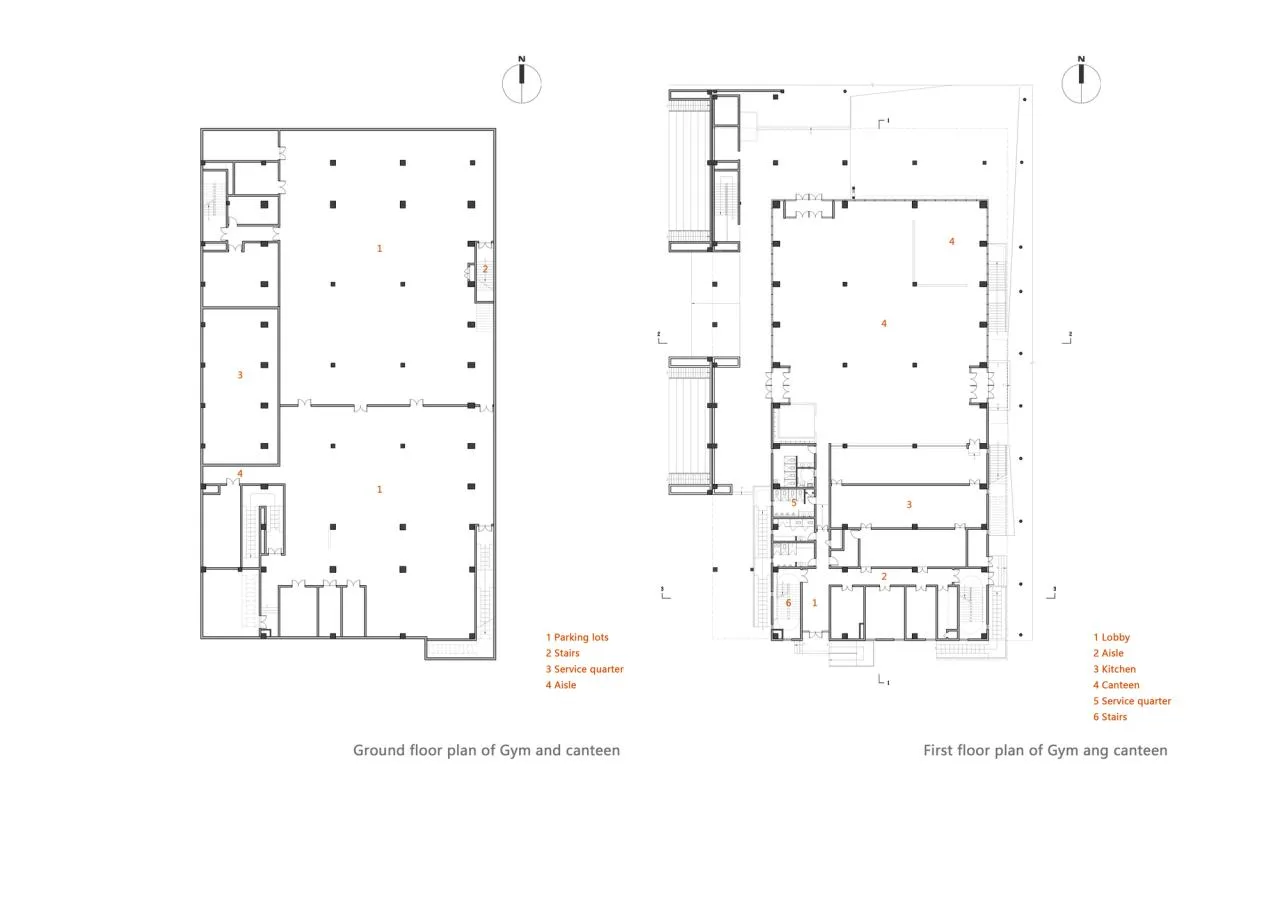
△ Plan of Sports Stadium and Cafeteria
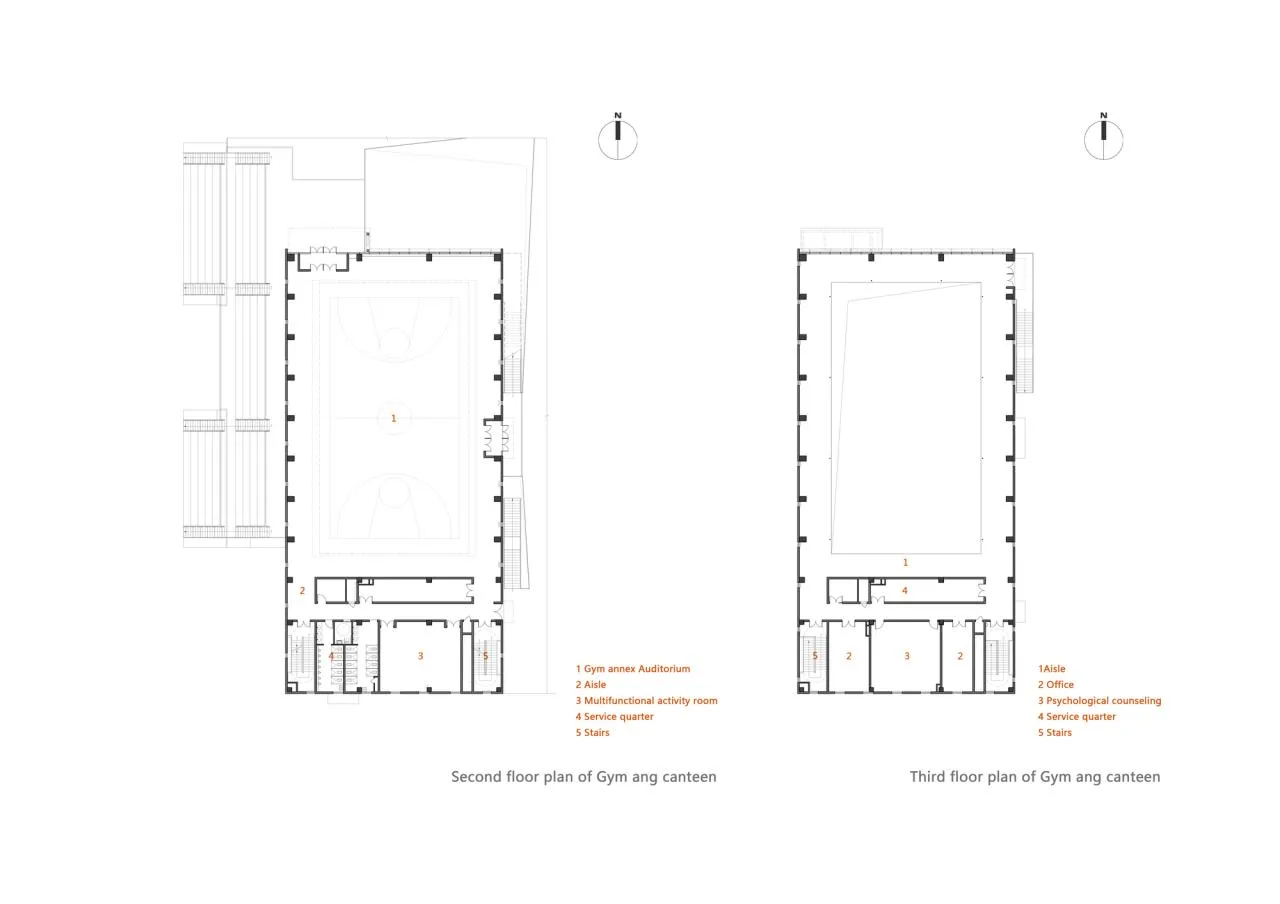
△ Plan of Sports Stadium and Cafeteria
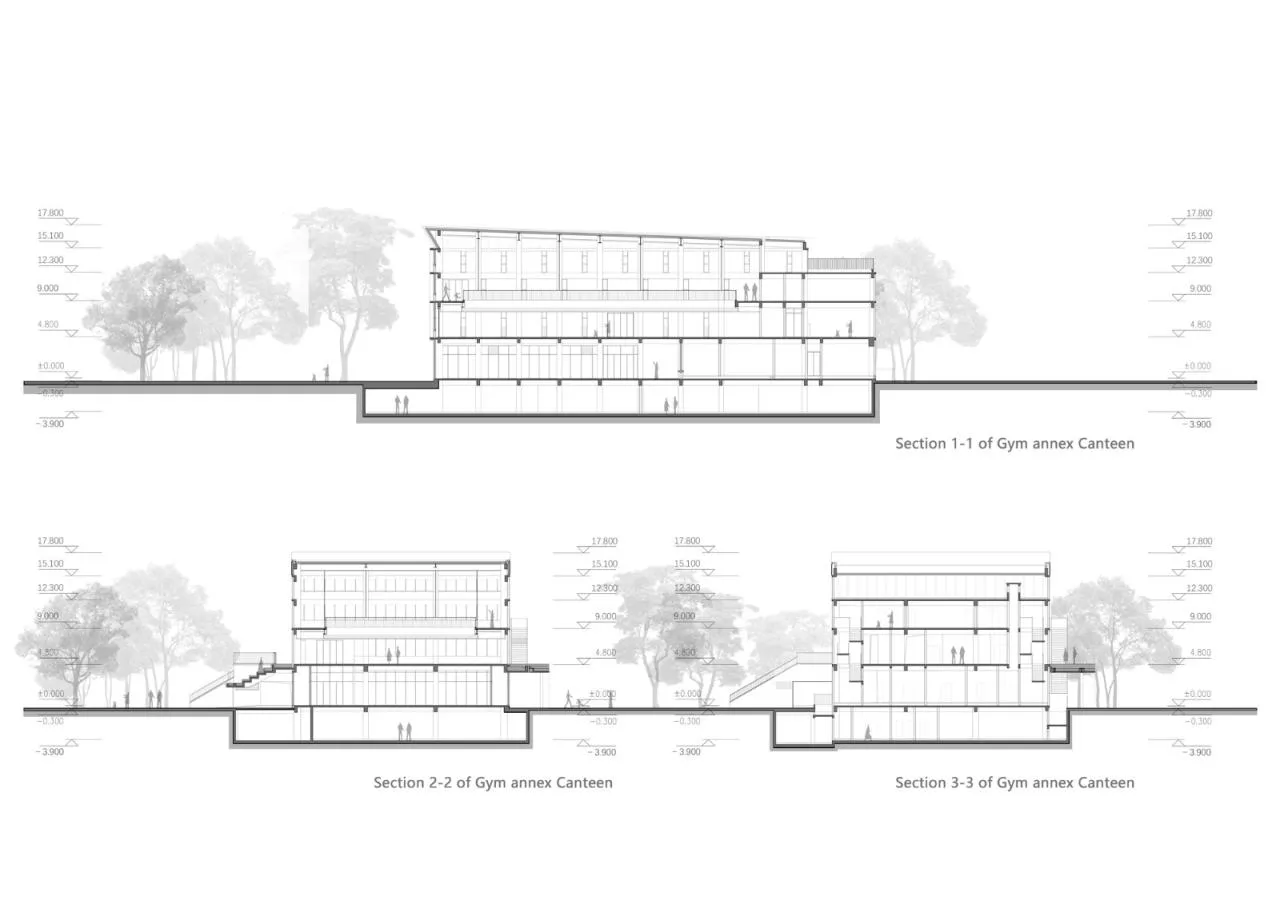
△ Section of Sports Stadium and Cafeteria
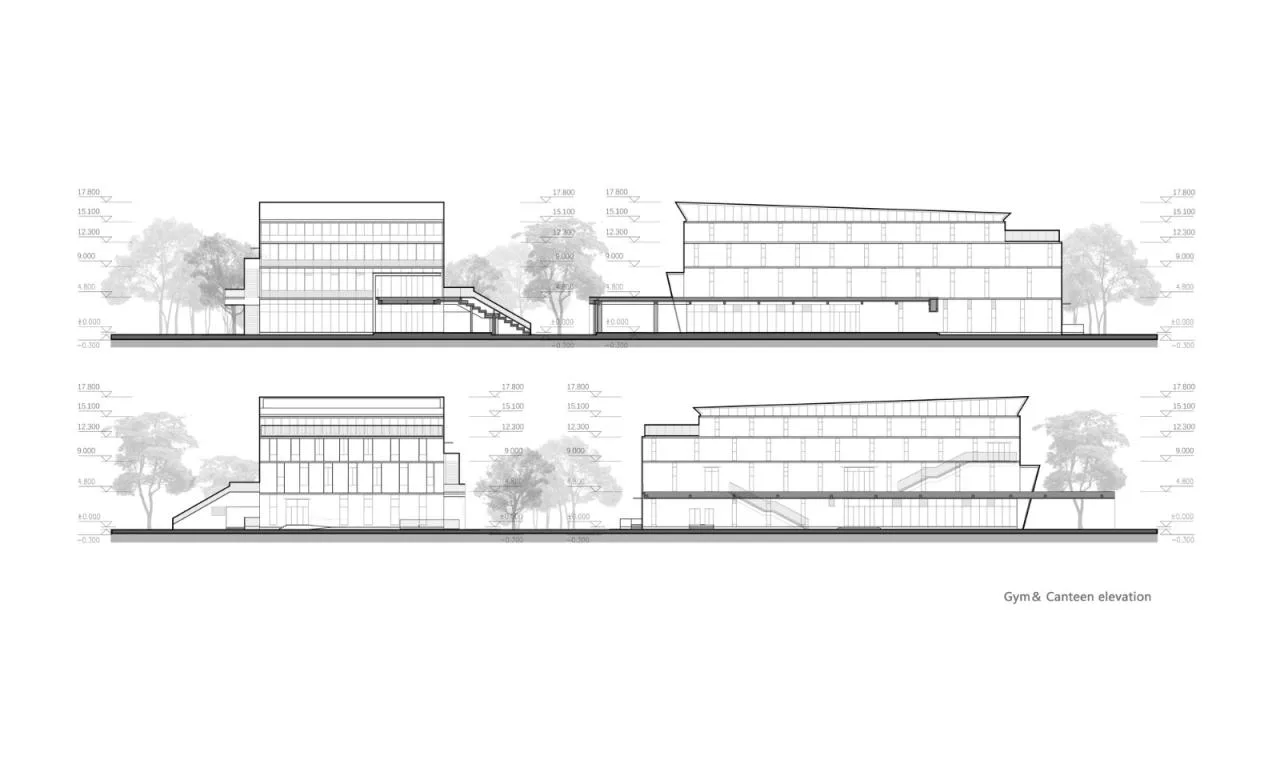
△ Elevation of Sports Stadium and Cafeteria
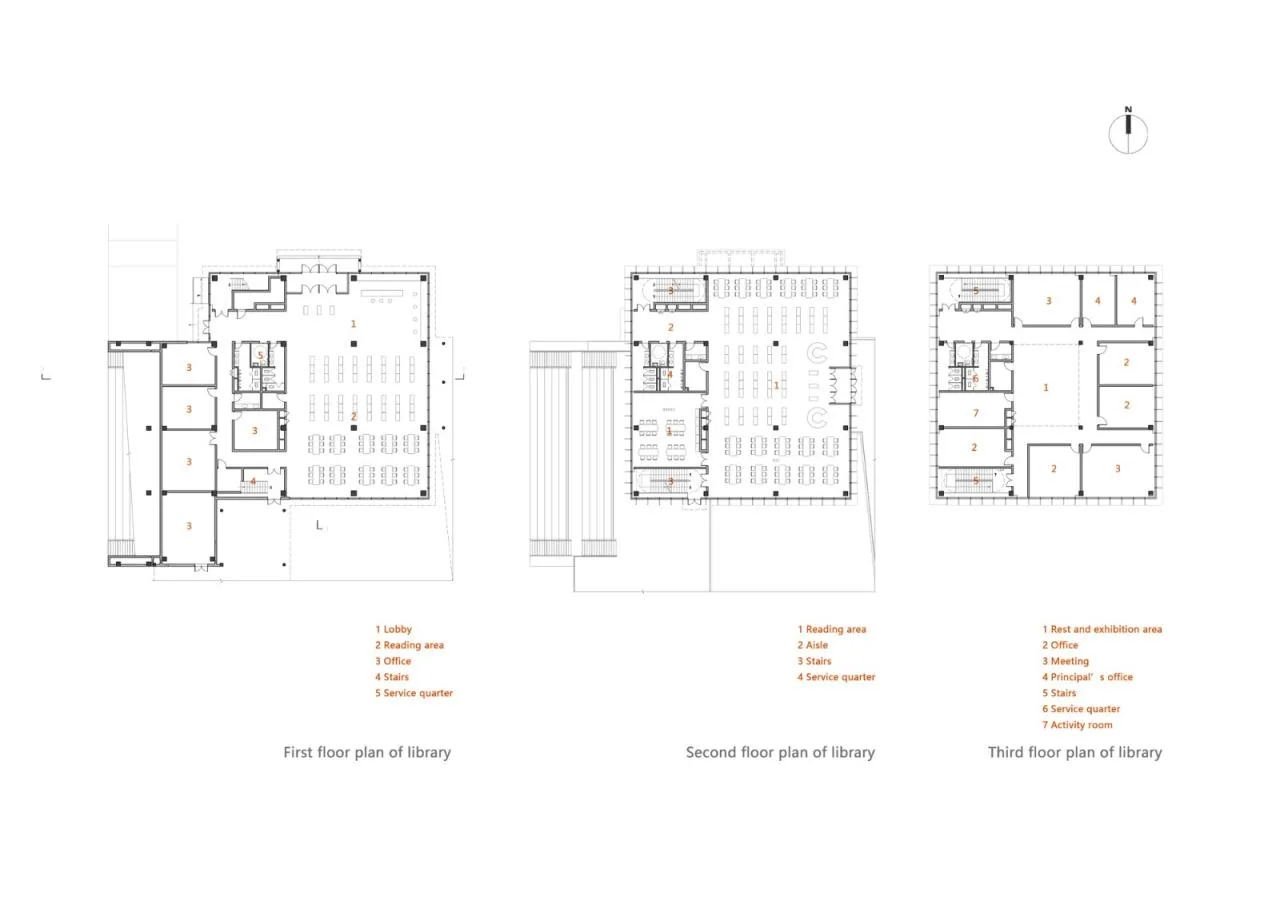
△ Library floor plan
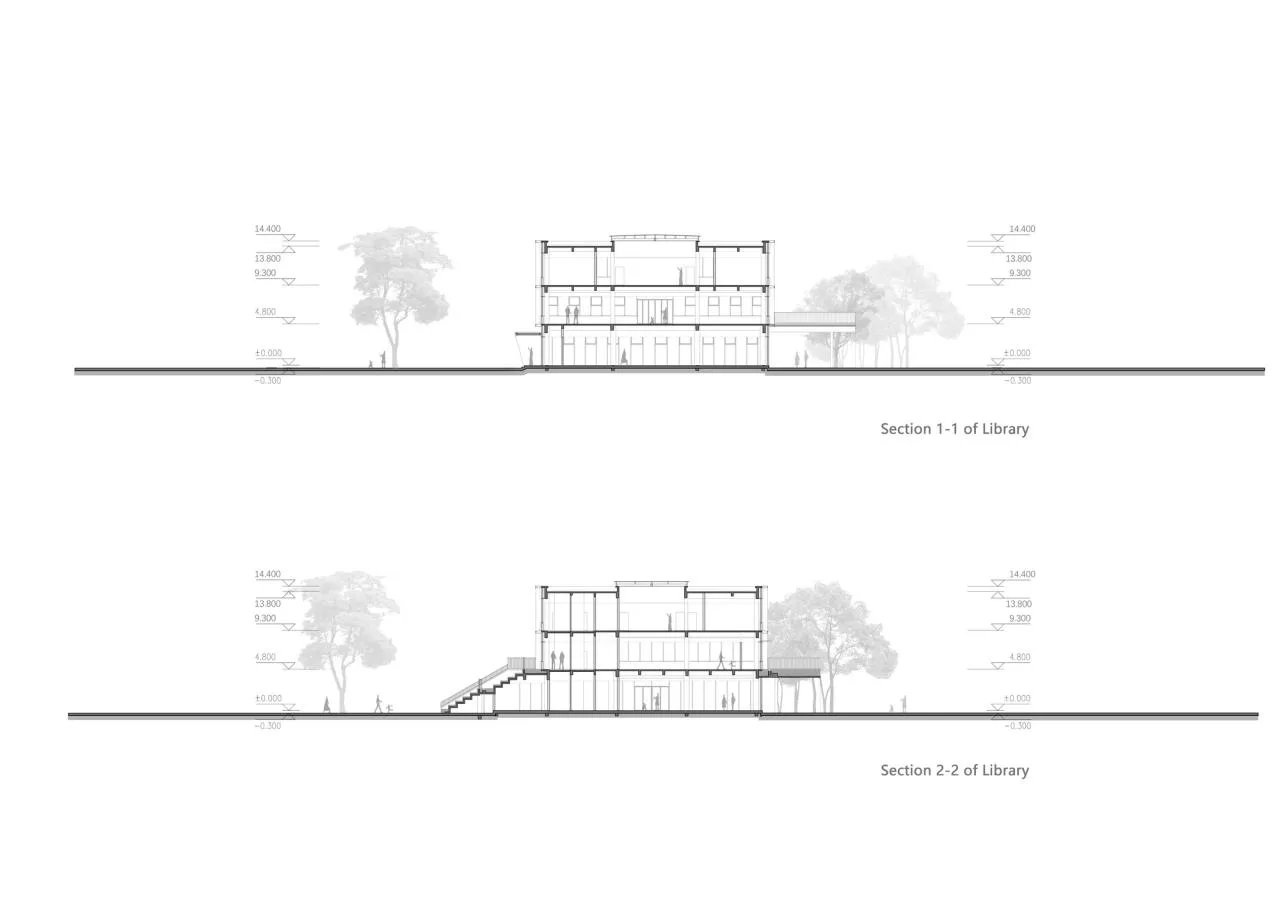
△ Library section map
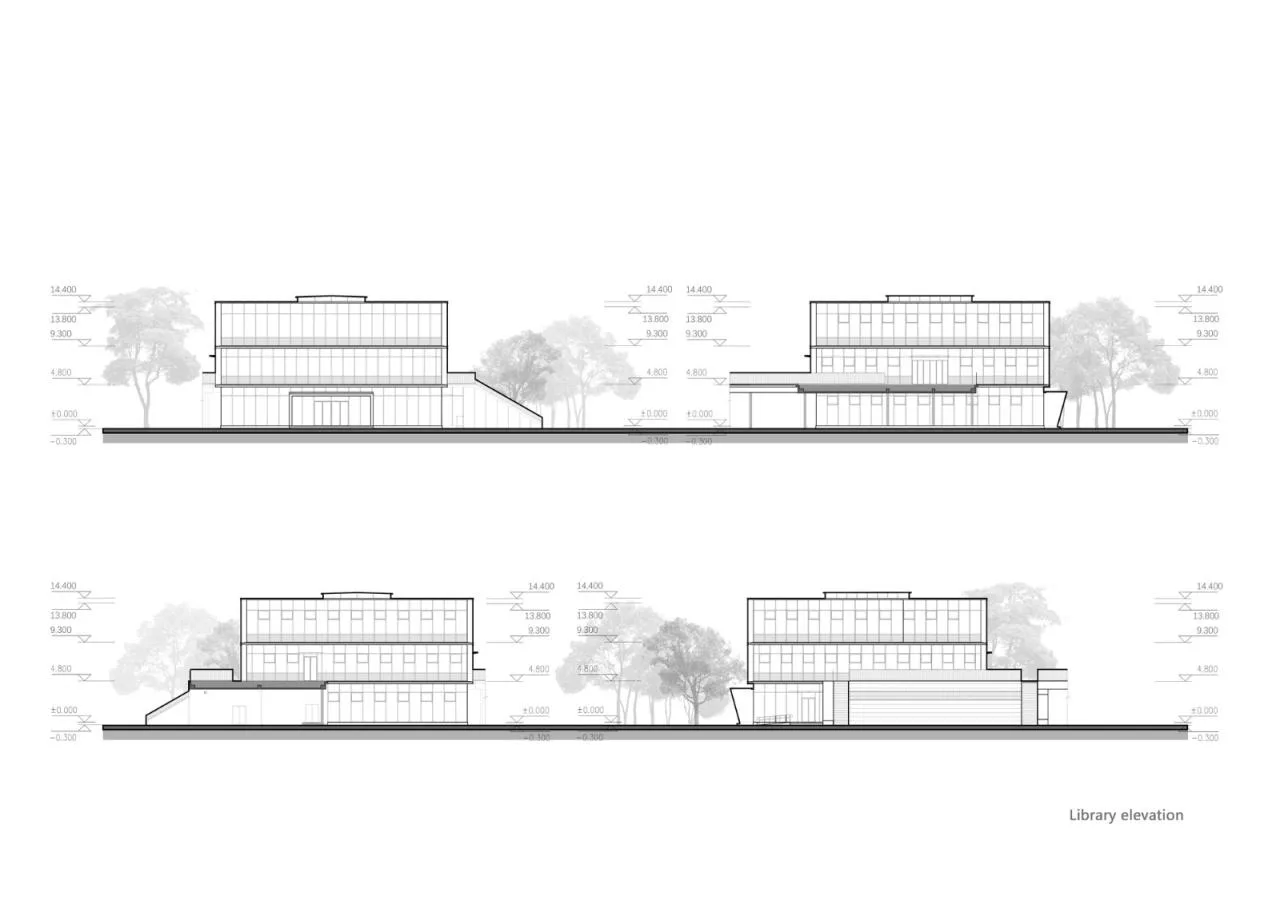
△ Library elevation view
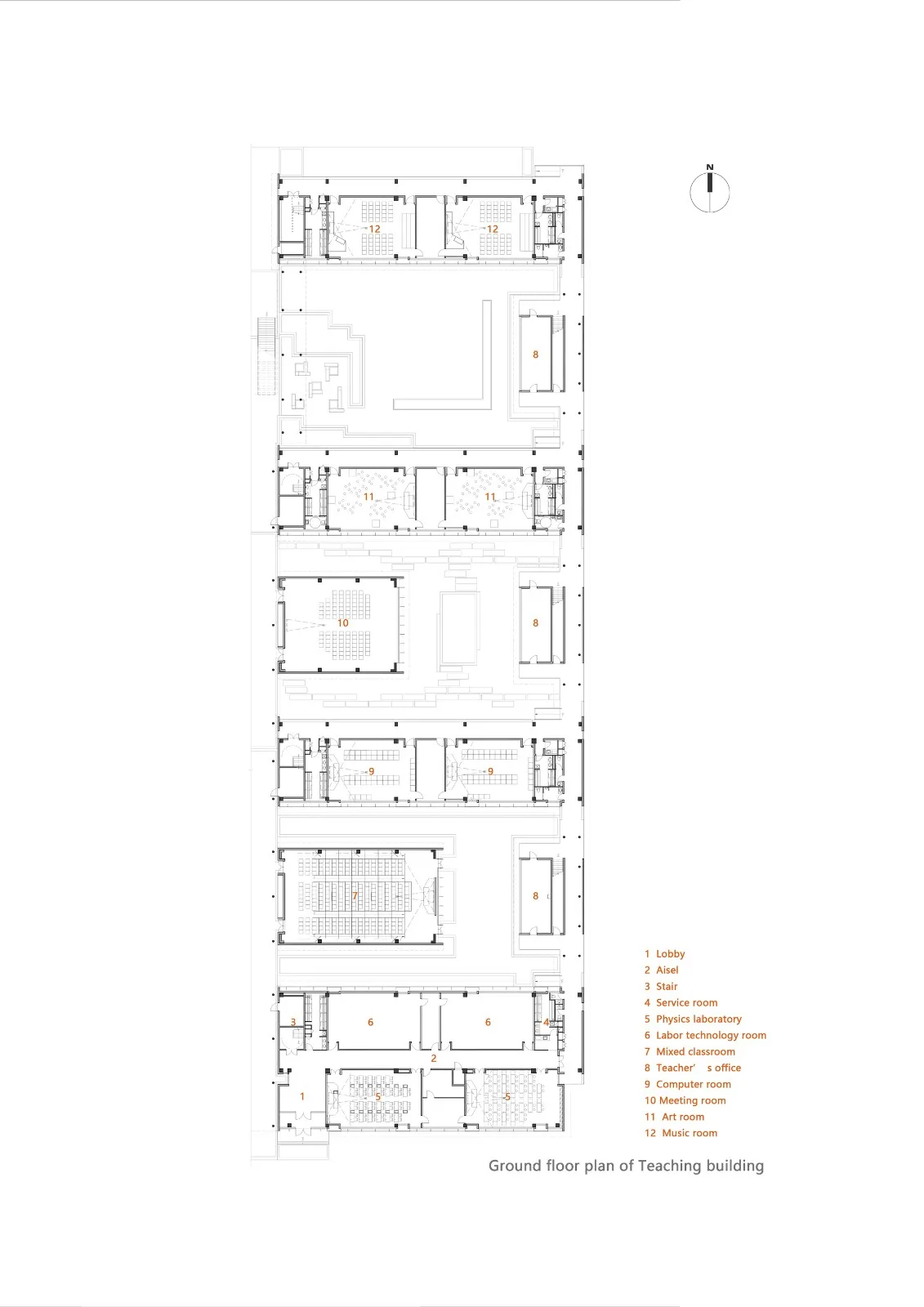
△ First floor plan of the teaching building
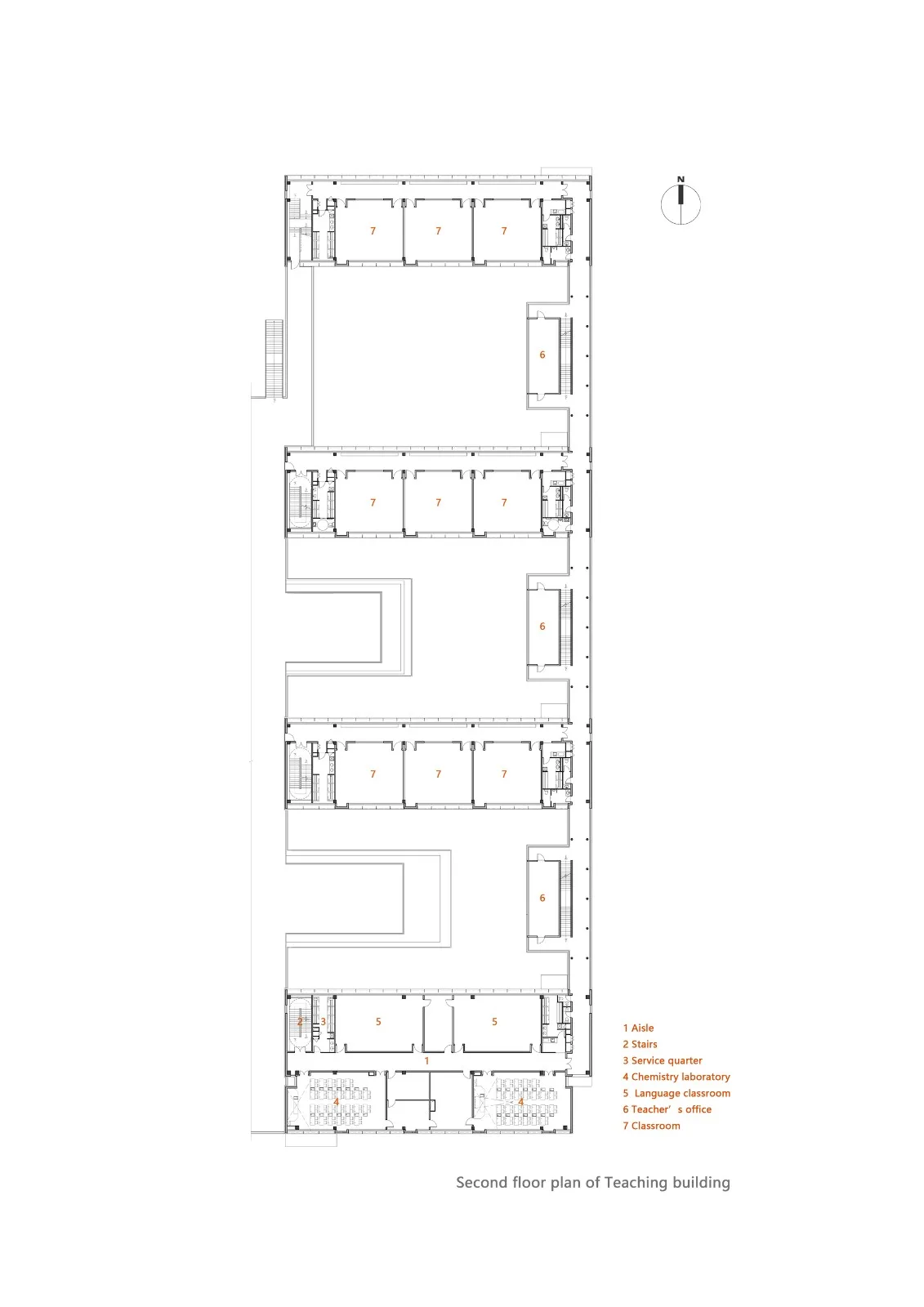
△ Second floor plan of the teaching building
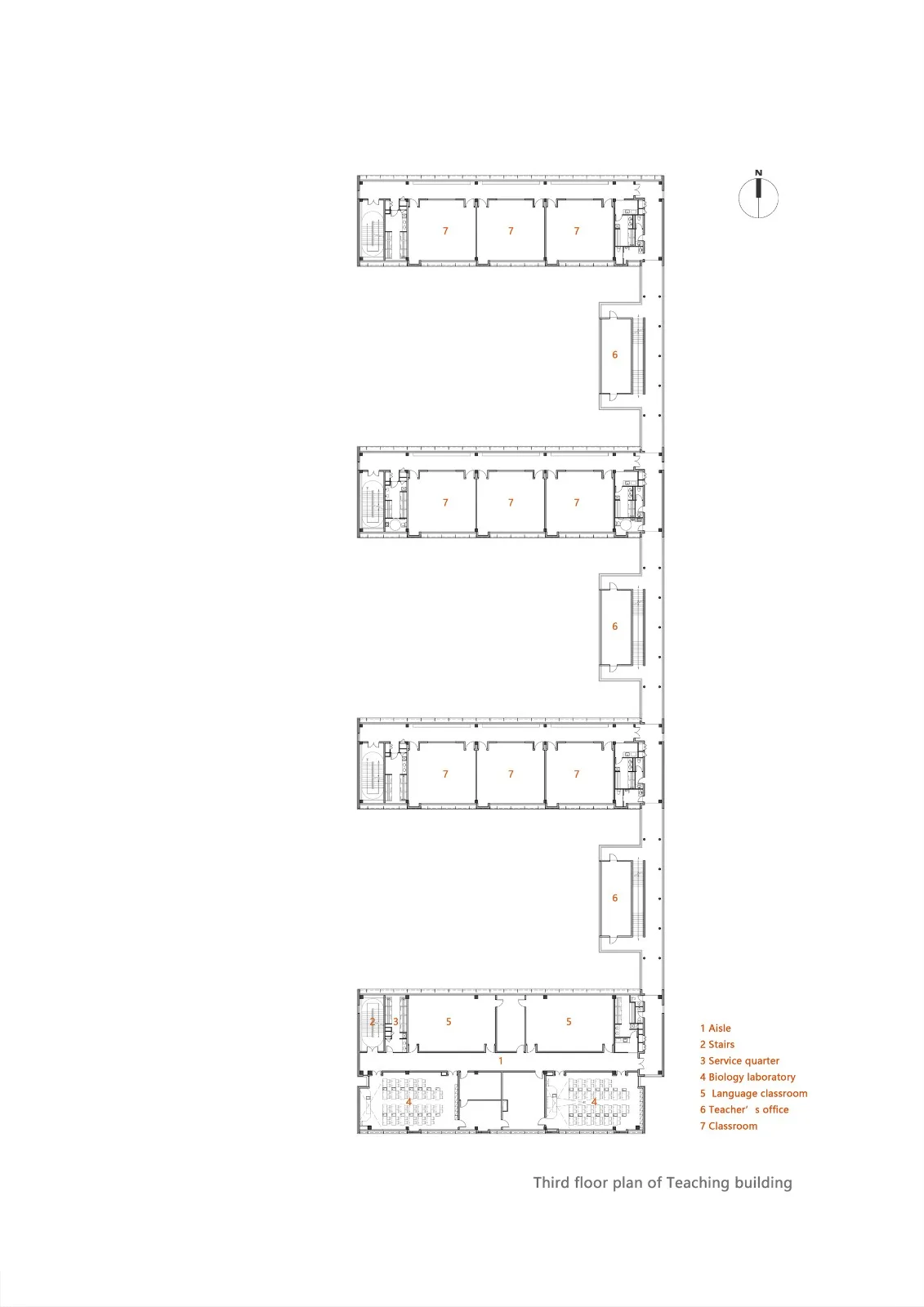
△ Third floor plan of the teaching building
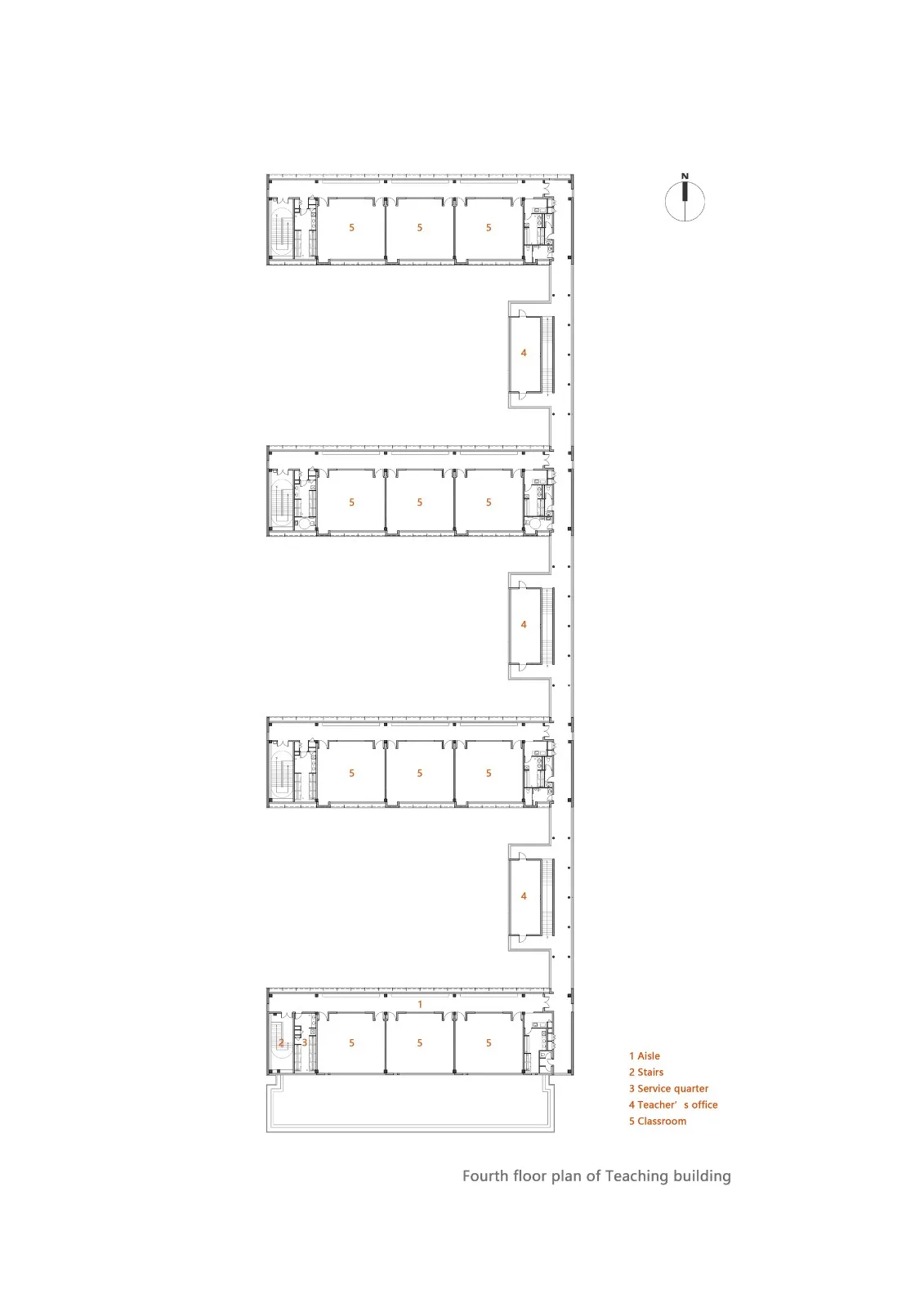
△ Fourth floor plan of the teaching building
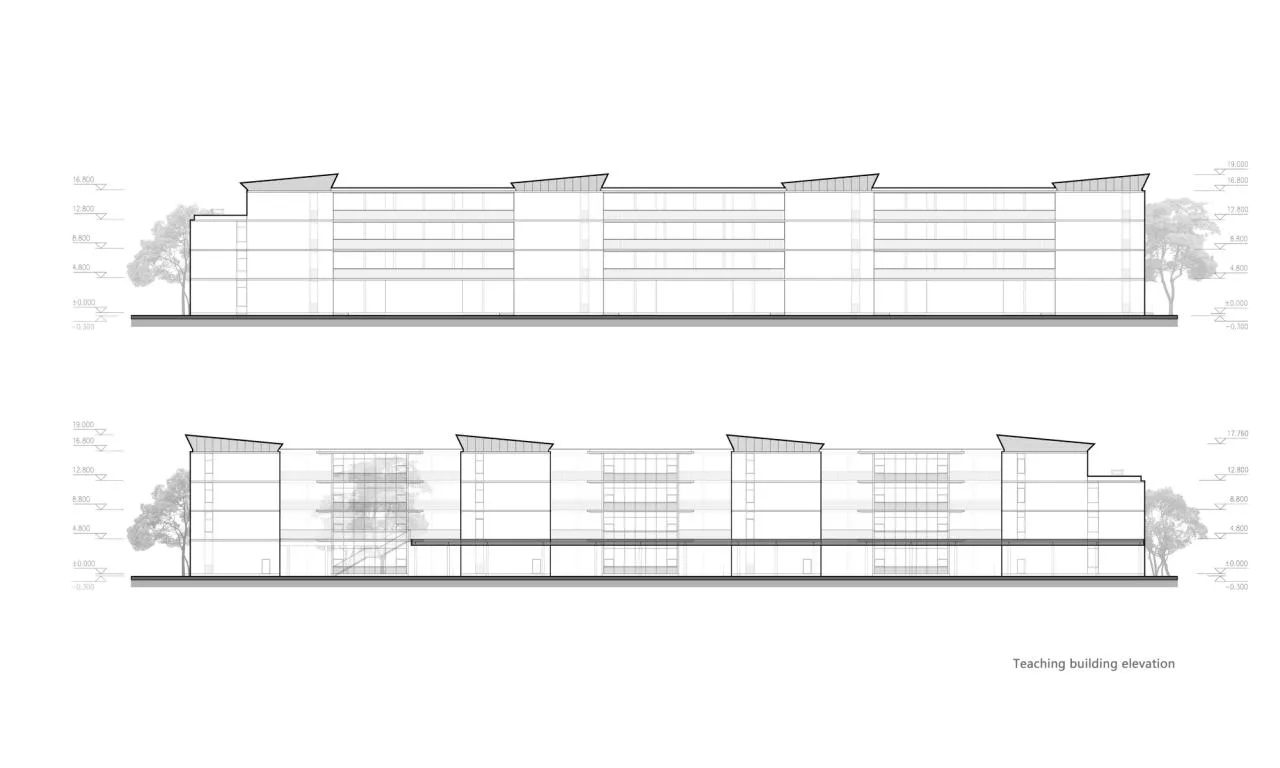
△ Teaching Building Facade
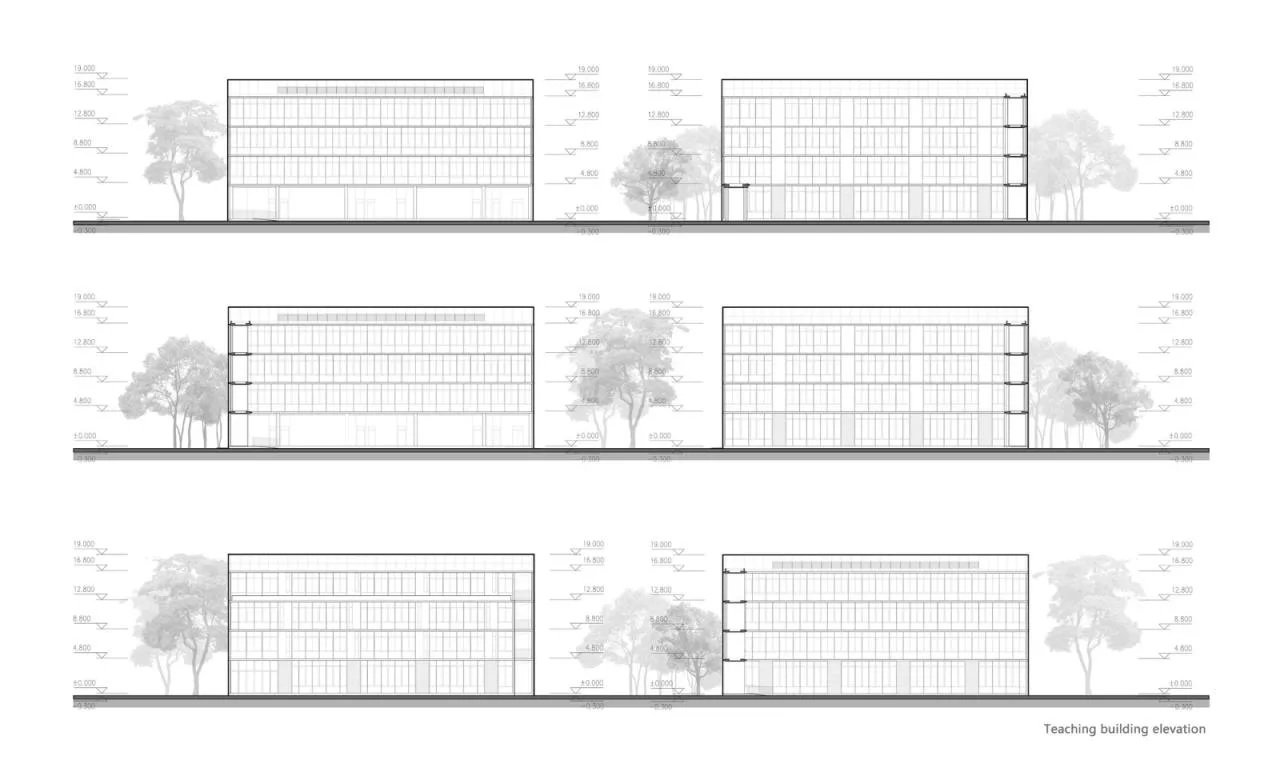
△ Teaching Building Facade
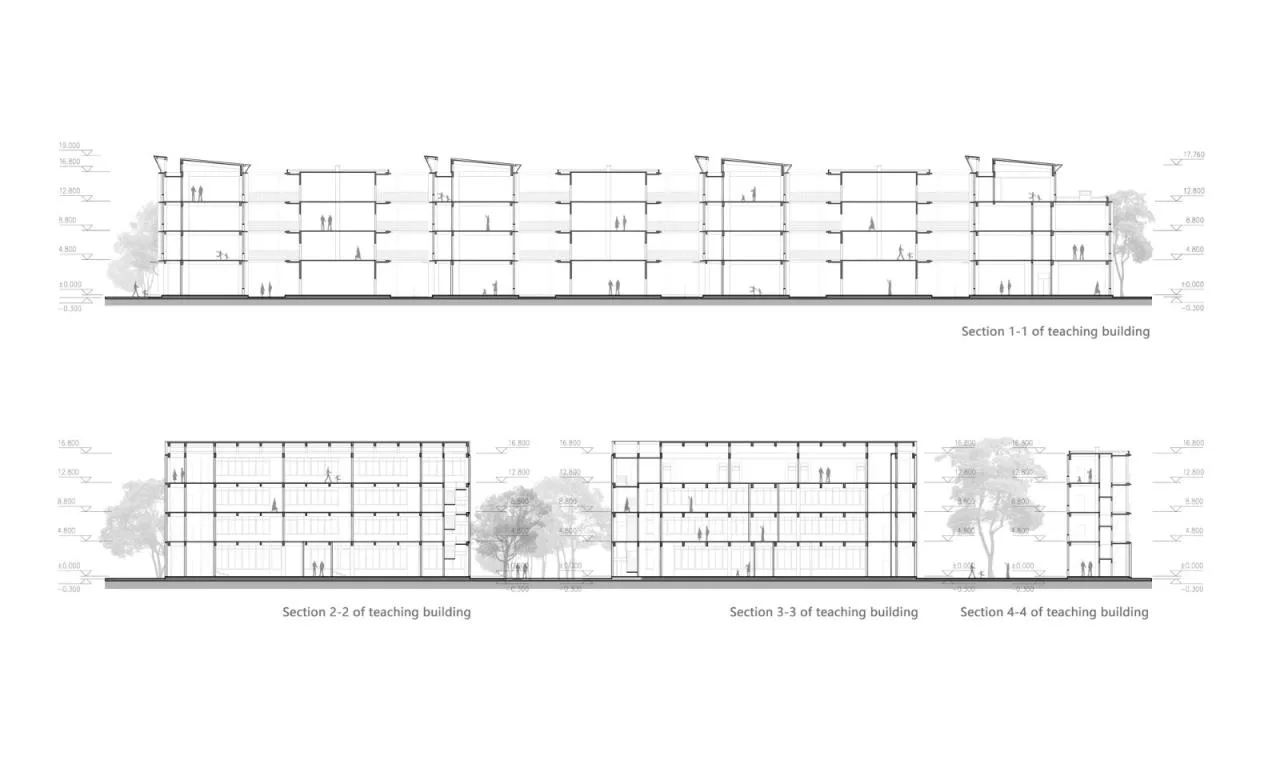
△ Sectional drawing of the teaching building
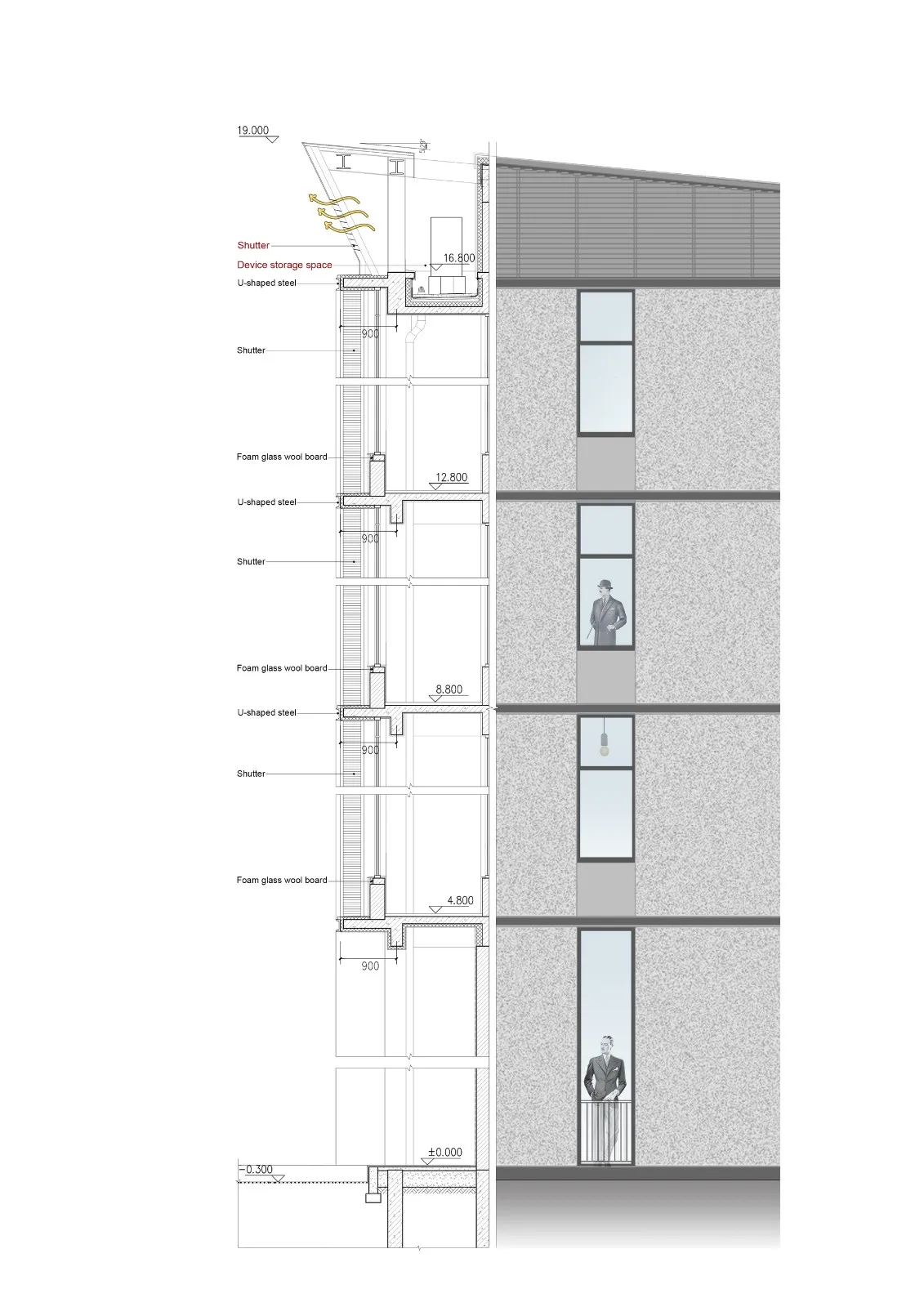
△ Detailed sectional view
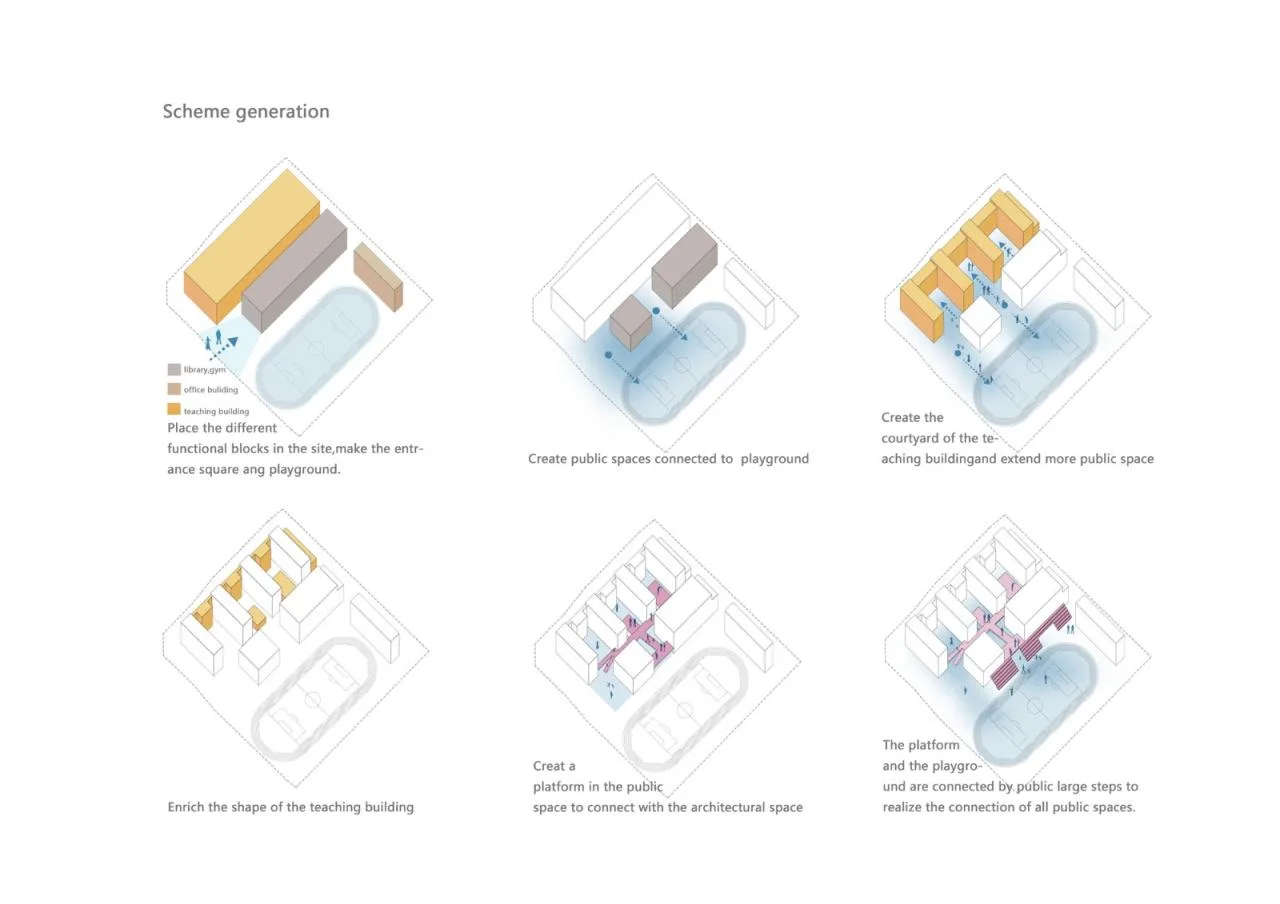
△ Analysis chart
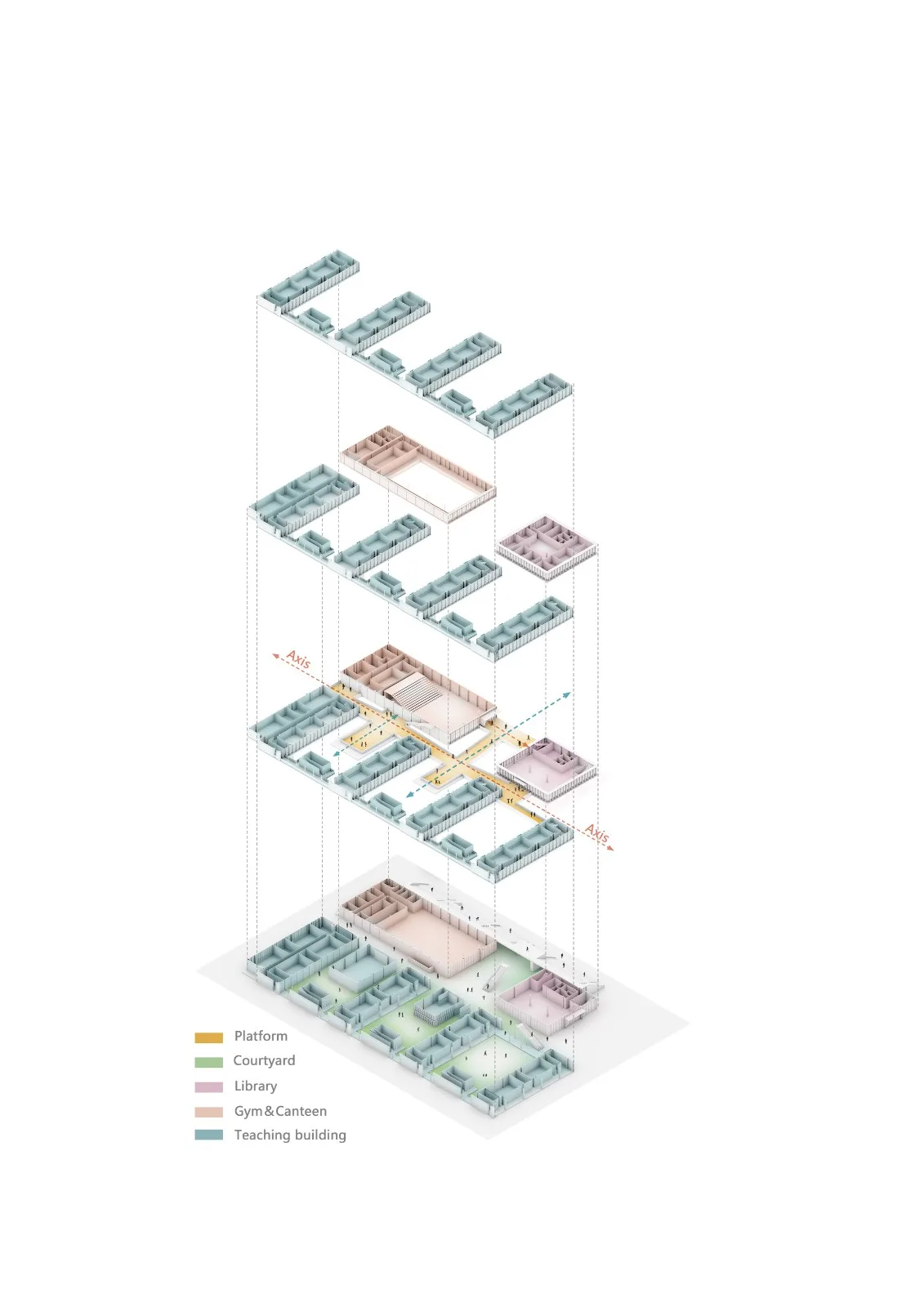
△ Explosion diagram
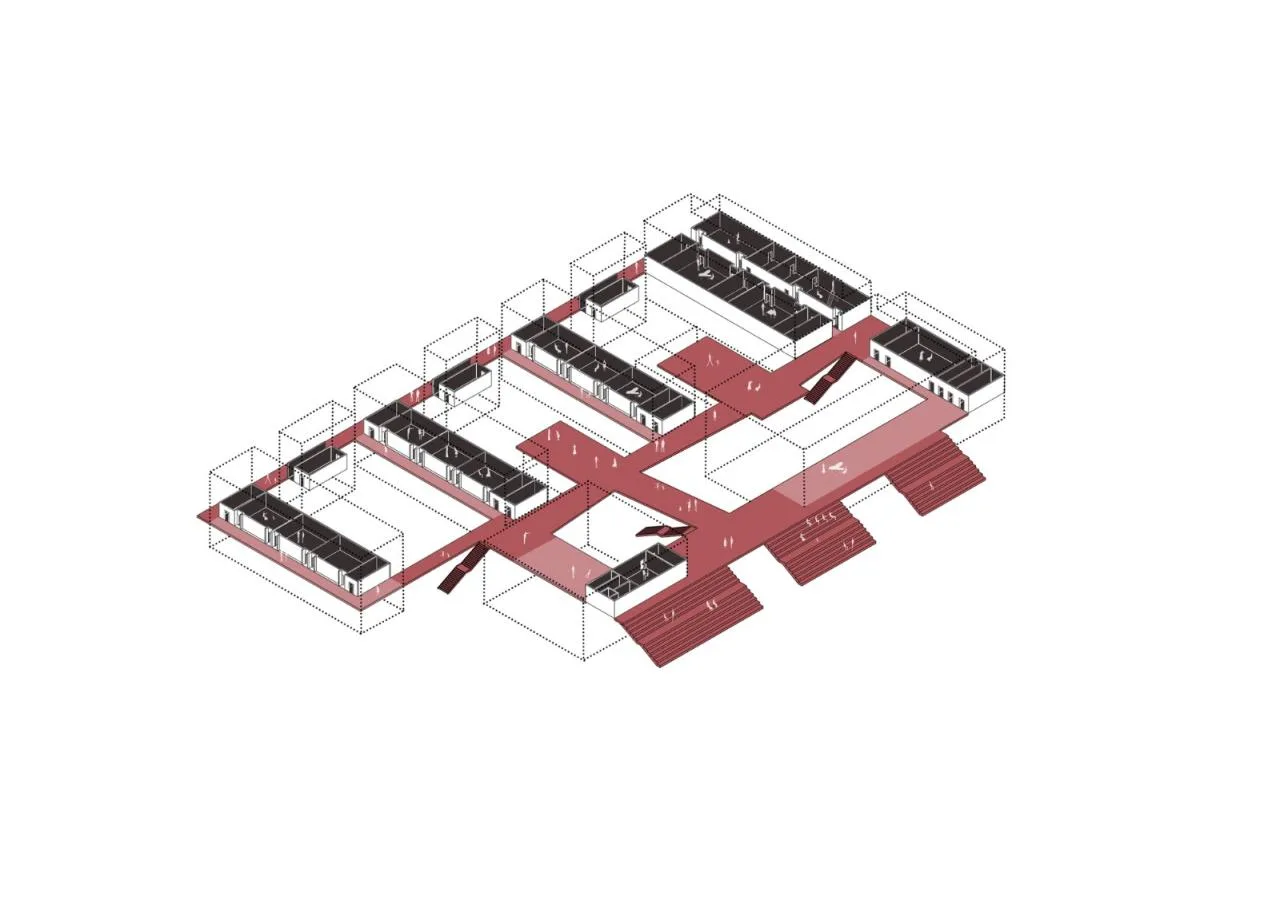
△ Analysis chart
Project Details
Architect: Shanghai Lianchuang Design Group
Area: 22,164 m²
Year of Completion: 2019
Photographer: MLEE
Lead Architects: Qian Qiang, Gu Kewei, Tao Fangyuan, Cai Lizhi, Wu Shanshan, Yang Jiarong
Design Team: UDG China One Room
Client: Zhengzhou Airport Area Flight Real Estate Co., Ltd
Mechanical and Electrical Design: UDG Electrical and Mechanical Department I
Structural Design: UDG Structure Part 1
Landscape Design: UDG Landscape Department 2
Construction: Zhengzhou First Construction Group Co., Ltd
Location: Zhengzhou, Henan, China












Must log in before commenting!
Sign Up