
Introduction
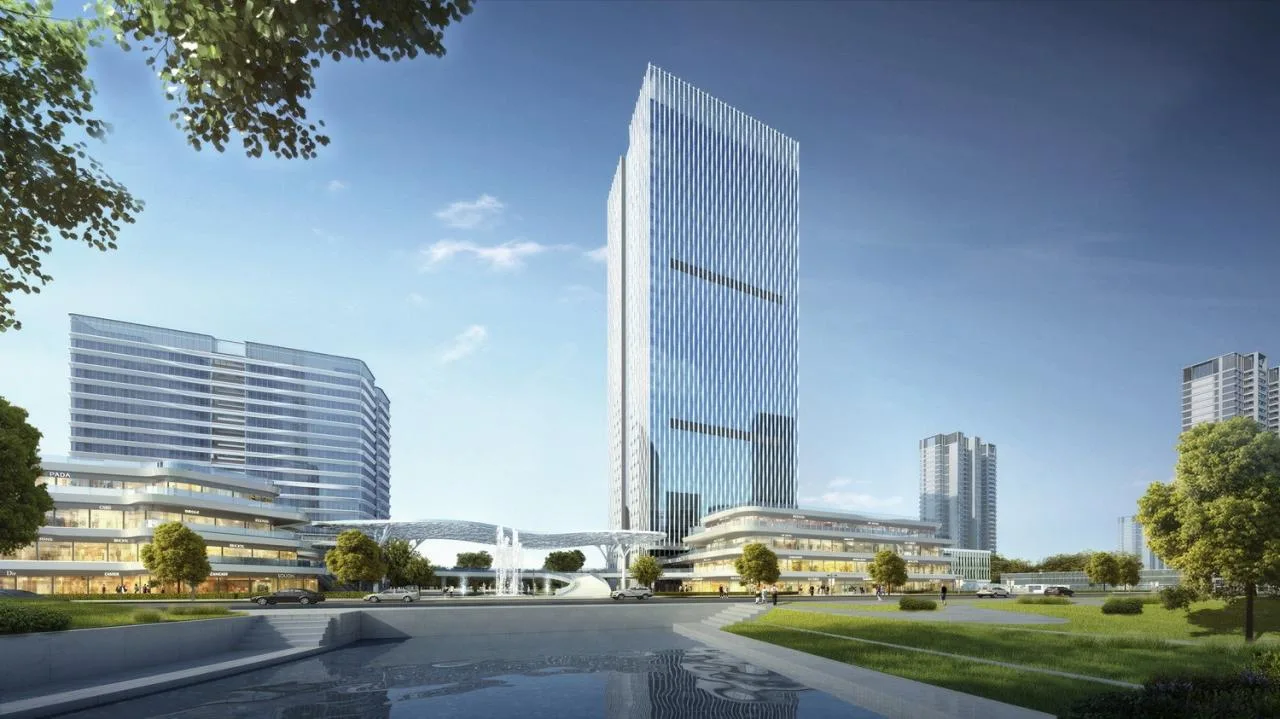
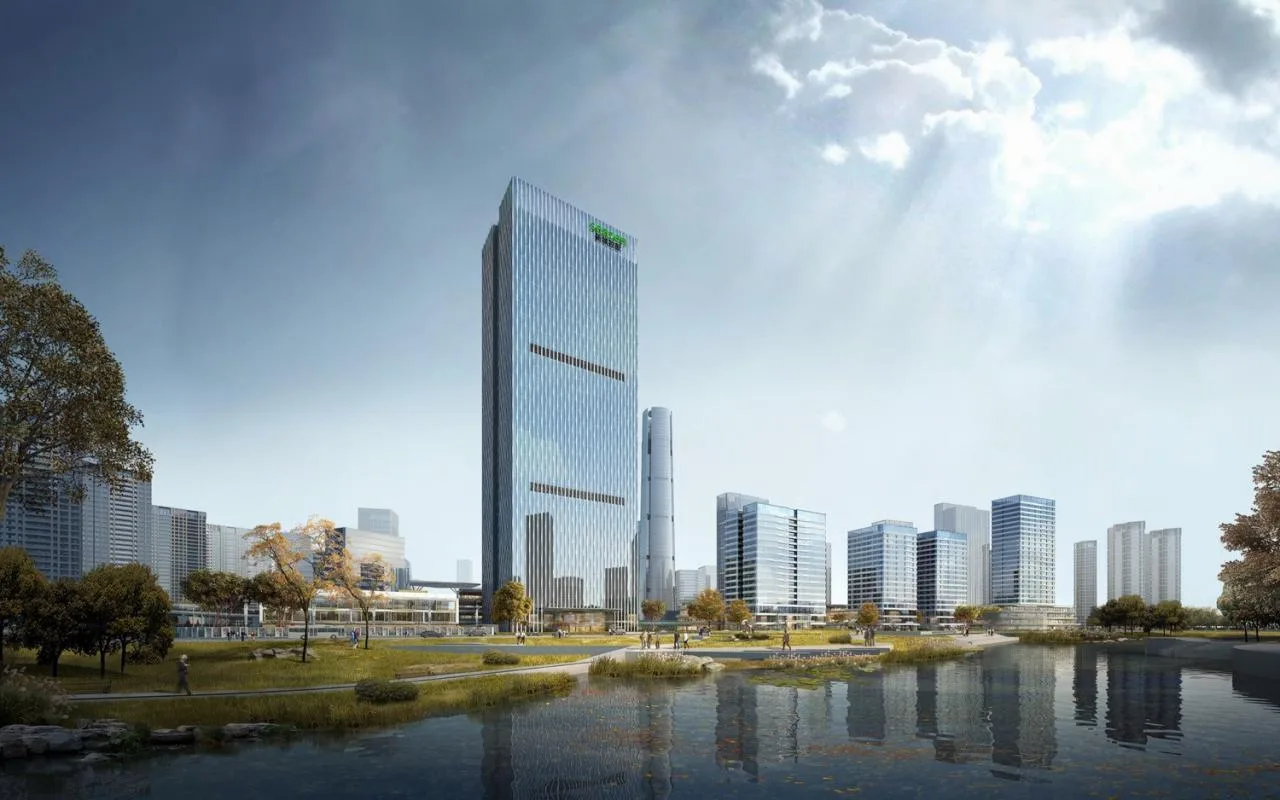
The Xinguang Building, positioned along the viewing corridor of Suzhou High Speed Rail New City Station Square, stands as the second tallest structure in the area. This development integrates multiple functions, including a 150-meter super high-rise office tower, commercial blocks, and a kindergarten, exemplifying high-density urban development and serving as a prominent landmark for the southern sector of Suzhou High Speed Rail New City.
Project Overview
Located in the southwest corner of Suzhou High Speed Rail New City’s core area, the Xinguang Building occupies a strategic site. Facing the main urban road, it serves as a key node connecting the central park and riverside landscape—both integral to the city skyline. The southern edge borders a riverside green space, while the northern side adjoins the central park, offering unique natural surroundings. The site benefits from comprehensive amenities and proximity to three subway stations, enhancing its business and office appeal.
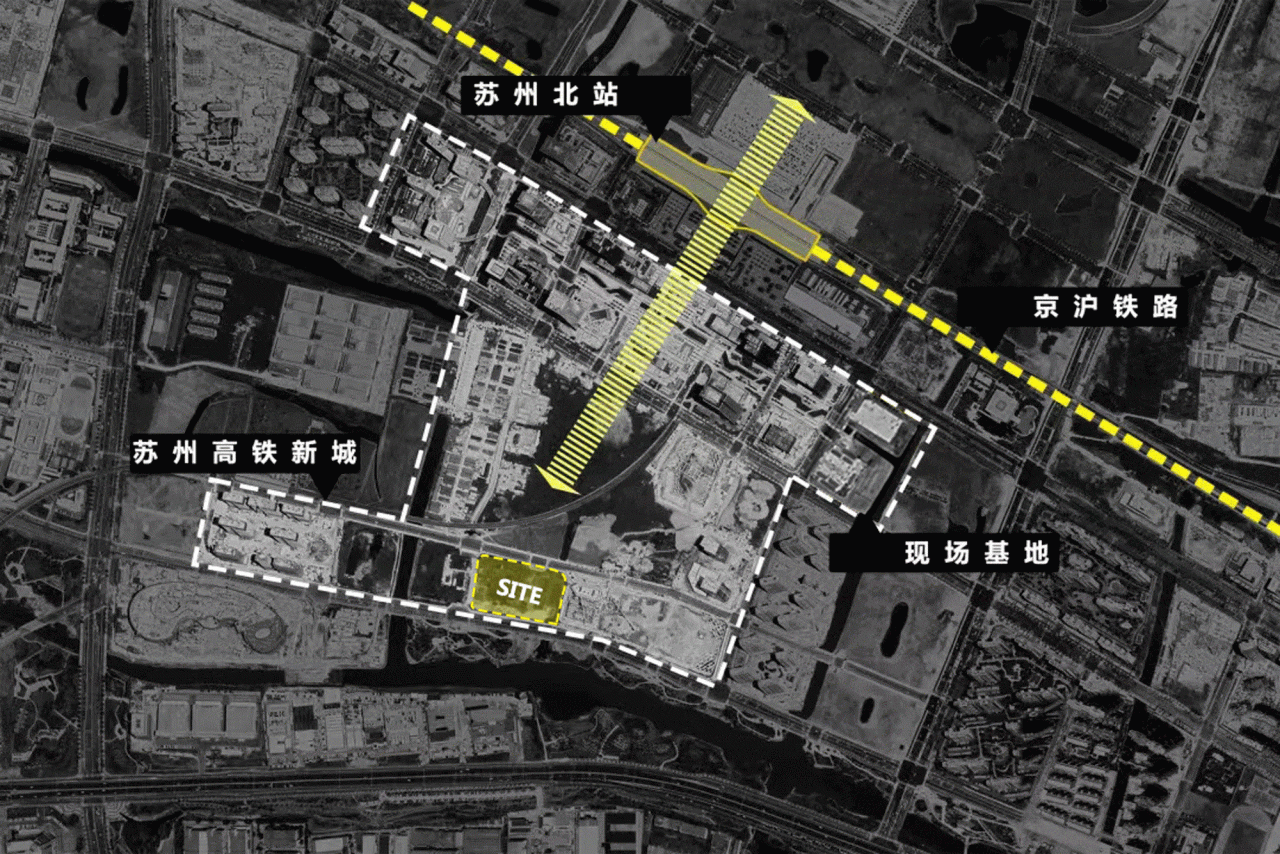
△ Location Analysis
Landmark on the Central Axis of Suzhou High Speed Rail New City
The Xinguang Building site covers 15,000 square meters with a high floor area ratio of 5.0, culminating in a total built-up area of 112,000 square meters. Planning regulations mandate a 12-class kindergarten occupying no less than 3,000 square meters within the plot. The key design challenge lies in efficiently organizing the circulation flows of the commercial spaces, high-rise offices, and kindergarten within this dense development, ensuring they operate independently without interference.
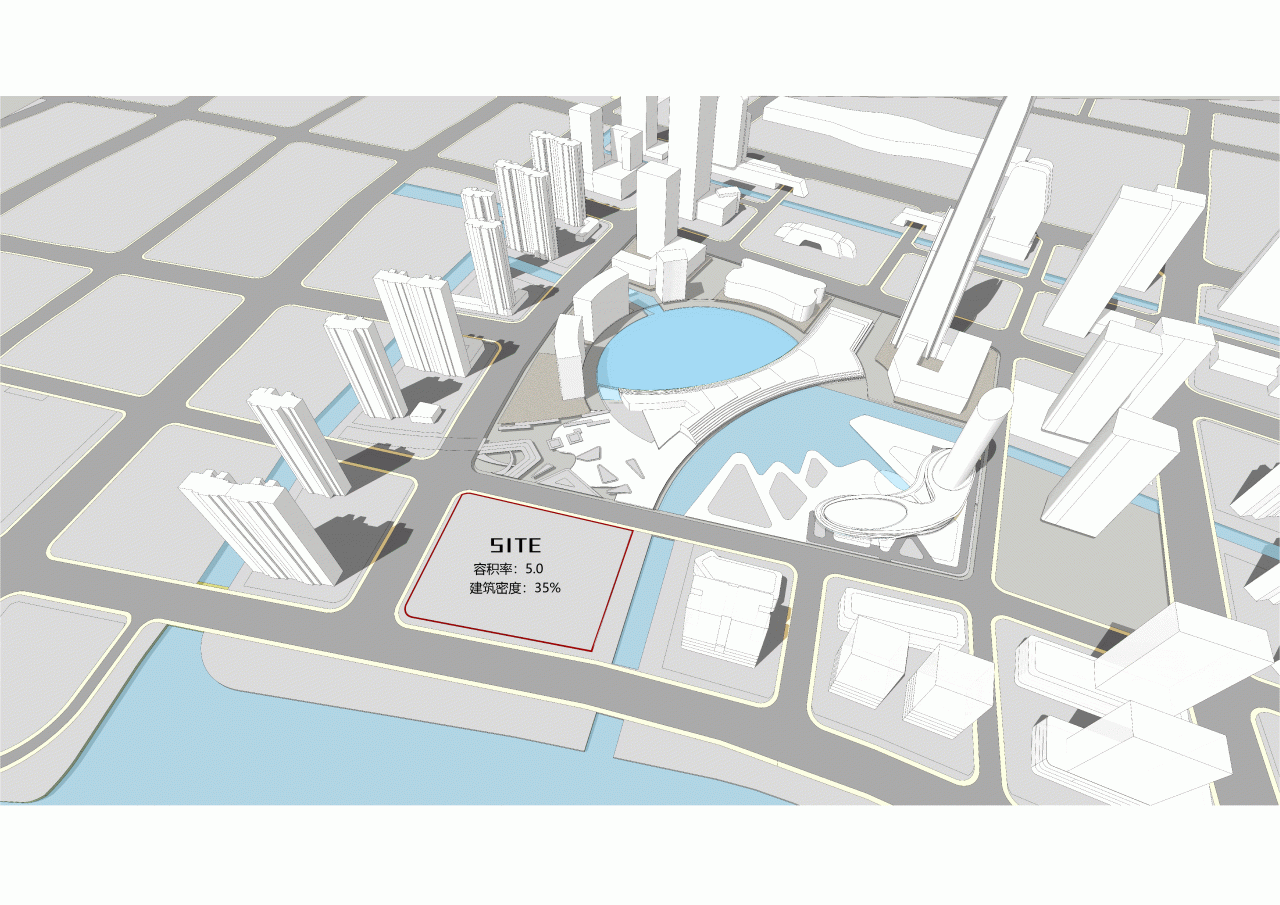
△ Architectural Form Development
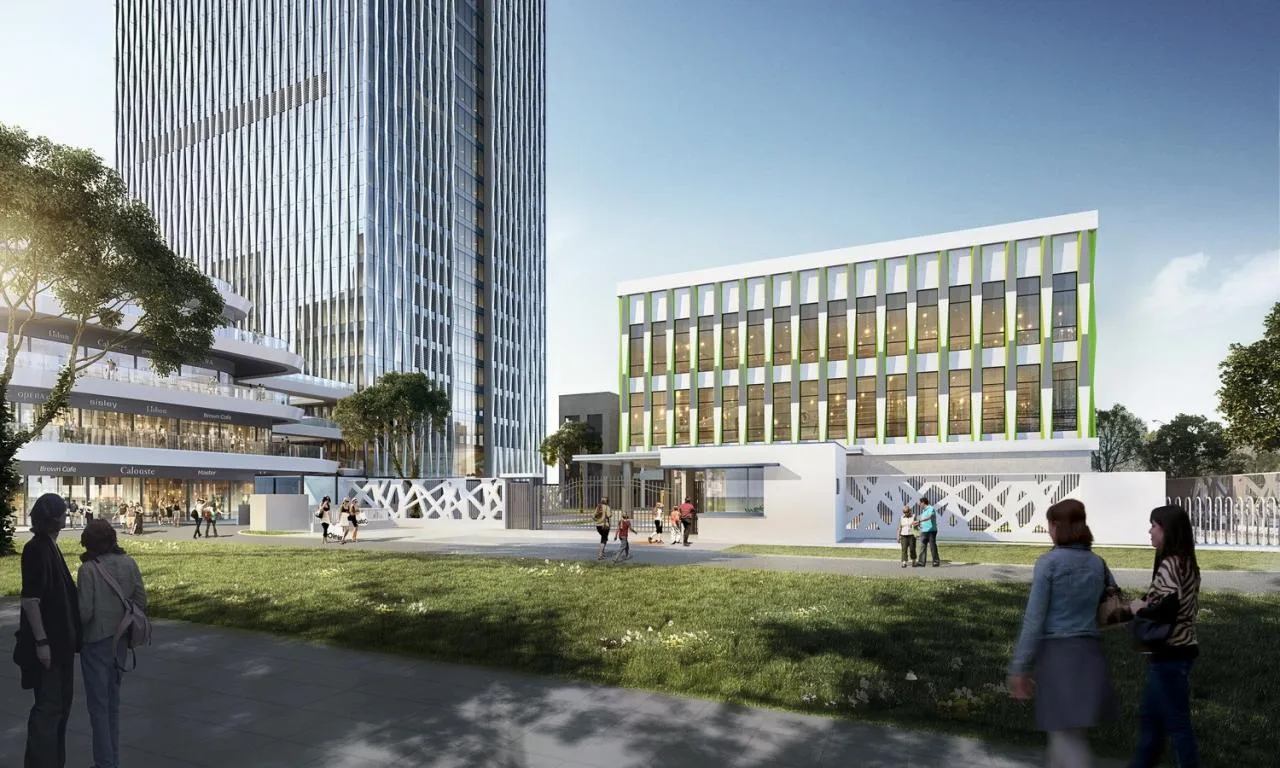
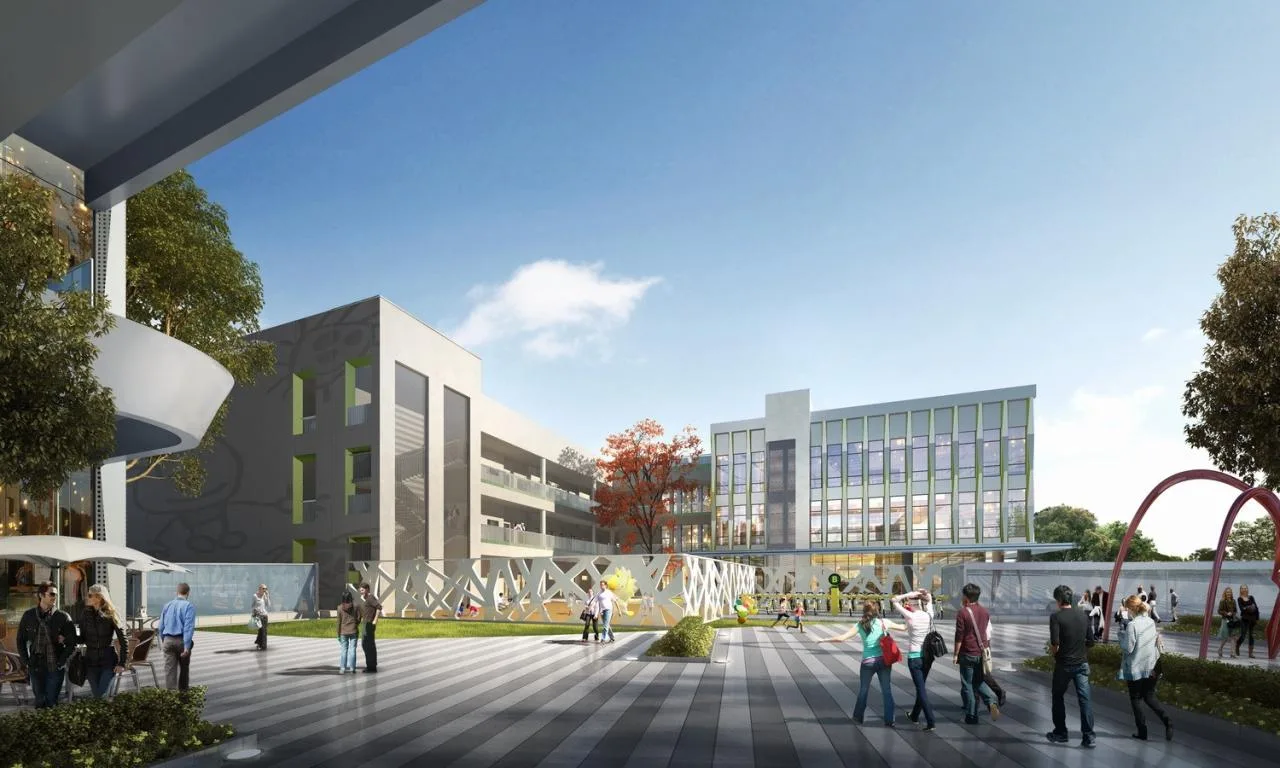
The site, together with three adjacent plots to the east, forms a continuous commercial inner street. Accordingly, commercial and tower buildings are situated on the eastern side of the plot, while the super high-rise tower aligns with the central axis of the High-Speed Railway North Station, emphasizing its prestigious status. The commercial podium integrates seamlessly with the eastern plots, creating a cohesive and inviting commercial environment. The kindergarten is positioned on the western side with independent land use, primarily facing southwest to minimize the tower’s impact on its sunlight.
Three-Dimensional Traffic System
Given the elevated roads surrounding the site and the high floor area ratio, combined with the traffic demands of kindergarten pick-up and drop-off, traffic management is critical. The development features two ramps: entry from the south road and exit to the north road. This one-way circulation reduces congestion and ensures smooth traffic flow.
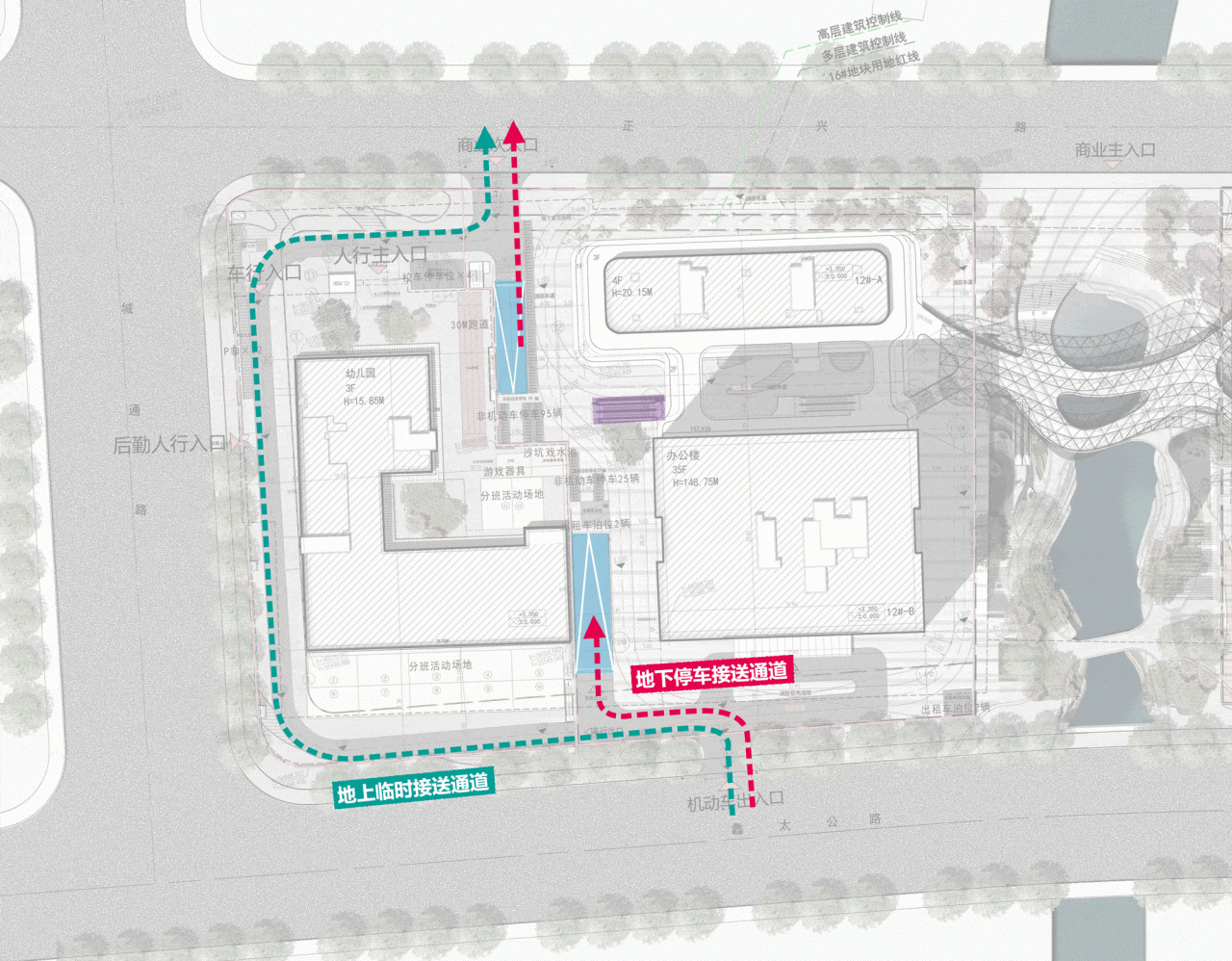
△ Kindergarten Pick-up and Drop-off Flow
To accommodate kindergarten transportation, the design incorporates temporary ground-level storage passages and underground pick-up zones. Vehicles enter via the southern ramp to the basement waiting area located on the negative first floor, adjacent to the kindergarten’s pick-up entrance. After parking, visitors ascend via escalators to the kindergarten entrance. This vertical traffic design optimizes safety and efficiency, easing pressure on surface traffic.
Tower Traffic Design
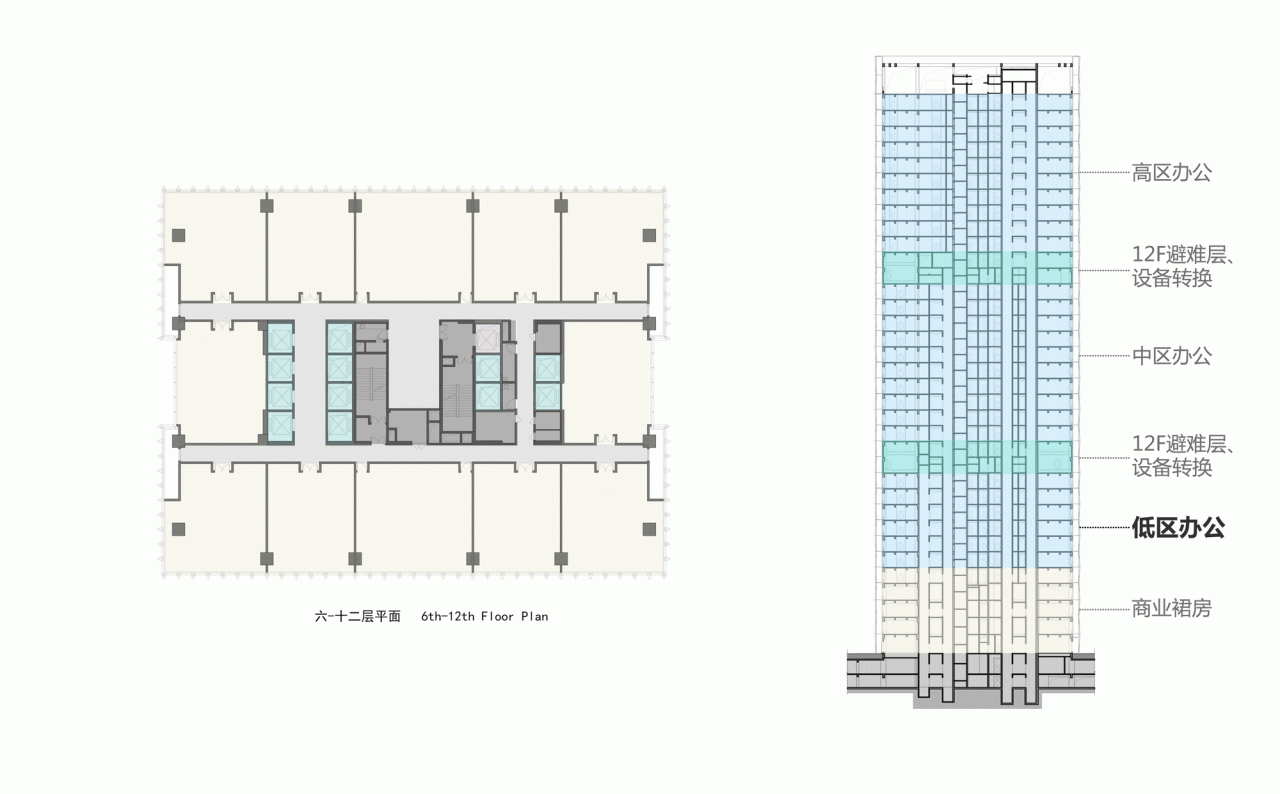
The Xinguang Building rises 150 meters with 35 floors. Floors 1 to 4 house the lobby and commercial podium. The standard office floor measures approximately 1,800 square meters, with a floor-to-floor height of 4.15 meters and a net ceiling height of 2.75 meters. Two refuge floors divide the tower into low, medium, and high zones, each served by four elevators. Additionally, there is a fire and freight elevator that services all floors, totaling 13 elevators in the building.
Facade: Inspired by Mountains and Flowing Water
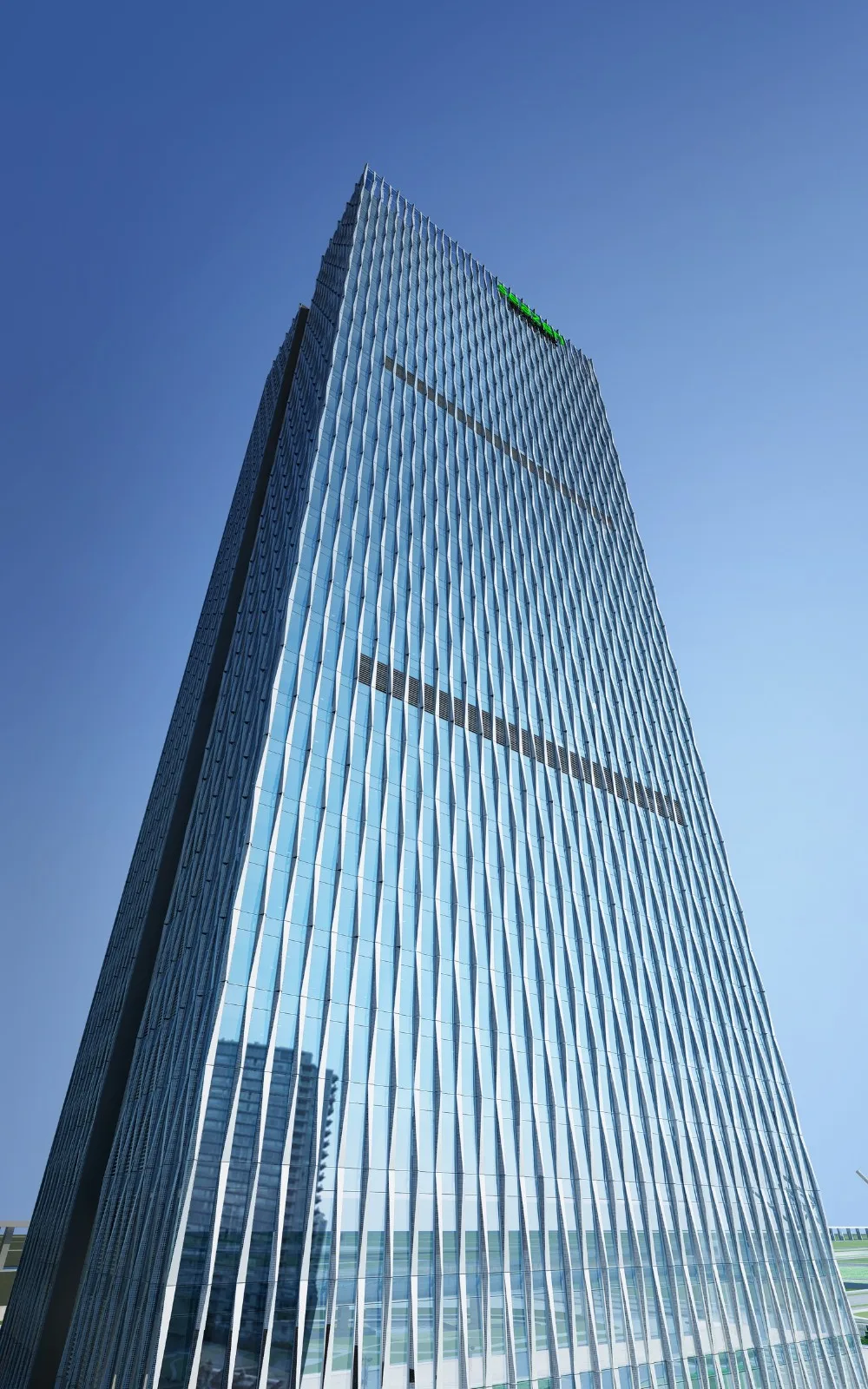
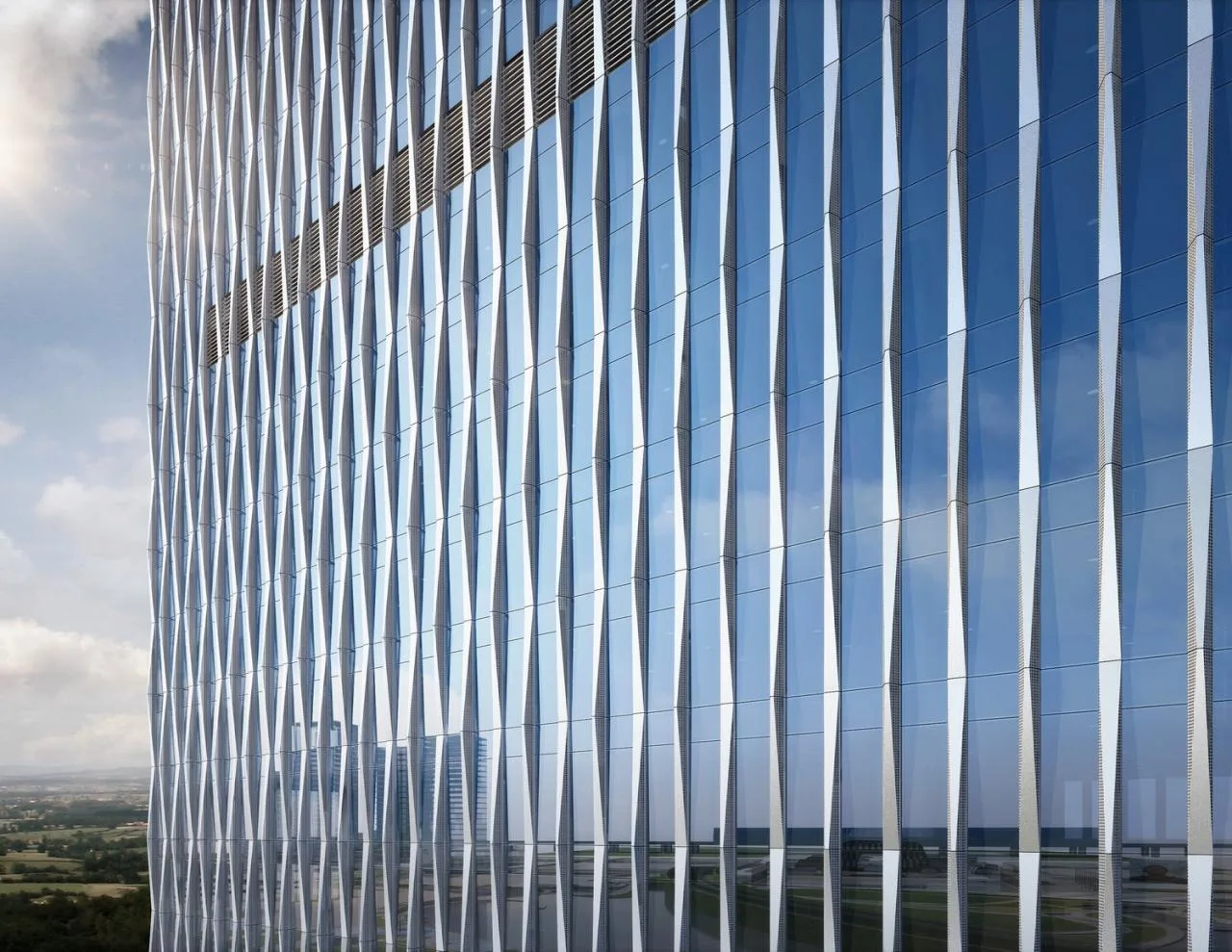
The design theme for both the Xinguang Building and the adjacent MOC Xingguang commercial district is music. As the tallest structure in the area, the building’s exterior draws inspiration from the story of Boya Guqin in the classic text “Liezi · Tangwen.” Vertically staggered folded aluminum panels create rhythmic ripples reminiscent of mountains and flowing water, evoking the undulating strings of a guqin instrument.
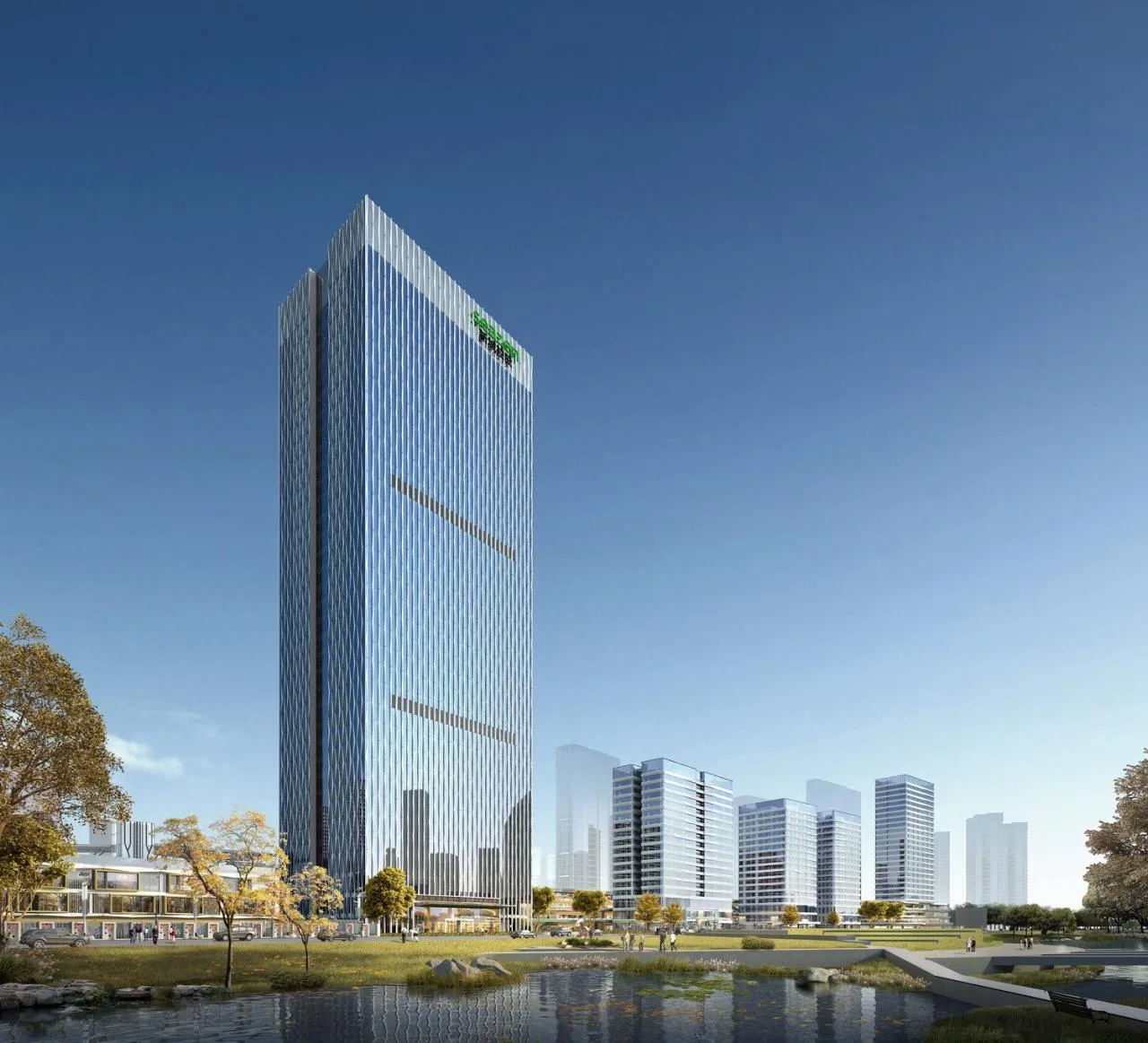
T1 Tower Standard Curtain Wall System
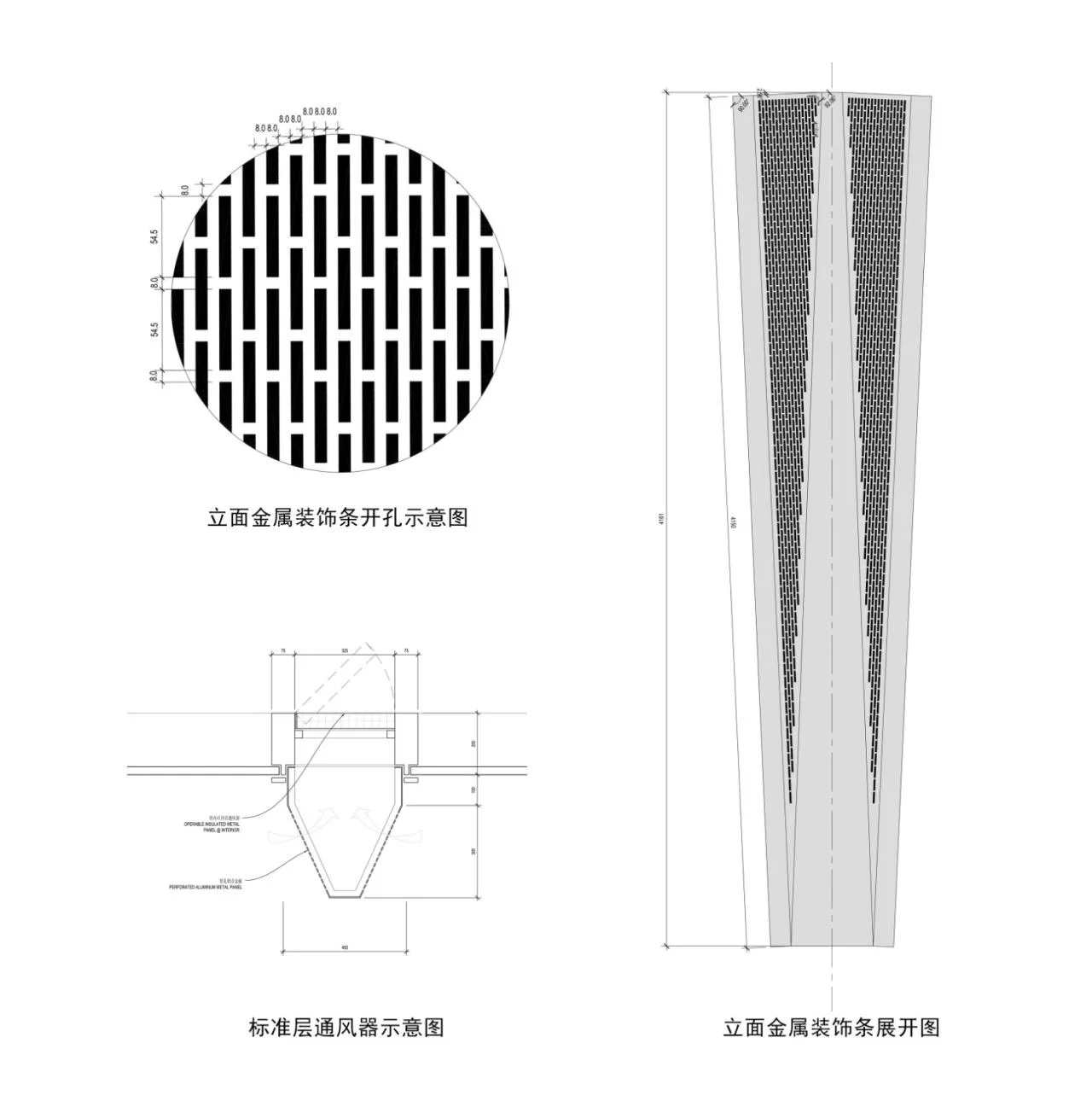
The tower’s standard facade features a vertical-exposed, horizontal-hidden frame curtain wall system adorned with decorative aluminum panels that move in all directions. Behind these panels, hidden operable fans facilitate ventilation through perforated side panels.
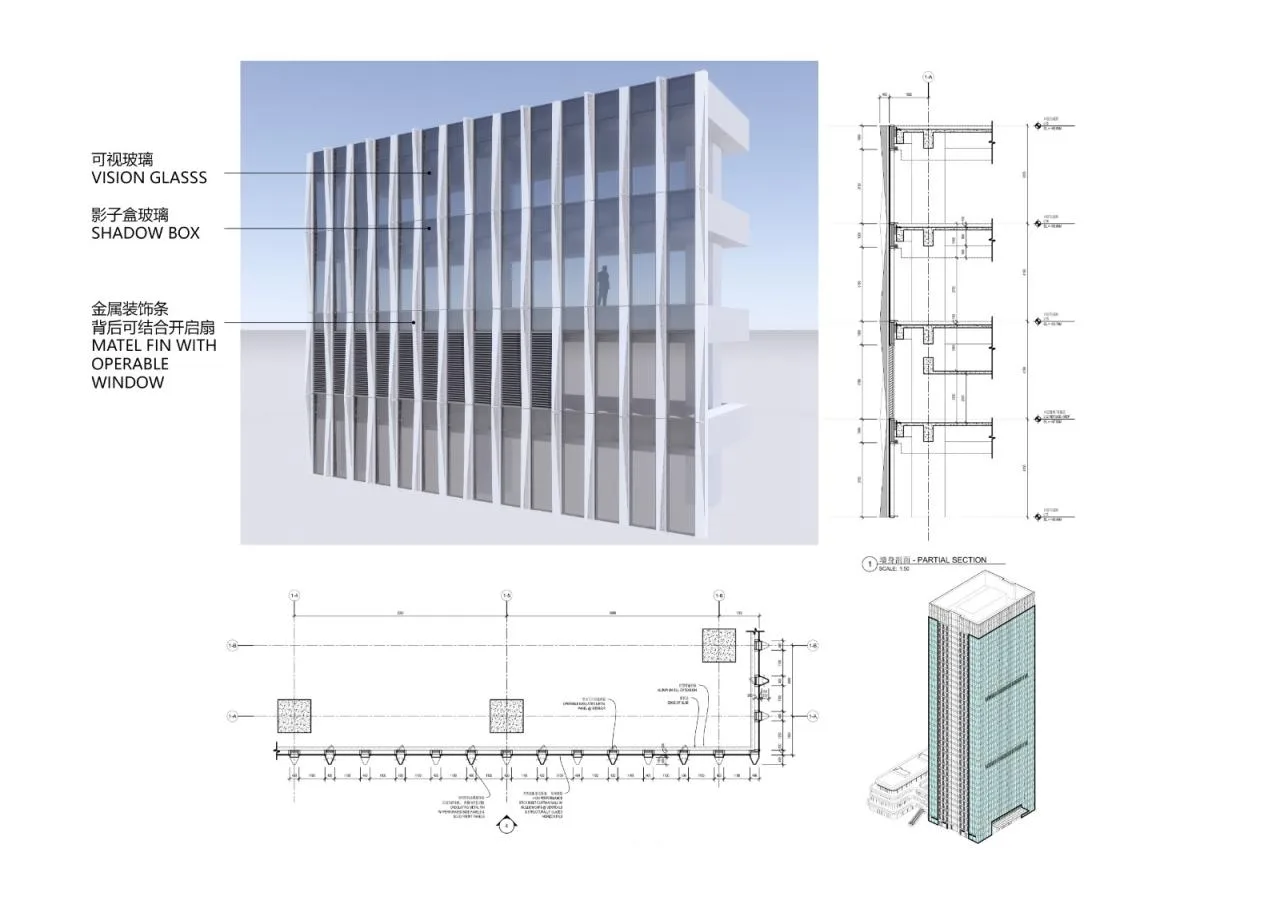
T2 Tower Crown Curtain Wall System
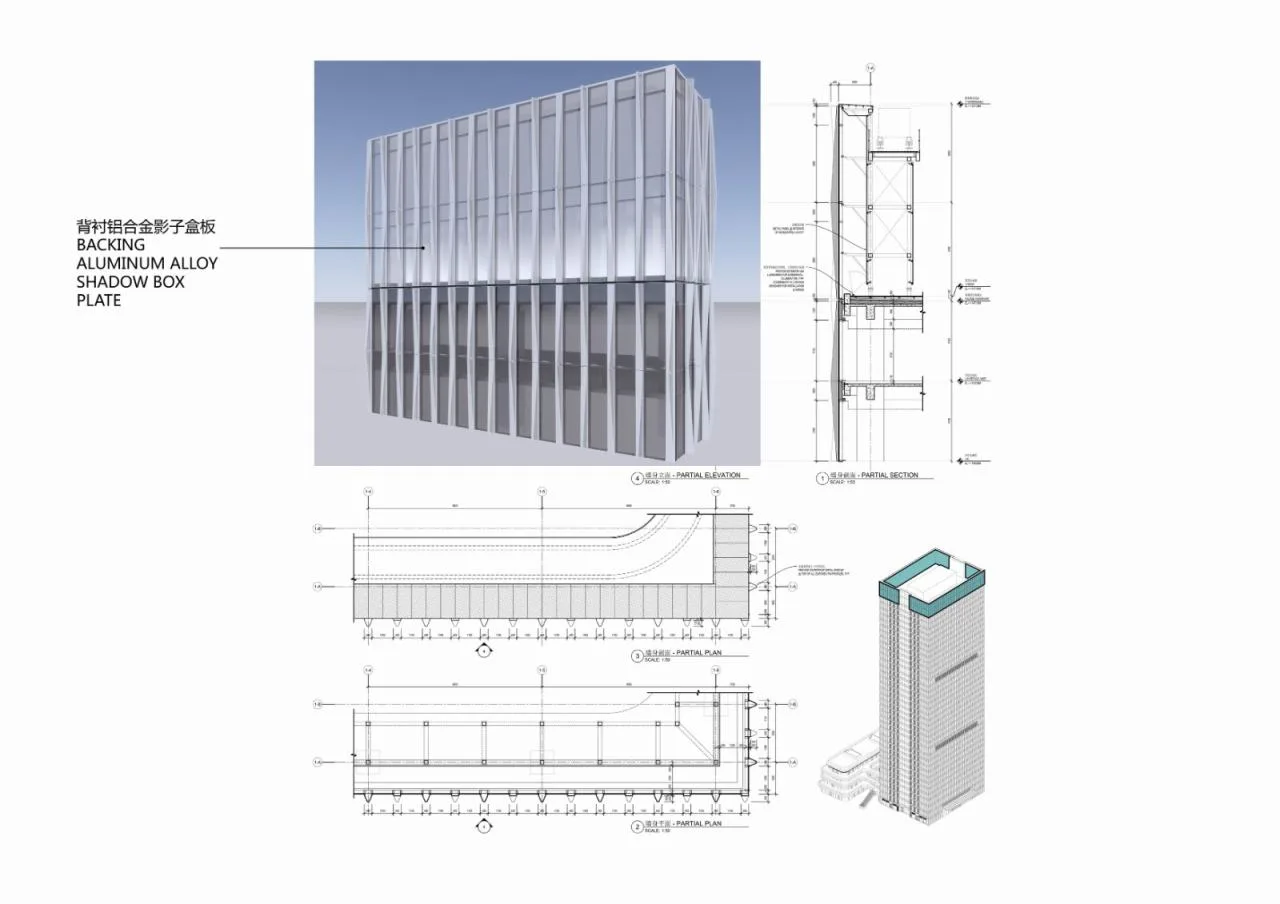
The tower crown’s backside is clad with aluminum panels that conceal the structural framework and equipment. Combined with floodlighting and vertical decorative strips, this design enhances the building’s skyline presence, establishing it as a city landmark.
T3 Tower Curtain Wall System
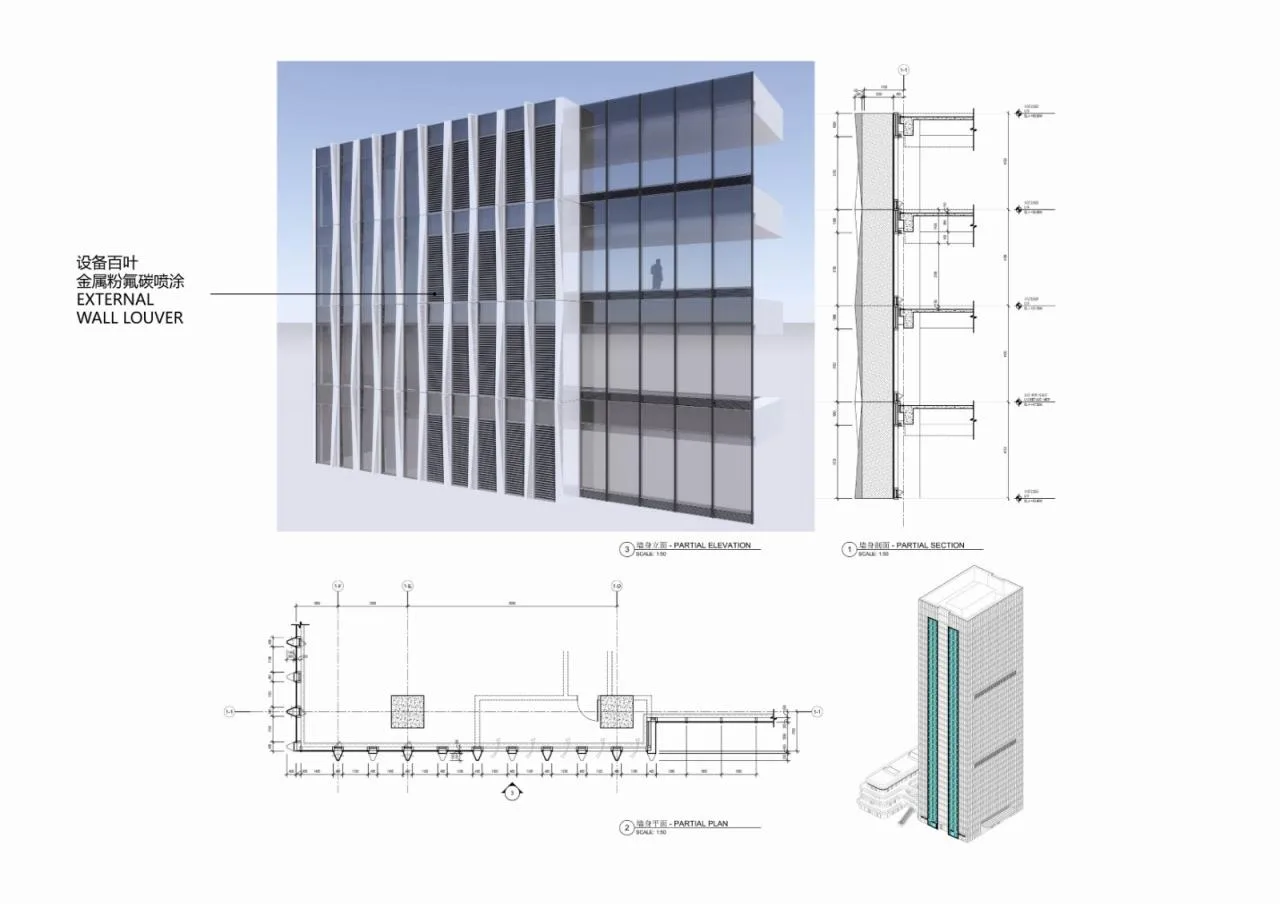
The Xinguang Building employs a VRV air conditioning system. Ventilation louvers are integrated on the east and west facades to conceal equipment platforms. Incorporating these louvers into the initial design ensures a cohesive appearance.
T4 Tower Groove Curtain Wall System
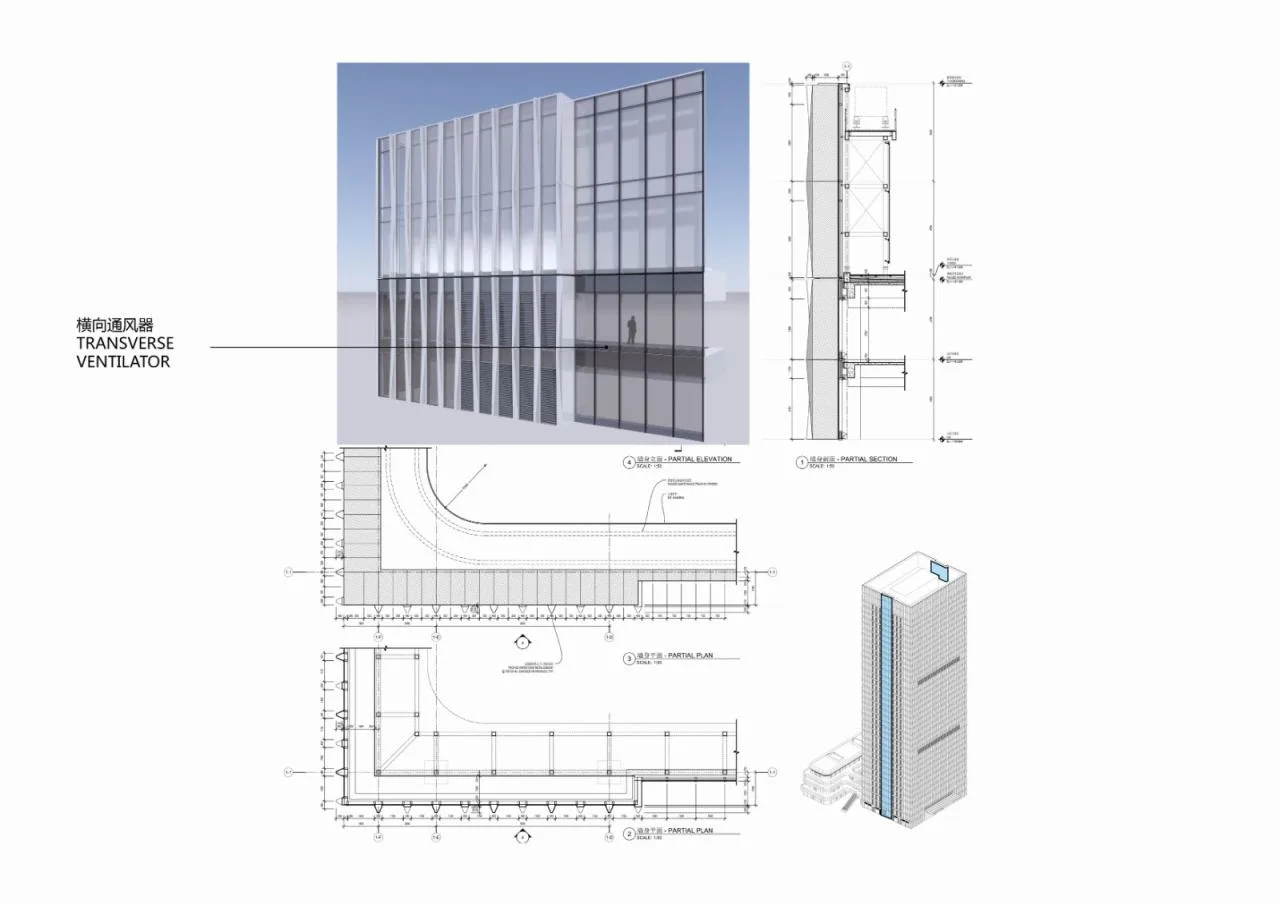
The groove design shapes the tower to appear more upright in proportion. Darker glass is used within the grooves to enhance shadow effects. Vertical decorative aluminum plates are omitted here, replaced by horizontal ventilators concealing operable fans.
Refined Detailing
Operable Fan Design
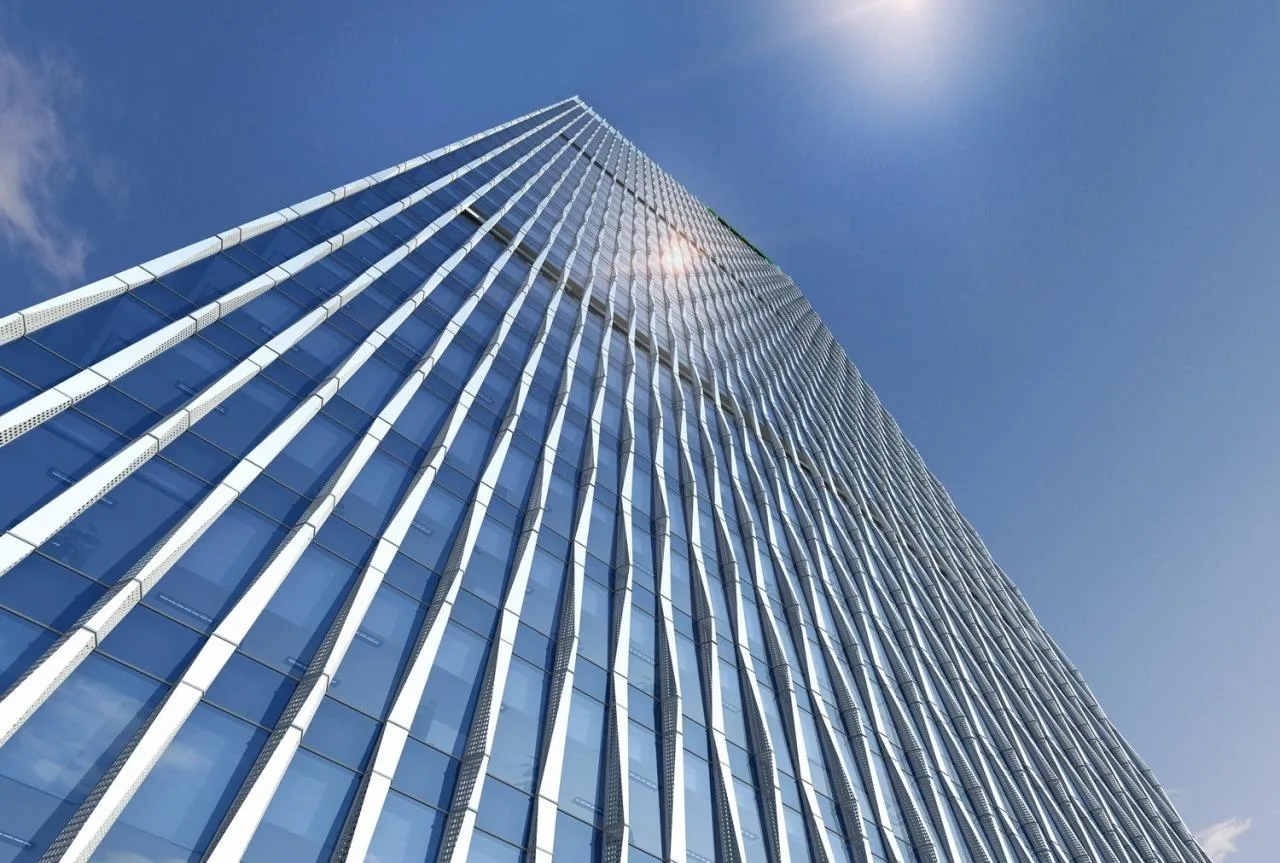
The vertical decorative aluminum panels were meticulously crafted and arranged on a one-to-one basis to determine precise sizes and perforation patterns. Each component consists of three aluminum plates layered to create depth, with two perforated sides generating a shadow effect that enhances three-dimensionality. The trapezoidal narrow section prevents the intersection of four plates at a single point, ensuring a refined and sturdy appearance that is visually elegant yet robust.
Entrance Curtain Wall and Canopy
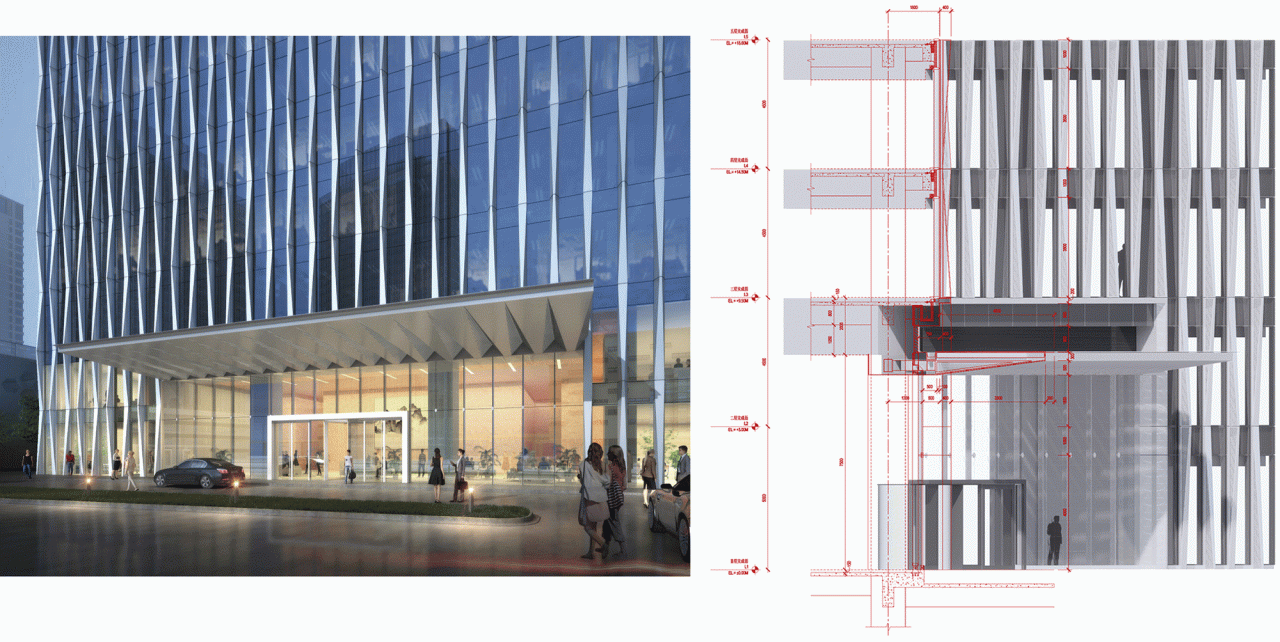
The lobby features a three-span cantilevered space with a suspended vertical curtain wall support system, minimizing anchor points and maximizing transparency through ultra-clear white glass. The 4-meter overhanging canopy incorporates trapezoidal design elements consistent with the facade’s decorative aluminum plates. The canopy’s bottom is solid aluminum, the sides are perforated aluminum, and the top is glazed with colored laminated glass for rain protection. This design allows natural light to filter through blinds during the day, illuminating the entrance. Lighting includes tube lights for overhead illumination and floodlights accentuating the canopy’s triangular ends. Smoke exhaust louvers are discreetly integrated above the canopy.
Interior Design
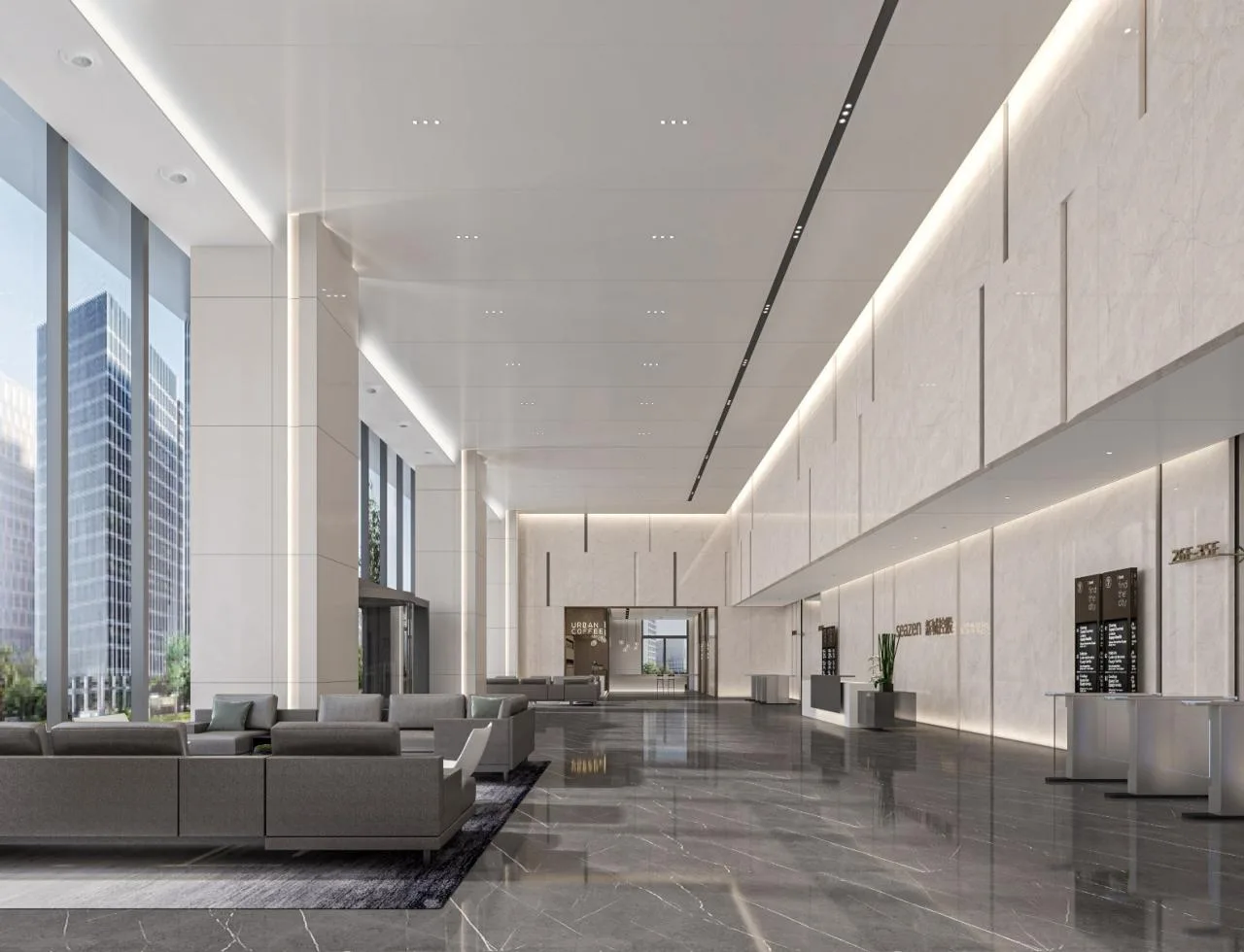
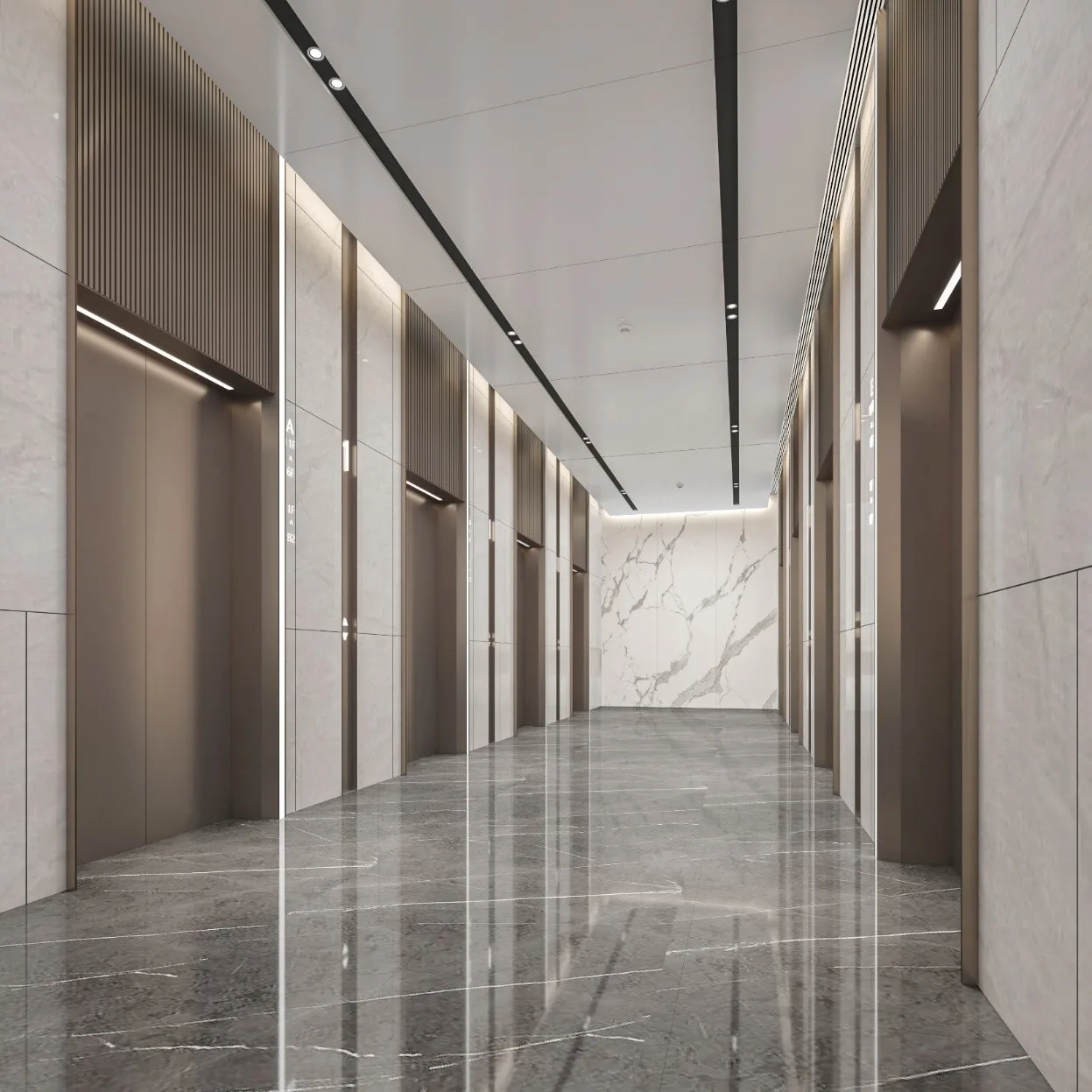
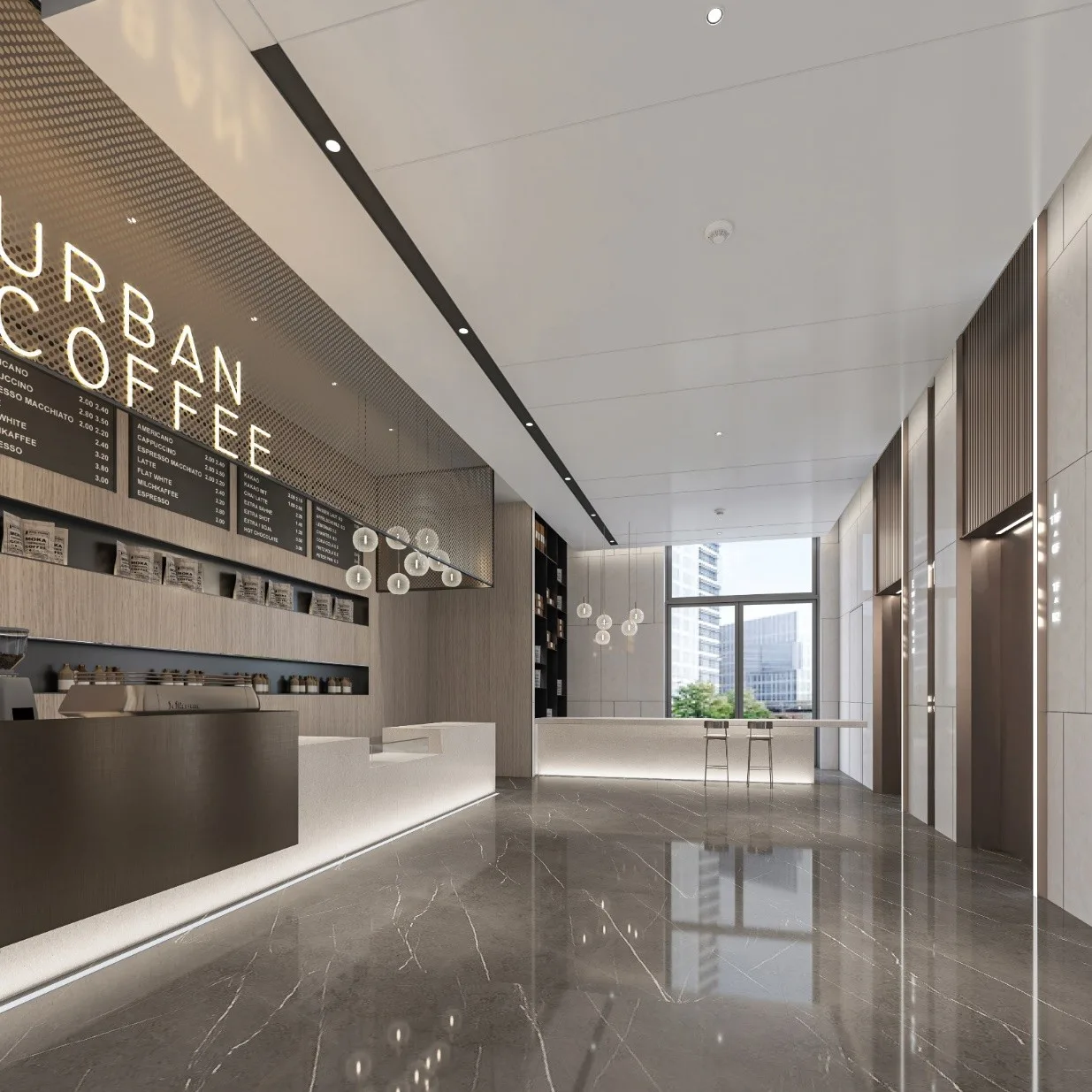
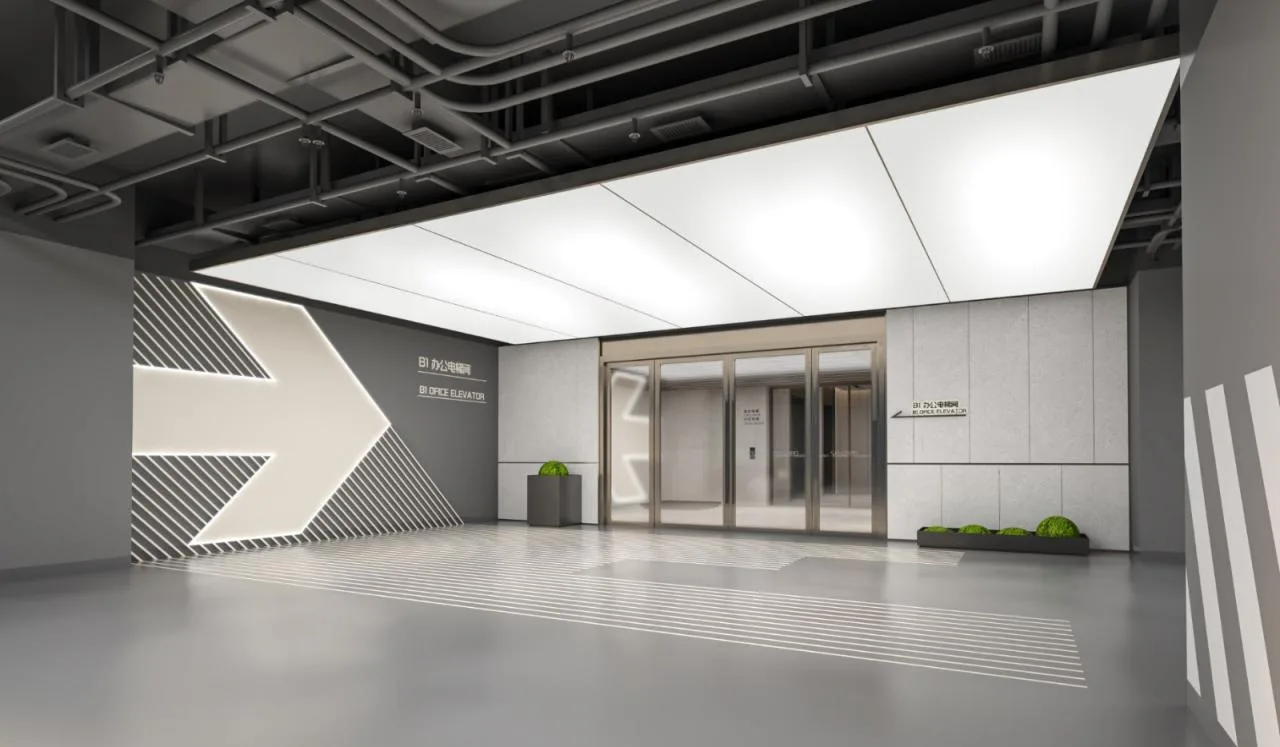
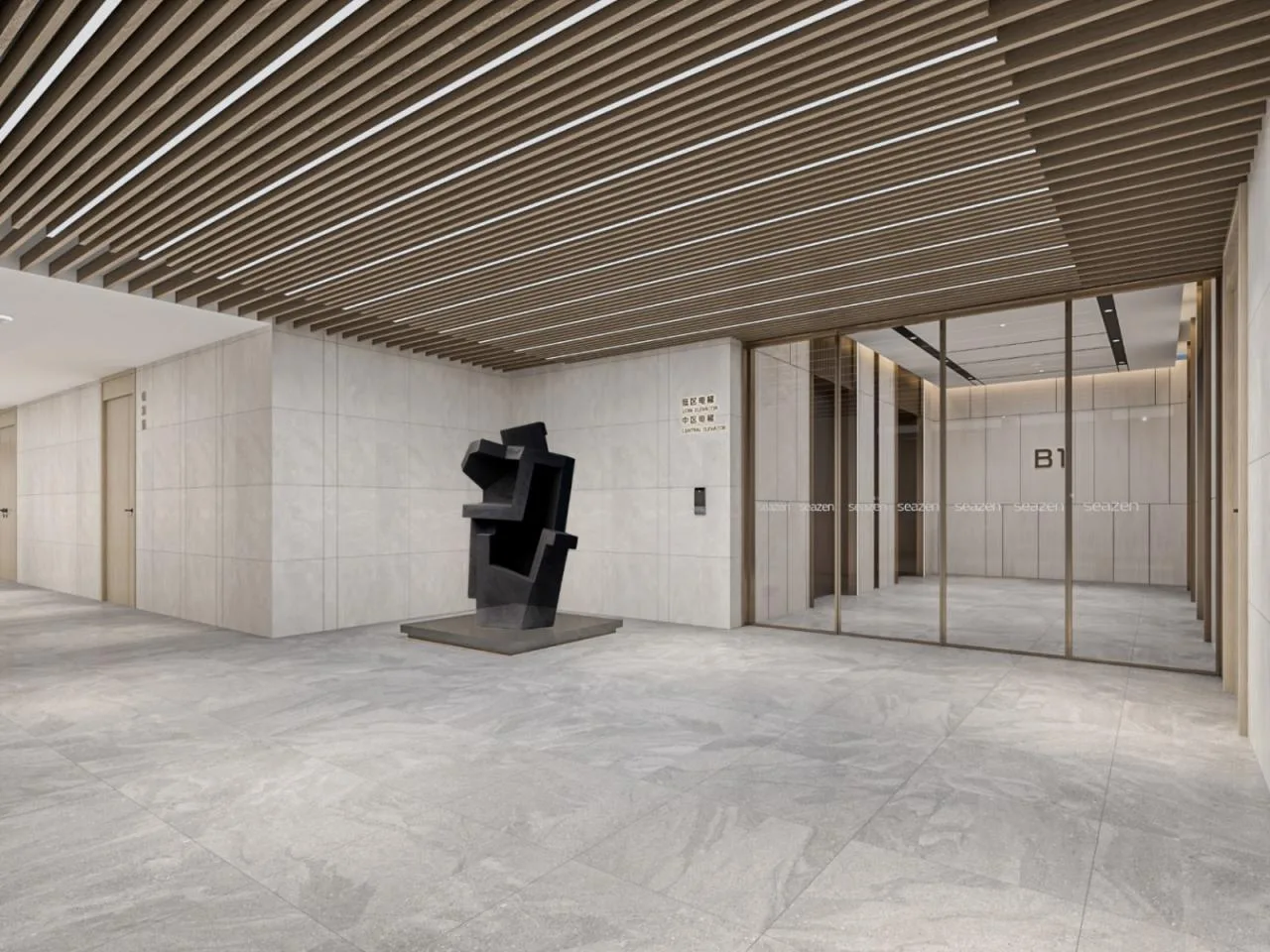
The interior echoes the facade’s theme of “kindred spirits in high mountains and flowing water,” using vertical linear elements to reflect displacement and rhythm. The lobby’s core walls feature slanted concave shapes that respond to the folded aluminum panels outside. The color palette combines beige, gray, bronze, and wood tones, delivering a modern, luxurious atmosphere that embodies contemporary sophistication, ideal for high-quality business and office environments.
Conclusion
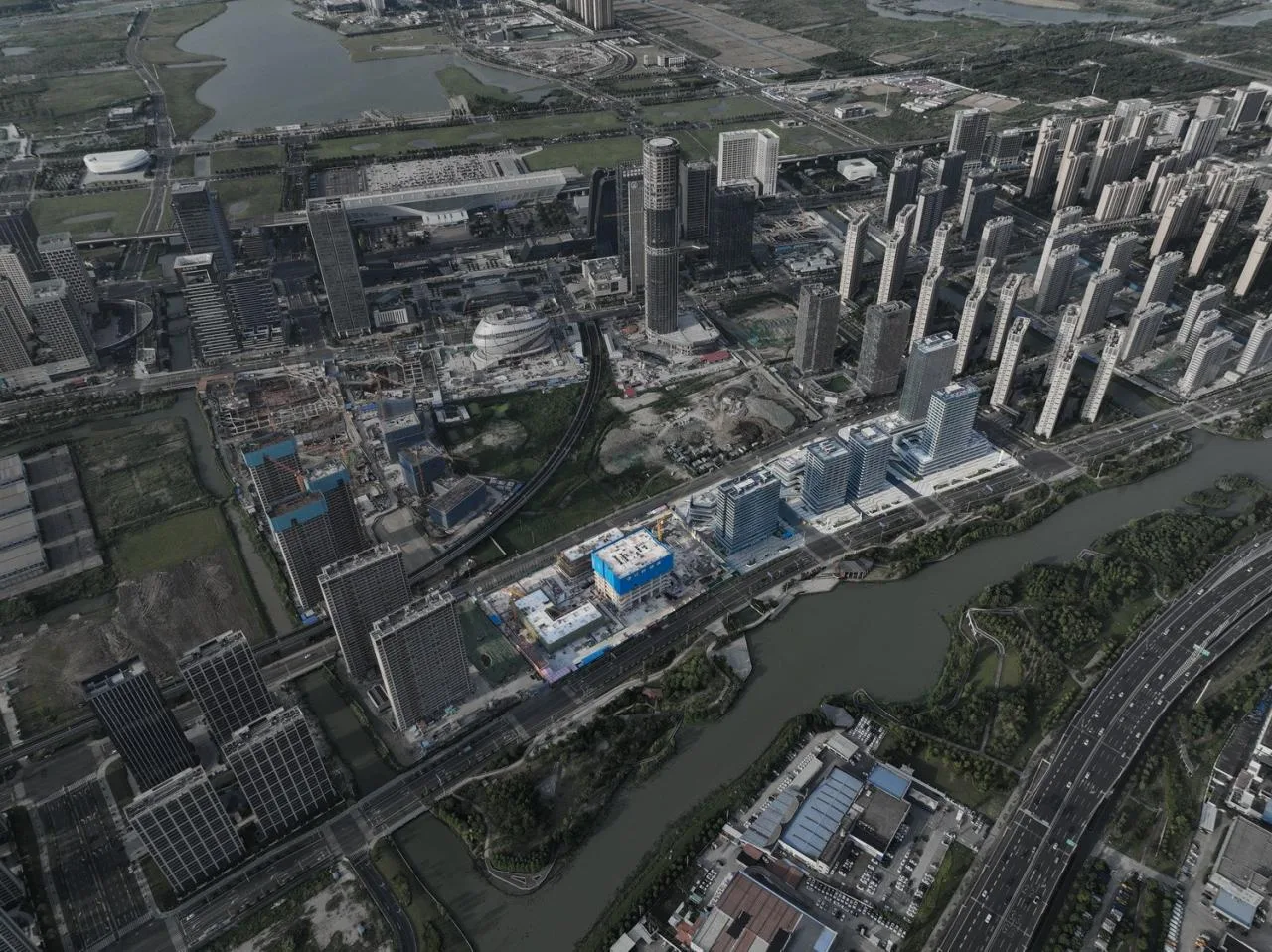
△ Construction Site
As a landmark on Suzhou High Speed Rail New City’s landscape axis, the Xinguang Building maximizes its site potential through thoughtful land use and a three-dimensional transportation system. Streamlined designs for circulation and commercial flow ensure clear zoning and efficient operation across different functions. The minimalist curtain wall system delivers a clean and powerful architectural image, establishing the building as a key commercial landmark in Suzhou High Speed Rail New City.
Project Drawings
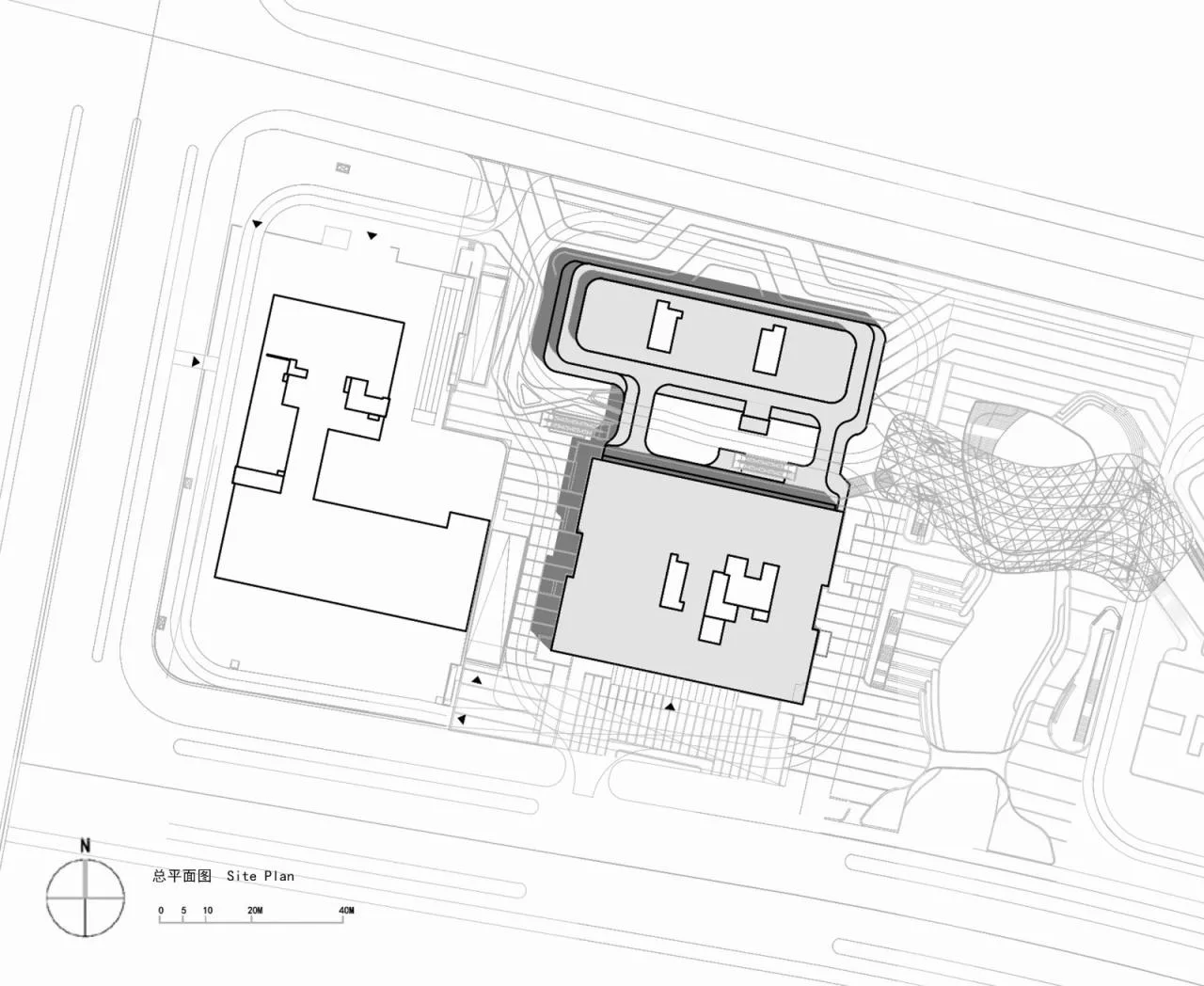
△ General Layout Plan
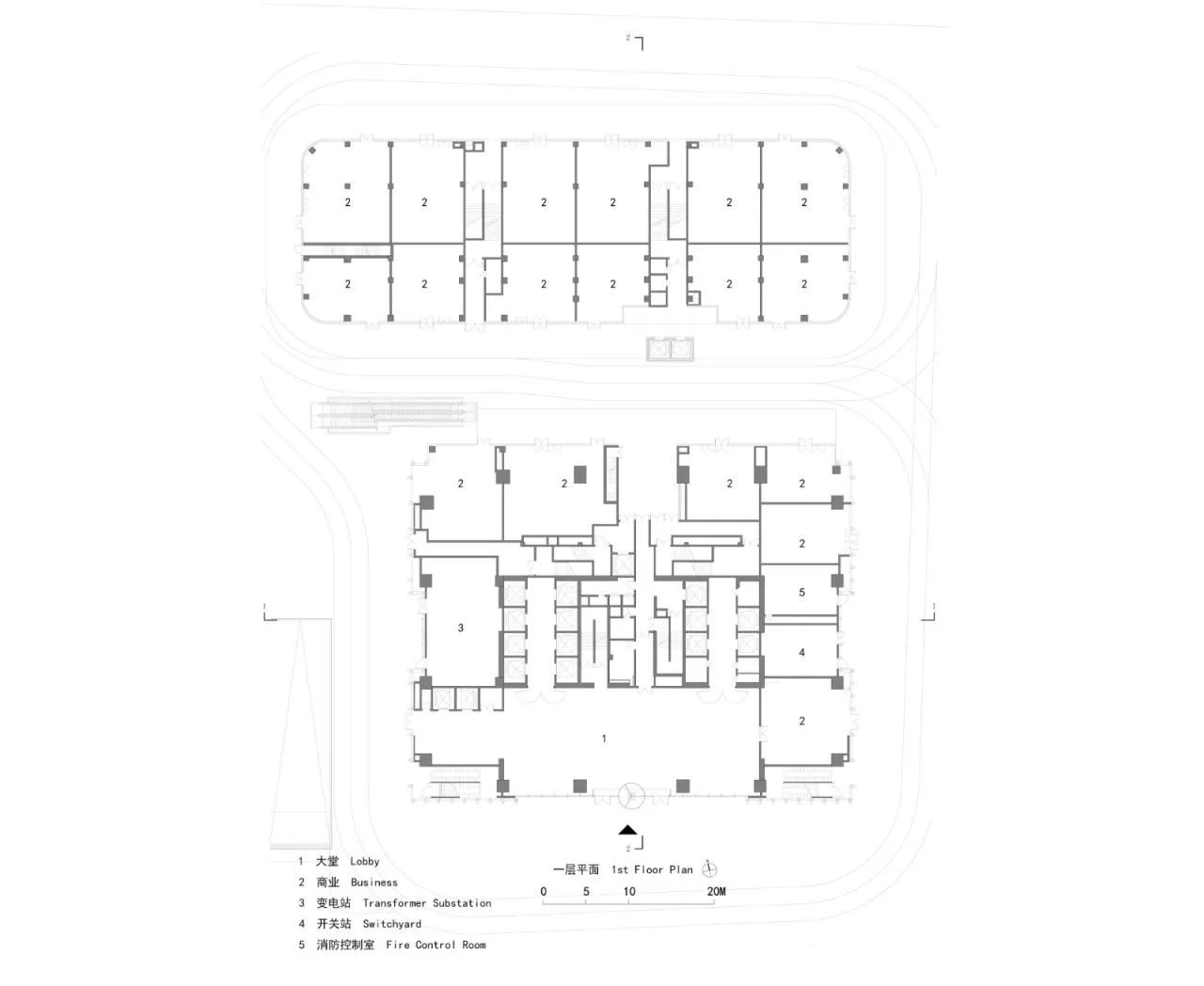
△ First Floor Plan
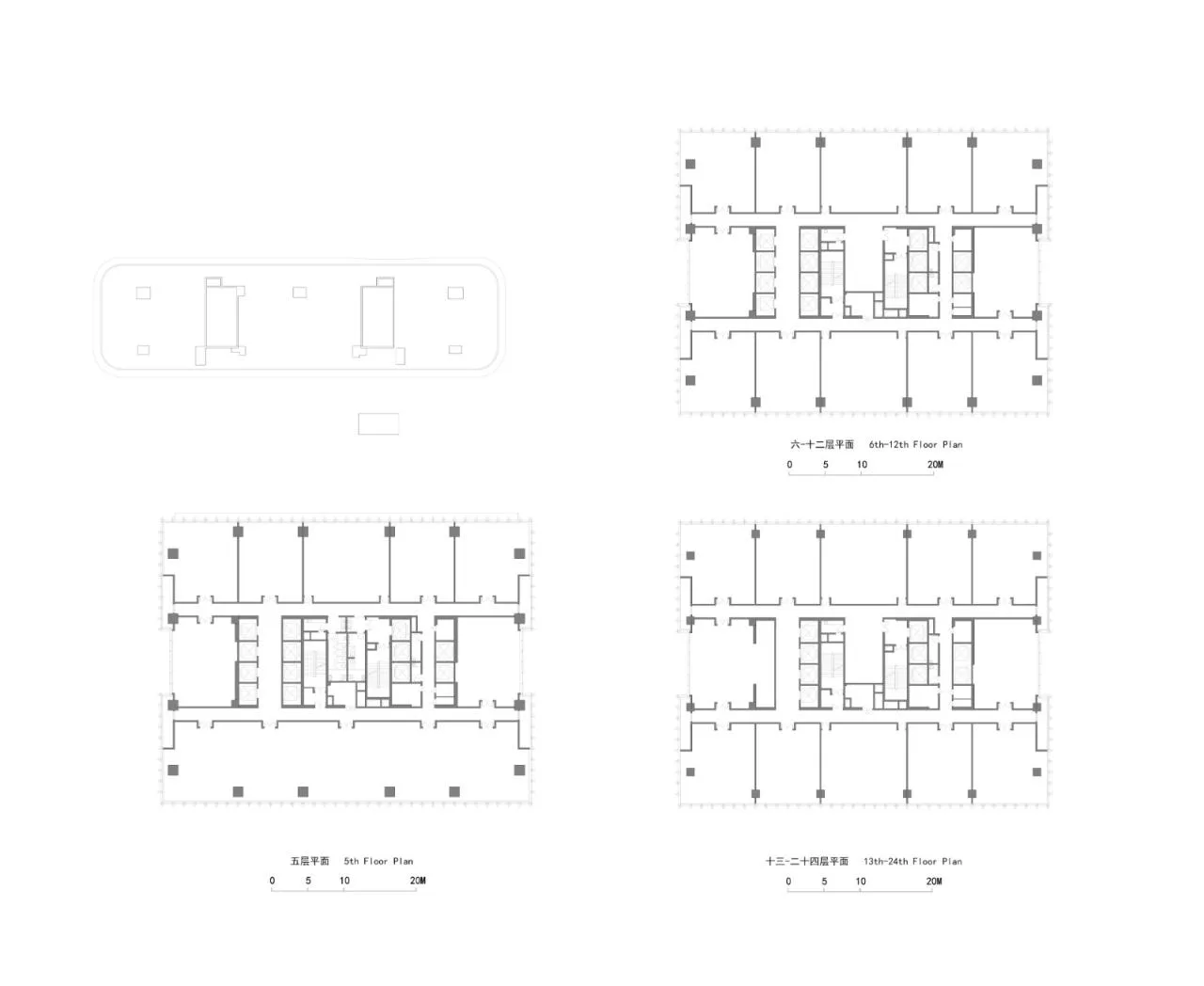
△ Plan View
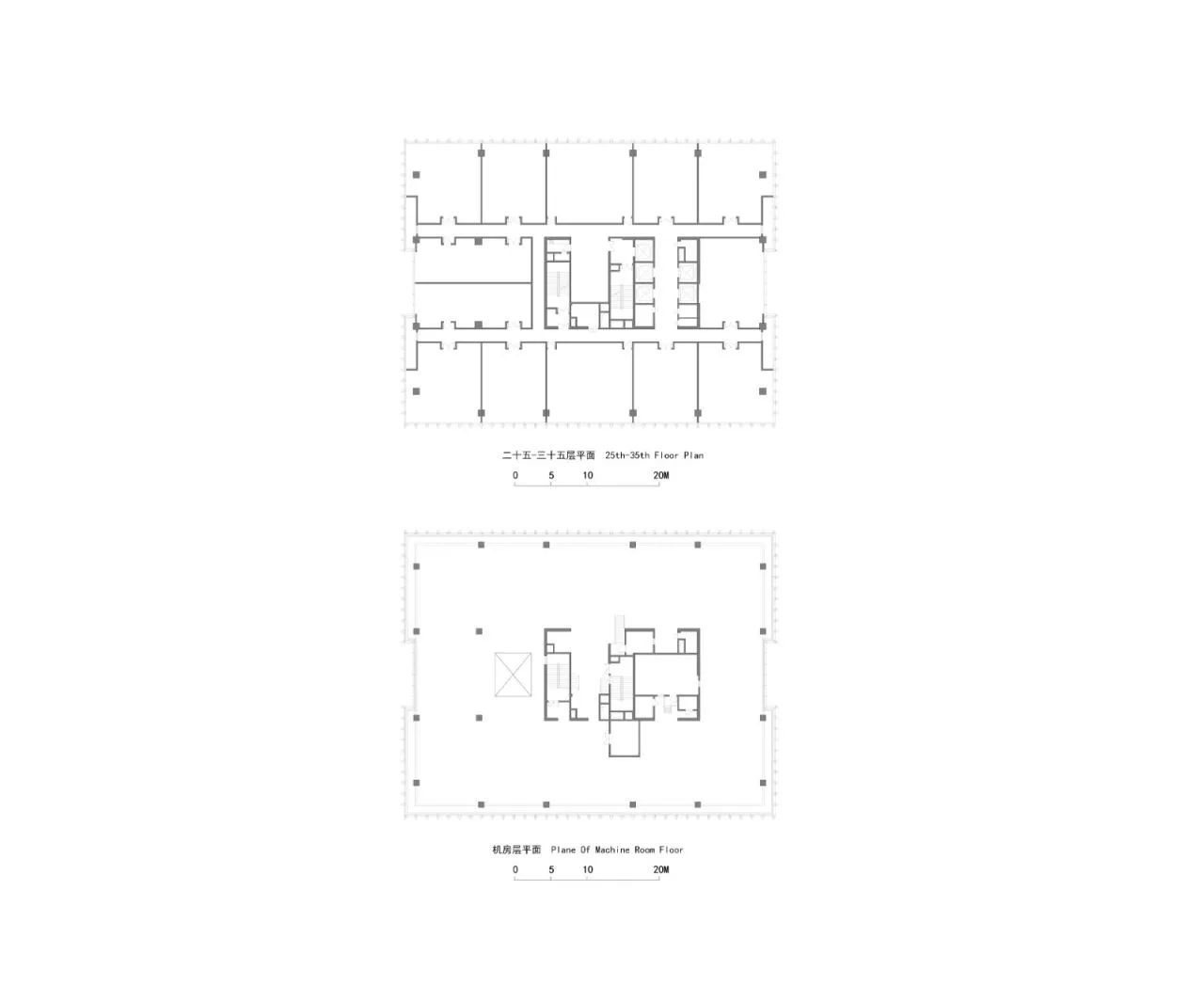
△ Plan View
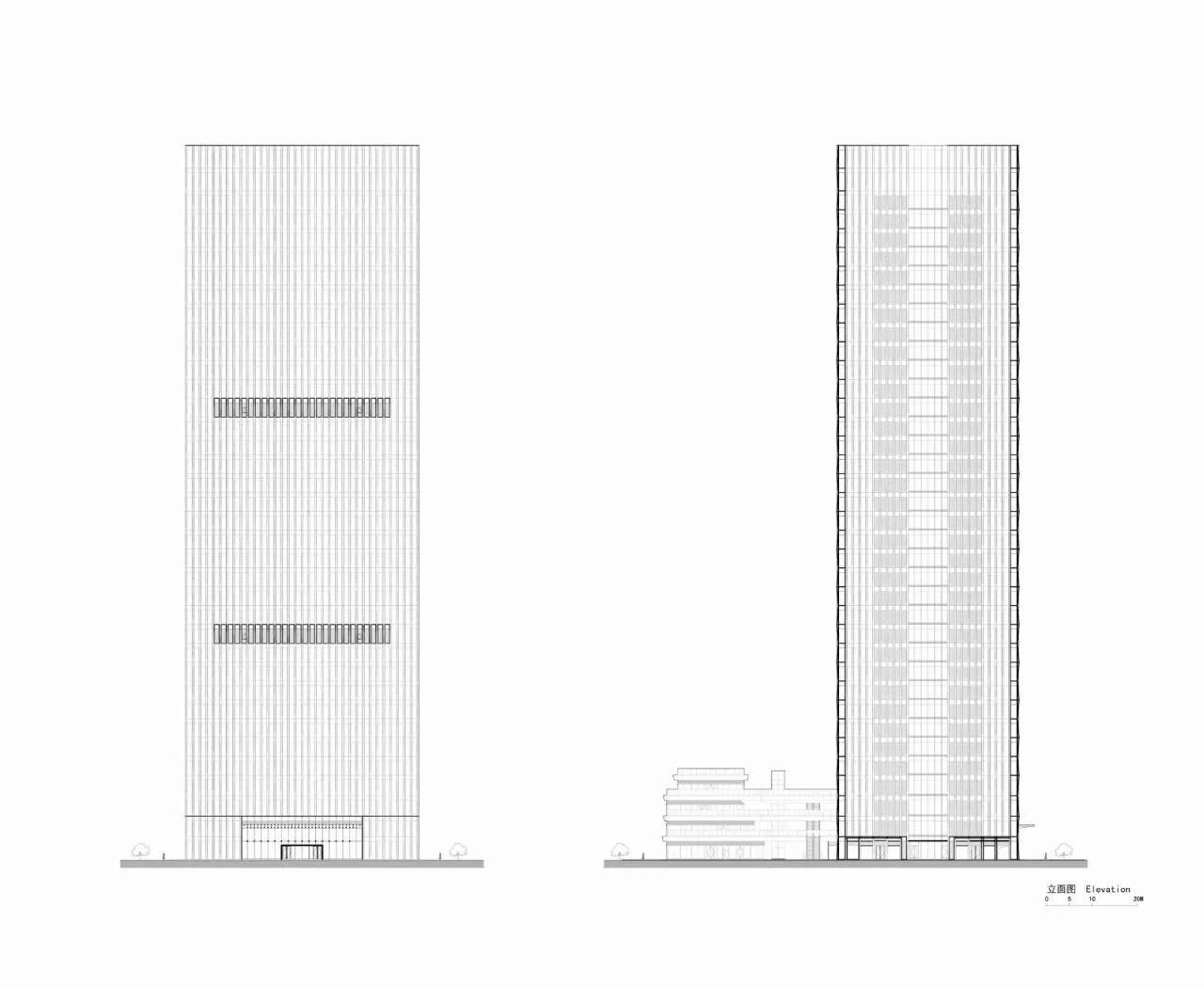
△ Elevation Drawing
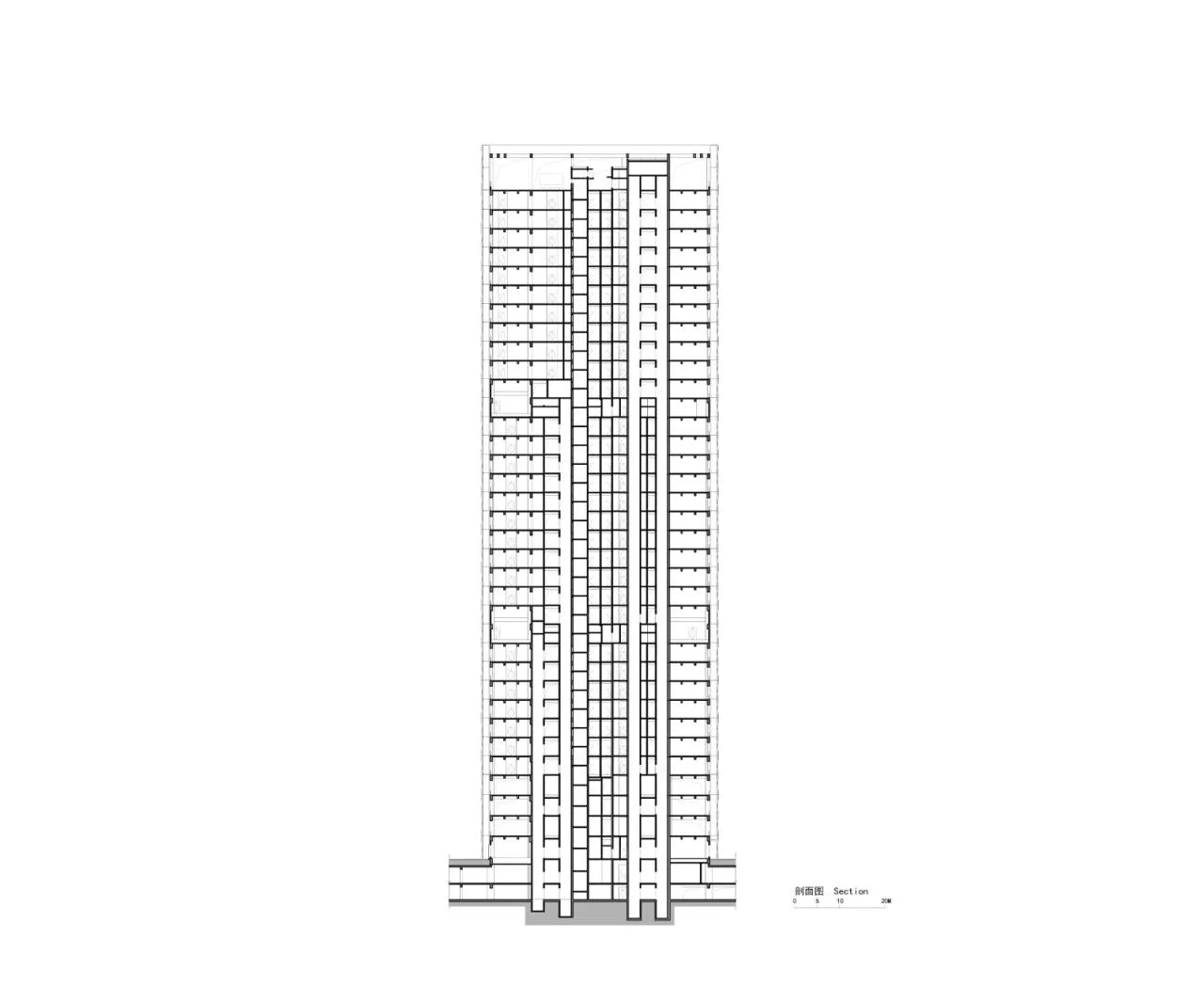
△ Section Diagram
Project Information
Project Name: Design of Plot 12 # in Suzhou High Speed Rail New City
Owner: New City Holdings Shanghai Suzhou City Company
Design Firm: GEN Jianhe Studio
Building Size: 108,000 square meters
Design Team: Shen Ying, Ding Yan, Fu Zhongkai, Pang Zhonghui, Zou Feng, Su Shuwen, Liu Yujing, Wang Peng
Construction Drawing Team: Zhu Honghong, Ma Dan, Leng Zhuqing, Jiang Lu, Zhang Jianxin, Chen Bei, Mao Tongbin, Zhou Zhiwei, Li Yepeng
Landscape Design: Guangzhou Shanshui Bide Design Co., Ltd
Curtain Wall Design: Zhejiang Zhongnan Construction Group Co., Ltd. Curtain Wall Design and Research Institute
Interior Design: Shanghai Feishi Decoration Design Engineering Co., Ltd
Lighting Design: Shenzhen Plesi Lighting Design Consultant Co., Ltd
Architectural Photography: Architectural Vision














Must log in before commenting!
Sign Up