
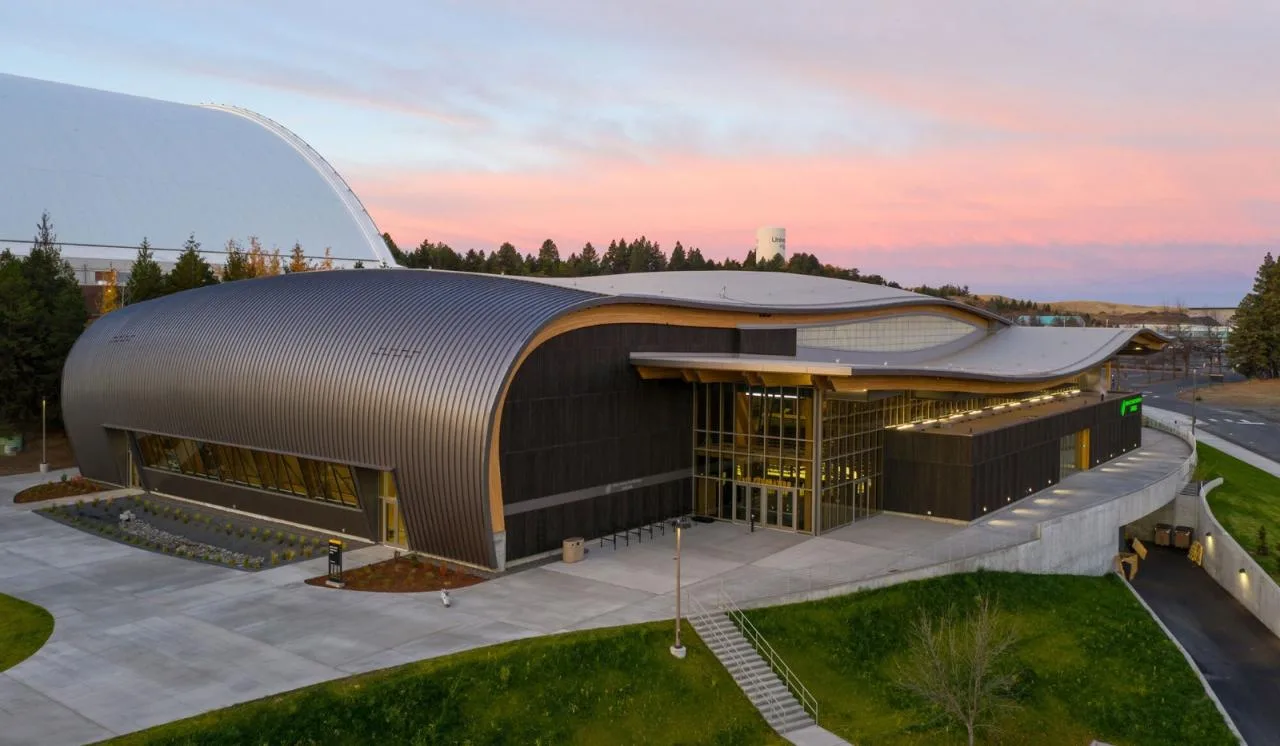
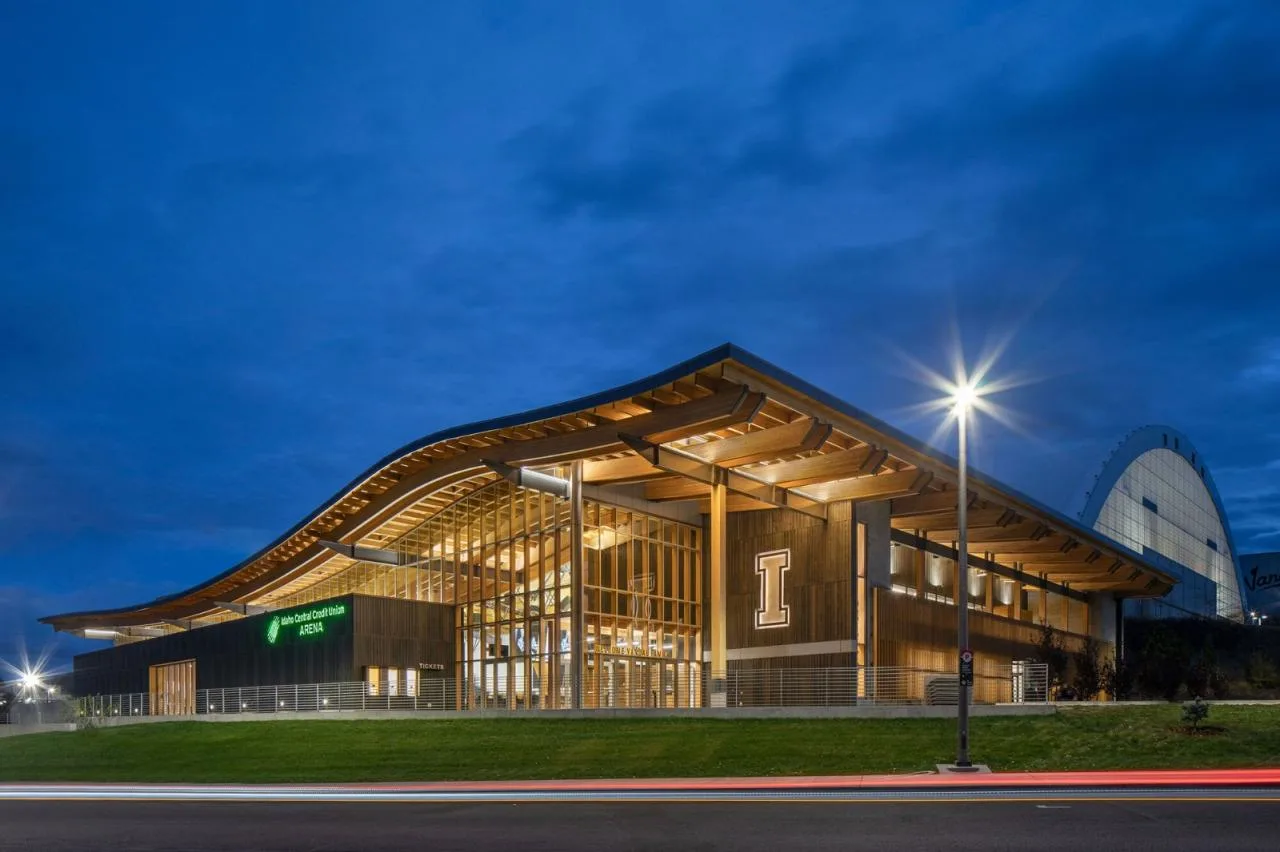
The University of Idaho Central Credit Union (ICCU) Sports Center is a versatile facility with a seating capacity of 4,000. Designed to serve as an iconic gateway to the University of Idaho campus, its architecture draws inspiration from the rolling terrain of the Palouse region—shaped by the Ice Age Missouri Floods following the collapse of Lake Missoula. Beyond hosting university basketball games, the ICCU Sports Center is a vibrant venue for various events including sports competitions, concerts, rallies, and campus initiatives.
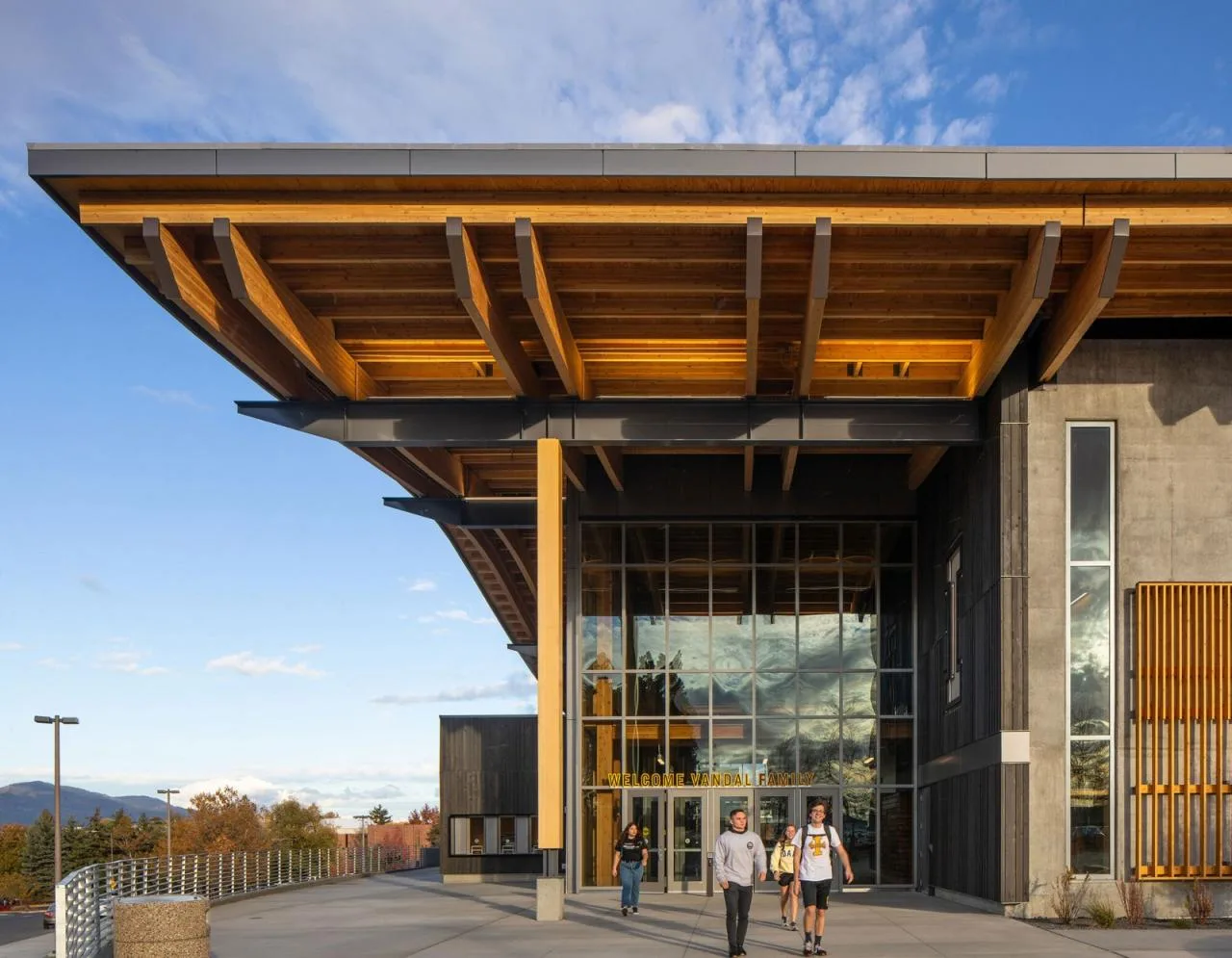
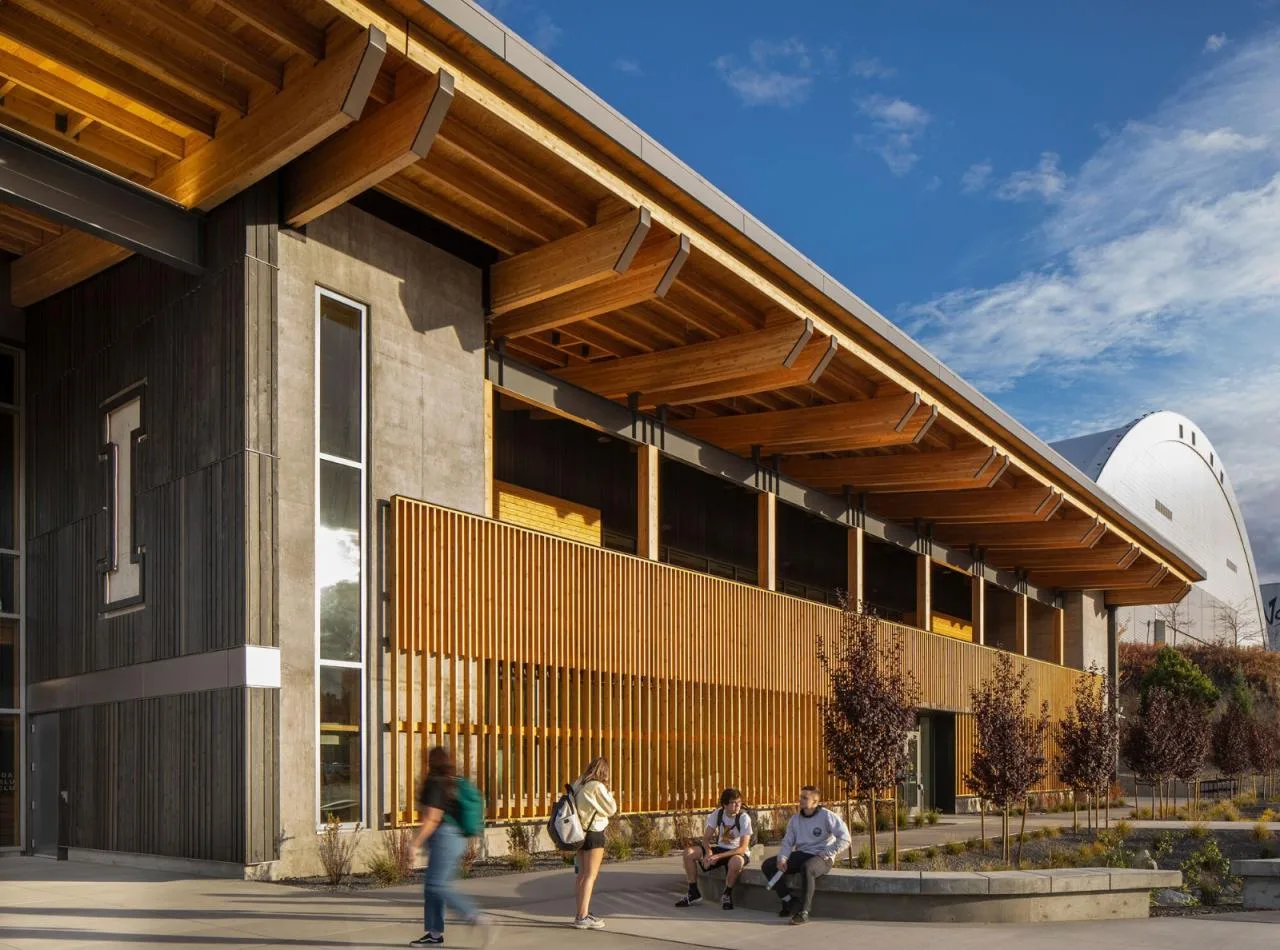
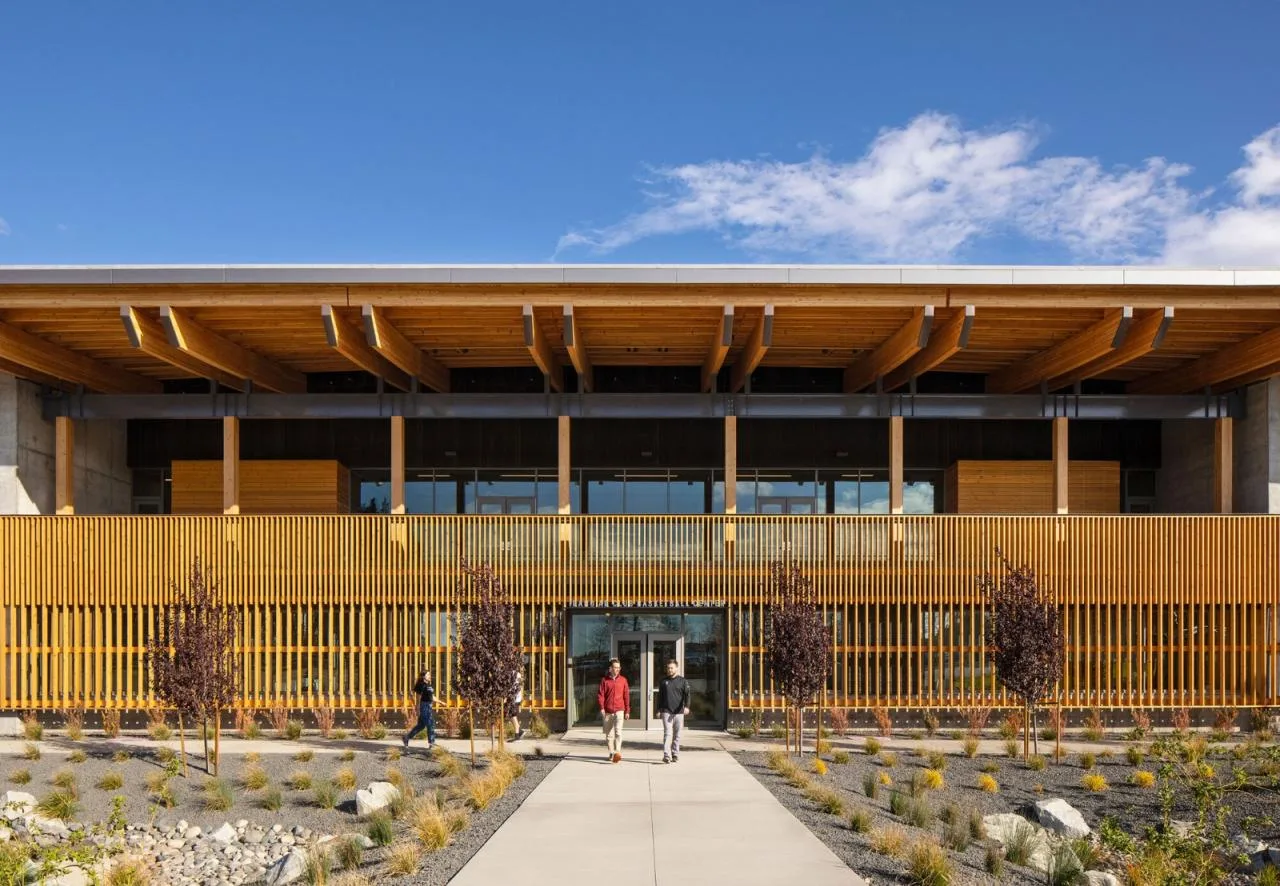
The newly built ICCU Arena offers a seamless experience for spectators, highlighting the unique characteristics of its location and emphasizing a strong commitment to sustainable natural resources. The gymnasium prominently features extensive wood use and is designed to maximize natural light within its interiors, creating a striking contrast to traditional steel and concrete sports facilities. This arena aims to partner with regional forestry and woodworking industries to pioneer innovations in sustainable timber design.
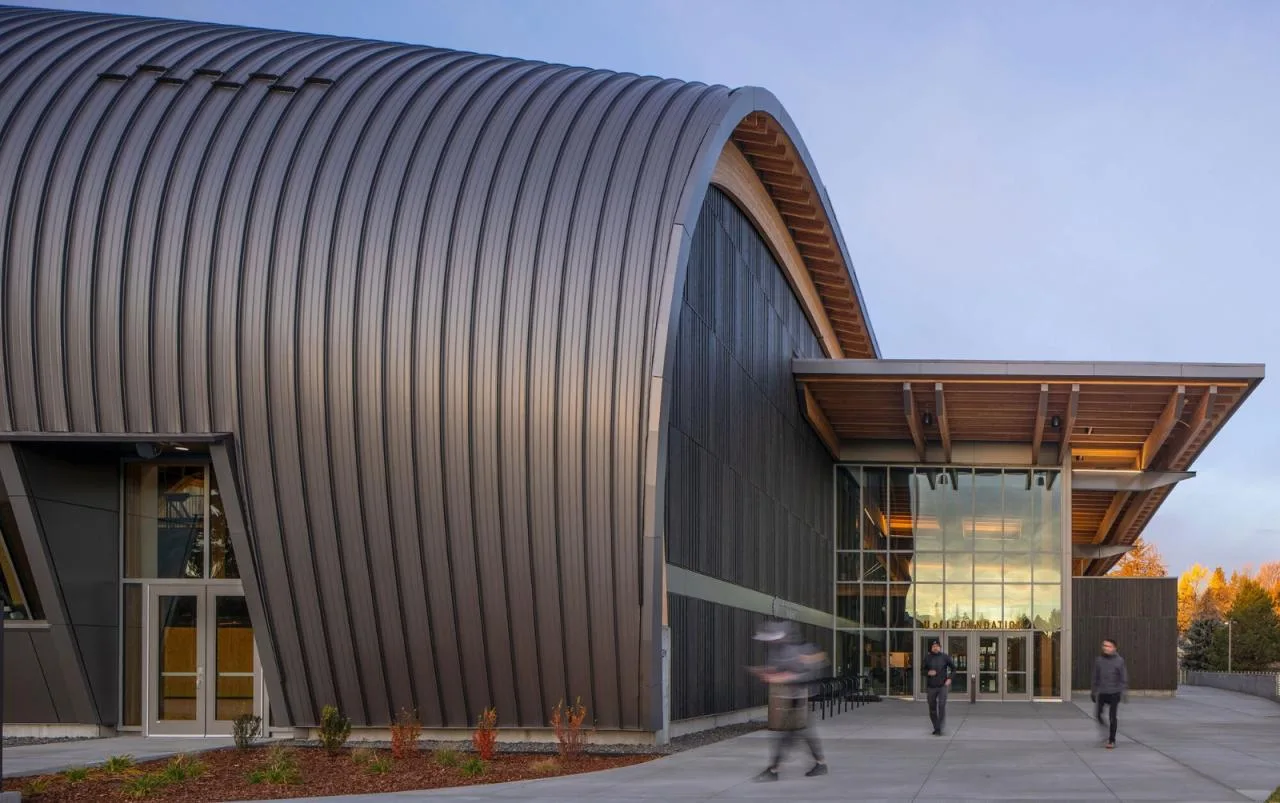
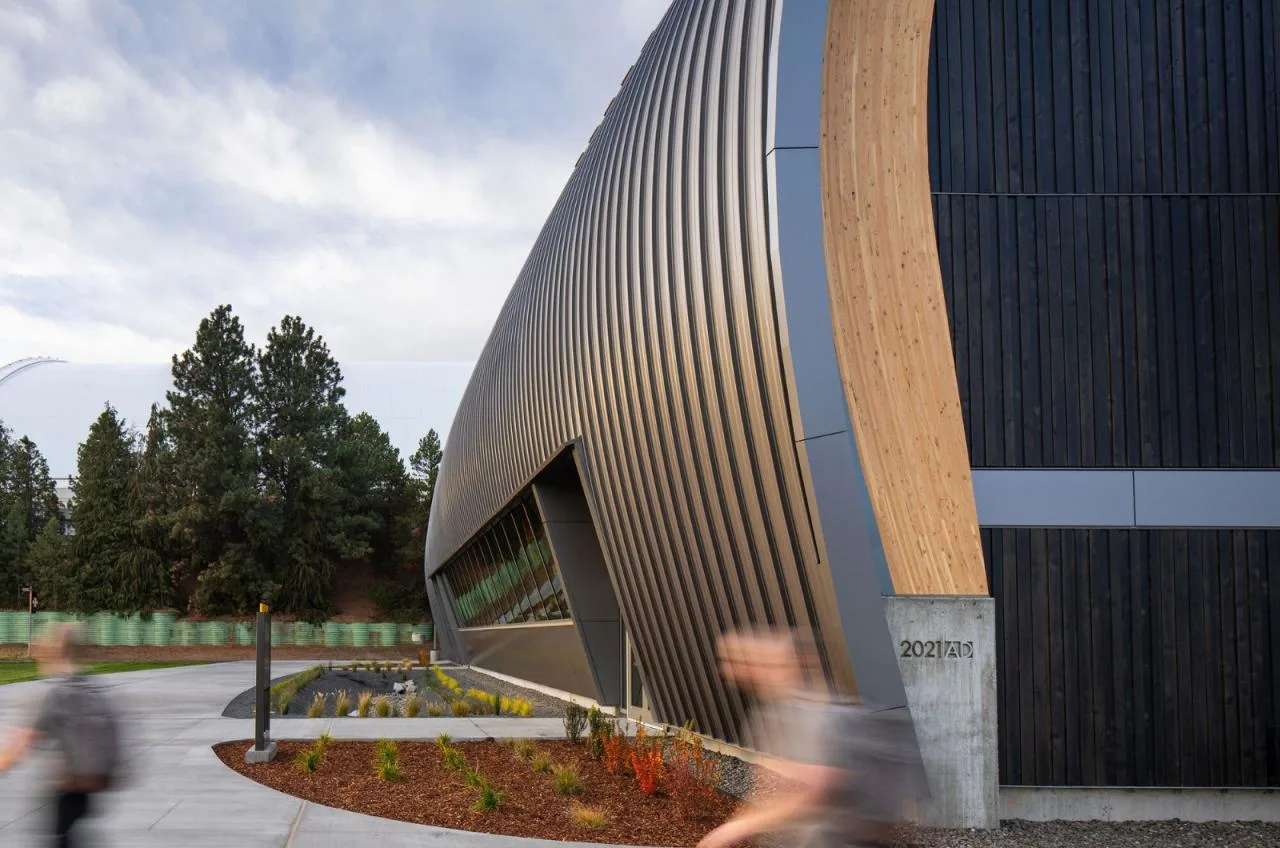
The building’s form and material choices establish a strong sense of place deeply rooted in Idaho’s history while embracing a forward-looking, progressive spirit. This venue not only celebrates athletic excellence but also serves as a hands-on learning laboratory for the university’s forestry and engineering students. Innovative use of locally sourced timber includes large-span glued laminated trusses and dowel laminated timber (DLT) structural elements, which have become integral to the university’s educational programs.
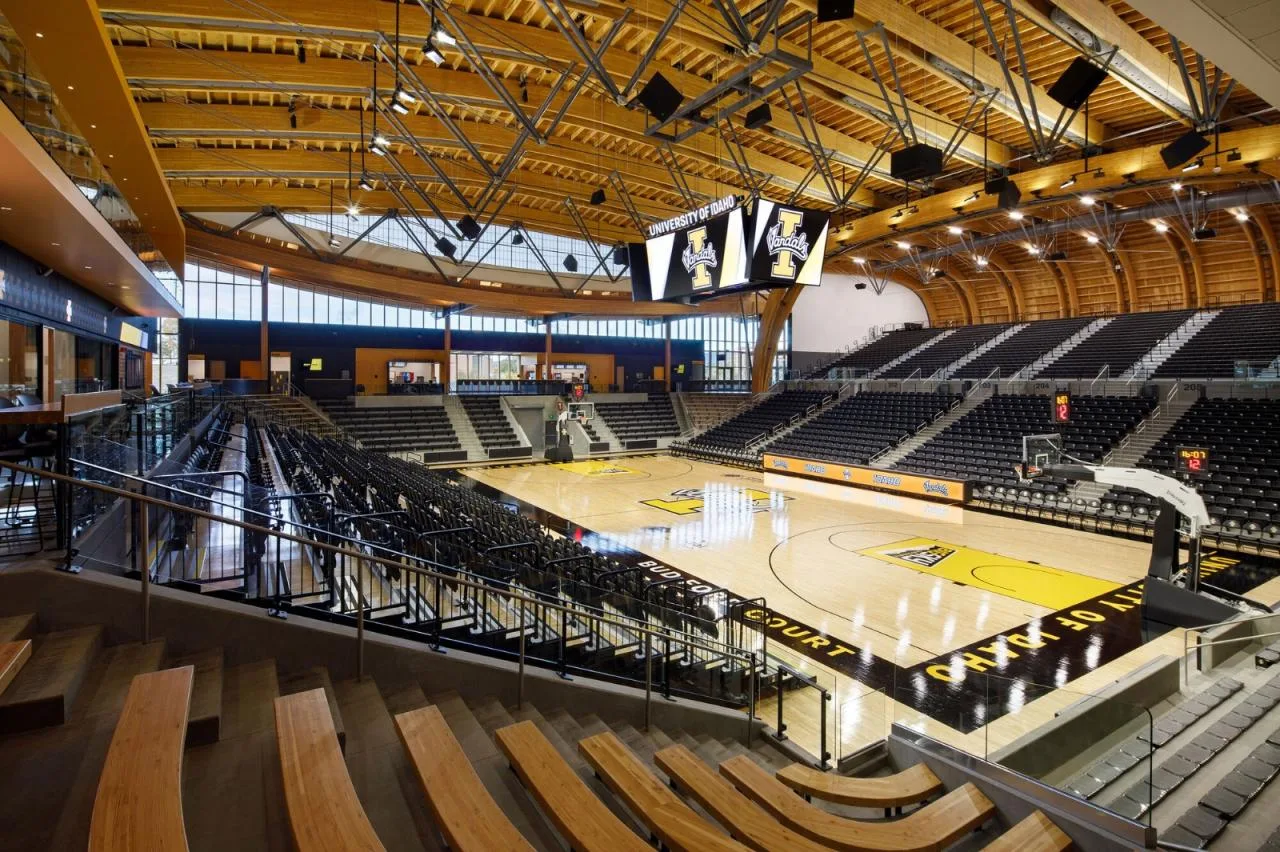
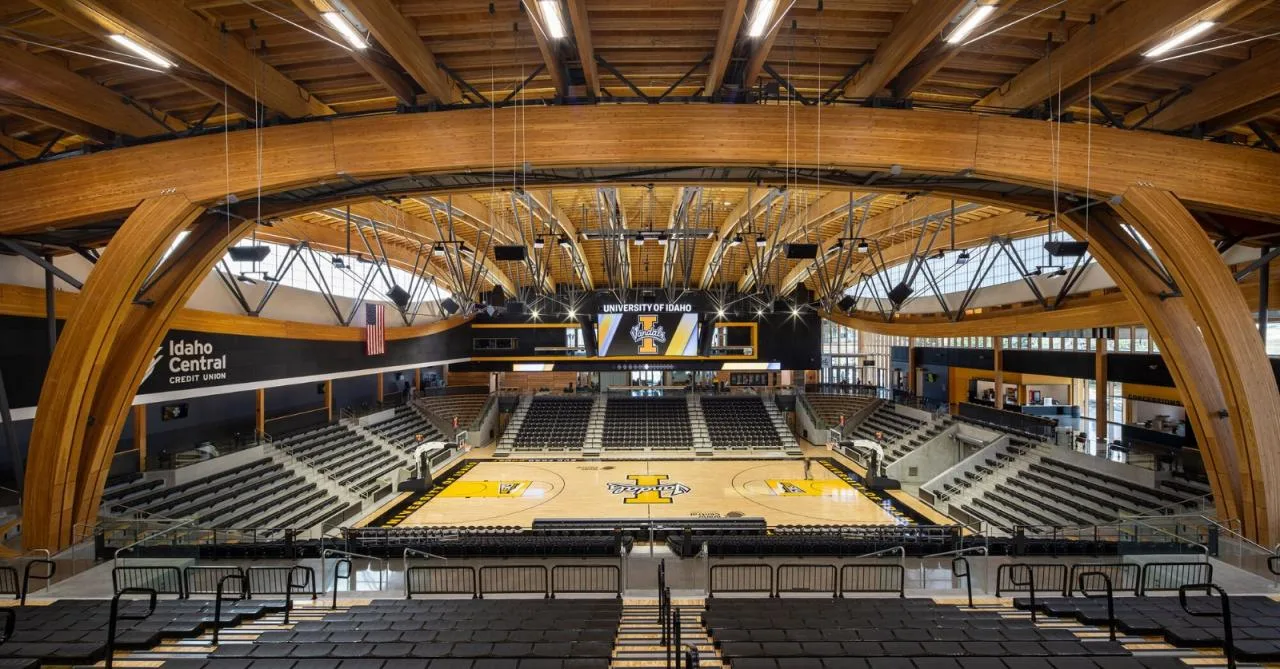
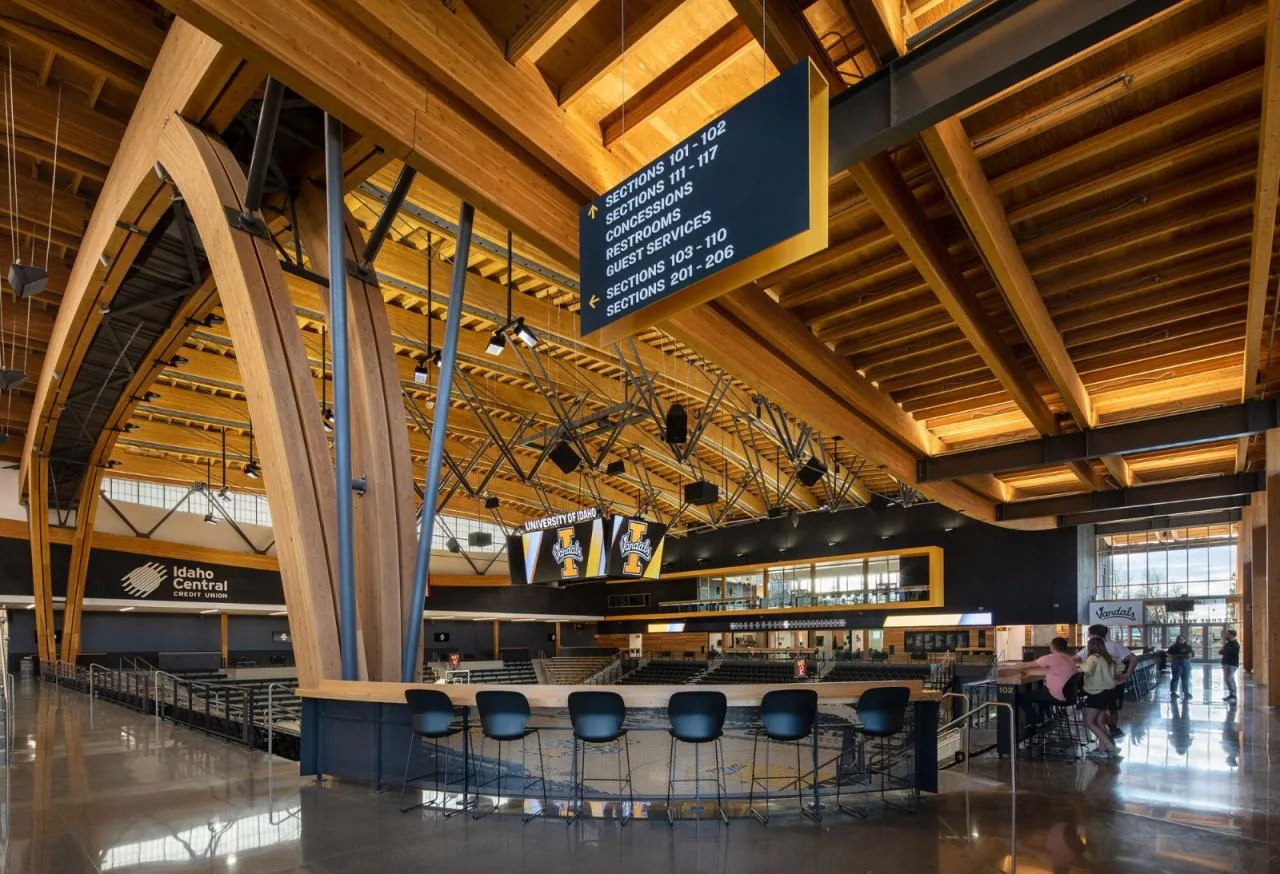
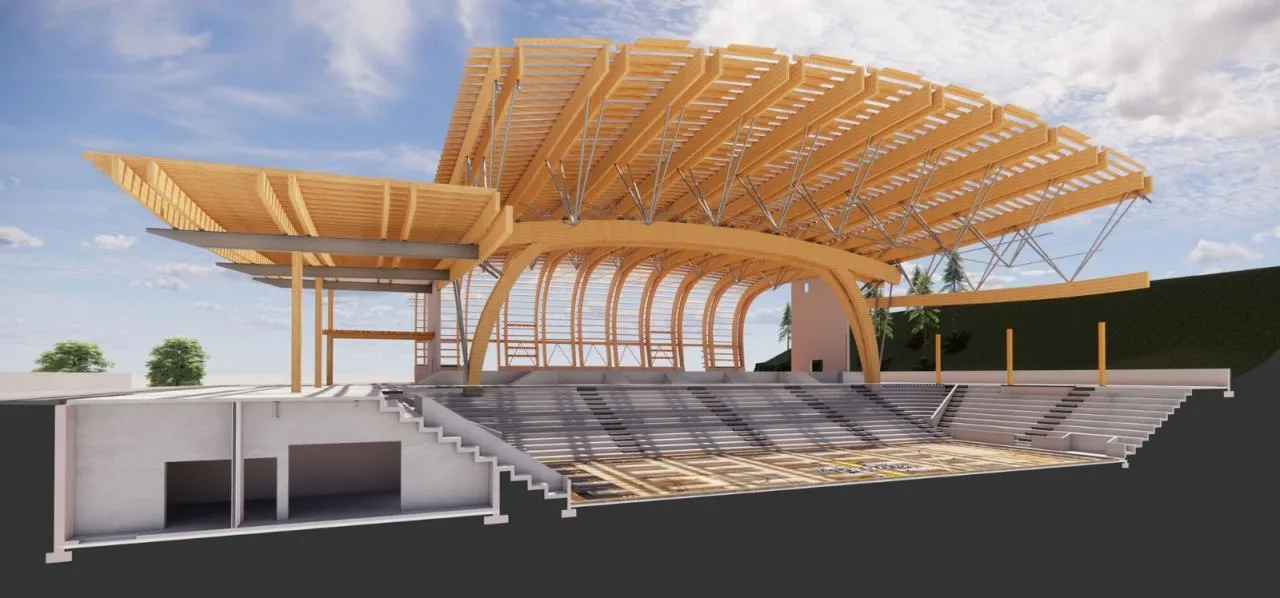
The sports hall’s roof is suspended above the west entrance porch, extending backward and divided into two sections to form a multi-level, equally spaced undulating shell atop the north hall. This design echoes the rolling hills of the Palouse region. The roof continues eastward, gently embracing the adjacent practice field vertically and connecting directly to the ground. Both the exterior and interior walls of the arena are supported by expressive laminated structural systems.
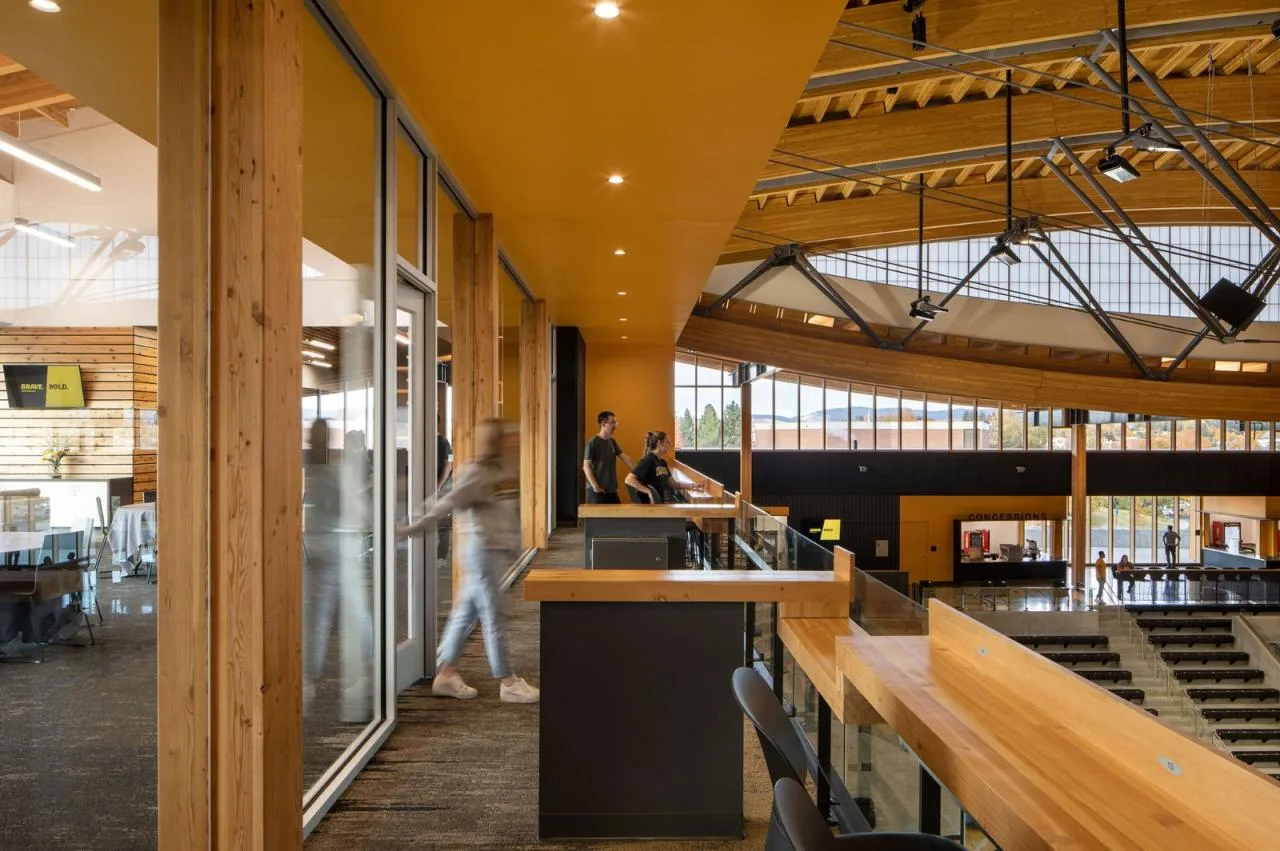
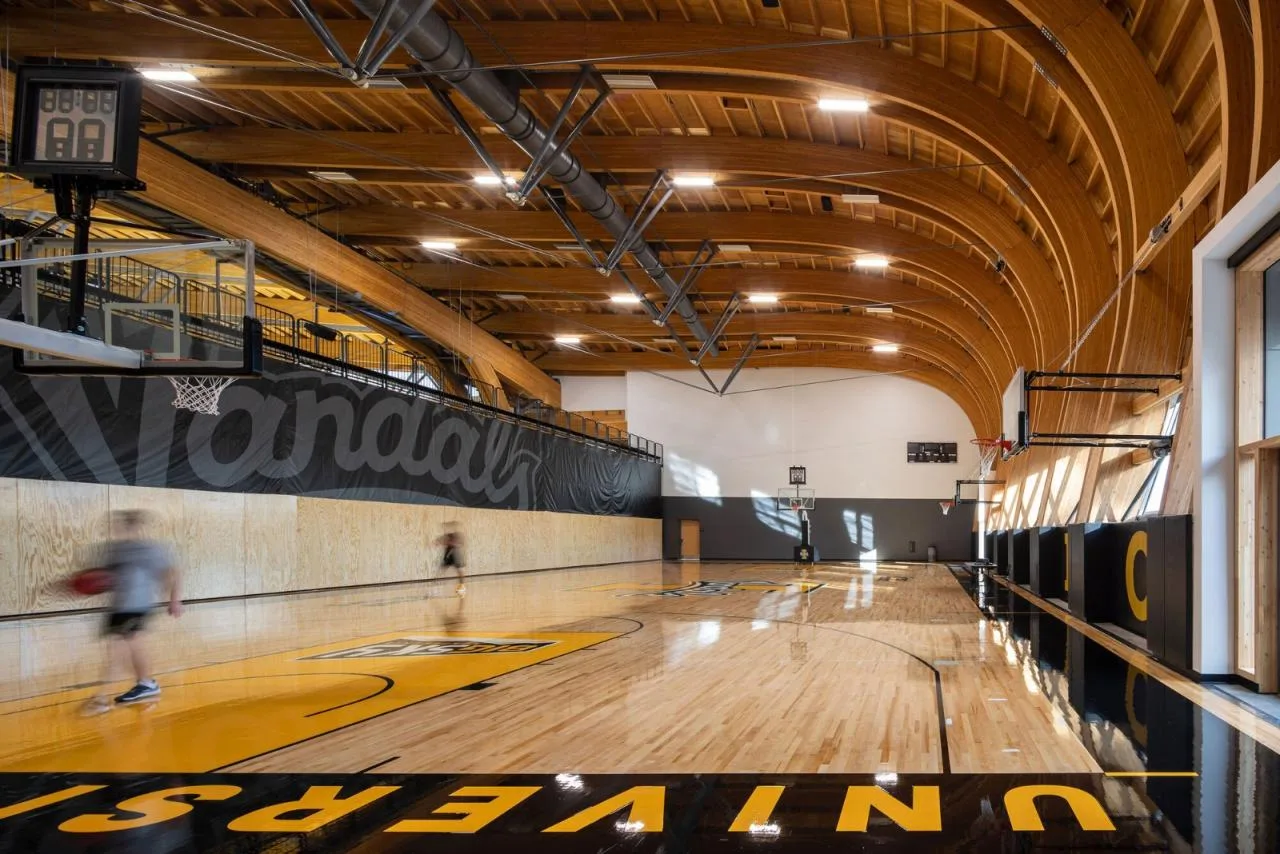
The charcoal-dyed cedar wood walls feature an undulating texture that contrasts with the smooth, prefabricated “silky” beams, paying homage to the traditional farm architecture of the region. Gaps between roof panels are filled with semi-transparent glass, allowing soft natural light to permeate the entire venue. Full-height glass curtain walls between wooden structures provide unobstructed views of both interior activities and the surrounding landscape. Additionally, the exposed, undulating Douglas fir roof structure creates a warm and inviting atmosphere for athletes and spectators alike.
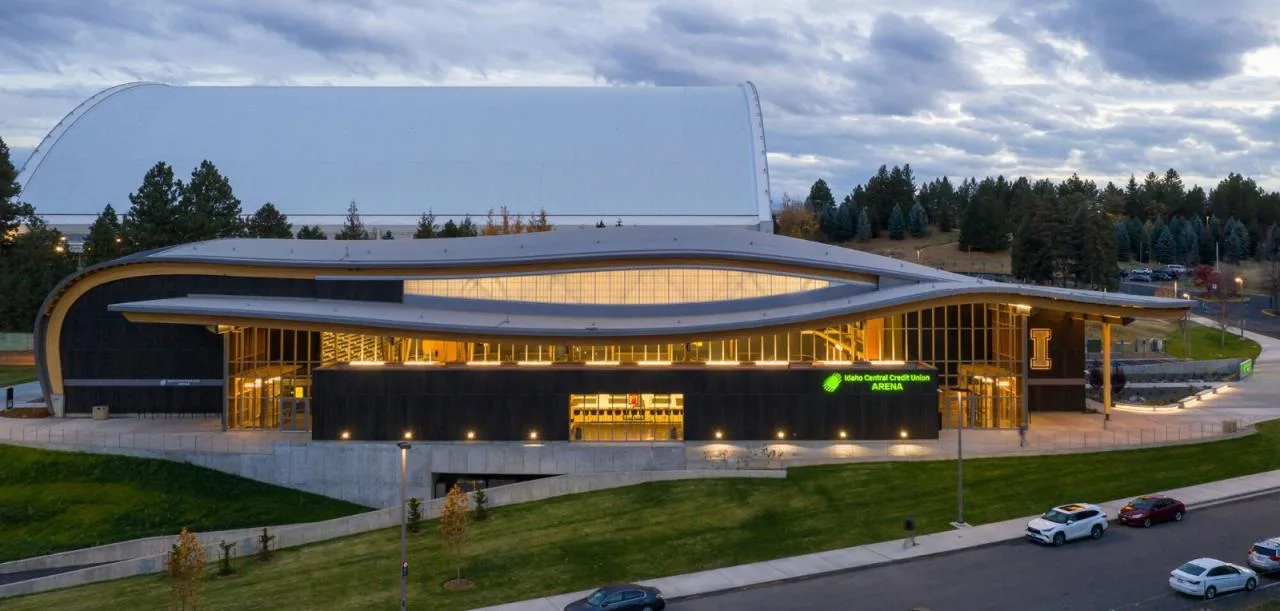
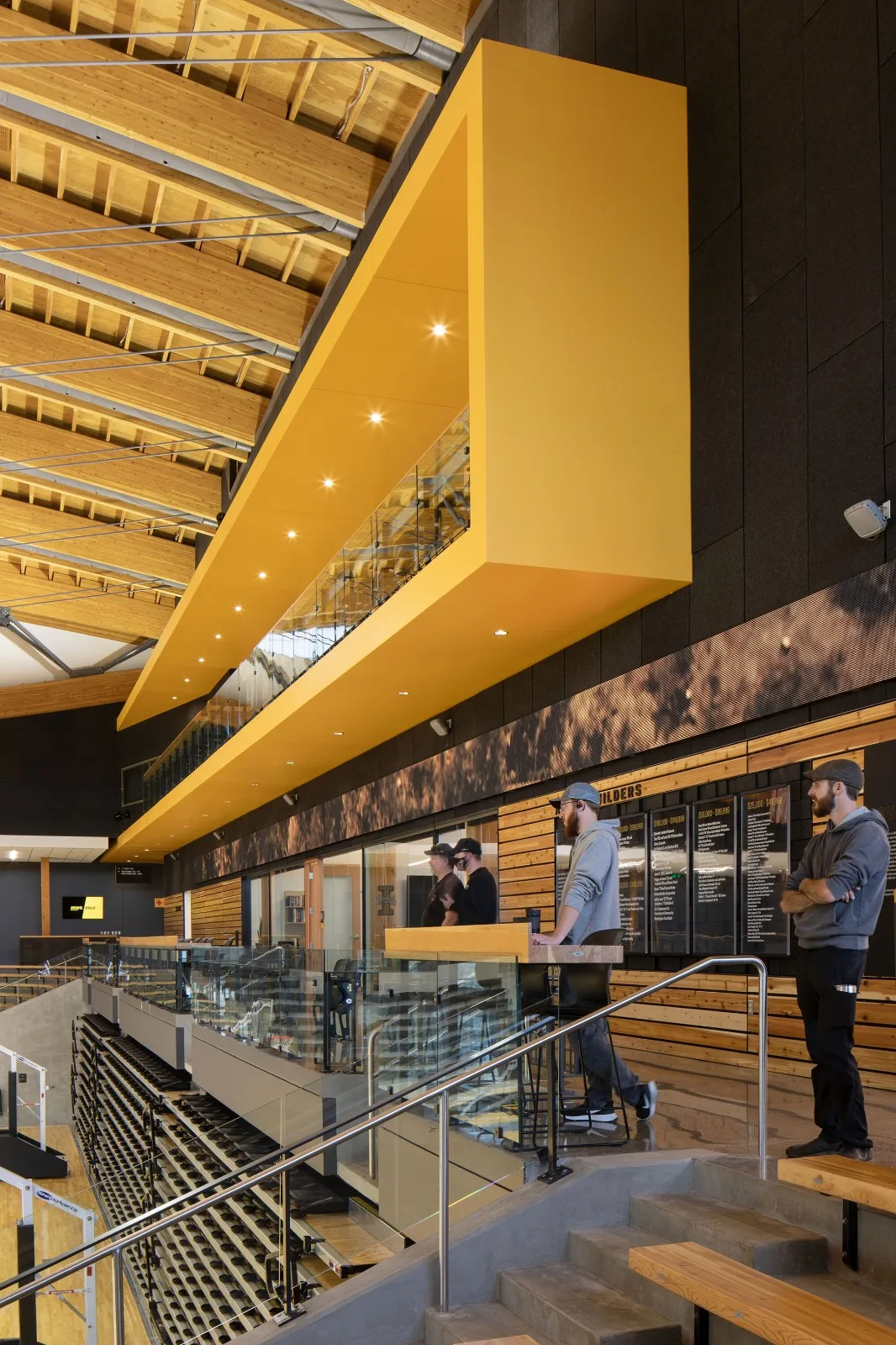
To achieve the poetic quality of the wooden structures, the building integrates mechanical and electrical systems within the structural framework. The main support system consists of bifurcated portal trusses and a series of repetitive column trusses. A combination of portal trusses and king column trusses with a double-layer laminated top cable design creates a “gap space” between structures, forming a “facility highway” that discreetly conceals mechanical and electrical components.
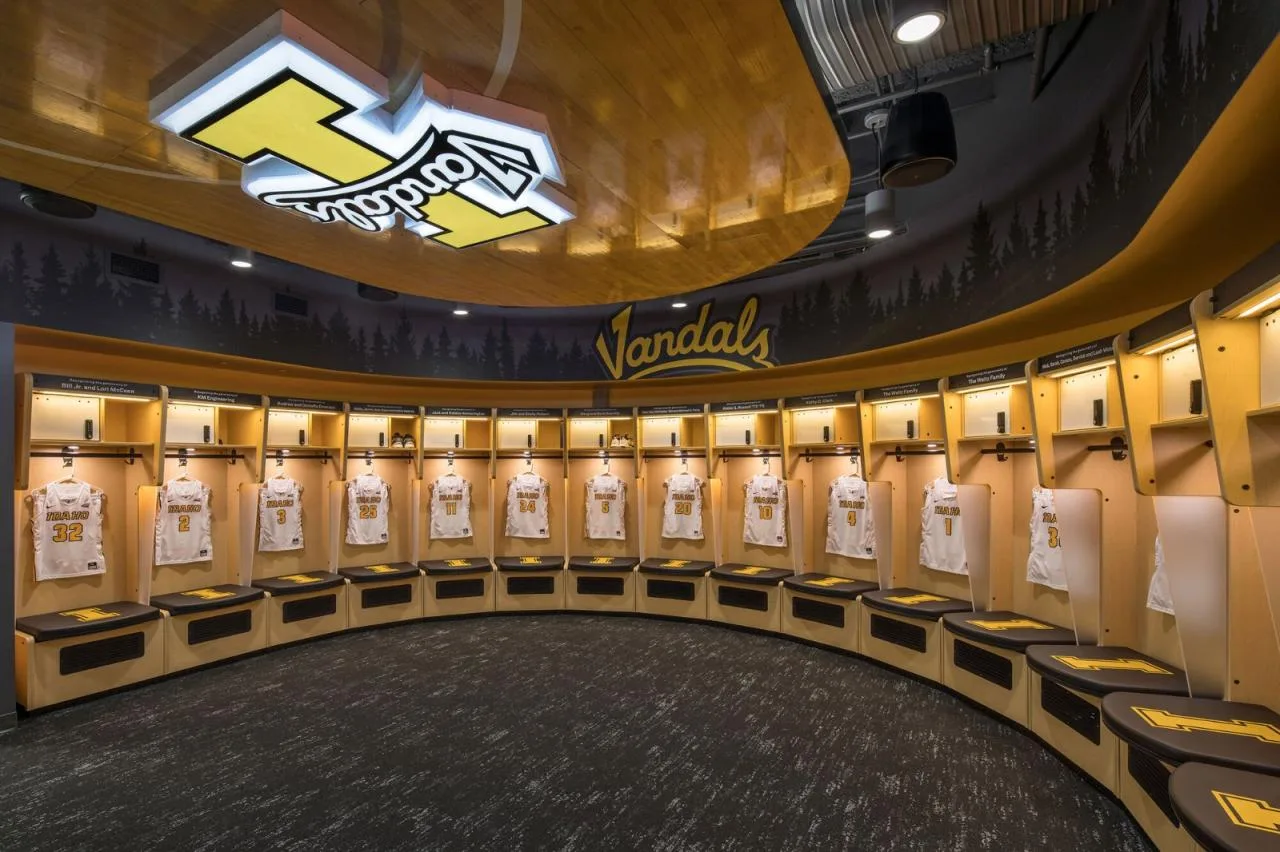
On the west side of the sports hall, operational facilities are tucked behind the arches and integrated with spaces such as the sports field office, locker rooms, and alumni center. This arrangement creates a special event area on the upper level with views overlooking the main stadium. Additionally, spectators on the west side can enjoy the Van der Waals terrace, which is protected from rain and snow by a robust cantilevered roof. From there, they can take in panoramic views of the rolling Palouse hills, fostering a fully immersive and communal atmosphere.
Project Drawings
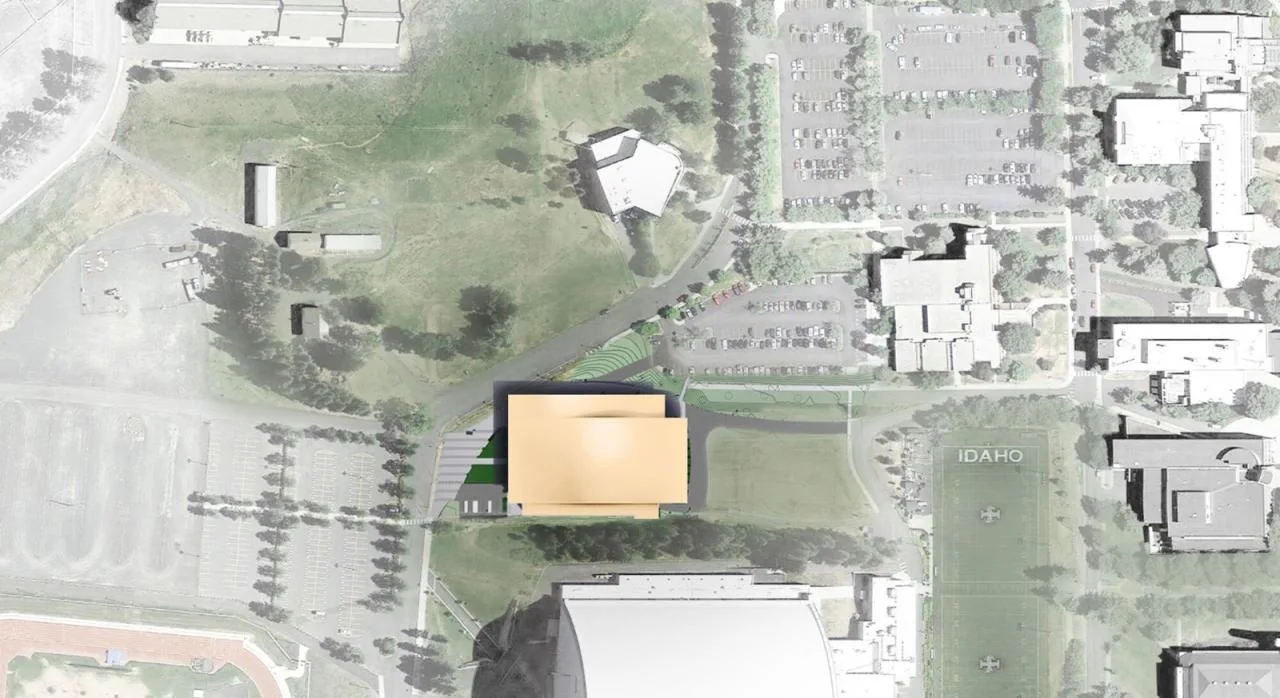
△ General Layout Plan
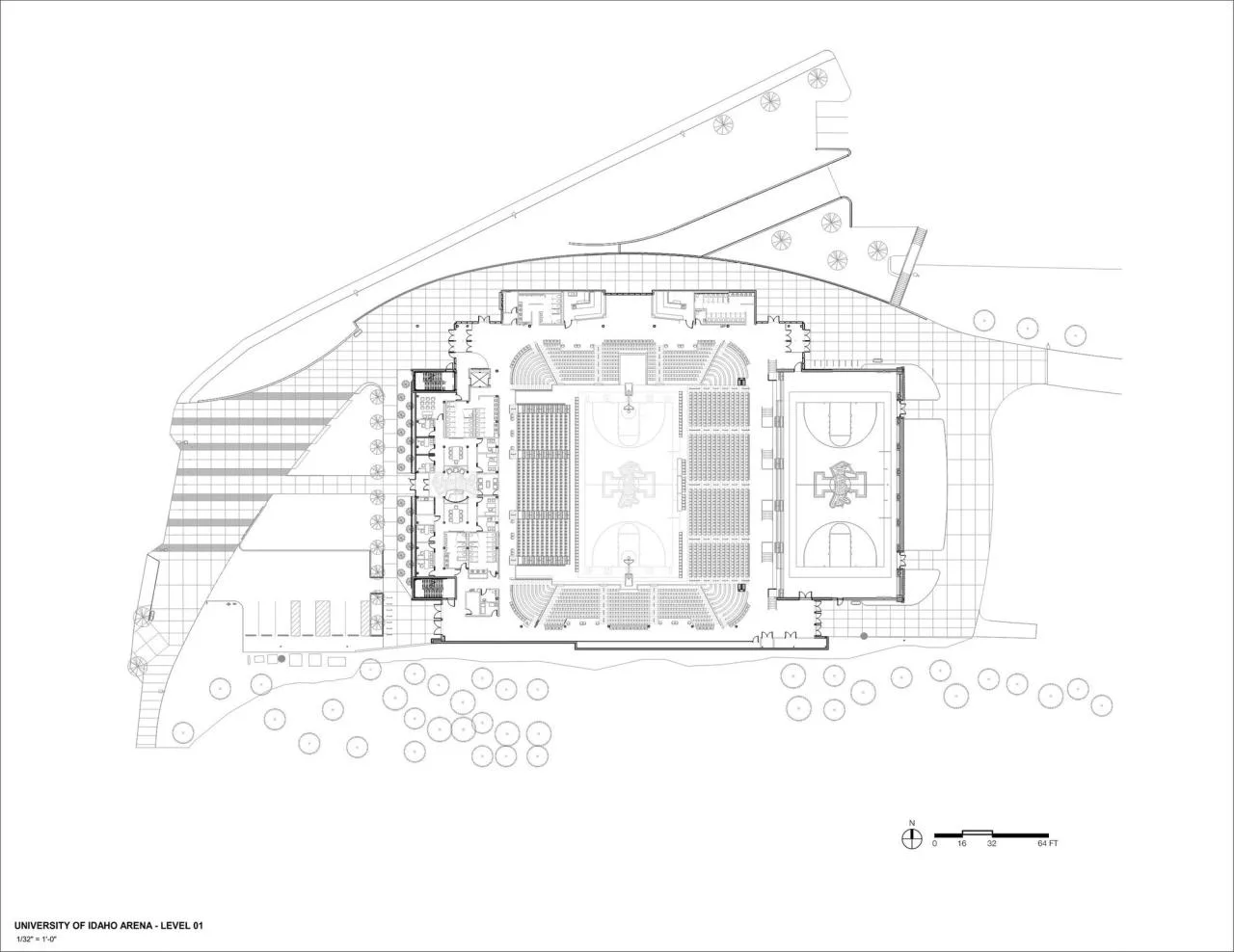
△ First Floor Plan
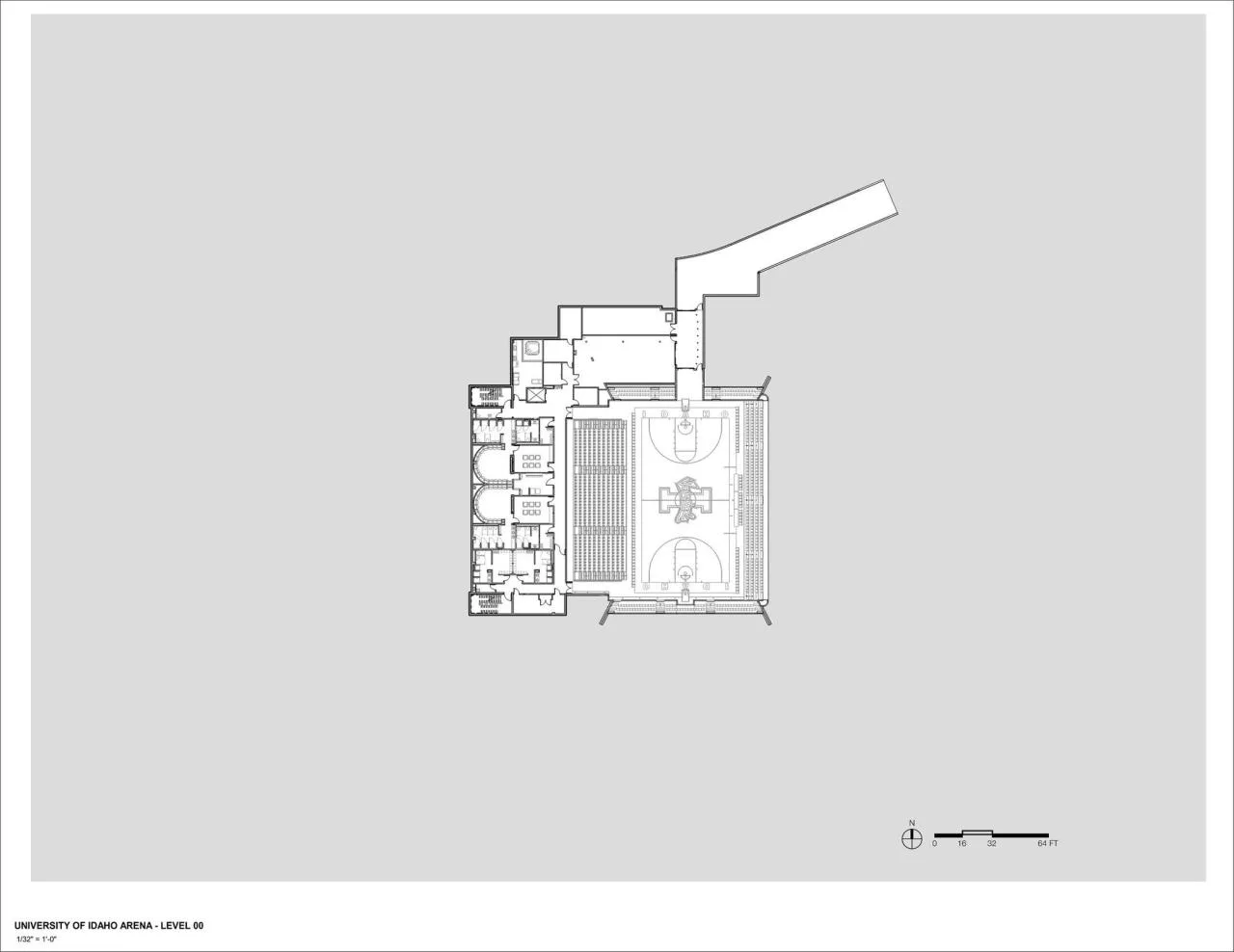
△ Lower Level Plan
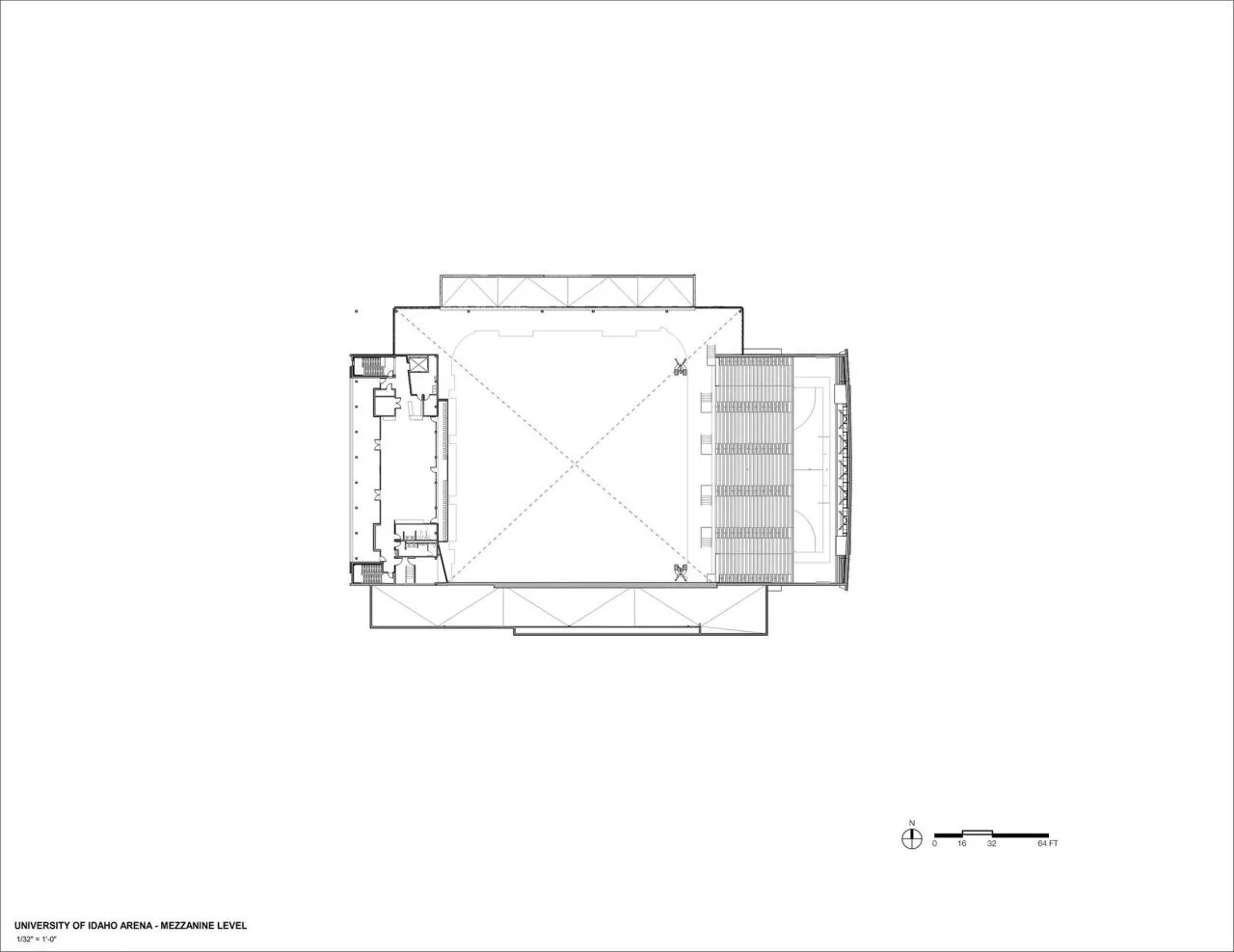
△ Audience Seating Elevation Plan
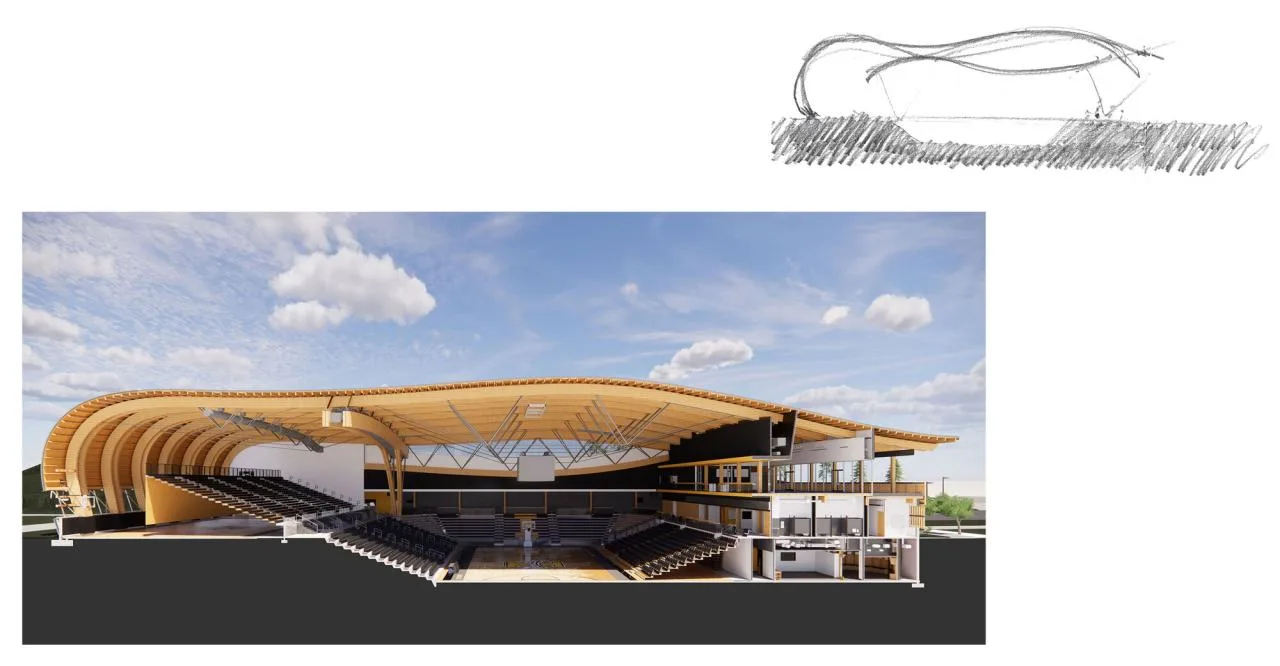
△ Sectional Perspective
△ Structural Diagram
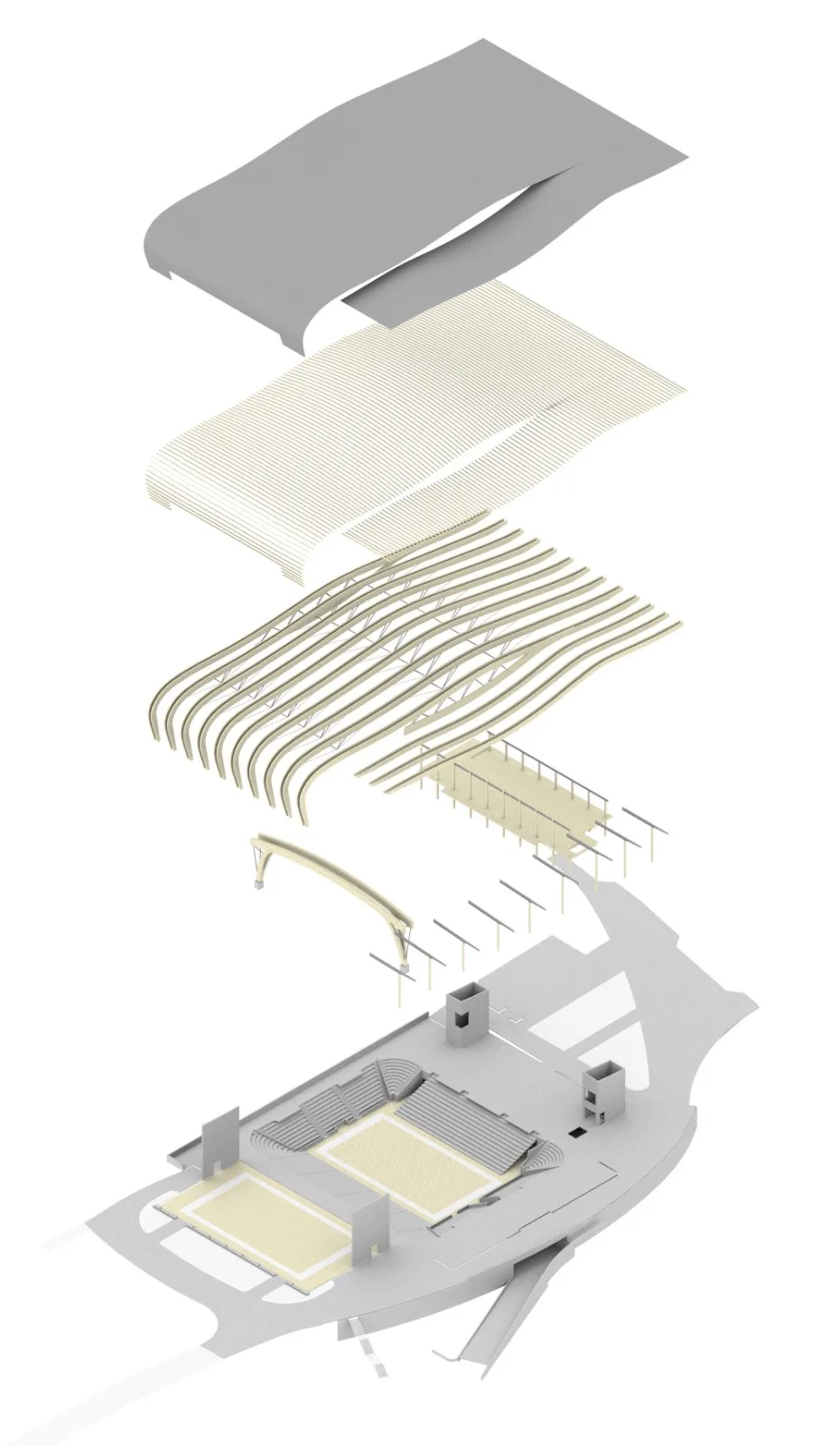
△ Analytical Chart
Project Information
Architect: Opsis Architecture
Area: 6,148.88 m²
Year Completed: 2021
Photographer: Lara Swimmer
Suppliers: 9Wood, ASI Global Partitions, Armstrong, Bemo, Blum, Boise Cascade, C.R. Laurence, Carlisle SynTec, Claridge, Connor Sports Wood Athletic, Cornell, Cosentino, Dow Subgrade, Draper, Formica, Gearboss by Wenger, Hafele, Henry Company, Hilti, Hussey, and more than 25 others
Responsible Partner: Alec Holser
Project Management, Architect, and Designer: Chris Roberts
Architect: John Morrison
Designer: Matthew Rusnac
Function and Purpose: Sports center and multifunctional activity space
Roof Structure Engineering: StructureCraft
Construction: Hoffman Construction
Structural Engineer: KPFF Consulting Engineers
Location: Moscow, USA












Must log in before commenting!
Sign Up