
In recent years, China’s subway construction has expanded significantly due to economic growth and rapid urbanization. Subway stations present unique challenges in construction, characterized by limited space and complex technical demands.
Constraints on construction site layouts are often overlooked in traditional two-dimensional plans, leading to conflicts among workers, machinery, and materials. Conventional subway construction management also suffers from communication barriers, inefficient spatial arrangements, and inaccurate planning.
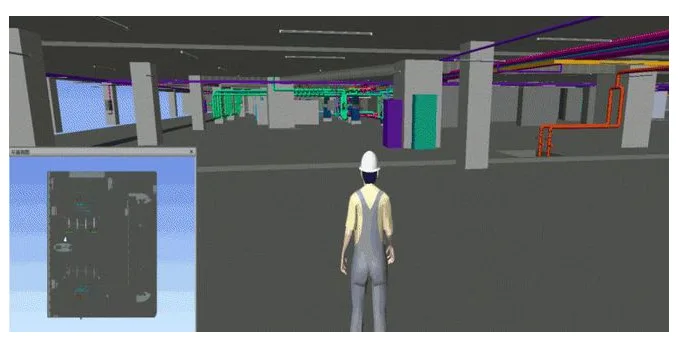
By leveraging BIM technology in subway station construction management, the process can be simulated and visualized, making resource allocation transparent. This approach reduces waste, shortens construction time, improves quality, and cuts costs.
Part 01
Characteristics of BIM Technology
Visibility
BIM technology creates dynamic, data-driven construction models that visually represent the construction process and outcomes. This enables engineers and workers to gain a three-dimensional, real-time understanding of project status, improving accuracy and standardization.
Virtuality
The construction simulations and results generated by BIM are virtual representations created by software applications based on technical principles and data inputs.
Example
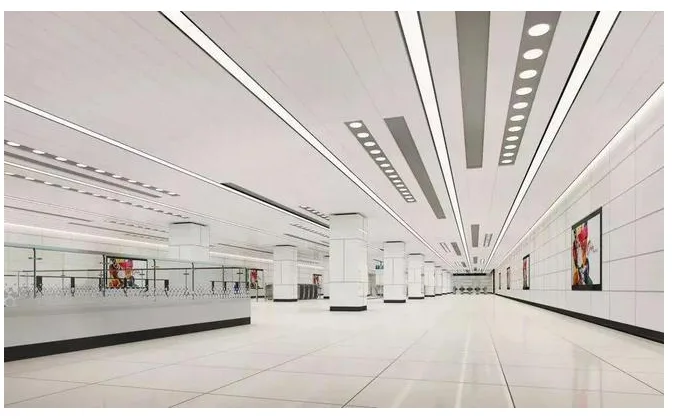
During subway station construction, engineers input relevant data into BIM software, which generates virtual progress and effect diagrams. Though virtual, these guides are essential for directing actual construction.
Part 02
Application of BIM in Subway Mechanical and Electrical Installation
Drawing Review
BIM facilitates thorough organization of project drawing reviews, helping identify design flaws early and minimizing rework after installation.
Using Revit, models for architectural, structural, and M&E components are developed. Design issues are discovered during modeling and compiled into review reports.
Example
Typical problems include misaligned pipelines between floors, pipes intersecting beams or columns, incorrect dimensions, and discrepancies between design and site conditions. BIM enables quick reporting and correction by the design institute, saving significant time and labor compared to traditional reviews.
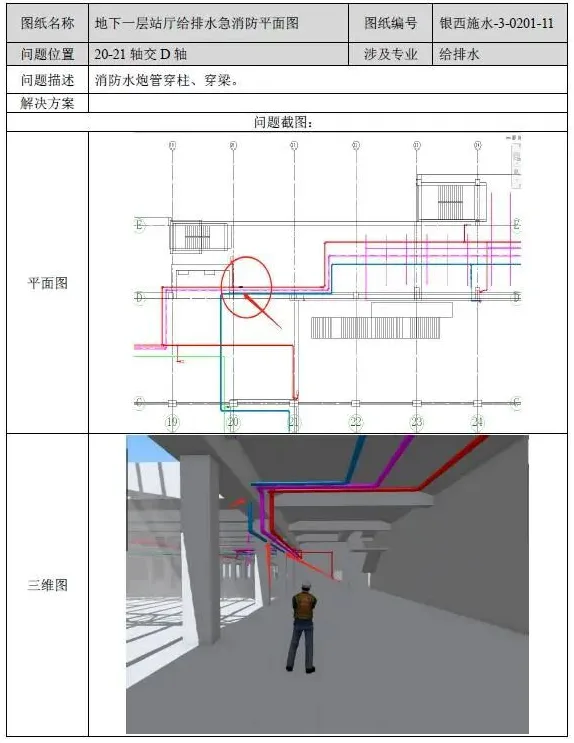
Drawing Review Report
Visualization in Technical Disclosure
Throughout construction, relevant data such as elevations, shapes, materials, and reinforcement layouts for beams, slabs, columns, walls, and stairs can be filtered and accessed within the BIM model to support on-site work.
Construction teams benefit from BIM’s 3D visualization, which is clearer and more accurate than 2D drawings. This enhances understanding of design intent and construction challenges, ensuring smooth assembly of complex nodes and reducing errors.
BIM technology enables detailed modeling of complex beam-column connections and comprehensive pipeline layouts during multidisciplinary subway station construction.
Integrated Support and Hangers
BIM allows pre-planning of mechanical and electrical pipeline layouts, creating 3D models for systems like water supply, drainage, HVAC, and electrical.
Preliminary 3D designs for comprehensive supports and hangers are developed and subjected to collision detection. Designs are revised based on interference analysis.
Structural analysis software evaluates the stress on supports and hangers to ensure compliance with mechanical standards, leading to further design refinements.
Part 03
BIM’s Value in Design
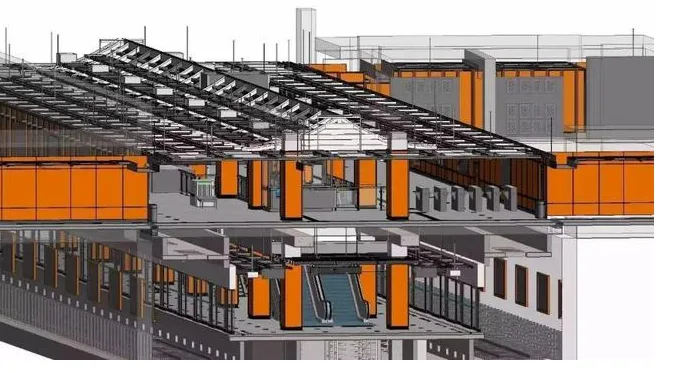
Subway stations are critical nodes in the transit network, handling passenger flow and housing essential equipment. Their design is complex, involving multiple specialized disciplines.
Traditional design methods often struggle to unify various specialties like ISCS, BUS, FAS, PA, and PIS. BIM provides a collaborative platform that enhances communication and resource integration among disciplines.
This collaborative environment makes design adjustments easier, improving overall design quality.
Part 04
BIM’s Value in Operation and Maintenance
During operation and maintenance, BIM supports virtual simulations, asset tracking, spatial management, system analysis, and emergency response drills.
Managers can access, update, and synchronize system information through BIM models, facilitating better maintenance of equipment and infrastructure.
Key building systems—including monitoring, communication, ventilation, lighting, and elevators—are critical to safe operation. Failures can disrupt services or cause safety hazards.
BIM helps identify hidden issues early, reducing losses and enabling quick, accurate emergency responses.
In disaster scenarios, real-time data retrieval from BIM databases supports virtual assistance, precisely locating hazards and providing critical information before rescue teams arrive.
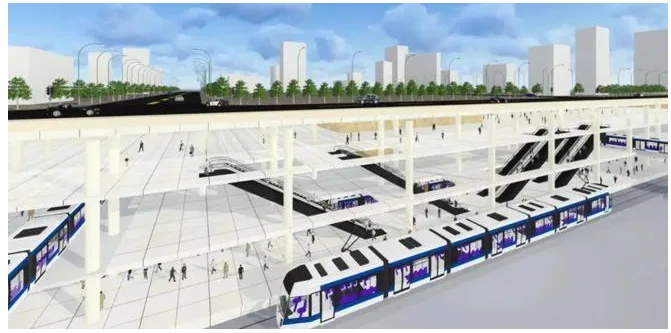
Overall, adopting BIM technology standardizes and streamlines subway construction management, enabling information-driven, process-oriented, and precise control throughout the project lifecycle.
It enhances resource planning to manage financial risks, saves costs, reduces environmental impact, and boosts efficiency.
BIM transforms traditional project management, elevating building information technology to new heights. This advancement accelerates subway construction, achieving faster, more precise results, and pioneering a new era in urban rail transit development.
















Must log in before commenting!
Sign Up