
1. Prime Golden Coastline Along the City’s Central Axis
The new landmark of the Pearl River Rear Channel combines creativity, industry, culture, and leisure.
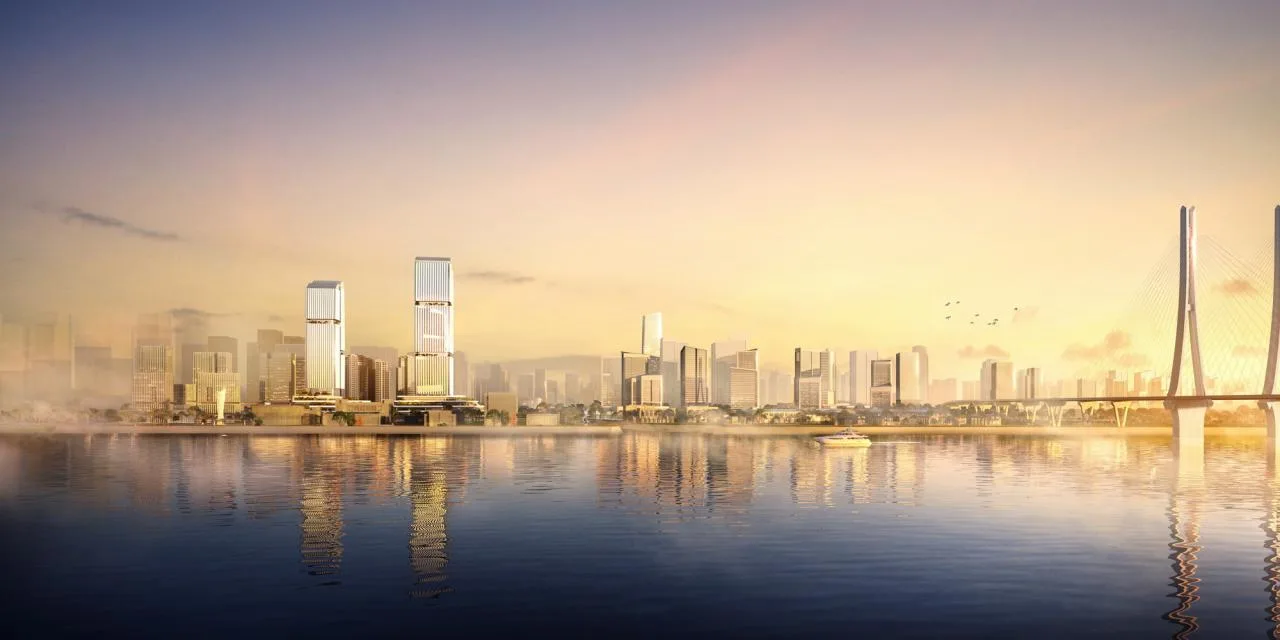
As a key project within Haizhu District’s “one district, one valley, and one bay” initiative in Guangzhou, the Haizhu Innovation Bay Portal Hub occupies a prime section of the 20 km coastline along the Pearl River Rear Channel. It sits at the intersection of Guangzhou’s new central axis and the waterfront innovation industrial belt, benefiting from exceptional waterfront resources right in the city center.
Looking ahead, the project aims to integrate riverfront landscapes, optimize the Pearl River Rear Channel’s planning, and develop a high-quality ecological and cultural tourism coastline. It will foster a service economy zone that blends cultural creativity, urban tourism, artificial intelligence, and headquarters innovation offices, ultimately shaping a vibrant waterfront innovation corridor.
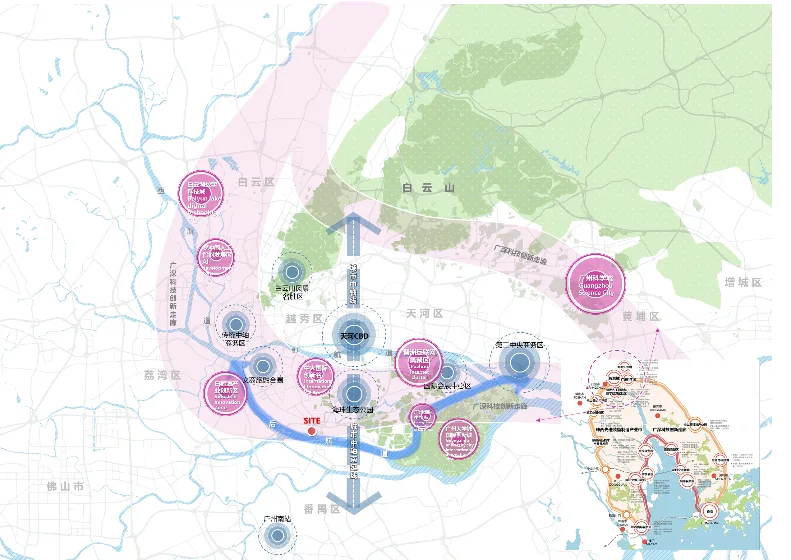
▲ Project Location
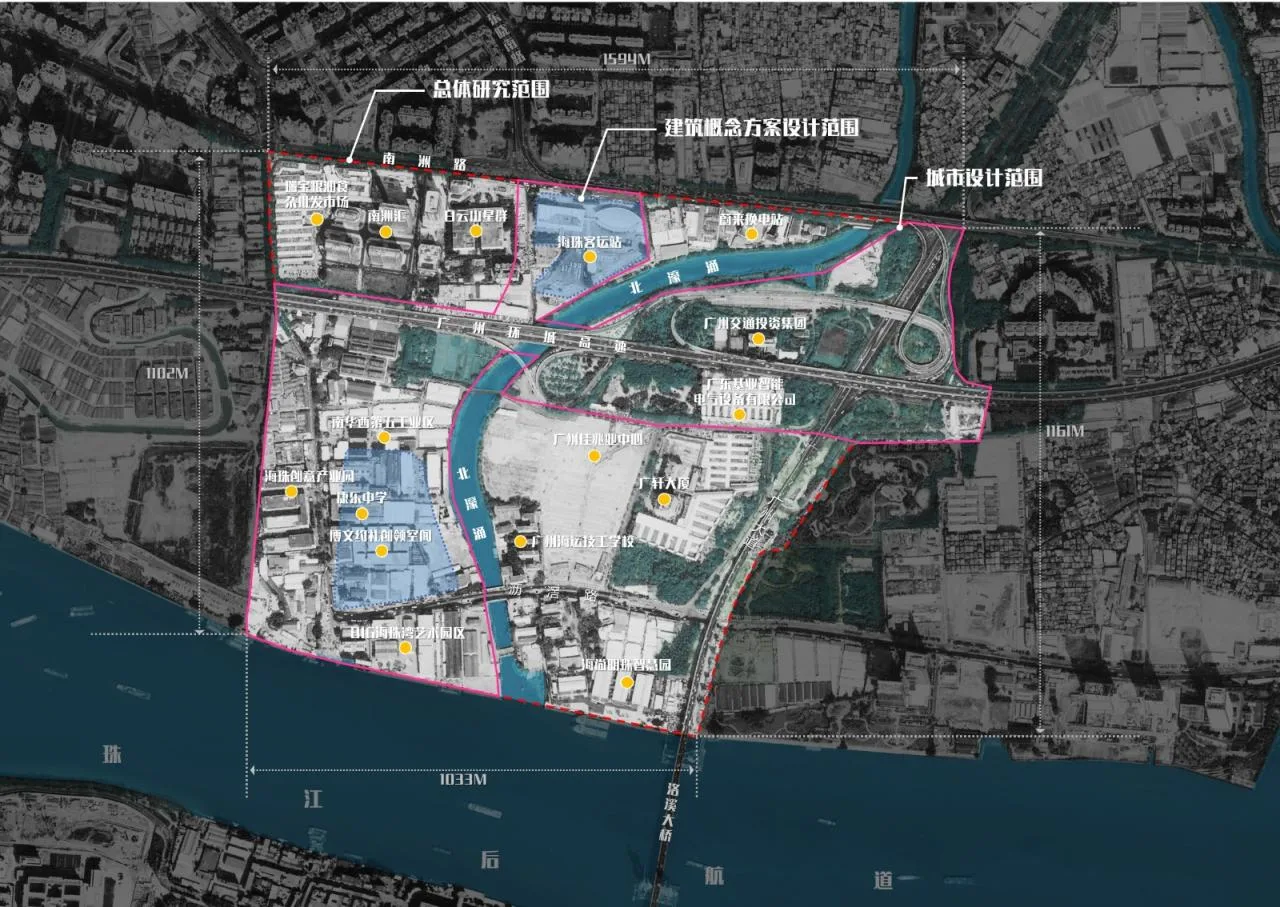
▲ Project Planning Scope
2. Integrated Development of Five Major Business Formats and Four Core Innovation Engines
Before finalizing the overall design, in-depth on-site research identified four key challenges facing the site: internal and external transportation, ecological culture, portal image, and development drivers. The design focuses on business formats, dynamics, ecology, culture, and form.
By employing four strategic approaches—green growth, open sharing, diverse integration, and urban landscape creation—the plan delivers a high-standard, high-value, and highly accessible design with strong implementability.
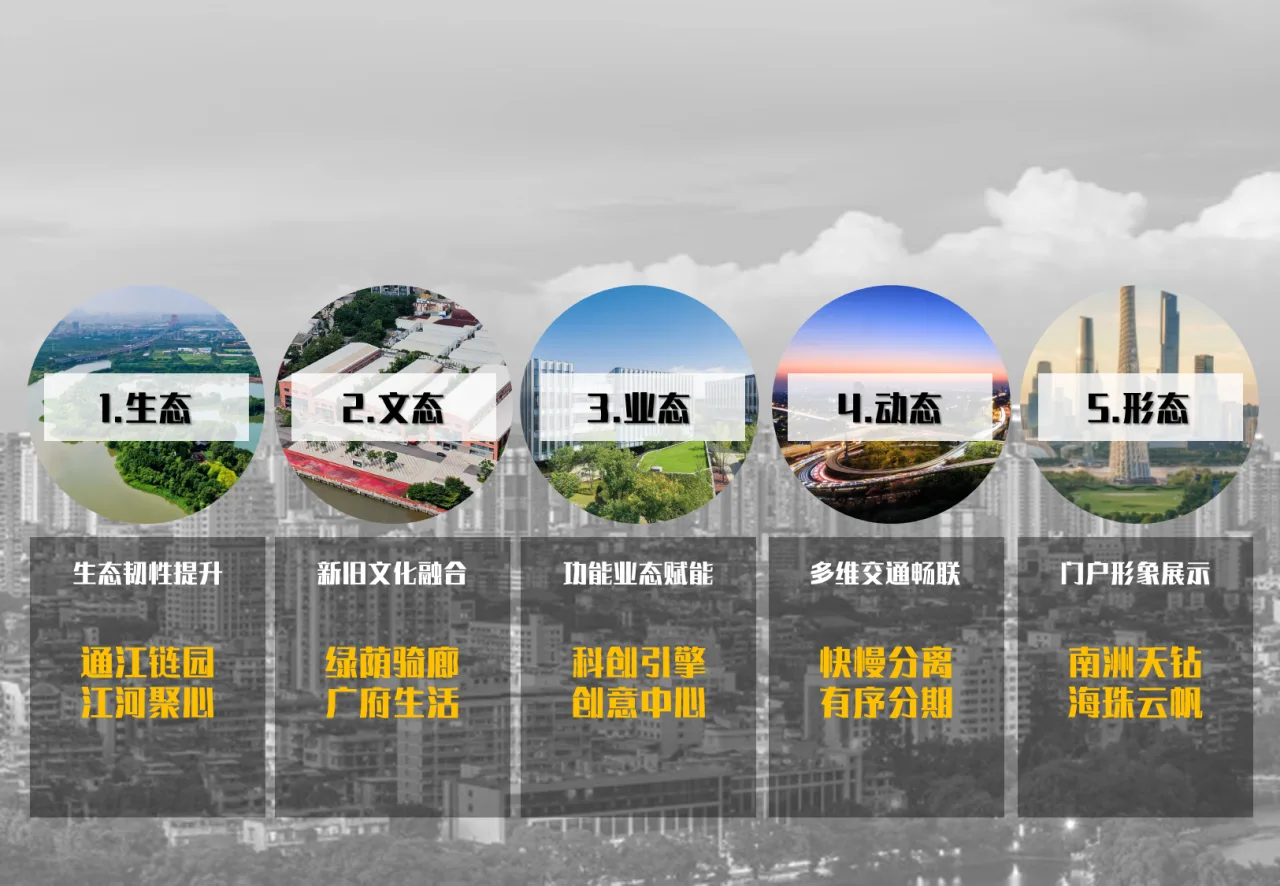
▲ Design Based on the “Five States” Concept
Rooted in a thorough analysis of the location and industrial strategy, the project is positioned as “a new center for creative integration and a digital core engine for scientific and technological innovation.” Centered around Haizhu Creative Port and Nanzhou TOD, a dual-nucleus development will emerge in the north and south, creating a high-quality demonstration zone along the Yangtze River that aligns with planning goals and integrates industry, urban life, and landscape.
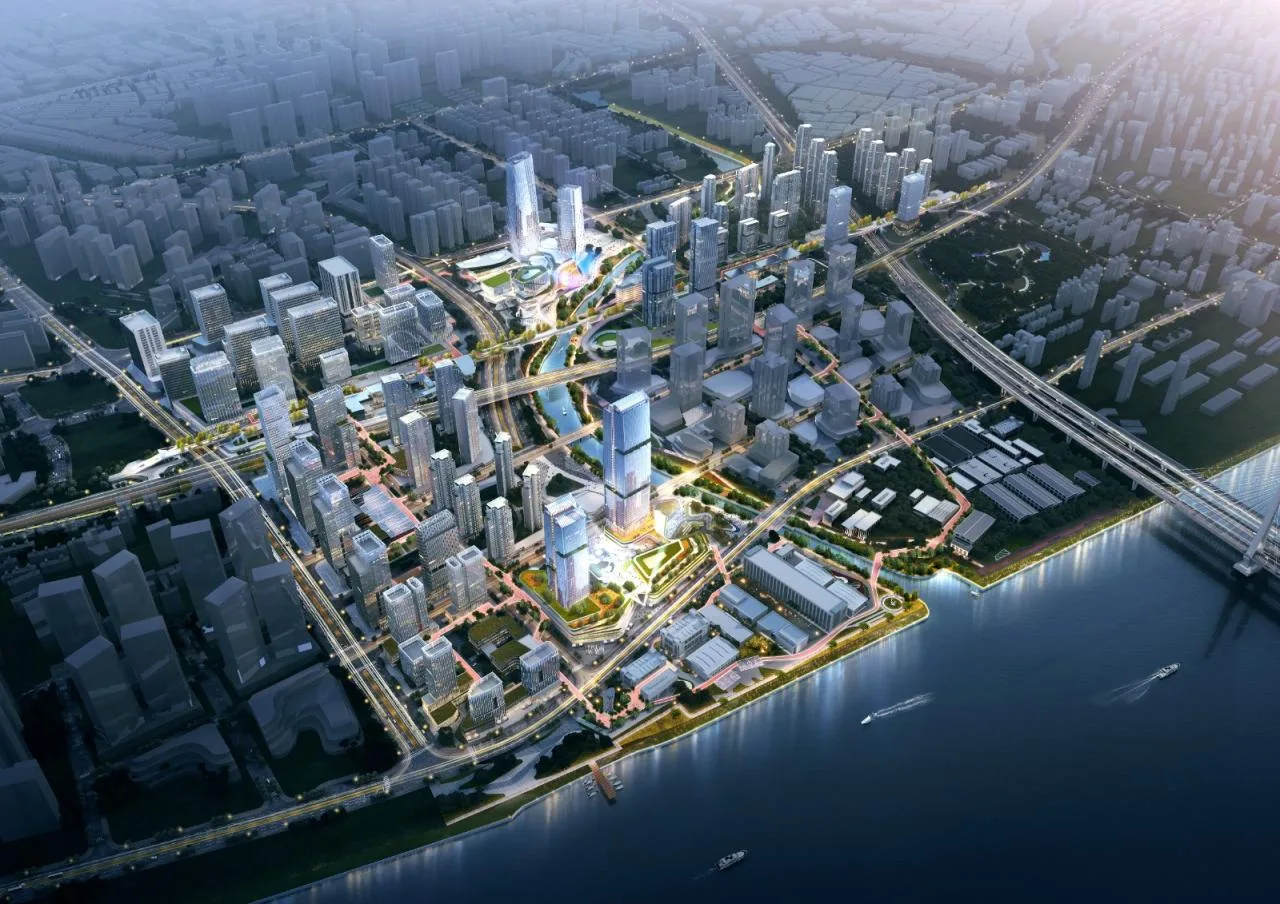
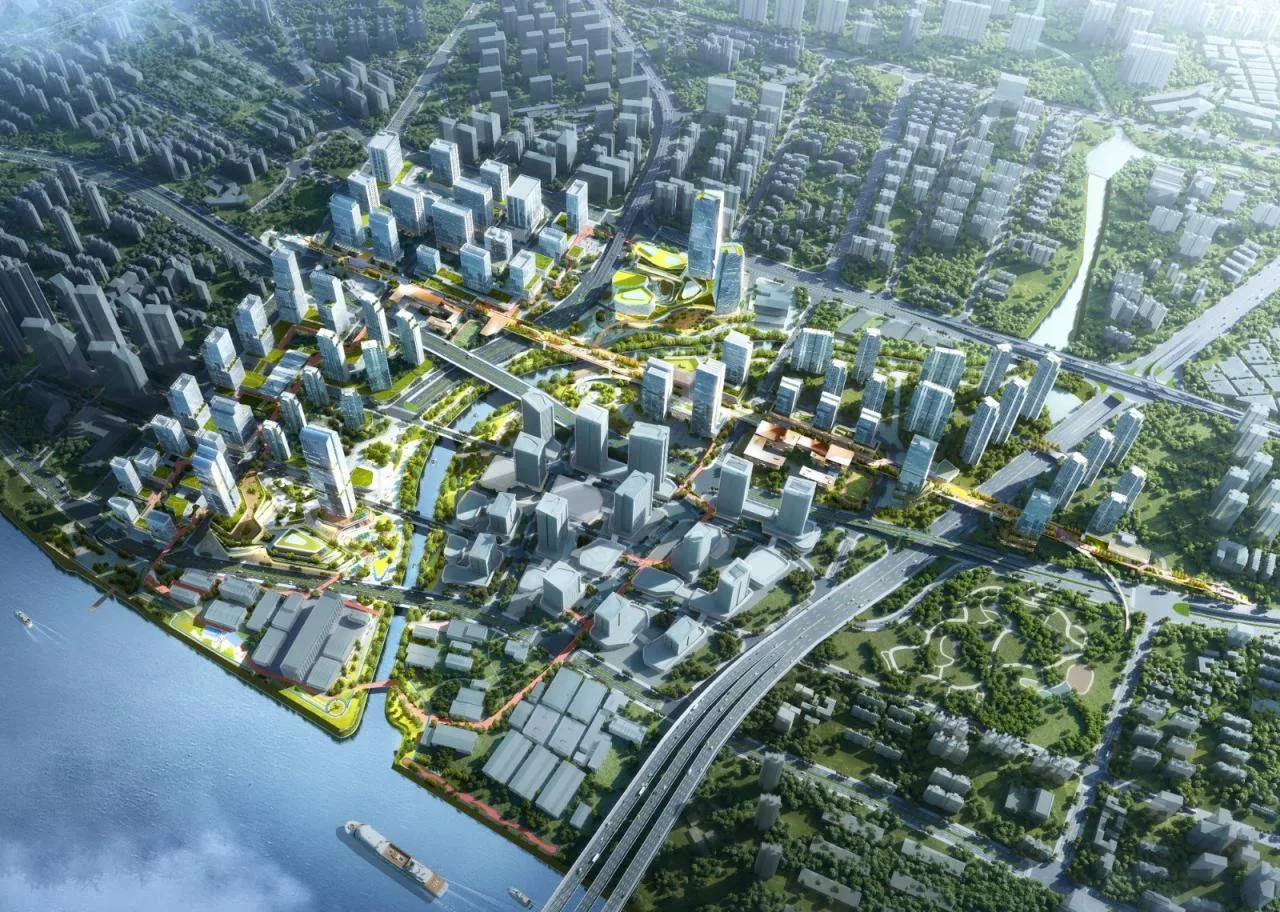
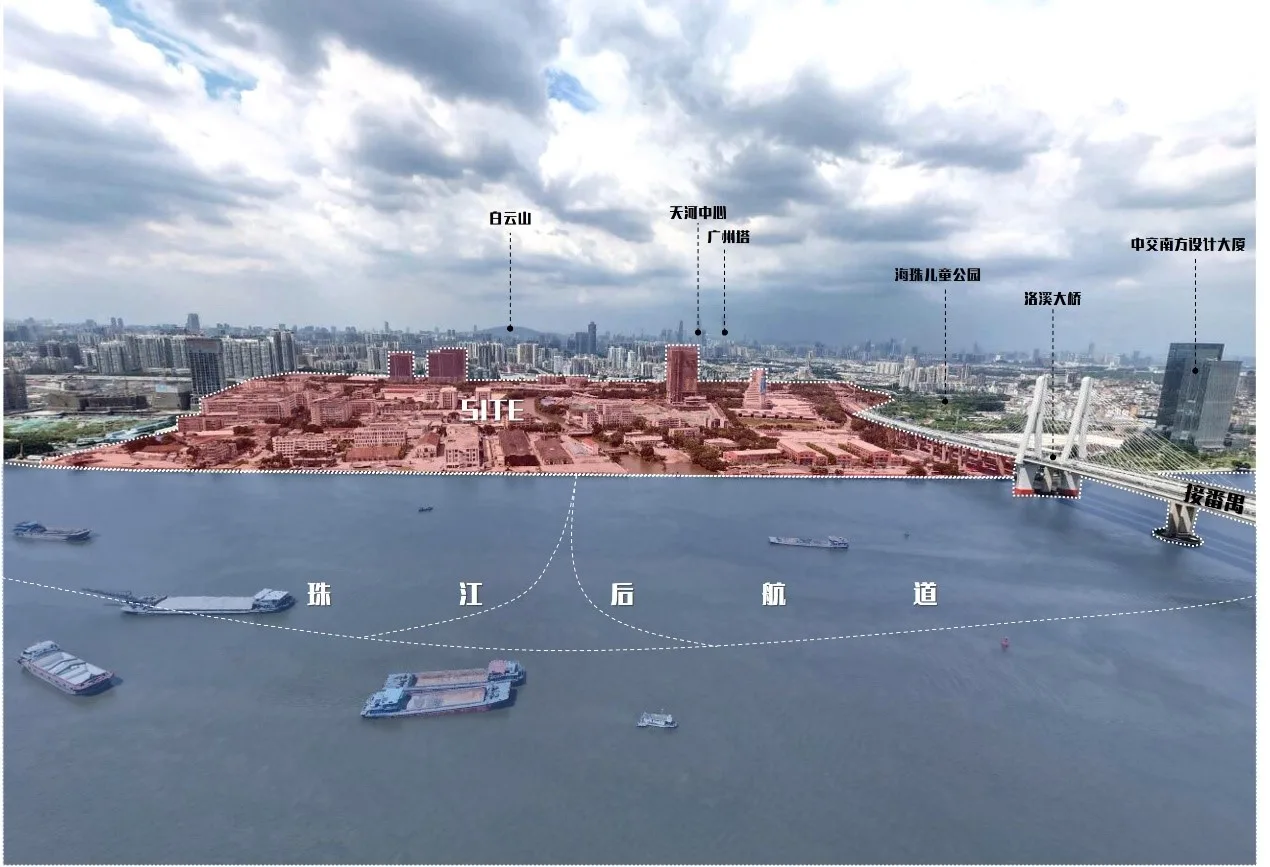
▲ Aerial View of the Project
3. Preserving a Section of Elevated Road to Reflect the City’s Cultural Identity
This elevated road serves as a district landmark and a social bond for the community.
The planning area is currently traversed east-west by the South Ring Elevated Road. With plans to move the road underground, deciding whether to retain the elevated structure became a key urban design consideration.
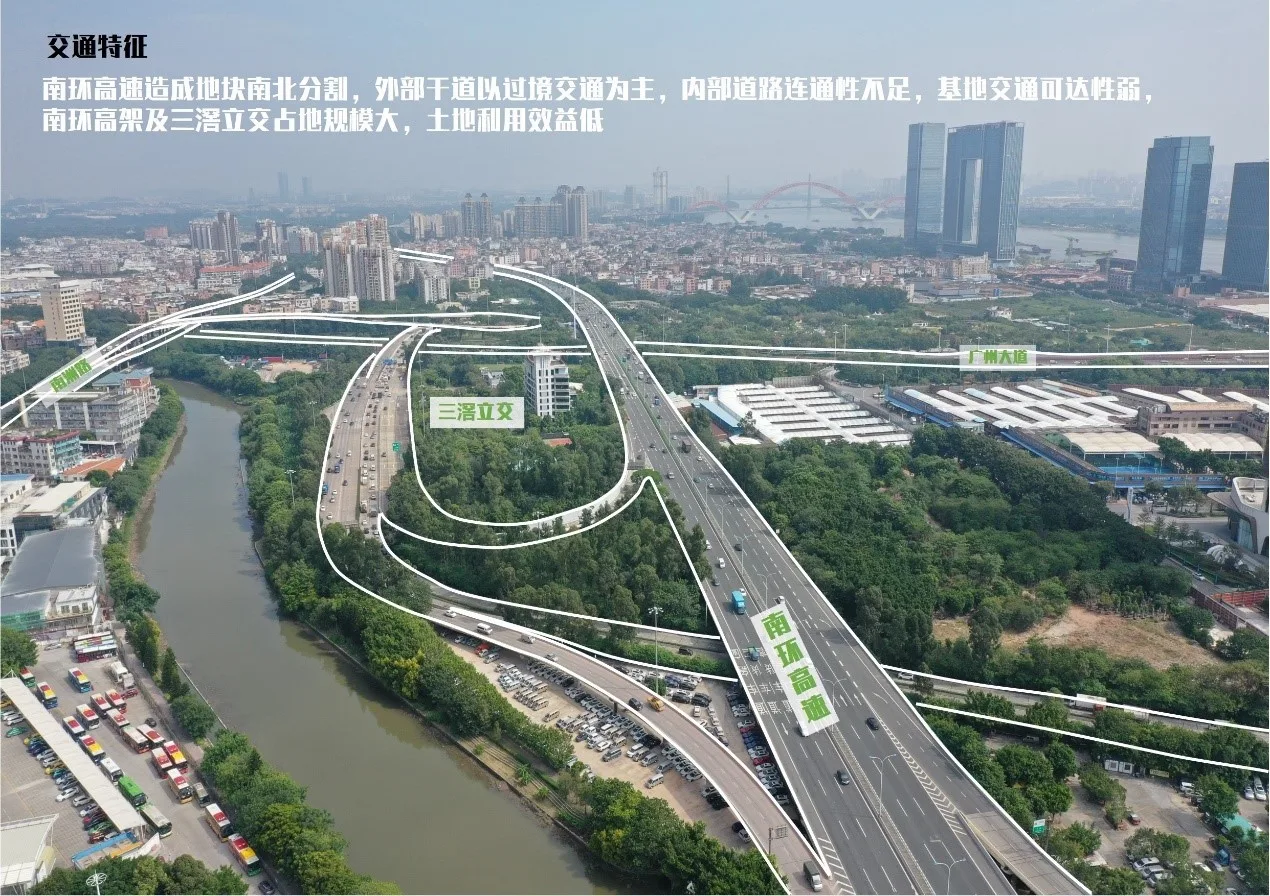
The project team carefully weighed the pros and cons of retaining versus demolishing the elevated road. To preserve the urban character, avoid extensive demolition, and emphasize green, low-carbon principles, the plan retains the elevated road for adaptive reuse as a lively green cycling corridor.
This approach transforms a potential drawback into a community asset, turning the elevated space into a vibrant urban landmark and a hub for social interaction.
Efforts will focus on encouraging slow traffic, implementing greening on the bridge, and creating an environmentally friendly, safe, and comfortable linear park. The Green Riding Corridor is envisioned as a signature green development showcase for Guangzhou and a national model for sustainable urban renewal.
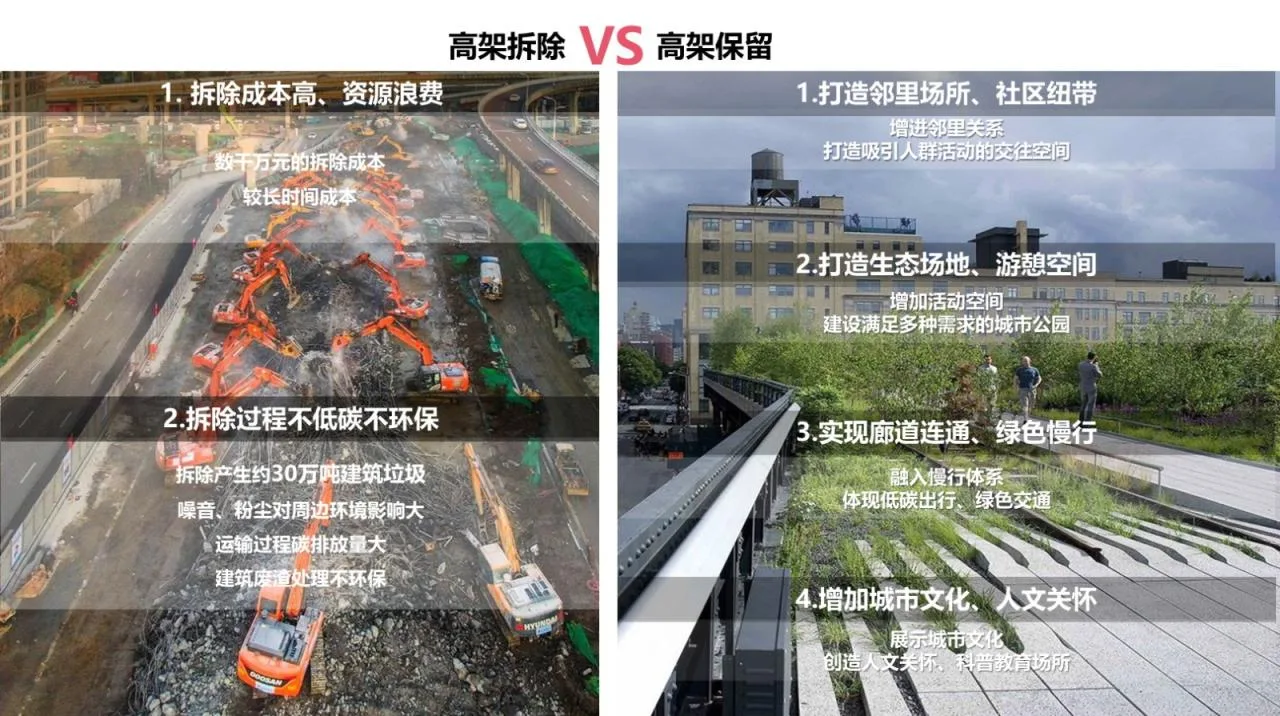
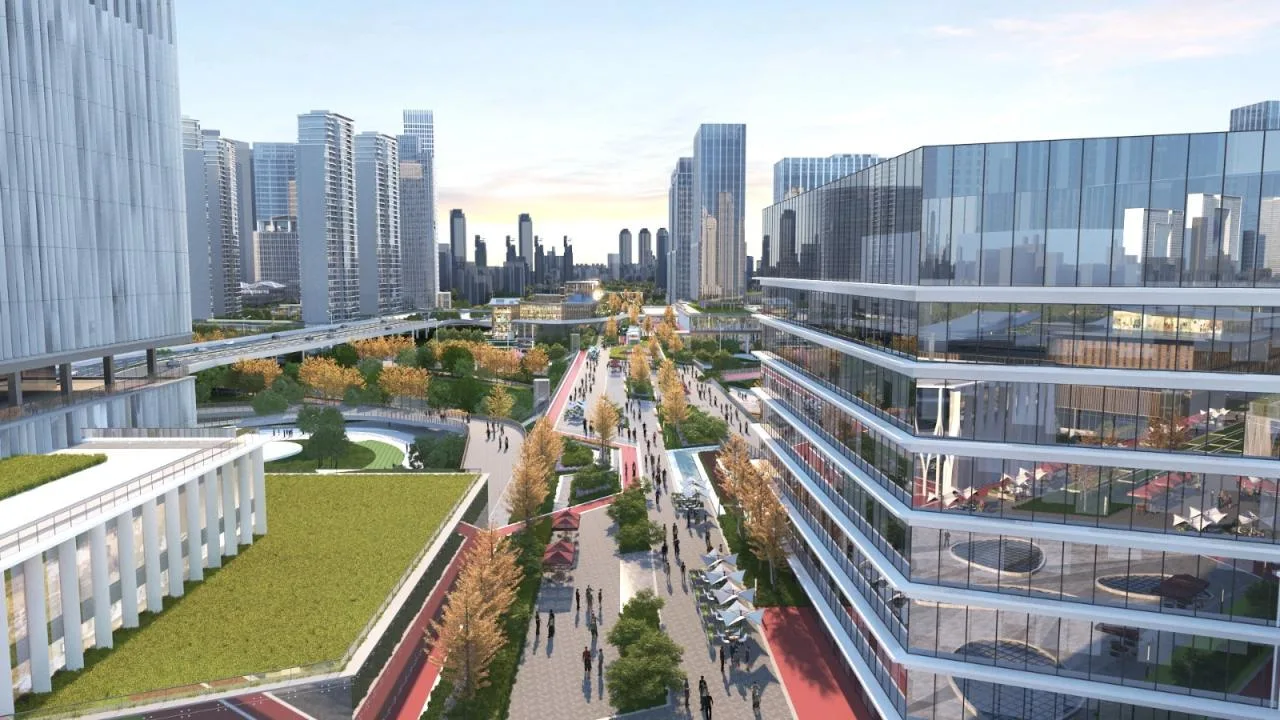
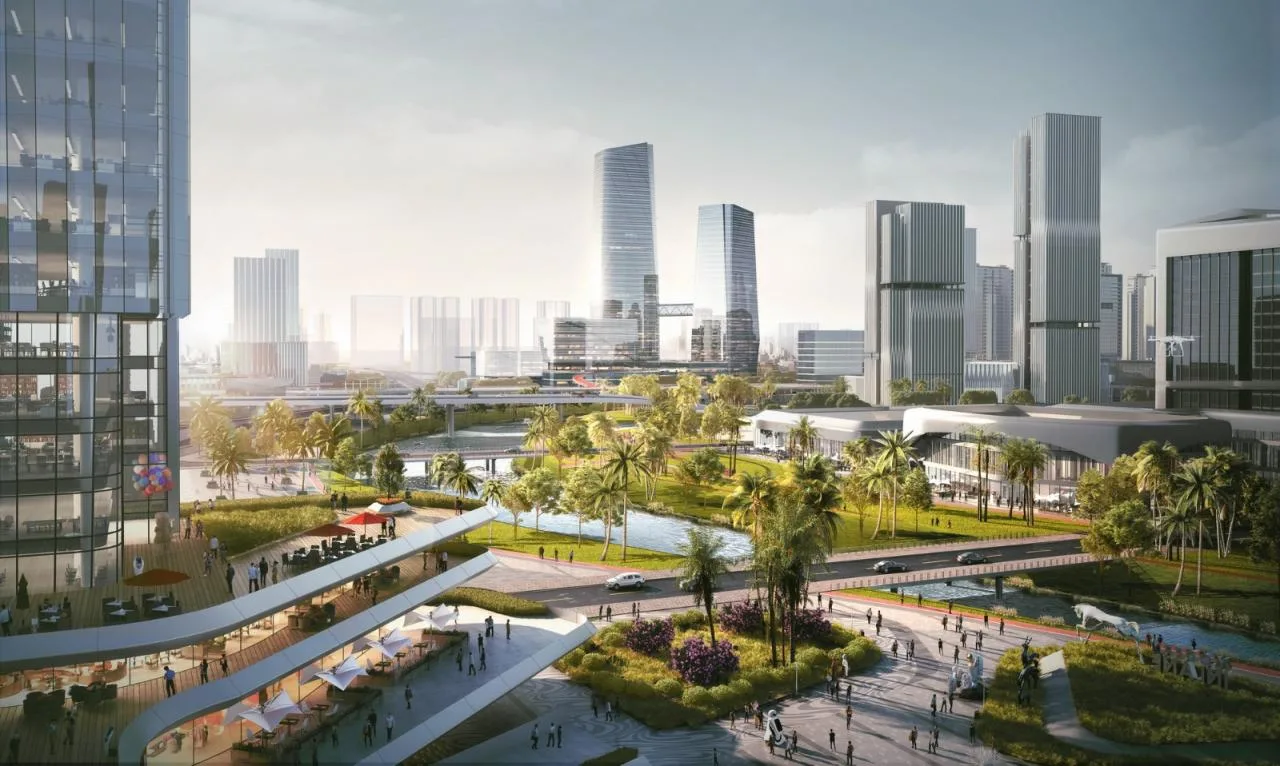
▲ South Ring Elevated Road Preservation Plan
In exploring the feasibility of retaining the elevated road, the project team drew deeply from Guangzhou’s cultural heritage, particularly the arcade architecture. Arcades have long been emblematic of Guangzhou’s commercial history and urban life, serving as a key regional architectural symbol.
The design revitalizes the South Ring Elevated Road by incorporating the arcade spirit. The space beneath the bridge is adapted to Guangzhou’s climate and citizens’ needs, creating a comfortable, lively urban grey space.
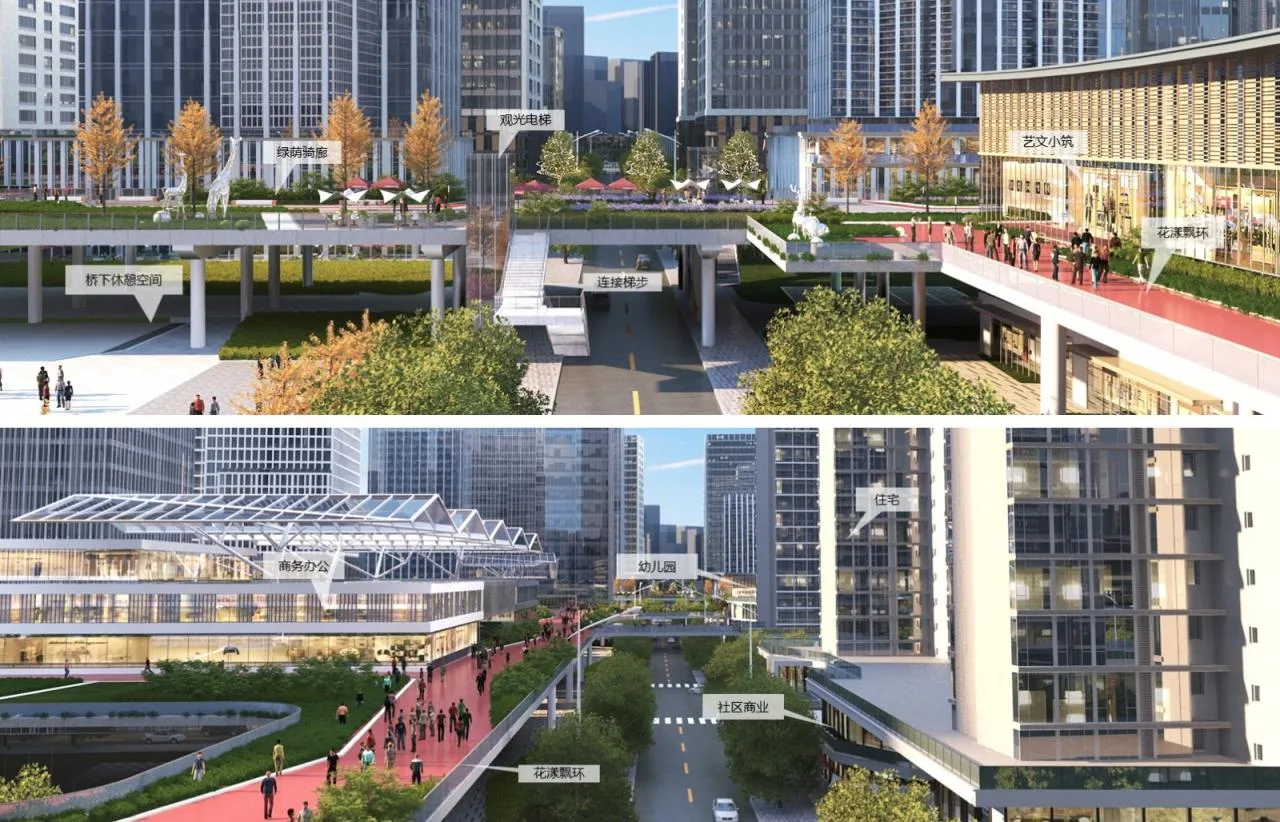
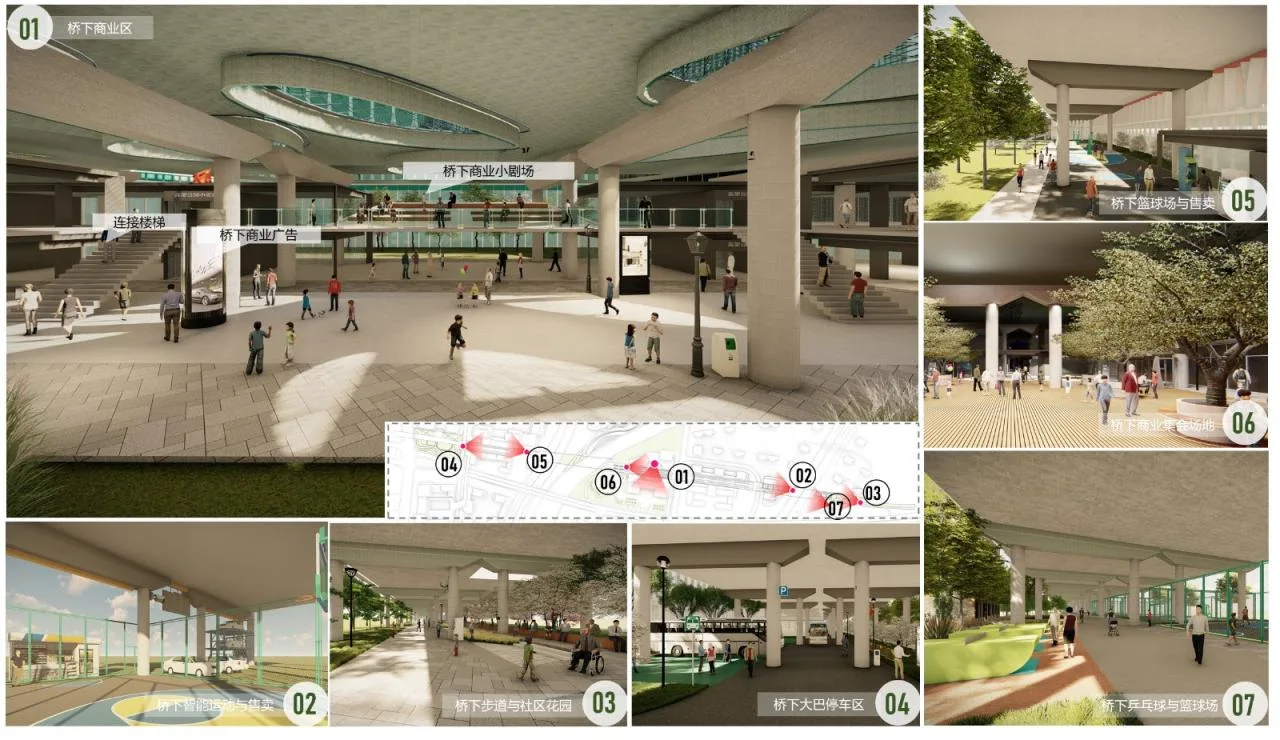
▲ Integration of Arcade Cultural Elements into Elevated Road Preservation
4. Haizhu Yunfan Nanzhou Tianzhu: Distinctive Twin Star Portal Image
The architectural design follows the “dual hearts and dual belts” spatial structure, creating a popular and unique twin star along the North Haoyong waterfront axis.
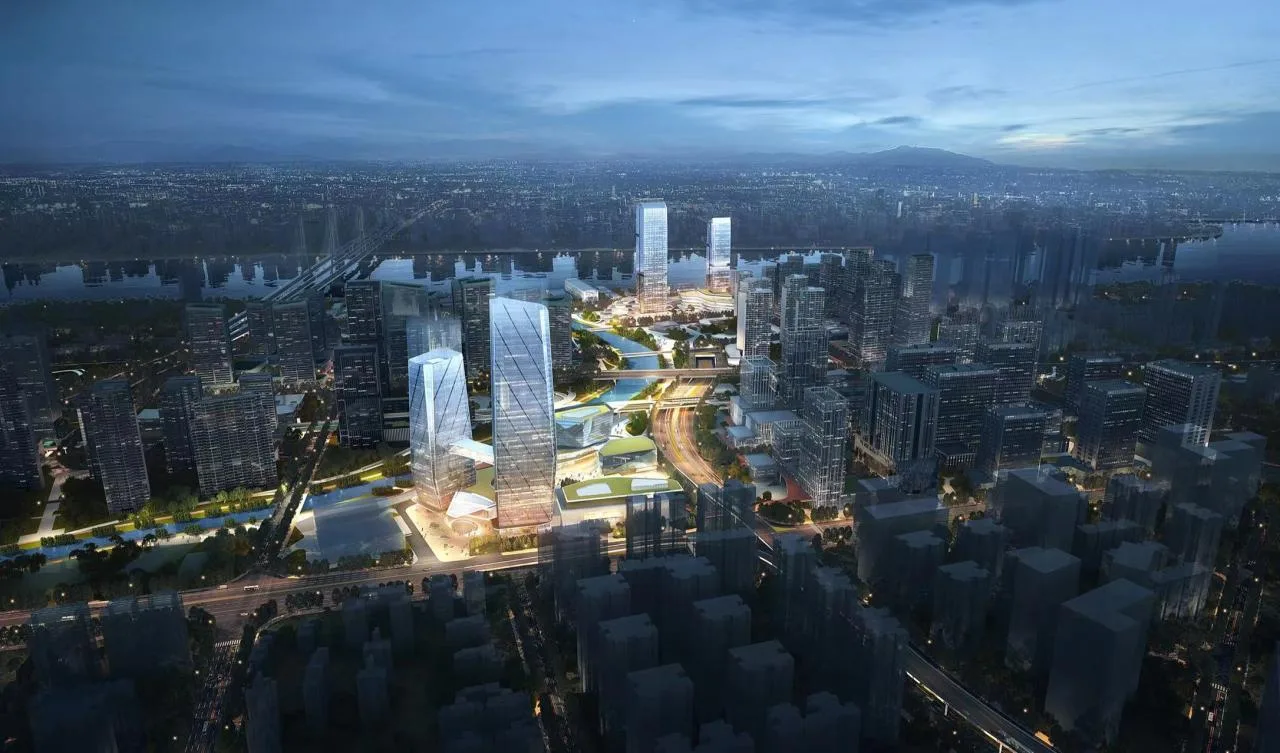
▲ Aerial View of the North-South Dual Centers
The hub architecture at Haizhu Passenger Station and Nanzhou Bus Station draws inspiration from the “Haizhu Stone” reef in the ancient Pearl River, embodying the theme “Nanzhou Sky Diamond.” The plan also incorporates urban renewal by revitalizing existing buildings, balancing preservation, renovation, and demolition based on land conditions and track setbacks, maximizing the land value of the TOD plots through functional space exchange.
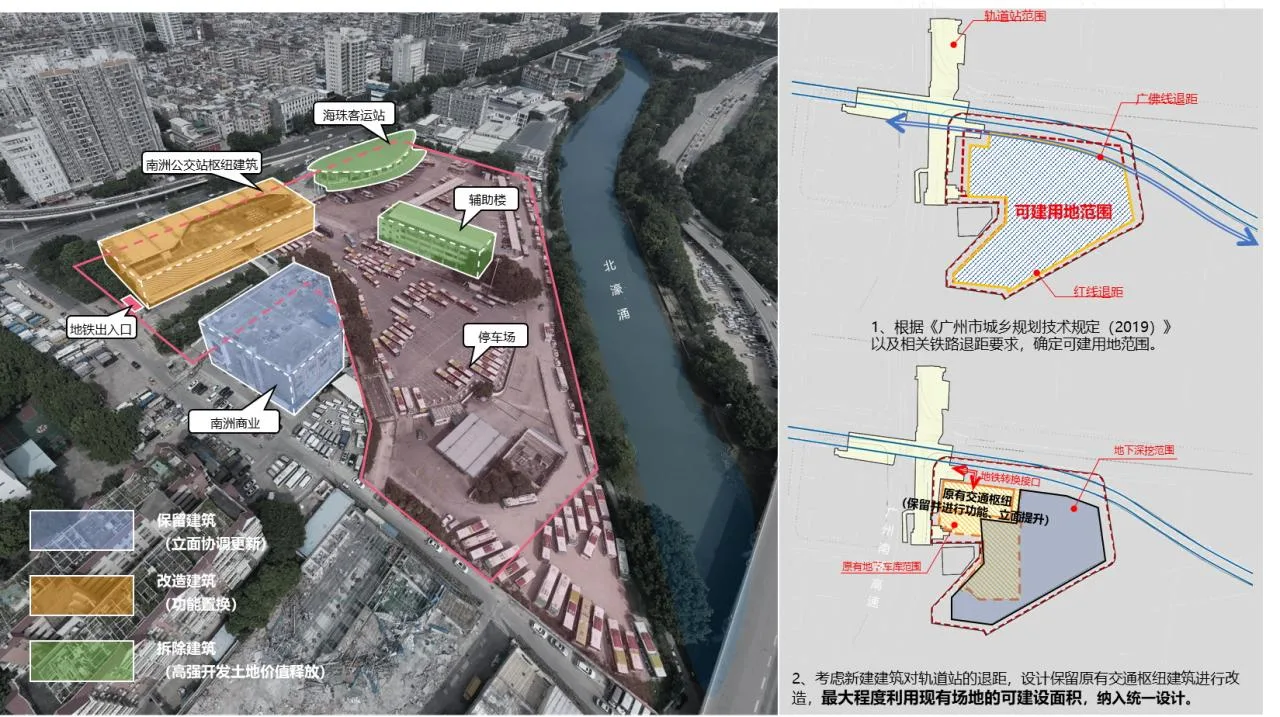
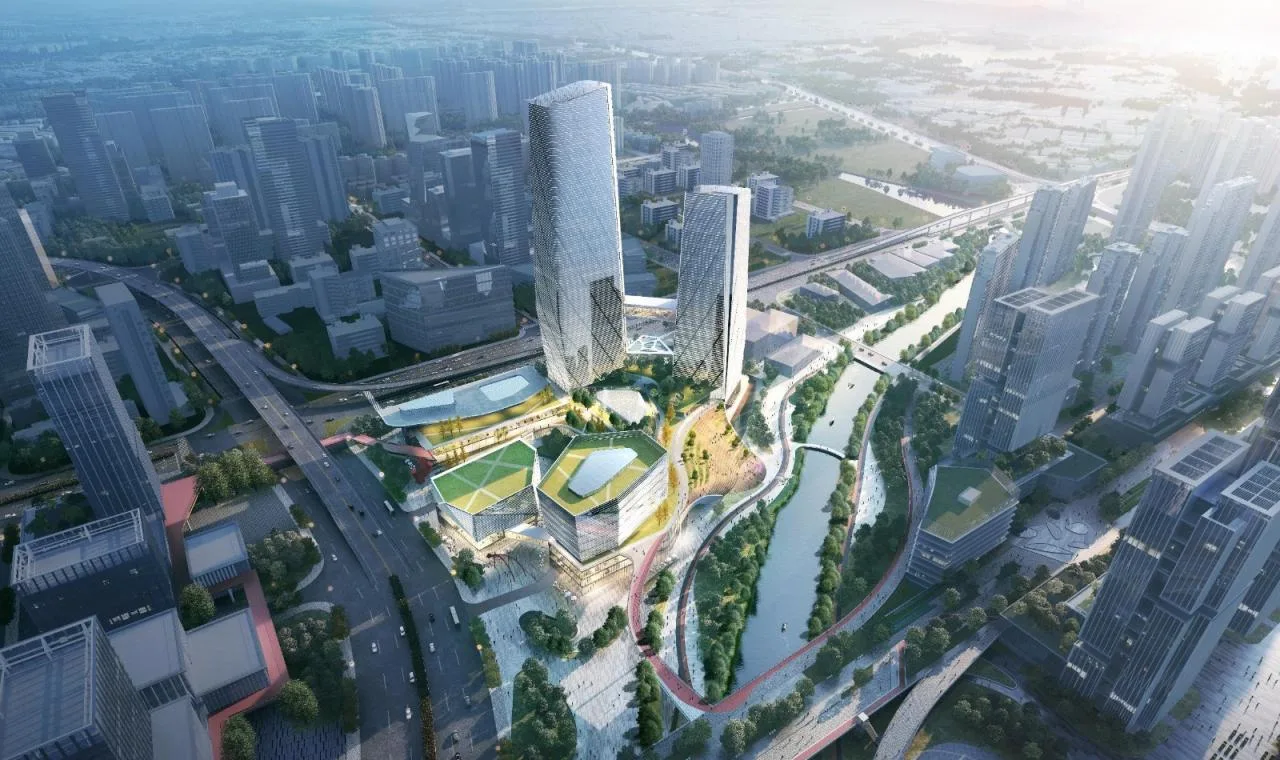
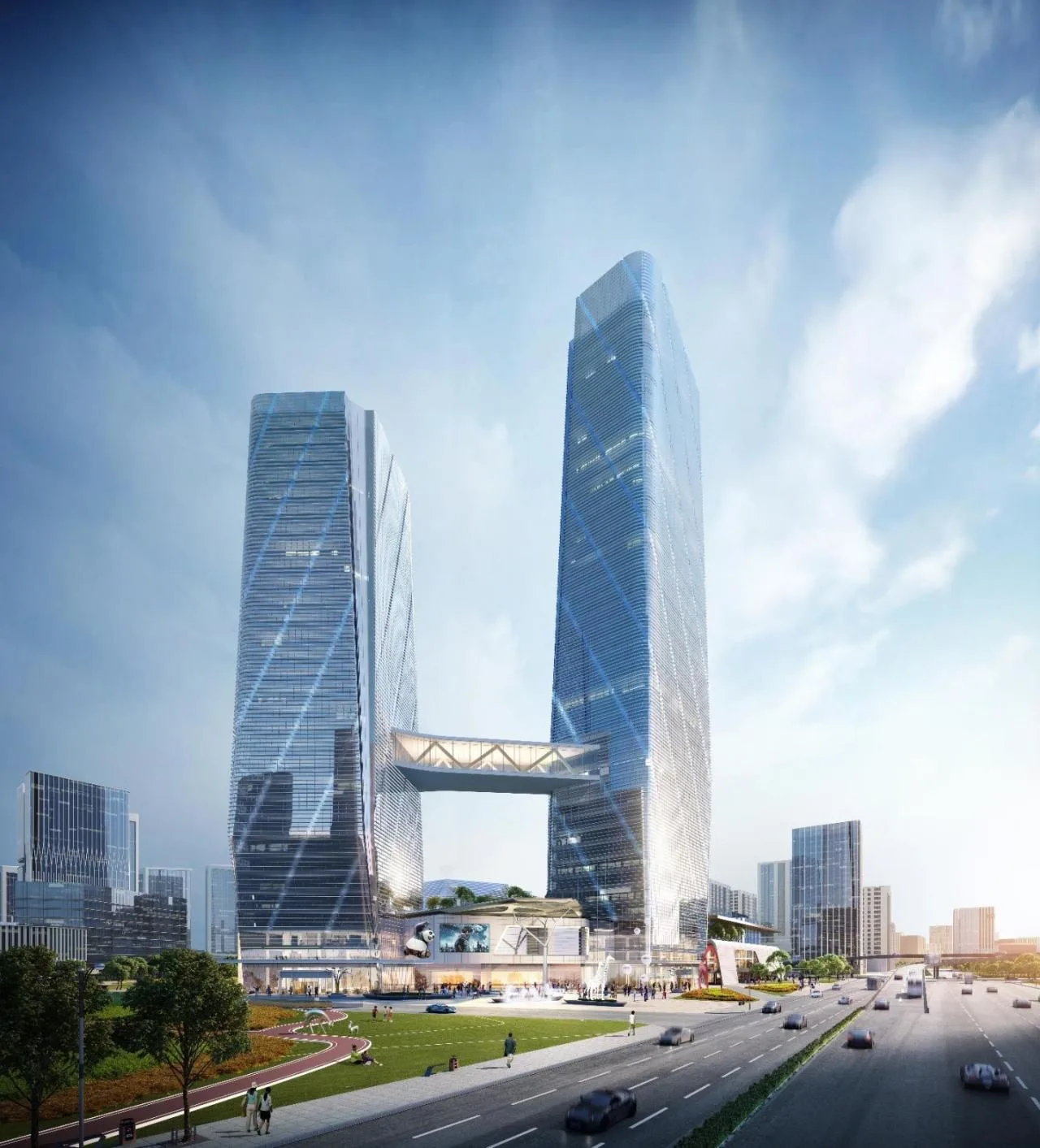
▲ Architectural Concept Development Process for Tianzhuan in Nanzhou
The Daganwei plot’s architecture is inspired by the Pearl River ketch, reflecting the “Haizhu Yunfan” theme and adding cultural significance. The main building is designed to avoid the Haizhu Bay Tunnel running beneath the site, minimizing construction costs. The commercial podium is stepped back to enhance landscape views, while the tower’s sail-like form celebrates silk culture and enriches the Pearl River Rear Channel’s city interface.
Multi-level green spaces create eco-friendly buildings. The design adopts interdisciplinary collaboration, carefully considering construction sequencing, underground space planning, and tunnel protection to reduce construction challenges and meet phased development needs.
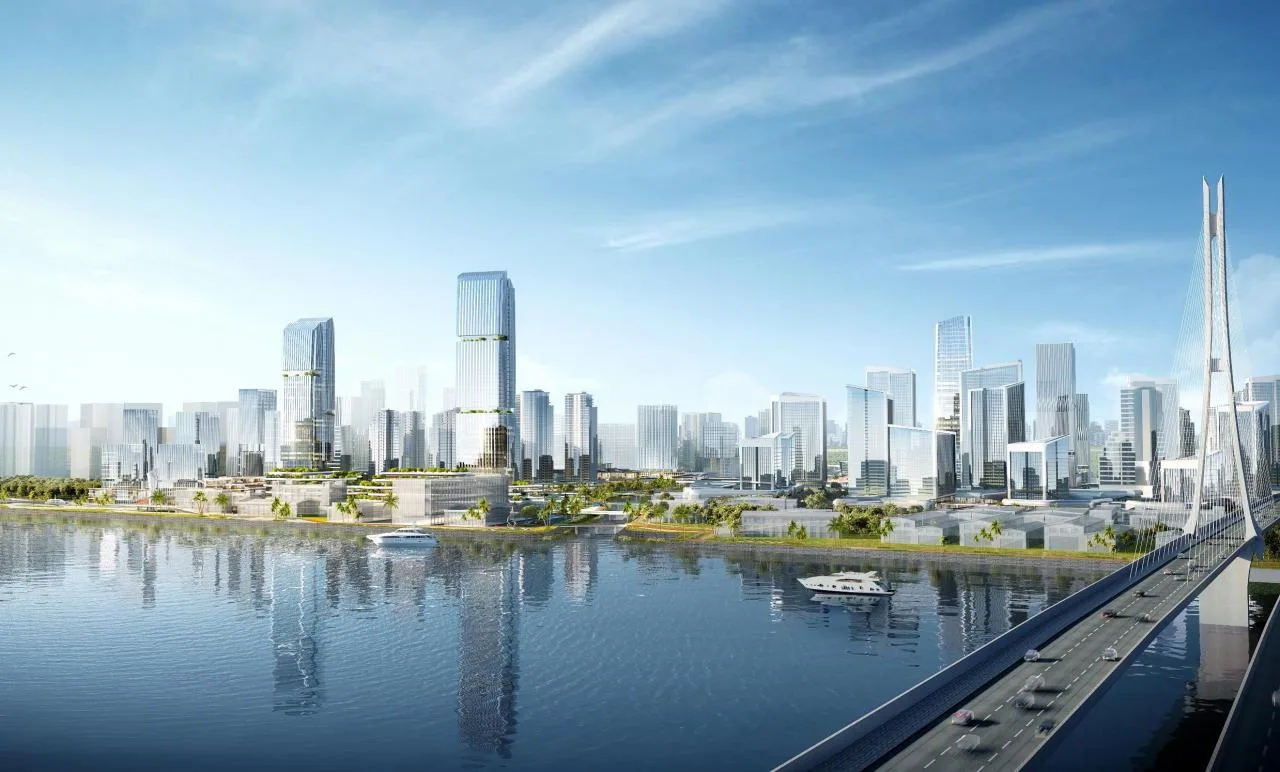
▲ Haizhu Yunfan Architectural Scheme Development Process
5. Implementation Strategy
Structural reservation, dynamic transformation, and phased development.
Structural reservation is essential due to the Haizhu Bay Tunnel construction. To prevent safety risks during future land development on either side, specific structural solutions are proposed for open-cut, buried, and shield tunnel sections to minimize tunnel pressure impact.
The architectural structure employs a transfer system to prevent building loads from directly affecting the tunnel, maintaining the tunnel’s original stress balance. Construction impacts are minimal, and risks are manageable.
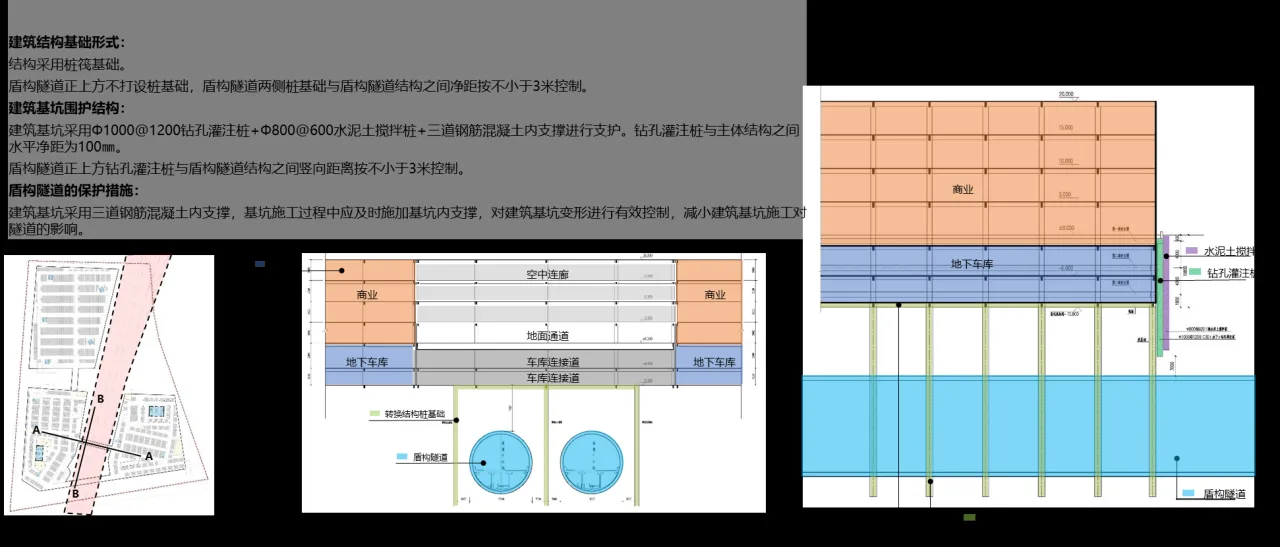
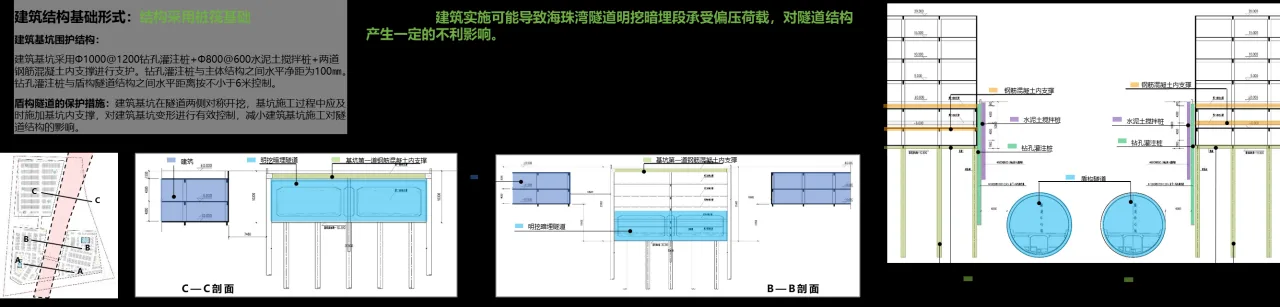
▲ Structural Reservation Plan for Haizhu Bay Tunnel
Dynamic transformation is planned according to the regional road network’s construction sequence. To maintain continuous operation of the South Ring Expressway (elevated), the existing Sanjiao Interchange will be optimized by removing some ramps, ensuring minimal disruption to land development.
Elevated ramps will connect to surface auxiliary roads as part of the long-term traffic plan to maintain smooth traffic flows.
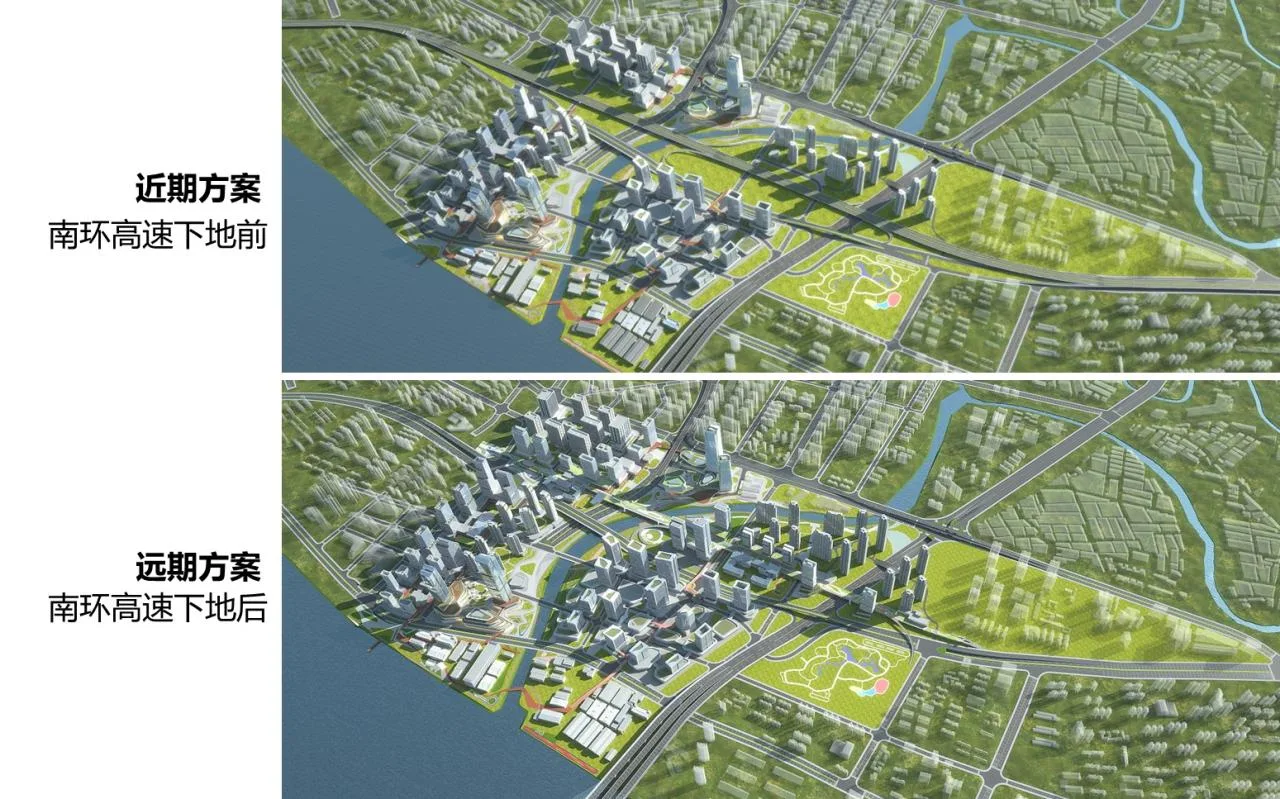
▲ Phased Development Plan
6. Project Scope
1. Overall Research Scope: Extends east to Guangzhou Avenue, south to the Pearl River Back Channel, west to Daganwei Industrial Zone, and north to Nanzhou Road. It includes Haizhu Passenger Station, Nanzhou Public Transport Hub, Sanjiao Flyover, and surrounding areas, covering about 144.4 hectares. The research focuses on positioning, functional layout, planning structure, transportation, landscape, skyline, and more.
2. Urban Design Scope: Covers the Daganwei plot, Sanjiao interchange plot, Haizhu Bus Station, and Nanzhou Bus Station hub plot, totaling approximately 74.2 hectares. The design centers on spatial form, traffic organization, landscape nodes, and commercial planning.
3. Architectural Conceptual Design Scope: The Daganwei building conceptual design covers 9.1 hectares, focusing on integrating tunnel covers with surrounding urban design, including architectural plans, facades, key spaces, and underground areas.
The urban design scope for Haizhu Bus Station and Nanzhou Bus Station hub covers 4.5 hectares. It includes detailed transfer organization and hub space design for Line 2 and the Guangfo Line at the bus station.
7. Project Summary
The “Haizhu Zhigang, Nanzhou Juhe” urban design scheme showcases Lin Tongyan International’s multidisciplinary collaboration across planning, economics, architecture, transportation, structural engineering, tunnels, roads and bridges, and landscape design, providing comprehensive owner solutions throughout the project lifecycle.
This project carefully crafts a showcase for future innovation and green development at the Haizhu Innovation Bay Gateway Hub, introducing a new development model that seamlessly integrates space and business formats.
Project Details:
Location: Haizhu District, Guangzhou City, Guangdong Province
Owner: Guangzhou Transportation Investment Group Co., Ltd
Land Area: Total research area approximately 1,581,000 m²; urban design area approximately 834,000 m²
Building Area: Conceptual design land area approximately 91,000 m²
Design Period: October 2021 – February 2022
Design Team: Lin Tongyan International Engineering Consulting (China) Co., Ltd
Project Leaders: Huang Cong, Bill C. Huang, Pu Weiran
Lead Designers: Wan Jipeng, Chen Chenghui
Planning and Design: Wan Jipeng, Chen Chenghui, Long Xing, Liao Qi, Li Xiang, Nie Quan, MEIMEI.ISOBEL.WILLIAMSON
Architectural Design: Zhang Zhen, Du Meng, Hao Shuang, Cai Rui, Chen Qiguang, Li Chenran
Landscape Design: Pu Yu, Wang Xusheng, Zhang Jing, Hua Ying, Zhou Yaqing, Ding Xinxin
Project Status: Awarded Second Place in International Proposal Solicitation and Evaluation












Must log in before commenting!
Sign Up