
The Waiting Wind Coffee Shop is situated near the Xiaohangkeng Campsite in Anji, Zhejiang. As part of the “rural revitalization” strategy, the Xiayang Village Committee has developed this scenic area into a camping base, actively promoting tourism and attracting numerous camping enthusiasts. With the campsite infrastructure taking shape, the village committee encourages locals to convert their self-built houses or unused warehouses into supporting facilities, enhancing the campsite’s reception services.
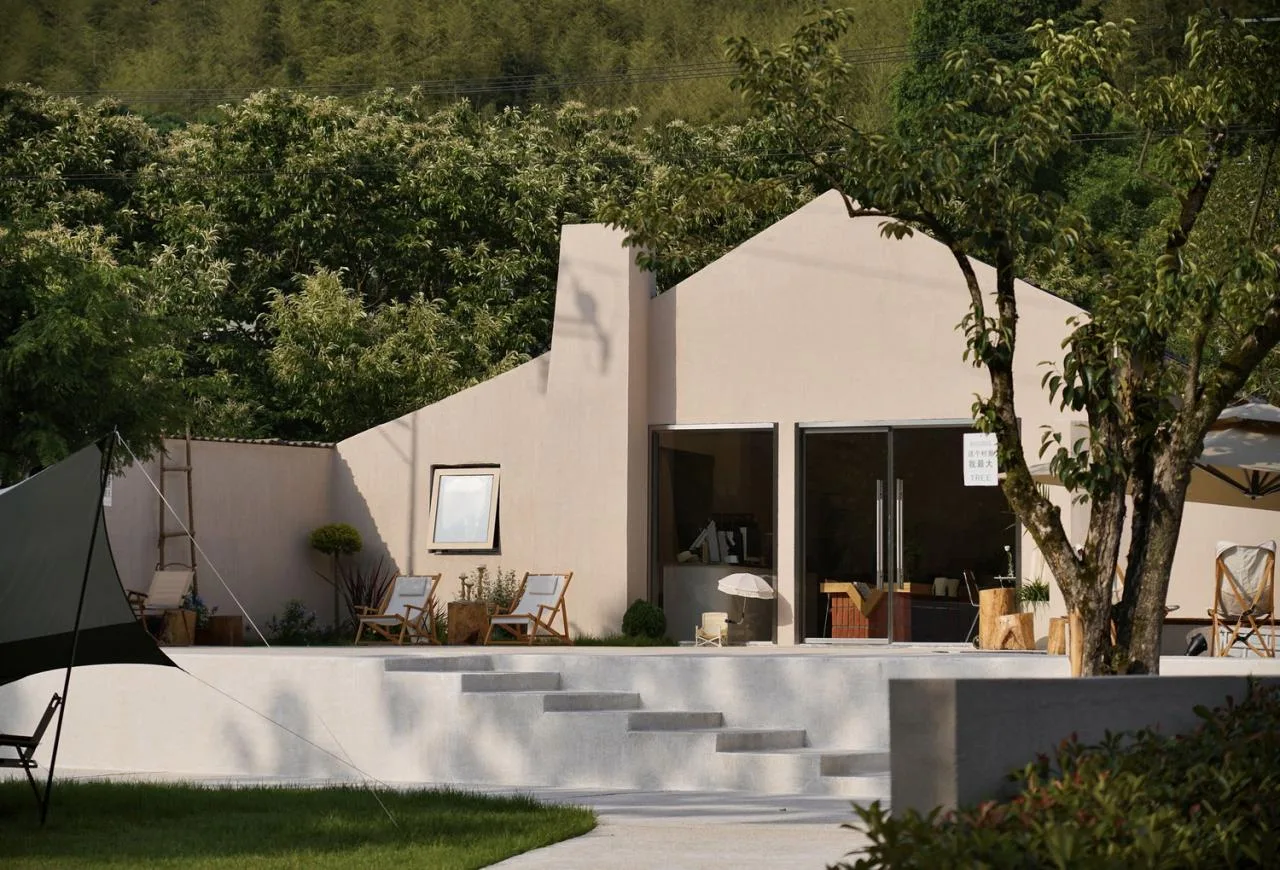
Overview of Outdoor Space © Lin Guijia Building
The architectural design was commissioned by the villagers of Xiayang Village to renovate a self-built garage and the adjacent idle yard. The greatest challenge was to “create something out of nothing,” transforming the previously unremarkable garage and yard into a unified space. The goal was to establish a distinctive theme that sets it apart from the surrounding self-built houses from the 1980s, turning it into a village highlight and a must-visit spot for tourists.
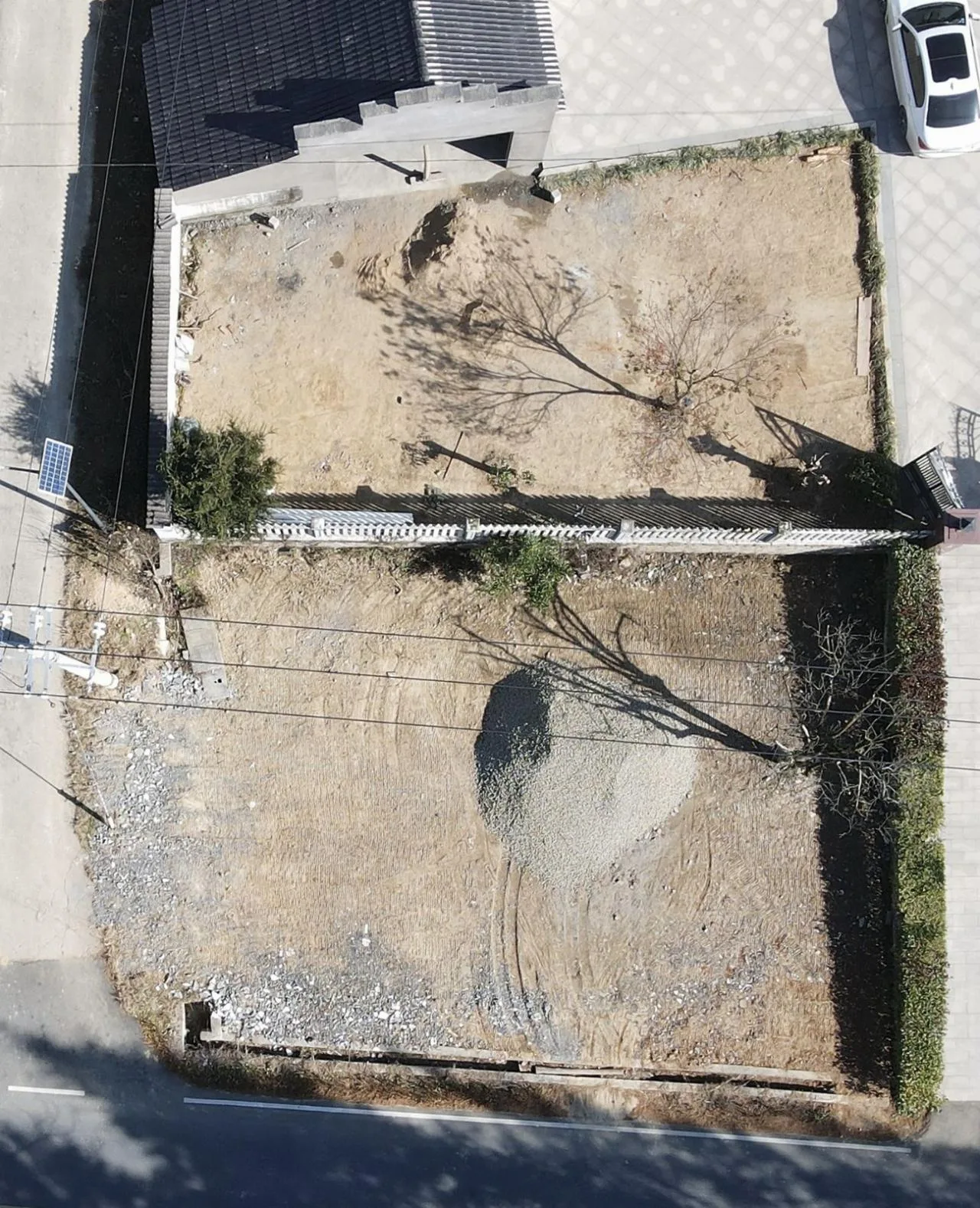
△ Original site © A bit of architectural design
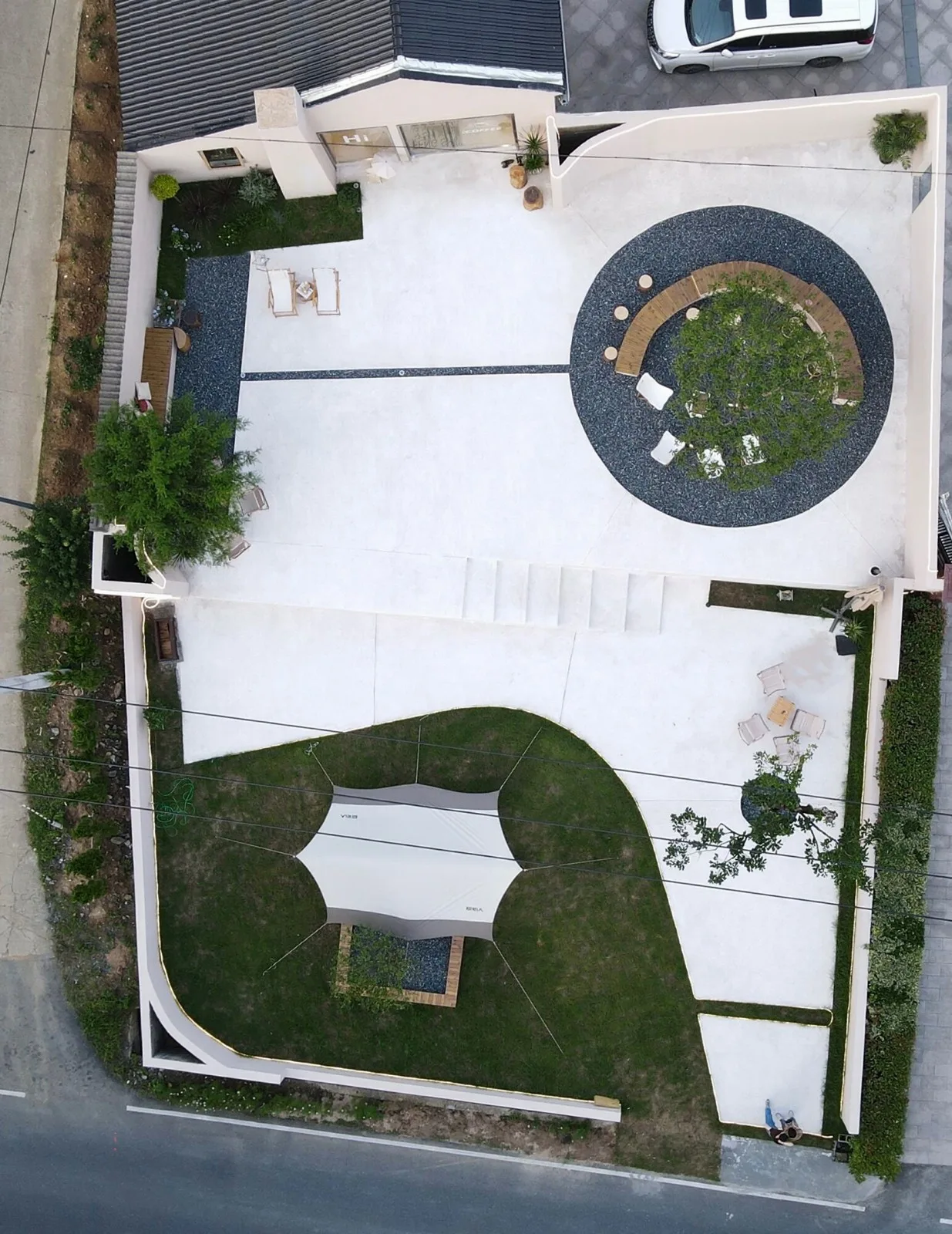
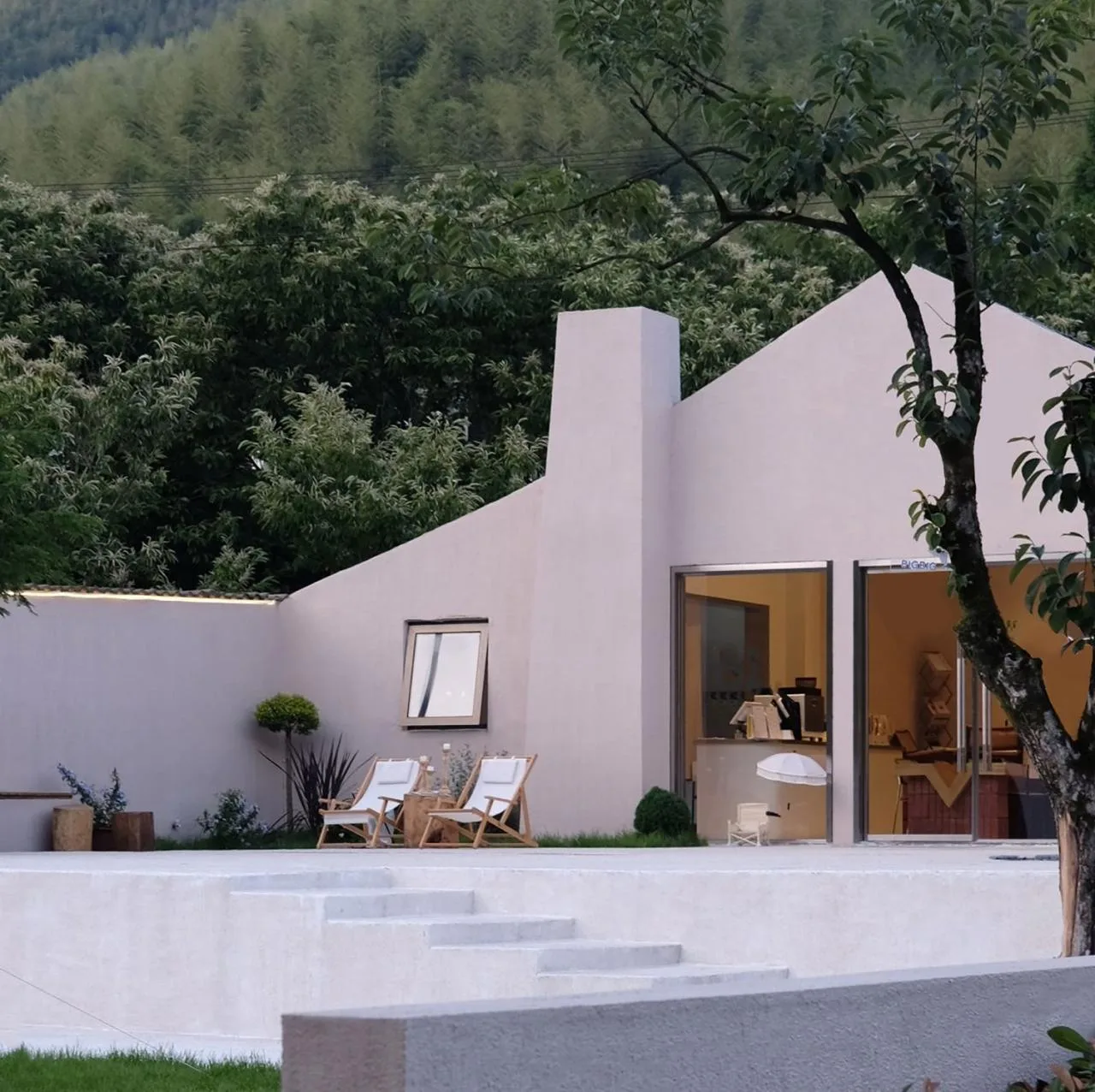
△ Site after renovation © Lin Guijia Building
Our design inspiration came from the chimneys of traditional village houses—an iconic feature of rural architecture, absent in urban buildings. Using the chimney as a central theme evokes nostalgic associations with pastoral life. The abstract chimney element represents a reflection and idealization of primitive rural living.
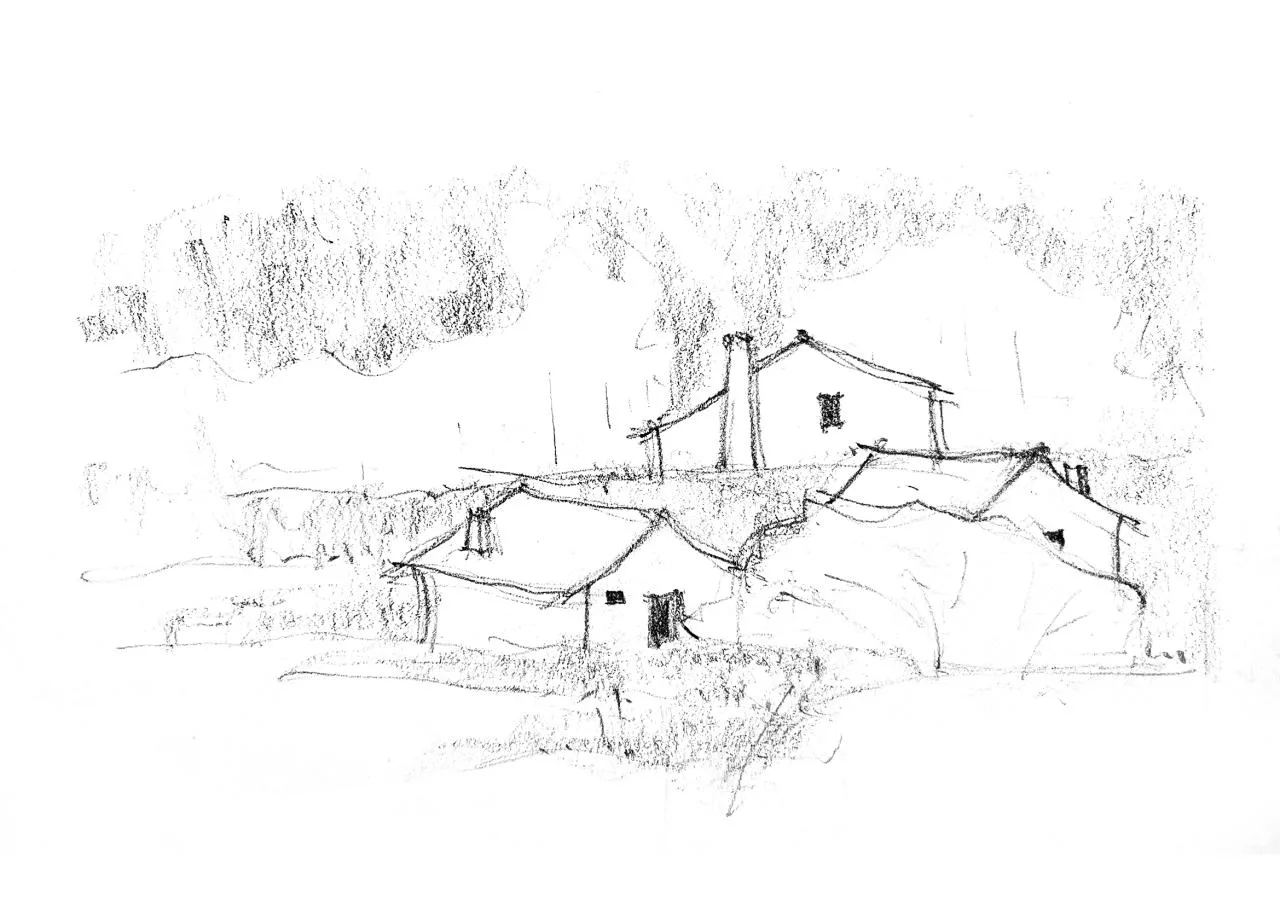
△ Design Inspiration – Rural Chimney
△ Rural chimney
The original exterior consisted of two distinct parts: a Huizhou-style garage on the right and an added sloping roof warehouse on the left. These two structures lacked any architectural connection. To unify them, we designed a sculptural, faux chimney at the junction of the warehouse and garage facades, creating a rural “chimney” element. We also simplified the imitation Huizhou mountain wall, restoring the traditional double-pitched roof design.
△ Design axis side view © A bit of architectural design
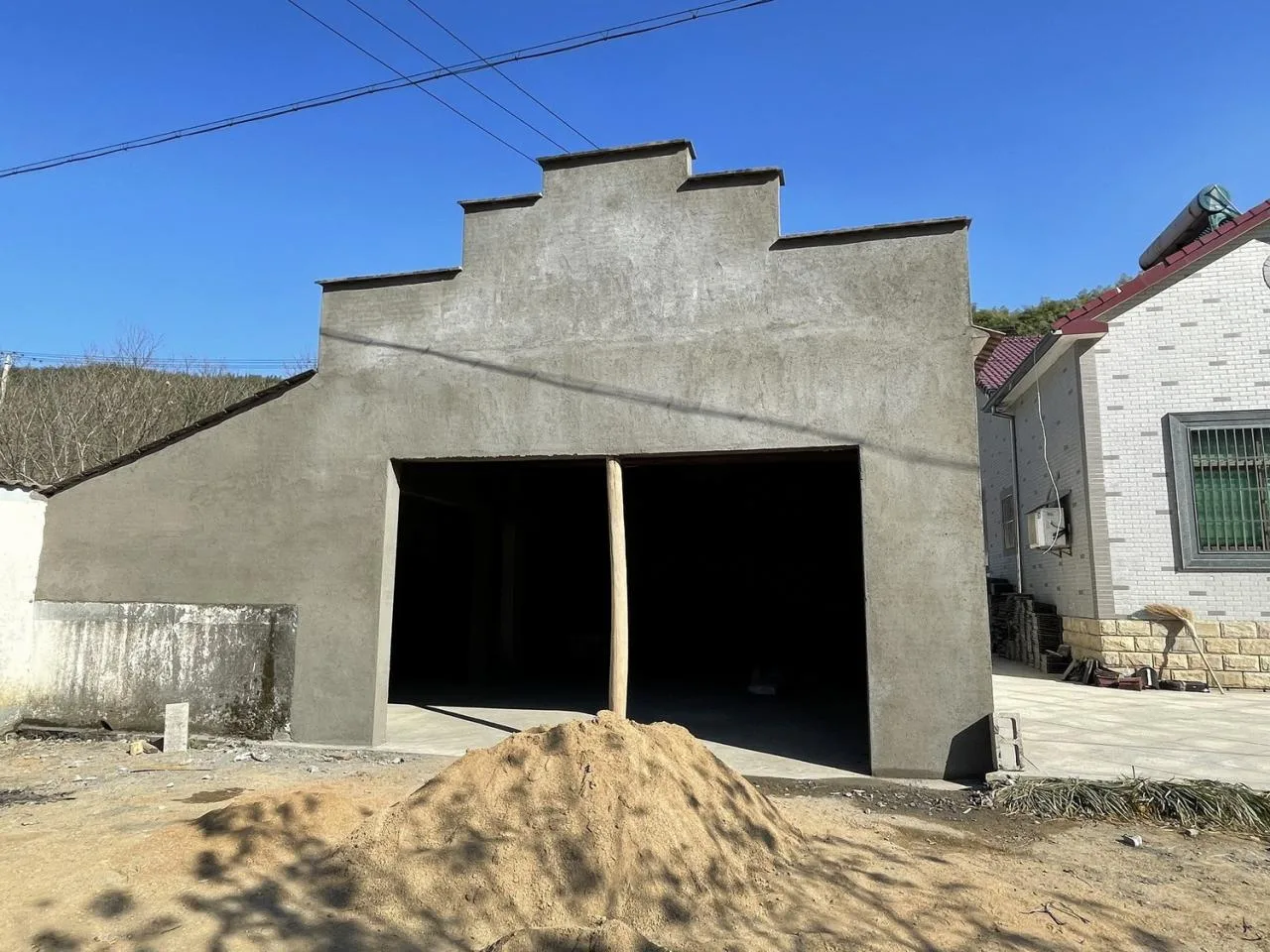
△ Original facade © A bit of architectural design
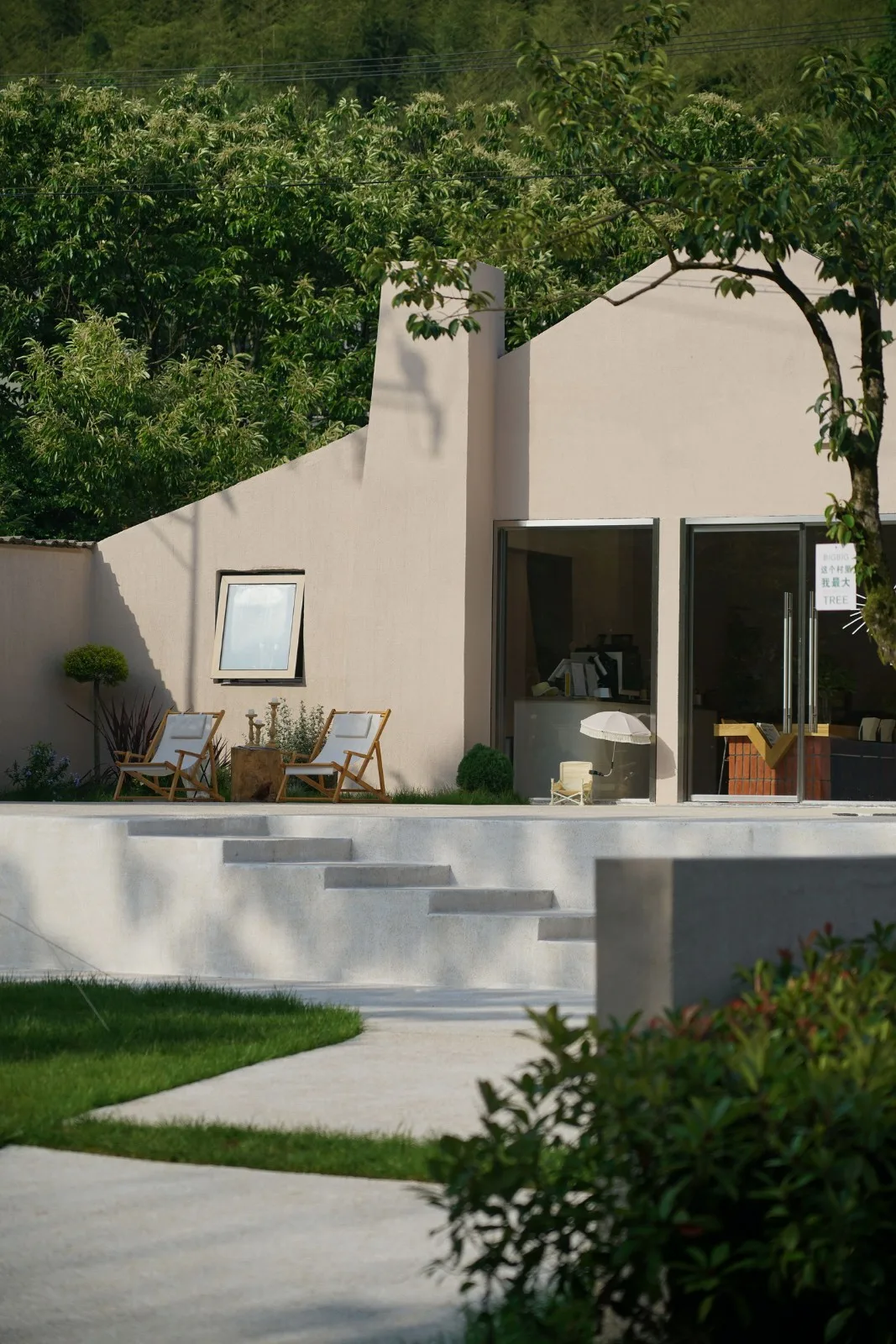
△ Facade after renovation © Lin Guijia Building
With the shift in building function, the warehouse—previously without windows—was converted into a kitchen requiring natural light. To accommodate this, small windows were added to the kitchen facade, enhancing both lighting and ventilation. These windows also enrich the previously plain exterior.
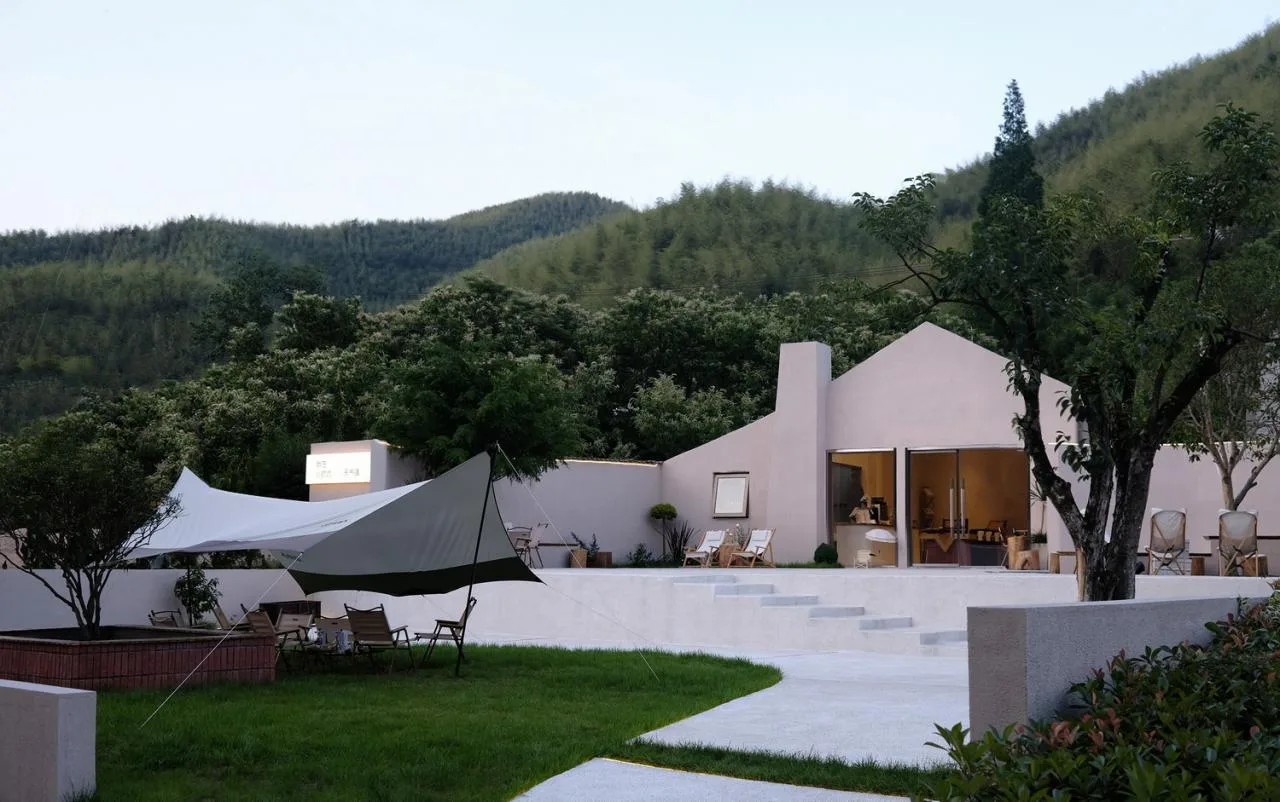
Café at sunset © Lin Guijia Building
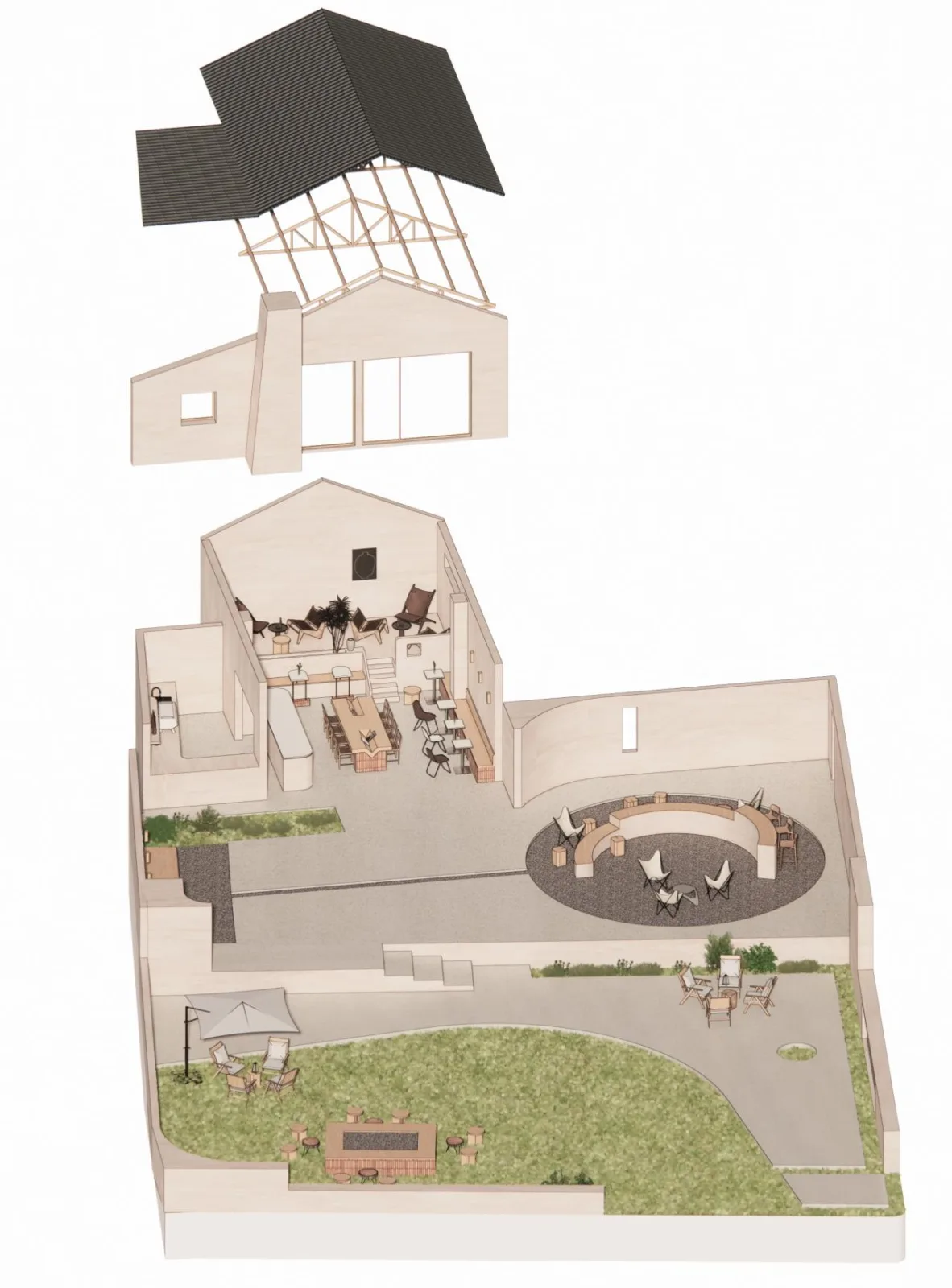
For the landscape design, we preserved the original site’s nearly 1-meter elevation difference and connected the two levels using long side steps, which contribute to a sculptural aesthetic. Geometric elements—such as circles, lines, and curves—were introduced across the site to break the flat terrain and cleverly create multi-level seating, lawn camping areas, and wall-mounted booths. This design effectively separates active and quiet zones within the space.
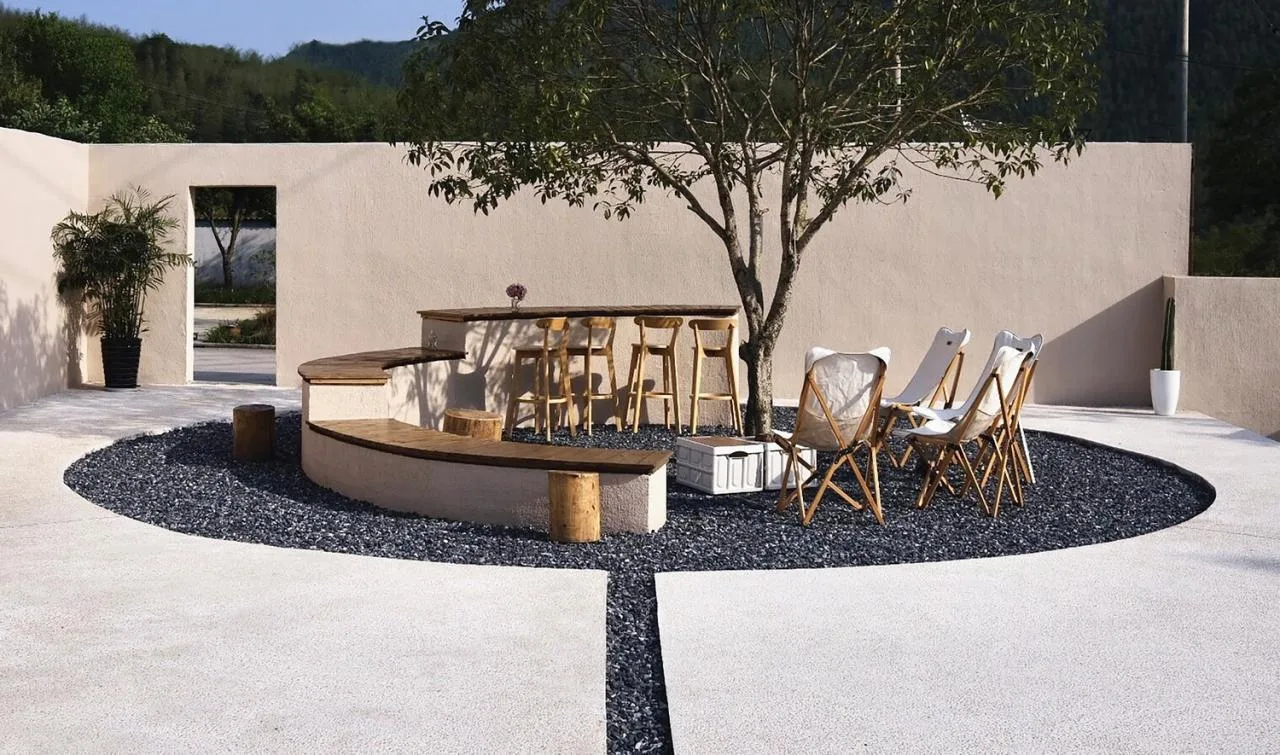
△ Circular and linear gravel pavement © Lin Guijia Building
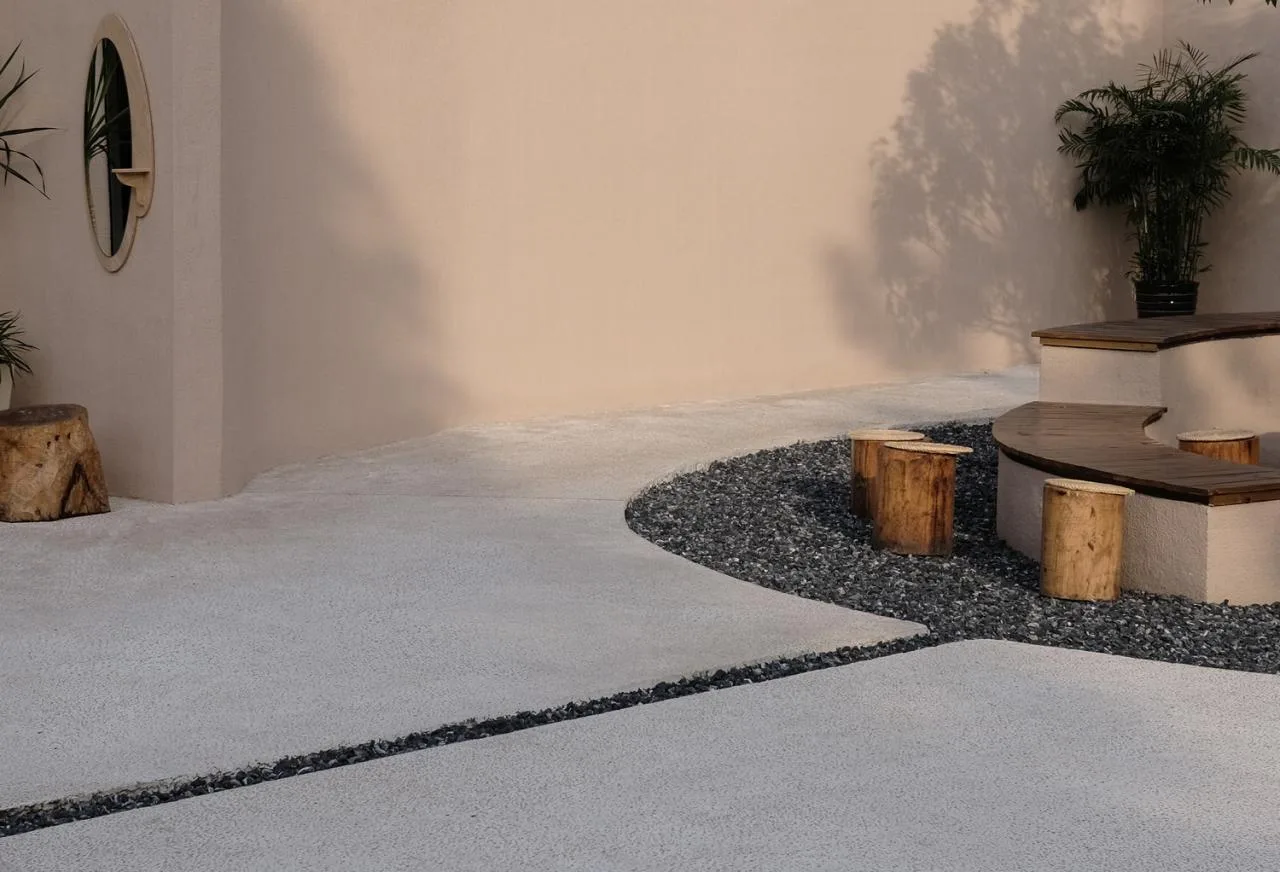
△ Curved wall surface © Lin Guijia Building
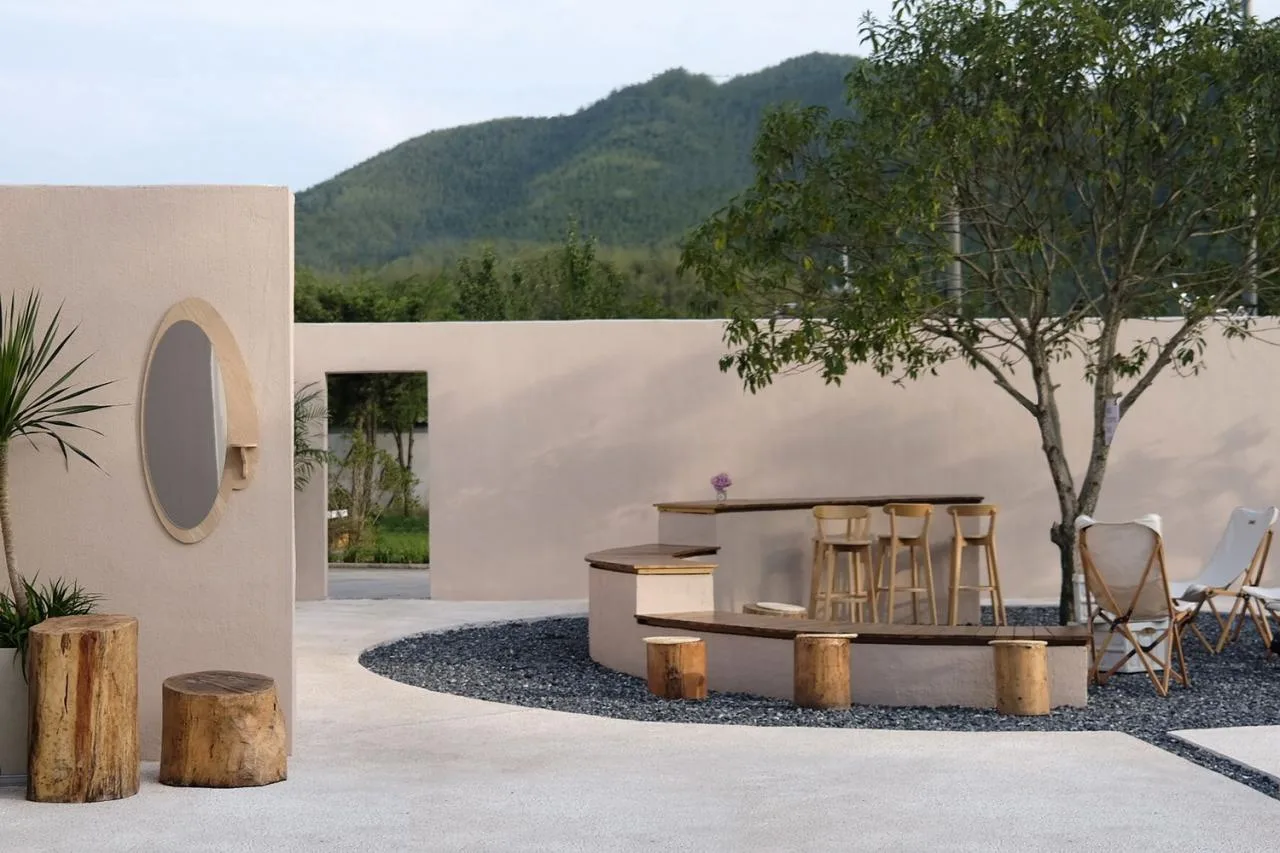
△ Multi-level seating area © Lin Guijia Building
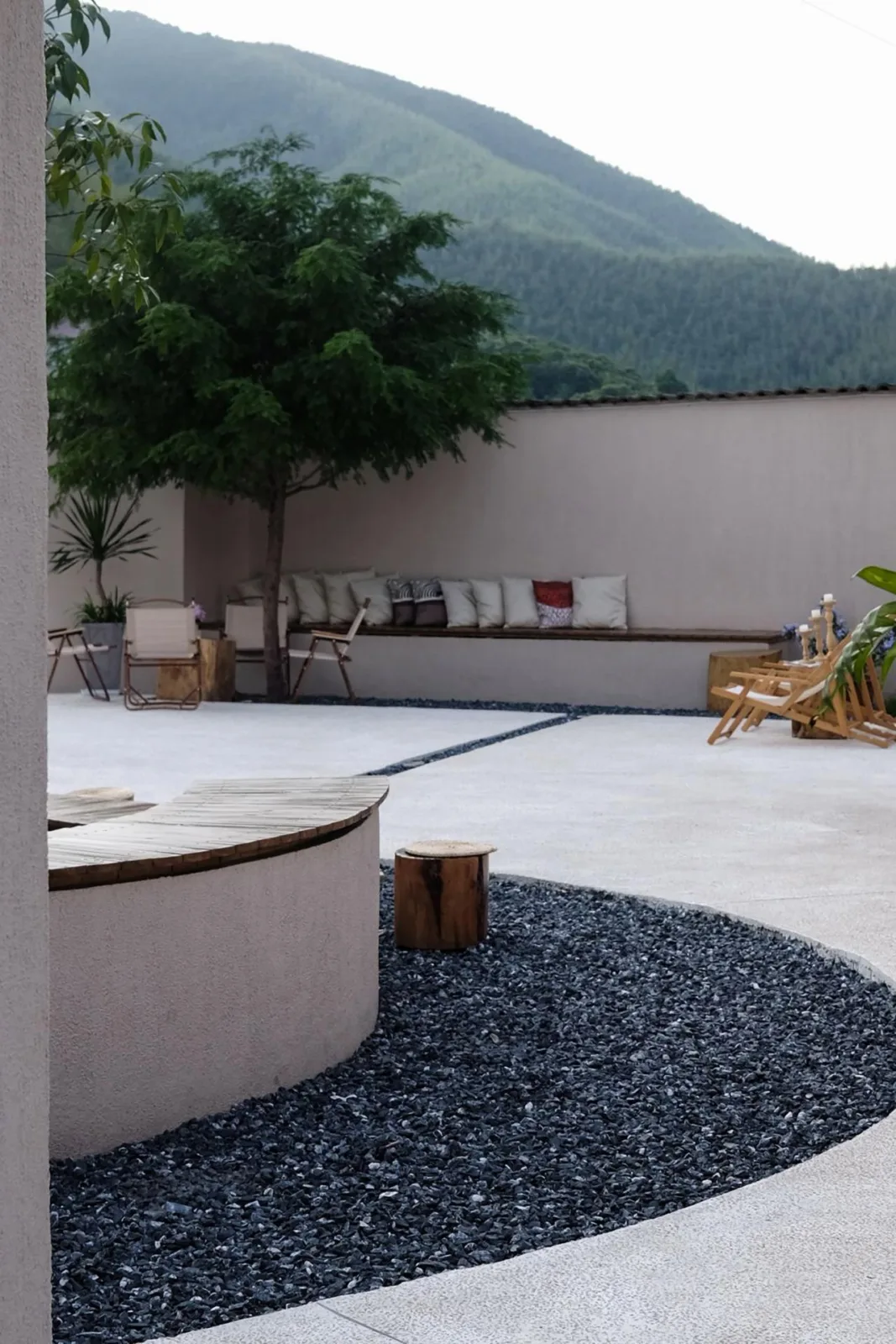
△ Wall-mounted booth area © Lin Guijia Building
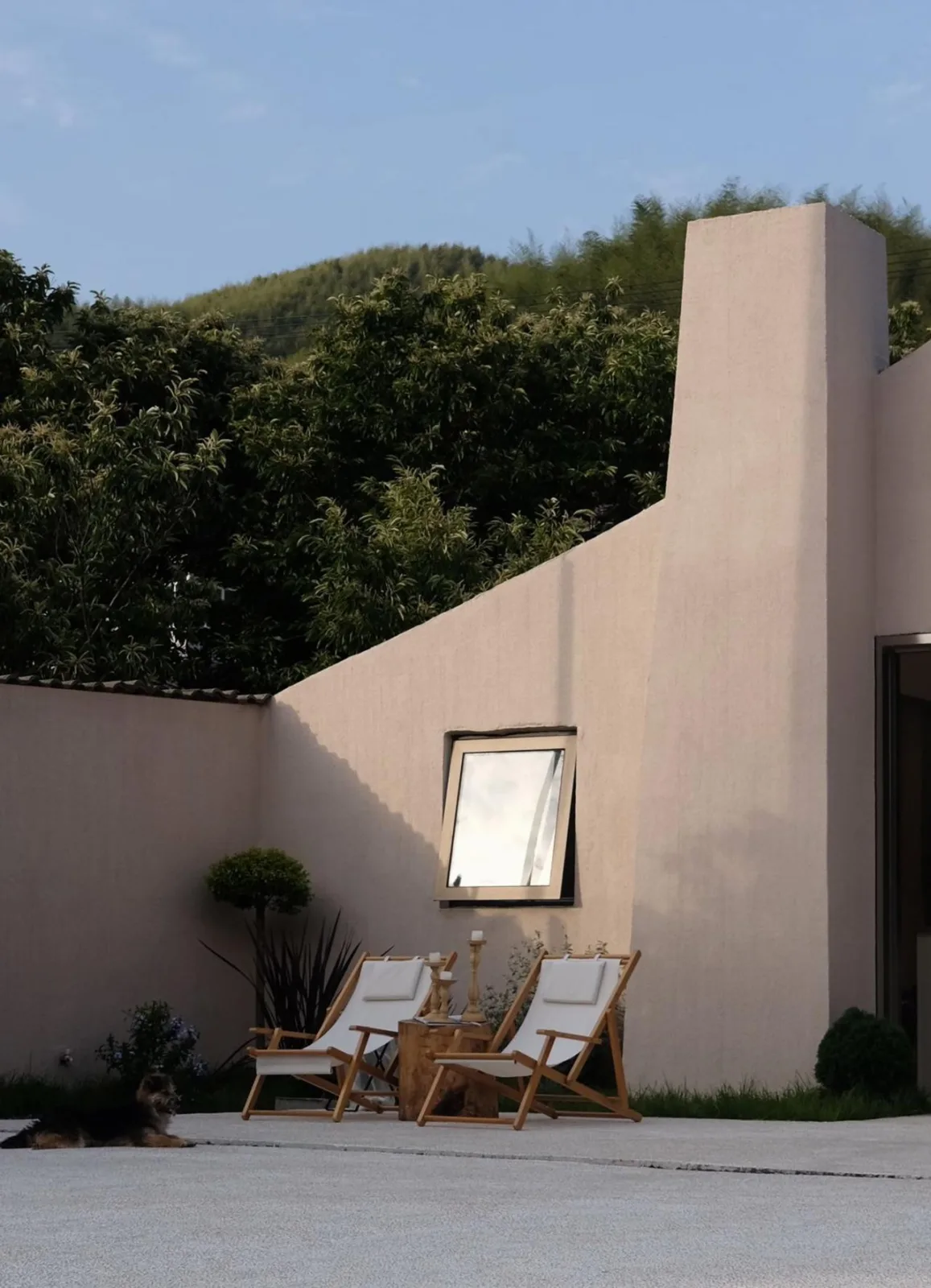
△ Kitchen window opening © Lin Guijia Building
Inside, the landscape-inspired stepped design raises certain areas to form different seating levels. This naturally creates two distinct zones: a structured seating area and a casual lounge space. The interior layout is clearly visible through the glass at the entrance, offering visitors a welcoming glimpse inside.
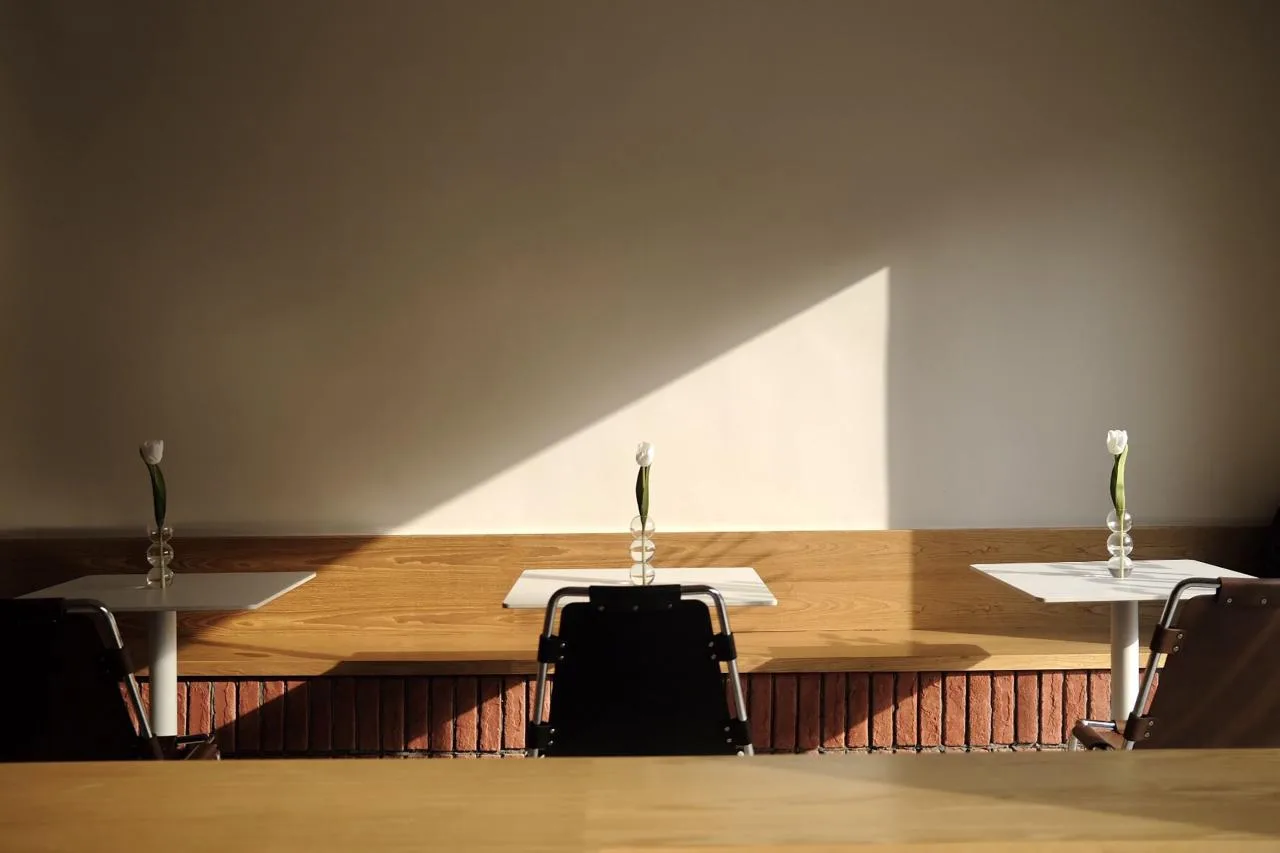
Indoor booth area © Lin Guijia Building
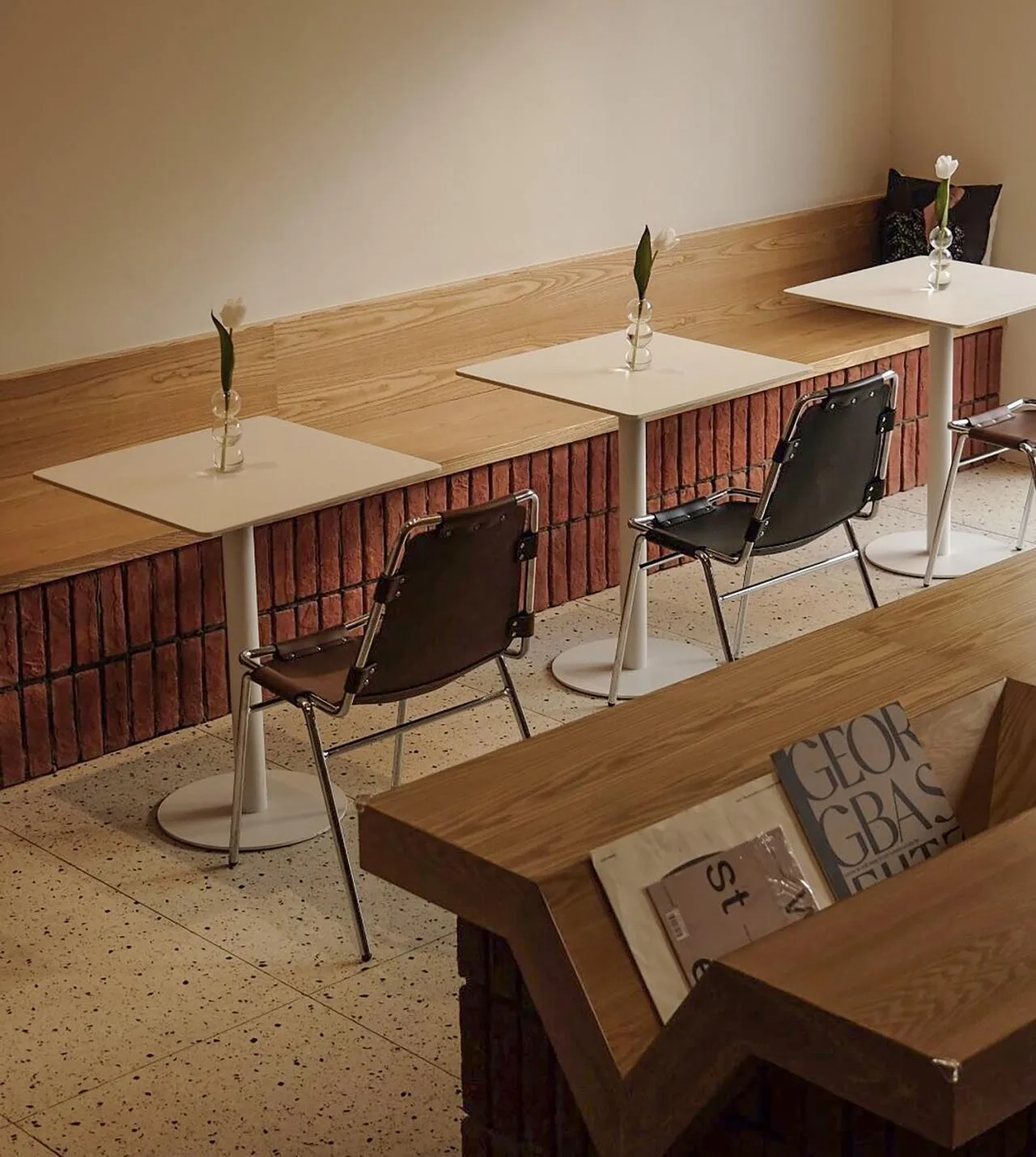
△ Indoor natural material display © Lin Guijia Building
For materials, we selected retro and natural finishes such as washed stone, crushed stone, and red brick to create a timeless and durable space. The exterior is coated with colored real stone paint, which subtly changes color depending on the light, adding visual interest throughout the day.
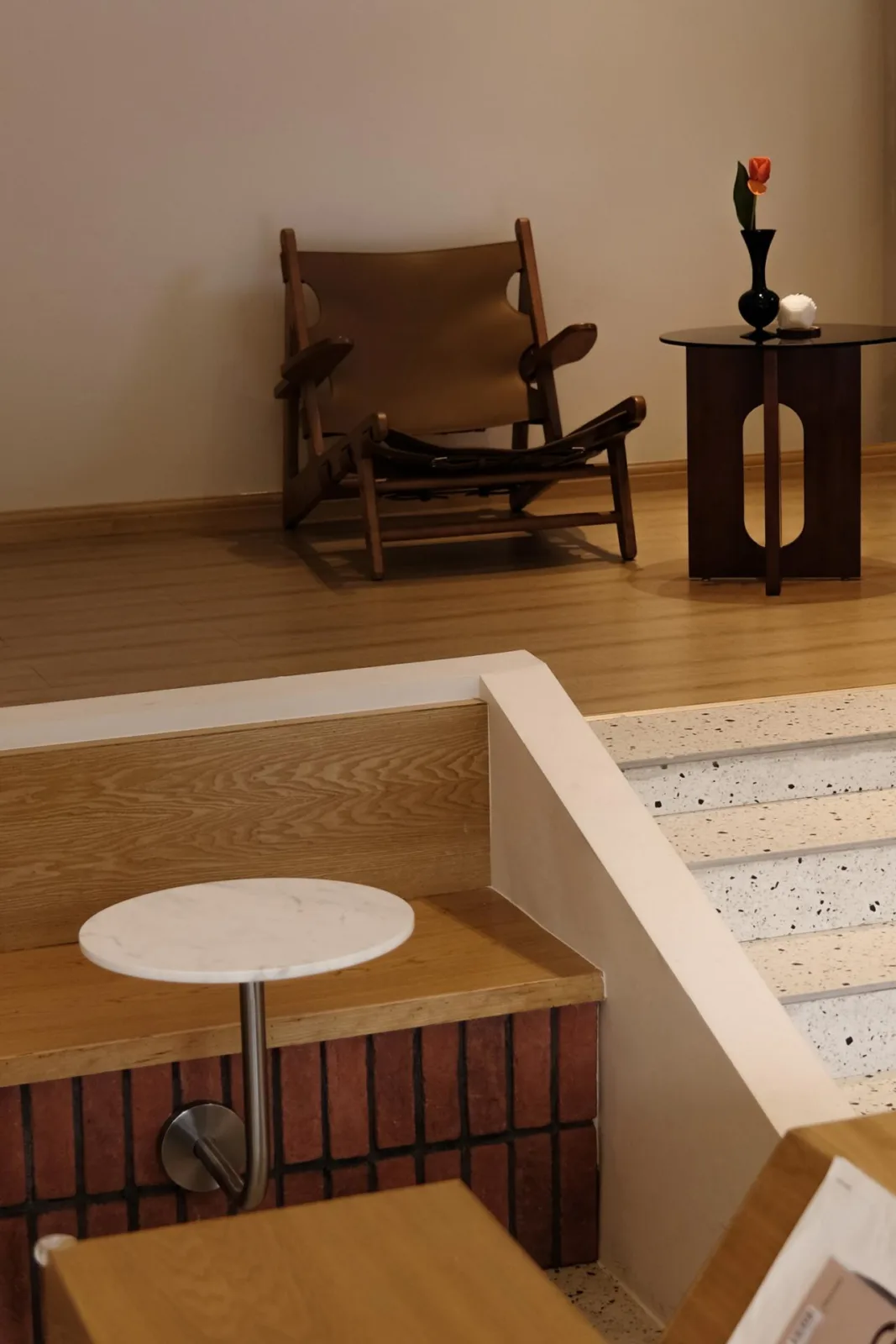
△ Indoor staircase effect © A bit of architectural design
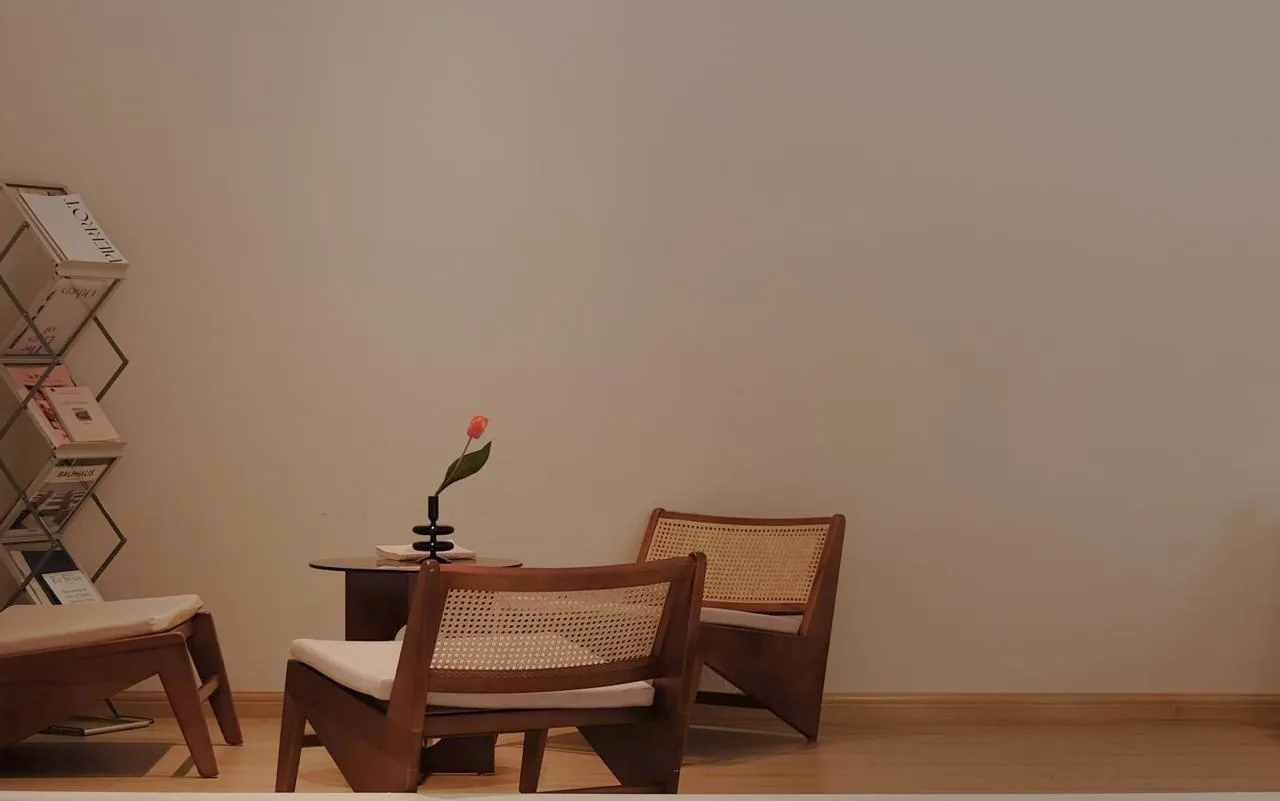
△ Indoor loose seating area © Lin Guijia Building
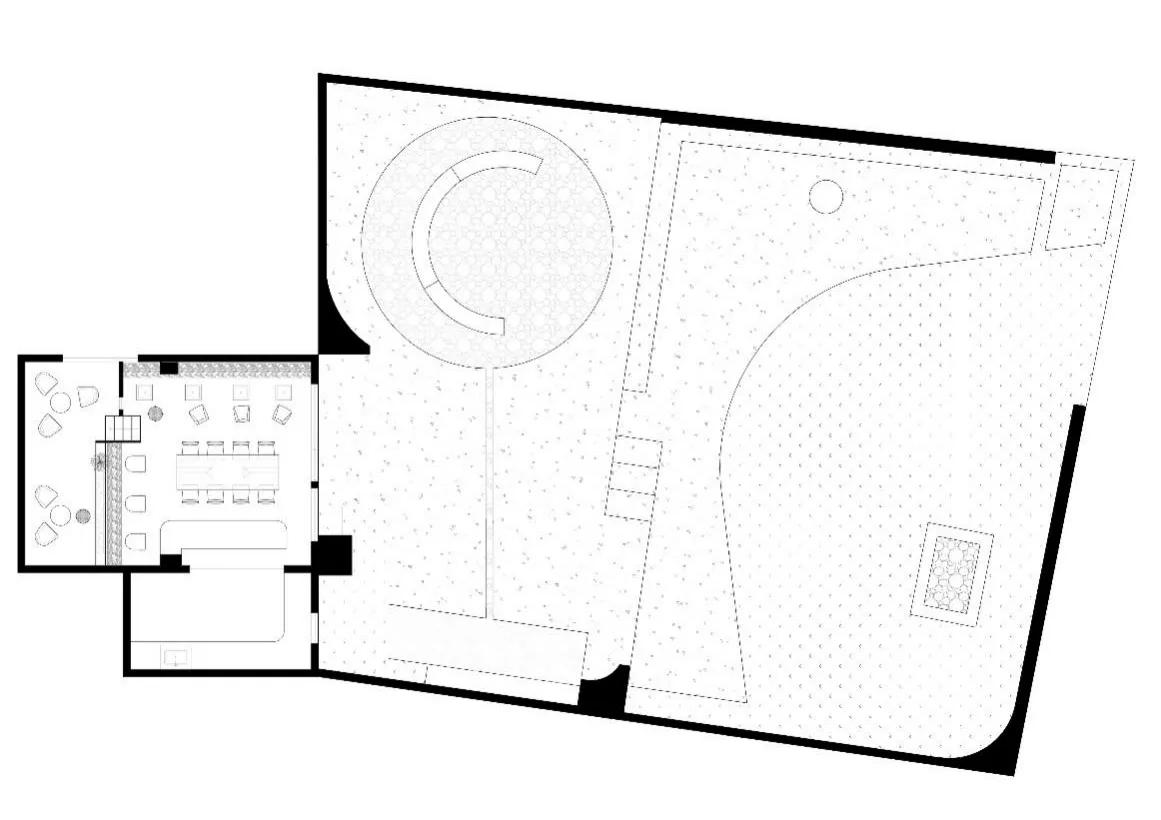
△ Layout plan © A bit of architectural design
Project Information
Project Name: Xiaohangkeng Camping Site Cafe
Designer: Somewhat Architectural (Suzhou Somewhat Architectural Design Co., Ltd.)
Design & Completion: March 2022 to June 2022
Principal Designers: Wang Yitong, Lin Guijiadong
Project Location: Xiaohangkeng Scenic Area, Anji County, Huzhou City, Zhejiang Province
Building Area: 220 square meters
Photography Copyright: Somewhat Architecture (Suzhou Somewhat Architectural Design Co., Ltd.)
Client: Waiting for the Wind to Come Coffee Shop
Construction Cost: 300,000 yuan















Must log in before commenting!
Sign Up