
As the construction industry in China embraces digital transformation, Building Information Modeling (BIM) software for preliminary design and parametric modeling is rapidly evolving and gaining widespread adoption. This study reviews the key features, primary functions, and typical applications of leading BIM modeling software available in the market. It focuses on parametric software capable of integrating building information with engineering realities, enabling the creation of comprehensive, full lifecycle information models throughout the construction process. Various types of BIM software can be utilized in architectural design schemes to accurately generate diverse components, structural elements, mechanical and electrical pipe galleries, site models, and more, effectively establishing an information platform that supports the entire project lifecycle.
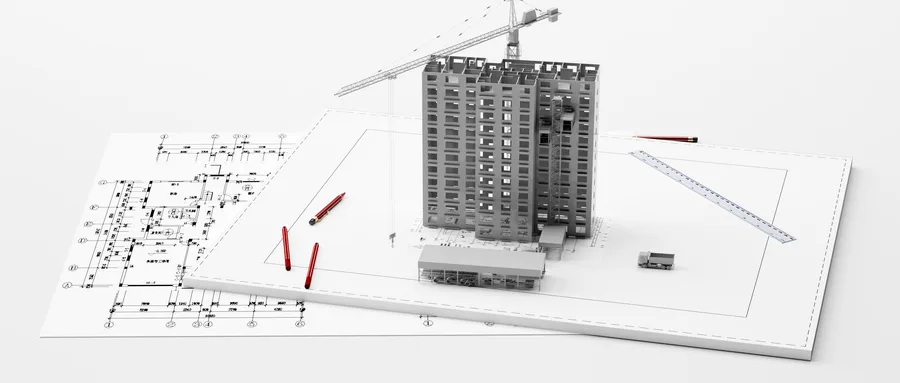
BIM modeling software employs database-driven architecture and object-oriented principles, centering around engineering data to establish a unified data coordination platform. It emphasizes collaborative workflows, data sharing, and information integration. Currently, globally recognized BIM tools such as Autodesk Revit, Bentley’s Architecture, Structures, and Equipment suites, Dassault’s advanced 3D software CATIA, and Nemetschek’s ArchiCAD are extensively used across the industry.
With continuous updates and iterations, BIM software capabilities and application scenarios are becoming increasingly diverse. On one hand, by leveraging open data interfaces provided by graphics engines, BIM modeling software serves as a foundational platform for further BIM software development. This enables enhanced design, analysis, and engineering management based on a core modeling platform, thereby advancing comprehensive information management throughout a project’s lifecycle.
On the other hand, many BIM tools now extend beyond traditional closed modeling environments to support broader design workflows. For example, during project planning and preliminary design phases, some BIM software can transform abstract project requirements from bidding documents into volumetric building schemes, enabling initial engineering analysis and validation. Consequently, these BIM solutions often support open software interfaces and standardized data formats, fostering the growth of a versatile software ecosystem.
This ecosystem helps designers evaluate how well design schemes align with owner requirements, scheduling constraints, budget considerations, and available construction resources. Additionally, the outputs can be integrated into engineering analysis software for further detailed evaluation. This iterative process continues to refine the project, ultimately identifying the optimal design solution within existing resource limits.
Source: Research on the Influencing Factors and Improvement Path of BIM Modeling Software Development in China by Chen Jianqiang
















Must log in before commenting!
Sign Up