
The design phase primarily involves scheme and planning design, preliminary design and expansion, as well as construction drawing design.
Starting with site analysis, conceptual modeling, and cost estimation, architects employ geometric modeling software with rapid drafting capabilities to convert spatial design ideas into three-dimensional models using conceptual volumes. After multiple iterations, a finalized conceptual design emerges.
Following this, parametric BIM modeling software is used to develop preliminary designs across various disciplines based on the conceptual plan. This process produces BIM models encompassing architecture, structure, MEP, and more, which contain the initial building information for the project.
Thanks to the scalability and robust data integration and exchange features of the modeling software, the BIM model is linked with specialized structural and geological analysis tools. By assigning attributes to model components, structural modeling advances, resulting in detailed structural analysis and design refinement.
Additionally, incorporating equipment modeling into the BIM model facilitates analyses related to personnel activities, energy consumption, mechanical systems, and acoustics. This integration supports ongoing updates to engineering equipment, energy management, and spatial planning.
During the construction drawing design stage, relevant professionals complete coordination models based on the BIM-derived architectural, structural, and MEP models, ensuring comprehensive construction documentation.
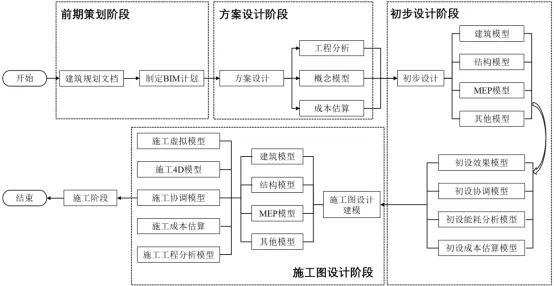
Figure 1: BIM Collaborative Path During the Design Phase
Source: “Research on the Influencing Factors and Improvement Path of BIM Modeling Software Development in China” by Chen Jianqiang
















Must log in before commenting!
Sign Up