
In Revit, all projects are constructed using “families,” which serve as the fundamental building blocks of the information model and represent a core concept within the software.
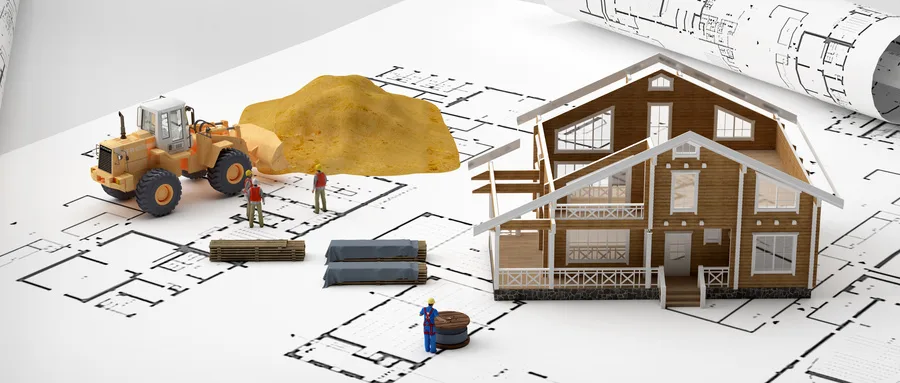
To begin with, a Revit “family” refers to a collection of elements within a certain category. These families are classified based on their parameter properties and shapes. Although individual elements within a family may have varying parameter values, their overall property settings remain consistent. As the basic unit of information technology components, families encapsulate various types of data about the components they represent.
When working with families, users can adjust their parameters flexibly according to the category classification to suit project needs. Families can then be edited and defined into specific types based on real-world dimensions and requirements. For example, after selecting a family type, it can be further subdivided—such as dividing a column family into eave columns, gold columns, child columns, and so on. These subdivided family types can be trimmed to the desired sizes, creating individual family instances within the project. Once loaded, families remain fully editable; any parameter changes update the associated drawings and models dynamically. In other words, modifying the model automatically refreshes the related documentation.
Revit classifies families into three main categories based on its software framework: system families, built-in families, and standard component families.
(1) System Families
System families are predefined by Revit and included in projects and templates. Examples include fundamental elements such as walls, doors, windows, grids, and curtain walls. While these families can be copied and modified, they cannot be deleted or newly created by users.
(2) Built-in Families
Built-in families consist of components that can only be created and applied within a specific project. These families cannot be reused across different projects, which limits their shareability.
(3) Standard Component Families
Standard component families are custom families and annotation elements created by users. They can be developed by copying and modifying existing families or by building new ones from templates. These families offer full flexibility—they can be created, modified, deleted, and loaded into various projects. As the core of the family library, standard component families are the most widely used type within Revit.













Must log in before commenting!
Sign Up