
The layout of a construction site should be tailored to the actual conditions, utilizing BIM technology to evaluate and select the most efficient plan through multiple comparisons. This approach ensures a scientifically sound and optimized site layout. By creating 3D models with BIM, the real on-site environment can be clearly visualized, allowing for strategic planning that minimizes risks such as collisions during construction.
Principles and Processes of BIM Technology for Site Layout
1. Based on the overall site arrangement, plan the placement of facilities logically to make effective use of space and optimize the allocation of labor, materials, and machinery.
2. Coordinate the division of functional areas within the project, refining the layout of work zones, construction zones, and living areas for better efficiency.
3. Design on-site routes that align with the construction project’s characteristics, ensuring the road layout supports the continuous cycle of construction activities.
4. Position tower cranes thoughtfully so their working radii cover high-rise structures effectively. The arrangement of crane groups should avoid physical interference while allowing slight overlapping of coverage areas to maximize functionality.
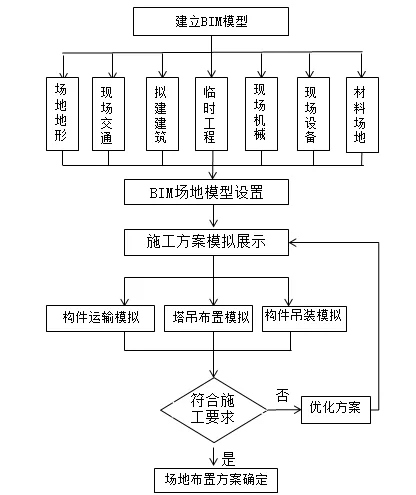
Using the construction master plan as a guide, BIM technology models the actual terrain, proposed buildings, construction machinery and equipment, material storage and processing areas, temporary roads, utilities such as electricity and water, safety and civil facilities, as well as office and living quarters. If tower cranes risk collision, prompt adjustments are made. The layout of on-site machinery is carefully planned in advance to meet construction demands. The detailed process is illustrated in the image above.
















Must log in before commenting!
Sign Up