
The Deca Architectural Design Center team, led by Wang Junbao, proudly announces the first season of the Western (Chongqing) Science City Future Campus Design International Competition, titled “Futurist Campus”.
01. A Call for Hope: Envisioning a Better Future Campus
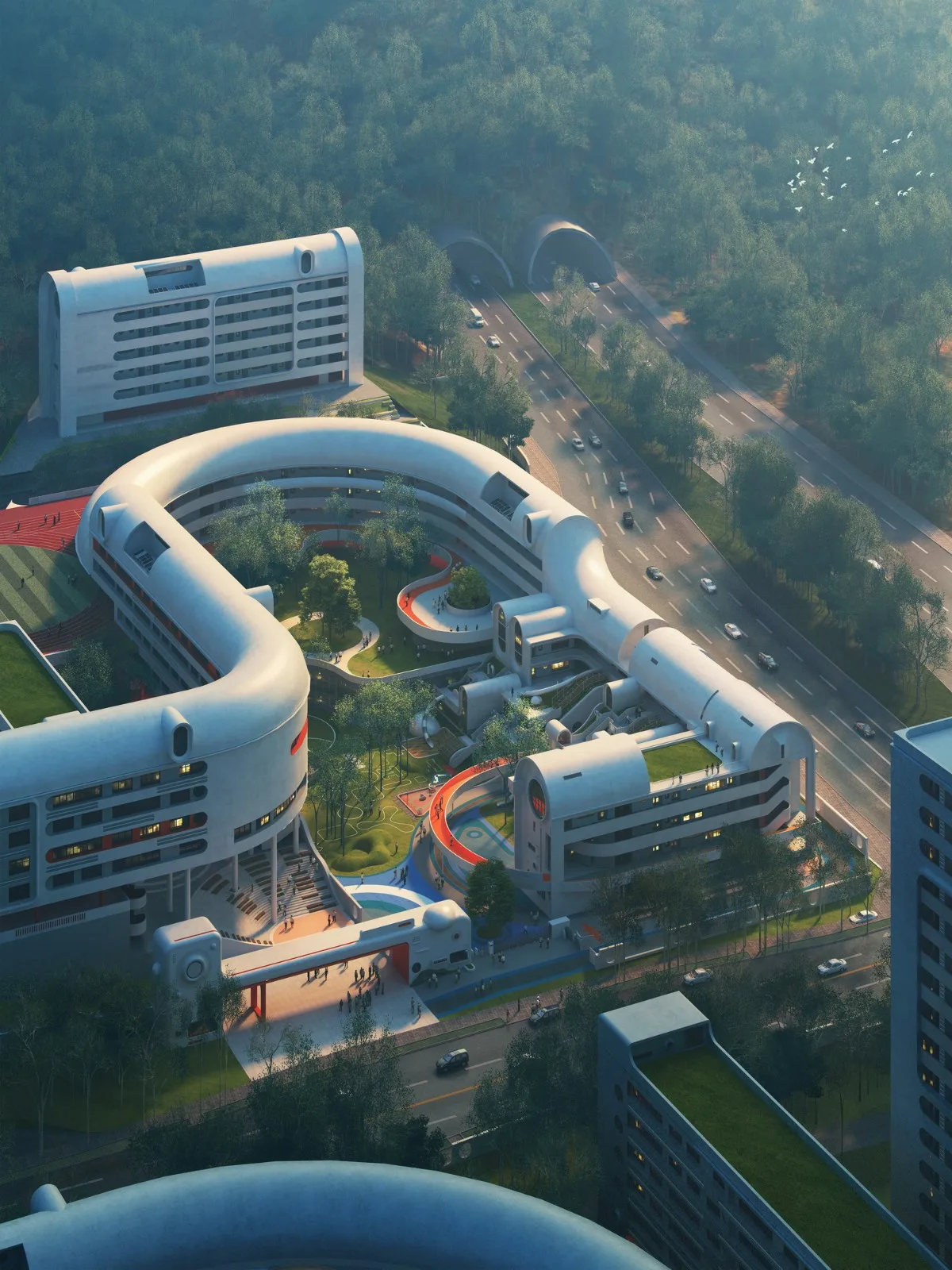
△ Aerial View of Futurist Campus
Project Overview
The Western (Chongqing) Science City Hangu School embraces an educational spirit grounded in loyalty, elegance, simplicity, perseverance, truth-seeking, innovation, virtue cultivation, and holistic development. Its philosophy emphasizes returning time and teaching methods back to students, fostering intrinsic motivation and key competencies.
The campus design integrates the school’s values with regional characteristics, aiming to create a cultural, smart, and ecological environment.
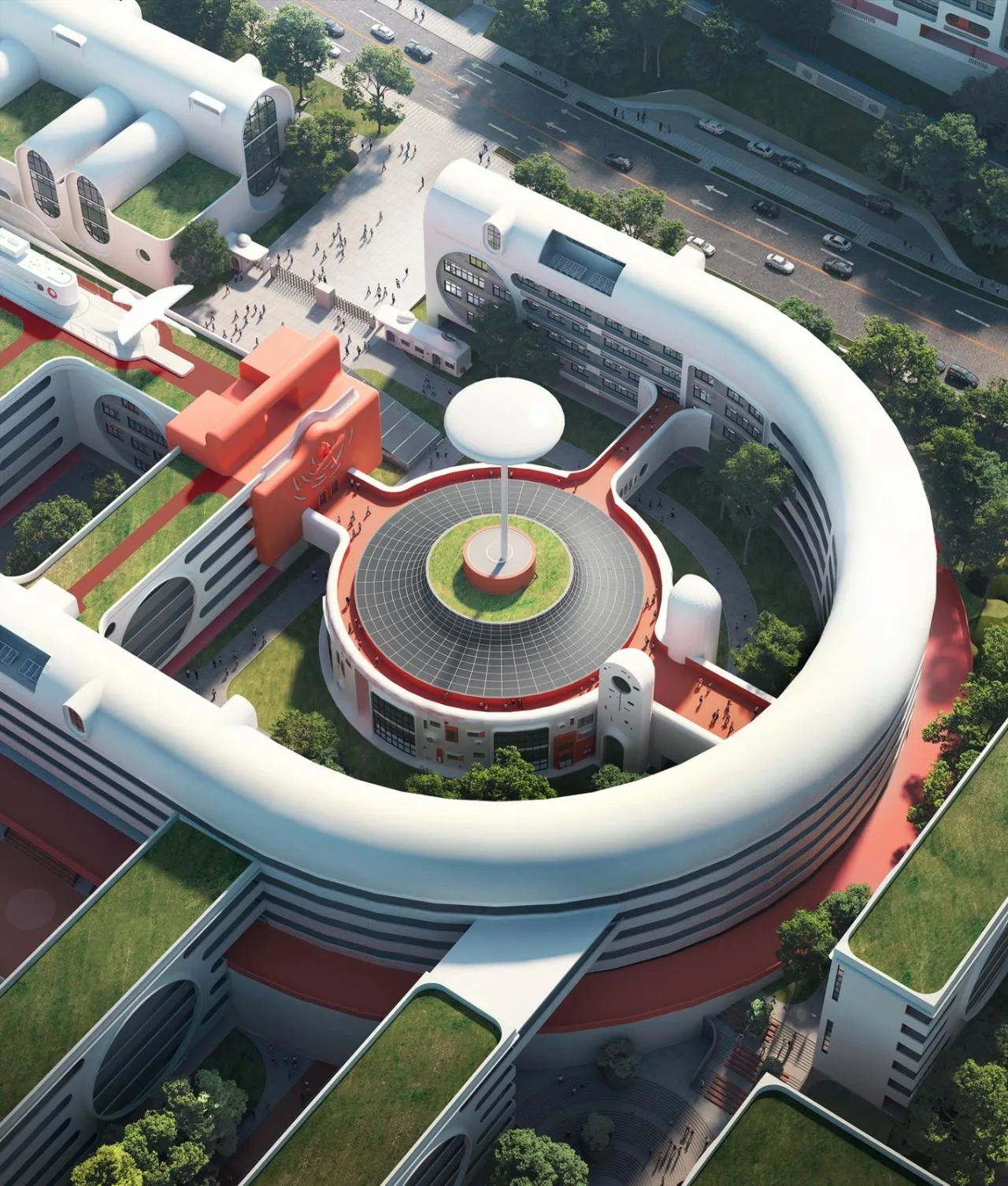
△ Building Components
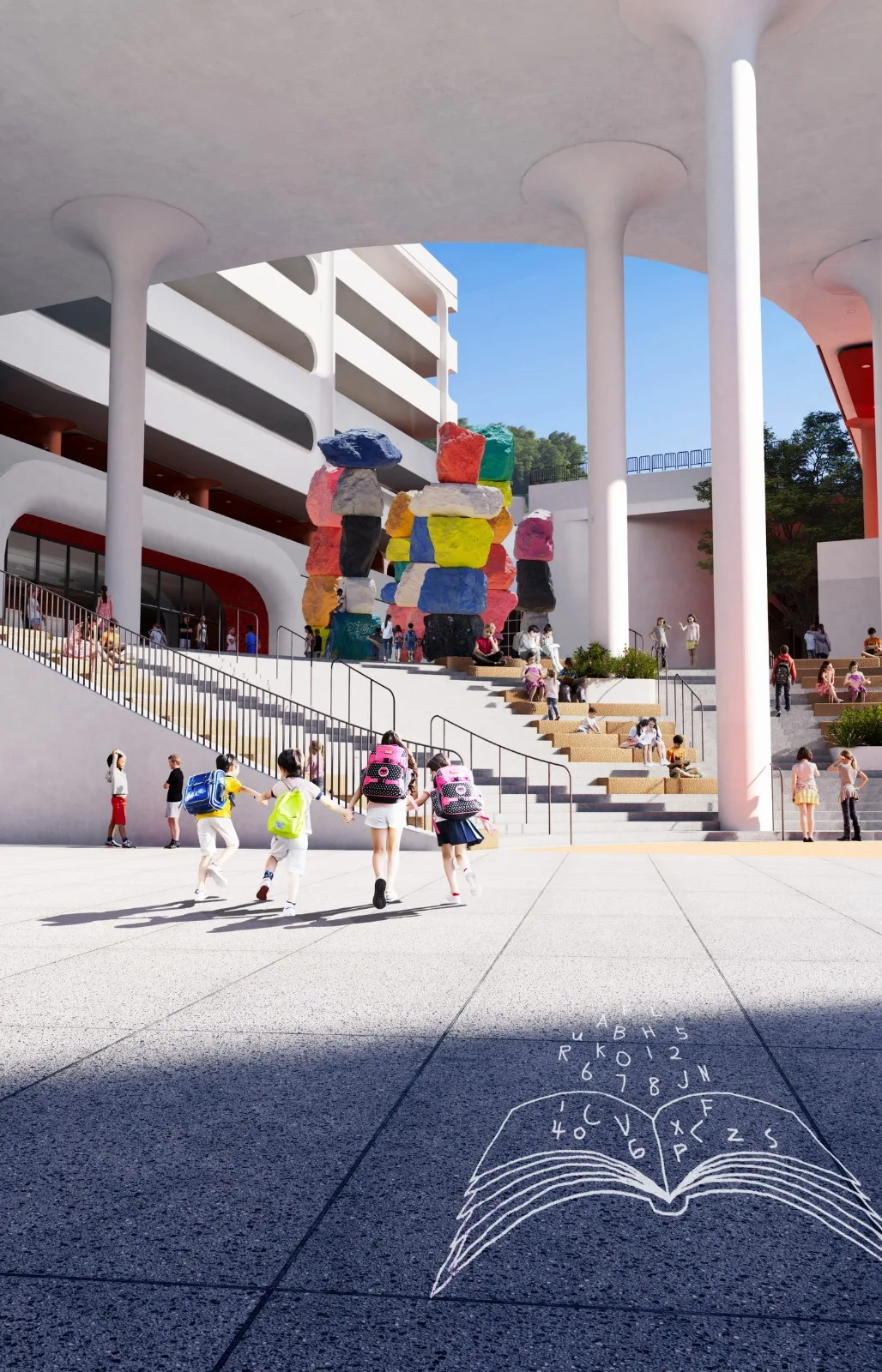
Entrance to Futurist Campus Square
This competition aims to explore future campus spatial forms that reflect evolving educational concepts, highlight Chongqing’s unique “city of mountains and waters” charm, and embody high-tech innovation and smart education. The goal is to create a truly unique future campus.
The concept of a future campus is already being explored worldwide, with many new possibilities awaiting innovation and discovery.
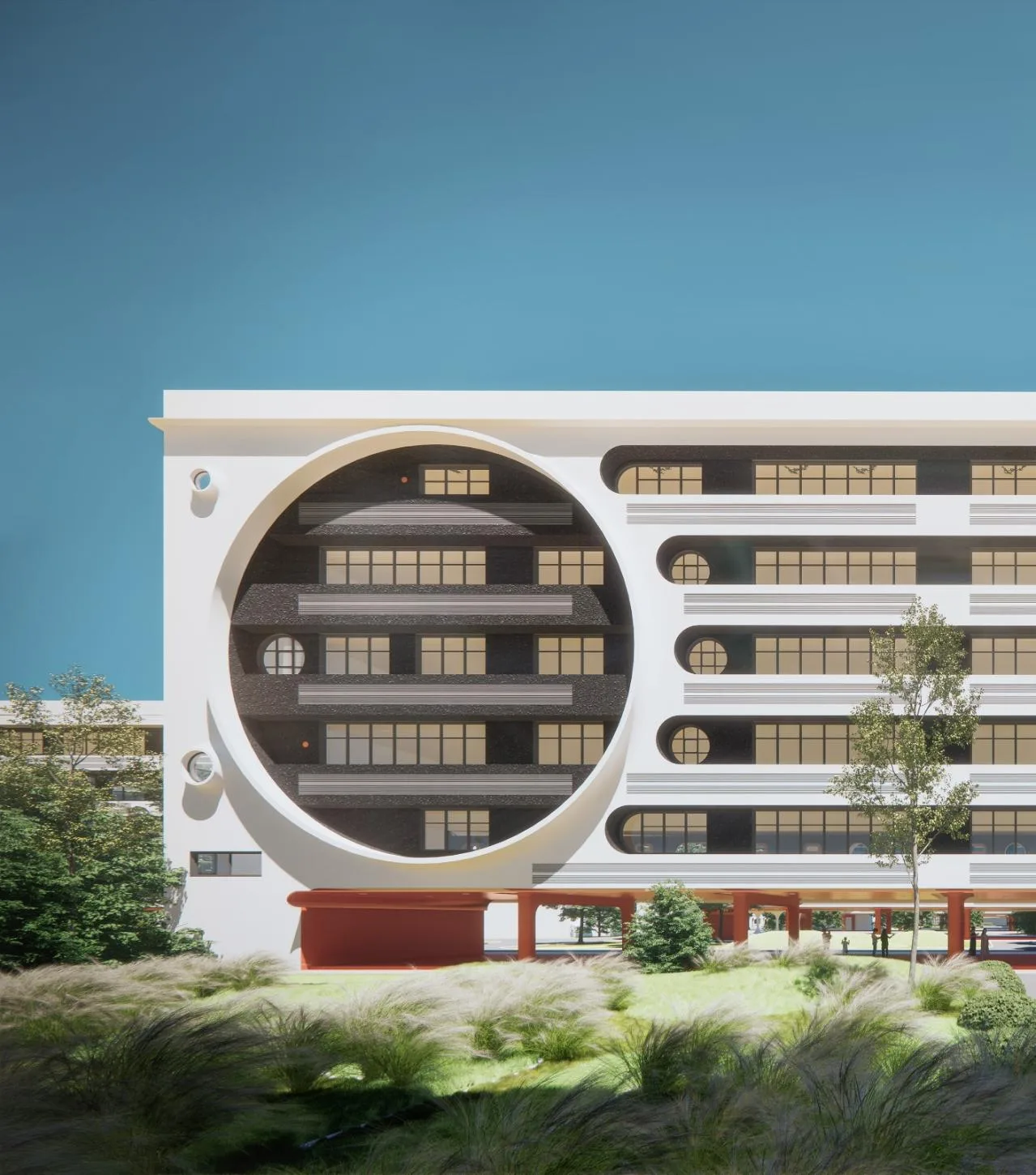
△ Facade of Middle School Teaching Building
Respecting Life, Nature, and the Unknown
This project connects children with nature through the campus environment, spanning kindergarten to high school ages. The design gradually transforms the natural campus setting, creating a dynamic living environment tailored to different developmental stages. The architecture aims to inspire children’s unique perspectives and encourage initiative and creativity.
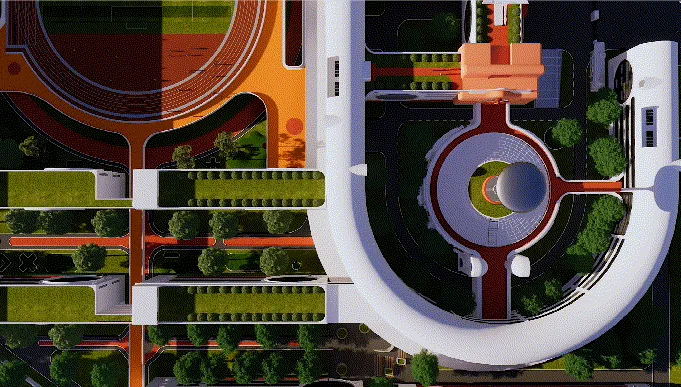
Partial view of Middle School Buildings
The human mind has its limits, especially in imagination and creativity. Since the Big Bang, everything consists of space, time, matter, and energy. When artistic thinking meets architecture, a unique story unfolds.
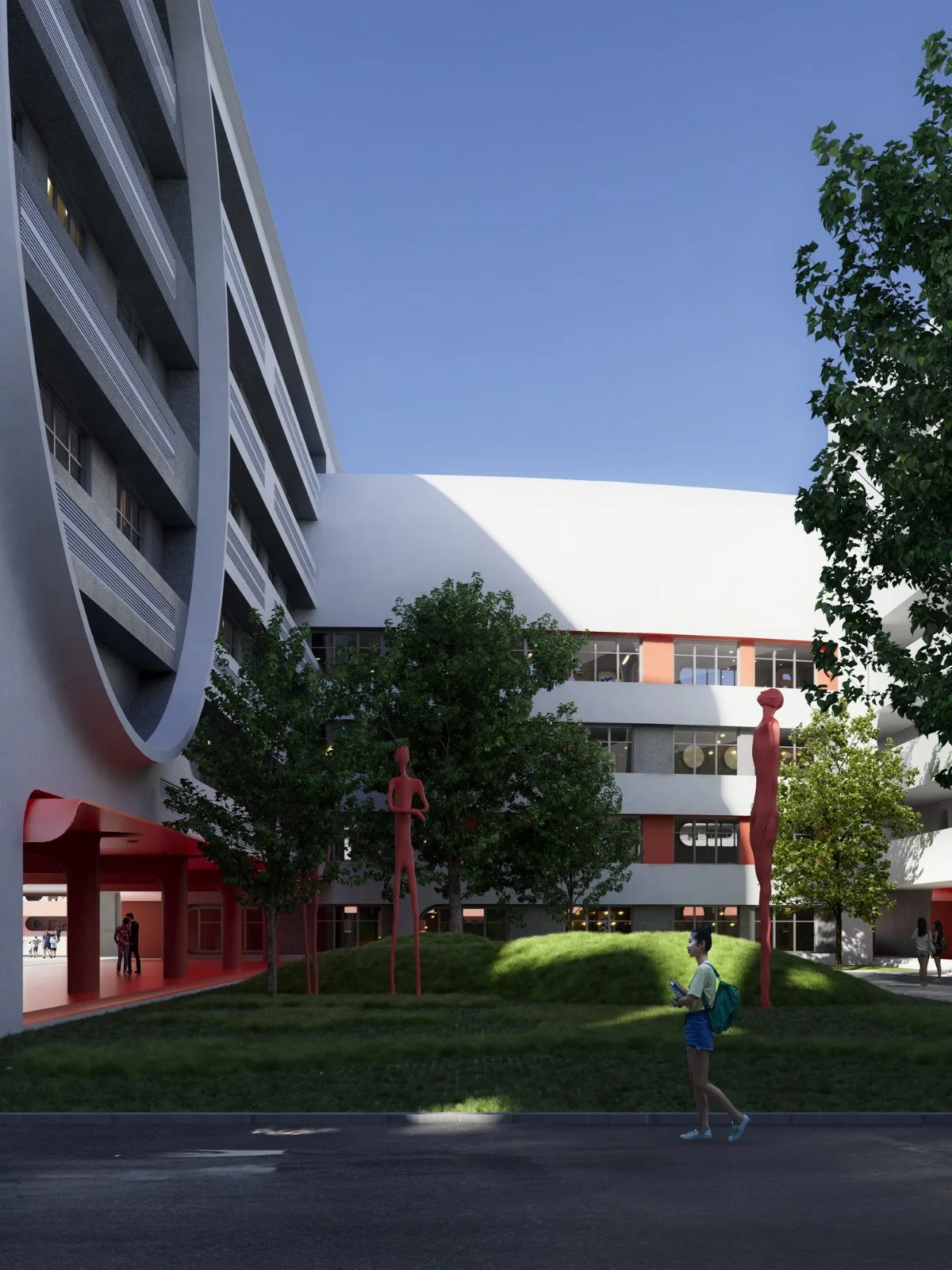
△ Campus Scenery
Imagination is sparked by experience; let us embrace new and unknown possibilities.
Traditional school designs often rely on dispersed single points and axial symmetry, shaping typical visual habits. For the Futurist Campus, we intentionally break this pattern, adopting a freestyle approach that interconnects and links spaces throughout the campus.
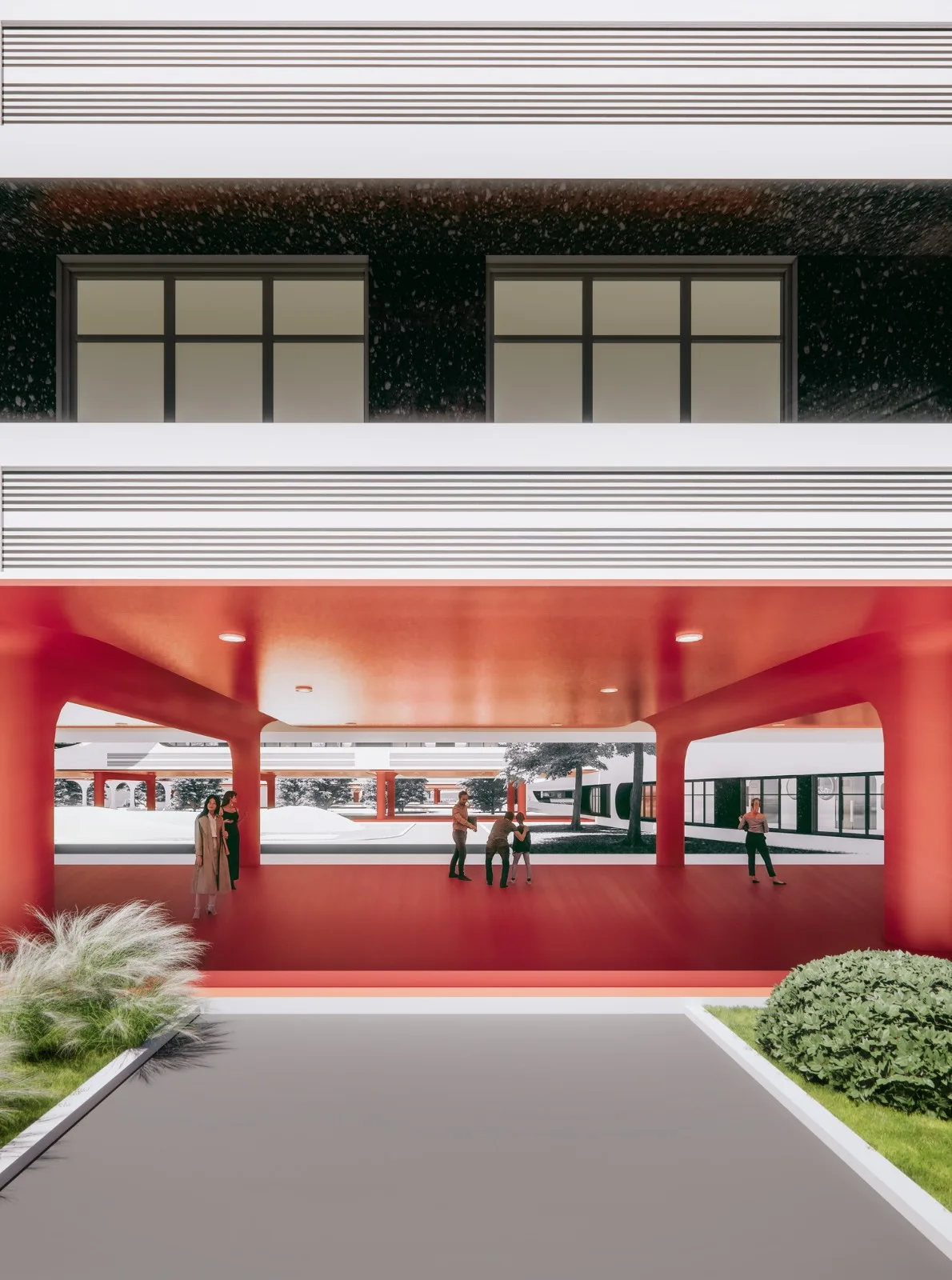
△ Open Communication Center on the First Floor of Middle School
This concept reflects our vision of a future where the school transcends walls to become an open, inclusive, and interactive space for learning and living.
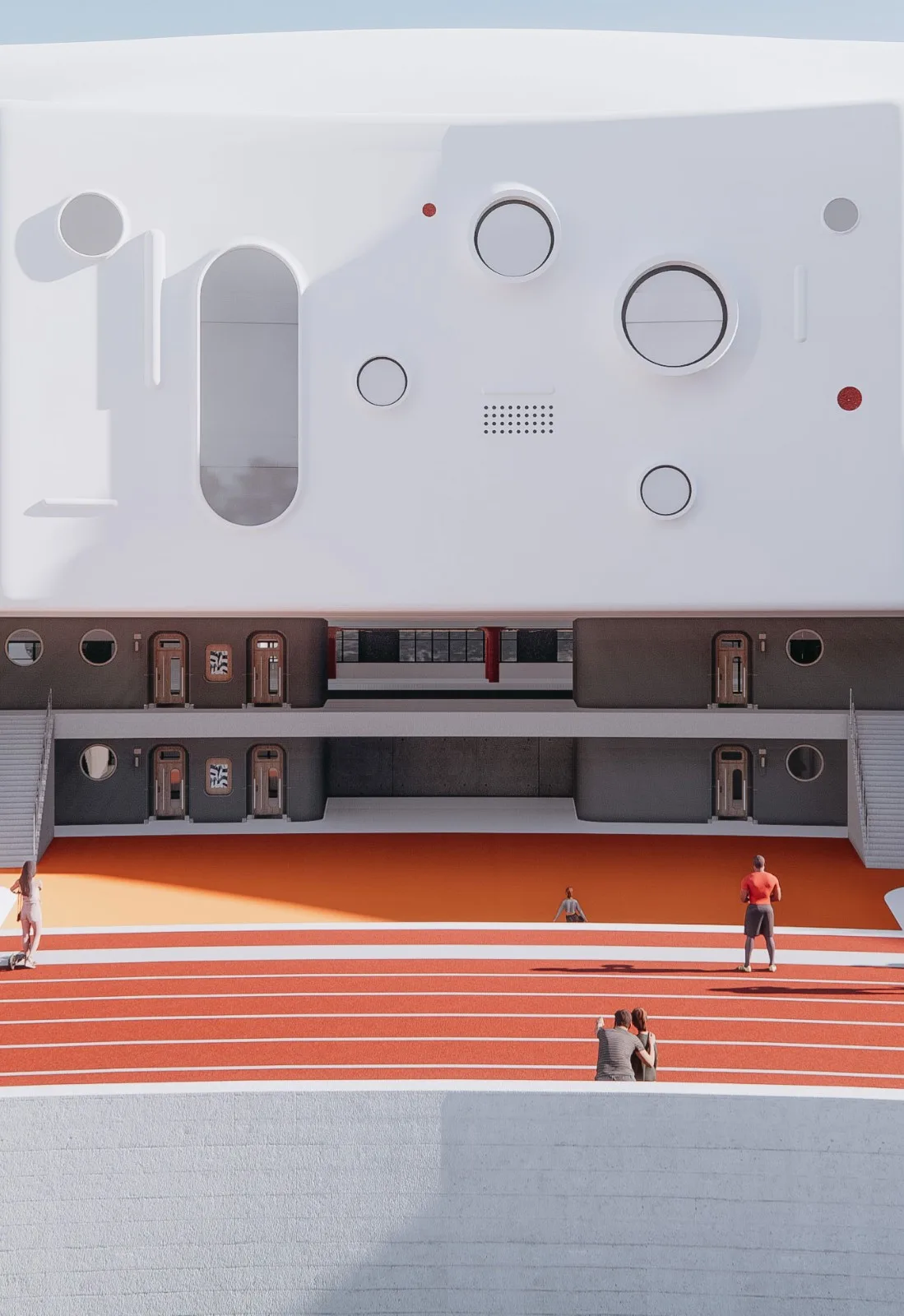
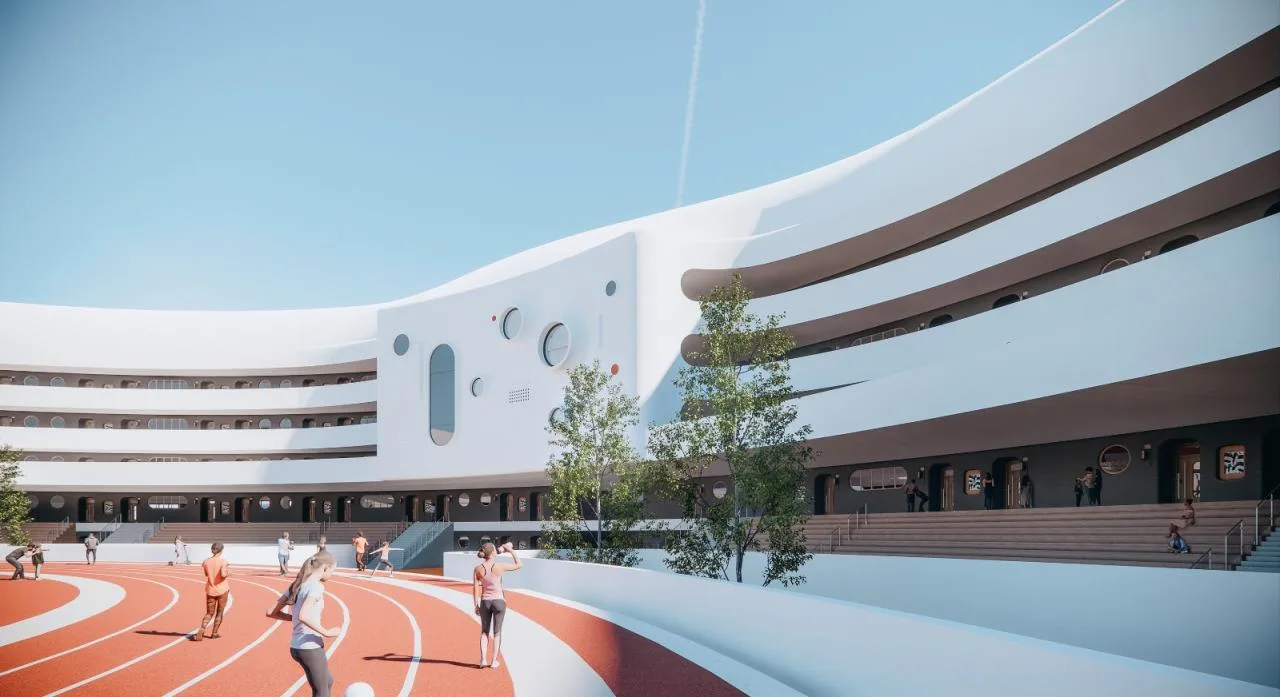
△ Middle School Playground
For over a century, many visions of the future campus have emerged, and with ongoing technological progress, these ideas are increasingly becoming reality. The future campus will move beyond confrontation with nature, seeking long-term coexistence through innovative approaches. It will be more humane, offering children abundant opportunities for experience and interaction.
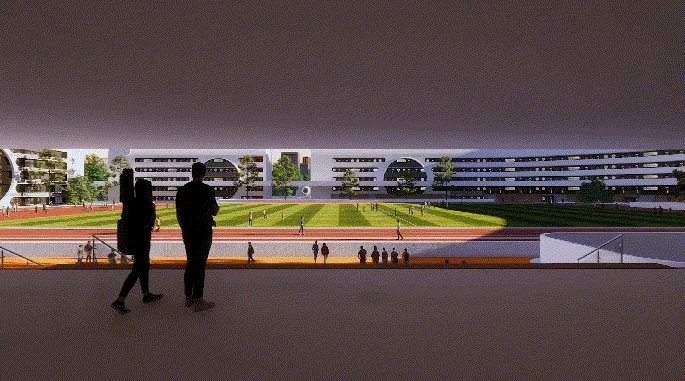
△ Internal Perspective
As Wittgenstein said, “Only when a person lives not in time but in the present can they find happiness.” Children perhaps need only a joyful daydream.
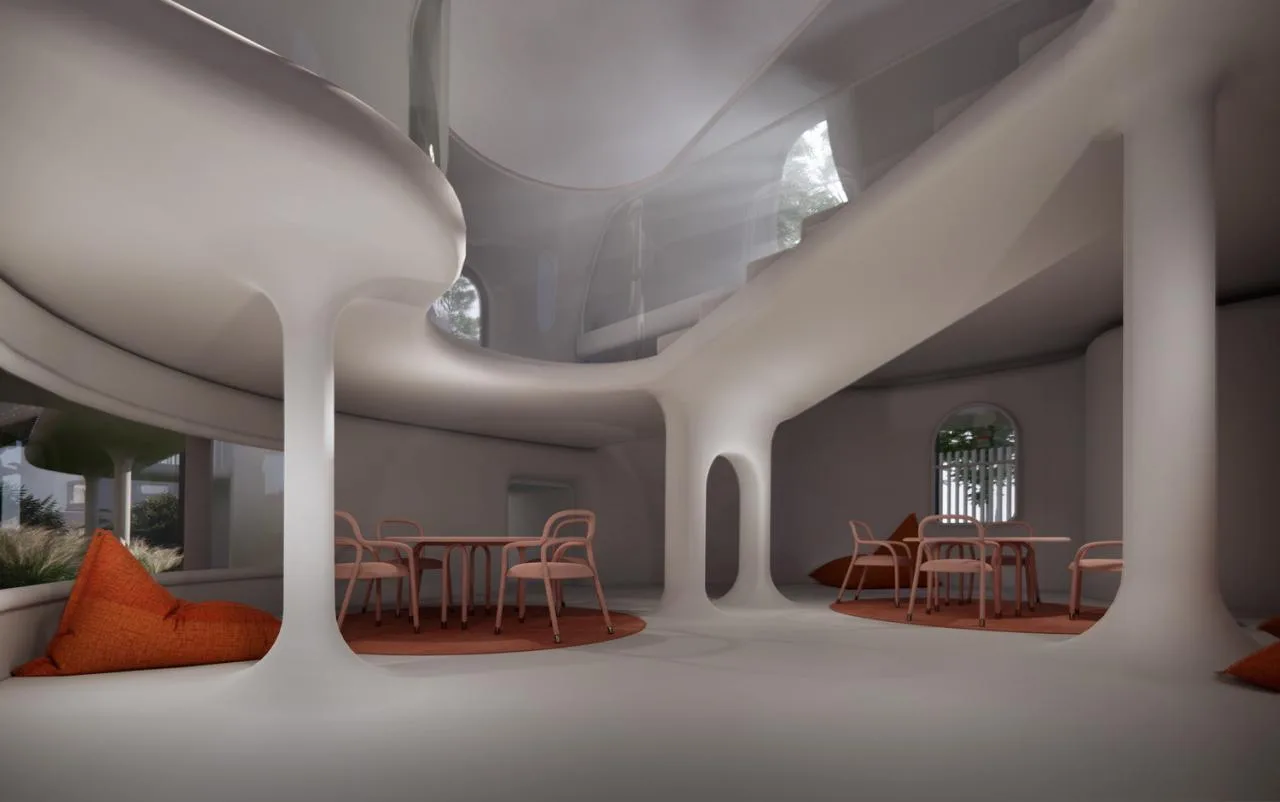
Outdoor Classroom
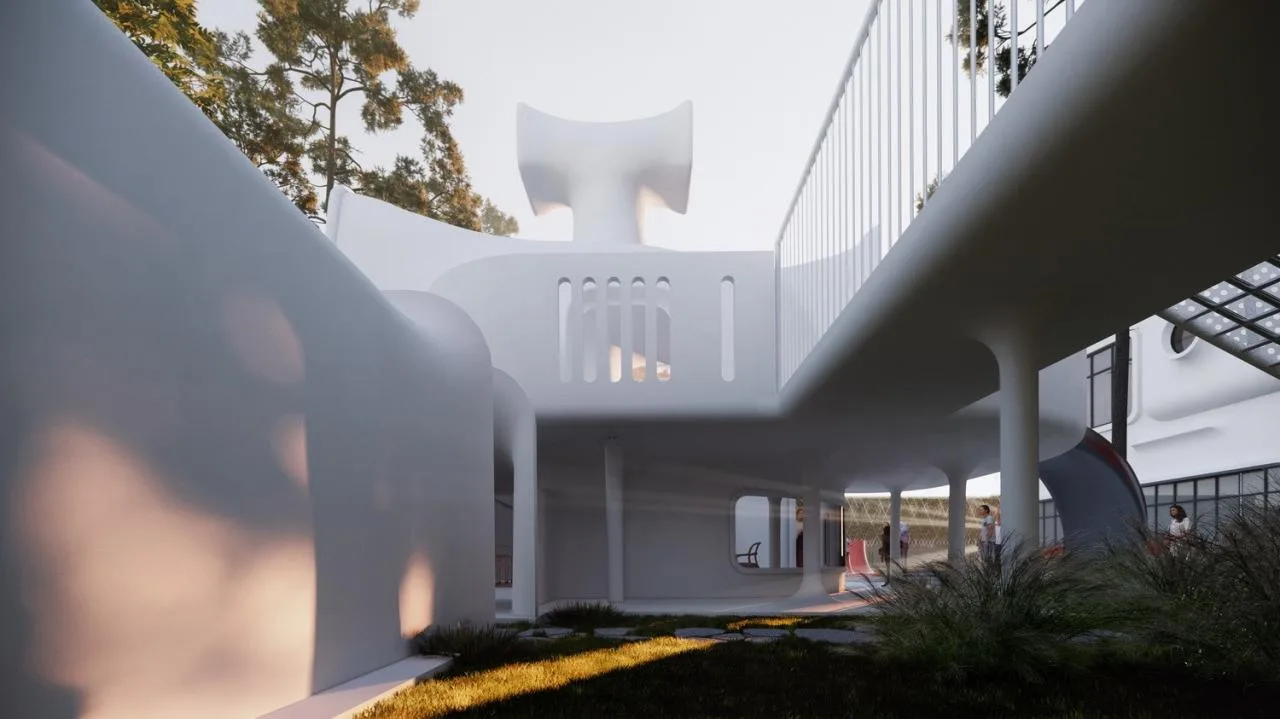
△ Campus Area
This project uniquely sits “half mountain, half city,” featuring a mountain-facing city, significant terrain elevation differences, and complex surrounding traffic. The site’s natural terraces create a visual hierarchy. Considering irregular terrain, high plot ratios, and campus design standards, we designed an efficient campus layout that serves as both a community backyard and a functional urban riverside leisure space, with children as the primary users. Schools should provide richer spatial experiences, making learning a natural process.
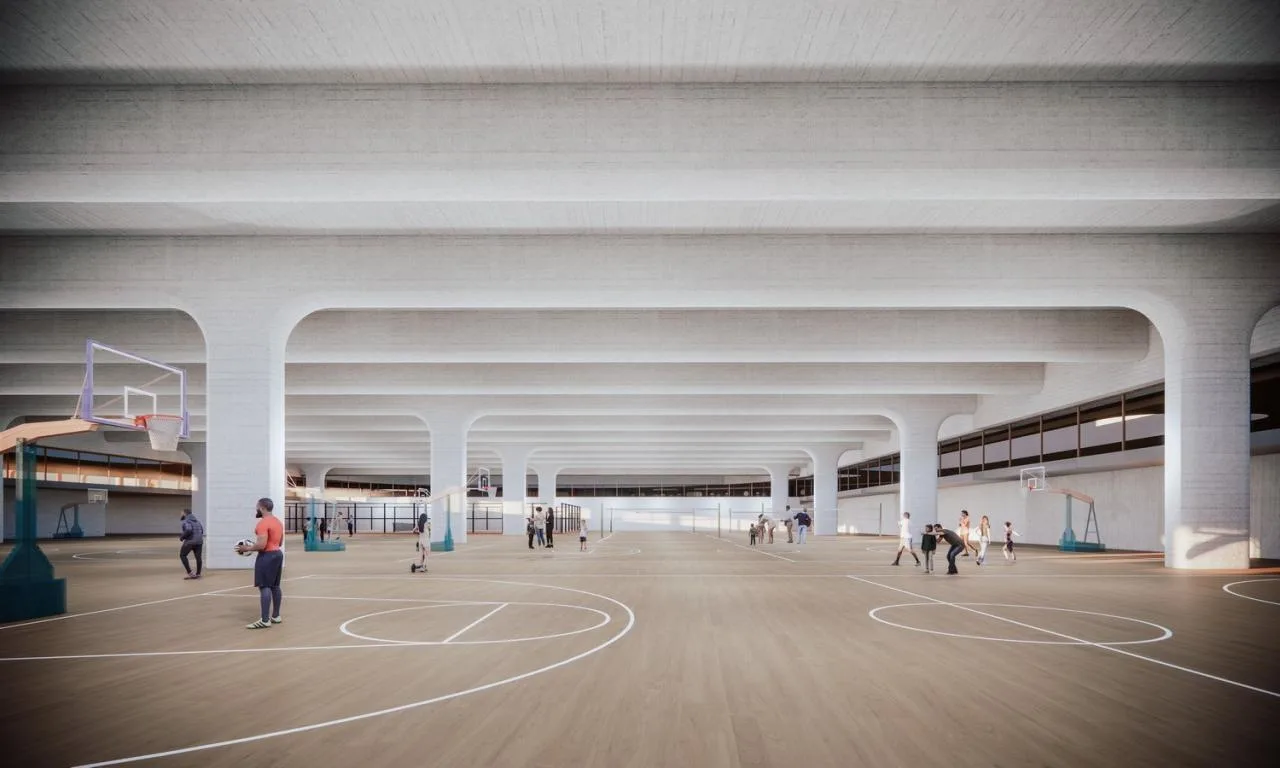
Indoor High School Stadium
Rather than trying to predict the future, we believe in shaping it with our own hands.
As humanity advances, our understanding expands. It is the observation of the “unknown” that tempers desire, continues life, and propels exploration. Science guides what can be done but not what should be done. We believe every child is a treasure with novel, free, and bold ideas, possessing unique perspectives.
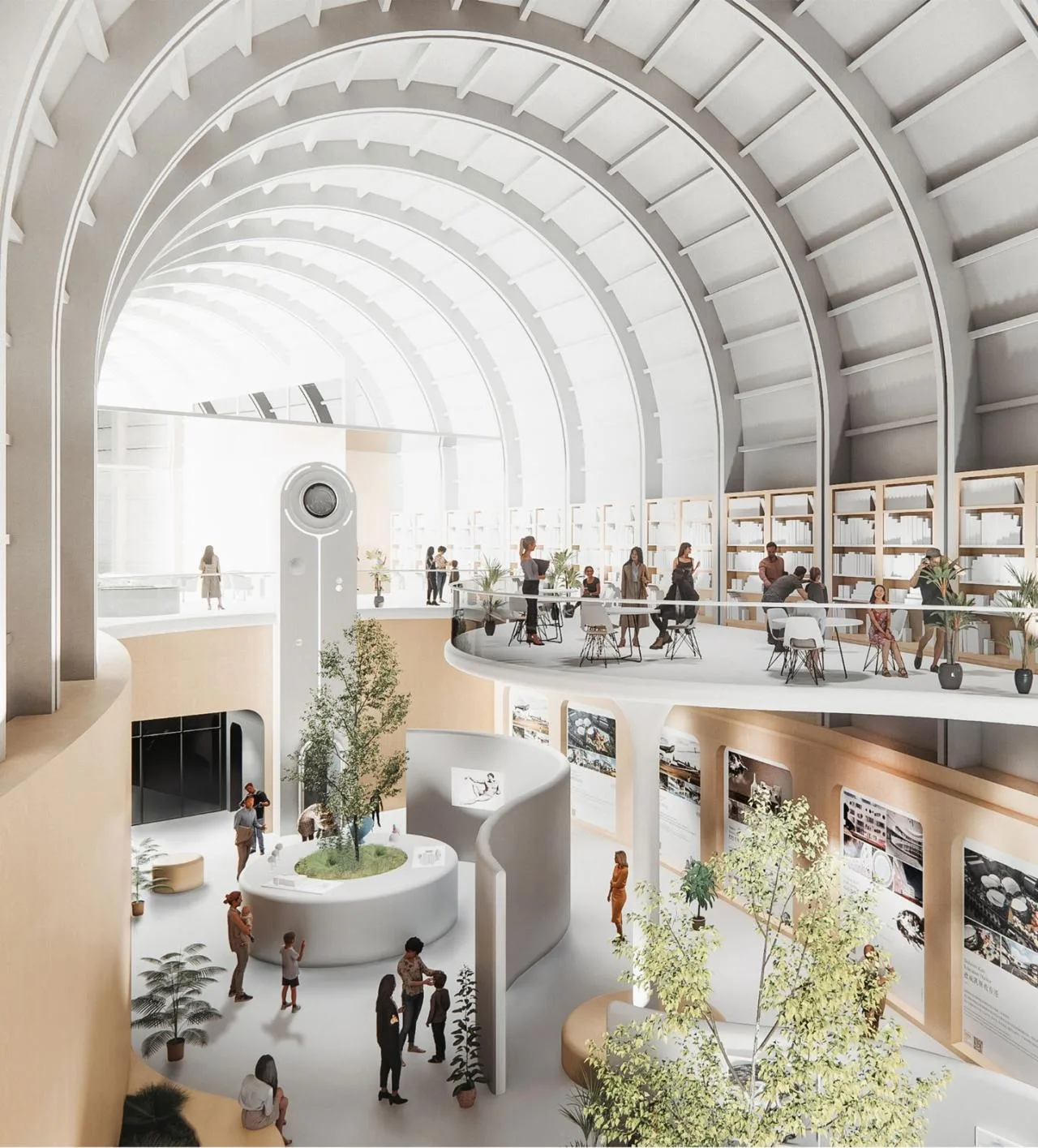
△ High School History Museum and Exhibition Hall
We envision the Future Campus as a base on an alien planet, fostering curiosity and creativity. Viewed from outside, the architecture resembles a futuristic space base nestled in the mountains.
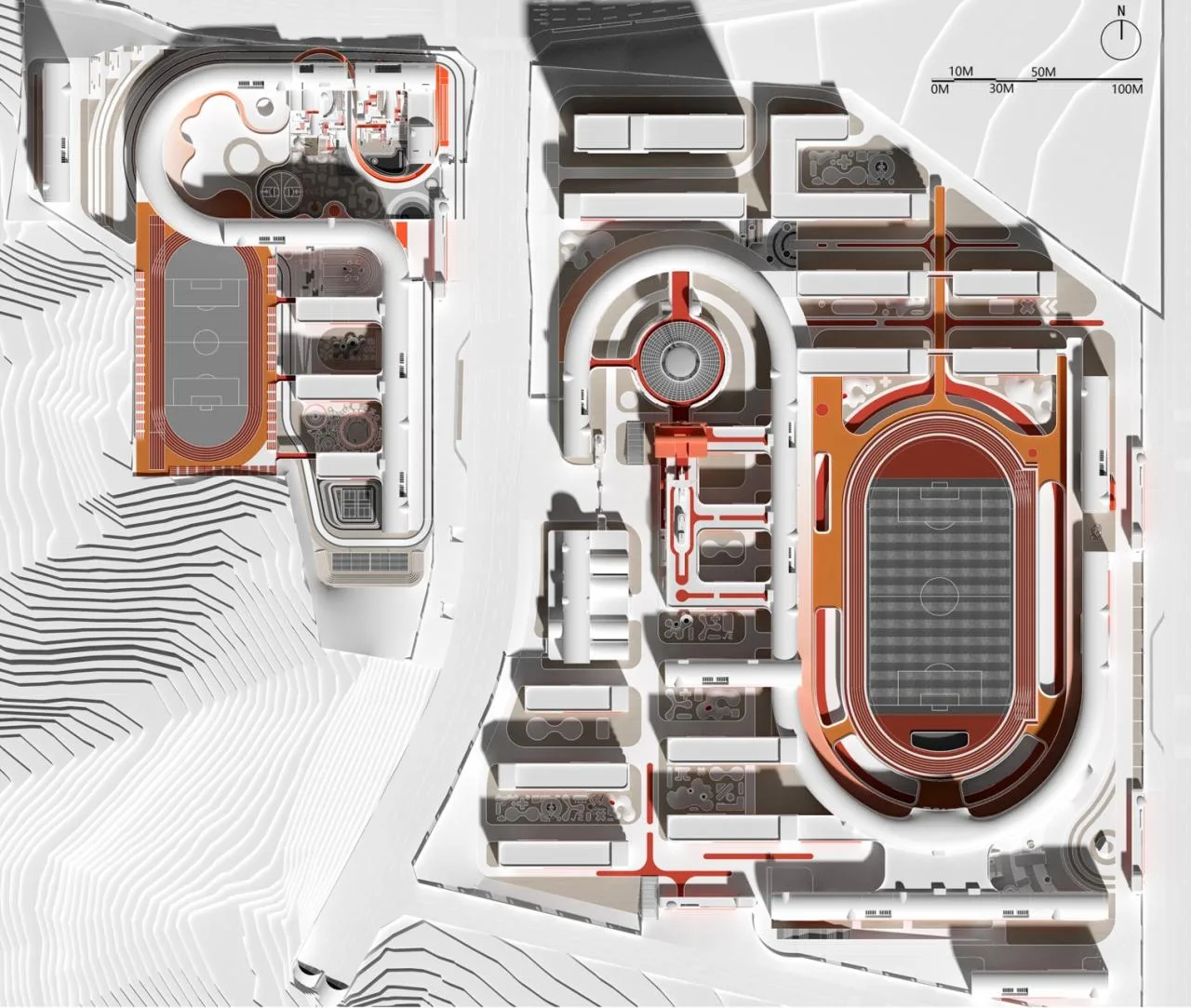
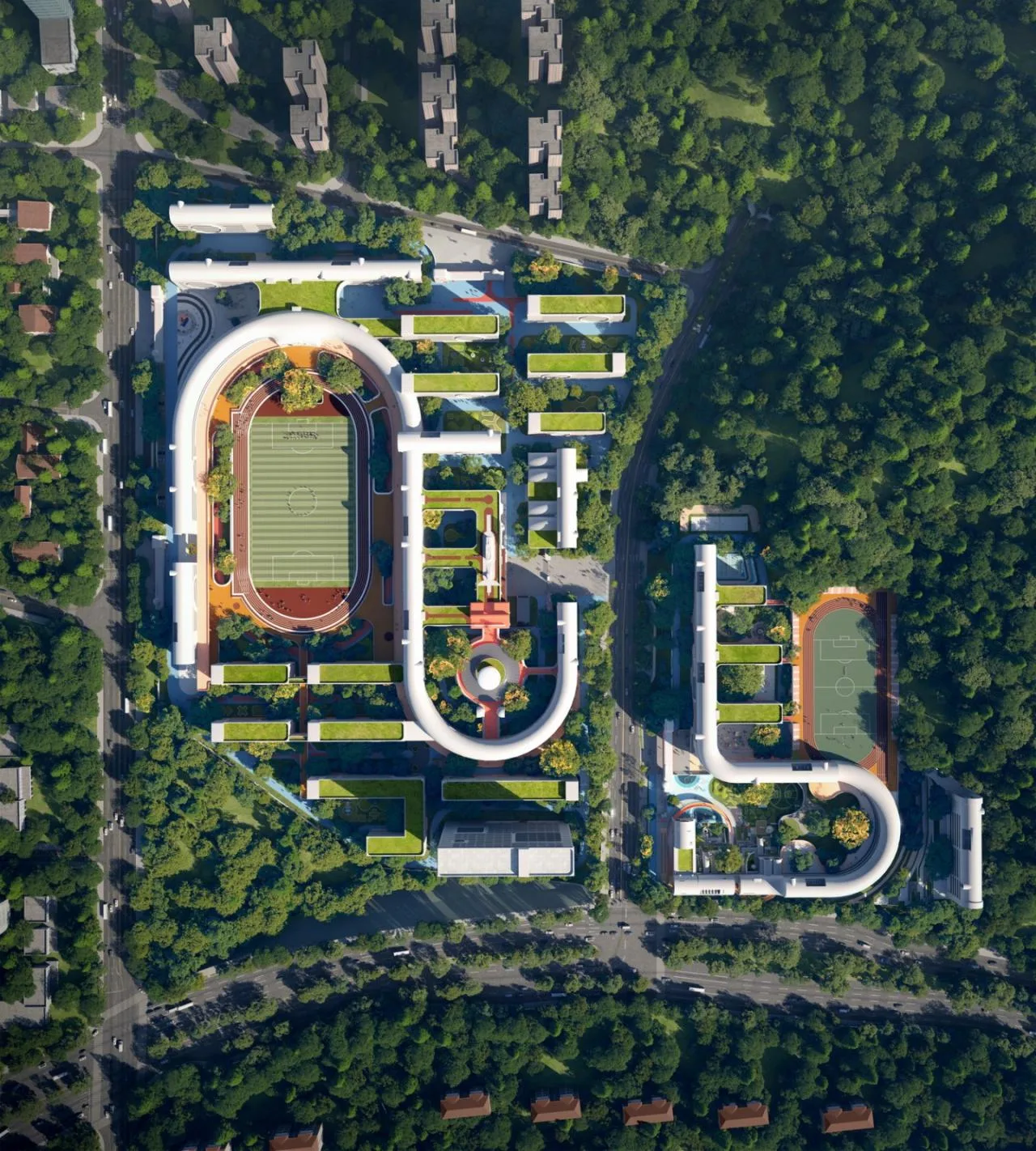
△ Plan Layout
Our goal is to give form to what has yet to take shape — to shape the future world we hope to live in.
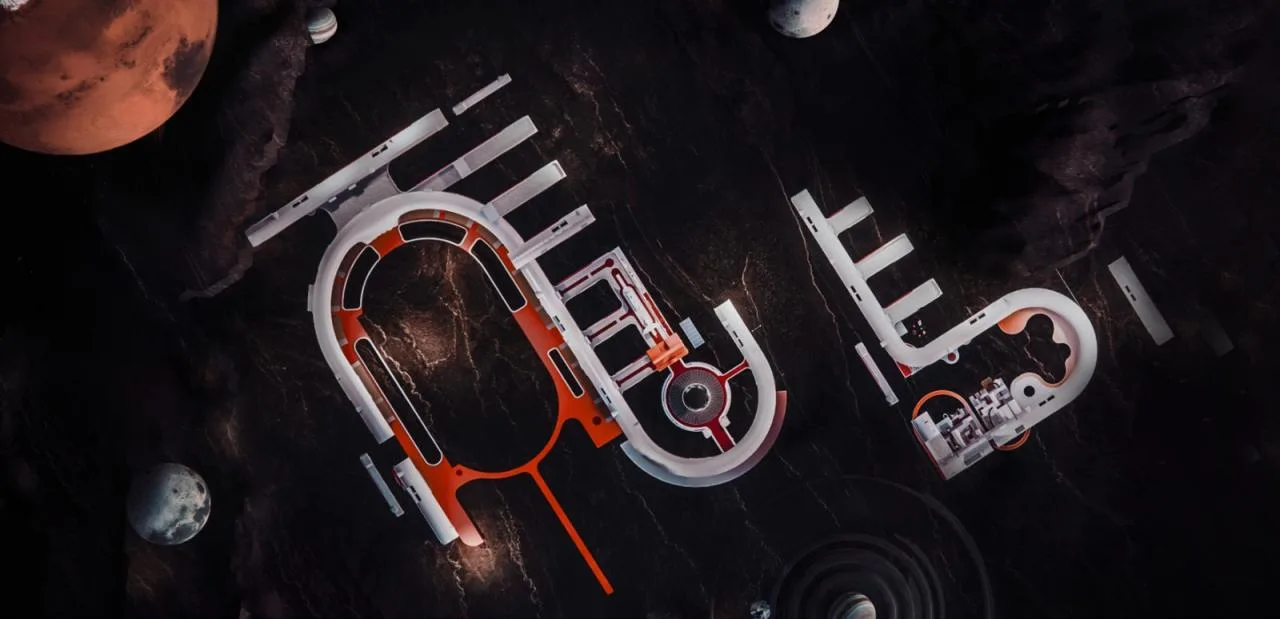
△ Plan Layout
02. Future Nature Connection: Shared Creativity and Imagination
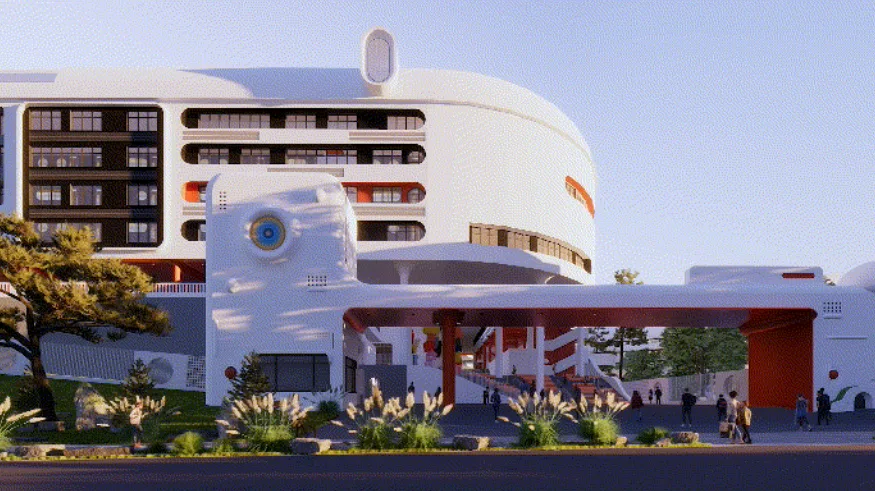
△ Campus Entrance
Brand new outdoor scenery,
Mapping truth through thought, imagination, and creativity.
Experts and scholars have contributed diverse views and practices. Traditional campuses relied on scattered points and axial symmetry; we deliberately abandon this, embracing a free-style campus that connects and links spaces, fully unlocking the site’s potential.
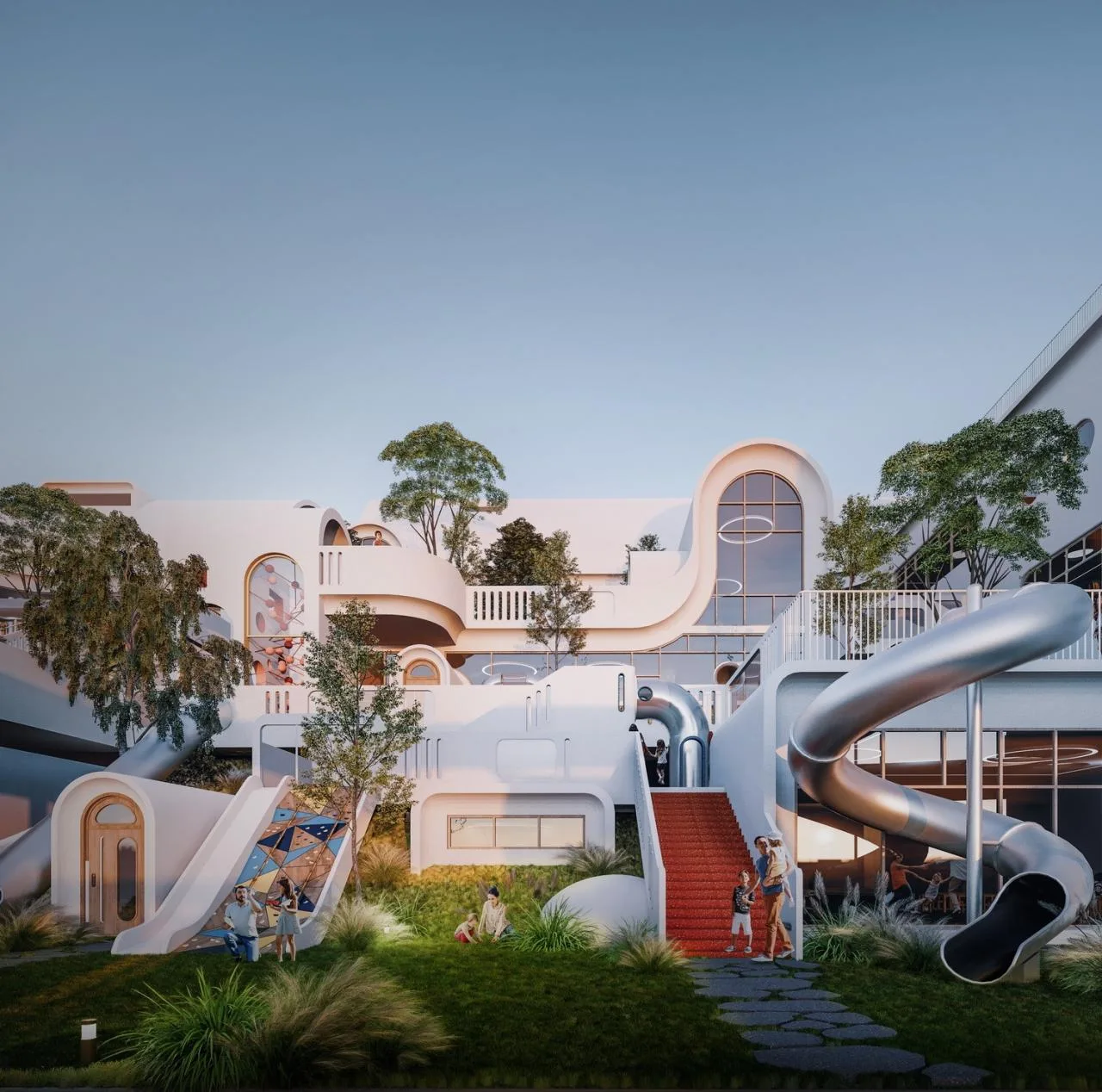
△ Kindergarten Design Plan
We approach design from six perspectives: future, nature, connectivity, sharing, creativity, and imagination. Using geometric formulas and scientific equations, we translate thought, imagination, and creativity into the landscape, harmonizing order and creativity.
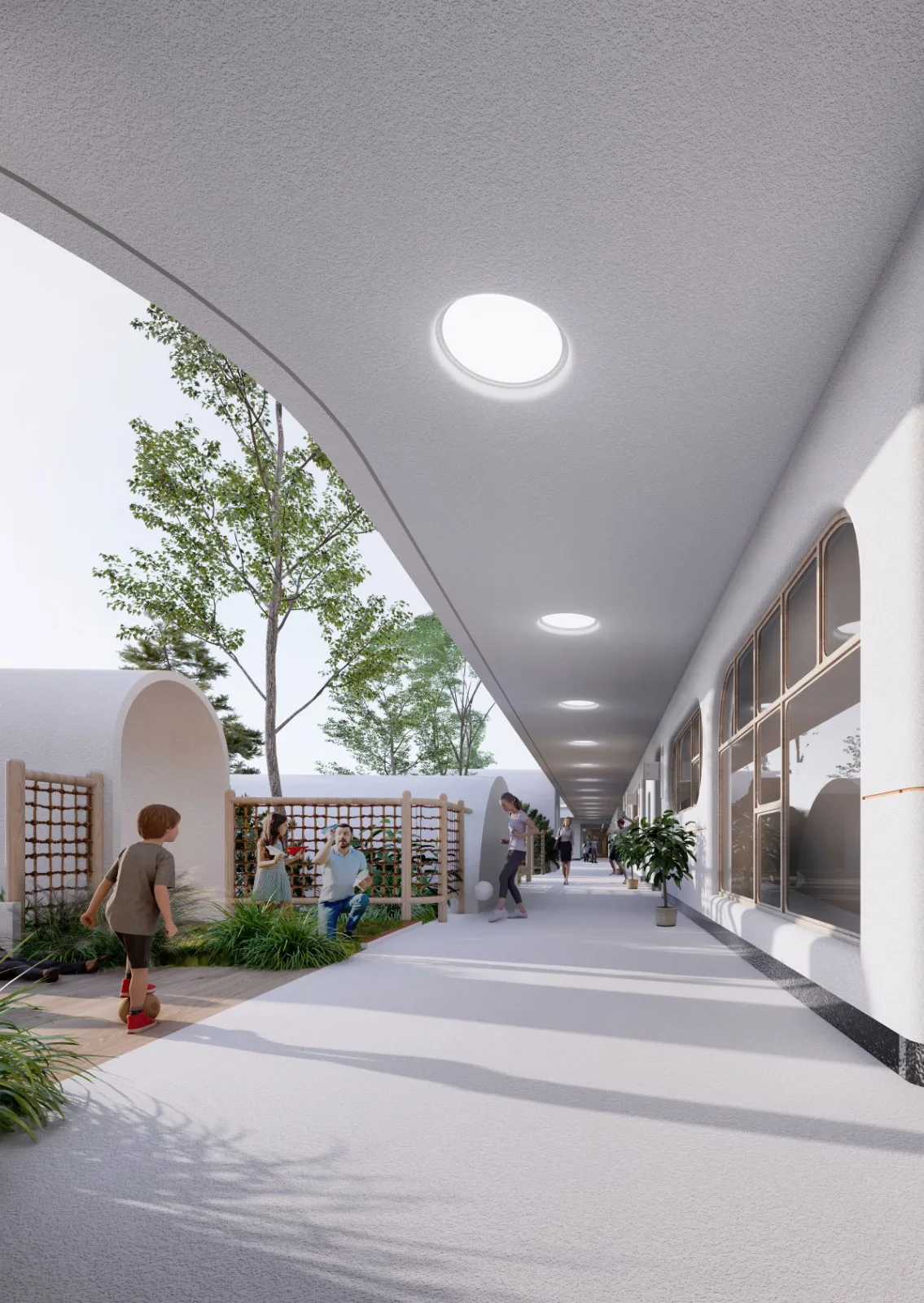
△ Kindergarten Corridor
Everything is unfinished. Is the future campus fixed? Clear? Spectacular? No one knows or demands it, yet we choose to pursue it.
Everyone has the right to imagine the birth of the universe and explore its truths. Without this, the world would be poorer.
Through the eternity of time, we understand that within uncertainty, countless possibilities await realization.
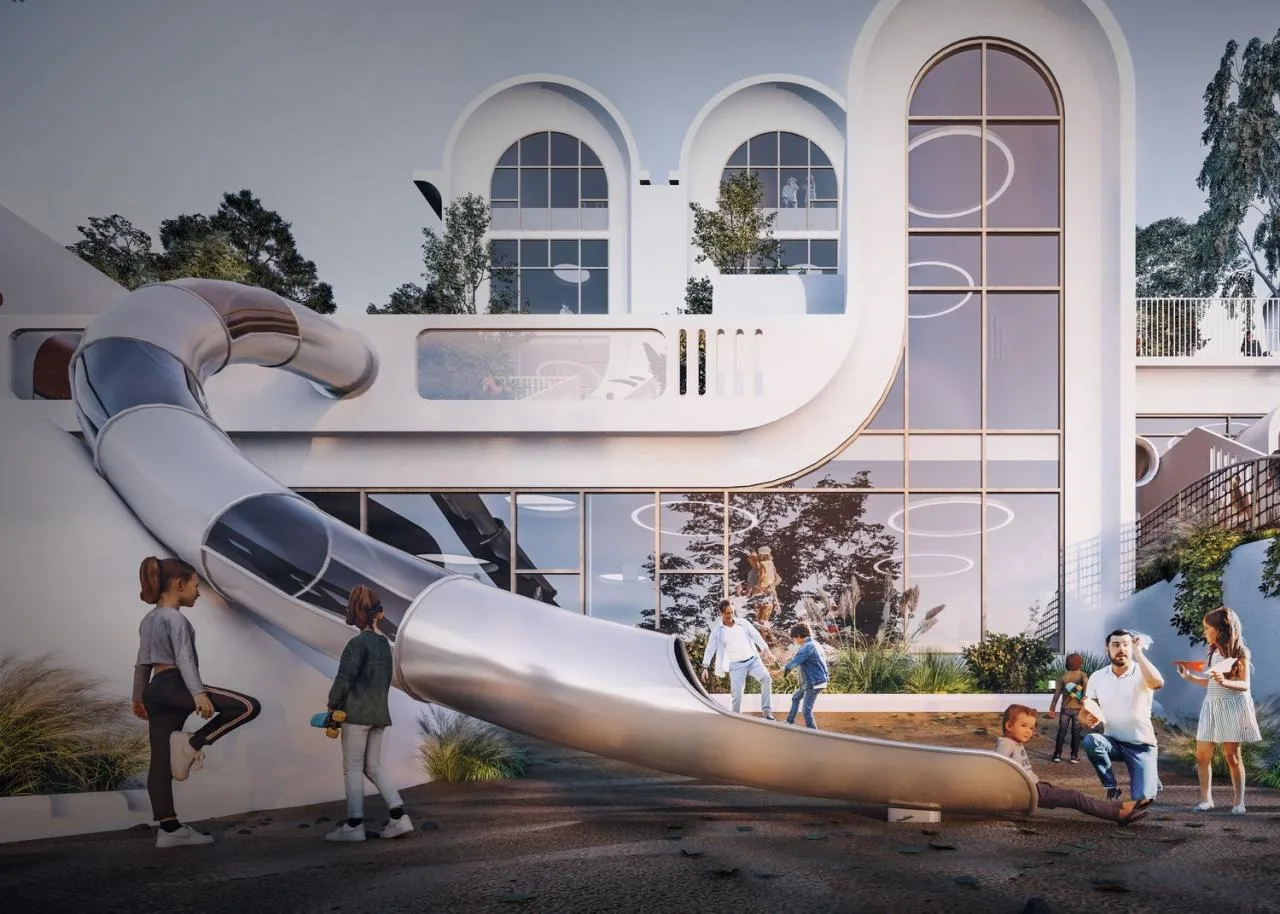
△ Fun Interactive Environment in Kindergarten
We designed a fluid educational space where the main axis connects gardens, corridors, and bridges, linking various learning areas. Sports and teaching zones overlap without interference, while multi-level open spaces optimize roof and sunken areas.
This maximizes children’s contact with nature and enriches outdoor accessibility. Every campus corner is a place for learning and interaction.
03. Freestyle Layout: A Seamless Campus Complex
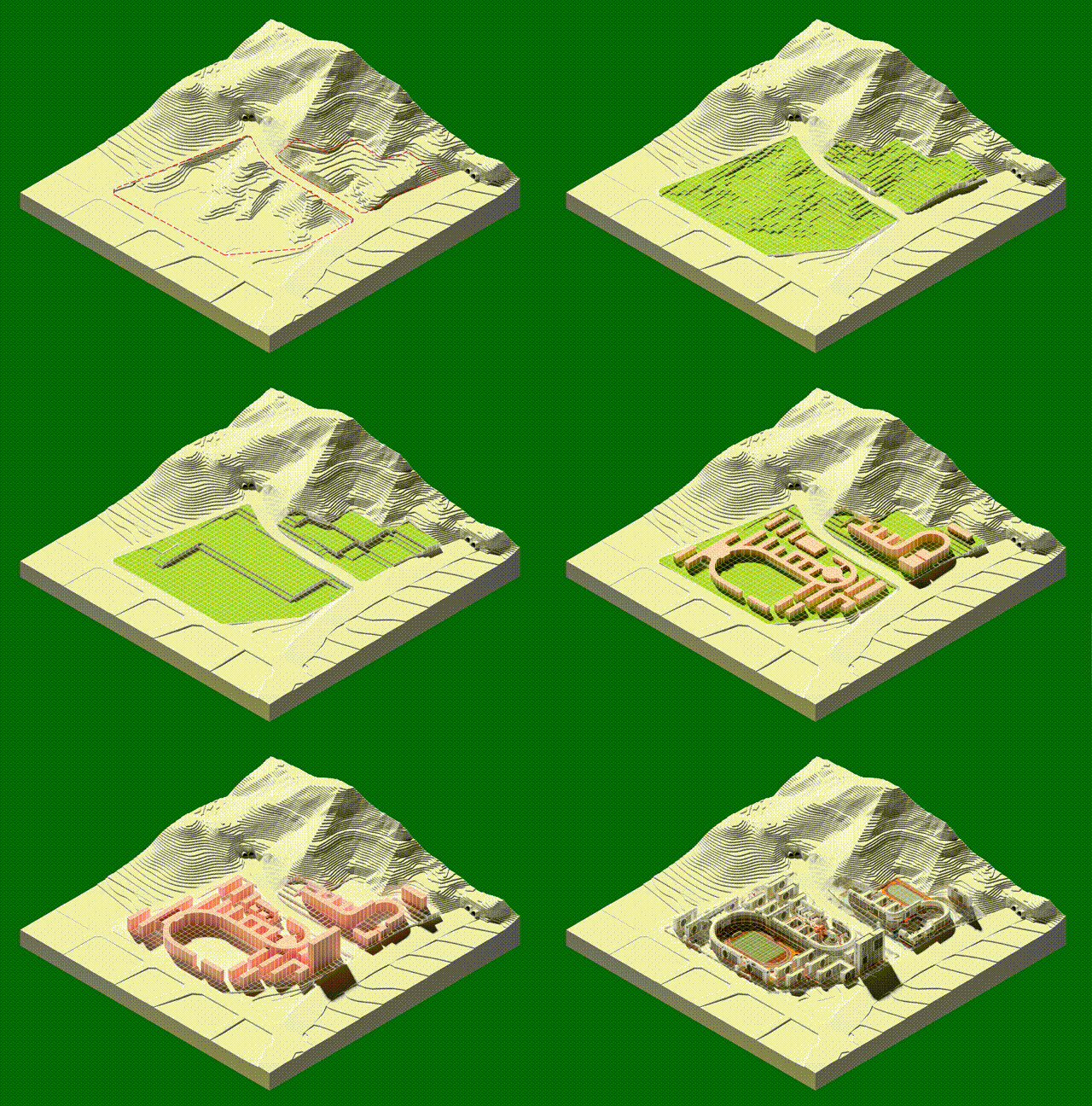
△ Conceptual Scheme Generation
The large “S” and “U” shapes guide sensory interaction and encourage students to explore various spaces.
Given Chongqing’s heavy rainfall, our design addresses weather challenges with two strategies:
1. The large “S” and “U” connecting functional spaces provide sheltered areas for activities during summer heat or rain, ensuring comfort.
2. Elevated layers adapt to terrain, creating ideal spaces for communication and movement, fitting Chongqing’s landscape.
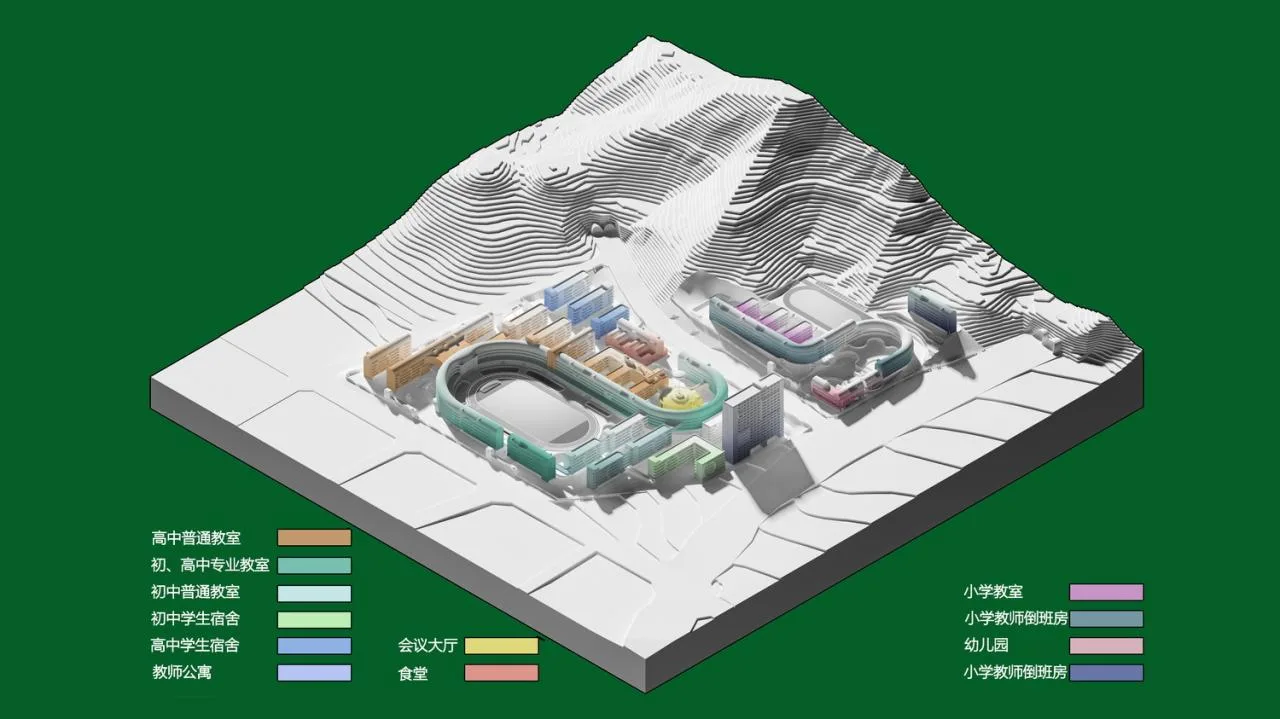
△ Functional Area Distribution Diagram
The spatial layout balances continuity and diversity across zones like middle school, primary school, kindergarten, and subject bases. Teaching areas offer varied exploration opportunities for future use. Our goal is to provide diverse venues beyond standard requirements to engage more children in campus life.
The site’s terrain varies significantly. To optimize design, we divided the land into 12×12 unit blocks, creating flat slopes and relative planes for teaching units. This grid-based approach leverages elevation differences to produce well-organized, layered spaces.
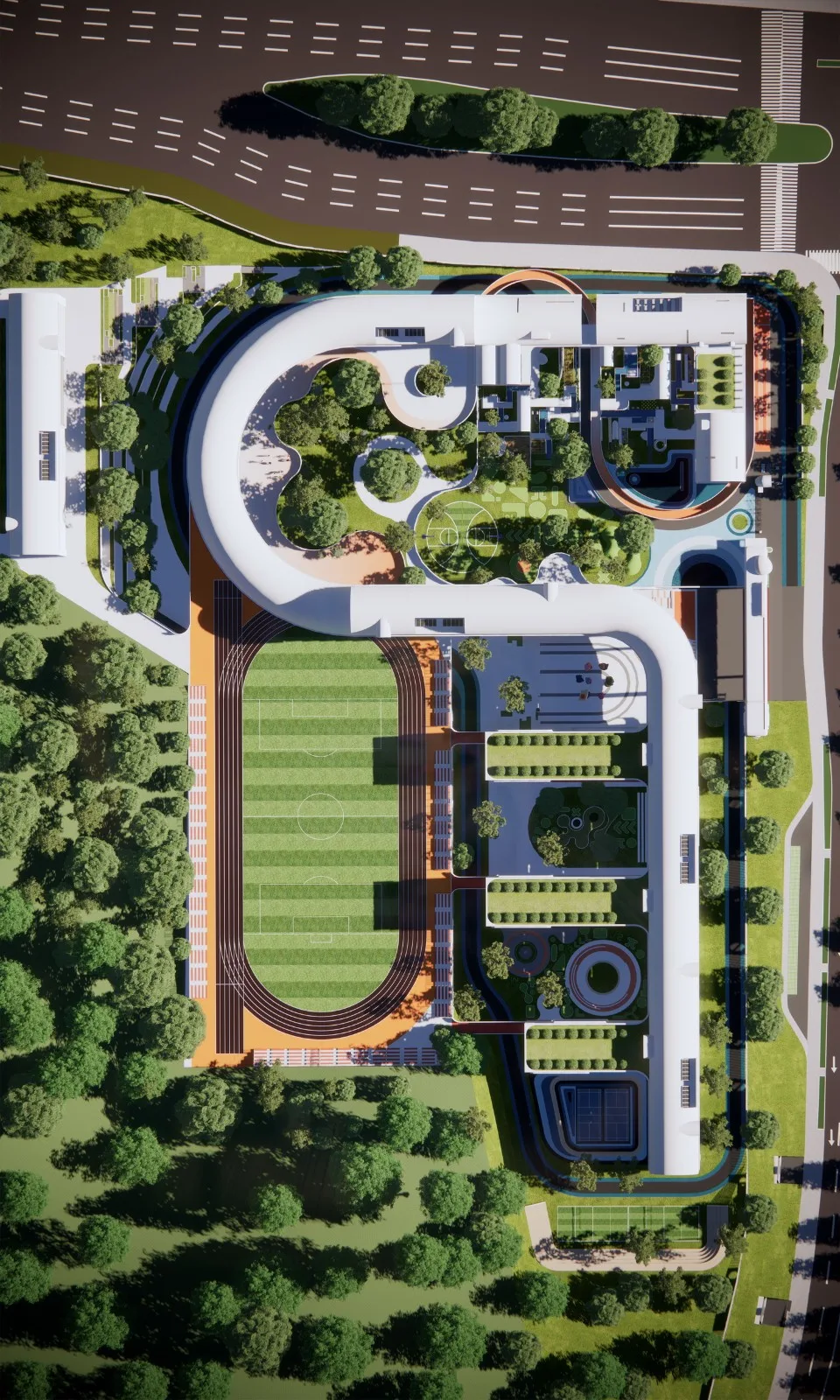
△ Plan Layout
This new school type abandons traditional symmetrical layouts, offering diverse tracks and lively sports and recreation facilities. We hope every child finds their own secret corner here.
04. Growing and Breathing Freely
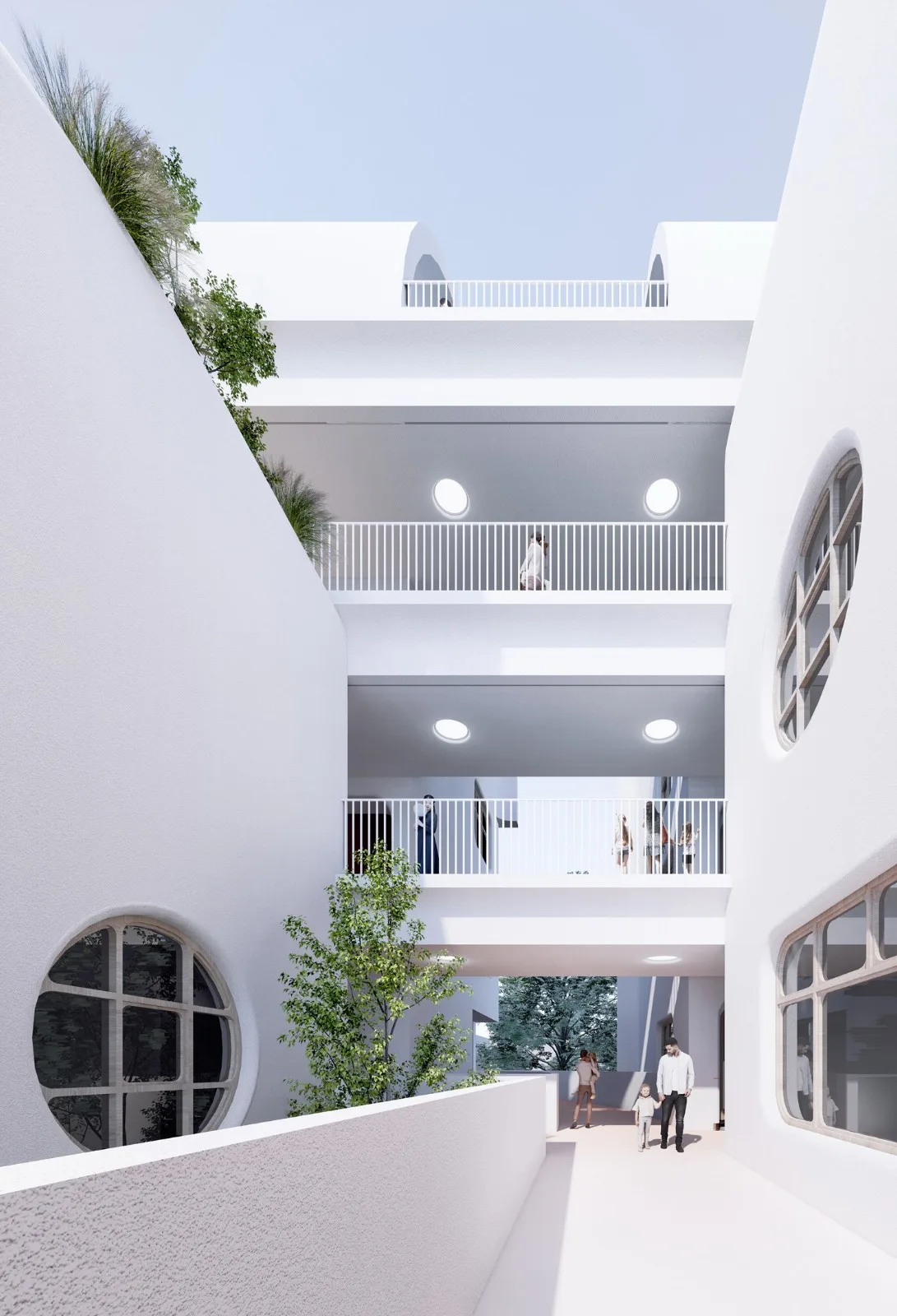
△ Primary School Corridor
The design fosters a sense of shelter where children coexist safely. Facades use standardized modular assembly with large windows, creating vibrant, safe spaces for all ages.
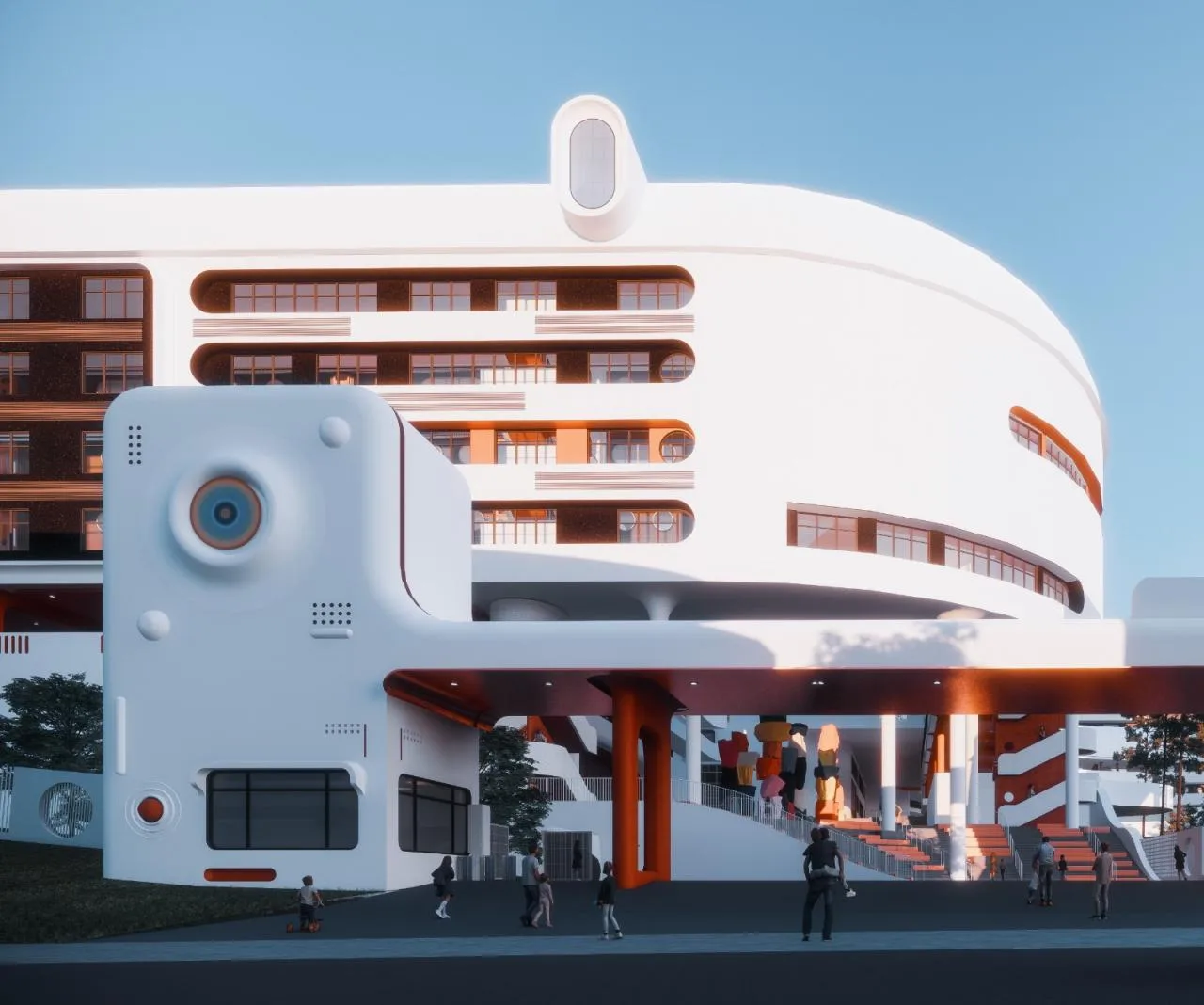
Primary School Campus Entrance
This multifunctional outdoor venue adapts to seasons, offering novel and diverse spatial experiences that evolve with time.
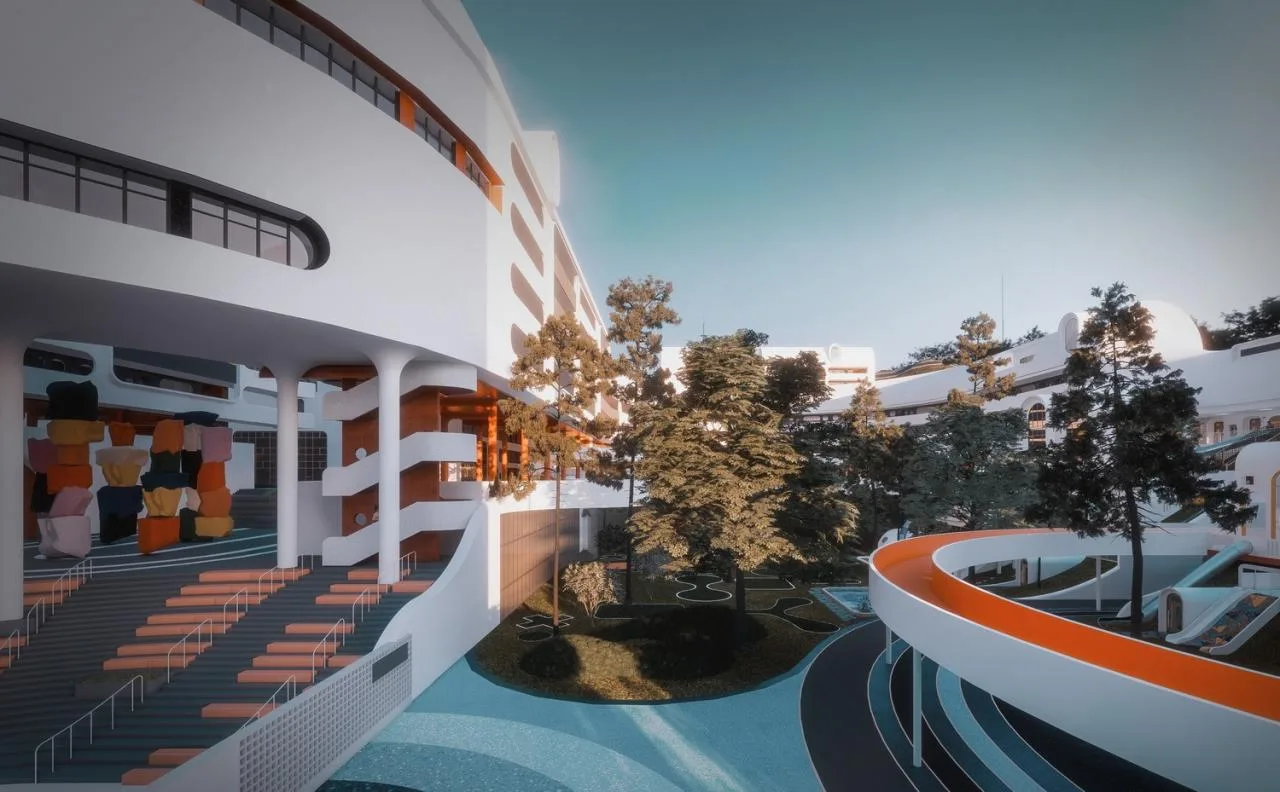
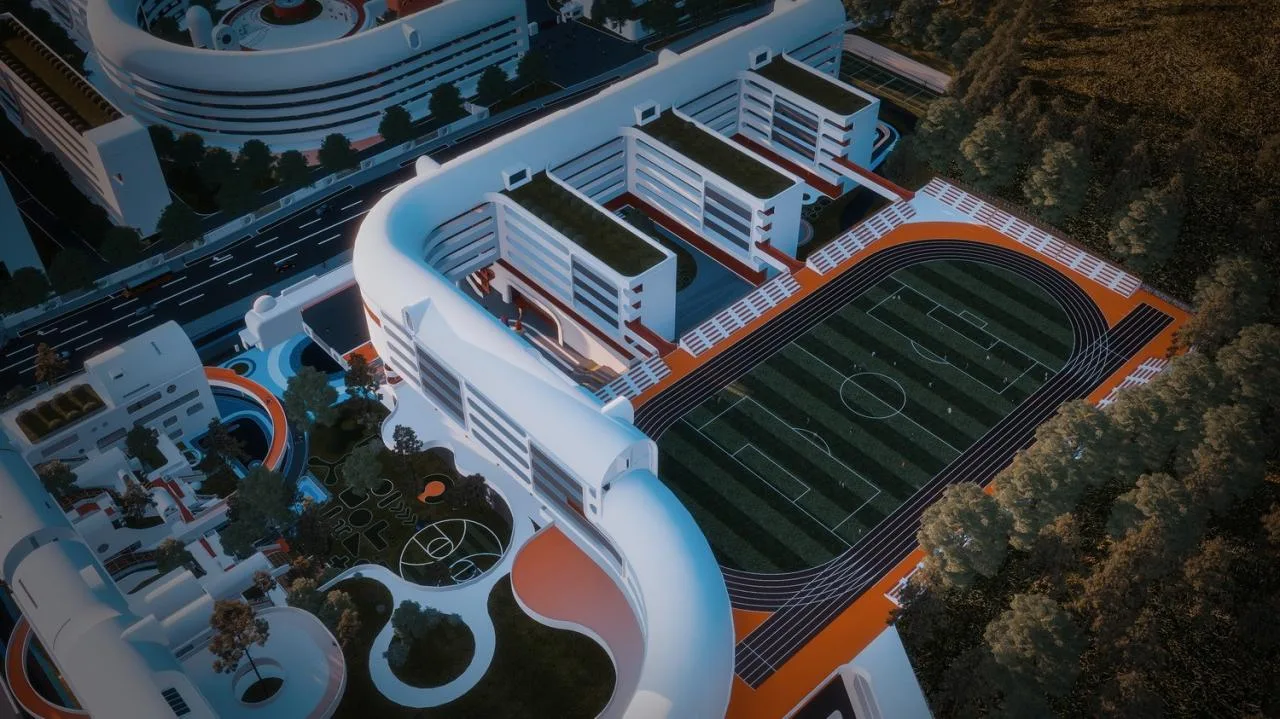
Primary School Design Proposal
This space invites curious children to explore every detail and fragment up close.
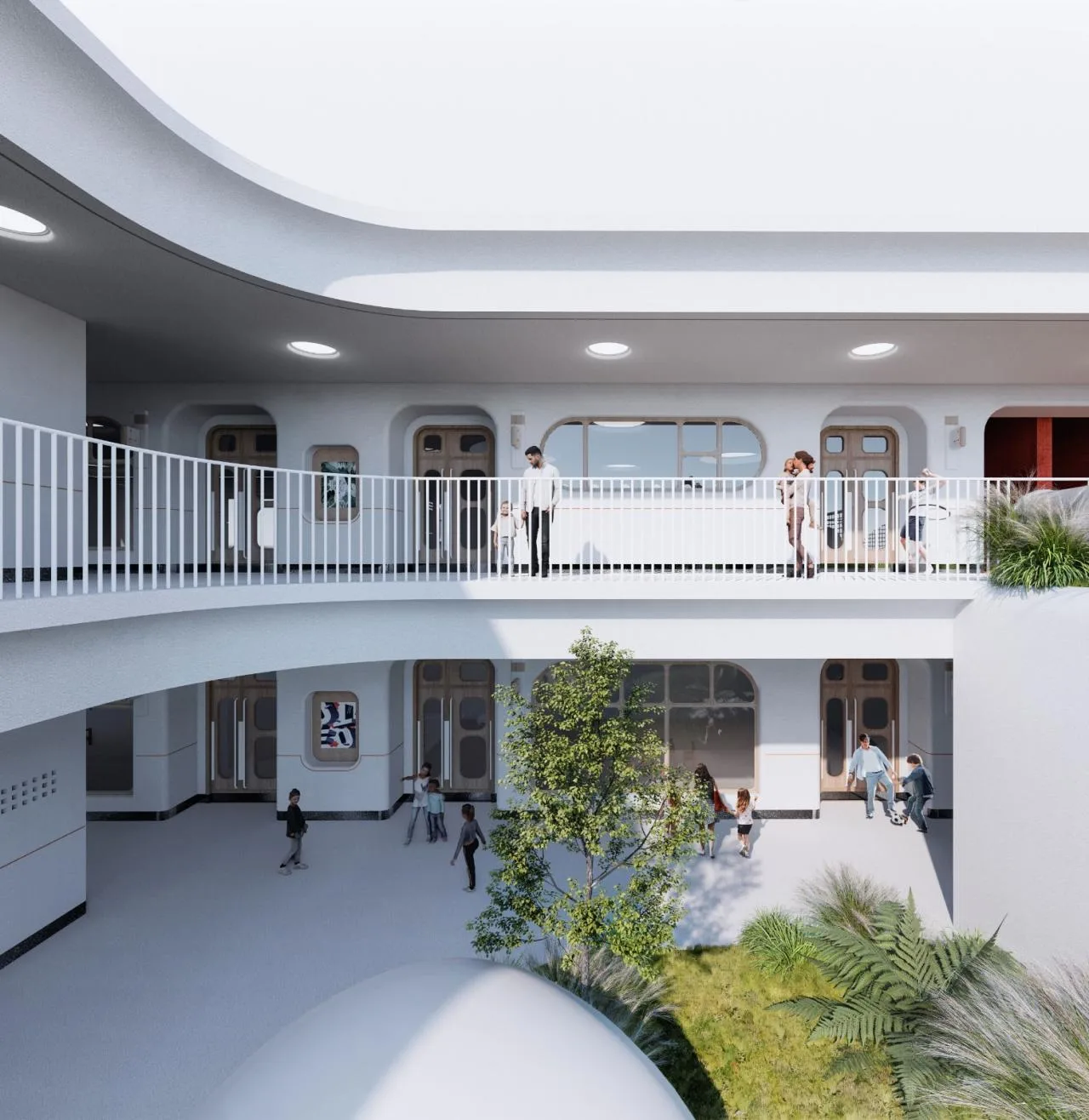
△ Primary School Internal Corridor
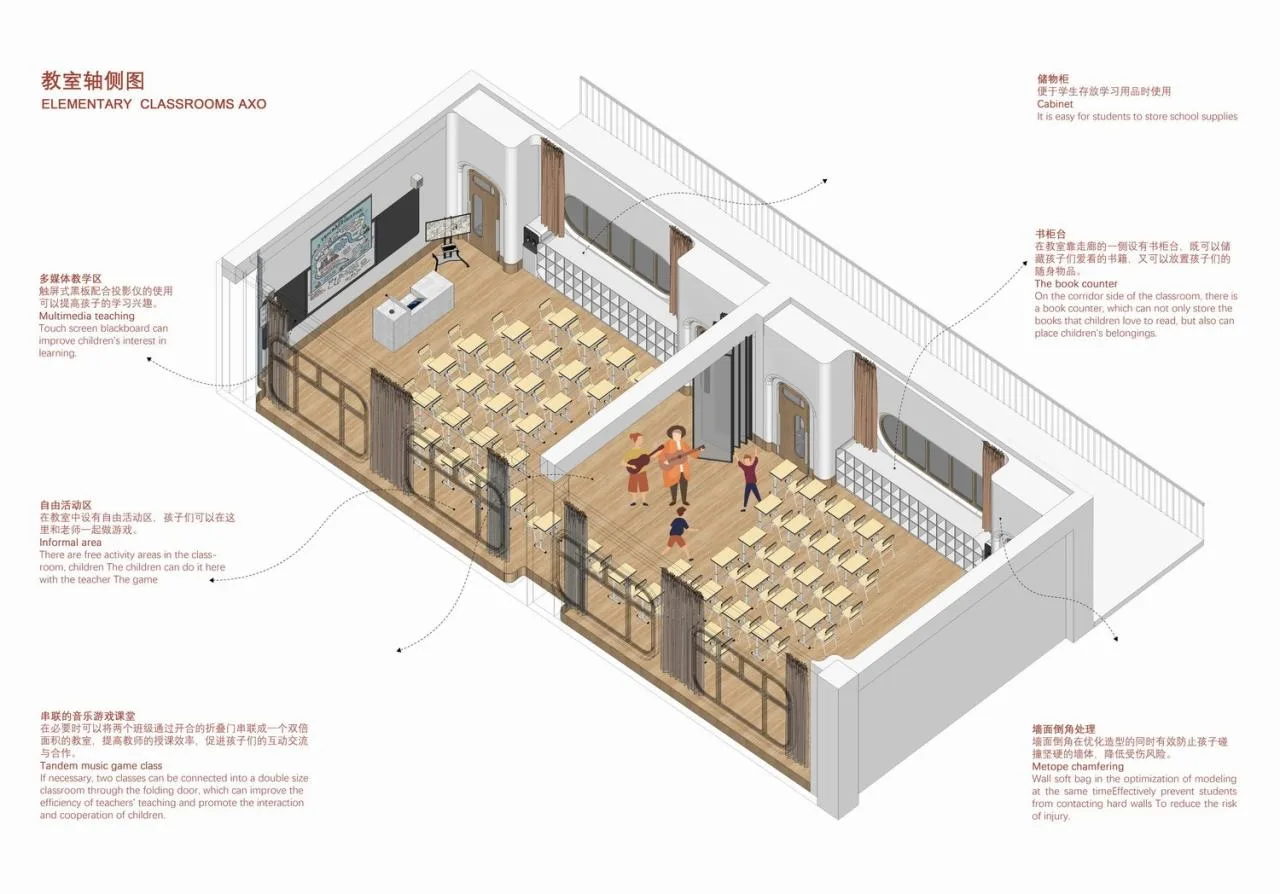
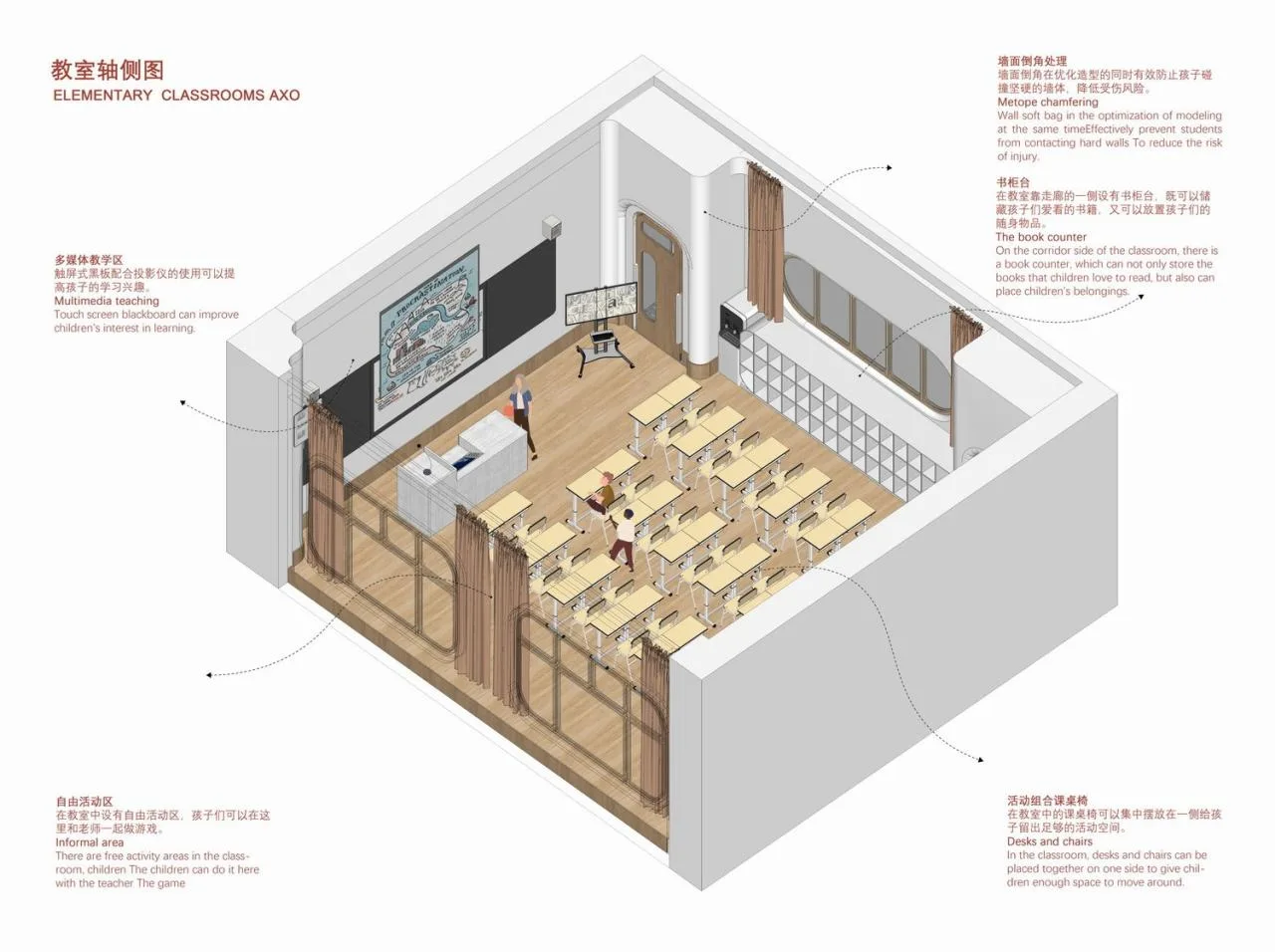
△ Classroom Unit Module
Behind the concept lies the exploration of unknown worlds, driven by our vision of the future — to live without fear of the unknown.
05. Unity of Primitive and Technological Materials and Energy
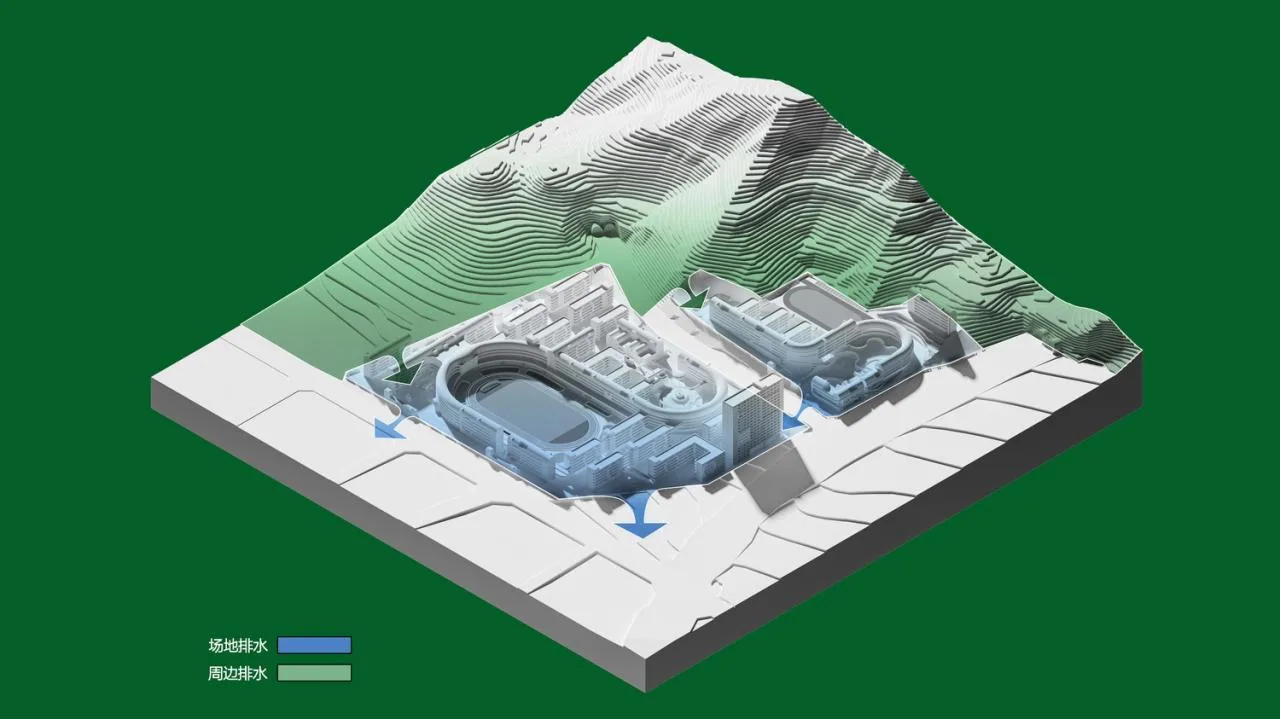
△ Project Model
Reviving reverence for the unknown forces
No one truly knows the origin of the universe, as it has existed forever. Every life is a miracle, as is the universe itself. Scientific authority assumes that all human knowledge—science, philosophy, art, religion—aims to explore and describe life’s truth, greatness, and magic, honoring the unknown and engaging in dialogue across time and space.
Perhaps truth is elusive, and we live in a space where it cannot be predicted. This uncertainty is an opportunity for everyone to create the future.
School buildings are more than just boxes.
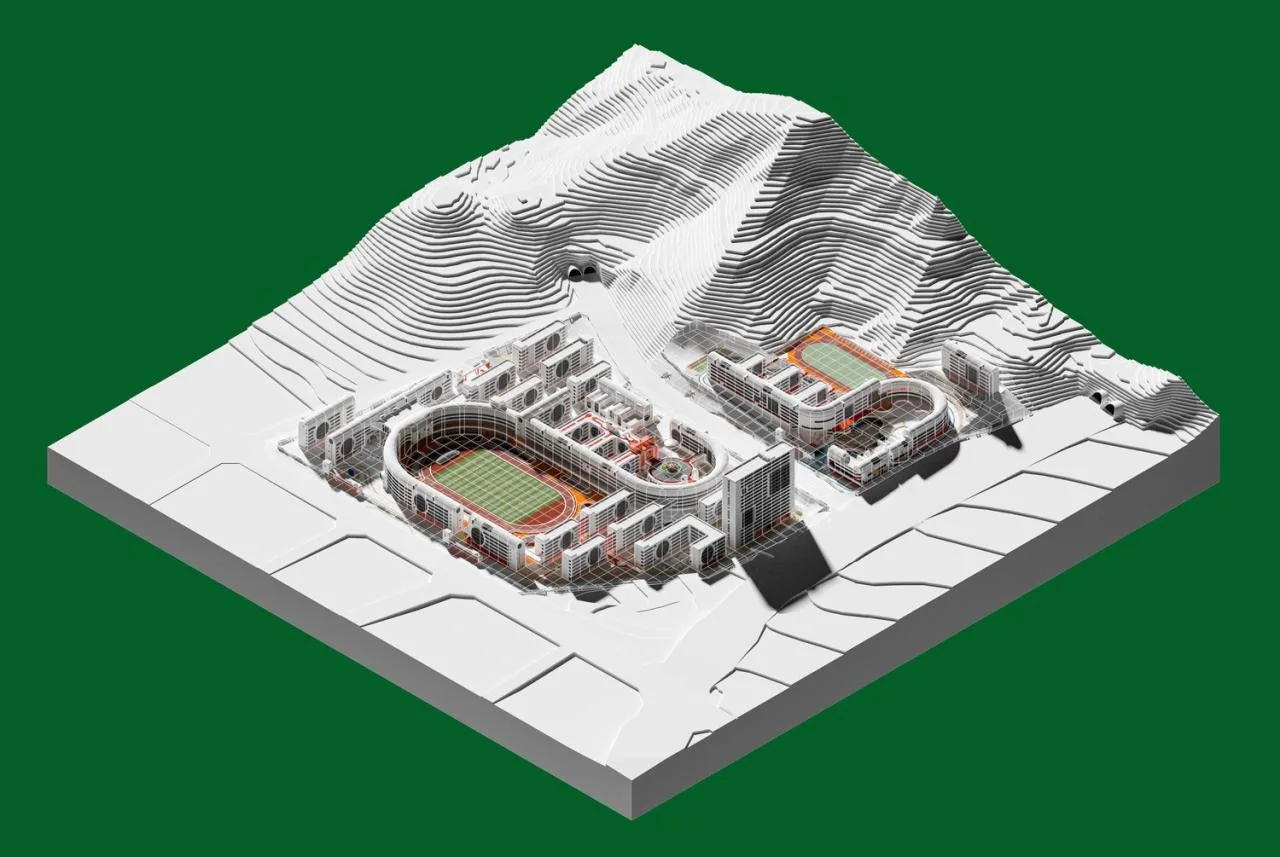
△ Project Model
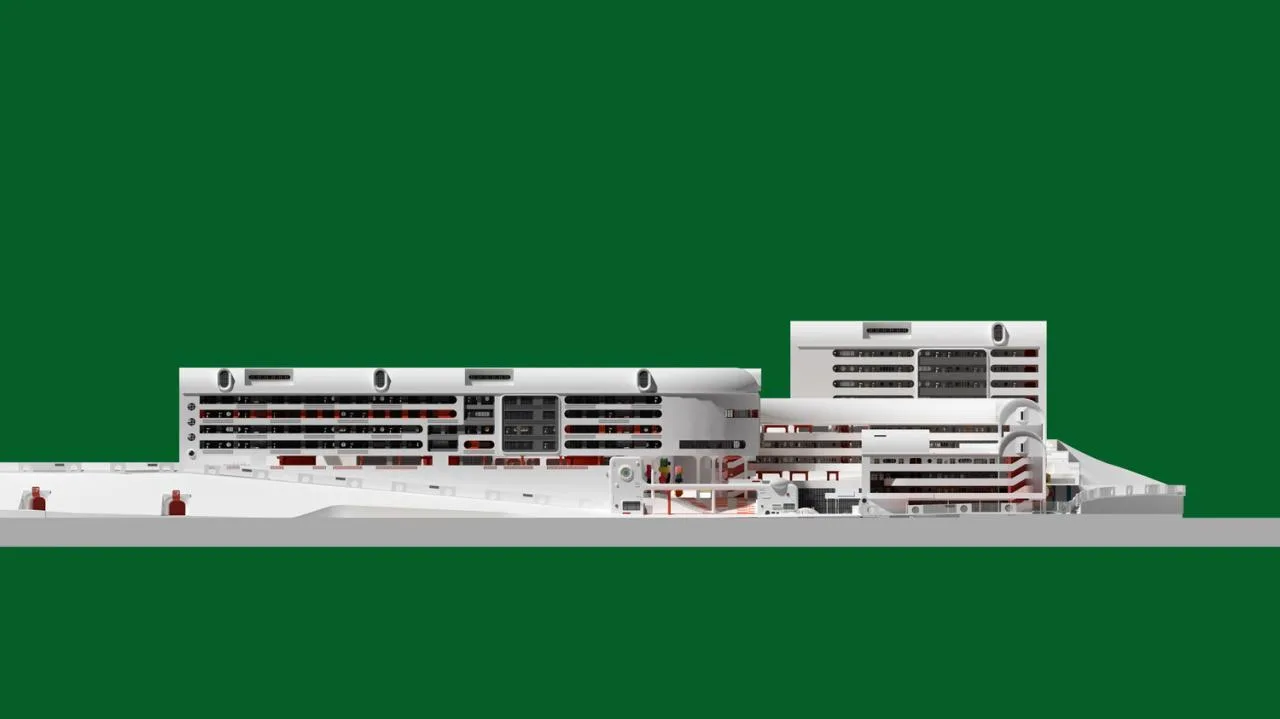
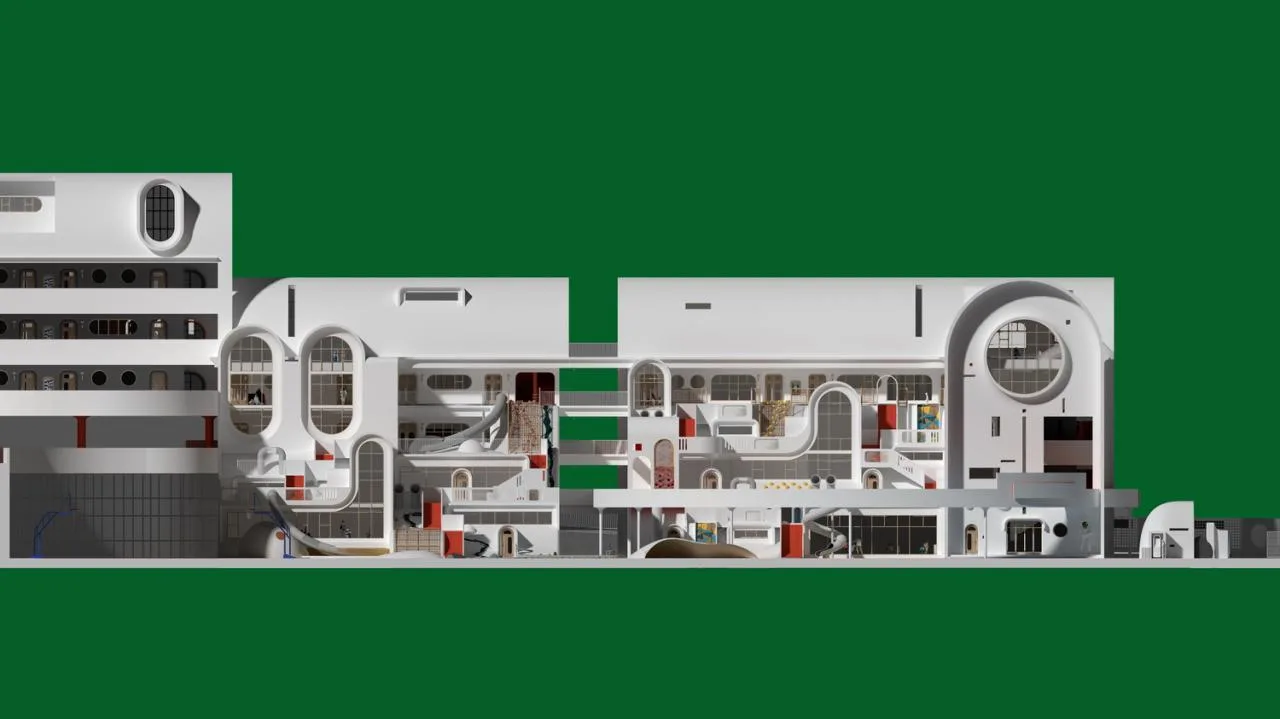
△ Building Facade
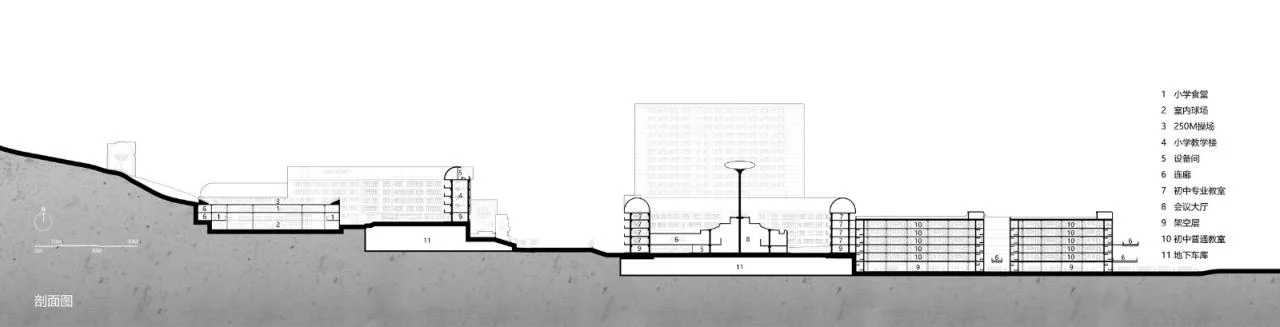
△ Project Profile Diagram
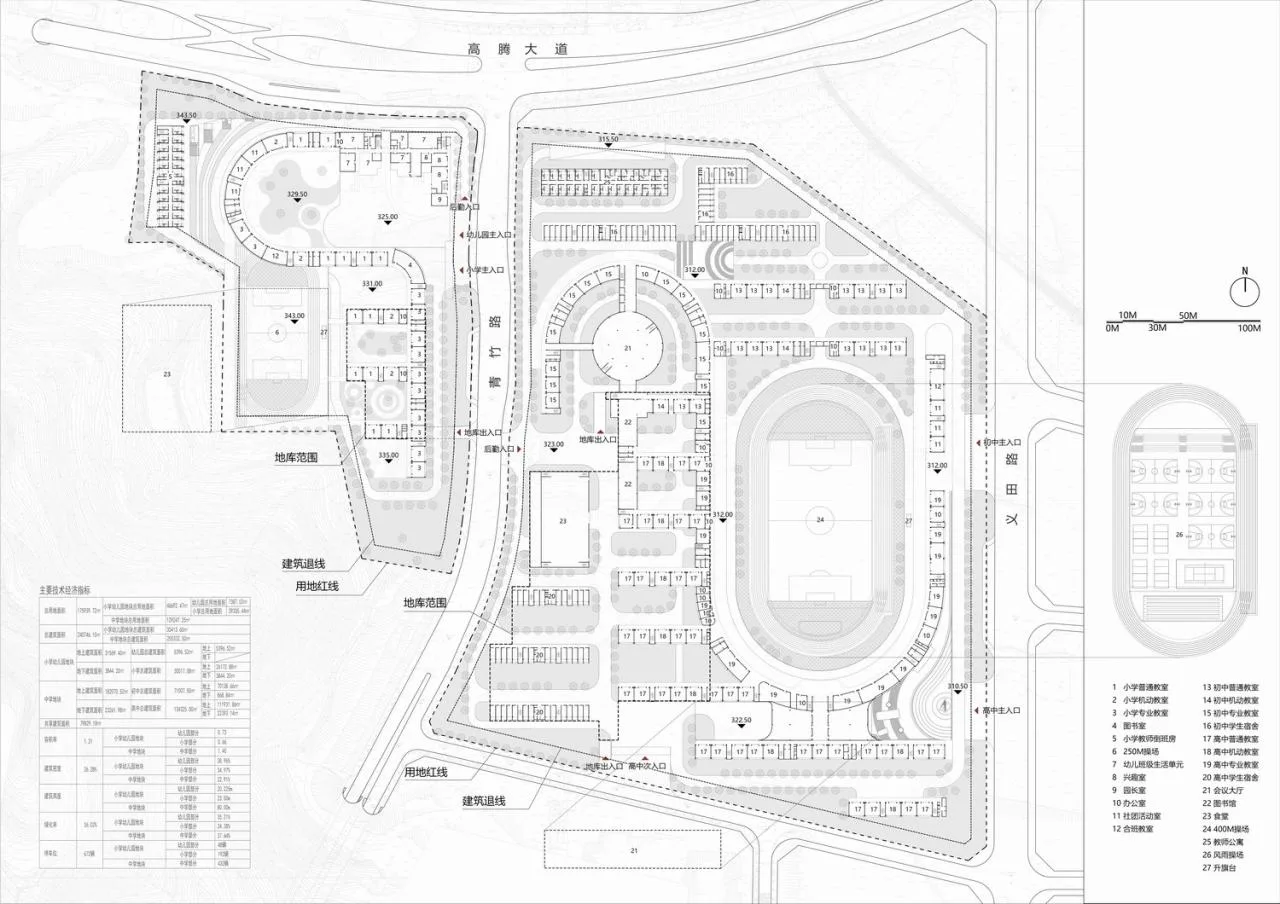
Project Information
Project Name: Western (Chongqing) Science City Hangu Campus
School Scale: 12 kindergarten classes, 48 primary school classes, 48 junior high classes, 48 high school classes, and 60 senior high classes
Land Area: 175,939.72 square meters
Total Construction Area: Approximately 229,282 square meters
Lead Architect: Wang Junbao
Design Team: Tian Jiabin, Lu Qingyin, Zhang Zhigang, Huo Liangyue, Zhang Qi, Ou Jiyong, Fu Huiming, Tan Huimin, Gao Xin, Wan Lisha, Hou Geng, Yang Mingkuang, Wen Sheng, Ma Lu, Tang Shengyan















Must log in before commenting!
Sign Up