

HOK designed an Academic Medical Center for Stanford University School of Medicine, serving as a hub for academic research and a recreational space for staff who spend long hours in hospitals and clinics. The facility includes offices, meeting rooms, collaborative and educational areas, fitness centers, and restaurant-style cafes.


The design team collaborated with Stanford Medical School leaders to plan a new office space focused on fostering a highly collaborative environment for faculty and staff. The Academic Medical Center is strategically located between the academic and clinical campuses of Stanford Medical School and adjacent to a botanical garden designed by Frederick Law Olmsted.
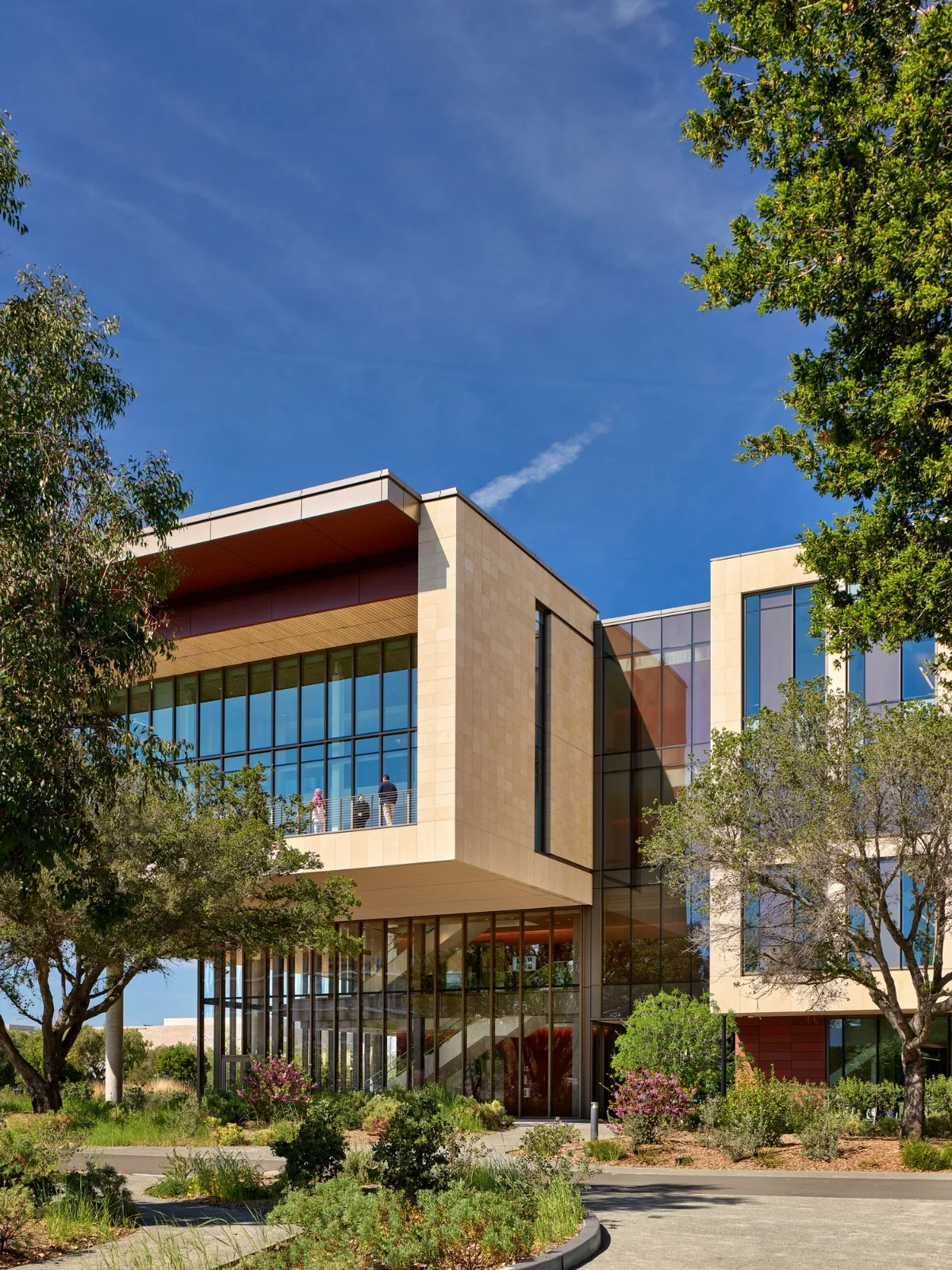
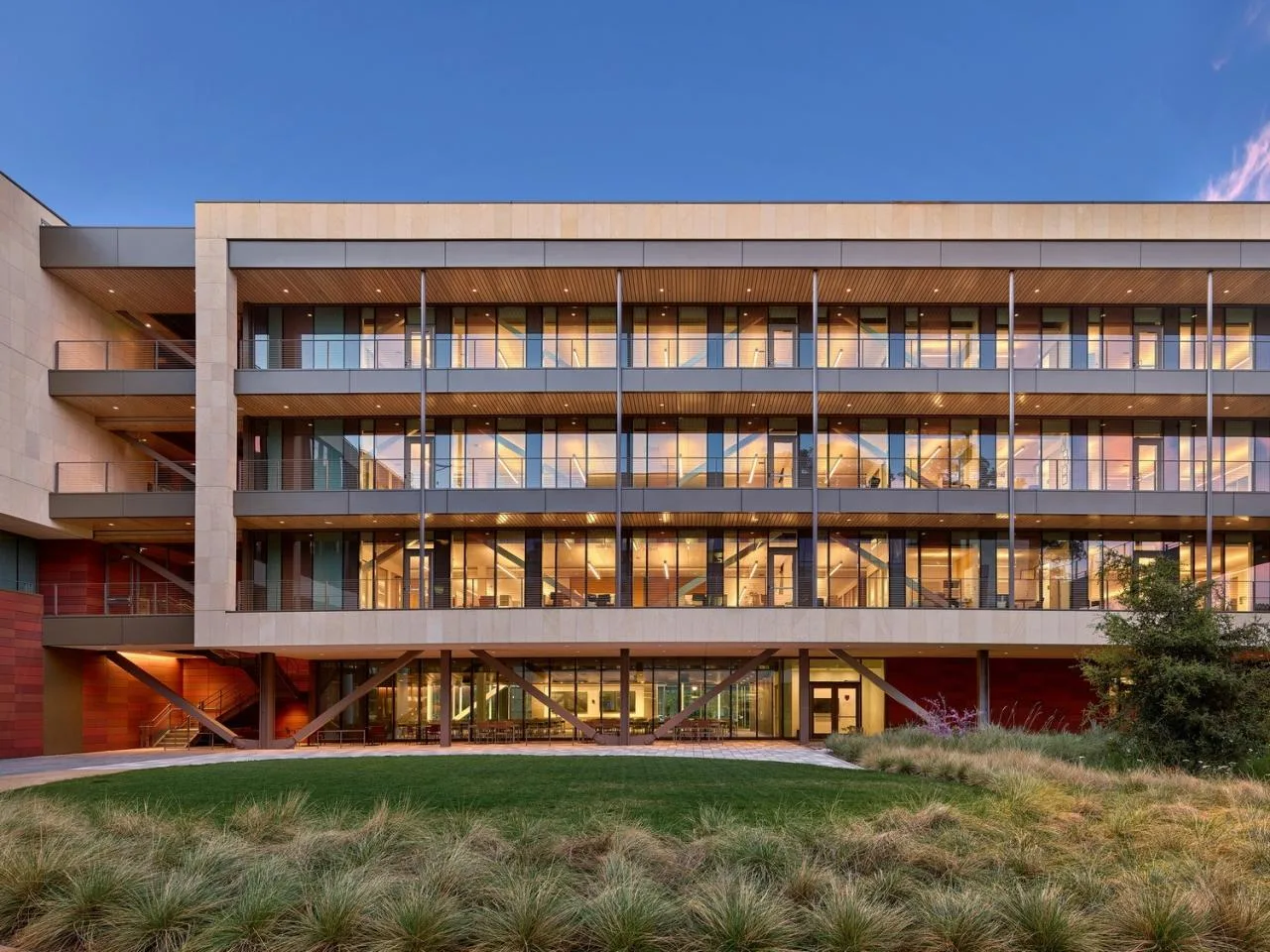
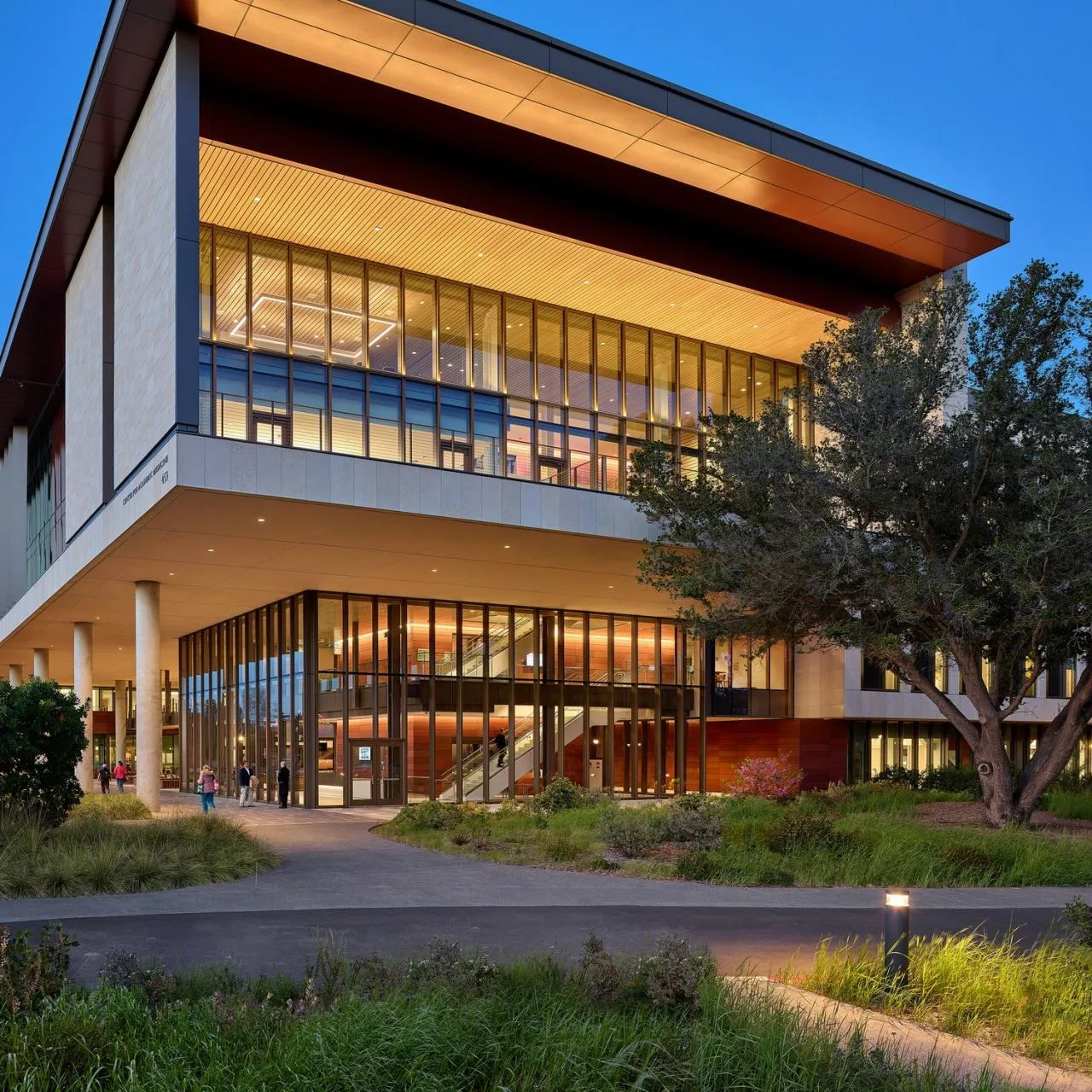
Three slender, interconnected office buildings surround a courtyard landscaped with native plants. The West Office Building’s wing is elevated, creating a two-story entrance corridor beneath. The U-shaped building offers occupants scenic views from multiple angles.
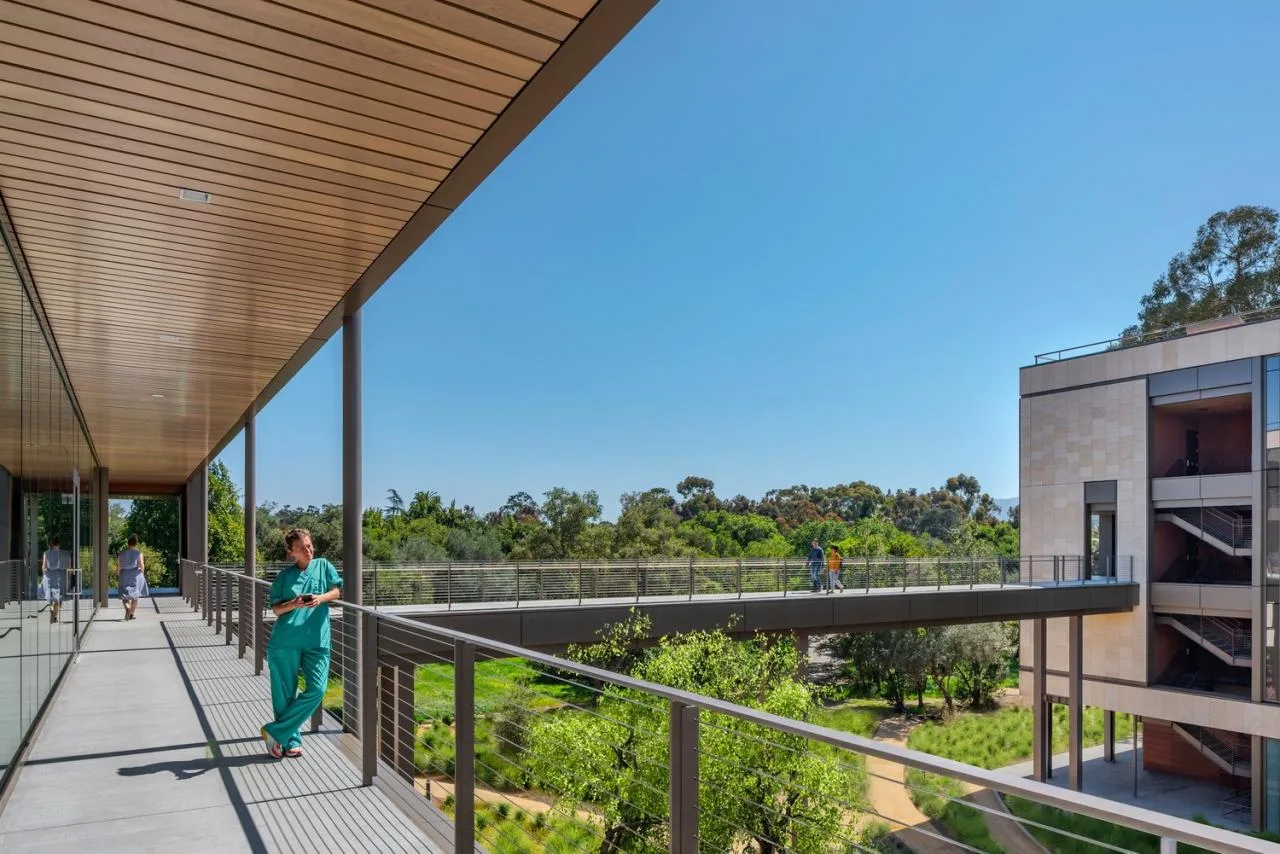
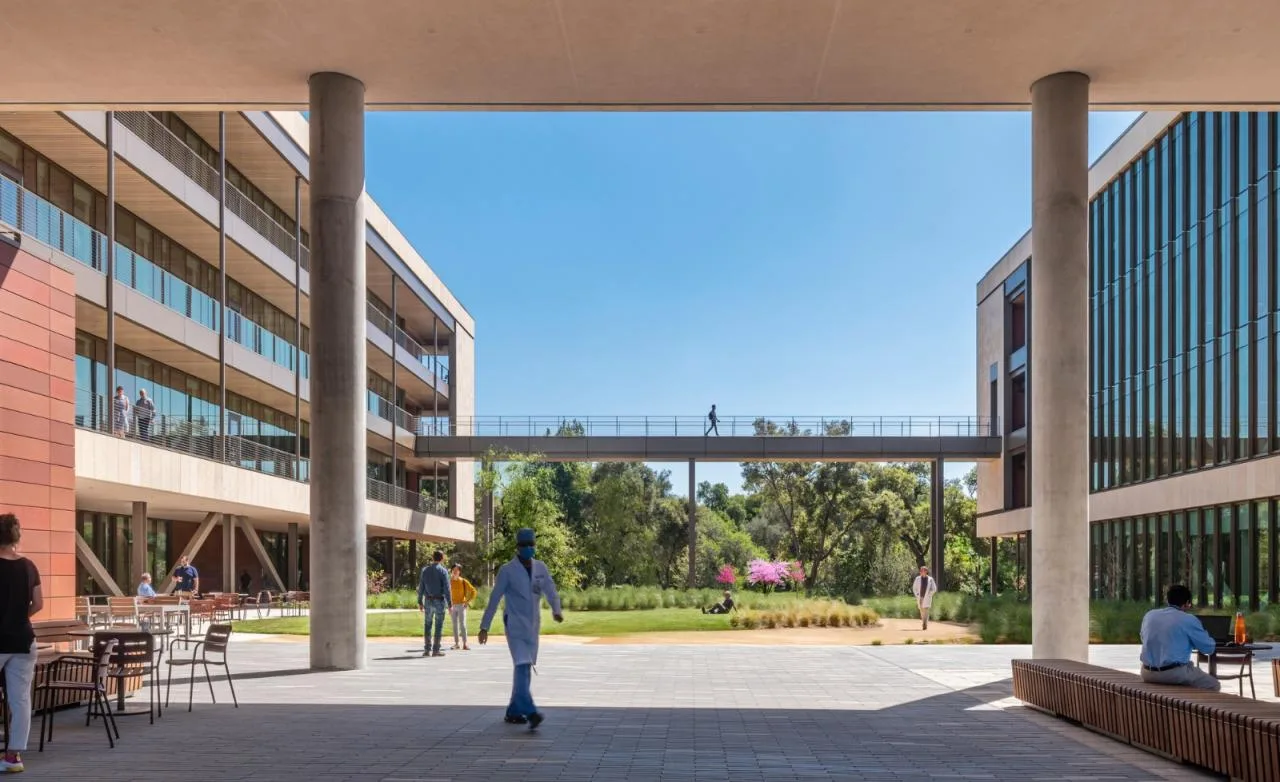
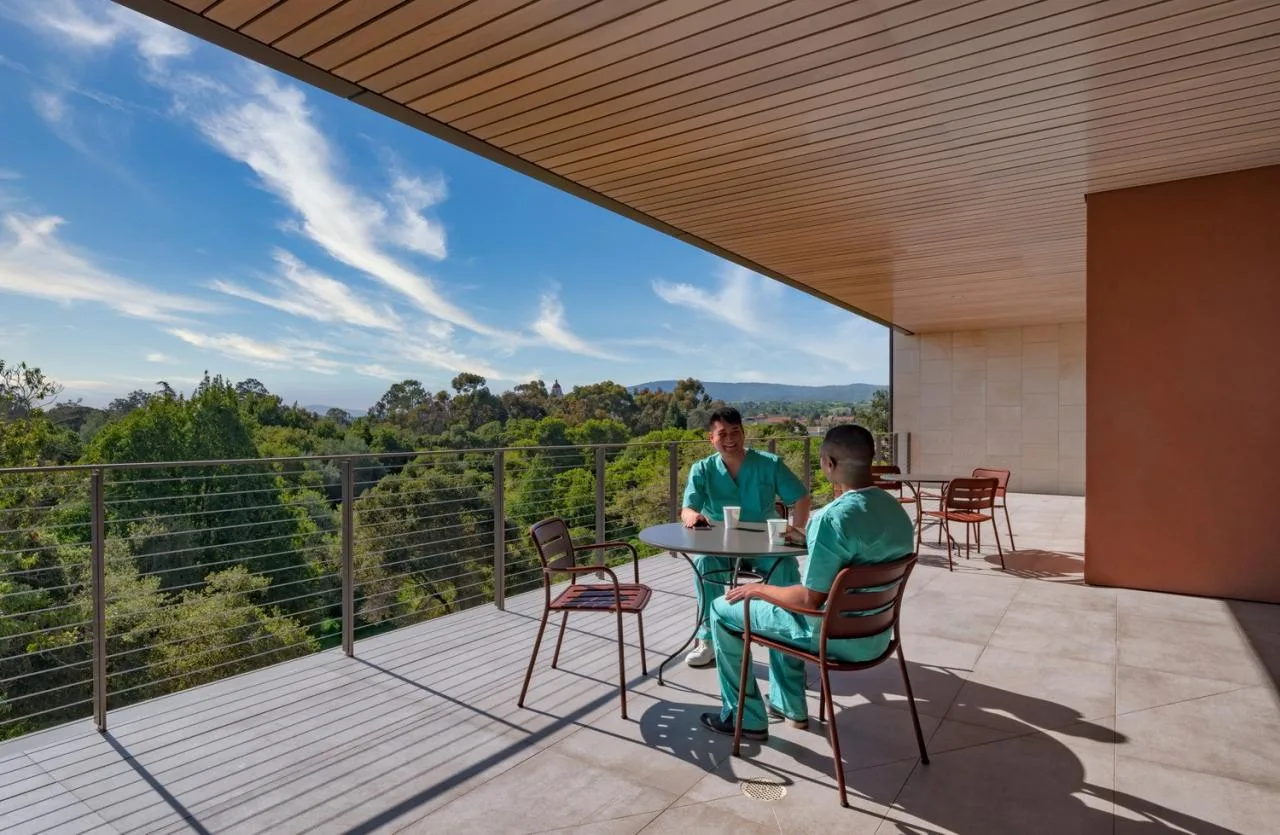
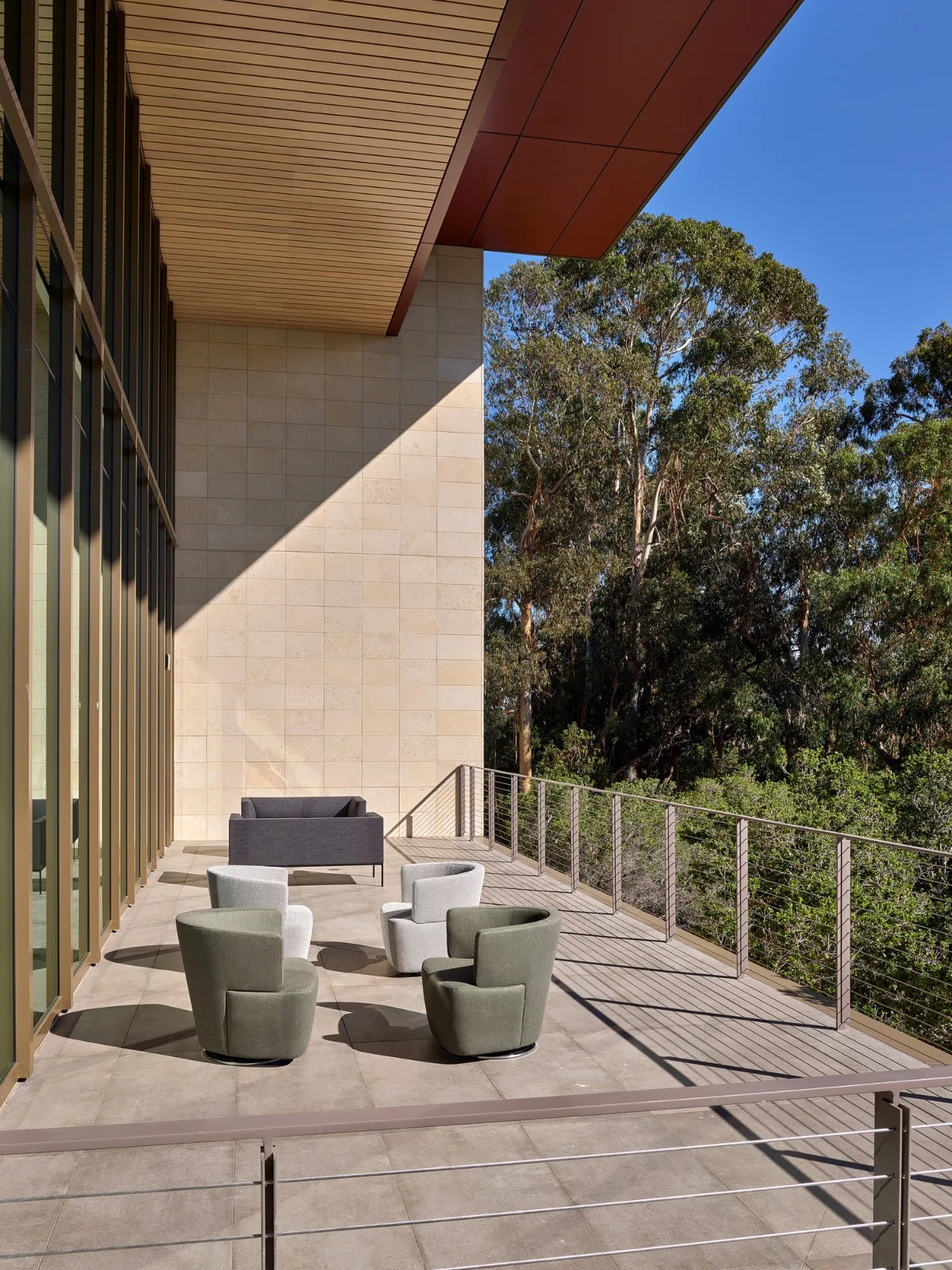
Taking advantage of Northern California’s mild climate, 20% of the center’s functions are located outdoors. A variety of exterior spaces—including porches, balconies, pedestrian bridges, and walkways—extend from the building, creating inviting areas for socializing and work. The open-air upper platform evokes a forest-like atmosphere where occupants can enjoy summer breezes and shade, or the tranquility and sunshine of winter.
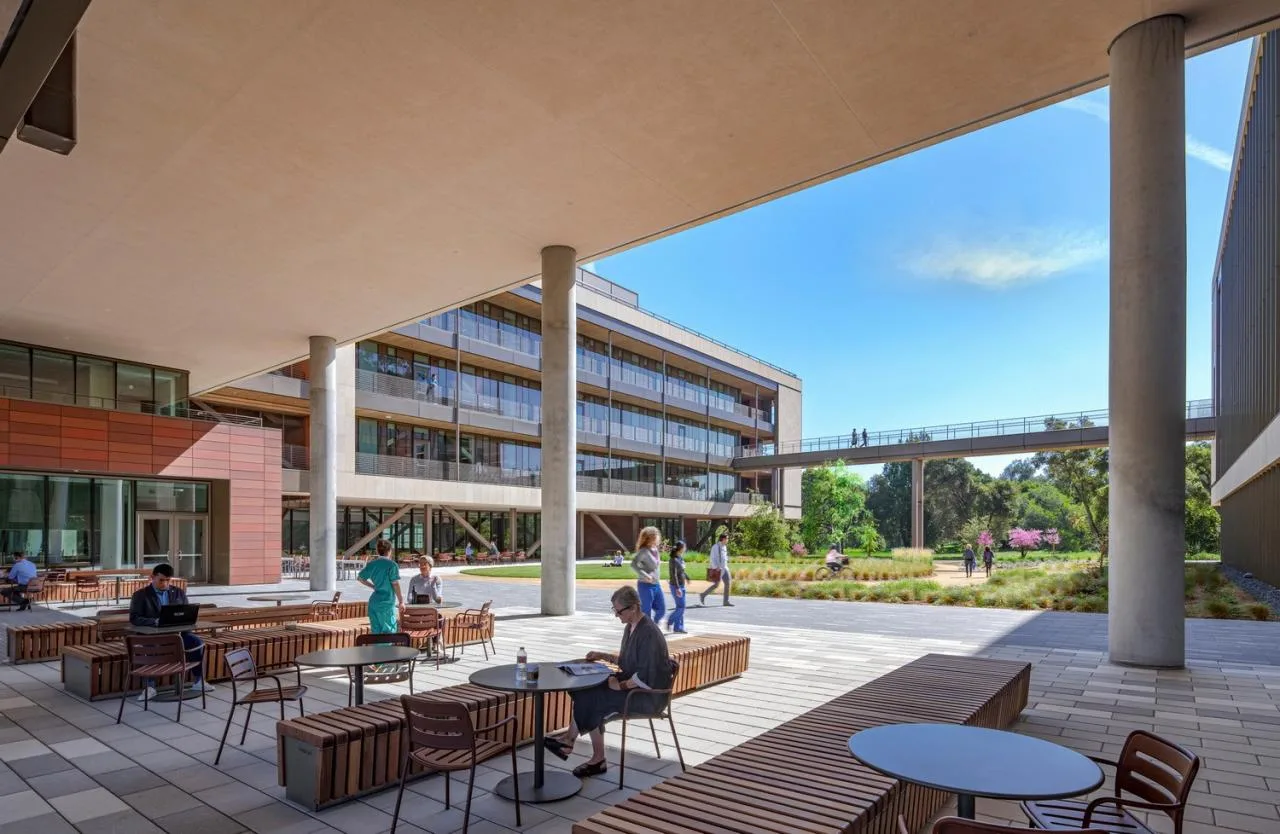
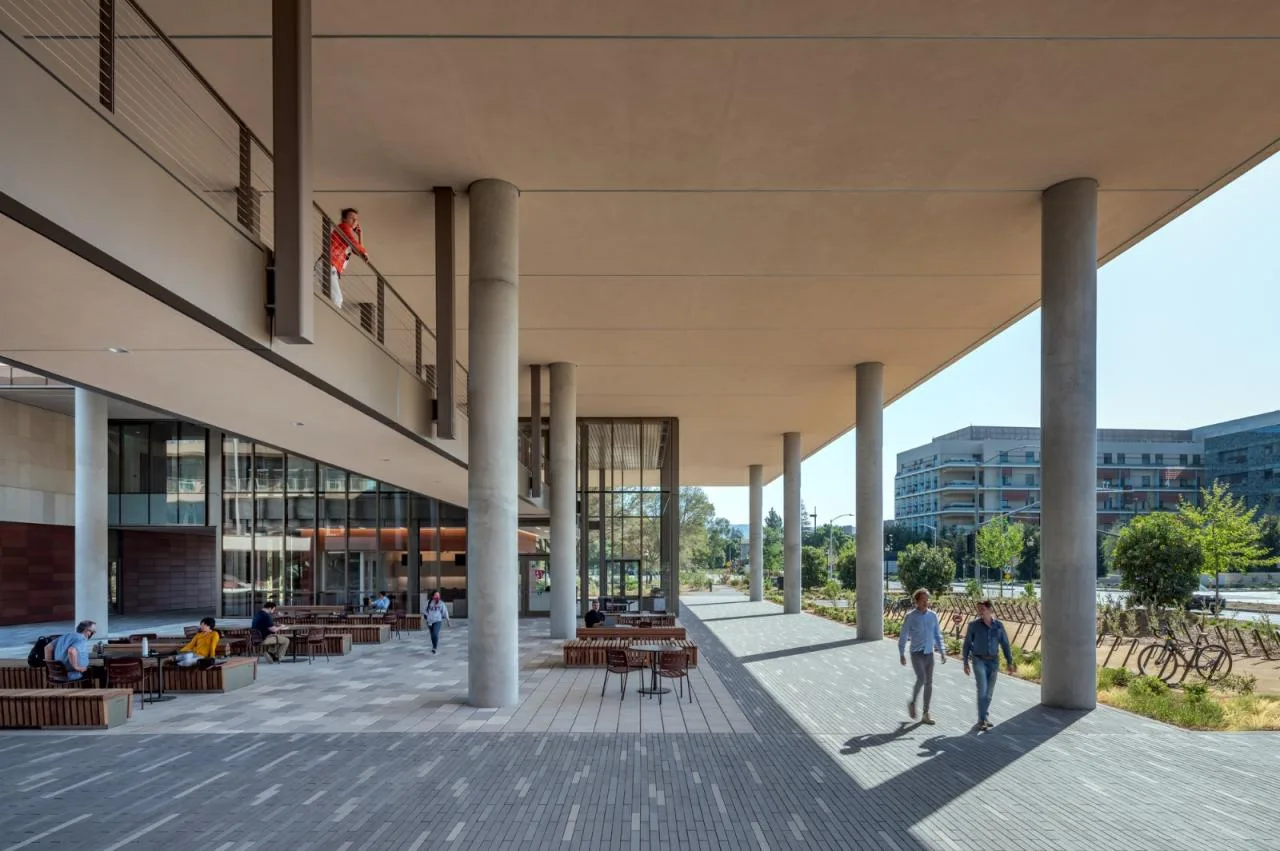
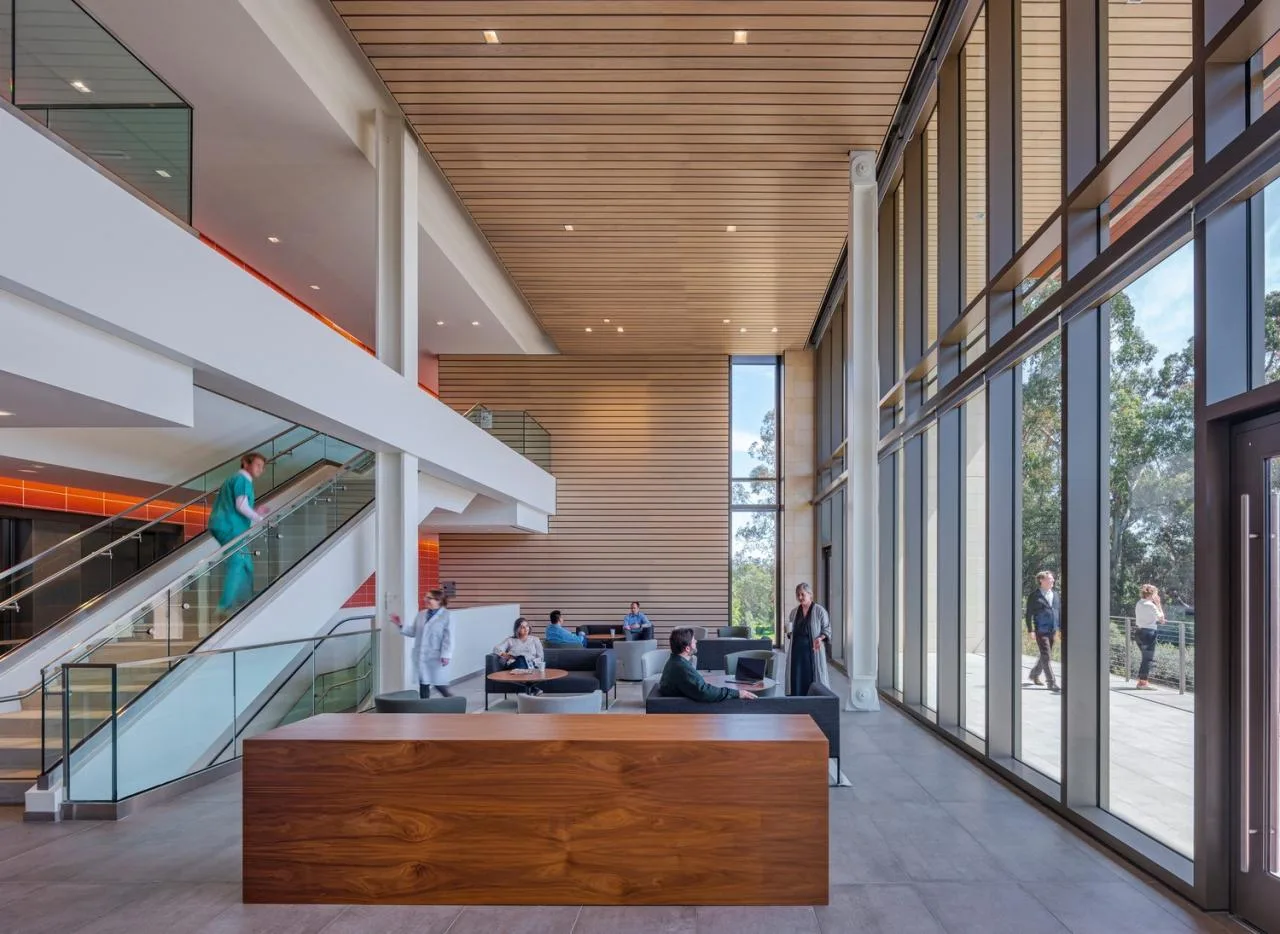
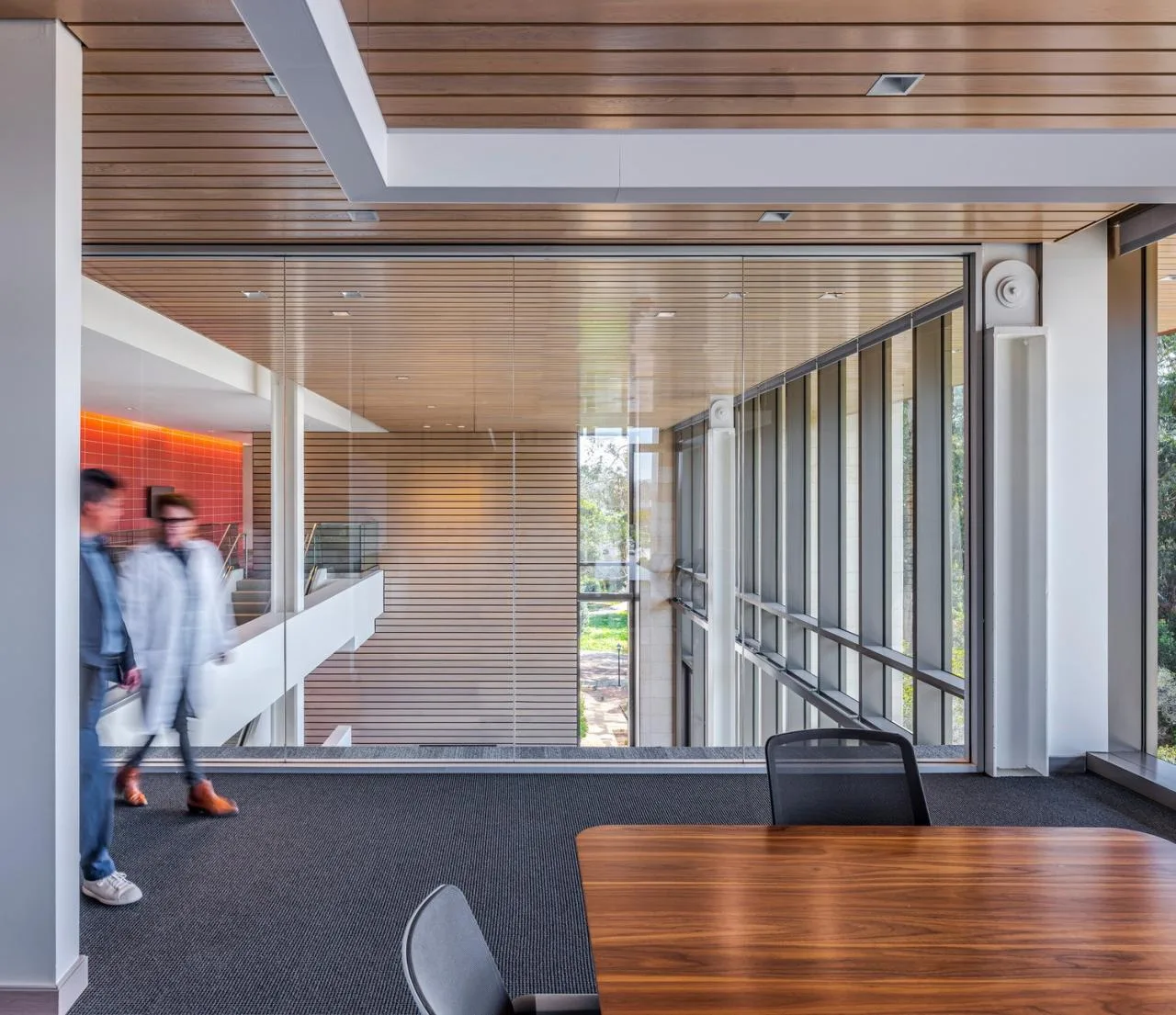
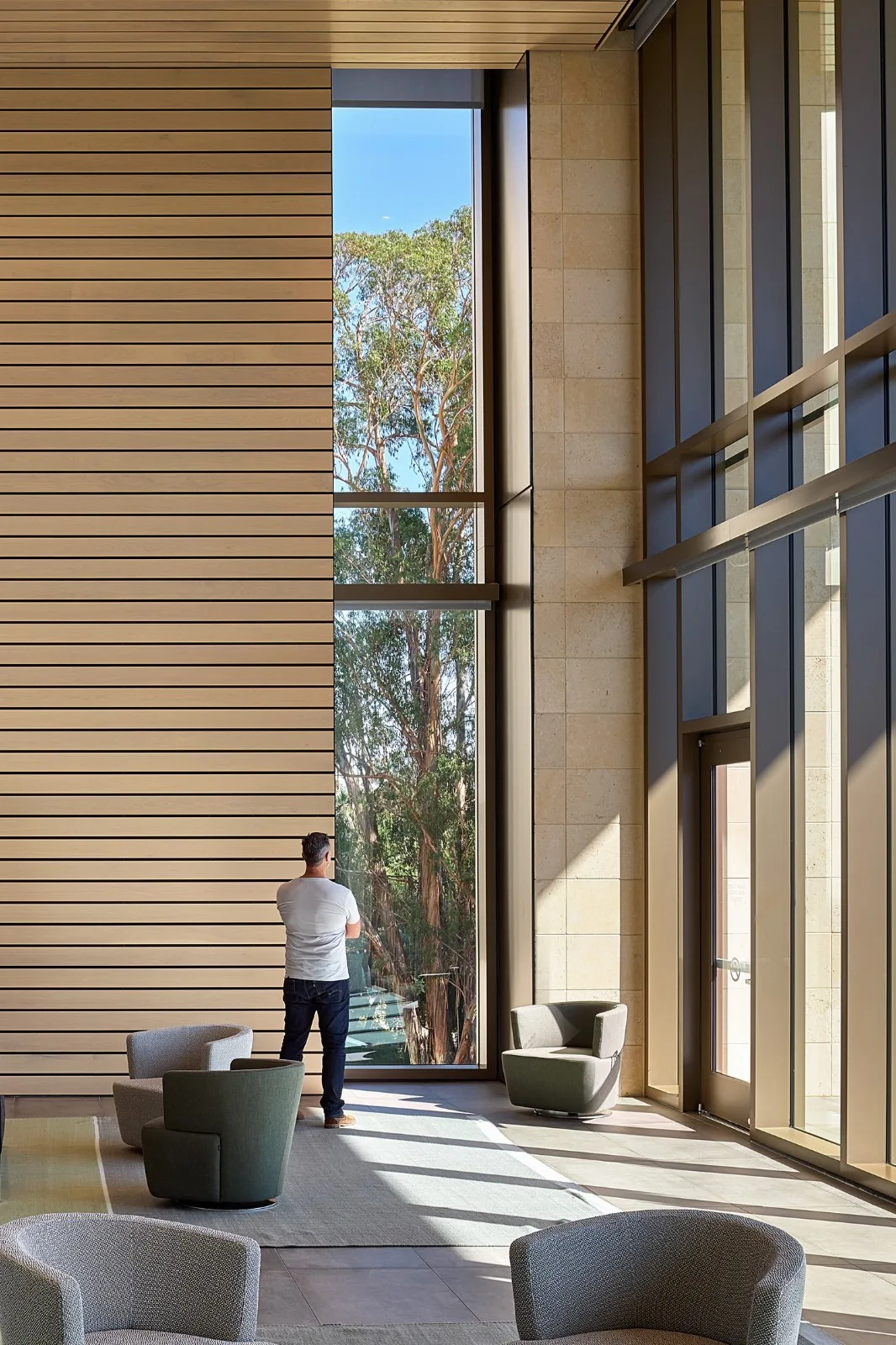
Passive design principles guided the project, fully leveraging the site’s natural conditions. Sunlight, wind, and the local ecosystem influenced every aspect, from planning to construction details. Narrow wing-shaped buildings and French windows maximize natural light and provide views of the botanical garden.
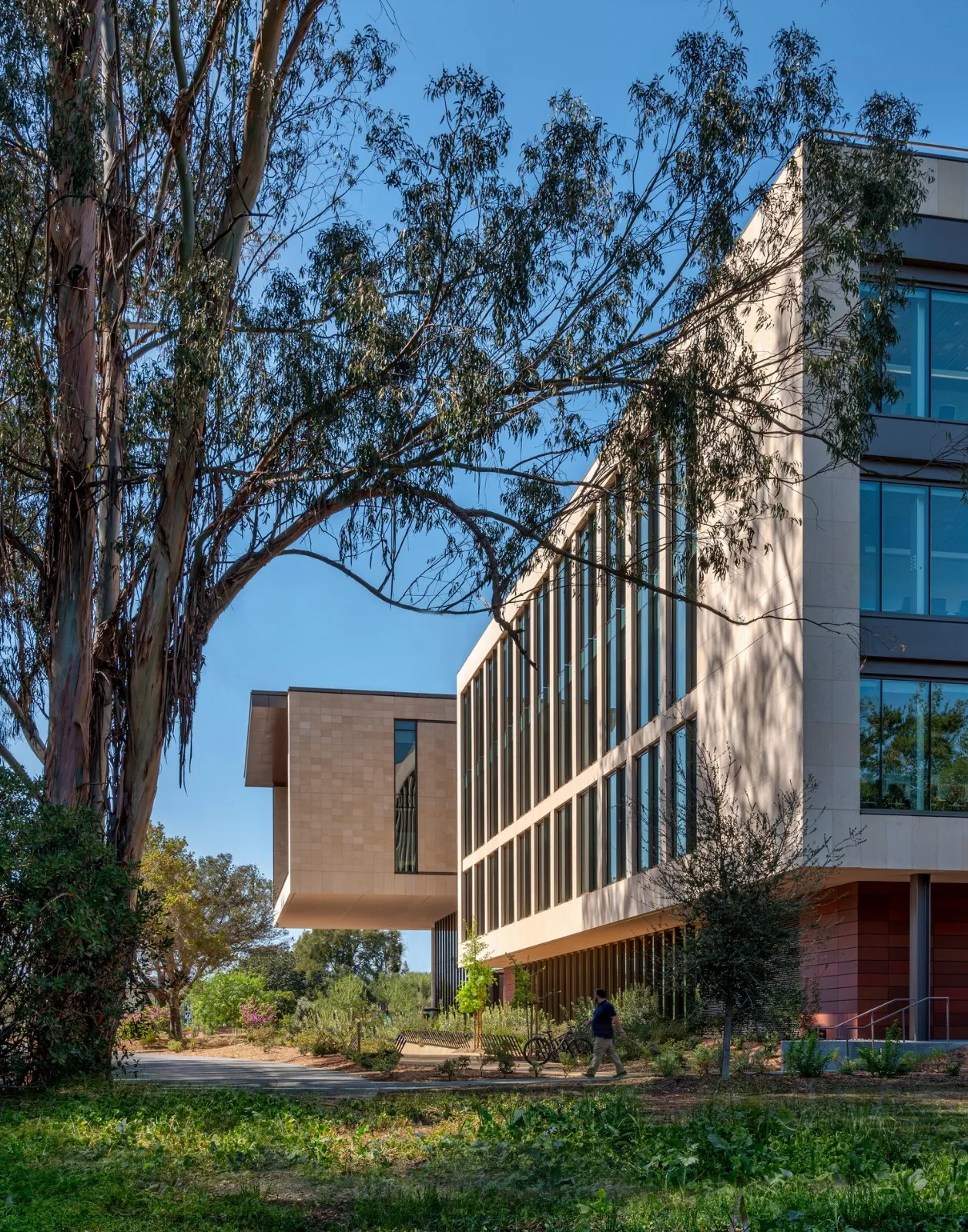
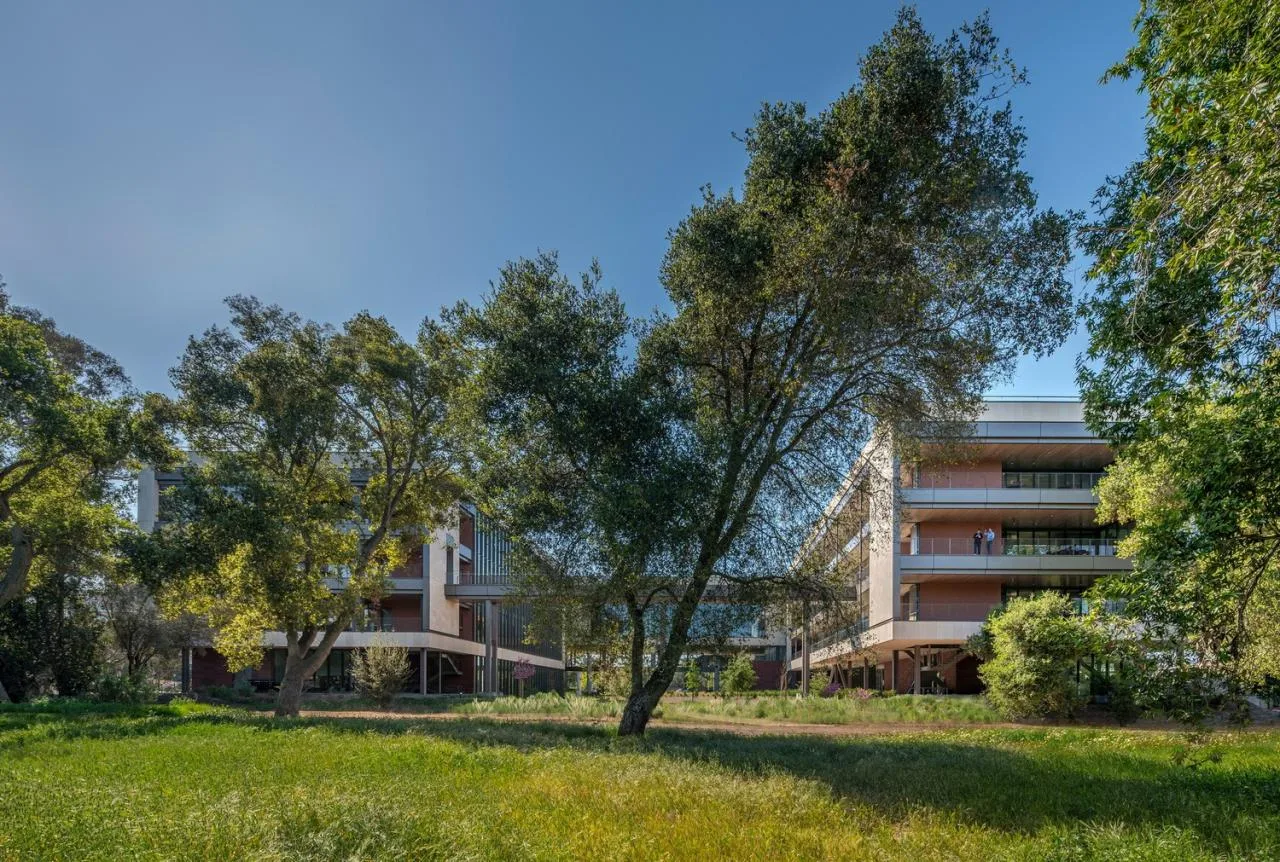
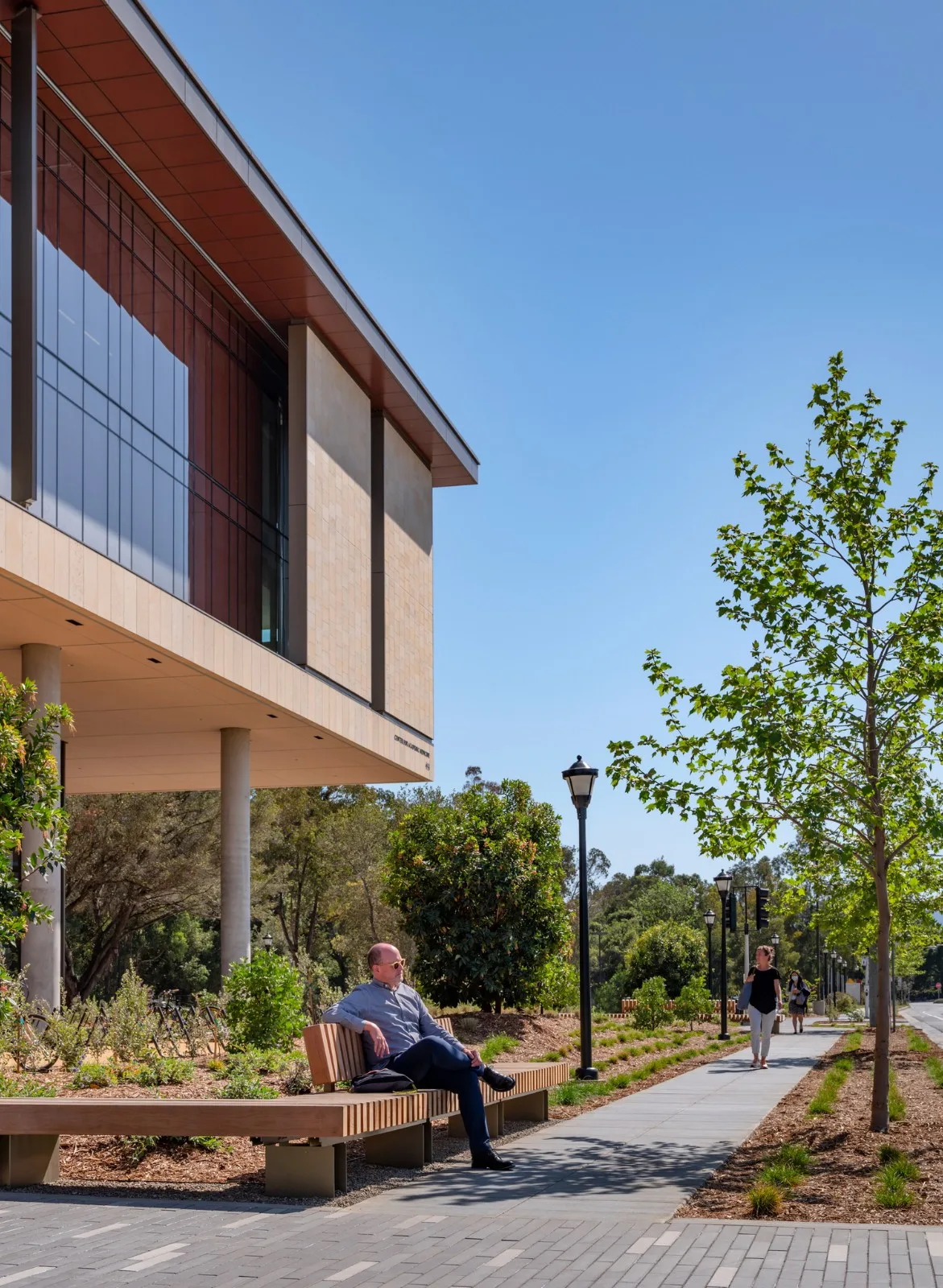
The west facade features a three-story-high metal louver panel curtain wall with a ceramic melt pattern, reducing glare while optimizing indoor thermal comfort and sunlight. The building’s annual energy intensity is 15.9 kBtu/sf/year (including renewable energy), achieving an 85% energy savings compared to benchmarks.
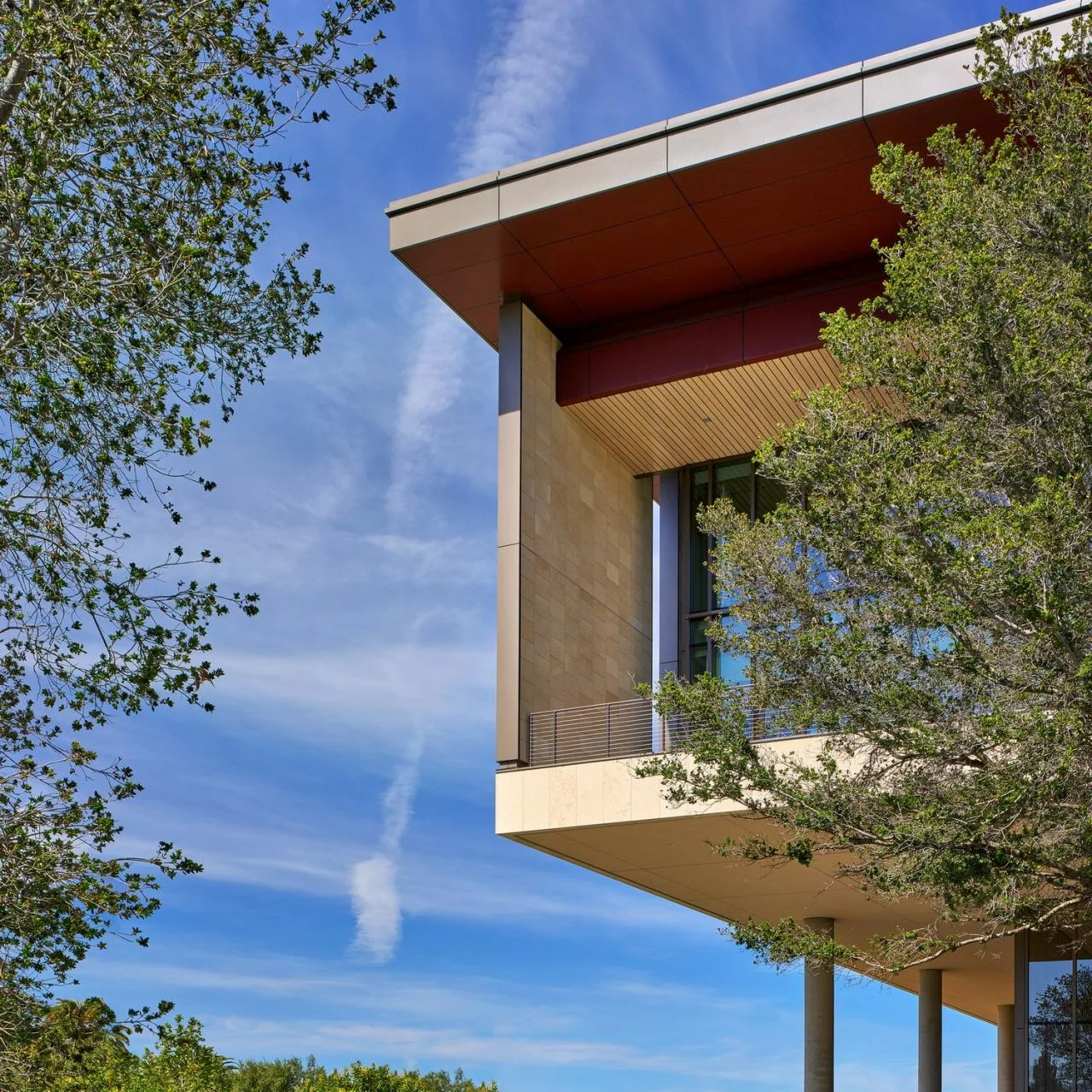
The design team developed a bio-inspired design guide, drawing inspiration from California oak trees. Like native oaks, the architecture accommodates multiple environments within one space—its leaf-like structures block direct sunlight while allowing filtered light and gentle breezes, creating a cool microclimate beneath the canopy. This layered design enhances spatial depth and movement.

Project Information

△ Plan View

△ Analysis Chart
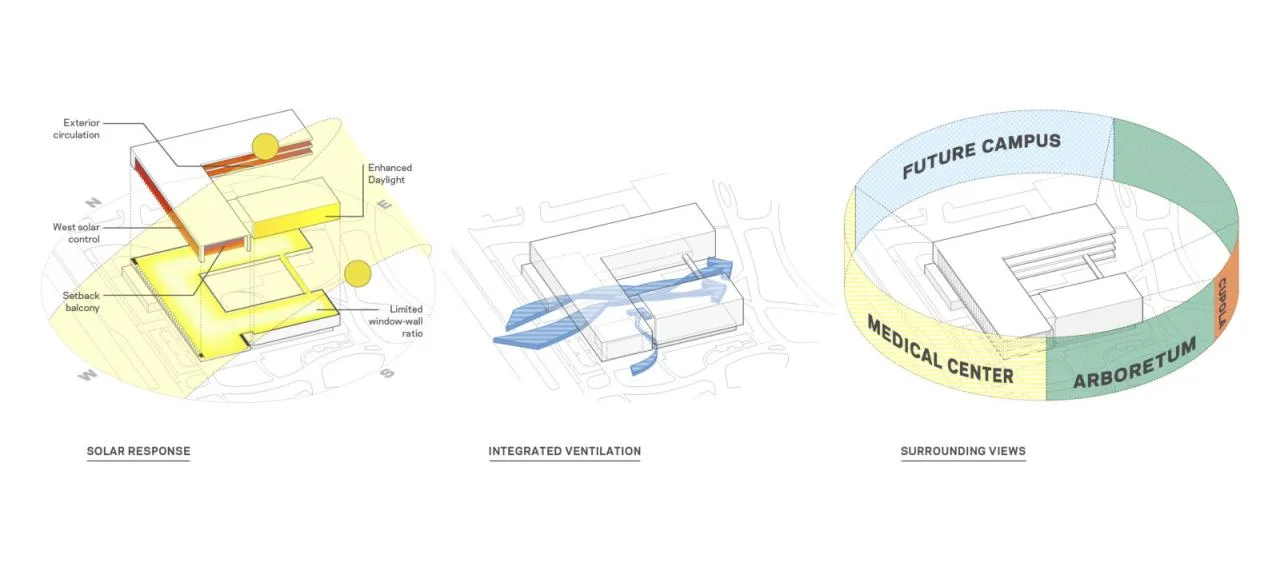
△ Analysis Chart
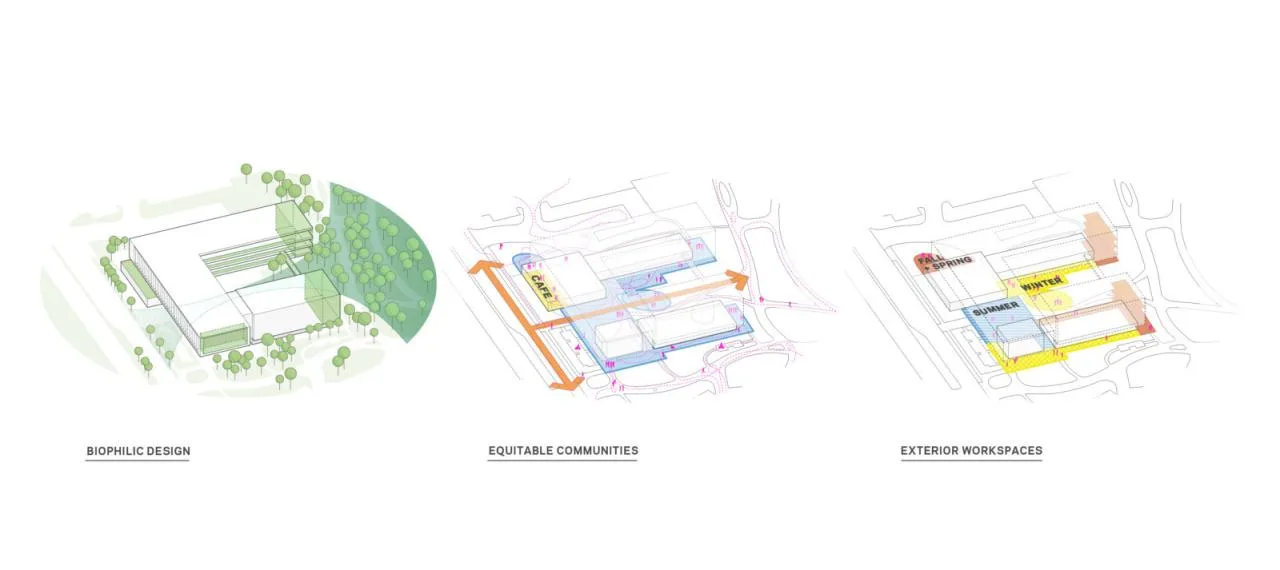
△ Analysis Chart
Project Details
Architect: HOK
Area: 19,500 m²
Year Completed: 2021
Photographers: Tim Griffith, Alan Karchmer
Client: Stanford University
Location: Palo Alto, United States















Must log in before commenting!
Sign Up