
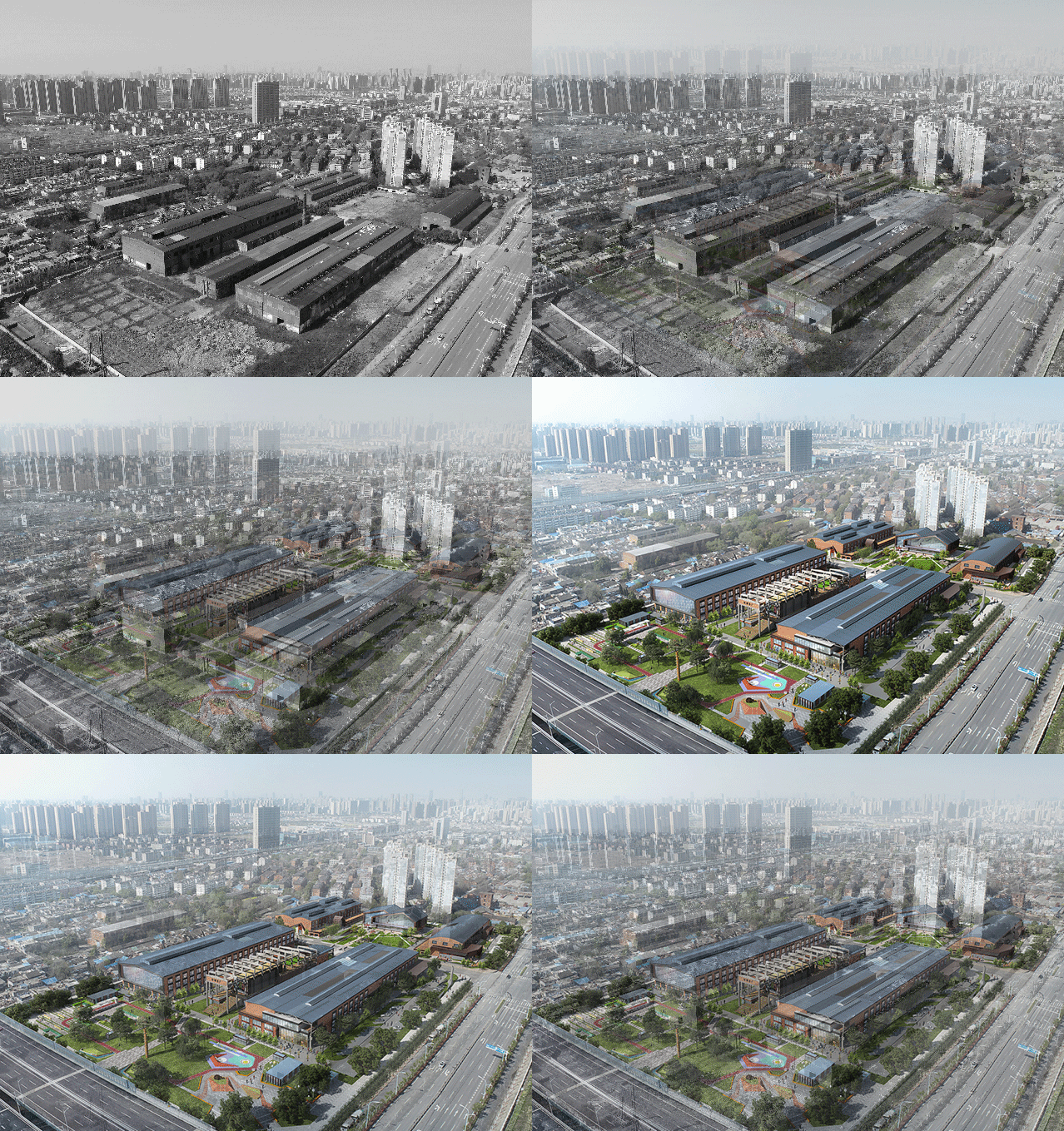
01 Evolution of Time
As China’s social economy progresses, old industrial factories and temporary structures in urban villages face the inevitable fate of demolition and redevelopment. Situated in the eastern part of Hefei’s old industrial hub, the area is transforming into a multi-functional industrial heritage corridor. This corridor will blend creative leisure, cultural exhibitions, and outdoor experiences, all while preserving industrial architectural heritage. Through spatial integration, multifunctional implantation, and corridor construction, it aims to create a vibrant and diverse urban public space.
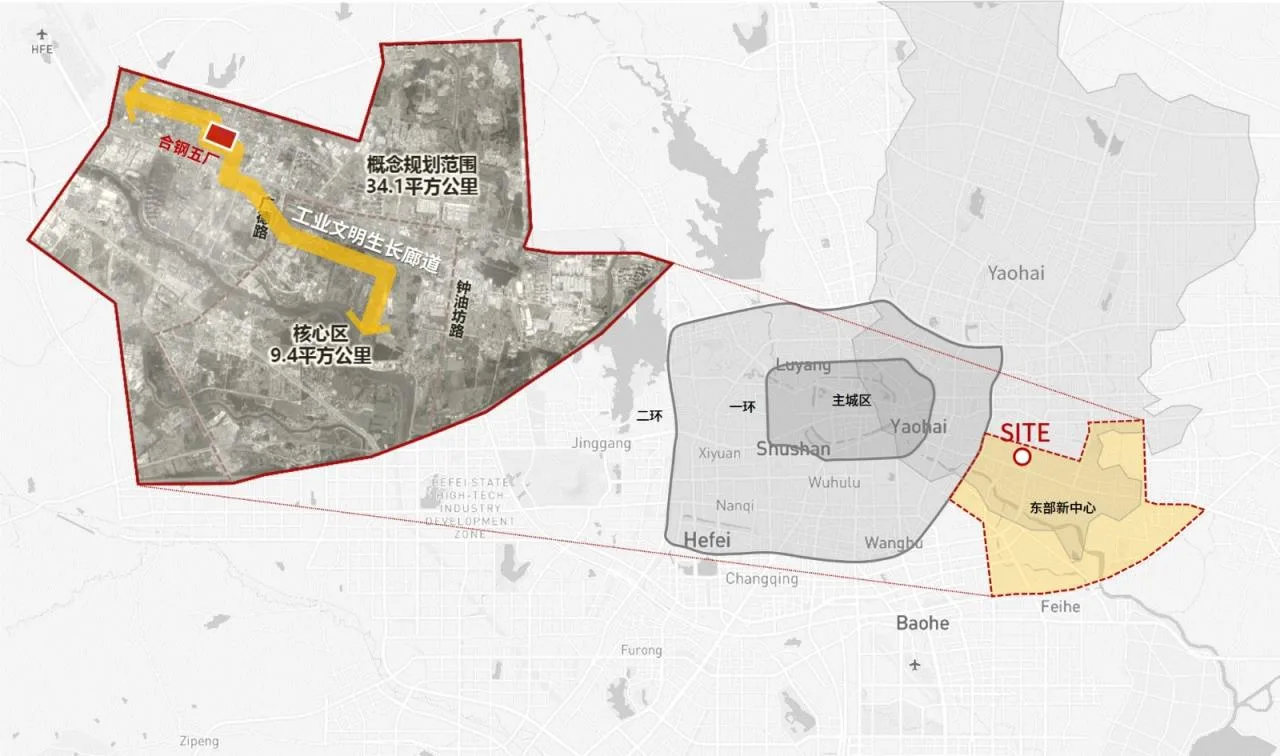
▲ Master plan for the New Center and Industrial Civilization Growth Corridor in Eastern Hefei
Located at a pivotal point in Hefei’s industrial development corridor, the Hefei Iron and Steel Plant No. 5 holds the industrial legacy of a “steel city with 100,000 workers within ten miles,” representing the youth and history of multiple generations. The site’s iconic steel furnaces, gray water towers, and red brick chimneys still tower skyward, narrating stories of a proud era. Serving as a landmark and a symbol of Hefei’s industrial culture, the successful renovation and adaptive reuse of these old factory buildings are crucial for the city’s industrial transformation.
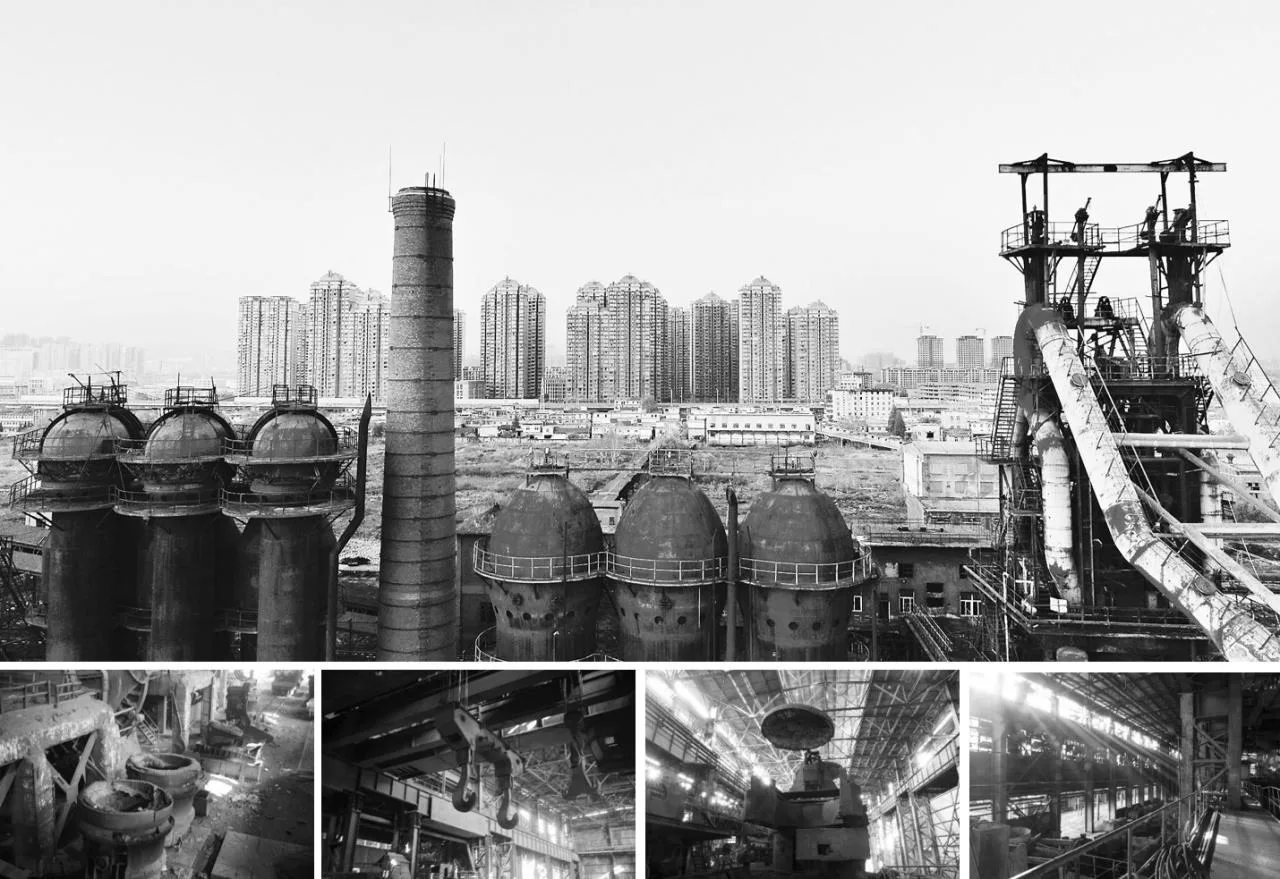
▲ Memories of Hegang
The renovation of Hefei Iron and Steel Plant No. 5 aims to preserve the cultural memory of the old factory area while introducing new industrial elements amid urban renewal. The project aspires to create a renowned emerging industrial park at the city level, set a benchmark, and spearhead regional development.
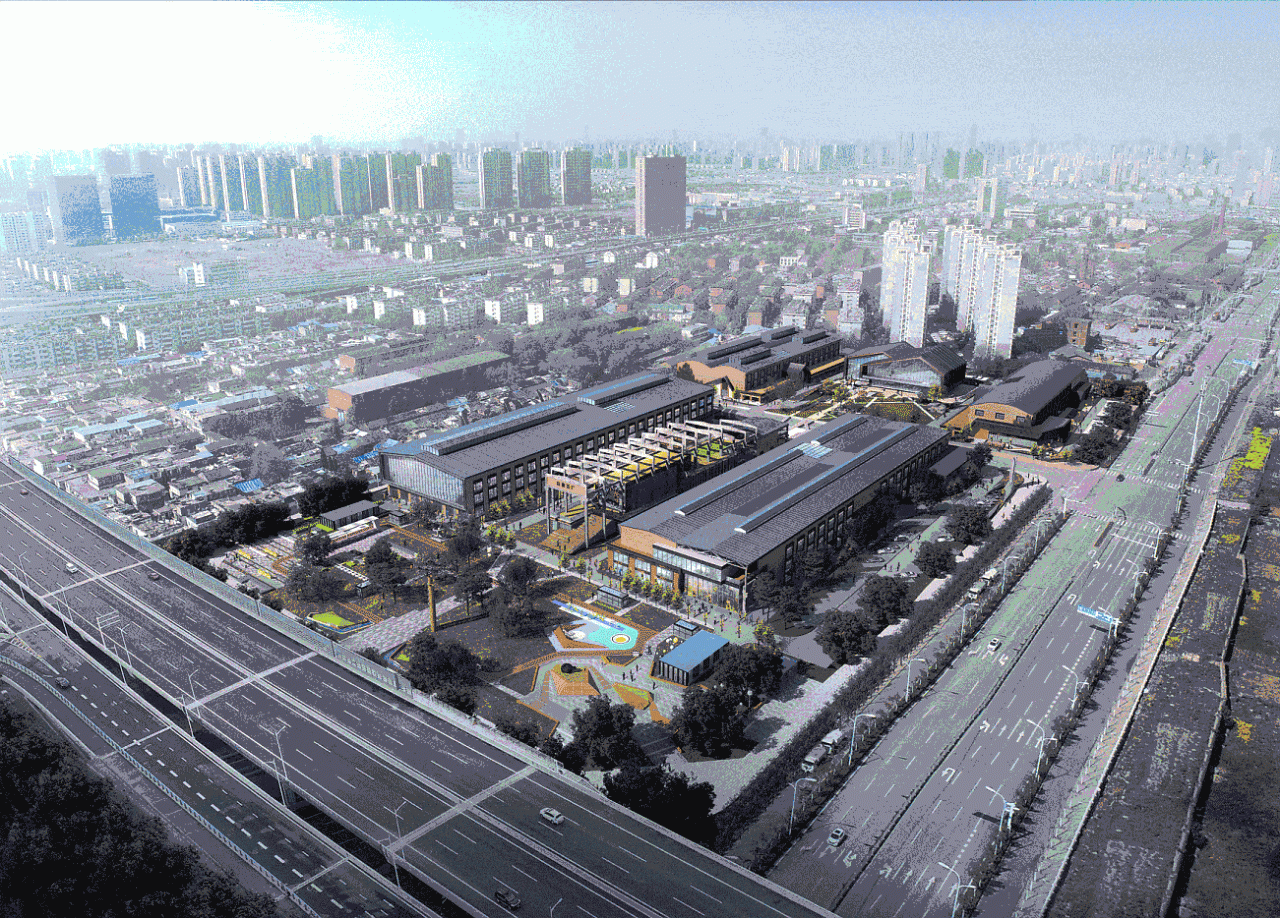
▲ Aerial view of the renovated site at night
02 Industrial Heritage Activation and Utilization
The original Hegang No. 5 Factory includes seven historic buildings covering approximately 29,000 square meters. These buildings feature clear structural frameworks, tall spaces, and relatively intact forms. Their exteriors are composed of old red bricks typical of the 1980s, preserving the distinct characteristics of steel industrial architecture with significant historical and cultural value.
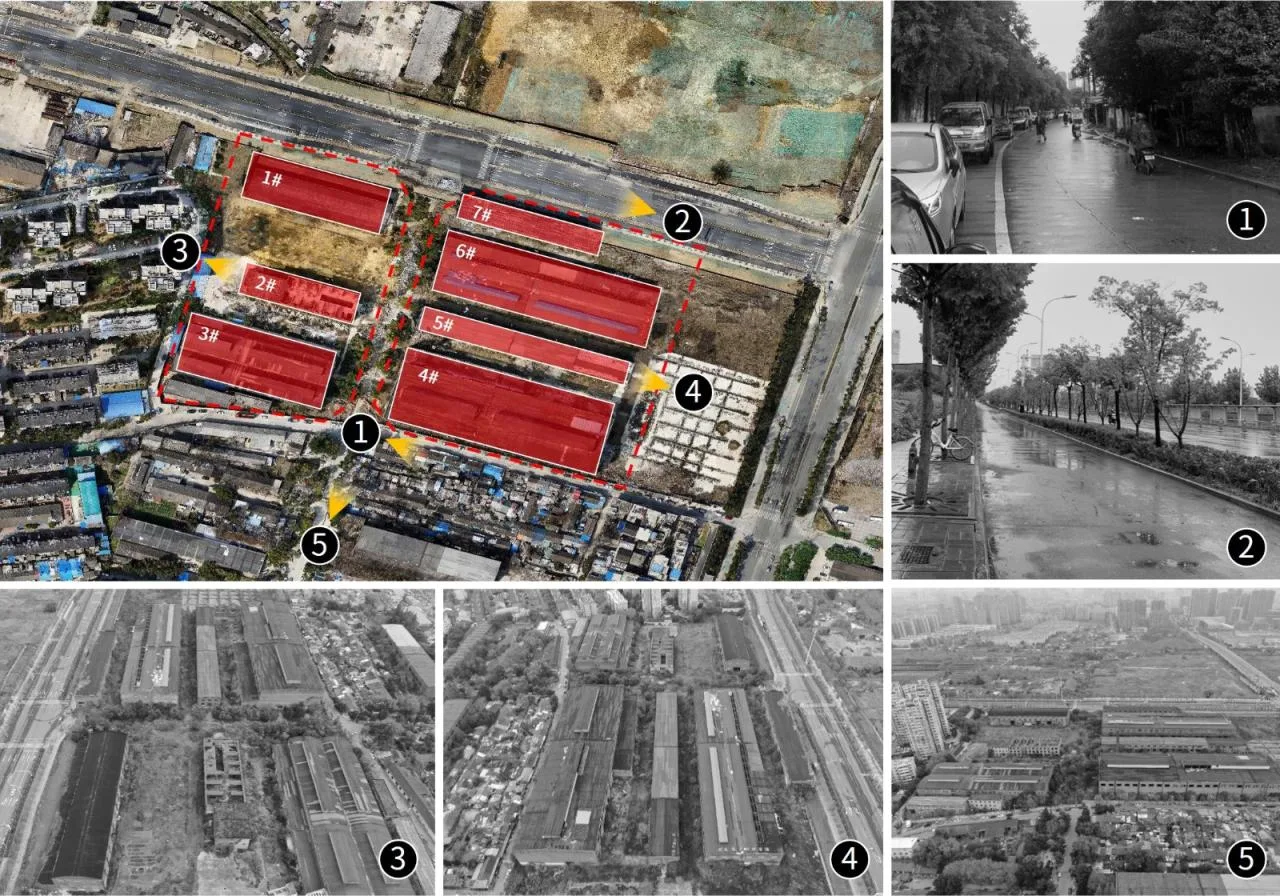
▲ Current overview of the site
Following urban planning requirements, over 20,000 square meters of factory area must be preserved. Post-renovation, the primary functions will include scientific research, office space, and supporting facilities. To honor the goal of conserving a portion of the factory buildings, large-scale demolition was avoided. Instead, existing spaces were repurposed to convert industrial factories into functional buildings, maximizing the value of existing resources and comprehensively upgrading the entire old industrial base.
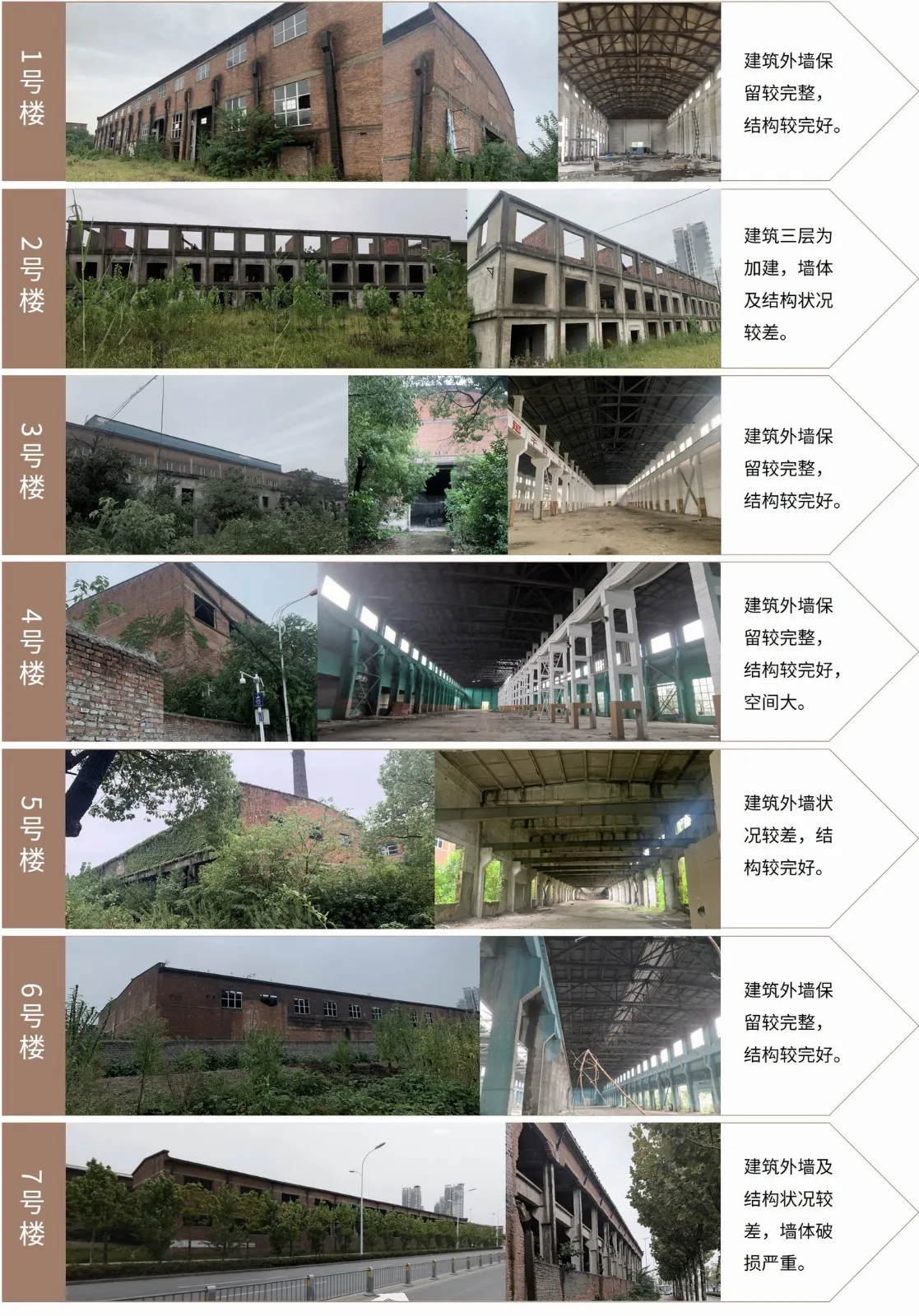
▲ Original buildings condition at the site
After a detailed usability analysis, the design team decided to preserve Buildings 1, 3, 4, and 6, which have well-maintained exterior walls and relatively intact structures. Building 2, with poor wall and structural conditions, was deemed unsuitable for preservation and slated for demolition. Building 5’s exterior walls are damaged but its structure remains intact; thus, only its structure will be retained for renovation. Building 7 does not meet planning requirements and will also be demolished.
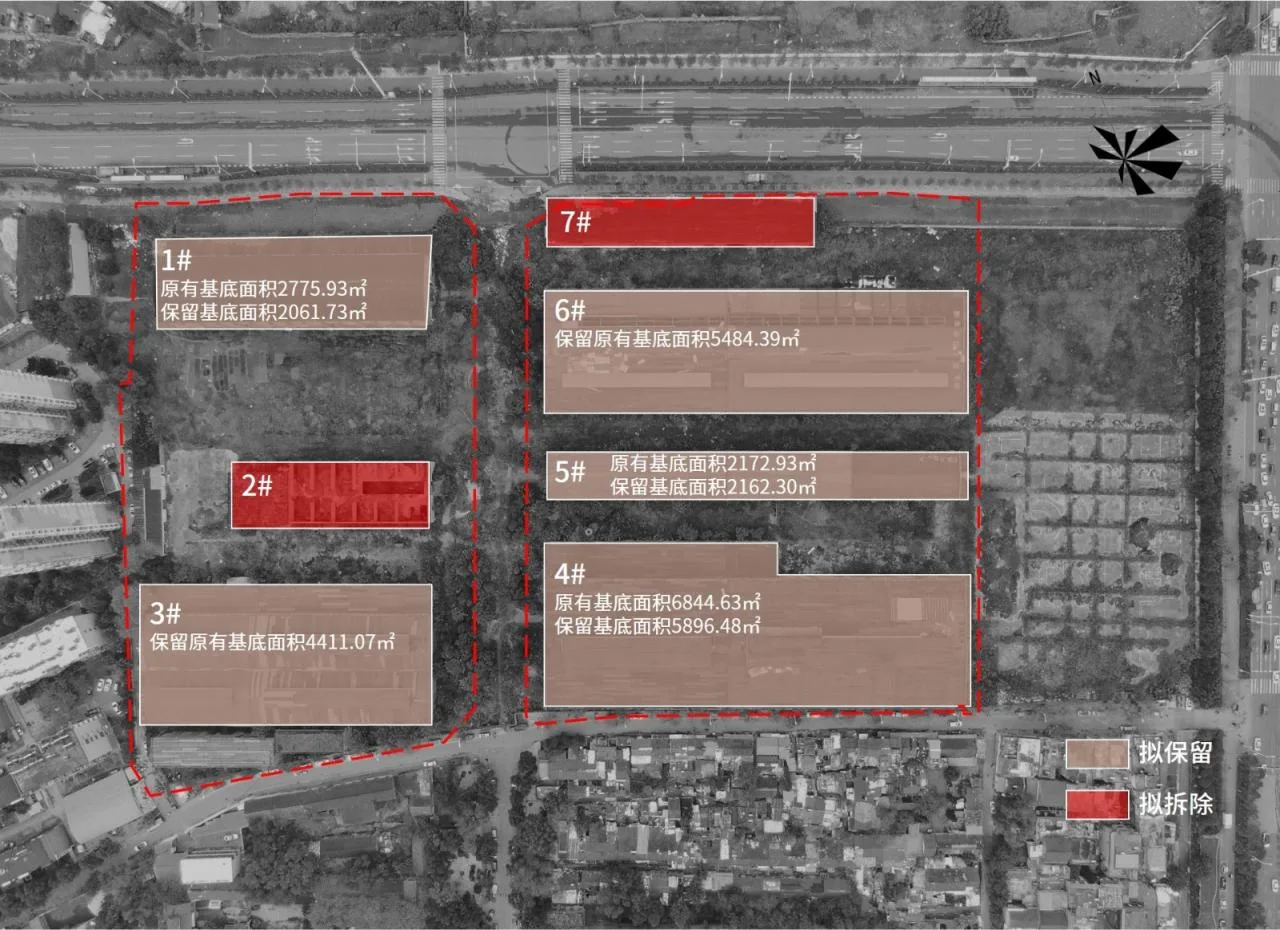
▲ Preservation strategy for original buildings on site
03 Reordering and Revitalizing the Site
Preserving historical texture through site organization
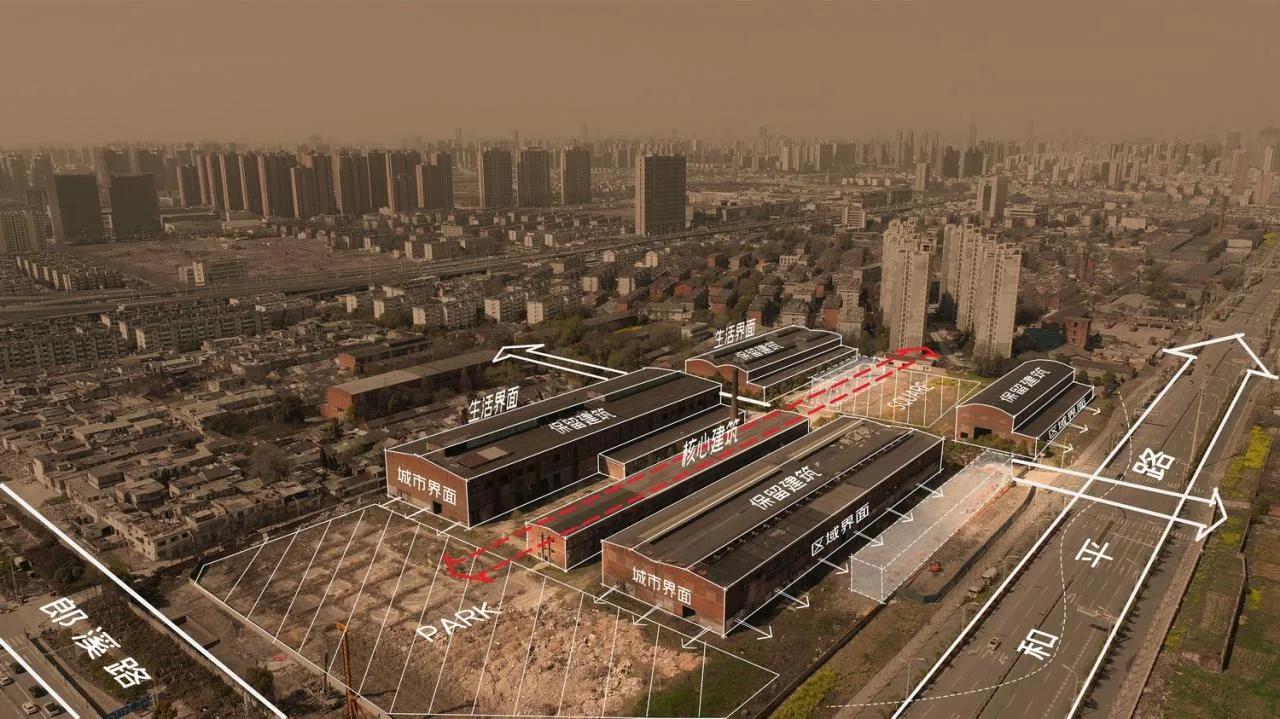
The eastern edge of the site borders the elevated Second Ring Road, separated by urban parks and green spaces. The planned Industrial Civilization Corridor in Hefei passes through the southeastern corner of these green areas, offering prime interface value. To the north, Heping Road provides a broad east-west traffic artery. The west and south sides consist of densely populated old residential neighborhoods with limited views, functioning as display area termini. Xingfu Road, running north-south within the site, connects southern residential communities to the northern factory area, designated for cultural and creative industrial park upgrades.
Defining axes and weaving urban spaces
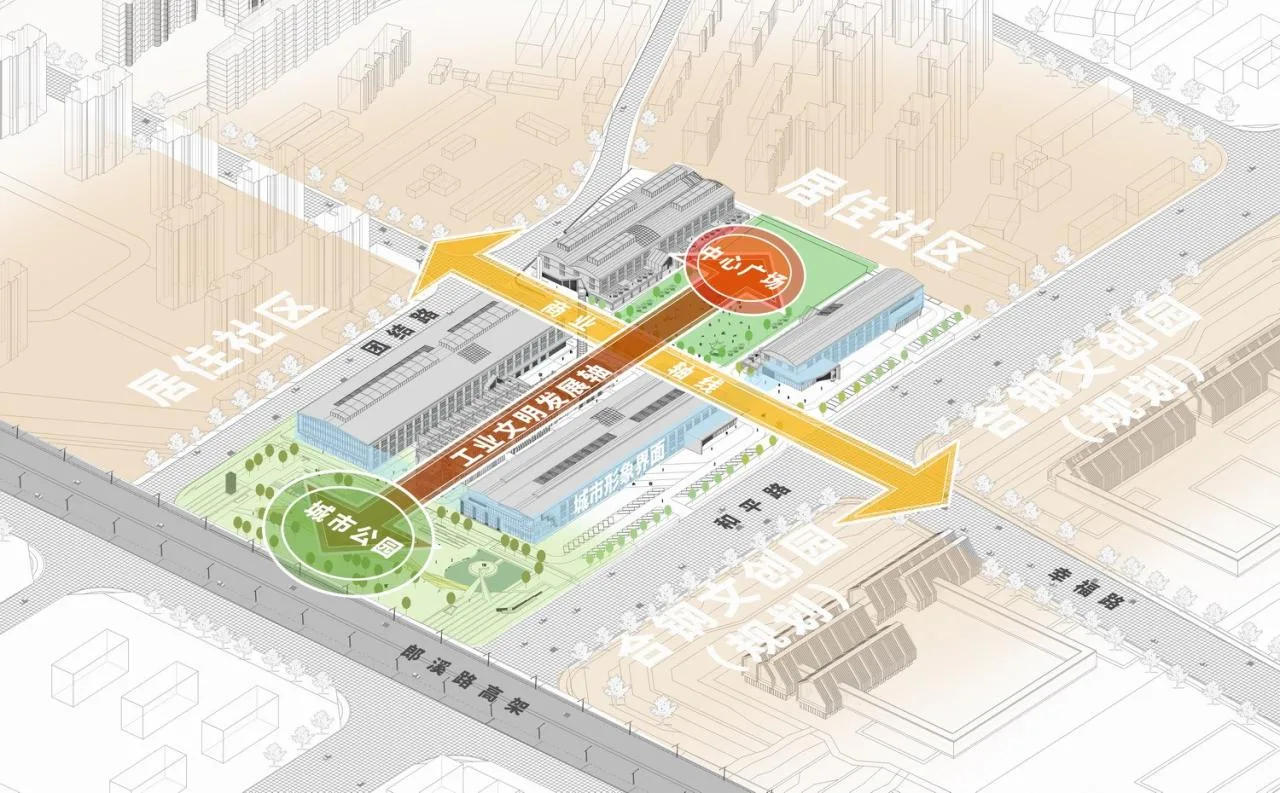
The design introduces an east-west axis to highlight industrial civilization development, connecting the park’s interior with the upper-level plan via the Industrial Civilization Corridor entering from the east. Key nodes along this axis include the east entrance plaza, Industrial Time Exhibition Gallery, and Performance Square. This progression forms a well-scaled street and plaza space enriched with historical significance. A north-south commercial axis is also established to meet diverse needs—office, retail, and community activities—linking the southern residential axis to the four renovated buildings and two entrance plazas to the north, creating a dynamic sequence of functional spaces.
Functional implantation creating diverse experiences
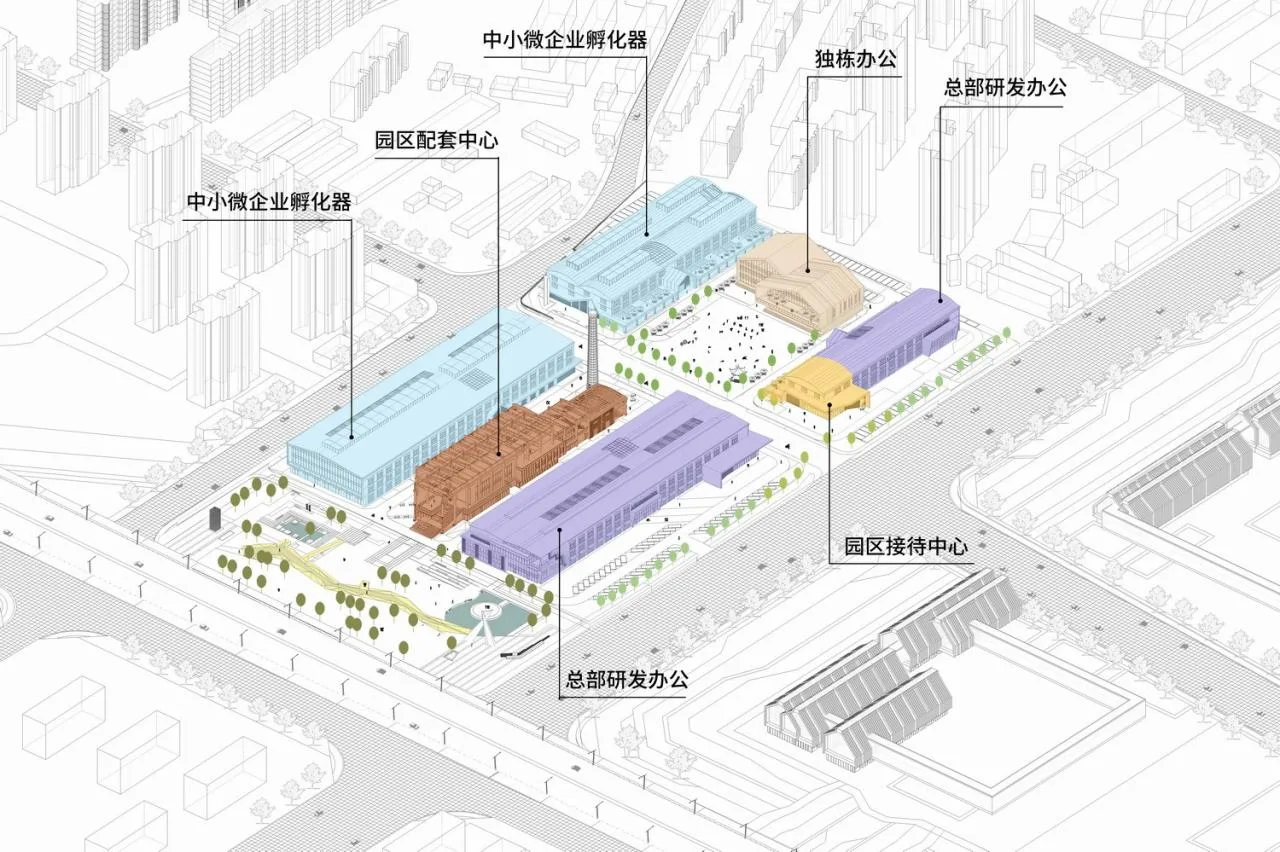
To offer a rich venue experience for office users and community residents, the four large-span industrial buildings—Buildings 1, 3, 4, and 6—will be structurally restored, their facades updated, and reprogrammed with diverse spatial functions integrating scientific research, offices, reception, and exhibition spaces. Along the industrial civilization axis, spaces such as the Hegang Historical Exhibition Gallery, transportation hubs, restaurants, and property management offices will be established. A new performing arts center with industrial cultural character will rise on the site of the demolished Building 2. Commercial facilities will be concentrated at the north-south Happiness Road plazas, providing retail spaces that serve surrounding neighborhoods.
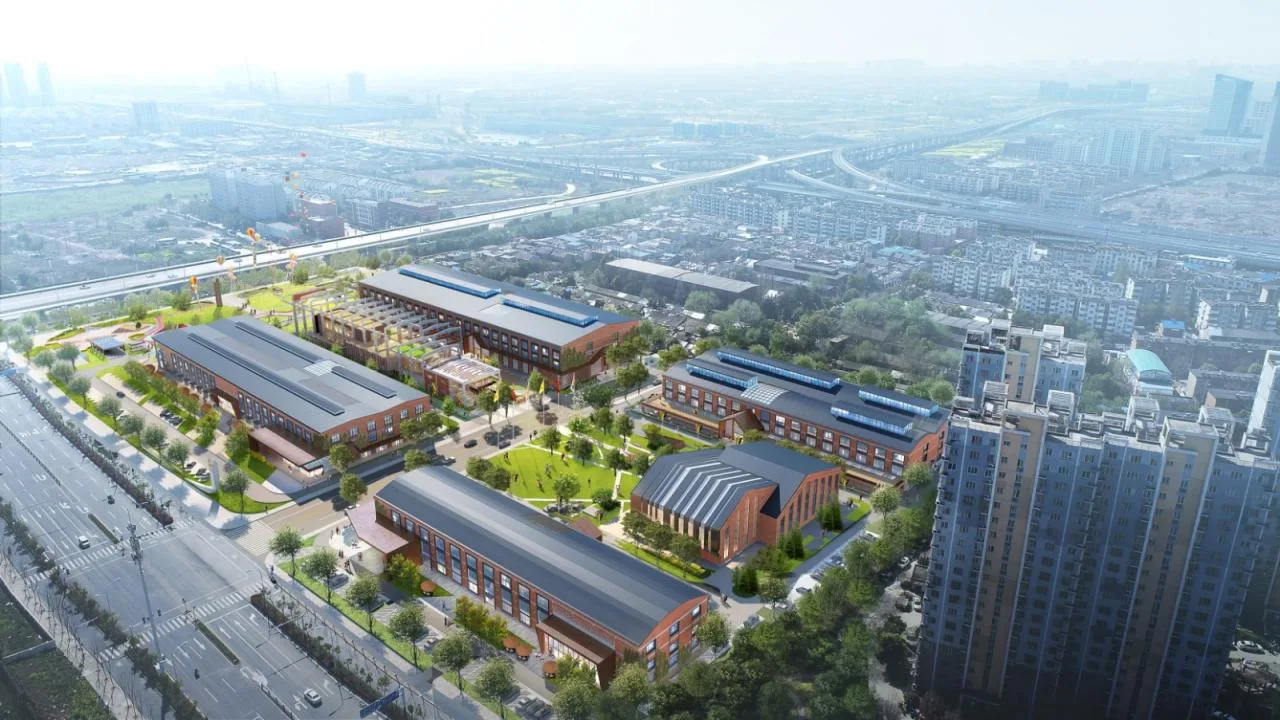
▲ Overall view of the renovated site
The new eastern exhibition entrance seeks to create an integrated urban park that harmonizes green spaces, city and nature, culture and vitality, as well as leisure and commerce. Through facade upgrades, entrance enhancements, and commercial functions, the park will serve as a cultural and leisure hub, blending cultural tourism, artistic experiences, and technological innovation for citizens.
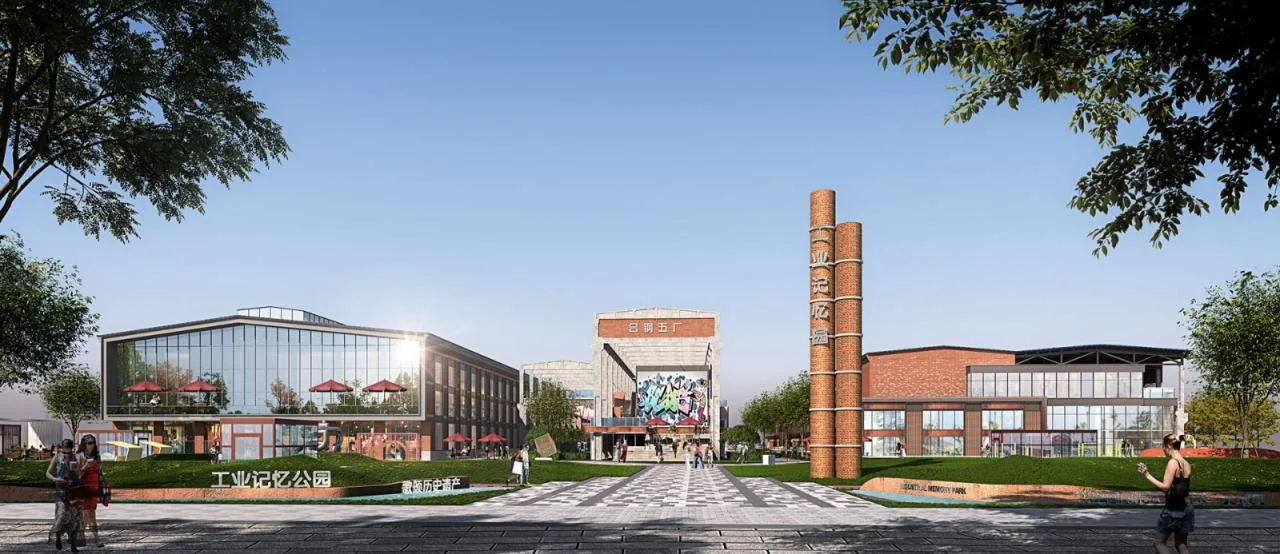
▲ East entrance display
The Industrial Time Gallery intertwines Hegang’s history with the great rejuvenation of New China, using landscape art techniques to depict time and space. It narrates Hegang’s past, present, and future, bridging the gap between people and eras, while fostering hope for the future.
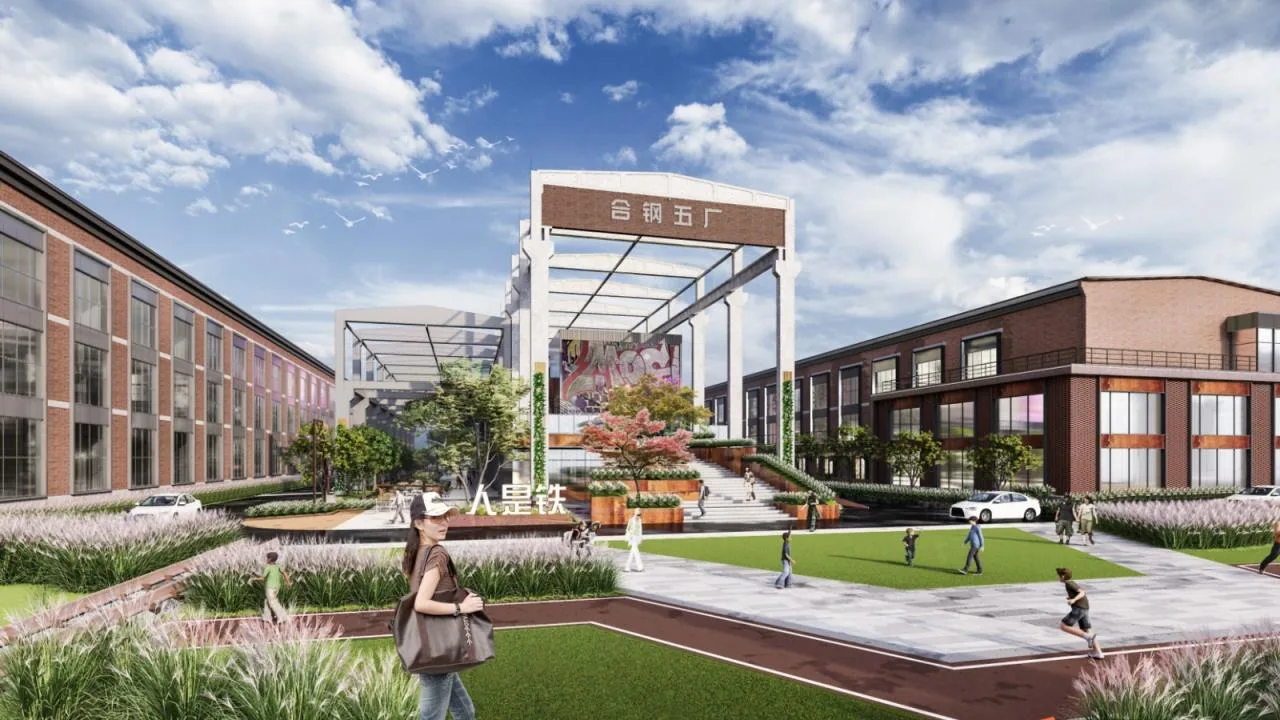
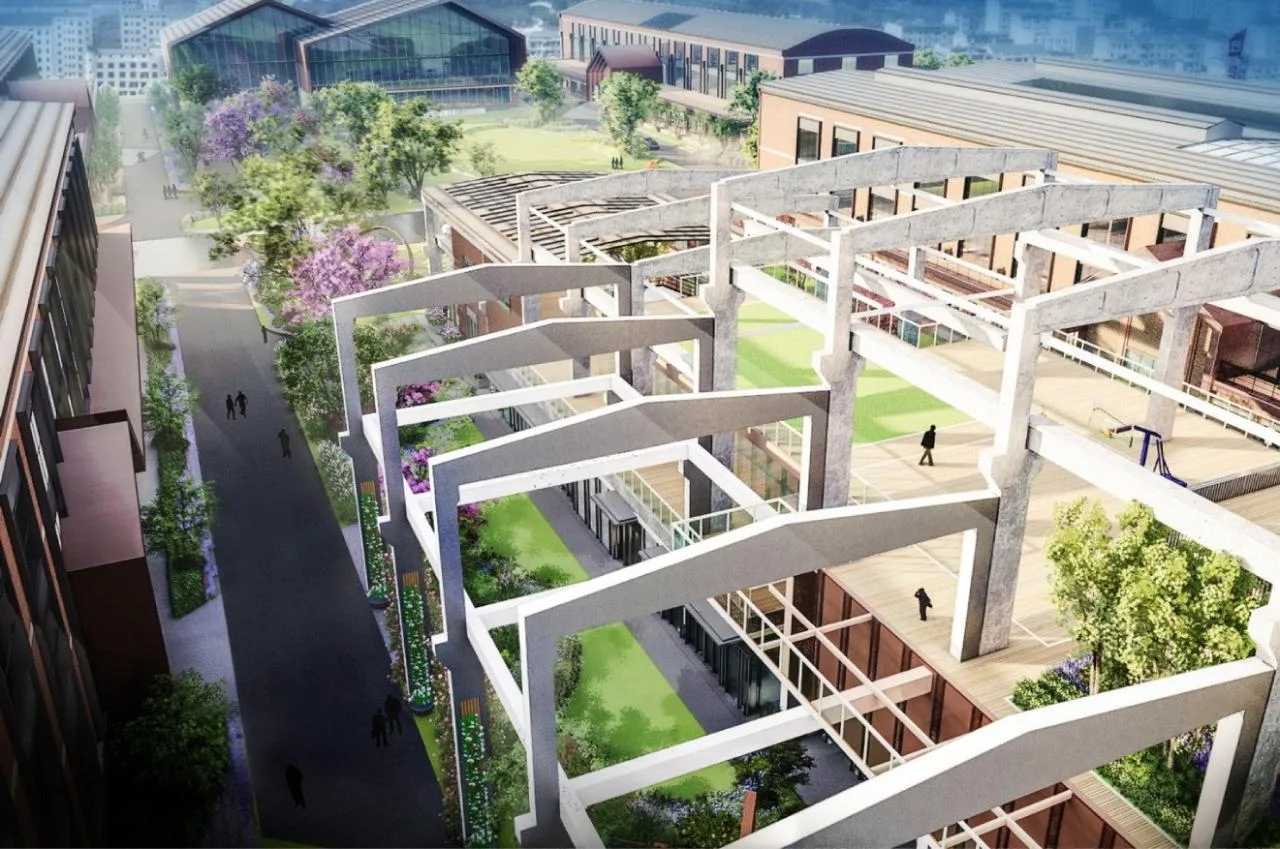
▲ Hegang Industrial Time Exhibition Gallery
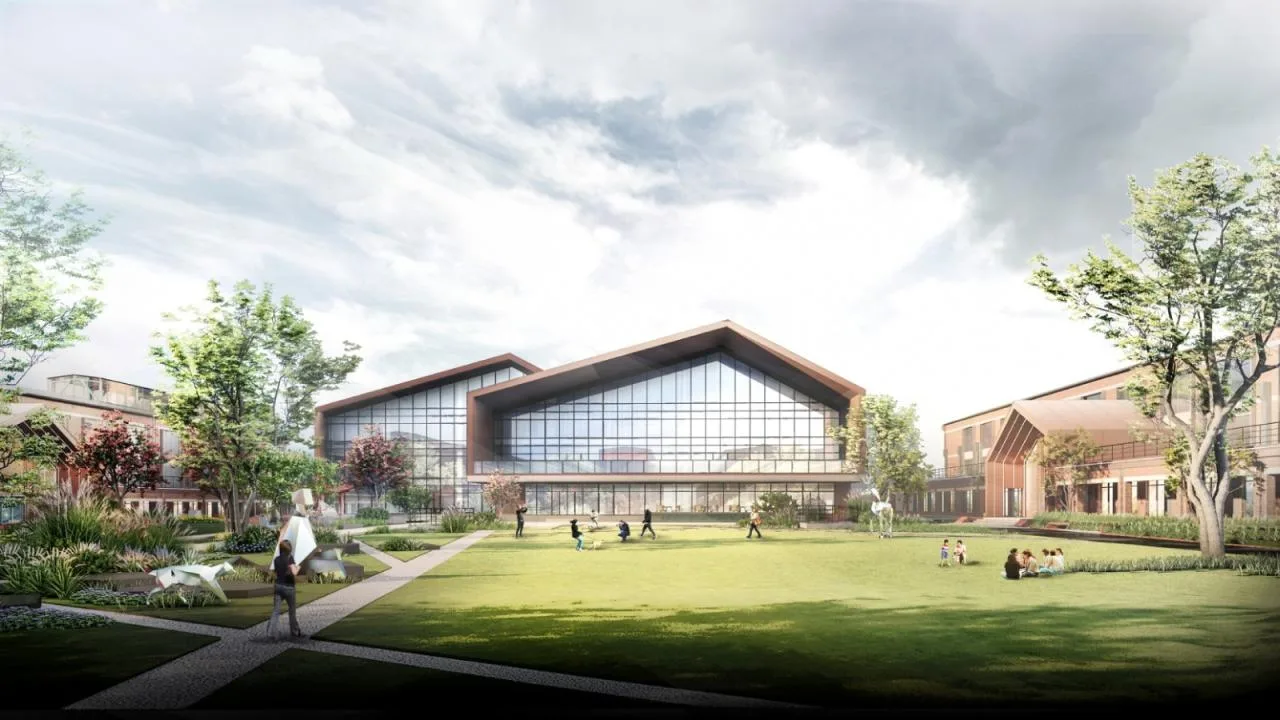
The Performing Arts Square features a theater and landscaped plaza. Its design draws inspiration from the original mountain walls, incorporating a distinctive floating form that masterfully blends historic architecture with contemporary design. It will regularly host performances, enriching the park with a vibrant cultural and artistic atmosphere.
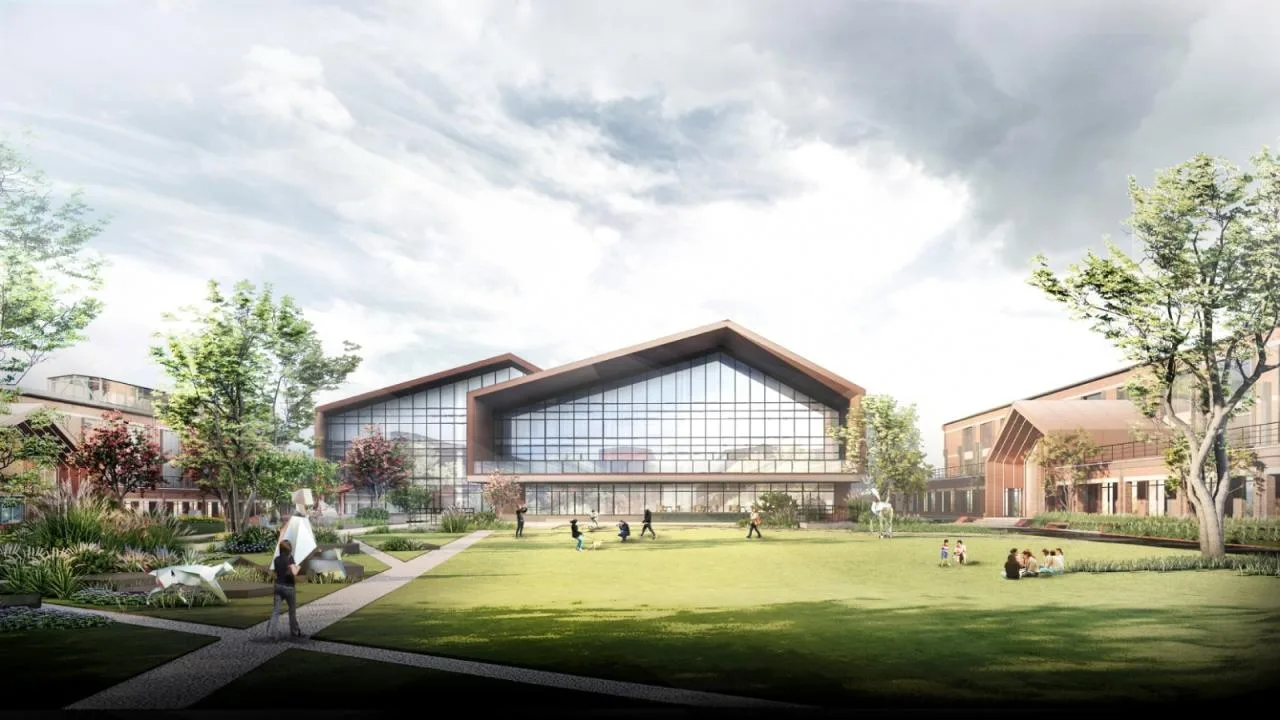
▲ Performing Arts Square
04 Dialogue Between Old and New Buildings
The large-scale industrial heritage of Hegang Fifth Factory holds significant historical importance. After comprehensive on-site evaluation, designers developed tailored plans for each building. Through structural repair, facade restoration, and spatial function integration, they created modern office spaces that maintain industrial character while ensuring comfort and aesthetic appeal.
Renovated Buildings
Buildings 1, 3, 4, and 6 underwent renovation involving reinforcement of beams and columns, reconstruction of roof trusses from the original concrete, and full preservation of exterior and mountain walls. Red brickwork was rebuilt to enhance appearance, and light steel materials were used for roofing. Entrances were upgraded and new spatial functions incorporated, though renovation methods varied per building.
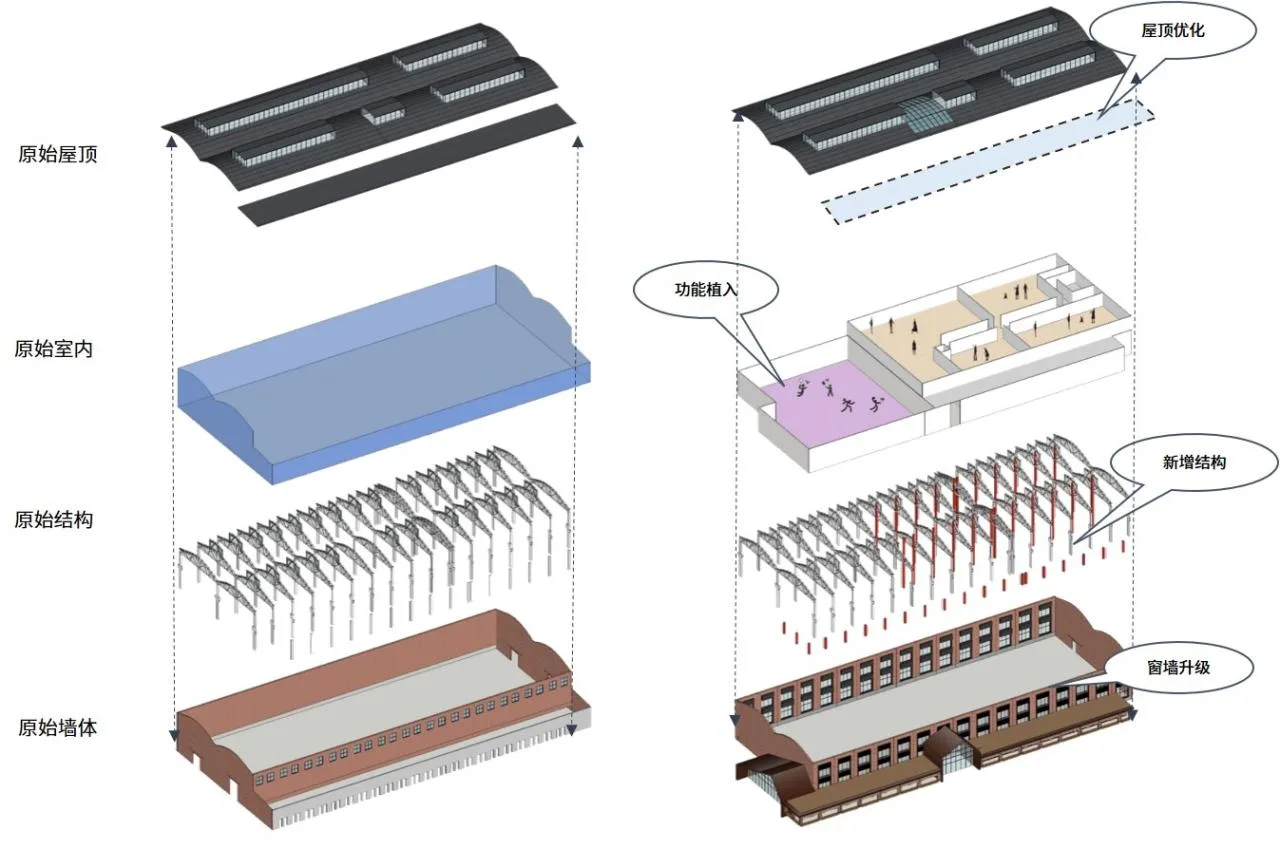
▲ Renovation methods for base buildings
For Building 1, the original north span was removed and a new south span added. The original mountain wall was restored and preserved. A new entrance with a red brick curtain wall was added on the east mountain wall combined with the first floor. A new cross-section was constructed on the south first floor, including an eave corridor and rooftop equipment platform. Interior spaces were designed to accommodate scientific research offices and reception areas.
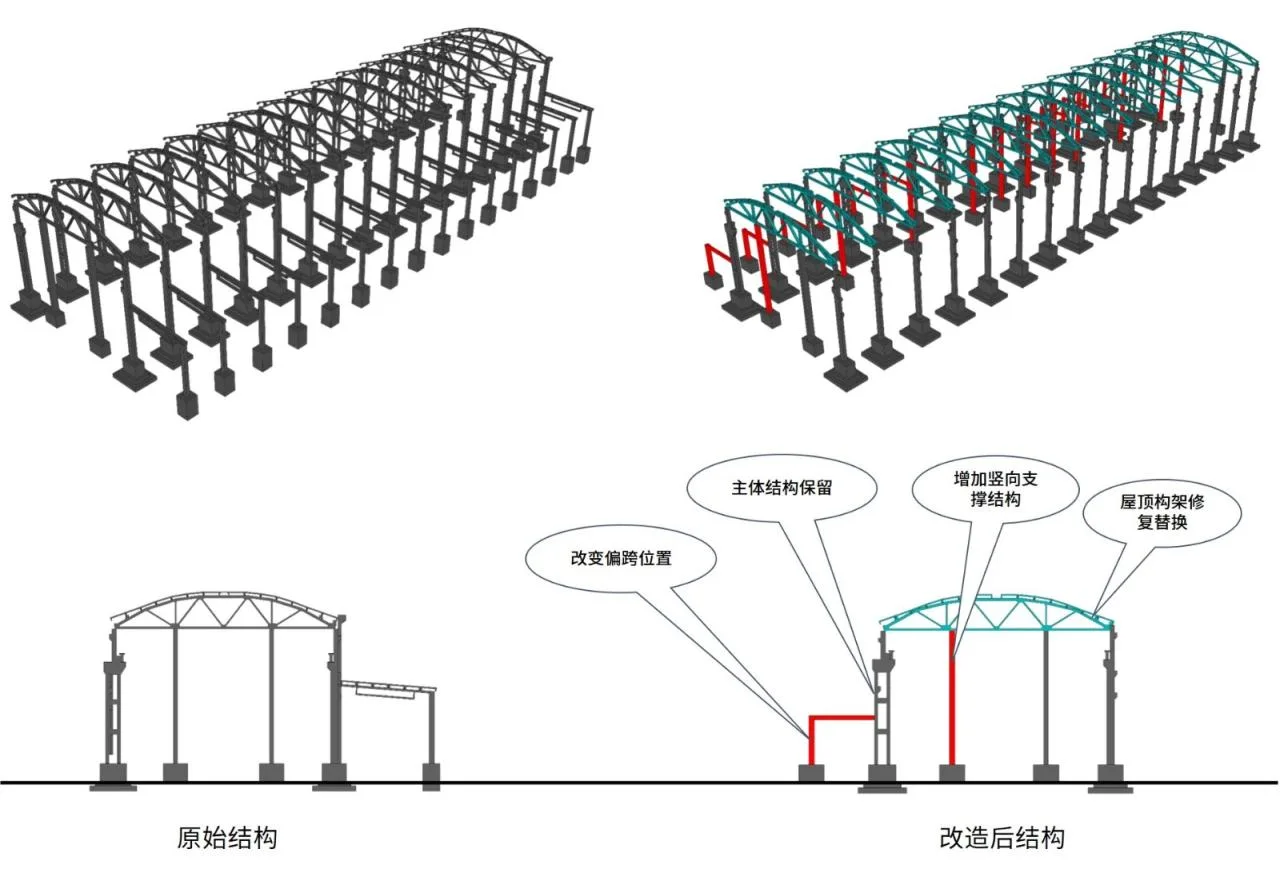
▲ Structural preservation strategy for Building 1
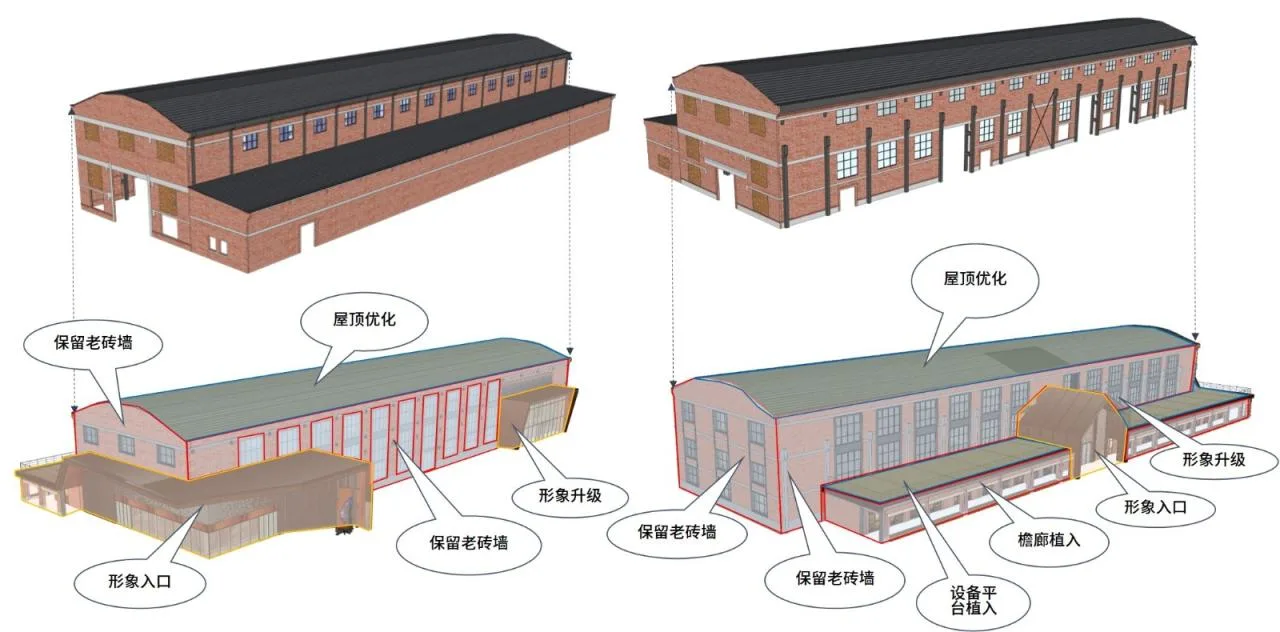
▲ Facade preservation strategy for Building 1
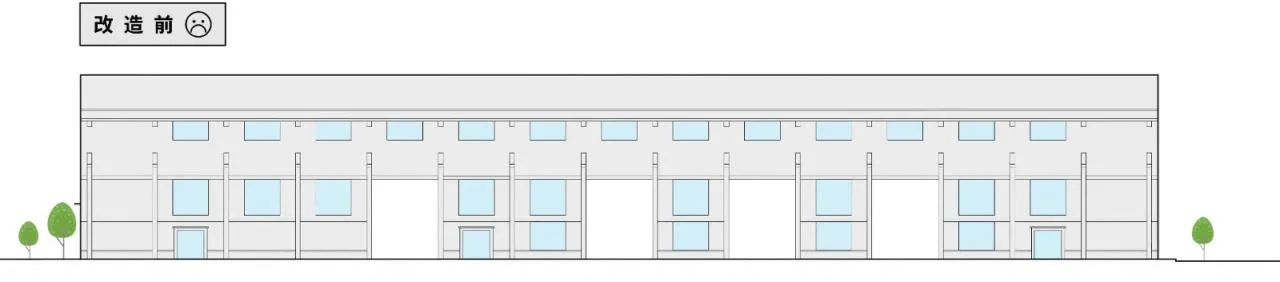
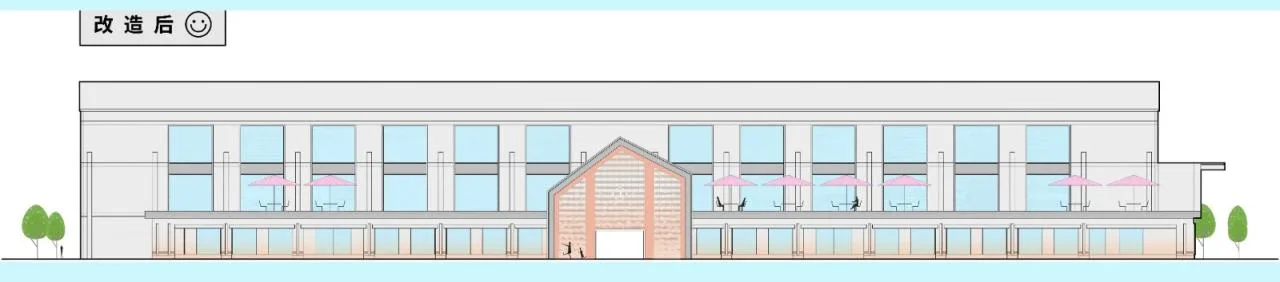
▲ Before and after renovation comparison of Building 1
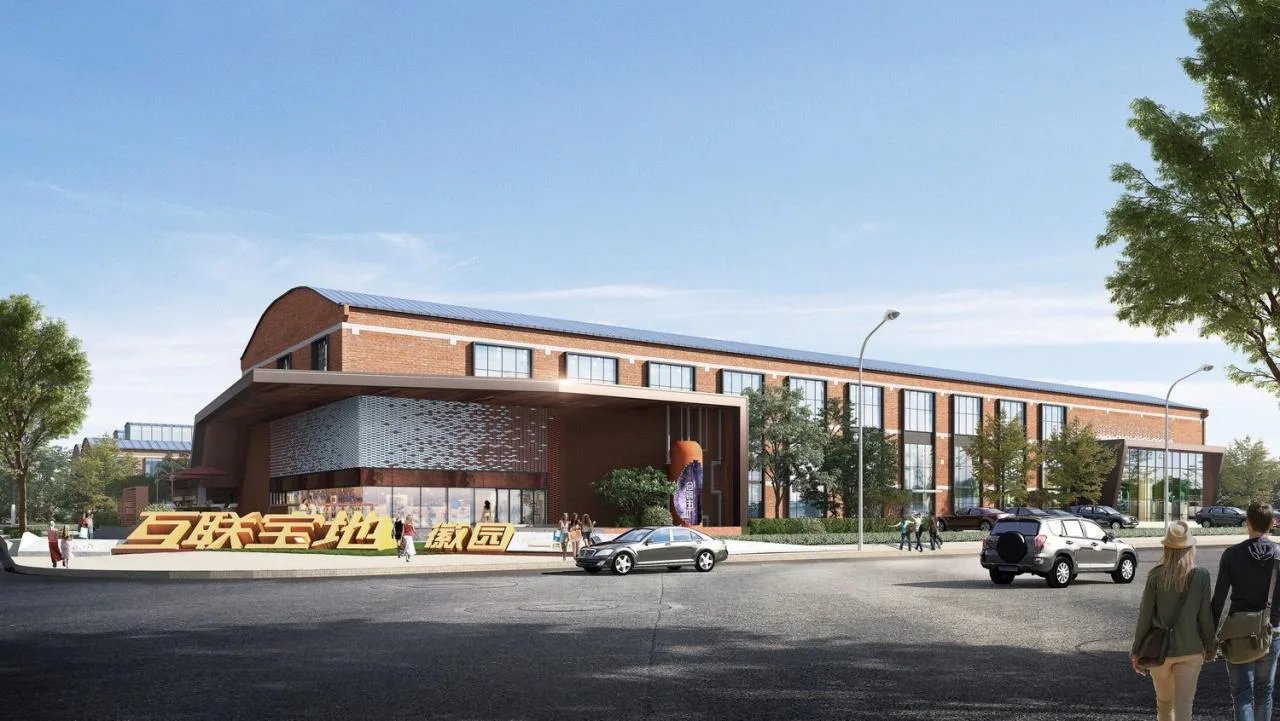
▲ Rendered effect after Building 1 renovation
For Building 3, the north side first floor was reconstructed in its original form with partial span, adding eaves and corridors. A rooftop equipment platform was installed, and an entrance with a red brick curtain wall and skylight was added on the east mountain wall first floor.
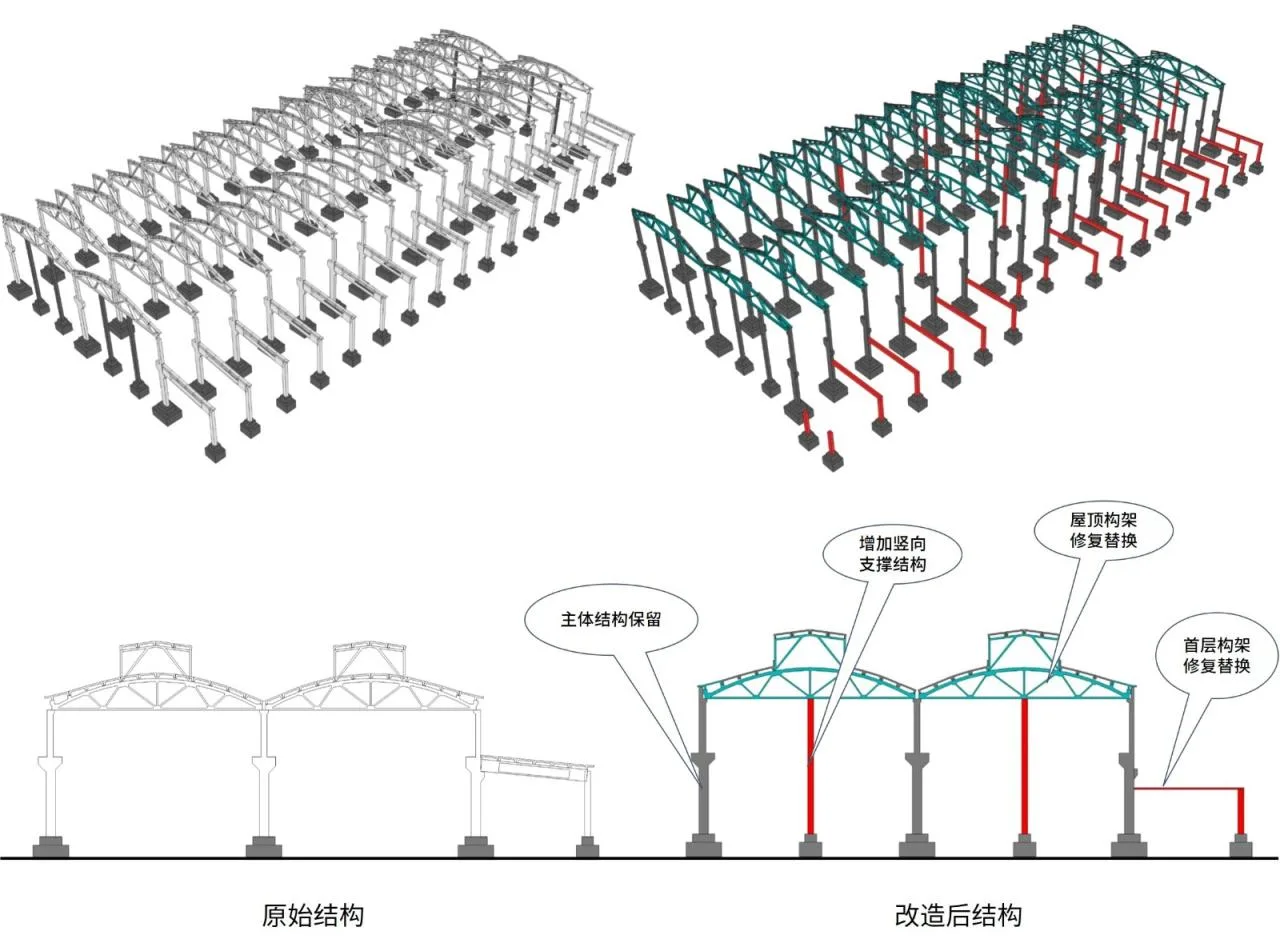
▲ Structural preservation strategy for Building 3
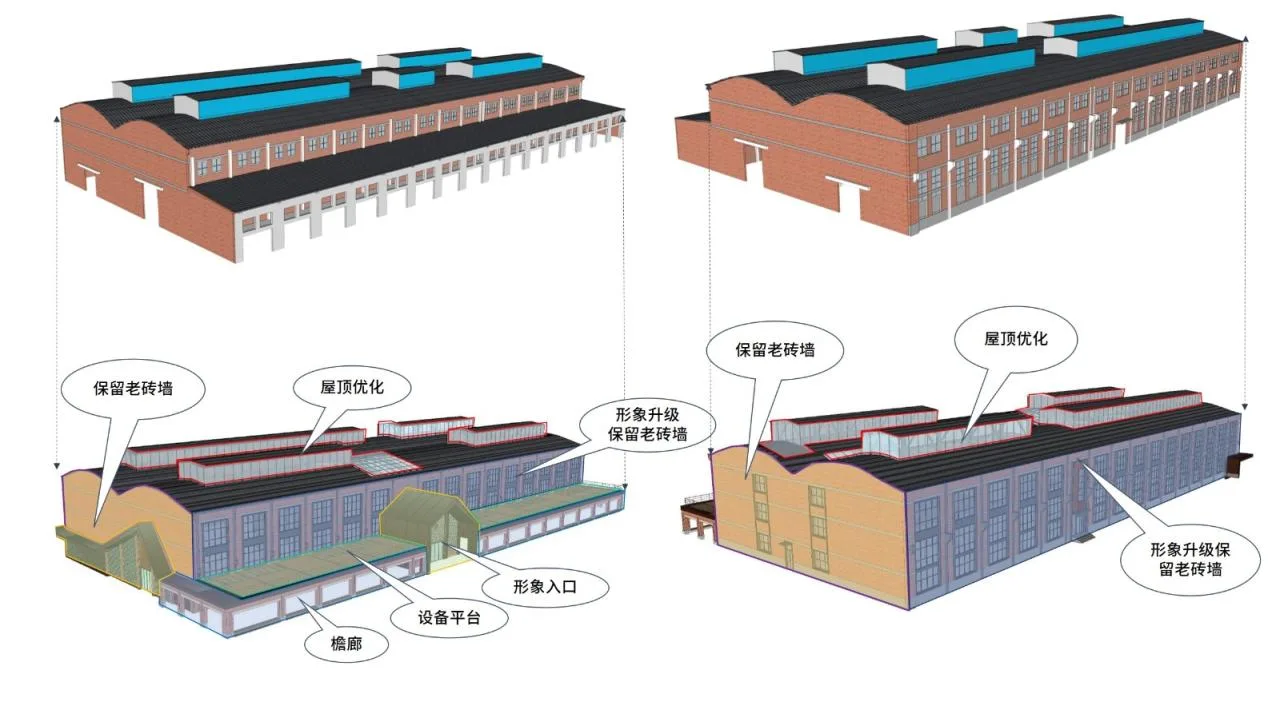
▲ Facade preservation strategy for Building 3
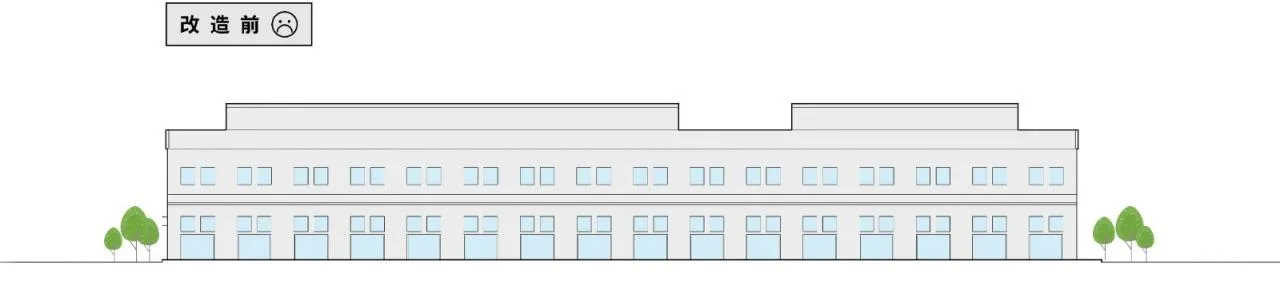
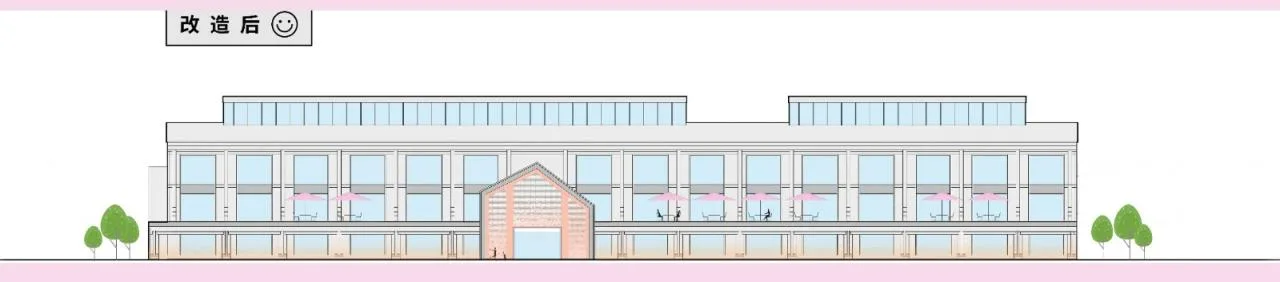
▲ Before and after renovation comparison of Building 3
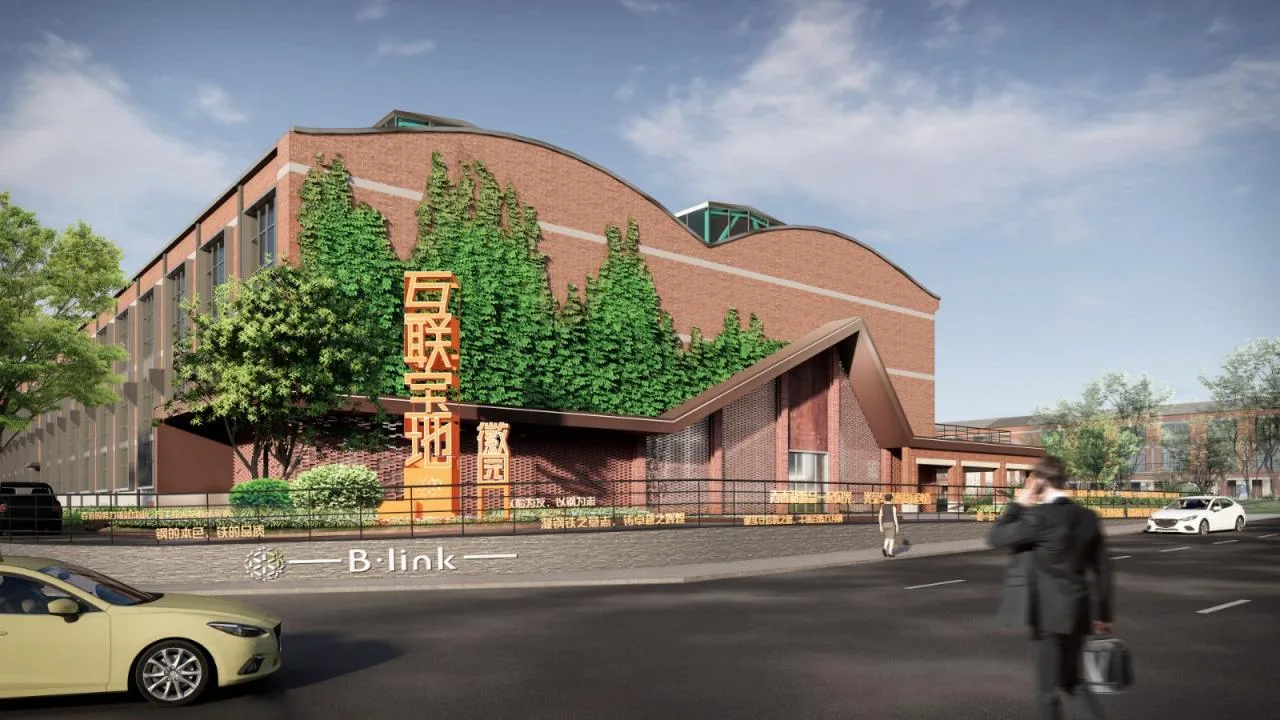
▲ Rendered effect after Building 3 renovation
Building 4 retains a combination of red bricks and vertical windows at the mountain wall base. Upper windows are expanded and outdoor platforms added. The interior integrates scientific offices, exhibition spaces, and transportation areas to improve functionality.
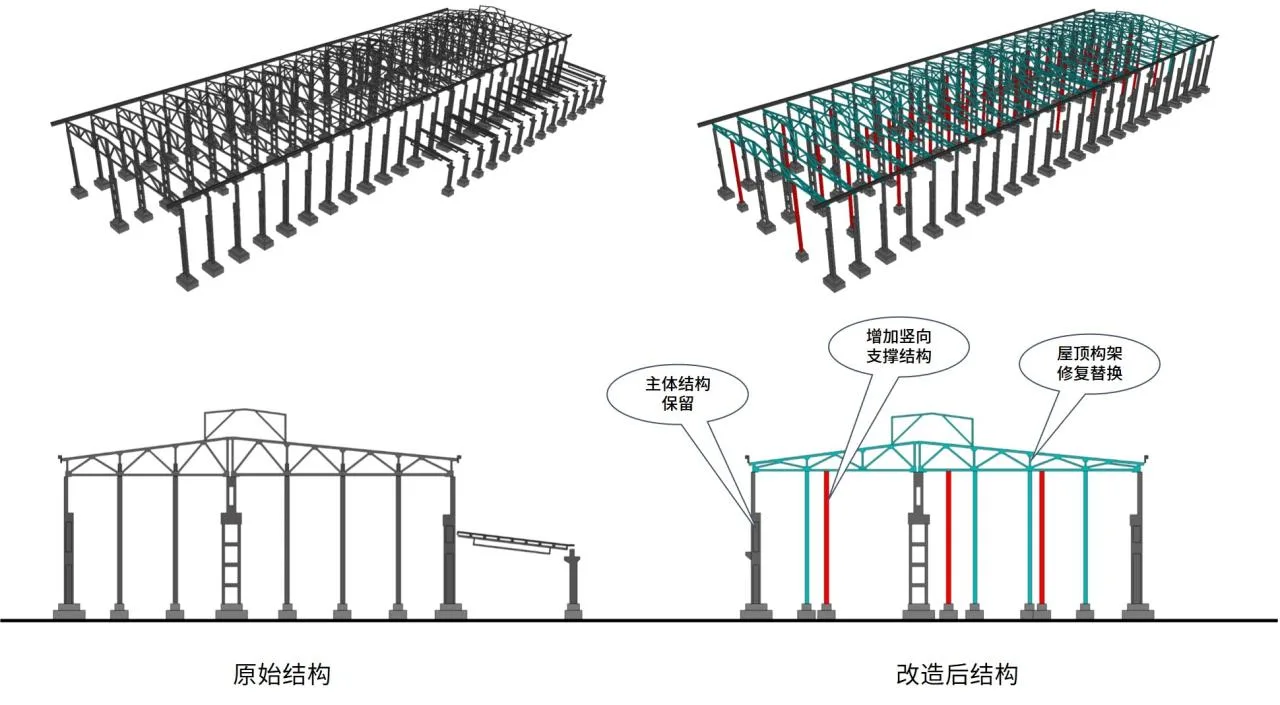
▲ Structural preservation strategy for Building 4
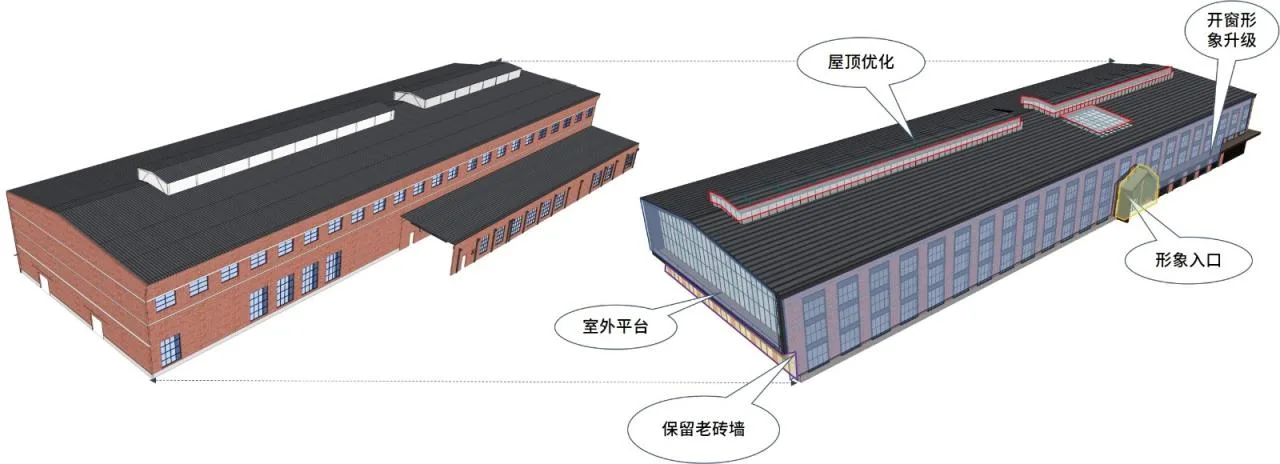
▲ Facade preservation strategy for Building 4
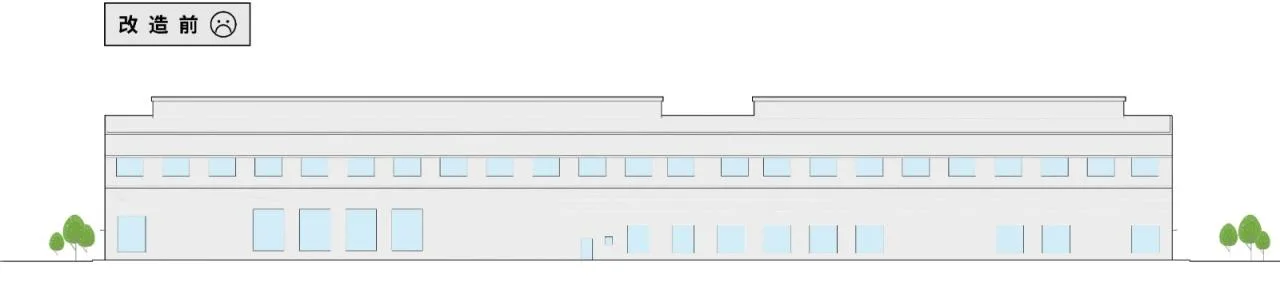
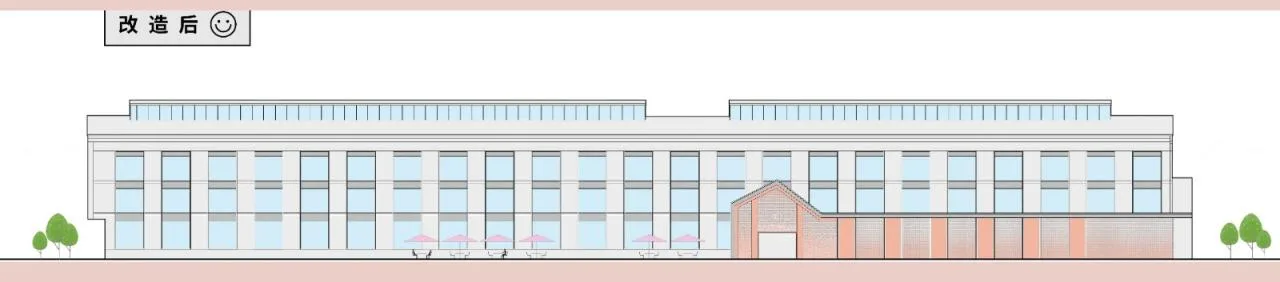
▲ Before and after renovation comparison of Building 4
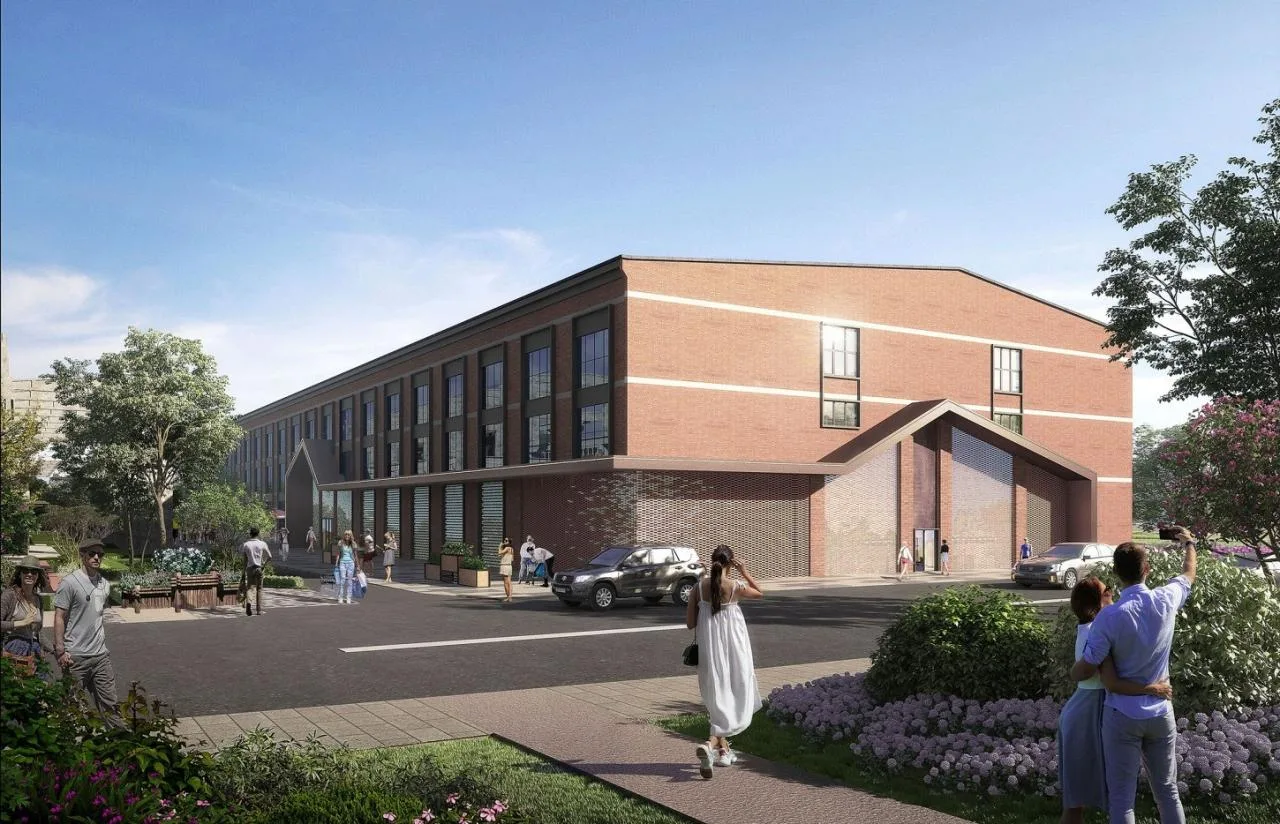
▲ Rendered effect after Building 4 renovation
Building 6 follows the general renovation strategy, with partial demolition of the east wall and an added cantilevered space. Window images are enhanced, skylights installed, and the interior reprogrammed to include scientific offices, corporate exhibition halls, multifunctional spaces, and supporting park facilities for optimized use.
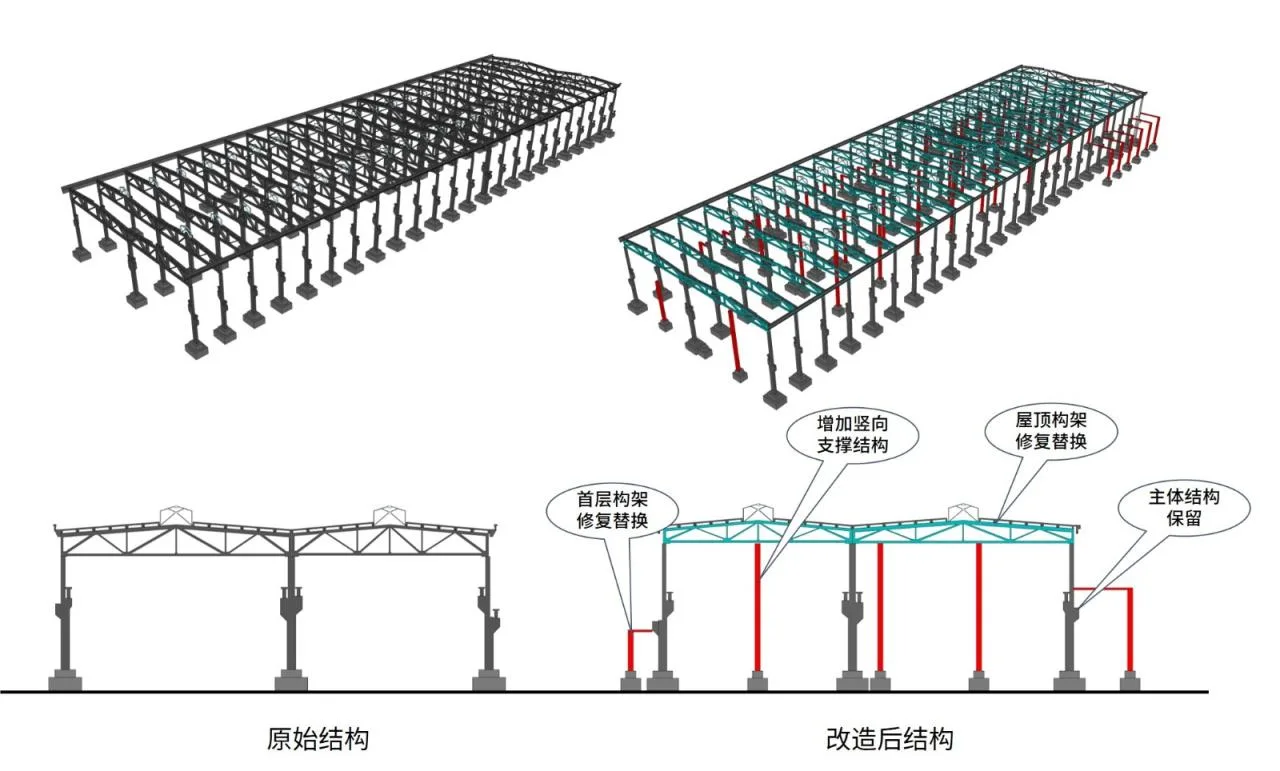
▲ Structural preservation strategy for Building 6
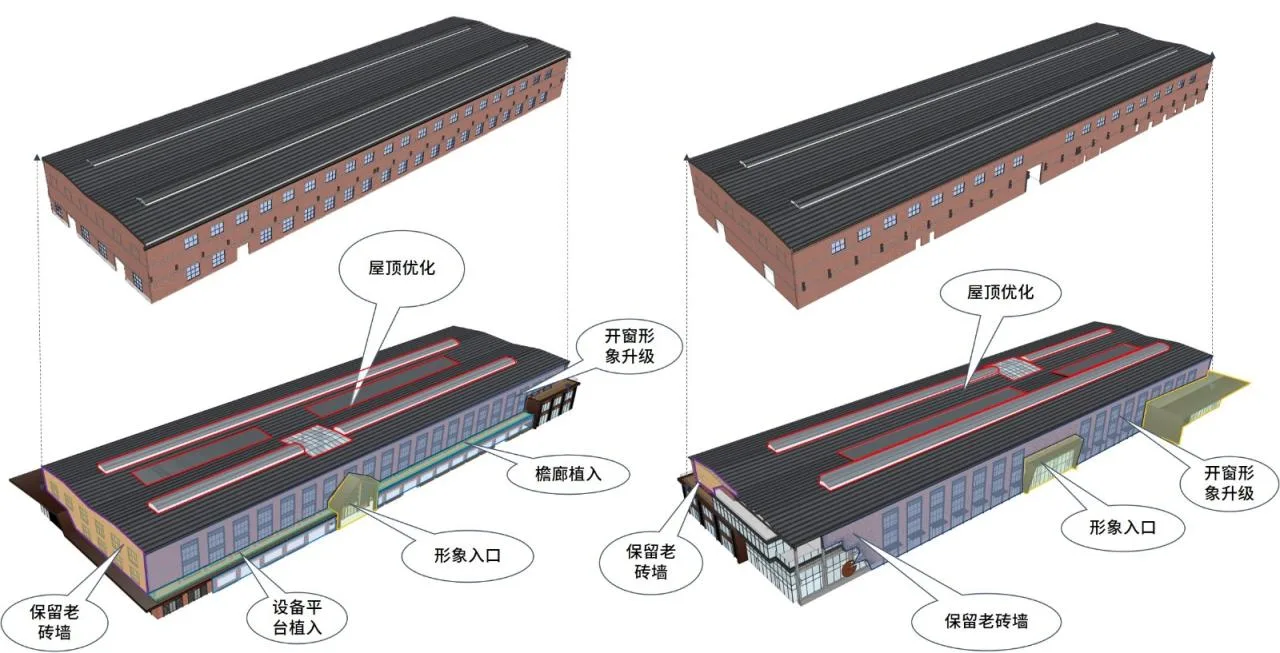
▲ Facade preservation strategy for Building 6
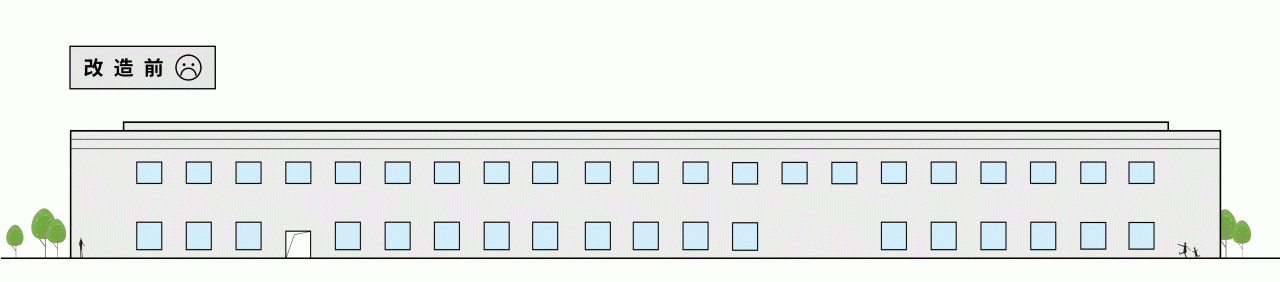
▲ Before and after renovation comparison of Building 6
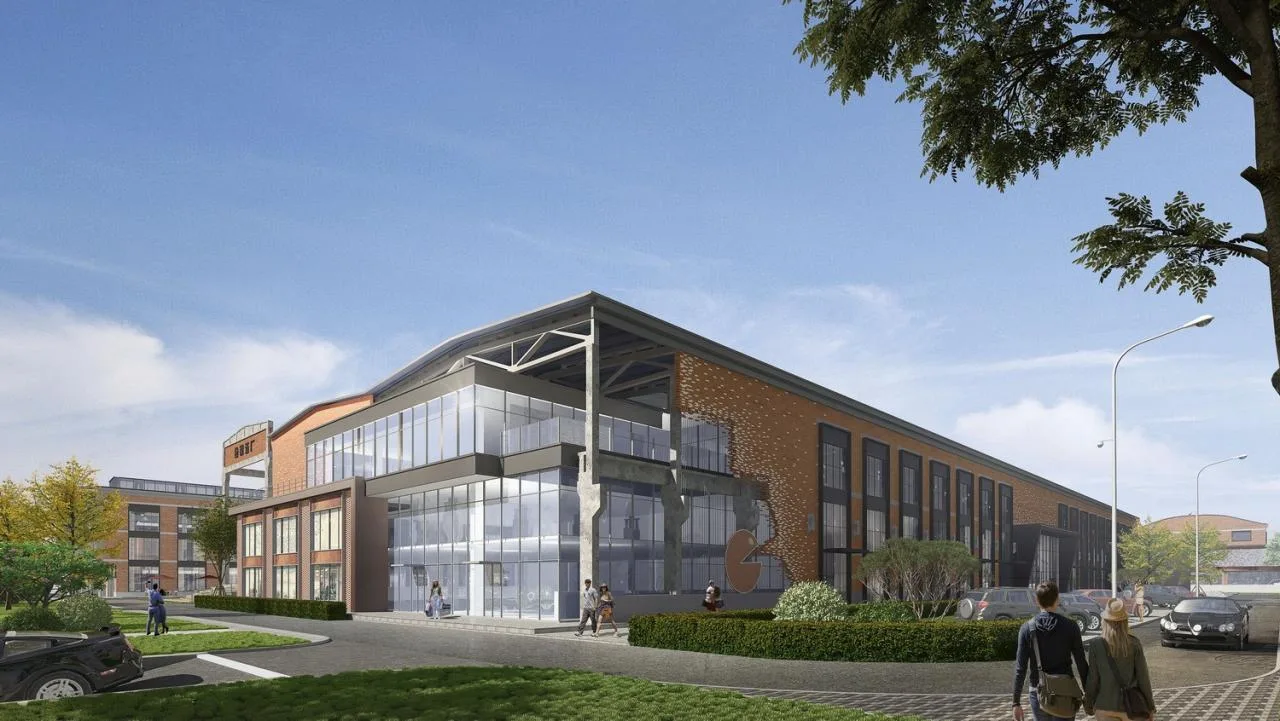
▲ Rendered effect after Building 6 renovation
Upgrading and Renovating Buildings
Building 5’s exterior walls are in poor condition, though the structure remains intact. To serve park office facilities and create an industrial civilization exhibition corridor, the structural components have been preserved with significant renovations. The north side structure was upgraded and raised, while a new south span was constructed based on the original form, serving as an open-air memory exhibition hall preserving the industrial spirit. Roof trusses were repaired and replaced, vertical structures added for functionality, and the roof reconstructed with lightweight materials featuring hollow openings for light and shadow play. Original brick walls were restored with red brick masonry, and new functions such as meeting rooms, transportation spaces, and rooftop outdoor platforms were integrated.
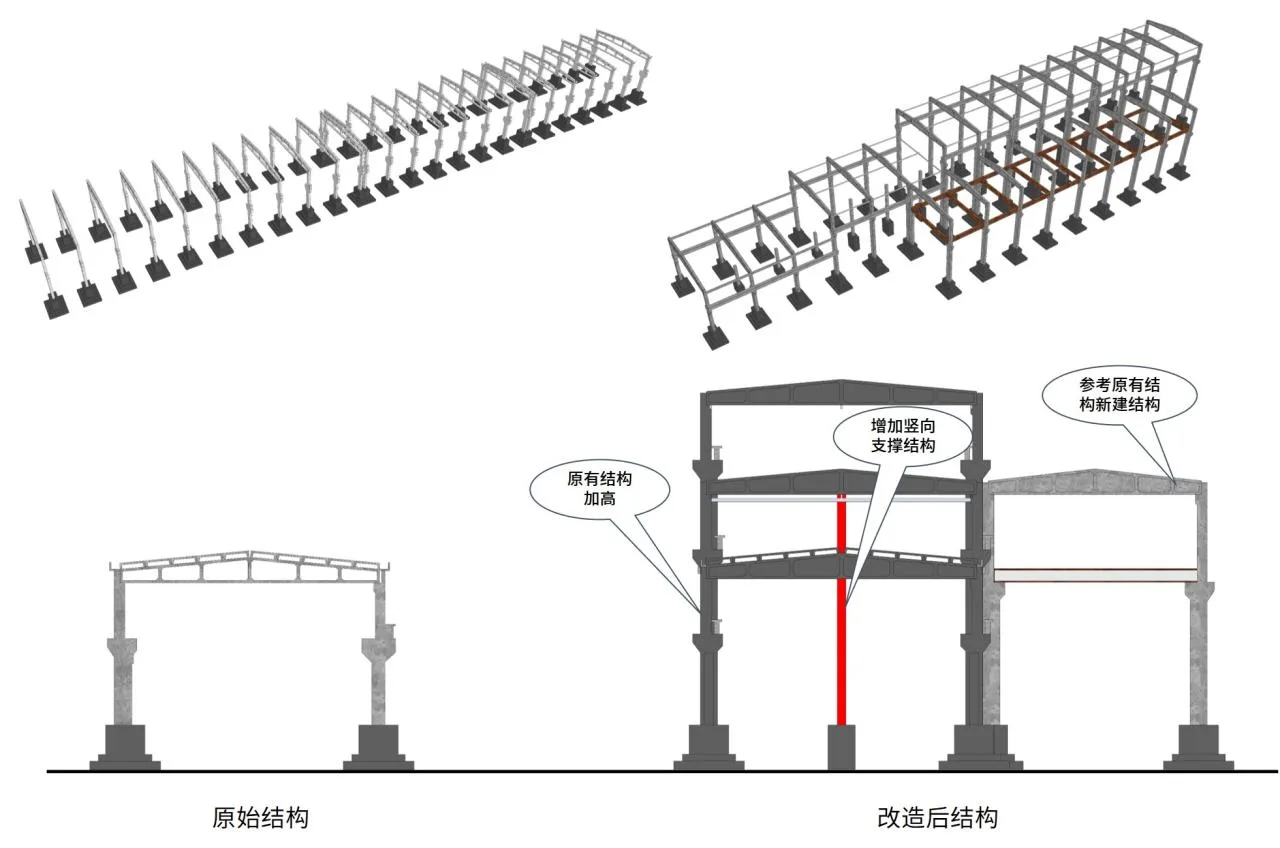
▲ Structural preservation strategy for Building 5
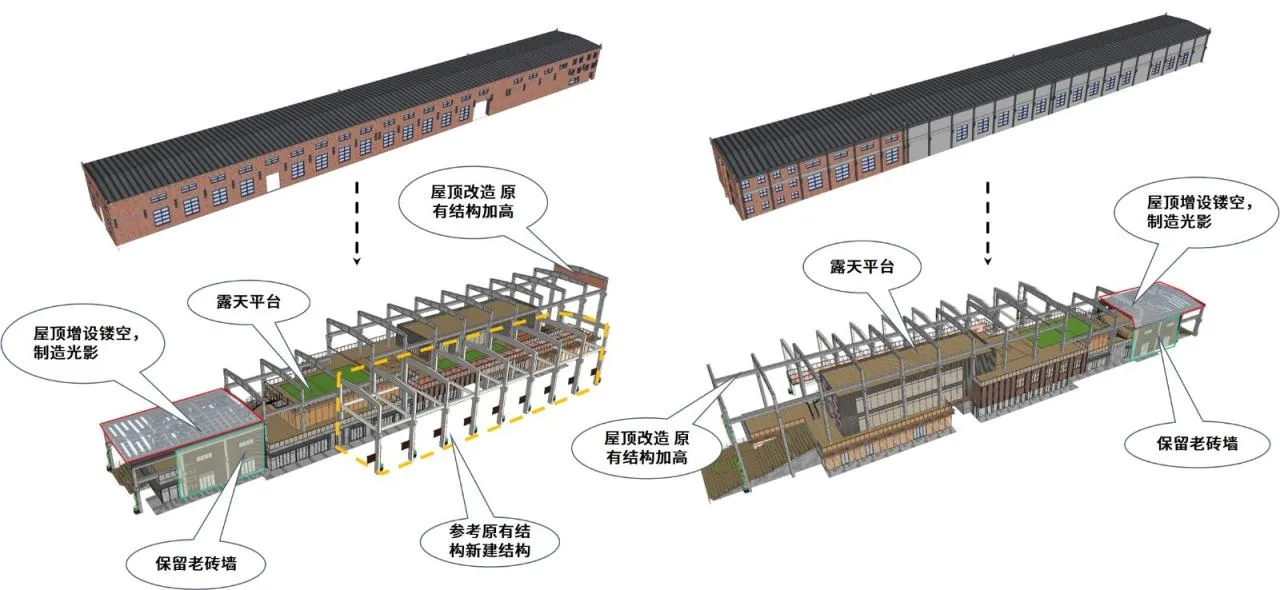
▲ Facade preservation and renovation strategy for Building 5
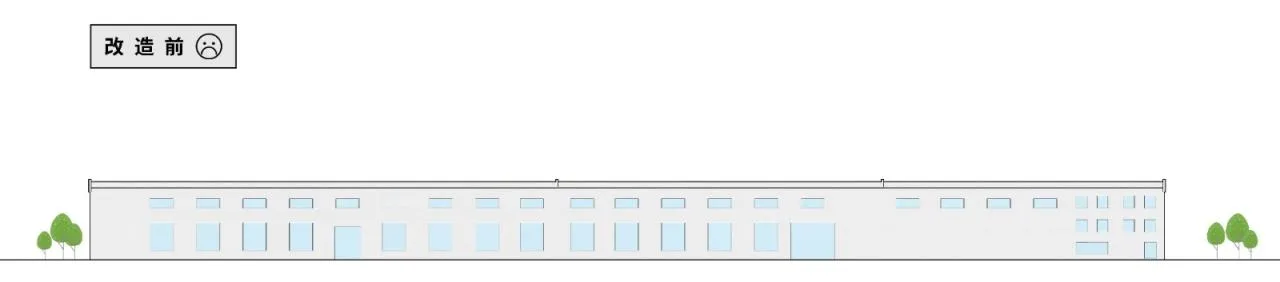
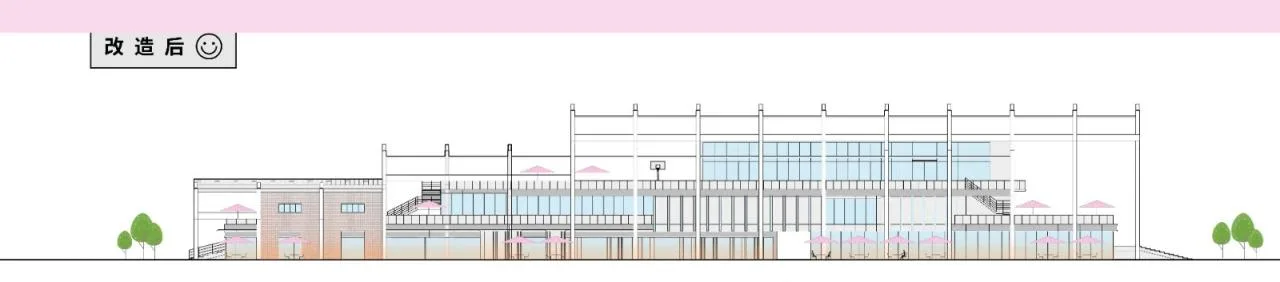
Comparison before and after renovation and upgrade of Building 5
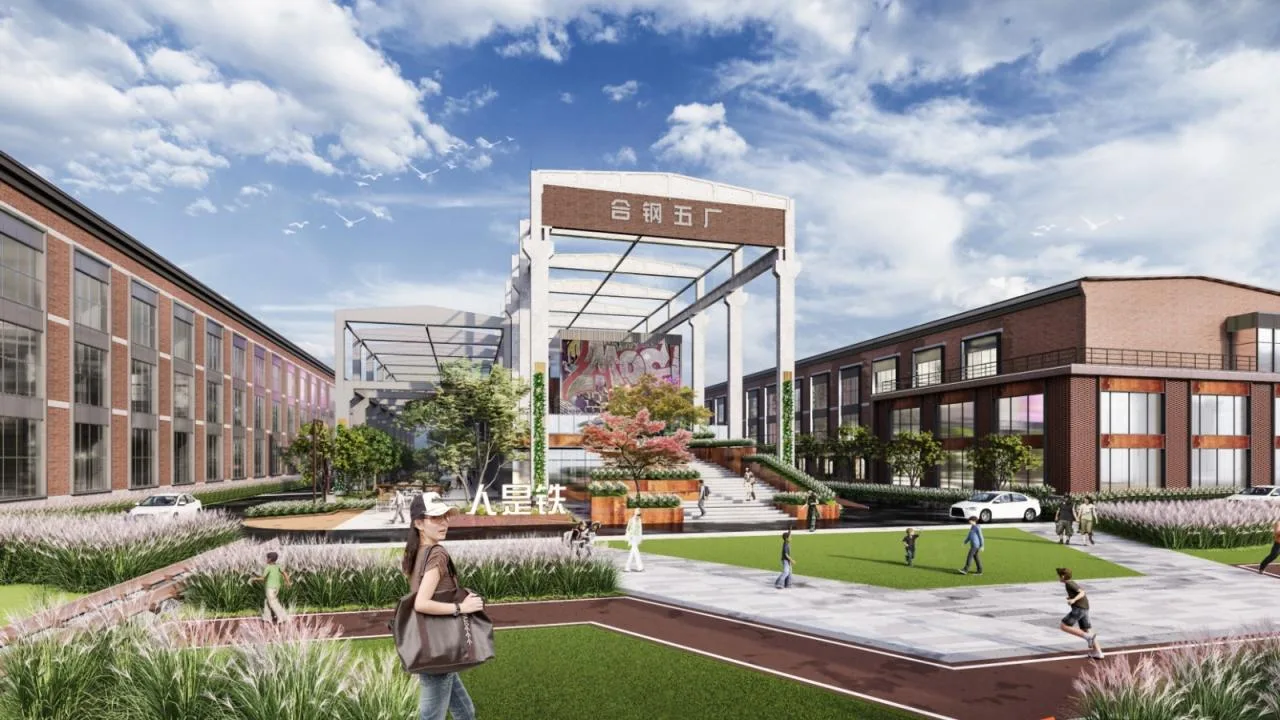
▲ Rendered effect of Building 5 post-renovation
New Construction
The original Building 2, consisting of two floors plus three added floors, suffered from poor wall and structural conditions and was demolished. To continue the unique aesthetic of industrial heritage and establish a landmark urban site, the design team extracted the mountain wall contour of Building 4 and reinterpreted it as the mountain wall of the newly constructed Performing Arts Center. This design evolved from symmetrical to asymmetrical blocks through superimposition and optimization, creating a floating factory memory symbol facing the central square. This new building harmonizes industrial memory with the renovated old buildings on either side, blending the old and new spaces.

▲ Performing Arts Center design concept
▲ Rendered view of the Performing Arts Center
Preservation and Innovation
Old factory buildings embody the traces of industrial development and are tangible relics of a city’s evolving history. Cities need to safeguard their historical and cultural heritage, combining it with modern architecture to create a dynamic urban character that contrasts old and new while enriching cultural memory for residents.
Project Information
Building type: Office, Commercial
Building area: 54,359 square meters
Developer: Shanghai Baodi Real Estate Asset Management Co., Ltd.
Architectural Design: UA You’an Design Division 5
Steel Structure Design: UA Youan Design Comprehensive Design Department
Landscape Design: UT Tower Planning















Must log in before commenting!
Sign Up