
In the construction industry, the continuous advancement of BIM technology has prompted many design institutes in China to explore its application during the design phase. This exploration is essential for unlocking the full lifecycle potential of BIM technology.
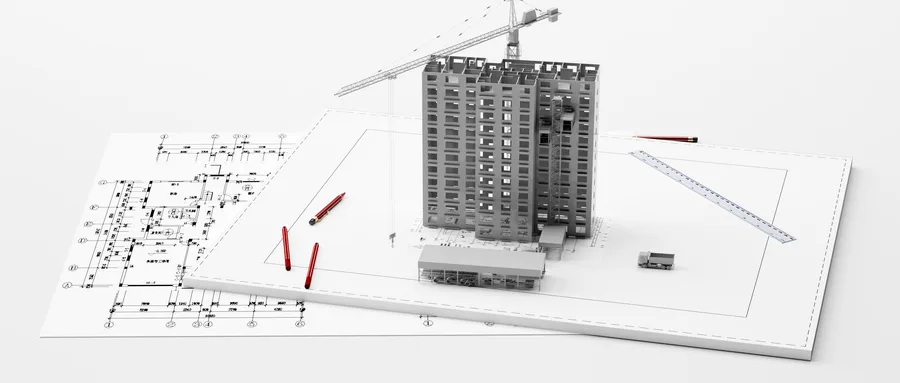
Unlike the traditional “2D-3D-2D” workflow—where design and construction drawings come first, followed by BIM model creation and visualization—BIM forward design integrates BIM guidance throughout the entire design process. This includes preliminary design, structural design, construction drawings, and detailed design stages.
The typical approach involves establishing a collaborative work platform that continuously builds a knowledge base. This platform is combined with existing software for secondary development to enable modular and parameterized rapid modeling. The model is then converted into a computational analysis format. Through comprehensive or focused analysis, the design is evaluated against requirements. If the criteria are met, the final BIM design model is created and used for virtual visualization, 2D drawing generation, quantity takeoffs, and ultimately delivered as an information-rich design model.
BIM forward design generally progresses through three key stages:
- Stage One: Construction drawings—such as plans, elevations, and sections—are generated directly from the model. Any modifications to the model require only re-exporting the drawings, ensuring consistency and significantly improving design efficiency and quality.
- Stage Two: A high level of coordination between various disciplines is achieved during the design process. This coordination facilitates better control over project progress and quality.
- Stage Three: The ultimate goal of BIM forward design is to provide a three-dimensional information platform where designers can intuitively express their ideas. This approach replaces the traditional 2D-to-3D design process by leveraging computer parameterization to share work among designers and even integrate computational models for synchronous optimization.
















Must log in before commenting!
Sign Up