
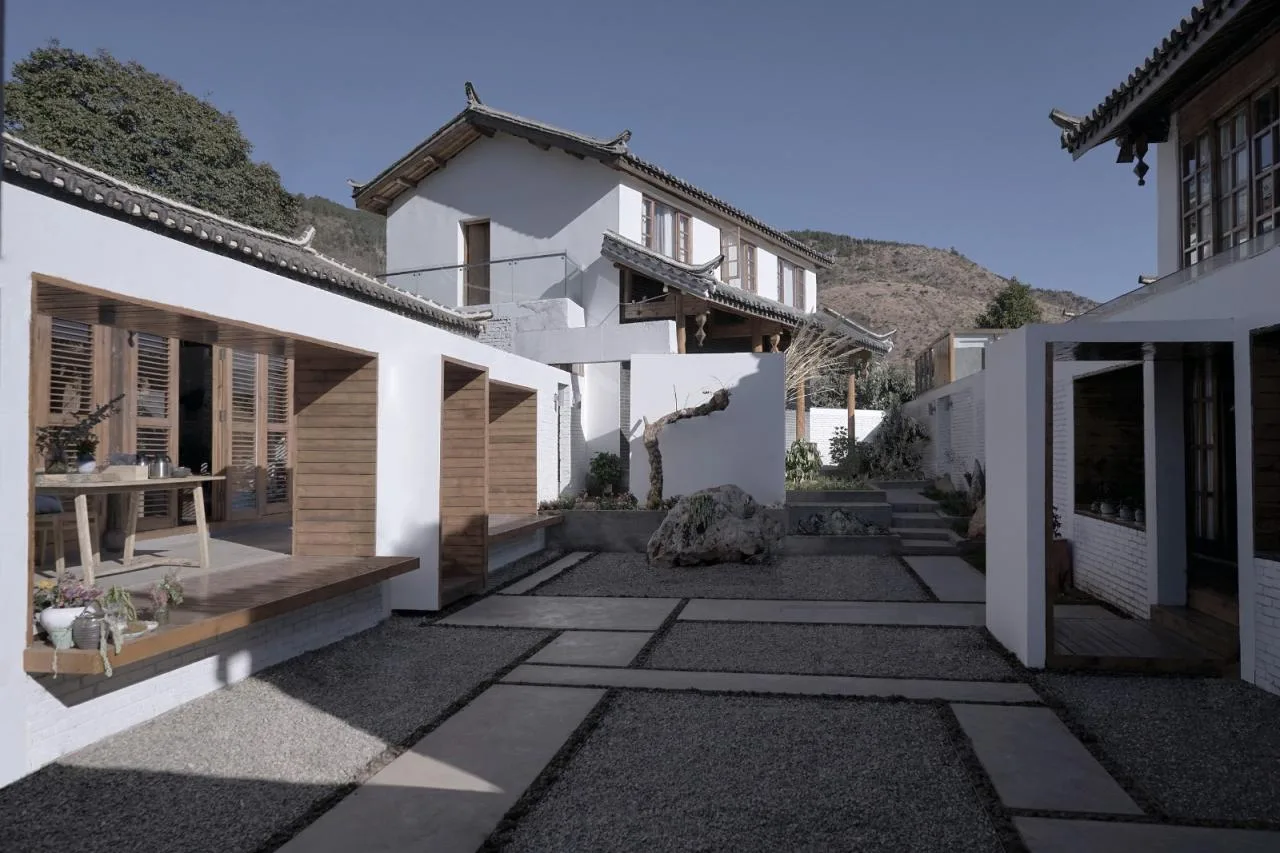
△ © Cooperative Society
In 2018, we were commissioned by a private owner to renovate her ancestral home in Yishala Yi Village, her birthplace, transforming it into a guesthouse and homestay. The renovated estate comprises six buildings constructed at different times. This project is named “Hidden Mountain Orchid Garden.”
Like many rural construction endeavors, the Yinshanlan project began with high hopes but a limited budget. As architects, one of our main challenges was to fulfill the owner’s vision while staying within financial constraints. Additionally, due to the varied construction periods, the six buildings displayed inconsistent structural forms and preservation conditions, along with differing facades. Our task was to unify these diverse residential buildings into a modern homestay offering seamless and continuous spatial experiences.
Our approach started with a thorough structural evaluation and survey of the old buildings. This project shaped what we now call “another experience” in rural renovation: unlike most renovations that focus solely on modifying interior spaces, we assessed the original structures and removed those that were structurally unsound. We then expanded the design beyond the buildings themselves. Ultimately, we preserved the distinctive original buildings and “inserted an empty room” between them, creating a continuous experiential interface. This strategy avoided full demolition and reconstruction, reducing costs. Simultaneously, the inserted ’empty room’ forged new relationships with the existing buildings and redefined their functions.
—The architect’s words
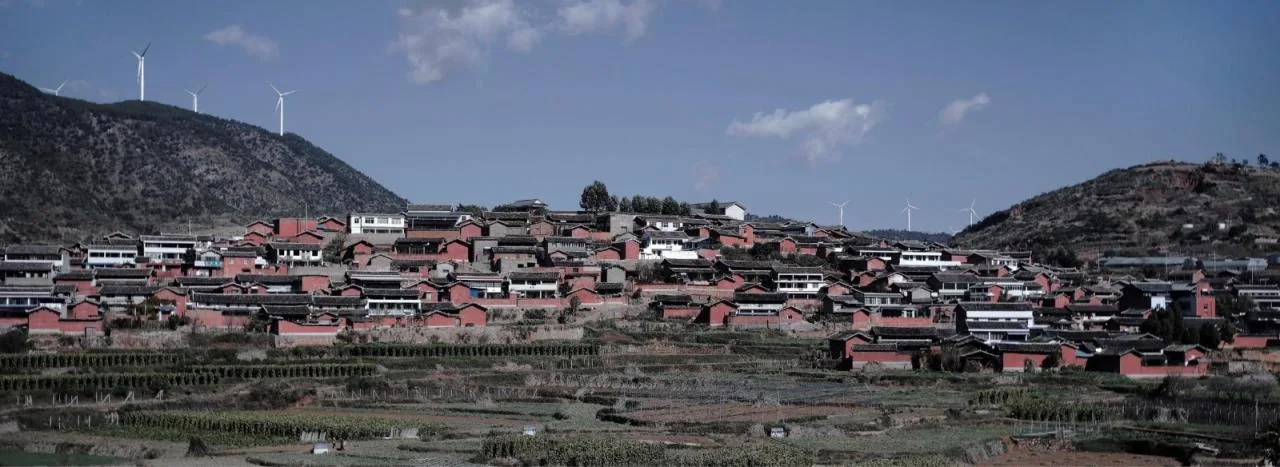
△ Yishala © Cooperative Society
Yishala Village: An Ancient Yi Ethnic Village
Yishala Village is a well-preserved Yi Autonomous Village, established historically as a settlement of post stations. Traditionally, most village buildings were constructed with rammed earth and wooden frames. Over time, evolving construction methods introduced brick and concrete wooden roofs, rough concrete frames, as well as fast but rudimentary steel frames and color steel plates into Yishala’s architectural fabric.
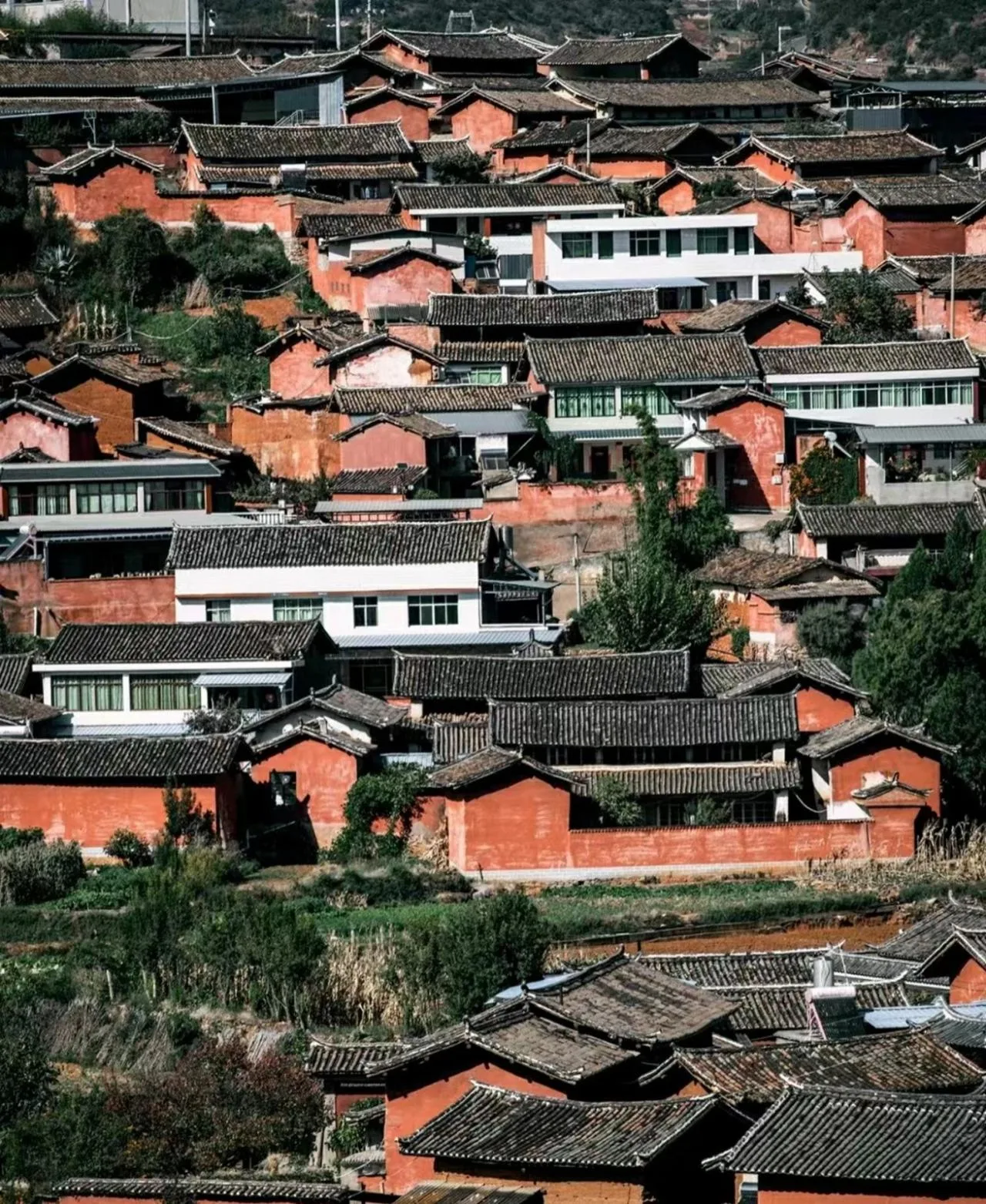
△ The architectural complex of Yishala © network
Around 2010, in an effort to preserve the village’s distinctive historic atmosphere, local authorities painted all visible houses magenta to mimic traditional rammed earth walls. Despite this, rural depopulation has led to the decline of this once-thriving post station village, and the red-painted walls cannot restore its former vibrancy.
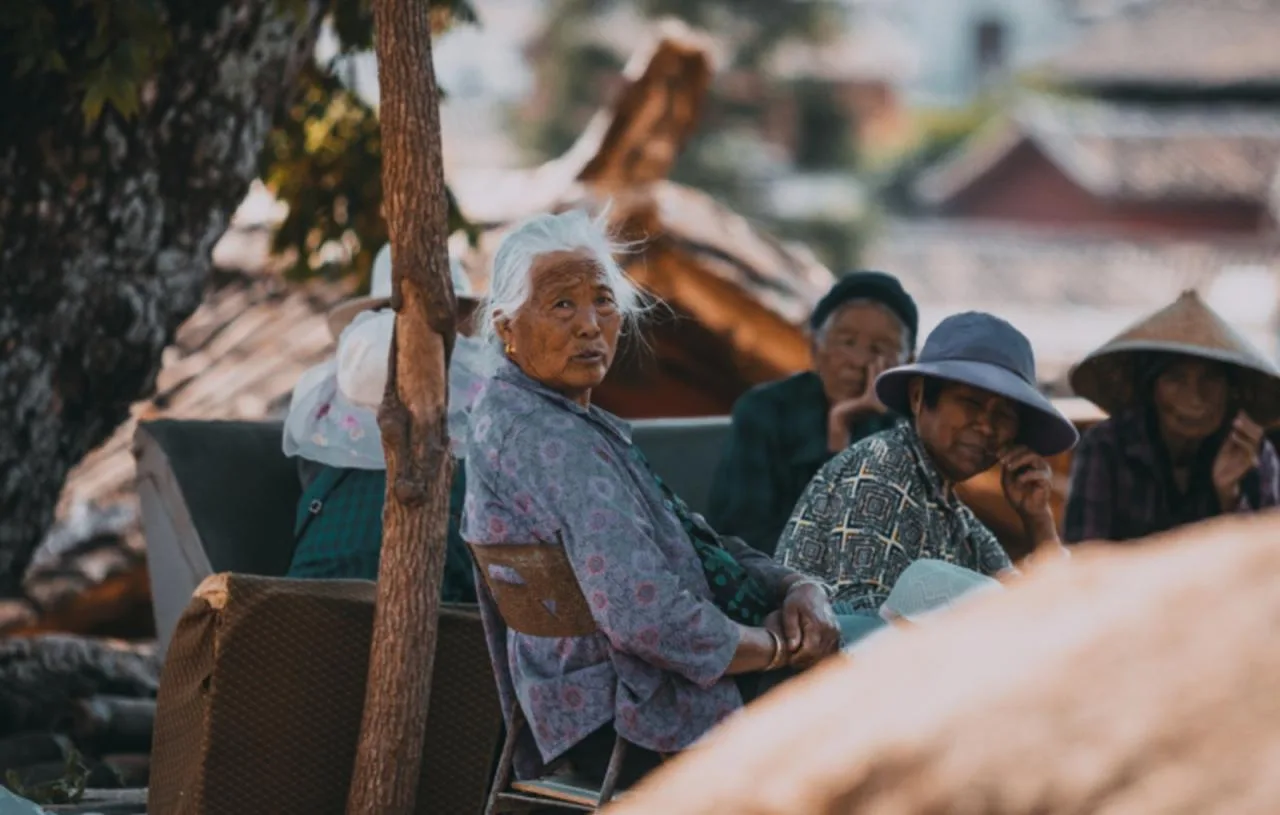
The villagers of Yishala © Hidden Mountain Mist
In the local Yi language, Yishala means “a place where water falls.” This historic Yi village is marked by unique red walls and blue tiled roofs, creating a distinctive palette. Life here follows natural rhythms: mornings welcomed by the crowing of roosters, lively days in the fields, evenings spent cooking and socializing at sunset, and nights under the stars.
The Yinshanlan project is situated within a courtyard in this ancient village. The courtyard has seen multiple phases of construction and serves as a microcosm reflecting the architecture and lifestyle of Yishala Village.
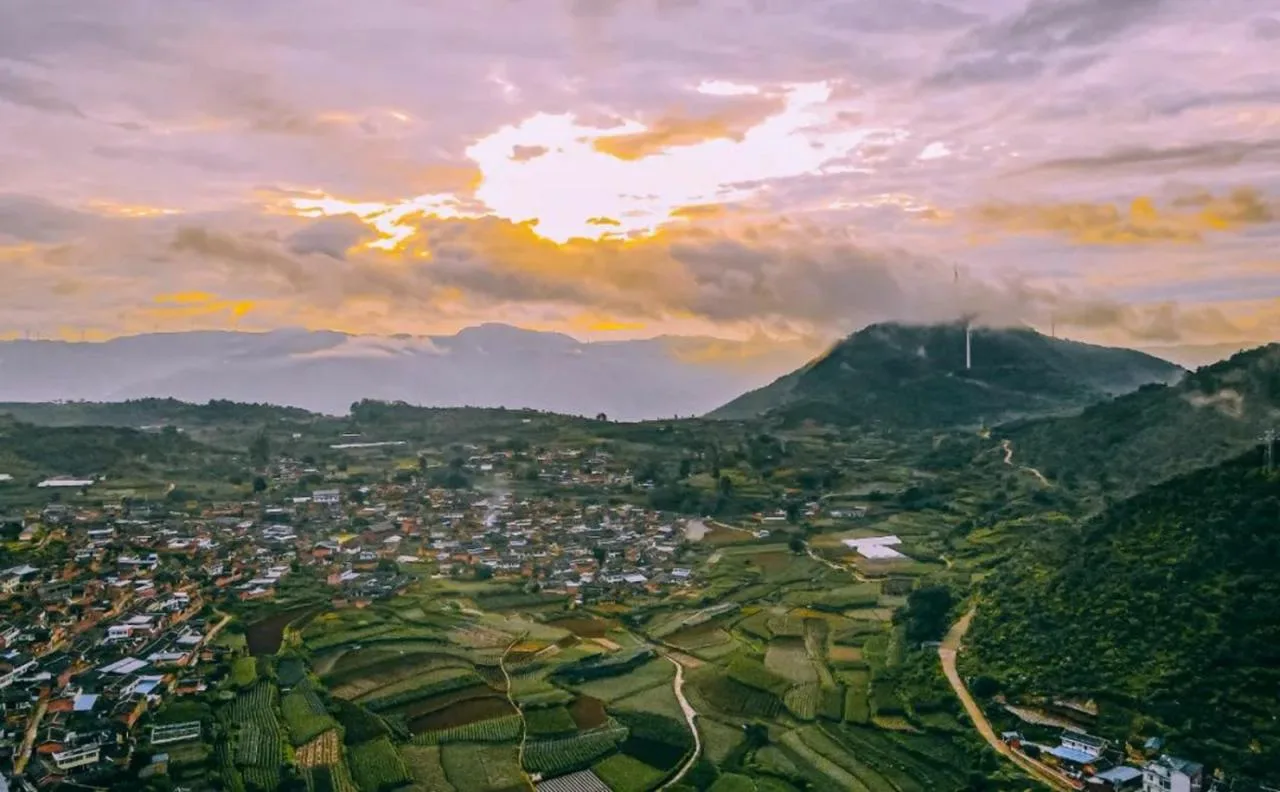
△ Yishala © Hidden Mountain Mist
About Yinshanlan
Our first encounter with Hidden Mountain Lanterns was a delightful surprise. Towering mountains surrounded the site, framed by blue skies and white clouds. The pastoral surroundings provided a peaceful retreat far from urban bustle. Traditional customs alive in the streets and simple greetings from villagers made the place instantly welcoming.
Like many rural areas, Yishala suffers from population decline. Most young people leave, leaving behind an aging population and a gender imbalance due to girls marrying out. The village director expressed their desire to improve conditions but uncertainty about the path forward. Although villagers sometimes learn from other places, a lack of leadership and confidence prevents them from taking action.
Often, there is hope for large-scale investment to revitalize rural areas. Yet after facing obstacles and disappointments, we wonder if reliance on outside help is the only way. Could villagers themselves pursue a path of self-sufficiency and collaborative development? Drawing on many examples and supported by willing helpers, this approach holds promise.
—From the manager of Yinshanlan
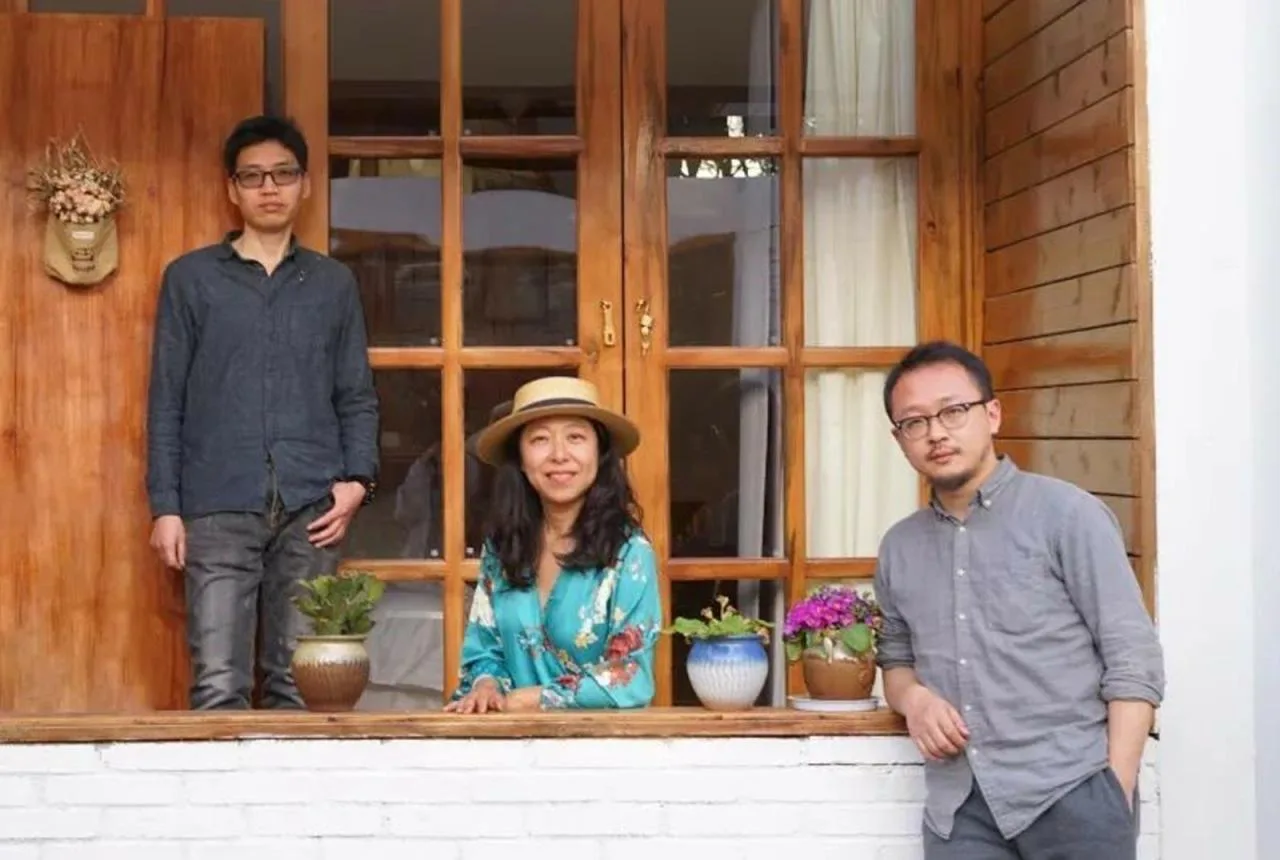
△ Architect and manager together © Cooperative Society
The owner and architect of Yinshanlan Homestay share a strong friendship and vision, bringing everyone together to create a meaningful building. Sharing this sense of belonging allows both architects and project members to grow through the design and construction process.
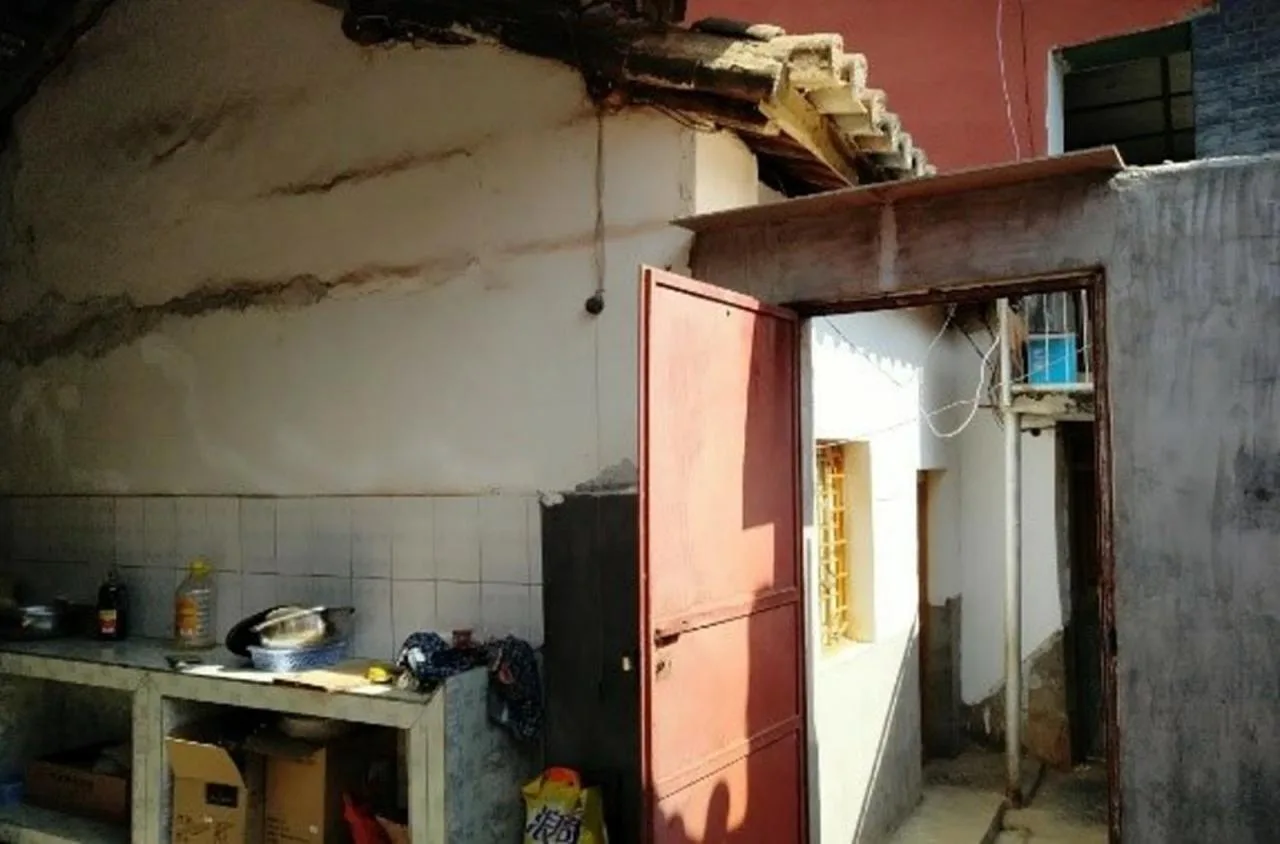
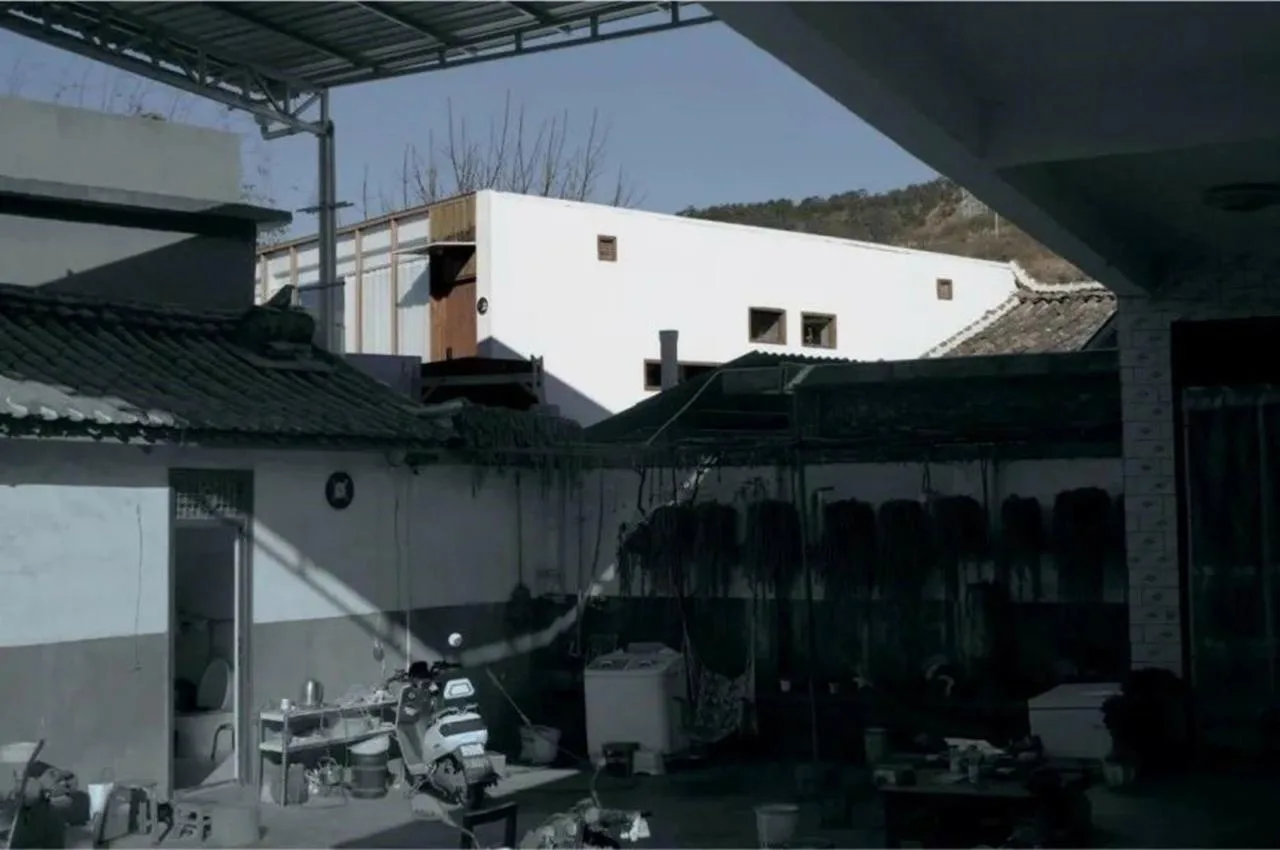
Hidden Mountain Mist before renovation © Cooperative Society
The design process began with renovating the old house, emphasizing respect for nature, culture, and spatial structure throughout. We aimed to honor local culture, integrate Hidden Mountain Orchid Garden with Yishala Village, maintain simplicity, balance modernity with tradition, reshape the past, and gradually develop a model that reflects both late modern and traditional rural culture.
A White Empty Room
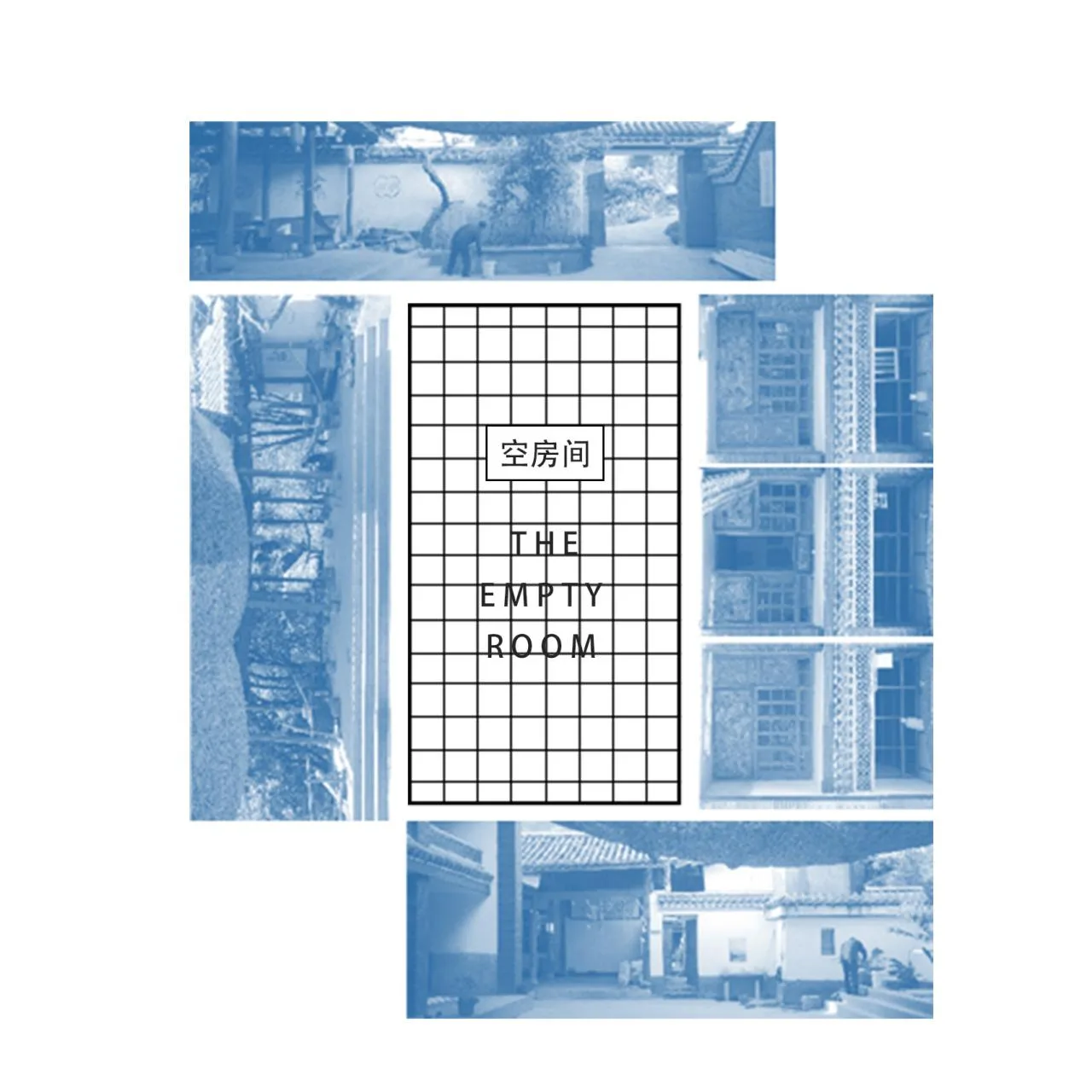
△ Courtyard environment © Cooperative Society
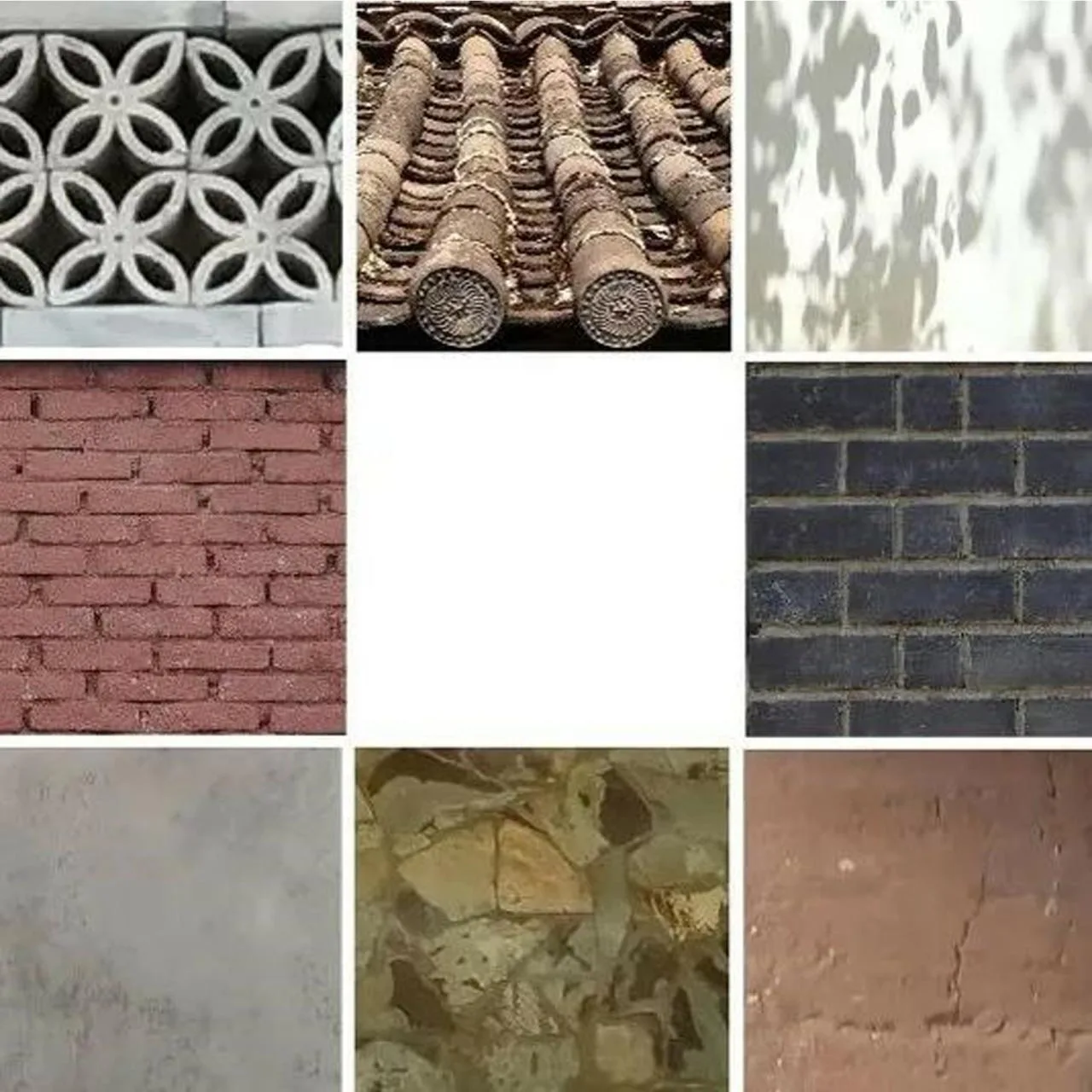
△ Materials in the courtyard © Cooperative Society
Initially, the courtyard was complex with multiple building materials, structures, and colors.
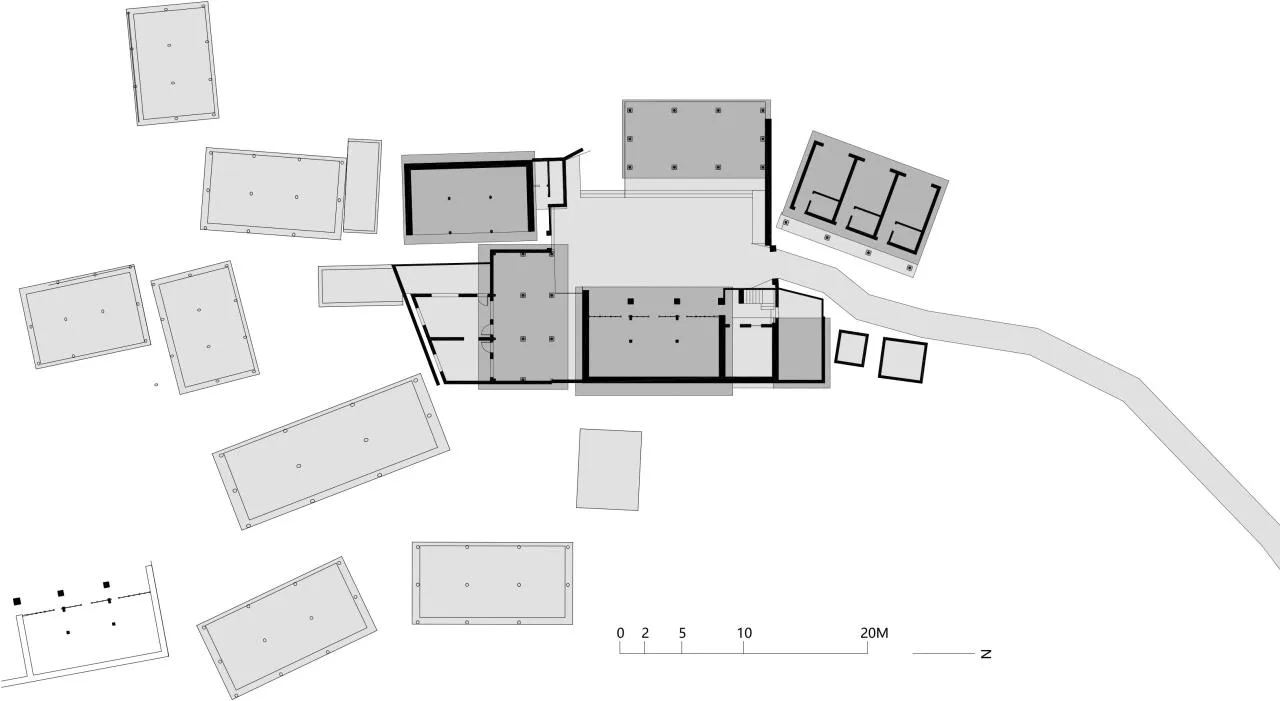
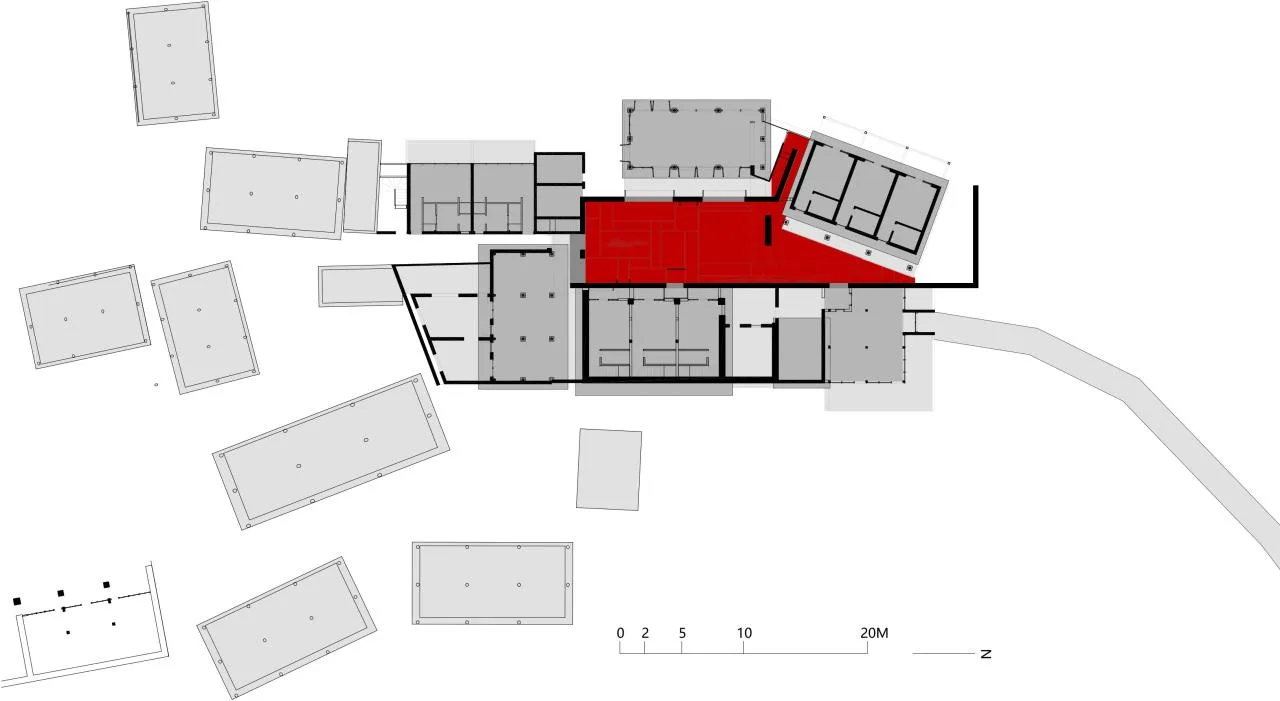
△ Building renovation plan
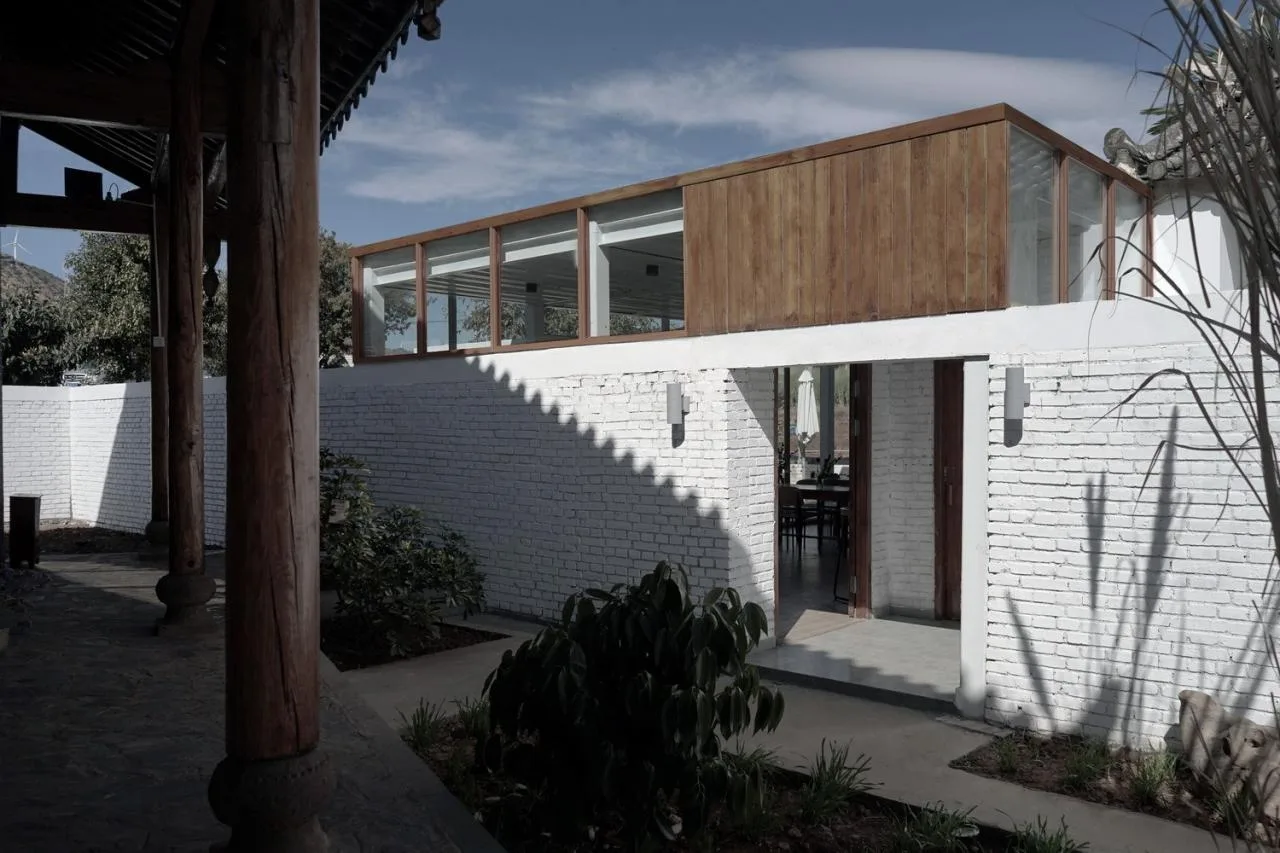
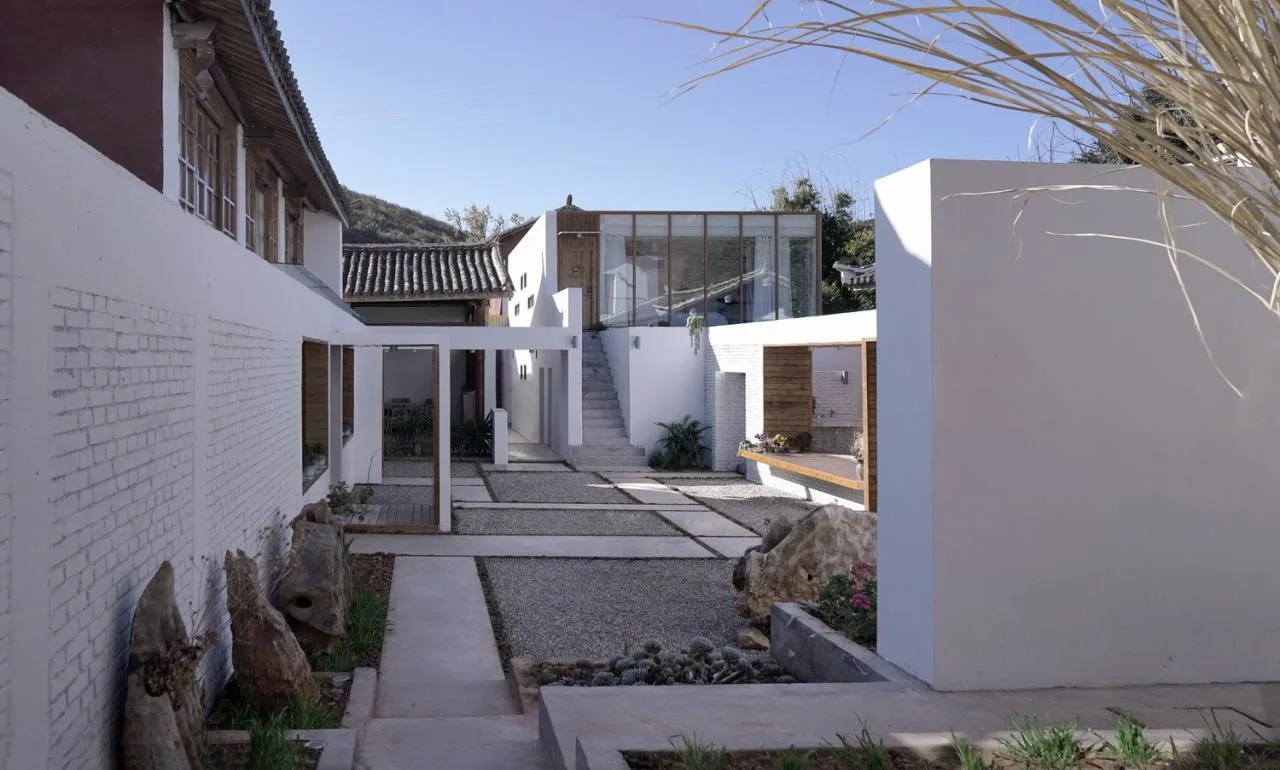
To unify the complex, we inserted a white “empty room” between the courtyard buildings, creating a continuous and cohesive spatial experience.
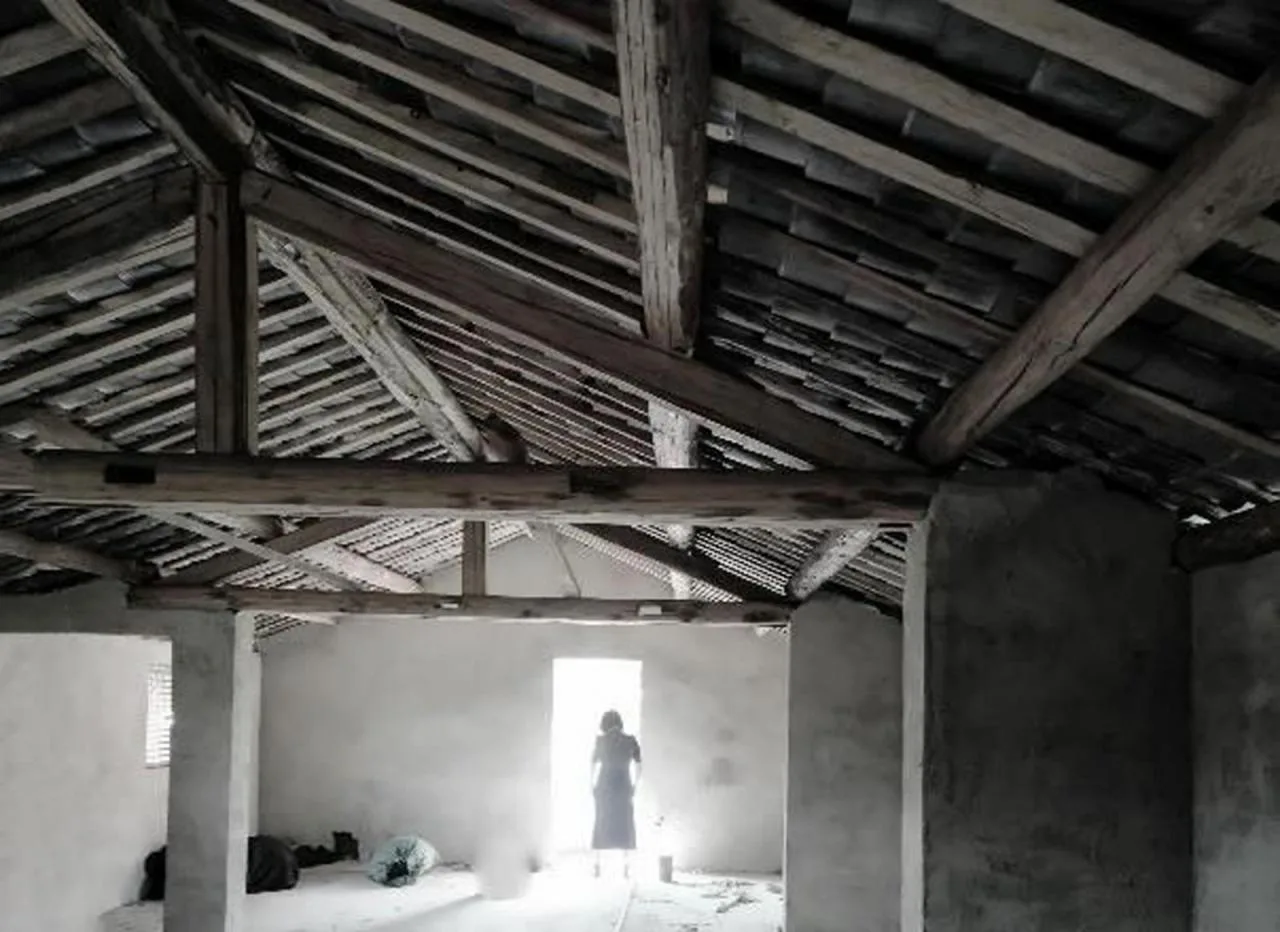
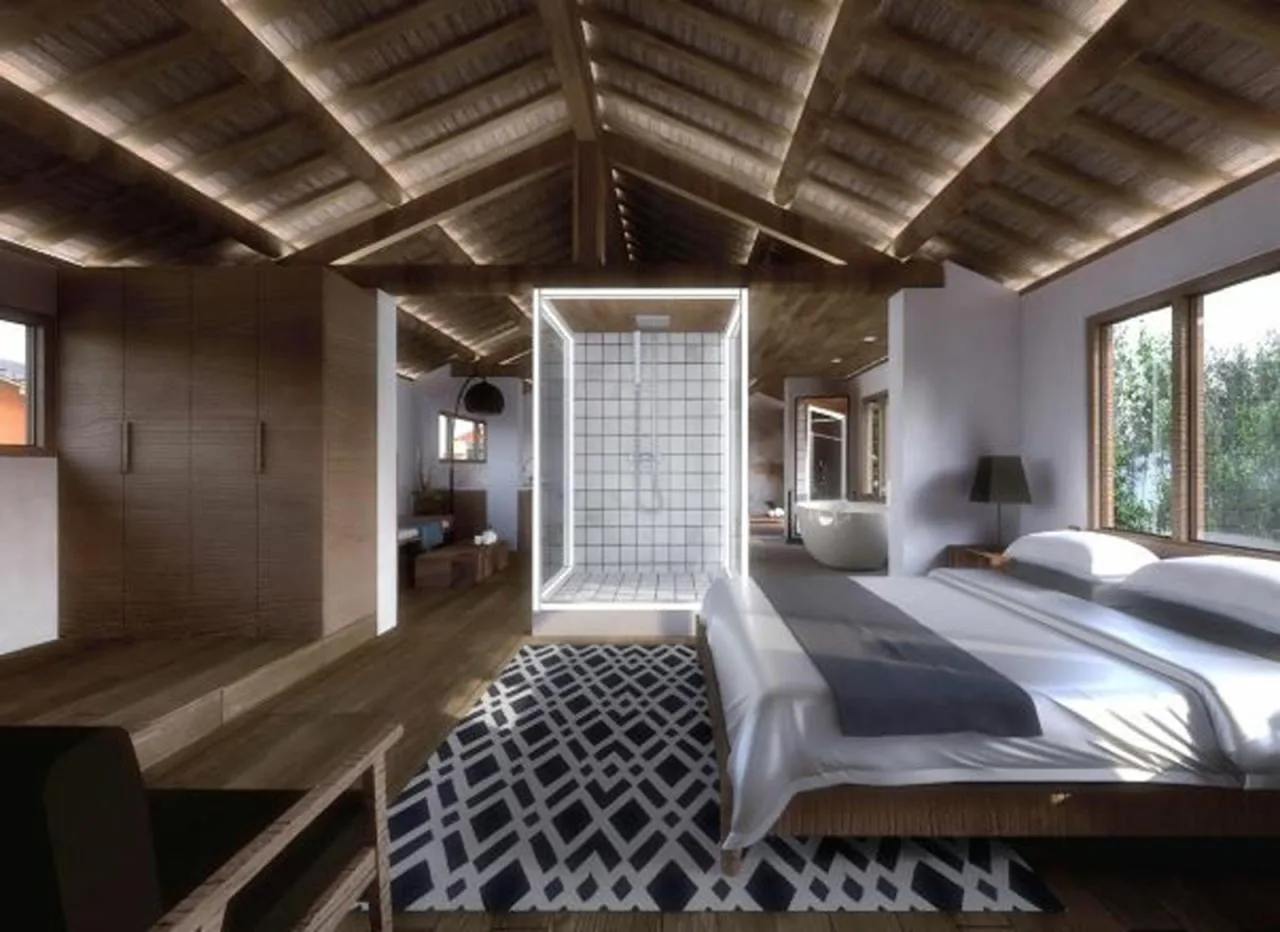
△ The second floor of Building 1 transformed into the master suite © Cooperative Society
An important feature is the master suite designed specifically for the homestay owners.
Before renovation, the second floor of Building 1 was unused and inaccessible, often serving as storage and insulation space in rural homes.
We created a staircase at the junction between the “empty room” and Building 1, converting the entire second floor into a living space. The layout is circular, with the bathroom and shower at the core, serving also as the equipment area. The three building compartments open onto common areas including a living room, tea room, dressing room, bedroom, and bathroom.
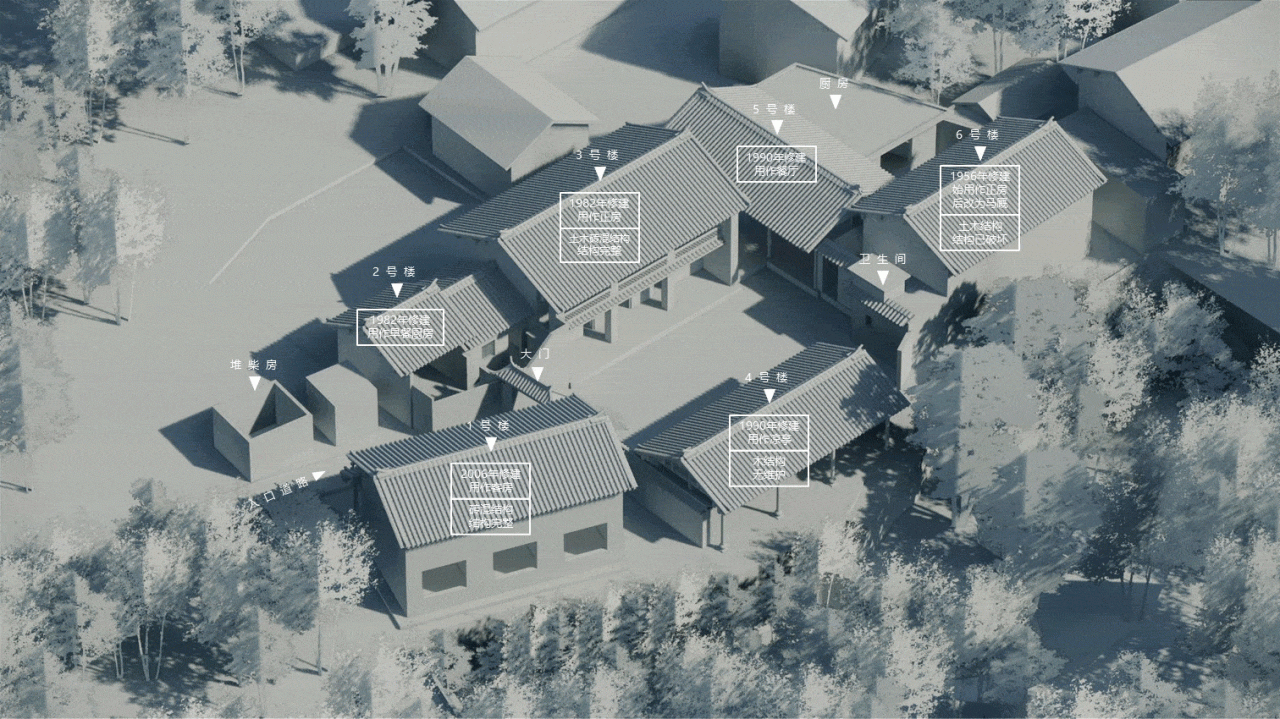
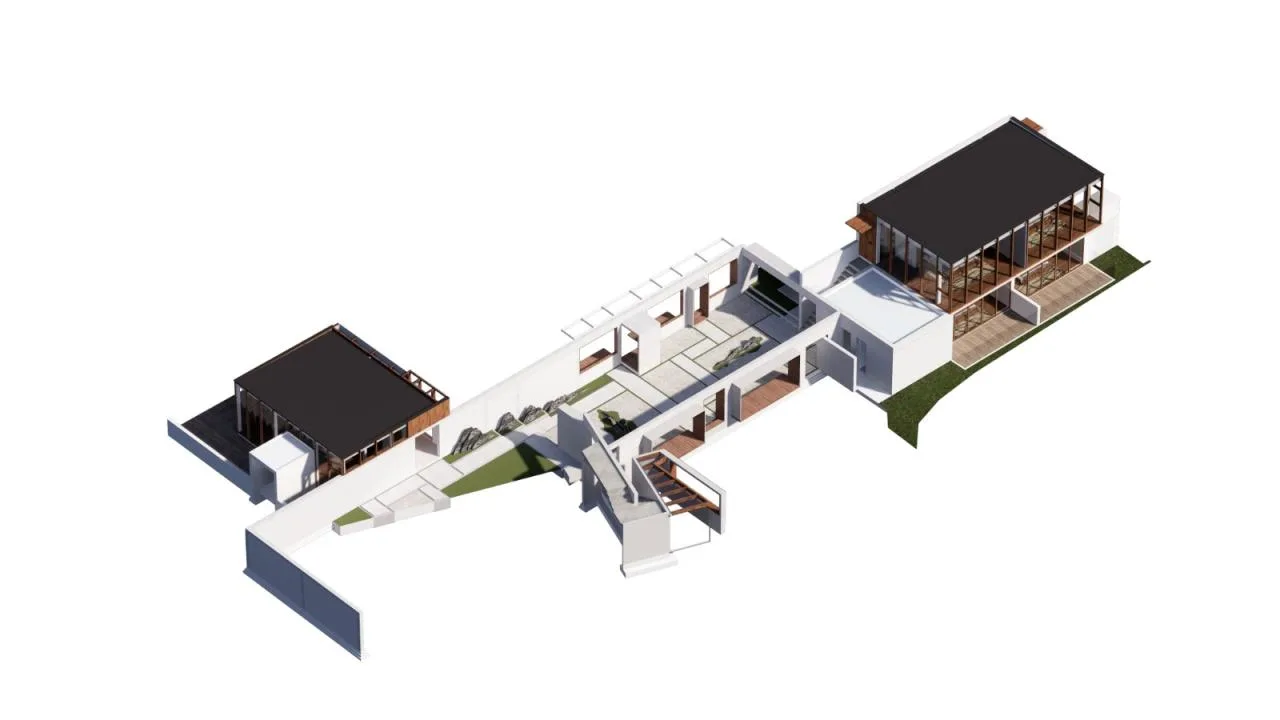
△ Transformation concept: The empty room and its companions.
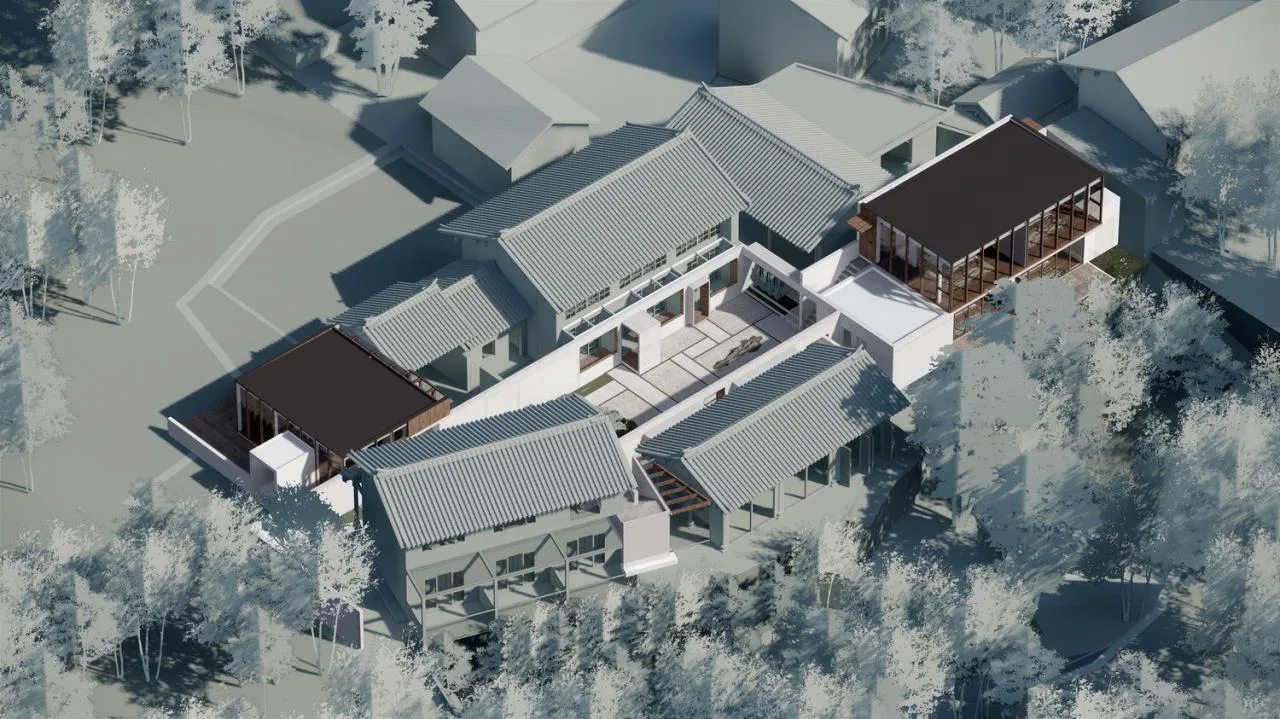
Illustrating the overall relationship: the final architectural form.
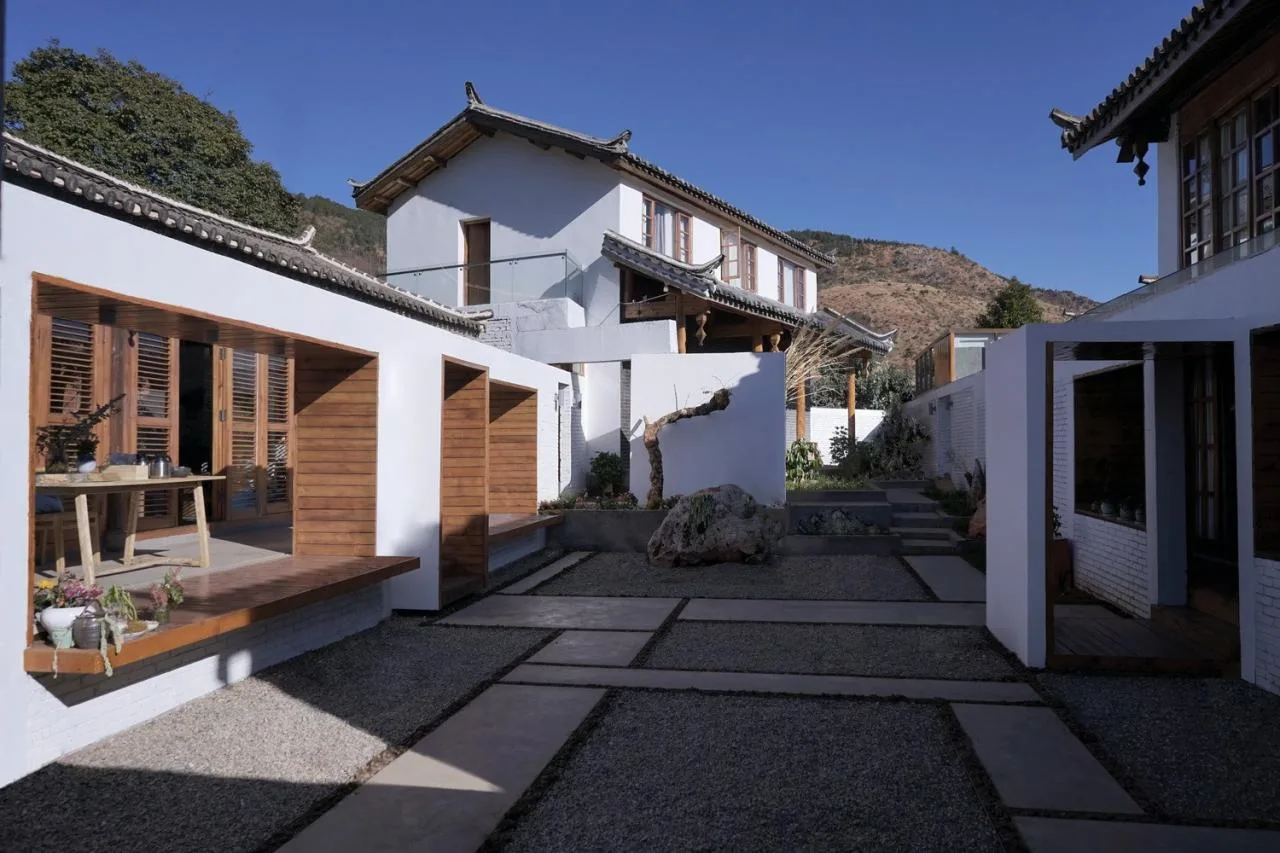
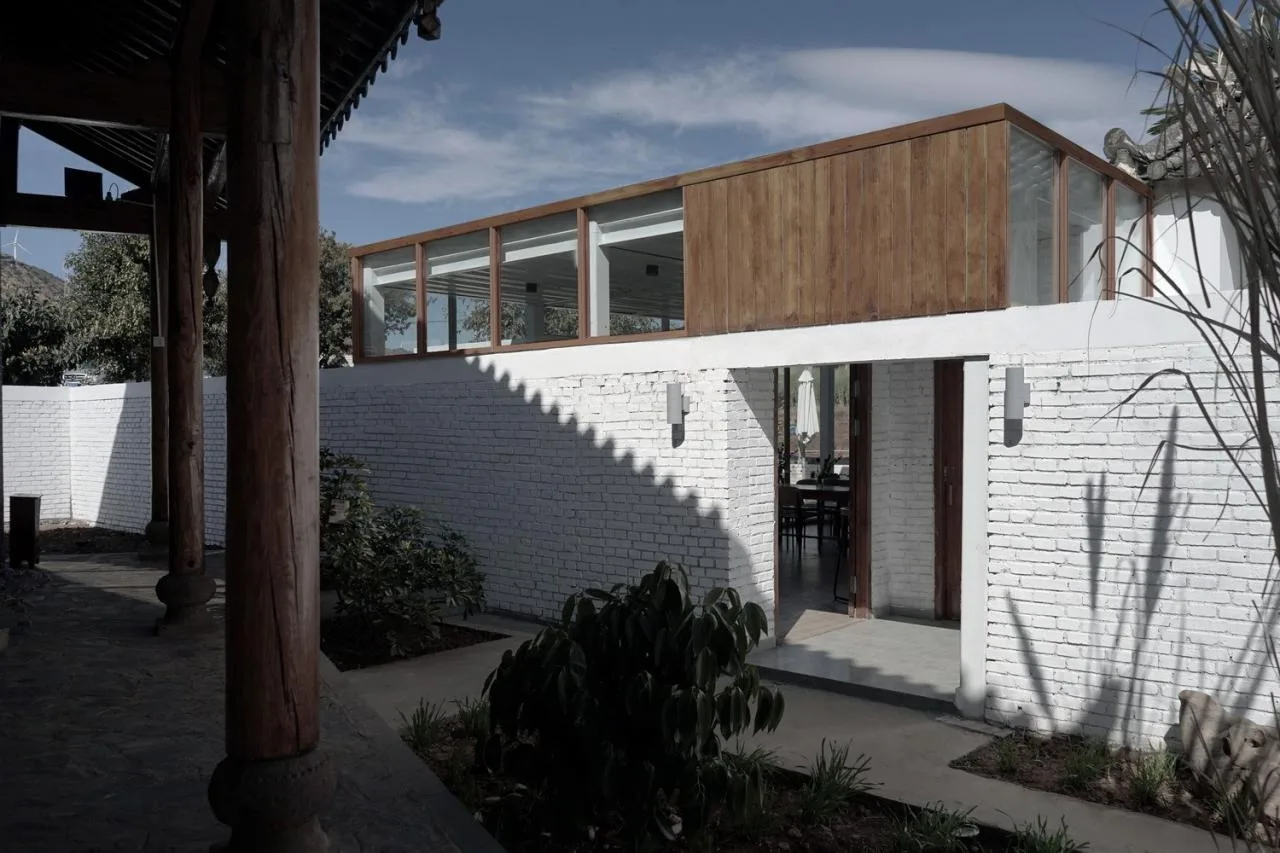
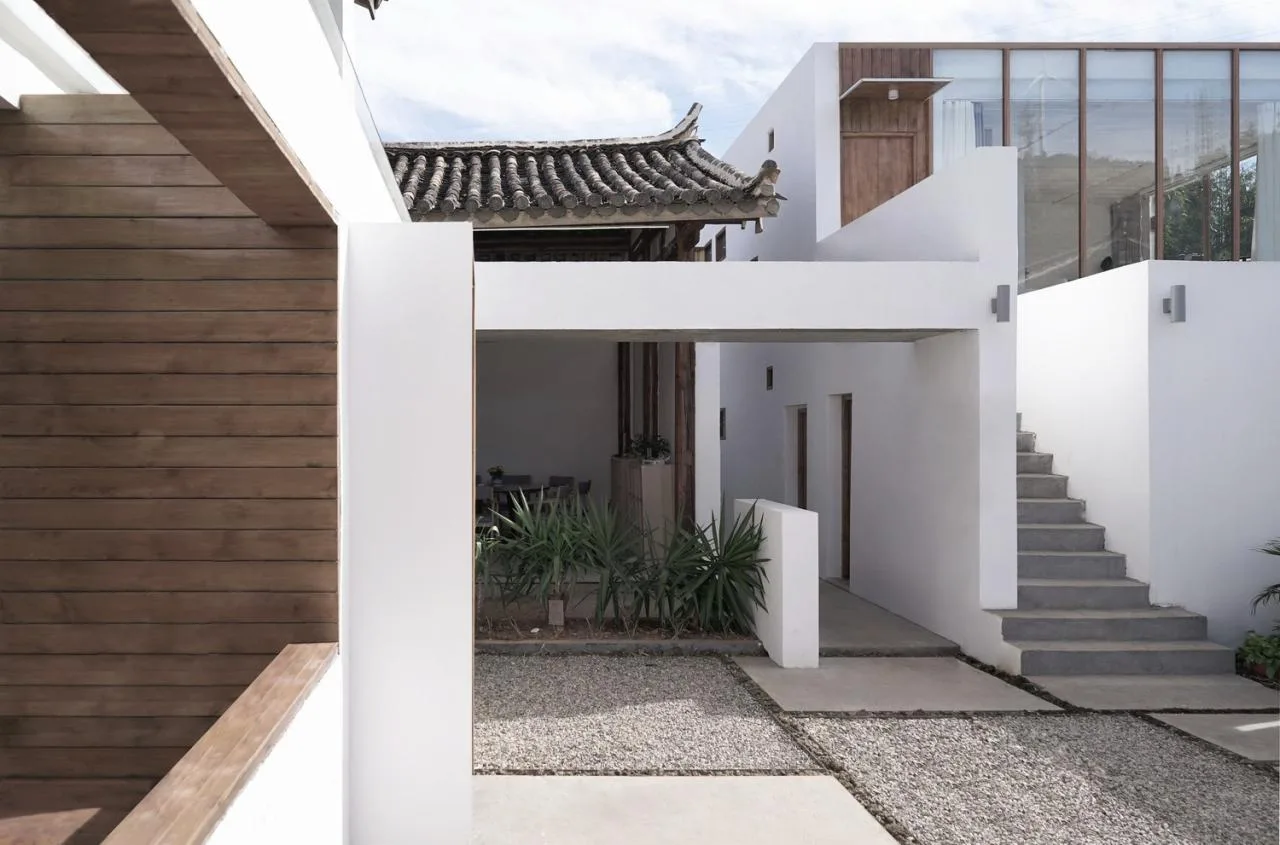
△ The renovated white house space © Cooperative Society
Architectural Keywords: Structure, Construction, Materials, Facade
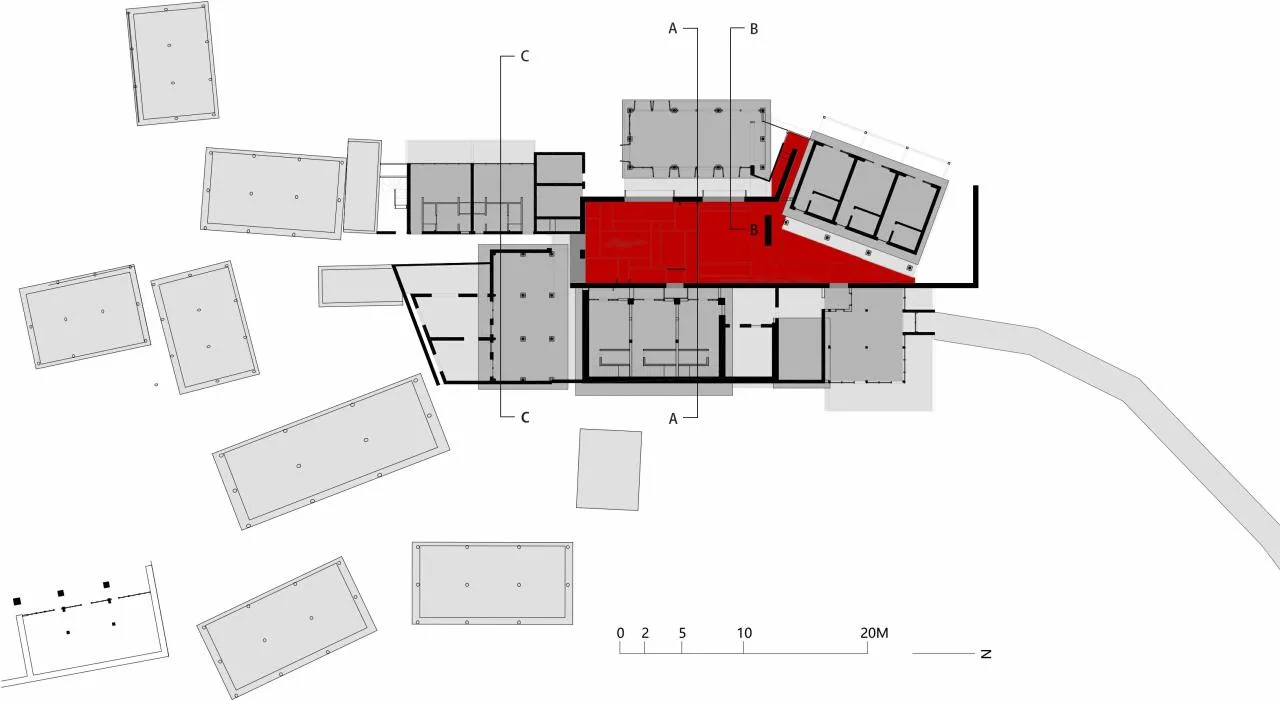
△ Building Plan
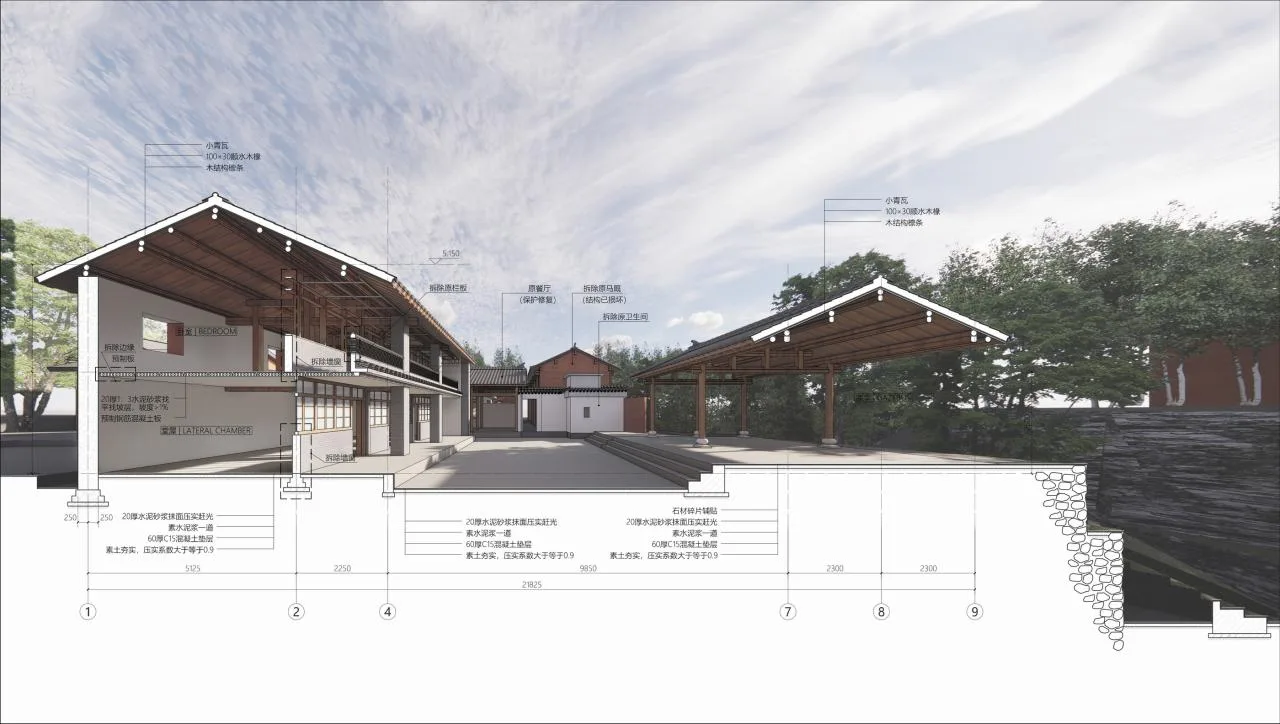
△ Original A-A sectional perspective
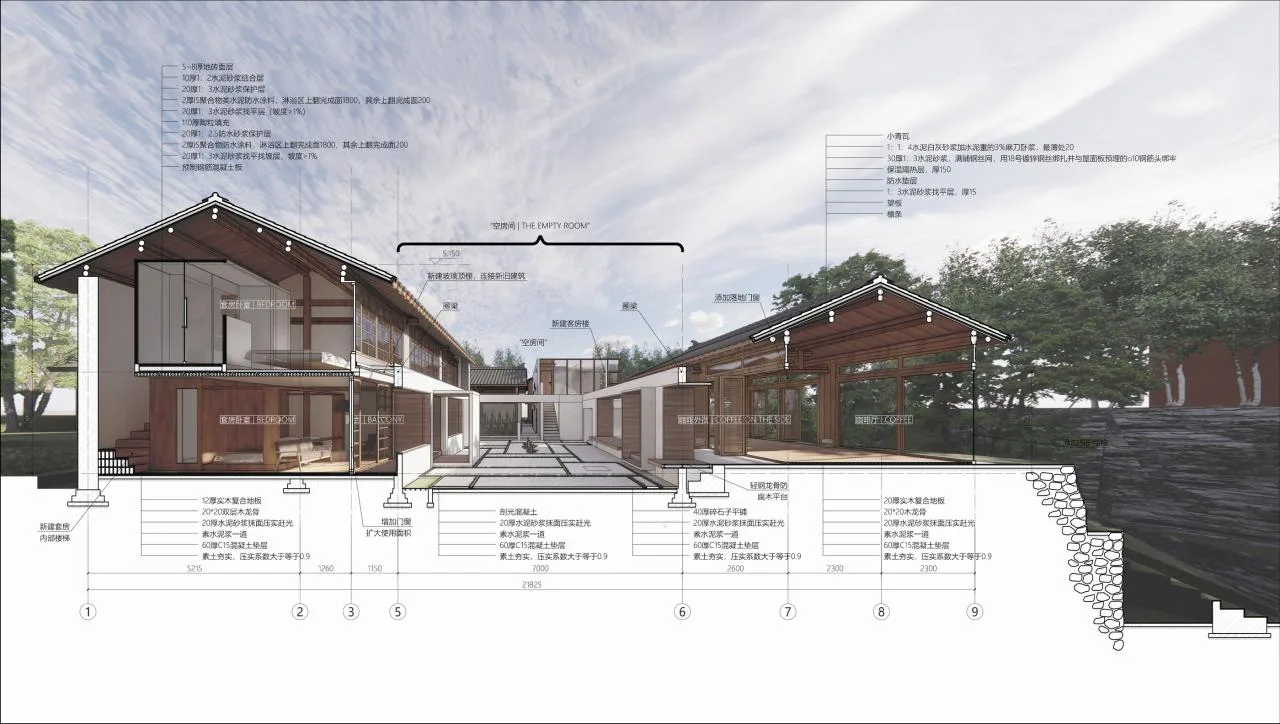
△ A-A sectional perspective after reconstruction
△ Completed A-A sectional perspective © Cooperative Society
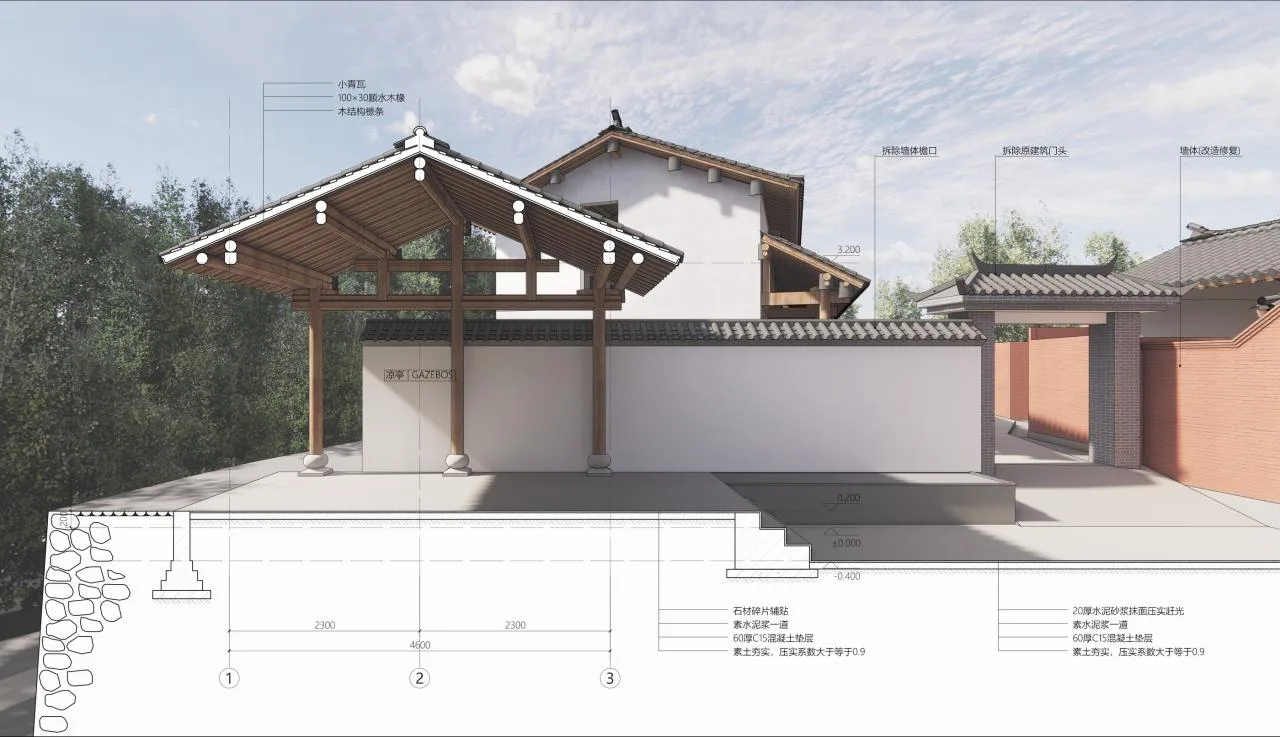
△ Original B-B sectional perspective
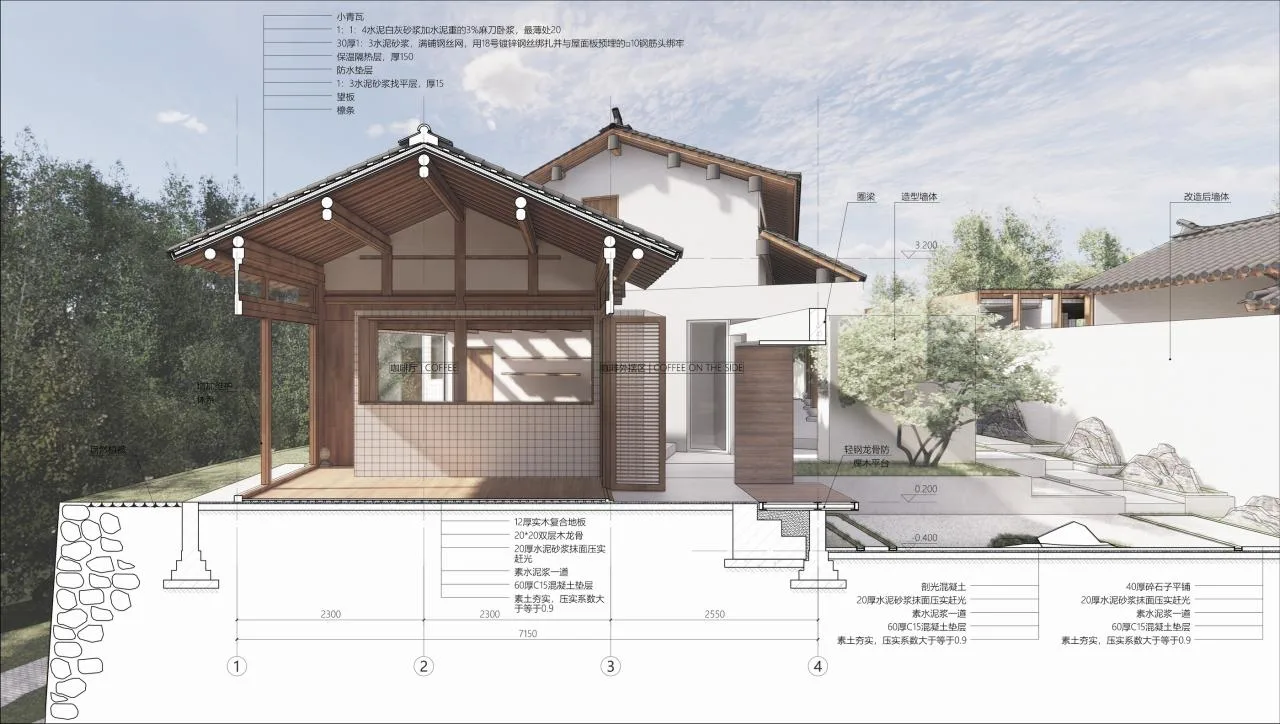
△ B-B sectional perspective after reconstruction
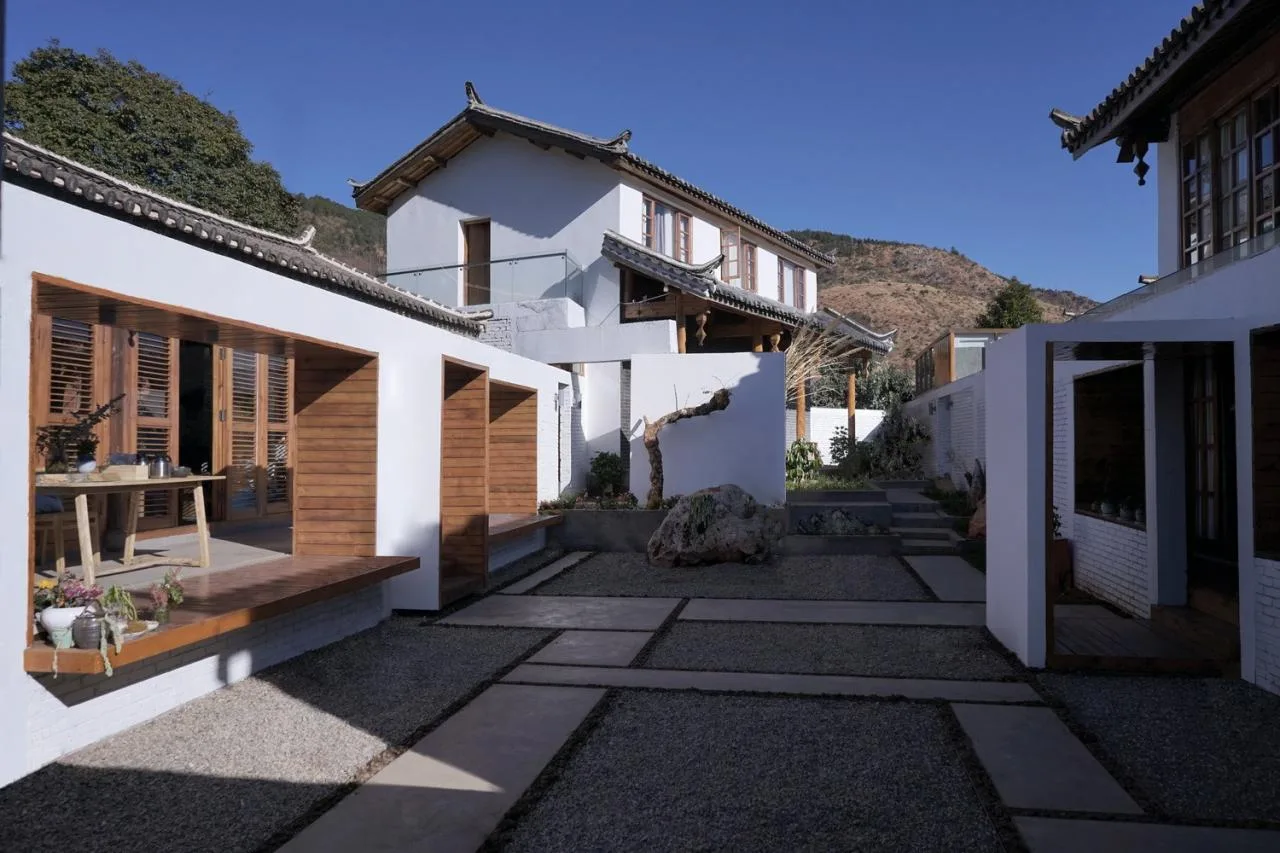
△ Completed B-B sectional perspective © Cooperative Society
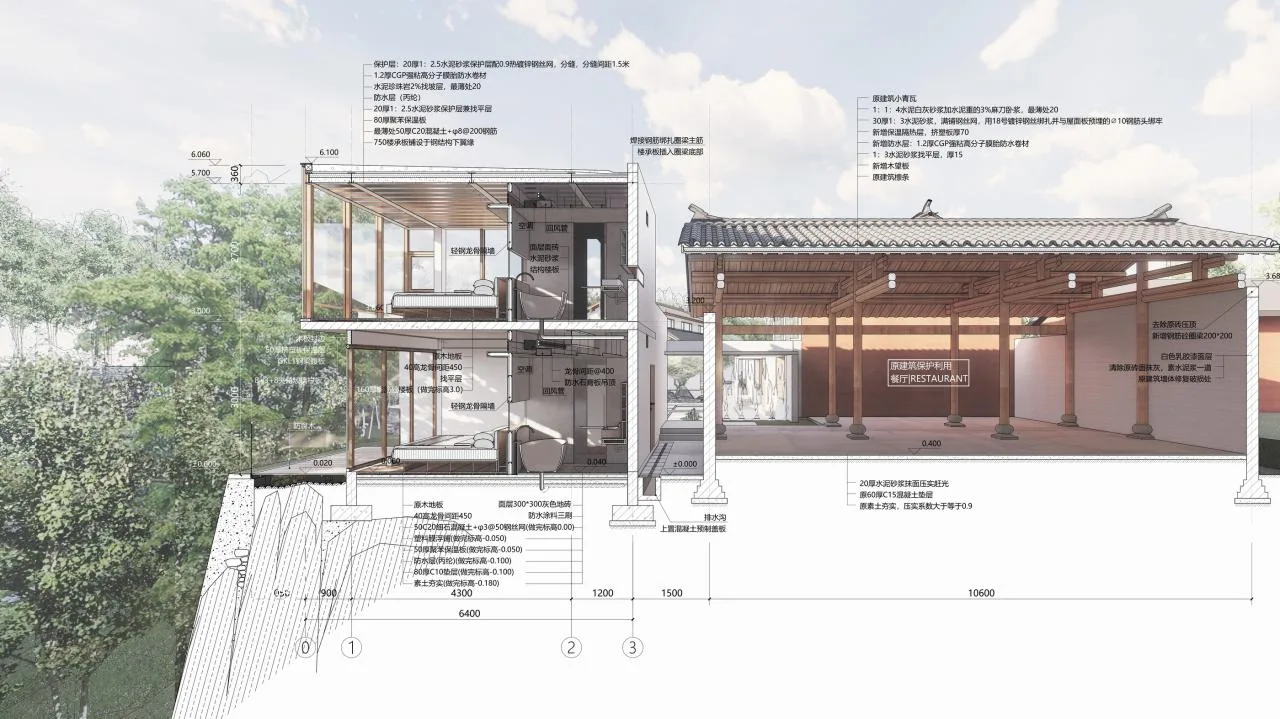
Sectional perspective of △ C-C new structure
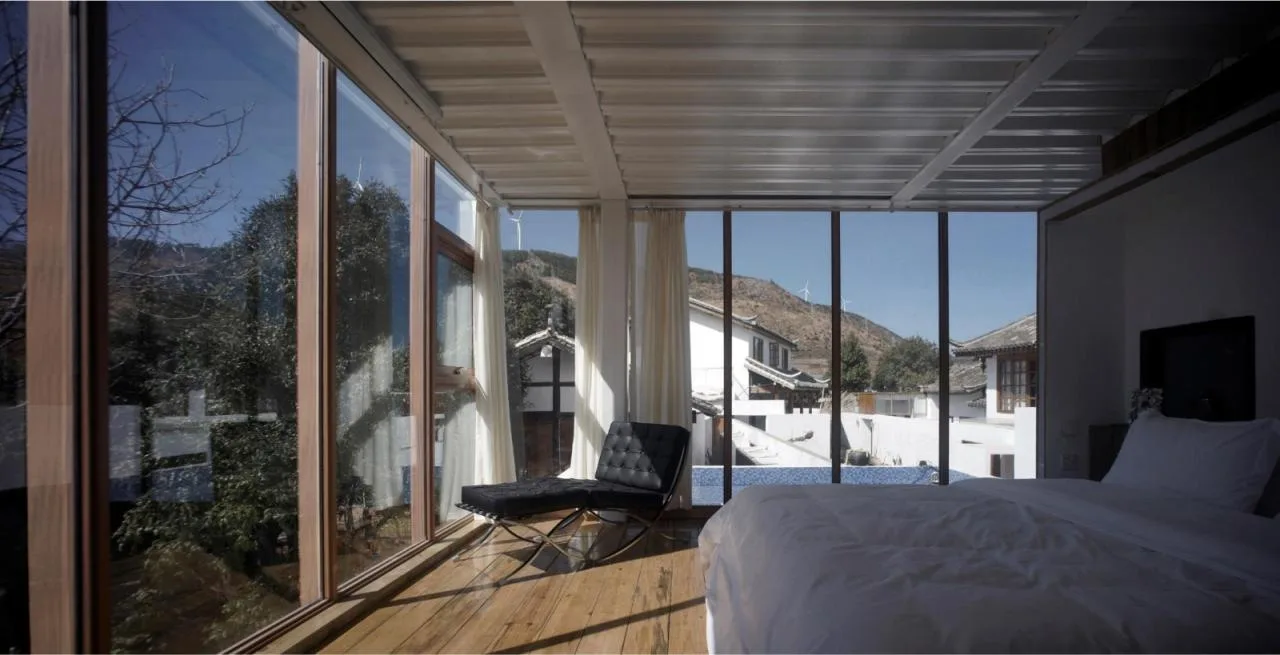
△ C-C construction effect © Cooperative Society
Built on Reality
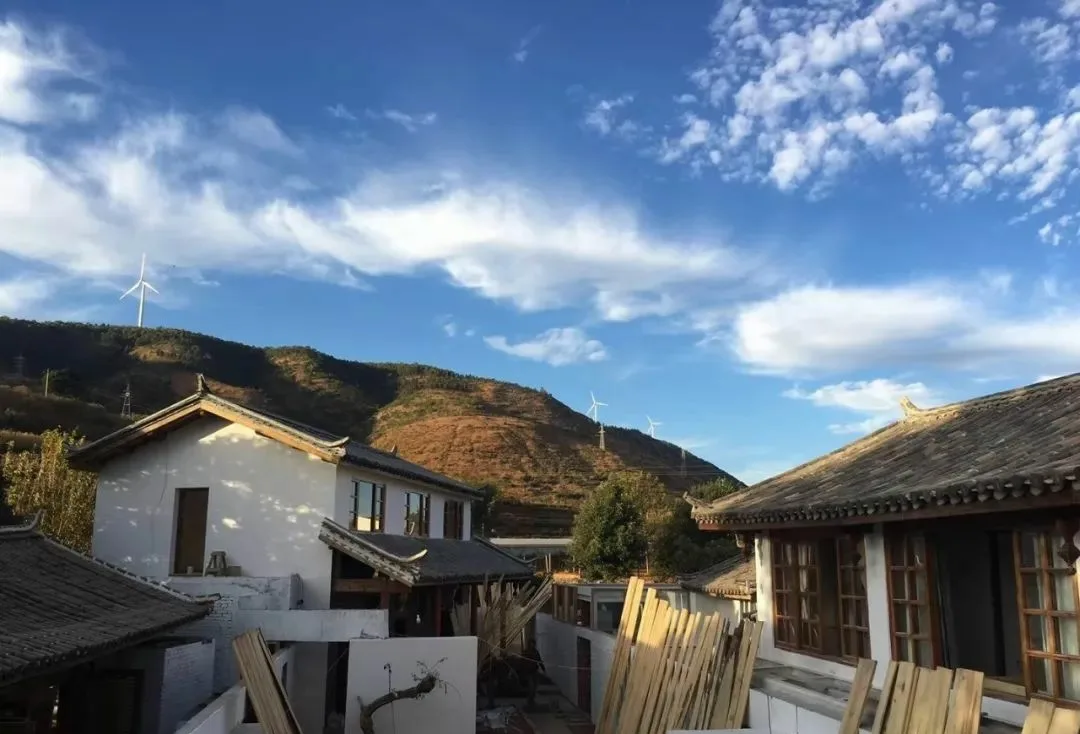
△ Construction site © Hidden Mountain Mist
Building based on reality has become a guiding principle in our work.
While the conceptual design of Yinshanlan was approved, construction precision was limited. This reflects rural construction realities and influenced our design decisions.
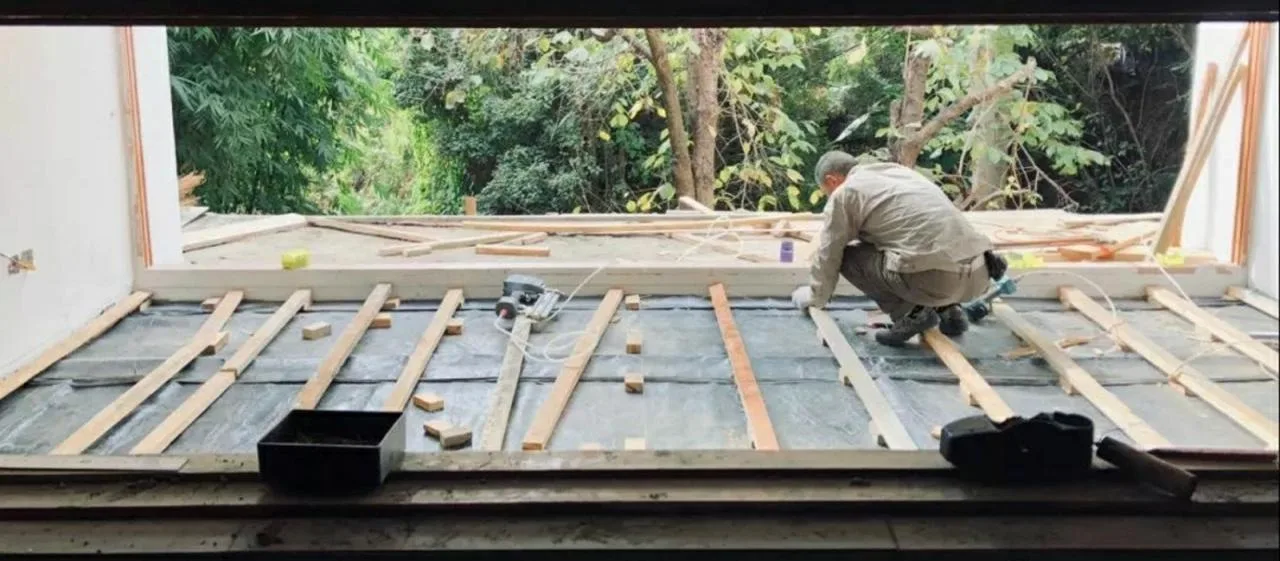
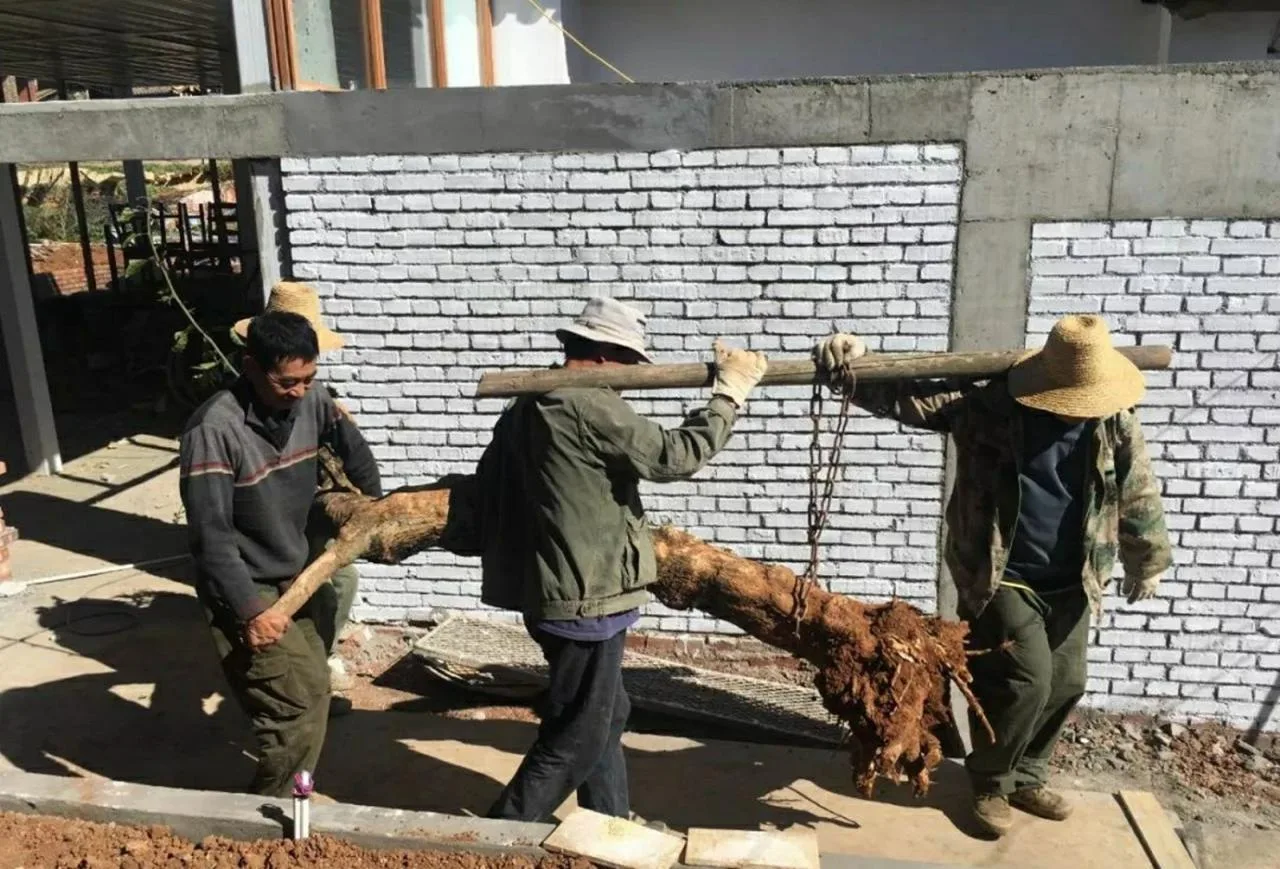
Photos during construction © Hidden Mountain Mist
Due to limited resources and budget, we intentionally avoided expensive and intricate materials (e.g., curtain walls), chose simpler construction methods (such as exposed brick walls), and embraced direct architectural expressions (like exposed steel beams and slabs). The design process involved developing strategies and aesthetics tailored to these choices.
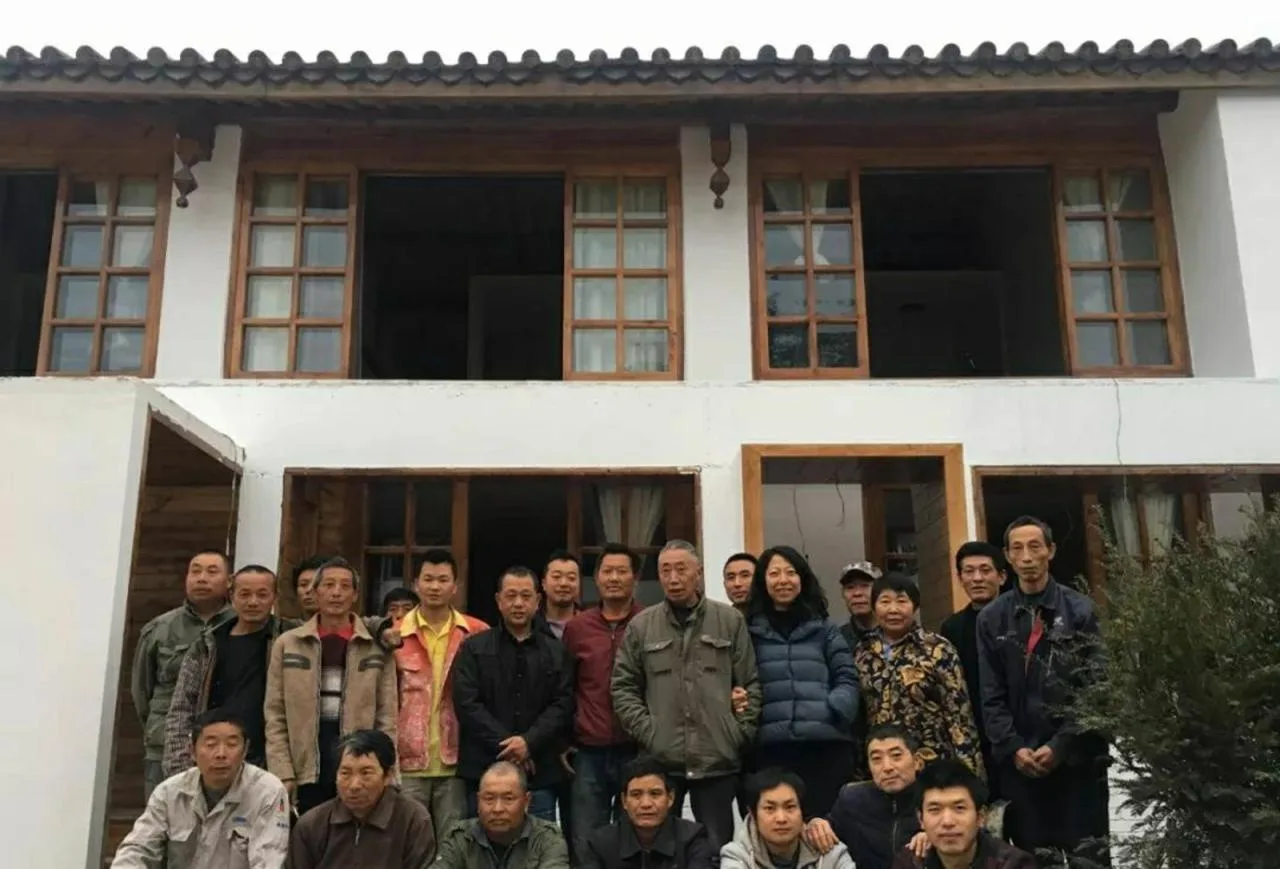
△ Construction team group photo © Hidden Mountain Mist
The project was completed with the help of longtime friends who combined original village materials with local expertise.
Original Building Condition
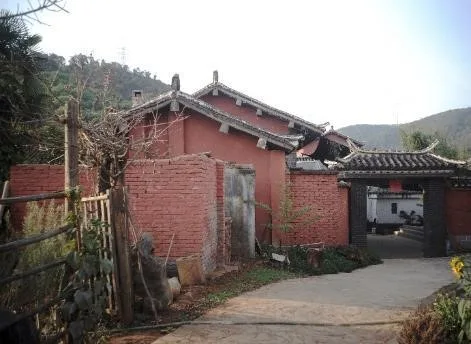
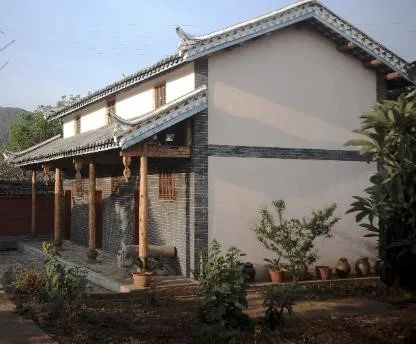
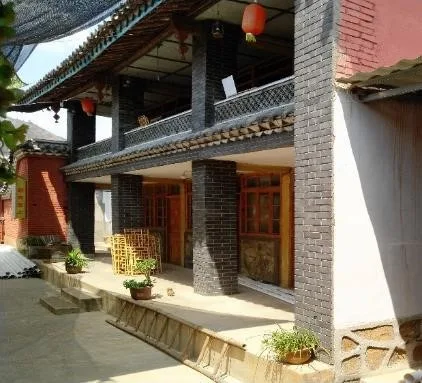
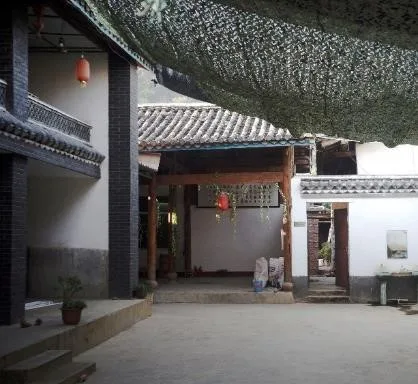
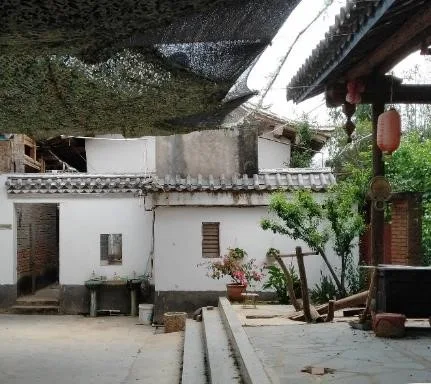
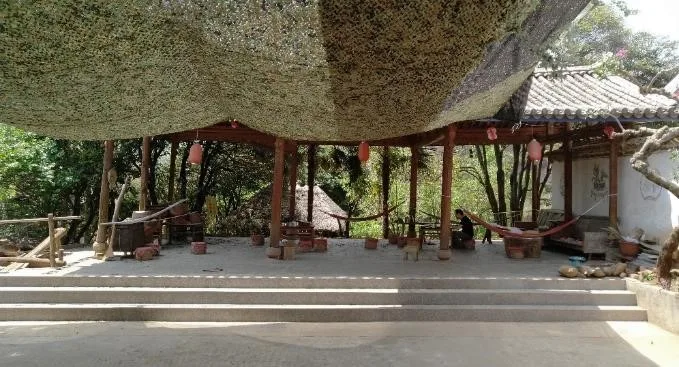
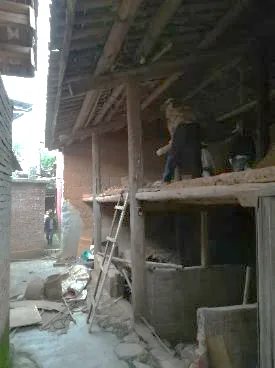
Before renovation © Cooperative Society
- 1. Exterior view of the wooden house and Building 2 (brick wall with wooden frame) from outside the gate
- 2. Building 1 outside the courtyard gate (brick and concrete wooden roof truss)
- 3. Facade of Building 3 inside the courtyard (rammed earth roof truss)
- 4. South view of Building 5 and the back door inside the courtyard
- Additional structures: a south-facing back door and bathroom built with 12-brick walls inside the courtyard
- Building 4 serves as a pavilion with intact wooden structure needing adjustment
- Building 6 functions as a stable but is structurally damaged
- Many original structures were no longer usable
Built Effect © Cooperative Society
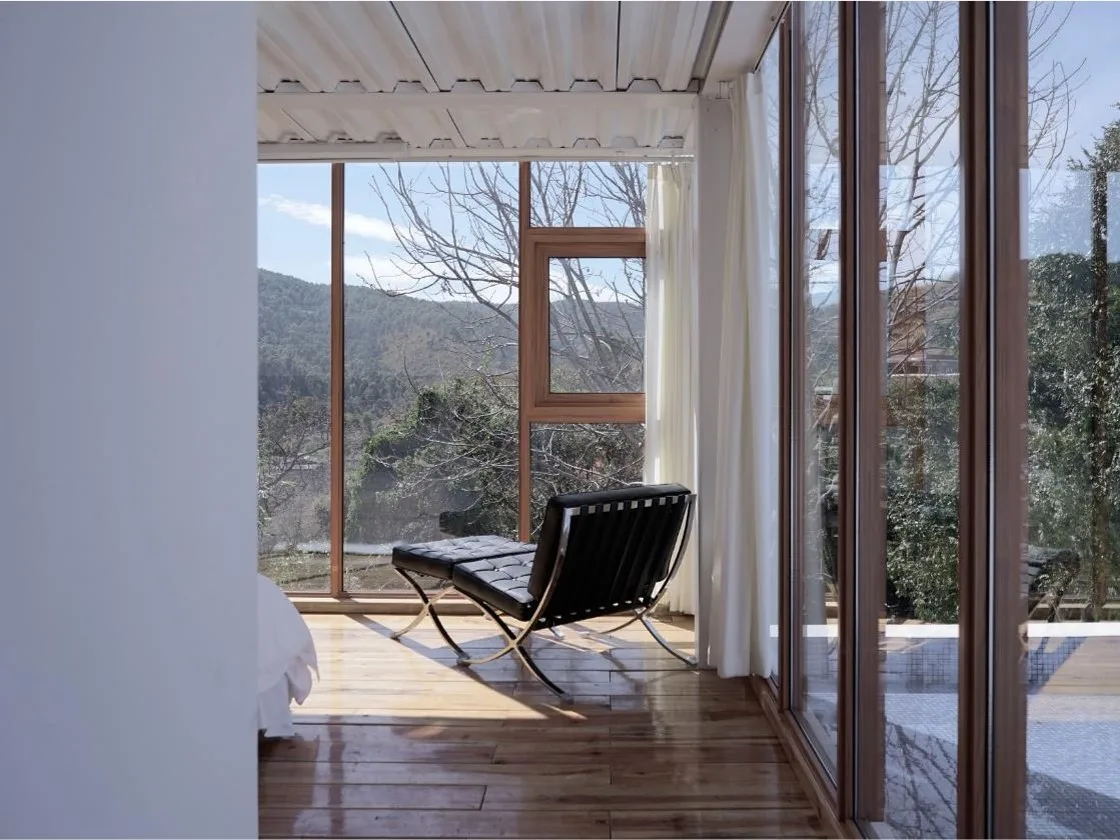
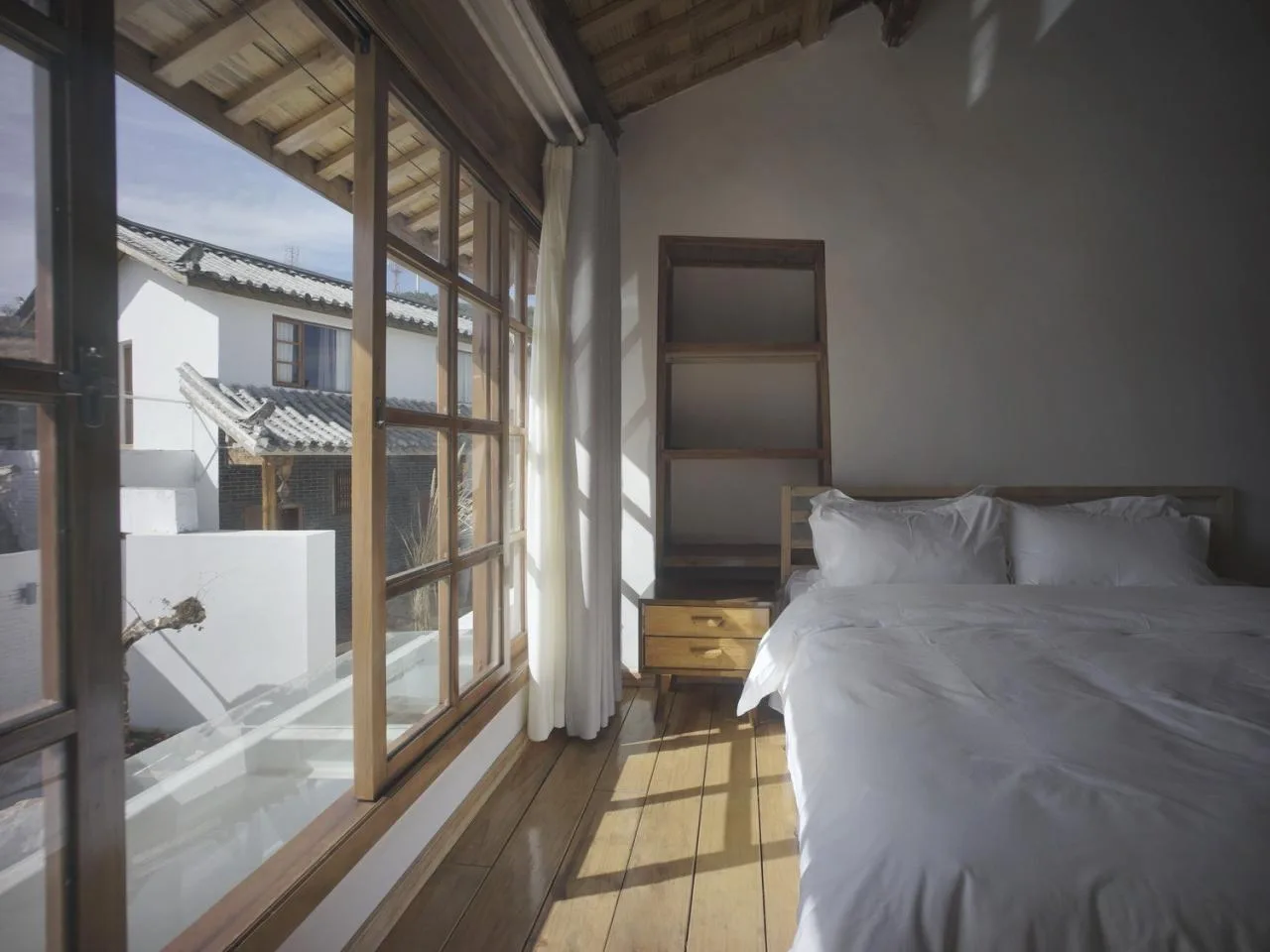
Images showing the newly built panoramic guest room with steel structure and the second-floor bedroom of the family suite, renovated from the original rammed earth and wooden frame structure. Different materials and structures share the same design philosophy: stripping decoration and using the structure itself as architectural expression.
Interior design follows the same principle, avoiding excessive decoration, focusing on necessary cleaning and repair.
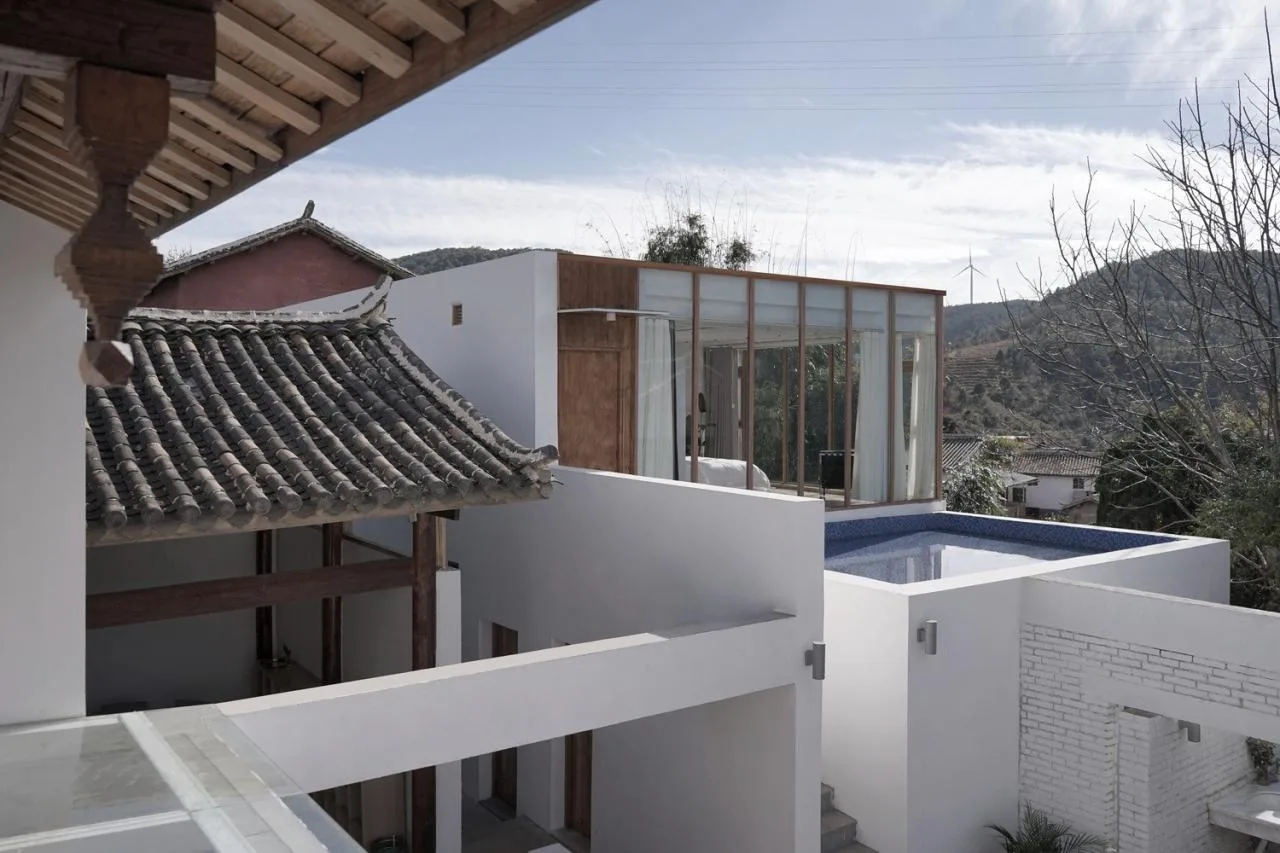
Viewing the new panoramic guest room from the second floor, where the original main room has been converted into a family suite.
The front of the guest room building houses a public bathroom with a water storage roof that acts as insulation and provides a reflective water surface visible from the second-floor rooms.
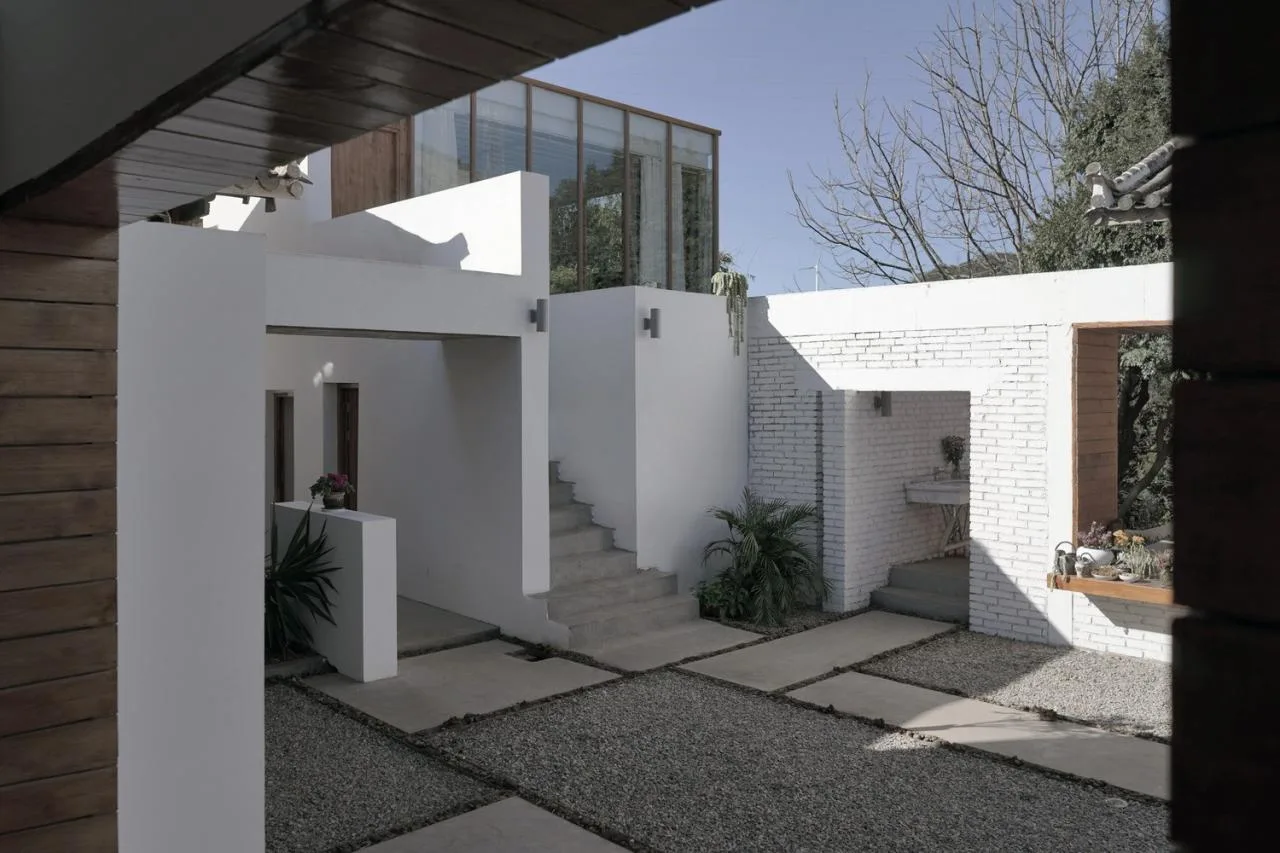
View of the panoramic guest room from the first floor, looking towards the family suite.
A balcony naturally forms between the exterior wall of the new “empty room” and the old family suite building, acting as a transitional space from public to private areas. Windows on the exterior walls of the “empty room” offer guests fresh perspectives, framing views from old to new structures.
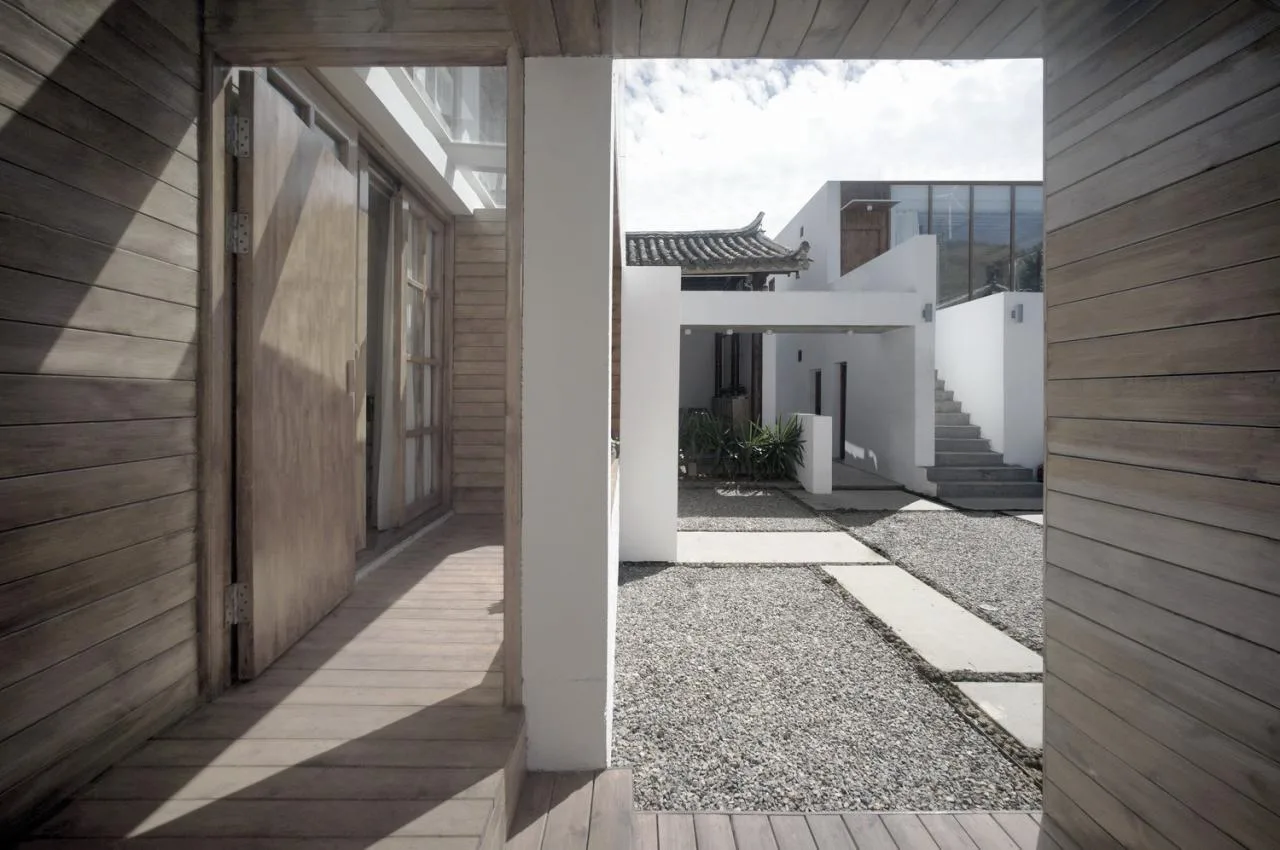
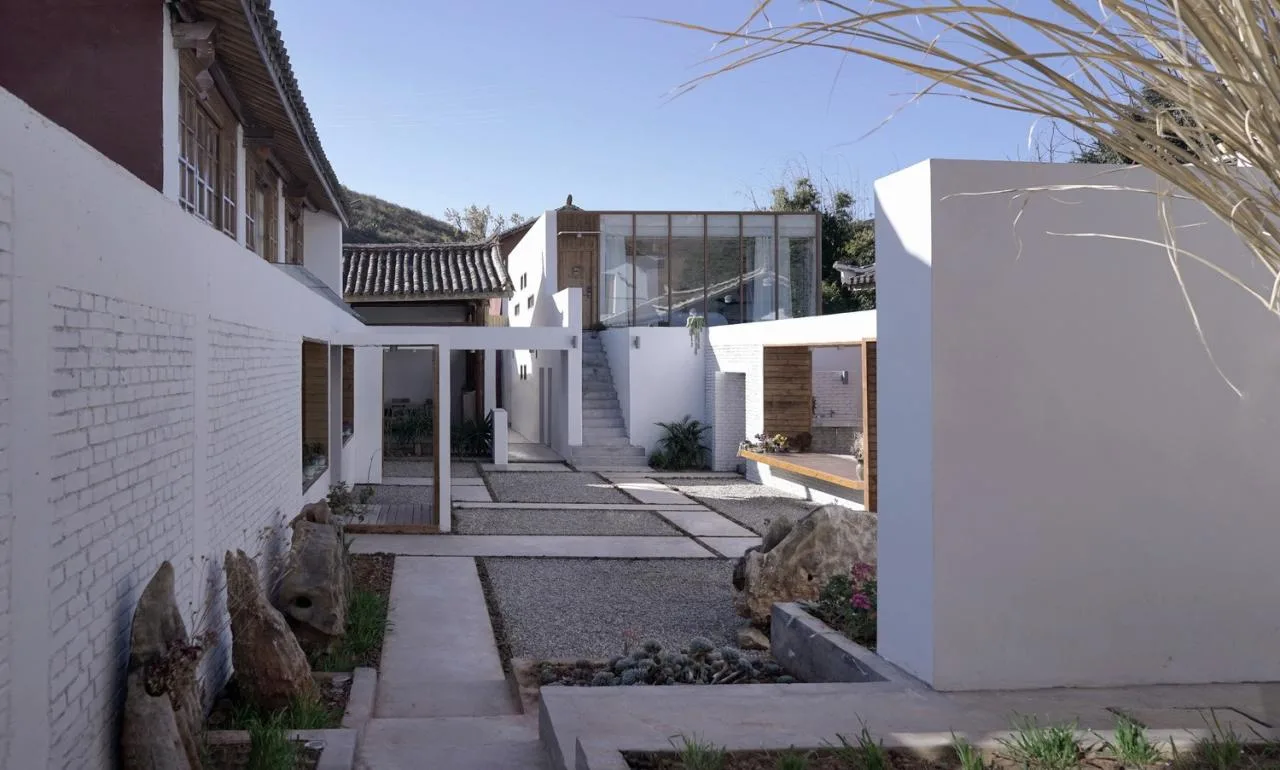
View from the rain shelter at the suite entrance towards the balcony and the “empty room” acting as a shared courtyard.
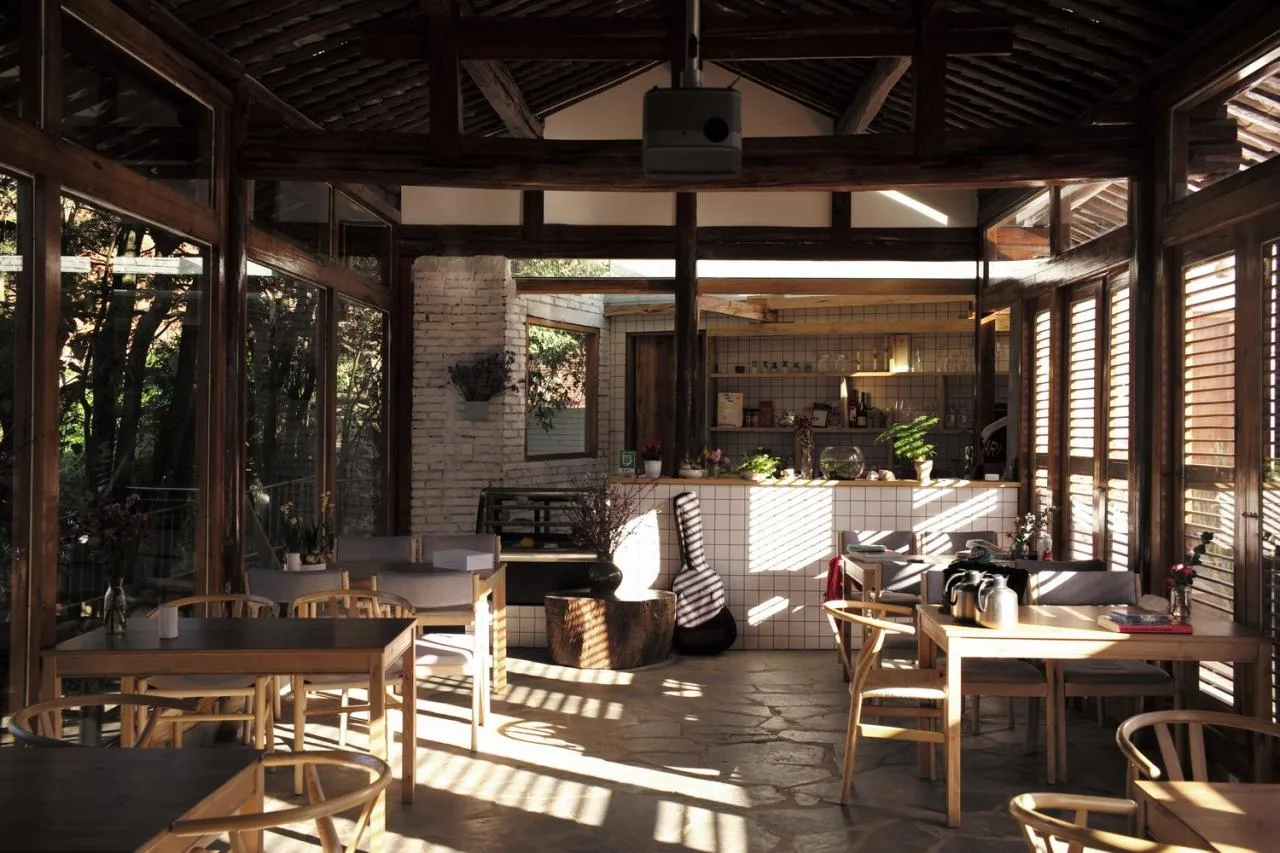
Sunlight fills the coffee shop.
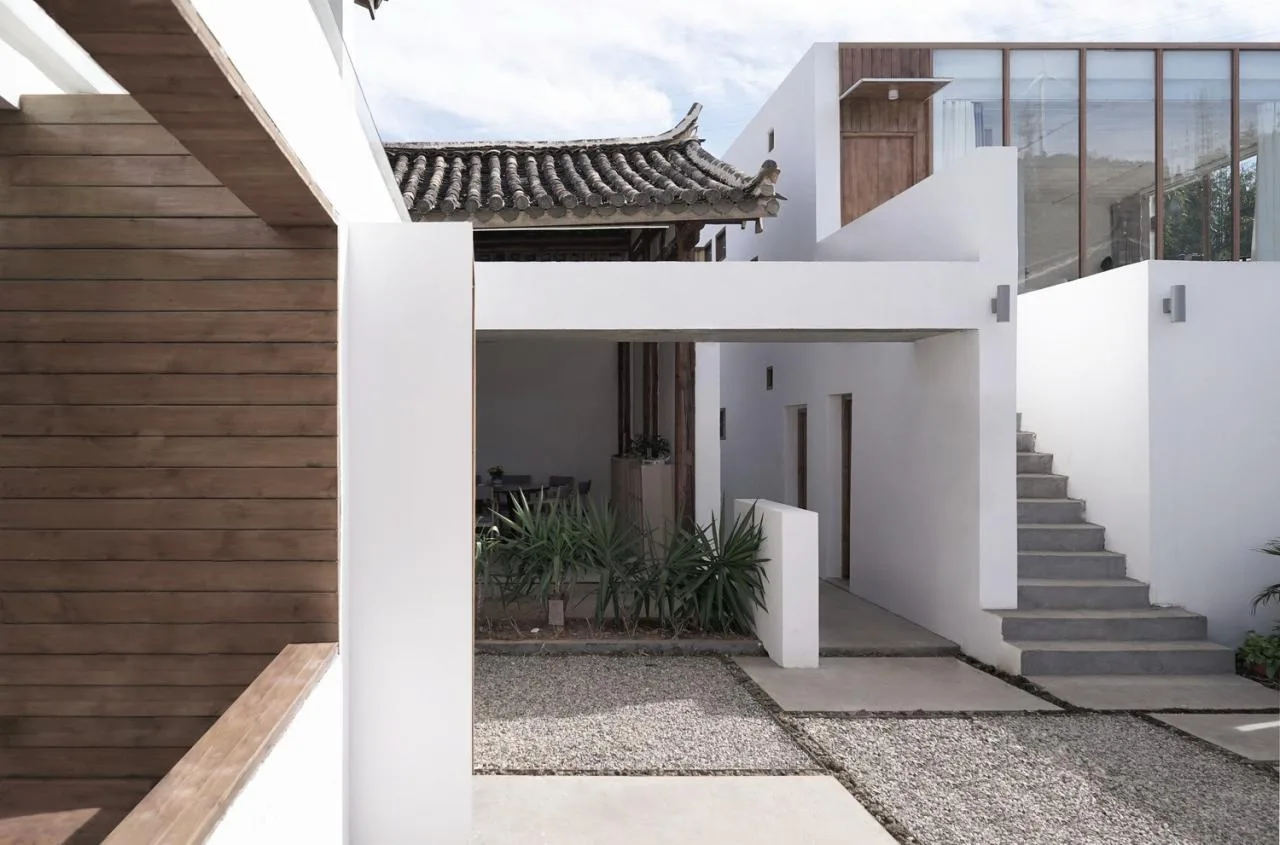
From left to right: the family suite balcony, Chinese restaurant, pathway to the back door, and stairway to the panoramic guest room on the second floor.
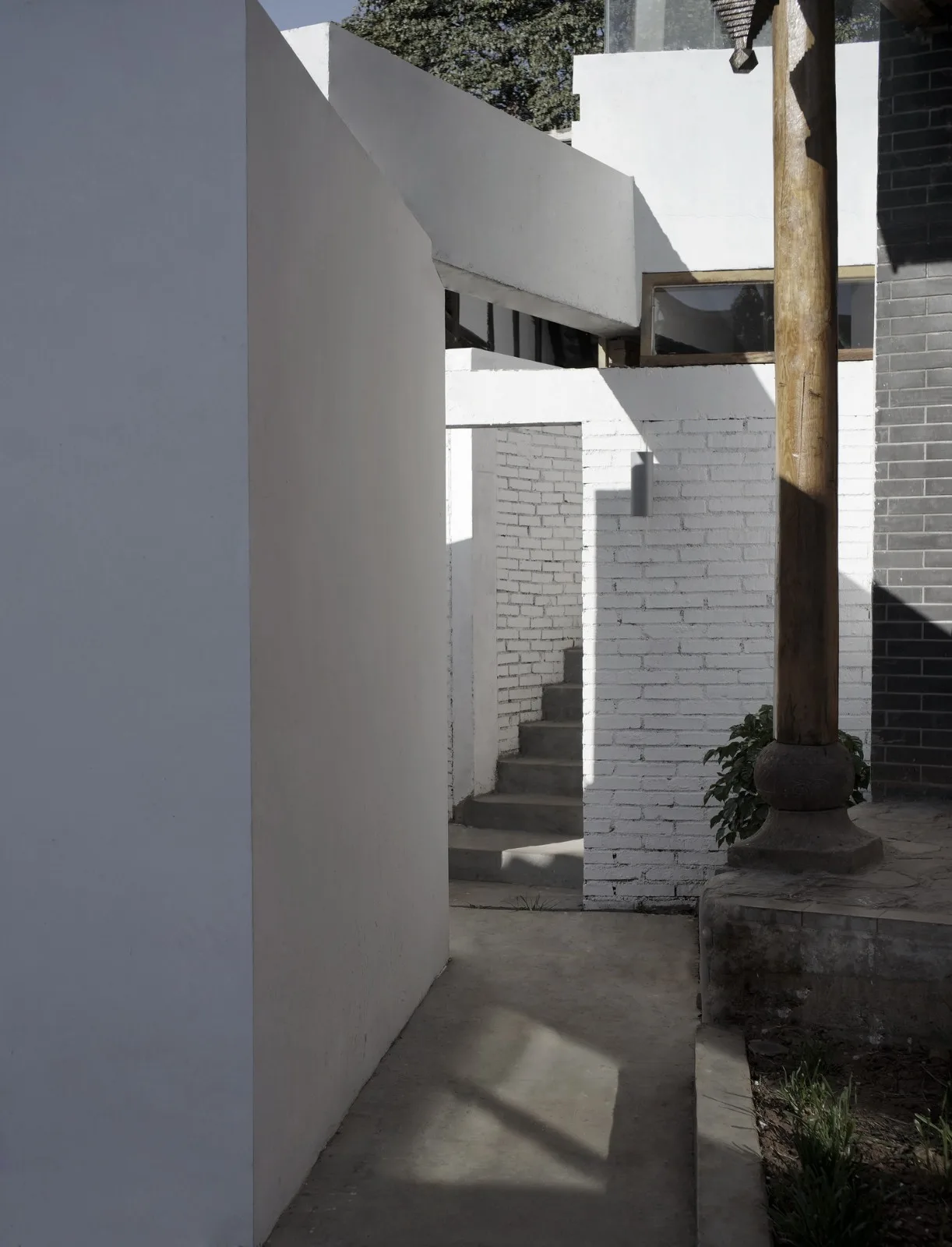
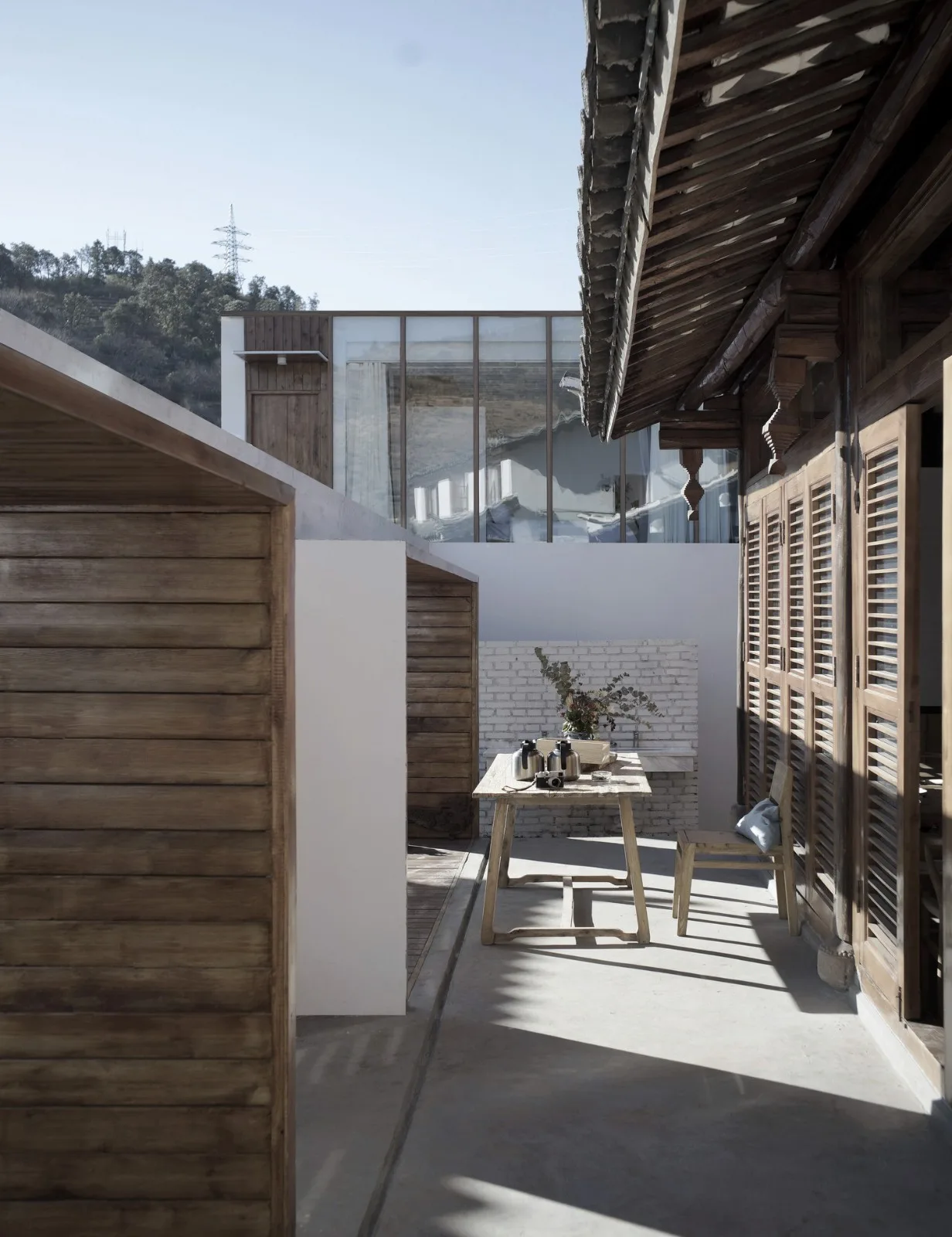
The outdoor display area lies between the west exterior wall of the “empty room” and the coffee book bar converted from the original pavilion. The wall on the right preserves part of the original courtyard wall, reinforced to support the staircase at the end of the “empty room” exterior wall.
Reception desk.
View of the courtyard from the reception area.
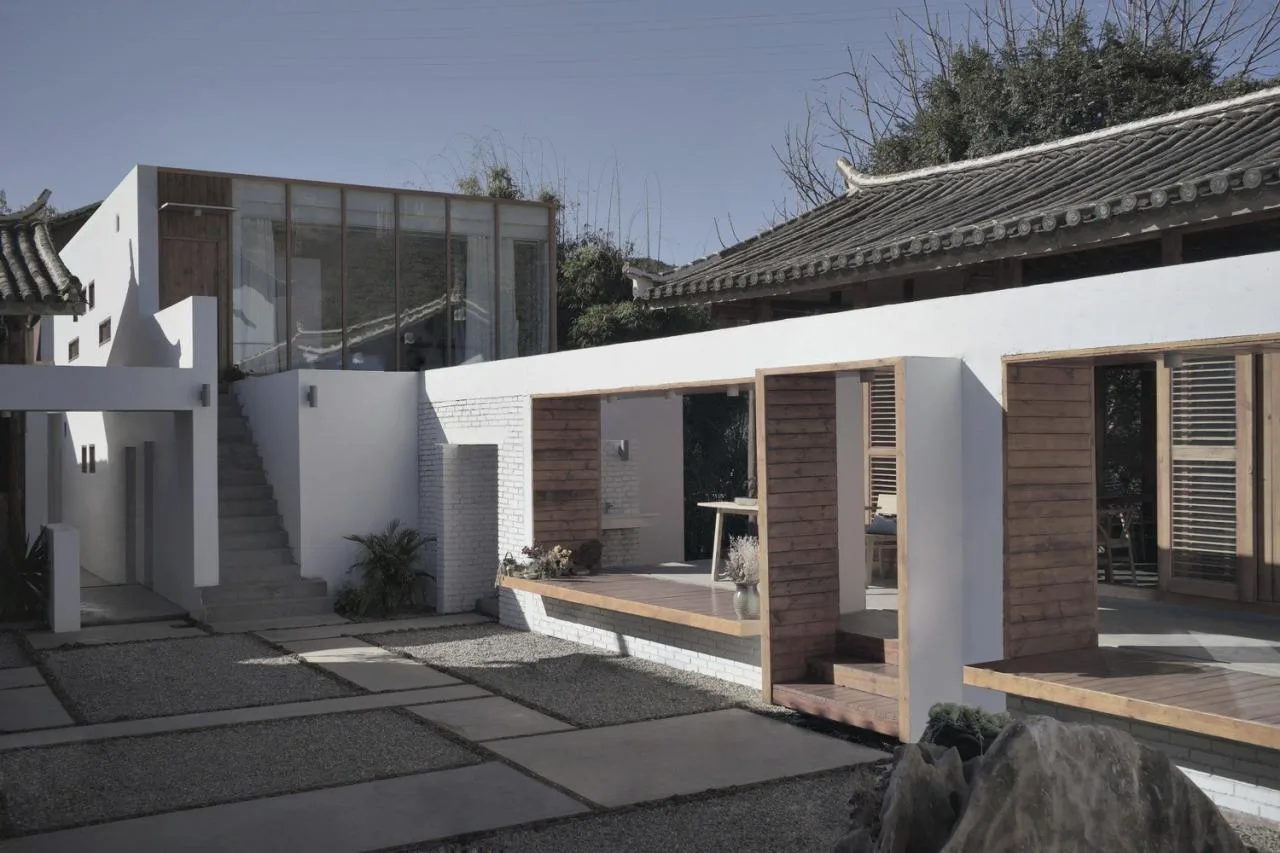
Looking south from inside the courtyard, you can see the coffee shop and newly built panoramic guest rooms.
Construction: A Reflection of Reality and Design Concept
Yinshanlan is more than an old house renovation; it is a rural construction project initiated by architects, designers, homestay owners, and welfare organizations dedicated to rural development and preserving ancient village culture. The project explores a new path for rural growth that deeply integrates local culture, village life, and nature through homestays.
Following completion, the Yinshanlan project was awarded the Bronze Award for Architectural Space at the 6th Golden Tile Awards.
Project Information
- Project Name: Hidden Mountain Orchid Garden
- Architectural Design: HeZaoShe Architectural Design Firm
- WeChat Official Account: Cooperative Club
- Design Period: May 2018 – September 2018
- Construction Period: January 2019
- Building Area: 780 square meters
- Location: Yishala Yi Village, Panzhihua City, Sichuan Province
- Lead Architects: Xu Lang, Chen Dongxu
- Design Team: Hezao Society
- Construction Party: He Fei and friends
- Owner: Yinshanlan Homestay
- Photography Copyright: Co Creation Society
- Project Type: Rural Architecture














Must log in before commenting!
Sign Up