
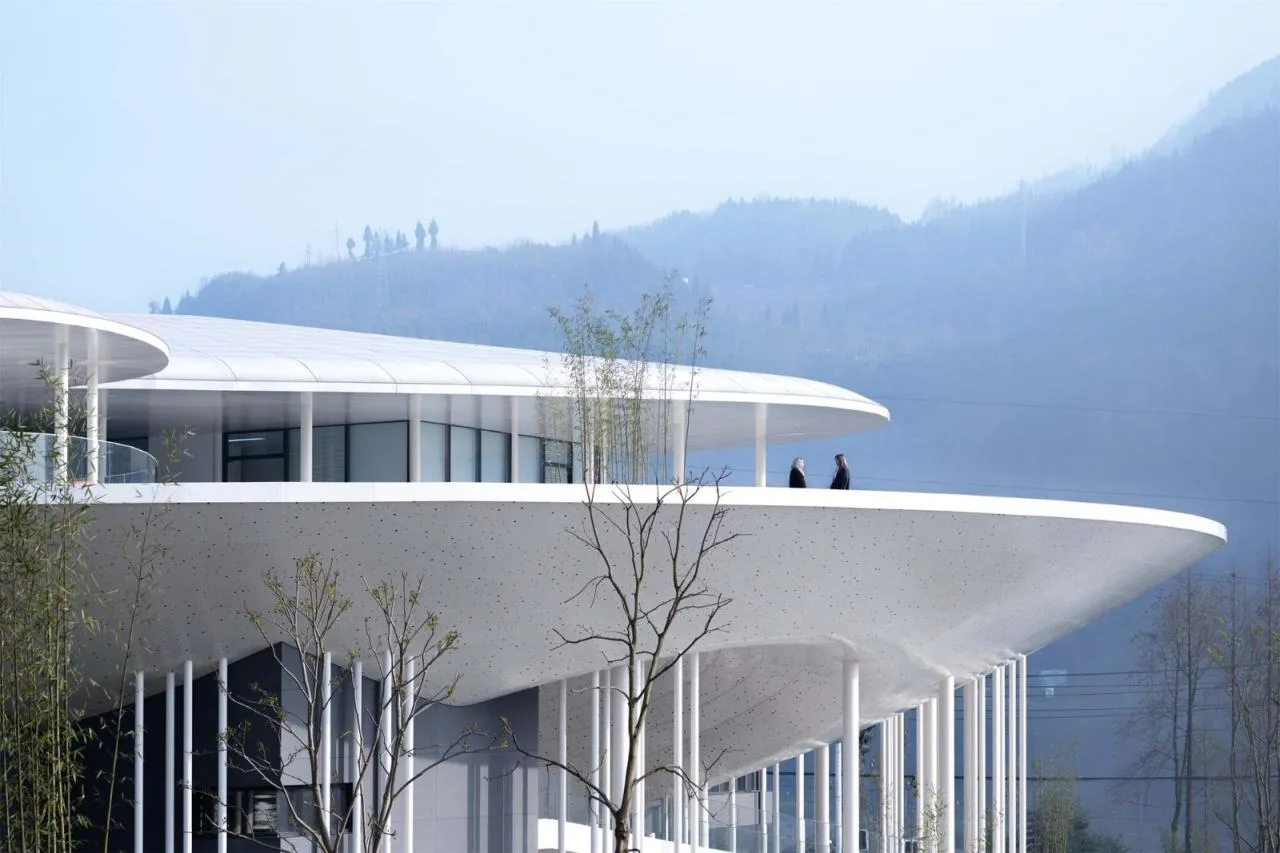
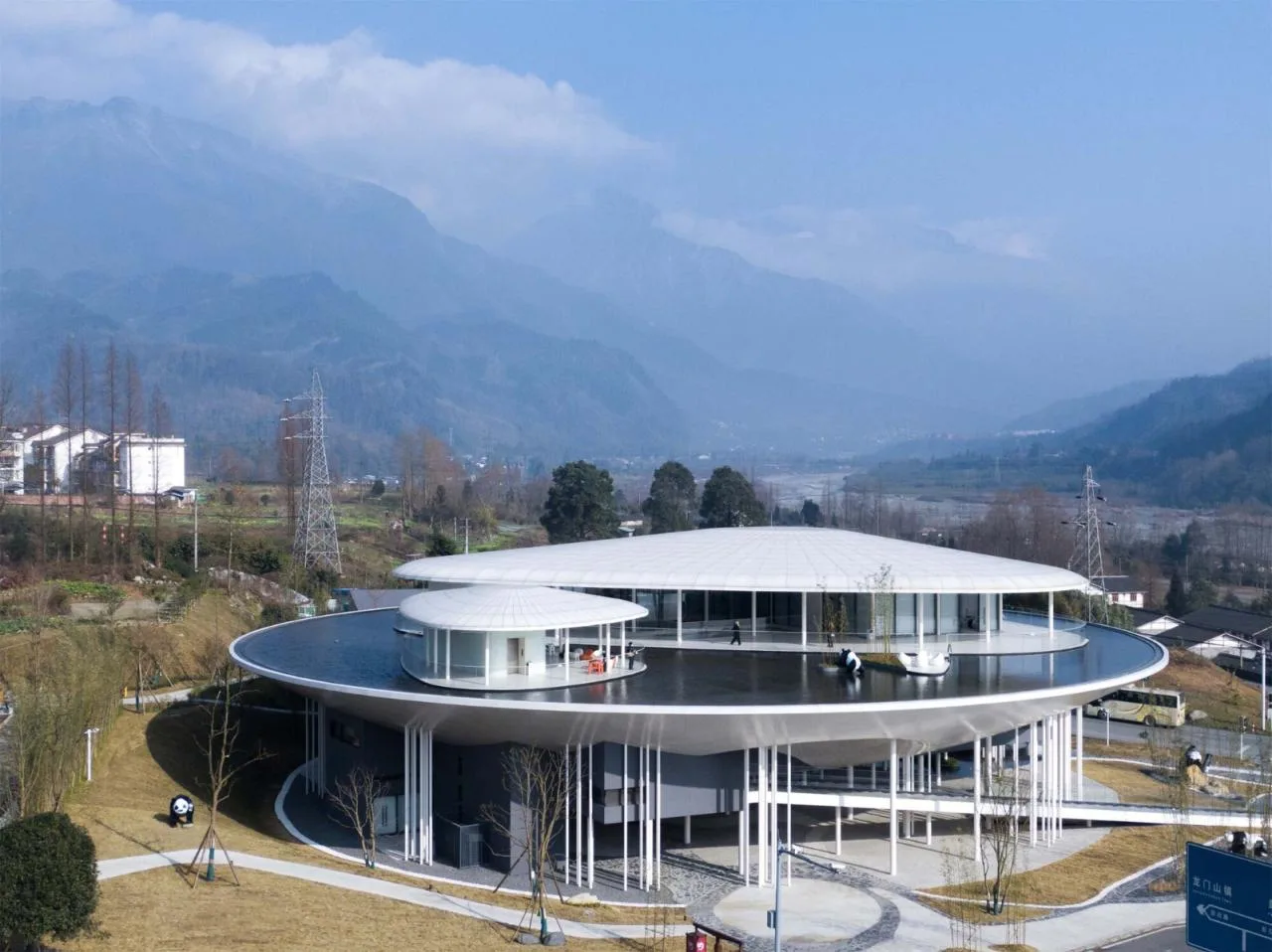
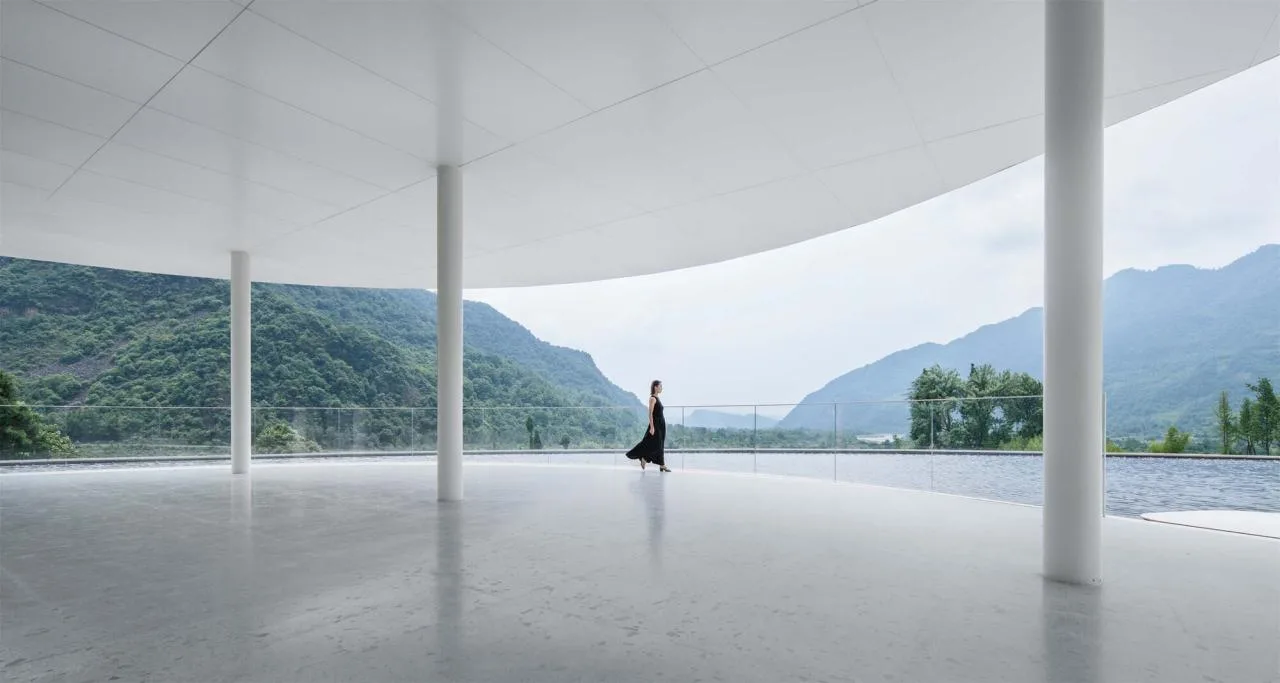
The “Woyuntai” is a public building that combines cultural exhibitions, science education, and immersive experiences. The ground floor is elevated to create an open public space, while the middle and upper levels host cultural exhibitions and leisure activities. This design features mountains and waters above the clouds, complemented by fireworks below.
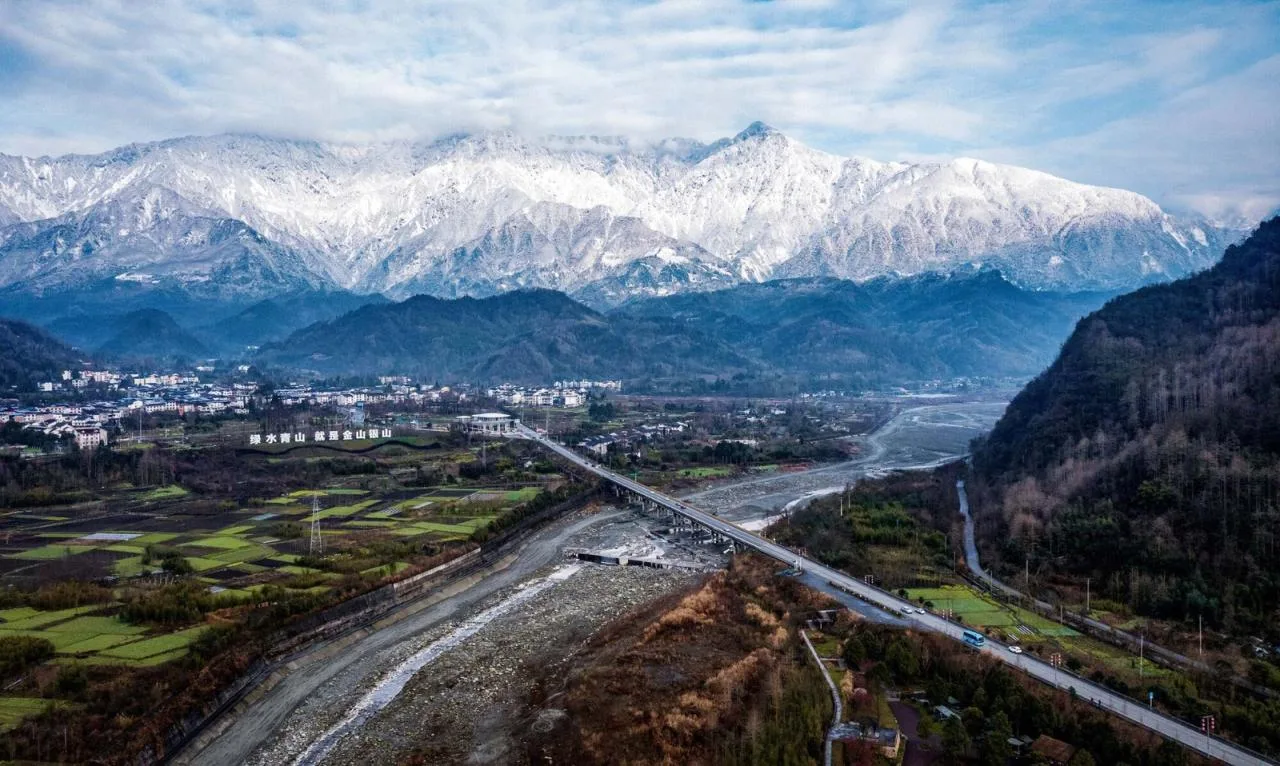
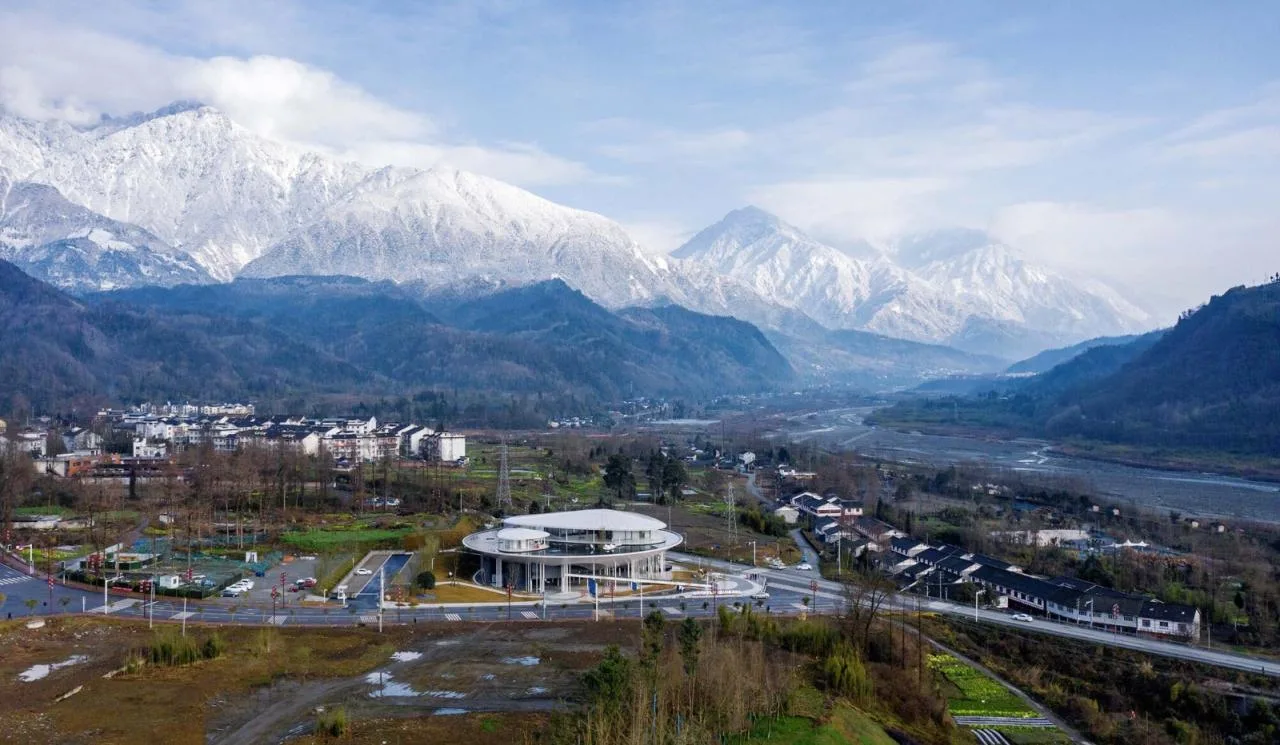
During our visit, we observed a common issue in villages within 1.5 kilometers of the project site—an ongoing challenge in urbanization worldwide: the decline and disappearance of traditional rural social structures. In response, the reclining gimbal design incorporates the concept of a “rural living room” to foster community connection.
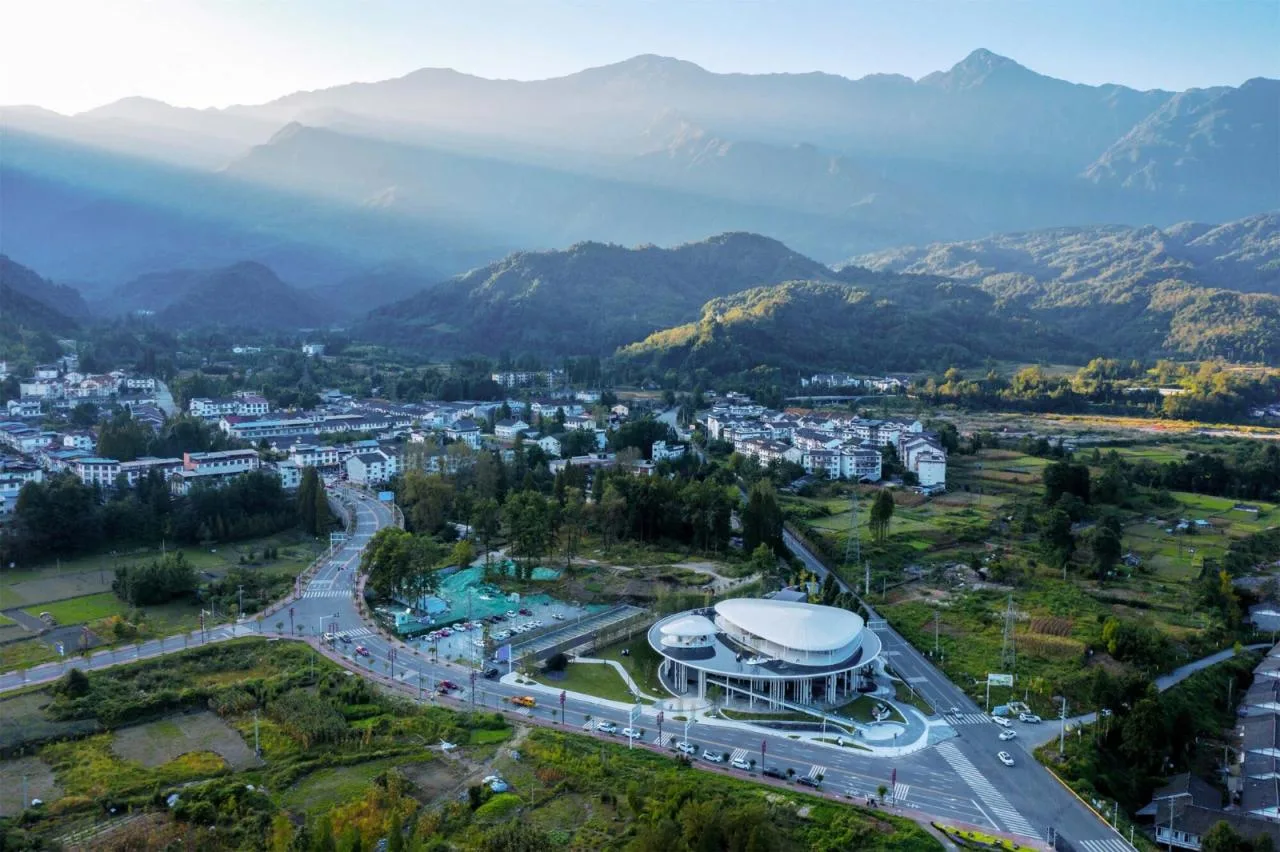
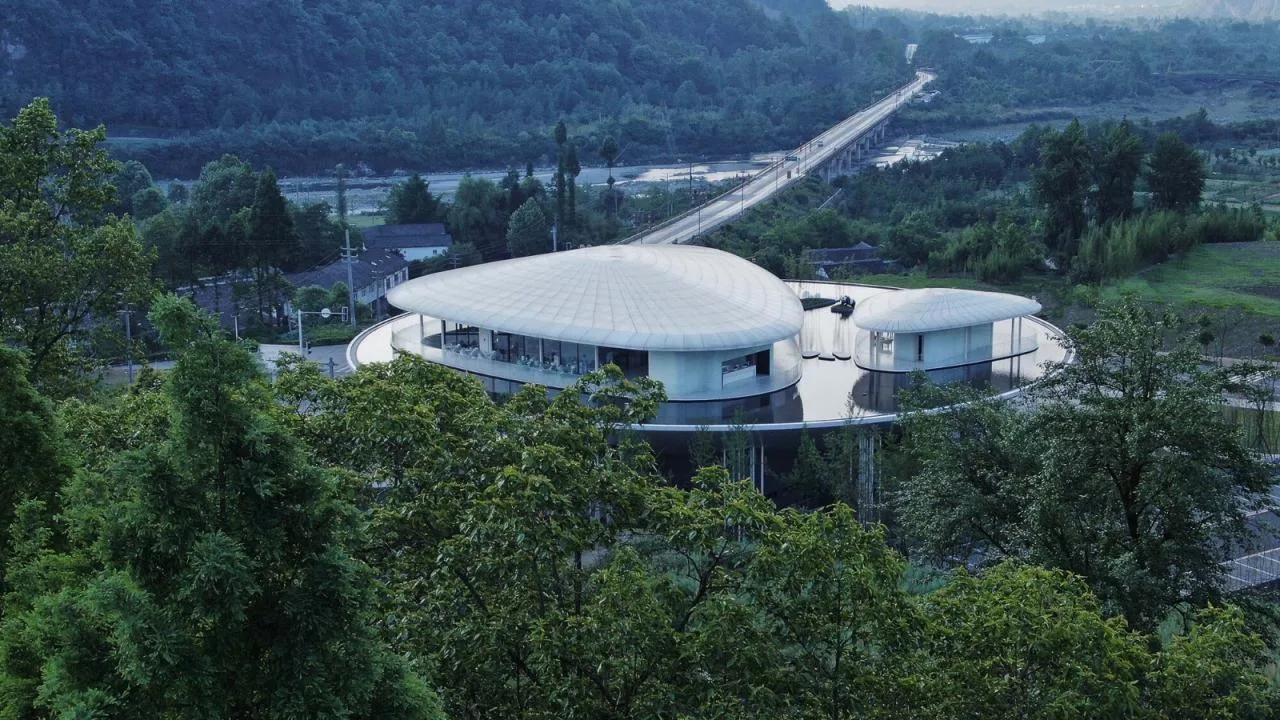
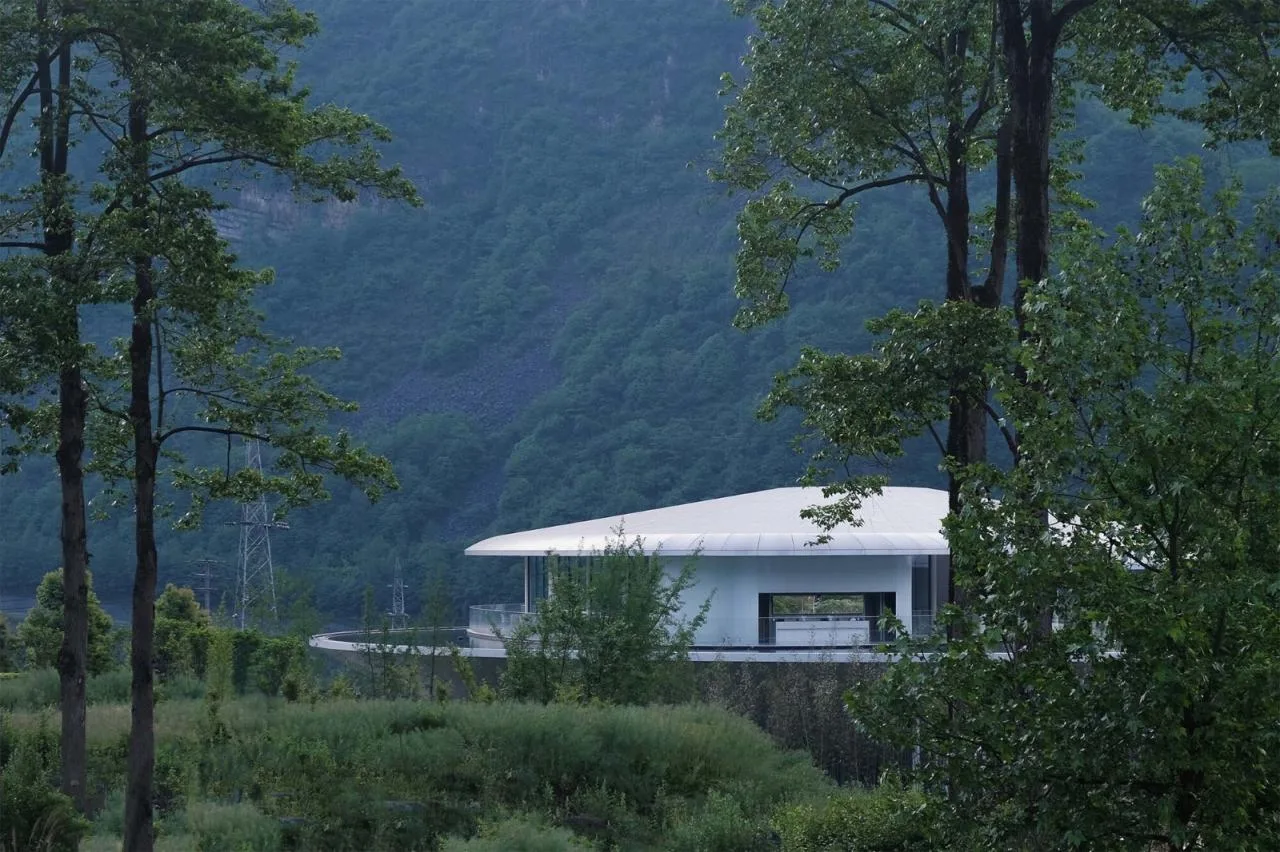
Inspired by Longmen Mountain, the design evokes the image of “lying clouds.” The name ‘Woyun’ translates to resting high in the mist and clouds, symbolizing retreat. “Woyuntai” reflects Xiaoyin Architecture’s exploration of humanity’s deep desire to reconnect with nature, simplicity, and tradition.
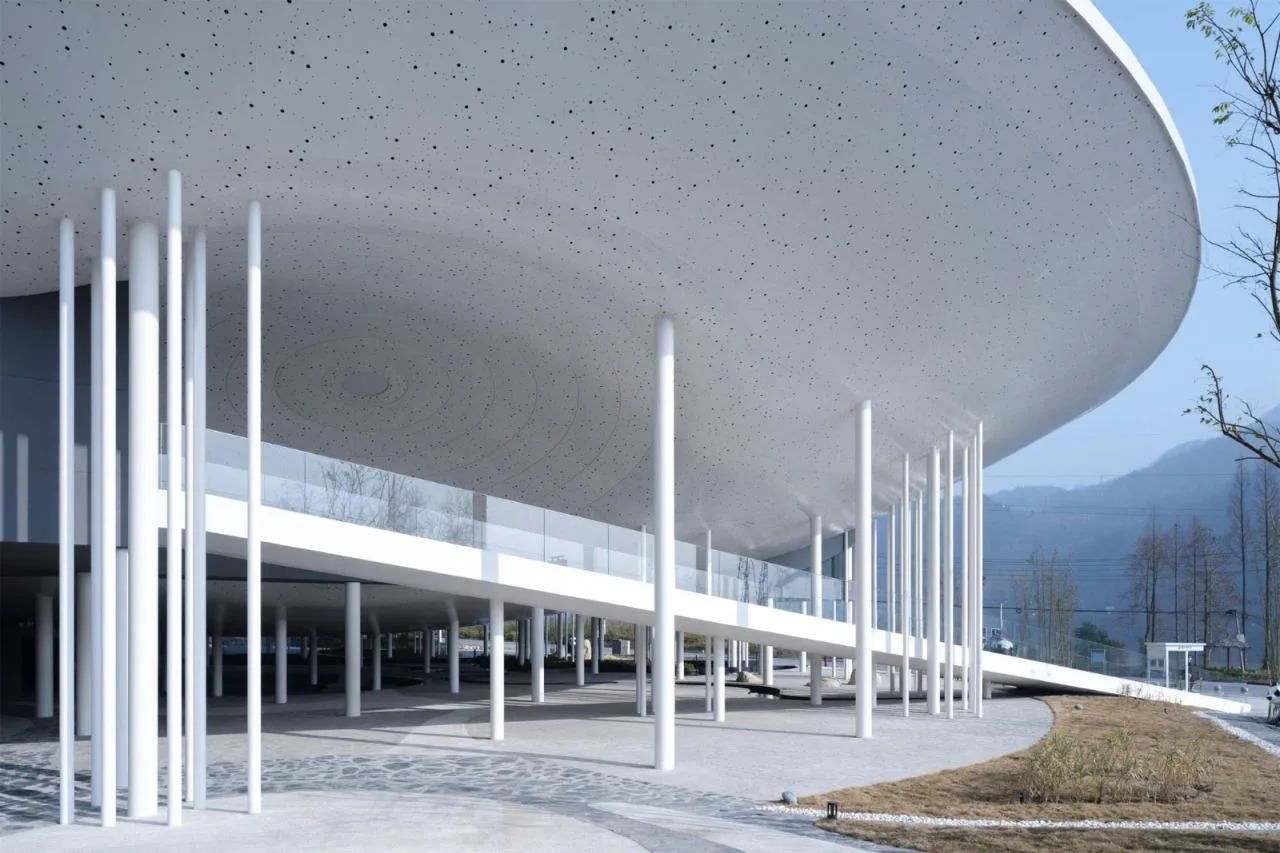
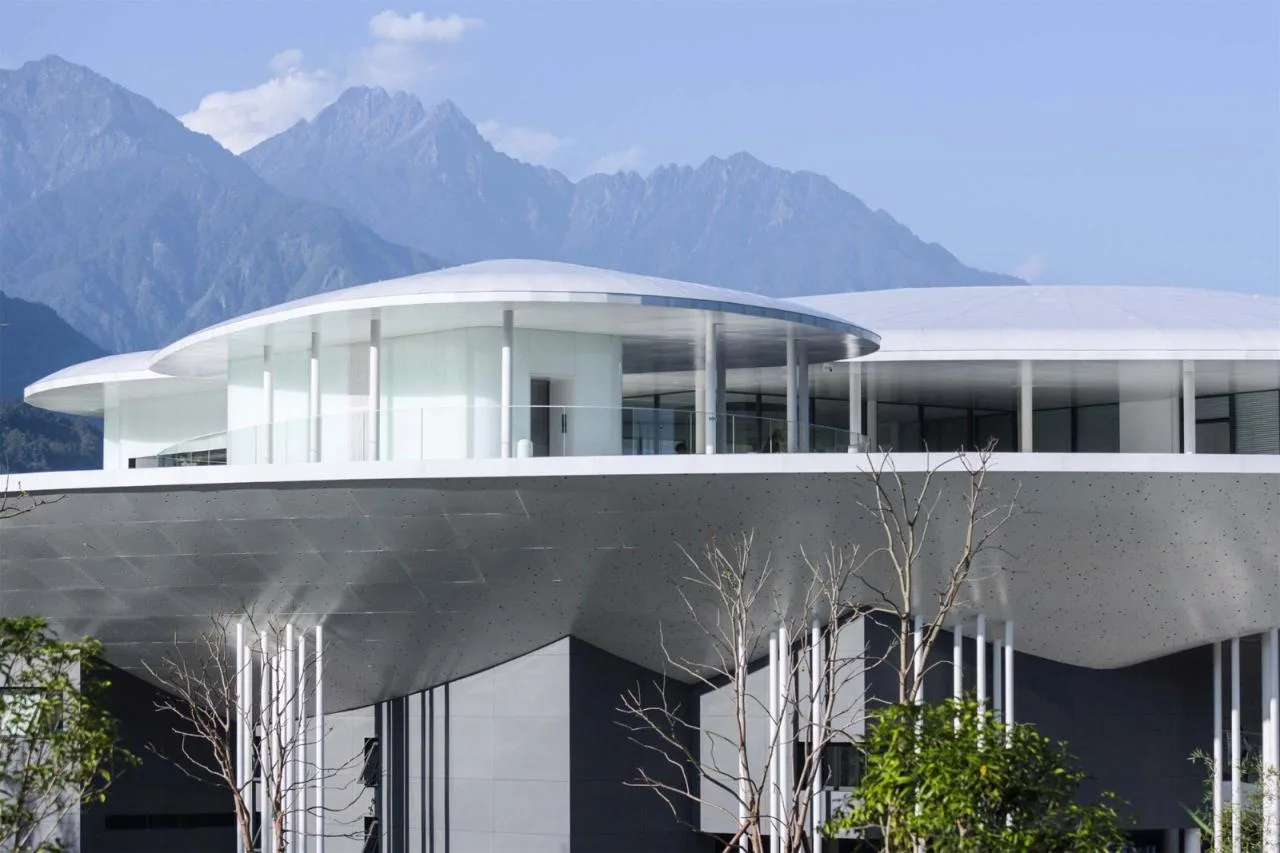
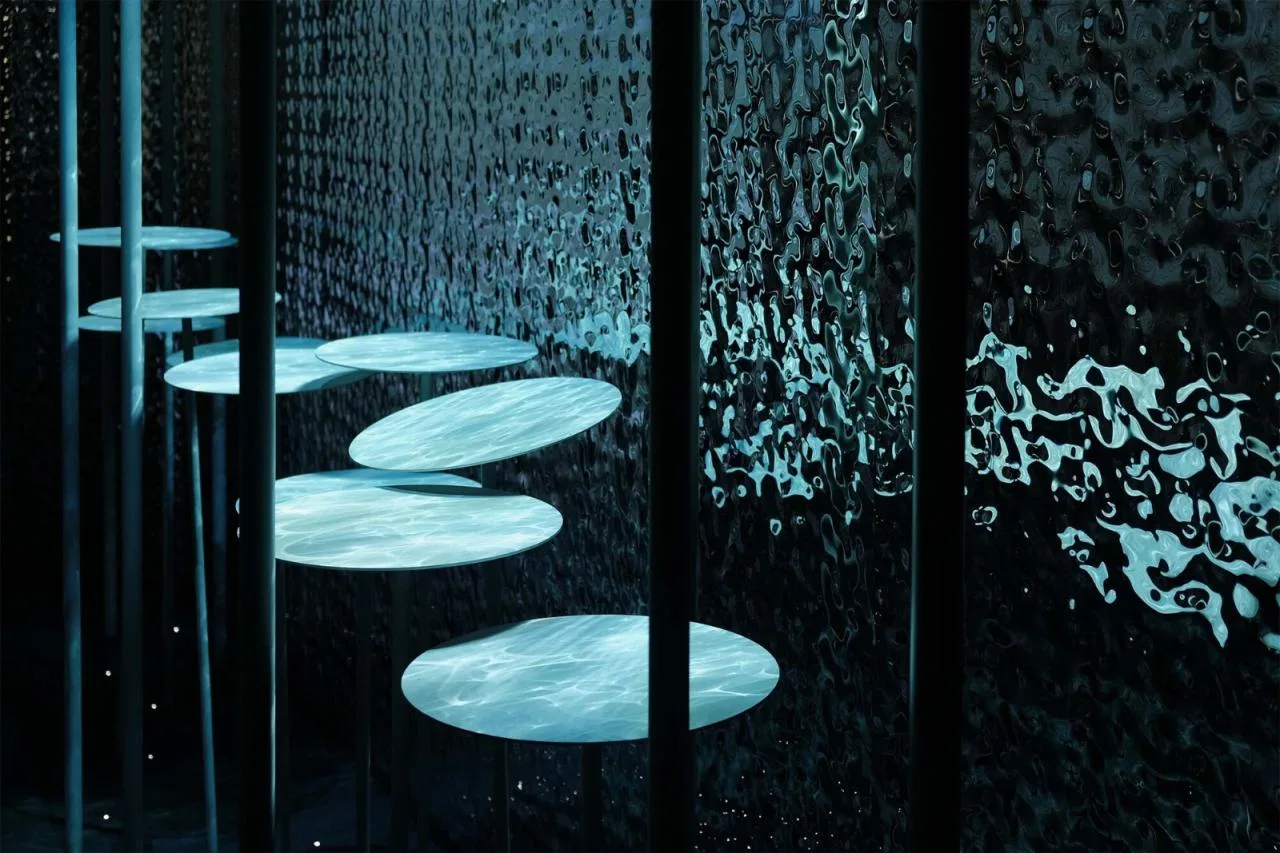
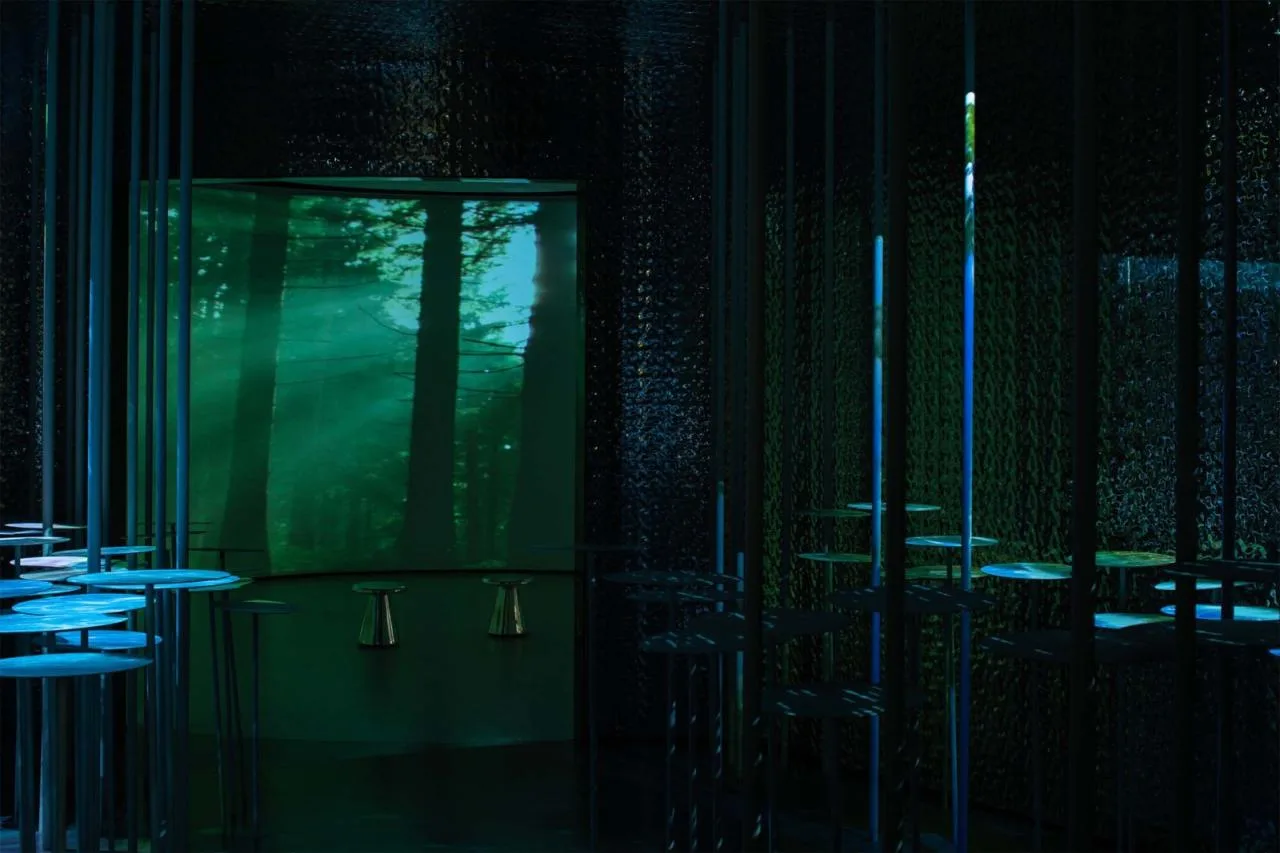
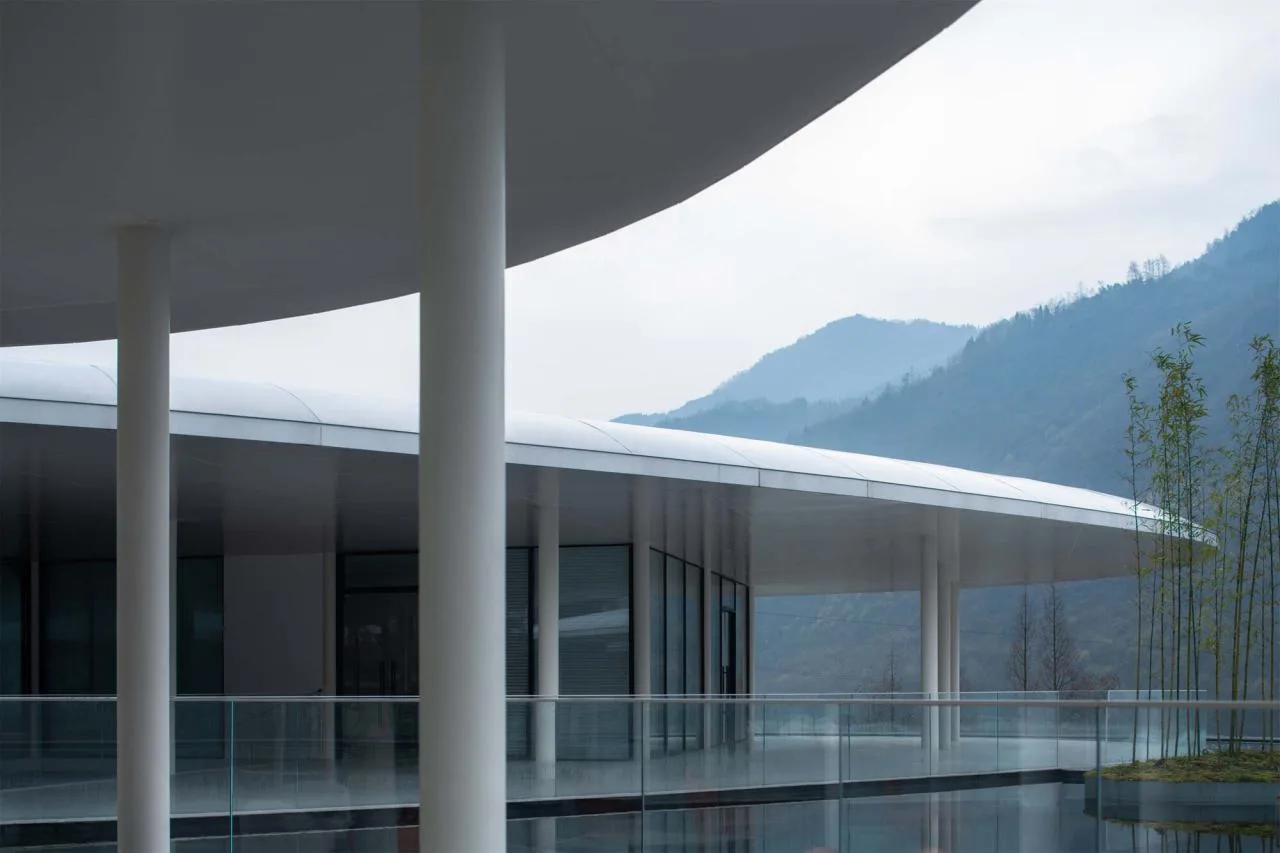
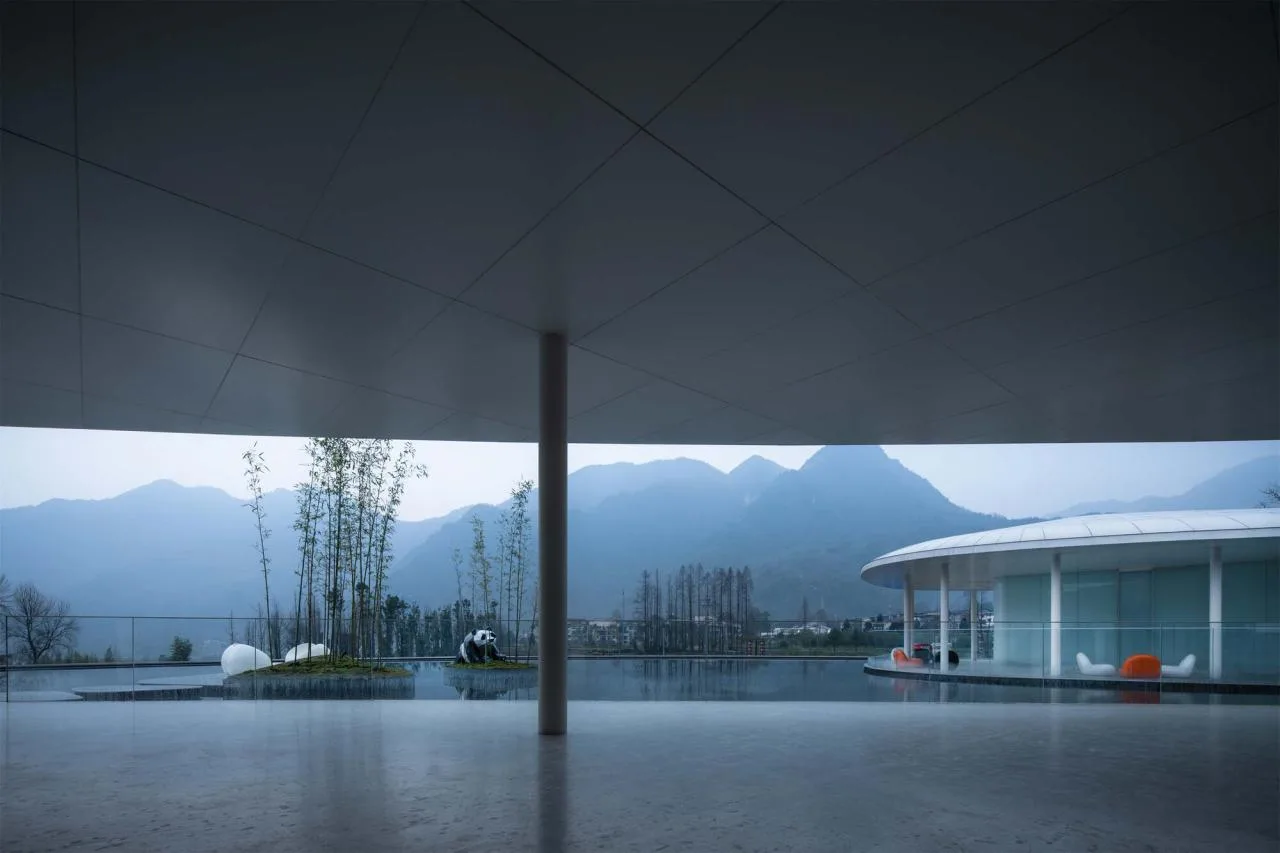
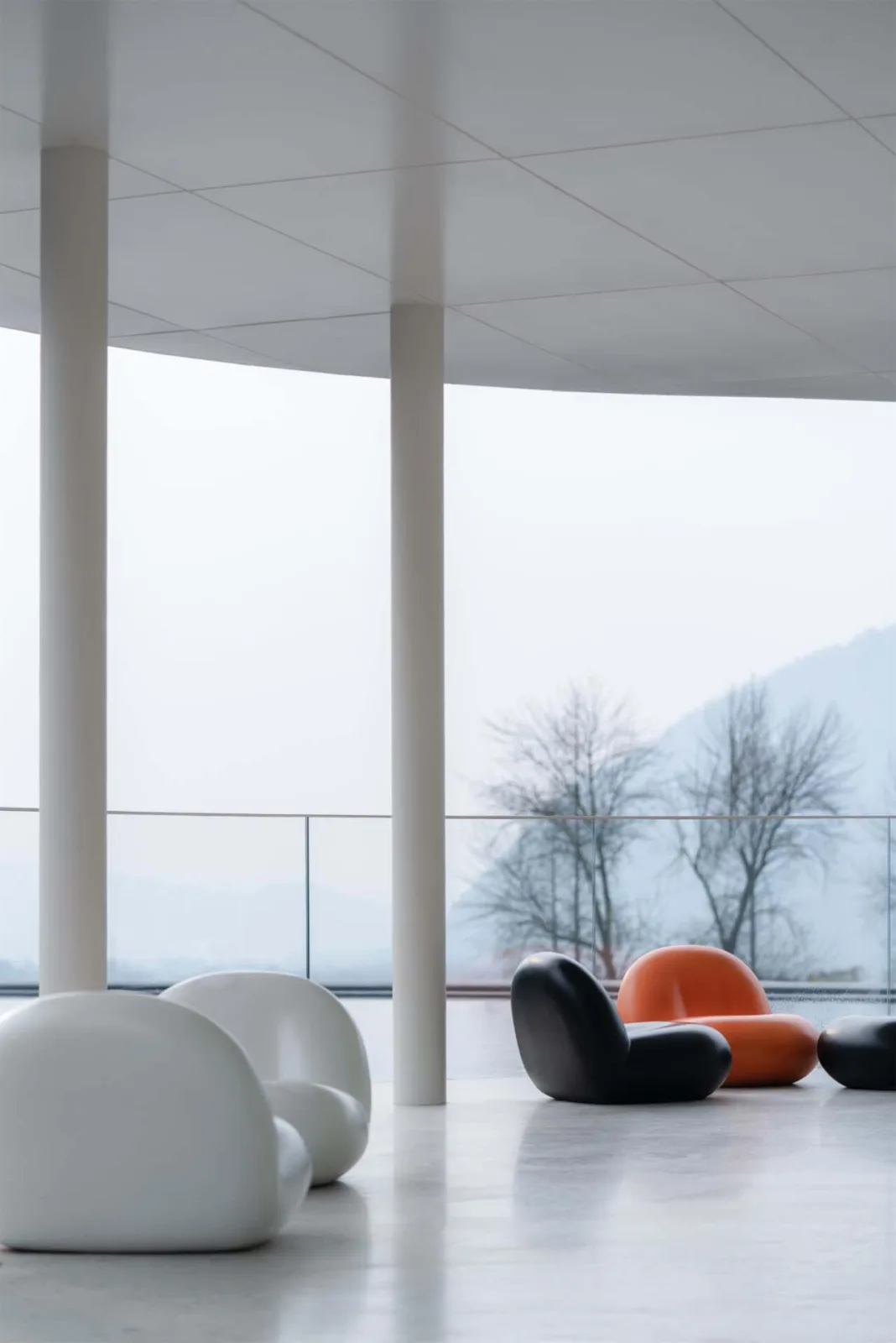
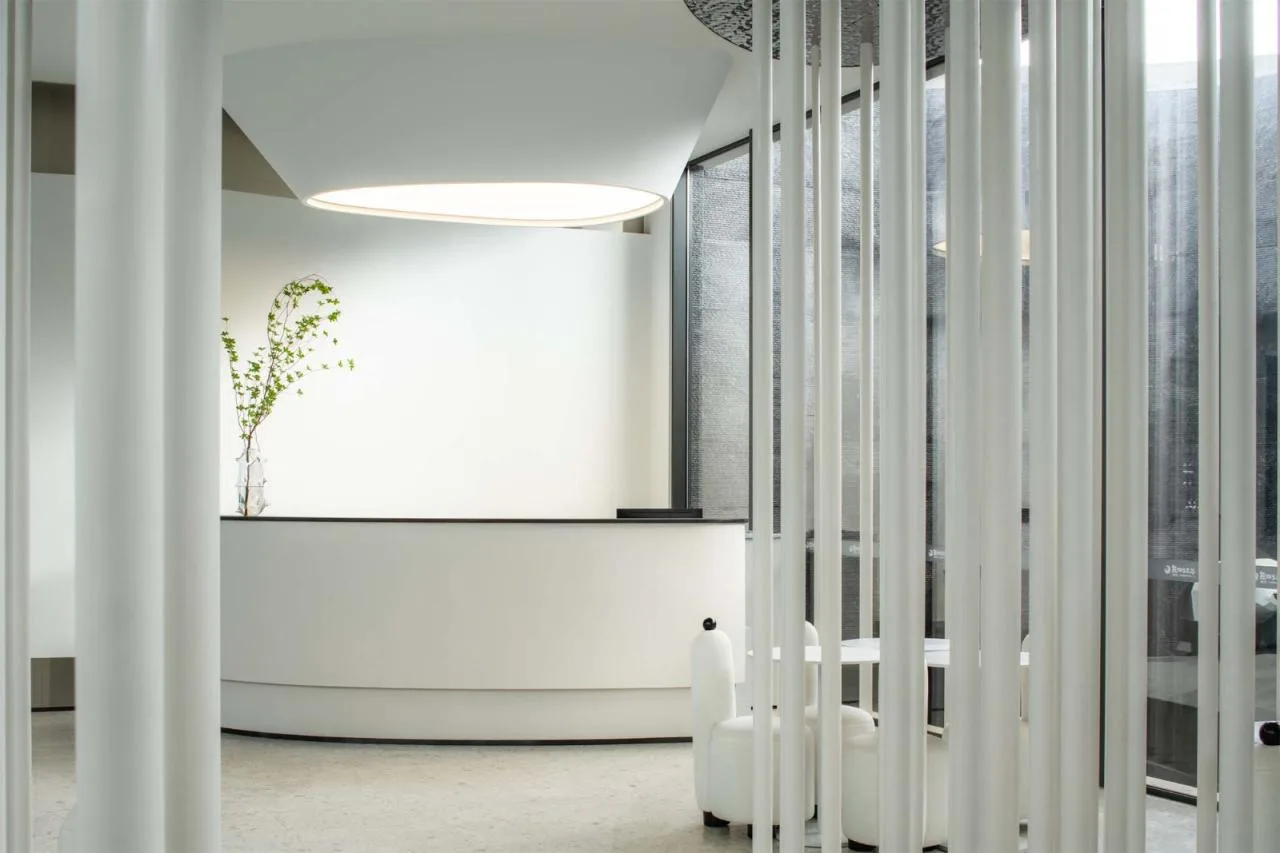
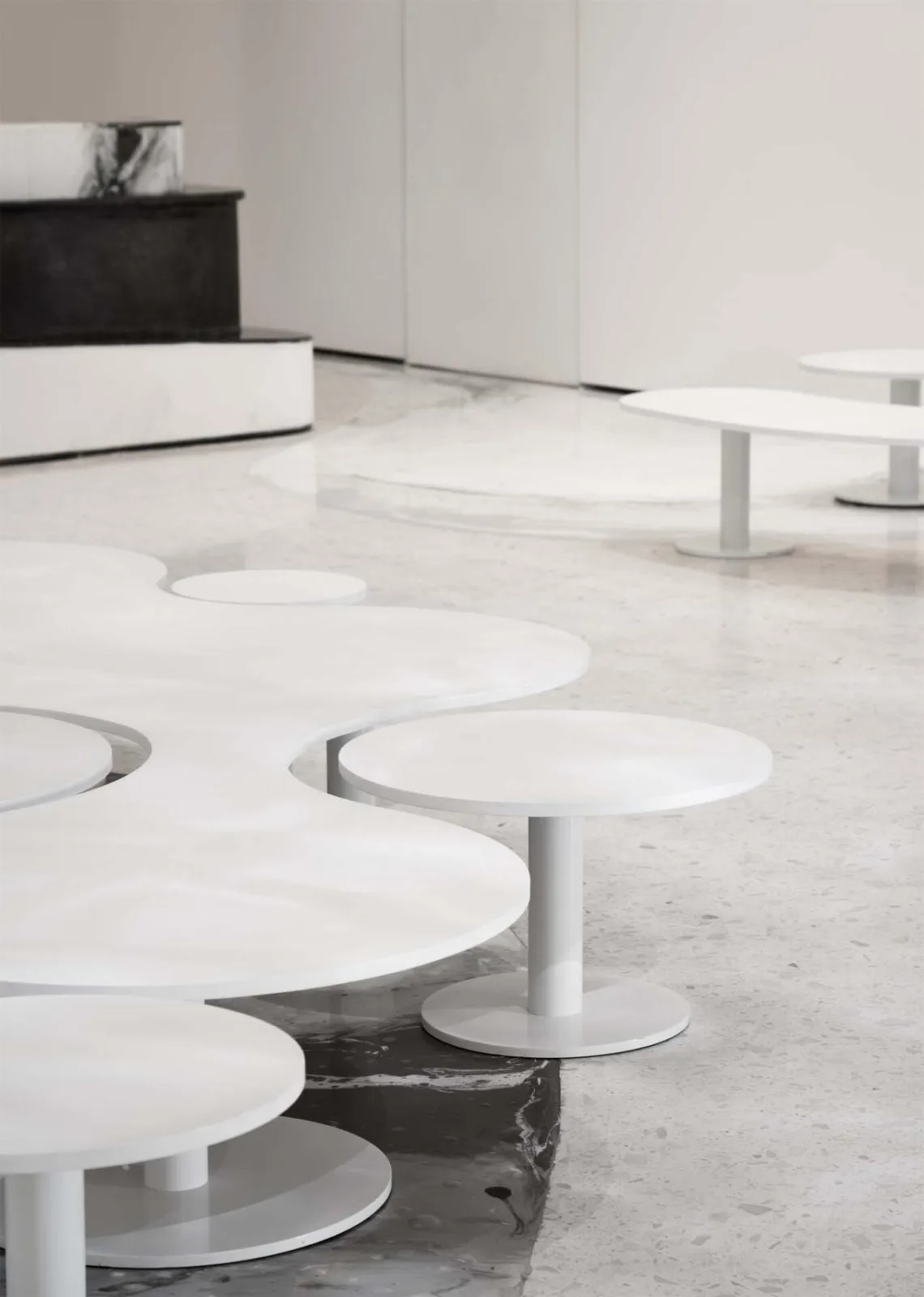
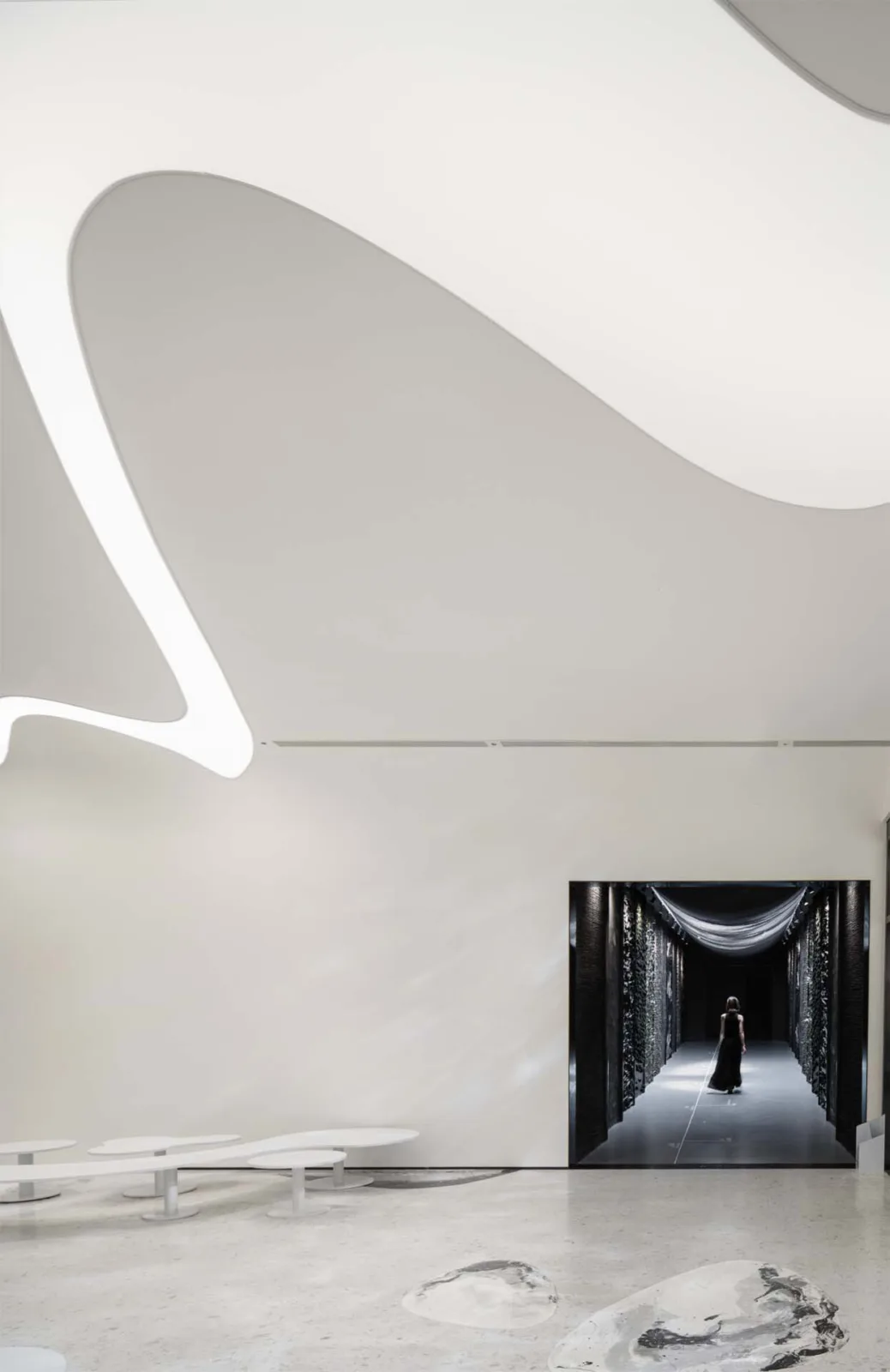
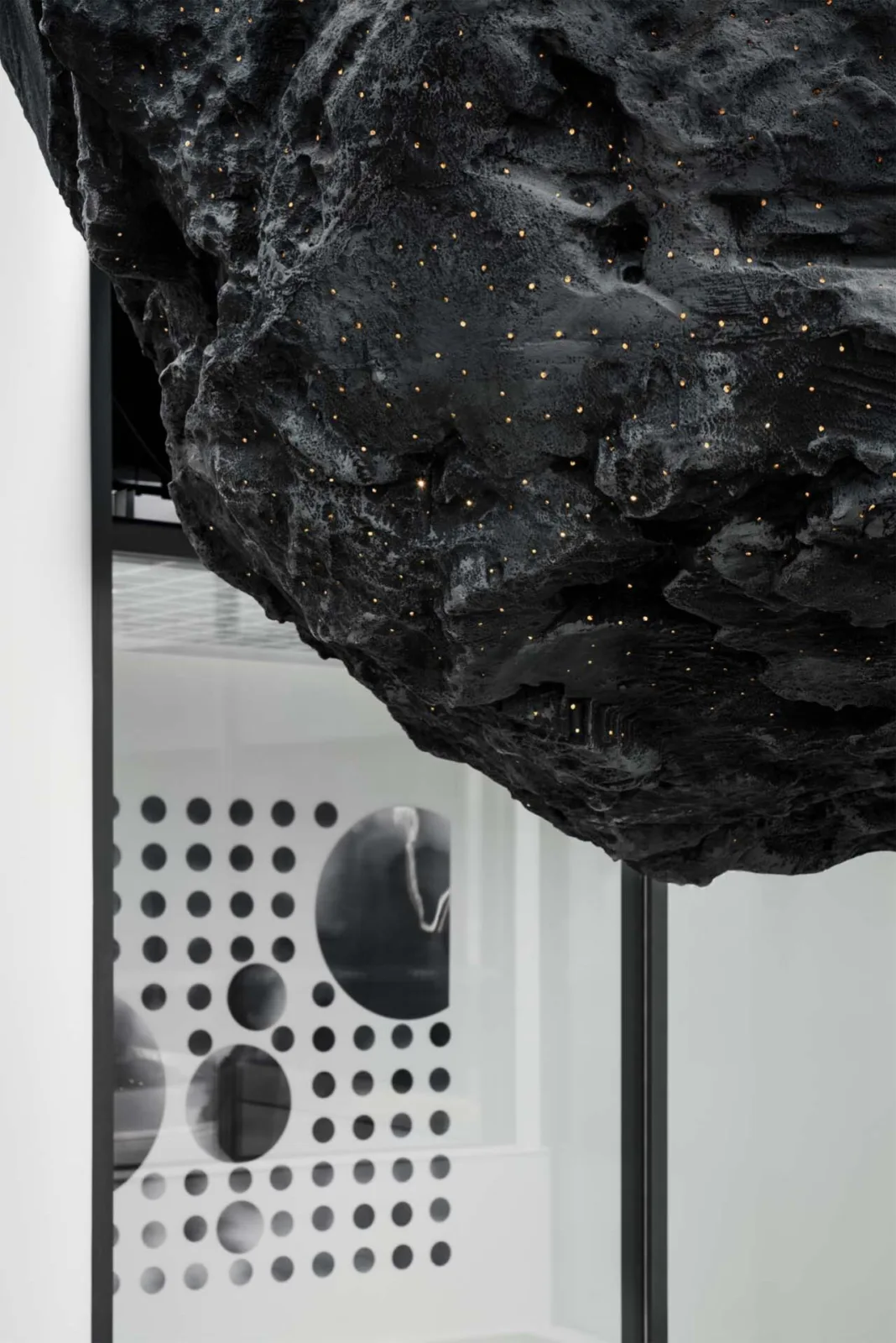
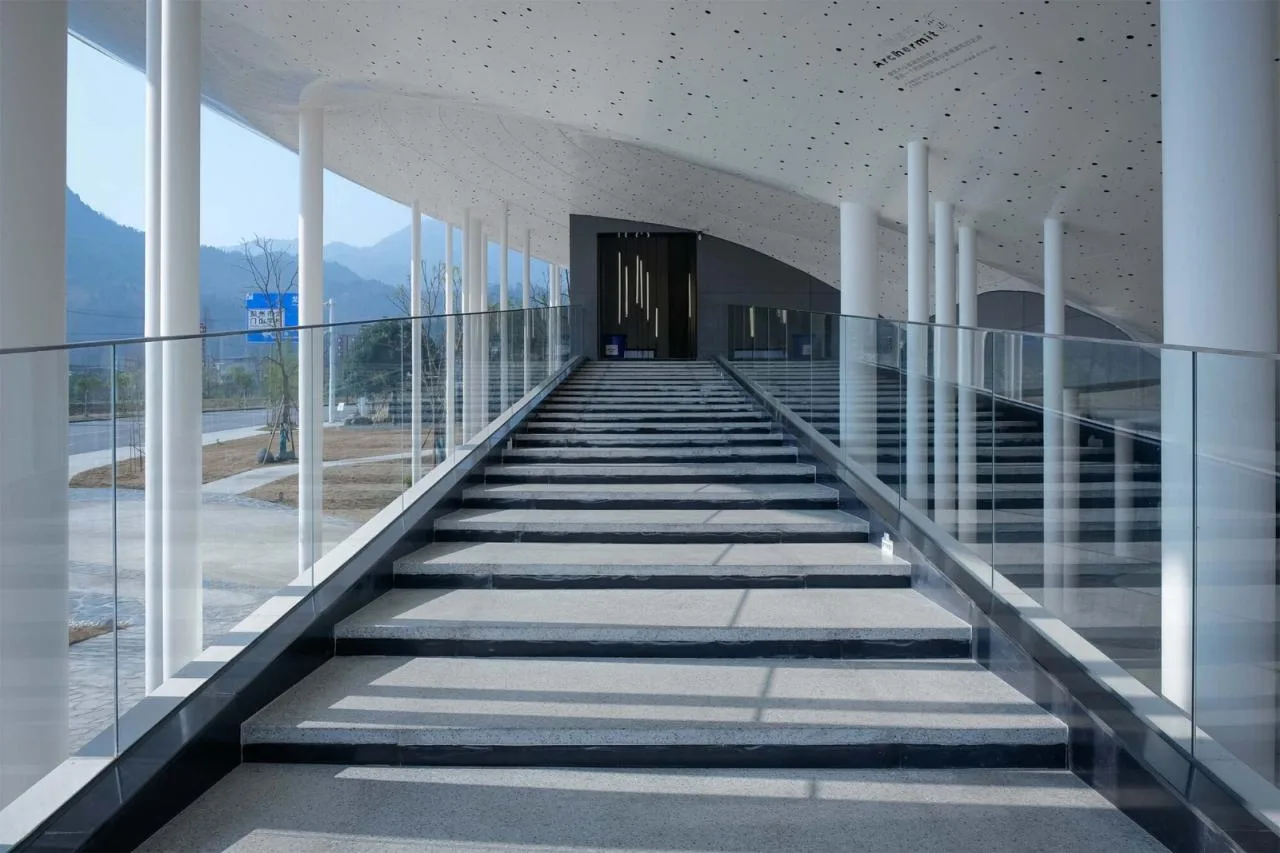
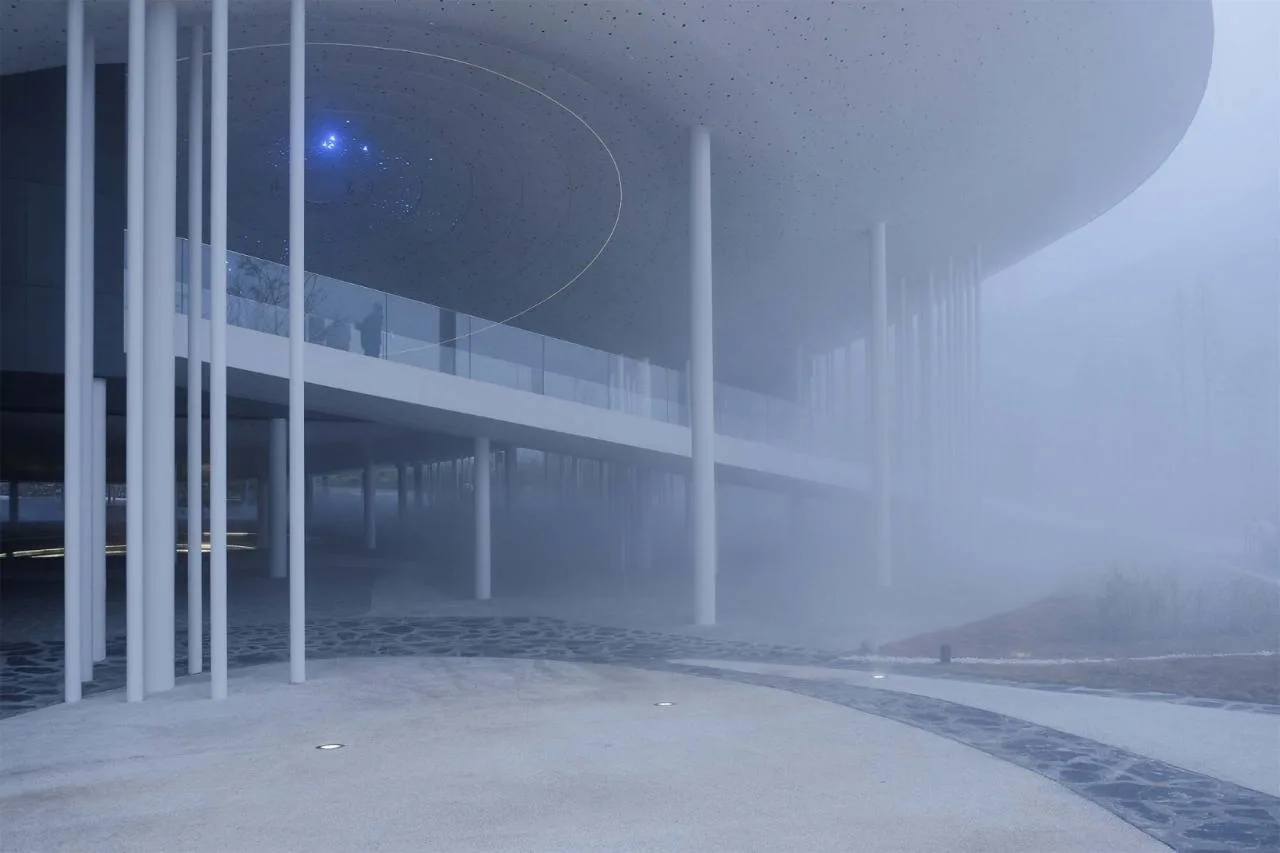
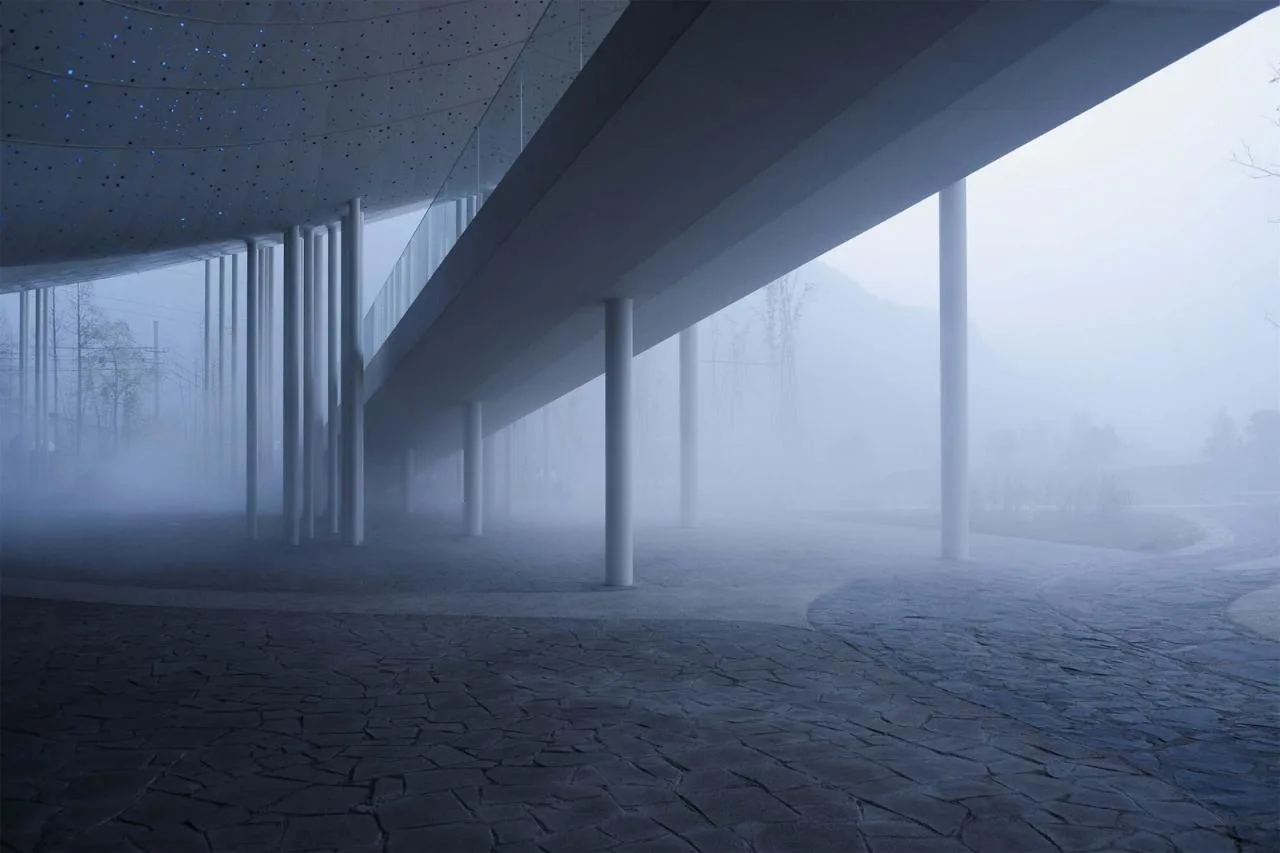
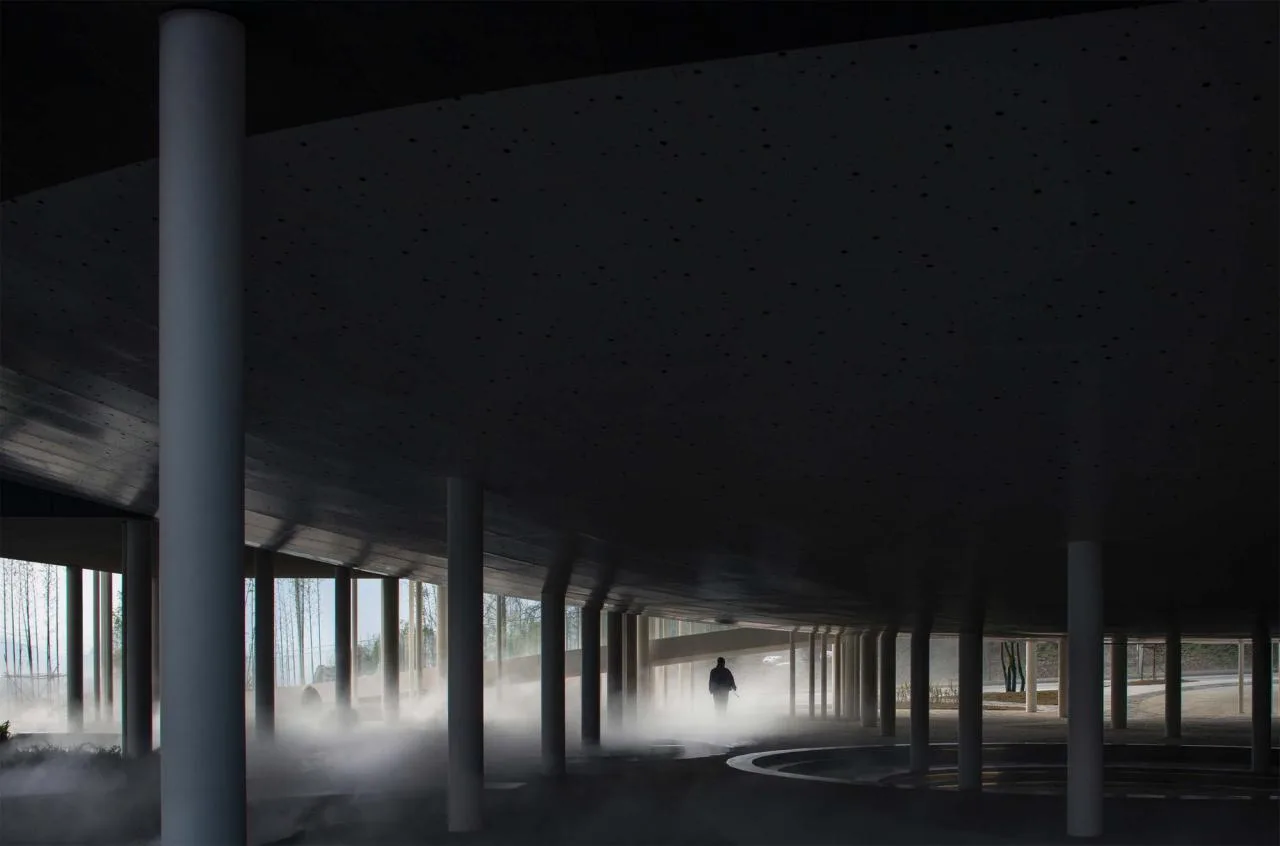
The building’s supporting pillars mimic bamboo forests, growing upward to create an open, spacious area for community cultural exchange. The central structure resembles a panda perched atop a bamboo grove, forming a suspended hemisphere. Two “floating stones” rest on shallow water above the roof, inspired by the geological “glacier drift” formations of Feilaifeng’s giant stones in Longmen Mountain and the river stones of the Nanjiang River valley. Panda-themed elements—such as the black and white color scheme and shapes—are incorporated throughout the interior, including furniture and soft furnishings.
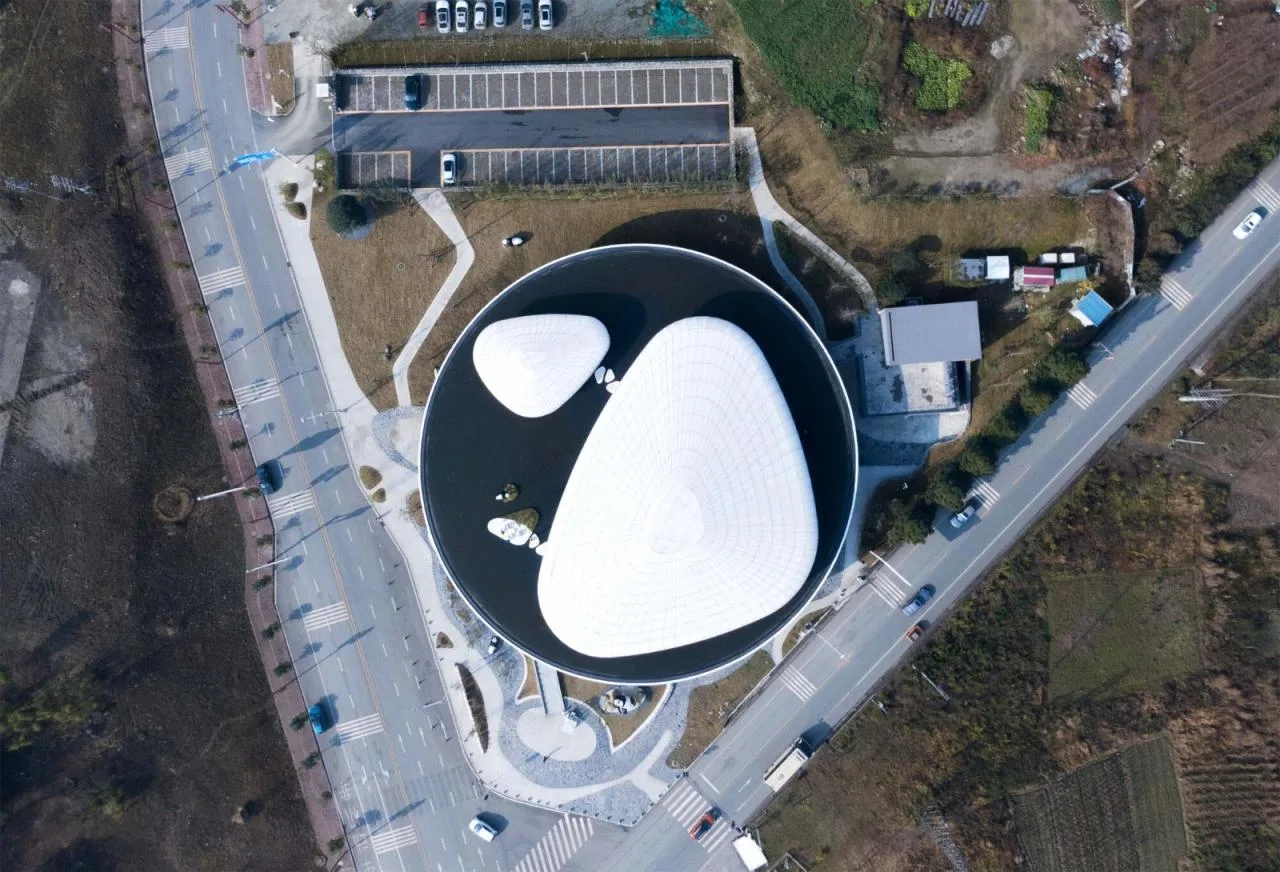
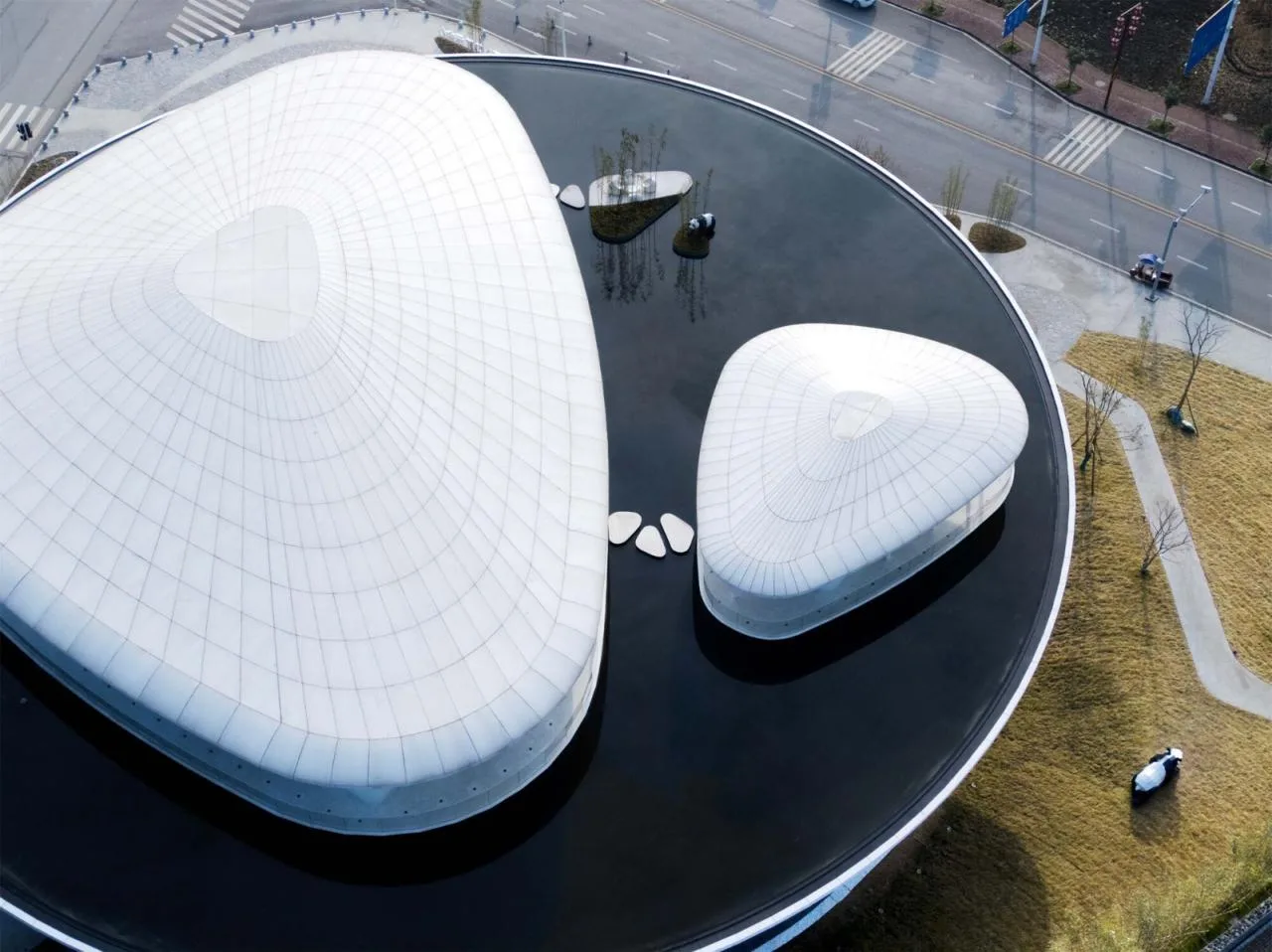
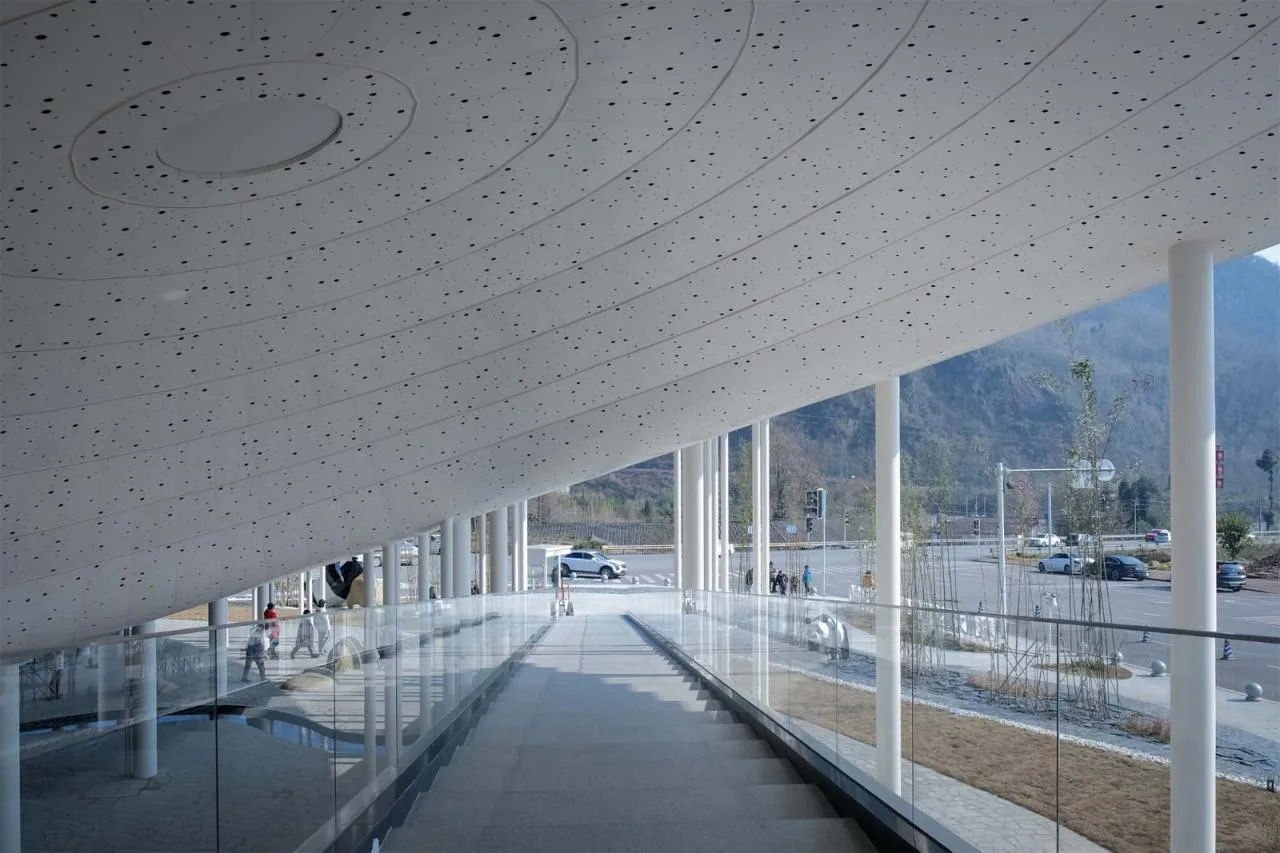
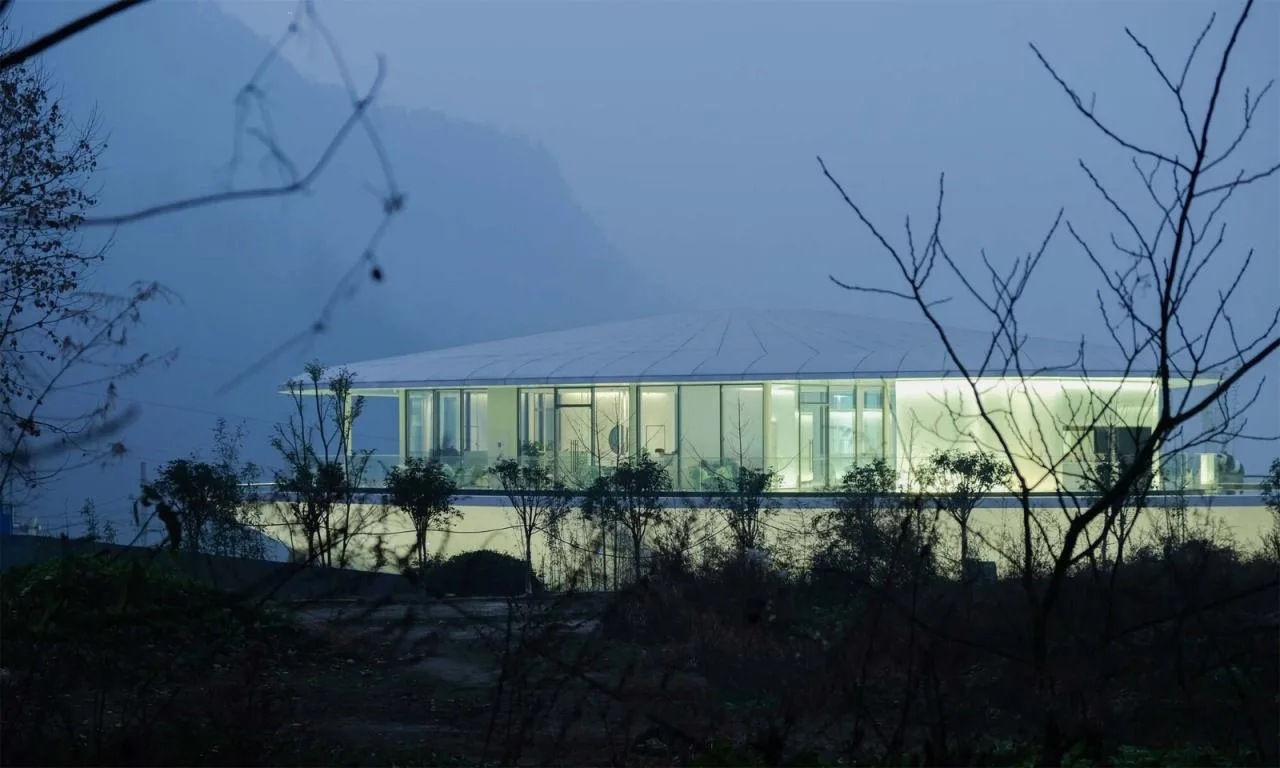
At night, the large dome beneath the aerial structure transforms into a starry universe through thoughtful lighting design. Using parametric techniques, the dome is divided into over 2,600 curved aluminum panels, simplifying installation and controlling costs. Each panel features holes of varying diameters—12mm, 25mm, and 40mm—randomly distributed to create a natural starry pattern across the dome’s surface.
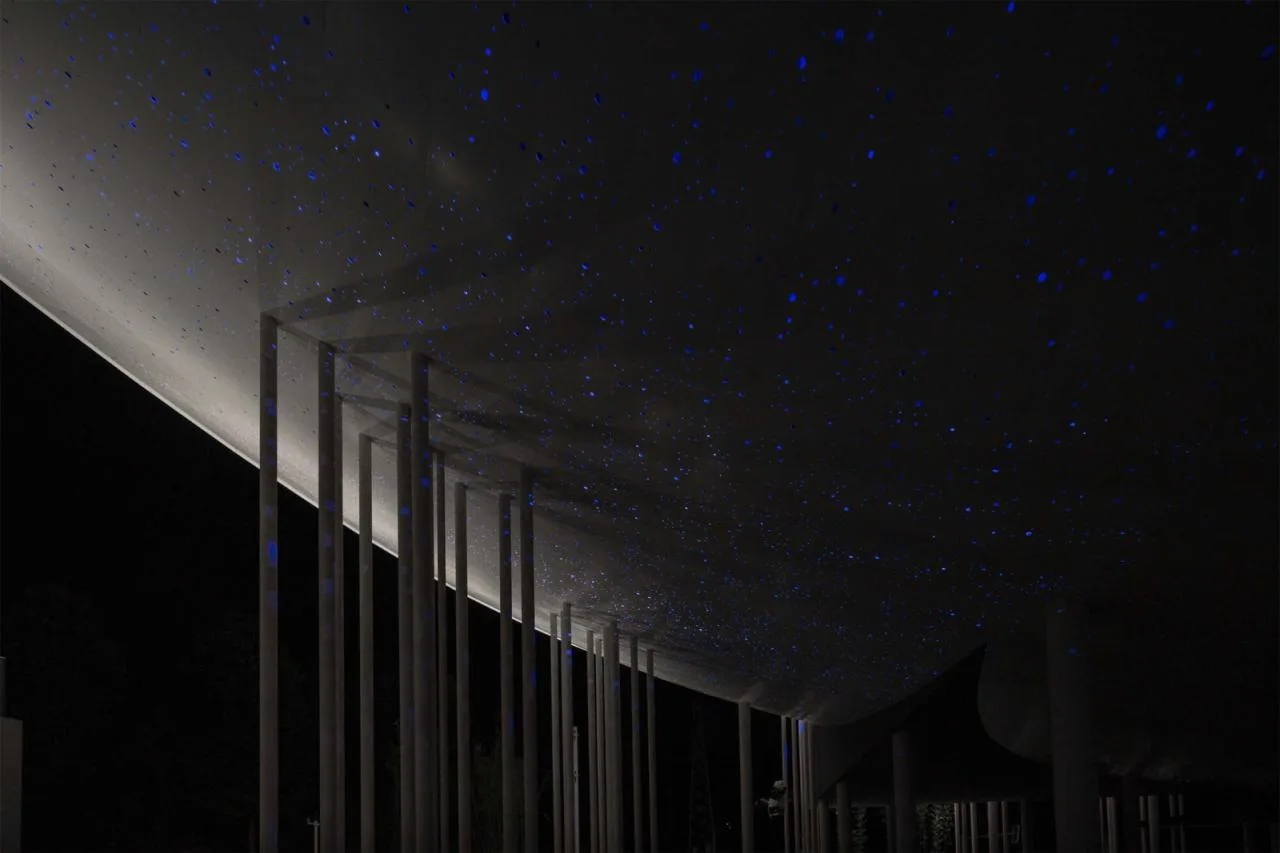
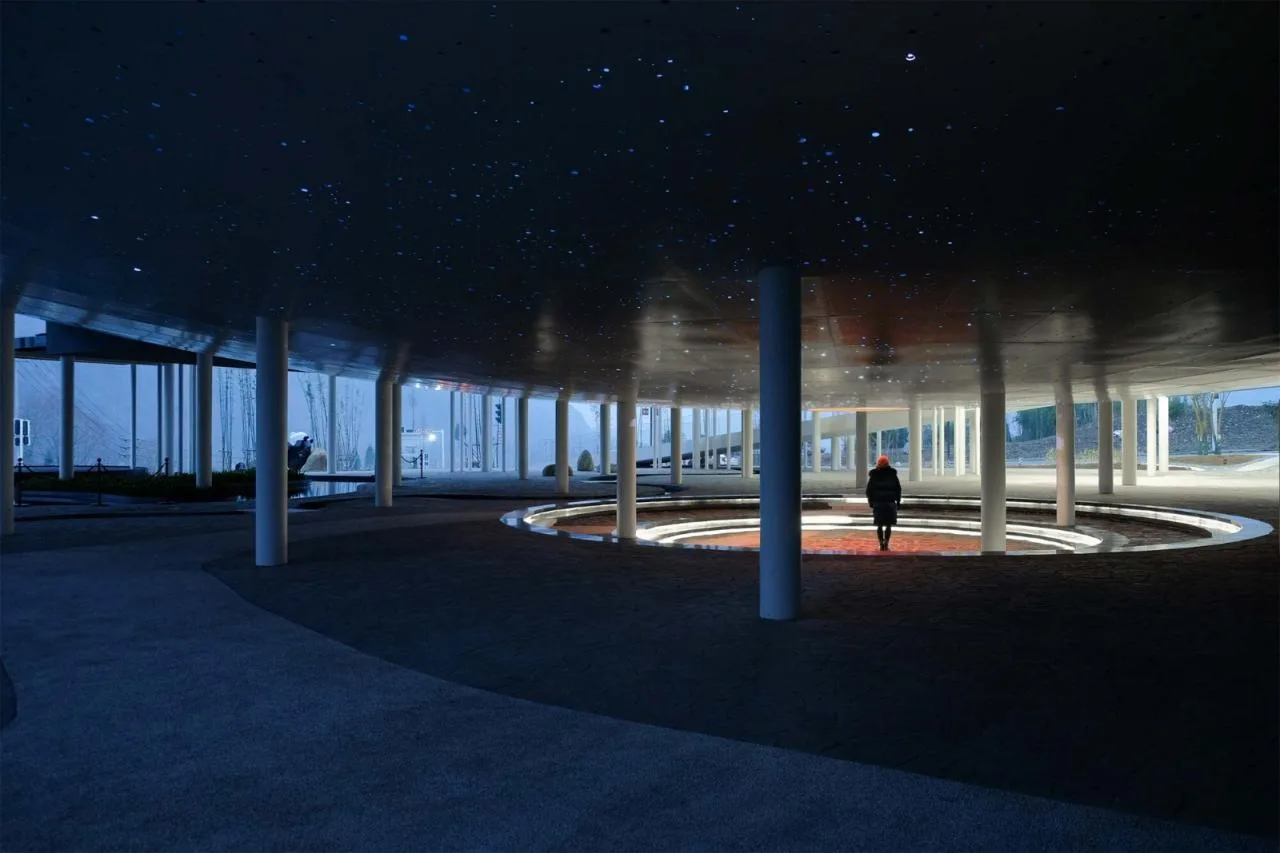
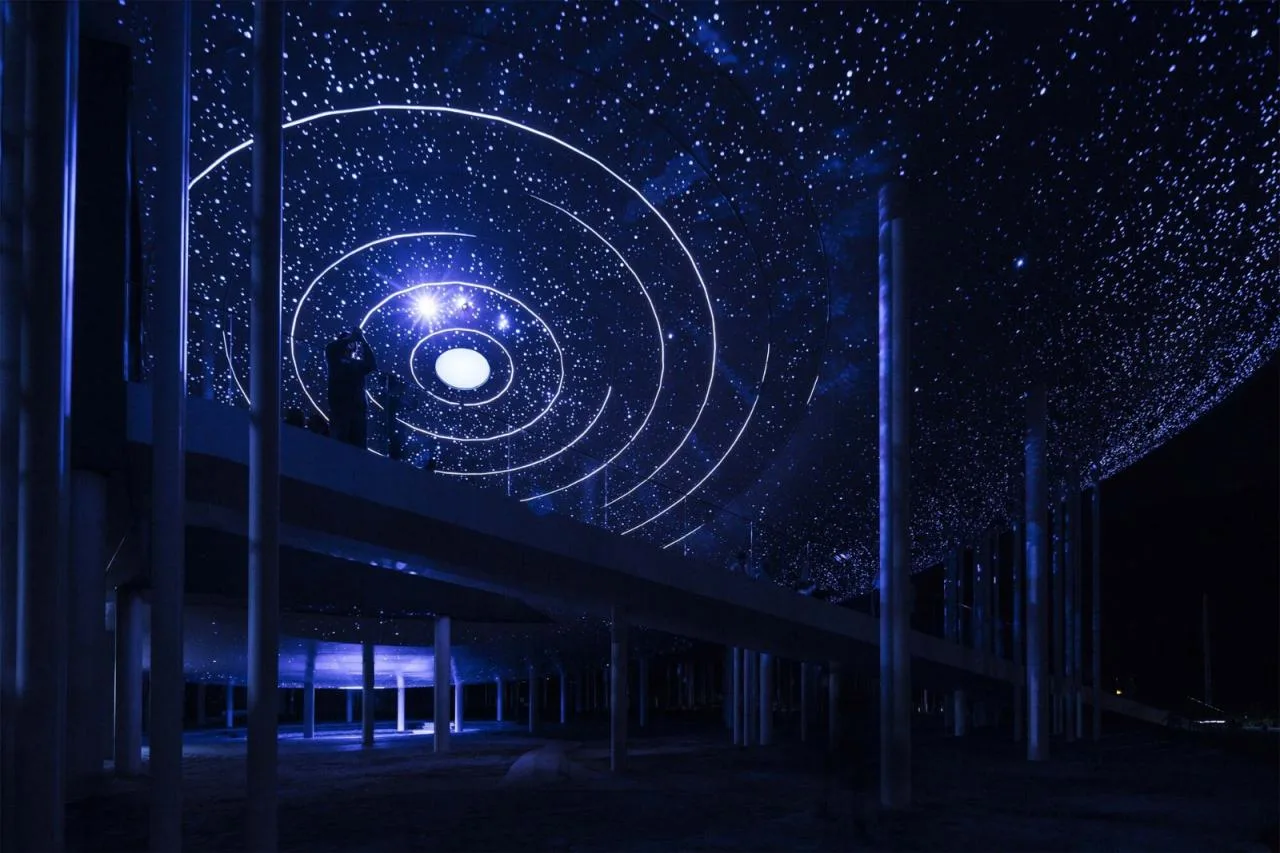
The dome’s interior is equipped with built-in lighting. Rather than costly and complex LED bulb installations, LED floodlights are positioned at key points to wash the surface with light from the sides. This controlled lighting reflects off the perforated aluminum panels, producing a “Haohan Starry Sky” effect on the dome’s exterior. Dynamic shooting stars near the main entrance, stars in the sunken plaza, and the contrast between visible and hidden elements amplify the enchanting nighttime atmosphere.
Project Drawings
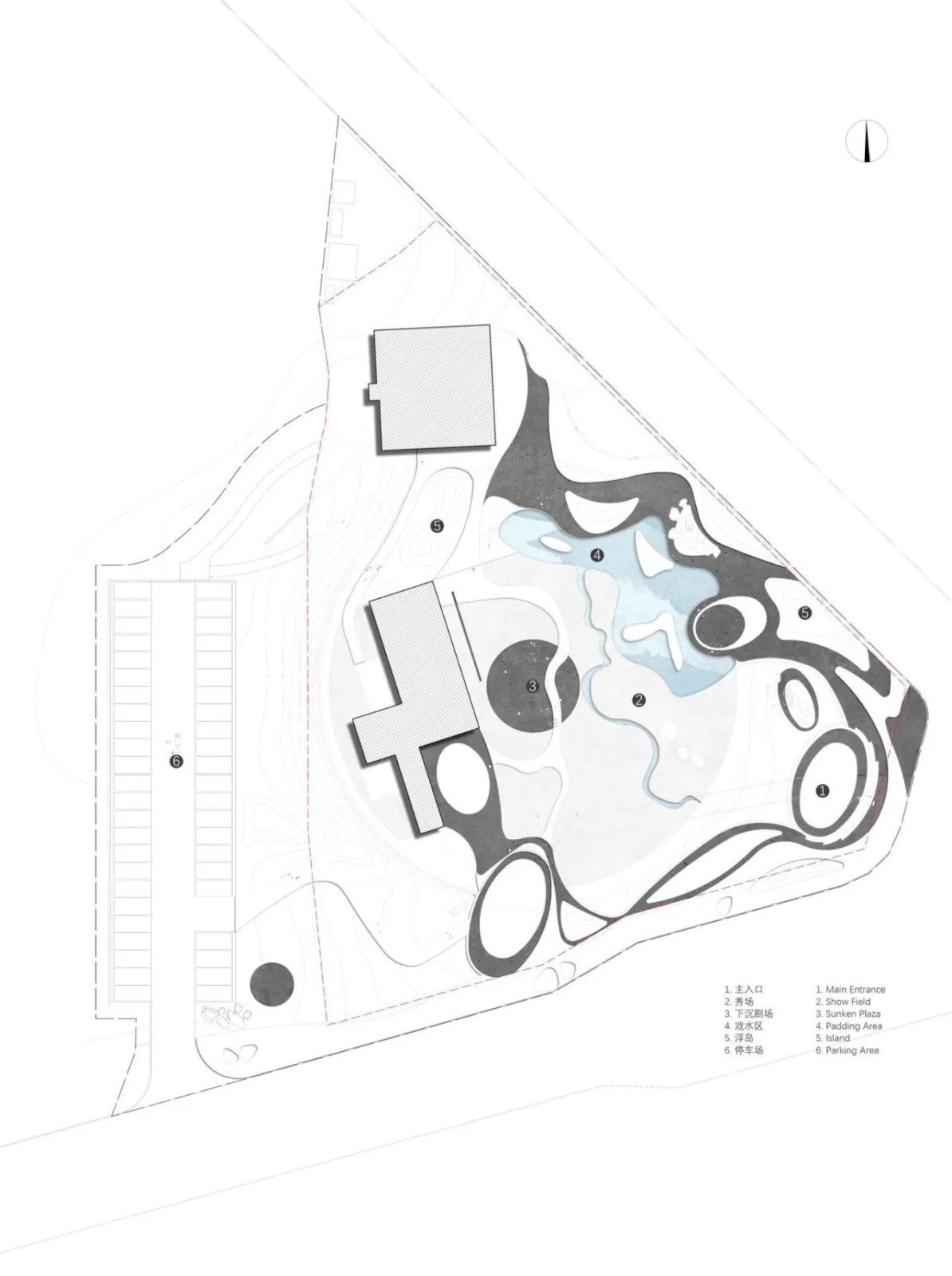
△ General Layout Plan
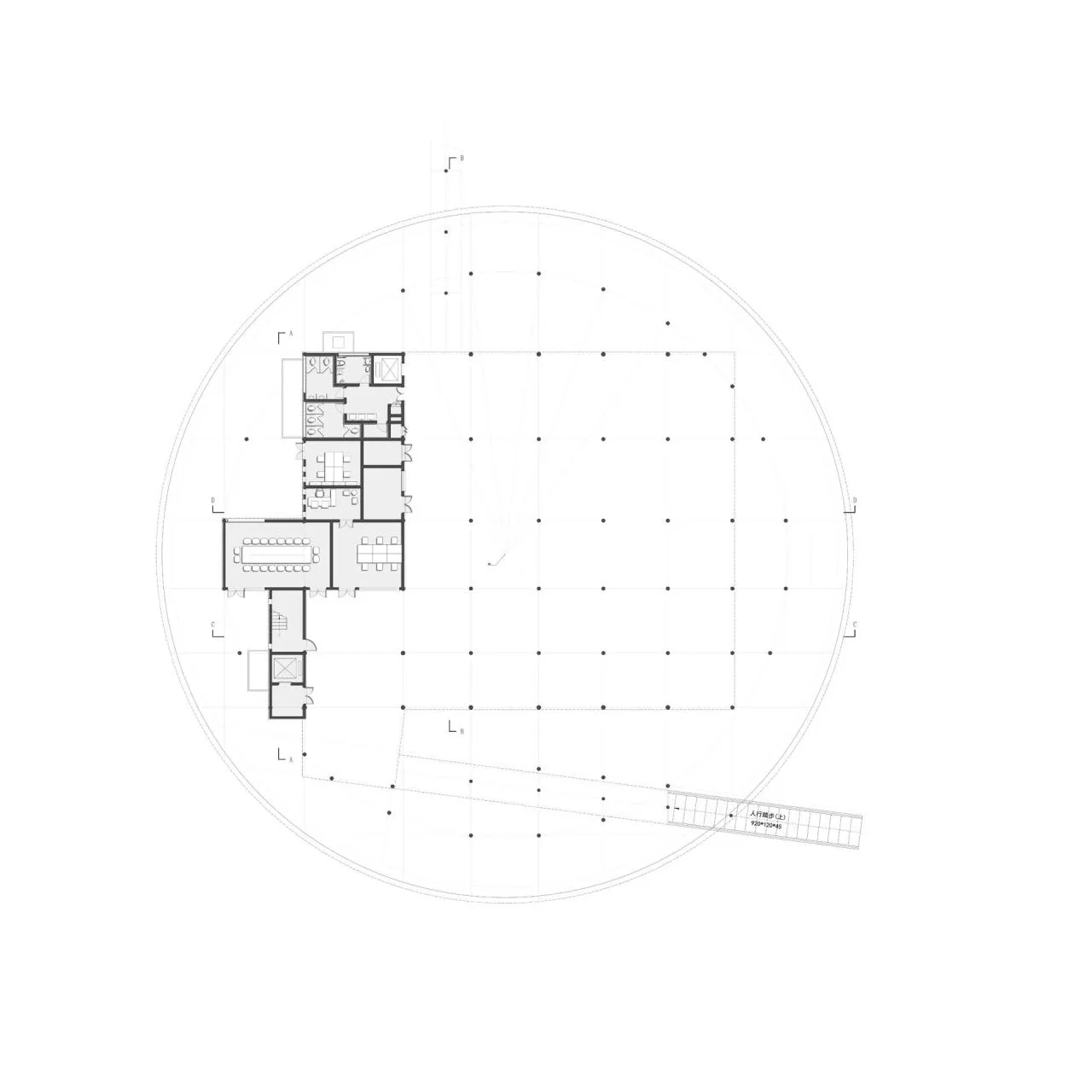
△ First Floor Plan
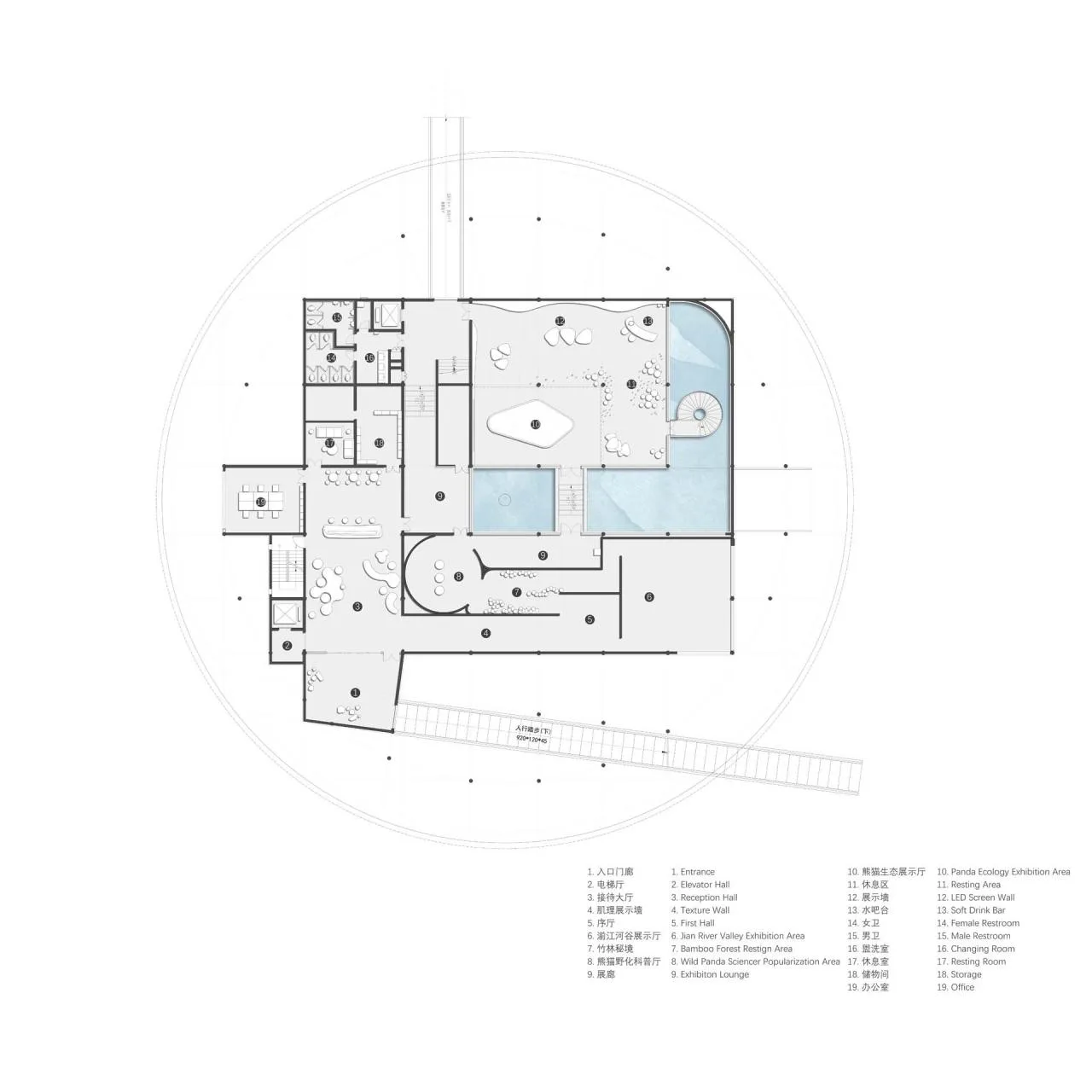
△ Second Floor Plan
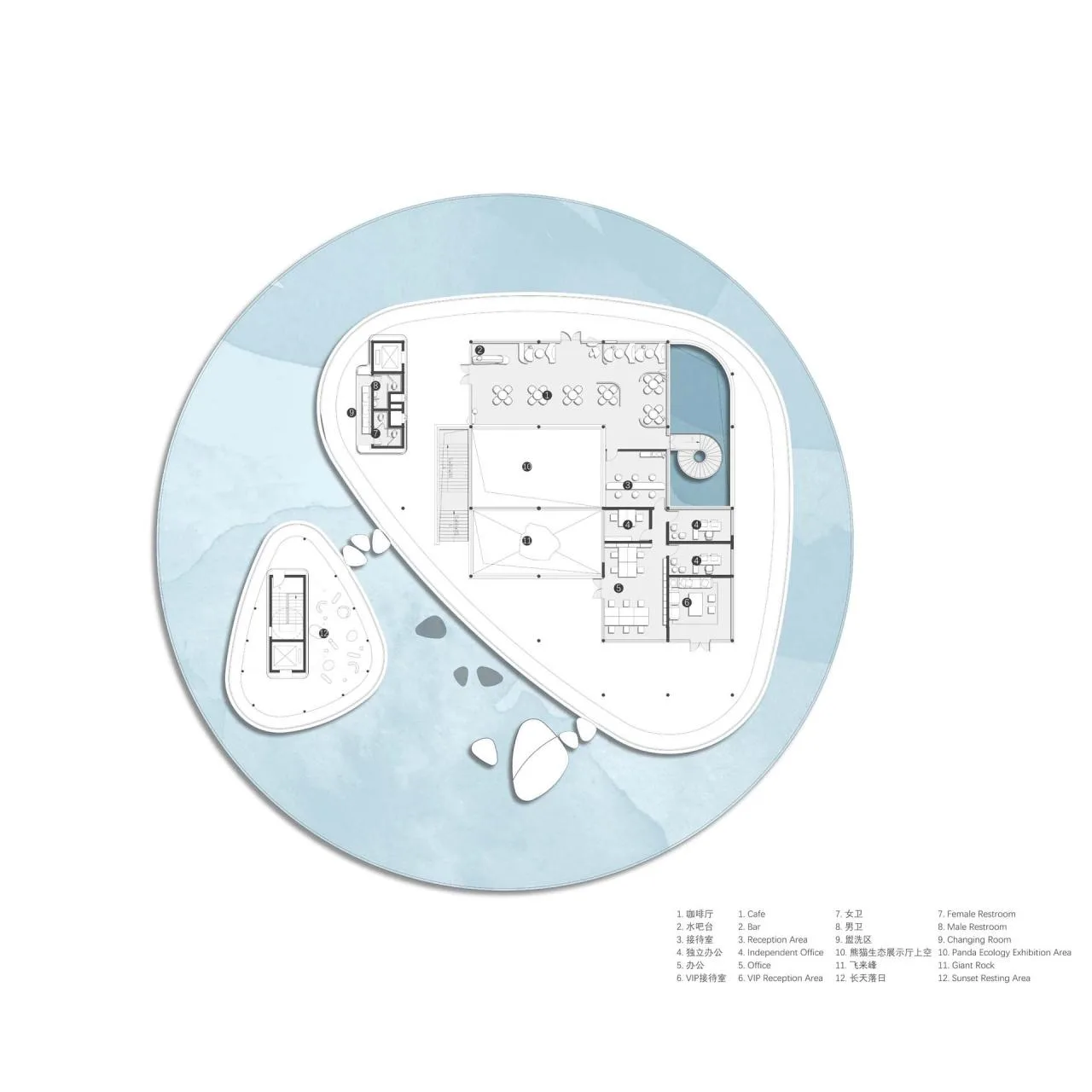
△ Third Floor Plan
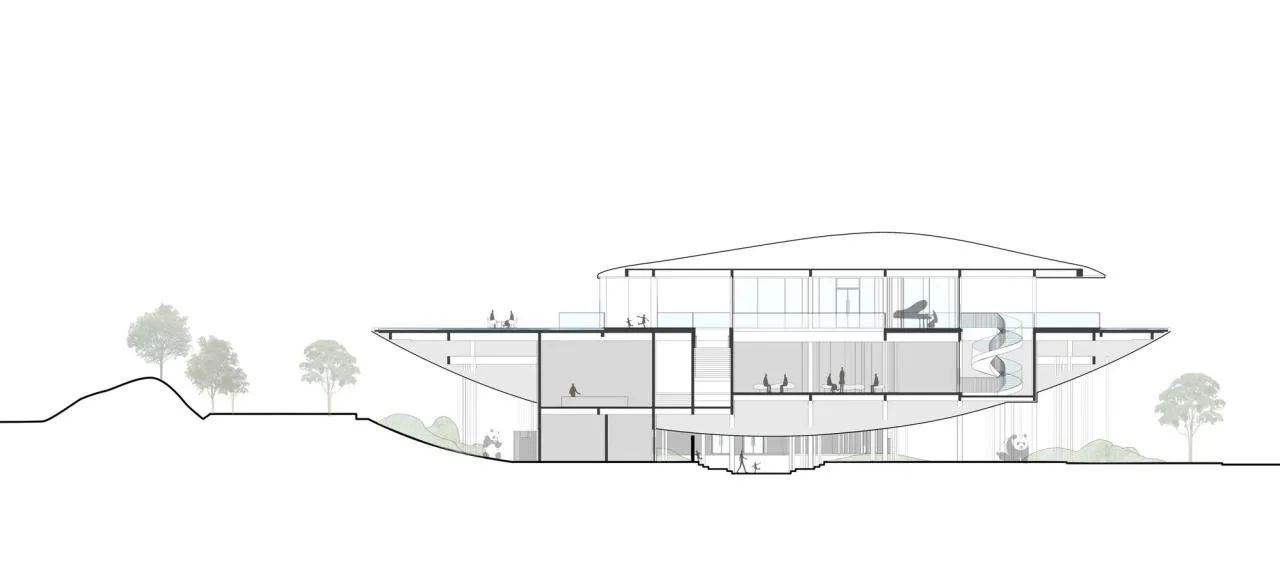
△ Section Diagram
Project Information
Architect: Xiaoyin Architecture
Area: 2,210 square meters
Year: 2021
Photographers: Arch Exist, bpi, QiuYu, HereSpace Photography, ICYWORKS
Principal Architect: Pan Youcai
Design Team: Yang Zhe, Chen Renzhen, Hu Qinmei, He Yi, Gou Yuanjun, Yang Rui, Liu Zixuan, Zhao Yaxian, Feng Yutao, Ge Xiangxin, Song Zhiying, Ye Shuhua, Zeng Maosen (intern)
Structural Design: Du Xu
Construction Drawings: Chengdu Meisha Architectural Design Co., Ltd., with Park Kyung Woo, Chen Xin, He Jin Ju, Luo Jun, Wang Liping
Lighting Design: Wang Kai, Chen Meng, Jiang Qiangzhu, Li Xinyu, Liu Haoyu, Peng Hong, He Jiangyue, Wu Yiting, Ye Ting
Interior Design: Ten Grid Design, featuring Wu Jiajuan, Shu Miao, Zhu Yi, and Rosa
Client: Sichuan Hope Flower Dance Industry Development Group Co., Ltd., Pengzhou Hope Shunchen Cultural Tourism Development Co., Ltd.
Lighting Consultant: BPI Bi Pu Lighting Design Company
Construction Contractor: Sichuan Xinding Construction Engineering Co., Ltd.
Location: Pengzhou, China















Must log in before commenting!
Sign Up