
As engineering projects grow increasingly complex, managing them becomes more challenging. The construction site serves as a crucial production hub, where the scientific and efficient allocation of resources directly impacts project safety. Effective project planning can significantly reduce safety risks from the outset.
Traditional construction site layouts are typically static and two-dimensional. During the bidding phase, planners often rely on personal experience to organize resources, making it difficult to assess the plan’s effectiveness or identify potential safety hazards early on. This approach can inadvertently introduce risks that affect later stages of the project.
BIM technology offers a solution by converting 2D CAD floor plans into a 1:1 scale 3D dynamic layout. This transformation includes the main building, material processing sheds, roads, and construction machinery on site. With features like walkthroughs and animations, BIM enables the optimization of high-risk elements such as tower crane wall attachments, road widths and curves, crane arm interactions, and the placement of warning signs, as illustrated below:
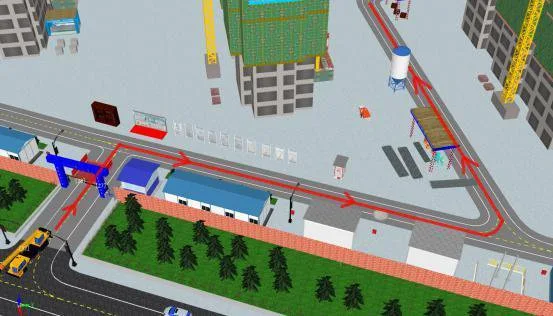
A well-organized construction site layout is essential for ensuring safety and maintaining efficient construction progress. It helps minimize unnecessary safety risks caused by poor planning. Materials that require processing should ideally be handled off-site to reduce disruption and secondary handling during construction. Additionally, flammable or explosive materials—such as wood products and fuel tanks—should be stored in open, downwind areas to mitigate hazards.
















Must log in before commenting!
Sign Up