
BIM models serve a variety of purposes, and after extensive research and development, their applications continue to expand. In construction safety management, BIM safety management information models play a vital role in ensuring projects progress smoothly.
Traditional 3D models, which rely on layers, grids, and colors to convey geometric and physical information, fall short because they lack coordination capabilities. These static “deaf and mute” images are difficult for non-experts to interpret. However, with technological advancements and the evolution of design software, BIM technology transcends the limitations of two-dimensional and conventional three-dimensional models. It offers dynamic, multidimensional models enriched with detailed component information for engineering professionals.
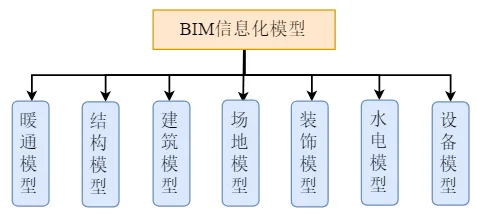
During the design phase, BIM technology enables designers to create 3D information models that clearly and intuitively represent component details. This facilitates better communication and collaboration with project owners. The parametric modules within BIM contain comprehensive project information that can be updated synchronously, enabling true coordinated management.
In the construction phase, BIM integrates drawings, models, site conditions, facilities, and business data for thorough management. It supports dynamic simulation and conflict detection across various disciplines within the same spatial framework, allowing early identification of potential safety hazards. Access to detailed component information further guides construction efforts. The illustration above demonstrates the creation process of a BIM model.
















Must log in before commenting!
Sign Up