
Revit currently holds a significant position in the BIM software market, both domestically and internationally. As more users learn and work with Revit, questions about its functionality continue to grow. Today, we will address a common issue encountered when drawing grid lines in Revit:

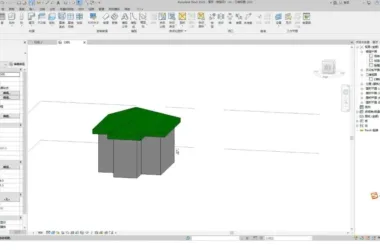
One issue users often face is that Revit grids fail to display at different elevation levels, especially when working with inclined or curved grids. Typically, grids from other floors do not appear automatically. To display grids on the east, west, south, and north facades, users usually extend the grid lines upward within the floor plan view. However, this method often does not work with grids that are tilted or curved.
Why does this happen? The reason is straightforward: grids that do not appear are not perpendicular to the elevation view. Revit only displays grids that are exactly perpendicular to a specific elevation view, and even minor deviations are not accepted. This is particularly important when working with curved grids.
To resolve this, you need to create a section view perpendicular to the inclined grid. Then, stretch the grid lines within this section view to ensure they display correctly in the plan view. For curved grids, a similar approach applies: create a section aligned with the radius of the curve, stretch the grid accordingly, and finally, the grid will become visible in the plan view.
This article is originally from the WeChat official account: Bimeng Technology.














Must log in before commenting!
Sign Up