
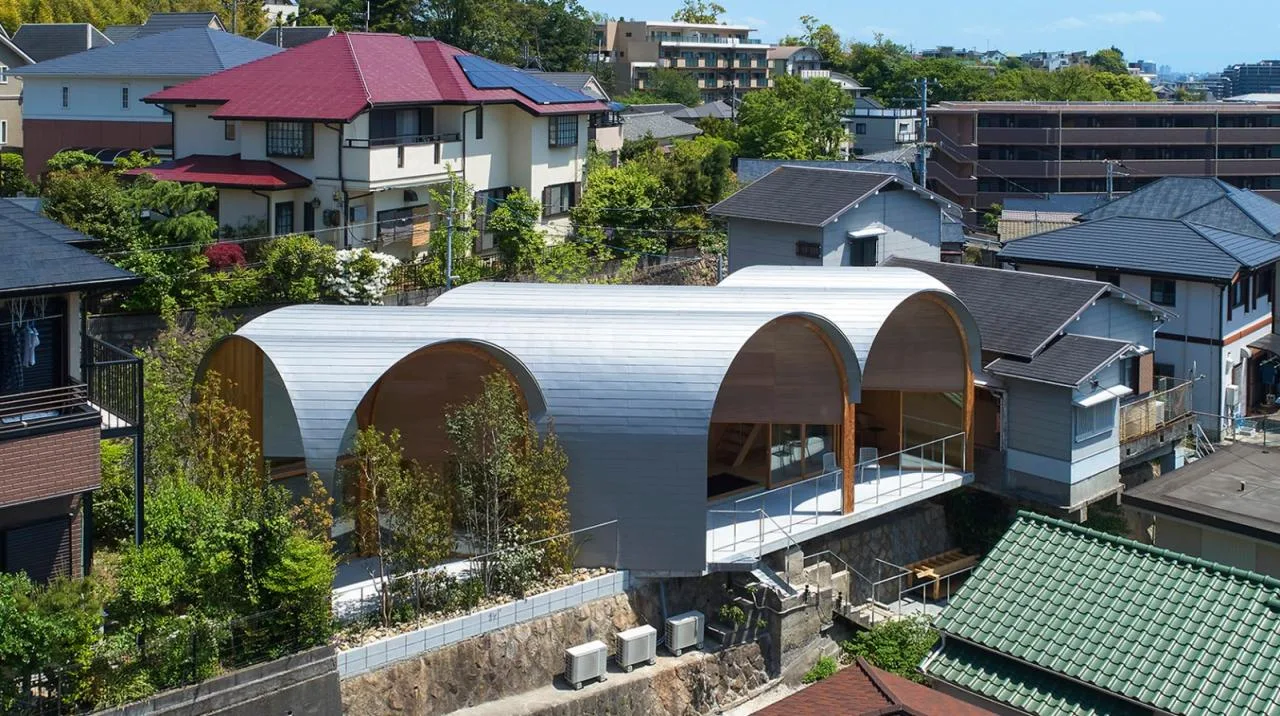
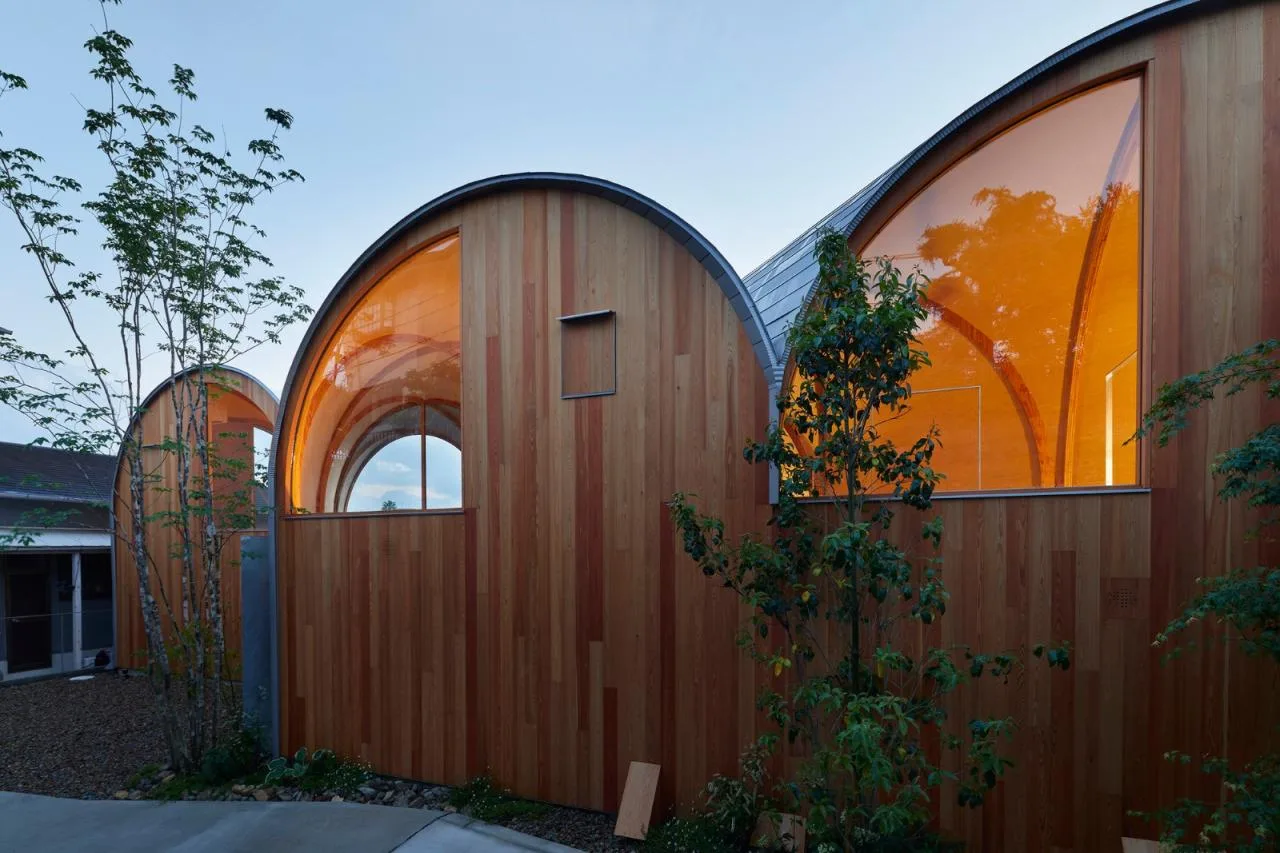
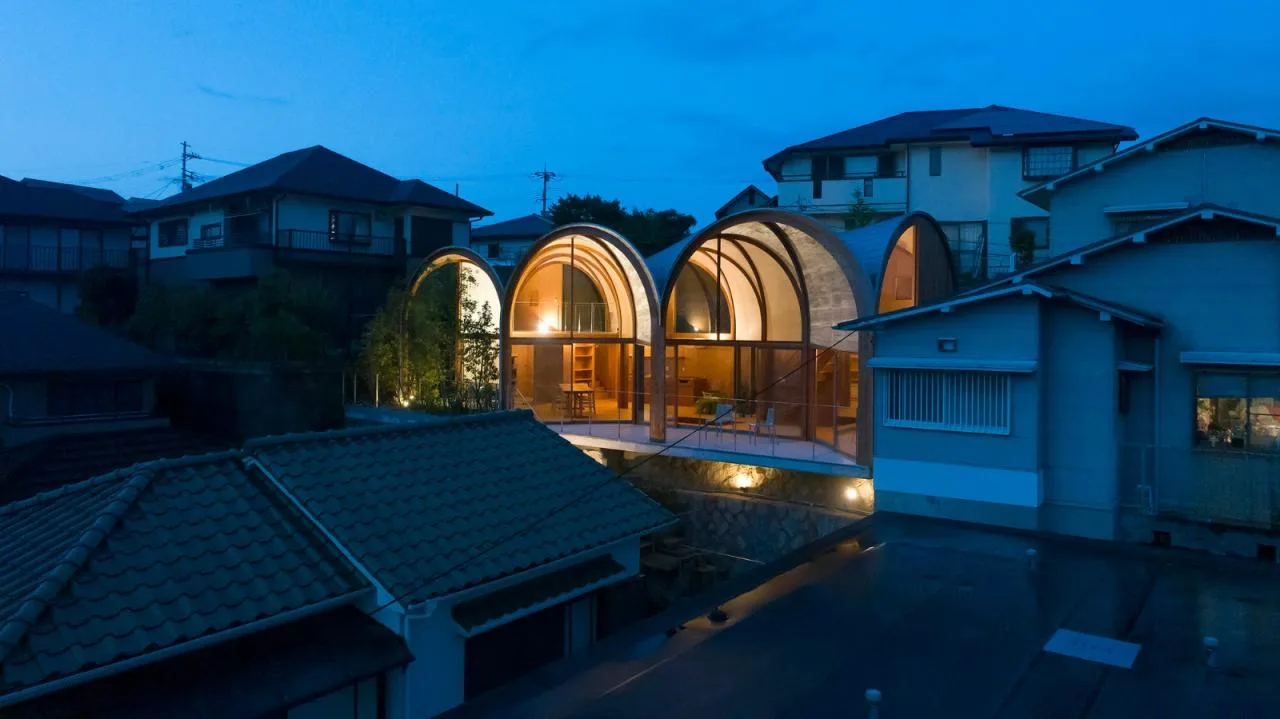
Jiayang Garden House is a residential building situated in Hyogo Prefecture, Japan. It is constructed on terraced slopes, surrounded by a complex network of retaining walls and winding paths. These paths, set along the slopes, intricately weave into the daily lives of the residents.
The site also contains retaining walls of uncertain origin and narrow paths seemingly designed only for small animals. This area functions as an urban transitional space, historically located at the intersection of retaining walls and city roads. Against this backdrop, the architects aimed to use both past and present streets as design inspiration, exploring how a home can seamlessly integrate with the city’s flow and establish a meaningful connection to it.
Through this approach, the architects believe the residence will harmonize with the urban environment, expanding the spatial experience of its inhabitants beyond the confines of the building itself, extending their perception to the broader urban fabric.
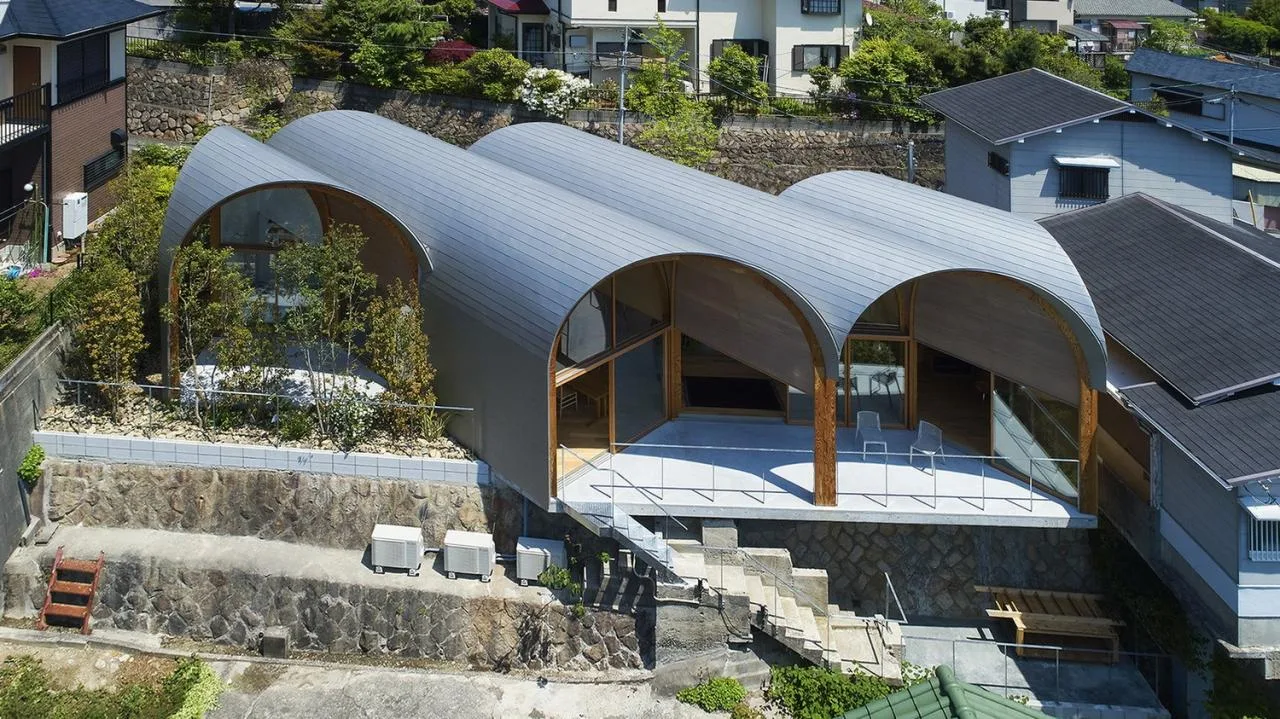

Upon site inspection, the architects discovered that access was limited to a narrow, winding road approximately 2 meters wide, unsuitable for transporting construction materials. Consequently, they prioritized a construction method allowing manual transport and assembly.
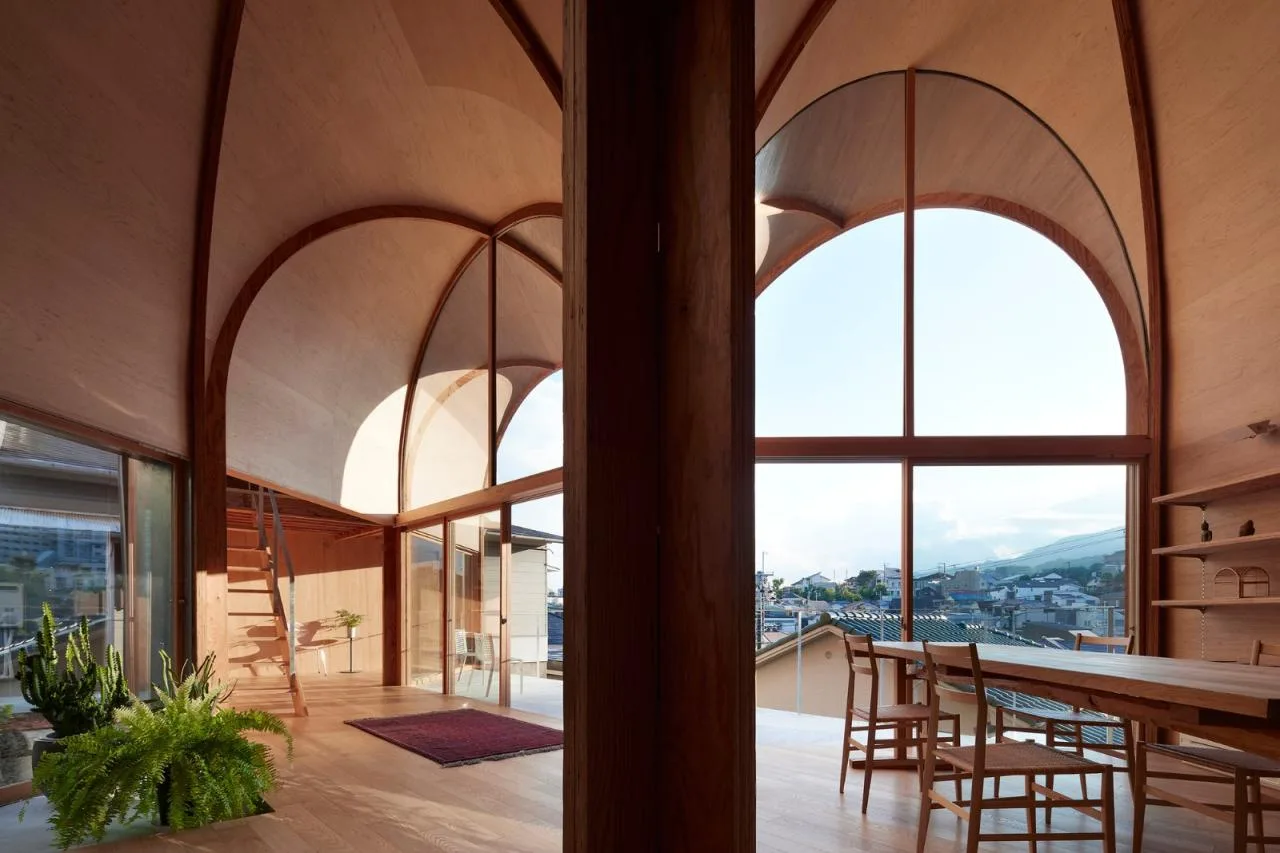
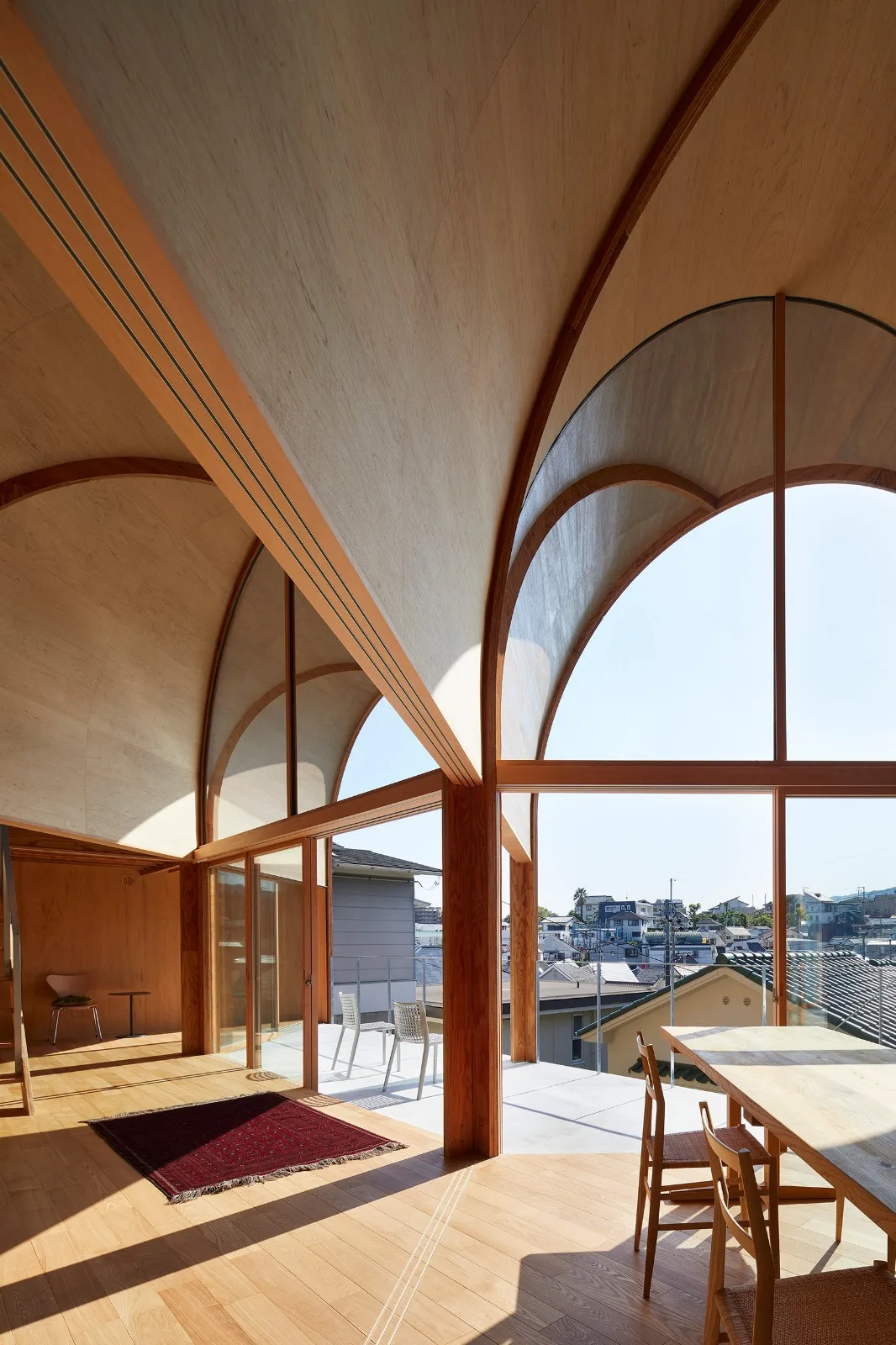
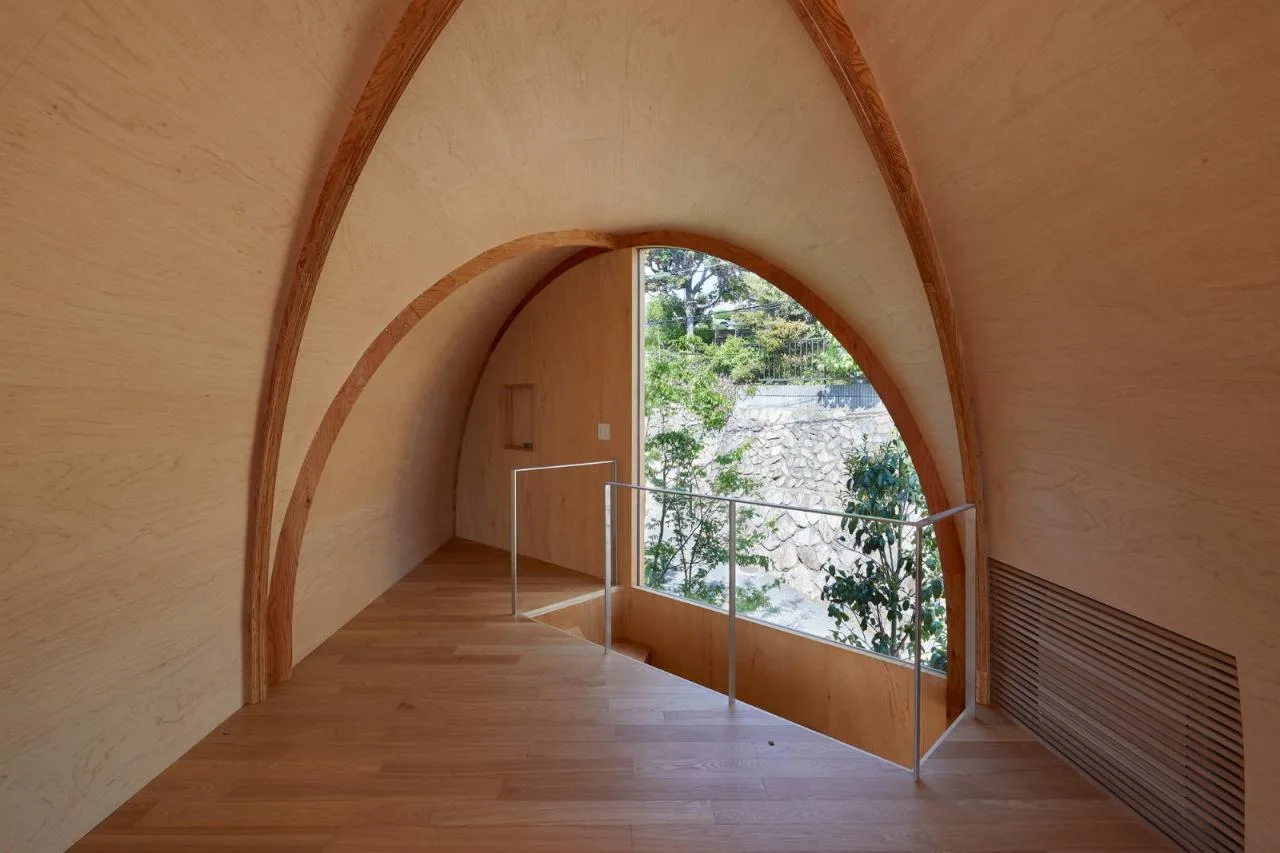
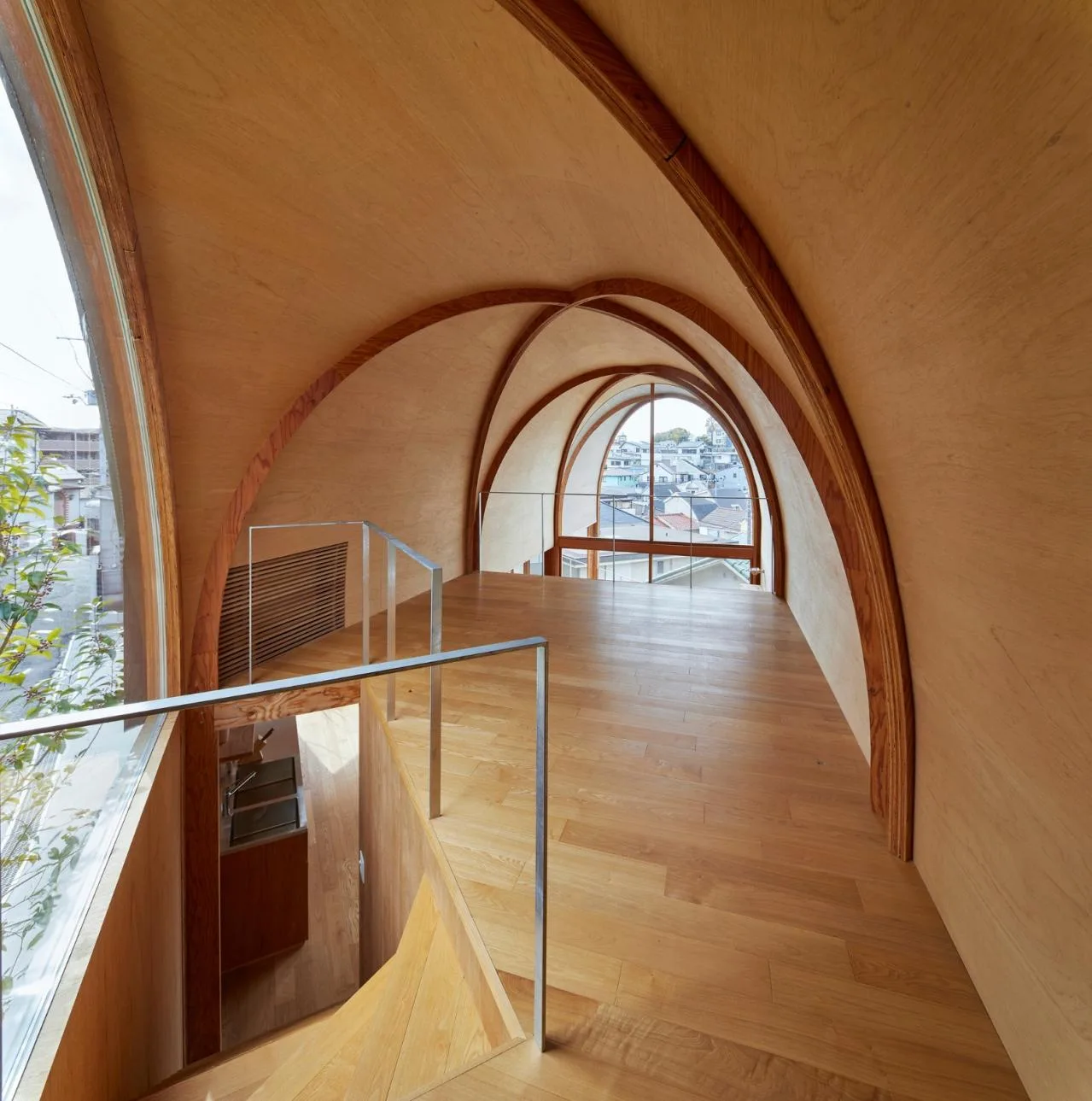
The building employs “arches” as detachable basic modules, combining small components to create large-span spaces. Given Japan’s wooden architectural tradition, influenced by earthquake susceptibility, the architects also sought to explore whether this wooden modular assembly could be adapted or transformed into brick and stone structures through the design of Jiayang Garden House.
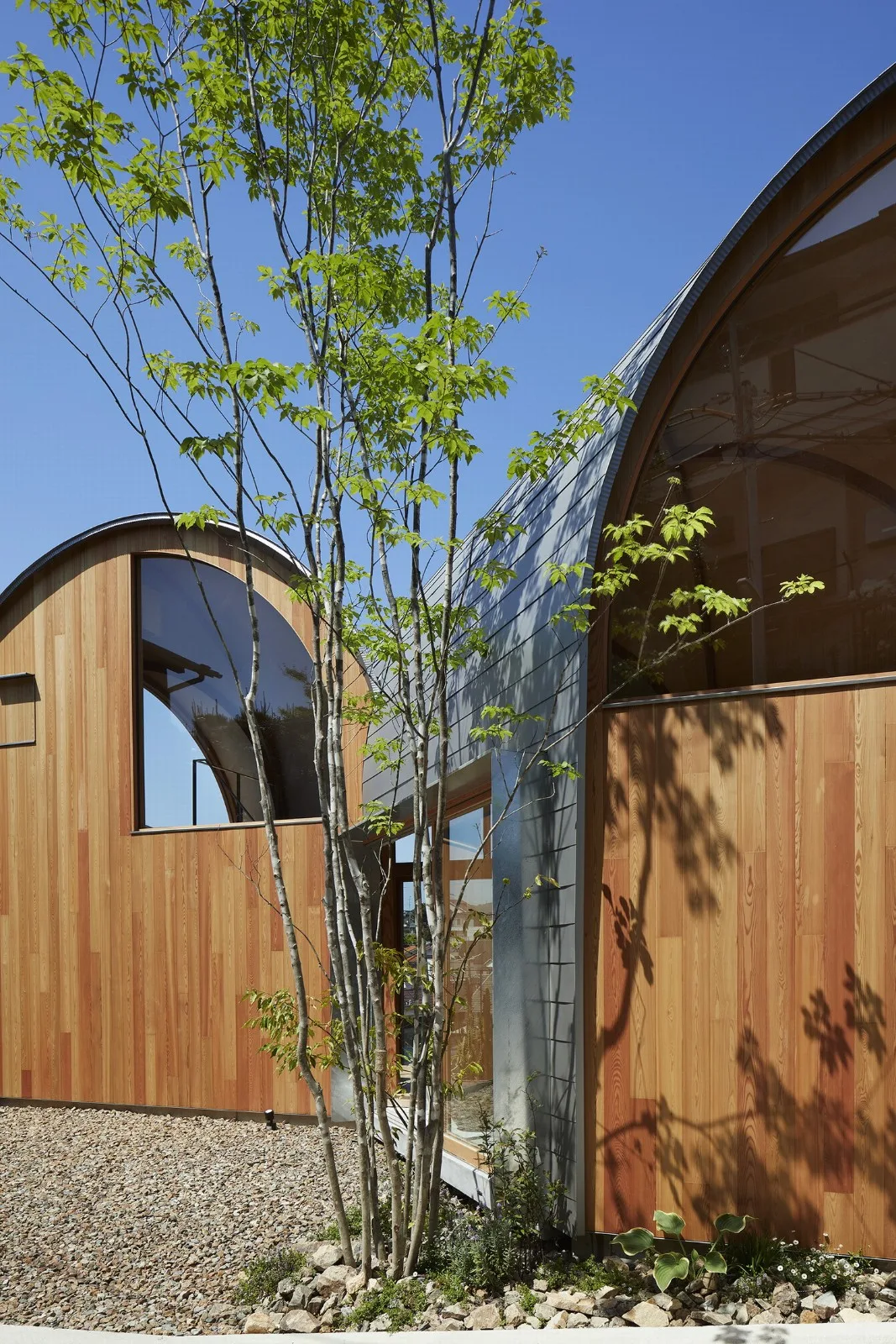
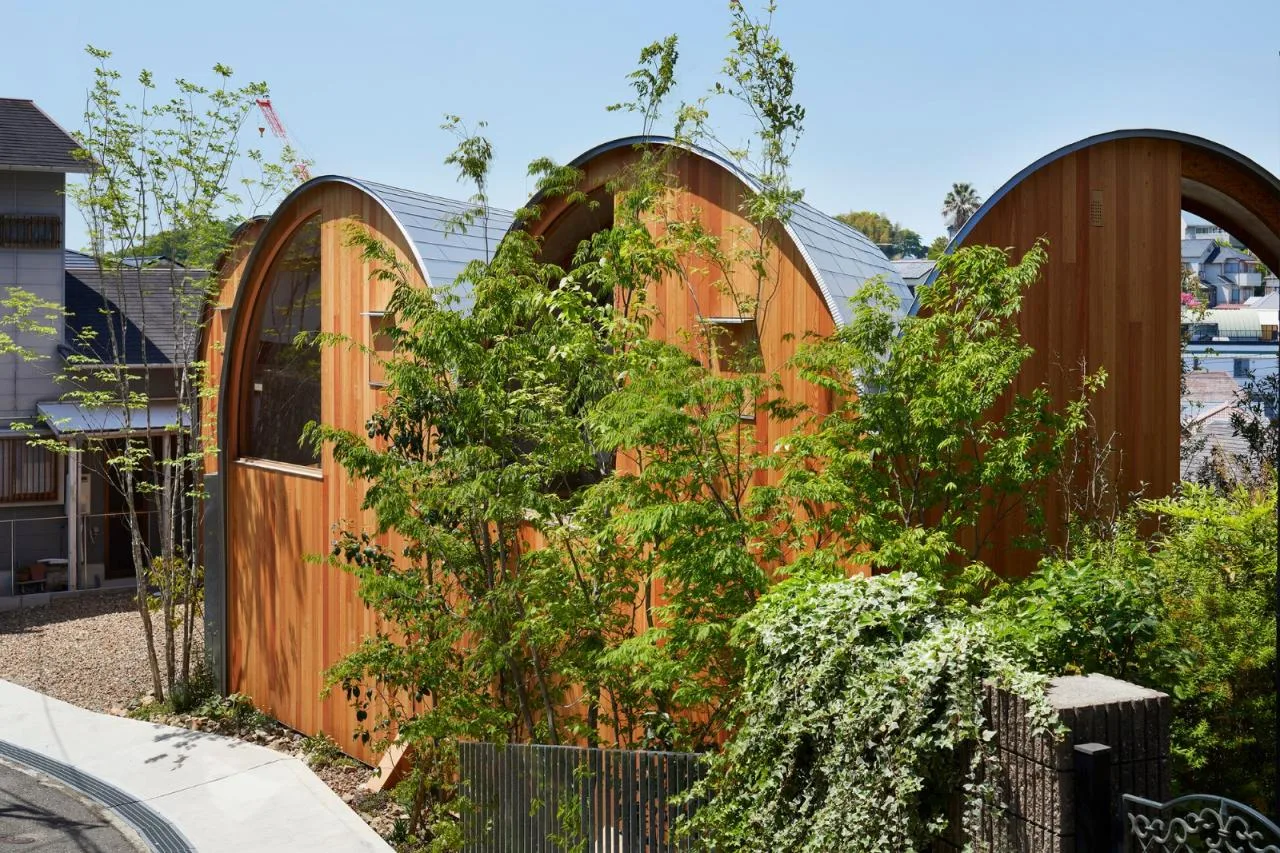
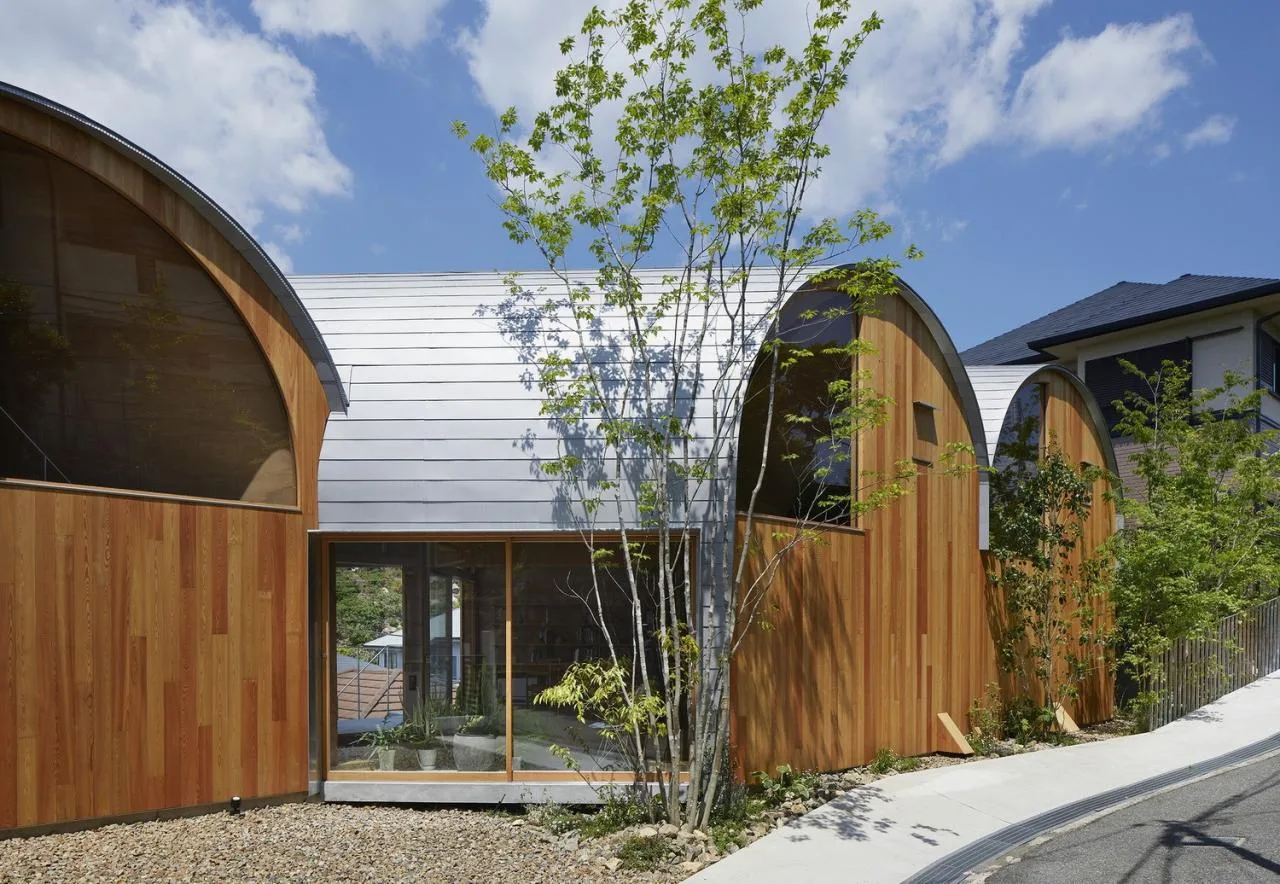
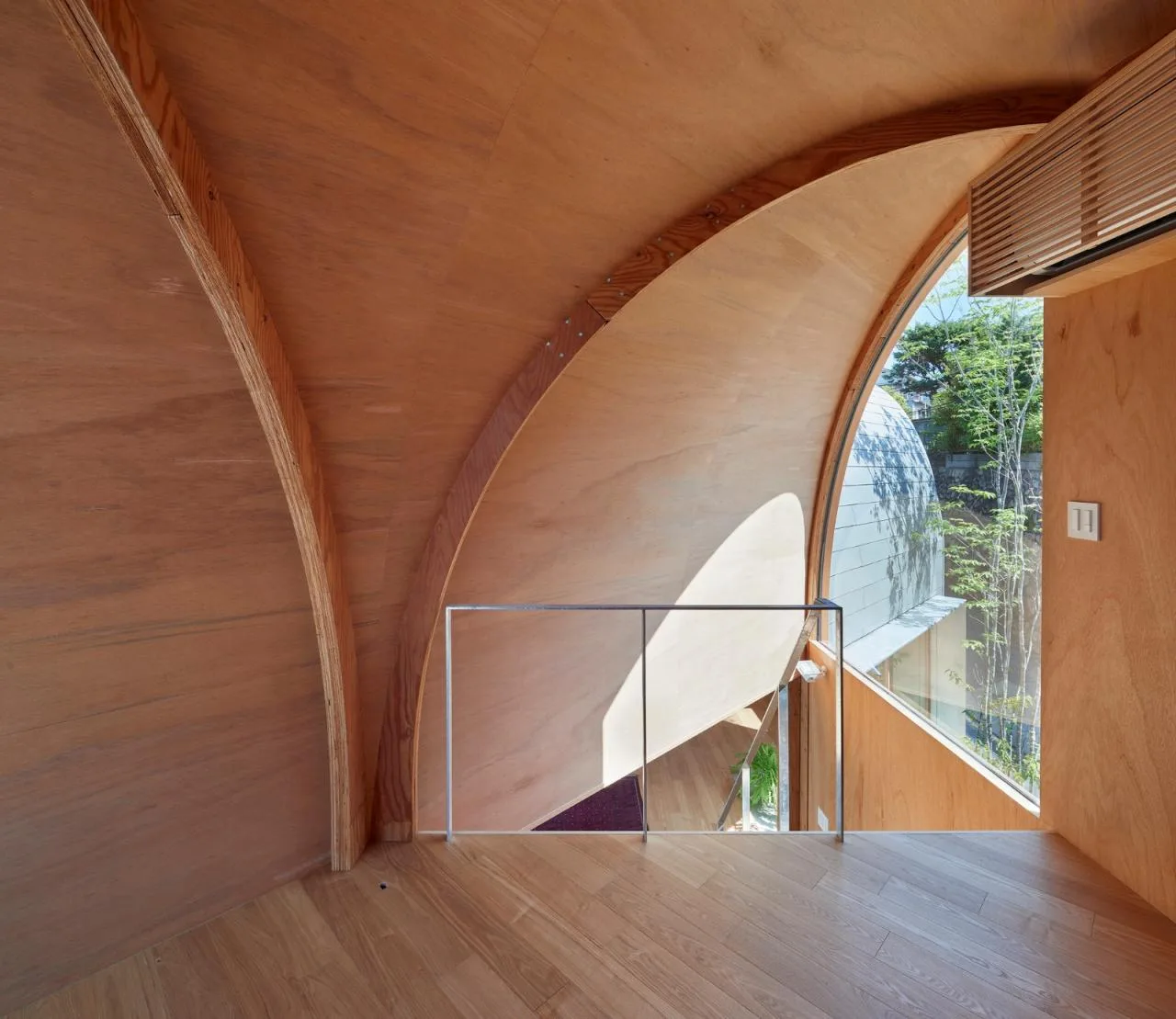
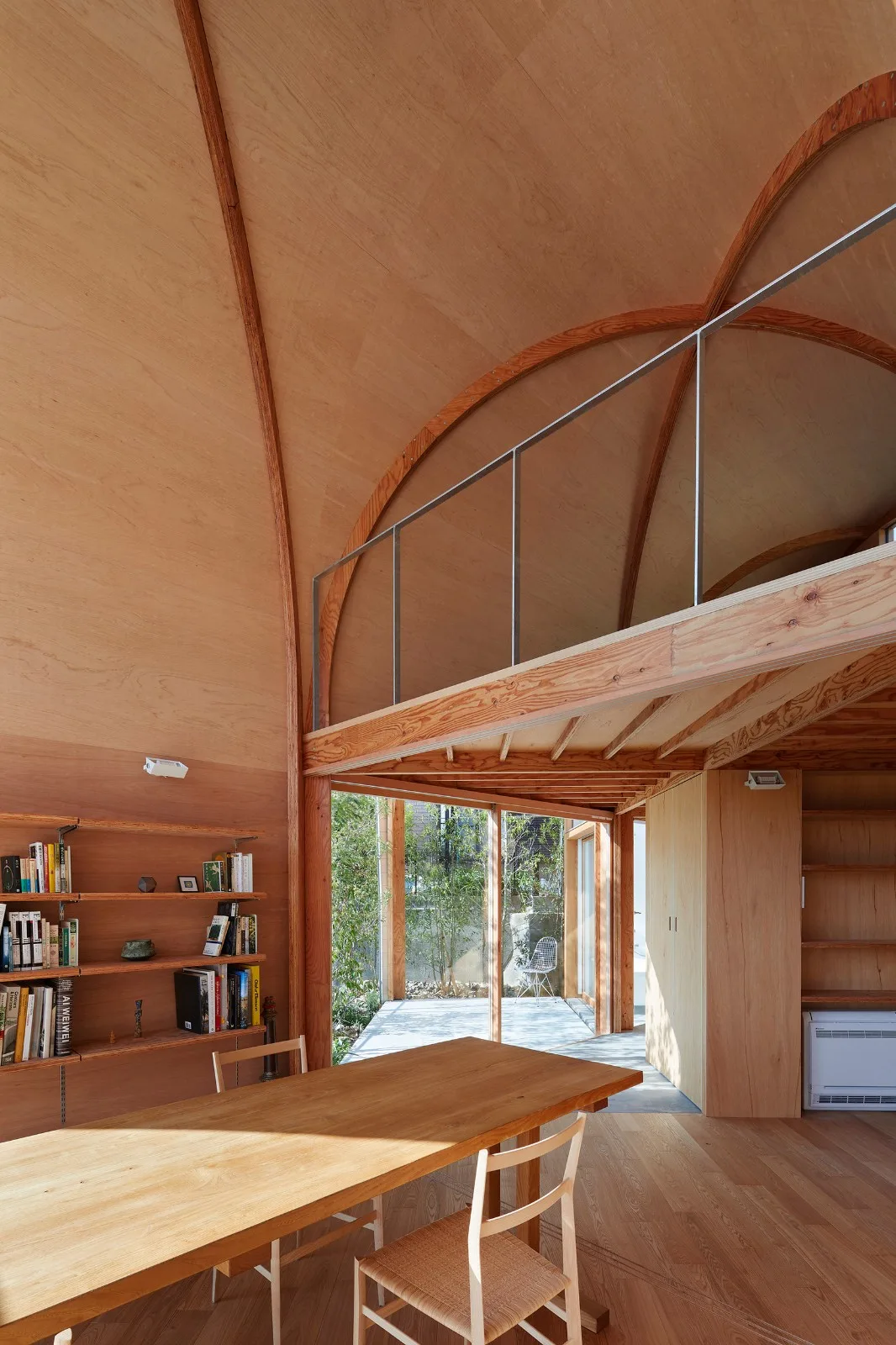
The design emphasizes the ability to disassemble and assemble small, lightweight laminated veneer wooden components easily. This approach facilitates manual transport and assembly within the site’s complex environment. Each arch module is constructed by joining six 30mm-thick laminated veneer wooden components.
Each wooden piece is laser-cut from laminated veneer lumber, and pairs of components are stacked with staggered connection points to avoid complete overlap. When assembled, they form a gentle arch structure composed of these smaller wooden elements.
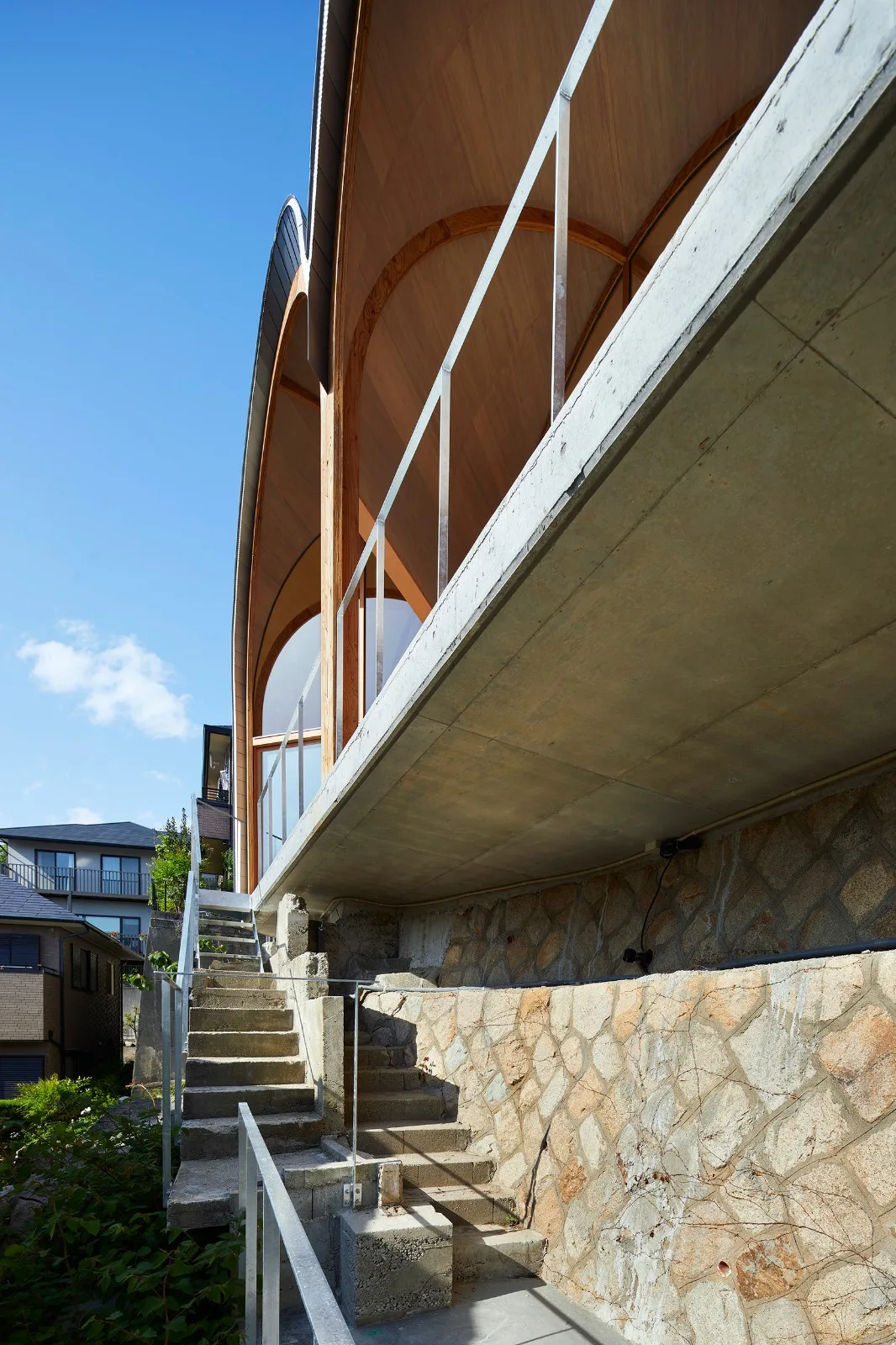
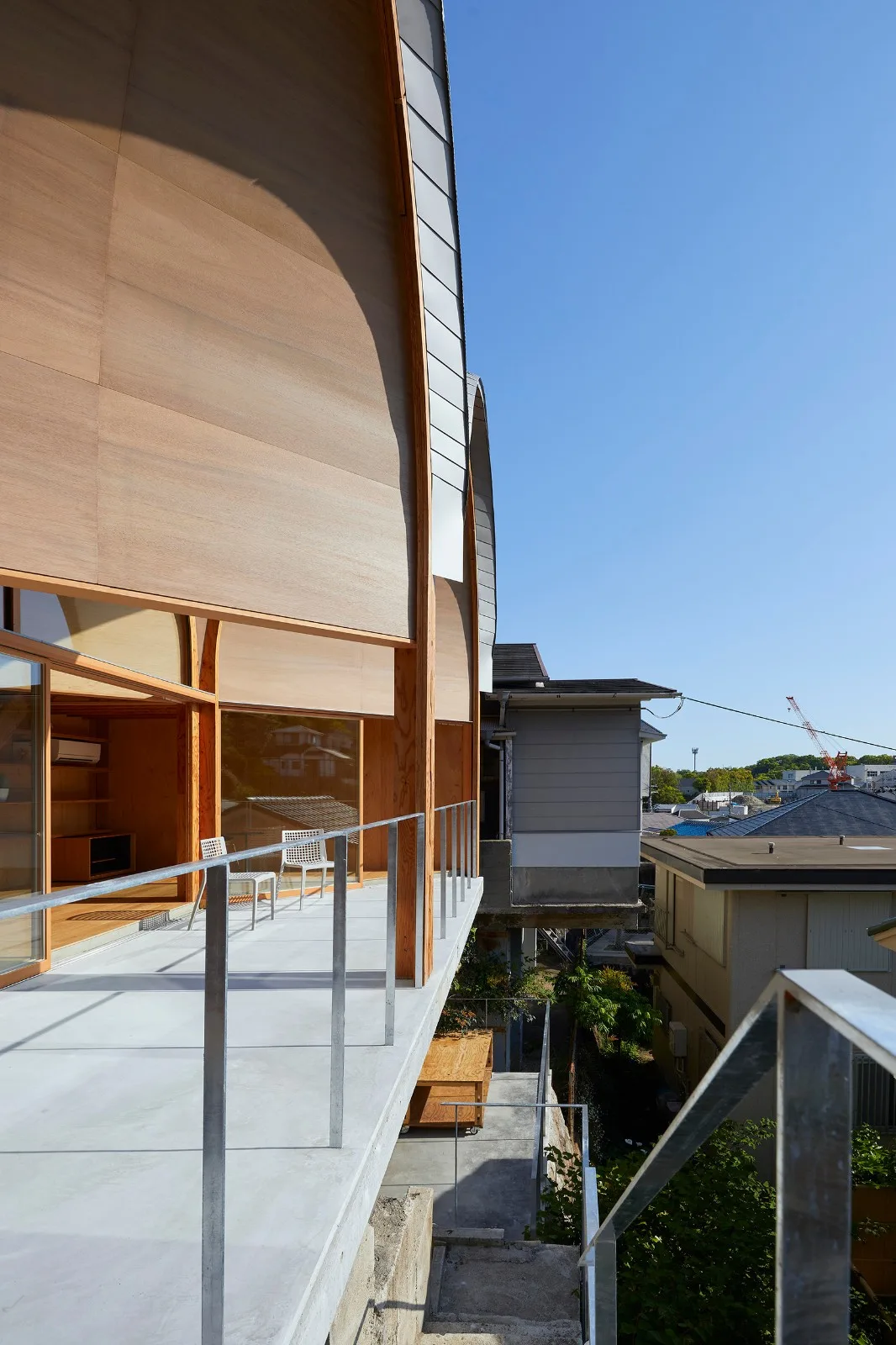
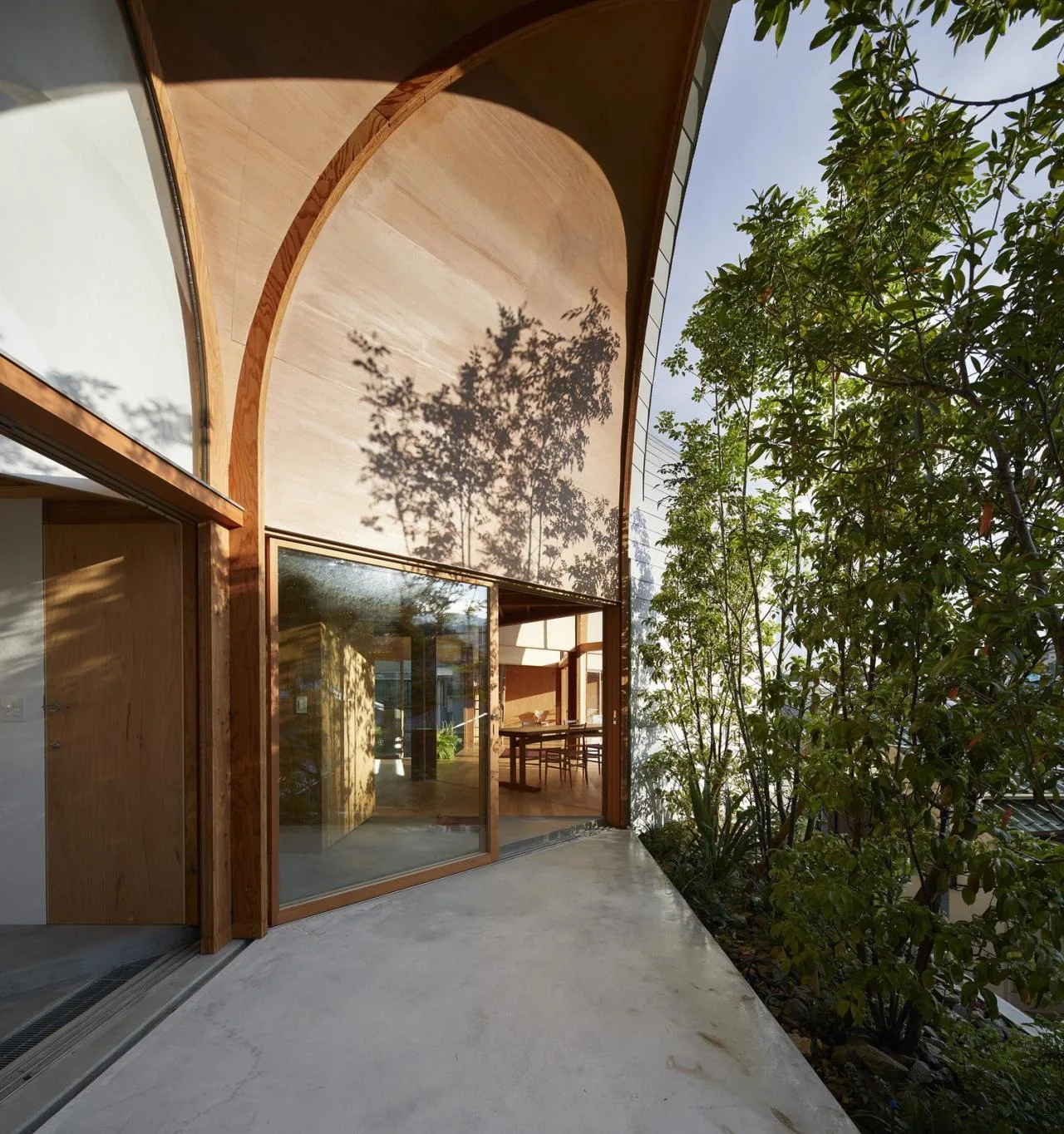
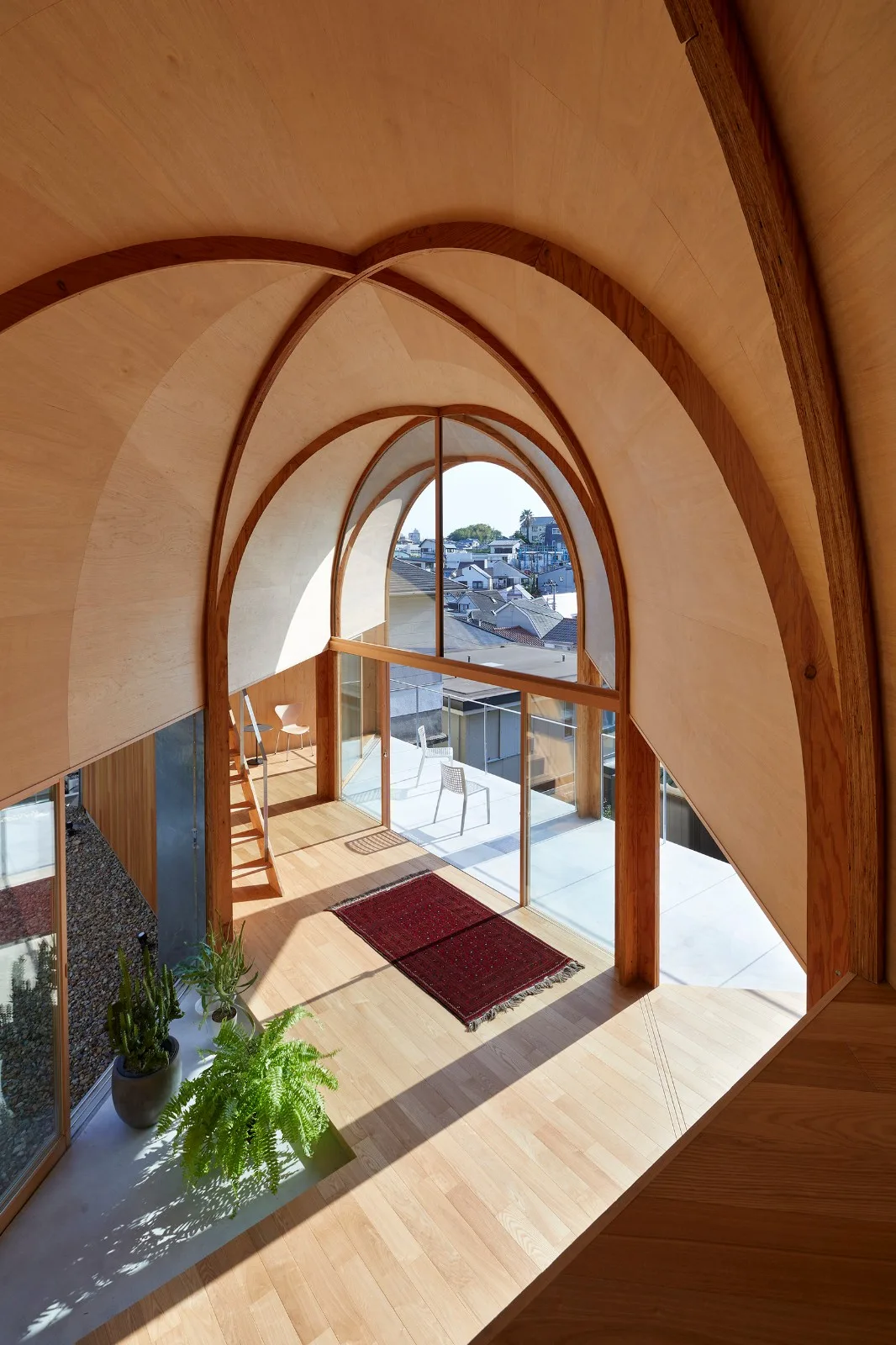
The architectural system employed is relatively primitive, transmitting only compression and tension forces aligned with the wood grain. The wooden arches are paired back-to-back, forming cross-shaped columns that create an extensible and repeatable structural framework.
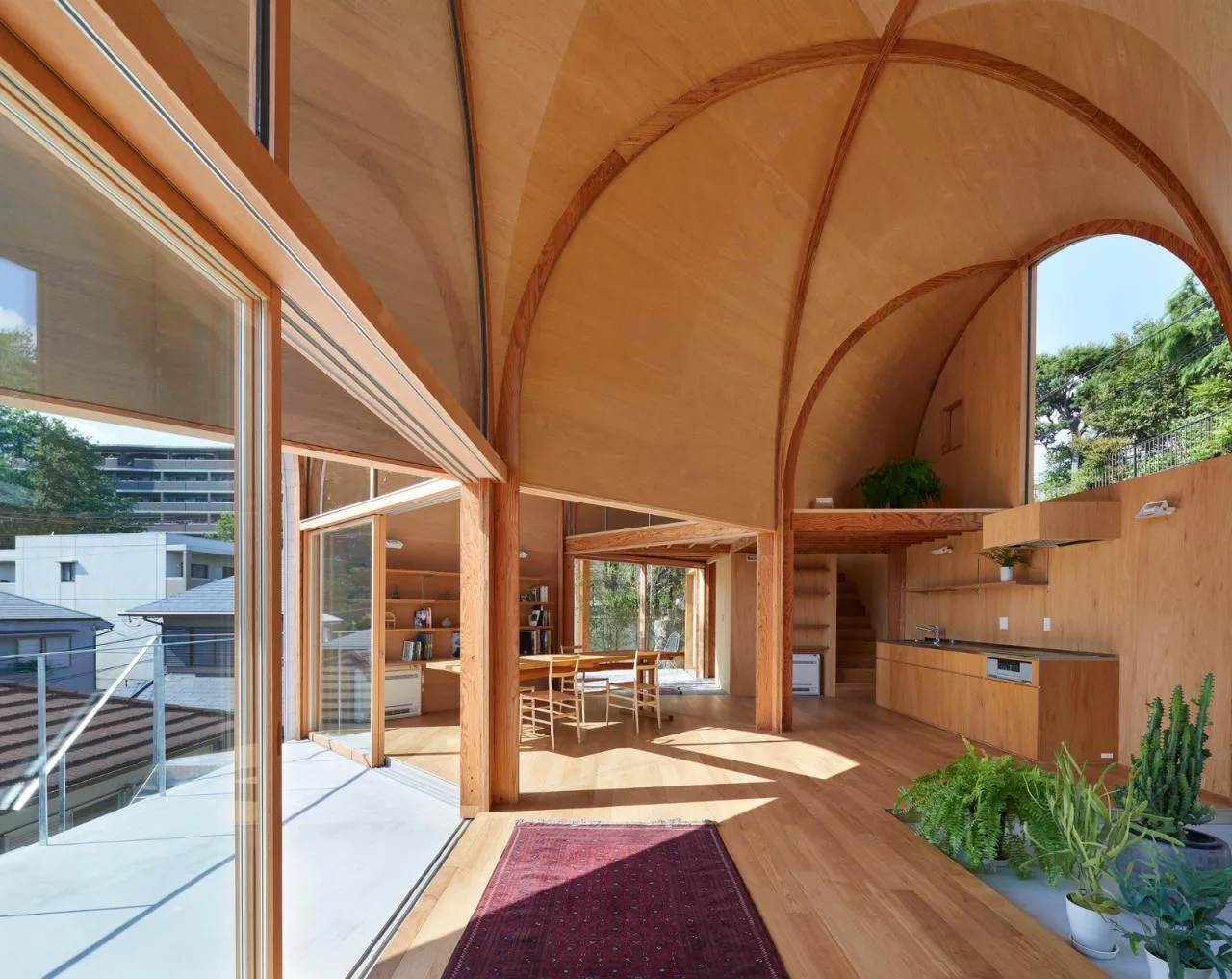
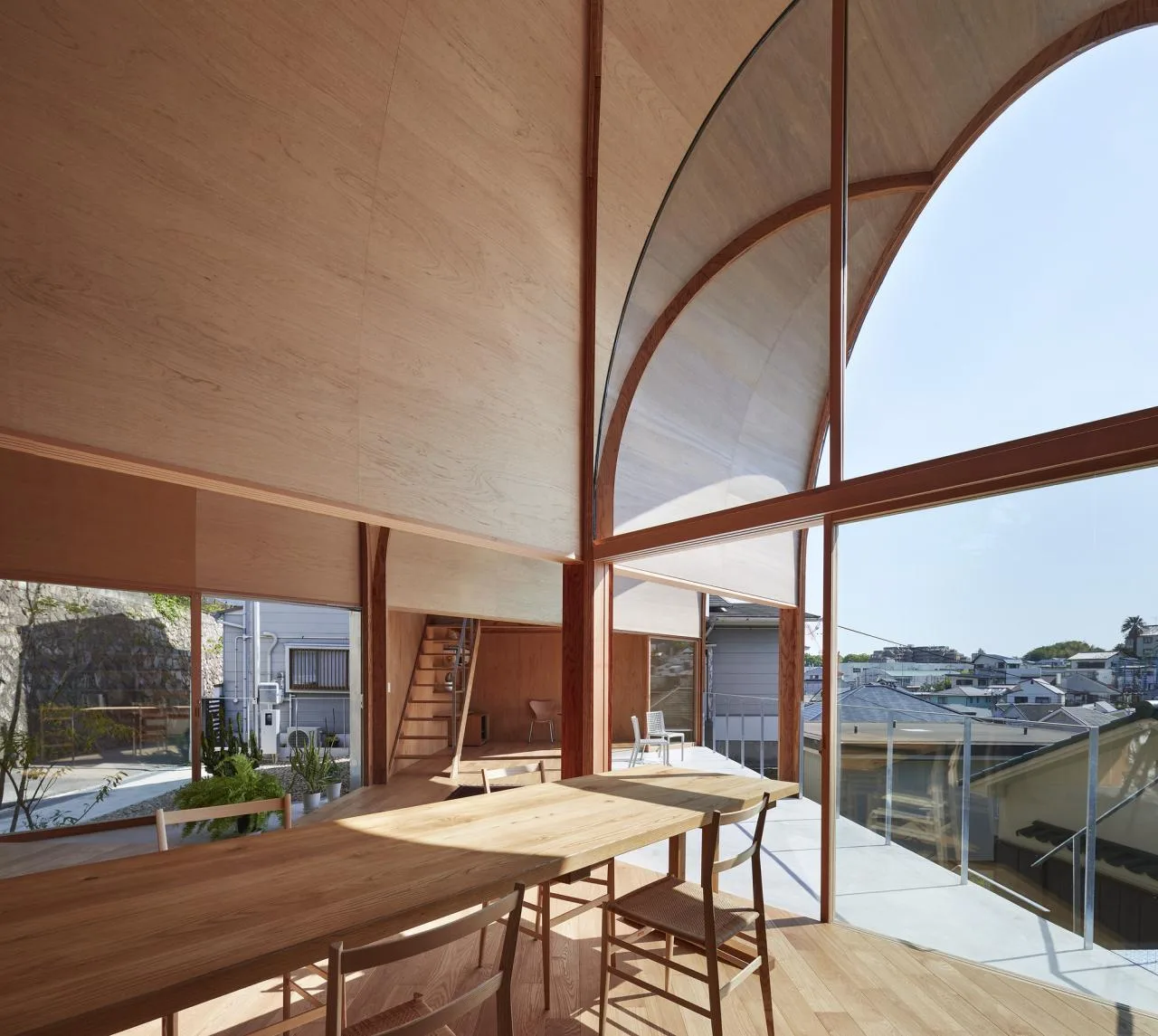
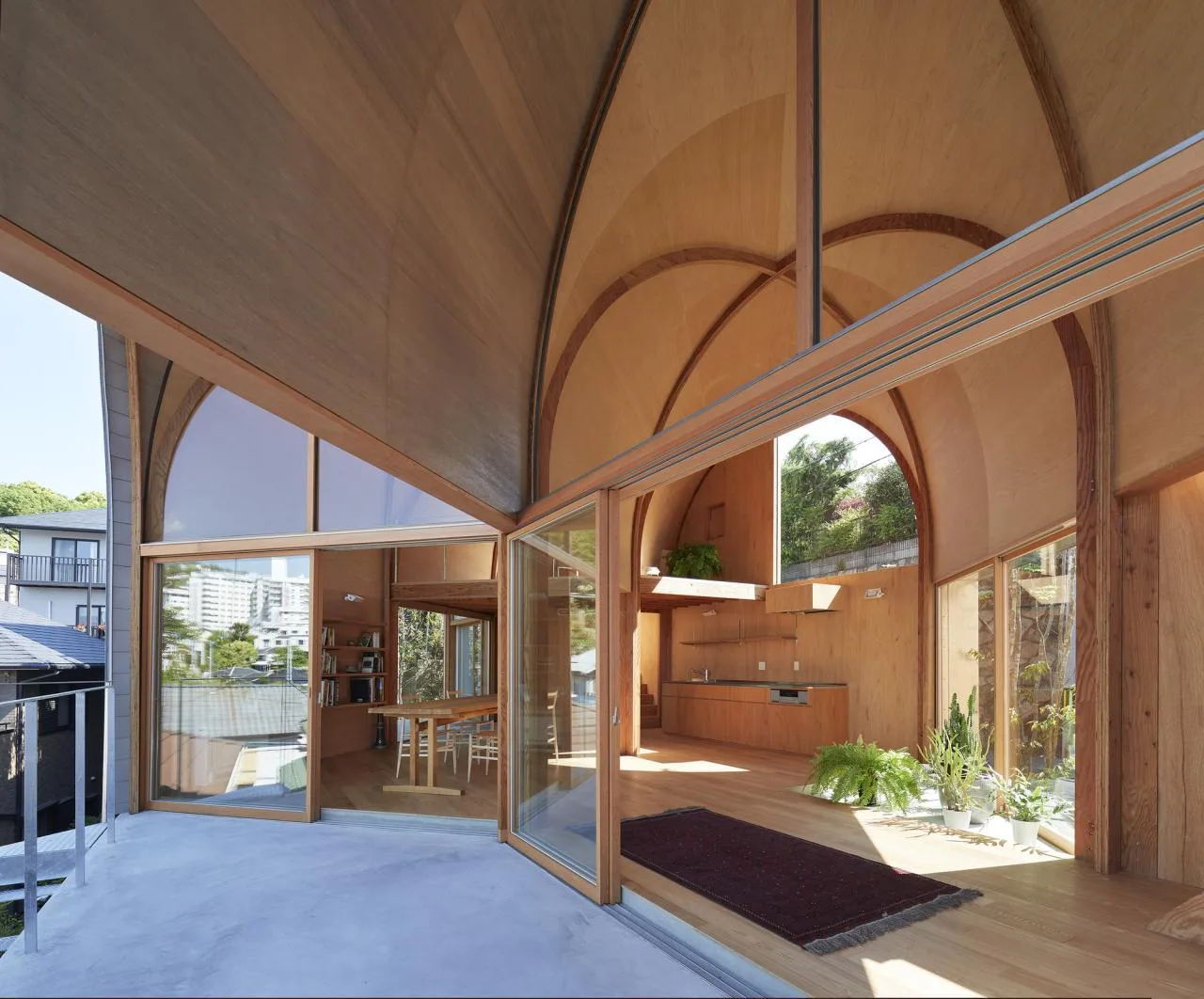
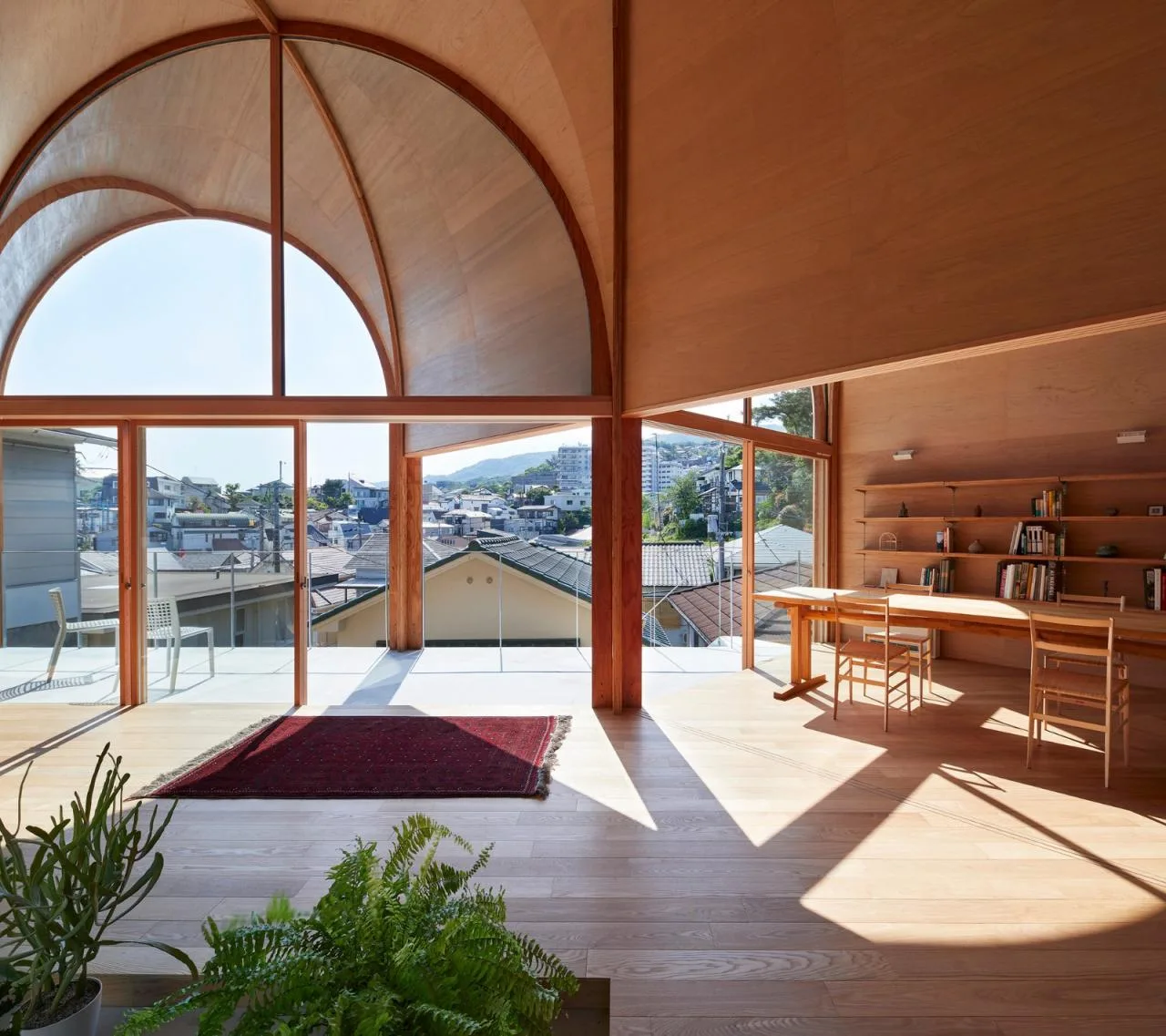
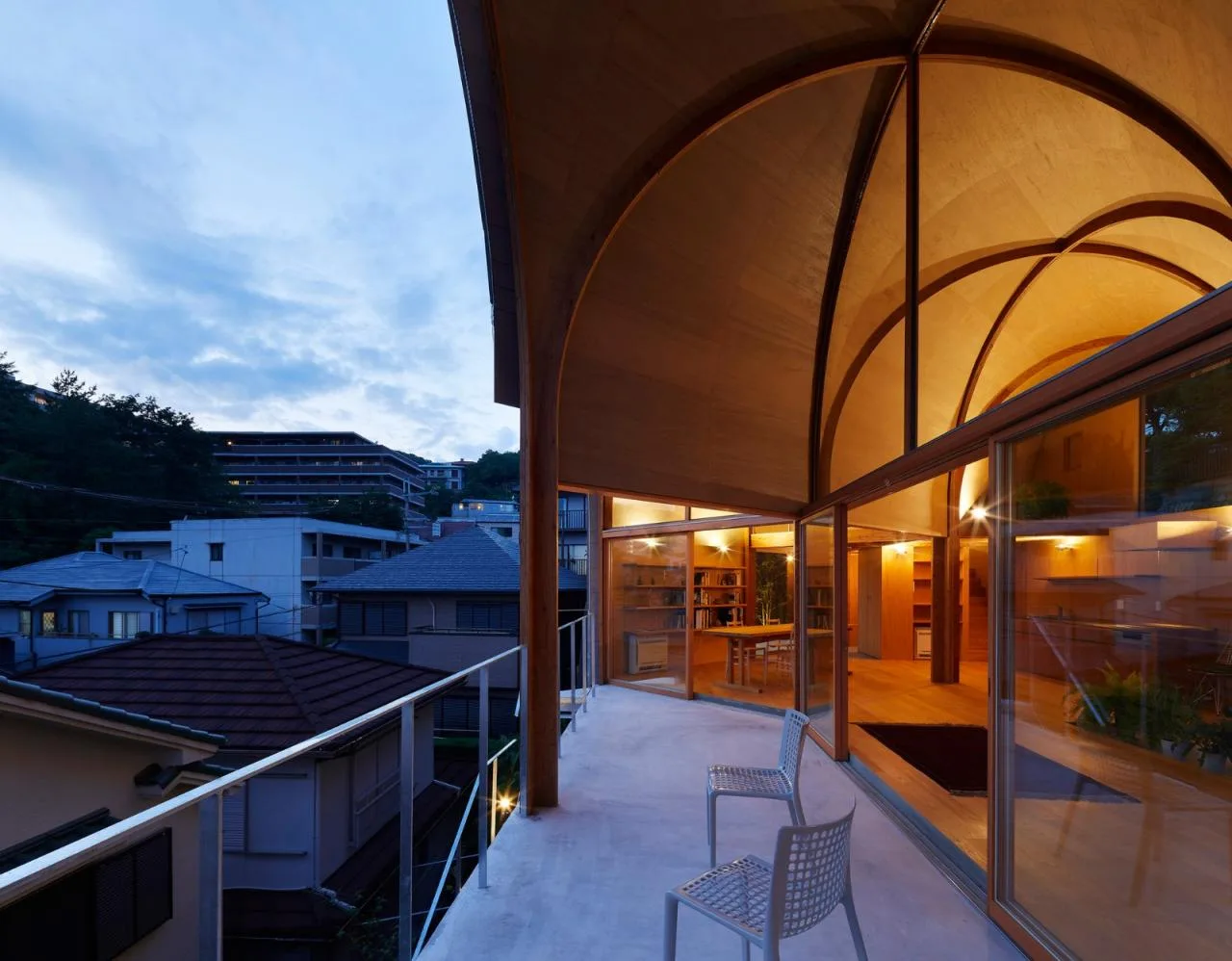
The architects researched roof designs compatible with the arched module structure and ultimately chose to create a series of arched roofs forming a 45-degree angle with the cross-shaped arch network below. The coordinates of the intersection points between the cross-shaped columns and diagonal arches align at the top and bottom, establishing a multi-axis force transmission system. This design responds dynamically to the surrounding spiral flow of roads and allows for future expansion in multiple directions.
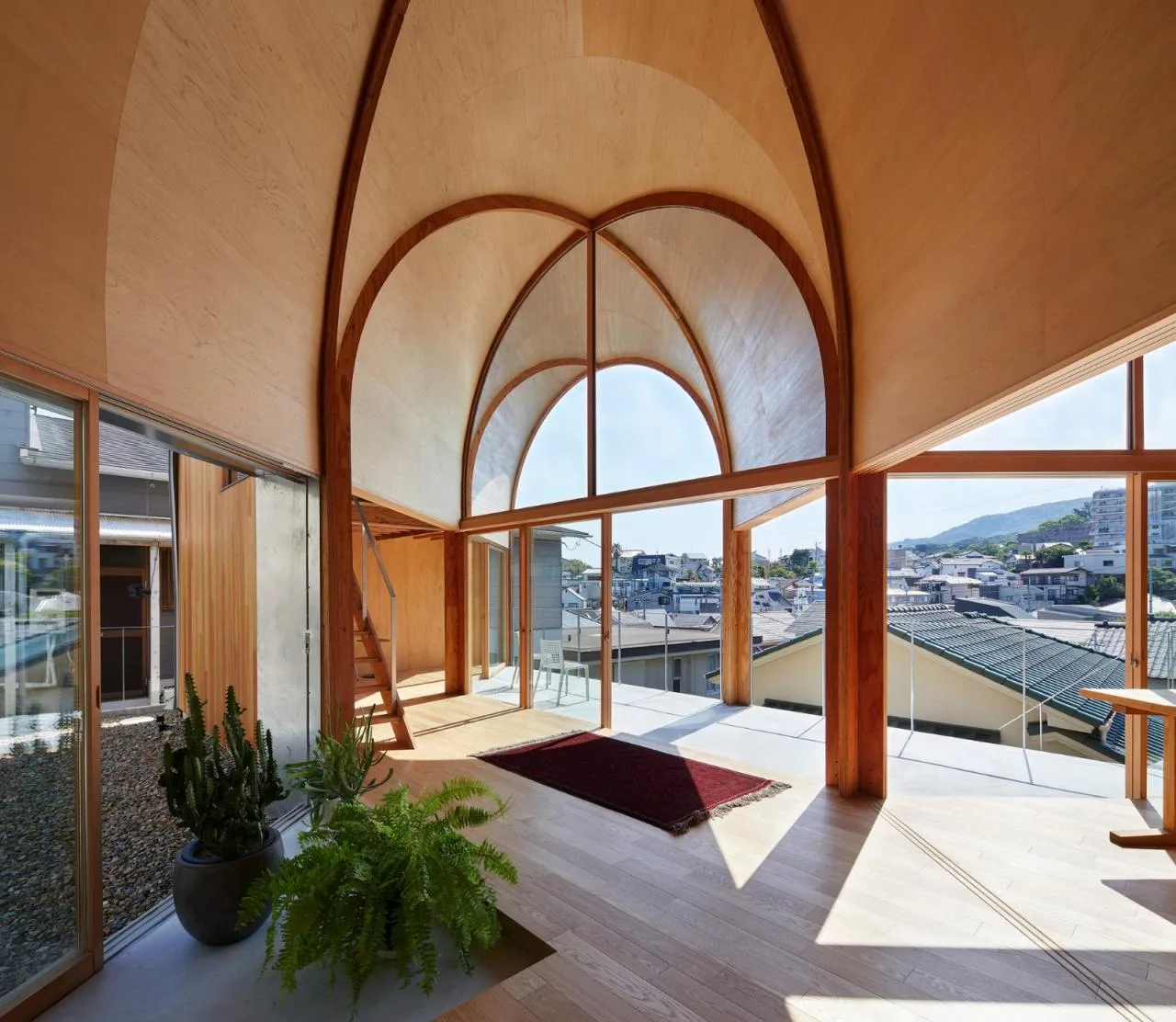
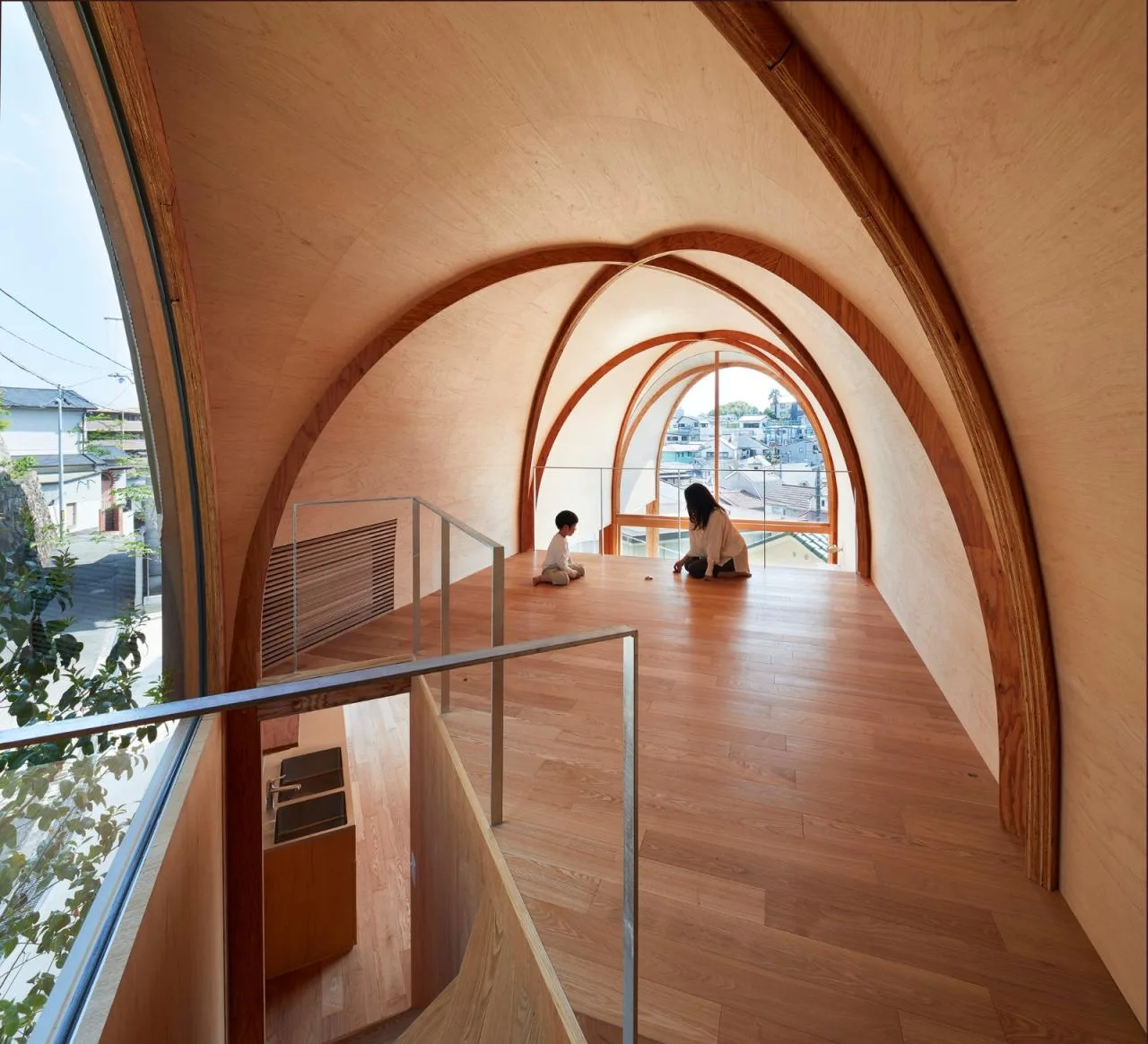
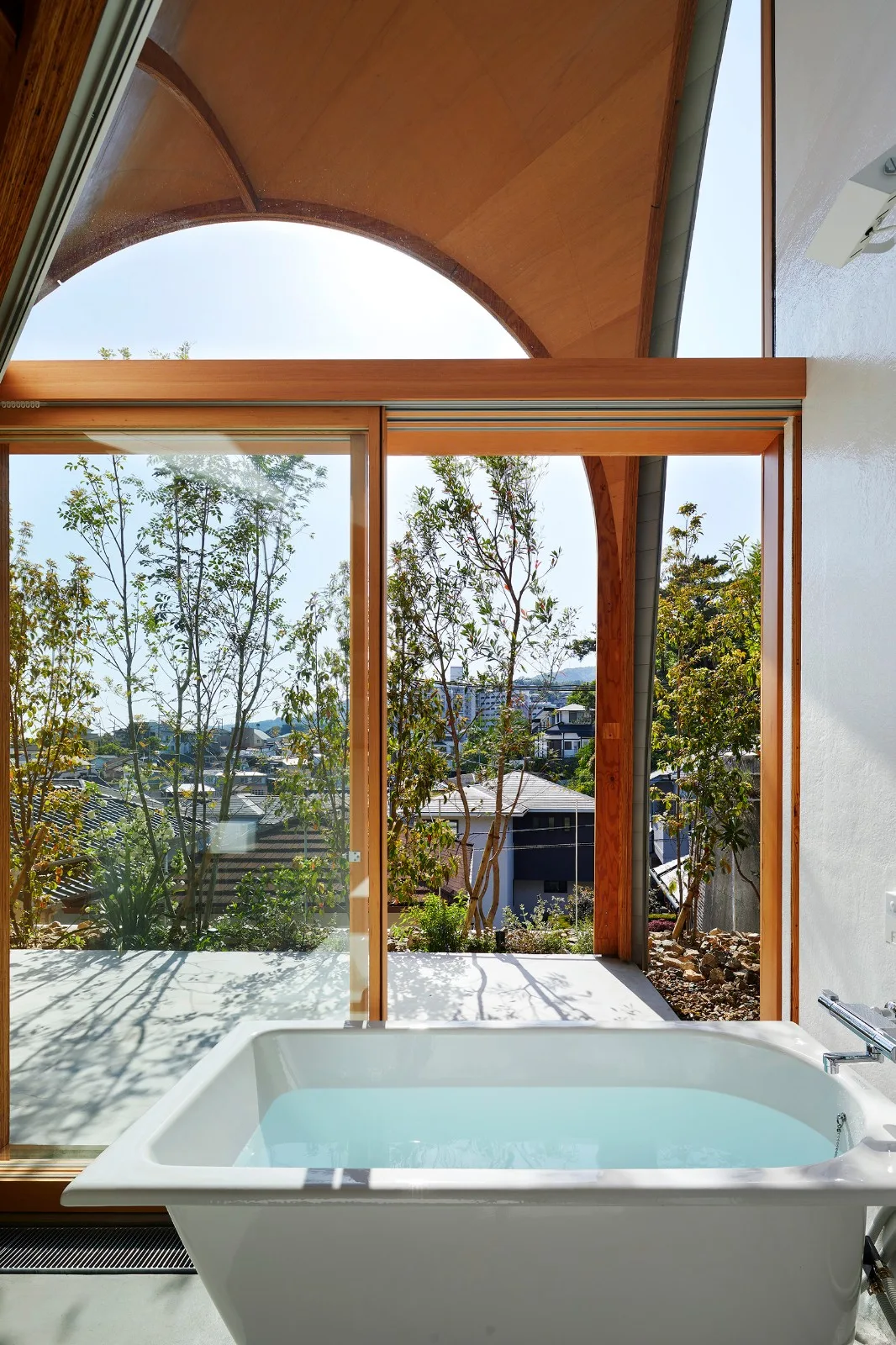
The structure of Jiayang Garden Home creates spacious interiors through the assembly of small components. Its structural system forms a multi-axis network that connects seamlessly with surrounding road flows, effectively extending the occupants’ spatial perception to an urban scale. In this way, the architects have crafted a home that integrates naturally into the expansive hillside landscape.
Project Information
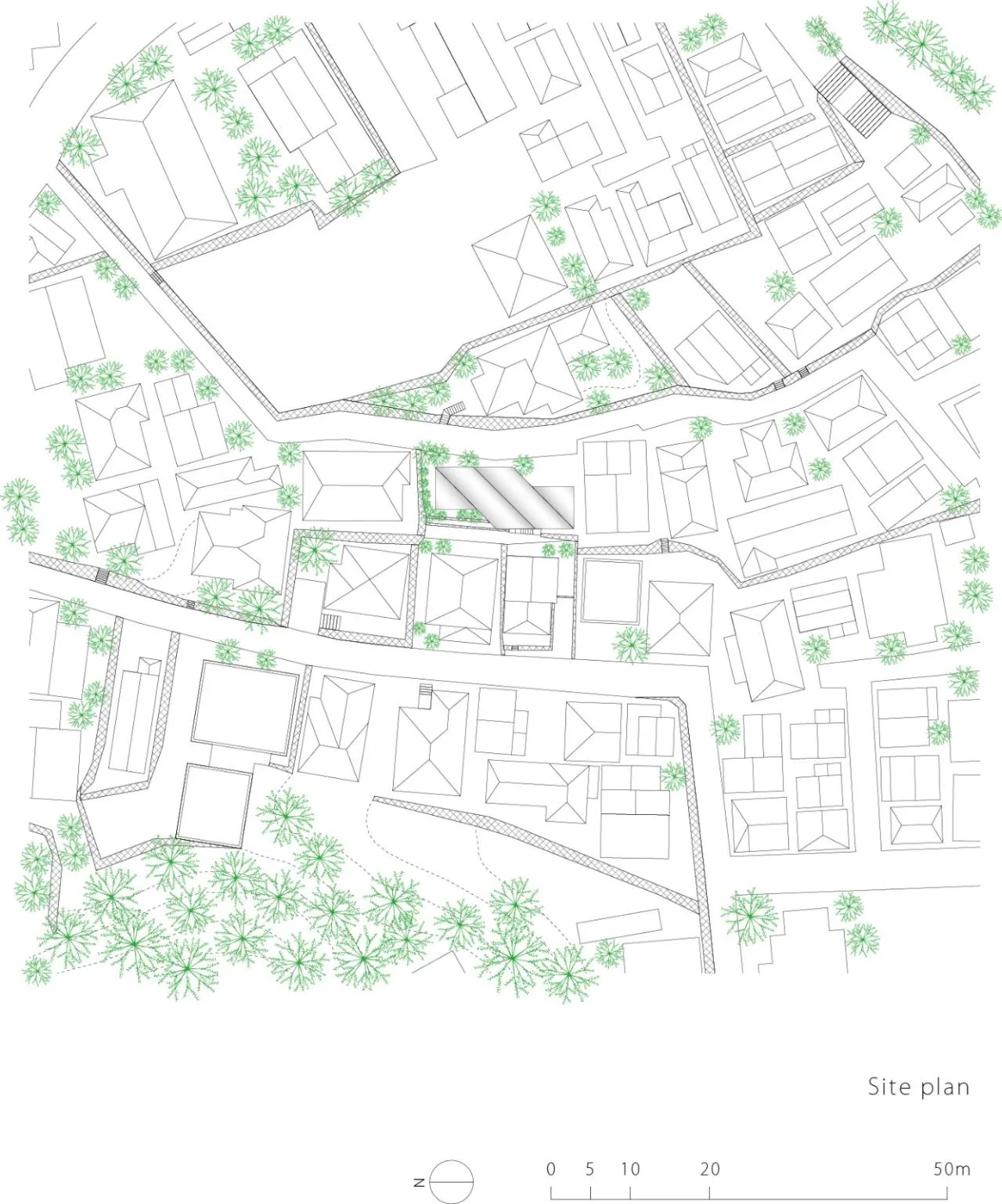
△ Base schematic diagram
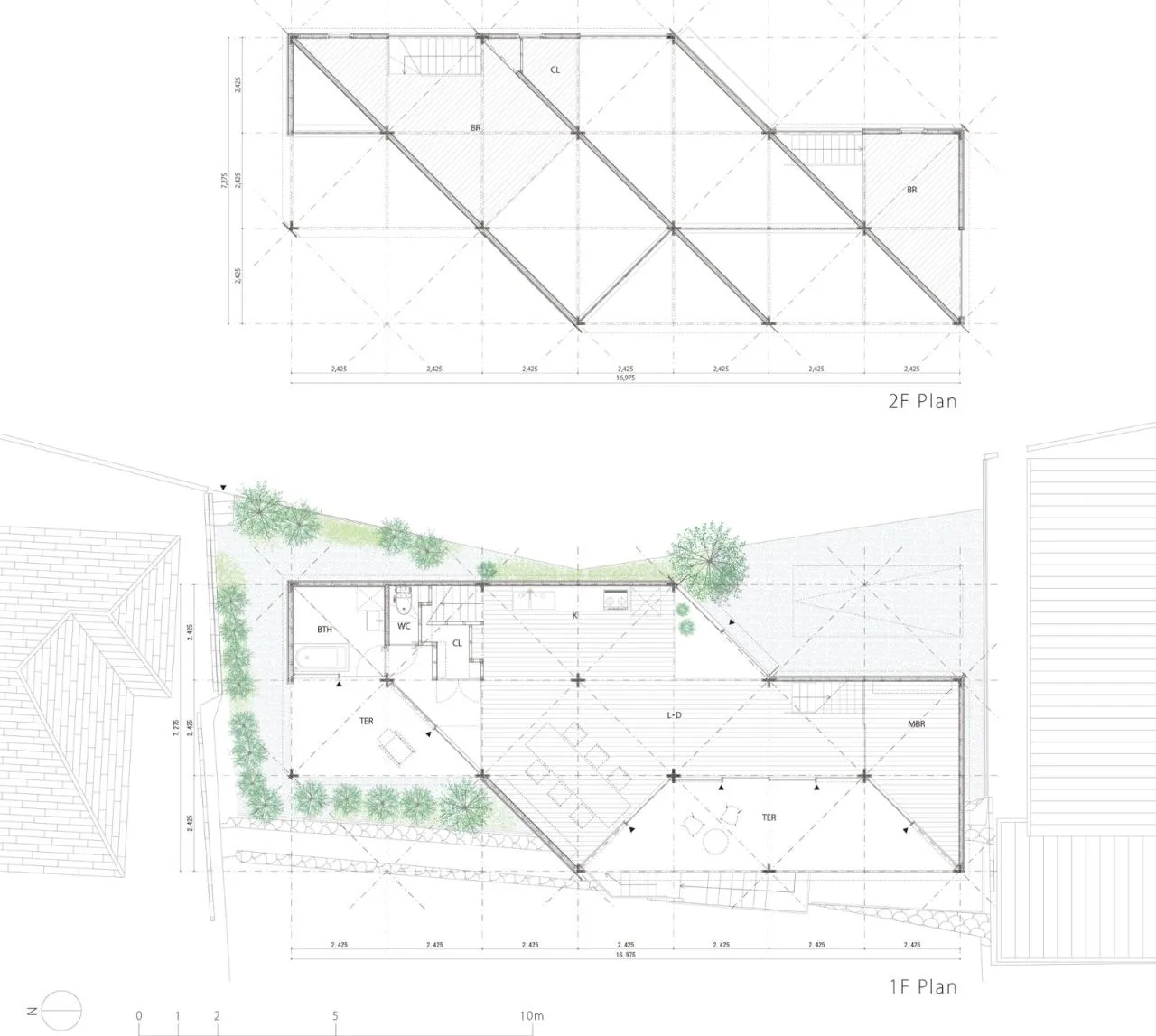
△ Plan view
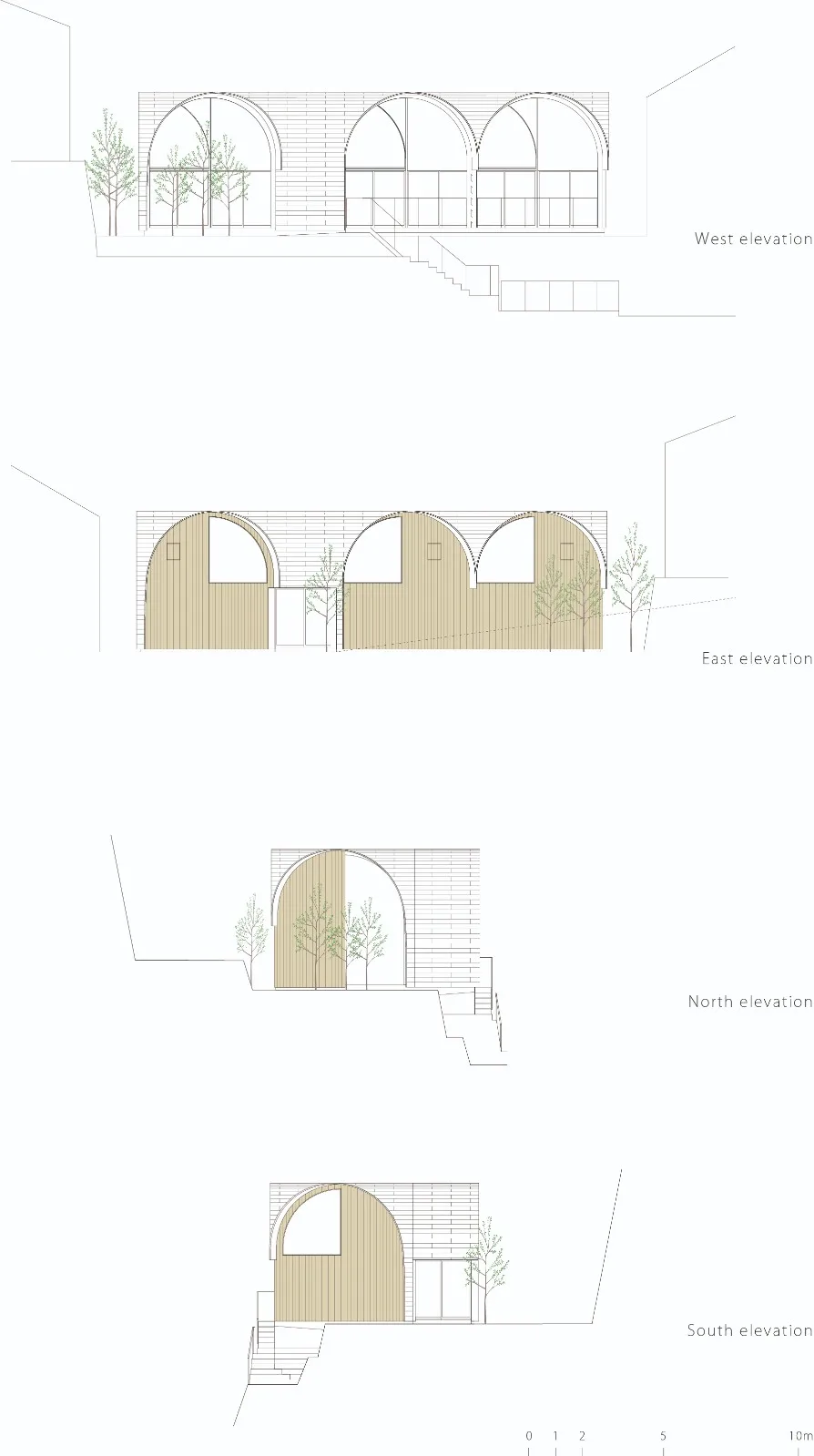
△ Elevation drawing
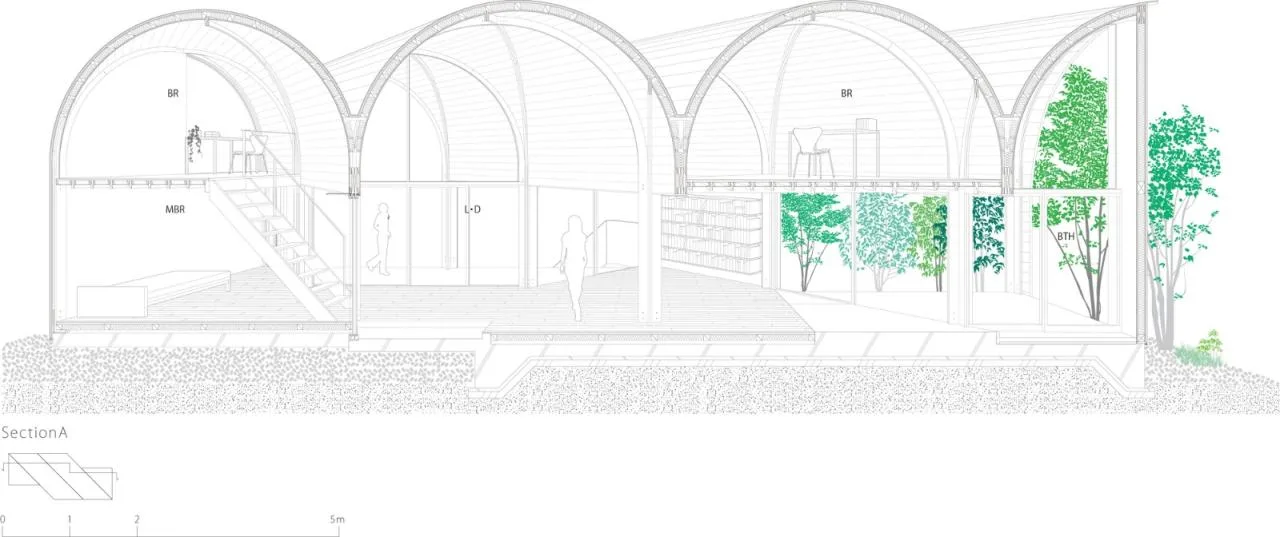
△ Section diagram
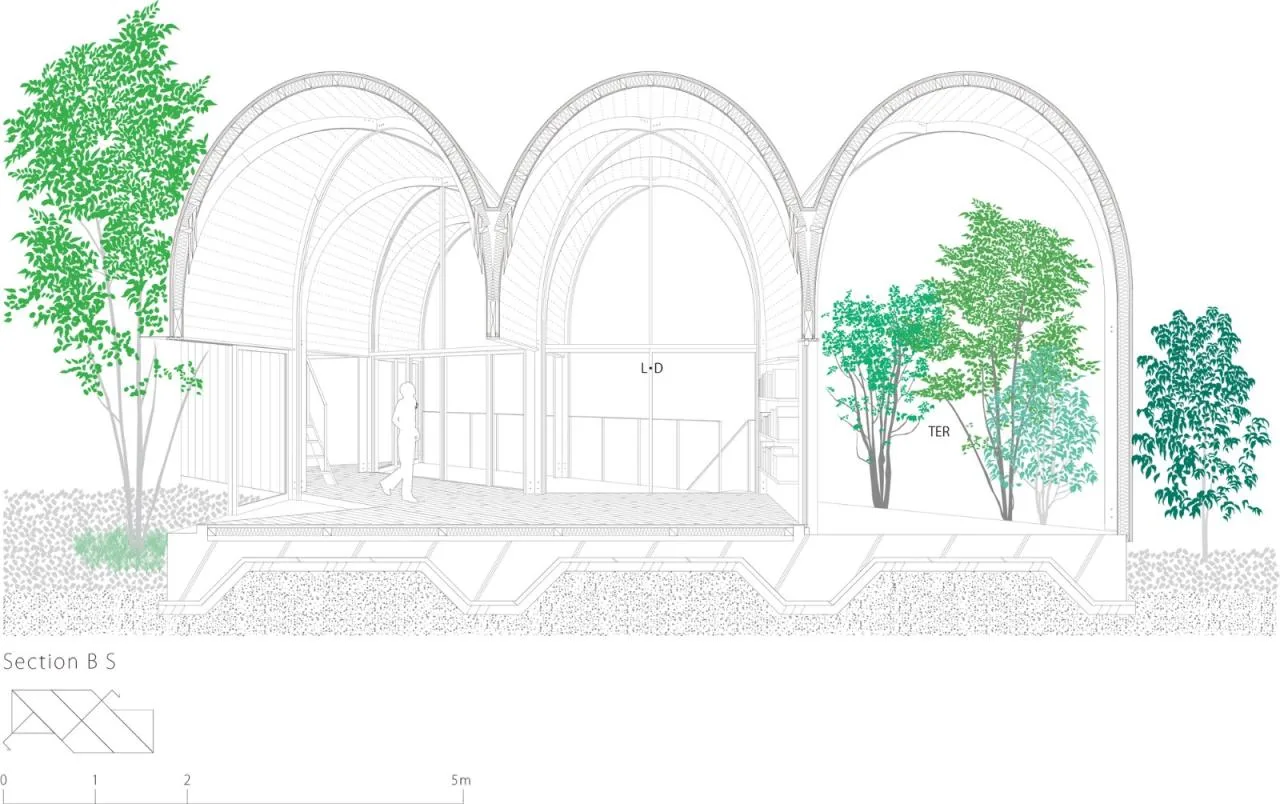
△ Section diagram
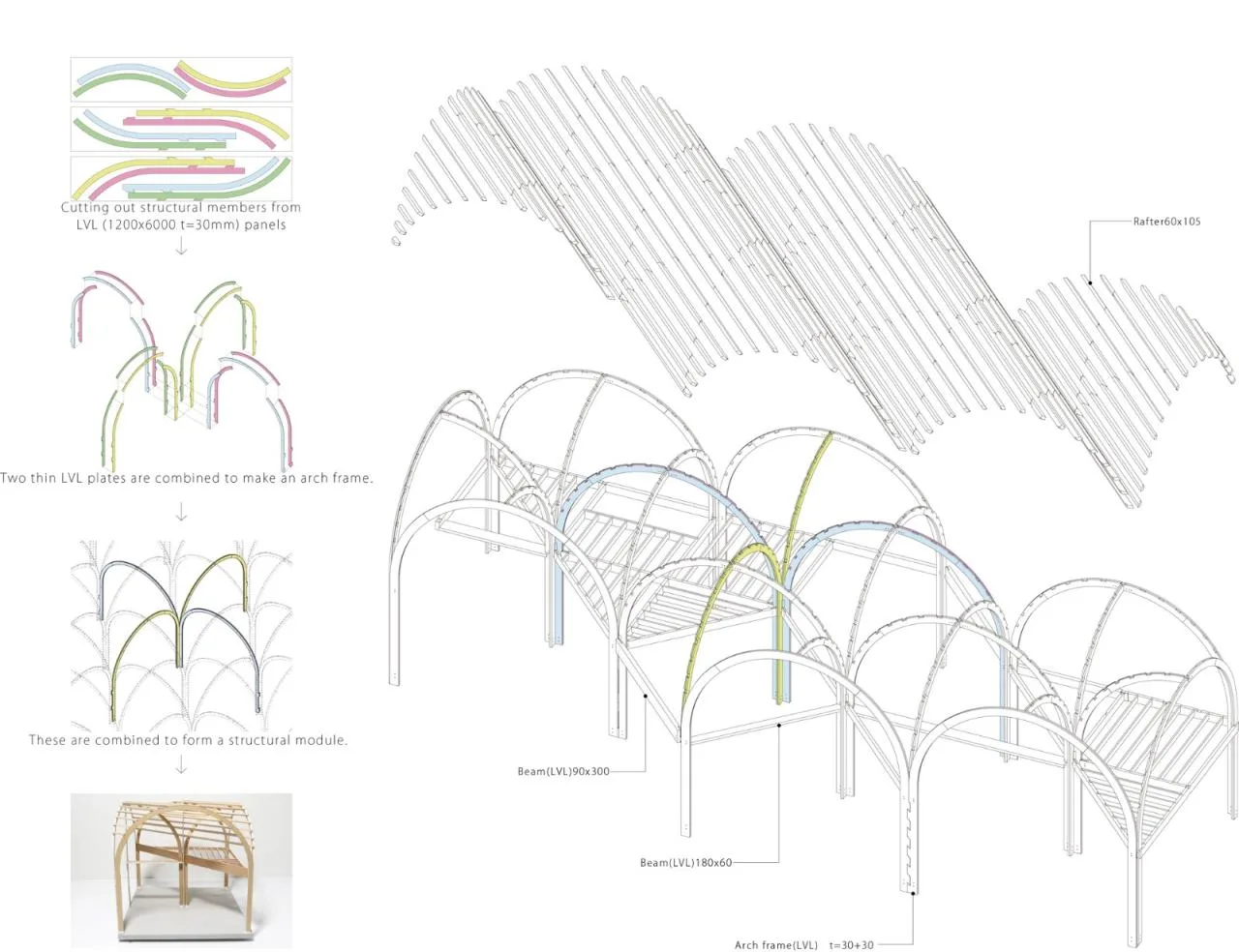
△ Structural schematic diagram
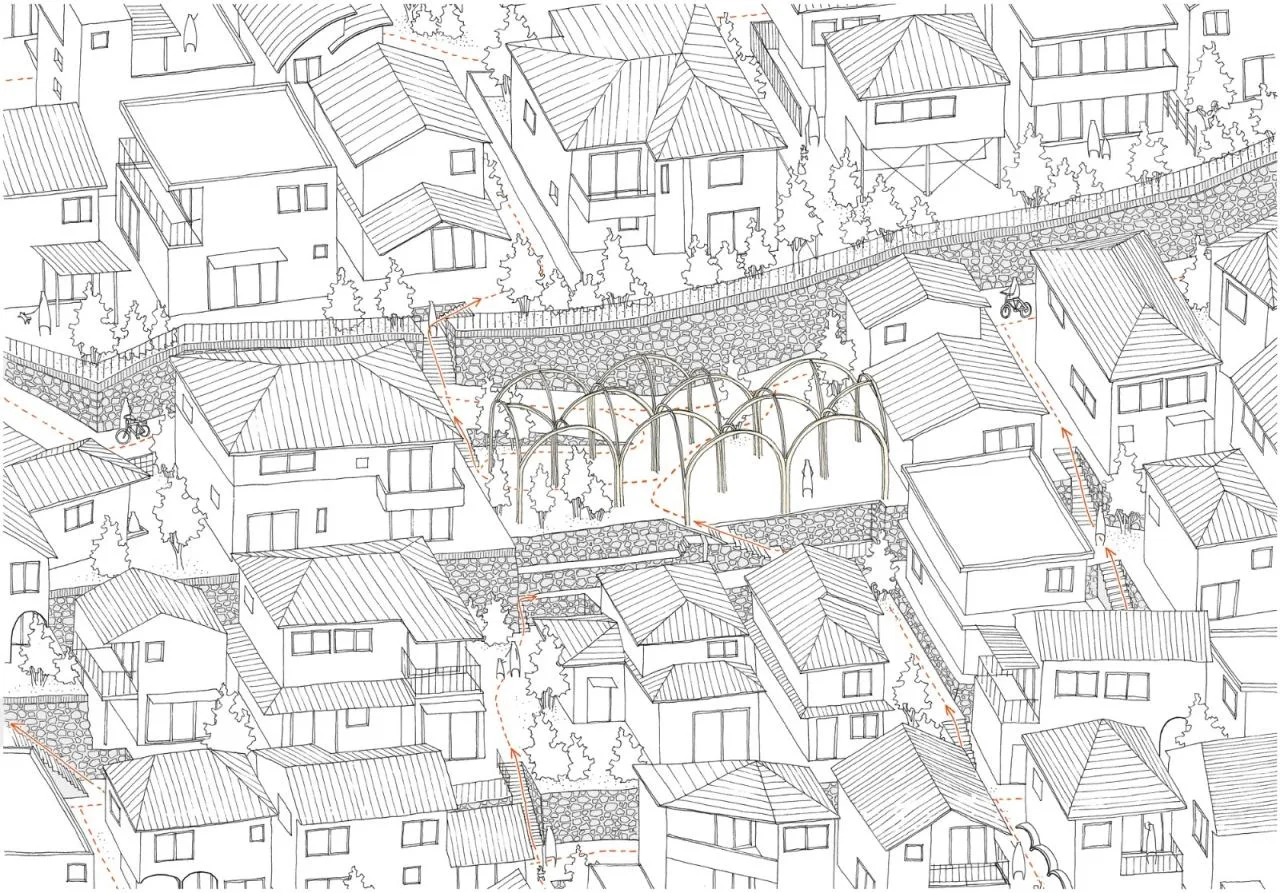
△ Analysis chart
Project Details
Architectural Design: Tomohiro Hata Architect and Associates
Area: 125 m²
Year: 2021
Photographer: Toshiyuki Yano
Lead Architects: Tomohiro Hata, Kenichi Yoshimura
Structural Engineering: Takashi Manda Structural Design – Takashi Manda, Sou Dou
General Contractors: Kohatsu Co. Ltd., Shelter – Koji Endo
Landscape Design: Ishi Landscape – Takanobu Ishii
Structural Engineer: Takashi Manda Structural Design
Landscape Architect: Ishi Landscape
Location: Japan














Must log in before commenting!
Sign Up