
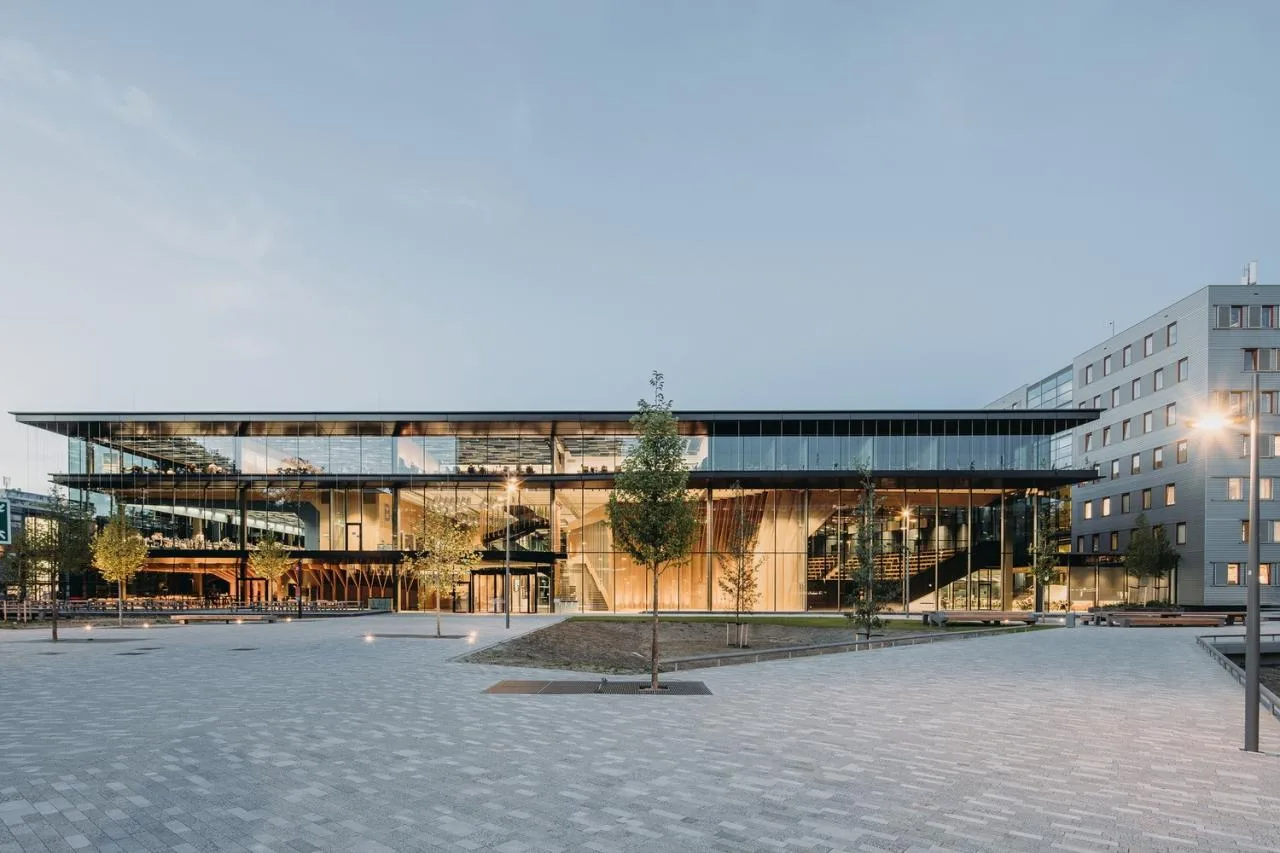
Echo is an interdisciplinary production building designed to accommodate a wide range of teaching spaces, catering to diverse teaching and learning styles at universities. As the most sustainable building at Delft University of Technology in the Netherlands, Echo supports the university’s goal of creating a sustainable campus by 2030.
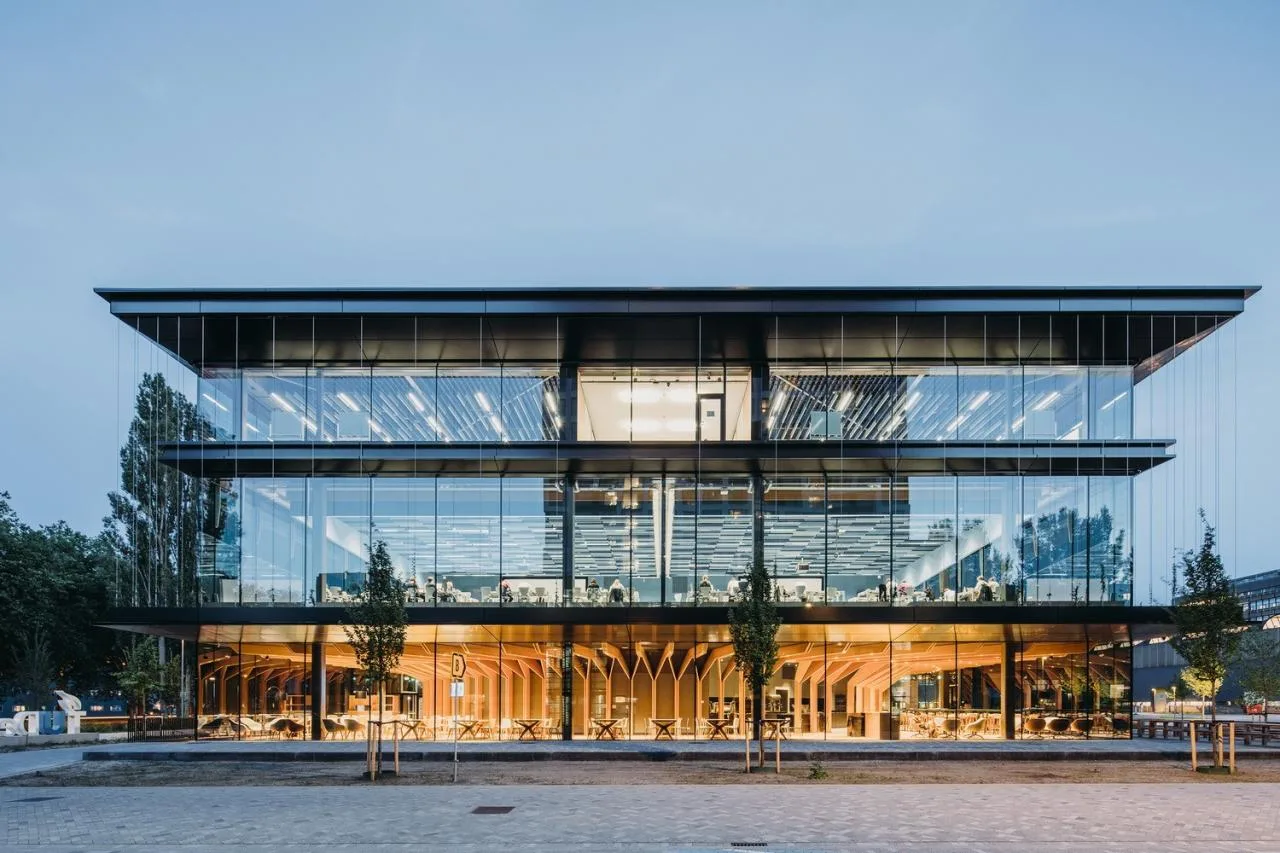
The innovative Echo Teaching Building, collaboratively developed by UNStudio, Arup, and BBN, is designed as a production hub that fully supports various teaching methods and formats. Its core values emphasize adaptability and occupant well-being.
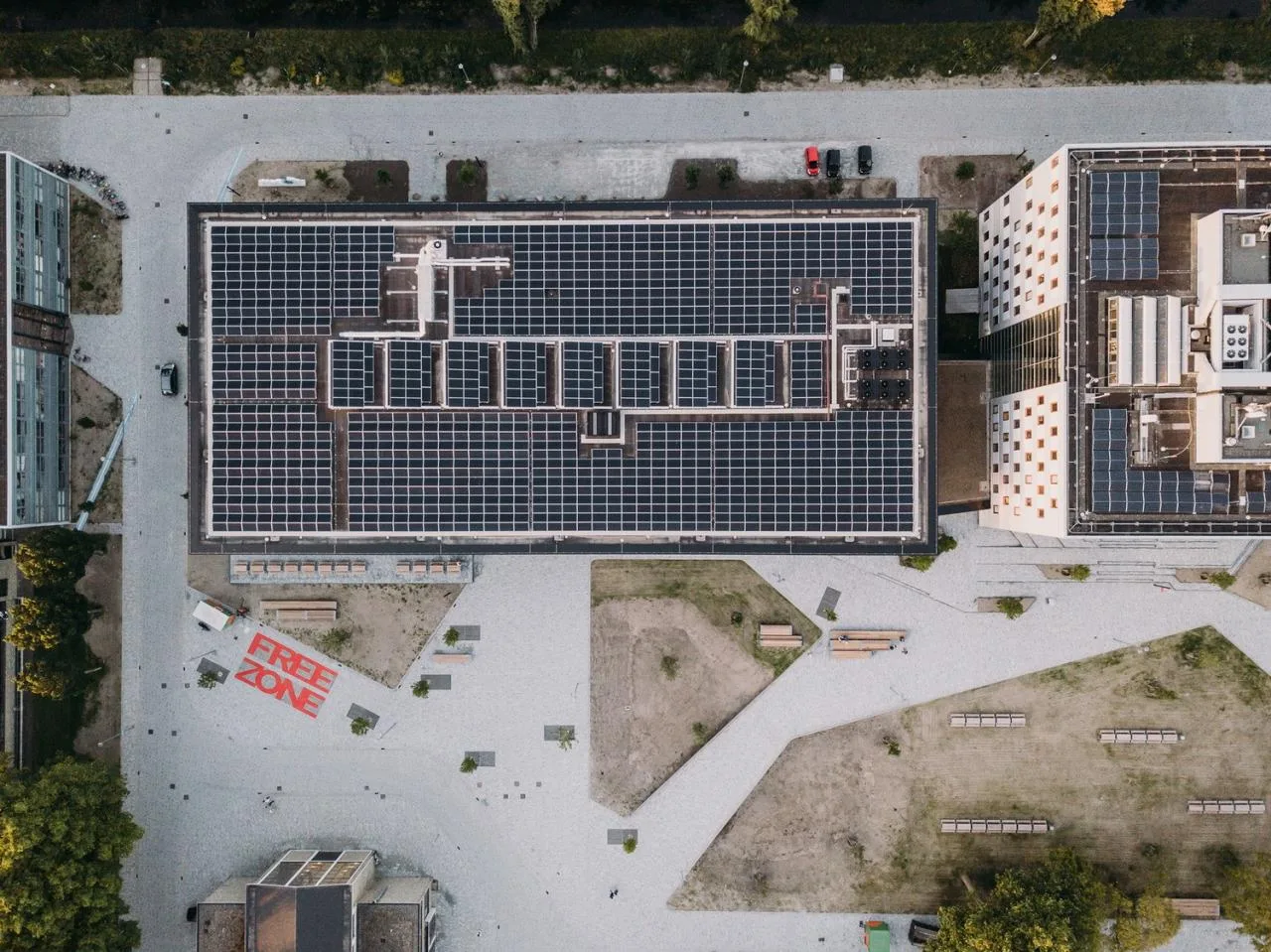
A commitment to a healthy campus environment is evident in Echo’s design. Featuring 1,200 solar panels, smart devices, high-quality insulation, and advanced cold and hot storage systems, Echo not only meets its daily energy needs but also produces surplus energy. This surplus supports user energy consumption such as laptops, lighting, and catering. Additionally, 90% of the building’s furniture is reusable, underscoring its eco-friendly approach.
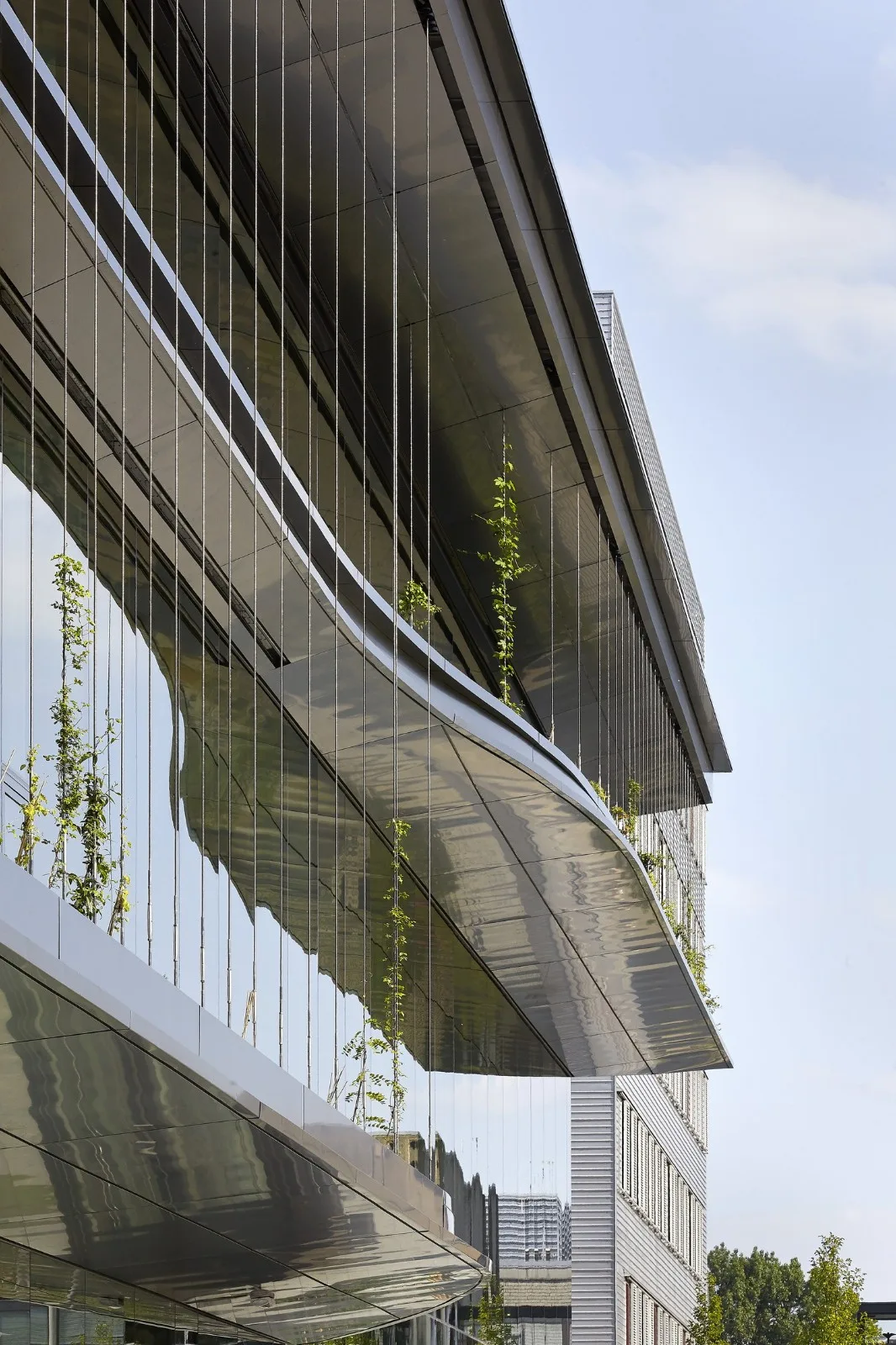
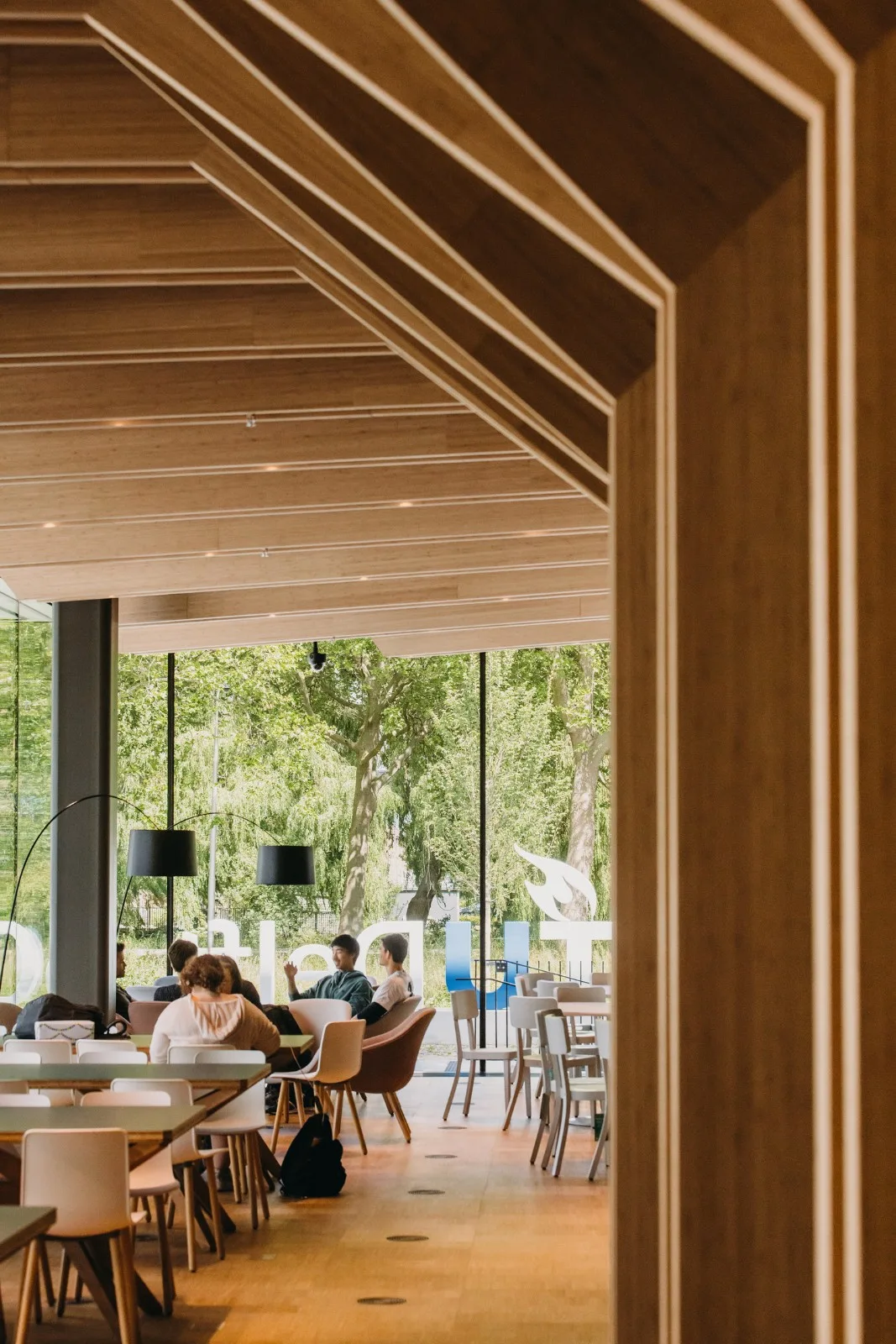
Transparency plays a vital role in Echo’s design. It maximizes natural light inside the building, which benefits the health of occupants and reduces reliance on artificial lighting. This openness also visually connects the building with the entire campus and surrounding natural landscape, avoiding a closed-off teaching environment. The building’s openness extends across the campus, creating a bright, vibrant, and welcoming space for both teachers and students.
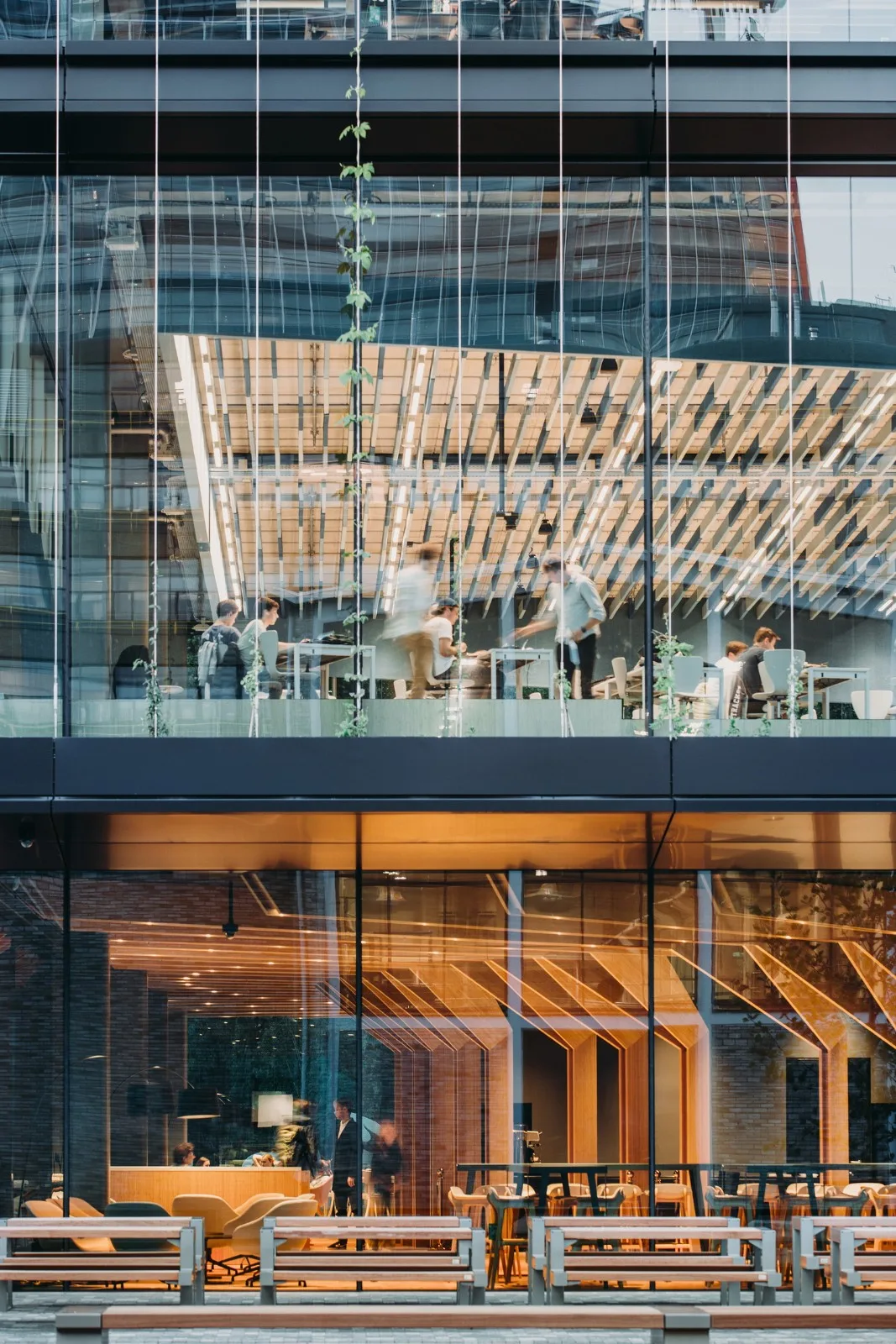
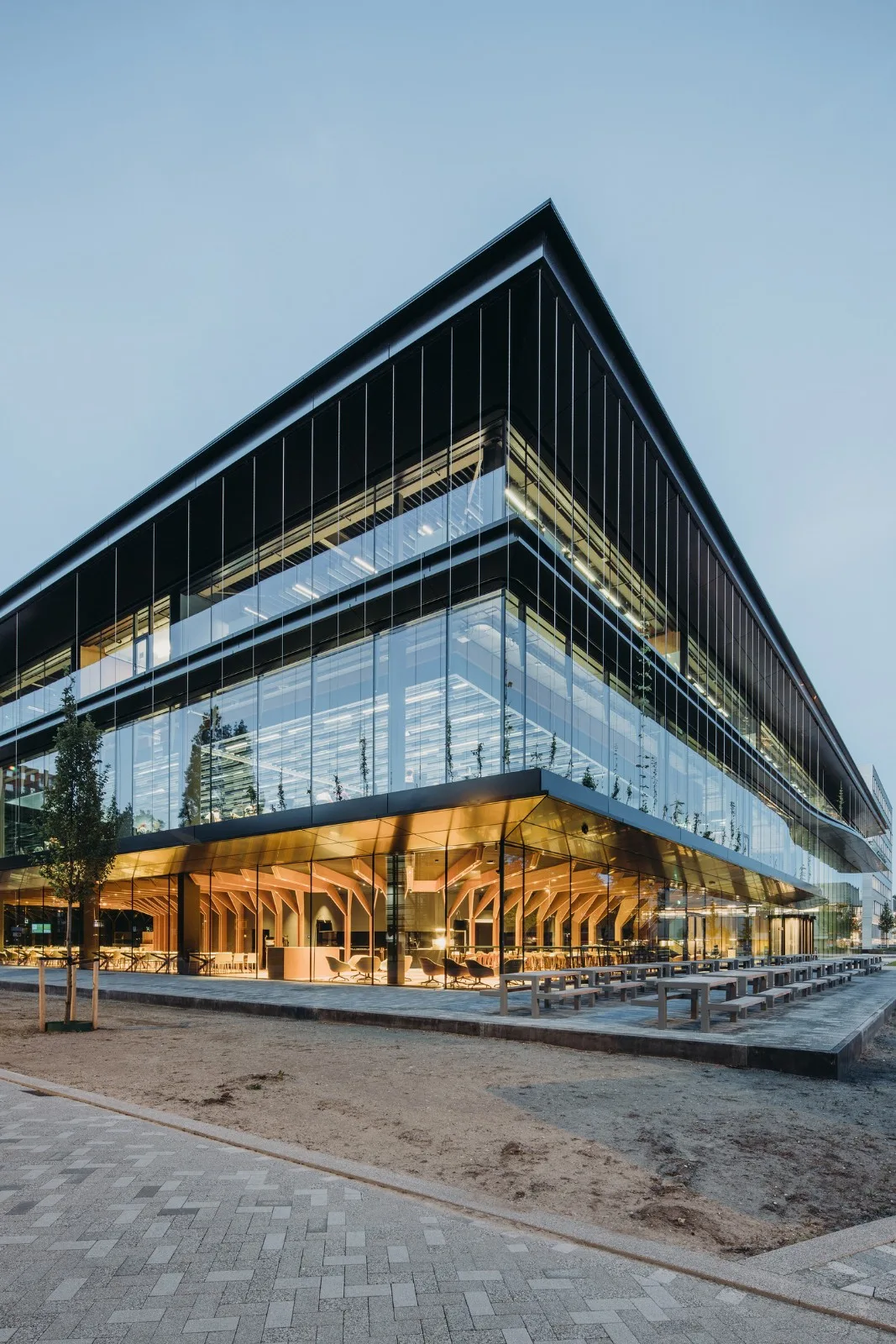
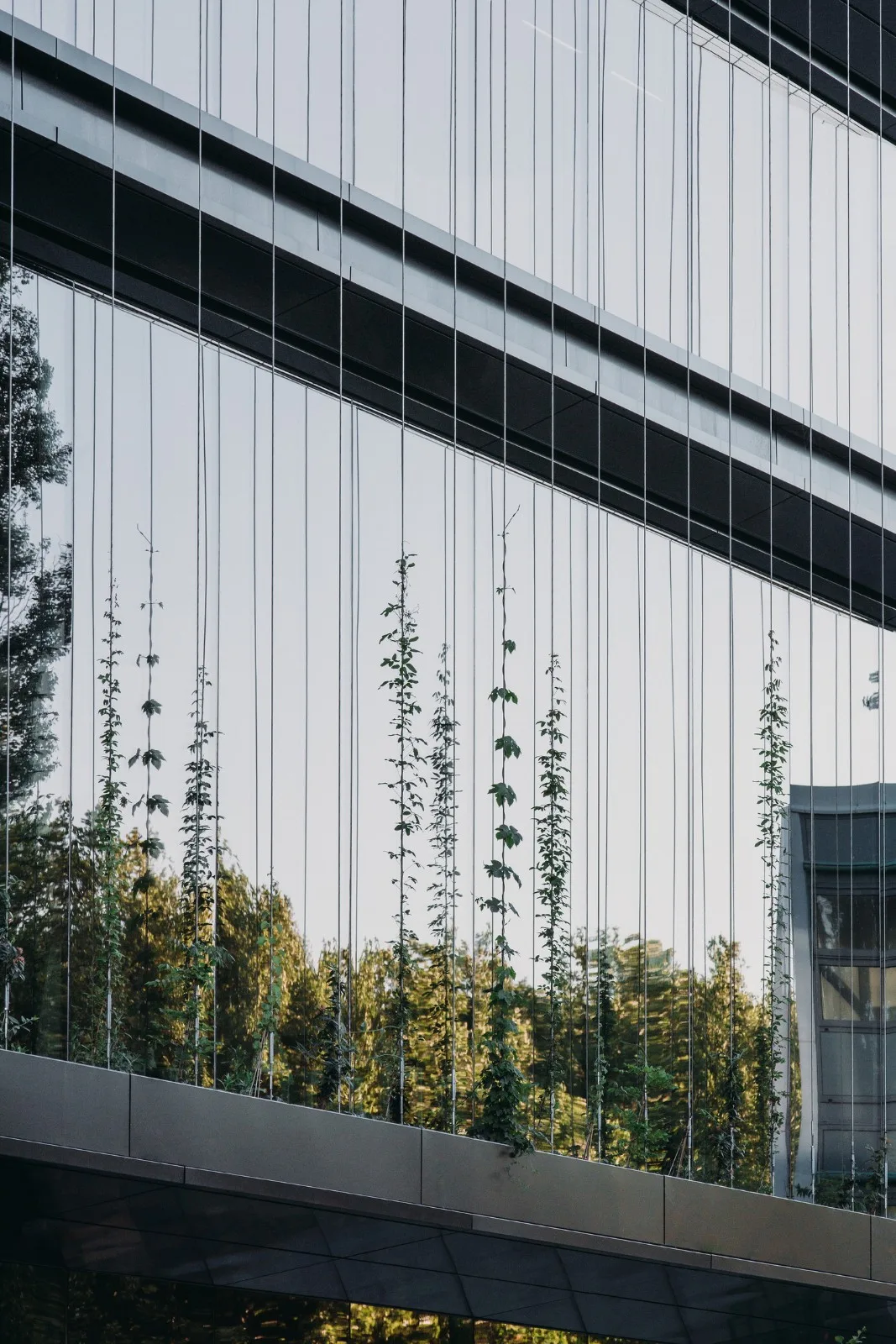
To prevent excessive heat from entering the building, Echo employs a combination of sun-protective and low solar penetration glass. Additionally, deep horizontal aluminum sunshades, cantilevered from the structure, effectively block unwanted solar heat. These sunshades are linked by cables supporting climbing plants, which create a green curtain wall that further filters sunlight.
To ensure clean indoor air, elevated floors are installed above hollow floor slabs, facilitating fresh air flow from the ground upward. This design avoids recirculation of stale air. Moreover, ventilation openings and raised floor components are designed to be easily relocated, accommodating future spatial changes.
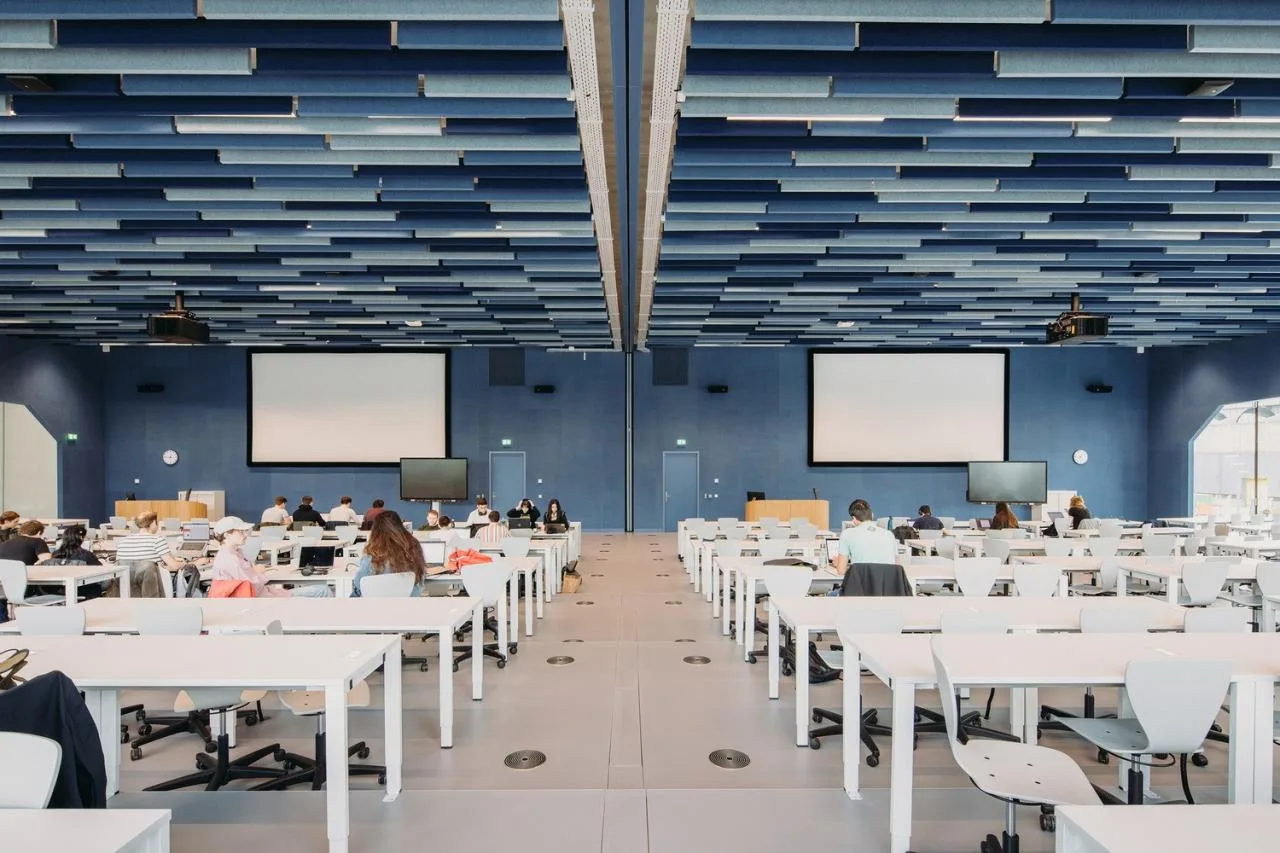
The design process carefully considers the environmental impact of construction materials while prioritizing internal building circulation. A large grid structure creates a spacious entrance, with columns placed along the building’s edge to maximize open, column-free space. The steel trusses use standardized dimensions for easy disassembly, allowing components to be reused even after the building’s lifecycle ends. Hollow core slabs are also reusable in the future.
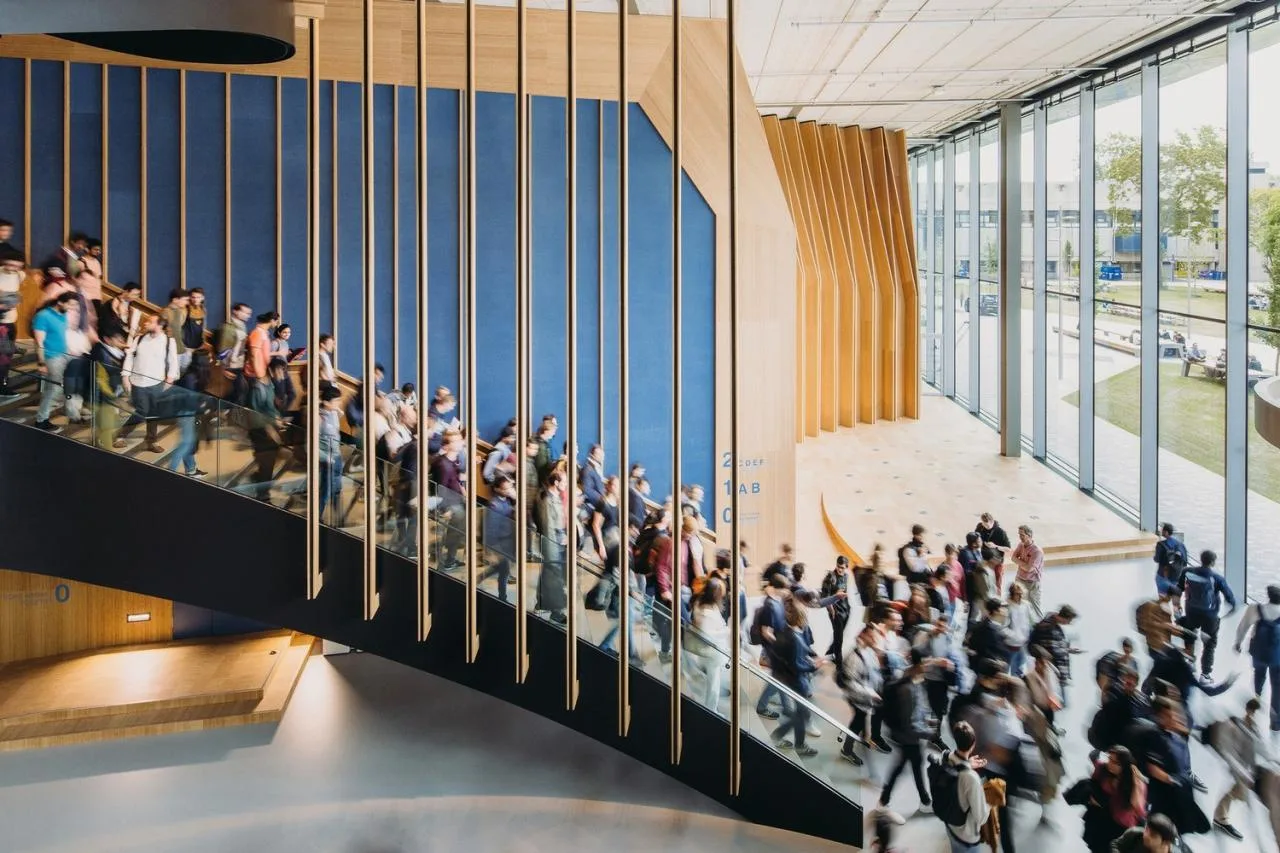
Designed to promote walking and collaboration, the Echo Teaching Building offers flexible, multifunctional spaces and a state-of-the-art learning environment. The modern cultural ethos of “everything is available” is embedded throughout, emphasizing transitional spaces that encourage movement and interaction. Echo provides versatile areas where users can manage their fragmented time—a dynamic platform for reflection, inspiration, and social exchange.
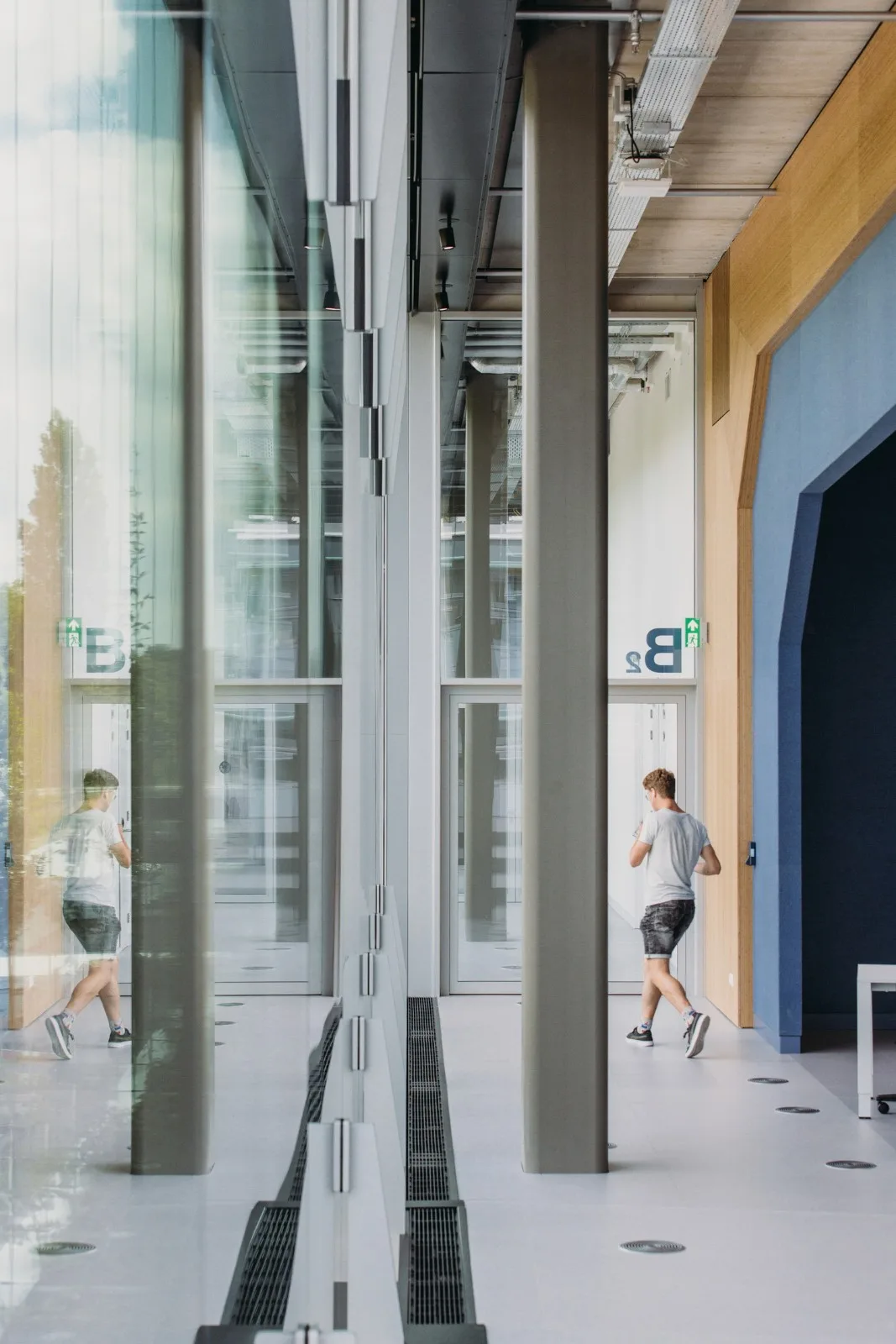
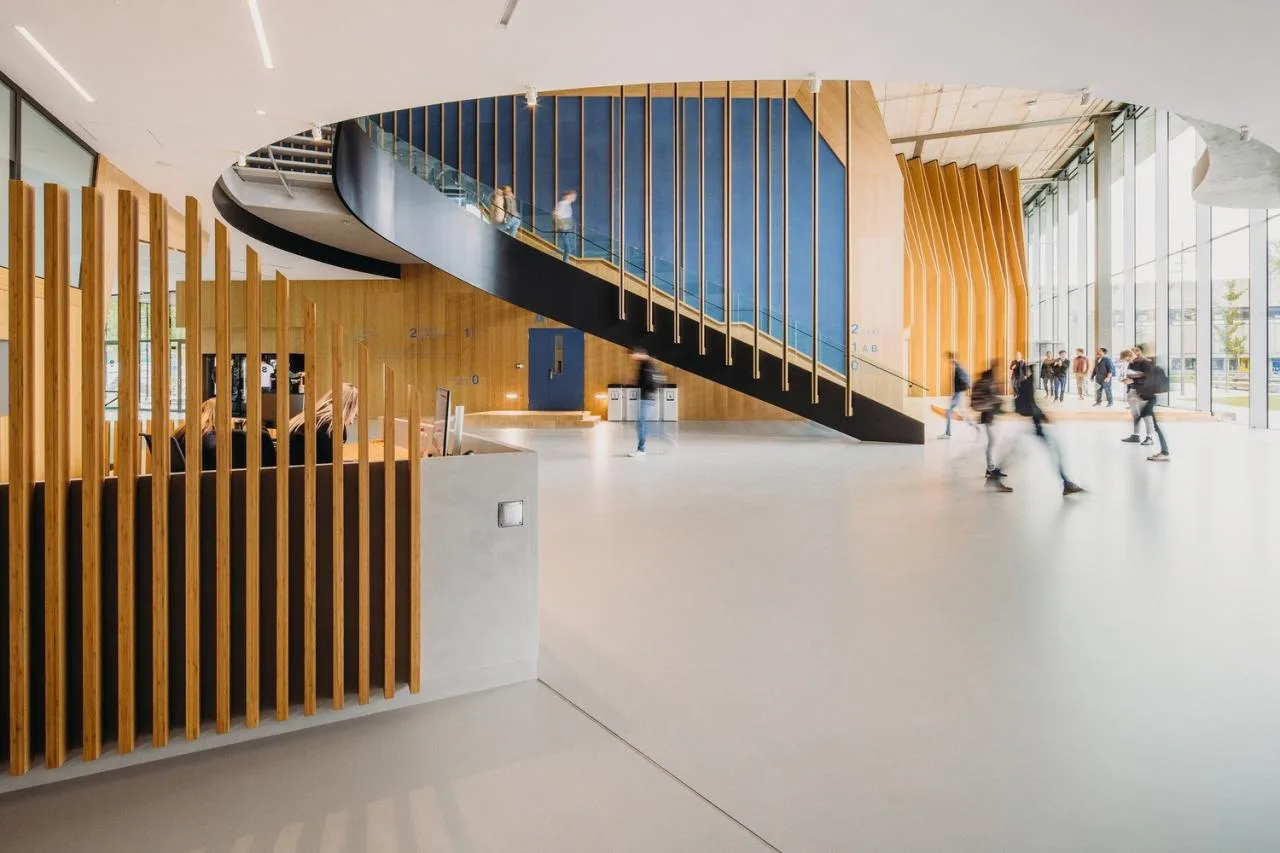
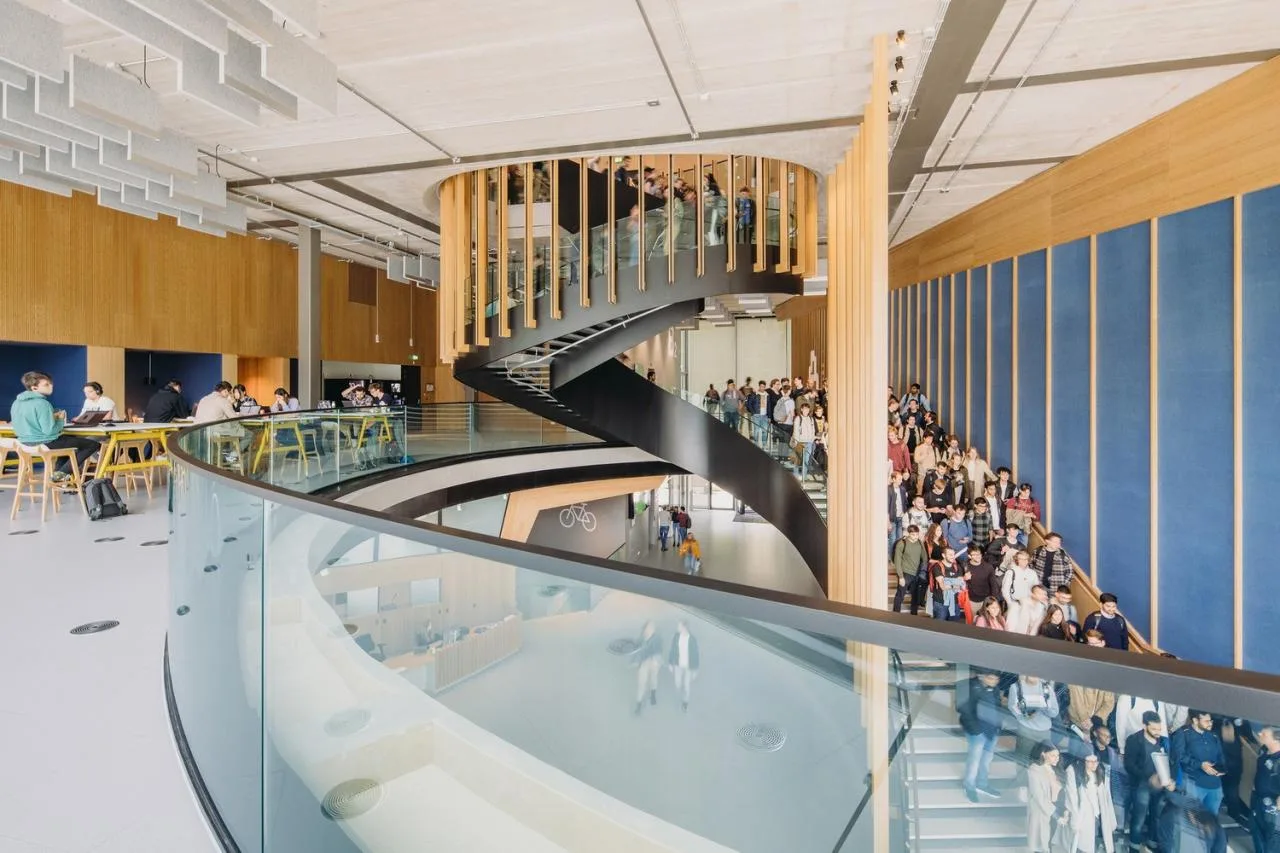
The interior design fosters a warm and inviting atmosphere. At select locations, strips of bamboo extend along the ceiling, contributing to an intricate aesthetic. This carefully crafted bamboo detail runs through to the central staircase, seamlessly connecting learning and interactive zones to create an integrated environment for education, collaboration, and creativity. The central staircase also encourages movement throughout the building, supporting the physical well-being of students, researchers, and faculty.
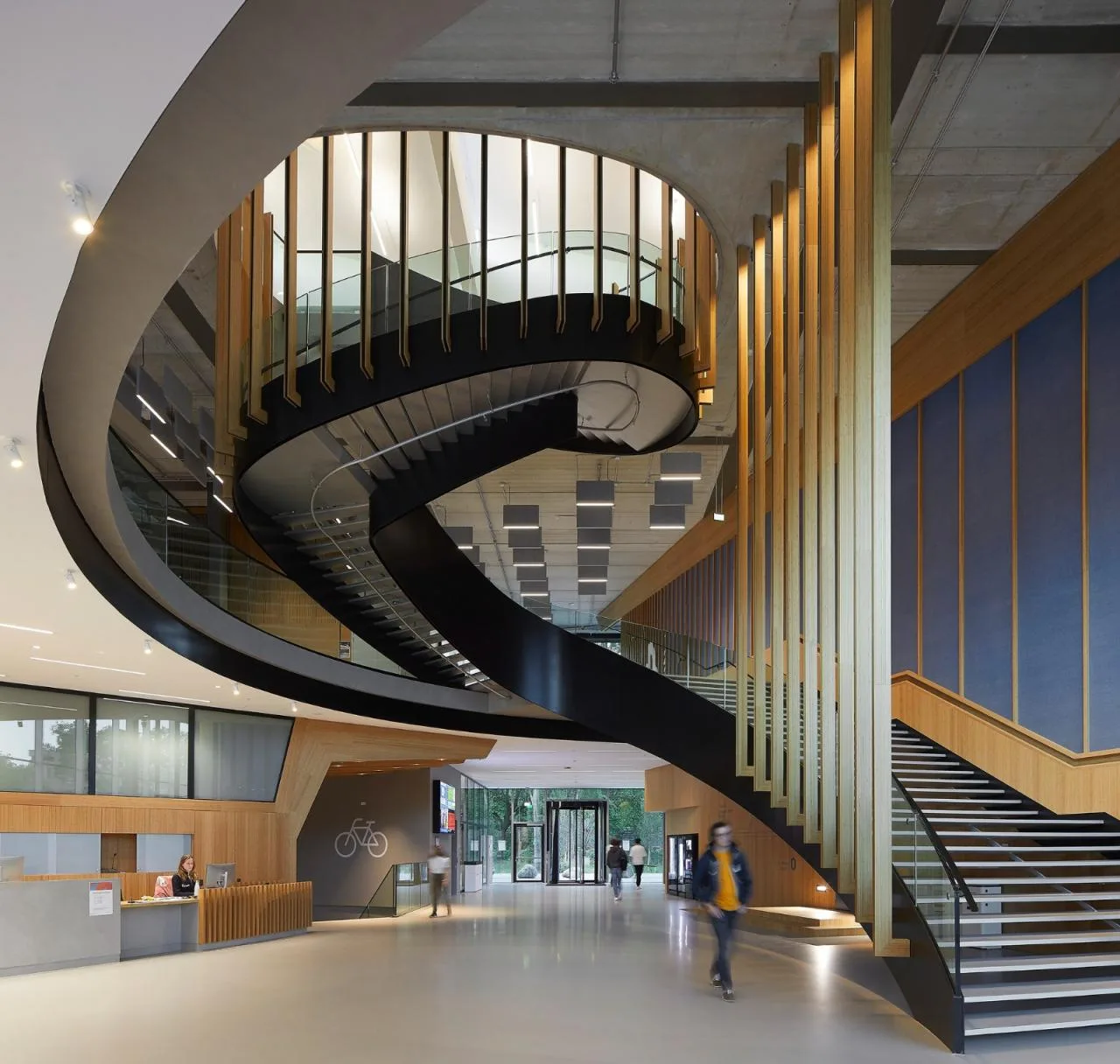
A forward-looking campus must embody vitality and energy, which is central to Echo’s design vision. The building not only integrates with surrounding public spaces but also establishes a refreshed identity. The adjacent plaza connects to a street on the opposite side through a transparent ground-floor area, transforming Echo’s ground floor into a sheltered public square that enhances community connectivity and brings the intangible spirit of learning into a tangible, inspiring space.
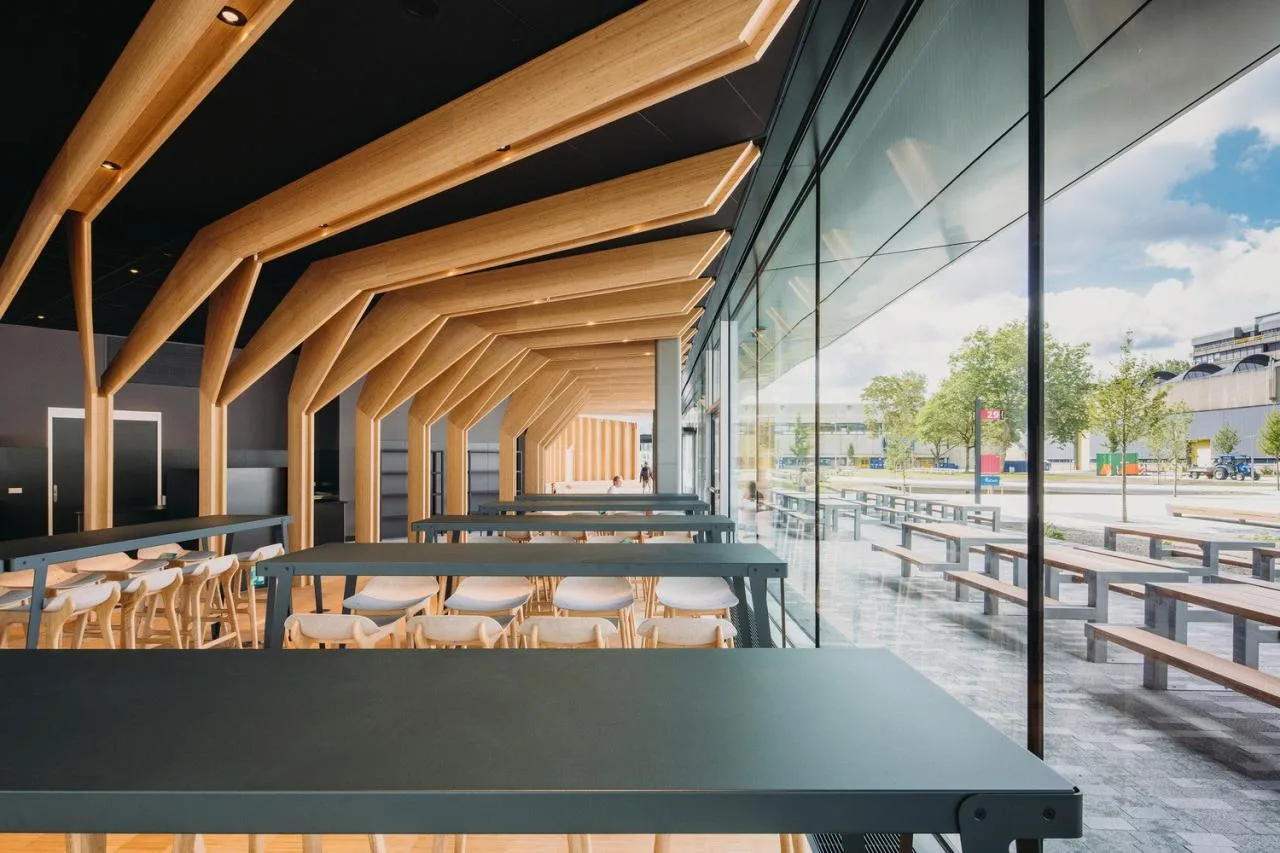
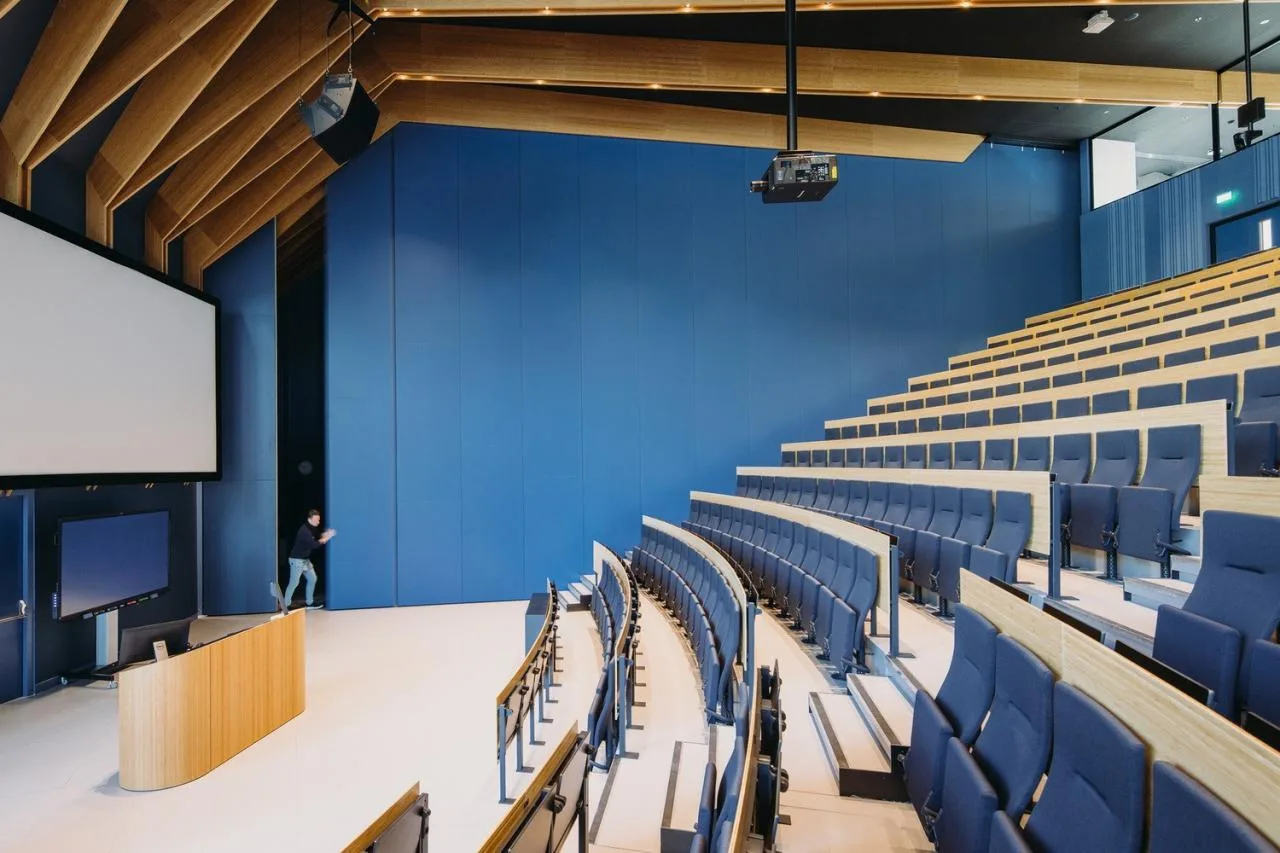
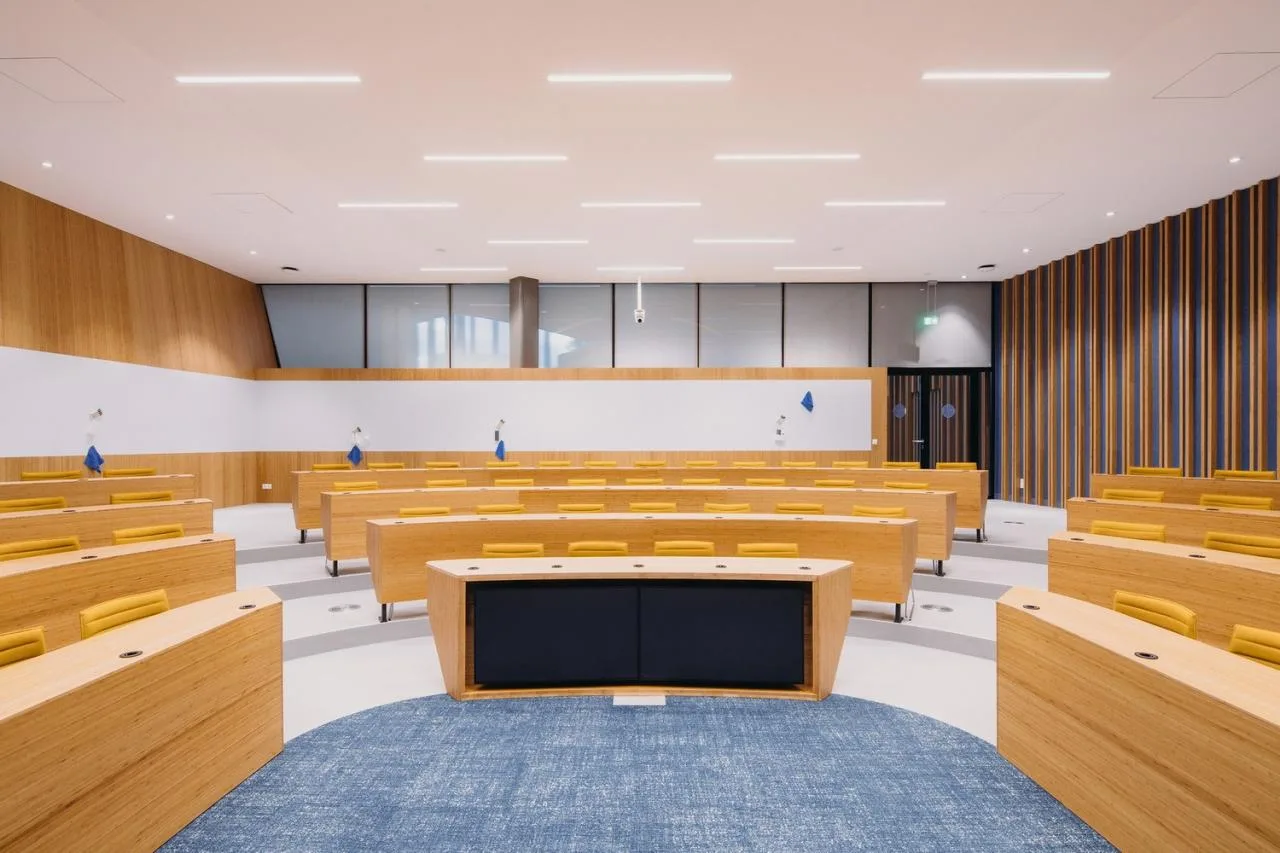
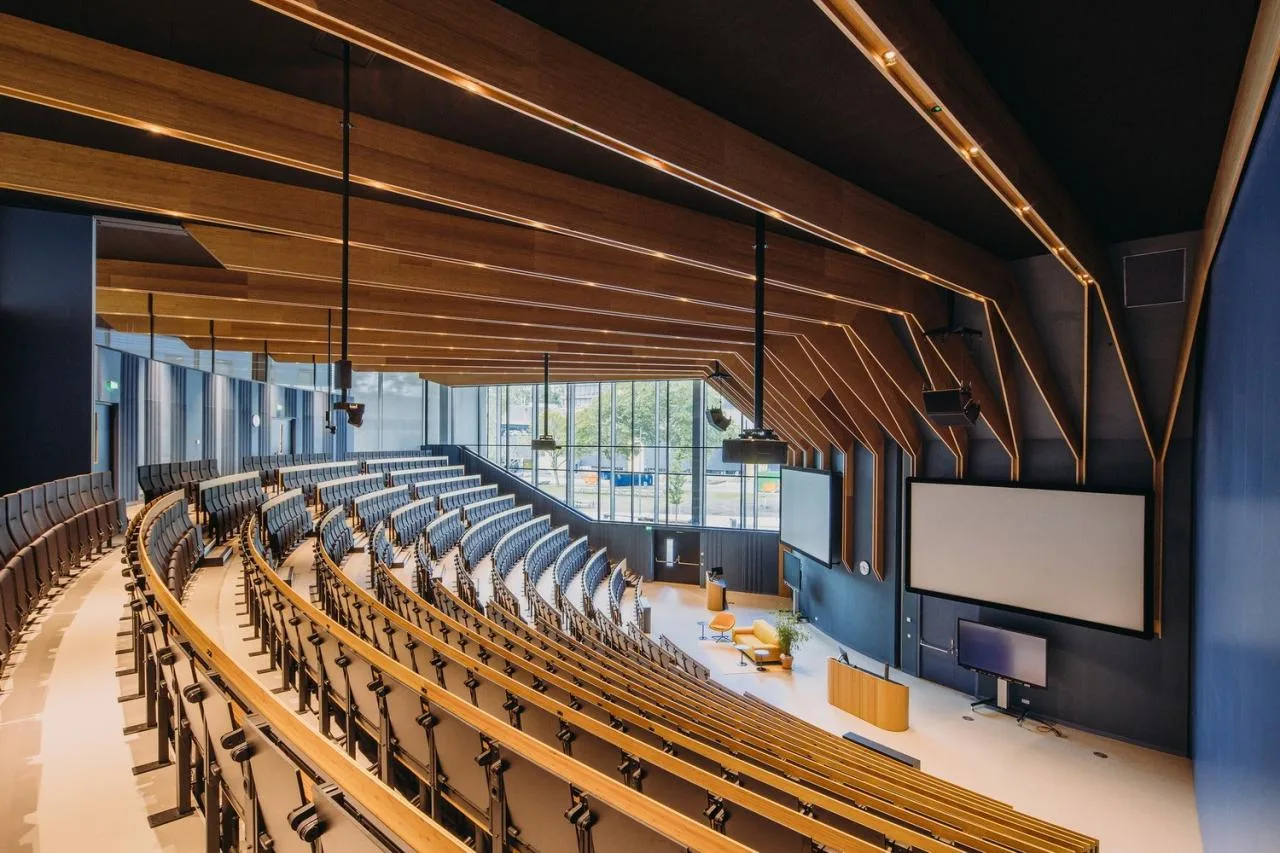
Inside, two sculptural spaces stand out: a large lecture hall seating 700 people and a debate area that draws visitors to the covered public square. These intricately designed venues are positioned diagonally, defining two transparent corner zones. One corner hosts a restaurant with a terrace directly facing Dreamhall, while the other offers a spacious landscaped learning area.
Forward-thinking: Flexible and Diverse Teaching Spaces
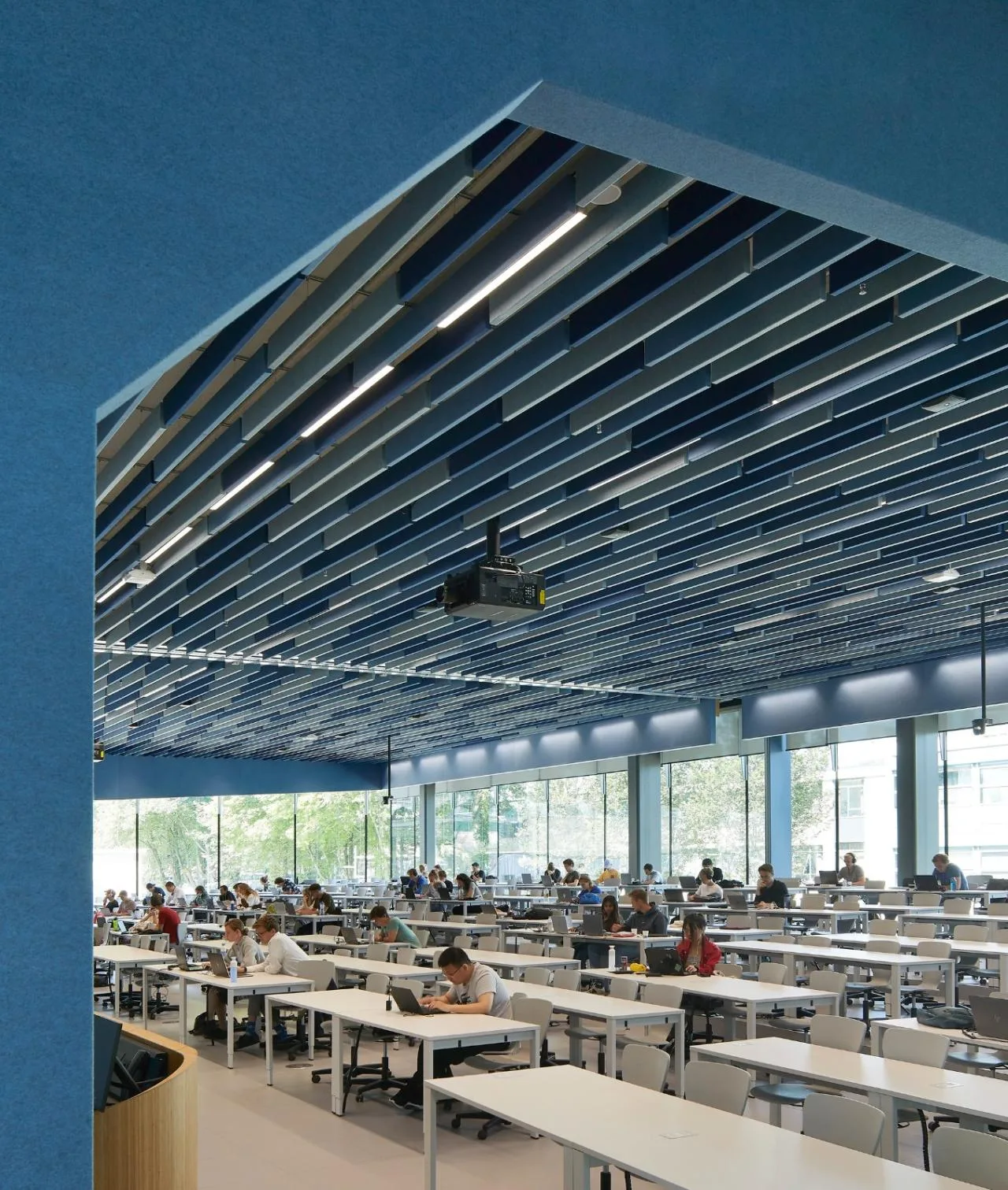
Covering 8,844 square meters, the Echo building houses lecture halls, classrooms, and various learning environments designed to support lectures, tutoring, group work, project-based learning, debates, and self-study for approximately 1,700 students.
There are seven classrooms, most of which can be reconfigured flexibly. The largest lecture hall on the first floor accommodates 700 people and can be subdivided into three separate rooms within 15 minutes, allowing multiple lectures or events to run simultaneously and maximizing spatial flexibility.
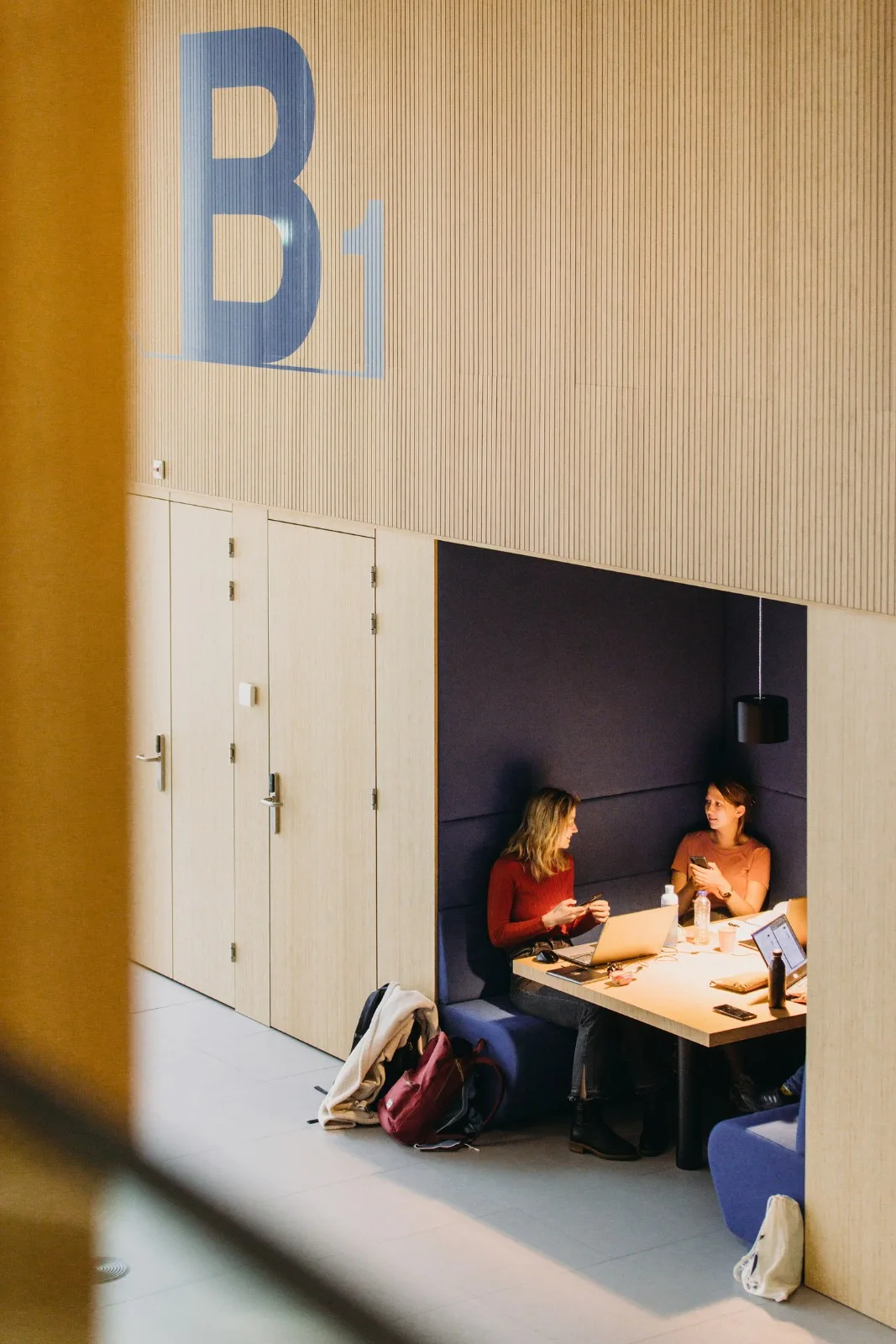
A similar movable wall system is implemented in the multi-purpose teaching space on the first floor, which can be divided into two classrooms, each seating 144 people. Moreover, over 300 additional learning spaces are distributed throughout the building, supporting group activities and individual study.
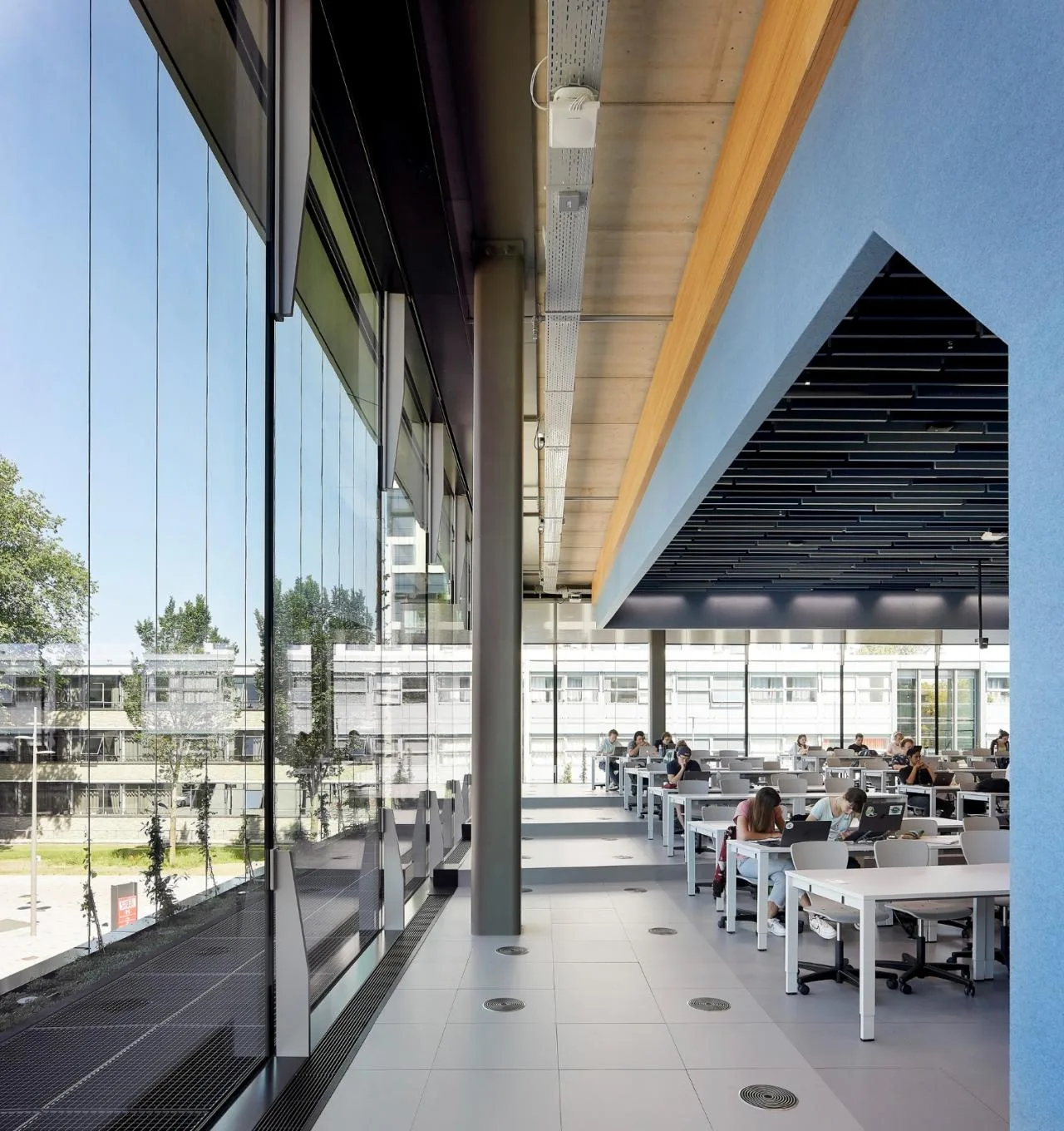
All classrooms are designed to meet current and future teaching needs. Echo emphasizes medium to large classrooms accommodating between 150 and 700 students. In addition to these, there is a case study classroom tailored for interactive and motivational teaching between instructors and students. Four standard classrooms support project-based learning, each accommodating nearly 70 students.
The office spaces on the second floor feature a modular wall system that allows for flexible reconfiguration. If functional requirements change over time, these office areas can be easily converted into teaching spaces.
Project Drawings
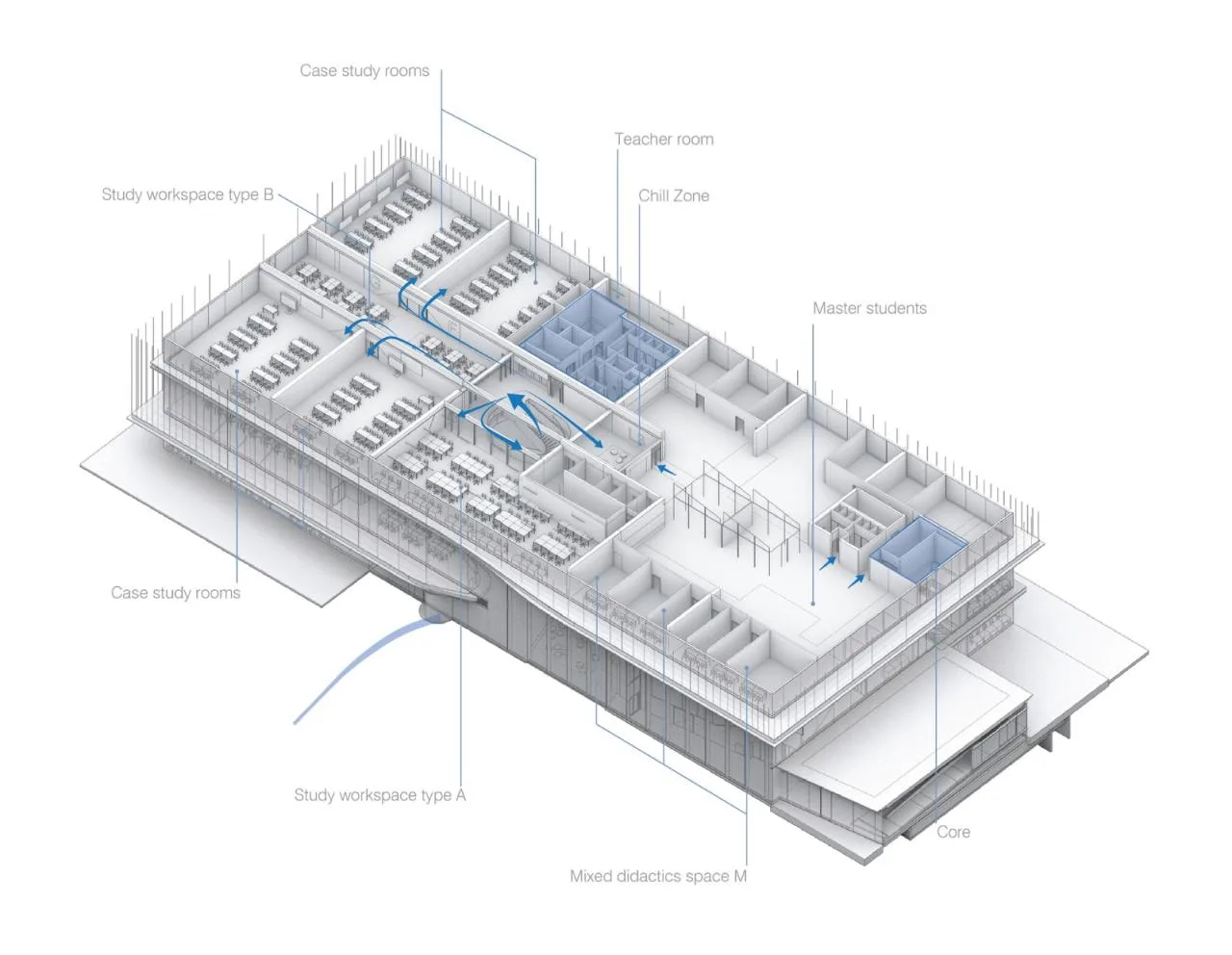
△ Functional zoning
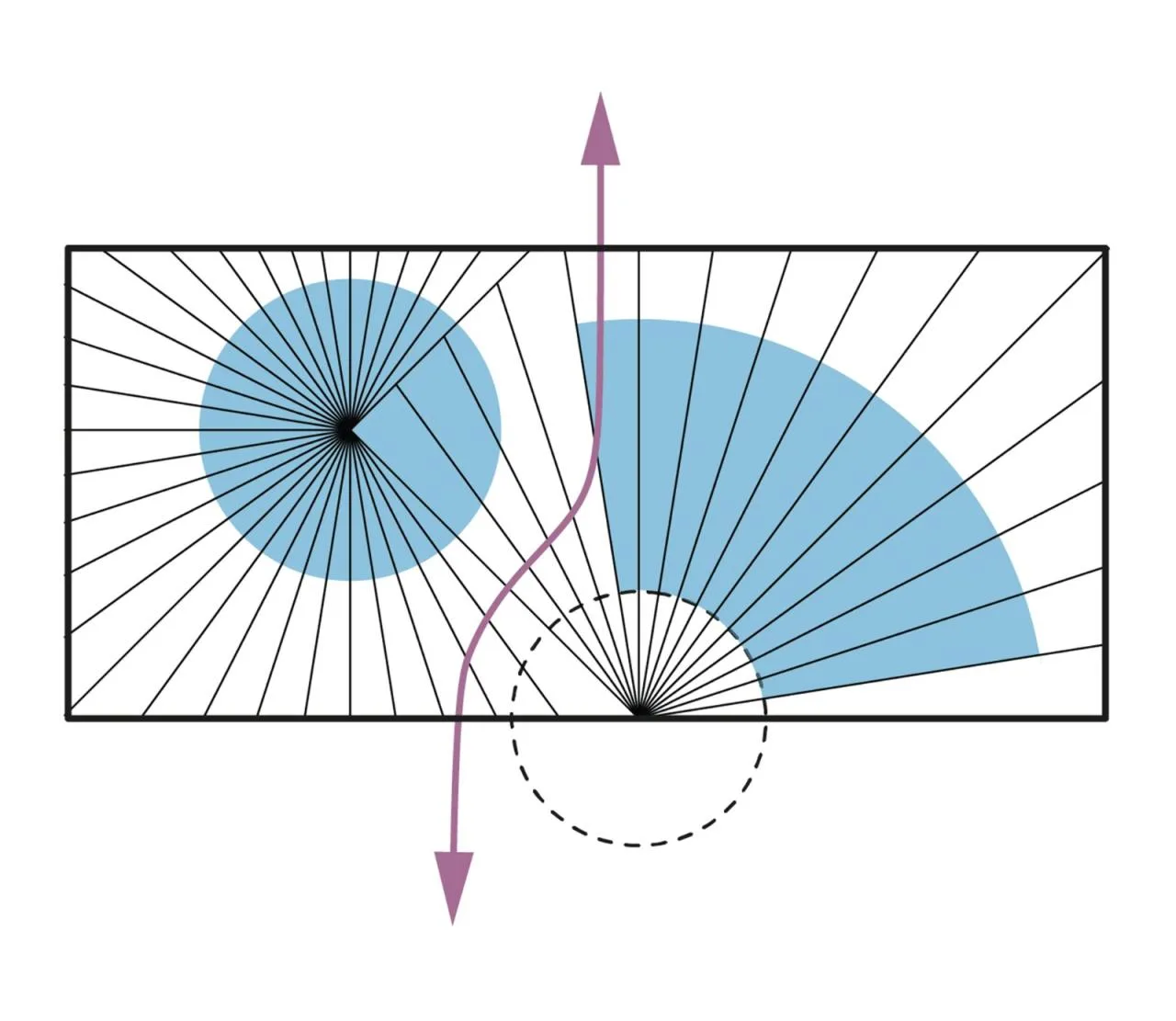
△ Analysis diagram
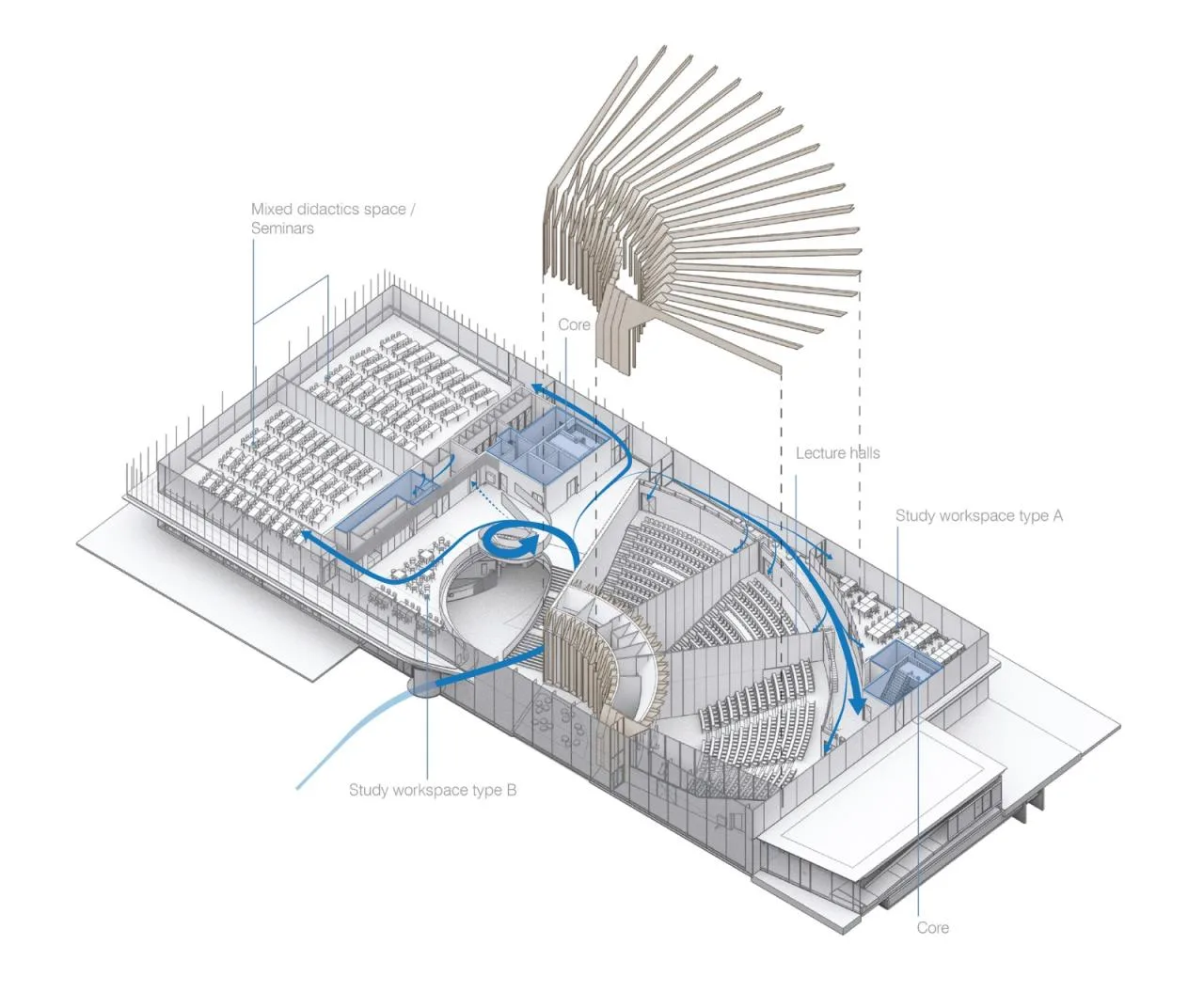
△ Analysis diagram
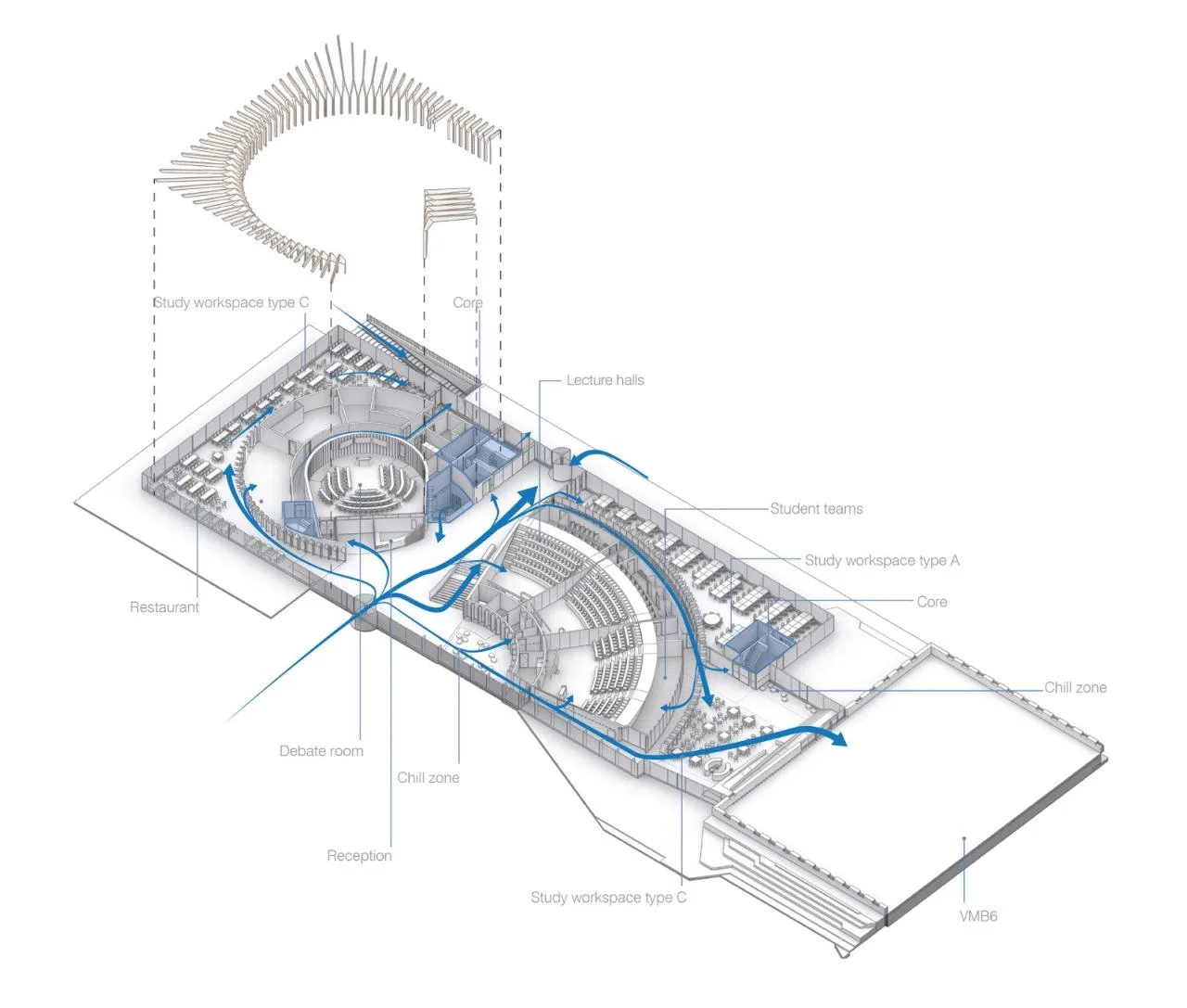
△ Analysis diagram
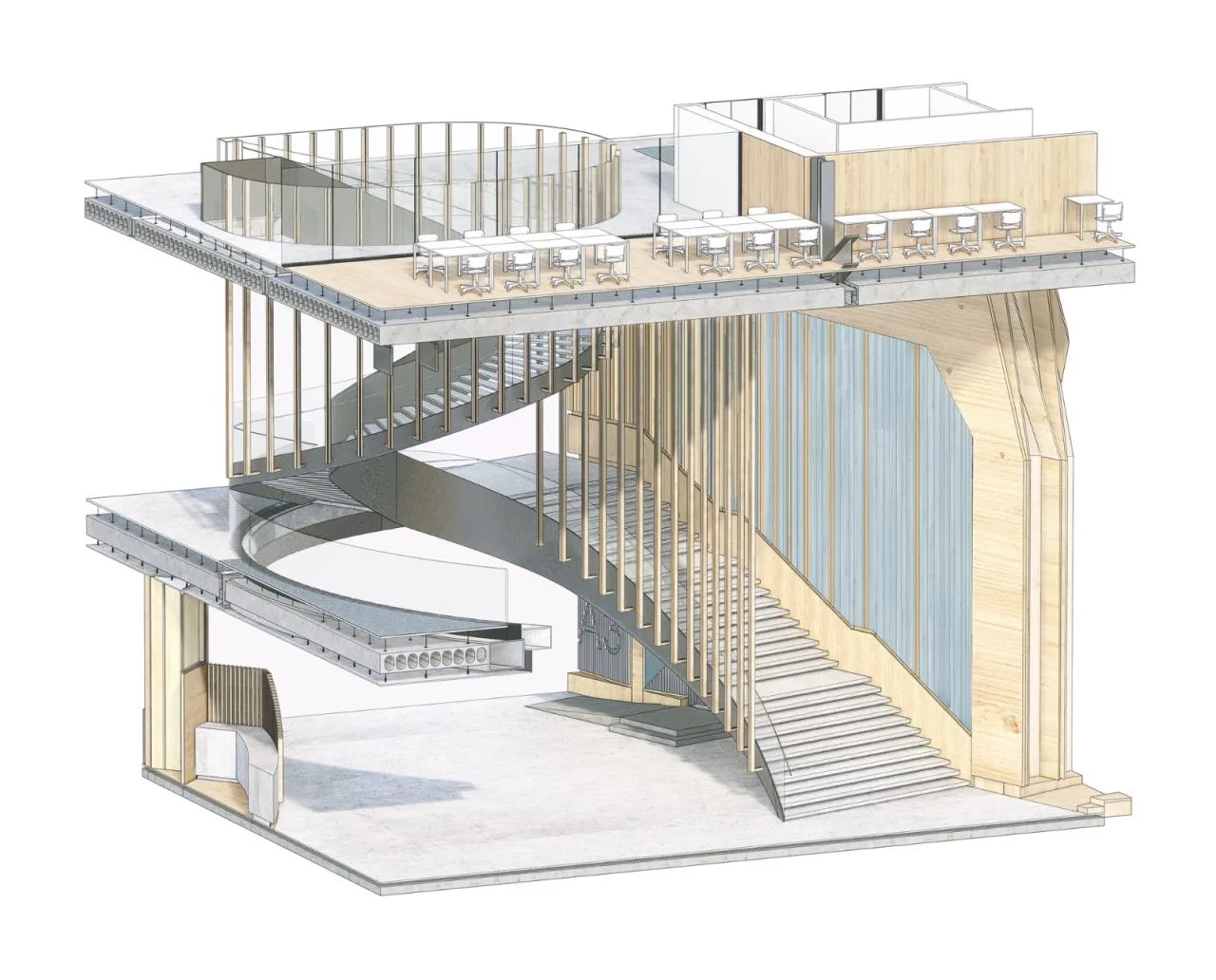
△ Local sectional perspective
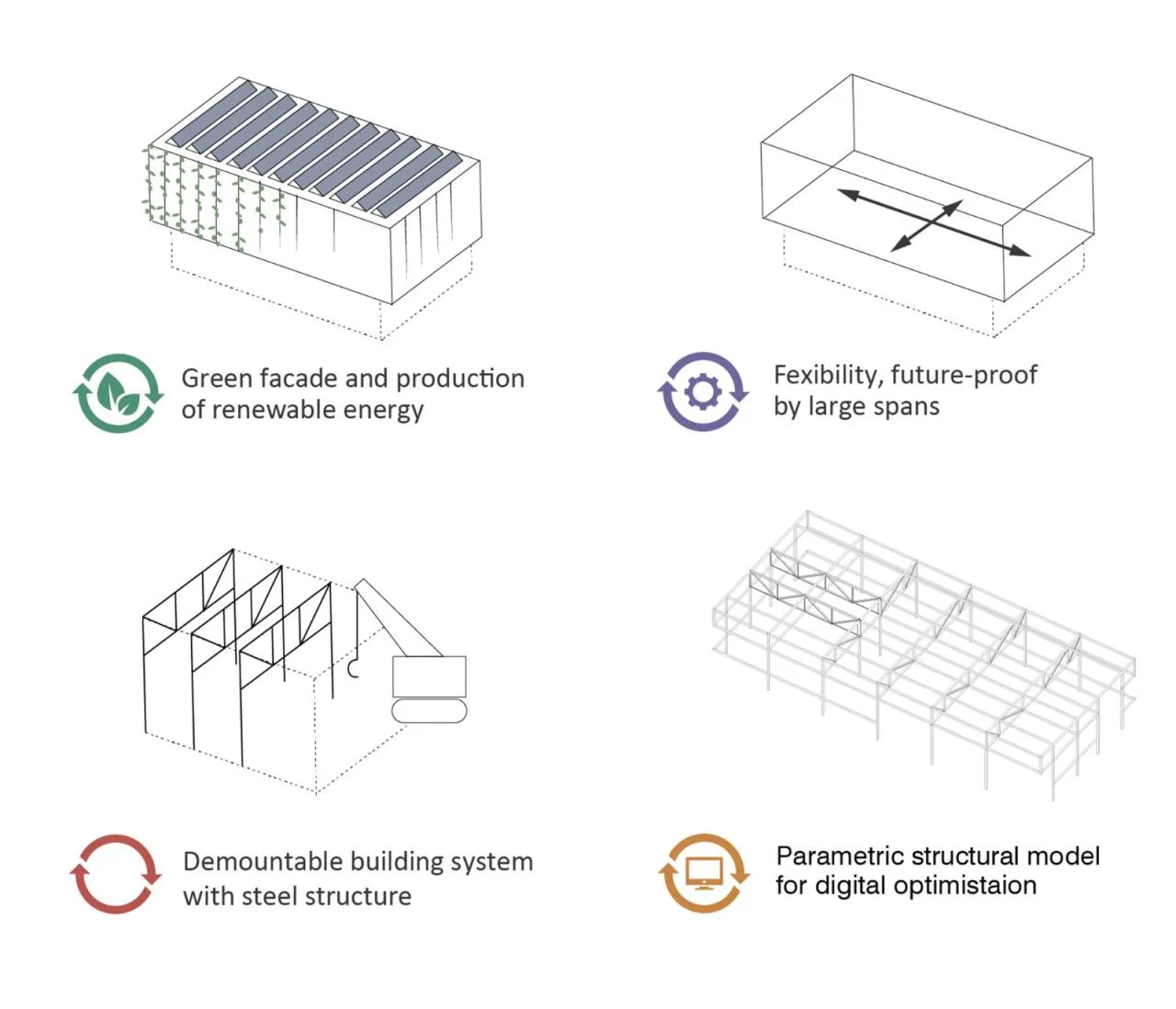
△ Analysis diagram
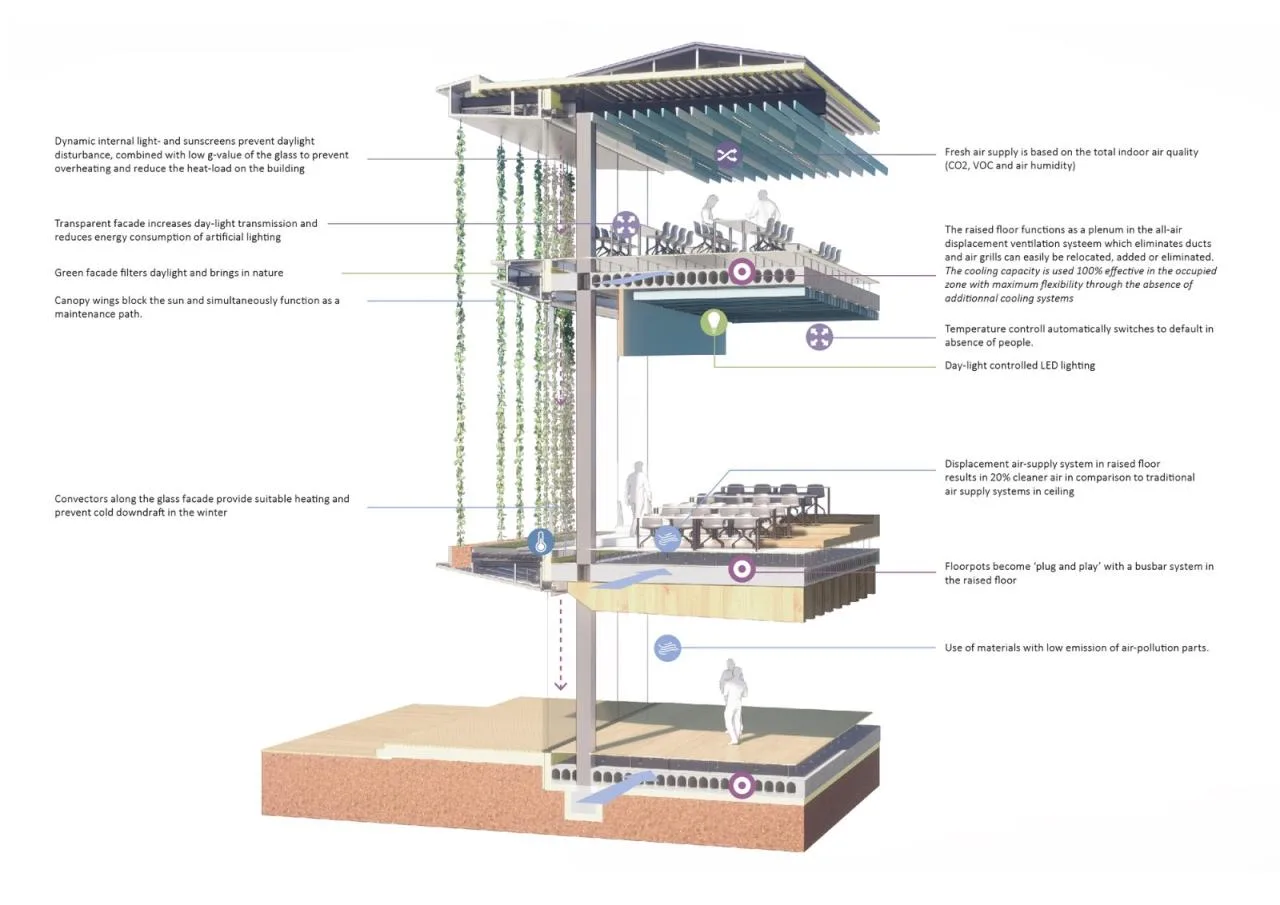
△ Structural schematic
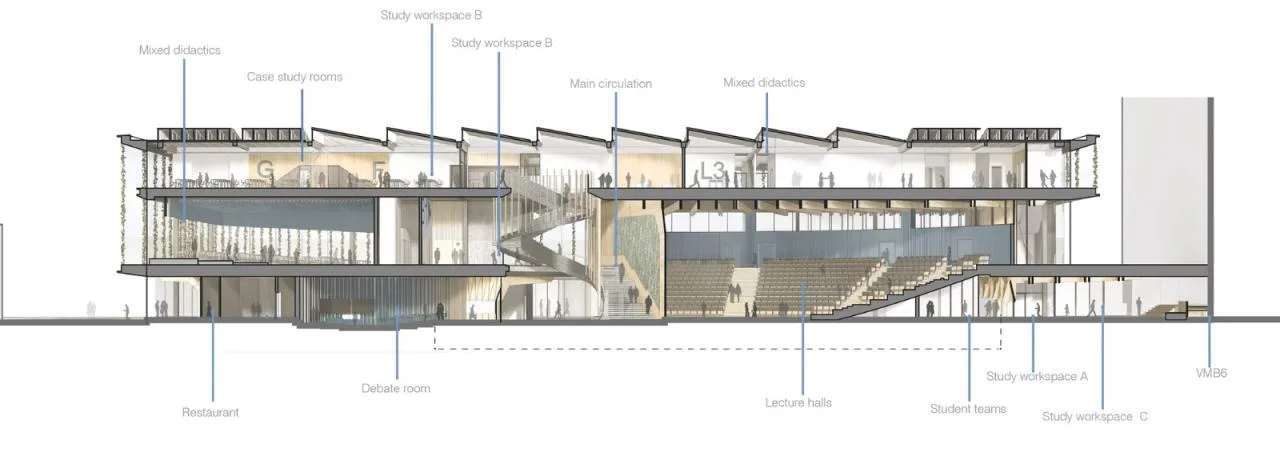
△ Sectional perspective
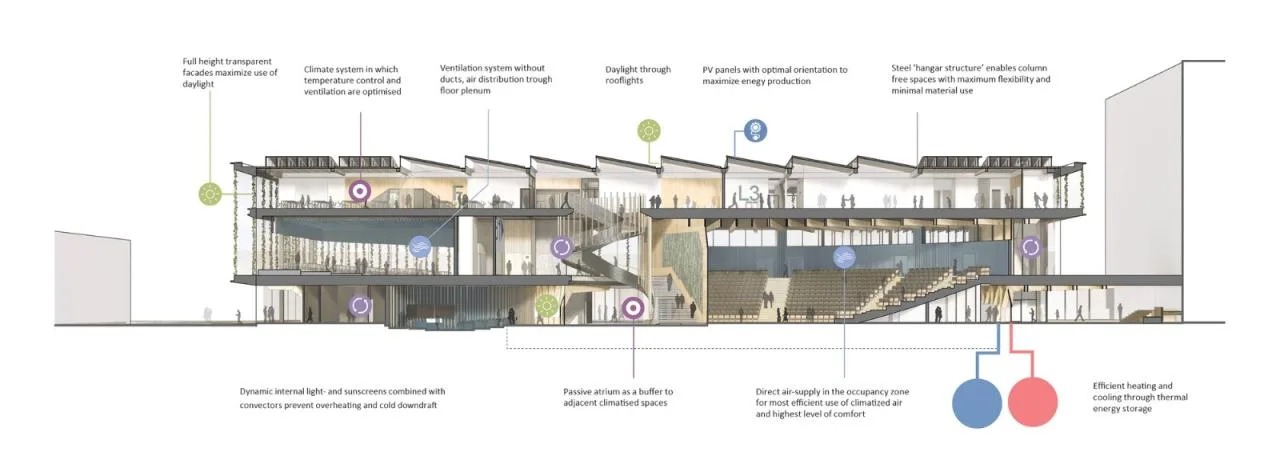
△ Sectional perspective
Project Information
Architectural Design: UNStudio
Area: 8,844 m²
Project Year: 2022
Photographers: Eva Bloem, Huffton+Crow
Manufacturers: Aldowa, Ecophon, Feltouch, Forbo, Harryvan, Lindner, Luxaflex, MOSO, Multiwal, Octatube, Philips, Van Ginkel Groep, Vescom, Wurks
Design Team: Ben van Berkel, Arjan Dingsté with Marianthi Tatari, Jaap-Willem Kleijwegt, Ariane Stracke, Piotr Kluszczynski, Thys Schreij, Mitchel Verkuijlen, Bogdan Chipara, Krishna Duddumpudi, Fabio Negozio, Vladislava Parfjonova, Marian Mihaescu, Ajay Saini, Ryan Henriksen, Shangzi Tu, Xinyu Wang
Project Management: Stevens van Dijck
Location: Delft, Netherlands













Must log in before commenting!
Sign Up