
This article is from the WeChat official account: Maijun Engineering Consulting.
The significance of mechanical and electrical installation engineering is evident throughout the entire construction process, from the initial construction phase to the final joint trial operation of water, heating, and electrical systems. As public buildings increasingly demand higher standards in functionality, quality, space efficiency, and comfort, the complexity of mechanical and electrical installation continues to grow.
This complexity manifests primarily in the diversity of materials, types of work, and installation procedures. Successful completion requires close coordination among various disciplines and substantial resource investment. Public buildings often feature numerous and intricate equipment pipelines, leading to frequent issues such as pipeline collisions, conflicts, and coordination challenges. These problems often result in costly rework. Moreover, within the same building, pipelines vary widely in function, type, material, diameter, and installation requirements.
Against this backdrop, Building Information Modeling (BIM) technology offers a powerful solution for managing the building environment. For construction teams, BIM provides precise data on mechanical and electrical components, enabling thorough pipeline collision analysis and comprehensive optimization by accurately locating dimensions and incorporating pre-embedded information. Using 3D information models for construction simulation helps avoid issues like insufficient space during pipeline and equipment transport and installation, offering valuable references for actual project execution and guiding cost reduction efforts.
This approach significantly enhances the quality and efficiency of managing the three critical construction objectives: quality, safety, and progress. It also paves the way for transformation and development within the construction industry.
Consider a comprehensive hotel project as an example. Such a project includes diverse functions such as catering, entertainment, meetings, offices, and accommodation, which require high space utilization and involve multiple specialties and complex pipeline systems.
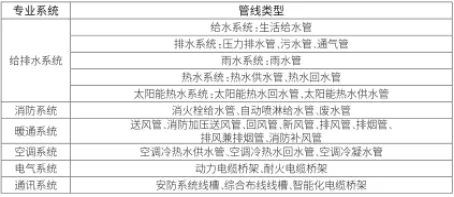
Based on a detailed project analysis, a 3D model was developed using BIM technology. Implementation processes and standards were established according to relevant specifications to complete the mechanical and electrical deepening design. The scope of work included:
- Using BIM implementation processes for mechanical and electrical deepening design, building upon the civil engineering deepening design;
- Developing unified BIM model drawing standards, including model unit naming, color settings, geometric and attribute data representation, and delivery depth;
- Collaborative modeling across disciplines, drawing verification, and feedback on issues;
- Collision detection and model optimization;
- Comprehensive pipeline optimization, covering mechanical and electrical deepening design and integrated adjustments.
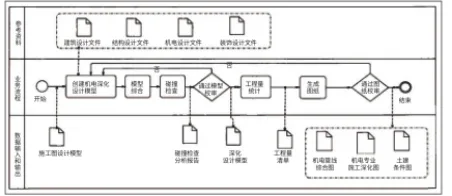
Developing BIM Implementation Standards
BIM implementation standards are primarily divided into two categories:
- Project Model Standards: These include project naming conventions, project positioning (such as base point, elevation, grid), company annotations, and related tasks. A unified template is created as a standard for modeling various professional disciplines.
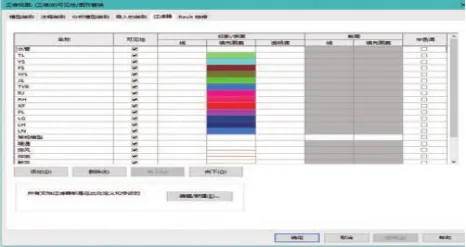
- Modeling Standards for Disciplines: This covers component classification and naming (family and type), mechanical and electrical system divisions, and color management, as illustrated below.
According to detailed design requirements, model accuracy should reach LOD350. However, due to workload, time constraints, and task division, the design model’s accuracy generally falls between LOD300 and LOD350.
Collaborative Modeling Among Disciplines
Establishing a correct modeling workflow involves batch processing, prioritizing components that significantly impact the building structure, and gradually refining secondary elements. For example, in the fire protection system, when modeling sprinkler and fire hydrant pipelines, priority is given to main pipelines with large diameters that may affect building space. Smaller branch pipes (diameter less than 65 mm) can be modeled later once spatial arrangements for electrical pipelines are finalized.
Model construction must meet the following criteria:
- Position and elevation must strictly follow drawings, instructions, and system documents;
- Naming should follow drawing system abbreviations and conventions;
- Elevation offsets should be applied according to floor specifics, such as mezzanines or computer rooms;
- Pipeline accessory information must be added based on legend details;
- Filters should be applied to each discipline, with colors standardized to distinguish different specialties;
- Problem reports must be carefully cross-checked against drawings and models for accuracy.
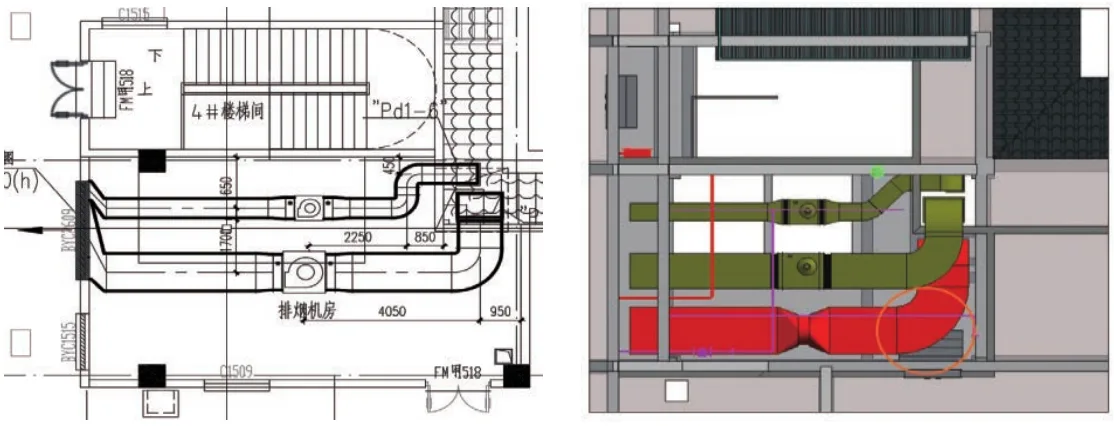
Pipeline Collision Inspection
Collision checking serves two primary purposes:
- Identify structural design errors and conflicts among various specialties (construction, structure, plumbing, heating, electrical), ensuring compliance with regulations like space and clearance requirements;
- Conduct overall collision inspections prior to comprehensive pipeline layout.
Key considerations during pipeline collision inspection include:
- Coordination of pipeline positions across disciplines;
- Ensuring adequate spacing between pipelines, computer rooms, and equipment in line with regulations;
- Compatibility of mechanical and electrical pipeline and equipment installation with building and structural elements;
- Compliance of return air and exhaust air outlet locations with regulatory standards;
- Detection of pipelines passing through beams or columns;
- Opportunities to optimize pipeline routing and clearances.
As shown in Figure 1, a collision was detected between a bridge and a fire water pipe within the mechanical and electrical system. Despite the bridge being flipped in this instance, it still collided with the fire water pipe, indicating a design flaw. Analysis suggests the bridge’s entry point into the electrical well should be repositioned to resolve this conflict.
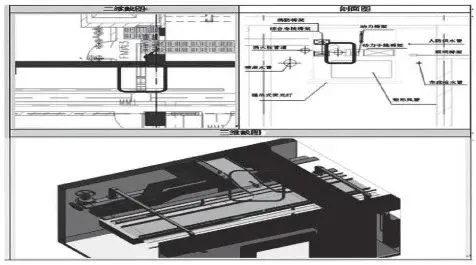
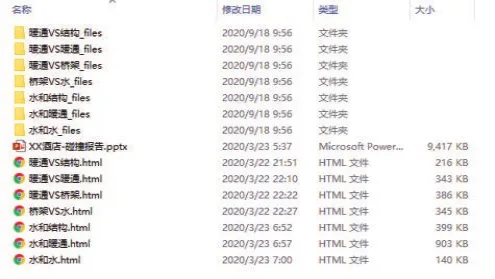
Figure 2: Overall collision inspection of pipeline layout
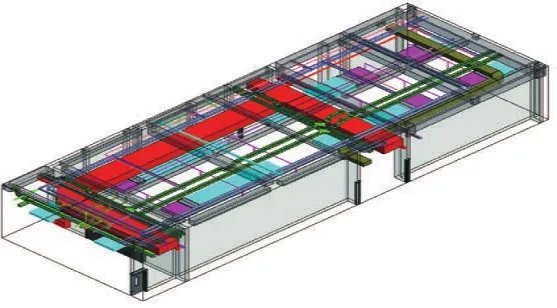
Figure 3: Comprehensive Layout Plan
Overall Value and Conclusion of Pipeline Applications
Throughout the BIM modeling and deepening process, issues such as errors, collisions, deficiencies, and omissions were identified early, allowing for timely documentation and reporting. Coordination efforts helped resolve pipeline conflicts across disciplines, effectively controlling change orders.
The shared model enhanced workers’ understanding of drawings and construction workflows, significantly reducing construction time and minimizing unnecessary rework.
This experience confirmed that BIM technology offers clear advantages over traditional CAD in architectural design, particularly for large public buildings, municipal projects, and underground spaces. By detecting collisions between BIM electromechanical models and building models, optimizing design principles and pipeline layouts, BIM improves drawing quality, lowers construction costs, and enables more efficient resource allocation.
















Must log in before commenting!
Sign Up