
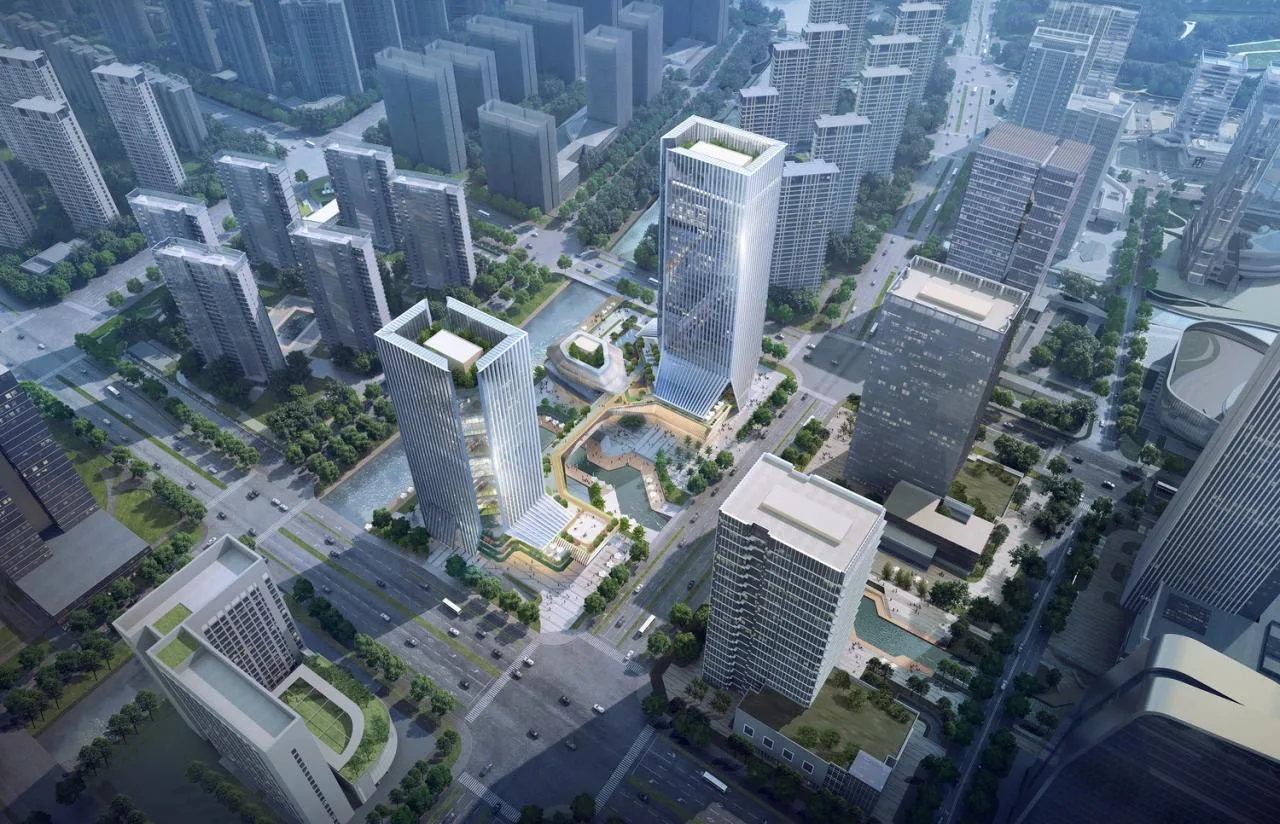
As modern architecture evolves within the information age, buildings now serve increasingly diverse purposes and spatial functions. Among these, commercial and office high-rises have become significant typologies. Their usage, management, architectural expression, and urban impact are crucial areas of study. This article delves into the cultural significance, human-centered spaces, technological innovations, and functional models characteristic of contemporary business and office buildings, focusing on a project by GEN.
01 Project Background
This project is situated in the iconic core district of the Northern High-Speed Rail New City, part of Suzhou’s “One City, Four Cores” development strategy. The Xiangcheng District High-Speed Rail New City is envisioned as an international, information-driven, modern business hub integrating commerce, research, residential, office, cultural, and tourism functions, all anchored by high-speed rail connectivity.
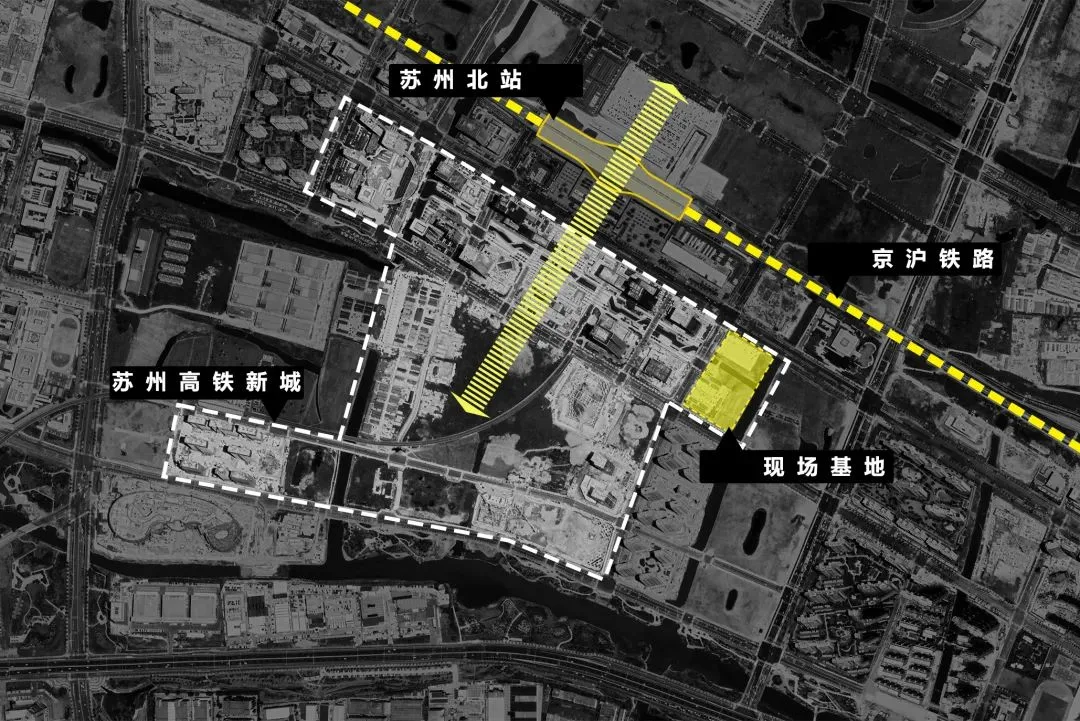
△ Location Analysis
02 Design Challenge
The master plan requires the core area of the High-Speed Rail New City to be developed into a landmark super high-rise complex with regional prominence. The design must be both contemporary and international while reflecting Suzhou’s cultural identity. As the final commercial office plot in the core, the development zone’s government expects the design to embody the appearance and functionality of a cutting-edge, technology-driven business office building.
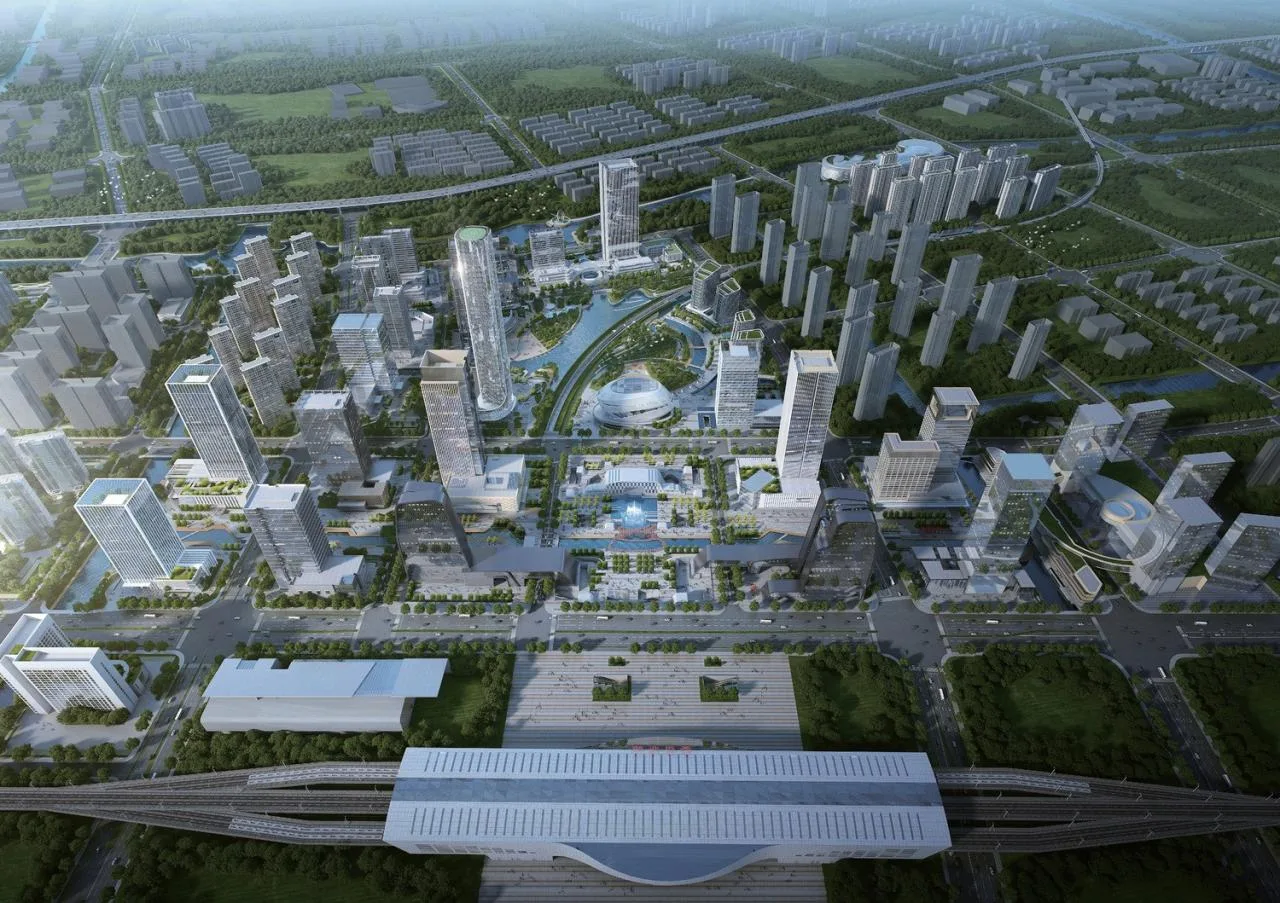
△ Urban Design
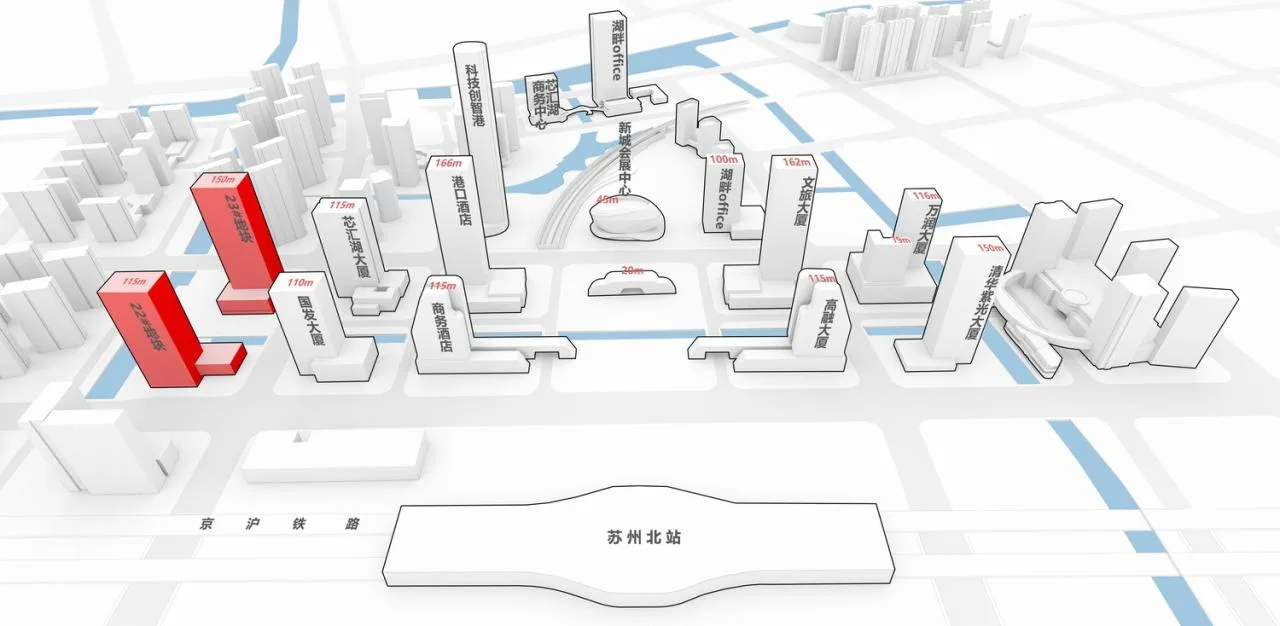
△ Planning Analysis Diagram
03 Urban Spatial Attributes
The urban design places two rows of high-rise commercial and office buildings flanking the central axis of the high-speed rail plaza. A pedestrian-friendly “Water Street” landscape, inspired by Suzhou’s Jiangnan water town heritage, runs through the area. The two project plots stand on opposite sides of this water street, mirroring each other across the water. Integrating the architectural style and landscape of these plots into the overall urban plan is a key design challenge for the waterfront façades.
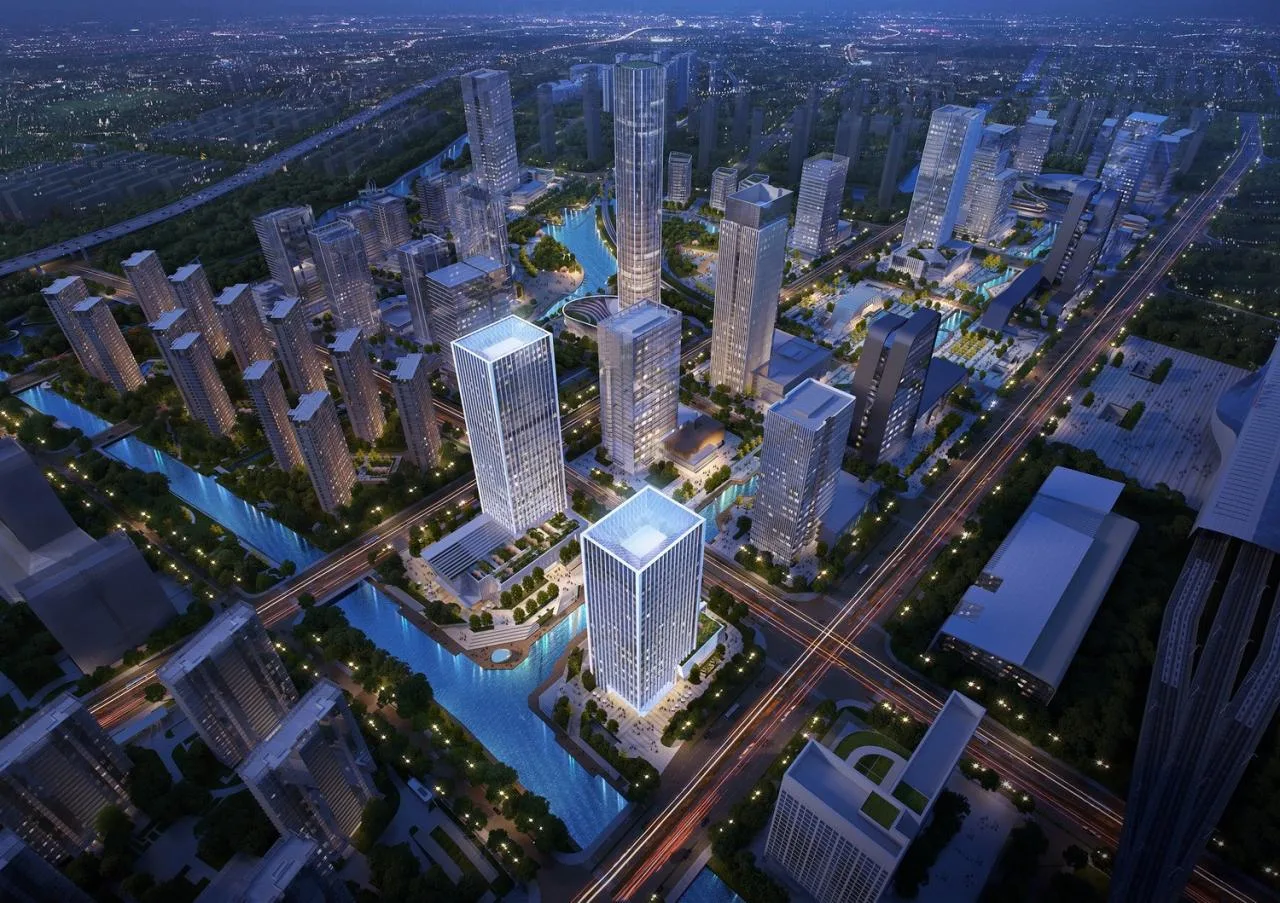
△ Urban Design Water Street Effect
Meanwhile, other plots along Shuijie have been developed with traditional high-rise commercial offices featuring podiums with supporting facilities. These podiums suffer from low space utilization, poor commercial experience, high vacancy rates, and weak architectural-landscape integration. Such conditions demand innovative functional solutions in the new land development.
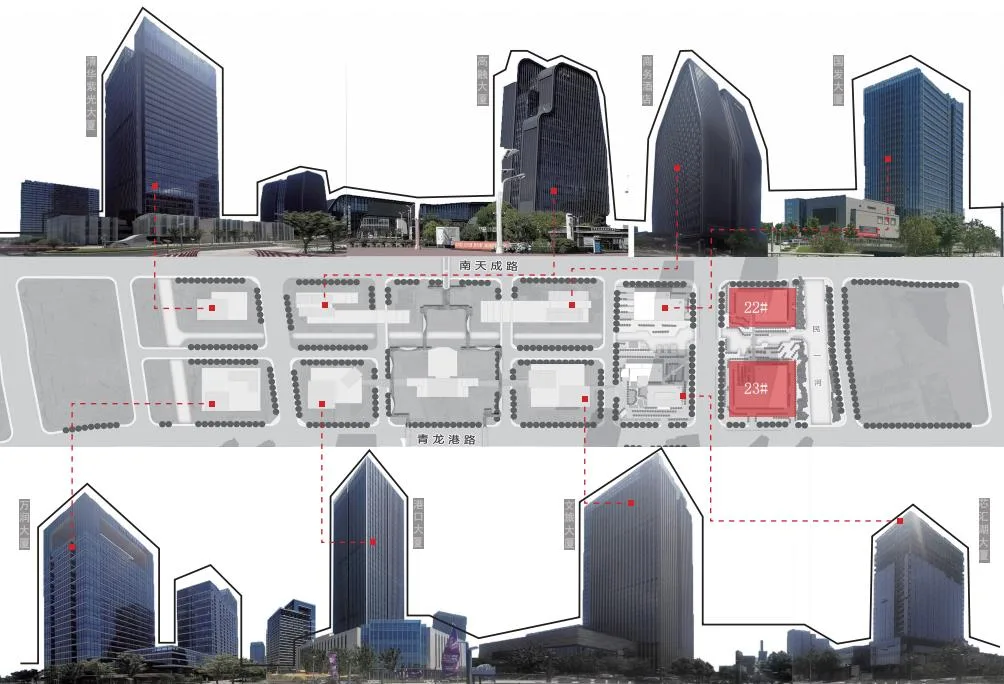
△ Core Building Complex
04 Planning Strategy: Building Bridges
The cultural narrative of the urban design naturally leads to interpreting Suzhou’s traditional Jiangnan water town spaces. The “Water Street” evokes imagery of stone arch bridges, which serve not only as spatial intersections but also as connectors between urban functions and public activities across the waterfront.
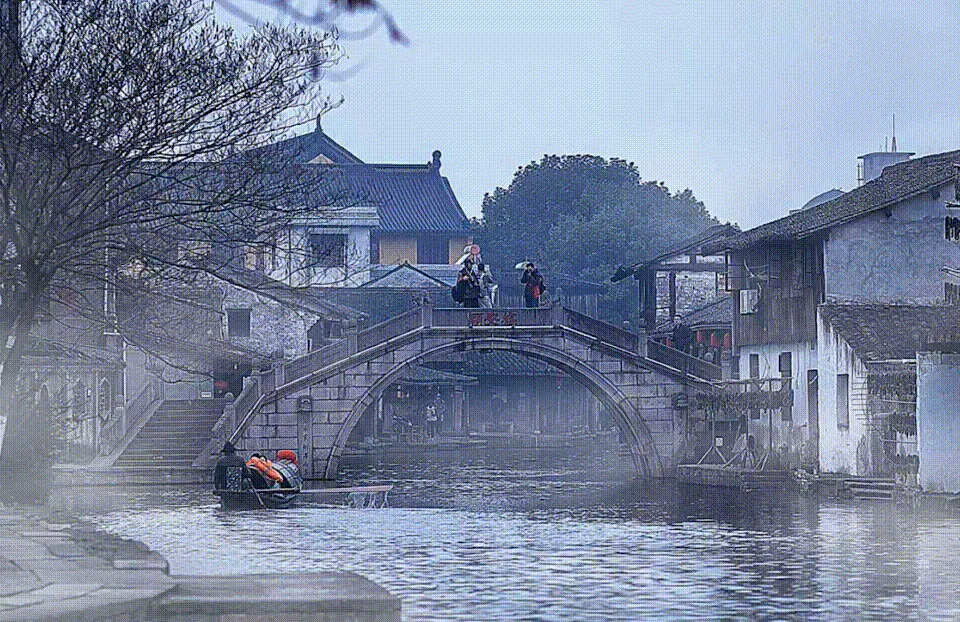
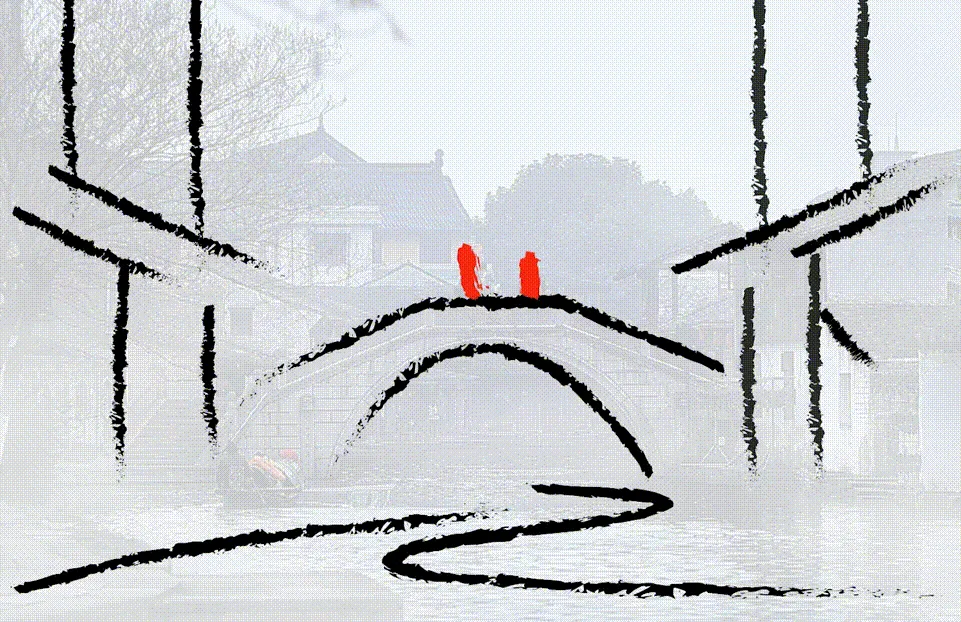
△ Concept Extraction
In the design, a corridor bridge on the third floor connects the podiums of the two plots, uniting their commercial functions. From an urban design perspective, this corridor acts as a visual terminus for the eastern end of the water street, seamlessly blending with the landscape and echoing the circular pedestrian bridge at the western end’s commercial plaza.
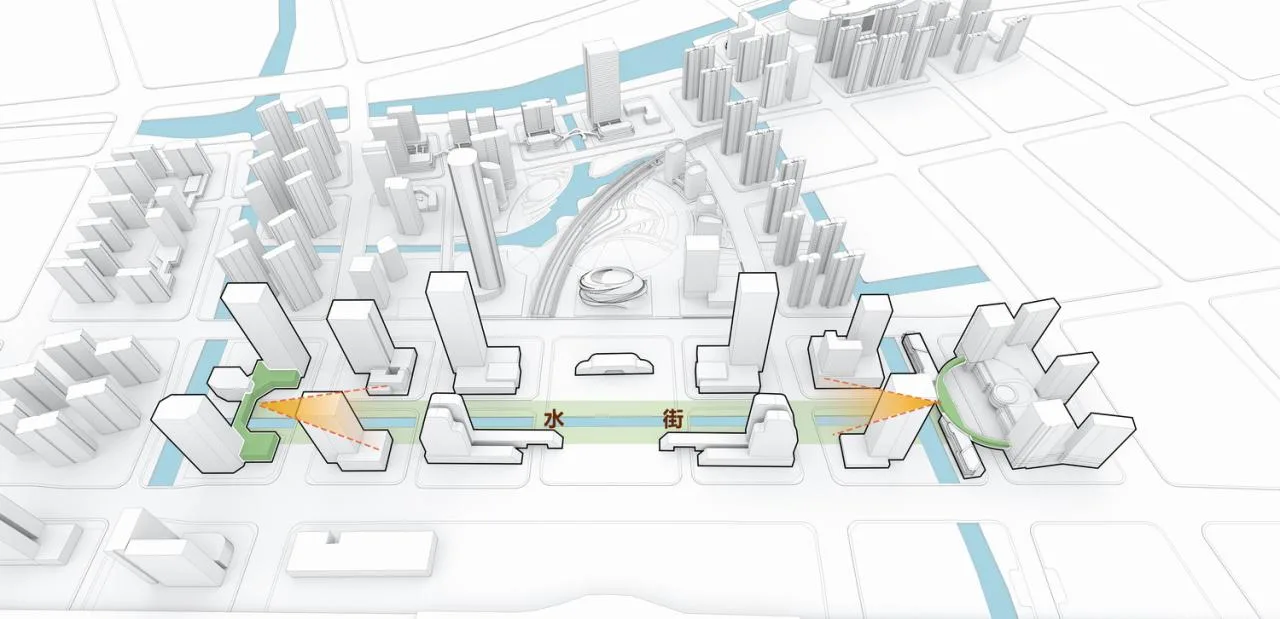
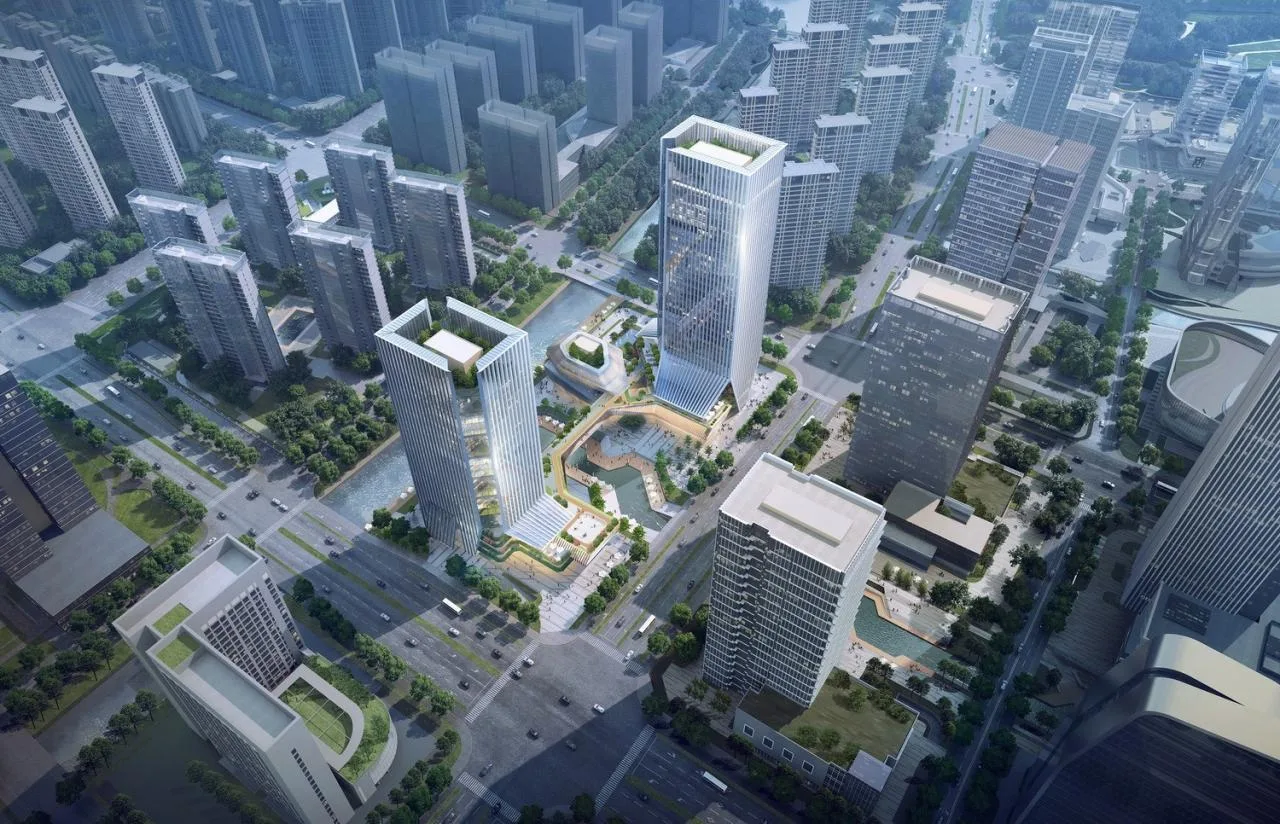
To enhance the closure effect of the water street and complement the landscape and functions, the southern commercial podium is split into two sections connected by the corridor bridge. The detached podium is designed as a sculptural landscape feature, functioning as a commercial showcase and creative office incubator by the water, offering a distinctive and informative character.
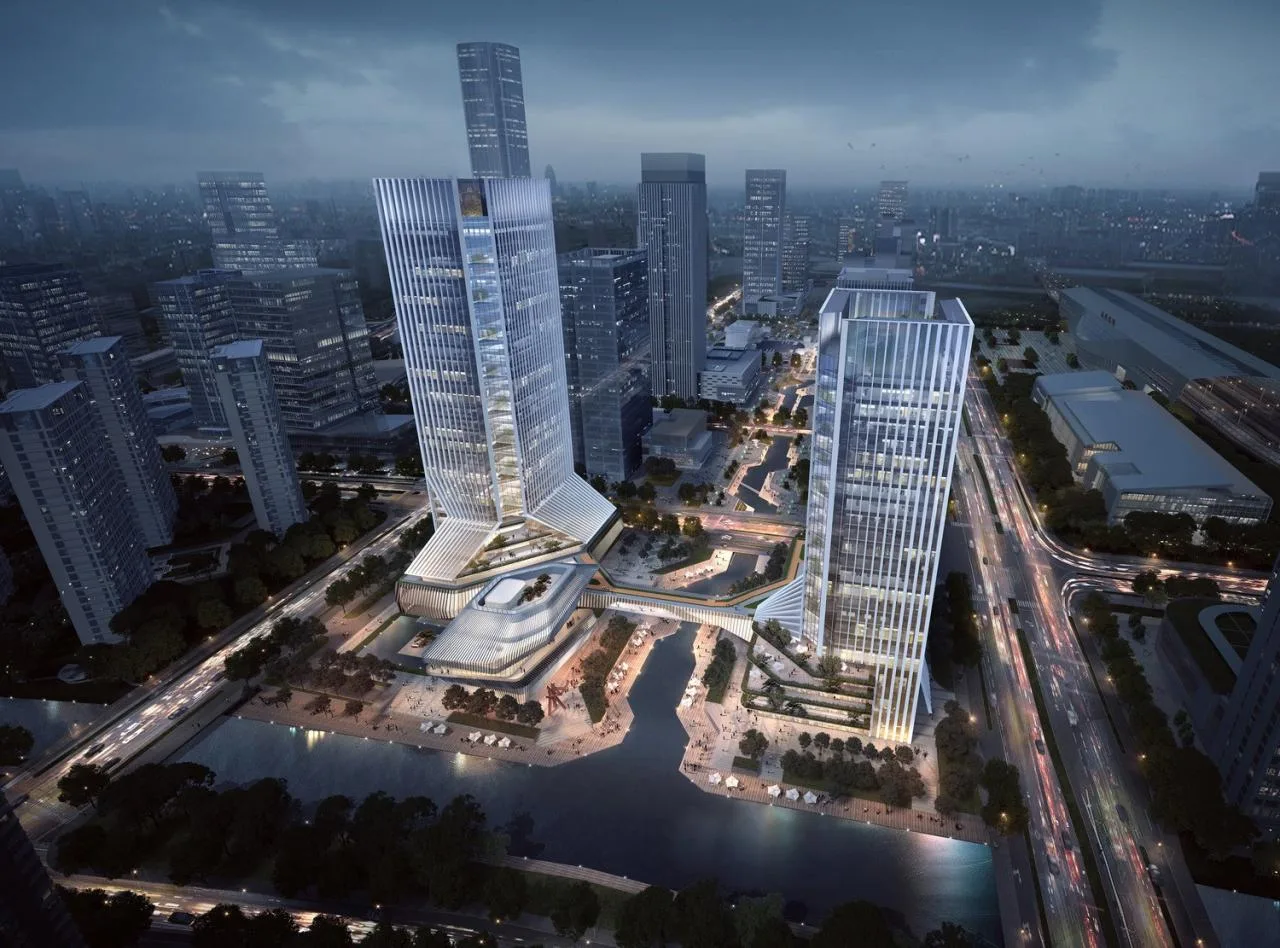
△ Night View Bird’s-Eye Perspective
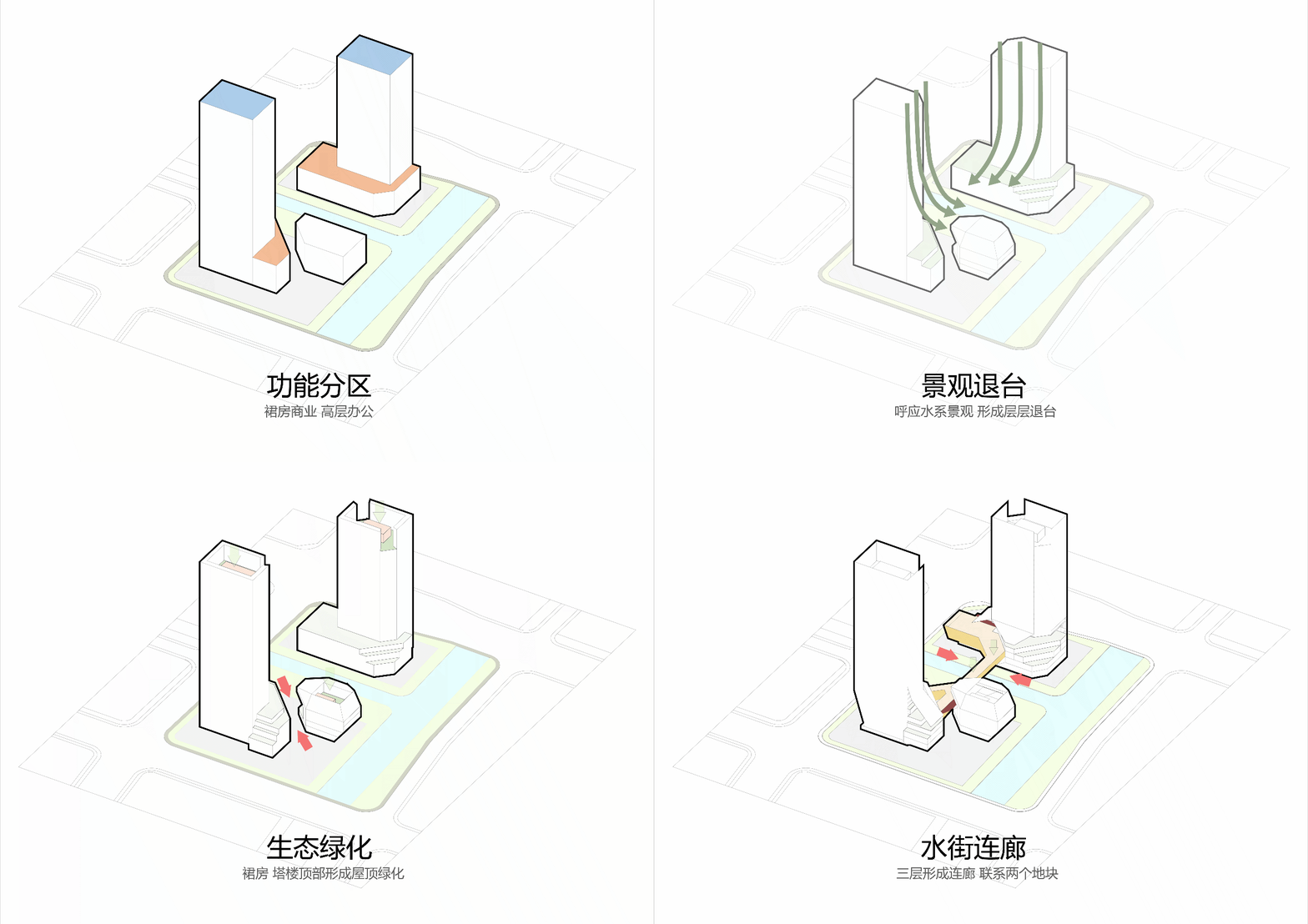
△ Form Generation
05 Spatial Strategy – Boundless
After integrating commercial functions with pedestrian flow, the design focuses on the building’s architectural expression. To avoid uniformity with neighboring developments, an open, layered approach is taken for the waterfront façades, incorporating a street-like commercial interface internally. The water street’s landscape elements extend into the building’s ground level, while the corridor bridge links open roof gardens to surrounding landscapes across multiple floors.
This creates a seamless spatial experience combining architecture, greenery, and water features, reinforcing key urban nodes.
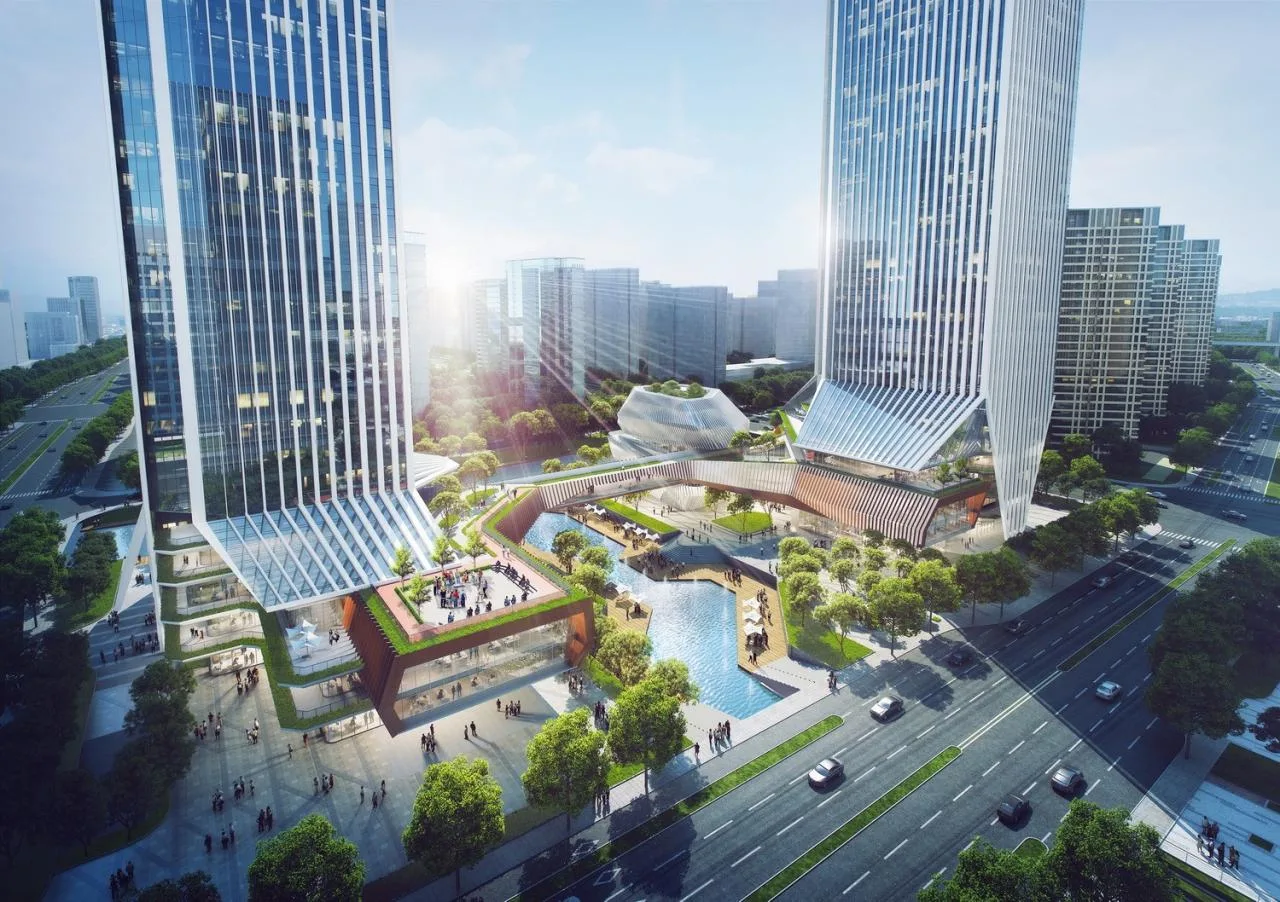
△ Aerial View of Water Street
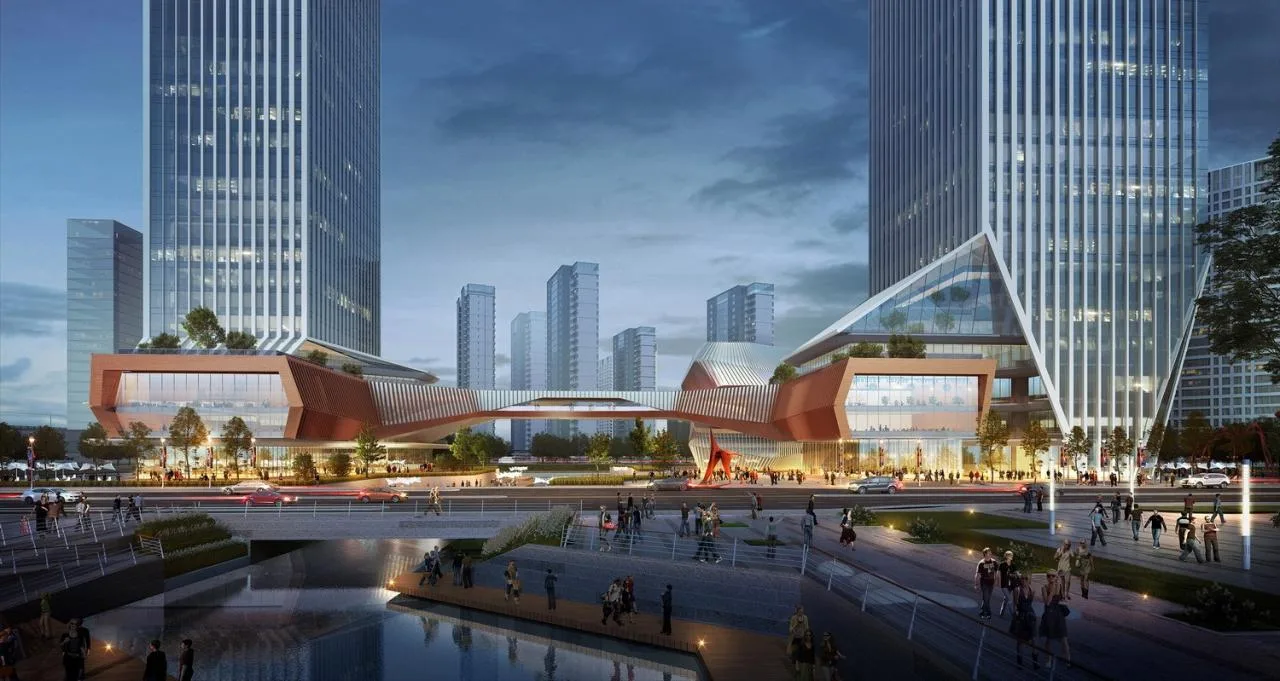
△ Water Street Corridor Bridge Rendering
06 Technical Strategy – Green Design
This high-standard modern office building prioritizes human-centered spatial experience and sustainable, low-carbon design. The horizontal elements of the podium step back progressively from the first floor to the roof, while the curtain wall is recessed internally along the building’s contour. This design allows office and commercial users to smoothly transition between indoor and outdoor spaces.
The sloped curtain wall on the podium’s upper section, combined with greenery at the base, further blurs indoor and outdoor boundaries, creating an exceptional green office environment.
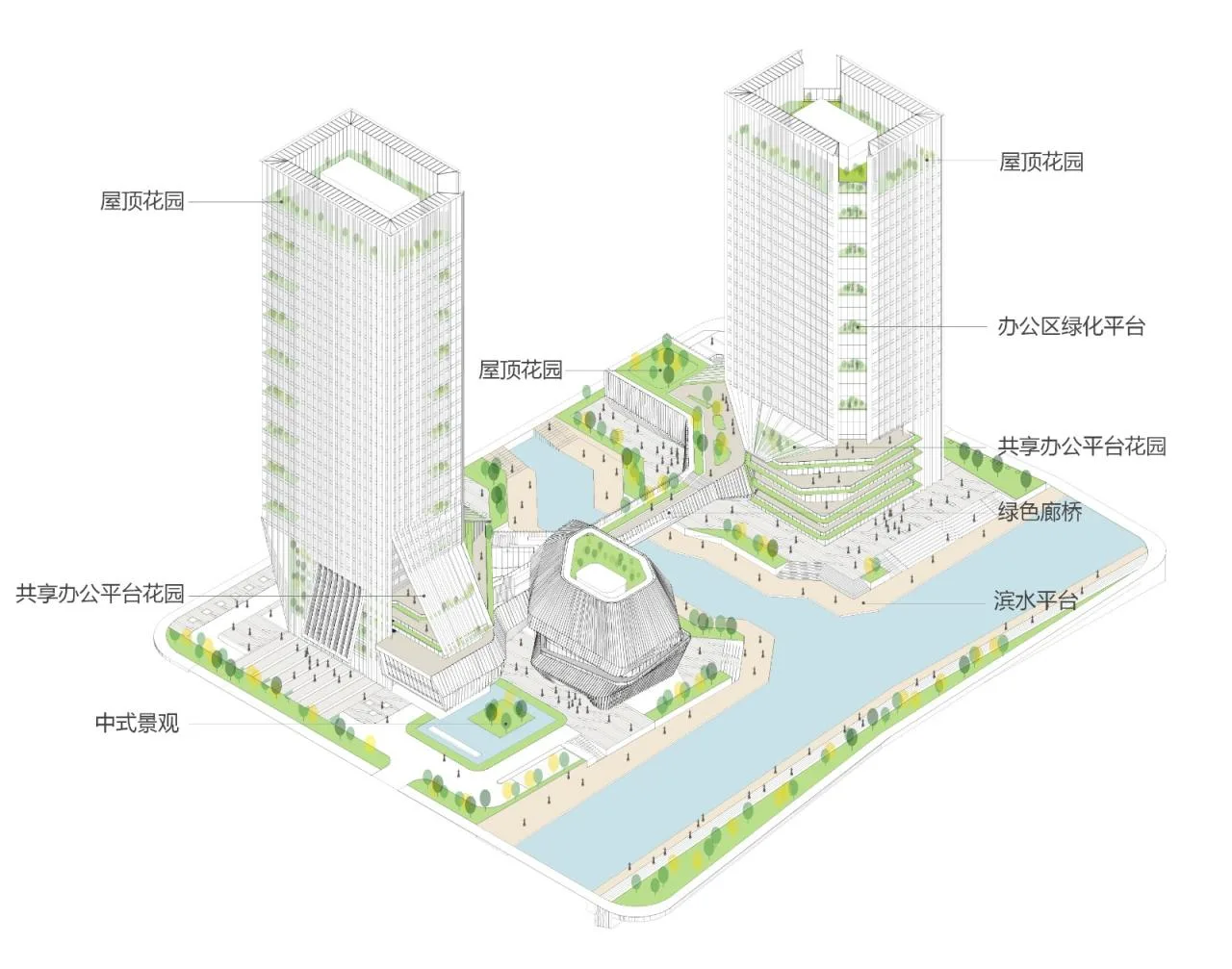
Green Building Analysis
The towers occupy the two corners at the standard floor level, featuring tiered green terraces aligned with urban views. Open-ended curtain walls mask building boundaries, enhancing interaction with the city. The continuous landscape design improves ventilation and transparency across the complex, while rooftop courtyards provide elevated green spaces.
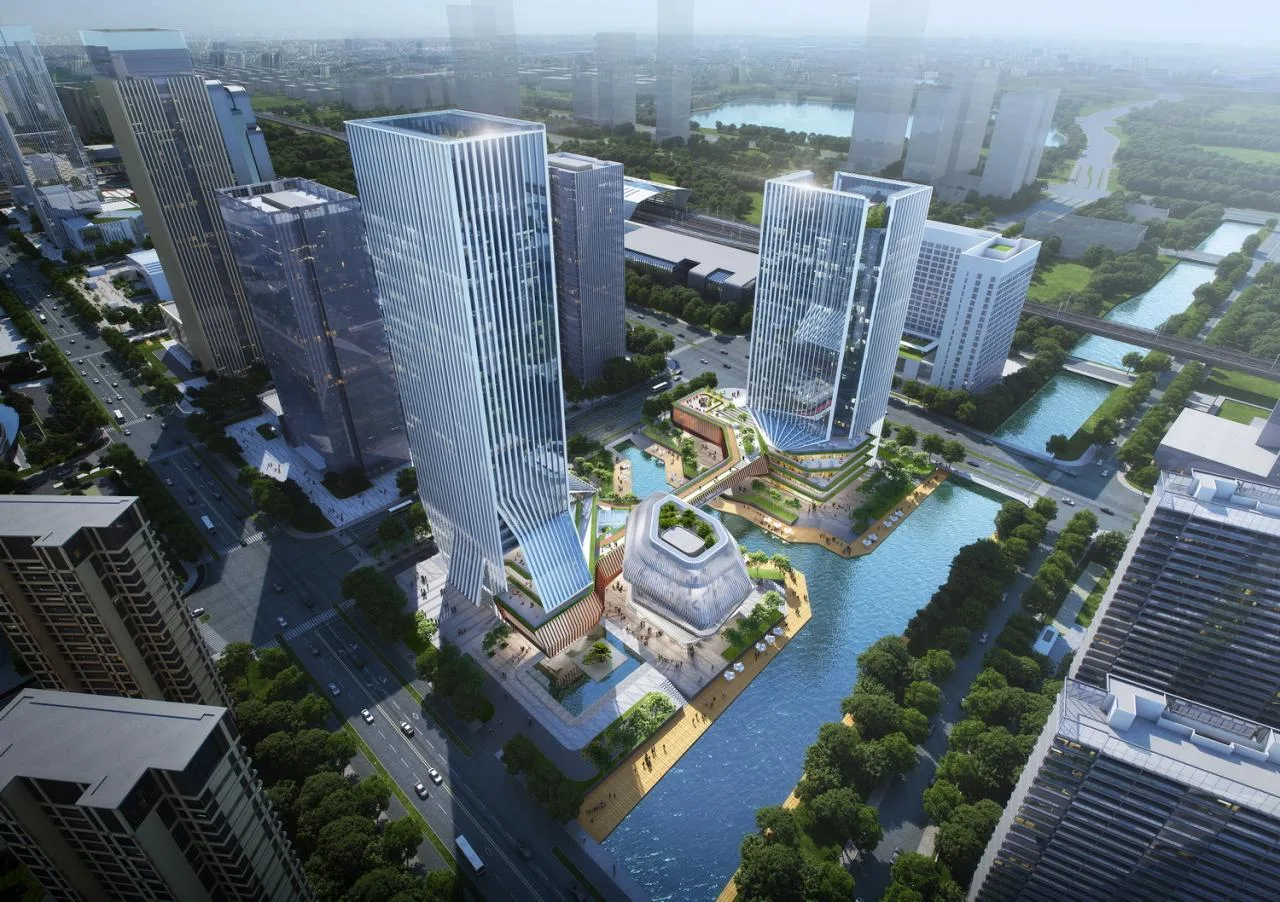
△ Bird’s-Eye View Rendering
07 Function Strategy – Mixed Use
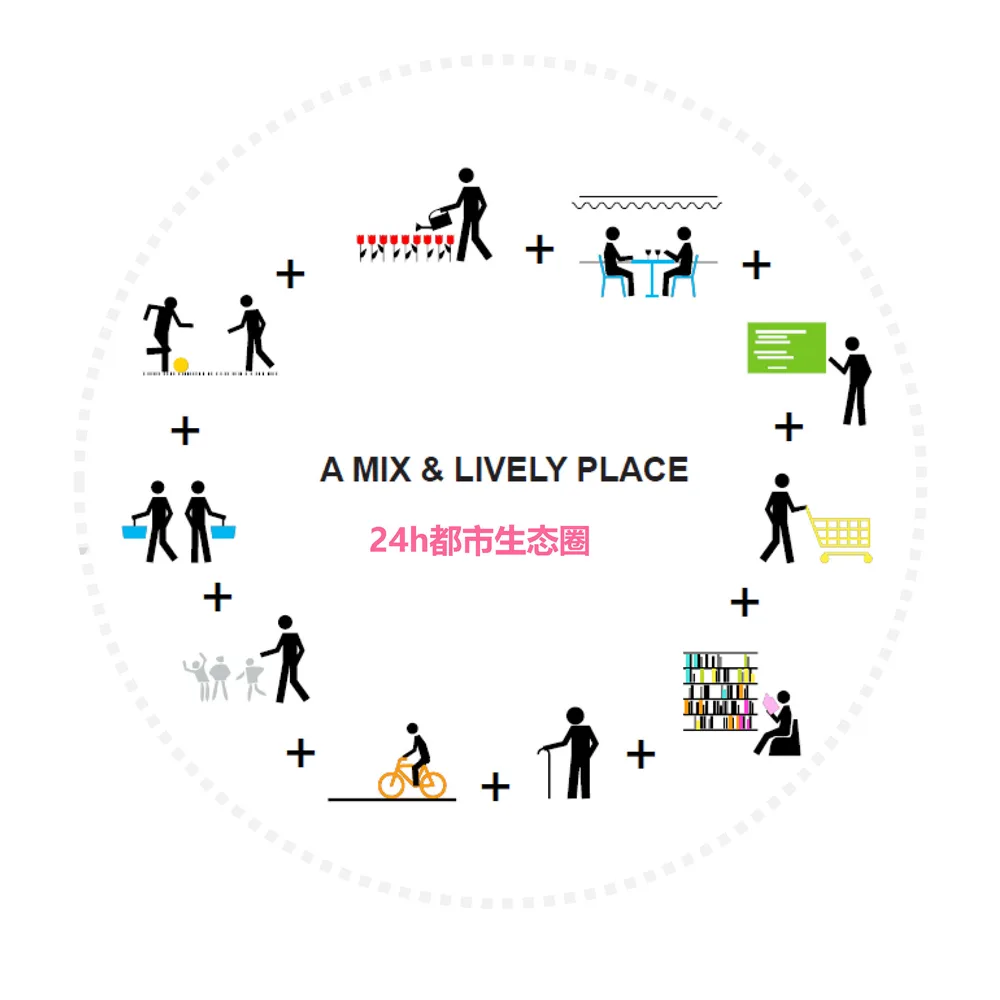
Before addressing cultural, spatial, and architectural aspects, the design deeply explores functional modes. To avoid product homogenization and accommodate future office trends, the project emphasizes user comfort and a 24-hour urban ecosystem concept, offering diverse office, commercial, and leisure spaces.
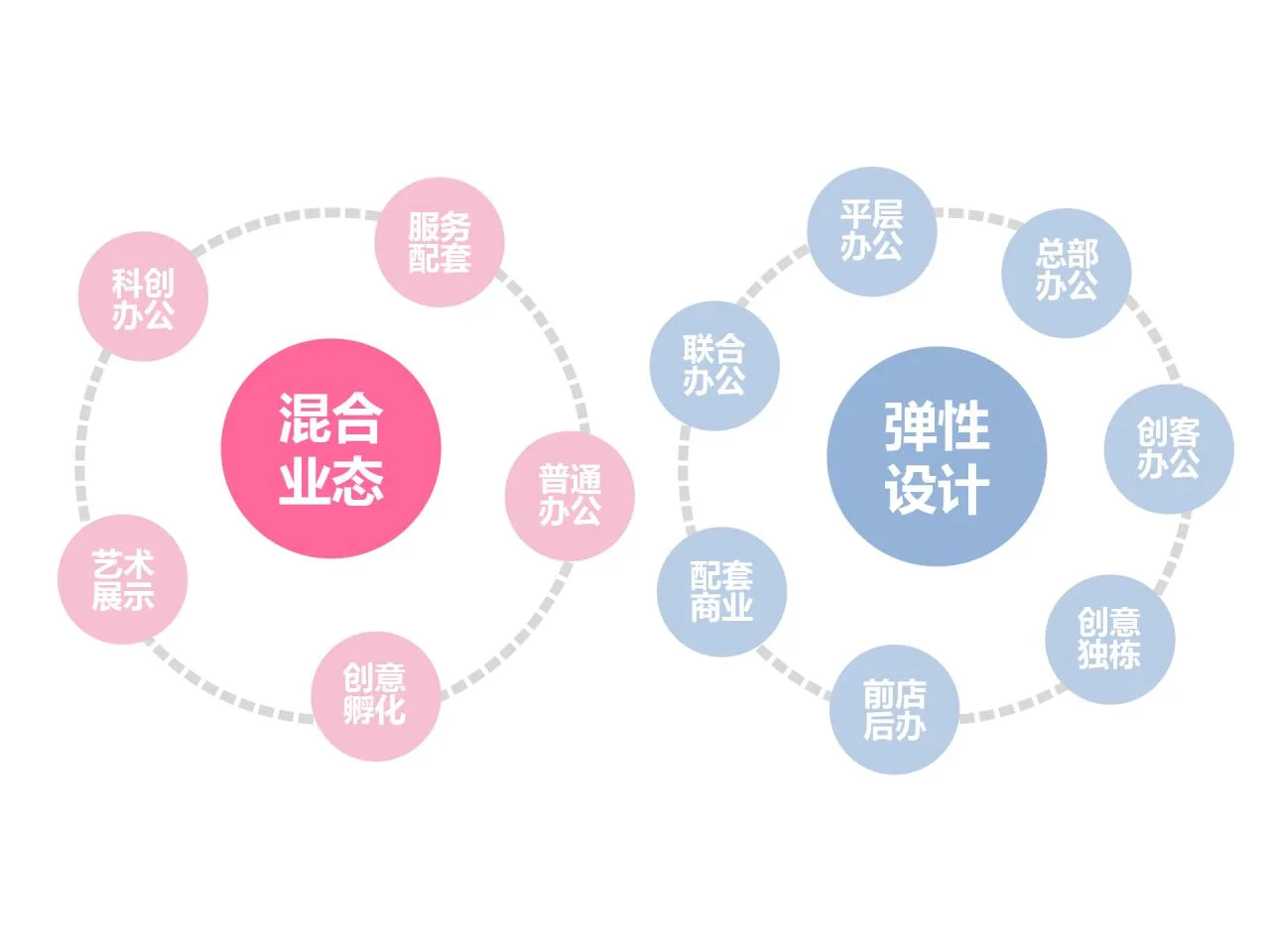
△ Flexible Design
The design investigates modern office organization and lifestyles, following principles of mixed-use and adaptability. Commercial, office, exhibition, and support functions are seamlessly integrated.
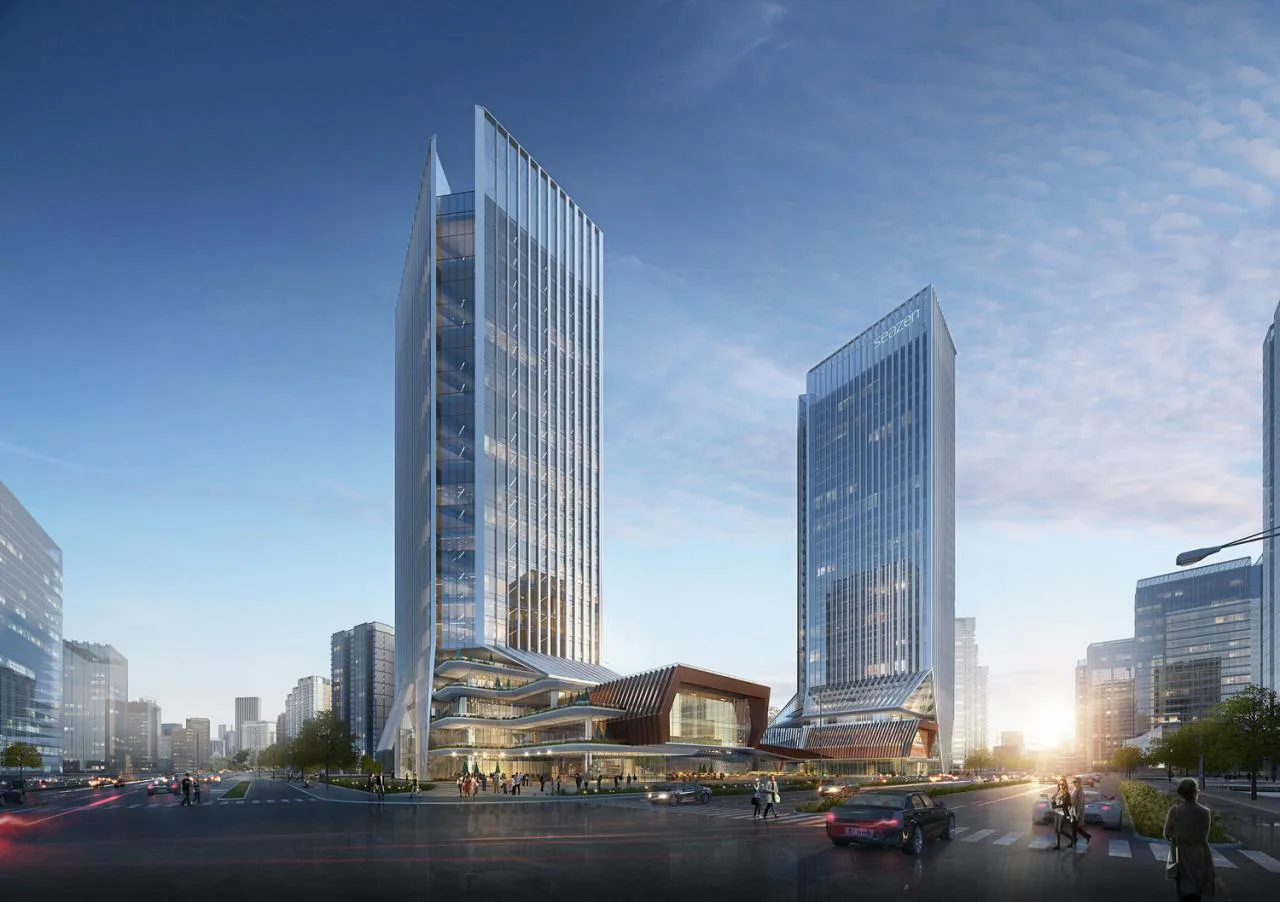
△ Street-Level Rendering
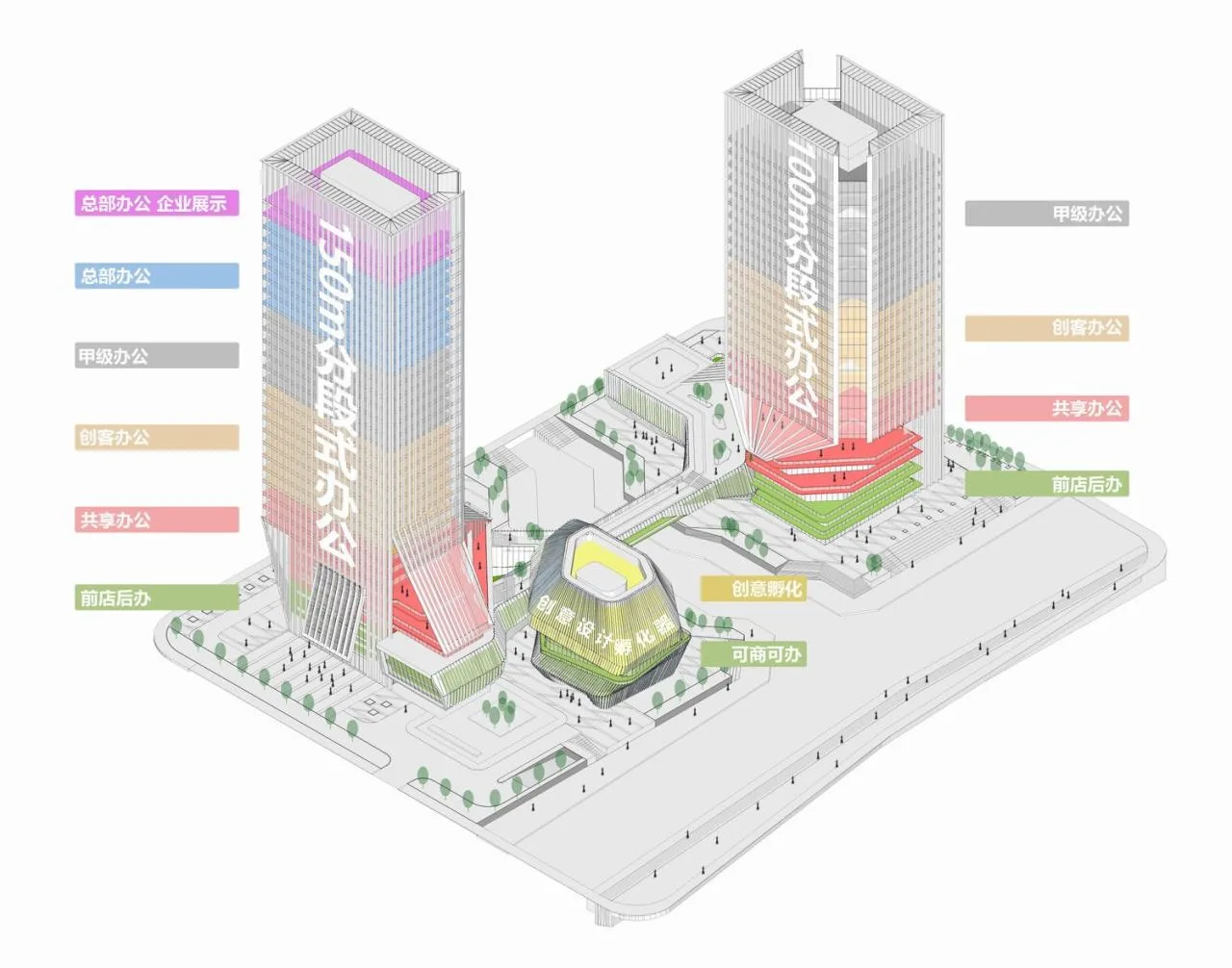
The podium’s first and second floors house commercial, financial, and dining facilities. The first floor’s extended depth accommodates diverse spatial needs for storefronts and back-office operations. Floors three and four connect via the corridor bridge, integrating indoor and outdoor spaces for commercial viability and high rental/sales potential.
The lower tower floors feature expanded standard office spaces connected to the podium roof gardens, designed as maker offices. Upper floors provide premium Grade A office space, while the tower tops host corporate headquarters with elevated courtyards and high-profile office displays.
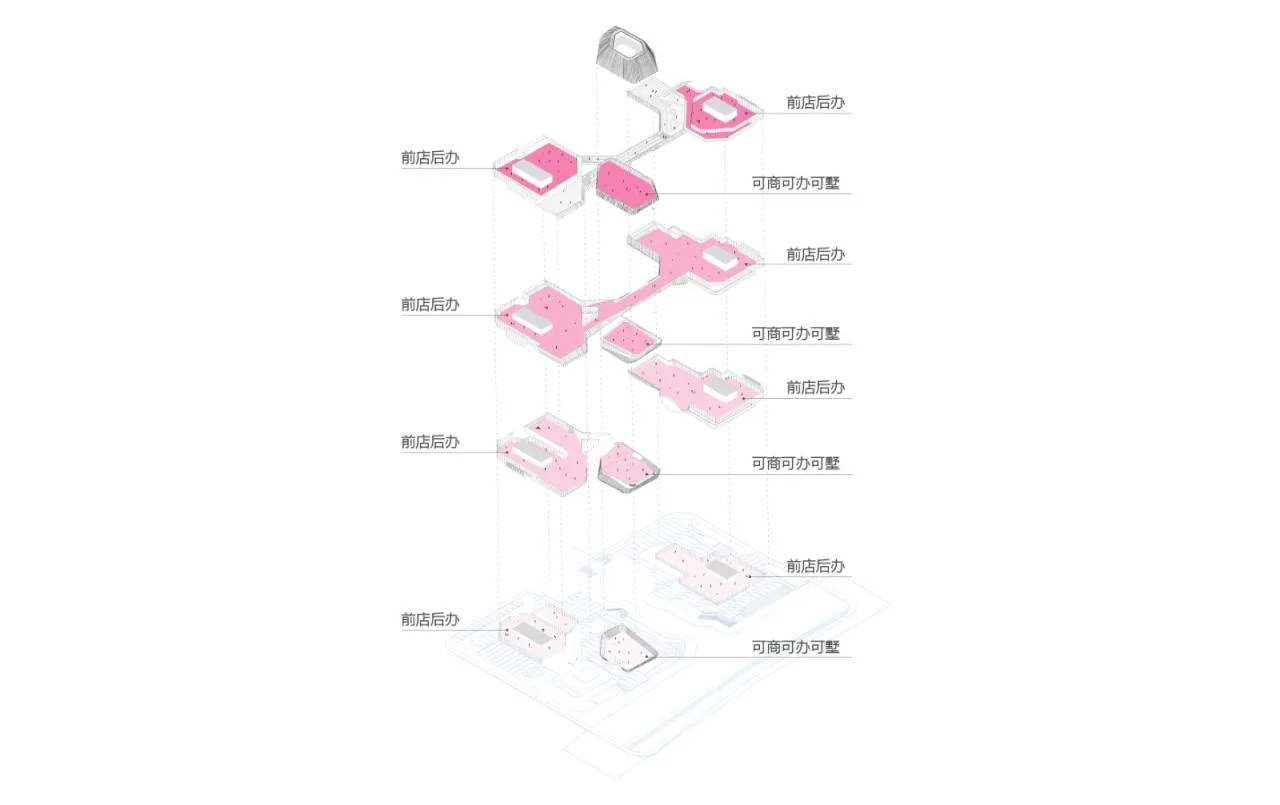
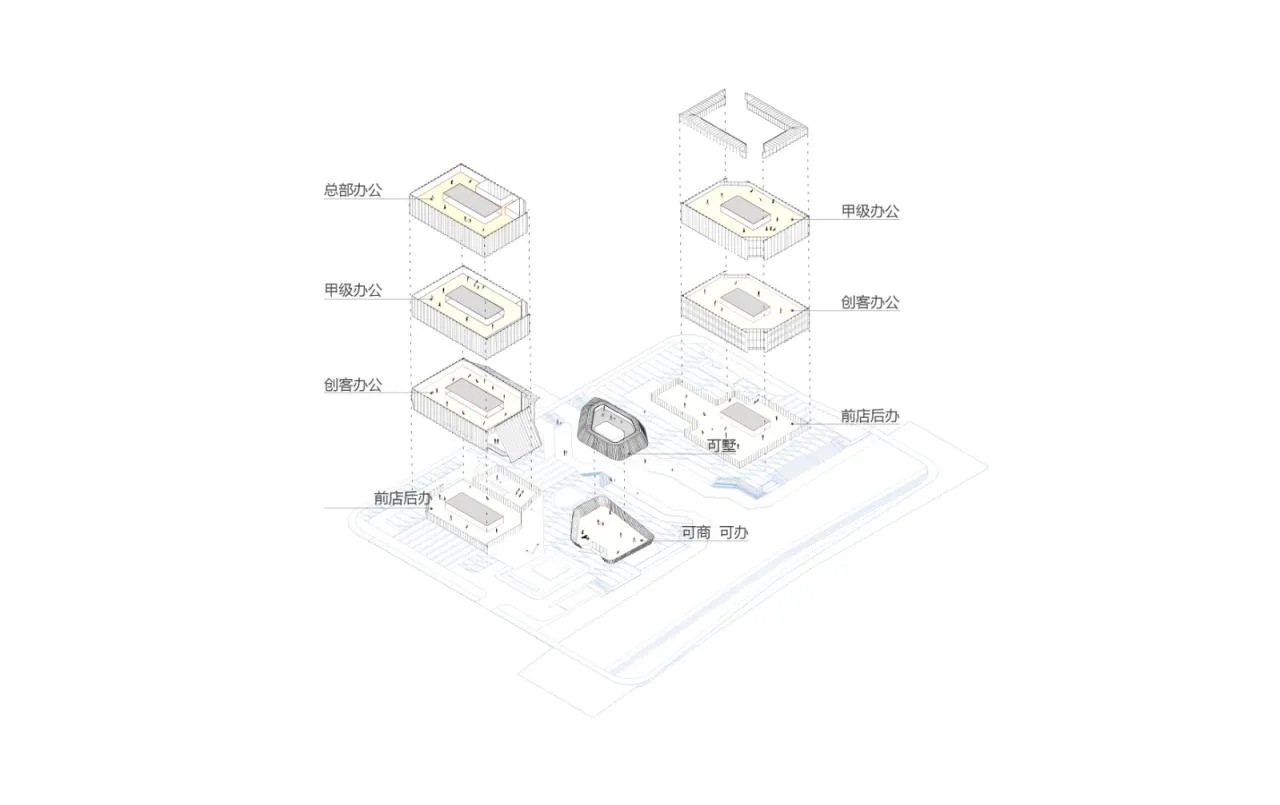
△ Functional Analysis
Standalone buildings away from the waterfront can serve as exhibition centers or innovative office spaces for independent leasing or sale. Their prime location and striking appearance ensure strong commercial value.
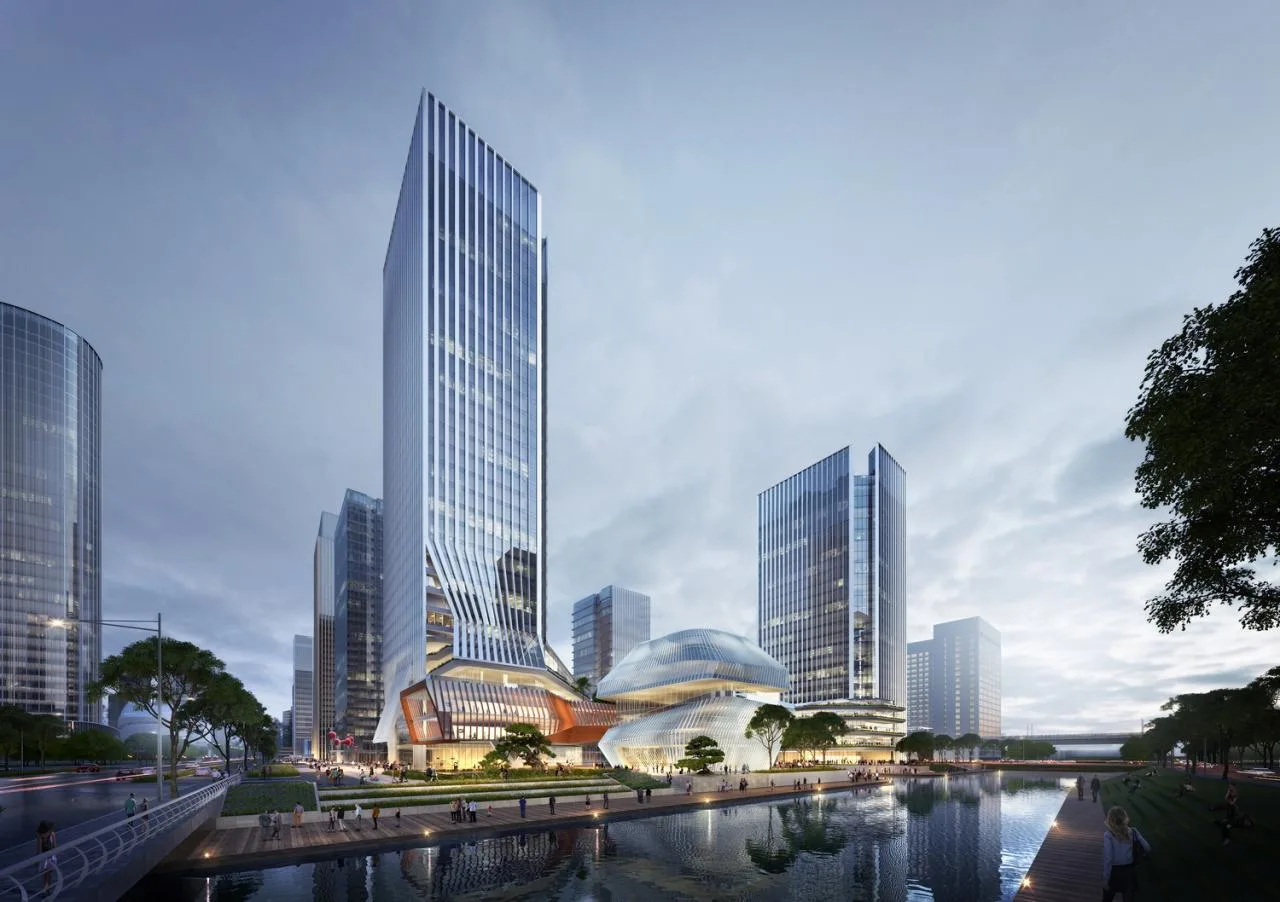
△ Waterfront Rendering
Project Information
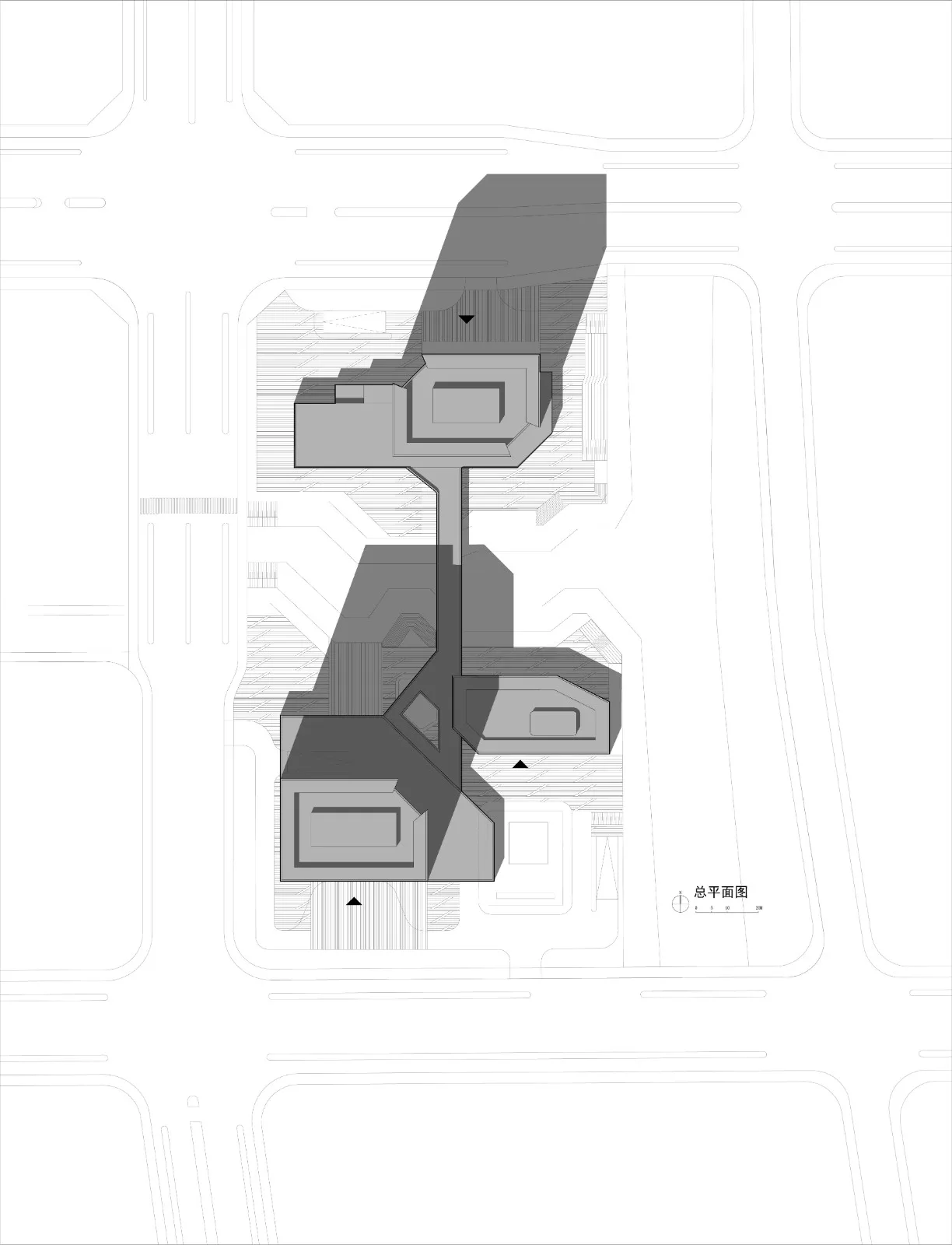
△ General Layout Plan
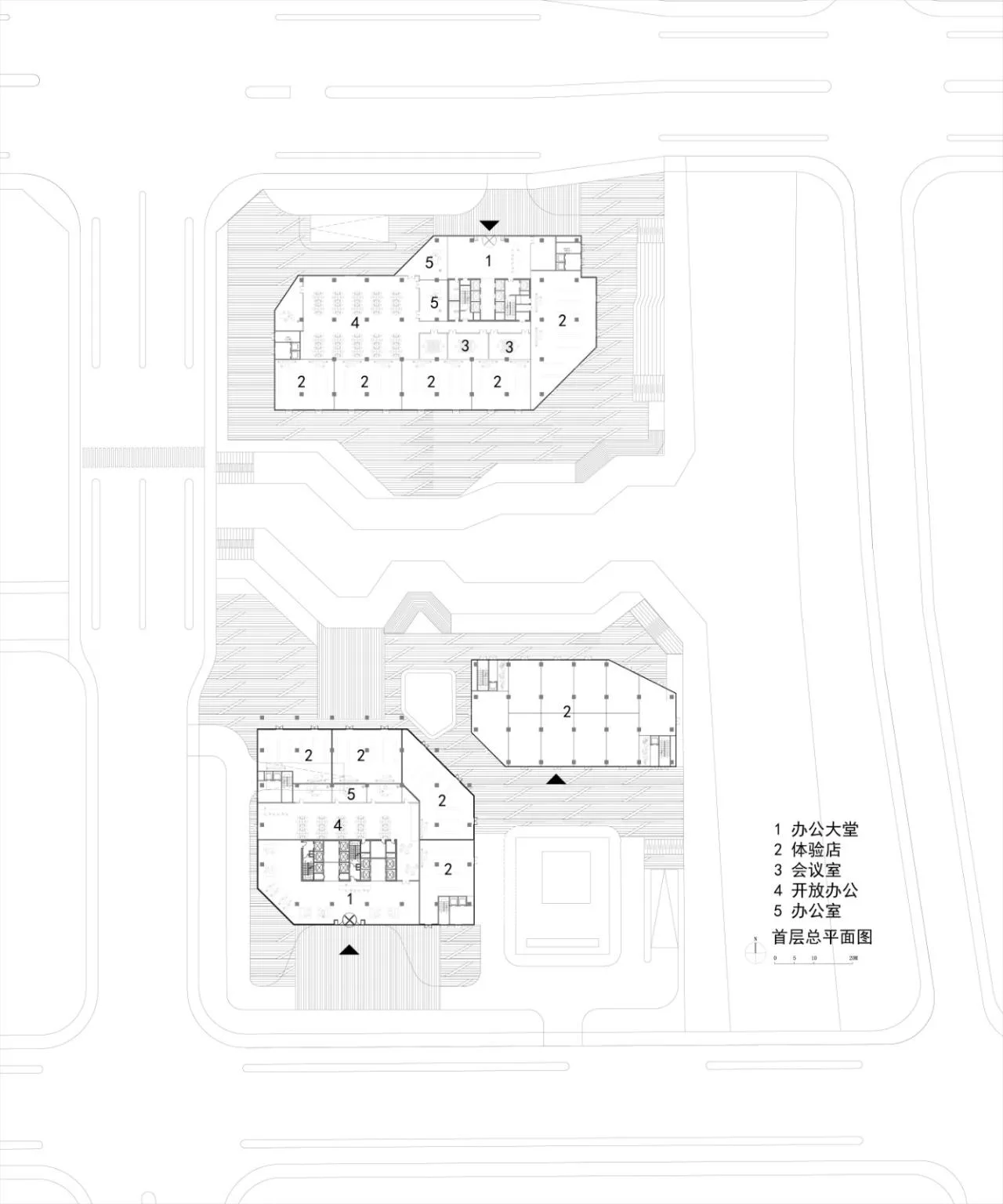
△ First Floor Plan
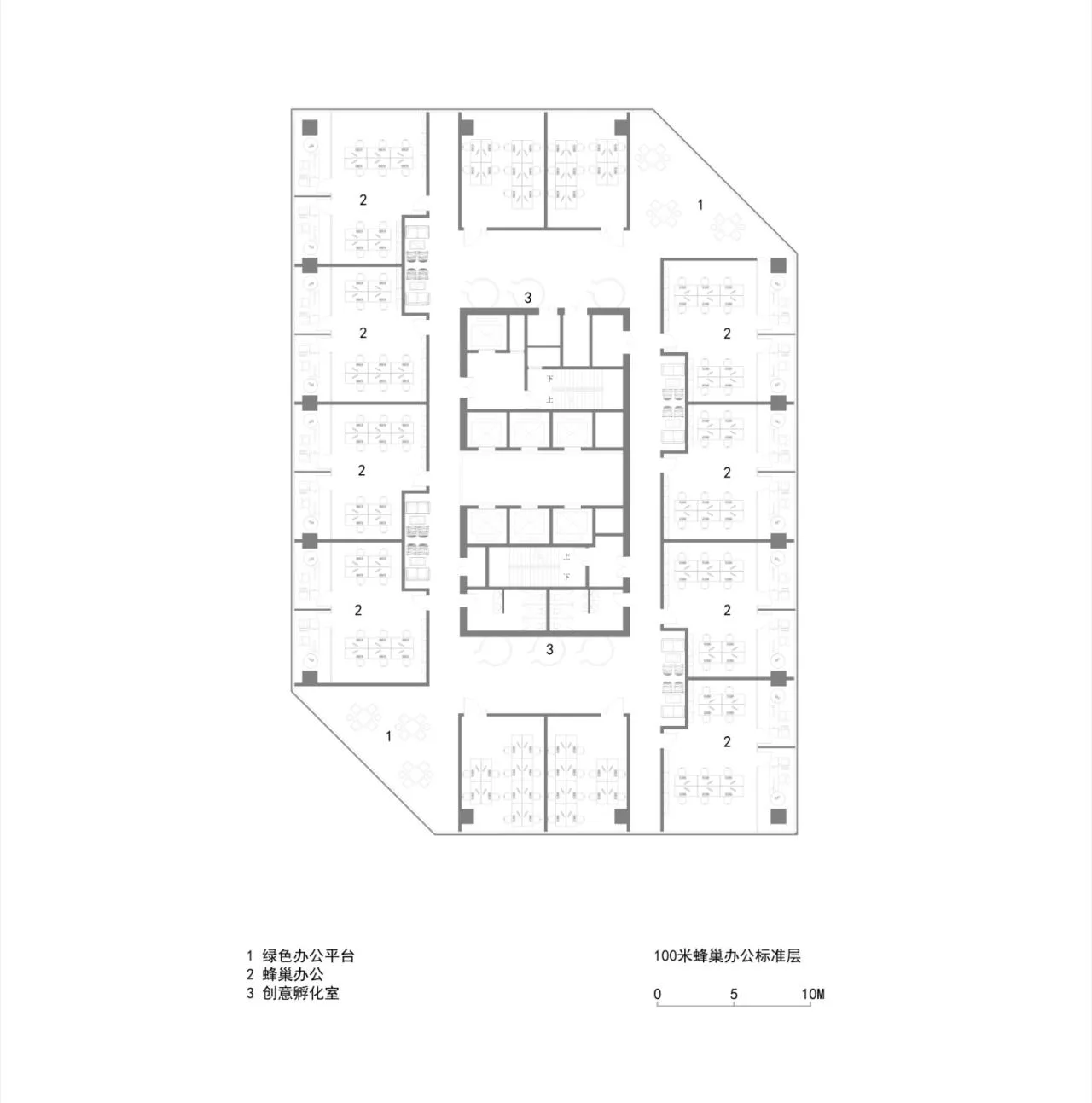
△ Standard Floor 1
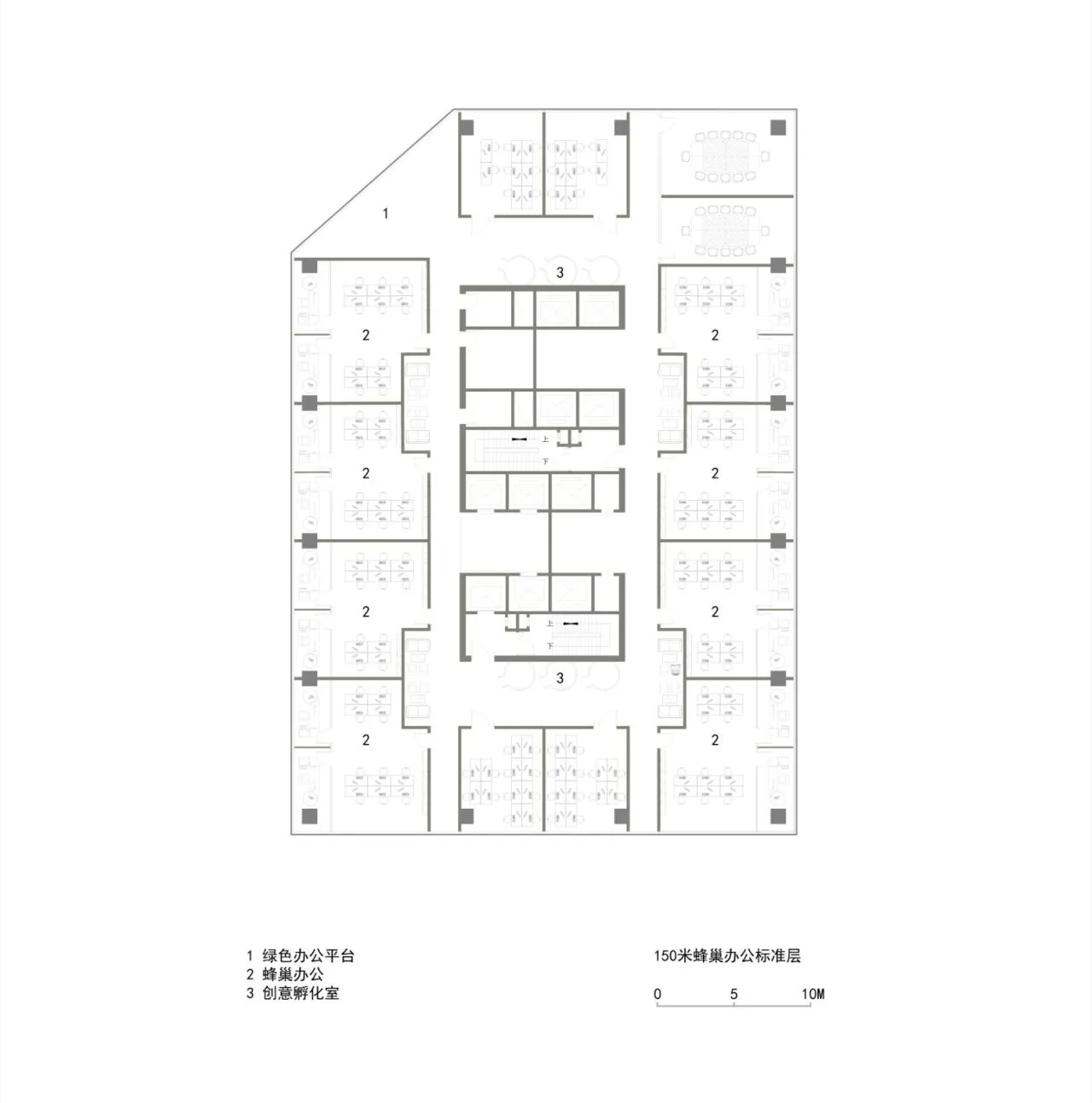
△ Standard Floor 2
Project Details
Project Name: Suzhou Xiangcheng District High-Speed Rail New City Business Office Building
Building Type: Business Office
Owner: Suzhou Yusheng Real Estate Development Co., Ltd
Design Firm: GEN Jianhe Studio
Design Date: August 2020
Design Phase: Proposal Bidding
Building Area: 138,000 square meters
Chief Architect: Chen Tao
Design Team: Zhu Qixiang, Xiao Kai, Chen Lei, Li Yue, Sheng Jieye, Liu Pinxi
Awards: First Prize, Architectural Creation Award, Jiangsu Civil Engineering and Architecture Society















Must log in before commenting!
Sign Up