
In Autodesk Revit, the concept of Family is fundamental, as all elements are based on families. A Revit family represents a class of elements within a specific category, grouping them by shared parameter sets (properties), similar functions, and consistent graphic representations. While the values of these properties may vary among different elements within a family, the property settings remain consistent.
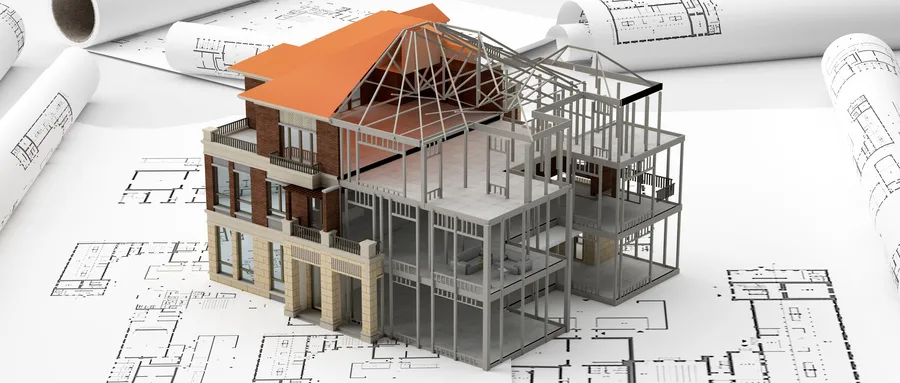
Within each family, multiple types can be defined. Depending on the family creator’s design, each type may have different sizes, shapes, material settings, or other parameter variations. One of the advantages of Autodesk Revit is that users can create custom component families without needing to learn complex programming languages. The Family Editor facilitates this process by providing predefined templates, allowing users to add parameters such as dimensions, materials, visibility, and more according to their needs. This tool enables the creation of both real-world building components and graphic annotation elements.
Revit categorizes families into three types based on how they are created: system families, loadable families, and built-in families. Each family contains extensive parameter information, which serves as the core component for data transmission and sharing. The variation in parameter data contributes to the diversity of family instances, meaning that a Revit model consists of families with a wide range of styles. Additionally, family parameters come in various types, and altering these parameters results in different appearances or behaviors.
Family parameters can be classified into two main categories:
1. Family Parameters: These are commonly used parameters that cannot appear in schedules or tags.
2. Shared Parameters: These parameters can be shared across multiple projects, reused, exported to ODBC databases, and can appear in schedules and tags.
Furthermore, parameters are also divided based on their scope:
1. Type Parameters: These control the family type. When a type parameter of a component is modified, all components of that family type will update accordingly. For example, the width (b) and height (h) parameters of a beam.
2. Instance Parameters: These affect only a single component instance without changing others of the same type. An example is the material parameter of an individual beam.













Must log in before commenting!
Sign Up