
BIM technology, based on parametric information modeling, has the following key characteristics:
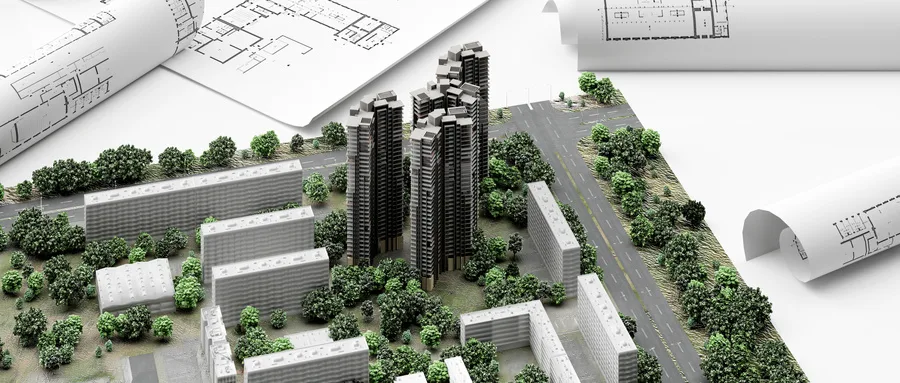
1) Visualization: BIM provides a “what you see is what you get” experience. The entire process is visualized, which not only helps display renderings and generate reports but also plays a crucial role in communication, discussion, and decision-making throughout project design, construction, and operation. By simulating 3D objects, BIM visualizes the entire construction process, enhancing understanding and collaboration among all stakeholders.
2) Coordination: BIM addresses conflicts that often arise between different professional disciplines, such as pipelines conflicting with structural elements, which can cause uneven heating or cooling or missing or mis-sized openings. By implementing effective BIM coordination processes, these issues can be identified early and resolved, minimizing design changes and enhancing project integration.
3) Simultaneity: Using 4D construction simulation software, BIM adds a time dimension to the 3D models, enabling schedule-based simulations. This “four-dimensional” approach allows for creating visual, profession-specific schedule plans, providing an intuitive and effective tool for progress monitoring and construction management.
4) Optimization: Modern architectural projects are often too complex for manual management alone. BIM, along with its optimization tools, enables the efficient handling and refinement of these complex projects, enhancing overall project performance.
5) Drawing Feasibility: Beyond conventional design drawings, BIM supports visualization, coordination, simulation, and optimization, allowing the production of:
① Comprehensive pipeline diagrams—free of errors after collision detection and design modifications;
② Comprehensive structural hole diagrams, including pre-embedded casing plans;
③ Collision detection reports with suggested improvement plans.
6) Integration: BIM enables full lifecycle management—from design through construction to operation. Its core is a database created from 3D computer models, which not only stores design information but also incorporates data from construction processes and even the building’s end-of-life phase.
7) Parameterization: Parametric modeling involves creating and analyzing models based on adjustable parameters rather than fixed numbers. In BIM, graphical elements are represented as components, whose differences are defined by parameter values. This approach stores all information digitally, allowing easy model updates and analyses by simply modifying parameters.
















Must log in before commenting!
Sign Up