
BIM technology plays a vital role in the application and management phases of building projects. The globally recognized operations management company Systems has partnered with Facility0ne, a facility management consulting firm, to develop the “BIM+FM” system. Its primary goal is to provide building owners with more efficient energy management and optimized space utilization, thereby maximizing added value throughout the building’s entire life cycle. This approach refines maintenance management, enhances building performance, and extends the lifespan of facilities.
The principle of sustainable development emphasizes a “people-oriented” architectural philosophy throughout the design, construction, and other building processes. By adopting effective new technologies that reduce waste and protect the environment, project costs can be significantly lowered. 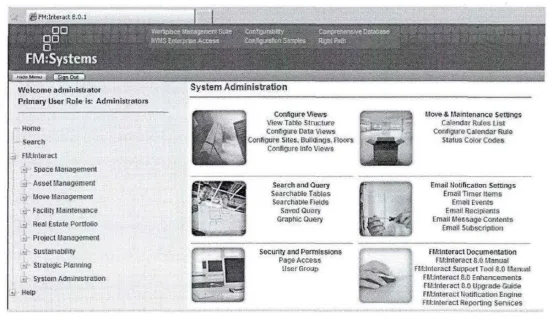
Figure 1: Operation and Maintenance System Interface
Following the completion of the Shanghai Center Building project, BIM technology was integrated into its operation and management. Previously, using CAD drawings to locate faults during the operation phase was time-consuming and labor-intensive. BIM technology, however, significantly reduces time and labor costs by streamlining information retrieval.
To avoid operational issues, it is essential to establish a standardized BIM model early in the design phase and continuously update it throughout the design and construction stages. This ensures that during operation, the building can efficiently extract necessary information from the BIM database, improving the speed and accuracy of fault detection, analysis, and resolution.
The integration of the Shanghai Center Building’s operation and maintenance system with the BIM database showcases BIM’s unique advantages in information storage and spatial positioning. This integration has greatly advanced the building’s operational informatization. Additionally, assigning specialized personnel to regularly inspect critical equipment and maintain updates helps sustain the building’s most economical operating state.
For super high-rise buildings, controlling risk factors such as disaster prevention and response is crucial. Leveraging BIM technology alongside disaster simulation tools, the BIM team at Shanghai Center Building anticipated potential disaster causes and developed corresponding emergency plans. The comprehensive BIM database ensures reliable technical support during emergencies by quickly providing detailed disaster location information to rescue teams, thereby minimizing safety risks and associated costs.
Overall, BIM concepts and technology support the entire project life cycle. In the Shanghai Tower project, BIM effectively connects decision-making, design, construction, delivery, and operation management stages. The BIM database facilitates information sharing and seamless communication among professionals across different phases, significantly enhancing cost management efficiency.
Source: “Analysis and Research on Cost Management Issues in the Whole Life Cycle of Green Buildings – Exploration and Application of BIM Technology”
For educational and communication purposes only. Copyright belongs to the original author.
If any infringement occurs, please contact us for removal.
















Must log in before commenting!
Sign Up