
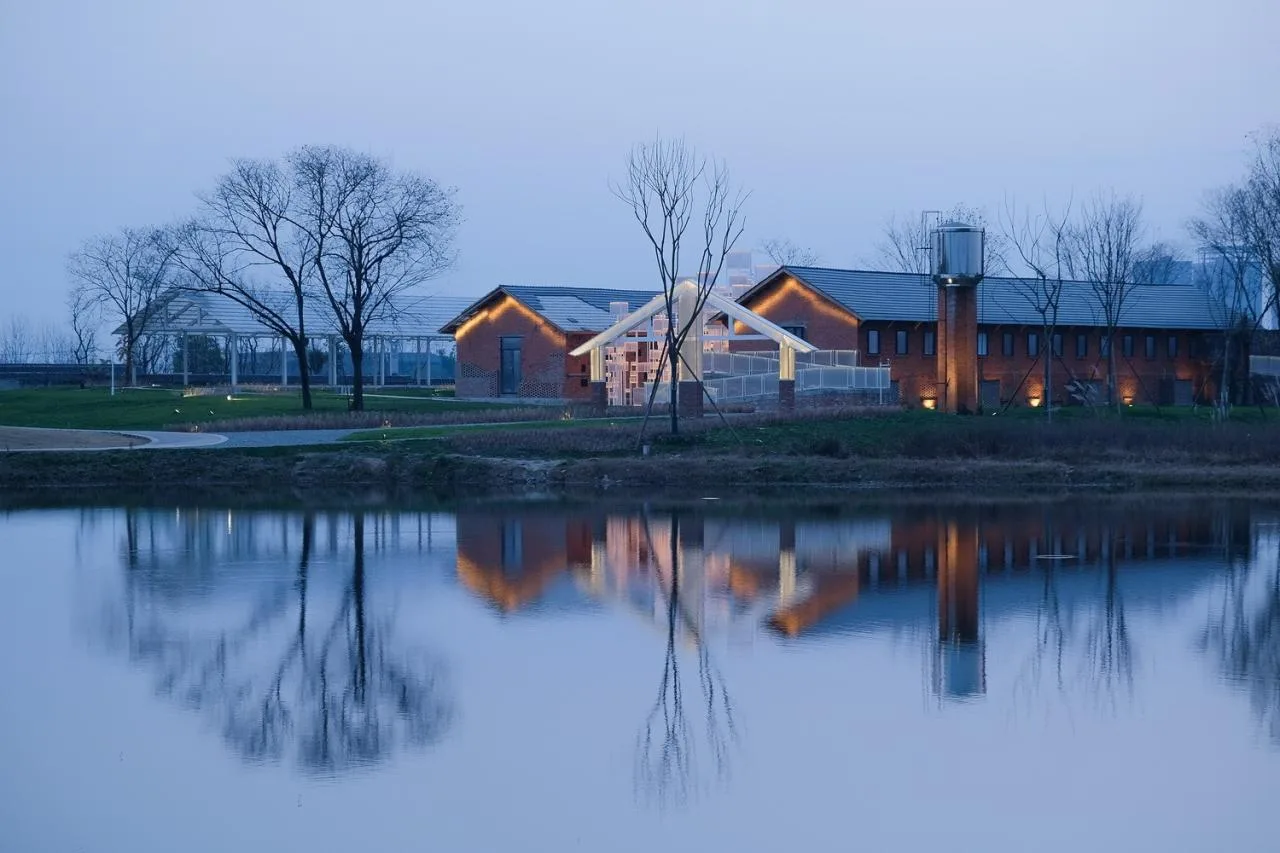
Architectural reflection on the pond © Xiaoyin Architecture
Time flows continuously, shaping history. Even architecture, though seemingly frozen and silent, moves through time, embodying the history of its place. Throughout this process, architects strive to balance past and present, offering visions for the future.
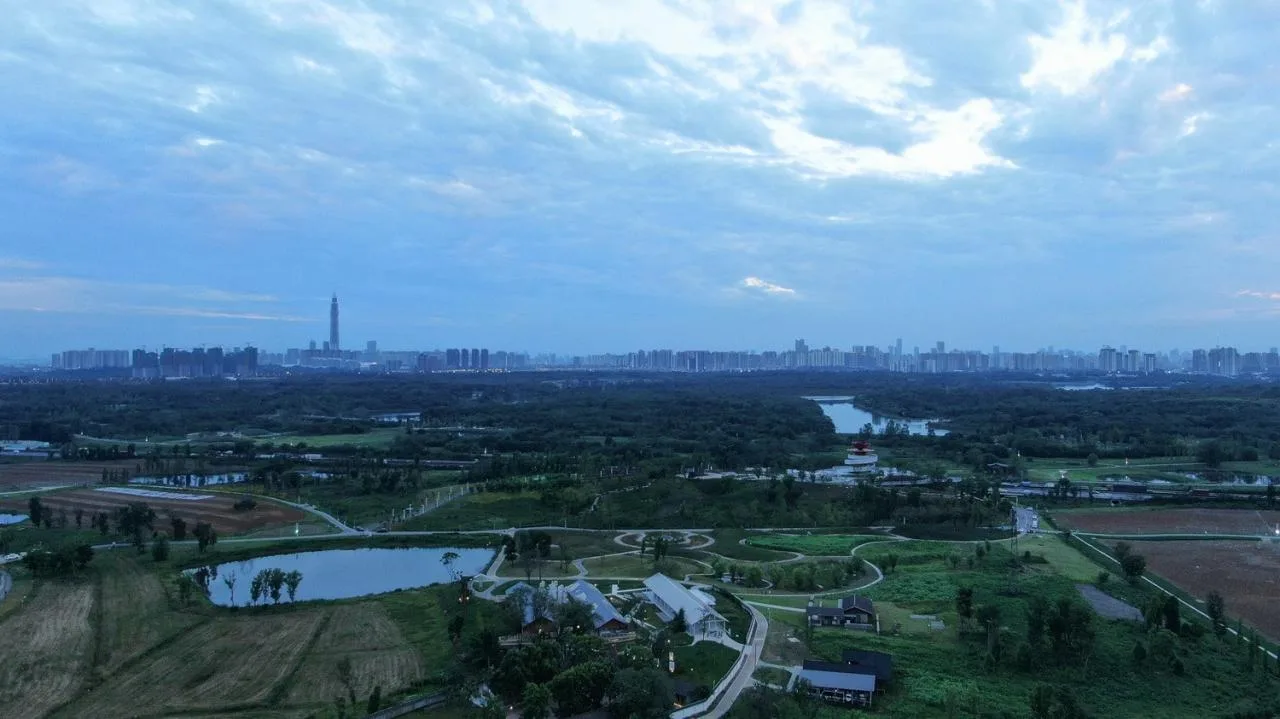
Integration of buildings with surrounding parks, farmland, and forests © Xiaoyin Architecture
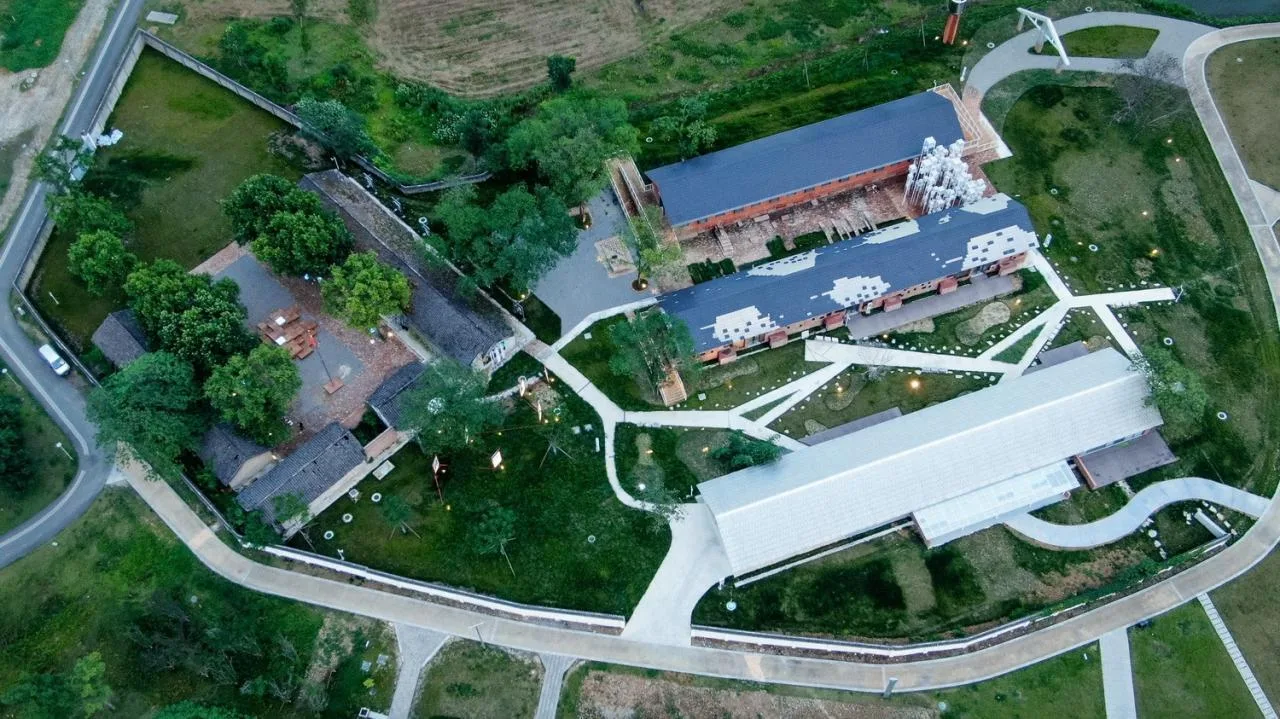
Relationship between buildings and natural surroundings © Xiaoyin Architecture
The Chengdu Huancheng Ecological Park Agricultural Science Popularization Education Base is situated within the second phase of Chengdu Qinglong Lake Wetland Park. Xiaoyin Architecture was commissioned to transform the original structures into an educational base for agricultural science, welcoming tourists. The site included the abandoned Qinglonghu Primary School and a typical red-brick building that once served as a breeding farm. Since the area is planned as a wetland park, these old buildings needed a new identity to invite visitors. Our goal was to revitalize the decaying red brick structures through thoughtful design.
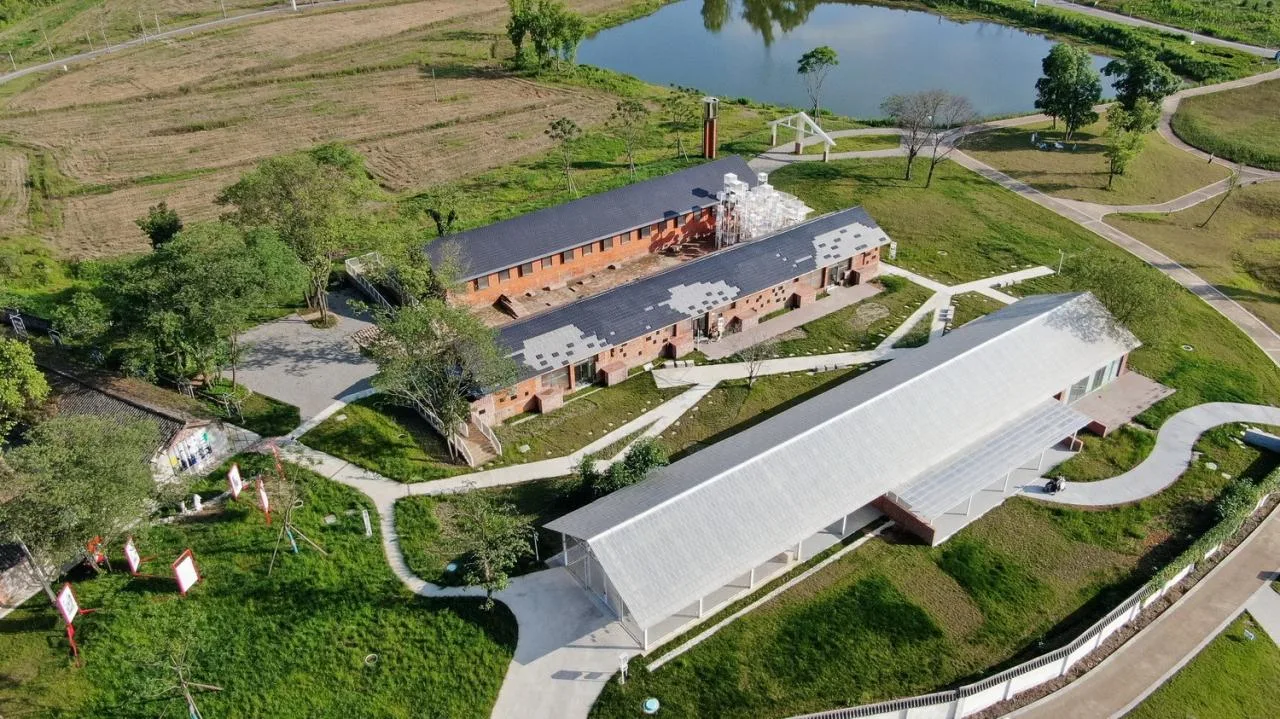
△ Architectural complex blending old and new © Xiaoyin Architecture
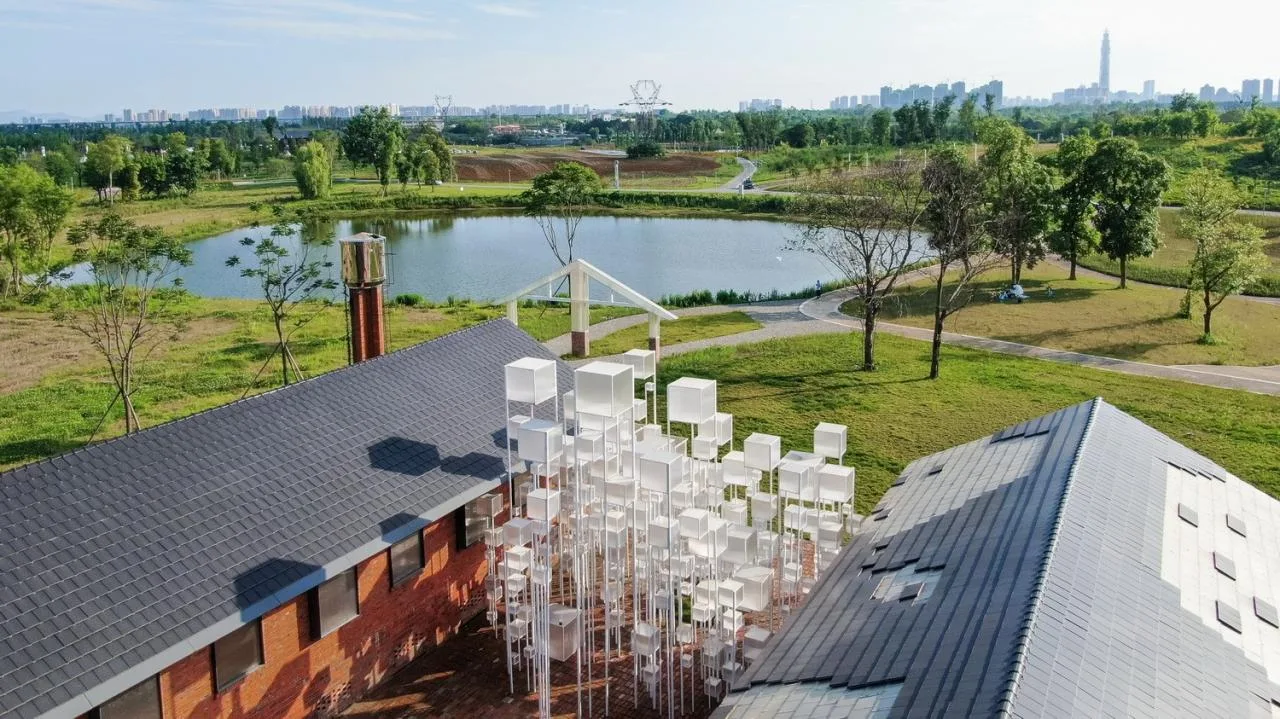
Floating seeds suspended between two old buildings © Xiaoyin Architecture
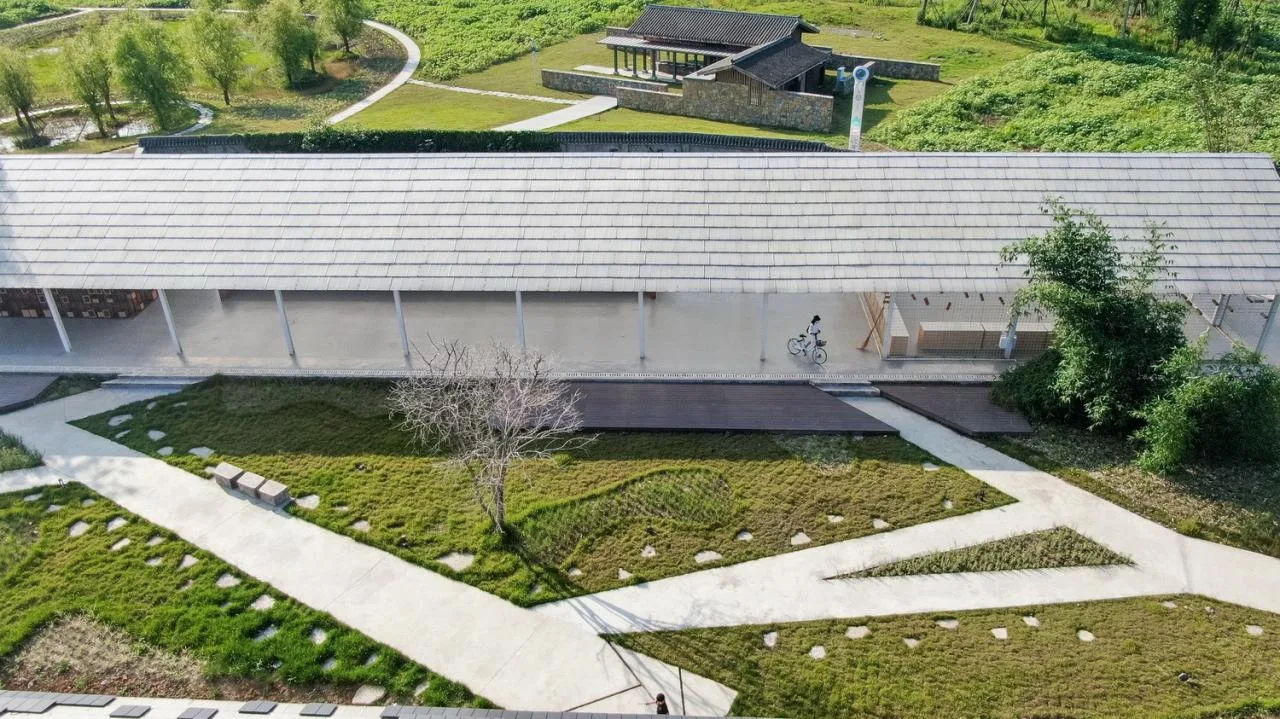
Repurposing abandoned concrete blocks into landscape features © Xiaoyin Architecture
Site Analysis and Context
Since 2018, Chengdu has embraced the “park city” concept, redefining urban development. The city reorganized its space around the Chengdu Ring Expressway, connecting 121 distinctive parks through greenways and 78 bridges, creating seamless links between nature and leisure spaces for residents.
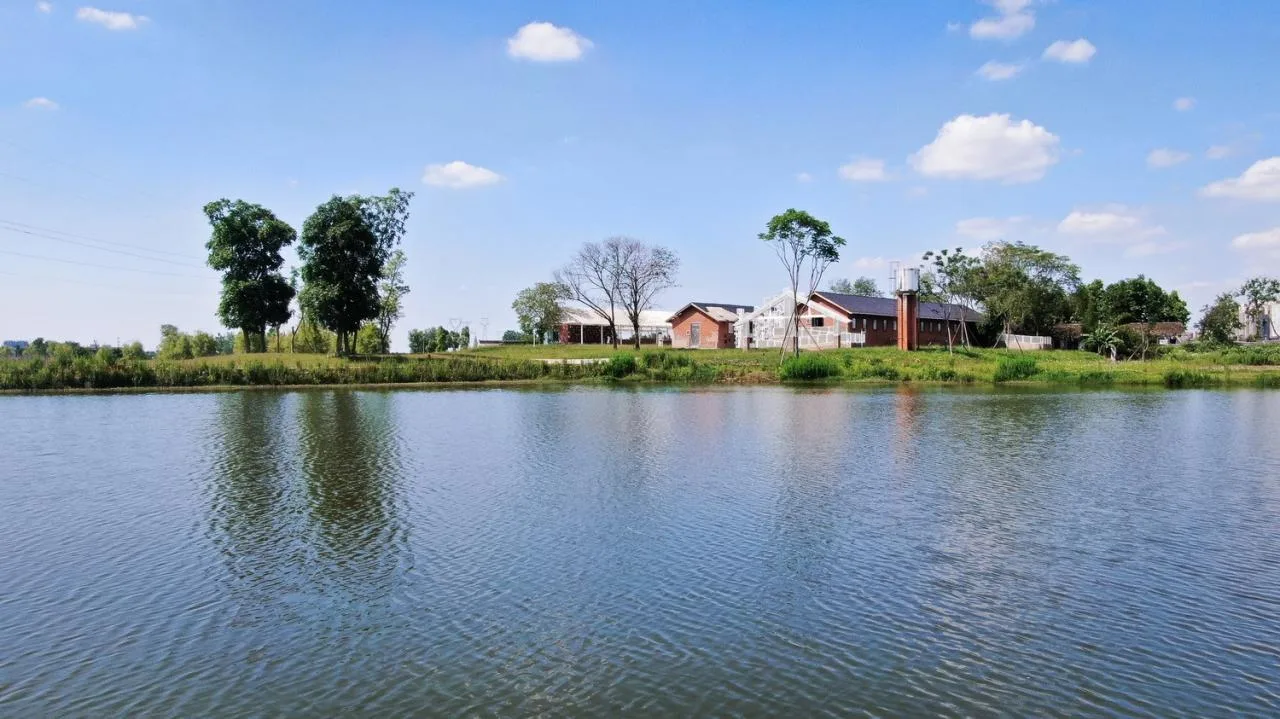
A building by the pond © Xiaoyin Architecture
The Qinglong Lake Floating Seed project, located within Huancheng Ecological Park, supports activities related to science education, research, and experiential learning. Inspired by the growth cycle of all living things, the design draws on the imagery of crops growing between farmland. Using common materials like polycarbonate panels, ceramic tiles, and red bricks, the space harmoniously blends old and new elements, creating a fluid environment throughout the buildings.
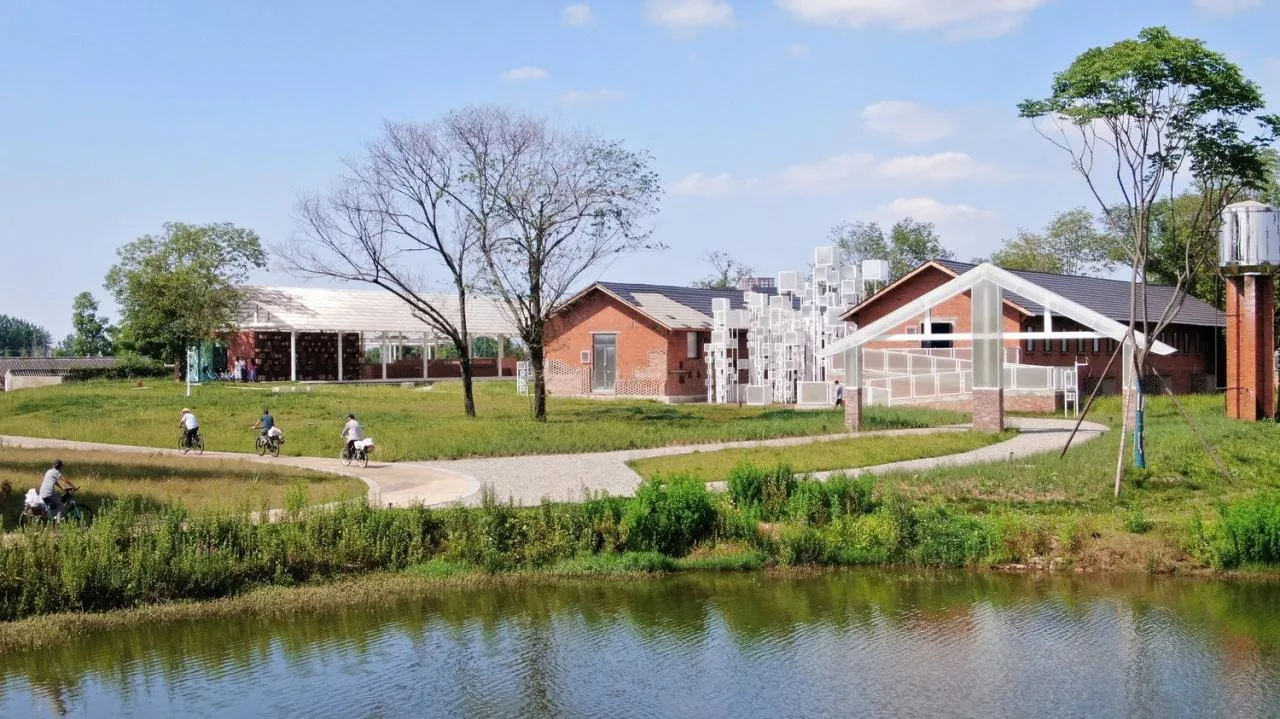
Removing fences to create an open, inviting site © Xiaoyin Architecture
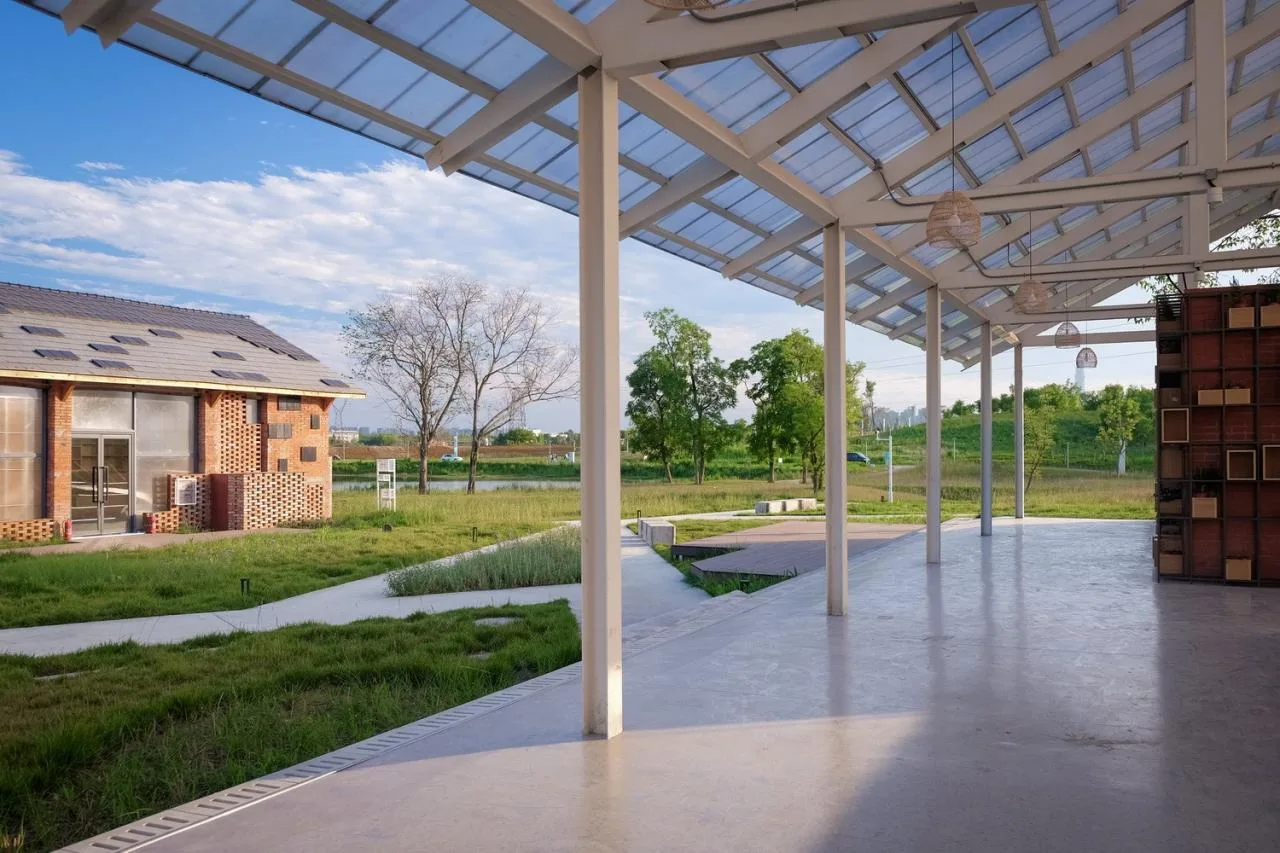
The park seamlessly extends into the courtyard © Xiaoyin Architecture
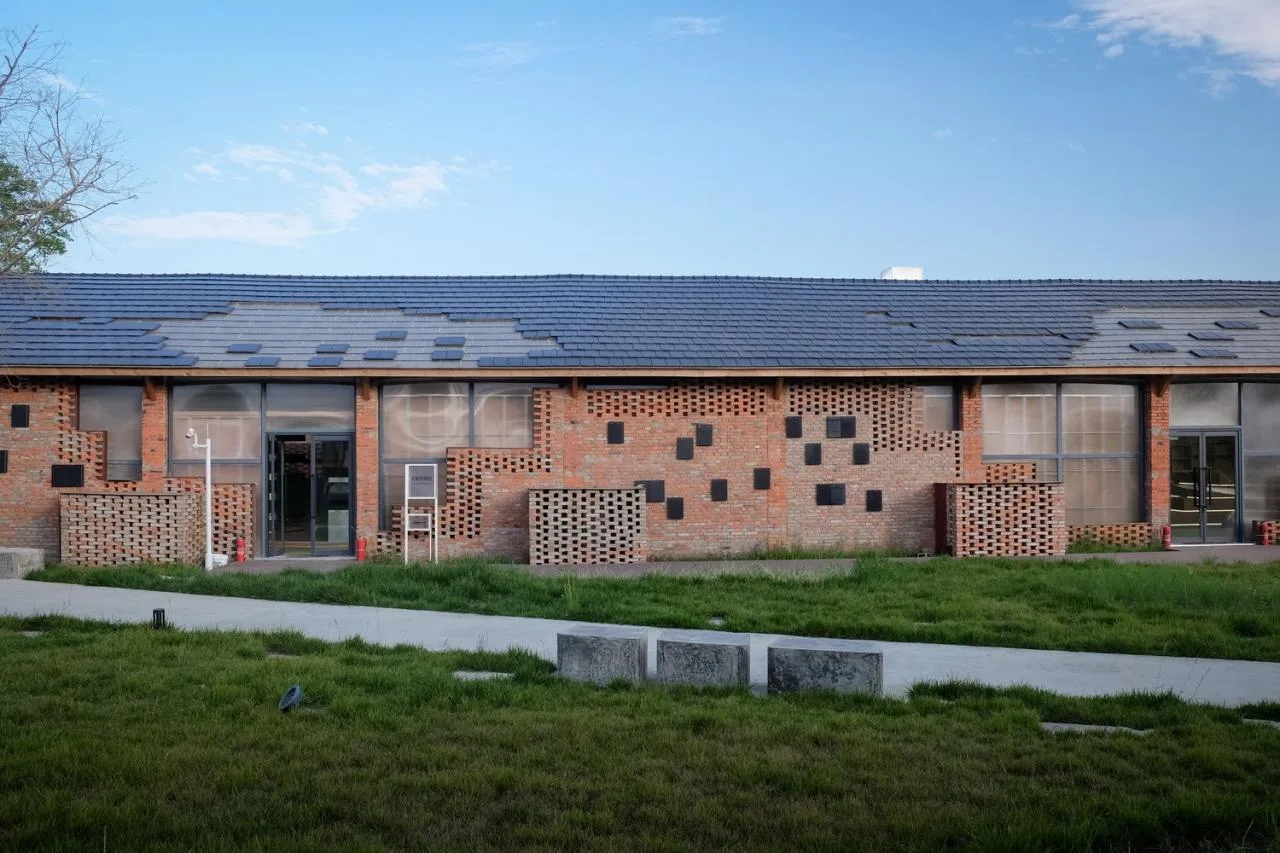
△ Old bricks and polycarbonate panels create a harmonious blend of virtual and real, old and new © Xiaoyin Architecture
Site Conditions and Renewal Strategy
Site assessment is crucial in urban renewal. Balancing preservation and change is key, especially with complex site conditions. Some buildings remain structurally sound and can be repaired; others have damaged walls and roofs, rendering them unsuitable for use; while some structures are severely compromised, posing safety risks.
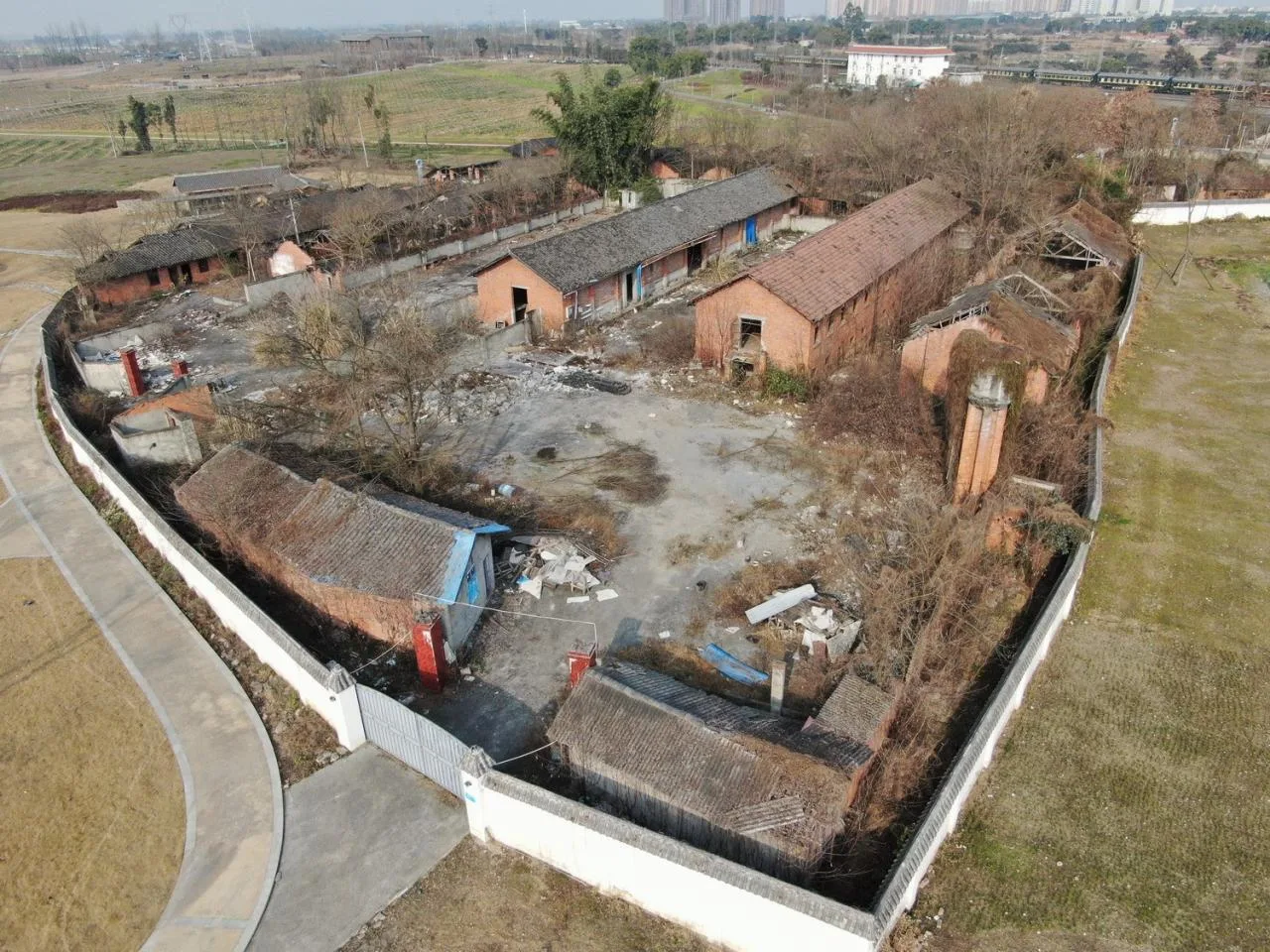
△ Partially preserved buildings on the breeding farm before renovation © Xiaoyin Architecture
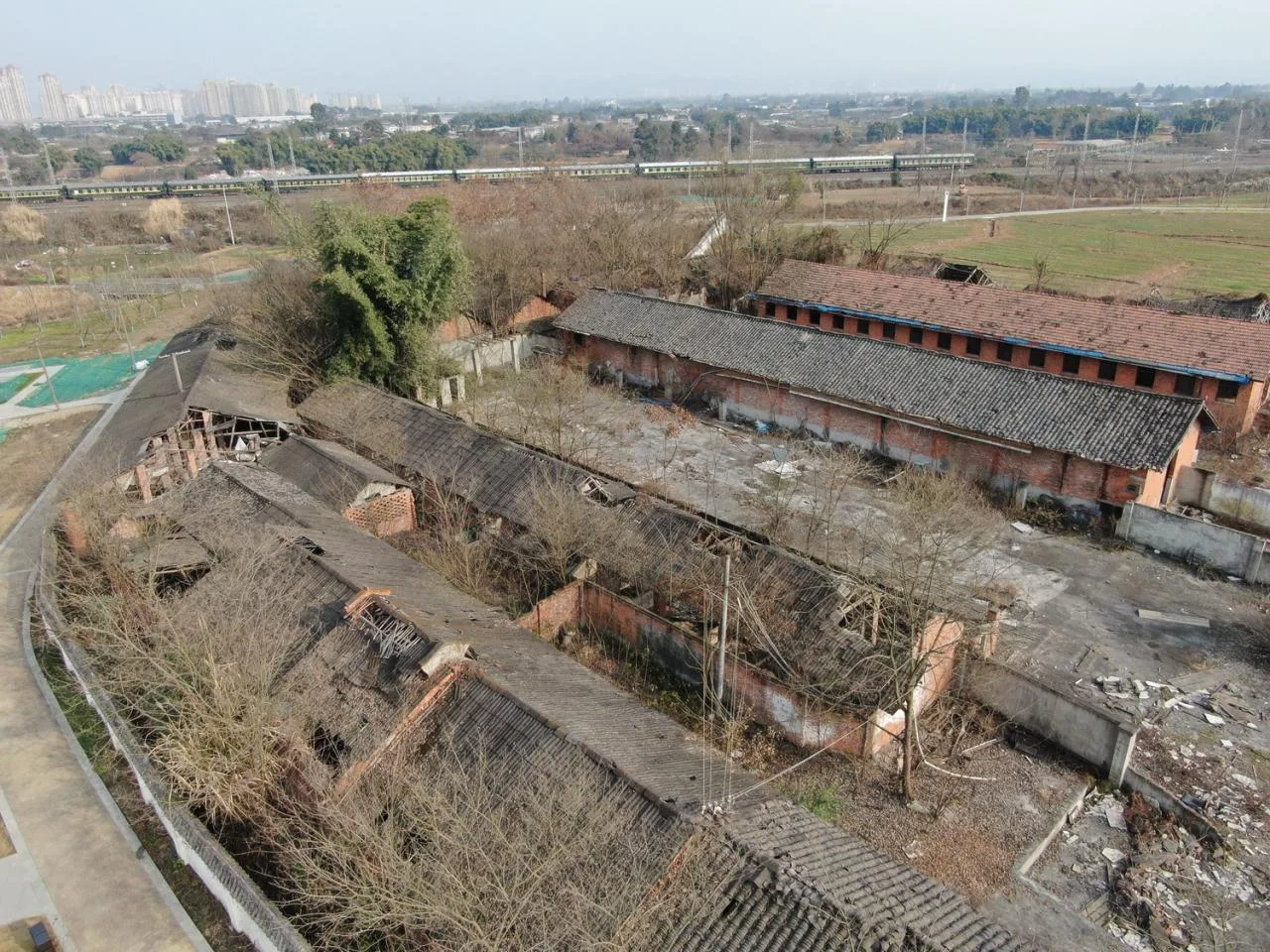
Buildings severely damaged prior to renovation © Xiaoyin Architecture
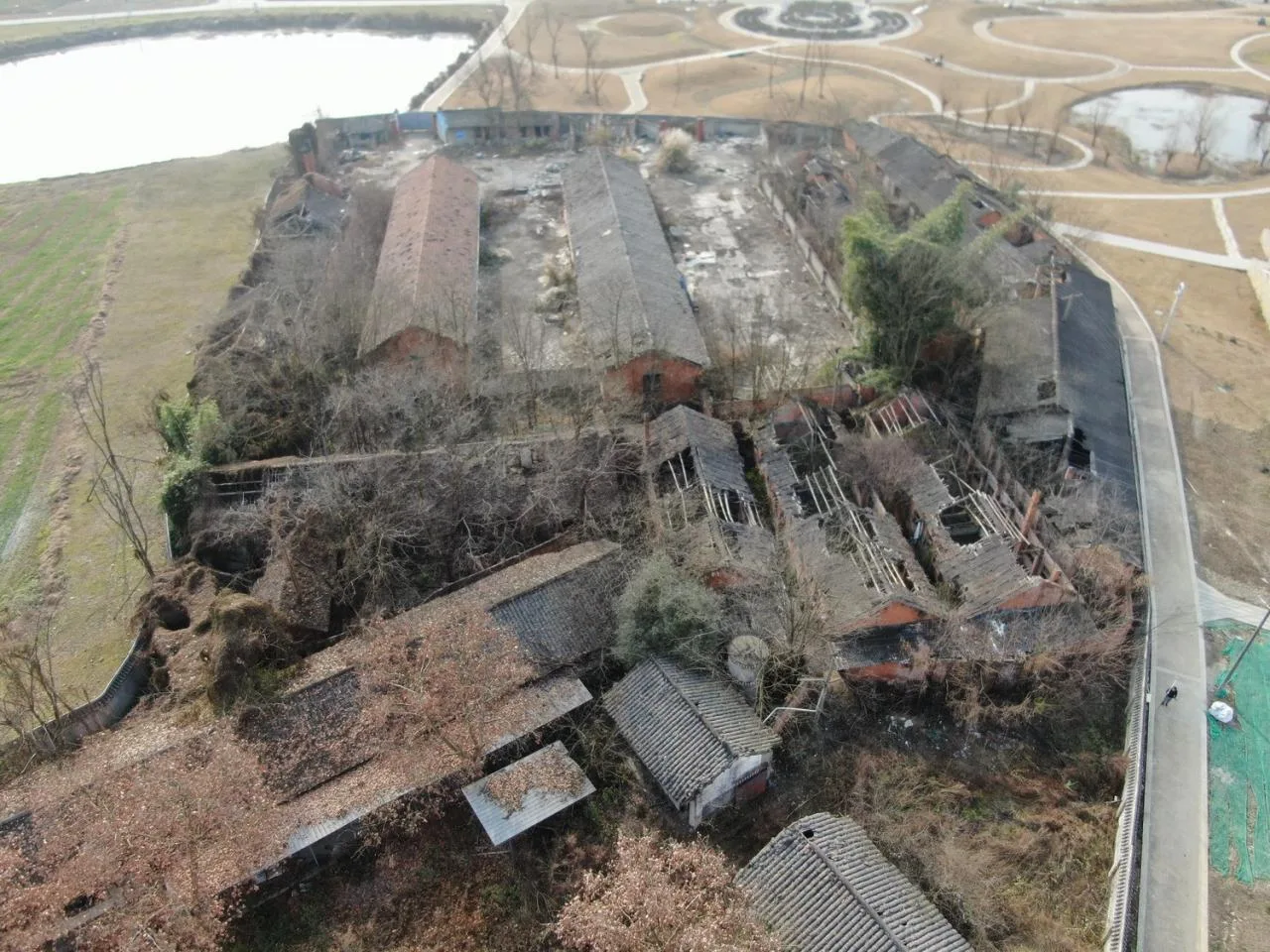
Buildings in poor condition before renovation © Xiaoyin Architecture
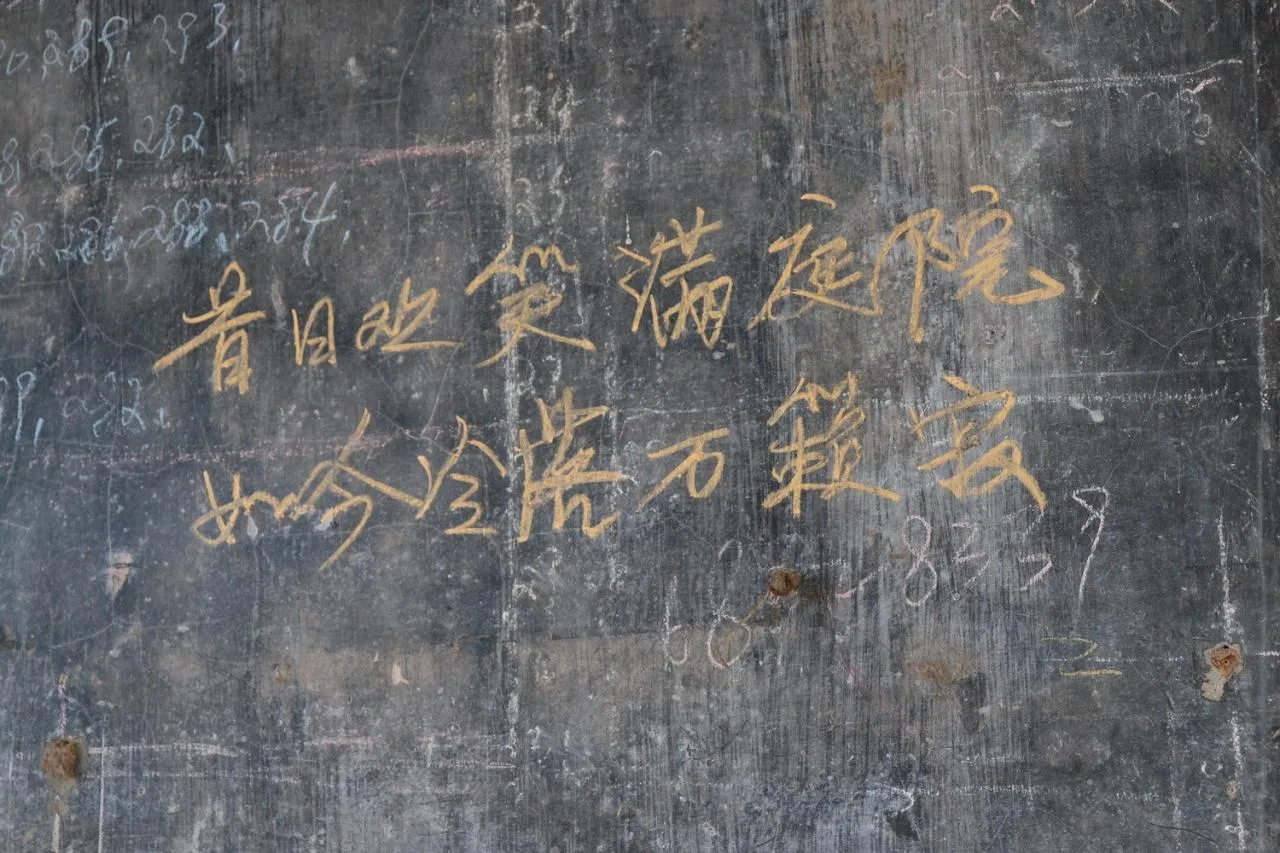
△ Text on blackboards from the primary school before renovation © Xiaoyin Architecture
The site had been abandoned for years, with overgrown weeds and thriving wutong trees. The original hardened road surface was heavily damaged, and fences isolated the site from the surrounding farmland and parks, limiting public access and engagement.
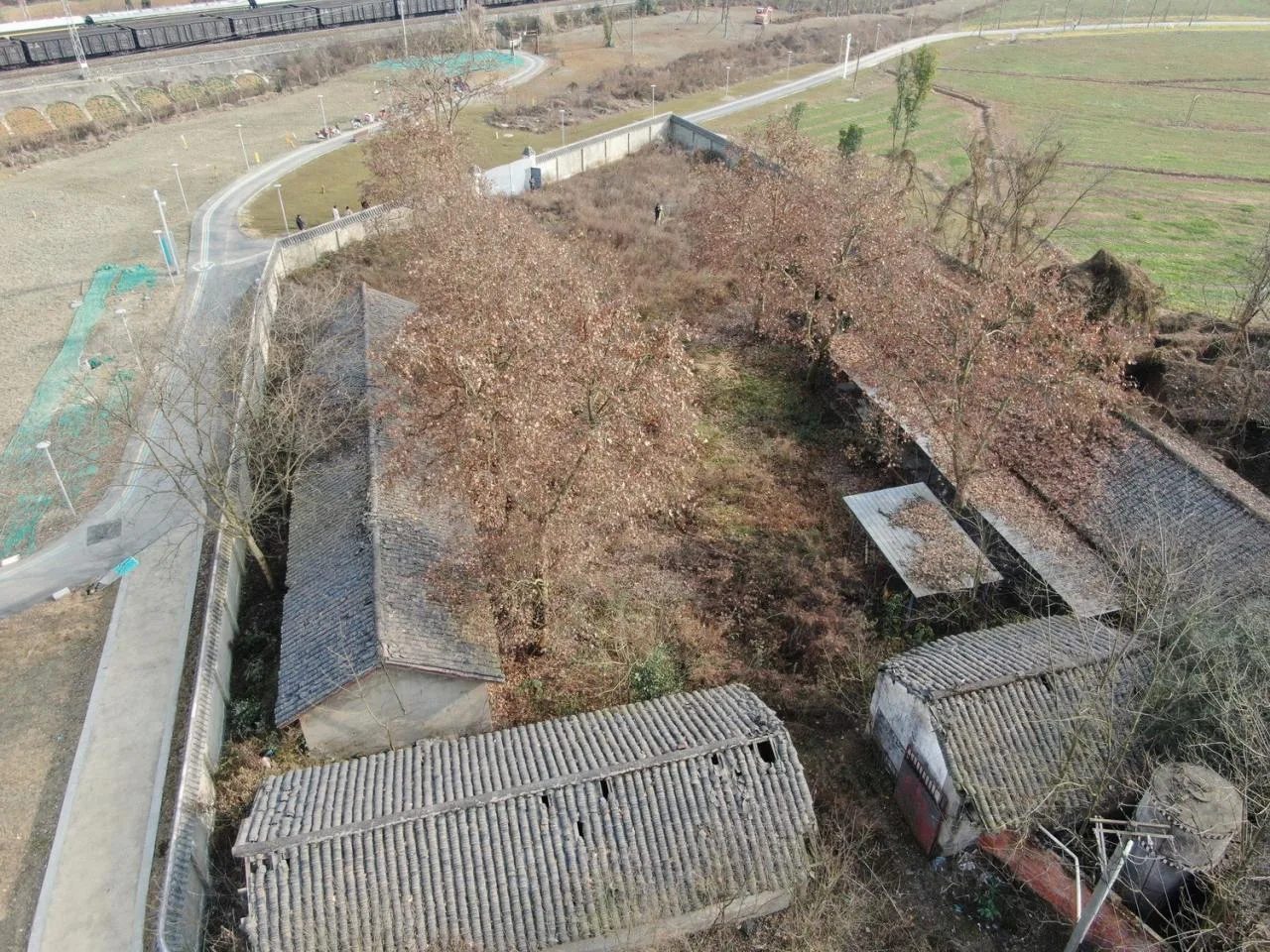
△ Thriving wutong trees in the old schoolyard before transformation © Xiaoyin Architecture
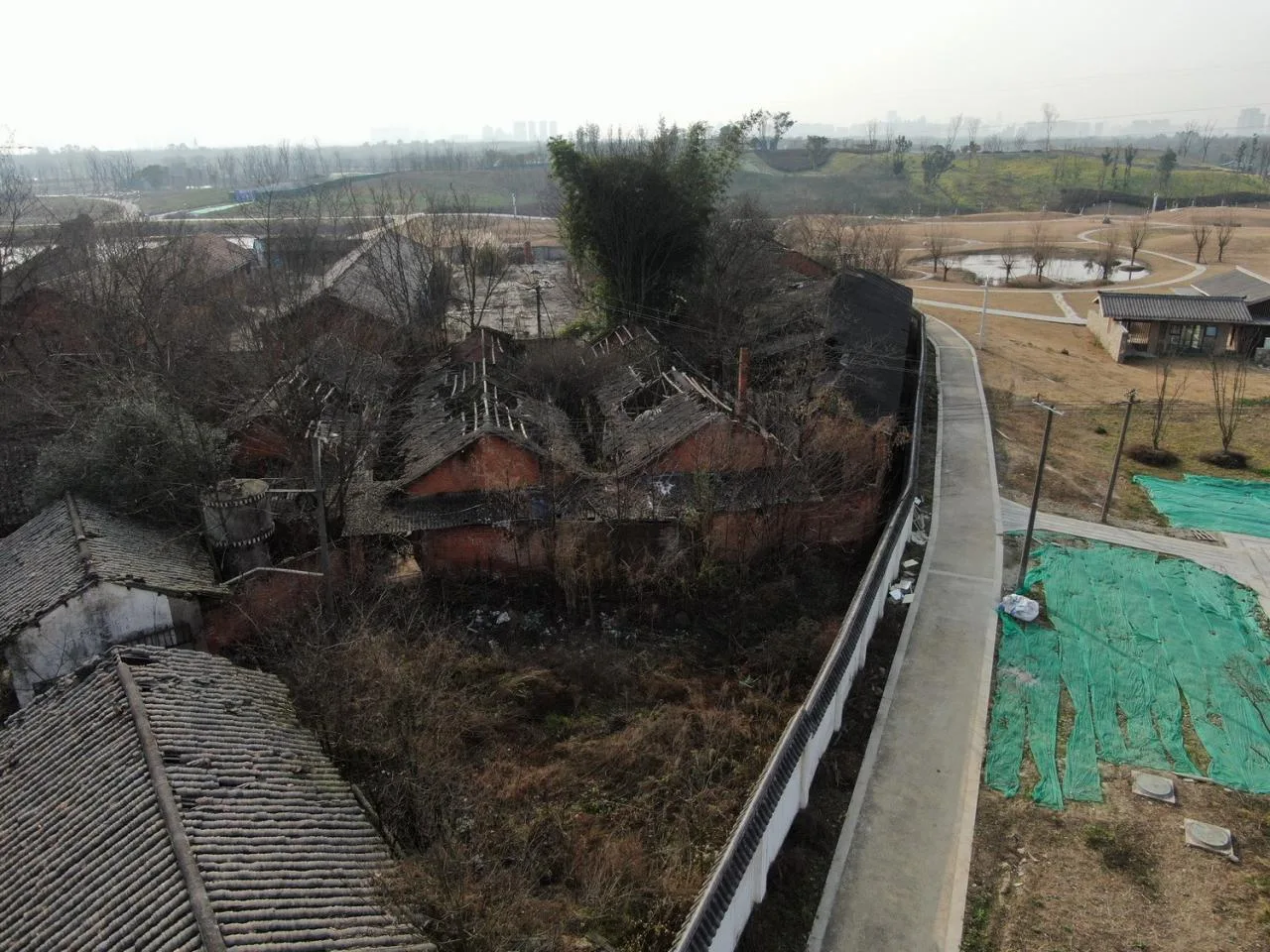
Courtyard overrun with weeds between the primary school and breeding farm before renovation © Xiaoyin Architecture
Design Concept: Flow
To create a dynamic atmosphere blending old and new, the renovation opened up the site to visitors. Collapsed buildings and some brick walls were removed, allowing the old red bricks to transition from vertical enclosures to horizontal ground paving, spreading across the site like new growth. Similarly, discarded concrete blocks were repurposed as landscape stepping stones. By removing most of the enclosing walls, the site now warmly welcomes visitors from all directions.
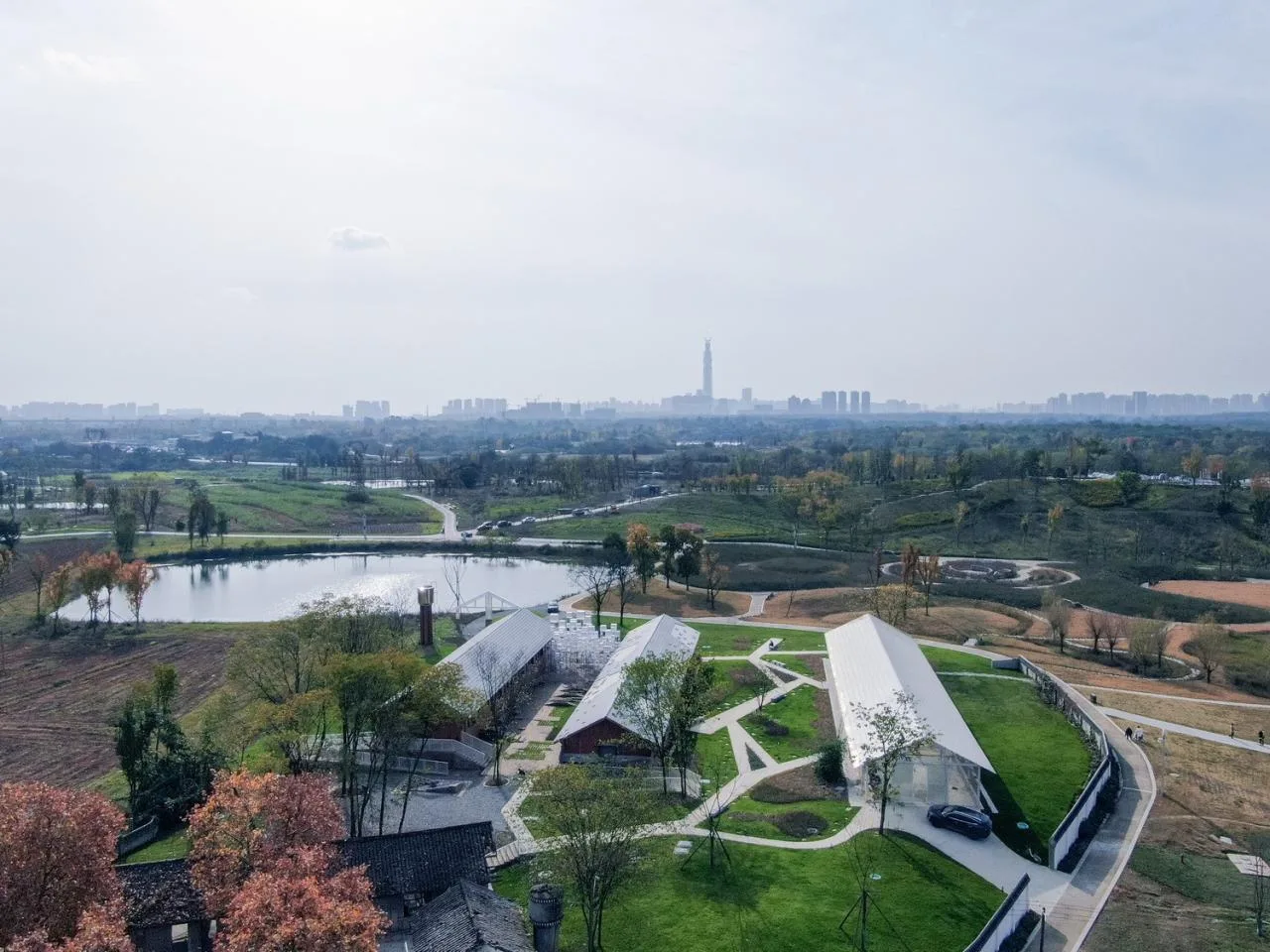
△ Demolition of collapsed buildings and brick walls opens and refreshes the site © Xiaoyin Architecture
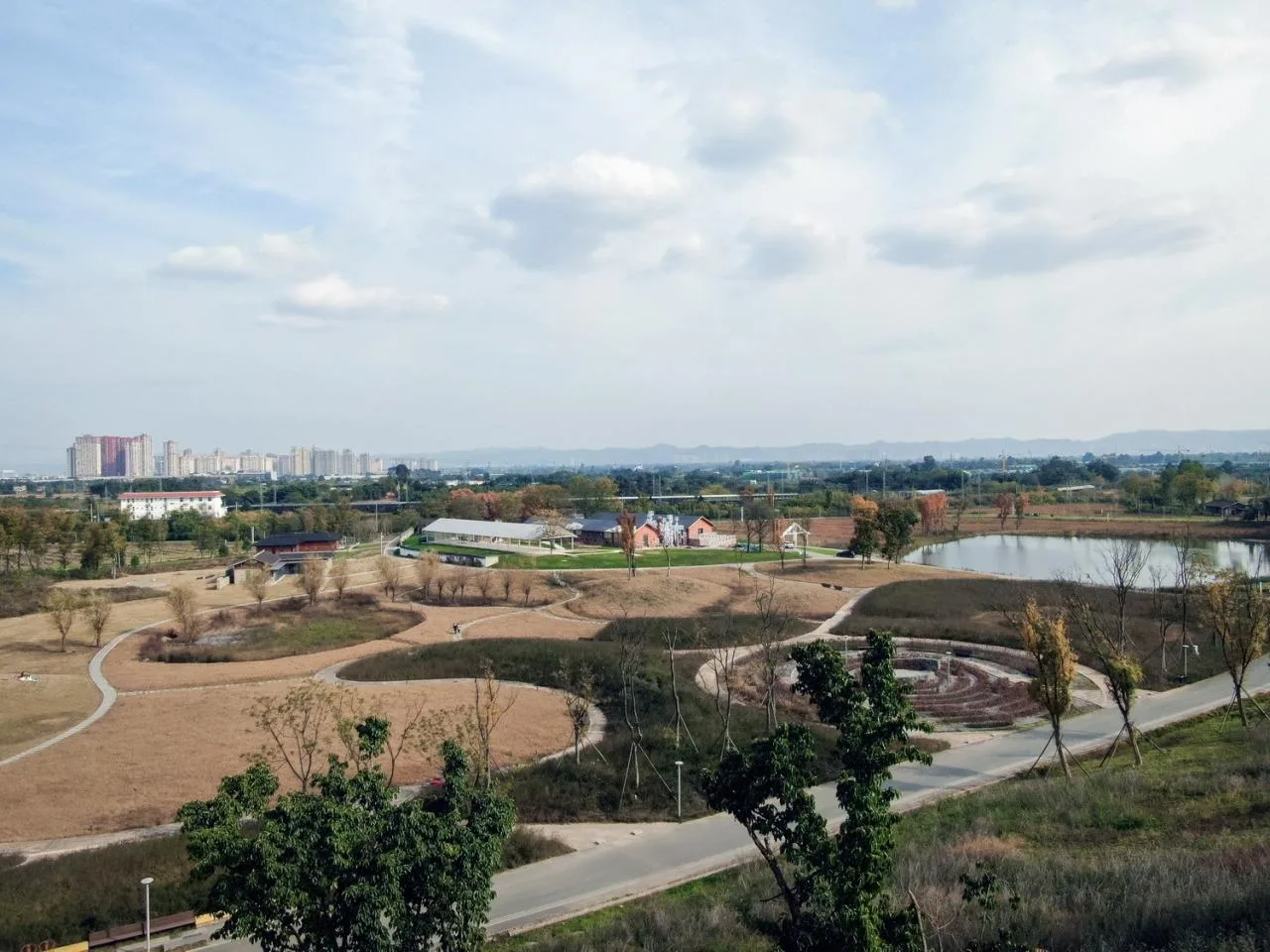
Fence removal invites open access for visitors © Xiaoyin Architecture
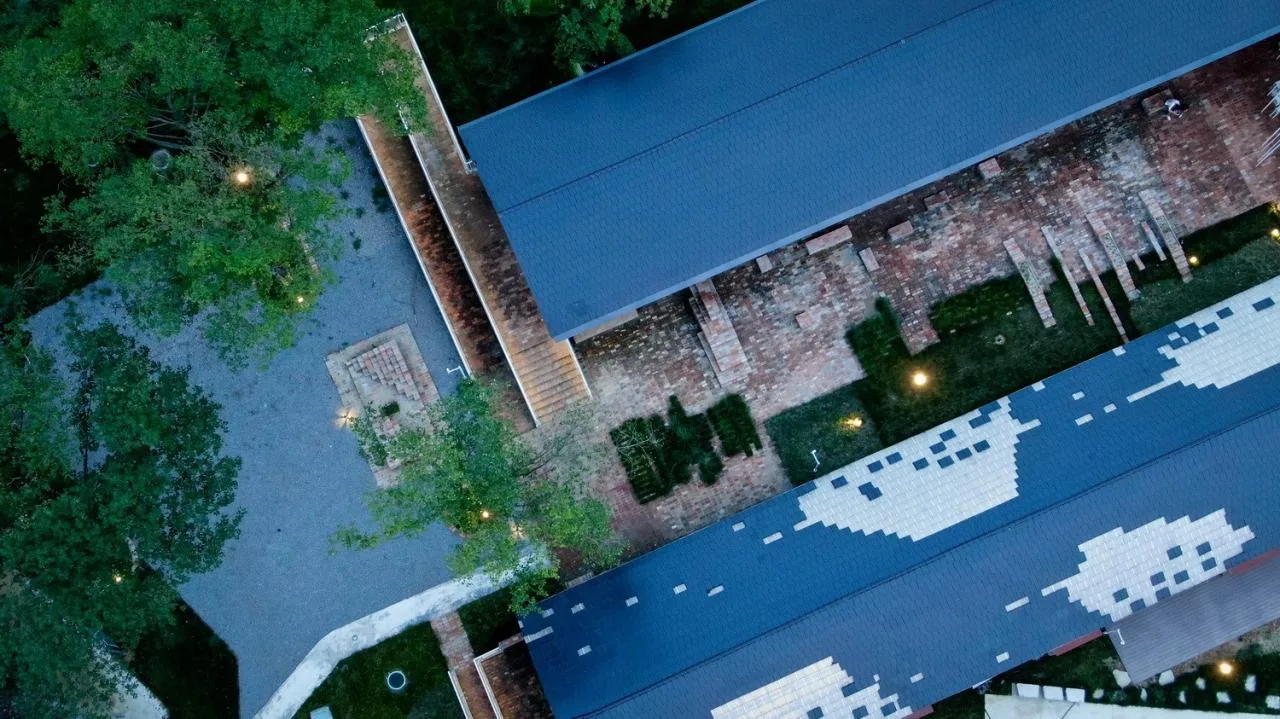
The interplay of mottled red bricks on the ground and translucent tiles on the roof creates a cohesive spatial sequence © Xiaoyin Architecture
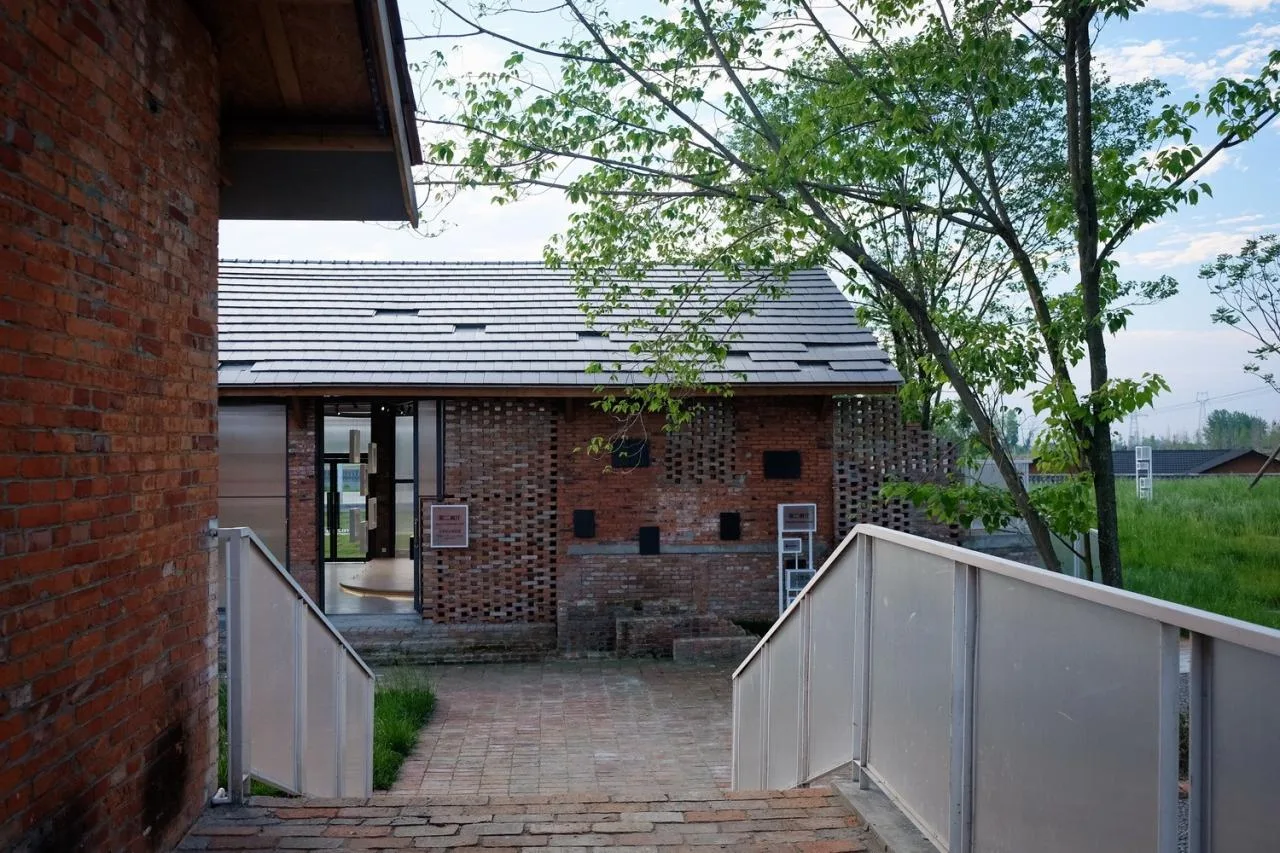
Red bricks once used as vertical walls are transformed into horizontal ground paving © Xiaoyin Architecture
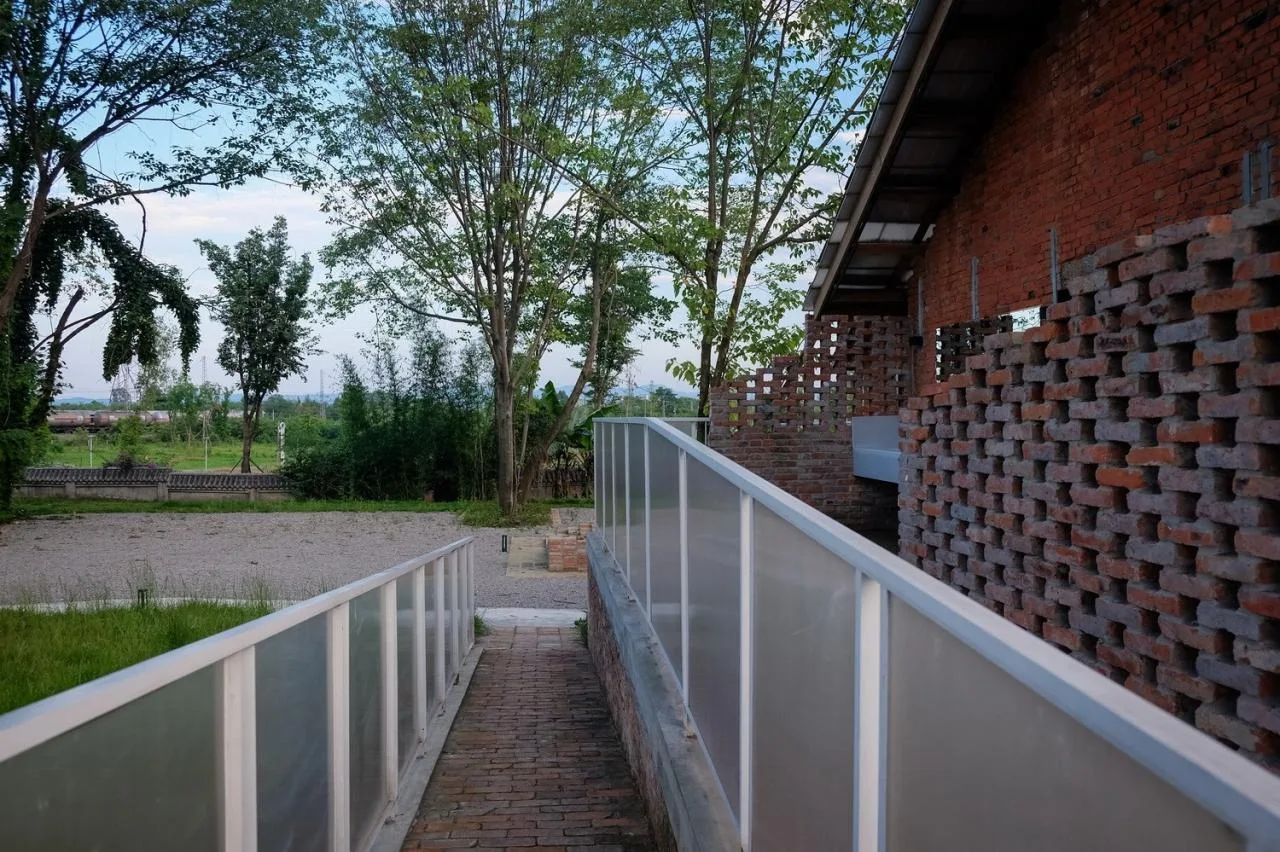
△ Flower wall made from old bricks and new materials blends seamlessly with the historic building © Xiaoyin Architecture
For the renovation, we prioritized materials that harmonize with the original structures and are economically viable. To create an inclusive, open atmosphere, we selected materials with transparent, lightweight qualities. Using the site’s history as inspiration, we employed polycarbonate panels, red bricks, and ceramic tiles for targeted upgrades across several buildings.
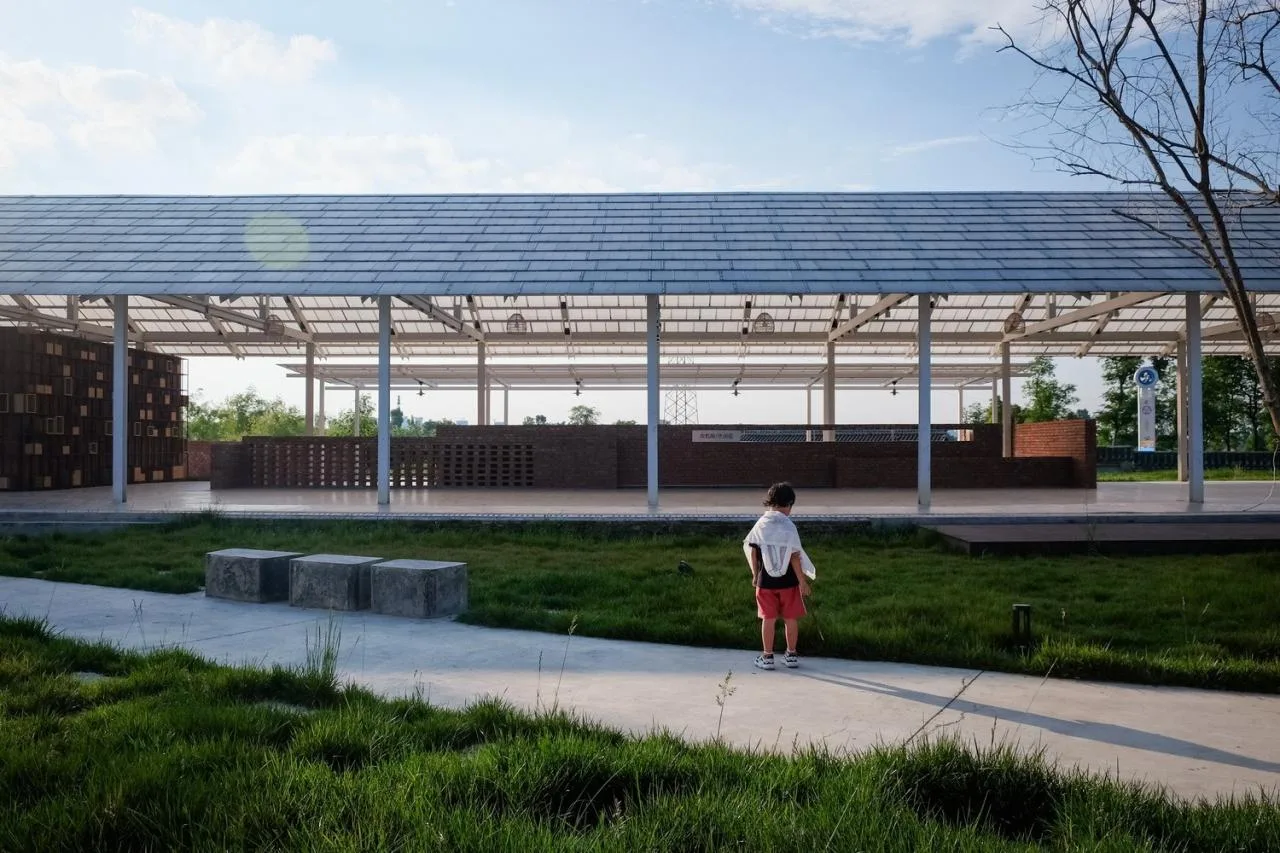
△ Lightweight, transparent polycarbonate ceiling © Xiaoyin Architecture
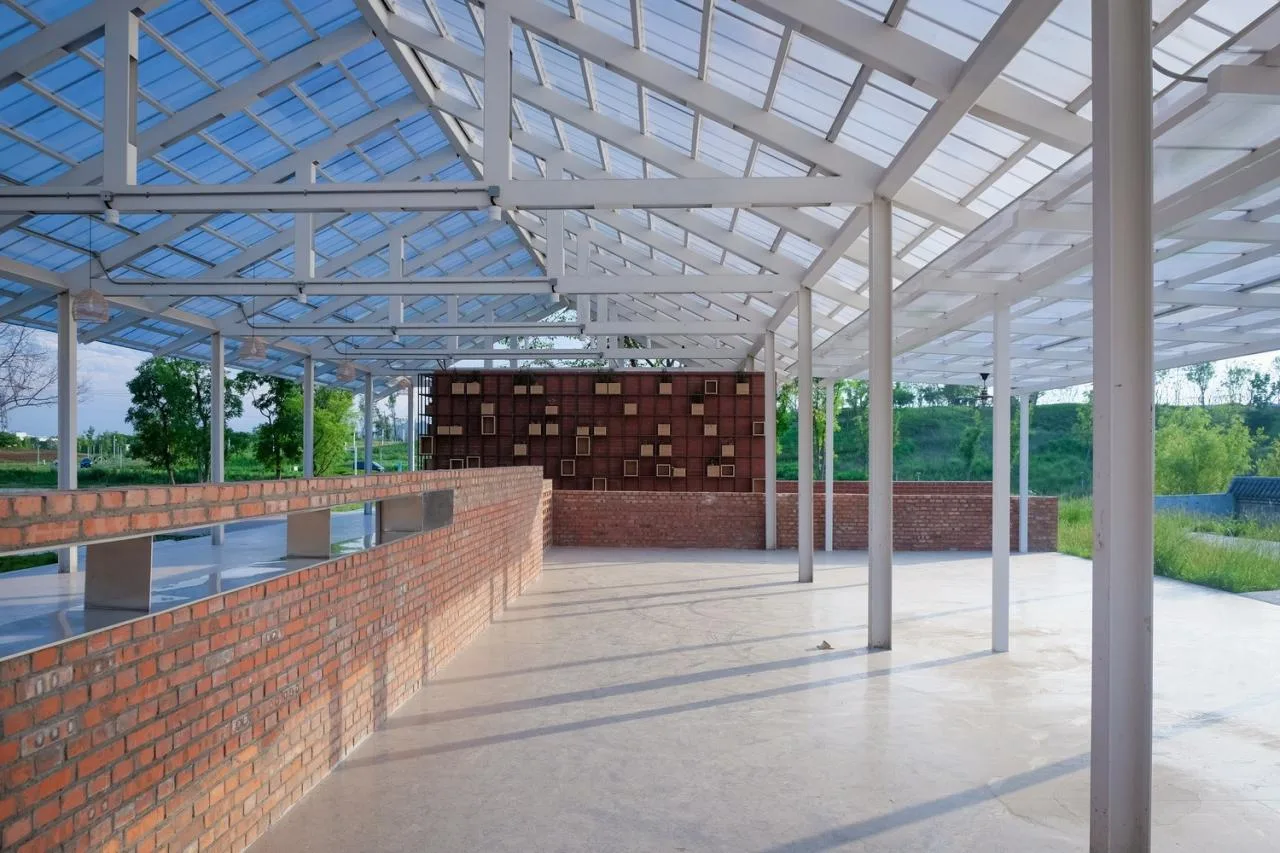
△ Polycarbonate panels create a soft, hazy visual effect © Xiaoyin Architecture
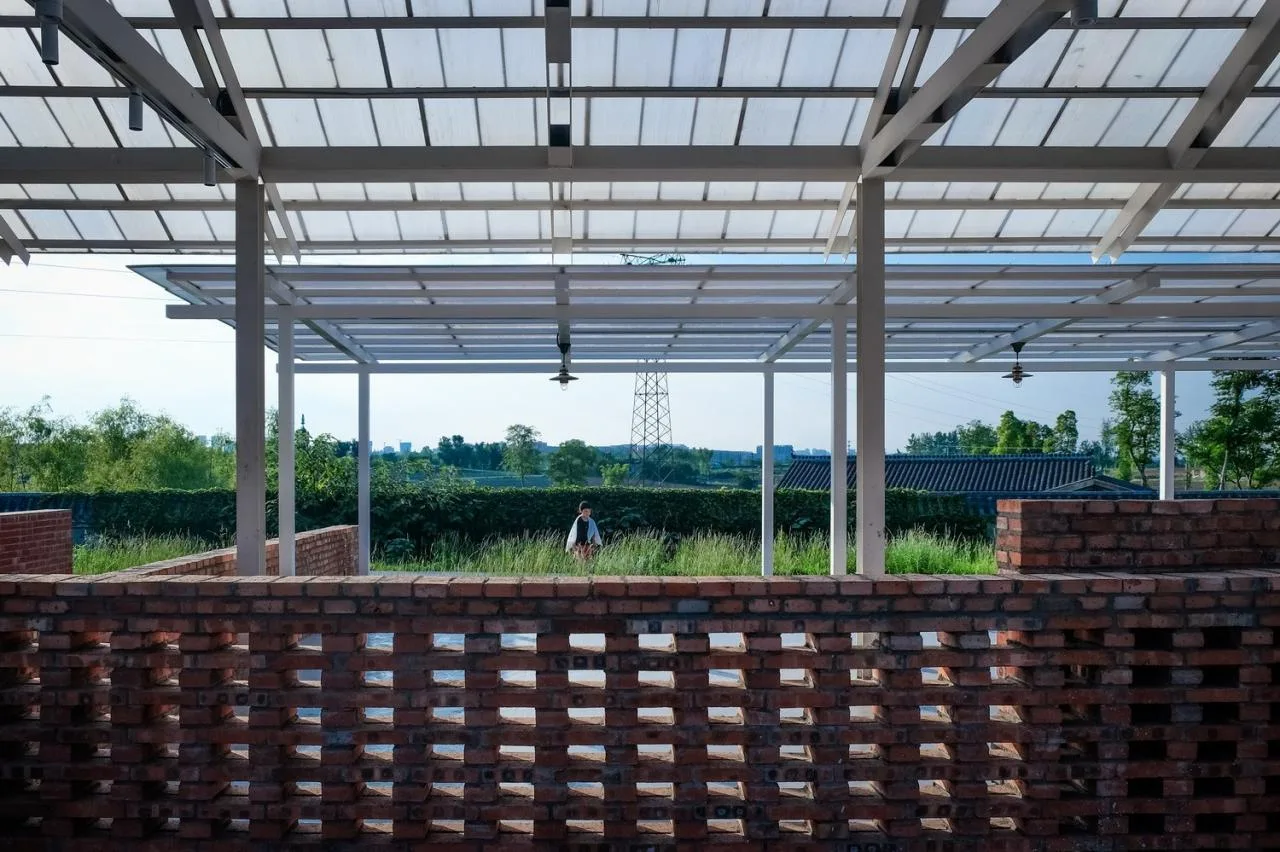
Red brick walls, polycarbonate panels, and specially treated hollow steel structures form a unified grid pattern © Xiaoyin Architecture
Polycarbonate is a common material in rural and agricultural constructions due to its transparency, lightweight, weather resistance, flame retardancy, sound insulation, and strength. It is also cost-effective and ideal for low-tech, low-cost buildings. Red bricks and ceramic tiles carry the heritage and memories embedded in the original architecture.
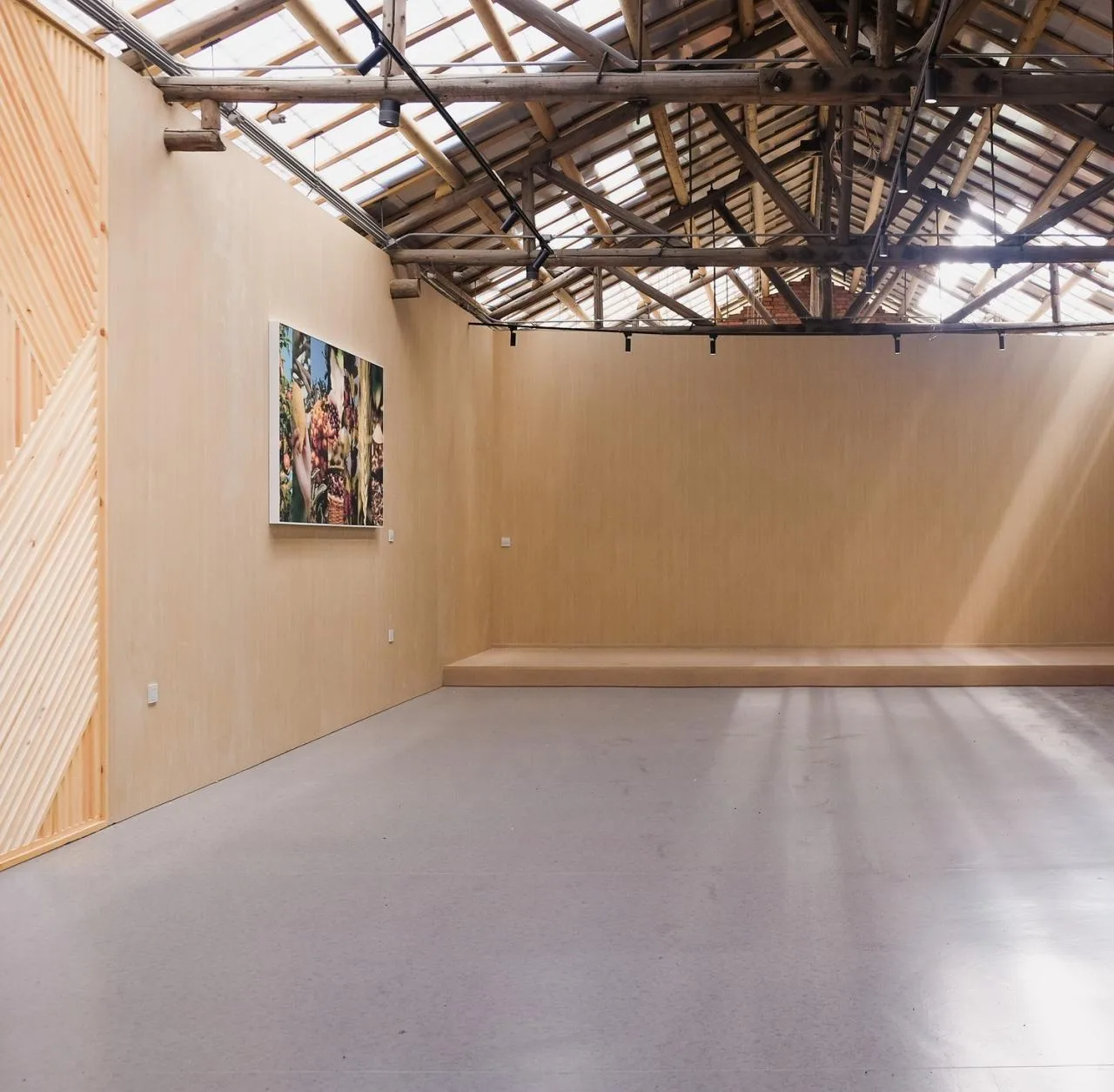
△ Morning sunlight gently filters through polycarbonate sheets © Xiaoyin Architecture
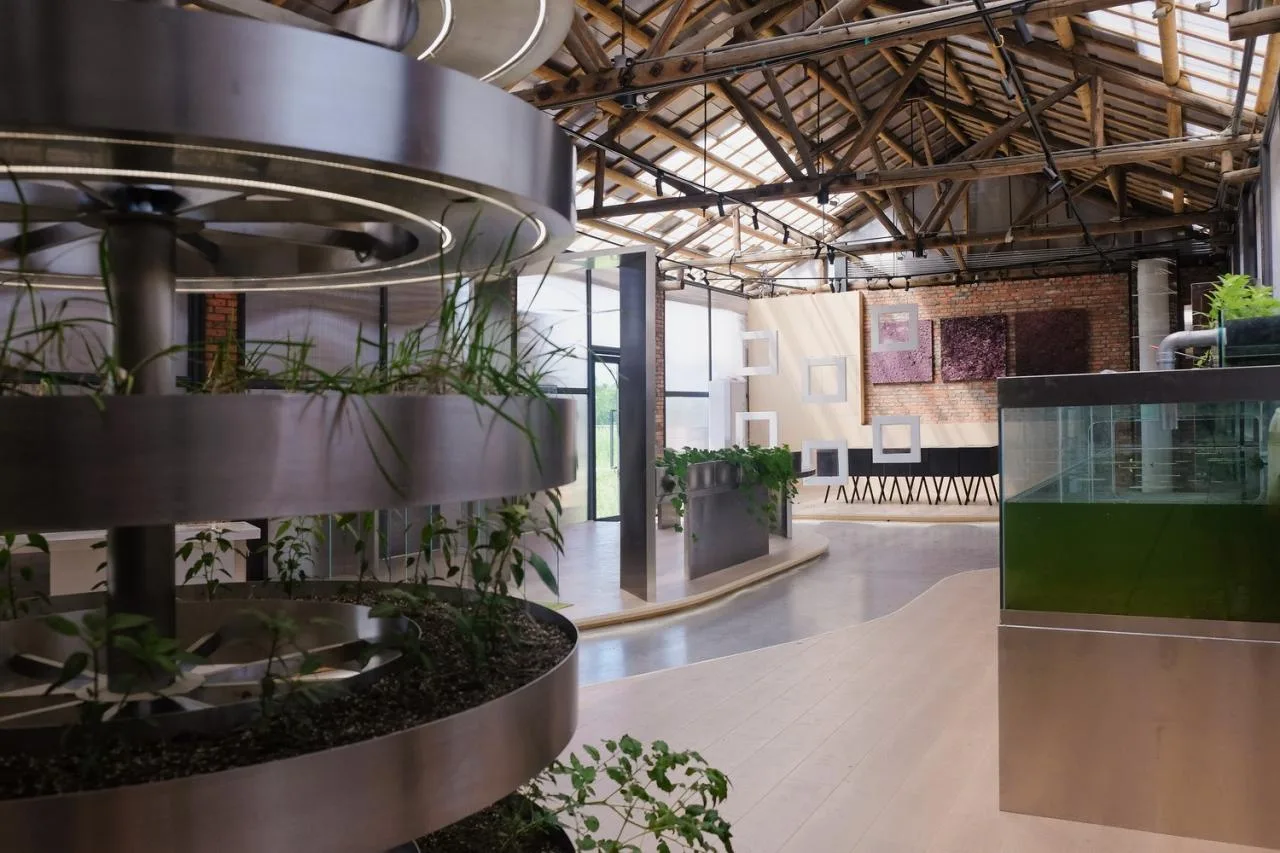
Partially transparent roofs provide ideal lighting for agricultural experiments © Xiaoyin Architecture
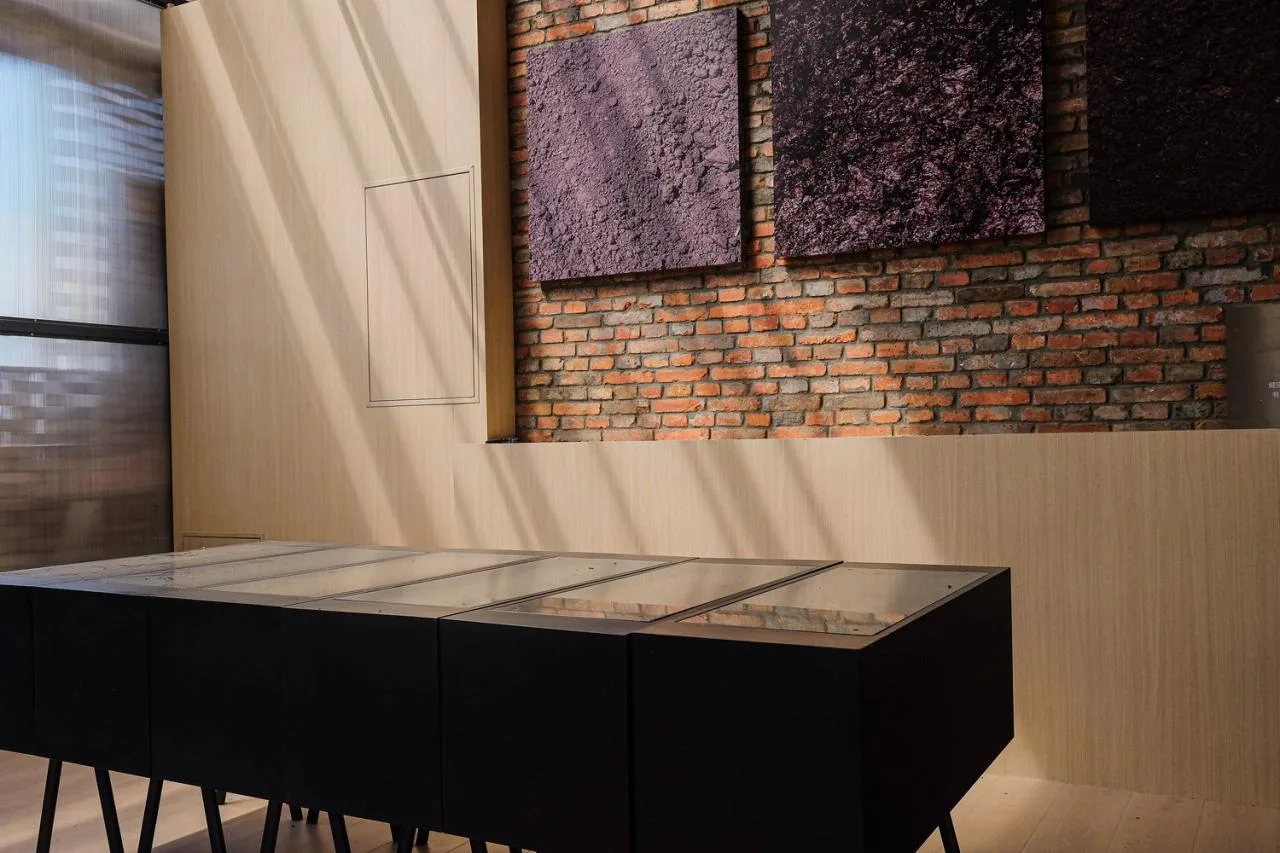
Sunlight streams through the translucent roof © Xiaoyin Architecture
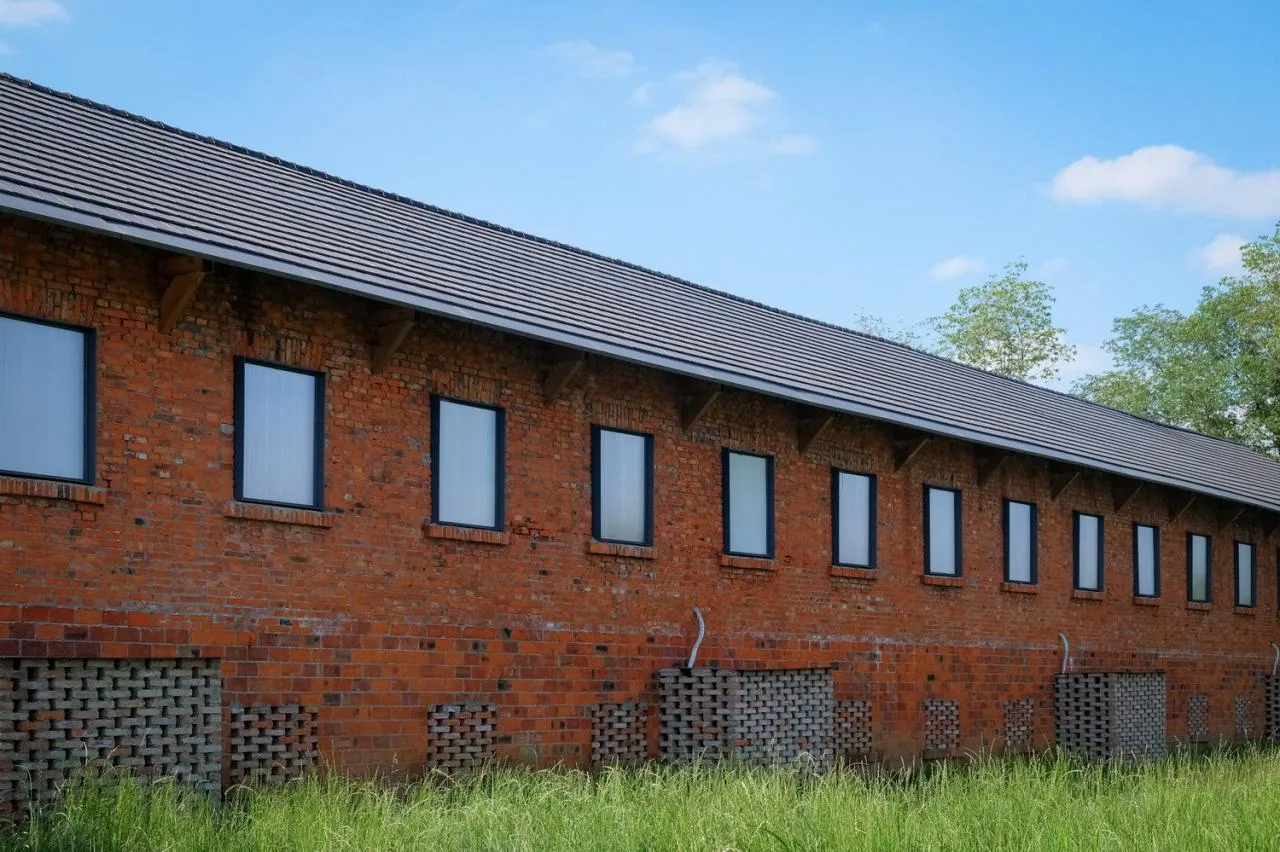
A blend of old and new red bricks, ceramic tiles, and polycarbonate windows © Xiaoyin Architecture
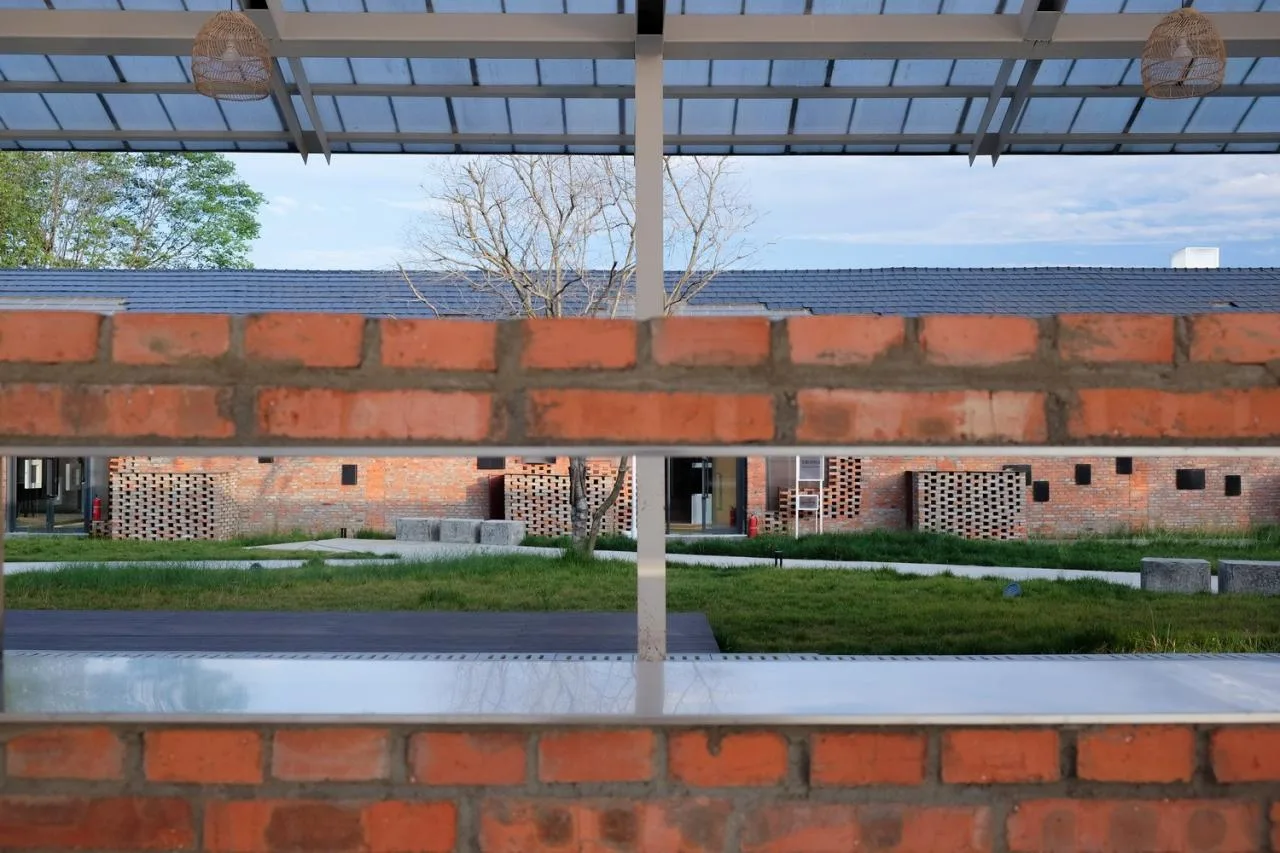
Material and structural contrasts create a dynamic spatial experience © Xiaoyin Architecture
We demolished the collapsed buildings to construct a new agricultural machinery display shed on the original site. Transparent polycarbonate panels and elegant white steel structures form a crystal-clear, lightweight, and open space.
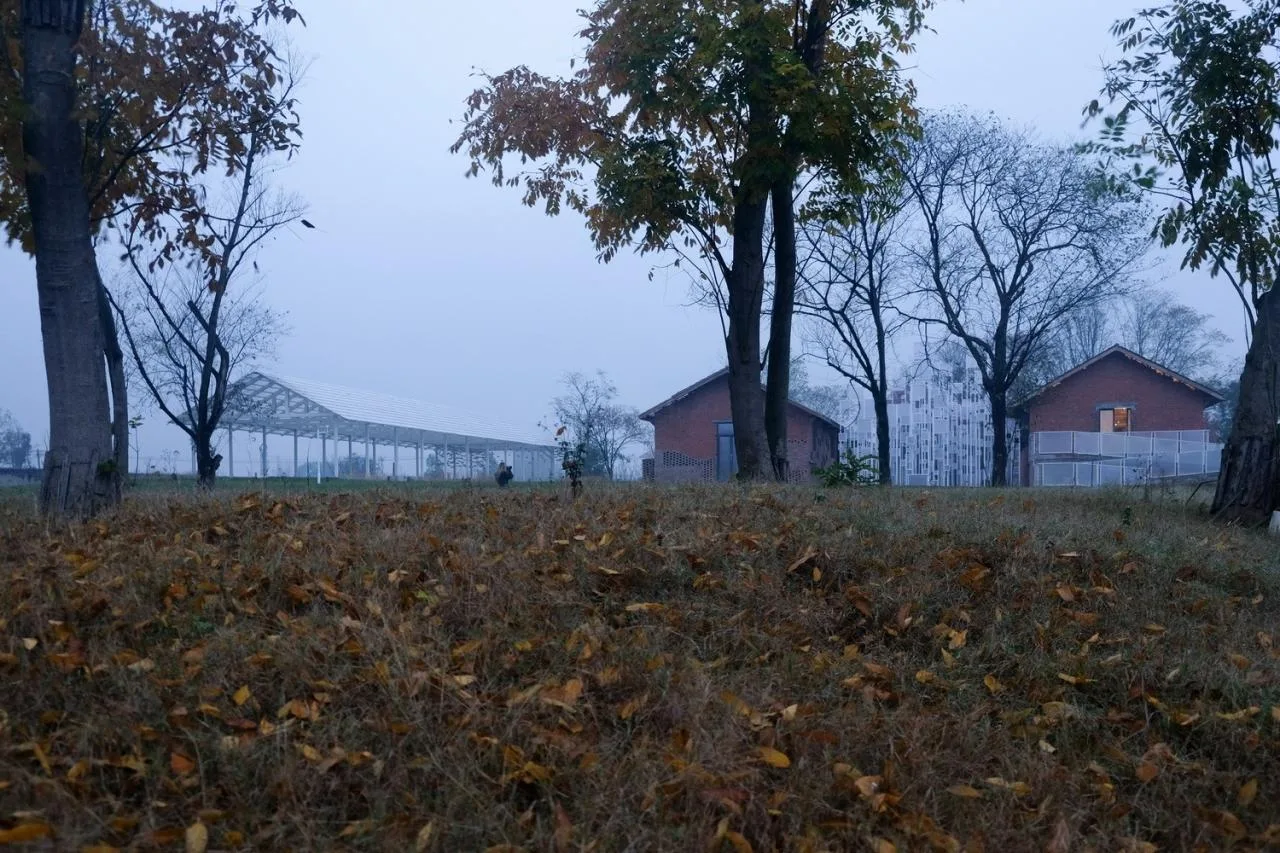
A light and graceful structure emerging from the mist © Xiaoyin Architecture
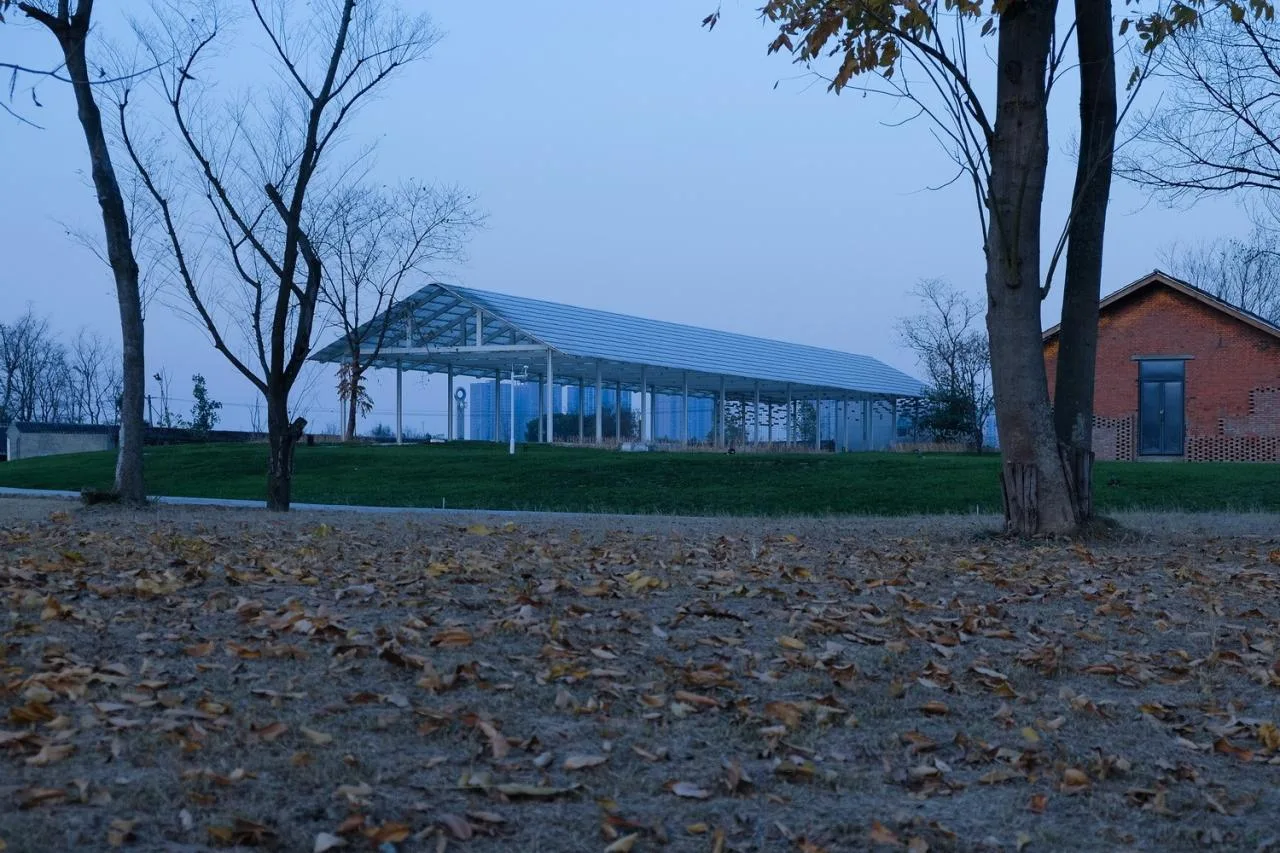
△ Polycarbonate ceiling seamlessly integrates with the sky © Xiaoyin Architecture
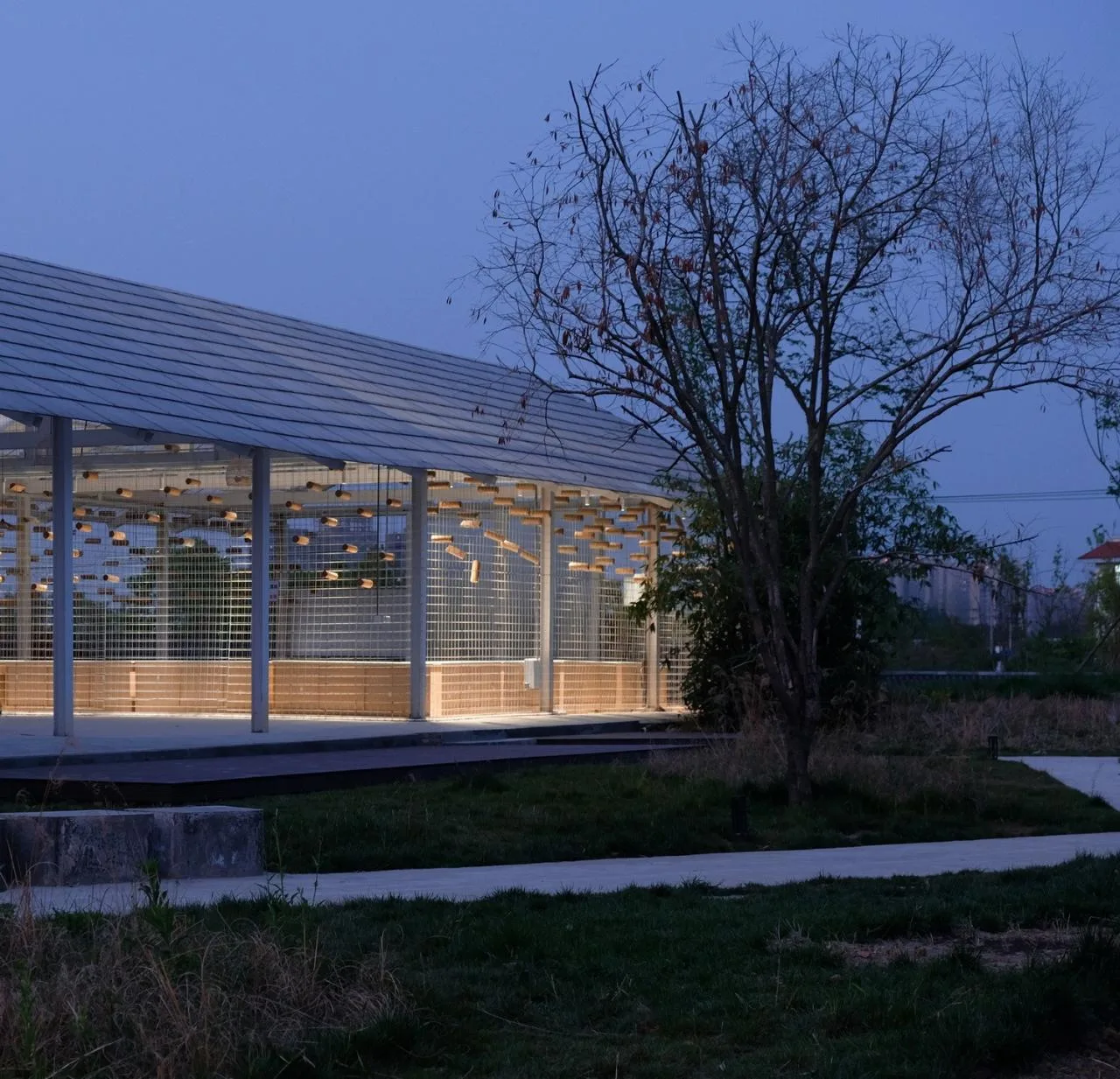
The ethereal beauty of metal mesh and polycarbonate under light © Xiaoyin Architecture
Two structurally sound buildings were renovated into exhibition halls showcasing modern agriculture and agricultural culture. The red brick masonry and wooden roof trusses were preserved and partially restored, with roofs uniformly replaced by gray ceramic tiles. The use of polycarbonate panels on ceilings, walls, doors, and windows lends the buildings a light, hazy texture, softening the massiveness of the brickwork and highlighting a harmonious coexistence of old and new.
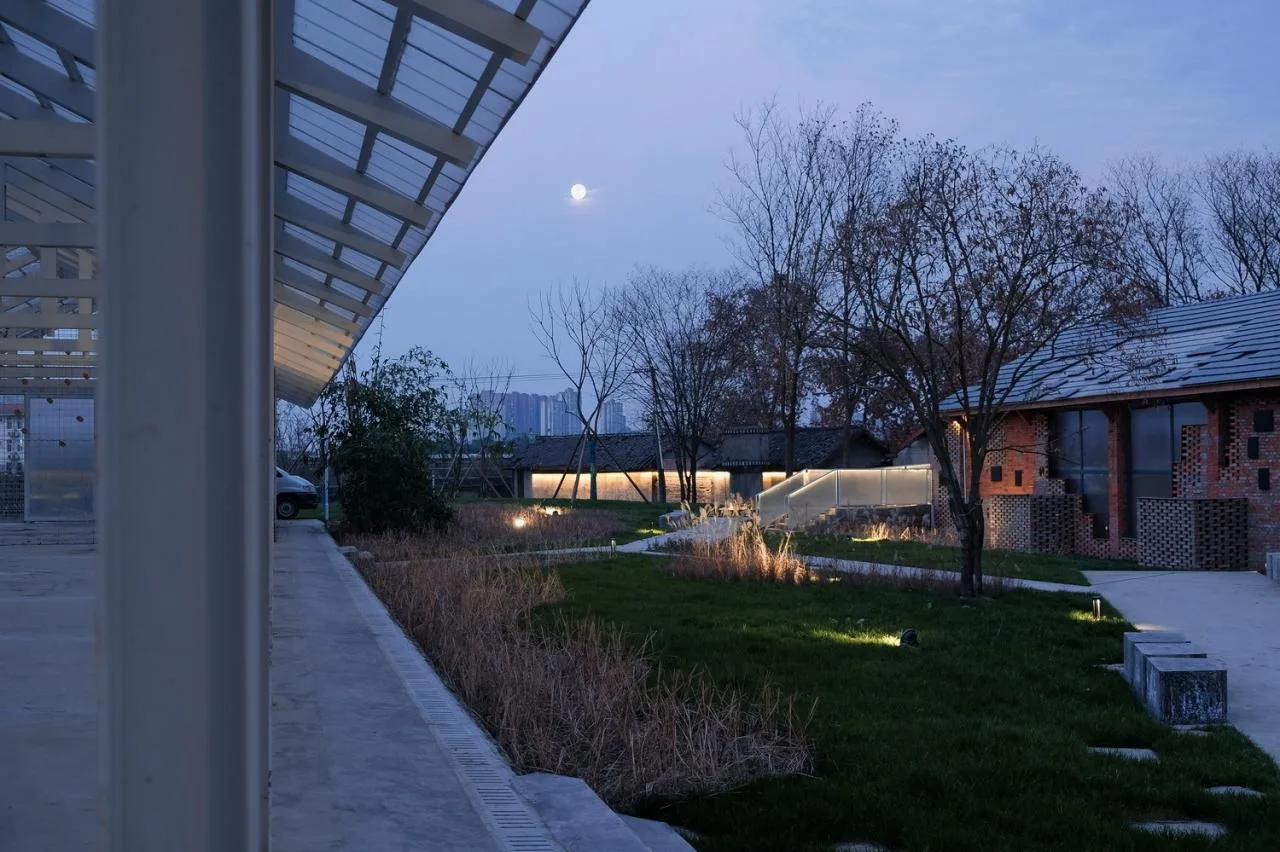
Landscape steps crafted from discarded concrete blocks © Xiaoyin Architecture
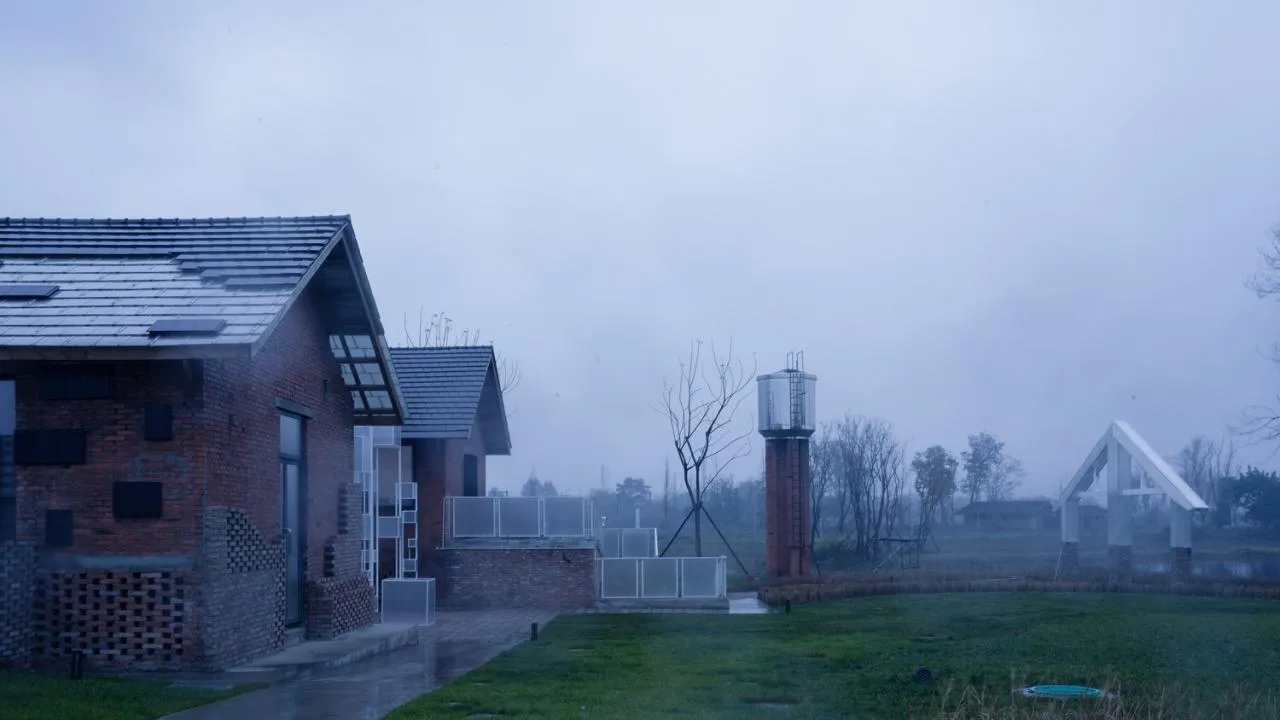
Buildings emerging faintly through the mist © Xiaoyin Architecture
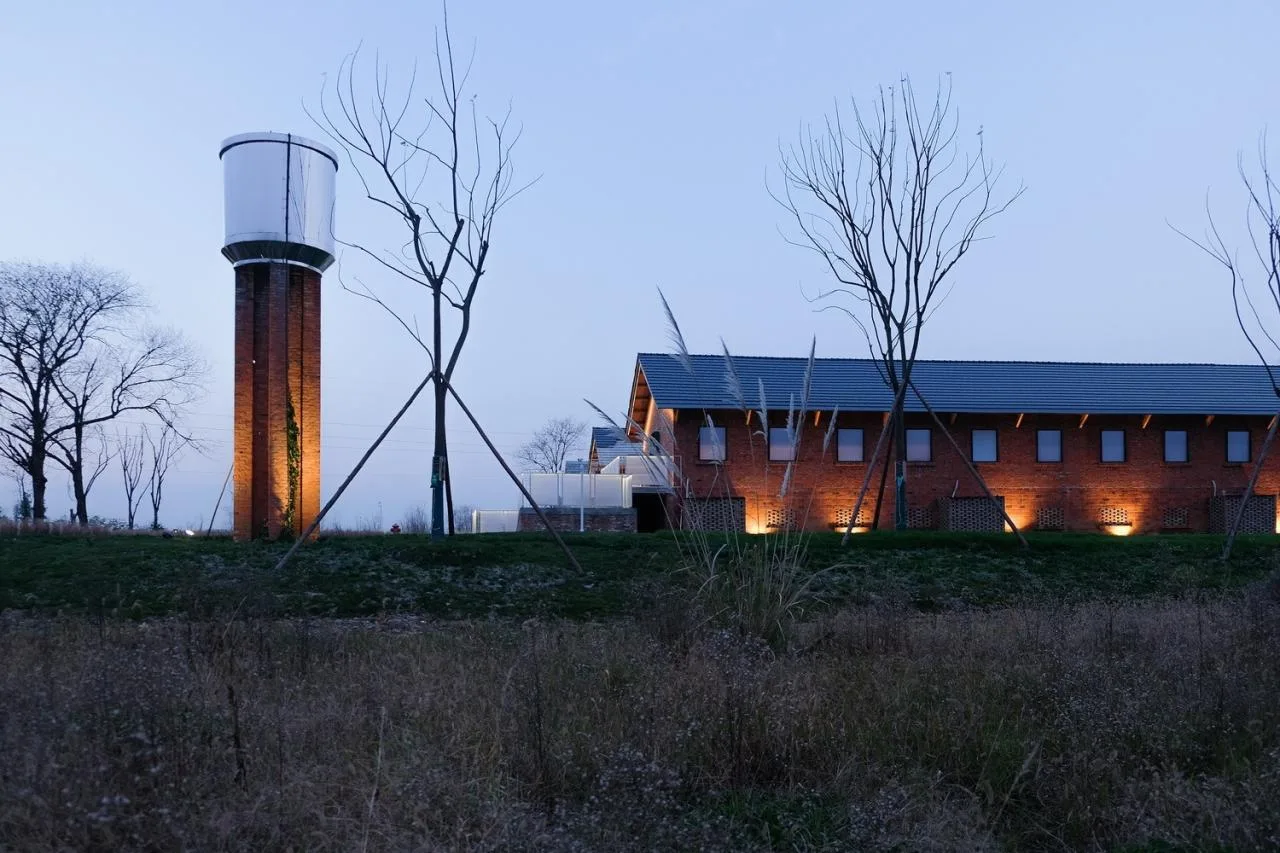
Restored water towers enhanced with stainless steel © Xiaoyin Architecture
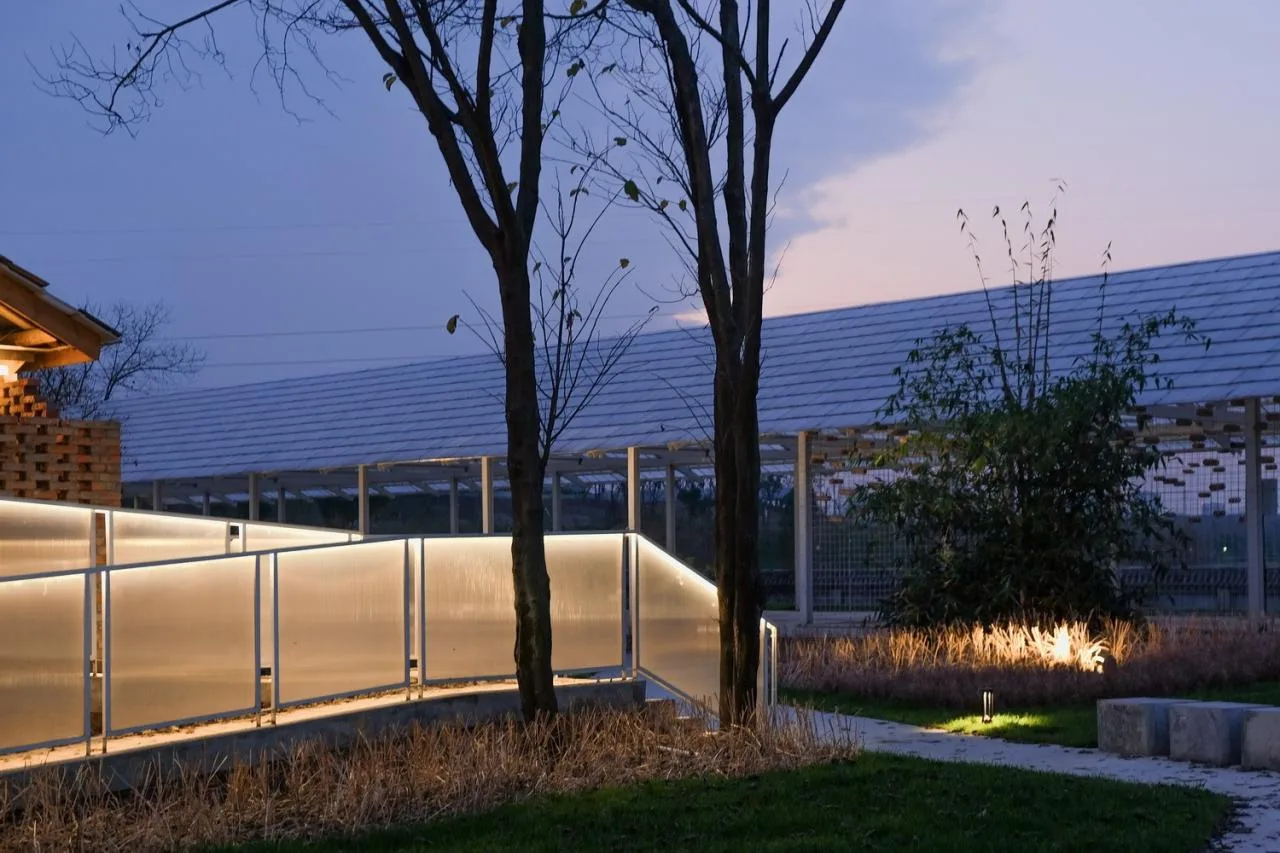
The interplay of lighting and polycarbonate creates a unique visual effect © Xiaoyin Architecture
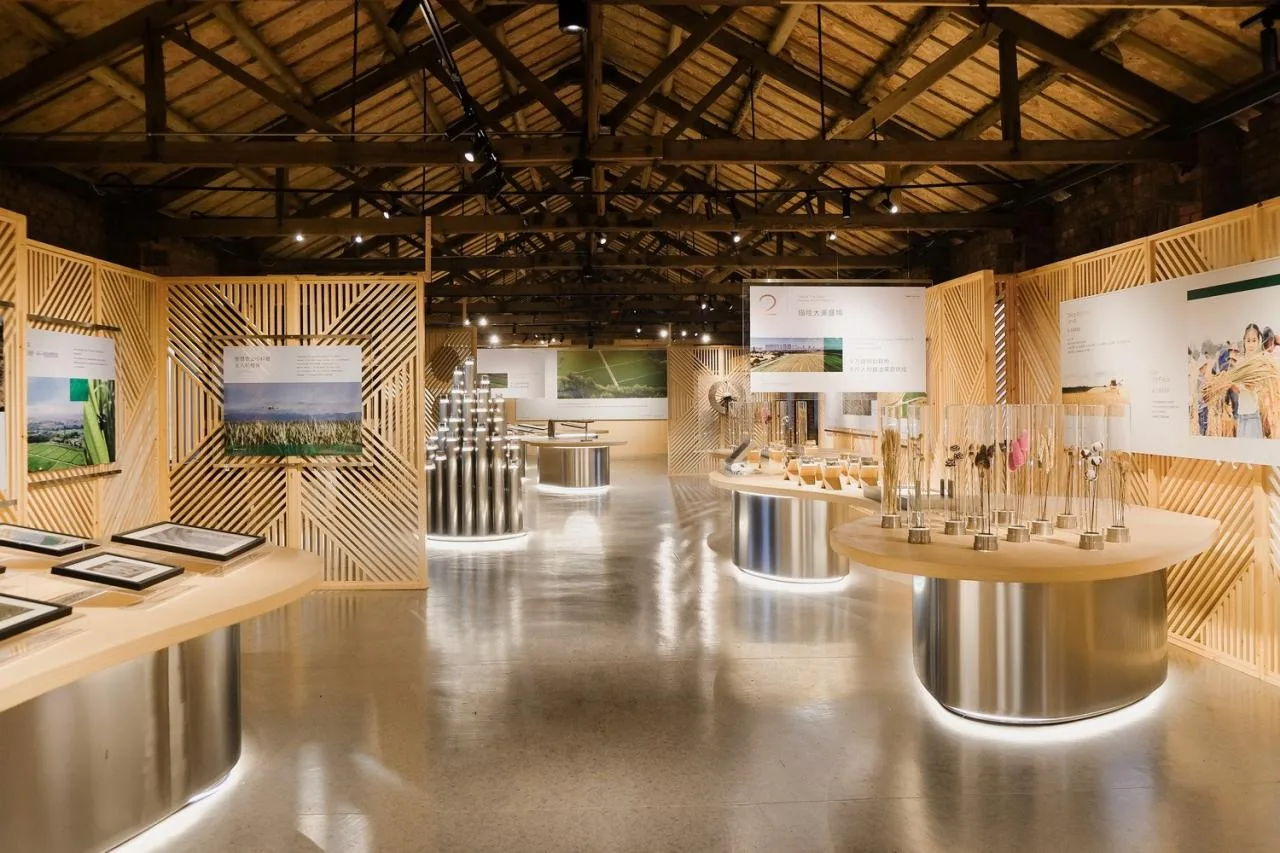
△ Preserved triangular wooden roof structure © Xiaoyin Architecture
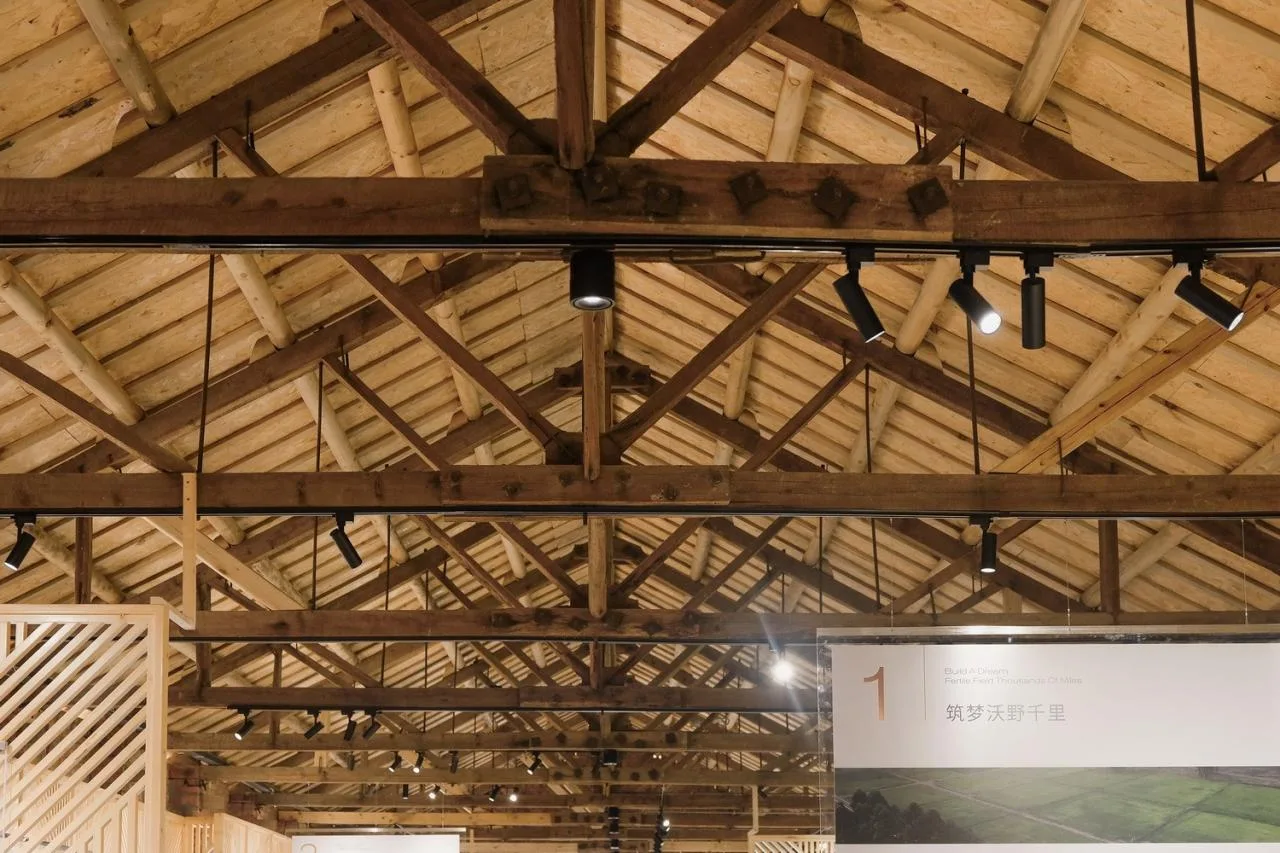
△ Preserved triangular wooden roof © Xiaoyin Architecture
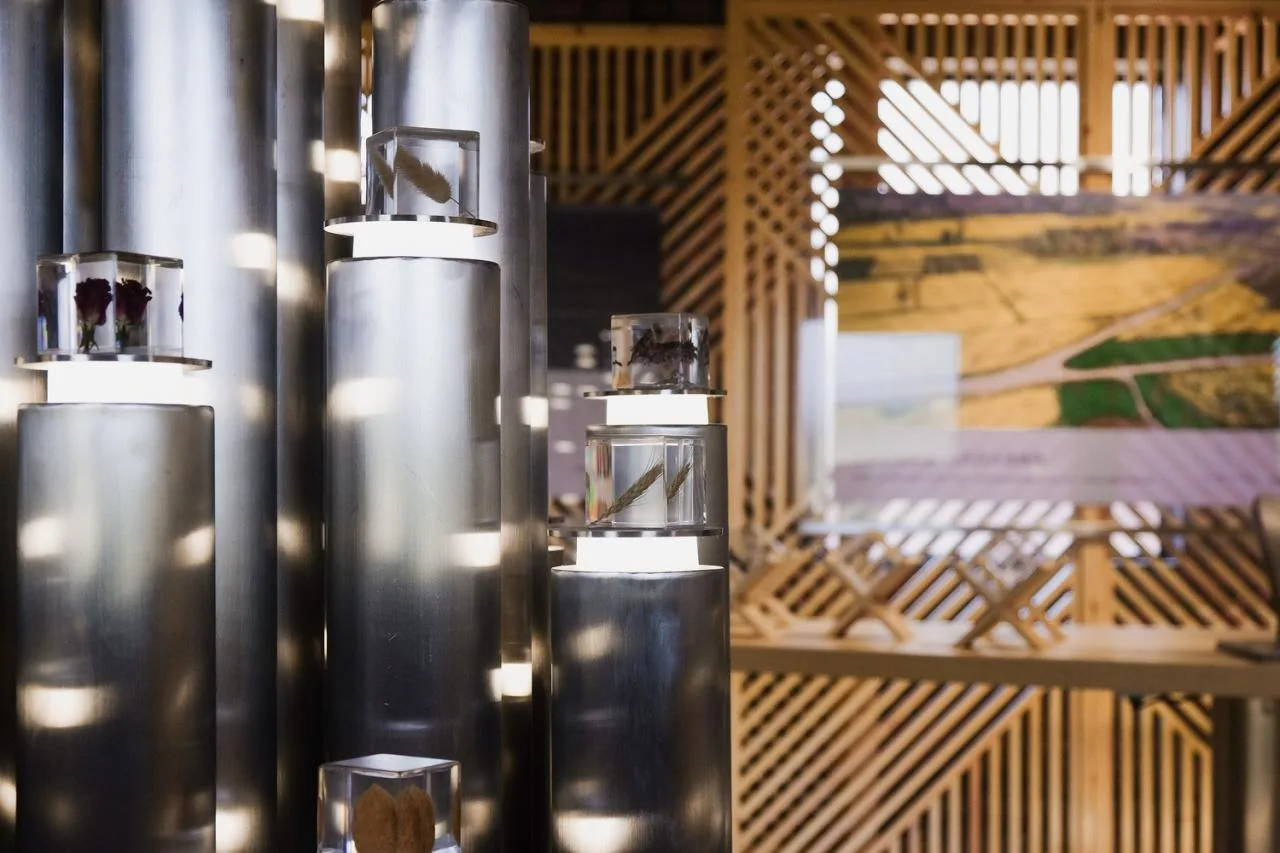
Plant specimens displayed inside the exhibition hall © Xiaoyin Architecture
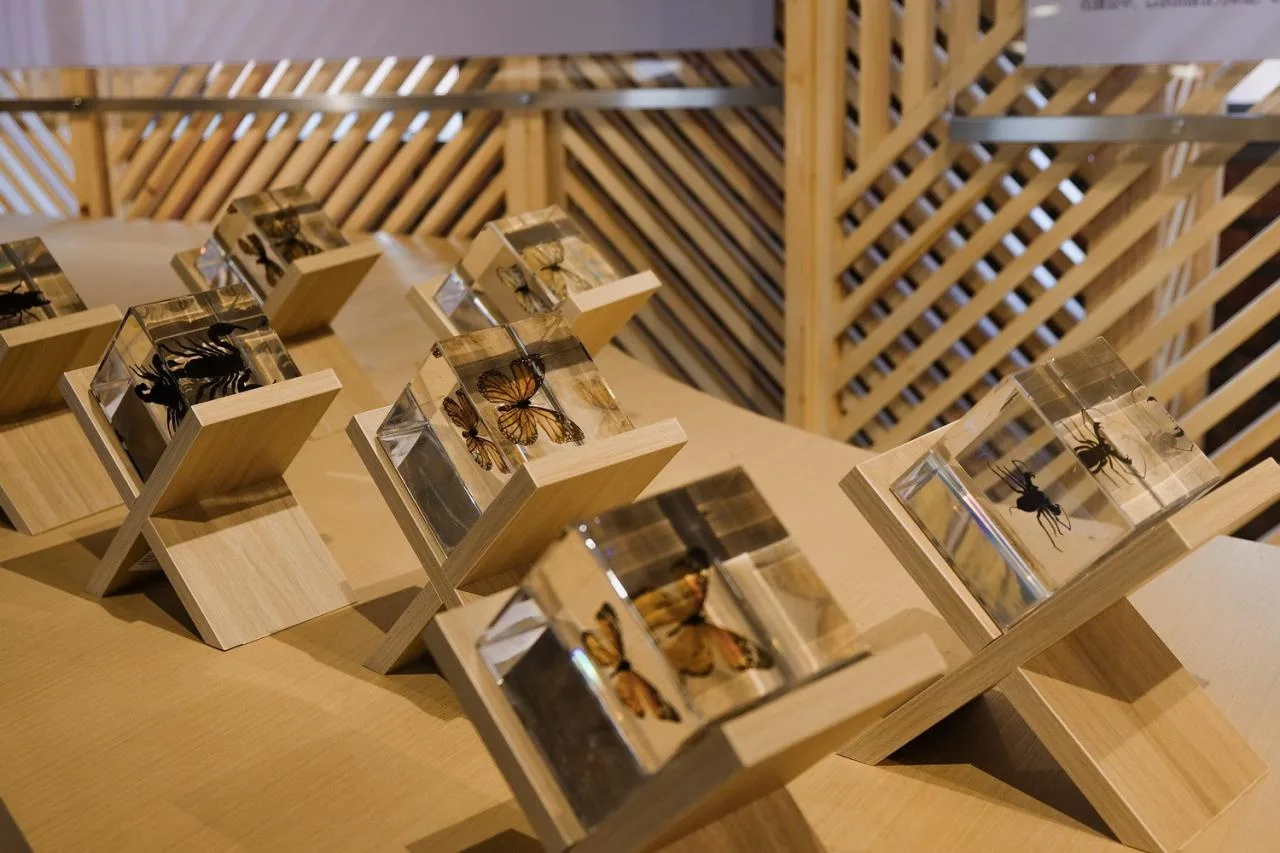
Insect specimens exhibited inside the hall © Xiaoyin Architecture
We created a series of transparent cubes of varying sizes, suspended between two old buildings using steel and polycarbonate panels. Inspired by seeds and Kongming lanterns, this installation serves as the visual centerpiece of the site. By day, the cubes resemble seeds sprouting from red brick crevices, soaring towards the sky and shining under the sun. At night, warm yellow light radiates through the polycarbonate boxes, evoking the image of Kongming lanterns frozen in mid-air—dreamlike and ethereal.
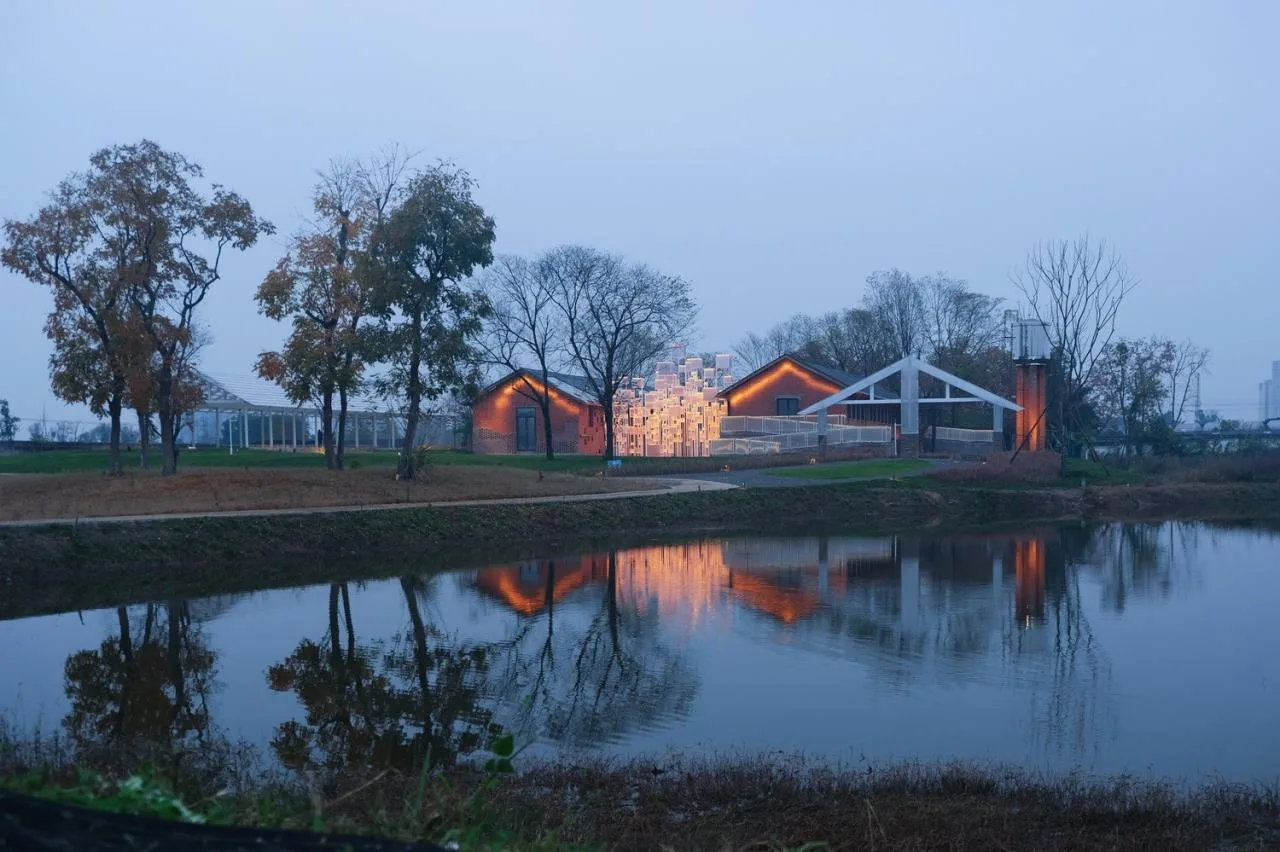
Floating orange seeds glowing under the night sky © Xiaoyin Architecture
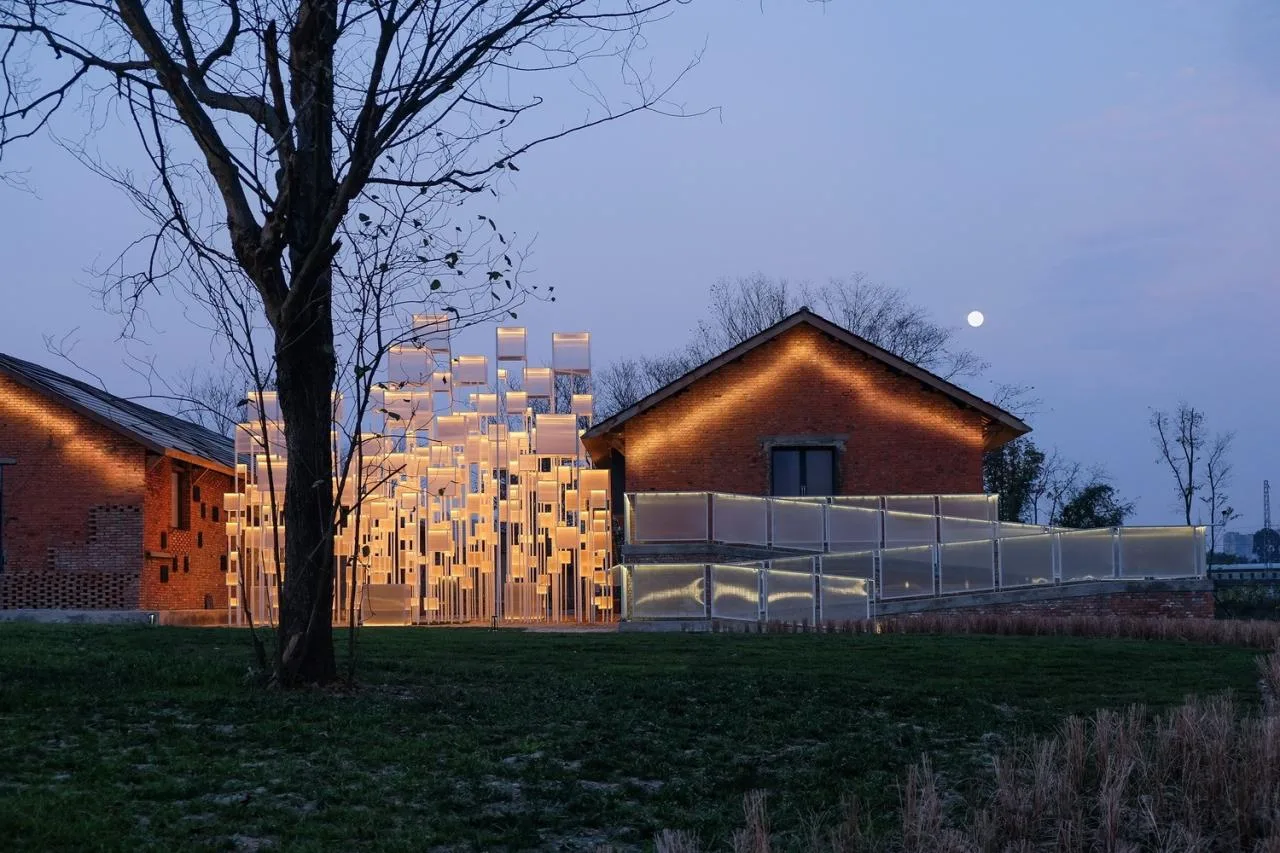
At night, floating seeds become the visual focal point © Xiaoyin Architecture
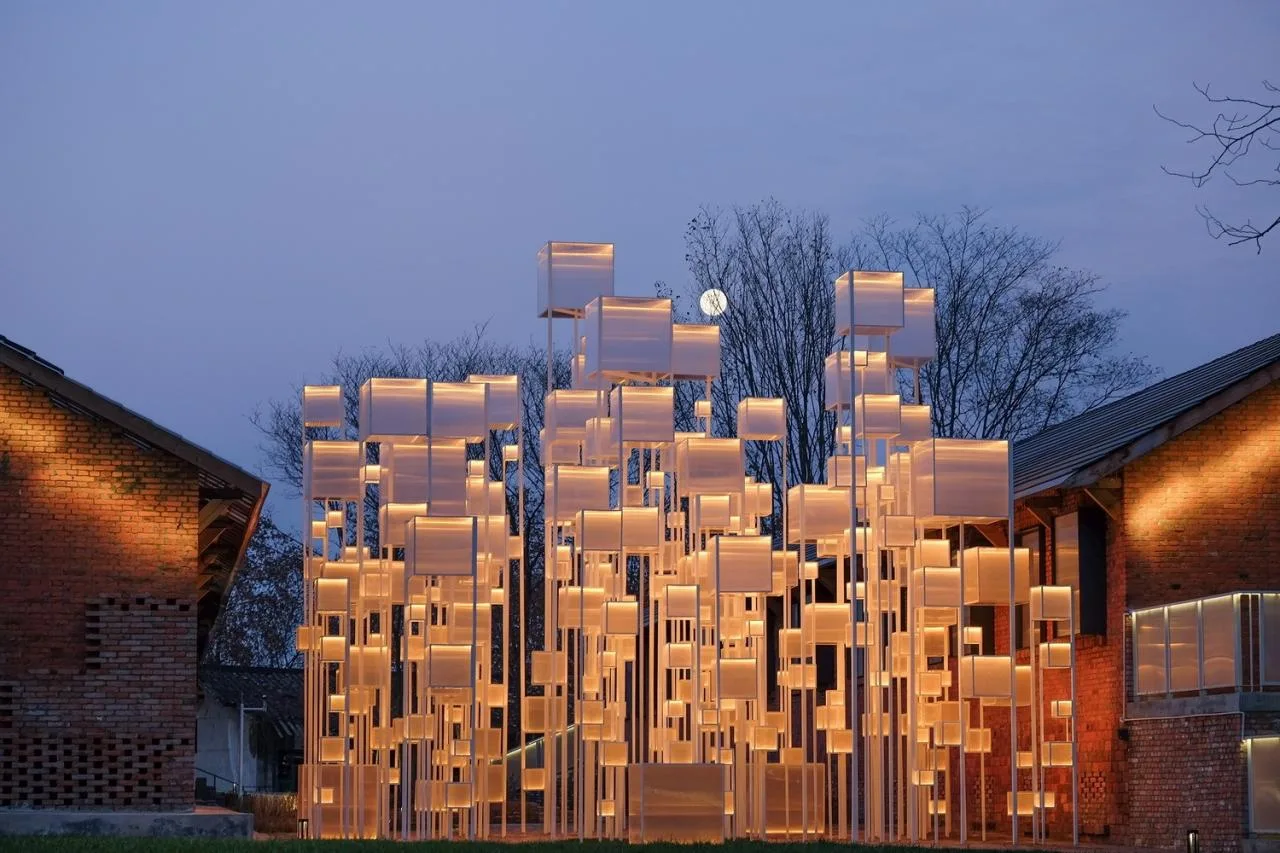
Floating seeds transform into Kongming lanterns, suspended in mid-air © Xiaoyin Architecture
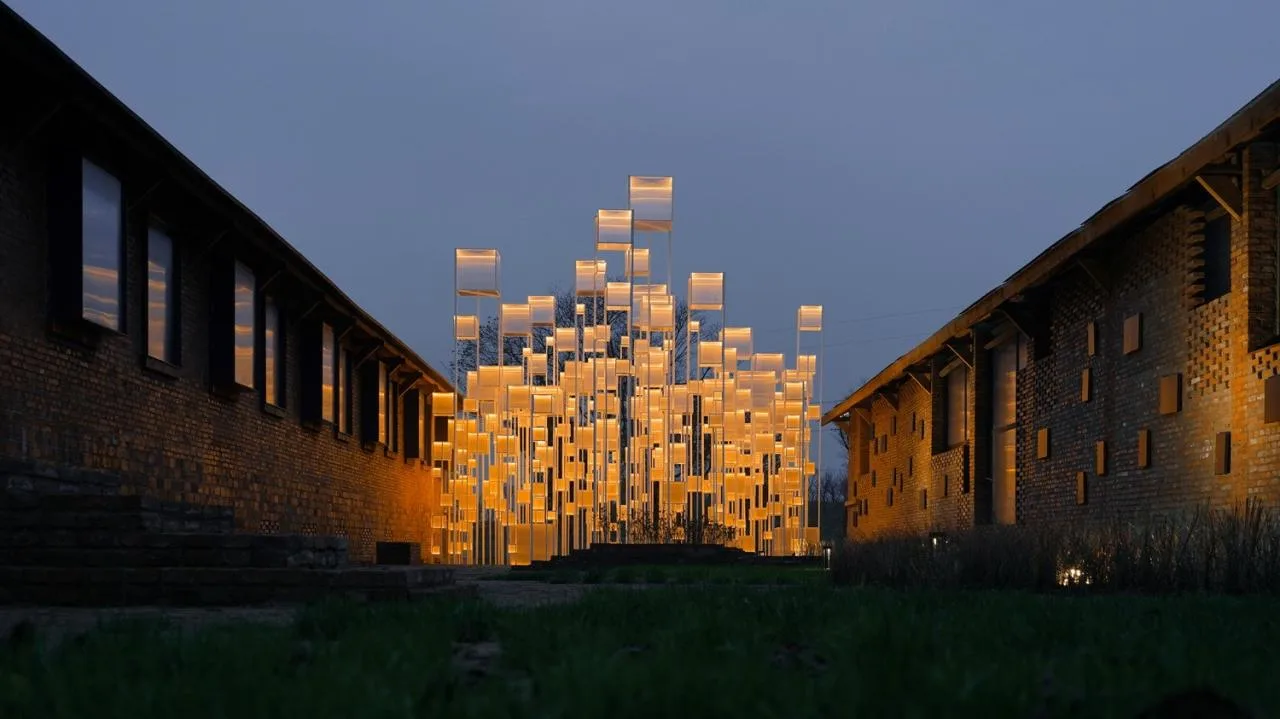
Floating seeds ascending toward the sky © Xiaoyin Architecture
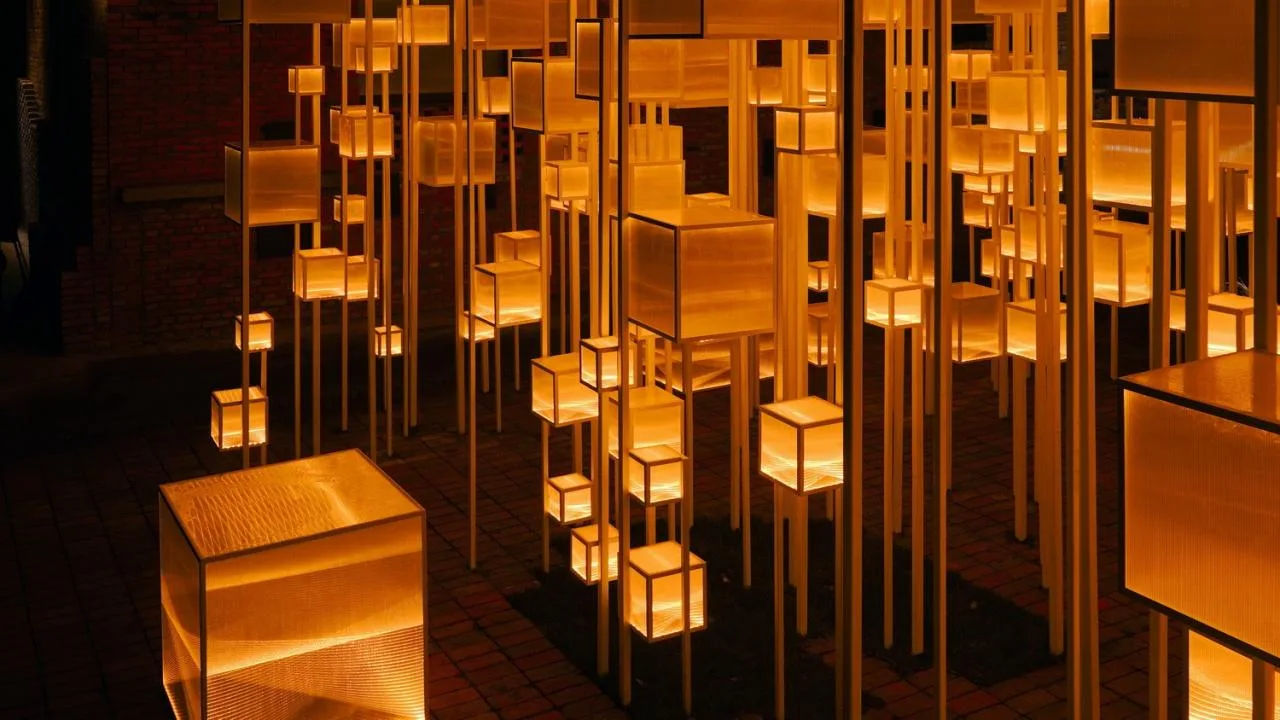
The Kongming lantern suspended in the air © Xiaoyin Architecture
Historian Wang Di emphasizes that history and culture form the soul of a city. Preserving this soul amid modernization, commercialization, and technological change is a challenge faced by urban managers, scholars, and residents alike. Architects must also consider this deeply when engaging in urban renewal projects.
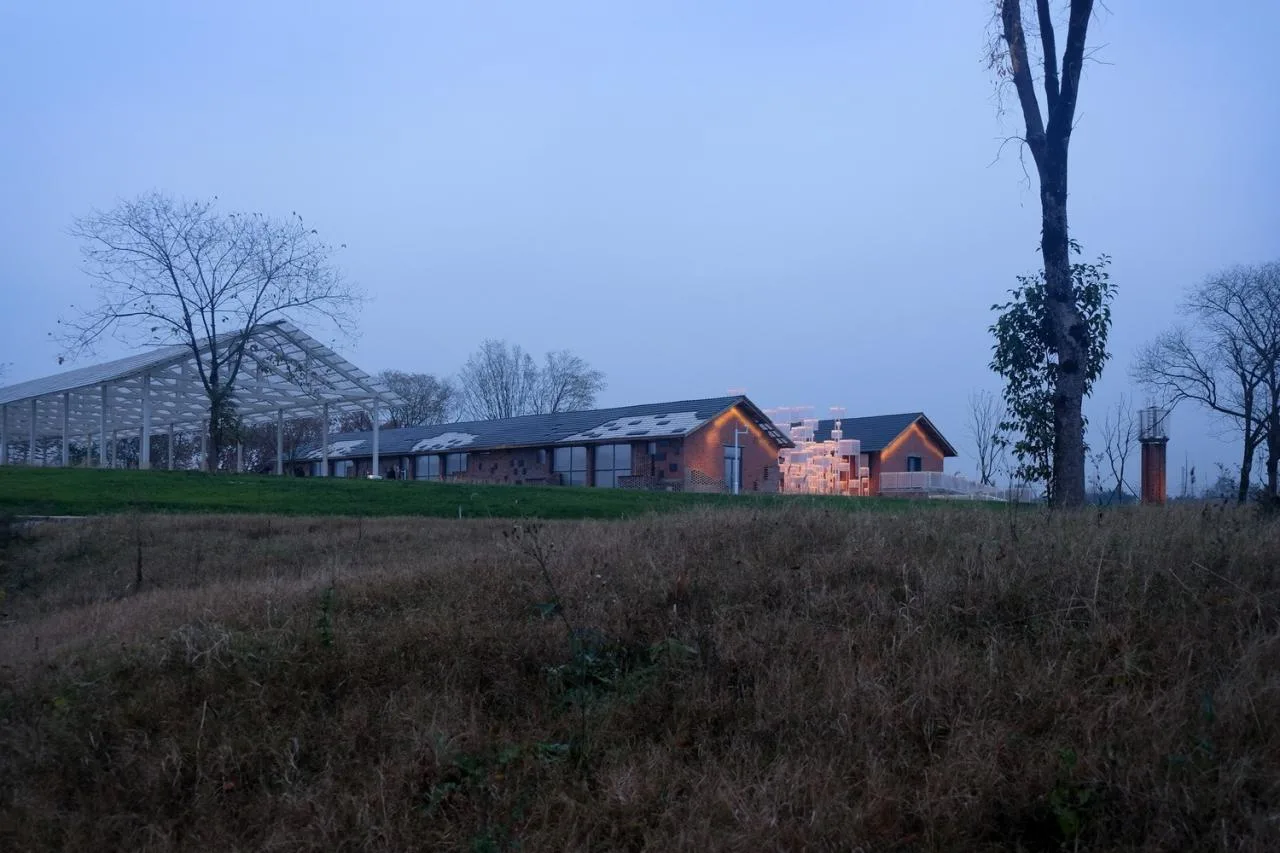
Three buildings gracefully nestle into the lawn © Xiaoyin Architecture
We believe it is essential to distinguish between “old,” “damaged,” and “rotten” when renovating. “Old” denotes age and history, not decay; “damaged” implies repairable impairment; while “rotten” indicates irreversible loss. Recognizing these differences allows for appropriate strategies when dealing with various buildings.
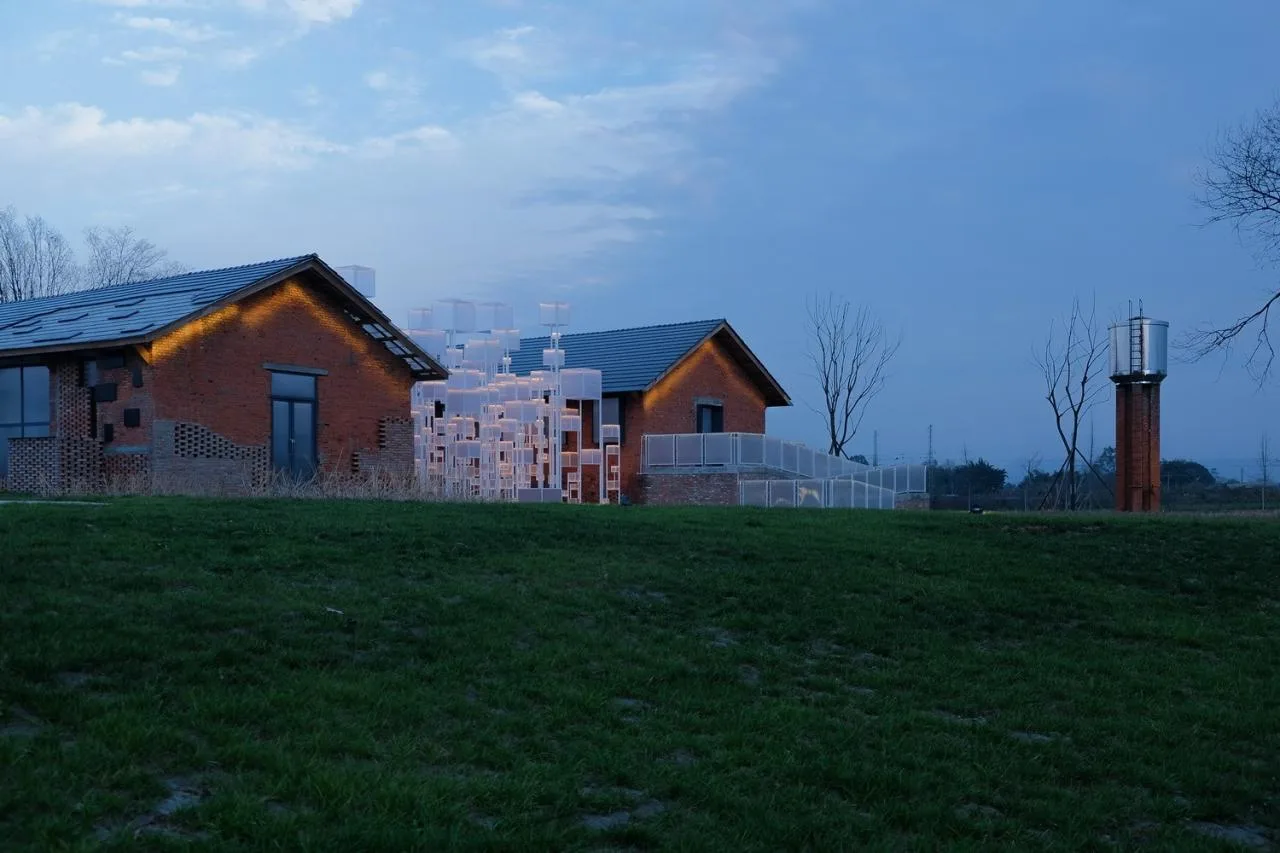
Alternating old and new red brick buildings in harmony © Xiaoyin Architecture
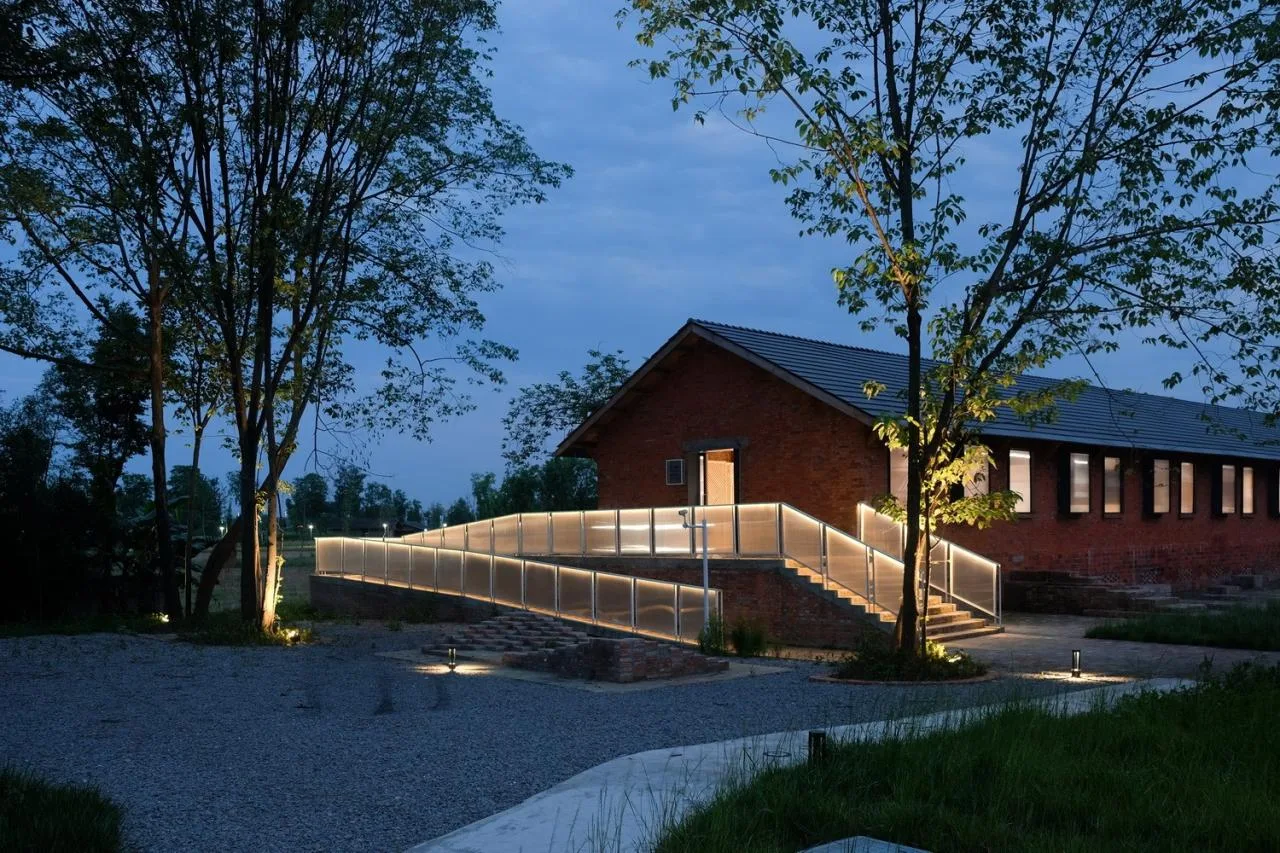
Glowing polycarbonate panels guide visitors inside the exhibition hall © Xiaoyin Architecture
In the face of relentless urbanization, architects must adopt a humanistic approach. Architecture is not merely a structure; it is a frozen art form, an epic forged with wisdom and passion. Qinglong Lake · Floating Seed represents a small seed we have planted in the ongoing process of urban renewal. We hope it expresses our perspective on urban transformation and inspires others to reflect on their cities, helping to preserve precious urban culture amid rapid change.

Crystal-clear floating seeds complement the blue sky © Xiaoyin Architecture
Project Drawings
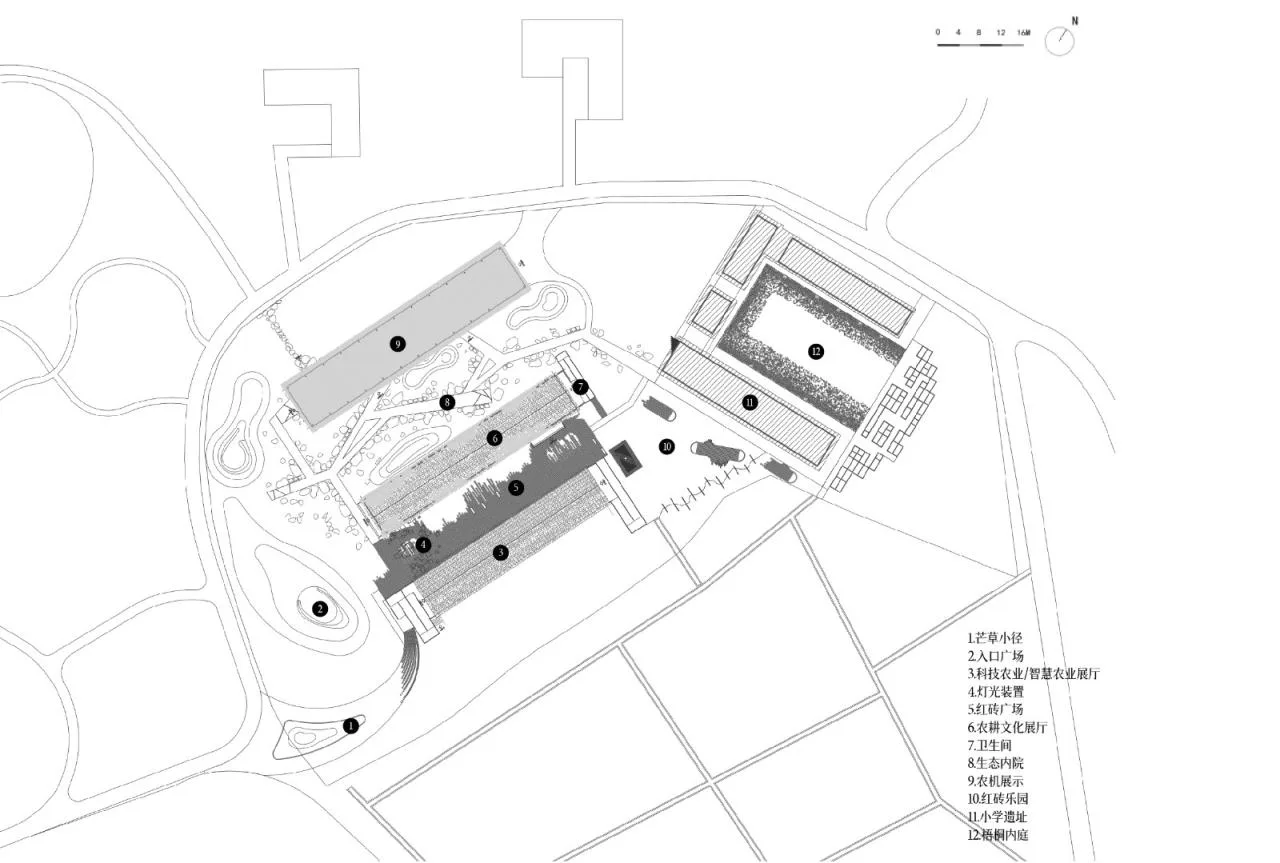
△ General layout plan
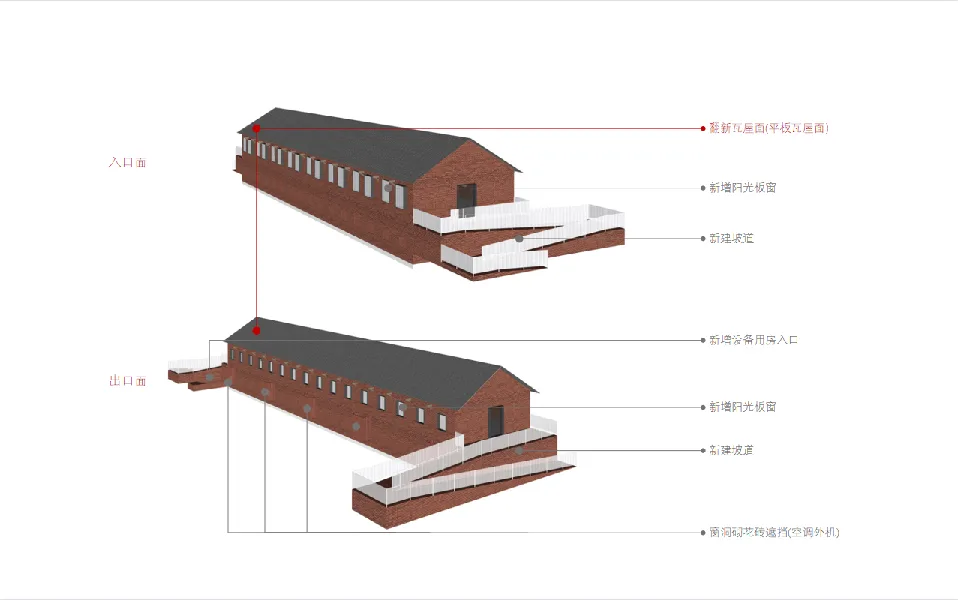
△ Analysis diagram
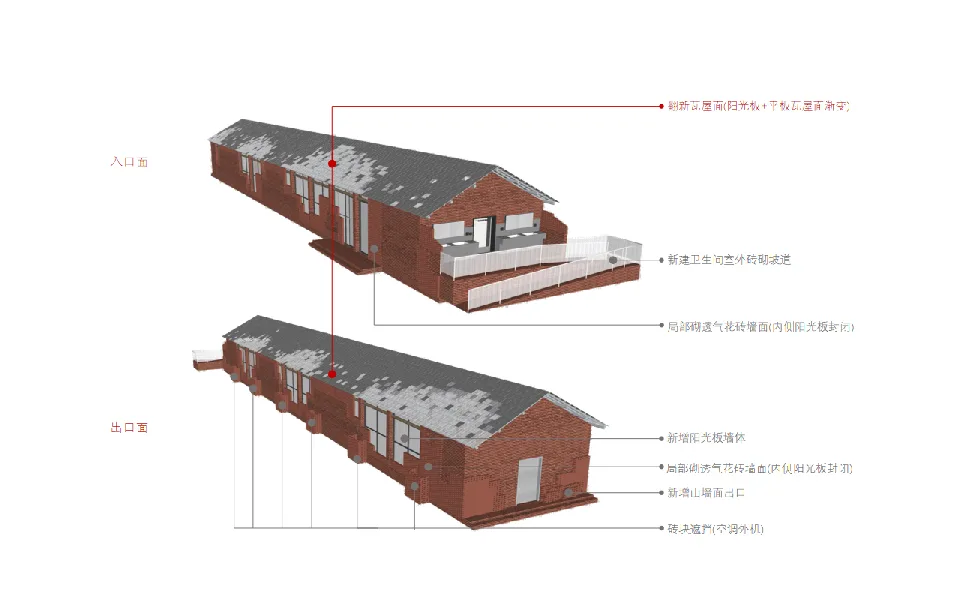
△ Analysis diagram
Project Details
Project Team: Xiaoyin Architectural Firm
Lead Architect: Pan Youcai
Design Director: Yang Zhe (Partner)
Technical Director: Chen Renzhen (Partner)
Structural Engineer: Du Xu
Design Team: Feng Yutao, Song Zhiying, Yang Rui, Gou Yuanjun, He Yi, Zhao Yaxian, Liu Zixuan, Hu Qinmei, Kang Ying, Hu Jia, Pan Xia, Hu Qiang, Zhai Lingxi, Wang Chao
Owner: Chengdu Tianfu Greenway Construction Investment Group Co., Ltd
Construction Drawing Team: Chengdu Meisha Architectural Design Co., Ltd
Exhibition Design and Construction: Shanghai Youke Architectural Design Co., Ltd., Zhongcheng Difeng Construction Engineering Co., Ltd
Construction Unit: Sichuan Jincheng Zhixin Construction Engineering Co., Ltd
Photography: Xiaoyin Architecture
Author: Liu Kairui
Translation: Liu Zixuan
Project Location: Phase II of Qinglonghu Wetland Park, Chengdu, Sichuan Province
Building Area: 2,042 square meters















Must log in before commenting!
Sign Up