
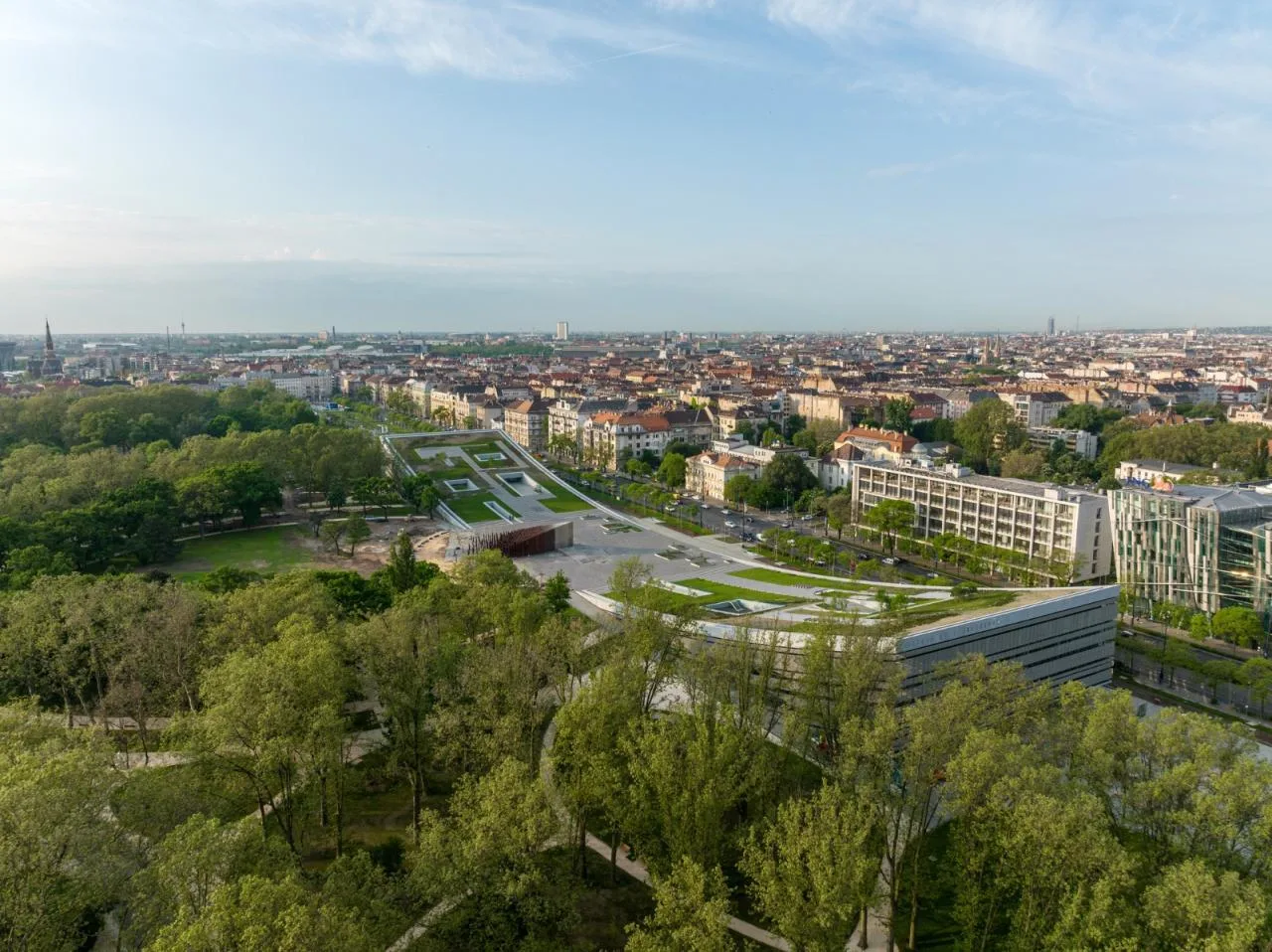
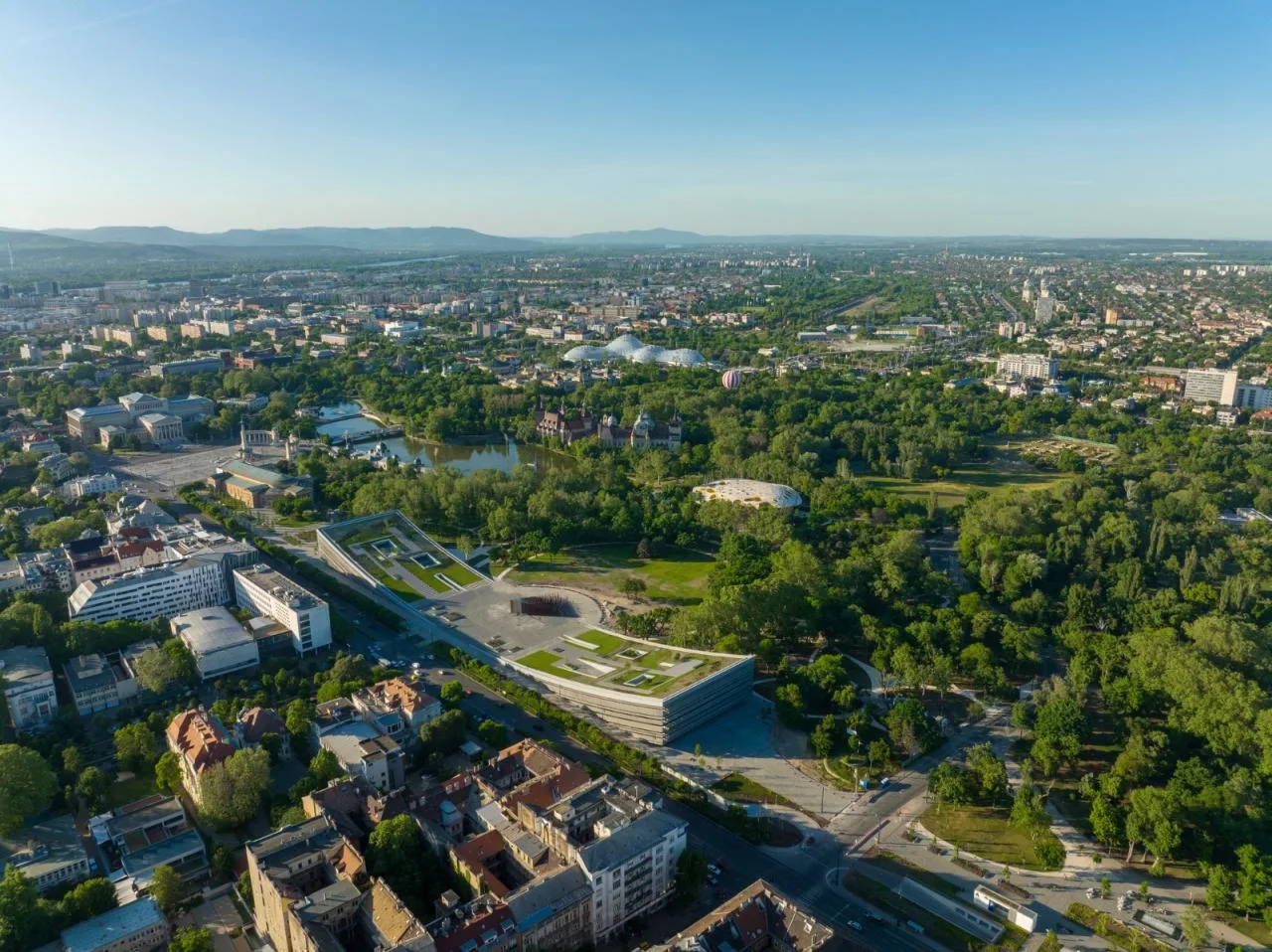
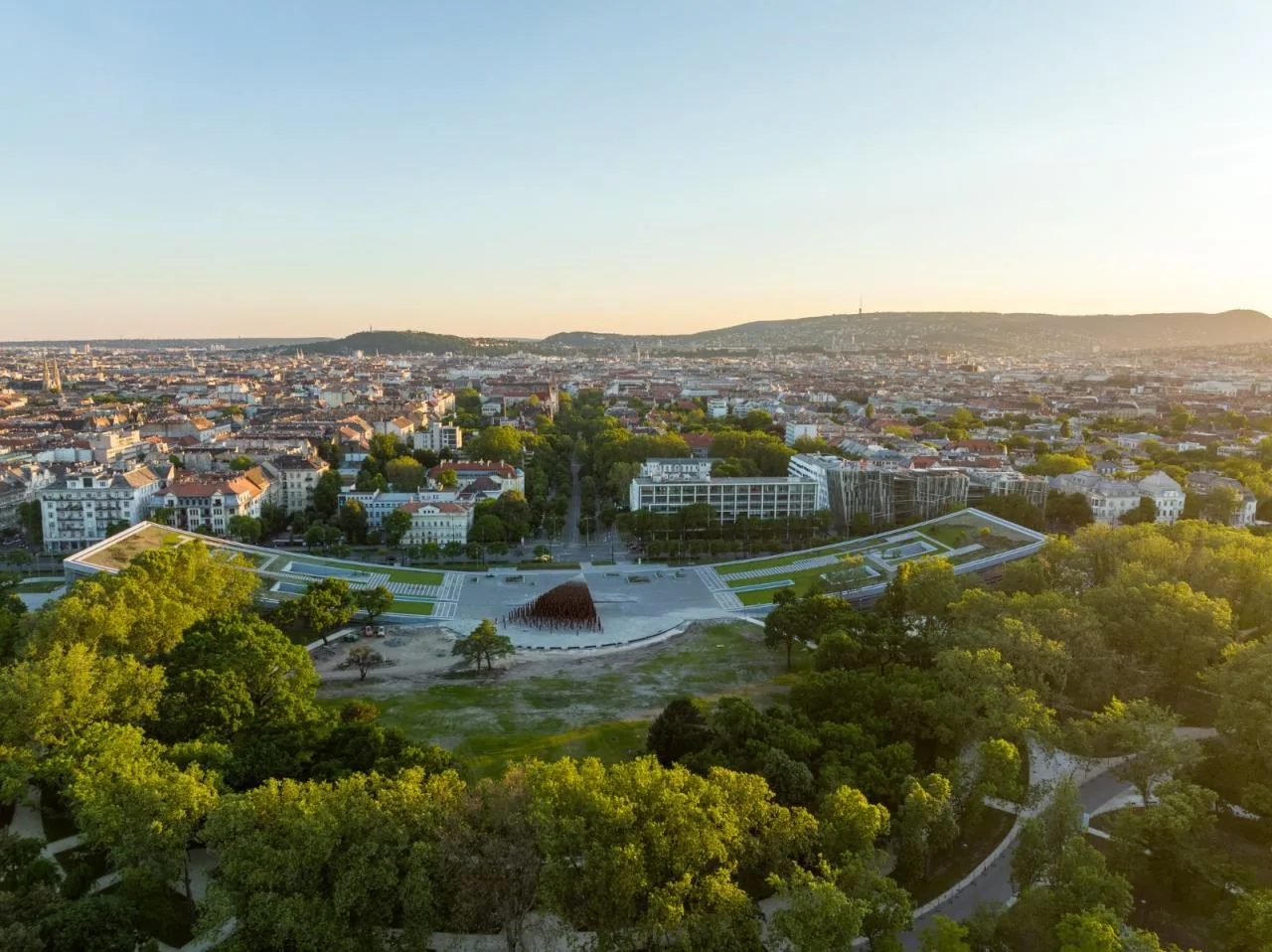
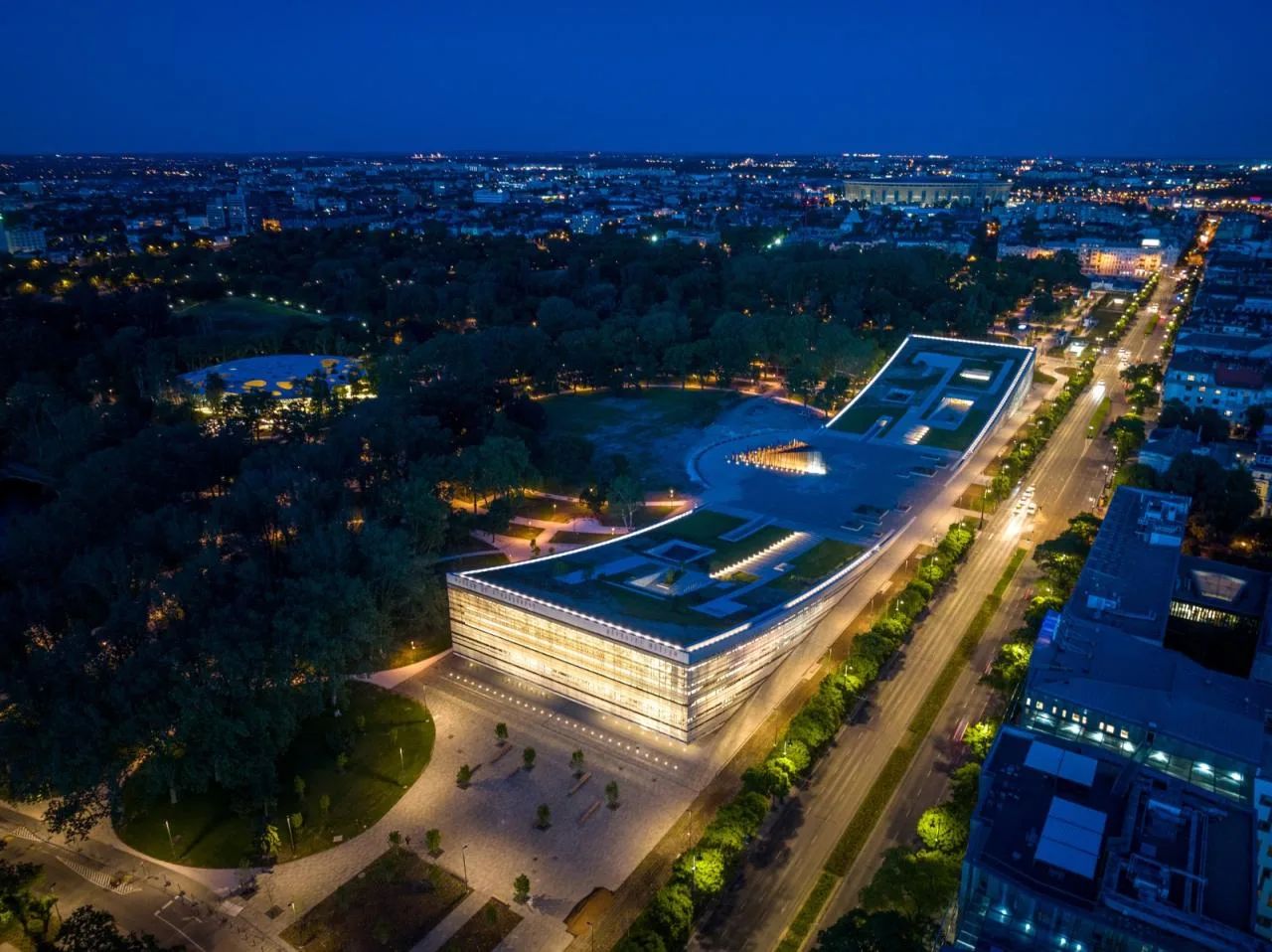
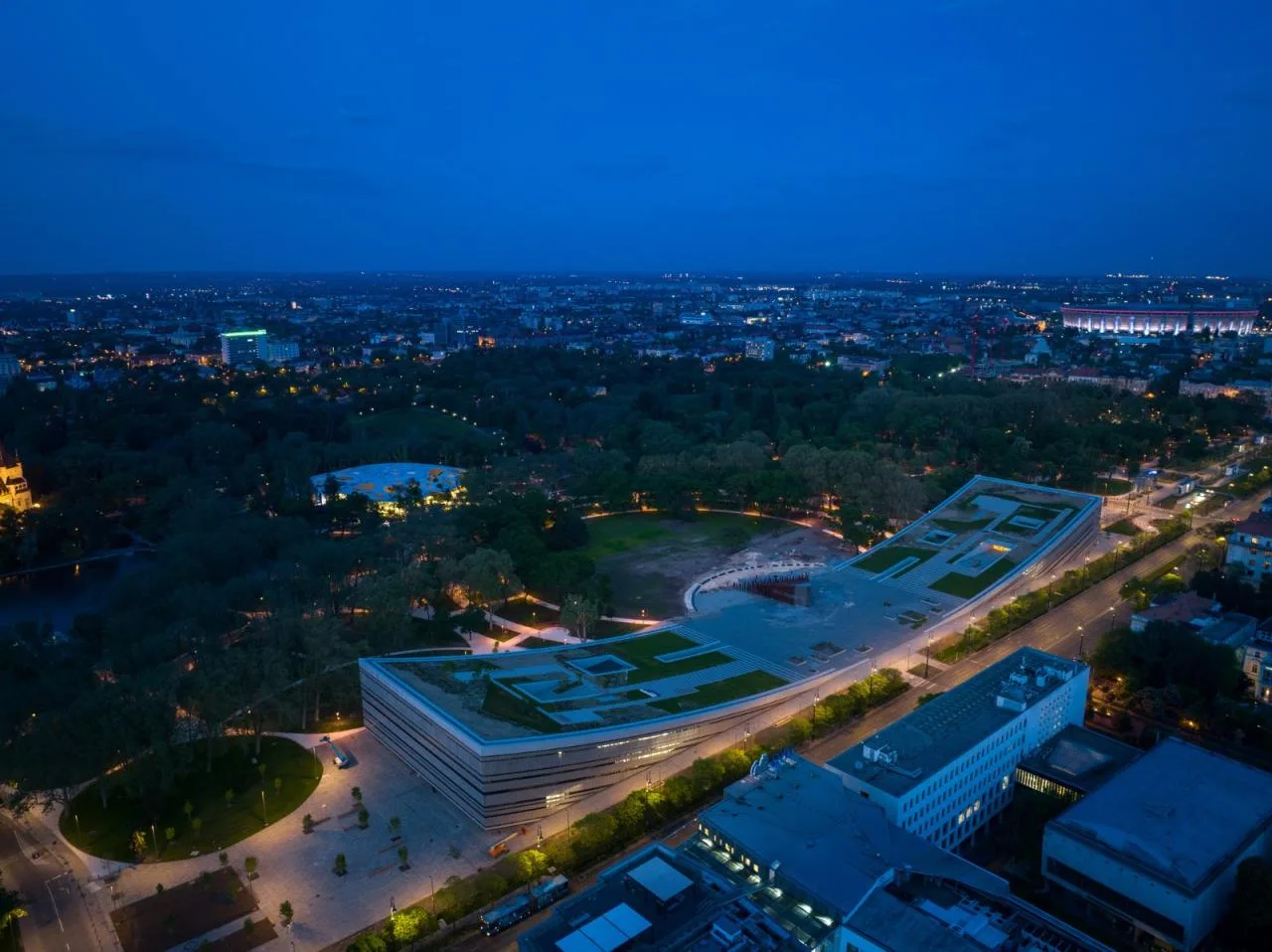
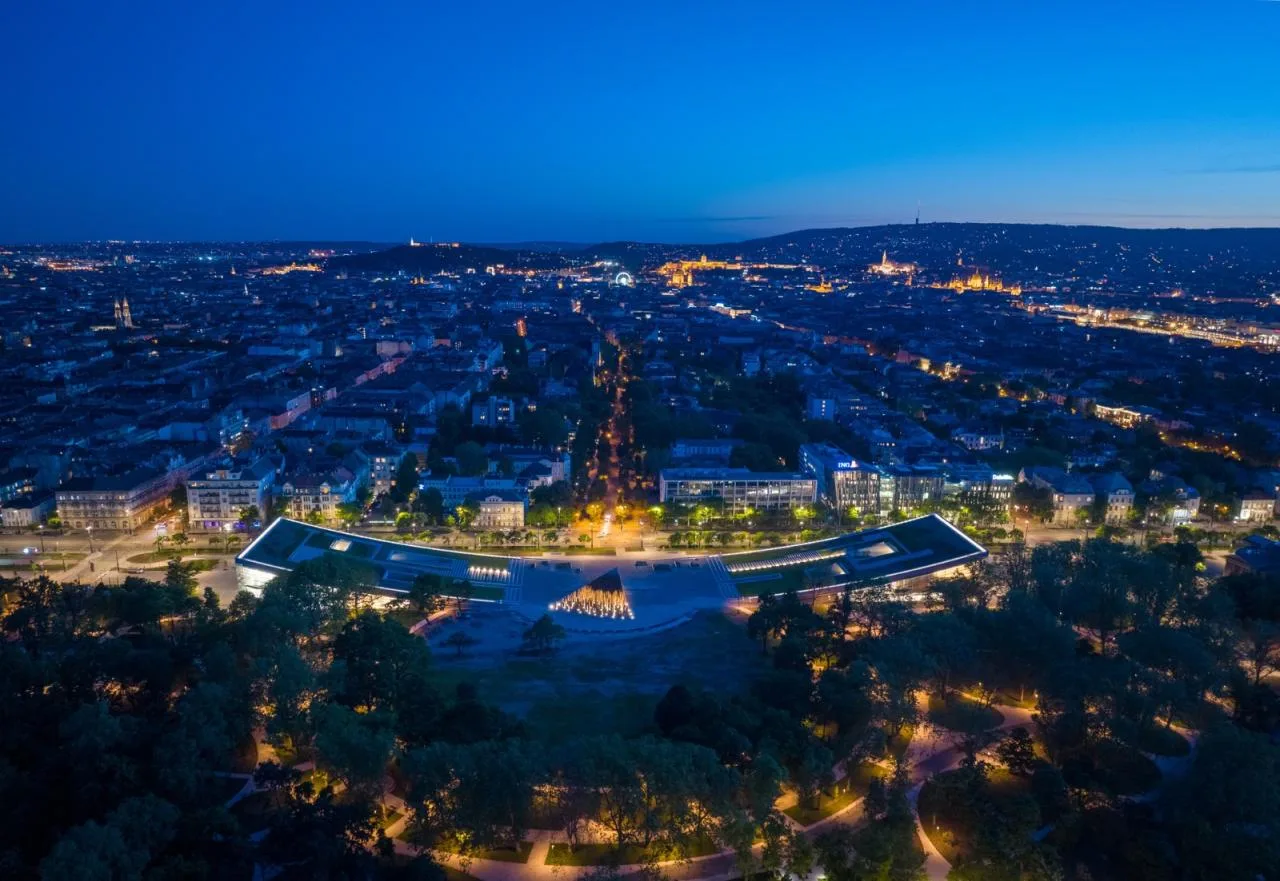
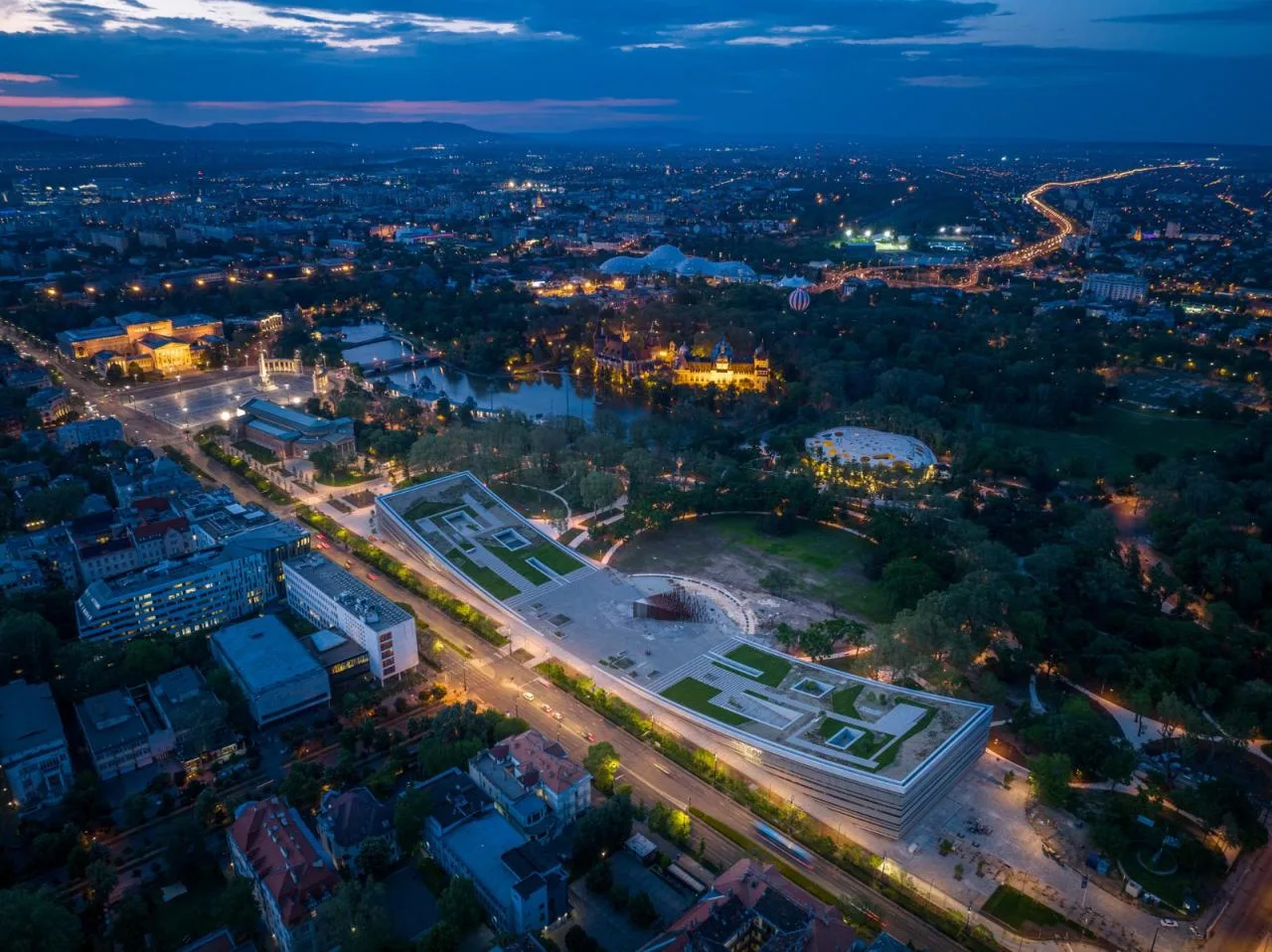
The new Ethnographic Museum building, located in Városliget (Budapest City Park), opened its doors to the public on May 23, 2022. This award-winning structure is part of the Liget Budapest Project, the largest urban cultural development initiative in Europe. Designed by Marcel Ferencz of NAPUR Architect, the museum showcases dynamic yet simple lines that harmonize with the park’s natural environment and seamlessly integrate with the surrounding urban landscape.
Városliget has a historic connection to ethnology, as museum collections were first introduced here during the 1896 Millennium Exposition. Thus, the location holds special significance for the Ethnographic Museum.
The museum’s collection now includes 250,000 items from the Carpathian Basin as well as from around the globe. Since its inception in 1872, the museum’s exhibits have been housed in various locations, but never in a building designed specifically to accommodate their unique needs. The previous museum site—once the location of the Hungarian Parliament building—was inadequate in terms of space and functionality.
Following an international design competition, smooth construction, and completion in May 2022, the Museum of Ethnology now has a modern home that meets comprehensive world-class standards. The new facility fulfills professional requirements and caters effectively to both the collections and visitors.
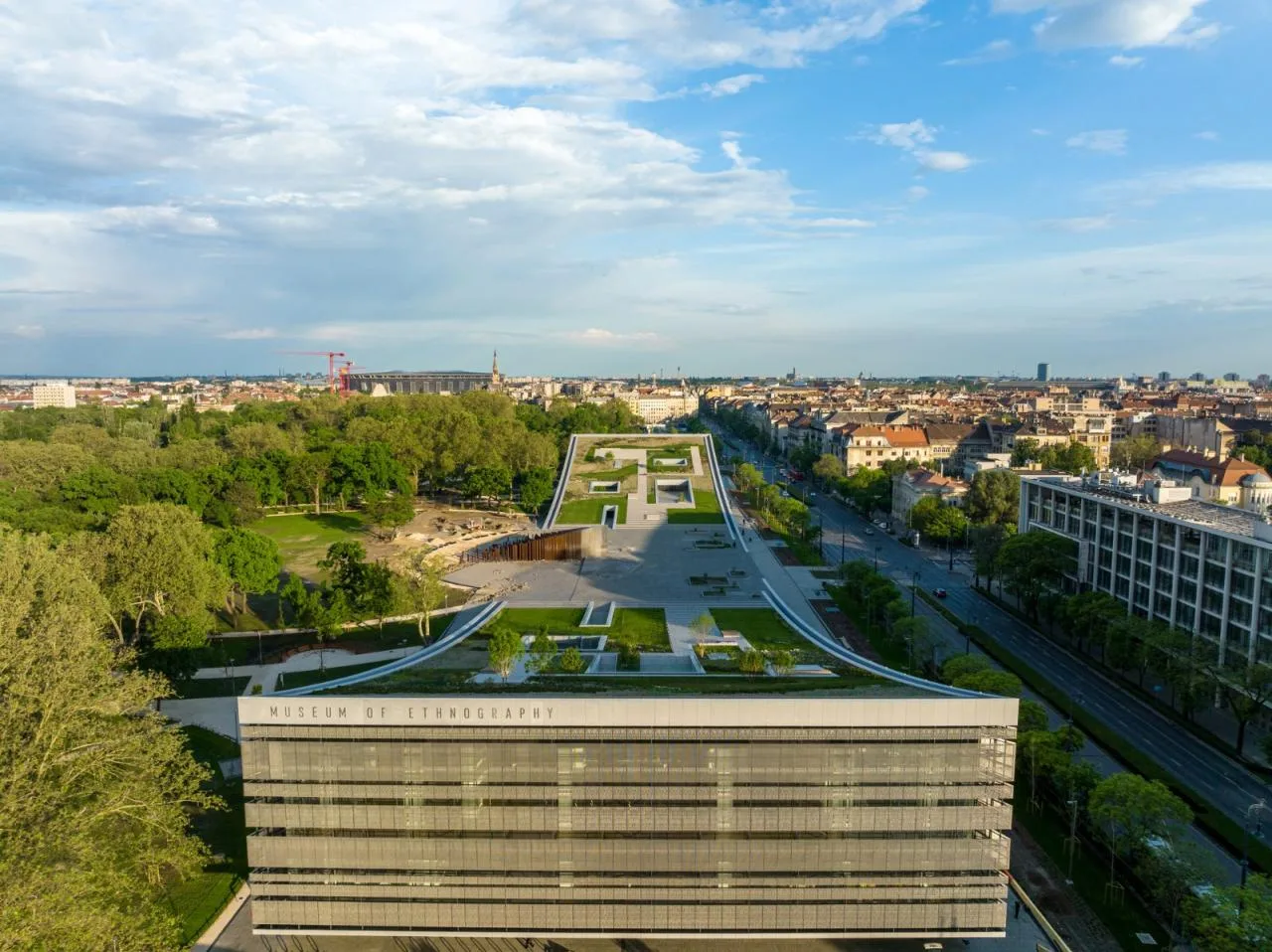
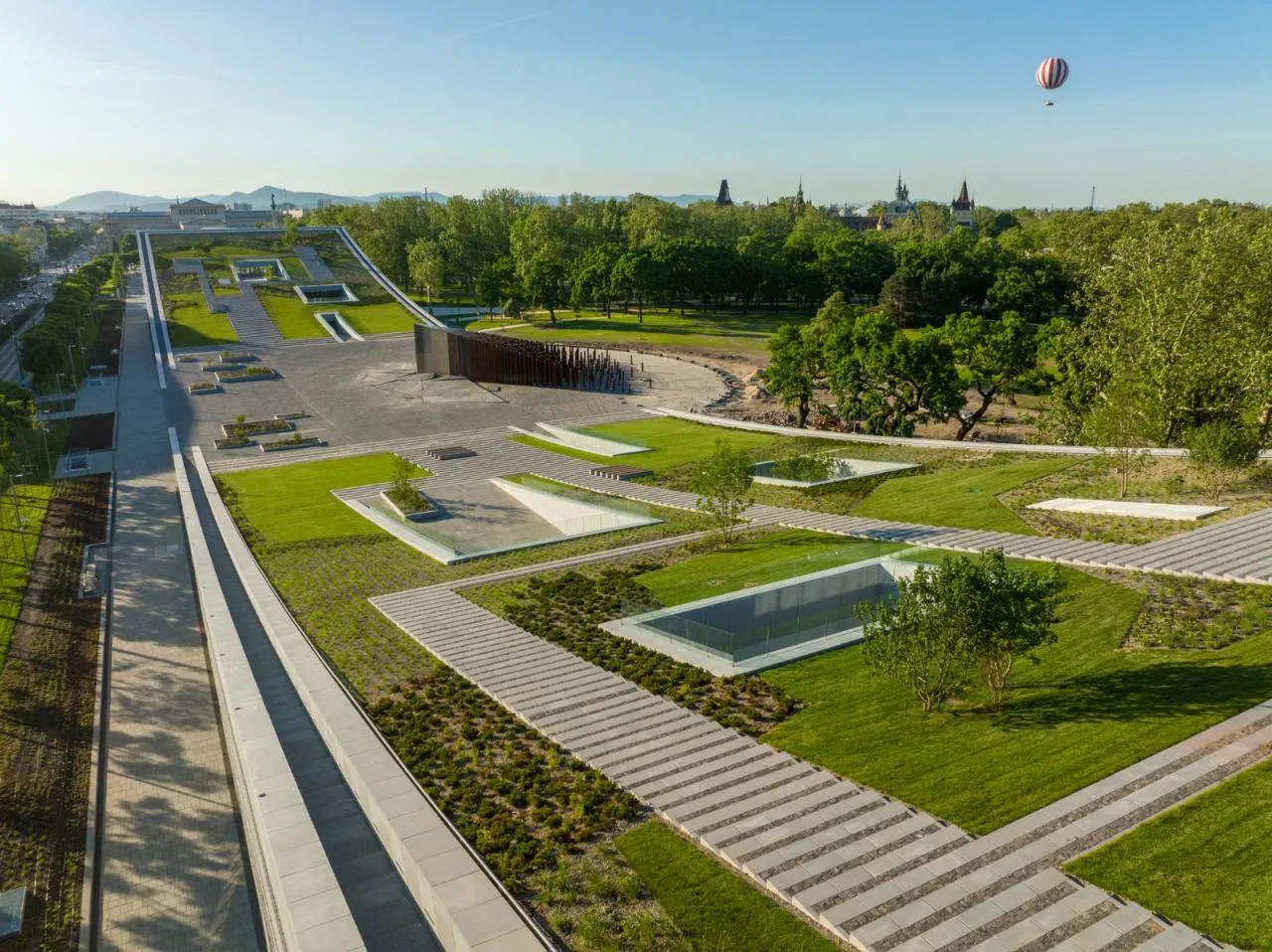
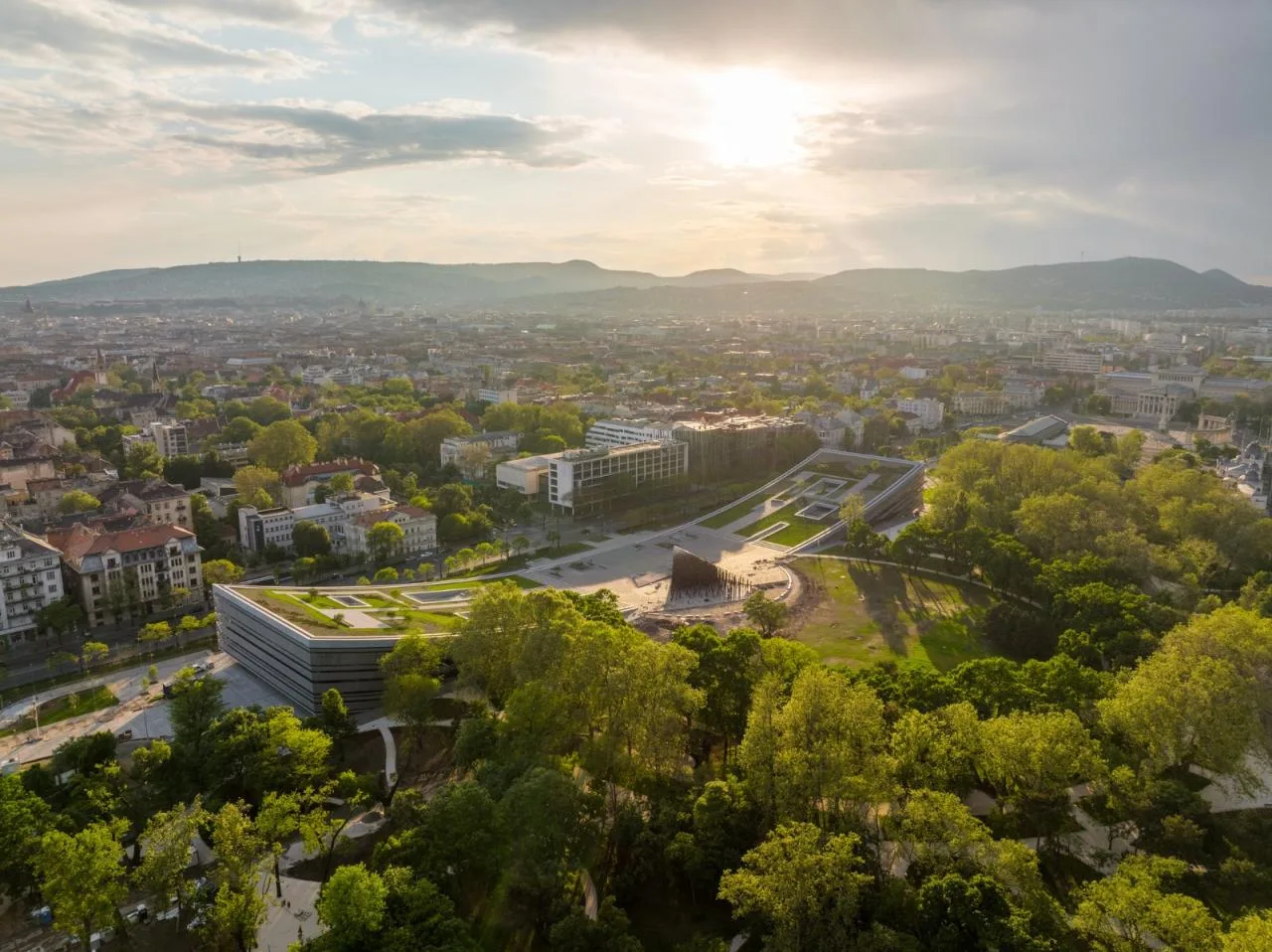
The international jury selected Hungarian firm NAPUR Architect as the winner of the competition, beating renowned studios such as Zaha Hadid Architects and BIG. The building’s design features dynamic yet simple forms that respond to the park’s natural setting and complement the surrounding urban fabric.
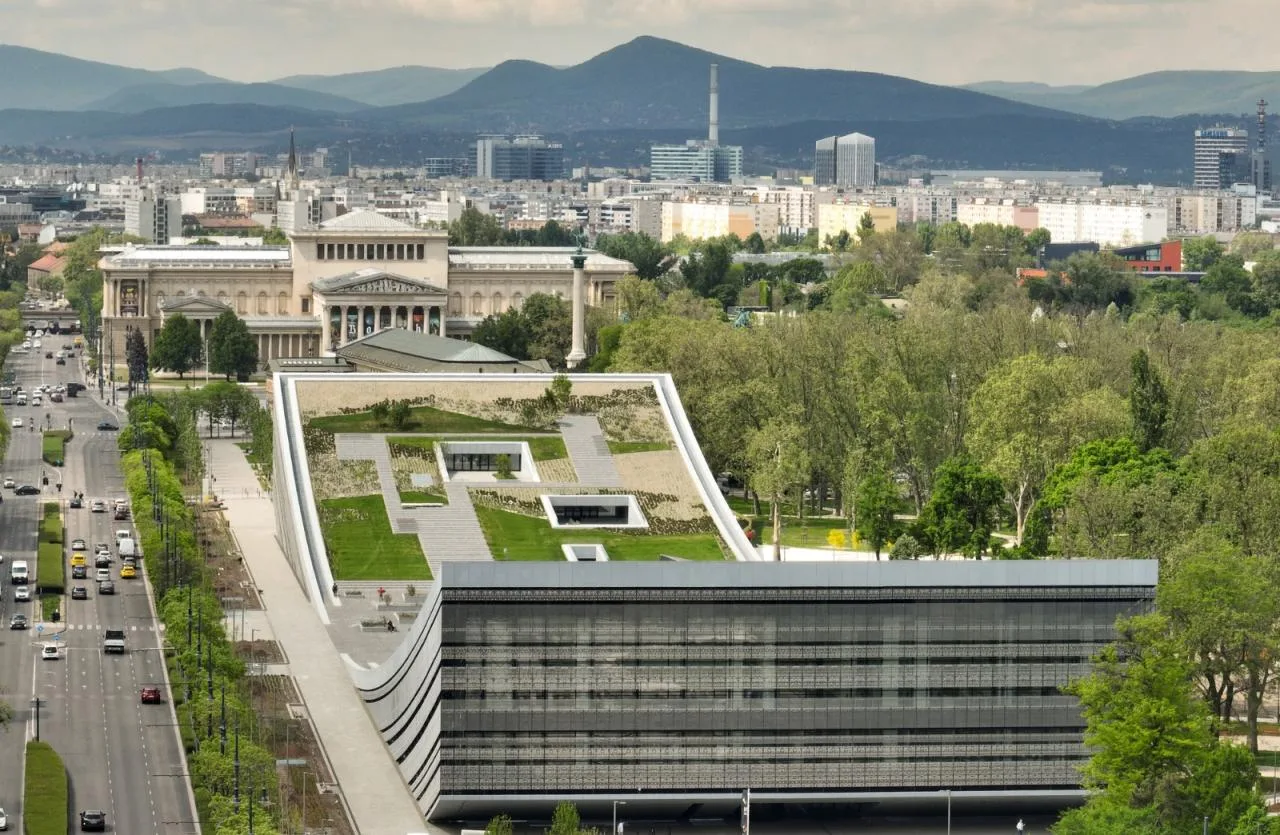
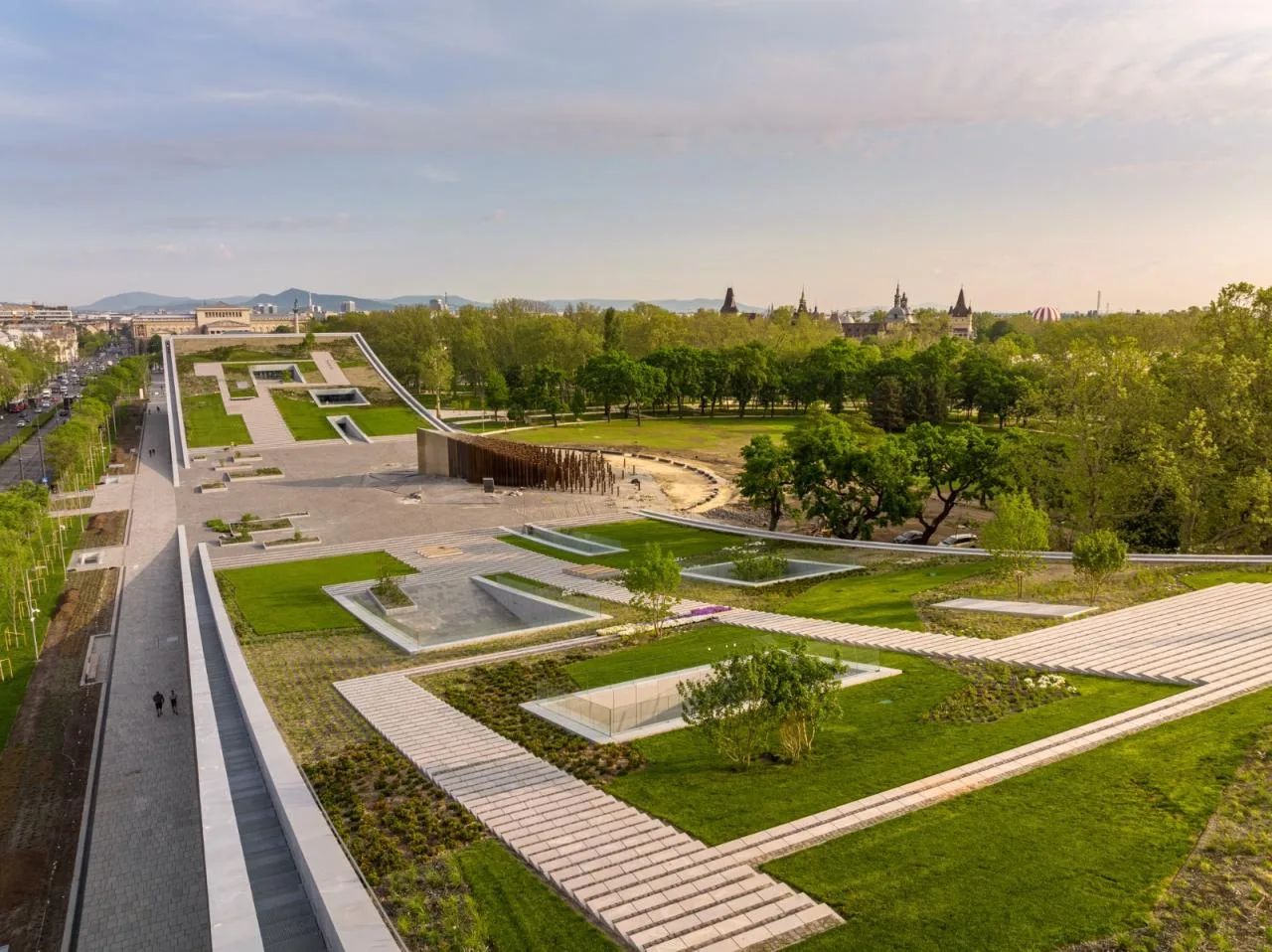
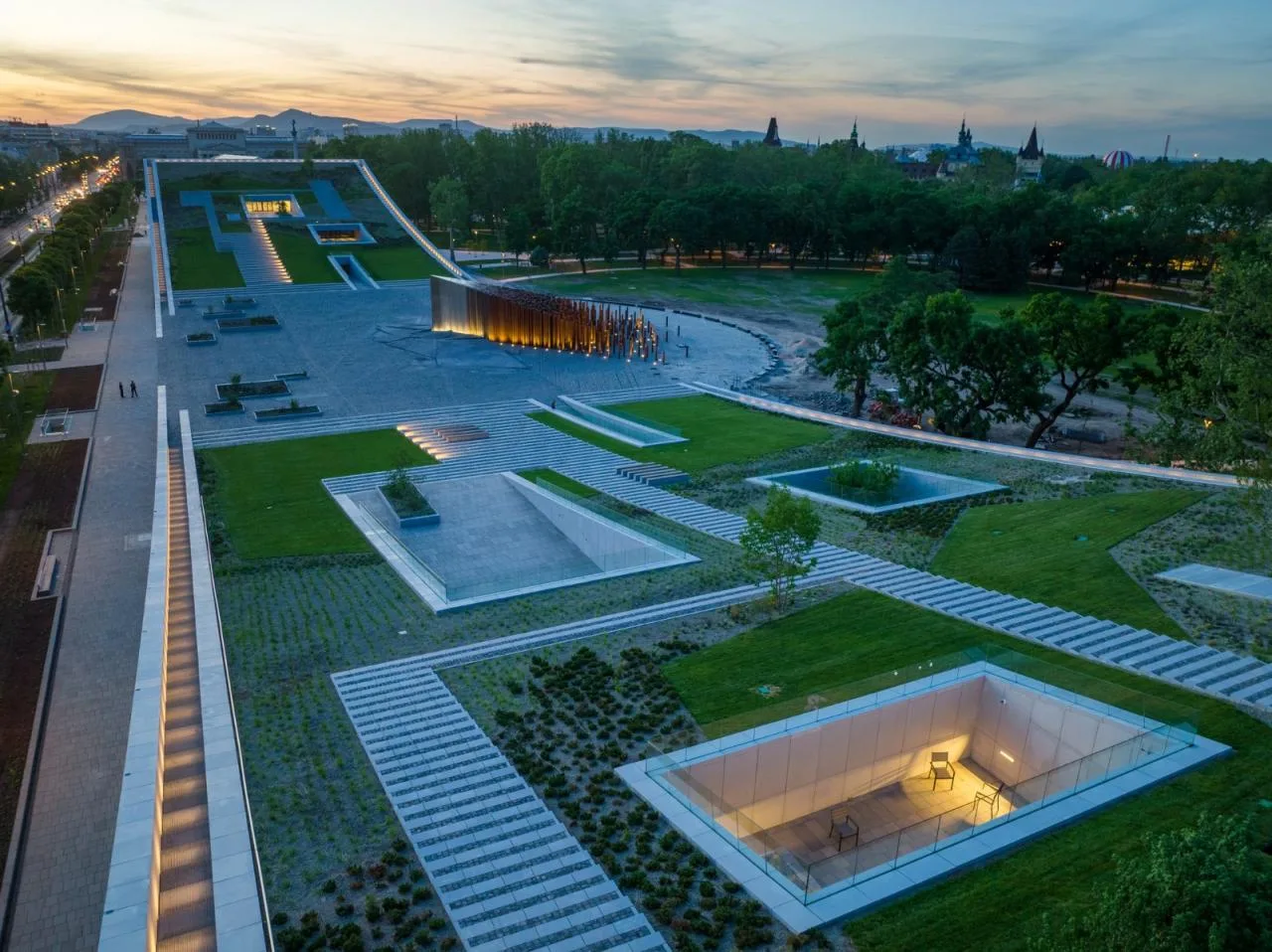
Its gently curved lines create a gateway that connects the city with the park. With 60% of the structure located underground and a landscaped green roof complemented by transparent above-ground sections, the building’s scale is well adapted to its environment. The grassy rooftop will serve as a welcoming community space for visitors to Városliget.
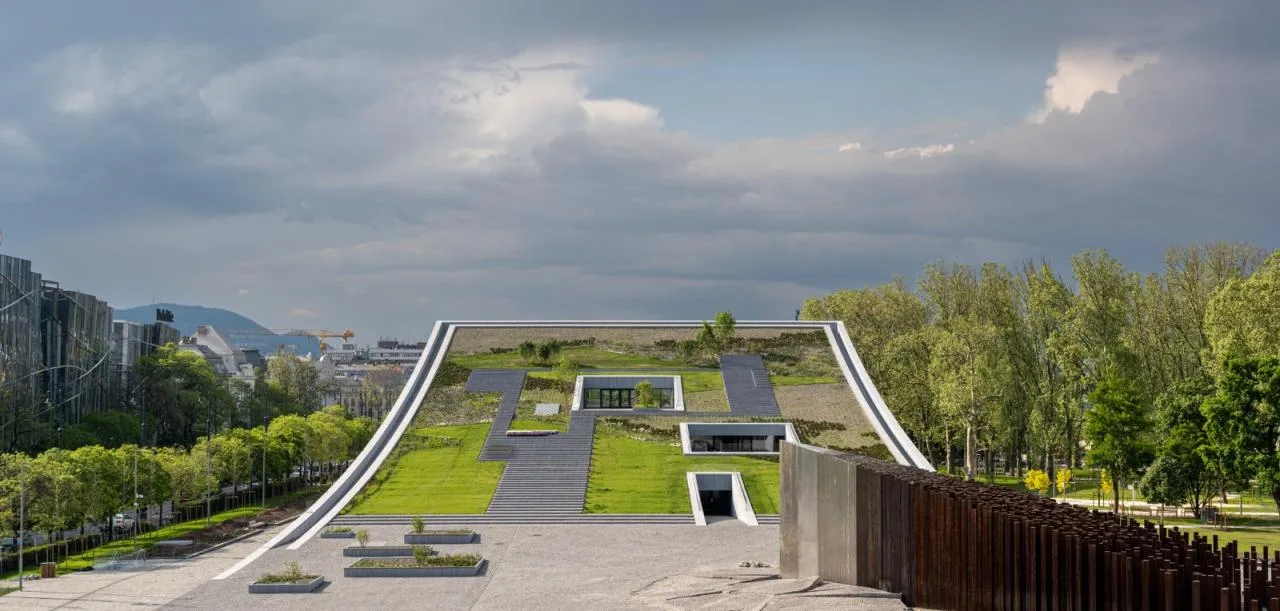
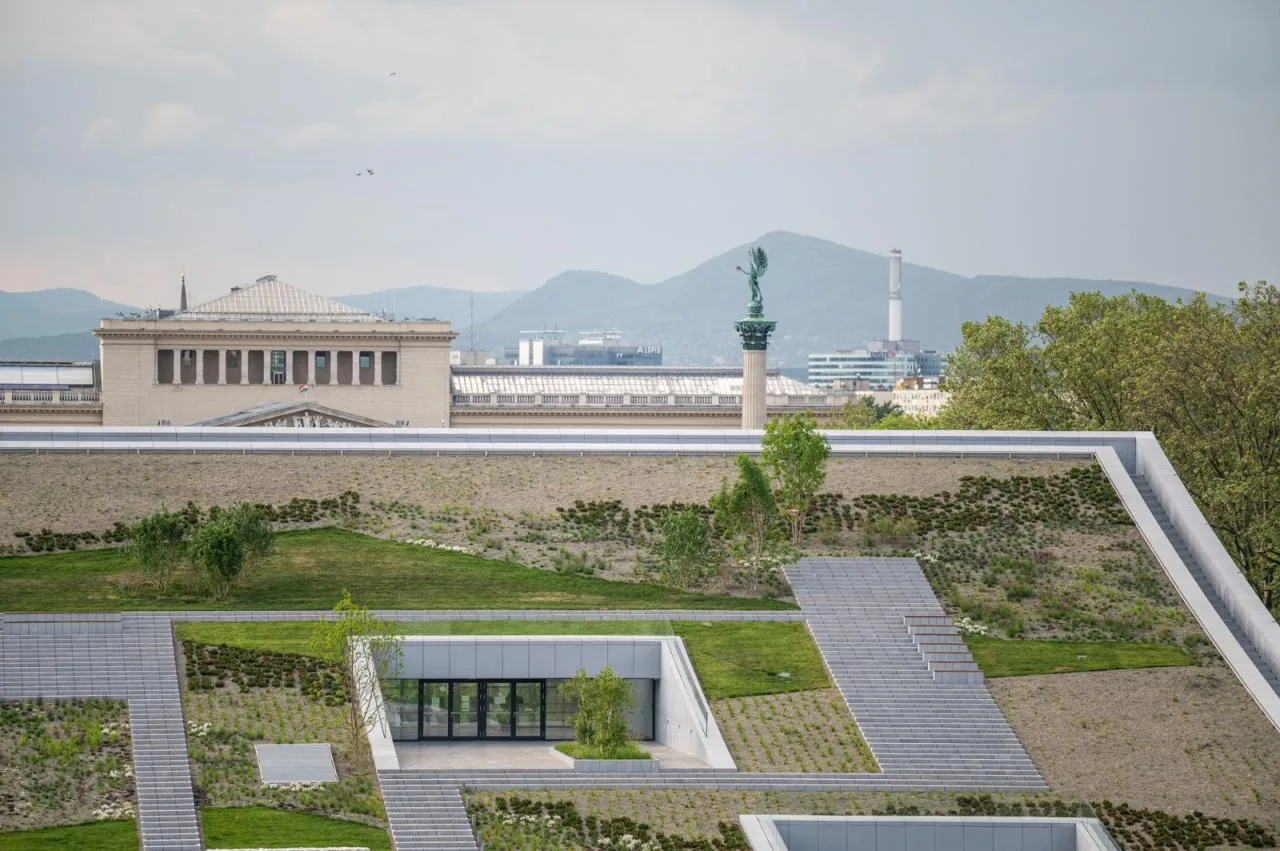
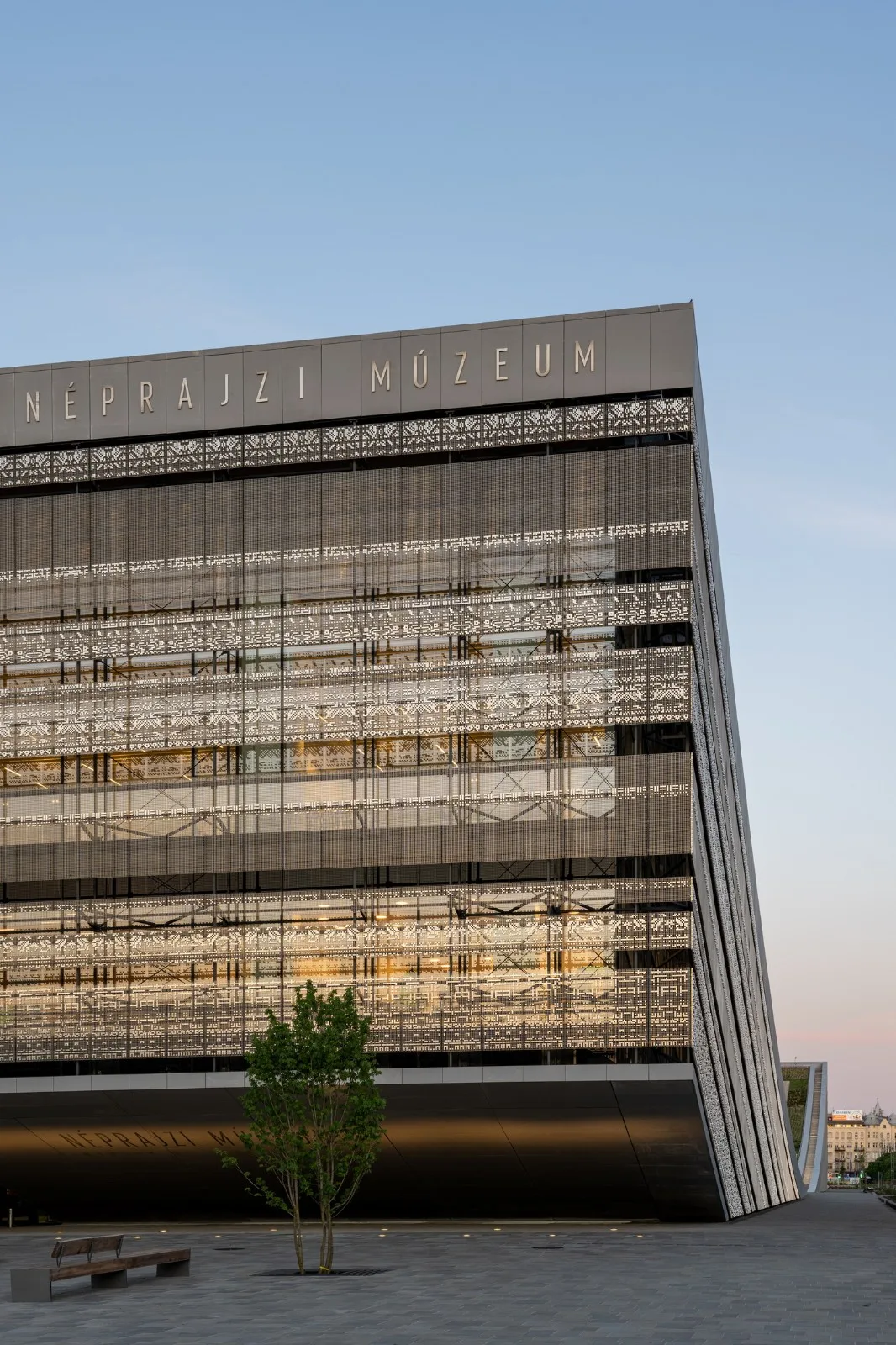
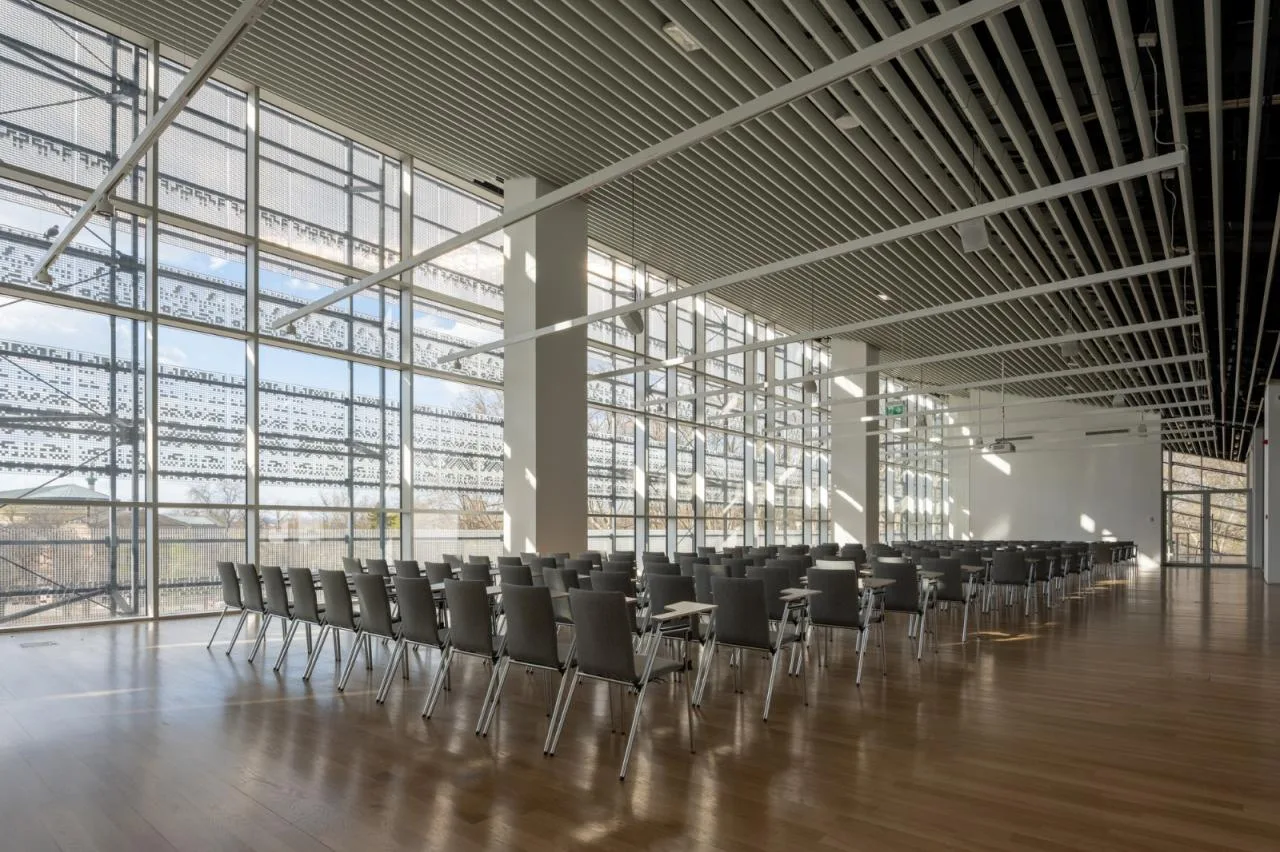
A standout feature of the building is the glass curtain walls that surround the landscaped roof garden, resembling two intertwined mountain slopes. These walls are crafted from nearly 500,000 pixel-like metal mesh elements inspired by ethnographic patterns found in the museum’s Hungarian and international collections.
Each “pixel” is inserted into laser-cut aluminum grids by specialized robots—over 2,000 of which are fixed to the building. The design incorporates reinterpretations of 20 Hungarian and 20 international contemporary ethnological patterns.
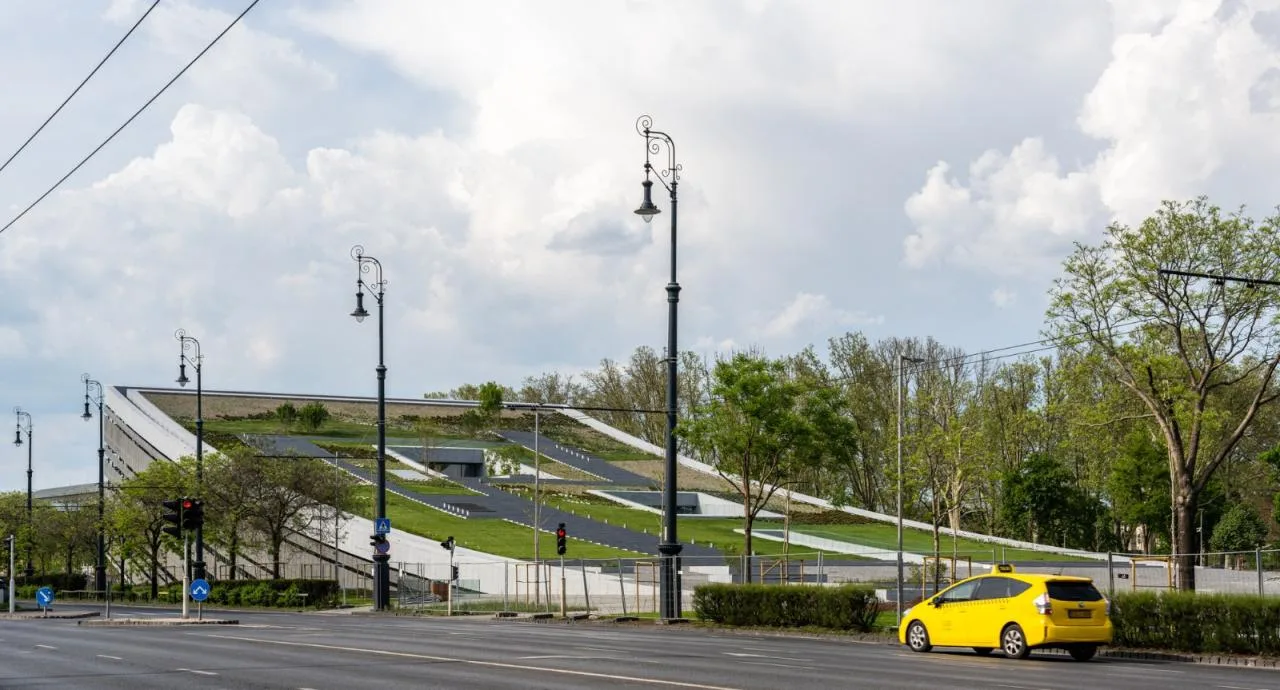
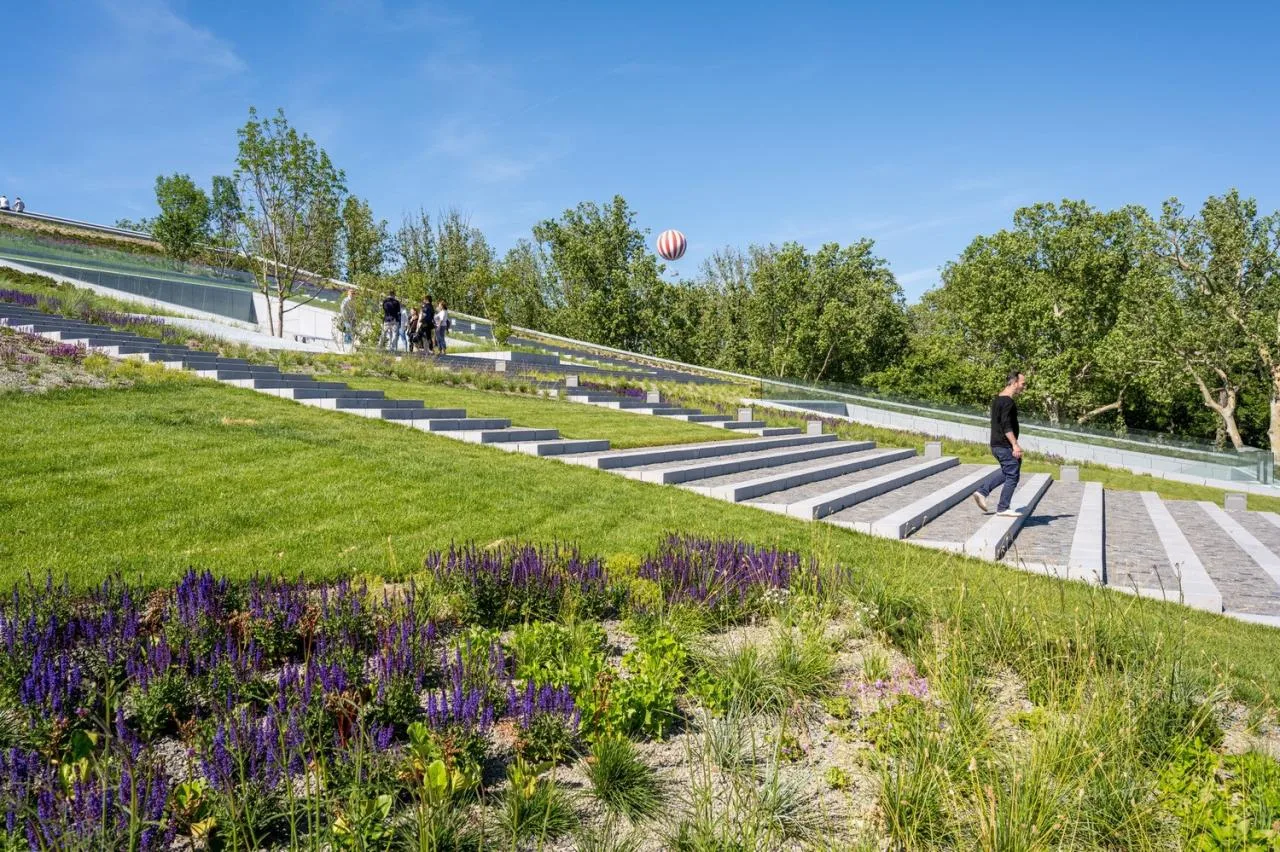
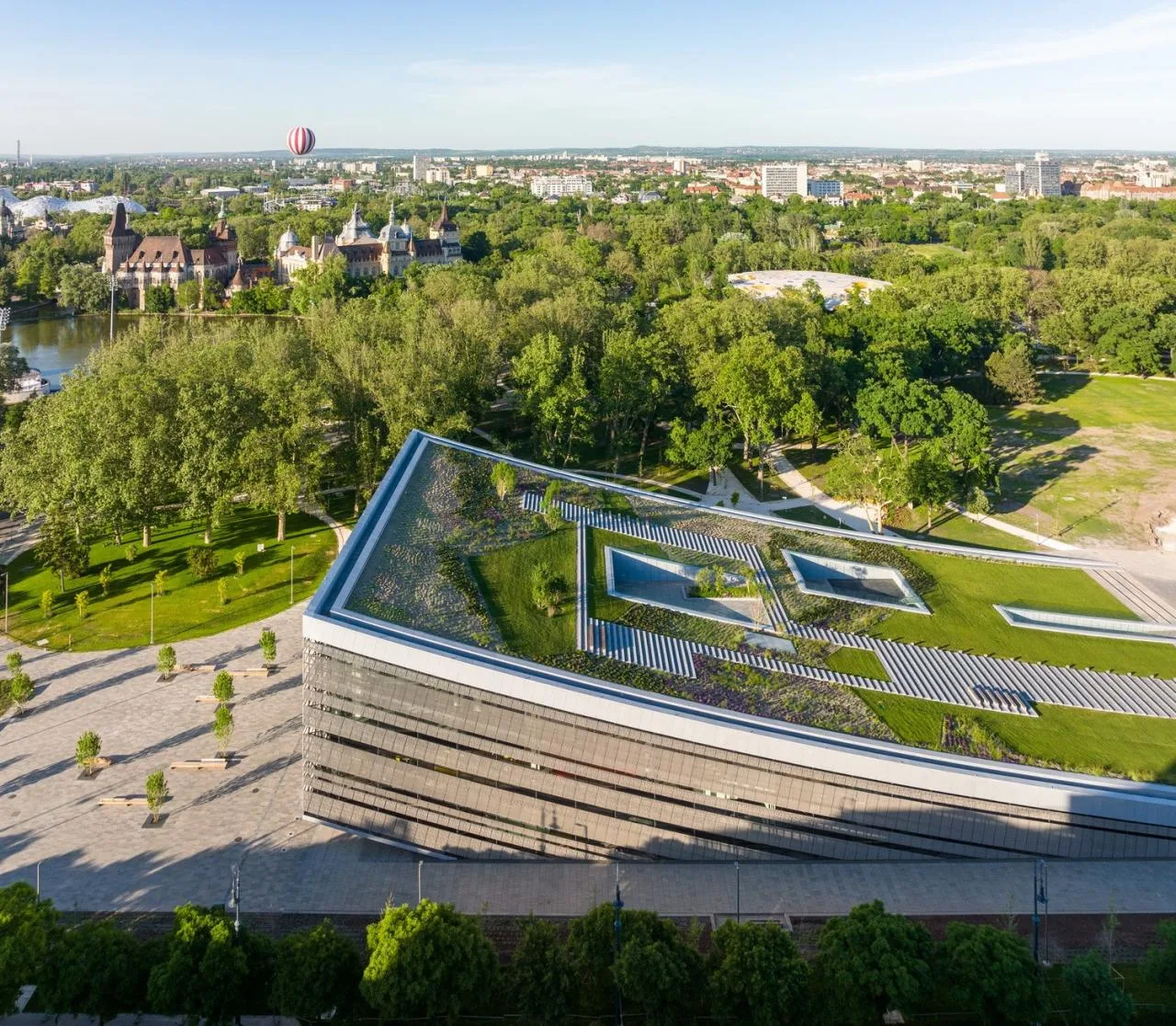
Recognized as one of Europe’s most exciting contemporary buildings, the Museum of Ethnology was awarded the Best Mega Future Project in Europe at the 2017 MIPIM Awards as part of the Liget Project. It also won the prestigious World’s Best Architecture title at the 2018 International Property Awards. This honor was selected from over 1,700 entries across 115 countries, reviewed by a judging panel chaired by four members of the British House of Lords and over 80 global experts.
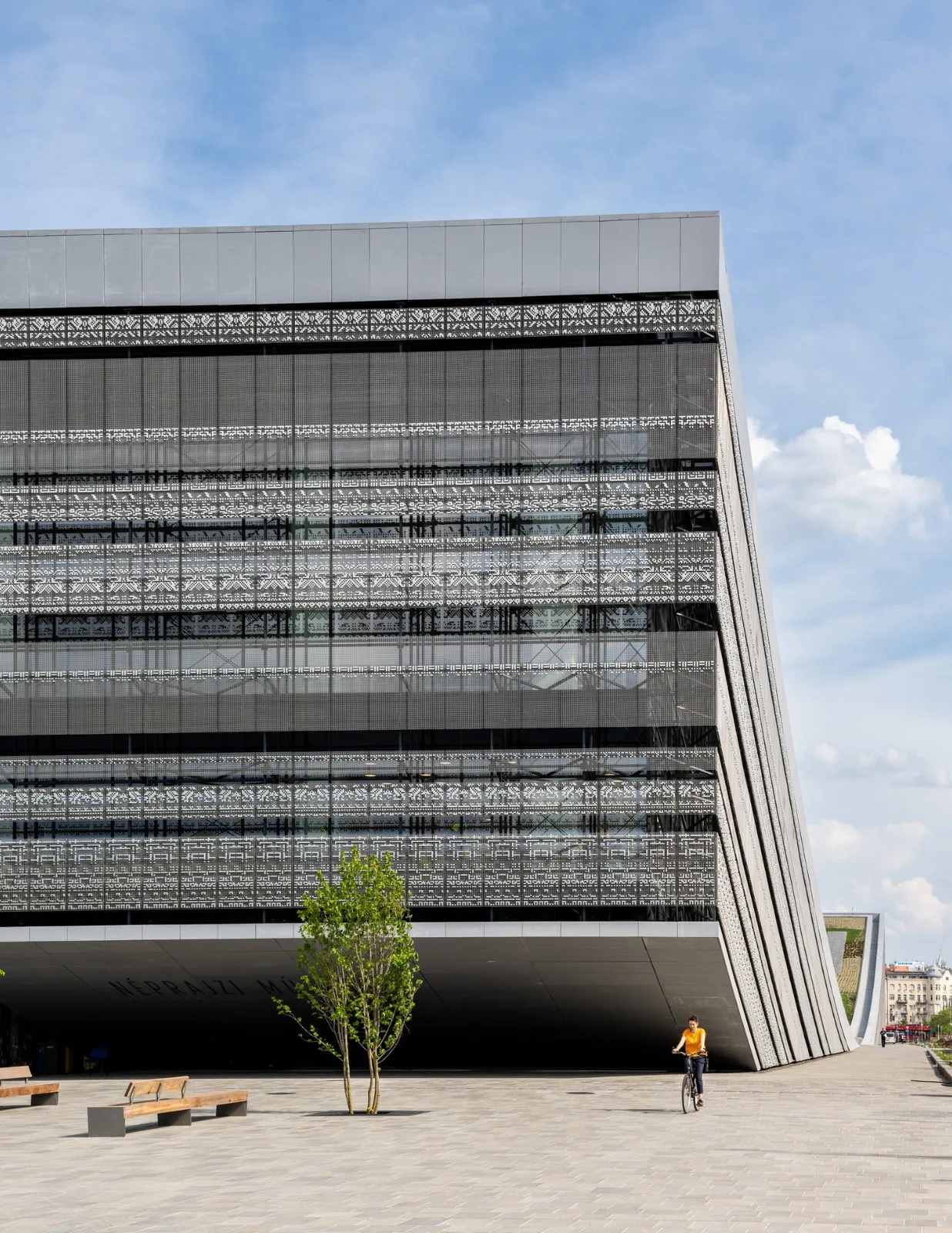
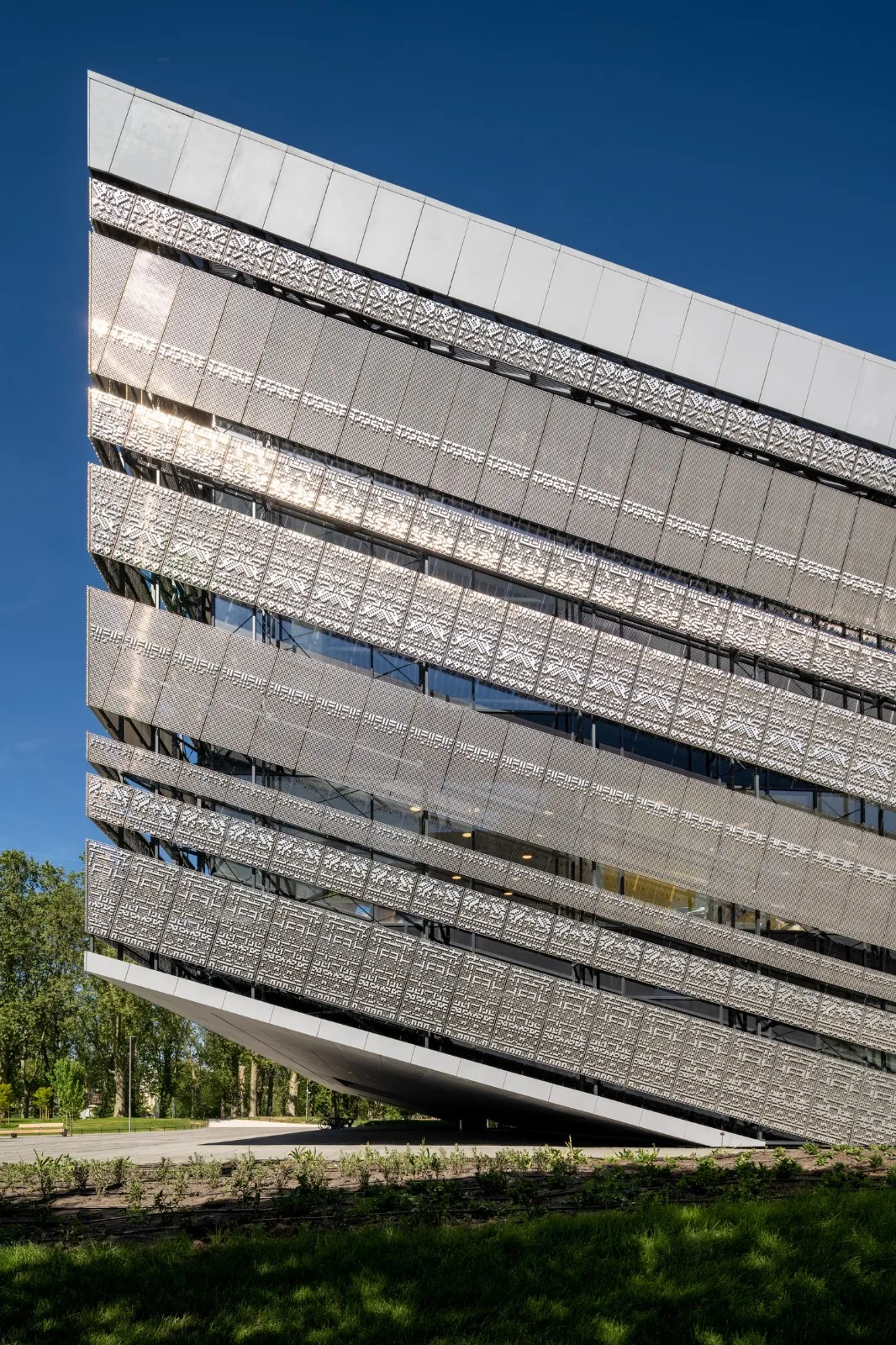
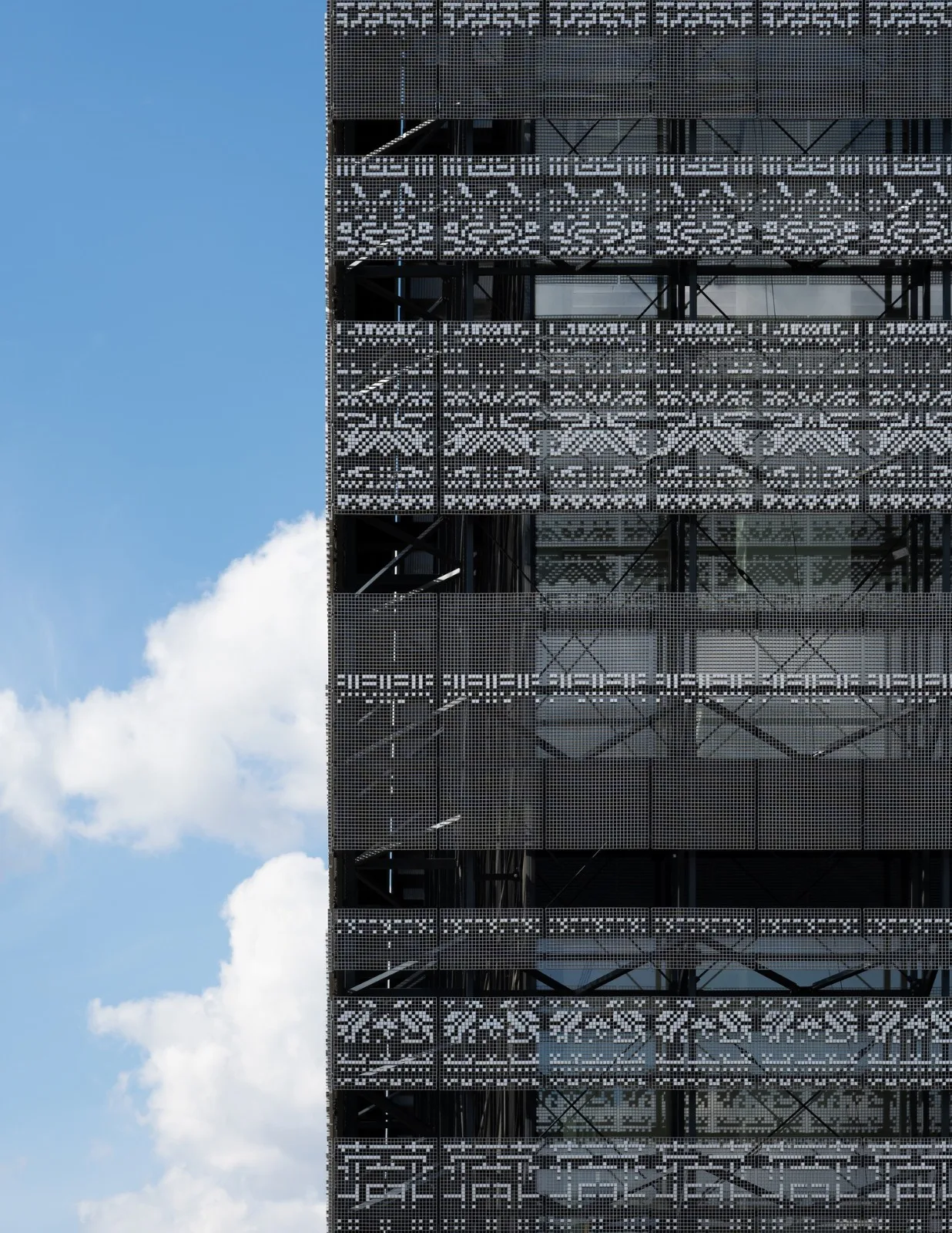
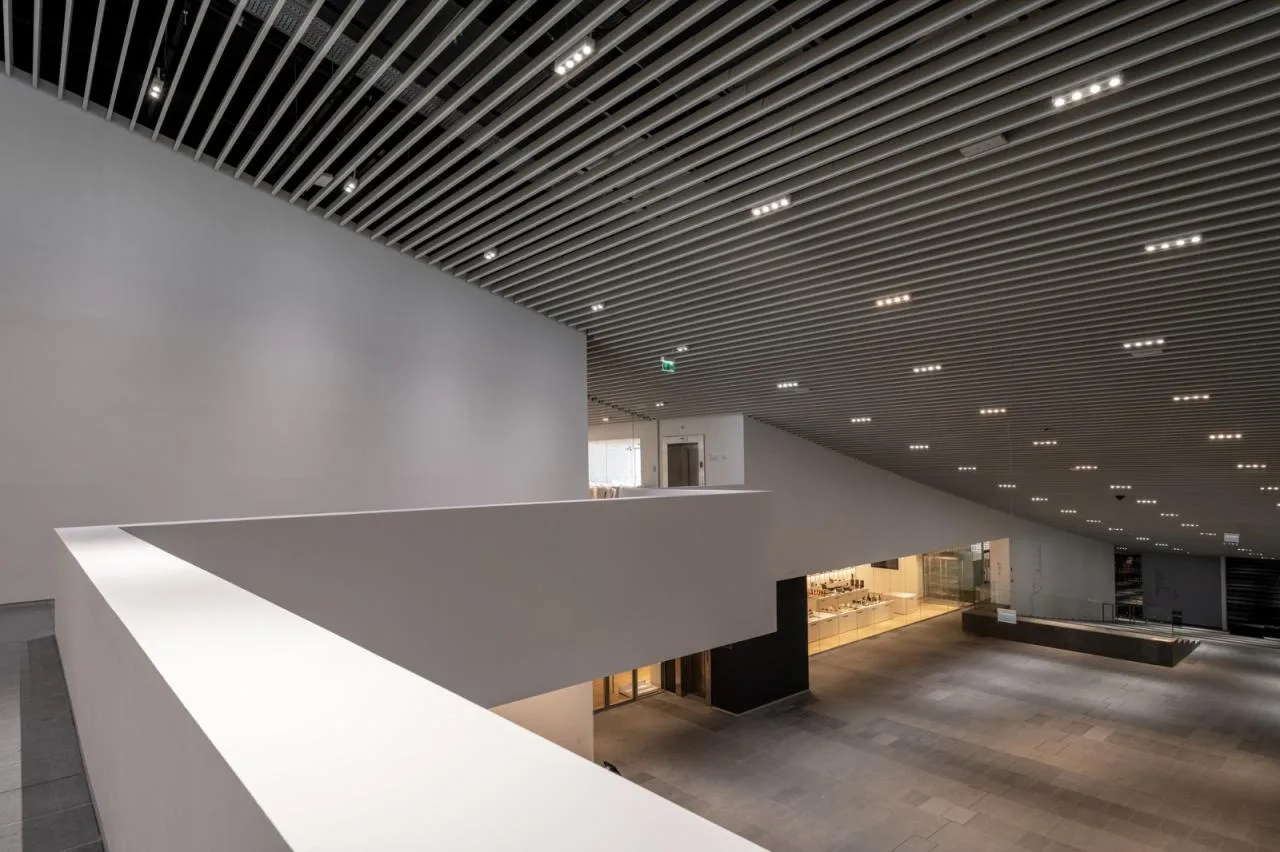
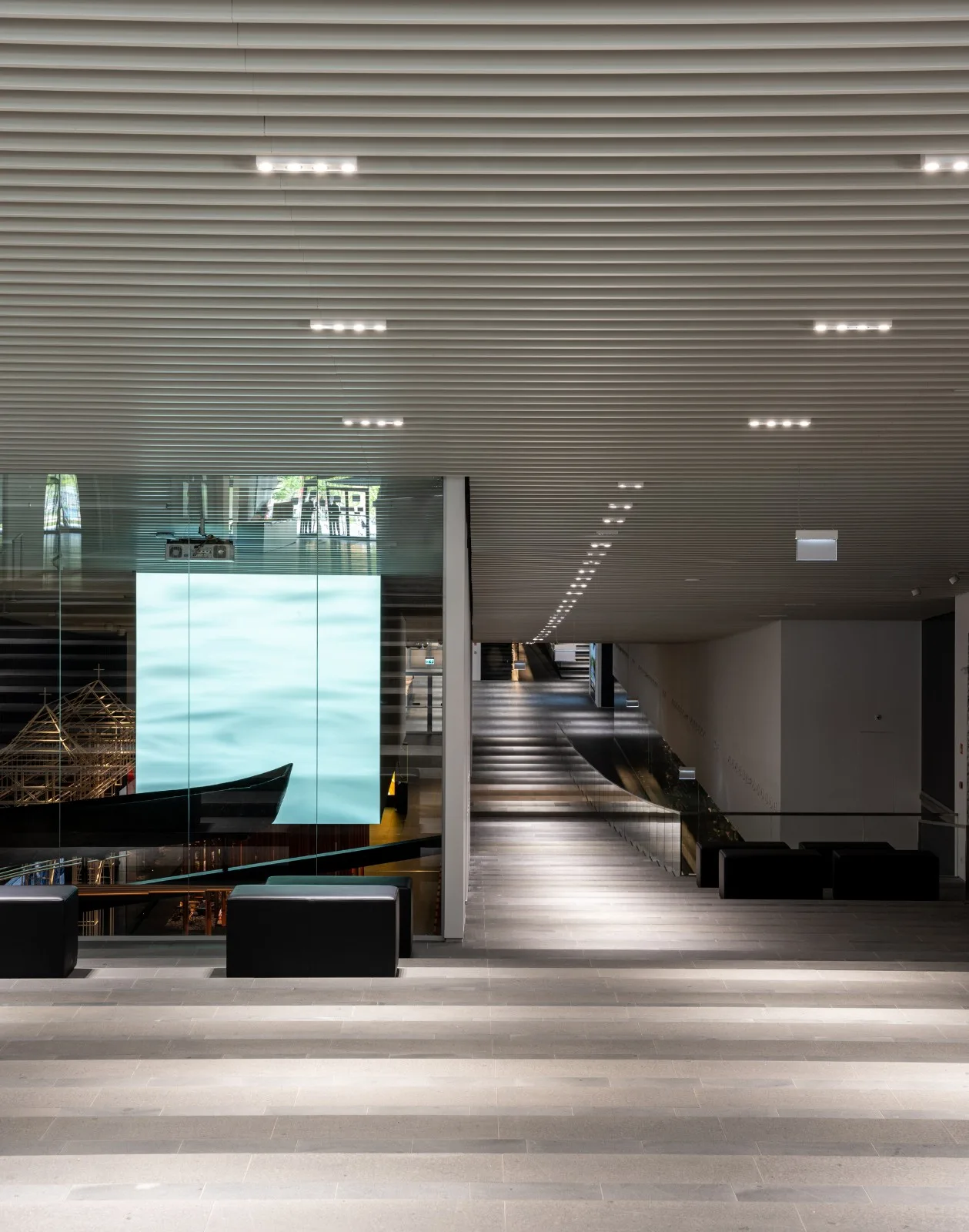
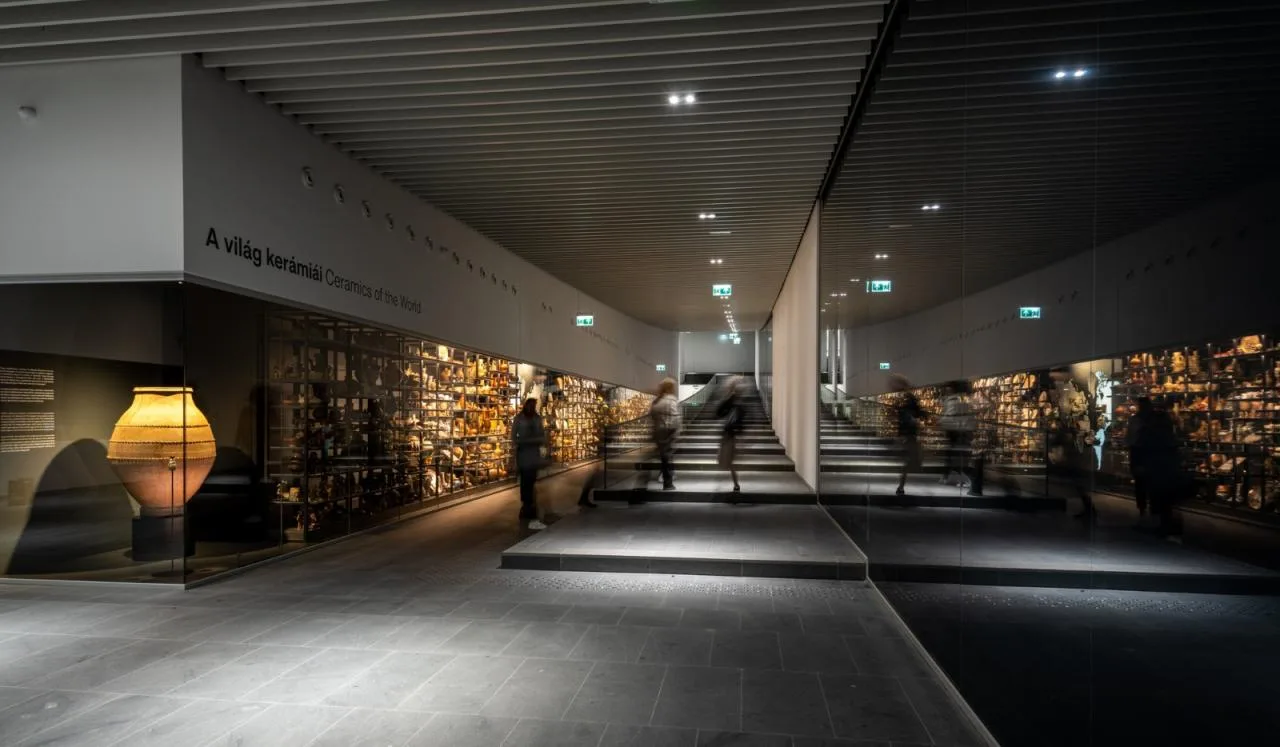
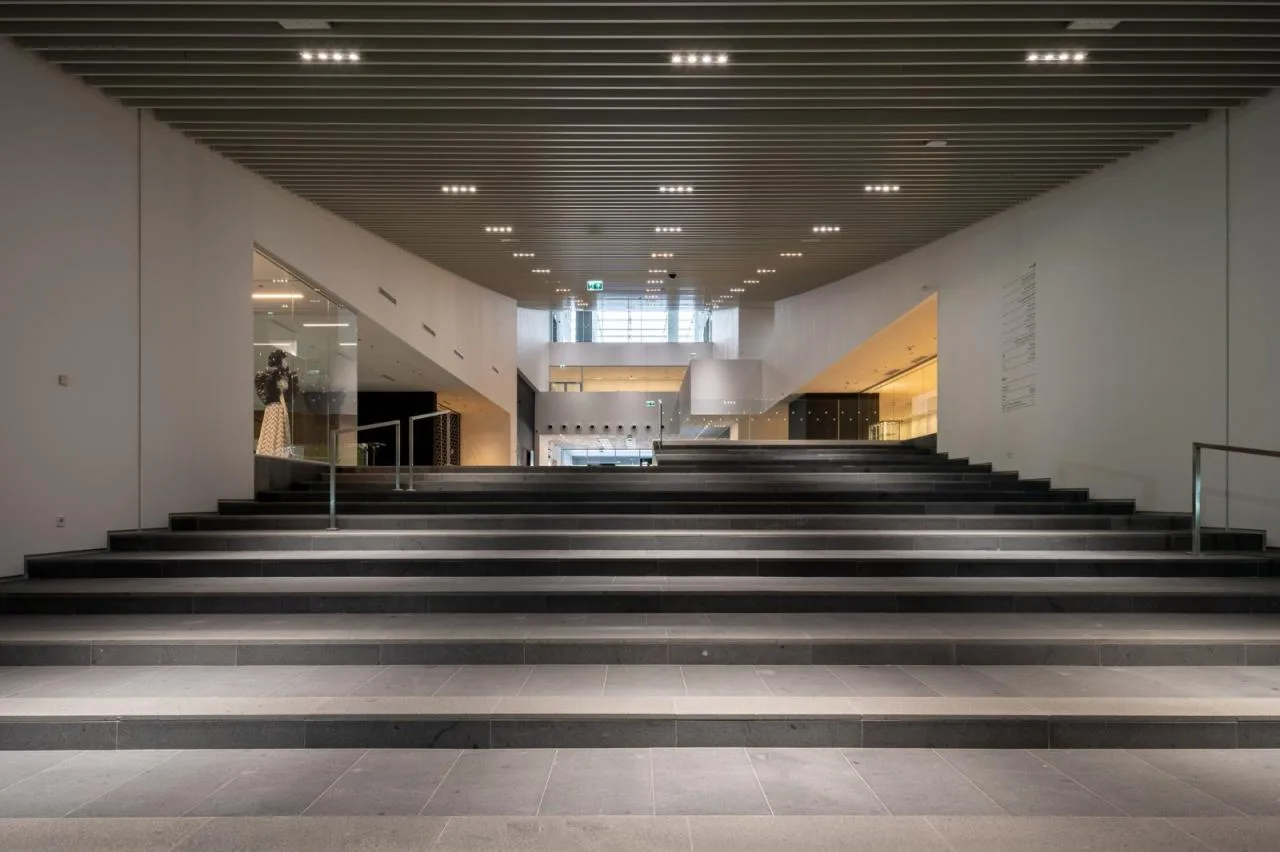
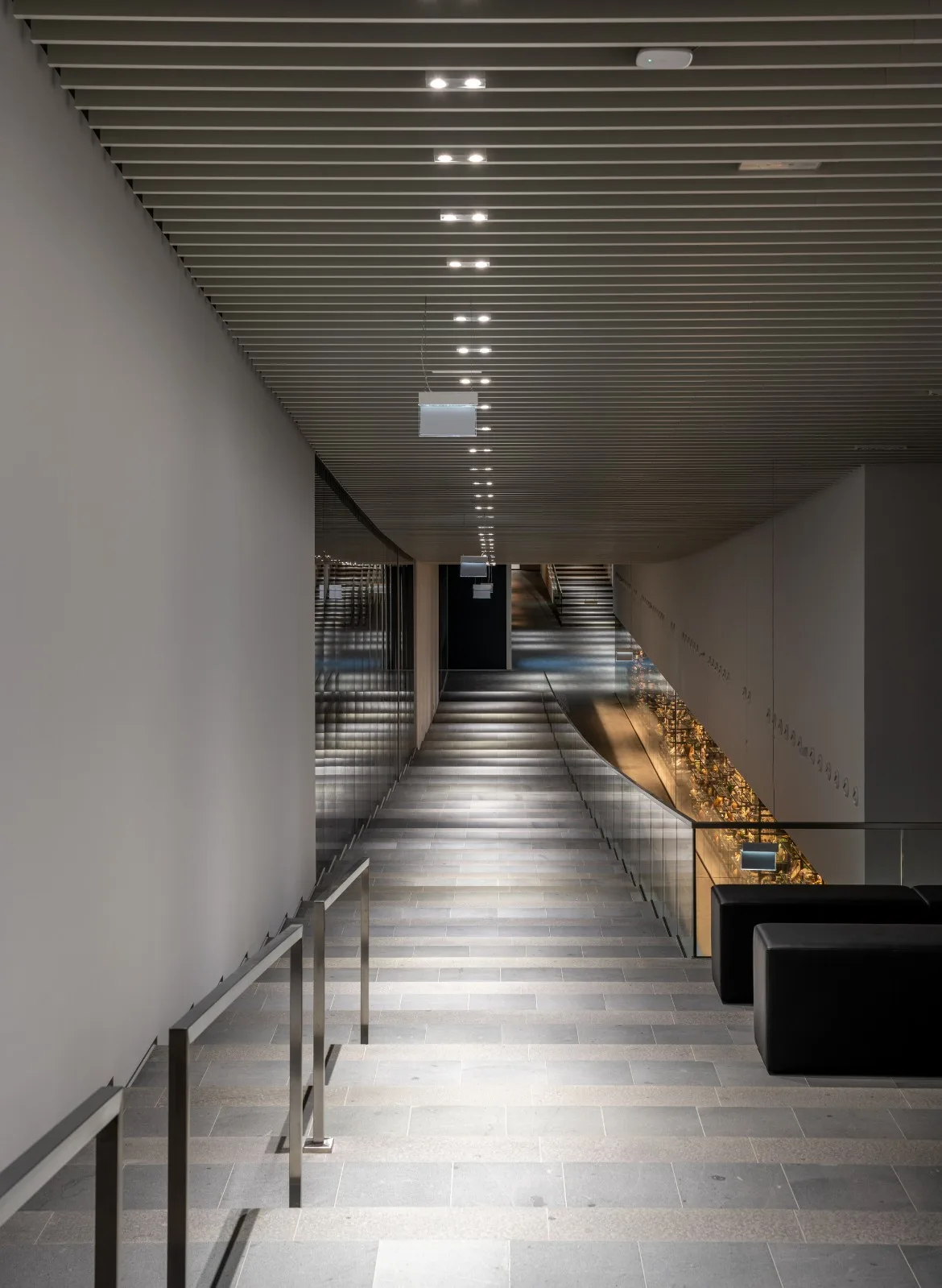
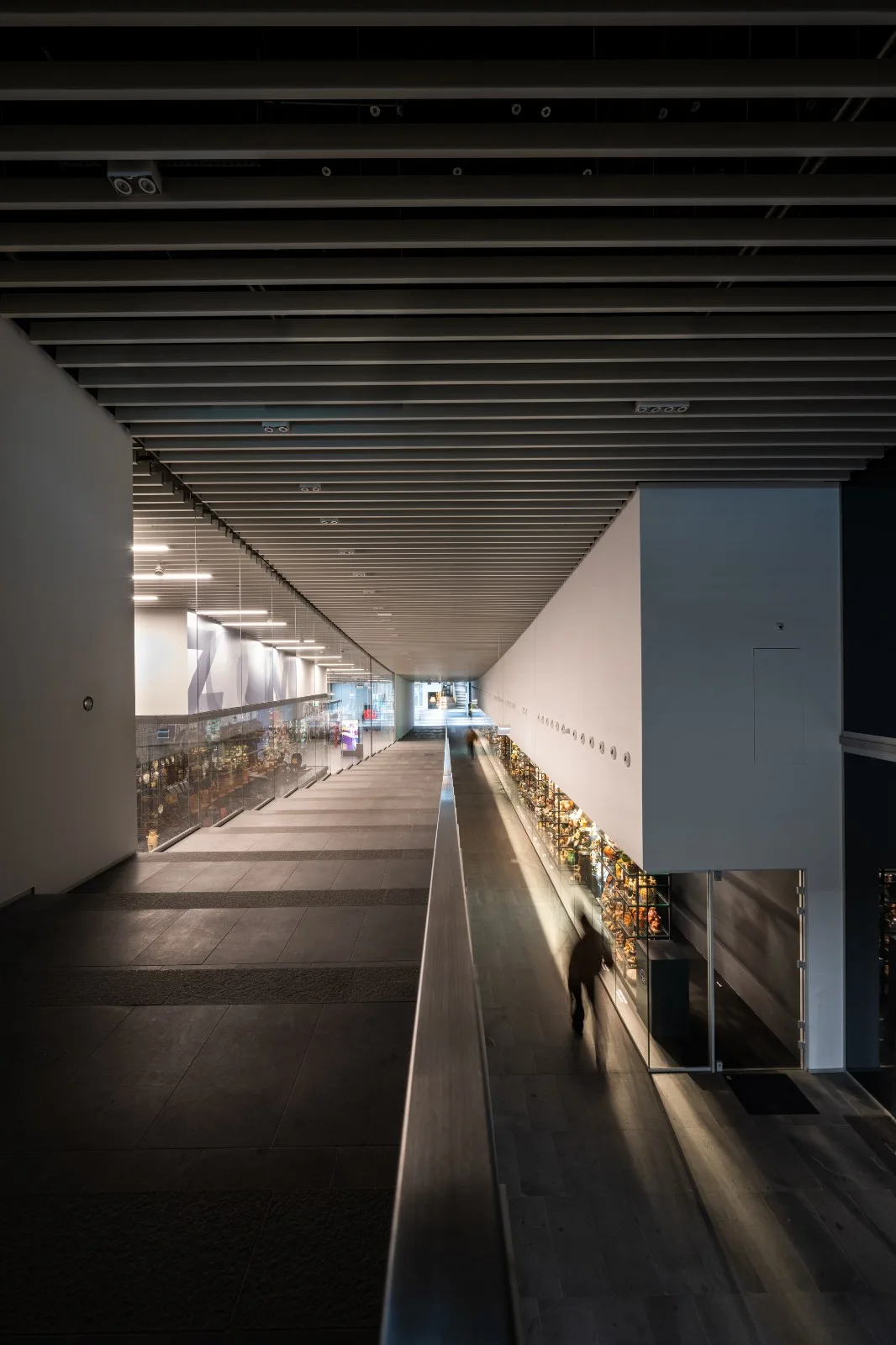
The museum’s modern, flexible spaces and advanced architectural design enhance visitors’ understanding of historical heritage and contemporary societal themes reflected in the exhibits. Beyond preserving history, the museum prioritizes cutting-edge expertise, research, and awareness, as emphasized in its mission.
Its innovative architectural environment fosters new ways to engage with visitors, enabling everyday objects, phenomena, and ideas from past and present to be displayed side by side. Purpose-built museum spaces are designed to maximize functionality, supporting large-scale, modern, and visitor-friendly operations while showcasing the material and spiritual heritage of humanity. The collections comprehensively cover Hungary and the international region.
Project Drawings
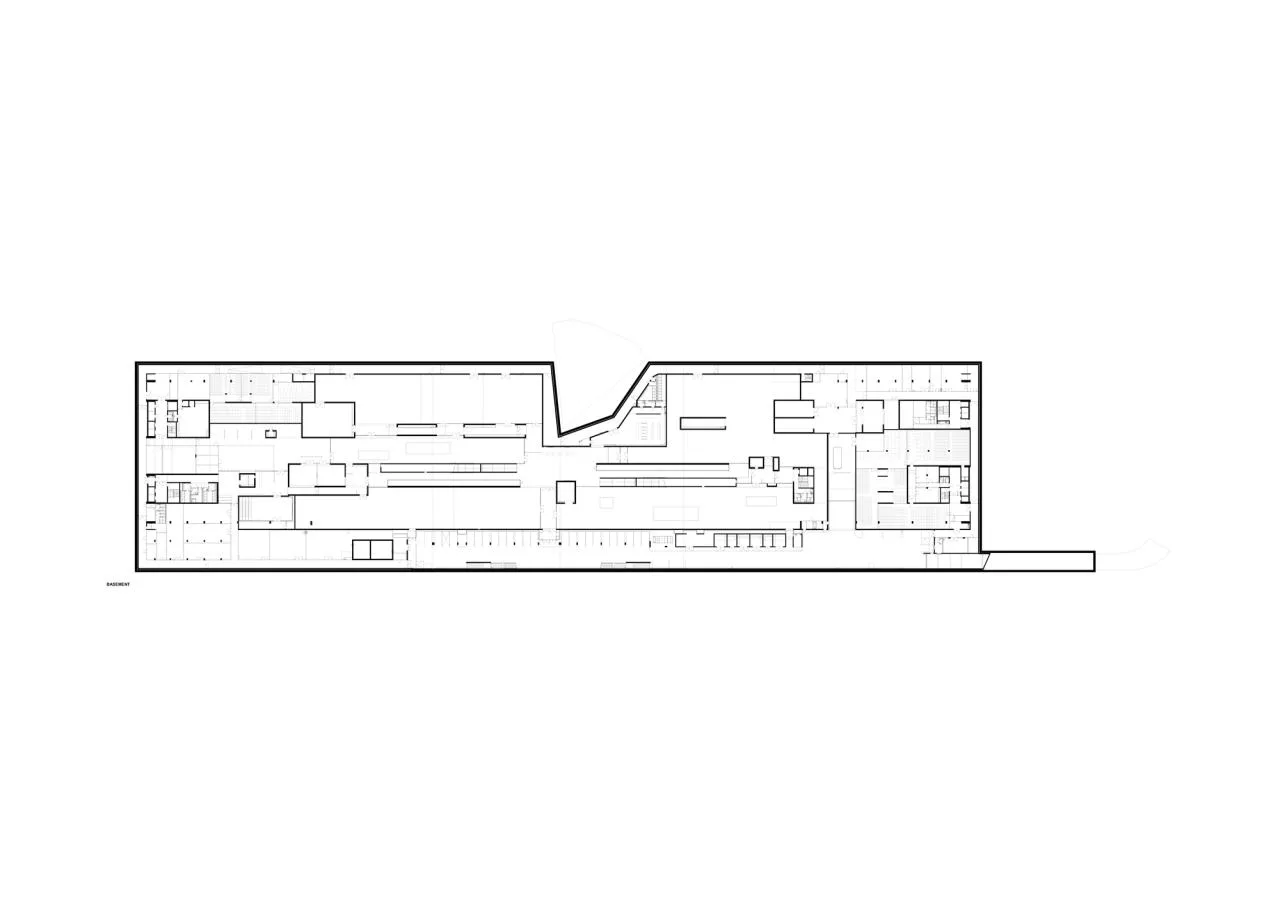
△ Underground Floor Plan
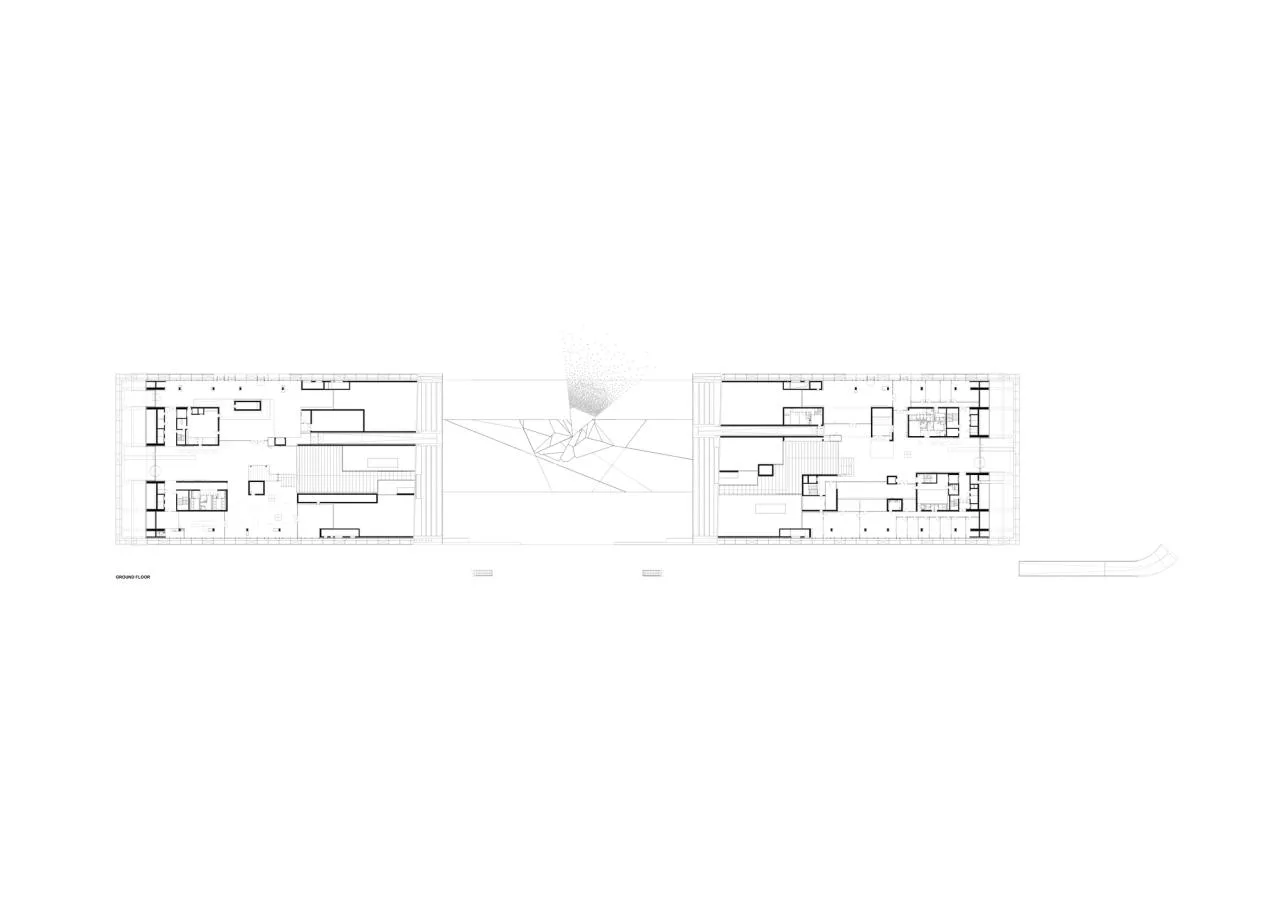
△ First Floor Plan
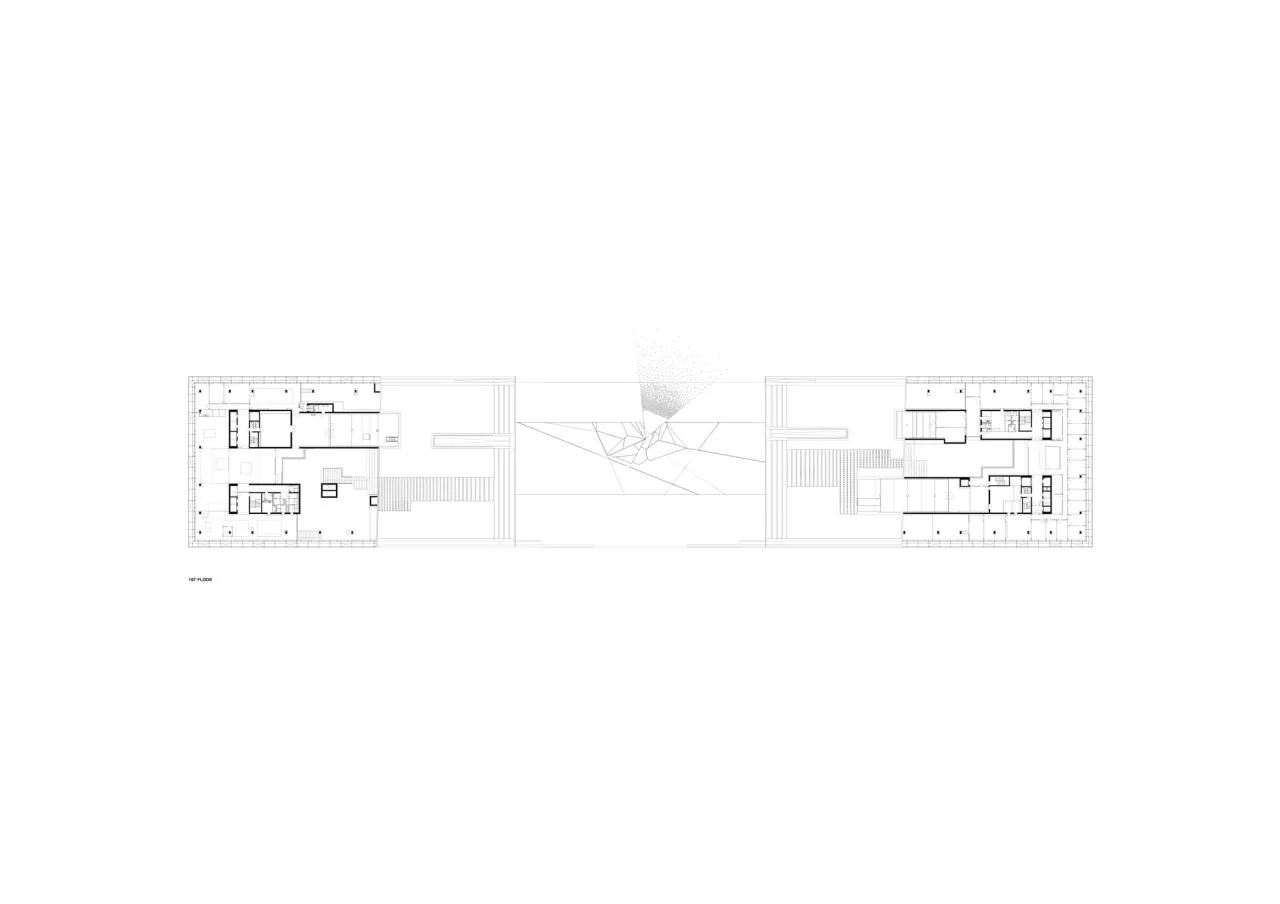
△ Second Floor Plan
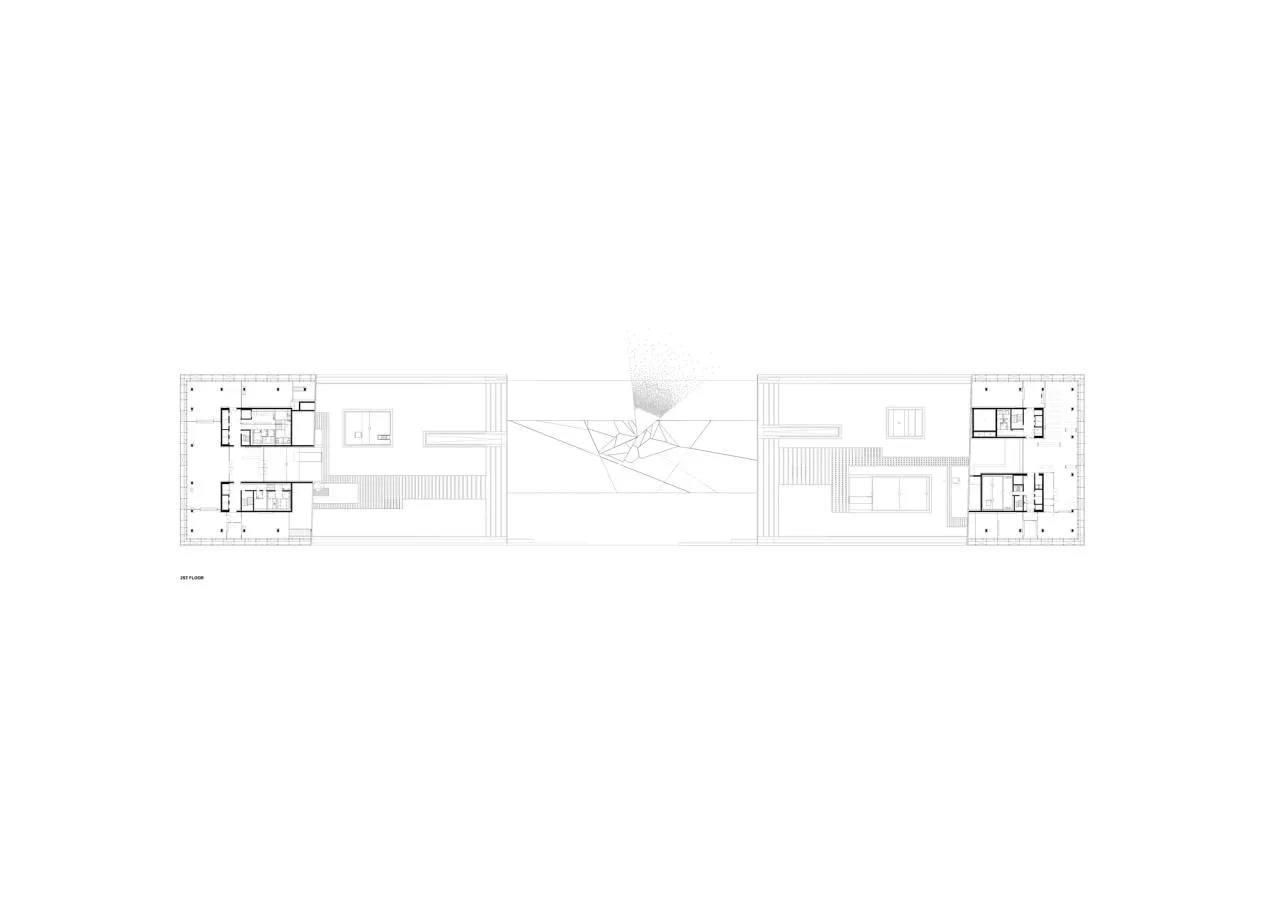
△ Third Floor Plan
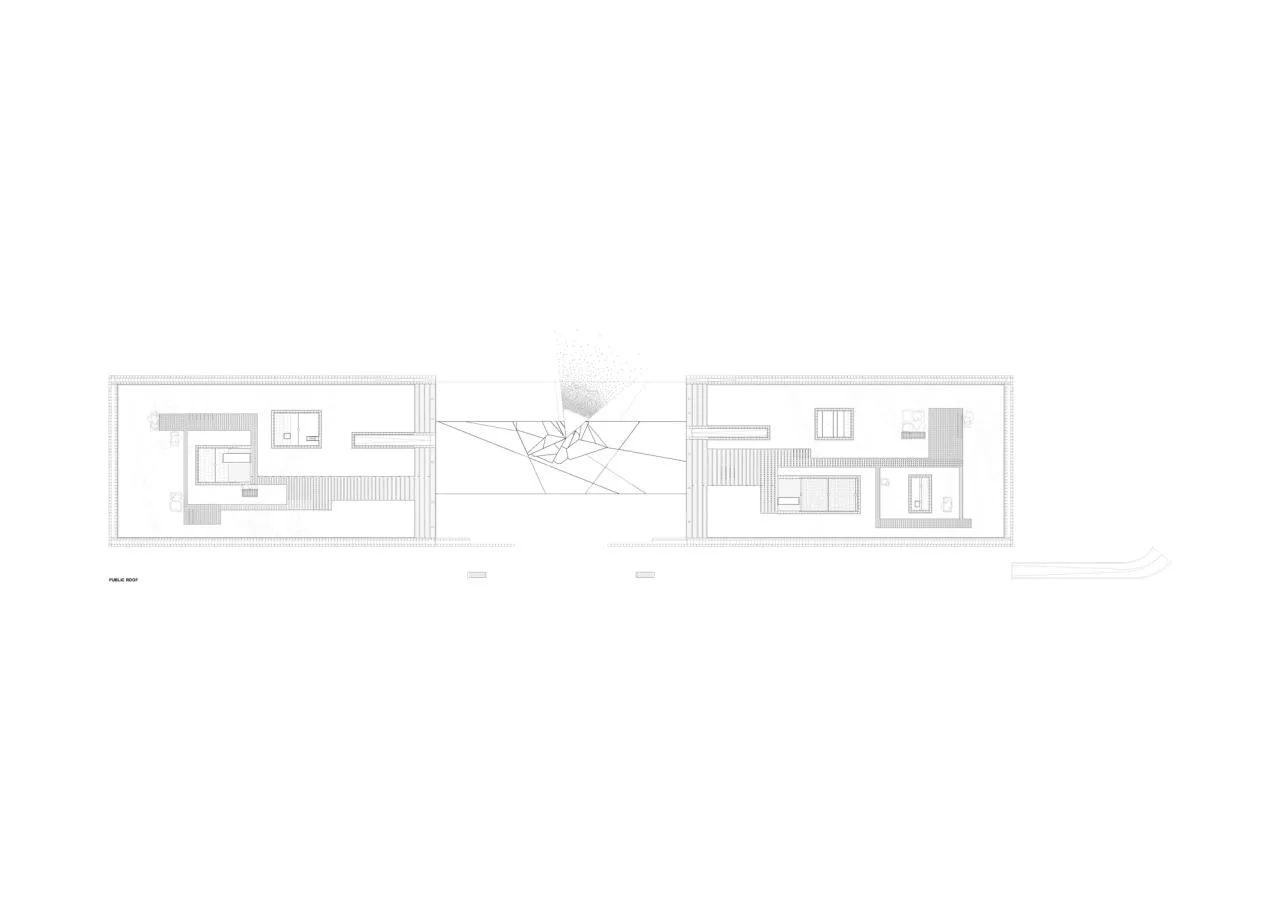
△ Roof Plan
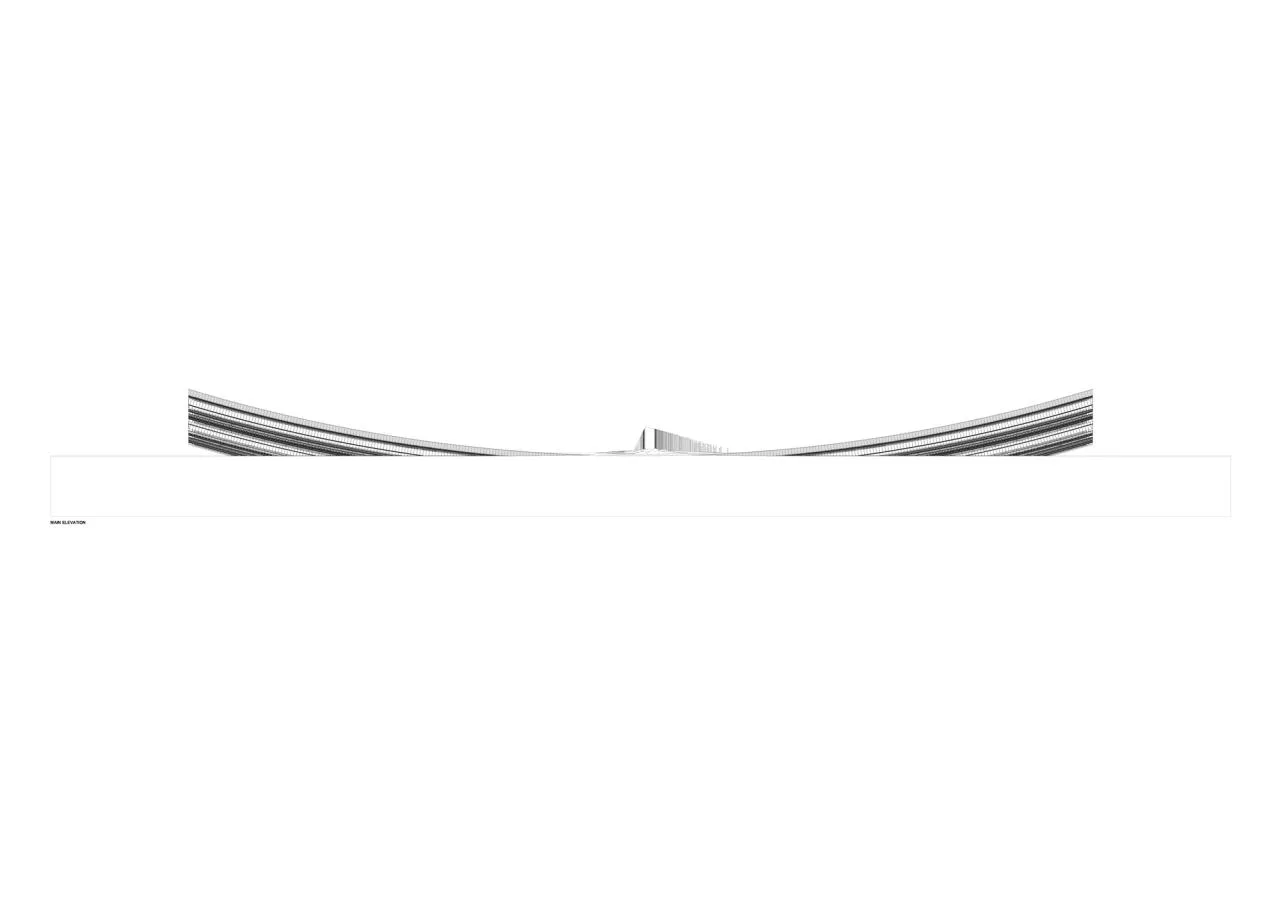
△ Elevation Drawing
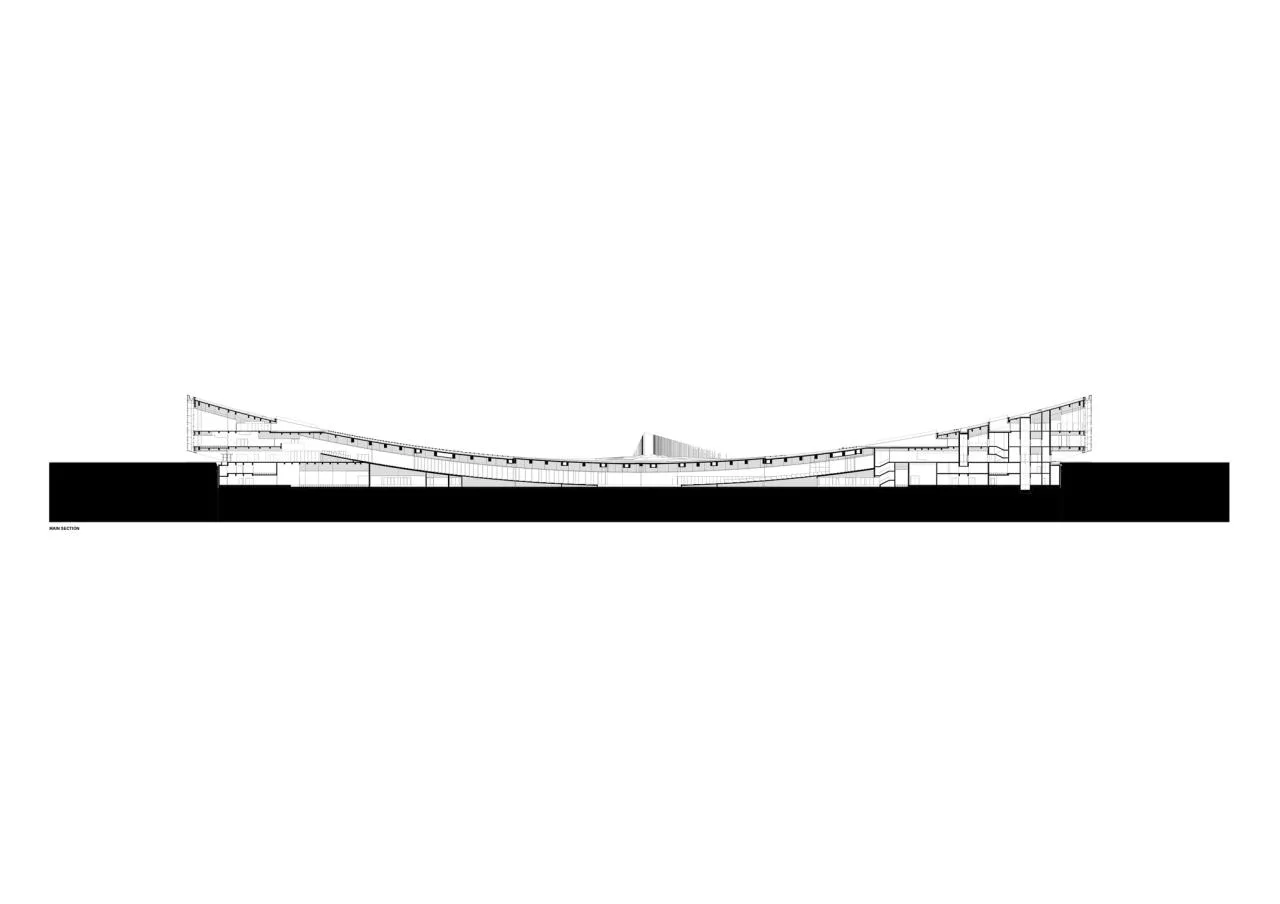
△ Section Diagram
Project Information
Architectural Design: NAPUR Architect
Area: 34,000 m²
Project Year: 2022
Photographer: Gyorgy Palko
Manufacturers: Frontoplan, Kone, Teco Gastro
Lead Architect: Marcel Ferencz DLA
Architectural Design Team: Détári György, Filó Gergely, Holyba Pál, Nyul Dávid, Grócz Csaba, Koralevicz Kinga, Mészáros Mónika
Principal: Városliget Zrt













Must log in before commenting!
Sign Up