
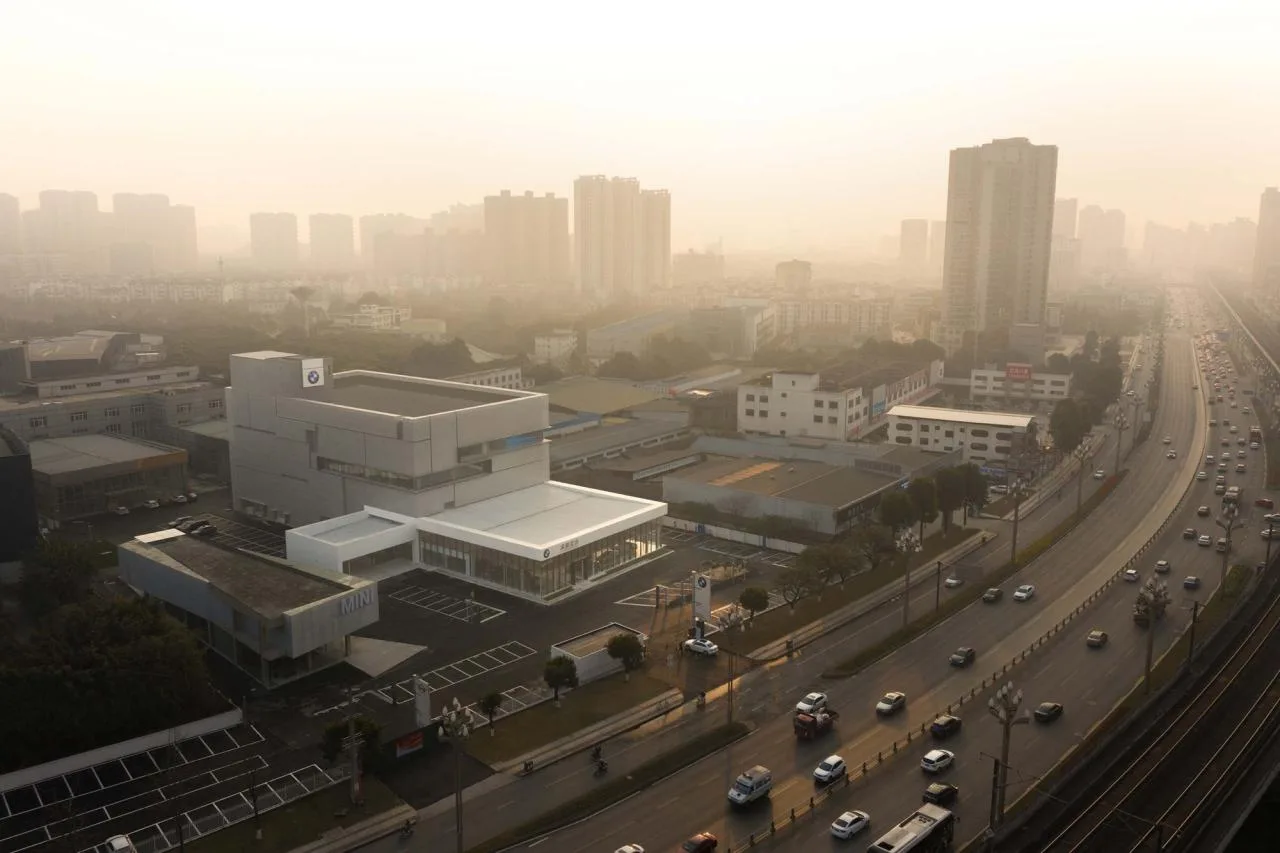
BMW, a brand that has evolved over a century from the Bavarian Aircraft Factory to the BMW VISION NEXT100, represents not only automobiles but also a rich culture. Inspired by the versatile triangular textures of the NEXT100 concept car, the architect integrated these geometric elements with the site’s geographical features to create a dynamic flow and connection throughout the Chengdu BMW Bao Innovation Exhibition Hall. This comprehensive design project encompasses architectural renovation, landscape, and interior spaces.
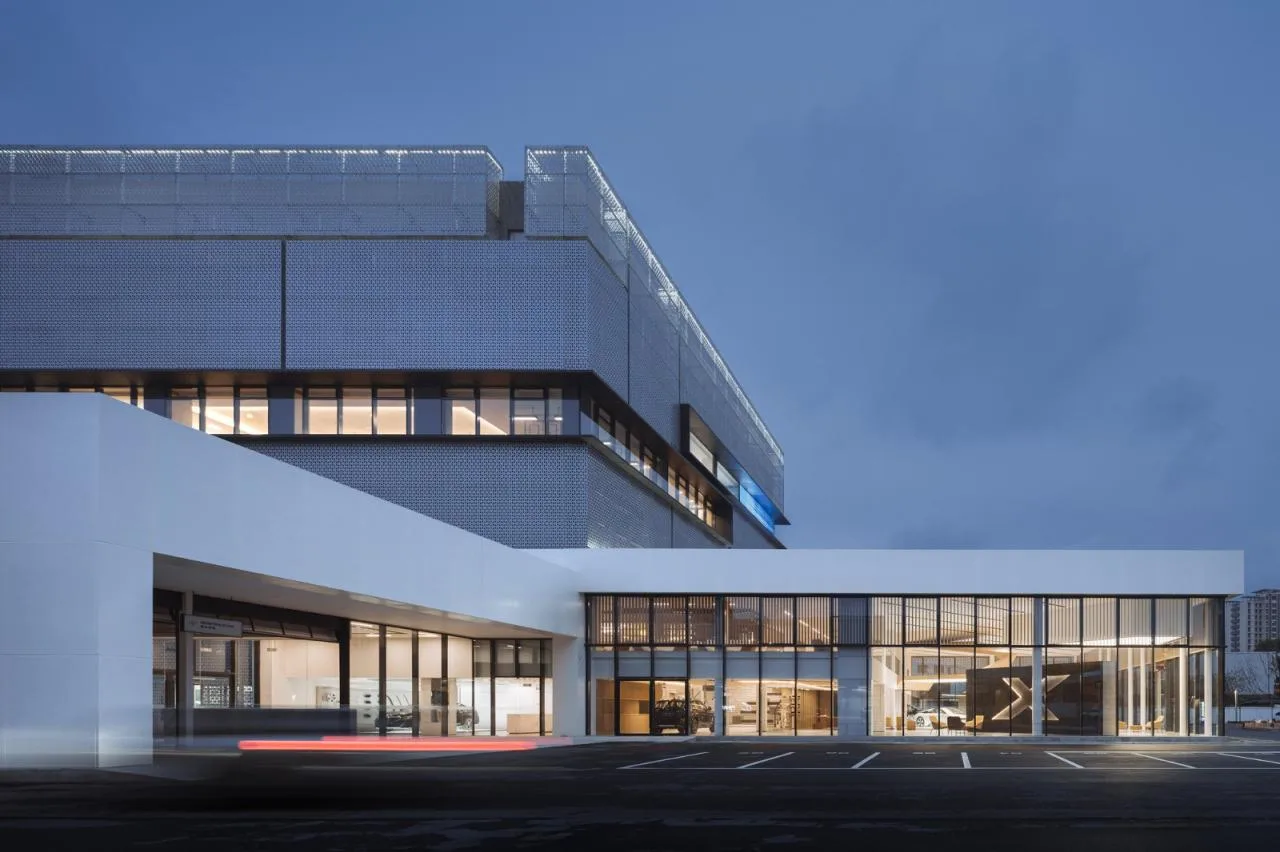
Located on Gaodian Road in Pidu District, Chengdu, the exhibition hall covers over 10,000 square meters. The original structure had been abandoned for years, suffering from severe aging, peeling exterior bricks, and exposed smoke ducts, posing significant challenges for renovation. The client envisioned the building as a vibrant, eye-catching landmark, easily visible from the high-speed rail and highway across the road, while incorporating BMW’s commitment to environmental sustainability.
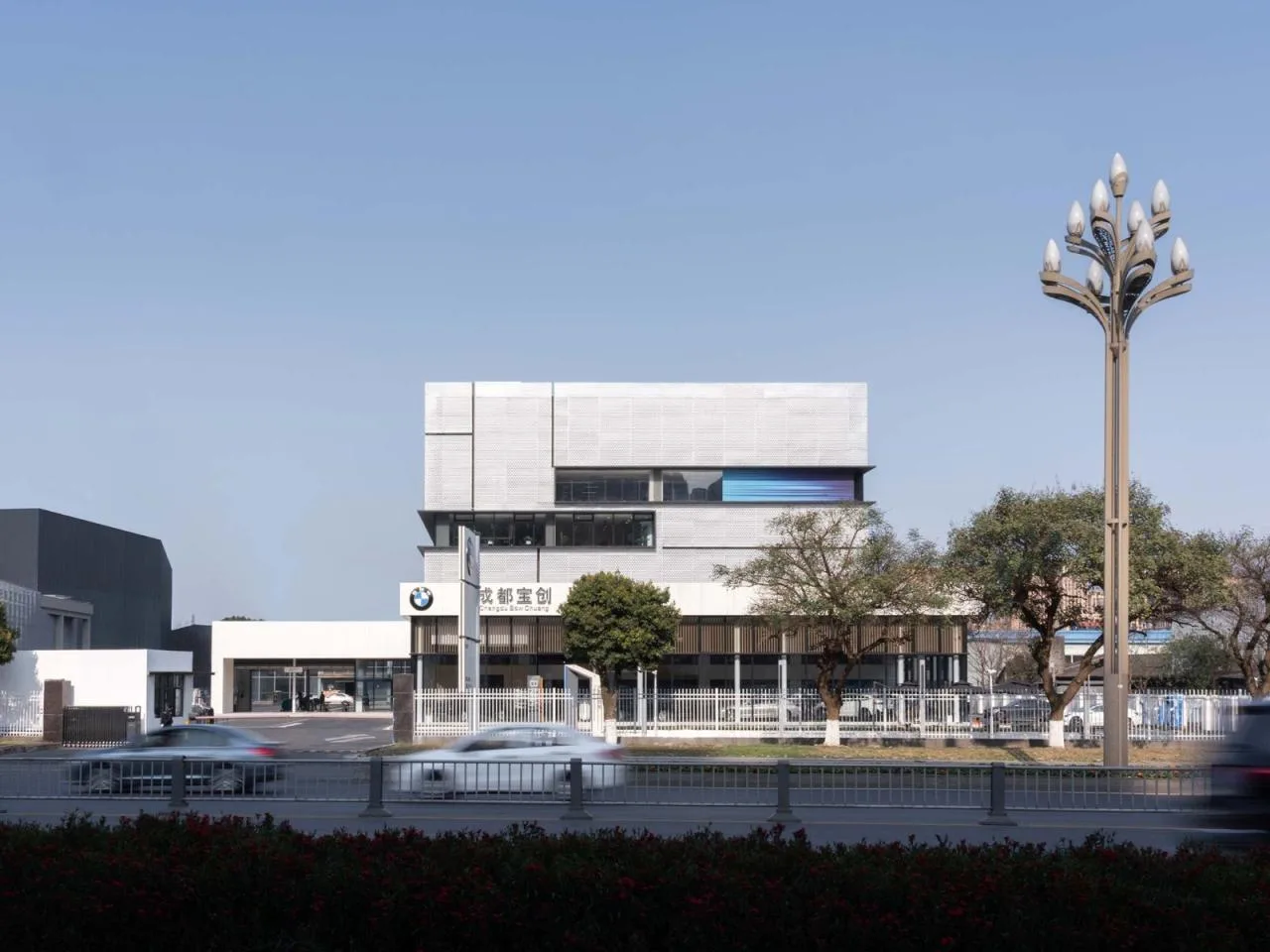
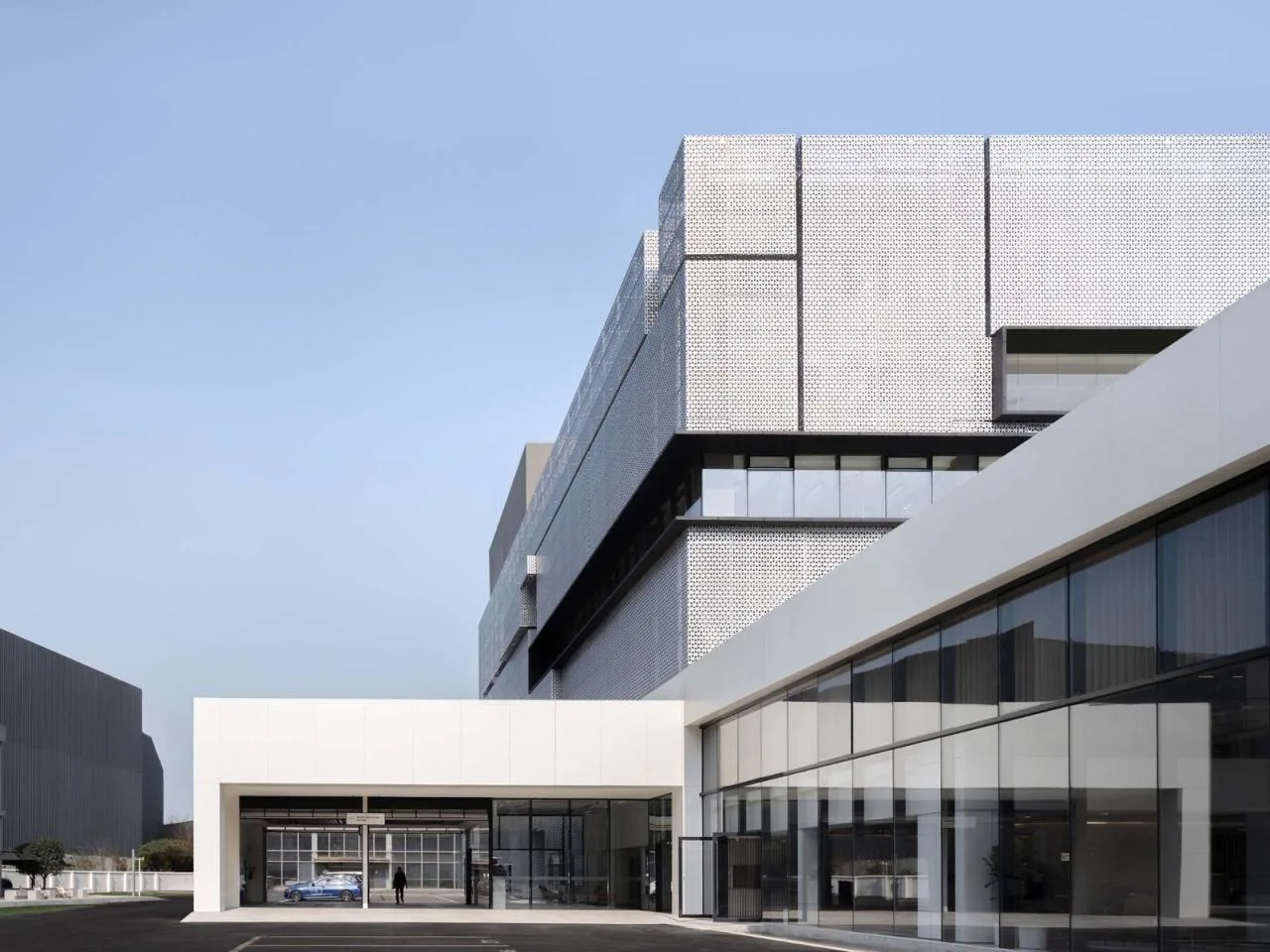
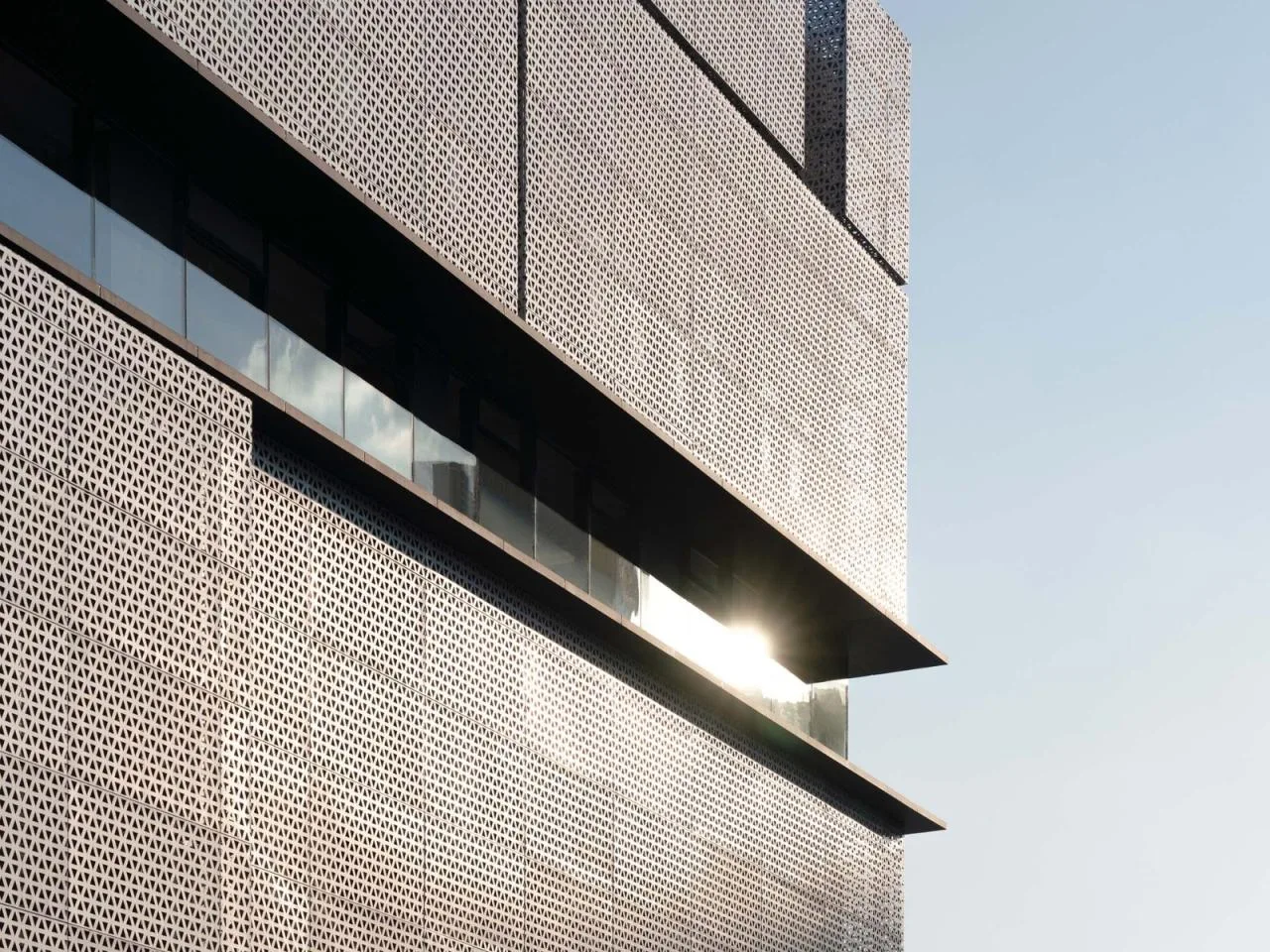
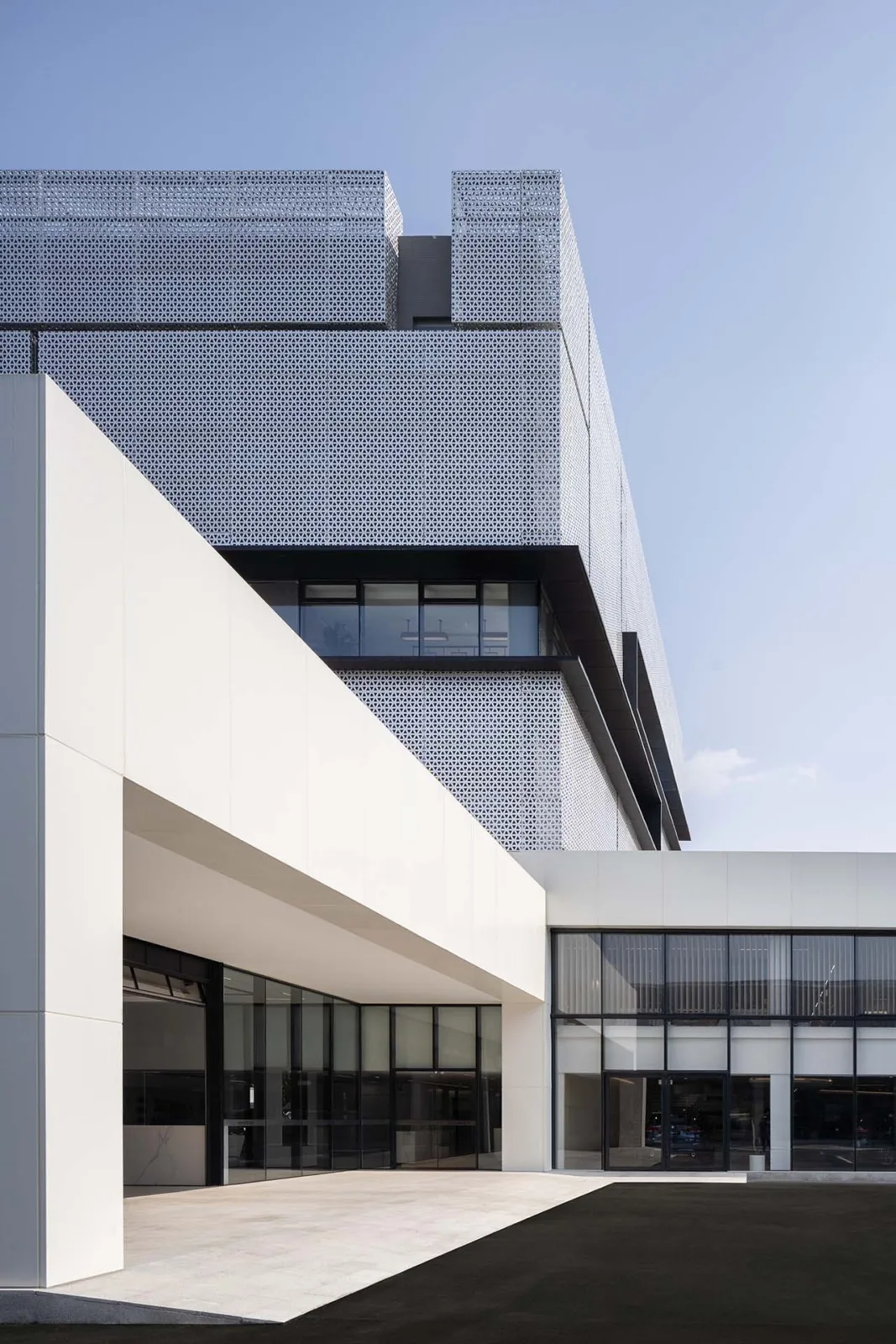
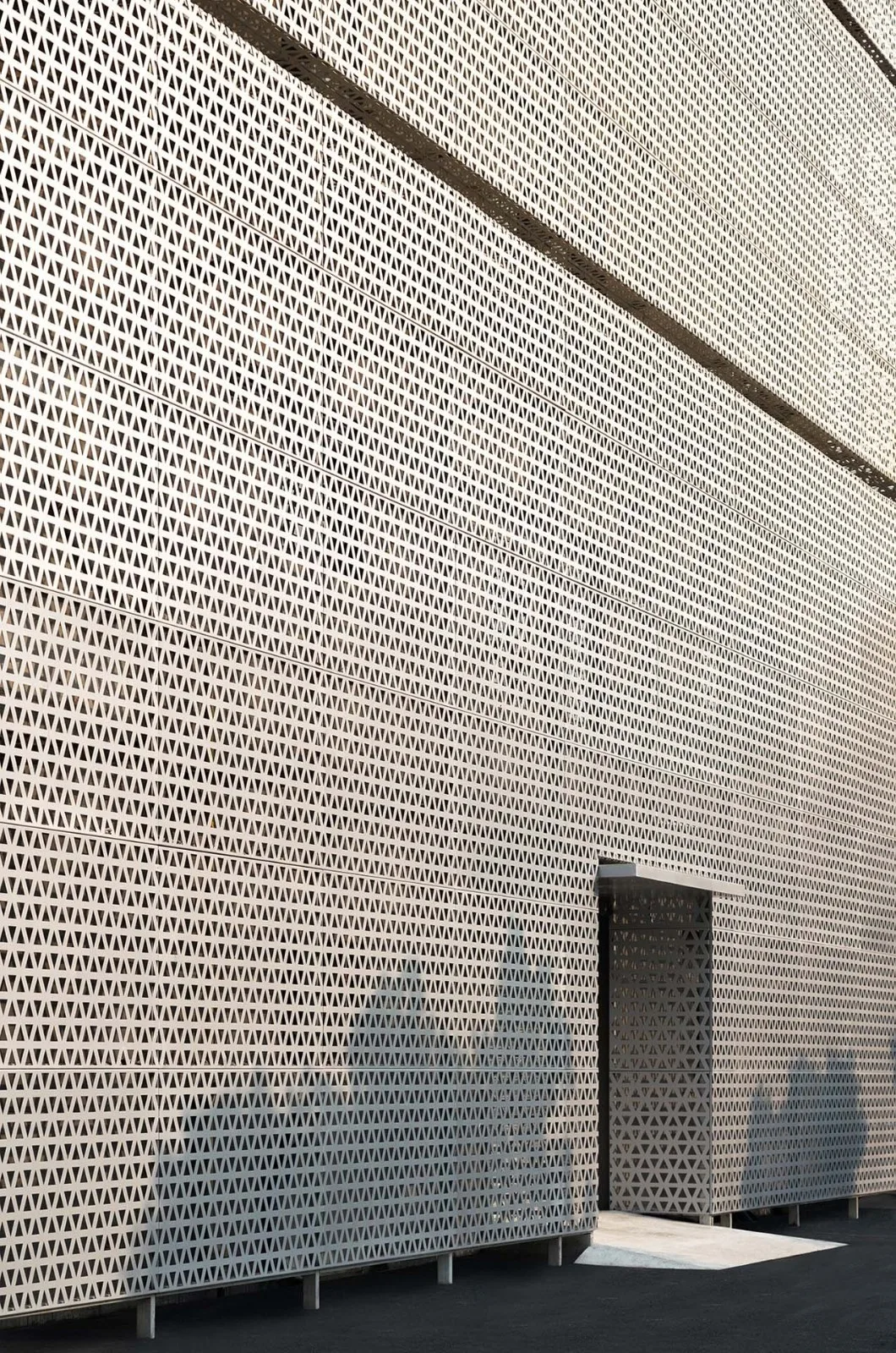
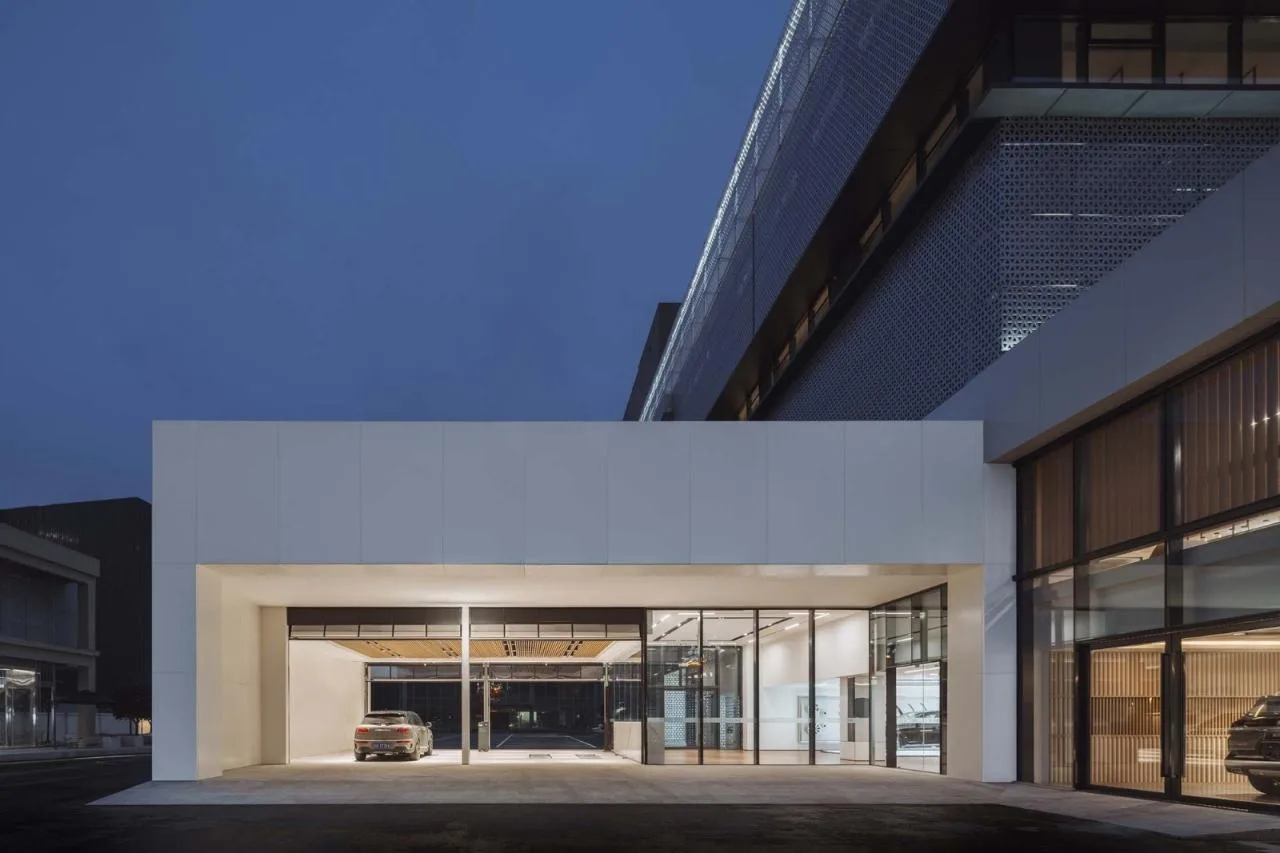
To enhance the building’s façade, the architect added a secondary skin made of anodized perforated panels inspired by the triangular patterns of the VISION NEXT concept car. These panels emphasize the vertical and horizontal grid of stacked blocks while allowing natural light to penetrate the interior workshops. Behind the perforated panels, large operable curtain wall units provide natural ventilation, reducing the heat island effect during summer and lowering cooling energy consumption. This ecological skin offers shading in hot months and insulation in winter, promoting energy conservation and sustainability.
Given the owner’s requirements for a short construction timeline and controlled costs, a prefabricated steel structure was proposed. Most components were fabricated off-site and then assembled on location, ensuring high quality and precision throughout the process.
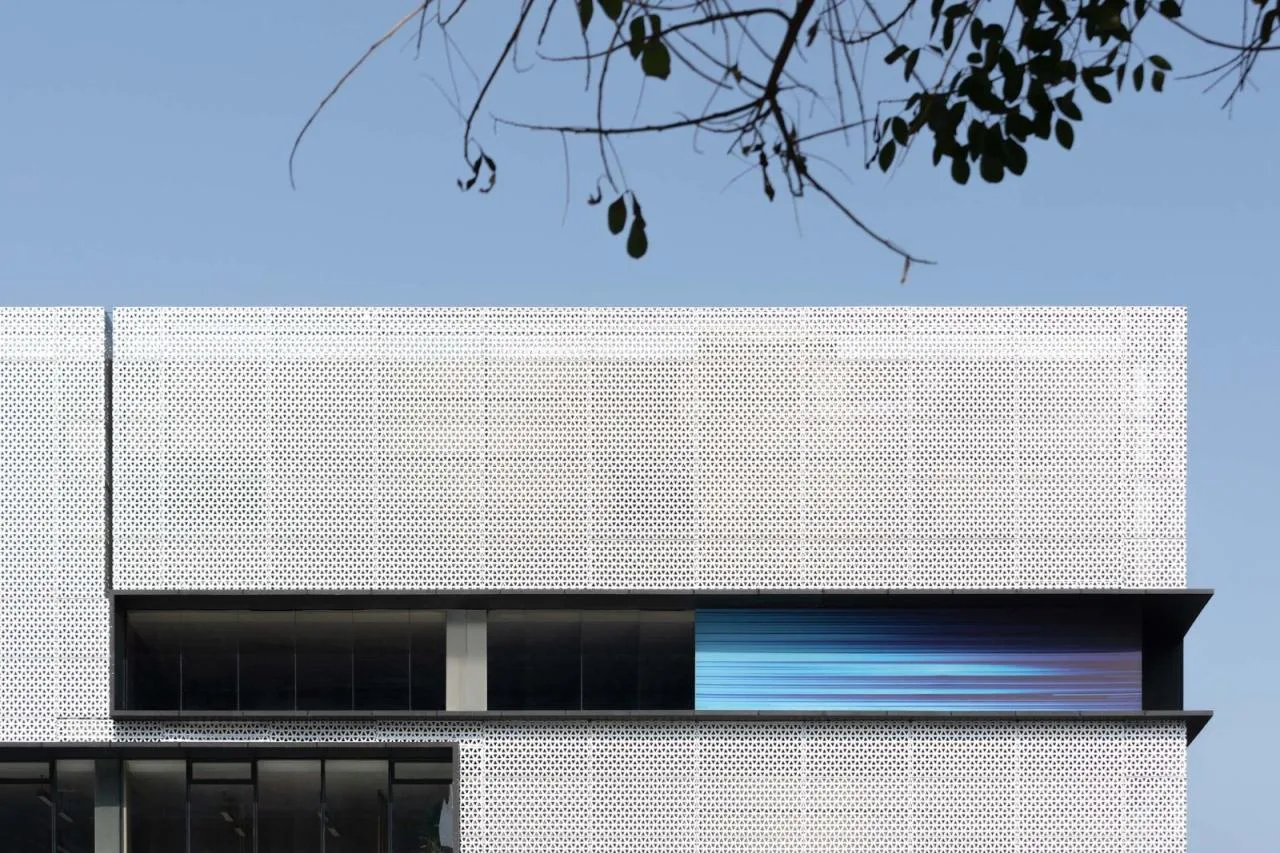
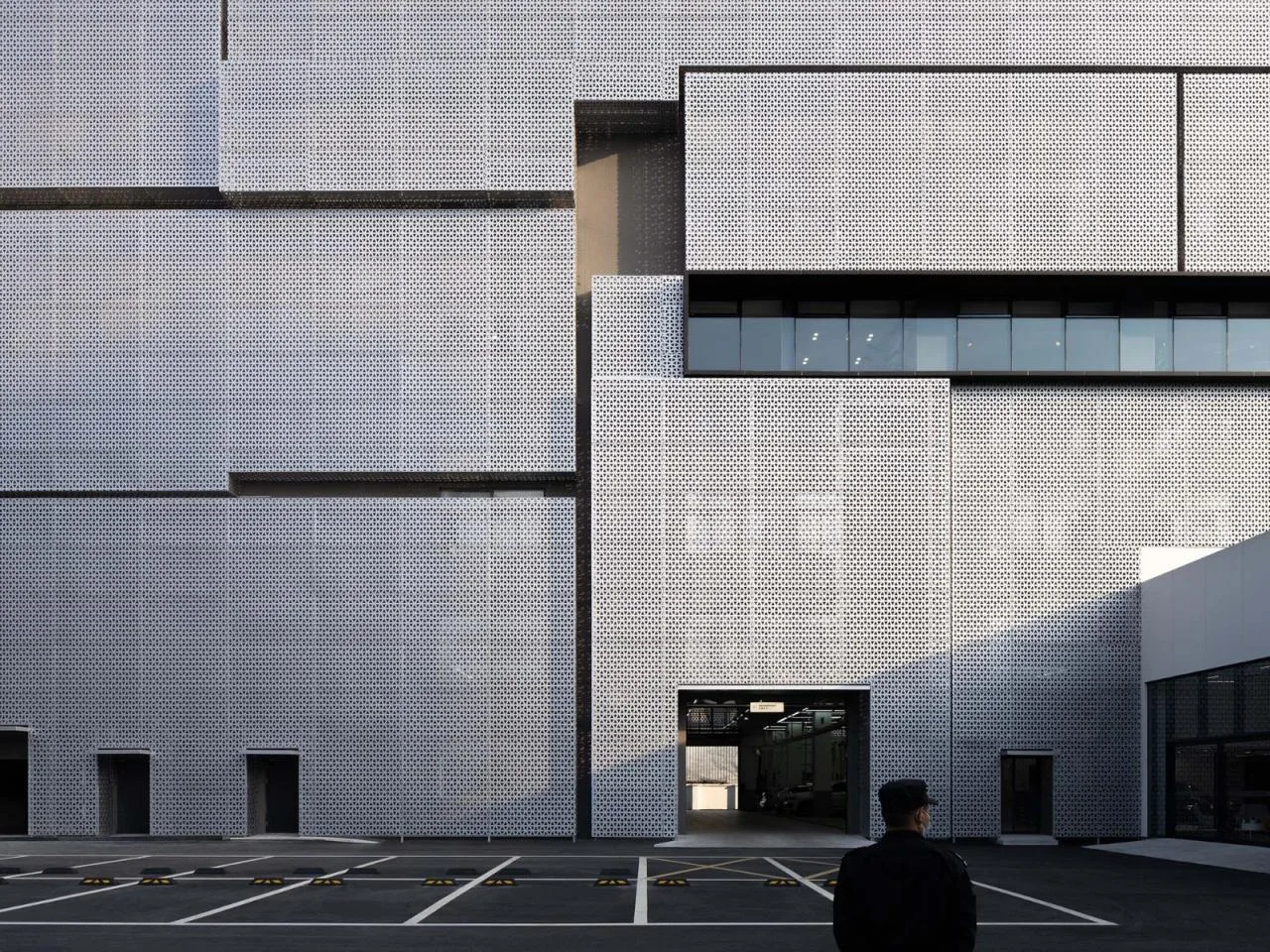
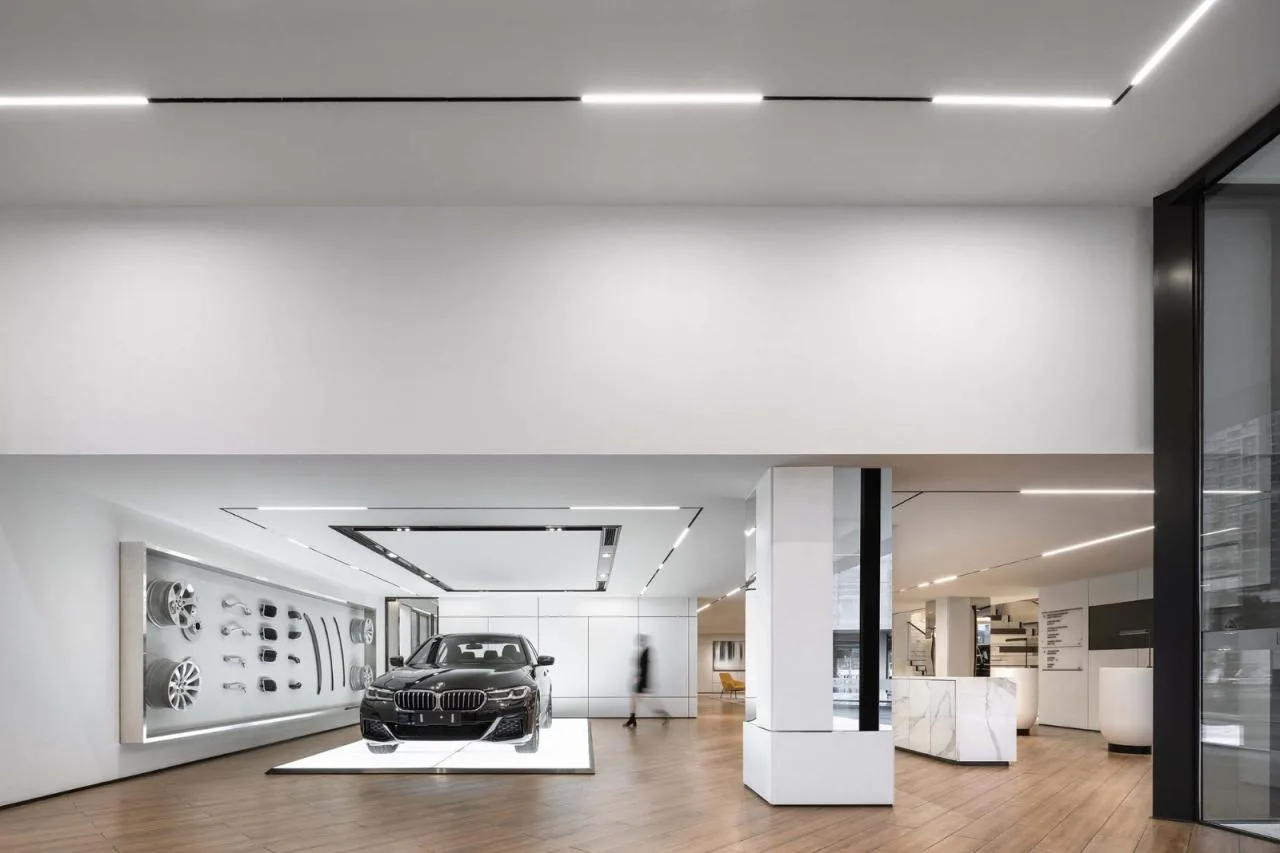
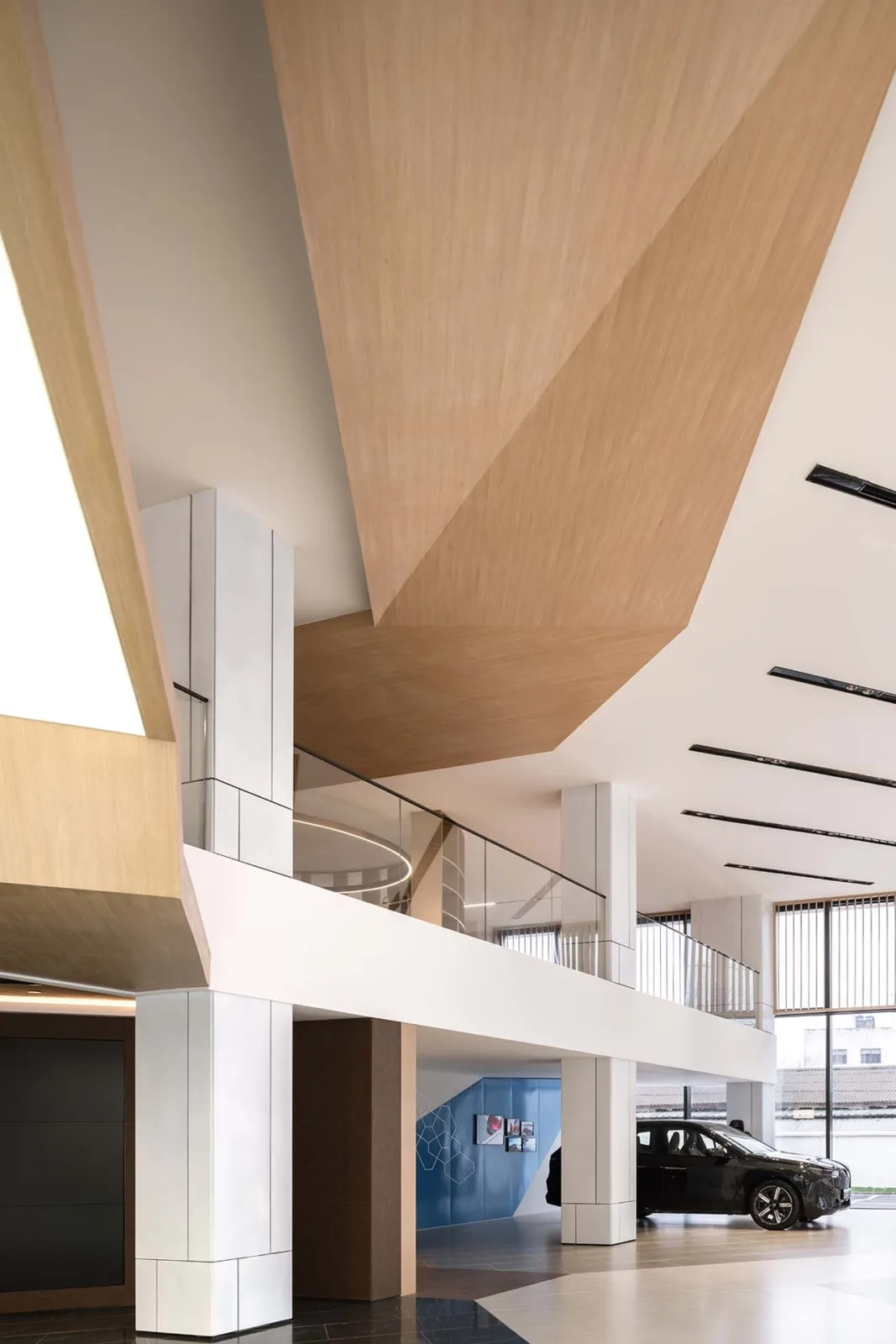
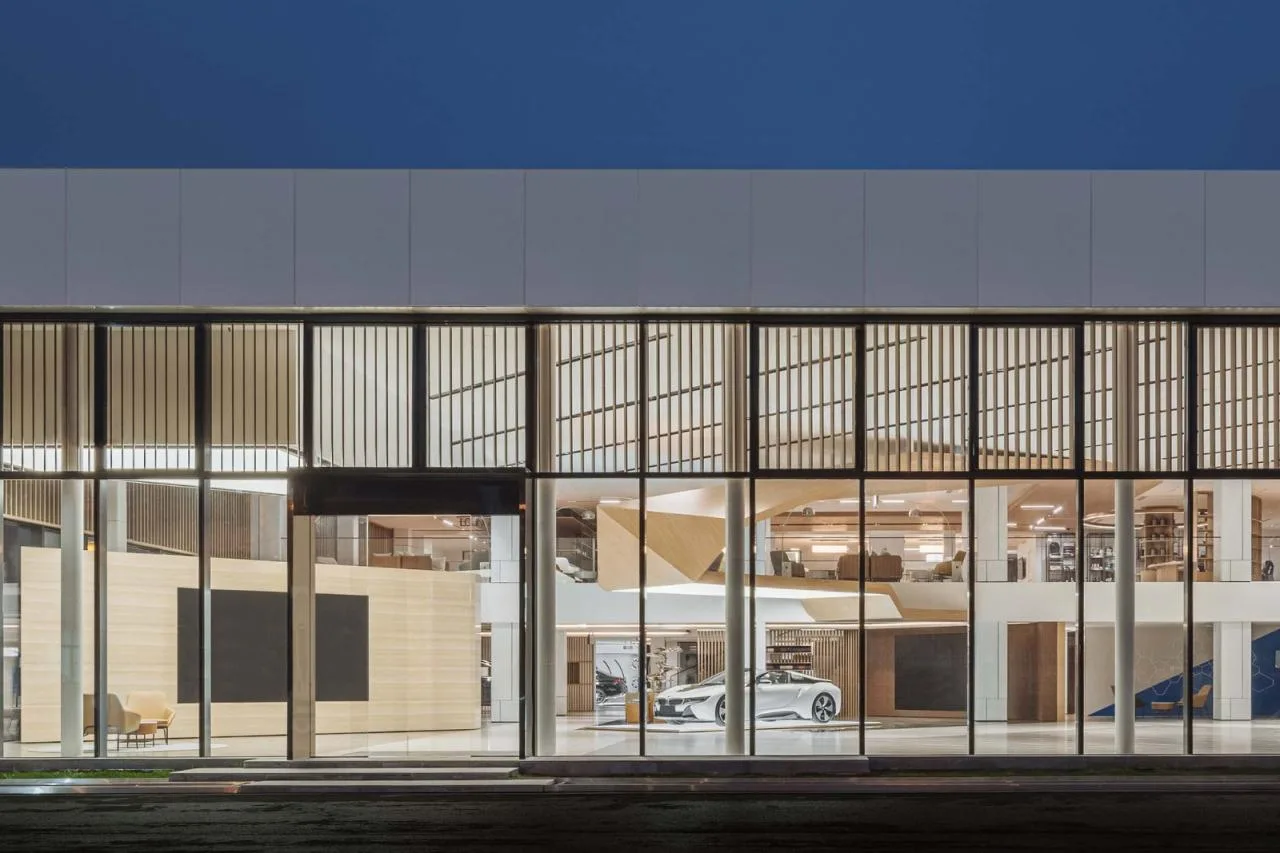
The integrated approach to architecture, landscape, and interior design ensures a cohesive concept throughout the project. The building’s southern first floor houses a professional BMW car exhibition hall and roadshow area, with a service workshop located at the rear for vehicle pre-inspection. This open layout offers customers clear visual access to inspection services. The mezzanine level provides an open lounge, retail spaces, and shared social areas designed to encourage interaction. The overarching goal was to create a transparent, social environment by integrating the double-height space on the first floor into a unified experience.
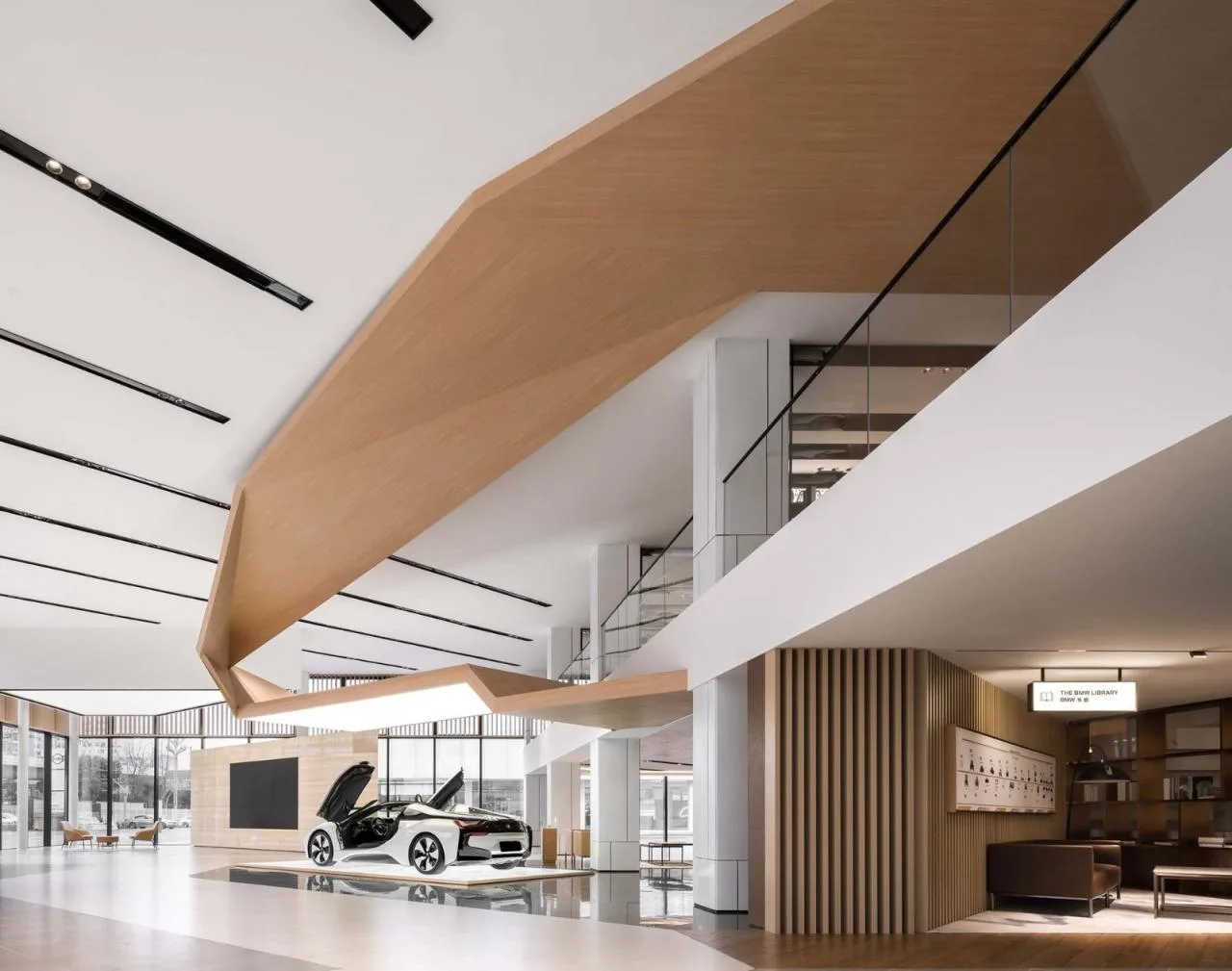
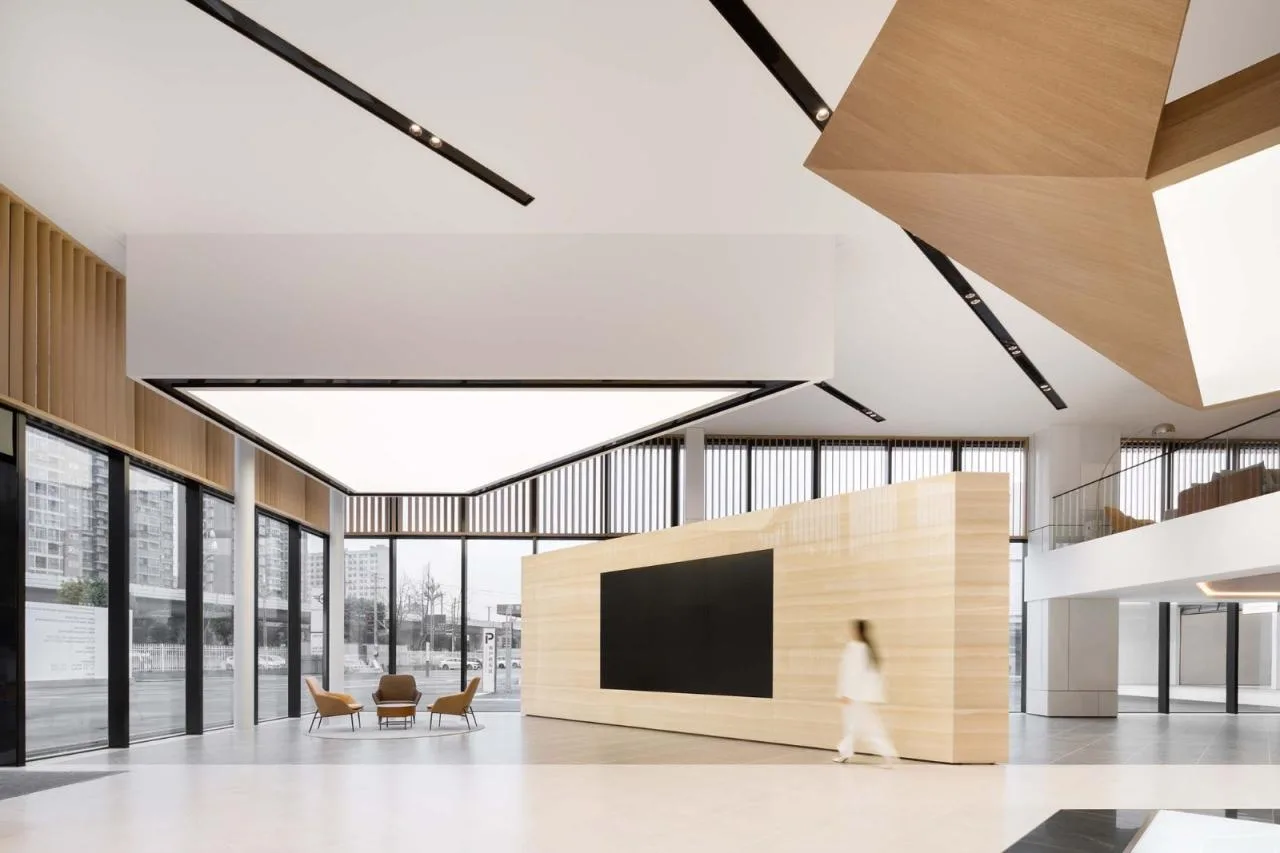
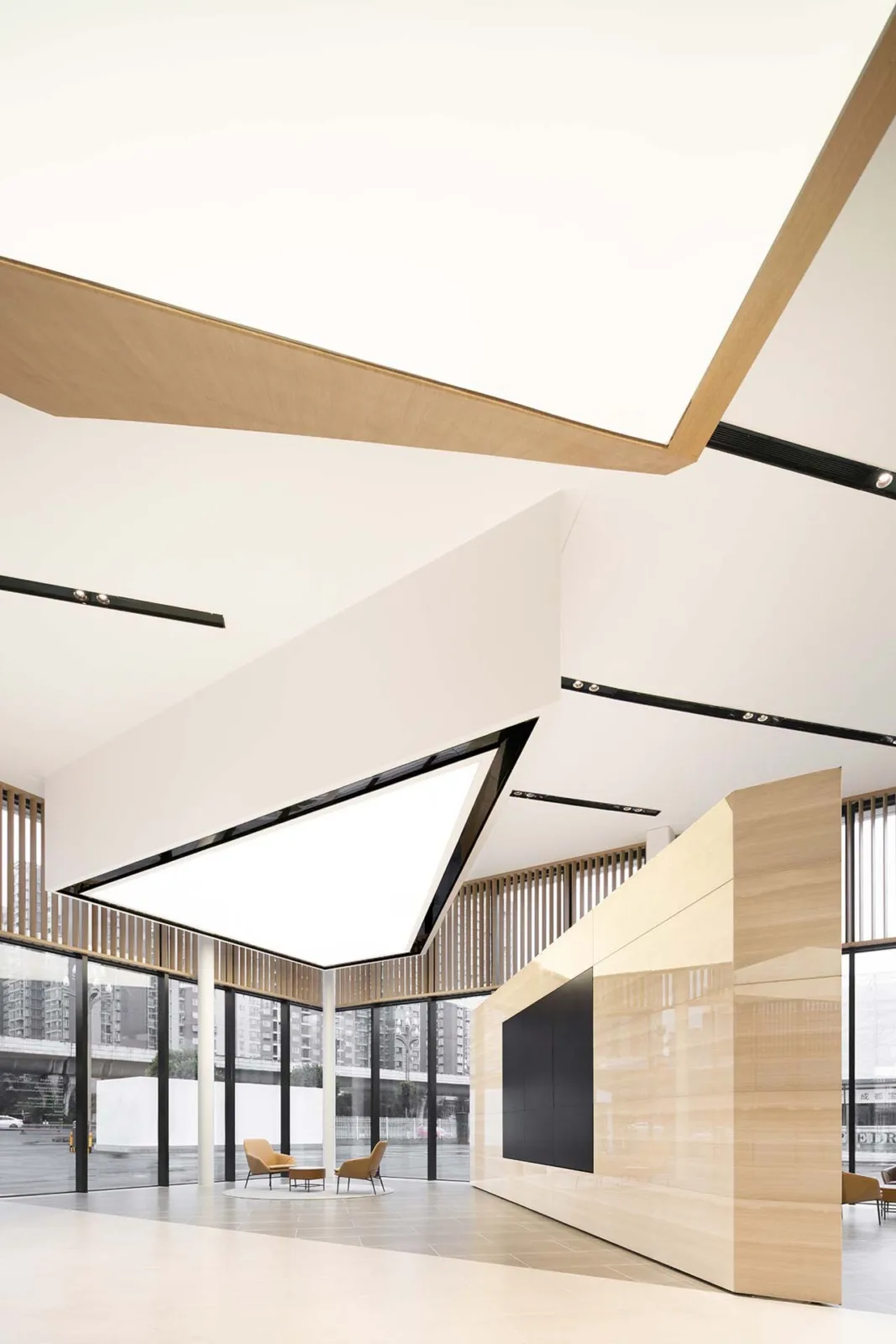
The project’s location in Pidu District features a surface water system separate from the Baopingkou River, part of the Dujiangyan Irrigation Project. This inspired the architect to minimize spatial divisions and instead focus on dynamic line designs within the hall, echoing the flow of the irrigation system. This concept connects the landscape, architecture, people, vehicles, lifestyle, and the BMW brand through a unified design language based on modular units.
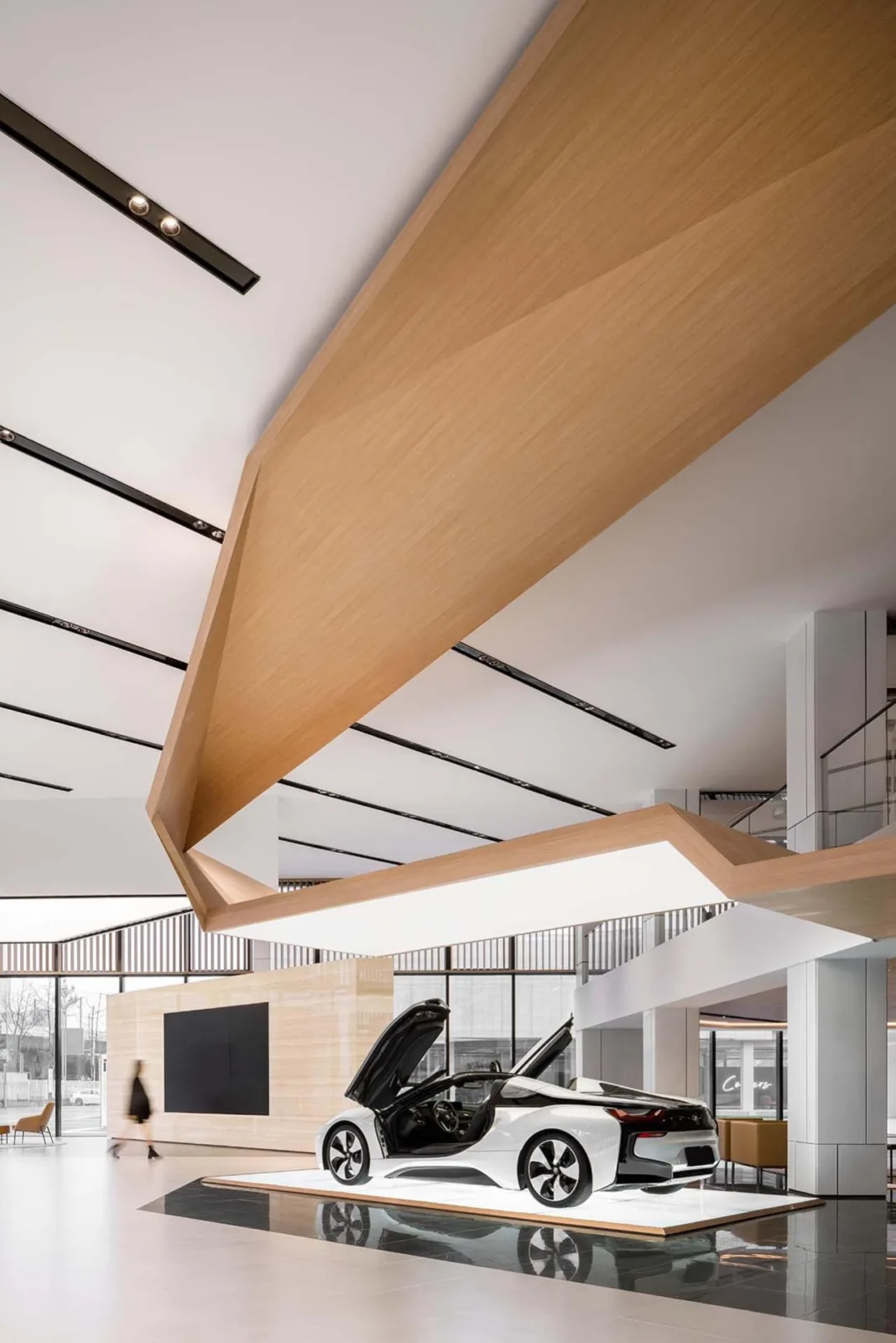
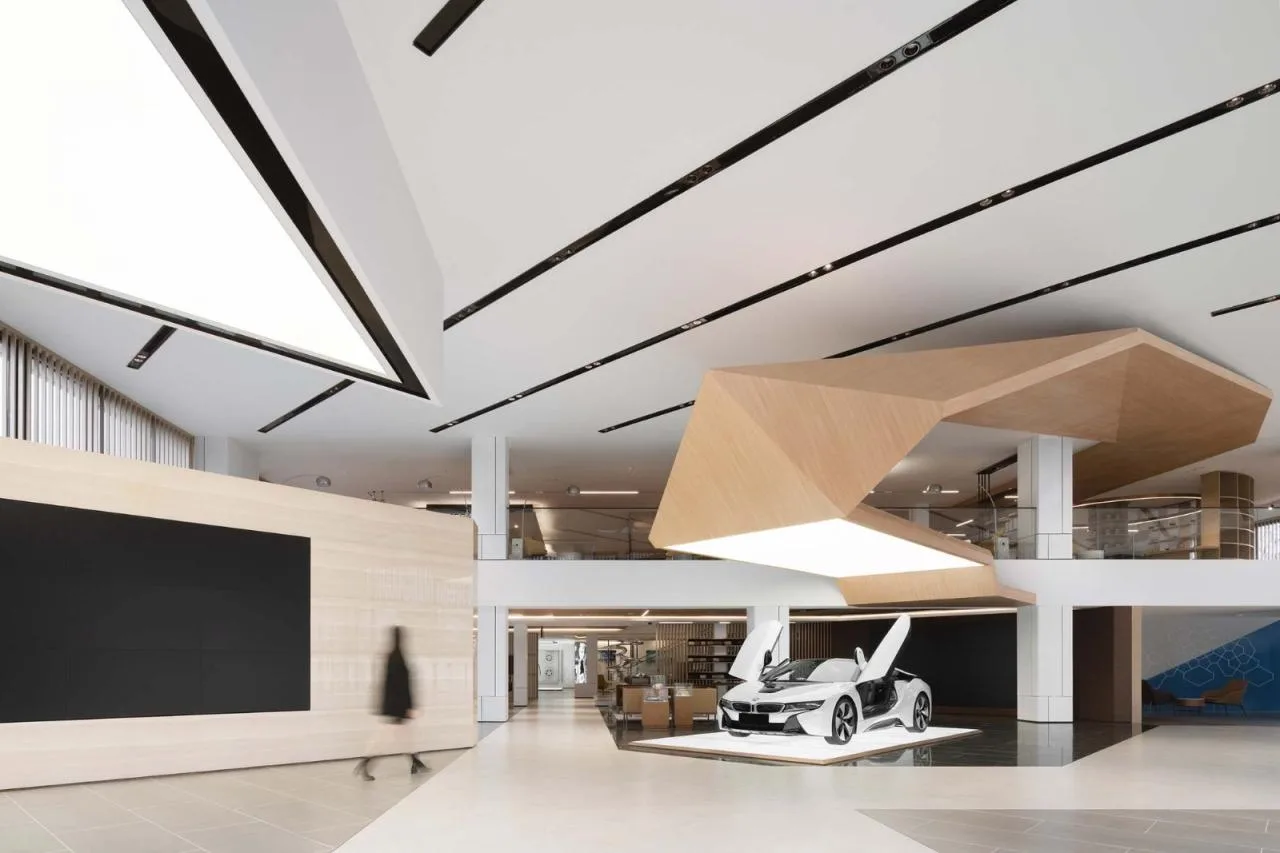
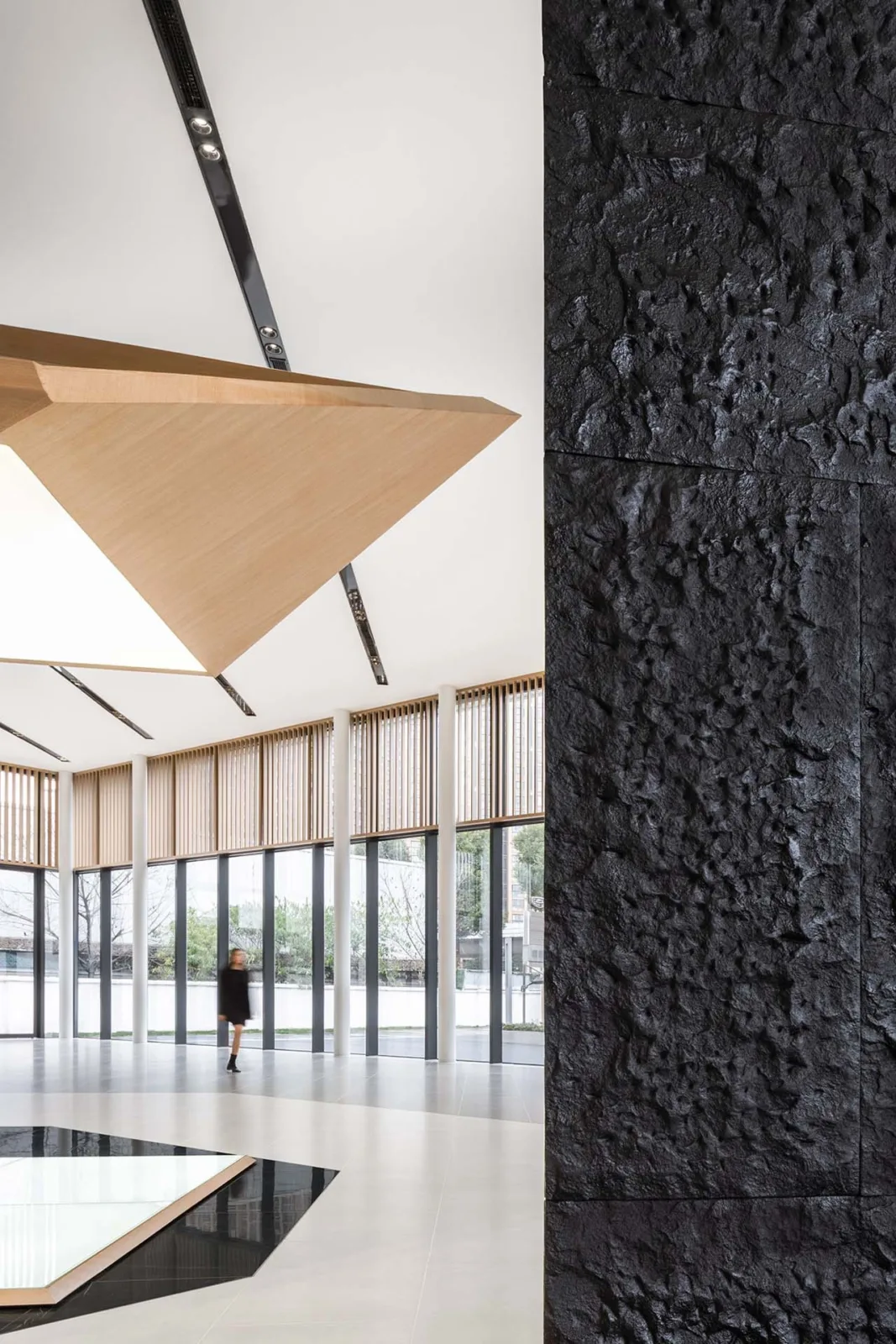
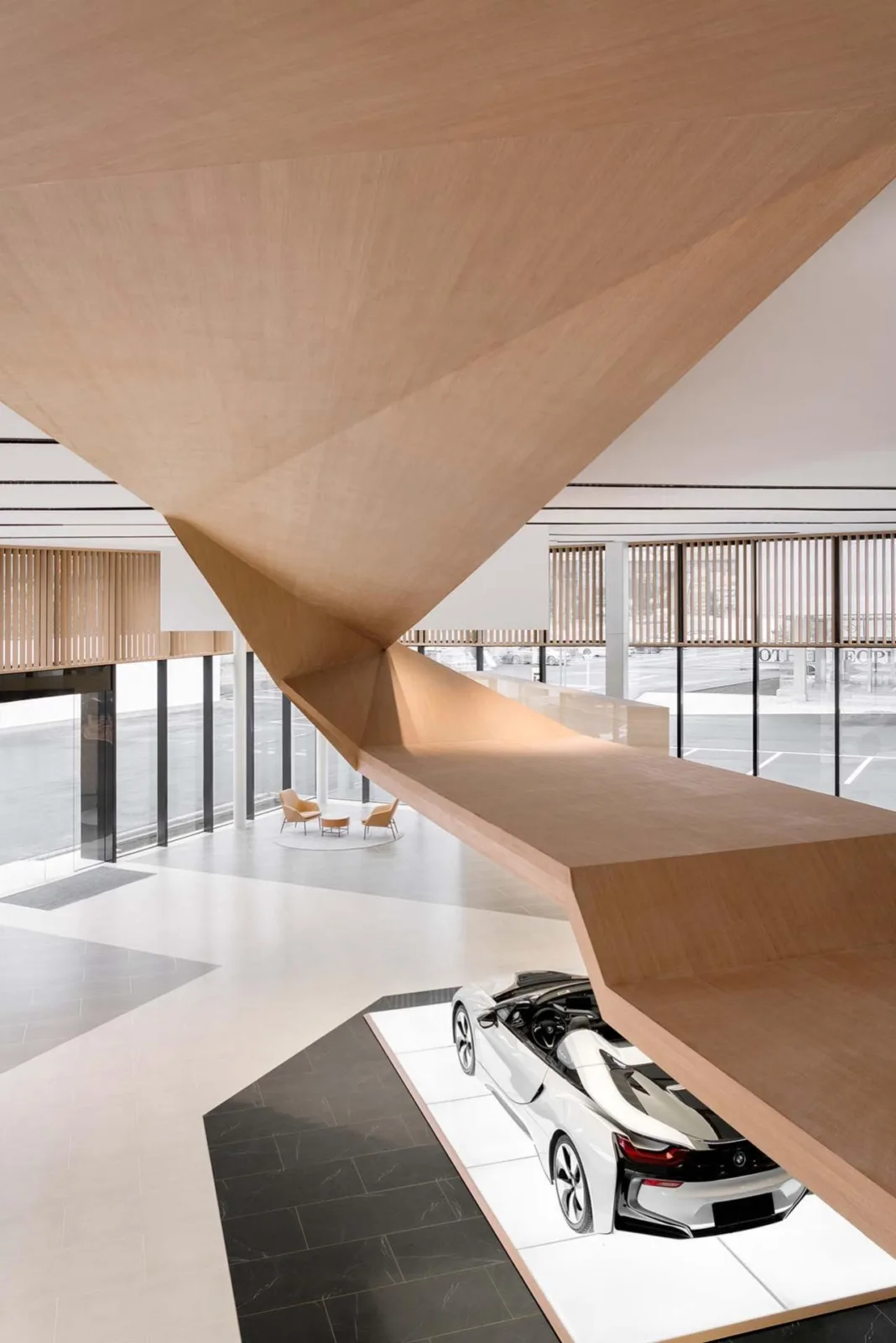
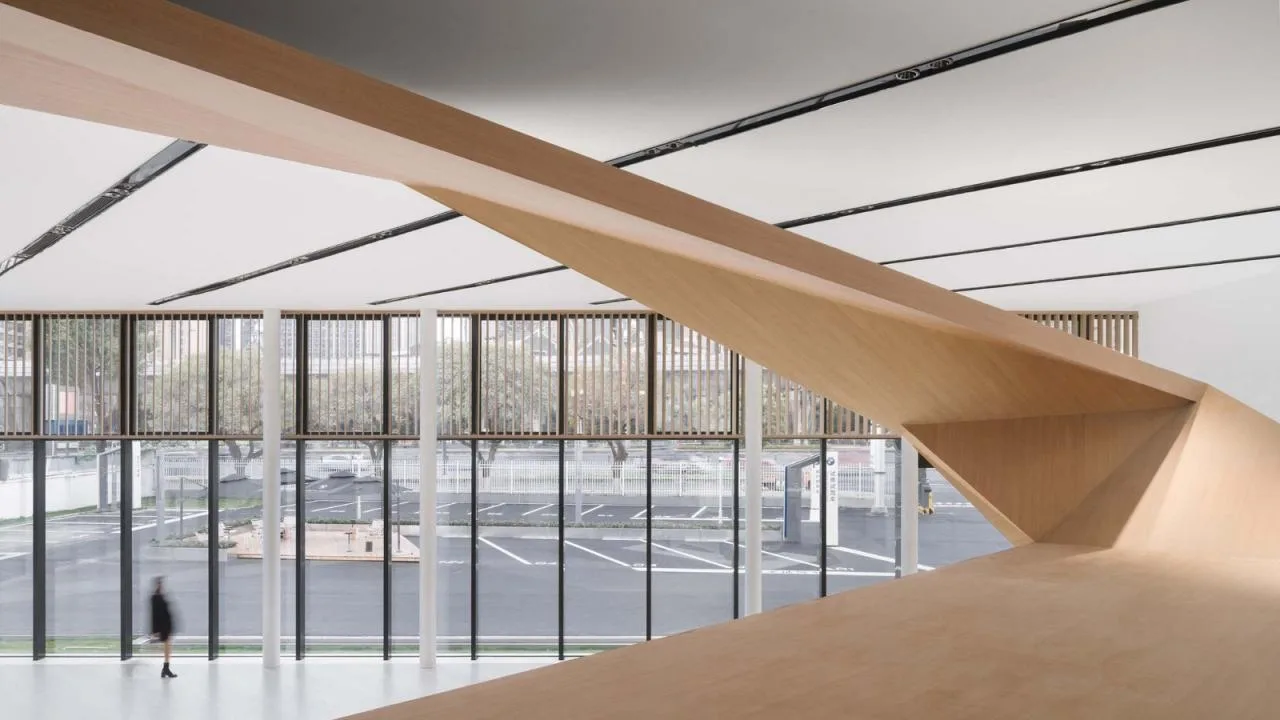
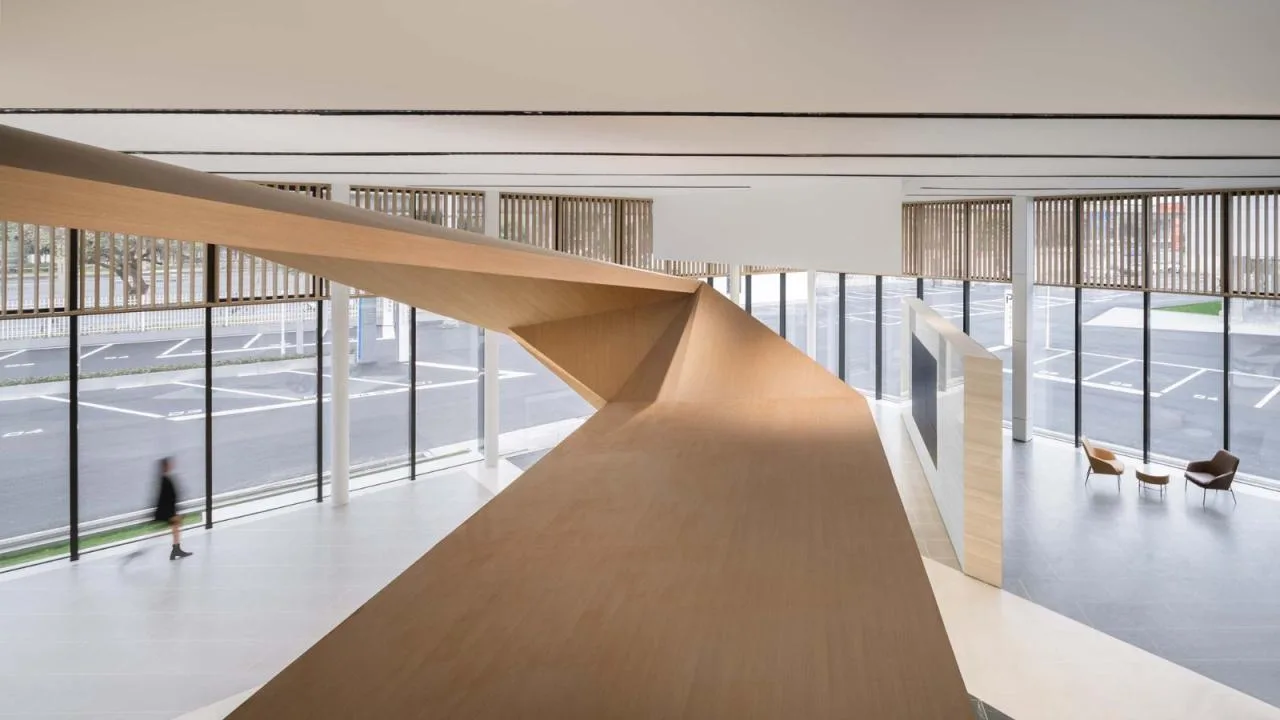
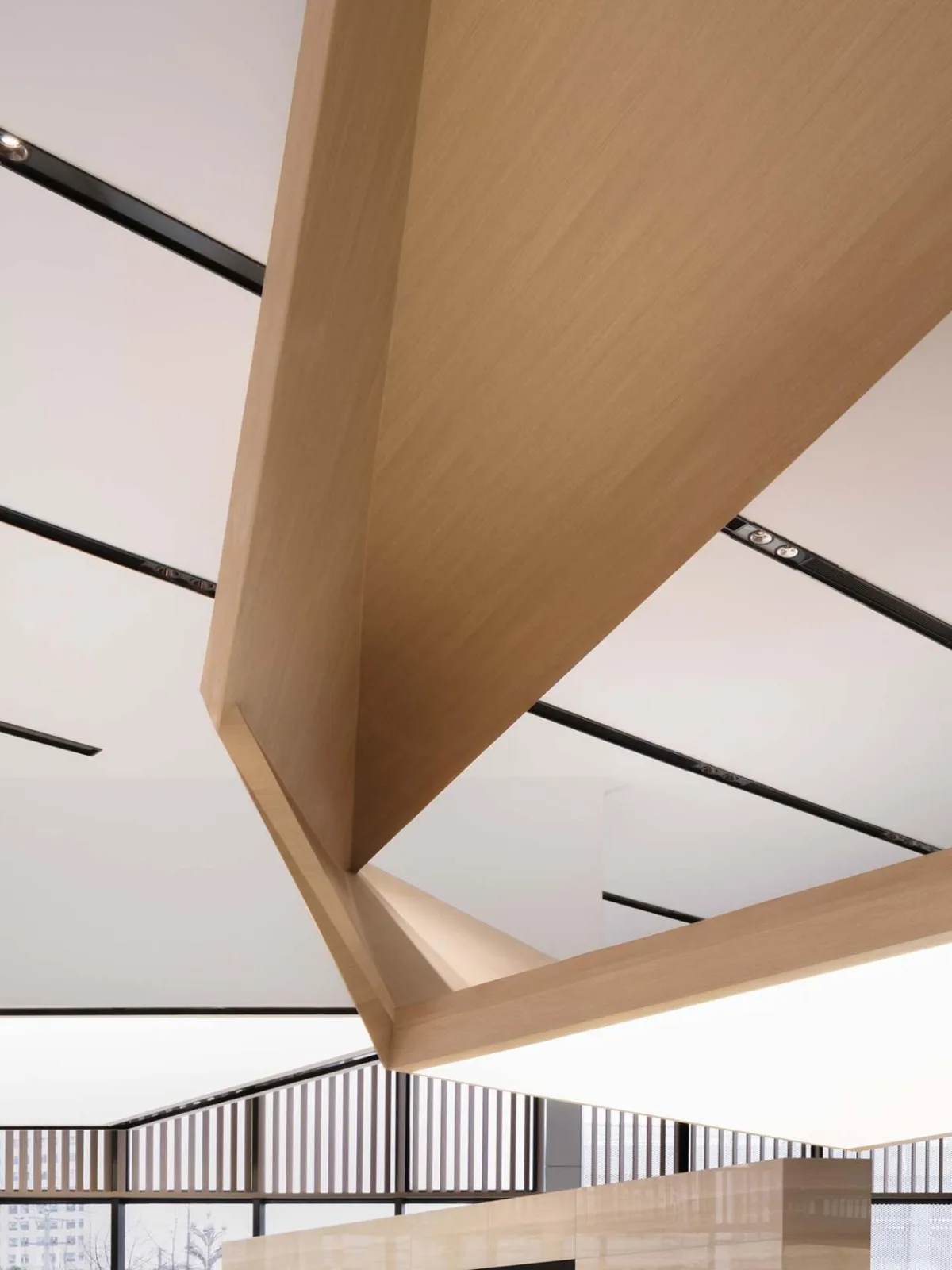
The triangular motif, derived from the BMW VISION NEXT, forms a striking geometric ceiling installation that spans the mezzanine’s two levels, symbolizing a symbiotic relationship. The portion of the installation hanging over the mezzanine is composed of four triangles arranged as an arrow pointing toward the future. This design element guides visitor flow, linking various vehicle displays to lifestyle areas, retail zones, lounges, tea rooms, coffee bars, and other multifunctional spaces spread across two levels.
This interconnected triangular unit supports display, sales, customer experience, and after-sales services. As the owner emphasized, “There are no secret areas; all services are open to customers. Everyone is welcome to freely enjoy our offerings, whether it’s coffee, tea ceremonies, or various entertainment and social activities.” Consequently, the space avoids physical walls, fostering a fluid environment where customers can move freely.
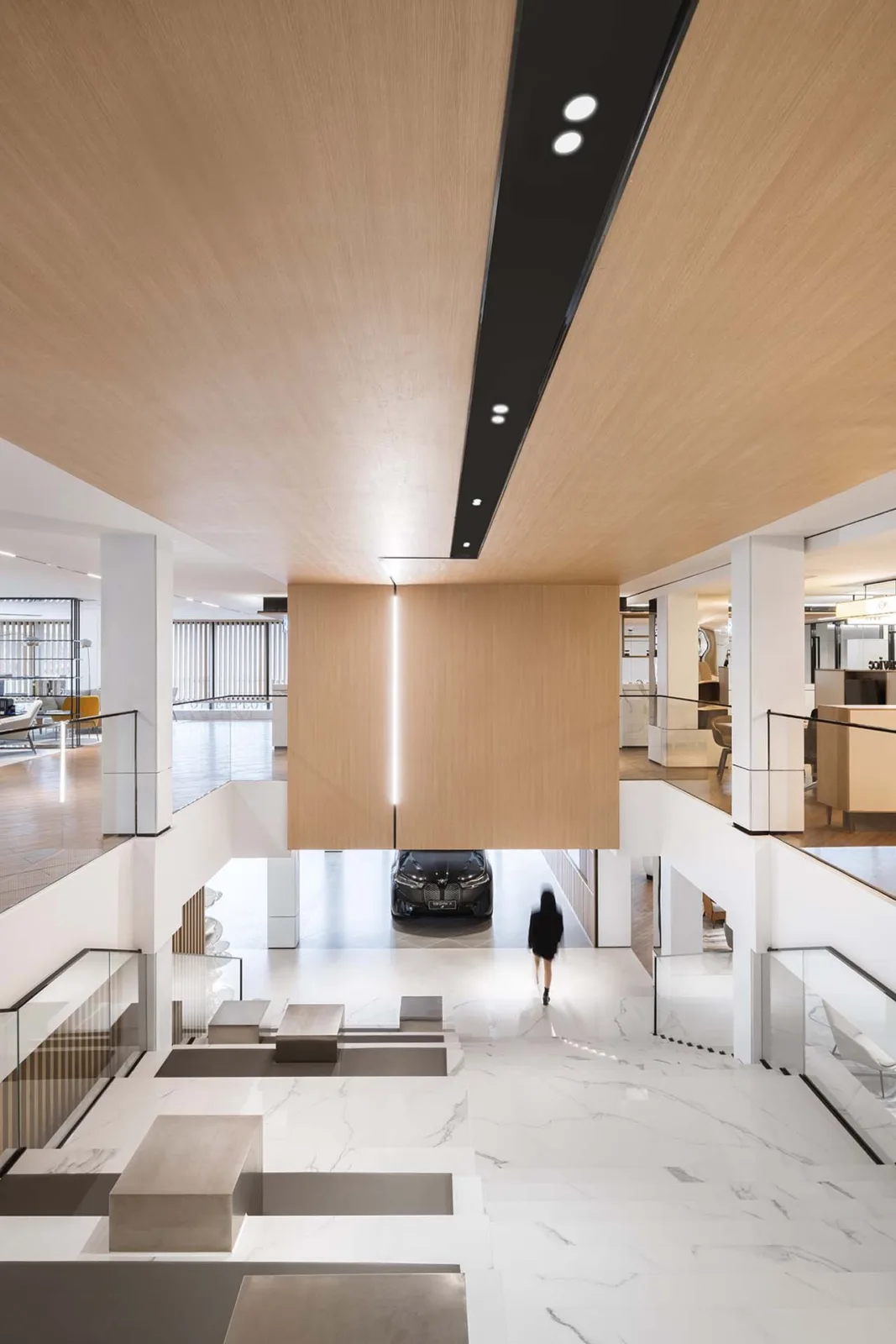
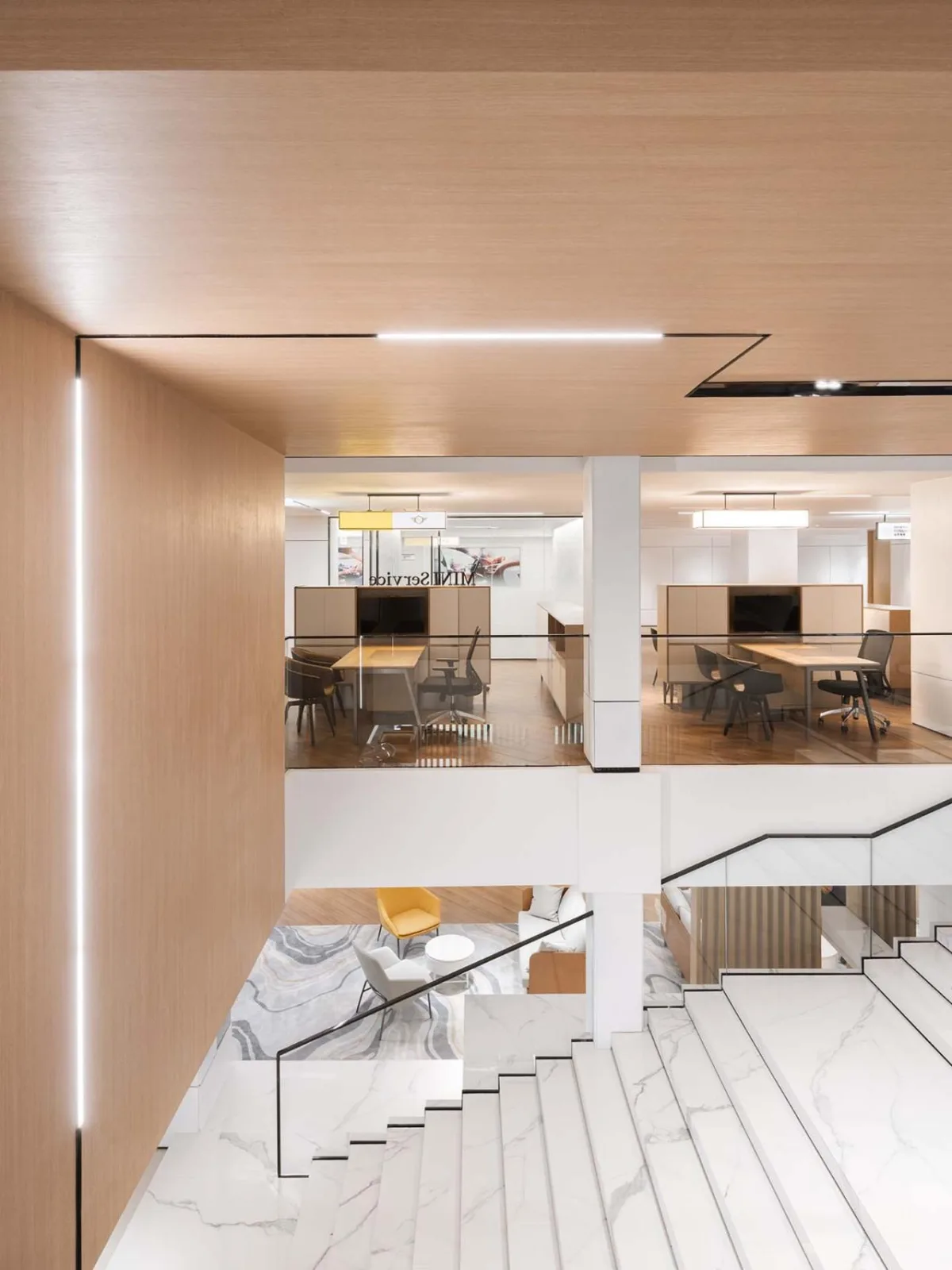
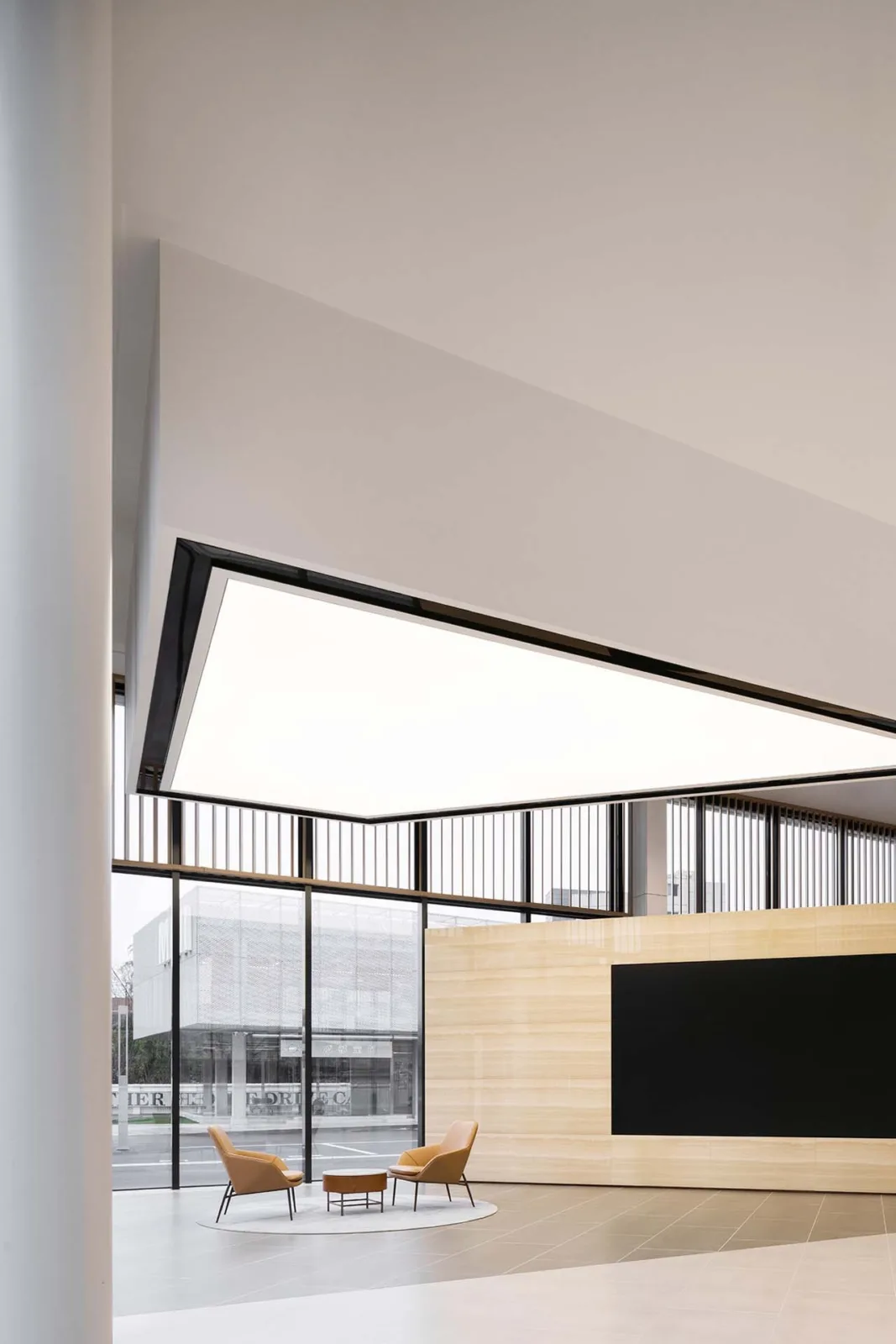
The steel structure of this installation is designed for future recyclability. The open hall not only enhances the visual spaciousness but also increases natural brightness, reducing the need for extensive artificial lighting, cutting costs, and lowering energy consumption.
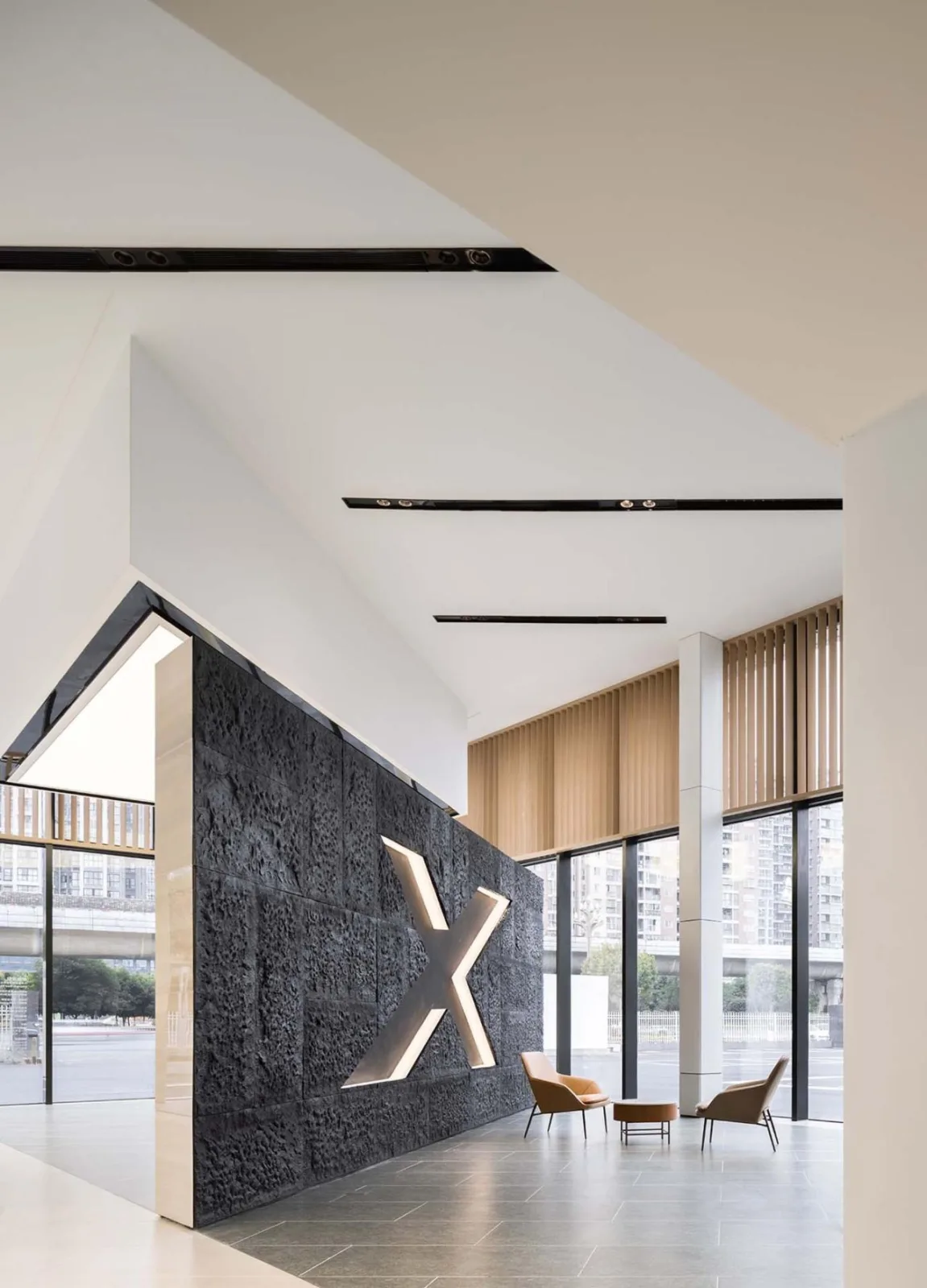
The second floor functions as an independent customer restaurant and internal office area, while the third through fifth floors accommodate professional maintenance workshops. The overall design emphasizes clear separation of circulation flows for customers, service staff, and workshop personnel, ensuring smooth, non-interfering movement throughout the complex.
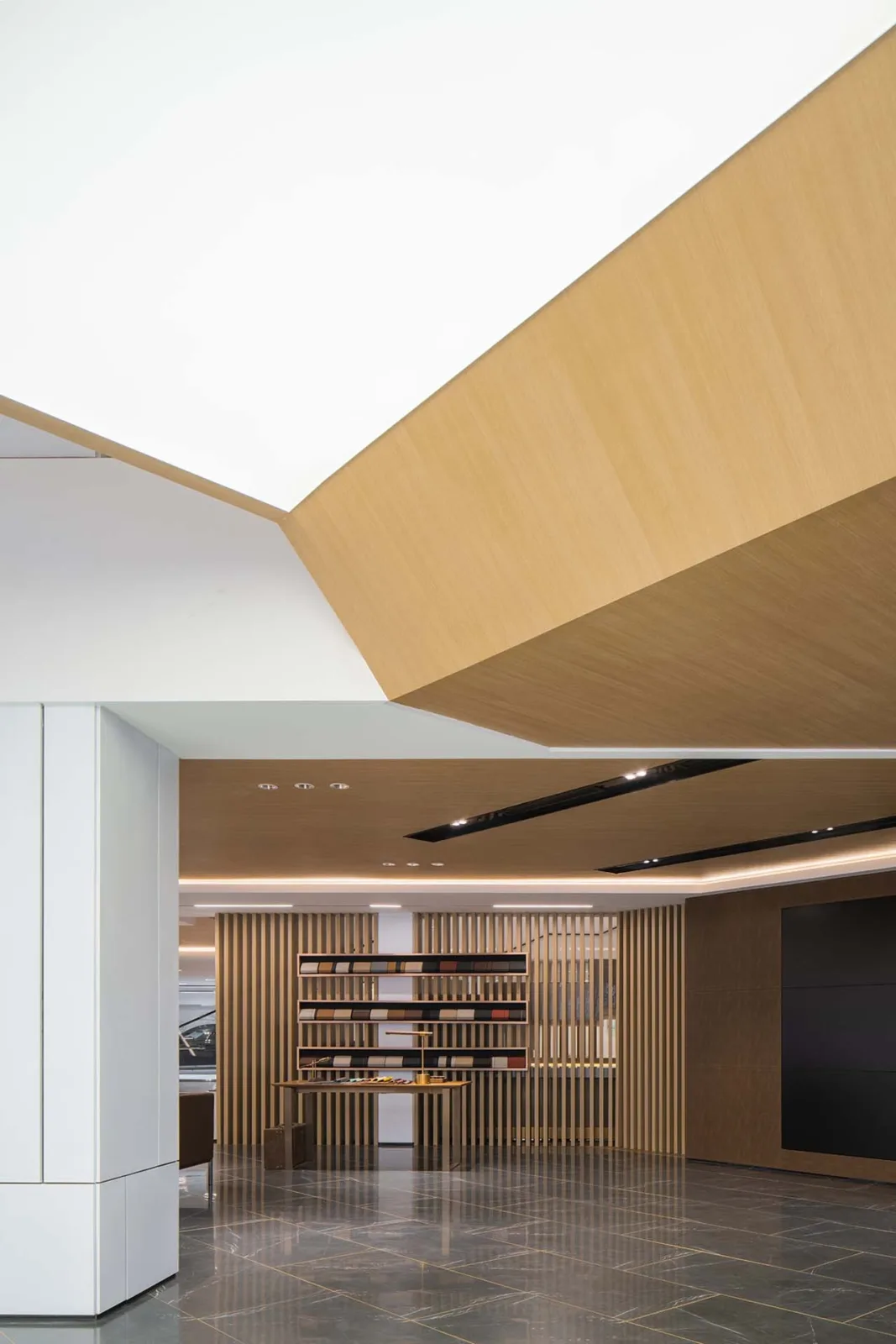
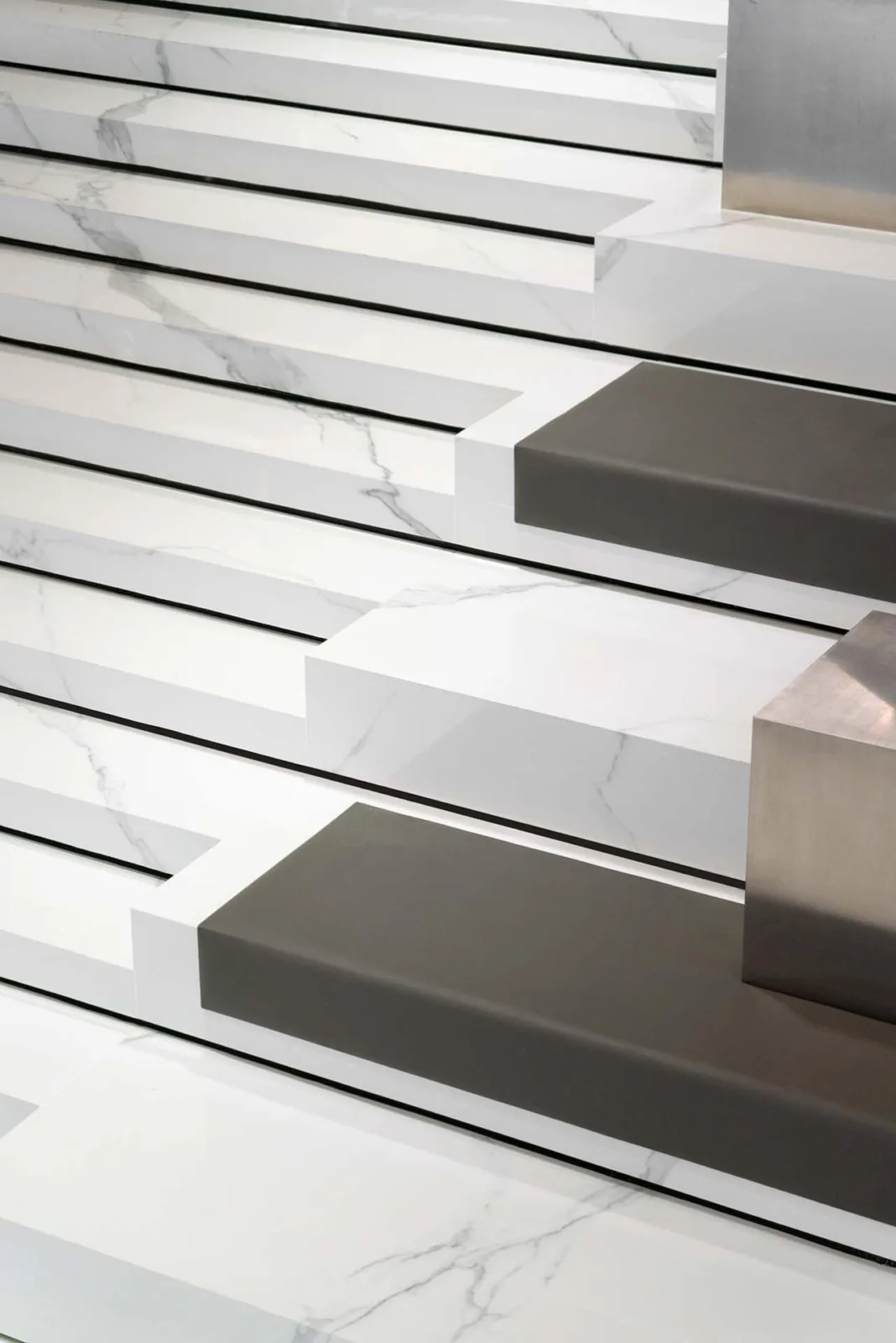
Material choices reinforce the project’s sustainable ethos. The space features predominantly white and natural wood tones. Colored wood grain aluminum profiles were selected for their environmental benefits—they do not emit harmful substances like radon or formaldehyde, offer excellent plasticity, have a longer service life than solid wood, and reduce ecological impact by replacing wood. The white stainless steel façade elements are durable, rust-resistant, reusable, and contribute to the minimalist aesthetic while supporting sustainability.
Project Drawings
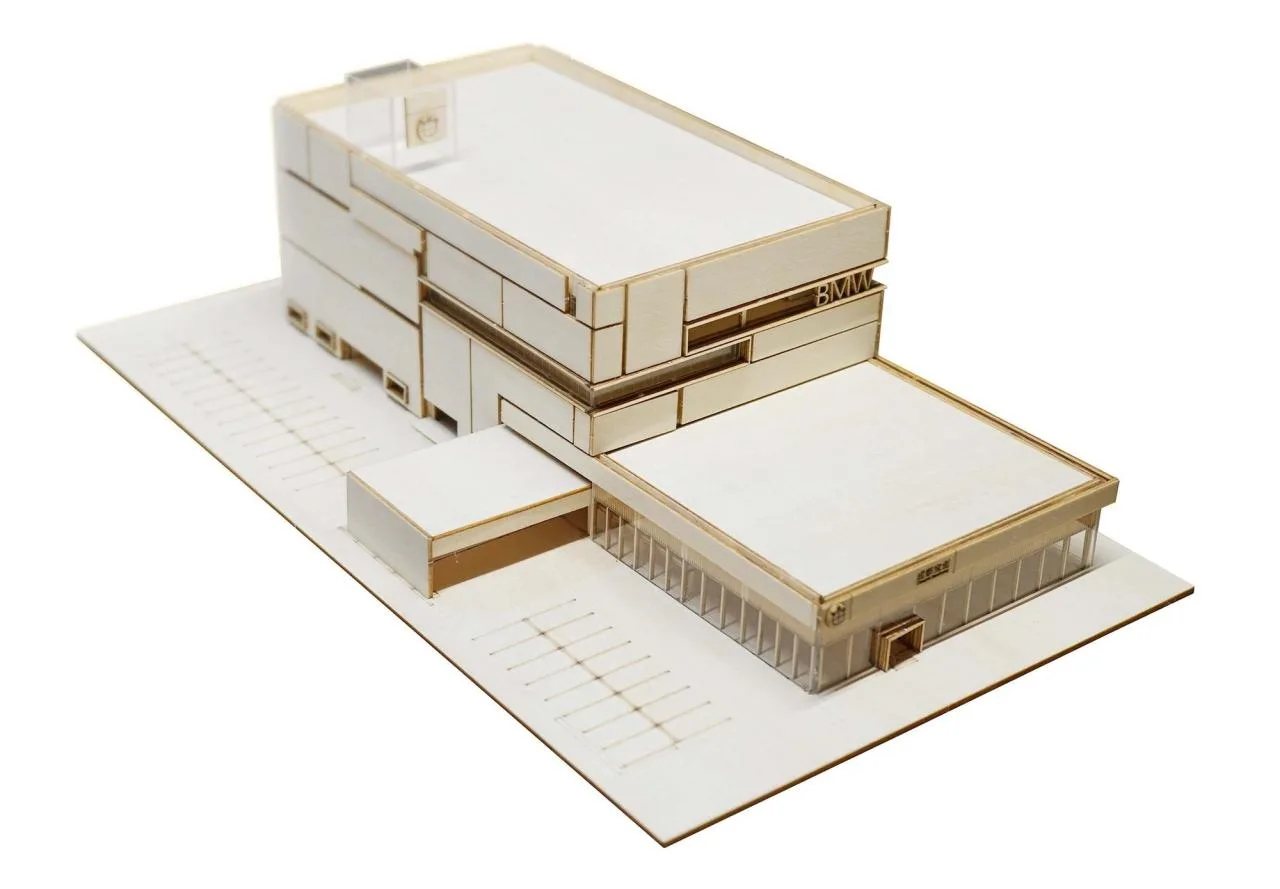
△ Model Diagram
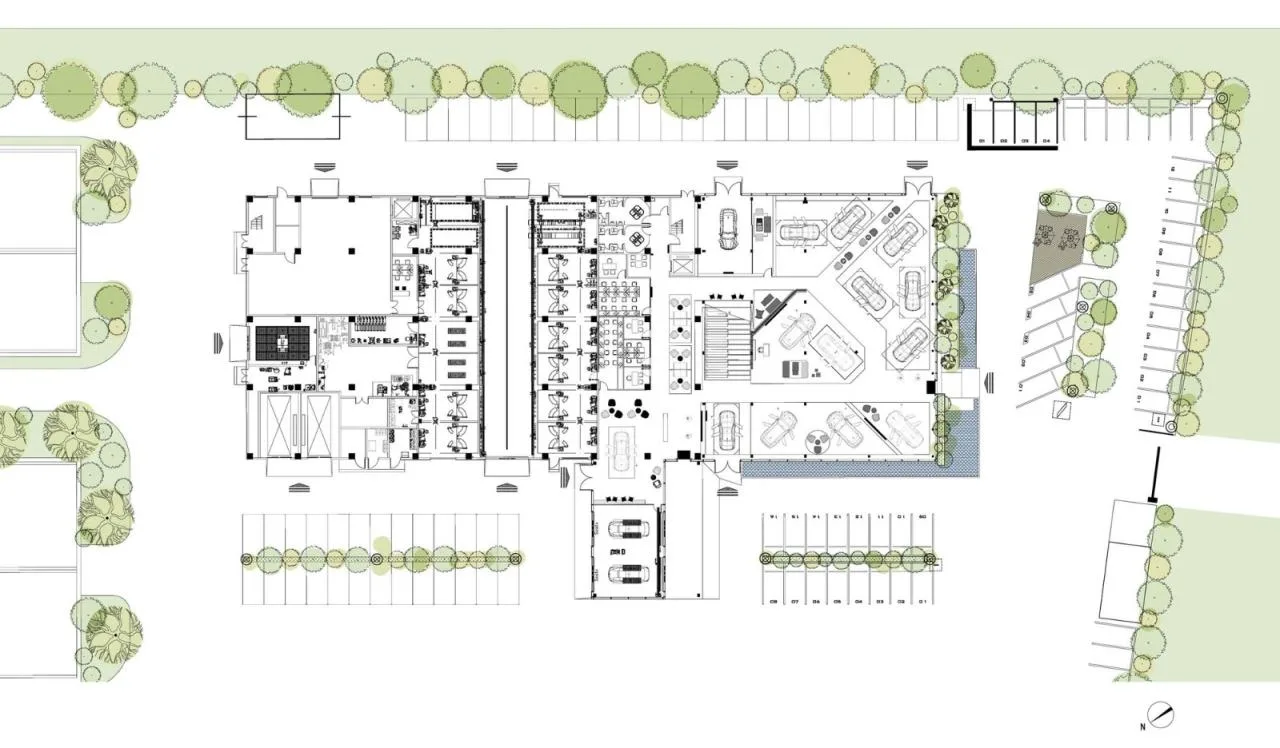
△ General Layout Plan
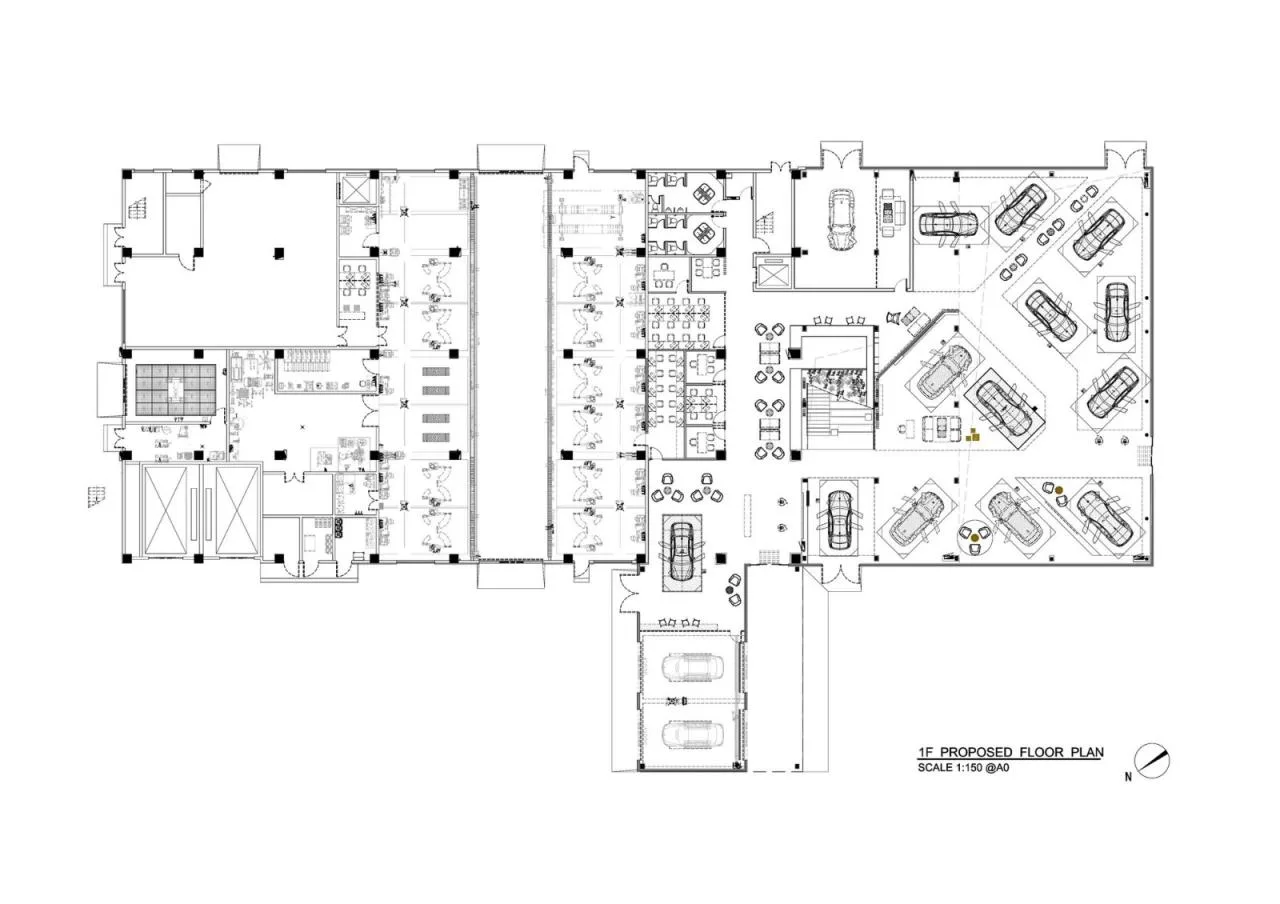
△ First Floor Plan
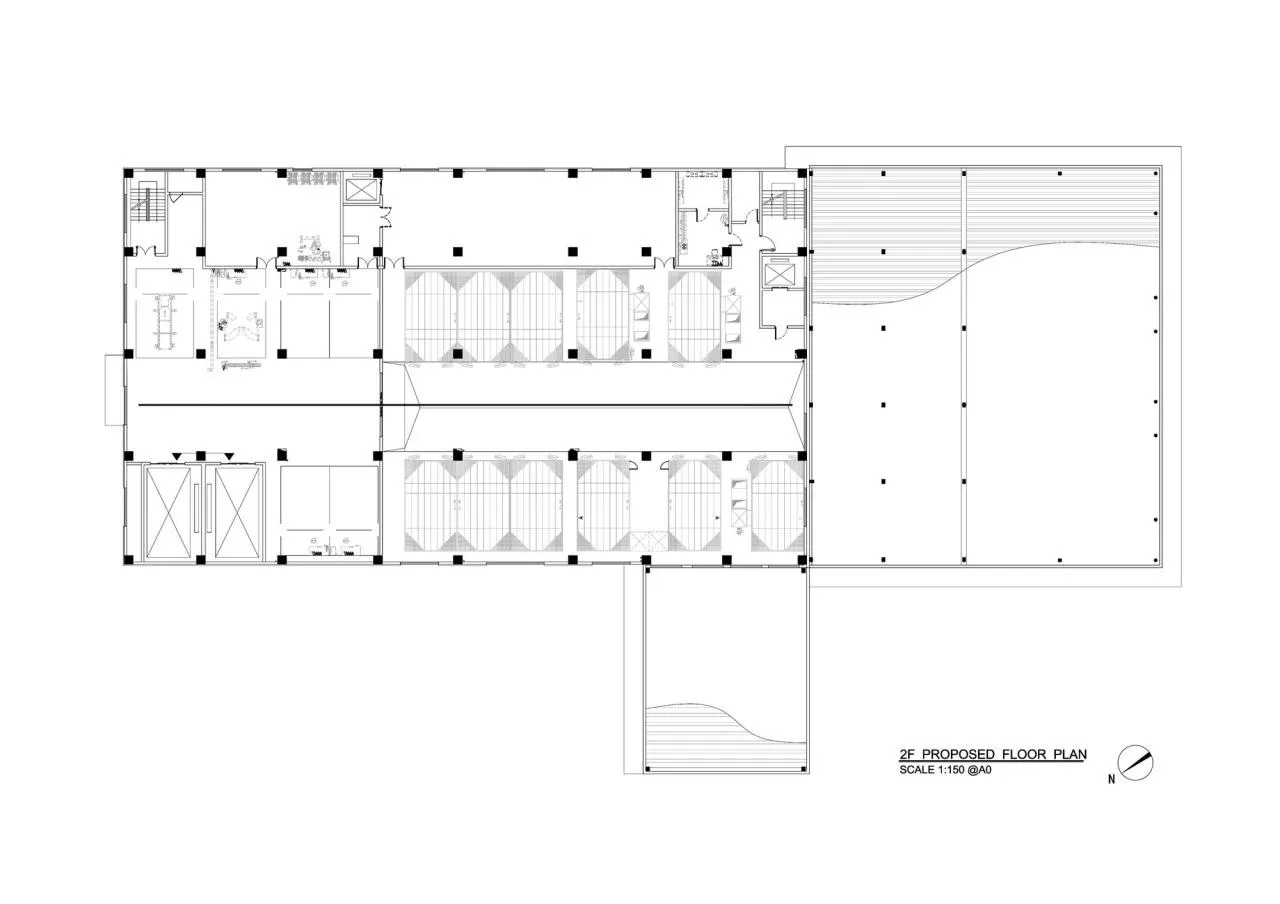
△ Second Floor Plan
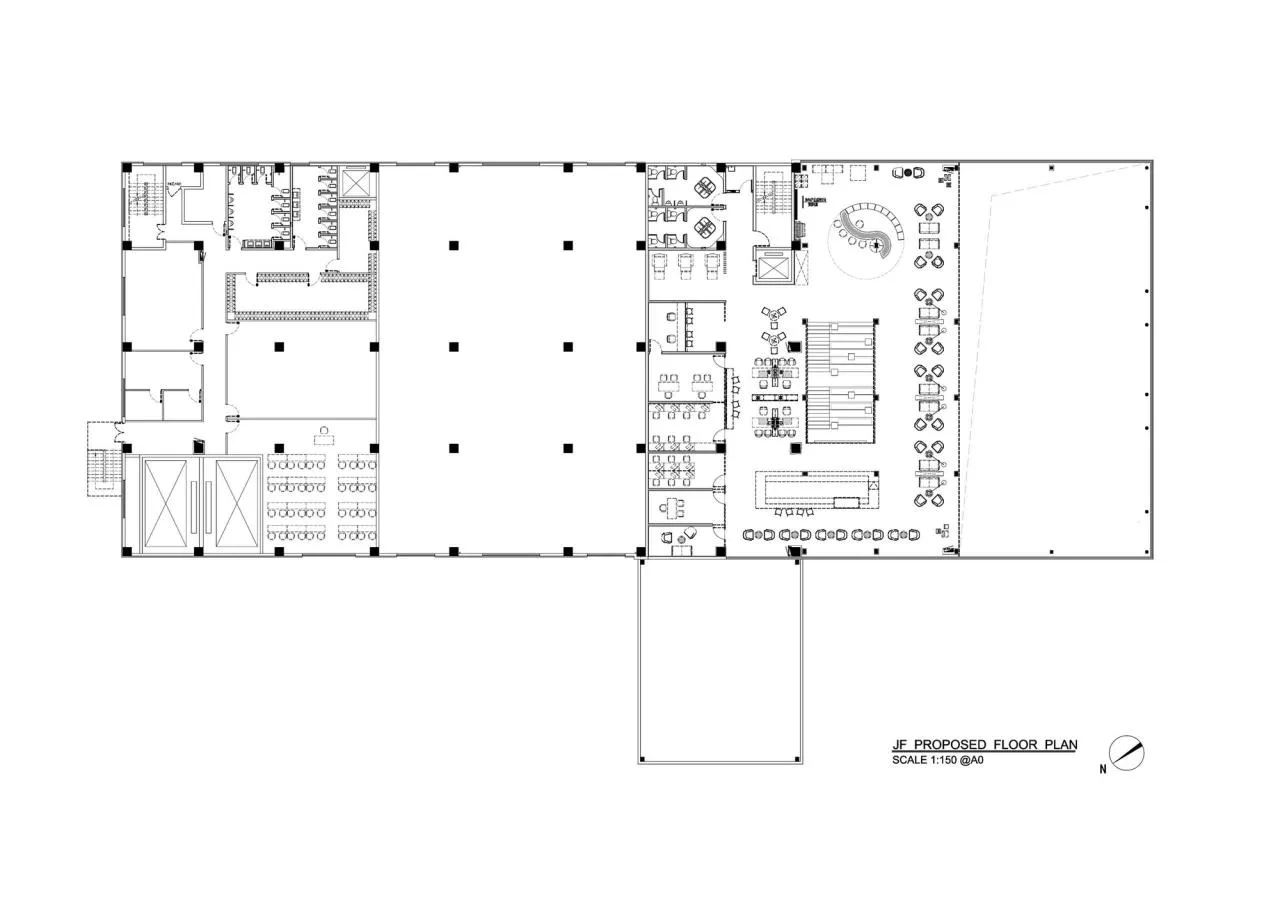
△ Mezzanine Plan
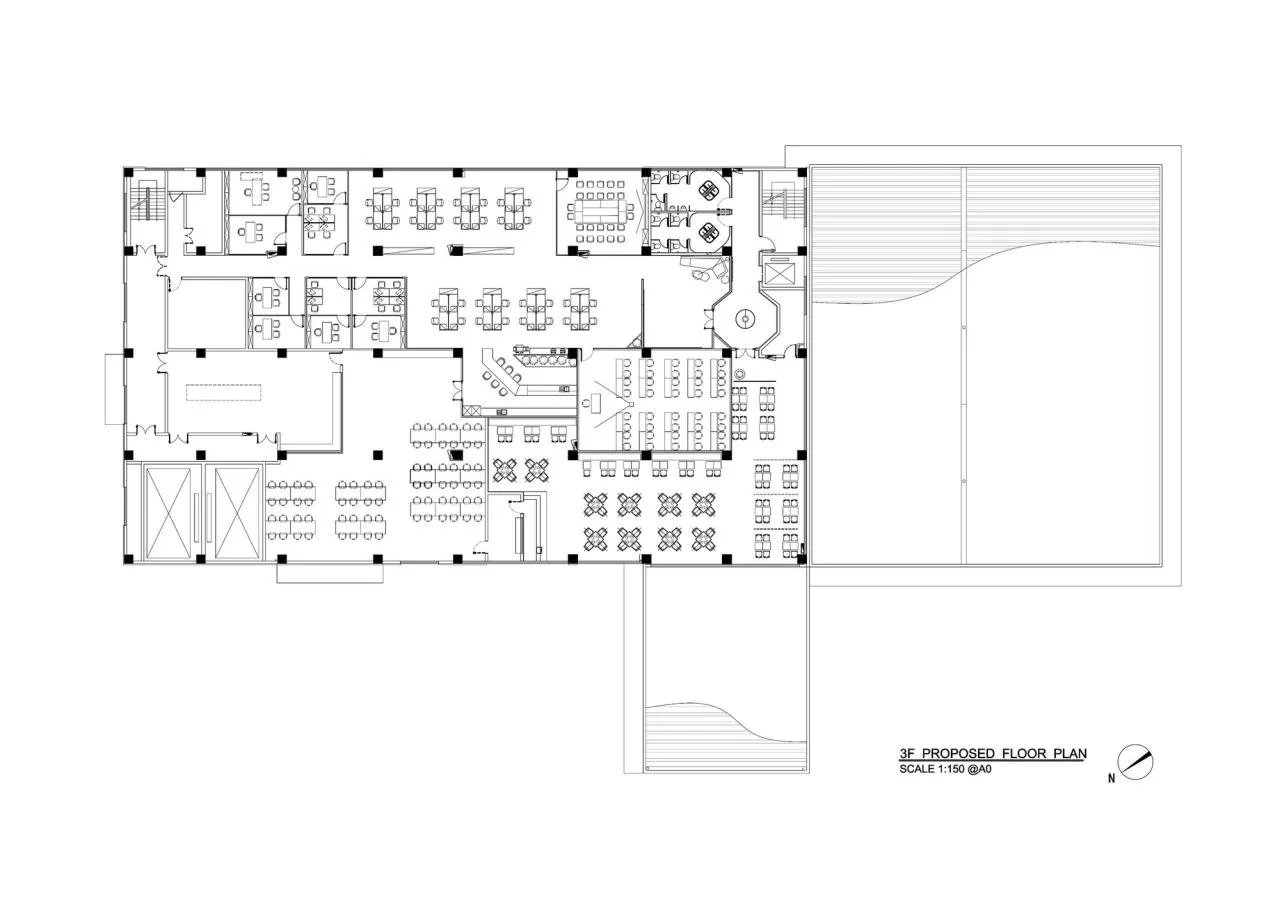
△ Third Floor Plan
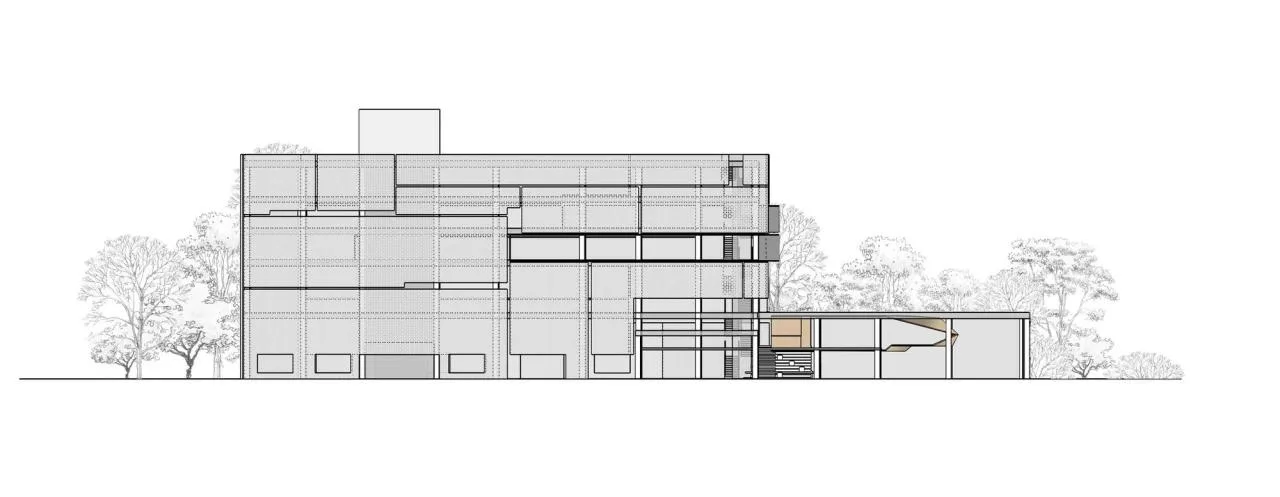
△ West Elevation View
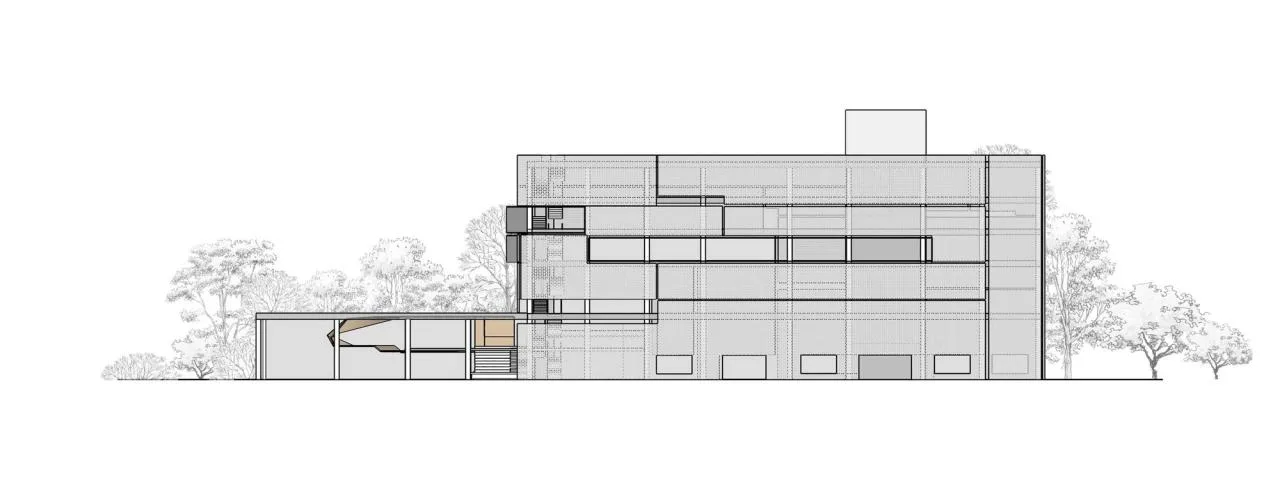
△ East Elevation View
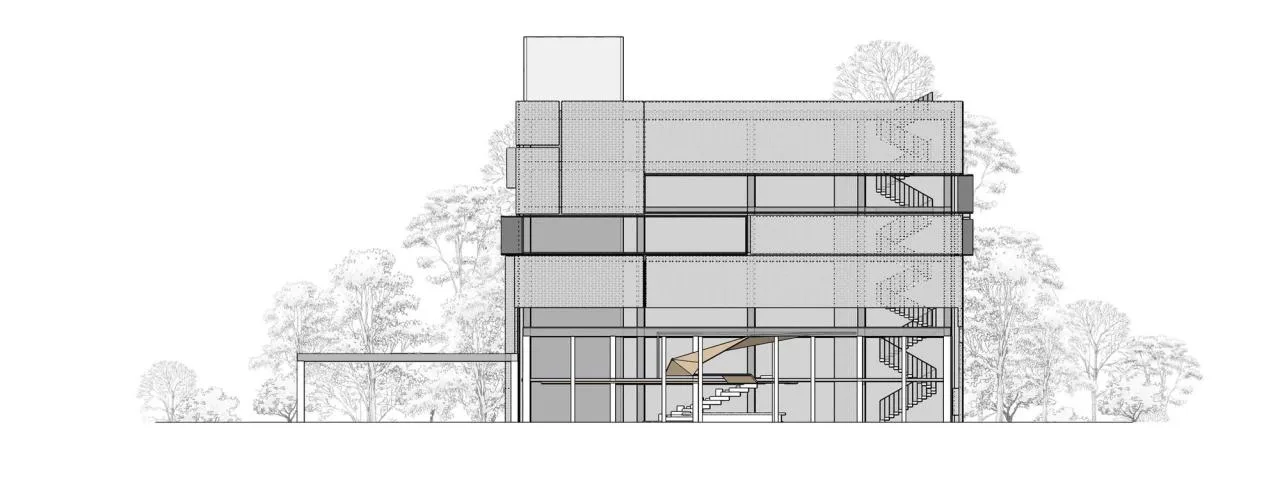
△ South Elevation View
Project Information
Architectural Design: Zhu Haibo Architectural Design Firm
Area: 10,841 m²
Project Year: 2022
Photographer: Wu Jianquan
Lead Architects: Zhu Haibo, Fang Jie, Xu Chang
Deepening Team: He Mengjun, Gong Teng, Tan Chuanli, Zhao Qing, Dong Xin’an, Lu Kun, Lan Guojun, Lan Guoan, Feng Hongmei, Yang Jingmao, Deng Guanying, Liao Jinpeng
Owner: Sime Darby Group & BMW Group
Interior Design: SIAD Story Space (Shenzhen) Design Co., Ltd
Location: Chengdu, China















Must log in before commenting!
Sign Up