
Reality and Stranger Things | Transforming Buildings, Changing Lives
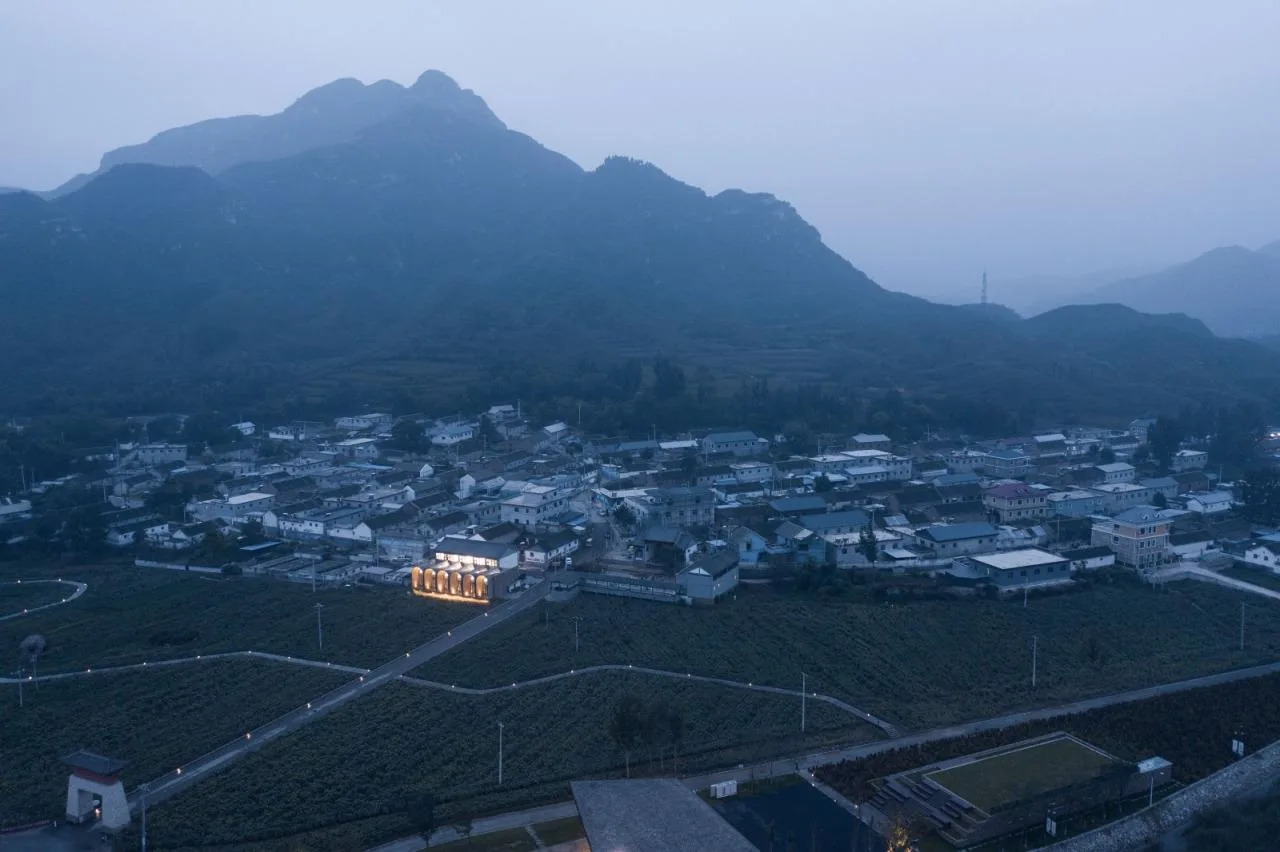
Bridging the gap between reality and the uncanny presents a unique challenge for architects working in rural settings. The Kanlan Architecture team’s project in Tiangang Zhixing Village, specifically the Rural Reception Hall Building Cluster, exemplifies this challenge. Originally composed of a village committee building, health station, and stage, these structures were reimagined to respect the village’s original architectural character while establishing new relationships and meanings through contemporary design.
01. Transforming Rural Life
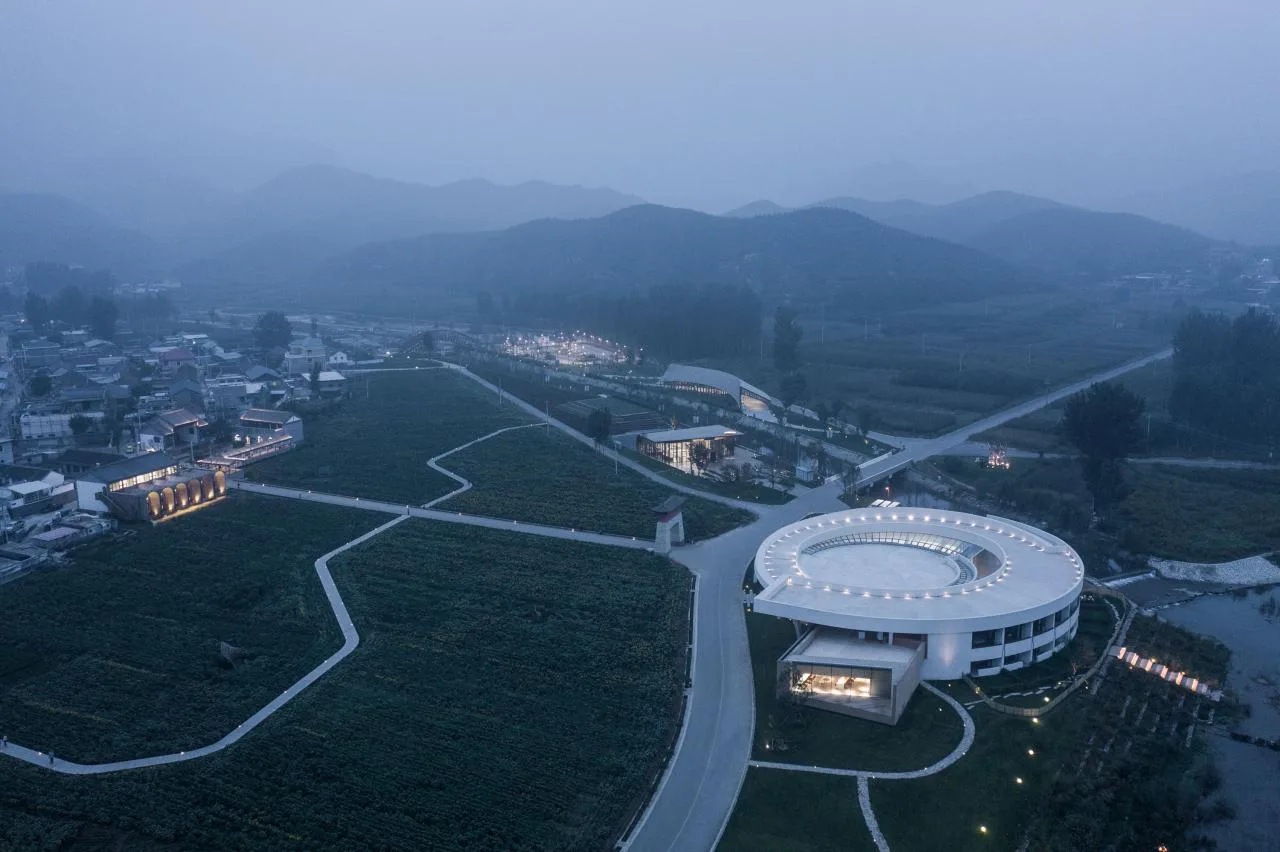
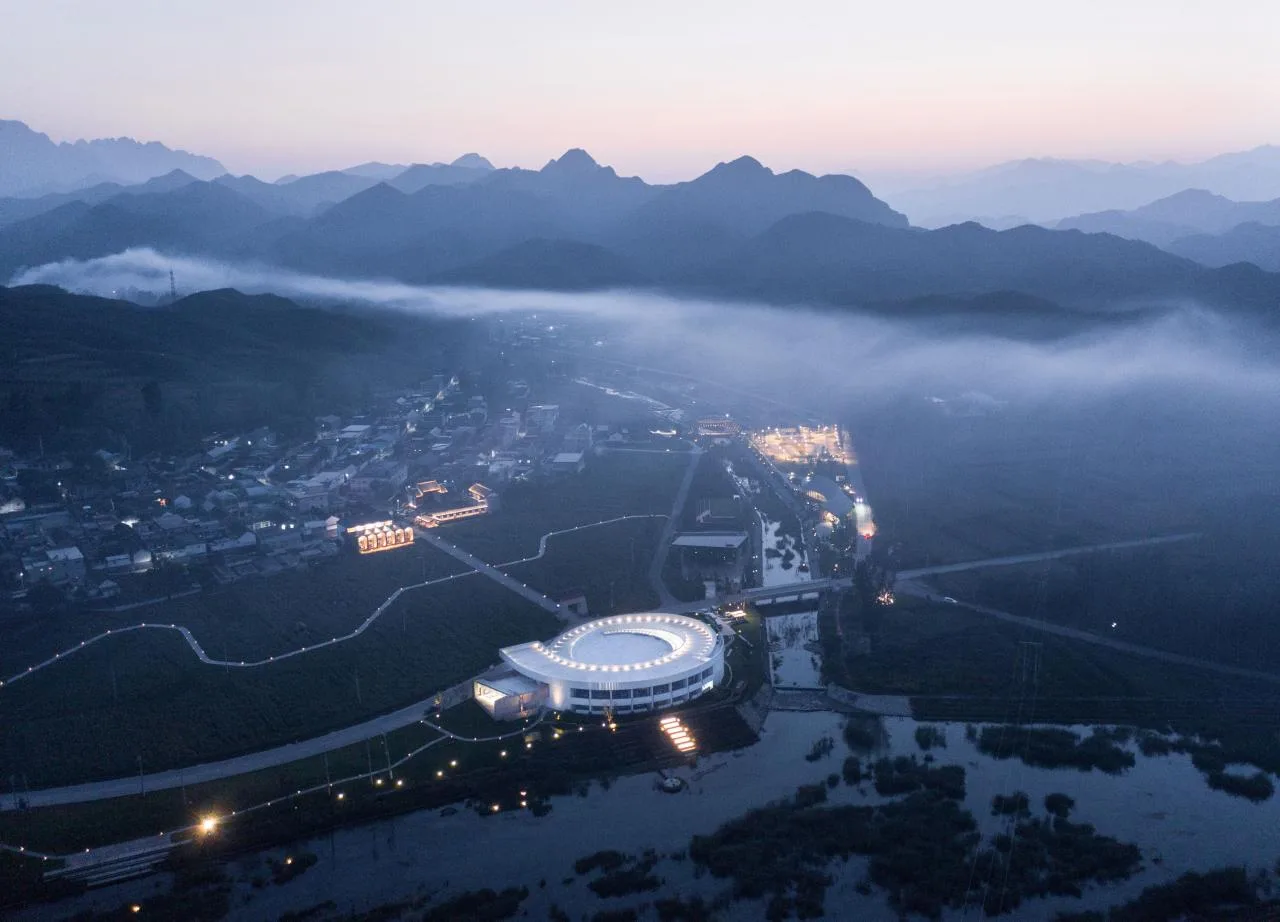
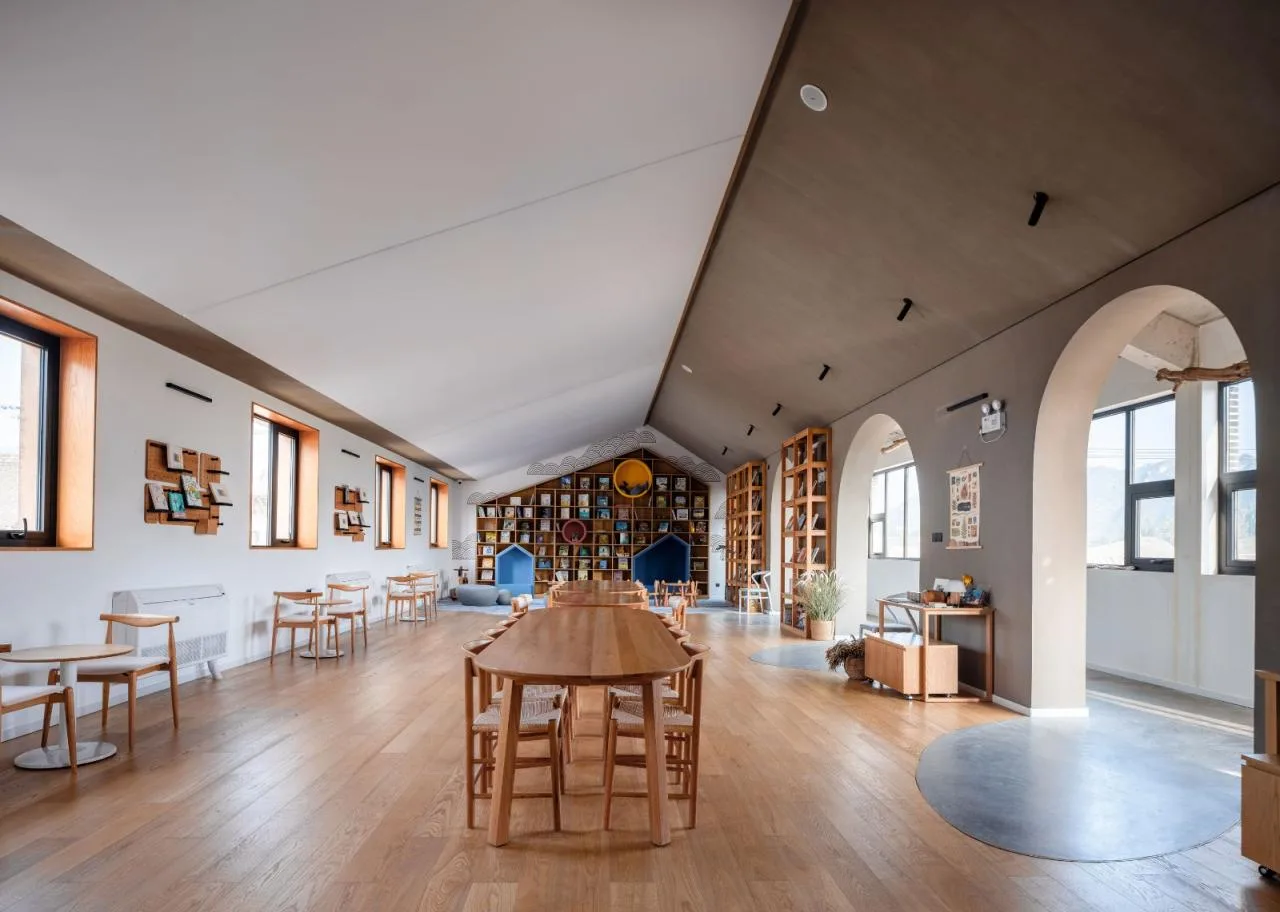
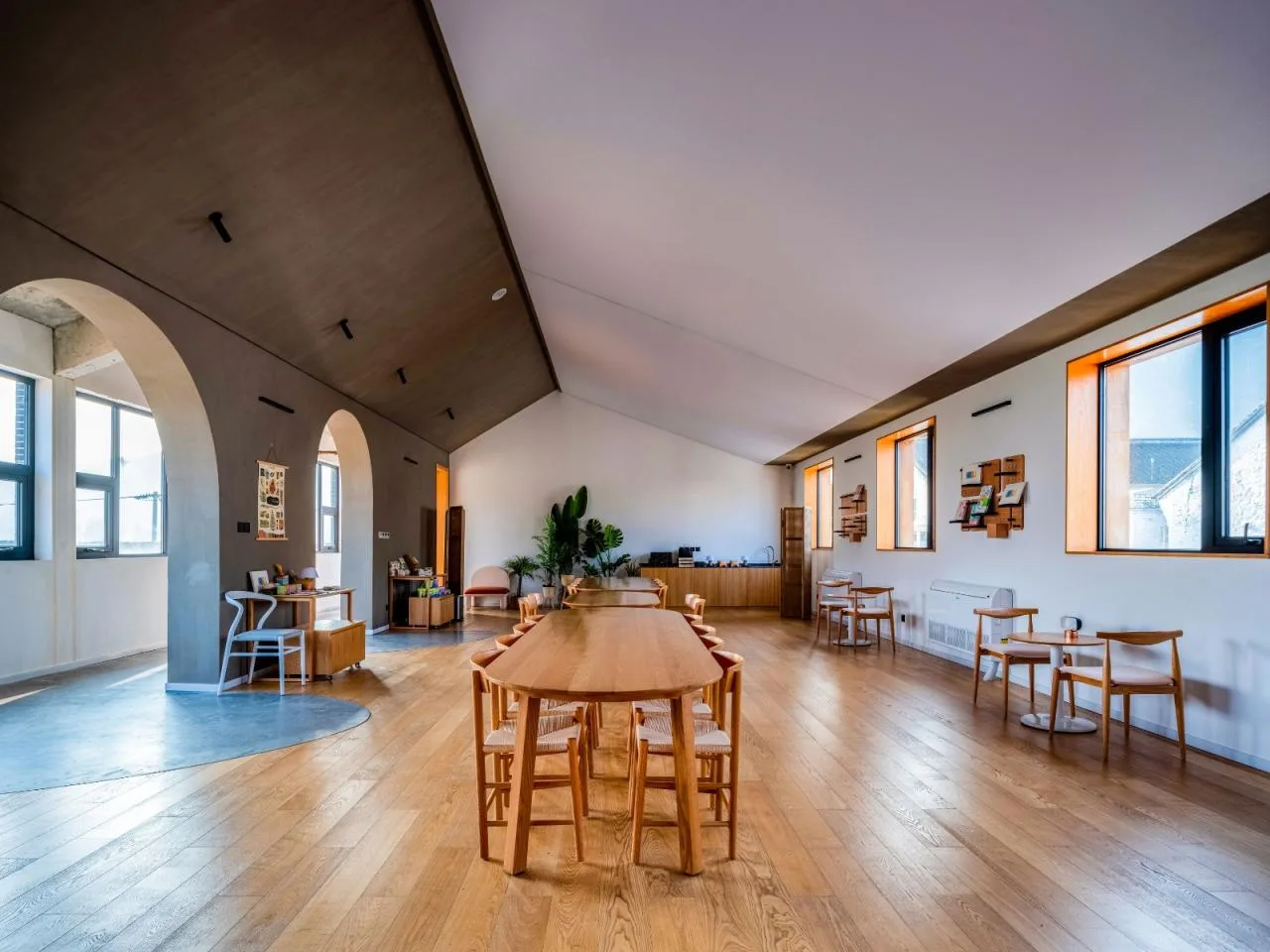
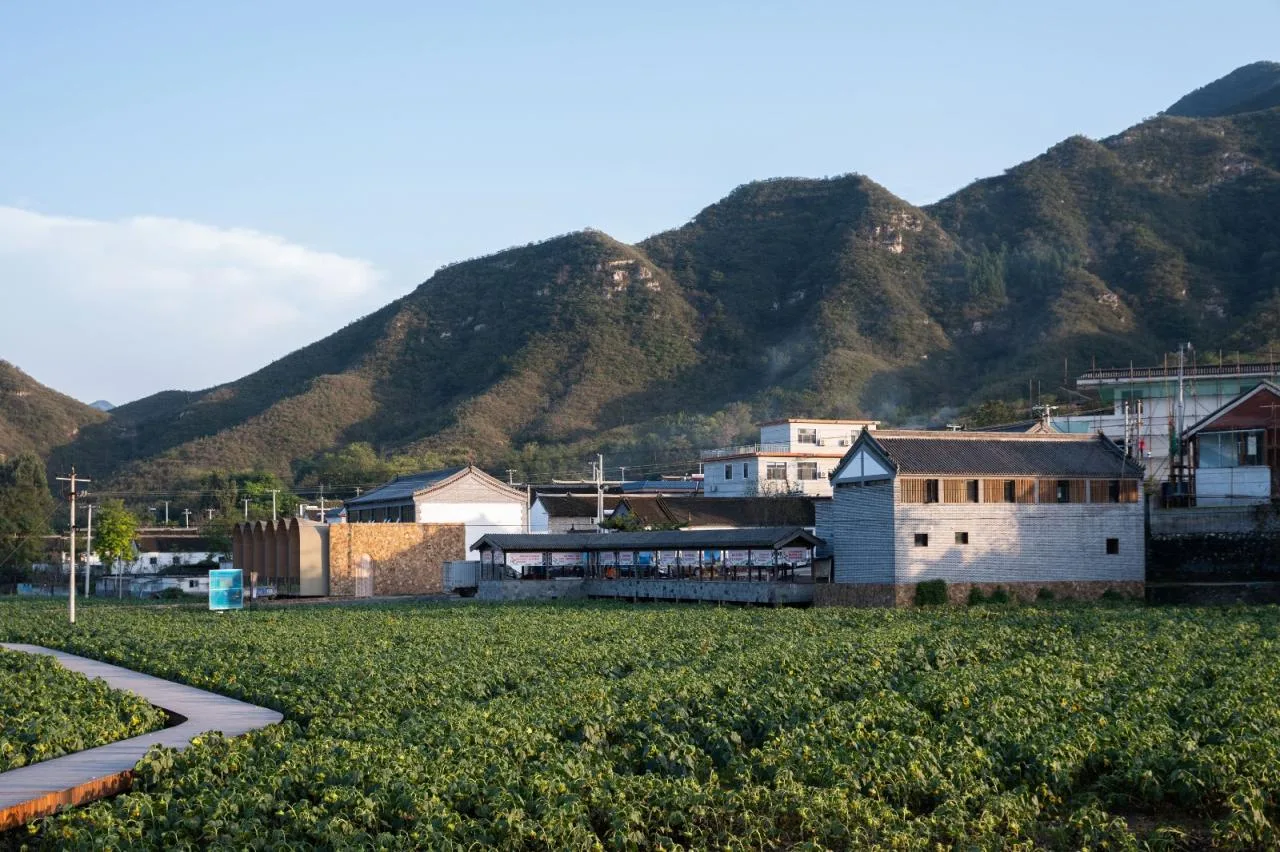
The centerpiece, the Rural Reception Hall, faces the Tiangang Art Center and the iconic art installation, the “Big Grass Hat.” These two buildings complement each other visually, setting the stage for the architectural intervention. The renovation preserves the core structure of the original village committee building, converting its upper floor into a café and the lower floor into a children’s activity area.
Beyond architecture, Kanlan introduced its proven initiatives like “Kagura Coffee” and the “Gaohuai Model” to Tiangang Village, tailoring them to local needs. This approach enriches the building’s function by combining content operation with resource integration.
Local villagers are employed as baristas and service staff, creating new job opportunities. The café draws neighbors into the “reception room” to enjoy coffee and socialize. On the second floor, the team organizes educational programs for both preschool and school-age children, providing access to urban-level education within the village.
Additionally, family photographs and daily life scenes of villagers are displayed in an auxiliary section, accompanied by the journal Zhixing Village Chronicles: Tiangang Family. This literary work conveys stories and culture, fostering a sense of community and identity.
Through these functions and programs, the architecture becomes a hub for public welfare and education. The “Rural Reception Hall” is more than a building—it is a catalyst for revitalizing rural life. Kanlan envisions this space as a vital link connecting villagers with the wider world, igniting the “rural light” of Tiangang Zhixing Village.
02. Building the ‘Light of the Countryside’ from Within
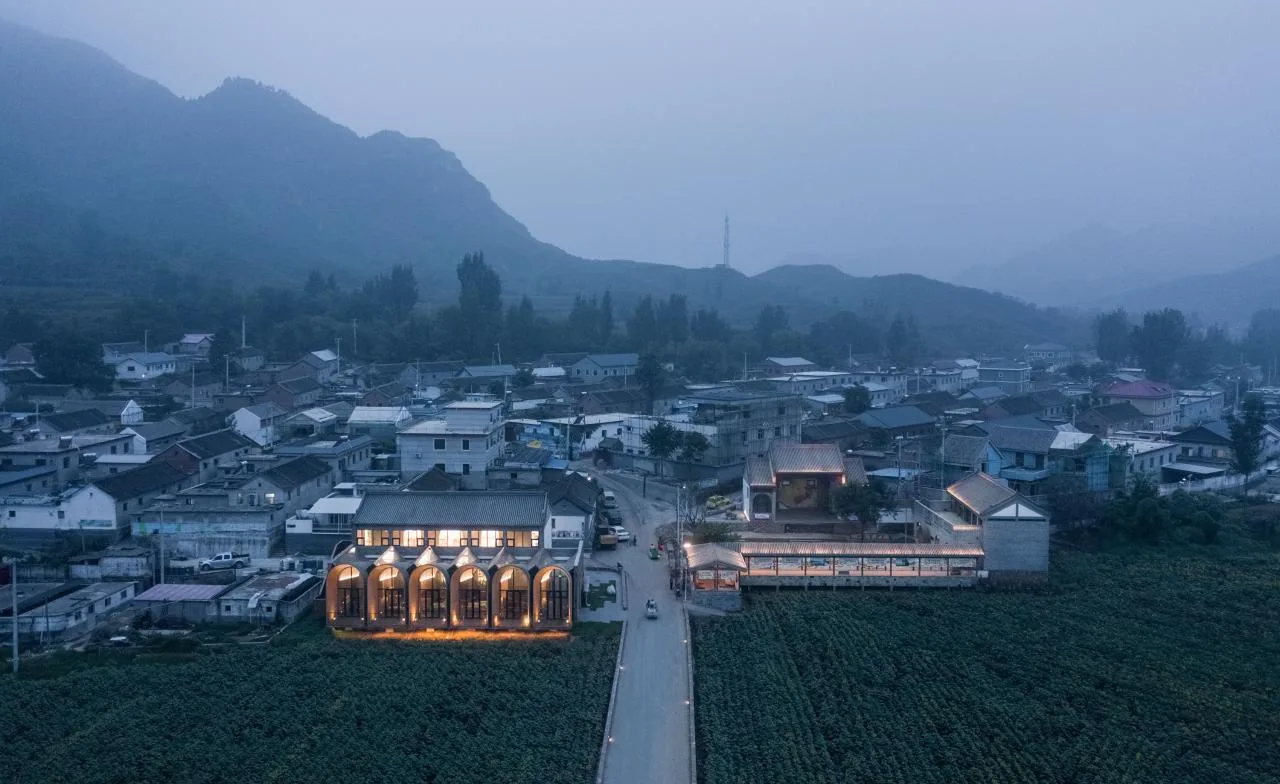
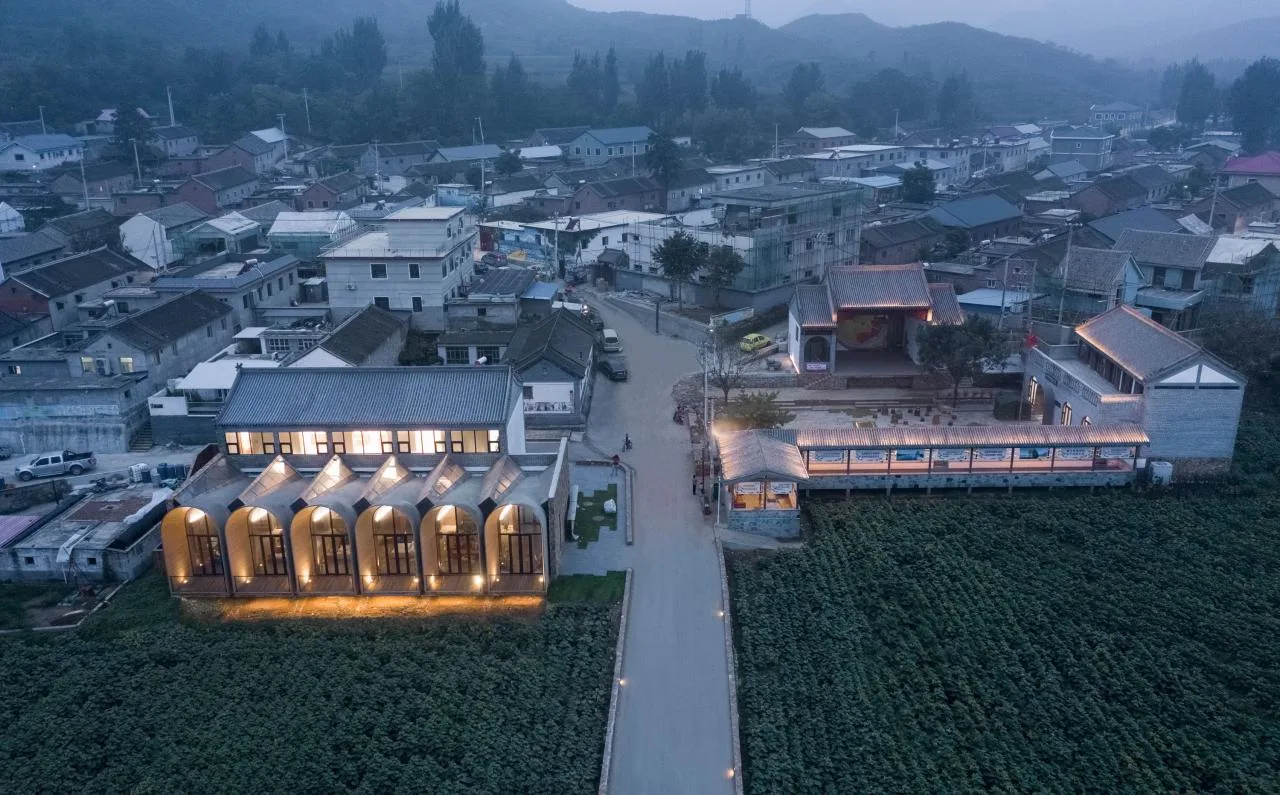
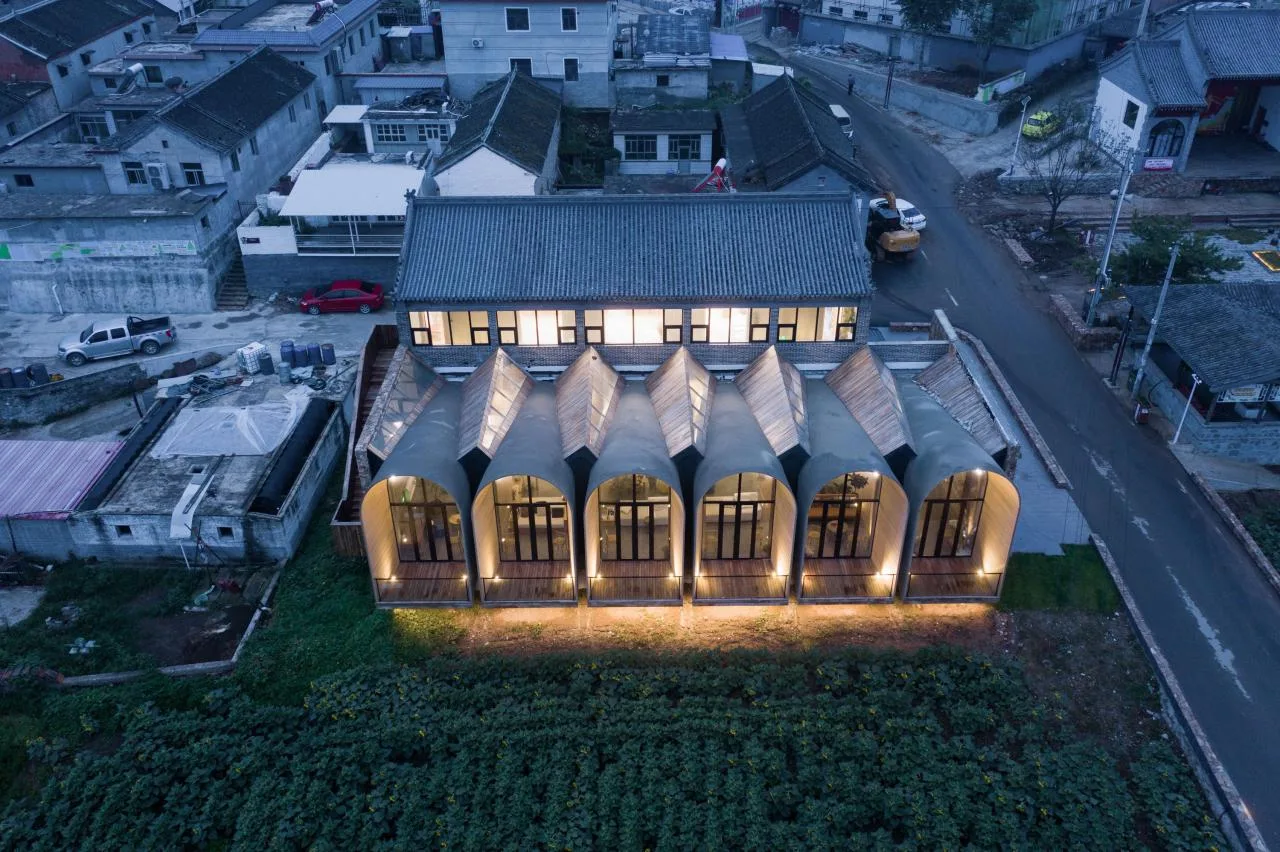
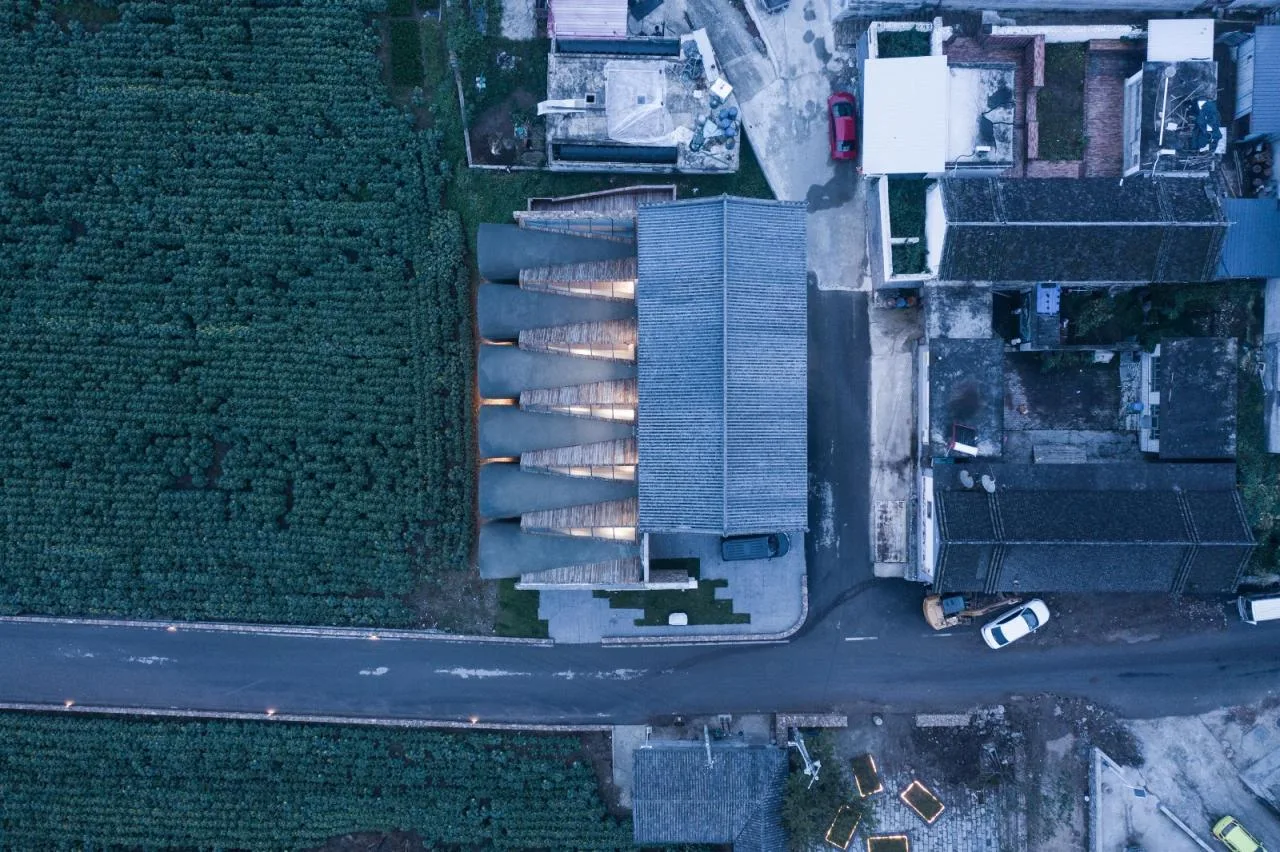
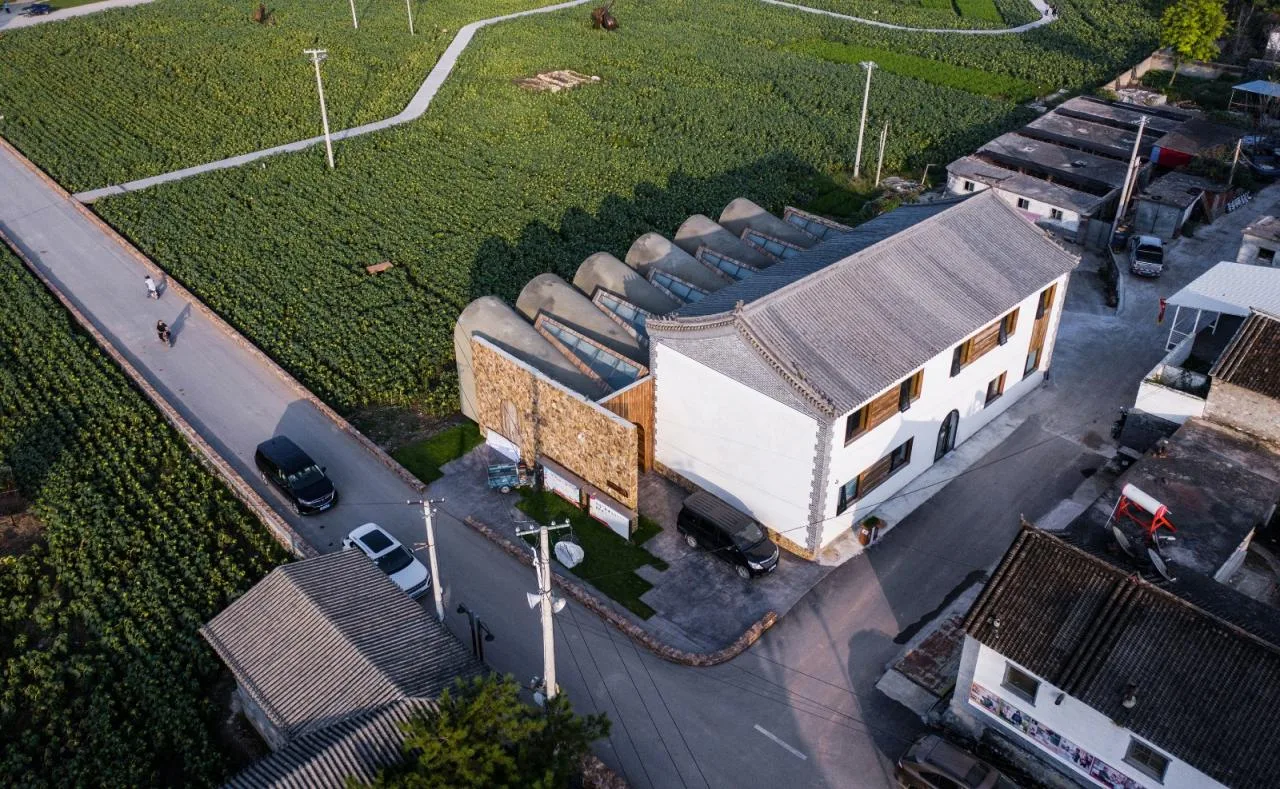
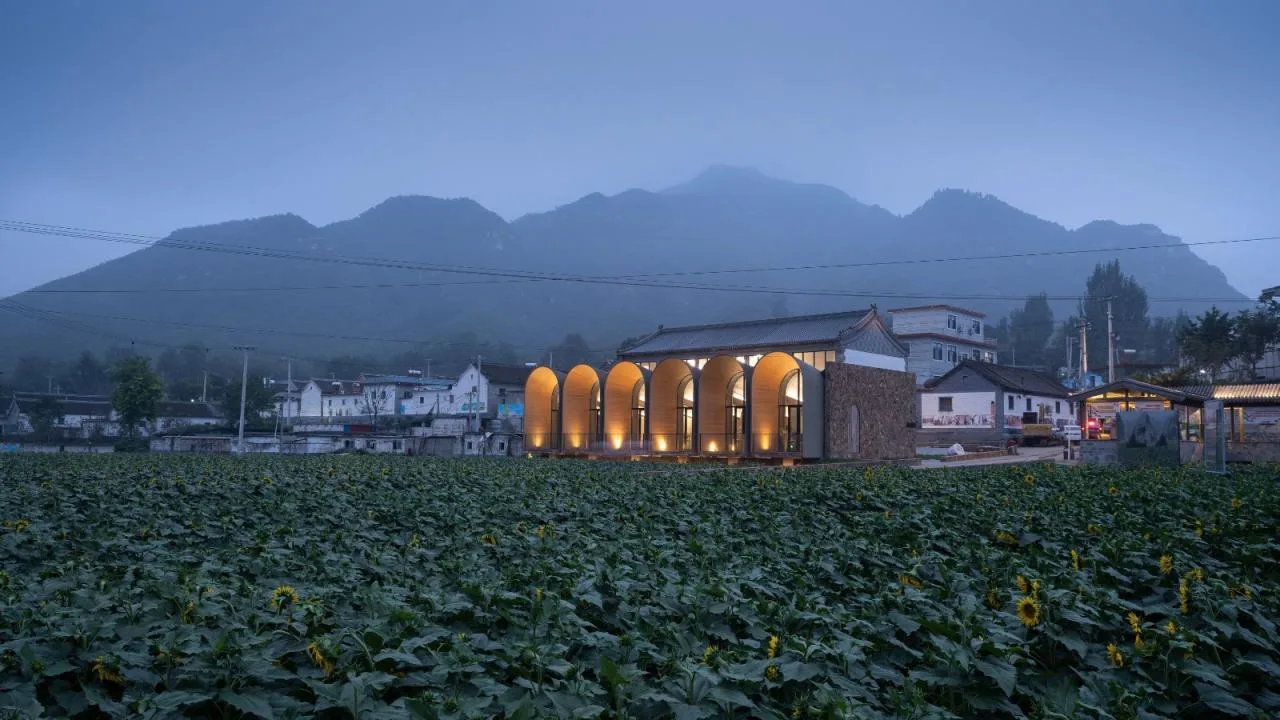
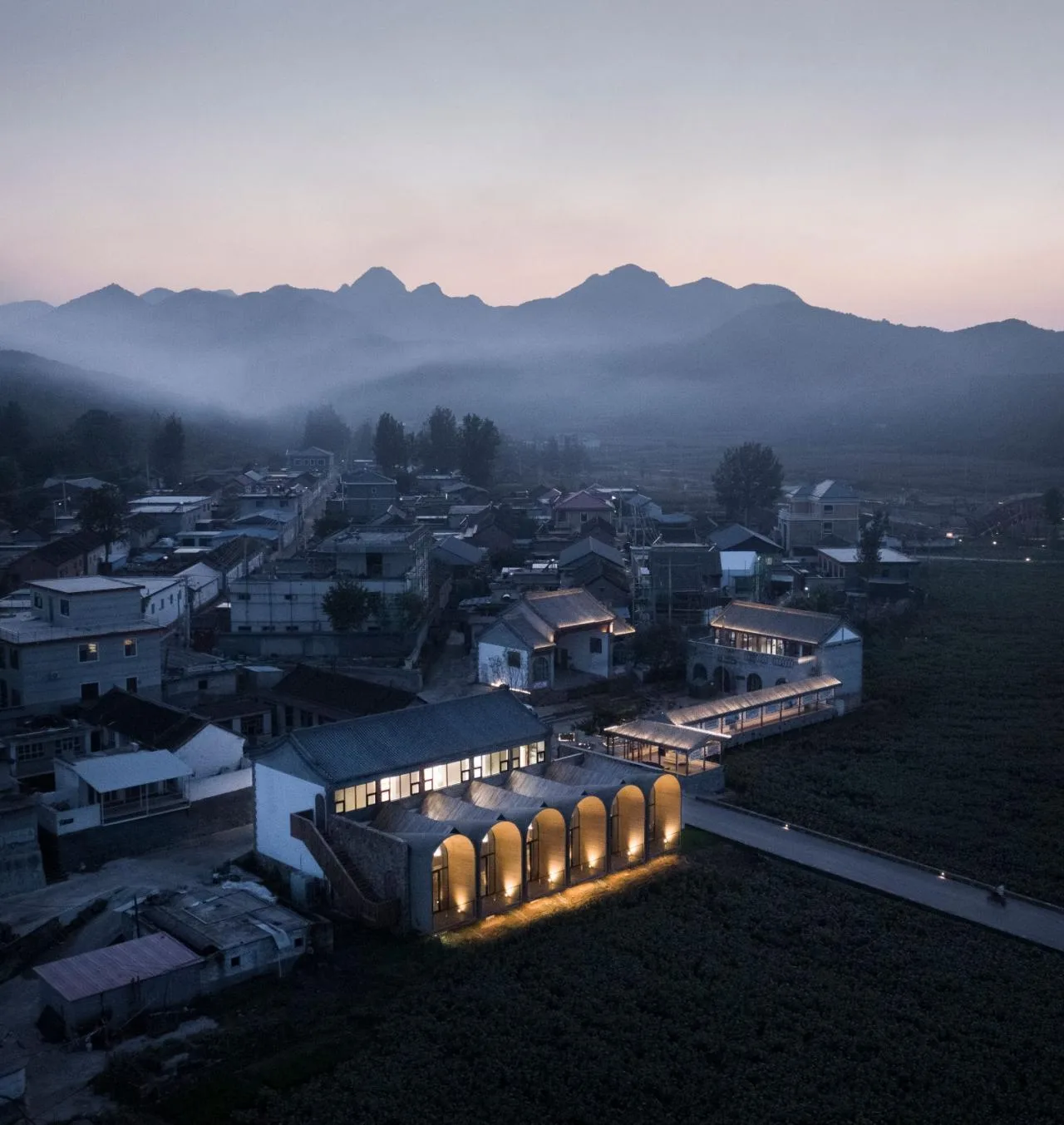
The original village committee building features five single-story arched verandas, sloping roofs, and brick walls—modest elements within the village landscape. However, the repetitive arches inspired the architects to expand and reinterpret this motif. Extending the arches along the northeast axis, Kanlan Architecture created a trumpet-shaped volume using a thin concrete shell for the roof and walls.
Alongside enlarging the original arches, a series of uniformly sized arches were added along the street wall, forming a square courtyard with the main building and serving as the entrance.
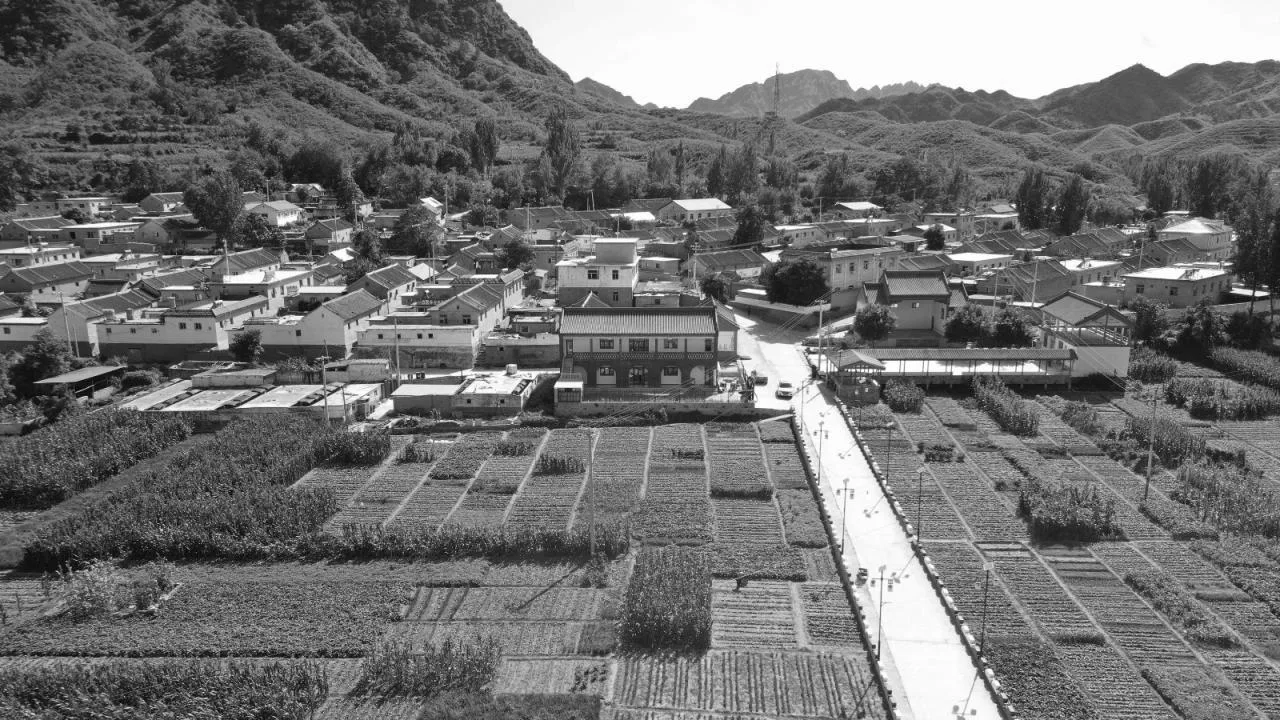
△ Original architecture
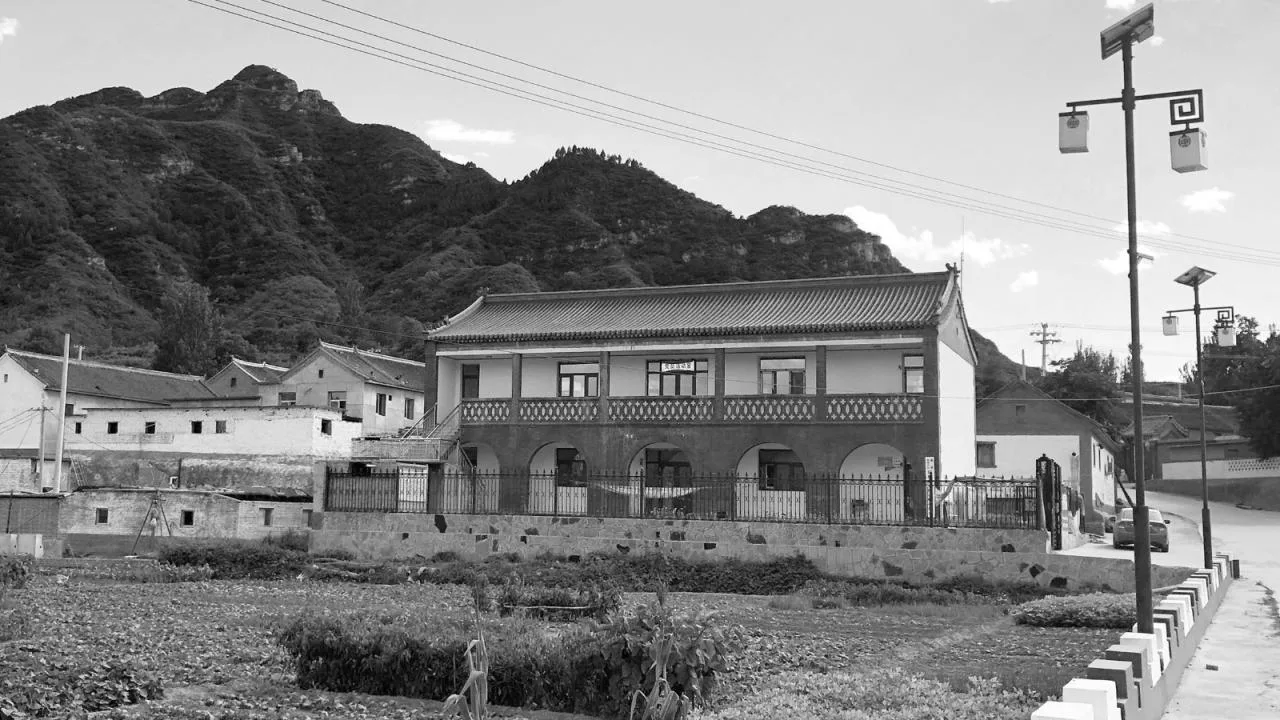
△ Original architecture
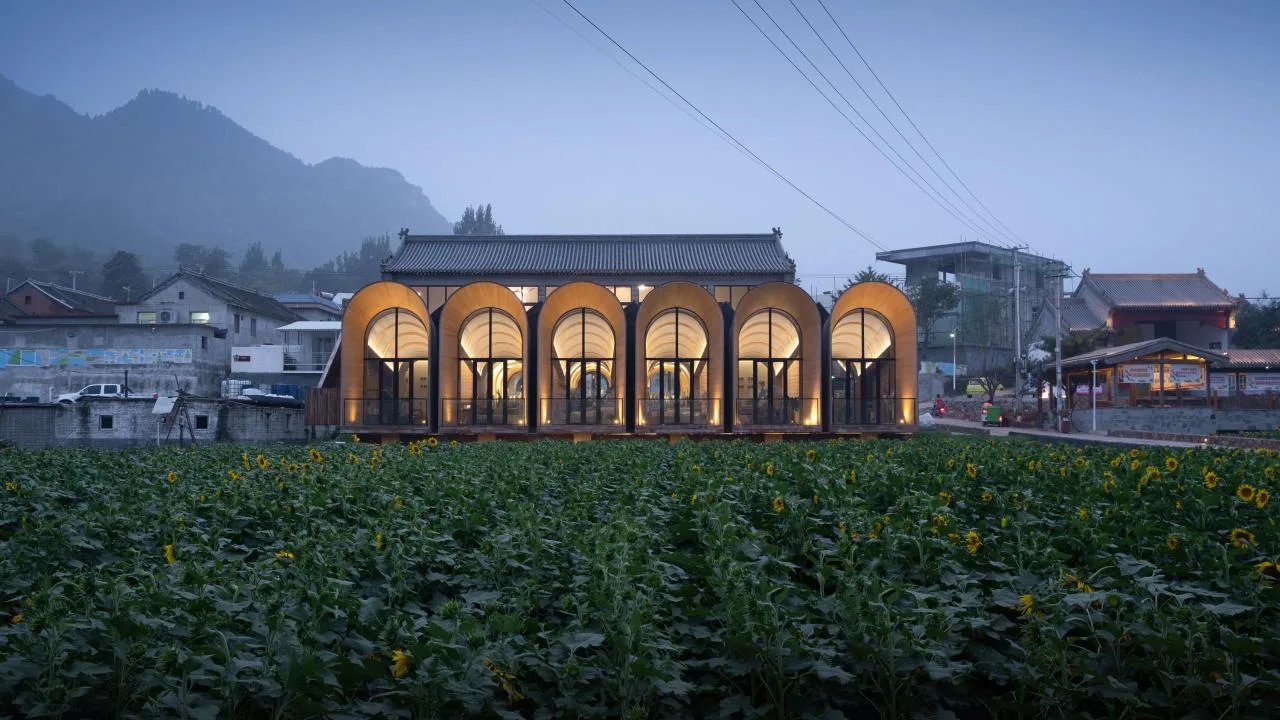
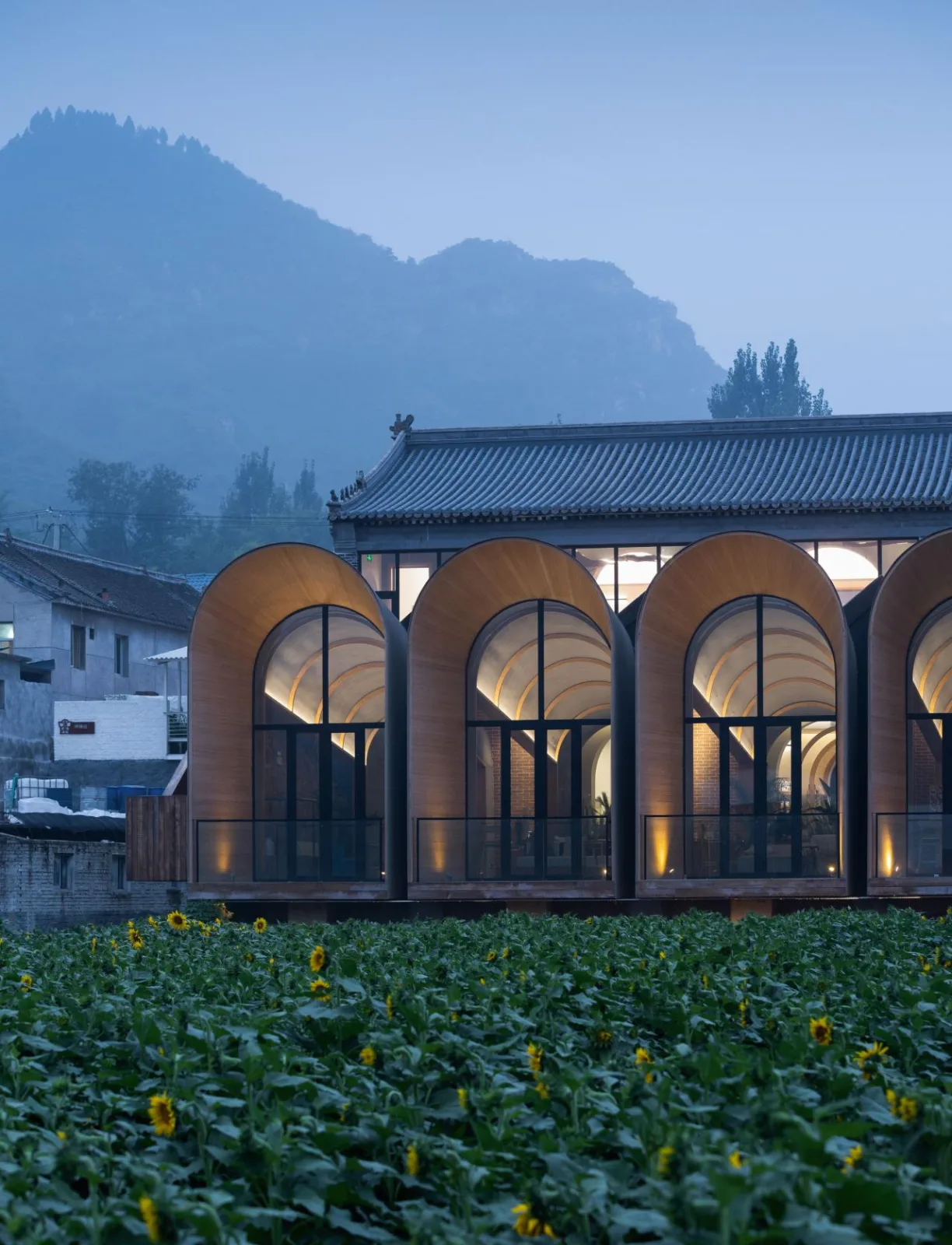
From the main building outward, six arched shells overlap to form triangular gap spaces. The structure’s high outer edge and low inner edge create challenges for drainage and snow accumulation. To address this, the architect incorporated a row of single-sided triangular skylights along the shell, guiding rainwater flow and allowing the installation of drainage pipes.
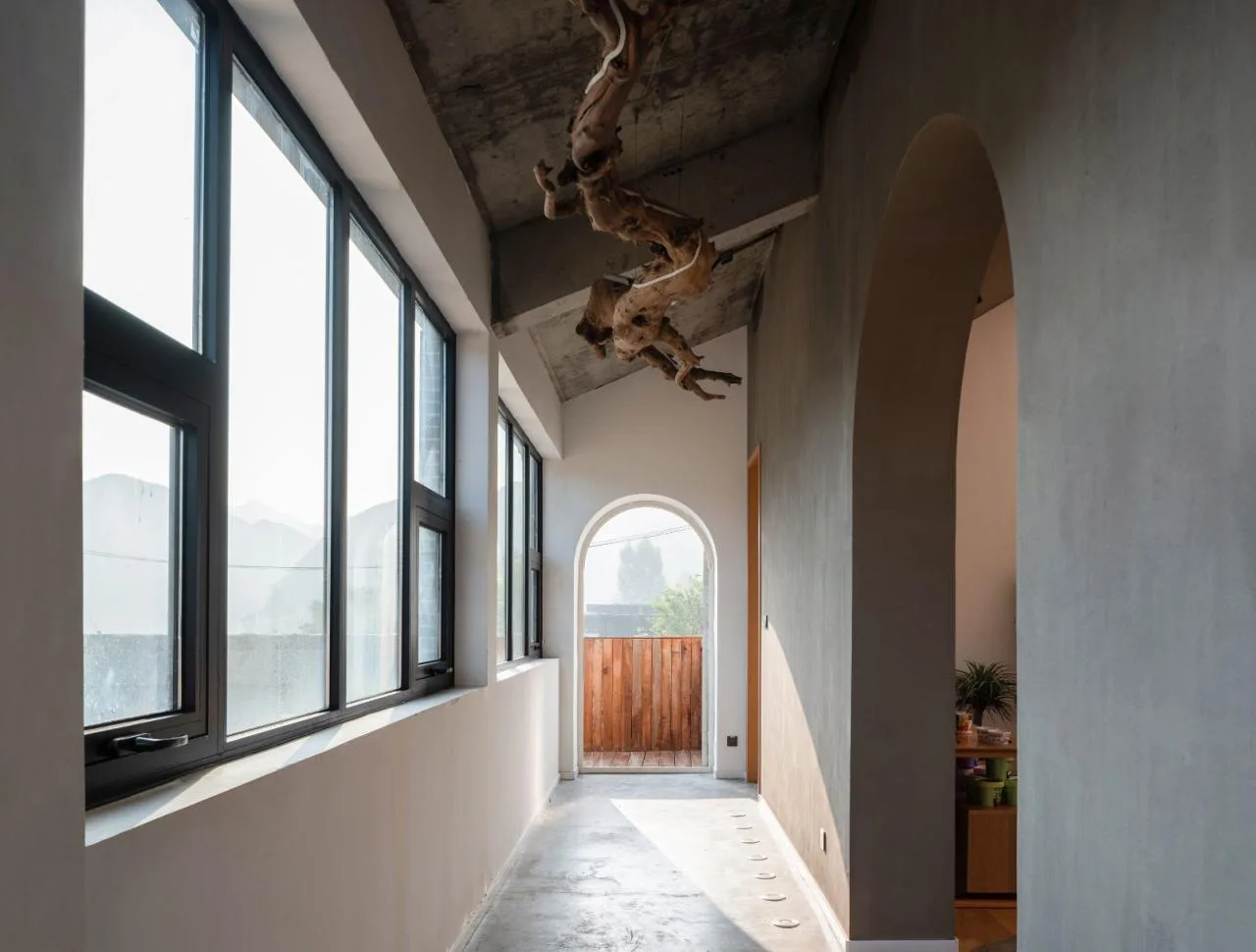
These skylights also introduce natural light, emphasizing the arches and enhancing the interior with dynamic light and shadow patterns, creating a bright, airy atmosphere.
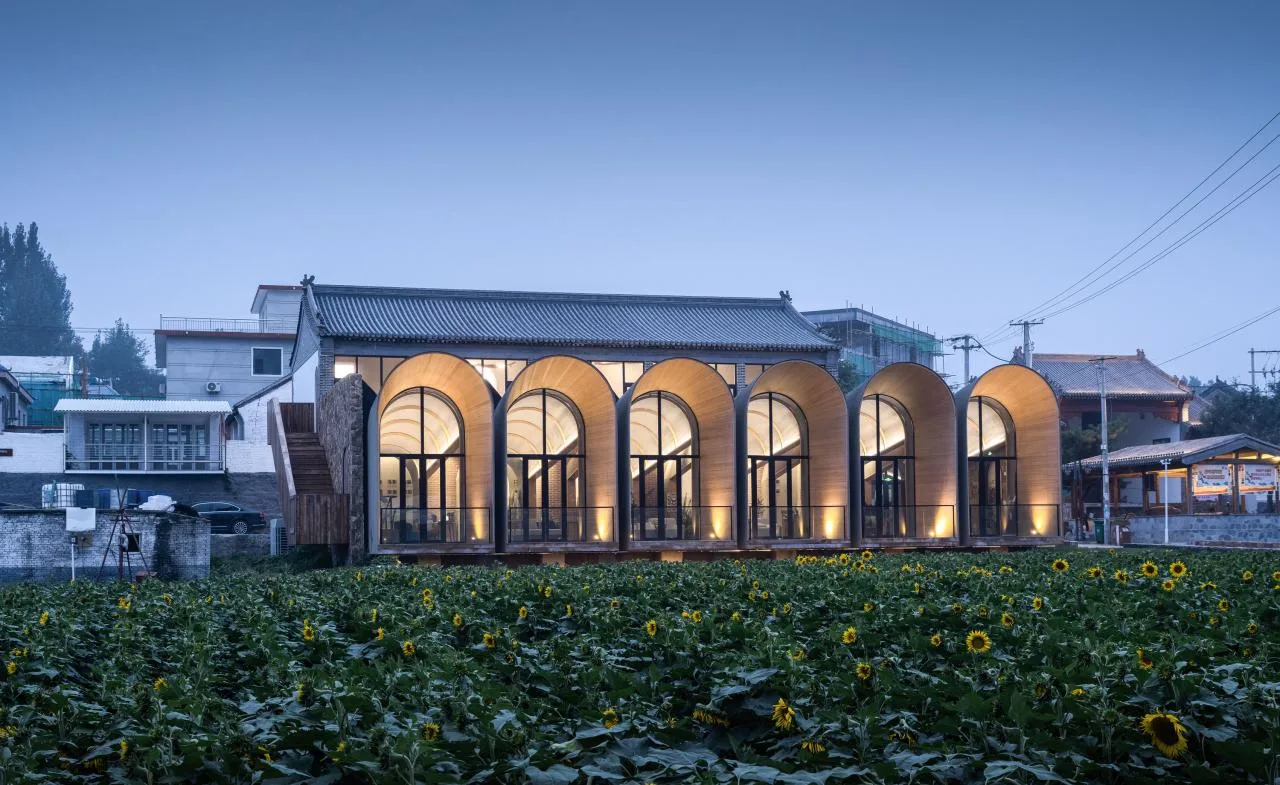
The once-unremarkable features of the original building were transformed into a bold architectural language. The flat arched doorway evolves into a three-dimensional spatial form. The interplay of old and new, reality and the uncanny, creates a metaphorical “horn” symbolizing the energy and vibrancy flowing from within the reception hall outward like beams of light and sound.
03. Rural Context and New Communication Perspectives
The northeast façade, facing the countryside, features expansive floor-to-ceiling glass forming a “niche” grandstand alongside the arches. Inside, all seats in the village history exhibition hall face these windows, offering views of the surrounding mountains and earth art.
Within the reception hall, “new farmers” and indigenous residents engage in dialogue; externally, the architecture embraces the rural landscape. Observers outside can perceive the architectural transition as the “doorway” spatially contracts inward, with the new structure weaving through the old, making the transformation tangible.
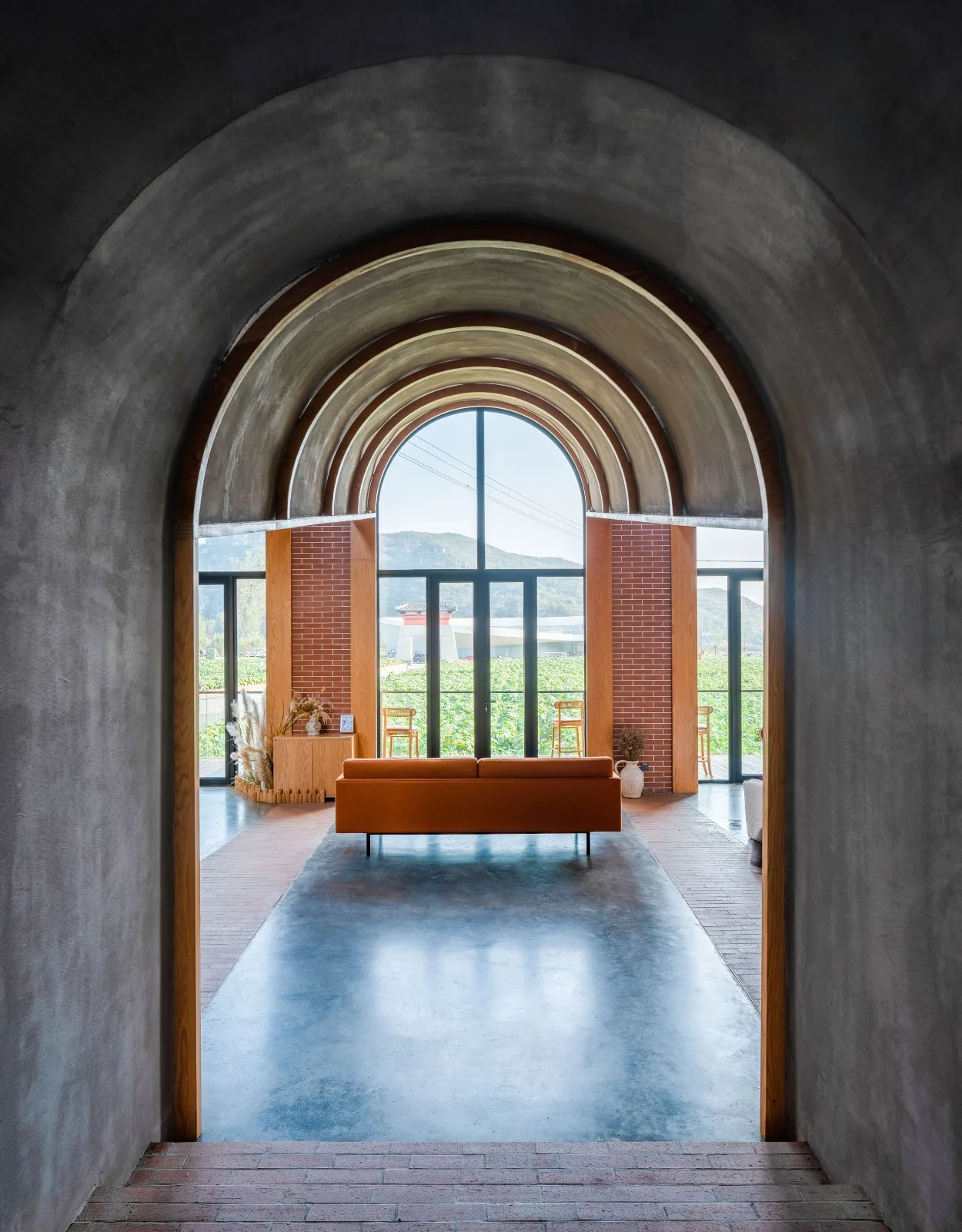
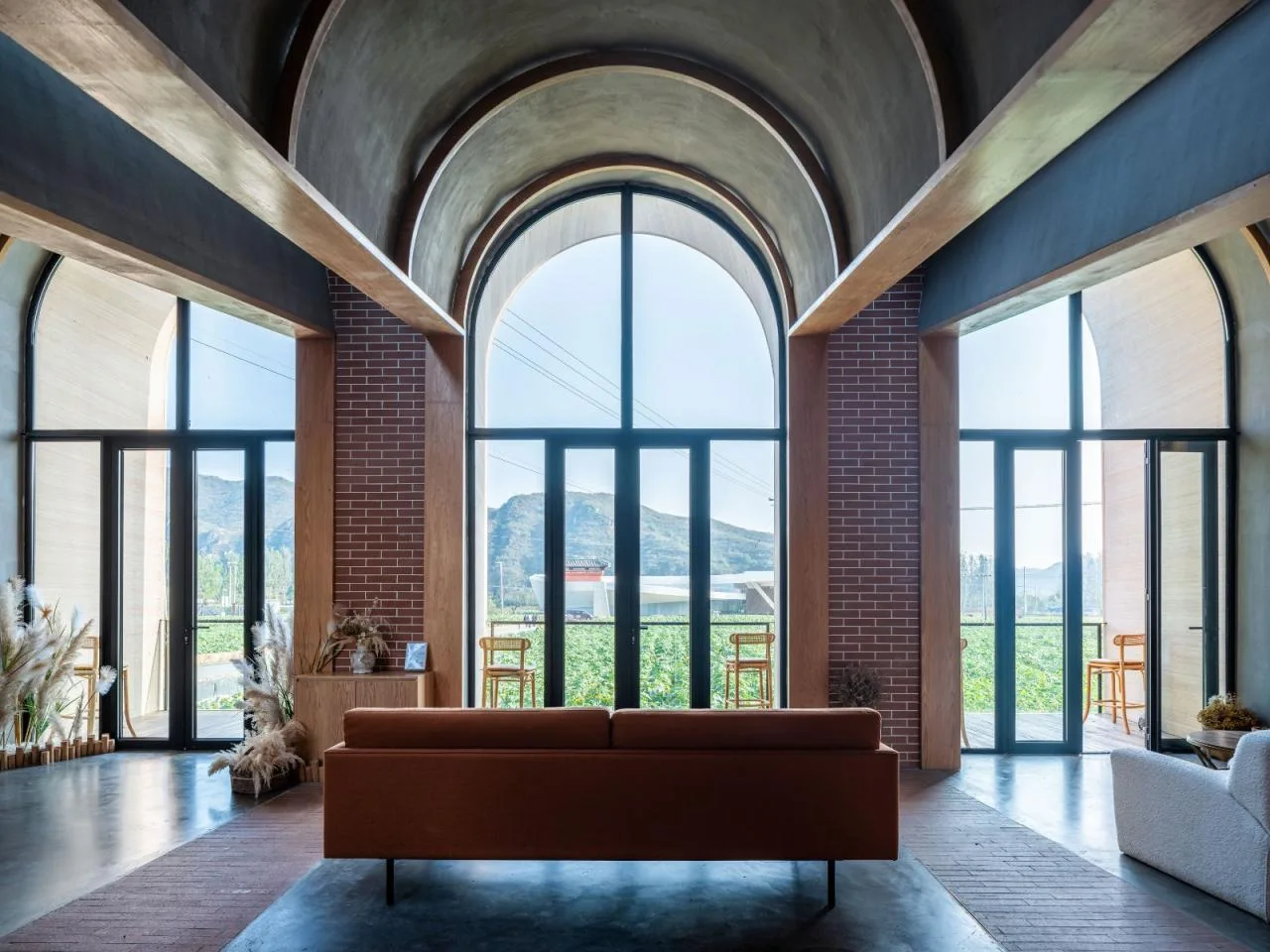
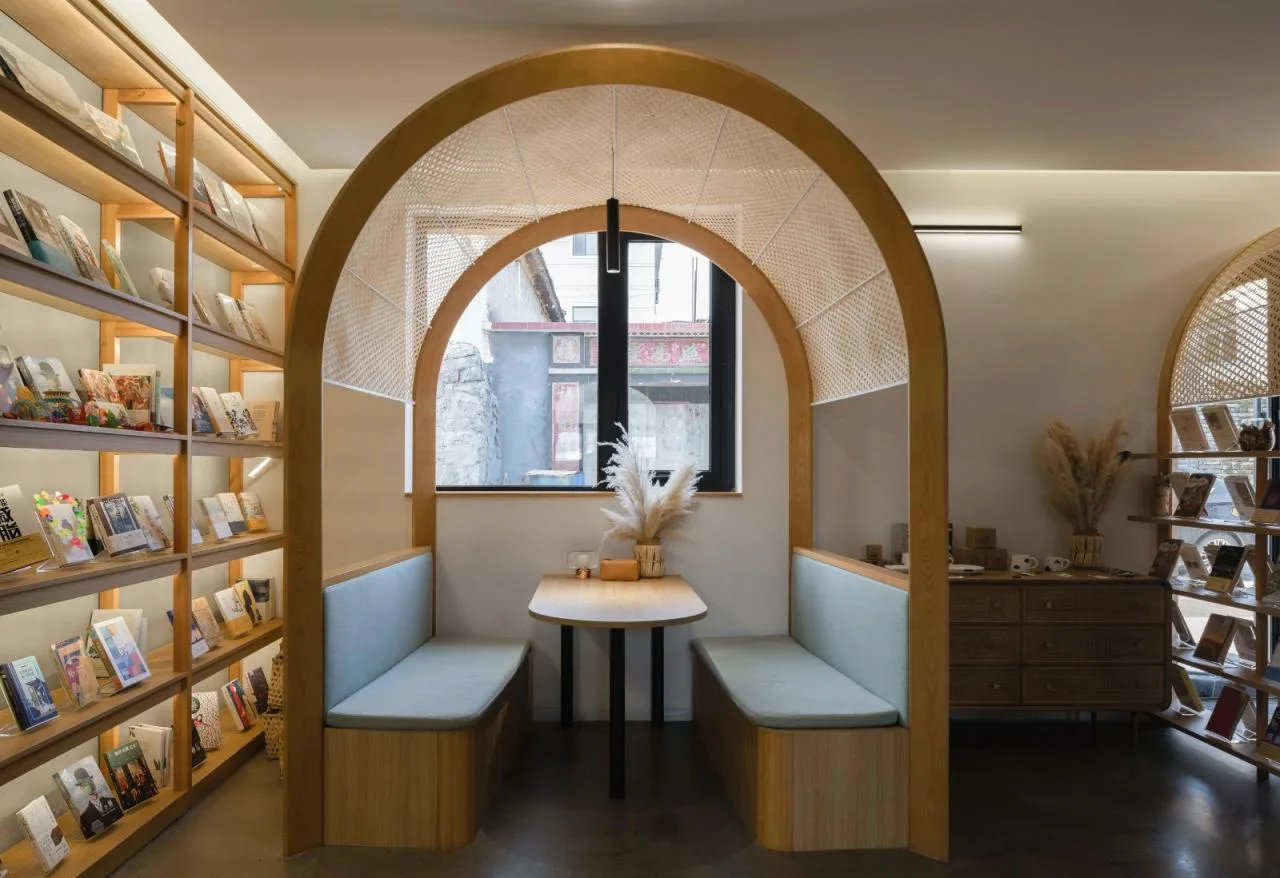
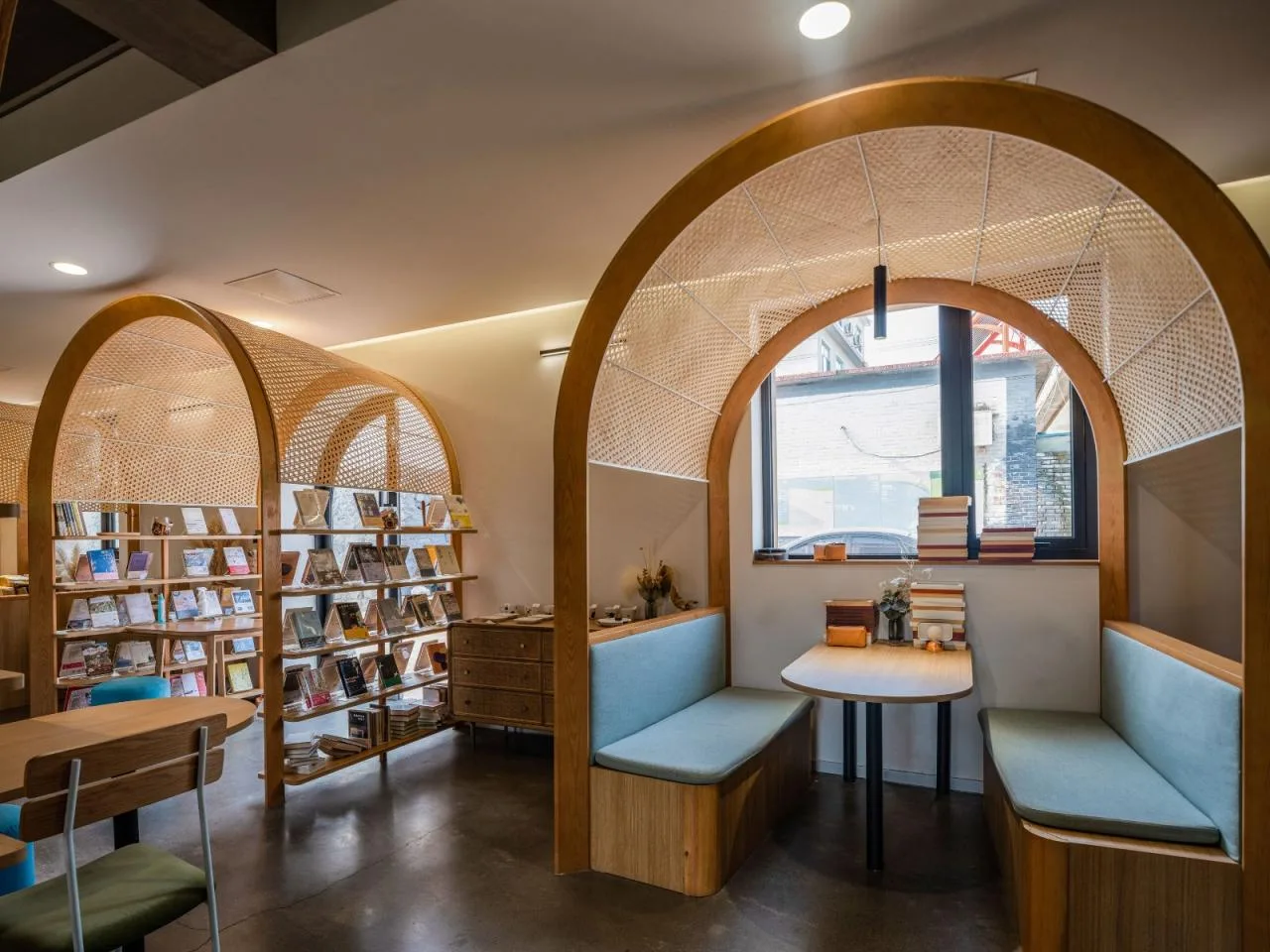
Inside, the arch motif continues with wooden arch ribs that run through the Village History Exhibition Hall, doubling as decorative elements in the café and children’s activity area. These create defined zones, integrating functional elements like bookshelves.
The floor design echoes the arch’s light projection, reinforcing this architectural theme throughout the interior. The arches’ repetition creates a rhythmic aesthetic, emphasized further through subtle virtual forms.
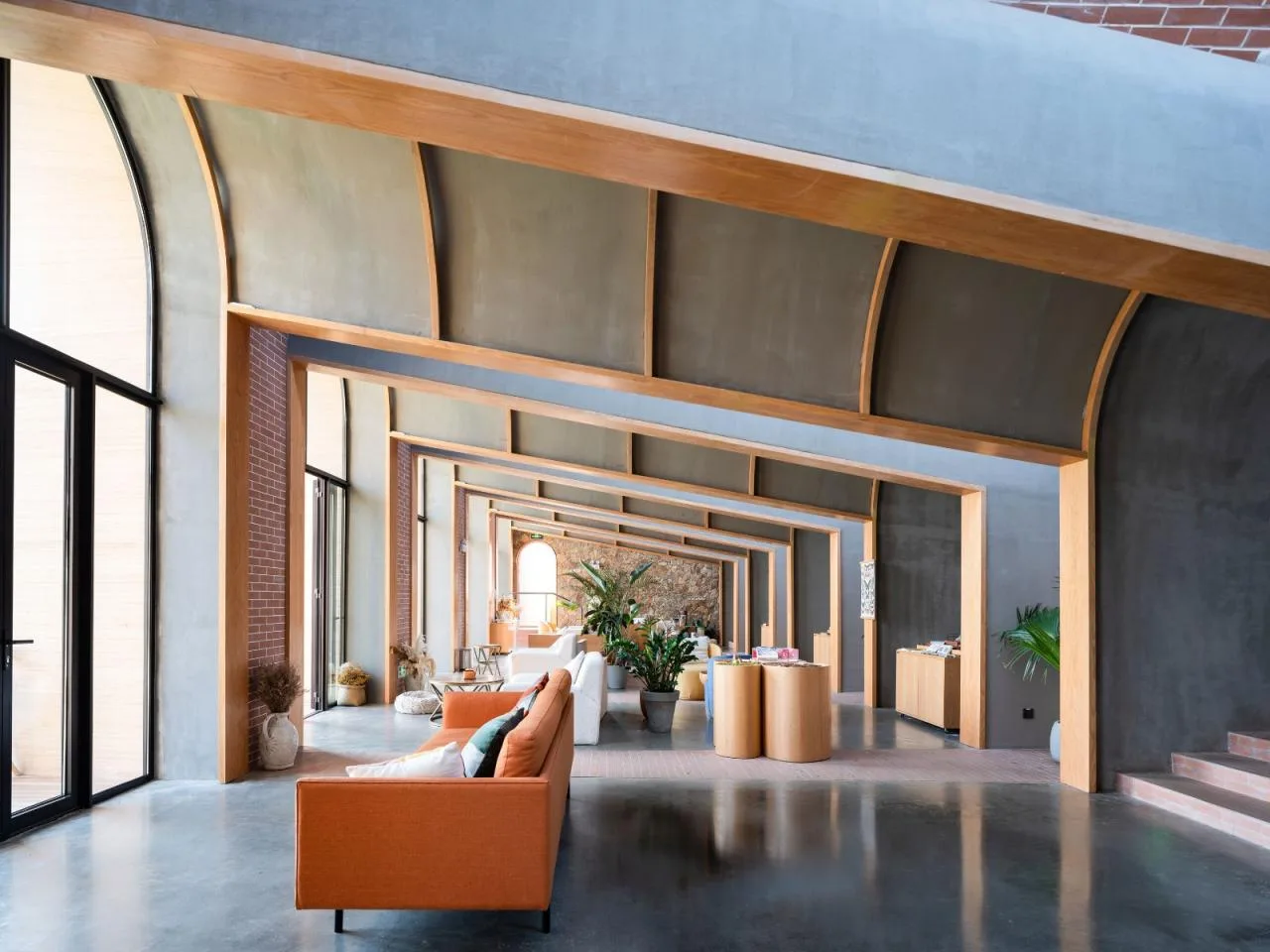
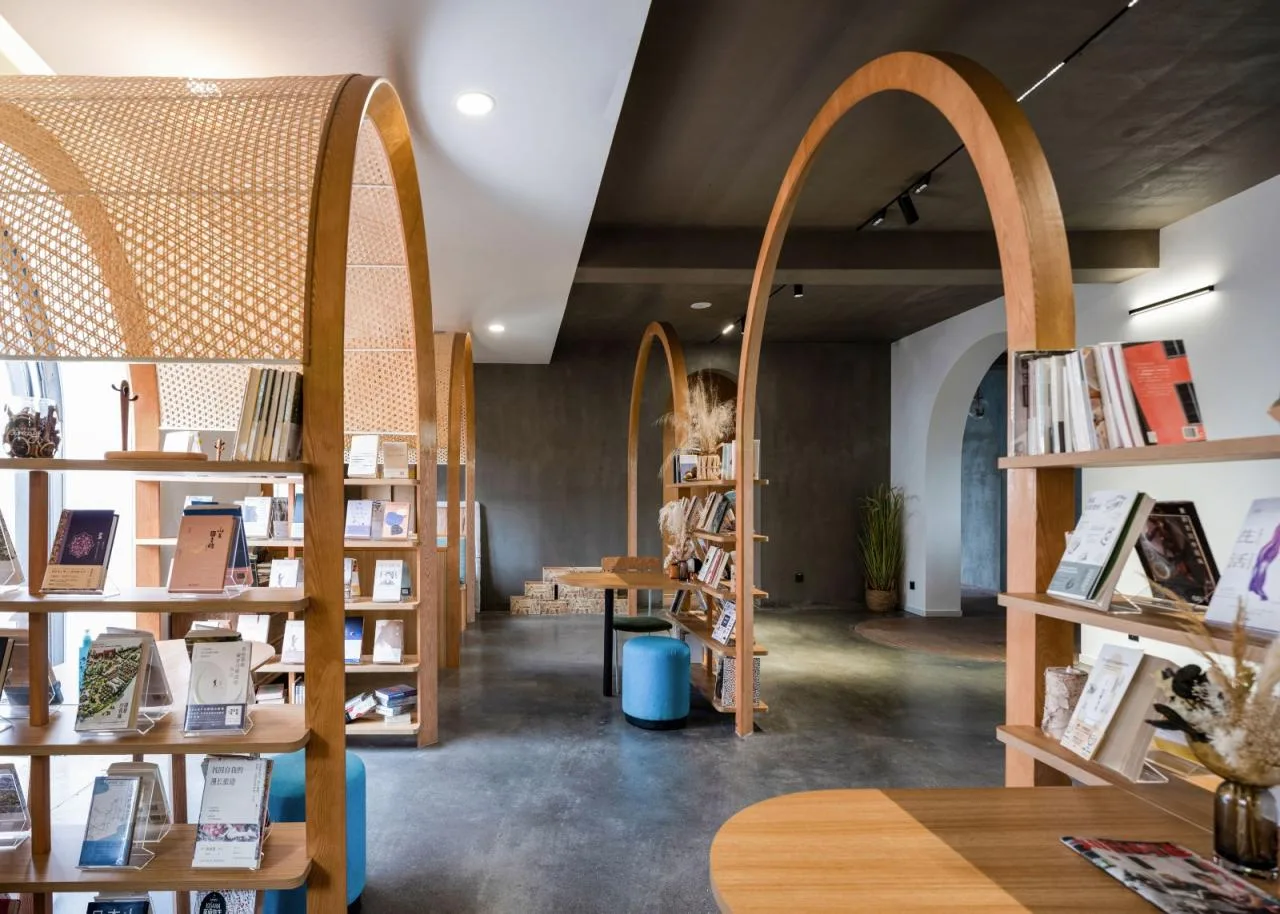
In addition to concrete, materials such as wood, red brick, and grass are employed throughout the building to evoke a sense of rural familiarity. Notably, red brick flooring on the first floor aligns with the arch’s light projection, reflecting the concept of “light” onto the ground.
The second floor ceiling is covered with a luminous film, creating a uniform and gentle light environment.
04. The Imprint of Time
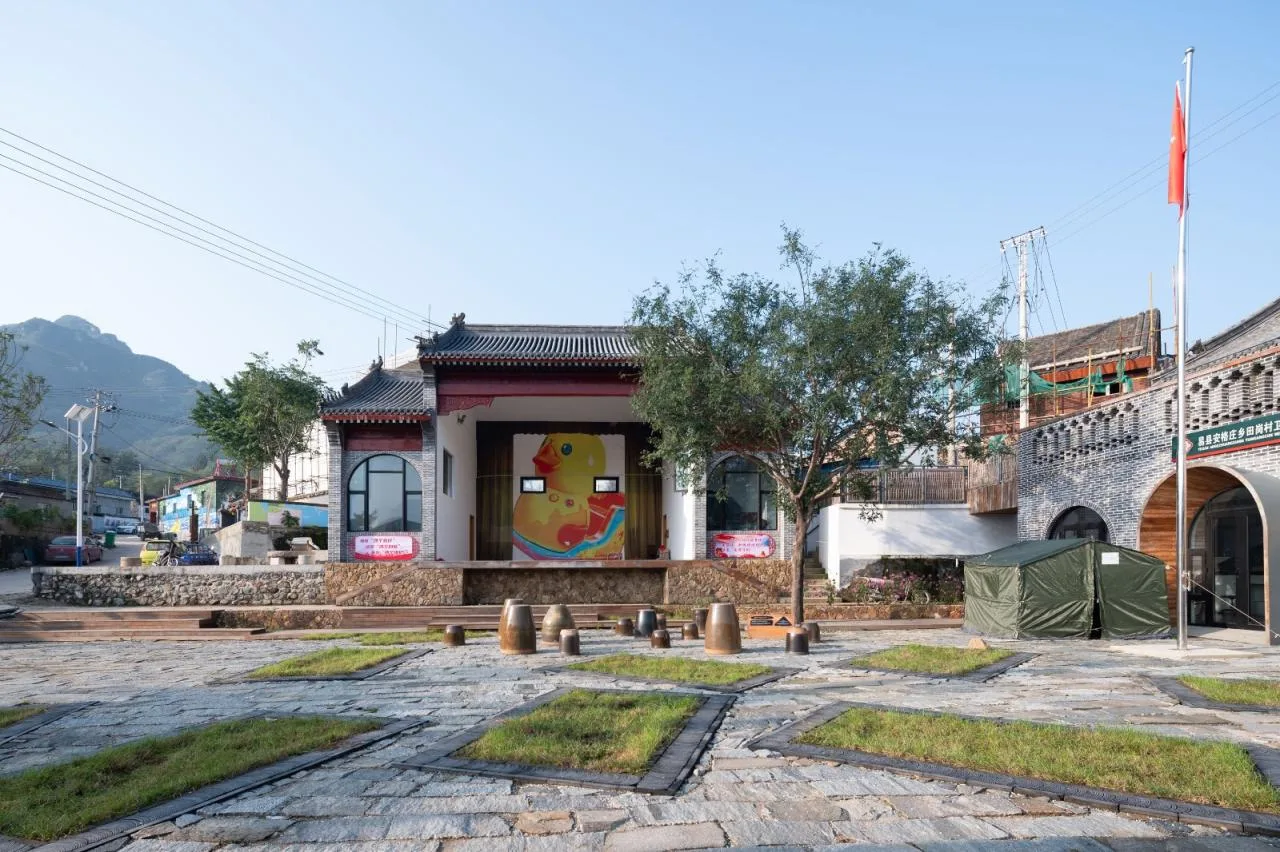
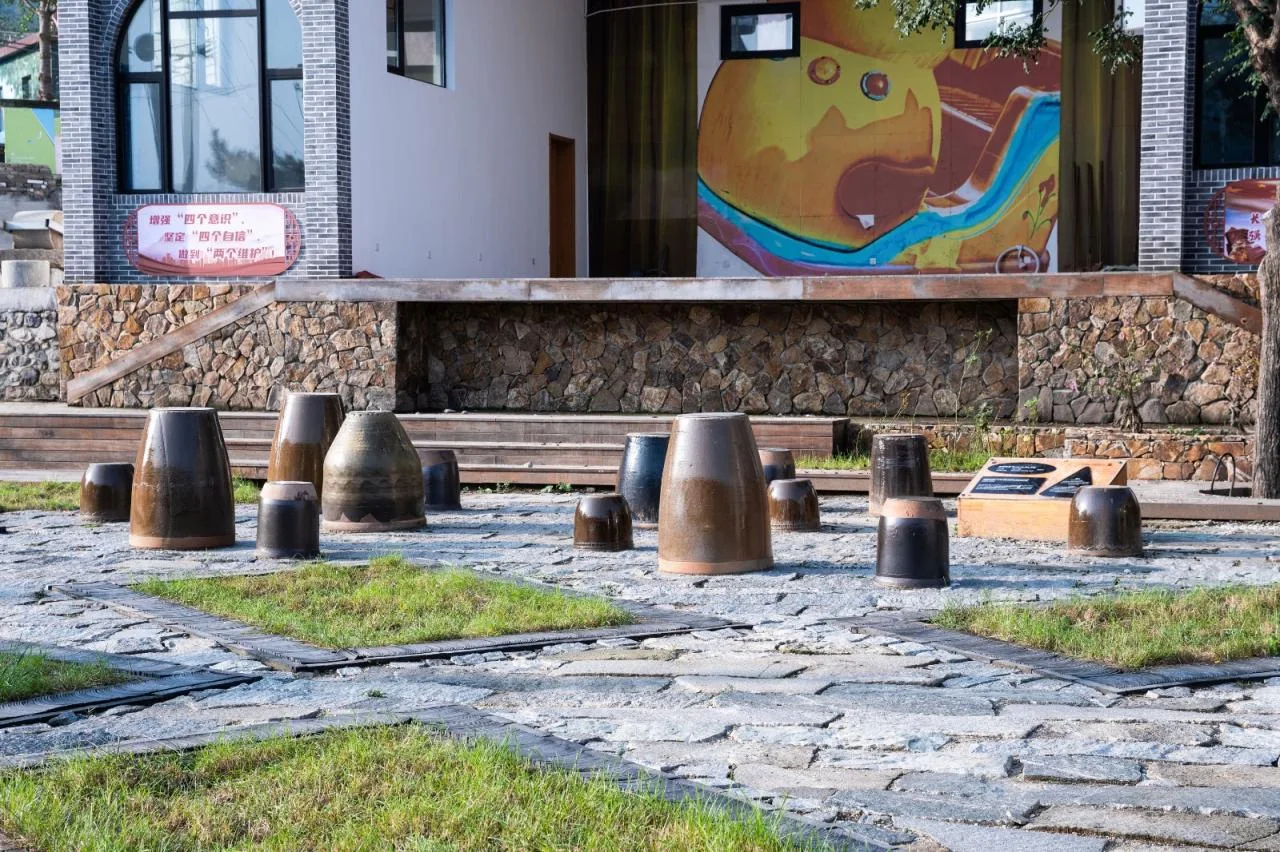
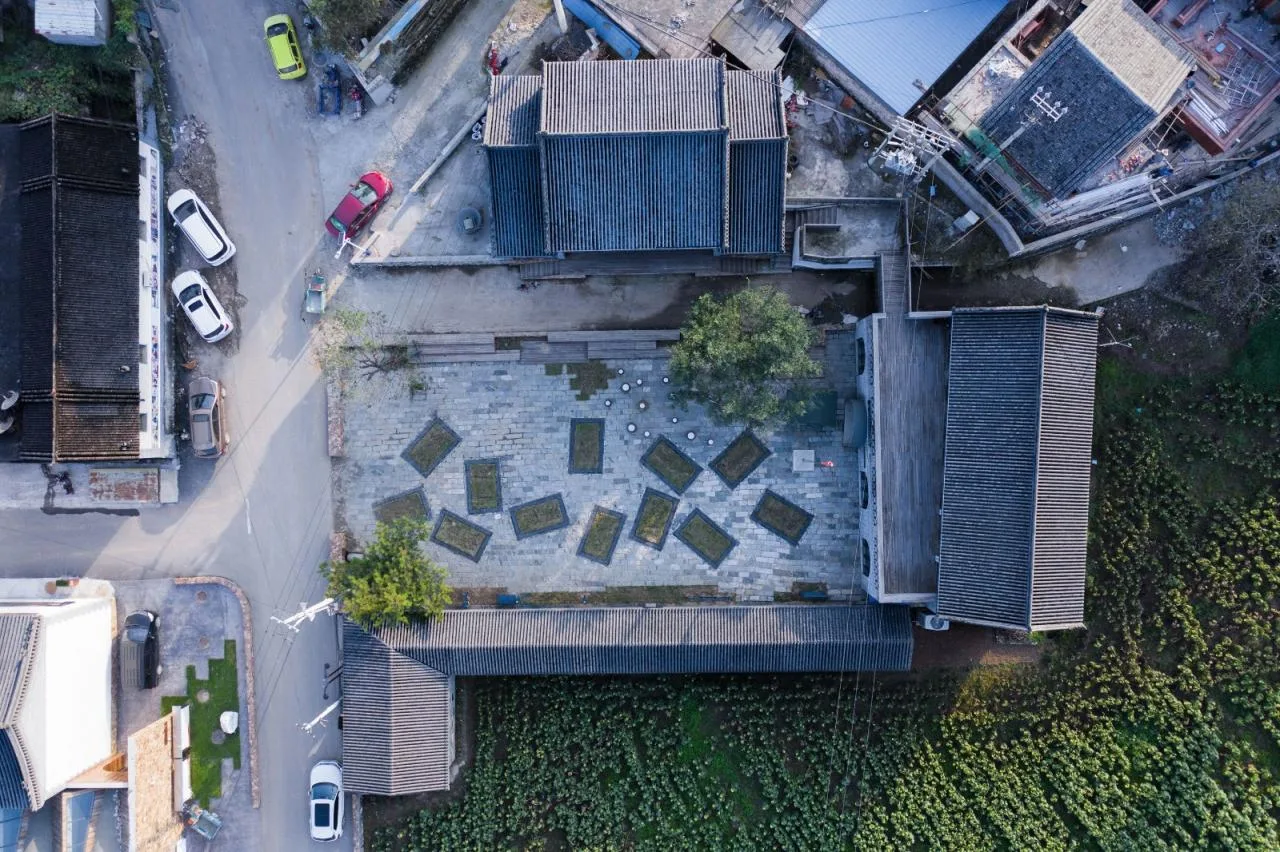
Beyond the main reception hall, the original stage, health station, and adjacent square have also been renovated. The health station continues the arch theme, enlarging a doorway to emphasize its presence. The stage retains its function and basic appearance, now serving as the village’s “drama center” and “life theater.”
In the square, the architect introduced a time-related installation: twelve stamp-like grass motifs representing the 12 zodiac animals, with a new totem growing each year. This symbolizes the architect’s deep affection for Tiangang Village and the desire for design to transcend space and integrate with time, accompanying the village through its cycles of renewal.
Project Drawings
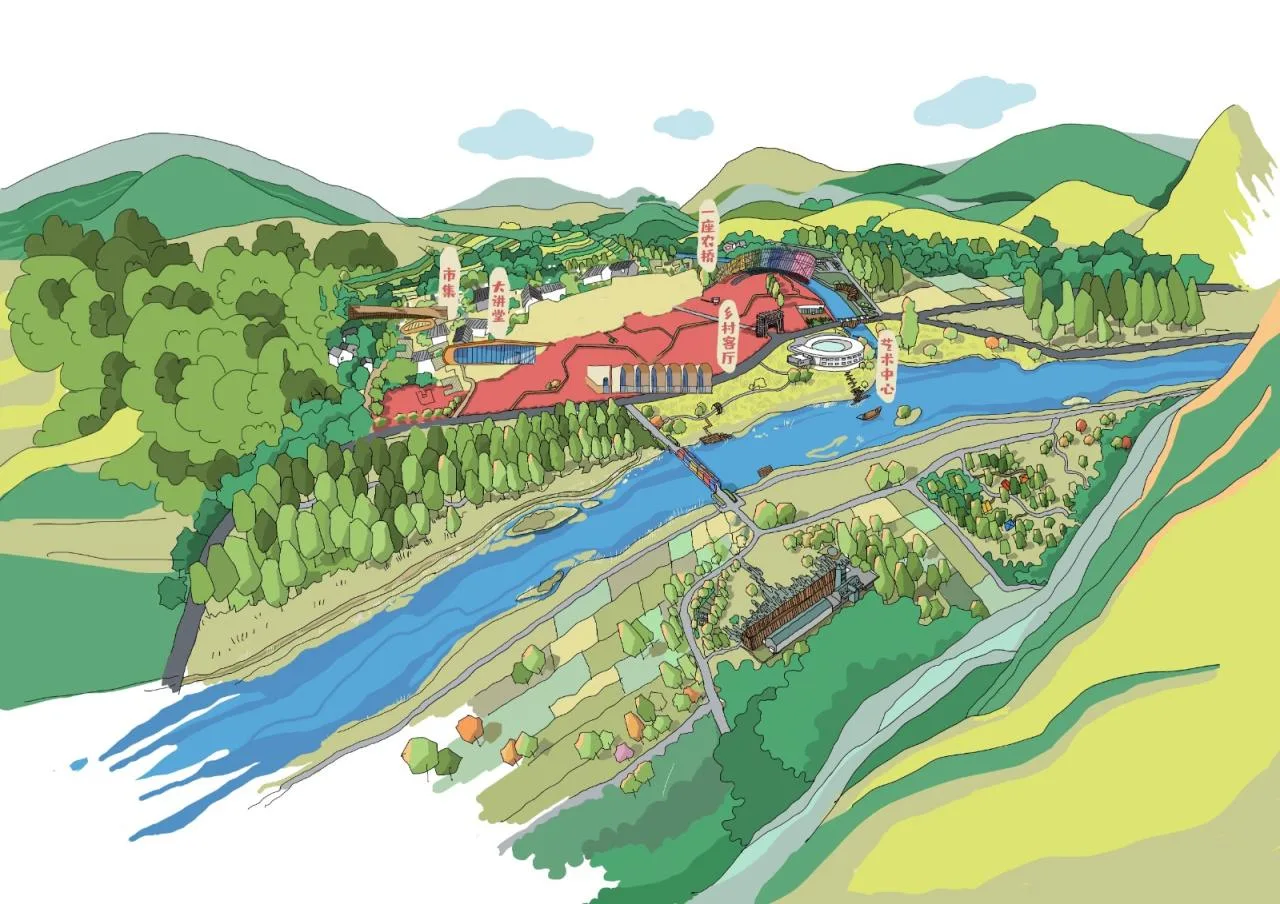
△ Hand-drawn sketch
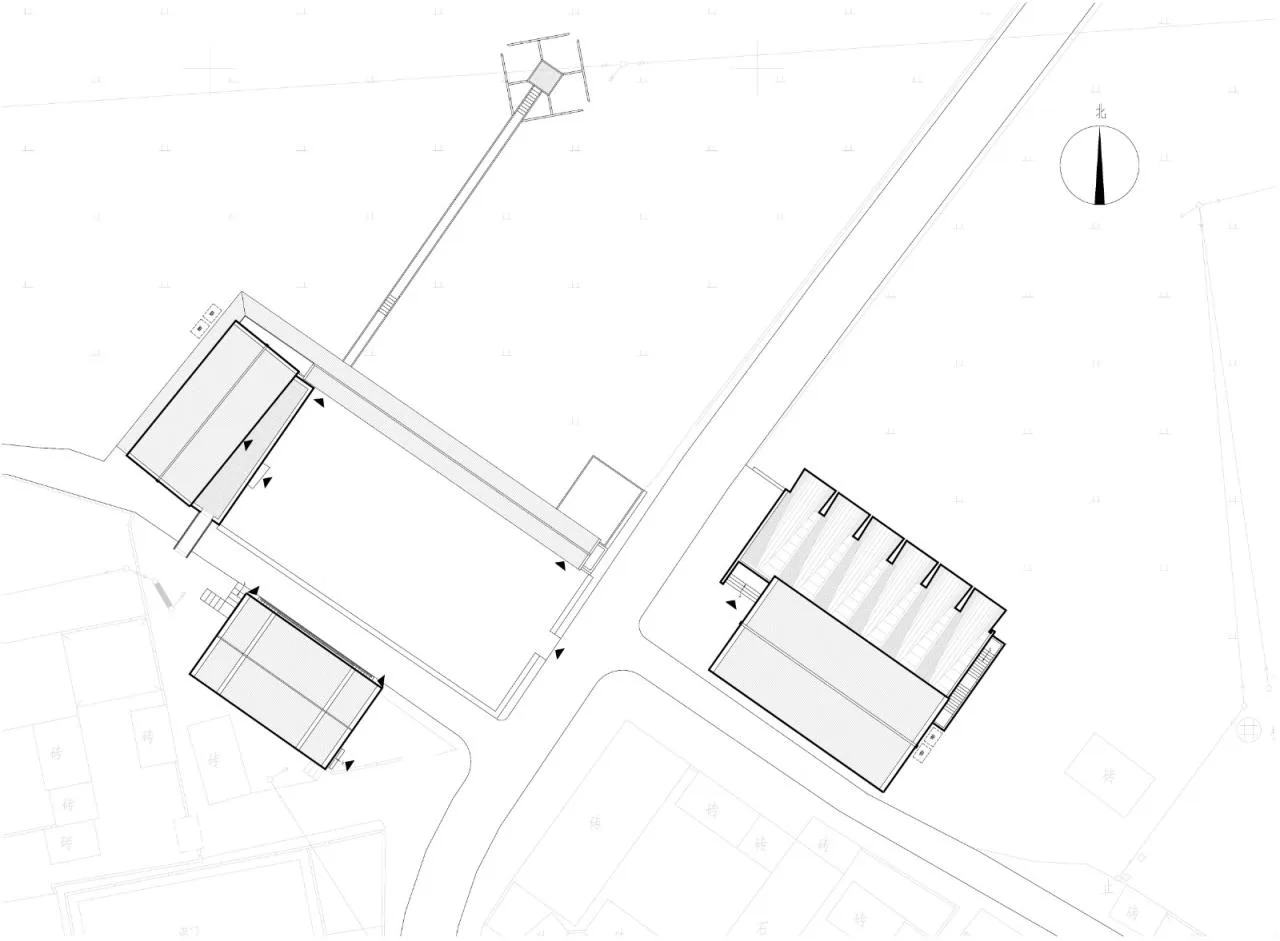
△ Site plan
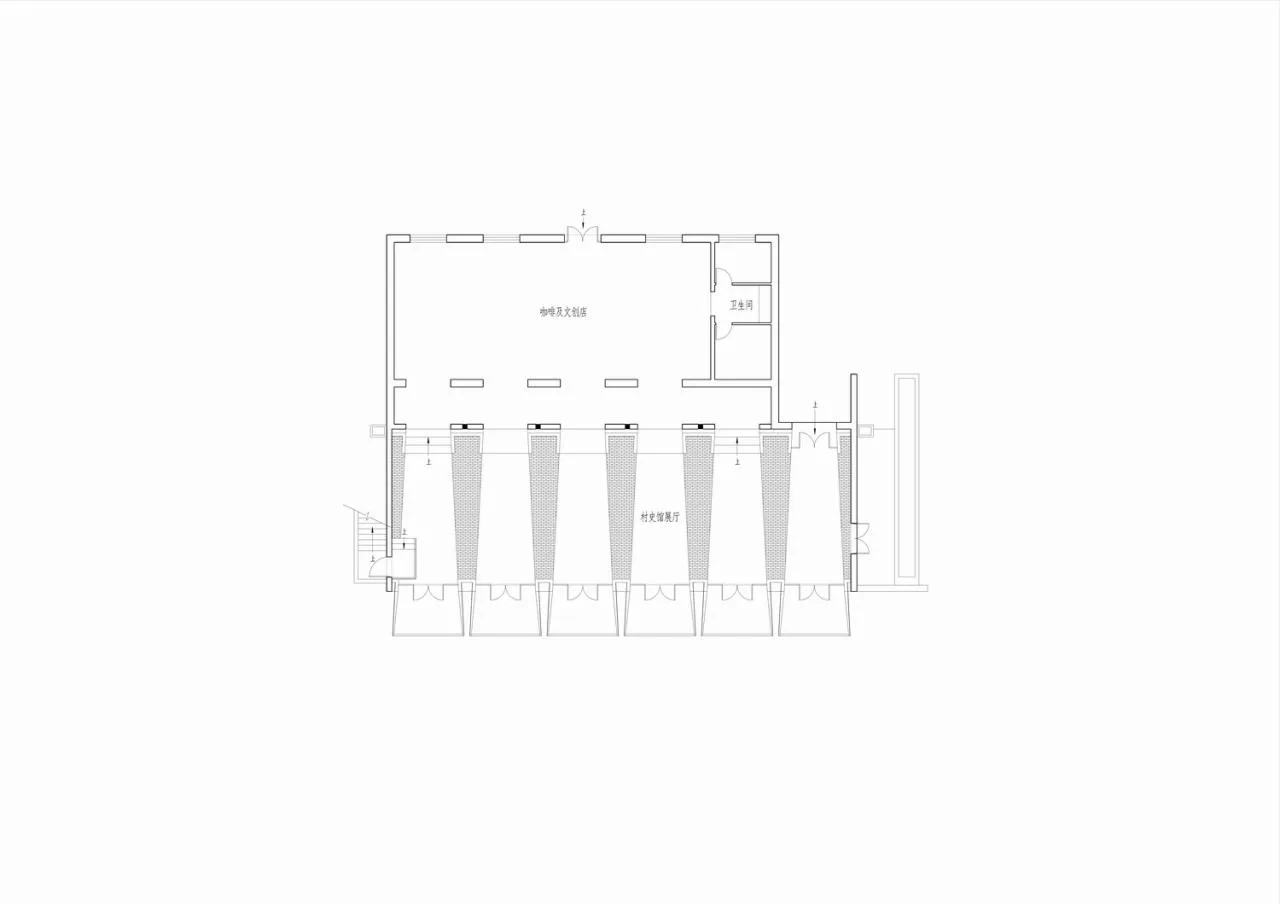
△ First floor plan
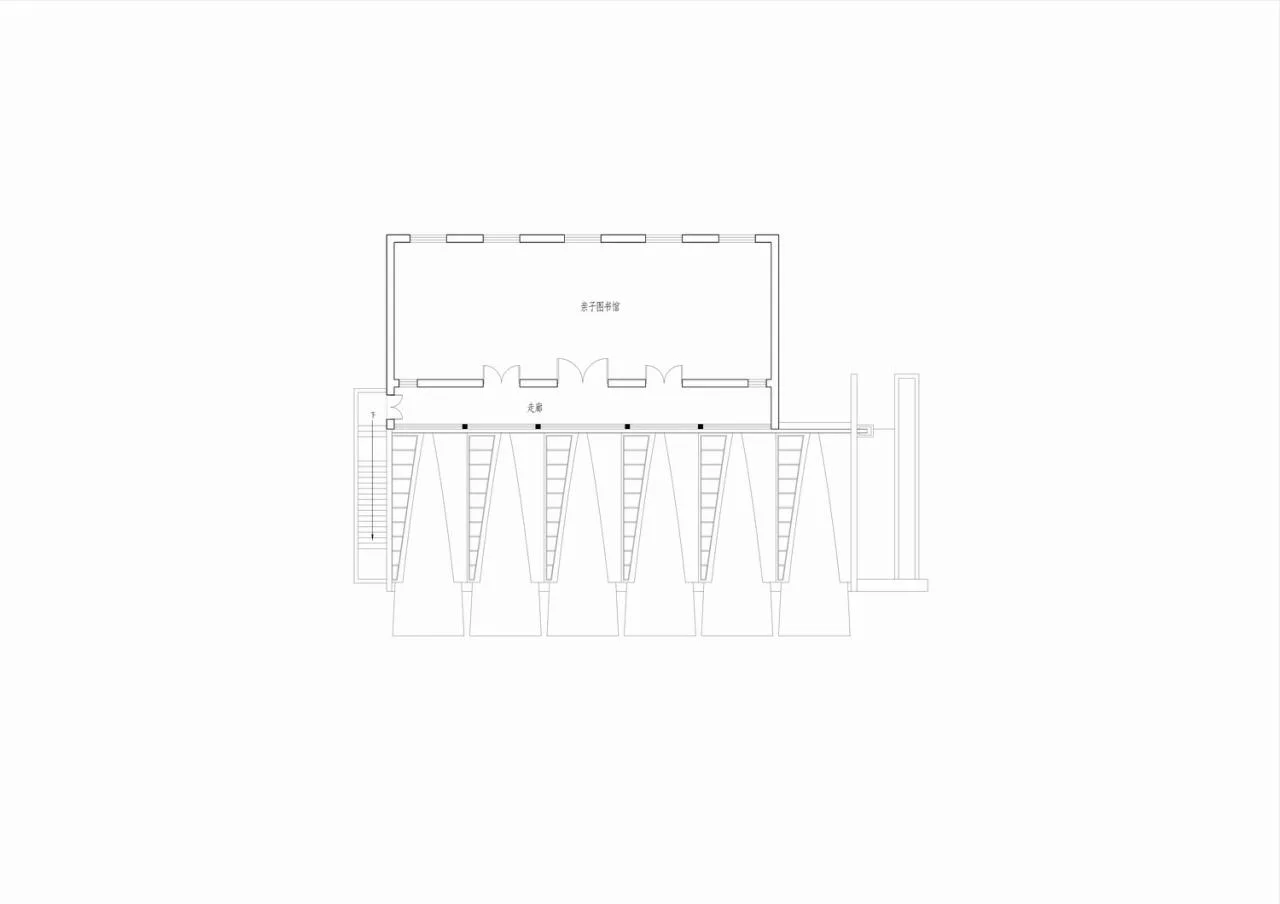
△ Second floor plan
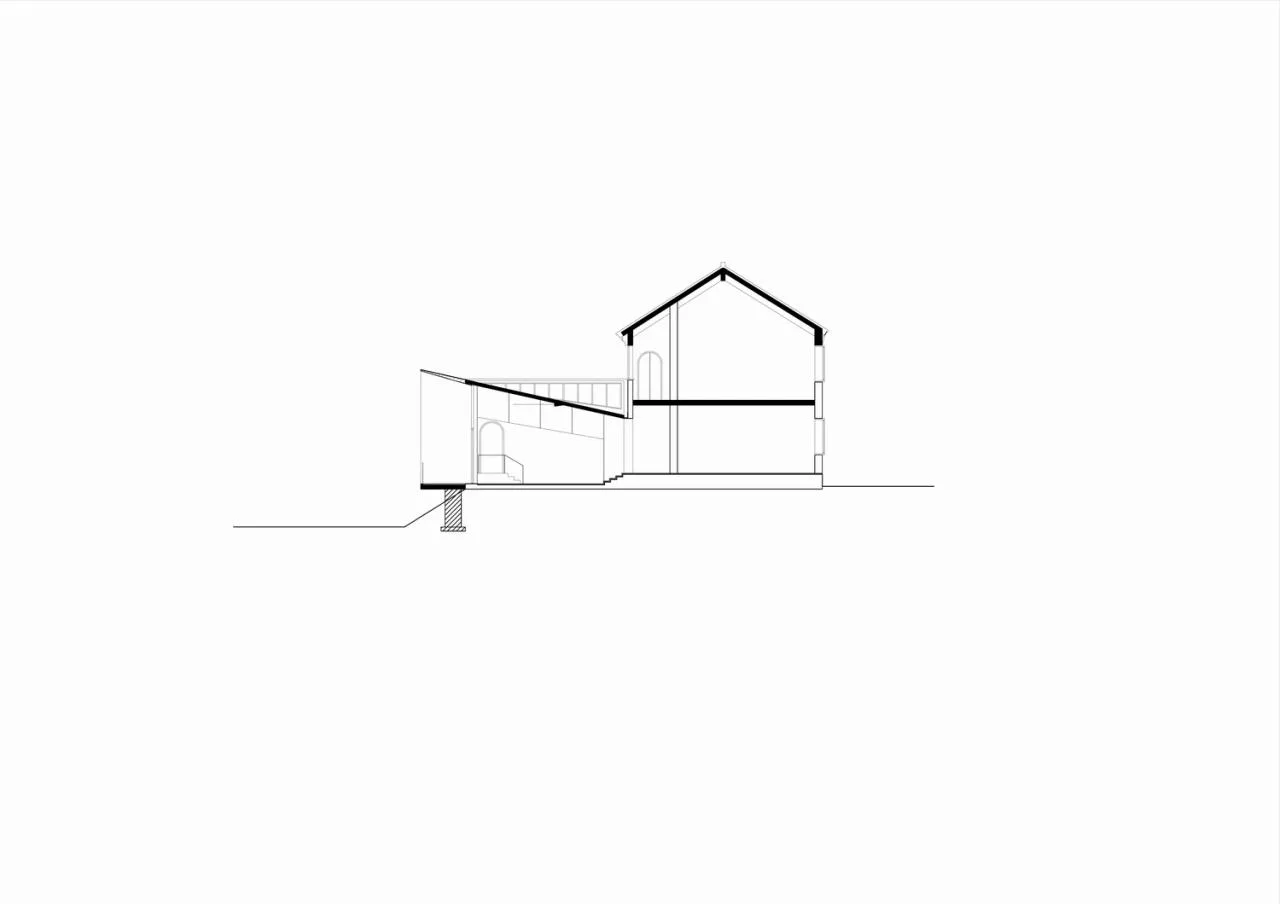
△ Section drawing
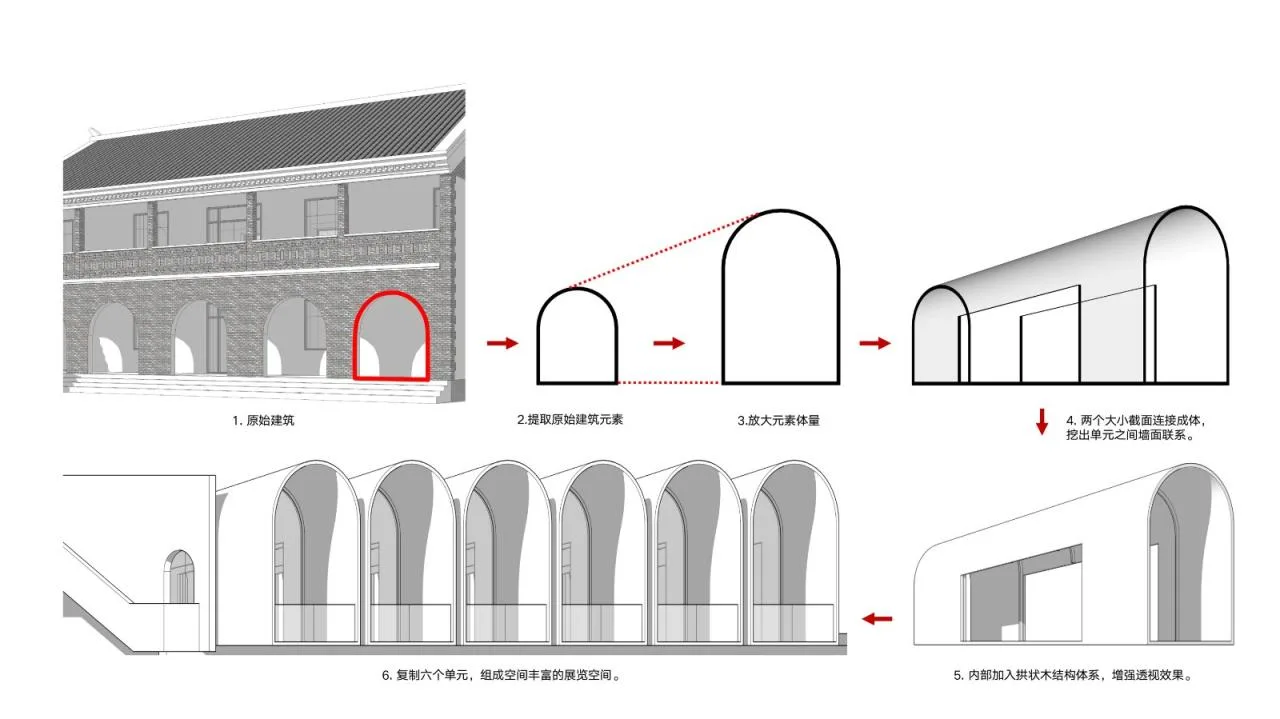
△ Analysis diagram
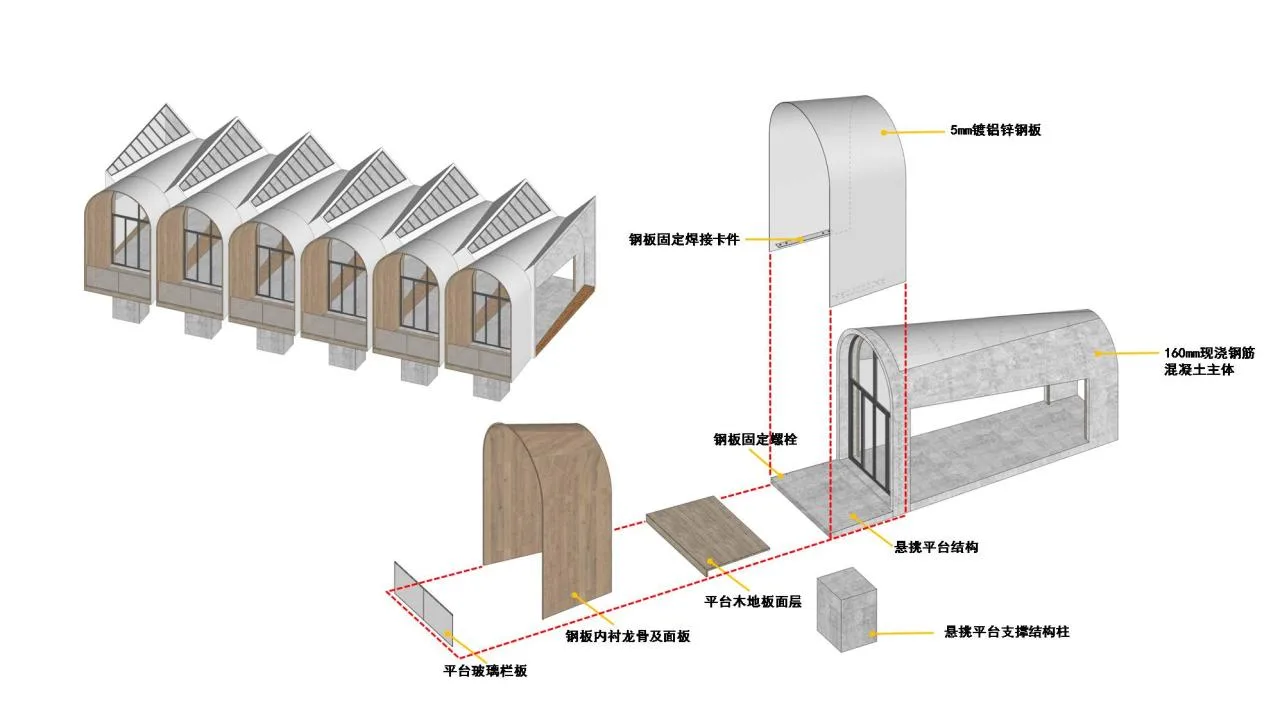
△ Analysis diagram
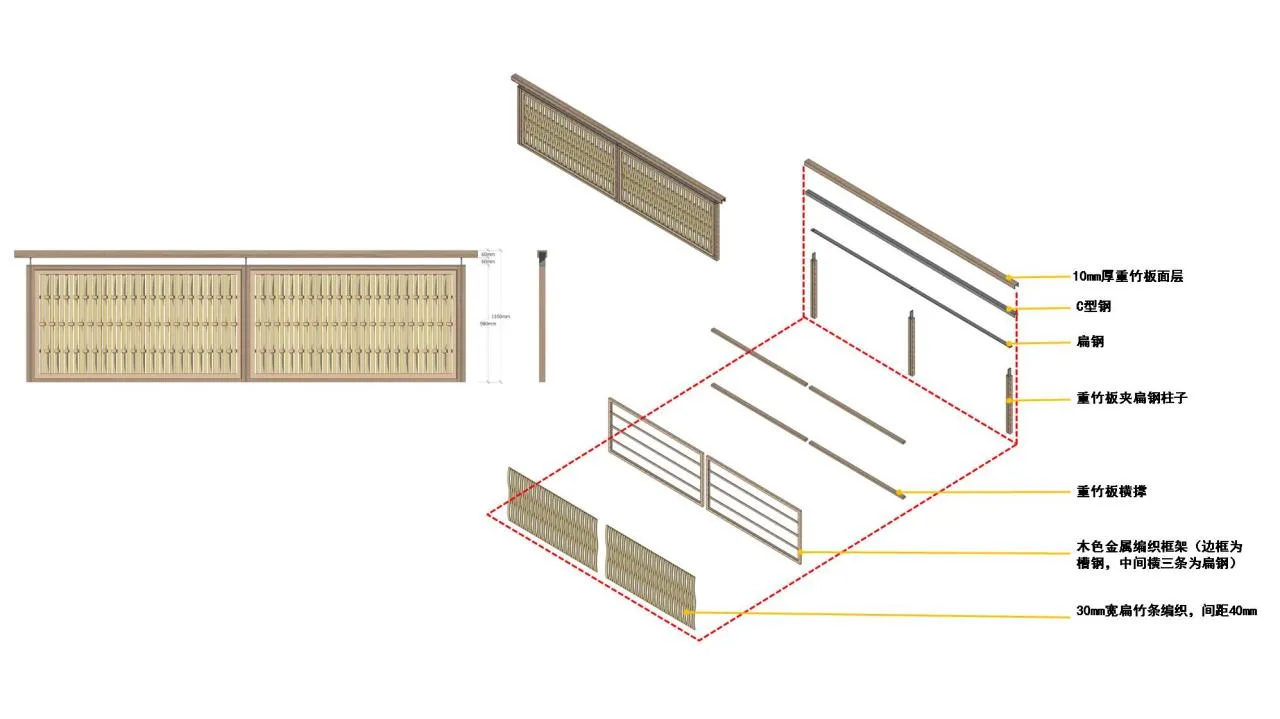
△ Analysis diagram
Project Details
Project Name: Tiangang Rural Reception Hall
Location: Tiangang Village, Yixian County, Baoding City, Hebei Province, China
Project Type: Architectural and Interior Design
Status: Completed
Owner: Yuange Group
Design Team
Lead Architect: Zou Yingxi
Project Architects: Liu Jiansheng, Jin Nan
Interior Designers: Xia Fuqiang, He Min, Cao Zhenzhen, Qian Guoxing, Liu Tingting, Li Qianqian, Feng Yan, Guo Mengjia, Li Hui
Landscape Designers: Li Beibei, Zhang Junchao, Liu Shuang, Liang Jingqi, Shi Qingqing
Soft Decoration Design: Shu Kun, Gu Yuecheng
Design Period: February – August 2020
Construction Period: September 2020 – April 2021
Site Area: 1,610.02 m²
Building Area: 1,110.01 m²
Indoor Area: 871.49 m²
Construction Contractor: Zhongwai Jianhuacheng Engineering Technology Group Co., Ltd.
Structural Engineer: Beijing Zhonghe Jiancheng Construction Engineering Design Co., Ltd. – Lu Lijie Team
Photography: Literal Translation of Architectural Photography
Materials and Suppliers
1. Bamboo and Wood – Shanghai Mosuo New Decorative Materials Co., Ltd.
2. Genuine Stone Paint – Nippon Paint (China) Co., Ltd.
3. Rusty Stone Slab – Hebei Yixian Xinyuan Stone Co., Ltd.















Must log in before commenting!
Sign Up