
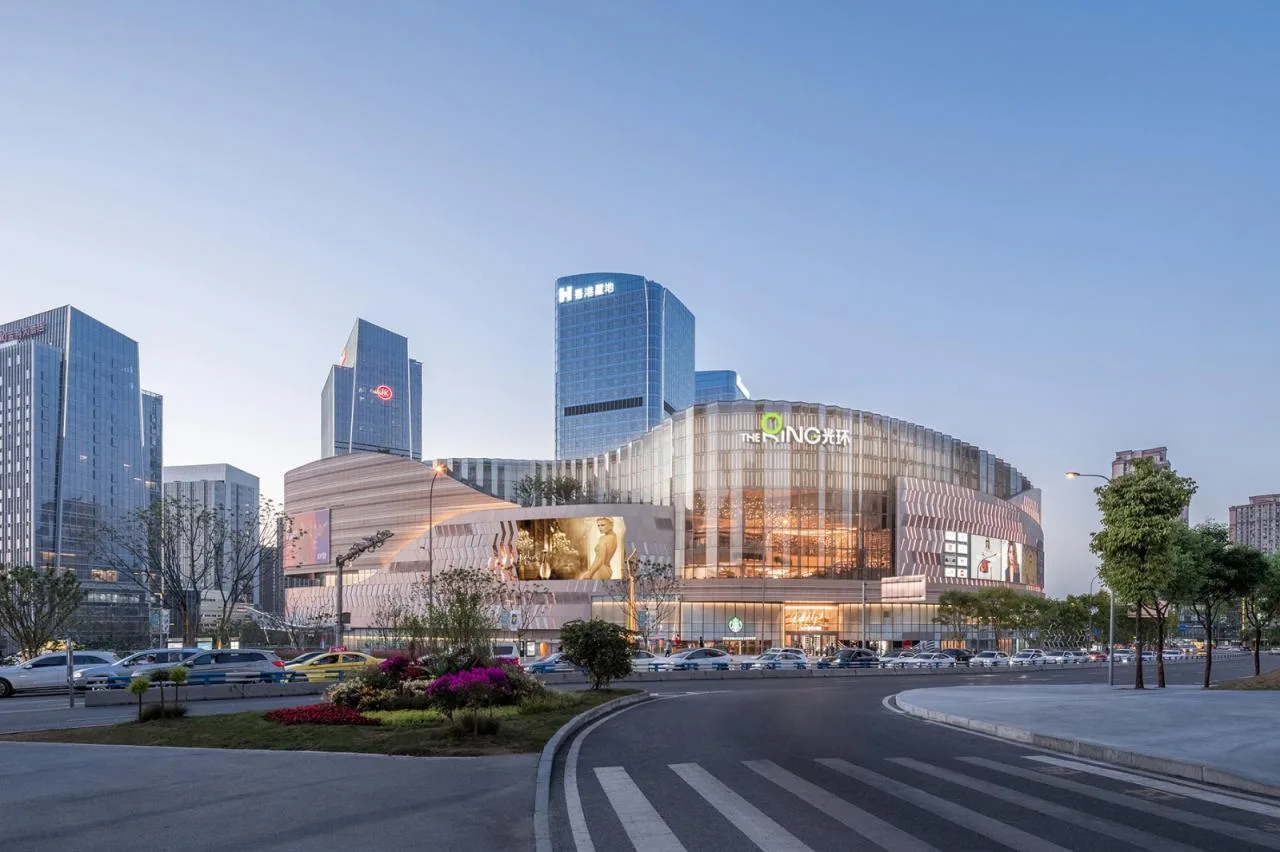
In 2017, amid severe smog affecting many parts of China, Hong Kong Land Group embarked on the development of the “Chongqing Halo” shopping center. The property owner envisioned merging ecology with commerce to create a “city nature community” — a shopping destination offering excellent air quality and a pure urban space where people could enjoy fresh air freely.
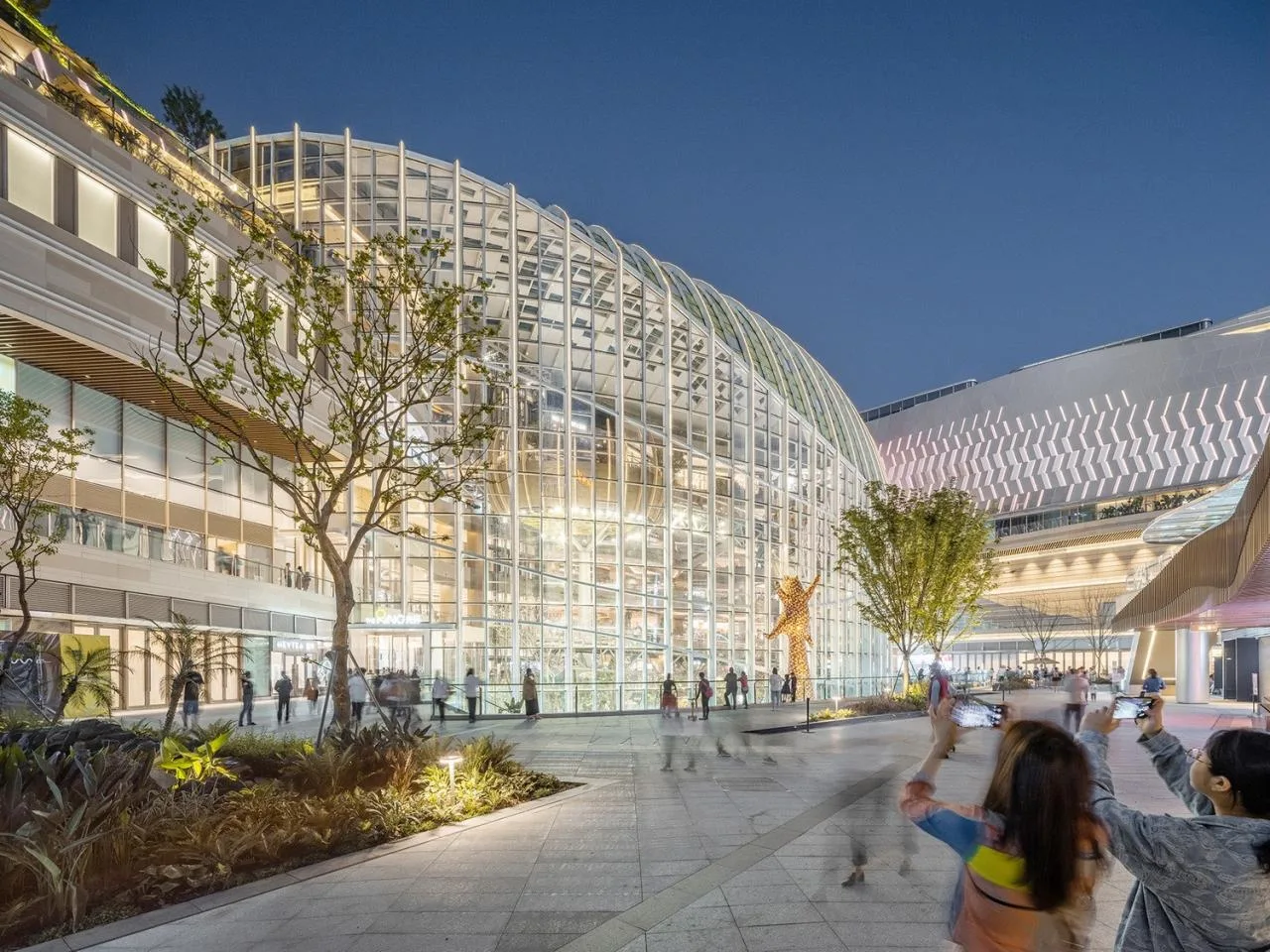
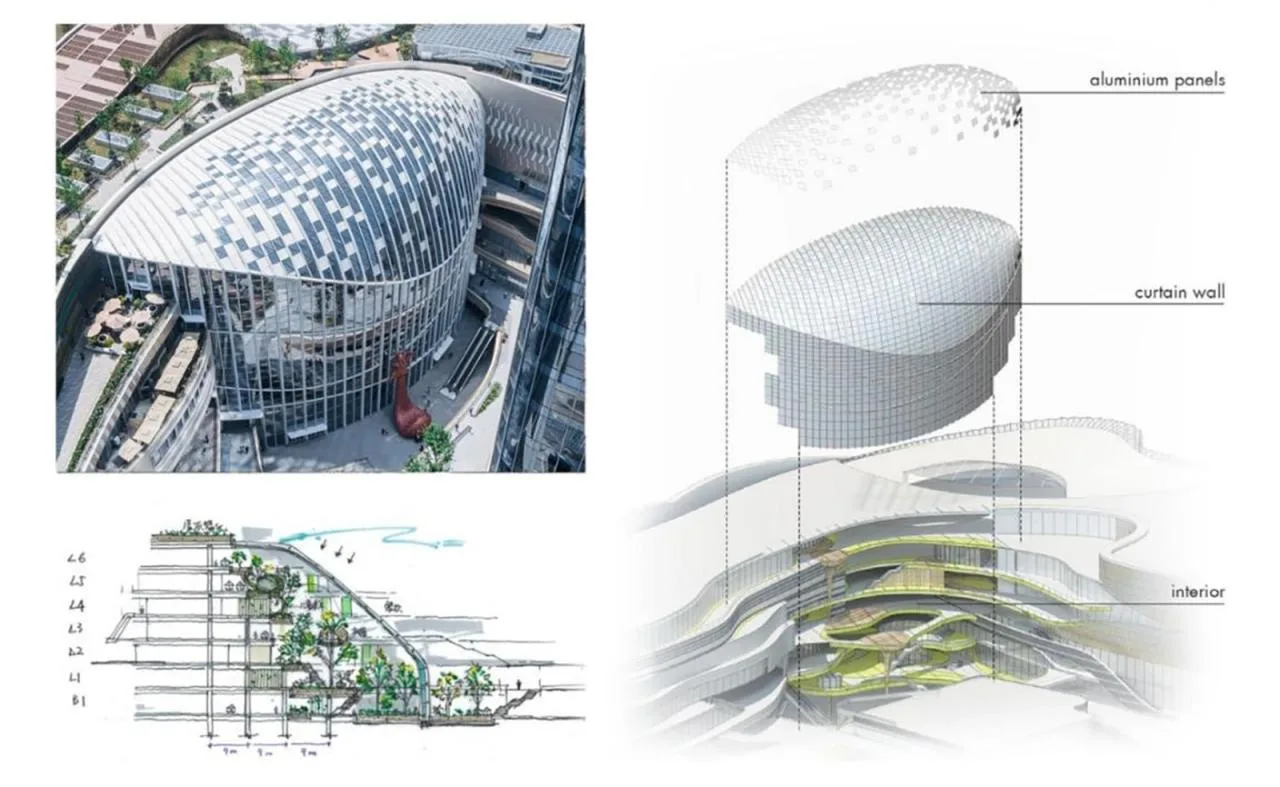
The idea of integrating green ecology into commercial space design has long existed, but its realization remained elusive due to conflicts between the environmental needs of plants and the functional requirements of shopping spaces. In response, PHA Pai Ang innovatively designed a seven-story glass botanical garden, strategically positioned at the L-shaped mall’s turning point. This location runs parallel to the main commercial flow, avoiding interference while maximizing shared access throughout the retail space. Following an international design competition, PHA Pai Ang’s groundbreaking concept, which challenges traditional shopping center paradigms, earned full commissions for overall planning and architectural design, including consultancy on interior, garden, and lighting aspects.
On April 23, 2021, The Ring Shopping Park in Chongqing officially opened its doors.
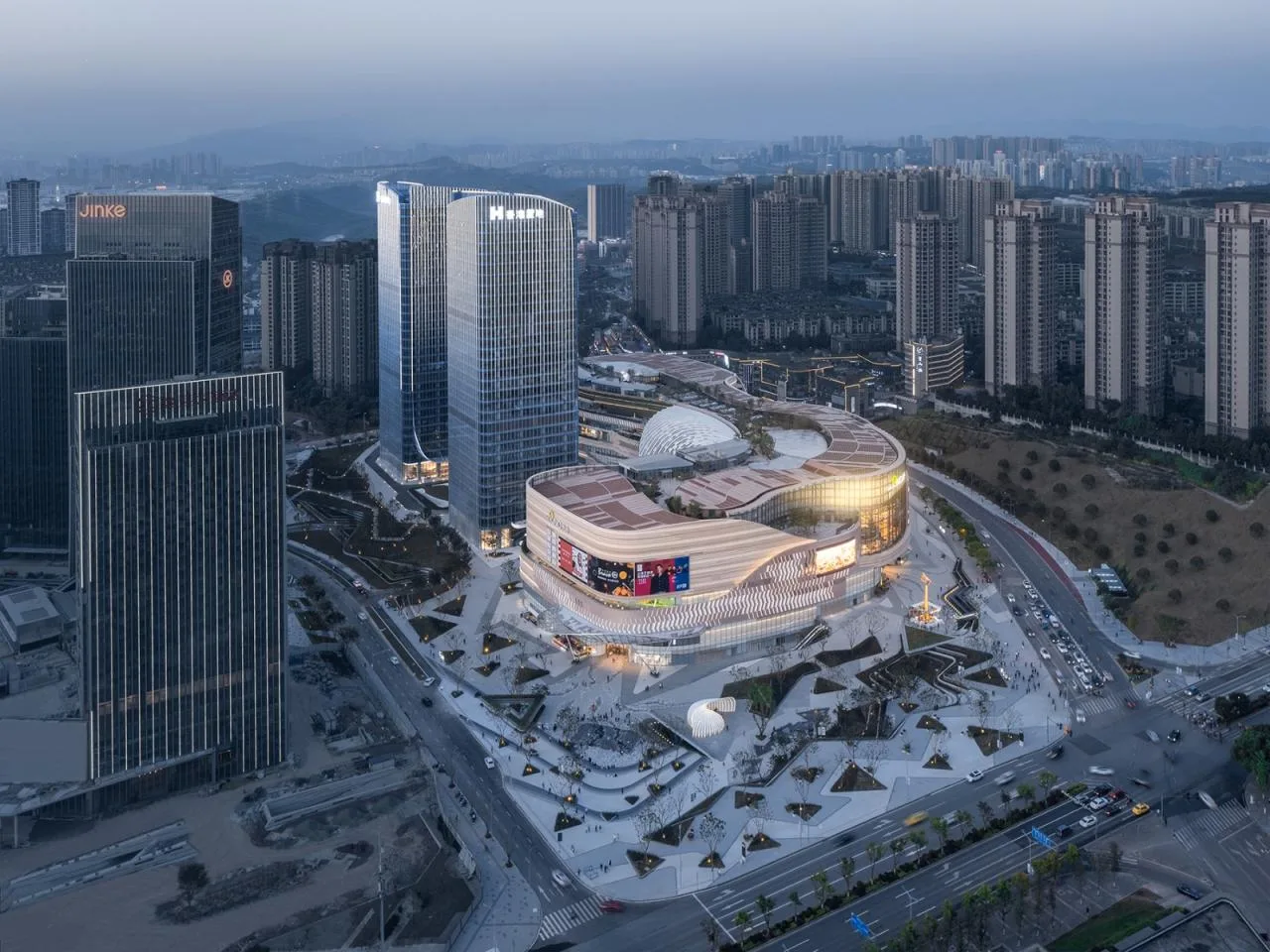
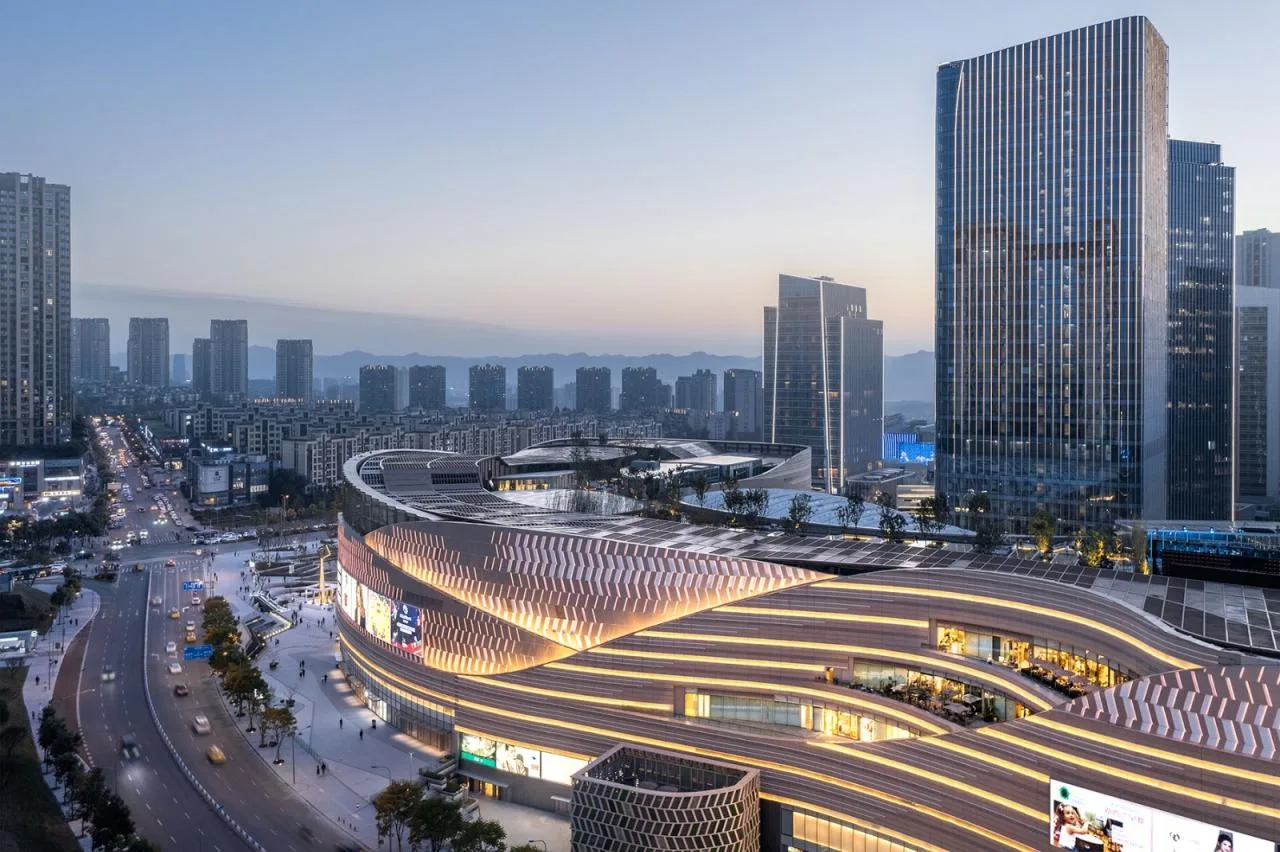
Located in the heart of Chongqing’s Liangjiang New Area, above Metro Line 5, the complex spans a total construction area of 420,000 square meters. It features a massive centralized shopping center of approximately 170,000 square meters, a 20,000 square meter commercial street, and two over-5A Grade A office towers totaling 110,000 square meters.
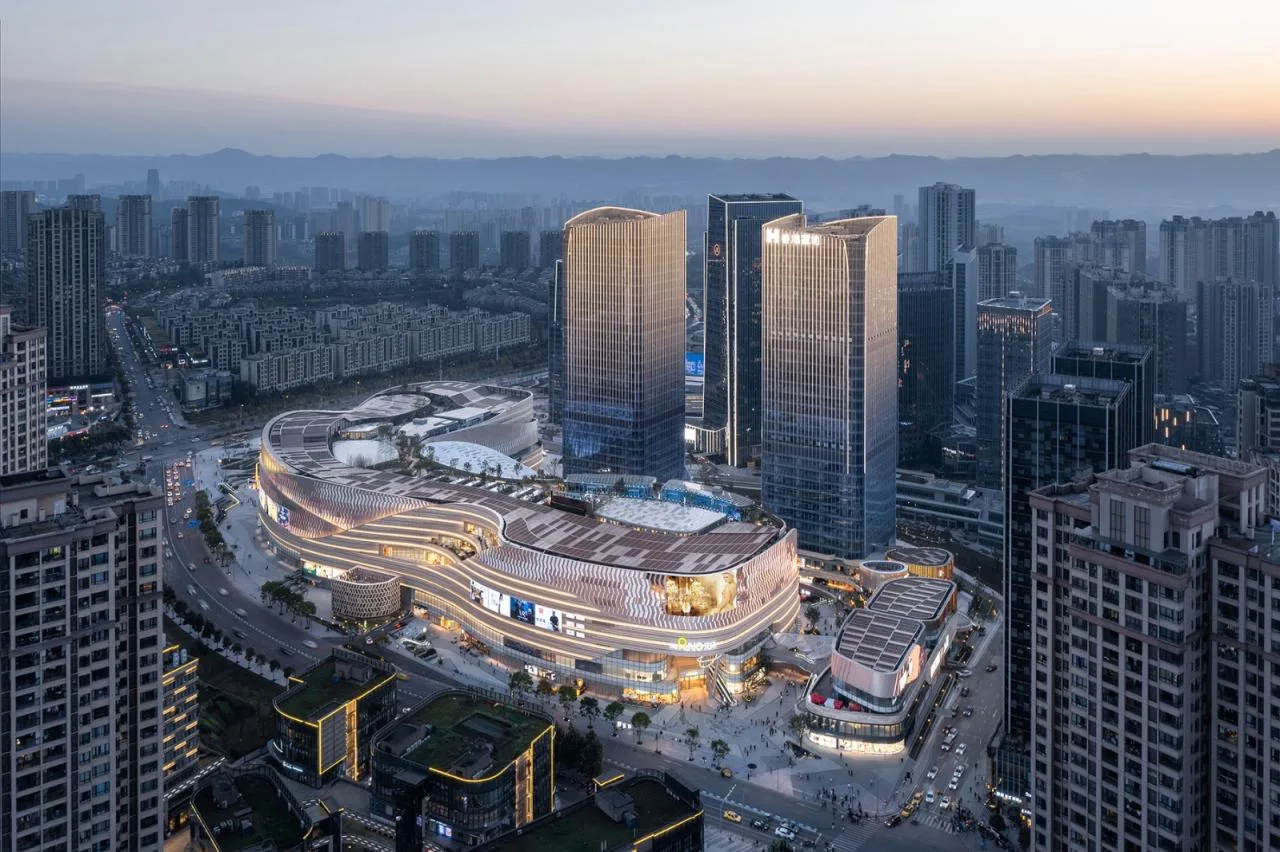
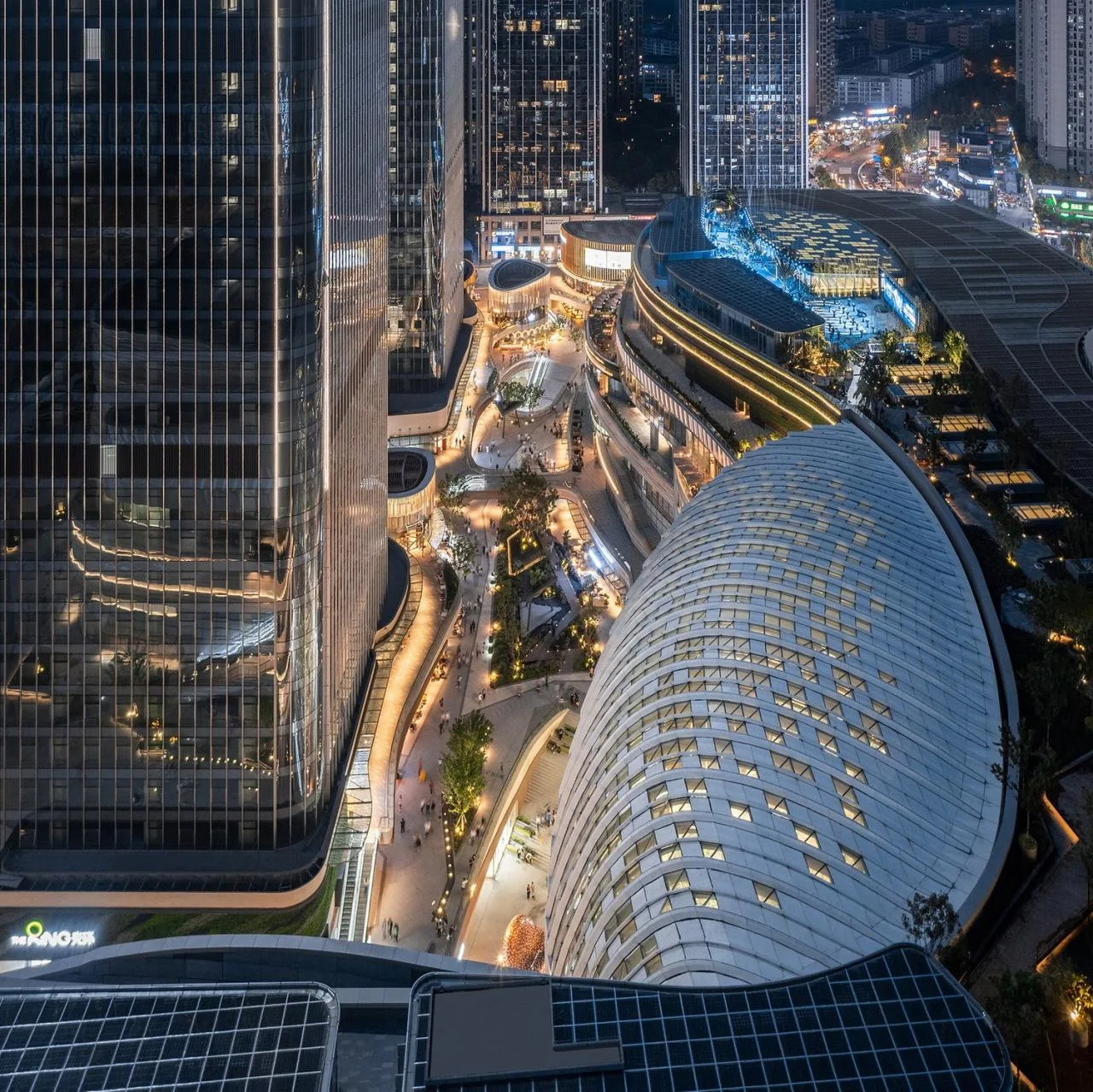
The overall planning has remained faithful to the original concept. The L-shaped shopping center, known as The Ring, dominates the city’s east and south exhibition zones. Two 150-meter-high twin office towers stand on the west side, creating a dedicated drop-off area. An L-shaped commercial street complements the mall’s interior, forming a welcoming landscape dining area. At its core lies the glass atrium of the Muguang Forest Botanical Garden, which serves as the nexus for internal circulation and community flow.
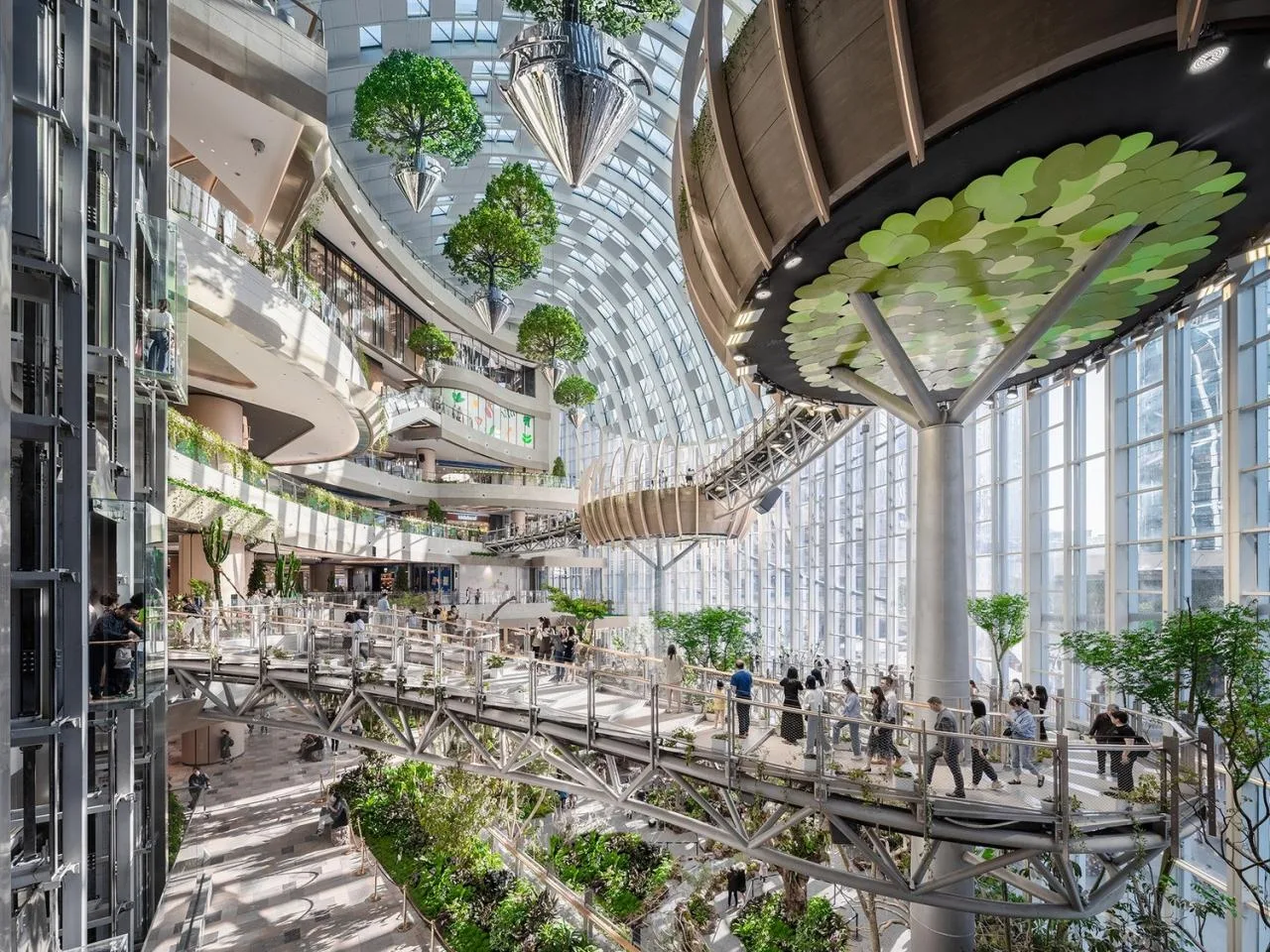
1. Integrating Indoor Botanical Gardens with Commercial Circulation
The distinctive design of Halo stems from a deep reconsideration of traditional shopping spaces and their layout. Conventional malls typically feature a series of enclosed courtyards lined with shops along corridors, where consumers navigate limited inner pathways, often treated merely as “consumption machines.” This practical approach has limited innovation in spatial design, with only minor adjustments to atrium edges and conventional seasonal displays failing to meet growing consumer demands for quality and leisure experiences.
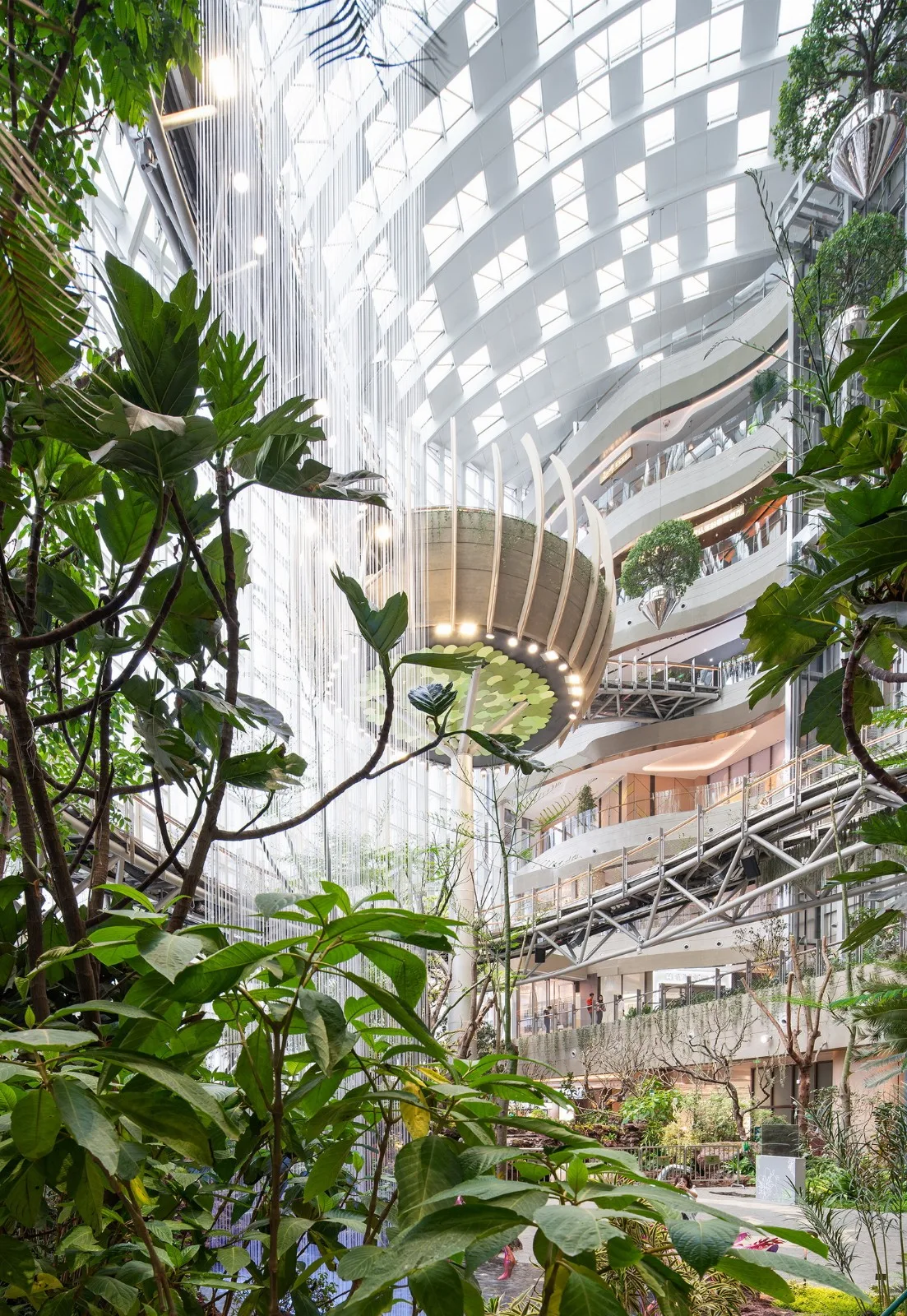
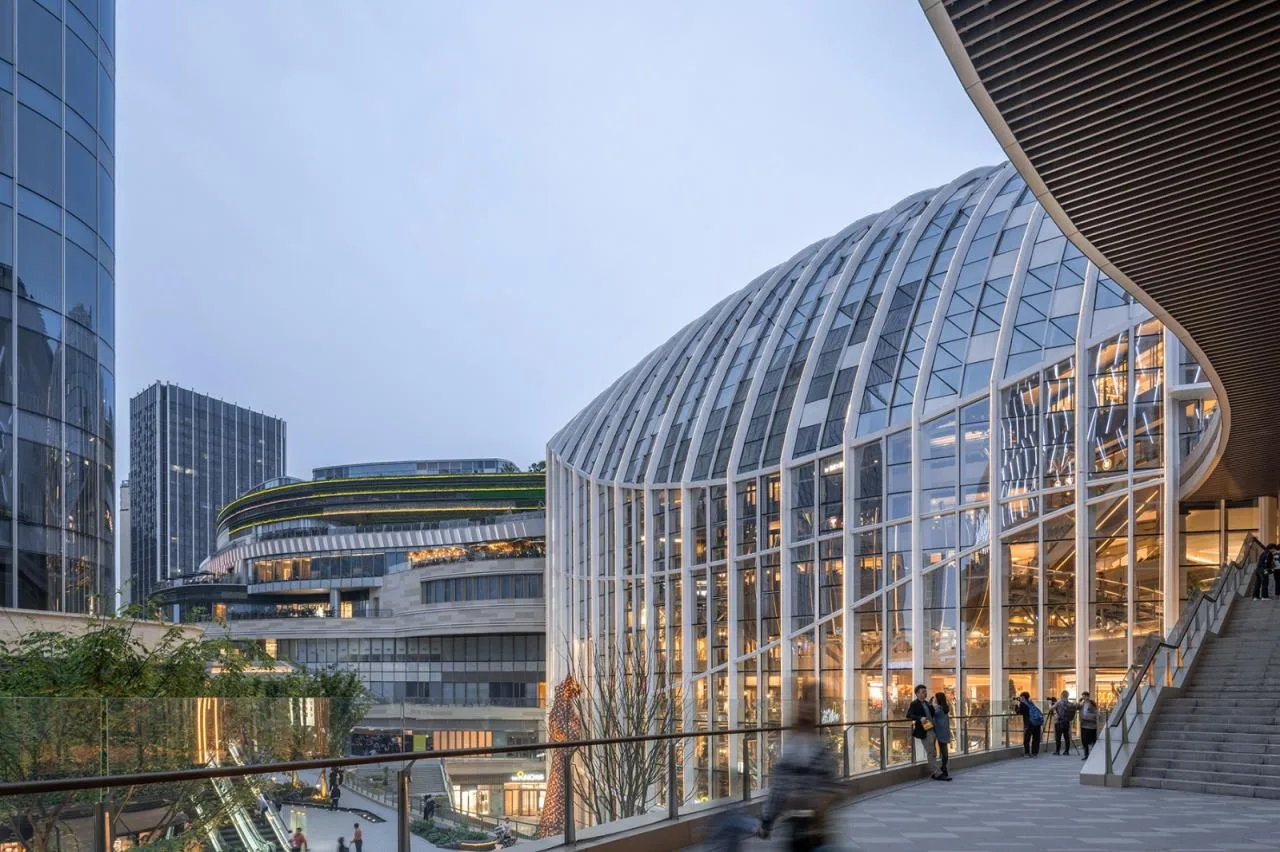
When the Halo project was launched, there was widespread reflection on traditional retail spaces. The idea of enriching consumer engagement through immersive experiences was gaining traction. Embracing Hong Kong Land’s vision to integrate ecology with commerce, PHA Pai Ang seized the opportunity to design a large-scale, seven-story, 48-meter-high indoor botanical garden named Muguang Forest. Positioned along one side of the commercial flow, this innovative feature resolves the conflict between commercial space requirements and ecological needs while redefining the traditional enclosed courtyard concept—introducing a new paradigm in commercial space design.
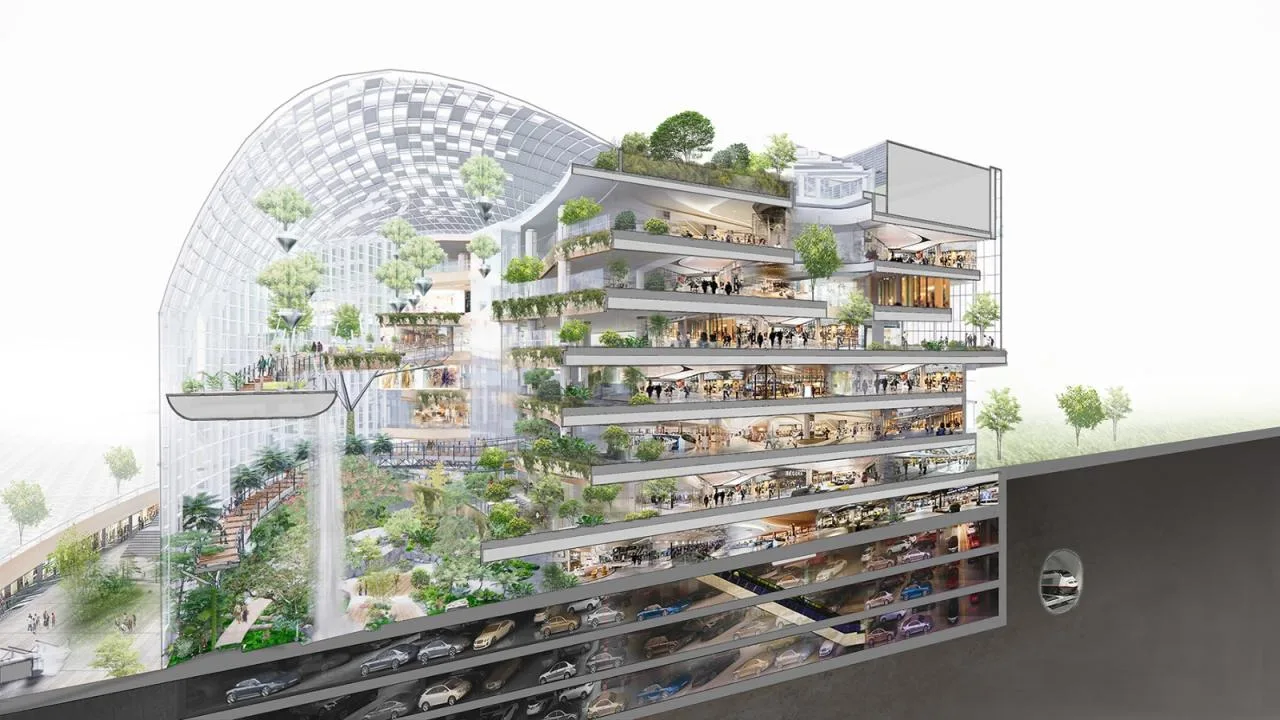
Muguang Forest seamlessly connects to the commercial space through horizontal and vertical integration. Dining venues occupy the top two floors, while open retail stores are distributed across other levels. Thoughtful visual planning and spatial design maximize the presence and interaction of greenery throughout the horizontal space. Two winding bridges link different floors, inviting visitors to explore the canopy and immerse themselves in the ecological environment. The botanical garden’s theme narrates the origins of tropical rainforests and marine life, enriched with a diverse array of plants, waterfalls, and suspended aerial decorations to create a magnificent, immersive experience.
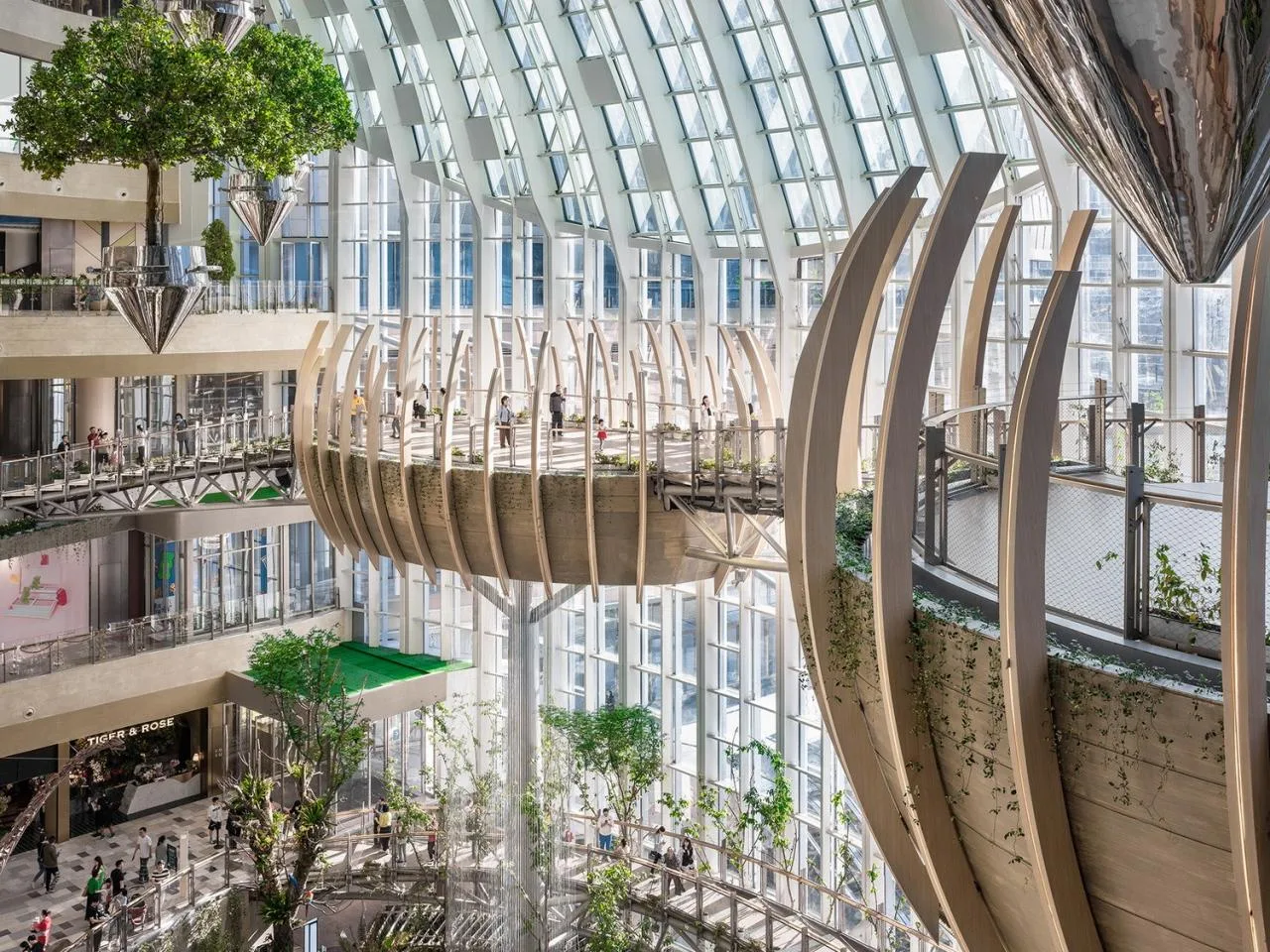
The integration of the botanical garden allows visitors to effortlessly shift between shopping and relaxation, alleviating the typical sense of confinement and stress associated with traditional malls, thereby enhancing the overall quality and appeal of the commercial environment.
2. Interactive Themed Courtyards for Social Gathering
Beyond the botanical garden, PHA Pai Ang further innovates by enhancing traditional commercial spaces without compromising business operations. At the city’s southeastern main entrance, a portion of the circulation area was opened up with retail spaces and two intersecting S-shaped floors create overlapping double-height zones. This design alleviates the feeling of enclosure for visitors and offers dynamic social spaces.
The façade features expansive folded glass panels, showcasing the interior activity to the city and fostering a dialogue between indoor commerce and urban life.
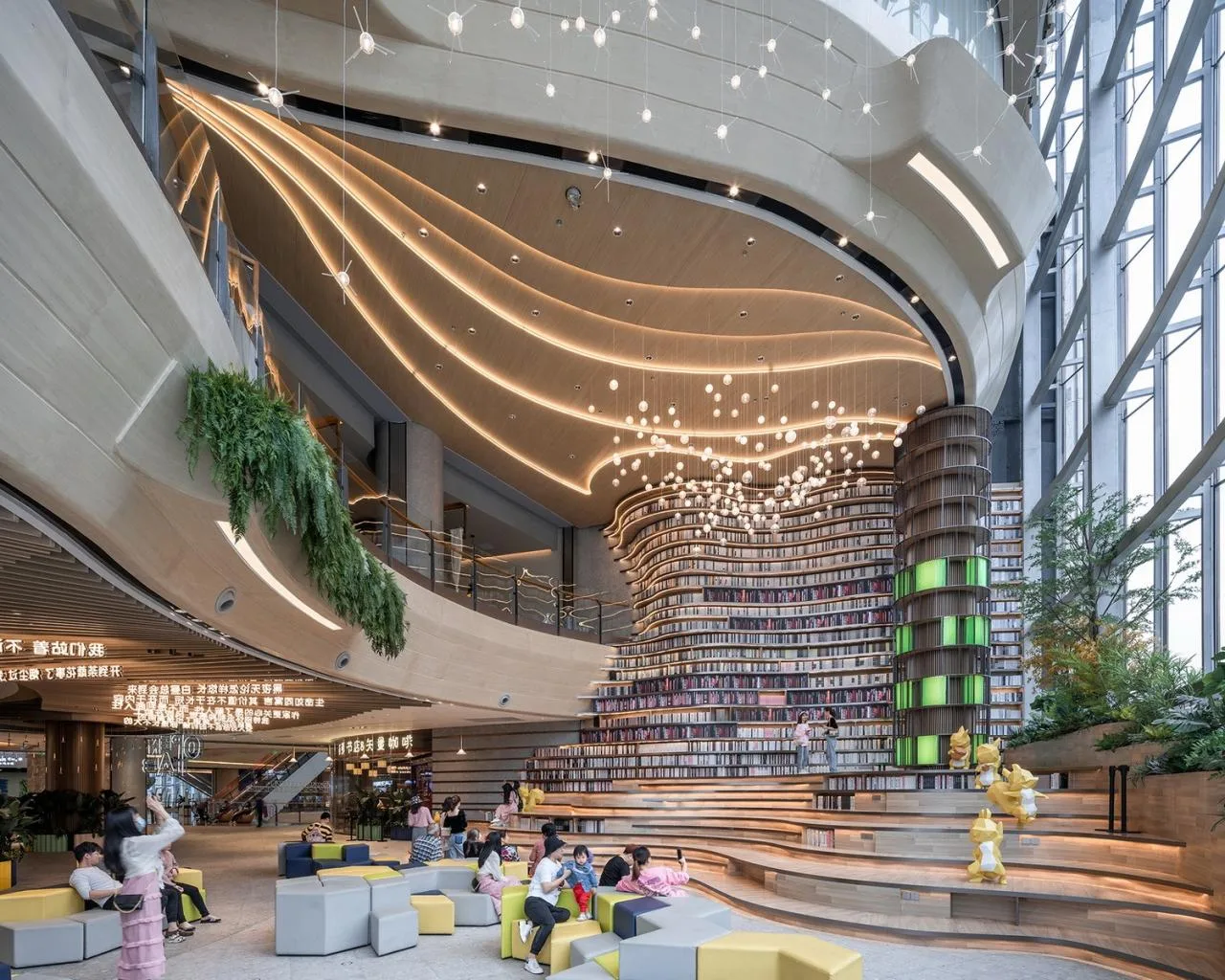
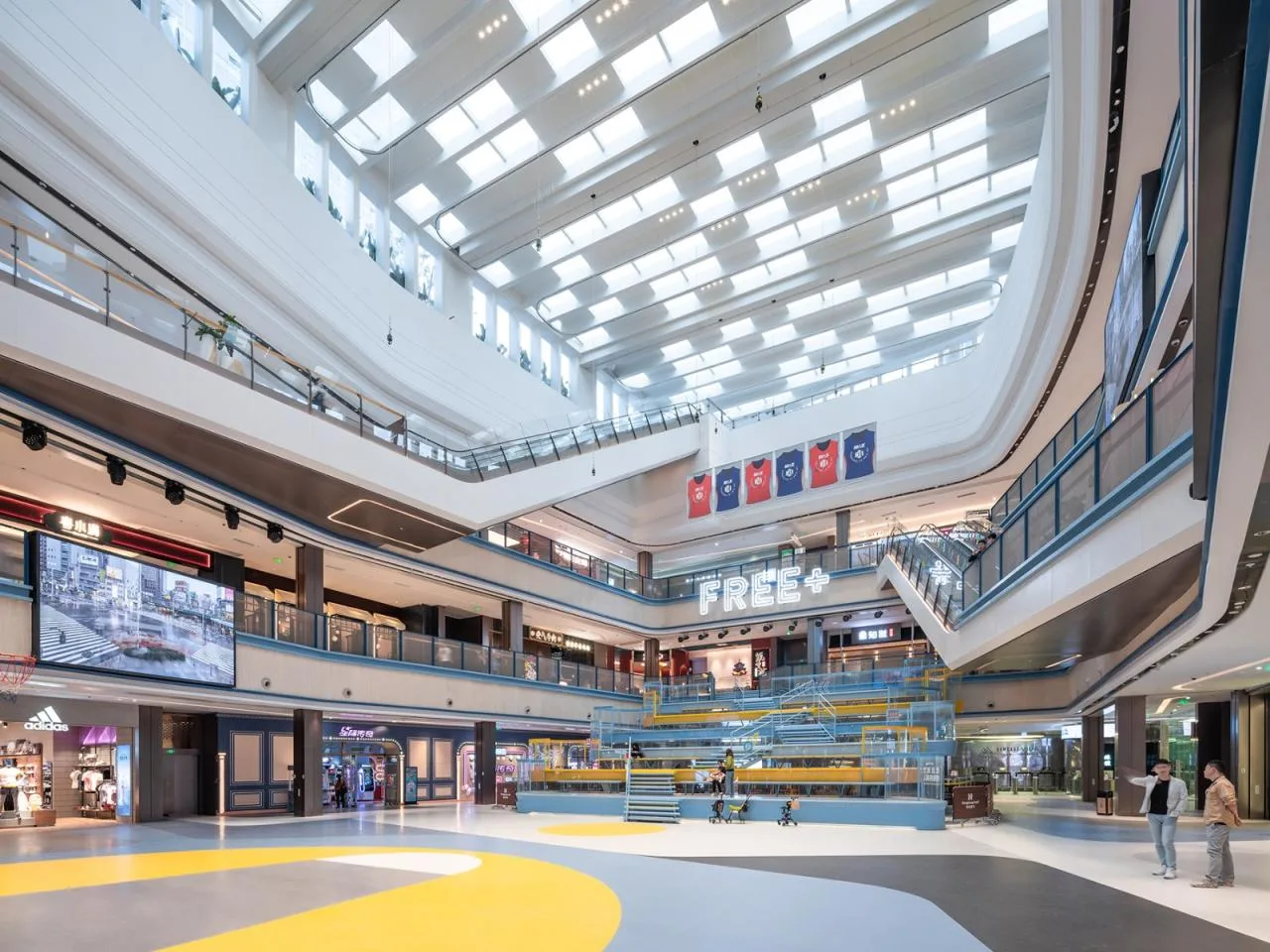
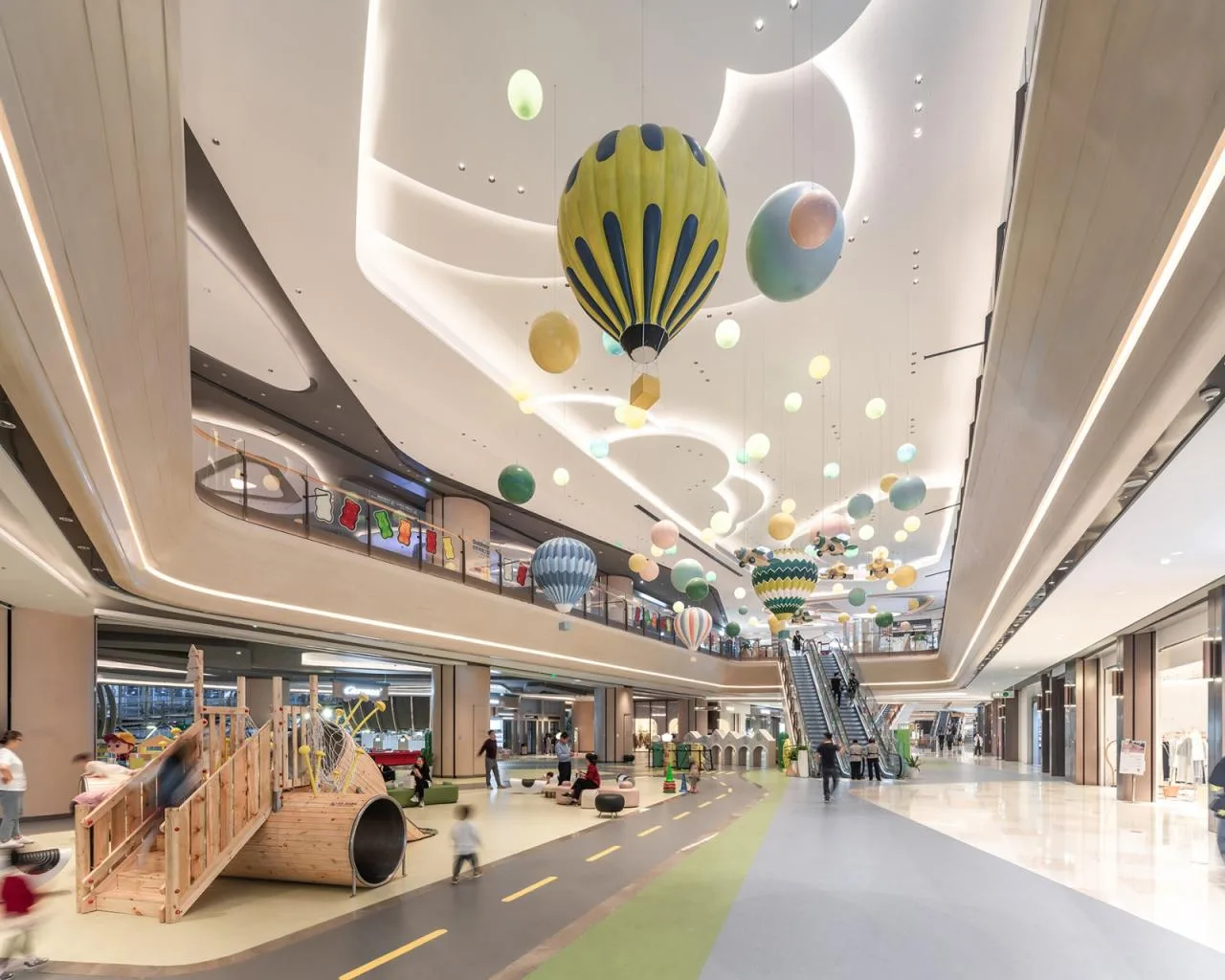
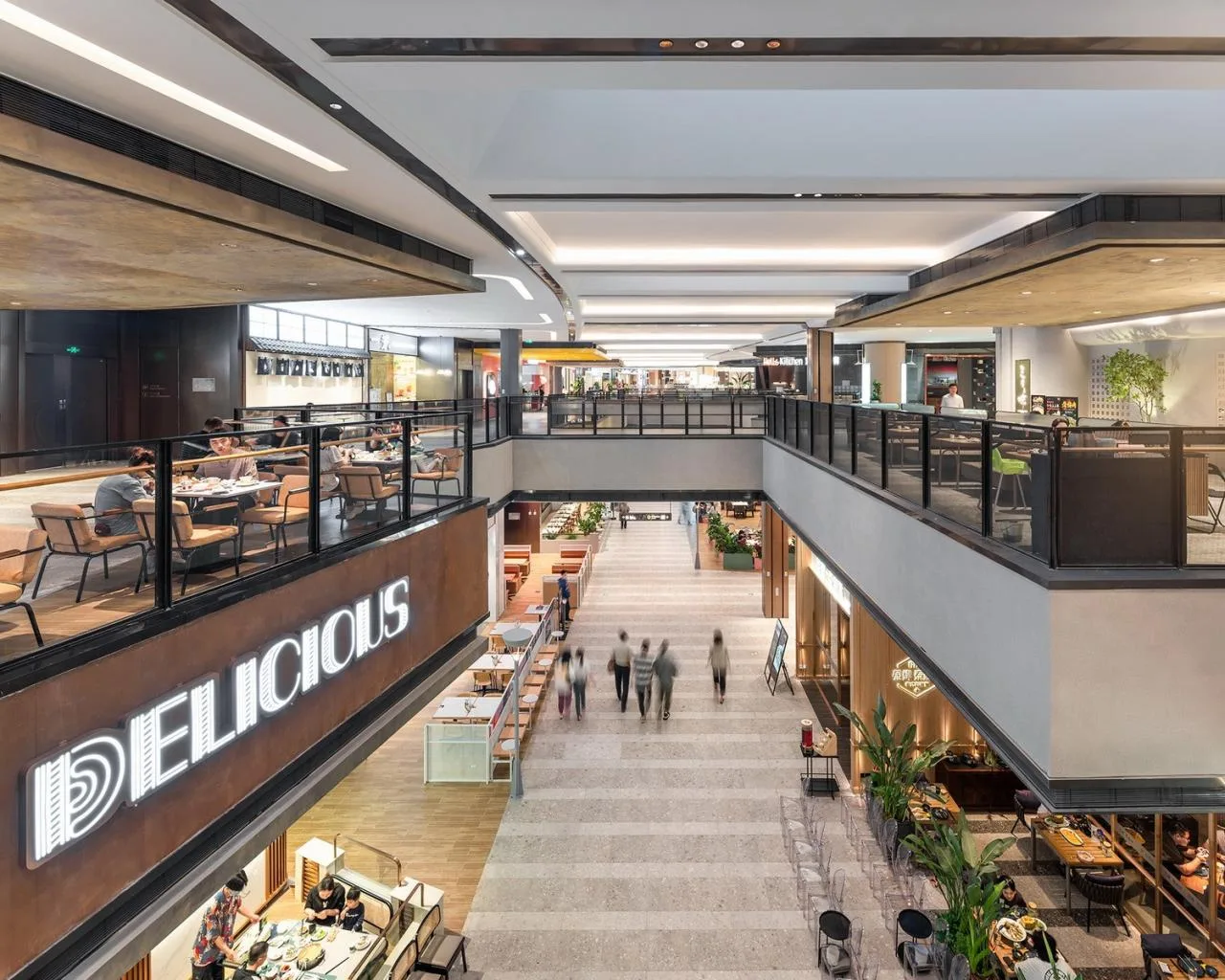
Abandoning the purely practical design ethos, Halo Shopping Park expands social and gathering areas by creatively utilizing hollow spaces. Notable amenities include a three-story parent-child shared space featuring a children’s themed atrium called “Small World,” a basketball court atrium named “Free+” on the fourth floor, and dining areas with expanded external seating. These design choices allow storefronts to recede, opening up wider views of the dining district and enhancing social interaction.
3. Multi-Level Shopping Experience along the Commercial Streets
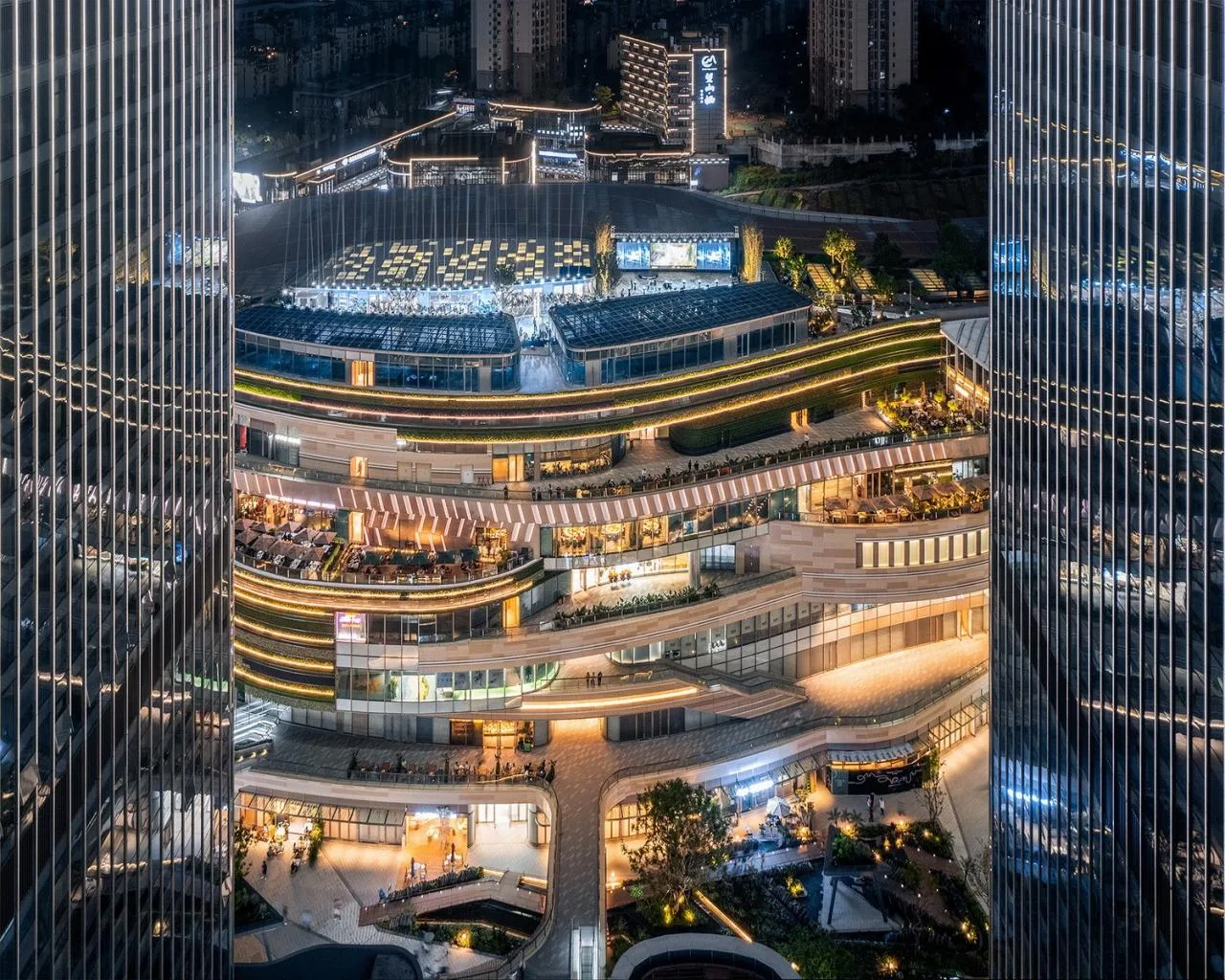
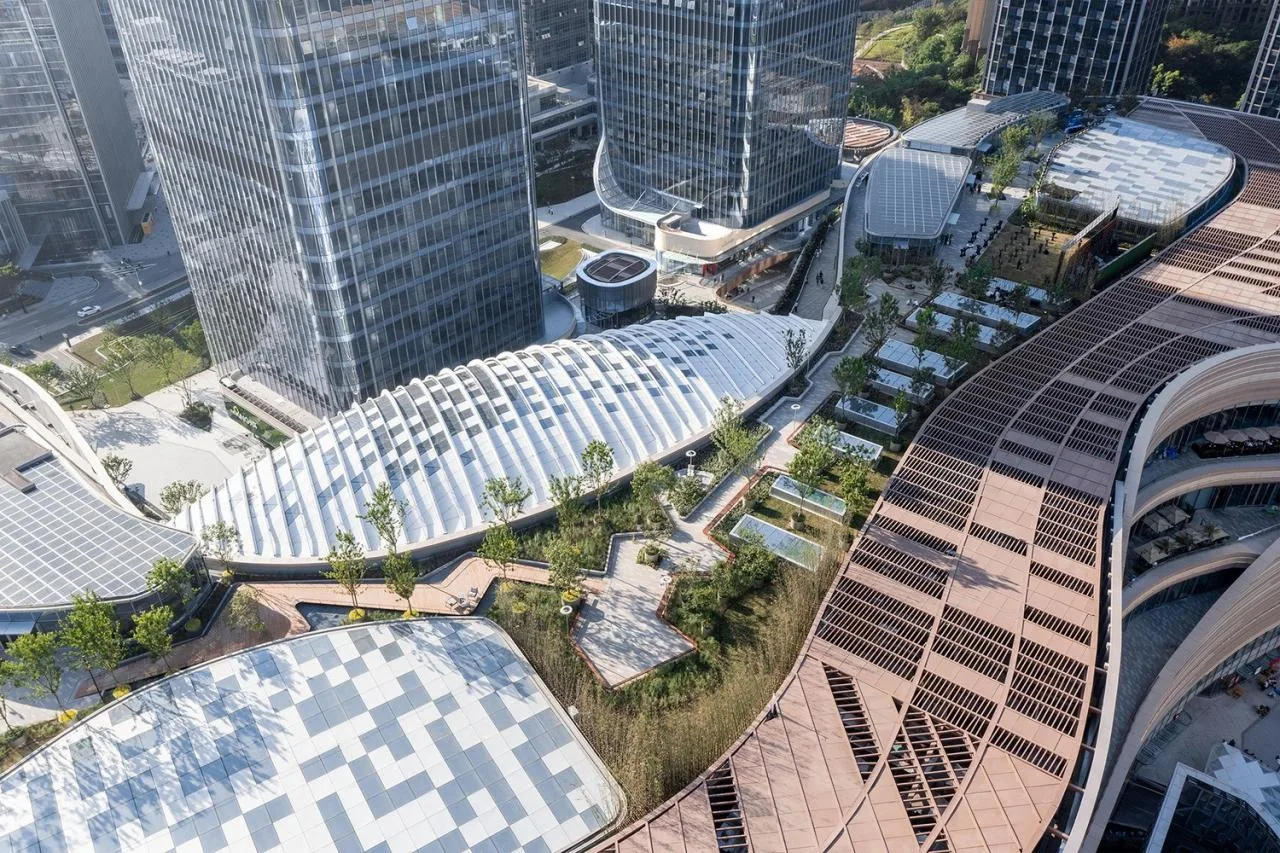
The glass botanical garden serves as a visual and physical anchor, connecting indoor and outdoor shopping streets and encouraging interaction between indoor and outdoor neighborhoods. One side of the office towers hosts a two-floor commercial district, while the opposite side features terraced landscape design, softening the building’s impact on its surroundings.
The plaza is enhanced with lush gardens and water features, complemented by numerous outdoor displays. This creates a vibrant commercial atmosphere, establishing the area as a key attraction within Halo Shopping Park.
4. Rooftop Space Utilization
Vertically, rooftop gardens play a crucial role in encouraging upward foot traffic. The outdoor activity platform at the cinema’s fifth floor connects seamlessly to the rooftop garden, which can host themed events and serve as an aerial plaza. This rooftop and entrance square expands commercial possibilities by offering versatile event spaces.
The façade design draws inspiration from nature, embodying the concept of a “peak forest cloud environment.” Flowing lines evoke a sea of clouds, accentuating the entrance and expressing regional culture and artistic intent. The romantic and elegant façade reflects a humanistic approach to consumer experience. Underneath this emotive design lies precise rationality: the façade texture employs innovative parametric logic, standardizing modules to achieve both artistic rhythm and modular efficiency.
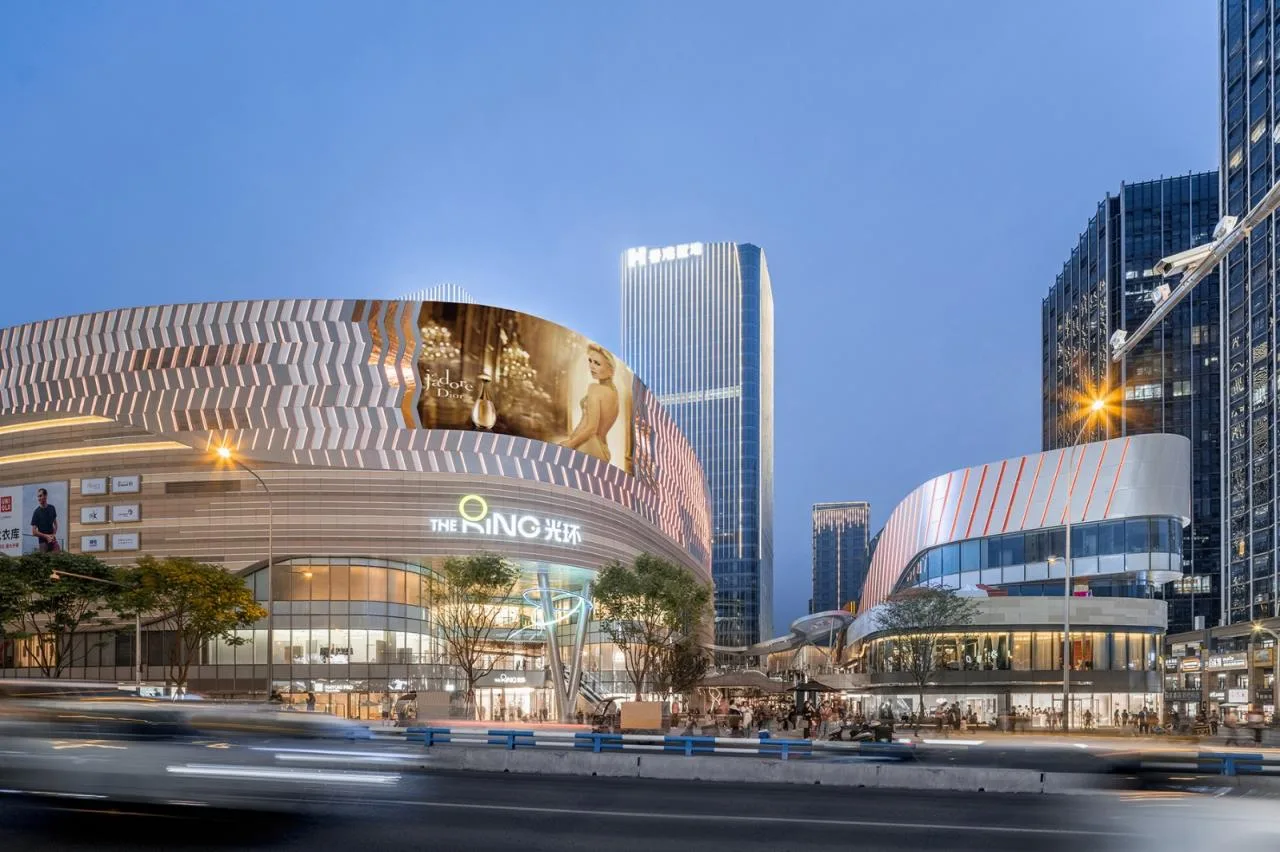
Upon opening, The Ring Shopping Park generated significant buzz within the industry. Its innovative break from traditional commercial spaces, combined with the pioneering integration of ecological plants, made it a focal point of discussion and a recognized industry benchmark. Over the past year, Halo’s architectural design has garnered more than ten domestic and international awards, including the prestigious Gold Award for Best Retail Development Project in the Asia Pacific at the 2021 MIPIM Asia Awards. As the sole Asian representative, it also ranked among the top three finalists globally for “Best Shopping Centre” at the MIPIM Awards 2022, receiving widespread international acclaim.
One year after opening, the project has not only spurred growth in Chongqing’s Liangjiang New Area and reshaped the city’s commercial landscape but also emerged as a new urban landmark. With over 7 million views across online platforms, visitor comments frequently highlight keywords such as “must-visit landmark,” “natural,” “vibrant,” and “welcoming.”
Project Information
Design Firm: PHA Paiang International Architectural Design Consulting Co., Ltd
Owner: Hong Kong Land
Location: Chongqing, China
Site Area: 62,863 square meters
Building Area: 421,424 square meters
Completion Date: April 2021
Lead Architect: Xu Ziping
Project Team: Zhou Jiayu, Tong Yi, Hao Xiuling, Qin Dongdong
Photography: Qingzhu Imaging / PHA Paiang International Architectural Design Consulting Co., Ltd















Must log in before commenting!
Sign Up