
As projects become more complex, builders are increasingly shifting from traditional 2D drawings to 3D software modeling for construction. With BIM technology, construction managers can virtually model complex components before fabrication, allowing them to freely rotate and inspect for potential defects. They can even simulate specific processes like cutting and decomposition, giving on-site workers a precise understanding of the internal structure. This approach significantly reduces errors caused by misinterpretations of 2D drawings, ensures workload accuracy during construction, and lowers overall costs. Figure 1 compares the steel structure nodes depicted in 2D drawings versus 3D models.
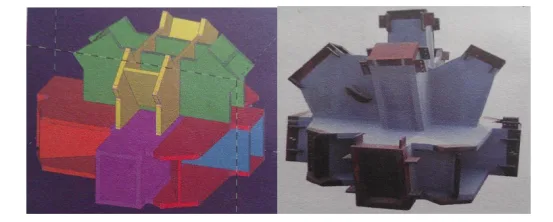
BIM technology’s role during the construction phase mainly revolves around construction simulation and integrated engineering information control. Construction modeling involves virtual construction using actual product data within BIM software to perform physical collision (hard clash) and rule-based collision (soft clash) checks across disciplines. This simulates the construction process in 4D—combining 3D spatial data with time—to analyze the structure and construction sequencing, optimize scheduling, and facilitate smooth project execution.
Integrated engineering information control refers to leveraging the BIM platform to extract project progress data, organize construction and material procurement schedules, and manage timelines and costs. General contractors use BIM data to compare planned schedules and budgets with actual progress, identify deviations in real time, and address issues promptly. This enables a dynamic 5D model that automatically tracks and warns about discrepancies, improving site monitoring and control throughout the construction process.
















Must log in before commenting!
Sign Up