
In most construction projects—excluding non-profit public facilities funded by the government—significant investment and extended construction periods ultimately lead to the operational phase, where the owners’ initial goals and expectations are realized. From a professional standpoint, the planning, design, and construction processes all focus on profitability and other social and economic benefits during operation. Therefore, operational management is considered the most crucial and fundamental aspect throughout the entire lifecycle of a construction project.
The core principle of modern operational management is “integration.” This involves not only the horizontal integration of various building disciplines and material suppliers but also the vertical integration across the entire lifecycle of the building. Such integration ensures optimal building performance for the owners. This approach combines building physical performance with operational management practices to establish management indicators that measure the effectiveness of operational management—aligning closely with the concept of BIM information integration. Operational requirements prior to construction reflect the owner’s anticipated needs, while post-construction represents a long-term usage process. Thus, understanding BIM’s value throughout a building’s lifecycle necessitates a focus on operational management.
Professor Chuck Eastman, often regarded as the “father of BIM” by many researchers, summarizes the value concepts related to construction project operation management in his book BIM Handbook, dividing them into two phases:
Pre-Construction (Before Project Construction)
① Benefits in concept development, feasibility analysis, and design;
② Improved building performance and quality.
Post-Construction (After Project Completion)
① Enhanced management and operation of facilities;
② Integration with facility operation management systems.
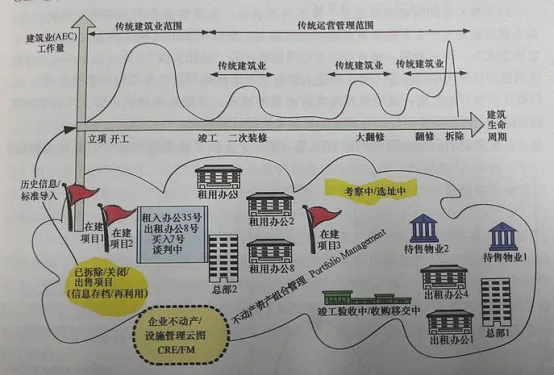
Figure 1: Comprehensive Operation and Management of BIM Information in Building Complexes
Correctly understanding this concept is essential not only for fully grasping the operation and management of construction projects but also for appreciating BIM technology and its core principles. The value of BIM in operational management is realized based on this foundational concept. As illustrated in Figure 1, from an enterprise management perspective, BIM technology organizes and manages all project-related information within a company, enabling comprehensive application and oversight throughout the construction project lifecycle.
















Must log in before commenting!
Sign Up