
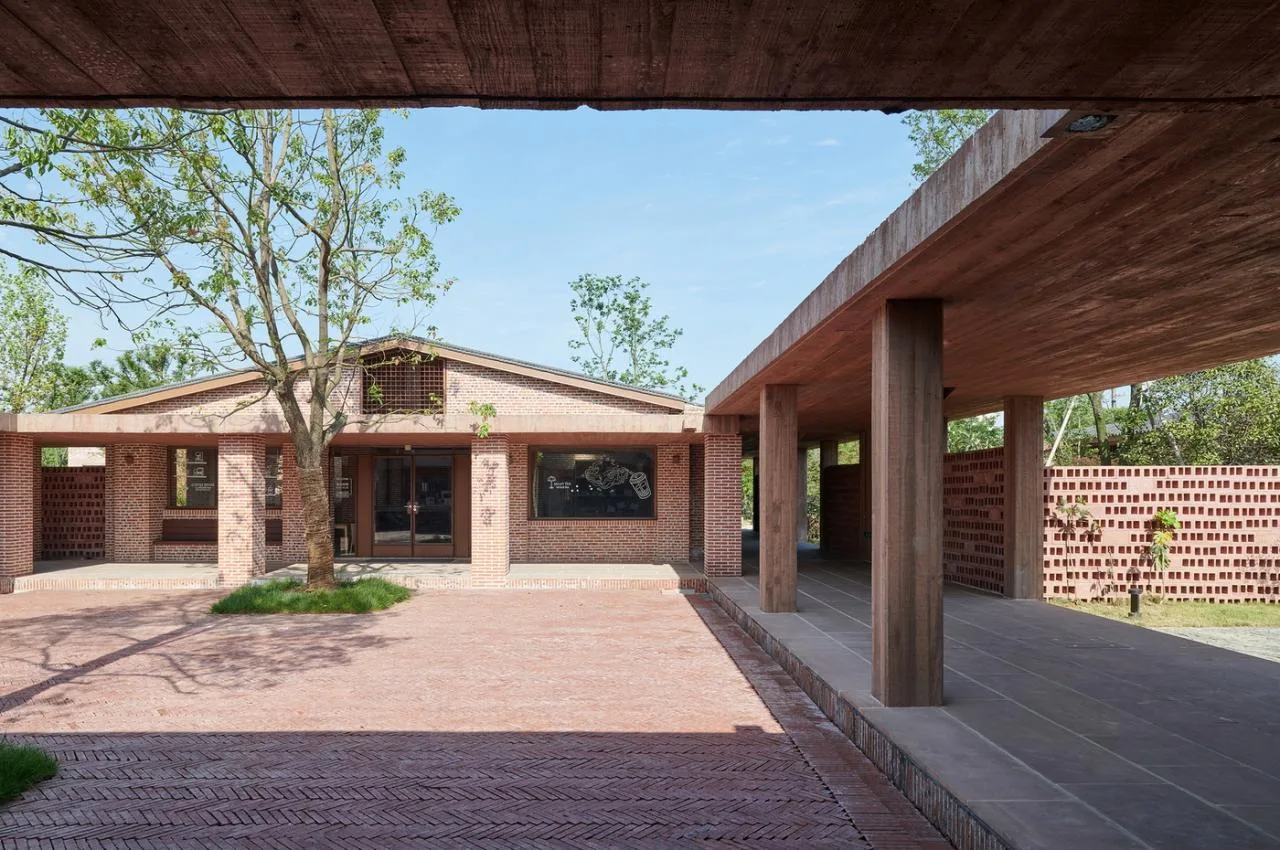
Despite the rise of industrialization, handmade pottery maintains an irreplaceable charm. At this school, craftsmanship is at the heart of education, with dedicated spaces for artisans serving as the campus’s core. Each function within the school is housed in a uniquely designed building, carefully placed to fulfill its purpose. The varied outdoor spaces between these structures create a campus atmosphere far removed from the typical large-scale institutional complexes. Visitors can leisurely move between buildings and experience the changing seasons through the architectural landscape. – Eternal Architecture
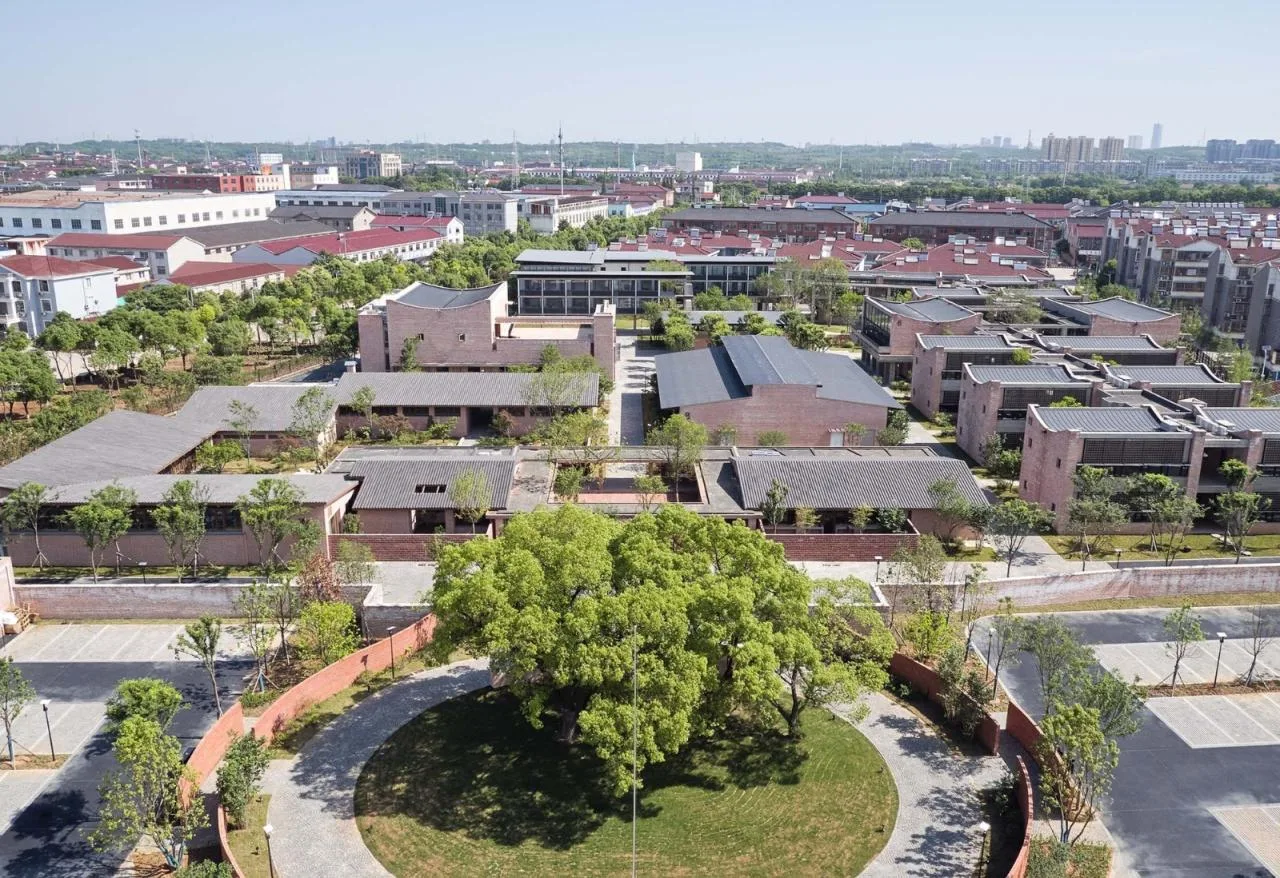
Ding Shu, known for its Taoist culture and Chengxiao Ding Shu, is located in Yixing, Jiangsu, about 200 kilometers from Shanghai. This small town by Taihu Lake has a pottery tradition spanning thousands of years. Its pottery products are renowned both nationally and internationally, especially the famous purple clay teapots crafted from local purple clay. For centuries, these elegant teapots have been a lifelong pursuit for Chinese literati and tea enthusiasts alike. As demand grew and the industry developed, Dingshu evolved into a unique center for purple clay pottery production and trade. The local community’s daily life remains deeply intertwined with pottery culture.
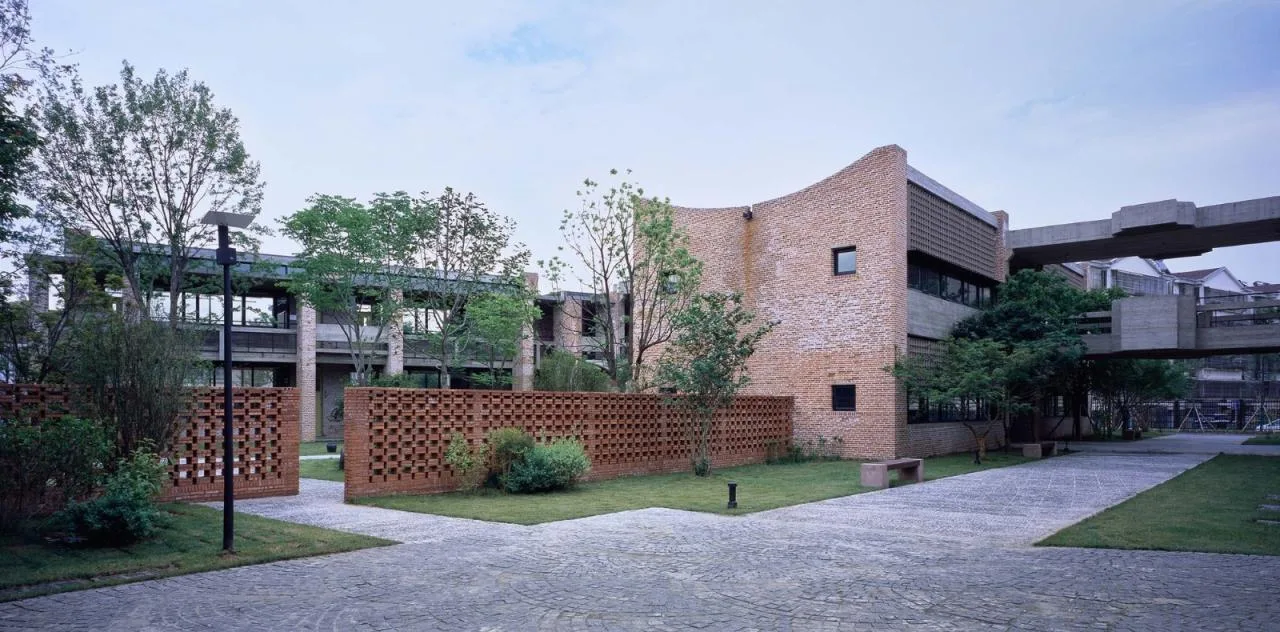
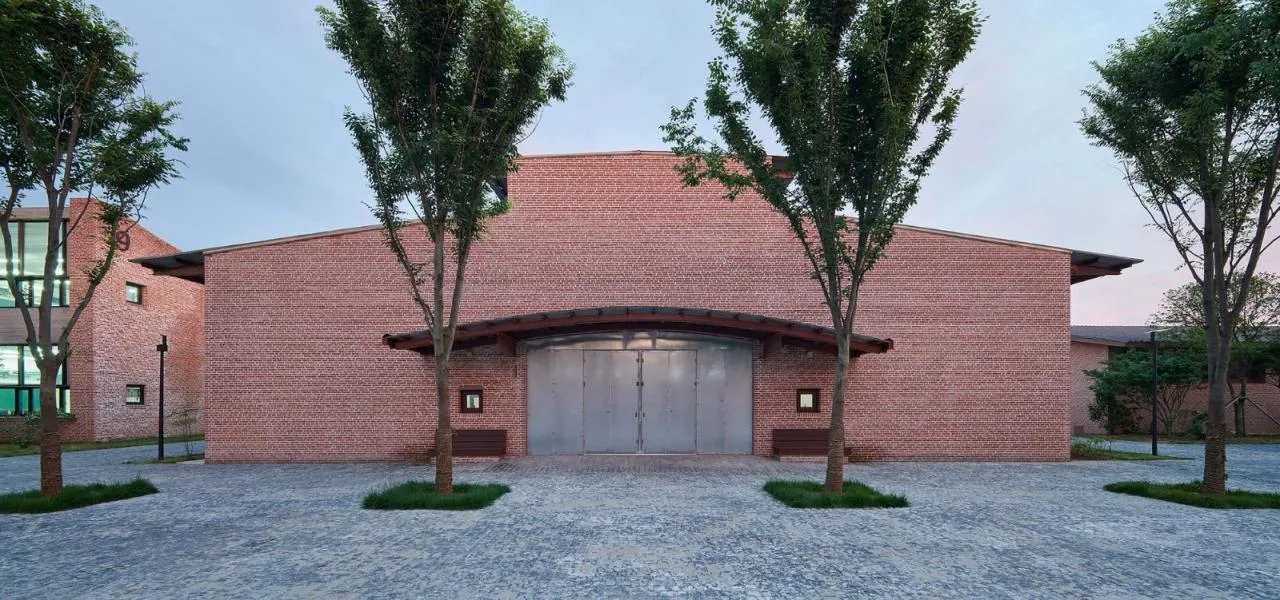
Ding Shucheng School is one of the few institutions nationwide dedicated to pottery education and training within the rural adult education system. Its mission is to improve local residents’ incomes and quality of life by offering academic education and skill development. Additionally, the school opens its facilities to rural communities during off-hours, providing spaces for public education and community activities.
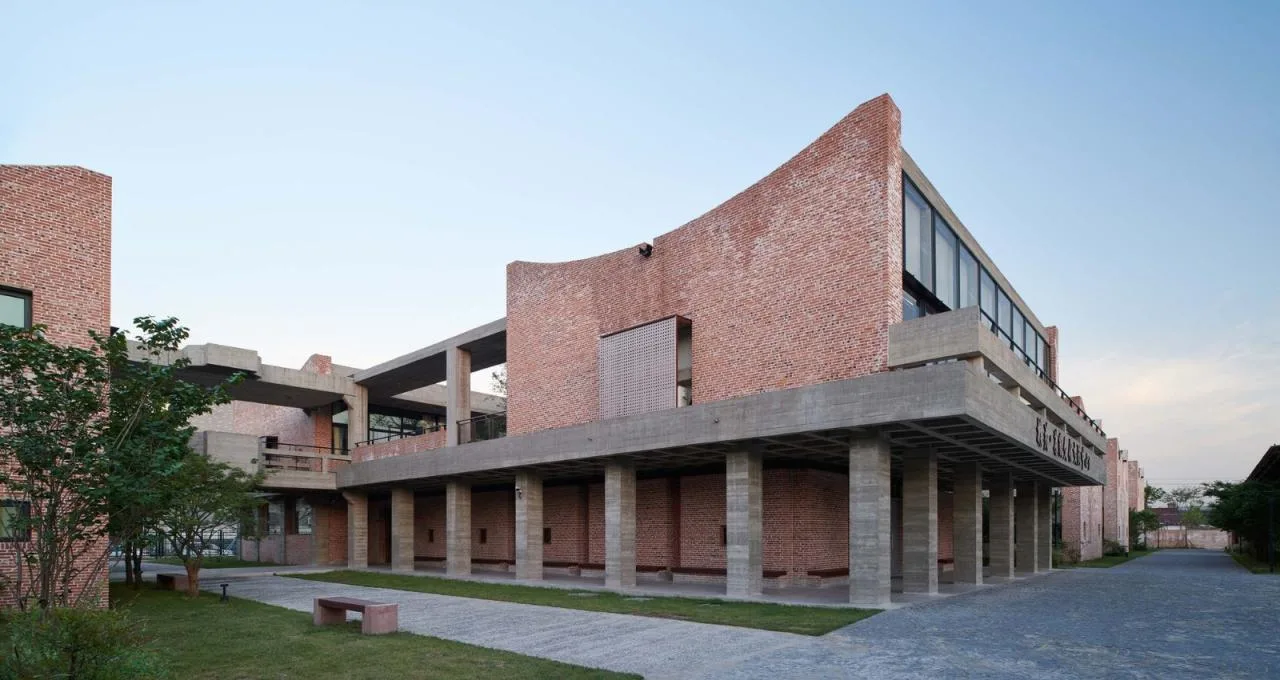
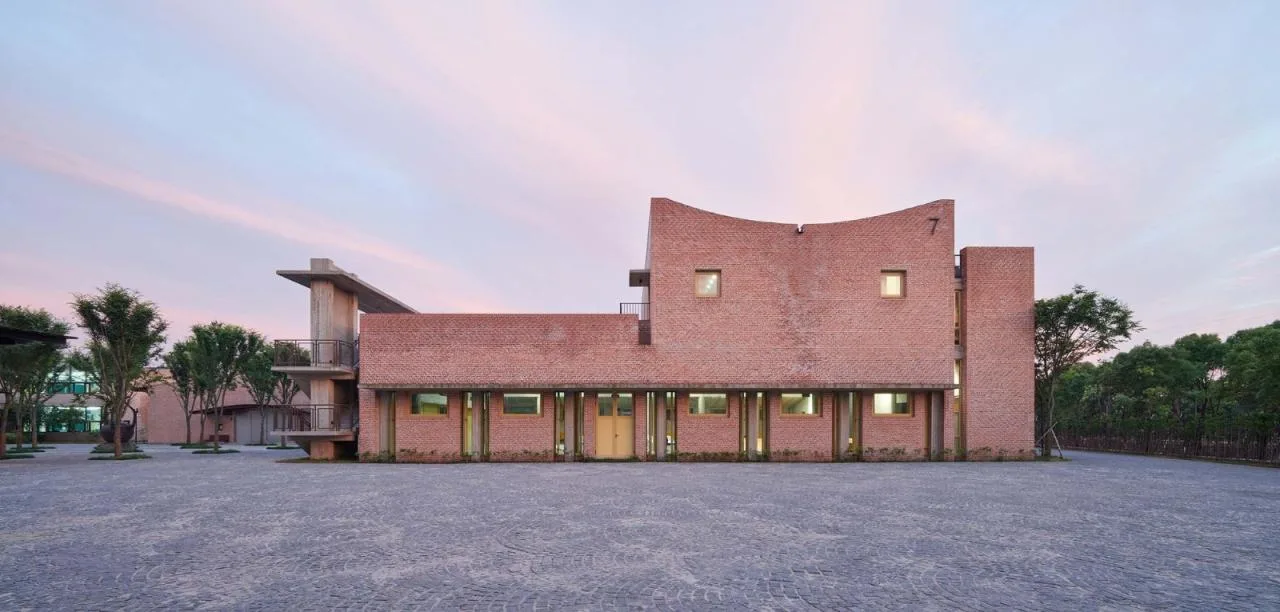
By studying the local pottery culture and the history of workshops, the architects developed a deep understanding of the traditional mentorship model used to train pottery artisans. They engaged extensively with local communities, practitioners, teachers, and craftsmen to define the design goals. The result is a low-density campus focused on “pottery workshops” aligned with the concept of a “craft school.” Unlike conventional schools with comprehensive centralized buildings, Dingshu Chengxiao features a roaming campus laid out loosely in a traditional workshop style.
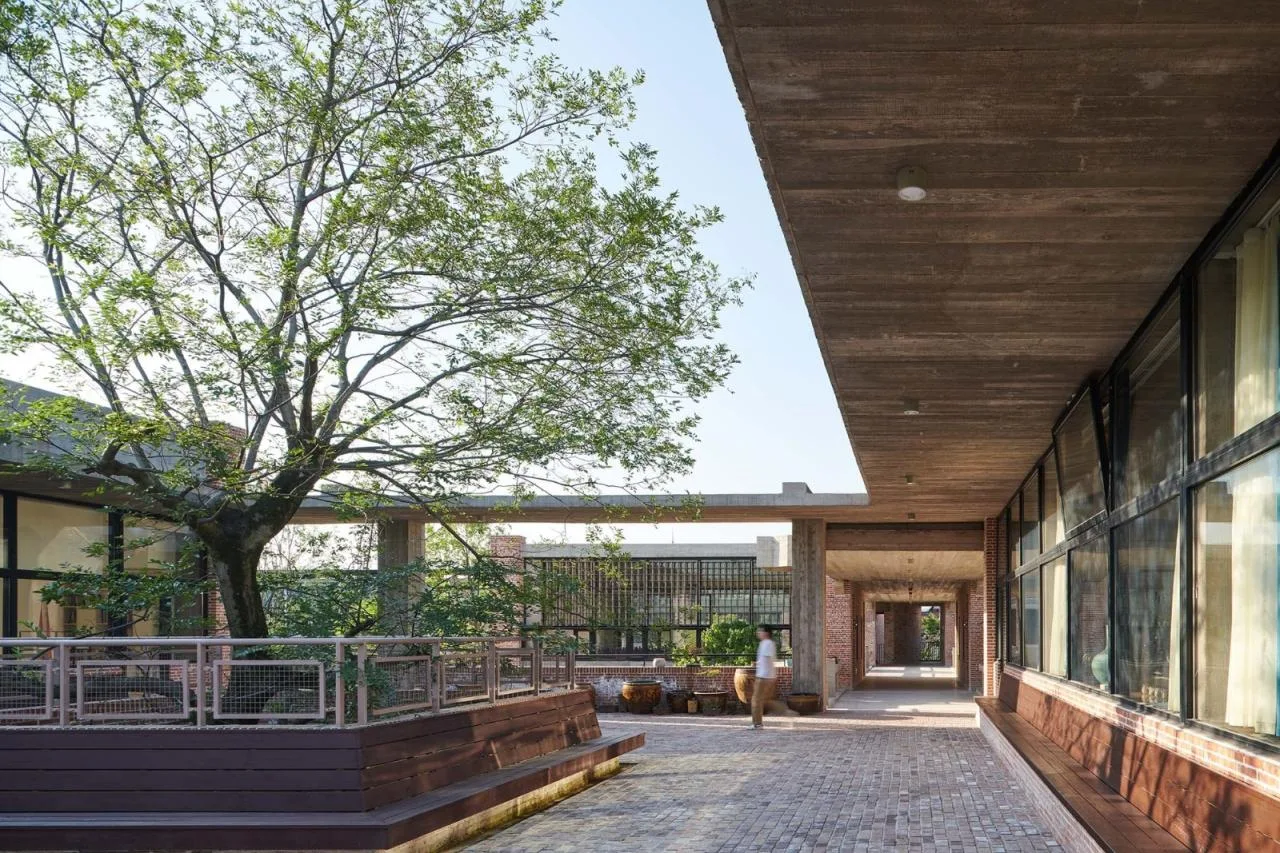
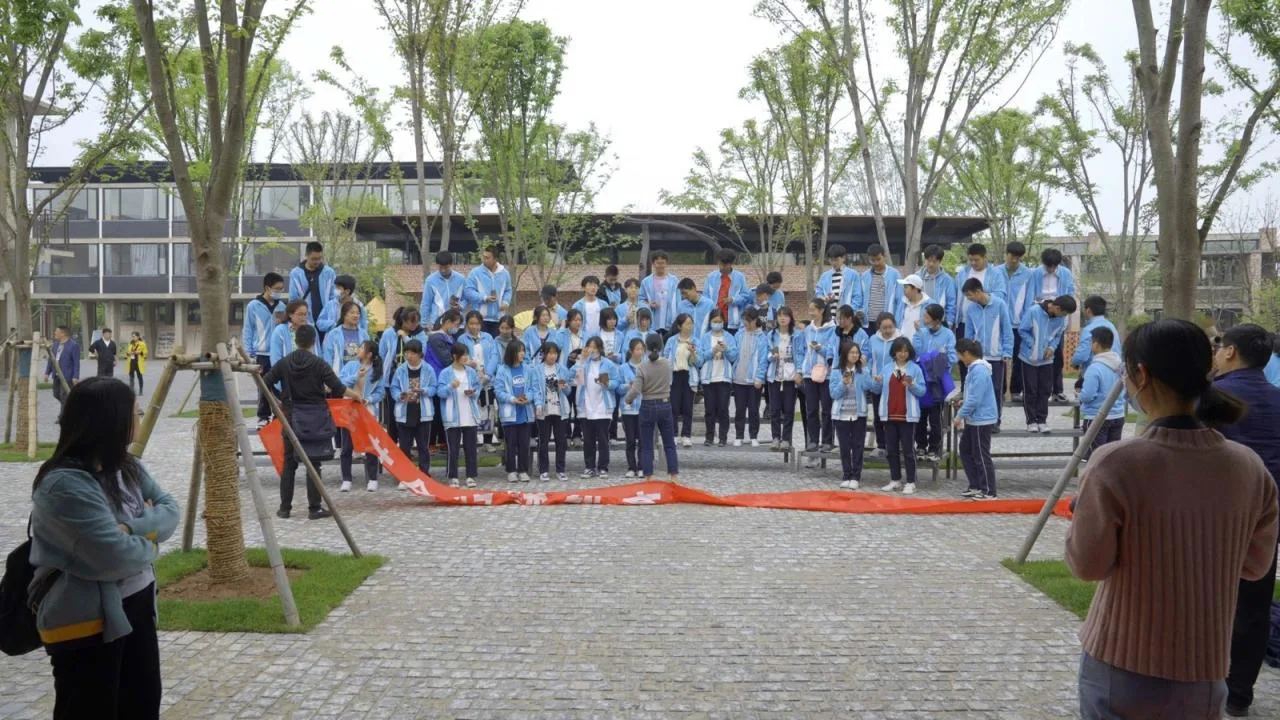
The campus centers around four key buildings: the large workshop, small workshop, multifunctional hall, and exhibition hall. These are arranged around a central beech square, serving as the main venue for outdoor activities.
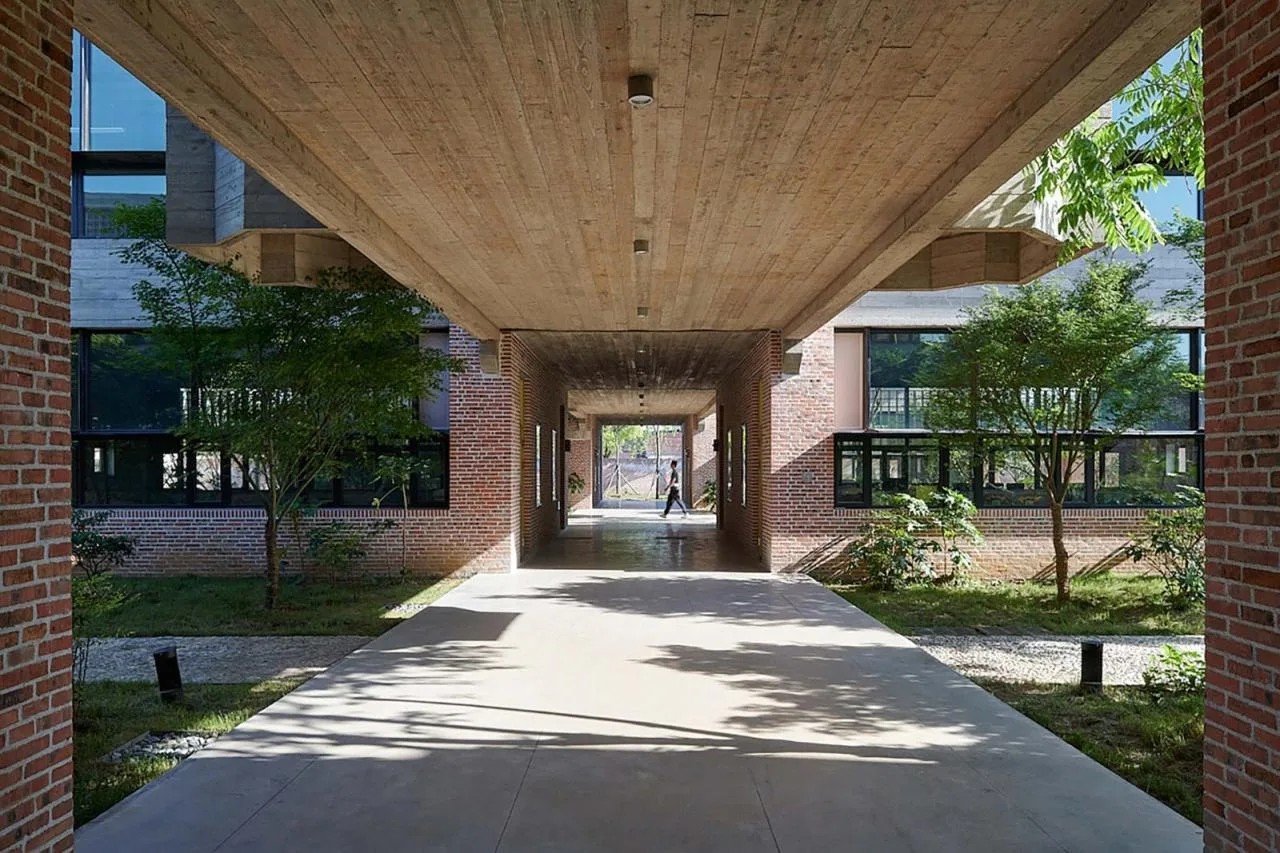
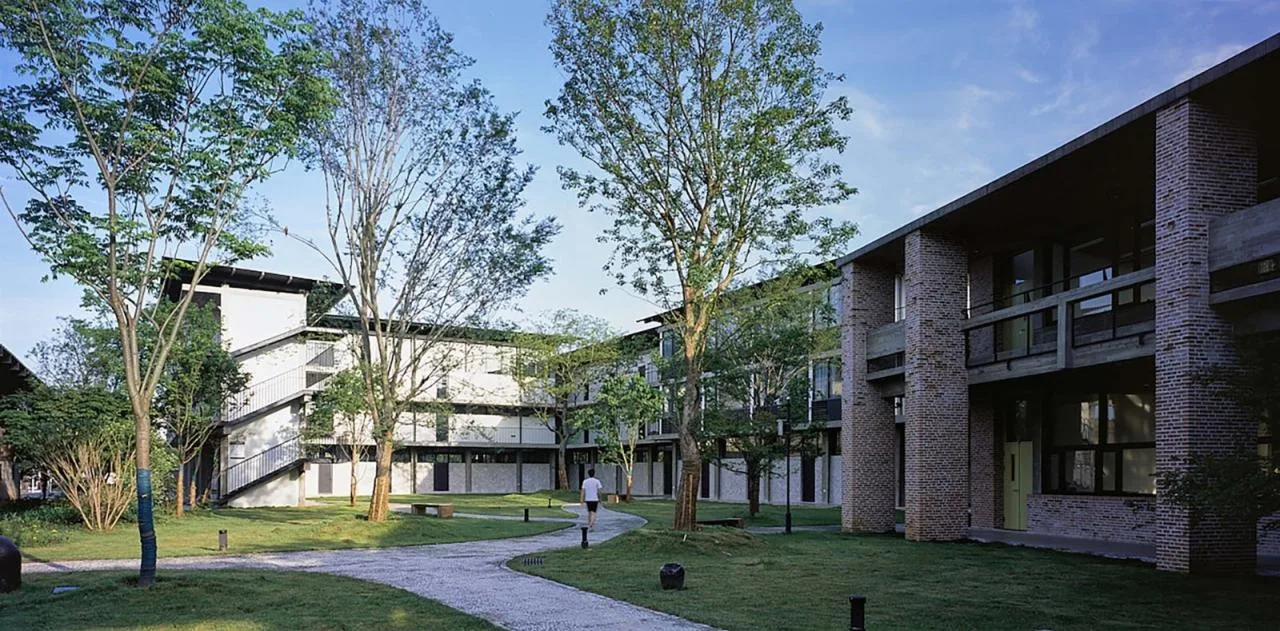
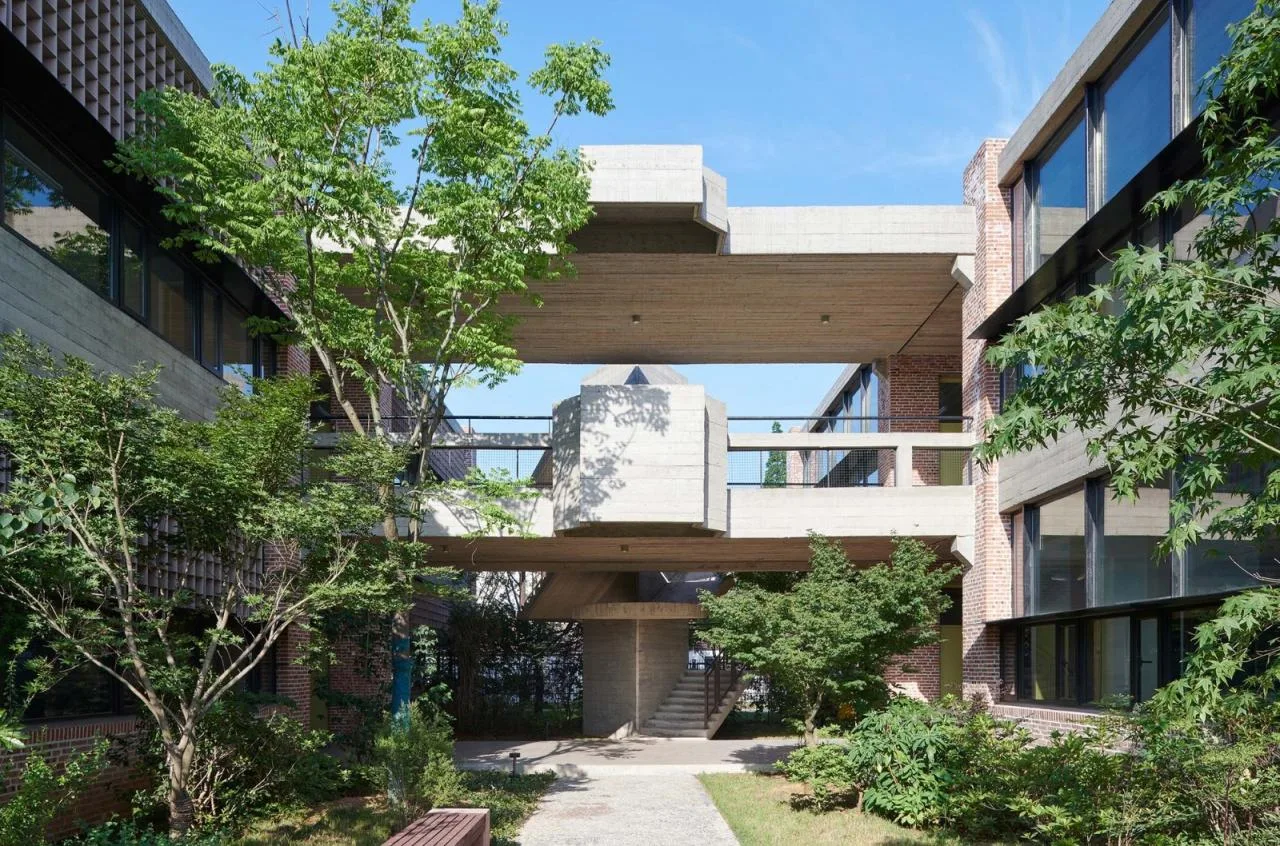
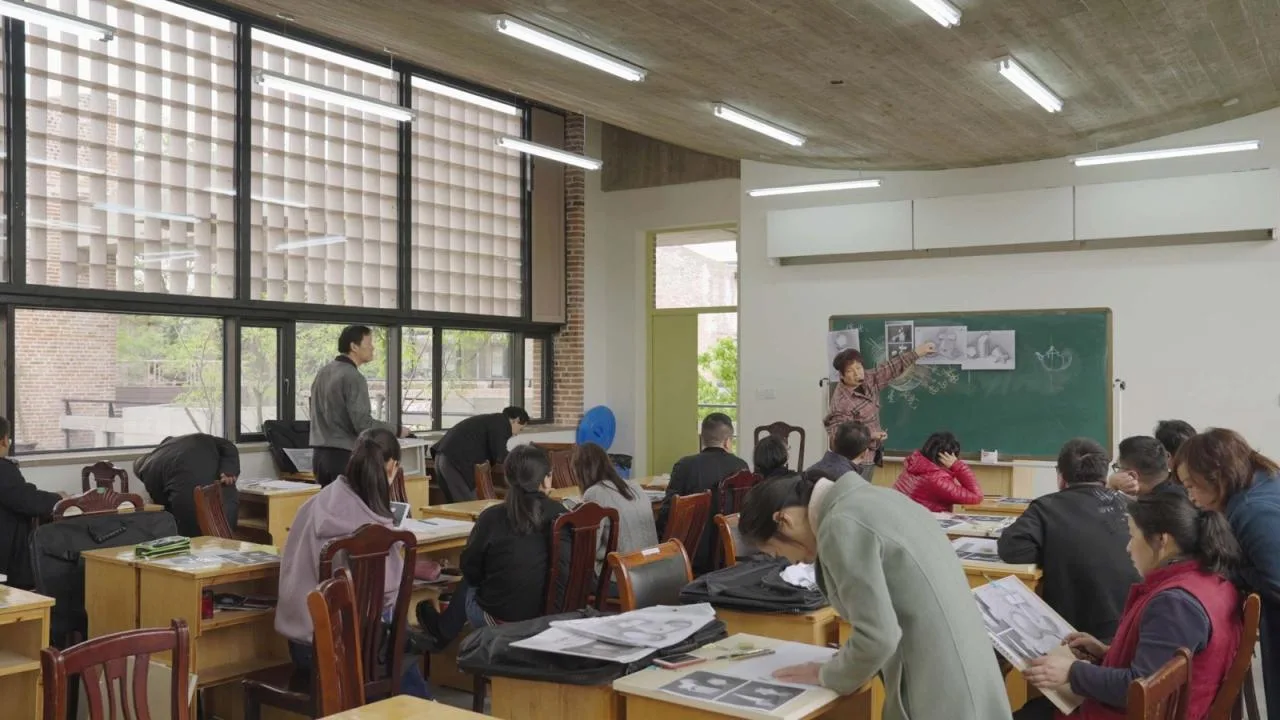
The architects prioritized the specific spatial requirements for each stage of ceramic art creation and education. This includes classrooms with wide views and even lighting for theoretical instruction; inward-facing, quiet, and tall workshops suited for shaping, painting, pasting, and carving; and exhibition halls featuring large beams and columns to display and preserve students’ outstanding works in a dignified atmosphere. Each function is accommodated by its own dedicated space, structure, and equipment, forming independent building units.
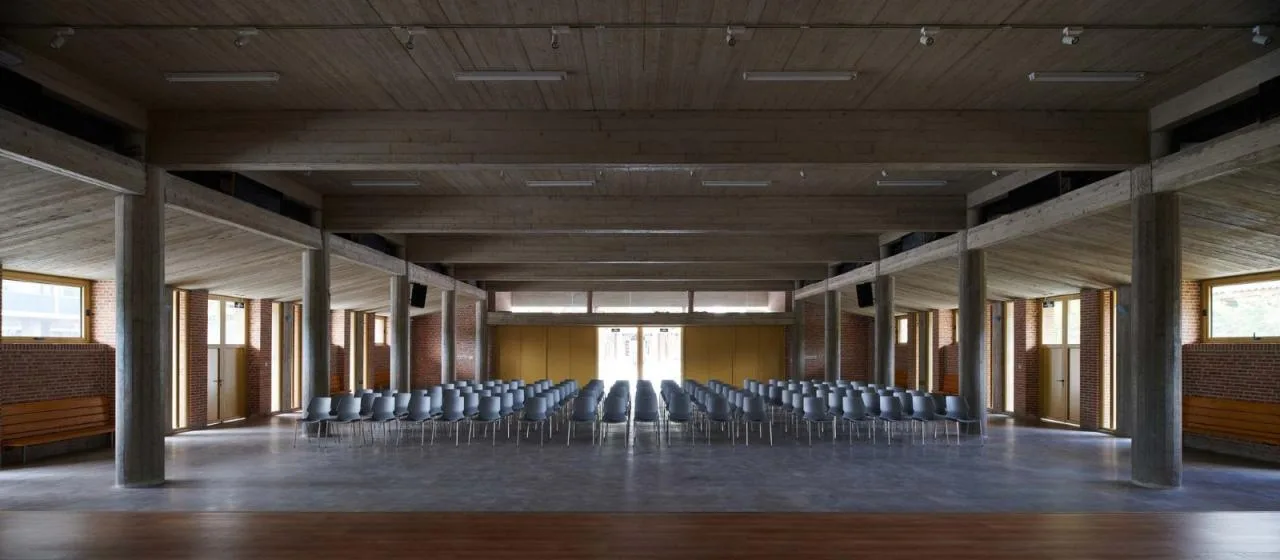
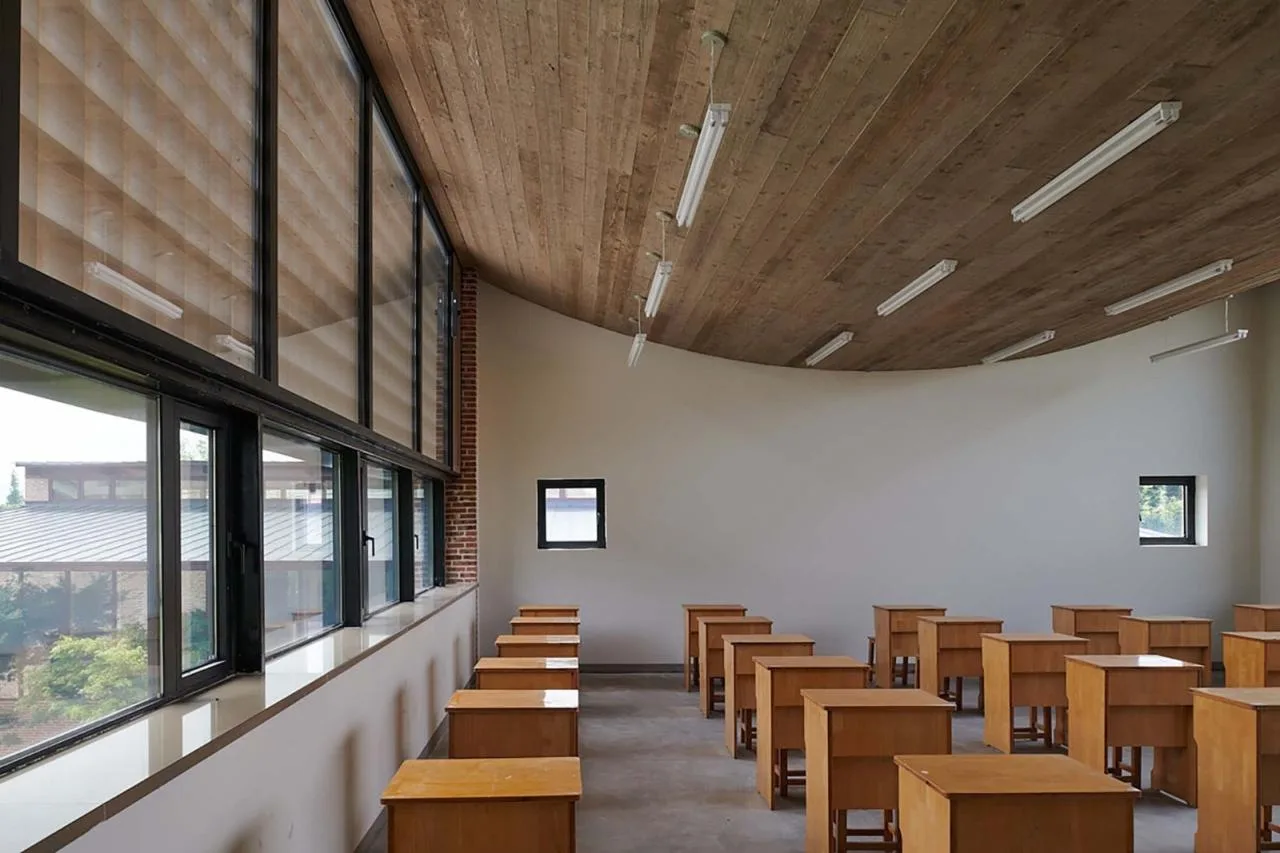
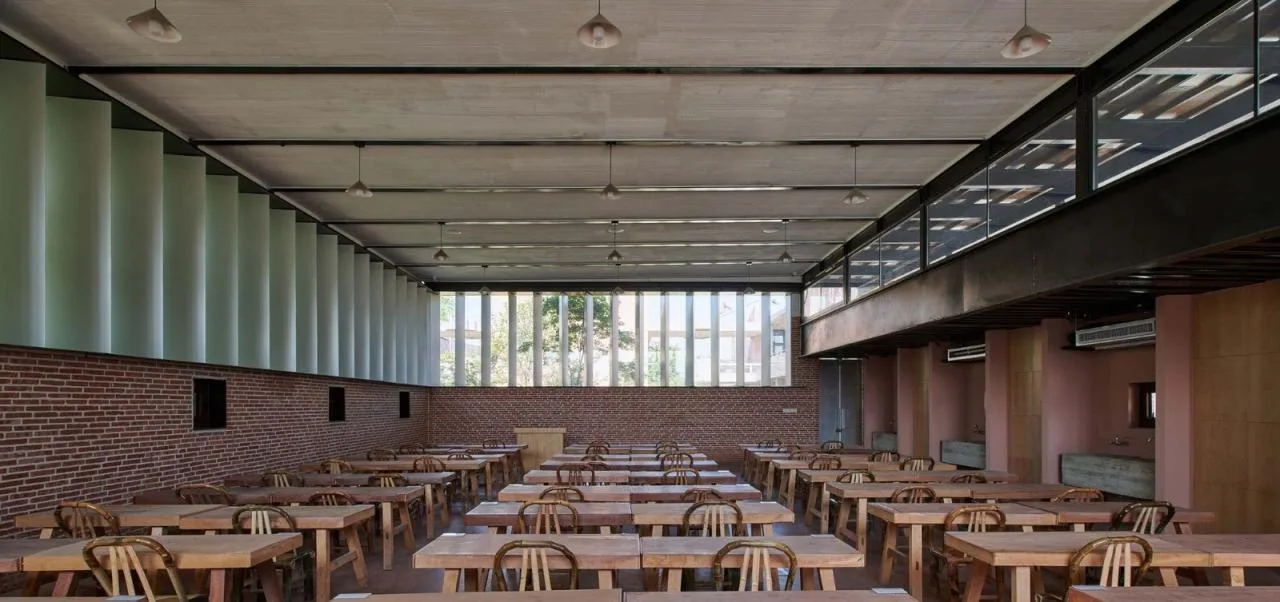
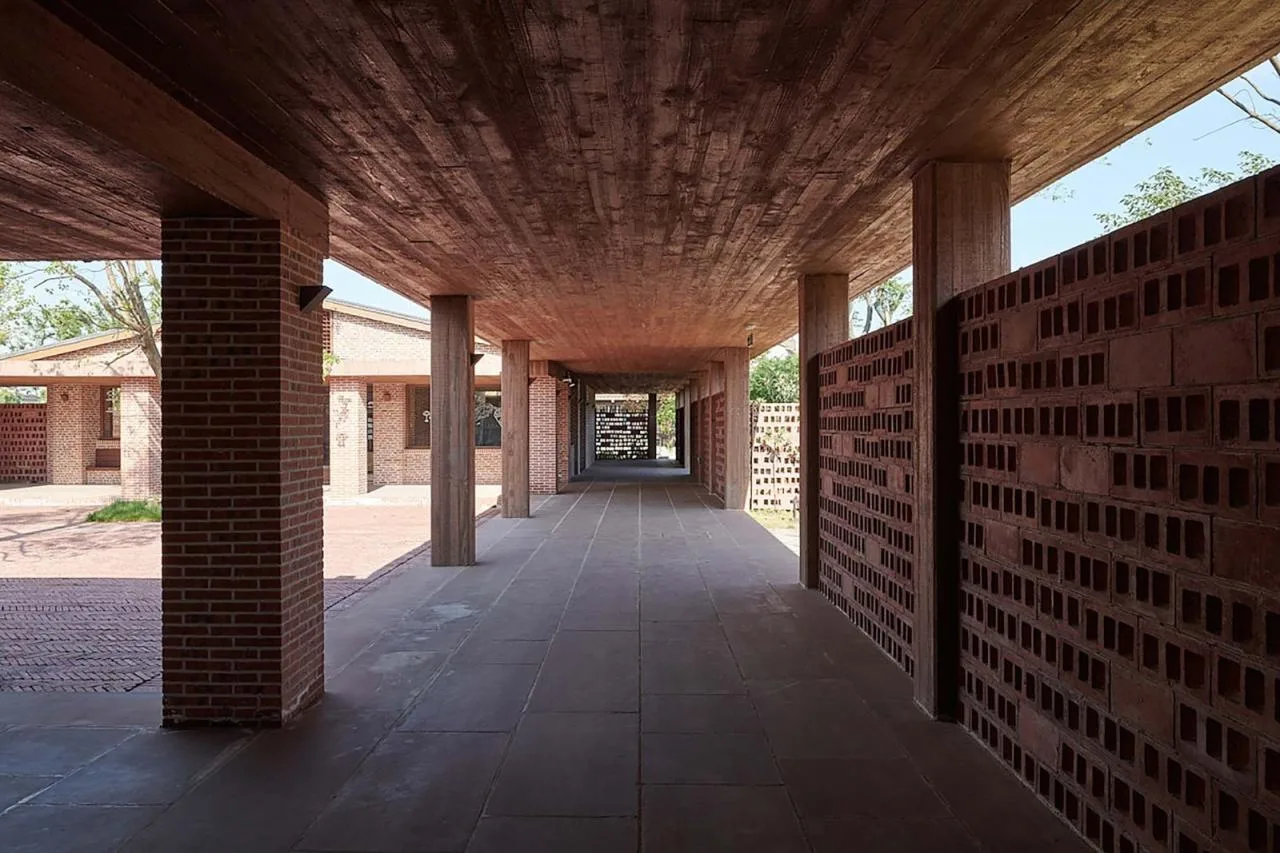
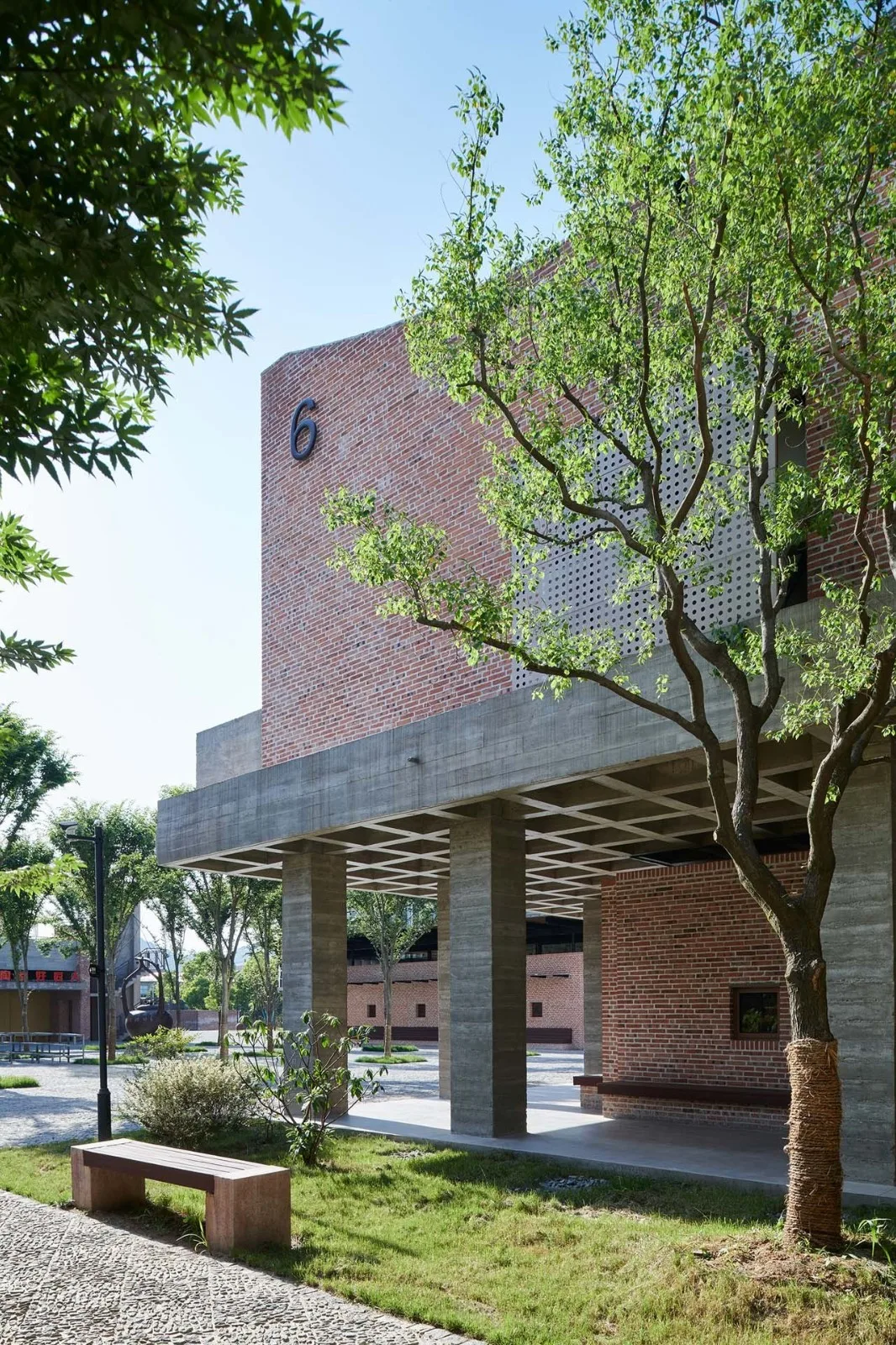
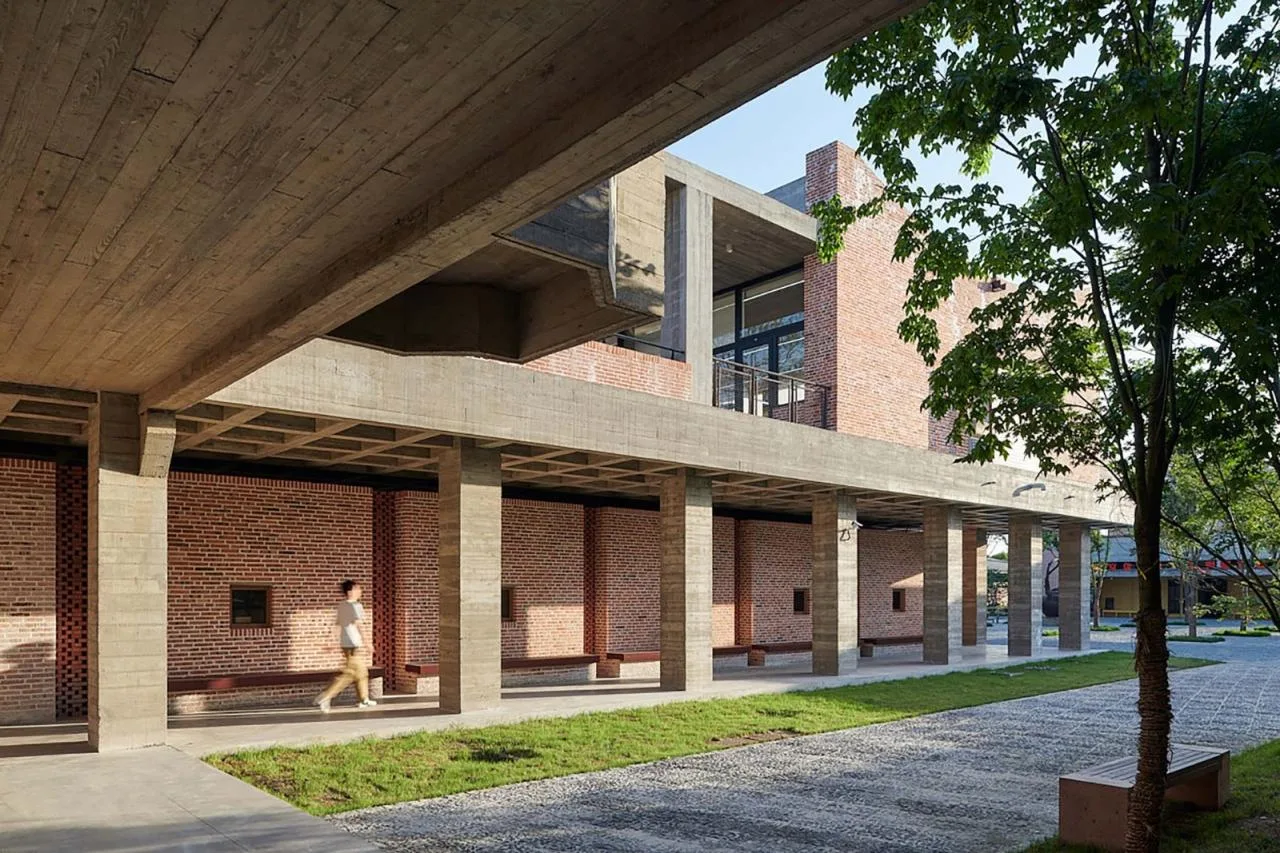
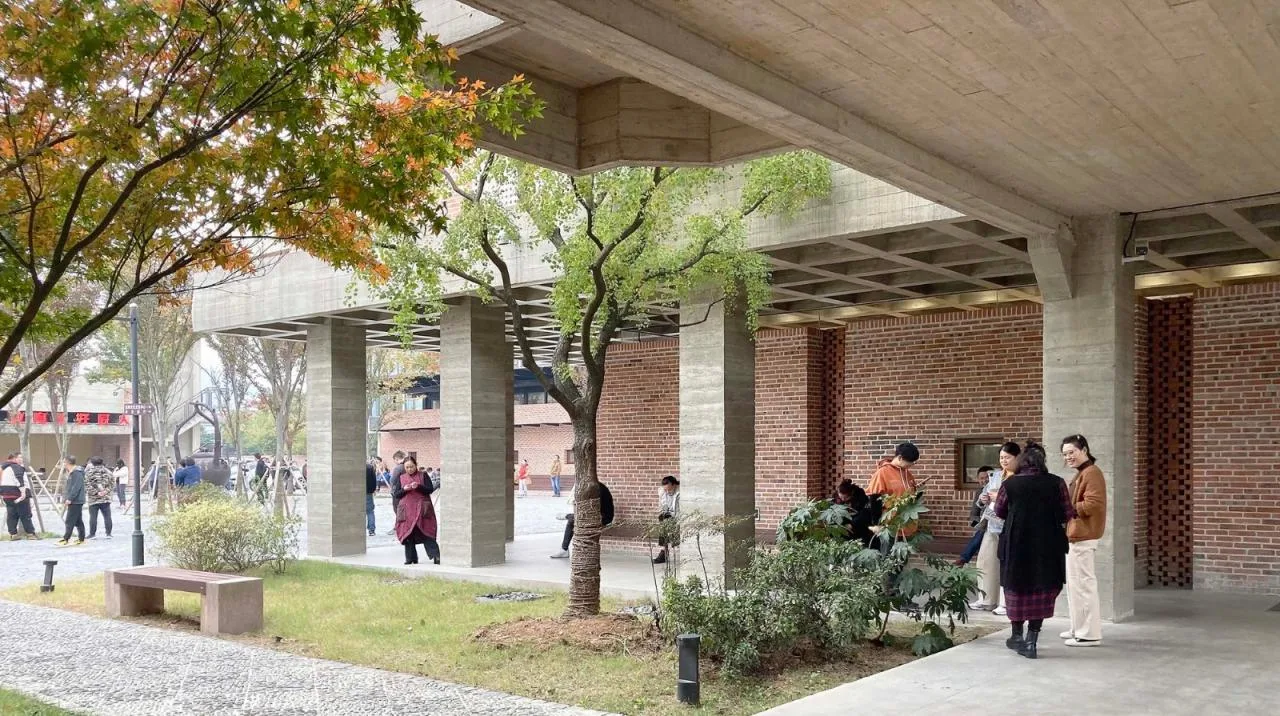
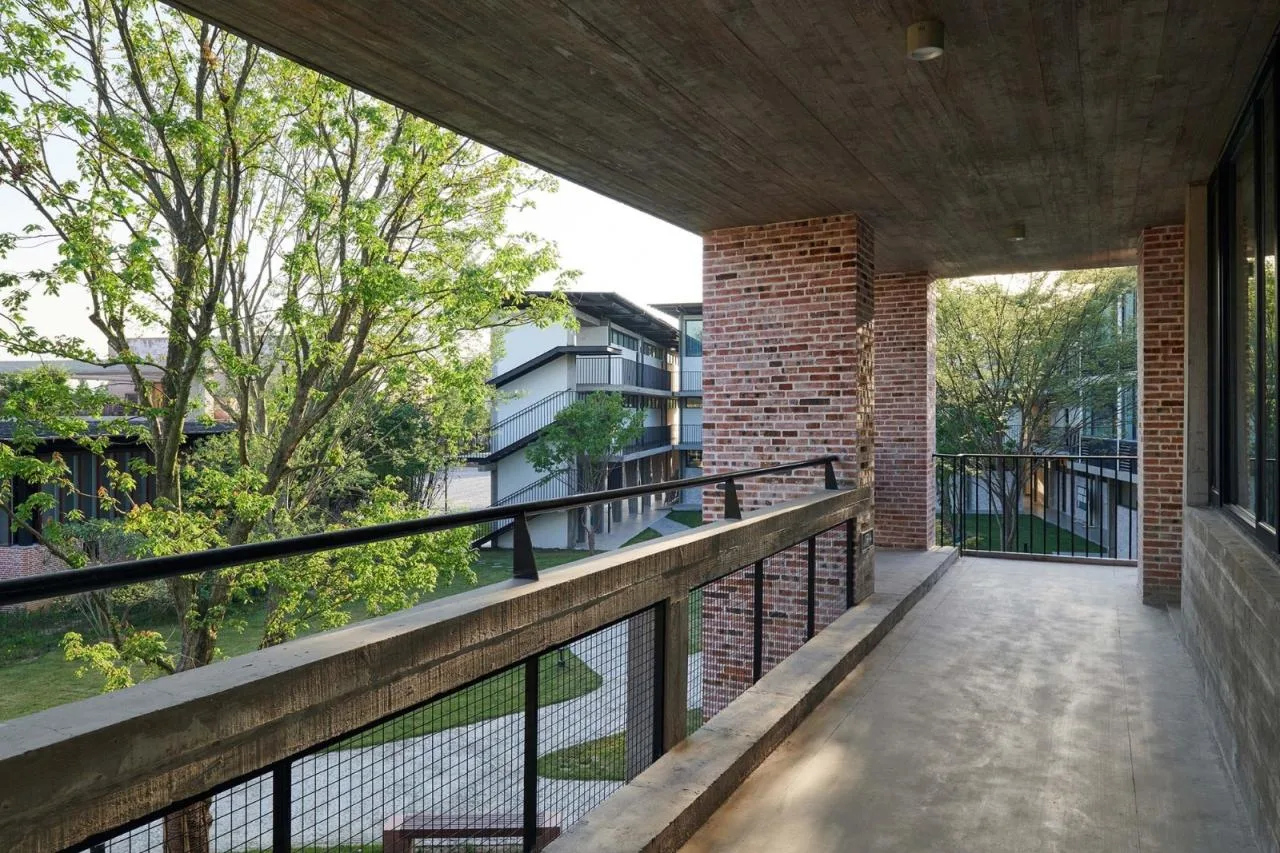
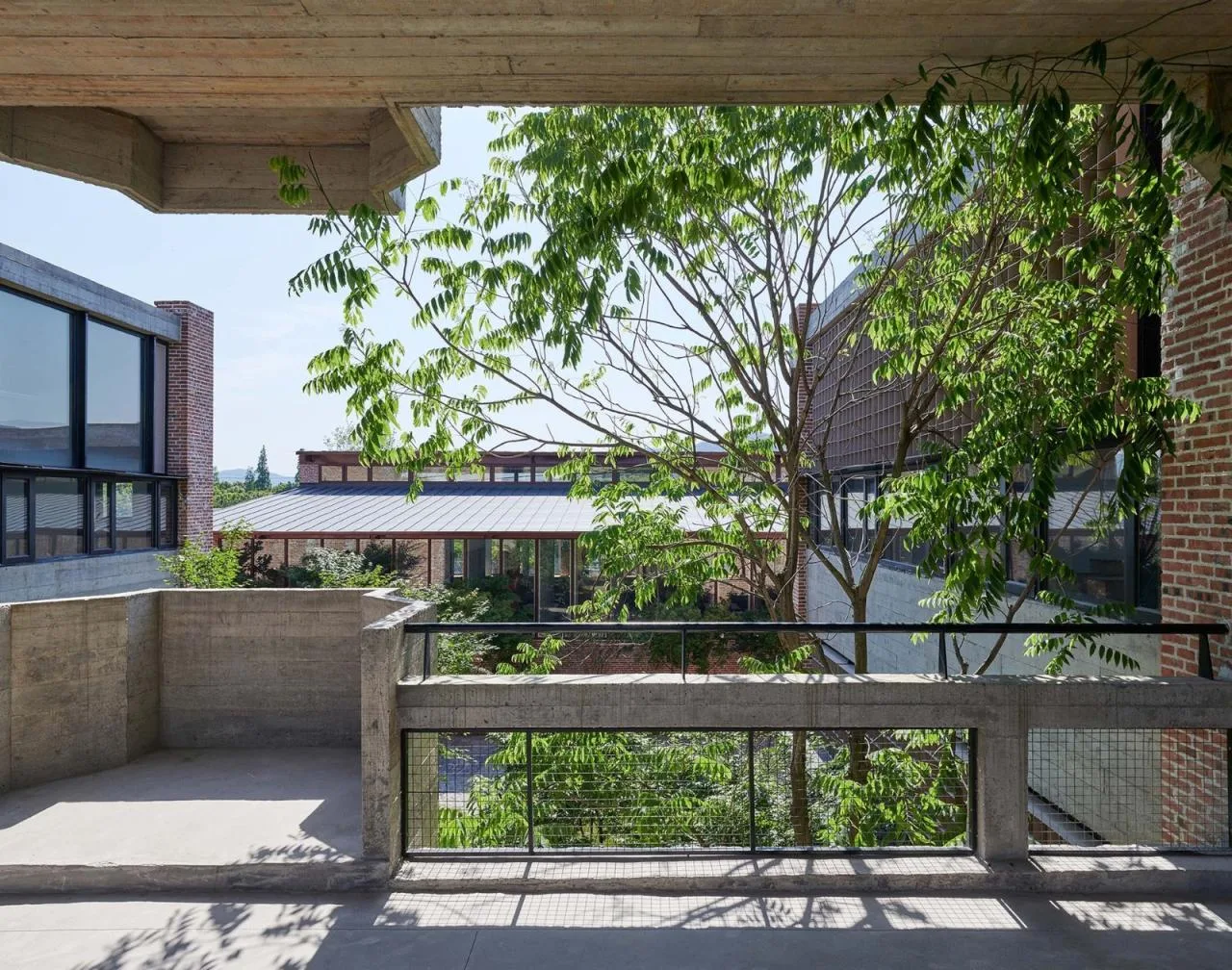
The campus consists of a dozen scattered, low-rise “small buildings,” each offering excellent natural light and ventilation. These buildings create a variety of outdoor spaces between them. Semi-outdoor corridors run alongside these internal and external spaces, providing shade and shelter from the sun, contributing to a rich and diverse campus environment. The pleasant scenery and open communication foster an inspiring atmosphere for ceramic art creation.
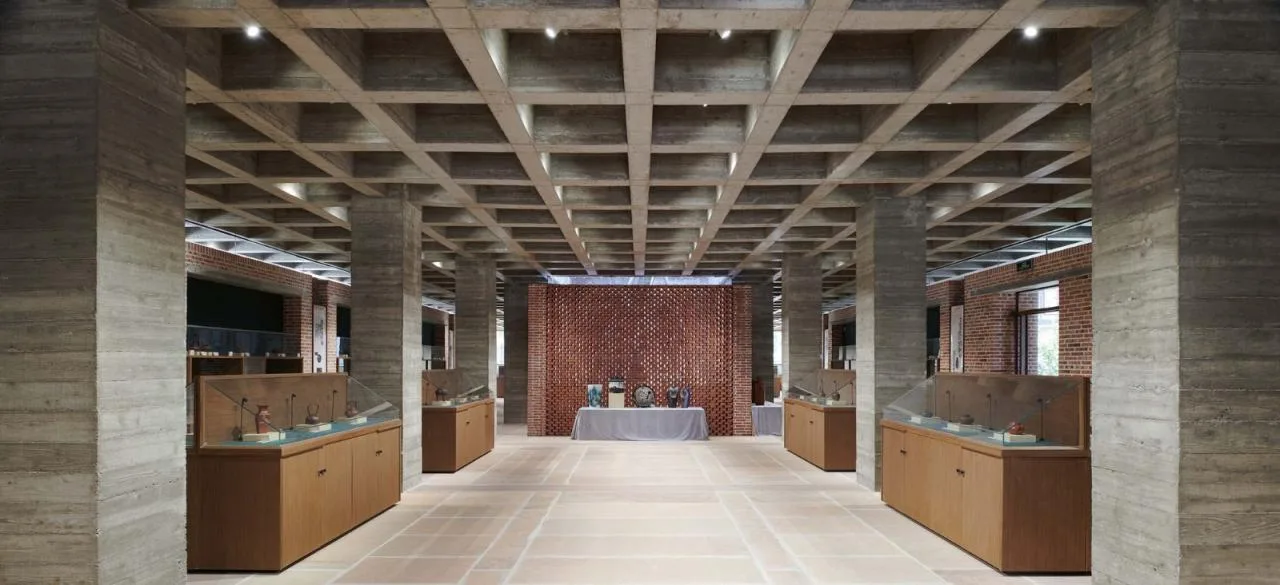
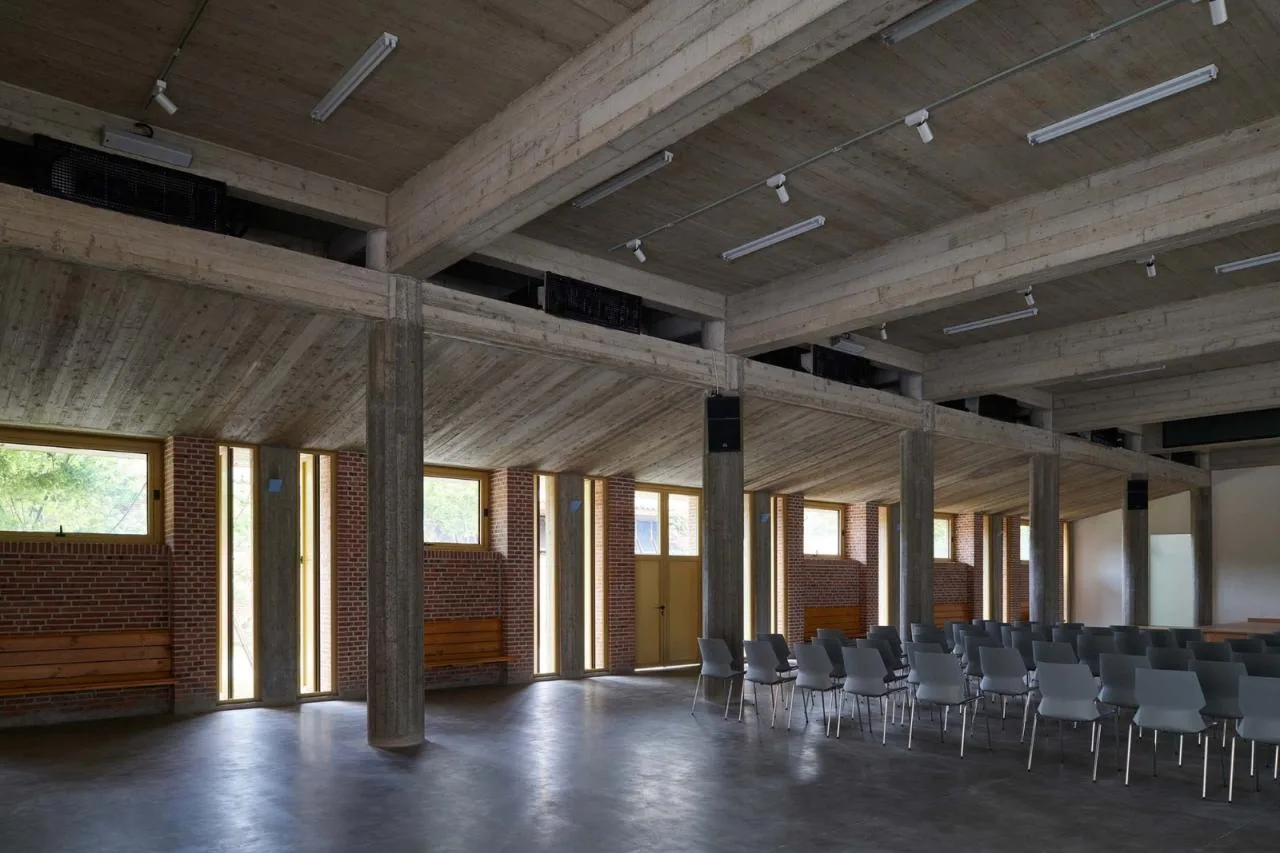
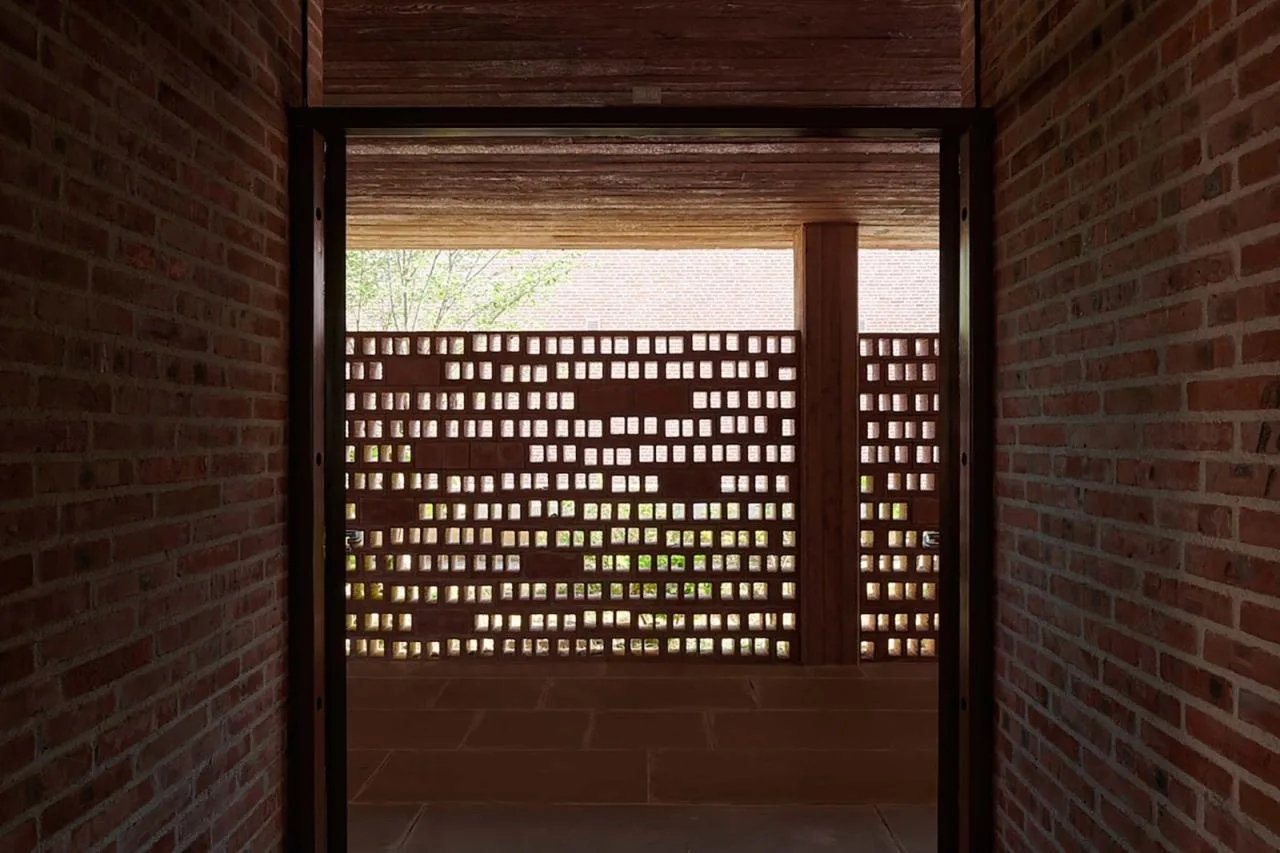
Local materials such as bricks, concrete, and sandstone are predominantly used in the construction of Dingshu Chengxiao. The processes of brick firing, wall construction, and concrete formwork resemble the manual qualities familiar to local pottery artisans. This combination of traditional materials and modern construction methods enables the campus to blend harmoniously with the town’s texture. After completion, local residents expressed that the new buildings felt warm and welcoming.
Rooted in the development of pottery culture, Dingshu School offers high-quality pottery skills training to thousands of students annually, helping them improve their professional expertise and quality of life. The school also hosts cultural exhibitions and exchange activities, benefiting the local community and promoting Dingshu’s rich tradition of pottery making.
Project Drawings
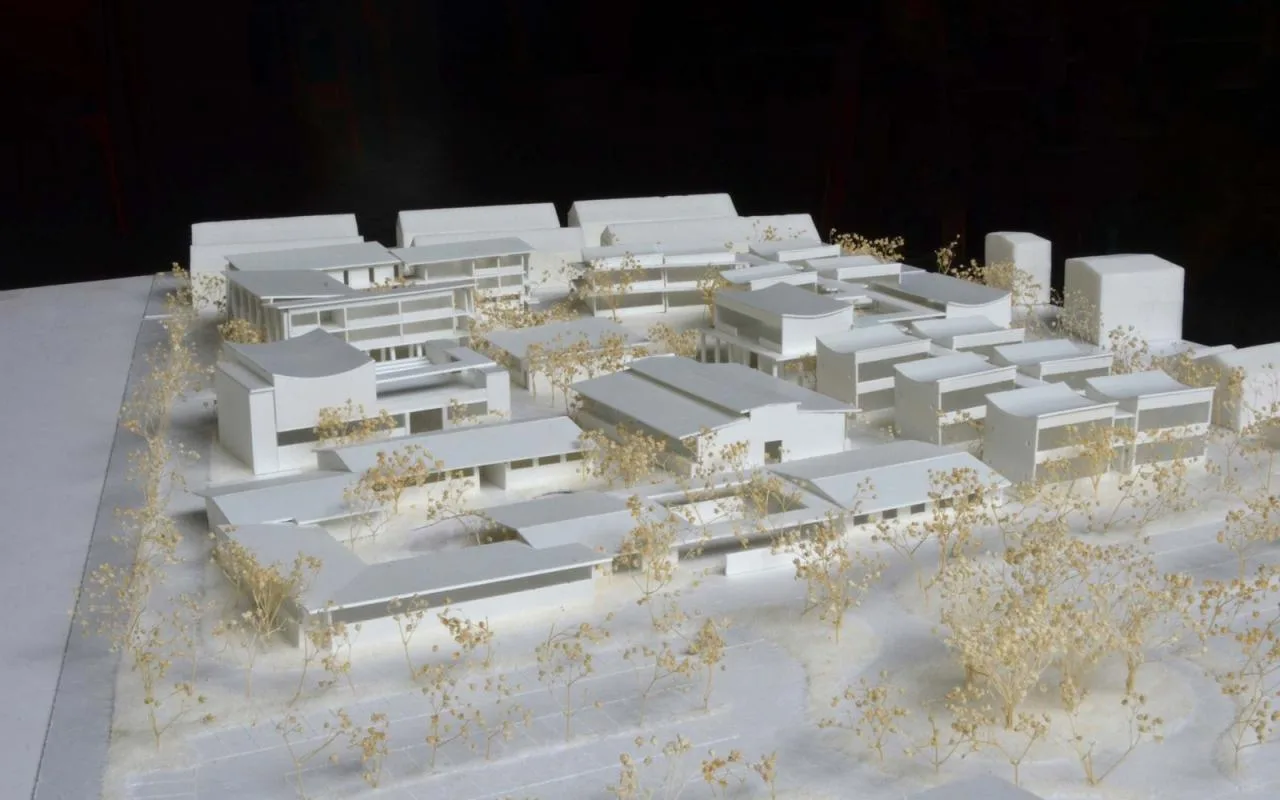
△ Model Diagram
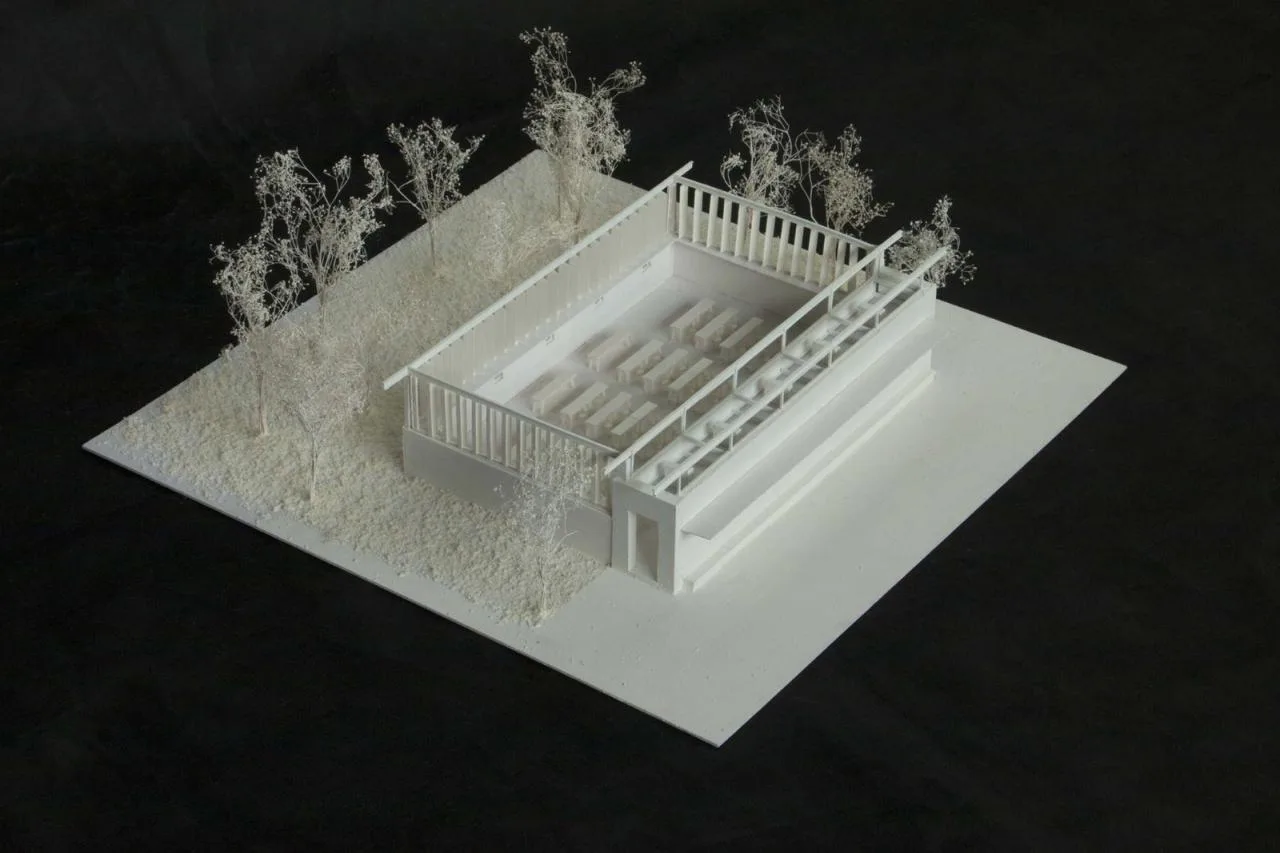
△ Model Diagram
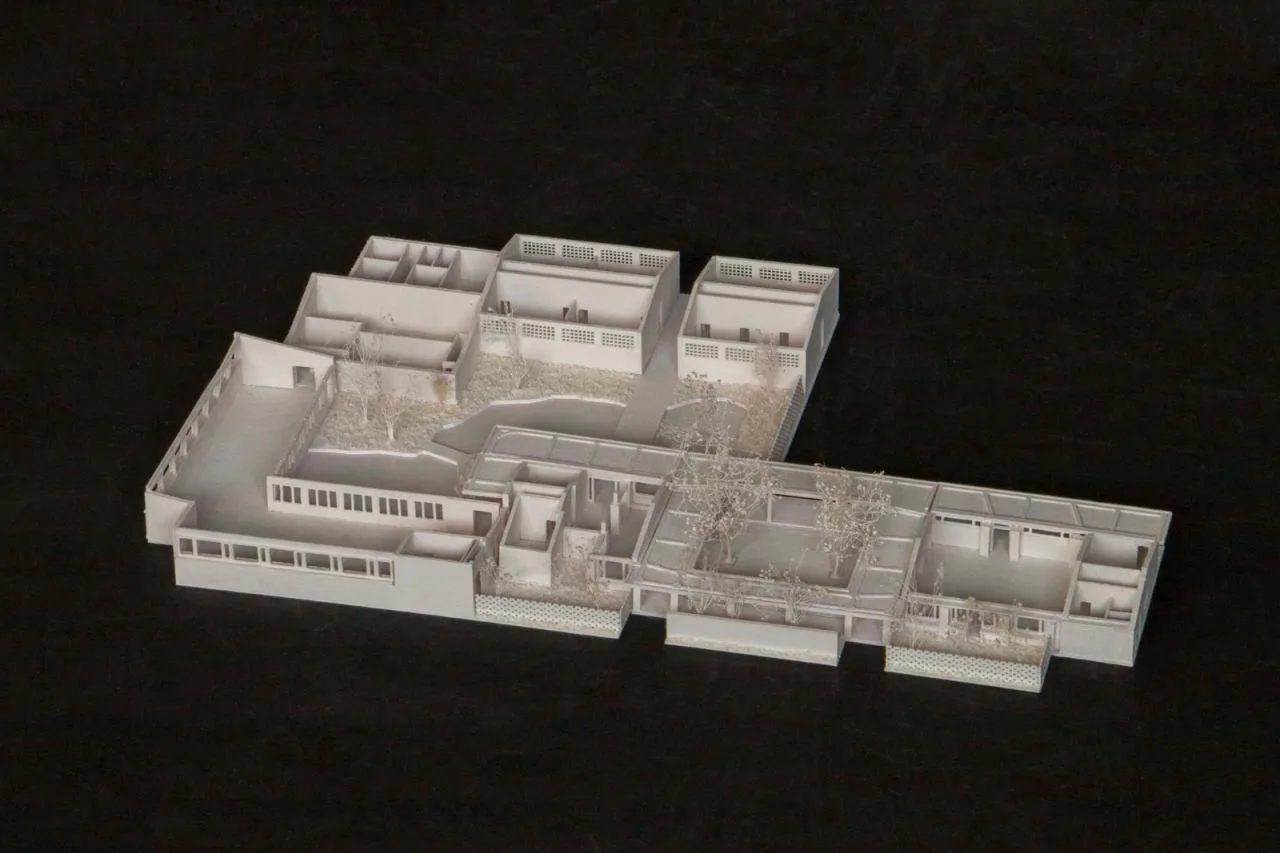
△ Model Diagram
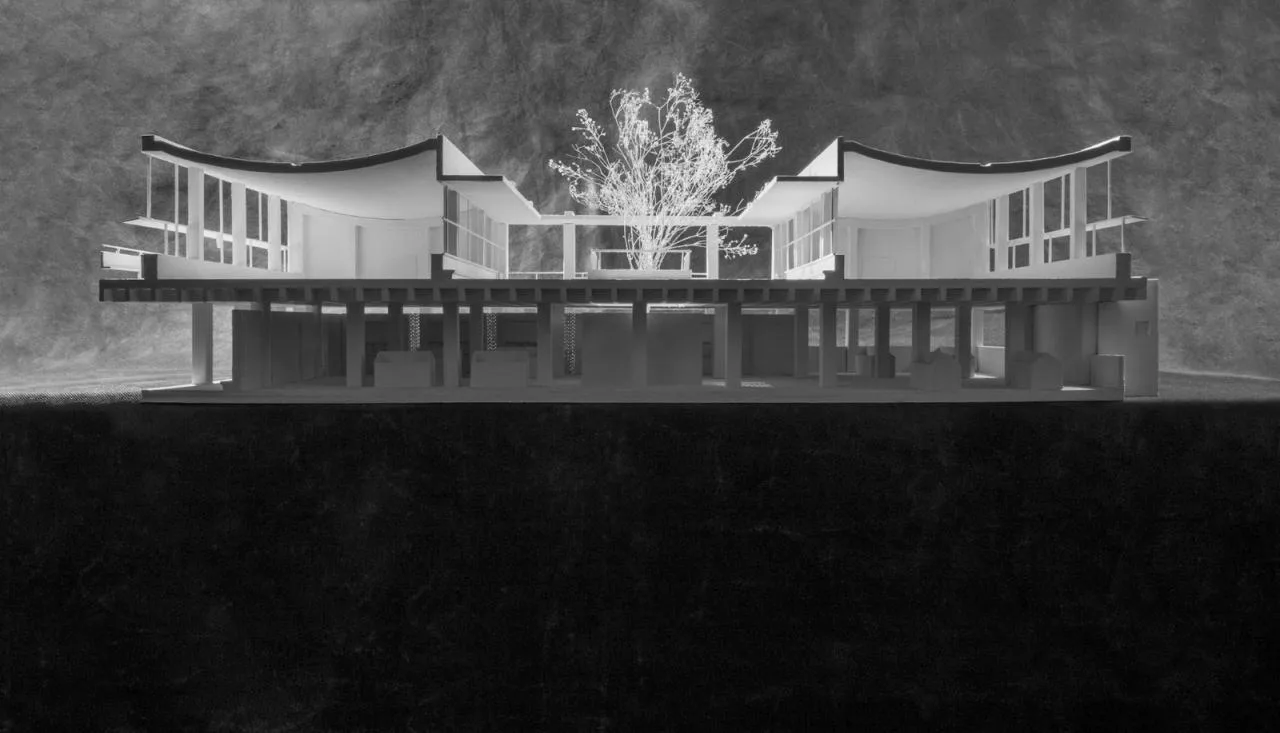
△ Model Sectional Perspective View
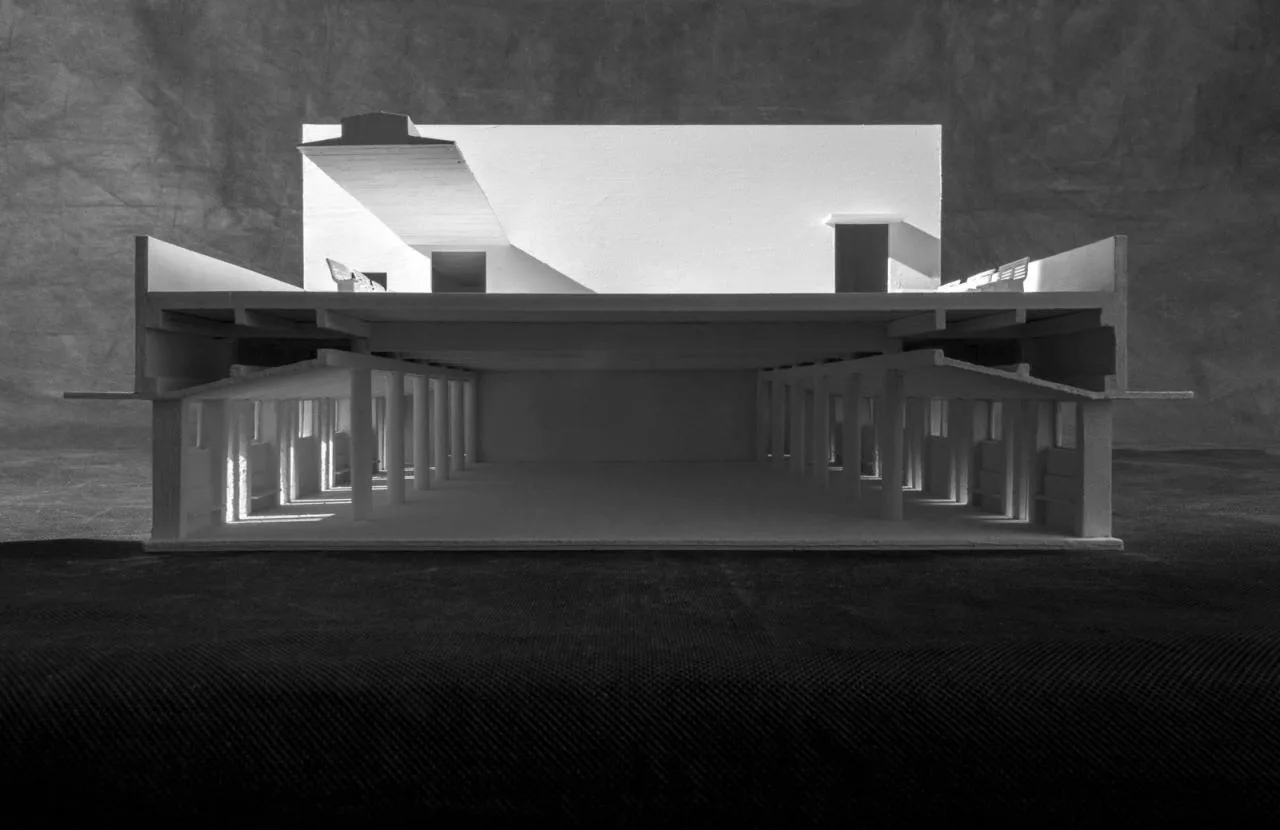
△ Model Sectional Perspective View
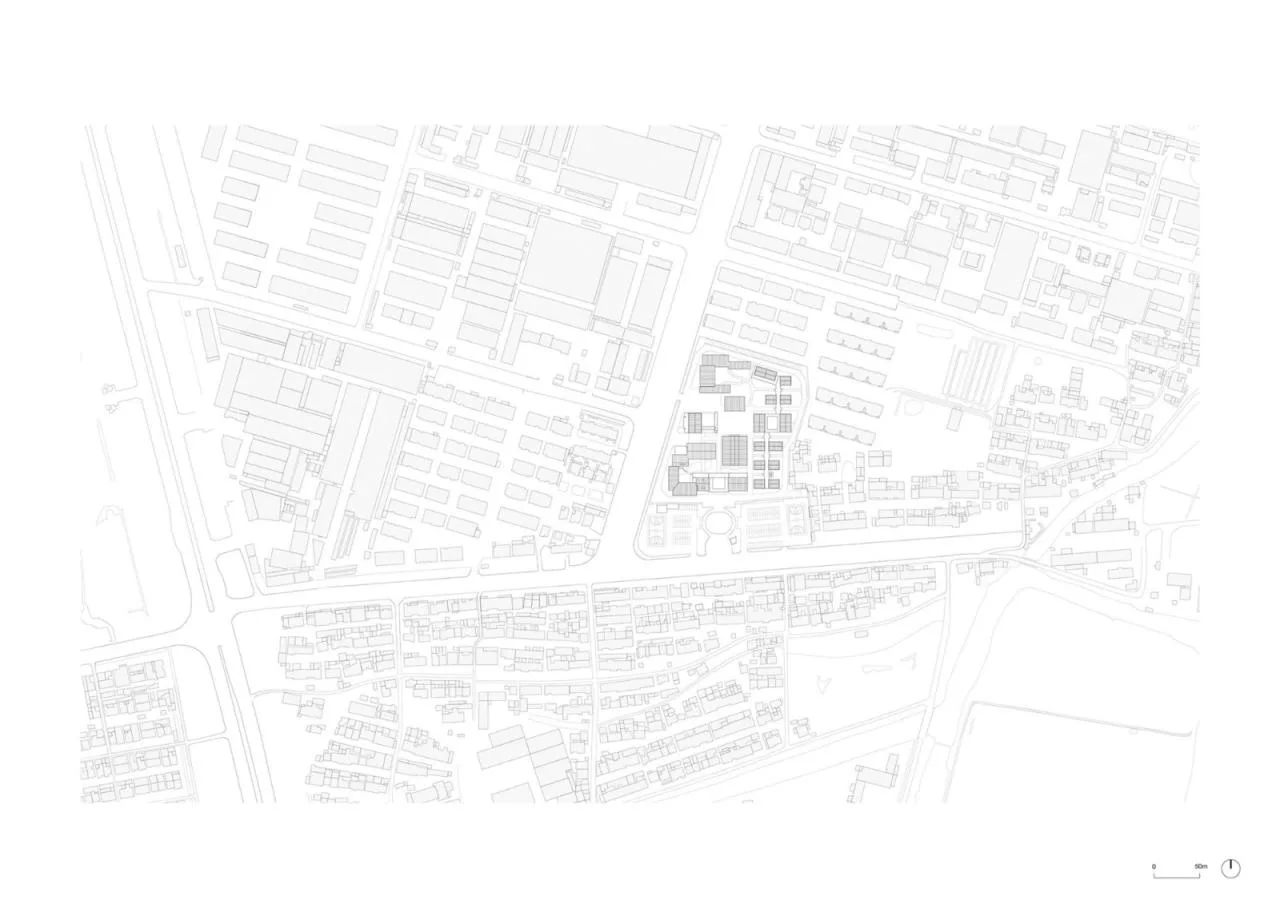
△ Location Map
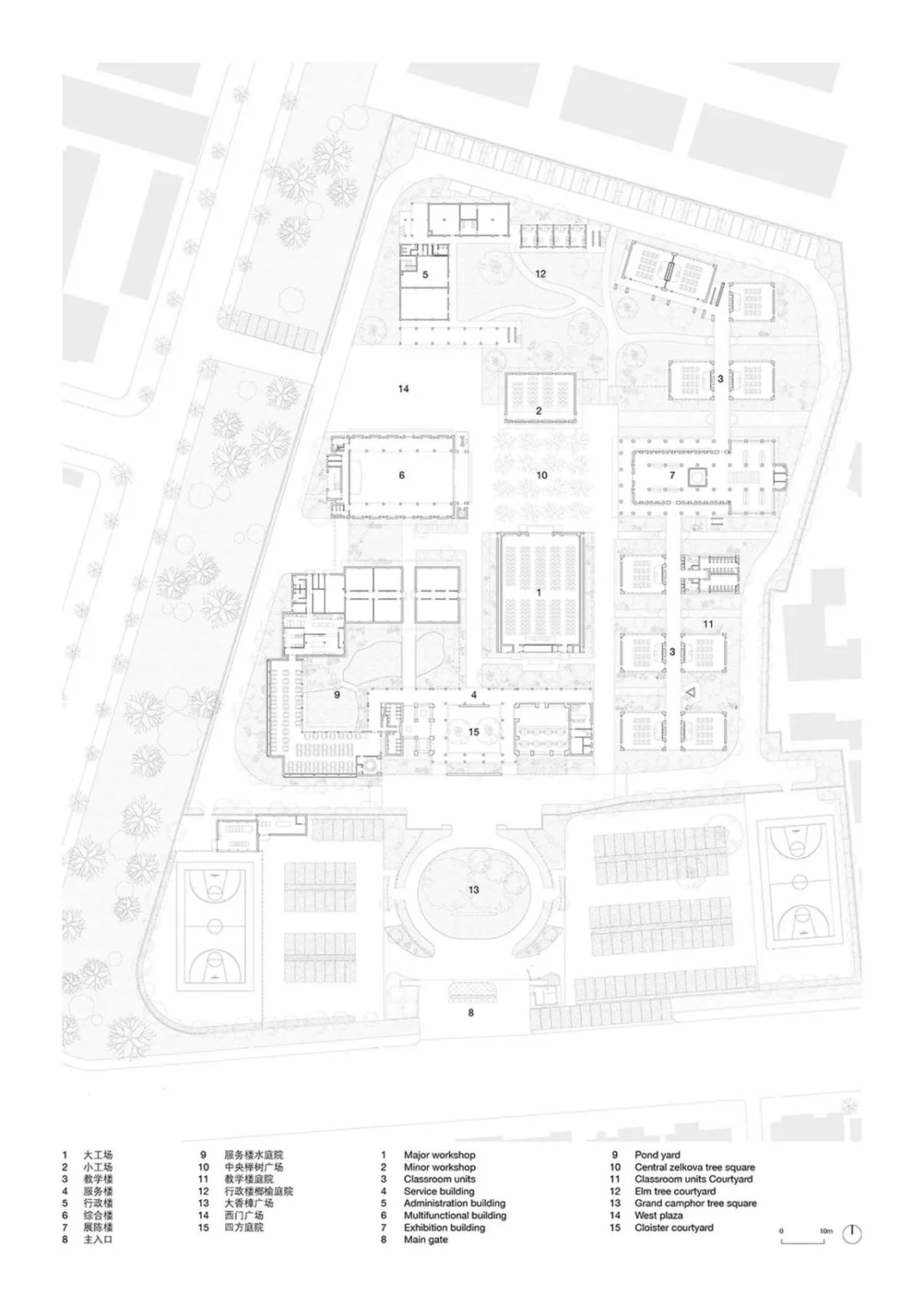
△ First Floor Plan
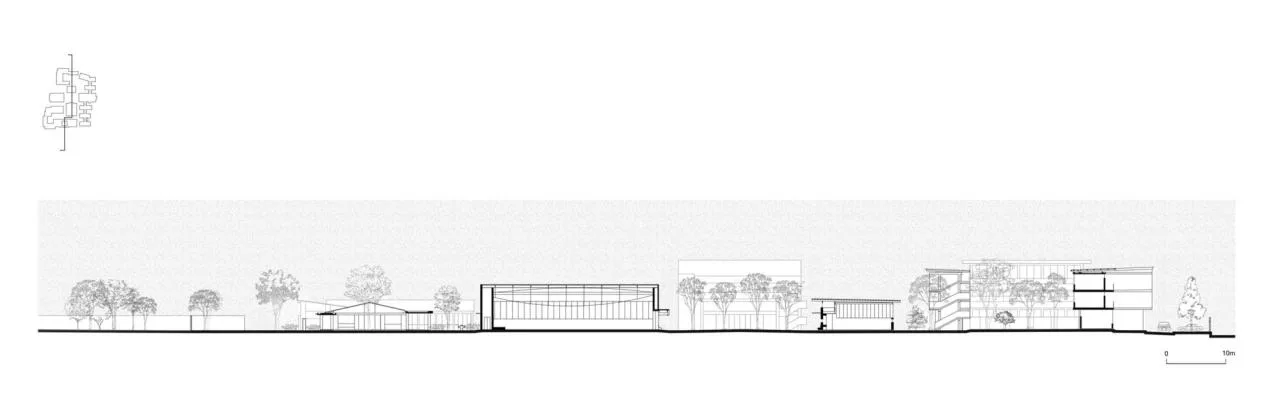
△ Campus Sectional Perspective
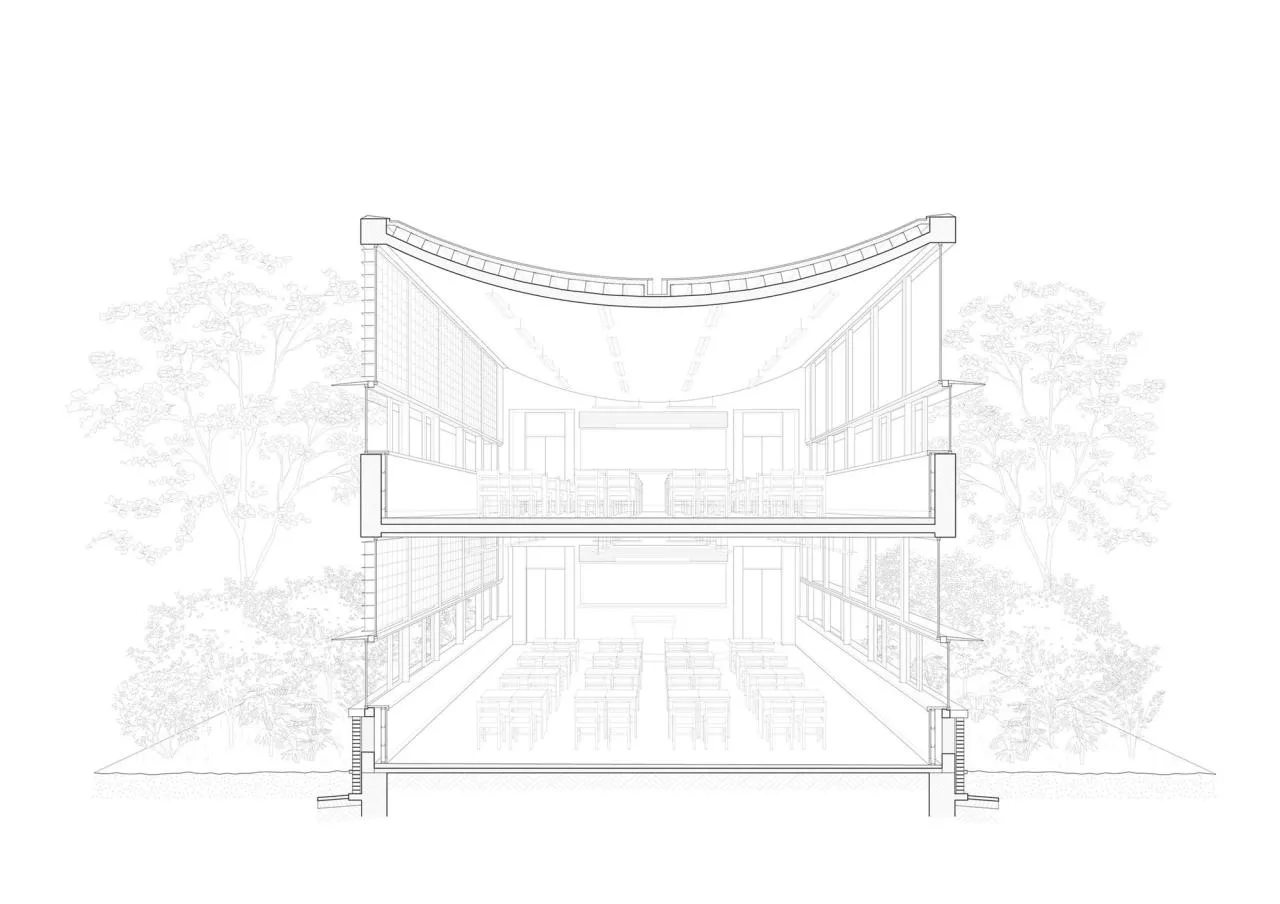
△ Teaching Building Perspective Analysis
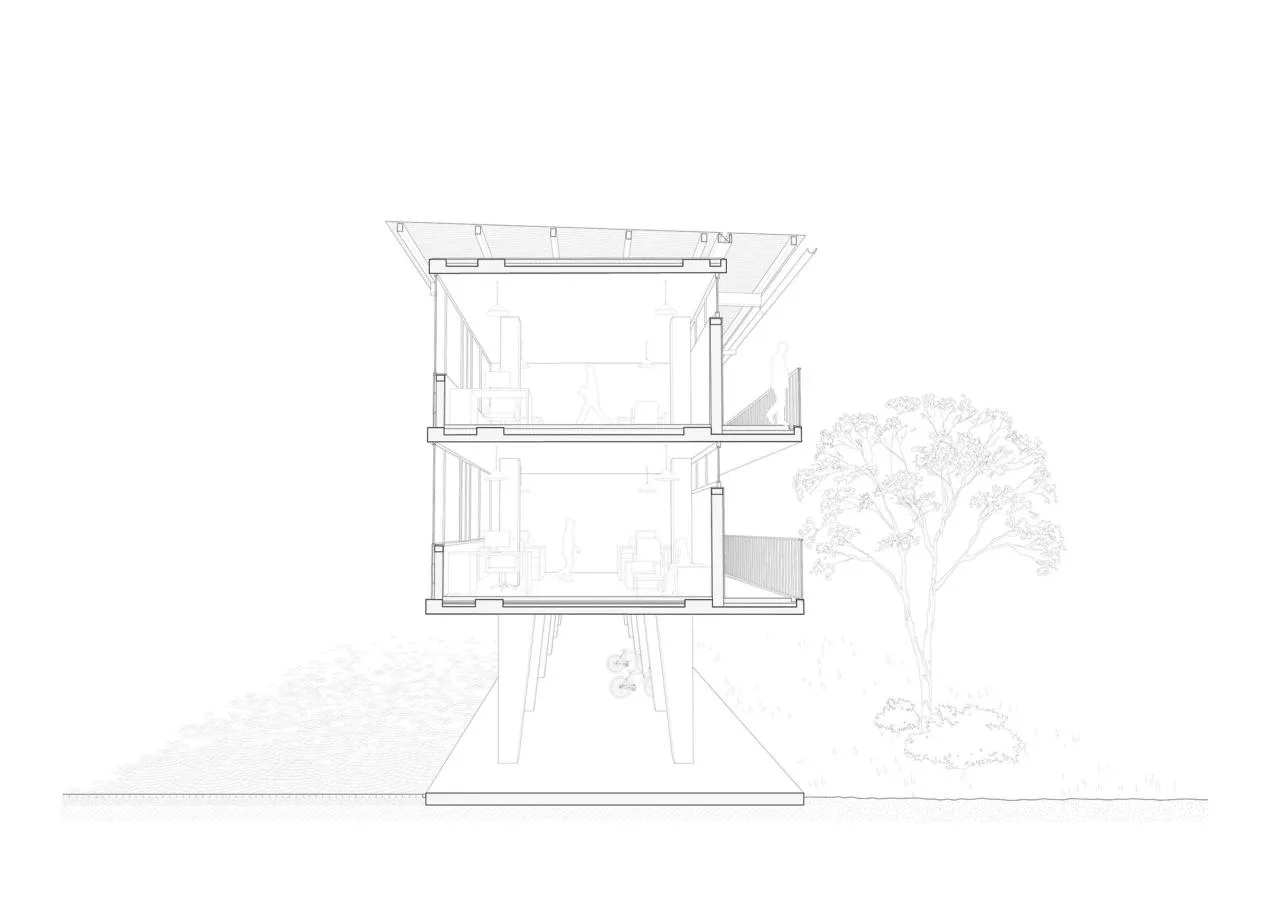
△ Administrative Building Section Perspective
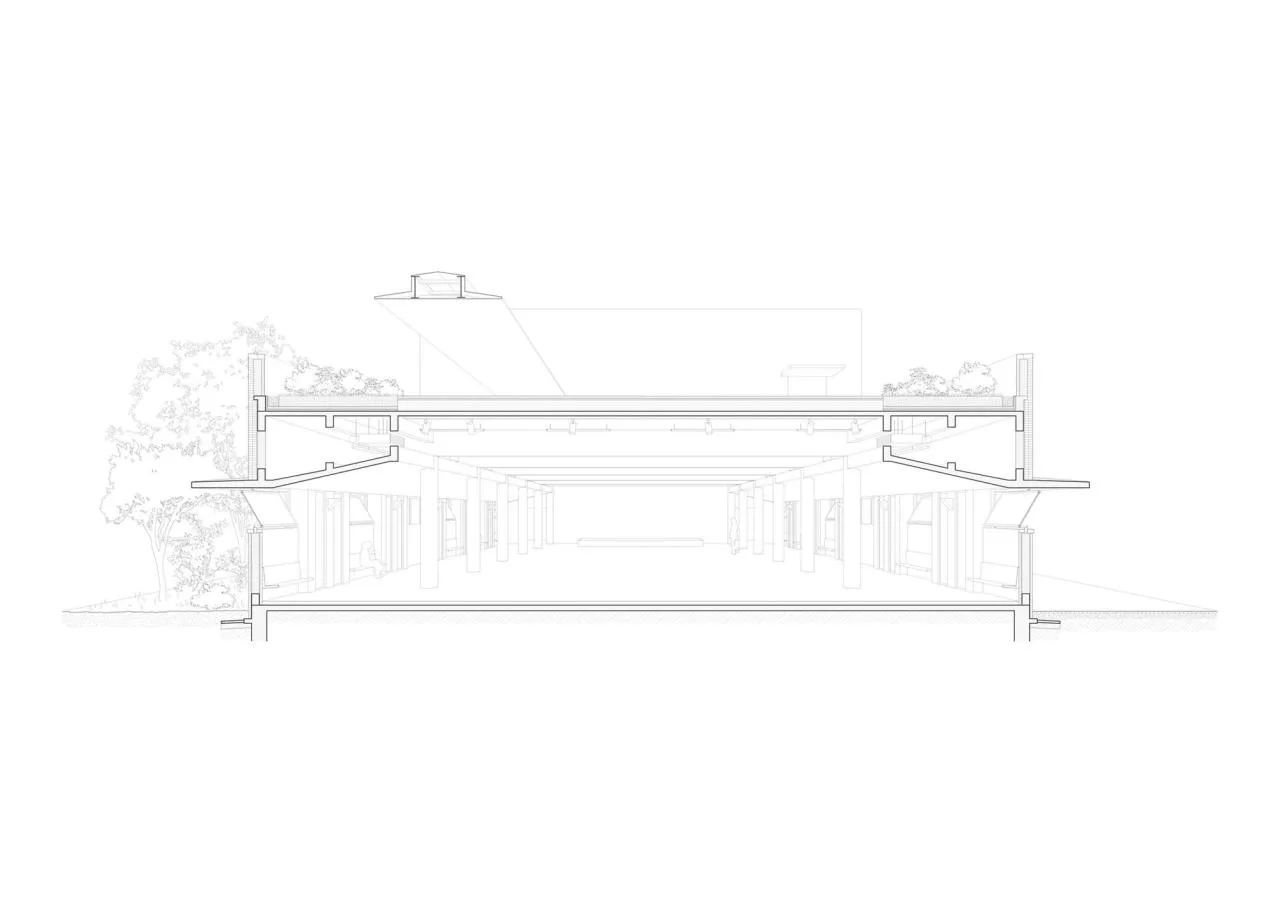
△ Comprehensive Building Sectional Perspective
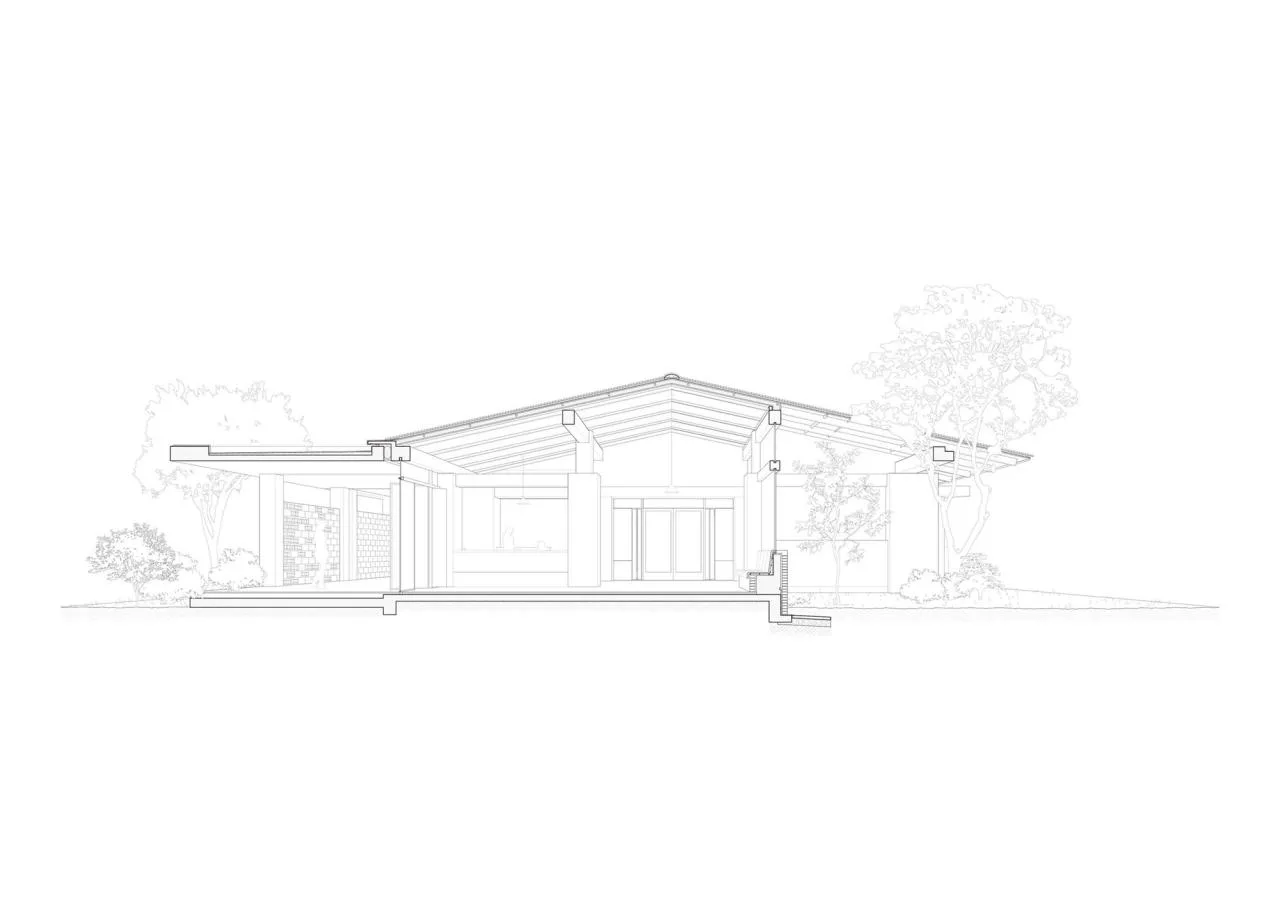
△ Service Building Perspective Analysis
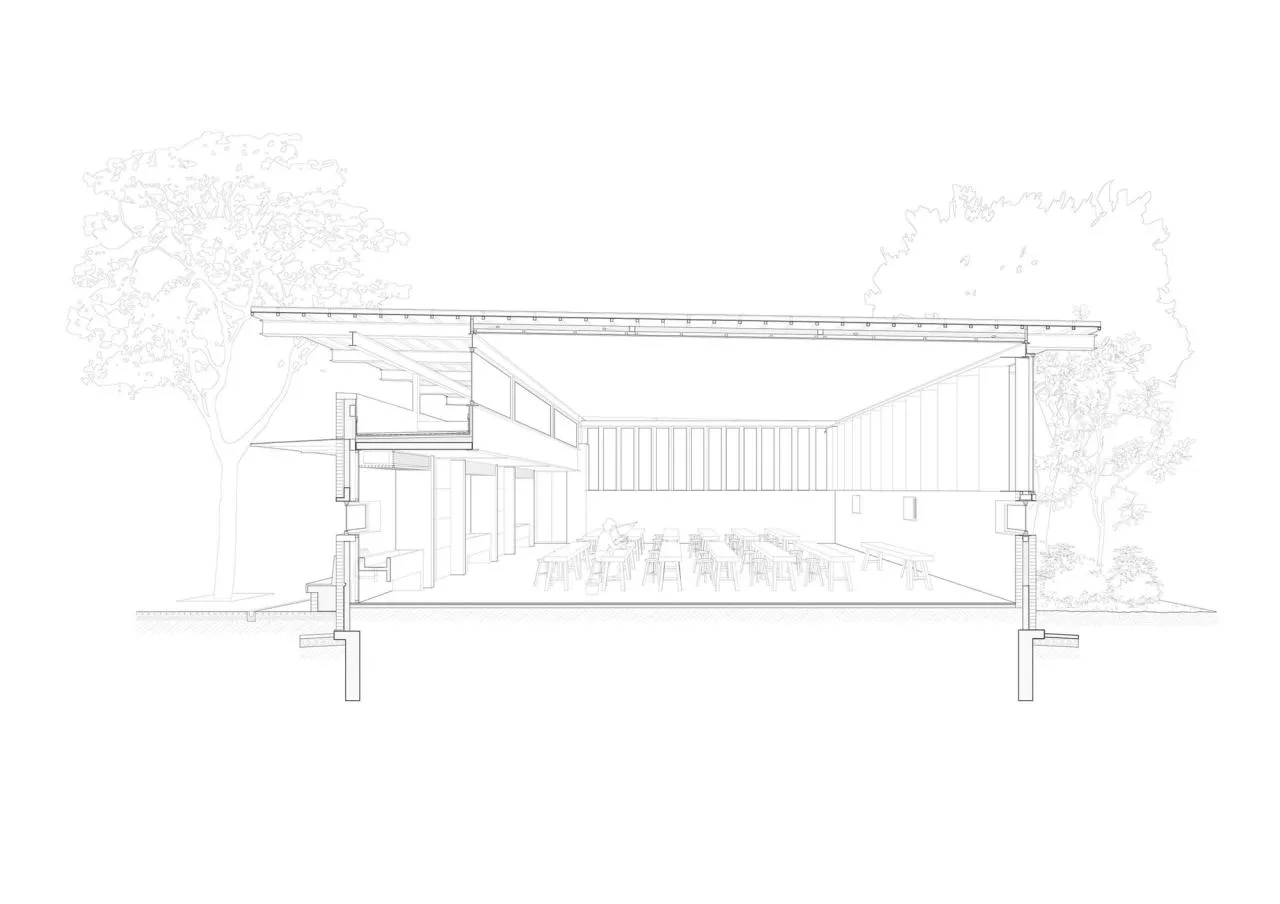
△ Small Factory Perspective Analysis
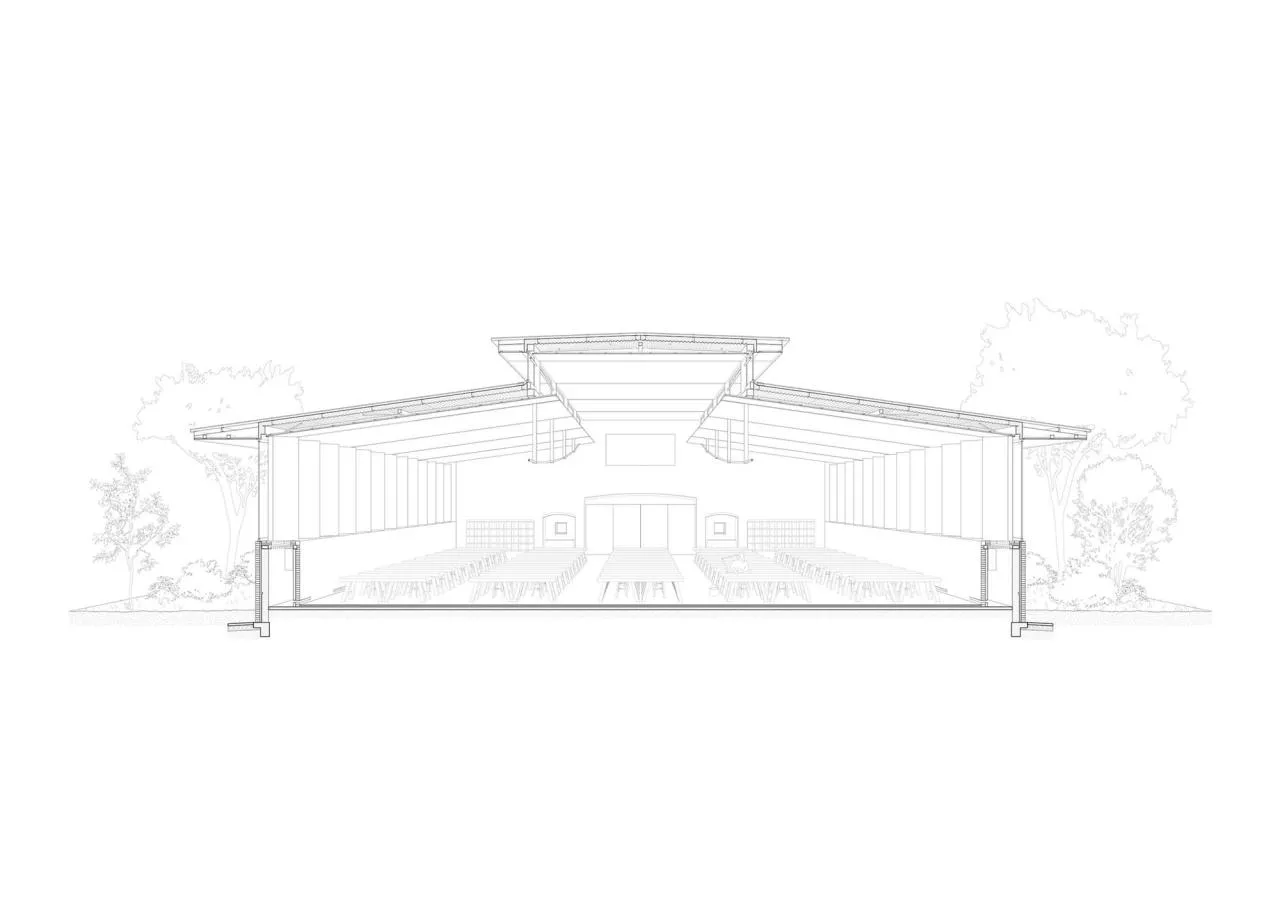
△ Large Factory Perspective Analysis
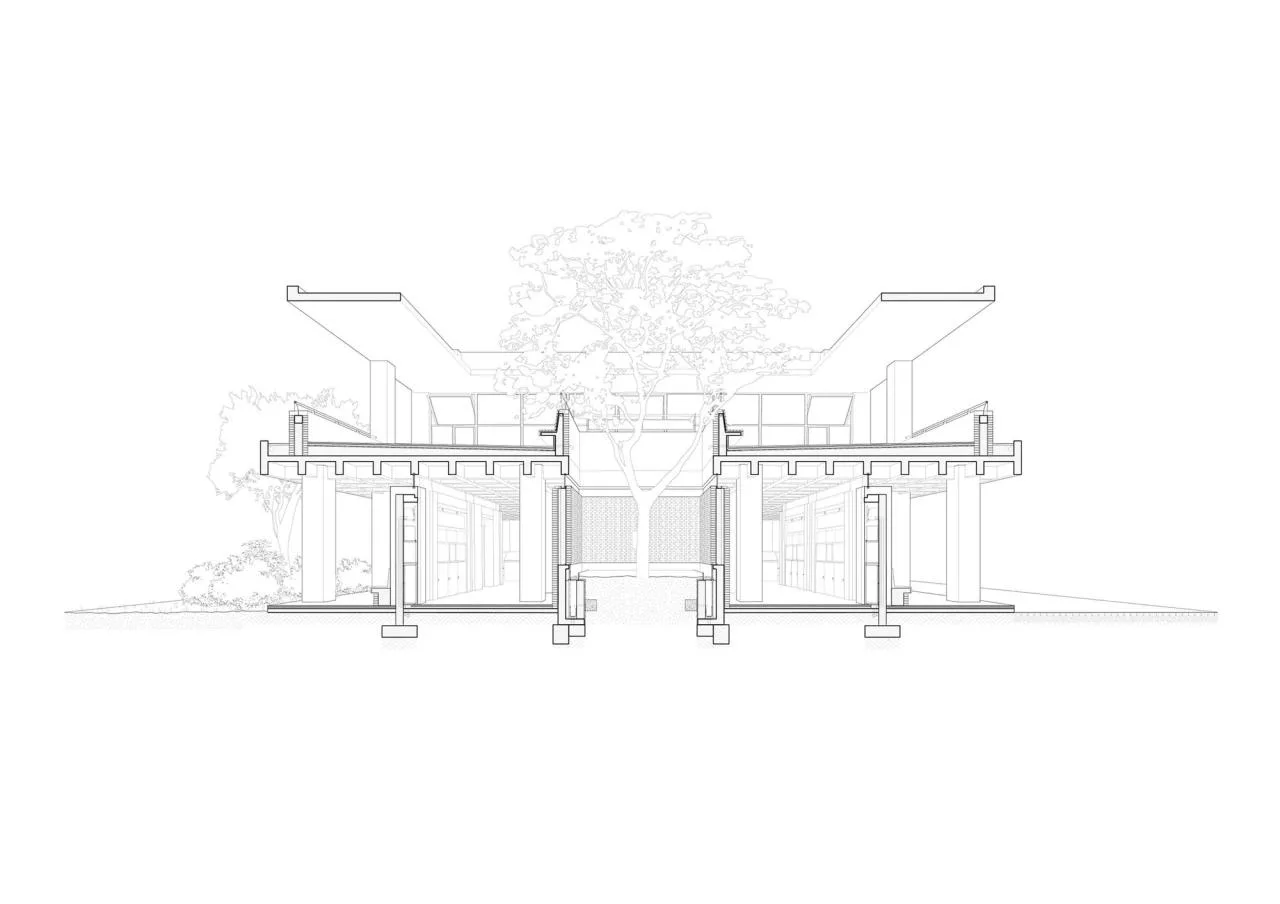
△ Exhibition Hall Perspective Analysis
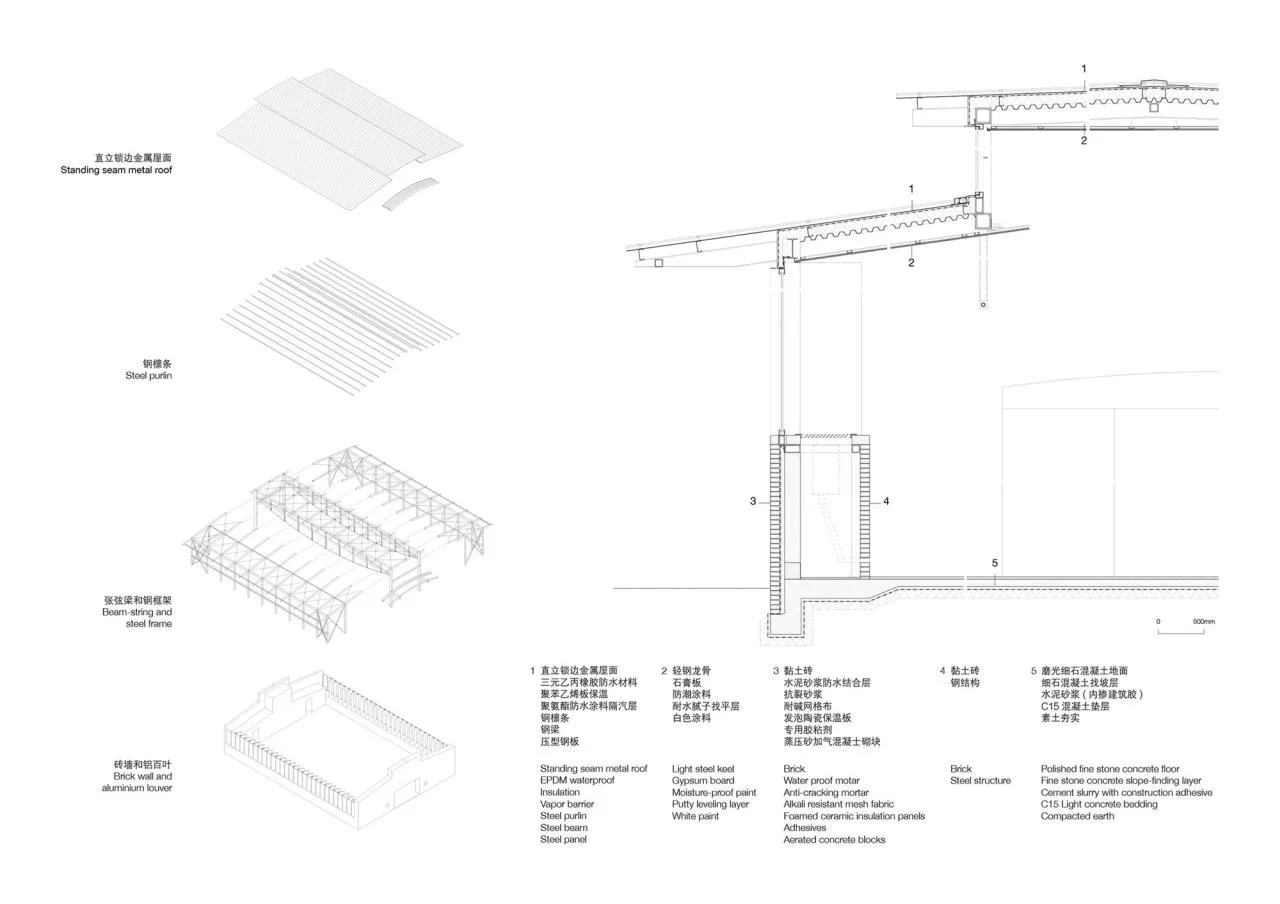
△ Structural Analysis and Wall Detail of the Large Factory
Project Information
Architectural Design: Gen Architecture Firm
Area: 10,905 m²
Project Year: 2021
Photographer: Chen Hao
Lead Architects: Xue Zhe, Fan Beilei, Kong Rui
Project Architect: Wang Shiyu
Design Team: Tao Shuting, Liu Yang, Xi Haohui, Xue Jun, Xiao Xinyu, Qian Jia, Li Lanruo, Guo Zhenghao, Liu Jinghuan, Huang Fanlang, Xie Rugui, Li Yunhong
Landscape Design: Chen Xi
On-site Supervision: Wang Shiyu, Chen Xi, Qian Jia, Chi Zenglei, Qu Hao
Structural Consultant: Hezuo Structural Architecture Research Institute – Zhang Zhun, Zhang Chongchong, Chen Xuejian
Mechanical and Electrical Consultant: Shanghai Survey and Design Institute (Group) Co., Ltd. – Liang Ming, Pan Yue, Wan Huajun, Liu Jianping, He Ancheng
Concrete Consultant: Su Zao Construction, Dingzhong New Materials, Fanxing Construction Engineering, Du Jie
Concrete Protectant Consultant: Mao Yong, Huang Huang
Polishing Concrete Floor Consultant: Yan Qianfeng
Owner: Ding Shucheng School
Project Coordination: Dingshu Town Construction Bureau
General Contractor: Huaren Construction Group Co., Ltd.
Location: Yixing City, China
















Must log in before commenting!
Sign Up