
Whose home is the flat boat tonight? Where does the longing for the moon tower reside?
For thousands of years,
Countless Shunchang wanderers have drifted along the Futun River, far from home;
Yet the vision of home remains vivid;
Homesickness endures throughout history.
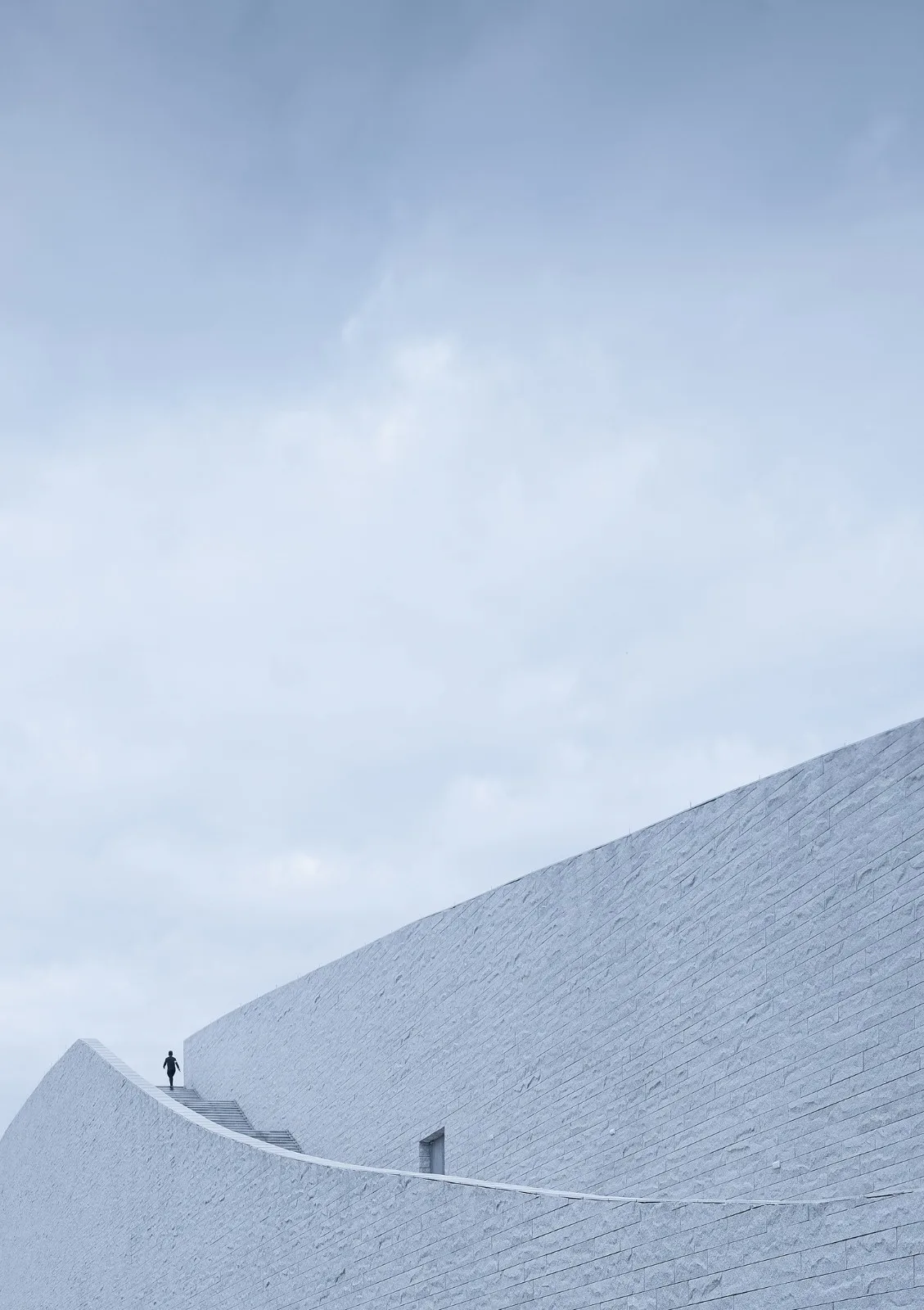
The Shunchang Museum’s city location carries unique characteristics. This study explores the deep connection between the project site and the city, balancing local context with metaphorical creativity, while integrating into daily life and preserving memories for both residents and visitors. A museum, like a person, is more than a space to collect and display artifacts. It serves as an exhibit itself, a platform, and a symbol—embodying the community’s homesickness and interpreting the culture’s past and future.
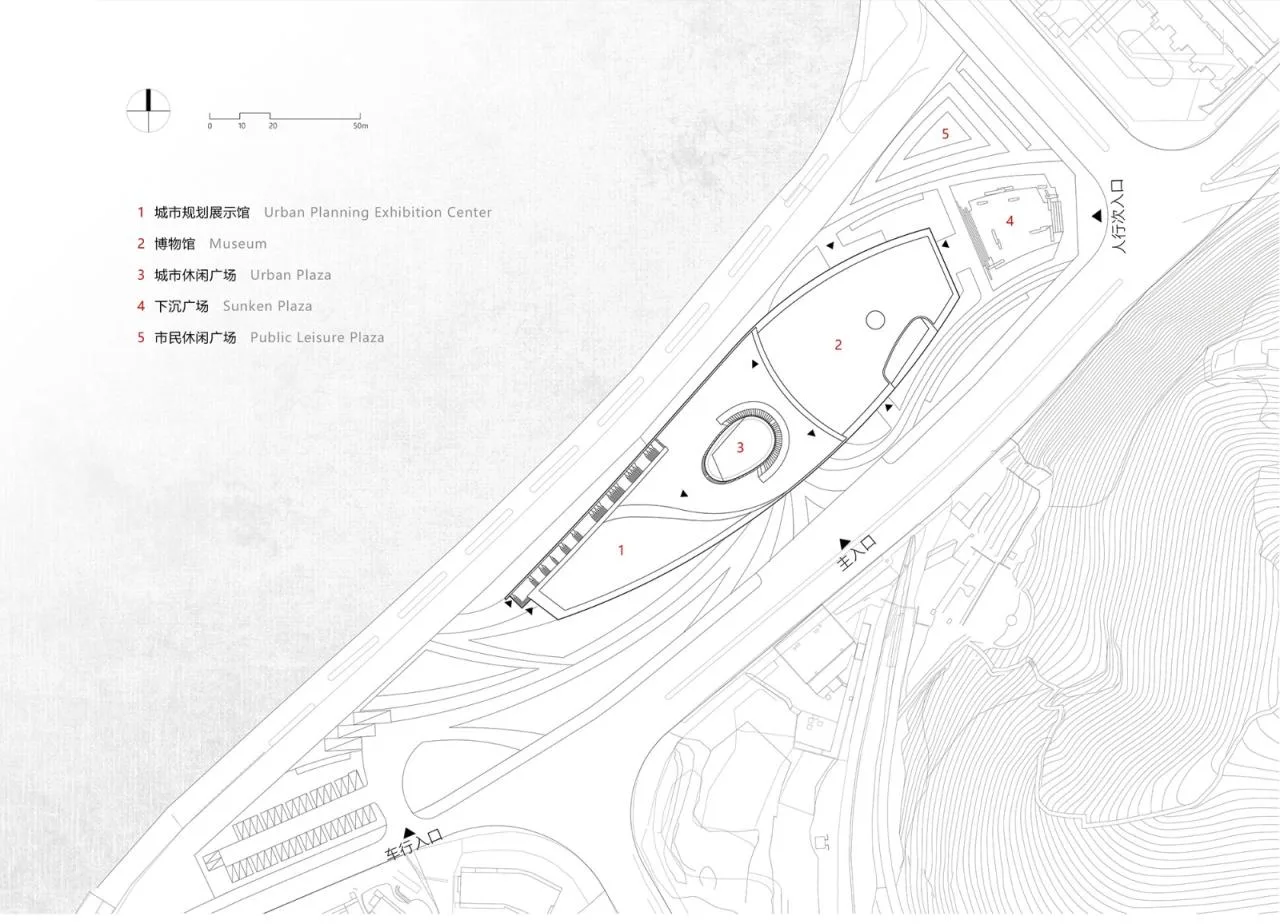
△ General layout plan
1. Small Town Story
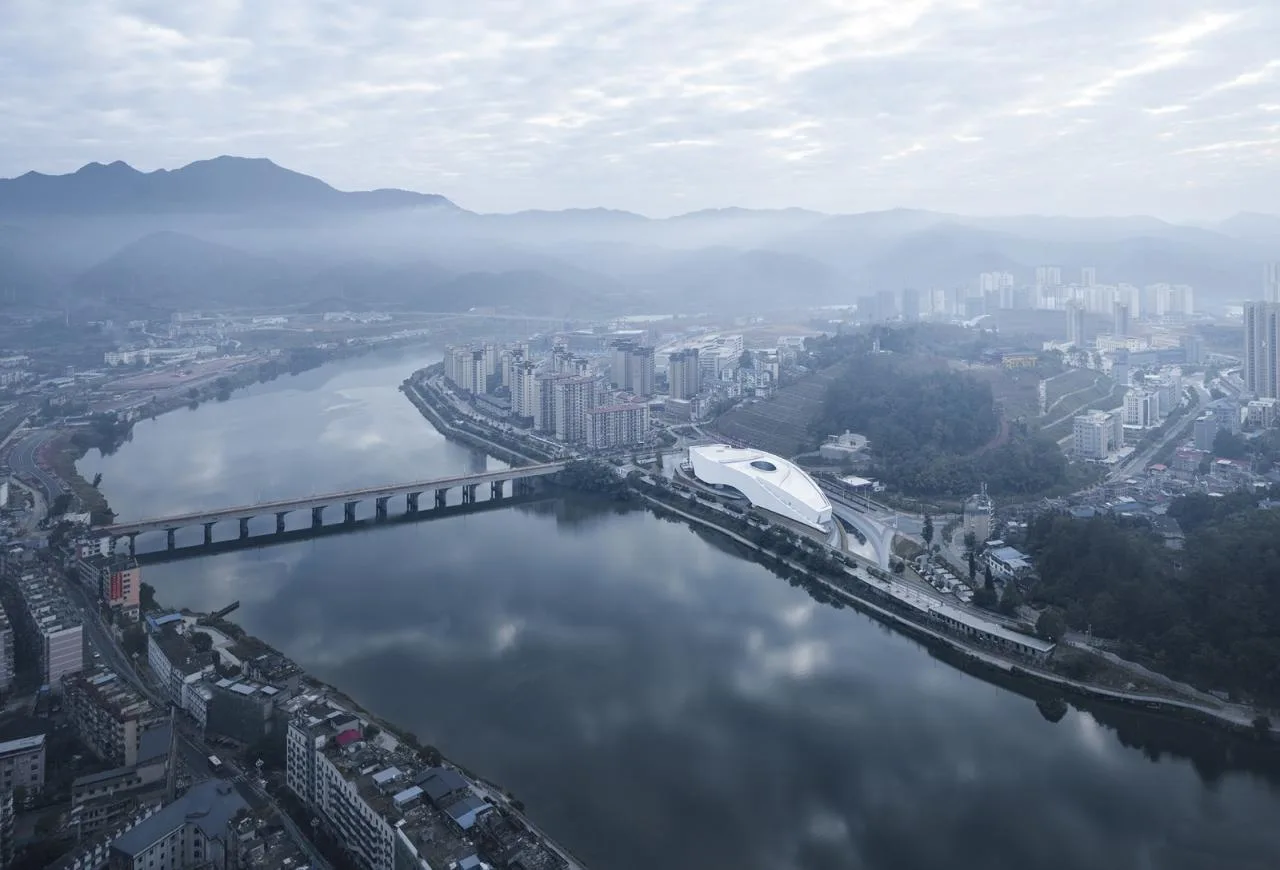
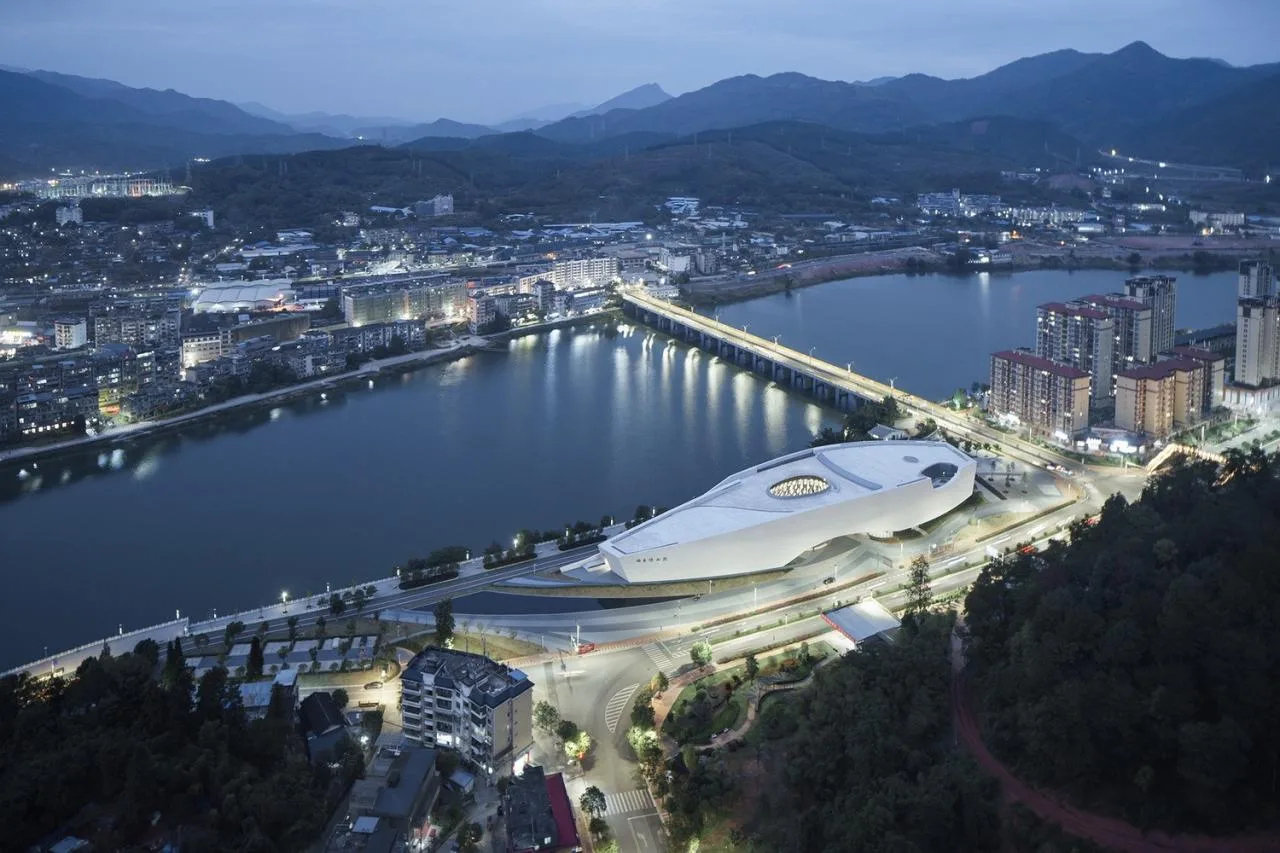
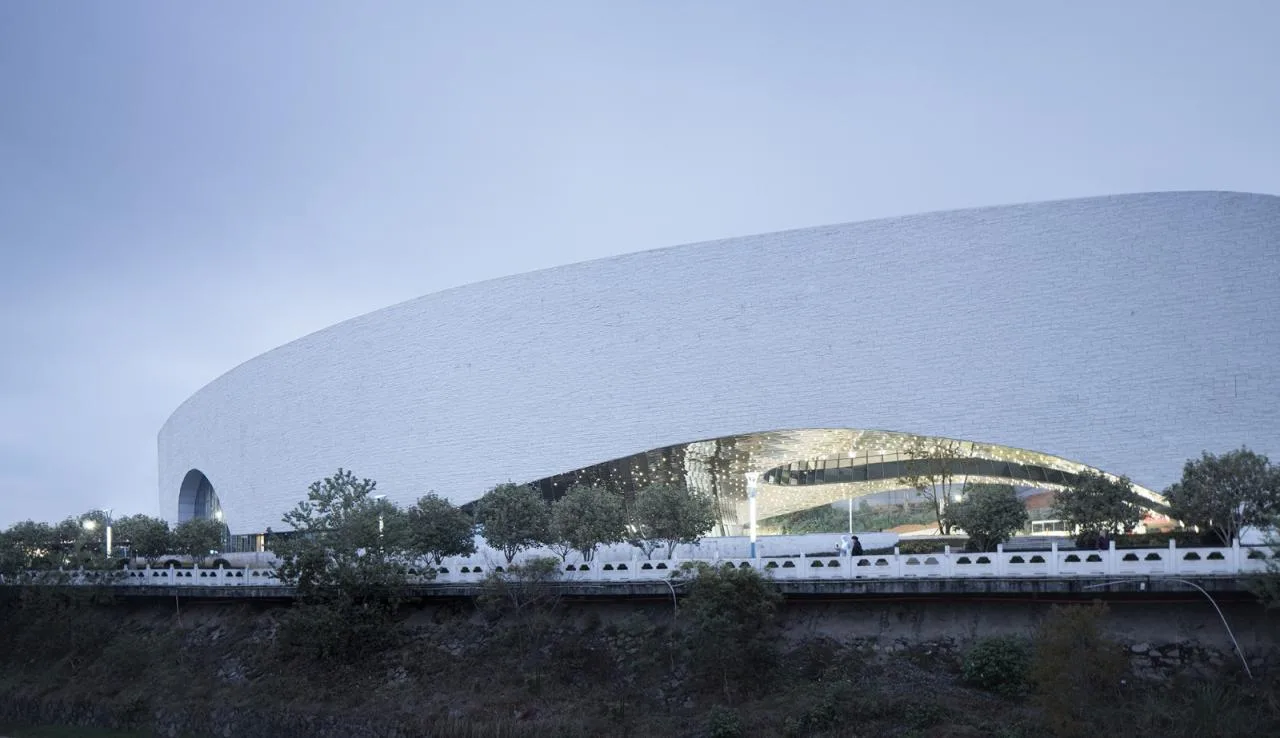
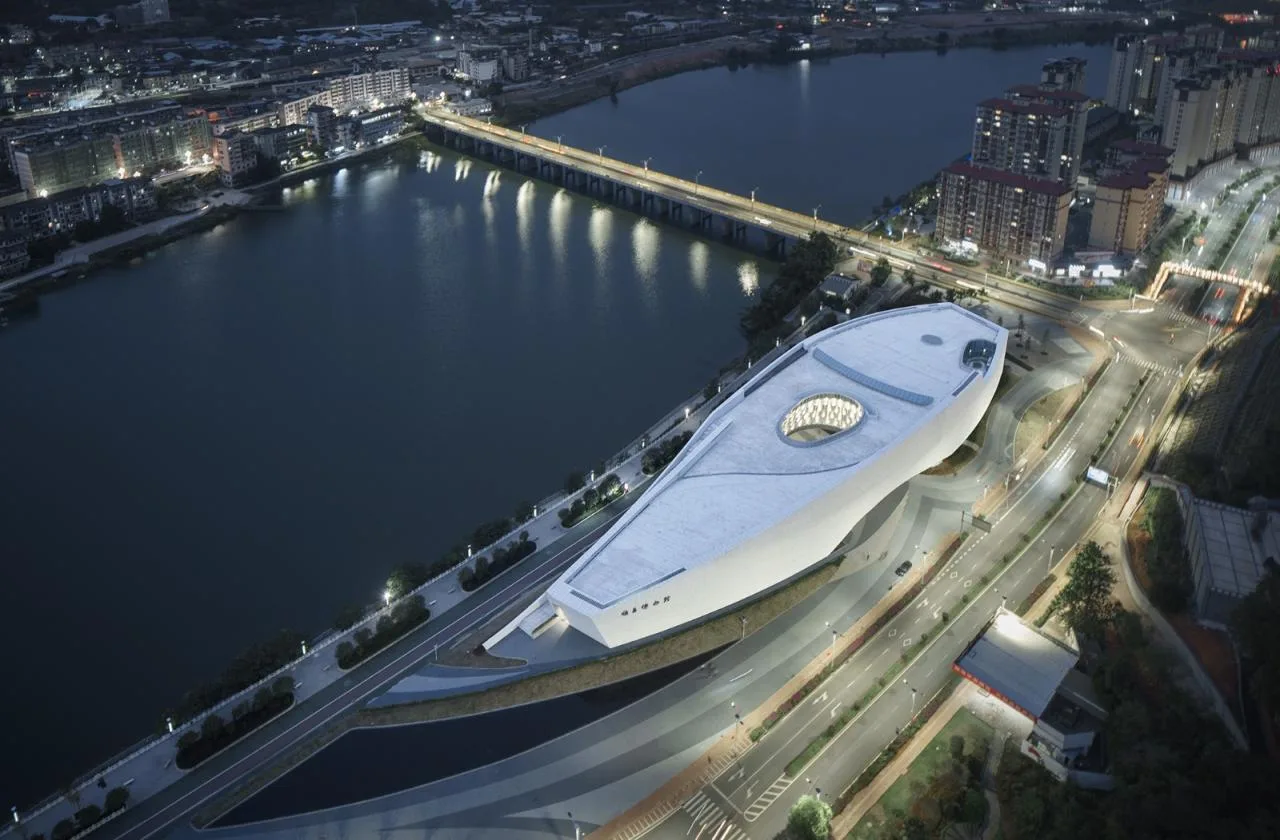
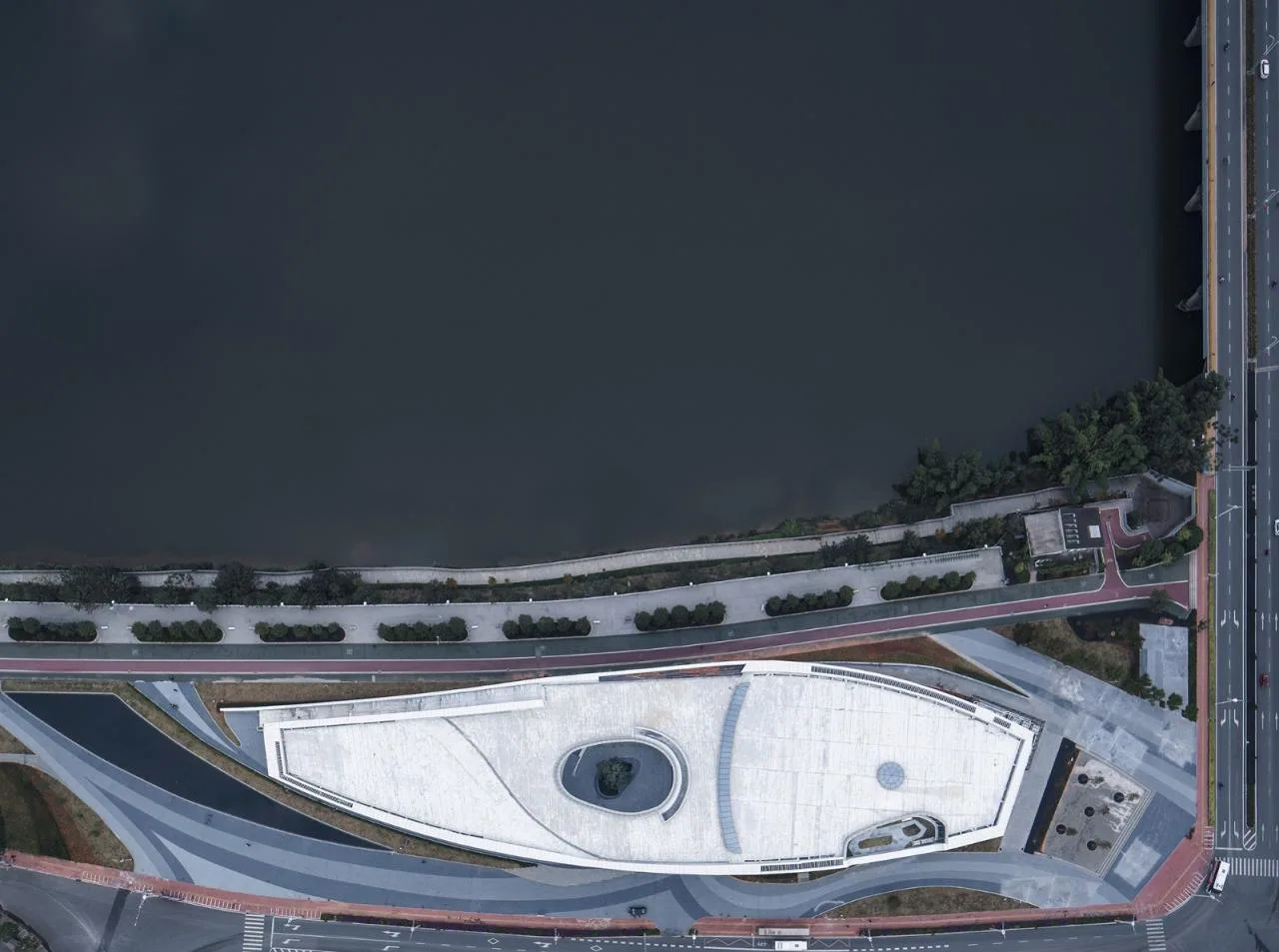
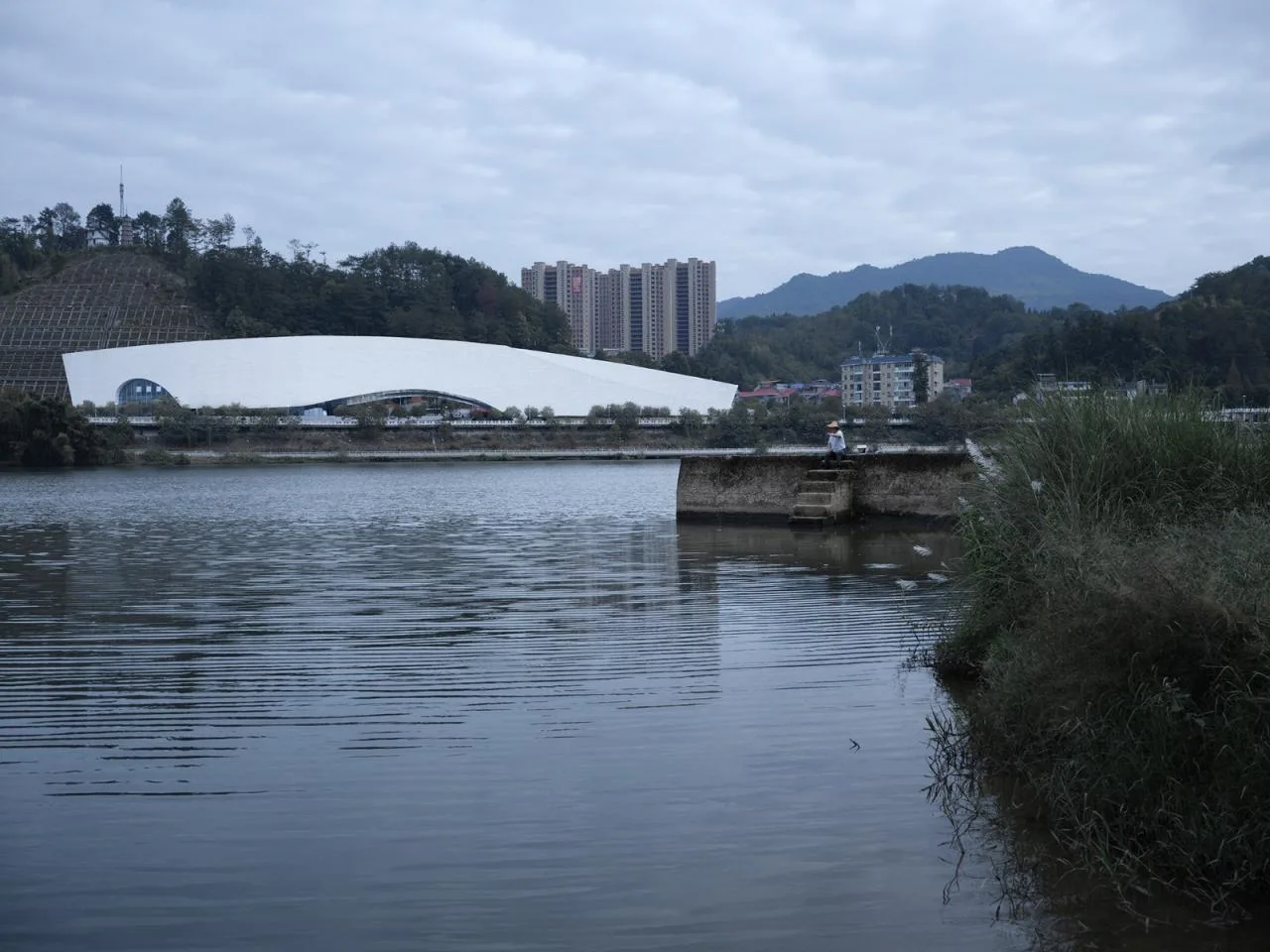
The project is situated in Shunchang County, Nanping City, Fujian Province, surrounded by mountains and intersected by the Futun River. Positioned at the city’s core, it faces Longshan to the south across the road and overlooks the Monument to the People’s Heroes. To the north, it borders the Futun River and the riverside promenade. The site stretches wide and long from east to west, with a narrow depth from north to south, shaped like a shuttle, nestled horizontally between the mountains and the river.
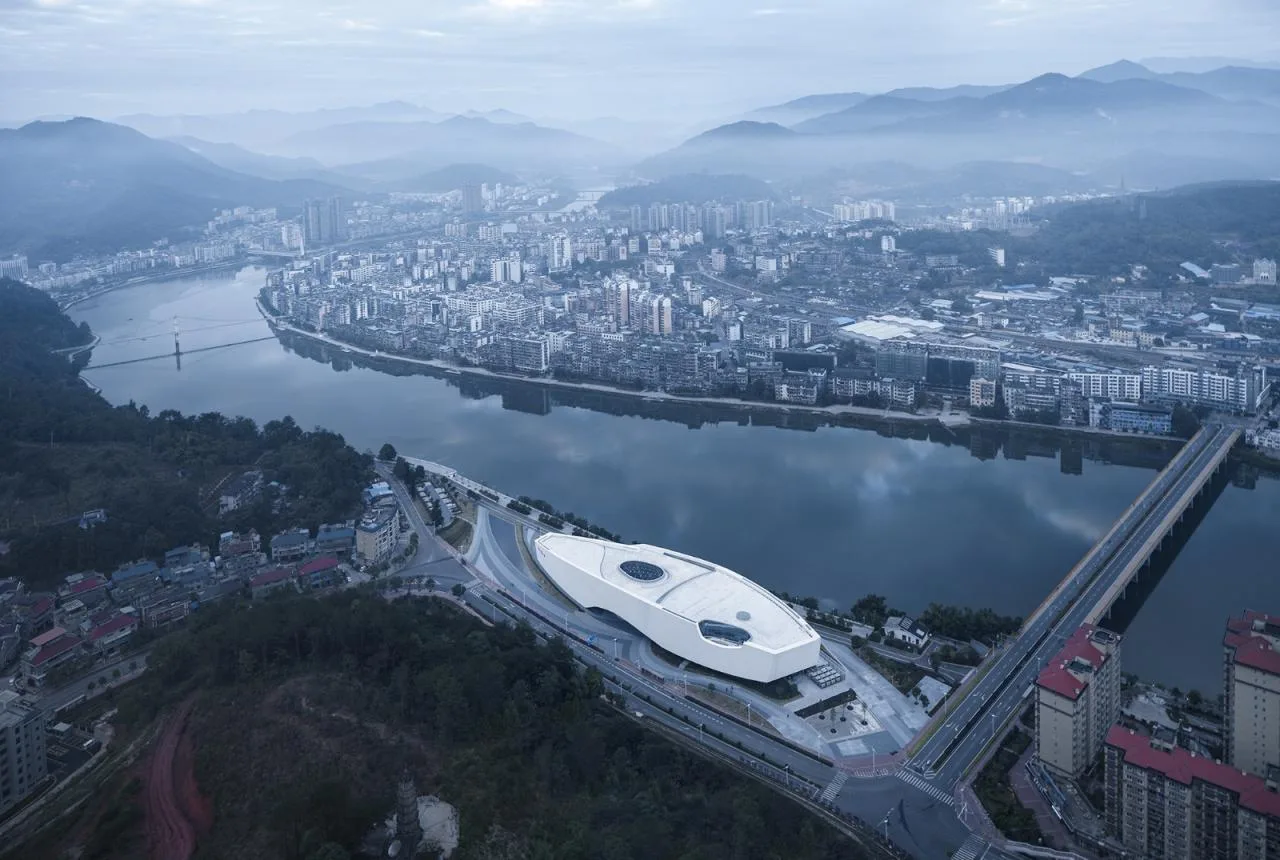
The project comprises the Shunchang Museum, Urban Planning Exhibition Hall, Office Management Building, and Cultural Relics Warehouse. Additionally, to support daily museum operations, the architects planned and integrated functional spaces such as a lecture hall, cultural book bar, and coffee shop.
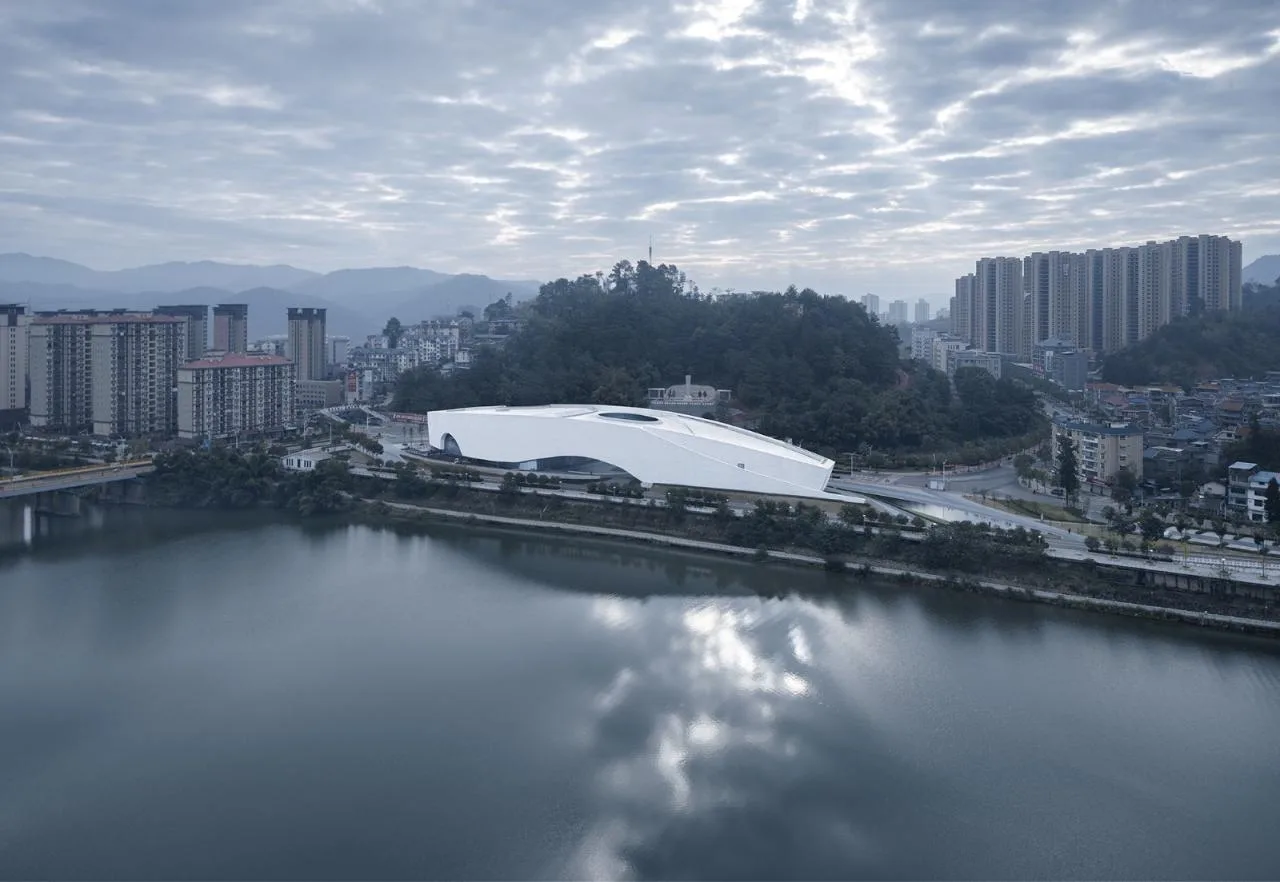
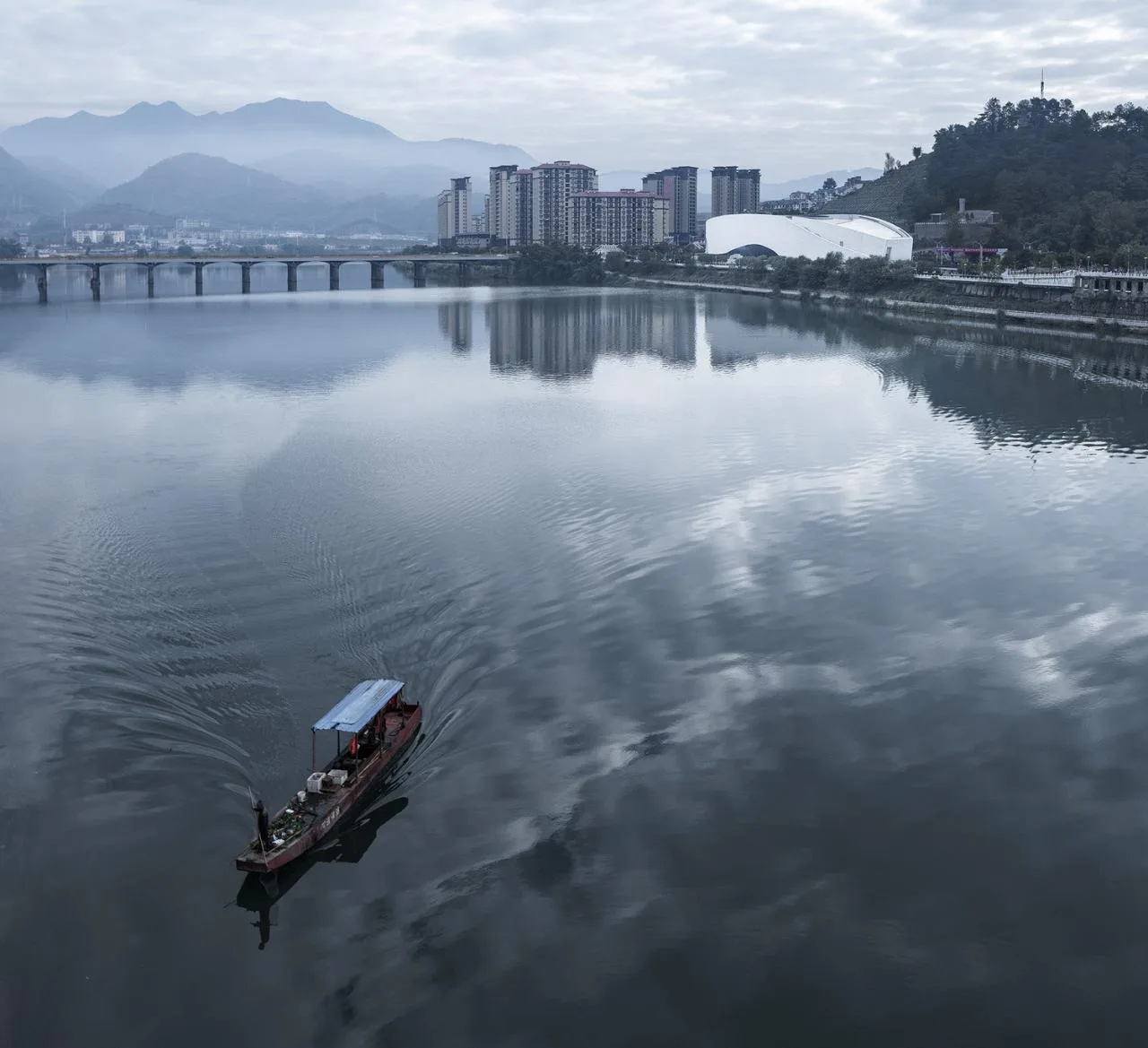
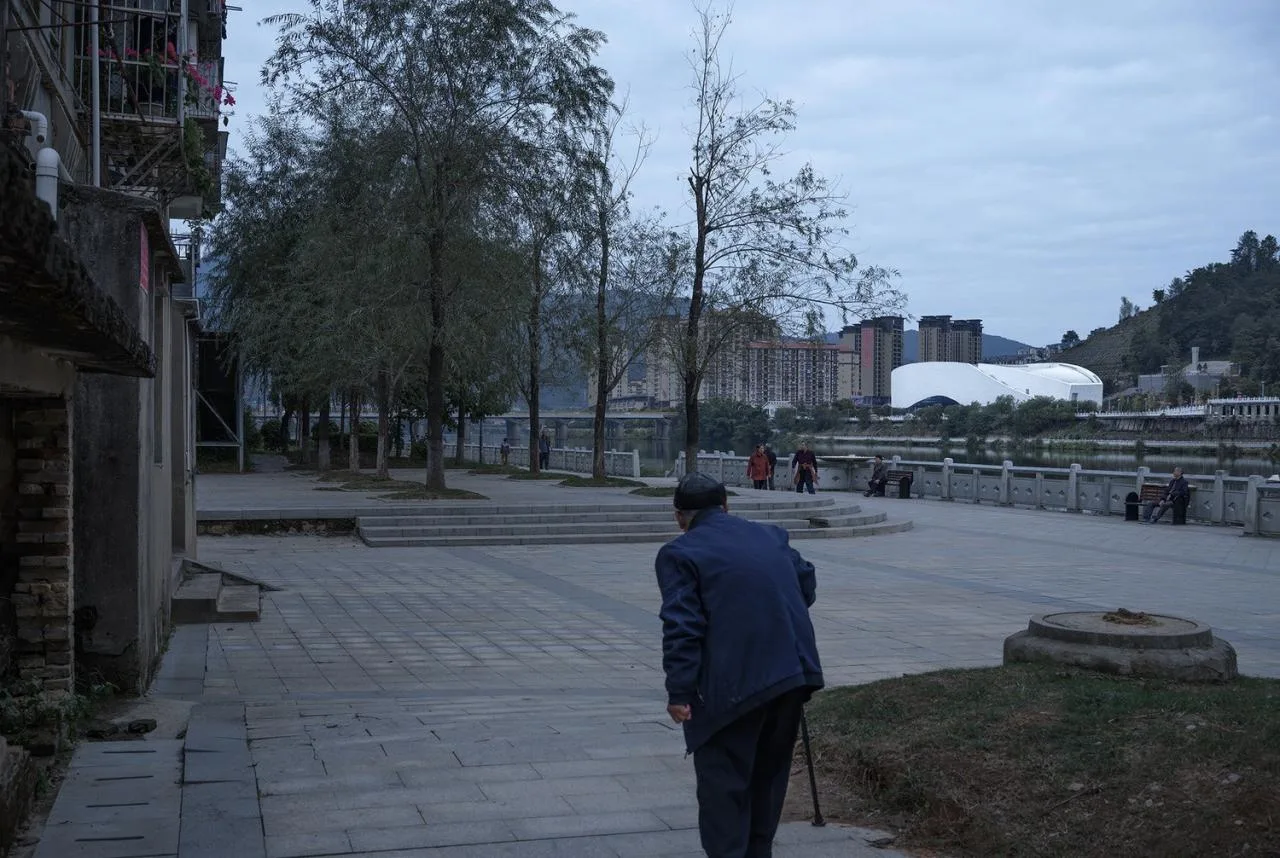
As a typical county-level museum, Shunchang Museum does not house particularly famous or rare collections. Instead, its design focuses on blending architecture into citizens’ daily lives and preserving the memories of visitors. It showcases the local culture rooted in the land and becomes a cherished memory for residents—a place where tourists come to see the mountains and water and feel a sense of homesickness.
2. Design Strategy
2.1 Connectivity and Openness
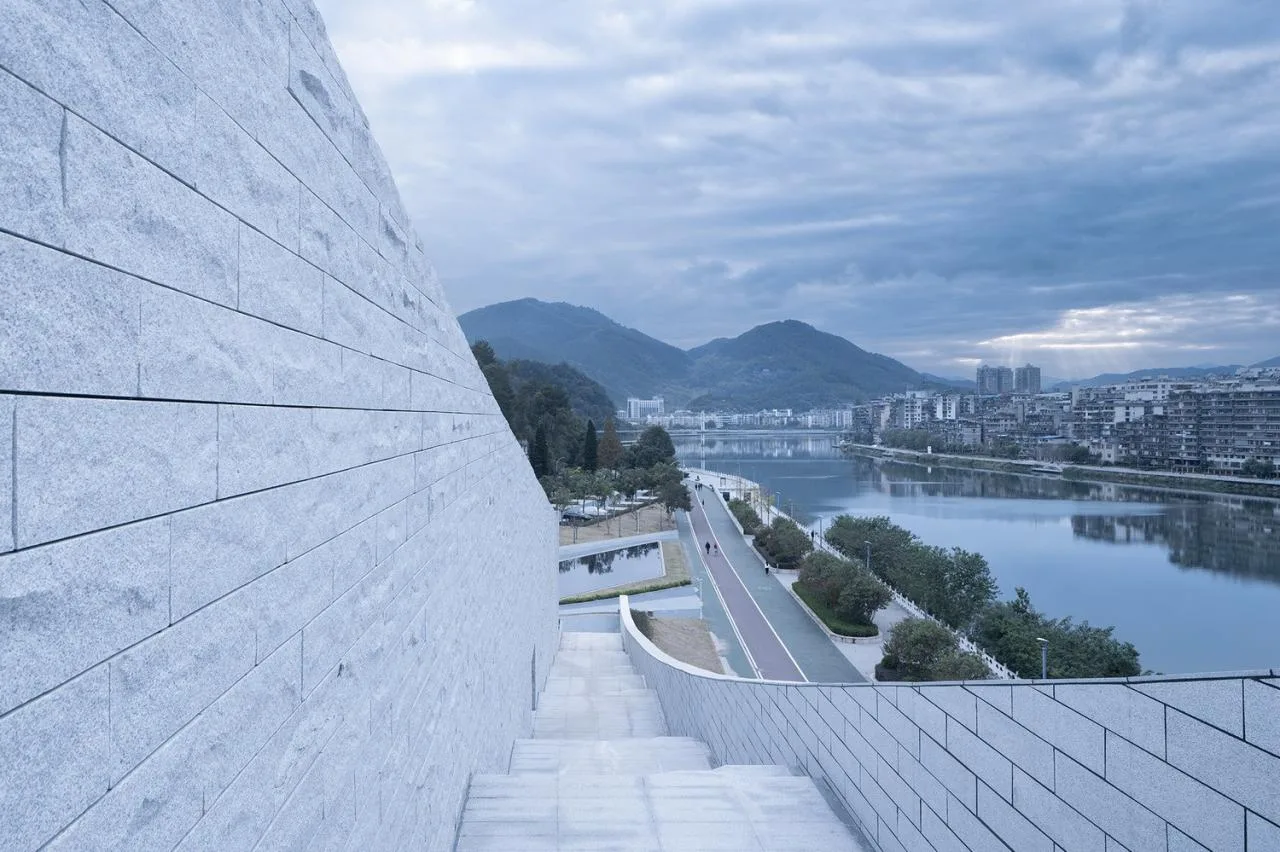
Set within a natural landscape painting, the architectural form avoids isolating urban pedestrian flows and riverside trails. It actively engages in dialogue with the mountains and river, creating a “traversable urban park” that opens up to the city on multiple levels. Instead of blocking the natural features, it connects the mountains and rivers to the urban environment.
2.2 City Living Room
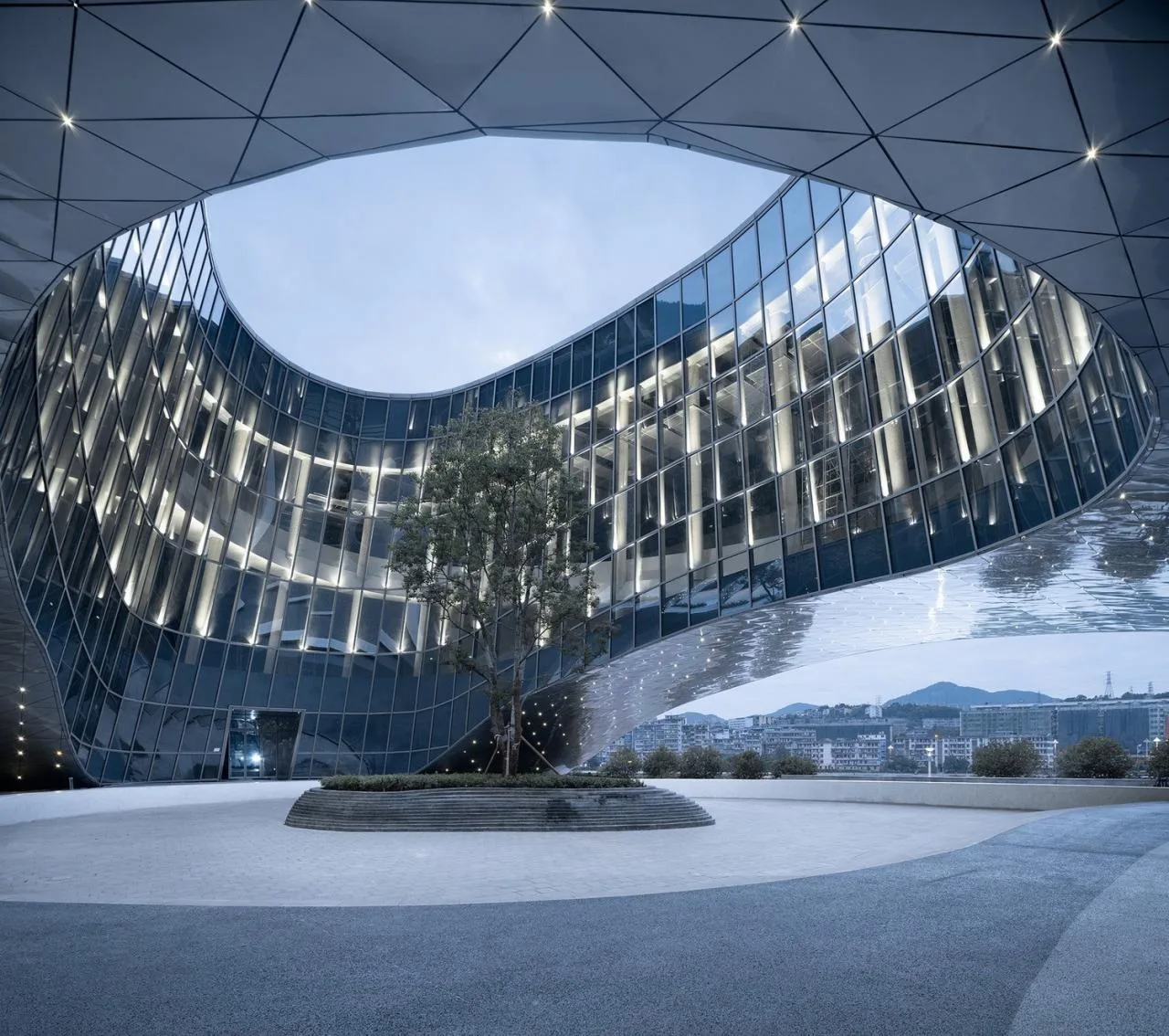
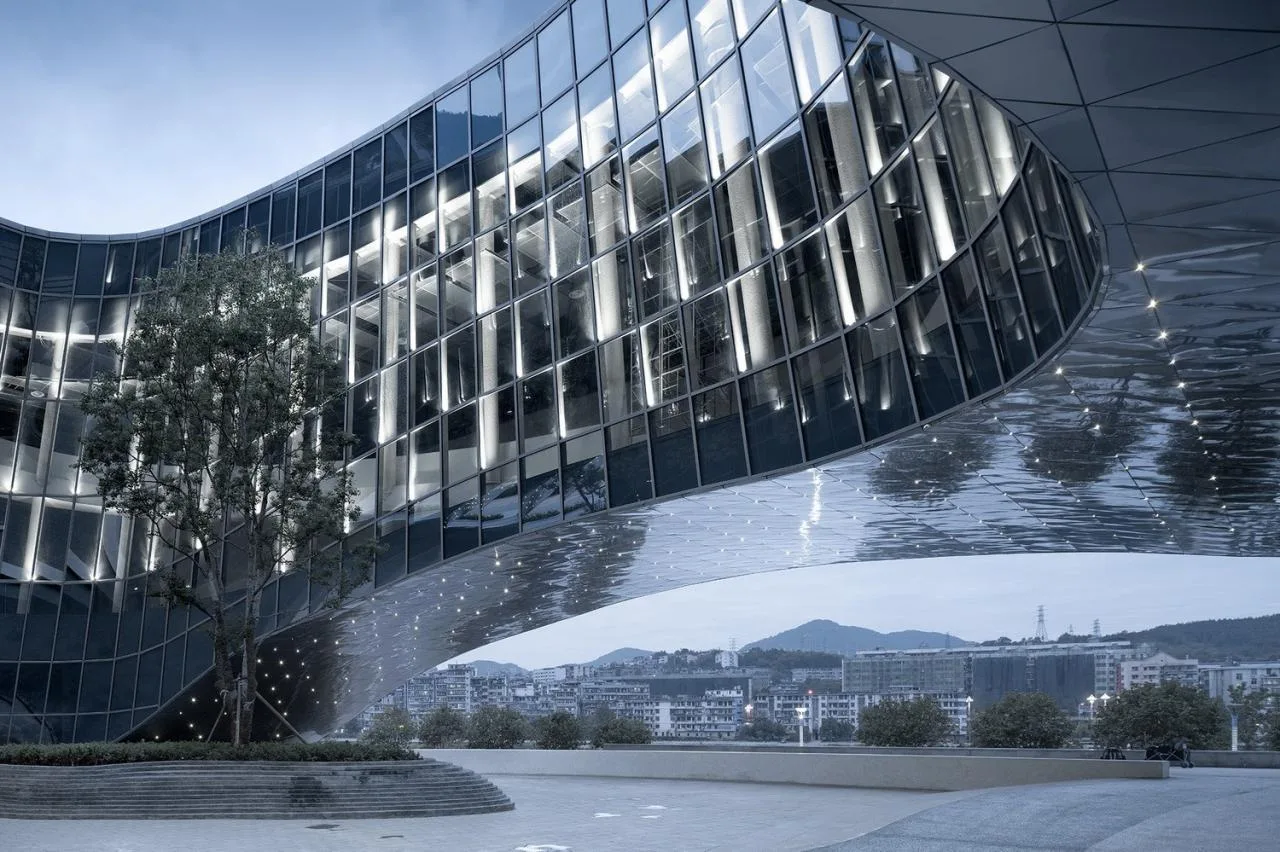
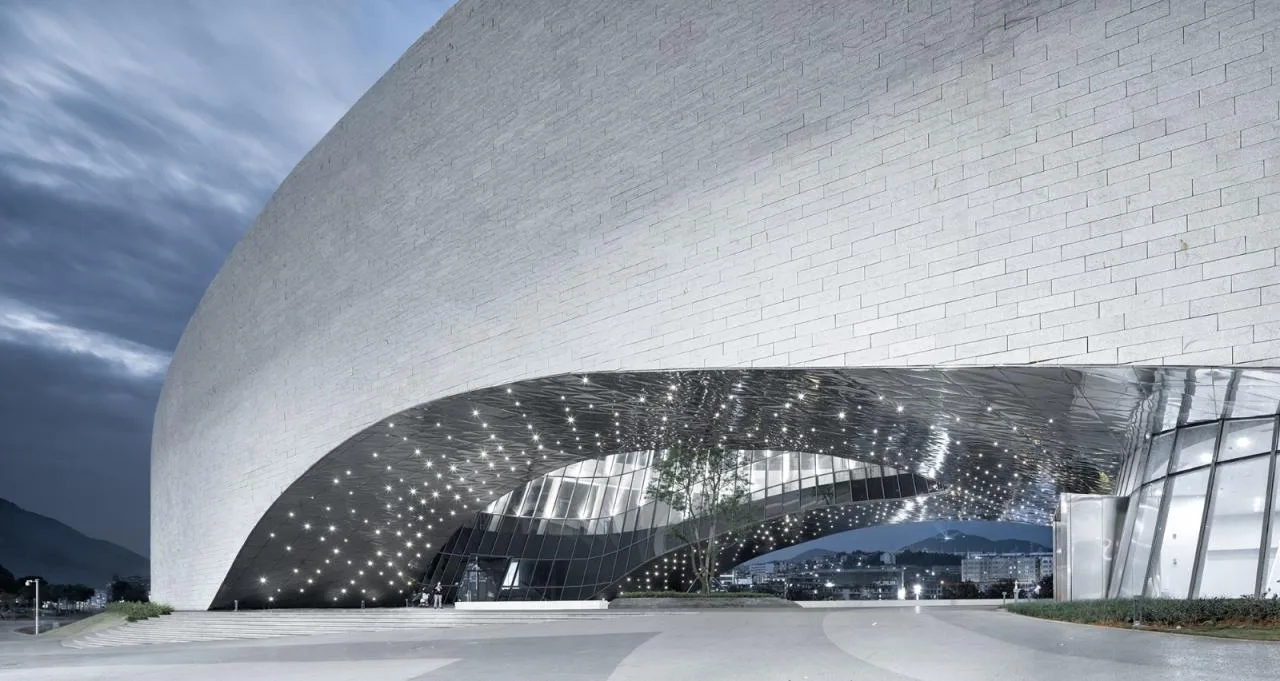
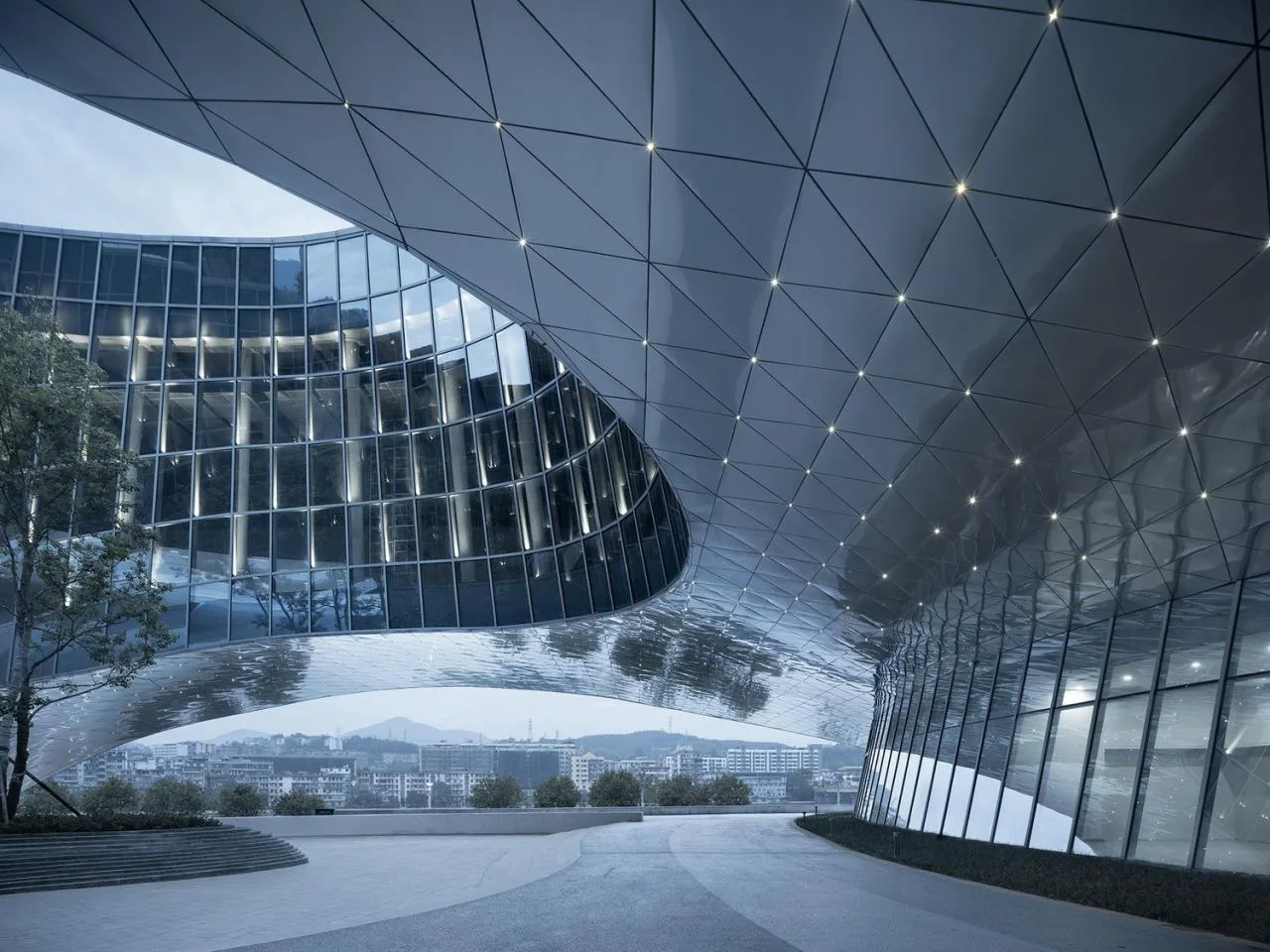
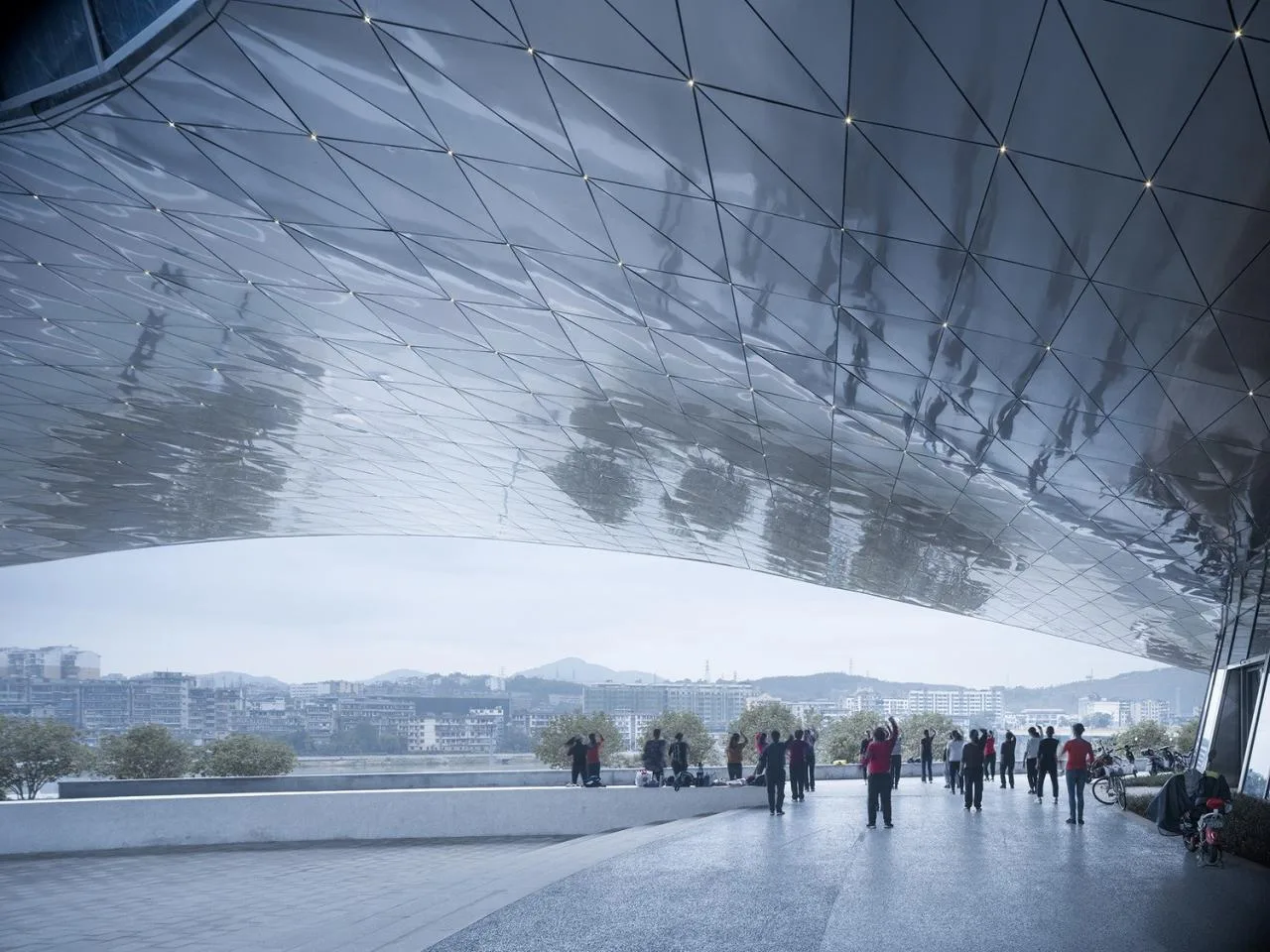
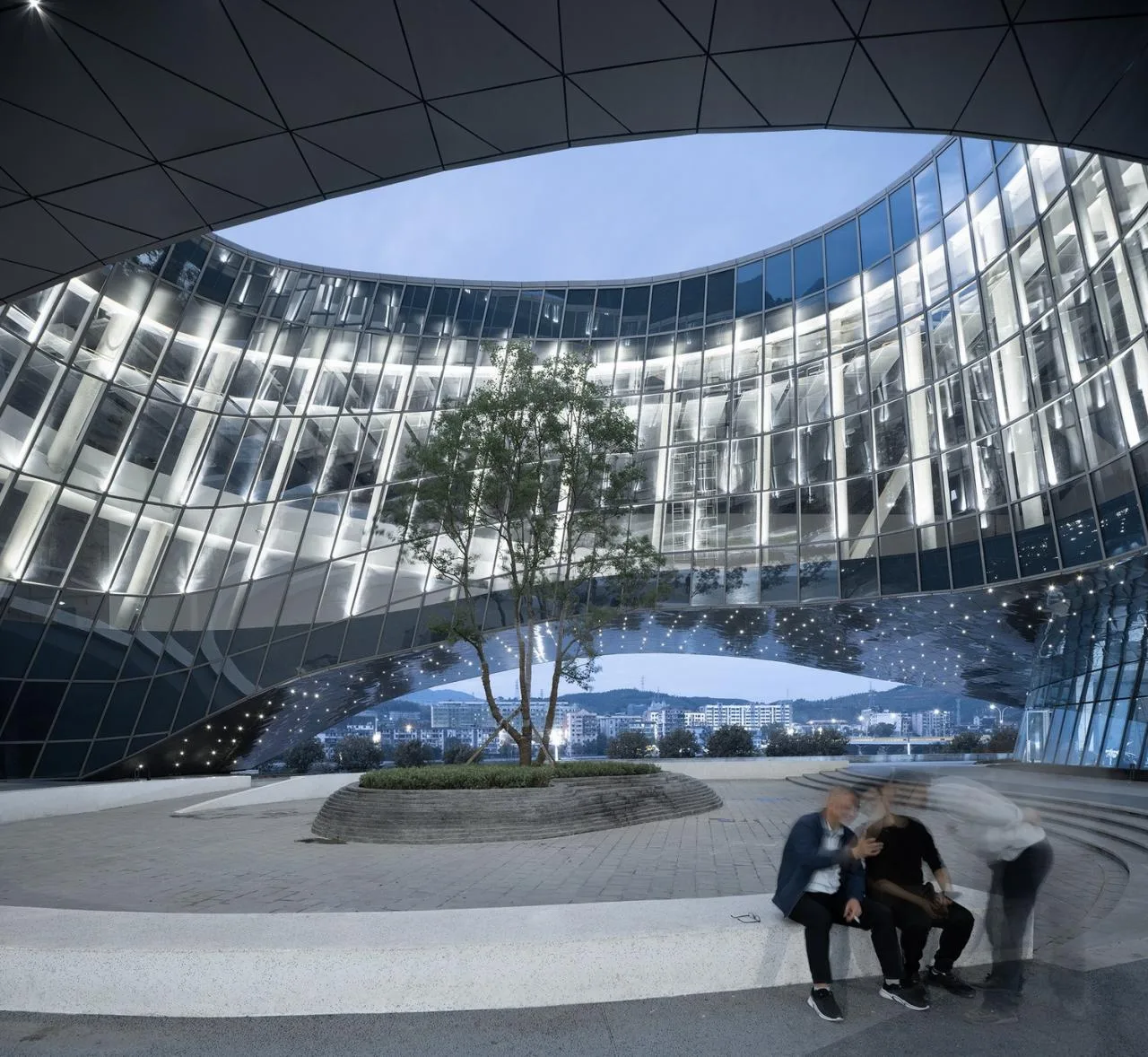
The museum’s location serves as a key node in the city’s slow-traffic network along the river. Raising the building’s ground floor creates a spacious urban gray space that accommodates large crowds and extends to the edge of Futun Creek.
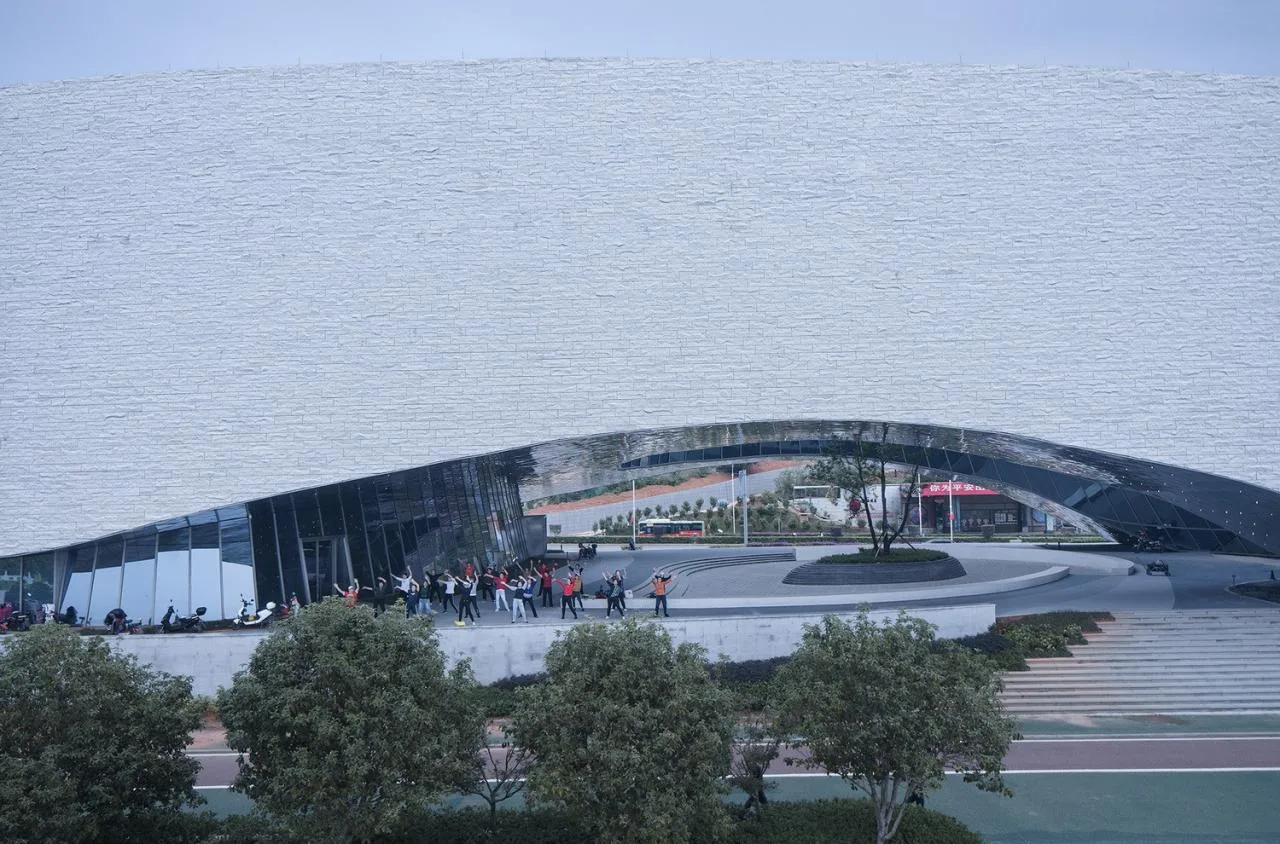
This urban living room blends openly with its surroundings, welcoming skateboarders, street performers, and dance troupes. It offers a vibrant space for daily life and cultural events, enriched by the community’s participation and meaning.
2.3 Observation Tour Path
Beginning at the urban living room, the design organizes the main entrances to the museum and urban planning exhibition hall, allowing independent use of temporary exhibition halls and lecture spaces. Visitor flow centers around the comprehensive halls, innovatively connecting and enhancing the overall experience.
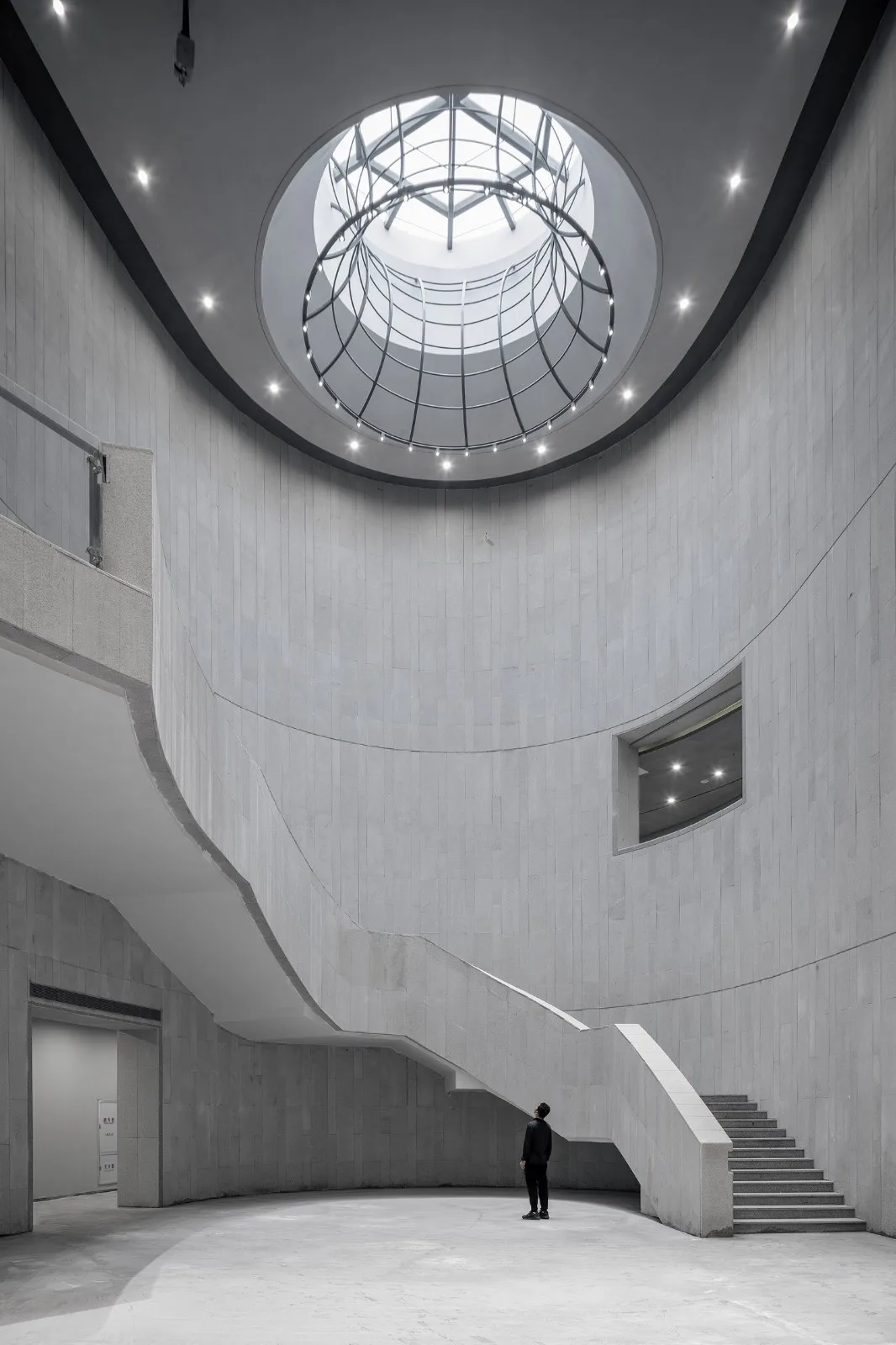
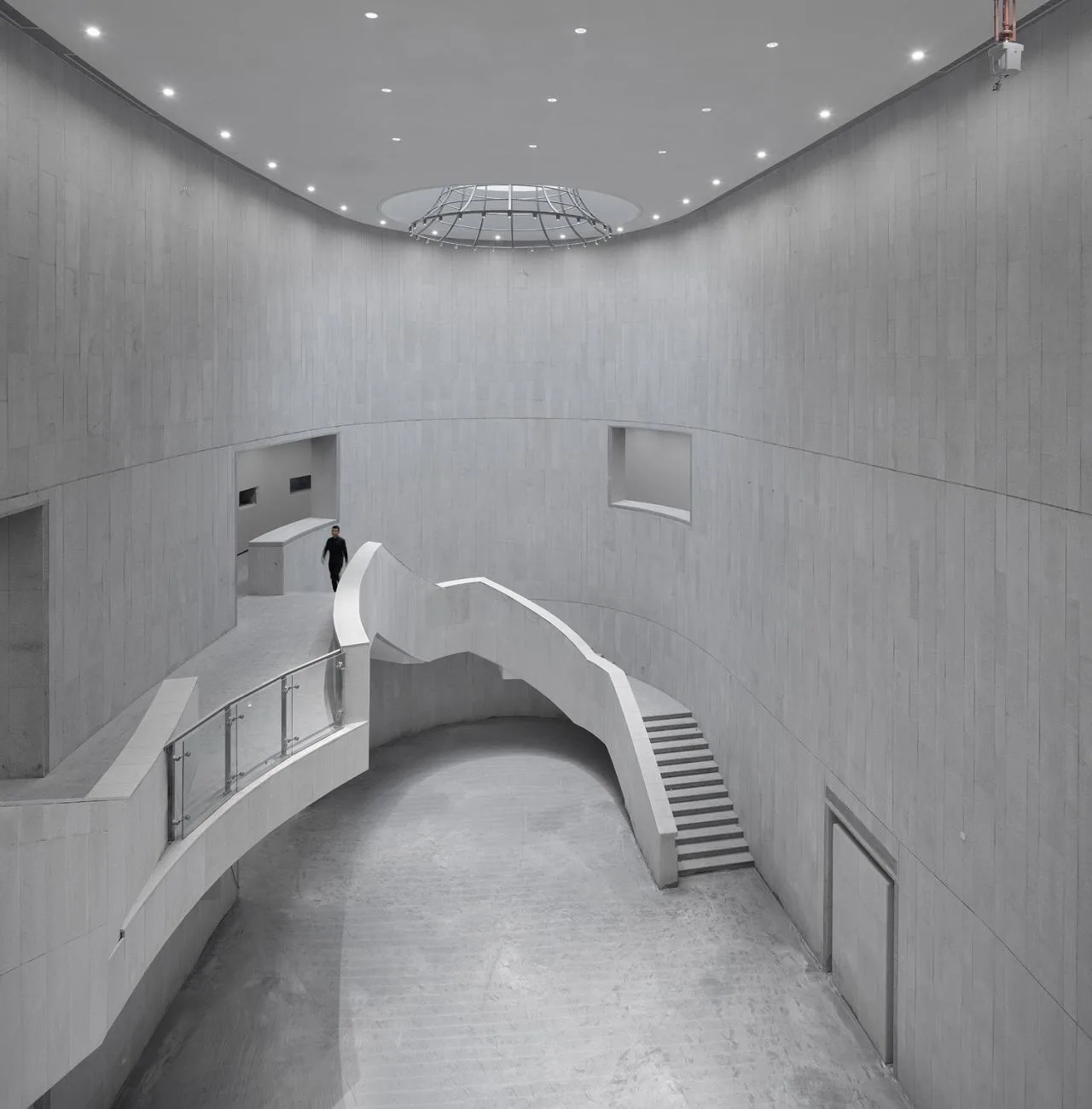
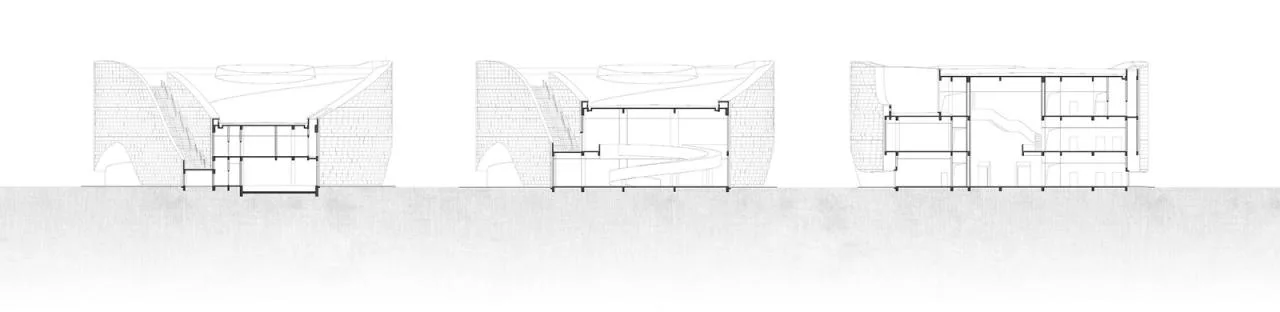
The museum features a comprehensive hall with stairs connecting galleries on the first through third floors. The urban planning exhibition hall centers on a city sand table and is linked by a spiraling ramp that connects exhibitions between the first and second floors, meeting visitor needs and enhancing spatial flow.
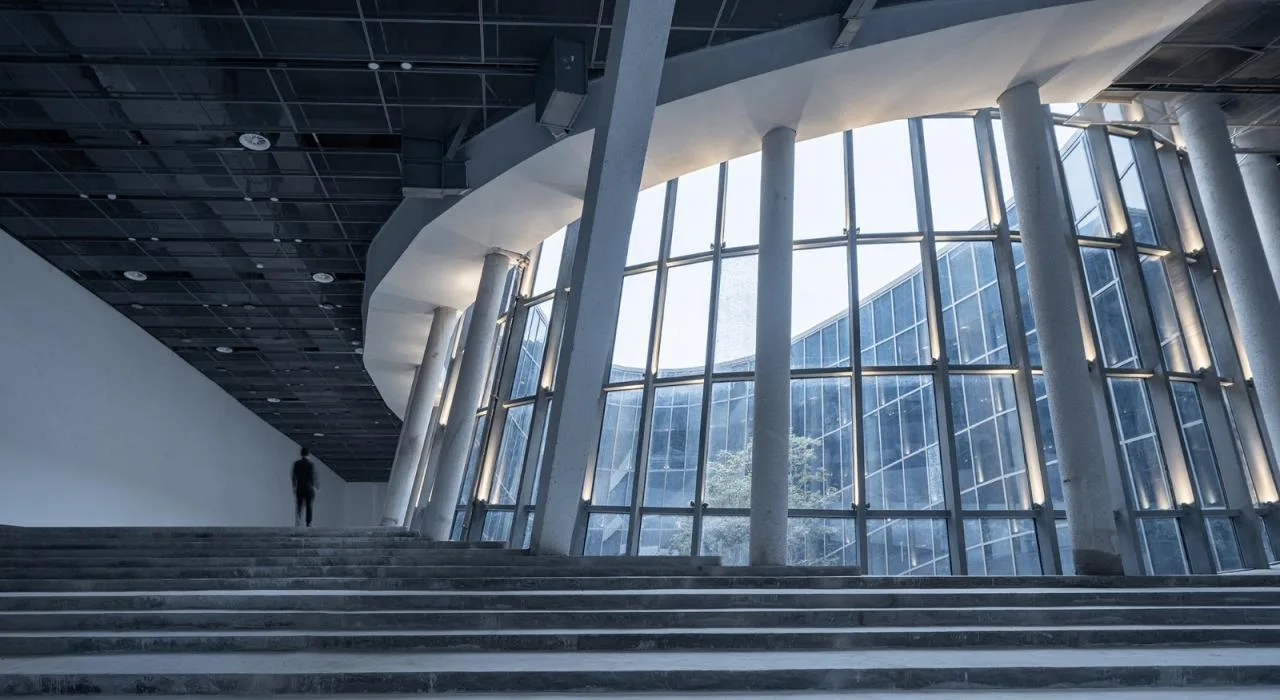
The space linking the museum and urban planning hall includes a cultural book bar designed for exhibitions and displays. The rotating ramp ascends to the rooftop city balcony, connecting to the riverside walkway and integrating the building’s internal circulation with the urban environment. This tangible interface between interior and exterior creates a unique architectural spatial experience.
2.4 City Balcony
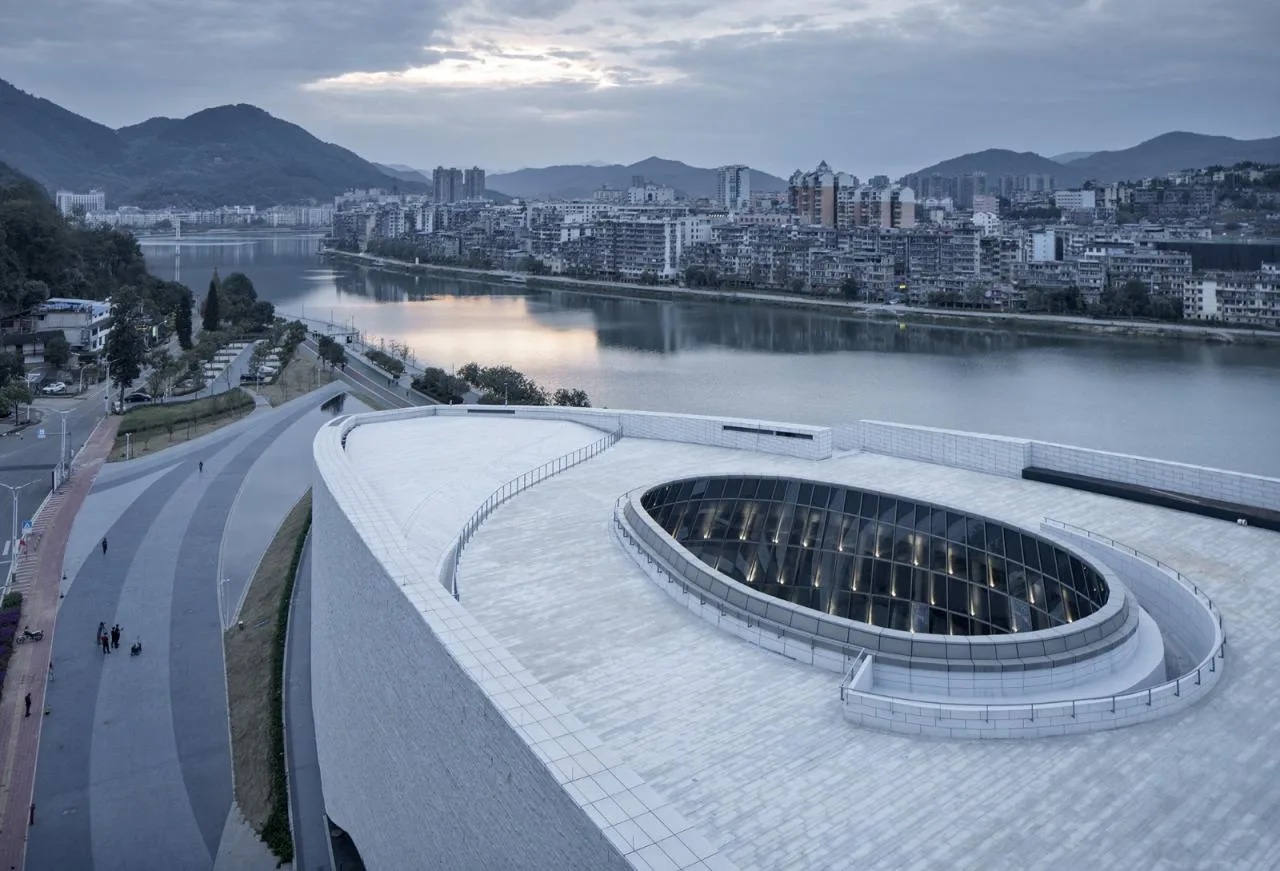
Aligned with the Binjiang Trail, a grand staircase leads to the building’s rooftop, creating a city balcony with panoramic views of the beautiful mountain city landscape.
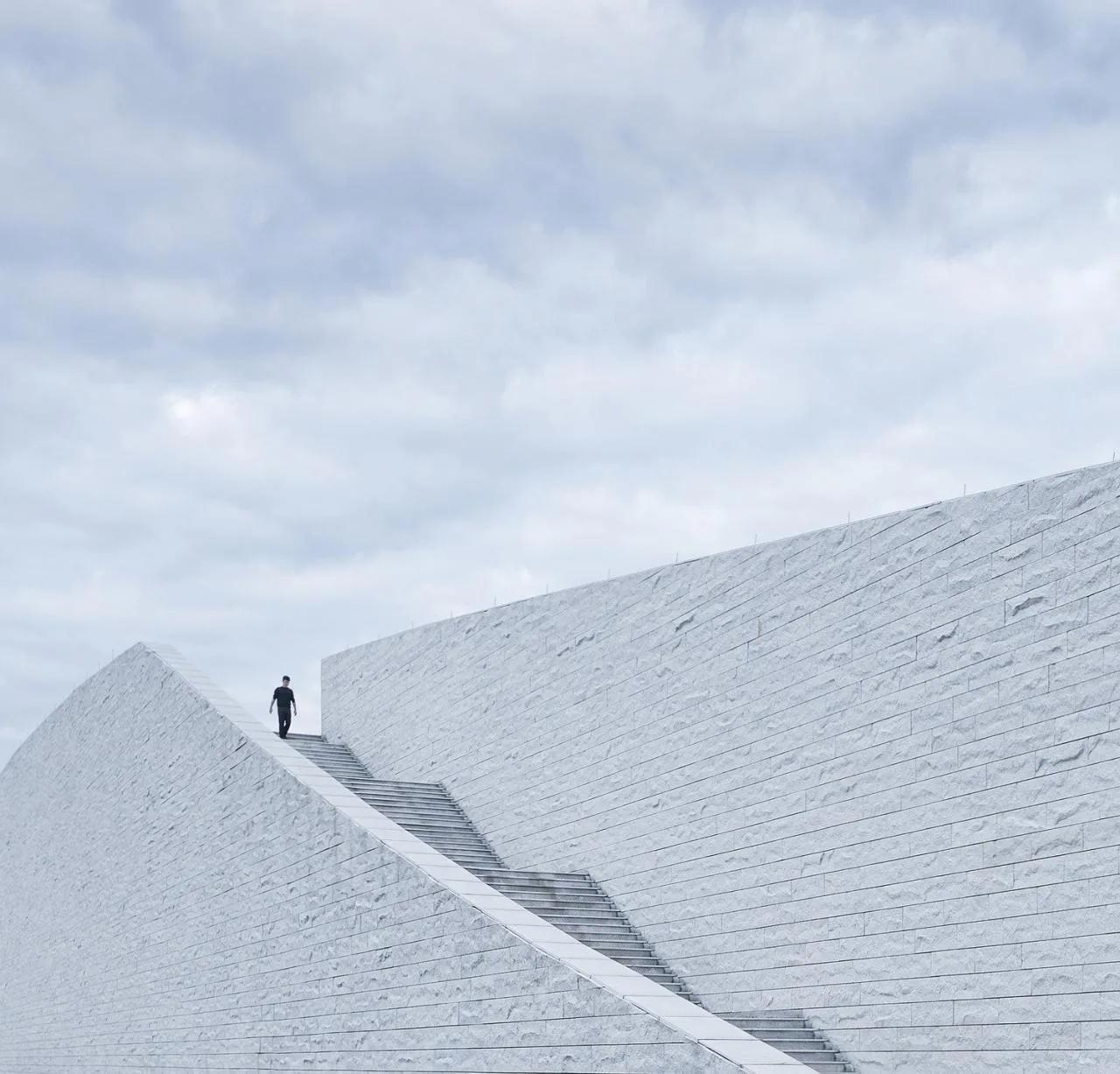
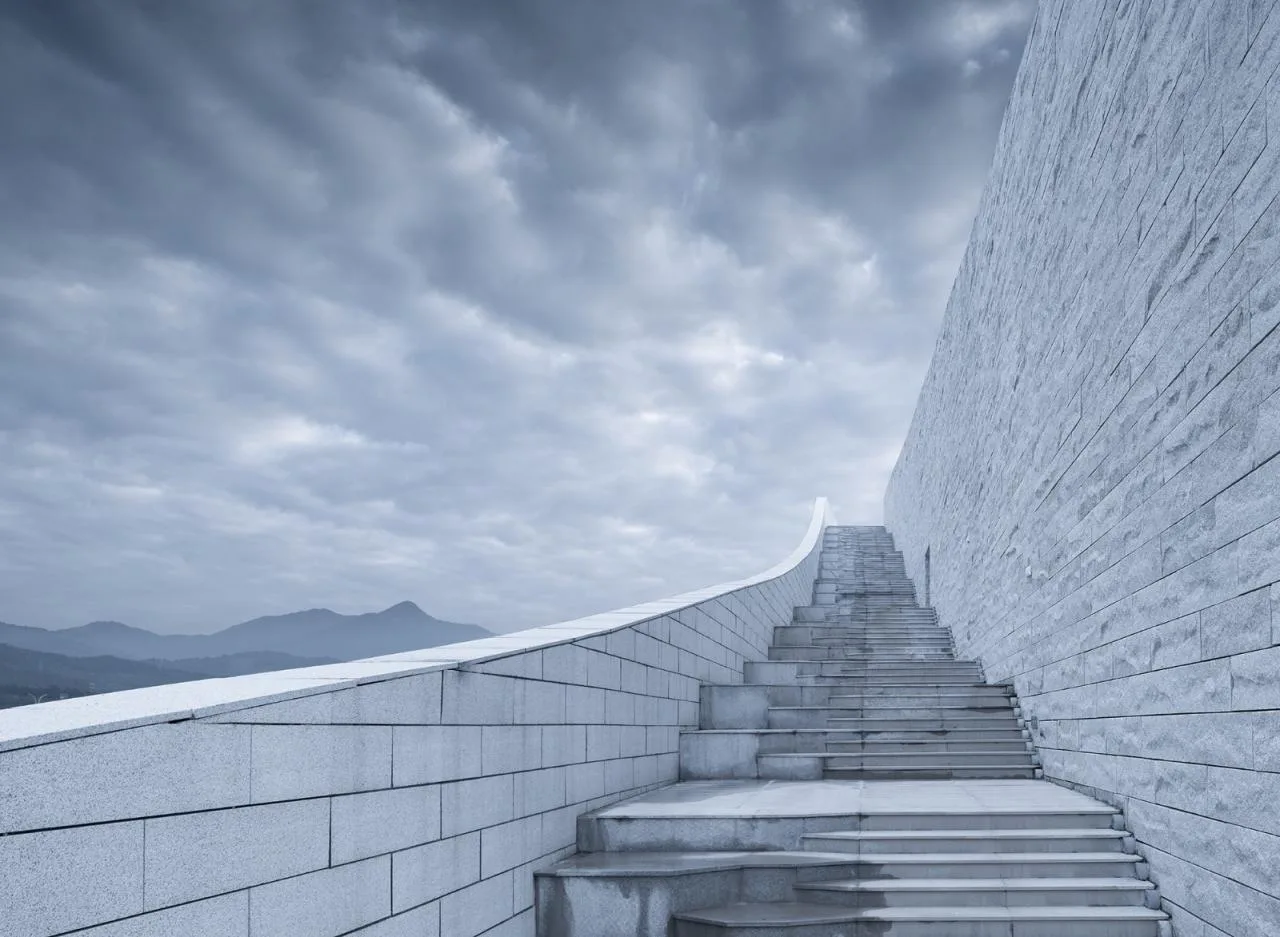
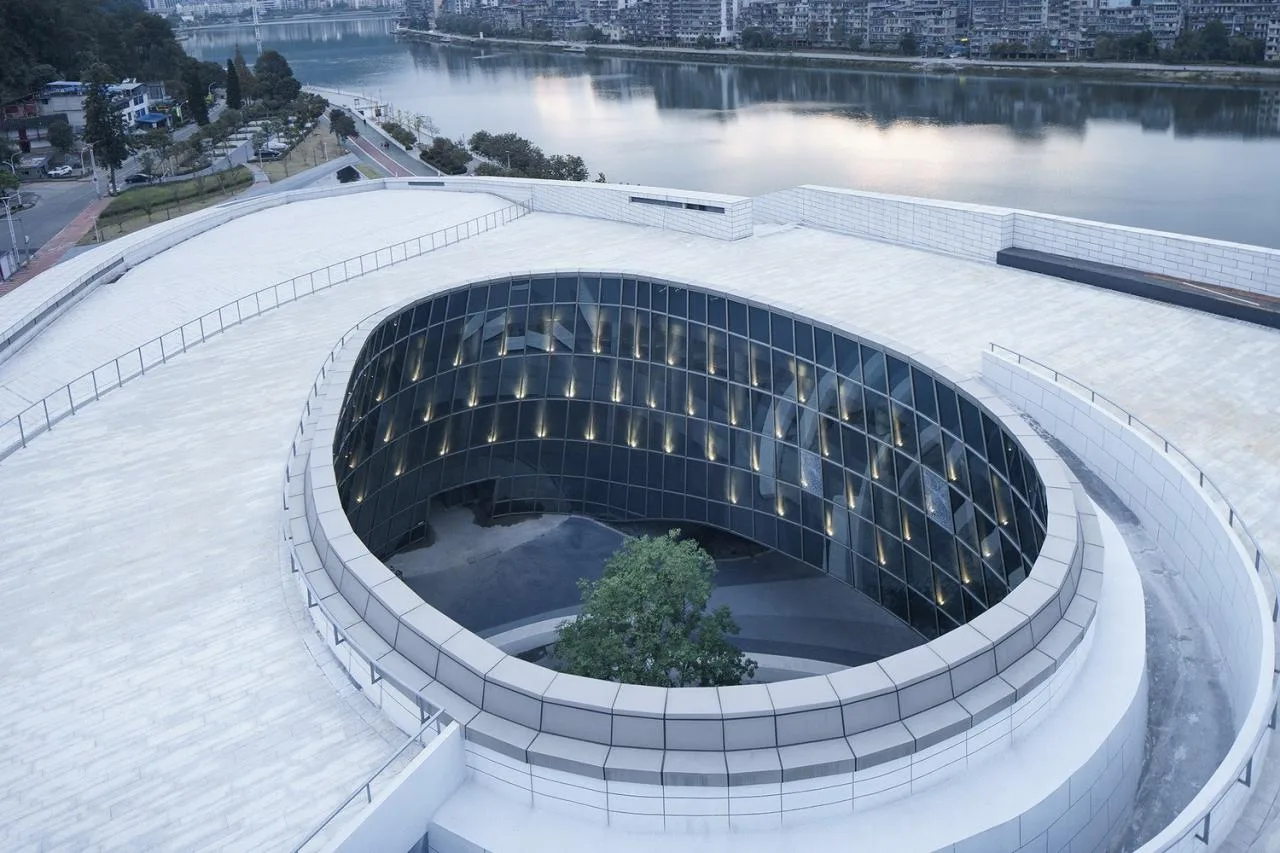
To ensure a fully accessible roof, the building’s equipment is strategically arranged by creating a courtyard along the exterior walls. This courtyard provides natural light to office spaces and fresh air intake for equipment rooms. Central air conditioning units are discreetly installed on the outdoor site, achieving a roof free of equipment.
2.5 Preserving Trees
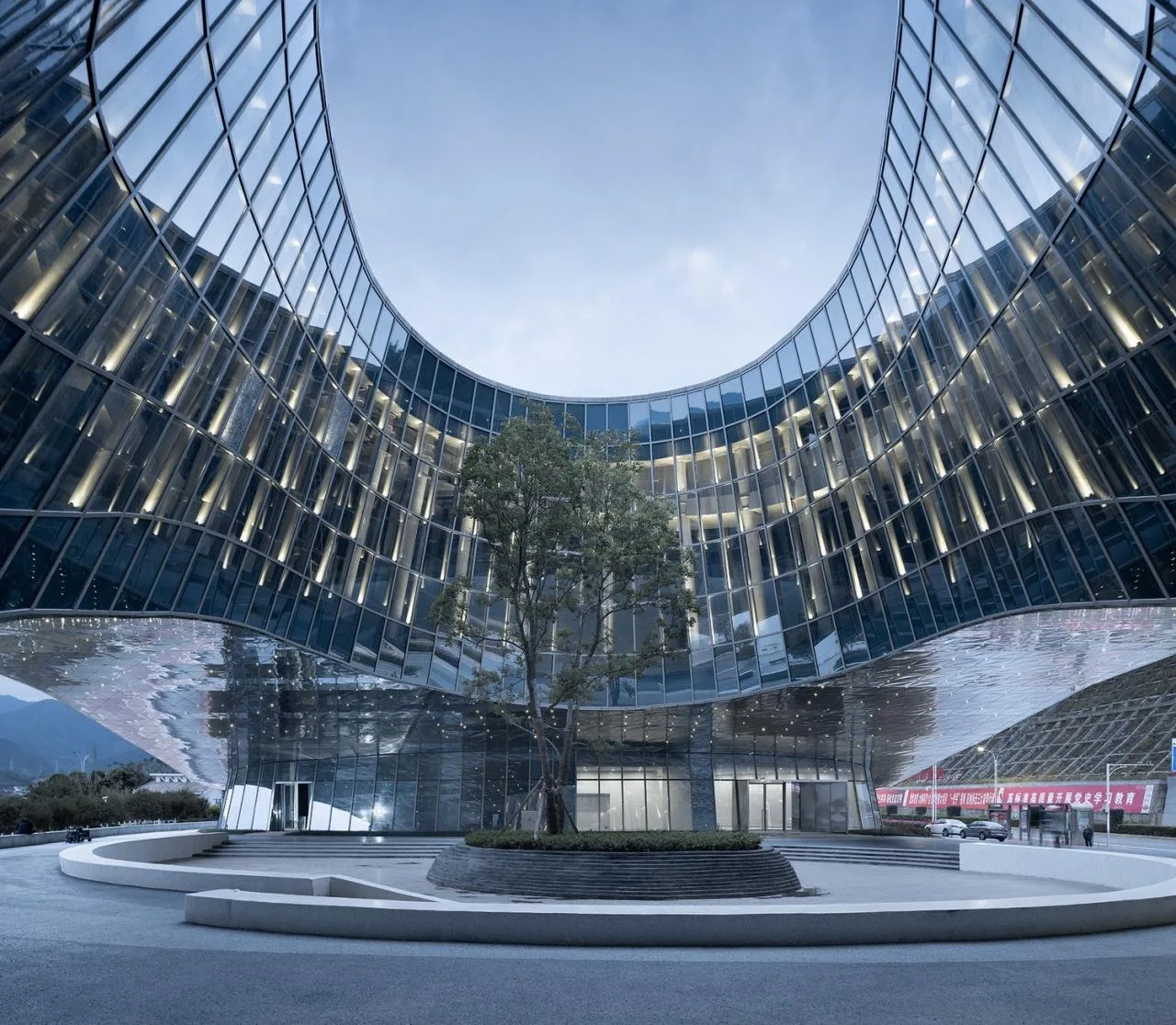
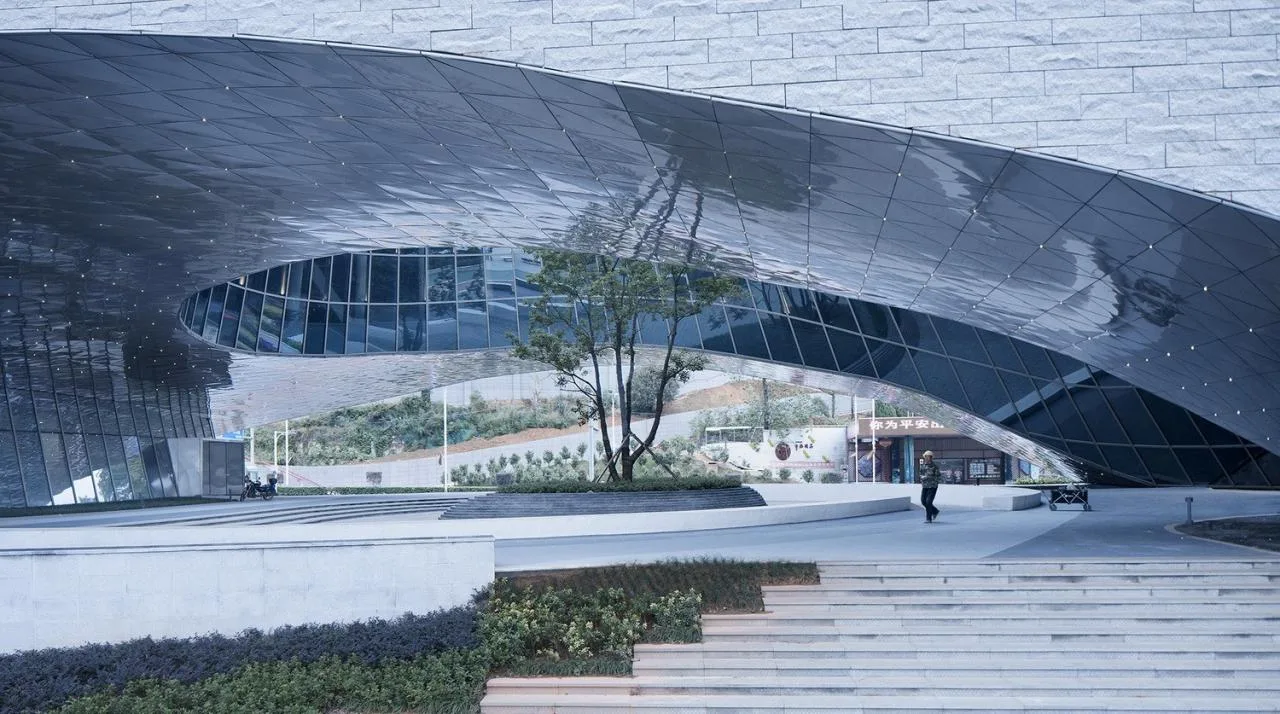
Existing trees on the site were preserved and transplanted to the center of the city living room. Bathed in sunlight, these trees become the visual focus within the rich spatial relationships of the urban living room, creating a welcoming and pleasant interface for the public.
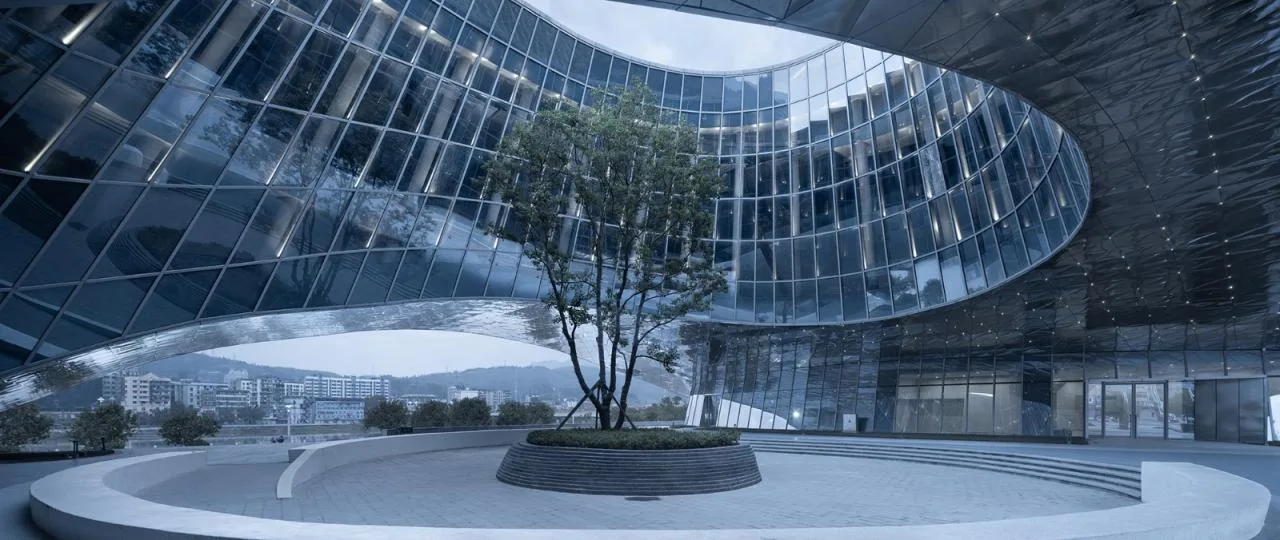
The large tree also serves as a symbol of place memory. While changes in the environment bring new opportunities to urban life and modify citizen activities, the small town beneath the big tree remains fondly remembered and celebrated.
3. Construction Generation
3.1 Structural System
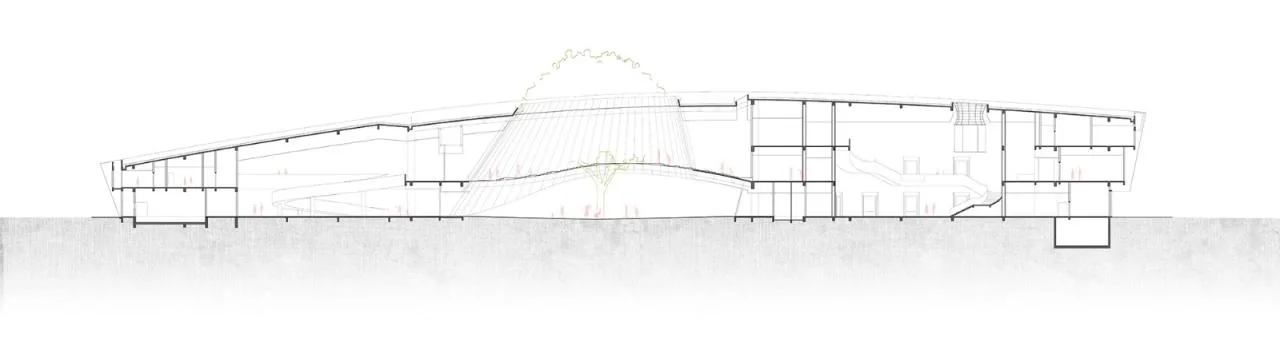
The city living room is designed with maximum openness, allowing natural light to flood the outdoor atrium. The main building adopts a frame shear wall structure with minimal walls, supported by shear walls on both sides. A set of 48-meter-span curved trusses creates a spacious, column-free open space on the ground floor.
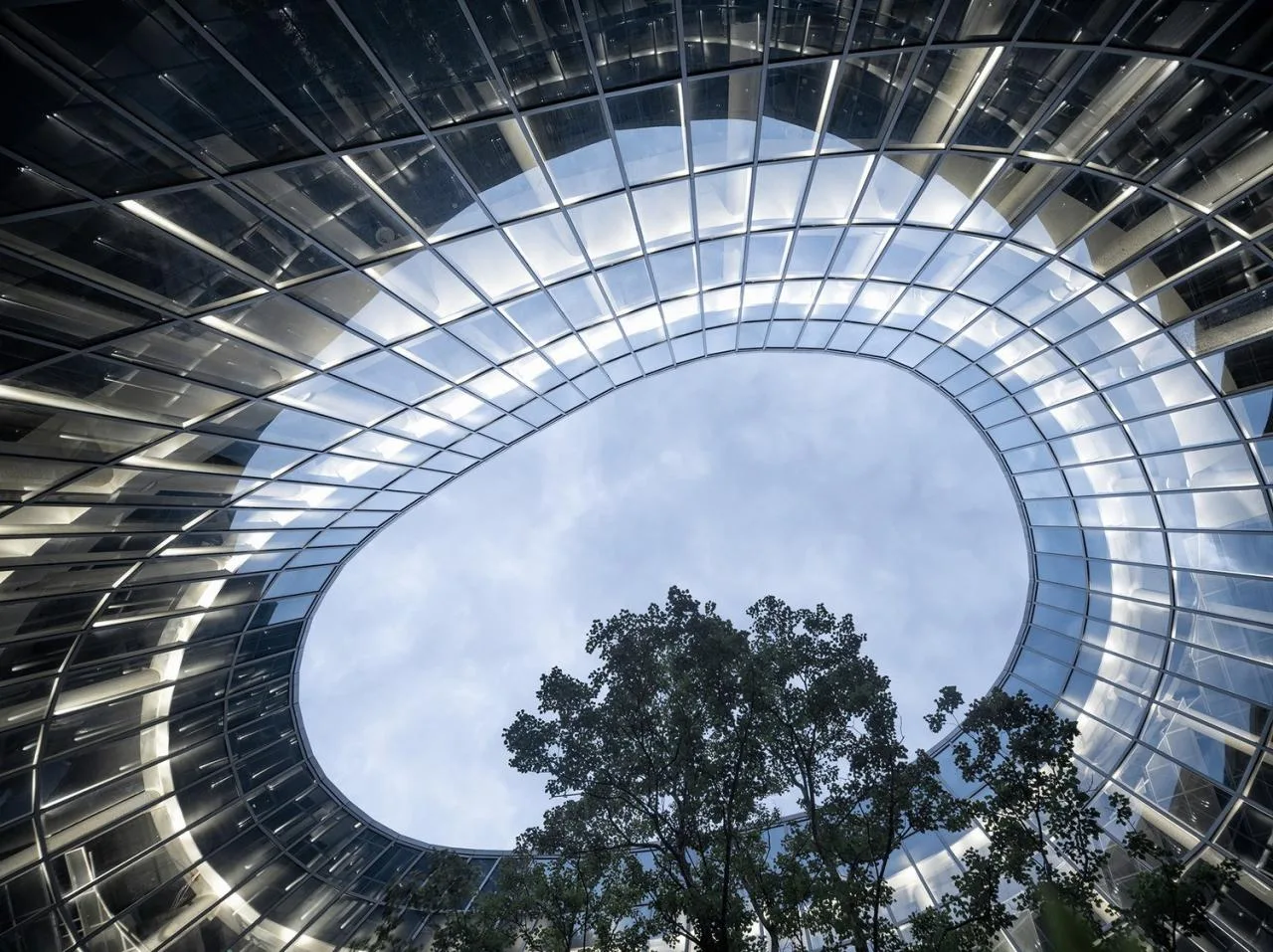
The circular atrium serves as the heart of the city living room, but extensive hollowing out posed structural challenges. The design ingeniously realized the concept by elevating the east side and landing the west bottom floor through short trusses.
3.2 Material Selection
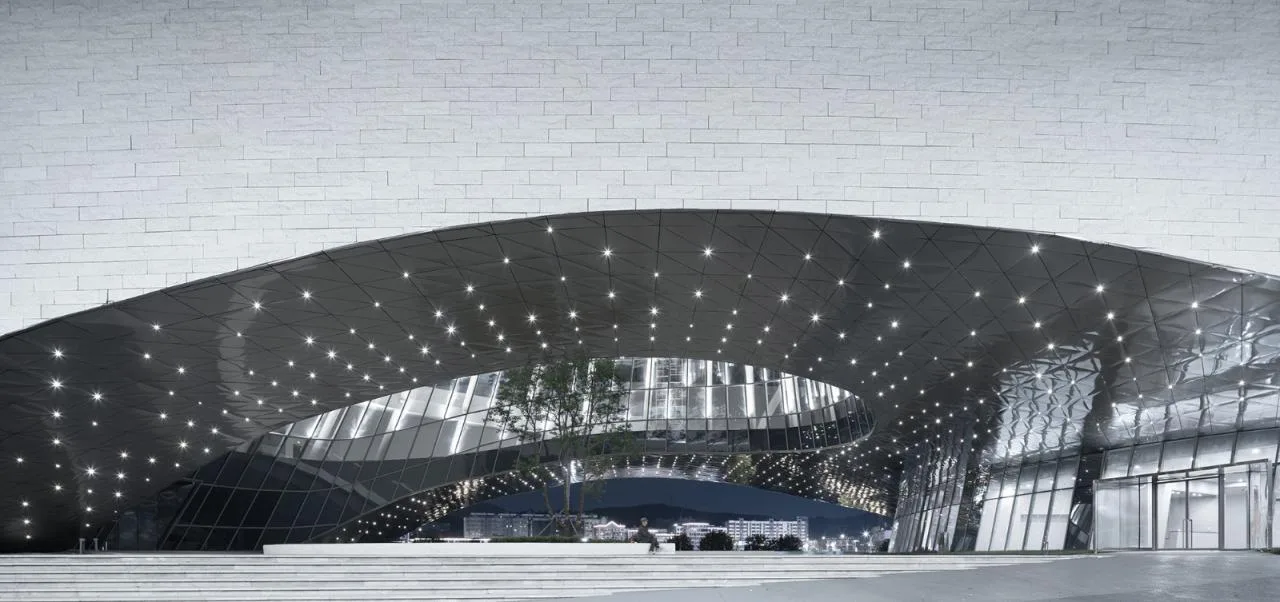
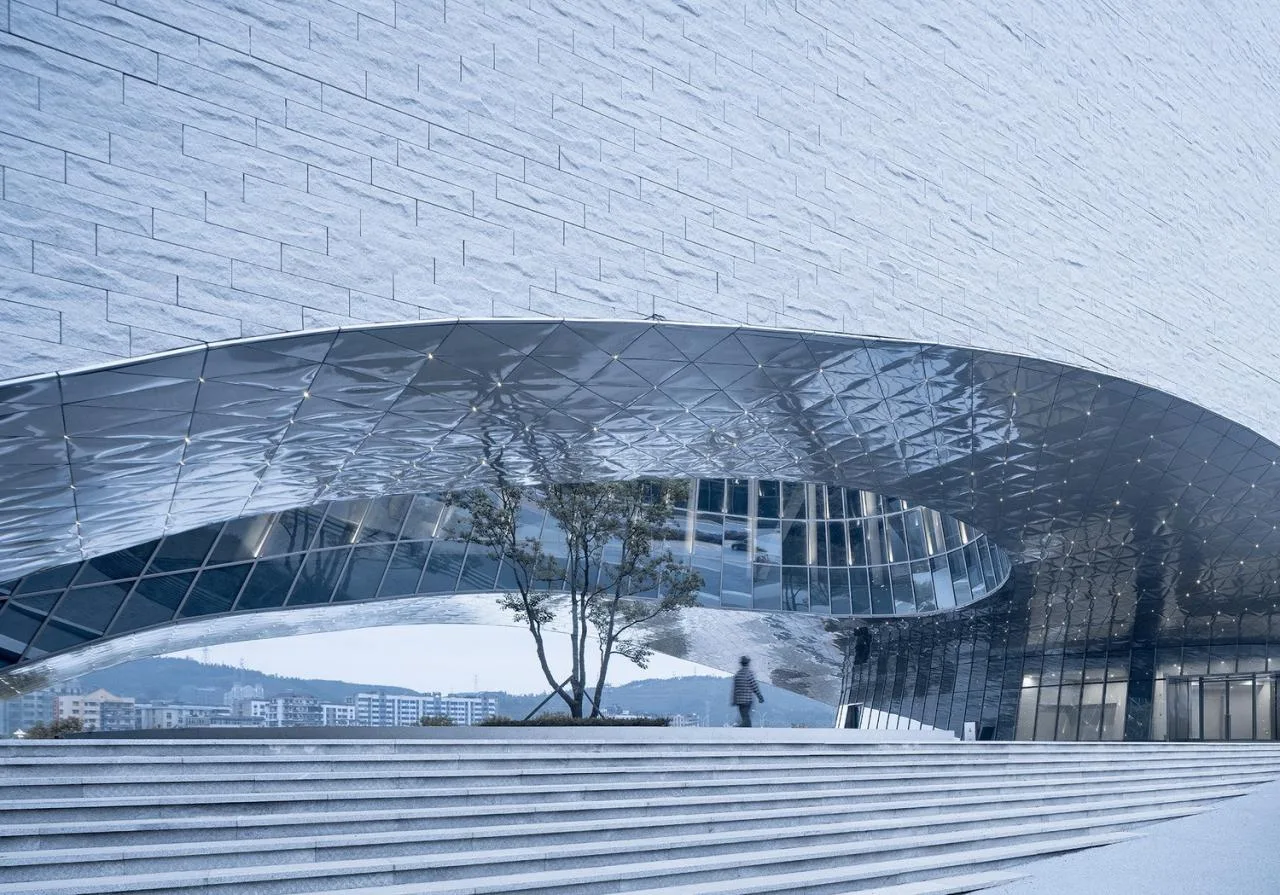
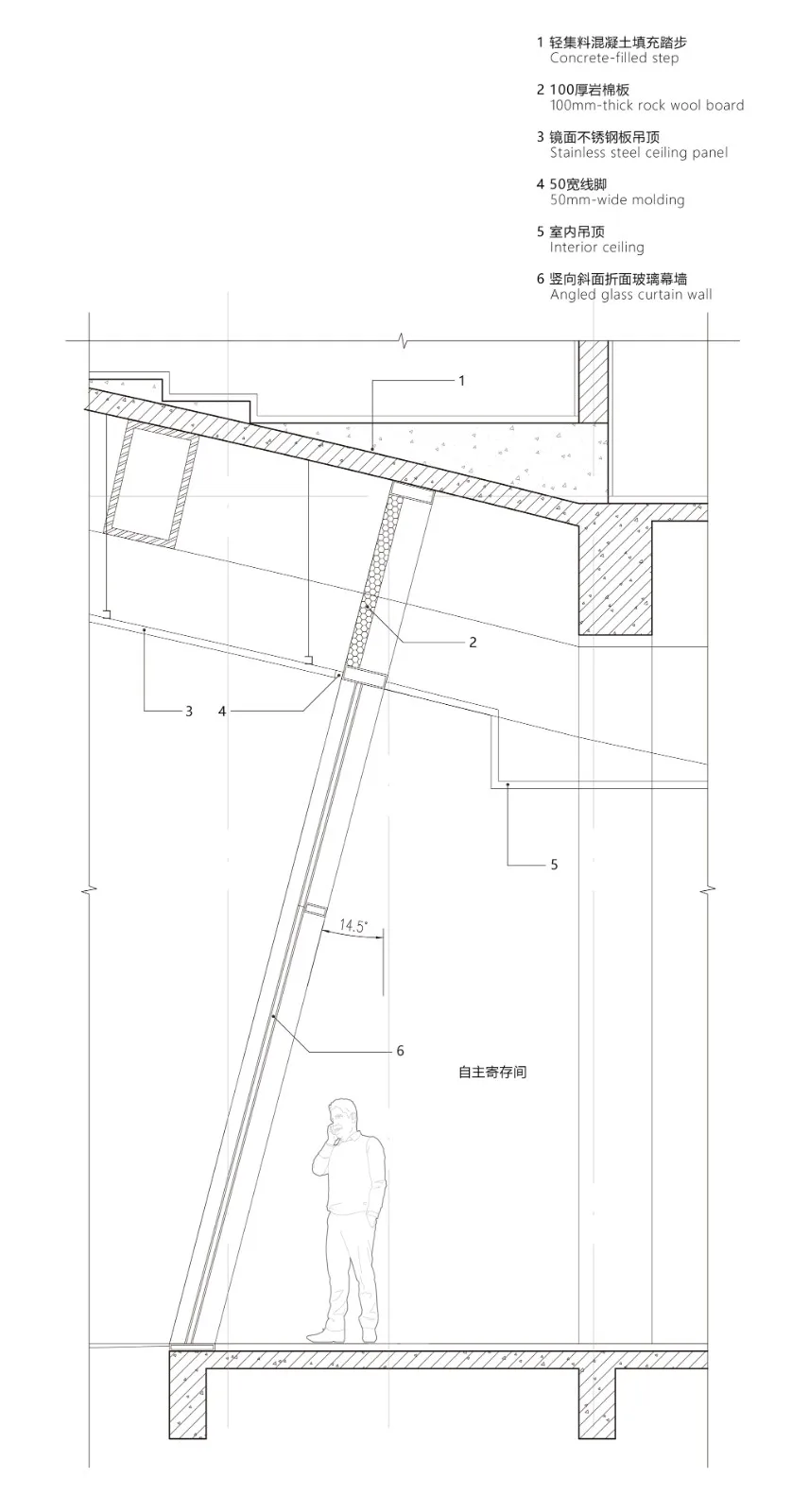
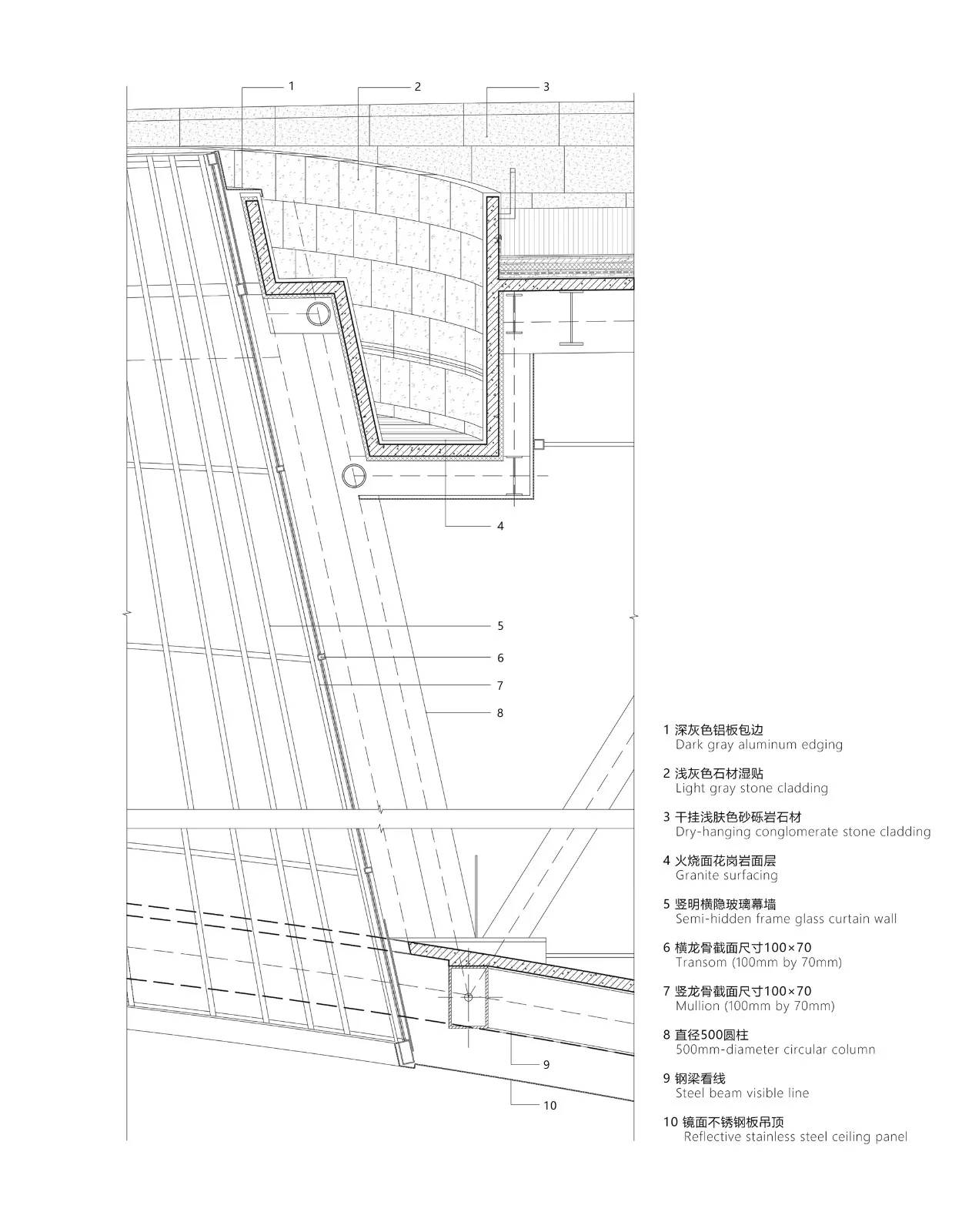
To convey a simple and modern architectural style, the building primarily utilizes stone, glass, and mirrored stainless steel panels. The atrium ceiling features triangular mirrored stainless steel plates, each with a side length of 1200mm. The interplay of light and shadow throughout the day creates a striking contrast with the rough, natural texture of the exterior walls. The mirrored ceiling reflects daily life in the city living room, while the distant mountains and nearby waters converge here, evoking the sensation of walking within a painting.
3.3 Stone Craft
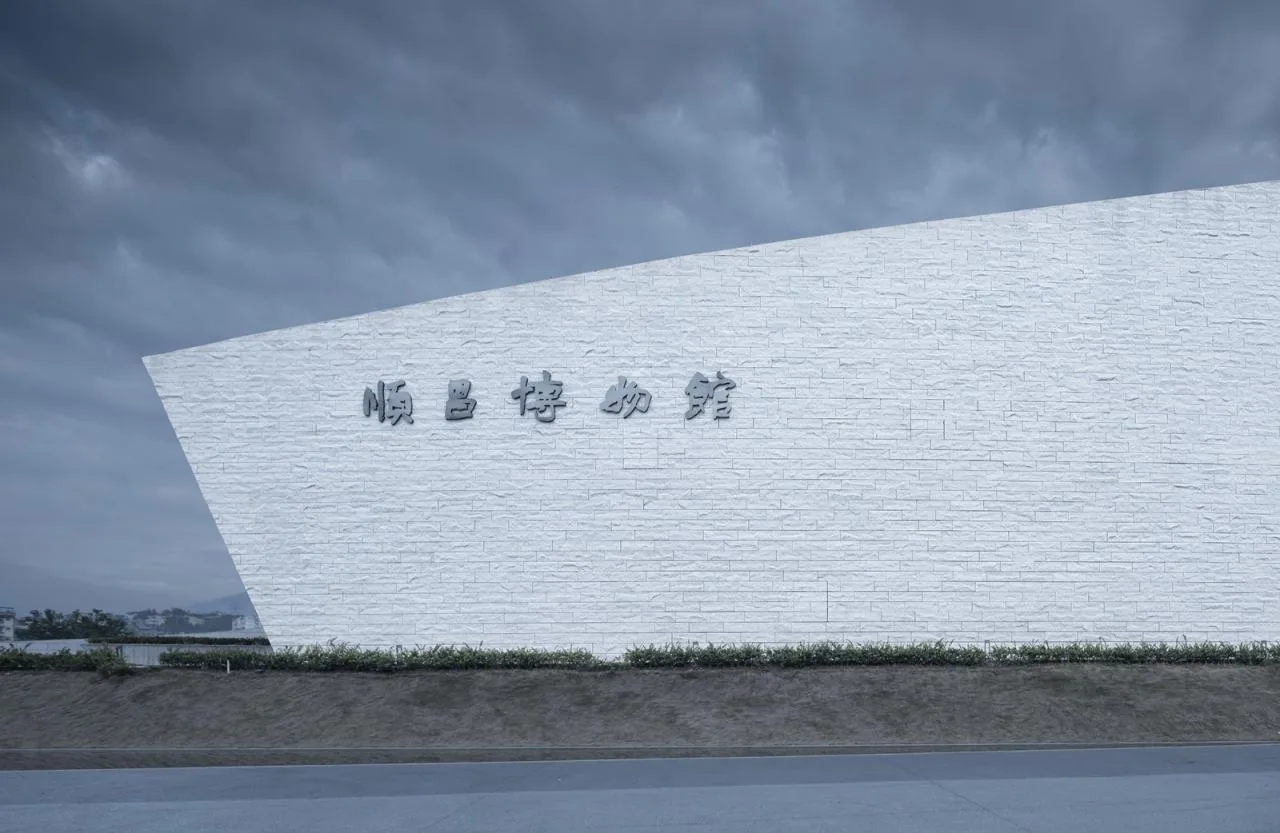
Stone adorns the walls of the main building and the museum’s comprehensive hall. The chosen stone is sesame white, cut into panels measuring 1000x300mm with a thickness of 120mm and featuring natural fractures. The thinnest part is maintained at 40mm to meet the curtain wall’s back bolt requirements. All natural stone excavation is done manually, resulting in a unique, random texture for each piece. When installed, the stones create a harmonious and unified effect on the walls.
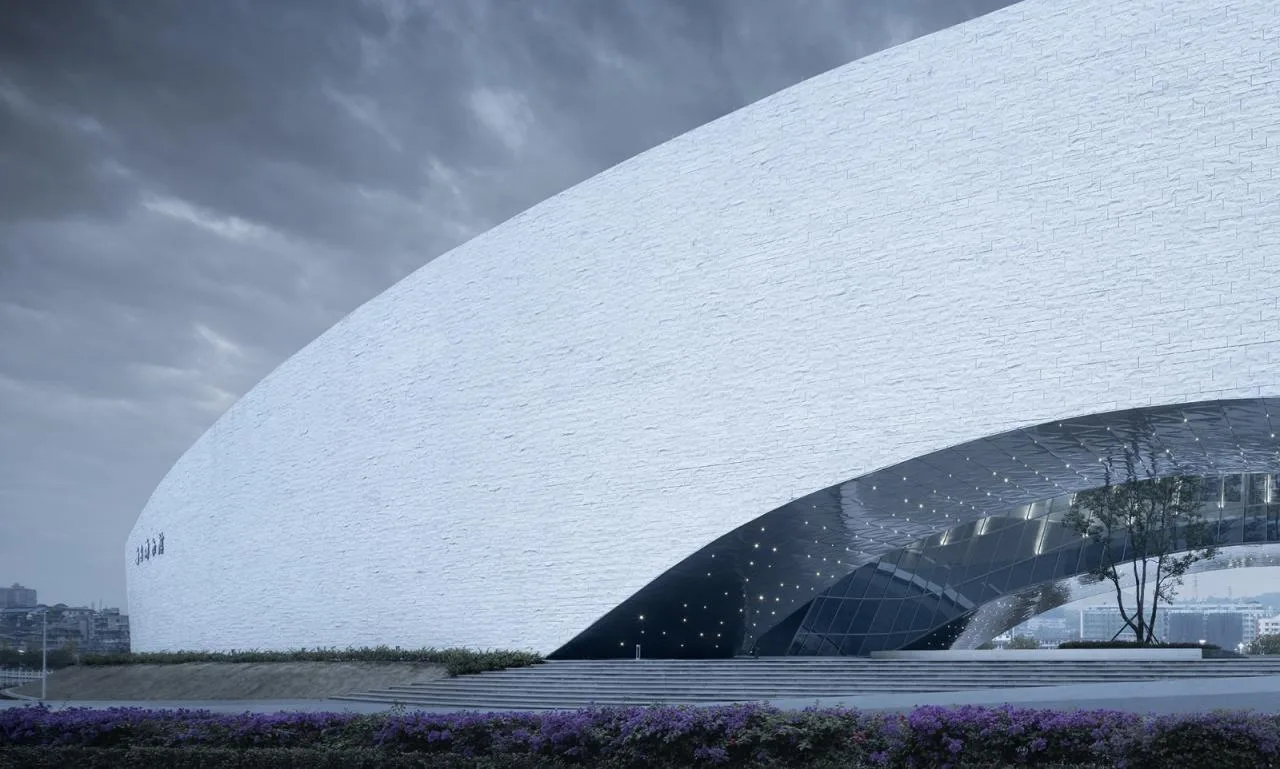
The clean, flat stone slabs clearly define the building’s curves, while the rough, random texture of the walls resonates with the charm of the local mountain city, creating a unique balance between strength and softness.
4. Conclusion
Amidst the mountains and rivers, life continues, and by the banks of the Futun River, a fleeting moment unfolds. The design of the Shunchang Museum began in 2017 and took five years to evolve from blueprint to vivid realization. However, the cultural context and life memories it carries span thousands of years.
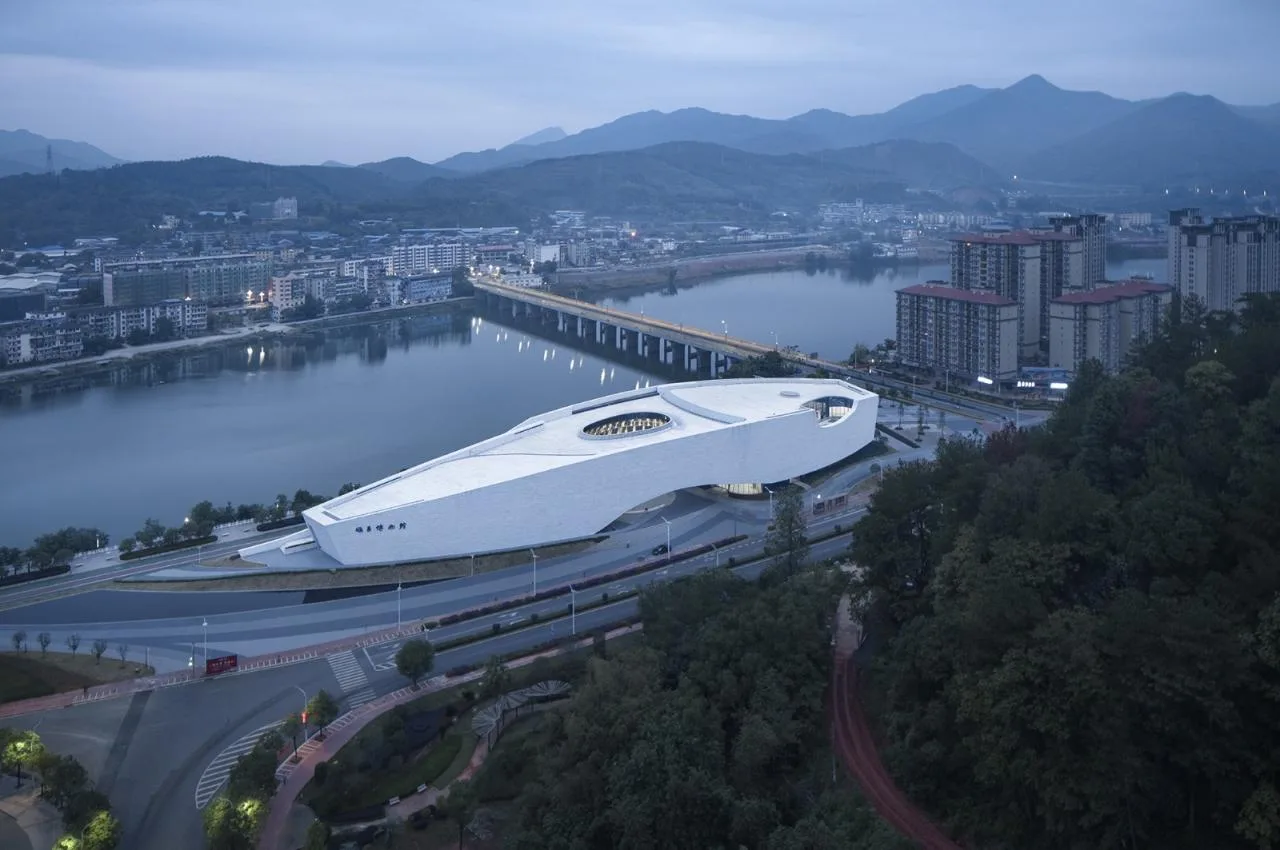
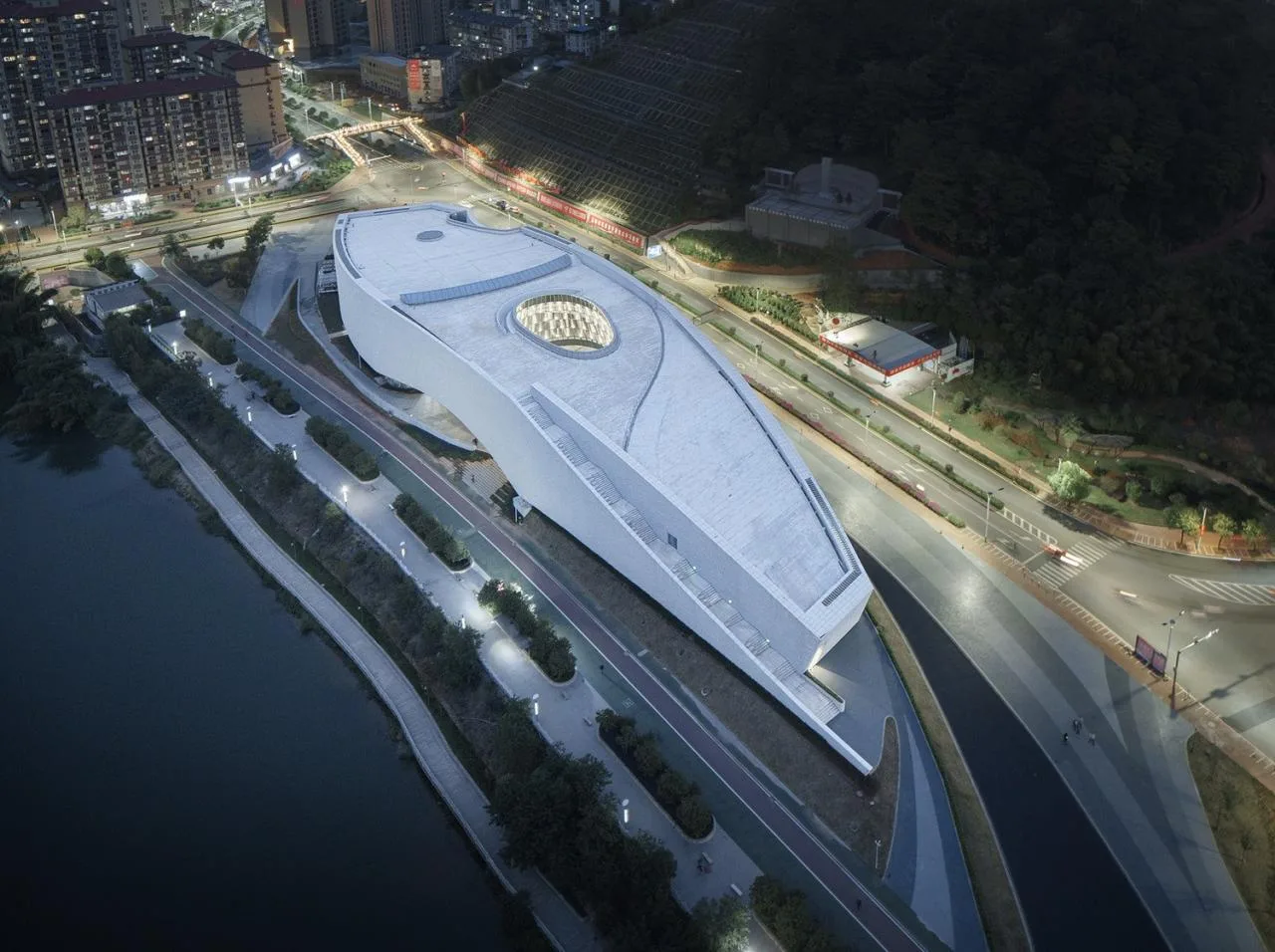
Even more fortunate is the architectural “sky cave,” where clear winds and bright moonlight shine once again. The building integrates into daily life with a friendly and open approach, evoking connections to traditional cultural spaces and resonating with the community.
Project Drawings
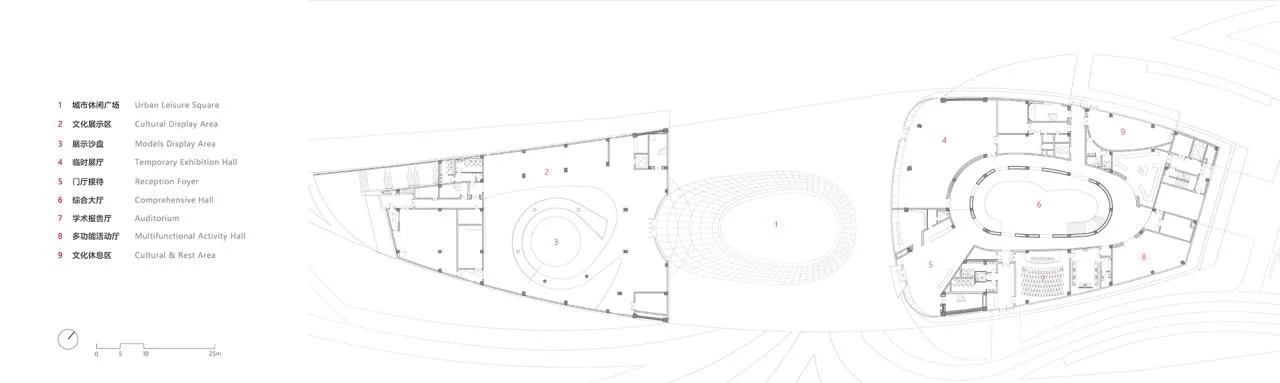
△ First Floor Plan
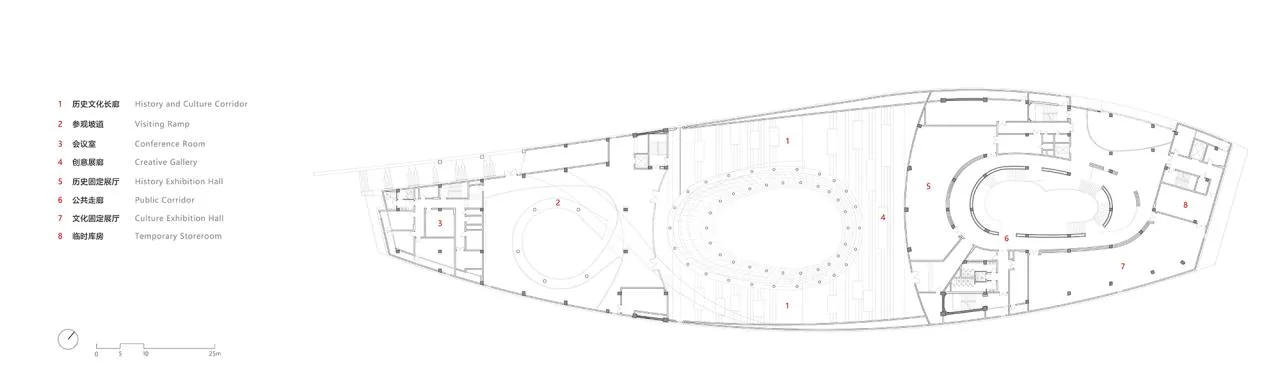
△ Second Floor Plan
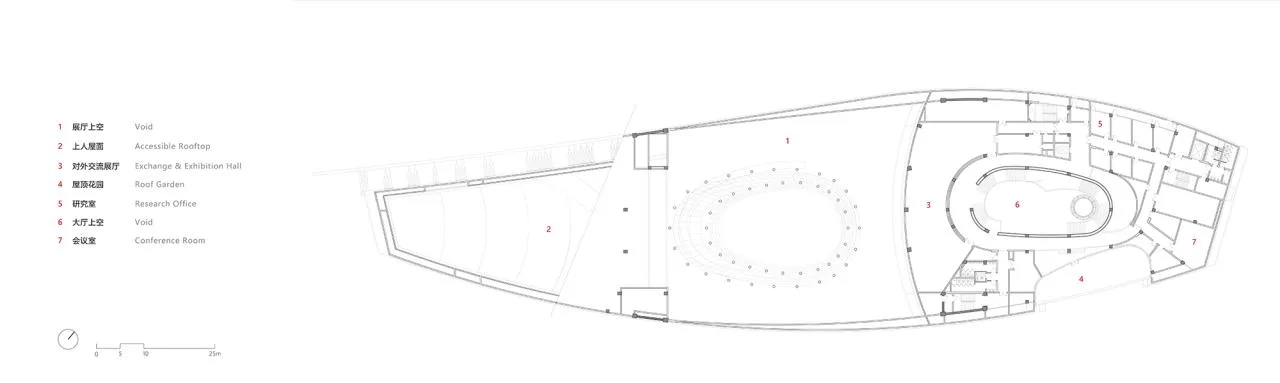
△ Third Floor Plan
△ Section Diagram
△ Section Diagram
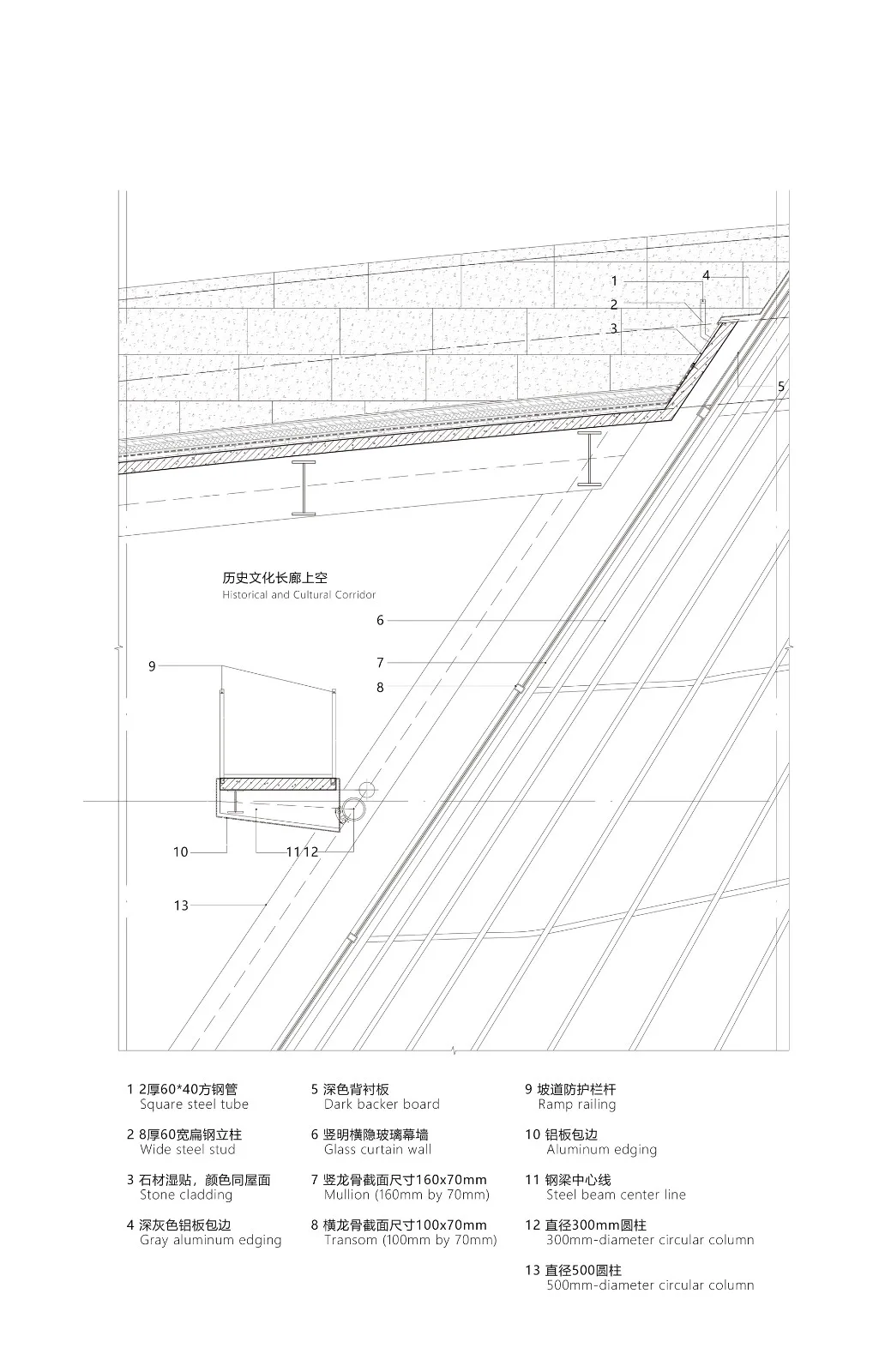
△ Node Details
△ Node Details
Project Information
Project Name: Shunchang Museum
Project Owner: Shunchang County Urban Investment Construction and Development Co., Ltd
Location: Tashan Road, Shunchang County, Nanping City, Fujian Province, China
Type: Cultural Architecture
Scope: Architectural and Interior Design
Design Firm: Zhejiang University Architectural Design and Research Institute Co., Ltd
Construction: China Construction Haixia Construction Development Co., Ltd
Lead Architects: Dong Danshen, Wu Zhenling
Architectural Design: Zhao Bo, Zhang Jiachen, Yan Hui, Zhao Lichen
Structural Design: Zhou Jianlu, Nan Jingjing, Pan Jiafu, Hu Bo
Water Supply & Drainage Design: Wang Yibei, Zhang Nan
HVAC Design: Ning Taigang, Zhang Weilin, Chen Haijun
Electrical Design: Yang Wenzheng, Yu Kan
Intelligent Systems Design: Ma Jian, Jiang Bing, Ni Gaojun
Curtain Wall Design: Shi Jiqiang, Wang Juneng, Wang Jianzhong
Interior Design: Li Jingyuan, Hu Xu, Lu Xiaoling, Fang Yu
Landscape Design: Wu Weiling, Xu Conghua, Zhang Chi, He Ying
Lighting Design: Pang Xiaoxiao, Yu Yuanming, Xiao Shuzheng
Building Area: 10,138.2 square meters (9,938.4 above ground, 199.8 underground)
Design Period: 2017–2018
Completion: March 2021
Photography: Zhao Qiang















Must log in before commenting!
Sign Up