
Introduction
Every person experiences time uniquely, and each generation carries its own symbolic memories. When we enter familiar spaces, we realize that memories are already embedded within the fabric of time, quietly preserved without interruption.
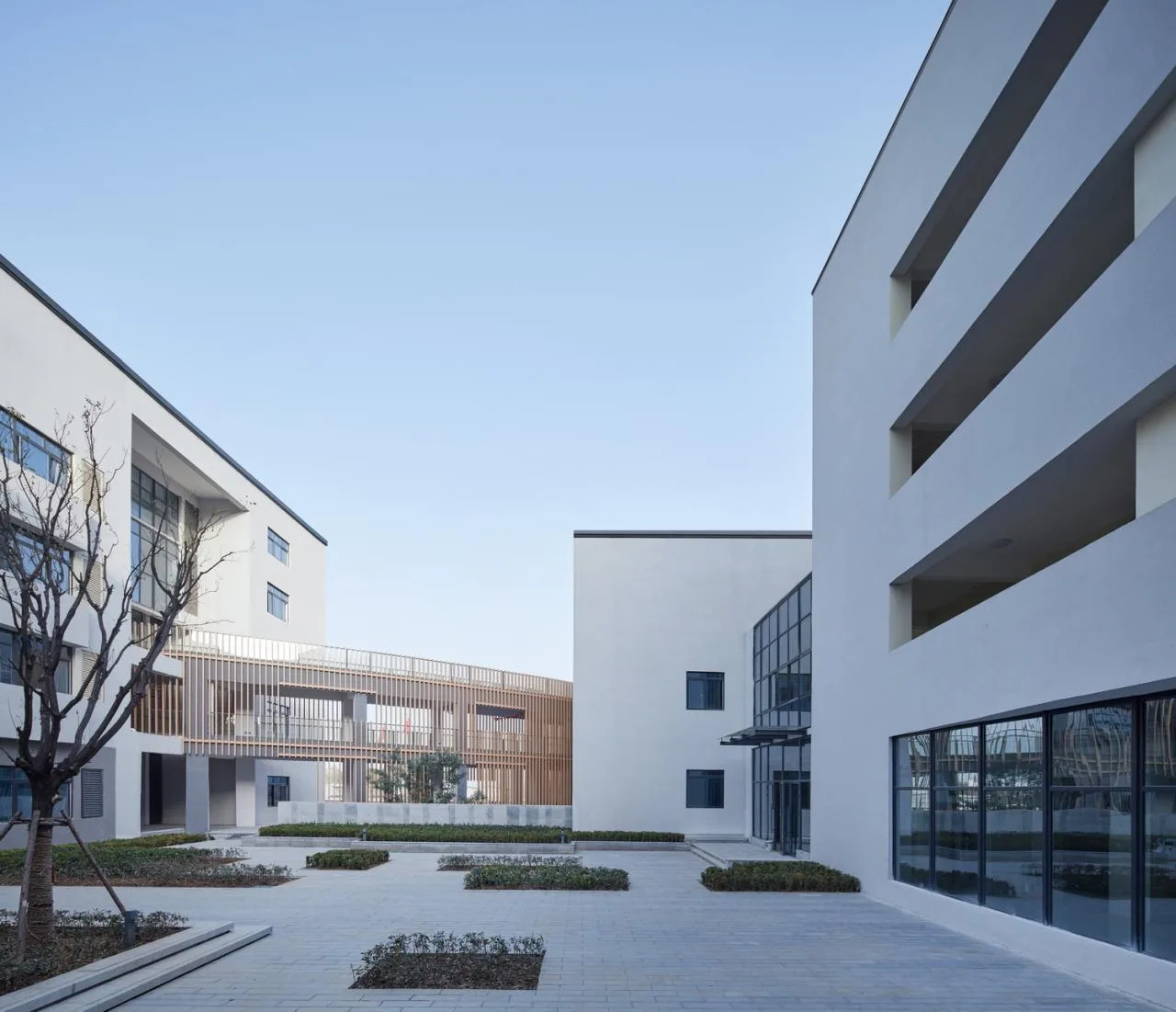
△ Middle School Courtyard – Photo by Xia Qiang
In this Zhengzhou project, the school is envisioned as a container of time. It features courtyards with diverse functions, each following its own temporal path. These courtyards transform originally utilitarian spaces into inspiring public realms that nurture active learning and daily life. They capture joyful memories and the developmental milestones of childhood. This concept aligns with the theoretical core from The Eternal Way of Architecture, which suggests that members of society shape their living environment based on their own existence.
Theme – Container of Time
Aihua International School integrates both primary and secondary education. Departing from traditional architectural design, the project intentionally minimizes expressive forms and embraces a subtle, understated approach. This reflects a gentle care for every child growing here, collecting, preserving, and displaying each individual’s passage through time.
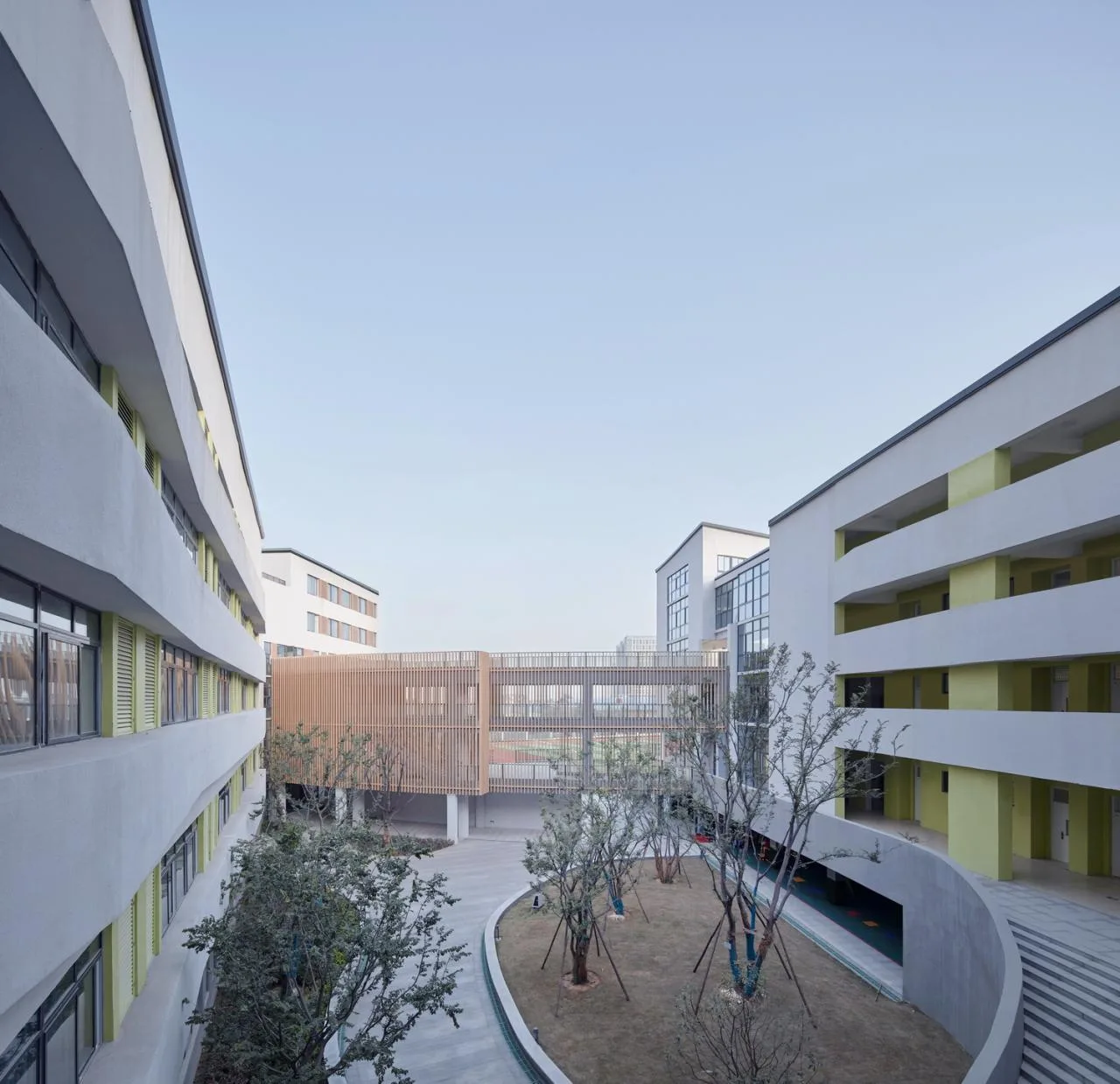
△ Primary School Courtyard Landscape – Photo by Xia Qiang
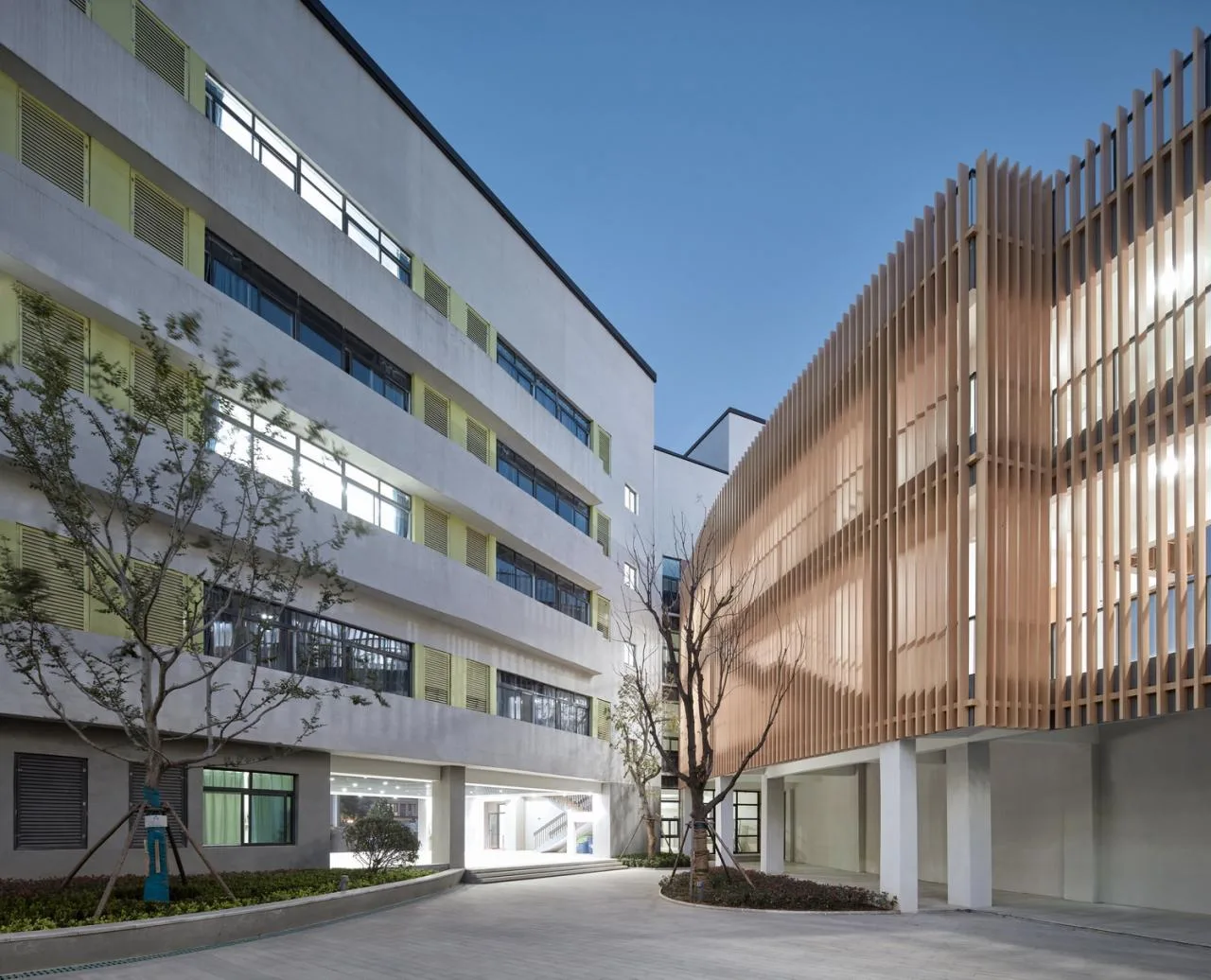
△ Primary School Courtyard at Night – Photo by Xia Qiang
Inspired by Songyang Academy, one of the “Four Great Academies,” the design adopts typological principles by extracting enclosure elements as the central theme. This approach deconstructs traditional forms based on functional requirements, preserving cultural continuity while introducing a new architectural language.
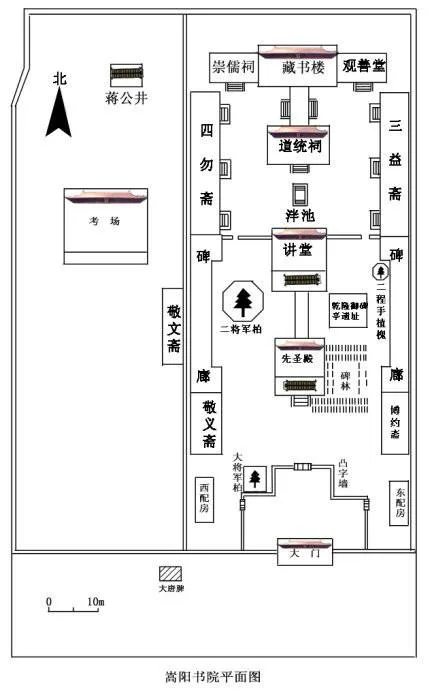
△ Plan of Songyang Academy – Image sourced from Baidu Network
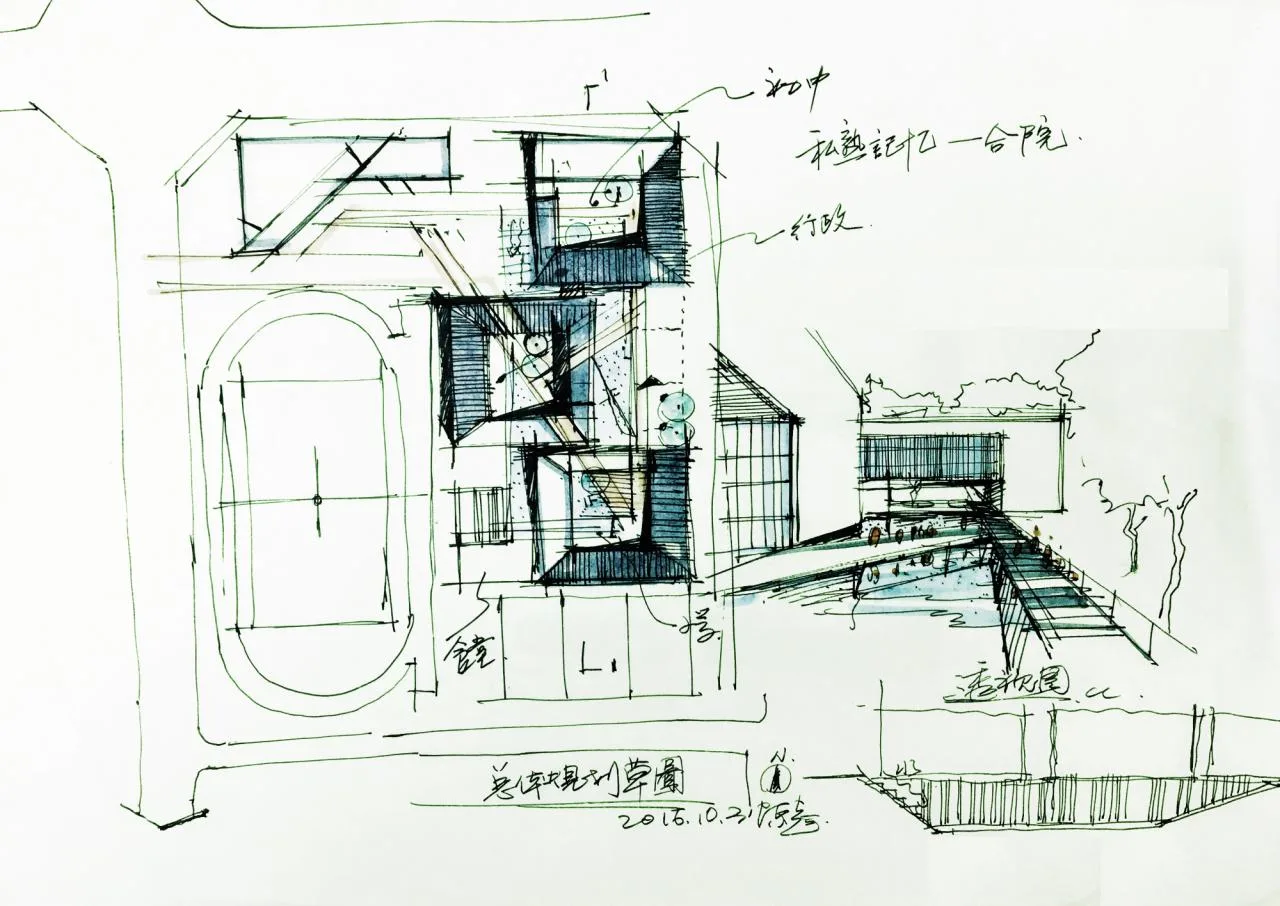
△ Surrounding Planning Sketch
Entering – The Growth Courtyard with Time Attributes
Reflecting the concept of time containers and aligning with daily teaching activities, the design features three enclosed courtyards. Each courtyard represents and records the growth timeline of every child.
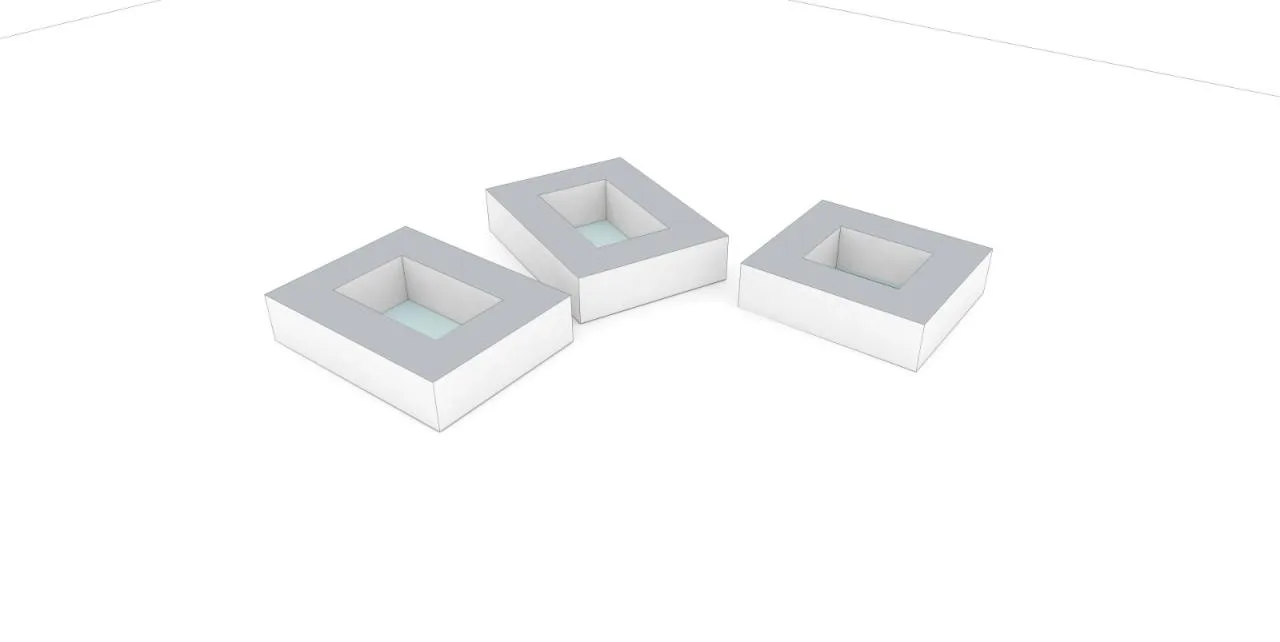
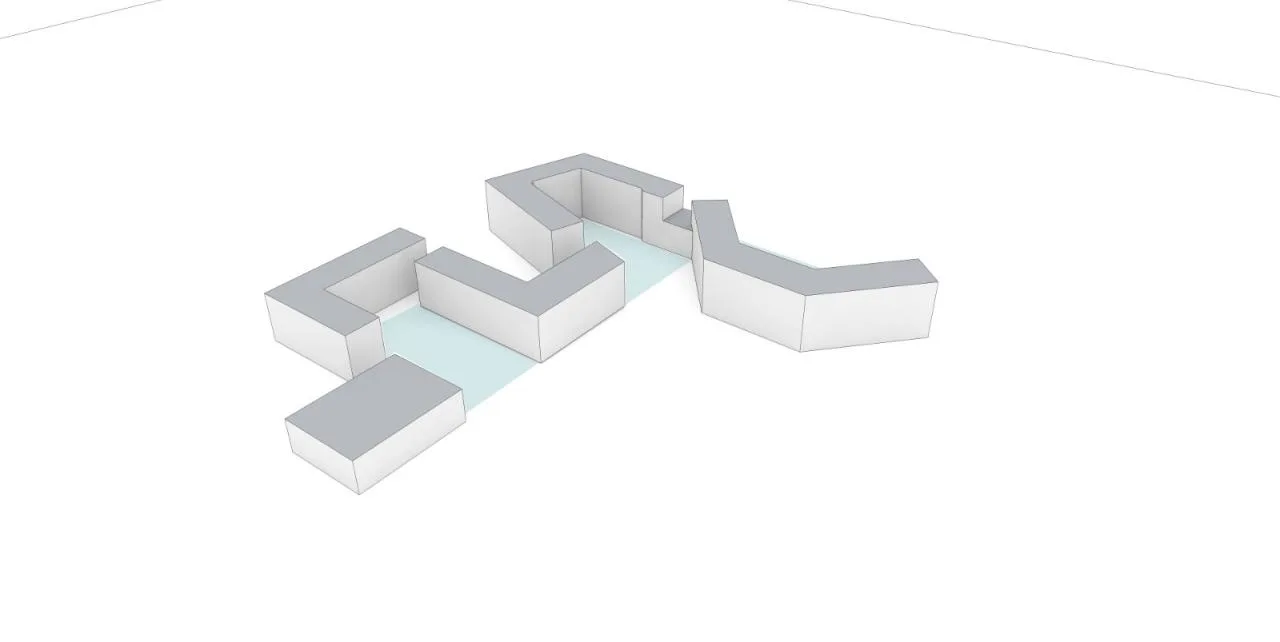
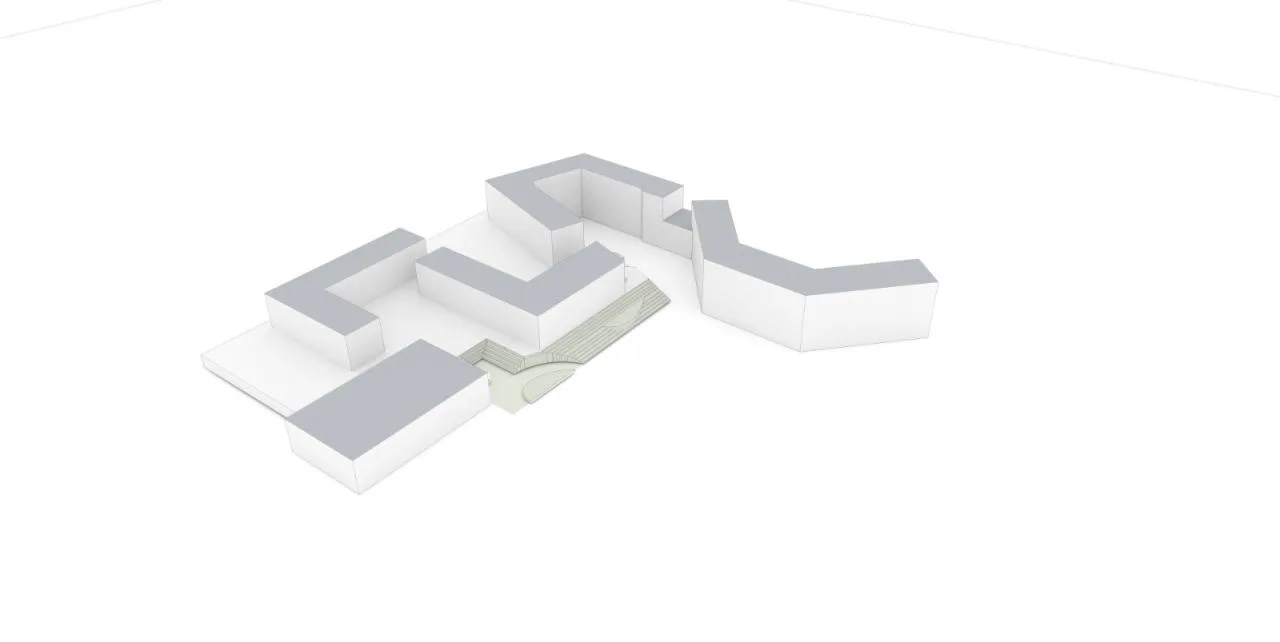
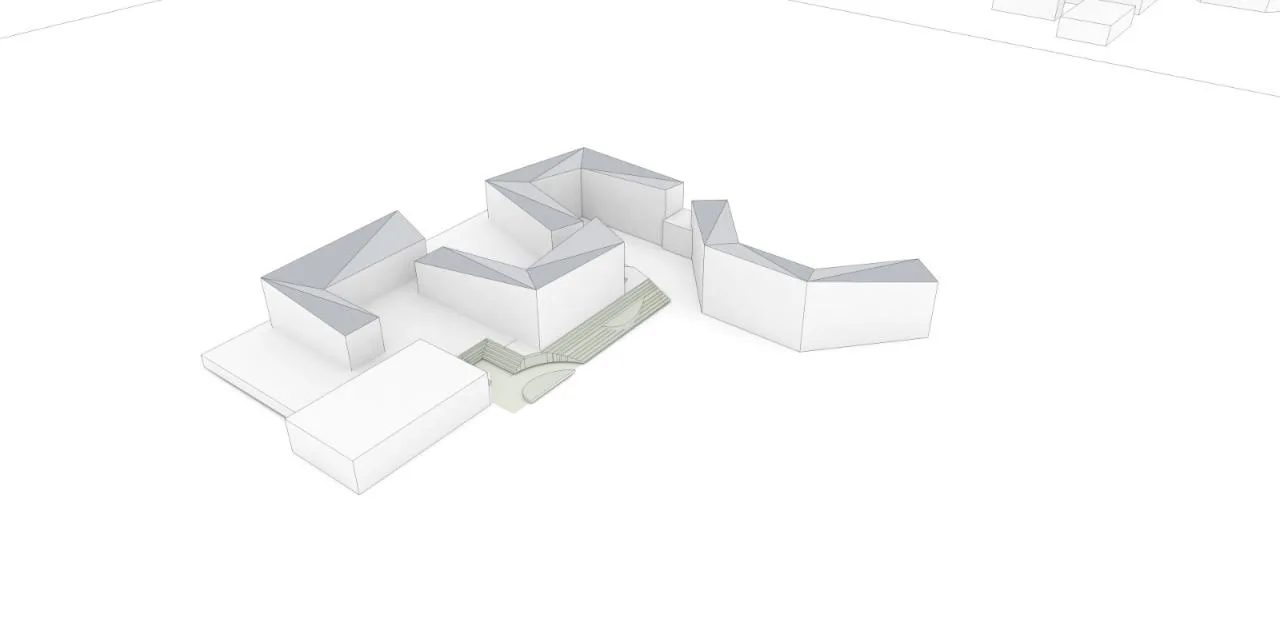
△ Conceptual Scheme Development
The design traces the human growth trajectory: the primary school section embraces a more lively atmosphere, while the secondary school section adopts a more rational tone. Consequently, the two are separated into distinct main courtyards that resonate with the playground, energizing the entire campus.
Spaces for informal interaction and gathering between teachers and students are strategically located between these courtyards. The entrance square and playground align along the campus’s main vitality axis, forming the shortest direct connection. Dining and dormitory facilities are positioned at opposite ends of the main courtyard, creating supporting courtyards. Each courtyard thus preserves a record of students’ daily learning experiences.
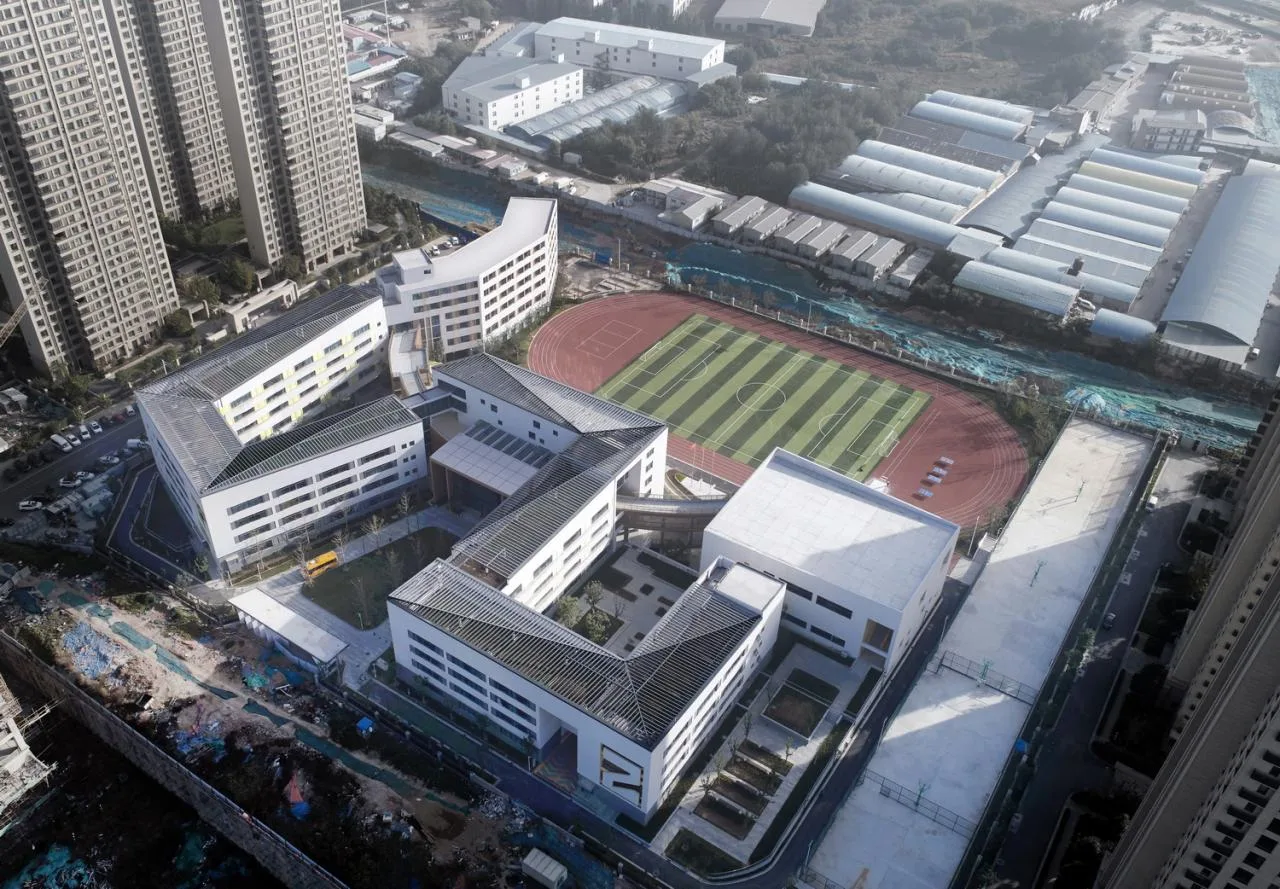
△ Aerial View – Photo by Xia Qiang
Connecting – A Functional Corridor
The transition from elementary to junior high school marks an important growth milestone and a rite of passage. To connect these two key courtyards, a multifunctional corridor is designed to carry this growth journey.
This corridor links essential functional spaces such as reading areas, play zones, art exhibitions, and sheltered playgrounds. By extending the limited courtyard space vertically, the design creates flexible and diverse teaching environments that address needs unmet by previous layouts.
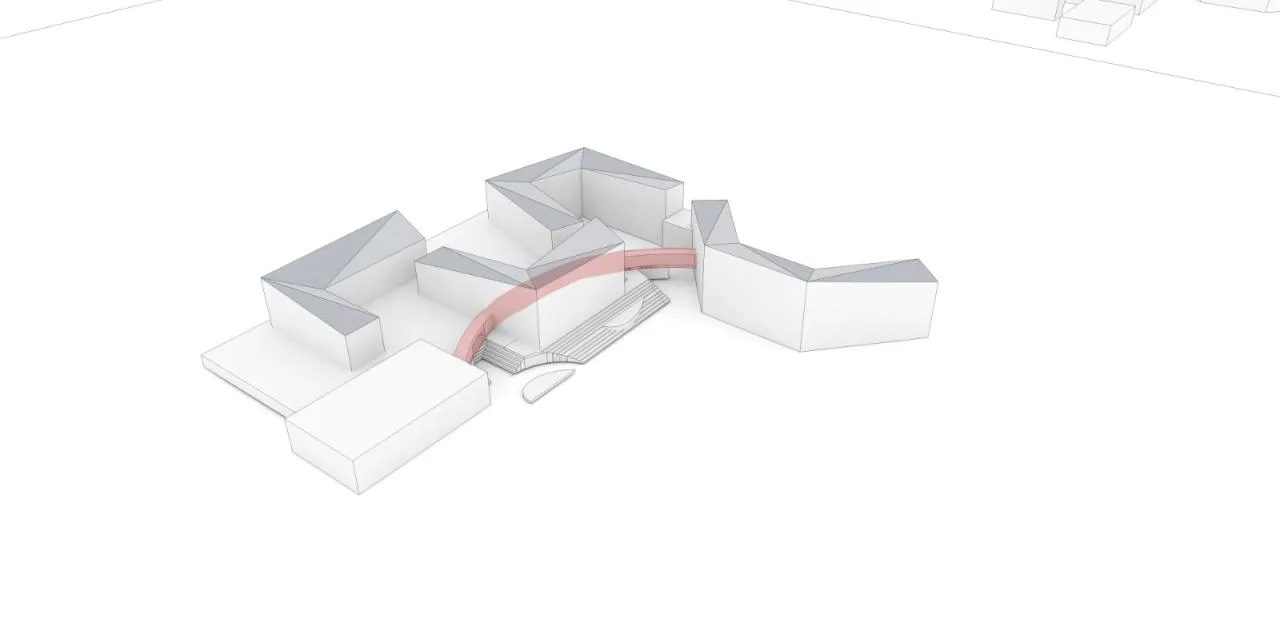
△ Corridor Location Map
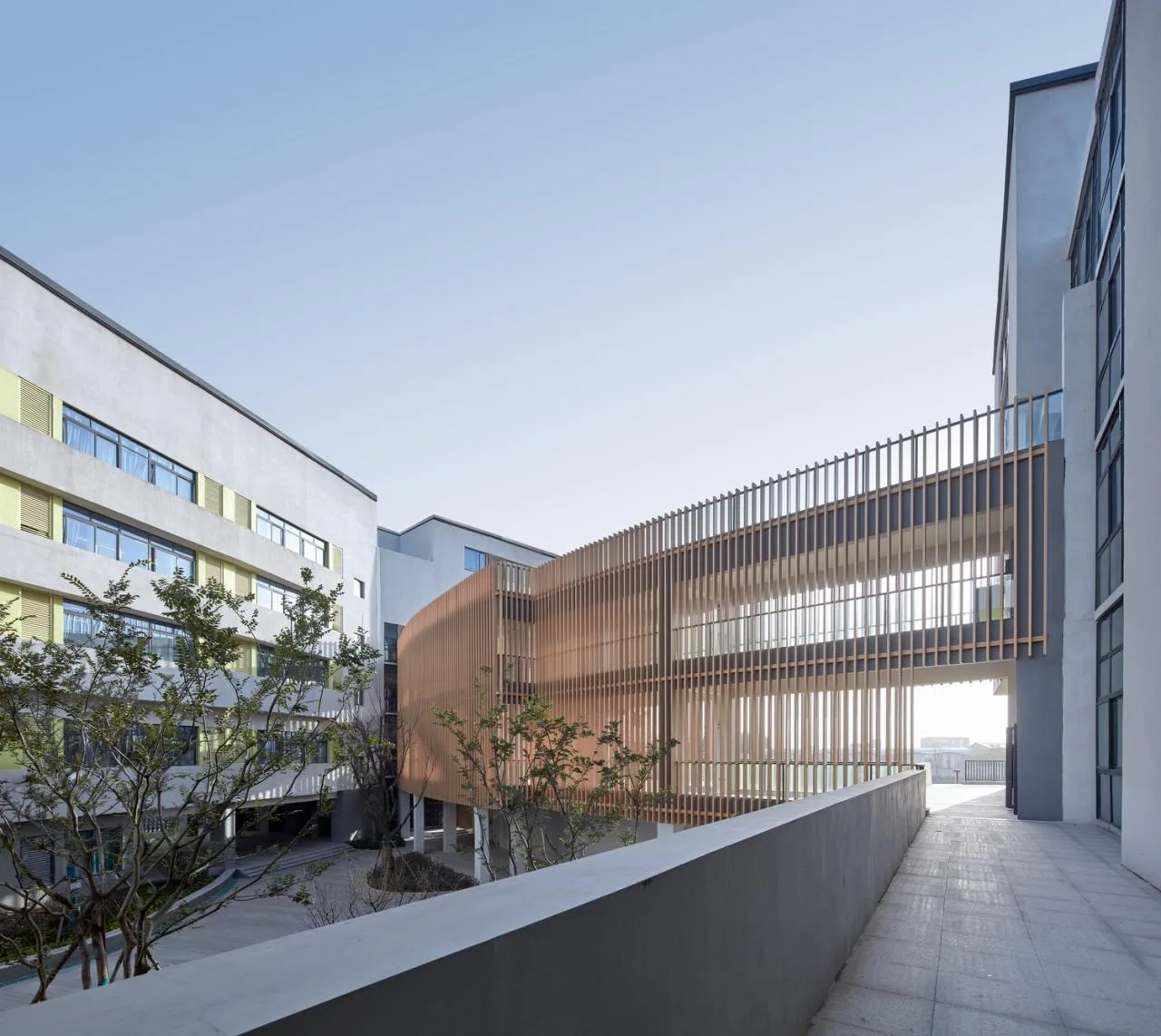
△ Primary and Junior High School Corridor – Photo by Xia Qiang
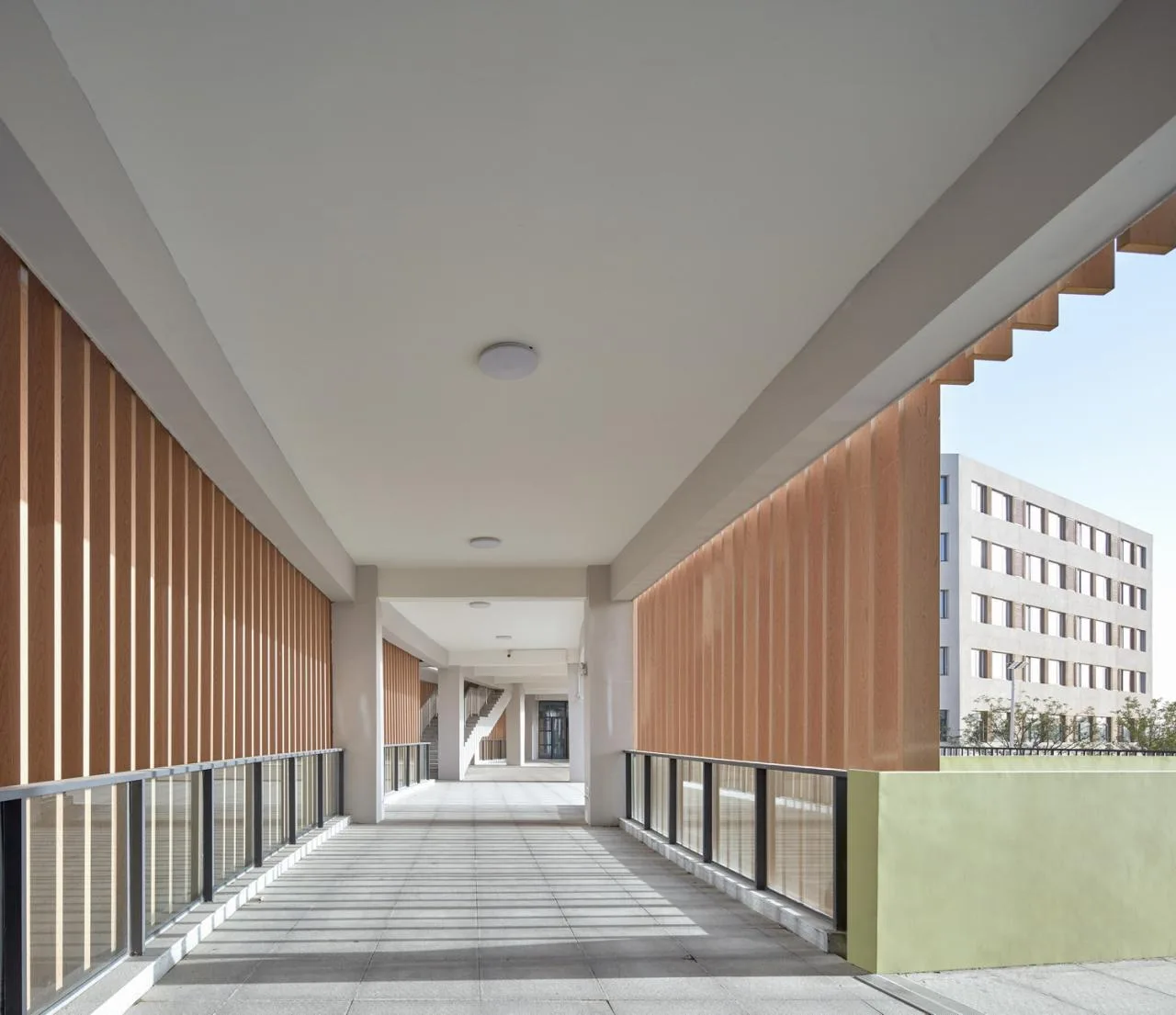
Time Corridor – Photo by Xia Qiang
The corridor’s main facade is clad in wood, expressing a commitment to environmental responsibility that aligns with the school’s educational philosophy. Certain sections of the corridor expand into larger spaces, providing children with opportunities to organize various activities and document their personal growth beyond academics within this simple yet meaningful structure.
Growth – A Dynamic Outdoor Activity Space
Yang Gail’s book Communication and Space categorizes outdoor public activities into necessary, spontaneous, and social types. These insights have strongly influenced the design approach here.
The campus life, both inside and outside the buildings, holds greater significance than the physical structures themselves. The environmental design of Zhengzhou Aihua International School carefully considers the everyday needs of individuals and groups, even those that may seem trivial.
Each courtyard incorporates elements such as water, wood, and stone to craft an elegant learning atmosphere and foster a sustainable ecological environment.
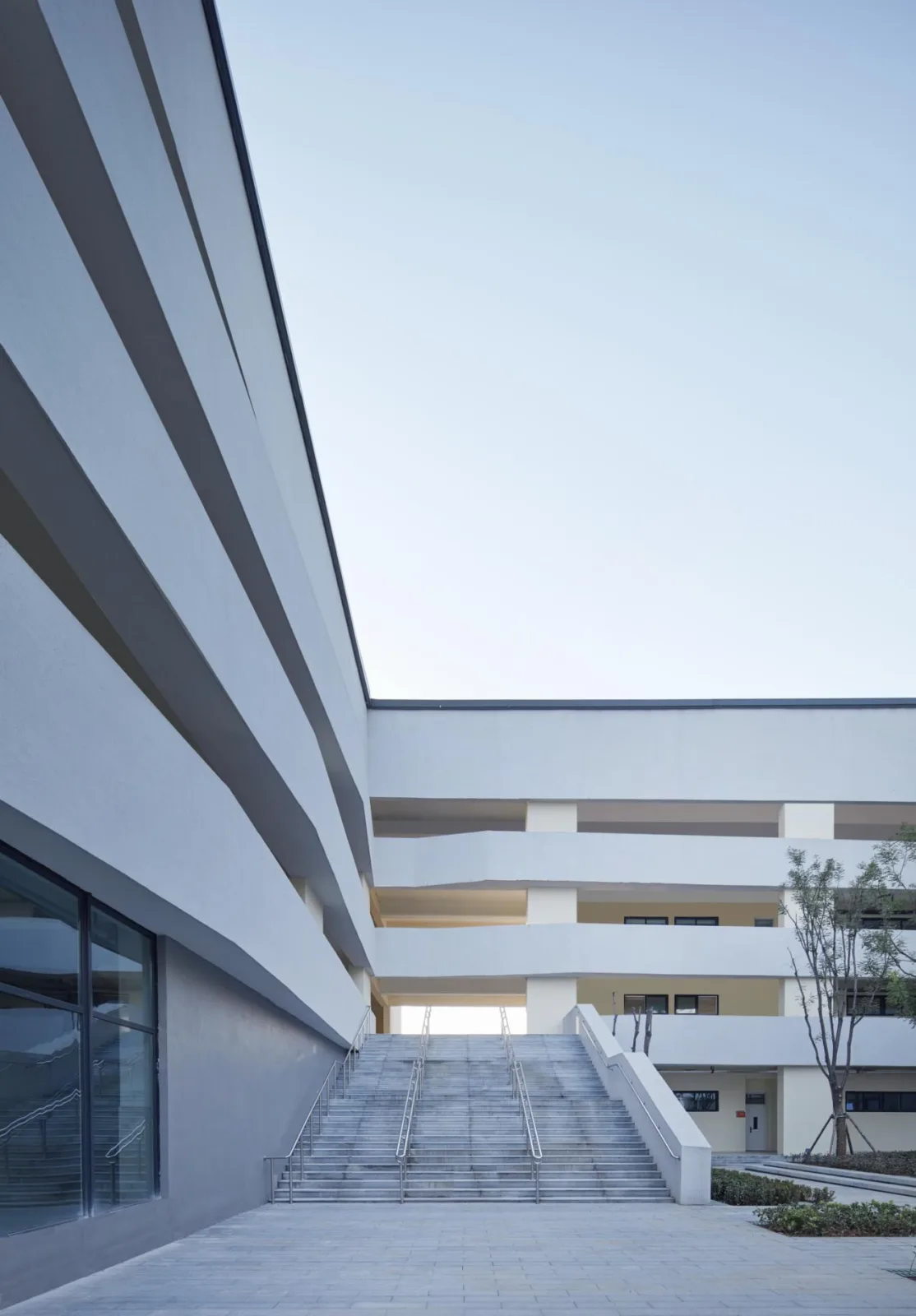
△ Middle School Classroom – Photo by Xia Qiang
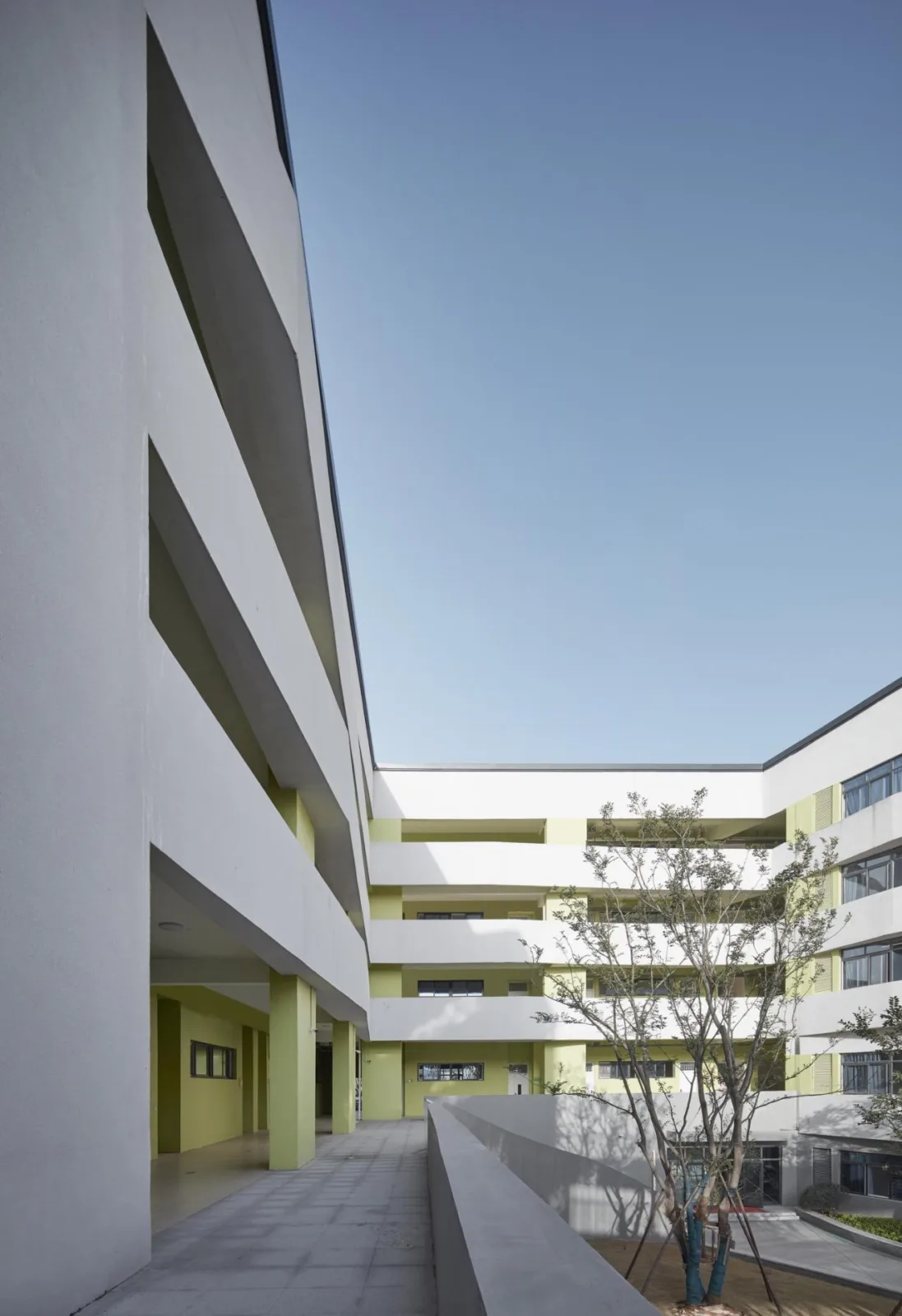
△ Primary School Corridor – Photo by Xia Qiang
The outdoor campus environment acts as a vessel for social time. Students develop social awareness primarily through observing their surroundings. Keeping pace with the world around them is essential to adapt to evolving social demands. Beyond receiving external information, observing and listening to others sparks inspiration and enriches one’s life.
Watching the activities of peers often encourages participation and the creation of new games, highlighting the importance of a lively outdoor space that fosters social interaction and creativity.
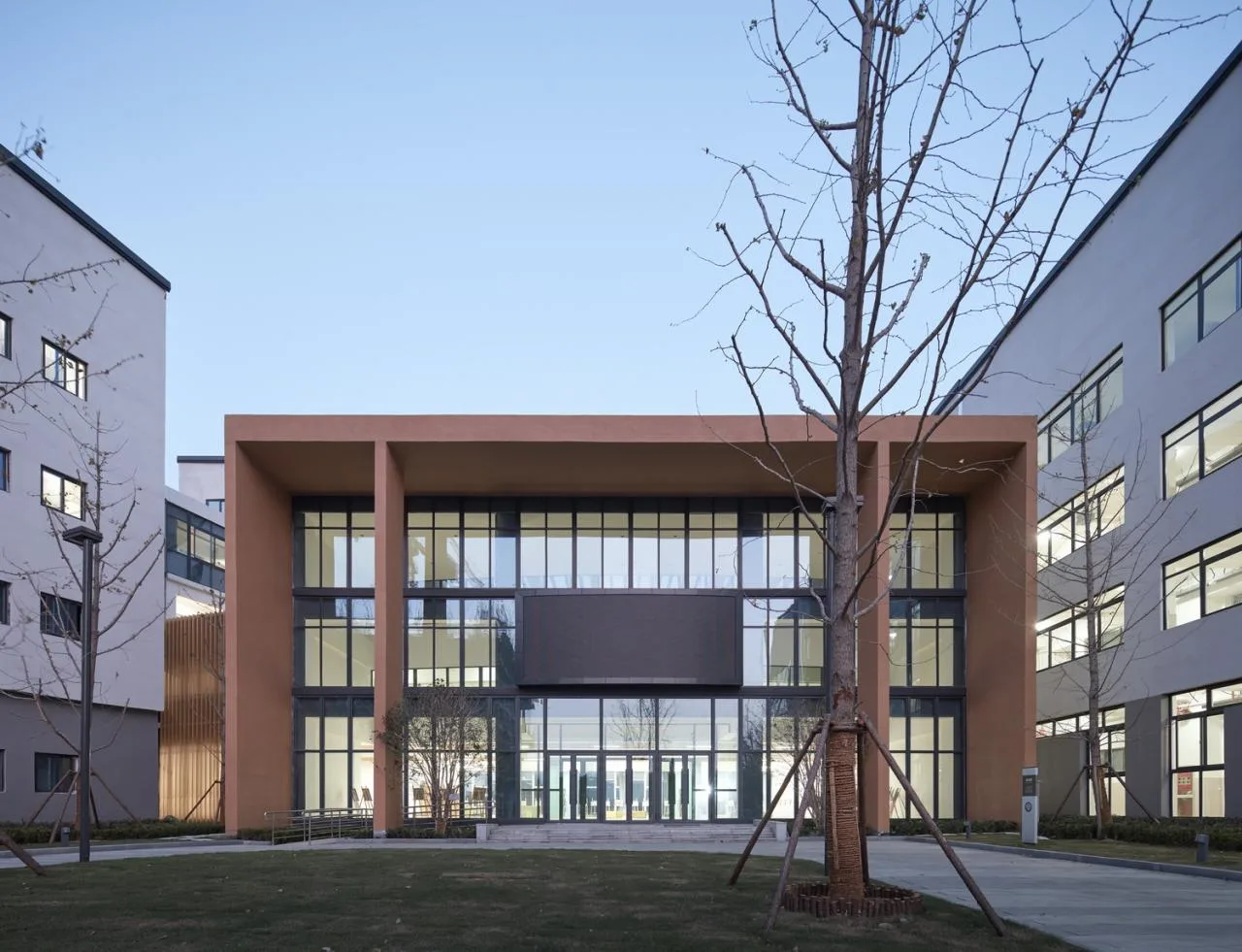
△ Entrance to Administrative Office Hall – Photo by Xia Qiang
Sharpening – A Simulated Natural ‘Sky Farm’
The fifth facade begins with the traditional building roof, resembling an unbroken mountain peak. At its base lies an ‘aerial farm,’ symbolizing cultural heritage and a connection to nature. This space offers children intimate contact with the natural world, nurturing their growth.
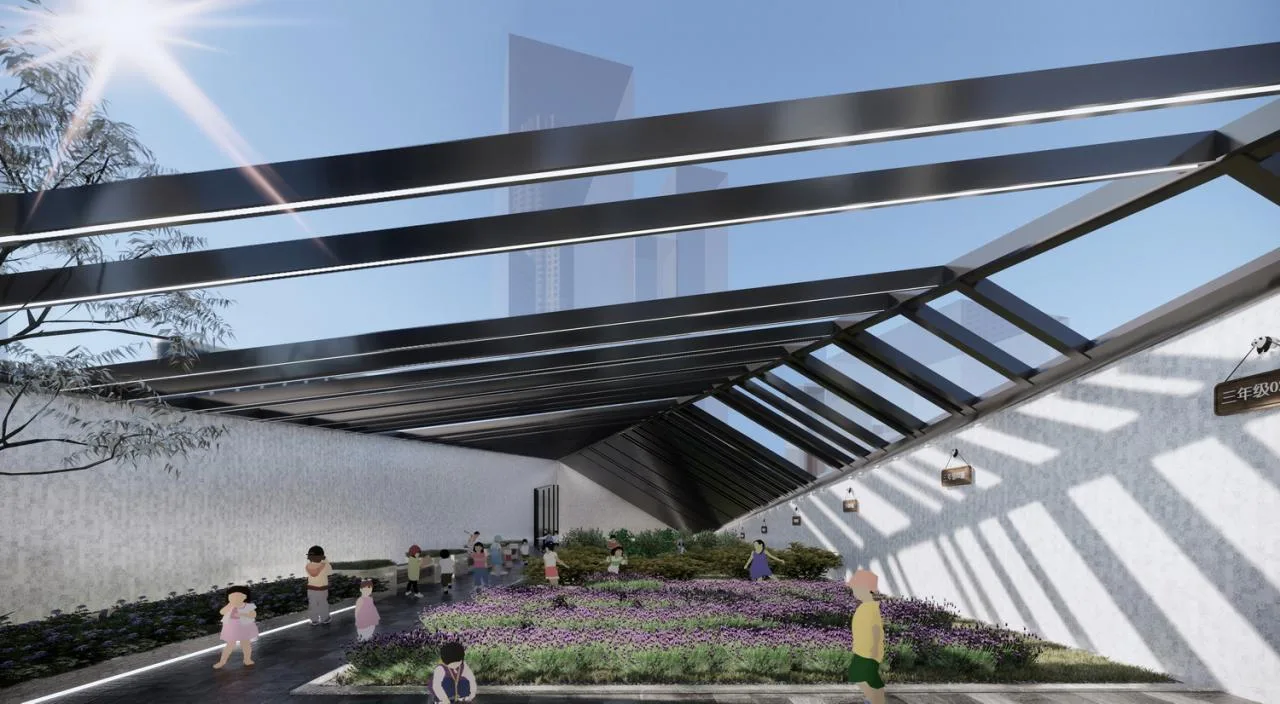
△ Sky Farm – Design by UA You’an Design
The ‘Sky Farm’ integrates school buildings and teaching spaces as educational tools, offering green and environmental education opportunities for children with limited access to nature. Treating the school as a small ecosystem, this feature embeds environmental awareness into the school’s material culture. It also becomes a place where children engage in labor, documenting their growth through hands-on experience.
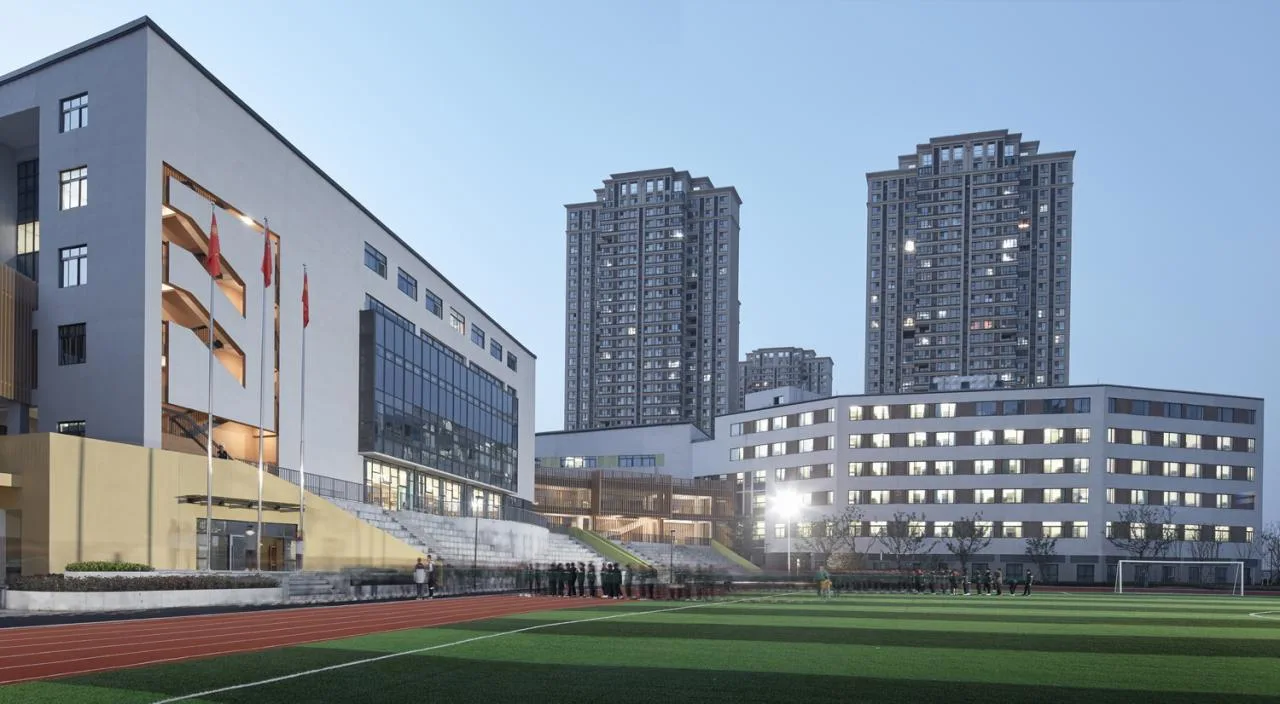
△ Playground at Night – Photo by Xia Qiang
Conclusion
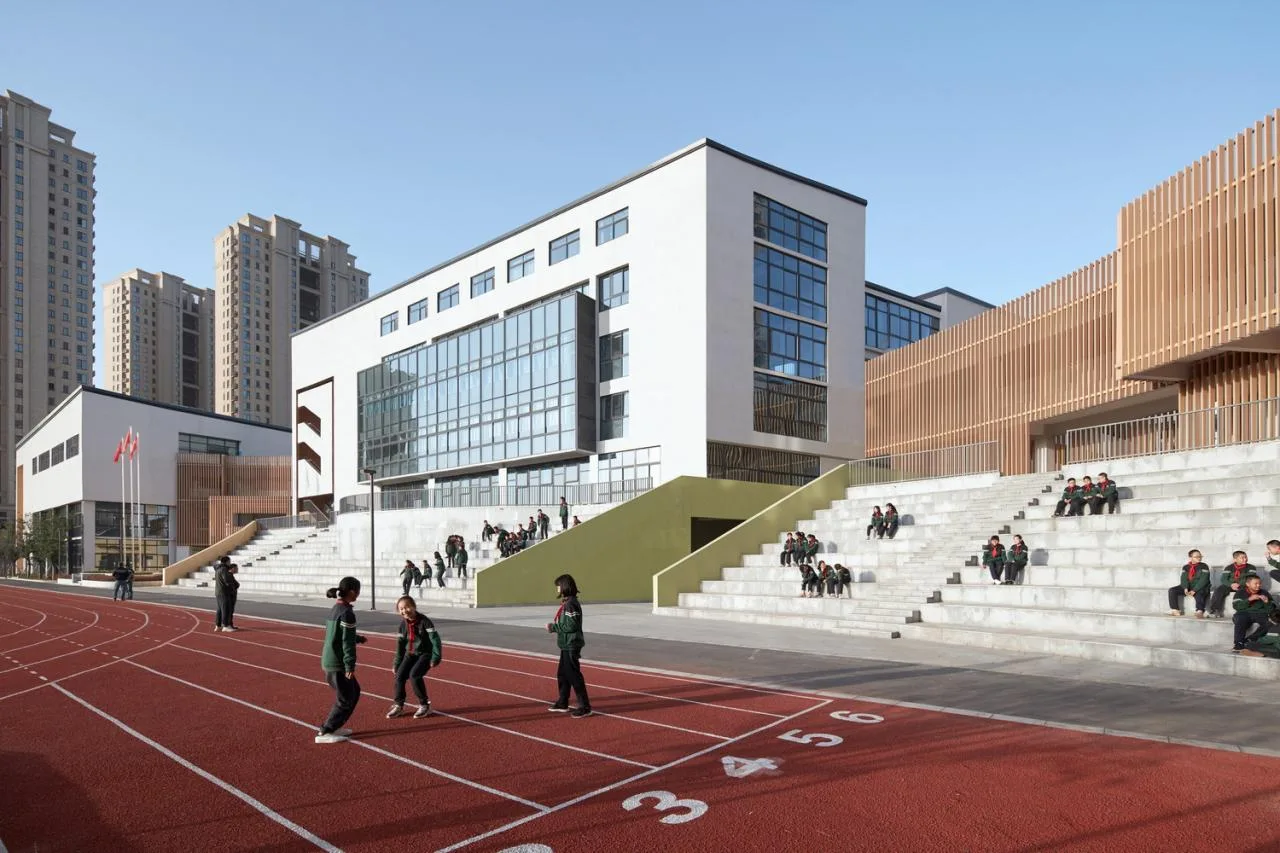
△ Playground Runway – Photo by Xia Qiang
The design of Aihua International School encourages daily activities such as commuting, learning, sports, and leisure within its spaces, fostering memorable spatial experiences and spiritual fulfillment. Alumni returning after years often rediscover their childhood memories here, along with a collective memory and a hopeful future.
References
“The Eternal Way of Architecture” by Christopher Alexander (USA)
Yang Gail, Communication and Space (Denmark)
Project Drawings
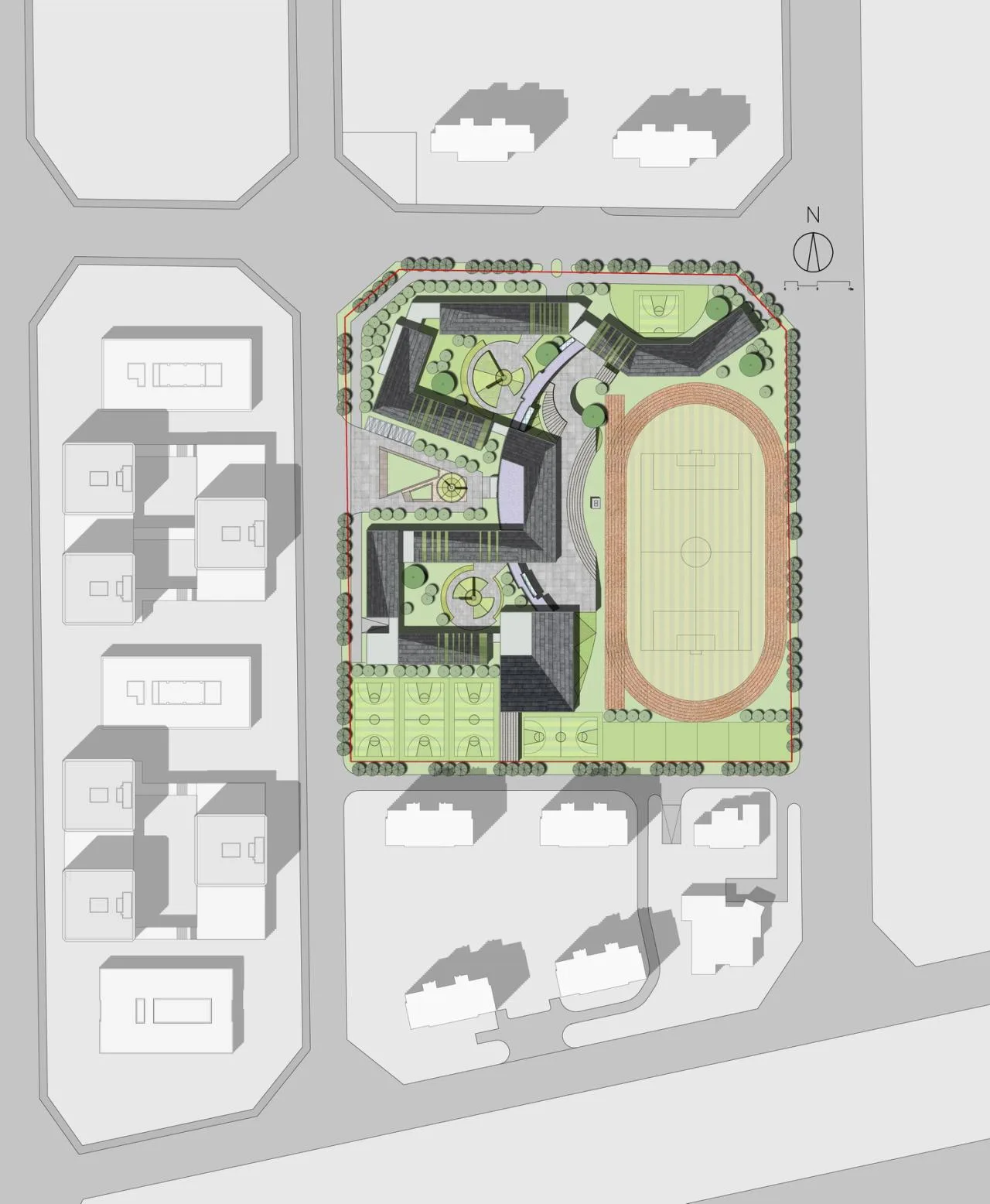
△ General Layout Plan
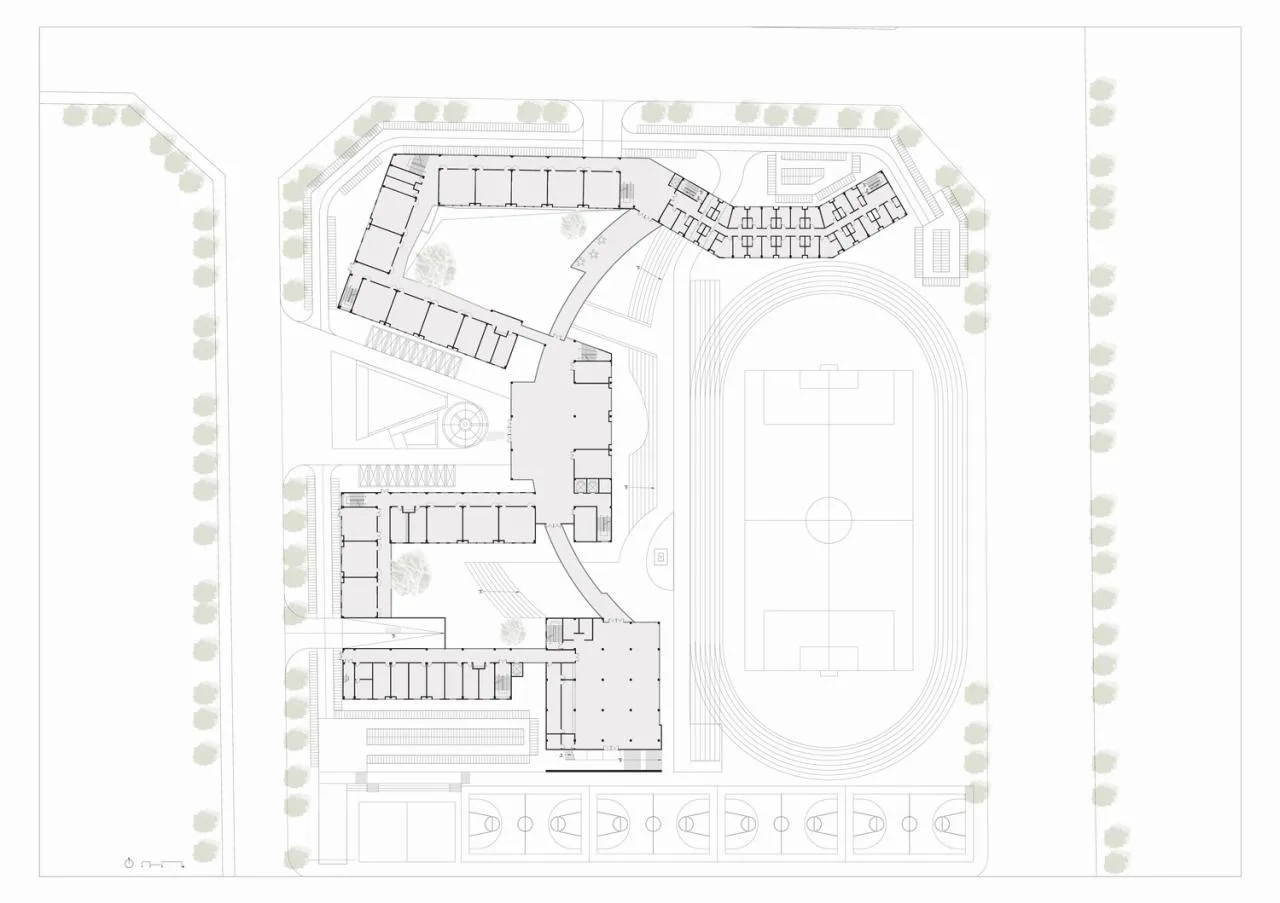
△ First Floor Plan
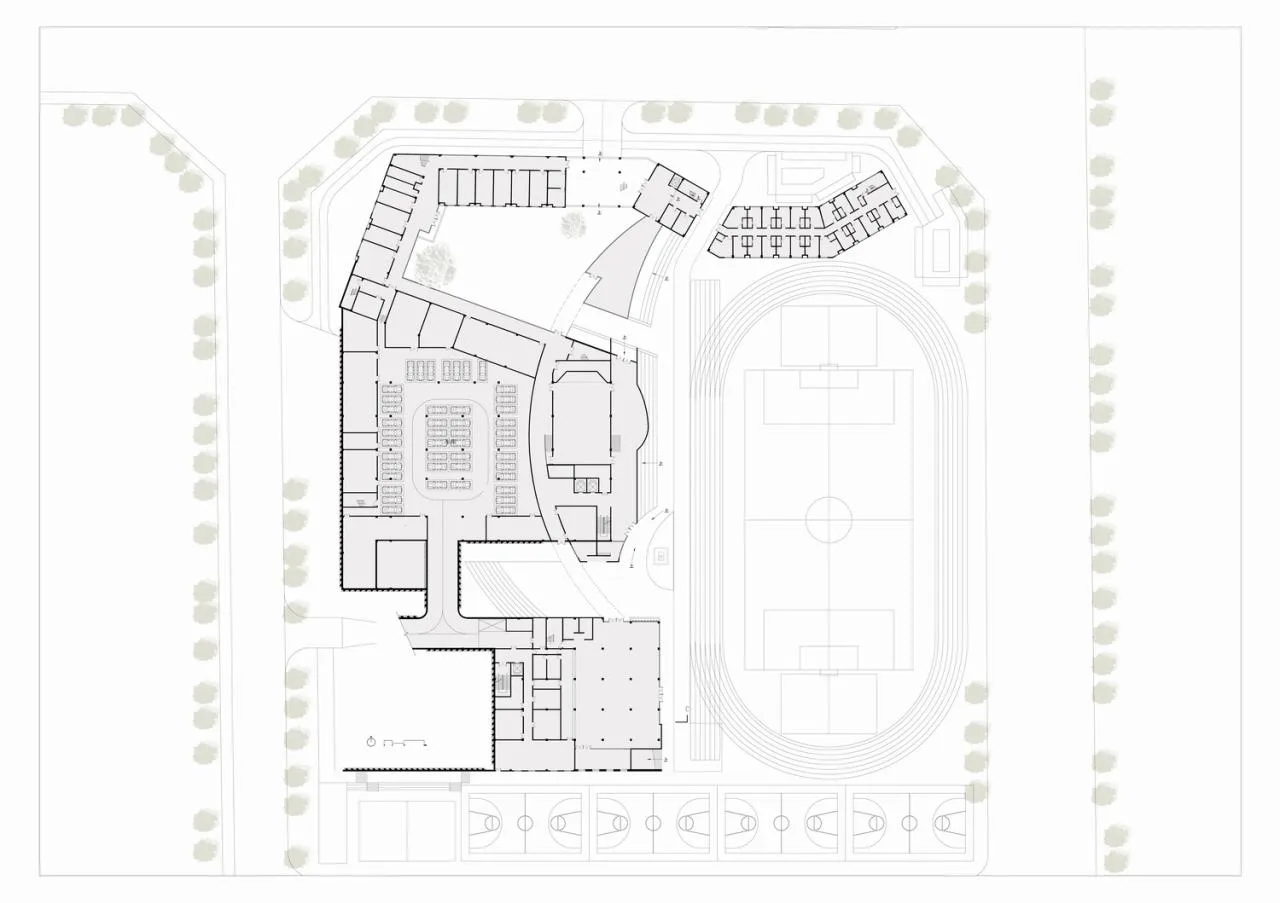
△ Underground Floor Plan
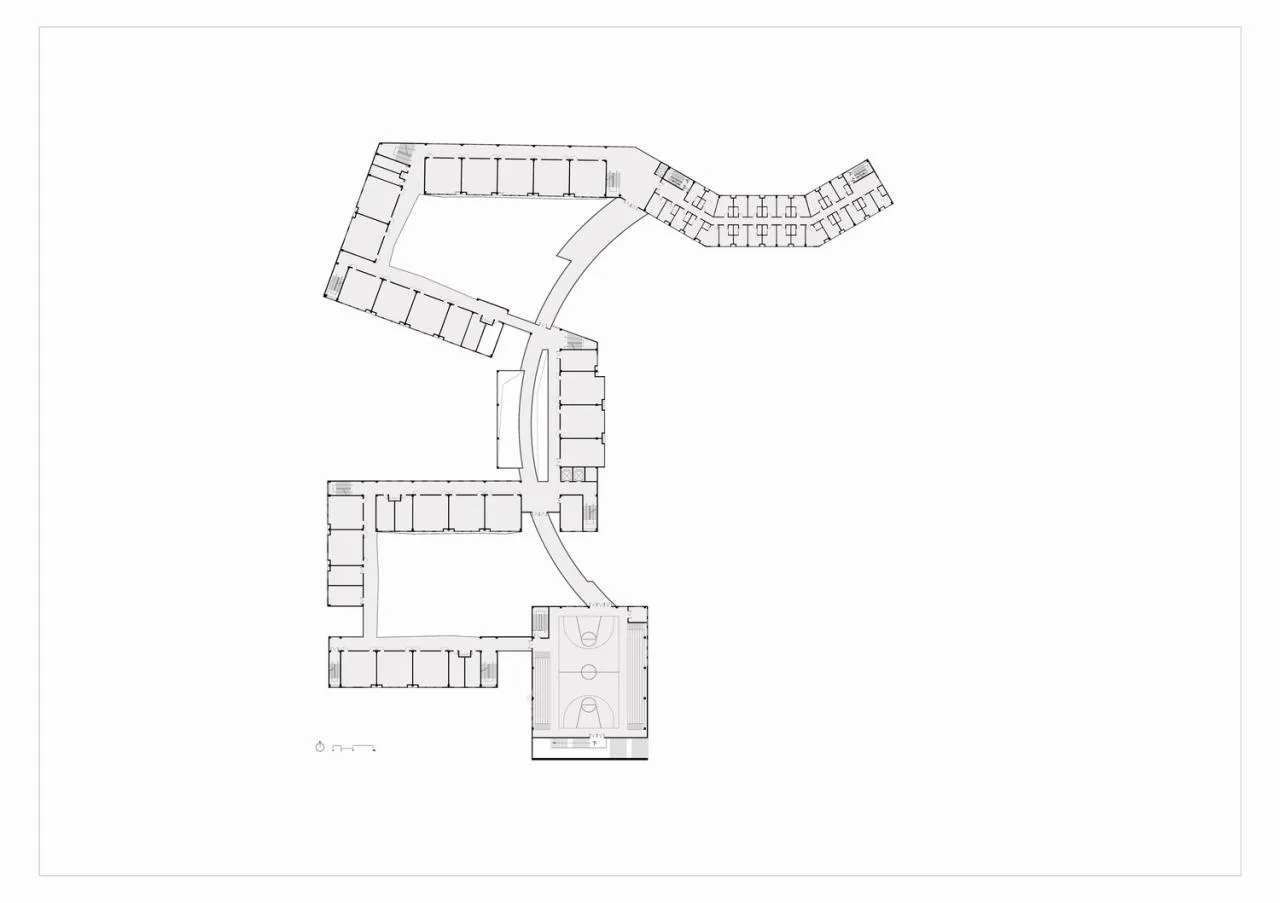
△ Second Floor Plan
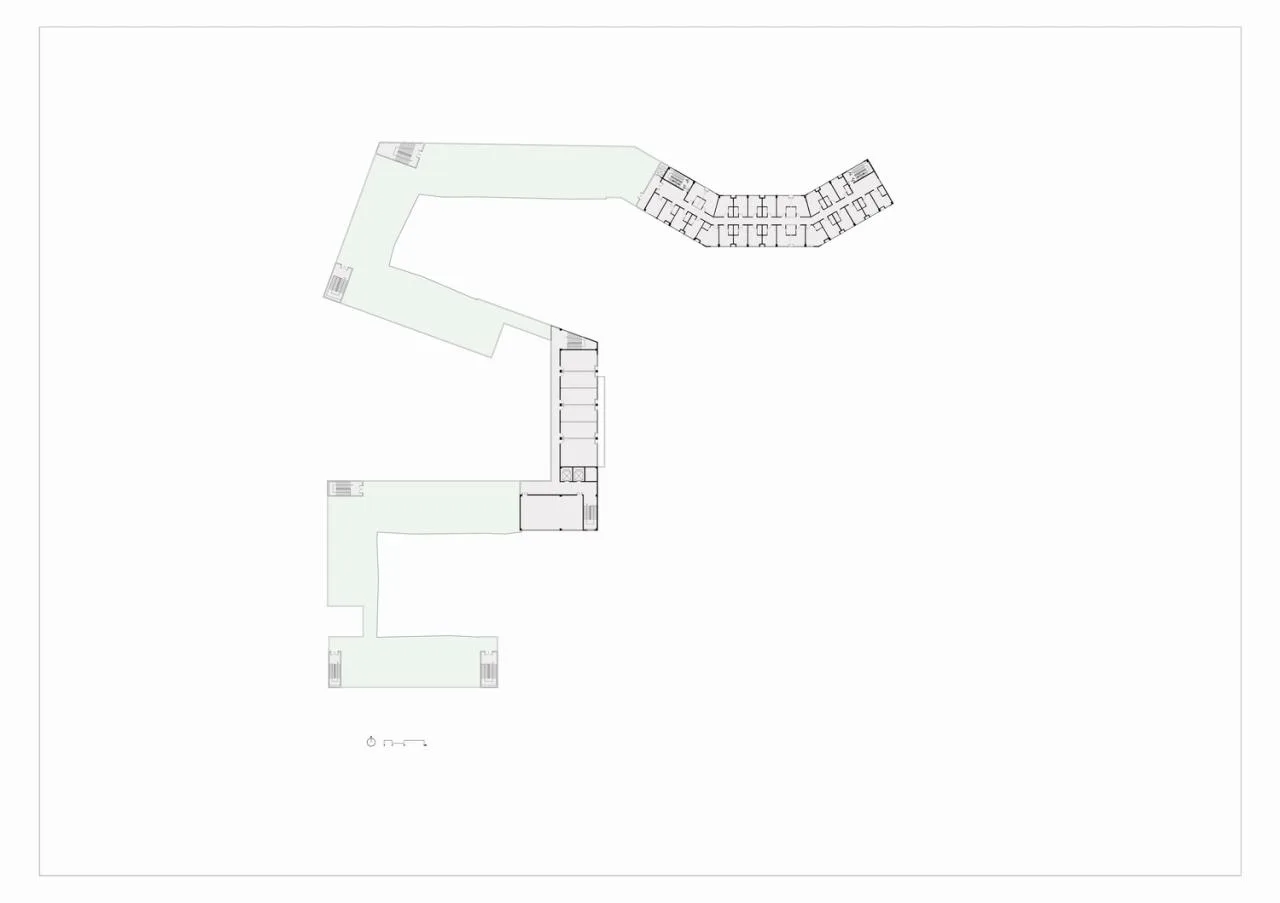
△ Fifth Floor Plan
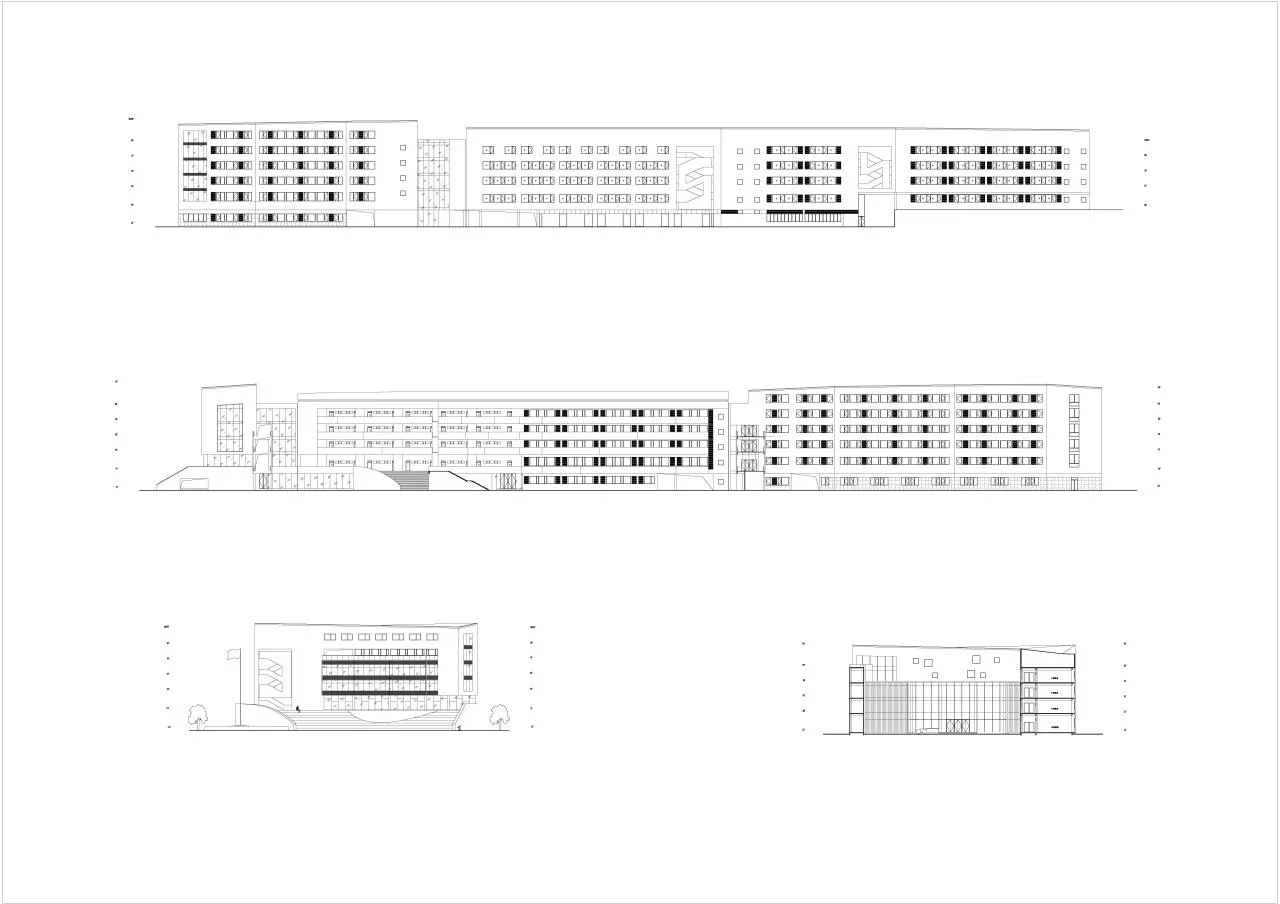
△ Elevation Drawing
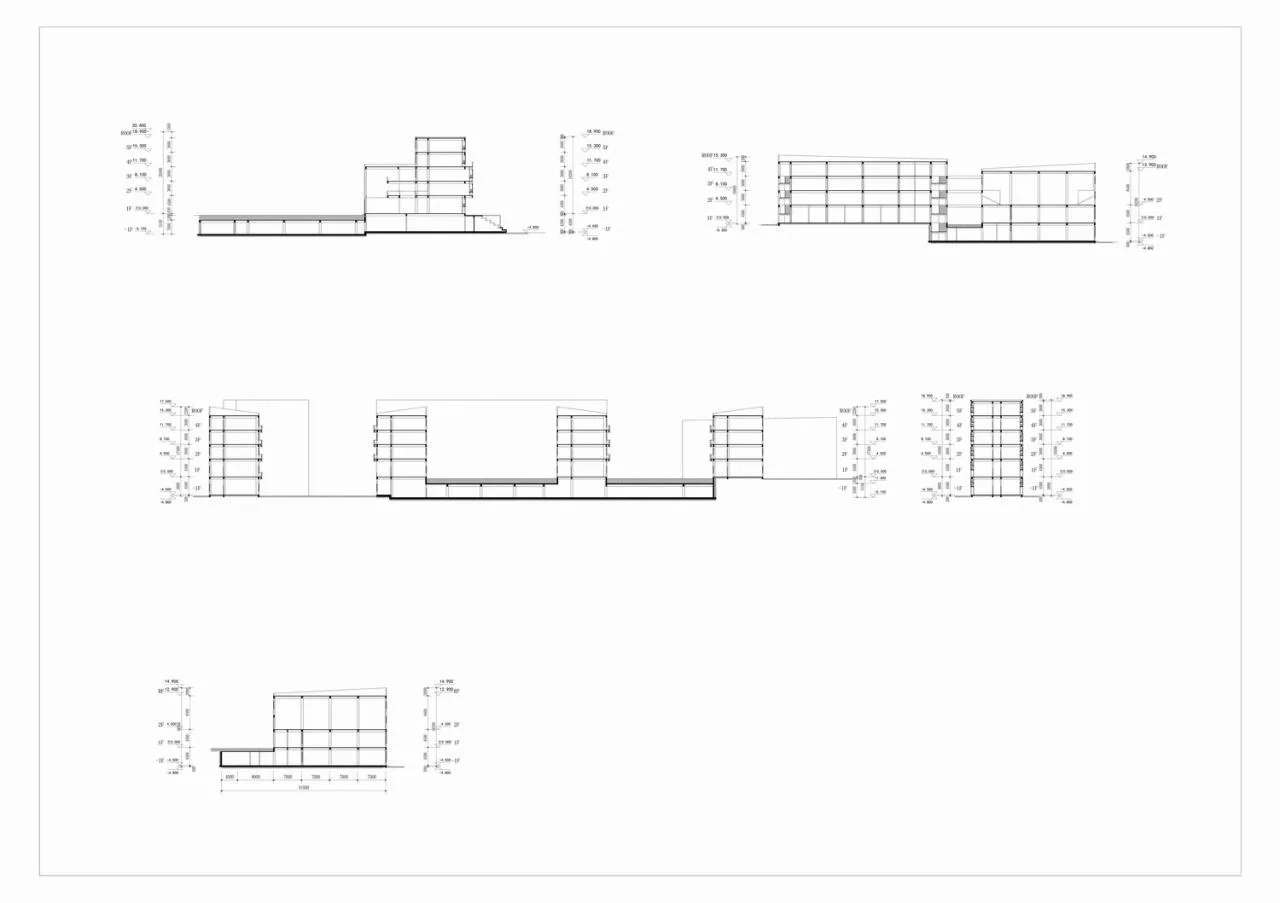
△ Section Diagram
Project Information
Project Name: Zhengzhou Greenland Aihua International School
Designer: UA Youan Design
Design and Completion Period: December 2016 – August 2019
Design Team: Yang Lifeng, Chen Chao, Guo Ruyi
Location: Zhengzhou City, Henan Province
Building Area: 32,442.38 square meters
Photography Credit: UA You’an Design / Xia Qiang
Partners: Zhengzhou Architectural Design Institute First Engineering Design Institute; Shenghua Construction Engineering Co., Ltd.















Must log in before commenting!
Sign Up