
Project management utilizing BIM technology relies on BIM models as the foundation for all tasks. Starting with the CAD structural plan, family models are created for various structural components such as piles, beams, slabs, and walls. Once the structural component family library for the entire project is established, elevations and grids are generated. These are then projected onto each elevation view, where the family components are accurately placed according to their real-world positions.
After positioning all family components, the data is compiled to produce a comprehensive 3D model. By incorporating a time dimension into this 3D model, a 4D model is created. This 4D model enables the planning of an optimal construction schedule and sequencing. Simulating construction progress with the 4D model helps identify potential issues such as inefficient site layouts or poorly planned schedules. Early detection and resolution of these problems contribute to shortening the overall construction timeline.
The principle of applying BIM technology in project management is illustrated in Figure 1.
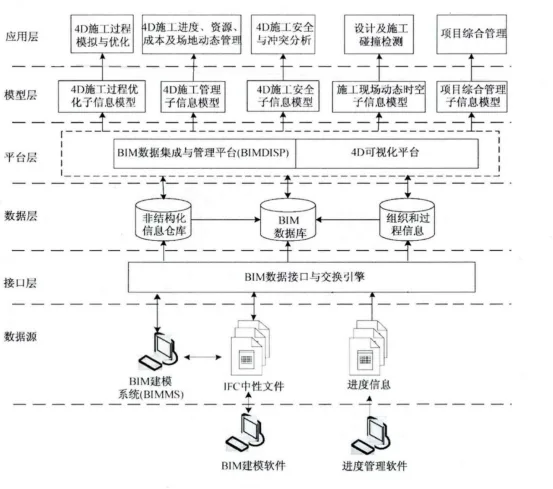
Figure 1: The Application Principle of BIM Technology in Project Management
















Must log in before commenting!
Sign Up