
Throughout a building’s entire lifecycle, various BIM software solutions support different stages of the process. Among them, Revit stands out as the leading BIM software for the design phase. Developed by Autodesk, Revit caters to architecture, structural, and mechanical, electrical, and plumbing (MEP) engineering. Its user interface, functionality, and operational features are specifically tailored to meet the needs of designers.
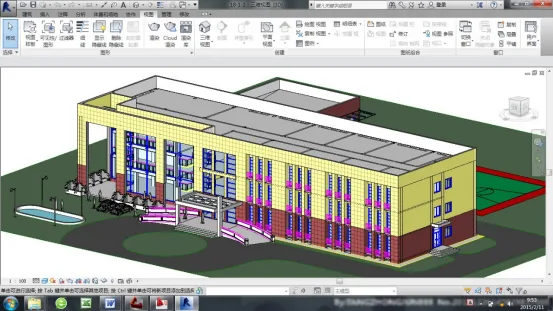
Figure 1: Revit Integrated Building BIM Model
Revit offers a comprehensive and innovative set of conceptual design tools that are easy to use. These tools enable structural engineers and designers to sketch freely, rapidly generate 3D models, clarify complex shapes, and complete the entire design process within an intuitive environment, as illustrated in Figure 1. As the design advances, Revit can simulate real-world conditions, helping project stakeholders understand the impacts on cost, scheduling, and the environment.
For HVAC, electrical, and plumbing engineers, Revit supports sustainable design, clash detection, construction planning, and execution. This facilitates improved communication among disciplines through accurate visualizations. Additionally, Revit streamlines the export of documentation related to installation systems, from initial concepts to detailed design stages, enhancing document management efficiency.
However, despite its global presence, Revit faces challenges in localization, particularly in adapting to China’s complex quota and regulatory systems. Moreover, the software’s high cost and demanding hardware requirements create barriers to learning and reduce modeling efficiency, making it difficult to meet the specific demands of domestic “three-sided” projects (design, construction, and operation). Therefore, localizing Revit for the Chinese market requires integration with local characteristics and regulations.
When promoting Revit in China, it is essential not to discard or overhaul existing workflows entirely but to adopt a gradual evolutionary approach to localization and implementation.













Must log in before commenting!
Sign Up